Category: Interviews

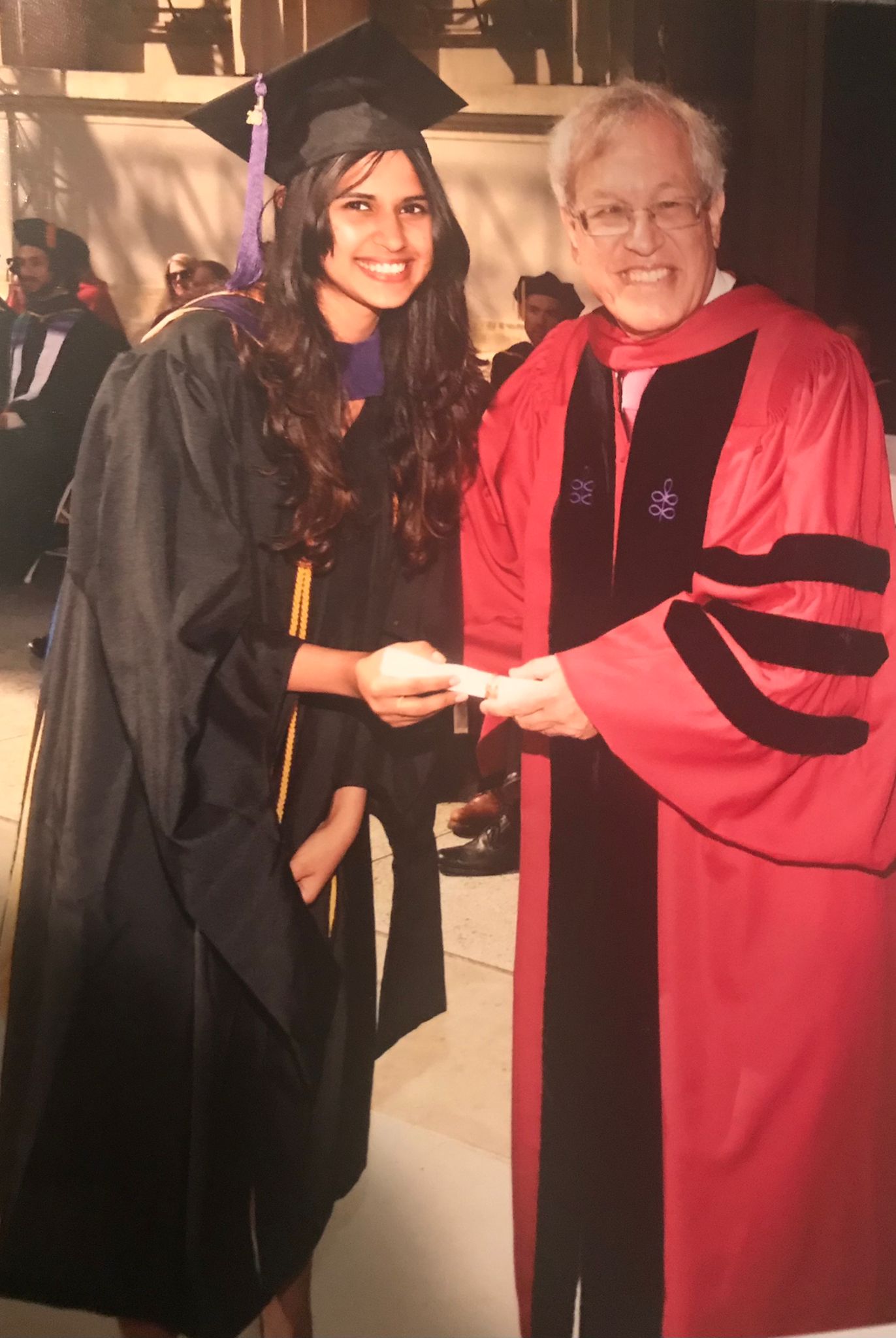
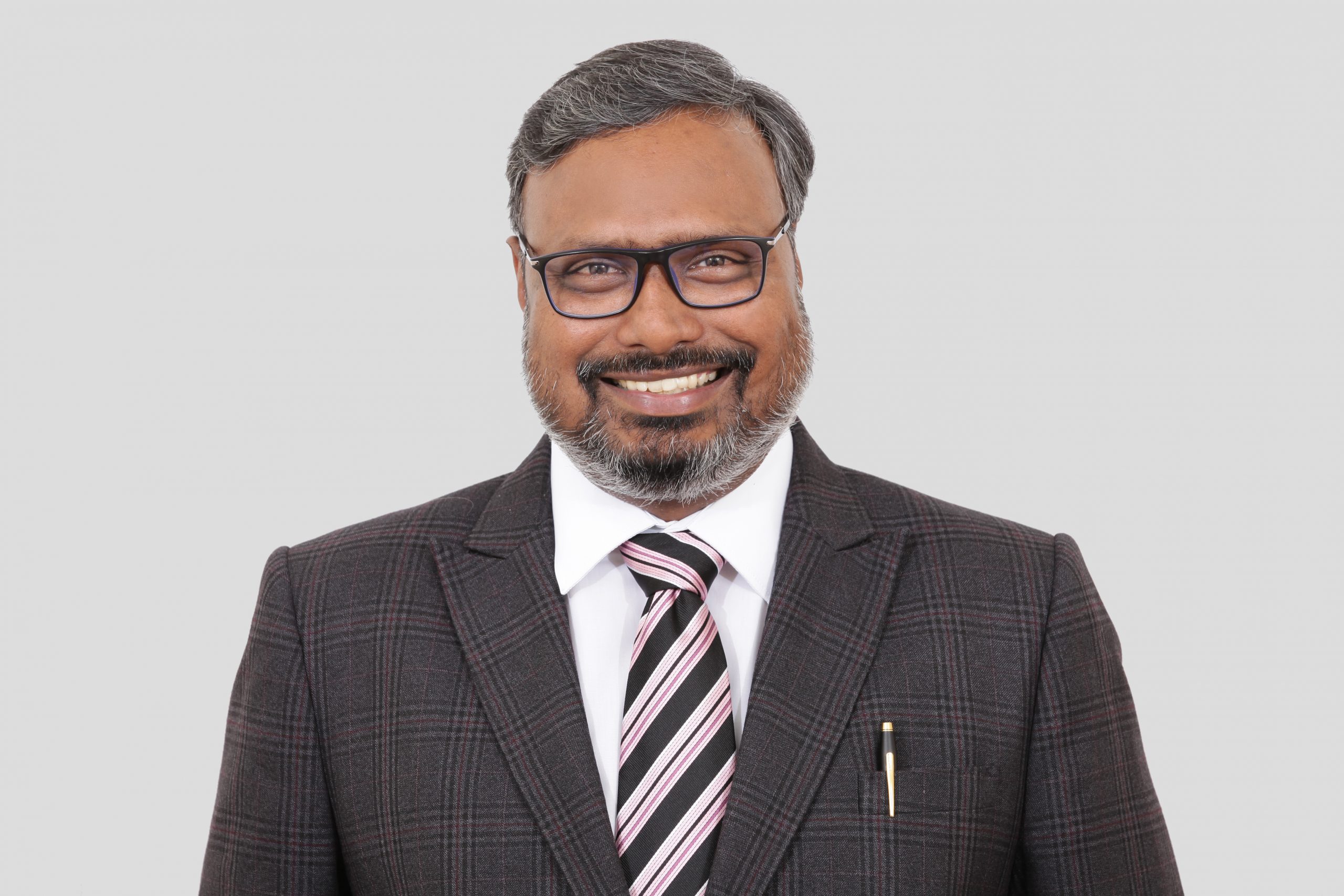
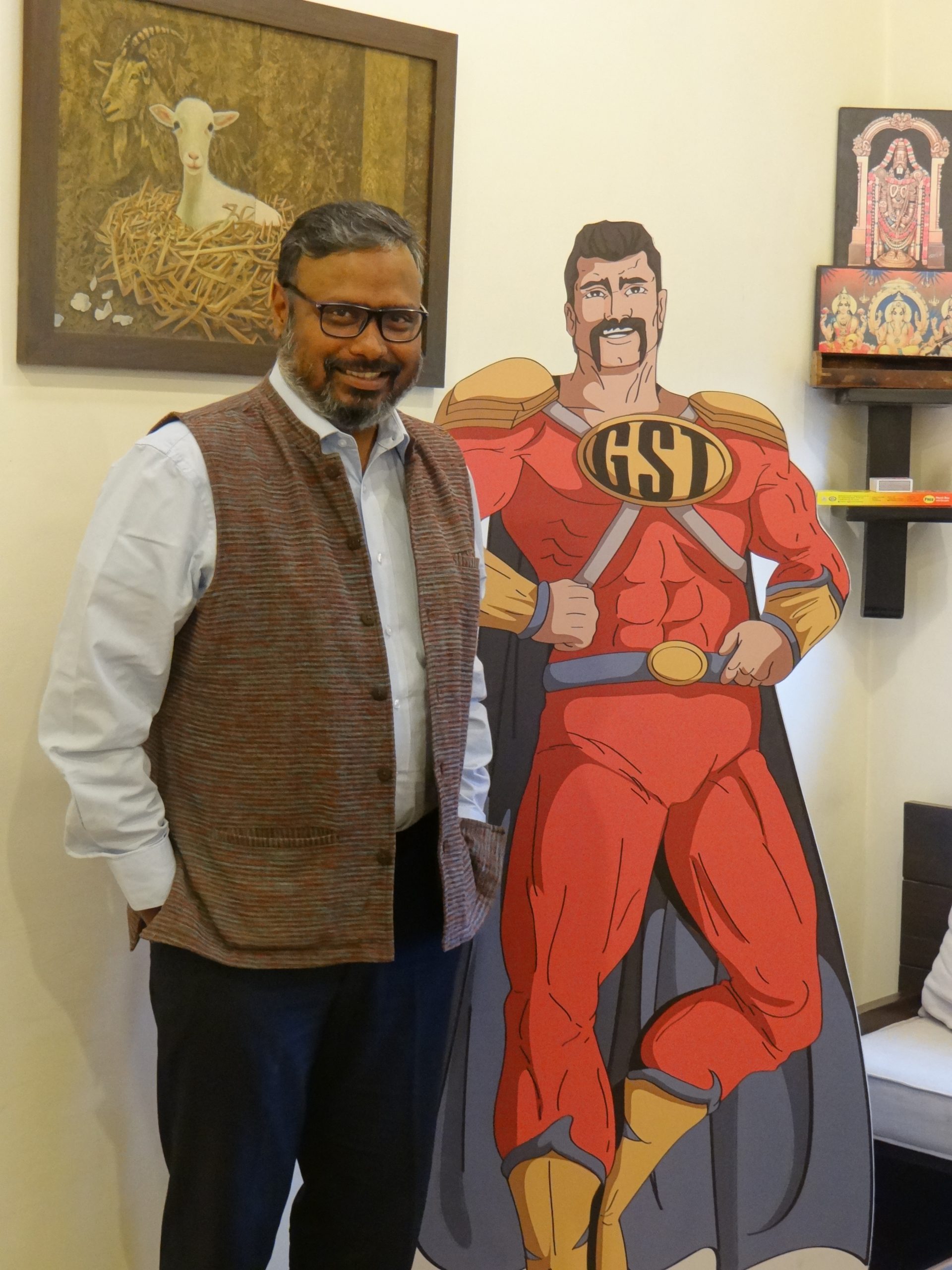
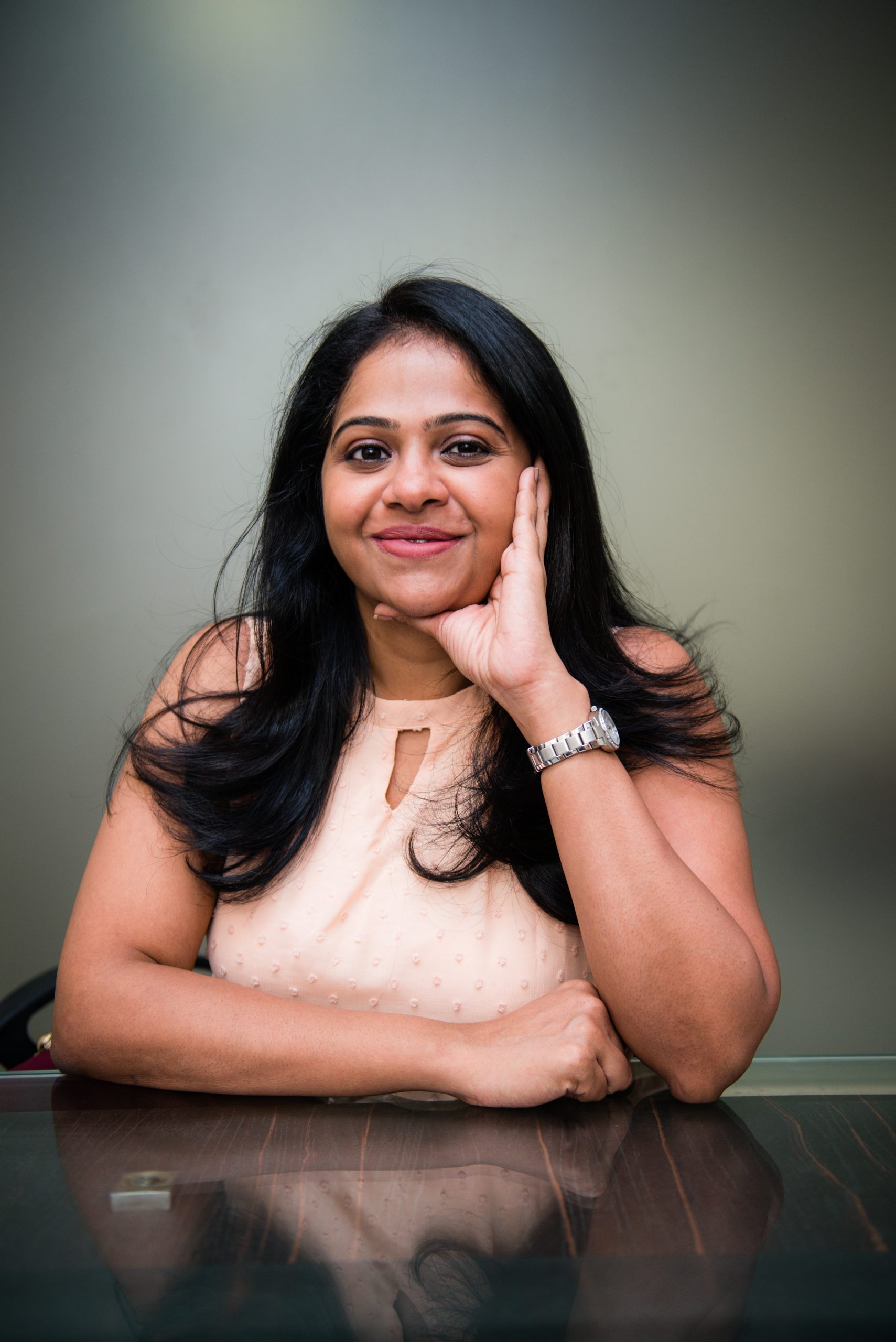
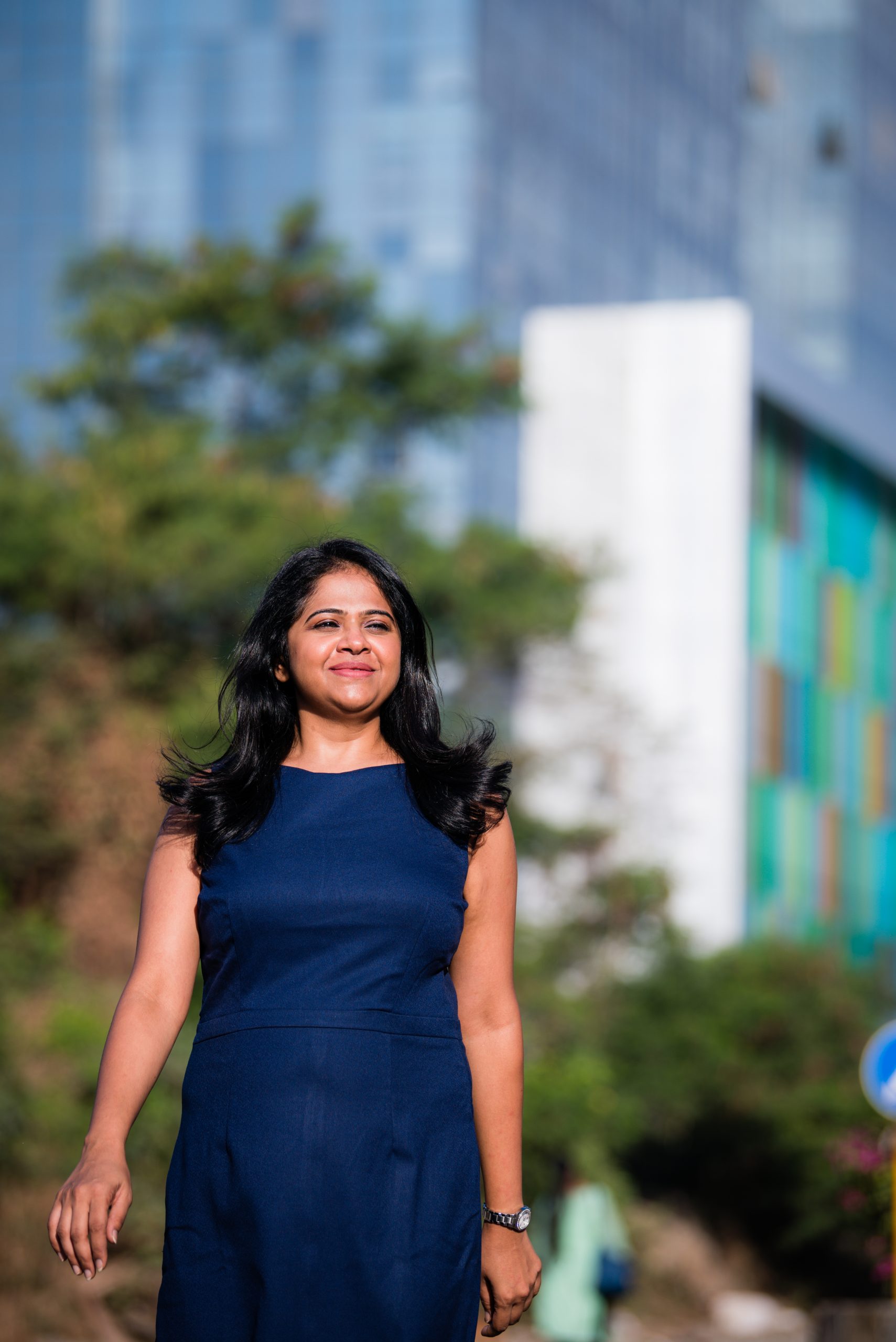
  • Sameena Jahangir, Partner at Kochhar and Co, shares her experience of working on Deal, entrepreneurship and hard work is the best formula for success.

    Sameena Jahangir, Partner at Kochhar and Co, shares her experience of working on Deal, entrepreneurship and hard work is the best formula for success.

    This interview has been published by Isam Kabir and The Super Lawyer Team. The Interview was taken by Priyanka Cholera.


    1. There are various acclaimed roles credited to your name, be it a law firm partner, startup founder or mentor. Which of these resonate with you the most?

     I wear different hats, but my core function is to improve myself and learn throughout the journey. The identity of a lawyer resonates with me the most. Even if I had all the money in the world and the luxury of not working, I’d still want to practice law since it’s something that I am passionate about. Law has also allowed me to teach and mentor people. 

    2.What motivated you to pursue law as a career?

    I had strayed from the law after my 10th and pursued science for 2 years with a misconception that I would become a doctor, but I realised early on in my journey that it wasn’t my cup of tea. I was entirely consumed and fascinated by law from the very first day. I come from a family of lawyers. My mother worked for a brief period as a lawyer dealing with insurance and accidental tribunal matters. At the same time, my father was a criminal lawyer, because of which the conversations in the household always circled law. My brother is an academician and teaches corporate, securities and tax laws to professional students. l I discovered a new perspective on the law when I interned at Desai & Diwanji with senior partner Aslesha Gowarikar. 

    3.Could you share with us any experience of discrimination based on your gender or any other trait, if any? 

    There is a lot of bigotry that surrounds women. The way I dress, talk and or carry/groom myself is very westernised and modern. It’s not uncommon for women to be told that they have reached a position because of the way they talk,  look and dress. I have also faced discrimination where I was denied rental houses to reside in due to my religion. There is a lot of bias in society still very prevalent even in developed metro cities which a lot of people have to face on a daily basis, be it, religion, gender, colour or caste.   I firmly believe that playing the victim card doesn’t help anyone. One has to do their part and if there is anything wrong happening not only against you but even to someone else, stand up and speak that’s the only way we can see change. Just keep working and have the results back their merit.  

    Sameena Jahangir Partner at Kochhar and Co

    Partner at Kochhar and Co

    4.Post your LLB, and while acquiring your Company Secretary (CS) from ICSI, you were a full time Articled Associate at Desai & Diwanji. How did you manage your time for your education when your legal career was in its budding stage?

    I started my CS at an early stage. I had already started preparing for it when I was doing law. I allocated any free time towards studying for it. I did not believe in studying long hours. Instead, I indulged in quality studying. I had no social life then because I directed all my focus on studying. As a result, I was both a lawyer and CS. My corporate work helped me to understand CS subjects better. 

    5. In 2019, you co-authored a book called “GOODS AND SERVICE TAX: No masterpiece was ever created by a Lazy Artist.”. Please share with us a little about the writing process. 

    I teach income tax, and I’ve always wanted to publish a book. We’ve previously written textbooks for our students, but a book is a whole other ballgame. So when the legislation for GST was passed, my brother and I decided to publish a book on it after studying the nuances. The aim was to create a useful book for CA/CFA students as well as professionals who need to work on taxes.

    Sameena Jahangir Partner at Kochhar and Co

    6.How did Lex-Sign – e signing portal materialise in 2021? Was entrepreneurship always on the checklist? 

    I have always been zealous about entrepreneurship. When I became a lawyer and started working at Desai & Diwanji, I visited startup seminars on weekends. I loved the environment revolving around discussions of ideas and business. Entrepreneurs offer new-age solutions to the management of problems. During the pandemic, I noticed that most of my clients had problems regarding the execution of documents, procurement of stamp papers, access to documents stored in their offices when personal meetings were impossible.  With the shut down of the trains, access to the office became very difficult. The idea of Lex-Sign came to my mind where we offer to provide easy digitisation of documents so that work can go on seamlessly. It’s a digitally encrypted platform for online signing, digital signing, Aadhar number based signing and procurement of stamp paper from across the country. The confidentiality of the customers is valued and protected. We rolled out this new venture with this mindset, and we’ve gotten a positive response this far. 

    7.What inspired you to move towards a more tech-savvy culture? 

    As part of the WFH culture, we realised the importance of being tech-savvy and digitalised in all aspects of our life. Therefore, it is essential to move to an online platform even for documentation to utilise the force of digitalisation fully. Most of my clients were facing this issue; therefore, something needed to be done about it. As a corporate lawyer, I understood the intricacies of privacy and data privacy laws and hence Lex Sign became a one-stop solution for e documentation.

    8.What steps are you taking to ensure that the process is simplified for anyone who is not tech-friendly or adaptive?

    For Lex-Sign, we arranged for almost no human interface requirement to carry out documentation. If someone needed to execute a document, they can simply go on the LEx Sign portal, order a stamp paper, upload the pdf document and then sign it without needing someone to handhold them through the process. 

    9.A year after joining Kochar & Co. as a senior associate, you were elevated to partnership in the shortest time. How did this transition occur?

    In Kochar, I joined as a senior associate, and within four months, I became a principal associate there. During the pandemic in September 2020, I was made a partner. The journey was very fast-paced, and the firm felt the necessity for a change in my designation. The promotions may seem fast-paced but it is the result of the 11 years  I have put into my career. 

    Sameena Jahangir Partner at Kochhar and Co

    10.You were the core council of advisors for Fincity in their acquisition by MasterCard in 2020, which was part of “Deals of the Year’ by India Business Law Journal. Attending such matters must be different from your other projects. How did you prepare to tackle this mega-deal?

    I was very fortunate to be a part of this said deal which was into the Fintech space. Like most deals, it involved long hours of work and some days felt longer than the others but I always kept a solution-oriented mindset. As a team leader, the most important thing is to not push down the agony and stress on your team members or the lower verticals. The mere role of a mentor or leader is to take control of situations when things fall apart and to accept accountability while cheering everyone else for success. I always tell people to take needed breaks, not to get burn out. That’s the only way one can perform consistently in the long run.

    I believe that in the whole scheme of things, legal advice is merely one segment. One needs to understand the issue holistically from their client’s perspective without sticking to the only nuances of the legality involved but go beyond that into the commercial aspects as well.

    11.Jahangir Tutorials was founded by you, where the mission is to impart education for ambitious CS students. Your enterprise has also achieved considerable feats like your students securing AIR 1 AIR 2 and AIR 3 examinations. Jahangir Tutorials also has a youtube channel where you upload your lectures. Has Jahangir Tutorials evolved their pedagogical approach with time? How well-received and appreciated was the response to this endeavour? 

    At Jahangir Tutorials, subjects for the Company secretary exams are taught for all levels. In the Pre-pandemic period, physical classes were conducted, and anyone with access to it could join us. With the onset of Covid, a change was made to make Jahangir Tutorials accessible to everyone by uploading our lectures online on Youtube. We received a positive response and today we are the fastest-growing CS digital class in India. This is also because we value the time of others and keep our lectures crisp and apt. We received appreciation for our online videos from people all across India and how they helped them with their preparations for CS exams. Teaching is the most fulfilling job because you get a direct stake in creating the leaders of tomorrow. 

    12.Lastly, any words to the wise?

    In my professional journey, I have learnt that there is no substitute for hard work. There is no luck or coincidences but pure results of one’s merit. Don’t let go of the focus at any point. There is no shortcut to being rich either: it’s a simple swap of service for money. However, I always believe that the ultimate important quality to possess is to make sure you’re a better person than you were yesterday. You can be the best lawyer and know the best application of your knowledge, but if you’re not kind and lack empathy, you gain nothing at the end of the day. Speak well always and use your knowledge and communication to do good for others. 

    Get in touch with Sameena Jahangir

  • Harpreet Singh Hora shares his experience of being an engineer turned lawyer, student politics and changing fates through PILs.

    Harpreet Singh Hora shares his experience of being an engineer turned lawyer, student politics and changing fates through PILs.

    This interview has been published by Isam Kabir and The Super Lawyer Team. The Interview was taken by Priyanka Cholera.


    (1) Having pursued a Bachelor’s Degree in Computer Science from LPU, what motivated you to switch streams and pursue law at Delhi University?

    I passed CLAT in 2011 when I got in touch with the current LawSikho management team, which ran a CLATHacker platform back then. However, due to financial restraints and my family’s wish, I pursued Engineering instead and later opted for a three year LLB degree from Delhi University. As far as the reason is concerned, I have always been intrigued by the field of law. I believe that this is a dynamic profession that gives you excellent learning opportunities. Moreover, this profession accentuates your personality, and that’s what perpetually kept me devoted to it.

    (2) During your graduation from Delhi University, you worked as a quiz master at LPU. Later you’ve also provided your services on similar lines at DAV College and MMU Mullana, Ambala. You also occupied the Hot Seat opposite Amitabh Bachchan in Kaun Banega Crorepati, Season 9. What is it about quizzing that interests you so much?

    I was majorly introduced to the culture of quizzing during my school days and then continued it during my college days, both inter and intra college. I participated in a quiz competition organized with the Association of Indian Universities (AIU) in my engineering college, where students from different universities competed at the zonal and national levels. Eventually, I qualified for the nationals. After that, I began conducting quizzes for my hostel and my department in engineering, and from there, the students from other universities and colleges began inviting me to their institutions. So the journey from being a quizzer to a quiz master has been a fascinating one.

    I had been a hot seat contestant in KBC in 2017. It was one of the most memorable experiences in my life.

    Harpreet Singh Hora

    (3) How has your time at Delhi University shaped you as a person? You contested in the elections for the post of General Secretary as a youth leader. How did you happen to join politics?

    Everybody in Delhi University is interested in contesting elections, directly or indirectly, and I was no exception. When I first stepped into the law faculty, before I could see the board where the college’s name was written, I saw posters of students interested in contesting elections. And Delhi University elections were a big deal on the news channels. I discovered that the people in reputed higher political positions in Delhi are associated with student politics at Delhi University, which intrigued me. It was one of the best decisions I have taken because it ultimately helped me network and establish better connections with people active in the Political circles. The university seniors always said that the Delhi University elections teach you a lot, and I agree.  

    Contesting elections in law school, i.e., the University of Delhi law college, is one of the most challenging contests. The University features politics on two different levels, one on the college campus level where the political parties are not officially involved, and the other is at the university level, where parties directly back up the student organizations. In the faculty of law, the students participate at both levels in politics. Most of the faculty of law students are prior students of the Delhi University (during their graduation). They have already experienced student politics for three years at the base level, but it was alien. In my experience, the elections were indeed complex and demanding, but the challenges had taught me indispensable lessons. 

    (4) One thing that sets you apart from other first-gen lawyers is you have dived right into PIL work while most people chase settling and big clients. Was this a conscious choice?

    The issues I have generally dealt with and the case laws that are a part of my research primarily concern the aspects of prison reforms, social justice, and the 1984 Anti Sikh Genocide victims. However, that does not limit my work to PIL as I have my own Pan India practice in criminal law, service law, matrimonial law, and writing. Although, I have always believed that society needs improvement or the system requiring some restructuring. Thereby I have focused on petitions that deal with social justice or public interest. As far as we have noticed, young lawyers are generally more concerned about acquiring potential clients and earning their remuneration, and there is absolutely nothing wrong with it. In conclusion, the positive attribute of this profession is that one can directly contribute to the system’s development and align the same with their professional capabilities. 

    (5) You started your practice as an assistant to Zoheb Hussain, Senior Standing Counsel of Income Tax Department, Delhi High Court. What value did this experience add?

     Working under Zoheb Hussain has been an absolute pleasure. He is a hard-working man, and I am sure he will soon reach new heights in the industry! I did not have prior knowledge about tax law, and neither was I acquainted with commerce. However, the interview mainly focused on our personality and the type of lawyer we aspired to be, rather than focusing on whether we know about the subject. He aimed to make us more responsible as junior associates with a different approach. First, when we received a file from the client, from the receipt of that file to the disposal of the case, everything was responsible for one associate. Secondly, he also gave us the autonomy to monitor the whole case on a micro-level, which involved the responsibility to abide by the dates and timelines. 

    If a petition was drafted, he did not just make corrections and send it back to us; instead, he called us in his office, and he would begin live editing that petition in front of us. l After pointing out the mistakes, he gently; explained the format, the methods and everything that was to be taken care of. Thereby subconsciously, one starts picking up those habits; and would often refrain from repeating the same mistakes. I had noticed that once associates completed their tenure at his office, they had improved as lawyers.

    (6) A good mentor makes a good mentor. Do you also consciously choose to do that for your juniors or your interns, let them see your formatting and styling live in front of you and make sure that you also have the same aura or demeanour as your junior? What do you look for when you hire someone?

    I am still in the learning phase. I try to be with my colleagues. Eventually, all of us are learners. From a recruiter’s point of view, my primary focus during an interview is to know if the interviewee can understand the concepts. Secondly, I judge the knowledge of the candidates based on their CVs. I will not ask the interviewee a random question on constitutional law or criminal law. The academic score in those subjects does not matter to me. However, If the person has written a research paper, they would have to explain it. It also gives me the idea that the individual has learnt through that activity and was not a mere co-worker who got the name published in somebody else’s research.

    (7) You represented the NGO- Justice for Rights in the PIL seeking regulations, licensing, and guidelines on Internet platforms, including Netflix and Amazon Prime Video platforms. How is it like standing in front of the most prominent players in the game?

    As a young lawyer, these types of cases do come off as an opportunity for one to learn, and it hardly matters if a favourable judgment is received or not. The clients, back then, were students and could not find a resolution to the case. I felt that it was a thrilling matter and took this as a great learning opportunity. I was also curious to know about the possibility of any platform that broadcasts audiovisuals on your mobile phone or laptops and if one can go ahead without regulation. On the first day of the argument of this case, the judge had completely bashed me. I believe that it was my fault as a lawyer since I could not convey the point. The honourable bench remarked that if the Censor Board Certification did not have an issue, I did not have the authority to object. Then it struck me a gap between what I was trying to say and what the bench had understood. I then pointed out that they are not even supposed to carry a Censor board certificate. I even attached the RTI, where the ministry provided that they do not have specific regulations on that, and I had an intense exchange of argument with the judge. After this, the bench was half convinced. They had sought a reply from the ministry. Eventually, it came out from the ministry that this is a new phenomenon, and they do not have such regulations which they have asked for on these platforms. We fought the case and brought it to a logical end, but ultimately it got dismissed by the Delhi High Court.

    The students back then were in a dilemma about going behind for an SLP or not and questioned the chances of it succeeding. I believed it looked like a good case and that there was a probability of the conveyance of my point to the Supreme Court that wasn’t conveyed to the bench earlier. And fortunately, they decided to take the case forward. Ultimately, the Supreme Court was convinced to notice the case, and the SLP was admitted. So although the matter is still pending in the Supreme Court, there have been impacts.

    (8) You appeared on behalf of the Delhi Sikh Gurdwara Management Committee to secure the students’ right to the Sikh community to wear Articles of Faith- The Five Ks in the NEET examination. Can you tell us about that experience and case?

    The topics related to the case of these five articles of faith in Sikhism are inherently close to me because I have read in-depth about the history of Sikhs of securing their right to wear a turban starting from the Mughal’s era, to the time of the British Colonisation, to the post-independence phase. Any development of legislation in India, specifically in the respective regions, impacts the legislation in different parts of the world. Back in the 1970s, the right to wear a turban while riding a motorcycle was a major controversial issue in England’s Road Traffic Act. The right to wear a kara, the right to wear a kirpan has been most talked about in different countries and recently, like 10 or 15 days ago, there has been an unfortunate incident in New South Wales, Australia. They are now drawing on some legislation and guidelines on the right to wear kirpan by schools or college students. So this has been a topic that I believe still needs to be researched upon, to include more legislation concerning these topics. These are the grey areas that are often brushed aside. Indeed it was a great experience working on such a case. On the other hand, a phenomenal incident that occurred was that a favourable order was passed just three days before the exam, which eventually changed the fate of the course when I was representing the case for Sikh students.

    (9) You are also working for the up-gradation of facilities in jail and reforms in prison. Can you share the timeline of this journey and how close you are to achieving what you set out to achieve?

    I’ve started working for prison reform. That is a system I always believed needed to be looked into with profound research. But, unfortunately, even after 74 years of Independence, we still follow those archaic prison rules and manuals.

    The issue began when an inmate did not receive adequate physiotherapy facilities in the prison. This was followed by two other cases, where one concerned the assault on inmates and in the other, the fight was for all the inmates respectively. These petitions got clubbed, the local commissioner appointed by the Court took a survey of those prisons and suggested improvements in the petition. we even challenged the discrimination between prisoners’ facilities when the high-security ward prisoners had alleged discrimination in terms of facilities against the facilities provided to the general ward prisoners

    IN another case, an executive order was petitioned against, where the prisoners held under a particular act would not be allowed to conduct mulaqat (meeting) with anyone but their blood relation. The case is pending in the Delhi High Court. I believe there needs to be a great deal of improvement in the prison area. Ironically, if we do not take action right now, it may become a full-fledged practice area in the coming time.

    (10) In what ways has the ongoing pandemic affected your practice? Do you have any suggestions for maintaining one’s mental health, mainly due to the workload that comes with being a lawyer?

     The biggest challenge the young lawyers face is the hiring freeze by law chambers. With the decrease in workload, the chambers are cutting down associates instead of hiring new ones. As a result, many lawyers have relinquished their chambers or offices and have shifted back to their hometowns. They claim that there is hardly any inflow of new clients, and when necessary, the cases can be conducted through video conferencing. As for me, being a workaholic, the dip in the workload has indeed started affecting my mental health.

    Therefore, I would advise all my colleagues to adapt to new technology and the new methods the Court and the authorities are coming up with. I can claim with absolute surety that the technology in law is here to stay. I believe it should remain. Although video conference has its challenges, it has also opened up new doors of opportunities for young lawyers. Furthermore, we need to explore new ways to use this technology to improve our financial status and acquire more work. Presently we have witnessed clients being more inclined towards engaging lawyers who they believe can represent your entrust appropriately in the Court, irrespective of their experience in terms of practice in a number of years. 

    As for keeping oneself sane, it is advisable to use this time to learn the things one has always wished to know or pursue a hobby.

    (11) If given a chance, what would be one piece of advice you would give to first-gen lawyers and law students about beating the odds?

    My advice to everybody alike is to have a clear goal; The sooner you have clarity in what you want to do, the better. The second is to consider achieving that goal, and it would help if you had a good plan coupled with a realistic timeline. Never compare your success with somebody else’s. Some people have struggled in this covid period, and some rose high during this pandemic. Focus on your own goal, even if you think you are lagging. Each person has the time to rise and shine on one’s own accord.


    Reach out to Harpreet Singh Hora

  • Abhinav Bhalaik, Partner at Algo Legal shares his view on founding law firms, working with startups and serendipity.

    Abhinav Bhalaik, Partner at Algo Legal shares his view on founding law firms, working with startups and serendipity.

    This interview has been published by Isam Kabir and The Super Lawyer Team. The Interview was taken by Priyanka Cholera.


    1. What pushed/led you to pursue a career in the legal field? 

    For me, it was more of an accident than anything else. I was playing professional sport so it was a tossup between carrying on with that or maybe doing something in academics. I was almost slated to study economics at Delhi University and I had written a few law school exams. Back in the day, we had individual exams for law schools instead of the CLAT. When I got into NLU Jodhpur and was also on the waitlist at NALSAR, someone told me that it makes more sense to do something professionally and if you’re really passionate about economics, there would be plenty of opportunities later. We had a double honours option at law school, so I majored in economics and law.   That’s how law school happened and one thing led to another.

    2. Please tell us about your experience at NLU Jodhpur. Few people know that your batch was one of the first five batches to graduate; can you tell us how your alma mater contributed to your success in your formative years?

    I look back to my law school days very fondly. It was challenging back then but when you’re younger you have a lot of energy and you can rough it out. Initially, we never had a hostel to live in within the campus of the law school. I remember we were staying in a guest-house in the city which was actually a lot of fun because there were no hostel restrictions, so we could go out, explore the city and sleep late. It was challenging in a lot of ways; from our first moot court participation to our first moot court win as a university, setting up the editorial board and setting up various committees. At the same time, we had Dr Mitra, who had set up NLS and then joined NLU Jodhpur. He was a stickler for academics and inculcated in us a stringent academic discipline. However, he was extremely student-friendly and supported us in whatever we wanted to do. So, we never felt the paucity of funds. But I think it was a very collegiate working environment between the faculty-led by Dr Mitra and all of us. 

    3. It is also known to us that you were offered a Training Contract at Freshfields Bruckhaus Deringer, a leading Magic Circle law firm. Could you tell us a little more about the opportunity and what were the factors that helped you bag this job?

    Back then we were applying to some of the United Kingdom-based firms. Being one of the initial batches you have to figure things out yourself. I went through the interview process and got selected. In fact, I was even slated to go and start my training contract. But it was during the time when the global financial crisis happened due to which most UK law firm training contracts were delayed. But that’s also when I had the opportunity to meet my first partner who I worked under.  He was formerly a Freshfields attorney and had just returned to India to set up Platinum Partners. So, I guess,  things just have a way of playing out. 

    4. Your first job after graduation was with Platinum Partners. Did you find yourself in a similar situation as 2020 graduates, given that 2009 was a period of recession as well?

    My graduation batch was an exceptional one. I have batchmates who are IAS and IFS officers and also a lot of us today are partners in leading law firms across India. So, academically it was a very sound batch and most of us had worked very hard and had extensive internship experience. The people we met during our internships realised that recession or no recession, we were a bunch of students who are hardworking and maybe fairly capable. So, a lot of us got good opportunities despite the recession, but there was a fair number that did not. Once the economy started getting better, although a lot of them started out at places where they ideally wouldn’t have wanted to, because they were good at what they were doing- hardworking as well as resilient, they all landed up where they wanted to be in some years. 

    5. Please tell us about your role and responsibilities at Platinum Partners, especially being part of the firm in the initial years?

    I think I was very fortunate to have started out in a small team. And being a part of the initial bunch of lawyers, your level of exposure and the level of training is at a different level. I ended up working with someone who had more than twenty years of experience than I did. So the learning is huge and you are also challenging yourself every day. Also, I was fortunate because my first partner was a very nice person and a very hard taskmaster. He focused on training us and developing us as lawyers. And by default in a smaller organisation, you have responsibilities. Whether it is bringing together a library, interviewing students in law schools for internships or fresher associates, or even handling business development. So you do have a lot of exposure on the non-client side of things. Also on the client-side of things, you are thrown in the deep end much sooner and though you have a senior looking after you, you are told that you have to swim by yourself.

    6. In 2017 you moved to Shardul Amarchand Mangaldas & Co. What were the new responsibilities that you took on as a partner? How did your journey so far prepare you for this?

    I was not made a partner directly. There was a three to four-month period during which I was as an of-counsel. So, the way I worked at Platinum and the way I work today, I don’t personally believe too much in designations. All law firms have a designation to make people feel good about themselves. I think your growth as a lawyer and as a professional depends on the level of responsibility you can take as you go about with your work. So after five or six or seven years if one is competent, well trained and can take responsibility, whether you are a principal associate or an associate, it is all just a nomenclature. My training and experience were a lot better than the one that you get at larger firms because in bigger law firms you are initially lost all over the place and you’re mostly working with seniors who are at best three or four years more experienced than you. So I think it was the technical and non-technical training that I received at Platinum Partners which did wonders for me. And as I said, if you are ready to become a Partner, you don’t have to be called a PA or a SA beforehand to become a Partner. If given the choice, to go back and redo, I would never pick a big firm to start out with because the quantum of learning is way better in smaller ones. So, I would always pick a small firm to work with and a good senior to learn under. And I think that is the absolute key.

    7. After almost 4 years at Shardul Amarchand Mangaldas, you moved to AlgoLegal as a Partner. What is your vision for Algo Legal, in terms of services and team building? 

    Seeing  Platinum Partners being set up from scratch, I witnessed the entrepreneurial side of a lawyer. I was very clear that at some point in time I would do something on my own. I  come from a business family so for me maybe things sit very differently. After I resigned from SAM, I was in the middle of figuring out what I wanted to do and that’s when we started talking with the few like-minded people who were in a very similar space in life. They were accomplished professionals and legal practitioners who were looking for a different challenge and we’re very focused on value addition to clients along with the use of technology in a big way. And fortunately for me, I had known some of them very closely and had worked with them in my earlier organisations. So things just sort of came together and that’s how it all started with Algo.

    8. How has the ongoing pandemic served as a turning point in the M & A sector and law firm work culture? Do you believe law firms can adapt to work from home for the long haul?

    I do believe that we will see a slightly modified working model. People have realised that we can do a fair bit of work not being in the office every day, but at the same time there is a big merit of being in office too, especially for young lawyers, because the training that you can have in an office environment is very different from what you can have on zoom calls. I think we’ll move towards a hybrid model. The pandemic has been challenging and people are going through a lot. But at the same time clients have been very accommodating. Although times have been difficult and challenging, we’ve seen people being extremely supportive. So I’m very thankful to my colleagues and clients. I think we have all stuck together.
    We are witnessing a lot of M&A activities so the difficult part is executing so much work sitting at home. I have witnessed a fair amount of consolidation happening and when I say consolidation, I mean a lot of the smaller players are selling out to the larger players. So there is a lot of market consolidation taking place and that’s when M&A activity becomes fairly robust. 

    9. AlgoLegal has a particular focus on startups and in furtherance of that, has a free legal kit with important resources and documents. How do you think the Covid – 19 pandemics have shaped the business environment for such startups? The tech industry is seeing a boom; is this really a silver lining in the dark clouds?

    At Algo, we have initiatives where we work with young founders who don’t have a lot of cash or resources. We do a lot of pro bono work. I think we are the only firm in India that is using tech the way we do. We did a very interesting series with NUJS where we were teaching technology and law as a credit course. So we try to do whatever we can. We believe that tech is going to be a big part of law firms going forward. 
    To answer the second question, it hundred per cent has. I would not want to call it a silver lining because a lot of people have suffered. But it has definitely given a spur to technology. It has put tech-forward by at least half a decade. And the toolkit is because we work with a fair number of founders and young people and we realise that while we charge our professional fees, it’s a small gesture on our part as a  way of giving back to the community which has supported us a lot.

    10. How do you feel about most startups suffering immense losses and raising humongous capital in the funding series; is it about being a unicorn? What is your take on it?

    I think there are two models. There is the model that Zerodha has followed, where they have hardly raised any funds from investors. The other model is where people have taken a lot of funding. So I think the model where you take a lot of funding and become a unicorn, what the real aim is to hit a certain volume of sales. And to hit that volume you need to burn cash.  I think everybody is banking on the fact that when you hit those economies of scale your profitability starts becoming better. Because what happens is that your cost beyond a point doesn’t balloon. So to take any company to a level where the economies of scale are keeping in, you need to have substantial funding. You need revenue so, you need to burn cash and to burn cash you need to receive money from investors and the moment you receive that money your valuation changes. And I think a lot of them are eyeing the IPO market because they intend to raise a huge quantum of funds from the public markets. What I will say is that it’s still early days in India. Ten years before, people wrote off these startups. I have been in conversation with people who said, “What is this Zomato? What is this Swiggy?” They made fun of these ventures. But I think the world is changing and it has played a big part in where these startups have reached. So it is a wait-and-watch, but I am very interested to see where it all lands up. 

    11. How has the pandemic that entailed lockdown impacted you personally and professionally?

    Other than battling the virus personally and at home, it has not been too bad. It’s disheartening to see the number of people who have suffered personal losses. Beyond a point, you can’t even blame the government but I think that there has been a systematic failure and many deaths could have been prevented. We have lost some very capable people in the legal fraternity as well. So that’s sad and makes you think about what more one can do. At our firm, we are working on initiatives for our people where we can make them more comfortable; we make sure that topics like mental health are discussed, spoken about and not shoved under the carpet. 

    12. Any parting advice to law students and young lawyers on building a successful career in corporate law and how important are ethics in this professional pursuit?

    The only advice I will give people is that you can listen to as many people talking about their experiences, but at the end of the day, do what works for you. Read my interview but, at the end of the day, there will be things that will work for you and don’t rely on any particular person’s experience. I think everyone’s life experiences are different and every person speaks for himself. Unfortunately, most people want their life experiences and advice to be held up very high but, I don’t really believe in that. My only advice is that if you like something, go for it and you will learn along the way. 

  • Dr.Kabir Duggal on working as an Arbitrator in the US, being a Harvard-Oxford-Leiden-NYU scholar and being an inspiration to thousands.

    Dr.Kabir Duggal on working as an Arbitrator in the US, being a Harvard-Oxford-Leiden-NYU scholar and being an inspiration to thousands.

    This interview has been published by Isam Kabir and The Super Lawyer Team. The Interview was taken by Priyanka Cholera.


    Dr Kabir Duggal is a Senior International Arbitration Advisor in Arnold and Porter’s New York office focusing on international investment arbitration, international commercial arbitration, and public international law matters, He is a graduate of the University of Mumbai (Gold Medal), University of Oxford (DHL-Times of India Scholar), NYU School of Law (Hauser Global Scholar), Leiden Law School (2018 CEPANI Academic Prize), and is currently pursuing an SJD Degree from Harvard Law School.

    1. Your accolades and achievements are known to the world, the career trajectory you have witnessed is one everyone dreams of but only a few achieve apart from all these. What is something the media or the world at large doesn’t know about you?

    I am delighted to be here. And very grateful for the kind words. I think two things that people don’t realise, and this is true for everybody, is that we need to be a little more sensitive and give ourselves a little more of a break. Second, there is a lot of hard/smart work behind the scenes but there is going to be a fair bit of failures. For every ten things you do, nine times the answers will be a ‘NO’ but the tenth answer might be a yes! So, you need to keep trying. Keep the good fight on! 

    Further, you need a little bit of the right time and right place and so we must not take for granted the opportunities. In India, in particular, there is so much talent. You need the opportunity to channel it and that sometimes is not fully within your control. But always try and grab opportunities whenever you can.  CaRPE dIEM.

    2. Let’s start from the beginning: why law out all the career choices available?

    I got into law, unlike a lot of people today. Most people today get into law right after high school. I did not. I did the three-year course after I had an undergraduate degree. The decision to enter law was not one that I had taken lightly. This is what I encourage everyone to do: think about your skill set, think about things that make you happy and try to find a career that combines both of these. So I realised that I like speaking, debating, writing and I thought that that skill set fills itself nicely with the legal profession. When I got into law school, I realised – this is fun! 

    3.In your academic trajectory, right from GLC to Harvard, routing through NALSAR, NYU, Oxford, Leiden, you have been denoted as a scholar, rightfully so, what about academia or research kept you going?

    As noted above, my decision to get into the law was a conscious choice. So I got into something I enjoyed, I mean no one is compelling me to do all this. I do it because I enjoy the process–getting to read things that are fun, getting to talk to people who are very smart. Different people can look at the same thing very differently. I think in Jain philosophy, it is the Anekantavada philosophy, where the same thing can be understood in so many different ways. I do feel particularly privileged to have been affiliated with some of the best universities and study with the best minds. 

    4. How has your experience before venturing into arbitration i.e as Judicial Clerk, Honorable Justice Sujata Manohar, Consultant, Development Research Group – At The World Bank Group, Legal Consultant To The Child Protection Unit – Unicef has shaped you and can you share an experience or two?

    Justice Sujata Manohar is a pioneer, a truly remarkable person. She was able to study law at a time when women did not have equal opportunities (and this is true all over the world). She became a Supreme Court Judge but her humanity and compassion made her stand out. I look at her as a mentor and a role model even today. And if I can become half the person that she is, I will consider that a success. 

    My interest when I got into higher education was in the areas of public international law and in human rights. And that’s where UNICEF and the World Bank came in. And both of them were very different but very amazing experiences which are really hard to come by. You really do feel quite privileged to have had those opportunities. UNICEF began as an unpaid internship. It started off that way and became a two and a half year stint. In fact, they invited me to come back after my masters at Oxford and before I started at NYU.  

    While I was at NYU, the World Bank Group offered me a consultancy and that is how that position happened.  Again another fascinating experience. 

     They were very different areas of law. One was looking at child rights and child protection while the other was looking at socio-economic rights in the developing world. This experience has been pretty remarkable because it exposed me to a wide range of areas within international law. 

    5. One of the most interesting observations we have noticed is you have kept human rights in the centre of your academics, what inspired the shift to arbitration? 

    My interest has always been in public international law.  International arbitration, particularly investor-state arbitration, allows me to pursue my interest in public international law and human rights because the cases often involve an intersection between several areas of public international law.  But, my interest in human rights still continues. I am part of a team that has created a global non-profit to increase access for arbitration lawyers from all over the world (https://letsgetrealarbitration.org/) and I work as a consultant for the UN office for Least Developed Countries. 

    6. How has your time at Curtis, Mallet-Prevost, Colt and Mosle LLP, Baker McKenzie, honed you in the arbitrator you’re today?

    It’s been a very exciting journey to work on some of the largest and most prominent disputes. Every firm has a different culture. Every firm has a different way of looking at things. In the investor-state context, in particular, some firms focus more on state work, some focus more on investor work, some do a hybrid of both. So getting exposed to different people, different ways of doing things, I think challenges you and helps you appreciate things in a variety of different ways. Indeed, you can get very comfortable doing the same thing the same way every day. I think having something to challenge you helps you learn a different skill, a different way of doing things.

    Undertaking training for the Government of Myanmar

    7. Can you tell us about your PhD thesis on Investor-State Arbitration at Harvard as well as Leiden?

    Investor-State Arbitrations, sometimes you call Investment Arbitration, is a specialised form of International Arbitration. This is arbitration between a foreign investor and a sovereign state. Your Respondent is always going to be a Country or a State and the Claimant is a foreign investor. Here the foreign investor alleges violations of international law that often arise out of investment treaties or (domestic) foreign investment laws. And the dispute is resolved before an arbitral tribunal. Some examples in India are like Vodafone which brought its case against India arising out of a tax measure. This was under the UK-India investment agreement. That would be one example. These are cases against the sovereign so by nature, they tend to be highly political and long-drawn. It’s a lot of fun but there is a lot at stake. 

    At Leiden, my focus was on evidentiary standards in investor-state arbitration. This is a fascinating topic because international arbitration seeks to avoid detailed rules of procedure and evidence.  However, a tribunal is still bound by certain evidentiary rules.  The process was to identify what principles of evidence could be derived from the general practice of states and from public international law that would bind tribunals.  I was very privileged to receive the Academic Prize from the Belgian Arbitration Center for my research.

    My current research at Harvard looks at the intersection of human rights law and investor-state arbitration. Investment disputes often tend to implicate human rights.  For example, an investor may allege that a state policy implicates the right to fair and equitable treatment but the state may seek to justify its actions on human rights considerations.  My research seeks to unpack this tension between investor protection and human rights. 

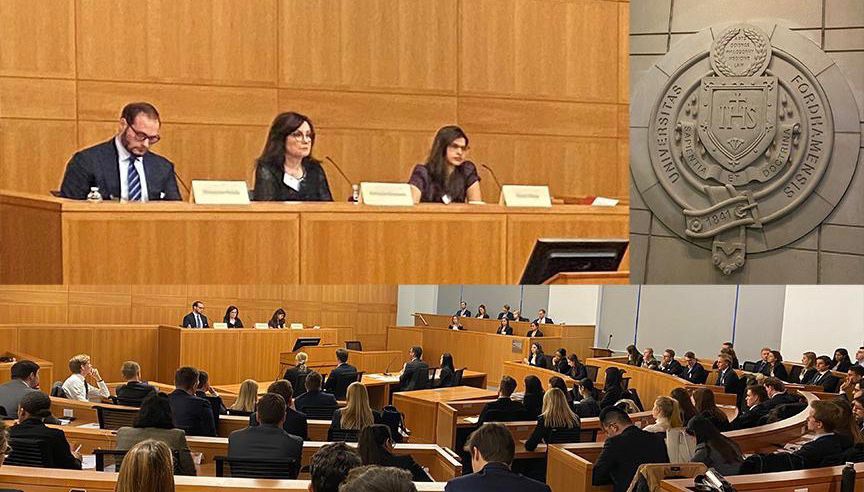
    The Leiden Defense
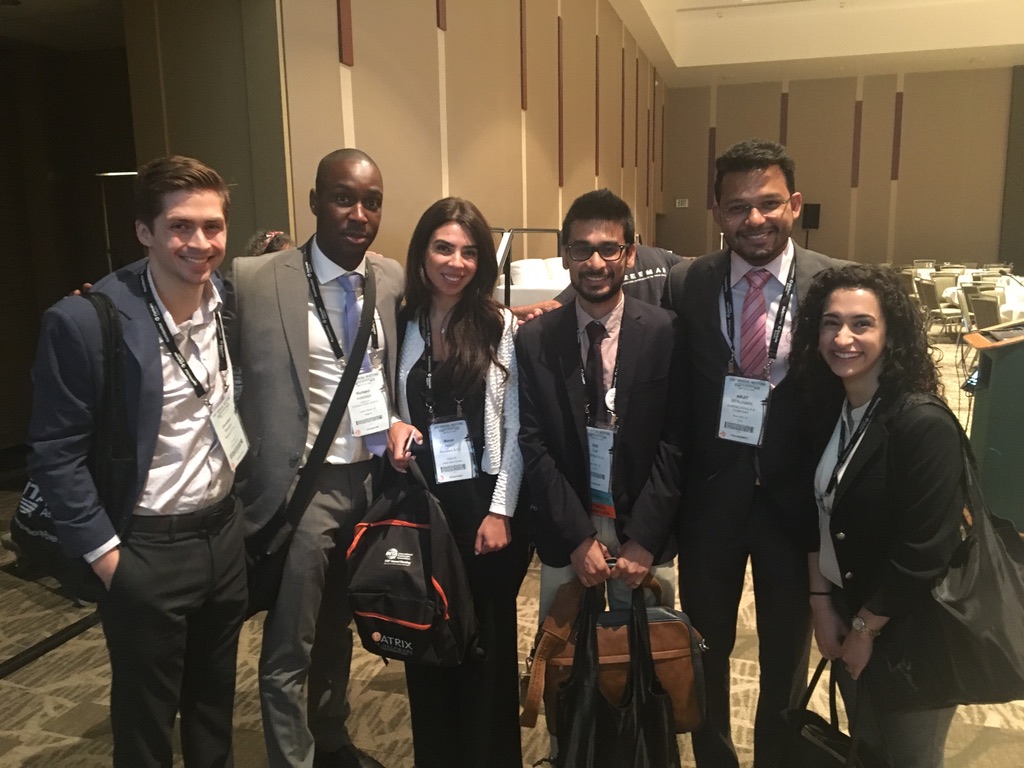
    The image is following the Leiden Defense

    8. You have been teaching at Columbia for nearly a decade now, and have taught at Madrid, Georgetown University, India, Harvard to name a few that pulled you towards it as given your qualifications you could have easily taken a corporate job or started practising given that you are qualified to practice in New York (U.S.), Washington D.C. (U.S.), England & Wales (Solicitor), Maharashtra and Goa (India)?

    I have always wanted to teach. As of this year, I have completed twelve years of teaching. Indeed, when I had started some of the students at Columbia University were older than I was. I enjoy it. It is something that I enjoy. I am a big believer in people doing things that make them happy. If something makes you happy, go for it. 

    9. You are a part of the Rising Arbitrators executive board, Consultant for the United Nations Office of the High Representative for Least Developed Countries, Landlocked Developing Countries and Small Island Developing States (UN-OHRLLS), you have published over 40 articles and spoken at over 300 arbitration events across the globe, what inspires these endeavours?

    Thank you, All these are things that are fun, I enjoy them. I like writing, speaking, and meeting new people. When you do something you enjoy, it does not seem like work. Some of these activities are also opportunities to make a difference and so I feel particularly privileged to have the opportunity to do so.

    Undertaking a Government Training with Representatives from Saudi Arabia (which is my country of birth)

    10. You started your journey as a law student in 2001, in GLC you have been part of this fraternity for 20 years now. What has changed for you in this passage of time?

    When I went to law school there was only one national law school.  NALSAR & NUJS had started and they still hadn’t had even the first set of students who had graduated. If we look at the legal landscape in India today it is very competitive. With the proliferation of law schools and people with ambition, it is a rather different reality. 

    Indeed, when I was in law school,  there was some amount of stigma in studying law- “You can’t do anything. So, you’re doing the law.” So, I think that would be the biggest change. There’s a lot more dynamism. The law students are a lot more dynamic and are a lot more willing to be enterprising and that’s a good thing. We are seeing the market evolve as well– for example, we are seeing greater think-tanks, non-profits, academic avenues in India. All this is great for our profession. When I graduated, legal education was still in the nascent stages. I look at it now though, you have people who are very thoughtful scholars today; people who are really engaged. That’s good for India at large. The profession is in better shape than when I was in it. So I look at it as a good thing. It’s becoming quite similar to the American model- very competitive, but the people who get into big law, so to speak, have a very steady career path set for them.

    11. How often have you been the only Indian in the room? Do you think silent racism towards Indians or Asians still persists or they’re still underrepresented in board rooms and classes?

    I think this is a great question and is worth addressing. Does racism exist? The answer is yes. Does racism exist against Indians in the law field in the west? I think the answer to that is also yes. It may not always be direct or overt but it does exist. If we look at the United States, Indian Americans have done extremely well in business, science, technology, engineering. That has still not been the case for the legal profession. But hopefully, things will change and we should always strive to do two things. First, we should always be aware of the privileged position that we are in and we should try, whenever we see bad things happening, to stop it. We’re lawyers and we are in a privileged position to stand up to injustice. There are people who don’t have that, both in India and in the US, and it’s important for us to stand up for injustice (this can often be taking a stand against innocuous sexist or offensive stereotypes). The second point I would just mention is, last year in the US (although this is not unique to just the US), you looked at violence against African Americans and then Asian Americans, which really got us to reflect on the inequities that exist even in our profession. We, therefore, launched an initiative called REAL- Racial Equality Arbitration Lawyers and one of our goals there is to advocate and give access opportunities to people who otherwise don’t get it. We give a lot of scholarships to attend arbitration events which can often be very expensive. I would encourage the viewers to look at this if they’re interested in arbitration, these are put on our LinkedIn Page: https://www.linkedin.com/company/real-racial-equality-for-arbitration-lawyers.  We are free to join the organization so if you are interested, consider signing up.

    12. What are a few pieces of advice you’d like to give to students or lawyers who want to pursue foreign education through scholarships?

    First, You need to start the planning process early. There will be an academic component and there will be an extracurricular component, both are important. Make sure you’re not doing one at the cost of the other. Sometimes you see people who have done like 15 moots, leadership positions in many organizations but grades are mediocre or you see people who’ve only focused on grades and done nothing else. So my suggestion is to find a good balance. 

    Second, have a nice consistent narrative to tell. Can your narrative change? Yes, it can. Tell it in a manner that’s interesting, that’s personable, but reflect a little bit on your story. 

    Third, pay particular attention to scholarships and see the requirements that they have as well as the deadlines. 

    Fourth, access your financial situation and make an individual assessment of whether or not it makes sense for them to pursue higher education if you have to take out a loan. Be prepared for the best and worst-case situation. Jobs outside India are few and far between and highly competitive.

    Finally, consider the visa reality. This is probably one of the areas that are not within your control. This is increasingly becoming harder and harder, as countries are restricting immigration. So when you’re doing your pros and cons, you really need to factor in this reality.

    13. It is known to us that apart from Hindi and English, you are fond of Urdu and have learned Spanish and Sanskrit as well, what are some of your favourite reads?

    I think with time my interest has been becoming greater and greater in reading books on history. And my specific focus, not exclusive, but the specific focus has been on reading about different aspects of Indian history. When you don’t live in India this is one way to remain connected with your heritage. I am currently reading the Age of Wrath by Abraham Early that discusses medieval India (even though the book focuses on the Delhi Sultanate there is a very interesting discussion on the Vijayanagara empire as well). 

    14. In your opinion, how will pandemic change the way we perceive education? Do you think it has achieved the philosophy of the world being a big classroom?

    The pandemic has definitely caused a lot of suffering. I will acknowledge that at the outset. Having said that, some good things have come out of it. And one good thing that has come out has been embracing technology. There is something to be said for in-person meetings but there’s something to be said for having opportunities like this where you can talk to people across time zones, across different countries. So, hopefully, post-pandemic, we keep some of this alive. The world has become a lot closer.  

    15. How does it feel to be a source of inspiration for so many people? 

    I am very grateful to hear this and am touched that people feel inspired.  I believe that my journey has still just only started 🙂 

    16. What would be your parting advice to students and everyone dares to dream big?

    Have a plan and go for it. Dream big and also be realistic. But there’s nothing wrong with aspiring. Take advantage of avenues around you. Avenues like Law Sikho didn’t exist when I was in Law School. Take advantage and be positive, failures will happen and that’s fine. To quote Kelly Clarkson- ‘What doesn’t kill you, probably makes you stronger. Therefore, take charge of your career.  

  • Vandana Pai, Partner, Bharucha & Partners, on LLM from Columbia Law School, New York and her 18+ years of experience in Private Equity

    Vandana Pai, Partner, Bharucha & Partners, on LLM from Columbia Law School, New York and her 18+ years of experience in Private Equity

    This interview has been published by Ayush Verma.

    Can you walk us through your journey towards the legal field? What inspired you to read law?

    I come from a family of doctors and engineers, and no one in my family had previously studied law. As part of career counselling at my school we were given aptitude tests, and law was identified as one of the professions’ I had an aptitude for. I have always loved to read, and two of my favourite fictional characters growing up were Perry Mason and Horace Rumpole, both formidable criminal defense attorneys. My parents always encouraged me to think for myself, and were supportive when I decided to pursue law. I sat for the National Law School, Bangalore entrance exam, and as they say the rest is history. 

    You’ve graduated and acquired your LLM and LLB from two of the most decorated universities. How did they aid you in becoming the lawyer that you are today?

    My experience at both National Law School, Bangalore and Columbia Law School, New York have helped me become the lawyer I am today. At both institutions, the learning experiences are not limited to the classroom. The student body is amazingly bright and engaged and pushes you to achieve your best. NLS gave me the opportunity to participate in moots, write articles and experience different facets of law through internships. This helped me to identify that my interest lay in corporate law, rather than litigation. At CLS, I loved interacting with people from multiple countries and backgrounds. The level of intellectual rigor the professors brought to every class was an eye opener and taught me to think outside the box. 

    15 years after acquiring your degree in LLM, do you believe academic qualifications or excellence play an important role for a blooming legal career?  

    I believe that as long as there is a will to succeed, each and every one of us can have a blooming legal career. Hard work and intellectual rigour are more important than mere academic qualifications. However, Columbia Law School is known for its expertise in commercial laws, and many of the professors are partners in New York law firms. The LLM helped me hone my commercial acumen, and develop soft skills, which have proved invaluable while interacting with clients and counterparties from around the world.

    Can you walk us through a typical day for you at Bharucha & Partners as a partner at the firm? 

    I am an early riser and am usually at my desk by 8:30 am. I spend the 1st hour responding to emails, and taking a status update on the various matters and transactions which I supervise. Post that the day is usually spent attending calls and meetings, in negotiations, and reviewing documents for clients. I try to spend some time reading up on changes to existing laws, important judgments, etc as it is critical we stay abreast with the rapidly changing regulations. Each day brings its own challenges and wins, and I can definitely say work is never boring. 

    Right after your graduation from law school, you were placed with a tier one law firm. What kind of activities or internships did you pursue during your law school days to land such an offer? 

    I did a 6 week internship with Amarchand Mangaldas in my final year of law school and received a pre-placement offer at the end of the internship. Prior to this, I had interned with a number of law firms, including doing an internship with Drew & Napier, Singapore. I also had good grades through law school, which helped secure the internship at Amarchand Mangaldas. I was fortunate to get an opportunity to work with a couple of partners at Amarchand Mangaldas during that internship. I have always believed that if you try your best and do your work sincerely, your work will speak for you. The partners were happy with my work, and made me a PPO. 

    You’ve also cleared the New York State Bar exam. How did you prepare for that and how is it different from the India Bar Exam?

    When I graduated, the requirement of taking the bar exam in India was not in force and we could enroll on the basis of our law degree. Consequently, I can’t comment on the difference between the 2 exams. However, I must say that studying for the New York Bar Exam was an exercise in discipline, and the skills I picked up then have stood me in good stead throughout my years of practice. 

    While there are a number of popular bar review courses, these courses are expensive. I signed up as a student volunteer for the Pieper Bar Review, which required me to operate their shop at Columbia Law School a few hours every week during the school year, so I could take their course for free. I found the Pieper focus on Mnemonics, and style of teaching incredibly helpful. In addition to taking the course, it took 12 hour days of intensive studying for nearly 3 months to get me over the line. 

    You’re also on the Advisory Board for Cuddles Foundation since 2014. The Foundation provides assistance to pediatric cancer patients. What inspired you to associate yourself with this specific organisation? 

    I have always believed it is important to give back to the society at large, in whatever capacity that I can, whether legal or otherwise. I actively engage with multiple NGOs, including the Cuddles Foundation, an NGO working on providing nutritional assistance to paediatric cancer patients making it the first and only Indian NGO working in the sector. 

    When I 1st met Purnota, who heads Cuddles, she mentioned how they have realized that many children don’t survive treatment because they are malnourished. Further, many children aren’t able to continue treatment since they are often from rural areas, and their parents have no way of earning a livelihood in the city. Often the family is reduced to poverty bearing the treatment costs, and aren’t able to feed their other children. The passion that Purnota and the entire Cuddles team bring to their work struck a chord with me, and caused me to decide to work with them. 

    Their commitment was especially inspiring during the pandemic. They were faced with the challenge of ensuring that the frontline healthcare workers, who were exposed to significant risk of contracting the infection, were protected while ensuring that their work was not hampered. They had to figure out new ways to stay in touch with the patients who could no longer visit hospitals. They needed to ensure the ration baskets and supplements reached the patients and their families, when supplies chains were disrupted. While challenging, it was also extremely satisfying working with them to navigate the rapidly changing legal and commercial scenarios created by the pandemic, and ensuring that their people and interests were protected.

    You’ve worked with giants like RIL, SIDBI, Tata Opportunities Fund. Is there a specific approach you undertake while working with them?  

    For me, the role of a successful lawyer is not restricted only to attaining a positive outcome for the client, but also involves coming to an all-encompassing arrangement that strengthens the client’s current position and does not compromise with their future engagement with the other parties or affected persons. A transactional lawyer needs to find solutions to problems and not create legal bottlenecks. It is important to build trust with your clients, to truly understand their needs and concerns or needs, to empathise and connect with them, and build a long-lasting relationship. 

    Private Equity and Venture Capitals deployed $47.5 billion in Indian companies, making 2020 a record year for the ecosystem. How has the PE or VC work been affected by the ongoing pandemic and what does the future hold for the industry?

    While 2020 was a record year for the ecosystem, it saw a number of high value deals but fewer mid and small investments. In 2020, many of PE/ VCs focused on stabilizing their portfolio companies but are now looking at new opportunities. The pandemic has disproportionately affected some sectors, and benefited others. We are seeing this in the deal activity also where healthcare and online services have seen an uptick in investment. PE/ VC investors have accumulated huge cash piles, and with corrections in valuations brought about by the pandemic and liquidity crush, these investors are well placed to capitalize on opportunities in the market. 

    Lastly, would you like to share any parting advice with our readers?

    Many junior lawyers seem to believe their legal degree has only equipped them to either be litigators or corporate counsel. They aren’t happy, but don’t feel they have options. However, the opportunities available are so much more – setting up a start-up providing innovative legal solutions, a career in research and policy, consulting, teaching, civil service, etc. I would like to end with a quote, “Everybody has a calling. Your real job in life is to figure out why you are here and get about the business of doing it…”

    What do you see as the role of technology in the practice of law?

    I believe technology and artificial intelligence has the power to disrupt the way we practice law, and all lawyers should not just track, but actively evaluate how they can adopt and implement technology in their work. Technology can also provide exciting opportunities to do something new with the law. In 2020, my Firm participated in the FT Innovative Lawyers Hackathon, organised by Global Legal Hackathon and FT innovative Lawyers programme. The hackathon’s goal was to find answers to the most pressing legal, regulatory and civil society challenges emerging from the Covid-19 crisis, and over 184 projects were submitted with really innovative solutions.

  • Maimoona Badsha, counsel for Apollo hospitals on beating odds and finding the balance

    Maimoona Badsha, counsel for Apollo hospitals on beating odds and finding the balance

    This interview has been published by Ayush Verma.

    You have intriguing achievements that we are excited to talk about but before we get into it,  what is something about yourself that the world at large doesn’t know?

    I am defined by the roles I play. The predominant one of being a mother and then a professional. I am a single mother of 21-year-old triplet daughters and have built my law practice over the span of 27 years. I am passionate about my work but committed to nurturing interests and skills outside of work. I collect art, dabble in sketching, enjoy my time in the gym, rummaging around in stores with antiques, designing furniture & maintaining a warm and welcoming home. 

    In your portfolio, you’ve mentioned the human element to be paramount in legal practice. How do you relate that to your work in the legal-medical field?

    I believe the human element is important in every area of life, we lose our way when we lose sight of this. I am the corporate counsel for India’s largest network of hospitals, pharmacies, medical centers, the Apollo hospital group of companies. Whenever I defend the hospital and doctors against claims of negligence, I work alongside the hospital, doctors and management to assess the legitimacy of the claim not just from a legal standpoint. If a patient’s grievance is to be redressed, I recommend to my client that it should be done. Fortunately for me I am well-supported in this by the Apollo family and management since they operate from the position of safeguarding the interest of a patient above everything else. 

    Before you acquired your L.L.B, you earned a B.A. (English Literature). How did you go from studying literature to being passionate about law?

    My father, also a lawyer, was a doyen at the Madras Bar and renowned across the country. He held every important Government position in the State of Tamil Nadu, including that of the Advocate General of TN. I grew up listening to his stories narrated around our dining table about court battles, the practice of law, nuances of the profession. I always say that law permeated my very being! I always wanted to be a lawyer but I was seen by him as his pampered, youngest child who would not have the stomach for a profession that could be brutal in many respects. So, he wanted me to get a basic degree first before being convinced that I was sure about being a lawyer. English Literature was a subject close to my heart too and the 3 years spent pursuing my degree were some of the most enjoyable and fulfilling years. Once I graduated, I pursued my dream to become a lawyer and there was no looking back.

    Since you studied literature, did you ever consider taking the academic route in law or were you always aware that you wanted to be in litigation?

    I was not interested in the academic route and wanted to follow my father’s footsteps and specialise in litigation. I threw myself into moot court competitions & debates, every activity that would hone my skills for courtroom practice. When I started as a young lawyer I enjoyed the exhilarating thrill of arguing cases and the overall experience of being in a courtroom. However, over the years this hunger for resolving conflict through court started waning. The exhilaration started wearing off as I realised it went against the core of self. I did not enjoy being in the midst of daily conflict and the time consuming nature of being in court every day. By the time I became a mother I realised that it was my priority and started handling more transactional work, which I began to enjoy and found fulfilling. 

    An interesting part of your portfolio is your practice in real estate and banking which are quite varied from the medical field. How do you reconcile all these different types of practices?

    When I started practicing law (28 years ago), choosing a specialization wasn’t a trend. We necessarily had to handle cases in multiple areas of law. Back then, I lived in Kerala. I specialised in Debt recovery cases and was the counsel for multiple banks. I continue to be an empaneled lawyer for ICICI BANK. So, due diligence of documents in the area of real estate law, is something most lawyers have to do at some point in their careers. I have had the opportunity to resolve several complicated property transactions/negotiations which usually emanated from family disputes. This is a challenge since it does not simply require representing a buyer or seller/documentation alone but also bringing together warring factions to the negotiating table. I truly enjoy it!

    Right after you graduated from University of Madras, you secured the position of a Junior Associate at K.L. Narasimhan & Associates. What were the internships or activities that you indulged in during law school to attain this opportunity right after graduation?

    I spent most of my time interning in my father’s office. I also interned with Senior counsel Mr. Sriram Panchu, who in the year 1992 had just launched the Consumer Action Group in Chennai, which handled Consumer cases under the then newly enacted Consumer Protection Act. Once again times were different then. There were no hard and fast rules about the nature of internships you should undertake and what it would reflect in your resume! 

    You have worked in several branches of the law before venturing into medical malpractice and related fields. How did you know that this was your area of interest?

    In retrospect, I think I did not choose this area of law but it chose me and I realised that I was fortunate to have found my true passion- the intersection of law and the human element. I continue to practice in other areas of law too.

    As Corporate Counsel of Apollo, I, not only defend healthcare professionals and hospitals in medical malpractice litigation; Advise on implementation of laws relating to data protection, patient privacy and confidentiality, documentation for integrating AI technology into the practice of medicine, transfer of anonymised data, genetic testing and personalised healthcare, statutory compliances for blood banks and organ transplantation centres; Draft patient informed consent forms for medical treatment and use of biological samples for research; Conduct ongoing training programs for healthcare professionals on their legal rights, duties, liabilities, and how to minimise risk of malpractice litigation.

    As far as medical malpractice is concerned, we are not swamped by it but yes, I think it is my sense of empathy and keen interest in people, an innate interest in medicine as a subject that caught my attention. 

    What has been the one moment of hard reality that has been the biggest learning experience for you? Did you face any specific sexism in the industry?

    After the privilege of being the daughter of a renowned lawyer, I was under the impression that I will have an easy transition into my father’s practice. It all changed when I got married before I completed my law degree and left the comfort of his law practice for Kerala. It was completely unknown territory for me. I lived in a time when, however accomplished a young woman was, marriage was important and unquestioningly following your family’s wishes was a norm. After marriage, I woke up to the rude reality of being completely on my own, stripped of the title of someone’s daughter and I had to prove myself as just me.

    As I moved to Trivandrum which did not have a High court and not knowing the local language I was severely handicapped. My professional prospects looked very dismal and I was devastated. I had an opening in the office of the former Supreme court judge, Justice Paripooranan’s office in Trivandrum. However, the cases were confined to the City Civil courts and it was a far cry from the office or the cases my father’s law practice handled.

    For the first time in my life I had been thrown into the deep end with no life boat in sight. Everyone discouraged me from pursuing the dream of being a lawyer and advised me to start a family and settle down into a life of domesticity. The more they told me I couldn’t do it, the more I was determined to prove them wrong.

    I hired a tutor and learnt the local language, i.e. Malayalam. It was limited but I could at least communicate. I got a break to appear before the State and District Consumer Commissions and was given the responsibility to handle cases on my own. Luckily, the proceedings & arguments were in english, the law was easy to grasp and I spent day after day strengthening my advocacy skills in this area of law, without realising that I had gained a foothold and people started looking upon me with respect. I continued to yearn to practice civil law and would sit in the afternoons in courts to listen to arguments, take notes and go back to read up on the Statutes.

    Yet everyday was a reminder that I was at the bottom of the barrel in comparison to what my start could have been if I had remained in Chennai and practiced with my father. But I think it was the best thing that happened to me. At the time I was miserable & did not think much about what I was doing but did not realise that doing it all on my own was going to be the biggest strength I acquired.

    You also mentioned it to be a challenge to train your staff regarding U.S. laws in Legal Ease. What do you think hindered their quick learning despite being capable enough to be part of the team?

    It was a challenge to train myself in the first place! We were unfamiliar with U.S law, how to use online platforms like LexisNexis which was the cornerstone of any legal work to be executed, every State in the U.S has different laws so if we had to research a particular topic on day for a particular State, the next day we would be doing it all over again for another State to find a different Statute and precedent. The time difference meant we could not get help in real time. Every single lawyer on the team was amazing because they were quick learners and very committed to overcome all these challenges. Also, the support and encouragement we received from the founders of the company and the team in the US took us a long way in this process. It was a fun and fulfilling process and each challenge overcome gave us a great sense of satisfaction. 

    For our readers, could you describe what Badsha Legal is and what inspired you to co-found it?

    No blood, but a lot of sweat and tears! Founding it was only a natural progression from being an associate with other practices and transiting into my own. A nervous start which culminated in an exhilarating and fulfilling ongoing journey. Battling challenges and crises in one’s personal life yet never taking your eye off the ball as far as work is concerned, is everyone’s story. 

    You work with Apollo Hospitals Enterprise as their worldwide representative, one of the most noteworthy feats. As per your experience, what has been the most common issue arising during the pandemic which needed legal help?

    Apollo Hospitals Enterprise also operates India’s largest network of research centres for clinical trials of drugs and treatment protocols so we regularly draft clinical trial agreements, review protocols and informed consents. The pandemic requires clinical trials of new drugs, treatment protocols which require documentation to be completed on an urgent basis. Informed consent processes for patients coming into hospital and exposing themselves to the possibility of catching covid, or them bringing it in, declarations, undertakings etc. 

    In an article written by Siddharth Prabhakar for The Times of India, he explains your role as the representative of Apollo in the case of the death of former Chief Minister J Jayalalitha. What was the main allegation made against your client and what was your main argument in the proceedings?

    The proceedings before any Commission of Inquiry are meant to be only that- an inquiry. No allegations were levelled against Apollo hospitals. The aim of the Commission was to impartially probe the circumstances surrounding the demise of the late CM. Therefore, Apollo Hospitals Enterprise was never accused in the matter. However, as the Inquiry progressed it was fraught with several problems. They became increasingly accusatorial against the hospital and its doctors, procedural aspects in conducting the inquiring were breached, and the medical facts of the late CM were so complex that it required the aid of a Medical Board consisting of doctors of several specialities. In the light of these circumstances Apollo hospitals challenged the Inquiry commission and the matter is presently stayed by the Supreme court.

    What has been the biggest takeaway for you from this case?

    I was plunged back into litigation and a role of a lawyer in one of the most sensational cases that will ever be. I have several take-aways from the case but since the matter is sub-judice I will reserve my thoughts for later! I found myself in the midst of the biggest battle of my life- 10,000 pages of medical records, depositions recorded in Tamil, days on end cross-examination of close to 100 witnesses, day after day what I did was not germane to me or my path as a lawyer. Once again I was the only woman in the courtroom full of men who had to hold my own fort and do my best for my client. 

    Lastly, do you have any parting advice for our readers, especially young women working to make their name in this field?

    The mantra for me is that growth happens when one is pushed out of their comfort zone. This is the path I advise to everyone. Read everything you can and learn something new every day. Be true to yourself, never lose integrity and your voice in the journey as a lawyer. Most importantly be an empathetic & a kind- human being first, later a lawyer. Learn to resolve conflict, not encourage it. 

    I continue to encourage women to join my office since I believe there needs to be a space for them where they can receive empathy and recognition for trying to do it all. My desire is to mentor and nurture lawyers for whom the opportunities do not come by easily. 

  • Shilpa Bhasin Mehra, on being a lawyer in Dubai, second innings of life and the happiness chat

    Shilpa Bhasin Mehra, on being a lawyer in Dubai, second innings of life and the happiness chat

    This interview has been published by Ayush Verma.

    How did you choose law as a career?

    Law as a career option was almost automatic for me. I am the fourth generation of lawyers in my family. I was in complete awe of the lawyers that I saw around me since I was a child. I had heard tales about my great grandfather and my grandfather, who were great lawyers.

    My father, Mr Lalit Bhasin has been the biggest influence in my life. The sheer hard work and dedication earned him the complete faith of his clients. I loved the respect they commanded, “Vakil saheb”. I have seen the black coat and gown ever since I can remember. Strangely that’s all I wanted to be. I recall an essay I had to write when I was in the 5th grade about my ambition in life. I wrote about becoming a lawyer. It was as though there was no other profession in the world.

    What challenges did you face as a young female lawyer while starting your career?

    I was fortunate to have started my career in the chamber of Mr. K.K. Venugopal. My father was instrumental in getting me this opportunity. We were 3 young women lawyers and 3 male lawyers. We were treated with respect and equality. After a year I got married and shifted to Dubai, UAE. So I would not be the right person to comment on the challenges that young female lawyers face in India when they are starting out.

    How was the experience of starting life in a new country? 

    The experience was truly challenging and eventually rewarding. Everything was new for me, the country, the people, the culture besides being newly married. UAE was like a different country in 1993 when I shifted there. It was not full of skyscrapers and all the modern architecture then. Life was simpler and slower. 

    Starting life there was a huge learning curve and very exciting. I had to learn everything from scratch. UAE as such is a very welcoming place so I felt at home sooner than I expected. The fact that I am here even after 27 years is evidence of how comfortable I feel here.

    What were the challenges of being an Indian qualified lawyer in a foreign country? How did you overcome them?

    Coming from a Common Law jurisdiction, I was suddenly like a fish out of water. The United Arab Emirates is essentially a civil law jurisdiction. Besides that, I did not know Arabic at all, which is the national language and mandatory in all legal documents and court proceedings. I spent many hours a day reading the English translations of the laws to familiarize myself. I realized that since I did not know Arabic, my best bet was to concentrate on documents that were required to be drafted in English. Working in a local law firm was the best learning experience.  Soon I carved a niche for myself, drafting the English legal documents and attending meetings with International clients.

    How was the experience of starting your own consultancy firm in a foreign country?

    After working in a local law firm as well as the in-house legal advisor for an international marine company, I decided it was time for me to start my own consultancy firm in 2015. The experience has been a big learning experience and I have thoroughly enjoyed my journey so far. The process of setting up the firm procedurally is a simple one, but to get clients to a solo consultancy firm can be a challenge. My USP was and always has been practical solutions for legal problems. The costs are lower, procedures quicker and we avoid litigation as much as possible. Clients appreciate the honest advice and no legal jargon meetings and are comfortable in discussing their matters. Big law firms can be intimidating on many fronts.

    My first client was someone I had known for many years and had advised previously on small matters. He entrusted me with some contracts for his company. Fortunately, from good references, the word spread and today I am gainfully busy. There were some lady lawyers who had already established their own law firms, so it wasn’t anything unusual when I set up my own practice.

    How has life been since you recovered from the health battle? Can you tell our readers about it?

    In 2003 March, I was struck by viral meningitis that put me in a state of coma for 40 days and then waist down paralysed for 2 ½ years. My life turned upside down. It has been a slow and steady recovery and I returned to some sort of work in 2006. My clients were kind enough to come home and discuss their matters for me to draw up their contracts. In 2010, I returned to full time work in the same marine company that I was working with in 2003 when I fell critically sick. In 2015, I started my consultancy firm. I still need a hand for support to walk and I am lucky I don’t have to run around, so my working capabilities and results are not affected. 

    You have been a contributor columnist in Khaleej times for a while now, has writing always been a calling?

    When I was a teenager, my mom would tell me that I write well. At that time writing was limited to birthday cards, so I did not take her seriously. Being a lawyer, one has been writing legal opinions and contracts. But it was my illness and long rehab that gave me all the time to introspect and write. I started writing for “Lawyers Update”, a leading magazine for lawyers in India in 2007. Khaleej Times came across my articles in this magazine (that I would put up on Social media) and asked me to write a column for them. Now I realize and appreciate how special and liberating writing is, it is therapeutic for me.

    Talking about writing, tell us something about your book “ALL BATTLES AREN’T LEGAL”.

    When I was paralysed for 2 1/2 years in 2003, I suddenly had all the time in the world. My father got me a laptop to keep me occupied. I started writing my thoughts, much like a personal diary. The thoughts revolved around my life, routine, family, observations of things around me, my emotions and simply my situation. Soon from 10 pages it becomes 100 plus pages. 

    It is thanks to my father that this diary got published in 2005 as a book titled “All Battles aren’t Legal.” Because it is my real life experience of how I came back from the brink of death (during the coma I believe I was declared dead twice and revived), people find it very inspiring. After so many years, I still get heartwarming reviews. This book will always hold a special place in my heart.

    How has the pandemic been for you? How did you cope with the lockdown blues?

    I am glad this question came straight after my book question. I feel I have lived through my own Tsunami/Covid in 2003. I was locked up and stranded on a 6 feet bed. I could not move at all. I needed help and a call bell 24/7. 

    I wrote down my thoughts then in 2003 and that was the most healing; I still do that. I smiled when I met people, because there was little point in depressing them. I learnt to live in my given situation and deal with it. My life experience taught me a lot, so honestly the lockdown is not freaking me out at all. When life throws lemons, one may as well make lemonade, why be sour? 

    If you could go back in time and give a piece of advice to your younger self, what would your advice be on the personal as well as the professional front?

    My life has been quite a rollercoaster ride. From shifting base to a new country in 1993 after I got married and starting my legal career there, to being declared dead in 2003 and a long rehab to now working for myself. I have truly lived a very interesting life (to say the least).

    My advice to my younger self would be to be better on all fronts, to try harder and not settle for anything less – be it in my personal or professional life.

    What is on your list of goals for the coming years?

    I am a work in progress. I want to get into the field of legal education, write more and do something to make a difference in the lives of others. Not CSR but PSR (Personal Social Responsibility). I am looking at starting some courses for law students, something that will help them in the practical side of law.

    I host a talk show called The Happiness Chat that can be viewed on YouTube. This chat show was started in 2020 when people had started getting depressed by the struggles with Covid. I think mental health is very important and it is gaining the due relevance it deserves. I would like to collaborate with like minded people to spread the message of love, hope and happiness to as many as I can.

    What advice would you like to give our readers, especially young lawyers and law students?

    Never stop learning, adapt and thrive (not just survive). Change is the law of nature, so be receptive and versatile. Listen to others, be respectful to seniors but follow your heart and dreams. Don’t let anyone belittle your ambitions. You are unique and that’s your USP.

  • Navarre Roy, renowned IP and Entertainment lawyer, shares his insights from the field of IPR and founding a law firm

    Navarre Roy, renowned IP and Entertainment lawyer, shares his insights from the field of IPR and founding a law firm

    This interview has been published by Ayush Verma.

    What inspired you to study law? Was there any influence from your family members? 

    My parents got me into the habit of reading at an early age and some of the books I read by Erle Stanley Gardener and John Grisham pushed me in the direction of the Law. It might sound quite frivolous but it was these books and the then popular television shows like “JAG” and “The Practice” which got me really interested in the profession. I also loved to debate at school and when you put these things together law seemed like a natural progression. While my early motivation was based on fiction, I enjoy every bit of what I do and love being a lawyer.  

    You have worked as a radio jockey and have experience at theatre all while managing your professional life as a lawyer. How did you manage all of this while maintaining a work life balance?

    The All India Radio has an FM channel with an hour long segment for English Music every day. I used to host the show from my days in college, on Sunday evenings which gave me the time to prepare during the week. The theatre scene at Madras has a lot of working professionals who love theatre and invariably everyone gets together late in the evening or at night after their day jobs are done for rehearsals and I was no different. So it worked out quite well.  

    You did a Specialized Course on Intellectual Property Valuation and Management from LUISS Business School, Rome. Please share your insights from this experience.

    The IP Valuation and Management course was unique since it wasn’t just for lawyers but involved a cross section of law, business and finance. There were only 14 of us on a scholarship from different parts of the world from varying backgrounds which was a wonderful experience. The professors were of the highest calibre and the course itself was very interesting. Prior to the course I was involved in a transaction for the valuation of software which was to be sold and that got me interested in the concept of ascribing a monetary value to intellectual property and other intangible assets. After the course I have completed a few transactions for the valuation for  assets including copyright and trademarks. One of these transactions which was very interesting was valuing the IP assets including a repertoire of YouTube videos, music and movies. 

    While our time at the course was great in itself, I have collaborated with several of my classmates and some of my professors on projects even after it.

    A niche subject of interest, taught by experienced professors with a fun group of fellow students all set in Rome [one of my favourite cities] was truly a remarkable experience which I thoroughly enjoyed.

    In your earlier interviews, you have suggested that one should not opt for an LLM immediately after graduation. Keeping that in mind, what do you think is the appropriate period of time before one pursues an LLM or other higher studies?

    In India, we have to make choices for our professional paths as early as at the age of 18 and are expected to choose something to work on for the greater part of our lives which I don’t think everyone can. Similarly most professionals graduate law school and based on an interest in college without working on the ground, try and choose a field of law to focus on in their LLM. At the early stage of one’s career it would be best to try and work in different fields of law and truly find out what stimulates and interests you on a daily basis. Some streams of law seem exciting from the outside but you don’t know the real picture until you get involved in it. 

    I don’t believe in a specific time frame or magic number, since it would vary from person to person to reach that stage but it would be good to give yourself the time and space to discover what you like and then focus on it.

    You have worked as a Legal Intern and as a Retainer Lawyer at International Justice Mission. The organisation is involved in the rescue and rehabilitation of victims of bonded labour. Please share your insights from this experience. Is there a particular reason why you decided to work in this role considering that you focussed on Intellectual Property in your subsequent profiles?

    In my final year of college, I had the opportunity to intern with the International Justice Mission [IJM] in their Chennai office for the entire year. IJM unlike most other NGOs I was aware of was founded by a lawyer and its goal was to improve the justice system by taking a specific human rights violation and assisting the state machinery to follow the rule of law. The Chennai office focussed on rescuing and rehabilitation of bonded labourers and as soon as I graduated, I joined them as a lawyer.

    The work was very exhilarating and had its shares of ups and downs. Going on rescue missions with the Revenue Officials who were authorized by the Bonded Labour Act to conduct raids was very satisfying and it felt like we were really making a difference. I was also working with the Prosecutors in two states and got a first hand experience of criminal trial work which was interesting.

    I also had the opportunity to work with experienced lawyers from around the world who would come on year long volunteering sessions from whom I’ve learnt a great deal about the practice of law. 

    I took up the role since I enjoyed the internship and the work but after two years, I realized I didn’t want to be so focussed/niche at the start of my career so I decided to shift.


    After graduating from law school, you have worked under Selvam and Selvam as a Senior Associate Attorney for almost 6 year and at Anand and Anand for over 3 years. Having previously worked in a human rights organisation, how did you develop your interest in IP to make this transition? 

    My first few brush-ins with Intellectual Property were in college and while hosting the radio shows on AIR. We were given a box of 30 CDs [some outdated ones] and had to pick and choose songs from there to play, while our counterparts for Hindi and Tamil music had over 50,000 songs to choose from on a digital console. So most of the RJs and [I hate to admit it,] myself included would end up bringing in our own CDs to increase the variety for the listeners and we would have to play from. When the station director found out about this we all got a dressing down and it was then in that conversation that I understood royalties, unlicensed distribution, copyright and the wonderful world of IP. 

    So when I was looking to leave IJM, there was no doubt in my mind that the stream of law that I wanted to focus on was Intellectual Property. My time at Selvam and Selvam was great as it was a boutique firm and I got the opportunity to take up and learn everything that was associated with IP. 

    While working at Selvam and Selvam was great, my stint at Anand and Anand which is a Tier 1 firm brought with it exposure to transactions involving high profile clients and precedent setting work. 

    I was also introduced to the International Trademark Association [INTA] which is a wonderful association of trademark lawyers from around the world. Over the years, I have worked with and made several friends and colleagues on whom I can rely on for assistance in any part of the world. 

    Teaching has always been considered a noble profession. You have worked as a visiting faculty under the University of Madras, how enriching has this experience been for you, both personally and professionally? 

    The University of Madras has a Postgraduate Course for Journalism. I have been taking classes for them on copyright and issues surrounding fair use for nearly 9 years. I love the practice of law and Intellectual Property and rarely miss out on an opportunity to talk about either, so having a captive audience really helps. In all seriousness though, teaching the class is great because preparing for it requires me to keep reading up on all the latest developments. Also teaching copyright to students who are not lawyers is enriching because their views are different which brings about some lively debate on several issues.

    You have established your law firm, Law Office of Navarre Roy, in December 2020. When and how did the idea of setting up your firm occur to you; was this always a part of your plan?

    Having worked at a boutique firm and a Tier 1 firm, I was privileged to see both ends of the spectrum – The agility and attention a boutique firm offered and the vast experience, systematic methods and practices employed by a big firm. I wanted to start a firm that could offer clients a combination of both.

    Before setting things in motion, I did speak to some colleagues of mine from around the world and also listened to podcasts on using legal technology to improve the practice of the law and offer clients solutions that they needed, the way they needed it.

    While my personal focus is on IP, Media and Entertainment, the Law Office of Navarre Roy, through its team and Of Counsels assists clients for all of their commercial legal needs. 

    IP Valuation is not something you come across all the time, when and how is it useful?

    Intellectual Property is more than just registration and going after infringers. Both protection and enforcement are two sides of the same coin, which is building an asset. IP needs to be commercialized or used internally to generate revenue and the exercise of valuing that asset is quite exciting.

    IP Valuation is necessary and quite useful when IP assets are being carved out and sold or transferred, fixing of royalty rates, calculation of damages in infringement cases, liquidation of intangible assets when a company is being wound up, and a range of other reasons.

    The Consumer Protection Act, 2019 brought with itself various changes in the old laws. How, according to you, has this law impacted the entertainment industry and advertising industry?

    The amended rules have brought about increased liability for endorsers and social media influencers. With more brands engaging in influencer marketing it is important for both brands and influencers to understand their liabilities under the rules and take appropriate steps to protect their interests, either through the contracts they sign or the arrangements they get into.

    With the Information Technology Rules 2021 coming into existence, how will these new rules impact  the entertainment industry? 

    The new rules with the additional powers to the government with regard to taking down of content will certainly affect OTTs and their viewership. OTTs have grown their subscriber base solely on the basis of the content they own. The content these days are usually quite dark, gritty and graphic, all of which have been available to subscribers without censorship. An example of this growth is MX Player reaching 200 million subscribers largely on the back of their original show Ashram. 

    With the rather broad powers of take down and the cases we’ve seen in the High Courts filed by individuals who have been offended by the content on OTTs it would be interesting to see how things pan out and if we are to see an increase in complaints and  to what extend the powers would be exercised for takedowns.   

    As compared to other countries like China or the USA, what difference have you noticed when it comes to the matters of trademark and copyright disputes in India?

    Over the years the entire system from the IP Office to the Courts in India have tremendously improved and focussed on protection and enforcement of IP. With the setting up of the Commercial Courts, the faster timeline quicker orders have given IP owners the confidence to litigate. 

    So I wouldn’t really find too much of a difference from a system perspective but where there is a major difference is in the general public and awareness of rights. In India we still have a long way to go with IP creators and owners understanding what rights they have, how to protect and enforce them and to put more faith in the Judiciary.

    Reading is an essential part of every lawyer and law student’s life. What books would you suggest as must-haves for members of the fraternity?

    A majority of our time at work is spent on reading and it is important to read anything and everything you can get your hands on.

    If I had to pick and choose a few books to suggest they would be:

    The Devil’s Advocate: A Short Polemic on How to be Seriously Good in Court by Ian Morley for anyone who is interested in Litigating and court craft.

    The E-Myth Attorney: Why Most Legal Practices Don’t Work and What to Do About It by Michael Gerber for anyone looking to start a practice. 

    Lastly, any parting advice to law students interested in pursuing a career in IP, Media and entertainment law?

    Intellectual Property law is a very interesting field of law since you deal with creative and interesting clients. Whether it is technology inventions on the patent front, or artists on the copyright front, companies and individuals protecting their unique brands and designs, you are always interacting with smart people who have created something. That also means you have to read up and be aware of the current trends in most fields. So if NFT art is the current bandwagon, and it has implications on copyright, you need to be reading up and learning about it.

    So my two cents would be to keep reading up on what’s going on around you and take up internships with small firms, big firms, companies and startups that work with intellectual property.

  • Mohit Khubchandani, Judicial Fellow at the International Court of Justice, shares his learnings and experiences from his practice of International Law

    Mohit Khubchandani, Judicial Fellow at the International Court of Justice, shares his learnings and experiences from his practice of International Law

    This interview has been published by Ayush Verma. The Interview was taken by Priyanka Cholera.


    Before we take a closer look at your career, could you share some insights from your law school journey with us?

    I pursued my Bachelors in Arts and Law (BA. LL.B.) degree for 5 years from Amity Law School, Delhi, affiliated to Guru Gobind Singh Indraprastha University, Delhi and graduated in the year, 2015. At the time when I joined law school, there was this trend of distinguishing between National Law School graduates and graduates from other law schools, which is now on the decline. So, the moment I entered into law school, I knew from the word go that I will have to work out of my skin to prove myself and be on the same pedestal as someone coming from a “non-NLU” (as they called it). I always had the innate belief that I had it in me to go the extra mile, and if I really manifest excellence, I would reach wherever I desire to be.  It wasn’t easy, but the joy of achieving your goals as an underdog is inexplicable. I wouldn’t have it any other way. 

    For me, the reason behind getting into law school was to be able to practice international law. So I was very clear since day 1, as international affairs always interested me. When I saw that these pseudo-distinctions between NLU and non- NLUs exist (which shouldn’t exist at all), that’s when I decided that I’m going to focus my law school journey on moot court competitions, primarily international law moots. These are rather helpful for anyone coming from any law school and any country because they place you on a level playing field with the best of the best. Once you are in that moot court simulation, you’re all analysing the same subject-matter. Of course, there might be some inherent difficulties in terms of access to resources, but such experiences expose you to the entire world. Moreover,  competing in such competitions also instilled in me faith and belief that these pseudo tags that exist don’t hold much relevance; what matters is how hungry are you to really make a mark; that’s what I did all throughout my five years. There were some obstacles in terms of trying to find good coaches because sometimes coaches also want to spend their time and energy towards teams coming from more reputable law schools. However, in hindsight, whatever I learnt from them and whatever merit I achieved in those moot courts helped me get publications in the field of international law and gave me the necessary step into the door of international law. I am fortunate that I now get opportunities to serve as a judge in all the moot courts that I took part in as a student. Life comes full circle and one should not really feel bogged down by where they are in a particular moment. It’s just about turning adversities into opportunities. It is important to remember that we’re in a marathon and not a sprint, and your only competition is you and no one else. So pace yourself accordingly. 

    Coming to my publications, I did focus on them, but I was strategic about it. I didn’t just want to be published at any and every opportunity I got. Something I constantly told myself and continue to tell young lawyers is that: publications can come to you throughout your life. Law school is a time and space to do other activities which you cannot do once law school is over. In fact, having published work slightly later in my career helped me get published at better places. So, I first built my profile and my credibility before starting to get most of my publications. 

    You have completed your Masters of Law in International & Environmental Law from Stanford Law School. How did you develop an interest in Environmental Law and how was your experience at Stanford University?

    As I mentioned earlier, when I got into law school, I was certain that I wanted to practice international law. At the same time, I did realize that when you’re going out in the market and trying to sell yourself, you are more likely to receive recognition or appreciation when you sell yourself as a specialist. 

    As a child, I loved going to the zoo, and looking at plastic and other waste not being disposed of properly always irked me. So, that’s the moralistic aspect that led to my choice. Secondly, I thought that if I pursue a master’s degree in Environmental Law, it will open a lot of doors for me. I said to myself, “If you return back to India, then how would this degree help you?” So, I considered practicing before the National Green Tribunal in India. This is one field where we see younger lawyers going there and international environmental law can be argued at the NGT.  See many international concepts being argued at other domestic Indian courts. Environmental Law is still at a nascent stage and therefore relies a lot upon customary international law. So, it was clear to me that this degree would help me whether I am practicing in a domestic context, or, of course, in an international context.  Another attractive aspect of Environmental Law is that it is one such field within international law that perhaps has the most number of interplays with other fields of law (Human Rights, Humanitarian Law and Trade Law to name a few). So this way I get to practice various areas of International Law while also working in International Environmental Law. I would thus like to believe that I am a generalist International lawyer with an environmental lens; because of this toolkit, I can sell myself as a specialist and a generalist at the same time. 

    Coming to your next question, I think when I went to Stanford, the best part about my experience was that the university doesn’t have a grading system; there are no grades or percentiles which reduces a lot of toxicity. It facilitates healthy interactions amongst your peers as well as your professors and you are really there, for the sake of excellence and learning. Scores are inconsequential. Luckily, I was also one of the youngest people in my program because they need a minimum of two years of work experience to apply for that LLM and that is exactly what I had. So, not only did I learn from my professors but also from my peers.

    You started your professional journey at the office of Mr. Mukul Rohatgi, the then Attorney General of India and Mr. Nikhil Rohatgi, Advocate, Supreme Court of India. What were some of the key learnings from that experience?

    Before graduating in 2015, I was doing an internship at Mr. Mukul Rohatgi’s office and immediately after that, I  asked for a job and fortunately, I did find that position. I had two options then: either to join that office or to join a Delhi High Court judge as a law clerk. But I chose to work with the former because the Attorney General’s office by its very nature can get engaged in international law cases. While working at that office I had a very balanced experience because not only was I working with Mr. Mukul Rohatgi but primarily and quite importantly, working with Mr. Nikhil Rohatgi. So, I had the perfect balance of looking at trial cases in the district courts, visiting the Delhi High Court and other tribunals as well as the Supreme Court of India. 

    What I really want to underscore here is that while it is great to chase bigger offices, it is also very important at the same time, especially early on in your career, to have an experience of working in not just the Supreme Court of India, but also in lower courts, because that is where you can draft pleadings. It takes you a long way in terms of learning the nuts and bolts of litigation, rather than just assisting a senior counsel wherein you may not get the chance to draft or to argue before courts.  

    Did you always want to practice international law while working in India or the plan was to move abroad?

    I am trying to charter a path of a natural transition. For any International lawyer, it is important to be well-versed with how municipal litigation operates, since that is from where general principles of international law emerge. To date, it helps me in my current work at the ICJ. Therefore, I wanted to very consciously work in India first, and when I realized that  I have derived what I could from perhaps one of the very few offices that does international law centric work in India, that’s when I thought that now is a time to move further; even after that I worked with the Permanent Mission of India (affiliated to the Foreign Ministry of India) in New York. I was working for India outside of India too. Eventually, I moved into the UN and now going further, I do not crave to be only at the UN. I would absolutely love the opportunity to also work at international law firms and/or even pursue a PhD. Who knows? I’m still traversing.  

    What are your plans for the next five years?

    Especially in a pandemic, making such plans is extremely hard, especially for international lawyers whose careers don’t necessarily proceed in a linear upward direction. One thing that I can tell you is that I have only been at the UN for three years, but in these three years, I have been lucky enough to see New York and the Hague and all the organs of the UN. I would like to come back to the UN, but I am also actively looking for positions at international law firms right now. My conscious and constant endeavour has been to try and experience international law, which is absolutely beautiful in as many ways as is possible. I also never fail to underscore for people that the UN is only the tip of the iceberg. One can get such great work at international NGOs and international law firms. Law firms also do pro bono-work human rights and environmental work, and that’s also what I may try to do. 

    What are your day to day responsibilities as a Judicial Fellow at the ICJ?

    Working as a Judicial fellow is exactly like working as a law clerk to any judge in any court of law. It can involve assisting the judge with speeches that are out-of-Court work and any academic writings that they’re working on. But the primary responsibility is to assist the judge in preparing research memorandums on the cases currently being litigated before the Court. Those memorandums can pertain to factual analysis or on legal points. Essentially, just making your judges life easy and in turn learning a lot.

    In a span of six years, you’ve had the honour of working at all the 6 official organs of the United Nations. What has been the driving force behind these achievements?

    There are miles to go and I hope it’s a progression. I did not chase these six organs and nobody can plan it this way. I certainly did not tell myself that I want to achieve some rare feat in a record time. I also must tell you that working at the General Assembly and the Security Council can be done by working for a government and then I worked for the UN Secretariat and now I’m at the ICJ. But the remaining two, which are the ECOSOC and the Trusteeship Council, are not exactly organs where you can find jobs, they just exist at the UN and as part of your daily work, you end up going there for a few meetings. I would not glorify this thing more than it deserves. I was applying to the UN and international law firms all at the same time and landed up here. At the end of the day, it’s really important, especially for people coming from India, to realize that the opportunities are very limited and it’s just a matter of grabbing what you’re getting. I am still on that path and a very uncertain path if I may say so. It is only incidental that it is coming up the way that it looks. But behind that, there is a lot of uncertainty and a lot of setbacks. 

    How can a law student who wishes to carve out a similar professional path do so?

    The first thing that I had in my mind when I entered into law school was to try and pursue LL.M. from a prestigious university. In order to get to the ICJ as a Judicial Fellow, you cannot be applying as an individual. You have to be sponsored by your law school. It is absolutely imperative for you to have a prestigious LL.M. degree, especially if you are a student coming from India because, generally speaking, Indian law schools do not sponsor the ICJ fellowship program. Also, the pedigree for such an application shows a long demonstrated interest in the field and not just something that you develop suddenly prior to an application. For me, it was a very natural application to make because I knew since the very beginning of law school that I wanted to be at the ICJ. Therefore, doing Moot Courts, Model United Nations (MUN’s), writing publications or participating in ICJ specific competitions can give you an edge over other applications. I think I had worked a lot pertaining to the ICJ and not just international law, that it could have stood out in my application and then of course, French is something that is important and for me, it is still an ongoing process. But I must mention that I only got this position after 3 successive applications. So being tenacious is very important. 

    Did you have any mentors in your legal journey to guide you through all of it?

    Yes, there is one person besides my parents who I’ve looked up to throughout my journey. His name is Rahul Dravid. He’s a cricketer from India and is not even from my field of work. Everything about him, from his tenacity to his work ethic towards the milestones he’s achieved despite not being lucky, makes me relate to him in another dimension. What makes Dravid stand out to me is that he achieved success, not on the basis of some innate talent alone, but sheer hard work through which he’s grown over a period of time. I was not one of the brightest students, in school or college, but I have an immense hunger like him. Even after his retirement, the kind of work he’s been doing for the cricketing community by training younger cricketers instead, while being given the option to coach the Indian team is a reflection of his generosity. I try to follow similar principles in all my professional pursuits.

    You believe that in a parallel universe you’d be acting and dancing in movies. How do you make the time to inculcate and indulge in such interests outside of the legal profession?

    I still dream of making it in the entertainment industry to this day! Contrary to popular opinion, I think it is quite complementary to what I do. Litigating in the Court was a time where I especially thanked my involvement in theatre. It rendered me useful tools like voice modulation, the poise or appropriate pauses and the confidence to speak; all of which I owe to the theatre. I still crave it and I also enjoy dancing. It helps me maintain my mental balance. It has become a mode of reviving my self-confidence, so if I put on a few songs and dance to them, I get re-energised and then get back to my work with more focus. Wherever I go, all my colleagues are introduced to Bollywood music; there’s just no escaping it!

    Coming to my hobbies and interests, while I am not able to do everything everyday, what I do try to actively do is to better utilise my vacuum spaces. So, if I am commuting between work and home, I will talk to my family or I might have a professional audio call while I’m cooking or cleaning. Even when it comes to dancing, if I’m exhausted after a day’s work, I give myself 5-10 minutes to dance before hitting the bed. It doesn’t interfere with my work, rather it helps accentuate it . 

    How has the pandemic affected you professionally? How did you maintain the right balance during these difficult times?

    Before the pandemic, I was in New York for a consultancy which I had to leave and come back to India. I had prospective leads that were generated from this consultancy but all of them were diluted. I had to take up a position that helped me get to the Court but it didn’t pay me. At the age of 28, despite all my work experience, I took up a position with a Member of the United Nations International Law Commission and it was a remote unpaid position but I made sure that there were no gaps on my resume. What I am alluding to is that I’m always chasing intellectual learning rather than money. Simultaneously, I have to recognise my privilege because I had a family that could support me when I chose to work with the ILC instead of applying to a domestic law firm that had nothing to do with international law but might have paid me a great amount.

    I was at a crossroad where I had to make that choice. I could either continue to pursue international law or just shift bases due to the lack of opportunities created by the pandemic. I decided to work towards international law and I got to work towards a session of the ILC which worked out great for me. I kept myself busy by writing articles and ultimately, I ended up at the Court. I had nothing else to look forward to if not for the Court since this was the last application for me. Not here, I don’t know where I would be. It was a situation where I was hanging on the ledge, like it has been time and again for me, since I had no backup and I just looked forward to the future while crossing my fingers.  

    How have you maintained your mental health in the times of the pandemic?

    There’s this philosophy I follow: it is called Nichiren Buddhism. It’s not exactly a religion, but a way of life. We’re familiar with concepts like: thinking of someone else’s happiness before yours but they just hit us when we’re surrounded by dire situations. Whereas in this practice you are constantly reminded of such life ideals. I also actively try to see opportunities in adversities by following a notion they always discuss, known as ‘changing poison into medicine’. Meditation and chanting have been two ways that have helped me feel stable in dealing with uncertainties. I also constantly ask myself: ‘What is the worst that can happen?’, which instantly boosts me. I have come to realise that things might not come to me when I wish for them, but I manifest that they will come if I tell myself that they have to come to me, come what may. Something I do want to tell anyone who’s feeling anxious owing to the pandemic, whilst not finding a job, is that: if you don’t end up in a place you had planned for, there is nothing to be afraid of.  No one saw this pandemic coming and no recruiter should make you feel bad about taking a break on your own, or least of all, being forced to take one. So, I want to put this across as a sense of collective reassurance that all will be well. 

    After having worked internationally and domestically, is there anything you would bring to India or something that you would take abroad?

    I think Indians are very hardworking along with being street smart which is one thing the world can learn from us. We crib less if we have to work on weekends because somehow that is how it is in India. Ironically, this is also exactly the thing I would like Indians to unlearn from abroad. I think only when there is an imminent need, you can step up your game and work hard to get the job done. However, it should not become a habit and this extreme measure should only be used when required and should not be inculcated as a part of our daily work culture. The focus needs to be on effectiveness at work and flexible work spaces and work hours. At the UN in New York, there was in fact training wherein the focus was to show that there’s something wrong if you can’t finish your work within 8 hours and have to work overtime. So, I believe that this kind of approach, transfused with the Indian hardwork is the right balance. 

    According to you, what is the irreplaceable quality or skill that every legal professional must possess to achieve great heights of success like yours?

    Last month, I unexpectedly lost my maternal grandmother to the pandemic. There is one thing that she always said to me which has stuck with me to this day. She said that you have the nerves of steel to survive. I at least try to live by those words. I’ve learnt how to fail with a big heart and stand up upon a fall immediately. I have told myself that you’ve got to be Rocky Balboa! Over a period of time, anxiousness has transitioned into excitement for me as I worked towards my endeavours. Fail big or win big is a mantra I believe in: that is because you can fail a 100 times but you just need that one win to change it all. This may come off as a cliche, but I believe it really is the magic formula, at least for me. 

    In terms of professional skills, people sometimes fail to value professional empathy and sympathy or interpersonal professional communications. You need to come off as a human first and then a lawyer. You need to understand that you’re talking to another human being and trying to solve their problems. Let’s say that you’re giving an interview and you’re talking about your vulnerabilities; it’s okay to display your human side and say ‘I am sorry but I don’t know what this is’. You need to see the line between being a strict professional and giving due regard to situations and using this side when need be. Also, being a lawyer does not mean to win points, but in fact to bring everyone to consensus. So, I think humanistic and moralistic virtues along with professional skills are really important to come across as your most genuine self. It is my innate belief, that at the end of the day, you are remembered the most for the kind of person you were and how you brought happiness in people’s lives more than anything else. 

  • Pranjal Kishore, Litigation Lawyer practicing in Delhi, on choosing litigation over corporate law and setting up his independent practice

    Pranjal Kishore, Litigation Lawyer practicing in Delhi, on choosing litigation over corporate law and setting up his independent practice

    This interview has been published by Ayush Verma.

    How would you like to introduce yourself to our readers?

    I graduated from the Hidayatullah National Law University, Raipur in 2015 and have been practicing in Delhi since then. I have had stints at the trial courts in Delhi, with an Advocate on Record at the Supreme Court and with a Senior Advocate. I have been running an independent practice since 2019 and deal with a mix of civil, criminal and commercial work in Courts and tribunals in Delhi and elsewhere.

    What pushed you towards building a career in the legal field?

    A semester of studying civil engineering made me realize that I wasn’t cut out for it. However, I did not know what to do if  I’d quit. I came across a CLAT brochure somewhere, and decided to take a shot at it. This was purely because I thought I was good at the subjects that were part of the syllabus, and stood a decent chance of scoring well in the paper. I did not tell my parents that I was going to take the examination. I ranked 400-odd and was allotted HNLU. This was the first time I had heard of the university. This was also the first time my parents heard of my interest in law. A few days of tumult followed and ultimately they let me have my way.

    I have been associated with law for close to 11 years now – 5 as a student and 6 as a lawyer. On most days, I enjoy my work immensely and find it hard to think of an alternate career choice.

    Are there any specific memories from law school that come to your mind which made you believe that you were cut out for this line of work? 

    I lacked the self-awareness to recognize such a moment while in college itself. But in retrospect, this moment came during a trial court internship at the end of my first year. We had represented an old couple during a win in a property dispute. I felt thrilled to be a part of “justice being done.” (ref: Tom Hanks, Philadelphia). When I think back to when the decision to litigate first started taking roots in my mind, I think of May, 2011 and that internship.

    I am now old enough to know that it’s almost impossible to recognize when you have become a part of “justice being done” but back then, winning in what seemed like a good cause was a big deal. Now it is mostly about winning in an ethical way. A good cause is a bonus.

    Is there anything that you would do differently at law school if given a chance? 

    I learnt far too many things, to be able to compress all of that into an answer. So I’ll leave you with my one regret – I wish I had focused more on grades and spent a little more time on academics while in law school.

    Grades are not a measure of your intelligence because it is hard to quantify intelligence. However, grades do reflect your consistency and ability to put in the long hours. My grades, or lack thereof, have so far not gotten in the way of what I have wanted to do in life. That said, I could have saved myself some of the effort I have had to put in post-college, if I had done the same earlier.

    What inspired you to choose litigation over a more comfortable corporate job?

    This was as much a matter of elimination, as it was of selection.  I was always certain that a job as a transactional (corporate) lawyer wasn’t for me. My family and friends believed that I was cut out for the civil services. I had flirted with the idea during the first few years of college, but I decided around the fourth year that I did not have the patience to spend another couple of years living off my father’s money, while I prepared for the examination. I was also not sure if I could put in the long hours that UPSC preparation requires. Having now seen my younger brother successfully go through the UPSC process twice, I am certain that I wouldn’t have qualified if I had taken the examination.

    Someone had told me (before I joined college) that if you like “reading, writing and speaking” you’d enjoy litigation. This idea stayed with me. Almost every internship I undertook in college was at a litigation chamber. I was attracted by the variety of the work, the freedom it seemed to offer and the fact that you spent most of your working day running around from court to court (as opposed to sitting at a desk). I also realize now that the hobbies I have pursued over the years – sport, quizzing, mooting and debating all involve an element of competition. I guess it’s the thrill of preparing and competing everyday which attracted me to litigation. And is one of the things that keeps me going every day.

    What are some of the key learnings that you acquired during the initial years of practice?

    Humility. I was tasked with marking appearance in a matter on my first day at work. I did not know how to. And I was too proud to ask. After a day of being pushed around in a crowded court-room, I called up another lawyer, a friend’s sister and she told me how to go about it. It was clear to me then that the reputation I had in college would not have much relevance now. As was the fact that I had to give up my pride, and admit that I do not know everything. I have often found that this is something lawyers find hard to do.

    I also figured out before long that as a young lawyer, your office clerk is your best friend. A lot of what I learnt about the drafting and listing process has been through clerks. Another key takeaway is that the profession is full of kind and helpful people who are always ready to help. One has to find the courage to ask.

    What, in your opinion, are some of the skill-sets that one could acquire to make themselves indispensable in their senior’s office?

    No one is indispensable. But get the basics right, and one can get somewhere close. The basics are the same for any profession – be humble, curious and thorough. Also, take pride in your work and work very, very hard. I think it is very important to realize that the work that you do has consequences – it may be one of your or your senior’s many cases, but for clients, it is often a matter of their lives, and they have entrusted it to you. Every piece of work that you do has to be given that respect. 

    Once this is taken care of, one needs to recognize that there is a lot more to the practice of law than the knowledge of law itself. One of my first bosses told me that a lawyer’s primary job is to “add value”. This is true at all stages –during internships, as a junior associate and also as an independent lawyer. How to best add value as a junior is something you will have to figure out. Often the value that you add will have nothing to do with your knowledge of the law. For example, when I was working with Mr. Sanjay Hegde, he would often have multiple matters spread across different courtrooms. The ability to predict which matter is likely to be taken up first, where a Passover is likely to be declined etc. is invaluable. There are times when the Senior will have early matters (say an Item 1), in two courts. A junior who can figure out which court is likely to sit a couple of minutes late, or which court has a mentioning which will take time etc. which makes life much easier for a senior and allows him to focus on his brief. Bear in mind that the financial consequences of a senior making it to or missing a matter are big – often both for the senior and the client.

    These are things you figure out as you go along. But make sure that the basics I referred to above are taken care of at all times.

    What prompted you to join Mr. Sanjay Hegde’s legal chambers?

    I was working with an Advocate on Record who was assisting Mr. Hegde during the time he was amicus in the ‘Nirbhaya case’. I ended up interacting with him extensively during the process. The Judgment came out in May, 2017 – a few weeks before the summer vacation. I think it was on closing day that he asked me if I wanted to join him from the July session. I had a good working relationship with him. I had also noticed  Mr. Hegde having a fairly general practice – he appears in both civil and criminal cases at the Supreme Court, the Delhi High Court and tribunals. Besides this, I would be his only junior – meaning that I would be exposed to the entire gamut of work he was doing. The fact that sir had come across as (and later proven to be) a very fair man was another thing that also stayed with me.

    What is the importance of a mentor in guiding the life and career of a first-generation lawyer in Delhi?

    Life as a first-generation lawyer, especially as an outsider in Delhi is tough. The entry barriers to the profession often seem insurmountable, and the money that you make at the beginning is a pittance. Working as a chamber junior invariably entails scheduling your life around one individual, their plans and idiosyncrasies. It helps immensely if the said individual is cognizant of the difficulties you are facing. Given all of this, I think your choice of first boss(es) is the most important choice you make. To be honest, it requires a great amount of privilege to be able to have a choice in the first place. I was fortunate to have had four extremely fair bosses – Mr. Dhritiman Bhattacharyya and Mr. Piyush Sharma at Unity Legal, Mr. Anil Mishra (AoR at the Supreme Court) and Mr. Hegde. All of them worked on the principle that a junior lawyer is a co-worker, and not an employee. They let me be flexible with my work – I have never had to ask for leave. I would simply inform them if I was going off somewhere.

    All three of them gave me freedom to handle work in the manner I saw fit, gave me credit when my ideas succeeded and took the blame when they did not. They also let me pick up my own practice. I remember Mr. Mishra once jokingly told me that the ‘doctrine of parens patriae’ applied to a junior-senior relationship. All of my bosses have lived up to it, and I hope to live up to the same going forward.

    I have also received an immense amount of help from a senior AoR – Mr. MP Vinod. He has helped with filings (his clerk, “Jaggi Uncle”, is a superstar), with space in his chamber and treated me as part of the family. My experience in the profession would have been very different but for these people.

    You have worked with Mr. Hegde in 2017 and 2018, a period when he argued several high-profile matters such as of the Rafael PIL, CBI Director Tussle, PILs on lynching incidents etc. How was your experience working on such cases?

    It was very good. But honestly, more than the cases everyone else remembers, some of the most satisfying ones have been of those where no great legal question was settled, or where nothing of any consequence to the country at large was at stake. These include a number of matters arising out of the Foreigners Tribunal in Assam, death penalty cases etc.

    What are the factors that led to you going independent and establishing your own practice?

    I’d keep asking some of my seniors as to how and when to decide to go independent. Almost all of them would tell me, “You’d know when the time is right.” This answer always irked me. In retrospect, I know that this is true.

    It was in early 2019 that I considered taking off on my own. The thought first came to me when I realized that regardless of how hard I worked, I could not cope with my own private practice, and work that I was supposed to do as a chamber junior. However, the security of a monthly salary was not easy to give up.

    It was sometime in March, 2019 while on a journey for a matter at the Chandigarh High Court, Mr. Hegde, first nudged me to move on. I think his exact words were: “You are comfortable working with me. And I am comfortable working with you. And that is not good for either of us.”

    This was just that little push I needed. In retrospect, of all the things sir has done while I was his junior and thereafter – that little nudge remains the most important. It came at just the right time.  Besides he has kept an eye out for me till today.

    My advice to anyone who wants to consider going independent is to make sure that they evaluate their financial situation and the work they have in hand. I had no obligations, a small clientele of my own, six months of savings and two months of billable work lined up when I took the plunge. Fortunately, a lot more work followed.

    How many times have you given serious consideration to quitting litigation? What made you persist?

    Often! But then “Kaun jaye Zauq par Dilli ki galiyan chhod kar”. In all honesty, litigation is tough and there are days when your work seems inconsequential.  But these are also interspersed with truly great days.  Closely contested matters, hard fought wins or something as simple as a judge agreeing with an argument you had formulated. There are also days when you know you have truly helped someone –mostly pro-bono cases, where you end up with an immense amount of satisfaction.

    Litigation also gives you the opportunity to do different things on the same day. There are days where I have attended court for a criminal matter in the morning, drafted a Civil Writ Petition in the afternoon, and prepared for an IBC matter in the evening. This variety has helped reduce the burnout that a 7- day work week invariably causes.

    All said, I’ve enjoyed the profession. If things go right, you make a fair bit of money and you often get to help out people who genuinely need help. What more can one really ask for!

    What are the key differences you experienced in the profession after going independent?

    Like I said earlier, the practice of law entails a lot more than just the knowledge of law. As a junior, the knowledge of law often gets you by. There are other people to take care of the non-legal stuff. Clerks send out bills and letters, arrange files and deliver them to a Senior Advocate’s office when required. Clients themselves are mostly handled by the senior in office.

    All of this changes once you start your own practice – where you often end up as the boss, clerk, junior and intern all at the same time.  I often spend a large part of my day making phone calls – following up with clients, clerks and other lawyers. This could be regarding a bill that has not been cleared, a filing where defects have not been removed or simply whether a particular set of briefs have reached a senior advocate’s office on time.

    While all of this is happening on the side, I also have to ensure that every document – a petition or a letter or an email that goes out under my signature has been done to the best of my ability. You have to be well prepared for court as well. All this seems like a lot when I say it here, but truth be told, you don’t dwell on any of this too much, when actually doing it.

    In what ways has the ongoing pandemic affected your practice?

    I can’t complain too much to be honest. After the initial shock of April, 2020; work started coming in as courts across the country started adapting to the virtual system. Speaking from my position of privilege (of having high speed internet, multiple devices and an office-space), I found the VC system to be extremely convenient and efficient. But I recognize that this does not hold true for the majority of the profession.

    Lastly, where do you see yourself in a decade?

    I have a good mix of a pro-bono and commercial practice. I’d like more of that in the next few years. The idea is that if somebody has a legal problem in an area of law that I practice in, I’d like to be one of the first five names that the person concerned thinks of.

    On the personal front, I am getting married later this month. Every male lawyer I know has had a sexist joke to make on this. But it is something I look forward to. My fiancé is an incredibly talented and hardworking lawyer. Her proficiency with commercial laws has been extremely beneficial to my own practice. I hope I can be of as much support to her work, as she has been to mine.