Category: Interviews

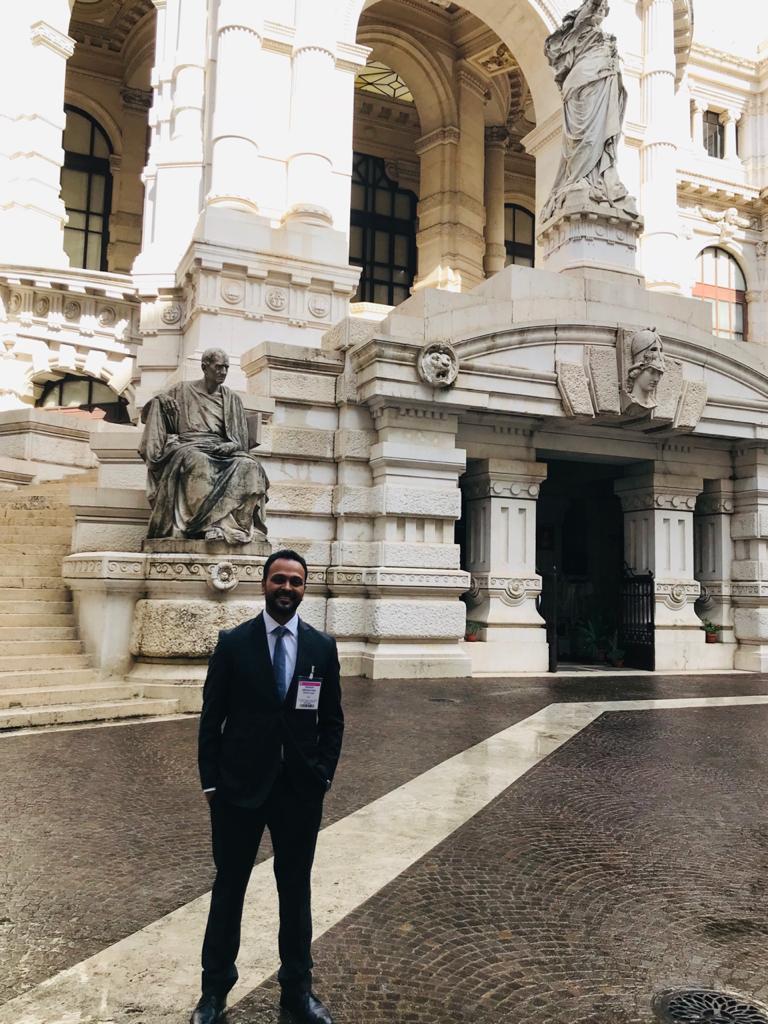
  • Yashdeep Chahal, Rank 1, Delhi Judicial Service Examination, 2019-20, on his preparation for the exam

    Yashdeep Chahal, Rank 1, Delhi Judicial Service Examination, 2019-20, on his preparation for the exam

    This interview has been published by Ayush Verma.

    AS A PHYSICS HONS. GRADUATE, WHAT INSPIRED YOU TO READ LAW? BEING IN BOTH AREAS AS A STUDENT, ARE THE LAWS MADE BY MEN AS INTERESTING AS LAWS OF THE UNIVERSE?

    My inclination towards law was a very organic one. After completing 12th, I wanted to become a pilot in the Indian Air Force and succeeded in clearing the interview. But, I could not join due to certain circumstances. Thereafter, I pursued my graduation in physics. During the course of my degree, I had developed an inclination towards social sciences. I remember, on being prompted by a senior, I participated in a debate competition in my first year and it marked the beginning of a long journey as a debater. In the course of my writing and debating, I started learning about the Constitution and that got me thinking about law. At that time, it seemed like a radical shift from science to law, but the more I understood the field of law, I was convinced that I can add more value to society by being in this area of work. Debating helped me realize the value of free expression, basic rights, governance and other contemporary issues and it was a self-discovery for me at that time. Law seemed like a perfect way to carry it forward. 

    Coming to your second question, if I were to answer this question back in 2016, I would have chosen the laws of the universe as more interesting. But to put it honestly, it was fascinating for me to realise how the laws made by men have the potential to transform everyday lives of humans, and other beings too. I cannot think of anything else to be as fascinating and as interesting.  

    YOU MENTIONED IN AN INTERVIEW ONCE THAT YOU LOST YOUR INDUCTION MOOT IN THE FIRST YEAR OF LAW SCHOOL. IN RETROSPECT, IS THAT EXPERIENCE A YARDSTICK TO MEASURE HOW FAR YOU HAVE COME?

    I did lose my induction moot in the first year and topped the same next year. But I would not present it as a yardstick. I think my eight-year long journey from facing a setback in the Air Force to Physics to Law could be a possible yardstick to measure how far I have come. When I look back, I remember how tough it was to take the call of coming to Delhi in 2013 from a small town in Haryana, with little hope of acceptance. It is, of course, a long journey but the journey has been rewarding. God has been extremely kind.

    HOW AND WHEN DID YOU DECIDE TO JOIN THE JUDICIARY? WHAT WERE THE KEY FACTORS YOU TOOK INTO CONSIDERATION WHILE MAKING THIS DECISION?

    I took this decision in 2017, in my third semester. One fine day, a group of students went for a visit to Lok Adalat in Rohini District Court on behalf of the Legal Aid Society of the college. I was a part of the group. During my visit, I could not help but notice the amount of faith that litigants impose in the judicial system. Judgeship provides an opportunity to engage in a direct form of public service by upholding and implementing the sacred values of law and justice for the benefit of the common man. For me, it was a call of conscience. To be able to do some meaningful work was my primary concern and judicial service aligned well with my character and aspirations. 

    ACCORDING TO YOU, WHEN IS THE RIGHT TIME TO START THE PREPARATION FOR JUDICIARY EXAMS?

    One could start preparing in the second year (3 year course) or fourth year (5 year course). 

    PLEASE TELL US ABOUT YOUR PREPARATION AND STRATEGY FOR THE DELHI JUDICIAL SERVICES EXAM.

    I began my preparation in March of 2018. My strategy was to be prepared for the exam by the time I finish my law school. To manage that, I consciously gave up on various activities that I was otherwise engaged in – moots, debates and internships. I did that to ensure that by the time I finish my law school, I am in the revision mode and I could manage to work. Fortunately, the strategy worked for me and I could engage in professional work after my degree, without compromising on my preparation. 

    DID YOU JOIN ANY COACHING PROGRAMS? DO YOU THINK ONE CAN CRACK THE JUDICIAL SERVICES EXAM ON THEIR OWN, WITHOUT ANY EXTERNAL HELP FROM MENTORS OR COACHING INSTITUTES?

    Yes, I did join a coaching program for the preparation. Joining a coaching institute has its own guiding value, but it is definitely not a prerequisite for clearing the exam. If you have sufficient guidance and can follow self-discipline in preparation, there is a good chance that you can sail on your own. 

    WE LIVE IN AN AGE OF INFORMATION REVOLUTION WHERE EVERYTHING IS AVAILABLE ON THE INTERNET. HOW SIGNIFICANT WAS THE ROLE OF THE INTERNET TOWARDS YOUR PREPARATION?

    The internet is a great source of information. It is a revolutionary medium for information sharing. But I must add that its beneficial value depends on your use and may vary radically from one person to another. I have mostly used the internet for the purpose of writing blogs, sharing my work with others and gaining access to informative articles online. I even remember reading the interview of a successful candidate on SuperLawyer for the first time. Now when I recall it, I think the internet can be a great source of motivation too. Personally, the internet has been a companion in the process of preparation, particularly for understanding contemporary legal developments. 

    WHAT HAS BEEN THE TIMELINE OF YOUR PREPARATION? WHICH SUBJECTS DID YOU PREPARE FIRST?

    I started my preparation in March of 2018. I finished LL.B. in May, 2019 and appeared for DJS prelims in September, 2019. For preparation, I followed the sequence suggested by my teachers and I was not particularly bothered to prepare in a rigid sequence. I think sequencing matters more when you are short on time. For instance, aspirants who have already finished their LL.B. and are eligible to appear would be more concerned with it. Though broadly speaking, I believe in preparing major subjects in the first go – Criminal and Civil Procedure, Penal Code, Evidence and the Constitution.  

    DID YOU WRITE ALL ANSWERS IN A SIMILAR FASHION? HOW IMPORTANT IS IT TO MENTION CASE LAWS AND PERSONAL VIEWS?

    I tried to maintain uniformity in my answers. I had a format in mind and before attempting the question, I made it a point to make a mental flow chart of my answer and then started writing. As far as case laws are concerned, one must know where to use them depending on the demand of the question. There is no need to mechanically reproduce case laws in every answer. 

    Generally, there is no need to write an answer based on personal views. The effort must be to lay down the law in clear terms and apply it to the facts of the case. There can be a difference of opinion on whether a particular provision applied to the case or not. So, it’s not always about writing a fixed answer, it’s about your reasoning which must be conceptually sound and logical.

    WAS TIME MANAGEMENT A CONCERN IN YOUR PREPARATION? WHAT WERE THE MOST PROMINENT HURDLES DURING THE PREPARATION?

    I was preparing alongside my final year of LL.B. and thus, time management was a key concern in my preparation. I was spending the first half of the day in college, and second half at the coaching centre. I had to choose odd hours of the day to keep up with my preparation and it was challenging. The most challenging phase began when I started working after LL.B. I was going to the office everyday and managing my preparation alongside. It was difficult but having a rigid discipline helped me deal with all my commitments. 

    HOW DOES THE JUDICIARY PRELIMINARY EXAM PREP DIFFER FROM THE MAINS PREPARATION?

    Preliminary exam is very peculiar in nature. Unlike the mains exam, one does not get the opportunity to articulate in a preliminary exam and has to be very objective in preparation. It requires great focus on keywords of the bare acts and thorough practice of objective type questions. 

    HOW IMPORTANT IS IT FOR A JUDICIARY ASPIRANT TO PERUSE PAST PAPERS? WHAT ARE SOME OF THE BEST RESOURCES TO OBTAIN THEM?

    Past papers are crucial to understand the pattern and thrust areas of an exam. There is no certainty of the same pattern being followed in subsequent exams, but it is always advisable to be familiar with the exam. Previous years’ questions are readily available in standard text books for judicial service preparation. 

    DID YOU TARGET ONLY ONE STATE’S EXAM OR MULTIPLE STATES? DOES THE PREPARATION FOR THE EXAM VARY DEPENDING ON THE STATE?

    My preparation was primarily focused on Delhi and Haryana. As far as preparing for different states is concerned, one formula may not work for all the exams. Every state has a different syllabus, pattern, thrust areas and nature of questions. Some states focus more on the theoretical side of the syllabus and some test aspirants on their analytical skills. Therefore, as an aspirant, it is important to customize your preparation and strategy as per the demand of the particular state.

    DID YOU PLAN FOR A BACKUP WHILE PREPARING? HOW IMPORTANT IS THE ROLE OF BACKUPS IN ONE’S PREPARATION JOURNEY?

    I think backups are important. In an ideal scenario, it may be appropriate to call for a single minded approach without caring for backups. But, it’s a very competitive world and practically speaking, I see no harm in securing alternate options to look after your best interests. Though I must add in the same breath that having a backup must not mean misplacing your priorities. As an aspirant, you must know where your priorities lie and a substantial amount of your effort must be aligned in the direction of your main goal.  

    PLEASE SHARE YOUR INTERVIEW EXPERIENCE.

    My interview flew like a free conversation on law. I was asked questions on various areas of criminal procedure, civil procedure, evidence and the Constitution. There was no personal question in my interview and it was completely focused on law. Interview, I believe, is not just about your knowledge of the subject, it is essentially a test of your personality and how you respond or (more importantly) not respond to a question. Usually, the panel puts you at ease with yourself and enables you to express yourself naturally.

    IN YOUR OPINION, WHAT IS THE DECIDING FACTOR BETWEEN AN ASPIRANT WHO SUCCEEDS AND THE ONE WHO IS NOT ABLE TO WIN COMPETITIVE EXAMS ON THE PATTERN OF THE JUDICIAL SERVICES?

    I think it all begins with a reality check. The ability of an aspirant to give herself a reality check of where she stands and where she needs to go plays an instrumental role in success. The bar is never the same for all the aspirants. Your preparation has to be customized as per your personal requirement and once you devise a strategy for yourself, it is all the more important to have faith in it. Distractions will never serve you right. Yet another deciding factor is discipline. In the legal field, there are a lot of activities to participate in and at some point of time, one would need to make hard choices. An aspirant must be ready for making such choices with great clarity of mind. 

    ANY PARTING ADVICE FOR STUDENTS PREPARING FOR JUDICIAL EXAMINATIONS?

    Any judicial service aspirant must be well informed about two things – first, the study of law is a constant pursuit to evolve the legal mind and one cannot succeed without commitment and second, judgeship requires an unwavering faith in the cause of justice. Until and unless an aspirant is aware of what she is trying to be, the journey might feel tiring and even pointless at times. An understanding of the essence of justice is essential for sailing through the tides in this journey. As I see it, there is nothing more inspiring than being able to enforce the law in its true letter and spirit for securing a sense of justice in the society at large. 

  • Mohan Dewan, Principal of R. K. Dewan & Co., on his 50+ years of experience in IPR, his advice to Patent Lawyers in India and the legacy of India’s leading IPR Firm

    Mohan Dewan, Principal of R. K. Dewan & Co., on his 50+ years of experience in IPR, his advice to Patent Lawyers in India and the legacy of India’s leading IPR Firm

    This interview has been published by Ayush Verma.

    YOU ARE UNDENIABLY ONE OF THE MOST EXPERIENCED PRACTICING IP AND PATENT PROFESSIONALS IN INDIA. PLEASE TELL US HOW YOUR JOURNEY STARTED?

    I converted RK Dewan into a law firm as you see it today after my father started the firm in 1942. The trigger for its inception was the introduction of the Trademarks Act, 1940. Many people in the advertising agencies started reaching out to him with queries and he found interest in this work which involved registrations of trademark, and prosecution. Although I graduated as a lawyer in 1973, I joined the firm much earlier. Since I was also interested in patents, I started to involve the firm more in patent-related work. 

    Eventually, in 1988, I went to South Africa to teach IP Law and International Law for approximately 5 years. I joined the University of Natal and became the Head of the Department of IP law. I was always interested in teaching law and even now, 20% of my time goes in teaching, whether in-house or to law students.

    YOUR FATHER WAS CLEARLY A BIG INFLUENCE ON YOU. ANY GOLDEN WORDS OF ADVICE FROM HIM?

    Be honest with yourself. You may not be the best but don’t be afraid to be honest with your clients. There have been numerous times where I have had to tell my clients that their case is not strong, and that is perfectly fine to do. 

    WHAT ARE SOME OF THE MAJOR SHIFTS YOU HAVE WITNESSED IN THE LEGAL SYSTEM RECENTLY?

    Working from home has been a big change. There is also the e-justice system which I believe is the future. Eventually, all of us will move to a remote justice system of sorts wherein people do not have to go to courts to argue matters, judges do not have to go to courts and briefs can be prepared by software. 2020 will be a landmark year.   

    IS IT CORRECT TO SAY THAT CYBER LAWS AND AI ARE THE UPCOMING AREAS THAT YOUNG LAWYERS SHOULD BE LOOKING AT? HOW WOULD YOU SUGGEST STUDENTS PICK THE RIGHT SPECIALIZATION?

    Yes, that is correct. I would first encourage everyone to be computer savvy. 

    At one point in time, there weren’t many specializations; I was more of a generalist. Now, the legal profession is more specialized. In the US, you have specialized IP litigation and prosecution lawyers. Students must decide what they have a flare for. For example, if you have a flare for arguments, you can become a litigation lawyer. This is something the students must analyse and understand from the beginning. I would say patent law in India is reserved for professionals coming from a science background and I wouldn’t advise lawyers without this background to take it up. Then you have copyright law which has many verticals like music, literary, internet, cyber laws to name a few. There is also trademark law which is generally called soft IP but many professionals in India specialize in it. Normally those who practice trademarks also do designs along with it. Despite these options, students are not taught how to select their fields for the future. Even if one has decided IP as their specialization, which part of the IP domain they want to become an expert in is important. It is crucial to regularly counsel the students to help them narrow down the options. Career guidance is essential for lawyers. 

    THE FIVE YEARS SPENT TEACHING AT THE HOWARD COLLEGE, UNIVERSITY OF NATAL IN SOUTH AFRICA MUST HAVE BEEN A UNIQUE PROFESSIONAL OPPORTUNITY. WOULD YOU LIKE TO TELL OUR READERS MORE ABOUT THE EXPERIENCE? 

    My five years of teaching in South Africa was at the height of apartheid between 1988-1993. It was before Nelson Mandela was released and the African National Congress came to power and I, as a “non-white” lawyer, was teaching in what might be called a “white-dominated” domain. It was certainly an eye-opening experience for me at a personal level. 

    I taught both IPR as well as Private & Public International law and had to alter my teaching and evaluation methods at the university. I even changed the method of conducting the examination. The exam would only consist of one hypothetical problem with a lot of sub-questions therein. I, personally, insisted on an open book exam since lawyers are not required to memorize things while contesting a case. While practicing law, no one cares about what the section of a particular Act is, since you can open the book and read it. Developing one’s analytical skills is more important. I would give them questions with a regular legal problem related to IP and they only had to find the solution to that problem. We need to train students to think, don’t train them to memorize. This is what I believe is fundamentally wrong with the Indian education system. Lawyers must think on their feet. The bench would pose you questions out of the blue, you should be in a position to answer those questions by thinking at the spur of the moment.

    WHAT WOULD YOU SAY HAS BEEN THE IMPACT OF THE ONGOING PANDEMIC ON IP LITIGATION, ESPECIALLY PHARMACEUTICAL PATENTS?

    As IP or patent lawyers, we are hugely dependent on inventors and inventors are dependent on their brains. This period has given all the inventors more time to think and visualize their ideas to a great extent. In December alone, we have filed over 150 patent applications at the Indian Patent Office, which means we are filing over 5 applications every day including the weekend. This has been a most fertile time for inventors to think. In the pharmaceutical field, from March till April, the major thrust was from different inventors coming up with different ideas for masks. Since March, we have filed several applications for masks and sanitizer designs as well. We were one of the first people to apply for a patent for a hand sanitizer that can be used with the help of feet to avoid any touch by the hands. I have personally filed a patent and design application for a special type of zipped mask that prevents contamination while eating. 

    Coming to the direct impact of COVID on IP litigation, litigation has increased almost 3 times in 2020. Litigation by video conferencing has changed the face of the profession. The unfortunate part is that there is a significant group of lawyers who don’t have the facility to litigate through video conferencing. And this is an issue that the courts should have considered when they resorted to this system hurriedly. They should have provided some sort of facility to these lawyers to help them take part in the online litigation. It has become essential for lawyers to be tech-savvy. They should be trained on how to create briefs online and how to use AI or machine learning to their benefit. The new generation of lawyers has to embrace it since this will be the future.

    YOU ARE FAIRLY ACTIVE ON SOCIAL MEDIA PLATFORMS. DO YOU CONSIDER LINKEDIN AN IMPORTANT TOOL FOR THE MODERN-DAY LAWYER?

    I certainly put a lot of intentional effort into staying active on Linkedin. We have a book coming out from RK Dewan & Company, titled The RK Dewan Chronicles, 2020. Our entire team publishes at least 2 articles regularly every day on Linkedin. We are present on another platform called Lexology, where we frequently publish interesting articles. We also have our newsletter, RKD Newsnet, which comes out about twice a month and goes out to 36,000 subscribers all across the world. I believe communication in both the written form as well as the spoken word is equally important. My preferred platform is LinkedIn since it is a platform that supports professionals, but we are also very active on WhatsApp groups which are primarily used for important internal communication. My personal belief is that other social media platforms like Facebook, Instagram, or Twitter are more for socializing and not for professional growth. For professionals, I believe Linkedin is where they should be most active. 

    WHAT ARE YOUR LONG-TERM PLANS FOR RK DEWAN AND COMPANY? HOW DO YOU SEE THE FIRM GROWING IN THE COMING DECADE?

    The long-term plan is to continue to do what we are doing, offer services to our clients, and take in new people. Expanding to other countries is an option as well. We are looking at setting up “servicing centers” in places like China, the USA, and Europe.  The aim is to make “IP for the masses”. We have already started translating some of our work into various regional languages like Oriya, Tamil, Telugu, Marathi, etc. One barrier in IP is language; the IP field is very dependent on the English language and many people shun the field for that reason. We would like to resolve this issue by simple training programs. Ideally, IP should also be taught in schools. We would like to bring IPR as a subject into schools so that students too can understand what the basics are. I would, personally, like to write some books in furtherance of this goal. 

    There must be some specific kind of training in the English language since most of the practice in the international space is conducted in English. Some international languages like Spanish, English, or French are important globally. We must provide the right training to our lawyers. We cannot have lawyers who only speak in regional languages anymore. They have to be trained in international languages, especially if they work in patents and IP. 

    HOW WOULD YOU WANT YOUR LEGACY AT RK DEWAN TO BE REMEMBERED?

    I want to be remembered for giving honest service to clients. There is no substitute for hard work, rather, there is no substitute for intelligent hard work. Somebody picking up stones from one side of the road and placing it on the other side is also doing hard work but that isn’t intelligent hard work. Honest and intelligent hard work is indispensable. Lawyers love applying precedents but there are no precedents for clients since each client is unique. Your client only needs a solution to the problem, not an explanation of its problem. I have witnessed lawyers giving long explanations to the clients telling them what the problem is; your client already knows that. This reminds me of another practice that I have noticed, which is lawyers making more noise in their briefs. Ultimately, these lengthy arguments don’t hold any water. In India, there is this practice of making briefs verbose. Keep your briefs short; precision is what is most important. International practice requires briefs to be precise and to the point and the training in India must focus on that as well. 

    ANY CONCLUDING REMARKS FOR STUDENTS AND LAWYERS LOOKING TO PURSUE A CAREER IN IP LAW?

    In my opinion, there is one fundamental thing that lawyers are not taught. Lawyers are not taught to face failure. Many lawyers are not disillusioned by anything, but they are disillusioned by failures. However strong your case is, sometimes the case doesn’t go your way. I have faced failures when I used to litigate and I did feel disappointed in those moments because I was not trained on how to handle it. I have even written an article along the same lines on things they don’t teach you in law school. The top of that list is this. Moot courts are not a substitute for real life. Lawyers have to be trained for failure which needs psychological counseling. I know many lawyers who chose to leave the profession because they believe they failed; but the reality is that the case failed, not the lawyer. 

    Another crucial thing to understand in the profession of law is strategy. You must strategize in your mind how you will tackle litigation, a client, and the different situations that may arise. These are the two most critical things for a lawyer to learn, which are not taught in law schools. In fact, strategy planning is crucial for anything in life, be it your day-to-day plans or your professional goals. You need to plan your life properly. There are very few things that work out well spontaneously. You cannot wake up not knowing what to do with your day. You need to have a vision for tomorrow. 

    Lastly, I would recommend everyone to read the poem “IF” by Rudyard Kipling. One of the lines from the poem that I recall right now is “to fill every unforgiving minute”. The minute does not forgive you, it simply moves on. So, one should aim to fill every unforgiving minute with the maximum amount of positive energy and effort. 

  • Manendra Singh, Associate Partner, Economic Laws Practice, on his career as a Corporate Lawyer and Solicitor, in Mumbai

    Manendra Singh, Associate Partner, Economic Laws Practice, on his career as a Corporate Lawyer and Solicitor, in Mumbai

    This interview has been published by Ayush Verma.

    HOW WOULD YOU LIKE TO INTRODUCE YOURSELF TO OUR READERS?

    I am a first-generation lawyer and an Associate Partner at Economic Laws Practice (ELP), Advocates and Solicitors, Mumbai. ELP is a full-service law firm in India with 200+ professionals – lawyers, solicitors, chartered accountants, cost accountants, company secretaries and economists – assisting clients on transactional, advisory, litigation, regulatory and tax matters. My areas of practice are mergers & acquisitions, private equity, securities laws, general corporate and corporate litigation.

    I am also a Solicitor and completed my 5-year law course from Government Law College, Mumbai (GLC) along with LLM in Business Laws from Mumbai University. In addition to my passion for law, I am also a dog lover, foody, cricket enthusiast, and I enjoy travelling. 

    COULD YOU DESCRIBE YOUR JOURNEY TOWARDS LAW AS A CAREER?

    I was a sincere student during my school days. My analytical, research and debating skills helped me shape my critical thinking and being an avid reader, not only helped me develop a good grasp of various disciplines but also made me comfortable with new subject areas. As a Science student, while most of my friends were aspiring for careers in engineering and medical fields, I decided to pick up law; the constant encouragement and feedback from my family was critical in my choice. The decision cannot be described more aptly than in the words of Robert Frost: “Two roads diverged in a wood, and I took the one less travelled by, And that has made all the difference”. 

    I went on to join the Government Law College in Mumbai (GLC). During my law school days, the faculty and co-curricular activities helped me develop the skills needed in our profession. In my 3rd year, I was recruited by Khaitan & Co, Mumbai, where I signed my articleship to become a Solicitor. Later, in the year 2013, I joined Economic Laws Practice, Mumbai. 

    WOULD YOU LIKE TO TELL OUR READERS ABOUT YOUR EXPERIENCE AT GLC, MUMBAI? WHAT SORT OF CO-CURRICULAR ACTIVITIES WERE YOU MOST INTERESTED IN?

    GLC is one of the most prestigious law colleges in India, with an astounding history and remarkably rich heritage and pedigree, with some of the most renowned Chief Justices, Attorney General, Senior Counsels, and law firm managing partners as its alumni. I consider myself fortunate to be an alumnus of GLC and undoubtedly it is a significant part of my life! 

    GLC is located in the financial capital of the country, and its proximity to the Bombay High Court and numerous law firms, gives opportunities to students to pursue internships along with their studies. I too benefited immensely from this, as I pursued my solicitor traineeship at Khaitan & Co, along with my studies.

    The co-curricular activities that interested me the most were the moot court competitions and writing competitions. They taught me to work as a team player, taking ownership of your work, it helped me to develop research, oratory and articulation skills. Mooting also enabled me to travel to different colleges in India and interact with students from those colleges, making these competitions even more enjoyable.

    Mooting also helped me develop my writing skills. I started applying the learnings from my moot court experiences to write and got a few publications in journals across India.

    While mooting and writing was fun and full of learning, my early tryst with leadership happened when I laid the foundation of around 100 members strong, Leo Club (an arm of Lion’s Club) at GLC as its first President. Leo Club is focused on community service, along with conducting cultural and interpersonal skills programs. 

    IT SEEMS THAT YOU DID NOT PURSUE MANY INTERNSHIPS DURING LAW SCHOOL. WHAT WERE YOUR REASONS FOR DECIDING TO DO SO? WHAT ROLE DO YOU BELIEVE INTERNSHIPS PLAY IN A LAW STUDENT’S LIFE?

    While pursuing my degree in law, I was looking for mentorship and long association with a law firm which would provide the right guidance while offering a challenging work environment. Fortunately, I was recruited as a solicitor trainee in my third year by Khaitan & Co, where I signed my articleship to become a Solicitor. Having signed 3 years articleship, I did not pursue other internships. My articleship required me to assist different teams such as corporate, capital markets, litigation, tax, and that indeed helped me in deciding to pursue corporate law. 

    In my view, internships play a pivotal role for a law student to help them make a      choice – whether they see themselves working in a law firm or litigating or pursuing something else (such as higher studies or judicial services). It is not just about securing a job; opportunities to interact with senior professionals along with real life experiences is invaluable! 

    A piece of advice to students – do not treat any work assigned during the course of internships as small or big. All of it will make sense in the long-term, be it printing, typing, proof reading or even summarising documents.  

    WHAT WERE YOUR REASONS FOR PURSUING AN LLM IN BUSINESS LAWS RIGHT AFTER GRADUATION? IN WHAT WAYS HAS THE LLM SHAPED YOUR CAREER AS A CORPORATE LAWYER?

    In my view, a corporate lawyer is required to possess a good understanding of business disciplines along with legal principles. The LLM in Business Laws was a core corporate law program, and gave me an opportunity to enhance my experience and use the learnings in my day-to-day practice. Certain subjects in the LLM syllabus were common with the Solicitors exam, hence the course also helped me in the Solicitors exam. We live in a converging world, where knowledge of a single discipline isn’t enough. A broader exposure to business functions and understanding their legal implications is critical for our students and future leaders.

    YOU WERE WORKING AS A SOLICITOR TRAINEE WITH KHAITAN & CO. SINCE 2009 WHILE PURSUING YOUR DEGREE. YOU ALSO MANAGED TO WIN MANY ACCOLADES AT GLC, SUCH AS BEST STUDENT, BEST RESEARCHER, ETC. HOW DID YOU MANAGE YOUR WORK ALONG-SIDE LAW SCHOOL? WHAT DID YOUR WORK AS A SOLICITOR TRAINEE ENTAIL?

    Khaitan & Co had a rotation policy for their solicitor trainees, requiring them to work with different teams. As a student, this helped me tremendously to gain an understanding of different subjects and learn finer details as I assisted different teams on many transactions and advisory work. My role included assistance in research, due diligence, drafting, reviewing and vetting.

    Managing law school along-side articleship was challenging as I had to ensure that neither suffers. Time management is a critical aspect that I learnt from this experience; it continues to help me in my practice even today!

    Participating in co-curricular activities such as moot courts, writing competitions, debates, while maintaining good grades, helped in being awarded with the prestigious Best Student award at GLC.

    YOU CLEARED THE NOTORIOUSLY DIFFICULT SOLICITOR EXAMINATION CONDUCTED BY THE BOMBAY INCORPORATED LAW SOCIETY IN 2013. COULD YOU ELABORATE UPON HOW YOU TACKLED THE EXAMINATION? 

    Solicitor examination is all about persistence, patience, hard work and understanding concepts. The exam requires sound understanding of key subjects such as corporate and commercial laws, conveyancing, drafting, pleading, tax and general laws. To crack the exam, a devoted and disciplined schedule is required, and for the brief period, I had in fact given up on my social life. My time was mostly consumed in reading commentaries, case laws and studying with a few friends who were also appearing for the exams. Surrounding myself with like-minded and motivated friends helped in sustaining the efforts and cracking this unpredictable exam!

    WHAT SORT OF VALUE ADDITION DOES THE QUALIFICATION OF A SOLICITOR BRING TO ONE’S CAREER AS A LAWYER PRACTICING IN INDIA? ADDITIONALLY, WHAT WAS YOUR MOTIVATION FOR PURSUING IT?

    The system of Solicitors can be traced back to the British era and in the present times, the institution of solicitors and attorneys is retained by way of the Solicitors examination conducted by Bombay Incorporated Law Society (incorporated in 1894). Total number of Solicitors in India are only around 1,000 and that makes it a coveted and elite club of attorneys. To be a part of such an organisation was one of the driving factors for me to become a Solicitor. The fact that BILS has a strong network and relationship with the legal fraternity is an added advantage. 

    It was also about the syllabus and the challenge of clearing it. Past exam results were usually around 1-2% and sometimes not even one person would clear it. The syllabus requires studying various laws extensively, and tests the analytical and reasoning skills. I still remember one of the instructions in the question paper was that marks will be given for the approach and not for the length of the answer. 

    In my view, a lawyer can always bring more value to the table for the clients if he has more of a generalist approach and is able to attend to queries not just on one subject but other subjects as well. Without undermining the value that a specialist brings, I feel as a corporate lawyer and solicitor, the generalist approach has helped me immensely in my practice. 

    AS A TRANSACTIONAL AND GENERAL CORPORATE LAWYER AND ASSOCIATE PARTNER AT ECONOMIC LAWS PRACTICE, WHAT DO YOUR DAY-TO-DAY RESPONSIBILITIES INCLUDE?

    As a transactional and general corporate lawyer, the work usually entails attending to client calls, drafting, reviewing, negotiations, advisory and research. Understanding the complexity of the transactions, clients’ asks and suggesting business solutions to legal problems is the aim while dealing with the clients. Each day involves speaking with my team and reviewing the progress on the work. Most days are usually full of deliverables to clients and often require long working hours.

    WITH APPROXIMATELY 37 PUBLICATIONS TO YOUR CREDIT, HOW IMPORTANT ARE PUBLICATIONS FOR A PROFESSIONAL? IS THE IMPORTANCE OF PUBLICATIONS ANY DIFFERENT FOR A STUDENT?

    I started writing to present my learnings from my moot court experiences. Later, I won the Manupatra Essay Writing Competition, and that gave me the impetus to write more. Now, writing has become a way for me to express my thoughts and opinions on various legal concepts that I come across on a daily basis. Writing helps in articulation of thoughts and grabbing the reader’s attention with one’s simplicity and lucidity of thoughts.

    In case of students, I would strongly recommend them to work on their writing skills and publish their articles. Often when I am researching a particular topic, I tend to come across various articles written by students. This indicates  that students are increasingly complementing their academic knowledge to solve practical problems and putting out a solution for the world to assess. Students can create their own blogs, or write on platforms like LinkedIn. It will create a network of people who will read their material and would like to reach out to them and recognise their work. 

    HOW DO YOU KEEP UP WITH THE DEVELOPMENTS IN THE LEGAL FIELD? WHAT RESOURCES DO YOU USE?

    Law as a subject is always evolving, and in recent times, it is changing at an aggressively rapid pace, be it through amendments, notifications, clarifications, circulars, or case laws. Hence, it is imperative for lawyers to always keep themselves updated on the changes. I prefer reading Economic Times, Financial Express, Mint, etc. For updates, I regularly visit regulator’s websites such as MCA, SEBI and RBI. 

    At ELP, we have a dedicated team which works closely on understanding the impact of the changing legal environment and endeavour to keep the clients abreast with such changes.

    WHAT ARE SOME DEVELOPMENTS OR EMERGING TRENDS IN CORPORATE AND COMMERCIAL TRANSACTIONS THAT LAWYERS SHOULD KEEP AN EYE ON IN 2021?

    The Government has made several changes in policies and laws to cater to the impact of COVID-19, and that kept the lawyers busy in some or the other form in 2020 and will continue to do so. The changes are long-lasting and have created opportunities across multiple sectors on varied fronts, be it investments, restructuring, exits, mergers and acquisitions, fund raising, listing or delisting. New laws are projected for offshore listing, data privacy and labour laws, while the ease of doing business continues as an agenda for the Government. Sectors such as technology, pharmaceuticals, e-commerce, real estate, infrastructure, education, are picking up pace. These are interesting times and we as lawyers are looking forward to it. 

    IN WHAT WAYS HAS COVID-19 IMPACTED THE STATUTORY COMPLIANCES OR COMMERCIAL TRANSACTIONS IN BUSINESS SO FAR? WHAT DO YOU THINK WOULD BE IT’S LONG TERM IMPACT ON YOUR PRACTICE AREA?

    COVID-19 initially led to the introduction of plenty of regulatory changes which were temporary in nature. Certain measures even though introduced as temporary may become regular now. For example, India witnessed companies holding virtual annual general meetings, which was first of its kind. Online court hearings were new initially, however, people have gotten used to it. The business community at large has welcomed plenty of the relaxations and it won’t be surprising to see some of the temporary measures becoming permanent.

    As far as practice areas of corporate and commercial laws are concerned, I think by now most of the lawyers have adapted to the changes due to COVID-19. We have been negotiating transactions online, holding meetings with clients on Microsoft teams and zoom, and attending online hearings. In the long run, the flexibility to work from home along with attending office may be adopted at large, as long as the work is not getting impacted. Of course, there are times when in-person meetings are essential, and those will continue to happen as the COVID-19 restrictions are being eased and phased out. 

    WHAT WOULD BE YOUR ADVICE TO LAW STUDENTS WHO ARE EAGER TO EXPLORE THE AREAS OF SPECIALISATION SUCH AS M&A, PRIVATE EQUITY, SECURITIES LAWS, GENERAL CORPORATE WHICH CAN BE COVERED UNDER THE AMBIT OF BUSINESS LAW?

    Practice areas of M&A, PE, Securities Laws include laws which are vast and complex. However, there is an interplay of certain fundamental laws in all these fields such as Contract Act and Companies Act which are the backbone of any transaction. I would recommend students to read and gain a grasp on the fundamental laws. To give practical touch to their knowledge, they should read case studies to understand the basic laws – it could be a change related to the sectoral cap on e-commerce, exemption from open offer under Takeover Code, etc. The patience to look for the law, read and understand the relevant section is important. 

    I feel there is a lot of cross-pollination of these areas with other practice areas such as tax and antitrust laws. Hence, a basic understanding of those laws will help them in getting a holistic view of a transaction or matter. Lastly, in my view, for a lawyer, there is no escape from reading.  

    FINALLY, WHAT IS YOUR PARTING ADVICE FOR OUR READERS?

    There is no substitute to hard work. One should believe in themselves and not be afraid to make mistakes. I would like to sum up with one of my favourite quotes: ‘Difficult roads often lead to beautiful destinations.’

    Manendra Singh ELP profile: https://elplaw.in/people/manendra-singh/

    Manendra Singh LinkedIn profile: https://www.linkedin.com/in/manendras/

  • Kaushik Laik, Advocate, Supreme Court, on his book titled “Consensus Ad Idem – Consent and Free Consent in Indian Contract Law”

    Kaushik Laik, Advocate, Supreme Court, on his book titled “Consensus Ad Idem – Consent and Free Consent in Indian Contract Law”

    This interview has been published by Ayush Verma.

    HOW WOULD YOU LIKE TO INTRODUCE YOURSELF TO OUR READERS?

    I am an advocate practising in the Supreme Court as an Advocate-on-Record. I graduated from W.B. National University of Juridical Sciences, Kolkata in 2007. 

    WHAT IS THE MOST NOTEWORTHY CHANGE YOU HAVE WITNESSED IN THE LEGAL PROFESSION SINCE YOU JOINED IT COMPARED TO NOW?

    I enrolled at the Bar in the year 2007 soon after graduating from law school. I was also retained by a premier law firm for a few years before commencing my independent practice. Hence, I wouldn’t say that the legal practice has witnessed a sea-change since I joined the profession. The standard of litigation, particularly at the Supreme Court, has always been known to be high and that remains to be the case even today. 

    PLEASE SHARE THE KEY CHALLENGES FROM YOUR JOURNEY IN LITIGATION, FROM STARTING OUT AS AN INDEPENDENT LITIGATOR TO GOING ON TO BECOME AN ADVOCATE-ON-RECORD. 

    I guess the toughest challenge for any law practitioner, whether in litigation or in corporate advisory, is to have a clientele and a good flow of work. A lawyer may be very erudite, but his knowledge in law wouldn’t help unless he actually has a decent law practice. This challenge – of having clients and ensuring that you render the best legal services to them – is most arduous when a lawyer starts his independent practice. While most corporates prefer to approach top-tier law firms (and justifiably so, for the quality of legal services by these firms), individual litigants would always want to rely on their existing lawyers, unless of course, they are dissatisfied with them. This was the same challenge that I faced when I started my independent practice. 

    The only way to gain the trust of clients (whether corporations or individuals), and to get a steady flow of work, is to ensure that a lawyer gives his best in whatever little work comes his way. Indeed, hard work is the only thing that pays, as it is a lawyer’s dedication towards his case and his client’s interests that results in good legal practice. 

    WHAT WAS YOUR INSPIRATION FOR VENTURING INTO WRITING? HAVE YOU WRITTEN ANY OTHER BOOKS BEFORE CONSENSUS AD IDEM?

    I have always enjoyed writing since my law school days. As a law student, I had contributed articles in various law journals, including AIR, JIPR, Commonwealth Law Bulletin etc. While in practice, I authored a book on securities law (more precisely, on Unfair Trade Practices in Securities) which was published by Taxmann, 2013. I was also on the editorial board of Taxmann’s Commentary on Company Law, 2013.  

    WHAT IS THE OBJECTIVE BEHIND WRITING CONSENSUS AD IDEM AND HOW WILL IT CHANGE THE COURSE OF PROCEEDINGS IN COMMERCIAL LAWS?

    Most civil disputes, whether involving corporate transactions or otherwise, involve contractual breaches. In fact, contractual terms are the very basis on which most commercial disputes are litigated in courts. The existing commentaries and treatises on Contract Law, which are usually referred to by law practitioners, are intended to serve as lectures on the entire Indian Contract Act, without focusing exclusively on the concept of “consent” – perhaps the most fundamental concept underlying a legally enforceable contract. Moreover, while referring to the concepts of fraud and misrepresentation, we tend to have a general inclination towards criminal law, even though the ramifications of these concepts in civil law are equally diabolical. The instant book seeks to serve as an exhaustive commentary on these issues. The recent episode of Fortis in its litigation against Daiichi, one of the most heavily contested corporate battles of late, has raised the levels of curiosity on this subject. 

    THE TITLE OF THE BOOK MENTIONS THE CONCEPT OF “CONSENT & FREE CONSENT IN CONTRACT LAW”. PLEASE TELL US ABOUT THE DIFFERENCE BETWEEN THE TWO?

    Strictly speaking, a “consent” which is not “free consent” renders a contract either voidable or void ab initio. While “consent” takes place when two or more persons agree on the same thing in the same sense, it cannot be said to be “free consent” if it is caused by coercion, undue influence, fraud, misrepresentation or mistake. Sections 13 to 22 of the Indian Contract Act, which deal with numerous facets of free consent and the exceptions thereto are, indeed, fundamental to the very notion of consensus-ad-idem. Moreover, each of the exceptions to free consent, including misrepresentation, undue influence and fraud are subject matters which have evolved over the years. These concepts form the pivot on which legal validity of any contract stands, and you would be surprised at the extent to which the law has developed on these issues. The book is just a humble attempt to decipher and comprehend them. 

    PLEASE SHARE THE PROCESS OF WRITING THIS BOOK AND ANY IMPORTANT MILESTONES YOU WOULD LIKE TO RECOLLECT.

    I had started on the project sometime in August 2019, and by the time the year ended, I had completed a substantial portion of the research work. The task which was left was the actual writing of the book! While managing professional work and this project simultaneously was indeed difficult, things became relatively easier when the Covid-19 lockdown came to be imposed in March 2020. I was personally in a containment zone and there was no question of me stepping out of the home. This turned out to be a blessing in disguise, as I could now focus completely on the book. Indeed, this book is dedicated, among others, to all healthcare and sanitation workers in the country. This book was written when I had the luxury of time, while they were risking their lives in the battle against COVID-19. 

    HOW IS YOUR BOOK GOING TO  HELP LAW STUDENTS AND PROFESSIONALS INTERESTED IN COMMERCIAL LAWS?

    The book is an academic work. Contract law is not just a subject in law school but remains fundamentally important for all legal professionals and in-house counsels alike. Commercial arbitrations have remained, and continue to remain, a mainstay in corporate disputes, which primarily involve interpretation of contracts. It is for this reason that I feel the book, despite its unintended flaws, would be of interest to legal professionals, law firms, universities, corporate houses and more importantly, government departments whose commercial contracts are often challenged in the courts of law.

    PUBLISHING A BOOK ON YOUR AREA OF EXPERTISE IS A SIGNIFICANT ACHIEVEMENT FOR ANY PROFESSIONAL. WHAT OTHER PROFESSIONAL GOALS ARE YOU ASPIRING TO TICK OFF YOUR CHECKLIST IN THE COMING YEARS?

    This is indeed a flattering question for me. I do feel humbled that my book was published by Thomson Reuters, a leading publishing house. Having said so, the law is a profession which requires perseverance and continued efforts. Hence, I feel a “checklist” is something that can never be maintained in practice. What can be maintained, however, is one’s love for the law. I aspire to do so. 

    LITIGATION IS A GRUELING AND DEMANDING PROFESSION. WHAT ARE YOUR HOBBIES OR INTERESTS BEYOND THE PROFESSION AND HOW DO YOU MAKE THE TIME TO CULTIVATE THESE INTERESTS, SUCH AS WRITING?

    As I indicated earlier, legal writing is indeed difficult while remaining committed to legal practice. Had it not been for the Covid lockdown, I doubt I would have been able to finish the project in the time that I actually did. Long working hours is a norm in the profession, and unless one remains disciplined on time management, it is practically impossible to undertake a writing project. 

    Coming to my interests outside of the legal field, music, particularly, Hindustani Classical, has been my interest since childhood. Listening to old records of the Maestros is my favourite pastime. 

    ANY PARTING MESSAGE FOR YOUNG LAWYERS WHO ARE ASPIRING FOR A CAREER IN COMMERCIAL LITIGATION? 

    Young lawyers graduating from law schools should, firstly, remain grounded. The legal profession is demanding and requires lawyers to remain focused. Commercial laws, in particular, keep changing with times, and it is crucial that young lawyers continue to keep a tab on the latest case laws and statutory amendments. Regular reading of legal journals, or even daily visits to law-based websites, is the easiest way of doing so. This can be done while in law school itself, as it is a habit that remains with you throughout the profession.

  • Rajeev Rambhatla, Head – Hyderabad at King Stubb & Kasiva, on his experience as one of the youngest partners at a full-service law firm and the professional challenges during the initial years

    Rajeev Rambhatla, Head – Hyderabad at King Stubb & Kasiva, on his experience as one of the youngest partners at a full-service law firm and the professional challenges during the initial years

    This interview has been published by Ayush Verma.

    HOW WOULD YOU LIKE TO INTRODUCE YOURSELF TO OUR READERS?

    I am a simple person who loves his work and enjoys binge-watching TV shows and listening to music in my free time which, fortunately or unfortunately, I don’t get much of. In terms of my work, I am what one would call a commercial litigation lawyer and I have been primarily working in dispute resolution and arbitration for the past few years. I also specialise in litigation management and labour and employment law. While my career began with an in-house role at SREI Equipment Finance, I quickly moved to a law-firm thereafter upon realising that in order to be a good in-house counsel, it’s important to learn the basics which are best absorbed in a law-firm environment. 

    KINDLY SHARE YOUR JOURNEY TOWARDS THE LEGAL SECTOR. WHAT INSPIRED YOU TO TAKE UP LAW? ARE YOU A FIRST-GENERATION LAWYER?

    As a kid in school, I was never the most studious and was always unsure about what I wanted to do in life but I always knew that it wouldn’t be something that was related to science or maths. I had a keen interest in subjects like social studies, geography, and history and I always loved public speaking right from a very young age.When I was attending my 12th Standard board exams, I wasn’t sure about what I would be doing after the exams. My initial plan was to pursue a bachelor’s degree in commerce and eventually pursue a career in management. Around the same time, my paternal uncle, Prof. Dr. Rambhatla Venkata Rao, who was the Dean of the law college at Andhra University was appointed as the Vice-Chancellor of National Law School of India University (NLSIU) at Bangalore. I remember accompanying him to his swearing-in ceremony which was right after my board exams and we were taken on a tour of the campus. I was super impressed with the library and the overall vibe of the campus. All of a sudden, I knew what I wanted to do! 

    Neither of my parents are lawyers, so yes, I’m a first-generation lawyer. I’ve been blessed to have uncles on either side of my family (maternal and paternal) who are in the field of law with one being an academician and the other being a seasoned litigator.

    KINDLY SHARE YOUR MEMORIES OF CHRIST UNIVERSITY AND THE CONTRIBUTION IT HAS IN SHAPING YOUR CAREER AS A SUCCESSFUL LAWYER. WHAT KIND OF CO-CURRICULAR ACTIVITIES DID YOU PARTICIPATE IN DURING YOUR LAW SCHOOL DAYS?

    Law school was indeed a life-changing experience for me. I was blessed to have the peers and the faculty that I had during my time at School of Law, Christ University. I always like to say that while I learnt the nitty-gritties of the profession through my internships and work experience, I learnt the nitty-gritties of life from law school. The faculty and my peers had an equal role in helping me shape a part of my personality which I carry till date. I was never the most avid mooter in college. I did participate in a few internal and external moots but my passion throughout law school was towards parliamentary debating. I also remember participating in a few client counselling competitions and MUNs. However, out of all the activities, PDs remained my favourite. I was active on the PD circuit even for a couple of years after graduating and it still remains an activity that is very close to my heart.

    PLEASE TELL US MORE ABOUT YOUR EXPERIENCE AT SREI INFRASTRUCTURE FINANCE LTD. HOW DID YOU LAND YOUR FIRST JOB THERE? WHAT WAS THE NATURE OF WORK YOU DID? HOW WAS THE LAW SCHOOL LEARNING DIFFERENT FROM THE FIRST HAND PRACTICAL EXPOSURE YOU GOT THERE?

    SREI Equipment Finance was my first job fresh out of college. It was a campus placement and although I was over the moon at the time knowing that I got selected for an in-house role straight out of law school, little did I know that I was nowhere close to being prepared for the role that I was getting into. Ideally, in-house counsels are expected to have basic knowledge of law and they are expected to liaison with external counsels and also advise internal stakeholders on various legal aspects. In order to effectively perform this role, it is important to have some amount of experience in the practical applications of law which are learnt better either through chamber practice or law-firm roles, be it litigation or otherwise.

    As someone who has been in the profession for the better part of a decade now, I feel young lawyers should always start their careers either in litigation or in a law-firm because that is where you learn the basics and a lawyer who doesn’t know the practical applications of the basics can never make a good in-house counsel. This was the reality of my stint at SREI Equipment Finance. My team and my mentor at the company were great and they did their best to make me feel comfortable in my role but the truth is we learn our best lessons when we are outside of our comfort zone and despite getting good exposure in terms of the practical aspects of working in the legal team of an NBFC, I decided to move to a law firm to ensure that I learn my basics first. However, I always knew that at some point I would love to return to an in-house role.

    While the law school curriculum is important, practical experience gained through internships and while working is crucial to an individual’s development especially in the formative years of one’s career. Having said that, I learnt a lot from the different roles that I found myself in within the first two years of my career and this varied experience helped me in figuring out my career path within the broad spectrum of the law.

    YOU SPECIALISED IN MEDIA AND ENTERTAINMENT LAW AND THEN MOVED TO THE INFRASTRUCTURE FIELD, WHAT LED TO THIS SHIFT OF MIND (OR HEART)?

    During my 5th year of law school, my batch had to choose an elective subject and I chose Media and Entertainment Laws as my specialization, frankly because it was being taught by the best faculty on our campus, Prof. Dr. C.S. Somu, who was also the then Head of Department. I did have an inclination towards Media and Entertainment laws but the fact that the course was being taught by Dr. Somu was what drew me towards the subject. I was never too keen on building a profession out of this subject as I never worked specifically on Media and Entertainment laws either in my internships or thus far in my career. I certainly enjoyed learning what I received from the specialization. Being in litigation now, advising a wide array of clients, I occasionally get opportunities to apply my knowledge of Media and Entertainment laws as well.

    WE SEE THAT IN THE INITIAL YEARS OF YOUR PROFESSIONAL CAREER, YOU SWITCHED MULTIPLE JOBS; IN OUR TRADITIONAL SOCIETIES A LOT OF YOUNGSTERS FIND IT DIFFICULT TO TAKE A SIMILAR STEP. WHAT WOULD YOU LIKE TO TELL THEM? WERE THOSE DECISIONS FRUITFUL IN THE LONG RUN OR DO YOU HAVE ANY REGRETS?

    I don’t have any regrets. In fact, I look at each job change as a learning experience. One of my early mentors told me that I should change as many jobs as I could in the first 2-3 years of my career so that I can find the role or field which I truly enjoy and which will be a good fit for me. We are all advised to find a job and stick with it, but my advice to youngsters would be to look for the right job so that you never need to find a job again. In my case, my multiple job changes were definitely fruitful as I have gained varied experience which is now proving rather useful in my career as a litigator.

    YOU MOVED FROM AN IN-HOUSE ROLE, FOLLOWED BY A CORPORATE TRANSACTION ROLE, AND FINALLY INTO LITIGATION. WHAT LED TO SUCH DECISIONS? WOULD YOU SUGGEST A SIMILAR PATH TO THE NEW GENERATION OF LAWYERS?

    Sometimes I look back at my own career graph and it brings a smile to my face when I think about where I had started and where I am now. I did start my career with an in-house role in Bangalore; thereafter I moved to the corporate team of a law firm in Hyderabad where I was in a transactional role. It was at this firm that I started working alongside the litigation partner as well and I got myself enrolled at the bar, little did I know that this was going to define my career path going forward. Post this role, I worked with another law firm in Bangalore but I was deputed by the firm to one of their client’s legal team for a period of one year. This company was one of India’s (and the world’s) largest automotive manufacturers. I picked up some wonderful in-house experience at this role and eventually after completing the one-year contract, I decided to practice independently for a while before ending up in a litigation role at King Stubb & Kasiva, Advocates and Attorneys.

    KINDLY TELL US ABOUT KING STUBB AND KASIVA AND YOUR ROLE THERE.

    King Stubb & Kasiva (‘KSK”) is a full-service law firm that had originally started with one office in Delhi but has quickly grown to 5 other cities in India – Bangalore, Mumbai, Chennai, Hyderabad and Kochi along with an international office in the city of Milan, Italy. I joined KSK back in 2018 in their Bangalore office as a part of their litigation team. In mid-2019, KSK decided to set up an office in Hyderabad. Looking at my previous experience in the city, our managing partner, Mr. Jidesh Kumar, felt that I would be a good fit to head the firm’s operations at Hyderabad. Hence, the responsibility of heading the KSK Hyderabad office came on my shoulders. I am responsible for overseeing the operations and managing the team at KSK, Hyderabad. I shall always remain grateful to Mr. Jidesh Kumar, our senior partner Mr. Rajesh Sivaswamy, and our Dispute Resolution partner, Mrs. Smita Paliwal, for having faith in me and guiding me through what I believe has been the most challenging role of my career so far.

    AS ONE OF THE YOUNGEST PARTNERS OF A FULL-SERVICE LAW FIRM, WHAT WERE THE CHALLENGES THAT YOU FACED AND HOW DID YOU DEAL WITH THEM?

    Although my colleagues sometimes refer to me as a Partner, I always politely remind them that I’m only working at a Partner-level and I am yet to prove myself and earn the privilege of being a Partner of a prestigious firm like KSK. I believe that I am certainly making my way towards it while enjoying my current role and learning every day. My primary responsibility at KSK, Bangalore as a part of the litigation team was to handle a few clients but one of the biggest issues I faced after taking on my current role as Head-Hyderabad was that of managing the office not just in terms of managing my workload and that of my team’s or managing my clients but also managing the administrative aspects of the office and developing new business for the firm in Hyderabad. This was not something that I was used to doing in any of my previous roles. Suddenly I found myself managing a team of associates and mentoring interns directly which took a little bit of time for me to get used to. Having said that, I have always loved challenges and thanks to the constant help from my mentors at KSK, especially Mrs. Smita Paliwal, I was able to quickly hit the ground running.  

    YOU HAVE REPRESENTED A GERMAN INFRASTRUCTURE COMPANY BEFORE THE COURTS AND HAVE ALSO ADVISED AN UK BASED CLIENT IN ACQUIRING AN INDIAN COMPANY. WHAT CHALLENGES DO YOU THINK INTERNATIONAL COMPANIES FACE WHILE DEALING WITH LEGAL CONFLICTS IN INDIA?

    As a young professional, I thought that there wasn’t much bias against foreign companies in India. In fact, I believed that they might have it easy because of their global reputation. I couldn’t have been more wrong. Foreign companies face many regulatory and compliance related challenges in India. Quite a few judicial institutions tend to take a pro-India or an anti-capitalist approach and this impacts the outcome of the cases that these institutions adjudicate. It’s the same for Indian companies abroad as well. This is a rather sad state of affairs as we live in a global economy now and it would be prudent for us to have a regulatory system which is conducive to foreign companies so that the financial benefits can be reaped by everyone collectively.

    HOW IS A LAW FIRM EXPERIENCE IN A SMALLER CITY DIFFERENT FROM A METROPOLITAN? ARE THERE ANY BENEFITS OF WORKING IN HYDERABAD OVER DELHI?

    Hyderabad is by no means a small city and it is definitely a metropolitan in its own right. However, it is much smaller when compared to cities like Mumbai, Delhi or even Bangalore. Hyderabad has a huge manufacturing industry which is spread across various sectors including but not limited to Pharmaceutical, packaging, textile, and many more. Hyderabad is also home to various technology companies from all over the world. All of these factors make it a great place for business and there is a lot of potential for law firms to support the widespread business community in Hyderabad. Having worked in all of these cities in various roles, I would say that the experience of working in Hyderabad is not very different from other metro cities. In my current role, I only work with corporate clients and the nature of the work that we do at KSK Hyderabad is very similar to what other offices of KSK and other firms in bigger cities do.

    IS THERE A RECENT NOTEWORTHY INCIDENT WITH A CLIENT THAT YOU WOULD LIKE TO SHARE?

    It’s not a very recent incident but around this time last year one of our big clients required urgent support in Hyderabad against an unconditional bank guarantee which could have been encashed by a potentially delinquent company in whose favour our client had issued the said bank guarantee in the course of business. It was a challenging matter to work on as all of us know that the law on unconditional bank guarantees is settled and it is next to impossible to obtain a stay order on the encashment of such a bank guarantee. We were able to obtain a favourable order for our client and we ensured that the said bank guarantee wasn’t encashed at that time. This was one of the most challenging and interesting cases that we have handled at KSK. 

    WHO IS YOUR ROLE MODEL AND WHY?

    Our managing partner, Mr. Jidesh Kumar, is someone I’ve looked up to ever since I met him in 2018. Having learnt so much from him and seeing everything that he has achieved at such a young age is quite incredible. I hope that I will be able to take a leaf from his book going forward and continue getting opportunities to learn from people like him.

    WHAT ARE YOUR VIEWS ON GETTING INTERNSHIPS THROUGH CONTACTS? IS THERE ANYTHING WRONG WITH SECURING INTERNSHIPS THROUGH PERSONAL CONTACTS? DID YOU FACE ANY DISCRIMINATION ON SIMILAR GROUNDS?

    I was fortunate enough to have few contacts in the legal field but I always made it a point to make limited use of them. While I did pester my uncles on either side of my family to help me secure 2 to 3 internships, most of my internships were obtained by me in my individual capacity or through the Placements Committee at law school. If students make sufficient use of the college committees, keep their eyes peeled for good internship opportunities which are regularly posted on multiple online portals nowadays and make it a point to network with professionals, they will go a long way in securing great opportunities.

    YOU HAVE DONE MULTIPLE INTERNSHIPS DURING YOUR COLLEGE DAYS AT PLACES LIKE POOVAYYA & CO., OFFICES OF MENAKA GURUSWAMY, OFFICES OF ADITYA SONDHI; DID YOUR LITIGATION INTERNSHIPS HAVE A SPECIAL INFLUENCE ON YOUR LONG-TERM CAREER DECISIONS? WHAT WOULD YOU SUGGEST TO YOUNG LAW STUDENTS? SHOULD THEY TRY TO DO MULTIPLE INTERNSHIPS OR SHOULD THEY JUST FOCUS ON COLLEGE CURRICULUM?

    Absolutely, I was fortunate enough to have done  3 to 4 litigation internships out of a total of 10 internships during my law school and these internships definitely made it easier for me to decide whether I wanted to pursue litigation long term in my career. Law students should firstly aim to look towards maximising their internship windows and not just stick to the 4 or 5 mandatory internships if they want to maximize their learning experience. It’s best not to just stick to the course curriculum but also try to do at least 2 internships in different areas, especially litigation and corporate law, and if possible, in-house, in order to get a taste of everything before they decide what they want to pursue in the long run. 

  • Fida Husain, General Counsel and Vice President at Milaha, on the future of Maritime Law in India and his journey as the youngest General Counsel in the Shipping Industry

    Fida Husain, General Counsel and Vice President at Milaha, on the future of Maritime Law in India and his journey as the youngest General Counsel in the Shipping Industry

    This interview has been published by Ayush Verma.

    HOW WOULD YOU LIKE TO INTRODUCE YOURSELF TO OUR READERS?

    I am an international Energy & Transport lawyer. What that means is, I specialize in a specific area within the oil & gas industry focussing on transportation, as well as exploration and production of hydrocarbons such as LNG, crude oil etc. I am based out of Doha-Qatar, which is the largest producer and exporter of LNG in the world.

    But all my successes aside, I like to be best introduced as a father of two of the world’s most adorable daughters. 

    WHAT PROMPTED YOU TO CHOOSE LAW AS A PROFESSION? IF NOT LAW, WHAT OTHER OPTIONS WOULD YOU HAVE CONSIDERED FOR YOUR CAREER?

    I am a first-generation lawyer so the choice of law was not natural. Back in the days, there was a general push towards a career in engineering, medicine, civil services etc. Choosing law as a career was a process of evolution for me.

    When I was in high school, I worked as a school reporter for The Telegraph in Schools (TTIS) and Hindustan Times in Calcutta. I always thought to myself that I will pursue mass communication as a career. NDTV had just started and revolutionised news media in India. I was enamoured by their debates and presentations. Given that I had a flair for persuasive writing and debating, it made sense but coming from a family of corporate executives, I was conflicted about journalism as a choice.

    While I was struggling with my decision, my mentor suggested corporate law. I dismissed it at the first instance. Corporate lawyers were an invisible minority back then and as a teenager I had a conservative image of lawyers in my mind. But my mentor insisted, and he arranged a call with a final year student of NUJS. She opened my eyes to the possibilities and choices that a modern law career had in store. She told me about a regular day at NUJS, the subjects she studied, classroom discussions, moot-courts etc and by the end of  that 2 hour call, I was convinced.

    I recall having a chat with my father later and we both thought that corporate law advisory will become quite relevant going forward. Following that discussion, there was no turning back. 

    PLEASE TELL US ABOUT YOUR LAW SCHOOL JOURNEY, THE INTERNSHIPS YOU PURSUED DURING YOUR LAW SCHOOL DAYS AND HOW DID THOSE EXPERIENCES SHAPE YOUR CAREER?

    Law school days were the best. It was like a blank canvas waiting to be painted by you. We all were innocent and passionate fools arguing and forming opinions on almost everything under the sun. It was a naïve world full of possibilities.

    I always said this in light humour, that perhaps we learnt more at the cafeteria than in classrooms. But the reality is that the classroom teaching, ponderings at cafeteria and internships collectively made up my journey through school. The hair-splitting discussions on Salomon v Salomon or Carlill v Carbolic Smoke Ball Co. usually started from classrooms and ended up in cafeterias. I wouldn’t be half the lawyer I am, had it not been for these experiences.

    During my time, internships were not compulsory but out of my own interest, during every academic break, I interned with Senior Advocates practicing in Calcutta High Court and leading firms like Fox & Mandal amongst others. These internships exposed me to real work and helped me get perspective in the application of the law at a very early age. When I started out after school, I was better prepared, and it gave me a head start.

    Given the wide breadth of academics, law schools tend to focus on theory which is obviously necessary, but internships are a very critical part of academic experience. As I said, during those days internships were not compulsory so I had to proactively search for opportunities but  things are changing which is a very healthy trend.  

    HOW WOULD YOU LIKE TO INTRODUCE MARITIME LAW TO OUR READERS? WHAT INSPIRED YOU TO CHOOSE THIS SUBJECT AS YOUR FIELD OF PRACTICE?

    I am going to make a very bold introduction of Maritime Law. Common Law (which is the basis for laws in UK, US, Singapore India etc) as we know it, is only because of the Maritime industry. In previous centuries, when Common Law was developing, maritime issues dominated the commercial world. Ocean trade was the main commercial artillery of the world and maritime cases brought complex matters to the court, both in terms of nature of the disputes as well as money involved. Both ship-owners and insurers spent a lot of effort and money in setting up judicial precedents to bring about some certainty around obligations & liabilities involved in this trade. Till date, 90% of global trade is carried on the back of ships. Therefore, it’s no surprise that all major case laws in tort and contract involved maritime parties. This is what laid the foundations of the Common Law that we practice today.

    As for me, it was through pure serendipity that I fell in love with Maritime Law during my LLM program, thanks to my professor at National University of Singapore, Peter Koh, who is himself a leading maritime lawyer. But serendipity aside, the fact that the maritime industry is innately global and international, inspired me and resonated with my personal aspirations.  

    YOU ARE INTERNATIONALLY ACCLAIMED IN YOUR FIELD AND AS A RECOGNITION OF THIS, WHEN APPOINTED, YOU WERE THE YOUNGEST GENERAL COUNSEL IN THE GLOBAL SHIPPING INDUSTRY. I’M SURE OUR READERS WOULD LIKE TO KNOW MORE ABOUT YOUR JOURNEY AND THE STEPS YOU TOOK TO REACH WHERE YOU ARE TODAY. 

    Thank you for your kind words!

    Unfortunately, I don’t have any magic beans to prescribe. I did what any other successful professional of similar repute would do. Study, Practice & Repeat- this is an old trick but highly effective. Having said that, I think it all begins at doing what interests you and what you are passionate about. For instance, right from the beginning I was very clear about the industry that I wanted to get in; and once in it, I was very clear that I want to be part of the global energy supply chain. Having a clear target in mind really helped. So, all of my career decisions were conscious and driven towards this aspiration. In that process, at times you even have to let go of good opportunities; like early in my career, I was offered an  exciting role in one of world’s largest container shipping companies based out of Hong Kong, which I turned down because it would have taken me away from the energy industry. I guess the GC of that company is still upset with me.

    This is easier said than done. There are far too many weak moments and feelings of regret because you don’t quite know what the future holds. I have personally gone through all of that and I am just glad that deep down, I was strong enough not to compromise on my goals.

    Let me also tell you one thing that I did which helped me in my journey and that is, conscious career management. You see career management is a tact and by that, I mean tact for excellence.

    It all starts from how you invest your time. The people you meet, the materials you read and the media you consume, they all should be well thought-out. It should be enriching you and subsequently applying it towards the goals you have set for yourself. Excellence has no defined parameters and it cannot be only about professional life. You need to have a holistic life and growth.

    Now, let’s put all the pieces together: A) you need to be clear about your career destination. B) Study, Practice & Repeat – this is  important to deliver consistently as a professional. C) Career management through excellence – its about investing time in enriching yourself which will help you make better personal and professional decisions. In summary, this has been my guiding compass all along. 

    YOU HAVE ALWAYS BEEN AN IN-HOUSE PERSON, WHILE MOST LAWYERS PREFER TO START THEIR PROFESSIONAL JOURNEY WITH LAW FIRMS; WHAT INSPIRED YOU TO TAKE THIS DECISION? WAS IT INTENTIONAL OR CO-INCIDENTAL? DOES IT MAKE ANY DIFFERENCE TO START THE PROFESSIONAL JOURNEY WITH AN IN-HOUSE OFFICE RATHER THAN A LAW FIRM?

    I will strongly advise young practitioners to begin with law firms. That is where you learn the tricks of the trade. Throughout my law school days, I was associated with firms learning what I needed to learn; so in a way I also started there. Thereafter, I took a leap of faith and joined in-house.  

    Inhouse roles tend to be for more experienced professionals so unless there is a training framework within the Legal Department, freshers should not experiment. I had a very unconventional start to my career. I joined a shipping start-up in Singapore in a mixed-role. I call it mixed-role because the Founder of the start-up expected me to do legal and commercial work at the same time. I was learning exponentially but had no training how to use all the knowledge for my benefit. Soon after, I quit and spent some time with international law firms. This helped me a lot in getting some discipline in place. Then I went back to the in-house role when I felt I was ready.

    So, to answer your question, yes it does make a lot of difference where you start and irrespective of career ambition, lawyers should spend their first few years training in a law firm unless the in-house role is geared up for training. 

    PLEASE SHARE SOME STORIES FROM YOUR STRUGGLING DAYS AND THE CHALLENGES YOU FACED DURING YOUR INITIAL YEARS. WHO WERE YOUR ROLE MODELS AND MENTORS WHO INSPIRED YOU TO REACH HERE?

    There are many stories I could tell you on this but for now I will let you in on a secret. When I joined the maritime industry, it wasn’t very kind to me. It felt like an exclusive club of members who knew better. Both business and legal concepts as well as practices are quite unique to the industry, so initially, armed only with theoretical knowledge I struggled a lot.

    Then I did what I do the best. I studied all over again. Not a degree, but I read everything that there is to read on various aspects of the shipping industry. Familiarizing myself with nomenclatures, practices and judicial precedents on them. I spent equal time reading and meeting seniors as I spent working. I spoke to business colleagues, and ex-mariners understanding the nuances of the operations. I even read technical manuals and SOP (standard operating procedure) relating to various operations of ships and ports to acquaint myself. I immersed myself in it and after years of effort, I felt I was part of the fraternity.

    In this process I had many mentors. My father played a key guiding role throughout, few of my professors from NUS were very generous with their wisdom and two of my ex-bosses really taught me about excellence. My gratitude towards all of them is unwavering. 

    IN THAT CONTEXT, WOULD YOU LIKE TO TELL OUR READERS ABOUT YOUR MOST NOTEWORTHY ACHIEVEMENTS AS WELL?

    I am not sure how much will this interest your readers, but I have been quite fortunate in this regard. I work in an industry which transcends boundaries. I am part of a growing organization where I have had the opportunity to perform at the highest levels and I work in Qatar which is the world leader in LNG supply. I have had the opportunity to lead energy transactions that were one of a kind; like in 2017 after the Qatar blockade, we inducted 14 ships to secure Qatar’s production and supply-chain of oil & gas, which was vital for the country’s energy security. Similarly, in 2018, we helped develop a framework for LNG Bunkering with Oman Oil, which was a first for the region.  Likewise, I have advised on billion dollars’ worth of capital raising transactions for LNG projects as well as traditional shipping and offshore oil & gas projects. As part of leadership, I was instrumental in mitigating the onslaught of the blockade against Qatar.

    To be honest, I worked on these and many others as part of the job. At that moment, I didn’t realize how impactful and critical they would turn out to be.

    ARE THERE ANY DIFFERENCES IN THE WORK CULTURE OF QATAR, SINGAPORE AND INDIA?

    At the core, they all share the same DNA. Accordingly, there are many commonalities among Indians, Singaporeans and Qataris (and Arabs in general). Value systems are quite similar, so I never faced any  cultural-compatibility issues. However, the work culture is definitely different and one thing which is strikingly distinct in these 3 regions is the approach and process of decision-making. I don’t think one is better than the other but this took me a while getting used to . In general, I have always focussed on the positive traits of these cultures and I found that quite rewarding.   

    On top of this, I think a lot also depends on the industry itself. For instance, both the oil & gas and shipping industry have their practices and work-culture standardised globally. So, barring few deviations, the majority of the methods and approach to problems are the same irrespective of geographies. 

    AS THE GENERAL COUNSEL AT MILAHA, WHAT DOES A REGULAR WORK DAY ENTAIL?

    As the GC, my primary responsibility is helping the organization manage their risks, provide strategic advice on a range of matters and assist with commercial growth. I manage a team of lawyers from different nationalities. I also oversee the Government Affairs as well as the Compliance division of the company.

    In a typical day, I would spend 50% of the time with the heads of businesses, guiding and advising them on day-to-day issues. I would spend about 40% of the time overseeing and guiding my team on core legal work. And the remaining time is spent on senior management issues. So, it’s very common for me to have spent the morning with the relevant teams discussing safe passage of our ships through piracy area in Africa. Then jumping off to review terms of a cross-border transaction. Then advising another business on a US sanctions matter while handling queries relating to the Board of Directors or stock exchange, and approving communications with various Ministries in between.

    It can get out of hand some days but most days, I have butterflies in my stomach not knowing what problem or opportunity I will encounter today.

    DRAWING FROM YOUR EXTENSIVE EXPERIENCE, IN YOUR OPINION, WHAT DOES THE FUTURE HOLD FOR MARITIME LAW IN INDIA?

    Maritime industry has not seen the growth it deserves in India. And this is unfortunate given that India has such massive natural infrastructure at its disposal. Foreign shipping lines currently carry over 90% of India’s cargo and Indian tonnage (i.e. Indian registered vessels) accounts for only 1.3% of global tonnage which tells you how much India is lagging behind in this sector. There are other issues as well, such as, lack of a proper policy framework, incentives for ship-owners, connectivity infrastructure and  weak cabotage laws. But the issue of utmost importance is that the government must bring down the operating cost of a vessel under Indian flag (i.e. registered in India) to make it more lucrative. Shipping industry has had 100% FDI for over two decades but this is yet to translate into any major investment. 

    Nevertheless, there are some progressive changes happening. Recently the government proposed the Merchant Shipping Bill which is slated to replace the archaic Merchant Shipping Act 1958. Similarly, Major Port Authorities Bill 2020 was also introduced. These are some much needed changes. In fact I was pleased to learn that in 2019, India was the first country to issue a Biometric Seafarer Identity Document (BSID), capturing the facial biometric data of seafarers. Also, the Sagarmala Programme is a great initiative by the government.

    What I gather from this is that there are plans in place and hopefully we will see some real changes soon.I am eternally optimistic that maritime law practice in India has a bright future ahead. 

    YOU HAVE COMPLETED YOUR LLM FROM NATIONAL UNIVERSITY OF SINGAPORE AND EAST CHINA UNIVERSITY OF POLITICS & LAW, WHAT INSPIRED YOU TO PURSUE HIGHER STUDIES FROM ABROAD AND WHAT WEIGHTAGE DOES AN LLM FROM A FOREIGN UNIVERSITY CARRY FOR INDIAN STUDENTS?

    It was a joint program between NUS and ECUPL, hence technically I have one LLM specializing in International Business Law. I decided to pursue LLM because I felt that Indian legal education had not geared me up for an international career. Frankly, I wasn’t sure how a foreign masters program would help me but I took a chance. NUS was a natural choice for me, it is a top ranked school and with the financial aid, it became affordable.

    While an LLM program is a great medium of learning and developing yourself, in reality it only has a marginal influence or impact on job prospects abroad. There are some great benefits of getting a master’s degree apart from specializing in a field, like for me, NUS changed my approach to studying law. I was sitting in a classroom with students from different parts of the world, being taught by professors who were globally accomplished lawyers and I picked up from them a very different style of learning and approaching legal issues compared to India. I learnt how to process, structure and present information and arguments. These soft skills have been very instrumental in my success.  

    SO, HOW CAN INDIAN LAW GRADUATES INCREASE THEIR PROSPECTS TO SECURE JOBS ABROAD?

    As I said, LLM has a marginal influence in this regard. The key disadvantage Indian law students have is to do with license to practice. Most global transactions are governed by English Law or other developed jurisdictions. With an Indian Bar license, you are technically equipped but not qualified to advise on those laws and LLM doesn’t solve this problem. By default, most international legal jobs are unavailable to Indian lawyers. Even in terms of reciprocity, Indian Bar doesn’t fare too well, so qualifying to practice in other jurisdictions is quite a challenge for Indians. Considering regions like the Middle-East where foreigners cannot qualify, having a UK license or US (typically, NY or California Bar) really helps.

    There are two ways young practitioners who are interested in international careers can go about it: either qualify in the UK (through SQE- previously QLTS) or qualify in local jurisdiction where they want to pursue a career in law. This will add far more credibility than an LLM. Thereafter, pursue LLM in the choice of one’s specialization. 

    WHAT WOULD BE YOUR WORD OF ADVICE TO STUDENTS INTERESTED IN MARITIME LAW? WHAT CAN THEY DO IN THEIR COLLEGE PERIOD TO PREPARE THEMSELVES FOR A CAREER IN THIS FIELD, GIVEN THE FACT THAT MARITIME LAW IS NOT USUALLY TAUGHT IN LAW SCHOOLS IN INDIA?

    In India, admiralty laws and practices are as old as I can remember. There are many firms in Mumbai, Kolkata and Chennai who do some interesting work in this space. If a student is keen to explore, they should seek internships in these firms. It would be a wonderful learning experience for them.

    Also, international institutes like Lloyd’s Maritime Academy has a great online program for beginners. There are few free courses available by different providers too, but I haven’t reviewed them, still I encourage students to look at them.

    Finally, I can’t emphasize enough, if a student is serious about a career in global maritime law, getting qualified in the UK is key. Majority of shipping transactions are governed by English Law and there is no way around it.

  • Tushar Mehrishi, an in house technology lawyer with over 15 years of experience, shares his experiences of having worked with leading Indian and multinational companies

    Tushar Mehrishi, an in house technology lawyer with over 15 years of experience, shares his experiences of having worked with leading Indian and multinational companies

    This interview has been published by Ayush Verma.

    HOW WOULD YOU INTRODUCE YOURSELF TO OUR READERS?

    I am a ‘smiling lawyer’. Sounds like an oxymoron right! It is almost always presumed that a lawyer would be serious, stressed and almost never smiling. However, look closely and you will find many more like me. I love what I do, so much so that I never look at it as work in isolation of life. I believe you can have lots of fun and still find time to do all your work and do it well! 

    The only other thing I would say is “You can plan life but always remember that life has its own plan”! I live by this saying! You have to be organised and plan the daily work, exercise routine and chores but the larger things in life really always work out as they are meant to. For instance, you will land your dream job when the time is right or find yourself on a 40 under 40 list when you are meant to. 

    WHAT DOES AN IN-HOUSE LEGAL TEAM AT A BIG TECH COMPANY DO? WHAT ARE THE RESPONSIBILITIES ENTRUSTED TO IT?

    Think of it like you are as an in-house counsel, the guardian/savior of the company. You play both a proactive and reactive role whereby you assume the responsibilities of responding to crisis in a timely manner and keeping the company out of trouble as well as staying abreast with all the legal and regulatory developments in the geographies you are responsible for. 

    The variety of issues one gets to handle as an in-house counsel are vast and each day is a learning experience. 

    WHAT ARE THE BIGGEST CHALLENGES FACED BY YOU AS AN IN-HOUSE COUNSEL IN LIGHT OF THE PANDEMIC? 

    This pandemic has taught each of us so much. We have all learnt new things about ourselves and realised the importance of the small things and I for one am full of gratitude for everything I have. As an in-house counsel, this pandemic has required me to be a quick thinking counsel, who thinks on his feet and is able to come up with innovative solutions for the problems the business teams are facing. Also, it has taught us patience, resilience, better time management and most important of all, empathy for others, their problems and their point of view. 

    ARE YOU SEEING INCREASING AUTOMATION OR INTRODUCTION OF NEW TECHNOLOGY IN LEGAL WORK? ANY EXAMPLES THAT COME TO YOUR MIND?

    Artificial Intelligence is a reality. We are seeing it in all walks of life, including in our work and at work across all industries. The legal industry is no exception to this. In today’s times when remote working has become the new reality, technology plays such a pivotal role. It helps bring people together and build that sense of belonging and connection. 

    The one example which comes to mind is the use of technology in contract management. A lot of companies look to adopt contact management tools to better manage the large volume of contracts. 

    WHAT ARE THE TOP 5 MOST RELEVANT SKILLS FOR IN-HOUSE LAWYERS IN THE TECH SECTOR?

    • Domain Knowledge
    • Stakeholder Management
    • Risk Mapping & Analysis 
    • Effective Communication Skills 
    • Empathy and Leadership

    YOU HAVE WORKED WITH GOOGLE WHICH IS A DREAM JOB FOR MANY LAWYERS. PLEASE TALK ABOUT YOUR EXPERIENCE OF WORKING WITH GOOGLE. WHAT KIND OF WORK DID YOU HAVE TO DO THERE?

    Yes, one often hears that Google is a dream job. It is an incredible place to work but I would like to say that every job is a dream job if you let it be. That is, if you are doing the work you love, enjoying it and getting paid for it, isn’t that as good as a dream! I feel very proud to have worked at Google as it is a recognition of the hard work one has put in and a recognition that you are at the top of the pile when it comes to your contemporaries in the same field. 

    Working at Google requires you to be a quick and out of the box thinker, work incredibly hard and most importantly requires you to work well alongside some of the most intelligent and hardworking people. You are required to bring your best self to work each day, better yourself and be your own compass for success. It is one of the few companies in the world which will allow you to define what success means for you and provide you the tools to help achieve your goals.  And yes there is all that incredible food, those wonderful offices and yes that Spa in the office.

    IN YOUR EXPERIENCE, WHY DO SOME JUNIOR LAWYERS PROGRESS FAST IN THEIR CAREER WHILE OTHERS STAGNATE? IF YOU CAN EXPLAIN WITH SOME EXAMPLES AND STORIES IT WILL BE WONDERFUL. 

    While I would not like to take any specific examples, what I can share is that when you let your job become bigger than you, is when you begin to fail. Let your work do the talking but also hold on to who you are as a person. Your values, beliefs and ideals. I believe a person who works with honesty, integrity and passion will always succeed. Also, let your definition of success keep evolving just as your skills and knowledge. Learn something new everyday and don’t ever take anything for granted, especially your privileges! 

    *Views expressed herein are entirely personal. Nothing said as part of this written interview should not be ascribed to present and previous employers.

  • From Cadbury’s to Cummins India- Here’s the story of Legal Era Rising Star Winner Luv Tanwani’s Journey over the years

    From Cadbury’s to Cummins India- Here’s the story of Legal Era Rising Star Winner Luv Tanwani’s Journey over the years

    This interview has been published by Ayush Verma.

    How would you like to introduce yourself to our audience?

    I’m a first-generation lawyer. I am currently working as the Legal Leader & Managing Counsel with Cummins India Limited at Pune and I am part of the Leadership Team of its Power Systems Business in India. I have about 12 years of work experience in Legal Operations encompassing Legal Strategy, Litigation, Business Partnering, Advisory, Compliances, Ethics, Risk Mitigation, Contract Management which includes support to Public Relations and Security. I have also worked with Thermax Limited and Mondelez International (Formerly Cadbury India Ltd.) in the past as its In-house Legal Counsel. I serve as an Honorary Committee Member/Council Member at Indo-American Chambers of Commerce and I am also a Panel Advisory Member at Confederation of Indian Industries (CII), Pune. I graduated in Commerce (B.Com) and Law (LLB) from the University of Pune. I also did my Post Graduate in Law from Pune University itself and I am a qualified Company Secretary as well.

    Tell us about your journey in choosing law as a profession. 

    I resided in Bhopal for 18 years. Most people in my family members are doctors. Being an inquisitive person, I always used to point out some subjectivity in any discussion and question many things. Noticing a person from our neighbourhood who completed Company Secretary and became an IAS officer, I registered for the CS course. Simultaneously as I pursued B.Com from Pune University and I finished CS while pursuing B.Com (in first attempt). After finishing the Commerce and CS course, I pursued a 1.5 years legal internship with a company called Garware Technical Fibres Ltd. (Formerly known as Garware Wall-Ropes Limited – Garware Group), who specializes in manufacturing fishnets and are world’s leader in textile and fishing nets. My senior at Garware (who was also then the General Counsel), advised me to do law as well and it would provide me an edge in my career. 

    In the initial days of starting the internship at Garware Group, I was sent to the Bombay High Court to appear in a commercial matter. I was absolutely clueless and crucified on what was happening at initial days of training. This is where my journey in law started. During the first three hearings, we received a favourable order from Bombay High Court wherein I represented the company.  Then and there, I decided that I will pursue this path. As a result, I registered for law with the Faculty of Law, Pune University immediately after my B.Com. I even pursued LL.M from the same University which I cleared it with top ranks.

    Over the time, I worked with 3 – 4 leading Corporates in Maharashtra, India in their Legal Departments and at present, I am working as the Legal Leader and Managing Counsel at Cummins India Limited which is engaged in the business of manufacturing internal combustion engines along with their parts and accessories. Cummins is a part of Fortune 500 Companies and is worth 20 Billion USD globally, headquartered in the US. I am a member of the core leadership team at Cummins Power Systems business unit that has an approx. turnover of around 60 Billion INR  Cummins is also listed on Indian Stock Exchanges (https://www.cumminsindia.com/) and is recognised as Great Places to work, many times by renowned forums and associations. Cummins is also one of the very few best companies in India who have been recognised several times for their best gender diversity quotient at the workplace. 

    Did you pursue any internships during your law school life?

    Since I was already enrolled as an Intern in a Corporate for about 1.5 years, I did not do any additional internship as I was working under a General Counsel who had 35 years of experience in law and was practising as an Advocate before joining Garware Group. My practical exposure in the legal background started with my engagement and briefing Senior Counsels and AORs where I assisted in drafting plaints and appeared in Courts which included my assignments as an In-house lawyer solving legal issues like drafting/negotiating contracts, drafting HR Policies, ensuring compliances and supporting the company’s businesses run smoothly. My superior retired but took an extension to guide me and helped me rise up to the challenge. He acknowledged me as a great junior. 

    How has Company Secretaryship advantaged your career?

    Company Secretaryship has always given me an upper hand in my legal career. To walk you along one of the instances, my legal training concentrates mainly on the manufacturing sector. As I have been working as an in-house counsel, one of the Group entities appointed me as its Compliance Officer for ensuring compliances along with handling their complete legal portfolio. During the pandemic, my organisation wanted to start a new project wherein with my corporate law insights helped the management in ensuring better compliance as it required various approvals under Companies Act and as an Advisor to the Board of subsidiary/affiliate Company, my advice was well taken and acknowledged. CS along with law has always provided me an edge because in-house lawyers, one need to understand the business very well and with the knowledge of company law, it translates the knowledge into quicker decisions by management within the boundaries of law.  Although I have done less of company secretarial and more work into legal/compliance, CS has always been of huge help to me. 

    After Garware, how did you switch to a core legal background?

    After Garware, I immediately got an opportunity to work with Precision Automation & Robotics India Ltd. in its legal department where I handled drafting, vetting, negotiating of various contracts/agreements and closed business deals. This is a manufacturing organisation involved in providing automated solutions to manufacturing units across Globe. I then joined Thermax Ltd. (Oil & Gas Sector) and Mondelez (FMCG Sector) wherein I was involved in litigations, compliances, advisory and business advisory. 

    What would your advice be to law students who are confused about the practicability of the combination of law and CS?

    I would definitely advise the combination as a dual-qualified-person is always recommended and is a cost-effective option for a prospective employer. One can understand the Company’s board expectations and align its thoughts to its organisation’s goals and business strategy. If your aspiration is to become General Counsel of an organisation, it is advisable to concentrate more on corporate and commercial law because as  CS is more about procedural law and if one desires to be a Company Secretary then one can concentrate more on Secretarial compliances and  Company Law. As an in-house lawyer, even if you don’t have CS qualification, it would not make much difference because in my personal view, pursuing CS is recommended/advisable however not mandatory at all. It is a choice. 

    How did your family react to your decision of choosing law as a profession?

    Initially, they had their inhibitions as the profession was not very attractive at that point in time. It was a tough adjustment for them. 

    However, that didn’t bother me too much. I am not someone who was afraid of making those choices. Now, whenever I visit the family, all of them feel extremely proud and they respect me as a professional. They also acknowledge that I chose what I wanted and lived up to the expectations. 

    How was your law school & internship experience?

    When in college, I was still completing my CS training. I was getting a fairly great stipend at Garware Group which was very good in those times which included free food, bus facilities and medical benefits. I was fortunate enough to get a good internship opportunity, This was in the year 2008 however, as in the starting I got a good opportunity there were many peers and students of my college who were intimidated by me and disliked me. I participated in moot courts and also supported in various extracurricular activities. Law school experience was great in itself. Teachers were very helpful and they provided great learning to us. 

    My interview at one of the Company was also unique in itself. My future boss called me and asked me “When did you complete CS?” I replied saying that I had finished it at first attempt while in college itself. He cut the call and the HR called later to inform me I got selected as a full time Legal Management Intern/Trainee for 1.5 years. I asked him after joining as to why he cut the call. He said, “Clearing CS in the first attempt was a great deal and it would be good to train you”. 

    The moment my training started I was assigned with almost tasks of legal research. I got a great real time experience as if it felt like working in a full-service law firm because the Company had matters pertaining to all kinds which were Civil, Criminal, Consumer, IP, Company Law, Contracts etc in nature. Therefore, my internship was a great one as I learnt a lot all at one place. Even I showed a lot of interest being a junior and was very keen to learn, thereby getting everything to learn in detail. 

    I had supported various friends/fraternity friends as well. Since I was working in the company, I would often share books/articles/legal magazines with peers since I had access to the organisation’s library. I used to provide the lectures, show them how plaints are drafted and how corporations handle legal matters internally and externally without getting into details as confidentiality needs to be preserved in the legal matters. I believe one always grows as a team-player and supports their peers. I have always been open to help people and it is important to do that. Even now, we have trainees who are interning with my current company and we make it a point to train them well and pay a good stipend too. 

    Please share your experience of working with Cadbury (Mondelez).

    I got a call from Cadbury and they told me they were in need of an FMCG lawyer. I told them that I am not aware of the food laws however as a lawyer and qualified CS If I am provided with an opportunity, I will be able to learn in a short span and deliver the expected results which Cadbury India agreed. I got in touch with their Hiring Manager, had an interview and they gave me the job with double the salary at that time. Interestingly, the company values your attitude much more than your qualifications. It was a pleasure working with them and I learned a lot during my tenure at Cadbury (now Mondelez India) I worked on various projects and also participated in global legal projects which was a great experience. 

    It is clear that you have a lot of achievements in your career. What are some of your proudest ones?

    I am one of the youngest Executive Committee Members at the Indo-American Chamber of Commerce. I won the Best Legal Counsel of the Year twice from Indian National Bar Association (INBA) and once, the award was given to me by Justice B.N. Sri Krishna which was again a proud moment for me. I recently received an award titled as “Rising Star (under 40) Award from Legal Era and the award was presented by the President of the Bar Council of India. I am also an Advisory Panel Member at Confederation of Indian Industry (CII), Pune and a Chair for the Pune Chapter of the INBA. I am also the youngest leader who is a part of the Leadership Staff of the Power business at Cummins in India. These are some of my proud moments which is a result of positive wishes/encouragement from my seniors and mentors.

    What are some of your core values?

    I believe in Karma. Whenever someone reached out to me in search of employment or professional support, I have always gone out of my way to help them. Somewhere, I feel and value that doing good for others has also benefited me as a person and is a result of what I am today. I believe it is necessary that we all grow together. 

    In 2009, you pursued a course in Arbitration from Chartered Institute of Arbitrators, London. Please share your experience with CIArb, London. Would you suggest the course for a beginner?

    I received a scholarship from the Secretary General of Chartered Institute of Arbitrator’s India Branch and had gone to the Bombay Stock Exchange to pursue this course. I am a prospective member and I can apply for membership at any point in time. 

    One wanting to do this course, will have to know the basics and foundations of litigations and Arbitration. As a Chartered Arbitrator, you would be appearing for clients and the clients would expect you to possess a good experience. Arbitration is a different ball game altogether; it requires substantial experience and great understanding of the complex matters. To have a good understanding, LawSikho’s courses are a great start. Once you gain a good understanding and work with an Arbitrator, pursuing a CIArb course would bring a lot of value. I was fortunate enough that in my initial training itself I could experience arbitration in a practical sense. One may not mandatory be a lawyer to become an Arbitrator as per the rules, hence, this course is recommended to anyone who wants to learn or make a career in arbitration. 

    What are your hobbies?

    I have many hobbies such as travelling, trying different cuisines and watching movies.  

    As a Managing Counsel of Power Systems Business in a Multinational company, how is the current landscape? Also state your learnings that made you a better in-house lawyer.

    As a legal leader for Power Systems Business of Cummins in India, the business requires a lot of support in terms of compliances, advisory, litigation support, crisis management etc. because the business is very large and has several factories across India. It requires expertise on employment law, ethics and support on commercial legal issues regularly. I have realised that nowadays there is a need for specializations in particular domains. Now companies have started hiring IP lawyers for their IP issues, Employment Lawyers for supporting HR’s/IR related issues or Data Privacy Lawyers/Officers for supporting their cyber and data compliance needs. As a Managing Counsel at Cummins, I had an opportunity to work with specialised lawyers however the prime responsibility of ensuring and addressing all legal issues for the business lies with me. So I collaborate with other subject matter experts and provide required deliverables to the business wherein subject matter expertise is required. I am also a trained Ethics Investigator, so I support the ethics and compliance teams in their assignments and provide legal advice on matters concerning sensitive matters.  

    I sincerely feel that a lawyer can only be valued in an organisation if that lawyer is able to solve problems rather than talking about it, which may or may not be related to legal problems alone. When you are a legal counsel, your capability should be to be able to build up trust and confidence in your stakeholders, and that personal confidence comes with understanding the business well. Always you should have a mind to develop yourself and learn more about your business else your stakeholders will never be able to understand your thoughts or align with your thoughts. The in-house counsel, sometimes, is the only person who knows about law in the management team, so he/she is a person who has to really translate law into something which can be understood very easily by the management team and other stakeholders. At the same time, the in-house counsel has to have an open mind to understand the business requirements, because unless you understand business needs it will not be possible for a in-house counsel to be able to offer value to the management team. The in-house counsel has to have a broader mindset which includes learning more and contributing. I always treat all my stakeholders as my internal clients and offer them my best services. This profile has provided me with a lot of learning, great experience and also have given great insights on the professional front. I feel that I am now more a strategic business partner than a lawyer. We have to support business in a true sense and as lawyers we take calculated risks which are aligned to our organisational goals/values and finally make organisation succeed in a better compliant way.

    If not for law, what other career would you have pursued?

    I wanted to be a traveller. I used to watch TLC, Discovery Travel channel, read Conde’ Nast Traveller magazines and used to wonder how people get paid for travelling and the same used to excite me a lot. If not for law, I would have definitely pursued that path. 

    What would be your one last piece of advice to law students?

    Be consistent and have the perseverance. Have a vision, hang in there, you will succeed. Keep believing in yourself.

  • Texas A&M School of Law is proud to announce its academic partnership with Gujarat National Law University (GNLU) for LL.M Pathway Program

    Texas A&M School of Law is proud to announce its academic partnership with Gujarat National Law University (GNLU) for LL.M Pathway Program

    For the first time in India, students from GNLU will have the opportunity to enroll in the LL.M Pathway program created by Texas A&M School of Law with Gujarat National Law University. 

    The students wishing to participate in the program may earn up to 12 credits at GNLU on a case-by-case basis which will be evaluated and transferred to Texas A&M School of Law as per the American Bar Association’s credit hour calculation.

    Students will then spend one semester and possibly a summer term at Texas A&M School of Law, completing the rest of the 12 credit requirements to become eligible to receive an LL.M. from Texas A&M School of Law at the close of that period of study.  

    Applications for Fall 2020 are being accepted now. 

    Have questions about the tuition fees, visas, eligibility for the bar, OPT, or the application process? Contact Ananya Gupta at ananya@lawnchpad.org or by phone at +91-7204686355, Autumn Lockett at alockett@law.tamu.edu, or GNLU representative Ms. Harsha Rajwanshi at hrajwanshi@gnlu.ac.in.

    Robert B. Ahdieh, Dean of Texas A&M University, School of Law, spoke about the collaborations between Texas A&M University School of Law (Texas A&M Law) and O.P. Jindal Global University (JGU) for the GIFTED Program, and Gujarat National Law University (GNLU) for the LL.M. Pathway Program. 

    Dean Ahdieh, could you tell us about these partnerships?

    Superlawyer

    Let me begin with Texas A&M Law’s just-launched Global Immersion Fellowship for Talent & Educational Development (GIFTED) Program with JGU, India’s top-ranked private law school, in Sonipat, Haryana. 

    Under the GIFTED Program with JGU, scholars will spend the fall semester studying at JGU and up to 12 of their credit hours will be eligible for transfer to Texas A&M Law. Upon successfully completing the spring semester in residence at Texas A&M Law, students will earn their LL.M. degree from Texas A&M Law. Additionally, by combining the non-transferred credits from the fall and JGU credit for their spring coursework (adding up to a minimum of 16 credits at JGU), students will be eligible to earn an LL.M. from JGU as well.

    We are also collaborating with GNLU on the LL.M. Pathway Program, in which scholars may earn up to 12 credits at GNLU, which will be evaluated and transferred to Texas A&M Law on a case-by-case basis, in line with the American Bar Association’s credit-hour calculation.

    Students will then spend one semester and possibly a summer term at Texas A&M Law, completing the rest of the 12 credit requirements to become eligible to receive an LL.M. from Texas A&M Law at the close of their period of study. 

    In both cases, for the first time, Indian scholars have the golden opportunity to simultaneously get degrees from their Indian universities and from Texas A&M Law, allowing them to engage both the U.S. and Indian legal markets. 

    Going forward, we welcome similar collaborations in India and other countries.

    How do you feel about these partnerships?

    Needless to say, much thought, planning, and due diligence has gone into these partnerships between Texas A&M Law and the Indian universities for the LL.M. Hence I expect these partnerships will create significant synergies for the benefit of both our students and our universities. Scholars who complete a double LL.M. more than double their chances of professional success both nationally and internationally.

    What would you like to tell us about the Law School at Texas A&M University? 

    I would begin with the significant upwards momentum of Texas A&M Law in recent years – with a bigger rise in the U.S. News rankings than any other U.S. law school. During this period, the quality of our incoming students has likewise increased more than that of any other law school, while our faculty has grown significantly and scaled new heights. Our reputation among judges and lawyers has also risen faster than any other law school in the country – and we are confident that our reputation will continue to grow in the years ahead. 

    In addition, I would also highlight Texas A&M Law’s existing and emerging areas of distinctive strength: our top 10 rankings in Intellectual Property and in Arbitration, Mediation, and Negotiation; our very strong program in Energy and Environmental Law; and our emerging programs in Health Law & Policy and in Cybersecurity and Privacy, among others.


    Finally, I might say a word about our location in Texas – the fastest growing state in the United States, which would be the tenth largest economy in the world, if it were its own country. New businesses – from Toyota to Infosys, Wipro, and Mahindra – are moving their headquarters to Texas every year. Every major law firm has or is opening an office here in Texas. With particular regard to India, 20% of U.S. Foreign Direct Investment into India comes from Texas. 10% of U.S. bilateral trade between India and the U.S. involves Texas. All of that creates great opportunity for growth, for learning, and for professional development for law students. And the cost of living is also quite reasonable.

    What are the advantages of an international LL.M.?

    The value of an international LL.M. degree starts with how globalized the practice of law has become. Thus, in addition to one’s home country law degree, an international LL.M. serves the function of enhancing one’s credibility both in the country in which the LL.M. is earned, and in the world generally. It also gives one a meaningful foundation in the law of the jurisdiction in which one earns one’s LL.M. – and if that is an important jurisdiction in terms of trade, commerce, immigration, etc., that can be incredibly useful. Finally, an international LL.M. is a ready vehicle to create a network of lawyer colleagues from around the world, which can serve one in incredibly good stead over the course of one’s career.


    So, who should do an international LL.M.? I would say that anyone with interests related to business, trade, energy, international arbitration, intellectual property, tax, cybersecurity, and the like should careful consider whether there is an affordable opportunity to earn an international LLM. Likewise, those who look to work in any area of law with cross-border dimensions. And finally, those who have an interest in better understanding the world generally, and particularly the global nature of legal practice today.

    What would you advise Indian lawyers looking to develop a cross border or global practice?

    I think developing a network of international colleagues is always valuable. Likewise, the credibility of having meaningful exposure to a foreign jurisdiction. All this can come from an international LL.M., but it might also be accomplished in other ways. Finally, don’t neglect your LinkedIn profile and also other means to make a name for yourself out in the world. Tweet thoughtful insights on timely legal questions. Write a blog on some interesting area of the law. And the like. It takes time, but it can have tremendous payoffs.

    Professor Ahdieh, thank you for your time and inspiring discussion.

    It’s always a pleasure to discuss Texas A&M Law and the global nature of what we are working to accomplish.

    NOTE: 

    Have questions about the tuition fees, visas, or the application process? Contact Ananya Gupta at ananya@lawnchpad.org or by phone at +91-7204686355, Autumn Lockett at alockett@law.tamu.edu, GNLU representative Ms. Harsha Rajwanshi at hrajwanshi@gnlu.ac.in, or JGU representative Ms. Anshu Gupta at anshugupta@jgu.edu.in.

  • Rishika Srivastava, Rank 1, Delhi Judicial Services, on preparing and cracking the exam

    Rishika Srivastava, Rank 1, Delhi Judicial Services, on preparing and cracking the exam

    How would you like to introduce yourself to our readers? According to you, what unique qualities define you as a person.

    I am a judicial officer currently serving in the Delhi Judicial Services. I was born and brought up in Lucknow and did my schooling from Loreto Convent. I secured AIR 5 in the All India Law Entrance Test in 2011 and graduated from National Law University Delhi in 2016. After graduation, I worked at Star India Private Limited in Mumbai for a short duration. I joined the Delhi Judicial Services in 2019.

    I am an avid reader and sports lover. I also enjoy travelling and teaching.

    The unique qualities that define me as a person are my ability to adapt to any situation and my enthusiasm to learn.

    Tell us about your 3 experiences at NLU Delhi, which helped you shape your career?

    At NLU Delhi, I got a chance to take part in numerous varied activities that have shaped my thought process and consequently, my career choices. Most of these activities revolved around access to education and access to justice. The three experiences that have had the most impact on me are –

    Heading the IDIA team- 

    (For the benefit of those who do not know about IDIA (Increasing Diversity by Increasing Access) – It is a non-profit organisation working in India which aims to empower underprivileged children by giving them access to quality legal education.)

    Leading the IDIA Delhi team helped me understand the nature of my privilege and my obligations to those who haven’t led a similarly privileged life. It gave me a chance to interact more closely with the most socially marginalized sections of our community including children who were transgenders, victims of human trafficking, sexual abuse and gender/caste/religion based discrimination. 

    NLUD Death Penalty Research Project field work-

    I conducted field work in Uttar Pradesh and Uttarakhand where I interviewed family members and lawyers of some death row convicts. As a part of the project, I got a chance to travel to some of the most remote areas in these two states and to stay there. It was an eye-opener as I witnessed how prevalence of caste and gender based discrimination, lack of education, abject poverty, non-accessibility to justice, lack of basic resources like clean water, health-care and electricity impacted thousands of lives. This project also gave the opportunity to closely study the interaction that many of these underprivileged people have with the criminal justice system and how the later has failed them on many occasions. 

    Tihar jail visits-

    I visited the Tihar jail on numerous occasions during my law school days. My interaction with the undertrial prisoners in Tihar made me realize the deplorable state of legal aid in the country. It also gave me an insight into the psychology of a criminal.

    Once I had these experiences, it was not possible for me to ignore or un-see them and they played an important role in my decision to pursue a career in judicial services.  

    What inspired you to become a judge?

    A judge plays one of the most important roles in the justice dispensation system. She has to decide upon questions directly impacting life and personal liberty each day. The district judiciary forms the bedrock of the justice system of the country- it is the place where most litigants have their first and last interaction with justice. It is important to keep in mind that for an overwhelming majority of litigants, the court of first instance is akin to the Apex Court as they do not possess the means to approach the higher courts in appeal/revision. Thus, the judicial office is a position of great responsibility and it is this sense of responsibility, coupled with fact that I find the act of adjudication very interesting and positively challenging, that inspired me to become a judge. I am sure that this service will keep me motivated to give my best each day.

    When did you start preparing for the Judicial Services? For how long did you prepare and how many hours did you put in? Tell us about your cornerstone study habits.

    I started preparing for the judicial services examinations only after quitting my job. I used to study for 7 to 10 hours each day. However, that said, the number of hours being put in are not even half as important as utilizing that time in an efficient manner. Some of my cornerstone study habits were-

    • Reading judgements of the Supreme Court as well as the Delhi High Court and not just text books/coaching notes 
    • Critically analysing provisions of law and imagining different fact situations that could come up in court- researching to find answers and not letting go of doubts without finding concrete answers
    • Constantly revising and re-revising
    • Practising answer writing in a timed manner
    • Taking out time for my physical and mental health by ensuring that I don’t get overworked or stressed

    Did you join any coaching program for your preparation? What are the pros and cons of preparing on your own vs joining a coaching service?

    This is the most often asked question by aspirants. I would like to categorically state that joining a coaching institute is not at all necessary and self-study is more than sufficient. 

    I did join two institutes. In the first institute, I attended class for around 3 months. However, since I felt that self-study was more beneficial for me, I stopped attending classes and proceeded to prepare on my own. I also joined a mock test series for prelims and mains at another coaching institute.

    I found self-study to be more beneficial because it gave me the freedom to study at my own pace and to develop my own understanding of the laws by interpreting them creatively. A lot of times coaching institutes impose their myopic interpretations of the law on their students, which I believe is detrimental not just for judicial services examinations but for a judicial career as well. 

    If you believe that your fundamental concepts of law are clear, joining a coaching institute is not necessary. However, if you are not very confident about having strong knowledge of the basic principles of each law, you could consider joining a coaching. 

    Is it a good idea to prepare for multiple states’ exams at the same time? Do you think it is possible to combine judicial services exams preparation with other competitive exams?

    It is certainly possible to prepare for multiple state judicial services examinations at the same time. However, I believe that it is better to focus primarily on not more than 2 or 3 states at a time because the format, syllabus, examination calendar, as well as the expectations that each state has from its candidates, are different. For instance, in Delhi the focus is on concept clarity and ability to apply the law to real life situations and hence, bare acts are provided to the candidates and questions are application based. But in UP or MP, the focus is on testing the candidates’ knowledge of the basic provisions of the law, the questions are theory based and bare acts are not provided. Thus, the same preparation strategy may not work for all the states.

    With regards to other competitive examinations, the answer would depend upon the difficulty level and the syllabus of that other examination. I have very often been asked about whether one should prepare for UPSC CSE and judicial services simultaneously. There’s no right answer to this question but the candidates should keep in mind the following:

      1. The law optional in UPSC CSE focuses on substantive laws whereas judicial services examinations lay a lot of focus on procedural laws.
      2. Mostly theoretical questions that can be directly answered from the bare acts or landmark case laws are asked in the UPSC CSE optional whereas in judicial services examination, a more in-depth and nuanced understanding of the law is required.
      3. General knowledge is not the decisive component in judicial services examination but the same is of primary importance in the UPSC CSE.

    Did you target only one state’s examination or multiple states’? In case of multiple states, how did you strategize for each state?

    My primary focus was the Delhi Judicial Services Examination. I focused on other judicial services examinations only after writing the Delhi mains.

    Can you tell us in detail about the training you received at the Delhi Judicial Academy? 

    The training at the Delhi Judicial Academy is truly transformative. It is for one year and consists of the following components:

    • institutional training which comprising of lectures, debates, mock trials, personality development sessions, sensitization sessions etc
    • court attachments to give the trainees a first-hand feel of the district courts of Delhi and to enable them to slowly start stepping into the shoes of a judge
    • field visits to police academy, forensic science laboratories, prisons, hospitals, schools for children with special needs, old-age homes and a village immersion programme.

    What are the books that you referred for your preparation? Please share with our readers the subjects to be covered and the kind of exams one needs to clear for Delhi Judiciary services.

    There are three stages in the entire examination process- preliminary examination, mains examination and interview. 

    PRELIMINARY EXAMINATION- 

    Syllabus: Contracts, IPC, CrPC, Evidence, Partnership, Sale of Goods, Arbitration, Constitution, Specific Relief Act, Limitation, English grammar and vocabulary, general knowledge. 

    The questions asked in the DJS preliminary examinations are mostly application based and test the candidates’ clarity of concepts. Hence, it is important to read the bare act very carefully and to understand the application of the law to real life situations. Landmark cases and recent developments in the law are also to be kept in mind.

    MAINS EXAMINATION:

    Paper 1- GK and Language

    GK- Newspaper (The Hindu), monthly magazines like Pratiyogita Darpan, Lucent’s GK, websites like insightsonindia.com, gktoday.in

    English- no special preparation

    Hindi- Hindi newspaper (Editorial section)

    Paper 2- Criminal Law

    IPC

    CrPC

    Evidence

    Paper 3- Civil Law 1

    Contracts

    Sale of Goods

    Partnership

    Tort

    Family Law

    Delhi Rent Control

    Specific Relief Act

    Paper 4- Civil Law II

    CPC

    Limitation Act

    Evidence

    For all of these subjects, I first referred to one or two standard textbooks. One can use any textbook recommended by their law school. My focus was on understanding how the various provisions of law are interlinked with each other and for that, I read recent Delhi High Court and Supreme Court judgements regularly. I relied mostly on these judgements to build my own understanding of the laws. It is a good idea to make notes while reading the judgements and books. 

    Tell us about three challenges a challenge that you have faced while preparation and how did you overcome them.

    I struggled with some health-related issues during my preparation but I was able to control the same by making drastic changes to my lifestyle. I started eating better, sleeping longer, exercising more often and leading a more disciplined life. 

    You were one of the semi-finalists in an international moot. Tell us about three skills you have acquired from mooting.

    A law school should not be treated as a place where one merely studies various laws; it is primarily a place where one develops the skill to think critically, understand nuances in issues, research thoroughly, and articulate well, all of which are indispensable for any lawyer or judge. Mooting has helped me develop these skills. 

    You have been the best IDIA Delhi Chapter leader until now. How has it improved your leadership skills? What motivated you to do this.

    Thank you for the kind words. 

    My involvement in IDIA taught me that a leader must always lead by example instead of following a top-down approach. She should always consider herself to be a part of the team and not an entity superior to or distinct from it. A motivated and enthusiastic leader can uplift and inspire the entire team.

    As a team leader, I decided to actively take part in the teaching/mentoring/fund-raising activities instead of merely being a passive supervisor. This ensured that I had a strong connect not just with my fellow volunteers but also with the scholars/trainees as well as the management team. I had a team of extremely dedicated volunteers who deserved to be heard patiently and to be valued for their unflinching commitment to the cause and hence I tried to make the decision-making process as democratic as possible.  I’d be failing if I don’t mention my co-team leaders Kritika Padode and Shweta Kabra who were with me in this at every step of the way. It also goes without saying that a lot of this was possible because of Shamnad Basheer sir’s personal guidance and support and because of the trust that he reposed in the Delhi team. 

    I was interested in the cause of making education more accessible from my teenage years and was a part of similar projects during my school days as well. I don’t think that there are many other things that have the kind of transformative power that education has. Quality education can change the life not just of the person receiving it, but also of his family and the society at large by creating problem-solvers and community lawyers. This was my primary motivation behind working for IDIA. 

    What advice would you like to give to the students preparing for judicial examinations and what are the common mistakes that should be avoided? How should they approach this exam at its initial stage and any specific areas they focus upon?

    The first and foremost thing to do is to introspect and understand why you want to be a judge. The examination process is very time-consuming and uncertain and hence, if one is not clear about the reasons as to why one wants to hold a judicial office, one can lose motivation and feel lost. 

    The most common mistake that many candidates make is that they bite more than they can chew. It is important to prioritize and focus on a few examinations rather than writing each and every examination that they can possibility take. 

    Another common mistake is that many candidates have the same strategy for the examination of every state. Each state has a different pattern, level of difficulty and expectation from the candidates and the same should be properly appreciated.

    I recommend that at the initial stage the question papers for each state one is interested in should be thoroughly studied. Effort should be made to collect all relevant resources at one place and to make notes so that revising is easier and more efficient. I also recommend that the candidates read full judgements and not rely on summaries available online. 

    How would you guide our readers to prepare for the judiciary interview? 

    The DJS interviews are really short. They last between 2-7 minutes. The interview is mostly a test of personality as law has already been tested in the mains. The panellists are warm and cordial. Do not be nervous. Before answering any question put to you by the panellists, pause for a few seconds and frame a structure in your head before answering. Smile, be courteous and polite. Be completely honest and sincere in your answers. 

    How does the judiciary preliminary preparation differ from the mains preparation?

    I strongly suggest that one should prepare for the mains before preparing for the preliminary examinations. Learning the bare act is a lot easier when you are thorough with the concepts. 20-25 days of dedicated preparation for the prelims is more than sufficient once one round of mains preparation is done. For prelims, one should focus on reading the bare act with utmost attention to detail. 

    However, in DJS mains the bare acts are provided and hence rote learning is neither required nor encouraged. 

    Is it a good idea to prepare for the judiciary examination while being in college? From which year one should start preparing for the examination?

    The sooner one starts preparing, the better it is. It should be kept in mind that as of now, there is no fixed calendar or schedule for the judicial services examinations. Hence, it is better to start preparation while one is still in law school. That said, I would like to encourage law students to make an informed choice after exploring other career options as well. 

    Anything else you would like to share with our readers?

    Enjoy the process of preparing and learning. Don’t look at it as a task. 

    Make your own independent preparation strategy based on your unique strengths and weakness, instead of blindly following what others have to say.

    Take care of your mental and physical health.