Category: Interviews

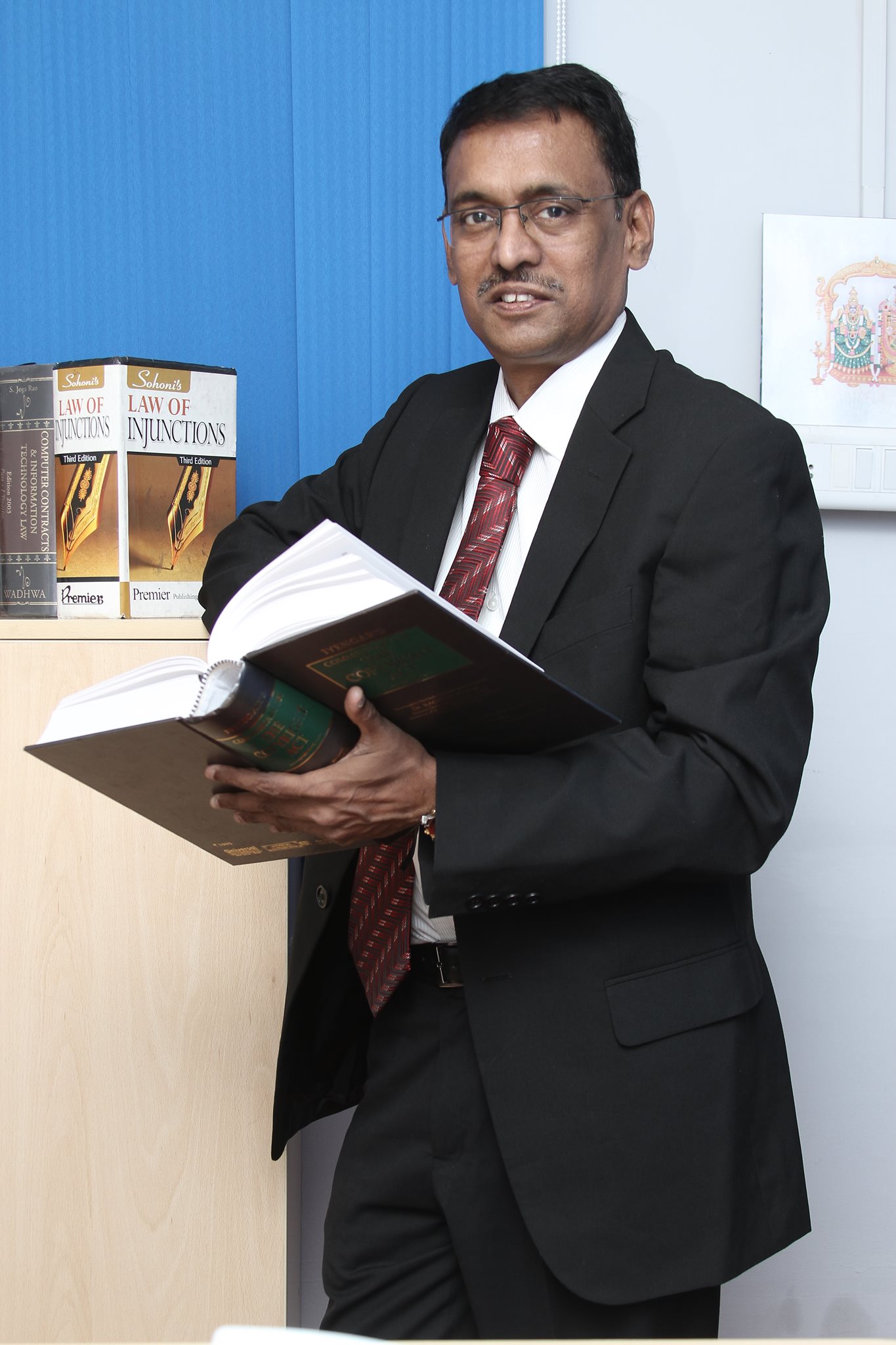
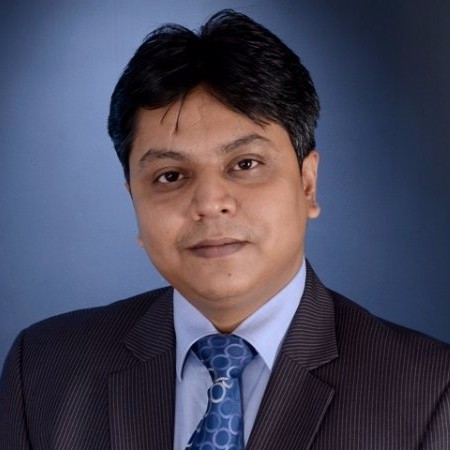
  • Mr. Pranav Srivastava, Partner, Phoenix Legal, on optimising law school for a good career and his experience in transactional work and arbitration

    Mr. Pranav Srivastava, Partner, Phoenix Legal, on optimising law school for a good career and his experience in transactional work and arbitration

    This interview has been published by Ayush Verma.

    Please tell us about your journey towards the legal field. What inspired you to pursue law as a career? 

    It was by a stroke of luck that I ended up opting for law as a career. I was a science student while in high school and was preparing to pursue a career in medicine. One of the reasons for this choice was that in those days engineering and medicine were the obvious career choices for anyone who scored above a certain percentage of marks in 10th standard. People opting for other streams, even if they were genuinely interested in those subjects, were painted with a broad brush as being uncommitted.

    However, after studying science for two years in school along with preparation for the pre-medical test, I realized that medicine or any other field in science was not my calling. I knew I had to reassess my career options and that is when one of my relatives sent me a prospectus of a famous law school, which had a couple of pages on career opportunities for lawyers. I then started reading about the legal profession and developed an interest and eventually decided to pursue a career in law.

    Even though I had opted for law as a career, I don’t regret my decision to study science in school as it did prepare me for some rigour and hard work which goes a long way in shaping a legal career.

    What type of co-curricular activities did you participate in during your time at Amity Law School? In what ways have the experiences at your alma mater shaped your career?

    In the legal profession, the floor is too low and the ceiling is too high. If you are not doing well, you may find it difficult to sustain with even basic living standards. On the other hand, if you are doing well, you may earn more than celebrities besides the fact that the career span of lawyers is way longer than that of celebrities. Therefore, coasting along is not an option in this profession. From the beginning of my law school, I knew that in order to be successful, I would have to work hard and continuously push my limits. During law school, studying and writing exams consumed only a small portion of my time and more time was spent on co-curricular activities such as moot court competitions, writing papers and articles, attending extra courses and undertaking internships.  

    The biggest contribution that law school has in shaping my career was a good degree of flexibility which allowed me to participate in a number of moot court competitions, attend internships and undertake other co-curricular activities. Also, the encouragement and support that came from the faculty and the director of the law school was really helpful I believe this is one of the biggest reasons why Amity Law School, despite not bearing the NLU tag is still, churning out excellent lawyers, who you now see as partners in law firms, general counsels in companies and successful litigators in courts. Being located in Delhi NCR was also a big factor and allowed us access to courts and law firms.

    What according to you is the relevance of internships in a law student’s career?

    Law school curriculums have not kept pace with the developments in legal practice and there is a wide gap between the theoretical knowledge that students acquire in law schools and the practical implementation of that knowledge. Additionally, there is an unfortunate emphasis on rote learning and memorization in the Indian education system, due to which there are instances of fresh graduates lacking awareness and understanding of basic legal concepts.

    Given the pace at which legal work is required to be done, the high pressure from the clients and the tight timelines, employers in the legal industry are often not inclined to train fresh law graduates from scratch. Therefore, there is an expectation from fresh law graduates to somewhat hit the ground running and demonstrate basic legal skills such as the ability to conduct legal research, use online research tools, understand basic legal principles and basic level English language legal drafting. In the absence of such a skill-set, it is often difficult for fresh law graduates to find placements and even if they do find jobs, it is difficult for them to acclimatize to the rigorous work environment.

    Internships help bridge this gap as they not only provide the opportunity to experience the real work environment and learn the practical aspects of the legal practice, but they also push the interns to put in hard work which helps sharpen their skills. The mentoring and guidance that law students get during internships enables them to acquire the skill-set necessary for placement and further progress in their careers post law school. Internships also offer a platform to law students to demonstrate their skills and abilities and potentially score a pre-placement offer. This is especially important for students from non-national law schools which may not have robust placement mechanisms for their students.

    Internships are great eye-openers and provide a massive opportunity to make course corrections for law students who have otherwise been coasting along in law school as they come to realise the huge gap that exists between what they learn in their law school and the skill-set they need to acquire in order to land up with a lucrative placement. Often the cut-throat competition amongst interns from different backgrounds becomes the driving force behind efforts that law students put during internships. 

    How and when did you decide to pursue a career in commercial transactions?

    While I believe that every lawyer is a litigator at heart, there is a huge difference between how Harvey Spectre litigates in American courts in “Suits” and how litigation is conducted in  Indian courts. Jokes aside, the Indian judicial system still has a long way to go, to acquire the quality and sophistication that you see in the judicial systems of some western/developed countries. Court litigation in India is more than just knowing the facts, understanding the law and nicely articulating your case before the Court. This, in my view, takes away the fun and discourages many talented young lawyers from pursuing a career in litigation. I was no exception.

    A law firm environment (especially a transactional practice) comes across as a far more lucrative option given the sophisticated work environment and meritocracy-driven culture. The trigger for me was an internship at a big law firm that exposed me to the transactional practice at a law firm and there was no looking back.

    What led to you joining Phoenix Legal right after graduation? Did you consider any other options at the time?

    When I started my internship at Phoenix Legal, the firm was only 2 years old and was widely known as one of the most promising start-ups in the legal industry. The founders were former equity partners of Trilegal and had left to establish Phoenix Legal. The environment at the firm was full of drive and energy and it was already evident that the firm will grow and take its place amongst the top law firms in India, which it eventually did. The culture of the firm was meritocratic and everyone was goal-oriented and willing to serve their clients to the best of their abilities. Also, given the lean team structures, there was close supervision of work by the partners and it was an excellent training ground for young graduates. To me, it was a no-brainer that this was the place to start a legal practice and once I was offered a position in the firm, I did not consider any other options.  

    You have been associated with Phoenix Legal since the start of your career, for over a decade and got promoted to Partnership within six years of practice. How has your journey with the firm been, from starting out as a trainee to going on to become a Partner?

    Phoenix Legal is one of the few law firms in India that is structured in a manner that is similar to how the international law firms are structured. It has an ownership model based on lockstep, which allows all partners to progress to the level of founders. The progression through the lockstep is purely merit-based and evaluation is based on several parameters which are transparent and well known to the partners. Similarly, decisions to hire new resources, internal promotions amongst the associates, and elevations to partnerships, are all purely based on merit and completely transparent.

    The firm invests heavily in its human resource and works very hard to hire, train and retain the best of the lawyers. Our lawyers are closely monitored and work under the supervision and guidance of the partners. This is due to the firm’s partner-centric and partner-led service delivery model which requires a strong and committed partner involvement in all client work.  The lawyers at the firm including the partners work very hard to maintain a high level of responsiveness and availability and provide top-notch quality of service to their clients. 

    Because of these factors, my journey at Phoenix Legal from being a trainee to becoming an equity partner has been somewhat challenging in terms of the time commitment and efforts required but at the same time has been very rewarding.

    What are your day-to-day responsibilities in your current role as a Partner at Phoenix Legal’s Delhi office?

    The primary responsibility of all partners is to service our clients. We work hard to ensure responsiveness, availability, and accuracy of our legal advice. Our partner-centric service delivery model means that all the partners irrespective of their seniority and experience are involved in work execution and take primary responsibility for service delivery to our clients. The other responsibilities as a partner include the building of teams, training junior resources, business development, and administrative matters.

    As the Officer at the International Bar Association, what does your work entail?

    I am currently the Treasurer of the Young Lawyers’ Committee of the International Bar Association (IBA). IBA is the most prestigious organisation of international legal practitioners and law societies formed in the year 1947. It has over 80,000 individual members who are international lawyers from leading law firms around the world and has over 190 bar associations and law societies from over 170 countries as members.  Our job as the Officers of the Young Lawyers’ Committee of the IBA is to encourage young lawyers from various jurisdictions to join and get engaged with various activities of the IBA. We serve as the ‘entrance door’ for young lawyers into the IBA and put them in contact with the rest of the divisions of the IBA to become further involved. We also actively identify, discuss and promote issues involving young lawyers at the IBA.

    With your rich experience of 10+ years in transactional work as well as commercial arbitrations, would you like to tell us about the ways in which India has shifted or evolved in these areas over the last decade?

    Legal practice, like all other businesses, is always evolving especially with the advent of high-speed internet, mobile communication, and other similar technologies. The legal practice also evolves with the evolution in the client’s businesses and consequent changes in the client’s expectations.  

    There have been dramatic changes over the last decade in how legal practice is conducted in both transactional and arbitration fields. For example, on the corporate transactions side, due to the advent of high-speed internet and various platforms to aid online meetings, etc., most activities (such as due diligence, negotiations) for which lawyers used to physically travel are now conducted online from within our offices.  Similarly, because of change in client’s expectations, the nature of work product has also evolved – for example, the clients now seldom expect their lawyers to prepare detailed findings based on due diligence reports (which was almost a norm in the earlier days) and want a significantly shorter list of only the red-flags or high-risk areas as an outcome of the legal diligence exercise.

    Similarly, on the arbitrations side, Indian clients and arbitrators are now starting to adopt technologies like live and real-time transcription services which were earlier seen only in arbitrations outside India.  These have the ability to dramatically increase the speed and efficiency of the arbitration process. Indian arbitrators/clients also prefer to adopt more practical and simpler arbitration procedures in the procedural orders as against the earlier practice of taking cues from the Court procedures which were often pedantic and impractical. 

    What is going to be the long-term impact of the ongoing pandemic on how cross-border transactions or international commercial arbitrations are carried out?

    The pandemic has forced people to change the traditional ways of doing things and has somewhat fast-tracked the process of adoption of new technologies and innovative methods of undertaking the legal business. The virtual hearings in both Courts and arbitrations, I believe, are here to stay even post-pandemic. Similarly, virtual meetings and negotiations, instead of people traveling to conduct meetings and to negotiate deals or transactions, are unlikely to be discontinued post-pandemic. These new technologies and innovative methods have, in addition to allowing business continuity during the pandemic, improved both time and cost efficiency with which legal business is conducted.

    What are some skills or characteristics that you look for while hiring juniors in your team?

    The skill-set and characteristics depend on the level and seniority of the lawyer being considered for a position. A fresh law graduate is not expected to have the same skill-set as an experienced lawyer.  However, factors such as good communication and writing skills, research skills, and understanding of basic legal concepts/principles are a must. In addition, I would look at the softer factors such as willingness to put in the hard yards, enthusiasm to do good work, hunger for success, interest in law and legal practice, and certain other personality traits.

    As a young Partner at one of India’s leading law firms, what are the core principles that got you here? Is there anything in your checklist yet to be achieved?

    I attribute my success to the mentoring and the training I received from my seniors at Phoenix Legal during the initial years of my legal career. A good boss and a mentor can go a long way in shaping your legal career and I was fortunate to be trained by seniors who were not only excellent lawyers but also took great efforts in training and mentoring their juniors. Apart from the mentoring and training, the core principles for any lawyer’s success are consistent and long-term efforts and hard work, enthusiasm and interest in law and the legal practice, desire to do good work, and willingness to take up new challenges.

    On the checklist, all I would say is that I haven’t started ticking the boxes yet. There is a long way to go and this is just the beginning. 

    Any parting advice for young lawyers and law students looking to pursue a career in commercial transactions? What is the relevant skill-set they should inculcate during law school?

    I don’t think there is one method to success. All successes in life are an outcome of a series of small positive actions that you take over a long period of time. Similarly, all failures in life are an outcome of small errors or omissions you make over a long period of time. The key principle, therefore, is a long-term consistent effort to do good work.  

    Never say no to an opportunity because you think it’s beyond your capabilities or you are too busy with something else. Don’t shy away from hard work. Stay enthusiastic about the work that you do and always keep pushing your limits. In the long-term, after consistent effort, you will be surprised by the successes that will start coming your way.

  • Shafaq Uraizee Sapre, Partner, J. Sagar Associates, shares her insights from the niche area of M&A and thriving in the legal profession as a corporate lawyer

    Shafaq Uraizee Sapre, Partner, J. Sagar Associates, shares her insights from the niche area of M&A and thriving in the legal profession as a corporate lawyer

    This interview has been published by Ayush Verma.

    How would you like to introduce yourself to our readers?

    On the professional side, my introduction is that of a lawyer who focuses on mergers and acquisitions along with other forms of corporate transactions, and who is a part of one of India’s best and largest national law firms. On the personal front, I introduce myself as a woman who tries her best, every day, in all the roles she plays. I like to travel, spend time with my family and friends, enjoy watching movies and cooking. I think of myself as a representative of all those who have the will and determination to work hard and make a change. 

    With over 20 years in this profession, how would you describe your journey so far?

    I’ve had the most wonderful experience professionally and I’m thankful to all the people who have been a part of my journey. Every journey has its unique challenging moments, and it is important to recognise the contribution of the people who form part of our support system and make it happen for us; family, friends, mentors, team members, and those who work for us relentlessly in the background such as our helpers and assistants at home and office.  I feel overwhelmed that time has passed so soon and how much I have learned from all the experiences, especially the tough times. Every struggle and failure has made me a better lawyer and person. I was very lucky to have some fantastic mentors who have guided me and showed me the path to where I am today. One has to have a plan and a vision of what they want out of themselves and if they work hard with integrity, determination, and focus on higher standards of quality and professionalism, the road will eventually lead to a good and happy place.  

    At what point did you decide to read the law? Coming from a family of lawyers, did you ever feel the pressure to pursue a career in the legal field? 

    When you are brought up in an environment that has a rich mix of cultural vibrancy with emphasis on education and professional excellence; with more than 80% of the close family members being lawyers or connected to the legal profession in some way, there is a general expectation that you would choose a path that follows the tradition. My calling towards law was neither certain nor forced. It must have been working somewhere in the background in deep routed subconscious levels but overtly. I was at one time quite sure that I wanted to become a professor of literature. I had completed my graduation with a major in English literature and was in fact planning to pursue higher studies towards becoming a professor. My father, who is an ardent reader of literature and philosophy, supported me immensely and in fact guided me through the course. The turning moment was when I accompanied my father to the Bombay High Court during the summer break, after my final exams in the penultimate graduation year, and witnessed him argue a case. I still remember, it was before Hon’ble Justice R.M. Lodha, and I was spellbound seeing my father argue. Observing the proceedings, I found myself being naturally drawn towards the profession. I took admission in the Government Law College after graduation and during my time at law school, I continued to work with my father as an apprentice and attended office and court every day for the three years that I studied law. Ultimately, looking back at these 20 years, I feel it was the right choice for me. In the legal profession, one has the advantage of pursuing their passion for law and also playing the role of a teacher/mentor. I enjoy making presentations, conducting training sessions and masterclasses, and speaking at conferences on various topics of law. In a way, my desire to become a teacher has also been fulfilled.

    You decided to venture into corporate law when it was fairly unheard of, how did you make that choice?

    Deciding to take up a certain type of practice area requires a lot of thinking and analysis of one’s own interest and capabilities along with the right guidance. Some people are very good with negotiations, some are good with their ability to argue matters, and some people are great at research and drafting. To choose a practice area as their main focus, one has to have the opportunity to experience these different areas before deciding to focus on one. Although I started as a litigator with my father, he wanted me to gain experience in other practice areas. I went to work with a senior corporate lawyer for a year who encouraged me to give a serious thought about taking up M&A, after some of the clients had given positive feedback about my ability to bring commercial and business sense to transactions. I then joined Nishith Desai Associates, where I got the opportunity to work on corporate transactions and helped in setting up foundations for what are today some of the big practice areas of the firm. I am grateful that I have had the experience of both litigation and corporate practice. This combination helps me in seeing pitfalls in transactions and rectifying those issues at an early stage before matters end up in court. 

    What does an average day look like for you as a Partner in one of India’s biggest law firms?

    I believe that in any organization, each person in the system, regardless of level and position, has to work hard and be passionate to ensure that the quality of work and responsiveness to clients is exceptional.  People often joke that lawyers are not humans because of our tight schedules and the absolute obsession with quality. I was once asked at a public forum if corporate lawyers indeed do not sleep or eat. Well, on a lighter note, to clarify all doubts, corporate lawyers are humans and we do eat and sleep. As is the case in any job or profession where timelines matter, we often end up doing long hours to cater to our clients’ needs. Personally, I have learned that the only way to get the best out of oneself is to prioritize. My day starts with catching up on important updates in my field, followed by responding to critical emails, calls with colleagues, and then moving on to transactional work like reviews, drafting, brainstorming sessions, and calls with clients and counterparties. Since we cater to both domestic and international clients, our schedule is largely driven by the needs of our clients based in different time zones, and therefore, on many occasions, we end up pushing ourselves late in the night or early in the morning, to accomplish important tasks within the deadlines. 

    Due to the unprecedented situation created by the pandemic, it has become extremely important to stay connected with colleagues and clients, and the timelines are now blurred because of the need to be available to everyone at all times. Prioritizing in these circumstances has become more important than ever before. I have two kids and one is barely 2 years old. I ensure that I give adequate time to the family and check with the elders and those in need of attention a few times during the day. We have to be cognizant of the fact that apart from our work, we have other responsibilities and interests, and this fact must always be kept at the heart of things. Any successful person will tell you that the right balance will get you to a point of satisfaction and contentment in both your personal and professional life.  

    You are one the most celebrated names in M&A. In your experience, how is the niche misrepresented in its portrayal that impacts the perspective of the younger generation of lawyers?

    In my interactions with younger lawyers, I note that they are extremely smart, efficient, competitive, and hard-working. What many of them seem to lack, however, is patience and perseverance. Several of them are drawn to the glamourous depiction of corporate lawyers in the media. While it is quite appealing on the screen, it is, on many occasions far from reality. In this situation, the lawyers who choose this practice area or any practice area for that matter may find it difficult to accept the hard realities of the profession. The burn-out rate is high in the younger generation of lawyers because of the stress that arises out of expectations, coupled with the immense hard work that goes into the practice of law. What is not mentioned on the silver screen is that with patience,  a long-term vision of growth with a charted course of action in place, one can achieve one’s goals and have fun too along the way.  

    How can law students grow in the niche of M&A and mark their presence?

    If you put yourself in the shoes of the client and their legal team, you will realise that what they are looking for is a trusted advisor; someone who obviously knows the law and can also understand their business and expectations. Experienced transactional and commercial lawyers will tell you how it takes years to build this trust and how knowing the client’s business is critical to becoming a  trusted advisor. The only way to become a good M&A lawyer is by understanding the commercial and business needs of every client, the objectives of a transaction, working with your and the client’s team, effective communication and most importantly knowing the law. Good drafting and research capabilities are the other critical skills that have to be developed. Clarity of thought and articulation is the key to successful documentation and negotiations. Clients want a lawyer who recognizes the issues and provides productive legal solutions. M&A lawyers tackle complex regulatory and commercial issues and are required to think “on their feet” and therefore, it is very important to be solution-oriented.  Since it takes years to build these skill sets, students should spend time in good internships and gain as much experience as they can before they join the profession. They can also prepare themselves by reading transactional documents during their internships, writing research papers, and practicing drafting.  

    We have witnessed that there is a huge section of students and professionals who believe that studying in a foreign university will give them an edge over other candidates; have you noticed this bias?

    I agree that at one time there was some preference given to candidates with degrees from foreign universities, but over the years this approach has changed significantly. The quality of education in India is top-notch; and while foreign education provides fantastic exposure and opens one’s mind to different ideas and perspectives, what matters ultimately is performance and caliber.  The fact that many of my friends and colleagues who are successful lawyers, and many of whom are partners in law firms, have all completed their education entirely in India just like me, proves the point. The edge that younger lawyers should try to develop are qualities that will help them in becoming great lawyers in the long run, as discussed earlier. 

    How would you like to address the requirement of career breaks for women lawyers?

    I believe that no man or woman should suffer in any way for prioritizing their families. In this day and age, with discussions on diversity and inclusion even in the legal profession, it is quite unfortunate that one still hears of instances of bias and differential treatment. One should not shy away from a career break if it is important to take one at the relevant time. What is important from a career perspective is that one should be able to give a sense of confidence to the organisation, that you are willing to work hard, and you will demonstrate that the break has not reduced your ability or capacity to perform. As I said before, one must make efforts to draw opportunities towards oneself and the only way to ensure that you make the most from an opportunity is to be dedicated, focused, and stay updated. One of the positive outcomes of the current set-up has shown that working from home does not mean that one cannot perform well and perhaps the pandemic situation has presented workplaces with an opportunity to create more options for its employees to be with their families in times of need and yet be able to sustain their jobs.  

    How has the pandemic that entailed the lockdown been for you personally and professionally?

    We are facing a very unfortunate and unprecedented situation due to the pandemic. The multiple lockdowns and fear of the virus have taken a toll on all our lives, businesses, and livelihoods. The situation has affected us emotionally and professionally with many of us losing some close family, friends, and neighbors to the virus. While we all are dealing with it in some way, in my opinion, the children and elders have suffered the most. It was difficult to restrict kids within the four walls of the house and dealing with online schooling and work at the same time. My husband is a counsel and had to attend virtual hearings, I was working on transactions and my kids were attending school virtually, all at the same time in different parts of the house. It was difficult and hectic at the start but slowly we settled into a routine. The biggest lesson I learned was from my kids, who showed so much resilience and adaptability, that  I was inspired to adapt and continue my work. We are very fortunate that JSA did well despite the challenges with the strong support of our clients. It is true, however, that business, both domestic and global, was affected adversely. Clients had new issues to deal with such as the effect of the pandemic on their businesses and organizations and force majeure provisions were being discussed. While we have all studied these topics academically, we did not imagine the scenarios playing out in our lifetime.  By and large, we all agree that the first two quarters of 2020 were difficult for everyone. We all slowly adapted to this new normal of online communication and work from home. With the tremendous support and understanding from clients, the firm, colleagues, family, and my helpers at home, I have been able to work from home effectively and efficiently.

    As a law firm partner, you shoulder many responsibilities. How do you stay detached from negative outcomes or setbacks?

    Every one of us has suffered from negativity and setbacks and it is only human to feel these emotions. The role becomes more demanding as you progress and grow. It transforms from doing purely execution work to that of a leader, a mentor, and an entrepreneur. I personally have learned the most valuable lessons from setbacks and perhaps those experiences have helped me in dealing with difficult situations today in a constructive manner. I try to break down the problem or set- back into parts and after understanding what could have been done better or differently, I dust off the remains and move on to constructive thoughts and objectives while dealing with one issue at a time. This trick works for both personal and professional matters and I highly recommend this approach. With experience and practice, one learns to deal with such downfalls and it is also important not to dwell on negativity and setbacks for too long. I try to do something that detaches me from negativity such as spending time with my family, having a good laugh, going for a drive or just cooking my favorite meal. I have had the benefit of mentors who have provided their support and splendid advice, so reaching out for help and guidance is also recommended. Keeping a clear head and avoiding overthinking and speculation also helps in the long run if one has to survive in this profession. 

    If you could go back in time and do something differently on the professional front, what would that be?

    I would change absolutely nothing. Each and every day of my career has been fantastic and made me a better lawyer and a better person. I cannot be more grateful for these 20 years of great memories and opportunities. I suppose the only thing I should have done additionally, and not differently, would have been to learn German. I have spent a lot of time in Germany for work while representing many German clients and I have always been so fascinated by the language. It is still on my ‘to do’ list and I hope to learn the language before I hit another 20 years in the profession.

    What would be your advice to upcoming lawyers, especially women who look up to you?

    The advice is clear and straightforward: chalk out a clear path for yourself first and set goals. Work hard towards your goals with integrity, patience, and perseverance. Develop your skill sets, keep reading and be up-to-date with whichever area of law you choose. Try and get as much experience as you can, research, write, build good contacts and people skills. Soft skills are as important as technical skills. Do not be afraid to fail or take a step back. Be determined, adaptable, move forward, and build a good support system. Most importantly, stay grounded and humble.

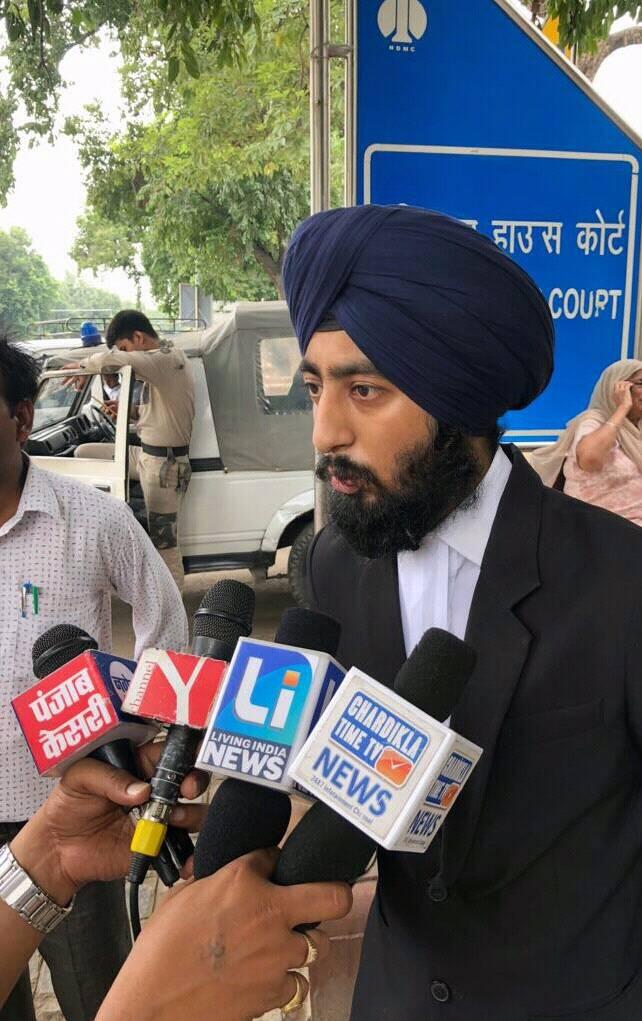
  • Raghav Awasthi, Litigation Lawyer and member of the RSS, on balancing a successful litigation practice along with a career in politics

    Raghav Awasthi, Litigation Lawyer and member of the RSS, on balancing a successful litigation practice along with a career in politics

    This interview has been published by Ayush Verma.

    Please tell us about your journey towards the legal field. What inspired you to read the law?

    I was never fixated on the idea of being a lawyer but I always had an inclination towards politics and governance which ignited my interest in learning the law. After finishing my schooling at DPS RK Puram, I came to know about the integrated law courses offered by premier law universities such as NLSIU, NALSAR, and NUJS. This was the pre-CLAT era where I had taken admission tests for all three NLUs. I ranked well and took admission in NALSAR which prompted me to spend half of a decade in the city of Hyderabad. I had no family associations in the legal field, therefore, joining a law school was completely my decision and my family supported me in venturing into this profession.

    What are the reforms that you believe the legal education sector needs in India?

    One aspect that I regret from my law school days is that we used to fret over things that do not matter in the long run, such as grades. Moreover, understanding the correct sources of law for a matter is a critical skill for a lawyer which one needs to learn but is not taught in the curriculum of a law school. Furthermore, learning drafting and other practical aspects of the legal profession is an opportunity that lawyers often only get post law school, in a senior’s chamber. These are some reforms in the legal education sector that are needed. 

    What were your reasons for choosing a career in litigation? Were there moments during law school that nudged you towards litigation?

    I come from a family which is well-to-do and while choosing my career path, money was not a relevant factor. My interest in politics and governance subsisted after my law school journey and I felt that I can contribute towards developing law and policy in the best manner by pursuing a litigation practice and humbly contributing to policy-making alongside. Furthermore, I was born and brought up in Delhi which helped because I was in familiar surroundings.

    Would you like to share some insights from the first law office you joined after graduating?

    I joined Karanjawala & Co. and was in Advocate Meghna Mishra’s team for over two years. We primarily handled Delhi High Court matters, including matrimonial, commercial, and property disputes, and work related to commercial transactions. It was a very enriching experience which not only enabled me to learn the law but also understanding and catering to the needs of the client which is one of the most important skills for a lawyer. 

    You have been actively involved in filing and arguing PILs on various constitutionally significant matters such as the constitutional validity of the marital rape exception and the legal recognition of same-sex marriages. Could you tell our readers about the reasons that prompted you to undertake such social causes?

    The social causes such as the PIL for criminalizing marital rape, or the PIL for recognition of homosexual marriages and other matters which I have filed and argued in the Hon’ble Court have been in the position of a lawyer. A lawyer should argue and represent his client while keeping his personal beliefs and biases aside. Accordingly, I am arguing these matters to the best of my abilities and I do agree with the importance of gender justice in society.

    You have also been actively involved in political debates and discussions on various news channels. What was the path you took to join politics?  

    I was in college when 26/11 happened. That incident had a profound change in my perspective towards the politics of the country and especially on the constitutional concept of secularism. In 2009, I joined RSS when it did not wield the power it wields today and I tried my best to represent its views to the general public through debates and discussions in the national media. Furthermore, I continue to contribute towards the Sangh and the country in any form I am deemed fit to.

    What are some skills that are vital for establishing a successful practice as a young lawyer?

    For a First-Generation lawyer with no familial contacts in the profession, it is very important to increase your network and hone your networking skills as much as possible. There is no secret formula for networking, except you have to make sure that you connect with a new person each day. This aspect should be given as much importance as learning the law because a lawyer’s job is not only to argue the legal points but to cater to the needs of the client which can have out-of-the-court solutions. The other skill is cultivating the virtue of humility which is almost indispensable for learning and the process of learning is something that expands from the inception to the end of your journey as a lawyer. Lastly, a lawyer has to learn the art of delegating his work and trusting his juniors in helping his legal practice. This comes over time and is imperative for growth.

    Considering the determination and hard work required in litigation, did you ever consider quitting the profession? What inspired you to persist?

    Quitting is easy. There were times when I did not have any matters for months. However, it was the financial support of my parents and the persistence that kept me going. Persistence is very important in this profession; there can be weeks, months, and even a year when a young lawyer can have no cases to argue. Persistence is what keeps you going during those tough times.

    Where do you envisage yourself in a decade?

    I would have never thought that I would be doing what I am doing today, way back in 2011. However, I would keep applying the same principles which I have applied in the previous decade and hope that I make a broader impact on societal betterment. This could mean contributing towards the practice of law and the Party equally. However, I shall always remain a student of law and politics as I was in the previous decade.

  • Abhijit Mukhopadhyay, President (Legal) & General Counsel, Hinduja Group, on his illustrious career in In-house legal roles and working in London

    Abhijit Mukhopadhyay, President (Legal) & General Counsel, Hinduja Group, on his illustrious career in In-house legal roles and working in London

    This interview has been published by Ayush Verma.

    What was the motive or inspiration to join the legal field?

    There was no specific reason for joining the legal field. I did my graduation with honors and simultaneously studied company secretaryship and pursued a law degree. I had a sense that in the future, the legal profession would acquire prominence, and fortunately, I was right.

    As General Counsel of a conglomerate, what functions of the company do you look over?

    The Hinduja Group, with an annual turnover of USD 15 billion has 150,000 people working in 60 odd countries. We are in 12 business verticals and we carry out our business in more than 100 countries on five continents. I am involved in the Group’s legal matters worldwide. I am also the director for several group companies in seven countries. In essence, I advise the group companies and the ultimate promoters in legal and strategic matters.

    In your entire career trajectory that we know of, you have always worked as an in-house counsel, did you always have the same plan?

    In my entire career so far, I have worked in-house. I never considered joining a law firm. When I started my career, working in a law firm was not fashionable, so to say. Since the Indian economy did not open up, the applicability of corporate laws was severely restricted or limited. Today the situation has changed considerably and there is good demand for corporate lawyers in external law firms. Be that as it may,  I do not regret my decision as yet! 

    You’re the in-house of a multi-billion dollar company, how does one make decisions, when they shoulder a huge responsibility such as yourself?

    Decision-making requires certain individual qualities. You need to understand your organization, its products, strategy, its people, and most importantly which decision to take at the appropriate time. In today’s business, time is money and you need to decide as fast as you can. There is no perfect decision, so do not aim for perfection but take timely decisions and never regret afterward. When course correction is needed, do the course correction.

    How has life changed after moving to London? What are some challenges you faced as an immigrant?

    In India, I was the General Counsel and Company Secretary simultaneously in several large public sector, private sector, joint sector, multinational, and privately held organizations. What I learned in these organizations came in handy when I joined the Hinduja Group which is a conglomerate.  London is the nerve center of the global legal profession. You won’t survive here unless you have the knowledge and ability to perform. After arriving in London, I acquired further qualifications in law and chartered secretaryship. Then I started updating my legal knowledge on a continuous basis which I do even today. Fortunately, I have not faced any problems being an Indian. Our global headquarters in London, where I sit, have got nationalities from many countries around the world.  

    Do you believe AI will replace the majority of the human force in the legal profession in the upcoming years?

    Artificial Intelligence (AI) has become an enabler or a tool to assist us in our work. Its application and expansion in in-house legal capacity would depend upon the benefits it would bring as compared to the cost. You may rest assured that there is no replacement of human beings by AI.

    During the pandemic, how have you adjusted to the shift to a virtual workspace? In your opinion, how can senior members of the industry adapt to the same?

    The current situation and its impact on human life are profound. However, it has created an opportunity to work from home (WFH). The concept has both advantages and disadvantages which we are aware of. Human beings are receptive to changes of all kinds. We have adapted to the new reality of WFH. In our Group, I am involved in many big business deals that have been ongoing during the pandemic while working from home.  

    You’re a member of several education societies, and address the younger members of the industry frequently; what are the key differences between lawyers of your era and today’s generation?

    What I learned as a student of law has got no relevance in today’s world. Almost all the laws that I learned have become irrelevant today. This has been happening for decades and not only now. You have to keep yourself updated in order to remain relevant. This is true for any generation. I mentor students and I am involved with the Queen Mary University of London in its advisory council which shapes up post-graduate courses. Whenever I address students, I preach what I practice, and if you do not remain a student all your life, you become irrelevant in your profession.

    You have had the honor of addressing students at Harvard Law School; why has your interest in mentoring the younger generation not translated into teaching?

    Along with my employment, I have always been involved in teaching. During my days in India, I was a part of the guest faculties of three well-known universities apart from several academies. I was the paper setter and examiner in professional courses like the Company Secretaryship. Even in London, I address students of several universities. I have not taken up a full-time teaching job. However, I address seminars and conferences all over the world throughout the year. You never know, I may become a full-time teacher in the future!    

    We see a lot of younger lawyers complain about burnout or lack of work-life balance. How have you maintained the right balance being in this career for over 40 years now?

    A lot would depend upon your desire to maintain a work-life balance. 24 hours a day has got a lot of time. Try to see it half full rather than half empty. Use your technology effectively without being excessively reliant on it. Try to do things more efficiently and work on your multi-tasking ability. My strength comes from my family. Therefore, they will always remain my first priority.

    What major changes do you anticipate in the legal profession for the coming years?

    Lawyers need to understand business. While remaining academically inclined, they must develop skills to provide practical solutions to the problems being faced by the business. They need to become an integral part of the commercial activities of an organisation and provide value if they wish to remain indispensable.  

    Looking back on your journey, can you share with us a few career-defining moments that inspire your present work ethic?

    There are many. The most difficult thing in my professional career is to have the courage and ability to say no when work ethics demand it which I have done many times in my career. Trust me, it gives confidence to your employer. However, it should be used judiciously.

    What advice would you like to give to the present set of law students and lawyers?

    Be a lifelong student; update and upgrade your knowledge all the time. Bee articulate whenever you are conveying your thought process. Be sensitive to the needs of others, be helpful and above all, be a good human being. At the end of the day, it is all that matters.

  • Shravani Deshmukh, Co-founder of Create & Protect IP Partners, shares her insights from the niche field of IP, Fashion and Art Law

    Shravani Deshmukh, Co-founder of Create & Protect IP Partners, shares her insights from the niche field of IP, Fashion and Art Law

    This interview has been published by Ayush Verma.

    How would you like to introduce yourself to our readers?

    I am the Co-founder of Create and Protect IP Partners and I help creators, artists, freelancers, and small business owners identify and use their Intellectual Property optimally. I feel like our country needs to acknowledge and respect creators and artists now more than ever. There is a big transition happening in the creative space in India and we need artists to safeguard their rights. As someone who is naturally inclined towards the creative field, I want to extend a friendly hand to all artists.

    What prompted you to think of law as a career? If not law, what other options would you have considered?

    Trying to decide your field of study can be extremely exhausting. Eliminating what I didn’t want to do helped me focus on the things that I had a genuine interest in. I wanted to do something which connects me to the issues of society and be able to help in my way. Law seemed like the most holistic option because it didn’t restrict me to the legal subjects but also brought in subjects like sociology, political science, etcetera.

    Where did you do your internships while at law school? How important were these internships in shaping your career?

    My internships in the initial years of law school focused on different subjects. I wanted to experience all fields before narrowing down and deciding what I want to pursue. In the 1st and 2nd years of law school, I interned with non-profits since legal knowledge is pretty limited during the initial years of law school. I continued to intern with different teams and finally by the end of the 3rd year, I locked it down to IPR. I consciously focused on getting internships with IP firms or teams at law firms.

    Internships are extremely helpful for any student throughout their law school. It is however important to be mindful of the internship one is pursuing. Merely doing an internship to display on the resume doesn’t cut it. What law students need to understand is that they should focus on getting experience from organizations that would give them good exposure and prepare them for the professional world.

    You co-founded Create and Protect IP Partners within a year of graduating from law school. What were your reasons for deciding to work independently right from the start of your career? How did you overcome the initial challenges?

    My co-founder and dear friend, Yesheshvini, and I always had an entrepreneurial inclination. We wanted to make a safe workspace for legal professionals in India and have been determined to provide a space that is encouraging for all thoughts and ideas. We understood that starting something as fresh graduates would not be a piece of cake but thankfully the support from our families made the decision worthwhile.

    We love creativity and more so when it is mixed with work. In a field like IP, you have to come up with innovative and creative solutions every day. One of the major reasons we wanted to start something like this was to bridge the gap between the creative and legal community. In the past couple of months, we have interacted with several creative professionals and one thing that’s common in all the conversations is the lack of understanding and awareness about artists’ rights.

    Some of the initial challenges that we faced included clients not trusting us and our work ethic. Being a young company headed by two females can have its ups and downs. We just have to believe in ourselves and we keep encouraging each other.

    We’re still building it and it is a lifelong commitment, however,  it’s extremely rewarding to see creative entrepreneurs grow with the little assistance that we can offer.

    Would you like to tell us more about your firm’s area of expertise and work culture?

    Create and Protect IP is an organization that focuses on creating awareness about Intellectual Property and its associated laws in India. We help individuals, creative professionals, entrepreneurs, and start-ups to understand, register and protect their Intellectual Property. We work closely with our clients to understand their needs and provide bespoke, budget-friendly solutions to protect their intellectual creations. We want to build a community with business and creative entrepreneurs and make them aware of their intellectual and artistic creations.  It is about empowering these communities and making sure that they have a safety net for their IP. We are an inclusive and safe space for sharing thoughts and discussions. Every professional/student that associates with us is treated as an equal team member and we respect everyone’s opinion.

    We believe that there is so much that we can learn from each other every day and that converts as the best way to work.

    Do you remember any peculiar or difficult cases that you might have worked on so far?

    Difficult or easy, cases are always fun. We get to learn a lot about not just the law but also the client and their working psychology. Catering to a wide audience comes with an advantage (or disadvantage at times) of coming across various personalities. Yesheshvini and I are fortunate enough that we have had clients that respected us and our work ethic. There have, however, been some instances when people tend to take you for granted. This happens especially because our company is in the formative years. We have seen some clients who try to put pressure and make things work their way but at the end of the day, you have to take a strong ground and stick to it. It’s extremely important to have a good and solid work ethic and we like to abide by it.

    In almost all the cases that we have dealt with, one common pattern that we saw is that almost every time, creatives/freelancers are exploited. This is where safeguarding your rights becomes of utmost importance. 

    How did you develop an inclination towards Fashion and Art Law given that it is such a niche and unexplored area?

    I have always had an inclination towards all things creative. Fashion and art are a great medium to put your thoughts in a tangible form and I believe that both these areas are a wonderful combination of culture and visual arts. Visual arts give me a sense of satisfaction and are a great way to express when words fall short.

    That being said, both these niche areas have been researched and talked about the world over and I stumbled upon them shortly after joining my 9-5 job. I found myself becoming more curious about IP and related laws and started reading up and explored different areas. Fashion and Art caught my eyes almost immediately. India is in the middle of a transition where independent creative entrepreneurs are getting recognized and this gave me a push to do something which is challenging yet necessary.

    In such a specialized area of expertise, who are some people that you look up to? What role have they played in shaping your career?

    There are many but I will mention some of them here. Amazingly, the majority of them are these wonderful ladies who are doing some incredible work in their niche.

    To name a few, it’d be Manojna Yelluri, Monica Bota Moisin, Subhash Bhutoria, Debottam Bose, Julie Zerbo, Carry Sommers, Yayoi Shionoiri, Alana Kushnir, Priyanka Khimani, Sandhya Surendran, Megan Noh; the list is pretty long!

    It’s so inspiring to be able to follow and understand their work and create your version of the work that they do.

    For people interested in Fashion and Art Law, do you have any specific book recommendations or resources you often refer to?

    The internet. It is such a magical and endless sea of knowledge. You will get plenty of online resources and websites that cater to these specific topics such as – Art Law India, CIPRI, Fashion Law to name a few; just subscribe to their website and get new topics to read, research, and explore. That is exactly how I go about it. Both these areas are still growing and it is good to share what you read with others.

    Drawing from your experience, what does the future hold for Fashion or Art Law in India?

    India is slowly yet surely recognizing the creative industry and it will only go up from here. One of the biggest issues is that with an industry that is so vast and encompasses a variety of art forms, it is difficult to have one common problem-solving legislation. I have mentioned this before as well, our country has the written law in place but it is difficult to practically implement it in a diverse setting like this.

    One common thing about working with artists is that all of them have different and unique experiences. That’s why it is important to keep sharing, learning, and growing. We need to keep a conversation going and only then will we be able to spread awareness and educate.

    You’ve mentioned in an interview that one of your reasons for pursuing IP law was how undervalued the creative industry is in India. Could you please elaborate on the same? What are some of the shortcomings in our legal system that fail to protect the rights of independent artists or small businesses?

    Yes, the creative industry is highly undervalued in our country. Most of the creators who work as freelancers are taken advantage of and their work is often exploited. One of the issues is defining your scope of work and having rights to the work you create. It becomes imperative to understand whether you are working in a ‘contract of service’ or a ‘contract for service’. There are many facets to look at and evaluate. We need this industry to have a stronghold in the market but we fail to protect their rights. It is time to promote them now more than ever. Talk more, have discussions, share thoughts and experiences. Until and unless we don’t talk about these topics, it becomes difficult to come up with solutions. 

    With the creative industry booming on digital platforms, what role do you see IP law playing in the same? What does the future hold for IP lawyers globally?

    The creative industry is at its maximum potential now than it ever has been. Especially in the pandemic, we witnessed the world finding solace in different forms and mediums of art. We are a content creation and consumption generation. It has become accessible to many; you just need to take your phone or laptop and record or write something. It is easier to communicate your thoughts and express them to your chosen audience. New types of content are available every single day and most of it is original. This generation is not just copying content but creating some great original works.

    With this massive expansion and boom of content creation on digital platforms, it is essential to protect your brand and the type of content you make. The majority of the businesses have taken to digital marketing and try and come up with innovative ideas to sell their products/services. This is where the IP lawyers come into the picture. This is also one of the reasons that I love this field. IP lawyers don’t just have to look and analyze the legal aspects, they also have to work hand-in-hand with marketing professionals and make a tight brand strategy.

    This goes for all new creative entrepreneurs or businesses – always book a consultation with a lawyer before starting your venture.

    What would be your word of advice to students interested in Fashion and Art law?

    Research, read, and write – just be curious. As I mentioned earlier, there are many learning resources available online but you need to filter out the noise. Don’t be mindless with online courses just to receive a certificate. If you are passionate about a particular subject, enroll in a course that would add value. Both these areas are not well developed in India but some professionals are doing great work, reach out to them and try and get some experience.

  • Dr. Akhil Prasad, Director, Country Counsel India and Company Secretary at Boeing, shares his insights about legal education and working with the most renowned names in Business and Law

    Dr. Akhil Prasad, Director, Country Counsel India and Company Secretary at Boeing, shares his insights about legal education and working with the most renowned names in Business and Law

    This interview has been published by Ayush Verma.

    You are one of the most well-read and experienced luminaries in the legal field. In your own words, could you introduce yourself to our readers? 

    Thanks a lot for inviting me to your forum. Yes, God has been kind that I have been able to do my bit in the career that I chose to pursue. I am a first-generation lawyer and no one in my immediate family ever took up a job, particularly in the legal industry (except my mother who was a Professor of Zoology). We have been a very prosperous family, with business spanning into movie distribution and real estate. The business flourished till about the mid-1980s, however, it faced enormous financial problems thereafter. My parents were professionals, my father had a huge medical practice in Meerut and he used to treat patients for free and bailed the family during financial difficulties. He earned a lot of love and respect from his patients and so did my mother from her students. Therefore, it was obvious that I should be a professional like them. After failing a few attempts to be a doctor or an MBA, I developed a liking for the corporate legal field. My first professional qualification was a Company Secretary and right after that I started reading law followed by international law.

    I have been fortunate enough to work for some globally acclaimed organizations, as their India General Counsel. I started my career with Essar Gujarat, then Xerox, Electrolux, GM, Disney, Fidelity and currently I work with Boeing. I am a constant learner and look forward to all opportunities to continue to upskill or update myself.

    Your educational profile is almost never-ending and holds some impressive achievements. Did this thirst for knowledge develop from a young age and did your parents have anything to do with it? 

    For me “necessity was the mother of invention”. In those days, career counselling opportunities were limited. My parents were very supportive in whatever I wanted to do in life, so it had to be my own decision. I tried my luck with medical but as luck would have it, I could not clear the medical entrance examinations and ended up graduating in Commerce, even though I had Physics, Chemistry, and Biology in Class XII! After completing my graduation in Commerce, I appeared for a lot of MBA entrance examinations where I cleared all the written exams but failed to make it past the interviews as I was not able to communicate effectively, which is something I overcame in later years. As I was only a graduate, with no professional qualification, in my early twenties, I was eager to start earning. Therefore, I took up a job as a graduate trainee with Essar Gujarat in 1990-91. This is where I developed a liking for Company Secretary and as luck would have, I passed all examinations, without fail! Perhaps this was my destiny! Further as I shifted jobs, I simultaneously started to assess my development areas and took to structured learning and education to improve my skills, which continues to this day. I was fortunate to be able to study some wonderful academic programs in India and other world-class universities. I continue to aim for more, going forward.     

    Due to your impressive portfolio, you’re a visiting faculty for some of the most reputed universities in India NLUJ, DSE, ISB to name a few. What is your strategy while delivering lectures to the young minds? 

    The idea is very simple, which is to teach and share knowledge on something which is outside an individual’s comfort zone. I have never confined myself to teaching only law but have widely worked to teach business subjects. So when I am teaching a subject outside of my comfort zone, I need to work harder on that subject, for which I need to do a lot of research. For instance, a three-hour long session with IIM students requires multiple days of preparation to be able to do justice to the young minds, whom you will be addressing. More often than not these classrooms turn into learning sessions for me, as we receive so many intelligent questions. It is a wonderful feeling to learn, unlearn and relearn. 

    Is there a question that any student asked you while you were delivering a lecture which has impacted you or stayed with you all this while? 

    Every class is a different experience and each one comes up with its unique set of questions. Lately due to the pandemic, some students have shared their concerns about the uncertainty in job opportunities in these difficult economic conditions. Although there may not be a direct correlation between the financial meltdown that impacted the global economy in 2008 and the current pandemic, India in 2008 recovered more quickly than other leading economies. So was my message to students last year, when the impact of the pandemic was high, that India would see a “V” recovery and job opportunities would recover. So it is very heartening to see that everyone is predicting the recovery in a manner I did last year. India has been a preferred business destination for the world and will continue to be so. Our future generation is well placed and long-term prospects are great.    

    After studying as a company secretary, what made you choose the legal path, considering that you not only did a master’s but a doctorate in law as well? 

    Back when I had started my career, legal work was outsourced by companies to law firms. Around 1991, when globalization started to have an impact on companies, they started setting up their In-house Counsel or General Counsel departments. I realised that with a Company Secretary qualification, a law specialization would be a good blend (in those days law departments or Company Secretaries used to report to the Finance Department) to develop the General Counsel office. Thankfully, the General Counsel Office in companies started to develop the way I thought they would. As more global companies started to begin operations in  India with their wholly-owned subsidiaries, my quest for further specialization, including a Doctorate in Commerce and a Doctorate in Law, started to take shape, which I eventually achieved. I always pursued qualifications and learnings to improve my own capabilities, rather than for better job prospects.

    You have quite a few achievements under your belt such as being among the finest Indian In-house Counsels by ICCA, GC Power List 2016 India by Legal 500, etc. What has been your proudest achievement so far?

    I am indeed grateful to all the organizations who are recognizing the efforts that lawyers put in to help their clients succeed. All of these recognitions are very dear to me and I cannot thank the organizers enough. Someone once remarked that pursuing my degree in law from Meerut University was worthless. I never agreed with that statement as I had worked very hard to earn that degree, and also I could not afford to study overseas due to financial constraints. Many years later, when I completed the LL.M program from NorthwesternUniversity with similar effort that I did for Meerut University, it was a moment of pride for me that I had ultimately proved that statement was wrong. I am proud of all of my qualifications, which I obtained with hard work and dedication.  

    You have continued working back to back along with your education. If you could go back in time, would you change anything you did or didn’t do? If so, why?

    I am extremely satisfied with what I have done and achieved so far on the academic and professional side. I always had a passion for music, which is also something that I am pursuing now – both vocal and instrumentation. If I go back, perhaps I would return as a musician and a vocalist. There is so much you can do these days, from the best educational institutions, the only thing you need is intent and conviction to do it. The opportunities are almost endless.

    It wouldn’t be wrong to say that you’ve been a witness to several crucial transitions that the legal field has taken over the past few decades. Would you like to share any insights regarding the same?

    I completely agree that the change has been transformational. The legal function in an organization has transformed from being a contract, litigation, compliance management to a trusted business partner. A lot goes into developing that capability when your clients start to see you as a trusted business partner. One needs to develop trust and confidence with one’s clients, so that they can reach out to you any time with any kind of problem to solve, not only a legal problem. This is a true value addition that many General Counsels are able to deliver to their clients and get recognition and acknowledgement in return. With businesses growing at a very rapid pace and the environment being disruptive and uncertain, the role of a General Counsel will see a further transformation into someone who is able to navigate business among various risks that are associated thereto. With the digital boom and privacy issues, when businesses will look for help, the General Counsel should be the first one in the management team to extend the hand of support. 

    Your LinkedIn profile is filled with recommendations from your juniors, colleagues and seniors. How important do you think it is to maintain healthy working relations with the people in the business? Are there any tips you would give to our readers about networking?

    The world today communicates through social media and one needs to embrace it. The major advantage is that it puts you directly in contact with someone you wish to interact with and that too instantaneously. The expectation is that you should respond instantaneously providing a solution that is being expected from you. I also see social media as a feedback forum, which is direct and immediate, irrespective of whether it is good or bad. Whatever that feedback may be, one should look at the response constructively and as an opportunity to make yourself better. A feedback should take you out of your comfort zone and if perceptions need to be changed, efforts should be made to change those perceptions in a constructive manner. The future of communication will be through the various adaptations of how everyone will engage with each other and we cannot afford to be strangers. So, one should be responsive and provide assistance if someone needs it from you. 

    Considering that you’re working with the biggest names in the business, how do you spend your weekends and what do you do to unwind? 

    I have realised that work will never end and you have to always give more than 100% to your clients. I am a big supporter of work-life balance. My interpretation of a work-life balance is that your personal time is as important as your work and one should achieve a balance. Your family and hobbies should get the same attention as your work. Therefore, I have started to find time to pursue my hobbies. I learn classical vocal music in my office car park with my guru, as that is the only time we can do it and these days through online medium the same goes for learning to play the synthesizer with my other guru through a video call. Further my wife and I are taking tennis classes; and I am also honing my Golf skills. I am doing this, so that I can confidently tell you all this – work and hobbies, can be pursued by everyone in 24 hours that we all have. Of course, my quest for further qualifications is equally dominant, which I will fit in these 24 hours, as I pursue one.

    Coming to your publications, both written and visual, you have covered an array of topics. Given your academic excellence, the fact that you have a doctorate, and an illustrious history of academic writing, did you ever consider becoming a full-time professor? 

    That has always been an ambition, provided someone thinks that I am fit to be a professor. Teaching has been extremely satisfying to me and I am grateful that I am being called upon to educate the young bright minds, who are our future. I need to thank my mother for the genes that she passed on to me. 

    After having done so much, do you have plans for anything new you wish to achieve in the future? 

    Yes, the future is uncertain and businesses will constantly evolve and face new challenges. One has to keep up the learning curve, it is only then that you will be able to justify the trust and confidence that your clients place in you. I have been thinking about doing a specialization in business strategy, which I hope I am able to achieve in the near future. 

    Finally, is there any parting advice you would give to our readers? 

    Knowledge is supreme and keeps you humble. Learning is a tonic for your mind, which keeps you sharp and agile, so one should always keep the curve high. Always introspect for development areas, especially where you are inhibited, and with learning, convert those weaknesses into your areas of strength. The results would be immediate, as you will be trusted and respected by everyone around you.

  • Nalini Mishra, Associate Partner at Singhania & Co. LLP, on her journey as an International Lawyer skilled in Dispute Resolution

    Nalini Mishra, Associate Partner at Singhania & Co. LLP, on her journey as an International Lawyer skilled in Dispute Resolution

    This interview has been published by Ayush Verma.

    What inspired you to choose law after graduation?

    I was very good in studies and wanted a professional degree in Accountancy being an alumnus of Sydenham College. But my Dad, a veteran of the Indian air-force, wanted me to pursue law based on  my academics, writing skills along with my personality and nature. His guidance helped me choose this noble profession. 

    How was your journey as a law student; did you participate in moot court competitions and other extracurricular activities?

    It was a great journey indeed. It significantly changed my attitude and my perception towards problems or issues of any kind. I even started noticing legal violations and their ill-effects on the society in general. I have been a part of group debates; we spent hours, and sometimes days, discussing the changing environment in the society and the role of both lawmakers as well as lawyers. In fact each and every headline of the newspaper in those days was critically discussed, whether it was the notorious marine drive assault case or the serial bomb blast in a domestic train.  

    What are your roles and responsibilities in your current position as an Associate Partner?

    I am a part of the team that looks after the firm’s arbitration practice which includes domestic as well as international arbitration. I head the team of associates which is responsible for drafting, researching, discussing substantial issues of the matter with the clients, and finalising all kinds of statements of claim/ defence, evidence etc. I believe research is the backbone of any matter and my team handles some very critical work.

    You are a qualified Independent Director (certified by IICA of MCA, Govt. of India) and you were also recently appointed on the board of a listed company as the female Independent Director. Kindly tell us something about breaking that glass ceiling.

    I don’t believe in any unnecessary debates of supremacy amongst men and women. I feel it is talent, one’s problem-solving attitude and experience which matters the most at the end of the day. Though laws of the land make it compulsory to appoint women directors, it would be wrong to say that they are on board just because of such laws. In my short stint as an Independent Director, I got plenty of time to express myself for the betterment of the company; and  my ideas have not only been appreciated by the other board members but were also implemented frequently.

    How did you develop an interest in Maritime law and Arbitration?

    Before joining Singhania, I practiced as an arbitration lawyer and attended many arbitration matters for National Stock Exchange and other clients. It was sheer chance and good fortune which pushed me into maritime law. It happened during the  summer of 2013, when the Mumbai High Court was on vacation, and as usual most of our colleagues who were in maritime practice were on vacation as well. Consequently, there were plenty of disputes which needed urgent attention and my firm asked me whether I would be interested in taking up these matters and the rest is history.  

    Looking back at your career that spans over a decade, what would you have done differently if you had the chance of starting over today?

    That’s a tough question to answer. Practice of law is nothing but researching, drafting, and convincing (by arguments). I think neither my predecessors nor my successors would be able to change these aspects of law practice. Further, it would be a challenge for any newcomer (as it had been for me) to start and successfully establish a growing practice now due to the distractions created by social media and tougher competition, as the legal practice is more crowded than the time when I had started my practice. Yes, electronic media has made lawyers’ jobs easier in terms of research, accessing resources, and reaching clients but the biggest challenge is to avoid consequential distraction created by these same electronic resources and social media.    

    Can you share your experience of working with different boards of arbitration? What has been your observation regarding the difference of approach in India as compared to other nations?

    I am the co-author of an article “Mr. Arbitrator! When you will change?”. It contains a comparative study of arbitration practice in India and abroad. In International Arbitration, we don’t meet an arbitral tribunal before evidence or even prior to final hearing, and we complete all the proceedings through electronic media which saves a lot of time and resources of the client as well as attorneys. Same practice could also be adopted by the tribunals in India. 

    In February 2021, you have appeared in two days evidentiary hearing before the Swiss court (under Swiss rules, with the lead counsel Mr. Pradeep Kumar Jain, Partner) wherein the witnesses from Geneva, Dubai, and Iran were cross-examined (virtually) by the parties; how was that experience?

    It was a great experience. In all of my other international arbitrations before the pandemic, all parties used to assemble at one place but it was the first time when people from different time zones were appearing for evidence. Some of them even used translators. Though all individuals were sitting at different locations across the world, the intensity and rigour was not less than that of a physical hearing.    

    How has the Pandemic been a period of transition for you personally and professionally?

    The ongoing Pandemic has taught me some rather valuable lessons, such as the importance of taking care of one’s own health, the health of the “mother nature” and the value of family. It also taught me that all of our old traditions are not obsolete and we don’t have to disregard them  altogether. 

    How have you coped with the lockdown blues, in terms of mental health and other challenges?

    First month of the lockdown was exceptionally tough, but it would have been tougher had I not had any work. In fact, I have worked more than usual during the lockdown. 

    As far as work from home is concerned, it’s good but it can’t replace your office. In the legal profession, apart from books and libraries, you learn a lot of things from discussions with your peers and seniors.

    What would be your advice to law students and upcoming lawyers?

    This is a great profession for those who want to read, research, and read some more! Students and young lawyers need to understand that their performance depends upon their knowledge of various laws and they should not be too picky while reading the law and interning with their seniors. In the words of one of my seniors, “A good lawyer invests a few months in his career while great lawyers invest years”. Therefore, it is necessary to work with someone who can give you meaningful practical knowledge and impart the right skill-set. 

  • Tanveer Ahmed Mir, one of India’s leading Criminal Defense Lawyers, shares insights from his illustrious career spanning over 2 decades

    Tanveer Ahmed Mir, one of India’s leading Criminal Defense Lawyers, shares insights from his illustrious career spanning over 2 decades

    This interview has been published by Ayush Verma.

    WE KNOW YOU AS ONE OF INDIA’S MOST CELEBRATED DEFENSE LAWYERS; IS THERE SOMETHING ABOUT YOU THAT HASN’T BEEN KNOWN TO THE WORLD YET?

    As far as my introduction is considered, I am a criminal trial lawyer with experience of almost 23 to 24 years in a dedicated criminal law practice in and around Delhi and other parts of India. I am extremely passionate about my work and I believe in a “never say die” approach on account of some incidents in my early life. The turning point in my professional and personal beliefs was the unfortunate rape and murder of my colleague, Ms. Priyadarshini Matoo, in 1996 – an incident that incited a lot of public outrage. On the day of the incident, I happened to have my lunch with her. When the case was handed over to the CBI, I was made a witness in that matter. After the incident, the Supreme Court happened to write a judgment called Mahender Chawla vs. UOI which arose from the Asaram Bapu case, approving a witness protection scheme in our country. I was under a lot of pressure while testifying but I was true to my belief and I knew that if I don’t testify, I won’t be able to look at myself in the mirror. This incident had a telling effect on my personality and career. It happened when I was in the final year of law school. The reason why I brought this up is that when I defended Kuldeep Sengar in the Unnao Rape Case, there was a full-fledged witness protection scheme in force. But when my own life was under threat, my calls for witness protection were ignored by the CBI officer. Even today, in large parts of the country, witnesses are still under threat, and witness protection is only given in some specific cases, but at least a law is in force now. 

    AS THE ABOVE INCIDENT HAPPENED IN THE EARLY STAGE OF YOUR CAREER, CAN WE ASSUME THAT IT SHAPED YOUR CAREER AND LED YOU VICTORIOUS IN MANY OTHER CASES?

    It helped me develop a new outlook towards society and the profession. It gave me the ability to withstand tough times and not to fall for unethical means or vices. I remember my school badge bore a bearing “Industria Floremus”, which means you will flower through labor – it reminded me that if you keep working hard, you will flower. You will not flower if you succumb to corruption, vices, and shortcuts or if you want a Mercedes within two years of practice. The field of litigation is over-saturated; it takes time for a lawyer to build his practice and confidence and earn the faith of the clients and the demands of the clients have also changed or if I may say so, degraded because the system has itself degraded lock, stock, and barrel. Clients have also started to look for someone with connections in the legal field but that should not discourage young lawyers. They will succeed if they don’t fall prey to instant gratification. Ultimately, merit is recognized, it may be a little late in one’s career, but success is bound to come. 

    AFTER OBTAINING YOUR LLB DEGREE FROM CLC, DELHI, YOU PURSUED AN LLM IN IPR. HOWEVER, CRIMINAL LAW AND WHITE COLLAR CRIMES ARE YOUR PRIMARY AREAS OF PRACTICE. WAS THIS A CONSCIOUS DECISION AT THE TIME OR DID YOU DECIDE TO PURSUE CRIMINAL LAW FIRST AND THEN DECIDE TO PURSUE IPR?

    It was a mix of reasons. During my LLB days, after my classes would end, I used to take a bus to Tis Hazari Court. I used to be at the district court 3-4 days a week. My motivation was to understand how the courts work, how the lawyers present themselves, and what exactly goes on in a trial court. I used to go to a Magistrate’s Court where I would see witnesses testifying, lawyers cross-examining serious cases like murders, robbery, wildlife crimes, aggravated breach of trust etcetera. Sometimes, the judges would ask me whether I am a litigant or a lawyer. There weren’t as many internship programs back then; most law students used to engage in leisure activities post classes. The judges were always welcoming and they would ask me to stand with the public prosecutor who was very hard-pressed, then and even now. I would stack his files, lag the statements, and he would even tell me to get the witnesses prepared with their statements. So, this was the kind of practical exposure that gave me an insight into how trial lawyers work. The reason for the LLM degree was that I was looking to immigrate to the United States. In the United States, going for courtroom litigation would be a different process because jury trials may be different for a foreign lawyer. Therefore, I was looking to specialize in a niche field and IPR seemed very interesting and I simply happened to specialize in that. 

    I had a special teacher in CLC – a popular lady named Dr. Alka Chawla, and she was phenomenally good in IPR. Sometimes my professors would invite me for dinners, and it was a healthy exchange between the student and the teacher. After completing my LLM, I did not want to leave India anymore and I was back in the trial courts and started a full-fledged practice. Pursuing a career in IPR would involve not going to courts and I would have worked for a law firm. And the moment you are in trial courts, you are doing hard-core civil and criminal litigation. So, the kind of work I got exposed to were criminal matters and I have been doing that since the start of my career. I do appear in IPR matters sometimes and I have represented companies like Tata Motors in courts. But, it’s about acquiring a taste and getting addicted to something. Eventually, in 1997, the Priyadarshini case happened which had a telling effect on me, and here we are today!

    AS YOU MENTIONED EARLIER THAT WITNESSING THE MATTERS IN TRIAL COURTS MOTIVATED YOU TO CHOOSE THIS FIELD. AT WHAT POINT DID YOU DECIDE TO SPECIALIZE AS A DEFENSE COUNSEL?

    The initial years of my career were a time when there were a lot of TADA and POTA detenues behind bars. Mostly, these were poor people, belonging to the Muslim community or from J&K. They had no one to fight for them. The trials used to happen at Patiala House Courts in the late 90s. Looking at the situation of the detenues, I decided to defend them against cops who would usually do shoddy investigations and I still remember the feeling of contentment I used to get by tearing them apart in cross-examinations. One would also see stories of people as young as 21 or 22 years of age, getting picked up from their homes as someone else had planted guns etcetera. Though there were a lot of convictions, one could see that not everything was fair about the prosecutions in those cases. When you seek to defend the defenseless, it gives you a lot of pleasure. It’s a kind of soul-searching satisfaction. 

    Then came a series of cases wherein I defended people charged in murders and took on the ill-prepared prosecution who planted fake witnesses that fell apart like a house of cards. The fee was less but the personal satisfaction in presenting the defence against a strong prosecution and powerful investigating officers was a huge challenge. The motive is always to live up to the challenge. You may not succeed immediately but the learning and churning process is always memorable. Because of these reasons, I decided that criminal practice is what interests me and gives you a good adrenaline boost in the court of law. At the end of the day, you also have to be well-versed in the procedures and concepts involved. Another crucial factor one needs to be mindful of is that one wrong question may dust down four pages of a cross-examination. So, you are always on the edge and your skills are perpetually tested. 

    SINCE YOU HAIL FROM J&K YOURSELF, DO YOU BELIEVE THAT THERE IS ANY DISCRIMINATION OR HARDSHIP THAT A LAWYER HAS TO FACE BECAUSE OF THEIR ETHNICITY?

    When I moved from Srinagar in the early 80s to Delhi, the militancy movement in J&K was at its peak. A lot of hate was being directed towards the people of J&K back then. I remember the first year, when I was looking for a place to rent, I got rejected from at least 6 places merely on account of my ethnicity. That was a difficult time. I remember the time when I had no place to live, before my examination, so a legendary professor, Dr. M. C. Sharma offered me a place in his home. But one has to fight against many biases life-long; it’s written in everyone’s destiny. I don’t believe that there is any society where some amount of discrimination does not prevail – that’s a part of human existence! Certainly, the world would be a better place without it. Certainly, for a person coming from the northeast or J&K, the challenges double up, but I have met several extraordinary people who have inspired me. 

    Coming to the legal community, I didn’t see much discrimination in our profession. The legal community was far more united back then; perhaps because of the kind of religious biases or right-wing ideologies that have crept into the legal community now. Earlier, for every lawyer, the Constitution was the holy book. The situation is quite different nowadays. There are sharp divisions even in the legal community. Back in the 80s and 90s, lawyers were always lending support to each other. But even then, you had to fight against everything, that’s the flavor of life, and that’s destiny. You can’t pack your bags and say that you need to run back home. 

    YOU HAVE APPEARED IN SOME OF THE MOST HIGH-PROFILE CRIMINAL MATTERS AS A LEAD DEFENSE COUNSEL. WHAT ARE THE SKILLS THAT MADE YOU SUCCESSFUL AND WHAT WOULD BE YOUR ADVICE TO YOUNG LAWYERS WHO WISH TO FOLLOW A SIMILAR PATH?

    That’s a very good question. I have defended the accused in the 2G Spectrum case and Dr. Rajesh and Nupur Talwar in the famous Arushi murder case. The key consideration for me was to entirely forget the sensational or controversial part of the case or the fact that you are receiving hundreds of phone calls by journalists and TV crew daily. You shouldn’t pay too much heed to these things and get bogged down by such external pressures. You should also stick to the basics because ultimately no lawyer can win a case in appeal. You win and lose a case only in a trial. You can break the prosecution narrative with a basic set of skills which usually starts with a thorough analysis of what the prosecution case is all about, where it is coming from, and where it is going. You take up a case and have a defense strategy set out in advance. You prepare a defense for each witness and you play the case witness by witness. Have a cross-examination drafted on basic points and strategies. If the prosecution is wholly prepared, then you also need to be wholly prepared. Ultimately, if you can break evidence in the trial court even if the judge writes a perverse judgment, you are going to get an acquittal in the appeal. But you will never get an appeal if the trial court work was not done properly. 

    For example, I got my clients acquitted in the Arushi Talwar murder case after arguing continuously for 4 months. We did the lead arguments. We were a team of 5 lawyers and 3 other people assisted me. We built upon the cross-examination and were able to secure the acquittal, but we didn’t win the case in Allahabad. We won the case in Ghaziabad. When I had walked into the Ghaziabad court, 12 witnesses had already testified, and I examined the remaining witnesses. The statement of the accused went upto 3000 pages. Further, we conducted effective cross-examinations and ultimately, the appellate court agreed with us. The court had gone through each witness statement and cross-examination. So, had we not knocked out the prosecution witnesses, we would not have secured the acquittal. 

    Another relevant example is the JBT Chautala scam. The accused politician had received a 10-year sentence from the Patiala House Court. In the appeal, Mr. Ram Jethmalani came to argue. Despite arguing the matter for 3 months, the appeals were dismissed and when the SLP was filed before the Supreme Court, that too got dismissed. If you have Mr. Jethmalani in the trial and he breaks down the testimony of the prosecution witnesses, you might certainly walk towards an acquittal. Therefore, as far as all these cases are concerned, sensationalism remains on the sidelines, you stick to the basics and take the case witness by witness and brick by brick till the case concludes. One can not get bogged down by the exposure because that will only stray you from the path. So, my advice to every litigating lawyer is that you can be a good litigating lawyer only if you are a good trial lawyer. Therefore, if you don’t spend time in trial courts to learn the art of handling a trial, you can never be a good litigator ever in your life. That’s the mantra. Some cases may go in your favor, some may not, but the important thing is what you can bring to the table for your client and the judge based on which you can set the case up for it to be encashed subsequently. 

    MANY OF THE CASES IN INDIA TAKE YEARS TO CONCLUDE AND A LOT OF THEM ARE STUCK IN THE TRIAL STAGE. WHAT IS YOUR OPINION ON THIS?

    These are two different sets of problem areas – one is that there is a huge delay in the trial system and pendency of cases due to which the trial gets affected. Sometimes people languish behind bars forever, without their appeals being taken up. The problem here is logistics. How many judges are there to provide justice to the people? 

    The second issue is the infrastructure that the government has provided. For a third-world country like India, the justice delivery mechanism is not a priority for the State and the legal community is abhorred by politicians since it is a checks and balances system.

    It is only lawyers who break down issues and take them to various forums. For instance, there wouldn’t be a 2G Scam trial if a petition hadn’t been taken to the Supreme Court with concerns regarding the distribution of the spectrum. The budget allocation for the justice delivery system in India is very minuscule which results in pendency of cases. For instance, two exceptional judges, Justice Pradeep Nandrajog, who retired as the Chief Justice of the Bombay High Court, and Justice Badar Durrez Ahmed, are considered phenomenal by lawyers in Delhi; however, the misfortune is that the best of the judges do not go to the Supreme Court for very oblique reasons. At one point in time, the pendency of cases or criminal appeals in the Delhi High Court was around 10-12 years for a person who was in custody. Justice Nandrajog would labor and encourage young lawyers as well. I remember when I used to prepare for criminal appeals, he used to say, “Alright, Mr. Mir, I will hear your appeal after you do these six cases pro bono and you get prepared in two days and that’s all I’m willing to give to you”. So in one year, Justice Nandrajog while presiding over a division bench had knocked out about a thousand criminal appeals. So, the pendency in the Delhi High Court had been reduced to two years delay. 

    For comparison, a person who was convicted for murder in 2018 would see his appeal being disposed of in 2020 in Delhi, while the Allahabad High Court in 2021 is hearing a criminal appeal that was lodged in 1989. So, let’s say you are stuck in UP and convicted of a felony like murder, you will spend at least 12-13 years in prison before your appeal is even heard. There aren’t enough courts or judges, and the cases remain undecided. The story is the same for the Sessions Court. Over there, the contributory factors for delay are the lackadaisical investigations and the CBI is the biggest culprit there. The CBI will give you four hundred witnesses where only forty are needed. And they will file thousands of documents where not more than three hundred are needed. 

    The multiplicity of witnesses is also a huge problem. Gurmeet Ram Rahim may be the most hated person, even now or way back in 2017 when I had defended him. He is convicted of a felony, two counts of rape, one count of murder and another count of murder yet to be decided and it’s going to be years before he hears his appeal being argued; till then, he will remain in custody and that’s a sad reality which is difficult to resolve. The solution to this problem requires a huge investment in infrastructure, there have to be specific amendments and a holistic approach. The police will also have to understand that they can’t come to the court and say that they will get three hundred witnesses to testify. My thoughts are that the burden on trial courts, rather than getting relaxed, has multiplied over the years. The judges are under a lot of pressure too

    In metropolitan courts, there is at least one prosecutor per court but in mufassil areas, like the Gurgaon District Court, there is only one prosecutor for four courts! If someone is accused of a crime, he should be convicted immediately, but he cannot be denied a fair trial. He has the right to a fair trial, a fair defense, a good quality investigation that is not flawed. There has to be fairness in the system and it has a strong bond with the institutional strength. The institutions have broken down. Nowadays, the police themselves have started targeting lawyers who are defending people accused of certain crimes. So, if you are defending a person who has been charged under UAPA, you will have the police knocking on your door and taking away your computer. Thus, any form of institutional breakdown impedes fairness, and when fairness breaks down, it has a cascading effect on society. A society based on the element of justice will become an illusion. So, yes, the situation of people in custody is worsening. Many people blame the lawyers. At the end of the day, we need a vigilant judge and prosecutor. So, a lot needs to be done. 

    If you go to a developed country you will confuse a court with a five-star hotel because they invest in the justice delivery system and know that a society which is based on the principle of justice will be happy. For the past few years we have been on a serious decline, and the decline is basically on account of attacks on institutional strengths which is extremely deplorable. There cannot be a society where you can say that a particular category of accused will not be defended. Because one day it is two categories, the next day it becomes four, and so on. Such constitutional principles are based on egalitarian understanding which means that every citizen in the eyes of law deserves equal protection. That’s what we’re taught from the beginning. 

    The sad part is when judges with the caliber of Justice Pradeep Nandrajog are sidelined. I believe that Justice Nandrajog was not taken to the Supreme Court because he wrote the Parliament Attack acquittal. You need to have judges with the ability to acquit people in the most horrendous crimes even if their crimes are emanating out of terrorism because at the end of the day what the judges are bound to look at is evidence and nothing beyond that. I was offered a Judgeship of the Jammu and Kashmir High Court in 2017, which I respectfully declined. You have to be realistic about it and it is not only a matter of personal pride, you also have to be able to live up to the expectations you have from yourself along with the expectations of that designation. We should believe in our core strength, keep up the good work, fight against discrimination and let’s hope that we can achieve much more. 

    WHAT WOULD BE YOUR ADVICE TO LAWYERS WHO ARE DEFENDING CONTROVERSIAL CLIENTS WITH PREVIOUS CRIMINAL RECORDS?

    As a criminal defense attorney, your belief is limited to the brief that you take. The moment somebody comes to your chamber seeking defense, that becomes your duty and religion. Of course, I have defended people who have been accused of horrendous crimes. I have defended a person accused of committing seven murders and I got him acquitted in three. As a defense attorney, your core strength lies in the ability to stand up in a court of law and defend your client to the best of your abilities. You should not burden yourself with other factors because the moment you start questioning the credentials of your client and you decide to represent clients based on your personal biases and beliefs, you stop being a criminal defense lawyer. And usually, criminal lawyers are not well-liked and people accuse us of defending criminals but at the end of the day that is our work. We set up examples of how an individual should be prosecuted.

    You introduce a system of checks and balances in the society and the judicial system. In a society based on the principles of democracy and the standing flag of equality for all, there is a huge role played by the legal community, especially the criminal defense lawyers. Therefore, my advice to all my younger colleagues would be that if any person has asked you to defend him, you do not ask him whether he did it or not, you just look at the assignment, build a defense from the prosecution case point of view and do all you can to the best of your ability. And never fall for the wrong things, like influencing the witnesses; be on the right path. 

    “MEDIA TRIALS” USUALLY TURN COURT PROCEEDINGS INTO A SPECTACLE FOR THE NATION TO WATCH. HOW DO YOU KEEP YOURSELF CONNECTED YET DETACHED FROM THE NEWS IN SUCH CASES AND DOES THIS AFFECT YOU IN ANY WAY?

    Well, when you begin your practice, it does have some effect on you but eventually, you get used to it. I have defended cases that have been on the television almost every day; for instance, there is a huge coverage by the media against Kuldeep Singh Sengar in the Unnao rape case. I was asked to lead as the defense counsel in this case and when the case was transferred from Lucknow to Delhi by the direct order of Justice Gogoi, one of the first things that I did was to get a gag order against the media. I succeeded in getting a media gag order because the matter was related to POCSO and subsequently, the media was injuncted from publishing anything about it except some mundane information. Similarly, I got the prosecution counsel injuncted from talking to the media.

    To be honest, Kuldeep Singh Sengar’s case is one of the most obtuse criminal prosecutions that I have ever seen in my life, and it easily outranks the Arushi Talwar-Hemraj double murder in that regard. What’s absurd is that Kuldeep Singh Sengar hadn’t even seen the girl that he was accused of raping. Furthermore, he had a clear-cut alibi, who had also been investigated and verified by the CBI investigators. Unfortunately, he was still convicted. And now we have an appeal pending in the High Court which we haven’t been able to argue because of Covid-19. However, we are hopeful that this year we will be able to argue the appeal and the man gets acquitted. When I examined the Unnao Rape Case, I found out that the CBI had collected evidence which showed that the girl who had accused Kuldeep Singh Sengar of committing a horrendous assault on her between 8:00 PM and 8:30 PM was talking over the phone from 7:52 to 8:16. 

    So the ideal thing to do is to forget what is happening outside the courtroom, forget what is happening outside the files and just concentrate on your brief and prepare it thoroughly; don’t be bothered by the noise. When I am usually working on such cases, I do not look at the television. My team of lawyers and I work day and night because we have our work cut out. We have witnesses coming in every day, so we do not have the time to talk to the media. I’d suggest a person in a similar situation insulate oneself from these external influences and concentrate on the work before them. 

    Sometimes, you may not get the desirable result in the trial court. And this can be attributed to the trial court judges. You may run into judges who are very conviction oriented, sometimes you may run into judges who get scared by the magnitude of the case. However, the trick here is to mount a solid defense which you can capitalize on later in the trial. That is exactly what happened in the Arushi Talwar double murder. The quality of evidence mounted by the defense and the cross-examination had fetched an acquittal in the High Court. A lawyer should have the ability to stand up and say that a particular case is bad and he will defend it despite that. A good lawyer should be the first person to take a bad case. A strong case can be defended by anybody. Handling a difficult case throws a bigger challenge. It enables and brings out that quality in you that even if you do not come out on the side of the victors, there is a lot of soul satiation and professional satisfaction. The whole game in the litigation practice is in the trial courts. Whether it is a criminal or civil trial. In an appeal, there is no fresh evidence. So a lawyer will have to do everything in the trial and all of that has to be done with precision. Therefore, the clients will have to invest in quality lawyers not in the Supreme Court but the trial courts. That is why even if you hire a lawyer like Mr. Ram Jethmalani to argue an appeal, there is no guarantee of an acquittal. 

    WHAT WOULD YOU SAY WAS A VICTORY THAT YOU WILL ALWAYS REMEMBER OR A CASE THAT WILL ALWAYS STAY WITH YOU?

    It is from back in 2012 when I argued before Justice Nandrajog and the name of the case is Kali Ram & Others v. State of NCT Delhi, wherein four persons were sent to trial for three counts of murder and one count of attempt. It was a case of a horrendous robbery done by the members of a very famous gang from Meerut called Rakhi Gang. They were accused of looting an automobile showroom and shooting four security guards, three of whom got killed and one survived. Four of these persons were put to trial in the Delhi Subordinate Court for three counts of murder. I happened to argue those appeals as a lawyer with only thirteen years of experience before the division bench of Justice Pradeep Nandrajog and I got a clean acquittal. All four were acquitted. So, that argument still kind of rings in my ears. 

    Besides this, mounting defense for the Talwars at the Ghaziabad CBI Special Court was a very special experience because that trial was done in one of the most hostile atmospheres that I have ever witnessed. The CBI was working on two huge prosecutions simultaneously then and they had put their best crime prosecutors on this case. In the 2G Spectrum case, they had one prosecutor, while in Arushi Talwar they had four. So the hostility in the trial court was tremendous. When the witnesses were coming, the three prosecutors used to stand around these witnesses and try everything to move the trial to their advantage. So there were frequent brawls in the court and going into that trial for a person with a heart problem would be fatal. Even in that atmosphere, I was able to take the witnesses down, break them apart in cross-examination, mount a good defense, and get excellent admissions from crucial witnesses. I remember I had cross-examined a witness who had come from Hyderabad. When the Division Bench at the Allahabad High Court acquitted the Talwars, they passed some observations against the CBI. And the CBI was held to have tampered with the evidence and also to have deliberately changed the witness testimony to falsely implicate the accused. Now that finding from the Division Bench judgment of tampering with evidence was based on my cross-examination of a witness who testified as Prosecution Witness 25 and his name was S.P.R. Prasad. He came from a forensic laboratory called CDFD Hyderabad. I made him admit in the cross-examination that all his fifty-six exhibits crucial to the case had been torn open. During the heated cross-examination, I had cornered him and he fell apart, despite the prosecutors doing every unethical thing to prevent this from happening. He still, however, broke down and admitted that he did not know who opened his envelopes and this had a telling effect on the Division Bench. The CBI had no answers. And they will have no answers in the Supreme Court also. That is why one of the strongest scriptures against the central federal investigation agency was passed by the division bench. So these two cases are very close. That was a criminal appeal and therefore a little easier because it had been argued on evidence already on record. This one was a lot more challenging because the defense had to be mounted from scratch. You have nothing in your hand to start with and you have to build up an entire defense. It did happen and today by the grace of God, the two who were accused of committing these horrendous double murders have been exonerated. The Arushi Talwar-Hemraj Double murder acquittal is not based on the benefit of the doubt, it is a case of honorable exoneration. These two cases are very memorable and the work that went into these two are very close to my heart and my mind. But as they say, many more miles to walk for every person. I am sure there will be many more challenges in the future. The ability is to take up these challenges and leave them to the destiny of your clients. 

    FROM THE OUTSIDE, PERHAPS PEOPLE ONLY SEE THE ACHIEVEMENTS IN THE HIGH PROFILE CASES. HOWEVER, WOULD YOU CREDIT WHO YOU ARE TODAY MORE TO THE CHALLENGES AND THE DIFFICULT TIMES YOU FACED IN YOUR CAREER?

    Yes, some challenges have a humbling effect on you and there are certain challenges that you face in your life that have an indelible effect. For me, standing up for Priyadarshini Mattoo, going to the court at the risk of life, left an impression on my psyche and my ideologies. There are many other cases where the exchanges that are made in the court have a humbling effect. But ultimately, as they say, you win some you lose some. The ultimate ideology as a criminal defense lawyer is not that if you are not aggressive you are not a good criminal defense lawyer, that is a misnomer. The good part of being a criminal defense lawyer is that you are prepared and you’re strong on your concepts. You know what is admissible evidence and what is inadmissible. You know where to take objections, where not to take objections at all. Also, you give due regard to the judges and always look out to not get steam-rolled. At the end of the day, you have a job to do and you have to defend your client to the best of your abilities and that is what you look forward to doing. 

    WOULD YOU LIKE TO SHARE ANY CONCLUDING REMARKS FOR OUR READERS?

    For my younger colleagues, people who are passing out of law schools, law students looking forward to careers in trial practice – what I will certainly advise is to not get bogged down by the daunting proposition that this is a very long road and it may be at least seven to eight years before somebody decides to shake your hand. The good thing is that you believe in your capabilities and your strengths and a lawyer has to have a special set of skills that one must build. One special skill is to have the good ability to stand up and argue extempore because ultimately you are in a representative profession, so everybody may not have the gift, but you have to develop that. Ultimately, it is a lot of eye-contact with the Hon’ble judges. The best of the lawyers will say that virtual court is alright but to stand in a court of law and to smell the wood and look into the judge’s eyes is altogether a different experience. The position at the top is always battled and your ability to strive and take the plunge and believe in your core strengths is what will matter the most. Pursue your goals and success will not be very far. 

    Mr. Tanveer Ahmed has now left the firm, Lex Alliance, that he founded and has opened his new chambers. He urges students interested in criminal practice to approach him for internships. 

  • Amrutha Vittal, Partner at Peritum Partners, shares her experience as a corporate lawyer and her advice for LLM aspirants

    Amrutha Vittal, Partner at Peritum Partners, shares her experience as a corporate lawyer and her advice for LLM aspirants

    This interview has been published by Ayush Verma.

    Amrutha Vittal graduated from the School of Excellence in Law, Chennai in the year 2014, and thereafter did her Masters in Corporate and Financial Services Law from the prestigious National University of Singapore in 2015. She has been associated with a couple of law firms on their transactions and advisory wing. Currently, she is a Partner at Peritum Partners, a boutique law firm founded by her friends from the School of Excellence in Law. 

    What inspired you to choose law as a career?

    Coming from a commerce background, my primary focus was to do something different and most of my father’s friends are leading advocates in Chennai. Over the years interacting with them and trying to understand how the legal system functions in India fascinated me towards taking up a career in law. At this juncture, I must convey my heartfelt gratitude to my parents, who have and are being the backbone to every little step I take professionally.

    What were your reasons for deciding to pursue a masters degree right after college, and what went into choosing the right university?

    Once I decided to take up law as my profession, doing masters was always on my bucket list. When I was offered a seat at NUS immediately after my graduation, the only point of contemplation was whether to take it up immediately or revisit this post after a year or two of work experience. But considering the other factors also falling in place, I decided to give it a try for what they say – opportunity knocks the door only once. I decided to open the door and explore the opportunity. 

    How has the experience at NUS shaped you as a professional in the legal field?

    I must thank my professors at NUS for enriching my knowledge further in certain branches of law. Especially Prof. Sornarajah, Prof. Lawrence Boo, Prof. Lin Lin and Prof. Sandra Boysen and of course, the “cool” dean, Prof. Simon Chesterman. I am honoured to have been their student. NUS gives you a wholesome exposure; it’s the best of both worlds. And Arbitration and Banking being my core focus, I think, NUS offered the best of knowledge.

    According to you, what is the relevance of a master’s degree in one’s career in the legal profession? Do you believe continuous education irrespective of your position in your career is essential?

    I see it as an added advantage. But the advantage needs to come in support of your professional goals. I have seen both scenarios, wherein the most successful legal professionals do not have a masters tag and also people with a master’s degree who are still trying to put the pieces of the jigsaw puzzle together. What matters is the purpose and ultimate goal of doing the masters.

    Education, rather, staying updated with the law, is more pertinent in the legal field. So, I am of the view that education and one’s position in their career go hand-in-hand. The more you keep yourself updated with the law, the better you represent your position in your career.

    We have witnessed that there is a huge section of students and professionals who believe studying in a foreign university will give them an edge over other candidates; have you noticed this bias?

    Yes, I certainly have. This has been a trend back from the days when I had joined my under-graduation. I think the infrastructure and exposure available with foreign universities (not to exclude the brand value) are key-factors for students to move towards foreign universities, so also is the term of the course. But that said, legal education in India, as it stands today, does give a tough fight to the curriculum and exposure of foreign universities. But changing these preconceived notions in a student’s mind might take some more time. 

    You have worked in multiple law firms; if you could change something about the firm culture in India, what would it be?

    Work timings perhaps. Doing smart work is always better than hard work. I think it’s a variable though and it really depends on how the person associated takes it.

    What prompted you to work with law firms exclusively and not venture into litigation?

    I interned with a senior advocate at the Hon’ble Madras High Court for 3.5 years of my college life. While I did enjoy visiting courts and understanding the process right from filing an AOS to listing a Writ Petition et al, on self-analysis and considering I was very confident about my decision to go for a  master’s, I believed Transactions would be my cup of tea. On a lighter note, I don’t have to be up for a 10 am mentioning, but more flexible to do a 1 am negotiation call!

    The decision of establishing your law firm – was it a calculated decision or a leap of faith?

    Peritum Partners is the brainchild of my other 2 partners, Mr. Karthik Jayakumar and Ms. Durga Bhatt. I joined them shortly after Peritum was born (incorporated). But to answer this, I would say it’s both a calculated decision after a trial-and-error test and a leap of faith based on our esteemed clients and the collective confidence we have as Team Peritum Partners that keeps us going!

    Could you shed light on the kind of work you undertake as the Partner at Peritum Partners?

    As one of the Partners, I advise start-ups on their investment requirements, right from drafting of term sheets to the drafting of transaction documents, negotiations etcetera all the way until closing. I also advise clients who want to enter into any M&A, PE, VC, Joint Ventures and my advisory services extend to opinions on the Companies Act, FEMA and SEBI Regulations.

    What have been some of the most notable cases of your career?

    Corporate lawyers see cases as deals. Of the many deals I have either led or worked on, the one we recently closed was one of the most exciting deals. We represented Juicy Chemistry, a completely organic store in the D2C segment in its Series A funding. This deal was more special inter alia, working during a pandemic, a very fast-paced yet efficiently done transaction and this is one of the largest investment deals in its segment. 

    It is often known that women have to take a step back for their families. How would you like to address the requirement of career breaks for lawyers?

    Well, that really depends on how a woman sees it plus the kind of support she receives from the family. It is a very subjective topic. I see career breaks, rather short sabbaticals, as more of a phase of self-evaluation, basically to take stock of where one’s life is leading towards, both personally and professionally. It is like the tea-break one takes during long road trips. To stop, take a breather, and look at how to cover or explore the road ahead in a given time crunch before dusk sets in.

    The ongoing pandemic has rocked many boats; what kept you sailing? Being a fairly new law firm, how did you keep going?

    Like I said before, it’s the trust of the clients and the team’s constant and consistent hard work, patience, confidence and want for doing more good work that kept us going. The new normal is well put into practice by all of us at Peritum Partners.

    What do you look forward to most now in terms of your career?

    Working on more exciting deals and making connections, for collective growth. Making the lives of people easier by addressing their legal concerns in a simplified yet effective way has always been Team Peritum Partners’ motto. We strive daily towards this motto.

    What according to you is one branch of law that is gaining momentum and young lawyers can work towards making their niche?

    TMT (Technology, Media and Telecom) is an interesting area that is attracting a lot of young lawyers.

    Lastly, any parting advice for our readers?

    “Arise, awake and stop not till the goal is reached” said Swami Vivekananda. This has been the principle that has kept me going. Especially in these times of “new-normal”, being consistent and focussed are the paramount factors.

  • Mr Aishwarye Dubey, Associate Fellow at National Maritime Foundation, shares his experiences as a Maritime Lawyer and Consultant

    Mr Aishwarye Dubey, Associate Fellow at National Maritime Foundation, shares his experiences as a Maritime Lawyer and Consultant

    This interview has been published by Ayush Verma.

    How would you like to introduce yourself to our readers in your own words?

    I am a Maritime Lawyer whose journey has been full of ups-and-downs. I graduated in Law from the National Law University, Odisha in the year 2016. In my undergrad years, I was a sportsperson and did not really cherish the idea of mooting. However, ADR (Alternative Dispute Resolution) caught my attention and I went on to participate in multiple ADR tournaments, both in India and abroad. Mediation and Negotiation were my forte. However, in my final year of law school, I decided to appear for the UPSC Civil Services Examination. Three attempts later, I thought that maybe it is not my cup-of-tea. Then, in the year 2019, I decided to pursue LL.M in Maritime Laws. In the year 2020, I graduated with flying colours and I joined the National Maritime Foundation (New Delhi) as an Associate Fellow.

    You talk about your love for the defense maritime sector in your portfolio. Did your upbringing or parents have anything to do with that or were you influenced by some other role model?

    While in school (La Martiniere College, Lucknow), I had joined the National Cadet Corps (NCC) and I have served 5 years in that organization, both as a Cadet and a Senior Under Officer. Therefore, the love for the Armed Forces has always been there in me, ever since I was a kid. Incidentally, another factor that played its part in this journey was the fact that my house in Lucknow (my hometown) is located nearby the residence of a Param Vir Chakra awardee- Captain Manoj Kumar Pandey (PVC). 

    You could have joined the Navy or taken up other ventures under defense. How did this passion for the oceans find intersectionality with the law for you?

    My father is a Marine Engineer and hence, the inspiration to try something different comes from him. As a child, I lived in Port Blair (Andaman & Nicobar Islands) and have seen the life of a seafarer from close quarters. Therefore, when I decided to pursue a Masters degree in Law, I had already made up my mind that I shall opt for Maritime Laws. In addition, Maritime Laws are not confined to any one particular jurisdiction. Rather, it is of an international character with eccentricities usually not found in any other branch of law.  

    The conviction to choose this avenue is still uncommon. To any young law student, how would you describe your work?

    It is quite unorthodox and it does not fit the bill of “usual legal work”. This is because maritime law is an arena which is evolving with each passing minute considering it is heavily enmeshed along with geo-politics and geo-strategy. It has a vocabulary of its own which needs to be understood by the incoming law student who wishes to make a mark in the domain of maritime laws. Hence, if you are willing to go that extra mile to try something new, a career in maritime laws certainly will satiate your hunger.  

    What according to you is the key to success in this branch of law? Do you suggest any particular internships or volunteer work to develop an interest in the field?

    The mantra for success is hard work and a passion to work for the betterment of the maritime fraternity. Initially, it might seem that the investment (both psychological and monetary) is a bit too much but as time passes by the journey will become not just smooth but also pleasant. Internships are a great way to get oneself initiated into the arena of maritime law and practice. I would recommend that an internship in a maritime law firm or a shipping company would be a good starting point for a beginner. 

    You have acquired an LL.M in Maritime Laws from a well-reputed university. However, is a postgraduate degree or diploma really necessary to make a career in this field?

    I would say that knowledge of maritime laws (either theoretical or practical) is essential to gain a headstart in this profession. To become a maritime lawyer, it would be advisable if the candidate undertakes some sort of formal education- whether a PG Diploma or Post Graduate Degree- in maritime laws. Not only will the candidate be well versed with the nuances of maritime laws but she/he shall hold much more credibility in the market.  

    Based on your experience in the field, which organizations or law firms do you recommend working with to gain good field experience?

    I would suggest the name of Bose & Mitra Co. as a credible maritime law firm wherein the students can get a good hands-on experience of the real world vis-à-vis maritime laws and practice. If the student wishes to enter the domain of maritime research and academia, I would suggest the name of National Maritime Foundation as the place to start one’s journey. The exposure that the students will get is exemplary. Hence, the choice rests with the student since opportunities are immense.

    Do you think law schools in India provide diversity for career choices to students post-law school? What advice do you wish you had received in your law school years?

    I certainly think that law schools can work constructively to invite eminent resource persons from various fields of law (be it maritime law or any other) to allow students to interact with them. Exposure to various opportunities and domains will really help the cause of students. Also, the students should actively engage with the University administration to request them to facilitate more of such interactions because the students will eventually benefit from such endeavours. Thankfully, NLUO (my alma mater) was one such institution wherein the student community was highly active and energetic. The result is that, we have law graduates from our senior batches who are accomplished fashion designers in today’s time. 

    I wish somebody had asked me to take risks and try new things, as much as I can. We, in India, are afraid of trying something new. That hinders our creativity. If we do not take risks when the stakes are low, we will never be able to take the leap of faith when it matters the most.    

    Besides building a rich practice, what activities or interests outside of the legal field do you like to engage in?

    I am a sportsperson at heart. I like to engage in some kind of sporting activity or fitness regimen. It can be as simple as walking for long distances or playing a volleyball match with my friends. The second hobby that I cherish is that of reading. I am a voracious reader and the genre that I love the most is history.

    You have an impressive record of achievements but what is the one thing you hold as a badge of honor?

    The award of being the Best NCC Cadet (Senior Division, Army Wing) is the one which I wear with immense pride. 

    Considering your skills, did you ever consider a career either in litigation or a corporate job? More importantly, what pushed you away from this lifestyle? 

    I did consider a career as a Litigation Lawyer whilst I was interning in the Allahabad High Court (Lucknow Bench). However, I never visualized myself as someone who is cut out for the corporate arena. I always believed that I would never do something (professionally) which everybody else vies for. I had to do something different because I have always been that person who does not walk the path which has already been tread by many. Another reason was that my parents gave me the freedom to explore uncharted territory. Their faith in me is rock-solid. Hence, I took the plunge and I feel happy today that I did. 

    You have acquired an education on ‘Maritime cybersecurity’. Do you feel that cyber-crimes are increasing in the maritime sector so as to adversely impact national security?

    Cyber security in maritime operations has become extremely vital considering we live in a digital age. While we are witnessing the advent of autonomous shipping and port security being automated, it is highly imperative that maritime cyber security be implemented in the right earnest with proper infrastructure. There are certain critical maritime physical infrastructures which need protection round-the-clock because they are vital for the maintenance of smooth maritime operations. If they are hit, the entire maritime infrastructure and supply chain will be severely impacted. For example, offshore oil drilling installations are vital assets for our economy. If they are targeted in a terrorist strike, one can only imagine the disastrous effect it will have on our economy. Therefore, the robustness and efficacy of cyber security of such critical maritime infrastructure will play a vital role in the overall growth of our maritime industry.    

    Any parting advice you’d like to share with our readers?

    Please be bold and take risks- but with your eyes open. Learn to venture out of your comfort zone and explore uncharted territory. You may suffer some setbacks but do not be disheartened. Keep trudging along. I say this because life works in mysterious ways and you never know how you might find your calling, unless you take the leap of faith.