Category: Student Achievers

  • Vaibhav Choudhary, An Independent Practitioner, on his international publications and experience at the Supreme Court of India

    Vaibhav Choudhary, An Independent Practitioner, on his international publications and experience at the Supreme Court of India

    IMG-20160218-WA0002

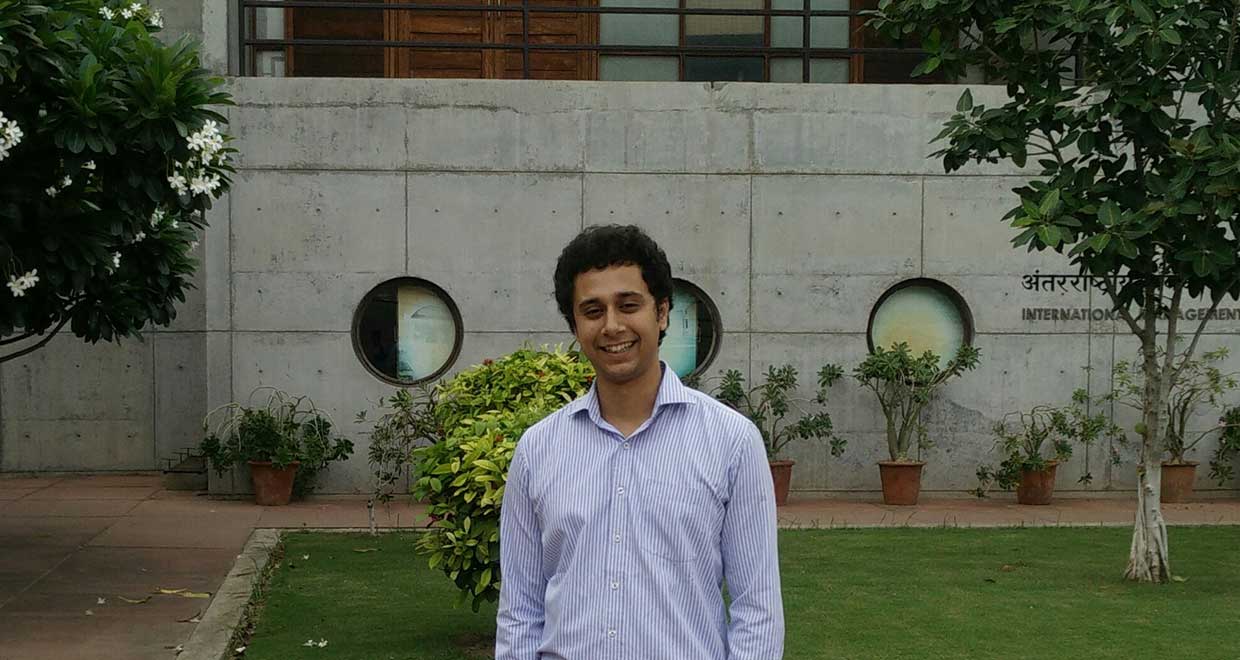
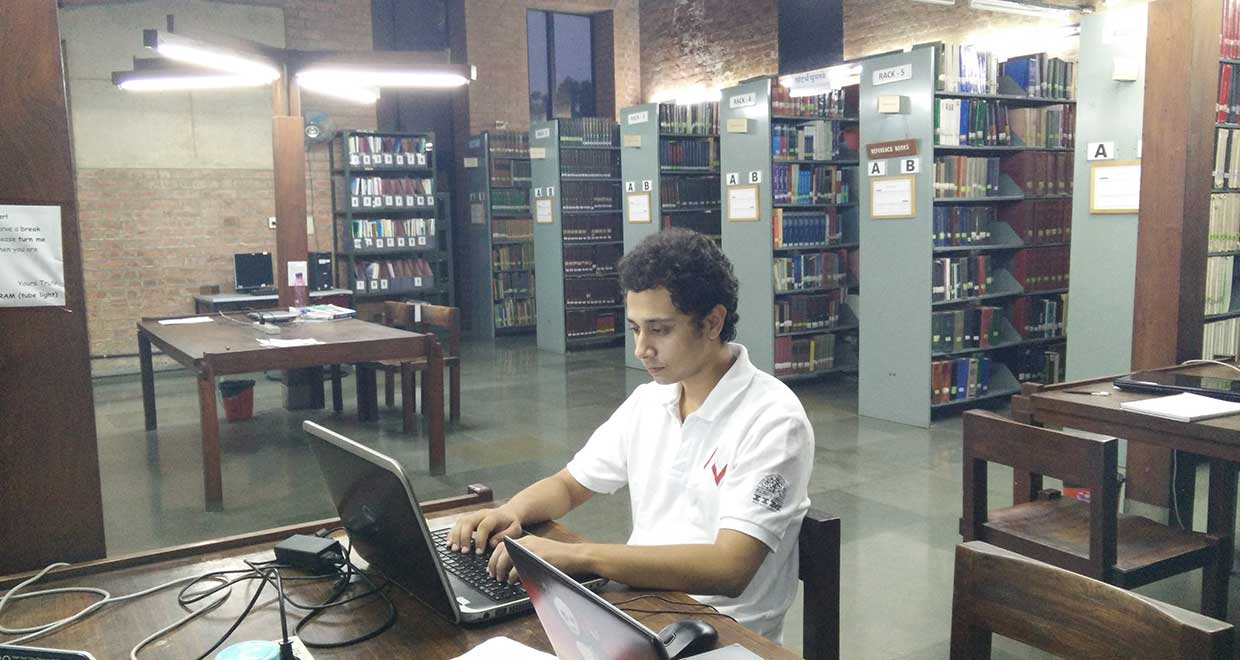
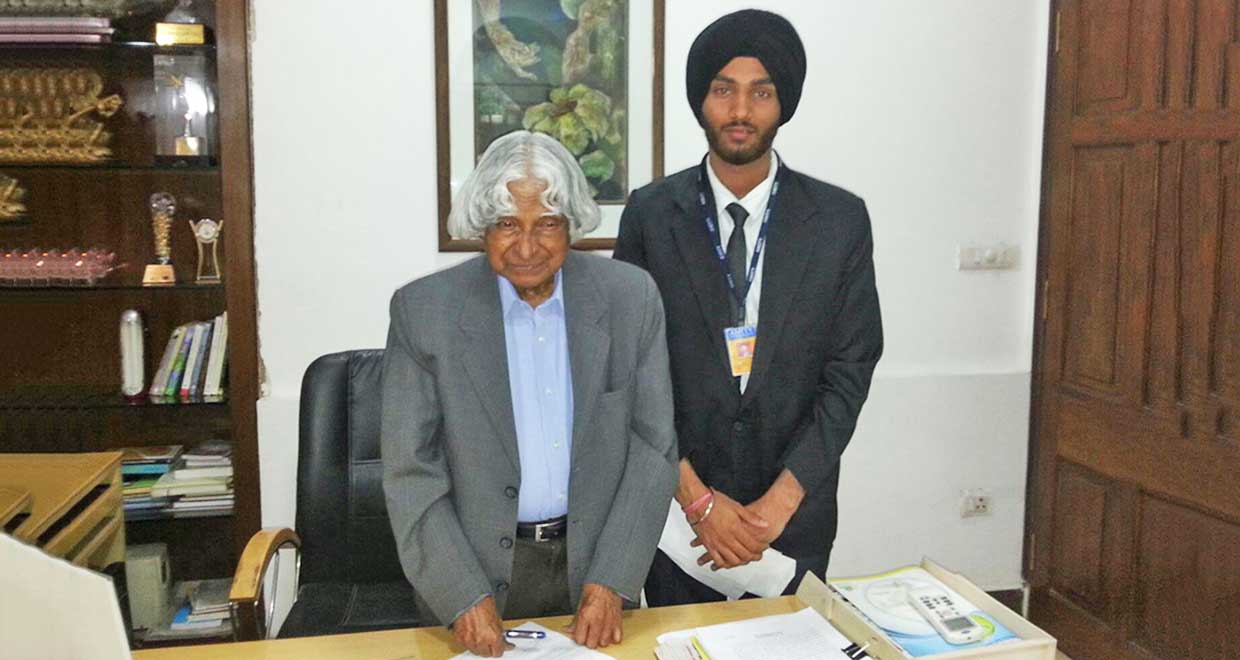
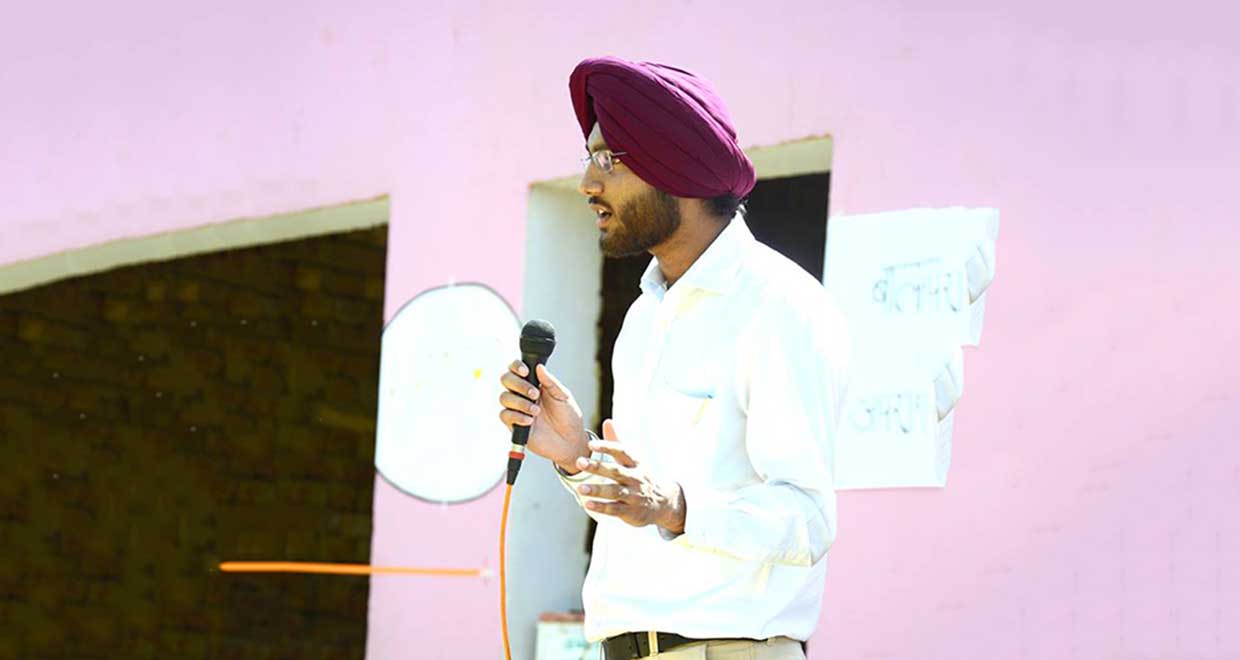
    Vaibhav Choudhary is an Independent Practioner at the Supreme Court of India. He graduated from Rajiv Gandhi National University of Law, Punjab, in 2012. After that, He has worked as a Research Assistant-cum-Law Clerk under honorable Justice Dipak Misra, Supreme Court of India. In 2014, He also practiced under Senior Advocate, Mr. Gopal Jain for a year. Since then he’s been practicing independently. Vaibhav has many publications to his credit for various Indian and International Law Journals. While in college, Vaibhav Interned with Trilegal, Finsec Law Advisors, ALMT Legal, Chambers of Senior Advocate Mr. P. P. Rao, Senior Advocate Mr. Pravin H. Parekh, Additional Advocate General Mr. G. R. Punia and PUCL, Jaipur.

    In this interview, Vaibhav talks about:

    • His experience at the Law School
    • His International Publications and their importance
    • How he prepared for Clerkship interview at the Supreme Court of India
    • His Landmark cases and his overall experience in the field of Law.

    How would you like to introduce yourself to our readers?

    As an independent legal practitioner, if you allow. The center of my practice revolves in and around Supreme Court of India.

    Also as an optimist, who is trying to build his legal practice in this strange and competitive land based on skills, guidance, and legal acumen.

    Describe your experience at Law school as an undergraduate student. Any highlights and incidents you would like to share?

    I did my law from Rajiv Gandhi National University of Law, Punjab. As I was part of the second founding batch of the university, which was new in the arena and was building itself as a premier law school in the country, it seems like I grew with the University. When I took admission in 2007, our law school was running from a temporary campus located in the middle of the city. There were no hostels inside the campus. The idea of the permanent campus was yet to be put in shape. So the law school being in the formative years required more efforts as well as provided more opportunities for individual development. One such example was the formation of a Centre for Advanced Study in International Humanitarian Law, a one of its kinds in India and I was appointed the student coordinator for the same. This gave me an opportunity to advance the awareness of Humanitarian law in our country. We started an essay competition namely ‘ENSAYO’ to promote the humanitarian law among the law students in India. This Competition was directly sponsored by ICRC while offering significant cash rewards as prize money. This competition has now become international and got participation from SAARC countries students as well. Looking back, being part of such new initiatives, I feel proud to be part of such activities during my law school, and this has thus, stuck as a good memory.

    Like any other law school student, I also forayed into the diverse world of moot court competitions and debates. But later on, I diverted my path and decided to focus on legal writing and promoting legal research among my contemporaries which was then ignored in our law school. Resultantly, a lot of legal research followed and led to more than 15 paper publications internationally and nationally in the best legal journals in the world.

    Tell us about your international publications and importance of those publications.

    Two important extracurricular activities in a law school are moot court competitions and publications. I participated in few moot court competitions but, later on, decided to utilize my research skills into legal writing. All of my international publications were my project topics either assigned by my college or chosen by me. My first International publication was in the European Intellectual Property Review on the issue of software patentability. I was the first student in my law school at that point in time to get an international publication in such a reputed journal. Later on, my various college projects which I converted into article got published in numerous Journals and books i.e. International Tax Journal, Asian Journal of International Law, International Journal of Research in Commerce Economics and Management, International Academy of Law, etc. Research is more important than participating in a moot court competition. I have to admit it candidly that my selection for the clerkship in the Supreme Court was purely based on my research skills and publications. So, I got my first job because of my extensive research work. But if anyone is planning to opt for pure litigation as a career choice than publications or any other activities are of not that help per se, but it always comes in handy in legal drafting. 

    IMG-20160218-WA0003

    Where did you do your internships while at law school? How important were these internships in shaping your career?

    Internships are next best aspect of a law school. Not just career-wise, internships frame your personal outlook too. They help to decide career path and also prepare you in advance for your future work experience. During my law school, my internships were not very precise or centered on one aspect of law only. I interned in PUCL, which by now was my best experience in law school. We did a survey on the social and economic aspects of the Jaipur Bomb blast victims which turned out to be quite informative and adventurous. I also did a Judicial Clerkship in Delhi High Court as well which gave me first-hand experience of ‘the Bench’ and its working which was a major reason for me to opt for Judicial Clerkship in the Supreme Court of India, post law school. I also interned with Senior Advocates in the Supreme Court, Mr. P. P. Rao, and Mr. P. H. Parekh. These internships helped me to build my end career choice of litigation. To also get a corporate law firm experience, I interned with ALMT Legal, FINSEC Law Advisor, and Trilegal. These internships helped me to get into the insight of the law firm working. So all the internships let you discover the in’s and out’s of all spheres of law, and one can identify without any recriminations, where their calling is.

    How did you prepare for the clerkship interview in the Supreme Court? What were the questions asked by the interviewer?

    No one prepares for an interview with the Supreme Court in strict terms, as there was never an accurate knowledge of what working in the Supreme Court entails, earlier. The Interview for the selected candidates was conducted on the premises of the Supreme Court. My Interview was taken by two former CJI’s- Justice Altamas Kabir and Justice HL Dattu. Both the Judges were very calm during the interview process and gave me ample opportunity to put forward my views. I was asked a variety of questions i.e. law school experience, extracurricular activities, legal questions, contribution to legal aid society, publications, etc. However, both the Judges were highly impressed by my publications and asked various questions related to it. I was among the fifteen students who were selected by Supreme Court Judge Panel through interview out of 200 students from various National Law Schools. 

    How was your experience with HMJ Dipak Misra as a Law Clerk?

    The experience was wholesome. It shapes the way I draft all legal documents, the way I do legal research, the way I put forward arguments in court, etc. even today. All the LCRA works through Judges Residence. HMJ Dipak Misra is very soft-spoken and intellectual person. He used to treat me as part of his family. I assisted him in drafting bench memoranda for the regular hearing matters, analysis notes of the legal issues and the plausible arguments which could be advanced, research on the settled law and related comparative law propositions, preparing pointers for judgments and orders so as to enable HMJ to dictate the same. I worked for two years with him. I consider him as my Mentor, who taught me how to read and interpret the law. He is a father figure to me and even after resigning from his office he keeps guiding me whenever I need his assistance. LCRA has shaped me as a better lawyer and has given me an edge over my contemporaries.

    What was the initiative taken by you and your fellow law clerks to increase the stipend?

    The stipend for the LCRA was Rs 25,000 per month. It is hard to stay in the NCR with that amount. So I along with my fellow law clerks approached the CJI to increase the same. However, then CJI RM Lodha denied our request at that stage. But with the help of other Judges who were part of the collegium it got increased by then CJI HL Dattu. But until that time, most of us left our clerkship.

    Tell us something about the transformation period into litigation in the Supreme Court.

    During my clerkship in Supreme Court, I was not able to figure out whether to go for a corporate firm or independent litigation. HMJ Dipak Misra came to my rescue and recommended me to join the litigation. Then the next question that came into my mind what type of litigation and from which Court should I start. Then by accident I met Senior Advocate Mr. Gopal Jain and joined his chambers. The transformation happened very quickly, thus, I was only able to take stock after a full month. Going from the chambers of a Supreme Court judge to that of a Senior Advocate is challenging. The work environment, as an example, changed completely. My mindset also had to take a complete U-turn as well as the work expected of me.

    What was your initial litigation experience with Senior Advocate, Mr. Gopal Jain?

    As also stated earlier, after Joining Mr. Jain I was bombarded with a variety of work which I never did during my clerkship. Mr. Jain has a broad range of practice which includes arbitration, telecom matters, electricity matters, legal opinions, vetting and settling of various legal documents, etc. With him, I have appeared in APTEL, CERC, DERC, TDSAT, NGT, NCDRC, High Court and Supreme Court. It was quite an extensive experience ranging from different courts and different matters. Although the beginning is always tough after some time, I got used to it. The best part of Mr. Jain’s Chamber was his office staff and his colleagues. All of them were very helpful and always ready to assist you. Mr. Jain is one of the outstanding seniors we have in the Supreme Court. He is very chilled and relaxed. He is among those lawyers with whom all young lawyers would like to groom their legal skills. Mr. Jain gives your free hand to do your independent practice while working with him. He will assist you and also appear in your personal cases as well. I will recommend him to all those who want to enter into the legal arena and want to build their practice subsequently.

    Discuss your landmark cases which you filed and won in the Supreme Court and Delhi High Court. (AIPMT cancelation by SC, All India Quota for AIPMT aspirants, Admission denial to LLB candidate by DU, Faculty of Law, etc.)

    After joining the bar, my first case which I filed in the SC was for the cancelation of the AIPMT examination due to mass irregularity. This matter was heard by the vacation bench and finally decided in our favor by the Supreme Court. Subsequently, I filed a writ petition in Delhi High Court on behalf of a Llb student against Delhi University, Faculty of law for denial of admission on the ground of non-submission of relevant documents. The HC decided in our favor and granted admission. Later on after re conduct of AIPMT examination I filed another writ petition in SC for Implementation of All India quota for the AIPMT aspirants. The SC decided in our favor and directed Medical Council of India not to transfer seats to State Medical Colleges. However, the order of the Court was not implemented in its full spirit by various States and contempt petition is pending in SC against the MCI.

    What challenges you faced as an independent practitioner in the initial stage?

    Being an outsider and without any legal family background, it is tough to set your practice in Delhi, or perhaps in any court for that matter. Initially, you have to fight out to get matters from people. The ultimate test of patience and perseverance is the establishment of your independent legal practice. Some matters you have to do as pro bono to make your goodwill in front of the clients as well recognition from the Bench.  Getting empanelment from PSUs and other places is quite a challenging task which requires tremendous backing and ‘Jugad.’ Presently I am working with my friends and colleagues to finalize and start our LLP in Delhi. We have yet to cross a couple of hurdles in that direction and are hoping to launch it soon.

    What are your views on the recent Supreme Court judgments?

    Recently, Supreme Court has been quite equivocal and strict, though fair. Supreme Court through its decisions from time to time has crossed many phases, ranging from judicial activism to pro-environment, etc.

    NJAC Judgment: I strongly feel that the SC has taken a very bold and right step by setting aside the NJAC Act and maintain Independence of Judiciary. This Judgment is a slap in the face of the executive who made a mediocre attempt to intrude with another vital organ of governance- Judiciary with their political appointments.

    Section 377 Curative Petition: CJI TS Thakur has taken a very bold step in the right direction by referring the matter for further adjudication to a Five Judge Bench to correct the mistake committed in NAZ Foundation. However, this is for the first time in the history of the SC that the three senior-most Judges of the SC has referred a matter to Constitution Bench in a curative petition. The issue of maintainability of such reference is yet to be decided.

    Supreme Court as Guardian of Law: The Indian SC has been recognized as World’s Most Powerful Court. Recently, the Court in a variety of decisions has shown its power and protected the rule of law i.e. Section 66A of IT Act Judgment, Yakub Menon Late Night Mercy Petition hearing, Coal Block cancelation, Patiala House Court Lawyers Matters, Banning of Diesel Cabs in NCT, Sahara’s case, etc.

    Last but not least, what’s next for you?

    My next step is to finalize the work on our LLP and launch it soon and serve our clients to the best of my ability. This along with the independent legal practice is keeping me occupied at the moment and the near future.


  • Siddhant Mishra on founding Aap Vakeel Hain and lawsheet.com

    Siddhant Mishra on founding Aap Vakeel Hain and lawsheet.com

    Siddhant Mishra is  a final year student at School of Law, KIIT University, Bhubaneswar. During his law school days, he founded the popular Facebook page, Aap Vakeel Hain and lawsheet.com, a website for law students.

    In this interview, Siddhant talks about:

    • His journey through law school and the internship experiences.
    • Founding Aap Vakeel Hai and lawsheet.com
    • Challenges faced in his entrepreneurial journey

    Could you share with us for deciding to study law? Did you have lawyers in your family?

    My foray into studying law was unplanned as I do not come from a legal background and am a first generation lawyer.

    You know you are a law student when math’s is..!

    I choose Humanities as my study stream for my plus two boards; initially graduation in Arts was the only formidable option left with me. It was more by chance than by choice that I got into the Legal Profession.

    How did you choose KIIT as the law school to attend?

    Not being able to get through CLAT, I prepared for KLSAT and joined KIIT. KIIT helped in gaining exposure in an array of fields, here we learned through experimentation and from our own mistakes. On academics, we had a robust curriculum, and the standards are pretty good which helped in getting introduced to the world of legal practice. Campus has a cosmopolitan crowd & I made some of the closest friends, learnt new things (good and bad).

    What co-curricular activities have you partaken in your law school years so far?

    Being a member of committees and societies helps in building one’s personality and career; it taught me the skill of networking that is terribly underrated in our system. At KIIT I was associated with committees conducting in-house and national events which helped me stay motivated and added a good blend of work with fun.

    siddhant sl 2

    Can you talk about your internships, and how they helped you?

    Internships were a rewarding experience for me. I was fortunate enough to flavor different kinds of work experiences, having got the opportunity to work with Law firms, NGO’s, Publishing House & in the chambers of some eminent practitioners; all this helped me learn researching and drafting. I learnt time management and prioritizing, which, I believe, hold equal value in our profession. Working as an intern in the chambers of Shri Mohan Parasaran (Ex- Solicitor General of India) made me realized that my interest lies to work as a litigant or to start with something of my own & that I was never interested in working in a corporate structured firm. In my opinion internships give a wider approach to the law students.

    You’re a prolific blogger, and you run a website ‘AapVakeelHain’. Can you tell us why you started both?

    The very idea of starting a rostrum for law students came in the second year of my college when I realized the dynamic transition i.e an online interface which is about to change the legal industry; but I was confused as which model will hand in glove and build a strong community for law students . Facebook was the answer! Being a student of second year I felt I will sound mindless if discussed this idea with anyone, so I started the work by my own.  I created a page with the name “Aap Vakeel Hain” which prospected me as spellbinding and start uploading sketch works commonly referred as “memes” depicting the subtle and overt hilarity of Law School.

    “A Law Student who loves to write & marketize”

    I started writing and blogging for few websites on my propositions where I get some good replies, met with few excellent mentors and worked hard in crafting my skills, later few of my write-ups got projected in the local newspapers &it’s from here when I decided to transmute the idea of a Facebook page into a Website.

     How was ‘AapVakeelHain’ been received by the legal fraternity so far?

    Surprisingly it went in an year time, with the sketch works being liked & shared from hundreds to thousands & website blogs started receiving fair traffic in a year time. Aap Vakeel Hain is currently running with the highest followers (30k+) in this segment and has a strong and growing online presence. We have built a good name, strong networks and hosted series of events in collaboration with Law Schools across the nation. Journey so far is really good.

    What do you hope to be the future of ‘AapVakeelHain’?

    “The best way to predict future is to create it” at present I’m tied in creating a team that will be looking for the upcoming plans. Aap Vakeel Hain will be registered as a company in the near future and will be enduring many marketing & networking programs which will help in solving legal education with online solutions on which I’m active on. I wish the future comes one day at a time.

    How has a strong and growing online presence helped you? What are the major challenges you face?

    A strong online presence has developed an advanced networking skills, I have led multiple projects; developed and implemented new policies and procedures.

    Starting a website requires little money which my father pooled in, he was hopeful and happy to hear my purpose & so were my friends Aqib Alam ( Content Creator),  Nishant , Snehil, & Akshay.

    Aap Vakeel Hain was initially run and managed single-handedly which at times become troublesome in striking a balance with other ongoing work, as you have to update it daily or else the readers will lose their pursuit and page will weak its reach. I tried to find few potential administrators but then it didn’t work out and it came on my head all again.

    There came a time when I was not too sure to expand this whole Idea, thankfully I had few good tie-ups which helped in administering the tasks swiftly.

    Aap Vakeel Hain is a self sustaining and profit earning entity now.

    What are your plans after post-graduation? Is a masters in the pipeline?

    I will go for LL.M which will allow me to further specialize in Criminal Law and thus prepare me better for my career as a litigant.

    SuperLawyer.in serves the best when it comes on sharing the career insights, (specially the detailed interviews discussing about the LL.M programs & fellowships) browsing the website directory will be of great help for law students.

    Can you tell us about your new venture lawsheet.com?

    “Lawsheet.com” A website by law students for law students, is an upcoming project which runs parallel with Aap Vakeel Hain; designed with a vision to help you through Law Schools.

    This website will be maintained and written by several different law students from different schools and in different years of their studies.

    Aside from offering their tips, advice, and experiences, the bloggers will be able to use it as a sort of outlet and stress reliever from their hectic law school schedules.

    You plan to help law students with greater visibility through lawsheet.com. How do you plan to achieve it?

    • Lawsheet, among many other things, will depict entries about current events, technology and social networking as it relates to law.
    • Lawsheet aims in sharing how to decide if law school is best for you while offering what must-haves you are going to need and how and what you need to prepare for important exams.
    • Lawsheet will talks about everything – from eating habits, to studying habits, to writing papers and case briefs!

    We are on it, hopeful to launch in the coming months.

    What motivated you towards the entrepreneurial initiatives you’ve taken?

    Primary motive is the desire to start something of my own. I’m not sure what’s coming down the curve but it is a thrill. We all have that one idea running in our mind of which we are sure of, what’s required is to implement it.

    While I was scripting for my Interview I took a break and watched TVF Pitchers (an Indian Comedy Drama Series) in which Naveen (Played as CEO of a upcoming venture) highlights the difference that exists in the European and the Indian model of Entrepreneurships, where in Europe they will ask “WHAT is the Model” in India they will ask “WHY Entrepreneurships”

    This difference in the support and attribution systems requires a reformation.

    What are the unconventional career alternatives for law students out there?

    A degree in Law doesn’t guarantee you a career in Law!

    • Entrepreneur- A degree in Law will help in understanding and negotiating contracts related to the business.
    • Politics- Both house of parliament are filled with politicians pioneering a degree in Law. Few even managed with fake degrees!
    • Journalism/Writing- I have a name “Tanuj Kalia” founder of Lawctopus and a graduate of WBNUJS wrote a book “Law as a career” you may start scripting yours.
  • Himanshu Sharma, MBA Candidate, IIM Ahmedabad, on all about studying MBA from IIMA

    Himanshu Sharma, MBA Candidate, IIM Ahmedabad, on all about studying MBA from IIMA

    Himanshu Sharma is a recent graduate from Gujarat National Law University, GNLU (2015). In his final year, he cracked Common Admission Test (CAT) to secure his admission in IIM-Ahmedabad. During his time in Law school, he interned at FICCI in their Intellectual Property Facilitation Centre, New Delhi and was a judicial clerk working under Justice Kurian Joseph.

    In this interview he talks about:

    • His Law school experience;
    • His work at FICCI and with Justice Kurian Joseph; and
    • All about cracking CAT and getting through IIM Ahmedabad
    • Faculty, facilities and the atmosphere at IIM-A.


    Himanshu, tell us a bit about yourself.

    I am currently a student of PGP-1 (MBA in colloquial terms) at Indian Institute of Management, Ahmedabad. I completed my graduation from Gujarat National Law University, Gandhinagar in 2015 and joined IIM-A after a barely month long break. I am a native of Dharamshala (H.P.) and love spending my time reading and gaming.


    himanshu-sharma-6

    Tell us a bit about your childhood and pre-college life. Did you have lawyers in your family?

    I grew up and attended school in the hill towns of Shimla and Dharamshala. My pre-college life was very calm and laid-back with not much academic pressure as such. I used to spend much time playing video games. Interestingly, I am the first lawyer in my family. My extended family comprises solely of doctors and teachers.


    Why did you decide to study Law? What inspired you to do so?

    Law as a career was not my first choice. I was a science (non-medical) student in Class XII and was keen on pursuing engineering post school. However, during my last year in school, I realized that Law as a career also interested me. So I prepared for CLAT as well. The CLAT rank turned out to be really good and my parents convinced me that for a person like me, Law would be a much better option than engineering as they believed my skills were more suited towards it. Looking back, I somehow feel that taking up Law was one of the best decisions of my life, as it exposed me to a much broader learning experience than what would have been possible pursuing engineering.


    How was your experience at GNLU, Gandhinagar? How did you go about your academics as well as extra-curricular activities? Were you into mooting?

    The five years at GNLU have been nothing short of fantastic. I met amazing people here, learnt from some of the best teachers and did almost everything possible under the sun that I felt like doing. Academics at GNLU was not much of a burden as the course was evenly spread out over the different semesters. Any difficulties that I faced were resolved with the help of teachers or friends and seniors. GNLU students are also lucky to have a very active extra-curricular life. Almost every fortnight there used to be some activity or the other, ranging from simple music nights to week long sports leagues. I took part in as many as I felt comfortable with. I was not much into mooting as getting into mooting is a serious affair and time and energy needs to be dedicated. I represented the University in only two national moots, once in my first year and the next time in my third year.


    How was your experience serving various student committees at GNLU?

    The only committee I served in GNLU was the sports committee, which was a very good experience as it led to bonding with many people I would not have known otherwise. Working for the sports community at GNLU was also a pleasure. Also, from the experience of seeing my friends work with various committees, I cannot stress enough the hard work put in by such committees for the benefit of students. Whether it is the SAC or the MCC or the LSC, they keep on working throughout the year for the betterment of the student community at GNLU.


    Give some insights of your internship experience at FICCI in their Intellectual Property Facilitation Centre, New Delhi.

    I interned at the IP Facilitation centre of FICCI, New Delhi as IPR has always been my favourite area of Law since a long time. The work there mostly comprised of research on various ongoing events in the IP sector. A substantial work assigned to me was the preparation of a course booklet on IPR for high school students, to introduce them to the basics of IP Law and their importance. The work turned out to be quite challenging as the booklet had to be designed keeping in mind the limited exposure to Law for the students. Overall, the internship was a fun and learning experience. The interns also got the opportunity to meet luminaries in the field of IP Law at times.


    You did a Judicial Clerkship at Himachal Pradesh High Court under Hon’ble Chief Justice Kurian Joseph. What is the process of application? What do you think contributed to your selection?

    Interning under Hon’ble Justice Kurian Joseph was a wonderful experience. One of my batchmates and I both applied through the Registrar of the High Court and both got selected for the internship. However, the final decision was taken by the Hon’ble Chief Justice himself after having a short conversation with both of us. It would be really difficult to quantify the criteria of selection but I think all that mattered were that we were confident and open to learning.


    What kind of assignments did you get and what was your nature of work as an intern?

    The assignments were almost always about some small technicality that had arisen in some matter being adjudicated by the Justice Joseph. Rather than the work though, it was the few small discussions we had with Justice Joseph in his free time that provided us with a much better understanding of various aspects of Constitutional and Administrative Law. The whole experience also contributed much towards my learning of our judicial system.


    You are also interested in sports and were a member of the University Sports Committee and University Basketball Team. Tell us a bit about it.

    Being involved in every co-curricular or extra-curricular activity is not of much use if the same is done just for the sake of it and is not enjoyed. I think students would be at no loss if they focus on say one or two such activities only, if they enjoy what they are doing. From the perspective of enhancing the profile though, especially from the perspective of attending a B-school later, taking part in as many co-curricular or extra-curricular activities as you can is beneficial in the long run, as thy help distinguish you from other candidates during admissions.


    What prompted you to choose MBA after graduation and why not an LL.M or a Law firm job?

    I had not even thought much about post-graduation till my 3rd year. But as the 3rd year was almost ending, I realized that I really did not have much enthusiasm in me towards a corporate Law firm job. I found corporate Law to be very procedural and mundane. Pursuing IP Law was another option for me, but I felt that it would restrict me to a very niche field. So I gradually drifted towards going for post-graduation. I did not rule out an LL.M. right away, but somehow chose to go for an MBA over it as it seemed to offer better benefits in the form of diverse learning as well as a different career path. A very close friend also played an instrumental role in motivating me for pursuing an MBA.


    himanshu-sharma-7

    When did you exactly start preparing for the CAT? When should a person ideally start preparation for the CAT and other management exams?

    I started preparing for CAT and other entrance exams when I started my 4th year at GNLU. So essentially, I prepared for almost one and a half year. However, I would not say that this is the ideal time limit for anyone who wants to prepare for the same. I have seen people cracking CAT after preparing for just four to six months, while some have taken close to 3-4 years to get into a B-school of their choice. It all depends on the kind of effort a person is willing to put in. I took more time because I was not very comfortable with the Quantitative section. Also during the first year of preparation, I prepared at a leisurely pace, putting in approximately 8-10 hours of work in a week.


    Did you get yourself enrolled in a coaching institute? How valuable do you think coaching institutions can be for MBA?

    I enrolled myself in a coaching institute as soon as I started preparation for CAT. For me, it was very valuable as they provided a comprehensive set of study material and scheduled mock exams at regular intervals. Having classes regularly also helped me pace my preparation as per a fixed schedule and not lag behind in any particular topic. The input of the coaching institution was even more valuable while preparing for the interviews as they guided me very well on how to handle and be confident during all sorts of interview scenarios.


    Which coaching institute did you go to? Was it possible for you to attend every class?

    I studied at a coaching institute named ‘Endeavor Careers’, with the center located approximately 4 km from the University. The classes were scheduled on Mondays, Wednesdays and Fridays from 7-9 pm. There was a study room that was open 24 hours, 365 days a year. There was also a well-stocked library for the CAT aspirants to hone their English skills. Extra classes were also scheduled sometimes on weekends. Additionally, once the mock tests started, students were allotted slots for the same based on their preferences so as to avoid any clash with college schedules. I would say I roughly attended 90% of the classes, missing out mostly when I went for my internships or had some prior personal engagement. Backup classes were provided by the institute whenever students missed a class for a genuine application. Also, at the end of my 4th year, I opted not to go for internships and stayed in the University campus during May and June so that I could attend classes at the institute.


    How many hours did you put in for your preparations every day? Is it important to have a fixed schedule or weekly targets?

    As said earlier, it all depends on the person. For the first year, I would study a maximum of 2-3 hours a day. However, in the last six months, I studied anywhere from 4-8 hours daily, depending on my other workload. I had my fixed schedule only in the form of classes that I attended at my coaching institute. Other than that, I mostly stuck to determining weekly or fortnightly targets and then reaching them at my pace.


    himanshu-sharma-5

    How did the other management entrance tests like MAT & XAT turn out to be?

    I took exams for other institutes such as XAT, IIFT, NMAT, etc. I cleared some of them while in some I did pretty badly. It all boils down to not losing your nerve and remaining calm when you have a set time limit to attempt a lot of questions. CAT however, gave me the chance to get into the best B-school of the country.


    CAT is one of the toughest management exams. How did you prepare and accustom yourself with these tough subjects?

    CAT can be said to be one of the toughest management exams, but all it requires is knowledge of English, High School level Mathematics, and Logical Reasoning. All these can be prepared easily over time. CAT anyways does not test the conceptual knowledge of candidates solely; rather it places more emphasis on the application of this knowledge. Then it becomes important for the candidate to have a calm and analytical approach towards questions, thinking about the best ways to attempt it, and not just approaching it in a conventional way.


    Which books/materials did you rely on while preparing?

    I only referred to the study material provided to me by my coaching institution for preparation, as it was more than sufficient to cover all topics.


    himanshu-sharma-2

    Lakhs of people attempt the CAT exam and only a thousand get shortlisted for the interview and secure admission to a top B – School. Which are the prime skills and expertise required to crack the CAT?

    What my experience with CAT tells me is that in the end, what matters is your approach towards the exam, rather than your preparation for it. If you approach it with a calm and rational mind, you will crack it. Since wrong answers carry a negative score, it is very important to be confident of your answers. Questions can be tricky, generally the most obvious (but wrong) answer would be the first option. So you need to analyse a problem from all angles and be sure that you have not missed out on any important information. Also, I have seen many brilliant candidates faring badly in the exam because their nerves got the better side of them. Being calm and confident is thus the key to cracking CAT.


    What strategy did you take to crack the interview?

    I got approximately 22 days to prepare for the interview after the shortlist for IIM Ahmedabad came out. It was my first interview for any of the B-schools I had applied to and so I was quite nervous in the initial days. Over the days, however, I put in a lot of effort towards preparation and grew more confident. I read up a lot about the current events happening in the world, as well as our country. I had been reading newspapers regularly for the past couple of months so it was not that difficult. I also brushed up many of the subjects I had studied in Law school with the help of my friends and teachers. My coaching institute mentors also conducted many mock interviews with me, which helped a lot in getting a feeling of the real day.


    What kind of questions have you been asked in the interview? Give some tips to nail an interview in order to secure admission to a top B–School.

    For IIM Ahmedabad, the interview lasted around 30-35 minutes. The initial 20 minutes were spent on academic questions. In the very beginning, the interviewers asked me my favourite subjects in college (IPR and Constitutional Law were my answers). The discussion moved from the benefits of IP protection, to the Novartis case and finally to the newly formed NITI Aayog. The latter part of the interview was mostly about current affairs and how comfortable I was with solving a question on probability. There were also some general questions about my family, my taste in literature and movies, and a very unexpected technical question on basketball.

    For other institutes, such as XLRI or other IIM(s), the interviews were again broadly based on academics, current affairs and situational questions. What I feel is that for a B-school interview, firstly you have a decent hold of your academic subjects and world affairs, and secondly, you should be able to convince the interviewers that you are open to learning and will contribute to the institution.


    himanshu-sharma-4

    Which subject interests you the most? Share with our readers.

    IIM Ahmedabad does not have any diversification between different streams. In the first year, all courses are compulsory, with optional courses being offered in the second year. As of now, I find myself interested in Consulting and Marketing.


    How is the academic pressure at IIM-A? What is a normal workday like?

    The academic pressure at IIM-A (or any other B-school) is much more intense than at a Law school. Classes here are from 8:45 am to 1:10 pm, five days a week. Most subjects use a case based approach to teaching, so the required cases for each class have to be studied and understood the previous day. Additionally, all the quizzes (tests as they are called here) are surprise quizzes, with a quiz being held one hour post its announcement in the afternoon. There is also work involved if a student is the member of any club or committee. A normal workday essentially involves reaching the class in time, waiting for a quiz announcement at 1:45 pm if any. Then it’s either giving the quiz at 2:45 pm or catching a few hours of sleep if there is no quiz. Evenings can be spent studying, playing or engaged in any other activity. Post dinner it is usually class preparation for the next day. A student cannot miss classes other than for health reasons or on account of some urgent work that requires so.


    Tell us a bit about the faculty and the facilities of IIM-A.

    The faculties with whom I have had interactions till now are experts in their respective fields of study, holding post-doctoral degrees. Classes here are interactive, with the faculty putting much emphasis on student participation. In terms of facilities, we have a 24 hour library, sports facilities for all major sports, gymnasia, 5-6 cafes (with room delivery available) in addition to the mess, single occupancy rooms and LAN connectivity in rooms (in addition to WiFi).


    Tell us a bit about the cultural environment at IIM-A. Are most of them young students or senior professionals?

    My batch here consists of a heterogeneous mixture of students from all sorts of backgrounds. There are freshers like me, while there are also students with 4-5 years of work experience. In addition to engineers, we have chartered accountants, commerce/ economics graduates and doctors in the batch. There is a healthy representation from almost all the states of the country. This results in a very diverse cultural and professional environment, which in turn greatly amplifies the learning experience of the students.


    What all activities can one partake of at IIM-A?

    There is no dearth of activities to take part at IIM-A. It is purely left to the choice of the students. There are clubs focusing on all sorts of activities, ranging from the likes of technology and finance to the likes of music/ movies and stargazing. There are also a lot of competitions in diverse fields of management to take part in. Additionally, students can also volunteer in social initiatives such as Prayaas and SMILE, both of which cater to providing education for underprivileged children.


    Where do you want to see yourself five years from now?

    Well, to be unabashedly optimistic, I would like to see myself as a partner of a consulting firm or in the senior management of an FMCG company after five years. However, to be realistic, my life at IIM Ahmedabad has just started and I would like to learn more about the opportunities available, before I decide on a career path.


    Would you like to be an entrepreneur after finishing MBA?

    Law and Management is one of the most potent combinations when it comes to economic activities as both are inextricably linked in the larger scheme of running businesses.

    As of now, I have not considered pursuing any entrepreneurial venture. However, IIM Ahmedabad has its very own Centre for Innovation, Incubation and Entrepreneurship which helps students pursue and kickstart their ventures. So in case I do get bitten by the entrepreneurial bug, I would be more than happy to pursue my own venture.


    What is your message for Law students who want to choose MBA as a career after pursuing Law?

    In India, MBA after pursuing Law is not very common, and I had had my shares of frowns and weird looks when initially I told people of my decision. Their usual reaction used to be that this kid has gone bonkers, an MBA is not for lawyers. However, I had the full support of my family and friends, who kept me motivated throughout my preparation period.

    I believe that an MBA is a very valuable degree especially for a lawyer, as each and every business is inextricably linked with Law in the larger scheme of things. Leading a business can thus be relatively easier for a person who understands the intricacies of the Law within which the business has to operate. Also, there are hardly any non-engineers and non-commerce students in Indian B-schools. Thus students with a background like Law or medicine are highly valued due to the diverse skill set they bring to the institution. If a person is keen on going to a B-school, he/she should just be sure about it and prepare with confidence. The Law degree will only help in later stages, and never be a hampering factor.

  • Charitha Shashiraj, LL.M Candidate, Harvard Law School, on all about Harvard and Magic Circle Traineeship

    Charitha Shashiraj, LL.M Candidate, Harvard Law School, on all about Harvard and Magic Circle Traineeship

    Charitha Shashiraj graduated from NALSAR, Hyderabad in 2014. She went for a Vacation Scheme at Linklaters and Allen & Overy and thereafter, secured a job at Linklaters, London. However, she chose to pursue an LL.M from Harvard Law School over the Magic Circle job.

    In this interview she talks about:

    • Application and the admission process at Harvard Law School
    • Faculty, facility and opportunities at Harvard
    • Application process and importance of vacation schemes in Magic Law Firms


    How did you choose law as a career option?

    I’m a first-generation lawyer in my family and when I was in school, like most people I harbourednotionsof lawyers as peoplewho milled around in courts in billowing black robes.So law was not something I had planned to doinitially, I was more of a math-and-science-freak. A friend of mine who was a year up in school convinced me otherwise after joining NLS.

    I think it was CLAT that brought home the point that law was as much about logic, reasoning and creativity as the sciences. And when I was cleared to go to one of the best law schools in the country at the time, I took it as a sign.


    charitha-shashiraj-2

    How was your NALSAR experience?

    NALSAR gave me opportunities that I know I would have found nowhere else and I cannot emphasize how grateful I am for it.

    I went to Singapore for an exchange programme in my third year, mooted at national and international moots, wrote papers, chaired editorial boards, taught the junior batches, interned at every opportunity and so much else, and did well at almost everything only because NALSAR gives us the resources and support to excel not just at academics, but at other things as well. Throughout law school, I learned to open my mind and question established norms in society. Activism and social change is a huge dimension of NALSAR’s education and while I might not always have been an active participant, I never failed to appreciate that it was the best part of law school. Ultimately, we had the best of everything- intellectual discussions peaked, top tier law firms in the country vied to take us, Magic Circle firms from London came down for interviews and the best universities in the world opened their gates for us.


    Tell us a bit about the Entrepreneurship and Business Law Diploma online programme from NUJS. How did it help you?

    The EABL course attracted my attention primarily because something of this nature was almost unheard of in Indian law schools. Law students are often heard complaining that there’s not much we draw from classes on corporate law when it comes to actually working in a law firm. In that respect, the EABL Diploma course was bound to be an immediate success- directly hearing from practitioners in the field and working through problems based on real transactions, that’s the only possible way learning in theory can transition into practice. I distinctly recall accessing some of EABL’s documents when I was working on a Banking problem in AMSS, to understand what related laws I should be looking into. The reading material was really impressive- it was concise and organized, yet comprehensive. It was incredibly helpful and I’d highly recommend it to anyone who’s looking to make a mark in the corporate law sector.


    Which firms did you apply to? What is the selection process in Linklaters and what does the firm expect from an Indian law student?

    I sat my interviews for Linklaters and Allen and Overy in the penultimate year of law school and eventually chose to go to Linklaters. That’s where I’ll be headed in September to start as a Trainee Solicitor. The key to securing a place in these firms is to think on your feet. The application process is much like your LL.M applications, but the interviews really test how fast and how creatively you think. Be prepared to answer HR questions that aimto test your skill set, which you will be asked to exemplify using various examples from your life. More important though is the technical interview, which would entail a basic working knowledge of how an M&A transaction works and what purpose a Due Diligence Report serves. Linklaters has a series of logical reasoning tests that you have to go through, the kind that CLAT tests you on. And a simulated exercise where you have to answer a set of emails within a stipulated time that gauges how you would, as a Trainee, respond to different and difficult situations in the firm. A&O has a similar exercise that requires you to peruse a DD Report in a particular time frame and answer questions about the transaction. The questions are definitely more logic than knowledge based but it does assume a basic understanding of corporate law. You also need to have some basic knowledge about the firm itself, its offices and some of the transactions that are currently ongoing.


    Please tell us a bit about your vacation scheme experience.

    In my personal experience, these Vacation Schemes were significantly different from Indian Internships. They genuinely care about giving you the best possible training and the entire internship is very structured and organized to the last possible detail. It is as much about you choosing them as they choosing you and they make every effort to impress you. You sit with the supervisor assigned to overlook your work throughout, so help is available at any and every point in time. Senior trainees and associates are more than willing to make time for you if you approach them for help, even if they have their hands full with their own work. Trainees do a lot of the paperwork once the decisions have been made, editing and sometimes even drafting the supplemental agreements, especially in the smaller groups. We attend conference calls and client meetings as well. There is plenty of opportunity to relax and catch up with colleagues during team activities, retreats and over evening drinks. You might have to put in some long hours on some days, but I think it’s worth the effort.


    After that, you went on to pursue LL.M. from Harvard Law School. What were the other universities of choice?

    Honestly, I was unsure whether I should continue to study further since I already had an offer from Linklaters. I decided that I would opt for an LL.M only if it was one of the best in the world and so I applied only to Oxbridge and Harvard, given their unparalleled reputation. Yale and Columbia would probably have been my other choices, if I had to choose more.


    Did you consider taking up a job in the USA itself? What were the opportunities available to you?

    I wanted to keep my options open, but most legal positions in the US require you to take the Bar Exam. There are certain basic courses that are pre-requisites to take the Bar but these cut significantly into the credits available for the academic year and prevented me from diversifying into courses that I was really interested in. Eventually, I decided that I didn’t want to forego the rare opportunity that Harvard afforded me – to study thought-provoking courses with stellar professors who in many cases are the world’s foremost experts on the topic. I was fairly secure since I had a job lined up already and in any case I preferred London’s more refined lifestyle to the American way of life. It was a hard decision I made at the time, but I think all in all a good one.


    What was the admission process for securing a seat at Harvard Law School?

    The admissions process for the Harvard LL.M proceeds in several stages. Applications are usually due sometime in November-December. Once the completed application is submitted, applicant’s recommenders receive emails requesting them to upload their recommendations to a secure web portal. Applicants will not be at liberty to view the recommendations but it is upto them to ensure that the recommendations are uploaded directly by the recommender withinthe specified deadline. Like most US institutions, you can use the LSAC services to send the required documents to Harvard. The LSAC is basically an integrated service that several top US institutions subscribe to. For a small fee, you can avoid having to mail/courier documents separately to each institution. The documents can (in some cases, have to) be sent to LSAC, where they will be vetted and sent out to the institutions of your choice.


    What do the selectors expect from an application of a law student at Harvard?

    The application itself is fairly straight-forward, divided into easily understandable sections that require the applicant to furnish personal details and highlight their personal achievements and work experiences. Needless to say, it demands a high level of competency and is a holistic review of your achievements right from high school tolaw school and any work experience gained subsequently. Ensure that you do a thorough job on the application andtake time to think through every major activity/achievement of your formative years. One thing worth mentioning in the application is the part that requires you to list the subjects you are potentially interested in studying at Harvard. Remember that it is no marker of what you might eventually end up studying once accepted into the program. My advice would be to think strategically and build an application based on an area that you have already worked and excelled in that would support your credibility when you evince an interest in pursuing an LLM.So an ‘area of expertise’, if you will, rather than an area of interest. For instance, I was interested in both Corporate Law and Gender Studies but had no significant experience in the latter. I think (though I might be mistaken) that chances at success would have been considerably lesser if I had indicated an interest in Gender Studies while my entire application screamed corporate law. Eventually, despite having had no previous exposure in that area, once I was accepted I chose to pursue Gender Studies. They want to see a carefully crafted application. And most importantly, they want to see what drives your decision to do an LLMso its imperative that you give them a compelling reason for wanting to do the LLM in the first place.Focus every aspect of the application on one area- it is also an indicator of how focused and organized you are as a person.

    Perhaps the most important part of the application is the essay that has to be written on a contemporary matter of the applicant’s choice. I would say that this should preferably be something related to what has been indicated as your area of interest. It should be creative, concise, cohesive, relevant and structurally sound. It might be this alone that sets you apart from the other applicants to Harvard, all of whom are assuredly high-achievers.


    How far do you think Harvard grants financial aid to foreign students? What is the procedure for obtaining such an aid?

    Should the applicant wish to apply for financial aid, there is a separate application that has to be filled and this would require the applicant to submit not just their financial status but also their parents’ financial details. Harvard is very generous with their financial aid, which can be in the form of a loan (not interest-free), a grant or a combination of both. Their aid is need-based, not merit-based like scholarships in general.


    What opportunities does Harvard provide to foreign students?

    The variety in the courses on offer at Harvard is unimaginable- there are over 400 courses to choose from- which are as broad as ‘International Law’ to niche topics like ‘Law and Neuroscience’. There are fascinating courses associated with literature and the arts, which can be extremely fun to explore, such as ‘Justice in Shakespeare’s Plays’ or ‘Music and Digital Laws’. There are theory-based courses for the thinkers and practical skill-based ones for the shooters. In addition to this, the LL.M allows you to cross-register with prestigious institutions like MIT or Fletcher as well as the other Harvard schools as a substitute for law school credits, a remarkable opportunity to reach out to non-law friends. LL.Ms generally opt for courses with a more international scope, but many of them looking to work in the US do prefer US-centric courses, both options are well catered to at Harvard. We sit our classes with the JD students; there are no courses that are exclusive to LL.Ms alone. Once again, this provides us with the chance to interact with a wider circle, and learn from the best of our contemporaries. Hands on experience can be gained through a variety of co-curricular and extra-curricular activities, including societies, lunch talks, guest lectures, demonstrations, clubs and most importantly clinics, where legal practitioners in both private and public services recruit students to engage in real ongoing deals. The most common refrain I’ve heard from every LL.M is that the nine-month course is bursting with activities that are far in excess of what its possible to do in that short period so make no mistake, it’s going to be a chaotic year.

    It’s not all studies either. There’s plenty of opportunity for day trips during weekends, and longer ones during the spring break. Sports, mooting, music and every other activity you can think of happens everyday. Harvard also sponsors activities like a wine-tasting club. So trust me when I say that anyone and everyone, no matter what your interests or inclinations, will find what they love at Harvard, academics or otherwise. It might seem overwhelming at times, but at any given point there are at least six people, including previous LL.Ms and current SJDs who have been officially assigned who you can approach for advice in any matter, not to mention plenty of other people who are always eager to help. Talk to people, make friends. Use the year well and “you will never again find a place in the world where you would have to seek out a hotel” – that was the first thing we were told during the orientation.


    Please tell us about how the classes are conducted in Harvard, what method of teaching is followed by teachers and what other things that makes Harvard distinct from other law schools?

    Classes can be in the form of courses (group of 80-100 students), seminars (group of 20 or so) or reading groups (groups of 12). The smaller classes understandably tend to be more intensive in terms of readings and discussions and they run into more depth in terms of subject matter. The bigger classes generally test you on exams, which can be both in-class and take-home, whereas the smaller ones expect everyday participation and daily/weekly reports and papers. You are also required to write an original 25/50 page LL.M dissertation to complete the course.

    It goes without saying that the professors and teaching methods are top-notch. Readings are more theory and case law based, and there’s very less statutory law relied upon. Most professors follow the Socratic method of teaching, something you rarely encounter in Indian law schools. Very few professors opt for lecture style teaching, most only lead ‘discussions’ in class. This means having to read what could possibly be hundreds of pages before every class and being prepared to answer questions on it if called upon. In my experience this tends to generate a more productive discussion, not only because students are more involved but also because I found their views are sometimes more refreshing and insightful than the professors. You would not expect JDs who have no law background to be so sharp, but their observations are fascinating- just to see the way they have been taught to think was incredible. If there is something I most admired about Harvard, it’s the liberty and free-thinking that it allows and encourages, something you tend not to find often in Indian law schools.


    charitha-shashiraj-3

    How does an LL.M degree help you after you graduate from Harvard?

    To be honest, the LL.M does not do much for your CV if you are looking primarily for a job in India, particularly in the corporate sector. Most people who pursue a Harvard LL.M are already experienced and accomplished and are looking to take a break from work or attempting to break into the US legal sector/international organizations. That said, Harvard is worth it even if purely for the experience and you learn a lot more in terms of life skills than academically. For me, Harvard was an intellectual pursuit, and suffice it to say that I couldn’t be more grateful that I made the decision to apply for it; my fellow classmates were undoubtedly the brightest minds in the world and every conversation, whether within or outside the classroom adds something of valueto your knowledge.

    There’s no doubt about the fact that Harvard opens up a world of opportunities. Most people subscribe to the NY Job Fair where top-tier law firms from all over the world interview candidates for various positions, similar to placement day in Indian law schools, only on a larger scale. I know a friend who sat 12 interviews in one day (still don’t know how he managed to do that). I’m limited in my knowledge of placements because I didn’t sit for one at Harvard. But I can assure youthat from the very beginning of the admissions process the Consultations Office at Harvard takes proactive measures to ensure Harvard students are aware of every opportunity available to them. If there is one thing you can be sure of, it is that no stone will be left unturned in trying to find you a suitable job. There are two offices that help students seek out jobs and they send frequent updates on openings in both private and public positions. Studentsgot placed at the World Bank, the UN, and every other premier institution onecan dream of.


    What made you opt for Gender Studies at Harvard? What all did you learn out of the course?

    My primary focus was on Gender Studies, with related courses in Constitutional Law to supplement it. I can’t say there was any particular incident that drove my decision, but law school in general had piqued my interest in this area. We generally study for 23-27 credits in the entire term. I took courses on Feminist Legal Theory, Sex Equality, Family Law, Comparative Constitutional law and the Fourteenth Amendment amongst others, all with a gender specific focus. Perhaps my best experience was with Sex Equality where I had the privilege of being taught by Prof. Catherine MacKinnon, a legend in the feminist movement who is considered world over as the pioneering figure in radical feminism. However, as far as my intellectual pursuit went, I think I was most passionate about Feminist Legal Theory, taught by Prof. Janet Halley who also supervised my LL.M thesis on the Hindu Joint Family. The course was wildly liberating, her brand of feminism is starkly different from usual accounts and I found myself questioning a lot of the previous assumptions I had about it. Having never had any formal education in feminist literature previously, I was amazed at how much there was to it.

    Apart from the usual courses for credits, we also have the opportunity to sit in on classes just as an observer and that’s a real advantage. With the prior permission of the instructor, we can learn from the entire gamut of famous Harvard professors. Not to mention the multiple guest lectures that happen on an everyday basis, with famous personalities like Mitt Romney, Justices Elena Kagan and Scalia, and Justice Albie Sachs in attendance amongst others. To hear them speak and learn from them first hand was an unforgettable experience.


    Do you intend to do pursue higher studies at any point of time?

    At some point I also intend to study further, and do a PhD. Harvard offers you the opportunity to do an SJD which is the equivalent of a PhD but it is a five-year course as against the usual 3 years in the UK. It is however, extremely selective and niche since the candidates are chosen largely from the previous LL.M batches. I was keen to continue with the same and my supervisor was equally eager but eventually, I thought the time commitment seemed too much. Having never had any significant work experience before I thought it’s high time I gain some exposure now. I will probably apply to Oxford or Cambridge for a PhD soon.


    Would you like to leave some message for our readers?

    Try to do the best at whatever you do. Most people suggest that you should find and follow your passion, but throughout my life I’ve learnt to be passionate about anything I do; whether it is something I really wanted to do has been a secondary concern. Accept that you will not always get what you want, so its important to not be disillusioned by this; rather, take every opportunity you getand work at it with the same zeal you would have for your dream. I’ve always lived by this principle and I think I’ve been the happier for it.


  • Simar Singh, LAMP Fellow, on all about the LAMP Fellowship

    Simar Singh, LAMP Fellow, on all about the LAMP Fellowship

    Simar Singh studied law from Amity Law School, Centre-II, Noida and has graduated recently. During his years of law school he has interned under Adv. Guru Dutt Sharma who was the Additional Standing Counsel for Government of India in the Dwarka District Court and also Adv. V. K Aggarwal who was also the former Law Secretary. Simar also won the Achiever Award for displaying leadership qualities by the University’s Founder President. He is also a fellow of LAMP (Legislative Assistants to Members of Parliament).

    In this exclusive conversation with Simar, we talk about –

    • His journey through Amity Law School, Noida and the internship experiences.
    • Achieving the Achiever Award for displaying leadership qualities by his University.
    • Receiving a letter of appreciation for efforts and conduct in International Seminar on Global Environment and Disaster Management from Hon’ble Justice U Tha Htay, Judge Supreme court of Myanmar.
    • Being chosen as a LAMP fellow (Legislative Assistants to Members of Parliament).
    • The work performed by a LAMP fellow and the learning acquired from it.


    How would you like introduce yourself to our readers who are mostly law aspirants, law students and young lawyers?

    I am Simar Pal Singh. I am a recent Law graduate from Amity Law School, Centre-II, Noida. I am a very passionate reader, especially biographies and autobiographies of different lawyers and eminent jurists. I also like to participate in debates and discussions. I am a LAMP Fellow for year 2015-16.


    Tell our readers a bit about your childhood and pre-college life as well as educational background. Do you have lawyers in your family who motivated you to pursue a career in legal field?

    I was born into a family of Government Servants. Both my parents were in the paramilitary force C.R.P.F and therefore my childhood was all about seeing one or the other parent going to a different State away from the family and serving the country. I did my schooling from CRPF Public School, New Delhi. I had always been an average student in academics but was always interested in sports activities. I was in the football team of my school and won many inter school tournaments. I was also a National Level Athlete and represented my school and my State in various sports meets and won many medals in 100 m and 400 m races.

    There were no lawyers in my family but my father did his LLB while working and used to tell us about his subjects. He never pursued law as a career but his talks on law as a subject and its importance in our society did intrigue me. I think this was the trigger which got embedded deep inside me and eventually got activated after my 12th  and that’s why when I decided to pursue a career in law, my parents were very supportive.


    What inclined you towards the field of legal education? Can you recall any specific incident that made you choose law as a career?

    After scoring well in my X boards, I took science stream on the advice of my family and teachers who according to the set convention told me to go for engineering. During my 11th and 12th I took coaching for getting into a good engineering college but It is a fact that it was all about just going with the flow and not accessing that whether I was actually interested in becoming an engineer or not.

    After 12th, most of my classmates took admission in engineering, B.Sc., hotel management, etc. I also joined the segment and, after clearing the entrance for Hotel Management got myself admitted in hotel management course in IHM Chandigarh and I think this was my life changing incident. It was my second day in IHM and it suddenly dawned on me that this is not the place where I belong. My parents have served this country all throughout their life and therefore I too have to be in a profession where I can serve the system and the country. This is when I thought of pursuing LLB.


    You graduated from Amity Law School, Centre-II, Noida in the year 2015. How would you describe your experience as a student aspiring to be a professional there?

    With no prior family background in law and practice, I would say the initial journey in the law school was little strenuous. When your batch mates know where they will intern and work during their course work and you on the other hand have absolutely no pointer as to how to cover up with them. And since I was from science background, I also had trouble in adapting the writing pattern for my law exams.

    But as it is said, with plethora of problems comes the opportunity to overcome them. One simply has to keep trying. After I realised this, things became much better. I studied hard and not just the prescribed course books but various books by foreign authors to gain insight on a particular subject, various biographies of those famous in our field to acquaint myself with working of the greats and current legal judgments to keep myself updated on the contemporary issues in our field. With sustained hard work and support of college, I was able to grasp on my subjects and do justice to them. It was a long and challenging journey where I started as a complete stranger and ended up discerning the calling for my life.


    simar-singh-4

    How instrumental was Amity Law School, centre-II in shaping up your legal career. Did you grow an interest in policy making in law school itself.

    Since ALS-II was the very first platform of my legal career, I’d say that it had a key role in moulding me and my career. I had very encouraging teachers who were always there to guide me and support me in my choices. I constantly, used to take advice from them which turned out to be invaluable in making career selection. I had commendable batch mates some of whom turned out to be my very good friends and healthy competitors who always strived me to do better. I wouldn’t say that I had an interest in the policy making per say in the college itself because I was completely focussed on law but I always did make an effort to be continuously in touch with the happenings in our country through newspapers and to keep a track on all the news bills that were being introduced as the process was part of our law itself.


    Tell us about your experience as a law student at ALS.

    Till my first year, I was also like the others a mere observer, watching activities happening but too nervous to come forward. But from second year I guess I grew into my fears and decided to take a leap towards them. I started participating in various moots and debates, representing my college all over India and before I knew it, I was assigned the responsibility of looking over these activities as the head of various societies. Participating in the various moots was always fun. It used to be like a trip with friends, exploring new colleges and meeting some of the best legal minds from all over the country. I think, public speaking and debating are very important for a student today especially a law student to gain confidence and come out of his shell but it is not the only important thing. I personally know a lot of brilliant law students who never did any mooting but are still very good in their arguments so it depends on the person.


    simar-singh-1

    Tell us a little bit about your internships and work experiences in the law field.

    My first internship was with Advocate Guru Dutt Sharma who was the Additional Standing Counsel for Government of India in the Dwarka District Court. Initially I simply used to observe the court proceedings and eventually I started reading out cases, preparing their briefs and following them up in the hearings. It turned out to be an illuminating experience as I saw the practical side of legal profession for the first time and realized that this was what I meant to do all along. The pleadings, the arguments and the decorum of a court, all of it captivated me and I did my internship with such dedication and enthusiasm that I was offered a part time employment by the Counsel to assist him with the cases which continued for three years of my law college where I saw myself being transformed into an Advocate much before my graduation.

    I also interned with Advocate Dr. V. K Aggarwal who was also the former Law Secretary and had drafted the Arbitration and Conciliation Act, 1996 where I got the first-hand knowledge on arbitration proceedings and their conduct. I observed the proceedings of various arbitrations, prepared briefs on various cases and performed extensive legal research on SEBI Regulations, Telecom Laws and Company Laws. But most importantly, I got the opportunity to gain prodigious knowledge about Arbitration as a subject from V K sir.


    Tell us about being awarded the Achiever Award, and your experience with Justice U Tha Htay.

    (Simar has two major achievements namely Achiever Award for displaying leadership qualities by the University’s Founder President in the presence of Hon’ble Chancellor and Vice Chancellor of University and a letter of appreciation for efforts and conduct in International Seminar on Global Environment and Disaster Management from Hon’ble Justice U Tha Htay, Judge Supreme Court of Myanmar.)

    I was deeply obliged with the fact that I was bestowed with that award and that my University thought I was worthy of it. After all the great learning, valuable mentors in the form of teachers, wonderful friends and many good memories, I owe Amity Law School II a lot and this award is simply an acknowledgement of the fact that my efforts and achievements have been supported and honoured by my college. Experience of college is one of the paramount experiences that one goes through life and for me my college journey has been simply astounding.

    My experience with Hon’ble Justice U Tha Htay was extremely enriching and enlightening. I was chosen to represent my University in this seminar and after a personal interaction with all of us, fortunately, the organizers found me competent to assist Hon’ble Justice U Tha Htay during his stay in the conference. I assisted him with his seminar briefs and meeting schedules throughout the seminar after which I was given a souvenir from Myanmar and a Letter of Appreciation for my work from the Hon’ble Justice himself which was a rare and privileged honour for me.


    Being a LAMP (Legislative Assistants to Members of Parliament) fellow is a great achievement indeed. What all did you have to do in order to get selected?

    Before answering this I like to share my gratitude to my previous faculty Dr. Sam Abraham. He was the person who pushed me to fill LAMP application and made me believe that I can get through this.

    In order to get selected, I had filled in my form with due diligence and made sure that I stick to the word limit that I was asked for. Once my application was accepted I was called for the personal interview before the panel three experts. For this I made sure that I speak only what I know and remained calm and confident throughout the whole interview even when I did not know the answer to any question.


    Tell us about the SoP you submitted for the LAMP fellowship?

    I did not prepare any SoP in advance and had filled my form spontaneously so I don’t have my SoP exactly but in that I had broadly mentioned that as a lawyer we generally see how Courts makes use of our existing laws to deliver justice. Till now I had seen law getting declared, but this fellowship would get me the experience as to how law and legislation is actually born and how the legislature of largest democracy in the world works. Further from this fellowship I intend to get insight the working government mechanism since it is directly responsible to our parliament.


    simar-singh-2

    How does one apply for the LAMP fellowship? Tell our readers about the process, requirements and finally your suggestions to our readers who aspire to become a LAMP fellow?

    To apply for LAMP, one has to be very vigilant. The online application for this fellowship opens around the starting of year and it is open for around 20 -25 days. One can find the link of application on LAMP website. Any person who is of age below 25 years can apply for this fellowship provided he is a graduate. My suggestion to anyone who wants to become a LAMP fellow is that keep your article on policy issue ready in advance. Also keep asking yourself that why you actually want to pursue this fellowship because in the SoP you should write what you actually intend and not what will constitute a right or good answer (There is no good or right answer). For interview I would suggest that the aspirant should know what they have written in their application form, few basic knowledge on the structure of parliament and current affairs.


    LAMP fellowship provides an excellent opportunity to interact with Legislators at a personal level, and to understand the policy process. What have you learned in your stint as an LAMP fellow?

    Well LAMP fellowship has just started and I feel each day is new opportunity to learn and this is the ultimate objective of this fellowship. You learn and experience things which you don’t know and which you can never experience in your normal routine work. I have learned to be more responsible and now I know that unlike the judgmental view, Hon’ble Member of Parliament actually works a lot.


    Tell us about working with your MP. What is the experience like? Please tell us about the kind of work a LAMP Fellow is required to do in a typical workday.

    I won’t be able to tell you the name. However the experience has been extremely delightful and knowledgeable. The work of LAMP fellow is nowhere strictly defined or codified. He is there to assist his Hon’ble Member for the work related to parliamentary affairs. In a typical day when Parliament is in session, he has to go through around 6-7 newspapers for getting updates on current affairs of country. He has to read each of the documents tabled in parliament and then prepare briefs about them. Further he draft’s starred, unstarred and supplementary questions for his allotted Hon’ble member which could be asked to the government. Preparation of Private Member bill and researching on topics on which the Hon’ble member has to speak in parliament is also the part of the job.

    The work is slightly different when parliament is not in session. Here the work is mostly related to research for the policy issues which your member is interested in, attending various conferences, seminar, committee meetings etc.


    Do you have any plans to pursue higher education in the future?

    Yes I am planning to pursue my higher education from a foreign university after the completion of this fellowship, most likely in the public policy.


    Is there any message you would like to share with our readers?

    My only message to all would that do whatever you like with utmost sincerity. There is not just one path that is right as prescribed and you don’t have to follow what others are doing. In fact, most of the times, the path that is less travelled often leads to the most fulfilling and fruitful journey.


    Finally tell us in which specific role you would like to see yourself the role of a lawyer, policymaker or a reformist of the society we live in.

    Well why not in all three. I would love to keep my roots as a lawyer first and then I wish to contribute my experience in policy making. I believe if I can discharge my previous mentioned roles honestly then surely the third role of reformist will get fulfilled itself.


  • Tanvi Dubey, Associate, SAM & Co., on her internship experience with legends like Ram Jethmalani, J. Dipak Mishra and Mohan Parasaran and on bagging a job

    Tanvi Dubey, Associate, SAM & Co., on her internship experience with legends like Ram Jethmalani, J. Dipak Mishra and Mohan Parasaran and on bagging a job

    Tanvi Dubey is a recent graduate (2015) from Department of Legal Studies and Research, Barkatullah University. She has secured a job at Shardul Amarchand Mangaldas & Co. During her time in law school, she focused on co-curricular activities, and had consistently been a great performer. She has spent considerable time in writing and presenting research papers and in securing good and diverse internships, etc.

    She has interned with legends such as Ram Jethmalani, Justice Dipak Mishra and Mohan Parasaran. She had also interned twice at AMSS and worked on issues of Corporate Fraud and Buy back of shares.

    This interview shall serve as an anecdote of tenacity and diligence and the fact that no matter where you study law, there will be opportunities always and you have to make the best of them to succeed.

    In this interview she talks about:

    • Her experience from the internships with Ram Jethmalani, Justice Dipak Mishra and Mohan Parasaran;
    • Certificate courses that she did in her law school on Consumer Rights, Human Rights, Course on Law and the Entrepreneur, etc;
    • Importance of enhancing your CV for jobs in law firms and tips regarding the same; and
    • Things one must do at law school.


    Tell us a bit about yourself. How would you like to introduce yourself?

    The Story of my life – I was born and brought up in Bhopal (M.P.). I did my schooling from St. Joseph Sr. Secondary School, Bhopal. I belong from a family of lawyers. My Grandfather is a retired D.S.P. Officer and a renowned layer in Bhopal. My mother is Post Graduate in Home Science. She has always inspired me never to stop and move forward towards my goal. Finally and perhaps most crucially the person who inspires me the most is my father. He is a Legal Practitioner and Legal Advisor to various companies. Pursuing Law looked like a destined path. From the first impression of my grandfather’s library to desperately wanting to be my father’s daughter, I grew up romanticizing the legal profession.

    Five years ago, when I entered the law school challenges were many. But my genuine fondness for law made me excel in this beautiful law school journey. I have been keen to use my legal ability for the unempowered and the youth. I am associated with many Youth Foundations, like the Esteem Youth Foundation to help young minds to be the Changemakers for the future generations. My association with Indian Classical Music has contributed immensely towards my self-discipline, presence of mind and concentration. I have performed nearly 50 Vocal Concerts. Despite these commitments, I have been maintaining my academic standards and I have mostly been a high scorer. I should mention that I learned to prioritise, manage time and work under pressure from these exercises. I also got the opportunity to record two music album covers with Radio Mirchi and My FM which are uploaded on Youtube.


    Legal studies are still only a backup option for quite a lot of students. What motivated you to choose law as a career?

    I have always been inclined towards the purpose the law serves, i.e. justice and hence was forced by myself to study law. Not denying the requirement of an observant and analytical approach which the profession mandates for a person to have, I strongly believe myself possessing the same to fair extent and hence most suitable for the profession. Also, since the profession requires hard work and I have no hesitation in so, I thought it to be the profession made for me.


    tanvi-dubey-4

    As a law student which activities did you participate in? Did you have any guidance on how to go about your academics, co-curricular activities and internships?

    Every moment spent in law school was a long chapter added to the personal history of happiness, joy, anguish and secret sorrows. I loved each day of this journey. I loved the place and the people for what they made of me. I fought my insecurities and struggled for my identity. Law school was not about academic record hopping from grades to grades. Although it took a while to realise that the little revolutionaries in our heart were always restless. We too were restless till we put across our ideas, created some noise and drew attention to what matters the most. There were zillion lectures that I deliberately lived through.  Each mile in this journey transformed me beyond what anyone could have ever imagined. That was the Law School for me.

    To be specific about what I did –

    • Got my Paper published in the national and International Law Journal.
    • Got the brilliant opportunity to intern with the legends like the revered Mr. Ram Jethmalani, Hon’ble Justice Dipak Mishra, Judge Supreme Court of India, Mohan Parasaran, Revered Solicitor General of India. I also tried my internships with the trial court and the District Consumer Forum, which gave a much experience about drafting in the lower courts. I also got the opportunity to intern twice with the litigation Department of AMSS.
    • I am associated with Esteem Youth Foundation, which is involved in organising regular programmes to encourage youth like the Yuvashaktikaran programme, The Changemakers Confluence and many other symposiums.
    • I did many Certification Courses to boost up my CV. These were on various areas of law covering Human Rights, IPR, Consumer Rights and also Business Laws.


    tanvi-dubey-6

    What do you feel about the perception that students of certain ‘elite’ NLU’s have a much easier time in kick-starting their career as compared to law students from other colleges? Is this true at all?

    Well, I think that at the end of the day, it is one’s determined effort that matters. Make your effort count for something. Keep going and don’t slow down until you’re well past the goal. If a student is determined from the very first year of law school to do something great and he/she moves forward towards his goal then I don’t think there is a huge difference between a student graduating from a traditional University or an NLU.

    My advice to the students from traditional universities is:-

    • To focus on good internships and to do additional course as only studying law and getting a degree is not going to be enough.
    • Make the most out of time. Try and do whatever you can by the end of fourth year to be well placed.


    What were your reasons for taking up so many certificate courses?

    (Tanvi did a couple of Certification Courses on Consumer Rights, Human Rights, Course on Law and the Entrepreneur and also attended a Summer Course organized by The Indian Society for International Law.)

    These courses help a student to develop valuable personal and professional skills. The Certification Courses are designed to give junior law students an understanding of the major areas in law, so that they can get a head start in their future careers in corporate law by excelling at their internships and interviews and gaining an understanding of real-world legal practice. I did most the courses to boost up my CV and to get detailed knowledge about the subject matter.


    You have published legal articles in multiple journals when in law school. Do you feel this activity just contributes to building a polished CV or has relevance beyond that?

    There is nothing more important in the practice of law than your ability to put together quality written work. It is important not only for boosting up your CV but also increasing your knowledge in a particular area. Researching skills are incredibly important throughout one’s legal career.

    Firstly, researching skills prove to be a great asset during one’s internships and plays a pivotal role in getting a call back.

    Secondly, you get to keep yourself updated of legal aspects of contemporary issues as most of the research papers are on the contemporary issues.

    Thirdly, publication plays the most important role if one desires to go abroad for his LLM. Most applications for the masters are successful on the basis of the quality of research work he/she did.

    Editing, writing and presenting papers instilled a great amount of confidence in me and improved my research and speaking skills which are very important for any and every law student. I still remember the joy I had when I presented my first paper at the auspicious occasion of completion of 25 Years of Consumer Protection Act at National Law School, Bangalore.


    Our readers would be quite curious to know how you went about securing your law school internships.

    (Tanvi’s internships at law school have all been at different places like AMSS, Chamber of Ram Jethmalani, two Judicial Internships, M.P. State Consumer Dispute Redressal Forum, Directorate of Women and Child Development of Madhya Pradesh and JurisConsultus, a Law firm in Bhopal.)

    I have always applied for my internships well in advance and followed up regularly. It’s also important to keep your CV updated. If a student from the very beginning is interested in Corporate then he must try and intern with the top notch firms. One must also try for an extension and a call back internship. For a call back one must be particular about finer details like formatting, good presentation etc. These are things which can set you apart from the other interns. Diligence as well as intelligence plays the most important role in getting a call back internship. Deliver work on time and once you’re done you should be able to go and brief the person who allocated the work to you in the best manner. My heart was set at Amarchand from the very beginning. I realised that rather than get more ‘names’ on my CV, I intern at the same place again, because that allowed me to get better work, and learn a lot more, as then they trust your capabilities.


    tanvi-dubey-1

    How did you go about securing your internship at the Chamber of Shri Ram Jethmalani? What was the nature of your work at Jethmalani’s chamber?

    I applied at the Chambers of Mr. Ram Jethmalani well in advance by the regular process by sending my Resume as well as my covering letter to his email address. I found myself introduced to a new world of law – better than one I romanticized and more dominant than what I read about in college – when I got the brilliant opportunity to intern under the Legend of Indian Bar, Mr. Ram Jethmalani. His words are constant source of inspiration to me. He always praise that “success comes with lots of hard work and knowledge” that inspires me to work hard and achieve my goal. Ram sir’s way of reading each case, questions asked by him in the conferences amazed me every time. At the age of 92 he is more active than anyone else in his office. Hearing Ram sir taking cross-examination was an enriching experience. I can still not forget the fear on the face of the witness being cross-examined by the undoubted champion of cross-examination.


    Share your experience working with Justice Dipak Mishra, and also with the ‘Solicitor General of India Mr. Mohan Parasaran. What kind of work did they assign you during your internship?

    When you work under a judge of apex court, you feel distinguished from others. Sitting with His Lordship was quite an experience. You have to go through cases and make a detailed analysis on each law interpreting it with your assumptions and comparing with the present law. The work culture was too strict as it was the decorum of the court which was to be maintained. His Lordship is very friendly and down to earth. As he is a well-wisher and also a regular visitor to our University, we had a lot of time talking over many different issues. Office staffs were also very cooperative. Task was allotted to us by His Lordship himself or by his personal secretary or by the permanent JCs working at the office. It basically included creating briefs about all the cases happening in Judge’s court, ranging from civil, criminal, corporate, bail matters, WPs, etc.

    The best part was the keen interest of His Lordship in teaching the interns about the intricacies of court procedure, court manners, judgment writing and delivering, and clarifying the question of law, whenever and wherever we were stuck.


    tanvi-dubey-2

    What do you have to say about the law students pursuing only law firms?

    Well, one must start out with a Trial Court internship in my opinion. If you intern at a firm in the early years, it won’t really be a mutually beneficial experience, that is to say that the firm might not really gain from your contribution, but it is indisputable that you will. If one is determined for corporate than he must to get an internship in the top notch firms and try for a call back. To get a call back, I’d say there is nothing like a good dose of curiosity! Don’t shy away from asking the lawyer the background that they want the research in, it’ll give you a deeper understanding of the way things work. If one is inclined towards judiciary then firm internships do not really matter. He can rather intern under the National Judicial Academy or try for Judicial Clerkship.


    tanvi-dubey-7

    You have interned twice with the Litigation Team of Shardul Amarchand Mangaldas & Co. What do you think contributed towards your appointment for the 2nd time as an intern?

    I had the finest internship experience at AMSS mostly because of the people I worked with and the quality of work I got during internship. I was constantly guided by my team, which allowed me to learn immensely.  I have interned twice in AMSS. During both of these internships, I did my assignments sincerely. I sticked to the deadlines and never hesitated to ask my team members any doubts that I had while doing the research work. Soft skills are very important. In my second internship, I prepared a corporate law PowerPoint presentation. In AMSS, the presentation holds a lot of weightage when it comes to recruitment. Therefore, it’s important to prepare it with diligently. I primarily worked on Corporate Frauds and Buy back of Shares. I also had to submit a detailed report on the various corporate law scandals. For the interview stage, I brushed up my CV and basic concepts of corporate law, contracts etc.


    Did you plan your internships throughout law school did it happen just by chance? How relevant did you find your law school education with the kind of work you were required to do at law firms?

    I was initially inclined towards judiciary. I have been preparing for the Judicial Services from the very first year. The pattern of teaching followed by my college is truly made for judiciary. But, destiny played its role at this place. During my first Supreme Court internship with the Revered Solicitor General of India, I was introduced to a new world of law. Internship under Ram Sir was again an unforgettable experience. Finally and most crucially my internship experience at AMSS changed my mindset and I was very much influenced to work with the brilliant legal minds around. I was looking for varied and challenging work and AMSS provides the best platform to experience the cream of legal work in the country.

    In this journey, I would especially thank SuperLawyer for sharing the profiles of brilliant law students, who have always encouraged me to work hard and instilled the much required confidence in me that I am no less than an NLU student. This had immensely helped me to secure some brilliant internships and prepare for interview.


    Did you learn any skills while interning? What are these skills and how did you acquire them?

    I learned to be focused. I always submitted my work before deadline and this helped me to manage and priorities, time and work. I can assure myself at this moment that joining the firm will grant me contentment in every sense meaning thereby, work culture and experience, exposure, as well as financial security.


    You have also secured a job offer from SAM & Co. Tell us how did your recruitment happen?

    It was a long recruitment process. It started with the questionnaire that I was required to fill up followed by a Legal problem on Arbitration on which I had to give my Legal opinion. After few days I was called for Interview Rounds which started with a Group Discussion, followed by Technical Interview. And the guys who were shortlisted in the technical rounds had to give a final interview that is HR Interview. For the interview, you should not miss out on reading up even a single topic which you have mentioned in your CV. You should also be able to readily answer any question regarding the field of law you would like to specialize in, which should be supported by your CV (you should have written papers/articles or participated in moot courts/conference relating to that field of law). These would significantly help you in preparing for an interview.


    Did you have to undergo an interview before securing your recruitment at SAM & Co.? Any tips on how one should go about framing a C.V. and prepare for an interview?

    Honestly, one mustn’t frame their opinion about interviews based on what others tell them. The reason is that every interview is unique. However, be thorough with your CV, and basics of corporate law, contracts, property law, banking etc. Customize your CV according to the firm/company/lawyer you are applying for, and stress on those parts of your work experience which hold value for them. If your CV is heavily loaded with co-curricular activities, you can cut down on the section of extra-curricular activities in your CV. I was asked questions based on my CV, general corporate law and a couple of HR questions as well. My advice to all reading this is that there’s one thing you constantly need to question- “Why me”. Why should they pick you out of the hordes of applicants?


    How did you manage to keep up your grades?

    Sincerity and dedication are one of the most essential factors to be considered. One need not entirely focus on reading the course material. It might even be tedious at times. A rather interesting approach, which worked well for me, is to read latest judgments on the subject. I tried to make every subject interesting by adopting some different approach towards it like for example I read the comparative analysis in a tabular form of the Companies Act 1956 and Companies Act 2013, which helped me to learn and remember things in a better way. I think regular studies play a very important role in maintaining grades in college.


    There is a phenomenal obsession amongst law students with maintaining a very high CGPA. How important according to you is this in securing a job?

    Grades are extremely important in getting good placements. However, a number of other factors like internships, Certification Courses, Moot Experience co-curricular and extra-curricular activities also add up. Therefore, one must try to be an all-rounder rather than just focusing on grades.


    tanvi-dubey-5

    What should one law student aspiring for a job at top law firms do? How would you recommend they prepare in their last 2 years at law school?

    From the very beginning a student must be very well focused. He must to the additional Courses, do some brilliant internships and MAKE THE BEST OUT OF TIME. He must have an excellent CV by the end of fourth year in order to get a job at a top Law Firm. There is no substitute to hard work. A student must know the right websites to keep him updated and I think everyone will have the right concoction. Try everything that you possibly can, in these five years – participate in competitions, write research papers, volunteer for events, go for fests, and try bring out the real you at the end of this law school journey.


    Lastly, what would be your message to our readers?

    To be able to work with devotion at something one likes can be the greatest and most enduring source of human happiness.”, said Justice M.C. Chagla,

    You must make the most out of your vacations. Intern with a lawyer/firm whenever you get an opportunity to do so, for you will learn the practical aspects of what you read in law school, which will give you an edge over others.

    Strive to have an all round CV. Intern with different courts, companies, law firms and do it early so that when you make a final decision, you are sure about it. Represent your university in at least one moot, be part of at least one committee for 2 years, present at least one paper at a conference and have at least one publication. Also, manage your time wisely and do take out time for your hobbies/sports, so that you enjoy your time while in law school.

  • Mansi Sood, Rhodes Scholar, on application, SoP and LL.M from Oxford

    Mansi Sood, Rhodes Scholar, on application, SoP and LL.M from Oxford

    Extremely capable and skilful, Mansi Sood from NLSIU Bangalore is a student from the batch of 2015. She has been recently awarded the Rhodes scholarship for pursuing higher studies at Oxford University. Interestingly, it has been offered only to a few students in India, Mansi being one of them. This is an interview about her success, outstanding academic records and highly polished CV. She has also provided insights on the application process for Rhodes for the benefit of readers. Needless to say, her accomplishment in the field is incredible, and she goes on to tell us  about her drive and future plans. There is evidently so much to learn from her.

    In this interview she talks about:

    • Rhodes Scholarship
    • Law school experience at NLSIU, Bangalore
    • Mooting and Internships


    How would you like to introduce yourself to our readers? Tell us a bit about your background and school life.

    Well, I was born and brought up in Delhi and did my entire schooling at D.P.S. R.K. Puram. I was always involved in a wide range of co-curricular and extra-curricular activities but my passion has been dance. I started learning Kathak from my guru, Smt. Vaswati Misra at the age of 5 and learnt for 13 years till I went to college in Bangalore.


    mansi-sood-3

    What was the driving force behind taking up a career in law?

    My parents have always encouraged me to follow my heart and do what gives me joy. One of my cousins went to law school and I used to hear a lot about it from her. So somewhere along the way, her stories inspired me and it seemed like I would enjoy the law. The law is very logical and structured and it’s also a great equalising force. Both of these things appealed to me and I decided to take the chance. I’m just glad it worked out!


    How has been your law school experience at NLSIU, Bangalore? What are the best memories of your student life there?

    It’s very difficult to compress almost 5 years into one answer! But frankly, NLS, Bangalore has been a wonderful, wonderful experience. There’s so much to learn, so many opportunities and so many people to inspire you, it’s quite amazing. It is hard work but it’s definitely worth it. The memories I’m taking from here will last me a lifetime, I think.


    How do you give credits to your institution for being awarded the scholarship?

    I think the institution, its people and most importantly, its environment, have had a huge role to play in shaping me as a person. Whether it’s professors, friends or peers, they are always so encouraging. And the diversity of interaction makes you broaden your perspectives a great deal. So yes, I would definitely like to thank my institution and all the people associated with it for their support.


    mansi-sood-1

    You were adjudged the third best advocate at the South India Rounds of 55th Jessup and there are winning titles for your team in many other moots. You also have many publications to your name. How did you manage and what kind of skills did you acquire?

    I have been involved in a variety of co-curricular activities but as you mentioned, mooting has been the one most dear to me. When I think what all of these activities have taught me, especially mooting, is that there are always two sides to every coin, multiple ways to look at anything. And I think that’s a very important skill for a lawyer. Other than that, they also obviously sharpened my research, legal writing and advocacy skills.


    What was your first reaction on learning that you are being awarded the Rhodes scholarship? How was the application process?

    My first reaction was a mixture of joy and relief. I couldn’t believe it for a while, in fact there are still moments of doubt! But to be honest, it’s a great honour and I’m very grateful to have been given the scholarship.

    The application process involves two stages – the written application and the interviews. Once you submit your written application, there is a preliminary interview and then a final one. At each stage, the pool keeps getting smaller.

    I wasn’t always sure that I wanted to study further but once that decision got made, Oxford was the dream.


    mansi-sood-2

    How did you go about writing your CV and most importantly, your personal statement/essay/ SOP?

    Writing the CV isn’t tough, you just have to write two pages about the things you have already done. It’s the SoP that takes effort because you have to express your dreams in words and make it sound convincing at the same time. It involves a lot of thinking and introspection, more than anything else. Once you’re clear about your goals, it’s just a matter of putting it down on paper.


    Do you need to have recommendations as well? What kind of profile is needed while applying for the scholarship?

    Yes, the Rhodes scholarship requires 6 recommendations – 3 academic and 3 personal. There isn’t a fixed profile that you need or a checklist that you need to have completed but broadly, they look for a well-rounded personality who has been able to demonstrate more than just an interest in the field he/she wants to pursue.


    Was there any interview round? If yes, how were you prepared to face the panellists? What kind of questions did they ask?

    Yes, there are two interview rounds. The first one is more ‘technical’, in the sense that it’s usually taken by people from your field who are interested in having a discussion. The final interview is more about you – who you are, what you want to do etc. I was a little nervous both times, more so the second time not just because there were a lot of luminaries on the panel but also because it was my final shot at the scholarship; but both the interviews were a lot of fun and I thoroughly enjoyed myself. They asked a variety of questions, ranging from India’s labour laws to my dance to Kashmir.


    What kind of internships have you done? Did you ever plan out your internships?

    I have mostly done litigation internships, aside from the Summer Vacation Scheme at Herbert Smith Freehills. I did plan my internships to a certain extent, but that was mostly in line with what the college prescribes. We have institutional support in the form of an Internship Cell that helps out with contact details etc. But more importantly, seniors and alumni have always been a huge support.


    You are keenly interested in research as well. Tell us about it.

    I think research and policy work is an important aspect of legal work in general because often, the changes that we seek to bring about in our laws, come about through that route. I have been involved in research on a variety of subjects, from arbitration to constitutional issues.


    What are your plans after your post-graduation? What kind of career do you envisage after graduating from Oxford?

    My interest lies in commercial law, with a primary focus on arbitration and intellectual property laws and that’s what I want to pursue. I haven’t thought about exactly what I want to do but it would be a mix of practice and academia/policy work.


    What would be your advice to our young readers who would like to apply for Rhodes scholarship in future? What does it take to have a brilliant CV?

    I am not sure I’m qualified enough to give advice but I’ll say this – Just be honest. Of course, there is work involved in the whole process but the most important thing is to be yourself and talk about the things that matter to you the most. The rest will fall into place.

  • Surabhi Singh, Associate at AMSS, on internship, mooting and work

    Surabhi Singh, Associate at AMSS, on internship, mooting and work

    Surabhi Singh is a graduate from National Law Institute University, Bhopal (Batch of 2014).She has an enviable academic record and has an excellent series of internships at top law firms. She has a noteworthy mooting and debating record.

    With such a dynamic profile and her dedication to work, she bagged a job from AMSS in her 5th year of law school. Currently, she is working as an Associate there. We asked her to share her experiences and strategies she used over the years.

    In this interview, Surabhi talks about:

    • Importance of co-curricular activities
    • Securing internships with top-notch law firms
    • Appointment and work at AMSS


    Tell us a bit about yourself. How would you like to introduce yourself ?

    I graduated in April from NLIU Bhopal and am currently working at a law firm. To say more, honestly I spent the most time on this question. Not because I went into an introspection crisis as such questions put you in but I am generally a confused person constantly seeking this or that and mostly rejecting it. Without lauding myself for my confusion, I think aspiring lawyers/ smart individuals would and should identify with this.


    What motivated you to choose law as a career?

    When I was done with my Class X Board examination I wanted to be a doctor and today if I think about it I cannot point at why was that and why did I not think of law immediately? Mostly I think it was because I was a teen only focusing on doing well in my school exams and spending rest of my time wondering if I would ever look less ugly. So I am thankful to my father for adding some context to my chaos or lack of it and suggesting I study law. Fortunately I listened to him, read about it, liked it and sat for the entrance two years later.

    I think Law is not as much about a taboo on the field itself but the lack of awareness on the options one can pursue after it. If that is repaired, by some way or the other, this should not be an issue.


    surabhi-singh-1Tell us about your time at NLIU. Tell us about the highlights of your college life and your achievements?

    Life at NLIU throughout the five years was about learning, in the classroom, living on your own, participating in a group, the dos and donts of what to do before an exam night, like watching Breaking Bad before a jurisprudence exam will give you some wild ideas but maybe you should have slept instead. In short, NLIU gave me a certain kind of flexibility to live and read what I want and the privacy to do it.

    I tried to do everything while I was in college, badly or otherwise, studying, mooting, debating, writing. In my first year I came across International Law and loved it and discovered its nuances, mooted and researched and realized the trials of those sleepless submissions. Later I went on to intern at different places, PSU, Courts, Corporate firms, attending competitions. I coudn’t pick a favourite to label it an achievement but I have in the last five years seen a lot and read a lot.


    You have participated and won various moot court competitions. You have also won Best Speaker awards in few of these competitions. What is your advice to budding mooters?

    I think there is this joy in arguing on something you have read a lot and reasoned it within the scope of the argument you must make. So an important prerequisite is that you read enough and everything that follows your line of argument. Factors such as access to resources, institutional support, luck also matter but mooting requires a strong dedication more than anything, and good coffee, from what I fondly remember.

    If I had to advice in some words, I would say read and discuss, with everyone and anyone who might offer some perspective and make sure you know what you ultimately argue or write in a memo.


    How does one make a winning memo? According to you, what is the difference between a great and an average memo?

    A good memo is well drafted and well argued. It is lucid but well researched without sounding pedantic. Also much anguish goes into making it.


    What are your thoughts on these activities like mooting, debating and publications in journals? How important do you think are these activities in shaping the legal career of a law student?

    I have always felt that no amount of only doing one thing will make you wise enough to be sure of what you want to do at the end of law school or if that job at the top law firm is what you will want to do the rest of your life. Mooting, debating and other frolics might not be necessarily important for your CV for a job application but they will help you decide better and that is the smarter way to make any decision.


    What are the tips and strategies you would like to share with our readers who are currently law students?

    If I say I did okay in academics because I actually like studying and not because I intended to as much, I risk sounding ‘hippie’ but I will take that one. It helped that academics are not very rigorous and demanding unless you are aiming for medals, which is something I never had. I mean medals would have put a huge watt smile on my parents’ face and looked pretty on the wall but I never attached too much weightage to them. As far as strategy is concerned, it is definitely smarter to not fail, not get debarred, not let the average grade drop so you cant apply for that internship you always wanted to because it would be inconvenient to sit for the repeat and hunt for an internship. It might sound cliched but having a strategy helps a lot; fixing time to study for exams and then somehow managing to stick to it.


    What skills have you acquired from your internships and how helpful have they been in your legal career?

    What I learn from my internships was both in terms of working methods, knowledge and also how one manages to finish tasks in a social set up especially with large law firms, where there are hierarchies and work delegator and delegatee are often not in very close contact. What working and interning in a professional environment also teaches you is the importance of time and efficiency especially certain places that are so demanding that after working with them you would never send out an assignment before performing n number of checks proofing it. These things later on if you end up working with such a place help you adapt to it better.


    You have been a member of multiple committees while in law school. Do you think these enhanced your skill-sets? Please share a few of your memorable experience.

    Certainly! To begin with, in the initial years I would never have imagined asking someone to get something done, planning it and structuring it and executing it. Once as  a part of a competition organized in college I was a part of the committee handling media and writing alive blog and I had some great fun updating it, following up with a set of people. And the perks of these things are that you may start speaking to people in college and appreciating skills you never thought they had.


    You secured a job offer from AMSS in 5th year of law school. How did you go about this?

    While I interned with AMSS for the first time I realized how large things are outside the class room and how law pans out differently in so many situations. So that made me sit for the placement rounds that happened in college. To ensure they would consider me for an interview I made sure I had enough work experience on my CV relevant to them, and their firm’s portfolio. So my internships were planned and applied for accordingly.

    Tell us about the interview process and how did you prepare for it?

    I had read everything thoroughly on my CV; made sure I knew the basic law behind it and understood the concepts. I also made sure I was prepared with contract law, procedure and some aspects of corporate law. I scanned the important legal and commercial developments thoroughly. The interview was quite smooth and I was not asked a lot of technical questions but I was fairly confident before it because somehow I knew i wouldn’t draw a blank at anything.


    Many law students strongly believe that getting a job at one of the top law firms is mostly about securing a high GPA. Would you agree?

    To the contrary, I think law firms look for well rounded students. I know friends and classmates who have made to some top tier firms because they were smart people who might not have the highest GPA but their grasp on concepts and their ideas helped them through. While there is a great chance that you will work for a good law firm ,sooner or later, you might not get to do that moot or organize that competition ever again, so its better to choose the latter.


    If you could re-live your 5 years in Law school, is there something you would do differently?

    No, not a thing.


    Lastly, what would be your message for our readers?

    Spend your time doing everything, and don’t regret it.


  • Jay Sayta, Founder Glaws.in, on how he became an authority in Gambling Laws

    Jay Sayta, Founder Glaws.in, on how he became an authority in Gambling Laws

    Jay Sayta would be graduating in the 2015 batch of NUJS, Kolkata. In his words he is just like ‘like any other normal student who likes sports, movies and music’, but to the contrary and most amazingly he is already considered as an authority in gambling laws in India.

    In his 2nd year of law school he bought the domain glaws.in and had started researching and writing on gambling related issues from then on. Quickly enough, his work and enthusiasm in this niche area of law got noticed by the media and from then on he continues to receive a lot of audience. The readers of his blog who are bureaucrats, entrepreneurs, lawyers, corporate professionals, etc. regularly write to him for his opinion on gambling laws. He is currently planning to join Luthra&Luthra after graduation, and in the near future he plans to publish a commentary on Gambling Laws in India.

    In this interview you will get to learn how he started off with a simple passion to write on gambling laws and how he grew up to become an authority in it.


    How would you introduce yourself? Could you please share a little bit of what motivated you to pursue law as a career?

    I am a fifth year law student at NUJS Kolkata interested in gaming, commercial and public policy. I love reading and writing on legal issues as well as general socio-political issues. Apart from that, I would say that I am like any other normal student who likes sports, movies and music.

    As for why I decided to pursue law, I was always thrilled by courtroom dramas in movies and John Grisham novels. Another reason is also that my elder brother is a lawyer from NLS Bangalore (and now a corporate lawyer in London) and watching him make a career in corporate law and exploring opportunities across the globe inspired me to pursue law. Since I belong to a family of business persons or professionals, it was natural to pursue a career option which gave a chance to pursue social sciences, public policy(which I was always interested in) and commerce.


    Given that a significant number of our readers are law school students; would you please tell us a little about your experience so far at NUJS?

    I have had a fantastic experience at NUJS so far. It is one of the most chilled out and laid back colleges but yet gives you an opportunity to pursue your passion and ideas. I have got an opportunity to interact with many prominent personalities from various spheres such as politics, social service, journalism, bureaucracy, judiciary etc. Apart from that I have been fortunate to have learnt law from some top academics and fine teachers.

    NUJS is one law school which gives you the option of deciding which career path you wish to pursue and has all kinds of students- you could either decide to study hard, participate in moots, debates and other extra-curricular activities or pursue your own entrepreneurial goals or just sit back, chill and enjoy college! I decided to do a bit of everything and tried my hand at mooting, debating, writing research articles and also enjoying college life.


    Do tell us about the kind of internships that you did while in law school. Did you work on gambling laws while at your internships?

    Due to my instincts in business and commerce which come naturally because of my family background, I decided to pursue corporate law. However I have tried my hand at different types of organisations from an NGO to a litigating lawyer to a start-up.

    In my first year I interned with Human Rights Law Network (HRLN) Mumbai and it was a fascinating experience to understand the basic functioning of trial courts (especially criminal courts) and understand problems faced by poor litigants. After that, I interned with Kian Ganz at Legally India to get a taste of legal journalism as I always enjoyed writing. I learnt the basics of legal research and writing, how to look for interesting stories and got really interesting insights on the way law firms function and make deals.

    After my first year, I largely focused on interning at law firms, apart from one internship with a Senior Counsel. I worked with various firms such as Nishith Desai Associates, JyotiSagar Associates, Khaitan& Co etc. on different matters mainly in corporate law, securities law, cyber law etc. I have done some gambling law related work in my law firm internships but that has not really been my focus since my main purpose of doing internships was to learn as many new areas of law as possible.


    You’ve been cited as an expert on gaming and betting laws by many newspapers in the media. Please tell us as to how did you develop an interest in this niche area of law?

    In my first year at NUJS, I used to play a bit of poker and other games on the internet (mainly on social media). I was curious to know about the laws applicable to gambling and why gambling is an activity which is viewed as illegal and frowned upon in society. I did a basic internet search and could not find much information.

    Thus I did a bit of my own research and approached Ramanuj Mukherjee, one of my seniors on whether I should write a research paper on the subject.

    Ramanuj suggested that it is best to continue working on the area and start my own website. Once I started my website and wrote a couple of posts, I started receiving comments and mails from lot of persons asking for my opinion on various aspects as there was a dearth of information online. This resulted in me digging for more information and even today I try reading more about the subject and every day learn something new.


    Have you published research papers on gambling laws? Do you foresee yourself writing a book?

    I have plans to write a commentary on Gambling, Betting and Lottery laws in India. I have given the idea some thought and already started work on it. However for various reasons I have not been able to find much time to complete the research and manuscript. Hopefully I will be able to find the time and focus on this to write a book soon.


    You founded the widely known website named glaws.in while you were in your 1styear of law school. How did you come up with this idea? Tell us a little about this website.

    Like I said earlier, the idea of starting glaws.in came since I was curious to know about gambling laws and could not find enough material online. Once I started writing, I got more ideas and never left the zest to know more about the subject. Perhaps it is because I am fascinated by the subject. The gambling instinct in human beings never fails to marvel me and hence I have continued to write for four years.


    What is it like to maintain a website that exclusively deals with gambling laws in India? Please tell us about the reach of your website. Who comprise your target audience and readers?

    Gambling laws is an obscure area which people like to wish away. However there is considerable interest in gambling specially in a country like India which loves cricket (and betting on it comes as a logical extension) and entertainment/thrills. Thus, there are enough number of people who would like to know the legality of gambling and betting, updates about what is happening in the gaming industry as well as a forum to urge the government to change its current policy to prohibit gambling and bring reforms in the current archaic set of gambling laws. Glaws.in is thus meant for any average reader of ordinary intelligence to know and understand the issue of gambling in India holistically and be abreast with legal developments. I avoid complicating issues and try to write in such a manner that all readers can understand legal developments.

    Having said that, glaws.in is closely followed by journalists, bureaucrats, businessmen, entrepreneurs, lawyers, law firms, politicians and students and I try to ensure that they have to look only at one place for any new developments or updates in the field of gaming law.


    Has anyone approached you for advice on gambling law? Please tell us about it.

    Of course during the course of the past four years, there have been several entrepreneurs, businessmen, law firms/lawyers, journalists etc. who want to know more about the subject and have been unable to find enough information. I always try to interact with as many readers as possible and know their perspective and share my inputs as well. I believe that it is only on exchanging information and views that one is able to improve and develop one’s thoughts.

    Thus, I have helped various persons associated with the gaming industry formally and informally and in fact provided ideas to some of them, which has helped them build legally sustainable business models. .


    How do you research for the content on your website? From where do you get the topics to write on?

    I try to read news and updates about the subject through the internet and media. Apart from that, I also go through academic and business journals on the subject, books, commentaries etc. However apart from these traditional sources of information I believe it is imperative to communicate with as many people as possible and interact with readers. On many occasions, readers have supplied me with exclusive documents and information which no journalist or lawyer has, only because I have a rapport with my most people in the gaming industry and have helped them with their legal issues. The most important thing however is to have a zest for more information and keep digging for more. It is important to not have the feeling that one knows everything that is out there to be learnt.

    What I know about gaming in India is probably only a fraction of the total information available. I try to be inquisitive and never be satisfied despite doing research for the past four years.


    What are your future plans? Do you wish to get inducted into a law firm or work with a litigator in this niche area of law?

    I have received an offer from Luthra&Luthra Law offices and would be joining the firm after college. I will try to learn more about corporate law and build a career as a law firm lawyer. However, gaming law will always be my passion and hopefully, I will be able to continue reading, writing and learning about it even after college.


    It must have been a great experience starting up with glaws.in and taking it to a level of authority. Please share with us any memorable experience you had with glaws in all these years.

    There have been quite a few memorable experiences for me. The fact that top legal luminaries, gaming company executives, journalists etc. have contacted me and appreciated my work has kept me going. However the invitation by FICCI to be a panelist at ICE Totally Gaming India Seminar (ICE is the world’s largest gaming exhibition held in London every year) was one of my most memorable experiences. It was truly wonderful to speak at a global forum such as ICE and interact with top gaming executives, policy makers, entrepreneurs and lawyers.

    Another fond memory which pleasantly surprised me is an email from a Joint Secretary in the Union Home Ministry who invited me to share my views on an ongoing matter in the Supreme Court on games of skill and rummy. It was a great experience to visit the Home Ministry office and present my thoughts to top government officials.


    As a concluding message, what would be your suggestions to law students?

    My suggestion to law students would be to pursue their passion and not think in a straitjacketed manner. It is important to think innovatively and follow one’s dream as ultimately that will be the only thing which will give you satisfaction.

    There is no one way to pursue a good career in law and there are various avenues available for budding law students. It would not be correct to say that one will only succeed if one gets excellent grades or wins moots and debates or publishes a dozen papers. Law is one field which gives so many diverse opportunities and it is up to the students to choose any path. However, it is important to be focused, dedicated and show a desire to continue learning.

  • Richa Parasher on securing a job from Amarchand and being an ideal student

    Richa Parasher on securing a job from Amarchand and being an ideal student

    Richa Parashar is one of the most diligent and illustrious scholars of the 2015 batch of NLIU, Bhopal. She has a noteworthy academic, mooting and debating record. Her diligence and mettle at work was recognized when she bagged a job offer from Amarchand & Mangaldas & Suresh A Shroff & Co., during campus placements. We asked her to share her experiences paths taken as a student over the years.

    In this interview, she tells us about:

    • Securing top-notch law firm internships
    • Her journey from an intern to getting job offer from AMSS
    • Importance of academics, internships, debates and moots


    Why and when did you decide to do law? What interested you most about the subject at the time?

    I decided to take up law when I was in class twelfth. I was fascinated by the diverse areas of practice and the fact that it’s one of the most dynamic fields. My uncle and my elder brother, who are also in the profession, were an influence as well.


    One can find it difficult to manage continuous evaluation through trimester exams, projects etc. in a law school. How did you manage to keep up your grades?

    Trimester system can get hectic, yes. There have been times when we’ve given exams just three weeks after we’d be done with the previous ones. But, the good thing is that the syllabus is never too expansive. I generally pay attention during classroom lectures and prepare notes regularly in order to maintain my grades.


    Your internships at law school have all been with top tier firms. Our readers would be quite curious to know how you went about securing these internships.

    I always applied for my internships well in advance and followed up regularly. It’s also important to keep your CV updated. Our university has a highly competent placement coordination committee which takes care of applications of registered candidates from third year onwards.


    Did you learn any skills while interning? What are these skills and how did you acquire them?

    Internships are probably one of the most enriching experiences that a law student goes through. Besides researching and drafting, I learnt time management and prioritising, which, I believe, hold equal value in our profession.


    What are the things you consider sine qua non for positive feedback from an internship?

    I think sincerity assumes importance over everything else. Besides that, one must be particular about the finer details like formatting, good presentation etc. These are things which can set you apart from the other interns.


    You have participated in various moot court competitions. Tell us how important is mooting and what effect does it have on one’s CV?

    Mooting is probably the most fun activity in a law school. It tests you on a number of skills like researching, drafting, arguing, keeping one’s cool under pressure etc. Every law student should moot at least once. Moot victories definitely add value to your CV. However, it doesn’t mean that if you don’t moot, you can’t have a good CV. There are lots of other things like grades, internships, paper publications, debates, mediation competitions that add up to a good CV.


    richa-parashar-1Recently, you bagged a job offer at AMSS. How did you go about achieving this?

    I have interned twice in AMSS. During both of these internships, I did my assignments sincerely. In my second internship, I prepared a corporate law PowerPoint presentation. In AMSS, the presentation holds a lot of weightage when it comes to recruitment. Therefore, it’s important to prepare it with diligently. For the interview stage, I brushed up my CV and basic concepts of corporate law, contracts etc.


    How was the experience of your AMSS internship and how was it different from other internships? Please tell us about the recruitment application process at AMSS?

    I had the finest experience in AMSS during my internships. Besides the excellent quality of work, I loved the atmosphere in the office. The seniors were really helpful and encouraging which is rare in the corporate world. For recruitment, one needs to fill out an extensive questionnaire. Apart from the CV, the interviewer may also ask questions based on what the candidate has written in the questionnaire.


    How did you go about preparing for your interview? What kinds of questions were asked to you?

    Honestly, one mustn’t frame their opinion about interviews based on what others tell them. The reason is that every interview is unique. You may be asked the most unusual and unconventional questions and must know how to keep your cool in such situations. However, be thorough with your CV, and basics of corporate law, contracts, property law, banking etc. I was asked questions based on my CV, general corporate law and a couple of HR questions as well.


    How do you think one should go about writing a CV when one is applying for a job?

    A CV should be crisp and accurate. One must ensure that there aren’t any blunders like incorrect spellings or dates. These things give the worst impression possible.


    There is a phenomenal obsession amongst law students with maintaining a very high CGPA. How important according to you is this in securing a job?

    Grades are extremely important in getting good placements. However, a number of other factors like internships, co-curricular and extra -curricular activities also add up. Therefore, one must try to be an all-rounder rather than just focusing on grades.


    If you could re-live your 5 years in Law school, is there something you would do differently?

    I’d visit the library more often. Also, I’d take part in more moots and utilize the trimesters optimally.


    Lastly, what would be your message to our readers?

    Try everything that you possibly can, in these five years – participate in competitions, write research papers, volunteer for events, go for fests. Explore all that your university has to offer. And that includes the gym! But, make sure that you maintain your grades.