Category: Student Achievers

  • Vishaka Deshwal on maintaining CGPA, research papers and recruitment at WIPRO

    Vishaka Deshwal on maintaining CGPA, research papers and recruitment at WIPRO

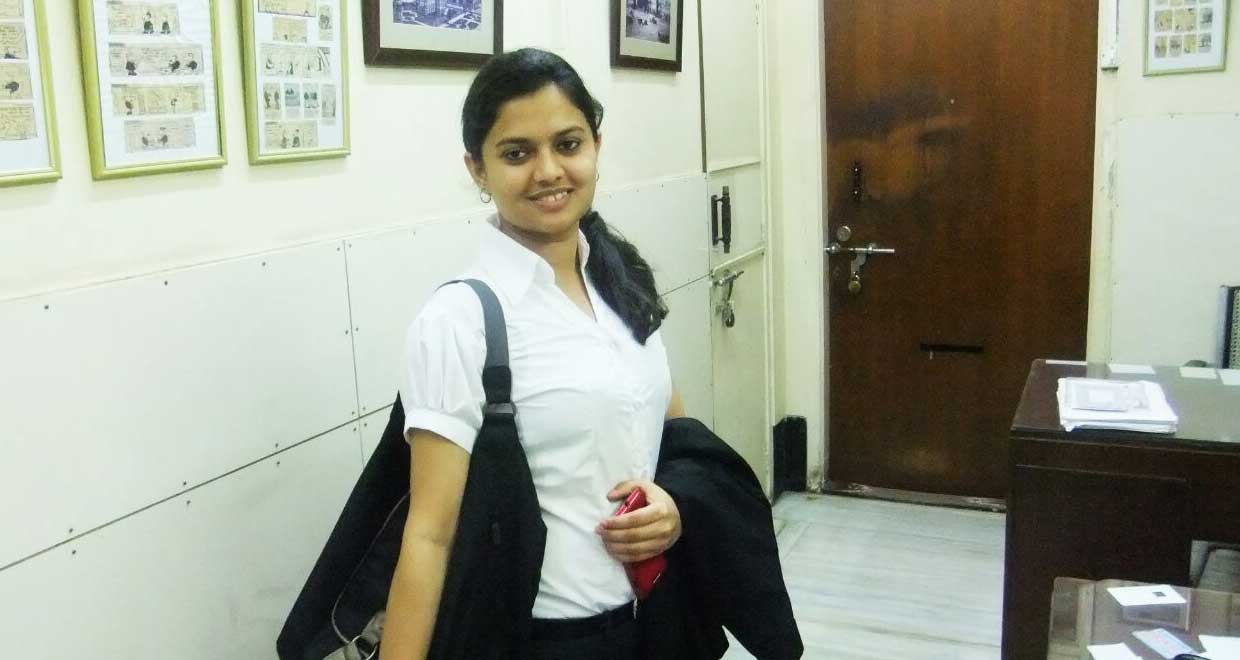
    vishakha-deshwal-1Vishaka Deshwal is one of the most diligent and illustrious scholars of the 2015 batch of NLIU, Bhopal. She has participated in various co-curricular activities and has multiple publications to her name. With such a dynamic profile and her dedication to work, she has recently received a job offer from WIPRO. We asked her to share her experiences and strategies she used over the years.

    In this interview, she talks about:

    • Maintaining a decent CGPA
    • Importance of co-curricular activities
    • Writing research papers
    • Recruitment process at WIPRO


    How would you introduce yourself to our readers who are mostly law students and young lawyers?

    I am currently undergoing my final year at the National Law Institute University Bhopal. I would like to take this interview as an opportunity to share my views and insights on life in a law school and career decisions that a law student has to take.


    How did you decide to study law? Did you have lawyers in your family? Why law and not engineering or medical studies?

    There are no lawyers in my immediate family. I used the elimination method while deciding the subject of graduation because I knew what I did not like.

    I got to know about the Common Law Admission Test (“CLAT”) while reading something online and I liked the concept of an integrated law course. The more I read about the National Law Schools, the more I got interested in getting into one.


    As a law student which activities did you participate in? Did you have any guidance on how to go about your academics, co-curricular activities and internships?

    I did not devote my time to only one co-curricular activity. I tried my hand at Parliamentary Debates, Moot Courts, Mediation Competitions, Paper Presentations, etc. I did not want to miss on anything so I made it a point to at least try out most of the activities.

    From the first year onwards, I participated in Mediation Competitions, Client Counselling, Debating, as these do not require any prior substantial knowledge of law. I participated in moot courts and also tried my hand at writing research papers. I have also been associated with the Alternative Dispute Resolution Cell in the college since my first year.

    All in all, I tried a bit of everything and every activity turned out to be an add-on to my skills. Our seniors were always welcoming and helpful in guiding us on how to go about participating in various co-curricular activities.


    One can find it difficult to manage continuous evaluation through trimester exams, projects submissions, etc. in a law school. How did you manage to keep up your grades

    I think continuous evaluation through trimester system is not as difficult as it may seem from the outside. After a point, you just get used to making projects and writing examinations every three months. It is just that one needs to be regular so that the projects or submissions do not get piled up and become unmanageable. Although, I am not the topper of the class but I managed to keep my grades consistently above average. I was not always attentive in the classes but still managed to sail through. Scoring good grades is not a very difficult thing I realised.

    There is enough incentive to keep up your grades in a law school. Good grades are like cherry on the top. Sometimes, grades may even help you get through good internships.


    You have published a lot of papers in various prestigious journals. Can you give us a few tips to ace the art of paper writing?

    Research Papers are an integral part of any discipline. As law keeps evolving with time, there are always some loopholes or grey areas which need to be corrected. Mostly research papers  aim at bringing out the fallacy in the law and suggesting the remedial measures. Therefore, I think that writing papers has a much broader relevance for a law student than just enhancing the CV.

    There are two necessary things we should remember before writing a paper. First is choosing the right topic. The topic should be specific and should highlight an important point of law that needs consideration or analysis. Second is that there should always be a new proposition or suggestion at the end of the paper.

    Rest, I think all law students know about the basics of researching. The more you read up, the better understanding you would have about the topic.


    Your internships at law school have mainly been with top tier firms. Our readers would be quite curious to know how you went about securing these internships.

    I was prompt in applying for the internships especially internships at law firms. Also, I made it a point to follow up with the HR to know about the status of my application. I also got through some of the internships through the Placement Co-ordination Committee of our College. I think the key is relentless punctuality.

    I think there is nothing wrong with interning at law firms from the very beginning provided that you have made up your mind about joining one after college. I think it depends from person to person, if you are not sure which career option is best suited for you then it is better to try out all possible options and then make up your mind.


    Did you plan out your internships throughout law school or did it all just happen by chance?

    I did not plan my internships as such. I took up whatever came my way. The only thing that I made sure was that I get to work with different kinds of organisations be it- NGOs, Government Departments, Law firms or Office of Senior Advocates.

    I think one should try and narrow down the options by start working with different kinds of organisation form the first year only.


    How relevant did you find your law school education with the kind of work you were required to do at law firms?

    I think what we are taught at the law school is very much relevant. The research and interpretation skills that we acquire at the law school help us through the internships.


    How has your mooting experience been?

    I am not a hard-core mooter. I did one International Law based moot court in my fourth year and one National Moot Court in my second year. The kind of in depth study and research that we undertake while preparing for Moot Courts is incredible and makes the whole effort worthwhile.

    Although, I really liked mooting and it taught me a great deal, I found it very time-consuming. That is why I participated in a limited number of Moot Court Competitions.


    You have been a member of multiple committees while in law school. Do you think these enhanced your skill-sets? Please share a few of your memorable experience.

    I have been a member of the Alternative Dispute Resolution Cell (ADRC) form the first year itself. Mediation is one of my favourite areas of law and I enjoyed participating as well as assisting in organising Mediation Competitions as a member of the cell.


    Recently, you secured a job offer at WIPRO. How did you go about achieving this? Please tell us about the recruitment process at WIPRO?

    WIPRO had come down to our campus for the first time, for recruitment purpose. The process was divided into three stages: first of all, an extempore was conducted. Some of the candidates were eliminated at this stage. Next, there were two rounds of interviews with different panel of interviewers. While the focus of the first interview was personality assessment, the second was majorly limited to legal questions. After the two set of interviews, there was further short-listing. The selected candidates were given a written assignment which was to be submitted the next day i.e. the day of the final interview. The final interview only comprised of questions relating to personality assessment.


    How did you prepare for the job interview? What kinds of questions were asked to you?

    While preparing for an interview, it is of utmost importance to be thorough with your CV. Mostly, the interviewers ask you about areas of law that you have worked on in your internships and seldom about your publications or other co-curricular achievements. Therefore, reading up the topics that I had mentioned under my internship experiences was the first thing I did.

    While making my CV, I made it a point to states the title of the work that was assigned to me on the internship (specifically mentioning the provision or name of any case law involved) leaving no scope for any vagueness or open-endedness. This way I was able to limit the number of probable questions.

    The bottom-line is that most of the questions can be anticipated and prepared for well before. By doing so, you feel confident while articulating your answers during the interview.


    Many law students strongly believe that getting a job at one of the top 3 law firms is mostly about securing a high GPA. Would you agree?

    Good grades or co-curricular activities alone are not enough. It is a combination of the two that projects you as a dynamic lawyer. Maintaining grades is important as that is the core of law school curriculum but we should not limit ourselves to writing exams and securing good marks.

    Many people believe that working as an in-house counsel affords more work-life balance and is less demanding. What is your opinion?

    Compared to working at law firms, job of an in-house counsel is less demanding thereby it affords more work-life balance. However, one should always strive to achieve work-life balance irrespective of the nature of the job.


    If you could re-live your 5 years in Law school, is there something you would do differently?

    I do not wish to change anything about my time spent in the Law School. I think even the mistakes that I made eventually helped me improve in some way or the other.


    Lastly, what would be your message for our readers?

    I think we should never stop exploring because there is always a plethora of opportunities out there; we just need to have an open mind.


  • Stuti Shrivastava on securing top-notch internships and a job offer from WIPRO

    Stuti Shrivastava on securing top-notch internships and a job offer from WIPRO

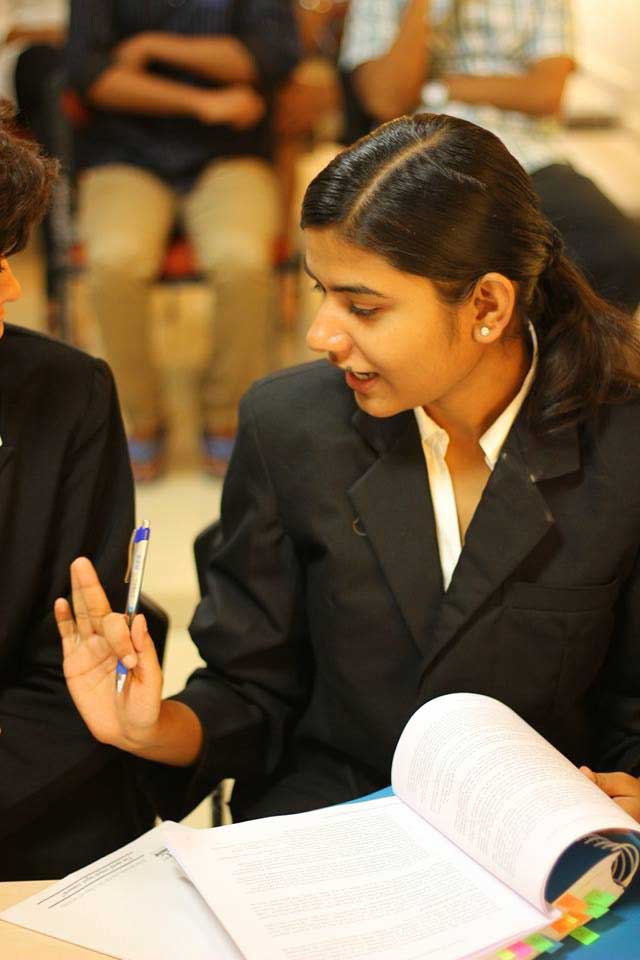
    stuti-shrivastava-1Stuti Shrivastava is currently a student of NLIU, Bhopal and shall graduate in 2015. She has an enviable academic record and has an excellent series of internships at top law firms. She has participated in various moot court and debate competitions. Her diligence paid off when she received a job offer from WIPRO.

    In this interview, she talks about:

    • Importance of mooting
    • Securing top-notch internships
    • Recruitment process at WIPRO


    How would you like to introduce yourself to our readers?

    I am currently pursuing my final year in Law from National Law Institute University, Bhopal. I would be joining Wipro next year. I would take this opportunity to reach out to the readers of SuperLawyer and share my experience as a law student and the opportunities thereafter.


    Why and when did you decide to do law? What interested you most about the subject at the time?

    I decided to pursue Law while I was in high school. It was just a couple of years back that the format of CLAT had been introduced for five year law courses. While deciding my career options, a five year law course seemed a good choice, firstly, because the demand for lawyers was on the rise and still is, and secondly, because there are a lot of avenues open for a lawyer as far as both private & public sectors and independent practise are concerned.


    How would you describe your time at NLIU-Bhopal?

    At NLIU, Bhopal we follow a trimester system which gets a little hectic sometimes. It might get slightly difficult to go through all the projects, mid-terms and end terms every trimester. But if you have a nice group of people to hang out with, college life at NLIU is really fun. I always had good friends here and that is what made my time here so great. I also learned a lot through academic and co-curricular activities like mooting.


    One can find it difficult to manage continuous evaluation through trimester exams, projects submissions, etc. How did you manage to keep up your grades?

    Honestly, I am not really at the top of the class as far as grades are concerned. However, I have always managed decent grades by studying a few days before exams. I don’t think there is a universal mantra for scoring well. It’s very subjective. Some students study all through the trimester while others study a night before the exams. However, students should be mindful that they do not enter ‘the vicious cycle of repeats’.


    Your internships at law school have all been with top tier firms. Our readers would be quite curious to know how you went about securing these internships.

    I acquired internships either through independent applications or through the college recruitment committee. While applying independently, I always made an effort to apply well ahead of time at various firms and to stay in touch with the HR department.


    How relevant did you find your law school education with the kind of work you were required to do at law firms?

    The laws that we study at law school form the basis of all the work that we do at law firms. Having said that, the practical scenarios that we face at internships are far different from the theoretical situations taught to us at law school. At internships, we are required to look into the practical application and interpretation of laws.


    Did you learn any skills while interning? What are these skills and how did you acquire them?

    I think the most important skills that I learned at internships were the analysis and practical application of laws. I acquired these skills by researching on practical legal situations and by analysing the interpretation and application of laws in such situations. Every assignment that I was given involved a new query which required me to thoroughly understand the law its application.


    You have participated in various moot court competitions including Willem C. Vis (East) international commercial arbitration moot, tell us how important is mooting and what effect does it have on one’s CV?

    Legal Education is not just about theoretical knowledge but also about practical application of law. Mooting helps a student get a taste of practical scenarios and assists in development of analytical skills. When mentioned in a CV, it shows that the student is not merely engaged in classroom activities but also makes an effort to branch out and participate in other co-curricular activities. Additionally, International moots like Willem C. Vis give the students an opportunity to interact with law students and jurists from top universities all over the world.


    How helpful do you think is mooting for a law student? Does it serve a real purpose or is just another way to crowd up the CV?

    Apart from developing analytical skills, mooting also helps in the development of oratory skills and in instilling confidence in the student. It is also a good way of acquiring research skills and increasing one’s pool of knowledge. In addition, the competition is a very good platform for meeting other law students from various universities and it facilitates exchange of ideas.


    Apart from mooting and academics what other co-curricular activities did you engage yourself in?

    I have participated in seminars and presented a legal paper.


    What do you have to say about mooting at law school and legal writing for journals? Are these activities that help with development of real world skills and do they have any ‘bonus’ value when seeking jobs?

    These activities certainly help a student in expanding his/her horizon of knowledge and legal skills. Also, while seeking jobs, these activities go on to show the interviewer that the student is a keen learner and is versatile.


    Recently, you bagged a job offer as in-housel counsel at WIPRO. How did you go about achieving this?

    I read up on all the assignments that I had mentioned on my CV and made sure that I knew them in and out. I also read up the basic laws and prepared the most anticipated HR questions.


    Please tell us about the recruitment process at WIPRO?

    The recruitment process was spread over a period of 2 days. On the first day we had an extempore and two rounds of interviews where we faced different interviewers. We were asked both, general legal questions and CV related questions. At the end of the day we were also given some legal and other assignments. On the second day we had a single round of interview where we were asked personality assessment based questions.


    Tell us about your interview? What kinds of questions were asked by the interview board? Any tips on how one should go about framing a C.V. and prepare for an interview?

    On the first day, I was asked basic legal questions and CV related questions along with HR questions. There were some questions based on general knowledge. The interview on the second day was solely based on personality assessment questions.

    One should always make sure that the assignments mentioned in the CV are precise and that there are no frivolous points in the CV. Preparing all the anticipated questions before the interview is always helpful.


    There is a phenomenal obsession amongst law students with maintaining a very high CGPA. How important according to you is this in securing a job?

    Grades are important but they are not the only thing that helps in a job interview. Thorough and clear understanding of the areas that one has worked in and is very important. Apart from knowledge, interviewers also look for other qualities in students like confidence, versatility, ability to work in a team and capacity to handle pressure. Students should also work towards developing these skills.


    Many people believe that working as an in-house counsel affords more work-life balance and is less demanding. Would you agree?

    Having interned at various law firms, I have firsthand experience of how demanding life is at such firms. In most of the places you are often required to work late and there is always high pressure to finish assignments on deadlines. In comparison to that, the job of an in-house counsel is not as demanding and therefore, it may provide a better work-life balance.


    Lastly, what would be your message to our readers?

    I would like to ask all the law students to not restrict their outlook as far as career after law is concerned. They should intern at different places and participate in various co-curricular activities before they decide to settle down on anything. Also, along with academics they should try and have fun with their friends and make good memories in college.

  • Chetna Shrivastava on securing top-notch internships, bagging a PPO and managing academics

    Chetna Shrivastava on securing top-notch internships, bagging a PPO and managing academics

    chetna-shrivastava-2Chetna Shrivastava is one of the most diligent and illustrious scholars of the 2015 batch of NLIU, Bhopal. She has a noteworthy academic, mooting and debating record. She is a part of the Editorial Board of the NLIU Law Review and co-founder a student run newsletter in NLIU. Her diligence and mettle at work was recognized when she received a job offer from Khaitan & Co.  during campus placements. We asked her to share her experiences and strategies she used over the years.

    In this interview, she tells us about:

    • Securing top-notch law firm internships
    • Her journey from an intern to getting job offer from Khaitan & Co.
    • Importance of academics, internships, debates and moots


    Most of our readers are law students and young lawyers. How will you introduce yourself to them?

    To begin with I would like to applaud this venture of Superlawyer of creating a database for law students and young lawyers to make informed choices after coming across experiences of the old souls (no offence!).

    For this interview I will make a sincere effort to be as serious as the interview demands. While my grades so far portray me as a nerd, my friends will have a different story.

    Caution: Those reading this interview for a chalked out strategy at bagging a job might be disappointed to know that the interviewee is a clueless person who has solely focused on gaining varied experiences to finally make the most suitable choice.


    Tell us a bit about your childhood and pre-college life as well as educational background. Do you have lawyers in your family?

    I finished my schooling from Christ Church Girls’ School, Jabalpur, a reputed school with a rich cultural and educational heritage owing to its establishment dating back to 1870. My parenting and schooling ensured my proactive participation in extracurricular activities along with securing the top ranks in academics throughout school. To diversify my options I took up Mathematics and Biology (with Physics and Chemistry) after Class 10th.

    I am a first generation lawyer.


    In India there is still a bit of resistance towards legal education. What motivated you to choose law as a career?

    Yes, the resistance towards legal education persists however it is weakening with increasing awareness of the diversity of career choices offered by legal education. The instances have reduced where I face quizzical aunties on how I could possibly take “CAT” right after school.

    The two years that followed after Class 10th made me realise that performing well and having an inclination for the subject are not synonymous. Though I performed equally well in all the subjects, arts and humanities fascinated me more as compared to deciphering the molarity of salt solutions or calculating the net forces in a rope and pulley system. I had come across several school alumni who were already pursuing a successful career in the field of law. Hence it did not take me long to decide on law as a career. Though my parents are doctors and had the same career intended for me, they were very supportive when I expressed my wish to take CLAT.


    You have participated in various moot court competitions, tell us how important is mooting and what effect does it have on one’s CV?

    Being a lawyer involves the practical application of the concepts that we are taught in the law school. Moot court competitions provide an opportunity to hone the argumentative skills along with understanding the practical nuances of the law concerned. It definitely adds a positive aspect to the CV because it evidences one’s thorough understanding of the principles with a practical experience.


    Apart from mooting and academics what other co-curricular activities did you engage yourself in?

    As a first year student I had a brief stint as an adjudicator, representing my college in various debates. A major part of my co-curricular activities has been attributed to being a part of the Editorial Board of the NLIU Law Review, CSIPR Journal and the Literary Society. In my third year I co-founded a student run newsletter.


    All your internships have been at top notch law firms. Tell us what all places you interned and how did you procure your internships?

    Apart from NGOs and Chambers of Senior Advocates, I have interned in DSK Legal, Bombay, Khaitan and Co., Bombay and AMSS, Bombay. The latter two internships were procured with the help of the PCC in my third and fourth year respectively. While the earlier ones were procured by numerous individual applications sent well in time before the intended internship duration.


    Did you plan your internships throughout law school deliberately or did it all just happen by chance? How relevant did you find your law school education with the kind of work you were required to do at law firms?

    Honestly, the four years in the law school so far have been a journey of trying to accumulate varied experiences. Therefore my internships were an attempt to assess the pros and cons of the various options available to me after law school. Apart from merit “chance” was definitely an assisting factor as being a first generation lawyer it is not easy to secure the intended internship in the earlier years of law school.

    The law school curriculum made me adept in understanding the assignments in the internships. However in the process of working on those assignments I gained a deeper understanding of the specific concepts which form a part of the subject taught in the law school. The internship was perfectly complementary to the curriculum in aiding a holistic understanding of the subjects of the curriculum.


    These days there are many law students rushing forth to intern at law firms from their first year itself throughout till their fifth year. What do you have to say about the advisability of law students pursuing such a course of action?

    Like I already mentioned, my internships were aimed at accumulating varied experiences of the options available after law school. I began with NGOs and Chambers of Senior Advocates and interned at a law firm for the first time by the end of the second year. In hindsight this helped in developing a legal aptitude to execute the assignments with a better understanding of my work. I would advise students to intern in law firms around the time when corporate laws are introduced in the curriculum as the internship and academics mutually benefit the understanding of the subject.


    Recently, you bagged a job offer at Khaitan & CO. How did you go about achieving this?

    At the end of my third year I secured an internship with Khaitan & Co. after being screened by an interview process arranged by the PCC. I was diligent in the internship which was facilitated by the inclusive atmosphere offered by the firm to its interns. By the end of my fourth years I was shortlisted for a PPO interview by the firm which was kind enough to consider me a worthy candidate for the job.


    There is a phenomenal obsession amongst law students with maintaining a very high CGPA. How important according to you is this in securing a job?

    As being one with the “obsession” and being decently successful at it, I believe that it plays a determining factor in securing a job. A consistent, more crucially than high, CGPA projects one as a diligent and sincere student to the recruiters. Most of the screening process by the recruiters has short listing of the candidates on the basis of their ranks in the first phase. However grades are not the sole reflection of one’s knowledge. Averagely good grades complemented by co-curricular activities make the student come across as one who can balance both in a rigorous academic routine and hence a better candidate for a job which involves simultaneous assignments.


    What should one law student aspiring for a job at top law firms do? How would you recommend they prepare in their last 2 years at law school?

    In the last two years the students should strategically apply for internships in the firms they aspire to work in. The internship is a perfect opportunity for making a mark as a prospective candidate for the job. A thorough knowledge of the corporate laws and efficient application in the internship contributes majorly towards securing the job complemented by a good performance in the recruitment procedure.


    Where do you see yourself five years from now? Would you consider going for an LL.M. abroad?

    As a person who goes with the flow, this is a difficult question to answer. Currently I’m looking forward to working in Khaitan & Co. and gaining the most out of my experience. LL.M. is not an option I am considering.


    What message would you like to give to our readers?

    Being a student of a field with such diverse career options you should explore and make the most of your experiences to make an informed choice. Remember the closing scene of Kung Fu Panda where Mr. Ping discloses to Po that there is no secret ingredient? That realisation helps in working towards achieving your goal knowing that the only indispensable ingredient is well directed hard work and sincerity.

  • Arpita Majumdar, Law Graduate, on preparing for CS and being AIR 13

    Arpita Majumdar, Law Graduate, on preparing for CS and being AIR 13

    arpita-majumdar-3Arpita Majumdar is currently a student of Bangalore Institute of Legal Studies (BILS) and shall graduate in 2015. She has secured All India Executive Rank 13 in Company Secretary Course and has interned at top notch firms.

    She tells us about:

    • Preparation for CS exam and bagging AIR 13
    • Coaching Institutes and CS
    • Importance of Internships


    How would you like to introduce yourself to our readers?

    I am a fifth year law student from Bangalore Institute of Legal Studies and a potential Company Secretary. I was born and brought up in the vibrant city of Indore in Madhya Pradesh and completed my schooling from St. Raphael’s Girls School, Indore. Having been nurtured in a Convent School, I was inducted into public speaking quite early in my school life. Fortunately, it has continued to remain a passion ever since.


    What motivated you to choose law as a career?

    Although I hail from a family that has seen a generation of Engineers, fortunately I was encouraged to pursue a career of my choice. However, given the lack of awareness about varied avenues available to a law graduate, my peers were skeptical of my decision. Also, I believe that there is a peculiar dogma and a certain amount of disrespect associated with the legal profession in the smaller towns.

    My first encounter with the legal regime was as a National Service Scheme (NSS) volunteer whereby, we undertook a project for the education of female inmates in Jails. This tryst with the justice mechanism motivated me to pursue a profession that infused a feeling of empowerment in an individual. Although, I must admit that initially I was perplexed between journalism and law; eventually the decision to opt for the latter came quite later in time.


    As a law student which activities did you participate in?

    Well, I believe everybody should invest considerable time and effort in exploring diverse opportunities that law school has to offer. It provides the requisite perspective to make an informed decision regarding your preferred area of practice.

    I have always tried to maintain an effective balance between academics and other activities. Along with, a consistent endeavour to maintain good scores throughout law school (as clichéd as it may be); I also, play Chess and have represented my College at “Spiritus” –the Sport’s Fest organised by NLSIU, Bangalore. I have also been a member of an Expert Panel Study on Access to Healthcare in India by IIM-Bangalore and University of St. Gallen, Sweden.

    Mooting has been another formidable part of my law school life. In fact, in my very first year I represented my institution in the Amity University Constitutional Law Moot; in which we were the semi-finalists. I have also, participated in NLIU Juris Corp, NLS Arbitration Moot and Surana&Surana Corporate Moot. However, it was eventually, the Nani Palkhivala Tax Moot Court Competition that had the effect of framing the course of my future endeavours and hence, the greater emphasis on CS Course.

    I was privileged to have few very proficient seniors who guided me through every effort of mine at law school, ranging from academics to moot courts, internships, etc. In all fairness, although, institutional guidance was very limited; I am particularly grateful to our Moot Court, Faculty-in-Charge for providing the desired opportunities.


    arpita-majumdar-2

    What kind of work did you have to do during your internship at AZB Partners and Nishith Desai Associates?

    The nature of work varies according to the place and the team allotted. At Nishith Desai Associates, I was assigned a Mentor and highlight of that internship was the fact that interns could work with all the offices and were not confined to the location office. At AZB there are no watertight compartments so I was not assigned to a particular team, as such. Also the work environment is extremely interactive and you tend to get feedbacks which help you to improve. Through the course of my law firm internships, I was allotted research works, reviewing contracts and drafting opinions.


    How was your experience interning with Senior Advocates?

    My litigation internships have been under Senior Advocates, Mr. Soli E. Dastur and Mr. Arvind P. Datar, both eminent Supreme Court counsels and renowned tax jurists. Both the internships were very rewarding in terms of, the quality of interaction with Mr. Dastur and Mr. Datar and the quality of work that I was assigned. In fact, during Mr. Datar’s internship I worked as a Student Editor on his upcoming revised edition of the Constitution of India. Also, having observed them argue in Court, it gave me an intricate understanding of the critical nuances of law practice and the art of Court craft.

    While at a law firm the work is primarily based on research for client advisory or proposed transactions; a litigation internship offers more diverse research experiences. At the same time, it offers you great insights into the judicial mind based on the Judges response to a well-researched argument to which you may have contributed substantially. I personally, enjoyed the respective challenges offered at a law firm and under a lawyer; although, with an inclination for the former.


    Did you pursue your internships throughout law school as part of a deliberate plan or did it all just happen by chance?

    In my opinion, internships are an outcome of the initiatives you are willing to take in furtherance of your career. So when I say initiatives, it would be fair to state that it was well planned; although, the execution required considerable effort. Given that I had identified my area of interest fairly early at law school I was determined to intern with the best law firms / lawyers in the area. Being from a non-NLU, internships are not as forthcoming as one would expect. Therefore, one has to pursue it relentlessly and with a great deal of vigour. In most cases, a well-structured application with a comprehensive CV and thereafter, periodic follow ups fructified into a positive response.

    Personally, I believe in any profession academic scores do not validate one’s practical knowledge. The University curriculum fails to invigorate any innovation or analytical reasoning – attributes that I found to be quintessential during my internships. Therefore, an active engagement in Moot Courts, internships, research papers, conferences, etc. are indispensable to acquire practical knowledge of the discipline. Thus, there needs to be personal interest to research deeper into the subject and not merely cater to the requirements of routine examinations by reading a few prescribed books.


    What does your CS score card read?

    (Arpita has secured All India Executive Rank 13 and South Zone Rank 1 in the Company Secretary (CS) examination.)

    To be honest, I was expecting good scores but not a Rank as such. So when I checked my results I was fairly satisfied with my scores and frankly, I did not even glance at the merit list. It was only later in the evening that I was informed by a friend that I had secured the 13th Rank. I was pretty thrilled actually although, it took quite some time to sink in.


    When and what inspired you to pursue CS course?

    Pursuing CS was largely driven by my proclivity for Corporate and Taxation Law. Moreover, since Taxation is taught in the last semester, I wanted to learn the subject in advance.

    I have been very impressed with the course curriculum particularly, because of the way it is structured. The practical insights that the course offers and the examination pattern that seeks to test the same are largely, based on one’s knowledge of the subject and not merely memory. I would personally, recommend it for students with an inclination towards Corporate, Securities and Taxation Laws, especially, those belonging to State Universities where such areas are not adequately dealt with. I believe in such cases, it serves to give you an edge over your peers.


    How did you remember the sections of the Acts in your syllabus and leading case laws on varied areas of law?

    Though CS is an extremely concept based course, this particular aspect is not very different from preparing for law papers in LL.B. curriculum. However, it demands more detailed attention to the fundamentals of a concept. I particularly, do not think one is expected to remember every case law and sections that you come across during the course of your preparations. Having said that, certain significant judgments involving intriguing questions of law and relevant sections that test one’s reasoning ability ought to be remembered. This may not require much of an effort if you have done a thorough reading of the subject coupled with an interest in the same.


    How did you prepare for the exams?

    My semester examinations were scheduled around the same time as the CS Examinations, so I was particularly constrained for time. But I am personally of the opinion that with satisfactory time management it is fairly easy for a law student to crack CS Examinations. Securing a rank may require a little more effort. I had put in about a months’ preparation; however, it was only possible because most of the subjects were covered earlier in the LL.B. Curriculum.

    CS Course material is more than sufficient for preparations for examination purposes; the only exception being Taxation and Accountancy. Additional materials are available in the form of Guides (usually referred as “Scanners” in CS parlance) – which is basically a Question-Answer Summary Guide of past years Question Papers. It is advisable to refer Taxmann Student’s Guide and V.K. Singhania’s book for practical problems pertaining to Taxation laws and Shukla & Grawal – considered the ‘Bible of Accountancy’. I have been fortunate to have some CA friends who have helped me greatly in this aspect.


    How would you say a student can go about studying and having distinction in CS subjects?

    I strongly opine that each individual has their own study methods. In some cases, it may be studying for long hours while, others may have a preference for short study hours. My study method was modulated around the latter. I base my study on thorough reading and preparation of short points on every topic. On the eve of the examinations, I studied from these notes because there are no breaks between CS papers and it is quite impossible to revise the entire syllabus within such a short span of time. Also, unlike the Law examinations administered at my University, one cannot afford to engage in selective study; in that case, the idea of merely passing the examination may also, appear far-fetched. As such, time management is undoubtedly a pre-requisite.


    Did you take any guidance for preparation?

    Initially, when I started my preparations for Executive Examinations I attended a Coaching Institute which proclaims to be the best in South India. Unfortunately, it took little time to comprehend the falsity of such proclamations.

    Personally, I do not advocate Coaching Institutes. They not only hamper self-study but at times derail your preparation by misguiding you. Moreover, pursuing Law and CS at the same time, sufficiently eases the burden of Law subjects and nullifies the requirement of a CS Coaching Institute per se. Practical subjects like Accountancy and Taxation may pose a handicap, for which a decent Coaching Class which satisfactorily addresses the concepts involved in these subjects shall suffice.


    Any dos and don’ts you would like to share with the future CS aspirants?

    It is fairly simple the way I perceive it. I have been advised against CS on the pretext that there is sufficient overlap between the two courses. I strongly beg to differ on this. At the cost of repetition, I say it once again, it gives you a wider practical perspective; and in any case, knowledge never harms, does it!

    Frankly, if you are not dedicated enough to pursue it all the way thorough kindly do not take it up in the first place. It is tiresome and entails considerable financial and time investment.


    Do you think that being from a non-NLU made any difference?

    Actually, it is not the opportunities per se that are limited; but the awareness about such opportunities that is found to be deficient. In any law school, your peers have a cardinal influence in generating such awareness which shapes your career decisions. This particular aspect is woefully scarce in certain non-NLU institutions. As such, being amidst the right kind of peer group largely determines one’s success in law school. However, the relaxed institutional framework provided me the time to pursue CS, in particular. And as a matter of fact, every coin has two sides!


    What are your plans after graduating?

    To be honest, I am not too inclined towards pursuing a career as a full time Company Secretary. I am studying to be a Lawyer, and that is what I would like to be. As of now, I plan to join a law firm where my credentials as a Lawyer and a CS would be adequately employed, preferably one having taxation as its core competence.


    Lastly, what would be your message to our readers and to the future CS aspirants?

    Stay focused, fight for what you believe in and pursue your goals with a great deal of determination.


  • Abhishek Singh, Law Graduate, NALSAR, on bagging a trainee contract from Linklaters and experience at University of Illinois

    Abhishek Singh, Law Graduate, NALSAR, on bagging a trainee contract from Linklaters and experience at University of Illinois

    Abhishek Singh graduated in the 2014 batch of NALSAR, Hyderabad. He has participated in the international student exchange program of NALSAR with University of Illinois, Urbana Champaign and has secured a trainee contract from a magic circle law firm.

    In this interview we ask him about:

    • Experience as a part of an International Student Exchange program
    • Cracking the rigorous online tests and interviews of a Magic Circle Firm
    • Bagging a Training Contract from Linklaters


    Tell us a bit about your childhood, your hometown and your pre-graduate life.

    I was born in Siddarthnagar. Due to the transferable nature of my father’s job, I was brought up in different cities across U.P. When I was in Class VII, our family took a conscious decision of settling in Lucknow for a while so as to focus on my brother’s and my education. I completed Class X and XII from St. Francis College, Lucknow.


    Why did you decide to study law?

    I studied Science with Maths in class 12. Frankly, I was never interested in studying Science hence after an unsuccessful attempt in the engineering entrance exams I began looking for other career options. My initial plan was to study Economics or Political Science and even took admission in Delhi University. However, during this time I came to know about the Five Year Law Program. I did some research, spoke to my family members and decided to take the plunge. The technicality of law and its close relationship with other social sciences like Economics, Political Science attracted me towards it.


    What were your areas of interest during your graduation?

    My area of interest always evolved during my graduation. This is because I had never given a serious thought about what I would want to do after graduation. Until my second year I wanted to do an MBA after law school. Hence, I interned with LLC, one of the India’s first organizations which provides consultancy to law firms.

    Even my law interests were always varied. I liked studying criminal law and Corporate Law. To this end I always utilised my internships well and tried to intern in places where I could know more about these areas.


    Tell us about your student exchange program?

    I went to University of Illinois, Urbana Champaign (UIUC) in my third year where I studied International Tax, International Criminal Law, International Commercial Arbitration and Comparative Law. Apart from the cultural exposure, in all forms, that a student from India is exposed to, being taught by some of the renowned law professors like Prof. Garoupa and Prof. Dharmapala was one of the most academically satisfying experiences. The courses and the professors challenged me to not just adjust quickly in a new country but also work towards getting grades in tough courses.


    In terms of academics how will you distinguish University of Illinois with NALSAR?

    I went on exchange before NALSAR had introduced choice based credit courses. Hence it was amazing to see the diverse number of courses on offer in a semester. The focus was more on exposure to the practice of law which is actually required in a commercial set up than the black letter of law, which one can always read from the books. For example, my International Arbitration Professor was a practising arbitrator. He took great efforts in explaining the qualities one should look for while a party is looking for an arbitrator and the consequences of a ‘bad choice’.  Normally, one would not find such things in a book.


    When did you start thinking in law school to opt for a training contract from a foreign law firm?

    Having gained substantial experience by the end of the third year, I was clear that I wanted to work in a commercial law firm but the thought of applying for a training contract never occurred to me. It is only when the application process for foreign firms started and I saw my friends applying for it, I decided to give it a chance.


    What sources, materials, books, newspapers or blogs did you read to crack commercial awareness?

    Linklaters, like all other magic circle firms pays a great attention towards commercial awareness. It is basically about putting yourself in the shoes of your clients and think what decisions you would have taken had you been in his position. It is what drives decision making in any deals that you are going to work on in any commercial law firm.

    The best place to start is by reading the business section of any daily newspaper. Pick up one or two deals that are currently happening and try to get as much information about them as you can. It will help you in understanding the thought process of decision makers.


    How was your experience in applying to Linklaters?

    The application is the most important thing in the whole process. I found that the application process is intensive enough to require you to first, introspect about your whole life and career and subsequently present it in a form that the firm requires. Hence, before writing the application, do make an effort to read as much as possible about the firm and its practice areas. In an effort to make the application unique some people try to unnecessarily complicate it by throwing unnecessary legal jargon. I would say write simple and succinct answers. Before submitting the application, proofread it thoroughly as silly mistakes are unpardonable.


    How did you prepare for the Online Aptitude Tests post your application? ?

    Post application, the firm invites a select group of candidates to appear in a critical reasoning test called the Waston Glaser Test. The questions are more or less similar to the ones that are normally asked in the CLAT Logical Reasoning section i.e. deductive Reasoning, Inferences, Recognizing Assumptions etc. I don’t think any special preparation is required for it. A sample test is however available on the firms’ website for practice.


    Could you briefly describe the interview process for us?

    The interview process is divided into four rounds. First is a two part e-tray test. The first part is a work stimulation exercise where you will be given background information about a deal and will have to answer emails arriving in your inbox relating to the deal. In the second part you need to draft a written response to a query emailed to you by your partner, which is discussed at length in the partner’s interview round. In the second round, one has to reappear for the Waston Glaser Text but this time in a controlled environment. Next is the HR Round followed by a one-on-one interview with the Partner. The partner usually asks question based on your written response and later general questions based on your application.


    Did you prepare for some stock questions ahead of time for the HR Round?

    For the HR round I read my application well and also gave good thought as to why I wrote a particular answer. This was because questions like Why Law, Why Linklaters, Why Commercial Law are most likely to be asked in the interview process and you should be very clear in your mind about each one of them.


    How was the social environment during the vacation scheme?

    The graduate team plans a lot of social events so as to ensure that we get to know the firm, its people and other vacation schemers at an informal level too. As part of that, we visited most of the touristy places in London.  We also attended the firms’ 125th party which luckily coincided with our time in the firm.


    What is the evaluation process for the Training Contract?

    During the vacation scheme, a person usually works in two different departments of the firm for 7-8 days each. At the end of each seat there is an appraisal of the work that you did. Interestingly, the Principal (your reporting Association/MA) explains his reasons for his assessment and gives you a feed back on what you can do to further improve. There is also a project component which is discussed with a Partner during the final interview.

    Hence, the two appraisal reports, Project and Partner’s interview decide whether one is getting a training contract or not.


    What was your experience while interacting with law students from different universities?

    It was a great learning experience to interact with students from Oxford, Cambridge, ULC, LSE and other prestigious universities from the U.K. The focus during three years in the university is on learning theoretical and foundational aspects of Law. Post graduation, all Law students have to compulsorily  complete LPC, where the focus is on learning practical aspects of law. Hence role of each institution is clearly defined unlike India where our universities in an attempt to play the dual role, often could not do justice to either.  I found the UK system to be a tad better than ours.


    Lastly, what would be your parting message for our readers?

    Don’t hesitate to take risks, enjoy each and every moment of you law school life and work extremely hard.

  • Swati Shanker, Law Graduate, NLIUB, on preparing for interviews and appointment at AMSS

    Swati Shanker, Law Graduate, NLIUB, on preparing for interviews and appointment at AMSS

    Swati Shanker is a student from National Law Institute University, Bhopal, batch of 2015. She has interned with top notch law firms and was placed with Amarchand & Mangaldas & Suresh A. Shroff & Co. during campus placements.

    In this interview we speak to her about:

    • Managing Grades in a trimester system
    • Excelling at moot court competitions
    • Securing a job from Amarchand


    How would you introduce yourself to our readers who are mostly law students and young lawyers?

    Firstly, I would like to congratulate the Super Lawyer team for initiating this informative web portal. I think it by sharing first hand experiences of lawyers and law students pertaining to various law school activities and higher studies provides valuable insights to law students and will help them decide their career path and objectives accordingly.

    Talking about myself, I am a fifth year law student of National Law Institute University, Bhopal. I am a first generation lawyer. My law school journey till date has been a valuable learning experience. As a law student, I have always tried to excel in both academics as well as extra-curricular and co-curricular activities like mooting, authoring research papers etc.  This has helped me learn not only the theoretical aspects of law but has also helped me inculcate legal-analytical approach and hence the practical application of the subjects.

    My area of interest is corporate law and in furtherance of my interest I have interned at some major corporate law firms like Wadia Ghandy, AMSS. I have also authored various articles on current corporate topics. I look forward to establish myself as a successful corporate lawyer and make significant contributions in this sphere.

    I like reading novels. I also have an inclination towards meditation and have trained myself in various forms of the same. I like travelling and exploring new places.


    How did you decide to study law?

    Being part of various social welfare organisations and having been involved in various social activities since my school days, I developed an inclination towards law at a very early stage. However, I never considered of pursuing a career in law initially and opted for science after 10th boards. In my standard 12th I came to know about the Common Law admission Test (CLAT) and it appealed to me a lot as I perceived it as an opportunity to nurture and develop my interest in law. Being a first generation lawyer my parents had apprehensions towards legal career and hence I had no option of quitting science altogether. So I started preparing for engineering and law entrances simultaneously and cracked both. Despite of being offered national engineering colleges my parents being very supportive allowed me to pursue my dream career and hence I ended up landing in law.

    I am a first generation lawyer.


    How did you manage to keep up your grades?

    I found trimester system to be easy going and more helpful in improving grades. Continuous evaluations in a trimester system can make one realise his or her strengths and weaknesses and hence improve performance with each trimester. I managed to keep up my grade by paying attention to class room lectures and self study. Class room lectures not only help you keep a track of the course but also in a broader manner portray the content and the manner in which questions should be answered in an examination. I treasured valuable experiences from each trimester, employed them in subsequent ones and managed to excel my performance with each trimester.


    swati-sanker-1Can you tell us about your mooting experience?

    (Swati has won Stetson International Environment Moot (South Rounds) and represented the university in Stetson International Round.)

    Winning Stetson and getting an opportunity to represent India was one of the most valuable law experiences of mine.  The moot provided me a huge exposure to international law and its facets. Both national rounds and international rounds require an individual to be aware of each and every minute details of the problem. However, international law differs from national round in one aspect that the judges put extreme weight age on mannerism and courtesy.  The moot was not only helpful academically but also provided an opportunity to interact with various national and international teams.


    In your opinion, what would it take to excel at moot court competitions?

    Intelligent and diligent team work guarantees success at moot court competitions. Mooters should have an eye for each and every detail, as a single word can change the whole game. To excel at moot court competitions one needs to follow following steps:

    • Be well versed with the problem
    • Research should be exhaustive and meticulous
    • Memorandum should be neatly drafted and formatted.
    • Oral arguments should be properly structured and logical.


    Our readers would be quite curious to know how you went about securing your internships.

    Yes, I have interned with some major corporate law firms. I secured theses internships through both personal applications and college’s recruitment committee. A well drafted and tailored CV plays a significant role in fetching an internship. Further, getting an internship through personal application requires one to prepare a well drafted cover letter and vigilant follow up.


    How relevant did you find your law school education with the kind of work you were required to do at law firms?

    I consider internships as a great learning experience as it provides a practical exposure to diverse areas of law and helps an individual find his area of interest. Internships were always a deliberate plan for me because I considered it as a tool of exploring my area of interest and decide my career objectives. In furtherance of the same, in my initial years at law school I interned with various high court and Supreme Court lawyers, commissions, litigation law firms and corporate law firms. Of all these internship experiences I found corporate law to be very appealing and decided to pursue my career in the same.

    Law school education focuses mainly on the theoretical aspects of law whereas internships are more about practical application of law. However, law school education helps in developing a fundamental understanding of law and sets a broader picture of law. Based upon my practical experiences, I found law school education to be if not sole but a contributing factor for having a successful internship experience.


    What do you have to say about law students interning exclusively at law firms all through their undergraduate years?

    Law being a diverse field, a well informed decision as to area of interest is a prerequisite condition for a successful legal career. Internships assist an individual in arriving at such informed decision. Rushing forth to intern at law firms since the very first year frustrates the objective behind internships. Hence, I would advise that rather than opting this attitude law students should strive for diverse internship experiences at vivid places in their experiences and then take an informed decision.


    Please tell us about the recruitment application process at AMSS.

    Yes, I have been offered a job at AMSS through campus placement.  I have interned twice with AMSS. I applied for these internships through the college’s recruitment committee. The recruitment application process at AMSS involves majorly two steps. First stage involves short listing of C.V.  and the shortlisted candidates are then asked to fill a questionnaire providing various personal and academic details. This is followed by the final and deciding round i.e. personal interview.


    How did you prepare for the job interview?

    My job interview preparation was based primarily on C.V, general corporate laws and HR questions. My AMSS job interview was primarily C.V based. In order to crack the interview one needs to be very thorough with the C.V. Hence, it is advisable that the C.V. should be drafted properly and should contain only those things about which you are confident. Further, while reading C.V. you should also try to find out any recent development in the area that you have mentioned in your C.V. Thus, a C.V. reading should be both vertical and horizontal. Further, overview knowledge of various major corporate laws subjects like, Contract, Companies Act, Transfer or Property, Partnership and securities laws are advisable.

    Yes, HR questions were also asked in the interview. The HR questions asked in the interview were usually repetitions of the AMSS questionnaire that one is supposed to fill after the short listing stage.

    One more thing that I would like to add here is if you have interned with AMSS previously always be thorough about the team with which you have worked. In the interview you might be asked the name of the team and the partners you have worked for. Also one is advisable to be updated on the recent developments in the firm.


    Are grades of critical importance in securing a job?

    To some extent this assertion is correct. CGPA plays a determinative role in securing a job for some of these law firms. However, it is not necessary that in order to get placed here you need to have extraordinarily high grades. Decent grades (among top twenty rankers) coupled with significant extra-curricular activities will also achieve the purpose.


    If you could re-live your five years in Law school, is there something you would do differently?

    I have balanced my law school life by placing equal importance on both academic and extra-curricular activities. In five years at law school I have managed to win moots, author research papers, however, I never got a chance to spend considerable time on sports. So, if given a chance to re-do my five years in law school I would like be more active in sports and would like to represent my college at various sports fests.


    What’s the next goal on your list?

    Currently I do not intend to do an LL.M because at this juncture I am looking forward to working with AMSS and learning the practical aspects of corporate law.  However, in order to broaden my domain of knowledge, I might consider doing an LL.M in corporate laws from abroad.


    swati-sanker-3Lastly, what would be your message for our readers?

    My message to readers would be that “intelligent hard work always pays off”.  Success demands dedication and consistency. Further, you should be sure about your career goals and objectives. As per my practical experiences success at law school is a four step process:

    Maintain good grades

    Intern with diverse institutions  and find out your area of interest

    Undertake various extra and co-curricular activities, be it mooting, papers, sports.

    Develop social and communication skills

    To sum up my law school experience:  “Law school journey is like a roller coaster ride, enjoy the rises and falls.”


  • Pranjit Bhattacharya, Law Graduate, Bangalore Institute of Legal Studies, on mooting, securing top-notch internships and a PPO from Trilegal

    Pranjit Bhattacharya, Law Graduate, Bangalore Institute of Legal Studies, on mooting, securing top-notch internships and a PPO from Trilegal

    Pranjit Bhattacharya graduated from Bangalore Institute of Legal Studies in 2015. He also holds a diploma in Entrepreneurship Administration and Business Laws from NUJS, Kolkata. Pranjit received a PPO from Trilegal in his fourth year of law school.

    In this interview we speak to him about:

    • Mooting and its benefits for a law student
    • Preparing a C.V. and insides of personal interview with tier-1 law firm; and
    • Securing top-notch law firm internships


    Tell us a bit about your life before college?

    I have been lucky to grow up in the beautiful picturesque city of Shillong. I did my 12th from St. Anthony’s Hr. Sec. School, Shillong. I have a twin brother who is also, doing law from the Faculty of Law, Delhi University. That is as far as law runs in my family. A better part of our schooling was devoted to debating at various inter-school events. Studying at a school where great emphasis was given to extra-curricular activities helped me immensely.


    Why did you decide to study law?

    I think it was a de facto choice really. I opted for Commerce during my 12th so chances of pursuing Engineering and Medicine were negated pretty early (much to the dismay of my family). I wanted to pursue something that would give me a rush, a discipline that challenged one’s ability to reason – what better than ‘law’ in that case. I am really passionate about law actually.


    How practical do you think are the shows like The Practice, J.A.G., Boston Legal, Suits, etc. and movies like 12 Angry Men, Philadelphia, etc.?

    To be honest, if soap operas were to show the life at a law firm as it transpires on a daily basis –most people would shrug at the very thought of watching it. There is a reason why such shows are meant for entertainment and so, they should be. It would be really naive to be goaded to believe that this is how the legal profession works on the basis of such shows.

    Although, I think there are quite a few good English movies which manage to captivate the essence of law practice quite beautifully. A Few Good Men, To Kill a Mockingbird and 12 Angry Men are my personal favourites.


    How did you secure internships with top tier firms?

    It is important to plan your internships well. At the beginning of each semester I prepared a list of firms that I wanted to intern with. Applying well in advance and setting out the period of internship clearly are recommended. Given that most firms have their own internship application procedure; it is advisable to confirm the same with the HR at the firm prior to sending an application.


    pranjit-bhattacharya-1

    Did you pursue your internships throughout law school as part of a deliberate plan or did it all just happen by chance?

    I think I had planned it out fairly well. Almost every semester I knew precisely the kind of internships I was looking at. So in my first and second year I interned at The Hindu Newspaper Publications and under an Advocate at Calcutta High Court (who is presently, a Judge in that Court). Thereafter, I moved to a mid-sized law firm, CorLit Legal for three months during my third year. This was a very enriching experience actually. The kind of exposure I was given at this firm formed the bedrock for my future internships.

    Since, the end of third year my internships were part of a well-thought out plan. So at the end of my third year, I interned at Nishith Desai Associates. Then in fourth year I interned at Trilegal (twice) and at the Law Chambers of International Tax jurist Mr. Soli Dastur, Senior Advocate, Supreme Court of India.

    Unfortunately, there exists a wide gulf between law school education and the work at a law firm. It entails a sound knowledge of different business models; latest regulations / notifications, etc. in different fields of law; market precedents on certain transaction that the firm proposes to undertake in the future; business risks inherent in a particular transaction and the like. In this regard, law school education is woefully deficient in investing the students with the knowledge to deal with such practical aspects of law.


    What kind of work did you have to do during your internships?

    It varied according to the place. Drafting client opinions, due diligence, research on multifarious aspects of law, comparative analysis of certain laws in India and other countries, etc. were the major tasks that I was assigned.

    A couple of them actually. On the last day of my first internship with Trilegal, a Senior Associate offered me a second internship at the firm and then said with a smile, “Remember always that there are plenty of good lawyers, but not many good lawyers who are good guys. So do not forget to be a good guy”. This is something I have tried to hold onto ever since.

    Then, on one occasion during my internship with Mr. Dastur, me and my co-intern were working past midnight, so while leaving he quoted Henry Longfellow’s famous words with a beaming smile, “The heights by great men reached and kept were not attained by sudden flight, but they, while their companions slept were toiling upward in the night”. This continues to remain the fondest and most cherished memory of all my internships.


    What do you have to say about students interning at law firms  all through their undergrad years?

    Law School life is all about exploring different avenues, particularly, in the first couple of years. Choices to intern exclusively at a law firm right from the start of law school defeats this very purpose. It necessarily means that you shut your mind to other avenues that may be more suited to your acumen and ability. It also, undermines the significance of good litigation internships which unravel the possibility of engaging with some of the best minds in the legal profession and leaves an indelible influence in your career.

    It is quintessential for your wholesome development as a lawyer to understand a particular fact situation from different perspectives. Diverse internship experiences help you acquire this. Thus, even though you may be pre-meditated that you want to work at a law firm in the future, it is advisable to pursue at least a couple of non-legal or socio-legal internships prior to law firm internships.


    Tell us about being a member at  multiple committees while in college.

    I have been a member of the Moot Court Committee at college since, the first year of law school. And for some time I was also, involved with the Literary and Placement Committees. I think they enhance your networking and communication skills and organizational ability. In my college though, these Committees are limited both in terms of, activities and impact.

    I was also, a member of an Expert Panel Study on Access to Healthcare in India by IIM-Bangalore and University of St. Gallen, Sweden. The forum involved participants from diverse disciplines of different age and influence. The entire process was immensely rewarding in terms of, quality of interaction, sharing of ideas, discussion on business strategies, etc.


    Have you felt strongly about social causes?

    I would be lying if I said no. So I tried to strike a balance between my objectives of working with a law firm and pitching in with some pro-bono work as well.

    During my fourth year, I worked as a Research Assistant for Mrs. Nina Nayak, eminent social activist and former Chairperson, KSCPCR and Member, NCPCR on her book on the National Commission for Protection of Child Rights Act, 2005.And I have already mentioned earlier, about my stint with the Expert Panel at IIM-Bangalore.

    Both these opportunities gave me a deeper understanding of the policy paralysis and administrative complacence that pervades our system and the critical role that society needs to play in eliminating the same.


    Tell us how important is mooting and what effect does it have on one’s CV?

    (Pranjit has participated in various moot court competitions like Nani Palkhivala Tax Moot, Surana Corporate Moot, NLS Arbitration.)

    At the outset, if you are doing a moot court competition for CV value only then, according to me it is a futile exercise. Mooting is a passion and that is what should drive an individual’s decision to moot or not to moot. This is one experience at law school that I encourage everybody to undertake.

    I started mooting since the very first year of law school. My first moot was on Constitutional Law, organised by Amity University, Rajasthan in which we were the semi-finalists and eventually, adjudged as the ‘Third Best Team’. This moot was my first tryst with law and the romance has continued ever since. My best experience was at Nani Palkhivala Moot Court Competition where incidentally, I was also, the Second Best Speaker.  It ignited in me a passion for Taxation Law that I have pursued keenly ever since.

    Whether it adds value to your CV or not, I cannot opine on it definitively. However, this is the best way to harness your reasoning ability, research skills and ability to make arguments. In fact, most reputed Moots are based on emerging or grey areas of a subject, or sometimes even transactions that are making the news. So the influence of good Moots is all pervasive. I think this may be a reason why law firms may view participation at various Moot Court Competitions quite favourably.


    Tell us about the significance of pursuing courses such as Introduction to M & A and NUJS Online Diploma in Entrepreneurship Administration and Business Laws.

    My internships drove me towards this decision to pursue such courses. They made me realise that there are certain practical aspects of law that the academic curriculum fails to address. The problem is accentuated in case of Universities where little or no emphasis is given to acquiring practical skills pertinent for excelling at law practice.

    It is important to know the academic aspect of law, true; but it is also, essential to be skilled at applying it. This is precisely the purpose such courses serve; they equip you with the right kind of skills that help you deal with practical nuances critical for a lawyer.


    How was your internship experience with Trilegal?

    I interned only once at Trilegal before I secured a PPO. Post my PPO I again interned there. Trilegal has a pro-active mentorship program, whereby, every intern at the firm is placed under a mentor who assesses an intern’s development through the internship. This is definitely, one thing which in my view sets Trilegal apart. And then, the Associate like experience at the firm and the quality of work allotted to interns. In my second internship, I was made to work on two live transactions. These experiences make it worthwhile to intern at such a place.


    What are the things you consider sine qua non for positive feedback from an internship?

    I do not believe that there is a hard and fast rule to get a ‘callback’ or a ‘PPO’ for that matter.  Certain things that I believe can trigger a positive feedback is the level of enthusiasm and initiative one shows towards the work assigned like explaining clearly your research to the person concerned and then engaging in a discussion on the same. Also, never hesitate to ask questions even if they appear to be a little stupid. You can prove otherwise, with the quality of your work based on the insights you gain by asking the right questions. These things help you inspire confidence in the members of the firm.


    Did you have to undergo an interview before securing your PPO?

    Yes I was interviewed for a PPO. It is an interesting story actually. After my internship at Trilegal, I had gone down to Mumbai for an internship at the Law Chambers of International Tax jurist Soli E. Dastur, Senior Advocate. One evening I received a call from Trilegal, Mumbai that a PPO interview has been scheduled for the next day and candidates would be interviewed over Skype. As I was in Mumbai, I suggested that I would like to come down to their office which they were glad to accept.  I had to request Mr. Dastur for a leave for the next day. My last thought while going off to sleep that night was, “I need to wake up early, be presentable and just show up on time. Rest is up to providence.”

    An initial predicament was to introduce myself to the interviewers because they had never heard of my college. And frankly since, I had never undergone any formal training to tackle interviews, I am personally of the opinion that it is all about presence of mind. Interviews are an opportunity to test your ability to think on your feet. It is also, absolutely vital for you to know your CV inside out. Moreover, a sound grasp of interesting developments in the field of politics, law, economics and general knowledge is essential to ace a law firm interview / or any interview for that matter.

    There are certain pre-requisites of preparing a good CV and any departure from it is unacceptable. The importance of a structured and properly formatted CV without any spelling or grammatical errors can hardly be over-emphasized. What is important is to communicate about four-five years of your activities at law school in two-three pages. The skill sets that you have acquired during your time at law school should be adequately reflected in your CV. Moreover, it is essential to have a tailor-made CV based on the firm /company / any other organisation in which you are seeking a position.


    How important according to you is CGPAs in securing a job?

    Let me answer your question in two segments. There is a significant difference between the law school curriculum administered at some of the top NLUs and certain other top ranked law colleges and those administered at colleges affiliated to State Universities.

    The curriculum designed for the NLUs and some other top ranked college reflect a significant thought process to ensure that the academic aspect of law is not divorced from its practice – whether at a law firm / litigation, etc. Despite this concerted effort, there has been a brewing discontent among the legal fraternity that there still remains a wide cleavage between the two aspects. Hence, judging the ability of a student exclusively on the basis of his CGPA is inherently flawed. On the other hand, the curriculum of most of the State Universities is archaic and reflects absolute non-application of mind on the part of the authorities responsible for formulation and evaluation of the entire course.

    So while some credibility can still be attached to the system of evaluating the student in the former case; the latter is a mockery of the ability of students. In all fairness, I have been an average scorer throughout law school and that has in no way hindered my prospects. Having said that the value of a decent CGPA can hardly be discounted because all said and done, every interviewer needs a benchmark against which your ability has to be judged.


    What should one law student aspiring for a job at top law firms do?

    The process starts right from your first year. I devoted the first three years of my law school in developing diverse skill sets acquired through academic knowledge, various internships, Moot Court competitions and such other activities at law school. The last two years have so far, reaped me the dividends of my investments in the first three years. So the last two years should be spent interning at the right kind of places keeping two things in mind; first, identifying the practice areas that interests you and second, a place that has a reasonable likelihood of absorbing you into the organisation post your internship through a ‘PPO’ or Campus Placement.


    Where do you see yourself five years from now? Would you consider going for an LL.M. abroad?

    I think my goals are more short-term in terms of where I would like to see myself at some point in the future. I still have about a year to go at Law School so as of now I am quite enjoying my time under the sun. But yes, I would definitely want to author a book on any aspect of law; may be in five years’ time that is one thing I would be glad to have accomplished.

    I am quite keen on an LLM from abroad, more for the profound experience that it proffers than anything else.


    You being from BILS, do you think that being from a non-NLU made any difference?

    Well, to say that it did not make a difference would be both unwise and inaccurate at the same time. In certain ways, opportunities were in fact, fewer and far between. But then, again may be that was something that motivated me to make the most of limited opportunities. Since, I did not undergo the rigours of a National Law University; the endeavour always was to put myself through a process that ensured I was on par with the products of NLUs. And yes, I had the added advantage of customizing the entire process according to my requirements unlike an NLU where there is already a pre-designed system to which you need to adapt.


    Lastly, what would be your message to our readers?

    “The future belongs to those who believe in the beauty of their dreams”. -Eleanor Roosevelt

    So, keep calm and read SuperLawyer!

  • Punya Varma, Graduate, NLUD, on bagging a training contract from Linklaters, and plans for the future

    Punya Varma, Graduate, NLUD, on bagging a training contract from Linklaters, and plans for the future

    punya-verma-3Punya Varma is a graduate of NLU Delhi’s 2015 Batch. He has an enviable academic record and has an excellent series of internships done at top law firms. Having done the Vis Hong Kong moot twice, he has gained useful skills in commercial laws. He recently bagged a training contract from Linklaters. In this interview he takes the reader through the five phases of getting a training contract.

    • The process of getting a training contract
    • Her experience as an undergrad
    • Plans for the future

    What prompted you to pursue law?

    If I were to answer this question absolutely honestly, I did not know of the existence of magic circle law firms even until my second year. I was introduced to these firms when my friend was offered a Training Contract with Linklaters. It was then that I decided to apply for the same. Thus I got lucky with the course that my CV took. However I would suggest all law students to acquaint themselves with the backgrounds of these firms so that they can make an informed choice about joining them. It is very important to tailor your CV towards securing a Training Contract.

    The firm prides its international stature and thus looks for people who can easily mix with people from different jurisdictions and work in such an environment. It is thus important to have international exposure on your CV. This may be in the form of an international moot, international publication and conference or simply an exchange program. This is the one thing you will find present in CV’s of all students who have secured a Training Contract with a magic circle firm, apart from technical proficiency and commercial awareness which are a given.

    While I have given more importance to mooting in my law school career, some students prefer to publish papers. There is no one fixed activity that must be given priority, however one must make sure that whichever activity one chooses, it gives them exposure to commercial law, helps them work as a team and develops one’s personality holistically. It is not important that your grades be very high. People with relatively low grades have also managed to secure Training Contracts. A holistic personality, on the other hand, is very important in the application process. The firm can gauge whether the applicants really know their stuff or not.


    Did the Vis moot help in your preparation for the entire process?

    The Vis moot was instrumental in piquing my interest for commercial law. I was a merits speaker and thus got the opportunity to delve in the legal issues of international transactions and learn and enjoy commercial law at its core. The knowledge of CISG (Convention on Contracts for the International Sale of Goods) I gained by doing two editions of this moot pushed me further towards wanting to work in the field of commercial disputes. This also functioned as a good showcase of the international exposure I had achieved especially having worked on the commercial side.


    How did your internships contribute in your decision to do this?

    While the Vis moot was instrumental in providing me with theoretical knowledge, it was the law firms I interned with that helped me understand the everyday working of commercial laws. Having interned at some firms in the country I wanted to try the same experience at the international level with the largest and most complex deals. Such an experience is only possible with magic circle firms.


    What specific skills did you focus on in first three years of your law school life?

    Research and writing are skills absolutely essential for a law graduate be it any area of law they wish to practice. It is very important that one develops these skills early on in the law school so as to utilize the different internships to their fullest. It is further important to keep up to date with the latest happenings and in general have an understanding of how things work in the commercial world.

    Another important skill that I focused on was teamwork. The firm looks for applicants who know how to work and succeed as teams. This can be developed by taking part in team-based competitions or even simply by organizing events. Working in a team is a valuable learning experience that no one should miss out on.


    What sources, materials, books or blogs did you rely on to crack commercial awareness?

    Linklaters highly values commercial knowledge in an applicant. An applicant is expected to know how a commercial deal works and what the role of a law firm is while advising its clients. An applicant is also expected to know the general functioning of the market and the latest deals to have hit the market.

    I relied mostly on a daily reading of the newspaper with special focus on the business section. Linklaters does not look for experts in commercial law; they only look for a basic level of awareness and a commercial approach to providing any legal advice.


    List five things one can do in their third and fourth year of law school to drastically increase their chances of landing a training contract.

    • If you haven’t already had some form of international exposure, now is the time to get that on your CV.
    • Do internships aimed at developing skills that would help you solve commercial disputes.
    • While high CGPA is not something the firm specifically looks for, it makes for a good impression if your CGPA is respectable. Thus now is the time to work on improving your CGPA as much as possible.
    • Before going for the Vac-Scheme, vac-schemers need to clear their concepts especially related to basics of commercial laws.
    • For those of you like me who are socially awkward, its time to learn to let go of that and learn to strike up conversations.

    Can you please describe the application procedure for Linklaters India Internship Program and the subsequent Training Contract for the London office?

    Applications for the Linklaters Indian Internship program are open for all students in the penultimate year of their law course. It is a three-step process starting with the completion of the application form. The application form requires the applicants to fill details of academic, extra-curricular and co-curricular activities undertaken. It also includes certain subjective questions, which need to be filled.

    Linklaters then shortlists the best applications it receives in that year and asks the shortlisted applicants to complete an online Watson Glaser Test. This is the second step in the application process. A practice test can be found on http://www.pearsonvue.com/nphstr/wg_practice.pdf.

    A further shortlist is done depending upon the cut-off that Linklaters decides and the shortlisted applicants are invited to Mumbai for the technical interview round.

    The third step is the successful completion of the interview process. The Interview Day can be exhausting. It starts with an hour-long Watson Glaser Test followed by a three hour-long E-Tray exercise. It is then followed by an hour-long HR interview and an hour-long Partner interview. Linklaters then selects the best candidates among the shortlisted candidates and makes an offer of the Summer Vacation Scheme to them.

    During the Vac-Scheme, each student is placed in two seats of their choice and is also expected to complete a written project. At the end of the Vac-Scheme, there is another hour-long Partner interview based on the written project. It is upon the completion of all the above steps successfully that the firm makes an offer of the Training Contract to the applicant.

    The entire application process can also be found here: http://www.linklatersgraduates.co.uk/application-process


    Did you face any particular difficulties or found anything particularly challenging while applying online?

    The Linklaters application form is fairly clear and straightforward and the applicants should find no difficulty in understanding the instructions. Please do visit their graduate recruitment website for further guidance- http://www.linklatersgraduates.co.uk/


    Are there any specific pointers to keep in mind while writing your CV on the law firm website during the application process?

    The application form does not directly ask the applicants for their CV. It is upon the applicants to showcase the highlights of their CV within the subjective questions that the form asks them to complete. It is very important to bring out all the qualities that I mentioned earlier on through these questions so that you can show the firm that you are the correct fit for them. Please make sure that all parts of the questions are answered. The format in which the question is to be answered depends upon the question itself; hence it is imperative to understand the question clearly and to also understand what the firm expects from the applicant.


    How did you prepare for the Online Aptitude Tests post your application?

    The Watson Glaser Test is a fairly universal Aptitude Test and thus applicants can find practice tests online. I have already provided one such source in the above question and another source to be accessed is http://www.linklatersgraduates.co.uk/application-process/critical-thinking-test.


    The Telephonic Interview/ video conferencing is the first level of shortlist for the Herbert Smith Freehills application procedure. How did you prepare for it?

    The HSF process involves a telephonic interview, which lasts roughly twenty minutes. It is a basic HR test conducted by a member of their HR team. It involves simple HR questions like answering why you wish to join a foreign law firm, why you wish to relocate to London and why do you specifically wish to work with Herbert Smith Freehills. It is also a test of whether the applicant has basic proficiency in spoken English.


    Are there any specific technical issues that you faced?

    The telephonic interview isn’t a very tough part of the HSF selection procedure. Make sure that you have read up on the firm and that you are in an area with sufficiently good connection and you’re good to go.


    The interview day can be quite nerve racking, did you take any particular steps to calm yourself?

    I made sure that I had a good night’s sleep before coming for the interview. It is very imperative that one has a clear head during the interview day as it is rather long and tiring. Prepare well and take a good night’s rest before going for the interview day and it should go absolutely fine.


    What was your strategy for the E-Tray exercise?

    The E-Tray exercise is a simulation of an office work environment. The first 30 minutes are reserved for reading a package of information based on which you have to complete the exercise. The next two hours comprise responding to emails that arrive in your inbox. This involves a multitude of tasks and is essentially a race against time. At the end of the task an e-mail has to be typed with your conclusions for the Partner Interview.

    This exercise is essentially a race against time and hence time management was on the top of my list while attempting it. It is a good idea to acquaint yourself with the working of the exercise before actually attempting it. A practice test can be found here: http://www.cubiksonline.com/Cubiks/Etray3/PracticeEtray/?clientID=93642980-3145-4DDE-A11C-AB99C1A6BB76&locale=en-GB.


    Did you prepare extensively on Indian Corporate Laws?

    The Interview does not require you to know Indian Corporate Law extensively. You must know your CV in and out and you also must have your basics in Contract Law, Property Law, and Competition Law etc very clear as the technical questions are also based on them. It is also helpful to know the basics of mergers and acquisitions and the various methods in which the same can be done. Any book, which provides the basics on this, can be referred to.


    What newspapers/blogs/magazines would you recommend to stay prepared for the day?

    Reading the business section of the newspaper on a daily basis and making a concerted effort to understand concepts that you don’t in one go. A very important aspect that Linklaters tests the applicants on is their knowledge about the firm. It thus makes sense to completely scan the Linklaters website thoroughly before going for the interview. Important things to be noted from the website are the locations of their offices and the values that they subscribe to.


    Did you prepare for some stock questions ahead of time for the HR Round?

    It is very important to prepare basic HR questions before hand. While it is counterproductive to sound too rehearsed, it also doesn’t make sense to go absolutely unprepared. Thus all applicants must have a general idea of what to say in the event of a particular question. These involve quoting instances from your life when you have depicted teamwork etc. and answering questions like “why London”, “why Linklaters” etc. It usually helps if you work along with someone. I found it really helpful to work with my friend who had also been shortlisted for the interview and practiced the questions with him.


    punya-verma-1

    How did you prepare in the run up to your London Trip?

    There is no specific preparation required for the Vac-Scheme. You should prepare for the trip like any trip to a foreign country. However the clothes you wear to the office need to be absolutely prim and proper. The dress code is formal and hence choices must be made accordingly. In an office environment, one’s dressing sense speaks volumes about one’s capabilities and hence the same must be kept in mind.


    How was the social environment during the vacation scheme?

    The Vac-Scheme usually has two socials per week wherein the firm takes out the vac-schemers for an activity and a dinner. It involves social interactions with Trainees, Associates and Partners at the firm. Since these socials form part of recruitment criteria it is advisable to make an extra effort to be social, to mix with people from different cultures and to ask questions. It may be something completely outside of one’s comfort zone (me for instance), however it is an important criterion for selection and hence the effort must be made.


    Describe a typical day as a Vacation Schemer?

    A typical day for a vac-schemer started at 9:30 am and ended at 5:30 pm. It was usually filled with a lot of training sessions and departmental presentations. The rest of the time we were required to be at our seats finishing any work that may have been assigned to us by our Principals or Trainee Buddies. The Grad-Rec team assigns Trainee Buddies to each vac-schemer who helps the vac-schemer with any query that they may have. The day usually ended with a social or an activity in ‘Silks’- the cafeteria named after the street in which Linklaters has its headquarters- Silk Street.


    What in your opinion are the aspects that the firm is evaluating you on during a Vacation Scheme?

    As vac-schemers we complete two seats during our Vac-Scheme wherein we are given work by our teams and ultimately our Principals provides a seat appraisal. The two seat appraisals are an important indicator to the firm of our working style and also tells them whether we are a right fit for the firm or not.

    We are also assigned a research project on the first day and the same is to be completed within two weeks. The technical interview with the Partner is heavily based on the research project we submit hence it is important that we work hard on this. The interview itself is also assessed and can prove to be quite a grilling experience.

    Apart from these, the Grad-Rec team also assesses our social skills during each social that we attend. Networking is of utmost importance to the firm and hence they only wish to hire people who can easily communicate with others and network for the firm.


    What were your learnings while interacting with law students from different universities?

    Interacting with students from different universities is always a fun exercise. You get to learn so many new things and learn to look at things from a different perspective. The vac-schemers are not necessarily from law schools and could simply be doing a course on classics. Once hired, they complete their conversion course in law and join as a Trainee.

    The UK students are as professional and their approach to work is as methodical as the Indian students, however they tend to exceed the Indian students in their social skills. That also might be because they remain firmly in their comfort zones in terms of social interactions (since they have to majorly interact with other Indian students) while the Indian students have to break out of their comfort zones to make conversation with everyone.


    What difference did you feel was there between your Vacation Scheme Interview and Training Contract Interview?

    While the Vac-Scheme Interview is based upon the final E-mail to the partner at the end of the E-Tray exercise and the knowledge of the firm that you have attempted to gain, the Training Contract Interview is based on the research project and the actual experiences in Linklaters. Thus the latter is definitely more grilling and technical and seems more exhausting than the former.


    What approach should a vacation schemer follow to get the best of out the entire experience?

    I think the best approach any vac-schemer can follow to get the best out of the Vac-Scheme is to just flow with the entire process and to enjoy the process. Once selected for the vacation scheme, the firm changes track and instead pitches the firm to the vac-schemer as opposed to the other way round. Thus I would strongly advise all future vac-schemers to enjoy the process fully!

  • Rahul Bajaj, Undergraduate Student, Nagpur University, on being an Indian Delegate to Harvard, battling visual impairment, and braving all odds

    Rahul Bajaj, Undergraduate Student, Nagpur University, on being an Indian Delegate to Harvard, battling visual impairment, and braving all odds

    Rahul Bajaj is currently studying at  Dr. Babasaheb Ambedkar College of Law, Nagpur. Rahul interned with us for sometime, and he did exceptionally well. He is visually impaired from birth. Rahul scored 97 per cent in Class X and 95 per cent in Class XII, for which he was awarded the Dhirubhai Ambani Scholarship from Reliance Foundation and another scholarship from the Director of Higher Education, Govt. of Maharashtra.

    In this interview we speak to him about:

    • Braving the odds
    • His connection with Harvard Law School as an Indian Delegate and a student of HarvardX outreach program.
    • Future plans regarding his career


    How would you like to introduce yourself to our readers?

    I am a nineten-year-old law student and am currently in the second year of my law course at Nagpur University. I also happen to be blind since birth, with a rare retinal condition called Leber’s Congenital Amaurosis (yes, that’s quite a mouthful).
    I studied in a mainstream school and junior college in my hometown, Nagpur. I enjoy reading books, learning new languages, travelling and learning about different cultures.


    Why did you decide to study law? What were other options you were considering?

    As I am blind since birth, I realized the importance of self-advocacy at a very early age. And, once you learn to advocate for yourself, the logical thing to do after that is to learn to advocate for others. After my 10th board exams, like most other students, I began seriously considering my future options. I belong to a family of doctors – everyone in my family is, or wants to be, a doctor. I have always admired doctors but have never wanted to be one myself (ironic much?). I opted for the commerce stream in junior college; most of my friends were planning to pursue the chartered accountancy course and many people persuaded me to do the same. However, nothing appealed to me the way the legal profession did – I have always been fascinated by the power of the law to empower even the most powerless.


    What kind of study schedule do you follow?

    This might sound cliché, but I have always believed in maintaining consistency. Therefore, I generally allocate a few hours every day for studying. If you study regularly in a diligent manner, you can do very well in academics. I cannot emphasize enough the importance of maintaining a healthy balance between one’s academic and other pursuits; I don’t see any point in excelling in academics to the exclusion of all else. In fact, one of the primary reasons why I decided not to study in a national law school was because I believe that most national law schools, notwithstanding their brilliance, stifle creativity and do not allow students to focus on other things apart from figuring out how to stay in the rat race.


    How do you organise the entire activity of learning something, producing academic content and preparing for exams?

    I use an application known as a screen reader on my computer – a screen reader reads aloud the text that is given on the screen in a human-like voice. I scan all my study material onto my computer and then read it with a screen reader, so I highly rely on assistive technology. In addition, we have appointed two readers who read the study material to me and even help me to learn it.


    How do you write exams?

    I write all my exams with the help of a scribe who reads out the questions to me and writes the answers as per my instructions. Normally, I have to take several mock tests with the writer in order to build good coordination. As this is an arduous process, I get twenty minutes per hour extra for solving all my papers.


    As a visually impaired student, do you come across additional challenges, while studying in law school?

    Yes, I do have to encounter myriad challenges. Blindness permeates everything that I do, so it is always a force to be reckoned with. My uniform experience has taught me that the biggest challenge is dealing with the attitudes of those who believe that blind people are mere objects of charity and sympathy. People often have a fixed mindset, and it is very hard to convince such people that I can compete on a footing of equality with others. Lack of access to study material in an accessible format, finding a good writer for writing my exams and lack of access to important material for preparing for moot court competitions, research paper competitions, etc are some of the biggest challenges. The challenges are not just limited to law school, but also extend to other professional and social settings. During my internships, for example, I am always the elephant in the room, at least for the first few days. Most people do not have any past experience of interacting with a visually impaired person, so they do not know how they should engage with me. As a result, despite your best efforts, you do sometimes stick out like a sore thumb. That being said, I have generally had very positive experiences and have realized that people are more than happy to make reasonable accommodations if you tell them what you precisely require.


    Did you find the legal education system in general and your college in specific to be sensitive to the needs of the visually impaired students?

    All my professors have always been very supportive and encouraging; they always try to help me in whatever way they can. Forgive me for my lack of modesty, but I am mindful of the fact that this can also be attributed to a large extent to my good academic record. It is difficult for an average disabled student to thrive without asserting his/her needs. A lot still needs to be done to make legal education more accessible to the disabled in India.


    Would you encourage visually impaired high school students to pursue law?

    Law can certainly be a great profession for a visually impaired person, but I wouldn’t advise anyone to go for law just because he/she is visually impaired. My approach has always been to first decide what I want to do and then to figure out how to deal with the challenges that my visual impairment entails. This approach, in my view, is better than doing something just because it would be comparatively easier for a visually impaired person.
    That being said, if you are genuinely interested in the field of law, you should definitely go for it! I earnestly believe that the battle to compete in a world which has largely been designed to cater to the needs of the sighted greatly enhances our problem solving skills and the ability to think out of the box and every lawyer needs to have these skills in order to succeed in this profession. Moreover, like have I said before, as a visually impaired person, you do always stand out whether you like it or not. This can be a blessing in disguise, as it affords you an opportunity to change people’s perceptions, forge good friendships and above all, it allows you to have a more enriching experience than an ordinary student.


    How can other visually impaired students increase their academic performance?

    The most important thing is to learn to believe that you are not a blind student, but a competent and intelligent student who happens to be blind. In other words, you should not allow your disability to define you. It is also essential to set high goals – if you have mediocre goals, you will only end up being mediocre. The society generally has very low expectations from visually impaired students and visually impaired students often end up inadvertently internalizing these messages. You have to wholeheartedly believe that you can achieve anything that you set your mind to. I know that this is easier said than done and I sometimes still struggle to maintain this level of self belief, but you have to try. As T.S. Eliot once said, “Only those who will risk going too far can possibly find out how far one can go.”
    Contacting other visually impaired people in India and abroad who have excelled in the same course is another useful way to learn many small but significant things. Once you find out that there are other people who have overcome similar hurdles, you realize that you can do it, too.


    You are a Delegate at The Harvard Project for Asian and International Relations. Please tell our readers about it.

    The Harvard Project for Asian and International Relations, or HPAIR as it is popularly known, is a conference conducted by Harvard University which seeks to bring together roughly 500 delegates from all Asian countries to discuss contemporary socio-economic challenges relevant to the Asia-Pacific region. The conference is conducted twice a year – once at Harvard University and once in an Asian country. The conference for which I have been selected will be conducted in Tokyo in August.


    How did you become a delegate for this Harvard project?

    Actually, a couple of my friends attended the last HPAIR conference and told me that it was an amazing experience. So, I decided to test my luck and applied for the Tokyo conference. Much to my surprise, I got selected for the interview, which was conducted over Skype, and, the rest, as they say, is history. On another note, the application window for the Tokyo conference is still open. Those who are interested in applying for the conference should go to hpair.org.


    You have also been selected for a Copyright Law programme by Harvard Law School. How did this happen?

    Harvard Law School, through its HarvardX initiative for distance education, conducts an online course on copyright law every spring. Around 525 students are selected from across the globe for this course. One striking feature which sets this course apart is the fact that all the students are divided into 21 sections, and each section, roughly consisting of 25 students, has weekly online meetings and discussions. Personally speaking, this is certainly the most intellectually stimulating course that I have attended so far. The course not only allows you to learn copyright law from the best in the business, but also affords you an opportunity to acquire a deeper understanding of what it actually means to study at Harvard Law School, which is something that I have always dreamt of doing.


    What are your future career plans?

    My aim is to work as a transactional lawyer after completing my education. I would like to work in a Magic Circle firm in the U.K. or in a Tier-1 law firm in India. The main reason for the choice is that transactional lawyers are able to prevent disputes from occurring, whereas litigating lawyers essentially have to prevent an already bad situation from getting worse, so I believe that this would suit my personality well.


    What message would you like to share with our readers?

    We all have our unique flaws – some are more apparent than others. So, we should learn to appreciate and celebrate diversity instead of cringing away from someone who is not like us. However, you can learn to appreciate someone else’s flaws only once you learn to accept your own flaws. You should never stop believing in yourself, because if you don’t back yourself, who will?

  • Srirang Sapre, Law Graduate, GNLU, on maintaining CGPA and getting a PPO from AMSS

    Srirang Sapre, Law Graduate, GNLU, on maintaining CGPA and getting a PPO from AMSS

    Srirang Sapre is a student of GNLU, batch of 2015. During his time as an undergraduate, he has interned with the likes of AMSS, Wadia Ghandy & Co., Jani & Co., Y J Trivedi & Co., among others . He has received a pre-placement offer from AMSS.

    In this interview we talk to him about:

    • Maintaining a good CGPA and building a CV
    • Working diligently and receiving a callback
    • Sailing through the interview and getting a PPO from AMSS


    Tell us about your pre-college life. Did you have lawyers in your family?

    I was lucky to be born and brought in the beautiful city of Ahmedabad. I did my schooling from Best Higher Secondary School, Maninagar, Ahmedabad. I being from a school which had always pressed on academics and extra-curricular activities equally made it easier in later years for me because I was competent to handle both academics and extra-curricular activities together. As far as having a law background goes I have none. I am the only one in my family to have chosen a career in law.


    Should scores of SSC and HSC affect your decision to take up law course?

    Personally, I do not think percentage scored in SSC and HSC should have any bearing on decision of getting into a law course. Getting into law only requires you to have a brain that can think logically and rationally. Apart from that you need to have the dedication and should be willing to work really hard to achieve your goals, that is I think what you should look for when you think about pursuing a career in law. I don’t think there is much of an edge for students having Commerce background or Science or Humanities. But every once in a while I have found myself to getting hang of few topics taught in law school better and faster because the basic concepts of Commerce grasped in my 10+2 education were strong. Further if you are interested in Corporate Law or taking up Company Secretary Course I think having Commerce background will help a lot.

    How should a fresher go about his initial journey in a law school?

    When you step into National Law University as a fresher it’s a start of a whole new chapter in your life. It is a bittersweet moment because you are happy that you cracked the CLAT and terrified that others around you have done the same too and that to may be with better scores. But you soon get used to this new world and its rules. Also be very cautious while choosing your peer group as in a Law School getting carried away or swayed is easy. Friends are very important during your journey here. Some of those friends will be for life.


    How should one prepare for continuous evaluations and end semester examinations?

    Doing smart work is more important and not hard work. One should always bear in mind that there is no straight-jacket formula to go about all subjects offered in a particular semester. You need to think on your feet and assess as to what all is required by the subject and what all points does the faculty expect from students to be covered in the answer. I also recommend group study since it is beneficial in a few law subjects which have vast syllabus and it is not always possible to complete every bit of it single-handedly. Scoring consistently well is extremely important. It should not be a one-semester-show but that also does not mean you need to top every semester, you just have to maintain your average and strive to make it better and better as you make your progress in the law school.


    How important is it to get published in order to build a CV?

    I think to having an all round CV is very important. A couple of articles published in reputed journals/newsletter/websites will take you a long way. All articles can have something to do with any of the various law subjects that you study. However if you want you can also try to streamline your C.V. in a particular direction by writing on similar areas of law. I for one have written on very diverse topics ranging from entrepreneurship to anti-piracy. So to sum it up I feel that getting “articles” published and not just “legal articles” will help in the long run. This shall also help you to achieve command over English language which is like inevitably important in legal profession.


    You have been a member of multiple committees while in law school. Do you think these enhanced your skill-sets?

    It is important to lay strong foundation to aid your progress in crucial final years. According to me being a member is various committees is equally important along with constant focus on academics. There are many on-field experiences and instances which makes every committee I have joined a memorable experience for me. Instead of giving specific occasions as to where it helped me I would rather state that it has immensely helped me to develop my overall personality especially on social front. Also the level of exposure that you get while working in each of these committees is superb. Lastly, it is again a matter of choice you may stick to certain committee(s) or join no committee at all but personally I think positions of responsibility adds considerable credit and weightage to the C.V. which recruiters do look at as well.


    Can you tell us about your internship experience?

    (Srirang has interned with top tier firms such as Udwadia Udeshi, Amarchand, Wadia Gandhy.)

    Frankly speaking, coming from non-legal background it was quite a herculean task for me to secure such internships. Going to any of these firms before III year is not that productive both for the firm and the student since you are still learning commercial laws and are not aware of its intricate topics and hence once I was done with my sixth Semester I started applying personally via emails and following up on status of the application via calls. However it becomes simpler to secure internship in your IV and V year since Internship and Placement Division (IPSD) at GNLU takes up the task of placing students at various firms and I am extremely thankful to IPSD for facilitating me in securing internship at these top-tier firms that eventually culminated into a PPO from AMSS, Mumbai.


    Did your law school education find relevance with the kind of work you were required to do at law firms?

    I was lucky to have seniors to help me plan my internships and other things from time to time. But, I was clear on one thing that I will not just sit idle in any of the breaks and hence made all efforts to secure some or other internship. One should be ready to intern at middle and local firms too, trust me your get to learn a lot. Law school education did help me to start off my work in the law firms but I certainly think many practical aspects can be brought in the syllabus or the teaching methodology across all the NLUs. By that I mean to say for an instance while teaching the transfer of property act some aspects of stamp duty calculation etc can be also made known to the students. However the notes that I used to take down in the class came very handy when I was given a completely new topic to research on. So yes law school education is the first step to the research accomplishment ladder and then it depends on person to person to dig deeper.


    What kind of work did you have to do during your internships?

    Since I started off with an NGO internship, a property law firm and then went onto intern at top tier firms of India that itself reflects that I had excellent opportunities’ coming my way to work on diverse topics such as alternative dispute resolution laws, property law, admiralty law, state specific statutes and of course corporate law to name a few. Well, as far as memorable moments goes highlighting a couple of moments would render others as less memorable and cause injustice too hence every internship that I undertook had memorable moments as each day I got to learn something new of which I was absolutely clueless until just the  night before.


    Have you ever seriously considered engaging in pro-bono humanitarian work?

    Yes. When you get into this one of the most glamorous, challenging and powerful profession and dream of yourself getting close to most prominent lawyers, honorable judges and social activists who fight for making India a better place to live  such a thought  would naturally cross your mind/ and I am  no different. I got this very good opportunity to work on something unique and i.e. framing guidelines for food waste management which is currently very serious issues at global and national level as well. I think if this problem is curbed then social evils like poverty, starvation, malnutrition can be reduced greatly and that shall eventually raise India’s HDI. I do wish to continue giving back to the society in whatever way I can contribute in future also.


    Did you ever plan as a young law student to pursue any socially relevant legal work?

    Certainly I had thought about it and I did take a step by joining Legal Services Committee at GNLU which has been established to render legal assistance to the section of society which is uninformed about legal system or rights as the case may be. I did see ground-reality at villages around my hometown and such low levels of legal awareness existing there moved me. I did try and assist in the process as much as I could. Further, in future as well I look forward to making myself available for social work opportunities that come my way.


    What do you think an intern should accomplish in the course of their internship to get a “callback” or “PPO”?

    I was directly shortlisted for a PPO after my first internship itself at AMSS but I had received a call back at other firm where I interned in my third year hence the dynamics are pretty much the same but the difficulty level gets tougher and tougher as you intern in tier-one firms. For bagging a ‘call back’ or ‘PPO’ there is no simple formula since every single firm look out for different set of qualities in the interns that they select. Plus nowadays every firm has started conducting telephonic or VC interview in intern selection process hence it is very important for each of the applicant to be well-prepared and impress at the internship interview itself. Though I personally do not believe in the saying- “First impression is last impression” but yes first impression do have a lasting impression and hence it is  important and sometimes if you are not lucky enough circumstances might just not give you second chance, moreover an impressive first shot can do wonders for you. Nevertheless the qualities like punctuality, sincerity, humility, thinking on the feet attitude and last but not the least – being genuine (yes genuine not genius) will give you the upward thrust on your ladder to success.


    How important according to you are grades in securing a job?

    Who doesn’t love to score good marks? I guess each student prays to God when exams are around to bless him with good marks in the examination. I must confess I was obsessed to score better marks in every examination and I honestly think controlled obsession for good things always works in your favour and is sometimes necessary to promote healthy competition but you should never let it turn into jealously in case you don’t score well. I was fortunate enough that my efforts were suitably rewarded and I pulled up my average higher. CGPA is not the only parameter for securing the job but I won’t be wrong or unjustified to state it is a very important parameter. On the other side not being able to top is also not a lost affair there are ample of firms that look at consistency and not the always high going CGPA graph.


    Did you have to undergo an interview before securing your PPO?

    You have to undergo interview process and not just that, there might be other layers of shortlisting before one reaches the personal interview level. Tailoring your CV is an extremely important task for any candidate sitting for a firm interview. For interview you need to be thorough with every word printed on your CV and if you can answer any question from and on the basis of CV I think the game is pretty much on your side. Asking someone to take mock interviews also helps to get over nervousness. CV is a tool that will help you market yourself better just think of it as a brochure that describes/explains/markets you in the best manner possible .One small mistake or bluff on your CV can make you pay heavy cost and ruin four to five years of hard work in the interview room. Drafting CV is also an art as you need to make sure as to what firm is looking for and highlight those points in your CV.


    Lastly, what would be your message to our readers?

    My message would be that first learn the rules of the game. Remember that nothing is too BIG or too SMALL to be accomplished and ensure that whatever you do, you do it with all your heart or else all efforts would count for nothing. To conclude trust your guts. Maintain a good CGPA. Strive to be “Jack of all and master of one or more laws”.  There is no harm/shame in taking help of  your elders, seniors, batchmates and the faculty of course for any  turbulence. Be determined towards the goal and keep putting in cent percent efforts and success will certainly knock your door.