You are the meeting point of “A marriage between art and law”? which are known to be a form of rebels and a contradiction to society by nature. For instance, art and law can be comforting as well as intimidating. How would you describe your relationship with these subjects?
I am sometimes called India’s first art lawyer, so let’s begin with the law. Law regulates, and it’s all about rights and responsibilities, and it’s important for people to understand what is legal and what is not legal. Similarly, in the field of art, there are important aspects of property rights, gallery responsibilities, and artists right, to name a few. The art world is a commercial world, where stakes are high since a lot of money is involved, especially if an artist is doing well in their career. So, here stands the meeting point of art and law, particularly since there are a number of problems arising from the circulation of fakes and forgeries, non-payments, fraud. Artworks by painters who are no longer alive are frequently and illegally sold into the secondary markets, alongside stolen artworks. The law regulates all of this, and it respects the rights of the artist alongside the rights of the collectors — giving them the confidence to trade. For me, I combine both these fields because I am interested in both disciples, and as an art lawyer, I am then able to advise on aspects of the law and commercial aspects of the art trade along with the rights of artists and collectors.
Your academic pursuits include an LLB from Lancaster University, an LLM from Nottingham, and studying art history from the London School of Oriental & African Studies. Can you tell us a bit about your time at these universities and their contribution to your present self?
I have been privileged to study in fantastic universities across the world, from Lancaster, Nottingham, Bristol, and London in the UK to Strasbourg in France, Florence in Italy and Cambridge Massachusetts (Tufts & Harvard) in the US. All our experiences combine to enrich our lives and help us to get to where we are going in life. This was most true for me. The campus university where I was at first in the North of England was extremely beautiful, located by the famous lake district. It was an amazing experience; my student-peers and faculty-mentors all helped to shape my mind and interests. Studying abroad indeed played a great part in helping me expand my curiosity and intellectual horizons. I went to Florence, studying at the European University Institute and the René Cassin Institute in Strasbourg, France. Both were programs on international law, and both cities were renowned for their arts and culture, especially Florence. I was exposed to a lot of incredible art there. Interacting with diverse people also helps to broaden your mind and push you out of your comfort zone. Bristol is a beautiful city, and I did my legal professional course there, which was a great experience. I was at the School of Oriental & African Studies, and London itself was a very engaging and fantastic experience. You meet & interact with brilliant faculty and students all the way, so every part of my journey has helped me shape myself as a lawyer. Finally, my US experience was the icing since it’s a very different system, with world-class faculty and students who bring incredible diversity and wonderful friendships.
You have worked as a project finance lawyer with Skadden, Arps, Slate Meagher & Flom LLP (Skadden) and White & Case LLP, London and before that at Nishith Desai Associates (NDA) in Mumbai. What are the skills you learnt as a finance lawyer relevant to being an art lawyer as well?
I was fortunate that I worked at Skadden, White & Case LLP, and NDA in India, some of the top law firms in the world. I started as a junior lawyer, and that means you do everything. You learn so much, but you have to work hard, and you are inspired to do so since you are surrounded by such sharp minds who are extremely hard-working. This kind of training and mentorship is important for every young lawyer who wants to build up a strong base, especially since these skills are transferable. When I started my chamber practice, an important thing I appreciated was that you have to be hard-working, dedicated, and must commit yourself entirely towards building a new niche practice, Art law.
For a lawyer, the key issue of client confidentiality is paramount, and for an art lawyer, it is to provide independent advice on art acquisitions. Equally, we seek to prevent conflict, and this is why I give independent advice along with my team of experts about issues such as whether an artwork is genuine or whether it is worthwhile to buy a certain piece of art.
Now, these are the transferable skills that I learned while working with those top-tier law firms. In art law, you work with very expensive artworks, and there is a high level of trust put forth in you by your clients when you handle their money and collection. But you don’t get overwhelmed by the money or whatever else is going on because you are a professional, and integrity is critical.
You have talked about the passion project you indulged in with your friend’s father that kick-started a thought about art law in India. If that opportunity had not come, would you still be working at law firms, closing billion-dollar deals?
I wish I was closing billion-dollar deals myself, but yes, I was fortunate enough to work on teams that did close multi-billion dollars deals. One of the things that I love about my work is that I get to travel a lot because art law is inherently an internationalized practice. The other aspect which I enjoy is interacting with people from all walks of life, including janitors, sweepers, CEOs and owners. So, if not an art lawyer, I would have pursued something combining my love of travel and interacting with diverse and interesting people.
You are renowned for differentiating authentic art pieces from fakes and forgeries as part of your practice. Can you share a few red flags or signs of fake art?
Yes, the things I specialize in are fakes or forgeries, firstly helping collectors with artworks that have imperfect titles. I also assist in helping to evaluate an artwork before a purchase or sale. Furthermore, I specialize in ADR (Alternative Dispute Resolution), Mediation, and Conciliation. Here, we unravel the whole deal when there is an art-related conflict with clients, and then we come to a settlement that both parties accept.
In terms of fakes and forgeries, I mostly deal with artists that are no longer alive, and there is a huge demand for their work. So the supply is low, and demand is high, making these artworks really expensive and giving fraudsters the incentive to elaborately forge documents or create and sell fake works of art.
Recently, for example, I worked on a case dealing with a beautiful work by Raza — which can be faked easily. There was a signature, and a certificate by Raza himself, so the buyer was going to buy that work thinking it was a genuine artwork by the late master and spending a lot of money. We did our due diligence and got my team of experts to work simultaneously, and with their assistance, we were able to find the red flags, and it was fake work. There, the key thing was disclosure, where you tell the client what we have found and advising them accordingly.
In previous interviews, you have suggested that being an art lawyer is investigative by nature. Do you have any anecdotes from your career where you wore the Sherlock hat?
We have all heard of Amrita Sher-Gil, whose work I am sure we all are familiar with. One of my clients in India was offered a beautiful Amrita Sher-Gil work. It was certified by her own nephew Vivan Sundernam, who is himself a well-known artist. It was coming from the collection of well-known artist Paritosh Sen, with a provenance letter that stated for how long it had been in his collection. In any case, I was asked to do the due diligence.
When I did my research, I found out that Sen had, unfortunately, died a very poor man like many eminent artists of his time. So, it struck me as strange that a man who had a prized Amrita Sher-Gil’s work did not sell it in his time of need. Afterwards, I got in touch with people who knew Paritosh Sen and asked them to have a look at the provenance letter, and one of the persons known to Sen informed me that the style of the letter did not match with that of Sen’s older letters. This was a red flag, and of course, we finally discovered that the letter was forged. So indeed, art law is investigative in nature, and the entire story needs to be verified even if all the documents are there.
Collecting art is one of the most expensive practices. Can you share why do you stand by that India should adopt Japan’s relaxed laws on international art purchases and the notion that GST in India is a miracle in disguise?
In India, we have a very piecemeal legislation called the Indian Antiquities Act, which regulated art & antiques. Particularly, it has a category that certifies objects as national treasures. Essentially, anything that is over a hundred years old is a national art treasure, but this is not a very tenable proposition.
Also, there are named nine national art treasures, which includes the work of artists like Abanindranath Tagore, Amrita Sher-Gil, Rabindranath Tagore, Sailoz Mookerjee, Gaganendranath Tagore, Jamini Roy, Raja Ravi Varma and Nicholas Roerich. These artworks are prohibited from leaving the country. This law can be argued to harm both the value and recognition of the artists and their works.
Japan, for example, has a very progressive legislation regulating the trade of artwork and antiquities. Their law only seeks to publicly preserve and display the best works of art and leaves the rest for the market to freely trade. So, it allows flexibility and freedom.
Now, a boon in the Indian art market has been GST. Previously, people were used to buying a lot of art informally through cash, but with the advent of GST, more and more people are getting used to not having cash transactions and thus leaving a full paper trail. They are paying GST on the artwork, which is a good thing.
You have interacted with students at various universities like Harvard Law School, Harvard Business School, Columbia University, OP Jindal Global University, Ashoka University, and the National University of Singapore. How complex is it to explain Art Law to a generation, which has known art mainly through digital platforms?
I must say I have been fortunate to teach at world-renowned universities with different cultures. But the level of interest is very high wherever I teach, and my students are always very passionate and extremely inquisitive. Art law is a niche area, and so I first try to break it down to them where it fits in the broader scope of the law and then explain issues like fakes & forgeries, art as an alternative assets class, rights of artists, collectors and gallerists.
I used to visit many museums and art fairs across the world during the pre-pandemic times. The pandemic changed all that, but a lot of online classes happened where there would be a lot of images, which all made the experience more interesting. Digital platforms have only increased access to art and art literacy.
How difficult was working during a pandemic, with social distancing and travel restrictions, when one’s work comprises site visits and close examinations?
The pandemic has been tough for everyone, but equally, it has given us incredible links in the form of technology, getting us used to do meetings online. Many investigations happen on video calling with high-resolution JPEGs and digital high definition video, so collectors can see the paintings without travelling to visitthem. We had intermediaries who would be in that city and whose work was essential towards those ends. They look at the work in detail and submit the report. As you may know, the art sale in auction houses went off the roof this past year, and the second-highest price ever paid for an Amrita Sher-Gil work was during these times. People were buying a lot of art during the pandemic, so the art market’s work never stopped.
What are the challenges of being a pioneer? How do you address the knowledge gap with clients when it comes to the authenticity of art?
I know that people coming to me are because of my expertise in this niche area. It is my domain, but I also try my best to listen to and understand their views. This process takes time, and one has to be patient with it. But in the end, they want me to give my expert advice, and if I don’t do that, I would be doing a disservice to the other party. So, if you see, it all comes down to managing relations by being understanding and patient, but also putting your foot down when necessary.
How do you take care of your mental health and strive towards a work-life balance? Do you still get time to pursue your hobbies amid a busy schedule?
People have always struggled with mental health problems worldwide, but the pandemic made it worse. In any profession, you have to take time out for yourself to prevent burnout. For me, travelling is a great outlet. Equally, it is important to surround yourself with people who are kind, patient and empathetic. I am very lucky to have friends of all ages who are more accepting, less judgmental, and can easily let go of things, which has helped me a lot. To keep physically healthy, I used to participate in outdoor activities like running, exercising, and playing sports, but it all came to a halt during the lockdown. We are getting back at it slowly, and I love all things outdoors.
Is formal education in art an inevitable part of being an art lawyer? What would be your advice to someone who wants to practice in this niche?
I think the first thing to know is that anyone who wants to be a lawyer and is interested in art can do it simultaneously. But of course, to practice art law, you must first study law and should practice in some area and gain a wide range of experience, be it at a law firm, in courts, or at a lawyer’s chambers. One must gain experience understanding the nuances of the law. Once you understand different aspects of law, you can begin discovering the artistic and commercial aspects side by side. You attend shows, get acquainted with artists, and do internships where you can learn directly about the area and get hands-on experience.
So, in short, you first become a lawyer, then you become a great lawyer, and then if you are still passionate about art, you branch out. In India, however, this is still a very niche area, and very few people are practicing within it. So, the work is still limited, and you have to do other kinds of legal work as well.
You completed your master’s in finance from the University of Mumbai and went on to pursue an LLB from the same institution. What prompted you to choose law as a career?
It was a result of push and pull – my inherent abilities and passion to work on complex issues prompted me towards the legal sector. Legal matters carry different facts/backgrounds, which makes it challenging to find the solutions we wish. During the 80s, the economy was static and not dynamic as today, so the comparatively opportunities were less in other sectors. IPO boom in the decade of 1990 and my basic qualifications Law with CS, worked well for me to taste entry-level success quickly. I can never forget those days when I was used to getting at least 2/3 interview calls in a month.
While pursuing your M. Com and LLB from Mumbai University, you were employed as an Executive with a premier public sector bank, the Bank of India. How did you balance work and academics?
If you wish, you can find time and a way to balance anything. My willingness to work for extended hours, coupled with my attitude to never deny any kind of professional work, gave me enough elbow to keep going on both fronts. I kept working the extra mile regularly with honouring commitments that genuinely kept me in the good books of my superiors and also the customers of the Bank of India. I take the liberty to thank all my bosses and colleagues at the Bank of India, who encouraged and supported me in that growth struggle.
It is known to very few people that you have fought tough health battles growing up, can you share with our readers how you overcame these personal challenges?
It was a bad phase of three years of my early life. It started when I was in the seventh standard. I was a victim of ill-medical treatment. Everyone, including my father, lost hope of my recovery.
However, with the strong moral support of my mother and late Dr. Phadke, I could survive and bounce back. My grades during those periods were below good, though I ensured passing every year. This recovery made me internally strong and never-loosing-hope personally.
You studied at the Institute of Company Secretaries of India (ICSI) post-college and became a Company Secretary. Could you tell us about your experience and why you chose to become a CS?
Everyone dreams of reaching the TOP. CS is one of those toughest but shortest routes, which allows you to attend Board Meetings with Directors. Though I was a qualified banker, the lesser opportunities forced me to think out of the box. All this led to my joining and completing my CS Degree. Though I completed CS, I had to work initially on financial work more than CS. The habit of long working hours, with a helping attitude, enabled me to finetune and convert my fortunes as General Counsel & Compliance professional. I must agree that the CS degree helped me catch my missing bus of destination to Top, which I missed during my twenties.
You started working with one of the biggest conglomerates of India (TATA) International Limited as a Divisional Manager in their legal team. How did your training in law and finance help you during your stay at the company?
Working with TATA introduced me to pan-India legal working and also globally accepted ethics standards. My professional experience expanded geographically to cover pan India and south Asia. I thoroughly learned universally accepted governance and ethics during that period.
Atul Juvle:There is nothing like NO-GO, it’s always KNOW & GO.
You successfully completed two joint venture – what was your learning experience with the same?
While leading the M&A function, I was able to optimize my commercial and financial knowledge. I could improve my people handling / negotiation skills. Active responsibility and involvement in both the joint ventures from concept to closure enabled me to acquire people management and negotiations skills, besides honing legal aspects in M&A.
You went on to work at a Private Life Insurance company, where you were the Vice President for Legal and Compliance. Could you tell our readers the charter of legal duties associated with an insurance company?
Insurance and banking companies are highly regulated companies. I had an exciting experience of interpreting and adjusting the compliance system with the changes. Just to explain to you the compliance dynamism, during the year 2010-11, there were more than 60 circulars, which effected changes in compliance provisions related to Insurance companies. I was able to manage the responsibilities only with the help & support of a capable and work-hungry team.
You have also worked as Legal Head for Agro-base company. How was that decision to switch from insurance to an agribusiness company rewarding on a personal as well as the professional front?
On the professional front, I moved on to another highly regulated industry under food safety-FSSAI regulations and metrology provisions. But the major difference between the two regulations was the penalties for violations, majorly imprisonment and financial penalties. So, compliance becomes more serious compared to insurance. I learned to implement system-based compliance for a majorly unorganised sector.
The experience was rewarding on a professional front, as was able to change the perception of the legal department and build a dynamic legal team.
You moved to Schindler India Pvt Ltd., serving as the General Counsel for India and South Asia. Could you explain what kind of work a General Counsel entail? Can you walk our readers through a typical workday?
Overall compliance of all the applicable laws to business, factory, CRD & overseas distributors. Legal- advisory, litigations- filing/defending. Code of Conduct- training, audits, investigation. Company secretarial compliances.
A typical workday begins with refreshing with legal updates for the first half an hour and then moving on with the tasks identified for the day. Normally the number of identified tasks doesn’t go beyond three. It doesn’t mean that every day, I will always have three tasks.
Sometimes it can be one also. But such buffer time is used to work on long-term projects and review three-year horizons to keep the legal department future-ready. The other part of a typical day is catching up with the scheduled digital meetings on open tasks or business operations requests. Before the end of the day, the stock is taken on pending activities, new tasks and the calendar for the week’s balance is appropriately amended.
You have been enlisted as Top General Counsel (GC) in the Forbes Legal Power List of 2020 and ranked in the Top 100 GCs-2020 list published by Business World Legal. What value do these titles hold on the personal and professional front? Are these a parameter of success or a checkpoint?
Recognition is fuel to success, but before that, it also acts as a checkpoint. When one goes through the questions for nomination, he/she understands – are we performing with Industry standards or not. So, the process acts as a checkpoint as well as an eye-opener. I started filling and dreaming of recognition for the last decade, but the first success I got after failing for 5 years. During the intermittent time, I kept on introspecting, improving, and raising the bar of my professional achievements before making myself self-deserving for recognition. This process automatically tremendously improved my performance in my company internal responsibilities. Benchmarking with the industry always gives a bigger idea of improvements. These titles create legacy value on the personal as well as professional front.
Your team has been named as one of the Top 100 performing teams by Legal-500 UK. How do you endorse the idea of creating a strong culture of teamwork?
Promotion is possible in two ways- one way is you perform, and the other way is your team performs. When both the ways work together seamlessly, one can achieve spectacular performance. It’s an amazing journey of the last seven years with Schindler India, building a strong, dynamic team, where each player has its own specialities, but he/she is an all-round performer. Transparency, trust and a win-win attitude are three important requirements to build a team. Transparency includes personal discussions, understanding each other’s expectations, receiving and giving feedback, creating synergies and, most important, keeping commitments. All this leads to the creation of the trust. Win-Win attitude building is slightly difficult, as each one competes with growing, but creating a synergy of individual aspirations makes it easier.
What are your views on the prospects of the legal industry in the coming decade? Will the face of the legal sector undergo a drastic change, keeping in view the challenges entailed by the pandemic?
Let me start by thanking the pandemic for pushing the legal industry into digital mode. The changes planned over 5-8 years were brought to the desk in April-May 2020.
Prospects for the legal & compliance industry has tremendous potential for the next two decades, as India is poised to grow to 3rd or 2nd level in world GDP countries. This also means the country’s journey towards reaching the destination of developed countries. Legal is required to start, close and also for running business smoothly. All this sounds very well for the legal & compliance industry.
The legal industry’s future will gradually see 60/70 % of activities done online through machine learning or artificial intelligence. The compliance system has already moved online, and now it’s a turn of legal. With the courts becoming comfortable working on the digital platform, the day is not far when the majority (if not all) litigation activities, including all types of ADRs, will move to the digital platform. Eventually, majority litigation is expected to move to objective arguments & resolution. Efficiency and efficacy of working will improve multifold. The speed and accuracy of artificial intelligence are amazing. Depending on cost-benefit analysis, I feel there may be two classes- big set-ups will have their systems in-house, and small & medium set-ups may use external service providers. Large legal departments will need to have one tech-savvy counsel.
Lastly, how do you take time out for your hobbies and family with multiple responsibilities under your belt? What would be your advice for young law students and lawyers?
I am a strong believer & follower of Stephen Covey- 7 Habits of Highly Successful People. I always plan my professional schedule considering 5 days a week, with 3 major tasks per day, which entitles me a bonus of 2 additional days every week. These two days take care of my overrun of the project in the first five days, if any and hobbies, work-life balance, and becoming ready with full energy for next week. My hobbies include spending time with family, watching movies every week, which keeps me updated with the social environment and also more motivated in life sometimes, new learnings – the habit of at least one certification a year, karaoke singing, Zumba, walking etc.
To young lawyers & colleagues, I can only share what worked well for me. Planning 5 days a week with 3 major tasks per day helped me a lot in clocking success on professional as well as personal fronts. Planning and staying committed to the plan is rule no.1. The most important aspect of life we always keep in the backseat is taking care of health. I never took sick leave after my childhood three years long health-episode. That doesn’t mean I don’t fall sick, but I take of it at first level and don’t delay or neglect it. Health is person-specific, so one must monitor himself/herself and take care proactively before the doctor prescribes it. If one is not fit, the value of all other qualities normally fades. All successful professionals are student life long, so one should keep learning, relearning, and upskilling to remain relevant in current times and keep oneself future-ready. I learned from my female teammate, who said one should celebrate a birthday only if he/she has learned or achieved something new. I follow this regularly.
Stratage is a portmanteau of the words Strategy and Vantage. How do the words run in parallel to the aims of the firm?
Darshan Upadhyay, Managing Partner – The Firm is established with a vision to be the best in areas of our practice. It is also a platform for the lawyers who have an entrepreneurial mindset and are exploring a place that offers them an all-round and inclusive growth. If you are advising a client as a lawyer or wish to make your career in a law firm, the virtues, strengths, ethics, commercial mindset and focus are some of the key elements to make it a successful journey. We wanted to choose the name that summarises all those elements and also stand as a daily reminder for what we all stand for and aspire as a long-term vision of the Firm.
What is your vision for professionals of your firm?
Bhavin Gada, Founding Partner – We invest a lot of time and energy to train the professionals who are a part of our firm. While we have ensured that our professionals have been provided with the relevant IT infrastructure, we encourage them to be updated on the current affairs, including new laws and amendments to laws. We have been and will be working to inculcate a ‘solution-oriented approach’ in our professionals. Our vision for the professionals of our firm is that they should be ‘360° lawyers’.
How has the journey been as Stratage has completed one year of the firm’s establishment?
Shyam Pandya, Founding Partner – Establishing a firm is a thrilling experience – initially, there are many aspects to tie in to ensure that the systems and process are in place to envision the core value – as time passes, the key focus then changes to make sure that the team’s efforts are in the same direction as the firm’s vision and core values. Each of these efforts has nuances that may positively or negatively impact the values and vision. Our interactions with our team are, therefore, more deep and productive. All of this continues to make our journey exciting and infused with enthusiasm.
With regards to the present economic circumstances, was it challenging to work from home and training the talent pool? How did you navigate past such impediments?
Soumya Shanker – One major problem that we faced was how do we induct new people? The people we started the firm with already had a pretty strong professional as well as a personal relationship. Training in our team happens at a very personal level where you just sit across or next to the person training you, such as drafting certain sentences and formatting a document. We have detailed sessions on drafting and even formatting for our team members, which everyone attends across levels. These programs have been very well received. We make sure that the personal training experience is not lost because of ‘work from home’.
MehakGupta – Work from home has its boon and bane. It was a new trend in the world last year and has had its share of glory, and I feel it’s now time for ‘it’ to retire. Having joined the firm as a founder member in a ‘work from home’ environment reminds you that an office’s brick and mortar concept is for convenience and a choice but is not essential for transactional mandates. I have experienced that during this pandemic, lawyers have been casted with additional responsibilities to ensure that transactions are concluded in the absence of the conventional comfort of face-to-face meetings and contentious matters are handled to avoid any adverse orders for reasons that are irrelevant to the merits of the matter. On the bright side, as the meetings are virtual, several team members of all the advisors on a matter which sometimes is around 35-40 people, including the junior-most members can attend the calls on the matter, which they would probably have not been able to in a physical meeting set up.
How did you decide to join Stratage Law Partners? Is there recreational freedom and thought leadership one experiences after working in a recently founded firm and being a part of building it brick by brick? Is it liberating and more gratifying when compared to your past experiences of working with an established organization?
Soumya Shanker – The action of setting up a firm is a risky enterprise. I have been in several firms and seen massive teams fall apart in a very short period. I’ll give you an example: I was working with a reputed law firm from 8-10 years ago, and I witnessed a huge corporate team of over thirty to forty people shrinking to a team of eight in a few months. I was very cognizant of the risk involved in setting up such an enterprise, especially in the middle of a pandemic. An entrepreneurial venture comes with its set of risks and rewards, which I am conscious about. I think it was due to a very strong faith in all the partners and in the team, with whom I have been working for more than five years. I was confident that we would be able to convert any adversity into an opportunity. I am confident that we will be able to take up any challenge and deal with it, so it is set up at two levels, the partners would be able to get in the work, and the team would be able to execute it. So for me, I can say it was not a leap of faith, but it was more “Wow, this is going to be exciting!”. This is the fifth firm that I am working with, and I have only worked with large firms so far; and with the trust reposed in me by the partners, I am sure we would have an exciting story to tell very soon. I would say I was more excited to be a founder member of the firm than apprehensive.
Mehak Gupta – It was a no-brainer for me to take the opportunity to join Stratage. I have learnt to love the ‘law’ while working under the mentorship of my seniors, with whom I have been with since the beginning of my career and continue to work with at Stratage. In fact, I have learnt to hone my skills, to read and interpret the law much better with the team. When I was in law school, securing a job with a leading law firm and a good salary seemed like an essential thing in life. Still, gradually when I started working and practising the law, understanding the nuances involved in it, that’s when I got passionate about law. I realised that there is more to the practice of law than just money and the title. Since I began working after law school, this team has given me the opportunity to work on various matters that have developed me as a lawyer who can understand transactional matters and litigation matters.
As the people under whom I trained were moving, the decision to join Stratage under the leadership of my mentors was easy and equally thrilling.
Coming to the question about freedom and how much of it we got because we were part of a newly set up firm. As the next step for my self-growth, I did foresee that I would get more responsibility, not only as a lawyer but in other portfolios, and as such, I was looking forward to the additional responsibility. Moreover, being part of an organisation from its inception invigorated a sense of accountability, passion, and enthusiasm to do more.
Being one of the young founding members of the team at Stratage Law Partners, it is known to us apart from legal work you also look over the training and internship programme at the firm, do you see yourself as the next generation of the firm with all the new ideas to keep up with changing times?
Mehak Gupta – I was always involved in taking efforts to ensure that Stratage is well-represented regardless of the medium. With respect to the updates that go on LinkedIn, we as a team ensure that we are up to date and keep ourselves abreast about the same. The objective of this is to ensure we can assist our clients holistically and cover all the spheres of law.
The responsibility of recruiting interns was handed over to me very recently after I got promoted to Senior Associate at Stratage. To start with, I started speaking with colleges and their Recruitment Committees. We do a lot of programs for the benefit of the interns and the other resources in the firm. Soumya and I take formatting sessions because that is very important for every lawyer.
Soumya Shanker – Adding to what Mehak said, I think ‘people’ are our goodwill ambassadors. The ones we hire full time and the ones that come for internships, their experience speaks volumes. So, in my opinion, hiring is another area that we are trying to ensure that anyone who comes to us is given a very solid ground in fundamentals and, more importantly, is treated nicely so that they do not have a negative experience at any point in time. I personally believe that ‘culture’ is the most important element of a successful organisation, and a successful organisation results in successful and happy members of the organisation.
What do you look for in an individual before you decide to hire them as an intern or add them to your team as a recruiter?
Soumya Shanker – I believe communication skills are the most important in this regard. Since the way you present yourself is a big part of our profession, it becomes very crucial. The second trait I look for is their ability to take criticism. Noting and understanding criticism and working on your problems is imperative. Our team members are very professional about taking criticism. Since law schools don’t teach you vocational skills required to work in a law firm, you’re bound to make mistakes. I remember knowing nothing about how a law firm works when I first joined. Therefore learning quickly, having a proper attitude and good presentation and communication skills become key to distinguishing yourself from the crowd.
Mehak Gupta – A good first impression lasts, and for me, a resume is essentially the reflection of the candidate on a professional as well as a personal front. As such, we narrow down the applicants, firstly on the basis of the resume and then on the basis of the interview. However, sometimes there are pleasant and unpleasant surprises during the interviews of candidates.
Also, I would like to add that we identify a prospective candidate basis the hunger and fire to learn. We also look for pro-active young professionals who are willing to ‘walk that extra mile’. I believe that as a senior, it is my responsibility to ensure that the young professional gets the best possible learning experience according to his/her ability.
Could you elaborate on your journey from law school to choosing corporate law as a path? How has your relationship with your mentors affected it?
Soumya Shanker – I come from a small town, and after appearing for my boards, I was asked to prepare for conventional competitive exams like IIT-JEE. However, I found it brutally boring, and I knew I was not fit for the field. That’s when I started looking at other options, but since both my parents are engineers and law as a profession had a reputation of being a ‘backup option’.
Back when I was preparing for law school, we didn’t have CLAT, but I gained interest while preparing for the entrance test. I also joined online forums where people interested in law would come together to talk, discuss their views on different matters, etc.
As for corporate law, after pursuing some litigation internships in Delhi, I struggled with it, which is why I decided to shift. The managing partner at my organization was kind enough to take me to negotiation in my first month as well. I was just awestruck when I saw him leading the negotiation in the room; the theatrical way in which he commanded everyone’s attention and how he acted inside the room just stayed with me. I’d also add that having advised clients on transactions, now I am comfortable advising clients on strategizing litigations and managing pre-litigation situations.
So, the mentors in your profession play a major role in your career.
Mehak Gupta – I always knew that I would be in a creative and intellectually stimulating profession. I’m a first-generation lawyer. I decided to pursue law at a very young age, and at that time, I had decided that if I’d study law, it would have to be from one of the best universities in India, which I eventually did. However, I do believe that there are other factors apart from education that are important in shaping you as a lawyer. During my law school years, I was a very active student, constantly engaging in moot court competitions and cultural activities while keeping my academic performance above average. I was interested in the transactional and advisory practice. Hence, I always interned with corporate law firms. Working on weekends or putting in long hours was not an issue for me, but I have come to realize the need for a work-life balance.
Having seniors and mentors who encourage you to become a ‘360°’ lawyer has been a blessing for me, and I am working to achieve the same every day. A few years into the profession, I realized that the most sought-after lawyer is the one who can advise a client on transactional as well as contentious litigation matters, and I decided that pursuing an articleship under a Solicitor and, hopefully, becoming a Solicitor would enable my objective further.
When students from batches in the coming years graduate or join law firms as associates, they’re expected to create their niche, know their interests, or have done everything to select a path ahead. What are your thoughts about this thinking process?
Soumya Shanker – I think it helps if you have had the opportunity to work in different fields as an intern. However, I would like to point out that adaptability and self-awareness are very important because you might be thrown into anything. So when I was interviewed, it was decided by the interviewing partner that I’d be the right fit for the corporate team, which essentially decided my career path. To avoid making mistakes early in your career, you must be self-aware, so just in case you realise that you’re not enjoying the work assigned to you or if you think you’re not the right fit, you can make a decision to switch and reinvent yourself. Timing is another prospect you need to keep in mind, especially in the present circumstances. If you decide to switch gears and try a different field of law in the middle of the pandemic, it might be difficult for you to find new teams or clients to work with. So communicating with your immediate senior regarding the kind of work you expect to be doing is crucial for your personal growth and developing lasting relations.
Mehak Gupta – From the point of view of an intern, it is important to have interned with various teams in a law firm as well as with counsels practising at various jurisdictions to gather a preliminary understanding of different working elements, styles and requirements. Having said so, as an intern, one may not have gotten the opportunities to work, learn and understand different streams of law, and as such, may not have the sufficient knowledge to make an informed decision. From the point of view of a fresher associate, it is essential to work on a rotational basis in different practice areas during the initial years of their career to be able to judge and gravitate towards the field that piques their interest. However, having worked with my mentors, I realised that it is crucial to be receptive to any work given by them and adapt to the requirements of the team and the firm. Deciding on a career path is an evolving process and requires time, guidance of your mentors, and consideration qua your interest, priorities in life, skill and agility.
What is something that you will take forward from the work experience that the pandemic has given you, such that even now if offline work resumes you will carry this activity there too?
Soumya Shanker – One important thing is not to keep everything professional. During the pandemic, I realized that it is very important to know about your colleagues well outside of work as well. The is one lesson that I would take forward from this experience is being patient with people. On long calls and sitting for long hours with someone on a document with bad connectivity, you tend to channel your emotions negatively. So retaining peace and expressing your support by making them realize that you care enough for their development by correcting them rather than criticizing them. That calmness and control over emotions are very important.
Mehak Gupta – I feel that there should be a constant progression in your personal and professional life, and the growth should never end, despite the circumstances, including a pandemic. However, with the changing tides, I realized that it is necessary to channel your energies into building a new normal in order to become efficient. For me, the key takeaway was ‘being considerate’, which I would embrace for life. Another challenge that I had to overcome was to communicate with clarity with your team to meet the expectations of the clients, considering the work from home set-up, which I would prefer to carry forward every during an offline set-up.
How do you envision Stratage growing?
Soumya Shanker – Since its inception, we’ve maintained the plan to keep it a small to mid-sized firm instead of something like a 100 person organization. This small size has helped us maintain control over the training process and also in building healthy professional relations among everyone. We can have conversations with people regularly, even outside the office, just to keep ourselves updated about everyone’s well-being. We want everyone to take away from Stratage, whether they stay or choose to leave, a happy experience and learn something valuable from us. You can’t expect people to be loyal to your organization, they may leave due to several reasons, but it’s the impression they have of you when they leave which is important.
Mehak Gupta – To add to what Soumya said, we want to strive towards being an organization that is sought after specifically for its strategic advice, valued service and assistance in contentious issues. Having worked with the leaders of the firm since a few years, I am sure that the happiness index of the retainers and the staff associated with the firm would always be prioritized.
You have had quite a journey as a law student at National Law University Jodhpur and then as an in-house lawyer with TATA and Siemens groups. How did you come to choose law as a career?
Accidentally. I fully intended to study English or history or even journalism. Then a couple of my friends applied for law school entrance exams, so I decided to give it a shot. I did not know that law school tutorials existed back then, so my preparation was limited to solving collected question papers. I was on the waitlist for some other law schools but got through National Law University Jodhpur.
I was ridiculously underprepared for law school. So much so that I seriously contemplated leaving for the first few months. Many of my batchmates were already familiar with what was being taught in class from law school tutorials and already knew much more than me about law and the legal profession. Some of them even had a clear career plan in mind and knew which magic circle law firms they wanted to join when they graduated. I did not even know what a magic circle was! I kept imagining a bunch of wig-wearing black-robed lawyers standing in a circle holding thick ancient books and chanting magic spells in an archaic language. Of course, I was completely wrong about that – the wig and black-robe are no longer compulsory.
Luckily, I realized – through some amount of trial and error and a lot of help from my friends – that law is mostly general knowledge and common sense. That made it much easier to find my way in law school over the next five years.
Did you ever regret your choice to stay on? How would you describe your time at law school overall?
Never. I made some lifelong friends, had some life-changing experiences, and had a lot of fun along the way. I also managed to learn something about the law. I still rely on the expertise and experience of my fellow alumni whenever I have questions, which is quite often.
It would be unfair to paint a completely rosy picture, though. I also experienced some bullying (including some death threats!) for my political opinions. My room was broken into several times, and my possessions (especially my books) were vandalized and mutilated. One time, I came back from dinner to find that there was a fire in my room. Perhaps it was the recklessness and stubbornness of youth, but I did not take it as seriously as I should have.
It was only much later that I realized that we do not talk about the toxic aspects of law school and the legal profession enough. My silence was part of the problem. Even now, we have barely begun to have the conversation about how to create safe, inclusive and welcoming spaces for everyone. I am glad that my time in law school taught me this important life lesson. Overall, I gained a lot more from the experience than I had ever imagined.
During your time at law school, you held quite a few positions of responsibility in the NLUJ Law Review, the Film Society and the Literary & Debating Society. How did this contribute to your development as a lawyer?
I never really looked at them as positions of responsibility. I always enjoyed extra-curricular activities more than being in the classroom. I was just grateful that law school gave me the opportunity to indulge in all my favourite activities – debate, drama, film and literature. I co-founded the Film Society and the Literary & Debating Society so that I could do just that.
Our school and college life are the best time to find out what we are interested in outside of academics and work. This is what makes us more interesting and helps us to be interested in others. This is especially important for us as lawyers because we work with people all the time, even though we tend to forget it! Law schools already have quite an active extra-curricular calendar in terms of moot courts, sports and cultural events. But there is always so much more that can be done.
The Film Society would screen one movie every week. The screening was open to all, and we had special dispensation to stay up late, so we got quite good audiences. The Literary Society also met once a week to discuss what we were reading and writing. The Debating Society was also quite active – we went to lots of debates across India and – on one memorable occasion – even Bangladesh. I got the opportunity to travel and meet lots of interesting people. This helped me make friends across disciplines, something that does not happen too easily when you are in the law school bubble. It also taught me the importance of finding time for yourself to relax and unwind – in good times and bad. In some ways, I was already a firm believer in work-life balance even before I began my career.
Your career journey began at Voltas Limited as their Legal Counsel in 2009. Most law students aspire to join law firms or litigation practice. What factors made you choose the road less travelled?
Again, luck played a role. I knew that work-life balance would be quite a challenge if I chose to join a law firm or a litigation practice. One of the senior lawyers I had worked with warned me that I should opt for litigation only if I had some financial stability for the next 5-10 years as it would take that long to make a mark as a first-generation lawyer. I did not.
So, I was very lucky that a team from TATA Group led by the then General Counsel decided to come to NLUJ for campus recruitment. They were looking for someone to work on some international disputes for Voltas Limited, which is one of their group companies. Everything just fell into place – I was the right person in the right place at the right time!
I spent two years working for Voltas on some major infrastructure disputes in India, the Gulf and Singapore. I enjoyed every minute of it. I had to unlearn almost everything I knew about legal research and drafting and relearn how to work on a real live dispute with factual backgrounds going back years or sometimes even decades! Over time, the business and project team colleagues started approaching me for contract and claim management topics at the pre-dispute stage. This was when I realized that part of the magic of working in-house is that you can (and should) get involved long before the faeces hit the fan. Our job is to help prevent disputes rather than fighting them! I learned so much about how to think like a business lawyer. I had some great mentors – both from the business and the legal team – some of whom had been in the industry for two or three decades!
All in all, I was very lucky to get an opportunity to work in both national and international environments at such an early stage of my career. A lot of my friends in law firms and litigation were surprised to learn that in-house lawyers got to travel to such interesting places and do such interesting work, plus have a work-life balance! To be honest, so was I.
Looking back, this really should not have been so much of a surprise for us. In law school, the focus is on law firms or litigation as career options. Granted that I should have probably taken matters into my own hands and done my research on possible alternatives. At the same time, law schools should widen the scope of the career advice that they give to law students. An in-house career should not be looked at as “the road less travelled” but as one of the many (often interconnected) roads that are open to lawyers.
I think this has already started – law students today are much better informed about the outside world than I was at the time. Alumni associations and external service providers like yourselves are already trying to explain various career possibilities after law school, such as academics, civil service, entrepreneurship, journalism, judiciary, public policy, strategy etc. However, there is a much broader mindset change that is still required. These career paths are still seen as being somehow less important or prestigious than the big two of law firms and litigation.
You then moved to Siemens as a Contract Manager in 2011 and currently hold the Lead Counsel position at Siemens Energy India. How has your in-house journey been so far for you?
To be honest, luck played a role here as well. I was very happy at Voltas. At the same time, living out of a suitcase for most of the year was tiring. I missed home and my loved ones. One day I was at a conference where I connected with some contract managers from the Siemens India legal team. They were looking for someone with contract and claims management experience to work from my hometown Kolkata. Once again, I was just the right person in the right place at the right time!
I spent the next five years working on major railway and metro infrastructure projects as a Contract Manager for the mobility business. As a function, contract and claims management is a lot more collaborative and customer-facing than other legal roles. Ultimately, everyone on the project is working together for the common good of the project. So, you need to build trustful and collaborative relationships with each and every stakeholder. Even if you have the best legal arguments, you do not want to be in a dispute situation where you need to use them! Instead, you need to find commercial solutions that are a win-win for everyone. This tests your legal competence as much as your communication, negotiation and stakeholder management skills. I was very lucky to work with project and business teams where every meeting with external stakeholders was a masterclass in these skills.
One of the best things about working for a multinational the size of Siemens is the sheer variety of opportunities available internally in different functions, businesses and regions. When the senior legal counsel of the energy business left for other opportunities, I asked to be considered for the role. A couple of years later, my then reporting manager also left for other opportunities. I already knew the team, the business and the organization as well as anyone – and they all knew me. Again, I was the right person in the right place at the right time!
The fact that I have been here for a decade now speaks for itself. I do feel like a dinosaur sometimes for having been around so long. But what is really cool is that I have friends in the legal department and the business who have been around even longer than I have. It’s always comforting to know that others have made the same mistakes that you have!
Jokes aside, it’s been an amazing journey – the work has been exciting, the challenges have been stimulating, and the lessons learned humbling (to say the least!). Some days were tough and frustrating, while others were more exciting than I would have hoped for. A few (thankfully very, very few) were boring. Every single day of these last twelve years was a crash course on being an in-house lawyer in a multinational, multicultural environment. Especially the bits that they somehow don’t teach in law school but definitely should (like brevity, effective communication and intercultural stakeholder management). What has made it all worthwhile has been the comradeship and the camaraderie along the way. There’s something to look forward to almost every single day – I’m always either learning something new, working on something exciting or even making new friends in different parts of the world.
Can you walk our readers through a typical workday as an in-house lawyer?
It is a little difficult to describe a “typical day” as an in-house lawyer. This is simply because of the sheer range of subjects that we get to work on almost daily. As business lawyers, we are usually generalists (even if we sometimes have our own specializations). We have to look at anything that comes to our table, especially if it involves a legal issue but sometimes even if it doesn’t! Often, the largest chunk of our time is spent understanding and collating the facts, strategizing on commercial solutions and ensuring alignment between business and corporate functions etc. Some may consider this non-legal work – especially if they believe that a lawyer should only deal with pure legal topics. I disagree; I believe that this is at the heart of what we do as lawyers. We apply the law to uncertain situations to achieve a satisfactory resolution. This means that a solid understanding of legal concepts and the ability to apply these concepts in practice is just basic table stakes for being an in-house counsel.
Another major chunk of what we do as business lawyers is contract management throughout the entire contract lifecycle. We get involved right at the start at the business development or bidding or contract negotiation stages to identify, evaluate and try to mitigate contractual risks. During the contract execution stage, we work with the business to resolve any issues which may arise, preferably without litigation. When litigation becomes necessary, we handle most of the work in-house. We develop the overall dispute management strategy, the arguments and counter-arguments and then brief external counsel to argue the matter.
Every once in a while, there’s also some transactional work. The frequency really depends on the organization. In an organization as large and complex as Siemens, there’s always some restructuring (including mergers, demergers, share transfers etc.) going on somewhere in the organization. I have personally been through 4 internal reorganizations in my 10 years at Siemens. Sometimes, the only thing that changed for me was the details on my business card. Others were more profound and required more work. During this time, we also carved out our healthcare and logistics businesses, both worldwide and in India. Recently, we completed a major transaction for the global carve-out of Siemens Energy and a transfer of 24% shareholding of Siemens India from Siemens to Siemens Energy. This took up most of our time for more than a year.
There’s also a fair bit of corporate work. As a governance function, we act as one of the conscience-keepers of the organization by conceptualizing, implementing, and overseeing internal processes which ensure that we do clean, compliant and sustainable business.
Recently you did an Executive Education Programme from IIM Bangalore. It is often said that in-house lawyers are not only legal advisors but also business advisors. Do you agree with this school of thought?
The IIM-B course was part of a two-year potential development programme organized by Siemens. The idea of this potential development programme – which is currently on its fourth batch – is to bring together a diverse bunch of young people within the organization with the potential to grow and then give them opportunities to learn by doing. I was part of the second batch of thirty colleagues who were chosen for this programme. The highlight was spending five weeks on campus in IIM-B learning strategy, communications, career management, corporate finance, sales and marketing, human resource management etc., from their faculty. Since it was an on-campus programme, the thirty of us quickly became close friends. Looking back, we learned as much from each other as we did from the faculty! What I learned over the course of the two-year programme definitely helped me be a better version of myself, not just a better business lawyer.
As far as being a business lawyer goes, I would go even further than that and say that we are not just business advisers but strategic business enablers. The days when in-house lawyers sat in an ivory tower of their own making, spoke in a strange language called legalese to the business and tried to eliminate all risks through “write-only” legal documents that no one else reads are long gone. Legal is no longer the department of “no” but the department of “yes, and…”. Our business colleagues know that we will provide strategic advice and practical, commercially viable solutions that help the organization to grow sustainably. Our internal processes are built in such a way that legal and business as well as other functions (to name just a few – bid management, project management, finance, risk and internal controlling, sustainability) need to work together from the very beginning to the very end. This is a win-win for everyone. As support functions, we get to be involved from start to finish and have instant access to all the information we need to do our jobs. And the business has instant access to practical and solution-oriented advice. Of course, we are still a governance function and need to take some difficult decisions. This is actually much easier to do as the department of “yes, and…” – when your business colleagues know that you always do your best to find a solution, they respect your decision much more when you say that this is not the right thing to do. Luckily, such situations are quite rare.
You took on a leadership role just a few months before the pandemic hit. How did you stay focused on team management and handling high stake tasks with such a crisis happening just a few months into a new role?
Again, I was just very, very lucky. One of the many benefits of being a relative dinosaur in the department is that I already knew the business and the team very well. We were friends, and we worked well together. I got some great advice when I took over this role, which was to just be myself. After all, what can be easier than leading a team of your own friends? All I had to do was get out of the way so that we could all be ourselves. And it has worked out great.
Of course, the pandemic and lockdown affected everyone both personally and professionally. Professionally, we took the lead on crisis management from a contractual perspective. Luckily, we already had fairly mature project management and contract management systems in place. This helped us to streamline our COVID-related correspondence with customers, subcontractors and other stakeholders through a judicious mix of global standardization at a macro level and hyper-local strategies at a micro-level. The fact that this happened in the middle of a major transaction (the global carve-out of Siemens Energy) was quite a stretch for all of us.
On the bright side, this meant that we were fully occupied at a time that business came to a grinding halt for many organizations. Making the switch to working from home was fairly easy because we had already built a culture of trust, empowerment and proactive collaboration within the team. These are values that you need to build over time; it does not happen overnight. We had been living these values every day, even before the pandemic. We already had a practice of having a mid-week catch-up call where we discuss what we are working on, what is going well (and therefore we should do more of), what could be better (and therefore we should do differently) and where we need support from each other. This was really helpful because we could re-distribute the workload dynamically to make sure that everyone had some breathing space to take care of themselves and their loved ones during – and we tend to forget this – an unprecedented global crisis. In times like these, you have to have each other’s backs. And that’s what we did. And the best part? That it happened organically – because we were already doing it anyway. The crisis was just the backdrop.
Of course, like everyone else, the pandemic affected us all either directly or indirectly. Everyone lost someone – friends, family, colleagues. In times like these, you need to find ways to still have fun as a team. This may seem silly, but one of the things that we realized we really missed as a team were our water cooler conversations over tea/coffee. We built this back into our regular schedule with Friday Fundays – this started as a way to connect with each other every Friday evening over your drink of choice to just chat about our personal lives. The only two rules of Friday Fundays were “we do not talk about work” and “we do not talk about work”. Since we were already friends, the conversation always flowed easily. We felt lighter going into the weekend, having had these chats. Soon, we extended them to old friends in other teams – inviting colleagues from different functions and businesses whom we missed hanging out with. They loved the idea too. Then we started to invite colleagues whom we wanted to get to know better, and they loved the idea even more. From being a way to help us stay connected within our team while we all worked from home, it has now become a way of networking and making new friends across the organization. The contribution to our overall mental health was immeasurable.
You have been quite vocal on the topic of mental health in the legal profession. What measures can we take in the coming years to ensure the mental health and well-being of legal professionals?
Not vocal enough! For example, this is the first time that I am talking about the bullying that I experienced in law school on a public forum. I have talked about this in my personal and professional groups, but I should have been much more vocal about this from the beginning. Most lawyers struggle with mental health challenges in silence, as I did. At the root of it all is the culture of perfectionism in the legal profession, which stigmatizes “weakness”. This is what ultimately leads to impostor syndrome, lack of work-life balance and burnout.
Lawyers see themselves as problem-solving superheroes who always have the right answers to any and every problem. When we quite inevitably fail to achieve the impossible standards that we have arbitrarily set for ourselves, we overcompensate by working harder and longer hours to prove ourselves not just to ourselves but to those around us as well. More office-time, more work, more side projects, more billings, more clients, more revenue, more more more. We feel like we must be workaholics who are available 24/7/365. Why? Because we compare ourselves to others and see that everyone is doing it. There’s no shame in admitting that we have all done this. In fact, it’s important to understand that we ALL do this. A lot of the guilt and anxiety of impostor syndrome is feeling like the only impostor surrounded by otherwise perfect beings. It’s illogical, but it’s true. The first step is admitting it.
How do we overcome it? Well, of course, there are far more mental health resources that are available nowadays than ever before. The problem is the stigma of “weakness” associated with seeking professional help for mental health in the legal profession. So it is critical that we address the root cause of the culture of perfectionism in the profession, which causes such issues in the first place.
One of the best coaches I ever met once told me that “perfect is the enemy of good” and “good is good enough” – it was a small but simple realization which stayed with me. We can adopt a growth mindset only when we stop chasing the impossible dream of perfectionism. Instead of wasting time comparing ourselves to others, we can focus on simply being better than we were before. Made a mistake? That’s okay! Instead of telling ourselves that we are terrible at this (which will become a self-fulfilling prophecy), we can think about what we can do better next time. Is there someone better at this than we are? That’s great! Instead of telling ourselves that we will never be as good as them (which leads to further anxiety and impostor syndrome), we can ask them for help so we can do better.
One simple example – I struggle with timeliness. For example, joining meetings on time used to be a challenge because my calendar was so packed. This is a problem that’s gotten a lot worse for all of us while working from home, with back-to-back meetings becoming the norm. One of the best hacks is to let the problem (our schedules) be part of the solution. Instead of being a slave to my calendar, I started to use it to my advantage. If I had an important task, I would schedule a meeting with myself to complete that task. If someone called me in the middle of working on this task, I would just tell them when I am free next and ask them to schedule for a more convenient time. My schedule immediately became much more manageable.
Another great hack was to use the meeting reminders to my advantage. Earlier, I would only start wrapping up what I was doing when I got the 5-minute reminder for my next meeting. Now, I use the 15-minute reminder to do that. If there’s too much left to do, I schedule another slot to finish that work instead. This leaves me with enough time to get prepared for the next meeting. And the 5-minute reminder? I now use it to do nothing at all. I clear my mind and focus on being mindful. This may seem like a silly example, but the benefits to my mental health have been immeasurable. You just need to find what works for you.
Of course, this can only work if our workloads (and timelines!) are manageable in the first place. This is a structural problem that can only be addressed if we start setting healthy boundaries while still being flexible. I keep reminding my team and my business colleagues that if everything is urgent, then nothing is urgent. To set reasonable timelines, we need to distinguish between urgent tasks (which are time-sensitive in the short-term) and important tasks (which contribute to your long-term goals) and then prioritise accordingly:
URGENT
NOT URGENT
IMPORTANT
Prioritize tasks with significant outcomes and clear deadlines
Schedule tasks with significant outcomes but no fixed deadlines
NOT IMPORTANT
Delegate or streamline (standardize/templatize) tasks with clear deadlines but which require less expertise
Delete or mechanize tasks that do not add any measurable value
Last but certainly not least, the usual boundaries between our personal and professional lives have dissolved, with hybrid working becoming the norm. That is not necessarily a bad thing. We can embrace the flexibility this gives us to manage our workload better by deciding when we are “in the office” and when we are “at home”. For example, I find it helps me to take breaks in between office work to do household chores like prepping meals, cooking and cleaning. Others may prefer to continue having a clear distinction between office/home, for example, by doing office work between 9-to-5 and taking care of household chores before or after that, or starting office a little later in the day after taking care of some household chores and then working till a little later in the evening. Or vice versa. It all depends on what works best for you. At the end of the day, it’s important to get some “me-time” and “we-time” to focus on ourselves and our loved ones. Some people are calling this work-life integration because you can choose how to integrate different aspects of work-life balance into your schedule in a flexible way.
We can only do this if we – as employers and employees – change our mindset to start focusing on achievements in terms of outcomes rather than activity and office time. We don’t (and we shouldn’t!) have to do this alone.
What would be your advice to law students and young lawyers who aspire to establish themselves as in-house counsels?
I get these questions quite frequently from law students and young lawyers. This is a very positive development because it shows that they are already aware that an in-house career is a viable career option and are actively considering it. I usually try to turn the questions around and ask them what they want and expect in terms of purpose, roles and responsibilities, career growth, compensation structure, flexibility and work-life balance. Based on their responses, I try to explain what in-house life has to offer them.
The most frequently asked question is how to get an in-house role. For example, we get a lot of requests from law school placement committees to attend campus recruitment. We also get a lot of internship applications from law students who tell us that they would be interested in securing a pre-placement offer. Finally, we also get requests for referrals for roles within the organization. I have to explain that in-house recruitment works very differently from law firm recruitment simply because an in-house team is part of a larger business organization and therefore is structurally different from a law firm.
In-house teams have a fixed headcount which increases irregularly over time (rather than annually, as in law firms). This means that it is quite difficult for in-house teams to make recruitment offers in advance. Most in-house vacancies become available as and when the incumbent leaves for other opportunities. Such roles are usually advertised on the organization’s careers page, job aggregator sites and through recruitment consultants. You will then need to do some research on whether this is the right role for you. This is where dinosaurs like us can be of some help. Have you seen an in-house role that interests you and want to learn more about it? Come to us with your questions, and we would be more than happy to help! Not with a referral because a referral for someone you do not know and have not worked with is fairly useless. But to help you understand how you can be the best fit for a particular in-house role and then excel in it:
Know yourself – What kind of career interests you? Do you want to be more of a generalist or specialist? Do you want to focus on doing interesting legal work or take on more and more administrative responsibilities? There are no right or wrong answers because this depends entirely on what works best for you at that time. You can always change your mind and try something else because there will be lots of opportunities to do different things in every organization.
Know the business – As an in-house lawyer, you are a strategic business enabler whose job is to help the business succeed in doing clean, compliant, sustainable and, of course, profitable business. To do this, you need to know the business as well as your business colleagues do – what do we sell? who do we sell to? Who are our competitors? What are our short-term and long-term strategic goals? Law school does not prepare you for any of this. Thankfully, most organizations have technical and finance trainings for non-technical/non-finance colleagues who do a great job in explaining these topics in language that even a lawyer can understand!
Develop your soft skills – Legal competence is a basic expectation of every in-house role. However, what will get you noticed is your soft skills because – consciously or unconsciously – everyone in the organization is constantly evaluating you on these skills. This can be tricky for lawyers because law school does not help develop skills like approachability, empathy, active listening, effective communication, strategic thinking, ownership, curiosity and even common sense. In fact, what we learn in law school can hinder the development of these skills without us knowing it. Again, most organizations have training programs that cover all these skills.
Be the department of “Yes, and…” – Law school prepares us to analyze and avoid risks rather than mitigating them. To be strategic business enablers, we have to find common-sense, practical and commercially viable solutions. Our job is to advise the business to make sure that these risks fit the risk profile of our business and that they are approved at the right approval levels with the right mitigations in place.
Ownership – Take ownership of everything you do. As lawyers, we tend to focus on legal aspects rather than the business aspects of an issue. Finding a commercial solution to a business issue requires different functions within the organization to collaborate. Legal is best placed to help steer this collaboration and be part of the ultimate (hopefully successful) outcome. This will make you the go-to person for everyone in the legal department as well as in the business. If you can also volunteer for some special projects or special topics within the legal department, you will have more opportunities to develop and demonstrate your capabilities to management. You just need to spot the right opportunity or even create them, if necessary.
Make friends – It helps. It really does. Being able to bring my whole self to work and having fun at work gives me the psychological safety I need to be my best self at work. I am who I am today largely because of the friends I have made at work and outside work.
Be the right person in the right place at the right time – I’ve always believed in the old Scouts & Guides motto – “Be Prepared”. Opportunities may come when you least expect them. It helps to think a few moves ahead – what are the skills that I need to do my current job? How can I develop these skills further? What are the skills that I need to do the next job I want to do? How can I develop those skills further? That way, when these opportunities do arise – you are already seen as the right person in the right place at the right time!
How did your journey in law begin? Was being a lawyer always a dream?
After graduating from higher secondary school, I took up Science with a plan to pursue engineering but realized that it wasn’t really my true calling. I decided to sit for the law school exam since I was good at debating, elocution, recitation, and other extra-curricular competitions. While it was not a path that I initially considered, I figured it might be a good thing to try. So, I took a few coaching/classes for law, and I immediately liked everything I learned there. I decided to go down that path instead. I will say that even though I took up Computer Science but didn’t seriously pursue it, in hindsight, it definitely helped my career as a Tech Lawyer. So, however you land and wherever you land, experiences are always valuable.
You have established a clear focus on the Intellectual Property and Technology domain through your roles at the Kirkland & Ellis and Cooley LLP. Among so many other practice areas, what drew you towards IP and Technology?
I went to Amity Law School, IP University, and then pursued my Master at the University of California, Berkeley, in Law and Technology. I enjoyed both experiences. The Berkeley experience was more focused on IP and Tech, which I was really interested in. Having had some work experience prior to joining Berkeley Law, I knew what I wanted to make my primary focus.
When I landed in Berkeley and had to choose my classes, I sought out the classes that were being taught by actual practitioners. A lot of the questions that the technology companies in California face are related to Intellectual Property and Privacy. So, when I started taking those types of classes, I thought that they were interesting subject areas that I wanted to learn about. They also had ubiquitous relevance generally in Silicon Valley. I also had some fantastic professors, and naturally, you tend to love the subject more if you have good subject teachers.
Could you please tell our readers about your time at the University of California, Berkeley? How did you see your journey to becoming an international technology lawyer in the United States?
I came with the determination to try and to get a job here. I wanted to try and learn as much as I could from the experience of the LLM. I started to find research projects I could work on for professors. I tried to enroll in classes so that I could get practical knowledge as soon as I came here. It wasn’t easy to network in a new country where I didn’t have any roots, but as you network, you figure out the kind of things you would need to do to qualify as a US attorney and how one should study for the bar exam. These sorts of things will come to you if you ask the right questions, and you will always find people who are willing to give answers. It is a matter of trying and some good luck, but above all, being prepared for the opportunity when it arises. Pursuing the LLM was not an easy decision, and I had to take an educational loan to pay for my course, so there was some level of pressure and seriousness in how I approached the program. But I tried not to stress about it too much, and I really shouldn’t have. Stress doesn’t help.
You have recently joined Autodesk, a computer software company, as a Senior Product Counsel. Could you please share about your new role?
Sure! I am really enjoying it because it is a kind of a generalist Role. You are a kind of Legal Business Partner to an entire department. You are the first point of contact for any kind of legal issue that a particular department faces. You end up being a business strategy advisor. Autodesk is a really great software company doing very interesting things, and it is very exciting to work here.
Your engagement with various organizations at the International level portrays that you have always been a leader. Does it come naturally, or would you refer to it as a call for opportunity?
Leadership is often helping people out, delegating the right task, and empowering them to do their stuff without getting in their way. I didn’t take any Leadership Courses, and I haven’t done an MBA or anything like that. I’ve been fortunate that I have had some great role models to look up to. I learn by following their leadership and management style because I think they are great leaders and inspire me.
As a tech lawyer, what potential do you anticipate in India? How do you believe, as a developing nation, we can use technology positively to bridge the socio-economic gap?
India is already killing it in this part of the world. Many Indian professionals have founded or led transformational companies in Silicon Valley, in the United States, and worldwide. There is no dearth of talent in India. The Indian startup ecosystem has also seen a boom in recent years. I definitely think India is on the rise in terms of growth in tech, at least. India has a bright future.
You have been part of multiple deals over the years involving IP & Technology matters. Could you describe some of your most exciting/challenging deals? How do you deal with matters that entail high stake pressure?
I definitely worked on some interesting deals. As a tech lawyer, it depends on what kind of group, company, or law firm you are in. I’ve had the opportunity to work on a lot of deals that have been interesting and where high-profile companies have come together. You get to think about many interesting issues like IP, antitrust obligations, privacy, etc. You get to think about how the tech will get integrated between the two companies and the roadmap for the tech in the future. There’s a lot of interesting work that you can do as a tech lawyer. At this time, there are so many other burgeoning fields inside Tech like Health Tech, or FinTech, or Tele-Medicines. I’ve had the opportunity to work on a lot of interesting deals ranging from Apple to Autodesk. It is a great field for anybody who does not want to be bored.
The Minority Corporate Counsel Association recognized you as MCCA Rising Star 2020 for your diversified work & accomplishments in the socio-legal sector. How does it feel to receive such an honour?
It feels good. I think it’s nice to see that your pro-bono work or work overseas is getting recognized. MCC is a great organization and does a good job. I do that stuff because I find it fun and interesting to talk to different people who are women, or people of color, or are under-represented. I like talking to people and helping them out whenever I can. And, being called ‘Rising Star’ feels very nice.
You were associated as a Product Counsel for Apple and worked on varied legal issues. Would you like to recall your exciting role working with arguably the most significant technology company in the world?
Everywhere I worked, I worked with people who were smarter than me. It has been my goal to go work at a place where I can learn something new. All of the places I worked at had really brilliant minds. It also depends on what kind of work you do, and what kind of joy, and how much learning opportunity you can derive from a certain experience. No matter where you work, whether it is Apple or any other big company, there’s always something to learn. I am grateful to have got such opportunities, and it feels good to work on something everybody knows about, and everybody recognizes the name of. I’ve treated all of my work equally and never prioritized any work over the over. As a lawyer, you do all the work and are happy with all of your clients’ successes.
Generally, in the US, when you practice law, you have to think about client expectations. You have to set expectations and boundaries and think about providing advice, not just based on what the rules or the law say. It also has to be pragmatic and commercial. You have to think about risk calculation – this is what the law says; this is its interpretation. Let’s think about X approach or Y; what would the risk be from the perspective of regulators, courts, consumers, and think about issues that are not only legally problematic but also ethically. It is really interesting being a tech lawyer in a company as you get to think about all the business interests, ethical dilemmas, BR Issues, along with giving legal advice.
You are a part of the San Francisco chapter of UN Women USA, working towards initiatives on gender equality in the Bay Area. Does the support for the cause stem from personal experiences subjected to sexism?In 2020, you were also featured in the ‘Unstoppable Women 2020 List’. How do you think the organizations and companies should lay enabling measures to empower women?
I feel like I have a lot of responsibility to provide support to those who need it. I am happy to help in any way I can. I get outreach from students who are trying to get into LLM or who are already here for the LLM and are job-hunting. Most of them are at Berkeley because of the alumni connection, and whenever I see a Linkedin direct message, I try to reach out and set up a one-on-one and have a chat. I think everybody who is in a position to affect change should. To the extent that I could affect change, I help by preparing people for the interviews or answering basic questions like how to network, navigating the US market, pointing to how to write a resume, or hiring and recruitment. I also sit on various non-profit boards, which is also a very gratifying work because you can bring change outside your workplace and get involved in projects. I don’t think you need to reach a particular pedestal to affect a change; you can bring as much change as I can. So everyone should start doing their own bit.
What would be your advice to people who look up to you?
I would say I’m flattered, but anyone can do it. You just need to be determined. Even if you face rejection, just keep at it. I’ve been rejected so many times and continue to be. Be resilient. I can’t say that my career path is the only path to success. There are various ways to have a successful career and a career that makes you happy. You need not be in an office atop a high-rise building to be successful in your career. You need to be grinding at something you really enjoy so it doesn’t feel like work, and that’s success to me. Find out what you love, and if you find a way to get paid for doing it on a daily basis, that’s success! Keep at it, keep networking, and try to find common connections with folks on LinkedIn. People are generally helpful. I find the US to be a meritocratic system, for the most part, so what truly matters is how much you know, what you can do, and what you are capable of.
What inspired you to pursue law as a career option? Can you share your experience of studying at NLU Jodhpur?
Hello everyone, I hope everyone is well and safe. To answer this question, we need to look into my academic history. Basically, I am a student who belongs from a Humanities background. After the 12th, I was unsure whether to go for a normal BA or pursue some professional course. At that time, my father told me about the CLAT exam that is conducted by the National Law Universities every year. I took a year drop to prepare for the CLAT examination. Fortunately, I got NLU Jodhpur in the very first list. So there is no one in my family belonging to a legal background. In the year 2014, I started my legal journey when I stepped into NLU Jodhpur. It took me around six months to get accustomed to the Cosmopolitan environment in NLU Jodhpur. But as time passed, my seniors helped me a lot to familiarize myself with the nuances of the law and how to balance life so that I can manage sports and fitness along with Academics. I am very grateful to my seniors who helped me accomplish whatever I wanted and equally grateful to my juniors who motivated me to give my best. My journey at NLU Jodhpur is a very wonderful one, and I cherish my memories a lot. The initial days at the college were very difficult, but I got accustomed to that environment and made a lot of friends as time passed. A good institution teaches you to develop a wholesome personality and maintain a work-life balance. Every day you need to cope up with the pressure; you need to complete the assignment within the given deadline. This is the beauty of a good college which not only imparts knowledge but also imparts essential qualities that are very necessary for your professional career, especially as you grow on the professional ladder. I have always been a person who is heavily oriented towards sports and fitness. During my time at NLU Jodhpur, around 50-60% of my time was consumed by sports and fitness-related activities. Sports has a very unique tendency to develop a strong will and patience, which is very much required in the long course of life. I believe that sports and fitness are part of my lifestyle, and I cannot live without them, so every time I make my schedule, I try to ensure that these activities get enough amount of time. My typical schedule at NLU Jodhpur involved waking up right at 6 in the morning and stretching till 2 in the night. In this duration, I did my fitness-related activities. I then managed to go to classes, studying there and then again coming back to the hostel room and going to the sports complex to prepare for the game (badminton and cricket). After all this, I tried to ensure that I should read whatever was being taught in today’s class. So, in short, I am a person who is Law, Sports and fitness enthusiast.
Has judiciary always been your plan, or did you consider practicing in the court as well after your LLM in Criminal and Security Law?
Before deciding for myself whether I wanted to go into the judiciary, I explored each and every area which Law has to offer. I started interning with an NGO in my first year and then in subsequent years in the District and Sessions Court, and after that, I also worked as a researcher under advocates of Hon’ble Rajasthan High Court. I did some internships at tier I Law Firms as well. After exploring each and every area, I made an informed choice that I wanted to make a career in judicial services as a judge. I started my dedicated preparation at the end of the 4th year. Judicial Services Exam test you on the subjects that you have already covered in your Law School journey. So if you, as a diligent student, have paid enough attention in your classes, it will be very easy for you to crack this exam. After I completed my graduation in May 2019, I took admission in LLM to ensure that in case if I am not able to make it to the judiciary, I may have some good backup options in the academic field. So academics was never my first choice. I always kept it as a backup option, but I always say that it is a very noble profession and if you are interested in this field, you should pursue it. We require a lot of good teachers who can explain the finer nuances of the Law.
I wrote the Rajasthan Judicial Services Exam Prelims in March 2019, and I completed my graduation in May 2019. Immediately after my graduation, I gave the CLAT PG exam, where I secured an All India Rank 15. After this, my main focus was to clear the Mains of Rajasthan Judicial Services. RJS Mains was conducted in September 2019. Immediately after the Rajasthan Judicial Services mains, I shifted my focus towards Delhi Judicial Services Exam. The Prelims of DJS was conducted in the last week of September 2019 and Mains in the second week of October. In November 2019, I gave the Rajasthan Judicial Services Exam interview and simultaneously appeared for the NET exam. In December, I got this news that I have cleared the NET exam, and I am eligible for the post of Assistant Professor. Meanwhile, I was continuing with my LLM. Because of Covid-19, the interview of the Delhi Judicial Services Exam happened in December 2020. Meanwhile, I was also expecting the waiting list result of the Rajasthan Judicial Services Exam, which also got delayed due to Covid-19. In the Delhi Judicial Services Exam, I secured an All India Rank 68. Immediately after this, I got the news that I got selected in the waiting list of the Rajasthan Judicial Services Exam-2019. Right now, I am undergoing my Judicial training under the able supervision of the Honorable Rajasthan High Court and State Judicial Academy, Jodhpur.
Congratulations on clearing the first phase of your induction training and beginning your field training. How has the experience been so far? It feels to have three significant feats, clearing CLAT [UG-PG], NET [Law] and the Judicial Services Examination?
Thank you very much. The wishes mean a lot to me. During this training phase, I am learning a lot every day. It is an opportunity to learn practical concepts of the law. The law that we read in books and the law that we actually apply is very different. In order to give an experience of the practical world, State Judicial Academy time to time in different phases attaches us to different Judgeships throughout Rajasthan. During this field attachment, we get to learn about the Court functioning and how Judges manage the Dias. The experience till now is a very amazing one.
When I started to prepare for competitive exams, I always had this thing in mind: I want to complete the treble, and these treble stands were completed with my selection in Judiciary. So, it feels very amazing when you achieve what you have always wanted. I believe that this is a very rare feat, but I am not proud of it, and I want to keep this hard work going even in the subsequent stages of life because if you stop putting effort, you stop your own growth. This zeal to grow and learn is something that differentiates a human from an animal. I want to continue with this spirit throughout my life.
How did you prepare for the judicial services examination, and what factors did you take into consideration? Ideally, when should students start their preparation for the exam?
I am a person who always prefers self-study over coaching. Although self-study takes a good amount of time to understand the concepts compared to getting spoon-fed in the coaching institutions, I think it helps you in the long run because when you try to solve everything by yourself, your mind develops a habit to work a lot. But it differs from person to person whether he/she wants to prepare by doing self-study or want to join some coaching institution.
I started with reading Bare Acts of major laws and simultaneously reading standard commentaries on the subject. Multiple revisions are the key to understanding and remembering this vast course. Once you have covered all the major subjects, you can shift your attention towards the minor subjects and local laws. For Prelims, you should try to solve as many multiple-choice questions as possible and once you clear prelims, you can make a specific strategy for mains. The strategy involves going through the past year papers, understanding the exam pattern, and trying to develop the answer writing habit. You will realize the value of good content and standard commentaries at this stage because if you have good content in your mind, you will not encounter many problems while taking down that content on paper. After covering the course thoroughly, you can join some mock test series and give as many mocks as possible. This will develop your answer writing habit, and your mentor can focus on your stronger as well as weaker areas where you need to work. Every person has his own rules for success, and I hope during this journey you will also be able to find your own ways, which you can tell people later on.
If you want to succeed in competitive exams, then you need to be very disciplined, regular and patient in your approach. These are the qualities that are required from a judge and which will help you to clear any exam which you target. Also, there is a need to refrain from using any kind of social media during the preparation phase. I deliberately kept with myself a very normal keypad phone so that I could devote most of the productive hours to my studies and simultaneously focus on my fitness and sports-related activities. The major problem is our generation is wasting a lot of time using social media. I advise you as an elder brother that stops yourself from using social media for a year or two; believe me, when you come back, you will have a lot more followers than you expect.
While conducting interviews, interviewers find qualities like patience, sincerity, maturity and a skillful leader who can effectively manage the courtroom while imparting justice. Could you tell our readers about your experiences while appearing for the Rajasthan and the Delhi Judicial Services Interviews?
Interview is the third stage of this prestigious exam. The interview panel consists of Hon’ble High Court Judges. They already know that since we have cleared the mains exam, we are sound enough in law, so they want to test is whether you have those qualities required out of a judge. Patience, impartiality, ability to listen to the other side, acting on the spot, rational thinking, a reasonable mind, a commonsensical approach, and empathy are qualities that they look for. Apart from this, they will be testing you on the other aspects of life. The interview will not be restricted to the Law portion, but it will revolve around what you did in your college days, what are your interests and what you do in your free time. They will also be presenting to you some actual situations that how you will deal with those situations as a judge. My advice to all the aspirants is to be genuine before the panel, don’t try to give false answers or try to manipulate the panel because they already know whether you are speaking truth or lie. At least be true to yourself. If you don’t know about any questions, just say that I apologize; I don’t know. There is no need to get nervous before the interview; the panel ensures that you feel comfortable before them so that you can answer the questions in the best possible manner.
You are conducting and have been a part of several sessions highlighting the nuances of cracking judicial examinations. What would be your advice to people as a speaker on developing speaking and persuasive skills?
The profession of Law requires good oratory skills. Whenever you get a chance to participate in the events like Debates, Moot Courts, Court Room Exercises, do participate in them. As a judge or a lawyer, you will be heavily reliant on your oratory skills. Even if you are not good at speaking, don’t worry but try to work on your weakness each and every day because there is no such thing that cannot be accomplished. If you are dedicated, you can also develop good speaking skills, and good speaking skills come only when you have good content in your mind.
Along with this, the focus should also be on acquiring good content. Try to read the leading legal websites every day so that you can be aware of the recent developments. This habit will help you in other aspects as well like it will be helpful from the Mains Exam and the Interview Point of view. My advice to the students is always to develop a routine and strictly follow it every day.
Congratulations on your first authorship and its immense success. Have you ever considered taking up writing as a full-time career?
In April 2020, I released my first book in association with LawSikho on contemporary legal topics to help law aspirants clear different exams. I am very happy that this book turned out to be a big success. A lot of students regularly message me on Instagram and LinkedIn that, sir, your book really helped us. Such messages motivate me to help my community as much as possible continuously. I always have this thing in mind that once I achieve my goal, I will help the rest of the community to achieve their goals. During my preparation phase, I gathered a lot of material and then on some random day, I thought of compiling them in a Book Form. So, becoming an author was never a plan. It was totally out of my desire to help my fellow students to clear exams. I am happy that this book is still helping a lot of students.
With AIR-15 & AIR- 23 in CLAT PG 2019 and 2020, respectively, how did you manage to score so well, especially in your first attempt? What were the differences observed in the exam level while appearing for CLAT PG 2020 compared to your previous attempt?
More than the knowledge, I think that intrinsic motivation helps you achieve your desired goals. Motivation is something that helped me a lot to clear each and every exam in which I appeared. I started my journey with the CLAT PG exam, where I secured an All India Rank of 15 and in 2020, I gave that exam again to test myself on the new pattern and secured an All India Rank of 23. Since I was already in preparation mode, I did not encounter a major problem while preparing for the Judiciary as well as the CLAT PG, although you need to have a very different kind of approach and need to cover altogether different kinds of subjects. But as I already told you, if you are in rhythm, continuously studying, and in touch with academics, then there is no stopping you, and the same happened with me. As a result, I was able to clear the CLAT PG as well as the judiciary exams.
The major difference that I found in the 2019 and 2020 CLAT PG examinations was the kind of questions asked and their uncertainty. Until 2019 they had a very predictable pattern in which they focused on the major areas of the laws, and the paper had two essay type questions as well. According to me the paper pattern till 2019 was much easier. But in 2020, they made large scale changes in the pattern and started asking questions based on contemporary legal events. As of today, if you want to score a good rank in the CLAT PG examination, you need to be very much aware of the contemporary legal events, and that means not only what is going in the current scenario, but you should also be aware of the past of that particular topic as well as the chain of events that is related to the topic. If possible, try to find out the major case laws related to that particular topic. Now the strategy is to do a holistic study. For that, first, you need to cover the static part (that is, you need to be aware of the basic static concept), and then you need to make a building that consists of the contemporary developments surrounding that particular topic. For example, if we take the right to privacy, we need to start our study right from the 1950s when the first case related to privacy came before the Hon’ble Supreme Court and the subsequent cases till present. By studying in such a way, you will be able to learn everything related to a particular topic, what was the stand of the court earlier, and the current position.
You are currently pursuing PhD in Criminal law from NLU Jodhpur. What factors did you take into account while pursuing your PhD? Was there a convenience factor, or was it based on the competence of the University?
I never thought that I would be pursuing PhD someday. But you never know what the future holds for you. The Covid era gave me time to write research papers and blogs. Writing a research paper on various topics gave me an understanding of many topics and developed my interest in pursuing higher education. I was already doing my LLM, and the results of the Judiciary exam was getting delayed. So looking at the opportune time, I filled the PhD form of NLU Jodhpur and started preparing myself for the PhD interview round. I was exempted from writing a written examination since I had already cleared NET. Before the board, I explained my topic and ensured that I would be giving the maximum possible time to research-related requirements. Research papers and blogs helped me to prove that I am interested in academics. Based on this board selected me, and I started my PhD in January 2021.
You have always been enthusiastic about getting through the judiciary. You have interned under several advocates and also cleared the AIBE. How has your experience been in the field of litigation?
During my UG, I interned under several advocates at the District Court as well as High Court level. After exploring every field that Law has to offer, I decided to go for the judicial services examination. Litigation was never the first choice in my mind. I was always passionate about becoming a judge because I saw various Hon’ble High Court and Supreme Court Judges coming to the college for some seminars and conferences during my time at college. I was amazed by their charismatic personality and the kind of power and respect that society commands. Right from that day, I decided that I also wanted to be a judge, and I also wanted to give back to society in the best possible manner. But I advise each and every law student that before you choose any field, you should explore because until you explore, you cannot make an informed decision. It is very necessary that you take some litigation experience during your internship as well as you should also do judicial clerkship because this will help you decide whether you want to do litigation or whether you want to come on the other side of the dais.
You have been playing District and State Level Badminton Championships, as well as representing your club in cricket. Do extra-curricular activities help in maintaining one’s mental health? How do you make sure your mental health and work-life balance is maintained, considering your busy schedule?
For me, fitness and sports are always the first priority. I always try to develop my lifestyle so that I should be able to give around 50-60% of my time for sports and fitness-related activity, which is something I am doing right from my school days. So balancing academics and sports life was not a big task for me, but it becomes very hectic to manage both these things on some days. To cope with such situations is something I learnt at the college level. The main thing that sports and fitness teach you is having a strong will and patience to navigate difficult times. I think these are some intrinsic qualities that are required to clear any competitive exams. Although sports and fitness don’t directly impact success in competitive exams, they do play an indirect role.
What advice would you have for law students & young lawyers who want to step into the world of academia and judiciary?
Young students and aspirants, I want to say that you enjoy your college because these are the days where you will make memories and learn a lot of new things every day. Everything has a set time. Don’t try to rush things. Before choosing any field you should explore, you should intern under different organizations and different advocates. Then only you will be able to make an informed choice. Refrain yourself from using social media and use this time to develop some new hobby or if you already have some hobby, try to pursue it regularly. Clearing competitive exams takes a lot of time and effort. It is a long cycle, and you need to have a mental balance, and mental balance comes only when you are physically healthy. In the end, I want to say that by making your own path, don’t try to copy others. You’ll also be having your own rules for success. Have faith and confidence in your abilities.
Having completed your graduation from Gargi College in commerce, you shifted to Campus Law Centre, Delhi, to pursue the three-year law program. Was that transition planned or a leap of faith? Could you walk us through your journey in the field of Law?
It was a planned decision, and there were many factors – being the first-generation lawyer in my family is one of them.
It is great to have a black and a white coat in the family. My dad being the holder of the white coat – I opted for the black one.
On a serious note – I always had a knack for knowing and appreciating the legal nuances. That later just spilled over my vocational side. In my extended family, we have had lawyers and judges. My discussions with them during family get-togethers led me to legal studies. Much before I studied law, I read books on constitutional law, and it fascinated me. At a practical level, I believe that commerce and law are a potent combination.
To answer your second question – My education in commerce and law taught me how businesses get impacted by laws in several ways throughout their journey. My curiosity increased on how new businesses are changing the world and how organisations are changing their working styles and processes to move forward in the competitive world. This ignited a spark in my mind to learn more about businesses, which led me to partner with a business consulting firm post my studies and a brief litigation stint where I provided business advisory services to start-ups, e-retailers and large retail companies, among others.
After spending three years at a consulting firm, I realised that my business advisory skillset could be best put to use in a law firm setup. That’s when I took up the role of setting up the BD function at a mid-tier law firm. I was responsible for identifying growth opportunities in national and international markets, managing marketing and client relationships.
After pursuing LLB from CLC Delhi, you did your masters from NLSIU, the premier institution for law in India. What prompted you to pursue your master’s in business laws?
MBL seemed like a great option to pursue after LLB as I kept thinking about the nexus between law and business. The curriculum is top-notch and gives you a 360-degree view of the finer nuances of the law as applicable in the business world.
I am a firm believer that education broadens your horizon. It clarifies your vision and objective in life. In my case, I believe it helped me make informed professional decisions.
Having practised for over a year in the CBI court, you shifted to independent consulting and legal advice post which you worked as in a practice development role at a law firm. How does such an unchartered role pan out in a law firm?
Everyone goes through a phase of transformation. I believe it was my interest area, and I exhausted some other options before I found my true calling in the business development function in the legal sector. I tried everything possible (I still do and plan to keep doing it) in an attempt at self-discovery – something we all do once in a while, if not constantly, throughout life’s journey.
I have always been fascinated by law, but I didn’t know the industry had so many opportunities. After working as a lawyer and getting some exposure as a consultant, I found myself ready to take up a BD role in a law firm.
That said, I think it’s important to highlight that it took a lot of discussions, convincing and brainstorming to develop such a profile. I didn’t have many people in the industry who were doing similar work that I intended to do.
To be the senior, I was looking for when I was a junior; I host a weekly virtual coffee for students and legal professionals who want to explore careers in a law firm’s BD and marketing function.
It is heartening to see that several individuals (including in-house counsels, law graduates and budding lawyers) want to explore the other side and do not want to stick to practising law just because they studied it.
You are now working in the Business Development and Digital Marketing domain. You are mainly responsible for managing business development and handling the digital and social initiatives of a leading law firm. In that light, could you explain the array of work you undertook in the last 3 years being in the firm?
I manage all aspects of the firm’s digital personality, from its website to social media. In addition to that, I have also made the firm’s efforts in the DI space visible in the last couple of years. Further, there is a whole lot of work that goes behind the scenes to make conferences and business meetings successful. You can say that I am a member of the behind-the-scenes crew.
You have also served as a Treasurer and now the VP for Toastmasters International, a premium group helping individuals worldwide to become confident communicators and able leaders. What attracted you to divulge into such positions of responsibilities?
Personal development is a constant DIY exercise. For example, during the pandemic, I worked on myself by taking workshops and training that helped me in improving other areas of life, like communication or leadership skills.
One such exercise led me to get associated with Toastmasters International and winning some awards later down the line.
Toastmasters is a non-profit organisation and thrives because of its volunteers. I believe in paying it forward; that is one of the reasons I stood up in the elections.
Additionally, I started a community for people to take up a 30-day challenge of video making. This was my way of paying it forward to the community supporting my journey to improve my video and presentation skills. Close to 50 people joined the challenge, and we were flooded with video across Instagram and YouTube. Like I say, having your community helps. It’s not only sustainable but also enriching – as you learn together.
How would you describe the relevance of LinkedIn as a platform in the legal industry today? Would you like to accord our viewers some tips to optimize their LinkedIn?
Let me ask you (or whosever is reading) this:
How have you been networking or keeping in touch with your clients during the pandemic?
What was the platform that you used from the comfort of your home?
Which is the ever-growing platform for professionals to network?
Where are your clients or potential clients already present?
If I had to use only one word, it would be LinkedIn.
To answer your second question, I am going to share my personal experience of using LinkedIn.
I started using LinkedIn intermittently when I was fresh out of college.
I haven’t received an Inmail that was unprofessional.
I started connecting with/following people who I thought would act as a guiding light.
I have connected with people from diverse backgrounds whose insights have helped me evolve as a professional.
I have got jobs through LinkedIn.
This is the only platform where I spend most of my time, and every day brings new learning for me.
I wish I could have started earlier – it would have gained more guidance from mentors, internship opportunities, practical tips from seniors, references for jobs and an edge over my peers to create my personal brand.
I believe this is the platform that would benefit you in different ways at different stages of your professional journey.
I hope this clarifies some apprehension, and may you make the best of this platform and, in a way, it is meant to be explored.
To your third question, and since your platform (SuperLawyer) attracts a diverse crowd, I will share one basic point that very few LinkedIn experts talk about.
Try to understand your niche. The clearer you define it, the better your chances are to find them. You can go as deep as defining the sectors and industry. For instance, my broad and ambiguous TG would be law firms. However, if I try and define it, My TG is CMO/COO of commercial law firms looking for expanding their BD and marketing efforts.
To make your reader’s work easier, here is a template that will be helpful: Fill it for yourself.
My TG is ___________ looking for _______________, Or
I solve ________ problem for __________companies/people. You can also add sectors/practice area to have a better and clearer TG.
This is particularly helpful for lawyers as progressively; the ask is becoming specific and laser focussed.
As a professional, you have stated that you endeavor to help law firms grow their business by increasing client engagement outside traditional methods of communication. Could you highlight some valuable points related to client management at law firms to enhance businesses?
In recent years, legal marketers have had to find new ways of marketing. Traditionally word of mouth was common and still is in some circles. But, with increased use for digital marketing, this has become less effective as people are constantly on their phones or computers rather than listening closely to one person at a time. In addition, there’s more work involved beyond just traditional modes of marketing; you need to understand what those potential clients want before they even contact you!
In law firms, BD and marketing are closely and intricately integrated. The work essentially is to create awareness about the firm and its capabilities in the minds of decision-makers within the relevant target market – usually by deploying marketing tools such as websites, social media, newsletters, PR/media coverage, webinars/seminars and thought leadership.
Being someone who has spent years in business development at law firms, could you enunciate one day in your life as a BD professional and skills required for the position, which students can imbibe during their law school days?
I can’t give you a typical day because it’s different on different days. One day you are doing your routine work the next day, you get something entirely different. This is because business development as a field within the legal industry is growing and gaining traction. As law firms mature and increase in size, the scope of marketing and business development will grow further.
As Business Development Manager, my typical day involves interacting with the firm’s stakeholders and the BD team to discuss outreach strategies and new business opportunities. I also liaison between our team and other departments to ensure that the projects are on schedule.
Business development requires strong communication and time management abilities, in addition to the keen attention to detail and an ability to manage multiple projects at once with accuracy. It also helps if you enjoy working on your own because BD managers are often required to travel for conferences and speaking engagements. These are some skills that students can learn during their law school days!
You have repeatedly written about the reinforcement of women pursuing careers in the legal sector. Which initiatives in the legal field are required to promote a change and neutralize gender biases at workplaces?
During my discussion with various lawyers (men and women), I have realized that many women lawyers leave the profession after a certain age despite being brilliant at work, which is a loss to the profession. To avoid or reduce such situations, there should be more women-oriented policies in place, facilitating the retention of valuable lawyers/staff willing to resume work after a certain time gap. Policies like ‘Flexi-career’, work from home and in the case of young mothers, provision for day-care in the office premise becomes a relief. Also, it encourages them to combat difficulties and continue to remain in the profession.
The thought is to provide an environment to women conducive to fulfilling their professional dreams despite social and domestic pressure faced by them. Of course, women know they’re just as competent as men, but I believe, if such policies are well placed in the legal sector, more women lawyers would be open to the idea of starting a family, pursuing higher education, or experimenting with other career options. This will result in significant value addition to their respective firms and the profession.
Due to the ongoing pandemic shouldering responsibilities has become an arduous task. Could you please tell our readers how do you juggle motherhood with a demanding career? How should the present generation balance work and enjoy the luxuries of life?
Parenthood is a difficult task in itself, becoming a first timer even more so. And add to it, becoming a first-time parent in the times of corona, all of it was just unimaginable.
I became a mother just before the pandemic hit us. Quarantine or not, it’s multitasking for working moms, but this phase has made us the multitasking ninjas of doing the impossible.
In no way can I reduce stress on all the other working moms. However, here are some tips that helped me keep myself aligned on both fronts amidst the crisis.
Look at the silver lining – I count my blessings, always.
Re-asses your daily tasks – I can’t function without my planner.
Brush up your skills – I am enrolled under one workshop/course at any given point in time.
Meet people who are going through the same – build your community
Eat that frog for breakfast – try to accomplish the most important/critical thing early in the morning.
Be a little proud of yourself – Look back occasionally and pat your back to have come this far.
Accept help – No one person can do everything alone. We all need collective care and community.
Don’t expect too much of yourself – give yourself grace
Make your health (physical and mental, both) a priority – You can’t pour from an empty cup.
I have started following this after I became a mother, but I think it applies to everyone.
What advice would you have for others who want to set off in a similar direction?
I am not great at giving advice, but I can share what worked for me. I tried everything and then figured out what I wanted to do. Being a lawyer and coming from a middle-class family with road maps laid out for me, I explored my options and settled for what worked for me.
After removing the limitations posed by our educational background, it is always crucial for us to explore all the possibilities.
I strongly feel that we are all artists once we figure out what our ‘art’ is. Artists are great because they do what they love and what they are meant to be doing.
So, my only suggestion would be – In a generation of professionals, be an artist.
With various achievements and accolades credited to your name, you have been involved in various landmark judgments ranging from the Balco’s Case to recent matters relating to the RBI moratorium case. Apart from what makes headlines, how would you like our readers to know you?
Balco’s case happened when I was working at Parekh and Co. That case holds a special place in my career because it was for this matter that, for the first time, I spent an entire night in the office. I was only six months into the profession, and I was the youngest member of the team working on the matter. I vividly remember it was 9th January 2012, and we had a huge list of judgments/literature that we required for the hearing, which was to begin the next morning before a constitution bench of the Supreme Court. I volunteered to stay back and ensure all the material was in the court bags. It may have been a small task, but it was a very important one. I was glad to be a part of that.
After starting my own firm, the RBI Moratorium case was the first big (headline-making) case. There were a battery of senior advocates appearing in the matter, and I was not even sure if I would be called upon to argue. Despite the same, I made sure I burned the midnight oil and was fully prepared. Luckily, my petition was the first connected matter, and the bench decided to call up lawyers as per the item numbers. Though there was an option to adopt the submissions made by senior advocates, I decided to put in my two cents, which I was able to because I was prepared.
The two matters you mentioned, as well as all the others that I’ve had the privilege to be a part of, irrespective of them making the headlines or not, have one thing in common – hard work! It doesn’t matter what role one has. It’s very easy for me to say, ten years later, that I was the most important person on the team. But that doesn’t matter. What matters today is that I know I can make bags in the matter, argue it and do everything else in between. Honestly, one doesn’t need anything more!
You enrolled yourself for a BA.LLB course at Christ University, Bangalore, in 2006 when the legal profession was still blooming. Looking back, do you think it was serendipity that led you to choose law? What other options would you have considered for your career, if not law?
Well, I had taken up science in my plus two ISC. So you can say it was serendipity that led me to take up law!
On a serious note, if not law, then I don’t know. I didn’t fill up forms for any of the engineering exams. So yes, serendipity or sheer lack of ideas – whichever sounds better!
You bagged a PPO at Parekh & Co. and started working at the firm immediately after law school. How has that experience shaped you and contributed to your interest in the field of litigation?
Not to take anything away from my colleagues at the bar who practise on the corporate side, but I guess corporate is more about ‘avoiding the problem’ than solving it. I saw this difference in my internships themselves.
Also, I feel I was lucky to get to work on the matters that I did. I worked at Parekh & Co. for four years, and I don’t remember a single day that I did not want to go to the office. Whenever work got tough, my inclination and zeal towards it increased, and I spent more and more time working. I suppose that is the real charm of litigation – the ‘problem solving’!
After spending four years at Parekh & Co., you moved on to Karanjawala & Co. as a Senior Associate, handling Civil, Commercial, Real Estate practice as well as litigation advisory. Could you tell our readers how this experience helps you cater to a larger and more diverse clientele in the future?
After spending four years at Parekh, I was looking for new opportunities. This was when I came across a vacancy at Karanjawala & Co. in Ms. Ruby Singh Ahuja’s team. I had heard a lot of good things about her, like her dedication towards work, her work ethic and the way she conducted herself. That was the reason I decided to give up a well-placed position that I had reached in my first office.
At Karanjawala, I did matters ranging from telecom to tax, real-estate to insolvency and many more. Apart from being involved in big-ticket matters, I was also given the opportunity to argue final hearing matters before the Supreme Court, NCLT, NCLAT etc.
Ruby Ma’am always told all her team members, work on the matter like I am not there and come to me when you are stuck. This gave me confidence in abundance. We were taught not only how to deal with existing clients but also how to build new ones.
At Karanjawala & Co., you had advised on dispute resolution relating to MNCs dealing in sectors such as coal, oil & gas, steel, etc. In pursuance of this, could you explain to our readers the importance of arbitration & conflict resolution keeping in view the problem-solving approach it fosters?
Unfortunately, for a better part of my career till now, we were stuck in a regime under the Arbitration Act where arbitrations would go on for years and then the Court proceedings under S. 34, 37 and SLP’s before the Supreme Court would also take considerable time. What I felt at the time was that Arbitration only adds more leg to litigation, and considering the semi-formal nature of the proceedings, it gets delayed to another level.
However, post-2018 amendments, a time frame has been added, and automatic stay on the admission of S. 34 petition has been done away with. What this does is makes the parties a little more serious. And the semi-formal nature of the proceedings has now become a boon. I’ve done some Arbitrations where the parties when they finally come before the Arbitrators, are not as adversarial as they would be in a courtroom. On the very first day, they realize and are willing to explore the idea of settlement – which goes through more often than not and leads to a faster resolution of conflict.
You parted ways with Karanjawala & Co. to set up your law firm TAS Law (Advocates & Solicitors), despite your implausible expertise in Energy/Oil and Gas, Real Estate, Trade & Contracts, Insolvency, and Company Laws. What were some of the challenges that you faced while setting up your firm?
Honestly, my partner (Abhinay) and I discussed setting up our own firm in 2018. But we also knew that we should take one year to complete our ongoing professional commitments and give our respective bosses enough notice period. So, when we finally started out in August 2019, we were fully prepared. From office space to email domain and visiting cards etc. – everything was completely planned and executed.
Our estimate was that within 8-12 months, TAS Law would become financially self-sufficient, and we wouldn’t need to dip into our savings. However, what we, just like the entire world, did not factor in, was the pandemic. Covid hit us, 8 months into our existence.
However, after a couple of months of complete lockdown, we were back on our feet. While the loss of life and other misery Covid brought upon us as a generation, it was also a social balancer. It was an opportunity for all the first-generation lawyers to overcome what I call the ‘generational bias’.
Every first-generation lawyer I knew of and was willing to work hard during the pandemic, while the more privileged ones who took time off, has come out of this pandemic successfully and better placed. Hopefully, Covid is now behind us, and we get back to normalcy.
Can you tell us something about TAS Law and your team? How do you manage to keep your team morale high as well as meet client expectations during high stake matters?
In approximately two years of its existence, TAS LAW now has 8 lawyers (including the two partners) and has a presence before all major forums in Delhi/NCR. We also have some work in other states. Whatever little TAS Law has achieved is down to each and every individual who has worked here.
It is impossible to keep everyone’s morale high at all times. This is something every employer needs to get to terms with. Even when you, as an employer, are doing everything right, there will be times when, for whatever xyz reasons, someone or the other will not be up for it. But that is fine. The idea is to give the person his/her space and let them recover. The more time and space you give, the faster the recovery would be. The trick is in knowing who is up for what and when. That’s how one can meet client expectations.
Besides advising clients over various legal matters, TAS LAW introduced a ‘Pro-Bono Wing’, with an objective to provide requisite legal services to the socially and economically weaker sections. Can you share with our readers, how the said wing has created the desired impact?
Since the very beginning of my career, I have continuously been involved in extending help, support and advice to the socially and economically weaker sections of our society in their legal struggles. Considering what the entire world is going through due to the pandemic and how the weaker section of the society is suffering the most, this was the ideal time to formalize our pro bono practice.
After setting up the pro bono wing in December 2020 and with the support of our colleagues at the bar, who were not able to take up the work due to time constraints or other professional limitations, we have helped various people who have reached out to us. We have done a fair bit of pro-bono matters before the Supreme Court, Delhi High Court and some trial courts in Delhi/NCR.
One of your interviews quoted you as “Legal Profession is a marathon and not a sprint”, according to you, how should one prepare themselves to venture into the legal profession?
I will repeat exactly what I had said there – Don’t be disheartened by the present situation as there is no retirement age for a lawyer. Remember, this profession is a marathon and not a sprint, and therefore, consistent efforts with or without the pandemic will make you land at your destination sooner or later.
Would you like to accord our readers with any further suggestions?
You may not be the smartest person in the room but make sure you are the hardest working. In due course, you will end up being the smartest!
Being a 6th Generation Pharmacist, a lawyer, writer and podcast host. How has this journey been for you?
I lived in India for the first half of my life and pursued my higher secondary education from St. Xaviers University and secondary school from Green Lawns. Post that, I went to the US and pursued community college at the age of 18, whereby I completed 2 years of community college in 1 year by completing the requirement of 60 credits. I simultaneously applied to Pharmacy and Business School but ended up going to pharmacy school. While pursuing my education, I also handled 14 jobs simultaneously, so I have done everything from working as a pharmacy technician to creating the website for the social science department at my university to running the local domain for my university.
I completed my Doctor of Pharmacy degree at the age of 22 and then went back to get my Juris Doctor degree at 25. I also completed my Masters in Quality Assurance/ Regulatory Affairs while simultaneously clerking for a Federal Court Judge, the Hon. Clifford Scott Greene, in the Eastern District, Pennsylvania. He was an absolutely wonderful judge from whom I learned a lot about legal nuances. During this time, I realized that I had a creative and business side and got interested in podcasting while juggling between being a pharmacist and a lawyer. Early in my career, I was the corporate counsel for a pharmaceutical company based out of Edison, New Jersey. I also wrote a couple of book chapters and taught at the University of Sciences, where I taught Health Law, Bioethics, Drug Advertising, and Regulatory Documents. I have also guest lectured at the University of Colorado, Drexel School of Engineering, Temple School of Pharmacy, Temple Law, the University of Florida and the University of Southern California. I look forward to teaching for the Law department of Drexel University pretty soon. I have also been the Chair of the Life Sciences interest group for the American Bar Association. My journey has been exciting and has been led with the purpose to learn as many things as possible.
You decided to pursue J.D. at Temple University after having hands-on experience in practising pharmacy at few of the most reputable institutes in the world such as Albert Einstein Medical Center and John Hopkins University as an instructor on Pharmacology and Toxicology. Considering the differences between law and pharmacy, did you face any impediments while transitioning from two very unrelated disputes?
To address your question, you are referring to two eras of my life: the pre-pharmacy one and the pharmacy one. In my pre-pharmacy career, I taught at Hopkins in their Centre for Talented Youth program. When I was teaching them, I was 20 years old, and my intern was 3 years older than me. At Einstein Medical Centre, it was my first experience as a hospital pharmacist, and I learnt a lot about how hospitals work. I spent over 10 years working at the Thomas Jefferson Hospital and mainly worked in pharmacy settings.
To answer your question on how I transitioned to law, I believe that all businesses run on three aspects: technical, legal, and business. As a 6th generation pharmacist and having done pharmacy, I understood the technical aspects. Having studied accounts in India, I understood the business aspect; while completing my JD in law, I also started understanding the legal aspects and got a holistic view of the profession.
Post law school, you worked as a Clerk to the Honourable Clifford Scott Green who was one of the most well-regarded judges in the Eastern Pennsylvania district. Please tell us about the experience of working under a federal judge, who had popularly presided over a 26-year old case that ended institutional racism in the Pennsylvania State Police?
The Judge I worked for was incredibly smart and taught me a lot. He taught me the virtue of patience. As a youngster, I was always curious to know many things. At the same time, he taught me to focus on what question I was trying to answer, which helped me understand that we focus intently on the answer most of the time rather than focusing our energy on the question.
Your firm, Kulkarni Law Firm, focuses on helping U.S. Food & Drug Administration (FDA)-regulated companies successfully promote their products. From clinical trials, advertising and marketing, to drug dispensing. Can you throw some light on how Kulkarni Law Firm is an epitome of a new age industry aimed at creating a positive impact at large in the pharma marketing space?
What makes things work for us is that I look at everything from a patient-centric viewpoint. I stand by the philosophy that in the end, it’s about helping the patient, and if you aren’t helping the patient then you really haven’t achieved anything. My idea is never to think about how we can “get past” the FDA, but I believe we have met the spirit of the law and hence in the process, we help the patients. So, the answer in simpler terms would be I try to teach companies to meet compliance requirements of the FDA through regulatory strategies so that in the end, the patient’s goals can be met.
You work on U.S. Food and Drug Administration (FDA) regulatory compliance. You have also been involved as a member of various State Bar Associations. What are the existing system loopholes in the over-regulated Pharma industry of the US, that you are aiming to address through your work to promote public health?
I believe that conversations about public health must be held in a way to educate patients. A simple example would be podcasting or hosting a session on Instagram whereby you educate the consumer as to why they must take charge of their own health and steps to undertake such measures. This will help in understanding things from a patient-centric view. I use non-traditional means to reach out to people. I believe in digitally educating people because people who rely on their doctors completely don’t have any other means to find out what they or their loved ones are consuming. Hence, you won’t realize the importance of having these conversations on a virtual platform unless you lose someone to a bad prescription or medicines.
The first episode of Darshan Talks dates back to July 2019, titled “Art of the Possible”. The latest episode is on Pharma marketers embracing electronic Continuing Medical Education and its scope post covid, all of these topics are extremely engaging and provide real-life insights on otherwise dreaded topics. How has your journey been for the past 2 years? If you could invite any guest from the legal or pharma world, who would it be?
It hasn’t been difficult to find guests because I often talk to my friends, and believe me, I have a guest list completely chalked three months into the future into January. On-boarding guests for me has not been difficult as I end up using my network. Once they have done the podcast with me, I call them again post 2-3 months and hence I have a rotating list which gives me the added advantage of not having to come up with new guests all the time. I also try to reach out to people interested in life sciences. When I approach them, I don’t decide on a topic or anything but try and convince them to have a conversation, making the guest feel comfortable, allowing me to ask as many questions as possible. This has largely been my secret to success, so I have guests coming back because all I ask for is a simple conversation with no agenda in mind.
In response to the need for the COVID-19 vaccine, multiple pharmaceutical companies ventured with institutes and universities to develop effective vaccines. Do you think in the 21st century, we could have handled this better?
I believe that with reference to the pandemic, we had plans, but we did not execute them correctly. We could have definitely made better plans, but I also know that people working at the highest levels tried their best. I also believe that we executed well by introducing a vaccine within a year. Tons of research have gone into the same, and for the people who are resisting the vaccine as it is still in the trial stage, I must say that a lot of research has gone into the same, and we are bouncing back well.
You have penned several articles and research papers on thoroughly incorporating medical science with technology, whether it’s A.I. or telemedicine, cannabis from an expert’s viewpoint and spreading awareness among the masses. What are the trends you expect to be emerging in the pharma industry in the US and across the globe?
I believe that a couple of different things are going to happen. Though the move towards the digital space will not stop, digital companies will need to adapt to healthcare instead of looking to “disrupt” it. An excellent example of this would be Apple announcing to close its healthcare division as it is a space they don’t want to be a part of. So instead of technology companies leading the way in Pharma, Pharma companies will actually teach technology companies how it is done. The same will happen in the next five years when these companies will come back and consolidate their efforts. I also believe that these companies will build mini-projects in the short term and then reconsolidate.
Another thing we will see a lot of is biohacking, where people who have completed their PhDs or their Masters degrees are busy with their research work. This seems to be a growing area whereby they are hacking themselves by putting chips in their bodies rather than hacking computers.
Stem cell research may also grow over the years, where people are trying to cure various diseases such as Parkinson’s or cancer. While the question can be answered in a thousand ways because people’s minds plunge towards multiple areas, the next 20 years will be extremely interesting to find answers to the questions.
What would be your advice to anyone who aims to educate people on pharmacies through digital content?
My first advice would be to do it. But on a more serious note, I would push people to double-check their sources as I have encountered many people who give legal and financial advice without possessing the required knowledge. The issue is not whether one can learn, but the issue is primarily what one is learning. Another thing that exists inside every individual is bias. We were taught in law school that anyone who says I don’t have a bias is incorrect because our circumstances and situations define our bias. People interested in gathering limited knowledge scares me as they want to play in the safe zone. Hence the answer would be to educate by knowing all the facts and double-checking the same. Also, with respect to bias, it would be to either address it or learn from it. If you go on to ignore your bias, it will not benefit you in the long run.
In one of your interviews you have mentioned, Google is one of your favourite companies for their desire to innovate. As the Principal Attorney at Kulkarni Law Firm, how do you encourage innovation and personal growth for your team?
One of the primary ways I instil innovation is to encourage people working with me to work with other people. This helps people understand other people and guides them about different working styles and different methods. Subject to confidentiality requirements, if you can deliver on the work given to you by me, I would never stop you from working with whoever you feel like.
What would be your advice to all the people who want to venture into various areas of practice? In your words for people who think about (medical drugs), wonder about devices and obsess about pharmacy?
I believe that individuals should do what they feel and should venture into something which is their calling. People in life should find their Ikigai or Junoon, as they call it in Hindi. If you have heard the song “who’s stopping you”, it really speaks to me. So, if mental health is your purpose, go study about it. The world must not tell you what to do; you should do as you feel like. As in movies and songs, you are restricting yourself from doing what you feel like by blaming some higher power, which is just an excuse. I said before, do as you feel like and on your terms – as long as you are willing to live with the consequences.
How would you define the term SuperLawyer? What does the word represent to you?
I wasn’t initially comfortable with the fact that I am being interviewed as a “SuperLawyer”. I don’t think that I have achieved something that is “SuperLawyer” worthy. Most of us will have work lives spanning for 35-40 years. Even after 10 years, I feel that I have barely scratched the surface and have a long way to go. I treat my profession as a component of my life (no offence to those who think of themselves as a lawyer 24×7, 365 days a year). Possibly, legal luminaries who have created an impact on the society or fellow lawyers are more suited to such titles.
Having said that, I do believe that there is a journey that is unique to every individual. I have mine too. My journey as a law student and a professional has been fulfilling and has had its own share of ups and downs. I feel that by narrating my journey and discussing my struggles at a personal and professional level, I may be of help to someone who is experiencing something similar or is looking for guidance or simply wants an assurance that they are on the right path.
Do you feel serendipity played a factor in your decision to pursue a career in law? On the other hand, did engineering not seem like a better fit for you as a science student?
I do feel that serendipity played a role in my decision to pursue law. While I must say that my decision worked out well, I didn’t really know what I was aiming to pursue in my professional life at the time of getting into college.
I don’t have a spectacular backstory on how I decided to pursue law. It wasn’t the case that I felt inspired after reading some book, or meeting a luminary in the field of law, or experiencing some event or tragedy. I finished school from St. Xavier’s Collegiate School, Kolkata, in 2006. In those days, the general trend amongst middle-class family kids with a science background was to pursue engineering or medical. The 5-year integrated LLB wasn’t as prevalent a choice amongst students as it is today. Thankfully, students these days are a lot more aware of other professions (including law) due to the outreach of the internet and the work done by organisations such as Lawsikho.
My initial goal was to pursue engineering and get into a top IIT. Unfortunately, my preparations took a hit when I contracted a severe case of typhoid in the 12th standard. As expected, my scores in the entrance exams weren’t adequate to secure a seat in a top engineering college. However, I didn’t want to drop a year to prepare for the next year’s entrance exams. My backup plan was to get into a reputed college and pursue an alternative stream that had good job prospects. Unfortunately (like most middle-class family kids), my decisions were driven more with the end objective of securing a decently paying job rather than choosing something which really appealed to me.
I had heard of the 5-year integrated LLB since NLS and NALSAR were growing in popularity and NUJS was coming up the ranks. The prospect of studying at home (at NUJS) also played a part in me deciding to appear for its entrance exam. Each law university had its own entrance exam in those days. I briefly took entrance exam coaching from a private tutor and went through some of the guidebooks. While I didn’t have much idea about NLU Jodhpur, I decided to appear for its entrance exam to practice for the NLS exam scheduled to be held a couple of days after the NLU Jodhpur exam.
I got through NLU Jodhpur and only managed to get on the waitlist of a few other NLUs. Though I wasn’t initially thrilled with the outcome, speaking to some of my teachers and school seniors allayed my concerns. NLU Jodhpur was offering an integrated B. Sc. LL.B. degree, which appealed to my science background, as well. My relatives were surprised when I told them that I was going to Rajasthan to study law. My family had to fend questions such as “why law?” and “why Jodhpur?”. While these comments created some initial doubts in my mind, I, fortunately, chose to ignore them.
How was your law school experience? Being an introvert, did you find it challenging to get through law school? How did you overcome the initial mental barriers linked with the preconception that “introverts aren’t best suited for a legal career”?
NLU Jodhpur’s first batch had just graduated the year before. In those days, the NLU campus wasn’t the scenic lush green campus with flower beds and so many buildings that you see today. When I stood in front of the college gate for the first time, I remember seeing vast expanses of sand and a few buildings in the middle of it. That sight was quite intimidating for a kid who had never been to a boarding school and had just left the comforts of a highly insulated middle-class environment in a city like Kolkata. My immediate reaction was to look at my father and wonder what I had done and where I had landed.
My law school journey wasn’t a joyride as it may have been for some others. Some individuals adjust to a new environment a lot faster than others. It won’t be incorrect to say that I took about three out of my five years to fully adjust to a new city and college and “figure things out” (probably the longest amongst my batchmates). I had my own set of struggles with adjusting to a new place and life in a residential university. While I eventually learnt to figure these issues out, I realised that it is a process of self-discovery that everyone has to go through at their own pace – and there are no prizes for figuring things out sooner. In the process, it is easy to fall prey to frustration and agony if you feel that you are unable to adapt quickly or are unclear on your future goals.
I am an introvert. I didn’t really know what it really meant to be one until a couple of years earlier when I took a Myers Briggs personality test. It changed the way I perceive myself and helped me understand myself better. Introverts are often passed off as “shy” or “socially awkward” in our society. I used to feel like a fish out of water in college. I could not explain why I didn’t feel the urge to hang out with people more often (even with a familiar bunch of people) or was not very outspoken in my surroundings. Being an introvert does make the process of adjusting to your surroundings difficult. But I promise you – things get better with time.
Good public speaking skills is an added advantage to every lawyer. However, it doesn’t mean that students who have initial troubles in developing these qualities cannot succeed in the legal profession. This is a misconception largely owed to how the legal profession is portrayed in movies and pop culture. I have come a long way since my initial years of college in terms of the manner in which I conduct myself. While I had my share of low points during my college and professional life, I feel that preparing well and visualizing my professional conversations made me a more confident individual. Finding my interests outside studies/work, pursuing co-curricular activities and learning new things unrelated to work also helped me immensely. At a more personal level, learning to do things without expectations and practising philanthropy (by conduct and not just economically) helped me find inner peace and gain more positivity. I also had some good mentors and teachers who helped me throughout my personal and professional journey.
In retrospect, how would you describe your initial years at Luthra? Being a young lawyer, how did you balance work and personal commitments?
I did several internships while in college and wrote publications in order to make my CV more compelling. For me, everything I did was about trying to get a decent job at the end of law school and find financial stability. Unknowingly, I became a part of the rat race without actually learning how to apply the knowledge in practice. It was only when I joined a law firm that I realized that this was not even the tip of the iceberg. You have to unlearn and relearn everything that you have learnt in law school, from a fresh perspective, once you join the profession. Of course, that does not take away the basic fundamentals of laws that you learn in law school – which are extremely important for any professional.
I joined a private equity and M&A team at Luthra. When I joined, we were a team of four. Within 6 to 7 months, two colleagues (including a senior) left the firm. All of a sudden, I was reporting to the partner directly and handling client-facing work. The next year, our team recruited two more junior colleagues. I was given the responsibility of mentoring them even though I was only a first-year associate.
The advantage of this set-up was that I wasn’t a mere cog in the wheel and was fully aware of what was happening on a transaction. I was also shouldering administrative duties and playing a managerial role while working with my junior colleagues. At times, junior associates who are a part of larger teams may lose sight of the main objective of an assignment because they aren’t being tasked with the execution of the assignment from the beginning to the end. Hence, even though I was part of a small team, I was getting direct exposure to big transactions. There was one instance where I was given a document to negotiate when I didn’t have any prior experience with negotiation. My partner encouraged me to list out the discussion points and practice what I was going to say before him prior to the negotiation. This experience was definitely a turning point in my career and made me a more confident individual. Despite these positives, there were some drawbacks and sacrifices of working in such a set-up, such as working long hours, working on weekends, losing out on social life or not being able to pursue interests outside work.
We are looking a decade back, from being interviewed for Luthra during the campus placements and to the firm as a partner. How has this journey been for you?
My professional journey has been fulfilling and has changed me for the better at a personal level. I have learnt to identify my strengths and translate the same into my work product. My analytical skills have greatly increased. I am also able to contribute to commercial aspects of a transaction, a quality that my clients appreciate. As I mentioned earlier, learning to swim at the deep end of the pool really helped me get early first-hand experience of the skill sets required in the field. The downsides were that I didn’t have much of a life outside the office in my growth years – hence my social life suffered. Whenever someone asks me about how it is to work in a law firm, I tell them that while the job is rewarding in various ways (including financially), it no doubt has its cons and is a tough one to stick to. For this reason, the rate of attrition in law firms is also quite high, and burnouts are quite common.
While compensation is important, I don’t believe that people stick around in an organisation only for money or out of a sense of loyalty. They have to feel a sense of fulfilment. They have to feel valued and comfortable in the work environment. A firm or a brand name may go to the extent of assuring you of the kind of work you will get or the compensation levels. But it is never the assurance of a great work environment or culture – which is driven largely by the people in the team that you are a part of. It is therefore important for a good leader to possess empathy and good interpersonal skills.
I stuck around at Luthra because of a positive team and office environment. I was given the freedom to grow as a professional. I made some of my closest friends in the firm. My superiors and co-workers have always been approachable enough to discuss work and personal life. I felt that I was levelling up and learning something new. It will be incorrect to say that I didn’t have my fair share of disappointments in my professional journey. Every professional in a law firm is bound to face these moments of doubt when they start questioning whether they want to continue in the firm or not. However, overall, I am grateful for the journey and what I have managed to achieve.
You mentioned that you had to compromise on social life early on in your professional life. Do you believe that socializing today is more about networking than it is about interacting with others?
I don’t think that professional networking can be equated with socializing. I treat networking as part of my job, which may create opportunities for me or my firm in the future. I never paid attention to networking until I started working. Fortunately, people today are a lot more aware of the concept of networking and why it’s essential. In a week, I try to set aside a few hours to make new connections, reconnect with old ones, or read something that a connection has shared on Linkedin. Networking definitely helps every professional, and one should start as early as one can, but I feel that it’s not the most crucial requirement for a law student. Networking is a continuous process. Even if one is not good at networking initially or has started late, one can always catch up.
In your career, you have played a key role in various transactions for brands Burger King, Starbucks Corporation and many more. Is it a milestone to represent big names that also hold a personal value as a consumer for millions? How do you keep the team spirits elevated and make a positive environment to work on high-stakes deals?
No offence to those who feel otherwise, but I feel we corporate lawyers don’t get as many opportunities to make a difference in society as compared to litigation lawyers. While M&A, financing and IPOs form the backbone of a country’s economic activities, I personally feel that a corporate lawyer will not get the same level of satisfaction that a litigation lawyer will get after having successfully filed/argued a PIL or having secured justice for a victim.
But while working on transactions especially involving consumer-facing parties, one does feel special. When I look at a Burger King restaurant or a Starbucks cafe today, it does bring a smile to my face. It is a representation of a tangible result of the work that I did on the transaction and gives more meaning and a sense of purpose to what I do.
As regards your second question, I try to inculcate and build a positive work culture as the leader of my team. I detest toxic work environments and gaslighting. Unfortunately, these are quite common in a lot of workplaces and can be detrimental to a person’s self-esteem and career. People often underestimate the impact that their words can have on somebody. While I understand the need for a person to be strict with their co-workers, bad behaviour cannot be tolerated. Unfortunately, I have heard of or come across individuals in the profession who are impatient, yell at their juniors or send obnoxious emails to them when they make mistakes. I understand that it is not easy to always maintain one’s calm amidst work pressure, but one can’t treat their team in such a way. You have no right to yell at your colleagues, especially when you haven’t made an effort to educate them and explain their shortcomings. That’s your job as a senior or as a leader of the team. A lawyer’s ability to empathize with others is crucial for their growth. Everyone is built differently, has different strengths and weaknesses, and is motivated in different ways – and a team leader needs to identify that.
Congratulations on being in the Forbes 100 Power List of 2020 and securing M&A Deal of the year (Premium) by Asian Legal Business Awards, 2020 (Thomson Reuters). What value do these titles hold on the personal and professional front? Are these a parameter of success or a checkpoint?
I feel that awards do add some value to one’s resume and does create a good impression on a client, especially when they haven’t previously worked with you. I won’t downplay the value of such awards because it does feel good to get recognized. However, they are definitely not a measure of one’s success or quality. I have been on the side of things far too often where I have felt that I haven’t received the recognition that I deserved. So if you haven’t received an award, it doesn’t mean you are not deserving. At the same time, I will never take any such recognition for granted. At the end of the day, what matters is when the client calls and tells me that I have done a great job.
What would you tell your younger self if you could go back in time and advise yourself about the journey ahead?
I would be less harsh and more forgiving on myself. I would take better care of my health and well-being. I would stop putting added pressure on myself to achieve things by a certain time frame. The society sets expectations that we have to achieve certain things by a certain age. We fail to realise that there are no prizes for achieving things earlier in time. I would encourage myself to read more, learn a new language, take more interest in sports and things other than studies as there is a lot more to life than studies and work, and such pursuits help develop positivity.
What are a few qualities you look for in a prospect when making recruiting decisions?
Due to the kind of competition, we have in our country, the interview or selection procedure must be completed in a short period, and it may not always be an accurate representation of a candidate’s quality. Many people don’t realize that the competition is tougher in the field of law because, unlike medical or engineering, where there are more jobs and opportunities in a year, the intake in law firms throughout the country is comparatively quite low.
I personally feel that the interview process is not the most accurate judge of a candidate though we try our best to be as objective as possible in the evaluation. For all that you know, the candidate may be having a difficult day or is generally nervous because of the pressure of trying to create an impression on the interviewer within a short span of time. Unfortunately, we have to assess what is in front of us. Personally, I would prefer to evaluate a candidate during their internship and make recruitment calls on the basis of the same. While I would definitely look into a candidate’s knowledge of basic fundamentals of law, I would also look at their ability to apply legal principles to fact situations or think through a particular problem and provide a solution using logical reasoning, even if they are unaware of the relevant law. The ability to articulate one’s thoughts efficiently also counts. During internships, I generally lookout for candidates who are able to grasp the research problem well, ask the right questions, and provide a concise and well-researched work product. Lastly, I also look for candidates who are hungry to learn and take the initiative or think out of the box to find a solution to a problem.
What do you hope our readers will take away from your experience?
A couple of learnings and self-realisations that have helped me in my journey:
Not everyone is built the same. You don’t have to be harsh on yourself or question why you behave a certain way. I suggest that everyone takes out a few minutes and attempt to take the Myers -Briggs personality test (online). The feeling of being more connected with yourself is beautiful and empowering.
Don’t pile up expectations on yourself or beat yourself up for not achieving them. Be easy on yourself and learn to forgive yourself for things. Everyone has their limits and weaknesses, and even I do.
We don’t realize the impact our words can have on other people. Be kind to others.
Share and give more. To the extent feasible, talk about your failures so that others who are battling similar issues can have a better life. Be grateful to your mentors by mentoring someone else. And do so without any expectation.
Never fear asking for help. At times when you feel that no one is around to help you, you will receive help from unexpected quarters. I am a big believer in the quote from Harry Potter – “Help shall be given (at Hogwarts) to those who deserve it“. I promise you that the good you do and the knowledge you impart will come back to help you when you are in need.
On a more professional note, set your own goals and standards (and set them high) and try to meet them instead of trying to imagine what standards your senior expects of you and trying to chase such standards. This will lend a sense of positivity to your approach.
Self-evaluate yourself every six months to see if you are learning anything new or doing the same task faster or better than you did before.
Develop your interests, whether they are related to or unrelated to your professional life. Engage in creative pursuits outside work whenever you can.

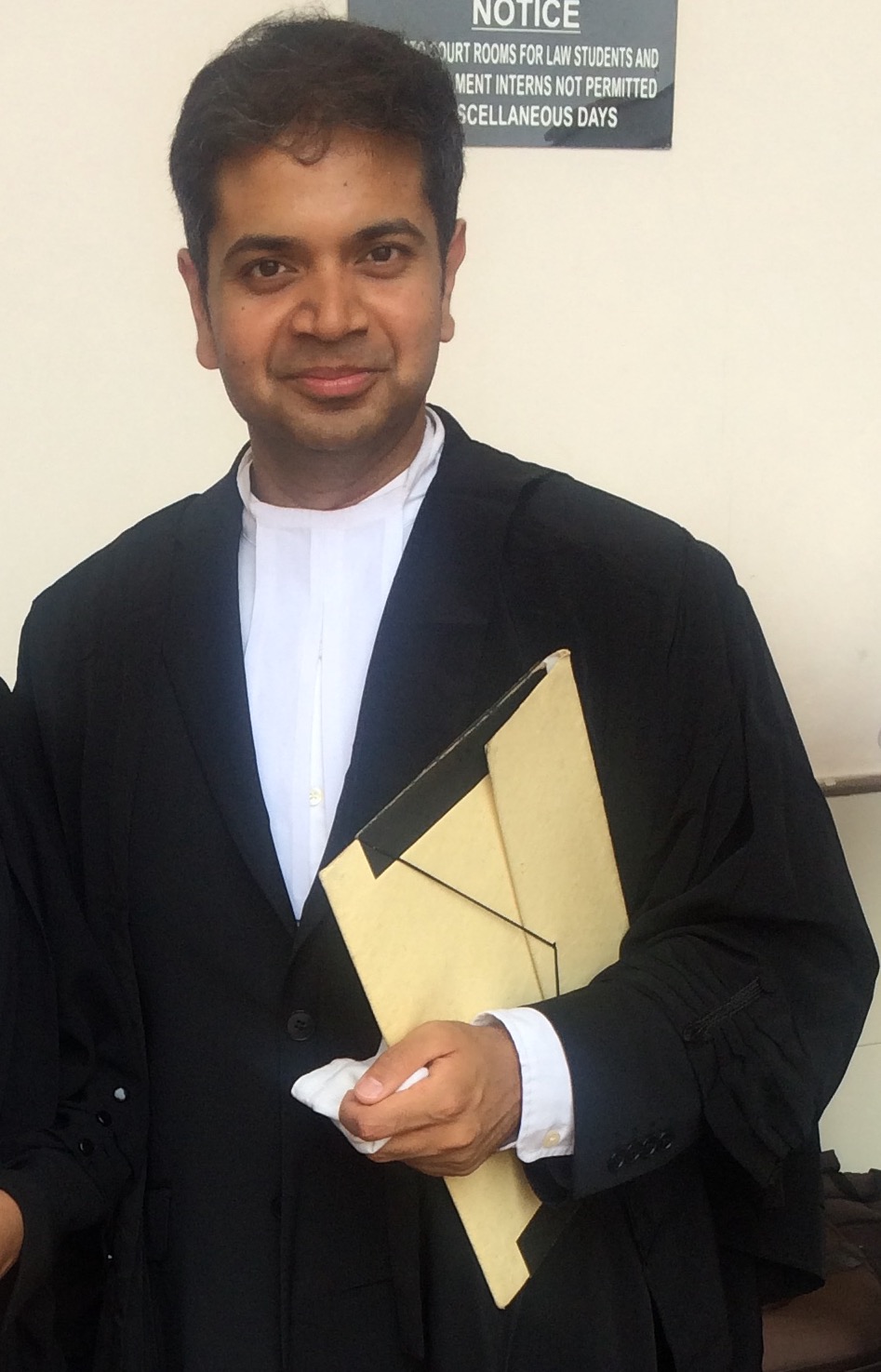
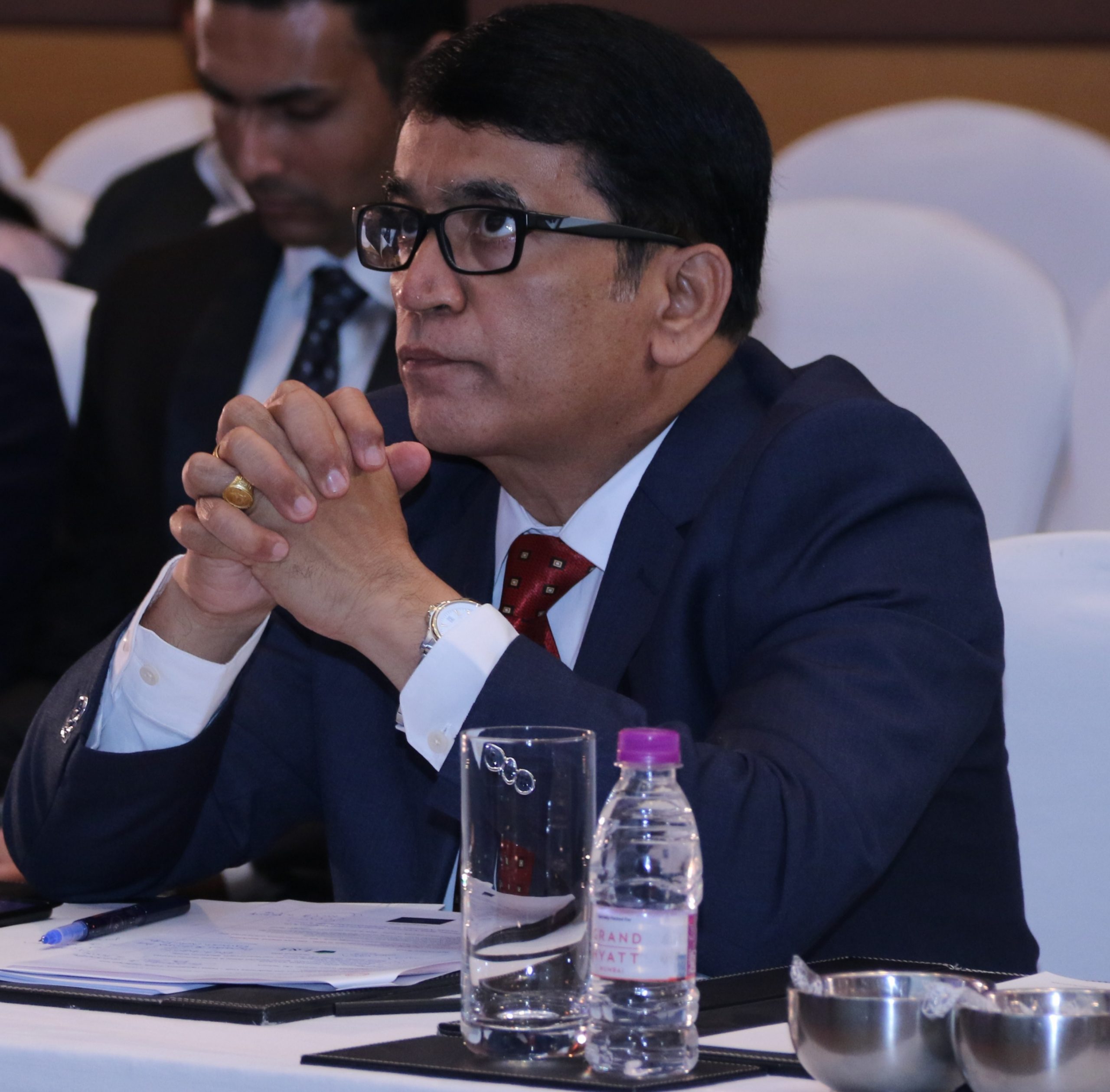
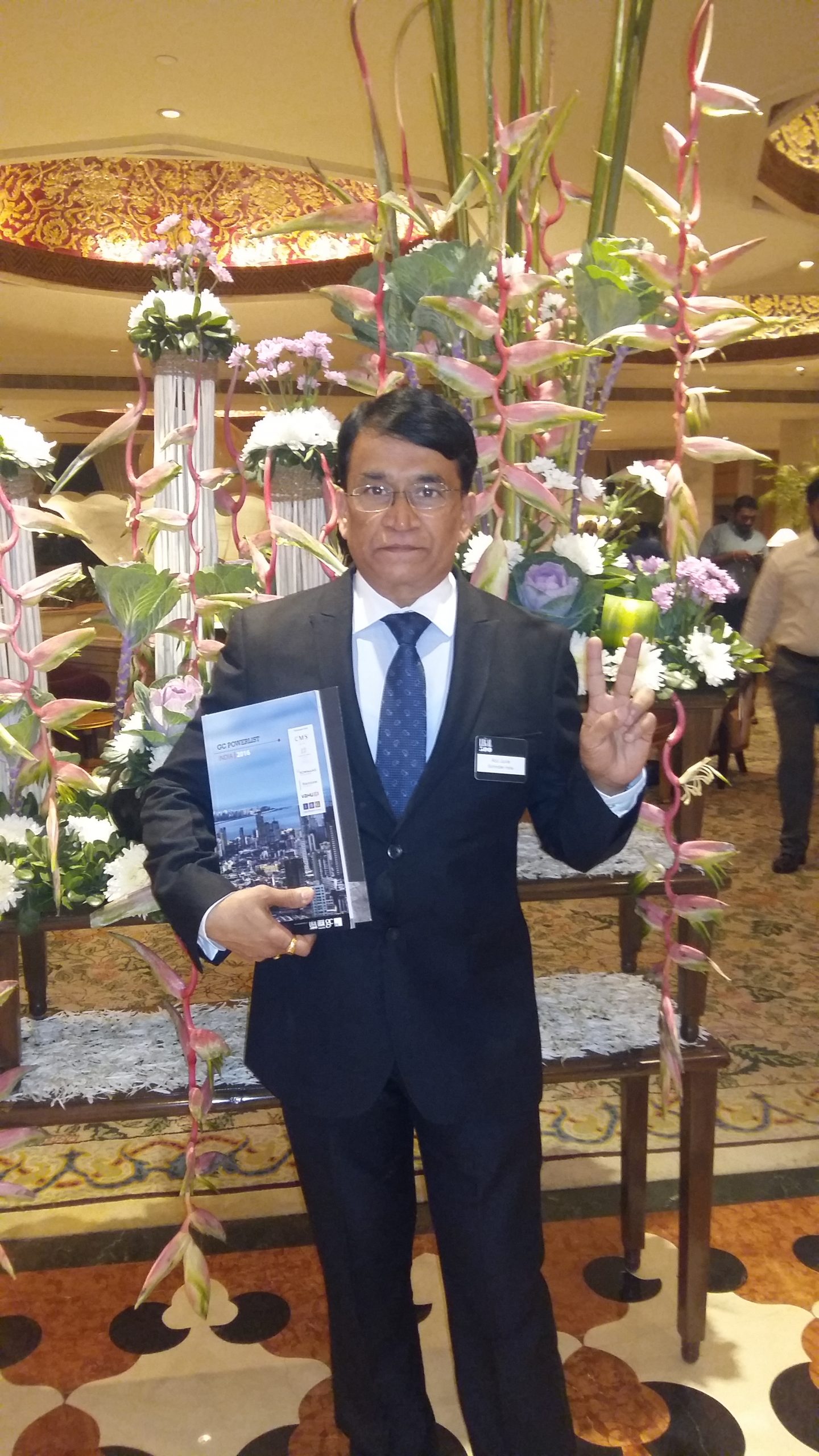

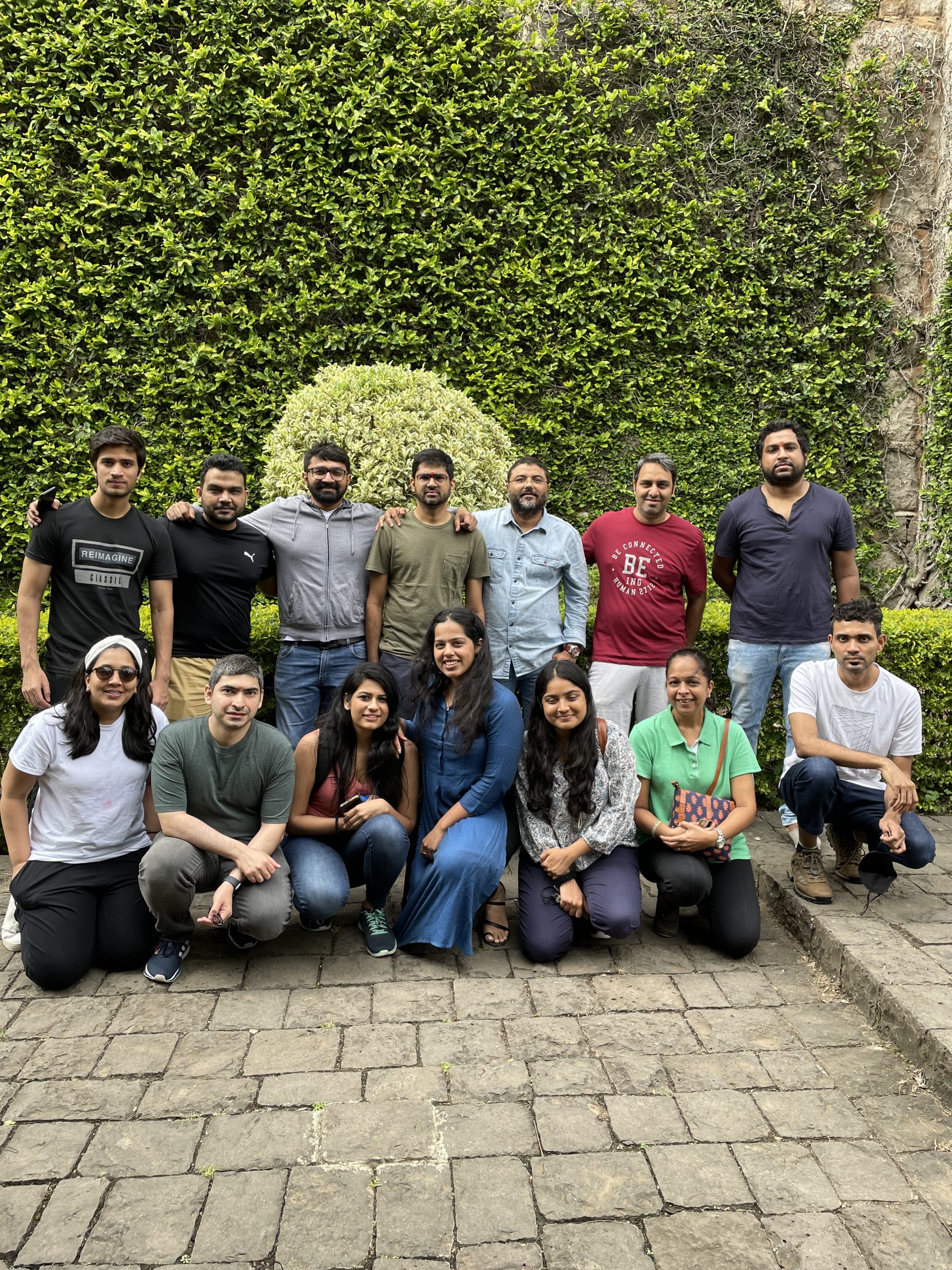

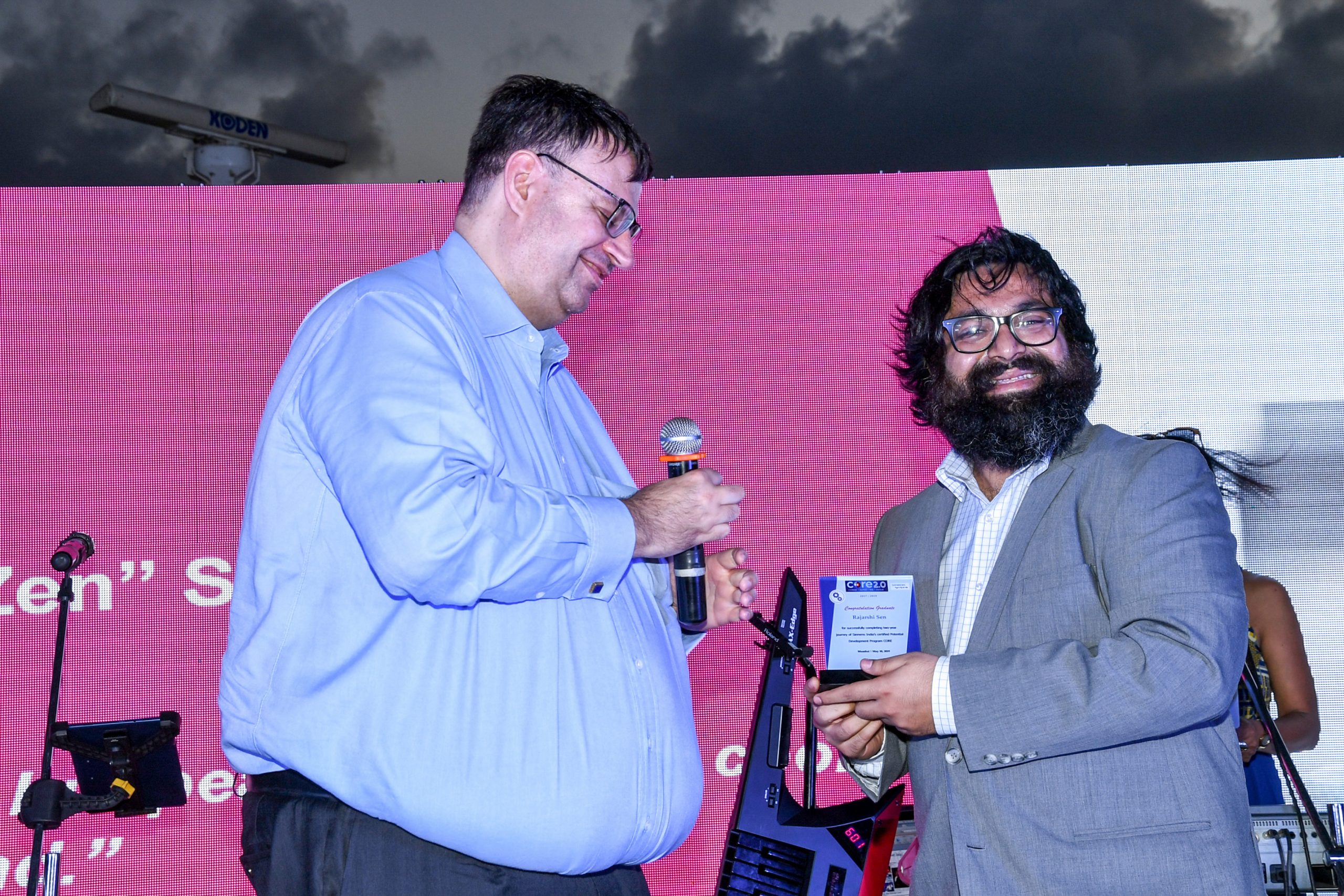
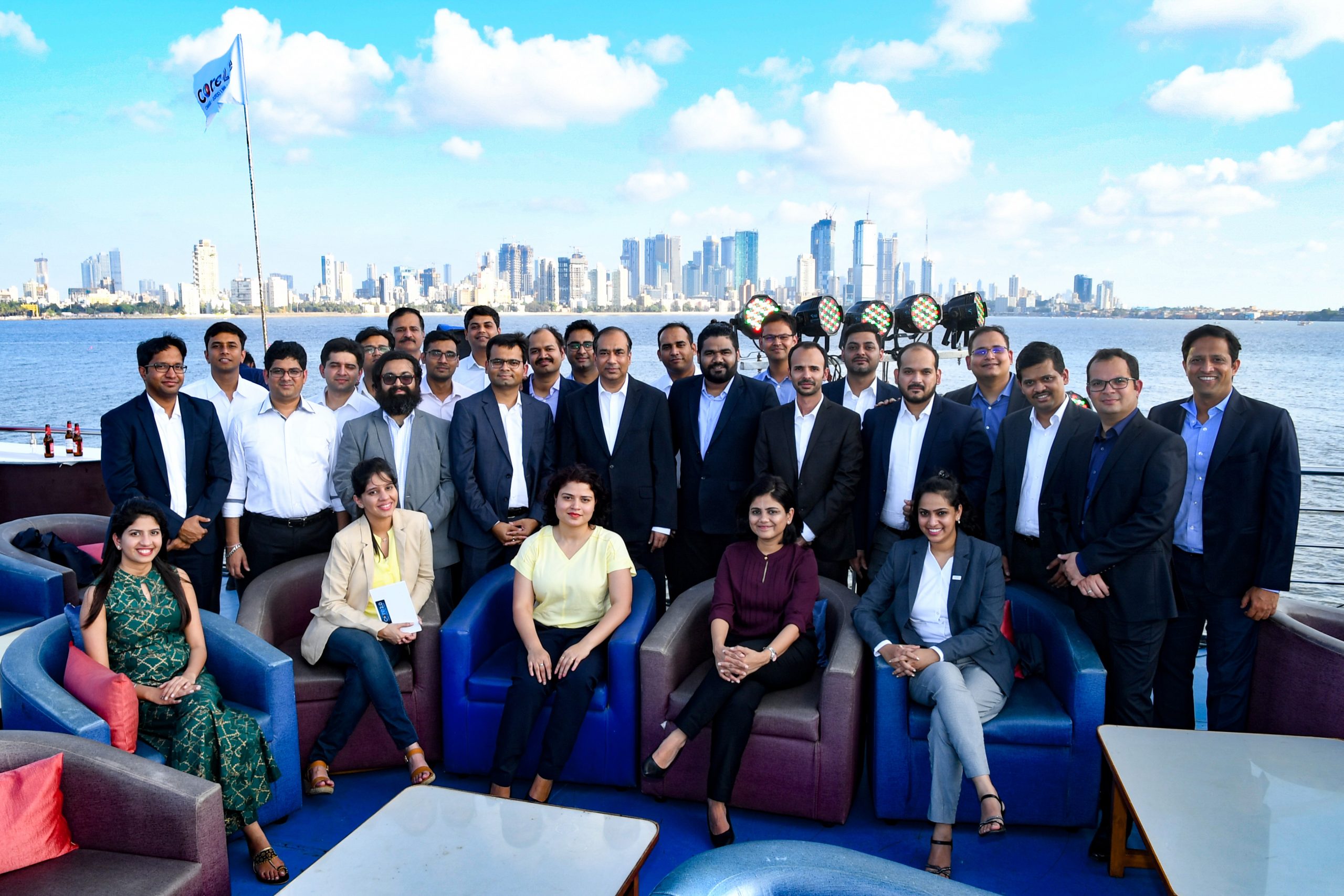






 Allow notifications