Blog

  • Savitha Jagadeesan, Partner, Kochhar & Co., on Intellectual Property Law, and being a Corporate Lawyer

    Savitha Jagadeesan, Partner, Kochhar & Co., on Intellectual Property Law, and being a Corporate Lawyer

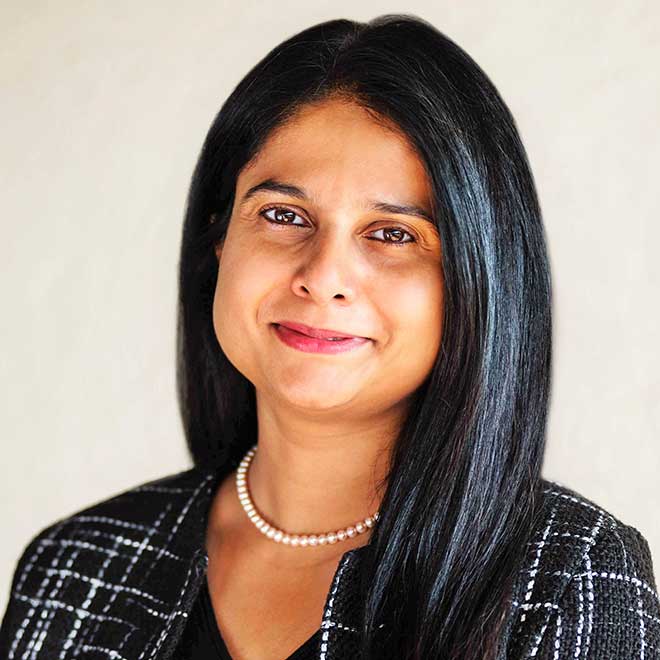
    Savitha Jagadeesan graduated from NLSIU, Bangalore, in 1997. Previously she’s held position of Partner at K. R. Chawla & Co., and Khaitan & Partners. She is currently Partner-Intellectual Property Chair at Kochhar & Co. Her expertise includes Transaction and Negotiation, Corporate advisory services. She is passionate about cyber crime and security issues. Further areas of expertise are in corporate law, commercial law, India Investment Strategies, which include providing legal advice on investments abroad by Indian companies, and companies seeking to invest in India, cyber laws and intellectual property law.

    In this interview we speak to her about:

    • Her time at NLSIU
    • Her internship experience
    • Her role at Kochhar & Co.

    How would you like to introduce yourself to our readers?

    The legal profession is a particularly demanding profession on the time front as well as work front. This was fine for me as long as I was single. However, post marriage and especially after having my boys, I have tried to work as well as do justice on the personal front, something a lot of us grapple with, especially women. I like to look back and reflect that am glad I took on a full family life, yet refused to give up my profession and have been successful in both. I would encourage young lawyers, especially women, that despite the demands of our profession, there are choices we can make that enable us to have a full career as well as family.


    What are your areas of specialization?

    I am a general corporate lawyer and have worked on diverse matters, from labour law to infrastructure matters. However, Intellectual Property law and cyber laws are my specialised areas.


    How would you describe your time as an undergraduate at NLSIU,Bangalore?

    The five years at NLSIU were personally very enriching. Coming from a conservative background, the diversity on the NLSIU campus truly exposed me to an experience that enabled me to interact with people across the board. Another very crucial experience one gets at NLSIU is the immense confidence you derive through the years, that holds you in good stead across the board. The NLS experience enables you to study various streams of law, exposes you to legal studies, that I feel might not be possible in a routine college. Moreover, the curriculum as well as co-curricular activities create greater avenues for us to explore.


    Did you participate in co-curricular activities?

    Yes, I did. Cultural activities and the inter college fests were definitely fun times, especially the NLS had a cultural week which also was great fun and a wonderful experience. I would encourage all to step up and be part of these activities as much as the moot court experience.


    How did you select the internships you got yourself engaged with in your student years?

    One of the foremost thoughts I had in mind  was that I wanted a well rounded experience to decide which path I would take upon graduation. Therefore, I chose litigation firms, corporate houses, independent counsel and corporate firms as my learning ladder. I picked big firms and companies as well as small lawyers. The former enabled me to see how the big firm/big company culture worked, and the latter meant I had direct experience on the work I would be required to handle. I would encourage young lawyers to give some thought to  their internships. Especially because they have a lot more opportunities we did.


    Could you please give our readers some advice regarding internships?

    I think it’s important to choose diverse paths to understand what we would like to do; the same is in case of internships. I do recommend varied internships for those who are confused. However, if you have decided the city you want to work with and it is a firm/corporate house/NGO, choose those only throughout the years of internship. However I would encourage many to definitely do internships with lawyers and litigation firms, because one of the cornerstones of being a good lawyer is that you should know the procedural aspects of law. In fact, I feel that lawyers should get some litigation experience in their career as it’s a lot easier to identify issues with their corporate work before hand. Now many firms have internships programs, therefore apply early. Choose firms, according to your growth trajectory, speak to your peers, do research on the firms that do provide good, well rounded internships, and of course, as already said, apply early.


    What would you like to say about the initial years as a corporate lawyer?

    Loved it. My first experience was with Mulla and Mulla, Craigie Blunt and Caroe and we had to do both litigation and corporate. It was not some air conditioned office, but we all sat in a room, but we had plenty of work, so plenty to do. It was intense, and there was no excuse of how many hours were spent in court, we still had to complete our corporate work and send out reporting letters the same day of the matter.


    Would you please enlighten the readers about how you came to choose your fields of specialization and suggest them the proper time to do so?

    This is an era of specialisation and is crucial to one’s growth path. I think it is imperative that through the years as you are dabbling in varied aspects of law, you also look into reading into various specialisations. Depending upon the curriculum if you are exposed to specialisation in courses in the fourth and fifth year, you choose the electives not purely based on interest, but its applicability in the outside world. I would also recommend choosing specialised firms, if you are looking at being specialised. Even though many of us might know what we want, I would recommend experimenting with these courses before you earmark a singular one, so  you do not regret the decisions later on. I would also speak to specialised lawyers to get an insight into the area, choose internships and write articles, this enables and exposes us to the idea, if our interest in these specialised areas is retained. For those unsure, read, research, speak to others. This will enable to get the dialogue going with us on what we would like to do.


    Did you have any mentor or inspirational figures along your eventful journey?

    Not really, although, I had excellent bosses who have played crucial roles in moulding me as a lawyer. From my first boss I learnt meticulousness and listening to detail. From my second boss I learnt the importance of working hard and reaching deadlines at all cost and identifying what sets you apart from others. My present stint brought out the business person in me and I realised presentation and branding is equally important, and most importantly your clientele is worked on your work skills and people skills.


    When was the time you decided to pursue an LLM?

    This was many years into my profession and the need to pursue the LLM was mainly because I wanted to pursue my Ph.d in India, where the LLM is a  requirement. However, I think there are two crucial junctures you can pursue your LLM; straight from law school (I would recommend doing it in UK and USA) or few years down the line, but only if it adds value to your specialisation.


    How would you describe your experience as a partner in a Tier-I company like K.R. Chawla and Co.?

    It was truly a learning experience for me. I was exposed to varied matters especially regulatory matters. Mr. Harvansh Chawla was a wonderful person to work for, as he exposed me to all kinds of work, gave me a free hand on how I executed the work and also encouraged me from all fronts. I think the work that I did here was some of the best in my career and it was here that I also learnt to interact with clients first hand. It was also this experience that enabled me to be an open colleague. By that I mean, for all my colleagues I work with, I give them a free hand on how they want to execute the work, including client interactions. I am but a stickler for timelines and feel that all work should be turned around fast irrespective of client deadlines.


    What is your advice to young aspiring interns about the Tier-1 firms?

    Learn, learn, learn. Some internships might be boring. However, if you take an initiative, you will find that many a firm will be willing to be expose you to their daily work and will use you. Don’t take your internships for granted. Work hard at the work you are given, even if research, because there is a chance you will be offered a position there and you might get noticed. Being a lawyer is not just about knowing the law, but also bringing out the confidence in your client. Never fib, if you do not know something check it up and then advice. Research is an imperative part of your learning curve. Write articles and be exposed to changes in the areas of law. And last but not the least, it is imperative that through the years you study the trends in the profession, and your choices are marked by this as your future will be shaped out to be due to these choices.


    Did you ever imagine that you would become Partner some day?

    Yes, I knew from the very beginning that I would be part of the law firm culture and I had already envisaged that being a partner was definitely going to be on my bucket list. I think its an aspiration we should all keep, to reach the top, that keeps the adrenaline rushing, and we do not get bored of our profession. Pick challenges in whatever you do, and do not rest with one.


    Could you tell us what a typical work day entails for you?

    Well, I do a lot of my business meetings in the first half of the day. We have administrative decisions to be taken which we do through the day.  Most of my day goes in conference calls, meetings and tackling work. My time is divided between intellectual property and corporate queries. I also do a fair bit of business development for the firm and hence, meeting and sitting on committees also takes some time.


    How do you stay updated on the latest legal developments?

    I read a lot of judgments and articles. Reading legal books are more when doing opinions. However, I do make it a policy to subscribe to various legal updates that come to me. Recently, with technology, legal Whatsapp groups are in, and this exposes are fairly quickly to the latest law developments.


    Lastly, what would be your tips to aspiring lawyers?

    1. Work hard.
    2. Take initiative.
    3. Do court work, you will see a definite difference in your attitude as a lawyer.
    4. Read.
    5. Never say no to any kind of work, more the experience the better the lawyer you will be.
    6. Never say no to a client, even if it is a small matter, take it up and execute it with equal gusto as a big matter, you are in the business of building relationships so every bit counts.
    7. If you are thinking of a company job/NGOs your organisation comes first, never substitute the hard work for the company for anything else. Integrity will always see you a long way.


  • Poornima Hatti, Partner-Dispute Resolution, Samvad Partners, on studying in London, her association with the UN, and editing her book

    Poornima Hatti, Partner-Dispute Resolution, Samvad Partners, on studying in London, her association with the UN, and editing her book

    Poornima Hatti graduated from NLSIU, Bangalore, in 2003. She then went on to pursue her Masters in 2005 from London School of Economics. Her repertoire includes associations with the likes of Amarchand Mangaldas and Herbert Smith. She is currently Partner-Dispute Resolution at Samvad Partners. Poornima also has strong expertise as an anti harassment professional particularly in relation to anti sexual harassment issues at the workplace. She sits as an external independent professional on a number of enquiry committees. She is also a trained mediator. She works with various public interest organisations particularly on matters of urban planning and growth on a pro bono basis.

    In this interview we speak to her about:

    • Her time at NLSIU
    • Her experience at Tier-I firms
    • Her pro bono work

    How would you like to introduce yourself to our readers?

    I would like to believe I am a thinking lawyer who believes that law can bring about change. My practice lies in dispute resolution and in related advisory.


    Why did you choose to pursue a degree in law?

    My parents are lawyers, so black robes and AIR manuals were not alien to me. I was therefore extremely aware of law as a profession and the wide ranging work that could be done as a lawyer. Looking back, in 1997, a lot of my peers were also very excited about the prospect of learning law at the National Law School (NLSIU). As I learned more about the institution and the people involved in the new “legal experiment”, I was very interested in getting admission at NLSIU. If I had not gotten through to NLSIU perhaps I would have looked at becoming a doctor.


    Give us a brief overview of your life at NLSIU.

    I enjoyed all aspects of my time spent at the NLSIU. I can truly say that I met some amazing and very intelligent people, both in terms of students and faculty, many of whom are now lifelong friends. The institution taught me to write and to think independently and shaped my political and ideological beliefs. For the first time I understood what dissent was and how dissent should be respected. It gave me the confidence to believe in myself and truly allowed me to explore the myriad opportunities a young law student has within her reach.

    I am not sure whether there is a “NLU culture”. Institutions are often shaped by the people who lead them. I know that there are non NLU universities in India where very interesting courses that are being taught and where the environment is truly conducive for a holistic legal education. Every institution should do all it can to be true to its own idea of why it came to be.


    What are the subjects that you took particular interest in, during your law school days?

    I was interested in the humanities, particularly in political science. Constitutional law was also very exciting and this led me to look more closely at constitution theory at the London School of Economics where I studied later. I even came back and taught it at NLSIU as a seminar course. At times the subject itself may be appealing and at other times the people who teach a subject can make you very interested in it! I was clear that criminal law was not for me! I was always clear that I would be a disputes lawyer, courts were always more inviting to me. Even today it is difficult to predict how events can unfold in Court, you may be hoping for a dull day, only to be surprised later.


    What activities, both academic and non-academic that you engaged in as a law student?

    In a fairly small group of students in a university, you can try your hand at most things and I did! I was not very good at sports and even broke my ankle trying to high jump in my first year, but still won a medal. I did debate, quiz and participated in a number of student bar association activities, primarily the legal services clinic. I was also elected as president of the student bar association in my fourth year and I learnt many things about working with people in this role. I was late to the mooting scene and only did so in my fifth year and participated in the Bar Council Moot and the International Maritime Arbitration Moot in Brisbane.

    I cannot stress how important it is to be involved in non academic activities at your institutions. These activities allow you to engage with your own peers in different contexts and allow you to build skills which will stand you in good stead in whatever path you choose later. You will learn to engage with the “real world” in many ways.

    Even as partners, we do work with Chambers of Commerce and other institutions that interest us or that we are passionate about. I would love for mediation to be used more actively and so I am part of the Centre for Advanced Mediation Practice here in Bangalore.


    What kind of internships did you engage in during your student years?

    Almost all my internships were connected with dispute resolution as an area of practice. I interned with non governmental organisations who were involved in litigation, like the Environment Support Group and Human Rights Law Network. I later interned with the National Human Rights Commission, with the then Attorney General’s office and finally clerked with a Supreme Court judge. Each internship taught me valuable skills and perspectives. It also gave me the opportunity to meet with some wonderful people. Looking back, each person I worked with taught me something new in terms of working with people, approaching clients or looking at a solution for a problem. I would say choose your internships carefully and work hard. There is someone always watching.


    Would you say higher studies are absolutely essential for a career in law?

    No, an LLM is not essential for a practising lawyer. However, it does give you perspective on theory and practice and it gave me, a more rounded view of the world. During my time in London, I also did some mini pupillages at a few Barristers’ Chambers and this gave me an insight into the working of the law outside of India.

    Which is the ideal time to do an L.L.M?

    I would strongly recommend working for a few years. Personally, I appreciated the class room better, made better use of my time as a student both academically and in terms of peer interaction, as I had learned to value my personal time. One also approaches law differently, after one has seen it being practised. You want to solve a problem, and you think out of the box.


    What are your areas of specialisation in law?

    I have always been a disputes lawyer. Today I am a commercial disputes lawyers, although we do undertake a few pro bono matters which are public law matters. As a disputes lawyer, other than the procedural laws that are essential, one learns to look at various issues in the context of different disputes. It could be a projects/infrastructure dispute or a complex shareholders disputes or an intellectual property dispute, most practising dispute lawyers handle all kinds of disputes. Of course there are specialist IP disputes lawyers and maritime lawyers but most disputes lawyers work across the spectrum.

    Every dispute teaches me something new.  My advice to law students would be not to specialise too early. Try and get adequate exposure to as many types of law as possible and then you can choose to specialise. A well rounded lawyer can also be prepared for issues that may arise across practice areas and may not be pigeon holed one way or another.


    How were the first few years after your graduation?

    I was fortunate enough to not be surprised by law in terms of the substantive aspects of law when I started working. The practise of the law is a completely different thing, one needs to understand client expectations, time management and one needs to learn a whole lot of people skills along with substantive law. A lot of this is not taught at law school and often internships do not offer real responsibility in terms of communication with all parties involved. As you grow senior, you will realise that people skills will stand you in good stead. Often clients tell me, that they chose to work with people they like and not always because they are fantastic lawyers. To be fair, law schools cannot prepare you for the real world practice, that is where the first few years are important. Young lawyers need to understand where and how they can be trained with rigour and opt for those places to work.


    Give us some insights on the qualities that Tier-I firms look for in prospective candidates.

    I think the focus should be for young lawyers to work with good people and where they can be busy. If you wish to work on diverse areas of law or a particular kind of law, then choose accordingly. Importantly, there should be an opportunity to learn and think. In terms of what does a law firm look for in a prospective candidate, I think any good law firm, even we at Samvad, look for a good work ethic and enthusiasm. There is nothing more refreshing than a young lawyer thinking ahead of his senior and adding value to the case at hand. These are things that can be seen in the context of an internship, so again, young lawyers should make the most of their internships.  I have seen this at Amarchand, at Herbert Smith LLP (as it then was) and here at Samvad.


    Tell us about your association with the UN.

    (Poornima has worked with the Executive Board of UN women where she has worked on equal pay and other women’s rights issues across the South East Asia region.)

    I was part of the Executive Committee at UNIFEM (now UN Women) in Singapore. As Singapore is a high income country, the group worked on issues relating to women across South East Asia, which included raising awareness of the UN Convention for Elimination of All Forms of Discrimination against Women (CEDAW), working with local non governmental organisations on issues of violence against women, be it in Indonesia or Cambodia. We also focused on ensuring that domestic help/maids employed in Singapore would get a day off during their work week and ensuring that payments were made properly. We even worked on a shadow committee report for the UN as part of Singapore’s CEDAW obligations. UN Women was and is a vibrant and active space where I learnt a lot about women’s right in practice and the tough role that one has to play to achieve them.


    Tell us about your role at Samvad Partners.

    While the partnership at Samvad Partners continues to grow, it is still quite close knit and very collegial. While I am primarily based out of Bangalore, as part of my disputes role, I work across offices be in Chennai, Hyderabad, Mumbai or Delhi to ensure that if there is something that needs to be addressed on the dispute resolution front, it is effectively addressed. The average day includes client work (be it meetings, attending hearings, building and strengthening relationships with clients) as well a fair share of administrative work, which could be resolving HR issues, putting new systems in place or just figuring out if we need revamped stationary. It is exciting to be part of  a relatively young and diverse group of partners and to shape strategy and growth of a legal practice together.


    How important are grades, in your opinion?

    Call me old fashioned, but I think grades are important. If someone has consistent good grades, it demonstrates a certain level of hard work and knowledge of the law. On the contrary, if there are students with consistent low grades, it would be difficult to explain why that is the case. I believe that Indian legal education has taken a great leap forward in the past decade. There are more people interested in teaching the law and different types of subjects are being taught. The fact that there are so many young people interested in learning the law is itself a pointer that things are moving ahead. I am optimistic about the future.


    Tell us a little about the book that you are currently co-editing, on role modelling and mentoring at the workplace.

    A lot of us have often wondered about the lack of positive and focused mentoring in the legal profession, be it at the Bar, at law firms or at law schools. This led to a wider quest and the book was shaped by that. Interestingly, it’s not a law book, although my co-editor Shruti Vidyasagar and I are both lawyers. The book is part of a larger series on leadership at the workplace and is to be published by Palgrave McMillan and should hit the stands by next year.


    What is your message to our readers?

    There is no substitute for hard work and enthusiasm. Do both. Read and keep abreast of everything happening around you. Look beyond the law, too often as lawyers we do not look or make friends outside the law, we must. It keeps us balanced and makes us more relevant. You should want to get out of bed and get to work everyday, else its time to rethink what you want to do.

    Many thanks for giving me the opportunity.

  • Dr. Rishi Kulshresth, IPR Consultant, on his diverse experience and his work in IP Law

    Dr. Rishi Kulshresth, IPR Consultant, on his diverse experience and his work in IP Law

    Dr. Kulshresth graduated in law from Chaudhary Charan Singh University, Meerut in 2010. Prior to that, he held a degree in Commerce from Delhi University. He is an IPR consultant and Brand Protection Expert with over twenty years of experience. He also takes up legal cases at all district courts in Delhi and the Delhi High court. He has worked with corporates like Pinkerton Consulting (USA), Suzlon Energy Ltd, Finolex Cables, Finolex Pipes, among others. He is an active contributor to popular law journals in the country. He is currently writing his book on Brand Protection.

    In this interview we speak to him about:

    • His inclination towards IP Law
    • His experience thus far
    • His plans for the future

    What motivated you to pursue law?

    In this modern age countries invade other countries through business. They purchase properties in other countries to establish their offices and channel the money back to themselves. These invaders can be controlled only by law. You cannot attack them in any other way to save yourselves. Even on a personal level if someone is doing something wrong, you have only the law to protect yourself. Wars/fights are now won or lost in courts all over the world. So I decided to join the only real force i.e, law. I think I did take the right path.


    What motivated you to choose IPR as your area of expertise?

    Many years back I used to run a business promotion company in east Kailash. I got an order from a law firm called Dua Associates.They wanted me to collect evidence for a PIL. I did an excellent job and in the process I realized that lot of duplicates/counterfeits are regularly selling in the market. The only way to stop it was through legal channels. I found it fascinating. That was the time when I decided to take law as my future profession specializing in IPR Brand Protection.

    You need to devote time to this niche. If you put your fingers in a lot of pies then you will not be able to do justice. Today we are in the age of super specialization. So, specialise.


    What according to you be the way of coming out from the maze of conflict?

    Feel the zing while reading different case laws of different fields. You know you’ve found your calling when your bell rings and heart says, “I find this field very interesting!” 


    What are the other areas of study which you think a law student wanting to excel as a professional in the field of IP should be proficient in?

    Designs Act and GI are the two fields which are starving and crying out for more professionals. Patents is another evergreen field.  


    How do you manage to strike a balance between your personal and professional life?

    I‘m very passionate about my work. I have seen days when I worked for fourteen hours a day for two weeks straight but I enjoyed it. IPR and law gave me prosperity and name. I had to neglect my family but that’s unavoidable as I was travelling 24 days a month all across India. I learned to live like this and so did my family. You cannot have everything.


    What are the primary professional ethics you follow while at work?

    No bribes while conducting raids and honest reporting to the client always. Plus, I always prepare my cases very properly.


    How does the application of intellectual property differ in the case of litigation or practice at firms?

    Not much difference. You need to intern in an IPR only specialist law firm and then grow into a professional by working alongside veteran lawyers. Corporates have very good opportunities but they prefer only those who bring value to the table having worked in a specialist firm for few years. Corporates pay better in case you do not have your private practice. In my last job I was drawing 50 lacs p.a. Then I decided to move on and establish my own practice.  


    Where do you see yourself ten years down the line?

    I would be teaching Law/IPR in some University and would still take up cases but only those which will interest me. I also hope to write more books.


    What would be your message to our readers who are mostly young law students and lawyers?

    IPR is a stream which is going to grow in to a torrent. If you find this field interesting then super specialize in it by joining some IPR specialist Firm like Anand and Anand or RK Dewan, etc. I’m still associated with such top law firms as an external adviser.


  • Ayush Sharma, Advocate-on-Record, Supreme Court, on IPR, and starting independent practice

    Ayush Sharma, Advocate-on-Record, Supreme Court, on IPR, and starting independent practice

    Ayush Sharma graduated from NLUJ in 2006. He started his career in 2006 as legal associate in a KPO Quislex Legal Services Pvt Ltd., Hyderabad where  worked on technology agreements.  After a few months in Hyderabad, he moved to IPR Litigation Division of LakshmiKumaran & Sridharan where he worked on Intellectual Property litigation (primarily Patent Litigation) at various High Courts, IPR Tribunals and Supreme Court. He subsequently decided to pursue independent practice. He is currently Advocate-on-Record under the Supreme Court and a registered Patent and Trademark Agent.

    In this interview we speak to him about:

    • Being a fifth generation lawyer
    • His expertise in Trademark and Patent Law
    • Starting independent practice

    How would you like to introduce yourself to our readers?

    I am an independent litigator, patent agent and Advocate on Record. I have been practising law for more than a decade (class of 2006 of NLUJ), specializing in intellectual property and civil litigation.


    What motivated you to pursue law?

    Though neither of my parents are lawyers, I come from a family of lawyers. Growing up, whenever I visited my grandfather’s and uncle’s chambers, I was extremely fascinated by the law books in there and always wanted to have my own chamber and library of books there. Of course, at the time I did not know how much hard work it would take to reach there.


    Give us a brief overview of your life at NLUJ.

    Five years at NLUJ were some of the best years of my life. I not only found lifelong friends but also learnt so much from the teachers therein. I would specially want to thank Prof. N. L. Mitra and Mr. Sanjay Pandey for being guiding lights during my time at NLUJ. Everyone in the legal circle knows our first Vice chancellor Prof. N. L. Mitra and what a visionary he is. It was he who saw the future of IPR law in India and wanted NLUJ to produce best patent lawyers in the country. Back in 2004, at NLUJ, we were taught patent drafting by two US Patent Attorneys, which in my opinion was very progressive and way ahead of the time. I still remember discussing Prof. Mitra’s vision (regarding patent law) during internships with students from other law schools and they would not take it, but I am really grateful to him and his vision that if it wasn’t for him I would not have been a patent lawyer.

    Well, I cannot really comment on other universities as I have only studied at NLUJ. However, I have worked with some brilliant lawyers who did not go to NLUs. Therefore, I feel its more about a person, their hard work and zeal than the law school they attend. Having said that, the NLU tag really helps in getting better internships and may be the first break in profession but then you are on your own and only your hard work coupled with luck can make you reach where every law students hopes to reach.


    What are the subjects that you took particular interest in, during your law school days?

    Since I studied science subjects in schools, they drove me towards picking up B.Sc.LLB (Hons) at NLUJ. Once I started studying B.Sc. subjects, I developed interest in patent law because that’s where I could combine science with law. That is what drove me to pursue a in the IPR department of LakshiKumaran & Sridharan and wrote the exam to become a patent agent. Thereafter, I did multiple patent litigations as part of the LKS team which contributed immensely to my learning and gave me confidence and courage to start my independent practice.


    In your opinion, what are the law school centric activities that you would recommend as necessary experiences for every law student?

    In my opinion, one must participate in all the opportunities that are present at the law school because everything shapes up the professional you finally become. By participation in moot courts and writing papers one can really hone their research skills which come in handy when one starts practicing. Surprisingly, I still remember most of the key legal points I researched for my class projects and otherwise and they come in handy at times to know what direction to take in a matter.


    What are your areas of specialisation in law? 

    I specialize in patent and trademark litigation, along with that I do fair bit of civil litigation and IPR prosecution. My decision was based on my interest in the niche practice area and having a background in science.

    Where does this passion for IP law stem from?

    As I mentioned that I was interested in both science and law, and IP law particularly patents was an opportunity to combine both my interests.


    What internships would you recommend to a student who also aspires to pursue studies in IPR?

    One must aim to intern with a law firm/ individual that does fair bit of both litigation and prosecution work so that one can get a fair idea of the kind of work it will entail if one decides to pick it up as a subject. One should also work with the legal department of a corporate which has a good IP Portfolio because this will give you a perspective about in-house counsels and the business problems they deal with everyday. My internship at Cadila healthcare (Zydus) gave me a wonderful opportunity to understand the problems from the perspective of in-house counsel as what they need from law firms/lawyers. If you are able to think the issues from the perspective of in-house counsel you are well equipped to solve the issues in better way.      


    How were the first few years after your graduation? 

    It’s a myth that law school teaches you everything about law and legal practice and prepares you for the real world; but it does get you accustomed to the long hours and the hard work. Since day one in law school, I used to work hard for mandatory moot courts for each subject, internal projects and practical exams (science subjects), etc. which made me tough enough to work in any circumstances.  

    As soon as I joined LKS, I found myself working in two of the most high profile patent contentious matters, but five years in law scohol had prepared me to to work fourteen to sixteen hours on weekdays and even more on Sundays. All one needs is some Maggie and cheese toast for company. During that time, I learned from my partner Mr. Parthasarthy that you need to work smart and work hard at the same time. Each day at LKS was a great learning experience to observe and learn from my superiors about analysing the problems and conceiving their solutions.

    LKS gave me lot of responsibilities and freedom where early in my career I got the opportunities to represent clients in various courts and tribunals ranging from district courts to IPAB, and for this I will always be thankful to Mr. LakshmiKumran and Mr.  Parthasarthy.


    Are you from a legal background?

    Yes. I am from legal background, actually I am the fifth generation lawyer of my family. I have always heard intriguing stories from my grandfather about his grandfather working in Courts of Bharatpur’s king. I still remember one of the talks with my grandfather about law and society and that day I decided to be a litigator.   

    Legal background always plays a crucial role in taking up litigation as a career because you have a fair idea about the difficulties you would encounter in the field and how to be patient because if you are honest and good with your work it will all be worth the initial pain.


    What does it take to bag a job at a Tier-I firm like LKS?

    All law firms look for legal acumen, quick thinking and problem solving abilities in the candidate because time is money, after all.     


    When did you decide to take up independent practice?

    As I mentioned earlier, I always wanted to be a litigator, it was just a matter of time when I decided to jump into the uncharted territory of being an independent litigator. When I took the decision I was very well prepared for the same (at least handling clients and matters), the only thing that was of concern was the finances. It was a tough decision going from a well paying law firm job to not knowing how much work will come my way and how much I will get paid, but I was willing to give it a shot. I would like to thank my wife for being there backing me, every step of the way and today I am glad I made that decision.


    Give us a peek into what a regular working day looks like for you now.

    Being an independent litigator does not give you the comfort of weekends and time. I start my day at 6:30 AM in the morning revising my notes for courts and working on emails from foreign associates as my team does a lot of IPR prosecution for foreign clients. I suggest all the lawyers to start their day early as I believe that one hour of morning work is equivalent to two hours work in the evening. On a normal Court day, I usually work for fourteen to fifteen hours and around nine to ten hours on weekends, which of course depends on the work.   


    What is your message to our readers?

    Never doubt yourself even for a second and you will be able to achieve what you aimed for and working smart is as important as working hard.


  • Rohini Singh Sisodia, Senior Legal Advisor, Ministry of Finance, on working for the GoI, studying in London, and her diverse experience

    Rohini Singh Sisodia, Senior Legal Advisor, Ministry of Finance, on working for the GoI, studying in London, and her diverse experience

    Rohini Singh Sisodia graduated from ILS Law College, Pune, batch of 2008. After a succesful stint at Amarchand Mangaldas & Suresh A. Shroff & Co., (as an Associate from 2008 and as a Senior Associate from March 2012 onwards) in the dispute resolution department, she went on to pursue her Masters at King’s College London where she completed LLM in International Business Laws with merit. Rohini is currently working as a Senior Legal Advisor with the International Investment Agreement Division, Department of Economic Affairs, Ministry of Finance, Government of India, New Delhi where she is involved in treaty negotiations between India and many other countries, investment treaty disputes, along with the related policy work on national, international and other imminent legal issues involving trade, investment and public international law issues. Rohini has also had the unique opportunity to represent India in investment and trade negotiations and had numerous interactions with well-experienced teams of diplomats and government officials.

    In this interview we speak to her about:

    • Pursuing an LLM in London
    • Her experience in Dispute Resolution
    • Being Senior Legal Advisor at the Ministry of Finance

    How would you like to introduce yourself to our readers?

    I am a dispute resolution lawyer, pursuing a niche area of law (particularly for India) i.e. international investment law and arbitration, which involves international investment agreements (bilateral and multilateral), the combination of public international law and public policy issues, and investment treaty arbitrations. I am also stronger believer in the fact that there is no age for learning, identifying and pursuing what you love doing.


    Why did you choose to pursue a degree in law, amidst the many options that you had after school?

    I never intended to practice law. In fact, I am the only lawyer in my family. Studying law was only a medium to get into Civil Services as generally law subjects are likely to enhance chances of getting through. However, those five years at law school changed my mind. Law turned out to be so exciting and with all the madness in law school in terms of debates, moots, competitions, research, internships, I felt like giving it a shot and after that, I never felt like turning back. It’s extremely important to love your profession and what you wake up to every day. Today, I don’t regret my decision and I am very content with my profession. A career in law is demanding, but working towards resolving a challenging issue is exciting and, gives me immense pleasure. Law teaches one to think independently and optimistically changes the outlook towards dealing with all issues in life.


    Could you briefly explain your law school experience at ILS? 

    After passing out from an all girls’ boarding school, moving to ILS was like breaking free. Jokes apart, ILS just lets you be. In the beginning I felt directionless as there were just early morning classes and the whole day we were left with nothing to do. And hearing from other friends at law school where the curriculum was much stricter with many other activities, I wondered whether I made the wrong choice. Within a few months I realised I had the free time to do what I want, which other law students may not have so why not utilise it efficaciously. Rather than being told what to do or being forced to do something, we were given the flexibility to decide what we would like to do in our free time. This not only gave us the freedom to decide but also helped us excel in what we did, as we did it out of choice. With time I have also come to realise that it’s not so much about going to the so called top ten ranked colleges, but about moulding yourself to excel even in all circumstances with given opportunities, because then, you are ready to outshine in all facets of life.


    What were the activities, academic or otherwise, that you undertook in your law school days which in your opinion have shaped you and your career?

    In college, I was an active mooter/debater, organized, participated and secured positions in various national moots and debate competitions. I was also an avid writer and wrote articles for the college magazine, assisted professors in research activities and drafting of regulations and involved in volunteering activities. To make most out of available time, I also completed a diploma course in ‘Alternate Dispute Resolution’ and ‘Mergers and Acquisitions’ from Asian School of Cyber Laws, Pune. I did spend my holidays, like most law students, in taking up internships. Above all, I would say internships in the last two years of law school really helped me get a direction as to what I want to do and where I want to begin my career from.


    What kind of internships did you undertake during your student years? 

    With no legal background and no one to advise at home, I made sure to undertake internships in different spheres of legal fields, starting with a NGO involving understanding of human rights law to other specialised fields/departments in law firms including general corporate, mergers and acquisitions, competition law, policy & regulatory, dispute resolution including arbitrations etc. I can’t stress enough the significance of doing internships in wide array of laws, if one is not fully sure about a particular specialisation or area of interest from the beginning. Internships give you an opportunity to experiment, analyse and decide which area you are particularly interested in. Lawyers with specific expertise are preferred by clients.

    Thus, the strategy is to apply to a wide range of counsels, niche and large law firms, NGOs, in-house opportunities, international schemes and programmes, Indian and internationals courts, and to see where you can get through and try for the other on the next occasion.


    At what stage in one’s law school life/career must one pick a specialisation? 

    As I mentioned above, one should leave no stone unturned before you discover the area of specialisation and interest particular to you. Although the traditional opinion is to stick to an area of law right from the beginning, and continue with that. But that thinking has to change, else how would you know, which other fields of law could be interesting for you? So, if one has to ultimately reach that field of specialisation one day, then, why not be satisfied that it is the right one.


    What are your areas of practice and how did you go about choosing these fields to specialise in?

    I took no different approach as I mentioned earlier. After doing various internships, I was most attracted to the dispute resolution field. Unfortunately, to my dislike, when I got a PPO at Amarchand & Mangaldas (now SAM) and was finally placed, I was allocated to the General Corporate team. I continued with the team for six months. Working with the General Corporate team reinforced my decision to move to dispute resolution.  Accordingly, I approached Amarchand’s management for a change of departments. They heard me out and were understanding, and kindly offered me to move to the Dispute Resolution practice. Ever since, my appreciation for the field grew stronger. At Amarchand, I was involved in providing services to a wide range of international and domestic clients, by handling various matters pertaining to strategic advisory on cross-border legal issues, advisory in potential dispute situations, commercial disputes, and corporate fraud investigations. Particularly, I was involved in complex infrastructure and commercial arbitrations (for instance dealing with operation and maintenance contracts, oil exploration and procurement related arrangements and pipeline construction agreements), which provided me with crucial insights into the strategy and management of large and high profile arbitrations.

    I left Amarchand to pursue an LLM at King’s College London, where I completed a Master’s in International Business Laws, particularly focusing on subjects relating to international commercial and investment arbitration. At King’s, I developed a particular interest in the area of international investment agreements, including Bilateral Investment Treaties (BITs) and investment treaty disputes, and I decided to delve further into this area of law. While I was at King’s, BITs were a hot topic of discussion in India as the government was involved in the process of reforming the IIA regime. When I returned from my LLM, the International Investment Agreement Section of the Department of Economic Affairs, Ministry of Finance published an opening for lawyers to assist and advise on investment agreement negotiations, disputes and related policy work. I couldn’t have missed this opportunity, and am very glad to be part of the Government during the internal reformation process and further developments.

    It did take me sometime to figure out my core area of interest and specialisation. Today, I would call myself a dispute resolution lawyer and my area of interest lies in cross-border arbitrations, investment treaty negotiations and advisory. A combination of Investment & Trade law along with public international law is an upcoming area of law, and I would strongly advise students to consider this.


    What made you decide to go for LLM? 

    Given that I was handling transnational disputes, which often involve transnational law elements and implications, it encouraged me to pursue a specialized Master’s program at King’s College London. Accordingly, at King’s, I chose to focus on international commercial and investment arbitration and international business litigation, which not only complemented my practical experience so far, but also improved my legal skills in handling international commercial disputes.

    I think, pursuing an LLM is about the overall exposure and cross-cultural experience that it offers in bringing together a conglomerate of students from all over the world. Apart from the experience of studying in London, notably the hub of integration and reconciliation of major international issues, at King’s, I also had the privilege of being taught by various internationally known academicians and barristers.

    LLM helped me significantly in getting where I am today, but it’s not a given that it would benefit others in the same way. However, no one would deny the overall benefits an LLM offers which are noticeable either in the change in personality, perspective and thinking, or in professional dealings.


    Which is the ideal time to do an L.L.M? 

    I would definitely recommend an LLM after few years of experience. An LLM is a specialised degree and I see no point pursuing one without fully understanding what you want to do. Some practical exposure is necessary to get better perspective on a specialised practice area. I noticed that students with no practical background found it difficult to cope with the LLM schedule and in deciding on the teaching modules. To be able to appreciate LLM courses, which mostly involve studying of issues in the forefront of global academic debate, to the fullest; it is important to have touched upon transnational transactions and disputes before in your professional experience.

    Are there any commendable Indian institutions which you would recommend to a student pursuing an L.L.M, or would you suggest looking only at options abroad?

    Frankly, I never devoted sufficient research on opportunities in the Indian institutions, so I wouldn’t be able to comment upon them. The decision also depends on the faculty of an institution and personal financial situation. As I mentioned above, an LLM is about the overall exposure that you get for a year, if finances/funds or scholarships are available, then my suggestion would be to go abroad and get that exposure. It is definitely worth it and a fruitful break from work.


    How were the first few years after your graduation? 

    (Rohini has previously worked at Amarchand&Mangaldas, one of the most sought after firms by law students, as a senior partner Associate.)

    It was long back when I got a PPO from Amarchand& Mangaldas. I think the best way to get in most law firms is give your best during internships. Most students don’t take internships seriously which is a big mistake. Getting through a Tier-I firm is no longer only about being a topper, firms are looking more and more for the all-rounder qualities a student may have, which include personality, outspoken character, participation in extra-curricular activities (including moots, debates, research projectsetc.), general knowledge, self-confidence, dedication and personal motivation.


    Tell us about being a Senior Legal Advisor at the Ministry of Finance.

    I am currently working as a Senior Legal Advisor with the International Investment Agreement Section, Ministry of Finance, Government of India where I am handling matters relating to International Investment Agreements, particularly involved in bilateral and multilateral investment treaty negotiations between India and many other countries, investment treaty disputes along with the related policy work on imminent national and international legal issues involving trade, investment and public international law. I have had the unique opportunity to represent India in investment and trade negotiations and had numerous interactions with well-experienced teams of diplomats and government officials.


    If given an opportunity, what would you do differently in your career journey up to this point? 

    I think, being a dispute resolution lawyer, I should have started my career from the lowest level i.e. district courts as I feel that’s the best place to get basic practical training. I should have ideally spent a year with a private practice lawyer. I would have spent less time understanding basics at Amarchand, if I had first-hand experience with courts on a daily basis in terms of research, drafting, arguing and handling clients all in my first year. It’s important for every lawyer to experience that fast paced life in courts at least once, even for corporate lawyers.  

    One advice that I have for all law students is just don’t drag on with a field that you are not interested in. I see students, in the mad rush of getting a job and under peer pressure, just take up anything that comes their way, even if it is something they would never like to practice. This is the biggest mistake as that would mislay your interest in law and smother the fire which one has after passing law school. At the most you will not get the best job in the best law firm in the first year of your career. But few years down the lane, you would all be on the same plane, and when you look back, you would at least not regret your decision.


    Is there any other suggestion you would like to give to our budding lawyers?

    Apart from above, my advice to the budding lawyers would be to put in your best efforts in the first few years as they are the most crucial years of your professional life. Moreover, just don’t worry about not earning enough or not the same as your peers in the first few years. Simply concentrate on your work. To be a successful lawyer, it is also crucial to develop upon your networking skills. Keeping this aside, it is extremely important to keep a work-life balance. Now, this doesn’t sound appropriate from a lawyer’s mouth, but I feel nothing is more important than good health, peaceful and happy personal life. Try and maintain that balance.

  • Adab Singh Kapoor, Managing Partner, Adab Singh Kapoor & Associates, on starting his own firm, and pursuing a Ph.D

    Adab Singh Kapoor, Managing Partner, Adab Singh Kapoor & Associates, on starting his own firm, and pursuing a Ph.D

    Adab graduated from Symbiosis Law School, Pune in 2009. During his graduation he also completed the Company Secretary Course and diplomas such as Diploma in International Business Laws and Corporate Laws, Advanced Diploma in Taxation laws, Diploma in Cyber Law, Diploma in Intellectual Property Law. Subsequently, he completed his LLM in Energy Laws from UPES in 2015. Immediately after graduating, he started working with Paras Kuhad and Associates at its Delhi office, followed by a brief stint at DSK Legal at its Delhi office. In December 2011, he set up his law firm, Adab Singh Kapoor and Associates. 

    In this interview we speak to him about:

    • His time at Symbiosis
    • Setting up his own firm
    • Pursuing a Ph.D

    When did you decide to take up law as your profession? 

    I was a science student and was contemplating a career in engineering, as was the sentiment amongst most of my batch mates then in St. Patrick’s School, Asansol, West Bengal. However, after class 12, I did not see myself pursuing further studies in Engineering. It was at that time when I figured that I should pursue a career which resonated with my strengths and interests. I was into public speaking and enjoyed it and felt that I should pursue a career which required public speaking and good communication skills. It was at this point that a career in law started making sense and I decided to pursue it.


    Tell us a bit about your time as an undergraduate student at Symbiosis International University.

    The five years were the most formative years of my life. Not only were we trained academically but were also given opportunities to take several initiatives. As such it contributed to our all around development and has stood me in good stead. Certain bold and brave decisions taken early in my professional career may have been more difficult to take had it not been for the initiatives which were taken in Symbiosis and which were duly encouraged by the management. Symbhav ‘09 was one of them! Organizing the fest on a magnified scale, that too for the first time, presented its own set of challenges. It was our staunch belief in the cause that made the fest a success and now a legacy! The cardinal lessons that I learnt on entrepreneurship, teamwork as well as marketing played their part when I started my own practice.

    I was also fortunate to have stayed at the Symbiosis International Hostel for five years wherein I had the opportunity to interact with several international students and learn about their culture and backgrounds. Also, staying on campus gave me the opportunity to witness several programs held at the Vishwabhavan Auditorium, thereby further enhancing my learning experience.


    What are the activities that you took up in law school?

    I was fortunate to be involved in several extra curricular and co-curricular activities in Law School. I deeply value the trust reposed in me by Dr. Shashikala Gurpur (Principal), Dr C J Rawandale (Vice Principal) and the faculty of Symbiosis Law School, Pune and for their constant support and guidance. I was the First President of the Student Council in 2009, Convenor of the first edition of Symbhav, 2009, which, was the first cultural-cum-sports fest of Symbiosis Law School, Pune and which is continuing till date. Besides, I was the founding member of the Tech Legal Cell as well as the Sports Committee of the Law School. I also initiated the Make a Difference (MAD) project, under the aegis of the Human Rights Cell, at Law School, which was an initiative to teach under-privileged children.

    At Law School, I always focused on maximizing my time by ensuring that I remain productive. With respect to balancing academics and the different co-curricular activities, my approach had always been to direct my energy into doing what I was doing with whole-hearted devotion and dedication. If I was keen to participate in an extra-curricular or a co-curricular activity, then with single-minded focus I worked towards doing it well. A few weeks before the examinations, the focus shifted to studies. Over the years, I have realized the importance of having a schedule and trying to stick to the schedule, whether daily or weekly. That way, one can lead a more balanced and fulfilling life.


    What were you areas of interest during your legal education? 

    At law school, I was always open to explore different areas of legal practice. That is one of the reasons I pursued courses and diplomas in different areas. I believe that one should have a varied skill-set and therefore ought not specialize too early.

    I continue to have interest in varied fields of practice and apart from running a full-service law firm, I am also continuing with my academic pursuits.   


    What are the causes you feel strongly about? 

    Women empowerment is a cause I am passionate about. I have worked for this cause in association with various NGOs both in India and abroad. Also, I used to offer weekly legal counselling and awareness sessions to the marginalized women on issues of domestic violence. I am also founder of a trust by the name Punyakarta that inter alia addresses the cause of women empowerment.


    Could you tell us about the internships you took up, and what you learnt from those experiences?

    Internships are an opportunity to observe real-life practitioners in action and gain an insight into competitive and unpredictable world that is not as forgiving as the professors in law-school. My internships were diverse. I would attribute significant elements of my assimilated courtroom craft to the mentorship that I received from Senior Adv. Mr. Arun Jaitley, Senior Adv. Mr. Ashok De and Adv. Mr. Tapan Chatterjee. I also assimilated assorted legal acumen due to my internships at Amarchand Mangaldas, AZB & Partners. My internship with Hon’ble Mr. Justice Pradeep Nandrajog, was a very enriching experience as well.


    From a law student to a lawyer, how will you describe the transition?

    My transition from a law student to a lawyer is analogous to the metamorphosis of a caterpillar into a butterfly! In hindsight, I realize that participating in varied set of activities at law-school such as mooting, debating apart from actuating societies such as Tech Legal Cell infused the necessary practical skills, which were required to sustain myself at the time when I was stepping into the profession.


    Tell us about your early professional experiences at Paras Kuhad & Associates, Advocates.

    My stint with Paras Kuhad & Associates will always remain special, as it was my first job. I was selected through the campus recruitment process during my final year at Law School. I would like to reiterate the fact that no matter how prepared you think you are for the legal profession, and as clichéd as it might sound, reality hits you only when you actually start working. Remarkably, at Paras Kuhad, I was afforded the opportunity to argue even in the Supreme Court, which is uncommon for someone who is new to the practice. Apart from instilling tremendous confidence in me, this further fortified my conviction that I was meant for litigation.


    What motivated you to quit your job at Paras Kuhad & Associates, Advocates to take up a position with DSK Legal? 

    I had a short stint with DSK Legal where I was given an opportunity to work upon regulatory matters. Working at DSK Legal made me realize the importance of Energy laws as an upcoming field, after which I decided to pursue an LLM in Energy Laws from UPES, Dehradun.


    What tips would you give students and young lawyers who are inclined to research and academic writing?

    I think that it is imperative for any researcher to develop his own perspective on concurrent and pervasive legal issues as well as the courage to bring into light his own independent thought process through his articles. Essentially, law students should try to find existing gaps in the academic sphere and try to fill those gaps as opposed to rehashing what is already available.


    What are the challenges and learning opportunities that you were faced with while starting your independent practice in 2011?

    The real challenge for me, after starting my individual practice lied in multi-tasking. There lies a certain level of formidability in delivering quality work while you are balancing the entrepreneurial aspects of the job. However, if you are determined to be a little different from the established firms out there, you tend to thrive in the challenge. Additionally, finding the right people is also a quandary, which vexed me during my initial phase of my independent practice. Having said that I believe that if one keeps a professional approach and is determined to make it somewhere, these hurdles can easily be crossed.

    Can you please share with the readers your work profile so far? 

    Firm administration, Personnel Management, Business Development, apart from the work itself are some of the regular chores that one has to go through. I also believe that one should be nimble-fingered while following the whole process of assigning and delegating tasks to the right people. Other than developing my own practice, it is also important for me to ensure that there is holistic development of all the firm members. I try to work from the perspective that everyone evolves into a better professional.


    What motivates you to continue your formal learning, how do you make time for it given your busy schedule?

    (Adab has pursued an LLM in Energy Laws and is presently pursuing a PhD in Legal Studies.)

    Lawyers never stop learning! As banal as that it may sound, it holds true. I still consider myself to be a learner of law and in my view the whole process of formal learning ensures that my perspective is broadened.


    On what parameters do you choose the cases you work on? 

    Initially, I accepted whatever work came to me. Subsequently I focused more into dispute resolution. In my opinion, when starting up, one should not be too selective in choosing the work and should see to it that he/she is able to obtain as well as work upon a variety of client deliverables.


    Did you have a mentor or guide during the formative years of your career?

    The significance of mentorship cannot be undermined in our profession and I believe that every young law student/ lawyer should make sincere efforts to foster a relationship with the right kind of people in the legal industry.

    I would always be grateful to the mentorship that I received from Senior Adv. Mr. C.M Lall. It is his ability to maintain a healthy work-life balance is what amazed me the most. In addition to being adroit at courtroom craft, he is also an excellent family person.


    What books, judgments that you have read would you say have played an integral role in shaping your legal philosophy?

     I was greatly inspired by movies such as A Few Good Men and Chariots of Fire. I still remember the quote from the movie Chariots of Fire; “I believe God made me for a purpose, but he also made me fast. And when I run I feel his pleasure.” This quote is significant because it cleared my head that I should pursue a career in litigation.


    What advice would you like to give our readers, who are mostly law students and young lawyers?

    Do not join the bandwagon. Do what you believe in. Through the profession also devote time to serve the society and humanity. 


  • Krishnayan Sen, Partner, VERUS Advocates, on starting his own firm, and his experience in arbitration

    Krishnayan Sen, Partner, VERUS Advocates, on starting his own firm, and his experience in arbitration

    Krishnayan graduated from National University of Juridical Sciences, Kolkata in 2006. After graduating from the second batch of NUJS, Calcutta, he joined the chambers of Mr. V.R. Reddy, Senior Advocate and former Addl. Solicitor General of India at the Supreme Court of India. Thereafter, after the sudden and untimely demise of his father, he held the reigns of his father’s legal practice – Udayan Sen & Co., when he was 24 years of age. After a couple of years in Calcutta, and about eighteen months in a mid-sized firm at Mumbai, he started Verus in early 2011, along with a few spirited friends.

    From humble beginnings in 2011, Verus has grown to a mid-sized firm with five partners advising on both transactions and disputes. Verus was recognized as the Best New Law Firm by IBLJ in 2012, won the Deal of the Year (Disputes) in IBLJ Awards 2015; and has been recommended by IFLR in its Indian Firm Rankings for its banking & capital markets practices. Krish is also the recipient of the NaniPalkhivala Medal (2004) and G. Venkatasubramaniam Gold Medal (2005).

    His principal areas of practice include international arbitration, corporate-commercial disputes, litigation advisory and banking litigation. Krish is qualified as an Advocate-on-Record at the Supreme Court of India and has been the Standing/Nominated Counsels for statutory and government undertakings.

    In this interview we speak to him about:

    • His experience in arbitration
    • Starting his own firm
    • His plans for the future

    What prompted you to think of law as your career?

    I actually aspired to be a footballer; I was a decent forward at school-level tournaments. However, I quickly realized that my ambition far exceeded my talent to seriously consider it as a career option. So I went along with what most Bengali middle class families considered safe, and chose science in my senior secondary (Class XI-XII). I was an average student and didn’t have a particular interest or aptitude for Science subjects. In fact, in hindsight, I should have taken Arts. Around that time, my parents who were both lawyers, mentioned that I could consider law as a career option. But what really got me interested in law was when I started going through the law entrance exam books which my father would get from Delhi – I remember there used to be one from Universal’s. The section on logic and analytical reasoning appealed to me – may be because it didn’t involve much preparation, and seemed more of common sense. So I sat for the different law entrance exams and got through NUJS. Looking back, I think one great thing about my dad was that he never imposed himself on me to take up law. Somehow I didn’t feel the pressure of joining the profession, which many with legal backgrounds ordinarily face. My parents were quite happy, maybe more relieved, that I had cracked NUJS. Deep within, I knew I was terribly lucky to have somehow got through a national law school.


    What is the importance of a good mentor in the early years of practice

    A mentor shapes your character, both as a person and practitioner, and instills certain values, ethics and principles in you which would define you. The most important thing to have happened in my professional life was to have Mr. V.R. Reddy as a senior and mentor. He was a former Addl. Solicitor General of India, Advocate General of Andhra Pradesh and Chairman of Bar Council of India under whose Chairmanship the NLSIU, Bangalore was conceptualized and instituted. Like most juniors I tried picking up some of the skills and tools of my senior by observing him closely, hoping that some of his qualities would somehow rub off on me. He was more in the old-school mould with meticulous preparation and incredible hard-work, always fair to the court and opposing counsel, never misled the court, superb articulation of the main points and keeping his arguments brief and to the point. His attitude toward fees was, “We take fees for our briefs, but not briefs for our fees.” He would keep reminding me of the 5Ps – ‘prior preparation, prevents poor performance.’ But where I felt he was different from others, were his qualities of the heart. If I had to sum up my senior’s qualities in one word, I would say it is compassion. In February 2007, when my father was on his deathbed in a hospital in Calcutta, VRR, who didn’t know my father personally, flew down to Calcutta to see him at the hospital. My father, by then already sinking, softly thanked him for his kindness, to which VRR replied, “Wouldn’t Krish have done the same for me?” VRR’s love and affection towards his juniors was, and is, almost paternal. That’s what a good mentor does. He doesn’t see his junior merely as a resource or an asset in his firm or chamber who is there only to get his work done. He genuinely wishes well for his juniors and maintains the relationship and association long after the juniors have flown out of the nest. I realized that stark difference when I joined a law firm a few years later under a senior partner who was a good lawyer, but all mind. That’s the unfortunate truth at many firms; where juniors are only treated as resources and billing machines.


    What drove you to establish your own law firm, Verus?

    There were many factors behind starting Verus, but the most important urge was to create something new and fresh. I think many of us were quite disillusioned with some of the big law firms on both external parameters (like client service, partner accessibility, billing patterns, value chain) and internal parameters (like family run management style, treatment of associates& staff, happiness at work, salary structures). We felt an alternate model was not only possible but absolutely imperative. Why couldn’t we live and work in a state of mind which was fun, enjoyable and adventurous? And so we started in early 2011 from a small one-room office at Mumbai. Six years on, while we have grown to larger premises and added both lawyers and offices, it’s still very much a work-in-progress as we continue to experiment with entrepreneurship and delivering alternative service models. Clients have been very kind in taking this journey with us. I must mention here something that I should have said at the very outset, I could have never started Verus without the support of my wife, Atreyee. She was the breadwinner in the family and stood by me like a rock in those difficult years.

    The initial challenge in running the partnership was to understand how to do business between friends. But the dust settles after a while, once you understand the different working styles of each partner and learn to give each partner his or her operational space. What is also important is to learn to appreciate each other’s role in a partnership; since partners would ordinarily possess complementary strengths. I was fortunate to have incredibly supportive founding members in Dipankar, Rishad, Charles, Gandhar and the one we lost, Jay. The founding team and a group of passionate lawyers across our four offices form the backbone of the firm. Despite your best efforts, there would be setbacks, and you will need to learn from each of those setbacks, pick up the pieces and move forward.The most important challenge, however, is to ensure that at all times, the soul of the firm remains intact. The form of the firm, as in any other organization, may undergo change, the firm will grow; the leaders in the firm would also change; so may the nature of the work too. But the members of the firm must see to it that the spirit of autonomy, innovation, excellence, togetherness, forthrightness, transparency and joy on which the firm was built, brick-by-brick, always remains alive and unscathed. In the end, it is this soul of the firm that would define who we are.


    While hiring lawyers, what kind of skills do you look for in their CV?

    Actually, people in the firm often mock me for not looking at the CV at all. But that’s not entirely correct. I do look at the CV cursorily just to get a basic background of the candidate; but then form any impression of the candidate only at the time of the interview. Studying the CV too closely could often cloud your judgment on a candidate. I ordinarily look out for candidates who show some degree of independence and autonomy. I may ask a few legal questions during the interview, but ordinarily I try to assess if the person would be a good fit for Verus and what are the drivers for the candidate to join the firm. There have been times when I have been quite impressed with the lateral thinking of a candidate or his accomplishments in earlier assignments but I thought he or she would not be a good fit. Despite being a product of a national law school, I genuinely feel that law firms give way too much importance on national law school graduates and thereby do a disservice to non-national law school graduates, most of whom just do not get a level-playing field and opportunity to really come into their own.


    The Government of India is planning to allow foreign law firms to enter into India. Do you think the Indian law firms will be confronting to fight with the tough competition foreign law firms entering into India?

    Entry of foreign law firms will be the great “wolf-wolf moment in the legal services space – every Government has given the threat but none have had the heart to execute it. Anyhow, if somehow foreign firms are permitted to eventually enter the Indian market, then my predictions are: (a) Bigger law firms will most likely decide to stay independent and compete with the foreign firms (pretty much like what we have seen in Singapore and Hong Kong), and it will be a battle for survival-of-the -fittest; (b) Mid-sized firms will have to decide whether to merge or enter a JV with the foreign firm; (c) There could be a consolidation of the big Indian law firms where two or three big firms may merge to form a domestic behemoth; (d) Smaller or boutique law firms who do not wish to merge with bigger firms will most likely carve out niche practice areas like IP, competition, tax; (e) Litigation firms would be mostly insulated from the entry of foreign law firms, except for those firms who are involved in only high-ticket litigation.  


    It is a general assumption that the fresher graduates have to struggle a lot during the initial years. What was your experience?

    I am afraid this is true. A beginner will basically need four things, which generally come in the following order: legal curiosity, hard work, legal intuition/temperament and some luck. Litigators need an additional trait, patience. A lawyer is like a skilled mechanic, he requires honing certain specific skill sets with a certain mindset. Whether you are a corporate lawyer or a litigator, both streams require learning certain fundamental skills which in legal parlance, we call learning the ropes of law. Struggle entails three things: first, learning the technical skills – researching, comprehending and analysing, strategizing, articulating, drafting, presenting, advocacy or negotiation skills etc; second, learning the soft interpersonal skills – interacting with clients, colleagues, understanding seniors, learning to work in a team, understanding and fitting into the work-place; lastly, and this is usually the tricky part, is to pick up the ethical principles which would guide the way you conduct yourself in the profession, the moral and ethical code you would like to follow. You pick this up from observing simple things like how conflicts and confidentiality are dealt with within the firm or chamber, how billing is done within the firm, whether proper risk disclosures are made to the client, whether your senior deliberately misleads the court or is unfair to the other side, and whether the firm or chamber indulges in corrupt and questionable practices.

    In terms of hard work, I used to put in about sixteen to eighteen hours a day, sometime more, in my first seven years, as did my peers. In my first five years, I had taken only two holidays, the first of which was for my honeymoon. While a lot of law is in the detail, what is important in the foundation years is, what I would call, to get a sense of the law. It’s a bit abstract to explain, but in essence you develop a sense of fairness and broadly develop a sense of what the law should be.


    What do you find admirable in present generation of lawyers compared to that of your generation?

    I think the present generation are much bolder and greater risk-takers. They tend to prefer the experience and are not solely driven by the money. My sense is that the next wave of innovation in legal services – the “Uber”moment –will come from the present and next generations.


    Where do you see yourself five years from now?

    You know I would earlier make these projections for myself – five years, ten years. My original goal, when I graduated from law school, was to become a senior counsel by my late thirties. But with time, I have realized that life passes us by while we make grand plans for our future. Therefore, best is to live at the present. Personally, in five years, I do not foresee myself involved in any leadership or management role at Verus – which would pass on to the next generations. I would prefer acting on select matters and like to explore some of my other interests like reading, travelling and writing. Verus is also preparing for a major push on the artificial intelligence and technology front which could be quite disruptive in the legal services space. It’s still too early to speak more on it, but once we are through with the pilot phase, maybe we could share more insights on that.


    What would be your parting message to our readers?

    I would like to say two things: First, do not take your life in law too seriously people get so consumed in the rat race stressing on partner promotions, senior advocate designations, office politics etc., that they forget that life is quietly passing them by. Explore other things like books, sports, travel, gardening, enjoy things that make you happy like music, teaching, painting & crafts, gardening, cooking or some voluntary work; even simpler things like spending time with your kids, friends, family and pets which would broaden your worldview. I personally find reading and travel quite enriching and therapeutic. Secondly, it is my appeal to students and especially to law schools, please see that the students get a holistic exposure on the true potential of law. Most law schools today focus in making corporate legal robots. There is very little imagination. The search for the answer to the question, “why become a lawyer?” should take students to places where they observe from close quarters, the challenges that law is seeking to address, be it on global climate change, human rights violations in Africa, refugee problems of Europe, studying the civil rights movements or the trials of war crimes. Law students need to be sensitized to these topics, not merely in class rooms, but also by giving them real first-hand field experiences to enable them to take an informed choice on what kind of lawyer they wish to become in life. Unfortunately, I find that vital education, exposure and sensitization completely missing which is a great disservice and denial to the students. First and second year law students are so stressed on whether they will get an internship in BigLaw or not. Even simple gestures like doing a case study on a movie – like To Kill a Mocking Bird, The Bang Bang Club, A Few Good Men, Before the Flood, The Verdict, The Pianist –would evoke spontaneous discussion and debate amongst young minds and some of them may choose an alternative career path in law. But most law schools have developed a tunnel vision where the entire focus is in reporting how many PROs the graduating batch has received, what starting salaries their students have secured, how many law firms or corporates have come to their campus on Day Zero. I am a product of such a law school and am now also one of those recruiters, but my appeal to law students and law schools alike is to please explore all opportunities that law, as a discipline, has to offer – which goes much beyond a commercial law firm or a Supreme Court lawyer’s chamber – and only thereafter take an informed decision as to what would be most fulfilling and satisfying for you personally and professionally.


  • Gaurav Shukla, Independent Counsel, on Sports, Media and Entertainment Law, and starting out on his own

    Gaurav Shukla, Independent Counsel, on Sports, Media and Entertainment Law, and starting out on his own

    Gaurav Shukla graduated from Nagpur University in 2007. After successful stints at Pancrest Pvt. Ltd., Pangea 3, and Exceed Entertainment Pvt. Ltd., he has started independent practice, where his role entails handling both non-litigation and litigation work assignments for various clients in the field of Entertainment, Media and Sports Industry.

    In this interview we speak to him about:

    • Sports, Media and Entertainment Law
    • Being in-house counsel
    • Starting independent practice

    How would you like to introduce yourself to our readers?

    I would like to introduce myself as a person who at a very young age realised that it is one’s own struggle to deal with everyday challenges, and no matter who stands with you or comes forward to support, you have to overcome these challenges on your own. Therefore, I am a firm believer of the famous quote from the book The Alchemist, “A man is the creator of its own fate”. I have chosen law as my profession with the sheer will and determination to make my name in this profession and endeavour everyday to thrive and excel by taking a positive stride every morning.
    I have worked with various corporates as their in-house counsel. My approach has always been very unconventional in performing all my assignments and pursuing the opportunities that come my way or those that I manage to create for myself.


    Tell us a little about your days in law school.

    I graduated from DACN Law College affiliated with Nagpur University. Though I wanted to study in a law school, I failed to appear for a law school entrance. I was also very sceptical about getting through, being an average student throughout my matriculation. I remember one incident which changed my life. I was not good in spoken or written English during the initial days of law college and I misspelled a very simple word for which my entire friend circle mocked me which was embarrassing for me considering the background I come from.

    What were the activities, academic or otherwise, that you undertook in your law school days which in your opinion have shaped you and your career?

    I am an enthusiastic and an energetic youth but with the kind of college that I come from there was not much scope to engage in many activities. Therefore I thought of becoming independent and started working in the BPO industry in Nagpur speaking to American and English people on sales calls.  When my friends were busy running pillar to post in the court premises working with their seniors, I was developing a skill to convince a complete stranger sitting thousand miles away to buy a product and share their financial and personal details which I believe is a very difficult job. I am not undermining the importance of internships or visitations to court hearings, I am putting across a different approach which not only improved my communication/oratory skills but is also a prerequisite to excel in the legal profession. I was also developing my convincing skills which we need to possess in order to argue matters efficiently. We as individuals have to understand our shortcomings and work towards improving them conventionally or unconventionally.


    How important is mooting in the life of a law student? 

    Mooting has now become an integral part of the curriculum. Mooting is a very important aspect in developing and shaping your advocacy skills. It gives you a platform to undergo a mock experience of how you need to conduct and appear before the real courts. You develop the art of interpretation and how to put forth an argument. I also undertook the moot court competitions and approached it very seriously keeping in mind the benefits and fruits it will yield in longer run. Not choosing moot court competition is one’s own choice or preference, however we get exposure of competing with students in intra college and national moots and getting the opportunity to witness others is an experience in itself, it gives you an edge over others.

    How important are grades, in your opinion? 

    I have graduated from a law college which is not even known to the legal fraternity, but with decent grades. Campus placement or pre-placement offers are not even a probability that I could ever come across or dream off. Whatever position I have attained in my career is purely and solely out of my own efforts and perseverance.

    I do agree that grades are important and we cannot shy away from the fact that your first impression is cast on the basis of your grades before the interviewer or for even getting a chance to get a call from a reputed employer. However, grades are not everything. One may achieve good marks by mugging up the entire book without actually understanding the essence and application of the law. One has to have a very strong base and legal acumen in order to excel at the highest level. Competition is cut throat and with new technologies and modules being introduced in the market, the day is not far when the first level of work shall be done with the help of these tools.  In order to safeguard and strengthen one’s position and demand in the market, one has to have a clear understanding about interpretation and applicability of the law and to the best of the client’s advantage in order to secure the desired results. These days landing up in jobs is not totally dependent on your GPAs. As I mentioned earlier good GPAs may get you a chance to appear for an interview, however your knowledge and interpretation and  application skills along with correct approach shall sail you through the hiring process. I had the opportunity to come across many candidatures, and to be honest not even once have I looked at the table which contains their academic credentials. For me, a person’s other curricular initiatives (internships) and the exposure of different kinds of assignments is what I am most interested in. If a student having excellent GPA cannot answer a simple questions related to contract law or CPC or for that matter any other law, what is the use of that GPA? My humble advice is to understand and have correct interpretation of law as it is purely based on logic. What is not logical can never be upheld in any court of law barring few blunders which we come across.


    Who was your mentor, or main source of inspiration who motivated you all along the way?

    My one and only mentor is my father Mr. Girish Shukla who is also a senior advocate  having experience of almost four decades in the legal profession  as a Judge and as an Advocate. He is a practising counsel in the High Court, Mumbai and other fora. He has dealt with varied subject matters handling a plethora of cases throughout his career. My strength, professional ethics, inspiration, acumen, conduct and every aspect of my being is my father’s gift to me. Also my mother has played a very important role in my life, has supported and motivated me to the extent which I cannot be expressed.


    What are your areas of specialisation in law?

    I wouldn’t project myself to be a specialist in any area of law. However, with utmost humility, I can say that I have gathered knowledge in the field of Entertainment, Media and Sports and deal with clients on subjects like Intellectual Property Rights, Sports Law, Corporate Laws and litigation matters. I have been working in the entertainment, media and sports industry for most part of my legal career and deal with all the relevant laws and related work assignments on a day to day basis. I always had the option of joining my father in his practice and live a smooth and comfortable life. But that is not who I am. I always like to challenge myself and endeavour to achieve things on my own. I always believed that if you have a family backing in the profession that you are pursuing, that option or working with them is always open for you. However, I believed and followed the principles that will enable me to stand out and make my own name. In the legal profession, the initial years of practice are full of struggle and if you join your family in litigation practice then you are more of a liability than an asset. I therefore decided while I was in my final year that I shall pursue my career in the corporate department/non litigation work profiles wherein I get paid from day one and therefore get to avoid financial crunch. I did not have the privilege to land a job in a law firm not being a student from a law school.

    Students have to take into account two main factors/aspects vis-à-vis their financial condition/backing and their interest/strength in legal field while deciding their future steps. If they are financially sound then they can either take up independent litigation (no guarantee of fees) during initial days or work with a senior advocate for less salary. If they are not financially sound, then they need to secure a job in a law firm or in corporates/companies as in-house counsels. Second aspect is indirectly related to the first one and if they have the financial support then they can experiment to work in fields they have inclination towards and if it doesn’t work then may be try something else. It is ultimately a person’s own evaluation as to what suits their situation and what they desire/can sustain.


    How were the first few years after your graduation?

    I was the first person from my batch and entire college to secure a job in Mindcrest India Pvt. Ltd. in Pune. I had appeared for my interview and test even before my final semester exams and was offered a job. You cannot imagine how happy I was to get a job before graduating back in those days when most of my friends and other fellow students had no idea what they will do after the exams. Mindcrest has been one of the best working experiences I ever had. Not because it was my first job, but the culture of Mindcrest had a blend of work and sports, as they strongly believed in ‘all work and no play makes Jack a dull boy’. During my stint with Mindcrest, I have played various corporate tournaments and represented Mindcrest in basketball, badminton, cricket, football, snooker and other sports. I have been a sportsman throughout my childhood and being a state player in basketball and badminton, one cannot ask for more in their work life if you get to participate and represent in different sports, the organisation one is working for. Special mention to Mr. Ameet Gokhale (erstwhile India head) and the founder Mr. Ganesh Natarajan for being sports enthusiasts and ardent supporters of all Mindcrest players/employees. After Mindcrest I have worked with Pangea 3 in Mumbai and then in the sports and entertainment sector. Law college made us realise one fact that we will have to make our own fortune as college did not have the facility or infrastructure to enable us to seek pre placement offers.


    What is it about the corporate sector that kept you in this field and never let you leave for firm practice until recently?

    (Gaurav has worked with several corporate giants such as Mindcrest India Pvt. Ltd., Thomson Reuters, IMG Reliance Limited as well as Exceed Entertainment Pvt. Ltd., and as Senior Manager in the Legal Department at Bajaj Telefilms Ltd. )

    As I mentioned earlier corporate sector job is more stable financially and also provides opportunity for variety of work. You get to learn the nuances of the respective business carried out by such corporates and also get exposure to litigation and compliance related aspects which enhance your repertoire as a professional. I have worked with corporates for ten years and normally when people try to stabilise their life and try to strike a balance in terms of professional work and personal life, I have again deviated from such standard practice and have now decided to work independently with diverse clientele in distinct industries. Throughout my career, I have worked on Indian Super League (ISL), Indian School College Basketball League (ISBL), Aircel Chennai Open (Tennis), Lakme Fashion Week, Myntra Fashion Weekend, whilst working with IMG. Working on Indian Super League was a very unique experience as I had the opportunity to work with Player Auctions, Regulatory Commission Works, Player Agreements (Both Domestic and International), Sponsor Agreements, Franchise Agreements, Stadium Agreements and all other contracts executed for the League. With Balaji Telefilms Group, I had the opportunity to work and engage myself and supervise team members working on different kinds of Agreements and other litigation work for Television Industry, Films and Digital Media. Broadcasting Deals, commissioning Agreements, Film and television Production and Channel Agreements, Artist, underlying work contributors etc.

    I have recently with  my father’s guidance and mentoring ventured into independent work and started our full service law firm under the name of MGS Advocates. Currently we are catering to clients in Mumbai in various fora for litigation matters and also undertaking mandates for non-litigation work in the field of Entertainment, Media, Sports and Corporate Sector. We have associate partners in all major cities in India with whom we work on regular basis. We are currently operating from three offices located in Mumbai and we have plans to expand our facilities and offices in all major cities of the country.


    How was your experience working as a junior lawyer with a Senior Advocate?

    Due to a family emergency I had to leave the job in Pune and relocate to Nagpur to help the family members in dire situation. During this time I practised and assisted my father is all his cases at the High Court and District Court in Nagpur. I gained valuable experience of litigation, working and procedures of the district court, which is the most important to learn for a litigating lawyer.


    If given an opportunity, what would you do differently in your career journey up to this point?

    If given an opportunity I would go back and study law from a reputed law school in order to seek better opportunities with lesser struggle and commensurate package as per the current market standard. Being from a law college lesser known, I have worked really hard to get where I am and the monetary compensation which is offered to a law school student is something that I could never achieve from the word go, though now I believe, it is at par or even more than the standard packages offered to someone equaling my experience.

    My advice to aspiring lawyers is to stick to one organisation/firm for a longer duration at least two to three years during their initial stages after graduation, as stability these days is a major concern and I am saying this out of my own experience. Also, they should analyse and evaluate and think 1000 times before making any harsh decision of either switching their job or going independent. However, once they have made the decision they should never regret and repent the decision as it will affect them even more than the decision itself.


    Is there any other suggestion you would like to give to our budding lawyers?

    I always had one thing very clear in my mind, that no one was born knowing everything.  Apart from certain personality traits inherited by them from their parents, everything else is and has to be developed on our own. Every person does not have the same grasp, concentration, skill or ability and therefore never ever either compete or compare yourself with others. Winning or losing is not always in your hands, but giving everything to the best of your endeavours is something you should strive for and then stay focused and positive. Have perseverance, be humble, hold on, the initial days are the hardest and do not give up easily. It is your determination and sheer will power that will make you reach places because as often seen, the smart ones are not always the rich ones and the rich ones are not always the smart ones.

    Lastly I shall conclude myself with a very famous quote being an ardent fan of the world’s greatest basketball player, Micheal Jordan:

    “I’ve failed over and over and over again in my life and that is why I succeed. Obstacles don’t have to stop you. If you run into a wall, don’t turn around and give up. Figure out how to climb it, go through it, or work around it. Talent wins games, but teamwork and intelligence wins championships.”


  • Sandeep Parekh, Founder-Managing Partner, Finsec Law Advisors, on Securities, working with Harish Salve, and academia

    Sandeep Parekh, Founder-Managing Partner, Finsec Law Advisors, on Securities, working with Harish Salve, and academia

    Sandeep Parekh graduated in law from Delhi University in 1995. He then went on to pursue his Masters in Securities and Financial Regulation in 1997. Since then, he has served as International Associate at Wilmer, Cutler & Pickering, Associate Advocate at Wadia Ghandy & Co., Partner, Securities and Financial Practice Group at P.H. Parekh & Co., and Executive Director at SEBI. He is also visiting faculty at IIM-A. He is currently Founder cum Managing Partner at Finsec Law Advisors.

    In this interview we speak to him about:

    • Starting his own firm
    • His experience in Securities Law
    • His passion for teaching

    How would you like to introduce yourself to our readers?

    I would introduce myself as a securities lawyer who specialised early in my life. My advice to students has always been to focus on education and build a strong foundation, rather than building on experience early in life. You literally have a lifetime to build on experience. But there is limited time for foundational study and really deep research. As a professional there is little time available for doing either and the foundation of basic legal building blocks and deeper research stay with you for a lifetime. Finally, the early work helps in daily work. If one were to tell a client that you don’t know what a contingent contract is, but will look it up, you are unlikely to win the client’s confidence. The advice is even more important for people who turn specialists, as later exposure to constitutional, contract, transfer of property and other basic laws becomes limited.


    Is there any specific anecdote that means a lot to you, which you would like to share with our readers?

    My law school days in DU were intense. I was working nearly full time with Mr. Harish Salve from the day I joined law school. I would start the day early, to be in time for a little research before the first conference would start at 8 AM. I am certain I was of little or no use to Mr. Salve for a long period of time, but I learned a lot reading cases for Monday and Friday SLP days at the Supreme Court. There was a lot of fundamental research we did at his chambers and we relied on the best books on the subject. This ensured that even in law school I always relied on quality primary, secondary and tertiary sources of information, rather than the shortcuts available to pass exams. Our law school, popularly known as LC-II was an evening course of Delhi University, though as a full time course it had the same contact hours as the day course and classes were taken seriously by both faculty and students. What was unusual was the class age. It was close to 40. Many mid to senior level bureaucrats and police officers were part of the class.

    A fun anecdote relates to a case where Mr. Salve had a prior commitment, but another case went on longer than expected. The briefing lawyer was not ready with the matter as his junior who was familiar with the matter was also stuck in another court. As it happened, I had made detailed notes on the content and research and I fed the advocate the argument virtually line by line. It was intimidating as I was not supposed to sit on the front seats with my black student tie, rather than a gown and a band. But the high was that we won that trademark case and the ruling was even covered in the papers a few days later.


    What were the activities, academic or otherwise, that you undertook in your law school days which in your opinion have shaped you and your career?

    The nature of the school meant that the only other activity I did outside of coursework, which I attended to religiously, was moot courts. I was competent primarily because I was doing this in real life ten hours a day seven days a week. Researching, drafting and of course observing the best counsels of the country argue before the highest court of India. I would sometimes spend a few hours on weekends rock climbing before or after work at an Indian Mountaineering Foundation site in Dhaula Kuan, close to Mr. Salve’s office.


    Who was your mentor, or main source of inspiration who motivated you all along the way?

    I have had three mentors, one I described above, Mr. Salve. The other was Mr. Arthur Mathews, who was a partner at Wilmer, Cutler and Pickering and taught me a course at Georgetown law. He was also responsible for getting me a position at his firm as an international attorney and then even though I didn’t work with him at Wilmer, he treated me as family and took me out for a baseball game with his family. The last was of course Mr. Damodaran of SEBI, who took me in at a senior position at SEBI at a young age and mentored me. He continues to be a source of support to me and is a great sounding board as well. I must also mention my partner at Wilmer, Brandon Becker, who was a former director at the SEC and a force to reckon with in market regulations. My partner at Wadia Ghandy, Nihar Mody, was also a great person to learn from.


    Would you say higher studies are relevant for a career in law?

    This is a tricky question and I assume the answer would differ from person to person. The main reason for me undertaking this particular course was the specialised learning I would get. My LL.M. was in securities and financial regulations and I practically didn’t attend any non-securities course. The other major reason why people undertake an LL.M. is job opportunities. This is true both in India and abroad. So I would say, to each his own, if a degree opens up educational avenues not otherwise available, one should pursue higher studies. Similarly, if a degree opens jobs, one should use it to open that market, though both domestically and internationally, it has limited use for that purpose. Often it is both reasons. The advantage of a foreign education is that it opens global doors to both education and to jobs, though is quite expensive by comparison.


    What does the CV of a student seeking admission in a premier university offering an LL.M. program have to look like?

    I was a part of the admissions committee at Georgetown Law and thus got substantial exposure to this, having reviewed hundreds of applications. The criteria run into objective and subjective ones. In the objective ones are grades, publications and any public positions held at the college or law college. Subjective ones are those which can easily be padded and inflated and are therefore of a lesser value in an international evaluator’s mind. But a skilled student would back it up with evidence and make this also a strong suite. Say a passion for right to information backed by papers and actual usage for public good would help a student’s cause immensely. Usually some inflation of your background is tolerated, but lying is not. To say you topped the university when you did not, would pollute the believability of the rest of your application.

    An LL.M. abroad would be best after at least a year or two of practice because many areas of procedure and evidence which are best understood in court or in corporate practice make LL.M. courses easier to grasp. Experience is also very useful in case you choose to appear for the New York or California bars.


    What was the experience of working with Mr. Harish Salve like?

    I think Harish Salve is just an incredible force of nature in terms of intellectual firepower. His brilliance is matched by his hard work, I recall he would wake up around 5  5:30 AM and read and research thoroughly before a conference. As a result many of his conferences lasted seconds rather than minutes or hours. He urged me to read Seervai and Palkhivala from cover to cover and often course corrected me when I went off course.

    Can you tell us about your tryst with academia?

    I have been teaching at IIM-A for the past sixteen years as a visiting faculty and have tremendously enjoyed teaching all these years. After SEBI, I had joined as a full time faculty because of my rather sensitive job at SEBI as head of legal affairs and enforcement. The chance of conflict was very high if I had started practicing immediately after my regulatory role and there was also a chance of inadvertent conflict since my signature would be on thousands of files. At IIM-A however, I did many interesting consulting tasks like being a plaintiff’s lawyer at New York courts in the infamous Satyam matter.

    What or who motivated you to take the leap of faith and start Finsec Law Advisors?

    There seemed few good options in terms of a professional set up in top Indian law firms with the legacy issues which we are all aware of. Instead of joining a mid-tier firm, I thought of starting a small, high quality top tier law firm. We continue to have a quality focus and have no growth plans or plans to diversify into other areas. We dominate the securities regulatory domain and would like to believe we have no competitors in the field in which we operate. We believe in spending a quarter of our time on public policy and intellectual pursuits. Our firm has three books to its credit in the past few years, we run newsletters, monthly dialogue series, an annual roundtable, we routinely respond to regulatory comment papers. Our advice has been sought formally and informally by several regulators and parliamentary committees. I sit on most industry committees relating to financial markets viz. CII, Ficci, Assocham BCCI, IMC etc. These pursuits make our task interesting and worthwhile. Work without a purpose becomes uninteresting after a few years. What we don’t do is lobbying for clients and what we respond to is based on our consistent belief in a better regulatory environment for the country. There is indeed substantial regulatory cholesterol which needs to be reduced. Knowing it exists is the first step in addressing it.


    Where do you see yourself ten years from now?

    We don’t have growth targets, we do expect to maintain the same quality as we currently have. We would like to expand into other areas of financial regulatory work where we currently don’t operate. However, we never expect to become a full service law firm as we would rather be the best in what we do instead of being above average in many areas. Interestingly, we are referred a large part of our work from other law firms and also the big four accounting firms.


    What is your message to our readers?

    Focus on your education, build your foundation, rely on the best commentary on any subject (including my book!) and read it cover to cover where foundational. You will never have that luxury when you start practicing. Lot of your success will be a result of pure luck, of standing at the right place at the right time. But if you aren’t prepared when the good wind blows, you can’t blame ill luck later. So prepare to let the wind push your back and stand in ready position on the concourse. Work hard in the first two decades of your career and take a path less beaten, even if it is not the most lucrative financially. If work is work, then you will not last long in your current job. Make it fun, fulfilling and bring a purpose to improve the world in whatever small way possible.


  • Sakshi Raut, Legal Manager, DSK Legal, on her internships, corporate law, and her experience thus far

    Sakshi Raut, Legal Manager, DSK Legal, on her internships, corporate law, and her experience thus far

    Sakshi graduated from Symbiosis Law School, Pune in 2010. She joined DSK Legal, Mumbai, right after law school and has been working there for the past seven years. Her primary focus currently is on corporate law which includes corporate transactions, corporate advisory and commercial contracts.

    In this interview we speak to her about:

    • Her time at Symbiosis
    • Her internship experience
    • Her role at DSK Legal


    How would you like to introduce yourself to our readers?

    Independent of my work, on a personal level, I am a person who loves to travel and explore various aspects of a culture.

    When did you decide to make a career in the world of law?

    I was the first lawyer from my family in the recent generations. Initially my father would always encourage me to pursue Economics. However, post high school, I nearly took up Economics as my graduation subject. While discussing future possibilities with a friend of mine, I stumbled upon the opportunities which law could offer. I liked the knowledge and the opportunities it brought to the table.


    How were your years as a student at Symbiosis Law School, Pune?

    Coming from a relatively traditional city, Pune was quite liberal, I must say. Symbiosis Law School (SLS) had students who came from various parts of the world and different sections of the society with diverse thoughts. The five years at SLS helped me connect with such people ultimately contributing to my growth as a human being. My father being in a transferable job ensured we kept moving cities while I was growing up and this helped me connect with different people from different walks of life.

    During my time at SLS, we did not have many internal assignments like they do today and therefore I had the luxury  to explore a variety of extra-curricular activities as well as carry out assignments outside of college. Having said that, academics and my grades have always been very important to me. Therefore, while I used the extra time to carry out extra-curricular activities which I can elaborate on a little later, I used a lot of my time to explore the city and nearby places. However, I never compromised on my grades. It is very important to strike the right balance between these two.


    Did you take part in any extra-curricular activities?

    College is where everyone finds his or her interest and mostly it is discovered through the trial and error method. Everyone tends to take part in things not solely because of their inclination or interest but also because they see their counterparts doing the same things and in the process, we find our muse. The same thing happened to me. Initially I engaged in several extra-curricular activities like moots, volunteering for different events including our college fest Symbhav. However, I think what I enjoyed doing most was the work I got to do as a part of the Human Rights Cell of my college. It was a very enlightening experience. During one of my assignments, I had to visit the women at the red-light area of Pune and encourage the use of condoms amongst them. This whole experience exposed me to the harsh realities of life which most of us have been fortunate enough to not be faced with. This is when I realized that it is us who must stand up for people who do not have the means to fight for themselves.


    During your formative years as a student, what were your other fields of interest?

    As indicated earlier, my father was (actually still is) in a transferable job and hence moving with him regularly I lived in multiple cities at different points in time. Every place was different in its own way, I made new friends and gained varied experiences. This is represented in my love of travel. Travelling can be inspiring and enriching. I also was a swimmer and represented some clubs that I was a part of. Dance and music have always been very close to me since I was in school.


    What are your fields of specialization?

    Here I must admit that DSK Legal has been kind to me. At DSK Legal, I have been fortunate to have had the opportunity to experience a large gamut of work, which has in fact allowed me to realise what my interests are. The best part of having to do a broad range of work is that it helps you decide where your interest lies, what you are good at and what challenges you while also giving you the legal knowledge and practical experience of how things are done. Over the years, I have got more focused on certain areas which have interested me, and accordingly, most of my work today would primarily focus on advising and assisting clients for their investments/acquisitions/mergers (both India and cross-border) across several industry sectors and advising global companies having an Indian presence under corporate and labour laws and commercial contracts. As a lawyer, you are always learning something new every day. This is what drives me on in this profession.

    To find out what interests you and what challenges you, you must try out different things. Therefore, it is essential that in the initial years on the job you engage in a variety of work which can ultimately help you to make an informed decision. I know for a fact that doing a due diligence is not something that fascinates everyone, however, the amount of knowledge that one gains in the process is immense.


    Could you please tell us about the internship programs you were engaged in?

    When I was in law school, Pune did not have much of a presence of law firms as it does now. Hence, the period of your internship was limited to the vacation time which may not be enough considering there is so much to learn. However, I was very particular about one thing which was that I had to experiment with multiple aspects of the legal field. Accordingly, I started my internship with an NGO. After that I interned with a law firm in Bombay which primarily dealt with banking laws. Thereafter, I interned with a Senior Counsel in the Supreme Court, followed by an internship at an IPR firm in Delhi and then DSK Legal, Mumbai. During my first internship at DSK Legal, I got a call back for a second internship. As luck would have it, I was the only intern in the team at the time, and therefore I got some great work both in terms of quality and quantity. I was also fortunate to have very supportive seniors who were there to guide me through every step of the way. At the end of my final year, I was offered the position of an Associate. The idea on internships was that you should try and get a variety of internships so that you can gather different experiences and choose what fields of law really interest you. Practical knowledge on a subject is important when making this decision.


    How would you describe the period from being a graduate to starting as a corporate lawyer?

    Fortunately, for me, since I had already had two stints of internship at DSK Legal before joining them as an associate, I did not face many challenges in the transition process. Additionally, I joined work only a few days after my final semester exams so the process was very quick for me and before I knew it, I was already on the job doing my first corporate transaction. While I do not believe that it should happen to everyone the way it happened in my case, it is very important for both the lawyer and the firm, that the prospective joinees intern in the field of their choice of law and acquire practical knowledge before they start work as an associate.


    How would you describe a day in the office of a Manager at a reputed firm like DSK Legal?

    After having spent seven years in the profession, there vests a reasonable amount of responsibility and supervision on my shoulders. However, at DSK Legal, we are encouraged to take on a lot more at this stage. While this role encompasses supervision and review of the work done by your junior colleagues, taking responsibility and ownership of the entire collective assignment, while ensuring an effective execution and implementation of the task assigned is essential. The task need not be matter specific at all times. At this stage, it is also about what it is that you bring to the table which takes you, at a personal level and the firm at a larger level, ahead. Being in the service industry, client acceptability is critical for us. Besides this, you also have the duty to mentor your juniors and participate in client strategy discussions.


    Could you share some advice for the interns at DSK Legal?

    While it is not fair to expect an intern to know the practical aspects of law, it is expected that they know the basic legal concepts. For any person, willingness to happily learn should be the most important thing under any circumstance. It is one of the most important driving factors which motivates you to enrich yourself. One should also be sincere towards their work, being responsible is an essential attribute for any professional. Also, one must respect the values any organisation is built with.


    Do you have any causes which you strongly feel for?

    I feel very strongly for two things, people who are less fortunate and people who do not have the means to stand up for themselves. I feel I have been fortunate and it is my duty as a fellow being to help such persons and contribute in bringing change however small it may be.


    What do you do when you’re not working?

    Like I said before and at the cost of sounding repetitive, I love to travel. A new place, an unfamiliar environment, an unexplored culture brings out a different spark in you. You learn how to handle a situation, how to conduct yourself according to the situation, how to be with people.


    Any parting words of wisdom for our readers?

    Just work hard, be sincere, always put your best into whatever you do and be open to learning and never give up. And job is a means to an end not an end itself. So, it is equally important to enjoy life, make memories which will last a lifetime. It is okay to have your share of sorrows and failures as for every experience make you the person that you are.