Blog

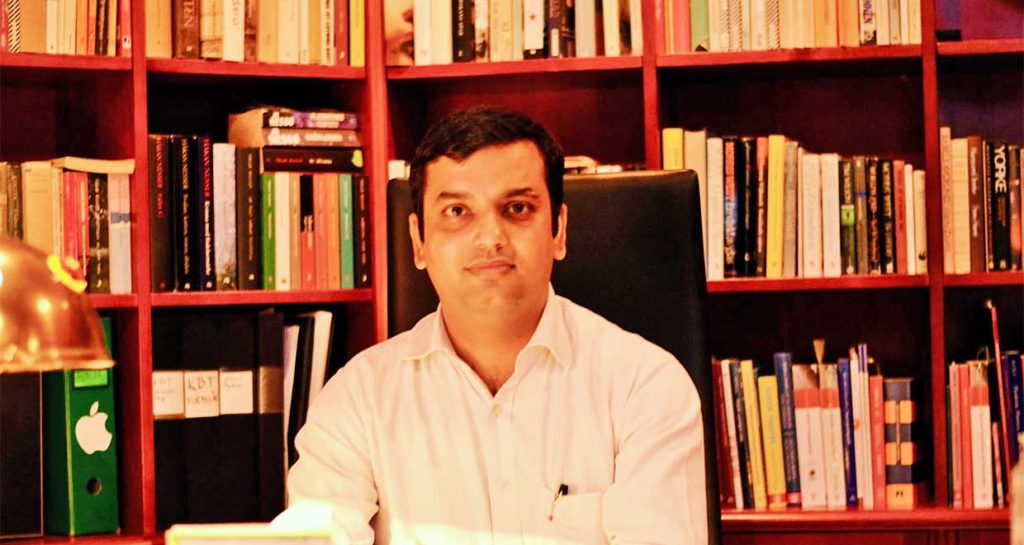
  • Ojasvita Srivastava, Senior Manager – Legal, Reliance Communications, on LL.M from QMUL, writing journals, and Project Abhimanyu

    Ojasvita Srivastava, Senior Manager – Legal, Reliance Communications, on LL.M from QMUL, writing journals, and Project Abhimanyu

    Ojasvita Srivastava graduated from V. M. Salgaocar College of Law, Goa University (2005-2010). She is a qualified lawyer and an experienced in-house counsel with experience in litigation, arbitration and corporate compliance. She is presently a Senior Manager in the Legal department at Reliance Communications where she deals with Telecom Litigation.

    She pursued an LL.M in Commercial and Corporate Law at the Centre for Commercial Law Studies, Queen Mary University of London, where she served as the Communication and Media Coordinator of her specialisation- Commercial and Corporate Law.

    Ojasvita was also the Co-Founder and Chief Editor of the ‘The Sophists’, Queen Mary Law and Business Journal, which publishes articles on Law, Business and Politics. She contributes articles on Indian economy and legal developments to this journal. She also edits and contributes articles to the monthly Postgraduate Newsletter of the Centre for Commercial Law Studies, London.

    In this interview she talks to us about:

    • Challenges associated with being an in-house counsel.
    • Project Abhimanyu – providing free guidance to law students who do not come from a law background.
    • Services provided under the project “Abhimanyu”.
    • Skills and qualities that helped her achieving the current position.


    How would you like to introduce yourself to our readers?

    I work as a Senior Manager in the Legal and Regulatory Department at Reliance Communications in New Delhi. I handle cases related to telecom, broadcasting and infrastructure disputes before the Supreme Court, various High Courts, the Telecom Tribunal (TDSAT) and various arbitrators, while occasionally getting involved in M&A work and contract vetting. I have a keen interest in litigation and have previously practiced before the Supreme Court, the Delhi High Court, and various District courts in Delhi.


    What made you choose the legal profession as your career option?

    Pursuing law as a career was a last minute decision. I was a student of the Science stream till class XII. Like the rest of my class, I too wrote the AIEEE and did well. I had a state ranking of 37 in Engineering and 7 in Architecture. However, I disliked Chemistry and didn’t want to read a word of it ever again in my life. As I was trying to figure out what to do with my career, I met my mentor, Adv. Vilas P. Thali. He is the former Additional Advocate General of Goa and is a specialist in election laws. After meeting him I was inspired to pursue law. I wrote the entrance exam for V. M. Salgaocar College of Law on 14th June, 2005 and joined his office as an intern on 15th June, 2005. I interned there for more than 3 years spending close to 6 hours a day in his office and visiting courts, meeting clients as well as attending sessions of briefing senior counsels (even though I was just a 12th pass student). I topped the entrance exam at my college and continued to perform well. As a result, I was awarded the merit scholarship throughout my LLB course and paid nothing in tuition fee! Although the joy of saving money was more than offset; thanks to my LLM at Queen Mary, University at London.

    As I am a first generation lawyer, my family was not in favour of me pursuing law as a career. However, I convinced them otherwise and became the only girl in my entire batch at school to join law.


    What were your objectives and plans in the preliminary years of law school?

    Right from the first year, I had a deep interest in litigation and I had a clear mind that I wanted to make a career in this field. Therefore, in my initial years at law school, I aimed at participating in as many moot courts as possible and gave every moot court my best. I won the best lady advocate at a national level moot court competition and the best memorial award at an international moot court, while doing fairly well in all moot courts that I participated in. My mooting experience not only helped me hone my research and oratory skills but more importantly helped me develop a keen attention to detail, which is absolutely essential to win any case.

    Besides this, I interned throughout the first three years of the course; part time when the college was in session and full time during vacations. As my college timings were from noon to half past five in the evening, I could easily dedicate three hours in the morning and in the evening. During the morning sessions, I usually attended proceedings at the Panaji bench of the Bombay High Court or the District Court, where I gained practical experience in court skills and procedure. Evenings were usually dedicated to practising legal research, drafting and attending client meetings. Often students learn these essential skills only after passing out of law school. So I am very grateful to my mentor for hand holding me and making sure that I learnt these skills while still at college.


    What are the challenges associated with being an in-house counsel? How do you handle them?

    There are in-house counsels specialising in various areas of legal practice. I will only talk about the challenges faced by in-house counsels working in the dispute resolution field.

    As an in-house counsel specialising in dispute resolution, the volume of work is more though the in-depth involvement in legal research is limited. Also, one is involved right from the pre-litigation stage of litigation-avoidance correspondence till the execution of the decree, including serving notices, drafting, vetting and settling petitions, briefing senior counsels, attending arguments and then following up for the execution of decrees. During this process, one also needs to keep the management of the company informed about the on-going proceedings almost like the eyes and ears of the management in the court (AKA Sanjay from the Mahabharata).

    The challenge revolves around balancing the volume of work. As an in-house counsel, I have been assigned more than 65 cases. My colleagues, who are senior to me, handle even more cases than me. Thus the responsibility is to keep a tab of all your cases in all the courts across the country and to make sure that the interests of the company are effectively secured. Further, as an in-house counsel, one also needs to understand the technicalities of a case well enough to be able to explain them as her own case. Thus I, for example, have to understand complex science revolving around telecom engineering to be able to explain it to the external counsels on behalf of the company.


    Tell us something about “Project Abhimanyu”.

    ‘Project Abhimanyu’ is a pro bono and voluntary initiative that I recently started. It aims at increasing access to career opportunities in the legal industry by providing free guidance and career counselling to law students who do not come from a law background.

    It endeavours to increase awareness about career options available in the legal profession to students. It works assiduously with students from colleges that do not have a fully functional placement cell and also assists and contributes to the existing services available at academic and professional institutions that are working towards guiding students. It does so by sharing knowledge and seeking guidance from highly trained and experienced professionals in the legal industry who are willing to voluntarily mentor students in their free time. In the long run, Project Abhimanyu will work towards enriching the talent pool available to the legal profession.


    Why have you named it Project ‘Abhimanyu’?

    Abhimanyu was Arjun’s son from the Mahabharata. On the 13th day of the Mahabharata war, he successfully intercepted the Chakravyuh formation created by the Kaurava army, and saved the Pandavas from imminent defeat. What is particularly interesting about this episode though is that Abhimanyu obtained this knowledge of penetrating a Charavyuh formation as a foetus in his mother’s womb. Thus Abhimanyu was born with the knowledge of how to penetrate a Chakravyuh.

    The legal industry is like a Chakravyuh, complex and vast. It would be Project Abhimanyu’s endeavour that, just like Abhimanyu, law students graduating from various colleges must learn to successfully navigate the legal industry. They should be able to make informed career decisions and achieve success proportionate to their calibre and hard work; and they should never get left behind because of a lack of guidance.


    Why inspired you to start this initiative?

    To answer this question, I would first like to give a little context. I graduated in law from V. M. Salgaocar College of Law, Goa in 2010 and later acquired an LLM in Commercial and Corporate Law from Queen Mary, University of London in 2014. In the intermittent period, I worked at a multinational French Pharma company in Mumbai and later practised at the Supreme Court, Delhi High Court and District courts in Delhi, while simultaneously writing the civil services examination. In 2013, I appeared for the interview round of the civil services examination; however, I missed by a narrow margin and thereafter decided to continue my career in law.

    All along this journey, I had little guidance in terms of how to go about making my career in law. As a result, my career grew more in a trial and error fashion. Thankfully, I have reached a comfortable place now, and therefore I want to help other students who are in a similar position.

    Law is a difficult profession not only because it is a complex industry but also because it requires one to really slog to climb up. That said, it becomes all the more difficult when you are a first generation lawyer. The idea behind Project Abhimanyu is to guide first generation law students so that they get a better shot at making a smooth transition from being a law student to becoming a lawyer. Over the past few years, I have been guiding students studying in various colleges in Delhi, Noida, Lucknow, Pune, Bhubaneswar, Cuttack, Patna, Mumbai and Goa. But there are still a lot of students who need guidance and this is what got me motivated to start this platform to reach out to more students across the country.


    How difficult was it for you to connect and convince different lawyers to register on this project?

    It wasn’t difficult at all. Everyone I approached has been very receptive and appreciative of Project Abhimanyu. We have the GCs of MNCs, law firm partners and highly successful litigators on board as Mentors at Project Abhimanyu. In fact, most Mentors at Project Abhimanyu had already been guiding and mentoring students. Project Abhimanyu is only providing them a platform to reach out to more students from across the country. I am very grateful to everyone who has joined this initiative and is sparing time from their busy schedules to help the future generation of lawyers.


    What kind of services do you provide under this project?

    Students can write in to ask any query related to the legal career. These could be about improving their CV, internship applications, job applications, career guidance, civil services examination, higher education abroad, CA/CS courses, working in-house or any other information related to law. They simply need to drop an email to project.abhimanyu@gmail.com and they would be assigned to a mentor who would answer their queries.


    Where do you see this project five years from now?

    In five years, I want Project Abhimanyu to be a self–sustained, fully automated system. We are working towards building a network of lawyers specialising in different areas of law who are voluntarily willing to guide students. Eventually I want Project Abhimanyu to develop into a platform where any law student from any corner of the country could just go to our website, choose a Mentor in a particular field of law from an entire range of specialists and write a message that would directly be received by the Mentor and answered by her/ him. We are also working towards compiling and publishing the advice given by the Mentors for the benefit of other students. I want the advice to be free and fair and therefore, Project Abhimanyu shall always remain a pro bono, voluntary and a not-for-profit organisation.


    What skills and qualities do you think have helped you achieve your current position?

    I think hard work, attention to detail and a passion for reading are essential qualities for anyone aspiring to make a career in litigation. Besides that, the training I received from my mentor and the guidance of my teachers has helped me tremendously. I will be failing in my duty if I forget to mention the complete liberty and unflinching support given to me by mother in shaping my career.


    What would be your advice to our readers?

    An ex-President at Reliance, whom I respect like a father, once passed a remark that struck the very core of my conscience. He told me that ‘your profession (the legal profession) is rather feudal’. What he was inferring was that it is easier for people from a law background to excel in this industry.

    Project Abhimanyu is trying to break free from this notion about the legal industry in India. I would advise every student reading this article to take full benefit of Project Abhimanyu. It is an opportunity for everyone to get a fair shot at law and to make informed career decisions. I would also request every legal professional reading this article to join Project Abhimanyu and help the future generation of lawyers in our country become more productive and efficient.


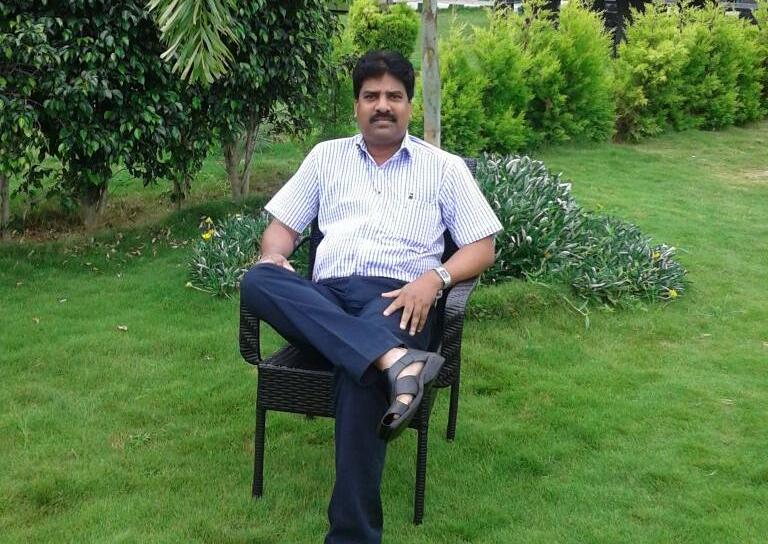
  • Aditya Bhandari, Counsel, Reliance Jio, on internships and work experience as a corporate lawyer

    Aditya Bhandari, Counsel, Reliance Jio, on internships and work experience as a corporate lawyer

    Aditya Bhandari graduated from the Institute of Law, Nirma University in the year 2014.  His wisely chosen internships coupled with his interest and market scenario led him to grab a job at Reliance Jio Infocomm Limited which is a part of Reliance Industries Group. He is certainly an inspiration to young corporate law aspirants as he explains in this interview that internships play a vital role in shaping one’s career by exposing one to confront the challenges of practical aspects of that career and are as imperative as an Educational Institution itself. In this interview he tells us about:

    • His satisfactory working experience as an Assistant Manager in the Legal – Litigation team of Reliance Jio Infocomm Limited.
    • His strategy of choosing internships and thereby substantially enriching his practical knowledge.
    • How to choose a career stream and get successful regardless of the so-called NLU tag.

    Please share with us about your life journey so far and graduating from the Law School of Nirma University.

    I am currently working as an Assistant Manager in the Legal – Litigation team of Reliance Jio Infocomm Limited (part of Reliance Industries Group). I have graduated from Institute of Law, Nirma Univeristy (ILNU) in the year 2014. Growing up in Jodhpur (Rajasthan), I was always inclined towards the world of accountancy and since then I made my mind to study Financial Subjects and be a professional Chartered Accountant. However in my school days, I was expressive and had my own opinions about every aspect which was particularly not liked by my teachers (Though I enjoyed it). It was then when I realised that it is a quality of being assertive and argumentative which I could use in the other facets of my life. Though the act of argument leads a student into trouble when he does that with his teacher, or a child when he does that with his parents, but when the same is done by an advocate for his client, with all rigour and vehemence, it takes him to the pinnacle of the profession and that’s what makes one a good and great lawyer. Thus, my journey of being an advocate started from that very moment, and my instinct of being argumentative brought me to Institute of Law, Nirma University where my skills were honed and nurtured to the optimum.

    Why did you choose corporate law as your specialization course and how do you feel a confused law postulant should manoeuvre his/her area of study for a successful career thereafter?

    India, the largest and the youngest economy of the world had open its gate for the MNCs in the year 1991 when Dr. Manmohan Singh, the then Finance Minister of India put forth the LPG in the House. Since then India has become a hub for MNCs and it was then the corporate law came into prominence.

    During my internships, I had an opportunity to intern under the ages of Corporate Stalwarts. It was then when I realised that I wish to dip in the ocean of Corporate law as I could figure out it had immense career opportunities in the coming time. Thus the impact and the nature of work I had done during my internships helped me choosing Corporate Law as my specialization course.  As far as the second part of the question goes, in my opinion it relates back to classroom studies, internships coupled with the interest and market scenario. But one should understand that nothing comes easy in life so the choice of subject should be realistic and not driven by others. In the end, it’s the student who is the George and he should be able to ascertain which avenue is going to be fruitful for his or her life in terms of intellectual and financial outcome. Something which is opted or chosen by an individual on the basis of his/her instincts and interest will, in my opinion, would not lead to any confusion.

    How do you think the curriculum including specially the internships proved to be an indispensible factor in enhancing your knowledge about the practical intricacies of the field of law?

    The purpose and object of internships, which in my opinion is a great boon to the 5 year law students, is to acclimatise an upcoming advocate to the realities and pragmatic aspects of the profession, and to understand the difference between academics and the applicability of academics in the real world of law. It just works as pilot training process for the law students before they step into the real world of law. My internships were very fruitful in terms of exposure, amount of work and working for different areas of law. I did my internships with some reputed law firms and few corporate houses like Mulla & Mulla & Craigie Blunt & Caroe Limited, DSK Legal, Economic Law Practices and Reliance Industries Limited etc.

    My internship with Reliance Industries Limited was timed perfectly when I was in seventh semester of my 5 years law course where I had an opportunity to assist the legal eagles of India, It was a surreal experience seeing your mentors arguing in front of your own eyes for your own matters with your own assistance. This triggered my focus on corporate law and working for a corporate house and that’s where today I am.

    I must say, CHOOSE YOUR INTERNSHIPS WISELY!

    Please share with us your working experience until you decided to settle with Reliance Jio Infocomm Limited (Reliance Industries Limited Group) and how did it help in edifying your career?

    It has been a year since I joined Reliance Jio Infocomm Limited. I have previously worked with Thomson Reuters (TR) where my profile as an Associate in Corporate & Compliance Department was majorly related to Contract Review, Research and Drafting of Agreements. Work at TR offered me great intellectual freedom wherein I got several opportunities to handle projects solely and interact with the top managerial officers of TR’s leading clients globally (Multinational Financial Services Holding Companies International Law Firms).

    During my work at TR, I was awarded as the best employee of the month which motivated me to keep up with my hard work. It helped me in enhancing my way of working in a corporate culture.

    Please tell our readers about your current working experience at the Reliance Jio Infocomm Limited in Mumbai and other prospects of your career ahead.

    Working with a corporate giant which is second to none in the country is itself a matter of pride and satisfaction. You are not only working with the best of the professionals in the country but also you become a part of the system and mechanism which has been adopted by the company to continue to be at the top. Even the Fortune Global has recognized RIL as No.1 Indian Company by profit, which itself gives immense satisfaction to me as I am a part of the same. Reliance Jio Infocomm Limited (RJIL) is a company which provides telecommunication services having the largest infrastructure base.

    Talking about my profile here at RJIL as an Assistant Manager in Legal Department entails various responsibilities coupled with authority as well. I am taking care of Legal issues faced by the company ranging from big time arbitrations and the pettiest litigation matters. In my brief stint at RJIL, I have been fortunate enough to work with a dedicated team of intellectuals working in different fields such as Construction, Finance, Technical, and Marketing & Business Team. Being an advocate helps me to help the other teams with day to day operational issues faced by them. Also it is important to mention that since the company is in its project phase, we at the legal team work as a catalyst in the process of development of the project and bring it to the operational stage which in itself would bring a revolutionary change in the Telecom industry. The present project I am working on is a state of the art project relating to lightning fast internet services (4G) to be provided to the customers at an affordable price making the concept of Digital India a reality.

    What challenges have you faced during all these years of working and how it affected your career?

    Challenges are an integral part of any profession, personally for me, challenges make me strive hard. It makes me work with more proficiency. Talking about my challenges at work, the transition is initially difficult when you have to manage the different teams and have to bring them on a common platform. Every Human being is different in his own sense and dealing with them is a challenge in itself presently I am working in a manner where I have to deal with all the facets of the company be it Technical or Mechanical. One must never doubt his abilities as doubts have killed more dreams then the failure has and hence each and every challenge should be treated as a lesson and to come out winning from those challenges takes a lot of hard work and perseverance.

    Someone has rightly said that the biggest room in the world is a room for improvement and challenges channels your energy to improve yourself. I have always kept faith in my abilities and this is how I tackle challenges and convert them into opportunities.

    What would you like to explain to those aspirants who have been sceptical about working with a corporate entity and look at it as mere 9 to 6 desk job without any independence or additional learning?

    Profession of law is much more and over and above the word ‘job’. In my opinion any person who takes the profession of law merely as a job is not befitting for this profession. Further this is one such profession wherein one should inculcate the habit of leaving the watch behind and to work in the manner of 24*7.

    The only role a watch plays in a lawyer’s life is to show how prosperous a lawyer is and the more prosperous lawyer the more the working hours.

    The main distinction between a job and a profession is that of addition and multiplication. In a job, the emoluments as well as the quantum of work keeps on adding with every passing day. Whereas in a profession, it though remains stagnant for a particular gestation period but thereafter it multiplies and then sky is the limit.

    What would you like to tell to our young law aspirants when it comes to pursuing specialization in corporate law and following the career ahead in that stream?

    There should be a consensus of heart and mind when it comes to choosing any particular stream. If one is zealous and ready to toil hard in whatever field he chooses, he is bound to succeed irrespective of the stream he chooses. I would not deviate from the fact that the specialisation course keeps you focused and gives you an insight of the nitty-gritties of that particular stream.

    With regard to the corporate law, I would like to reiterate that there are immense possibilities, opportunities for young lawyers who are willing to work hard but not otherwise. It’s not a fancy job but requires lot of intellect and zeal and a go-getter attitude. So if you think you have these traits, corporate law is for you.

    Do you feel that not having the so called tag of an NLU ever proved to be a hindrance in your professional career?

    A lawyer is not bound or curtailed by any tags or nomenclature. I would not completely rule out the fact that the better the tag, the better the chances for an initial opening. However the profession of advocacy is a synonym of art of convincing, with the blessings of god and my elders, I never had to face any such difficulty and rather I would state that the tag of NLS proved to be an asset to me.

    In the end, what would you like to communicate to our readers?

    There is no mantra for success but for continuous hard work. One must choose the correct path in a correct way. This is for my reader friends to understand that you have chosen the career which is full of opportunities and learning. All it requires is hard work and fun when you are at it.

    It is very important for legal professionals or students to understand that Litigation or Corporate law are not the only options for their future career. Knowledge and dedication can take you to a level of sky high.

  • Andrea Chavarria, Founding Attorney at The Chavarria Law Firm, Dallas, on practicing in international immigration law

    Andrea Chavarria, Founding Attorney at The Chavarria Law Firm, Dallas, on practicing in international immigration law

    Andrea Chavarria is an American lawyer and business owner who works on immigration issues at the Chavvaria Law Firm in the Dallas/Fort Worth Area. Andrea after completing her Bachelors on Journalism in 2004 from University of Texas, went ahead to pursue a year long masters program in International Law and Diplomacy from Schiller International University. Thereafter Andrea joined the Juris Doctor programme at Thomas M. Cooley Law School and qualified in law in 2009.

    Andrea pursued a few more short term courses at University of Geneva, the Hague Academy of International Law and at the School of Advanced Study, University of London.

    In this interview, she speaks to us about:

    • What motivated her to pursue law and take up immigration issues
    • How her experiences at the Hague, the University of London and the University of Geneva impacted her
    • Her pro bono work with CARA
    • Her views on the immigration issues and refugee laws, as well as her expectations about the evolution of policy in those areas


    How would you like to introduce yourself to our readers?

    I was born in Mexico and raised in the United States. I am an attorney and business owner in Texas. I love traveling, reading, listening to live music, and tacos.


    Growing up in America, what motivated you to take up and pursue a career in law?

    As a kid, I would watch my mother help out people in our community. They were usually people who had just moved to the United States or who didn’t speak English. I knew that I wanted to help people as well. It wasn’t until I got to college that I realized that I wanted to become a lawyer. As an immigration attorney, I have the opportunity to help people in a way that positively changes their lives.


    What prompted the switch from journalism to law? How do you think the two professions differ with respect to the impact you can make towards social justice and change?

    I originally wanted to become a journalist so I could write about politics, laws, and human rights issues. I was taking a lot of political science classes in college and that’s when I realized that I wanted to work directly with people and the law rather than write about it.

    The two professions differ but both professions are necessary in order to have an impact on social justice and change. Immigration attorneys can have a direct impact on someone’s life, which in some cases can be a matter of life or death. For example, I represented an individual who, if returned to his home country, would be persecuted by his home country because of his religious beliefs. We won the case and the individual was able to remain in the United States where he can openly practice his religion.

    Journalists are important. They can have a broader impact because they are able to present an issue to a wider audience. There was a particular judge in an immigration court who was known to be ruthless towards children in removal proceedings. Complaints were filed by several attorneys, but nothing changed until a newspaper published an article about the behavior of the judge. Soon after, all of the children cases were removed from the judge’s docket. That’s just one example of how journalism can have an impact on social justice and change.


    Consequently, how did your experience as a legal assistant/intern change your views on the ground realities of the practise?

    It wasn’t until I worked as a legal assistant and as an intern that I realized how much work goes into one case and how important it is to have a good team working together. Attorneys generally get the credit, but assistants, paralegals, interns, and other staff members deserve credit as well. It really is about teamwork.


    Your extensive work as a volunteer covers refugees, family detention, mentoring, etc. What motivated you to take up these causes?

    Through my practice, I realized that there was a great need to help certain individuals who were fleeing their countries, but who did not necessarily have the funds to hire an attorney. In the United States, individuals who are in removal proceedings are not afforded an attorney. Even children as young as three years old are not provided an attorney. These individuals are often seeking asylum. Having an attorney can often make a difference in someone’s case. Everyone deserves to have the right to put forth the best case possible. That’s one of the reasons why I am an advocate for volunteering and working with refugees and fighting against family detention centers.

    I also do volunteer work through the Dallas Bar Association and Dallas Hispanic Bar Association. I enjoy volunteering with these organizations because I get to help my local community. It’s important to give back to your community.


    andrea-chavarria-2

    To what extent did your education at The Hague Academy, the University of Geneva, and the university of London augment your perspective on the immigration laws and other related issues within the U.S.?

    My time at those institutions has taught me how intertwined the U.S. immigration laws are with international laws and human rights principles. When working on an immigration case, it’s important to not only look at our current U.S. immigration laws, but to also look at our international principles and obligations. In the immigration field, we have seen situations where the United States failed to adhere to its international obligations. We’ve recently seen this happen with the detainment of Central American women and children. The institutions mentioned above have helped me gain a better understanding of our international laws, obligations, and the complexities of enforcing these laws and obligations.


    What would you like to tell the readers about your pro bono work with CARA?

    I previously did some volunteer work with the CARA Family Detention Pro Bono Project. CARA was created due to the Immigration and Custom Enforcement’s (ICE) significant expansion of its family detention centers in Dilley, Texas and Karnes City, Texas. Women and children, who are often seeking asylum, are being detained in facilities that are inhumane and inconsistent with a fair and just legal process.

    andrea-chavarria-1I spent some time at the detention center in Dilley, Texas where I assisted in representing women in their bond hearings, preparing them for their credible fear interviews, and informing them of their legal rights. All of the women I spoke to fled their home countries because they feared for their lives or the lives of their children. Some of the women had been in the detention center for months because they could not afford to pay the bond the immigration judge issued. Some of these bonds were as high as $15,000. Many of the women felt hopeless. A majority of them were traumatized. Others were stressed and worried about their children who were also in the detention center. Some children weren’t receiving adequate medical care. Other children weren’t eating properly and losing weight. It was shocking and heartbreaking to see women and children, who had fled their countries due to fear, be treated in such an implacable way. Unfortunately, these family detention centers still exist. Women and children continue to be detained in this centers. If it weren’t for CARA and the help of volunteers, many of these women and children would not know their legal rights. To learn more about CARA visit their website: http://caraprobono.org.


    What drove you to establish your own firm in 2010?

    It was a culmination of things. I was working for a particular law firm and realized that it wasn’t the right fit for me. I wasn’t sure what to do next, but I knew that I still wanted to work in the immigration field. I relocated to Dallas and soon after I realized that there were many people who were in need of immigration assistance. Both of my parents are business owners so I grew up with a business owner mentality. It was with their help and support that I made my decision to start my own practice.


    Given the socio-political atmosphere within the country owing to the upcoming elections, how do you think immigration and refugee law and policy will evolve in the near future?

    I would like to think that in the future we will have sound immigration laws and policies, but I don’t foresee it happening in the near future. In the last couple of years, I have seen how fear and xenophobia have affected refugees and immigrant communities. The state of Texas tried to block Syrian refugees from entering the state, which the federal government said it can’t do. That’s just one issue, but there are so many other issues that we have to deal with in the immigration field.

    Overall, our immigration laws are complex. Advocates have been trying to push for some type of immigration reform for more than ten years. Congress has repeatedly failed to pass any type of immigration reform. The Obama Administration has deported more individuals than any other president. Recently, the United States Supreme Court issued a 4-4 split decision in U.S. v. Texas, which was a lower-court challenge to the expanded Deferred Action for Childhood Arrivals (DACA) and Deferred Action for Parents of Americans and Lawful Permanent Residents (DAPA). The deadlock means DAPA and the expansion of DACA will not move forward.

    There are numerous issues that need to be addressed within immigration law and the outcome of our next presidential election could gravely affect how our laws and policies evolve. Depending on who wins, we may see harsher policies and more deportations or we may see a push for comprehensive immigration reform. At this point, I’m unsure of what our future immigration laws and policies will look like.


    As a lawyer, do you believe that it is a responsibility of those well versed with the legal statutes and policies to aid those without the resources to access this due procedure?

    Yes, I strongly believe that individuals, such as attorneys, who understand the law have a responsibility to provide assistance to those without resources. One of the best ways to assist is by providing pro bono services through a non-profit organization or local bar association.


    Summing up, what do you believe are the main obstacles to progressive immigration laws?

    One of the main obstacles is Congress and its inability to pass a comprehensive immigration reform bill. Congress has been deadlocked over the issue for the last few years. On November 20, 2014, President Obama announced his executive action plan, which would grant deferred action to certain individuals. Some members of Congress believed that his actions were beyond the scope of his authority. His plan to bypass Congress was met with some controversy and once again, Congress killed any chance of passing a sensible immigration reform bill. Will Congress remain at a standstill? Only time will tell.

    Another major obstacle is the misconception of immigration laws. There’s the rumor that giving birth to a child in the United States grants automatic citizenship to the parents. It does not. I’ve been asked why undocumented individuals don’t just get in line to obtain legal status. There is no one line. Some individuals may not have a qualifying relative to petition for them. In other cases, it can take more than 20 years to obtain legal status through a family member. The process isn’t as quick and easy as some might think. Another common myth is that most immigrants are in the United States unlawfully. While there are some undocumented immigrants, there are also various other immigrants who are legally residing in the United States or who entered the United States lawfully. All these types of misinformation are harmful because it undermines public support for immigration reform.


    How do organizations such as AILA help change the status quo?

    Change comes through advocacy. Organizations, such as the American Immigration Lawyers Association (AILA), play an important role in advocating for reasonable changes in immigration law. In April, I traveled to Washington, D.C. to participate in AILA’s National Day of Action. Several AILA members and I visited Congressional offices to explain why comprehensive immigration reform is necessary. This type of advocacy is important because it’s an opportunity to highlight the problems plaguing our current laws. It’s also a chance to give members of Congress and their staff examples of how our existing laws have affected immigrants, their family members, and their communities. Since it’s the role of Congress to pass legislation, it’s crucial to inform its members why certain laws aren’t working.


    Finally, do you have any other advice for our readers, most of whom are college students?

    You will make mistakes. We all make them. However, learn from your mistakes and always own up to your mistakes.


  • Shubhi Sharma, Freelance Social Media Expert, Cartoonist on law school and pursuing LL.M from King’s College, London

    Shubhi Sharma, Freelance Social Media Expert, Cartoonist on law school and pursuing LL.M from King’s College, London

    Shubhi Sharma graduated from Symbiosis Law School, Pune in 2007. She then completed her Master’s with a focus on competition law, arbitration and finance from King’s College, University of London. She worked at Vahura as a Talent Management Specialist and a Social Media Artist before moving on to working as a freelancer creative social media manager. In this interview, she talks about:

    • Her decision to pursue law
    • Experience at Symbiosis Law School and Master’s at King’s College
    • Exploring her creative side and eventually taking it up as a full-time profession
    • Decision to not pursue a traditional job in the legal profession
    • Balancing work with personal life
    • Following her passion against all odds


    How would you introduce yourself to our readers in one sentence?

    I am the ‘mother of Egg-Heads’ (popular name for my cartoon characters), who, after a law degree from Symbiosis Law School and a master’s degree from King’s College London, is now practicing the humorous side of law.


    What made you choose law for your graduation? Was there any pressure to join this field?

    Will you believe me if I say that it was an influence of movies and TV shows?  From ‘Meri Jung’ to ‘Ally McBeal’, I was influenced by all of them. However, it was probably my genes that pulled me towards law. My father still is my biggest inspiration and I grew up watching him practice. As a matter of fact, I grew up in an environment where intense discussions were a part of our daily routine. As kids, we were expected to be aware – socially and politically. In addition to that my time at Welham Girls’ School, further enhanced and shaped my debating skills. After winning series of awards in both debating and dramatics, I felt the next best thing was to study law. To be sure, I underwent the necessary career counselling sessions, and my choice of profession seemed in sync with my attributes.


    Tell us about your life at Symbiosis Law School, Pune.

    One thing about the five years at Symbiosis Law School, Pune is that they just flew by. We were the first batch of Symbiosis Deemed University and our management wanted us to have the best of everything. The batch of 2007 was extremely special, each one of us came with our own special traits – focused, diligent, unconventional, highly ambitious and a lively bunch.

    Our classes usually got over by noon, which left us with ample time to do things we liked. This was one of the advantages of a non-residential college. While most of my friends spent time in the library, I was busy converting our study material into humorous study notes- something like a story made from the content of the subject. That was my unique way of preparing for exams. In retrospect, I guess that’s where the seed was sown. This content was an excellent way to study, and was often used by my study group as the last minute resort to memorize for exams – you know – no-body forgets a good joke! Probably it was this interesting style of preparation that helped me win the prestigious Ram Jethmalani Award for Excellence in Law of Evidence.  On the other hand, I also utilised my free time by opting to help a new advertising firm with their IPR queries, but instead, ended up working with their creative team.

    Another interesting thing about Symbiosis was its campus. We had other courses running on the same campus. That gave us the opportunity to befriend students pursuing other courses and expand our knowledge.


    How involved were you in co-curricular and extracurricular activities?

    A lot more than I was involved with books! I did a lot of theatre and debating in my early years.  Being on stage brings out the best in me, it is therapeutic. I wasn’t called ‘Drama Sharma’ for no reason. On the other side, I was very active in contributing ideas to an advertising firm. I can proudly say that my ideas were used in various ad campaigns in and around Pune.


    Why did you choose King’s College, University of London for your Master’s? What was your area of specialisation?

    I was always keen on doing my higher studies outside the country, UK being the priority.  It was about gaining international exposure, meeting fellow students from across the world, and experiencing a different education system. When I was shortlisting colleges, my priority was the ranking of the college, curriculum it offered, and its faculty.  KCL is not only the one of the top ranked colleges, it is also known for its incredible faculty –  Prof Richard Whish, Prof Tennekoon, Toby Landau QC, to name a few. I consider myself lucky to have studied under their guidance.

    My LL.M. was focused on competition law with additional subjects of arbitration and finance.


    How was your experience there? What was your biggest learning experience?

    My LL.M. at KCL not only taught me the intricate details of syndicated loans or gave me the in-depth insight on per se rule in EU Competition law, but it also changed the way I thought. The pedagogy followed at King’s is different from the one in India. It forces you to think beyond the regular. It was intriguing to observe the mix of minds in the class; everyone came with their own opinions, experiences and perspectives. Unlike my previous batches from school and college, my class at KCL had a few students who were way senior to me. Learning about their professional lives and experiences made me realise that we, at the start of our careers, restrict ourselves to walk down a particular paved path. Today, when I look at a few of my class mates from KCL, I see a Competition Law lawyer turned into a full time travel photographer and an associate from a Magic Circle law firm as a legal journalist. To cut the long story short- KCL and the people I met there taught me one thing –  to think beyond the regular.

    My LL.M. was not all about the curriculum, it was an overall experience.  My stay in London gave me the opportunity to travel. I backpacked across half of western and southern Europe with students from across the world!


    shubhi-sharma-2

    After completing your Masters, you started working with Vahura, a legal talent specialist firm. Why did you choose to move away from pure law work in a law firm?

    The original plan was a regular one –  apply to the law firms and make a career. Luckily, I came across Vahura. What really attracted me was their business offering: they are unique in their solutions and the best in the industry. When I met Ritvik Lukose (CEO, Vahura), I was floored by his sense of vision. The concept of Talent Development Service excited me. It was relatively new at that time, and I knew I could contribute a great deal there. I felt I could use my creative side to this project too, which I did. The best part about Vahura was that I could retain my creativity and identity. Ritvik gave us complete freedom to run the show our way and that helped me grow personally as well as professionally.


    Did you ever contemplate joining a top corporate law firm, or even become a litigation lawyer, while a law student?

    I suppose we all grow up the same way and compare ourselves with what our friends or seniors are doing. ‘Career’ becomes all about taking up a secure job. I too belonged to this line of thought.  I would be wrong in saying I am not ambitious, it is just that with time my goal changed. I wanted to be successful and be known for what I do best. Even though I tried, I didn’t see myself fit into closed spaces and a structured environment. I needed the freedom to explore and shape my own identity.


    Please tell us about your work as Talent Management Specialist & Social Media Artist at Vahura.

    At Vahura I worked for the Talent Development Service, now known as the Mentorship programme. This programme is a series of end to end recruitment preparatory services for law students and young professionals, to help them improve their recruitment potential, and make the right professional choice. Something, we all needed during our final year at law school. We created detailed, comprehensive workshops catering to the core needs of students. These workshops were not long, monotonous, yawn-inducing training sessions. In fact, we made sure that there was a good balance of knowledge, psychometrics test, interview snippets of seniors from the industry, and humour – that’s where the Egg-Heads made their first appearance. I enjoyed this role thoroughly, as a major part of this profile included intense market research, interviews of luminaries from the industry, preparation of accurate content, design and presentation.

    My role with Vahura also evolved. As a team, we regularly plan or modify the strategy. My main deliverable is comic banners created under the pen name Pen-Ultimate. It has been two years since we started! Over this time, Vahura gained immense visibility and Pen-Ultimate & Ultimate Lyre gained popularity.


    Why did you leave Vahura?

    The decision to leave Vahura was a difficult one, but necessary at that time. I had started to feel the need of getting into the creative field completely. Although, my profile at Vahura was giving me enough opportunity to pursue that, I wanted more. Honestly, I did not have an immediate plan. But I knew I had to get myself out of my comfort zone to take the step, which, at that time, was completely unknown to me. I was confused but, I never lost focus. I took a much needed break from work, and started figuring out my next career move. I was looking at something where I could use my knowledge of law more creatively. I used this time wisely; I connected with people from the creative industry and took their advice, researched on various options, took a few online courses. Ritvik and Balanand (from Vahura) played a major role in this decision making.  It is they who planted the idea in my head.  Sketching, doodling or just scribbling stick figures has been my stress buster since childhood, and those little puzzles started to fit in together. The creative bug had bitten me by then, and I figured out how to put my artistic brain to good use.

    Currently, I am a freelancer, working as a creative social media manger. I provide creative marketing solutions on various social media platforms. My clientele is mostly from the legal industry, who are either looking at increasing their visibility or targeting to be known in a particular segment of services.


    shubhi-sharma-8

    You are known for your satirical cartoons on the legal field. What is your source of inspiration?

    I don’t have to look for inspiration. It’s all around me- friends, family, former batch-mates, ex-colleagues, former students and my husband. I am a good listener with decent observation skills. I have a mind which sees humour in almost everything. Every work of mine is associated with a real life incident. I use Egg-Heads for my legal cartoons.  I try to depict a general life of a lawyer- working during holidays, dealing with a demanding boss, appraisals, legal subject matter, courts, love lives – and so on.  Other than the usual legal cartoons, one of my personal favourites is a series called ‘Legally Ever After’, showing famous fairy tales with a legal twist. ‘Bollywood’s Special Procedural Laws’ is another very popular series by Pen-Ultimate. Keeping the look and feel of Bare Act, I draft imaginary sections applicable to (in)famous legal system of Bollywood. And they come with case laws too. Chadhha vs Govind 1993. DAM. 32 (Tareek pe Tareek case), State of Bollywood vs Dr. Asha Mathur 1985. MeriJung. 11 to name a few.


    shubhi-sharma-7

    How do you prepare these cartoons?

    Preparing a comic isn’t as easy as it seems.  Thinking of a concept, preparing a script, working on illustrations, all are very time consuming tasks with their own challenges. A lot of research goes into figuring out a concept. Never had I thought that I would be reading articles on legal maxims to get a gag out of it. Once the idea is ready, I write the script. Writing dialogues is a delicate task. A shabby punch line kills the joke completely, and I cannot risk that. Once I have my script in place, I start working on the illustration and presentation. This is the part I enjoy the most, specially working on the character’s expressions. I make sure I add a new style of presentation with each comic. I went from regular one frame cartoon to three-five frame comic.


    Are you planning on developing your cartoons into other forms?

    Yes, there is a lot lined up. A full comic book is my next aim. Other than that, I will be soon launching GIFs of my cartoons. Long term plan is to have animated videos of them. I am currently working on other forms of humorous illustrations, with different characters, pertaining to non-law fields. If all goes well, you will soon be seeing Egg-Heads merchandise as well.  Fingers crossed!


    shubhi-sharma-5

    Did you face any problems?

    Of course! It is not easy to make a lawyer laugh. As soon as they saw a cartoon on legal set-up, they jumped into the technicality of it. It took me some time to understand the right kind of humour and presentation to tickle their funny bones. But this was a part of the learning process.

    The real problem I faced is an artist’s worst nightmare. There was a time my cartoons and banners were being used by others. The tragedy was that they would ruthlessly remove my logo and put theirs. It was very disheartening to see my own comic, which took days of hard work, being circulated with someone else’s logo on it.   There were times I received my own work on WhatsApp! I used to be happy and disturbed that the same time. Luckily, things have changed now. Egg-Heads have found their own identity and so has their original creator-the mother of Egg-Heads. Also, my IPR is in place now. So logo-removing thieves, beware!


    shubhi-sharma-6

    You also freelance as a social media expert. Tell us more about your work.

    Well, it is more of a blend between social media marketing and creative marketing. It’s a digital world today, and everyone is looking for ways to utilise it to their benefit. But, with everyone doing similar kind of marketing, the purpose is somewhat lost. That is where I come into the picture.  I prepare a strategy for my client which enhances their USPs and aims at a good rise in their visibility among the target audience. This mostly comes along with creative content. Keeping in mind the target market, client requirement and the social media platforms, I prepare the content. The basic idea behind this is to get the attention of the viewers and to create an image of the client.


    shubhi-sharma-4

    How hectic can this get? How do you ensure wide publicity?

    Oh! It gets hectic. It is a one-man show as of now. I have to do everything by myself- researching, preparing the plan, its execution, communication with clients, artwork, finances, and also getting myself a cup of tea in between work.  The good thing is that I didn’t have to worry about business development. My work did that for me.

    Honestly, I haven’t felt the need of serious publicity for my work. It is getting attention organically. So far, Facebook, Instagram, Twitter and even LinkedIn have been working well. I am looking at a gradual growth. Today, people have a very limited attention span, it takes a minute to get noticed as well as fade away. I ensure to have active engagement with the audience. I have also gradually started creating more presence across various platforms.


    How do you manage it solely by yourself?

    As of now only one brain is working on this. But with increasing work, I am looking at hiring virtual interns soon.


    You have now completely shifted out of the legal profession. Did you face any opposition or dissent from your family regarding this? How easy a decision was this to make?

    It wasn’t easy, not even close to being easy. I was thinking of moving out of a highly sought after career line. In a typical scenario, that is not something a sane mind would do. Judgemental eyes are always following you around. One little change and you are bombarded with questions. Before answering anyone, I had to be sure myself as it was a drastic, high risk shift. Talking about the ‘road less travelled’ sounds good but to actually plan on walking down that path is like planning to walk into a tunnel, not being sure of finding light at the end of it. The most difficult part was to make that decision; and once I was sure, there was no looking back.

    My friends and my family were extremely supportive in my decision to take the leap of faith. Courtesy to my two fairy God ‘mothers’- my brother and my husband. Thanks to them, I went from manual sketching to fully digital.


    Do you now regret taking up law for your graduation? Do you feel you would have been better off with a degree in closer connection to your current work profile?

    Not at all! I am a mix of things- my knowledge of law/legal industry combined with my creative expertise makes my work unique. I enjoyed studying law, so have no regrets there. Art and humour come naturally to me. And by God’s grace, I have been able to find a way to combine the two. A degree could help, but then imagination cannot be taught.


    shubhi-sharma-3

    Most law students would hesitate to change their fields like this, majorly because they fear economic instability. What would you have to say to such young students?

    Money is important. There are no two thoughts about that. But how can we be sure that it will come to us by following a certain set path? It is a big world out there, with many opportunities.  Think differently, have the courage to pursue your dreams, but first be sure of your dream. A half-hearted passion will take you nowhere. I often hear – “you are so ‘lucky’ to turn your passion into your profession”. Well, to quote Seneca- ‘luck is what happens when preparation meets opportunity’. Cliché as it may be, but there is no substitute to hard work.

    I feel it is more to do with finding your real potential. Had I continued to be a lawyer, right now I would be doodling instead of taking notes during some yawn-inducing con-call. Not a sign of a good lawyer, is it? We’re born with a set of skills and we acquire a few over our lifetime, what matters most is what we make of our unique potential. Money will come eventually.


    How can an Indian law student find their feet in an arena such as creative content development or social media/marketing? Since there is no degree to show for these fields, would it be difficult to find gainful employment?

    I won’t deny the fact that the sector is difficult if you are looking to break away from the regular work. On the other hand, people are experimenting with ideas, and are able to make their presence felt. The challenge will always be there if you want to do anything offbeat. The good news is that we are living in a time of start-ups after all! The best part about social media marketing is the freedom an artist gets to be unique, unconventional and at times even bizarre! There is no set syllabus, no rules or guidelines. Your task is to formulate a strategy which catches the interest of the target groups.

    A law student/graduate willing to make a mark in this field can start with mapping the legal industry. In today’s time, all law firms are seeking visibility. But they cannot be in the news seven days a week. So, the next best place to make their presence felt is on social media. When these firms approach the social media experts, they find it difficult for an outsider to understand the mind-set of the people in the legal industry. They want someone who understands the market as clearly as they do. Who would know the legal market as well as a lawyer does? Another lawyer. There! You have a market ready.  I see  great potential here.


    How do you balance work and personal life?

    Even though I work from home it does get a bit difficult to strike a balance between professional demands and daily household tasks. Well, as they say, creative minds are not very good with time management. I can vouch for that, my brain doesn’t understand 9-5. An idea can strike at the oddest hour and if I do not work on it at that moment, there is a high chance I will lose the essence of the entire concept. Living outside India comes with its own challenges; biggest one being to do everything on your own with no help whatsoever.  But I have no complaints at all. I have a great support system in my better half. Honestly, I don’t know how we do the balancing trick, but at the end of the day, everything is taken care of.


    What is the one advice you would like to give young law students?

    Do not fall into the trap of ‘what will people think’. The day you master that, you will feel free from distractions and obstacles which stop you from reaching your true goal. On the other side, get inspired by success of friends/ acquaintances. Jealously, comparison, and bitter competition will only do one thing- take away your peace of mind.

  • Pratiksh Rai, Chief Counselor and Vice President, myLaw on career counselling for law students and building a sustainable brand

    Pratiksh Rai, Chief Counselor and Vice President, myLaw on career counselling for law students and building a sustainable brand

    Pratiksh Rai graduated from Amity Law School, Delhi, in 2009. In his final year at law school, he earned a PPO from the Capital Markets Partner at Desai & Diwanji and started his legal career as an Associate in the firm. He worked there for about 3 years and gained hands-on experience on a number of large-size transactions and later into high-stake commercial arbitration and litigation matters. The inspiration to search for one’s true vocation or life’s calling made him quit Big Law and look to other areas of work. He explored different practice segments ranging from brief stints at litigating in the courts and tribunals in Delhi to advising start-up entrepreneurs on equity funding to several consulting and business development assignments. This led him to companies focused on the legal ecosystem like Rainmaker which culminated into his current career role at myLaw where he now advises law students and young lawyers on key internships and early stage career opportunities.


    WHERE DID YOU GROW UP? HOW DID YOU DECIDE TO TAKE UP LAW?

    At school, I had never imagined I would finally turn out to be a lawyer. I was born and raised in Delhi and took up science in the senior years at school. Both my parents were from a science background. My father wanted me to do engineering and my mom wanted me to sit for the medical entrance exams so I had to study science – Physics, Chemistry, Math’s and Biology. Though I managed to clear a few entrance examinations, I told my parents that I didn’t see myself studying science any further. What I really wanted to do was to study commerce and start a business of my own some day. I took admission in B.Com at Delhi University but, later, upon my parents’ strong insistence also wrote the law entrance tests and eventually went to Amity Law School.

    WHY DID YOU CHOOSE AMITY LAW SCHOOL?

    I had to choose between Amity Law School and NLU Jodhpur. I chose Amity because it was the nearest to my home in Delhi and I consider myself fortunate because aside from getting a good legal education and making some lifelong friends, I also found my life partner there.

    IS YOUR WIFE ALSO PRACTISING LAW?

    She is now a judge in the Delhi Judicial Services and is currently posted at Tis Hazari Courts.

    HOW DID YOU GET A PPO AT DESAI AND DIWANJI?

    When I was in my final year, I was lucky enough to get two opportunities to intern at D&D. I decided that I was going to work really hard and impress them so that they would recruit me. They recognized my efforts and offered to hire me as soon as I graduated.

    TELL US MORE ABOUT YOUR EXPERIENCE WITH DESAI AND DIWANJI?

    From the start, I was very fortunate to be directly trained and mentored by the recruiting partner himself. He was quite fond of me and took a special interest in ensuring that not only was I burning the midnight oil with legal work but also rapidly developing commercial awareness, a deeper and more pragmatic understanding of the objectives of our clients on each transaction and simultaneously seeking to be more efficient as well as effective in our business. In the first year of practice, I was rigorously groomed so that I could become client facing and then gradually all supervision was tapered off. That led to a very steep learning curve from a practical perspective and eventually loaded me with enormous self-confidence to work independently.

    HOW WAS THE WORK CULTURE AT DESAI AND DIWANJI?

    Unlike other big law firms, the unique advantage here was you could get a wider base of working opportunities across many practice groups. The firm didn’t restrict any younger lawyers from exploring other practice groups within the same office. That inevitably allowed fresh lawyers to become well-rounded early on and ultimately move into the team and practice area where they were most effective. Plus, the usual good elements like good monthly remuneration, fat annual bonuses, foreign off-sites and company-paid drinks, parties and cabs were other attractive aspects of the deal.

    WHAT MOTIVATED YOU TO QUIT BIG LAW?

    While primarily practicing law, I had seen a fair bit of the law firm end of the legal universe. At a personal level, I was already married and we had comfortably settled in at our parents’ house in South Delhi. I was beginning to believe that I should search for my true vocation or calling in life. It was the zeal to go on this journey to reveal my own self that drove me to look beyond the closed spaces of a law firm. I had read that people who found and followed their true calling were the happiest in their lives and work. Frankly, I did not want to miss out. I was also worried that if I waited any longer I might become too comfortable with the way things were to take the plunge later on in my career. Though I was doing fairly well and learning fast, I was often saying to myself that there’s got to be more to the practice of law and living a good life than merely what I had seen. I was already a decent generalist lawyer and was not too excited at the prospect of narrowing down and becoming a super specialist in corporate transactional law plus there was a longing to see what else was out there to experience.

    IMG_9567

    HOW DID YOU START EXPLORING?

    I didn’t want to move away from the world of law and therefore decided to start with a wider patch within the legal industry. I had always been keenly interested in the career trajectory of other lawyers around me and I sought answers and insights into questions way ahead of my stage in the profession. As I was sincere in my work and very respectful of seniors, I was lucky to receive a lot of guidance and mentorship very early in my career. I never missed an opportunity to talk to a lawyer or her/his client to find out how exactly the former was helping the latter achieve her/his objectives – what value the lawyer was adding to the client’s business. What I wanted to do now was get more of first-hand, on-ground experience in newer and unknown areas.  Everything kept adding up and I started enjoying meeting and working along-side newer lawyers.

    HOW DID YOU COME TO MYLAW?

    A lot of people I met started praising my abilities to think strategically and build a business. So I started looking out for business building roles with fast growing companies in the legal sector. That brought me to Rainmaker in early 2014. At the time of my hiring, I was interested in strategy but my sales and marketing skills got me the position. As time elapsed, we all knew the real influence or the big wins were coming through a maturing vision on counseling, coaching and mentoring students, which translated into real and deep value in a student’s life. Today at myLaw, I am able to offer a broader view of law firm work and the key competencies or the essential skills and knowledge required because I have worked on this first-hand and interacted extensively within the profession which also enhances the credibility attached with the brand in the eyes of a student.

    WHAT IS MYLAW’s FOCUS AREA?

    myLaw has a threefold vision to boost the legal ecosystem. The focus is on building high-end legal learning courses, generating interesting legal content and boosting legal careers. The courses and certifications carry a fee but the access to content, the platform and career guidance is free of charge. As experienced professionals, the myLaw team is equipped to understand the demands of the legal industry.As you know, there is a gap between legal education and the skill-set needed for the practice of law as a professional. myLaw is able to bridge the skill gap effectively and that goes a long way in making law students employable by the legal industry.

    WHAT MAKES YOU AN EFFECTIVE COUNSELOR AND COACH?

    Apart from the data, there is a growing self-belief and realization that I was destined to do this. The work I do now feels meaningful and is extremely fulfilling. Given the ecosystems I come from, I am familiar with the initial struggles that law students and young lawyers face at every level. I can completely relate to them because of my own struggles– how, when I was about to graduate, I knew next to nothing about the industry and how I had to learn everything from scratch. Law Students find it difficult to navigate the internship space and feel anxious about making the cut. Each student has her/his own unique set of confusions, doubts and struggles and I usually love helping them around this crucial period by counseling, and providing support and much needed guidance.

    CAN YOU TELL OUR READERS, HOW IS WORKING AT MYLAW DIFFERENT FROM WORKING ANYWHERE ELSE?

    The contours or shape we gradually acquire in our professional roles is a reflection of who we are in our lives. It all adds up. You are the sum and substance of all you have done and been through. It is one thing to work for work’s sake and quite another to do it because you feel nourished by creating absolute value. I had invaluable learning’s and creative ideas to share with law students and therefore don’t necessarily have to focus on run of the mill ideas on promoting enrolments. At myLaw, I could see that I was making a real difference to a student’s career and life. You can feel real gratitude coming your way when your work results in students achieving their goals.

    HOW DOES COUNSELING WORK?

    My counseling work begins by helping a law student appreciate an employer’s perspective which enables her/him to stand out from the pack during internships. Today, law students need to know exactly what law firms value before they walk in the door. That is often the first critical step in building an impression that ultimately helps them land their dream job in a professional world that is getting increasingly competitive. Having been on the inside, I understand the concerns that law firms and senior lawyers have and how they work. I use that exposure to provide career-focused training, grooming, counseling and mentoring and see my role as a catalyst in nurturing and developing legal talent. I help law students think ahead like legal professionals and accelerate their evolution towards becoming better lawyers.

    WHAT ARE THE TOUGH CHALLENGES ASSOCIATED WITH COUNSELING?

    Each student is unique and has a very different mental make-up and situation in life. At times, some students need time to work through their performance issues. The journey at times is not smooth and can turn out to be bumpy. Despite easy access to learning resources, often a student needs time to come to terms with her/his own destructive habits as the process involves letting go of preconceived notions and actually trying to absorb and learn what one has to do to become an ethical, happy and employable legal professional. It takes strength, resolve and a bit of a leap of faith in the process to let go. Mentorship, Support and Hand-holding is effective but a lot of effort and hard work is still required from the student’s end to yield the positive change and experience the desired growth. When that finally happens for a student, it is most rewarding.

    IMG_9568WHY DID YOU PREFER WORKING WITH MYLAW OVER A LAW SCHOOL?

    myLaw provided me with a greater ability to reach out to a lot more students than the limited strength of any law school. The people behind myLaw are very ambitious and temperamentally I am better suited here. I like to dream big and then roll up my sleeves and get the idea executed on my own. This is an ideal space to do this and plus I get to engage and interact with almost all top law schools in the country.

    WHAT ELSE DO YOU DO APART FROM COUNSELING?

    As the Vice President for myLaw, I contribute towards the strategy and planning for building the business and positioning the brand. My role requires me to discover and nurture many strategic relationships for laying a stronger foundation for the company.  As a manager, I am expected to ensure we are using effective channels for marketing and promoting our message. As an executive, in addition to counseling students, I create and deliver presentations and workshops in law schools across the country. I double-up on leading the learning effectiveness measures and overseeing student support for enrolled students. I’m an ardent believer in practical skilling for law students and my work is focused in that direction. Students today realize that merely a high CGPA or earning a law degree is not enough to make them employable. Then, there are everyday miscellaneous communication and decision items to ensure the organisation is running efficiently and teams are coordinating well.

    HOW GOOD IS YOUR REMUNERATION, IF WE ASK?

    Well, I manage to make ends meet. One can’t expect a non-traditional role focused on law students to pay as much as law firm standards. My wife and I have come to see living modestly as a good thing. We don’t have any kids right now and enjoy our relatively simple lifestyle. The job satisfaction is much higher and the position offers new challenges every day. Also, I am hopeful that more money will come in as the company grows larger in the future and the good work permeates the space.

    WHAT ADVICE DO YOU HAVE FOR LAW STUDENTS?

    For Internships

    – Start as early as possible, ideally from your first year in law school. To build a strong foundation as a lawyer, you will need to move outside your comfort zone and pro-actively ask for work on new unknown things. The skills you will build enable you to approach more sophisticated and challenging work by the time you are in the fourth year. Don’t keep waiting for opportunities to fall in your lap rather display enthusiasm, shun all procrastination , take initiative and try to reach out and do more than merely managing to get by law school.

    For better exposure

    – Go exploring and realize that your first few set of internships may not linearly lead to your dream job. They can, however, give you the skills, knowledge, etiquette, discipline and network that you will need to advance towards your ultimate career goals, don’t discount it just because it isn’t something you have decided yet as your final destination. Don’t let uncertainty or doubt hold you back from trying something new.

    For Young Professionals

    – Practicing law is tough. Be realistic. Choose career paths and offices that are in sync with your personality and area of interest. Your work habits, work ethic and reputation go farther than what you might believe. Unless you take personal responsibility for your work and your education, you might not flourish in any profession.

    WHAT ARE YOUR PLANS FOR THE FUTURE?

    I want to continue developing and executing plans that are good for business and simultaneously genuinely good for the legal education ecosystem overall. I strongly believe that a good learning business can only be built by doing real good for your students.


  • Mahindra Prabu, Asst. Prof. Law (IPR), TNNLS on pursuing a career in Academics and Teaching

    Mahindra Prabu, Asst. Prof. Law (IPR), TNNLS on pursuing a career in Academics and Teaching

    Mahindra Prabu graduated Law from GLC, Tirunelveli (2011) and then pursued his post-graduation course in IPR from TNDALU, Chennai (2013). He was a University Topper in both U.G & P.G courses of Law. After post-graduation he practised as an advocate in trial courts, worked as a Guest Faculty of Law in ‘School of Excellence in Law’, Chennai. He also worked in IIT Madras as a Project Associate in Ministry of Human Resourced Department (MHRD), IPR Chair. Later he joined TNNLS and presently the faculty-in-charge of Internship and Placement Committee of TNNLS.


    How would you introduce yourself to our readers?

    An innovative young academic who loves teaching.


    What incidents, influences or interests prompted you to think of law as a career? What other options would you have considered for a career?

    To pursue a career in law was purely an accident for me. I was in dilemma of what to choose after completing my higher secondary course. I was brought up in a society where B.E, B.Tech & MBBS are considered as main stream ones and many students usually opt either for engineering or for medicine, which is in fact the basic mantra that is being taught in schools. But, I wished to be different and choose a unique career that led me in the process of exploring different career options which eventually made me say YES for Law. I must thank my mother, it was she who suggested and explained me about the oceans of career opportunities in law. This idea of opting for legal career thrilled me and I encountered it as intellectually challenging right from the first day of my law college.


    Tell us about your childhood and pre-college life? Who was your role model?

    Being a single child to my parents, I was gifted with lots of love and affection from my family. My child hood was filled with lot of joyful memories like watching cartoons, cycling, reading comics and book cricket etc. I was good at studies in school with minimal interests in sports. My role model was none other than my parents. They are my pillars of strength. All that I am, or hope to be, I owe all to my parents.


    You did your under graduation from Government Law College, Tirunelveli? Could you tell us about your experience there and what all curricular and extra-curricular activities you were engaged?

    GLC, Tirunelveli is known for its student friendly atmosphere. The college offers more time for self development and encouraged the students to participate in social awareness programmes for rural people. I was actively engaged in internal moots, debates, seminars and legal aid camps. Our campus being adjacent to the District Court of Tirunelveli, it provides an opportunity to witness law in practice in trail court.


    mahindra-prabu-2

    Why did you choose TNDALU to pursue your LL.M instead of going foreign for your Master’s? How was the academic culture there?

    I prefer to do my masters within Tamil Nadu and desired to do a specialization in IPR. TNDALU was the only option available to me to do a post-graduation in IPR. The academic culture in TNDALU was good and very supportive to students. The library had good collection of books for research and learning. Fortunately, my batch mates positively interact, respect each other and value the contributions of each individual. Thus the academic climate prevailed during my college days ensures overall development for participative students.


    What prompted you to choose IPR as your specialisation in your LLM?

    I wished to pursue something really trendy and different. I preferred to invest time on a subject which is interesting and unique. Being aware of some basics of IPR and its effect on international trade and investment, I thought of doing IPR. The academic discussions I had with my professors developed curiosity over the subject and finally I choose IPR as my specialisation in LLM.


    Tell us about your experience as an advocate in the district court?

    I had some good litigation experience at District Court, Thoothukudi. I focused mainly on enriching my drafting skills. From my college days, I used to spend a lot of time in drafting petitions for variety of cases. The district court practice introduced me the basic ABCs of law, procedural aspects and jurisdiction issues which really made life interesting and taught me tons of terms which I never come across in a law book.


    mahindra-prabu-3

    You have been a Research Associate at Ministry of Human Resourced Department (MHRD) IPR Chair, IIT Madras. How did you get a wonderful offer from there and how was your experience there?

    It was an open invitation for aspiring researchers in IPR, which I came to know from ‘Spicy IP’ website. There was a tough competition but luckily with god’s grace I got selected. I would like to thank my professors who clarified my doubts and guided me in each stages. The environment in IIT Madras is novel for any law graduate in the country. During my tenure as an associate of the MHRD IPR Chair, I mostly involved in research, seminar presentations and editorial works etc.


    Why did you opt to be an Academician?

    When I was a student in high school and Law College, I found myself paying attention to not only what was being taught, but also to how my teachers actually taught the lessons. It wasn’t until my third year in Law College that I began to think that I might want to be a teacher. Slowly at first, then more quickly, and with increasing clarity and depth, I began to visualize myself as a teacher. I wanted to make sure that what I learned must reach the society. I believe that teachers individually and collectively cannot change the world, but they can improve it. My teachers were my inspiration and I am proud to be a part of this noble profession.


    Tell us about your experience in School of Excellence in Law (SOEL)?

    SOEL is a bunch of mixed people. You can find students of various levels and categories. The experience that I gained in SOEL inspired me to transform into a full-time academician. The academic culture and working environment in SOEL helped me to master the art of classroom management and laid one of the best foundation for my career.


    You have been a University Rank Holder with gold medal in both U.G and P.G courses of Law? Could you share your tricks and techniques of academic excellence for young law students?

    There are no specific tricks and techniques. I enjoyed while studying and was regular to my classes and mostly believed on my notes that I penned down while listening to the classes and spend equal time in library and for researching. I would say I am punctual in my studies to some extent. That’s it. I never say that I sticked on to the books always or a book bug. I had enough fun and happiest moments with my friends. All of us had the same wave length and we study when we need to and we enjoyed when we want to. After all, I was a normal student who clearly balanced student life between studies and social life.


    Tell us about your experience in TNNLS and your future plans with the institution?

    Being a faculty of the National Law School is always a flagship in my career. And it’s exactly a year since I joined the TNNLS. I taught Constitutional law, Labour Law and now Intellectual Property Rights. The academic culture in TNNLS is very healthy. In spite of the fact, that we were three year old institution, TNNLS campus filled with lot of intellectual young minds with innovative ideas in the field of law. I always say where ever you work, once you start working on something, don’t be afraid of failure and don’t abandon it. People who work sincerely are the happiest. I am happy being part of an institution which gives maximum academic freedom. Finally, my interests are always aligned towards the betterment of academic quality within and outside TNNLS.


    You are currently the faculty-in-charge of ‘Internship & Placement Committee’ in TNNLS. What is your advice to the students for choosing internship at different levels?

    Internship has become a way of life in National Law Schools. It helps students in shaping their future and they will get an insight of the working nature of the legal profession. I personally advise first year law students to go for NGOs wherein they study the social causes and how to address them. In the second year the students are encouraged to pursue internship with the law making body whereas the third year students are advised to enter into the trial court or district court and observe the proceedings. It is the proceedings of the trial court that act as the pivotal pillar of the student’s career building. In the pre-final year once the students are familiar with the trial court I strongly advise them to pursue their internship in appellate court with main focus on the drafting process which the companies and law firms expects as important criteria when they hire. In the final year, the ball is in the student’s court to decide which type of internship he/she needs to pursue as per his/her area of interest.


    What advice would you give to our budding lawyers and law students?

    The mantra is simple, identify your passion, develop your skills and chase your dreams.


  • Enatoli Sema, on being the first from Nagaland to crack the AOR exam and work experience with Mr. Neeraj Kishan Kaul

    Enatoli Sema, on being the first from Nagaland to crack the AOR exam and work experience with Mr. Neeraj Kishan Kaul

    Enatoli Sema graduated from Campus Law Centre, Delhi University in 2005 after completing a Bachelor of Arts degree from St. Stephen’s College. In the pursuit of her determination to do litigation, she joined the chambers of Mr. Neeraj Kishan Kaul, Senior Advocate before starting her independent practice in the Supreme Court. Being the first from Nagaland to have passed the AOR examination of the Supreme Court, she talks in this interview about:

    • Her decision to pursue law
    • Experience at Campus Law Centre
    • Professional and personal challenges after graduation
    • Working at the chambers of a Senior Advocate
    • Cracking the Advocates-on-Record examination
    • Following her passion for litigation


    Please introduce yourself to our readers. Where did you grow up and attend school? What was your initial career plan?

    My name is K. Enatoli Sema, I come from the State of Nagaland. I grew up in Kohima and that is where I did part of my schooling and then shifted to the Convent of Jesus & Mary, a boarding school in Shimla.


    You completed your Bachelor’s degree from St. Stephen’s College in Delhi University, which is a very prestigious and difficult college to get admission into. How was your college experience? Did you decide from the beginning to study law after graduation?

    I feel privileged and blessed to have attended this prestigious college during the most crucial years of one’s life. It is during this period that I was constantly faced with situations and circumstances that questioned my roots, faith, identity, foundation and my core values. At first, I did not know how to respond to them but as a result I was forced to grow up and decide who I am and who I want to be rather than being defined by others.

    Studying law was also an option for me because of my family background but I was not too sure if I really wanted to do it immediately after graducation. In fact, after graduating from St. Stephen’s and after a year in CLC, I took a gap year just to be sure that I really wanted to study law.


    How was your law school experience? Looking back, do you wish you had done anything differently?

    (Enatoli graduated from Campus Law Centre, Delhi University in 2005)

    CLC was a very different experience altogether, something I wasn’t prepared for. I realised how sheltered and protected I was in St. Stephen’s. At first it was overwhelming, the sheer number of students in the class was enough to make you feel small and insignificant. There were some classes I enjoyed more as compared to others. We had execellent faculty members because of whom my love, interest and curiousity for law started. The one thing I wish I could have changed about law school was probably being more active in campus. I would usually try and find a quiet place in a corner and read and did not interact much.


    How was your first year after graduation? What were your thoughts and in hindsight how did they work out?

    The first few months after graduation was difficult for me. Nothing prepares you for what you are going to face especially if you choose to do litigation. There is no similarity between the theory and practice and it takes time to get used to it. As time passed, I grew more intrigued with the drama and process of how law evolved in court room proceedings. My first year went just fine, there is nothing I would like to change about it. But yes, I wish someone would have told me that it is OK to feel lost and clueless in the first few months of practise and that everyone goes through it.


    enatoli-sema-2

    You worked as an associate in the chambers of Senior Advocate Neeraj Kishan Kaul from 2007 to 2009. What did your work consist of? Were you free to take up your own cases, independent of the ones your senior allotted you?

    Joining the chambers of Mr. Neeraj Kishan Kaul, Senior Advocate, was the one of the wisest steps I took as a young lawyer who was interested in doing purely litigation. Being in the chamber of a Senior Advocate, the work of the junior associates mostly revolved around legal research, analysis and assisting him with our notes and preparations. Working in his chambers trained and exposed me to the basics of law in a variety of subjects within a short span of time. In his chambers, I was not only taught law but I also learned professional ethics and discipline which is crucial for any Advocate who views this profession seriously.

    Mr. Kaul’s chamber was very demanding as working in any top notch Senior Advocate’s chamber would be so there was really no time to take up any independent cases and since I was just freshly out of law school, I don’t think I had the experience to take up cases on my own.


    You became the first from Nagaland to pass the AOR exam of the Supreme Court. How did you prepare for it? What do you think are the reasons that no person from your state has ever passed it?

    As I started my independent practise in Supreme Court, I realised that it was very important for me to take the AOR exam. I was encouraged and guided by AOR’s who had taken and passed the exam. I was blessed to get sound advice and guidance by fellow colleagues who were already AOR’s.

    There are very few lawyers from Nagaland practising in Supreme Court and partly that is the reason why there were no AOR’s from Nagaland. I hope that in the coming years there will be many more AOR’s from Nagaland.


    Please tell us more about the AOR exam. When do you think one should start preparing for it and attempt it?

    It is important to familiarize yourself with the syllabus and the study material that is available for taking the exam. I started preparing for it around the month of February-March since our exam was in June. It is always better to start preparing earlier because you have to juggle your work and studies at the same time. Sitting for an examination after years of gap did not help but the idea is to remain focused and hydrated in the Delhi heat! For me attending the lectures given by the examiners helped a lot while studying because they give you an insight of what to expect.


    Currently, you are Standing Counsel for the state of Nagaland in the Supreme Court of India. What do the duties and responsibilities include?

    Being a Standing Counsel for any State is a matter of great honour and a privilege. Since I have been away from Nagaland for so many years, personally I see it as a chance to stay connected to my people. I also see it as an opportunity to contribute towards my society as a legal professional. The duty and responsibility is to ensure that your State is effectively represented and that the Government is given sound legal advice and guidance at all times.


    What are your plans for the future?

    As of now, the only plan is to be a lawyer whose work is respected.


    Lastly, what advice would you give to law students wishing to make a career in litigation?

    Litigation has its share of fun and adventure but it is also taxing. Choosing to do litigation while your other friends from law school may be joining fancy law firms is certainly tough. But if your heart is in litigation and that is what you want to do, then don’t let go of your dream and be prepared to slog and work hard towards it.

    When I expressed my desire to do only litigation after a year into practise, I was advised and warned by a wise man to be prepared to put in a lot of hard work for at least 10 years. As a naive young lawyer, I thought that that his ‘old school’ philosophy talking. I now understand what he meant. This profession, specially litigation will also remain ‘old school’ and I hope that it continues to do so. There is no short cut if you want to be someone who truly works for justice.  So, take your time to decide if litigation is really what you want.

  • Jaimin Dave, Graduate from Institute of Law, Nirma University, on beginning his practice at Gujarat High Court

    Jaimin Dave, Graduate from Institute of Law, Nirma University, on beginning his practice at Gujarat High Court

    Jaimin Dave, a 2012 graduate of Institute of Law, Nirma University, Ahmedabad is currently working as an Independent Counsel, at the High Court of Gujarat. He litigates in all types of civil cases, his areas of interest being Corporate and Commercial Laws. In this interview he tells us about:

    • The importance of knowledge, as compared to CGP;
    • The passion of indulging in mooting and Legal Aid;
    • The way to prepare for the All India Bar Examination;
    • The experience of representing institutions like Reliance, Asian Paints, Ford, Huntsman, and various others;
    • The work as a Retainer Advocate;
    • The choice of Corporate Law as a career.

    How would you like to introduce yourself to our readers?

    A simple easy going man who happens to be lawyer by vocation.  I am based at the High Court of Gujarat and mostly deal in all kind of Civil Cases. Amongst Civil Cases, I would say, I have special liking for Corporate/Commercial and Taxation matters.

    What has your experience been like, studying in Institute of Law, Nirma University? What other co-curricular and extra-curricular activities were you involved in?

    Journey at ILNU shall always remain special. According to me it is one of the top ranked Private Law Schools in India and I consider myself to be fortunate enough to have graduated from ILNU. 

    If I look back at my journey at ILNU, I was part of a pioneer batch and most of them in my batch were extremely competitive. There were 10 to 15 batch mates who were outstanding and it is from there, that I derived motivation to do well at ILNU. Of course, all of them are supremely able and I think I am still catching up with them. But, yes, in their company I learnt that there is no substitute of excellence. Academic brilliance was encouraged at ILNU but at the same time it was ensured that we got practical exposure to different arenas through adequate internships, workshops and co-curricular activities. At ILNU we were always pushed harder to walk an extra mile in whatever we did; be it academics, co-curricular activities or internships. And that habit of pushing hard and walking an extra mile, which was inculcated at ILNU, is helping big time in professional life.

    I was involved in host of co-curricular activities. But, mooting and Legal Aid were two of the activities in which I was keenly interested out of all the other co-curricular activities. I believe mooting has multi-dimensional advantages attached to it and to me it was highly beneficial. It helped me develop much required confidence for litigation. The legal aptitude and knack of identifying clinching points in a given scenario developed due to mooting. Besides this it enhanced my research and analytical skill. Legal aid was done out of sheer interest and even today I am part of High Court Legal Aid Services Committee since I am firm believer in repaying back to the society.

    You had honors in Corporate Law. Tell us about the Honors Program at ILNU?

    Again interest for Corporate Law developed on account of few Moot Courts that I did on this subject. This is the reason behind choosing Corporate Law as honors course.

    ILNU offers a well strategized Corporate Honors program. As a part of my honors program, I got an opportunity to carry out extensive research and read texts on topics like Mergers & Amalgamation, Securities Law, Contract and Tenders, Corporate Insolvency, Corporate restructuring etc. I believe things done at the time of corporate honors program helps me today when I sit down to vet SPA’s/SHA’s, draft a winding up petition or let’s say draft a scheme for De-mergers/Amalgamation. To sum up, corporate honors at ILNU was very insightful.

    You’ve been awarded with the Best Student of Law for Batch 2007-2012, and have also bagged two gold medals for the highest CGP, and the highest CGP in Corporate Honors. How relevant would you say, have these grades been, since you started litigation?

    As a student of law school, I believe, my focus was more on acquiring skills, intellect and knowledge. The awards and medals just happened while I was honing my skills at law school. Yes, they give you a sense of satisfaction and it shall stay as a pleasant memory with you. But, at the same time I acknowledged and realized that these medals only indicate that I did a fair job as a student during law school. It does not carry my case any further.

    Yes, it motivated me to do well as a professional. The day I graduated and received them, I sat down and told myself that this is not the end and it is just beginning. I made it clear in my head that awards and medals have to be left behind and I need to put in the same amount of hard work and dedication, as I did for the past five years, so as to establish myself as a good professional. Grades, awards and medals became completely insignificant the day I stepped into practical field since there are a lot of others factors and skills that makes you a good litigating lawyer like time management, Court craft, awareness about mindset of a Judge, skills of opponents etc.

    In fact, to be very blunt, if you opt for litigation as career, grades, awards and medals are either a piece of paper in your drawer or a show piece at your office. Speaking for myself, nobody ever approached me and handed over a brief to argue because of my grades or medals. Only skills, intellect and knowledge, that have been acquired during law school life have helped me so far. Therefore, in my opinion, focus should be more on quality of knowledge and skills that you acquire rather than grades or medals you obtain at law school. Of course medals give you some morale boost but one needs to back that up with other intellect to survive in litigation.

    How did you prepare for the All India Bar Examination?

    AIBE is one of the easiest exams that I have ever appeared for as a Law Student.

    Of course, before taking the examination, I was a little nervous, considering the longish curriculum that AIBE has. As a fresh pass out, it is perplexing to know that all those laws, for which you took five long years to study, are now required to be read over for a single exam. Having said this, I approached AIBE with incisive planning and gave myself sufficient time to prepare for the exam. The idea was to run through Bare Acts related to all the laws mentioned in AIBE curriculum. Thereafter, I read commentaries on CPC, Contract Act, Specific Relief, Law of Torts, CrPC, IPC and Evidence Act since these subjects carried maximum weightage and refreshing memory on these subjects would have helped me in litigation as well. Once I did this, I was fairly confident of appearing in AIBE.   

    Everyone who has appeared for AIBE will endorse that if your fundamentals as Law Student are clear, it should be a cake walk to clear it. It simply tests your basic knowledge on several statutes that form fulcrum of Indian Legal System.

    However, I personally believe that AIBE can be made more challenging and stiffer, if BCI really wants to achieve the purpose behind introducing it.

    What made you gravitate towards litigation, immediately after graduation? What other options were you considering?

    As a kid, robes and neck bands fascinated me and that’s how I have ended up in this black and white world.

    On a serious note, I think I thrive on challenges and I was gravitated to litigation because of challenges attached to it. I am a first generation lawyer and decided to choose litigation as a career despite strong NO from near and dear ones only because I am passionate about practicing law. I was clear about choosing litigation as a career from day one of my law school because of the following reasons:

    • In litigation you get firsthand experience of interpreting law and testing your legal acumen. As a lawyer you can evolve a new law point and test it before the Court. As a law-firm associate or in house counsel you can never become master of a brief. Obviously they can bring up a point and most of them come up with excellent points. But ultimately it is left upon wisdom and good judgment of litigating lawyers to decide as to whether it should be argued or not depending upon opponent, Bench and other factors. I prefer being master of brief and hence this career over other options. Yes it brings lot of responsibility and risk along with it but then I have always enjoyed this till now. 
    • Secondly, it is a career which throws up new challenge almost every day. As a lawyer I deal with matter involving different subject matters such as Winding-up, Tax and Stamp Laws, Mergers & Amalgamation, Land Acquisition Law, Electricity Laws, Land Laws, Civil Procedure Code etc. When you deal with such wide range of subject, your job is never monotonous. Each case, each opponent, each Bench and each law throws up a different challenge and you have to don different hats to do justice to brief. 
    • Lastly, I would say is the job satisfaction associated with litigation, tilted my interest towards it. For me it is always satisfying to argue a law point well and convince a judge. If you have prepared and argued the brief well the clients will also acknowledge your efforts and their satisfaction with your work is always a morale booster. Yes the picture is not always rosy and there are days when matters get adjourned or you cannot convince a judge even after toiling through earlier night to prepare a brief. But, as far as I put in my best efforts I am a satisfied man.

    As I said, I never considered other options as a Career. Even today I do not have plan B, if I fail I am gone. But at least for now, I believe I have made a right choice. This I say so because I am also involved in non-lit work like drafting and vetting of SHA’s, SPA’s and other contracts. That work to me is not as interesting as litigation because practicing law is much like playing sport to me.

    Was there anyone, in particular, who influenced you while deciding on litigation?

    Not really, but I think it is my internships that sealed my decision to join litigation. I did a running internship with Senior Advocate S. N. Soparkar during last two semesters of law school and then at Supreme Court with Hon’ble Justice A. R. Dave. These internships were enriching. After getting an exposure to different matters and work culture at High Court and Supreme Court, I thought it was the right decision to join litigation. There was nothing in particular that influenced my decision significantly; I went with my heart and followed something I was passionate about.

    What are your core areas of practice? How did you find your domain?

    During the initial phase of your career there is nothing like a core area of practice. It is like you have to accept every cuisine that is served into your platter when you are famished.

    Likewise, I am a litigating lawyer who takes up every kind of civil litigation that comes up to me and also criminal matters if they are related to white collar crimes, commercial transactions or land disputes. I admit that I have that special liking for Commercial and Taxation matter and criminal doesn’t interest me much. But that liking towards corporate and taxation matters is because of the fact that I am conversant with those two subjects and also because I have experience of appearing in Court for such matters. Ordinarily I would grasp matters related to taxation and corporate/commercial laws much faster as compared to other matters. But that does not mean that I cannot prepare myself on other subject. If I get few hours to prepare myself with any civil brief I am ready and willing to argue it. It is others who have labeled me as a lawyer for corporate or taxation subjects. According to me I am lawyer who accept all civil briefs and whose comfort zone might be Corporate and Tax Laws.

    What is the present scenario of Corporate Law as a career option in India?

    An opportunistic career.

    They have established National Company Law Tribunal an Commercial Courts are coming up. We already have DRT, ITAT, CESTAT and few other tribunals. Insolvency legislation is coming up and there is this Real Estate Regulation and Development Act. All these laws and institutions collectively indicate that there is lot of litigation in store. So if you are planning to become a litigating corporate lawyer the future seems to be bright. Even on non-lit side, SPA and SHA are on rise in India and with enhancement of FDI cap in several sectors it will only rise further.

    What are the challenges of being an advocate in the Gujarat High Court?

    High Court of Gujarat is one of the better Courts to start practice. The Bar members are receptive to junior lawyers. Most of the seniors are approachable and ready to help when you seek their advice. The Hon’ble Judges are willing to hear you patiently provided you argue appropriate points with the brief in hand. There are a lot of people in similar age group as that of me so obviously you make lot of friends at the bar. Also you can have intellectual discussions with them and their perspective adds value to your preparation for a brief and understanding of law at large. All in all, I would say environment is good at Court and despite being first generation lawyer I never found any problem at the Court.

    Have the law schools in India been able to produce socially relevant lawyers, given that many choose to take up firm jobs?

    Taking jobs in law firm does not mean that you are socially insensitive. Lot of my friends who have joined law firms do social work in their free time. I agree that as lawyers you can become directly relevant to society through Pro Bono litigation and Public Interest Litigations. But that does not mean that law schools have failed in producing socially relevant lawyers because more people take up firm jobs.

    I feel every law school emphasizes upon its student to inculcate ethics, values and good conscience. It is the individual’s choice thereafter to decide the impact that he wants to have on society.

    Has there been any case that changed your perspective about the Indian judicial system?

    Every case that I have argued till now has changed my perspective about the Indian Judicial System. I have a habit of analyzing my performance before the Court irrespective of the outcome of the matter. When you analyze your performances it is bound to leave an impact on you and change your perspective about the system.

    Ultimately I have realized that the system remains the same, it is more about changing your perspective as a lawyer and molding yourself to fit in the system. You get effective results out of the existing system, the faster and better you mold yourself to fit and then excel in the system.

    Please tell us about your experience of representing some of the most reputed institutions, and being a Retainer Advocate at various other institutions.

    Obviously it is good to represent institutions like Reliance, Asian Paints, Ford, Huntsman etc. before different forums very early in one’s career. But my preparation for each brief has remained the same depending on the merits involved in the matter.  I have never gone by the name of the client over the docket while putting in efforts into a brief. However, when you sit down to prepare for briefs of these reputed institutions all the relevant information is on the table and it becomes easier and less time consuming as compared to other clients. Their approach to litigation is much more methodical and strategic as compared to other clients.

    Coming to retainer- ship, honestly, it is a tedious job. They approach you for legal assistance in each and every small notice and petty issues. And sometimes with lack of time you lose the plot. But then advantages outrun the disadvantages. It helps me in learning about the problems that such institutions face in day to day functioning. I get an opportunity to solve those problems and keep myself abreast with development in various laws such as Arbitration, Negotiable Instruments, Labor Laws, Registration of documents, Stamping etc. Hence, as far as I am learning out of it, I will continue accepting retainer-ships.

    The Bar Council of India is contemplating on the formation of a new rule which will require lawyers to practice in lower courts, before arguing before the High Courts and the Supreme Court. If this rule is made concrete, do you think it will help?

    I think it should be left to the conscious decision of an individual lawyer rather than imposing something like that by way of rules.

    Before starting to practice at High Court of Gujarat, even I was confused and contemplated whether to join sub-ordinate courts for initial one to two years. But then I consulted two very good seniors at High Court of Gujarat and both were of unanimous opinion that lower courts practice does not have significant impact on practice at High Court if you are aware about the procedural aspects of sub-ordinate courts and basic statutes. Considering this I started my practice straight away from High Court and obtained good understanding on procedural aspects of sub-ordinate courts and re-read basic statutes such as CPC, Evidence, Specific Relief, Contract, Court Fees Act and Limitation. Once you do this I don’t think there can be any problem.

    Today, I also take up selected matters before sub-ordinate courts and not practicing there before joining High Court hasn’t impacted my performance anywhere so far. However, this is my personal belief. BCI is a wise body and there must be some thought behind proposed rules. As and when it is rolled out one can have better understanding about the intention behind such rules.

    Finally, what parting message would you like to give to our readers?

    I would say learn as much as you can while in law school. Learning does not mean only bookish knowledge because grades and awards are secondary; your intellect and knowledge comes above all. By learning, I mean educate yourselves with every possible trick related to the profession you wish to join after graduation. It can be done through running internships, workshops, seminars, moots, debates etc. This will make you a complete product by the end of five years.   When you join a profession, not all days are going to be the same. Trust me it will be a roller coaster ride from day one. Sometimes you unexpectedly win a matter and sometimes you lose a good matter. However, you are bound to make progress, as long as you keep working hard, stay honest to your work ethics, believe in yourself and grab opportunities that come your way. I acknowledge that the track is difficult and you need to have your foot on the pedal all the time, but then smooth tracks don’t create skilled operators. 

    In the entire process make sure you make a lot of friends, take vacations and do adventures, travel and explore the globe, drive a machine you love. Stay gracious to everyone who has helped to be what you are. Most importantly make sure you take out enough time for friends and family, although I have been accused of not following this part of my advice. But, I am trying to make amends by taking out time for people who matter.

    With this, I wish every reader best of luck with their future endeavors!

  • Seema Pujani, Indian Foreign Services Officer, AIR 37, 2014, on cracking the UPSC, preparation, and preferring Foreign Services

    Seema Pujani, Indian Foreign Services Officer, AIR 37, 2014, on cracking the UPSC, preparation, and preferring Foreign Services

    In this interview, we talk to Seema Pujani, a graduate of NLSIU, Bangalore in the Batch of 2011. After graduating from one of the most premier law schools in the country, she decided to pursue a career in Civil Services. She talks about her double training experience, firstly at the Indian Institute of Foreign Trade after being assigned the Trade Services initially, and secondly at the at Lal Bahadur Shastri National Academy of Administration for the Foreign Services. She shares her valuable insights with our readers on her experience with the UPSC and her fascinating career graph along with advice on how to crack the toughest exam in the world. This interview includes:

    • Her reasons for choosing the UPSC exam and rejecting an LL.M opportunity.
    • Her reasons for joining the Foreign Services over the Trade Services.
    • Experiences and training at the Lal Bahadur Shastri National Academy of Administration.
    • Her advice for our readers on cracking the UPSC.


    How would you like introduce yourself to our readers who are mostly law aspirants, law students and young lawyers?

    A simple person who with some determination finally made diplomacy her calling. A lawyer by education and training but not at heart.  Also enjoys books, music and movies.


    Tell our readers a bit about your childhood and pre-college life as well as educational background. Do you have lawyers or bureaucrats in your family?

    My father retired from the Haryana Civil Services. He was a lecturer in English in D.A.V College, Amritsar prior to joining the services but completed his graduate and post-graduate studies in law during the course of his career. Currently, he is a legal consultant in Gurgaon. There are some other lawyers as well in my extended family. One of my cousins is a Professor of Law at Osgoode Hall Law School, Toronto, Canada.

    I received most of my schooling in Faridabad. Before the pressure of Board examinations and academics made its headway into life, I used to actively participate in all extra-curricular activities organised in school. To name some: quiz, elocution, recitation, declamation, art and ‘mehendi’ are some of those. Though I never excelled in any sport, I enjoyed swimming. However, academics had always been a priority in the household. Both my elder sisters are doctors specialising in Pathology. Gearing to be an engineer, I had chosen the science stream after class 10th. However, I soon realised that my interests lay in the social sciences and languages that helped me make sense of the world around me. Words also held a peculiar appeal. Thereafter, the decision to appear for law entrance examinations was made in class 12th. A family friend bought me the course material from ‘lawentrance’ and with some preparation, I made it to my dream college.

    You graduated from National Law School of India University, in the year 2011. How would you describe your experience as a student aspiring to study at an NLU? How would you describe your academic life in NLSIU?

    Like the story of the blind men and the elephant, each person has a unique experience in law school to share with others. NLSIU and all other reputed NLUs have a very wide range of opportunities on offer to engage students and hone their personalities. While some take to mooting and debate, others enjoy reading and writing for different journals. Event management, lively interactions, book discussions and movie reviews ensure the plate remains full for all.

    The training here is not just rigorous but the process and content of study deeply influence a person in ways other institutions may not have. Staying in a multicultural environment away from home sharpens one’s sensibilities. I am pretty sure today that the single biggest event of my life so far has been my selection into this premier institute. Owing to the challenging experience, I ended up with such strength and endurance I barely knew myself to be capable of. It is true that most people acquire valuable skills like critical thinking and analysis that can be put to use in a wide range of disciplines. It is rightly said that if you survived law school, you will survive anywhere!


    Did you apply abroad for masters?

    I applied only in the Masters of Law and Business program at the Bucerius Law School, Germany and got through the course that was to start in August, 2011. However, three months before joining I took the decision to defer studies in order to appear for the Civil Services entrance examination. It was a painful and difficult decision that haunted me for a long time to come.


    You were allotted the Indian Trade Service initially. Why didn’t the Trade service appeal to you?

    The only motivation for me to put my life at a standstill, reject all opportunities that came my way over the long duration of preparation and put in hard work was the dream of entering into India’s diplomatic corps. Therefore, no other service but the IFS appealed to me. I had given a high preference to the ITS while filling out the form in 2013 owing to its job content. It was a rich learning experience.


    How was the training at the Indian Institute of Foreign Trade?

    It was great to be trained at a reputed academic institution bustling with energy by experienced faculty and practitioners. Under the aegis of Vijaya Katti Ma’am, Chairperson, Management Development Programme we were exposed to varied aspects of macroeconomics, trade, customs’ procedures, Indian Foreign Trade Policy and law. We even acquired basic skills in French.


    What were your Service Preferences?

    Both in 2013 and 2014, I had filled IFS as my first preference followed by IAS.


    When and why did you decide for the civil services?

    As a child, I had changed my plans for the future as freely as my imagination let me. Since I grew up with dogs and loved playing with them, I had first set my eyes on becoming a veterinary doctor. Thereafter, I thought of becoming an administrator like my father but growing up, I had come to dislike routine transfers. Joining the civil services was not on my mind as a young law school student. I was interested in social reform, international and humanitarian organisations. In 2009, two seniors happened to visit campus. One of them an IAS officer, Mr Srikar Sridhar and another an IFS officer, Ms Aparna Ray. It was then that the idea popped back in my head. There did not seem to be any equivalent to the job and life of a diplomat. To my mind, it wasn’t just a great career to have but truly an honour to serve the nation as part of the hallowed Indian Foreign Service.


    You have secured a very high rank in the UPSC Exam. Tell us a bit about your preparation routine.

    Phew. More than a year after the results came, this is a tough one to answer. There is an interview of mine on YouTube where I elaborately speak on the subject and it is best the readers watch that. I believe one does not plan for or work aiming at a particular rank. The idea is to figure out where one is making mistakes, to correct those and give one’s best. A well informed strategy, reading list and persistence help.


    Tell our readers about your current training experience at Lal Bahadur Shastri National Academy of Administration.

    seema-pujani-3It was an amazing time spent at the Academy. The place is very professionally run and the curriculum is carefully planned in advance. The emphasis in the Foundation Course is on interaction between Officer Trainees who come from different civil services. Officers from Royal Bhutan services also undergo training along with us. I never thought I would go on a nine day Himalayan trek or be a coordinator for a big cultural event in the course of my 3.5 month stay there. The course and the Academy pushes everyone’s limits and inspires excellence. We were kept on our toes from the time we woke up at 5 for morning PT till we dropped dead at night.


    What is the job profile of the Indian Foreign Service?

    The most inspiring and also the most onerous of a diplomat’s duties is to be a representative of the country and its people abroad. One needs to be mindful of her actions, words and behaviour. Today our job involves the entire spectrum of work ranging from political, cultural, consular to commercial and economic diplomacy. We are the spokespersons for the government and its people on any matter of foreign policy. In countries torn by violence, rescue operations such as ‘Operation Raahat’ to ensure safety of our nationals have brought succor to the stranded.

    In a globalised world with significant Indian footprint abroad, any matter that involves the country’s interests is our concern. Be it negotiating agreements, pitching for investors to come to India or doing marketing for different states abroad, the importance and functions of a diplomat are on a constant rise in today’s world. We also come up with useful publications, organise events in India and abroad on a range of issues that come under the purview of the Ministry. As budding diplomats, we report back on developments of political, economic and strategic significance in the host country.


    seema-pujani-2

    How has your training as part of IFS been so far and what is the work assigned to you in the MEA?

    Upon completion of the Foundation Course in Mussoorie, Officer Trainees belonging to different services report to their respective Academies. Ours is the Foreign Service Institute situated very close to IIT and JNU in South Delhi. Starting with the batch of 2015, the duration of our training has been significantly reduced. Therefore, the entire duration of our association with FSI has been reduced to about five and a half months. In this period, not only did I go through classroom training in international relations, foreign policy, international law and the like but also travelled the length and breadth of the country as part of Bharat Darshan and attachments with Army, Navy, Air Force. I also travelled to Myanmar to learn about the working of the Indian Embassy and Consulates.

    In the first week of June, we joined the Ministry of External Affairs as Under Secretary (Officer Trainees). I was allotted the Investment, Technology Promotion and Energy Security (ITP & ES) division therein. My Head of Division is Mr. K. Nagaraj Naidu, IFS batch of 1999. I am fortunate to have been associated early in my career with an officer of his work ethic and sense of duty. Under his able guidance, the division facilitates foreign investment flows and handles all issues relating to energy security in close coordination with other central government Ministries and departments. The Division represents MEA on all issues relating to agriculture (including food processing), civil aviation (including bilateral ASAs), energy (coal, oil, gas and renewables), investments (BIT), social service agreements (SSAs), shipping, ports, highways, railways, telecommunications, electronics, services, tourism, pharmaceuticals etc. The Division supports activities of leading business chambers, media houses and consultancy firms. It works closely with other respective state governments in their international outreach activities. On 30th of July, the Division organised the 6th Pravasi Bharatiya Divas Panel Discussion on the theme “Diaspora: Transferring Knowledge and Encouraging Innovation (Science & Technology, Education, Start-Up India)” that was chaired by the Honourable Minister for External Affairs, Smt Sushma Swaraj. It saw participation from eminent educationists in the country and leading NRIs in these fields. Meaningful discussions held here would form part of a report with recommendations that would be released on Pravasi Bharatiya Divas in January, 2017.


    Finally tell us in which specific role you would like to see yourself after 10 years.

    It is hard to say if any role necessarily stand distinct from each other 🙂 I would just want to be alive and kicking and be doing meaningful work.


    Please give our young readers and followers some tips to help them face the mighty UPSC.

    Each person is unique. Know yourself well and play to strengths. It is not the number of hours one puts in but the quality of output that matters. Neither success nor failure in this exam is the end of the world. One can contribute immensely to the society in multifarious ways. Wishing everyone all the very best! Rise and shine!


  • Zaryab Rizvi, Partner, LCZF, on starting up with independent litigation and building clientele

    Zaryab Rizvi, Partner, LCZF, on starting up with independent litigation and building clientele

    Zaryab Rizvi graduated from Symbiosis Law School, Pune in 2005. He started practicing law in Delhi right after graduation and has been independent from the very beginning, Zaryab is one of those who started out with their first few matters of legal career without a mentor or guide.

    He is the Founding Partner of LCZF (Law Chambers of Zaryab and Firdouse) where they provide varied legal solutions to their clientele across the country and provide solutions in litigation, corporate jobs, compliances, IPR, ADR etc. Their clientele is diverse and includes MNCs, banks, shipping companies, government entities, private individuals etc.

    In this interview he talks to us about:

    • His experience at SLS, Pune.
    • Importance of internships in shaping his career.
    • His experience of first time court appearance.
    • How he overcame the initial hurdles.

    How would you like to introduce yourself to our readers?

    I will prefer to call myself a learner who is in search of excellence and for which purpose I have put in my best efforts. I have done my schooling from the great city Lucknow, after which I joined Symbiosis Law School, Pune. After successful completion of law degree, I decided to work independently and ever since have pursued my passion. Being a first generation lawyer, the decision to work independently in an unfamiliar city of Delhi had its share of challenges, but my strong determination and focus never made any kind of pressure to halt and change my decision. My position or you can say mindset can be described aptly in the following words: “I just hate losing and that gives you an extra determination to work harder”- Wayne Rooney. I am the founding partner of LCZF (Law Chambers of Zaryab and Firdouse), which is a full service law firm. Our Head Office is located in Delhi, but we are operational all across the country through our wide number of associate offices. The firm is a one-point destination for all legal requirements of a client, where we ensure that tailor made solutions are provided to client’s each requirement in the legal domain.

    What prompted you to think of law as a career? If not law, what other options would you have considered for your career?

    Choosing a career is one of the most important decisions of an individual’s life, as it determines ones entire future life. Although there are several occasions, when a person may have to take up a call on the future profession, but the first of such a significant instance is at the time of selection of subjects/stream after the high school results. Fortunately, the power to take such decision, like all other important decisions of my life was given to me by my parents, after providing the insights and guidance about various options. I acknowledge the importance of all other professions, but I would say that many people make such an important decision of life just on the basis that, many others are deciding in favor of a particular stream of education and they should follow the same. The profession of law has been a noble profession, but the problem with the profession has been the deteriorating standard of lawyers between the periods of 1980’s and 1990’s. The said concern has been raised and discussed by multiple Courts, Judges, Bar Council of India and in this regard various measures have been taken for improving the standards. I believe that a person should consciously choose a profession and the same shall not be by default, but the irony with the legal profession for years has been that many people end up in profession by default and not by choice.

    There are several reasons responsible for my inclination towards the legal profession, some of the prominent reasons are:

    A) Desire to be able to provide assistance to many persons who are caught on the wrong side of the law and who do not have sufficient resources to defend themselves.

    B) Recognition of the fact that a good lawyer is a person who possesses attributes like sharp mind, eloquent speech, command over the law, credibility in society, honesty and a rich taste in life, placing such lawyers in the elitist and distinguished class of the society. C) Apart from the above positive aspects, I also had certain bad experiences, with some unprofessional lawyers, while assisting my family in some of the civil disputes. Such instances also made my resolve stronger to be a part of the legal profession and make endeavor to raise the standards of profession by lifting my own personal standards.To answer to your second part of the question regarding options, which I had or considered apart from law, I will only say that although there were all the fields available to me, but I do not believe in options.

    Describe your experience at Symbiosis, Pune as an undergraduate law student. Any highlights and incidents you would like to share.

    I believe that all the educational institutions are respectable and knowledge imparted to students there is also good. However, having said that, I want to further add that, an educational institution is not only about imparting knowledge from the books, but such institutions are also responsible for giving a vision to the students. A student during the process of learning evolves his choices about his future course of action in the professional life. I believe that an educational institution should have conducive environment for the learners and shall provide all resources to the students, which eventually develops their skills and vision. For me, Symbiosis Law College is not just a college, I share a nostalgic relationship with the institute and all its members, be it the academic staff, administrative staff, support staff, fellow students as also senior and junior students. Moto or the central ideology of our alma mater is “Vasudhaiva Kutumbakam” which means the ‘whole world being one family’. I was 18 years old, when I joined the Law College in Pune, about 1500 kilometers from my home.

    There never arose a situation where my parents had to worry about me in the then alien city. The college truly lived up to its Moto and I never felt that, I was in a city where I have no roots. I clearly remember that several times some of the political outfits created ruckus in the city, about the people (students) from outside the State. But on every such instance the college management and Local Teachers/Students stood in firm support of all the students from other states, which action was not just in conformity with the Constitution of India but also was inline with the core ideas of the institution “Vasudhaiva Kutumbakam”.

    Our college was headed by Prof. Mrinal S. Raste, who was the principal of the College during the period of my academic journey in the College. Prof Raste went on to become the Vice Chancellor of the Symbiosis University (Deemed University) and along with the Management of the College, was responsible for enhancement of the Brand of the College. We were privileged to have academic faculty, which not just possessed immense knowledge of the Law subjects, but were very friendly and easily accessible to all the students. Although, all teachers were great but amongst them, my favorite guide and mentor was our torts professor, Prof C. J. Rawandale. He holds a respectable position in eyes of every student, as he is a knowledgeable and friendly person with a pleasing personality and is a “go to” person in every crisis situation, be it academic or otherwise. My connect and association with Prof Rawandale, did not end with the conclusion of my academic period in Symbiosis, Pune, but even thereafter it became stronger year after year. At present Prof CJ Rawandale, heads the Noida campus of Symbiosis, as its Director and because of him the doors of the Noida campus are always open for the Alumni of the college, which is quite helpful for all of us. Prof. Rawandale is putting immense efforts in bringing alumni closer to each other as also to the current students of the college, by organizing several events, paving way for colossal work opportunities to each and every one who has been and is part of my alma mater. Such a thoughtful faculty makes my alma mater, one of its kind. Symbiosis is a part of my life, which I cherish the most and I am thankful to the Almighty for granting me such an opportunity, which completely impacted and changed my life for good.

    Where did you do your internships while at law school? How important were these internships in shaping your career?

    During the breaks in the academic session, I used to join Law Offices situated in Delhi for internships. I interned at several places. All Internships I took up, were very helpful as I not just got opportunity of learning and understanding about the practical aspects of the functioning of Justice delivery System, but such internships also helped me to make informed decision about my future. It became relatively easy to choose between various avenues like job in a company/ law firm/ corporate work/ litigation etc. Amongst other internships, I also interned twice with Mr. Atul Sharma, (Founder, ASA Law Firm). I will say that my decision to choose litigation as my career was influenced to a great extent from my first hand experience with high profile litigation in his office. My first internship was in my second year of law and on the very first day, I attended proceedings in Hon’ble Delhi High Court, where we were seeking anticipatory bail for one celebrated singer accused of illegal immigration scandal. After being granted the relief, the moment we moved out of court, media surrounded our team and standing in a corner, even my face was telecasted across the globe. My parents were relieved that their son has actually joined work. Such small moments always remain special, although I have made numerous television appearances since I joined profession, but that appearance of few minutes will remain my best and most cherished one. I will say that the present generation is even better and are taking profession in a much more serious manner. I believe that such approach by young students is not only helping skill enhancement of the students, but at the same time is also having a positive impact on the larger scenario, as the quality of lawyers is improving with each day.

    How did you overcome the initial jitters in a courtroom full of experienced lawyers and judges, as you started out independently?

    zaryab-rizvi-1It is indeed a very pertinent question, why and how I started working as an independent practitioner in an unconventional way at the initial stage of my professional life. In the lighter vein I will say, that I still wonder and look for answers even today for the above question. But probably had I not taken such decision I may not have got to answer such an eccentric and rare question. On a serious note, it is true that I decided to work independently from the day one in an unconventional manner against the usual trend. I was fully aware that I will have my own share of challenges in pursuing the said decision and it would not be an easy sailing for at least a few years.

    Trust me I was not wrong and there were ample challenges throughout the journey. I was not born in the profession with the silver spoon in my mouth, as I am a first generation lawyer, who decided to work in an alien city where I had no roots as such.Every aspect of the professional life and work, be it the simplest of jobs was a challenge and gargantuan, as there was no one whom I could have asked solution for my queries. I will say that my feeling on finding solution to a simple thing used to be same as of “Early man” who discovered fire accidently by striking stones together. It is true that the challenges were huge but my desire to pursue my aspiration, gave me inspiration to face all these challenges and I believe once you decide that “YOU CAN” surely “YOU CAN”. As I said earlier that, I don’t believe in options, for that reason I had no other option but to perform.I never had any fear of any senior advocate, judge, or advocate having more experience than me. As I always believe that if I had done justice to my work I will get justice in return. The only pressure I felt has been of miscarriage of justice for my client because of my adventurism (as some people used to term it in my early days). But in the past 10 to 11 years I have a success rate of over 99% in the cases, which I have handled. I always ensured that my decision to start independently should never be an obstacle in putting my best foot forward, when my client’s interest is involved.

    Describe your experience when you appeared in the court for the first time?

    My first appearance in the professional life was before the Hon’ble Supreme Court of India. I could not have expected a better first appearance. Although my role in the said case was very limited as there were many other parties in the said case, but for a first generation lawyer who decided to practice independently and who practically had no experience, this opportunity to commence professional life before the highest court of the country was in itself a privilege. I think it is not very difficult to imagine my situation at such time. However, after appearing before Hon’ble Supreme Court in the very first instance, appearances before all other courts appeared to be relatively easy. Many years have passed since then but the memories of that first appearance are still fresh in my mind.

    Did you ever have any other plans other than litigation? What are your views on LL.M.? Do you think Indian Legal Education needs to improve?

    Litigation has always been the first love but apart from litigation I have been involved in a lot of Corporate work, which includes drafting/vetting Commercial Agreements, Contracts, MOUs, advisory compliances, incorporations/mergers/acquisitions etc. I have also imparted training on Sexual Harassment of Women at Workplace (Prevention, Prohibition and Redressal) Act, 2013 to various representatives of the corporate world in Delhi, Bangalore, Hyderabad, Noida, Gurgaon and Lucknow. Apart from the above, my several articles on different subjects have been published in some leading Magazines. The evaluation of the education system can only be done by examining the developed products of that system and in the present case the product is a lawyer. If I say that the education system is bad, the same would be absolutely wrong as the products of the same system have made not just the fraternity proud by their knowledge but have also got recognition to the country’s legal acumen at the international stage. However, I agree that there is scope for improvement. In the present system, brilliant students of the top law schools are somehow more inclined towards non-litigation assignments. I believe that the exposure to litigation should be encouraged during the academic course, so that these students are better equipped to take up litigation assignments and jobs.

    Tell us something about LCZF (Law Firm).

    LCZF came to be formed by me along with Ms. Firdouse Qutb Wani (“AOR” SCI), with a thought that a client looks at it as a trusted resource. The name LCZF stands for Law Chambers of Zaryab and Firdouse. We wanted to be a one-point destination for all the legal requirements of a client and ensure that a tailor made solution is provided to the best of their interests. Today with the support and efforts of our able team of lawyers and Para-Legals, we have achieved this goal successfully. LCZF provides legal support to various private Corporates, Government Establishments as also to individuals. We provide legal solutions even in the remotest parts of the country and it has become possible through our wide network of capable associates across the Country. Further details can be checked by the readers on our website, www.lczf.in. We also take up Pro bono assignments, because I always feel that one should never live with regret that due to lack of financial resources, he/she could not seek justice. Furthermore LCZF, believes in giving opportunity to young law students, to taste the life of lawyers and learn the tactics of the legal practice, while they are still in cocoon, hence we have created an independent department in our Firm, which completely deals with the Law interns and round the year several students get benefited by the same.

    Please tell us about your current occupation. What do your main tasks and assignment include?

    During the course of my professional life I have handled assignments of diverse nature, as I have never restricted my professional abilities in small compartments. Presently, I will say that I am undertaking multiple litigation assignments which includes corporate crimes, service matters including writs, commercial arbitrations, matters emanating from Arbitration and Conciliation Act, matters under Companies Act including winding up, civil and criminal writs, petitions under Section 482 Cr.P.C, Bails, matters under SARFAESI Act, cyber-crimes, matters under labour laws, matters under Negotiable Instruments Act, matters pertaining to marriage, sexual harassment cases to name a few. I am also involved in advisory functions to start ups, factories, MNCs and Banks. My corporate assignments include drafting/ vetting Commercial Agreements, Policy Formulation, Contracts, MOUs, compliances, incorporations/ mergers/ acquisitions etc. I also give sessions/training on Sexual Harassment of Women at Workplace (Prevention, Prohibition and Redressal) Act, 2013 to various representatives of the corporate world in Delhi, Bangalore, Hyderabad, Noida, Gurgaon and Lucknow. Apart from the above, my several articles on different subjects have been published in some leading Magazines.For catering to the above assignments, I have responsibilities at LCZF. I aim for perfection in every assignment that LCZF takes up and for that purpose every document that is prepared by our team which of consists hardworking and capable professionals, has to come to my desk for settling before it goes to the Client for approval or is filed in the concerned court or Tribunal, as I want to ensure that no error is on part of LCZF. We believe that we as Lawyers have great responsibility on our shoulders to safeguard the interests of our clients and our small error or oversight can change the course of future of our client. My main work includes arguing matters in court, advising clients as per the requirement, supervising all the heads of the concerned departments, meeting clients and forging alliances with other Law firms.

    Many law students aspire to secure a job. What do you think most are doing wrong, from your observation?

    Most of the times life gives us multiple options and the choices that may determine our future. Similarly a law student has multiple options at the time of graduating, broadly we can categorize the same as: –

    1. Option in the corporate side as legal manager.
    2. Options with law firms handling corporate assignments.
    3. Options with law firms handling litigation.
    4. Options with small law firms/ Lawyers.
    5. Other non-traditional avenues.

    In my view all options are good and a person who joins any of the above has a good future. I’ll say a person shall make the choice after considering the benefits and the challenges that one may face in the stream of his choice. I believe that the focus of an individual should always be towards satisfaction in the work that the person is undertaking as if a person is satisfied with the work he is undertaking his/her quality of work will always be good and for that reason he/she need not worry to secure a job as his/her work may have taken care of securing a job. I think many of the professionals take up assignments which they don’t want to take but they land up in such domain due to choices driven by glamour, monetary benefits, family pressure, peer pressure, false evaluation, under estimating the challenges. In my view if we make a choice for reasons other than passion to do such things we are bound to be dissatisfied after a short span of time, as when we are passionate about a decision, we take every difficulty, which we face as a challenge and not as a dead-end. To conclude I’ll say that aspiration to secure a job is not wrong, but the legal profession requires patience, determination, dedication, hard work, sincerity and perseverance which maybe difficult if we have made our choice for any other reason or consideration other than our passion.

    What helped you shape your current profile within the field?

    As they say, “Rome was not built in day” similarly I cannot single out one factor which is responsible for shaping my current profile. There have been several factors over the years, which have played important role at relevant time.As a first generation lawyer, I started to work in an alien city since the very beginning. I had no one to guide me, I learnt a lot from observing the masters of the profession in courts and at every opportunity. I’ll not say that a Dronacharya had closed his doors upon me as I never knocked such doors, but yes, its true I learnt a lot while adopting Eklavya’s way of learning.  Over the years I have had many people from whom I’ve learnt a lot, one such name is of Mr. C. Mukund (Advocate). I have had numerous opportunities to interact with him and every interaction has been of immense learning. I’ve not only benefitted from his knowledge of law but I am also influenced with his humility, humbleness, down to earth attitude and generosity.

    Where do you see yourself by the end of coming five years? What are your long-term objectives?

    Every individual must have goals in his life, as without destination we do not have a path, which we have to follow. I since the very beginning have set goals for myself, both short term goals and long term goals. The short-term goals are usually milestones in our journey to achieve long-term goals. I have set timeline to achieve such goals, as without timeline goals are rendered meaningless. In the coming 5 years I wish to work on assignments which test my abilities to enhance my legal acumen. As I said, I am learner, I would like that in the coming 5 years, I use such time to gather as much knowledge as I can, while putting such knowledge to good use and obtain good results for my clients. Although I have many goals in the long term, but if I look at the ultimate goal of my professional life, I would say that I want to be some one, fondly remembered in the legal fraternity.

    What would be your parting message to our readers?

    To the law students, I would say that, make a choice of your profession wisely and put your best efforts to continue chasing your goals. Do not quit the pursuit, due to any reason as the momentary troubles and roadblocks will vanish if you confront them, but if you quit, you will always regret taking such a decision and there will be no respite available to you, throughout your life. To all other readers, belonging to the legal fraternity, I would say, we all should make our best efforts to serve the Justice Delivery System, in a manner in which we ensure that speedy Justice is delivered and for which purpose we all should continue our best efforts, to further raise the standards. To conclude, I’ll say that every professional associated with the domain of Law, be it an academician, Judicial officer, Legal Manager in a Company, a practicing Lawyer, Journalist involved in Legal assignments, organisations dealing with legal search tools, all are important and without any of them, the Justice Delivery System may come to a standstill. We all owe a responsibility towards the profession and we all should do our best to keep the Noble Profession, Noble”.

    Md. Zaryab Jamal Rizvi

    Founding Partner – LCZF (Advocates and Solicitors)

    Correspondence Address: LGF, E-102, Kalkaji, New Delhi – 110019

    Website: www.lczf.in  E-mail: zaryab@lczf.in  , advocatezaryab@gmail.com

    Landline Numbers:  +91-11-46078301 – 02  FAX:  +91-11- 46078303