Blog

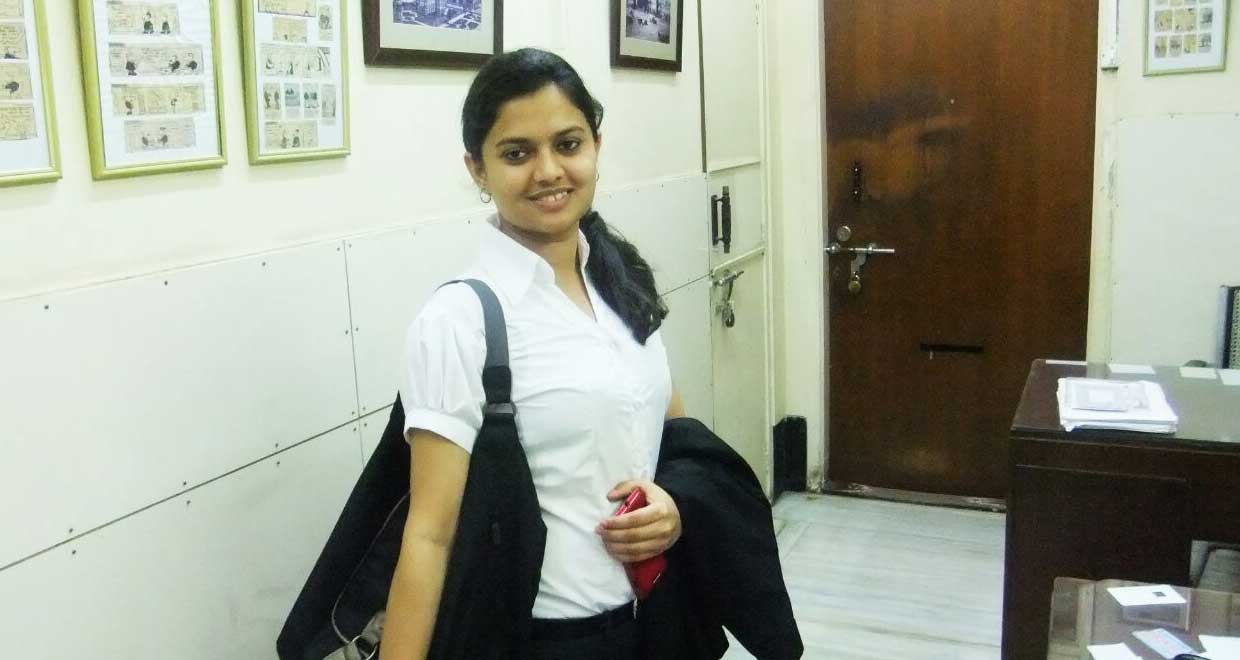
  • Ujjaini Ghosh, Assistant VP-Global Transaction Banking, Deutsche Bank, on studying at Oxford, and working with Herbert Smith, and Linklaters

    Ujjaini Ghosh, Assistant VP-Global Transaction Banking, Deutsche Bank, on studying at Oxford, and working with Herbert Smith, and Linklaters

    Ujjaini Ghosh graduated from NUJS, Kolkata in 2006 and went on to pursue her BCL from Oxford. After her BCL she joined Herbert Smith, worked at Linklaters, Singapore with the banking group, and eventually graduated to Deutsche Bank in January 2013.

    In this interview we speak to her about:

    • Her time at Oxford
    • Working at Linklaters
    • Her experience with Herbert Smith

    How would you like to introduce yourself to our readers?

    Well to put it in a nutshell and assuming that the readers are from NUJS, I would introduce myself as an alumnus (batch of 2006) of NUJS who spent some of her best and formative years at this institution, grew as a person, made amazing friends and now looks back fondly and maybe with a tinge of nostalgia at those years gone by.

    Post NUJS, I joined Oxford for my BCL in 2006. After completion of my BCL, I joined Herbert Smith as a trainee solicitor and qualified as an associate in the finance division. I eventually moved to Linklaters in Singapore where I worked as an associate with the banking group and in January 2013 moved to Deutsche Bank where I am currently working as a legal counsel in the global transaction banking department.


    Why and when did you decide to do law?

    To be honest, I decided to do law at a point where law was fast becoming a popular career option after engineering and medicine and I knew for sure that I did want to become a professional and make a difference though not necessarily in medicine or engineering! I joined NUJS after studying English honours for a year at St Xavier’s College, Calcutta.

    It was during my five years at law school that I realized that studying law was probably the best decision I could have made. NUJS was very interactive in its teaching methods and I could clearly link the knowledge of different spheres of legal education to the individual, society and corporations. More than the subject itself, it was the application of the subject that interested me.


    ujjaini-ghoshHow was studying at NUJS like for you?

    The question does make me feel ancient! Studying at NUJS was a very interesting and a brilliant experience, an experience that transformed my personality, made me aspire, made me ambitious and taught me to drive myself as hard as I could. The ambiance, the faculty, the students, the activities made five years literally fly by. NUJS was not just about studies but it was also about the multitudinous activities on offer. I do remember taking part in moot court competitions, cultural activities such as singing, dancing and theatre, coordinating seminars and group discussions, being part of various committees, assisting in legal aid projects and the list goes on.

    Life at NUJS ten years ago was very inspirational for the students. We were part of a fledgling institution and each one of us as students were driven by this urgent need to not only prove ourselves but also to make NUJS reach greater heights. The institution had an incredible moot court society which brought in awards with limited resources. The close knit student community made life in the hostel a lot of fun and the faculty members were not just “teachers” but friends and in some cases confidantes.


    What sort of internships did you do while in college?

    My internships were varied. I interned with Sanlaap (an NGO in Calcutta),  the trial court in Calcutta, Delhi High Court and law firms such as Khaitan and Amarchand & Mangaldas. I also interned with the Singapore International Arbitration Centre and Wong Partnership in Singapore. All the internships have played a defining role as these helped me understand how law worked in the practical world and also provided me with a better idea of what I wanted to do after law school. The internships were a stepping stone towards shaping my career. It’s just been seven years since law school so there is a long way to go!


    What was the first thought that came to you when you got your acceptance letter from Oxford?

    I was ecstatic and actually cried with joy! The experience was brilliant.  The academic curriculum, the students and Oxford the town itself made the experience worthwhile. The BCL is an international course and draws students from all over the world. I made some amazing friends who I am in touch with till today.


    What made you go into the corporate sphere of law?

    The internships did help in making me choose my area of specialization. I found myself natural leaning towards corporate law as compared to other areas where I can see myself making an effort.


    Would you take us through the application process for Oxford?

    Applying to Oxford is similar to applying for any top rated LL.M program in the world. I would say to apply straight after law school requires some planning in terms of studying methodically, participating in extra-curricular activities, preparing good essays and actively seeking out references.


    What was it like working at Herbert Smith?

    Working at Herbert Smith was a fantastic experience. The training program is very thorough and the six months spent in each department goes a long way in understanding different areas of legal practice. The learning curve was steep but the kind of confidence and knowledge that I acquired is unparalleled.  I learnt a lot from the partners, the senior associates and my peers.


    Could you enlighten us, in brief, on the particulars of Islamic finance and your role in the Finance Team at Herbert Smith?

    I was an associate in the acquisition and leveraged finance team at Herbert Smith and subsequently Linklaters. The work has been varied ranging from vanilla lending to secured syndicated finance deals to highly leveraged secured deals.

    Islamic finance to me is simply finance deals that are structured bearing in mind the principles of Shari’ah law e.g. there is no reference to interest in the documentation. However at the end of the day, the basic essence of financing remains the same.


    How does it feel like to be Assistant Vice President – Global Transaction Banking at Deutsche Bank?

    It’s proving to be enjoyable and challenging at the same time. I am part of the transaction banking front office team which means I get to liaise with the different business teams on a daily basis. Its fast paced and solution oriented. Along with legal knowledge, I am expected to understand the various products that are offered to clients and draft/review documents and advise clients on the implications of different contractual arrangements. The work involves dealing with liquidity management products, international fund transfers and trade finance.

    Deutsche Bank is a very fluid organization and I can see my role changing and growing as I grow with the business team.


    What do you think of the young law graduates/students and the standard of education in the field currently?

    I think very highly of them and they are definitely a very focused lot. I have not been deeply involved with the academic field for the past seven years so it’s difficult for me to comment on the standard of education. I do feel that along with theory there should be a focus on the practical implementation of law.


    Any advice you’d like to give to young lawyers who hope to follow in your footsteps?

    I am sure that every young lawyer will be able to chalk their own path, but I would definitely encourage them to enjoy their years at law school and subsequently the practice of law. I would urge them to do what they want to do and not get bogged down in their fifth year and the first few years of legal practice by comparing themselves with their peers or superiors. Each lawyer is unique in his or her own way and there are no set rules to follow.  In seven years, I have learnt that its best to not take oneself too seriously or set very high targets but at the same time to enjoy learning and give 100% to whatever work I do at any point of time. Trust me, success follows when you can give as much as you can to your profession and yet manage to enjoy yourself at the same time.

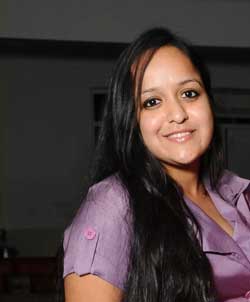
  • Sneha Thakur, Law Graduate, on winning Best Researcher at Henry Dunant, writing for journals and LL.M from QMUL

    Sneha Thakur, Law Graduate, on winning Best Researcher at Henry Dunant, writing for journals and LL.M from QMUL

    sneha-thakur-2Sneha Thakur graduated from the first batch of RMLNLU, Lucknow in 2006. While at Law School her team won the Henry Dunant Best Researcher spot. As a law student she has been quite active and participated in many debates, MUNs and conferences. Soon after graduating from RMLNLU she was awarded the “Centre of Commercial Law Scholarship” from CCLS at Queen Mary University, London and thus she pursued an LL.M in Corporate Governance and International Comparative Commercial Arbitration from there.

    She is currently preparing for one of the toughest Bar Exams in the world: The California State Bar Exam.

    We asked her about:

    • Importance of mooting and collaborating for Best Researcher at Henry Dunant
    • Writing for journals and publications
    • LL.M experience, faculty and facilities at QMUL


    Given that most of our readers are law students and young lawyers, how will you introduce yourself to them?

    Firstly, I would like to congratulate you and your team for this endeavor. Launching such a website is indeed an innovative and creative step. It is certainly a breath of fresh air. Your website provides a complete ladder to a law student to understand their career path in law. Reading the interviews of top notch people in the legal field would certainly be an intellectually stimulating experience for a young lawyer who would gain first hand insight into the legal profession.

    Law happened to me by choice, it’s one field that has always fascinated me. I completed my law degree from RMLNLU Lucknow. After completing my degree I had an opportunity to work as a corporate lawyer in one of the biggest life insurance (Max Life Insurance) companies in India for a year. Then I was fortunate to be awarded the Centre of Commercial Law Scholarship from CCLS at Queen Mary London and completed my LL.M in Commercial and Corporate Laws with a focus on Arbitration.


    How did you gravitate towards law?

    Being a lawyer was my first occupational choice after careful consideration. Law for me is like a passion that runs in the veins of my family. My dad has always acted as my role model. Being a Senior Advocate, he had influenced me to a great extent to choose the profession. He has been my guiding beacon of light, always encouraging me and also gave me the freedom to take up the profession that interests me the most.

    Five years in RMLNLU has played a very important role in grooming me as I stand today. They were the most fun filled years of my life. It was like a family where you grow and develop yourself. The lesson that a law school teaches is that the end is not nearly as important as the means. I believe law school is a platform where a student is groomed to practice law rather than learn it. For being a successful lawyer always remember to be confident but not arrogant.


    What does it take to be a great researcher?

    (Sneha had won the Best Researcher Award and her team was also one of the quarter finalists at Henry Dunant Moot Court Competition.)

    Being the pioneer batch of RMLNLU we had faced some grave problems as we had no seniors or experienced mooters to guide us through the journey. The whole process of preparation and reaching the quarter finals among 65 teams when we were just in our second years and then bagging the Best Researcher award has been a momentous experience for me. We had put our body and soul for this moot and had spent the whole vacation in ISIL and ILI libraries. We even went to NLSIU and ILS Pune for the research work.

    The key to be a great researcher is to dissect the whole case, a researcher needs to be like a encyclopedia of the case at hand. A good researcher should also have excellent writing skills and should have clear knowledge of citing cases and references in preparation of memorials.

    The real problem faced in law school is to balance your academics with mooting as preparation takes almost as good as six months. In this regard our professors were helpful who provided us some project exemptions. Mooting is like a nerve cracking passion, as much honestly you put in, so shall be the result.


    Share some of your memorable mooting experiences.

    Mooting has been my passion ever since I joined college. The whole feel to argue your case in front of real judges, the period of preparation, research, long hours in library and team work prepare us for those few days in which we get practical insight to the real life of the law profession. The most memorable mooting experience was the one I gained during Willem.C.Vis International Arbitration Competition in Vienna. Arbitration is different form of mooting and competing against 260 teams around the world is indeed a nail biting experience. I have realized that few universities have libraries which have complete set research books for arbitration. In this regard I must say that now RMLNLU, NLSIU, NALSAR and ILS pune libraries are well equipped for arbitration research.

    The second experience I’ll always cherish is the team management skills which I developed when I organized several Moot Court Competitions in my college. Being the Convenor of the MCC one needs to delicately balance the work on hand bracketed with your ability to hold on to your position as a leader. It groomed me to work under timelines and develop the organizational skills which are very important for personal and professional development.

    The mooting tips I would like to share firstly is for the stage of preparation which tends to be the most time consuming part of mooting. You will need to ensure you know what you are expected to argue and read the fact pattern thoroughly and begin assimilating your relevant authorities for discussion. Make sure you know all the cases or authorities you are citing inside out, along with the general area of law on which the moot is based. For mooters always be prepared with your skeleton arguments and question yourself on it no matter how small and irrelevant the fact it may be on. This will prepare you for the final day.

    Secondly, as for the day of the moot, I know your stomach is full of butterflies. But don’t panic! Rehearse your speech in advance and familiarize yourself with the layout of the court room in advance. Secondly don’t write your full speech on paper, indeed write the bullet points on a small number of cue cards. Another thing to remember is to have soft speaking skills and pause while speaking so as to give time to judges to deliberate. Also remember that don’t be very anxious to finish your submissions and do so in a rush. There’s nothing worse you can do when it comes to finishing your moot. Make sure that you end it appropriately; by finishing with a conclusion and by telling the court what you want it to do.


    How helpful do you think is mooting for a law student?

    Mooting is the closest experience that you can get as to appear in a real court.  It a process of learning the Law differentlyand provides a holistic approach of learning by developing research skills, advocacy skills or even just plain old teamwork skills. Mooting boosts up the confidence level of the student and also serves as bolster addition to your C.V. and make oneself more attractive to potential employers. If one harbours any desire to become a practicing advocate then it is safe to say that employers can only look favourably on those who have mooting on their C.Vs, as this is a sure-fire sign that you possess these important attributes needed.


    How important is it to publish articles being in a law school?

    Writing papers serves several important purposes. First, it develops one’s research skills. Second, it provides us with an intensive writing experience in preparing one or more papers of an analytical nature. Third, it provides us with an opportunity to deliberate on the subject and provide our thoughts on the same.

    Publishing articles also serves an attractive point in your CV. As a good internship strikes a gold point this one serves as an additional star. It attracts recruiters as it showcases one’s drafting skills and the ability to research.

    It is rightly remarked that the written word is one of the most important tools of the legal profession. Words are used to advocate, inform, persuade and instruct. Although mastering legal writing skills takes time and practice and are essential to success. But all this depends on you interest and writing skills. One should always aim to analyse the law and add something from their own thought process rather than dissecting the analysis and history written by other authors.


    Do you think participating in extracurricular activities like MUNs, Debates, Seminars and Conferences proves to be of help to law students?

    Participating in such international conferences, seminars and paper presentations provides a firm base to law students to go beyond the books and help students to analyse topics and realms of international and national law which are not taught in law schools. It helps to develop and hone their research skills and provide a platform wherein they can present their own thoughts and insight to the critical legal issues. The ISIL and ILI libraries in Delhi have a huge collection of legal writing and articles which help for the preparation. Also the whole presentation provided me with a confidence to speak freely in public and I am sure these experiences help in professional practical career afterwards.


    How did you go about securing internships at various law firms?

    To secure good internship please be cautious to apply well in advance and keep a track of your application with frequent reminders. These days several national essay competitions are also providing internships as a prizes. Be sure to keep a track of it. Also some of your seniors might help you to get through some good internships.

    It is important to plan out your internship. Start from interning with Counsels and then opt for law firms. You should also mix governmental corporate internship. You don’t need to be specific in law school; try out different platforms so that you are sure at a later stage. While interning everyone has to go through the phase of trivial work. Even researching some basic points or finding case laws should be taken as an opportunity to learn. If you take interest and work diligently and quickly brief your seniors about your work, I am sure you would attract the firm’s attention for a PPO.


    What do you feel about the importance of a good CGPA and contacts when attempting to secure an internship?

    I think your CGPA does play a role in securing an internship and later college placements. As a member of placement committee I had observed most of the top tier law firms has one of the requirement to interview candidates who are among top twenty in their batch. For students who have no contacts in the law firm, it is necessary to secure good CGPA. College is fascinating and it a fun life but my only advice is that they shouldn’t ignore their studies. Even if you are not a topper but it is important to stay focused. Be aware of the happening in the legal world and try to gain more practical experiences.


    What was your motivation behind pursuing an LL.M.?

    I always wanted to pursue LL.M. Initially I was confused from where I should do it. It’s important to know the area one wants to cover in their LL.M program. LL.M provides a path to develop one’s skill and knowledge in a particular field of law. Once I was sure about the course I wanted to take, I decided to pursue an LL.M.


    How did LL.M. from Queen Mary, University of London happen?

    I always had an inclination for studying arbitration in depth, as in recent times the commercial world is taking a path towards dispute resolution mechanisms such as arbitration and mediation. Through my extensive research I found out that Queen Mary is one of the few universities which has also a well-known School of International Arbitration and is a well-respected member of the Arbitration community. The courses are designed in such a manner that they would provide an excellent foundation to the professional career in arbitration, focusing on both practice and procedure.

    I was fortunate enough to get through UCL, LSE, Kings College London, Newcastle University, Leeds University, Edinburg University and Glasgow University. In USA I got through NYU and Georgetown University. I was about take up the arbitration course in combination with commercial law from UCL but was awarded “Centre of Commercial Law Scholarship” from Centre of Commercial Law Study at Queen Mary which covered the entire waiver of tution fees and then Queen Mary happened.


    Please tell our readers about the application procedure and other requirements?

    The application procedure of Queen Mary requires high academic result combined with at least 105/120 TOEFL score. This year as per the Guardian’s Ranking Queen Mary School of Law is at third position after Oxford and Cambridge.

    Queen Mary offers two School of Law Scholarships (full tuition fee waiver) and two Centres of Commercial Law Scholarship (full tuition fee waiver). Queen Mary offers 2 partial scholarships each worth 50% of the tuition fee for the new LLM s –LLM in Energy and Natural Resources Law and LLM in International Shipping Law. Among other scholarships are Commonwealth Scholarships, Chevening Scholarships, Queen Mary Drapers Scholarships, Jean Monnet, CCLS/FGV Rio, Brazil, CCLS/University of Lagos, Nigeria, CCLS/School of Economics and Finance joint M.Sc Law and Finance and LLM in Law and Economics bursaries.


    Please tell our readers a bit about the course of Corporate Governance and International Comparative Commercial Arbitration from QMUL.

    The most attractive part of my academic module was studying International Comparative Commercial Arbitration from the likes of Professors Loukas Mistelis (Winner of Global Arbitration Review Award), Julian Lew and Dr. Stavros Brekoulakis. Studying from the stewards in the fields who are pioneer and leading authors of International arbitration books and leading contributor to the science of international arbitration and litigation. They have close links with major arbitration institutions and international organizations working in the area of arbitration and also conduct frequent research projects in this field. The classes are very interactive and one needs to be prepared to participate in the discussions. This module is designed in a manner to provide a deep understanding of the special characteristics and needs of international arbitration.

    The Module Corporate Governance is especially designed to provide an depth knowledge of financial regulations, impact of globalizations, various corporate governance systems in the world and corporate accountability. Prof Alan Dignam is a renowned writer in commercial law books and is also an advisor to Amnesty International’s Business Group on their corporate accountability.

    The tutorial classes in each module have been fruitful as it gives an insight and one to one chance to interact with the Professors and to know the correct methodology in solving the problem. It has provided me with a chance to study legal issues in classes composed of graduate students from numerous countries, who would resolve these issues differently and provide me with a completely different angle to look at.  Frequent seminars organized by the School of Law regarding the emerging and controversial issues are also very beneficial and useful. There is an abundance of e-resources to research upon and the libraries are well equipped with almost all the possible journals, reports and books.

    Studying in an international environment at Queen Mary, with students of various ethnic and cultural backgrounds has provided me a chance to know and understand different people and cultures which in itself is a wonderful and enriching experience and to add London as a location is perfect as a seat of Arbitration for all the global exposure and experience that one needs as it is the most inspiring and culturally rich city.


    How was the academic schedule?

    You need to study hard before the class. That is it. Every class is not confined to books and preparatory materials. The academic schedule is such that you need to prepare the basics before you enter the class. The classes are interactive and discuss the practical aspects of every subject and how it is dealt in different jurisdictions. Regular reading materials are provided along with reference to different books which the library is well equipped with. Frequent tutorials help in solving the question paper. For dissertation support each mentor guides you through the entire journey from selecting your topic to the division of titles, recommending books for references, guiding you through the current trend, insights to the major cases. One to one interaction with the mentors generally helps one to a clear idea about how to write the perfect dissertation


    How difficult was studying abroad in terms of finding accommodation, finances and settling in?

    Unfortunately, by the time I decided to go for Queen Mary, there was no hostel accommodation available. I stayed in London in a house shared by some of my friends. It must be acknowledged that rental prices are the highest in the capital, and students should be prepared for this even with the extra loan on offer, though you have range of options such as student houses which includes Nido, Mansion Tower and Urbanest as the best options. One also has an option of renting a house, wherein students are exempted from the local tax. And if you feel like earning a bit of extra money, generally part-time work is pretty easy to come by.  The major lifestyle benefits of living and studying in London, ranging from nightlife to food markets and culture, all are located in the centre. London is a student friendly city and there are a lot of activities to do and to enjoy your life in London. Ultimately everyone falls in love with this dynamic city.


    How’s the Indian fraternity over there?

    London is known to be the hub of cultures from students from all over the world. Queen Mary has a vibrant student community. The Indian Student community at Queens frequently organizes parties and get togethers for the celebration of festivals. Everyone is very interactive and helpful in each aspect. The Student Union at Queens also help the new students in settling down and also develop their skills and interests.


    Where do you see your career in the next five years?

    Right now I am living in San Francisco and preparing for California Bar Exam. In next five years I see myself as a commercial lawyer and develop my skills in the field of arbitration, I have been working with a firm based in Dubai which is establishing itself in USA and provides legal help to the companies who have their work base in UAE and Asia.


    Lastly, what would be your message to law students interested in going for higher studies from India?

    My message would be that you should do complete research on the law schools from where you want to pursue their LL.M. Every University has its specialisations in particular legal fields. Make sure you shortlist your choices. Also there are many scholarships given to support your post-graduation from Commonwealth, Chevening Scholarship, Tata Memorial scholarship and individual scholarship of every University.


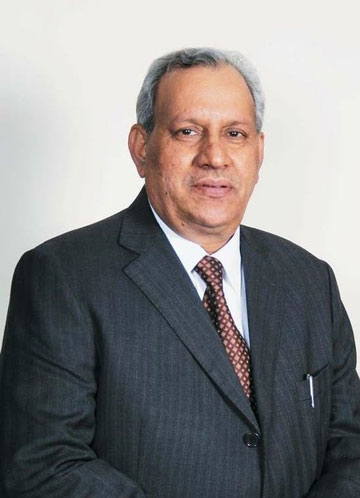
  • Suveer Bajaj, Co-founder, FoxyMoron, on Digital Marketing, law, and plans for the future

    Suveer Bajaj, Co-founder, FoxyMoron, on Digital Marketing, law, and plans for the future

    suveer-bajaj-3Suveer Bajaj pursued LL.B. from the University of Mumbai, batch of 2012. Prior to that, he had pursued his BMS in Marketing. He is the founding partner of FoxyMoron, a Digital Marketing Company, which is mainly functioning from New Delhi and Mumbai. The company has eminent clients like The L’Oreal Group, Bacardi India, Castrol, Fosters, The Cadbury Group, Asian Paints, The World Wide Media Group, AXN India, VIP Industries, Rajasthan Royals, Quikr and has nine offices between New Delhi and Mumbai.

    In this interview we speak to him about:

    • The switch from law to marketing
    • Essentials for being a successful marketeer.
    • The mechanism behind the rapid growth of FoxyMoron.


    What motivated you to pursue law?

    Law was always the first option for me from an academic perspective right from the time I was old enough to decide what I wanted to study. It definitely wasn’t a virtue of chance. It was a well-educated decision; one I had actually been looking forward to for quite a while before I actually even started studying law.


    How would you describe the chronicles of your college life?

    I always kept myself active and busy through my college days. I started working literally one week after I got out of school. I actively participated in a number of college activities including the Rotaract club, represented my college in almost every inter-collegiate festival and went on to creating a Model UN session for my college which at the time, was the largest college level MUN in Mumbai. I interned actively through my summers and eventually started FoxyMoron in the summer of 2008 after I completed my second year of degree college. This required me to pull odd hours and double up on both my academic and social life, but I was more than happy to make the sacrifice while in college.


    Tell us about your experience as a Space Intern of the renowned newspaper Indian Express.

    I interned with the Indian Express Group in the summer of 2007, which was my first summer in degree college. I worked under the direct mentorship under the (then) General Manager of Space Marketing, also known as ad sales. I learned the ropes of how ad sales were done and actively worked with all teams to understand how the dynamic of print advertising works with various departments. It was my first formal interaction with sales targets, corporate discounts and the IRS. We whiled away our lunch breaks at the art room watching how tediously the art directors created the lovely print ads we see in newspapers today.


    What are the essential ingredients to become a successful marketer?

    There is an age old saying: Sales and Marketing go hand in hand. Neither comes first and neither comes second. In order to understand the ethos of marketing, I think it is important for a good marketer to step out of the grid and start understanding a client’s business objectives as opposed to restricting his horizon to merely a client’s advertising or communication objectives. A good marketer must know how to ad value to his client to extent that he becomes an integral part of the client’s business and thereby becomes indispensable to the business life cycle. Good marketing is always object oriented and resolution led.


    suveer-bajaj-2

    How do you think knowing law benefits an entrepreneur?

    Sound legal knowledge can help any person in any walk of life. Especially whilst doing business. For instance, in the case of FoxyMoron, my legal knowledge assisted me in drafting my initial partnership agreement and leave and license agreement. At a very young age, we were in a position to understand business risk and could therefore account for its protection. An understanding of company law ensured that as an organization, we were compliant with the various different aspects of “business.” By virtue of the industry that we function in, an introduction to Intellectual Property Law helped in ensuring that our creatives were royalty-managed. All in all, from a business structuring and risk assessment perspective, understanding the law has really assist in the speedy growth of our organization. It has ensured that our growth has been rapid and we haven’t been slowed down by heavy law firms. It has ensured that we create an environment in which we are well aware of our rights and responsibilities and can function independently as empowered entrepreneurs.


    How did you choose your co-founder?

    The birth of FoxyMoron was a joint decision that we all made collectively. We were all friends well before we started working together.The best advice I can offer people who are looking forward to collaboration with friends is to learn how to keep your personal and professional lives apart. Remember, that by day, you are colleagues, but by night, you are still friends and will still socialize together. Work must never compromise a friendship and neither must a friendship compromise work.


    What are the prime hurdles that a non-lawyer entrepreneur has to come across?

    One of the prime hurdles that a non-lawyer entrepreneur may have to overcome is insolence due to naivety. It is common with most people that do not know the law to be intimidated by it. It is even more common for people who do not know the law to be taken advantage of, whether commercially or in spirit. Business houses have large legal departments and are often represented by big firms across the company. This by itself can be intimidating. Legal understanding helps put entrepreneurs at par with larger organizations in terms of negotiation. It enables entrepreneurs to understand the extents of their rights and therefore enables them (us) to empower themselves.


    Tell us about your journey with FoxyMoron so far.

    Our journey has been fabulous. We started with just the four of us, with four laptops, with no seed capital, in my bed room. It’s been six long and fun years and we have grown to a family of over 200 with nine offices between Bombay and Delhi. We represent some of the country’s biggest consumer brands and are powered by a young, talented, enthusiastic bunch of twenty-something year olds that are determined to change the digital landscape in India. Our work has gotten us recognition across the world and has received several awards and accolades. Business has grown organically; both in size and scale. It has been a joyous journey, salt and peppered with a lot of ups and downs, a lot of hurdles, sacrifices and compromised.


    What kind of internships would be beneficial for law students who want to pursue entrepreneurship?

    For any students who want to pursue entrepreneurship, the best kind of internships are in start-ups. In a start-up, one is made to do literally everything. The exposure that one gains from working in a startup is unmatched. The experience of watching and contributing to the growth, structure and sustainability of a business is what shapes many vocational choices in life. The fact that you will interact personally with top management, the fact that you will do work that isn’t only limited to data entry, the fact that you might have the opportunity to walk into a meeting with a CEO of your client’s company. The journey of a start-up is un-paralleled.


    How did you get to work with such big brands in just five years of presence?

    (FoxyMoron has served imminent clients like The L’Oreal Group, Bacardi India, Castrol, Fosters, The Cadbury Group, Asian Paints, The World Wide Media Group, AXN India, VIP Industries, Rajasthan Royals, Quikr.)

    In India, most businesses are relationship based. Two things that we have really managed to do right over the last five years is:
    (1) To retain business that we work with year on year. Most of the clients that we work with are happy to have us back renew contracts annually.
    (2) Penetrate large business houses. You may start working with one brand from an organization, but it is important to be able to expand horizontally and vertically inside organization. Working with multiple brands from the same group often assists in sound understanding of the industry and hence helps offer an acute domain specialty.

    And of course, at the end of the day, your work speaks for itself! Good work manages to get around, get noticed and pick up a few awards along the way.


    Do you think Delhi is a better place to start-up in comparison to other metropolitans?

    At present, my work base is still very much Bombay. We have set up shop in Delhi last year and are, in fact, inaugurating our second office in Delhi today, but we are very much head quartered out of Bombay and I very much still operate of Bombay. The capital, however, presents currently, a wonderful diaspora of opportunity. A lot of brands have now shifted head quarters to Gurgoan and hence from a client opportunity stand point, Delhi (Gurgoan) is gold mine from a business perspective.


    What are your thoughts about raising capital for FoxyMoron from investors?

    FoxyMoron has always been a business that has grown organically year on year. Our limited business understanding has ensured that our business has been in the green since year one itself. Services businesses are usually not capital heavy and hence do not require sizable capital to scale. It has never been our intention to raise capital from investors or therefore, offer equity in exchange for the same. One of the best decisions we made while scaling the business was to retain the independence of running the business as flexibly as we wanted. Allow it to naturally take the shape that it has and come through its journey to reach a point of stability.


    When you hire people under you, what kind of skills and profile do you look for?

    When we hire people, we look for people that have a flair for communication and have a zest to learn. In our line of work, we understand that it is hard to come by people that have relevant work experience and are happy to take on freshers and train them. We have a robust training, learning & development program and have recently appointed a Chief Learning Office (CLO) to help up skill our teams and keep them up to speed. Students can help develop skills by consistently reading good literature, following international advertising and interacting with Digital Media themselves.


    Does the knowledge of law help to have any edge in marketing?

    With digital and content marketing, the understanding of Intellectual Property Law is a necessity. The internet is a cess-pool for infringement of IP. The bridge in terms of Law and Digital Marketing definitely lies in understanding IP law and it’s bearings.


    Is there scope of legal internships in FoxyMoron?

    Yes, we do take on legal interns through the year. Applicants can write to us at careers@foxymoron.org


    What is your message for law students who want to pursue entrepreneurship?

    Don’t over think things! As lawyers, we are taught to over think everything five times – often, that is the biggest mistake an entrepreneur can make or can get slowed down by. Entrepreneurship is a virtue of gut and instinct. While it is important to be a little thoughtful and conservative in our approach, they only way the ball rolls is when we stop thinking and start doing. Entrepreneurship is about checking things off the to-do list. Not adding more things on.

  • Dharmendra Chatur, Advocate, King & Partridge, on choosing law over engineering, topping his batch in law school, and plans for the future

    Dharmendra Chatur, Advocate, King & Partridge, on choosing law over engineering, topping his batch in law school, and plans for the future

    Dharmendra Chatur graduated from Christ University School of Law, Bangalore in 2013, where he was class Valedictorian and was awarded  the Basant Kumar Sarala Birla Gold Medal for being the Best Outgoing Student. Currently he is an advocate at King & Partridge.

    In this interview we speak to him about:

    • His experience
    • Requisite skills for being an efficient litigator
    • How to apply for internship at King & Partridge  and research assistantships


    How would you like to introduce yourself to our readers?

    I’m Dharmendra Chatur. I’m currently working as an Advocate at King & Partridge, which is one of the oldest law firms in India (established in 1904). During law school, I was an active mooter and published a few articles in international and national journals. I had a brief stint with debating as well. Being interested in academic writing and research, I was involved in research on and continue to be interested in the fields of law and public policy. I currently follow developments in the areas such as legal and judicial reforms and health and medical law.


    dharmendra-chaturWhy did you decide to study law?

    Honestly, studying law was never a career choice during school. I took up Science in my 11th and 12th and had decided to do engineering (following the herd!). In fact, I enrolled myself into the Mechatronics Engineering programme at Monash University, Australia (Malaysia campus) and spent one month there (February-March 2008) before deciding to call it quits. The realization that I did not want to be an engineer dawned upon me only after I began my engineering courses! However, I had a great time being an international student at Monash – although for a limited time.

    After I returned to India, I did a bit of soul-searching and introspection and thought of giving law a try. Being a first generation college-goer (in any course), I was fortunate to have no family pressure to choose a particular course. The lack of pressure therefore allowed me to explore possibilities with my career choices. I joined LST for a one month crash course to see if I would be interested in law; and prepared for the first edition of the CLAT. Being unsure if I had done well in CLAT, I enrolled myself into Christ University mainly because of the excellent faculty and campus facilities there.


    According to you what are the qualities of a good lawyer?

    Speaking from my limited exposure to the legal profession, a good lawyer must have three qualities – at the very least – firstly, he/she must be sociable and polite; second, he/she must have a good grasp of legal knowledge (both theoretical and practical); third, he/she must aspire to be independent in thought, inclination and action to develop a dispassionate mind.


    What were your areas of interest while you were studying law?

    I was interested in public law generally and a few subject areas in private law especially company law, law of contracts and so on. In addition, I was also fascinated by public international law and conflict of laws.


    You are working with King and Partridge right now. What is a day at work like?

    As I am a practicing Advocate at King & Partridge, my work day involves preparation for and assisting my senior colleagues with appearances in the High Court of Karnataka/Civil courts/Arbitrations in Bangalore.


     What skills and attributes are important according to you to hold a job like yours?

    I believe three skills are important for any litigation job in an Advocate’s formative years: strong grounding in basic aspects of the law, immense patience to learn and grow and learning by observation.

    To law students, I would suggest that they must make consistent efforts to understand certain basic concepts in all areas of law – this will hold them in good stead when they begin (a beginner’s advantage, in a way). In addition, you must better your research, critical thinking and argumentative skills – all of which you can learn by mooting, debating etc. In essence, please utilize every opportunity law school provides you to become your own person – with a voice to be heard.


    What is the most challenging or stressful part of your job?

    The transition from law school to law practice is both challenging and illuminating. Challenging because law schools do not prepare students to face a practical world (which is why some Advocates shine without having attended many classes in law school). However, I believe that time well-spent at law school can only make one better equipped. My transition was illuminating because you get exposed to a very different world which requires strategic planning, execution among other things. Also, you figure that law and justice are ‘personal’, in the sense that from different judges, the same facts and circumstances may elicit responses. Therefore, a successful Advocate is, in my opinion, is a person who can gauge what a judge requires and prepares/presents a case accordingly.


    Is it easy to have a work-life balance in this profession?

    Successfully managing a work-life balance in this profession is very subjective as it is dependent on a variety of factors. These factors may be the firm’s environment, your commitments and so on.

    At King & Partridge, we are fortunate to have a culture that encourages a solid work ethic permitting enough time to rejuvenate so we can be enthusiastic to get to work every Monday morning.


    How do internships help law aspirants?

    Internships are essential to ascertain what kind of legal practice one would be suited to. Although figuring that out may take some time, pursuing a variety of internships will only help a law student decide his/her career options.


    Does your organisation take interns?

    Yes. The interns may apply to the following e-mail address: kingpart@vsnl.net with their CV and a covering e-mail for an internship. Based on availability of slots and an assessment of the profile of the applicant, internships would be confirmed. It usually takes a week to respond to internship applications/queries.


    How does a good academic background help in the profession?

    A sound academic background helps an Advocate in developing legal arguments from a variety of angles. Having said that, it is not necessary that only people will good academic backgrounds can succeed in the profession – because the skill set required to succeed is very different than mere academic merit.


    How important are extra-curricular activities for a legal career?

    (Dharmendra has won moots and published papers in various journals as a student.)

    Moots helped me get over my stage fear and develop confidence as a speaker. They are also helpful in developing research and argumentative skills which are skills useful in a legal career.

    Publications in journals helped me learn good legal writing and developing arguments in writing.

    Having said that, I believe that both moots/publications/ other extra-curricular activities are just ‘kick-starts’ and becoming a good Advocate is only possible by developing an attitude of constant learning and re-learning.


    How was the experience of being a Research Assistant at Centre of Law and Policy Research and Azim Premji University (Law, Governance and Development Initiative)?

    My Research Assistantships at both CLPR and AzimPremji University were an attempt to explore if I could develop an aptitude for law and public policy research. They are both great places to intern/work at if one is seriously considering a career in law and public policy analysis/research. The details for applying for internships/research assistantships are available on the respective websites of the organizations: http://clpr.org.in and http://azimpremjiuniversity.edu.in/lgdi


    What career goals have you set for yourself?

    I aspire to be a good and respected Advocate. I am aware that this will be long journey and perseverance is the key to be focused and never lose hope.


    Is there any success mantra that you follow which you would like to share with our readers?

    Doggedness. Diligence. Dispassion.

  • Sumeet Malik, Director, EBC, on studying at Franklin Pierce, the publishing business, and his experience

    Sumeet Malik, Director, EBC, on studying at Franklin Pierce, the publishing business, and his experience

    sumeet-malik-2Sumeet Malik graduated from NLSIU in 1999. Thereafter he worked briefly for nine months in Mr. K K Venugopal’s chamber and then decided to pursue an LL.M in Intellectual Property from Franklin Pierce. With his legal training and specialisation in Intellectual Property Law, he joined his family-run Eastern Book Company. Currently he is the Director at EBC and manages overall Content and Editing for EBC. We asked him about:

    • Graduating from NLSIU and from Franklin Pierce
    • Work and typical day at EBC
    • Integration of a ‘lawfirmite’ in a publishing house


    Tell us a bit about your childhood and pre-college life as well as educational background.

    I did my schooling from La Martiniere College, Lucknow, an over 150 year old institution. Law was very much in my blood – I was born in a law publishing family. My grandfather, Shri P.L. Malik who was educated only till class X, had by the dint of hard work and perseverance, compiled a book called ‘Industrial Law’ in 1950. It is today the most authoritative book relied on by Industries and Industrial houses in India. My father completed his law from the law faculty, Delhi as a gold medalist and went to do his LL.M. from Columbia University, New York. So yes, there was quite a lot of law in my background.


    The image of a lawyer back in ’94 was neither inspiring nor attractive for most students. What motivated you to choose law for a career?

    Coming from a law publishing background one would imagine studying law to be the choice, but it was an informed decision.


    How was your experience in NLSIU?

    It was a great learning experience. I met many wonderful people but everyone whom I interacted with taught me something. It would not be out of place to mention Prof. Menon and Prof. NS Gopalakrishnan to have had the most influence on me. My biggest academic takeaways from law school were my ability to research the law and how to think like a lawyer and this is what I try and tell all law students today. The law that you study while in law school will change but if you have the skills I mention then you are prepared for the rest of your life.


    Right after graduating from NLSIU you went for an LL.M. in Intellectual Property from Franklin Pierce. How was your experience with faculty and academics there?

    Actually, I worked in Mr KK Venugopal’s chamber for nine months before I went for my LL.M. Those nine months too were a great learning experience. Franklin Pierce has a great faculty. The teaching style is a little different from NLS. There is a greater emphasis on writing papers and class room discussion. The level of academics is quite high in Franklin Pierce. I would say most definitely so. My class had so many people from all over the world and I think I learned from all of them, some a little, others more.


    Would you recommend an LL.M. from Franklin Pierce to people who want to work in the Legal Publishing Industry?

    I think doing an LL.M. or a Masters programme helps in the overall development of a person. You gain a lot of exposure. An LL.M. at Franklin Pierce or any other US law school should be an added bonus for working in the Legal Publishing Industry.


    What does a Director at a publishing house like EBC do?

    EBC is a family run and managed business so each of us have our own responsibilities. My most important responsibility is content development, so whether it is enhancing content for SCC Online or co-ordinating with Authors for new titles. I edit/compile/write fifteen books in a year. Human resources for one division of the group is also looked after by me. It’s a little difficult to tell you about a typical day since each day brings different challenges. In the last year I have also travelled extensively, so there is something new that happens daily.


    What are the top three challenges you faced as a Director of EBC?

    I think that the greatest challenge is in the implementation of systems. Other challenges include the hiring and retaining of the right talent. There is a lot of expectation from the EBC group for making available high quality legal resources and quickly too. So it is important to meet those expectations.


    What would you say are the primary similarities between a conventional law firm and a publishing house?

    I would think that there is little similarity between a conventional law firm and a publishing house. The pace, expectations and deliverables are completely different. A lawfirmite can integrate into the EBC work environment but they will have to readjust all three – the pace, the expectations and the deliverables. Each project on which legal editors work has something new to offer. Learning and personal satisfaction and fulfilment are placed at a premium when working at EBC.


    When you hire law graduates, what kind of skills and profile do you look for?

    When hiring law graduates it is important to gauge their compatibility to the work i.e. of being a legal editor. Good analytical and research skills are needed to work as legal editors and since English is the medium through which this knowledge is communicated good English skills are a must. Some of the requirements are part of a person’s nature and others can be developed through practice and effort.


    What kind of effort should a young associate put in to work to get it appreciated?

    It’s hard to point out the kind of effort required to be appreciated, but honest hard work cannot remain unnoticed for long, so the emphasis should be to complete the task to the best of one’s ability and for the personal satisfaction of one’s self. No one can ever take that away from you. A young associate will usually perform tasks that have been allotted to them and a director will usually be involved in policy formulation and implementation of that policy.


    What is your impression of the current crop of young lawyers?

    There is a lot of casual attitude towards the learning process. A lot of students believe that having got into a prestigious law school is enough to land them a job or success in their lives. That’s not how it works. Develop your legal research skills. The law is ever changing. Also, get the basics right. Always think in first principles.


    Do you offer internships opportunities at EBC?

    We welcome internships at EBC. Those interested can send in their CVs to hr.manager@ebc-india.com. For us if you are willing to learn and utilize the internship for learning you are welcome to EBC.


    What would be your message to a student aspiring to join a publishing house?

    My advice to all such law students shall be: Take your learning seriously.

  • Punya Varma, Graduate, NLUD, on bagging a training contract from Linklaters, and plans for the future

    Punya Varma, Graduate, NLUD, on bagging a training contract from Linklaters, and plans for the future

    punya-verma-3Punya Varma is a graduate of NLU Delhi’s 2015 Batch. He has an enviable academic record and has an excellent series of internships done at top law firms. Having done the Vis Hong Kong moot twice, he has gained useful skills in commercial laws. He recently bagged a training contract from Linklaters. In this interview he takes the reader through the five phases of getting a training contract.

    • The process of getting a training contract
    • Her experience as an undergrad
    • Plans for the future

    What prompted you to pursue law?

    If I were to answer this question absolutely honestly, I did not know of the existence of magic circle law firms even until my second year. I was introduced to these firms when my friend was offered a Training Contract with Linklaters. It was then that I decided to apply for the same. Thus I got lucky with the course that my CV took. However I would suggest all law students to acquaint themselves with the backgrounds of these firms so that they can make an informed choice about joining them. It is very important to tailor your CV towards securing a Training Contract.

    The firm prides its international stature and thus looks for people who can easily mix with people from different jurisdictions and work in such an environment. It is thus important to have international exposure on your CV. This may be in the form of an international moot, international publication and conference or simply an exchange program. This is the one thing you will find present in CV’s of all students who have secured a Training Contract with a magic circle firm, apart from technical proficiency and commercial awareness which are a given.

    While I have given more importance to mooting in my law school career, some students prefer to publish papers. There is no one fixed activity that must be given priority, however one must make sure that whichever activity one chooses, it gives them exposure to commercial law, helps them work as a team and develops one’s personality holistically. It is not important that your grades be very high. People with relatively low grades have also managed to secure Training Contracts. A holistic personality, on the other hand, is very important in the application process. The firm can gauge whether the applicants really know their stuff or not.


    Did the Vis moot help in your preparation for the entire process?

    The Vis moot was instrumental in piquing my interest for commercial law. I was a merits speaker and thus got the opportunity to delve in the legal issues of international transactions and learn and enjoy commercial law at its core. The knowledge of CISG (Convention on Contracts for the International Sale of Goods) I gained by doing two editions of this moot pushed me further towards wanting to work in the field of commercial disputes. This also functioned as a good showcase of the international exposure I had achieved especially having worked on the commercial side.


    How did your internships contribute in your decision to do this?

    While the Vis moot was instrumental in providing me with theoretical knowledge, it was the law firms I interned with that helped me understand the everyday working of commercial laws. Having interned at some firms in the country I wanted to try the same experience at the international level with the largest and most complex deals. Such an experience is only possible with magic circle firms.


    What specific skills did you focus on in first three years of your law school life?

    Research and writing are skills absolutely essential for a law graduate be it any area of law they wish to practice. It is very important that one develops these skills early on in the law school so as to utilize the different internships to their fullest. It is further important to keep up to date with the latest happenings and in general have an understanding of how things work in the commercial world.

    Another important skill that I focused on was teamwork. The firm looks for applicants who know how to work and succeed as teams. This can be developed by taking part in team-based competitions or even simply by organizing events. Working in a team is a valuable learning experience that no one should miss out on.


    What sources, materials, books or blogs did you rely on to crack commercial awareness?

    Linklaters highly values commercial knowledge in an applicant. An applicant is expected to know how a commercial deal works and what the role of a law firm is while advising its clients. An applicant is also expected to know the general functioning of the market and the latest deals to have hit the market.

    I relied mostly on a daily reading of the newspaper with special focus on the business section. Linklaters does not look for experts in commercial law; they only look for a basic level of awareness and a commercial approach to providing any legal advice.


    List five things one can do in their third and fourth year of law school to drastically increase their chances of landing a training contract.

    • If you haven’t already had some form of international exposure, now is the time to get that on your CV.
    • Do internships aimed at developing skills that would help you solve commercial disputes.
    • While high CGPA is not something the firm specifically looks for, it makes for a good impression if your CGPA is respectable. Thus now is the time to work on improving your CGPA as much as possible.
    • Before going for the Vac-Scheme, vac-schemers need to clear their concepts especially related to basics of commercial laws.
    • For those of you like me who are socially awkward, its time to learn to let go of that and learn to strike up conversations.

    Can you please describe the application procedure for Linklaters India Internship Program and the subsequent Training Contract for the London office?

    Applications for the Linklaters Indian Internship program are open for all students in the penultimate year of their law course. It is a three-step process starting with the completion of the application form. The application form requires the applicants to fill details of academic, extra-curricular and co-curricular activities undertaken. It also includes certain subjective questions, which need to be filled.

    Linklaters then shortlists the best applications it receives in that year and asks the shortlisted applicants to complete an online Watson Glaser Test. This is the second step in the application process. A practice test can be found on http://www.pearsonvue.com/nphstr/wg_practice.pdf.

    A further shortlist is done depending upon the cut-off that Linklaters decides and the shortlisted applicants are invited to Mumbai for the technical interview round.

    The third step is the successful completion of the interview process. The Interview Day can be exhausting. It starts with an hour-long Watson Glaser Test followed by a three hour-long E-Tray exercise. It is then followed by an hour-long HR interview and an hour-long Partner interview. Linklaters then selects the best candidates among the shortlisted candidates and makes an offer of the Summer Vacation Scheme to them.

    During the Vac-Scheme, each student is placed in two seats of their choice and is also expected to complete a written project. At the end of the Vac-Scheme, there is another hour-long Partner interview based on the written project. It is upon the completion of all the above steps successfully that the firm makes an offer of the Training Contract to the applicant.

    The entire application process can also be found here: http://www.linklatersgraduates.co.uk/application-process


    Did you face any particular difficulties or found anything particularly challenging while applying online?

    The Linklaters application form is fairly clear and straightforward and the applicants should find no difficulty in understanding the instructions. Please do visit their graduate recruitment website for further guidance- http://www.linklatersgraduates.co.uk/


    Are there any specific pointers to keep in mind while writing your CV on the law firm website during the application process?

    The application form does not directly ask the applicants for their CV. It is upon the applicants to showcase the highlights of their CV within the subjective questions that the form asks them to complete. It is very important to bring out all the qualities that I mentioned earlier on through these questions so that you can show the firm that you are the correct fit for them. Please make sure that all parts of the questions are answered. The format in which the question is to be answered depends upon the question itself; hence it is imperative to understand the question clearly and to also understand what the firm expects from the applicant.


    How did you prepare for the Online Aptitude Tests post your application?

    The Watson Glaser Test is a fairly universal Aptitude Test and thus applicants can find practice tests online. I have already provided one such source in the above question and another source to be accessed is http://www.linklatersgraduates.co.uk/application-process/critical-thinking-test.


    The Telephonic Interview/ video conferencing is the first level of shortlist for the Herbert Smith Freehills application procedure. How did you prepare for it?

    The HSF process involves a telephonic interview, which lasts roughly twenty minutes. It is a basic HR test conducted by a member of their HR team. It involves simple HR questions like answering why you wish to join a foreign law firm, why you wish to relocate to London and why do you specifically wish to work with Herbert Smith Freehills. It is also a test of whether the applicant has basic proficiency in spoken English.


    Are there any specific technical issues that you faced?

    The telephonic interview isn’t a very tough part of the HSF selection procedure. Make sure that you have read up on the firm and that you are in an area with sufficiently good connection and you’re good to go.


    The interview day can be quite nerve racking, did you take any particular steps to calm yourself?

    I made sure that I had a good night’s sleep before coming for the interview. It is very imperative that one has a clear head during the interview day as it is rather long and tiring. Prepare well and take a good night’s rest before going for the interview day and it should go absolutely fine.


    What was your strategy for the E-Tray exercise?

    The E-Tray exercise is a simulation of an office work environment. The first 30 minutes are reserved for reading a package of information based on which you have to complete the exercise. The next two hours comprise responding to emails that arrive in your inbox. This involves a multitude of tasks and is essentially a race against time. At the end of the task an e-mail has to be typed with your conclusions for the Partner Interview.

    This exercise is essentially a race against time and hence time management was on the top of my list while attempting it. It is a good idea to acquaint yourself with the working of the exercise before actually attempting it. A practice test can be found here: http://www.cubiksonline.com/Cubiks/Etray3/PracticeEtray/?clientID=93642980-3145-4DDE-A11C-AB99C1A6BB76&locale=en-GB.


    Did you prepare extensively on Indian Corporate Laws?

    The Interview does not require you to know Indian Corporate Law extensively. You must know your CV in and out and you also must have your basics in Contract Law, Property Law, and Competition Law etc very clear as the technical questions are also based on them. It is also helpful to know the basics of mergers and acquisitions and the various methods in which the same can be done. Any book, which provides the basics on this, can be referred to.


    What newspapers/blogs/magazines would you recommend to stay prepared for the day?

    Reading the business section of the newspaper on a daily basis and making a concerted effort to understand concepts that you don’t in one go. A very important aspect that Linklaters tests the applicants on is their knowledge about the firm. It thus makes sense to completely scan the Linklaters website thoroughly before going for the interview. Important things to be noted from the website are the locations of their offices and the values that they subscribe to.


    Did you prepare for some stock questions ahead of time for the HR Round?

    It is very important to prepare basic HR questions before hand. While it is counterproductive to sound too rehearsed, it also doesn’t make sense to go absolutely unprepared. Thus all applicants must have a general idea of what to say in the event of a particular question. These involve quoting instances from your life when you have depicted teamwork etc. and answering questions like “why London”, “why Linklaters” etc. It usually helps if you work along with someone. I found it really helpful to work with my friend who had also been shortlisted for the interview and practiced the questions with him.


    punya-verma-1

    How did you prepare in the run up to your London Trip?

    There is no specific preparation required for the Vac-Scheme. You should prepare for the trip like any trip to a foreign country. However the clothes you wear to the office need to be absolutely prim and proper. The dress code is formal and hence choices must be made accordingly. In an office environment, one’s dressing sense speaks volumes about one’s capabilities and hence the same must be kept in mind.


    How was the social environment during the vacation scheme?

    The Vac-Scheme usually has two socials per week wherein the firm takes out the vac-schemers for an activity and a dinner. It involves social interactions with Trainees, Associates and Partners at the firm. Since these socials form part of recruitment criteria it is advisable to make an extra effort to be social, to mix with people from different cultures and to ask questions. It may be something completely outside of one’s comfort zone (me for instance), however it is an important criterion for selection and hence the effort must be made.


    Describe a typical day as a Vacation Schemer?

    A typical day for a vac-schemer started at 9:30 am and ended at 5:30 pm. It was usually filled with a lot of training sessions and departmental presentations. The rest of the time we were required to be at our seats finishing any work that may have been assigned to us by our Principals or Trainee Buddies. The Grad-Rec team assigns Trainee Buddies to each vac-schemer who helps the vac-schemer with any query that they may have. The day usually ended with a social or an activity in ‘Silks’- the cafeteria named after the street in which Linklaters has its headquarters- Silk Street.


    What in your opinion are the aspects that the firm is evaluating you on during a Vacation Scheme?

    As vac-schemers we complete two seats during our Vac-Scheme wherein we are given work by our teams and ultimately our Principals provides a seat appraisal. The two seat appraisals are an important indicator to the firm of our working style and also tells them whether we are a right fit for the firm or not.

    We are also assigned a research project on the first day and the same is to be completed within two weeks. The technical interview with the Partner is heavily based on the research project we submit hence it is important that we work hard on this. The interview itself is also assessed and can prove to be quite a grilling experience.

    Apart from these, the Grad-Rec team also assesses our social skills during each social that we attend. Networking is of utmost importance to the firm and hence they only wish to hire people who can easily communicate with others and network for the firm.


    What were your learnings while interacting with law students from different universities?

    Interacting with students from different universities is always a fun exercise. You get to learn so many new things and learn to look at things from a different perspective. The vac-schemers are not necessarily from law schools and could simply be doing a course on classics. Once hired, they complete their conversion course in law and join as a Trainee.

    The UK students are as professional and their approach to work is as methodical as the Indian students, however they tend to exceed the Indian students in their social skills. That also might be because they remain firmly in their comfort zones in terms of social interactions (since they have to majorly interact with other Indian students) while the Indian students have to break out of their comfort zones to make conversation with everyone.


    What difference did you feel was there between your Vacation Scheme Interview and Training Contract Interview?

    While the Vac-Scheme Interview is based upon the final E-mail to the partner at the end of the E-Tray exercise and the knowledge of the firm that you have attempted to gain, the Training Contract Interview is based on the research project and the actual experiences in Linklaters. Thus the latter is definitely more grilling and technical and seems more exhausting than the former.


    What approach should a vacation schemer follow to get the best of out the entire experience?

    I think the best approach any vac-schemer can follow to get the best out of the Vac-Scheme is to just flow with the entire process and to enjoy the process. Once selected for the vacation scheme, the firm changes track and instead pitches the firm to the vac-schemer as opposed to the other way round. Thus I would strongly advise all future vac-schemers to enjoy the process fully!

  • Dr. Kumar Askand, Professor, RMLNLU, on studying law after science, his passion for academia, and the Criminal Law regime

    Dr. Kumar Askand, Professor, RMLNLU, on studying law after science, his passion for academia, and the Criminal Law regime

    Prof. Dr. Kumar Askand graduated from Deen Dayal Upadhyay Gorakhpur University, Gorakhpur. Askand has been teaching for the last ten years. He started his career as a teacher at WBNUJS, Kolkata and thereafter went on to teach at RMLNLU, Lucknow.

    In this interview we asked him about:

    • Studying LL.B after graduating in B.Sc.
    • Studying in a traditional law college in comparison with an NLU
    • The Indian Criminal Law regime and changes


    How will you introduce yourself to our readers?

    I was born in a sleepy eastern Uttar Pradesh town named Basti and received all my pre-university education there. Interestingly, I was first admitted in a Christian Missionary School, then moved to a right-winger Hindu school and finally ended up in a Muslim minority institution for my 10+2. I often think that this unplanned move has a lot to do with what I am today or what I am not. I had a normal childhood in a middle class family with a professor father, homemaker mother and a younger brother.  I obtained all my university degrees from Deen Dayal Upadhyay Gorakhpur University, Gorakhpur (DDUGU) and my Ph.D. (Victimology) from RML Awadh University, Faizabad. I had already cleared the National Eligibility Test for Lectureship during my LL.M. days. Since the day that I got my LL.M. Degree, I have been teaching.


    Why did you decide to study law after a B.Sc.?

    I did B.Sc. as my father wanted me to pursue the degree after he failed to convince or motivate me to do engineering which almost everyone around me would be doing. Given a chance, I would have studied literature, preferably English literature. My father was a professor of literature and as a child I used to see a lot of Hindi literature scattered in my house. I wrote and published my first poem when I was eleven and before I turned twelve, with two of my school friends, I started a children’s magazine. So literature of every kind became my constant companion since early childhood and I even started dreaming of becoming a poet.

    However, I soon realized that poets and writers also need to work for a living and it was during my B.Sc. that I decided to study law. In hindsight, I believe it was during these days that instead of solving problems of physics and chemistry, I became fascinated with law. So, joining law after B.Sc. was a conscious decision, though it was a period when legal education was considered the dust-bin of higher education in India. As there were many lawyers and judges in my extended family, my decision to study law was not resisted by my parents. What amuses me a lot when I look back to my LL.B. days is that a few of my father’s friends would sheepishly enquire “why did you join law, I know you were good at studies”. And this is how law was looked at even by university professors.

    Doing M.Sc. in chemistry was always an option as in spite of my fascination with all issues legal, I still managed a first class in B.Sc. The decision to study law was a case of the heart winning over the head.


    Tell us about your college life.

    It was not very different from the present-day life of my students I believe, except that we had a very vibrant (some may say rowdy) culture of student politics. Eastern Uttar Pradesh is considered the crime capital of Uttar Pradesh and there were many students with criminal antecedents in the garb of student leaders. I actively participated in student politics though I never contested any student-union election. So, I have been there and seen it all.

    Academic Sessions were often delayed by a year or two and a three-year law course would usually take four years. LL.M. or other masters programmes took almost three years.

    If you leave aside the late academic sessions and all, the law faculty of DDUGU had a great reputation as classes were held very religiously (not a usual feature in many other departments and universities in U.P.) and year-after-year scores of students would qualify in competitive examinations for judicial services etc. At a time when annual examinations were the norm in all the universities, DDUGU had a semester system.  We would not miss even a single class except the C.P.C classes and C.P.C. still remains my weakest area. The faculty was fabulous and we had some great teachers. Prof. Udai Raj Rai, who later became Chair Professor in NLSIU and is currently holding the Ford Chair on Human Rights in NUJS, was the Head and Dean of DDUGU when I had taken admission there and taught me Constitutional Law. My Head and Dean during my LL.M. days Prof. Anirudh Prasad is currently Dean (Academics) in RGNUL. The only regret which I had was that most of the classes were conducted in Hindi and the number of English medium students could be counted on fingers. Not that the professors were not capable, but as the majority were Hindi-medium students, they would force the professors to speak in Hindi.

    Things improved in LL.M. but it was still a largely Hindi-dominated class. However, I never felt that I am at any disadvantageous position due to lack of instructions in English. Contrary to what many believe, I believe that law is not a slave of any particular language. Though I was an English medium student, I used to have fierce discussions on legal issues with my Hindi-medium mates.

    My heart goes out for those students in RMLNLU who join us after having cracked the CLAT but suffer in their classes due to their educational background. Hindi-medium students suffer emotionally and psychologically in a predominantly English-speaking peer group and these sufferings often reflect in their grades. As a student, I never enjoyed any special status or privilege due to the fact that amongst the Hindi-medium students I am the only one who studies law in English-medium. There were many Hindi-medium students who knew law better than anyone else. Regrettably, in NLUs, your competence in law is judged by your fluency in spoken English.


    Please give us a few actionable tips on managing higher grades.

    (Dr. Askand was one of the exceptional students during his college years.)

    Rather than giving any tips on managing higher grades, I would say that grades don’t matter much. Many of my batch-mates who did not score good grades are doing very well as lawyers and judges. Your grades in law school may give you a star status amongst your peers but in the long run, it is your in-depth understanding of law and legal issues which counts. More than feeling great about obtaining the first position in the university in LL.M., I feel proud of being the first LL.M. from DDUGU who was offered lectureship in the prestigious NUJS. So instead of worrying about grades, be a trail-blazer.


    Law, now and then-how would you describe the change?

    Do you really think that law has changed since my student days? I find the same law today which we studied. The changes are only cosmetic and nothing much has really changed.

    If you mean “legal education, now and then!” my answer would be that a lot has changed for good. In 1995, when I started my three-year law course in DDUGU, the five-year law programme was seen with a lot of skepticism. Though NLSIU was established in 1987 (and remained the only NLU till 1997 when NLIU was established followed by NALSAR and NUJS), no one believed that legal education shall be one day at par with engineering and medicine. Honestly, it was only during my first year in LL.M. that I realised that the NLUs have arrived with a bang on the legal landscape of the country and also secretly harboured the aspirations of teaching in one of them someday.  In our days, law was by default. Today, it is largely by choice. The pedagogy, the approach, the method, the infrastructure and above all, the attitude of the people towards law has undergone a complete metamorphosis. Believe me, the law faculty of DDUGU stopped subscribing law reports in 1996 due to financial crunch and when I was writing my LL.M. dissertation on euthanasia in 2001-2002, law reports only up to the year 1996 were available in the library. Can you imagine that in a NLU? Accessibility of quality legal material was the biggest challenge of our days in DDUGU.

    Then, whoever excelled in law, excelled through grit and conviction fighting against many odds which the students of today, especially from NLUs can’t even imagine in their wildest dreams.


    How relevant do you think are internships for a present law student?

    In our days, internships meant going to a lawyer’s chamber in the evening where you would not be taken seriously and if you still have the perseverance, go ahead. Today, it’s all about internships. See in law schools other than NLUs, a job in a law firm or a corporate house is not the prime motivator. Almost everyone is interested in a government job in judicial services, state prosecution department, PSUs etc. For these jobs, your internships don’t matter much.

    Interestingly, when I joined RMLNLU in 2006, I was given the responsibility of Internship and Placement Committee which I discharged till 2013. As a faculty advisor to the Internship and Placement Committee, I have seen a lot of benefits accruing from internships. Internships not only expose you to the functional aspect of law, these widen your horizons of thought and make you complete. Irrespective of what one wants to be after law school, one must do internships during session breaks.


    Why did you not go for practicing law or some other career in law?

    One practices law not only when one argues in a court but also when one teaches and researches. Am not I an academic lawyer? It may appear a bit saintly but since my graduation days, I knew that academics was my calling. It may not be very lucrative in comparison to other jobs with a fatter pay packet but immensely satisfying. It gives you creative freedom and it is fun inspiring young people, many of whom look up to you crucial life decisions.


    Why did you take up teaching at RMLNLU, given the fact that RML was still at its foundation years, while NUJS, a renowned university?

    Ah, when I joined NUJS it was also at its foundation years. The first Batch of NUJS graduated in 2005, a year after I had secured a lectureship there. So I have been part of NUJS faculty in its formative days and still cherish this association.  Leaving NUJS in 2006 was a difficult decision and the reason for doing so was purely personal.  Closely watching RMLNLU grow by leaps and bounds has compensated the so called loss of leaving a renowned law school.


    Which subject do you enjoy teaching the most?

    (Dr. Askand has taught a number of both traditional legal subjects and the trending ones from Criminal Law to Science Technology & Law to IPR to Banking Law and Policy.)

    Teaching non-traditional subjects like Science Technology & Law, Biotechnology Law and Media Law was a real challenge for someone who had never studied these subjects as a student. In NUJS, I taught these subjects to a very bright bunch of students and immensely enjoyed doing that. However, everyone knew in NUJS that my heart lies with Criminal Law. I fondly remember Late Prof. D. Banerjea who was heading the School for Criminal Justice Administration (SCJA) in NUJS, inviting me to all the SCJA meetings though I was associated with School of Legal Practice and Development (SLPD).

    After I joined RMLNLU as a founding faculty member, Criminal Law was an obvious choice and to this day, I am stuck in love with it. So, it is Criminal Law of all hues and variety that I love teaching most. Media Law shall be the next best thing to discuss, teach and research.


    How has the experience been participating in as well as organizing a number of conferences, workshops and other events?

    Fabulous, to say the least. I have been fortunate to have been part of organizing committees which meticulously organized some academically enriching seminars and conferences both at NUJS and RMLNLU.  The International Seminar that we organized at RMLNLU in 2010 to mark the completion of 150 years of the Indian Penal Code takes the pride of place.


    Do you think if Indians would have framed our Penal Code, it would have been better?

    NO. Period. Who would have done that for us? India of those times was geo-politically an entirely different entity and everyone knows what the state of penal law was during the times preceding IPC. After we became independent, successive Law Commissions have suggested changes in the IPC but none have suggested any changes in the core values which the statute embodies. Macaulay must be credited with producing the mammoth statute minus the superfluities of English law. If today, the Parliament decides to have a new penal code for India, its structure and core principles shall remain intact. We have seen that happening when the Code of Criminal Procedure, 1898 was replaced by the 1973 statute.


    If you were asked to suggest some changes to the present Indian Criminal law, what would they be?

    Not the law, it is the criminal justice system which requires a change. Let me briefly explain this: Laws are not good or bad. It is the manner of their implementation and enforcement which matters more than their content. Most of the issues plaguing the criminal justice system in our country are systemic. From 2010 to 2012 we at RMLNLU, undertook a massive research study of the functioning of the prosecution system of Uttar Pradesh. The findings of the research- a 600 pages strong Research Report, which we submitted to the Government of Uttar Pradesh and the Prosecution Directorate are shocking. The prosecution apparatus is on the verge of collapse and no one seems concerned.


    If one wants to become a great criminal lawyer, what course of action should one follow?

    I don’t think I am the right person to answer this question. However, let me try. Most of the people in the profession think that practicing criminal law is all about securing bail for their client. This is a myopic vision of criminal law advocacy. I understand that the snail-paced justice system offers great incentives to criminal lawyers who are in reality mere “bail managers”. I am also not undermining the importance of bail for the stakeholders. What I am pointing out is that real criminal law advocacy is much more than just securing bail.  My ideal criminal lawyer shall be the one who has in-depth knowledge of both the substantive and procedural criminal law and is also well versed with the constitutional law. This requires a lot of perseverance, patience and practice.


    Lastly, what would be your message to people who want to take up a career in teaching?

    My message shall be “welcome to the family”. Legal academia requires you much more than ever. Come to the profession well equipped, in letter and spirit, and conquer the world. If someone like me who comes from a not-so-impressive academic background, with no fancy foreign degrees, can make it to NLUs, anyone and everyone can.

  • Moiz Tundawala, Doctoral Candidate, on hurdles of being visually challenged, and plans for the future

    Moiz Tundawala, Doctoral Candidate, on hurdles of being visually challenged, and plans for the future

    Moiz Tundawala graduated from NUJS, Kolkata in 2005. He is currently pursuing his doctoral studies at London School of Economics.

    In this interview we speak to him about:

    • His routine, and how prepares for examinations
    • The shortcomings of the system in making education accessible to people with disability
    • Plans for the future

    Why did you decide to study law?

    In school my favourite subjects were history and political science. Never the less I wasn’t precisely sure what to do after my twelfth board exams. I had an offer of admission from the WB NUJS, and also Political Science in Xavier’s Calcutta. Eventually I decided to go for law primarily because I would get a wider array of choices. Looking at the courses on offer, I knew that the university would teach me the law of a diverse variety relating to the human engagements. As a result, I could avoid committing to anything particular and narrow down my career options. Now as things stand, I continue to still cater my interest in history and political science by aiming a specialization in legal history and public law. It all ended well for me and in retrospect, I think I made a pragmatic decision to go for law back in 2005 over Political Science that was been offered.


    What kind of study schedule did you follow?

    I am largely indisciplined when it comes to study schedules. It is just that I always let my interests and curiosity motivates me.


    How do you organise the entire activity of learning something, producing academic content and preparing for exams?

    I use a computer with a screen reading software called JAWS, and a scanner with another software called Kurzweil. I scan books, download articles and other materials, save them in different folders on the computer. I always make it a point to take notes in class, especially when I think that teachers are sufficiently well versed. To help produce academic content, am told there are softwares which do your in-text citations and build a bibliography. Am yet to try them though, but will hopefully do it very soon.

    On the substance side, I also make notes for every article, book and case that I read and deem important. While reading, I first look at mastering the core thesis and arguments, and then get down to focusing on matters of detail. Most important, is to keep writing, to oneself, for oneself, so that ideas are not lost, even if they be roughly developed.


    How did you write exams?

    When my sight started deteriorating, I started getting someone to write my papers. As in, I would dictate and the person would write. Second year of college onward, I switched to a computer.


    moiz-profile-picture-eAs a visually impaired student did you come across additional challenges, while studying in the law school?

    Yes, you keep coming across new challenges all the time. Most importantly, is getting access to the reading materials. Moving around in the library is also difficult. Asking for someone’s help to locate all the relevant books and the likewise. But, the folks in the NUJS library were extremely cooperative. Once I passed out due to deteriorating health, and they came up with an online electronic catalogue, which I think is very essential for a visually impaired student. Here in London, libraries are also sensitive to differential needs. I just have to write to them with the names of the books which I require, and the next time I go, someone from the staff fetches them for me. Mobility is another big thing. I have one regret looking back to my stint in NUJS, that I was not sufficiently confident to try moving around on my own. Had I been, law school would have been a much fun experience. Infrastructure will keep throwing difficulties, but I guess one must keep taking the initiatives to work around and also to get things done.


    Did you find the legal education system in general and your college in specific to be sensitive to the needs of the visually impaired students?

    The legal system as a whole is obviously not sensitive enough. The legal education in particular, is not sensitive at all because most important is to get materials in an accessible format, which is not available easily. Sadly, 90 to 95% of the books do not have an electronic edition yet. And scanning takes up a lot of your time and energy. Therefore, it goes without saying, this requires a lot of patience on your part. Every once in a while, if you are lucky, you do manage to get soft copies from here and there. My college was as co-operative as it could have been. They were the ones who encouraged me to switch to computer for the purpose of the exams. Library staff was also cordial and cooperative enough. Even teachers were sensitive to my requirements in the class. Especially, in my early days, some of them would just come up to me for a quick chat to figure out how I was getting along. This I think is very important. It is not always possible for a blind student who may find navigating the campus difficult to go to a teacher every time he or she is facing any particular issue. I was slightly daunted by the thought of reading so many cases and thick law digests. But, Dr. Sudhakar, a visually impaired professor of international law in NUJS, wisely advised me not to bother so much about all that, and that things would keep falling into place gradually. The knowledge that someone who has faced similar issues and has still ended up doing so well for himself really helped at that time.


    Would you encourage visually impaired high school students to pursue law?

    Yes, I would definitely encourage all the visually impaired school students to pursue law. As the system needs you more than you need the system. If law interests someone, come along, and do the legal system a favour. Enlighten other persons about the diversity within the society, the different problems which people confront, and the amazing things they are capable of doing in spite of all they go through. And yes, if you are not so sure what you want to do, law is sometimes a safe option.


    How can other visually impaired students increase their academic performance? Do you have any suggestions for this?

    I have nothing more to add apart from my own experience. Reading with vigour, and more importantly, thinking imaginatively. Furthermore, I think that if the teacher is good, paying attention in class would also be enough.


    What are your future career plans?

    Well am still not sure about it. At this moment, I am engrossed in my doctoral studies. There is still a lot of time to decide. But yes, a career in academics and research perhaps would be my preference. But I do not wish to rule out law practice altogether.


    What message would you like to share with our readers?

    Nothing apart from wishing all the visual impairments and other disabilities students, freedom from fear and inhibition and imaginative discernment.

  • Jeet Shroff, Associate, Allen & Overy, on judicial clerkship, and an LL.M from Harvard

    Jeet Shroff, Associate, Allen & Overy, on judicial clerkship, and an LL.M from Harvard

    Jeet Shroff graduated top of his class from GLC, Mumbai in 2010. Soon after graduating he joined AZB Partners as an Associate. In 2012 Jeet joined Harvard Law School where he pursued a general LL.M. and served as Senior Editor on the Harvard Business Law Review.

    He has now joined Allen & Overy’s international arbitration practice at its Hong Kong office.

    In this interview we speak to him about:

    • Studying at Harvard
    • Getting recruited at firms
    • Judicial clerkships


    jeet-shroffHow would you like to introduce yourself to our readers?

    I graduated from Government Law College, Mumbai in 2010. At GLC I won the Y.V. Dalal Prize ’10 awarded for the best graduating student and the Best Student Prize for the years 2006-07, 2007-08 and 2008-09. I had also served as student-editor of the GLC Law Review for all five years, won several national moot court competitions and assisted with the editing of Wadhwa’s commentary on Insurance Law. I interned with judges at the Bombay High Court and at the Supreme Court, with a senior counsel at the Bombay High Court and worked as a Para-legal at AZB & Partners, Mumbai while at law school. After graduating from GLC I accepted an Associate position at AZB where I worked on matters involving M&A and post M&A disputes, general corporate advisory, securities litigation and international arbitration.

    In 2012 I joined Harvard Law School where I pursued a general LL.M. and served as Senior Editor on the Harvard Business Law Review. I will now be joining Allen & Overy’s international arbitration practice at its Hong Kong office. I publish regularly in leading newspapers and journals in the country. My academic interests include the Legal Profession & Ethics, Corporate Governance, Corporate Social Responsibility, International Arbitration, Constitutional Law, Judicial Review and Constitutional Design Theory.


    Why did you decide to study law?

    I wanted to be a lawyer since my final year in school; but I wasn’t confident enough to pursue it because I had a terrible stammer and I was very bad at public speaking. When I got good grades in the 10th ICSE Board, I didnt have the confidence to back myself for a career in law. My parents wanted me to be a doctor and I went with their vision. I actually appeared for the Maharashtra medical entrance examination and thankfully, I did so badly that I would only have gotten a paid seat in a dental college in Aurangabad. My father wanted me to reappear for the exam. But by then I was sure I didn’t want to do medicine.So I decided to take up what I liked doing. I hadn’t appeared for any of the N-school entrance examinations and I could only apply to Mumbai law schools because they took you on the basis of the 12th HSC Board results where I had done fairly well. I lost my stammer in my second year at GLC after exposing myself repeatedly to public speaking in the moot court eliminations at GLC in my first year.


    What were your areas of interest during your graduation?

    I didn’t have any areas of expertise as such. GLC doesnt have any concentrations. I was deeply interested in Constitutional law and politics. I followed it up with moot court participation, law review membership, authoring articles, interning with judges at the Bombay High Court and the Supreme Court and generally reading up on it over and above course-work. That apart, I was interested in traditional court litigation, securities litigation and corporate disputes. I pursued an internship with senior counsel Mr. Janak Dwarkadas at the Bombay High Court, which I would rate as amongst my best experiences so far. That internship really inspired me to consider a career as an arguing counsel. Finally I was lucky to get placed at AZB where I ‘grew up’ in a sense because I spent my last year as student and the first two years as a full-time practitioner there and I think those years really shape you and teach you the crucial skills you need to imbibe when you have just started.


    What was your motivation behind doing an LL.M. abroad?

    I didn’t think the LL.M. in India would be of much use to me. It’s not as rigorous. It’s a two year program which I think is too long even if you aim to become an academic. And it’s not rated highly in comparison with foreign LL.M. degrees which are now par for the course given the volume of Indian lawyers that spend a year studying aborad. My motivation behind the LL.M. was to experience academic life at a top institution, acquire a US / UK degree which may have its uses in the future, qualify to practice in another jurisdiction and if possible, land a job with an international firm. I was looking to spend a year experiencing a different life and I hoped that this would in turn broaden my horizons and allow me to experience a different culture. I felt it would help me grow, professionally and personally.


    When did you decide that you wanted to do a Masters?

    I decided in my third year at GLC. I hoped to land a scholarship and in fact I turned down an offer from NYU in 2010 because it didn’t come with funding. I took loans to finance the LL.M. eventually.

    It is financially taxing and people question its efficacy given the cost. But if you plan to be a lawyer and if you are keen on studying further for whatever reason, the LL.M. is your degree of choice. That said, I can now think of other degrees that may be more useful for lawyers transitioning to a career in say policy-making, academia or management. But for lawyers with a thirst for further studies, I think there isn’t a substitute for the LL.M.


    How did you choose the universities that you applied to?

    I applied to the top LL.M. programs. That included Harvard, Columbia, Oxford, NYU, Stanford and Yale. These colleges pick themselves. They are acknowledged as top choices for the LL.M. and most are Ivy League as well. To this list I would add Chicago, U.Penn, Cambridge and LSE. I didn’t apply to a larger number of schools because I was working and simply didn’t have the time.


    Did you decide on a course first or the University first?

    I’d say I picked the University first because I wanted to pursue a general LL.M. with a focus on arbitration law, corporate law and constitutional law. Harvard, Oxford, NYU and Yale have excellent courses in each of these areas. Stanford and Columbia are better known for corporate law but since that was an interest area I sent out applications to these two as well. If I had had a specific focus such as say environmental law, I might have applied to Berkley as my first choice but I wanted the flexibility of a general LL.M. with the option of creating my own course structure and choosing how much I would take on in which semester.


    What did you study at Harvard?

    I pursued a general LL.M. with a focus on corporate transactional law, international arbitration law and constitutional law. I split my three semesters between these three areas. My course choices were a result of my interests. I wanted to learn US Corporate Law and litigation so I took up a course on Delaware litigation taught by Chancellor Strine of the Delaware Court. I wanted to try and work in the international arbitration space, hence a course on arbitration. And I have a deep interest in Constitutional law and politics which informed my decision to study the 14th Amendment and the Comparative Politics of Law by Duncan Kennedy.


    Tell us about the faculty and facilities.

    I’d rate my year at Harvard as the best one I’ve had so far. It was a vibrant, fulfilling, fun and demanding year that went a lot faster than any of us in the program might’ve wanted or anticipated. Its thrilling to take courses by professors who are that driven and that accomplished. The campus is beautiful and Cambridge town is very very student friendly. I’d do it all over again, despite the cost and the present exchange rate of the US Dollar.

    The faculty at Harvard is sterling. Although you take a restricted number of courses (a maximum of 27 credits), you have a chance of much wider faculty interaction because of your LL.M. paper. There are Research Assistantships that you can take up and there is the option of doing courses in other Harvard schools as well. The facilities are top class. The Law Library is an iconic building, stacked with books on every topic from every country. You are encouraged to use every facility on offer and there is a genuine sense of pride in how the library is organized and run. The recently constructed Wasserstein Center is obscenely well equipped for any conceivable student / academic need. But I think it’s the attitude that set Harvard apart. It was fantastic to be part of a culture that was incredibly open and liberal, intellectually engaged, so passionate and driven and yet, unfailingly courteous and polite.


    How was the Indian fraternity over there?

    The Indian community at Harvard isn’t that cohesive. There are too many of us to really feel the need to be tight-knit. The LL.M. batch had twelve Indians, the second highest number from any single country after China which contributed sixteen LL.Ms.


    How is the recruitment for overseas students?

    US recruitment for LL.Ms was poor in 2013. Most people landed temporary foreign associate positions – not permanent US attorney positions. Indians did particularly badly with only one student securing a foreign associate position with a top US firm. Of the seven who were looking for law firm jobs, only three managed to secure them. Unless you have over four years of work experience or a personal connection with a law firm partner, I suspect two factors determine your placement chances: 1) How much India work there is at that point in time, which is determined by the volume of big-ticket India deals and which in turn seems to be affected by the state of our economy; 2) Whether vacancies have arisen in the limited number of associate seats allocated for India-lawyers in top US firms. Connections and contacts always help, and in fact could be decisive in a market which isn’t too India-educated or India-enthused. Positions in New York’s dispute-resolution practices are hard to come by for any non-US lawyer.


    How was the academic schedule?

    The US LL.M. is a very flexible program. You can decide how rigorous or otherwise your year will be. I had a very rigorous year indeed – I was doing the maximum number of course credits allowed, editing a journal, serving as Research Assistant, authoring a Long Paper, applying for jobs and travelling the West Coast, New England and New York. Fortunately, I never felt overwhelmed because I had a great support network of friends.


    What about the accommodation?

    I stayed at North Hall which is one of the costlier on-campus dorms because it’s a hotel turned into a campus accommodation. It proved to be a good choice. Cambridge winters can be brutal and we found ourselves in the midst of one of the worst snowstorm in recent years. By the time Snowstorm Nemo was done with us, we had snow almost reaching the first storey of our dorm building. North’s heaters kept us warm and safe. It helped that many LL.M.s chose to live in North, turning it into the de facto LL.M. hub.I formed some close, lifelong friendships with my fellow residents there.


    Does the institute offer any scholarship?

    No, Harvard doesn’t have LL.M. or India specific scholarships. Most Indian students struggle to find adequate funding or scholarships. Inlaks, Sekhsaria and Tata scholarships offer partial and complete financial aid but it’s an uphill task.


    What does a paralegal’s role entail?

    (Jeet has worked at AZB & Partners as a paralegal for a while.)

    I’m not sure what role other para-legals played but as a para-legal I was given the opportunity of being involved in matters full-time and was basically treated as a semi-associate. The idea was to make use of the fact that I was at GLC and could attend office on a full time basis for the entire duration of the year save two breaks of six weeks. So I would end up doing research, drafting, client calls, counsel briefings as well as filing, making lists, indexing etc. I was very lucky that my internship with Mr. Dwarkadas led to my stint at AZB which in turn led to a placement at AZB once I graduated.


    Is the practice of hiring paralegals widespread in the Indian legal industry?

    I’m not sure what the trend is but I had certainly not heard of Paralegals until I joined AZB. I think it’s a great position and it’s especially useful for GLC students. Unlike N-schools, we are located ten minutes away from the Bombay High Court and from all the law firm offices, the college timings are 7 am to 10:30 am and its a two semester as opposed to a trimester system. All of this really helps GLC students work on a full-time basis even while we are still in our third/fourth year of law school and it’s the only way we can narrow gap with the N-schools which admittedly are far superior in terms of their teaching, batch quality and public perception. So as a GLC alumnus, I am a big supporter of this trend. It augurs very well for students from my college and I think firms might gain from it as well. If you have someone you have trained for one or two years before making her an associate, you already have someone who understands how a law firm works, has made all the connections with the seniors and partners and can integrate very easily.


    How was your experience as a judicial clerk?

    I clerked only with one judge at the Supreme Court actually. I clerked with two judges at the Bombay High Court. I think the most important thing I learnt through the clerkships was to understand how a judge’s mind works, what the pressures of the job are and what they are looking for. If you are a first generation lawyer, you tend to be a bit starry-eyed about the judicial office. I think the clerkships helped me place judges in perspective. If I do argue before a court, hopefully those stints might help me be a better counsel. I did them at the time because I was curious about how judges work.


    How can a law student apply for a judicial clerkship?

    The Supreme Court has a straight-forward application process where you send your CV through your college and the Registry places you with a judge who is willing to mentor a trainee. At the Bombay High Court too there is a similar process.

  • Rohini Sen, Assistant Professor, on LL.M from Leeds, pursuing academics and teaching experience at JGLS

    Rohini Sen, Assistant Professor, on LL.M from Leeds, pursuing academics and teaching experience at JGLS

    Rohini Sen graduated from GNLU, Gandhinagar in 2011 and thereafter she went for an LL.M to University of Leeds. Presently she is an Assistant Professor and teaches at Jindal Global Law School, Sonepat.

    In this interview we speak to her about:

    • Studying B.Sc.LL.B from GNLU, Gandhinagar
    • Pursuing an LL.M. in International Law from Leeds
    • Experience as a teacher at JGLS


    Tell us a bit about your work life, your dreams and aspirations.

    I must congratulate you on this rather interesting and enterprising endeavour. SuperLawyer is very informative for those who need a form of guidance to see them through five years of law school and has a relatable touch to it as well. I am always on the lookout for such creative ideas and that is a good place to start when it comes to me. I am a big believer of constructive communications, collective problem solving and creative dialogues and, academia allows me to experience all of them. Through my academic journey, I hope to bring about some relevant changes in the Indian legal education system. Rote learning has eroded our ability to synthesize information and be mindful of their significance. I want to facilitate the process of independent, interdisciplinary thinking and help students integrate into a knowledge society with ease (I include myself in the student category because I learn new things almost every day through the lessons). I also hope to be able to contribute substantially to international law someday – global identity and perspective being my reference frame.


    Do you reckon any incident that motivated you to choose law as a career?

    No special incident as such, but to bring a perspective I should mention that I come from a family of academicians and have grown up amidst books, liberating discussions and topical debates. Having spent the better part of my childhood and adolescence questioning norms, I always believed that I would be an author and write profusely to make emphatic statements. I knew I wanted to be heard and be famous but I was never quite sure how that might happen! The idea of doing law never crossed my mind until my father picked up a form for GNLU and sent it my way. I was in that indecisive transition stage when he told me about these national law schools and that GNLU’s was the only entrance examination left. Three days later, I wrote the exam and the rest, as they say, is history. It was only when I started college did I realize that others prepare quite meticulously for such entrances and doing law is serious business. Well, law is a subject that requires you to stay on top of things all the time and ensure that any information you possess is absolutely updated. As a result of this constant input, lawyers seem to be generally (I don’t endorse generalizing though) more aware about things and events. This definitely gives you an edge.


    Tell us about your time at GNLU.

    Summing up my time in GNLU in a paragraph is nothing short of sacrilege! I have learnt so much from my time there. My five years of law school have taught me to think like a lawyer when the need arises, be tolerant to contrary opinions and ideas (as long as they do not represent ignorant/harmful practices), to nurture my fondness for creative thinking and diverse subjects. I have learnt something from each and every individual I have met in GNLU and cherish the collective experience. I have several interesting stories and highlights from my GNLU days. But one that stands out the most was winning the Henry Dunant Moot Court Competition at the national and international levels (we won the national and South-Asian rounds and were runners-up in the finals of Asia-Pacific). The moot helped me realize my immense fondness for International Law and IHL and set an invisible marker for the general direction my career would take. I also made some incredible memories and friends in course of the moot –people across the globe who have helped me grow as an individual.


    Can you tell us about B.Sc. LLB course and its advantages?

    That is an interesting question actually. As you correctly pointed out, the Indian universities are yet to pick up that trend. I was a student of science in school and that made B.Sc a fairly natural choice. I was (and continue to be) of the opinion that one can read the BA subjects simultaneously or subsequently, but, B.Sc allows you to have an added edge. The course consisted of the three basic science subjects and interesting law-related additions that possessed bio-chemical and forensic components. As far as I am concerned, this intensive science degree always gives me a well-rounded perspective on things. It allows me to engage deeply with certain topics of IHL (such as weapons, their nature and use, strategic international conflicts/disputes) and environmental law (science-based procedures and mechanisms) because of the technical components. I do think that it is essential to understand the background and context before delving into the law and my B.Sc LLB degree allows me to do that with comparative ease.


    rohini-sen-5

    How did you balance academics with mooting?

    (Rohini has been part of the winning team of the 8th Henry Dunant Memorial International Moot Court Competition.)

    Well, as I already stated, winning Dunant was momentous for me. It pretty much drove me to where I am today. We put in a lot of effort for the moot and that, coupled with our natural flair for the subject helped immensely. We were very determined to win and spent hours in the ISIL and ILI library reading books for background and references (something that few moot teams do these days). This is a practice that all mooters need to inculcate and something I tell my students as well. If you know your subject and its background well, you will have answers to even the most obscure questions.

    The confidence that you gain from reading and good oratory skills will see you through the rest. Balancing academics and mooting is not very difficult actually. I’d recommend that one takes it with stride. The minute you think of these as something that you must balance, it looks a lot more daunting than it really is. My advice would be to instead think of it as something you like doing and devote time to it as you would to any other hobby.


    rohini-sen-4Any incident which is stuck in your mind from Henry Dunant?

    Actually, there is something interesting that I took away from the experience. Right from day one, our only goal was to win and we would psych each other up by saying so on the occasional bad days. The power of this brand of thinking has impressed itself upon my mind rather well.


    Tell us how has being associated with committees helped in building your personality and shaping your career?

    Oh yes! Being an active part of committees and societies is very integral to one’s overall development. It teaches you teamwork which is often dismissed as a clichéd skill but, is very useful when you enter the professional domain. It also teaches you how to network –a skill that is terribly underrated in India and often relegated to the status of “unfair” simply because you choose to use your communication skills in addition to your talent. Of course, one must make the distinction between networking and seeking undeserved favour. And this is something the institutions can teach our law students.

    In GNLU, I was associated with committees that conducted university related activities as well as committees/clubs that involved a lot of social and cultural engagements. The quiz club was a particular favourite and continues to be of immense interest. All these activities were a good blend of work and fun and helped me stay updated and motivated.


    What prompted you to choose the University of Leeds from the plethora of options available?

    The decision to do an immediate LL.M was made a long time ago, but, Leeds happened through some serendipitous and some pragmatic engagements. When I was a child, I had met a Barrister from Leeds and something about that reputed, old world, charismatic and Anglian intrigue became a part of my system. Leeds is one of the oldest and top universities in the UK and when the time came to make applications, it was but a natural choice (The only other university in UK I applied to was Edinburgh). Another important thing to remember is your subject of choice and to pick an institution that offers the subject and is reputed in that domain. When the offers arrived, I had to make a tough decision between NYU, UCLA, Chicago, Edinburgh, Leeds and Pace and Golden Gate. The American universities were expensive and the scholarships afforded by them were far from sufficient. I was fresh out of college and determined to get into academia post my Masters and these factors played an important role in my university selection. I was very reluctant to take a student loan because I wanted financial mobility after graduation. Academia is not really a money making profession yet and I did not want to be stuck in a job just to ensure loan repayment.

    Having eliminated the American universities, Leeds was a very easy choice. I understand that brand name is often a concern for most people. But, having undergone the process and being where I am today, I can safely say that it really is not very relevant. At the end of the day, all that matters is how well you have done and how enterprising you can be.


    rohini-sen-2Tell us about your time University of Leeds.

    I loved my time in Leeds. Given my academic family background and previous travel experience, I was not unfamiliar with global education practices. This helped me ease into my LL.M program well. Indian law schools do not encourage independent thinking or intense research at the undergrad level.

    At Leeds, I was exposed to a system that takes its readings very seriously. It was both liberating and challenging. As a Masters student, we were required to not just read hundreds of pages every week, but, to also ruminate on them. I enjoyed this practice very much and it has allowed me to hone my writing and teaching skills in the process. We engaged in seminar style discussions with each other and the faculty instead of lecture style classes and found that particularly refreshing and valuable. This is a practice that the Indian higher education system should definitely try and emulate. In a Masters class, there is a diverse presence of people from all kinds of backgrounds and age groups who have a lot to share. Everyone, especially the faculty, can learn a lot from this exchange.

    In India, we overemphasize the faculty-student distinction much more than the necessary. In the UK, there is a lot of ease and the faculty make themselves a lot more approachable. So yes, the systems are different, but the difference is not daunting. If you are considering a LL.M you must be prepared to read and think – habits that can only stand you in good stead. Also, a traditional yet innovative university like Leeds takes its dissertation and research very seriously. This emphasis on quality has allowed me to make my work comprehensive and publishable. A year of studying abroad is necessary for everyone for several reasons. It helps you grow as an individual both professionally and personally. And while you figure your way out through the lessons, it is extremely important to have a lot of fun as well. Immerse yourself in travel, cultural exchange, sports, parties and meaningful conversations. You will be surprised at how much you can learn from a mere five minute exchange!


    How did you manage funding and expenses for the LL.M?

    Scholarships for LL.M are quite hard to come by actually. There are merit scholarships as well as need based scholarships, but the numbers are limited. I was given a partial merit scholarship by the university and the rest of it was paid for by my parents. Studying outside the country is an expensive process and I would advise all those who wish to pursue their LL.M to be very judicious in their decision making and take into account all possible scenarios post LL.M. There are some competitive scholarships available within and outside the specific universities. You can apply for the university scholarships while making your applications. If you don’t qualify for the merit scholarship, you may make an application requesting financial needs and stating your reasons for the same.

    The universities will consider your request and grant you aid accordingly most universities follow this pattern. The external scholarships, such as Commonwealth, Chevening etc. are extremely competitive and merit based. But there are few others along those lines and you can keep your eyes open for as and when they come (I missed the deadline for all of them). Also, organizations such as Rotary, Ford Foundation and TATA provide scholarships for prospective graduate students in relevant areas. You just have to be enterprising and be on the lookout for such opportunities.


    What prompted you to choose teaching as a career?

    I have wanted to be an academic for as long as I can remember. Coming from a family of academicians made it a very easy choice. I have grown up observing some of the most brilliant professors, liberal thinkers and inspired individuals. This exposure constantly helped me to be my own person and think of a way to transfer some of what I have learnt and loved to others as well. Academia was the perfect vehicle to do that.


    Tell us about your teaching methodology.

    I would like to believe that my teaching methodology is fluid and anecdotal. I try to simplify the subject as much as I can and attempt to bring in relevant and contemporary references. As a teacher, proper communication of ideas is very important to me. I strive hard to make sure that most (if not all) have understood the very basic concepts.

    Having been a student in the recent past, I try to think from the student’s perspective as much as I can. They sit through a variety of lectures all day and the mind tends to get saturated and distracted. Keeping that in mind, my goal is to make the classes interesting and informative, while keeping the subject structure intact. It is not easy and I try to think of new methods to do so as often as I can. As teachers, we often forget what it was like to be a student. And having seen both ends of the spectrum, I think that academics should never forget the trials and challenges of their student days. This perspective helps in making the lessons more relatable. I am also not a fan of this emphasized distinction between faculty and students. This is a personal opinion of course. I try to soften the barriers in order to make room for better exchange.

    I do not encourage taking notes, but, I am comfortable with the idea of jotting down skeletal points of importance interest. I do ask my students to read and come so that a conversation is possible and try my best to engage them in debates, discussions and other class activities. I also send them any reading that I think is interesting or vaguely connected to the subject. I am afraid I am quite the spammer in that department! I am extremely happy when they ask questions or take interest in a topic. Through these questions, I get to learn new things from them.


    Could you give our young readers certain tips on excelling in academics?

    I really don’t like the idea of quantifying academics and comprehension of subjects. The best way to excel is to read voraciously (all kinds of books), be interdisciplinary and always take time out to reflect on what you have read. This is my overall mantra to doing well. As a teacher, I would recommend spending time with what one has read in order to absorb the basic ideas and concepts. This is very important. If you have understood the essence of a topic or an article, you will be in a position to write a skeletal answer and build upon it from memory or references. Last minute rote learning may help you get the grade, but, if you spend a few more days with the subject you might grow to like it as well. In addition to that, be lucid and simple when you write. If your opinion is contrary to the teacher’s do not hesitate to share it and justify it.


    What do you feel about the Indian legal education system?

    The Indian legal education system is intense but relies unnecessarily on rote learning in some subjects. To be fair, my Indian undergrad helped me stay ahead in my LL.M class all throughout. We cover an impressive spectrum of topics and subjects. However, barring a few instances, the teaching methodology needs to change. Asking students to memorize sections of Bare Acts is redundant since as a practitioner, you will refer to it anyway. Also, it is not at all helpful in simplifying concepts. Instead of such teaching methods, we need to generate more discussions, be more contemporary, practice oriented and analytic.

    Having said that, I must state that the quality of discussions/debates in an Indian classroom is no less than reputed UK or American universities in any aspect. We just need to find a way to channel and hone these diverse minds and interests. We need young academics, a blend of old and new ideas and we need to dismantle bureaucratic practices in the legal education system.


    What would be your message to our readers?

    Read, travel and meet new people. Education is just one of the many components that help you grow and it is much more than a means to employment. Allow it to enhance you and not stifle you. And I’d encourage more law students to join academia in this time and day. Some of us braved it despite the comparatively less financial incentive while others had to settle for more lucrative prospects, despite an academic bent. Do not let that stop you. We are on the road to make change.