Blog

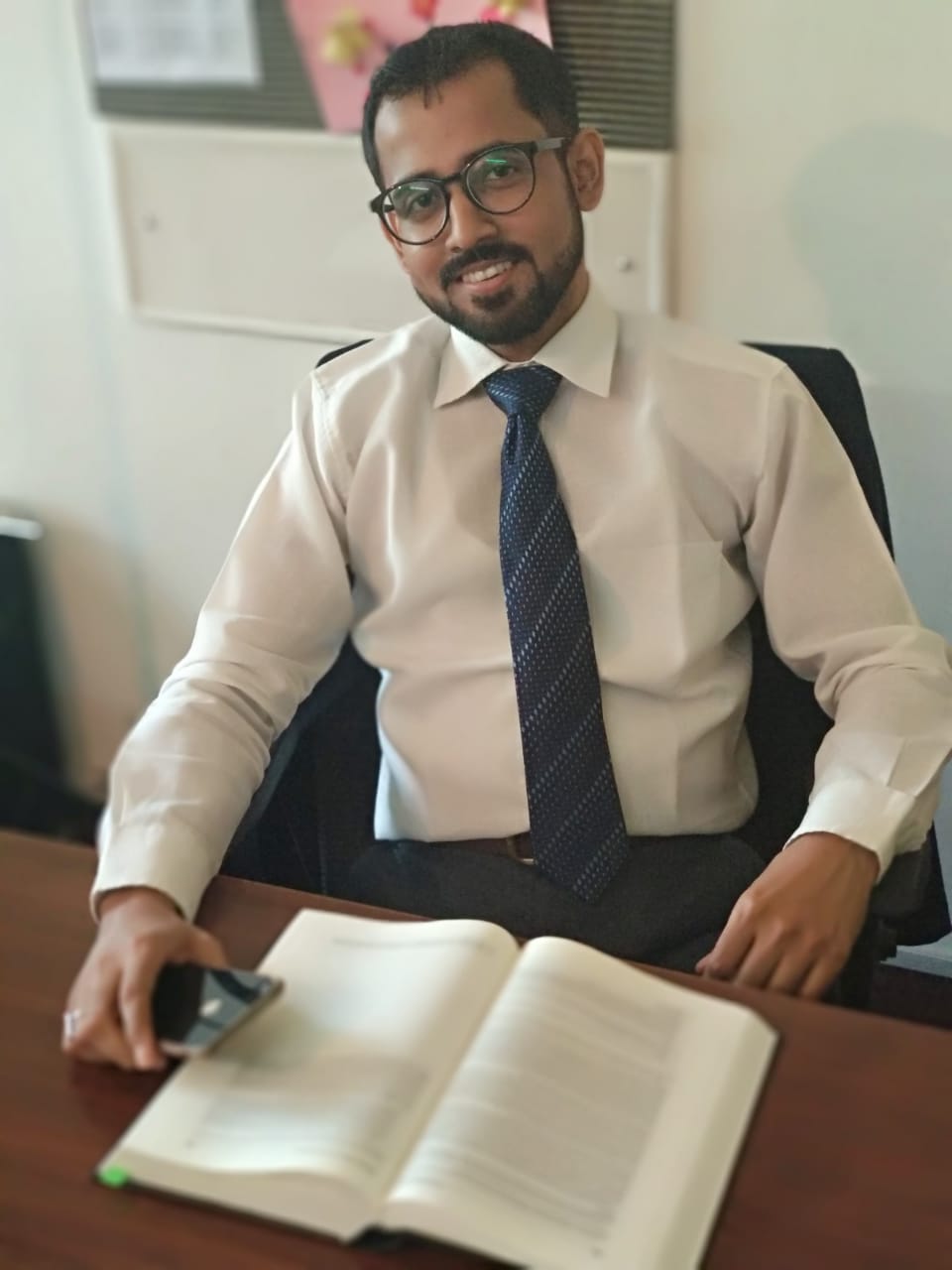
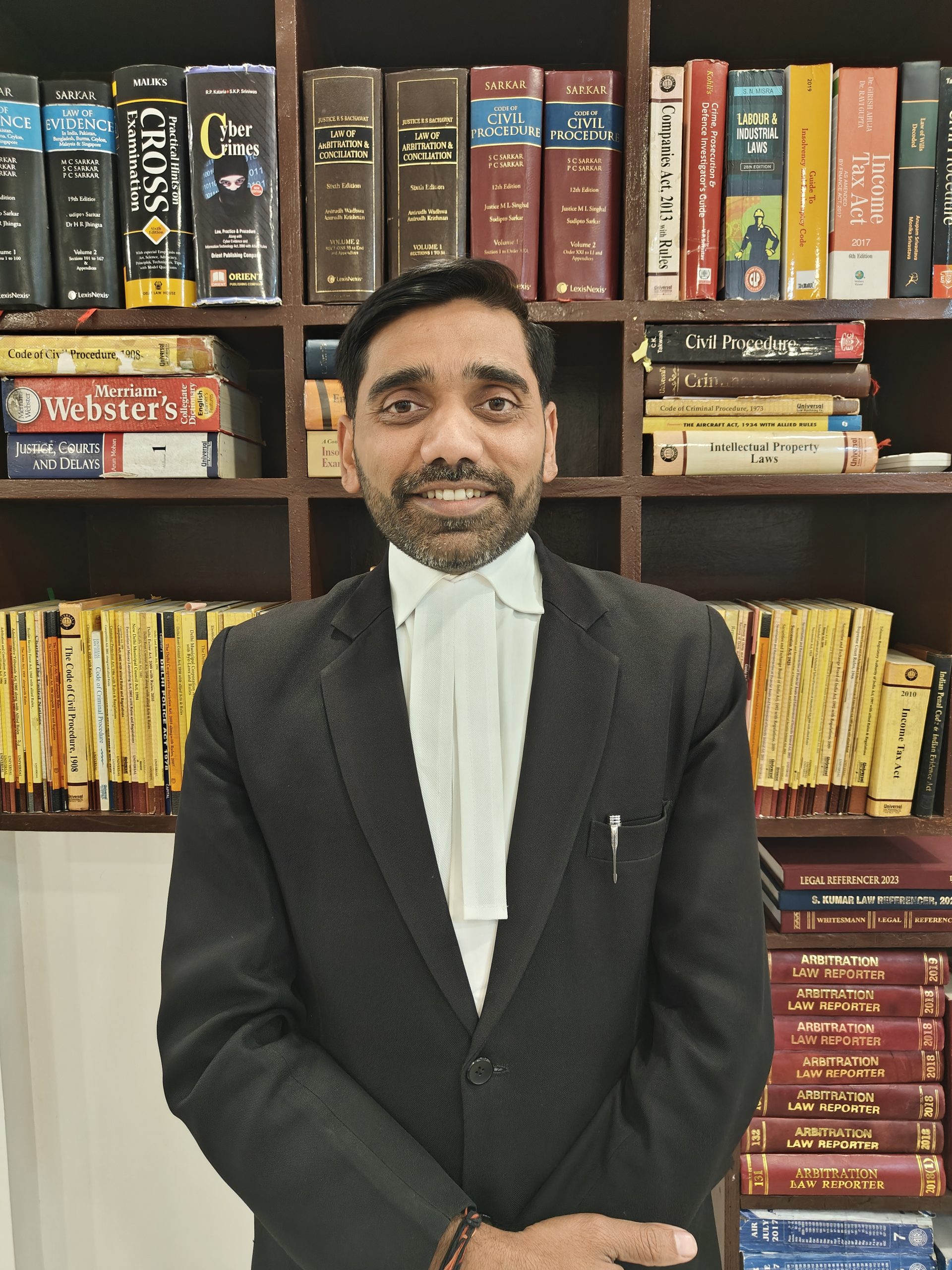
  • “Litigation is more than just a career and livelihood source. I believe that by this work I can contribute positively to society and bring about good changes in lives which I come in touch with.” – Amit Dwivedi, Supreme Court Litigator and Pegasus Scholar

    This interview has been published by Namrata Singh and The SuperLawyer Team

    Amit, could you take us through your journey and share how you embarked on your career in law? What inspired you to pursue this path, and how did your early experiences shape your professional trajectory?

    I come from a humble village background. I pursued my schooling from the government residential school of rural Madhya Pradesh, Navodaya Vidyalaya. Thereafter, I studied in the North campus of Delhi University for six years i.e., my graduation and law degree. These years have, indeed, been trans-formative for me. I made friends coming from myriads backgrounds and learnt to adjust in different environments. I started to participate in extracurricular activities including debating competitions during my graduation and soon found that I would like to spend the rest of my life doing the same as a litigation Lawyer.

    For the last six years, I have been working in various Courts and Tribunals of Delhi and across India. For me litigation is more than just a career and livelihood source. I believe that by this work I can contribute positively to society and bring about good changes in lives which I come in touch with. Since September 2022, I have been working independently.

    Having worked extensively in various legal domains, from real estate disputes to representing marginalized sections of society, what drives your passion for justice and advocacy?

    Besides being an Advocate, I am a citizen of this country. There are so many things which bother me on a day-to-day basis. Lack of access to quality healthcare services to most of the population of our country troubles me a lot. However, there is little I could do about it. 

    At the same time, this profession gives me an opportunity to right a wrong. Be it a street vendor harassed by police officials, a homebuyer robbed by a builder or a contractual employee working without any job security, I can feel their pain and wrong committed upon them agitates me a lot. Being a lawyer gives me a position to do something for them and it is my primary motivation to strive for another day. On some occasions, raising a voice means everything!    

    You’ve recently returned from the UK after participating in the Pegasus Scholarship program. How did this international experience influence your perspective on legal practice, especially in comparison to your work in India?

    My inspirational senior Ms. Namita Wali nudged me to apply in the first place, she deserves the complete credit. After the initial screening process, I was interviewed by Senior Advocate Aman Hingorani and seasoned Mediator Dr. Shweta Hingorani. Thankfully, I was selected as a KNH Foundation-Pegasus Scholar for the year 2023. I was the only lawyer with five years standing who was selected for the said scholarship in the year 2023 from India. This scholarship is a world-renowned international lawyer exchange program run by Hon’ble Society of Inner Temple, England. My fellow scholars came from different jurisdictions like the United States, Australia, and New Zealand. As a scholar, I spent Eight weeks in England and Scotland working in esteemed Barrister chambers like Blackstone, Lamb and 39 Essex. I attended court hearings in the Supreme Court of the United Kingdom, Court of Appeal, High Court, Crown Courts, and County courts. I participated in conferences held among barristers, solicitors, and clients. I interacted with judges, jurists, and policy makers. It was a life-changing experience, and I could see a different way of life and working.

    The United Kingdom has a comparatively small population and for that reason alone, they do not encounter a lot of nagging logistical issues as we in India do. The number of cases listed per day before a judge is not in two digits most of the time in the UK and in India, you might even see a three-digit cause list peculiarly on the criminal side in High Courts and consequent crisis of pendency, matters not getting heard and a bit of chaos. However, the zeal of the advocate community keeps the access to justice smooth in India and that is indeed a great achievement.

    In your role as a Panel Advocate with Counsel to Secure Justice (CSJ), you’ve been advocating for child survivors of sexual violence. What unique challenges do you face in such cases, and how do you navigate them?

    CSJ has taught me a lot. Sexual violence against a child is not only inhumane, barbaric, and brutal but it also creates multidimensional problems. The child suffers physically and emotionally. Family also finds it difficult to handle the situation. There are a lot of social stigmas attached to it as well. So, meeting a survivor and his/her family requires a lot of preparation. Most of these people have suffered at the hands of the system also so making a connection with them requires some genuine effort. However, when they see your sincerity, they rely on you, and you start working as a team. It was my affectionate senior Ms. Arushi Anthwal who guided me on this pro bono panel. She heads the CSJ’s lawyer’s team. Her commitment to the welfare of women and children is unimpeachable.    

    I have observed an unfortunate pattern in such cases. Reporting from poor strata of society against child sexual violence is good but the middle and upper classes are still finding it difficult to report this violence and they try their ‘best’ to save their shallow ‘honor’ as in these cases, usually, the perpetrator is a person of trust. Efforts to encourage reporting of child sexual violence are needed on a large scale. It is a silent pandemic!

    You’ve authored articles and participated in webinars on diverse legal topics. What motivates you to share your expertise through writing and speaking engagements?

    We all are part of a shared world. We do not exist in isolation and interdependence is the order of our society. I believe in a democratic society; exchanges of ideas have potential to bring much needed changes in society. The Right to Information (RTI) Act was born out of such efforts and it has served society so well. An ordinary citizen can file a simple application and ask for information which might unearth wrongdoings in public offices. So, I make it a point to speak and write about issues which are important and need our attention like universal access to healthcare and misery of undertrial prisoners. I believe and hope these discussions are small steps which will bring about great changes.  

    Your journey includes working with different legal mentors and chambers. How have these experiences contributed to your growth as a lawyer, and what valuable lessons have you learned along the way?

    As a first-generation lawyer, I had great difficulty finding mentors. Formally, I worked as an associate with two Advocates. My first senior was Mr. Amit Bhagat. He works on the Civil and Commercial side. He taught me how to navigate hearings and insist on reliefs. His energy was unmatchable.

    My Second senior was Advocate on record Mr. Joel. He taught me how to keep patience in tough situations and client handling. He has exceptional skills to mediate a complex dispute and I found his calm approach imitable.

    I interned under Mr. Madhav Khurana in 2017 and since then, he has always been there to support and guide me. He is very organized and conducts his cases with plans and strategies. Working with him as a briefing counsel is always a delight.

    Advocate on record Mr. Vikram Hegde is a known lawyer and his writing skills keep twitter and newspapers warm. In my independent practice, he has been a constant guide. If I lose a case in high court, then I know he would help me to take it to the Supreme Court and get the necessary relief.  

    Mr. Adarsh Priyadarshi is a guide on the criminal side. His skills to puncture a prosecution’s story is great and he has been kind enough to allow me to argue his criminal matters in Delhi High Court.  

    As a Pegasus Scholar, you had the opportunity to immerse yourself in the legal system of the United Kingdom. Were there any striking differences or similarities you observed between the UK and Indian legal systems that surprised you?

    Legal systems in both the countries are similar and have been made by the same people for obvious reasons. So, on paper we are almost the same. But, on the grounds, the situation is different. Their courts are strictly formal at all levels and in India, the informal nature of trial courts gives a breathing space to Indian masses. 

    In the UK, Civil trials get completed in three to five days, I witnessed an eviction trial getting completed and judgement pronounced in four days in Central London County Court. With due respect, such expeditious disposal in India is nearly impossible. Due to the strict cost rules, frivolous litigations and appeals get discouraged a lot there. Due to lax rules, in India litigation, at times, becomes an adventure and all disputes eventually reach the supreme court, destroying decades of people’s lives and leading to docket explosion.  

    With the rapid advancement of technology, how do you see the role of AI and automation shaping the future of legal practice, and what implications do you foresee for young lawyers entering the profession?

    Let’s look at the past to appreciate the future developments. When Covid came, almost no one was relying on e-filing and virtual court hearings were not even part of our imagination. But a small virus nudged us to use technology which was already with us. Soon, we all were filing online and appearing online. This transition has been significant.

    As far as filing and defects in court registries are concerned, I hope AI will make life easier for lawyers and court staff. I hope there will be a day when ‘defect in file’ will be a thing of the past. At the same time, I believe that there will never be a substitute for earned human experience and wisdom. So, technology will help us but eventually, human prudence will decide how it will be used.  

    Balancing personal interests and professional responsibilities can be demanding. How do you manage to find time for hobbies or leisure activities amidst your busy schedule?

    Being self-employed is not as rosy as it sounds. Being away from work means a loss of income in that situation. So, working slowly becomes a part of your life. And this is how eventually things start to find a place in your life. I like stories. I have become a bit lazy to read books for leisure, so I watch movies and tv series and these things happen at the end of day most of the time. I like watching theater and Delhi offers a good variety for the same. Being a foodie gives me the opportunity to explore new places and tastes.

    Finally, Amit, if you could offer one piece of advice to the upcoming generation of lawyers, what would it be, considering the evolving landscape of the legal industry and societal challenges?

    Decide your priorities. If you come from a humble background, then joining a law firm and having a steady income is a fairly good idea in the initial years. Such a way of functioning ensures exposure and income for you. The way litigation is structured in India, it is not very welcoming for an outsider without significant resources and infrastructural support. So, calculating and managing expectations is important. 

    The position of legal researcher in High Courts and Supreme Court is something to aspire to. It gives you a steady income in the initial years and the exposure is unparallelled. These places are likely to motivate you to pursue academic endeavors abroad on scholarships. 

    Arbitration is here to stay as India has become the focus of global trade due to its huge population. World creates and India consumes, as the joke goes! So, there would be a lot of disputes, even of an international nature, in such a setup. This field could show you the world and teach you how to look beyond your self-created boundaries. Opportunities to work abroad may also cross your way and the sky’s the limit.

    So, my advice would be to plan your way out and be brave to walk on that path!

    Get in touch with Amit Dwivedi-

  • “Thought leadership is integral to staying ahead in the legal field. While it requires dedication, the impact of sharing insights and generating discussions outweighs the challenges. It’s about giving back to the profession and shaping its future.” – Divi Dutta, Partner – Private Client & General Corporate at Khaitan & Co.

    This interview has been published by Namrata Singh and The SuperLawyer Team

    Your journey from college to becoming a Partner at Khaitan & Co. has undoubtedly been filled with challenges and achievements. Can you share with us some pivotal moments or challenges you faced during your college years and after graduation, and how you overcame them to reach where you are today?

    A little-known fact about me – before joining law, I worked with Raell Padamsee as part of her theatre group. I moved into law subsequently. I graduated in law in 2005 from the Government Law College, Mumbai and since then it has been an exciting journey. I worked in one of the oldest law firms in India – Crawford Bayley in its Mumbai office. I had the opportunity to train under Mr. Sanjay Asher for almost 6 years which shaped my understanding, interest and aspirations in the field of corporate law. Subsequently, I moved to Delhi in 2012 and joined the then Amarchand Mangaldas Suresh A Shroff & Co., the unified firm. Subsequently, post the split in 2015, I continued with Shardul Amarchand Mangaldas & Co (SAM).

    However, the most pivotal decision in my journey has been to take up the challenge and set up the private client practice which was relatively unknown at that time under the aegis of Shardul Shroff. This was unchartered territory for me as hardly any law firm had a dedicated private client practice at that time and there were no set precedents or background on this practice. We had to develop our own understanding of issues, create drafts and reach out to other limited experts in the field. Despite the initial struggles and the teething problems, I can proudly say that foraying into the private client practice has been the most significant professional decision I have made in my life. This practice has been both challenging and rewarding at the same time. After spending almost 12 years in SAM, I recently joined the private clients practice group in Khaitan & Co. This move was not easy given my long association with SAM but I am excited and raring to go and make this next journey even more memorable and fruitful.  

    I feel tremendous gratitude for the opportunities I have had and the support and guidance I received from Mr. Shardul Shroff. I am also confident that my association with Khaitan & Co. will only further my passion for the private client practice and give me a platform to take my journey to greater heights.

    Your work often involves delicate matters related to family dynamics and wealth management. How do you approach building trust and rapport with your clients, especially when dealing with sensitive topics like family disputes or succession planning?

    I treat every client as family. Most family matters need to be dealt with extreme sensitivity and confidentiality. You need to be a friend and confidant of your client first to enable them to trust you and open up to you. The legal aspect of these issues comes much later. Additionally, in a practice like this, the relationship does not end once the mandate has ended. The rapport that gets developed in these matters transforms into the relationship as there is a certain internal trust that gets built with the client. I continue to have a great relationship with most of my clients even if I am no longer advising them on legal matters and they keep reaching out to me for personal as well as professional assistance on other matters from time to time.

    Besides your legal expertise, you seem to have a flair for writing and thought leadership. How do you balance your professional commitments with your passion for writing, as seen in your contributions to various publications?

    The legal field is constantly evolving and the laws keep getting amended basis changing circumstances and other practical challenges. I feel that it is very important to be aware and keep oneself updated with the latest developments, especially in your area of expertise. It is equally important to create awareness amongst clients and peers as well. Therefore, while it is difficult to remove time and create a balance between professional commitments and making contributions, I look at these contributions more as a way of giving back to society, mentoring juniors, exchanging information amongst peers and generating business for my field of work. Further, given the nature of my practice, the reach of legal articles relating to succession planning, inheritance and wealth management is pretty wide.

    Your involvement in setting up operations for foreign companies in India is impressive. What are some key challenges these companies face, and how do you navigate the regulatory landscape to ensure smooth transitions?

    Most foreign companies are not aware of the regulatory regime in India and often question the requirement of providing documents/information. The regulatory regime in India is cumbersome to comply with in the initial stages of set up and the maximum time and effort is usually spent on collating the right documents/information from the foreign clients, explaining the submission criteria and requirements of the authorities and managing timelines. Fortunately, the current regime has streamlined a number of these processes, and it has now become easier to set up operations for foreign companies in India. Additionally, foreign clients are now more aware of the Indian system and are usually more cooperative now than before in supporting us in the set-up.

    After dedicating more than 11 years to Shardul Amarchand Mangaldas & Co., you made the transition to Khaitan & Co. as a Partner. What motivated this move, and how do you envision your role evolving in your new firm compared to your previous experiences?

    My 11 years in Shardul Amarchand Mangaldas were very fruitful and I am extremely thankful to Mr. Shroff for welcoming me into the firm. I have learnt a great deal from my experience in the firm and I take back fond memories of my time in the firm with me. I am very excited at this stage in my life and I am eagerly looking forward to my role in the Khaitan & Co. family. Khaitan & Co. has the largest private client practice in India and I intend to expand the practice to even greater heights and have an extended outreach in every corner of India through my association with Khaitan & Co. Mr. Haigrieve Khaitan is already very well known in this field and I am confident that with his support and guidance, my journey will be even more successful, enriching and rewarding than it has been so far.

    As a Partner at Khaitan & Co., what do you find most rewarding about your role, and how do you foster a collaborative and supportive environment within your team?

    The most rewarding aspect of my role in Khaitan & Co. is the confidence that the Khaitan family has reposed in me. They are always ready to support me, collaborate with me and have been extremely welcoming. They have done everything possible to provide me with a platform and resources that I can only grow to greater heights from here. The environment at Khaitan & Co. is one of extreme support and collaboration and I have naturally imbibed that thought process. The best aspect about Khaitan & Co., apart from its legal competence and a brilliant team, is its culture. 

    Beyond your professional endeavors, do you have any hobbies or interests that you’re passionate about? How do you balance your personal pursuits with your demanding professional commitments?

    I am an out-and-out foodie and I love to try new places, new cuisines and new food items, be it a new restaurant, a new café or a new dhaba. I also love watching movies. Some of my food interests are shared by clients and colleagues as we try new places together. I try and watch a late night movie on most Fridays after a long week of work. Other than this, I enjoy playing table tennis and swimming.

    For aspiring lawyers looking to build a strong foundation, what kind of internships would you recommend they focus on? Additionally, what are your views on gaining experience through internships with tier 1, tier 2, or tier 3 law firms?

    I think it is very important to intern under different law streams such as litigation, corporate, banking & finance, competition etc. to figure out where your interest lie. If you don’t like what you do, you will never be able to do it for long. I also feel, tier 2 and tier 3 law firms provide an overall experience as most of them do not have segregated practice areas and one would be able to gain a lot of experience in these fields. So one should definitely do a few internships in tier 2 and tier 3 law firms before moving on to tier 1.

    For students aspiring to specialize in private client practice or general corporate law, what advice would you offer to help them navigate the complexities of the legal profession and build a successful career in these niche areas?

    Nowadays most law firms conduct webinars, training sessions and interviews on important topics under general corporate and private client practice. Additionally, there are lots of articles and publications that are authored by partners and other associates from various law firms. There is a huge library of material in the digital space on every aspect of these practices. Every aspiring student should read and grasp this material as it really helps them to get an understanding of the practice and it also creates an edge for them in interviews and interactions with other legal professionals. Most lawyers also take guest lectures in law schools and once should try and interact with these professionals to understand their approach and seek guidance from them. These few aspects can really help any student in generating an interest in the profession. This should of course be coupled with sincerity and hard work as there are no shortcuts in any profession.

    Get in touch with Divi Dutta-

  • “Resilience and adaptability are crucial especially in a rapidly evolving field like law”- Arun Visweswaran, Partner, Addleshaw Goddard

    This Interview has been published by Pragya Chandni and The SuperLawyer Team

    Sir, could you please share the pivotal moments or experiences during your academic journey, from studying Electronics and Communication Engineering at Anna University to pursuing Law at King’s College London? What influenced your decision to transition to law?

    I enrolled in Engineering as I always had an interest in the sciences and intended to pursue a career as an Engineer. However, both during school and later during my Engineering degree, I found myself consistently drawn to activities such as debating and writing and taking on leadership roles representing my peers. This led me to explore other career opportunities and law presented a perfect confluence of speaking, reading and writing skills which attracted me greatly more so given its impact on every aspect of society.  I also realised that the analytical and problem-solving skills I had developed while studying engineering would be an asset in legal practice and provide a unique perspective on legal issues.

    Studying law at King’s College London was a transformative experience. It not only provided me with a solid foundation in law (and confirmed my decision to switch paths) but also exposed me to a diverse and dynamic legal environment in one of the world’s leading legal hubs. 

    How did your early experiences as a trainee at Clifford Chance shape your career path? 

    My early experiences as a trainee at Clifford Chance were invaluable and played a significant role in shaping my career path. During my training, I was exposed to a broad range of practice areas including transactional work and disputes. This gave me a well-rounded understanding of the legal profession and allowed me to identify the areas I was most passionate about.  It also gave me many life-long friends who continue to inspire me.

    Being part of a global law firm also offered me the opportunity to work on complex and high stakes matters in three different jurisdictions being the UK, Dubai and Singapore. This experience was instrumental in developing my skills in navigating cross-border legal issues and managing diverse client relationships.

    The firm’s approach of providing the highest quality of service to clients and its emphasis on continuous learning and development have greatly influenced my approach to legal practice. These early experiences laid a strong foundation for my subsequent roles and continues to guide me in my current position as a Partner at Addleshaw Goddard LLP.

    How has your experience evolved with your recent transition to Addleshaw Goddard LLP as a Partner in their disputes team?

    I am grateful for the opportunity to join the talented team of lawyers at Addleshaw Goddard LLP who are a leading global law firm. I joined them at a time of unprecedented growth for the firm which has been built on a solid platform of expertise and providing exceptional legal services to clients. These principles resonate strongly with my approach to legal practice, and I look forward to growing further with them. 

    You’ve been involved in many high-value and complex cases throughout your career. Could you walk us through a specific case that stands out to you and share the challenges you faced and lessons learned? 

    The first construction dispute I handled as an associate was also a memorable one due to the challenges it posed to me personally and the lessons learned. This was a large infrastructure dispute valued at over USD 200 million and I was leading all aspects of the matter from drafting the pleadings, handling witnesses and experts to conducting a large part of the advocacy.  

    While I had participated in various moots during law school, this was my first experience of advocacy (after law school) where I had to cross-examine three fact witnesses and the delay expert. In the process of preparing my questions, I came across one of the clearest expositions of the art of cross-examination in Irving Younger’s lecture from the 1970’s (which is available on Youtube). Taking his “10 commandments” as a guide, I carefully prepared my strategy for cross-examination and delved into technical questions with the assistance of our delay expert. It was therefore entirely satisfying to have effectively cross-examined the expert’s opinion and challenged their credibility such that the Tribunal dismissed their report entirely.  It was particularly gratifying when the other side personally congratulated me on a very good cross-examination. 

    This case taught me the importance of thorough preparation and the value of a well-planned cross-examination. It also reinforced my focus on construction disputes where my engineering background brings an ability to delve into both the legal and technical issues.  

    With your extensive experience across the Middle East how has working in diverse legal systems and cultures shaped your approach to dispute resolution, and what unique challenges have you encountered?

    Working in diverse legal systems and cultures in the Middle East has significantly shaped my approach to dispute resolution. It has taught me the importance of understanding the local business culture, legal landscape, and the unique dynamics of each jurisdiction. 

    Each country in the Middle East has a unique legal system and regulatory framework. For instance, the DIFC Courts in Dubai and the ADGM Courts in Abu Dhabi operate on a common law framework, while other parts of the UAE follow civil law. Understanding these differences and being able to operate effectively within these diverse legal systems requires adaptability and has been an opportunity for professional growth.

    Overall, my experience in the Middle East has enriched my legal practice and provided me with a broader and more nuanced perspective on dispute resolution.

    Given your role in tech disputes, how do you navigate the intersection of technology and law? Can you share a notable case or challenge you faced in this realm and how it was resolved?

    Navigating the intersection of technology and law requires a good understanding of both fields. It’s about being able to understand the technical aspects of a case, as well as the legal implications. This is where my background in engineering combined with my legal expertise comes into play.

    One notable case I handled involved advising a global tech company on a multi-million-dollar software licensing dispute with a global software/cloud service provider. The case was complex as it involved intricate details of software licensing, cloud computing and IP rights. The challenge was to understand the technical aspects of the software provided and how that interacted with the contract terms and the facts which were quite complex. 

    Our advice allowed the client to successfully conclude a settlement with more than 90% reduction of the claim amount. The case was a testament to the importance of understanding both the technology and the law in tech disputes. It also highlighted the value of negotiation and mediation skills in resolving complex disputes.

    How has sharing your insights through publications contributed to your professional growth, and how do you stay updated on the latest developments in your areas of expertise?

    Sharing insights through publications has been a vital part of my professional growth. It has not only allowed me to contribute to the broader legal discourse but has also helped me clarify my own understanding of complex issues. Furthermore, my publications have also been a valuable tool for engaging with clients and other professionals in the field.

    Staying updated on the latest developments in my areas of expertise is a continuous process. I regularly read legal articles, attend seminars and conferences, and participate in professional networks and associations. I also engage in regular discussions with colleagues and other professionals in the field, who often provide valuable insights into emerging trends and issues.

    Drawing on your experience, what advice would you give to recent law graduates who are just starting their legal careers? What key lessons have you learned that you believe would be valuable for those entering the legal profession today?

    1. Find your passion: Law is a broad field with many specializations. Try to gain exposure to different areas of law early in your career to identify what truly interests you. Once you find your passion, dive in and become an expert in that area.
    2. Never stop learning: The law is constantly evolving, and it’s important to stay updated on the latest developments in your field of practice. Regularly read legal journals, attend seminars and webinars, and participate in professional associations.
    3. Develop strong relationships: Building strong relationships with colleagues, mentors, and clients is crucial for advancement in the legal profession – and this starts right from law school!  
    4. Work on communication skills: Effective communication is key in the legal profession. Whether you’re advocating for a client in court or drafting legal advice the ability to convey your ideas in a simple, structured, and persuasive manner is crucial. 
    5. Embrace technology: Technology is transforming the legal profession. Be open to learning about new legal tech tools (e.g.AI) and how they can enhance your practice.

    As for key lessons, one of the most important I’ve learned is that resilience and adaptability are crucial especially in a rapidly evolving field like law and one should remain curious about developments rather than shun them altogether. The other lesson imparted to me by a senior counsel I admire is that of the 3 P’s – Preparation, Preparation, Preparation – which is critical to success in any case.

    Get in touch with Arun Visweswaran-

  • “Coordinating with external counsel, ensuring timely communication, and maintaining consistency in legal strategies are crucial aspects that require careful attention”- Saswata Banerjee, Chief Manager Legal and Compliance at Bajaj Allianz Life Insurance Co. Ltd.

    “Coordinating with external counsel, ensuring timely communication, and maintaining consistency in legal strategies are crucial aspects that require careful attention”- Saswata Banerjee, Chief Manager Legal and Compliance at Bajaj Allianz Life Insurance Co. Ltd.

    This Interview has been published by Pragya Chandni and The SuperLawyer Team

    Can you share more about the pivotal moment when you decided to shift from your initial aspirations in Economics towards pursuing a career in law? What influenced this decision the most?

    Being a first generation lawyer from my family I had no idea about the field of law. So back in 2004 after my plus 2 exam completion during the break time I came across a friend who was  appearing for law entrance exam for Calcutta University and NUJS as at that time there was no CLAT. While talking with him on a regular basis I got a glimpse of the legal world and got really interested in the field of law and was intrigued by the court proceedings. I decided to appear for the entrance exam with a short preparation and got selected. By God’s will started the journey into the field of law. Also my family members immensely supported me in this decision.

    Your journey into law began with appearing for the law entrance exam at the insistence of a friend. How did you feel when you were selected, and how did that moment shape your perspective on your future career?

    When I got selected I was elated that I was getting a chance to be a lawyer. It really shaped my career as well as my family life also as I met my wife in law college who was a very good friend at  that time. Though my college was not a National University but the faculty members were good and really passionate in teaching, I am always grateful to them for their guidance. 

    Interning under the guidance of Mr. Sajal Kanti Biswas seems to have been a transformative experience for you. Could you elaborate on how his mentorship influenced your understanding of the legal profession and shaped your career trajectory?

    Firstly, Mr. Biswas provided me with invaluable hands-on experience by allowing me to directly involve myself in live cases. This exposure to real-world legal scenarios, including discussions with clients, preparation of pleadings, and strategizing for upcoming cases, was instrumental in enhancing my interest and deepening my understanding of various legal principles and procedures. Being immersed in the practical aspects of the legal profession under his mentorship helped me bridge the gap between theoretical knowledge gained in law school and its practical application in the field.He taught me to value every task in law, stressing that no work is small. . 

    Specializing in the BFSI sector after completing your law degree is quite intriguing. What motivated this decision, and how did your experience at the B School of Insurance and Risk Management in Hyderabad contribute to your professional growth?

    Specializing in the BFSI (Banking, Financial Services, and Insurance) sector started  from my observations while practicing law after completing my BALLB degree. Initially, as a newcomer to the legal profession, I found the complexities of financial matters daunting. However, exposure to numerous banking and insurance cases in court intrigued me, sparking an interest in the field. Recognizing the need for specialization, I considered pursuing an LLM. During my research, I discovered a joint course offered by NALSAR and IIRM specifically tailored for lawyers seeking to specialize in finance and capital markets. Although I missed the deadline for this program, my eagerness to pursue further studies led me to explore other options. This quest led me to the B School of Insurance and Risk Management (IIRM) in Hyderabad, where I found specialized courses in Risk Management. Despite not initially planning for this specialization, I applied for the program and was selected after successfully completing the entrance test.

    At IIRM, I gained valuable knowledge and skills in risk management within the BFSI sector. Interacting with industry experts and peers broadened my perspective. Overall, my time at IIRM complimented my legal background and prepared me for a successful career in the BFSI sector.

    Joining ICICI Lombard GIC Ltd. marked the beginning of your corporate legal career. Can you walk us through the challenges you faced initially and how you managed to adapt to your role within the corporate legal team?

    Joining ICICI Lombard GIC Ltd. marked a significant shift in my career as I transitioned into the corporate legal field. Initially, I encountered several challenges as a fresher in this new environment. Each day presented a new learning opportunity, and I had to adapt quickly to the workings of a corporate legal team.

    One of the major challenges I faced was understanding the dynamics of corporate operations and the intricacies of corporate law. However, my reporting managers provided unwavering support, guiding me through various tasks such as drafting notices, agreements, and participating in complex contract negotiations. Their mentorship was invaluable in helping me navigate the complexities of corporate legal work.

    Additionally, my role required frequent interactions with external lawyers for advisory purposes. These interactions exposed me to a wide range of legal concepts and furthered my understanding of corporate law. 

    Despite initially feeling overwhelmed, I persevered and focused on honing my skills. With dedication and continuous learning, I gained confidence and successfully closed numerous contracts. This experience taught me resilience, adaptability, and the importance of continuous growth in corporate law. My time at ICICI Lombard GIC Ltd. laid a solid foundation for my corporate legal career.

    Transitioning from litigation practice to corporate litigation presented its own set of challenges. What were some of the most significant hurdles you encountered during this transition, and how did you overcome them?

    Transitioning from litigation practice to corporate litigation management presented several significant challenges. One of the most notable hurdles was adapting to the different approach required in corporate litigation, which involves more strategic planning and coordination with practicing lawyers for execution.

    Initially, I had to familiarize myself with the nuances of corporate litigation management, which differed considerably from my previous experience in court. This required me to understand the broader strategic objectives of the company and align them with the legal strategies employed in litigation matters.

    Additionally, collaborating effectively with practicing lawyers across various courts and jurisdictions was essential but posed its own challenges. Coordinating with external counsel, ensuring timely communication, and maintaining consistency in legal strategies were crucial aspects that required careful attention. I prioritized building strong relationships with external counsel and maintained open communication channels. By embracing a learning mindset and adapting proactively, I effectively managed litigation matters.

    Your experience at Star India Pvt Ltd. provided insights into media laws. How did this experience differ from your previous roles, and what were the key takeaways for you in terms of navigating legal challenges in the media industry?

    Transitioning to Star India Pvt Ltd. from my previous roles in the BFSI sector presented a unique set of challenges and learning opportunities. While my specialization provided me with a solid understanding of legal intricacies in finance, entering the media industry required a fresh perspective.

    The key difference lay in understanding the nuances of the media business so Before diving into the legal intricacies of the media industry at Star India Pvt Ltd., I prioritized understanding the company’s business. Interacting with business leaders helped me understand the intricacies of the industry, enabling me to approach legal challenges with a comprehensive understanding of the business context.

    Although the media industry differed from my previous experience, the foundational skills and adaptability acquired in my previous roles proved really helpful. Leveraging my understanding of business dynamics, I navigated legal challenges more effectively and aligned legal strategies with overarching business objectives.

    One of the key takeaways from my experience at Star India Pvt Ltd. was the importance of continuous learning and adaptability in a dynamic industry. The media sector is constantly evolving, and staying abreast of legal developments and industry trends is very essential for legal work.

    Overall, my tenure at Star India Pvt Ltd. provided me with insights into media laws and reinforced the significance of understanding the business context in addressing legal challenges effectively. 

    How do you approach overseeing legal objectives for such a large area, and what strategies do you employ to ensure success?

    I started by understanding the work in that area, including the businesses and operations. Thereafter, I worked closely with my seniors to set clear legal goals that fit with the company’s overall plans. Good communication within the team members and with other departments is the key for everyone to work together smoothly. 

    We also keep an eye out for any legal risks and try to mitigate them before they become big problems. I talk regularly with other departments of the company further to understand their legal needs and help out where I can. 

    One notable aspect of this organization is the open communication fostered by our superiors. They encourage us to take risks and they also actively seek to understand ground-level issues through effective communication. Additionally, we are consistently striving to enhance our legal strategies and processes to adapt to evolving legal and business landscapes.

    Based on your extensive experience in the legal field, what advice would you offer to fresh graduates who are considering a career in law?

    The legal field offers numerous opportunities and is constantly evolving. Whether in litigation or corporate law, there are vast prospects for fresh graduates. As our country’s GDP grows, the demand for legal professionals will increase, providing ample opportunities for lawyers. 

    However, continuous learning and staying updated with the latest developments in the sector are essential for growth in this field. Many legal websites and resources are nowadays which are invaluable resources for students in this regard. Additionally, while the initial stages of a legal career may seem daunting compared to other professions, the rewards throughout one’s life are significant.

    Get in touch with Saswata Banerjee-


  • “Never underestimate the importance of mastering cross-examination. Whether you’re dealing with civil or criminal cases, it’s the bread and butter of legal practice.”- Sandeep Chatterjee, Founder at Chatterjee Law Chambers

    “Never underestimate the importance of mastering cross-examination. Whether you’re dealing with civil or criminal cases, it’s the bread and butter of legal practice.”- Sandeep Chatterjee, Founder at Chatterjee Law Chambers

    This Interview has been published by Pragya Chandni and The SuperLawyer Team

    Can you walk us through your journey into the field of law? 

    My journey into law began long before I even stepped foot into a law school. It all started with my mother’s unfulfilled dream of becoming a lawyer—a dream she passed on to me, along with a burning curiosity for all things legal. But unlike most, I took a bit of a detour. Before diving into my LL.B., I pursued a Master’s in Political Science. Why? Because I’ve always believed that understanding the broader political landscape is crucial for any lawyer. Sure, some might see it as an outdated approach, but for me, it’s been nothing but beneficial. It’s given me a deeper perspective on the law, allowing me to approach legal issues from a more practical angle. Instead of just diving into statutes and cases, I first dissect the underlying principles. This “old-school” approach, as some might call it, has been my secret weapon. It helps me craft stronger legal arguments and advocate more effectively for my clients. And in a field as competitive as law, having that extra edge can make all the difference.

    What inspired or motivated you to pursue a career in arbitration and general civil litigation?

    During my internship with Mr. Harish Salve, Senior Advocate, I had the privilege of delving into the world of arbitration—an experience that left an indelible mark on my legal journey. Working alongside Mr. Salve exposed me to the intricate workings of arbitration cases, offering me invaluable insights into this specialized field. Witnessing firsthand the rapid evolution of arbitration in India and its growing significance on the global stage was eye-opening. It became clear to me that arbitration holds immense practical importance and has the potential for significant expansion in our country. Seeing India’s conducive environment for arbitration, I’m inspired by the vision of it becoming a leading hub in this domain, and I’m eager to contribute to its advancement.

    Additionally, I’m drawn to general civil litigation for its diverse practice areas, including property disputes, contract law, and family matters. The bustling demand for legal services in civil matters highlights the constant flow of meaningful work in this field. Starting out as a generalist allows me the opportunity to explore various areas and gradually specialize in those that resonate with me. This journey towards specialization not only fosters deeper engagement but also facilitates continuous development of expertise over time.

    Furthermore, the direct interaction with clients in civil litigation adds a tangible sense of fulfillment to my work. Witnessing the real impact of my efforts on their lives is truly rewarding. The autonomy, flexibility, and ongoing learning opportunities inherent in this field make it an incredibly fulfilling career path for those who are passionate about effecting positive change through the practice of law in India.

    With your extensive experience in various legal roles, could you share some highlights or memorable cases that have shaped your career?

    In my career journey, while I’ve encountered numerous memorable moments, two cases hold particular significance for me. One of them was representing Dr. R. K. Pachauri, which served as a pivotal moment marking my entry into the legal profession as a junior in a law chamber. This case was unique in that it involved aspects of both civil and criminal law, offering me invaluable learning experiences. Through working on this case, I gained a deeper appreciation for the necessity of meticulous clerical work and thorough research in ensuring effective advocacy.

    Another case that remains vivid in my memory involved a service matter with clear legal precedents but unique circumstances for my client. It was a challenging situation that required me to present arguments before the Hon’ble Division Bench of the Karnataka High Court. I vividly remember the pressure and intensity of the courtroom as I meticulously prepared to address the nuanced aspects of the case. With countless hours of research and preparation, coupled with careful attention to every detail, I stood before the bench, advocating for my client’s rights for 4 hours before the bench. The experience was intense, but seeing the judges carefully consider my arguments and ultimately ruling in favor of my client was incredibly rewarding. It was a testament to the importance of dedication, hard work, and attention to detail in achieving success in the legal profession.

    These experiences have truly highlighted for me the critical importance of being thoroughly prepared and having a deep understanding of the intricacies within each case. It’s not just about knowing the law; it’s about going deep into the unique circumstances of every situation. These cases have shown me that with dedication and hard work, even the most challenging situations can be handled successfully. They’ve solidified my belief that true excellence in legal practice comes from this level of commitment and understanding.

    You’ve been recognized for your excellent reputation in delivering high-quality client service. How do you ensure client satisfaction while navigating complex legal matters?

    In my practice, my clients’ well-being is at the heart of everything I do. I believe in real, meaningful communication—not just ticking boxes. I make it a priority to have open and honest conversations with my clients regularly. Every case is different, so I adapt my approach to suit their individual needs, ensuring they have a clear understanding of what to expect. When the going gets tough, I’m not just a legal advisor—I’m a supportive ally. I’m there to provide not just legal expertise, but also a listening ear and a comforting presence during challenging times. I actively seek feedback from my clients because I value their perspective—it helps me refine my strategies and provide even better service. 

    Your educational background includes a Bachelor of Law from Campus Law Centre, University of Delhi as well as a Master’s Degree in Political Science. How did your academic experiences contribute to your professional development in the legal field?

    In addition to my Law Degree, as already mentioned, I’ve pursued a Postgraduate degree in Political Science, a deliberate choice aimed at broadening my understanding of the legal field. I firmly believe that a multidisciplinary approach enhances one’s comprehension of law. Political science has provided me with valuable insights into the historical, social, and ideological factors that shape legal systems and frameworks. Through studying governance, policy-making, and power dynamics, I’ve gained a deeper understanding of the broader context in which legal decisions are made. By integrating these disciplines, I’ve developed a comprehensive perspective that enables me to understand legal matters effectively and advocate for my clients with clarity and depth. 

    As the founder and lead lawyer of Chatterjee Law Chambers, what challenges did you face in establishing your own practice, and what strategies did you employ to overcome them?

    Establishing your own legal practice presents a myriad of challenges that are all too real. One of the biggest hurdle is attracting and retaining clients. It’s not just about being a great lawyer You also need to master the art of networking and marketing to build a solid client base. And once you’ve got clients, keeping them happy and loyal requires constant dedication and delivering top-notch service.

    Financial management is another tough nut to crack. You’ve got to balance your income and expenses, handle billing and collections, and plan for future growth—all while keeping a keen eye on your bottom line.

    Then there’s the administrative side of things, which can feel like a full-time job in itself. From managing paperwork and documentation to overseeing staff and office operations, there’s always something demanding your attention.

    I’ve delved deep into these challenges in an article I wrote titled ‘Challenges Faced by Advocates When Establishing Their Own Chamber.’ In it, I share the gritty realities of starting and running a successful legal practice, along with practical strategies to overcome these obstacles. It’s all about proactive problem-solving and a relentless commitment to making it work, despite the hurdles that come your way.

    Collaboration and teamwork are essential in the legal profession. How do you foster a collaborative environment within your legal team to achieve success in your cases?

    We thrive on open communication, where everyone’s ideas and insights are valued and freely shared. We’ve learned that clearly defining roles and responsibilities is key to keeping things running smoothly and maximizing our efficiency. Plus, having a diverse range of perspectives around the table sparks creativity and helps us tackle problems from all angles.

    Our collaboration isn’t limited to formal meetings; it’s a constant exchange of ideas and information. Whether we’re discussing case strategies over coffee or brainstorming solutions late into the night, everyone’s voice is heard and respected. Technology plays a big role in keeping us connected, especially since we often work remotely. But it’s the personal connections we’ve built—through mentorship, knowledge sharing, and celebrating each other’s successes—that truly bring our team together. And it’s not just about winning cases; it’s about growing together as professionals and as people.

    In addition to your legal expertise, you also possess strong organizational skills and strategic communication abilities. How do these skills play a role in effectively representing your clients’ interests?

    My ability to represent my clients effectively stems from a multifaceted skill set that I’ve gained through my limited years of experience. It’s not just about knowing the law; it’s about being organized, strategic, and an excellent communicator. When it comes to organization, I’m meticulous. I leave no stone unturned in managing every aspect of a case, ensuring nothing slips through the cracks. This attention to detail allows me to plan strategically, tailoring my approach to fit the unique needs of each case and maximizing our chances of success. But it’s not just about what happens in the courtroom. Building and maintaining strong relationships with my clients is equally important. I pride myself on my ability to communicate clearly and transparently, keeping my clients informed every step of the way. Whether it’s explaining legal options, providing updates, or preparing for negotiations, I ensure my clients are empowered to make informed decisions and actively participate in their legal matters.

    Finally, considering your journey and accomplishments, what advice would you offer to fresh graduates aspiring to pursue a career in law, especially those interested in areas like arbitration and civil litigation?

    Here’s some down-to-earth advice I’ve gathered from my own experience: Stay focused and humble. Surround yourself with people who can teach you something new every day. Don’t get sucked into office gossip—instead, listen to the constructive criticism your senior colleagues offer. Leave your ego at the door, especially when dealing with your immediate superiors. It’s crucial for maintaining good professional relationships. And when it comes to choosing a law firm to work for, do your homework. Don’t just settle for any firm out of desperation. It’s better to wait for the right fit than to end up feeling stuck and unfulfilled. 

    Finally, never underestimate the importance of mastering cross-examination. Whether you’re dealing with civil or criminal cases, it’s the bread and butter of legal practice. Approach it with dedication and sincerity, because it’s a skill that will serve you well throughout your career.

    Get in touch with Sandeep Chatterjee-

  • “When one is doing relatively better in their career, it is easy to set a certain “effortless” narrative for their story. However, it is neither fair nor honest if they don’t acknowledge the years of struggle they endured to be wherever they are today.”- Stutee Nag, Dual-qualified Attorney, International Family Law Office of Jeremy D. Morley

    “When one is doing relatively better in their career, it is easy to set a certain “effortless” narrative for their story. However, it is neither fair nor honest if they don’t acknowledge the years of struggle they endured to be wherever they are today.”- Stutee Nag, Dual-qualified Attorney, International Family Law Office of Jeremy D. Morley

    This Interview has been published by Pragya Chandni and The SuperLawyer Team

    Could you please share with us the story of how you chose to pursue a career in law, especially focusing on international family law and child custody matters between India and the U.S.?

    Being a lawyer is tough. 

    Being a young lawyer is tougher. 

    But being a first-generation, young lawyer – well, that’s just pure chaos!

    I received my law degree in India in 2012, and it has been quite the journey from a fresh law graduate to an international family law practitioner. From being a law clerk at the Punjab and Haryana High Court, to a litigation associate in New Delhi, to an LL.M. candidate in New Hampshire, to a duly licensed New York attorney, to a wife, and, most importantly, to a mother – I have had the good fortune to evolve at every step.

    My initial connection to this area of law and my continued interest in this field is a sum total of several factors. I stumbled upon this particular practice area by chance when I started working for one of the most renowned international family law practitioners in the world, I am based in one of the most diverse cities in the world with a high number of internationally born population, I come from a country that has the world’s biggest diaspora, I am a dual-qualified attorney, and I am a young immigrant mother in an international marriage. In essence, I can relate to the challenges faced by international families, not just as their attorney but also on a much more personal level.

    As someone deeply involved in international family law, could you shed light on what are some of the most significant challenges that your clients face after the breakdown of an international marriage/relationship, particularly concerning issues like International Parental Child Abduction (IPCA)?

    I think the biggest challenge for a person stuck in the middle of an international divorce or custody dispute is to secure effective and timely legal advice. It is challenging enough to figure out the laws and the public policy of one jurisdiction but throw in a whole other continent, and it’s a different ball game altogether. From the financial aspects of a divorce to child custody laws, there are different advantages (or disadvantages) that come with a particular jurisdiction. This often ends up in parties initiating multiple parallel proceedings against each other and then ensuing a judicial tug-of-war, especially in child custody cases. Thus, one wrong step in an international family law dispute can have an everlasting impact on a person’s custodial rights over his or her children, financial rights upon a divorce, immigration status, professional goals, and overall life.

    International Parental Child Abduction (IPCA) is an example of one of the many challenges which a parent might face when an international marriage/relationship breaks down. IPCA is the removal or retention of a child by one parent, outside the child’s country of habitual residence, in breach of the other parent’s custody rights (often done without the knowledge or consent of the other parent). It is a federal crime in the U.S.

    Could you provide our listeners with an overview of the Hague Abduction Convention and its significance in resolving cases of international child abduction?

    The Hague Convention of 25 October 1980 on the Civil Aspects of International Child Abduction (the “Hague Convention” or the “Convention”) is an international treaty that aims to prevent IPCA and protect children from the harmful effects of such wrongful removal or retention. The Convention establishes a legal framework (a “shared civil remedy”) among partner countries for the prompt return of internationally abducted children to their country of habitual residence. A court functioning under the Convention does not settle a child custody dispute. It merely decides whether or not a child should be returned to the country of his habitual residence, so that the custody dispute can then be settled by the courts in that country. 

    Keep in mind that just because a country has signed the Convention does not mean that an internationally abducted child would have to be ordered to be returned under all circumstances. The Convention provides six defenses when a court may deny the return of an abducted child. These defenses concern a “grave risk of harm” to the child upon return, the child’s age and opinion, the one-year-and-settled rule, violation of fundamental principles of human rights, consent of the left-behind parent, and the fact that the left-behind parent was not actually exercising rights of custody at the time of wrongful removal.

    More than one hundred countries have signed the Hague Convention. India is not one of those countries.

    You’ve been actively advocating for India to sign the Hague Abduction Convention. Can you explain why you believe this is crucial and the potential impact it could have on resolving international parental child abduction cases involving India?

    I will keep it as short as possible!

    India’s need to accede to the Convention has been underscored by various concerned authorities in the past, including the Hon’ble Indian Law Commission. However, in April 2018, India refused to sign the Hague Convention. It was primarily because the Indian government felt that signing the Convention would deprive the Indian courts of the discretion to refuse the return of a child in a Hague case where such a return is not in the “best interest of the child” (BIOC). The BIOC is the basic principle that all Indian courts apply in all disputes concerning a child’s custody (or even return). The Hague Convention, on the contrary, implies that a court that is merely hearing a return petition should not apply the BIOC principle because it is for the courts in the country where the return is sought to make a rights-of-custody determination under that principle. The second reason for the Indian government to decide against the Convention was that it had concerns about gendered domestic violence against mothers of Indian origin in a foreign country. 

    At that time the Indian government also introduced a Bill titled the Protection of Children (Inter-Country Removal and Retention) Bill, 2018, to tackle the menace of IPCA. Additionally, a “Proposed Authority” was ordered to be set up to handle inter-country parental child removal disputes, and a “Mediation Cell” was established in 2018 to mediate international custody disputes.  It has been almost six years since the Proposed Bill was introduced, but it has since been tabled. The Proposed Authority is yet to come into existence, and the Mediation Cell has not resolved any abduction cases. Not to mention that even if the Proposed Bill had become a law, it would have still lacked the required international backing or the proverbial teeth. However, even without factoring in the issues concerning the Proposed Bill or the Proposed Authority, there still are several independent reasons why the Indian government should consider signing the Convention.

    Firstly, the concerns of the Indian government regarding the BIOC appear to be unfounded because the BIOC is almost a universally applicable standard in child custody disputes. Thus, no matter which court gets to decide the custody dispute, the applicable standard will always be BIOC.

    Secondly, while India’s concerns about gendered domestic violence are not unfounded, it is not an issue specific to women of Indian origin. It is a sensitive and grave issue worldwide, irrespective of the gender or nationality of the victim. Most Hague countries have effective mechanisms in place against domestic violence. This help is available irrespective of the victim’s race, gender, nationality, or immigration status. For instance, all the U.S. States have such programs and helplines in place which offer assistance to domestic violence victims. Such services are usually free of cost, and attempts are even made to provide such assistance in the language that the victim speaks. A victim of domestic violence can initiate a police complaint against the preparator, secure a restraining order, file for a divorce, and initiate a custody case before the concerned foreign court.

    Thirdly, instead of causing an unauthorized removal of the child from another country to India and facing criminal charges, the taking parent has the option to seek the permission of the foreign court to relocate internationally with her children by initiating an international child relocation petition.

    Fourthly, authoritative statistics confirm that India has the world’s biggest diaspora, and all the top countries to which Indians move are Hague signatories, barring the UAE.

    Fifthly, India’s current system of handling a return petition through the writ of habeas corpus and the governing factors in such a writ are strikingly similar to the defenses in a Hague case (as in the situations where the Hague court may not order the return of the child to the country of his habitual residence). Some of these factors/defenses include the age and opinion of the child, the time spent by the child in India since the time of the abduction, the grave risk of harm to the child (or the taking-parent), and the association of the left-behind parent with the child.

    Fifthly, if the taking parent is a mother who decides (in an impulsive moment) to return to India with the child, she may then be prevented, forever, from claiming what is rightfully hers upon divorce in a foreign country because her husband has not only initiated a criminal complaint against her but there is an international arrest warrant out against her. Under such circumstances, the Indian wife’s right to be maintained upon divorce will be hard to enforce through an Indian order, given that the husband is living in a foreign country. On the other hand, the wife would likely not get what she deserves from the foreign court because she willingly flouted a serious law against IPCA and possibly defied a foreign court’s return-of-the-child order.

    Not to mention the burden it puts on an already overburdened Indian judiciary. Once the taking-parent is in India, there is no way to predict what they might do/assert in order to be able to retain the child in India. From filing made-up domestic violence charges to initiating false cases under the infamous Section 498-A of the Indian Penal Code in some cases to filing for restitution of conjugal rights, both sides take whatever steps they feel are necessary to exert pressure on the other side. 

    Furthermore, in today’s rapidly changing economic climate and given India’s bid to be seen as a key player in the current global settings, it does not bode well for India’s international image when the Indian legal system is referred to as “less developed” or as a “safe haven” for child abductors.

    In your experience, what are the usual legal avenues available for a left-behind parent seeking the return of their child from India, considering India’s current stance as a non-signatory to the Hague Convention?

    As I mentioned in my previous answer, the usual way to secure an internationally abducted child’s return from India is to file a writ of habeas corpus before the concerned Indian High Court. However, it is an extraordinary writ and is usually available only under exceptional circumstances. Moreover, from the voluminous (and highly divergent) Indian case law, it is hard to deduce a set of favorable factors that might cause the Indian High Courts to order the return of a child in such cases. The uncertainty of the left-behind parent is not as to the outcome alone; this uncertainty also remains with respect to the correct procedure to follow. Whether to approach the foreign court for an interim custody/return order or whether to approach the Indian writ court directly – there is no clear answer. On the one hand, the existence of a foreign custody order is considered as one of the several factors that Indian courts consider while ordering the return of the child, on the other hand, it seems necessary for the left-behind parent to secure an emergency custody order from the child’s country of habitual residence in the hope to prevent the taking parent from initiating a regular custody case in India based on the concept of ‘ordinary residence’ of the child (and this is just one such example).

    Understandably, a left-behind parent (especially one of Indian origin) might feel cheated by the system because of the lack of proper recourse.

    Given your extensive experience and expertise, what advice would you offer to fresh graduates aspiring to specialize in international family law or pursue a career in law with a focus on cross-border issues?

    Dear fresh graduates, I’d like to start with a bit of general advice. Don’t be afraid to make mistakes (as long as you learn from them). And please don’t be afraid to share. Whether it is your special knowledge or skills, your initial insecurities regarding this profession, or even your occasional failures- whatever it is- learn to share. 

    When one is doing relatively better in their career, it is easy to set a certain “effortless” narrative for their story. However, it is neither fair nor honest if they don’t acknowledge the years of struggle they endured to be wherever they are today. I had my share of struggles during my initial years, and sharing those struggles with people close to me only made things better. By sharing your struggles with others, you are telling the other people (who are also struggling) that they are not alone and that it gets better. This is generally true for any profession, but it is spot on for fresh-out-of-law-school lawyers. There is a learning curve to this profession, and there is no one defined way to master it. So truly, what matters is your journey (and detours), not the destination. Don’t be afraid to network and reach out to other people if you have doubts (in fact, my US journey started by reaching out to a wonderful attorney who was featured by Superlawyers back then).

    For any kind of international law practice, you should be prepared to learn (from scratch) the legal system of another country (sometimes you may even be required to unlearn the things you did in your home country); you will be required to take the Bar exam once again (easier said than done); you must learn to network, and lastly, as with everything in life, luck is a huge factor (especially with immigration-related issues).

    It is possible when you shift gears in your profession, that you will find that your carefully honed skills from your previous position do not necessarily translate into your next position. However, they are never rendered useless. It is entirely up to you to collate your bundle of skills and offer something unique to the world.

    Finally, considering your advocacy work and professional journey, what message or advice would you like to share with our listeners, especially those who might be facing international legal challenges or navigating the complexities of international family law?

    Get the right attorney ASAP! 

    The first step in many international family law cases is the most important one, and one must not mess it up by receiving incorrect (or impractical) advice.

    Get in touch with Stutee Nag-

  • “Each case mainly has one or two arguments on which the entire case hinges, rest are all mainly fillers. So to ensure accuracy and effectiveness in the arguments, I mainly focus on these and try developing it more and in a better way.”- Ramnath Prabhu, Associate Partner at TLC Legal

    This Interview has been published by Pragya Chandni and The SuperLawyer Team

    Can you share with us what initially sparked your interest in pursuing a career in law, particularly specializing in indirect tax litigation and international trade policies?

    My father and his brother both practice as Sales Tax Consultants in the city of Mangalore. Back in the early 2000’s, their work involved a lot of attendant work such as visiting the Sales Tax Department for filing monthly returns and yearly assessments etc. Nothing was online then, so when I was at school, I used to visit them during these rituals to assist. However, it was more for the customary lunch at a hotel that followed. 

    When I was studying at college for my degree in commerce, I got more involved in the work. This allowed me to get to know about the legal proceedings that follow, such as issuance of proposition notices, appeals and tribunal proceedings etc. For this we would rely on advocates at Bangalore, which sparked my interest in indirect tax litigation and so I ended up studying law.

    With your extensive experience in handling cases across various sectors like oil and gas, telecommunication, banking, and more, what motivated you to focus on these specific areas within the legal field?

    Taxation is a very niche area of practice. So once you decide to pursue a career in it, you have to deal with a variety of cases relating to different sectors. It also depends on the place where one practices. For example, at Bangalore you may find more service tax litigations because of the place primarily being an IT hub. Whereas, when it comes to excise and customs, it is Mumbai and Gujarat because of the large manufacturing industries, customs ports and corporate offices of leading companies being located here. So bigger cities have their own advantages. 

    Could you walk us through your journey from your early days as a law student to your current role as an Associate Partner at TLC Legal, one of India’s leading law firms in indirect taxes and international trade policies?

    I did my law at SDM Law College, Mangalore. After I completed my law, I joined the law chambers of Mr.K.S.Ravi Shankar, Senior Advocate at Bangalore who practices at the High Court of Karnataka, in the areas of Indirect Taxation.

    Then when I moved to Mumbai, I got the opportunity of working as an associate at TLC Legal, which specialises in indirect tax litigation and advisory. Working at TLC Legal has been very fulfilling as I had the opportunity of working on some of the interesting as well as complex cases. I got the opportunity to work with some of the best legal minds of the country. 

    You’ve had the opportunity to work with esteemed legal practitioners such as Mr. K.S. Ravi Shankar. How did these experiences shape your approach to legal practice and influence your career trajectory?

    I had the fortune of working at the law chambers of Mr.K.S.Ravi Shankar, who is not only a distinguished lawyer but also a revered scholar on vedas and other scriptures. He is an exceedingly well read man, bestowed with great skills of advocacy. His chamber had good work in indirect taxation that immensely helped me build my interest in the subject. Working with him taught me how to be disciplined at work (he would begin his day in the office at 7 in the morning!), which to a large extent I try to practice. His one piece of advice to me, which I still vividly remember, is to cultivate the habit of reading, and that I should spend 10% of what I earn on buying books.   

    As someone who regularly appears before the Supreme Court, High Courts, and Tax Tribunals, what are some of the unique challenges you face in representing clients in complex indirect tax cases?

    Taxation as such is not a very interesting subject, and I have been told this by many. It can be humdrum particularly with cases that involve too many numbers. A lawyer needs to sit with the client or his accountant and understand it clearly. This is where knowing a bit of basic accounting and reading financial statements would come in handy. 

    But the real challenge is presenting the case before a Judge. Some of them are extremely patient, some are quick tempered, some are very vocal – they keep asking questions, and they will not move an inch further till they are satisfied. Therefore, I follow the rule of reading the brief thoroughly from the first page to the last, as you never know how things go on in the Court. 

    One thing I learnt from my senior Mr.Vipin Jain is to think about how to make the case interesting for a judge. One way of doing this can be by giving real life examples – even abstruse questions can be explained interestingly with simple examples and anecdotes.

    Can you share some insights into your approach to drafting appeals, petitions, and providing legal opinions under GST/indirect tax laws? How do you ensure accuracy and effectiveness in your legal arguments?

    Drafting is an art and one needs to put in conscious efforts to improve this. My approach has always been not to be too verbose in appeals and petitions, but brief and concise. I don’t find any point in making long written arguments or citing several case laws. 

    One part which I take utmost care while drafting an appeal or petition is the drafting of synopsis and the dates and events. Synopsis is the soul of any petition or appeal, and sometimes the judges skim through it to understand the case before coming to the Court. Preparing a two or three page succinct synopsis helps organise and put the thoughts onto paper for whatever may be the complexity of the matter. This would also help recollect the matter for when it is revisited after several years down the line.

    Each case mainly has one or two arguments on which the entire case hinges, rest are all mainly fillers. So to ensure accuracy and effectiveness in the arguments, I mainly focus on these and try developing it more and in a better way. 

    With your background in international business, trade, and tax law, how do you stay updated with the evolving landscape of indirect taxes and international trade policies, and how does this knowledge benefit your clients?

    Yes, it is important to stay abreast in the legal profession. For this I read mails sent by a few subscriptions which track these developments. 

    Finally, what advice would you offer to law graduates who aspire to specialize in indirect tax litigation and international trade policies, based on your own experiences and insights gained throughout your career journey?

    I always believe in “each to their own”, meaning what worked for me, may not work for others. But since you have asked this, here are a few points that I can think about:

    • Focus on communicating effectively. Lawyers always communicate, either written or oral. You may know your facts and the law well, but you can’t make an impact unless you are able to communicate effectively. Reading helps with this. 
    • Make use of online resources. Today many courts are live streaming on YouTube. There are other YouTube channels as well, like the Justice Nariman Official Channel, which is immensely resourceful. Listening to these would help understand how great legal minds work.

    Get in touch with Ramnath Prabhu-

  • “Seek knowledge and strive for continuous learning and give back to the community to make a positive impact”- Gagan Oberoi, Founder, Oberoi Law Chambers

    “Seek knowledge and strive for continuous learning and give back to the community to make a positive impact”- Gagan Oberoi, Founder, Oberoi Law Chambers

    This Interview has been published by Pragya Chandni and The SuperLawyer Team

    Can you share a bit about your journey into the field of law? What initially sparked your interest, and how did you find your way into practising law, particularly in areas such as Criminal Law, Corporate Consultancy, and Matrimonial Law?

    I founded the firm in the year 2012, with the motto – “JUSTICE FOR ALL”, Oberoi Law Chamber’s is shielded by me having an experience of 14+ years in the industry with efficient lobby and irrefutable liaising across India, along with his team of experienced lawyers to fix all litigation and legal obstacles.

    The firm’s mission is to build & sustain a relationship-driven firm that believes in commitment towards developing and nurturing relationships for the long term with their clients. This is driven by the passion and the ability to provide optimal solutions packaged with professionalism as well as cost efficiency.

    • Criminal Litigation

    • Civil Litigation

    • Matrimonial Litigation

    • Corporate Law

    • Industrial Dispute

    • Debt Recovery

    • Intellectual Property Rights

    You’ve had a diverse range of legal experiences, from litigating in various courts to founding Oberoi Law Chambers. What inspired you to establish your own firm, and how does your mission of “Justice for All” shape the work you do?

    Oberoi Law Chambers was founded with a vision for a client-centric, technology-driven firm with strong ethical values. Overcoming challenges and adapting to change, the founder assembled a team of passionate individuals and embraced innovation. He started his journey in the field of law in the office of Justice Vinod Kumar Sharma and Rahul Sharma – Associate where he worked from June 2008 – November 2012,  Chandigarh. Post which he moved on to establishing Oberoi law chambers. In the city of Ludhiana expanding to the Punjab Haryana High Court and the supreme court. 

    Personalized attention, clear communication, and a secure client portal were prioritized to ensure clients were informed and involved throughout the legal process. The firm also incorporated sustainability initiatives and actively engaged in pro bono legal work, reflecting its commitment to ethical practices. While facing challenges and setbacks along the way, each experience became a learning opportunity, fostering resilience and strengthening the firm’s resolve. Today, Oberoi Law Chambers stands as a testament to its founder’s vision, earning the trust of countless clients, successfully representing them in complex legal matters, and achieving landmark victories. Looking ahead, the firm remains committed to innovation, client service, and ethical practices, aiming to shape the future of legal services and drive positive change in the world.

    The firm’s idea to ensure that our clients get a proper return on their investment; along with expertise, turnaround ability, speedy availability, honest and transparent approach and Partner involvement in every assignment drives the choice for the Client. We also do pro bono litigation for the less privileged and handicapped. For victims of heinous crimes, we provide cost-to-cost service. 

    Could you elaborate on some of the most memorable legal battles you’ve fought for your clients? What were the key challenges you faced, and how did you navigate through them to achieve a satisfactory resolution?

    Since its inception, Oberoi Law Chambers has earned a reputation for excellence and client satisfaction. Here are some key accomplishments:

    • Won landmark cases: Successfully represented clients in high-profile cases, setting precedents and achieving significant legal victories. To name a few cases from the last few months:
    • Master Eric Thind [Changed the laws around surrogacy allowing single biological father to have custody of a child born through surrogacy]
    • Raj Kapoor v. State of Punjab [got case time-bound, proceeding with summary trial in place of summon trial]
    • Zuber bail v. State of Punjab [on account of delayed trial]
    • Nisha Sidhu’s case [dealt with rape victim compensation]
    • Built a diverse and talented team: Attracted and retained top legal talent, fostering a culture of inclusion and collaboration.
    • Developed innovative solutions: Pioneered the use of cutting-edge legal technology and implemented unique strategies to enhance client service.
    • Received client testimonials: Consistently recognized by clients for providing exceptional legal services, personalized attention, and achieving successful outcomes. [They can be found on our website]

    As someone who has worked extensively in litigation, what are some of the essential skills you believe every successful litigator should possess? How do you hone these skills in your own practice?

    My idea is to ensure that our clients get a proper return on their investment; along with expertise, turnaround ability, speedy availability, honest and transparent approach and Partner involvement in every assignment drives the choice for the Client.

    We also do pro bono litigation for the less privileged and handicapped. For victims of heinous crimes, we provide cost-to-cost service. Work Culture drives success. We believe that our strong work ethics and values are essential to providing exceptional legal services to our clients. We avoid conflict of interest and ensure full privacy. We are committed to fostering a collaborative, supportive, and diverse work environment where everyone feels empowered to excel as this leads to High employee satisfaction & engagement, Strong client relationships, Top talent recruitment & retention, and Increased profitability. Our Core Values include:

    • Client Focus: Personalized attention, responsive service, optimal outcomes.
    • Excellence: Continuous learning, ethical standards, striving for the best.
    • Integrity: Honesty, fairness, transparency in all dealings.
    • Respect: Dignity & equality for all.
    • Teamwork: Collaboration, knowledge sharing, mutual support.
    • Innovation: Creative problem-solving, embracing new technologies.
    • Community: Pro bono work and charitable giving.

    Legal research and document preparation are crucial aspects of legal practice. Can you share some insights into your approach to conducting legal research and how you ensure the accuracy and thoroughness of your legal documents?

    We stay updated about legal issues by Regularly reading Supreme Court and High Court Judgments, Acts, and commentaries, attending conferences, and government notifications. Oberoi Law Chambers does not hold back on continuously investing in technology to provide the best possible service to our clients. As it benefits us with Increased efficiency and accuracy, Improved collaboration and client communication, and Valuable insights for better legal strategies. We utilize cutting-edge technology and legal research tools to enhance our services, for the following purposes:

    • Research & Writing
    • Practice Management & Collaboration
    • E-discovery software for streamlining electronic document review.
    • Client Communication & Engagement
    • Business intelligence software for analyzing case data and legal trends.

    Given your expertise in areas such as NRI Law and Customs Law, could you shed some light on the unique challenges and complexities involved in handling cases with international dimensions? How do you navigate through these complexities effectively?

    Oberoi Law Chambers, your trusted name in NRI and Customs law, delves into the labyrinthine world of international legal cases. Here’s a glimpse into the unique challenges and complexities you navigate:

    Jurisdictional Maze: Imagine navigating legal systems across diverse countries, each with its own language and intricacies. Identifying the applicable jurisdiction and reconciling conflicting laws can feel like solving a complex puzzle.

    Evidence Expedition: Gathering evidence from foreign lands becomes a time-consuming and expensive expedition. Unfamiliar legal procedures and securing international cooperation for evidence collection or witness testimony require diplomatic finesse.

    Cultural Crossroads: Successfully navigating legal interpretations, communication, and negotiation strategies demands sensitivity to cultural nuances. Language barriers necessitate skilled interpreters to bridge communication gaps.

    Enforcement Enigma: Enforcing a foreign judgment feels like solving an enigma. Different legal systems and enforcement mechanisms create hurdles, making knowledge of relevant treaties and conventions facilitating cross-border enforcement crucial.

    Navigation Strategies: To conquer these challenges, Oberoi Law Chambers employs a multi-pronged approach:

    • Local Expertise: Partnering with experienced local counsel ensures you navigate local intricacies with ease.
    • International Law Savvy: Lawyers well-versed in international law and relevant treaties guide you through the legal labyrinth.
    • Effective Communication: Building trust and understanding through clear communication and cultural sensitivity is key.
    • Technological Edge: Utilizing technology tools streamlines communication, translation, and legal research, giving you an edge.

    By understanding these challenges and employing these strategies, Oberoi Law Chambers continues to navigate the complexities of international cases, ensuring success for your clients.

    Additionally, we are committed to sustainability and social responsibility, which is reflected in our initiatives:

    • Pro bono legal work: Providing legal services to those who cannot afford them, focusing on underprivileged communities and social justice issues.
    • Environmental sustainability: Implementing practices to minimize our environmental impact, such as reducing paper usage and promoting energy-efficient technologies.
    • Community outreach: Partnering with local organizations and charities to support causes that promote education, healthcare, and social welfare.
    • Diversity and inclusion: Creating a diverse workforce where everyone feels valued and respected, promoting equal opportunities for all.
    • Ethical business practices: Upholding high ethical standards in all our dealings, ensuring transparency, fairness, and responsible conduct.

    With over a decade of experience in the legal field, what advice would you give to fresh law graduates who are just starting their careers? What are some key lessons you’ve learned along the way that you believe would be valuable for them to keep in mind as they embark on their own journeys in the legal profession?

    We are currently working in the northern part of the company, we wish to expand while we remain a trusted partner for our clients, exceeding their expectations and helping them achieve their goals. Seek knowledge and strive for continuous learning and give back to the community to make a positive impact.

    Get in touch with Gagan Oberoi-

  • In Conversation with: Sneha Sudhir Nanandkar Advocate and Solicitor at Phoenix Legal

    In Conversation with: Sneha Sudhir Nanandkar Advocate and Solicitor at Phoenix Legal

    This Interview has been published by Pragya Chandni and The SuperLawyer Team

    Can you share with us what initially inspired you to pursue a career in law and Solicitors thereafter? considering your diverse experience across various legal domains?

    I am an ardent believer of the famous quote “If you think small, your world will be small. If you think big, your world will be big.” — by Paulo Coelho.

    I am a first-generation lawyer and right from childhood I had seen my father Dr. Sudhir Nanandkar handling several sensitive and high-profile cases as a Forensic Expert and his job profile required him to be constantly updated about not only medical expertise but applicable laws as well for which, he even enrolled for LLB. My father obviously could not practise law but he inspired me to take it up as a profession. My decision was further crystalized when I saw my mother Mrs. Neeta Nanandkar helping kids with special abilities and needs as a Counsellor and Special Educator, fighting for their rights and inclusion in the society. Thus, I always wanted to choose a profession which was not only empowering but also gave me a sense of purpose. 

    My horizons were further broadened when I started my internship with a Solicitor firm at fort “Vivek Kantawala & Co.” and my Mentor, Mr. Vivek Kantawala motivated me to push beyond my comfort zone and I embarked on a journey to become a Solicitor. This journey was marked by rigorous preparation for the Solicitors examination, which I successfully cleared.

    I am thus deeply grateful for the opportunities and people that shaped my journey till date and today as a seasoned lawyer with fourteen years of experience, I carry forward my multitudinous enriching experiences with pride.

    With your extensive background in Commercial Litigation, Dispute Resolution, Insolvency and Bankruptcy, Real Estate, White Collar Crime, Shipping and more, could you walk us through a pivotal moment in your career that solidified your passion for Litigation?

    I am extremely thankful for the opportunities and trust of my seniors throughout my career and it has been a constant source of impetus for me. Though my foray into the diverse legal landscape of Commercial Litigation, Dispute Resolution, Insolvency and Bankruptcy, Real Estate, White Collar Crime and Shipping was not a deliberate choice, it was a natural evolution guided by the legal stalwarts that I have worked with throughout my career, coupled with my enthusiasm and constant thirst for knowledge resulted in strengthening my business development skills and strong clientele. 

    I have worked on several complex and enthralling matters in my career and regardless of its nature, every matter has been a stepping stone for my professional growth but pivotal moment of career was when I was impelled by a Hon`ble Judge of The Hon’ble Bombay City Civil Court to argue a case despite me being a fresher who was still exploring possibilities of Litigation and Non-litigation! It was a memorable and scary experience as I had to prepare my submissions in just one hour. I distinctly remember, me and my opponent, both freshers, tried to wriggle out of the situation by calling our respective seniors to court, but they were made to sit behind us and we were asked to argue the case. In retrospect, I did not choose litigation, litigation chose me! making me forever indebted to this Learned Judge of Hon’ble Bombay City Civil Court! I must admit after this incident I have not looked back. 

    What are the causes you feel strongly about?

    I come from a family which believes in giving back to the society and right from childhood, my parents have instilled in me the values and virtues of empathy, compassion, and quality conscience, encouraging me to volunteer in several pro bono campaigns. I strongly believe that we need better resources and employment opportunities for kids with special abilities and needs which can be achieved through inclusion alone, which necessitates combined efforts from government authorities and society for expeditious and effective implementation. Further, issues pertaining to awareness in respect of women’s rights and equal representation deserve to be addressed at a larger level.

    Having worked with various reputable firms, what valuable lessons did you learn about the legal profession and the intricacies of your practice areas?

    I am blessed to have worked with various reputed law firms in my career, which offered me invaluable exposure of litigation and non-litigation cases at domestic and international level, helping me enhance my knowledge of law, oratory skills and analytical thinking. These experiences made me proficient in courtroom advocacy and after court management with strategic use of skills, experience, and court craft. Thus, as lawyers we need to be constantly updated and ready to learn and adapt as and when required.

    I can sum it up by saying that there is no shortcut to success and it is a rewarding road filled with thrilling challenges, which ultimately lead to triumph! 

    I am happy and honoured to be part of Phoenix Legal now and I am confident that I can contribute significantly to the firm’s expansion and success.

    Your journey reflects a blend of corporate representation, high-stakes disputes, and involvement in significant cases. Could you share a memorable experience from your time advising and representing well-known companies before the NCLT, RERA Tribunal, or other courts?

    In my legal career spanning fourteen years, I have handled some high-profile cases, each carrying its own weight of significance but some cases challenge you to think out-of-box   and are one of a kind. I had opportunity to represent two reputed gaming companies in a defamation suit before the Hon’ble Bombay City Civil Court against “John Doe/Ashok Kumar” unknown or unidentified persons, who were reportedly posting defamatory content about the makers and investors and their video game on Facebook, Twitter, Google, YouTube, LinkedIn, and other social media platforms. The miscreants were targeting the two companies, their promoters, and their ambassador on various social media platforms by posting posts, tweets, messages, videos and spreading rumours that the game was conceptualised by late actor Sushant Singh Rajput. Thus, causing “irreparable damage” to the companies’ reputation. We had to obtain an interim order / “John Doe” Order from the Hon’ble Bombay City Civil Court urgently to restrict these several unknown people from spreading defamatory rumours. This case was unique as the obligations of Intermediaries at that point of time were unclear and it was easy for them to shrug their responsibility by taking a stand that they were merely intermediate platforms, having limited liabilities. It was enthralling to explore and highlight the interplay between the then existing laws pertaining to Intermediaries and their liabilities towards the content uploaded by unknown miscreants and we were successful in obtaining the “John Doe” Order and was reported in various newspapers and social media platforms. This case honed my abilities to navigate through a high-pressure environment and accentuated the importance of innovative legal solutions.

    With a notable track record of handling complex matters such as mergers, insolvency cases, and high-profile disputes, what challenges have you encountered, and how did you overcome them?

    I believe that most complex situations can be diffused easily with an out-of-box thinking and calm mind. I have learnt this with my own set of trial & error experiences, especially when stakes are high for clients and time is of essence, every strategic step matters. I must emphasize that handling a particular case can never have a straight-jacket formula solution, it involves several permutations and combinations of cautious interpretation of laws, industry-specific expertise, communication with non-legal professionals /officials, managing compliance burdens, continuous research and developing cost-effective solutions. 

    I distinctly remember one of my clients approaching me with a peculiar problem. Client had availed loan from a reputed bank for building a resort at Nagpur and though bank was disbursing money on one hand and it was being recovered on other hand, with interest. Thus, not actually helping the client to apply the said money for resort construction and interest simply went on mounting in crores. Client tried closing the account but the same was not allowed by the bank and bank further refused to release original property documents, making it difficult for client to approach other banks or entities. Client later realised discrepancies in the documents establishing forgery of crucial documents.  Thereafter the bank declared the client NPA and sued them before the Hon’ble National Company Law Tribunal for alleged non-paid loan amounts. Superficially, it looked like a normal debt and default case, hence the Hon’ble Tribunal was initially inclined to admit the petition against the client, as there were no precedents allowing forensic audit by Hon’ble Tribunal and not many cases on evergreening of loans. Thus, we had to highlight the evergreening committed by bank along with the forgery of documents committed by officials of bank owing to personal vendetta against the promoter of client company, which is when our application seeking forensic audit of bank`s documents was allowed by the Hon’ble Tribunal. I would thus say, a little out-of-box thinking goes a long way. 

    Considering your vast experience and insights gained throughout your career, what advice would you offer to law students or recent graduates embarking on their legal journey? How can they navigate the complexities of the legal profession effectively?

    In an era of mindless herd mentality and allure of firm remunerations, it is essential for law graduates to ascertain what drives and motivates them at an early stage, so that focused efforts can be invested in a particular area of Law. For example: whether one enjoys vibrancy of court or not, will aid a person in determining whether litigation is their calling or not, failing which burnout or scattered exertions will be an inevitable consequence. 

    Thus, the key is to not to trade passion for glory, enjoy the thrill of challenges which often are opportunities in disguise and stay abreast of these evolving trends and developments as the dynamics of the legal profession keep fluctuating.

    Get in touch with Sneha Nanandkar-

  • “The recent technological developments have brought opportunities as well as challenges for the courts, lawyers as well as clients”- Rajnish Kumar Jha, Founding Partner at Actus Legal 

    “The recent technological developments have brought opportunities as well as challenges for the courts, lawyers as well as clients”- Rajnish Kumar Jha, Founding Partner at Actus Legal 

    This Interview has been published by Pragya Chandni and The SuperLawyer Team

    Can you share with us the journey that led you to pursue a career in law, from your undergraduate studies in Political Science to co-founding Actus Legal Associates and Advocates?

    While I was doing my undergraduate studies in Political Science, I found myself increasingly drawn to the application of law and its role in shaping societies. Throughout my studies, I tried to understand the dynamics of Indian polity and the interplay of power dynamics within legal systems. This academic foundation ignited a passion for law and advocacy within me.

    Upon completing my graduation, I joined Campus Law Centre (CLC, DU). During my time there, apart from my studies, I actively participated in extracurricular activities such as being part of the Placement Assistance Council, Legal Aid, Debating Society etc., to develop a well-rounded understanding of legal practice.

    After obtaining my law degree and gaining valuable experience working at a law firm, I felt compelled to establish my own practice. Alongside my like-minded batchmates, I co-founded Actus Legal Associates and Advocates with the vision of providing comprehensive legal services that prioritize client advocacy, prepare strategy for the clients and maintain absolute integrity. Understanding clients’ needs, concerns, and objectives allowed me to prepare our legal strategies accordingly, fostering trust and long-term relationships.

    Through continuous learning, collaboration with colleagues, and a steadfast commitment to our core values, Actus Legal Associates and Advocates has flourished into a reputable litigation firm known for its professionalism, ethical standards, and unwavering pursuit of legal excellence.

    Starting your career with M/s Bhachawat and Associates, what were some key lessons you learned about law practice during those initial months?

    Starting my litigating career with M/s Bhachawat and Associates was an invaluable experience that provided me with a solid foundation in law practice. During those initial months, I learned several key lessons like a deep appreciation for the importance to the minute details of a case, conducting legal and preparing for the client meetings, that have greatly shaped my approach to legal work. This taught me the importance of thoroughness and precision in all aspects of my work.

    More importantly, I learned the significance of ethical integrity in the practice of law. This foundational lesson continues to guide my decision-making and actions as a legal professional.

    Overall, my brief tenure at M/s Bhachawat and Associates provided me with invaluable lessons that have profoundly influenced my approach to law practice. I am grateful for the opportunity to have learned from seasoned lawyers and am committed to applying these lessons to deliver exceptional service to my clients.

    As a founding partner at Actus Legal, you handle a diverse range of cases, including civil, commercial, and family matters. How do you manage to navigate through such varied areas of law effectively?

    As a founding partner at Actus Legal, navigating through diverse areas of law is both challenging and rewarding. Our firm’s commitment to excellence and client satisfaction drives us to ensure that we provide comprehensive legal services across a broad spectrum of practice areas.

    One of the key strategies I employ to effectively manage this diversity is ongoing education and professional development. Staying updated of the latest legal developments and precedents allows me to maintain a solid understanding of various areas of law. This continuous learning process enables me to confidently navigate through different legal landscapes and provide informed advice to our clients.

    Furthermore, collaboration plays a vital role in our approach. Actus Legal fosters a culture of teamwork and knowledge sharing among partners and associates. Leveraging the diverse expertise within our firm, we regularly engage in case discussions, brainstorming sessions, and peer reviews to collectively address complex legal issues and ensure that our clients receive the highest quality representation.

    Additionally, effective time management and prioritisation are essential when handling a diverse caseload. By carefully allocating resources and delegating tasks where appropriate, we optimise efficiency and productivity while maintaining a high standard of service delivery.

    Lastly, maintaining open lines of communication with our clients is paramount. By fostering strong client relationships built on trust and transparency, we can effectively navigate through diverse areas of law while delivering optimal outcomes for our clients.

    In essence, managing a diverse range of cases at Actus Legal requires a combination of continuous learning, collaboration, efficient resource allocation, and client-centric approach. By embracing these principles, we ensure that we remain attentive and effective in addressing the various legal needs of our clients.

    Being empaneled with various government sectors and PSUs, such as the Sports Authority of India and NBCC (India) Ltd., what unique challenges and opportunities does such clients bring?

    Representing government sectors and Public Sector Undertakings (PSUs) presents a distinct set of challenges and opportunities that shape our legal practice in significant ways.

    It may be noted that government sectors operate within a highly scrutinized environment, where decisions and actions are subject to public scrutiny and accountability. As their legal representatives, we must address these sensitivities with care, ensuring transparency and integrity in all our dealings.

    Furthermore, being empaneled with prestigious government organizations enhances our firm’s credibility and reputation within the legal community. It signifies our capability to handle complex matters and demonstrates our commitment to excellence in legal service delivery.

    In conclusion, representing government sectors and PSUs brings both challenges and opportunities that enrich our legal practice. By leveraging our expertise, fostering collaboration, and maintaining a client-centric approach, we strive to navigate these complexities effectively while delivering impactful outcomes for our esteemed government clients.

    Could you tell us about your experience as a court/local commissioner and receiver, and how those roles have enriched your legal practice?

    Absolutely, serving as a court/local commissioner and receiver has been an immensely enriching experience that has deepened my understanding of the legal system and broadened my skill set as a legal professional.

    In these roles, I have had the privilege of being entrusted by the various Hon’ble courts with the responsibility to act as an impartial officer in various legal matters, ranging from property disputes to a violation of IP rights and family law cases. As a local/court commissioner, I have conducted hearings, wherein evidence of witnesses was recorded, ensuring that evidence is recorded in proper & transparent manner in accordance with the law.

    Moreover, serving as a court commissioner and receiver has underscored the importance of integrity, impartiality, and diligence in the practice of law. Upholding these principles is essential to maintaining the trust and confidence of the court, parties involved, and the broader legal community.

    The position of Court/Local Commissioner has also afforded me the chance to delve into the intricate techniques of cross-examining witnesses. When it comes to conducting a cross-examination, thorough preparation extends beyond simply being well-versed in the case. It necessitates an understanding of the witness’s temperament, their areas of vulnerability and strength, their connection to the case’s facts, and perhaps most crucially, what questions to avoid during cross-examination.

    With over a decade of practice, you’ve argued numerous cases before various courts. Can you share with us a particularly memorable case or achievement in your career so far?

    Certainly, throughout my years of legal practice, numerous cases have left a profound impact on me both personally and professionally. Singling out a specific case would not be prudent. However, I consistently find that each case possesses its own distinct significance and influence on the individuals involved. From the moment a client engages me, I endeavor to craft the best legal strategy, dedicating myself to formulating it from the outset till the final arguments.

    I perceive two pivotal stages in any case: firstly, during the drafting of pleadings, and secondly, when leading evidence. Cross-examination of a witness fascinates me the most! It presents a challenge to extract answers that the witness did not intend to give and likely never anticipated facing during their testimony in court.

    The majority of cases I’ve handled have resulted in favorable outcomes, often due to witnesses either contradicting their positions or providing responses beyond what was initially pleaded. Every judgment represents a significant milestone in my career. I draw continuous inspiration from the challenges and opportunities presented by each new case, remaining steadfast in my commitment to delivering exceptional legal representation to my clients in every instance.

    How do you think the recent technological developments have affected the legal field in general and your practice in particular?

    The recent technological developments have brought opportunities as well as challenges for the courts, lawyers as well as clients. The government success of the digital India initiative for various beneficial policies initiated and implemented by it, has also necessitated the acceptance of overall technological development in the legal professions. Some of the major changes and improvements are as follows: –

           i.            E-Filing and Court Proceedings: The introduction of e-filing systems in Indian courts has digitized various legal procedures, including filing of petitions, pleadings, and other documents. These developments have made legal proceedings more accessible, convenient, and cost-effective, benefiting both lawyers and clients.

         ii.            Legal Research: Technology has revolutionized legal research by providing access to vast databases of case law, statutes, and legal commentary. Online legal research platforms such as Manupatra, SCC Online, etc., allow lawyers to find relevant precedents and statutes efficiently. This has enhanced the quality and speed of legal analysis in my practice as well.

      iii.            Virtual Court proceedings: With the onset of the COVID-19 pandemic, virtual court proceedings became prevalent in India and it is being appreciated by all concerned with the legal issues. With the virtual hearings, it is possible to appear before any Court or the Tribunal within or outside India while sitting in your own office in Delhi. This shift towards remote hearings has improved access to justice by reducing the need for physical presence in courtrooms, saving time and costs for both lawyers and clients.

       iv.            Rise of Legal tech Startups: – The rise of LegalTech startups in India such as Law Sikho has led to the development of innovative solutions for legal practice management, document automation, contract review, and more. These tools help lawyers improve productivity and deliver better services to clients.

         v.            Access to legal Information: – Technology has made legal information more accessible to the general public. Online databases such as the introduction of E-Court Services and digitized court records allow lawyers and individuals to access a vast amount of legal information easily.

    In fact, in our firm’s practice, the aforementioned technological developments have had a profound impact. Our Firm has embraced digital tools for legal research, case management, and communication with clients. Virtual court proceedings have allowed all of us to represent clients in distant jurisdictions without the need for extensive travel.

    You’ve been active in writing articles and sharing legal insights through your YouTube channel, “Legal With Rajnish.” How do you see these platforms contributing to legal education and public understanding of the law?

    Thank you for highlighting my involvement in writing articles and maintaining the ‘Legal With Rajnish’ YouTube channel. These platforms serve as invaluable tools for legal education and public understanding of the law in several significant ways.

    First and foremost, writing articles and creating content for platforms like YouTube allows anyone to address commonly known complex legal concepts and developments into accessible and digestible formats. By explaining key principles in plain language, I aim to demystify the law and make it more comprehensible to a broader audience.

    Overall, I believe that writing articles and producing content for platforms like YouTube play a crucial role in promoting legal understanding, fostering public awareness, and advancing the rule of law.

    At the same, I equally regret to my readers and viewers that I am unable to give sufficient time for writing articles as well as for my You tube channel because of my engagement with the court cases and I am intending to do course correction soon.

    Finally, what advice would you offer to recent law graduates as they embark on their legal careers, based on your own experiences and successes in the field?

    As recent law graduates embark on their legal careers, I offer the following advice based on my own experiences and successes in the field:

    a.     Learning is a continuous process: The legal profession is constantly evolving, and it’s essential to stay updated on changes in laws, regulations, and precedents. Commit yourself to lifelong learning by attending seminars, workshops, and continuing legal education programs to deepen your knowledge and expand your expertise.

    b.     Appreciate mentorship: Seek guidance from experienced lawyers who can offer valuable insights, advice, and mentorship as you advance in your legal career.

    c.      Work on your communication skills: Effective and logical communication is crucial in the legal profession. Practice clear and concise drafting skills, develop strong oral advocacy skills, and cultivate the ability to communicate complex legal concepts in a manner that is understandable to clients and learned judges.

    d.     Respect integrity and professionalism: Uphold the highest ethical standards in all your interactions and endeavors. Integrity and professionalism are the cornerstones of a successful legal career and essential for earning the trust and respect of clients, peers, and the judiciary.

    e.      Be proactive and adaptable: Take initiative in seeking out opportunities to gain practical experience, whether through internships, pro bono work, or extracurricular activities. Be open to new challenges and opportunities, and adapt to changes in the legal landscape with flexibility and resilience.

    f.       Have a strong work ethic: Success in the legal profession requires hard work, dedication, and perseverance. Develop a strong work ethic characterized by diligence, attention to detail, and a commitment to delivering excellence in all your cases.

    g.     Build relationships and networks: Invest time in building relationships with colleagues, clients, and other professionals within the legal community. Networking can open doors to referrals, and collaborations, so prioritize cultivating meaningful connections throughout your career.

    h.     Maintain a healthy work-life balance: It is easier said than done but do not neglect your personal well-being. Strive to maintain a healthy work-life balance by prioritizing self-care, setting boundaries, and making time for hobbies, interests, and relationships outside of work.

    By following the aforementioned points and embracing the challenges and opportunities that come one’s way, one can embark on a fulfilling and successful legal career that makes a positive impact on the lives of others and contributes to the advancement of justice and the rule of law.

    Get in touch with Rajnish Kumar Jha-