Blog

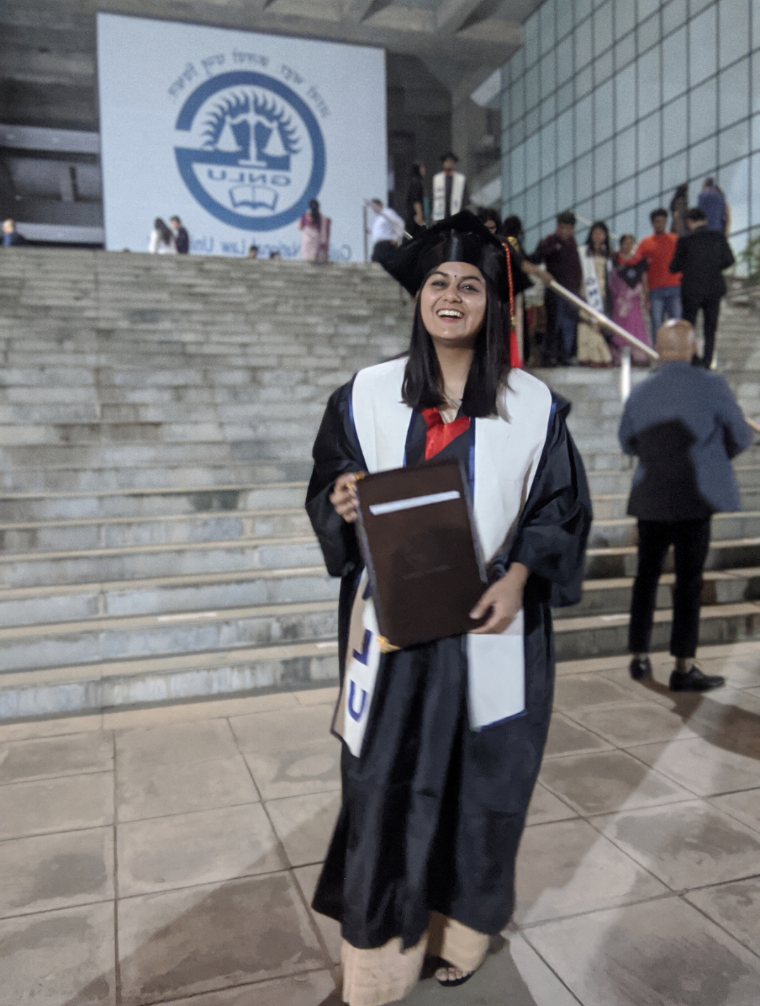
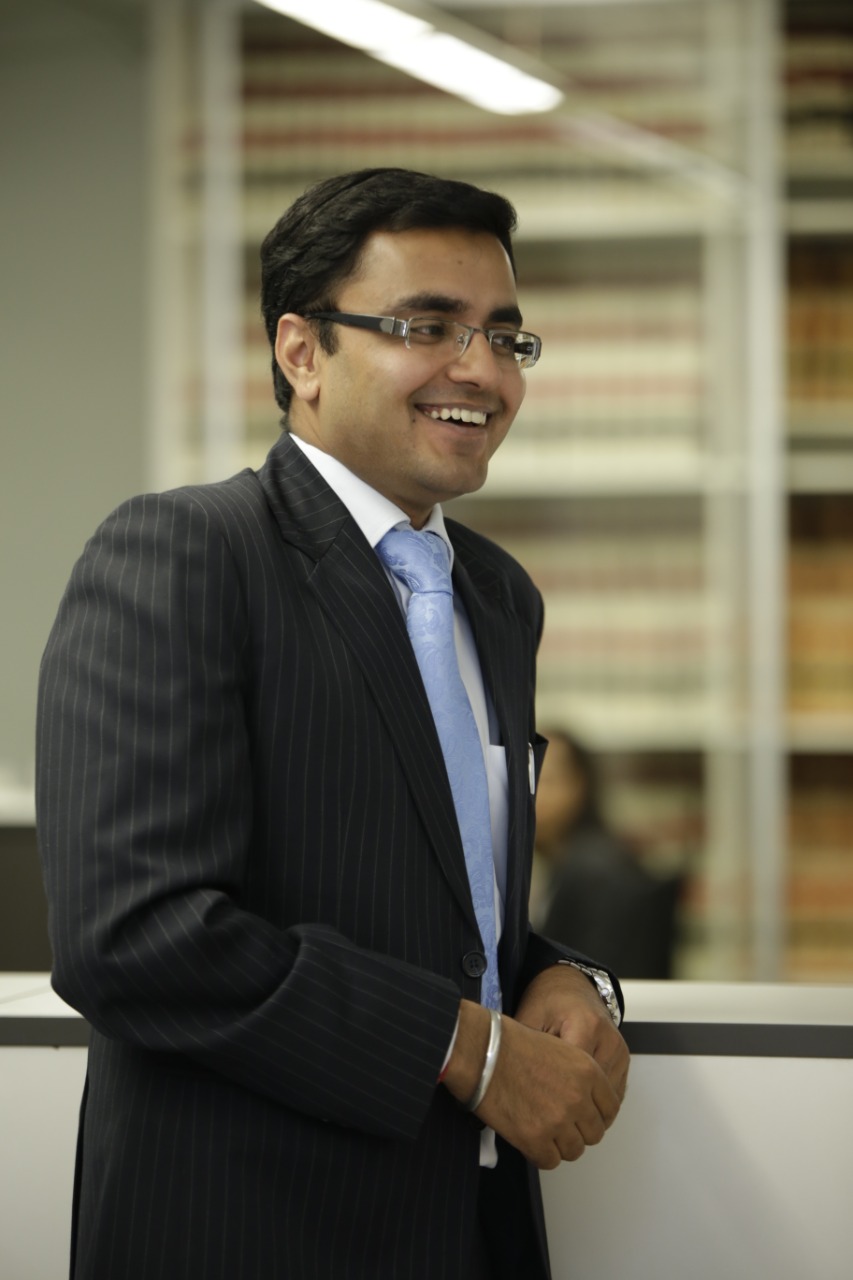
  • Rishika Kumar, Senior Associate at AB Legal (Advocates & Legal Consultants) In a Discussion With SuperLawyer On Corporate Litigation And Opportunities In Same

    Rishika Kumar, Senior Associate at AB Legal (Advocates & Legal Consultants) In a Discussion With SuperLawyer On Corporate Litigation And Opportunities In Same

    This interview has been published by Prabhjot Singh, Priyanka Karwa and The SuperLawyer Team

    What motivated you to choose law as a career? And how has been the journey so far for you?

    It was way back in my school days, when I was introduced to the subject of Civics. The subject itself is so enriching and intriguing. It was then, when I was briefly made aware of our judicial system as well as our fundamental rights, which instilled in me the hunger to know more. Hence, the quest began to learn more, which eventually brought me to a decision of taking up law as my career.

    It has been said by many, that follow what interests you and you would never fall back. During my initial days while I was an intern, I ensured that I should get to taste as many genres of law as I can.

    However, in the journey, the eagerness to learn more, was lost, rather, it shifted to the idea of having a comfortable corporate job.

    But life has it plans and eventually, I landed up with one such firm in my final days of internship which gave me a taste of corporate as well as litigation and this combination not just awed me but also ignited in me the fire of learning, which was lost in the process of becoming a lawyer from a law student. Today, it has been more than 3 years that I am working as an Advocate and the journey of a corporate litigant has just been so overwhelming, that I cannot imagine even a single day without the courts and the law.  

    What were the challenges that you faced in the beginning of your career?

    It is true that beginnings are always tough, but worth the wait. Starting my career as an Advocate in 2019, was no less than a dream.

    As we all know that Advocates are generally pictured to be an essential character of a courtroom drama and as other Advocates, I always craved to be a part of it. However, those courtrooms became a flowery dream, when the world was hit by covid. In my journey, the major challenge that I faced was of not getting the essence of being an Advocate for nearly 2 years since the courts during the pandemic became virtual.

    The virtual court has its own pros and cons but as an Advocate not going to the courts physically made me miss on a lot many courtroom essentials, as the work was confined majorly to drafting pleadings only. Further, due to work from home, the issue of filing the pleadings at courts became yet another task, hence, the introduction of e-filing was even though a necessary and welcoming change, but was even tougher to execute.

    Nonetheless, when the situation of covid subsided and things started taking its shape back to normal, the courts also started physically, and its almost a year now, since I started appearing before the Courts physically, which has brought the Advocate in me back to life and the experience of past one year has been incomparable.

    What is the most challenging case you have handled in litigation and what were your learnings out of it? 

    Litigation means challenges. Every case has its own beauty and with every case I have learnt different viewpoint in which the law can be interpreted. I won’t say that I have faced ‘the most challenging case’ till date, since I am too new to the industry and yet to explore a lot. Yet, I would say that, I have been fortunate enough to be a part of such a team in which we have faced several cases which are different from each other and are a challenge in itself. I am a part of dispute resolution team and I have been a part of the strategy making, wherein I have understood that there is no straight jacket formula to solve all the cases, each of the case have a distinct fact or law which makes the work more challenging. Moreover, I have a core practice in Insolvency & Bankruptcy Code, 2016, which is an ever-evolving law. The Code has seen several amendments over a period of 6 years and with such amendments the challenges pertaining to each case has arisen. Accordingly, the challenges have taught me to be abit more proactive towards the amendments, to be more patient and have perseverance to attain a finality in a case.

    Rishika, according to you, what exciting opportunities can corporate litigation bring in the future for the upcoming generation?

    The upcoming generation tends to have an urge to “have more in less time”. Corporate Litigation is that genre of law which provides the new gen-z lawyers a platform to have a mix experience of the business law along with the its practical application i.e., having the taste of litigation at the same time.

    With the increasing trend of start-ups in the country, there is no escape from Corporate Litigation and it is to be understood that Corporate Litigation not always aims towards court proceedings, but also has the essence of mitigating the risk of litigation in several corporate and commercial dealings by way of client counselling.

    With the boom in economy there is no doubt that there will be several business enterprises looking for expansion and restructuring and this also falls under the wing of Corporate Litigation. Hence, it won’t be wrong to state that Corporate Litigation has a lot to offer to the upcoming generation since it is the most modern and trendy genre of law.

    How do you ensure that your clients receive the best possible outcome?  Any hacks for the same?

    One of the basic principles to provide the best outcome to the client is that you have to be a good listener. In order to provide a suggestion on point, it is very important as a Counsel to hear your Client at length. A patient hearing would not only allow the Counsel to understand the facts clearly but would also help in co-relating the same with the applicable laws and to strategize the whole case. Secondly, which bears the utmost importance is, the communication between a Counsel and its Client which must be transparent and clear.

    It is essential that the Client must not hide any facts from its Counsel and the Counsel while taking up the case, if feels that the case is strong only factually and has a weak leg in law, then the same maybe well informed to the Client.

    Further, as a Counsel we ensure that our Clients are duly updated about their matters and hence all the developments howsoever small that be, should be informed to the Client in a timely manner. Thus, it is really important as a Counsel to make the Client comfortable enough to share its case and therefore a welcoming environment is must and necessary in order to retain the Clients.

    Rishika, is freelancing worth doing in the legal profession and if yes, how to master the same?

    Personally, what I believe is that, freelancing in the initial stages of the profession is a sheer waste of time and is a strict no-no for me, as it involves a lot of struggles for a newbie. However, one can very well be a freelancer after spending a sufficient amount of time in the industry.

    To master this art it is essential for one to showcase the market your USP and once people have known you because of your knowledge, you build good connections and then it is way easier to be a freelancer. 

    How useful do you think the idea of Metaverse would be in the legal industry?

    Honestly, what I believe is that Metaverse is a whole new concept in itself and this sudden change of everything from physical platform to virtual platform is not an easy change to be acceptable by all especially in the legal industry. The idea of Metaverse may sound very fascinating and may be a time-saving one, but for me these are dreamy and may have serious repercussions.

    It won’t be wrong to say that till date we have no stringent check and balances for securing the privacy and confidentiality of social media applications as there are serious questions which are still unanswered when it comes to protection of the data of an individual.

    Hence, it might happen on the digital platforms that the privileged relationship of the advocate and client is violated as the privacy is at stake as there exists no regulatory forum for such virtual universe. Therefore, it is true that things are changing rapidly in the intent to achieve a digitalised world but we are missing out on basic essence and enjoyment of everything at its pace.

    What are your thoughts on the frequent amendments that are brought under the IBC every now and then?

    Basically, amendments in a law showcases that, the law is being put to use and is being utilised by the population at large. It is true that laws have to be amended with time so as the same is viable enough for the legal system. It is quite imperative to amend the law but doing the same constantly makes it difficult to interpret and implement, as, there have been situations wherein, a case of a Corporate Debtor is pending for approval of Plan before the Adjudicating Authority, and meanwhile an amendment is introduced which has to be incorporated into the Plan and hence, the Plan is to be revised.

    This effects the whole intent of the Code as it aims towards a time-bound resolution. It is thereby certain to note that amendments are essential but it should be affected and necessitated only at certain intervals and that too with a proper mention of the nature of such amendment, i.e., prospective or retrospective, as deemed necessary, for the development of the Code.

    According to you, what networking strategies should be adopted by the first-generation lawyers specifically in corporate litigation?

    It is apposite that, for a first-generation lawyer to make a mark in the industry, it is essential to have patience, perseverance and must be hardworking along with smart work. A first-gen lawyer should mainly focus on networking and building connections.

    One can build connections by being a member to a Bar Association, wherein, one gets to meet a lot of lawyers from different genres and further, one should also attend events, seminars and conferences to build contacts. However, mere getting contact is not building, it is important for one to regularly follow-up with the new contacts. Hence, in order to build network, one should be well-recognised and known in the industry and that can either be by way of working or by way of building contacts.

    Lastly, any 3 best pieces of advice for our young lawyers?

    I have completed merely 4 years (approximately) in the legal industry and I myself is at a tender age in my professional career to advice the young ones. Nonetheless, I would like to share 3 of my basic principles which can benefit the young lawyers and they are:

    1. Know your interest, to show your interest at work;
    2. Work to learn and not to earn, as earnings would follow subsequently; and
    3. Keep clam and work hard, as there are no short-cuts in life.

    Get in touch with Rishika Kumar-

  • Vijay Pal Dalmia, Partner at Vaish Associates Advocates In Conversation With SuperLawyer On Legal Implications Of Web 3.0 & Role Of Mentor In Legal Profession

    Vijay Pal Dalmia, Partner at Vaish Associates Advocates In Conversation With SuperLawyer On Legal Implications Of Web 3.0 & Role Of Mentor In Legal Profession

    Did you always want to become a Lawyer or was it something that you decided in the later part of your school life? What other career options would you have considered, if not law?

    From school time, I had the intention to become a lawyer, though I was also good at science and my teachers wanted me to opt for the medical field. Once I reached college, I also considered options relating to military and civil services, however, on the death of my father Late B.L. Dalmia in the year 1983, who was a distinguished senior lawyer, I finally opted for law as my profession.

    You have published numerous papers and Articles. How important do you think these are in shaping your understanding of law?

    Article writing and publications always give you an edge in understanding law. One has to do a lot of research and read judgments before writing an article which immensely adds to your knowledge and acumen. In my experience, article and paper writing has always been a boon which helped me immensely in my profession.

    What can be the real challenges while establishing a career in the field of law?

    Information and knowledge are widely available these days after the invent of the internet and particularly Google. However, for establishing a career in the field of law, you need to understand that “A lawyer must know something about everything and everything about something”.

    For building a career in the field of law, it is extremely important to understand the practical side of the law, psychology, body language and judges. One may be a corporate lawyer sitting in the office but it is highly important to understand the ways the judges analyse documents and ask questions. Understanding a judge’s psyche is of utmost importance to be a good lawyer. In my view, every budding lawyer must spend some time in court to be a good lawyer and understand the practical interpretational aspects.

    According to you, what major improvements we need to make in the crypto laws and regulations?

    Presently the most important thing is that the Government must come up with comprehensive legislation on cryptos. Crypto has acquired massive dimensions in society and has practically touched the lives of most people. Cryptos are no more in nascent stage. The entire concept and business have advanced. At present India is facing a situation of being “nowhere” in the domain of crypto laws. There is a stalemate and the Government is indecisive. There are no crypto laws or regulations except to some inadequate extent under tax laws .

    The role of mentor often gets underestimated, what is the importance of mentor as per your experiences thus far?

    Having a mentor is one of the most important aspects of the legal profession. Learning becomes easy and sharp. You come to know about the “tricks of the trade”. Getting guidance becomes easy.

    What can be the legal implications of Web 3.0 according to you?

    Web 3.0, sometimes known as Web 3, is the concept of the next generation of the web, in which most users will be connected via a decentralized network and have access to their data.  The world is on its way to an Internet where people will have complete control over their data and privacy which will be made possible by blockchain technology. Some of the implications relating to Web 3.0 are national security, sovereignty and integrity of the country, public disclosure, privacy, taxation, governance, IPR protection and enforcement. Web 3.0 is a complicated structure.

    Can an Advocate be soft-spoken yet established; what do you think about how the legal profession takes this quality?

    Being soft-spoken is a matter of duty and pride for an Advocate. It is not a matter of choice, rather its obligatory for an advocate to be soft-spoken and polite with clients and in court. Being loud, arrogant or harsh is not a good quality of any advocate. Politeness wins and you get to gain before the court and with the clients. A soft-spoken and polite advocate is always highly appreciated and welcomed by all in the profession.

    Would you like to give any career/life tips to the readers?

    One of my sincere pieces of advice is to write as much as possible on legal topics and circulate it on the web through different forums.

    Give lectures, run your own Youtube channel and educate the public which will bring recognition and clientele to budding legal professionals. In this profession, you can not advertise, and new advocates have to make their presence felt. In my view, there is no other alternative.

    Remember, advocacy is a grey hair profession, and it takes time to succeed. Give time to your profession and yourself. Keep on developing your skills.


    Get in touch with Vijay Pal Dalmia-

  • Anmol Maheshwari, Commissioning Editor at LexisNexis India In a FireSide Chat With SuperLawyer On LLM in IPR, Role Of Content Manager and Legal Researching

    Anmol Maheshwari, Commissioning Editor at LexisNexis India In a FireSide Chat With SuperLawyer On LLM in IPR, Role Of Content Manager and Legal Researching

    This interview has been published by Prabhjot Singh, Priyanka Karwa and The SuperLawyer Team

    What was your motivation behind choosing law as a career?

    Growing up, I spent my formative years in the company of my grandfather, who remained deeply embedded in social and political life for as long as he lived. I used to accompany him to many of his social gatherings full of lawyers, local politicians and judges which gave me an opportunity to plunge in the stirring political discussions. Every time I listened to them, I realized there was so much more to it, than what was being said. During one such event, my grandfather once said, “Look around…if you also pursue law, it will help you be whoever you want to be” and that is when I finally decided to turn his words into actions.

    What were the challenges that you faced in the beginning of your career?

    To get a job was probably the easy part but real game is to survive and thrive in it. There is a significant difference between knowing the law and its application to any legal role held by you. To put it simply, knowledge is theoretical, and skills are practical. You may be well versed with the rules of the game, its history and the statistics. But this only makes you well informed and knowledgeable, it does not make you skilled in it. To be good at a game, you must consistently practice your skills and techniques.

    Similarly, in a job knowledge is not everything. Skimming through multiple case laws, absorbing wide range of legal knowledge, being able to itemize relevant legislations does form an integral part of law school curriculum. But this is only the first step. Once you enter the real world, the project or case you are handling might require advanced research and that is where you have to showcase your skills.

    To be able to undertake that research, articulate thoughts and express ideas effectively using verbal and written communication skills to multiple audiences, as well as to listen for meaning and understanding forms a crucial part of your career.

    With LLM in Intellectual Property Laws, what drew you to this field of legal researcher and content manager, eventually as a commissioning editor?

    I studied Intellectual Property Laws from Gujarat National Law University. Ostensibly, it doesn’t sound relevant to any of my jobs but my education is coming strangely handy as my course helped me develop research and writing skills, the ability to present and argue persuasively and to develop an eye for detail.

    In particular, I chose to be in research and academic publishing because I have always enjoyed interacting with the professors and other scholars as they are the people really cutting edge with their subject area and sometimes many subjects at the same time. So, I thought it would be terrific to work with these people and be paid for it.

    What are the essential skills, abilities and personal attributes required to make it to the field of Legal Research, Writing and Publication?

    Publishing is a creative industry so commercial awareness and strong verbal and written communication skills will get one far in publishing. Focusing on research skills is also equally important. It is crucial to understand how to perform legal research, including where to start and the steps to follow. Perseverance is the key when it comes down to research.

    Can you recommend trade journals, magazines or professional associations which would be helpful for our readers?

    The World Trade Organisation produces a wide range of publications on various trade-related issues. Most of these publications may be downloaded from the WTO website. Also, WorldTradeLaw.net offers a free library of trade news and resources, as well as a subscription service, which provides summary and analysis of all WTO reports and arbitrations; a keyword index; a database of dispute settlement tables and statistics; and a user-friendly search tool for WTO cases, legal texts, and other documents.

    How does your work affect your general lifestyle?

    The working culture of publishing industry is exciting, and the working hours can be long sometimes but not insane. The industry does offers you a good work life balance. It’s a busy-buzzy environment to work in so one must be highly organized and really good at juggling between multiple tasks.

    What kind of problems and challenges do you deal in the publishing process?

    The biggest challenge is to procure manuscripts from authors within the scheduled time frame. Editors have to ensure that they do not miss the publishing deadline and authors don’t miss their writing deadline. For this, the editors are required to establish a tremendous working relationship with the authors which involves detailed correspondence and having a lot of empathy for the authors to be able to put yourself in their shoes.

    Throughout the publication process the role of editor never ceases. At any stage between signing a contract till the product hits the market, editor is the point of contact for all concerns and queries authors might have. Suppose if you are giving the authors really tight deadlines you have to explain why that is and do what you can to help them through to avoid potential slippages. Any delays at early stages can have dramatic effects on publication schedules especially when the publishers have already been advertising a book’s release and the due date needs to be changed.

    Therefore, to avoid any delays, editors spend a large part of their working week speaking with their authors. All of this is in addition to a whole myriad of administrative tasks that always need to be done.

    If you could do it all over again, would you choose the same path for yourself? If not, what would you change?

    Big YES! By the end of graduation, I was certain that litigation or working at a law firm never inspired me and during my post-graduation I realized that I am more inclined towards research and writing. Needless to say, the decision to follow my passion came with its own adjustments, particularly in terms of compensation. But the flexibility and work life balance my job offers always keeps me afloat.

    What advice would you give someone who is considering being in this field?

    The key to achieving anything and everything you desire is Action.

    So, “Wish for it, Hope for it, Dream of it, but by all means do it.” – Leslie Levine


    Get in touch with Anmol Maheshwari-

  • Maitreyi Kannur, Senior Associate at JSA In a Discussion With SuperLawyer on Litigation Management and The Role of Legal Tech In Same

    Maitreyi Kannur, Senior Associate at JSA In a Discussion With SuperLawyer on Litigation Management and The Role of Legal Tech In Same

    This interview has been published by Prabhjot Singh, Priyanka Karwa and The SuperLawyer Team

    Was pursuing law planned or did it all happen by chance?

    It was an informed decision. I have had a fondness towards business because my father was from a business background. At a very young age I understood the need and importance of sound legal advice to run a business. My inclination towards law was initially drawn from the need for good and correct legal advice to run a business successfully. I decided I want to study law thereafter and after that there was no looking back! 

    Please enlighten our audience about the initial struggles in your career and how you managed to overcome them?

    Initial struggles obviously is very individualistic in nature. When I think about the initial struggle I can think of three things (i) being able to cope with the time and effort this profession demands ; (ii) court craft and presentation of matters and (iii) ability to find a place of comfort and fit in culturally in an organisation. 

    My take on point (i) is that while you’re are studying law and on your way to become a lawyer you already know what you are getting into!  If you have interned at the right places and I stress ‘right places’ you already know this profession is very demanding. So you are mentally prepared and I have the the hunger to grow so coping with this came naturally to me and yes, it takes what it takes!


    With respect to point (ii) the only way to deal with it is read your file. Confidence is key to a lawyer’s progress and success. In my experience confidence is self built and it doesn’t matter who and what stage of your profession you are at. To exhibit the confidence in court, one needs to fight the fear and that fear vanishes when one is a master of his/ her file. This has always worked for me as I have been able to avoid surprises in court and during hearings.

    Knowing the file a-z gives you a sense of power in court to present your case better by assisting the court better and representing your client better. Once you have mastered your file the clarity helps you present the matter in a structured manner. 


    Despite the above, there has been a situation when I was asked to present a case before the Hon’ble high court of Karnataka at Banagalore and due to my sheer over preparedness I didn’t know where to start from and my first one minute went in silencebefore court.

    The reading and over night preparation came to my rescue when the judge asked me a question on the matter and I was able to quickly pick up from there and Yes, I was able to obtain a favourable order in the matter. 
    The point being it’s okay to be nervous and it’s okay to fumble in court but a non- negotiable is not preparing for a matter.

    The preparation will come to your rescue at the time of need and it has in my experience. 
    With respect to point (iii) it’s a game of chance. The trial and error theory worked for me. I have worked with 3 organisations so far. I started off my career with a pre placement offer from Dua Associates after an internship. Thereafter, I worked under Senior Advocate Mr Udaya Holla and currently I work at JSA.  

    I had interned at all these places during law school. So I was familiar with the work environment which worked in my favour. 
    Although there is no straight jacket formula! I think the only way to cope with struggle is channelising your mind! Mindset is the key! 

    With experience I realized how to prioritize what are the actual issues and what are non- issues that can be ignored. The other key was acceptance! You can’t change everything and everything is not black and white. When you decide you will put in what it takes you’ll learn to deal with situations and when I say deal with situations I mean priorities your issues. 

    Among all the specialisations, i.e. Insolvency & Bankruptcy, Drafting, Arbitration, Debts Recovery, Criminal related, Company law, etc., which one do you find the most interesting and challenging? 

    I am a commercial litigator. I deal with civil commercial litigation and arbitration. I have always been inclined towards arbitration and commercial matters. For me the most interesting and challenging part of litigation is cross examination whether before an arbitrator or a judge. I had the opportunity to cross examine a witness from Greece in an arbitration and even after days and sleepless nights of preparation I realised the art of understanding a witness and strategising and most importantly re- strategising your cross examination plays a primary role. 

    Needless to mention strategising a case can effectively happen only when you have mastered your file and the facts.
    The effort and time put in a matter will always be useful and that is the most challenging and interesting part of litigation. 

    What all does litigation management include, and do you also use legal tech often? How useful its been for you?


    Litigation Management is key. It could be as basic as file management. A litigator is handicapped without his/ her file before any court/ tribunal. This also means organisation and being organised is very essential for a litigator. 
    For instance – As everyone knows litigation /arbitration files are voluminous generally. Therefore, arranging the file is essential. You have limited face time on each matter while representing your case.

    When the judge asks you a question and you start looking for the documents during that time, you can consider half the battle lost. 
    Presentation of a matter is key! Therefore, behind the scene work is time consuming and very necessary. 
    With respect to usage of technology, we are still on a snail pace as on now. 


    How do you stay up to date on the latest legal developments and apply the same in day to day practice?


    I can’t deny this is a challenge. My senior and my former boss being Mr Udaya Holla always stresses on reading and these days everything is digitalised. He always said don’t finish your matter in court and go home. Please sit and read. If I have to pass a message to someone I’ll pass the same. If we aren’t spending time till 10- 11 pm reading and preparing on matters, we are not going to make it.


    Also there are a lot of blogs which are handy these days leaving witnessing day to day court proceedings. I use Daksha legal, SCC online and live law regularly. Leaving that thankfully JSA has a full fledged knowledge management team who tirelessly work to put together the latest updates which I have access to. 
    Also, as a lawyer, one reading of a particular case/ legislation will help you multiple times. You may read that particular case law or legislation for one particular matter but you will end up filing similar petitions for another client and eventually end up using the same material. If anything you’ll build on existing knowledge. 

    Any roadmaps that were followed by you in this journey Maitreyi? 
    Off course, yes.

    Everyone has heard that there is no substitute to hard work but in addition to that there is no place for wrong attitude in this profession. 
    Always remember, there is always someone who can replace you and there are zillion competent people out there with the hunger to provethemself. Being grateful and keeping the right attitude is key. 
    An organisation will be willing to teach you the law and the skill to work on a matter but will not tolerate a wrong attitude. Focus on the right attitude towards work. 

    What strategies work best in dispute(arbitration/ litigation) matters ? 

    Hard work without deliveryon time will have no meaning. 
    In a span of two weeks, I had 2 situations where the client approached us to obtain urgent restraining/ stay orders respectively. I had to not only draft the petitions over night but also file and obtain favourable orders. Hard work is of no use if you cannot deliver within steep deadlines. Yes! We obtained favourable orders in both the matters. 


    The need and hunger to deliver has always been important to me. It is also important to keep it uncomplicated and simple. Let it be drafting, presenting a matter before court and / or cross examination. Keep it simple and clear. Every unintentional ambiguity will cost you the matter. 

    Nowadays, people don’t have that zeal to pursue a career in litigation, what can be the reason for that apart from job security in corporate?

    Well that’s a choice. I don’t fully agree that people don’t have the zeal for litigation. Litigation jobs are equally secure and satisfying and I am a living example of it. 

    Any 3 advices that you would like to share with our audience


    Advice – 
    (i) Get immune to unrealistic timelines. 
    (ii) Execution and delivery is equally important as behind the scene work. 
    (iii) It will atleast take you a year to understand if you like what you are doing or the place you are working at. Don’t change or quit your job as soon as you face a non work related or a work related issue. 


    Get in touch with Maitreyi Kannur-

  • Avi Kalra, Founding Partner at Clergy and Wisemen In Conversation With SuperLawyer On Startups, Arbitration and Much More Interesting Aspects

    Avi Kalra, Founding Partner at Clergy and Wisemen In Conversation With SuperLawyer On Startups, Arbitration and Much More Interesting Aspects

    This interview has been published by Prabhjot Singh, Priyanka Karwa and The SuperLawyer Team

    Was pursuing law planned for you or it all happened in a flow? Kindly share with our readers.

    Well to start with, I am a first-generation lawyer, and to be very honest law was never a career option for me until the 10th Grade, I had planned to either join my father’s business or start something of my own. However, it all changed in the year 2012, when my father was involved in a car accident, in which one bike hit his car and the pillion rider died on the spot.

    After this, it was the first time that I ever visited the Local District Court of my city. During court visits, I was highly influenced by the impact the lawyers could have over their clients. Soon after, I developed interest in Criminal Law and the same grew over me and made my belief indeed stronger. So today, I can proudly say that being in the legal fraternity was a well thought decision and didn’t happen by chance.

    What do you think, which specific advice has helped you come thus far in law? What is that one motivation that keeps you going in life?

    The advice that has helped me come this far is that if you roll up your sleeves and decide to do something, nothing in this world is impossible. Everything is doable, you just need to have the courage.

    Frankly speaking, I never participated in any public speaking event in high school and had stage fear. Now came the time in Law School, when I realized the importance of Moot Courts but the continuous insecurity of never being a good public speaker or having no prior experience kept acting as a barrier.

    It was only in the third year when I got the opportunity to participate in the Intra Mock Trial, where although in my opinion, my public speaking was not up to the mark, however, this opportunity gave me a sense of understanding that it was these mental barriers which were stopping me to do something. Since then, I have worked upon my oratory skills, and have never said no to such an event, which has helped me tremendously in becoming a better orator and Advocate.

    Speaking about Motivation, after winning the National Mock Trial Competition in 2017, me and Prateek Lakra made a goal to start our own law firm after completing 3 years at the Bar. In 2021, we started Clergy & Wisemen, and since then there has been no looking back, and taking our Law Firm to the level of top law firms in India is the motivation that keeps me going.

    Could you brief a case you were led on that substantially broadened your knowledge of the legal field?

    From what I have learned while practicing law is that law is nothing but common sense, one should just have the vision to see the answers. It is an art that is learned through experience and wisdom. During the initial years of practice, the most crucial part is to understand the implementation of what we study in the Law School.

    It was in 2019, when a Fraud had been committed by a person, which was worth crores. In the same case, my client was duped for a handsome amount. Initially, we filed a Suit for Specific Performance against one of the properties of the Accused before the Delhi High Court, however, it came to our knowledge that the Accused had created multiple third-party rights over the property, therefore, we also had to move before DRT, since the bank had started proceedings against the accused. Also, there were claims from various entities, due to which there were multiple suits and cross impleadments.

    Parallelly, proceedings under the 156(3) Cr.P.C. were also instituted against the accused, wherein we got favourable order and an F.I.R. was also registered with the Economic Offences Wing (EOW), Delhi Police.

    These proceedings helped me understood various remedies that a person has under both the Civil & Criminal Laws in India and how the Courts and Tribunals function.

    Among all the specialisation, i.e., Administration law, RERA, Taxation, Corporate law and Arbitration, which area of law is the most interesting to you and why?

    I would say that Corporate Law, since Corporate Law can itself be classified into various other sub-specializations, and due to the recent increase of Startups in India, Corporate Law has opened up various opportunities for Young Lawyers.

    Now, with Startups the issue that usually comes up is that they cannot afford Big Law Firms, and it is where young lawyers can step in.

    Further, in Corporate Law, a Lawyer has to get into the shoes of the Founders so as to protect their interests while making agreements such as the Shareholders and Founders Agreement, so that in case the Company goes for funding or dilutes its equity, the founders don’t lose the control over their own company. Moreover, issues like dispute resolution between founders also has to be carefully drafted. With contracts, it is necessary that the Liabilities are limited, indemnification clauses are watertight, and in the case of Intellectual Property, the rights are carefully defined. I can go on with such examples, such is the nature of Corporate Law.

    What would you do if you had taken on a case that went against your values? Any prior experience you could relate with?

    I take cases as per my conscience; however, I am a firm believer in the fact that a person is innocent until proven guilty.

    Yes, there have been certain cases where I had to self-introspect whether I was doing the right thing, however, I tend to keep my personal opinions and professional life apart. As the great Mr. Ram Jethmalanai once said: “A lawyer who refuses to defend a person on the grounds that people believe him to be guilty is himself guilty of professional misconduct.”

    How do you maintain the work-life balance Avi?

    As a Lawyer, I feel that law is that field where once you are at the initial stage you need to spend more hours, drafting, researching, and navigating through documents, but as you practice more and more it gets easier to locate the crux of the case and you exactly know where to hit the nail, so spend in your initial years, it will reap well. Also, law is just like investing, the more you invest in your legal skills right now, the more returns in the later years.

    Personally, for me, what has helped me maintain my sanity with this schedule is waking up early in the day, and having some time to myself before the whole show at the law firm begins. I believe that one must do something that is good for his/her soul once a week. It’s okay to take a break, but you should know when the break ends. The work should not suffer, make yourself that efficient.

    What strategies do you use to ensure that your clients receive the best possible?

    There is no secret sauce to ensure the best possible results. Each case has to be seen in its own strategic manner.

    In my previous experience be it working at chambers of a lawyer or law firms, one thing I saw was that although the Clients were getting reliefs in their cases, however, they were not satisfied by the management. For example, the client would not know what is going around in the case, sometimes they won’t know what is next date, no regular updates, so on and so forth.

    After starting Clergy & Wisemen, we not only ensured that our clients get the best legal services but also focused on the management of the Law Firm, be it the regular updates of their cases, addressing their doubts, having dynamic meeting slots, taking regular follow ups about our services, etc.

    Now with Corporate Clients, we have come out with certain services such as Contract Lifecycle Management (CLM), Legal Manager, which have substantially increased the effectiveness and efficiency of the services provided by us. Recently, we have tied up with certain AI companies, which help us in the drafting of contracts, although each contract is reviewed by either an Associate or Partner at the Law firm, but it has helped us in reducing the TAT and Cost.

    What challenges have you faced as in bank matters with DRT, DRAT, NCLT & NCLAT?

    DRT and NCLT, alongwith their appellate tribunals, were made so that the burden over the courts is reduced and the cases can be fast tracked. Although, the burden over the courts have been substantially decreased, but I would not agree with the fact that the matters have been fast tracked.

    Since, due to a smaller number of benches, the matters usually take a substantial time to be adjudicated, wherein the sitting benches are not able even finish half of the cause list, and requests such as to list the matter at the top of cause list have to be mentioned.

    Moreover, these tribunals are not on par with the High Courts, be it the adjudication process, or the working of the registry.

    Therefore, I believe that the number of Benches in the Tribunals should be increased and only in the rare cases the timeline mentioned under the Code shall be extended.

    Lastly Avi, any advice for our young legal professionals?

    My advise to the young legal professionals would be that they should always be updated with what is going around in the Legal Sector, this would not only help them in increasing their knowledge, but also to strike out a conversation at a relevant place and time, and trust me this helps significantly.

    The other would be that they should understand that whatever service you are giving should be a valuable addition to the client and it must solve their problem, taking care of these would definitely help a professional building up his name, since the person would not only happily pay his/her fees to you, but also would recommend you to others.   

    Lastly, in case someone is planning to start his own practise, then rather than just possessing the legal skills, one must also have the skills of a sales person, it might sound a little different, but Law is a Business until you get a client, one might be a very good lawyer and possess good skills, but till the time he has got no client, those skills would be worth nothing. Therefore, it is advisable that you must know to sell whatever skills and knowledge you possess. 

    All the best!


    Get in touch with Avi Kalra-

  • Lokesh Bhola, Managing Partner at Legal Icons In Conversation With SuperLawyer Shares His Side On Struggles For A First Generation Lawyer

    Lokesh Bhola, Managing Partner at Legal Icons In Conversation With SuperLawyer Shares His Side On Struggles For A First Generation Lawyer

    This interview has been published by Prabhjot Singh, Priyanka Karwa and The SuperLawyer Team

    Was pursuing law planned for you or it all happened in a flow? Kindly share with our readers.

    It was not at all planned. After completing 10+2 in commerce stream, I opted to become a Chartered Accountant. I had even took admission and deposited fee for that. During that time, five year course from I.P. University, Delhi was introduced and  my father influenced me take a plunge in the field of law. I had appeared in the common entrance test conducted by the University and was fortune to get admission in limited ‘free seat’ on basis of merits.

    Initially it was more of subjective learning rather than practical and took some time to get myself adjusted in that flow. Afterwards, I had started developing my interest and scored well thorough out all semesters. Never thought that I would become first-generation lawyer in my family, however destiny has chosen so for me.

    What do you think, which specific advice has helped you come thus far in law? What is that one motivation that keeps you going in life?

    As a first-generation lawyer, the journey has been quite tough yet exciting. Working as the junior most associate in the Law Firm to heading a boutique Law Firm has been an overwhelming and enriching experience.

    The hurdles on the path of this journey, especially as a litigation lawyer, are tough to handle. Consistency and Dedication are two stepping stones for almost every success.

    Do not expect quick results especially while practicing as litigation lawyer. Change the mindset from working as employee to working like a professional. Own responsibility for every step taken by you while working on a matter. Success does not come without failures. We cannot have favourable results the way we thought every time, however we should be capable enough to be responsible for those results.

    Initially many colleagues even left the profession due to various reasons like low income, great hard work with slow or no results and that had sometimes demotivated me to choose this profession, but like a pillar of strength and motivation my family stood beside me and here I am today, enthusiastically climbing the ladder with more than seventeen years of experience and having Law Firm of my own. 

    Could you brief a case you were led on that substantially broadened your knowledge of the legal field?

    In last seventeen years, I had the privilege to lead as well as assist my senior colleagues in various corporate commercial matters across different Courts and Tribunals. 

    I fairly remember a matter dealt by me in my previous law firm, where we used to brief Late Mr. P.P. Rao, Senior Advocate in a constitutional matter being tussle between State Government and Union Government to enact law to control and supervise State Universities in the State of Himachal Pradesh.

    We used to take him for hearings before High Court of Himachal Pradesh at Shimla. In my entire career, I have not come across any other Senior Advocate like Mr. Rao, who was so thorough and clear in his understanding on the constitutional matters.

    He used to throw case law citation as well as its relevant paras to us while briefing him. That matter has surely broadened my concepts on educational and constitutional matters. I think it was his hard work and good wishes that we won that matter on his birthday.

    As an empanelled Arbitrator with prestigious Delhi International Arbitration Centre at High Court of Delhi, I have gained experience of deciding matters judiciously which has helped me in proving reasoned and more apt interpretation of legal issues.

    Lokesh, you have over a decade of experience in legal, how do you see the legal industry coming up with new concepts and creating exciting opportunities?

    India is a large country and the biggest democracy in the world. We have by far the longest constitution in the world, so the laws are accordingly quite vast. Similarly, there are host of Cases pertaining to Supreme Court and High Courts. Both these are referred regularly in the current set of cases and used immensely in the courts and by the lawyers. All this can happen only through digitization and having effective analytical tools which can help a Lawyer to quote relevant cases in the court and the corresponding Legislations and Provisions.

    I can see a lawyer walking into the court with a simple Tab and referring to relevant Legislations/Cases and the Judge verifying the same through his online terminal linked to the Master Registry. No more attachments of papers/cases/book portions etc. It makes the system faster, accurate and efficient.

    There is a huge role for Digital Transformation to play in the Legal Industry. We are far too behind in this area compared to our western counterparts. Undoubtedly, thanks to corona period, we have come a long way in transforming ourselves from a paper-based judicial system to a digital system. However, lot more is required to do in this field to help in surviving in faster pace.

    You have been there in some really big deals, how would you educate our readers about the risks attached to the same?

    Every journey has up and down graph like an ECG report. It is always fascinating to deal big ticket matters, however the same comes with many fold of challenges and expectations from client and senior colleagues. It’s true that our hard work should not depend upon the quantum of the matter dealt by us, however high stake matters involves greater effort and strategy to deal the same.

    Don’t hesitate to take opinions from expert or senior colleagues in a ticklish matter. A direction is must to achieve a goal. In a litigation, experience has bigger role than the academics. One should always adapt to learn not only by reading and research, but learning from experience of others especially your senior colleagues.

    A small court crafting skill can save you from multi-fold hurdles and that comes from court experience. A young lawyer should sit and watch proceedings in court rather than roaming outside courtroom waiting for his turn to come. A lawyer must not enter courtroom without reading his brief as you never know what may come from bench as a query.

    What strategies do you use to ensure that your clients receive the best possible?

    My preparation for a matter starts from first meeting with the client. We should make goal oriented strategy in a matter that too keeping in mind the financial implications on the client. Now a days, thanks to multiple courts and forums, we have various alternatives available to churn out results in a given matter in a most possible and economical manner. My endeavour is to pull our best suitable remedy out of bunch of options available for a given client considering his financial capabilities and timelines to get desired results.

    At the same time, a lot depends upon the zeal and hunger of client to get results in a given time frame. Many clients opt not to disclose correct and complete facts on the threshold which leads to multiple hurdles and greater time to achieve the desired goal.

    Workplace harassment also contributes to mental health issues that last forever, what are your views on the same? 

    Work-life balance is very important to ensure a long term efficiency in work and a satisfaction in your personal life. Workplace stress can be managed by fixing short term goals and taking all possible effort to achieve the same.

    Being a Partner, I try spend sometime with my team members to interact and discuss work and the general life related aspects. However, one needs to prioritise the work and maintain a discipline during the working hours.

    I am a strong supporter of not carrying the work related stress to home and spend my away time playing with my daughters as well as working out. It is equally important to take care of your health and therefore, I have made it a routine not to carry work at home except in dire emergency.

    Lastly, any 5 best pieces of advice for our readers?

    Legal field requires continuous study and keeping yourself updated of the latest developments. So, it is very important to make an early habit of reading latest judgments as well as precedents. Young lawyers should also visit Courts and hear established legal practitioners argue the cases in Court.

    There are no substitutes for hard work in law. I’ll quote J.R.R Tolkien, when he said “Shortcuts make long delays.” There are 5 P’s success formula  – Passion, Patience, Punctuality, Perfection and Politeness.


    Get in touch with Lokesh Bhola-

  • Deepika Pokharia, Senior Associate at Saikrishna & Associates In a FireSide Chat with SuperLawyer on IPR, Taxation and Evolution of NFT, AI and Metaverse

    Deepika Pokharia, Senior Associate at Saikrishna & Associates In a FireSide Chat with SuperLawyer on IPR, Taxation and Evolution of NFT, AI and Metaverse

    This interview has been published by Prabhjot Singh, Priyanka Karwa and The SuperLawyer Team

    Was pursuing law planned or did it all happen by chance?

    I would say it was planned for as long as I can remember. When I did not score the desired rank in my CLAT examination, I decided to do law post-graduation. I studied B.Com (Hons) at Shaheed Bhagat Singh College, Delhi University and thereafter, took admission in Campus Law Centre, University of Delhi. I have always been inclined towards litigation and so far I think it is working out well for me.

    Please enlighten our audience about the initial struggles in your career and how you managed to overcome them?

    I have been very fortunate both in terms of having the absolute freedom in my career choices and finding the right opportunities. I started my professional journey with Wadhwa Law Chambers as an IP Associate.

    Despite working in a relatively niche field of law, I was exposed to all kinds of work ranging from general advisory, commercial litigation to transactional work. Additionally, smaller teams ensured significant contribution in every matter.

    I just feel that as a first generation lawyer there is certain lack of insight or clarity one has in figuring out their career goals. That being said, everyone has different journeys and law being the dynamic profession it is, every opportunity irrespective of the organisational structure or area of practice is worthwhile. 

    The only major struggle for me (as well as my peers) has been to achieve a work-life balance, which generally becomes impossible in smaller set ups. This problem is also supplemented by our own deep-rooted conditioning and seeking validation in overworking. I think having a healthy professional relationship with your senior(s) is significant in resolving any such workplace issues.

    What are the most important considerations to keep in mind when dealing with IPR and Tax issues? 

    That’s a very wide question given the range of IP rights and Tax statutes in India.

    To answer it briefly, I would say insofar as IPR is concerned, understanding the overlap between various IP rights is extremely important. Additionally, in any intellectual property issue, whether litigation or transactional, the foremost consideration is determining the scope of the IP right involved.

    Again, taxation has a very wide domain. While having a basic understanding of the tax implications, statutory timelines and compliances is a prerequisite to any tax dispute, one needs to be updated with the ever growing developments, jurisprudence and amendments. Circulars, Press Releases and Notifications also assume a significant role in understanding taxation issues.

    What are the most prominent challenges that you have come across while dealing with Tax and IPR Transactions? 

    Both Tax and IPR happen to be slightly technical fields and as such breaking down the legal issues is always a challenge. Lack of substantial precedents with relatively new enactments such as the GST Act poses another challenge. For that matter, even the concepts of Design law are still not well-settled in India.

    Deepika, how do you ensure that clients’ intellectual property is adequately protected, and what are the basic compliance procedures one has to work upon? 

    I have personally witnessed a growing awareness about the importance of intellectual property (particularly trademarks and copyright) amongst upcoming business and entrepreneurs. Brand protection is finally being considered paramount amongst businesses, who not only seek to protect their brands but also understand the legal consequences of intellectual property violations.

    The basic idea is to start early and secure statutory protections. The importance as well as effectiveness of  IP Prosecution cannot be underestimated.

    What are the most common mistakes you see businesses make in IPR nowadays? 

    Like I said, businesses, irrespective of their size and operations, are increasingly becoming conscious of intellectual property rights. However, not acting early enough both in terms of protection of one’s IP rights and initiating actions for any infringement/violation poses significant problems.

    Besides this, businesses need to be extremely wary of loosely-worded agreements whether it be licensing, settlement or even employment contracts insofar as they pertain to ownership of the IP rights.  

    What resources do you recommend for staying up to date in law? Any blogs that you always keep an eye on?

    Insofar as the general and daily legal updates are concerned, dedicated legal news resources such as Bar and Bench and Live Law already cater to a significant audience which even includes non-lawyers/legal professionals.

    For developments in the field of IP law, I find SpicyIP and IPWatchdog very interesting. For that matter, LinkedIn has now become a great source for legal updates. More often than not, I find myself looking for a case law on LinkedIn because I recall scrolling past something familiar on the platform. What is really great about LinkedIn is that its not just independent practitioners or firms sharing daily updates but law students having an inclination towards IP.

    If your university or office have a PTC subscription, I would always recommend skimming through it.

    Deepika, you’ve been quite active in these IPR dealings, but lately we are witnessing the evolution of Metaverse and NFT, according to you how will it affect the legal industry?

    I feel with every technical development/evolution, comes in the legal disputes. Internet and e-commerce have opened floodgates of litigation with IP disputes constituting a major chunk of it. Similarly, copyright and trademark issues particularly, one concerning the ownership of such IP rights in NFTs seems imminent.

    “As dependency on tech and AI will increase, issues pertaining to security and privacy will also witness an increase”, please throw some light on this statement.

    That goes without saying. Digital footprints and access to personal data invariably leads to security and privacy concerns. While it is impossible not to move along with these technological developments, we will have to educate ourselves of all the possible repercussions.

    Just last week, there has been a lot of discussion on privacy issues concerning the Lensa AI mobile app which is being used by several celebrities/influencers across social media platforms for sharing their AI generated “avatars”.

    Any 5 best pieces of advice that you would love to give to our readers?

    Well, here are the five takeaways from my experience so far:

    Constantly reassess your growth and goals. What gives you work satisfaction today, may not tomorrow.

    Insofar as possible, work on all sorts of matter and do not pigeonhole yourself.

    A law degree does not necessarily translate to litigation so explore your avenues.

    Professional work ethics and accountability goes a long way.

    Lastly and most importantly, break out of your legal circle every now and then. Meet your non-lawyer friends, engage in discussions about anything but law. The idea is to expand your horizons and avoid the burn out.


    Get in touch with Deepika Pokharia-

  • Vijayanand Subramaniam, COO at Transasia Soft Tech -Cyber Risk Management In Conversation with SuperLawyer Speaks on Risk Assessment ,Cyber Security & Careers in Same

    Vijayanand Subramaniam, COO at Transasia Soft Tech -Cyber Risk Management In Conversation with SuperLawyer Speaks on Risk Assessment ,Cyber Security & Careers in Same

    This interview has been published by Prabhjot Singh, Priyanka Karwa and The SuperLawyer Team

    What inspired you to pursue a career in Cyber Security and Technology Law? 

    I have in most part of my career been engaged with leading industry verticals which are prone to high risk, BFSI being prominent amongst them. Risk management has been one of the primary focus for most senior executives in any form, be it operational risk, credit risk, compliance risk, security and fraud risks and so on. Given the fact that I have been a Banker and also spent a decade with technology coupled with a background in law, this only got better with changing digitization trends. Emerging technologies paved way for a deeper engagement that prompted me to move towards Cyber Law and Cyber Risk Management.

    What challenges have you faced while working in this field? 

    As our risk advisory committee comprises of risk management professionals and domain experts from Insurance and technology, we undertook extensive research on modelling in Cyber Risk Assessment & Quantification.  The initial years were quite enriching in terms of brain racking sessions on conceptualizing the idea. 

    Some of the challenges we faced were to identify the key points that could bring stakeholders from diverse industries on a common understanding of Cyber Risk Assessment, Quantification, pricing and claims management. Our key stakeholders are Insurers, Reinsurers, Breach Response Vendors, Cyber lawyers and Corporates.

    Cybercat is an outcome of extensive research in Cyber Risk Modelling, Can you explain?

    This is a non-linear model to quantify cyber exposure more accurately with a very “low error margin”. Organizations can undertake assessment and quantify cyber for catastrophic events, which will assist different stakeholders within the organization namely management, operations, legal, finance and technology to understand business impact and thereby mitigate risk with policy and technical measures or by way of risk transfer to insurers (Cyber Insurance).  The model provides a mechanism to price Cyber risks for Insurance industry.

    What do you consider to be the biggest challenge of Cyber Security and Technology Law? 

    An organization’s major challenge would be to ensure cyber security culture with a top-down approach across the organization.  It is important to understand three principal components of cyber risk which is operational, reputational and litigation risks and ensure greater degree of compliance. The enterprise information security policy should be enforced, delegated and implemented in true spirit. The driving force behind any cyber security program is its leadership and it sets precedence for the organization. Cyber-attacks revolve mostly around the “human angle”. While technology may provide a pathway they have to be handled efficiently as cyber governance, risk and compliance play a pivotal role in addressing these risks.

    What do you think are the most important skills needed to be successful in this field? 

    The field is wide open and there are many avenues today, most disciplines have branched out giving great opportunities . Some of the skills that are required for a career in this field are Cyber security engineering, Network security, incident forensics analysis, Data Architecture, problem solving skills and threat hunting analysis.  

    What advice would you give to someone considering a career in Cyber Security and Technology Law? 

    There will be a huge demand for candidates such as Cyber security specialists, Information security experts, Forensics experts, Privacy specialists, cyber insurance specialists, and Cyber dedicated lawyers in the coming years.

    How have you seen the landscape of Cyber Security and Technology Law evolve over the years and what new opportunities it can bring for people in this field? 

    The quantum of cyber-attacks has leaped over the years exponentially. All countries throughout the world are focussed towards having a National Cyber Security policy and data protection laws.  There are few countries that have exhaustive laws while some countries are yet to have comprehensive laws. The onus now shifts to corporates as measures are required for regulatory compliances without which having regulations is simply defunct. This again will bring plethora of opportunities to legal, Information security and technology specialists or those with techno-legal qualifications as corporates would need specialists to fulfil compliance requirements.

    What do you mean by Strategic Cyber Risk Assessment? and How does C-level executives benefit from the Assessment?

    Every organization today is in some state of fear of getting hit by a Cyber-attack, be it Malware, Ransomware or data exfiltration etc. While in most entities it is the technology that adheres to most of these technical processes it is important for the Senior Management to understand cyber and its impact to business.  Cybercat provides C-Level Cyber Risk Assessment at a macro level for executives to get a broader view of Cyber Risk for their organization. 

    This will assist senior executives to get first-hand information about organization’s cyber posture and the monetary value at risk.  This can further succour in the overall cyber program envisaged by the top leadership in making it a cyber resilient organization.

    What do you think is the most important thing to consider when it comes to protecting a company’s digital assets? 

    Every organization should have an inventory of digital and physical assets and also have a tracking mechanism of inventories.  There are a few things that should be part of mandatory company Asset and data protection policies such as protection of digital assets, viz, password management, Multi factor authentication; Role based access, Encryption and back-up of data. Centralized digital asset management is also used by industry to manage digital assets.

    What are some of the easiest ways of conducting litigation and risk assessment?

    There are multiple ways of conducting Risk Assessments remotely, let me differentiate between Cyber and Non-Cyber Risk Assessments.

    The Cyber or Technology Risk is assessed through the Cybercat©™ platform. The platform itself is a robust internationally validated risk model and proprietary software (Registered and copyrighted) that has been written around the risk platform. This provides a completely automated report for not just assessment, but also quantification in INR/$ terms and recommendations for risk mitigation and improvement. As the assessment is generated on real time basis it would be ideal to run the assessment either on quarterly or trimester basis in order to map the dynamic risk profile. This will cover operational, reputational, legal and technical risk Assessment.

    The other forms of assessment which are core technical would comprise of Vulnerability Assessment and Penetration testing and Red team assessments.

    Non Cyber or Non technology risks have a different objective as they deal with Directors and Officers Liability, Crime Insurance and Professional Indemnity and Contract Risk. They would also need a detailed ERM (Enterprise Risk Management) with specific questionnaires crafted around the key areas to understand the time value of legal dispute and probable loss estimates.

    According to you, what are the most important steps a company should take to ensure its Cyber Security and Technology Law compliance?

    Here are couple of key steps that I can think of:

    • There is an impending need for a strong leadership focus on cyber security.
    • An organization has to drive the cyber security change to create greater awareness and a sense of responsibility amongst their human resources.
    • Organization should have a greater understanding of their systems, network and data and undertake Business Impact assessment to guard against risks and quantify damages.
    • Organizations should evaluate their existing versus newer technologies and put a layered protection to combat cyber-attacks.
    • Organization should consider frequent assessments to find the vulnerabilities and take mitigation actions.
    • The legal team should be proactive in determining the risks related to their organization’s business profile.
    • Last but not the least having a Cyber Risk mitigation plan is inevitable for all organizations to not just understand risk but also to take measures to bring down cyber incidences.

    Lastly, any 5 best pieces of advice for our young law professionals?

    Today’s young law professionals are so dynamic that they don’t need any advice. Yet here are a few things which I suggest out of my experience:

    • Law is an ever changing field and hence one needs to be an all-rounder.
    • Law professionals should look at widening their horizon during their academic stint besides trying to acquire practical knowledge through internships all through the course.
    • Law professionals should keep track of multiple sectors and understand the changes that are happening in each sector.  While one need not be a specialist in everything, but keeping tab of things always helps in creating niche area of practice over a period of time.
    • As there is no perfect solution for anything and only possible options one should ideally think from a future point of view and visualize possible solutions.
    • Young lawyers should ensure to write good legal pieces and publish them in reputed law journals to add credibility and value to their profile which will go a long way in building and establishing their reputation as a subject matter expert over years.

    Get in touch with Vijayanand Subramaniam-

  • Shubham Malhotra, Senior Consultant at Legal League Consulting In a Fireside Chat with SuperLawyer Speaks on Law Firm Management

    Shubham Malhotra, Senior Consultant at Legal League Consulting In a Fireside Chat with SuperLawyer Speaks on Law Firm Management

    This interview has been published by Prabhjot Singh, Priyanka Karwa and The SuperLawyer Team

    Tell us a bit about your work life, your dreams, and your aspirations.

    ‘Don’t try to minimize your struggles. Try to make it more meaningful.’

    As a law firm management consultant, there is no room for a dull day. A blend of business management and people management initiatives is what usually keeps me occupied during my day. From assisting law firms in brand-building exercises to handling numerous HR initiatives, my day at work revolves around dealing with multiple roles. I usually say this out of fun that the job of a law firm management consultant is no less than an ‘Actor’ because we play multiple roles during our tenure and each role requires different skill sets and a deep understanding of the character.

    If we talk about dreams and aspirations, ‘I don’t have dreams, I have goals’ (quoting Harvey Spector from ‘Suits’, an American sitcom).

    Adding value, providing rational solutions, assisting law firms in developing their practice, and taking the firms to the next level of growth are a few of my goals as a professional. I believe in the approach of ‘Pragmatism’ and my focus is always on overcoming obstacles for my clients.

    Personally, I always aspire to live a balanced life, giving equal importance to my professional journey and personal aspirations. I believe in the strategy of building small targets, conquering them, and moving on to the next one.

    To sum up, one day at a time.

    Do you reckon any incident motivated you to choose law as a career?

    ‘Law just happened to me.’

    I will be honest, Law as a career never happened to me with any professional desire of being a lawyer.

    I remember, when I was in the last semester of my graduation, every other classmate had a plan for either pursuing higher studies from a foreign university, or appearing for MBA exams, competitive exams, etc. And I was just a curious lad with no plans. That’s when I was introduced to the 3-year LLB program conducted by Delhi University by one of my seniors.

    But I ended up taking admission to Amity University’s 3-year LLB program not because I was not able to crack DU’s LLB exam (no offense to anyone) but because I happen to get a chance to participate in a band competition before ending my last semester (yes, I am a guitarist too) in Amity University and I was astonished by the campus, which resulted in appearing for Amity’s LLB exam and interview, I cracked it (like many others) and did not appear for my Delhi University exam.

    So, to answer your question, I think my irrational decisions motivated me to choose Law as a career.

    How did you decide to leave the world of traditional law and pursue your current role at Legal League Consulting, an Indian management consultancy for the global legal industry?

    “We always have choices. No one’s ever stuck. We are just scared to make those choices.”

    Being a first-generation lawyer, my curiosity to explore the opportunities available in the market for a lawyer made me do ten (10) internships (yes, that’s a lot for a 03-year program student). From interning in district court to a Tier-1 law firm, PSU, NGO, start-up, you name it, I would have done it.

    Even after exploring the legal market, I was skeptical about the career path I want to follow after attaining my LLB degree but all the internships definitely helped me realize what career paths are not a right fit for me.

    It was because of this unstoppable desire of exploring the opportunities that I met, Bithika Anand, Founder & CEO of Legal League Consulting (LLC), and Mr. Nipun K. Bhatiaa, President of Legal League Consulting (LLC), during one of my internships who introduced me to the world of law firm management.

    But my stars had a different plan initially and I got a campus placement at Ernst & Young (E&Y). I learned the craft of forensic investigations for almost 2.5 years and got the opportunity to be part of a few major fraud investigations in the country during my tenure before joining India’s first law firm management consultancy.

    One fine day Mr. Bhatiaa informed me about an opportunity at LLC but being totally unaware of the field I did not opt for it initially. Regardless of not opting for the opportunity, the law firm management domain kept intriguing me. As a result, I did a lot of research and interacted with other lawyers on LinkedIn who were on the same road, and eventually, after almost a year, I made a choice, and here I am.

    Law Firm Management has been talked about in the legal industry, but we would love to know from you what exactly this practice area entails. How can law students prepare themselves for a niche role like this?

    ‘Let Lawyers do the lawyering. Rest, we will handle.’

    From practice development initiatives to building brand perception, from building the best practices for managing the human resources in a firm to building synergies between law firms for better growth and opportunities, from constructing social media strategy to developing knowledge management programs, all come under the umbrella of law firm management practice.

    To answer your question on how a law student can prepare for a niche role like this, sadly, as of now, our law curriculum does not include law firm management as a subject, which I suppose will change in the near future.

    I believe if a student is eager to learn the nuances of law firm management, then the practical experience of learning is a must. Nothing can beat the power of networking and one can start building a habit of networking at a very early stage. Further, a student can develop certain skill sets including (but not limited to) graphic designing, legal content writing, social media marketing, public speaking, etc. which can work as an added advantage while stepping into the world of law firm management.

    In the past, you have worked at Ernst & Young, where you specialised in Forensic Investigation. We would like to know what Forensic Investigation entails and what are some of the skill sets necessary for law students to pursue this niche area of practice.

    Ernst & Young was a great learning experience where I witnessed the world of forensic investigations or as I say, ‘The world of Sherlock Homes’. Forensic investigation entails investigating corporate fraudulent activities and commercial threats to organizational integrity. Conducting marketing intelligence, reviewing financial and other relevant documents, interviewing custodians, etc. form part of forensic investigation.

    If one is willing to build a career in the field of forensic investigation, I would suggest focusing on laws related to fraud, bribery & corruption, and data privacy which include (but are not limited to) the Foreign Corrupt Practices Act (FCPA), UK Bribery Act and Prevention of Corruption Act (PCA). Having said that, practical experience is irreplaceable and I strongly suggest investing time in learning the practical nuances along with developing theoretical knowledge.

    Finally, any advice for young professionals wanting to get into areas of practice like yours?

    “The challenging part is in the beginning; it’s a leap of faith. But I think the most important thing is to just do it. Start.” – Tom Szaky

    Law firm management is a road that is less traveled and I still remember having doubts when I decided to follow my instincts and opt for law firm management as my career option. But down the line, I have realized that patience is the key.

    I always suggest to the young professional to focus on developing a skill set that can help in solving a problem. One can be good at writing content or one can have great designing skills or one can be great at building a network. The key is one needs to find how to be useful.

    The law firm management profession is a roller coaster ride with its constant ups and downs. Keep a good attitude along the road, and life will always find a way.

    Failures or setbacks should not discourage you. Never shy away from making a change and always follow your instincts. Work hard, but also enjoy the process alongside. Most importantly, focus on adding value and being useful.

    As a professional, there will be moments of burnout. Always have at least one hobby. Your hobby will act as your best friend and will pull you up during your downtime’s. I prefer plucking my guitar strings and playing cricket on weekends which is my stress buster and boost me up to start afresh. 

    Explore all your interests during your time in college without any second thoughts. Your marks are important but they will not be the only deciding factor for your growth.

    On your marks, Screw your marks, Go!


    Get in touch with Shubham Malhotra-

  • Upasana Singh Chaturvedi, Founder & CEO at Accords International, Arbitrator and Mediator In Conversation with SuperLawyer on Unconventional Careers in Law

    Upasana Singh Chaturvedi, Founder & CEO at Accords International, Arbitrator and Mediator In Conversation with SuperLawyer on Unconventional Careers in Law

    This interview has been published by Prabhjot Singh, Priyanka Karwa and The SuperLawyer Team

    We ask this question to almost everyone, but ma’am looking at your experiences, I would like to flip it a little bit, how did law choose you?

    I come from a family of lawyers, judges, and professors. I think ‘law’ chose me before I was even born. From an early age, I used to sit with my grandfather and used to observe the trials he used to preside over. Also, during my studies in history in my undergraduate course, I realized how a society’s nature is modeled and governed by the legal system that it has. This realization got me interested in exploring law as a professional carrier for myself. The campus law Center, university of Delhi helped me understand law and brush up on my legal and oratory skills.

    What were the struggles you faced in the beginning?

    By ‘beginning’ I believe you mean the beginning of my legal career. I think the biggest struggle is coping with the rigorous work routine and keeping on doing what you like the most. I was always passionate about teaching, so along with my practice, I kept on teaching at Delhi University, IP University, Bennet University, and Sewa Samarpan Samiti, which is an NGO based in India. I think this helped me pursue my dream with passion.  

    Firstly, a big congratulations on starting “Accords International”. Do you mind sharing some obstacles that might come in the way of being a founder at any firm?

    You know I have started to believe in what Elon Musk once said, “starting a company is like eating glass and staring into the abyss”. It is a difficult task to build a company, run it, and earn profits with it. My biggest challenge was to find like-minded people to work with and constitute a team that creates a conducive environment. I have been fortunate to finally find an amazing group of team members. I am liking every bit of it. No doubt you are wearing a crown of thorns, but you are your own boss. Accords International works in mediation and restorative justice. Both these fields are new to India and clients and colleagues are still learning. We provide mediation and restorative services and training regularly.

    When we talk about disputes, most of the time obviously the parties commit the same number of mistakes, and both suffer as well, before even going for conflict resolution, don’t you think there is something out before that? 

    In the event of a disagreement, it is often that the situation escalates to a conflict and then the parties take the matter to the court as a dispute. If the lawyers and other professionals who advise the parties during the initial stages have a non-adversarial mindset, then disputes can be avoided, and disagreements can be amicably settled at very early stages. This is beneficial for all, the clients, the lawyers, the courts, and the society.

    As someone who has also specialized in cybercrimes, bullying, etc, what are the core reasons that these things happen and any unconventional ways to stop the harm?

    Dan Olweus defines simple bullying as ‘unwanted aggressive behavior that is intentional and that involves an imbalance of power. Most often it is repeated over time.  If this is done via an electronic device, then that makes sit cyber-bullying.

    The four Elements of Bullying are- Aggressive Behavior, Power Imbalance, Repeated act, and the players (Perpetrator and victim). If we add a computer, cell phone, and any other electronic device to traditional bullying that will make it cyberbullying.

    The common types of cyberbullying and their reasons are:

    1. Exclusion- Publicly Ostracizing the target from the online world- Possible reason is to make the target vulnerable and lonely.
      1. Flaming- posting personal insults and vulgar texts- possible reasons are power play and intent to humiliate the target.
      2. Impersonation- pretending to be someone else. – possible reason can be entertainment or fraud
      3. Cyberstalking- using the internet and technology to follow someone- (harassment, stalking, revenge, fascination, show-off)
      4. Trolling- to deliberately provoke others- (attention seeking, revenge, boredom, personal amusement, paid by someone else)

    Accords International is working on a model for dealing with cyberbullying and online harm with the help of restorative justice. Teachers, parents, and school management can use restorative practices like regular restorative circles and non-violent communications to de-escalate conflicts at early stages.

    What are the necessary skills to have as a “Trained Mediator”?

    As a mediator, one learns

     To facilitate a conversation between two disputing parties.

    To be objective,

    To be impartial,

    To be an effective communicator,

    To feel empathetic, patient, adaptable,

    To be trustworthy,

    To understand the psychology of conflict,

    To be able to distinguish interests and needs and

    To become a better negotiator.

    “Unconventional careers in law will spoil your degree”, why has this misconception led many people far away from the legal industry revolution and how to excel oneself to reach heights?

    I think this advice worked in the previous century. Today, we live in a world where lawyers are working in tech policy, AI, cyberspace, Outer space, public policy, sustainability, diplomacy, and many other ‘unconventional’ fields. I think law teachers and colleges should update their curriculum on a regular basis and students should not only be exposed to court proceedings but also to the newer developments around the world. Accords International is working with the vision to make such experiences available to Indian students.

     Lastly Upasana, any advice to level up the skill game in this profession?

    I find reading is very important for lawyers to always keep updated and informed. Also, skill-building courses in mediation, drafting, negotiation, tech policy, etc are important to learn about new fields. Accords International has launched its next mediation training for the months of January-February 2023. Training programs like this keep young professionals updated and connected.


    Get in touch with Upasana Singh Chaturvedi-