Ajar Rab graduated from National Law School Of India University, Bangalore(2006-2011). At present, he is a partner at Rab & Rab Associates LLP, Dehradun and his work ranges from civil litigation, arbitration and corporate transactions.
He is also an international policy consultant at Lexidale and a Non-Resident Expert at Vidhi where his work includes review of existing laws, policies and regulations, drafting of policy documents, amendments, rules and regulations and research on comparative policy.
In this interview he talks to us about:
His experience at NLS, Bangalore.
His decision to pursue with a dual degree- LL.M. and MBA from Germany.
Skills one must require to become a legal consultant.
His views on how Indian Universities may improve the education regime.
How would you like to introduce yourself? Tell us a bit about your childhood and pre-college life.
I am a lawyer who grew up in the small hill station of Mussoorie where I studied at St. George’s College. My school lay great emphasis on extra-curricular activities and I was an active debater and loved playing sports. I was very lucky to find good friends with whom I have the fondest memories.
What motivated you to choose law as a career?
My parents are also lawyers. My father is a designated senior advocate at the High Court and my mother has spent over 37 years at the trail courts. I guessed I absorbed things like a sponge, never really seeing the big picture directing my interest in law. Though my parents never told me to become a lawyer, somehow their experiences and narrations about court cases and clients generated a keen interest in law.
Please share your experience at National Law School of India University, Bangalore, especially as the first student to be elected as President of the Student Bar Association in absentia.
I feel very lucky and privileged to have had a chance to study at NLS Bangalore. The place changed me for the better and I feel I am an entirely different person, pre and post college. One of my seniors, Nizam Pasha, who was in his final year when I joined, told me “Law School is a land of opportunity” and I don’t think I have better words to describe the place.
My election to the SBA, while I was on exchange, was sheer benevolence of my batch and my close friends. I am truly grateful to all of them for believing and in me and convincing the others who did not at the time. My term at the SBA was full of various highs and lows. I have no hesitation to admit that it changed my world view forever. I learnt a lot about strategy, politics, negotiation and public perception – something we have to deal with daily as lawyers.
Why did you decide to pursue higher studies? What was your motivation?
Working for the general corporate team at Amarchand, I developed an interest in corporate law and transactions. During my time at law school, I always believed I wanted to do only litigation but after working for year, I realized I did not know enough about transactional lawyering so I wanted to pursue higher studies to educate myself.
Why did you pursue with a dual degree- LL.M. and MBA from Germany? Why Germany and not some IVY League University?
I chose the Master of Law and Business program at Bucerius Law School/WHU Otto-Beisheim School of Management, which to my mind, was a unique blend of law and business management, geared towards international commercial transactions. The faculty profile included some of the biggest names in academics and industry and the course outlines were structured as practical applications of concepts rather than mere theory. I guess that seemed like the right fit to learn more about the ins and outs of transactions, both from a legal as well as a commercial perspective.
Do you think that the Indian Law Universities need a change to match up to the standards of foreign Universities? What can be done in order to make NLUs more conducive for learning? How do you think Indian Universities may improve the education regime?
Definitely, the gap between Indian Law Universities and foreign universities is quite big. I feel our traditional style of classroom instruction is out dated with the dynamic application of concepts we learn in class. Exercise oriented class room discussions are far more fruitful for understanding the theory and applying them. At my masters, our professors gave us case studies which are used in IVY league institutions and we were tested on our analysis and conclusions, rather than simply answering theoretical questions in an examination. I think our universities can adopt a similar approach, but my caveat is that our system of school education should also change to accommodate that kind of learning.
What are the skills one must acquire to become a legal consultant?
I think every lawyer is a legal consultant to some extent. The distinction here is more on lawyers who handle litigation in Courts and those that are involved at policy levels or at the level of legal strategy. I don’t think the skills required to become a legal consultant are very different or unique, just that as a consultant, especially a policy consultant, needs to have the broader picture in mind with respect to the ramifications of their advice in various areas.
Share your work experience as the first law firm of Uttarakhand.
I consider myself lucky that our firm has had very versatile experience, in terms of the nature of work and the kind of clients. It is not so say that we did not struggle at the beginning but my seniors and friends have been very kind to refer various matters and as a result though it has been only 5 years since my brother setup the law firm, we have represented some of the biggest names in the country such as the Aditya Birla Group, Birla Tyres, Hyatt group of hotels, Rakesh Roshan, Viom Networks etc., for litigation as well as corporate transactions.I guess the cliché holds true “I get by with a little help from my friends”.
What were the reasons behind leaving Amarchand&Mangaldas and moving to Dehradun?
I learnt a lot at Amarchand but left to pursue my masters. Moving back to Dehradun is a question I am regularly asked about and have been defending since the time I left Amarchand. My brother had already setup a law firm,Uttarakhand was a promising State and there was scope of transactions here. With my experience, I felt moving back would add to our areas of practice and we will be able to service clients within Uttarakhand and outside if we provide quality legal advice.
What kind of work you are entrusted with as a non-resident expert?
My stint with Vidhi has been brief but I was part of a team which was drafting amendments to the Food Safety Act and its Rules.
Many law students aspire to secure a job. What do you think most are doing wrong, from your observation? Please give our readers some tips to nail an interview.
I think sometimes we tend to over sell ourselves and also forget that the person who is interviewing us has also been on the other side of the table. There is no substitute for sincerity and honesty in an interview. One other thing is that students tend to estimate their value by the size of the pay package being offered. I don’t think that is necessarily true. A pay package is a management decision considering various other aspects and costs than just someone’s qualifications and value. Moreover, freshers applying for a job tend to forget that even though they did really well in law school, practicing law in real life is a different ball game altogether – an experience they definitely lack. The aim early-on should to be take a job which allows maximum exposure and experience, rather than a fat pay cheque.
Lastly, what would be your message to our readers who are mainly young lawyers and law students?
Law is a field which requires immense patience and experience. We all aspire to be like Mr. Nariman, Mr. Singhvi or Mr. Rohtagi, but we forget how long they have been in practice. They have a name and charge a fee after decades of being in practice. Students today tend to want a similar lifestyle straight out of law school, which leads to frustration. If the aim is to grow your knowledge of law day-by-day, be better lawyers and work towards your clients’ best interests with utmost dedication, I think we all may land up being where the big names are, but only in due time.
Aditya Swarup graduated in law from the National Academy of Legal Studies and Research University in 2010. He was also awarded the Rhodes’ Scholarship the same year, after which, he obtained his Bachelor of Civil Laws degree from the University of Oxford in 2011. He then went on to do his Masters’ degree in Philosophy from University of Oxford in 2012. During his time at Oxford, he focused on various courses such as Restitution, Civil Procedure and Comparative Public Law.
After practicing law for a few years, he took a break to focus on his research and teaching. He is currently working as an Assistant Professor at the prestigious Jindal Global Law School and is serving as the Assistant Director of the International Institute of Higher Education and Capacity Building.
In this interview, Aditya talks about: –
What made him pursue a legal career;
His interests and areas of focus;
His journey towards becoming a Rhodes’ Scholar;
His views on the Indian Judicial System; and
What a student must have, aside from academics in order to have a successful legal career.
How would you like to introduce yourself to our readers?
I am Aditya Swarup, currently an Associate Professor at Jindal Global Law School. Before joining academia, I used to work as an associate at a solicitor’s firm in Mumbai, practising primarily in the Bombay High Court and the Supreme Court.
What led you to enter the legal profession?
During my 12th standard, I cleared the UPSC-NDA exam and SSB interview and was slated to join National Defence Academy, Khadakvasla with the prospect of joining the Indian Airforce thereafter. However, after a lot of thinking, I decided not to join the Airforce. At the same time, given that I had secured only 59.8% in my class 12 exams, I was denied admission by most of the good colleges. Law happened to be one of the disciplines where your 12th standard marks didn’t matter and all one had to do was to clear an entrance exam. Accordingly, I took a year off and prepared for the law entrance exams for various law colleges (we didn’t have CLAT then) and got through NALSAR.
Would you like to share with the readers any particular instances during your time spent at NALSAR, which helped shape your views about the law?
In or around November, 2008, I had the good fortune of interning with Mr. Tehmtan Andhyarujina, former Solicitor General of India. At the time, he was arguing Selvi v. State, a case concerning the constitutionality of narco analysis before the Supreme Court of India. He had only one junior and involved me extensively in the case. I think preparing for the final arguments in that matter, that went on for two whole weeks, has been one of the best experiences in my life. At the end of my internship, Mr. Andhyarujina gave me the most inspirational talk about litigation and Jamshedji Kanga’s chamber and presented me with a copy of Prashant Bhushan’s book “The case that shook India”, a factual account of Indira Gandhi v. Raj Narain. The book also had a transcript of the Keshavananda Bharti review. It is then that I decided to pursue a career in litigation and Mr. Andhyarujina has helped me ever since.
What are your primary interests in the legal profession? Why?
During my formative years at law school and immediately after, I used to be quite interested in human rights advocacy. To this end, I used to pursue a lot of work in Chattisgarh and other conflicted regions. After my B.C.L, I took a keen interest in commercial law. I was intrigued by common law decisions on contracts, restitution and civil procedure and the manner in which each statement by a Judge in his judgment impacts the law. I have pursued an interest in commercial law ever since.
During your time at NALSAR, what extra–curricular and co–curricular activities, if any, did you participate in? How do you think these activities affected your take away from law school?
Unlike most students during their time at law school, I did not participate in many moots while at NALSAR. In fact, I participated in just one moot, i.e. the Raj Anand Intellectual Property Moot and incidentally, won the best speaker award there. I also debated just once, that too in my final year. However, I spent most of my time writing papers and in research. I feel this interest allowed me to attempt to critique the law beyond what is given in the text book. In fact, the publications have also immensely helped me with my scholarship and post graduate courses.
You wrote your M.Phil dissertation on “Interim Injunctions and Judicial Delays in India”, discussing injunction hearings taking the role of mini – trials in India. Can you tell us something about it?
One of the most significant and engaging aspects of a civil suit is the granting of an interlocutory injunction pending the final decision in the matter. The grant of such an injunction is, in theory, purely provisional in nature, with the objective of maintaining status quo, and in the hope that a party doesn’t suffer from irreparable harm. However, in most circumstances, such injunctions are maintained for the entire length of the suit, the length of the suit then itself being a critical issue. A final determination of a civil suit in India can take anyway upwards of 7 years. This poses a peculiar predicament to the Indian legal system in the sense that though an interim measure is merely meant to be provisional, since it lasts the length of the suit, it achieves a sort of finality- an unintended and inevitable consequence. Considering the predicament that currently plagues the Indian judicial system, i.e., an insurmountable backlog of over 300,000 cases, interim injunctions, instead of serving its purpose now merely serve as a clog in the judicial system.
In light of the above, I studied the relationship between judicial backlog and interim injunctions, culminating in a phenomenon that has acquired the term ‘mini-trials’- where the court conducts a thorough examination of the merits of the case at the interim stage so as to dispose the matter. A similar situation existed in England in the 1960’s and 70s, and I sought to examine the lessons learnt from that experience and the viability and desirability of mini trials in tackling judicial backlog in India. As part of my research, I studied every reported case on interim injunctions in India.
What is your opinion of the current proposals to reduce judicial backlog? From which country/countries should India draw inspiration to solve this issue? Why?
I believe that the solution to reducing case pendency is not to merely increase the number of judges but to bring about structural changes in the system. Unfortunately, most authorities, including the Law Commission, and lawyers stress on increasing the number of courts and judges to reduce case pendency.
We should be mindful and borrow from the American experience. A series of suggestions were made in 1959 in the United States to address the increasing case load. The reforms that made their way out of these suggestions were primarily aimed at increasing the number of courts and judicial officers. The result however, was contrary to what was expected. The records showed that the caseload actually increased subsequent to the implementation of the reforms. This consequence has been explained by the renowned American Judge Richard Posner who rightly argued in a landmark paper that “reforms” increasing the number of judges and courts would only have an ad hoc effect. While being initially effective, in the long run, realising the efficacy of the legal system, it would merely result in more litigation. To buttress his argument – he drew upon a rather unusual analogy – while initially a new highway would serve the purpose of easing out traffic, road conditions would in fact induce people who had previously used other modes of transportation, to switch to driving. This would only result in leading to greater congestion. In this light, merely increasing the number of judges or courts is not going to be enough to tackle the predicament plaguing India’s judicial system – one must also address institutional changes and the culture of litigation prevalent in the country.
The measures to reduce judicial backlog should also include the introduction of information and communication technology (ICT) support systems, developing online procedures for the filing of documents, notification of court dates, periodic reminders for submission of documents, service of documents via email and the like with an aim to have time bound litigation. A judge ought to decide cases and not allot dates. It is also important that we implement the procedure of costs following the event as provided in the CPC.
In the year 2010, you were awarded the “Rhodes Scholarship”. How much does one have to achieve in order to be awarded such an esteemed scholarship? How did the scholarship benefit your professional career?
The Rhodes Scholarship, unlike other scholarships, looks at the all round achievements of the individual based on criteria of academics, co-curriculars, leadership, social services and sports. In this sense, I believe that the Rhodes Scholarship is not just a scholarship to study in Oxford but a process and an experience. A process, in the sense that the very process of applying for the scholarship and meeting the various criteria helps one reflect on their life and achievements. An experience, because once you join Oxford, you are amidst a community of highly qualified achievers and even interacting with them is inspirational. I made some great friends amongst the other scholars. As regards my professional career, very few people in India and more particularly, the Bombay High Court were aware that I got the Rhodes so it didn’t matter.
What is the primary purpose of the site, Something About the Law?
(Aditya is currently the owner and author of the website, Something About the Law)
Something About the Law was a blog that was started by my classmate Arun Mohan and myself while at law school. We used to write on various public policy and social issues from time to time. The idea of the blog was not merely to spread awareness about certain legal issues but also to individually hone our respective writing skills. To this end, I think the blog greatly helped me critically analyse various legal issues. During our penultimate year at law school, we started the Socio-Legal debates – the idea being that we would get distinguished speakers to fly down to NALSAR and debate with each other on issues with the entire debate being streamed online. We secured sponsors for the events and enjoyed packed audiences.
Many a people in the legal practice are awestruck when they look at your long list of publications. Do you have any advice for any of our readers who might be interested in having their research papers and articles published?
Haha. I am quite perturbed by the fact that students rarely read full cases or books now a days. If any research needs to be done, one instantly looks at online databases rather than open an authority on the subject and read the entire chapter. In fact, I myself used to do this while at law school till I was told by senior lawyers and well-wishers to read full cases (not just paragraphs or head notes). The utility of opening a book and reading all that is written about an issue, including its theoretical underpinnings also acts as a revision and strengthens the foundations of the reader. On the other hand, merely searching for a point of law online lacks these aspects.
I believe this practice continues to help me in my research and understanding of the law and I would advise the readers to develop this habit, irrespective of whether they are interested in research and publications.
You have recently taken a break from practicing law to teach and pursue research. What made you take this break? What are you currently focusing your research on? What are your views on the topic?
I’ve taken a break primarily to strengthen my own foundations in commercial law, primarily contracts and commercial remedies. I am currently researching on the area of commercial remedies, i.e. injunctions, damages for breach of contracts, specific performance and trust based remedies (a largely ignored subject in India). One of the projects I’ve undertaken is to chart out a theory of damages in India. I’ve also taken a “break” to see if academia is my calling.
Would you like to share any views on the state of legal education in India?
There are a few disturbing aspects about the state of legal education and the profession in the country. Each of these stem from the fact that the legal profession in India is largely unorganised.
First, it is quite tragic that even though we have only about 15 National Law Schools and about 5 other good legal institutions (20 in total), we cannot get adequate faculty to teach in these law schools. I was quite disturbed to read online that students at HNLU Raipur and NLU Assam were constrained to protest because they didn’t have adequate faculty or facilities. What was even more disturbing is the report that students at NLU Ranchi were asked to write their end-semester exams without being taught the subject. This points to an alarming trend in legal education.
Second, and on a related note, not much is being done to attract talent into academia. A lot of students from national law schools are now pursuing LLMs, M.Phils and Ph.Ds. In fact, as of today, about 35 people from my batch of NALSAR itself have completed their Masters from reputable institutions. However, there is hardly any incentive, monetary or otherwise, for many of these students/alumni to get into academia. If one spends lakhs on their Masters, it is likely that they would need a job that can help pay off the loan. It should not then be expected that such person will join an institution that pays little.
Third, despite graduating from most of these law schools, it is hard for the students to get jobs. This stems from the fact that the legal sector in India is largely unorganised and it is still hard to make it within the system if you don’t have any support/backing. Any organisation only exists in the law firms where one can be said (though some believe it exists here too) to be recruited on the basis of their competence. However, the supply of graduates from the national law schools and other reputable institutions largely overshadows the demand at the law firms.
I believe that one of the advantages of a law degree is that there are many career options available to a lawyer after graduation. One may consider a career in litigation, law firms, corporates, human rights, the NGO sector, public policy, UPSC, the UN, journalism and the like. Legal institutions must capitalise on these advantages and help students diversify their career options after law school. At the same time, institutions like the Bar Council of India must strive to organise the profession in such a way that one isn’t disadvantaged because he or she doesn’t have a mentor or any backing in the profession.
Finally, what is your message for our readers, most of whom are college students?
The law school curriculum is structured in a way that exposes the student to many facets of the law. However, one notices that the moment a student joins law school, he or she is focused on joining a corporate firm, UPSC or the like. While it is good to be ambitious and have a plan, the student must not shut out his or her options. It is beneficial to be exposed to different areas of the law and then make a decision on what line to pursue. Students must also pursue research.
Vishavjeet Chaudhary graduated in law from University of Kent, Canterbury in 2011 and was called to the Bar in 2012. He went on to complete his Masters’ degree from University of Cambridge in 2013. During his time there, he pursued Criminal Justice, Philosophy of Criminal Law, History of Civil and Criminal Law, and Jurisprudence. Aside from his legal career, he is interested in Human Rights and their protection, poverty alleviation, Social Services, and Economic Empowerment.
He is a Barrister (Inner Temple) and is currently working as an Assistant Professor at O.P. Jindal Global University’s Jindal Global Law School where he is also the Assistant Director of the Centre for Penology, Criminal Justice and Police Studies.
In this interview, Vishavjeet talks about: –
What made him pursue a legal career;
His experience while studying in the UK;
His focus on pro-bono and Human Rights related work;
The importance of Public Speaking; and
The difference between the UK and India with respect to legal systems.
How would you like to introduce yourself to our readers?
I am a Barrister, currently working as an Assistant Professor. My areas of interest are criminal law, constitutional law and human rights. I am also a very keen traveller, horse rider and agriculturist!
What made you get into the legal practice?
I knew that I wanted to be a lawyer when I was five years old! It partly ran in the family but my decision was not influenced by that in the slightest. Other than the odd (I have been into full time agriculture for some time!), this resolve has been unwavering. I think one can make a genuine difference in this profession as law is something that touches everyone’s life in one way or the other. Second, this profession allows me to pursue my interests- intellectual endeavours, public speaking and interacting with a wide variety of people. Third, the independence of this area really attracted me.
What inspired you to pursue your LL.M at University of Cambridge?
I chose my undergraduate university based on how liberal it was. The university allowed for tremendously wide multidisciplinary studies. A lot of my tutors there very kindly encouraged me to pursue Masters in Cambridge to gain deeper understanding of the law. Most of my courses were either in jurisprudence, history or crime.
What made you focus primarily on Criminal Law?
I find criminal law fascinating- this is an area where all facets of human social interaction are at play. It is also an area that studies the depths of human emotions- passions, insecurities (no pun), deceit and weakness. Human Rights play a pivotal role as well. As I was interested in all these areas, I focused on criminal law.
While at University, what co-curricular and extra-curricular activities, if any, did you partake in?
I gave everything a shot – from debating and mooting to Polo and American Football!
How did they benefit your performance at University, academic or otherwise?
Intellectual activities like debating helped me in organising my thoughts, developing public speaking skills and communicating my point in a clear and persuasive manner. Sports and other activities helped me in relaxing and letting off steam. Both were also great ways to socialise and get a well-rounded education.
What does your work for the Centre for Penology, Criminal Justice and Police Studies entail? What purpose does this Centre serve?
(Vishavjeet is currently serving as the Assistant Director of the Centre for Penology, Criminal Justice and Police Studies at the prestigious Jindal Global Law School)
The CPCJPS offers cutting edge inter-disciplinary research in the areas such as victim protection, reparation, juvenile justice, police reforms, technically sound training in human rights complaint law enforcement and investigation. Our aim is to encourage dialogue between different players of the criminal justice system to contribute to this area.
What made you get interested in Human RIghts? What is the importance of pro-bono work?
(Vishavjeet has shown keen interest in protection of Human Rights, Social Services and pro-bono work since his University days)
I feel a big part of human life is to help. I do not say there is anything heroic about that- someone has to do it! I also find it intensely satisfying and enriching to be able to make a difference. There are few things half as rewarding as putting your knowledge to good use for betterment, no matter how small the change!
How is the role of a Barrister any different from that of an advocate in Indian Courts?
I was called to the Bar by the Inner Temple. England and Wales have a dual system- a distinction between Barristers and Solicitors. To crudely put it and to crunch centuries of history – Barristers do more advocacy and solicitors do more paper-work, conveyancing, etc.
What inspirations can the Indian justice system draw from that followed in UK?
Our Justice System is excellent considering everyday challenges. We do however need to urgently address issues like delays, transparency and the occasional malpractice if the system is to enjoy legitimacy and authority. All sections- judges, lawyers, the civil society- all of us need to put our heads together and work out solutions that are sustainable.
How important are activities like Public Speaking and Debating for a law student?
(During his time at Kent, Vishavjeet was the Vice – President and the Co- Founder of the Kent Debating Society. Further, he was a member of the Speakers’ Committee at Cambridge and has always stressed on the importance of public speaking)
Exceptionally important I think. The perception is that if you do not want to get into litigation, you do not necessarily need to train as a public speaker. Public speaking regardless helps in developing wit, confidence, succinctness, persuasive knack and the ability to think on your feet. I feel that these are essential skills for a lawyer, irrespective of the area of practice. There certainly are other ways to develop these, but public speaking is definitely one of the best!
What got you interested in interdisciplinary studies with respect to law? How do you intend on connecting the various disciplines?
(One of Vishavjeet’s primary interests is appreciating law as an interdisciplinary subject by relating it to other disciplines like Philosphy, Literature and History)
I feel we should not approach law as an overly technical subject. Borrowing from other areas like literature and philosophy helps tremendously in broadening horizons and innovating. It is great to break the drudgery sometimes as well!
From your experience of teaching, what would you like to say about the newer generations of law students? How would you say their education and way of life differs from yours as a student?
The similarities are striking! Students today have more access (and more distractions) depending on how you use the internet, ‘applications’ and the like. I also feel they make more calculated and informed choices now.
Finally, what would be your message to our readers?
Please ensure you are making the best of each day right from day one. Time flies in college! Do talk to as many people as you possibly can, try as many new things as you can and have fun! Learn the basics of law and principles behind it to create strong foundations. Some degree of stress is inevitable, but do not overly stress and remember to enjoy college life! Good luck!
Abhishek Sudhir graduated from The University of Birmingham in 2008 and went on to pursue an LL.M at the University College of London. While there, he pursued Civil Litigation, Jurisprudence, Intellectual Property Law, and Company Law as a part of his general LL.M. His British legal education ended with a BPTC for procedural training in 2011 to appear before a Court in the English system.
Having returned to India, he pursued academia and teaching at Jindal Global Law School as among the student’s favorite professor. Following his departure from the same, he was recruited as the Dean for IFIM Law College in Bangalore. He has also published on a wide variety of topics and was called upon to deposed before the Parliamentary Standing Committee on Law and Justice on the Judicial Appointments Bill.
In his interview, he talks about;
What drove him to pursue the profession
His experience with a legal education in the UK
The differences between the two systems and the teaching styles
His journey as a law student, and subsequently as a barrister
The necessary traits and qualities required by legal professionals and law students today
How would you like to introduce yourself to our readers?
Well, I’m 29 years old. I currently serve as Dean at IFIM Law College which is located in my hometown and India’s IT capital Bangalore. I hold three degrees in law, all from the United Kingdom. I am a Barrister from Gray’s Inn, London and I am also enrolled with the Karnataka State Bar Council as an Advocate. I am a freelance journalist and write most often for Scroll, an online news publication. I follow/support the Indian cricket team and Arsenal, two entities that have caused me a significant amount of pain and suffering over the years!
Tell us about your childhood and pre-college life. Was it your lifelong dream to be in the legal profession?
I had a very unconventional childhood. I was raised by my maternal grandfather, who was and continues to be a source of immense support. I was obsessed with cricket and made it my life’s mission to play for India one day, quite an unrealistic dream that my grandfather supported by sending me to yearlong coaching camps for about 6-7 years. When I was about 14, I gave up on this ambition as I was nowhere close to making it and decided to “grow up”.
Around this time I fell in love with “The Practice”, a popular American TV show that you could say was the “Suits” of my generation. The Practice, unlike Suits which has nothing to do with the law, delved into the intricacies of being a trial lawyer in the United States. The handling of the rules of evidence, the art of cross-examination and its depiction of criminal trials floored me. The cast was brilliant and they just looked so cool when they all walked the corridors of the courtroom in their fancy suits. It was the swagger associated with being a lawyer, at least in popular culture, which drew me to the profession.
Your legal journey started in 2005 and that too from a foreign law school. Why did you choose a foreign law school over national law schools?
The answer is very simple: I did not make it to any of the national law schools! Those days there was no CLAT, there were only five national law schools and you had to write individual entrance tests. I prepared for the exam with a friend of mine from school, but both of us were lackadaisical in our approach to the exams. The difference was that he was among the top 5 ranks in both the NLS Bangalore and NALSAR exams, while I was nowhere close to him.
Not making it to one of the national law schools took its toll on me and I felt I had to prove that I belonged, that I was good enough, and not making it was just an aberration. I chose the University of Birmingham to do a 3-year LL.B for two principal reasons: first, they gave me a generous scholarship, and second, it was recognised by the Bar Council of India. So I started out in 2005 to redeem myself for the poor performance in the entrance tests, by leaving home at the age of 19 and starting afresh. It was a life-changing decision and it paid off handsomely.
How is the curriculum of a foreign law school different from an Indian one?
That’s a slightly tricky question to answer as there is no uniformity in curriculum design in Indian law schools. If I were to compare the approach to curriculum design at a State University with that adopted at an English law school, I would say there is quite a huge difference. For starters, English law schools do not teach any procedural subjects. They focus entirely on substantive law, as there are separate professional courses [Legal Practice Course (LPC) for those who want become solicitors and the Bar Professional Training Course (BPTC) for those who want to become barristers] that teach procedural law.
Another stark difference is the emphasis on reading articles and papers written in academic journals as opposed to merely focusing on the sections in any given Act or chapters in a textbook. One further area of divergence is the minimal amount of time allocated to in-class teaching. In-class lectures are usually delivered to 100-150 students at a time. This is always followed up with tutorials where students, in groups of 10 to 15, are expected to engage with a hypothetical problem based on the in-class lecture. These tutorials are about an hour long and are usually conducted by PhD or post-doctoral students.
There is no concept of rote learning at a foreign law school and the approach is very much centered on directed learning. The expectation is that the student will come prepared to class. That being said, no one (including the lecturers and tutors) cares if you do not do the required reading. The student is treated as a responsible adult and it is this ethos that is typified in the curriculum design.
Tell us briefly about your law school experience.
I attended three different law schools during my time in the U.K., but I would like to dwell on the three years I spent doing an LL.B at the University of Birmingham, which is one of England’s older centres of higher learning. The first year I was like a fish out of water as I was studying complex subjects like Jurisprudence and Land Law. In my first semester I was hauled up for plagiarism; I simply did not know what a citation was and I did not have the ability to construct an argument of my own. I remember getting 38 out of 100 in my very first research paper and failing European Union law by a couple of marks; those were trying times.
In my first year I worked several part-time jobs, went out most nights and hardly ever went to class. I changed my lifestyle completely and this bore dividends as my results started to pick up in the second year. I went from getting an upper second (second class) to getting an upper first (first class) in all my subjects. This trend continued into my third year and I got a first (distinction) in every subject. I was awarded a distinction in the dissertation on Hindu Law that I wrote in my final year and this gave me immense satisfaction. I had come a long way from not knowing what plagiarism was.
The credit for my transformation goes not to me or any professor, but to the structures in place at the University. England’s higher education system, central to which is the curriculum design, is geared to ensure that a diligent student succeeds and is given every possible opportunity to excel. It’s quite simple really: work hard or fall by the wayside.
Where did you pursue your LL.M from? What considerations should one keep in mind before deciding whether and where to do an LL.M?
I had LL.M offers from the University of Warwick and University College London (UCL). At the time, Dr. Upendra Baxi was teaching at Warwick and this was a huge attraction. Nevertheless I chose UCL, primarily because it had a richer history and pedigree than Warwick, in addition to being located in the legal capital of the world, London. UCL also had a much bigger selection of subjects to choose from, with faculty from Oxford, King’s College and Cambridge teaching on the LL.M as visiting professors.
The standard piece of advice people give LL.M aspirants is “make sure you are clear about which area you want to specialize in and chose the University that excels in your chosen area”. I disagree with this line of thought.
If you have completed 5 years of legal study in India, then doing an LL.M from the U.K. or any foreign University is likely to be a completely new and alien experience. While I had three years in the U.K. before doing an LL.M, most students from India are thrown into the deep end within a few days of starting the LL.M. So it’s really important that you pick a University that has a track record of taking in Indian students and helping them acclimatize. Some Universities that come to mind are Warwick, King’s College, UCL, Cardiff, National University of Singapore, George Washington, and NYU in the United States.
Also, choose a General LL.M as it will give you the flexibility to study a wide array of subjects. Unless you’re from the top 5 NLU’s, it is unlikely that you have been exposed to Anglo-American teaching pedagogy and studying diverse subjects will give you much more exposure then studying four subjects dealing only with intellectual property or corporate law.
After completing your education, you qualified as a Barrister-at-law. Tell us about the procedure and your experience.
Becoming a Barrister was the fulfillment of a childhood fantasy. History was my favourite subject in school and I really enjoyed studying about the freedom movement. Some of the titans of India’s struggle for freedom, like Nehru, Gandhi, Jinnah and Sardar Patel were all Barristers. So I wanted to be one too! It seems quite silly now, but about a decade ago it was a real ambition of mine.
In 2005, I decided to become a student-member of Gray’s Inn. Each aspiring Barrister must belong to an Inn, which is essentially his professional home and “dine” at the Inn 12 times. Historically, members of each Inn ate together, lived on the grounds of the Inn and, most importantly, worked together. I chose Gray’s as it is the smallest of the four Inns. Ambedkar, constitutional scholar K.T. Shah, former Chief Justice A.N. Ray and former Speaker of the Lok Sabha Somnath Chatterjee were all members of Gray’s Inn.
In addition to becoming a member of the Inn, I enrolled in the Bar Professional Training Course (BPTC), which is a rigorous diploma programme that one has to complete before being “called” to the Bar. The BPTC was a once in a lifetime experience, as I was trained for countless hours in advocacy, negotiation, client counseling, examination-in-chief and cross-examination of witnesses. In July 2011, a ceremony was held at the Hall in Gray’s Inn, where I was “published” Barrister. My name appeared in The Times the next day. It was really special.
What kinds of cases were mainly seen in the courts of England and what was your main area of practice there? What, if any, are the differences between England and India’s judicial system?
My first job in England saw me working for a firm that dealt with civil litigation. Most of the cases concerned personal injury, the proverbial “slip and fall” cases. I then moved on to work for pro bono organisations that helped individuals who had court hearings but did not have legal representation. I got to take part in proceedings before the Queen’s Bench (High Court) and the Court of Appeal. Finally, I represented clients before the Social Security and Employment Tribunals as a trainee Barrister.
Believe it or not, the common man in India has far greater access to legal representation than people in England. Litigation costs are unbelievably high and lawyers lack the human touch. Individuals who do not have the resources generally don’t get their day in court and are at the mercy of the legal aid authority. That being said, once you do get your day in court in England, you are more or less guaranteed a timely outcome. The overhaul of the Civil Procedure Rules in England has ensured this, whereas we in India, with our archaic and broken Code of Civil Procedure, 1908, continue to move at a snail’s pace.
After around 6-7 years you came back to India to pursue you a career in legal academia. Was it pre-planned or was there some other reason?
Coming back to India was pre-planned. I always wanted to practice in India. In January 2012, I passed a set of qualifying exams conducted by the Bar Council of India for people like me who were Indian nationals with foreign law degrees. In June 2012, I was enrolled as an Advocate, but due to some health issues my career had to take a backseat for almost 2 years. In January 2014, I joined the Jindal Global Law School (JGLS) as a research associate and was promoted to assistant professor in three months. It turned out to be the most rewarding experience of my career thus far, with great highs and some lows.
You have deposed before the Parliamentary Standing Committee on Law and Justice on the Judicial Appointments Bill. Tell us about your experience.
Being given an opportunity to depose before the Committee restored my faith in Indian democracy. I wrote a 20 page memo to the Committee, with suggestions on how they could improve the functioning of the proposed National Judicial Appointments Commission. I appeared before the Committee and had the opportunity to interact with the likes of Ram Vilas Paswan, who I must say is one of the most articulate politicians I have come across. The Chairman of the Committee sought me out after the proceedings and complimented me on my performance. It’s an experience that I look back on very fondly.
You have various publications in academic journals and news organizations. What skills should one develop to write good research papers and articles?
The only way you can become a better writer is by writing continuously. If you think it, write about it. And make sure you get published. Only when you publish can you gauge what the wider world thinks of your writing, as feedback is invaluable. I write an email with the same amount of thought and effort that I put into writing an article for Scroll or The Hindu. Everything you write should pay homage to the printed word, which is a thing of beauty. Even when I use Whatsapp, I craft my messages carefully!
You have recently been appointed Dean at IFIM Law College. Tell us about your plans for the law school going forward.
I am trying to implement everything I learnt in the U.K. at IFIM Law College with the support and guidance of the founder Mr. Sanjay Padode and the Principal Dr. Venugopal. Two things distinguish IFIM Law College are our emphasis on mooting from the first year itself and obtaining internships for each one of our students. We have developed a vibrant mooting culture, and each of our students has taken part in domestic and international moots. We have been able to obtain internships for almost all of our students four weeks before the start of the internship cycle.
All in all IFIM Law College will be a student-centric law school. If they don’t grow, we don’t grow. So we will do everything in our power to ensure that our students develop into holistic, employable and socially responsible legal professionals. Being given the opportunity to setup a law school from scratch is a rare privilege in itself, but being given such a chance at the age of 29 is a rarity. I want to repay the faith the management has shown in me by making IFIM a prime destination for legal education.
You have handled both litigation and teaching. Which one is more challenging and interesting?
Litigation, in India at least, is a game of chess, with its adjournments and stalling tactics. Teaching is outcome-oriented and your performance is measured by how your students perform academically. While in litigation you are often dealing with one or two judges at the most; as a teacher you are dealing with hundreds of students, with varied backgrounds and learning needs. As a teacher, you need to satisfy a lay audience of people in their teens to their early twenties, each with their own idiosyncrasies and moods. Throw in the thankless job of being the Principal, Dean or Director along with teaching responsibilities and litigation starts looking a little easier.
What advice would you like to give to our readers?
No advice. I would like to share my favourite quote with them: “You must go on, I can’t go on, I’ll go on.”- Samuel Beckett.
Anurag Parihar graduated from MATS University in 2014. At present, he is the founder and chief executive officer of Rostrumlegal.com. RostrumLegal.Com is an online e-learning platform for lawyers, law students and anyone who wants to learn law. The company operates with a vision to deliver professional legal education to millions of people from around the world at affordable costs.
In this interview he talks to us about:
Biggest challenges to start a business.
How to protect a great idea.
How to obtain a domain name.
Online courses helpful in starting a business.
What are the biggest challenges to starting a business?
I think taking the first step is the biggest challenge. I always say this to people that every tom, dick or harry in this world has one or two business ideas which can be worth millions of dollars but no one dares to materialise those ideas. I think each one of us have experienced that moment in life when, after hearing a news about some cool startup, we say that “I had a similar business idea, I should have given it a try…” Taking the first step is a real big deal in starting any kind of business.
There are lot of other things, like commitment towards studies or the job, and pressure from family and friends, which prevent us from taking risks. If you think that your idea can create an impact in changing the way people live their lives, you should definitely give it a try.
How can I protect my great idea?
It might sound a bit hilarious but from my personal experience both as a law student and an entrepreneur I would say that ideas are the only form of intellectual property which cannot be afforded any legal protection. Also, you cannot sue anyone or claim a compensation for stealing your ‘great idea’. In fact, stopping someone from pursuing the same kind of business as yours can prove to be unlawful and anti-competitive.
If you have a great business idea in mind and you have fully convinced yourself to start your journey to become the next Steve Jobs or Elon Musk of the industry, it would be a very good thing to share and discuss your idea with as many people as you can to take positive inputs to start. A suggestion from an unknown fellow passenger in a local train can also prove to be helpful in realising your billion-dollar dream!
Once you have started or when you are already in the business, you can utilise a lot of legal routes to protect the things which are important to your business. Those things can be your logo, the name of your business, software codes, designs or your secret fried chicken masala (it’s better not to spill such secret)!
How can I obtain the domain name I want?
I think choosing the right domain name for starting a website or a blog is really important to create a good online presence. Domain names can be very crucial if the business is targeting online users. To choose a domain name one should keep in mind that it should be a unique web address. Also, at the same point of time it should be very general to the industry you are doing your business in. Following this suggestion can help businesses or blogs to get organic traffic from search engines. This can be really helpful in contributing towards the growth of the business especially in early days. The perfect example for such type of domains can be housing.com or conferencealerts.com.
There are a lot of websites which sell domains and provide other web hosting services. It is advised to go with a big brand and since these service providers sometimes offer great deal on domains and hosting packages, one should do a proper research before buying to crack the best deal. Also, it should be noted that setting up an ecommerce store or a blog is very easy, there are several articles available on the web which can help you in learning to do so.
How much should I capitalize my business with at the beginning?
The amount of investment needed while starting the business completely depends on the type of business. Some types of businesses can be started at the cost of very small or zero investment. A YouTube channel or a Facebook page sharing funny posts to make people laugh can be turned into a profitable business, the cost of starting such things is practically nothing. A small e-commerce website or a blog, publishing articles on topics like 10 things to not, can be started at a cost of less than 5000 Rupees.
On the other hand, there are lot of capital intensive businesses, like a restraint or a manufacturing company, which can require a lot of investment at the beginning itself. A business can be started either with no money or with a lot of investment but it is very important to plan the budget and the source of income for a long run to manage some of necessary spending in future.
Where can I get money for my business?
Investment is a very important ingredient for growth or expansion of a business. There are a lot of options available for entrepreneurs to raise funds. Some of the important sources include an angel funding, or a funding from a venture capital fund. Two of these are can be simply differentiated by the amount of money they invest in your start up. The former is an investing company often managed by few people known as angel investors who invest significantly less amount of money when compared to venture capital funds which are usually giant corporations managing a huge pool of money. There are lot of schemes run by government and various public and private sector banks which offer collateral free loans to small and medium scale companies on a lucrative interest rates.
There are other creative options to raise money like crowd funding where a startup can raise money from general public by simply posting their business plan on crowdfunding website and offering exclusive launch benefits to the investors. There are a lot of competitions which select infant startups and provide them with mentorship and a small amount of initial funding. There are a lot of startup incubators which look for promising early stage startups.
The amount of money available as compared to the requirement of startups is very less. Only one in a 100 startup is able to attract investors to provide funding. Not only the business idea, but a lot of factors contribute in making a startup attractive to the investors. And, last but not the least, the revenue generated by the business is also an important source of funding.
How should equity be divided among co-founders of a startup?
I think that this is the toughest question in the interview and also one of the most confusing decision an entrepreneur has to take in his life.The equity can be divided by looking into various factors like the type of responsibilities each founder has. Such responsibilities can include the development of the product, investing initial capital, formulating and refining the business idea, marketing, business development etc. Sometimes it is good to take advice from a third party who is close to all the founders, knows the business and is not interested in the business of the company.
It is also important for the founders to enter into a founder’s agreement which decides the share of equity each founder gets and also enlists the responsibility of each of the founders. The agreement should also accommodate plans to include team members and investors who will join the company in future. There a lot of articles, blog posts and tutorial videos which can be referred to gain a clear understanding on this area.
What online resources are helpful for learning more about starting a business?
Several types of free resources are available, both online and offline, to learn about the ways of doing business. Just ask google if you are stuck on something and you will surely find the solution to your problem.
There are a lot of websites like Forbes, Tech Crunch and Entrepreneur who publish a lot of articles on important issues. Also, there are lot You Tube channels who publish videos to help entrepreneur. I would recommend following ‘Google for Entrepreneurs’. It is also advised to know about the life of entrepreneurs and other type of leaders. One can also watch movies and read books to get inspired!
I would recommend people to watch my latest favourite movies ‘Steve Jobs’ (2015) and ‘The Big Shorts’ (2015). Also,If you are looking for a step by step guide to start a business, you can read ‘The 100 Dollar Startup’ by Chris Guillebeau.
Having written columns, articles and short stories for various publications, Kunal Marathe’s first novel was released in January 2011. Now at 26, he is the CEO of Author’s Empire India and has authored two books. More than twenty titles including fiction, non-fiction and poetry have been published under his company’s aegis. Magic Magic is the third book authored by him.
At present he is studying law from Indore Institute of Law.
In this interview he talks to us about:
His decision to write a novel and the challenges faced as a first time novelist.
How to create an impressive book trailer.
How to find a publisher.
His decision to pursue law.
How did you decide to write your first novel? What were the challenges that you faced?
Frankly speaking, I didn’t write my first novel because I had a story that forced me to write. Rather, I wrote because writing a novel was something I always wanted to. I had a dream of becoming a writer since when I was in school. It was all I ever wanted.
Challenges – there were many. I can write a book on them. Unfortunately in India, when someone dreams of taking writing – or any other art – as his career, it’s never easy. When I started drafting the story of my first novel; I was working in Hotel Taj, Mumbai. I used to work till 12 at night, and then, sit in an open library of Fort area all night to complete my novel. It was tough balancing the job, writing, and then those long traveling hours in Mumbai local. But that was just the beginning of the challenges. In writing and publishing industry, actual challenges begin after you get published.
Tell us something about your upcoming novel ‘Magic Magic’.
Magic Magic is a unique novel – it’s a blend of magic and romance, something that is uncommon for the Indian market. It’s the first book of the series that would revolve around Sikandar, a gifted magician.
The novel has been written by two authors – Mr. Anil Samotiya and I. We have tried to keep it lighthearted, something the young Indian readers prefer. Though Magic is the center theme of the novel, romance and humor are the major elements.
If I want to write a novel, how would I go and find a publisher?
Today in the world of Internet, finding and approaching publishers is not a tough job – however, getting your manuscript selected by them is! Penguin Random House, Rupa Publications, Harper Collins and Westland are some of reputed names. Generally one has to send a synopsis of the novel, along with few sample chapters and a cover letter to the publishers as the first step of submission. However, each of them has some special guidelines, which can be found on their official websites.
In case one fails to get his/her manuscript accepted by the publishers, he/she can opt for paid publishing in which the writer pays to the publisher to get the book published. My publication, Author’s Empire had stopped function around one and half years ago due to some financial issues. However, we have resumed our publishing process and any author can contact us for traditional publishing or paid publishing by simply dropping an email at authorsempire@gmail.com
How can I learn to create an impressive book trailer?
What I have seen especially in India is that 99% of the book trailers being released by the authors are immature works. Never do that. Making an impressive book trailer is a time and money consuming work.
Book trailers can be cinematic; like the one of Magic Magic shown below. Or they can be work of graphics or animation, etc. What you need to understand is that a book trailer is NOT the blurb or synopsis of the book. Many writers simply use the lines from the blurb of the book and form them into the trailer. A book trailer should rather be something that would attract the readers. It’s a medium of marketing – something to compel the reader to buy your book and read it after being watched.
Here’s the link for book trailer of Magic Magic: http://youtube.com/watch?v=q0lywxhODZY
What prompted you to study law despite of writing and publishing being your professional background?
I am studying law not as a career option, I am happy with my current profession – writing and publishing. I am studying law because it has always fascinated me. I guess every citizen should study law – in a college or with the help of good law books. Having the knowledge of law protects you, and it gives you strength to serve your nation and society by acting against the wrong and supporting the right causes.
From where are you studying law?
I had many options in Indore, my hometown. I chose Indore Institute of Law. I was told that they are the best in the city, which proved out to be true. Since I also have writing and publishing to look at, I need constant support from my college to complete the projects and cover the course when I fail to attend some classes. And the professors – and even the Executive Director, Mr. Gaurav Basant Jain – at Indore Institute of Law have always been extremely helpful.
What would be your advice to our readers?
I would like to keep it short. For those who are studying law, please study it to understand the law completely, not just to get a job! And for every single reader of this marvelous portal, I request you all to read my upcoming novel – Magic Magic, which is available on Amazon.in here.
Dr. Tarunabh Khaitan is an alumnus of the 2004 batch of NLSIU, Bangalore and a recipient of the prestigious Rhodes Scholarship. After completing his masters (BCL) from Oxford University, Tarunabh decided to pursue higher studies, he completed his M.Phil and D.Phil from Oxford in 2007 and 2010 respectively. Tarunabh is an Associate Professor at Oxford currently, he teaches Constitutional Law and Jurisprudence to undergraduates, Discrimination Law to graduates, and supervises research in his areas of interest.
In this interview he talks about:
Studying at NLSIU and at Oxford.
Building a profile and SOP for pursuing further studies at the best universities.
A bit about the
His experience working as an Associate Professor at Oxford and as a visiting scholar at New York University.
How would you like to introduce yourself to them?
I am an academic working on law and legal theory.
Did you have lawyers in your family or in close proximity? How did you come to touch with law?
I don’t have any lawyers in my family. Where I grew up law wasn’t something one aspired to. A more urbane cousin passed on the law school prospectus and I gave it a go—entirely serendipitous. This chanced encounter with the law motivated my discussions with Shamnad Basheer on the need for diversity in law schools. I am very pleased to see his dynamism and energy in taking the IDIA (Increasing Diversity by Increasing Access) project from strength to strength.
How was your law school experience at NLSIU? Do you recall your first day at the Halls of Residence? Would you like to share any observation/memory from those days?
I loved my time in law school, largely because of the friends I made, and because that is where my political education happened. My politics and history classes and my internship with Aruna Roy’s Mazdoor Kisan Shakti Sangathan (MKSS) early in my law school career were particularly instructive. These early influences have continued to shape my thinking and career ever since.
I don’t recall my first day at law school, but I was probably very nervous and convinced they made a mistake in letting me in. Everyone else seemed cleverer. In hindsight, despite many positives, I don’t think law school challenged me enough academically. With some honourable exceptions, most courses required minimal effort, and reading cases or articles was entirely optional. I got a lot out of those five years and wouldn’t change that for anything else, but Indian law school needs to do a lot more to deliver on their primary mission of teaching law to young minds, and to help them think independently about the law.
What were your areas of interest during your graduation? How did you go about developing expertise and knowledge in these areas?
I was interested in public law and human rights law. My interest in these fields has continued, although I engage with them through a theoretical lens mostly.
How do you think a law student can build up his profile to get through to top-notch universities like Oxford? What should one do differently in college if he wants to pursue higher studies after graduation?
Most people in law school are very clever. Effort and motivation is the main thing that makes a difference. Most postgrad universities care about academic excellence alone. If you want to join the academy, more important than strategically designing your profile is to have a genuine love for scholarship—if you have that craving, you are likely to do the right things. So it is useful to ask yourself why you want to join the academy, what you think the role and purpose of a university is, and whether and how your personal goals interact with the point of scholarship.
That said, investing in learning how to write well can help. Indian law schools typically require you to do a lot of writing, but good feedback on improving your style, structure, argument and content is rare. I learnt the importance of clear, simply-communicated scholarship during my time at MKSS rather than at law school. To paraphrase a conversation over a dinner with Aruna Roy some 15 years ago, I remember her telling me that a polity needs good scholarship, but one that is readily intelligible. It was an important lesson.
What was your area of study during your masters at Oxford? What was the academic pressure like and did you find time to engage yourself in other activities?
I focussed on jurisprudence, human rights, constitutional theory and the penal system for my BCL. My doctoral research was on discrimination law theory, which was eventually published by OUP last year.
How did you take the decision to pursue higher studies? How did you go about choosing the programme and the university?
Like Edward Said, I believe that the role of an intellectual is to speak truth to power. It is the truth-seeking purpose of scholarship that underscores the importance of academic freedom. As for choosing Oxford, I got a scholarship to go there: that mostly did it.
What was your first reaction on learning that you are being awarded the Rhodes scholarship? Do you recall the first few days and the interview?
I was very happy, as one would expect. It has been a while (more than a decade), but I think most questions were character-oriented.
How did you go about writing your résumé and most importantly, your Statement of Purpose?
Not sure what résumé I submitted then, but I have come to realise the importance of short résumé, no more than one and a half sides. Selection panels include busy people, who have little more than a few minutes to make an initial judgment. Be kind to them, give a clean, professional résumé with your most important achievements. For the SOP, get as much feedback as you can on early drafts—from friends, family, professors, anyone whose opinion you care for. Make every sentence mean something. Keep it direct, personal, and honest. Don’t do platitudes.
What would be your advice to our young readers who would like to apply for Rhodes scholarship in future? What all does it take to have a brilliant profile good enough for the Rhodes?
I don’t think there is a formula. Rhodes scholars are a very diverse bunch, and there are many different ways to succeed. It is also important to remember that while the Rhodes Scholarship is valuable, it is not the only available door. While the role of luck cannot be discounted, if you have worked hard, something worthwhile should turn up. Being at an elite law school is already a position of immense privilege, one that secures opportunities not available to many others.
How was your experience at Oxford? What are the classes and professors like? Are the classes more interactive?
Oxford undergraduates are taught mainly in tutorials where 2 students meet a tutor for an hour once a week to have a pre-submitted essay dissected in detail. The contact hours are few—an undergraduate student typically gets 12 hours of tutorial in total in an 8 week term. But the intensity of exposure is staggering: there is no place to hide, not for the student, nor for the tutor. Lectures are mostly optional and students choose to go if they like the lecturer. Graduate students are mainly taught in larger seminars of 10-15 students, although they also get a limited number of tutorial exposure. The mainstay of the student experience here is the astonishing amount of self-study expected from students. A typical undergraduate student will normally read about 6-10 cases and 4-8 journal articles every week—graduate students read even more.
How rigorous was the academic schedule? Would you say a doctorate from Oxford can help make a good grounding for a career in academics?
Research students don’t have any schedule, it is really important to be self-disciplined and be passionate about your research to keep going. Research can be a lonely and daunting process, and your relationship with your supervisor is the key. I was lucky to have a great supervisor in Nick Bamforth, I also know people who were less fortunate. A good doctorate is increasingly becoming absolutely essential to a career in legal academia. I would recommend prospective research students to make early informal contact with potential supervisors. Doctorates in the UK tend to take a lot less time than they do in the US.
How is your experience of teaching at Oxford? Which subjects do you teach? How are the current batches of students whom you teach?
I currently teach constitutional law and jurisprudence to undergraduates, discrimination law to graduates, and supervise research in my area of interest. I find that teaching feeds into my research in interesting ways, and with the best students, I frequently learn as I teach.
Do tell us more about the Global Research Fellowship Scheme, 2016 and your experience at NYU.
I am on sabbatical for the rest of this calendar year. I am currently visiting the law school at the University of Melbourne, and plan to spend a few months later in the year at New York University. It is just a time to get out of Oxford, learn a bit about how things are done at other universities, and get some research time without the pressures of teaching.
Matthew Sadler is an academic from the UK-based Staffordshire University’s Law School and a specialist in Business and Commercial Law with a focus on the Law of Obligations, namely Contract Law & Problem Solving and Tort Law & Civil Liabilities. After having garnered experience in commercial roles early in the domain of domestic ceramics manufacturing, import and export; industrial recruitment and head hunting he chose to pursue an LL.B from Staffordshire University itself and qualified in 2013. He is currently pursuing a PhD from the university.
In this interview he talks about:
The course curriculum and other information about Staffordshire University
What led him to study law after experiencing practical business and commercial issues
Academics and pursuing higher studies
Career opportunities in business and commercial laws.
How would you introduce yourself to our readers?
I am Matthew Sadler, Lecturer in Business and Commercial Law at Staffordshire University.
What incidents, influences or interests prompted you to think of law as a career? If not law, what other options would you have considered for a career?
Having worked in a variety of commercial roles in my early career including domestic ceramics manufacturing, import and export; industrial recruitment and head hunting; business start up including a commercial aviation company in the Caribbean as well as general Management Consultancy for the hospitality sector I realised how influential on every day practices the law is and how little regard to its importance is often given by business professionals. I wanted to create knowledge for myself so that I could be a more effective businessman.
To what incident, experience, or influence would you attribute love for Business and Commercial Law?
After 18 years of experience in a variety of fields, I found law to be a unique impactor on business. I decided to return to education to increase my knowledge, understanding and awareness and pursue a career within academia so I could impart my experiential learning to future business innovators.
What helped you shape your current professional profile within the field?
My previous commercial experience shaped my legal knowledge and allowed me to focus on certain commercial law specialisms including Employment (Labour) Law.
What would you like to tell us about your experience in competitive commercial environments after leaving school?
Commercial activity is not dissimilar to the law in that it is dynamic and constantly changing and adapting to societal trends. My legal research focuses on the relationship interactions within commercial activity from a legal perspective. This includes power dynamics and socio-legal theory relating to communication within commercial enterprise. This is a reflection of my previous business experience which has heavily influenced my legal research and study. Therefore with a reflective analysis I can look back and see that intra-communication activity is the key to successful business and it is when this breaks down that legal consequences often arise.
How did the same impact your career path?
My previous business experience has heavily influenced my legal research and study.
What perception of the law and the legal system did you have before going in for an LLB and how did the same change through and after your graduation?
I thought of the law as a twin system in that there were legal professionals that focused on large corporate cases and then smaller firms specialising in individual family or land disputes. This was a huge misconception as I have come to realise that the law infiltrates all aspects of daily life and the legal profession are not merely catalysts to allow conflict to flourish in the courts but are facilitators to allow for dispute resolution for the benefit of all parties.
What drove you to pursue masters after completing an LLB? Why the higher education over joining a law firm or a legal practise?
I wanted to increase my knowledge and awareness of the interaction of the law with sociological factors. Does the law influence and guide societal change or is the reverse the case? I had realised I had a passion for research and decided to alter my career plans and remain in academia.
What made you decide to teach law rather than practise it?
Teaching law allows me to indulge in my passion for research. Whilst learning new themes and concepts for myself I am able to share this knowledge with my students. Research informed teaching is of paramount importance for academics as we seek to shape the minds of the next generation of legal practitioners.
Given the chance to re-do the same, would you still choose to teach rather than practise?
I think if I had the chance to relive my life I might have decided to study law at an earlier age and would most likely have entered professional practice. That being said I also think it is highly likely I would have wanted to share my professional experience with students and would have also entered academia at some stage.
Further, what prompted the PhD in Employment and Equality law?
Doctoral studies allow an individual to pursue a niche and specific area of research that ignites a passion in them. Whilst I was working within the professional employment field as a recruiter and head hunter I realised how defective certain practices were and that in some fields there is persistent discrimination and breaches of equality ethos. I wanted to investigate the power relations between employer and employee with respect to pro-activity in relation to anti-discrimination legislation and practice.
What are your views on the relationship between progressively higher education and their correlating impacts on placements within and beyond the legal sector?
In the United Kingdom there is huge competition for students who are planning to enter the profession. A reflection of this is that Universities need to prepare students for the world of work with practical skills as well as legal knowledge. We encourage our students to find placements early in the academic career to allow them to foster relationships with potential employers and training providers. This is a central ethos of our legal education at Staffordshire University.
What has your teaching experience been like so far and how would you sell the idea of academia over practise to your students?
Academic is not for everyone. You need to possess administrative skills, sales skills, empathy characteristics, patience, determination, flexibility and above all a thirst for knowledge. However it is an extremely rewarding career that allows people to progress their knowledge through research whilst educating bright minds.
How would you advise law students today to approach a career in academia?
Study hard and remember that nothing worth having comes without some hard work. Aim to be the best informed in your area of interest. Do not study a course or subject because you think you should. You need to follow your passion for a subject area as you are more likely to succeed. Also it is a marathon and not a sprint. It takes time and patience but with perseverance you will succeed.
What are the advantages of studying law at the Staffordshire University?
Staffordshire University has a dedicated team of academic professionals that possess excellent teaching skills coupled with real word practitioner experience. We encourage reflective learning techniques coupled with practical and problem based learning in order that students can apply their legal knowledge to real life scenarios. We have a purpose built Law School that is fully integrated into campus life and we boast an impressive Law Library, Moot Court and Legal Advice Clinic. The Legal Advice Clinic, which students can become involved with from their second year of study, allows students to develop work-ready skills which are valued by employers.
What measures are you taking to ensure that Indian students opting to take up a law course at Staffordshire University can utilise their knowledge in India?
At Staffordshire University we integrate practical skills with technical and factual legal education throughout our programs of study. All our law courses provide students with the capabilities to apply their legal knowledge and understanding to real world scenarios with practical problem solving skills required by the legal profession. These skills and attributes are relevant in any jurisdiction and will enhance a graduate’s employability in order to attain their career goals.
Tell us something about School’s new LLM programmes in Human Resource Management and Employment as well as Family Law and Society. Also is there any option of distance learning?
Both our new programs incorporate business and commercial awareness, socio-legal application, critical analysis of current professional practice alongside intra-disciplinary approaches to legal study. At Staffordshire University we are aware of the importance of Global Citizenship and have tailored our study programs to reflect our desire to encourage student diversity. Consequently we have study options that incorporate attended sessions in the UK alongside electronic engagement that can be conducted from anywhere in the world. We offer Distance Learning options in LLM International Sports Law as well as in International Business Law.
How do you compare the academic curriculum of law schools in India with that of the United Kingdom’s? Would you suggest any change which is needed to be brought to reform the legal education in India?
The academic curriculum in India and the United Kingdom is not dissimilar. We have legal systems based upon comparative principles and so the teaching of subject matter is very much aligned. Both countries teach the foundational principles of law such as constitutional law, law of contract, law of torts etc. but will inevitably have niche areas of law that are reflected in their nation’s activities. One such example is a prevalence of opportunity to study Space Law in India which is not a common subject in the UK.
Tell us something about Staffordshire University Legal Advice Clinic (SULAC).
Our Legal Advice Clinic allows students to apply their legal skills and attributes within an actual legal practice. We offer pro bono services within the field of civil litigation to the general public as well as students and University staff. The clinic allows students opportunities to help the public with legal issues, such as contract disputes, housing issues and contested wills and probate. Though the work is supervised by a qualified solicitor, it’s the Law School students who prepare the letters of advice. So, students gain authentic learning experiences whilst at University. Students can also utilise their practical experience as part of the Legal Advice Centre module and earn academic credit.
The career opportunities in Business and Commercial Law
Students who have studied for a Bachelor’s Degree in Law where exposure to the legal regulations of Business and Commercial activity have a unique opportunity for their career development. They will have gained valuable insight into the commercial world and be able to apply their skills and attributes to the real world. In short, students have the option of progressing on to a career within the legal profession or to pursue a career, for example, within the corporate business or finance sector.
Many of our alumni are highly successful individuals within entrepreneurial business enterprises. Others work within a variety of law related jobs including the Courts Service, Human Resource Management, Customs and Excise, Accounting and Insolvency Practice, Company Managers, Law Enforcement and the Civil Service.
What would your parting advice be to our readers?
Never think of the law as a dormant discipline sitting in dusty textbooks on a shelf in an unvisited library. Law is dynamic, exciting and ever changing and exposure to its multifaceted characteristics provides exciting opportunities for study and career development.
Prof. Bhavani Prasad Panda is the Vice-Chancellor of Maharashtra National Law University, Mumbai. He graduated in LL.B from Lingaraj Law College, Berhampur, Orissa in 1979. Thereafter he went on to pursue higher studies in different disciplines of law.
Prior to his present designation Prof. BP Panda has held 16 other educational seats in various law institutes of India. He found his place as the Principal of NBM Law College, Professor of WBNUJS, Principal of Lingaraj Law College, Dean, Faculty of Legal Studies (BU), Chairman, Board of Studies Law, BU among others. He has numerous publications and has been an active member of different academic, executive and financial councils of various institutions till date.
In this interview we talk about –
Studying Physics in his graduating years at SKCG College, Odisha.
His journey through Behrampur University, Odisha – as a student and later as an academician
Being the Vice-Chancellor of MNLU
Case study of “Super-Cyclone”: a major research conducted in the aftermath of the 1999 disastrous cyclone in Odisha.
Journey from Assistant Professor to Professor at WBNUJS
Advise to the future legal academicians of India
Tell us about your educational background before college as well your graduation years at SKCG College, Odisha.
My early childhood education was conducted at the Government school of Paralakhemundi, Gajapati District, Odisha. Later on up to intermediate studies got educated at Visakha Tutorial College and at the very reputed Mrs. AVN College of Visakhapatnam in Andhra Pradesh.
I studied graduation with physics honours from S K CG College, Paralakhemundi, Gajapati District, Odisha. and remained active in college politics during the emergency period of 1975-76. Failed to get good score at B.Sc (Hons.) consequently, also failed to get a seat in M.Sc Physics at the local University. And due to financial difficulties could not go to other universities to pursue Physics. Under ‘no way out’ situation joined LL.B. at Lingaraj Law College, Berhampur University with a lot of hesitation, reluctance and guilt. Nobody at the house appreciated my joining Law College. My family members expected that I should study science and get into a good job.
How did your interest gravitate towards law?
Adding to my ill mood for joining law, the law college was located in a shabby, dilapidated building in a hospital premises, reflecting a nauseate feeling of the surrounding. The college used to function from 7:00AM to 12 Noon with hardly 2 (two) professors on its roll. The whole environment at Law College was far from academics and my previous experience of educational institutions with best of institutional structure. However, in the damp atmosphere after resigning to my fate started attending classes, soon I got involved with legal education and also once again became active in college politics for obtaining better amenities, facilities, environment and making issue for increasing number of teachers to the college.
You completed your LL.B from Behrampur University, Odisha. Tell us about your law school journey.
Formerly, being a student of Physics there were many advantages like groomed to be analytical, logical, practical and disciplined. These learning habits when invested on legal education there were encouraging returns. The books of law, literature, political theory inspired me very much for getting seriously involved in legal education. Reading books of literature, and political science at the law college library was a rare opportunity for a physics student. Soon I realised that there is enough world beyond physics and science, and learning law and studying political science is more nearer to understand life, society and the state craft. Within few months at the Law College, it appeared that the Law College Library is a luxurious space that propelled the appetite for knowledge. Thrilled by the first lessons of law, jurisprudence, political theory started reading biographic of legal luminaries and political scientists. Pleasure of reading books doubled with reading of conceptual basis of the state, citizen and the law. This was a sort of self relishing, and purely a voluntary involvement. Developed unconsciously a habit that after reading a book, to search for someone and narrate what has been read, before reading another book. Soon created a circle where the political issues, jurisprudence were debated passionately. So also reported judgments were argued as if things happened there and the impacts can be many.
The legal education appeared to be the real subject and precisely for which I was meant. I felt tremendously satisfied that I was studying law. Often entered into debate that legal education and legal profession is meant far more responsible persons with flair in social work, statesmanship; and it is holistic scholarship with heritage of literature, politics, sociology, economics, history and skills of advocacy. But unfortunately in India pupil join to law when they find rejected elsewhere. Sometimes I was successful in convincing people with my arguments and sometimes I used to return to study more to logically establish my point.
To supplement the economic needs, part time tuition to school children up to +2 level were taken up and learned to be independent without bothering parents about finance, as many of the students in Odisha do.
We know you have been a consistent top scorer in all subjects. Tell us a bit about it.
At the end of the first year of Law, it came as surprise for scoring highest mark in four subjects out of six and got nominated as the best student of the law college. Teachers became friends and got opportunity to spend more time among teachers’ company. During the second year of LL.B, I started taking interest in teaching the first year students as and when the concerned teacher of the class remained absent. I always waited for the opportunity to teach in the classroom at junior class, and was accepted by friends for the purpose and started training colleagues for moot-court, other academic competitions as well as assisted friends for competitive examinations.
The inputs of labour to legal studies were hardly anything compared to studying physics at graduation level. From the remote distant of Berhampur, Odisha, the law college made it’s presence feel by bagging prizes in national moot-court competitions. At the end of 3 year LL.B studies, bagged all the gold medals meant for LL.B.
As a student of LL.B, with a mission to change the stigma to the prevalent legal education that is mired with mass-copy, last-option course, and things like that, I participated actively in college politics and got elected as President of the Students Union and achieved reformation in the examination system made it free from much tainted malpractice at Berhampur University. The State Government and the University Authorities were compelled to construct a new building with holistic infrastructure facilities for the Law College. The foundation stone was laid and accordingly a new building of the Law College was built, as a constituent College of Berhampur University, Odisha.
After the successful completion of your LLB degree, you obtained numerous other courses as well. Can you tell our readers about your timeline after Behrampur University?
I joined M.L at Andhra University College of Law in the year 1980, and after completion of the academic period of study, found it difficult to cope up with economic needs. Joined as a Commercial Executive in New Delhi, with M/s. Desein – Indure Group of Companies and got exposed to the industrial and commercial world in the country (1982-87).
During my period in Delhi, I obtained ‘Diploma on Corporate Laws and Secretarial Practices’, conducted by Indian Law Institute, New Delhi; (1982-83) and also studied M.A. in Politics at Andhra University by private appearance (1983-85). However, there prevailed an inner calling to get back to legal education/profession.
In the year 1987, with little struggle, I obtained the LL.M degree from Andhra University and decided to join litigations at Visakhapatnam, giving up the alluring job at Delhi, enrolled as an I advocate to practice at Visakhapatnam. More than the practice at the Court, the local Private Law College teaching assignments provided me satisfaction and I soon joined as the Principal of the NBM Law College.
While you were the Principal of NBM Law College, you had the opportunity of meeting Prof. Madhav Menon. Can you share your experience with our readers?
During those struggling (1988-94) years of making a quality Law College, I got the opportunity to meet Prof. N R Madhava Menon who practically provided a new orientation to the mission of life and the concern for legal education. In the refreshers course at NLSIU Bangalore, Prof. Menon gave all the participants a forum and provided an opportunity to interact with the legal luminaries of the country like Prof. Upendra Bakshi, Prof. N L Mitra, Prof. Ranbir Singh, Prof. B B Pande, Prof M P Singh, Prof. Chandrsekahran Pillai, Justice Krishna Iyer, Justice Hidayatullah, Justice Venkatachaliah, Advocate Ram Jethmalani, Advocate K K Venugopal, Advocate F S Nariman, Advocate Ranjit Mohanty and many others.
Professor Menon was perhaps least knowing that he was creating so many future Vice Chancellors like Balraj Chauhan, Gurjit Singh, B L Sharma, S K D Rao, B Nagraj, N K Chakraborty, V Hemalata, L Jaisree, Faizan Mustafa, including me.
We were all so fortunate to follow Prof. Menon both by letter and spirit. All of us value the learning at NLSIU, Bangalore which was of great help.
Later you enrolled for Ph.D working for “Adolescent Offenders” in 1990. Tell us about your experience.
I accomplished my Ph.D work in the year 1994. It was a total involvement for conducting research about adolescent offenders undergoing sentence at Visakhapatnam Borstal schools. I still feel the Borstal school system of reformation of adolescents up to the age of 23 is more mature and better system of institutionalisation and reformation compared with much acclaimed juvenile justice system. The country has not given free and fair opportunity to Borstal School System and is being neglected to perish under the eclipse of JJ Act.
Amongst your accomplishments in the legal journey, academia has been in the forefront. What were the platforms which contributed to this journey?
My best years of teaching and academic administration were at NBM Law College, Visakahapatnam, it provided a platform for me to experiment everything what I felt best with legal education including classroom teaching/ lectures. I found some of my school time teachers and schoolmates joined in the evening college, and were all committed to attend my classes. It gave me pride and satisfaction. The college made a record progress and best students of the area joined to enhance the credibility of the law college.
In 1994 joined as a Senior Lecture in Law at a premier University – Utkal University of Odisha. The M.S. Law College being the first Law College in Odisha manufactured about 90% of Advocates at the Odisha High Court, 80% of the Judges at the High Court and the subordinate Judiciary and also provided law degrees to 70% Legislators in the State of Odisha. But the College remained far behind to contribute any quality legal education. During the days of service struggled hard to change the environment for Faculty Members coaxing them to enrich with greater exposure and wider participations in Law Seminars and Conferences. Also struggled to initiate the All India Bar Council Moot Court Competition, at Cuttack which somehow could conclude in 1996, this to register the college name in the national list.
In 1996, joined as a Reader in Law at Post-graduate Department of Law, Berhampur University and actively participated in academic activities to modernise the prevalent out-dated courses and syllabus being taught and got occupied with the University System of Administration.
In the year 2000 joined NUJS Calcutta, as a Founding Teacher along with Professor N R Mahdava Menon to establish the National Law University. It was a great experience to work with Prof. Menon in the founding days of NUJS Calcutta. In 2002 after availing the lien period joined back to Berhampur University and this time worked hard to contribute to the development of the Lingaraj Law College. It was an amount of satisfaction to join as the Principal of the Law College, where I was a student, but there the struggle for quality development was much more. There was a little cooperation from any side. As a student leader achieved more success than as a principal of the law college. Dissatisfied returned back to the Post –Graduate Department of Law, Berhampur University.
Quickly finding little leisure time, I got engaged in conducting post-doctorial research studies and completed the work in 2006 obtaining LL.D degree from Berhampur University.
In the year 2008, after a renewed association with Prof. M P Singh, joined NUJS Calcutta, for a second stint after obtaining two years lien from Berhampur University, and actively participated in University activities both academic and administration.
In 2010 returned back to Berhampur University. Found it hard to contribute to the newer challenges to legal education and corresponding deterioration in educational standards vis-à-vis growing challenges participated actively in University general administration until 2014.
I took voluntary retirement to assume charge as Vice-Chancellor of MNLU Mumbai on 10.10.2014.
How did you strategize your work on legal research?
During the time I enrolled for PhD there were very few research guides available to provide the direction and supervise research work to its logical end.
Research in law for an academician is a must; we learned the first lessons about research at Professor Menon’s Workshop. Little learnt and much unlearnt but with a great zeal to contribute to society with legal knowledge enrolled for PhD.
Legal Research by itself a separate discipline and methodology was not fully grown. Every research teacher explained the conduct of research and thesis writing in quite differently, mostly bookish or very confused. The practical implementation of the learning from most of the teachers was very difficult or impossible.
I spent quite some time in contemplating how to start legal research. I read many books of sociological methods of research as I was planning to do research in criminal law, and I was not getting a clue how to go about – choosing topic, defining the research problem, setting goal and designing the research. I started diving straight into prison studies and later focused on adolescent offenders at Borstal School of Visakhapatnam. Read more and more existing literature on young adult offenders from books of criminology and law. It happened on its own motion that I could identify the research problem and formulated hypothesis and realised the roadmap of the research terrain. Essentially, research is an individual personal scholarship and involvement and there can never be any fixed straight jacket method and finite prescription from any supervisor. I realised why the teachers were so different and incoherent. It has to evolve creatively on one’s own involvement and provide strength of logic and reasoning to defend the thesis that is being advanced.
I was happy to contribute a unique work on adolescent offender in legal research. My involvement was little bit more than mere legal research work for PhD and emotional involvement with the staff, administration and inmates of Borstal School at Visakhapatnam. I continued to argue for eulogising the working of custodial system where any youth in conflict with law however heinous the crime may be put to reformation model maximum up to the age of 23years and was then allowed to assimilate in the mainstream of the society. The current controversy of 16-18years age group of juvenile stands fully addressed in the system, but unfortunately in India we never explore all the sentencing options before passing an order. Most of the legal fraternity do not know what the Borstal School System is about. The institution is under eclipse of Juvenile Justice System clout. I still hold that the young adults need be reformed in a specially designed institution like that of Borstal School System under Correctional Administration. The prison system cannot be condemned as ‘jail for penal action for hardcore convicts alone’. We need to change our prison into Correctional Houses.
Please tell our readers about the case study behind the ‘the Super Cyclone’ of 1999 in Odisha. Also tell us about your interest in ‘Disaster management studies’.
I was disturbed, and developed interest in observing the recovery phase and the human rights aspect of relief operation. The tragedy after super cyclone is more horrible. Crime rate increased. Hunger coupled with poverty loomed large. Funds were mismanaged. There were politics of funding and certification of ‘State v. Natural disaster’. There has been politics of centre and state in relief funding etc.
In 2000, soon after the Bhuj Earth Quake, Professor Madhava Menon assigned me with the work to make a case study of ‘Super Cyclone’, provided financial support for the project. Over next two years along with the work at NUJS Kolkata and Berhampur University devoted all extra hours to study on Super Cyclone and its various facets of devastation and legal support mechanism; conducted seminars and workshops and finally submitted a comprehensive report on ‘Case Study of Super Cyclone’ to NUJS Kolkata. In 2005, the Disaster Management Act was enacted, where the students and faculty of NUJS have contributed with the inputs of experience from Odisha Super Cyclone and Bhuj Earth Quake.
In 2005-06, at Berhampur University designed and offered one year Post-Graduate Diploma programme in Disaster Management, and I was surprised to see some of the students got appointed as safety officers in certain establishments.
‘Disaster Management Studies’ became my new found hobby. In October 2013, Odisha was struck with another very severe cyclonic storm called as ‘Phailin’. I was eager to serve the state in terms of offering schemes for ‘impact reduction’. And closely followed the state action for pre-emptive measures, Odisha was more matured after Super Cyclone 1999 left no space for disaster to tell upon human life. The preparations were well addressed and the meteorological department predictions were properly used. The disaster was contained to loss of property and loss of human life was only 34 almost negligible compared the size of the disaster spell.
Later you got associated with Odisha Fire Services Department to write a report on their “Response System”. Tell us about the new route of your life.
Taking time off from the University, with total commitment I conducted the report and the same was published by the OFS Department as a book. Odisha state government accelerated the process of establishing the Fire Station Offices at every block in whole of Odisha covering all the 335 blocks. The Fire Service Department of Odisha got equipped with all types of disaster rescue and management services; and with their experience they rendered a great service to the State of Andhra Pradesh when it was struck by the cyclonic storm called ‘Hudhud’ and got applauds from the State. Odisha Fire Service Department is one of the robust systems today to encounter disaster, it stays ever prepared. A department not being taken seriously by the states for services and/or for their contribution stands tall in Odisha. My recommendations in the report were to a certain extent useful for the government to strengthen OFS to its current status.
What were your personal takeaways from this experience?
I believe disasters provide a very good opportunity for everyone to contribute something to the fellow being. It is a signal to part something. It provides lot many lessons for ‘living and sharing together’. It strikes all the selfish aggrandisement and calls for community participation. It implants a renewed zeal and hope for newer and intelligent tomorrow, with life full of sacrifices. Natural Disasters are good and a challenge to humanity. One need be humane and human with fellow being, that is the way of life. I can speak on disasters for hours together how it can change life for good.
What is your perception on legal academia as a career? How would you guide the future teachers of India?
India needs good, committed, honest, hardworking teachers. Teaching is a passion. Teaching provides unlearning along with the students. Teachers need to be humble and skilful. Teacher is made with lot of sacrifices, the compensation is limited to ‘a good rejoicing class’. For a teacher, the best accomplishment the students should grow beyond the teacher and realise their dreams as a good human and responsible citizen of the country. In life everything deserved comes on its own for the person who works for others. And many more values of being a teacher, I have seen in my teachers, I respected them and loved to live like them. I still struggle in my pursuit to live like my teachers. These values chained me into teaching, and I am happy.
Teaching can be a wonderful career pursuit for it provides the satisfaction of living a life full of giving. Law teaching has to happen in a very refined and bigger way where the legal scholarship will flourish for justice education. Enough is still to happen, where men will learn to have a successful and contented life and pursuit of legal profession. We should be able to logically explain where one is at wrong side and what is due and appropriate. We should learn to respect the adversary. Advocacy has much to offer. Dispute resolution and peace are interconnected, and language of law should have that magic wand. It comes out of the human quality and character of the arbitrator.
For me a good class with full of students intimately and continuously involved in learning process is the fountain of pleasure. No wonder I am struggling to be a teacher like my teachers.
You have authored a number of research articles and books. Is there any inspiration which incites to pursue this?
Writing articles do not happen all the time. Nor writing a book is possible for writing book sake. There has to be a creative streak. One simple idea which allures one can be the matter of writing an article. The appetite should come from within, and the research follows, reading a lot of literature is necessary to understand what is it that one is so fond of and/or that keeps absorbed or disturbs the peace. It takes lot of time to reach to the material of choice, and in the pursuit the idea gets involved with other wonderful writings and scholarship; one need be dispassionate and remain focused from the beauty of other scholarly articles. Once the ideas get concretised and literature seems to be exhaust and one is updated with existing literature, one can venture to enter into substantiating the points of view and when someone is able to provide the logic and reason to establish the postulate, has accomplished a research article. This need be reviewed, and verified with fellow colleagues. Language of presentation should be simple to the core because the author stays miles away from his very important readers.
Ideally speaking, research articles should happen as often as possible. It provides a window to the world to look at the author and his view point while contributing to knowledge system.
I could write only very few articles with zeal and self involvement, while bulk were attended with a compulsion for contribution and participation at seminars and conferences; and / or contributing to the request of a fellow teacher. I always enjoyed writing in group, sharing views.
How important is it to attend seminars, conferences and workshops conducted by various legal luminaries while in law school?
Seminars, Conferences and Workshops at National Law Universities are really good ones and whereas at many of the state universities and law colleges it appeared ritual and a function of get together. The culture of a good seminar linked with scholarly exchange formally and informally during the time of seminar should emerge. Only serious minded people who have done their homework and are prepared to contribute with ideas can meaningfully participate. One should meaningfully gain from such participation and quantify in a scale of learning. Seminars should be a continuous affair with in the education system. There need be daily seminars and exchange of ideas. More informal seminars need to happen from voluntary groups of students on various issues of the nation, judgments delivered by the courts and newspaper reports. And the views can be published periodically appropriately.
At NUJS, once I did not feel attracted to a topic of seminar and chose to remain in library during the time. Professor Menon called me to his office and asked the reason for not being present in the seminar. And said “senior teachers have no choice to opt out of university seminars however disinteresting the topic may be’, there is a need to come out from the ‘disinterest’ in the realm of knowledge”. “Seminars are open forum for learning and more unlearning”, is the lesson that I learnt.
How was your teaching experience at WBNUJS?
Professor Menon exposed me to cooperative teaching. One of the first experiences to teaching and learning debut at NUJS was to co-teach with Professor Menon. We were addressing class on ‘legal method’, the subject provides the first glimpse of law to students. I made my preparations but in the class room the discussion went in a different paradigm to my preparation and I had little to participate in the partnership. I chose to vehemently oppose the postulates of law and found well attended by Professor Menon. The class went on very successfully. It is the kindness of Professor Menon, he praised me before everybody in the class. Later, he told me the techniques of cooperative teaching. I enjoyed cooperative teaching. Two–three teachers together can take up teaching together, and stage a script of substantial delivery of teaching and learning.
Case method of teaching is another exercise, which divides the class into groups for considered debate and yet another groups to sum up, while the teacher provides the conceptual finish as conclusion.
At NUJS we were encouraged all innovative models of teaching and learning process including on-field exercises at court hall, police station and other workstations. We never had any one method, depending on the topic requirement we adapted to different methods, mainly to drive out any monotony among the students. We used visualise and invent surprises for the students in our teaching exercises. We are happy we had great opportunity.
Do you think MNLU is having an edge over the other NLUs of the nation? What are the advantages which an NLU seated in Mumbai receives?
First the location advantage, that we are in TISS campus. The whole of campus, library, wi-fi system, the dining hall, the wisdom of the TISS faculty are at our hands reach. It is a unique privilege which no NLU student in India must have got in the very founding year. Thanks to TISS and the Hon’ble Chancellor Mr. Justice FM Ibrahim Kalifulla who have been instrumental in the understanding.
Secondly, Mumbai provides a unique opportunity with rich resource of very learned lawyers and retired judges who are always ready to assist the law students in their academics. Most of the advocates and other members of legal fraternity are associated with the local law colleges contributing their bit as part-time professors. MNLU Mumbai will be certainly tapping the best of the resources for its students too. There are the best of law firms in Mumbai and the students will be skilful enough to find a good exposure and can participate with them in their vacations. So also the whole field of legal practice and experimentation is open for the students in the corporate climate to look litigation from different perspective including alternative dispute resolution and arbitration experts. The students after five years from MNLU Mumbai will have mine of opportunity in Mumbai alone. For availing the interaction from the lawyers and judges, we are open on Sunday, it shall be our working day, and our weekly holiday will be Wednesday. This arrangement will provide students an opportunity to visit offices on Wednesday to collect material and right their project assignments.
Thirdly, the education at MNLU Mumbai will have to be geared up to make study a pleasant experience and at the same time competitive to take the challenges of life as a matter of fact. We are fortunate, that we have seasoned faculty from social sciences available at the immediate vicinity from TISS. We also have the support of professional counsellors from TISS, to guide and ease any blues. Apart from the teachers with in the campus, the students will have exposure to the best teachers from other institutions in India. MNLU Mumbai will have to make such arrangement until we develop our own cadre of best teachers. MNLU Mumbai will adopt various methods of teaching and imparting education as are essential and appropriate to a particular course, all option and autonomy will be given to teachers to make best of class work.
Fourthly, the first batch of the students will get ample opportunity to vent their skills and ideas and contribute to the student forums with facets of self-governance, student-bar council, moot-court bar association, student discipline committee, anti-ragging committee, welfare bodies, cultural club, athletic club, placement cell, and establish a system of student self-administration. Also associated along with the co-curricular activities they will have to design legal aid cell, arbitration house, disaster management cell, drafting committee and things like that.
MNLU, Mumbai – Jogeshwari Campus
Fifthly, MNLU Mumbai is not in competition with any institution, but it shall create for itself a distinct place in terms of its education skills, student discipline, teaching and learning process. The idea is MNLU Mumbai shall be a forum to provide space and opportunity for every member to enjoy their field of persuasion with a sense of satisfaction and reap rich dividends in legal scholarship. More than competitive achievements, the students will learn to enjoy their contribution to the society and nation, by steadily growing to reach to their set goals. Students will be the maker of the University for tomorrow. The administration shall facilitate the best practices to happen. The students will realise at the end of five years, the time at MNLU has given everything that they cherished in terms of legal scholarship, and they shall have to feel proud to remain connected to lead the institution to greater heights.
What would you like to share with students who are not from an NLU?
I feel sad when I look to the bulk of the law colleges, where students just manage to get degree foolishly without any substance and degrade the law degree. Lot many of them enrol as advocates without knowing what they are going to do. Some even manage to become judges of the lower courts and struggle hard to meet the demands of justice. The society suffers a lot out of their ignorance. A lot of measures need be taken to overhaul the traditional law colleges. Bar Council of India is struggling to change the system.
The above position being disastrous, a fine opportunity also awaits for a serious minded law student to bake his cake. If the studies are taken seriously in those law colleges with scanty of facilities, and goals are fixed to excel in that little sphere, there can still be space for continuing with that spree of perfecting on and on in life. The opportunity is that a sincere student can achieve easily the best among the deprived atmosphere. There is no short cut to success, but one should learn to enjoy harder task. Life should be full of pleasantness, which emanates from knowledge alone. In the world, there is enough for everyone to pick and remain content as long one realises one’s own ability to carry.
Gitanjali Ghosh graduated from North Eastern Hill University (NEHU), Shillong (2013). In law school she has interned with NHRC and was adjudged as the best Mooter at Henry Dunant Moot Court Competition. In 2014, Gitanjali completed her LL.M from NLSIU, Bangalore and has joined NLU-Assam as faculty. Along with teaching, Gitanjali is pursuing her Ph.D from NLSIU.
In this interview she talks about:
Law school experience at NEHU.
LL.M from NLSIU, Bangalore.
Internships, mooting and her dream to opt teaching as a career.
How would you introduce yourself? Tell us a bit about your pre-college years. What motivated you to study law?
I hail from a town called Mangaldoi in the state of Assam. I finished my schooling from Don Bosco High School in my two and +2 from Cotton College in Guwahati. I went on to pursue B.A. LL.B. (Hons) from NEHU, Shillong and LL.M. from NLSIU, Bengaluru. Currently, I am also registered as a Ph.D. Scholar at NLSIU. Professionally speaking, I would like to introduce myself as an Assistant Professor of Law at the National Law University, Assam where I am also associated with the Centre for Child Rights. I am a very simple, family loving and God-fearing person. I have my fair share of undesirable traits but in all I try to be a good person. I was good at academics right since my ABCD days but I thoroughly enjoyed my school days, despite all the pressure of doing well in Board exams to getting into whatever it was that I wished to pursue, thanks to my friends. I was not great at sports but I did pretty well at cultural events.
Studying law, I would say, must be due to pure genetics (my parents are lawyers). On a serious note, I always wanted to be a teacher, never a lawyer or a judge or anything else for that matter.As I grew up, my inclination towards pursuing law followed by a career in academics was but natural. Honestly, there is no particular thing that I can pinpoint as my motivation.
How would you describe your time at NEHU? Tell us about the academic environment and faculty at the law department of the University.
I had a wonderful time at NEHU as well as the city it is situated in i.e. Shillong. You have to be there to understand why. It is truly the ‘Scotland of the East’. We were the fourth batch to be enrolled in the Department of Law, NEHU and in many ways, we were better off than our seniors in terms of infrastructure, hostels, teachers, library etc. However, we had our fair share of difficulties as well. The academic environment at NEHU is not as hectic as we see at law schools but a lot of effort is put into by a majority of the faculty members in ensuring that the students learn law and are clear with the basic concepts.
Did you take part in extracurricular activities? How important do you think that extra-curricular activities are to a law student?
I believe, in today’s world, where recruitment is largely based on one’s curriculum vitae, extracurricular activities are very important for any student. Apart from this, as the saying goes, all work and no play makes Jack a dull boy (law-related extracurricular activities are everything but play). Also, extracurricular activities help one in gaining confidence as well as exposure.
During my preliminary years, I did not have any information about the scope available to a law student, which readily resulted in my lack of inclination towards these activities. Hence, I spent a lot of time on my academic endeavours. My primary objective was to do well in my studies (I was the gold medallist of my batch) and most importantly, learn the basics of as many papers as I could and be thorough with the papers I wished to pursue further (it is not possible to learn every paper thoroughly). However, with the coming of Internet into my life or should I say with the learning of its proper use, things changed (it was difficult to get even phone signals during my initial years at NEHU). I don’t have a long list of activities that I participated in but I participated in the Henry Dunant Memorial Moot Court Competition where I was adjudged the ‘Best Advocate’ and our team was ranked 5th (a big thanks to our teacher who guided us and my dear teammates).
Do you believe that excellent CGPA is absolutely necessary for success?
It may not be absolutely necessary but its importance cannot be negated at the same time. A decent CGPA gives the much-needed boost to those students who may not be the toppers of their class but do well in other extracurricular activities.
What were your areas of interest during your graduation? How did you go about developing expertise and knowledge in these areas?
International law and human rights are two areas for which I have nurtured great interest ever since I was pursuing B.A. LL.B. (Hons.). I went on to pursue LL.M. in Human Rights and currently, I am engaged with the teaching of these subjects as well. The only way of developing your knowledge and expertise in any subject is to simply read, read and read.
Did you do any internship during your graduation? Did you receive any assistance from your college?
Apart from the regular internships with advocates, I interned with the National Human Rights Commission, New Delhi where I won the Best Intern prize.It was a great experience. Department of Law, NEHU did not have any policy to assist students with their internships but the faculty members were kind enough to right letters of recommendation and help in any other manner within their power.
What do you have to say about the supposed ‘elite’ tag attached to certain law schools? Do you believe branding of college is something that’s very relevant/ important at any stage in a law student’s career?
I don’t think ‘elite’ is the right word to describe these institutions because they were not born elite. Both the faculty and the students of these institutions have made several efforts to bring name and fame to these institutions.
Given the scenario in today’s time, the brand name of one’s college has indeed attained a position of relevance in a student’s career. While students from renowned colleges are automatically presumed to be good at what they do, students from the not so renowned colleges have to put in a lot of effort to be able to create such presumption in their favour.
When and how did you decide to pursue Masters? Was it a professional requirement or an endeavour out of academic interests?
I had decided to do pursue Masters even before I joined Bachelors as I had made up my mind at a very young age to become a teacher, although I was not very sure of the subject. When I joined B.A. LL.B., it was only a question of time before I went ahead with Masters towards the fulfillment of my long cherished aim of becoming a teacher. You can call it a professional choice made on the basis of my academic interests.
You have done your LL.M. from NLSIU, Bangalore. Can you please share your experience at NLSIU? How will you compare the environment at NLSIU with that of NEHU?
I met some of the finest teachers, students and made some friends for life at NLSIU.Also, NLSIU gave me my first job as a Researcher at the Centre for Women and the Law. One year LL.M. was undoubtedly hectic and it gets over even before you think it has started but it was,although draining at times, an enriching experience. I am still associated with NLSIU as a Ph.D. Scholar.
Asking me to compare the pedagogy of NLSIU and NEHU are akin to asking someone to differentiate between their two eyes as both are my alma mater. It may not be actually fair to compare the two given the fact that they are majorly different from each other and represent two different kinds of institutions i.e. one being a National Law School and the other a traditional university.
Looking back, how significant do you think that your legal education was? When did you happen to experience the learning curve?
Well, I am still a student of law but the legal education I have pursued until now has been quite fruitful in terms of both learning as well as career. However, the main significance of my legal education lies in the fact that I have not lost my interest in it and indeed, have found areas of law, which I am quite interested in pursuing further. Further, with my Ph.D. thesis, I wish to contribute to the largely unexplored field of tribal customary laws and with my teaching, I wish to help students to not only learn but also to retain their interest in learning law.
I really cannot pinpoint a certain point of time or situation when I experienced the learning curve. It has been a continuous process, I believe right since I started studying law.
When did you exactly decide to take up teaching as your profession? Has it become easier or more difficult for you to understand the psyche of young students in this process of teaching?
As I have already said, I always wanted to become a teacher. I cannot recall the exact time I made this decision but as far as I remember, I have always considered teaching as my profession and nothing else. Given the fact that I was myself a student not two months back and that most of my students are my brothers’ age, it has been very easy for me to understand the psyche of my students.
Please tell us about your experience with regard to your first year of work as a PhD scholar at NLSIU? What kind of researches you were entrusted with?
Well it has not been a year since I registered for Ph.D. at NLSIU but in this period of time, I have had an enriching experience in my many roles as a Research Scholar, a Teaching Assistant as well as a Researcher at the Centre for Women and the Law at NLSIU. Also, given the fact that I was the youngest in the class, I learnt a lot from my fellow scholars during our course work.
As a Research Scholar, the only research one is required to do is on the topic chosen for writing the thesis. However, the Course work requires one to study Research Methodology and Computer Applications as well.
Please tell us about the requisite soft skills which are essential for a young teacher to build a successful career?
Apart from a thorough knowledge of the subject that one is entrusted to teach, being humble and humane towards one’s students is of utmost importance. A teacher should always give due regard to the fact that she/he was also once a student and no matter how many years pass, there are certain issues which are common to the students at all times and those need to be addressed humbly and patiently.
Do you feel that there are differences between students of ‘elite’ law schools and students from other law colleges and traditional universities?
Students are same everywhere but the opportunities available to them make all the difference. I have studied at an elite law school and also at a traditional university. I do not know about others but I could definitely perceive a change in my life. While at NEHU, I had to tell people what NEHU is (That’s ok) but where is NEHU (Shillong? Where’s that? This was frustrating. Geography and G.K. are probably not well taught these days at school). However, these questions disappeared with NLSIU (what a relief). On a more serious note, there is a common misconception among students from traditional universities that law school students are better than them (I too had this misconception) and even among law school students whose law schools are not ranked higher in the law school rank lists and owing to this misconception, they suffer from lack of confidence. In short, opportunities and confidence are the two major differences.
What are your views on the future of Indian legal education? How would you suggest that a law student manages to stay ahead?
Indian legal education has a bright future ahead but sadly, for only those who can afford the top-most institutions. There are many a good students who will loose a lot owing to this unfortunate situation but that does not mean that they should be discouraged from taking up law. CLAT is not the only way to success although it might seem to be the easiest.
Going by my own experience, a law student should be informed and thanks to the technological advances, she/he no more requires the college notice board for this purpose. Information is power.
If you could list out 3 activities which on a scale of priority, should be at the top in any law student’s school-life, what would those be?
Make friends for life (it has nothing to do with law but will help you survive law school and life)
Concentrate on Academics
Writing research papers and extracurricular (as per one’s interest and capability)
What would be your advice to young law students? How do you think that they should approach their career?
Have a lot of fun while at law school but take care not to jeopardize your academic and extracurricular interests in the process. As clichéd as it may sound, but, sincerity and hard work are the essential requisites for an amazing career (a bit of good luck as well).
Never Miss Out on Important Updates!
Subscribe to notifications and get instant alerts for everything that matters to you. Stay ahead with real-time updates!
Allow notifications
Enable notifications to get the latest updates, tips, and insights delivered straight to your device.
Click "Allow" on the browser popup to subscribe.
If the modal does not open automatically, then follow these steps.



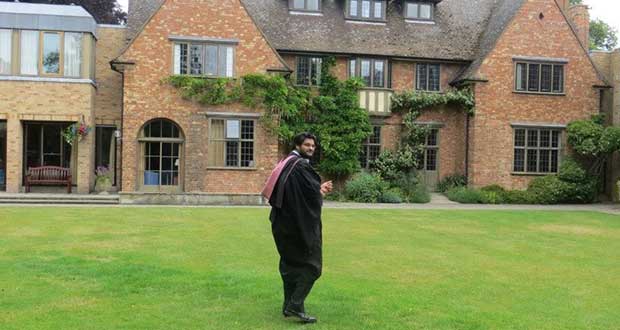
 Our Justice System is excellent considering everyday challenges. We do however need to urgently address issues like delays, transparency and the occasional malpractice if the system is to enjoy legitimacy and authority. All sections- judges, lawyers, the civil society- all of us need to put our heads together and work out solutions that are sustainable.

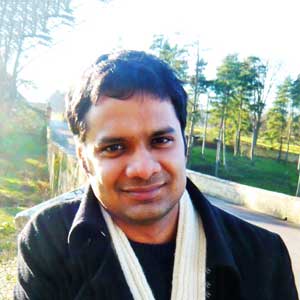
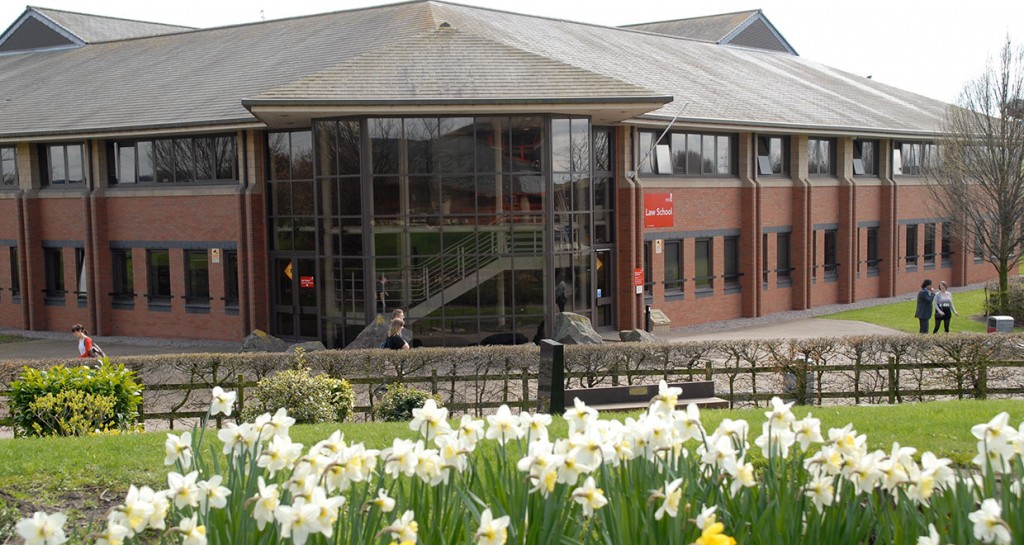



 Allow notifications