Tag: Academics

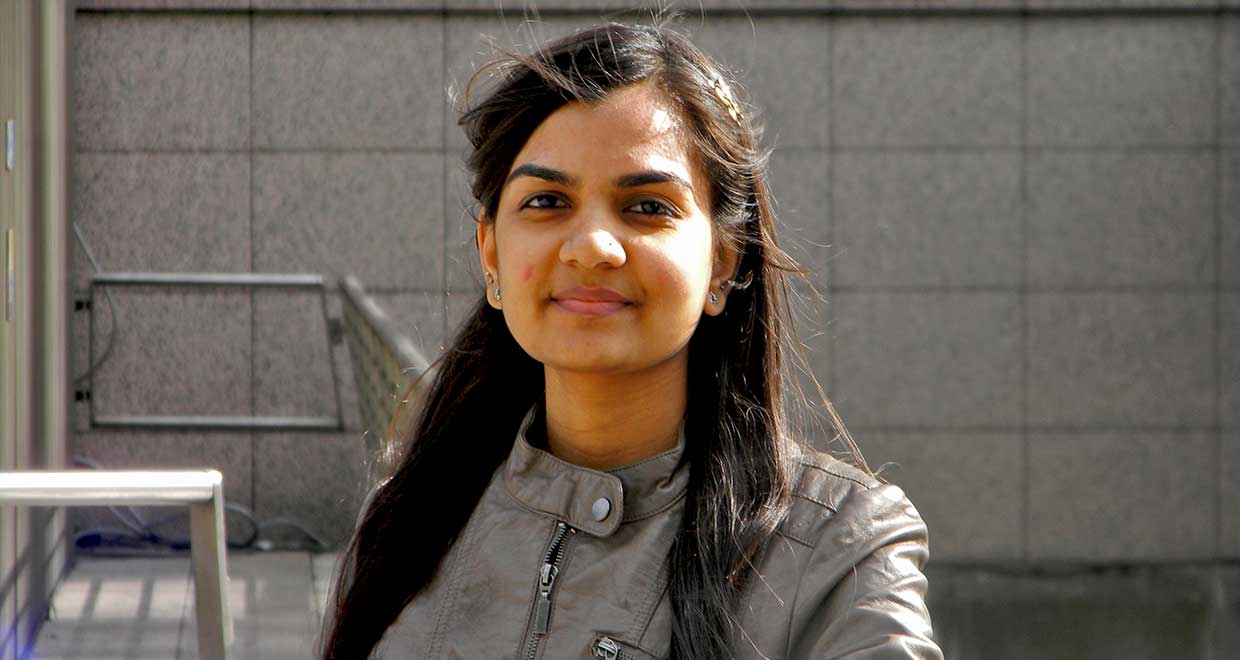
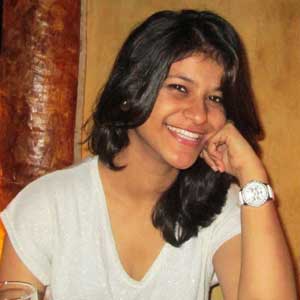
  • Rimali Batra, Associate, Regulatory and Policy team, Trilegal, on pursuing BCL from Oxford, life at law school and varied work experience

    Rimali Batra, Associate, Regulatory and Policy team, Trilegal, on pursuing BCL from Oxford, life at law school and varied work experience

    Rimali Batra graduated from ILS Law College, Pune in 2010. After graduation, she worked at ICICI Bank’s Corporate Banking and Litigation team in New Delhi for a year. Thereafter, she pursued a BCL degree at the University of Oxford. After completing BCL, she joined Jindal Global Law School as a Research Associate. She subsequently accepted a job offer from J Sagar Associate’s Regulatory and Policy team and after continuing there for a while she went on to join her present office at the Regulatory team of Trilegal.

    In this interview she talks about:

    • Reading BCL at Oxford and tips on scholarships
    • Being a Research Associate at JGLS
    • Working at JSA and moving over to Trilegal


    Most of readers are budding and enthusiastic lawyers, how would you like to introduce yourself to them?

    I was born and raised in Delhi. I did my schooling from Montfort Senior Secondary School located in Ashok Vihar, New Delhi. Thereafter I went to ILS Law College, Pune to do my graduation in Law. After ILS Law College, I worked with ICICI Bank’s Corporate Banking and Litigation team in New Delhi. A year and three months later, I went to University of Oxford to read law. After BCL, I joined Jindal Law School, Sonipat as a research associate and worked there for three semesters. During the second half of 2014, I joined J Sagar Associate’s Regulatory and Policy team and worked on matters concerning power (Electricity Act, 2003). I was with Mr. Amit Kapur’s team in JSA for a year and have now moved to Mr. Sitesh Mukherjee’s Regulatory team in Trilegal. I have been at Trilegal for five months now. That’s been my journey thus far.


    You have had many interesting career switches from starting out as a banking lawyer then being a Research Associate at JGLS to your current profile at Trilegal. What all do you consider before taking these decisions?

    One is of course bound to be surprised at the changing courses of my career paths but then it was all a part of the plan, which I hope the readers will see as this interview answers unfold. All decisions that I have made till date connect, and connect wonderfully.
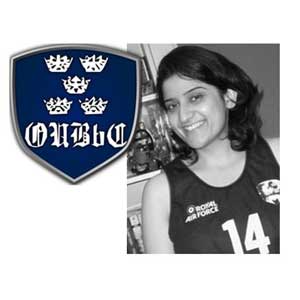
    rimali-batra-2I am a curious individual and don’t shy from taking risks. I have always been experimental in nature and challenges attract me and hold me. Call it my weakness, call it my strength. I believe that I perform well when I multi-task (It’s like enjoying the main course with some side dishes). That is how it has been since school days. For instance, in school I did not just study hard and well, but also trained myself to be a good basketball player (played national and international tournaments), a praiseworthy debater (both at the inter-school level and state level), a leader (school head girl) and a decent quizzer (inter-school level). Similarly in College, I did not settle for just being among the top 10 rank holder for all five years in the Pune University (ILS was one among the 20 odd colleges affiliated to the Pune University), but also represented ILS at various national and international level moot competitions, elocutions and paper presentations. At Oxford too, I read the BCL alongside playing basketball for the University of Oxford. And now whenever I have time and I am not working, I am doing either of the following – pro-bono advisory on energy laws and medical law and ethics, reading books, stock trading / following the market, writing and publishing stories or on issues of law that interest me, teaching English to underprivileged kids at home on weekends, part-time teaching at law schools or travelling.


    Did you have lawyers in your family or in close proximity?

    A little about my family: There are no lawyers in my family (or in extended family for that matter). My father hailed from Sonipat and my mother came to India in my Nani’s womb from Pakistan. My father was a businessmen and my mother assisted him in his business. He was and is my role model. He had no basic formal education and left school in class VI to pursue his dream of setting up a business. My mother was a national level table-tennis player and a B.Com graduate from University of Delhi.

    My elder sister, who is a gold medallist, is a Human Resources manager with a renowned company in New Delhi and my younger brother, who is also a gold medallist in B.Com (H) from University of Delhi is running his own business and takes care of dad’s business. I think I inherited my mother’s sports skills and reading habits and my father’s experimental, risk bearing and helping nature. I believed that a little confusion and nervousness is always good but fear is destructive, and therefore I aim at balancing my fears and my weaknesses with my confidence and strengths, as I move forward. I also leave achievements behind and look at them as a thing of the past and aspire to achieve a little more as days go by. So, in a nut-shell, law and basketball are my passion and I am a learner and observer at heart.


    Why did you decide to be a lawyer? How was your law school experience at ILS, Pune?

    As far as my memory goes, I sealed the decision of being a lawyer in Class Xth – even before I decided whether to take commerce or science. My decision was based on an aptitude test that was conducted in school moral science class. Thereafter I started adding biographies of famous lawyers to my reading rack alongside the already placed biographies of basketball players. I also read a lot of John Grisham. That marked the beginning. In class XII, I joined LST for preparation. I did not fill any other forms (B.Com, Eco (H) etc) but gave entrance tests for N-Schools. At one point in time, when I did not get through Symbiosis, I almost lost hope for making it to any other N-School, but then when I made it NALSAR, I regained my strength. I also made it to ILS on merit and on sports quota. Now, the decision there was simple, but I got swayed by the India Today ranking and picked ILS over NALSAR, as the ranking placed ILS at number 1 in 2005.
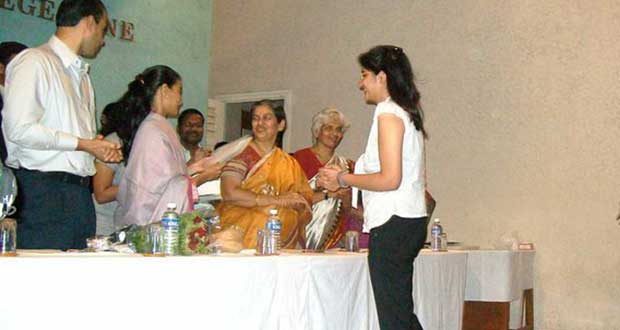
    rimali-batra-3

    ILS for me was a place of opportunities. Located in the heart of the city and walking distance from Symbiosis, ASCL, Ferguson College, FTII and Gokhale Institute of Political Science and Economics, it offered a vibrant student crowd and a bundle of opportunities. My learning was not limited to the classrooms of ILS. I participated in moots that enlarged my frame of learning, pursued diplomas in subjects that were not taught as a part of the academic curriculum and interned with NGO’s/human rights organisations in Pune. During college, I successfully completed diplomas in International Arbitration, Cyber Laws, International Business Laws, Securities Laws and Medical Law and Criminology. I was one of the speakers in the team that represented University of Pune at University of Oxford in the quarter-final rounds of the Oxford IPR Moot Competition, 2009. My first publication was on ‘domestic violence’ in the college journal (in 2007), followed by a piece on ‘separation of powers’ in the Ambedkar Law School journal (2009). During college, I also participated in cultural events like poetry writing and recitation, signing and painting. And of course I continued to play Basketball at the Deccan Gymkhana, since our college did not have a functional basketball court. I made some great friends at ILS. Overall, I believe I was able to paint my canvas with so many colours because I was in a college that gave me so much time and space to explore and go looking for opportunities, if they refuse to come to you.


    When people say “Law school”, they look no further than the National Law Universities. As a graduate of ILS, Pune have you faced any such bias? What would be your advice to students in ILS?

    I think the trends are changing a bit. Especially because of so many law colleges mushrooming across the country. ILS has a legacy of being one of the oldest institutions imparting legal knowledge. What ILS lacks is professional training. Meeting my counterparts from N-Schools, always encouraged me to imbibe in me the skills required to think, talk and approach life like a professional. Bias does exit but not all of us have to face it. ILS has a reputation for producing some good litigators however has not earned the same reputation in the corporate world, thereby making it difficult for kids in ILS to crack competitive corporate jobs. I recall an incident during my first job where a senior of my team, while praising my work, introduced me to be from NLS. On my prompting, he corrected himself and toned up his praises even more (considering he was surprised!). I would advise students from ILS to do additional courses and good internships because only studying law at ILS and getting a degree is not going to be enough.

    My advice to students of ILS would be two-fold

    (a) focus on academics in order to score well. Do not consider classroom teaching the end all of academics, that’s just the starting point; and

    (b) Make the most of the time at hand. Involve yourself in activities/course or additional degree’s that interest you. ILS makes space and time for you to incorporate that in your schedule. Most importantly, do both with the sole objective of learning.

    Students can consider requesting administration to take notice of events, moots and competitions that interest them and be rest assured the college will do its part. Student may also invite luminaries in the legal fraternity for lectures and seminars. Basically, what a student in ILS needs is the ‘instinct to initiate’ and ‘go towards opportunities’.


    Please describe the internships that you did in college.

    For internships, I always chose New Delhi, because this is where home was and logistics were easy to manage. My first internship was in the District Courts of Delhi where I read and researched on matters of criminal law and property related disputes. Thereafter, I did my second internship in Delhi High Court where I worked on matters on the original as well as the appellate side on various subjects. In my third year I did internships with Senior Advocates of Supreme Court. I then did an internship with litigation teams of two law firms and my final internship was with the Law Commission of India where I wrote a thesis (which retired into a book) on Constitutional validity of Medical Termination in India. I planned my internships and explored possible avenues for a lawyer in order to better understand my calling. By the end of five years, I was sure of being a litigator (at the least) not sure of the subject area that interests me.


    You worked as a Legal Manager at ICICI Bank. How does a typical day at ICICI work out? What were your main tasks and what responsibility did you undertake?

    ICICI Bank was my first employer. I was placed through college. I was based out of the Delhi office (I asked for Delhi as my location during my interview). I worked in no specific vertical, but was primarily doing litigation for/against the Bank. Anything and everything was a part of my profile. On a day I would be doing ECB lending, security creations and on another I would be researching and preparing written submissions for matters pending in the consumer forum or the Supreme Court and on yet another day I would be doing retail banking advisory. Having such a profile made it interesting to work in ICICI. I worked there for a year and a half, before I decided to do a masters.


    How did your appointment take place at ICICI Bank? What kinds of questions were asked at your interview for ICICI bank?

    ICICI follows a three step procedure, shortlisting on the basis of CV’s, followed by a Group Discussion and finally a personal interview. The Group Discussion revolves around a hypothetical problem relating to law of contracts and consumer protection. The personal interview is primarily based on the resume and a few HR based questions.


    Please tell us about your decision to do an LL.M and how you went about choosing the program and university.

    I decided to pursue my masters from Oxford ever since I visited the University in 2009 for an IPR Moot Competition. On my return, I pursued it like a dream. The advantages of doing a BCL are:

    (a) it offers the students to choose a suitable combination of subjects, based on their preferences as opposed to a custom-made LLM course. So, even though I read only four subjects as part of the BCL but at the same time the rigorous workload and timelines gave me the advantage of specialising in four subjects at one time,

    (b) Oxford targets on strengthening reading, breaking down complex material and articulating the same in form of legal writings/answers/tutorials. They say, don’t study BCL, you read for BCL.


    What do you think clicked in your favour during the selection process for Oxford? What are the scholarships you had applied for?

    I can’t answer this question with certainty. It has to be a combination of my academic performance in ILS, my statement of purpose and the write-up. Also, the fact that I assured my willingness to attend the course and pay for it, in case I did not get scholarships from Oxford, could have boosted my application. However, I did say that I will not attend if I had no scholarships at all. Other than that, achievements mentioned on my CV (like basketball, moots, diplomas etc.), my statement of purpose and my write-up may have added a little value.


    How do you think a law student can build up his profile to get through to top-notch universities like Oxford?

    It’s important to have a strong academic score. A rank in the law school adds value to the application. Apart from that, a student should be able to demonstrate inclination for engaging in theoretical and policy aspects of law. It is also advisable for students to have publications on their side. I remember interacting with the Dean of the University and inter alia, discussing the approach adopted by the University in considering applications from Indian law students. He talked about the law college’s ranking also being a relevant factor, apart from the academic achievements of the student.


    What was your area of study during your masters at Oxford? How was the academic pressure like and did you find time to engage yourself in other activities?

    I read Principles of Financial Regulations, Corporate Laws, Medical Law and Ethics and Philosophical Foundations of Common Law. The courses were rigorous and the readings ranged from being easy to intense and complex. However, I made time to be a part of the Oxford University Girl Basketball team after being shortlisted at the trials conducted at the beginning of the course. I played 4 or 5 inter-university matches and also participated in the legendry ‘Varsity Tournament’ played between Oxford and Cambridge every year.


    Please tell us about the scholarships you applied to and the procedure for each.

    I applied for all possible scholarships I stumbled upon during my research. I started looking for scholarships before making my application. I followed this website -governmentofindiascholarship.com. I specifically applied for Rhodes, Common Wealth Scholarship, KC Mahindra Trust, Jain Trust, Ox-Cam among others. I was awarded the KC Mahindra Trust Scholarship and the Ox-Cam Scholarships. The application procedure is a little detailed as the students need to prepare independent SOP for each and demonstrate availability of the balance funds (in case where the scholarship does not cover for everything).

    The interview rounds for KC Mahindra and Ox-Cam is fairly simple and questions are primarily targeted at (a) ‘Why oxford?’ and (b) ‘What after masters?’

    Additionally, I would suggest students to ask their employers or seniors they have worked with for financial assistance as some firms, seniors or employers are willing to offer funds with or without a promise from the student to come back and work with the said employer or senior.


    Please describe your experience at Oxford. What were the classes and professors like?

    Oxford was a scintillating experience for me. Especially, reading philosophy at Oxford gave me a deeper understanding of law, legal principles and concepts. Oxford has seminars (classroom teaching) which requires students to read before walking in. For my corporate law class I joined a group that was made by students themselves to discuss seminar questions before the seminar and help prepare better for exams.

    At Oxford I was exposed to a system that takes its readings very seriously. As a Masters student, we were required to not just read hundreds of pages every week, but, to also reflect on them during our seminars. I enjoyed this practice very much and it has allowed me to hone my writing skills in the process. A typical reading list will have at least 8-10 important readings (combination of articles, case laws and policy paper series from different jurisdictions, but primarily UK and US). Professors, at best, assist as students deliberate and discuss a topic. One more thing which I found particularly interesting was the presence of an economics, finance and corporate law professor at the same time during seminars for one of my courses, namely, principles of financial regulation.

    The tutorial system is quite unique. There are 4 tutorials for each subject and are spread over three semesters followed by a three hours written exam at the end of the course. I found the tutorials challenging but refreshing as they helped me assess my performance and understanding of the subject alongside attending seminars. They also helped me hone my skills of articulating my thoughts and understanding of the subject.


    You switched to a pure research based career after coming from Oxford. How did this change take place? How did you get to associate yourself with Jindal Global Law School?

    Academics is very close to my heart and still is. For as long as I can remember, teaching and educating has always fascinated me. When at Oxford, I heard about Jindal Law School and its dean, Dr. (Mr.) C. Raj Kumar who happens to be an alumnus of Oxford. I was given an opportunity to work as a Research Associate and lecture two courses ‘Property Laws’ and ‘Corporate Laws’. Honestly, one may see it as a switch in careers, but for me, academics fits in very well for an aspiring lawyer, especially after a masters. I also felt a dire need to re-apply and re-read my subjects, from the Indian law perspective – after I finished my masters.

    Though I chose to be a litigator, I haven’t lost touch with teaching and academics (and hopefully never will). I have conducted seminars and lectured at various law schools in India, ever since I left Jindal. I am a visiting faculty with Symbiosis Law School, Noida and often visit ILS Law College for conducting week long courses, as and when time permits.


    You had worked with Jyoti Sagar Associates and you are now working with Trilegal. Why this switch?

    After two very fruitful and enriching years at Jindal Law School, I decide to do join regulatory litigation. I was with JSA for a year and have been with Trilegal for 5 months now and having been working on laws in the energy sector, especially the power sector. With not much precedent in the sector, the practice is demanding and engaging.


    How is being a research associate or a legal manager at bank different from working at a top – notch law firm? Does the work load increase, how have you managed this transformation?

    When I was in ICICI, I assisted in consumer dispute litigations for/against the bank on subjects involving ‘corporate laws’, ‘banking laws and regulations’. When at Oxford I read ‘corporate law’ and ‘financial regulations’. When at Jindal, I taught ‘corporate laws and financial regulations’. When at JSA, I put together the knowledge and experience acquired from ‘corporate laws’, ‘regulations’ and ‘litigation’; and worked hard in acquiring sector specific knowledge. Electricity/Power sector is a super-niche sector and I find it thrilling and challenging. My work at JSA was very extensive and intense. At Trilegal, I continue working on matters in the power sector with the same intensity and I enjoy it immensely.


    How has the journey been so far? What are your long term goals?

    For me my journey that has been the best part. The people I met, places I visited, life experiences I picked on the way, all add to me being who I am today. For today and tomorrow, I am a litigator, learner and an observer and I aspire to be perfect at what I do.


    Lastly, what would be your message to a law student who wants to excel in the legal profession?

    Let me quote Abraham Lincoln’s message “If you are resolutely determined to make a lawyer of yourself, the thing is more than half done already.” I echo.

    When in law school, plan a little about your future. Immerse yourself in travel, cultural exchange, sports, parties and meaningful conversations, as much as possible. Don’t let your degree define your career limits. Don’t forget to explore and experiment. Take risks sometime, it adds a bitter-sweet flavour to your becoming a lawyer. If you do, then accept your failures as much as your cherish your victories.

    And most importantly, keep your imagination alive.
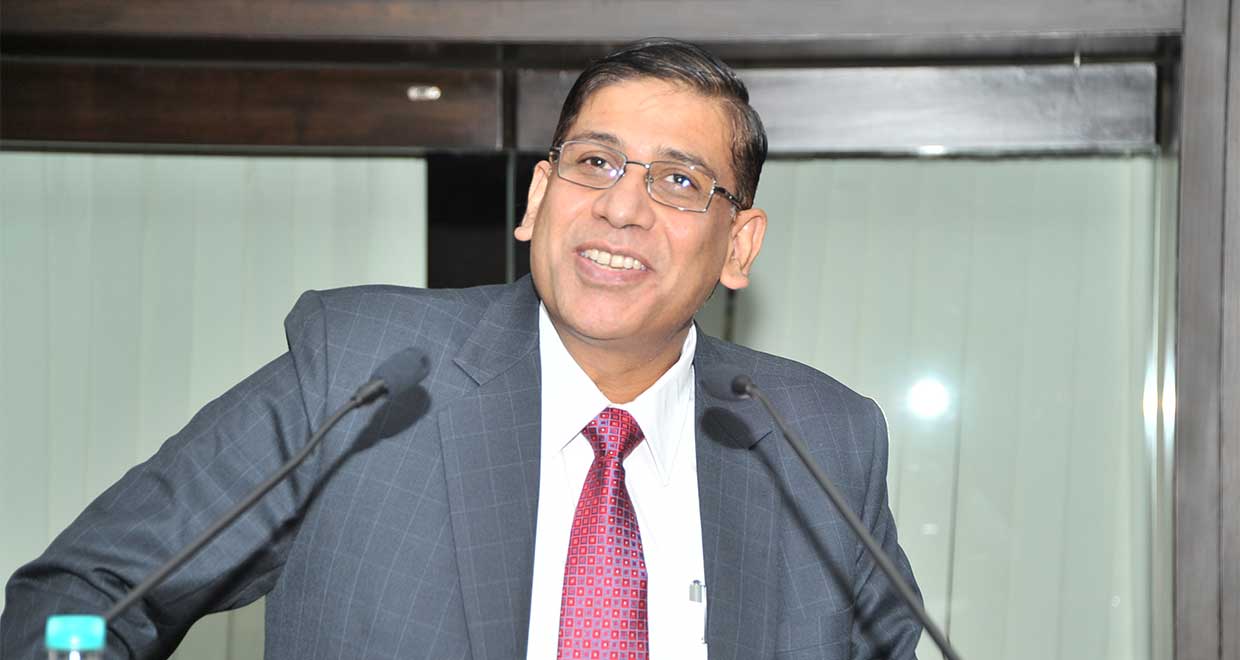
  • Ruhi Paul, Associate Professor, NLU Delhi on teaching, academics, research acumen and legal education

    Ruhi Paul, Associate Professor, NLU Delhi on teaching, academics, research acumen and legal education

    Ruhi Paul studied law at Delhi University and graduated in 1999. She practised for four years before choosing to enter the world of academia. She also holds a Master Degree offered by Guru Nanak Dev University and Ph.D. (Mediation law) from NALSAR University of Law, Hyderabad. She has worked as an Assistant Professor at Department of Law, Guru Nanak Dev University, NALSAR and NLU, Delhi. Presently, she teaches Civil Procedure, Law of Limitation and ADR at National Law University, Delhi as an Associate Professor. She was also involved in a training programme on Civil Procedure & Arbitration Laws for Controller Generals of Indian Defence Accounts Services.

    In this interview she talks about:

    • Teaching at National Law University, Delhi
    • Tips on excelling in academics
    • Accessibility and uniformity in NLUs


    How did you decide to opt for the field of law?

    As any other young enthusiastic girl, I wanted to join the field of law to help the masses to get justice. I was very fascinated by the idea that simply studying law is empowering in itself as we get to know of our rights and duties.


    Do you feel that the legal profession has significantly changed from the time when you decided to study law?

    Yes, the legal profession has changed for better. The base of any profession is research and research has become so easy with all the online resources available now. However, sometimes I miss the long periods we used to spend in the libraries.


    You studied law at Delhi University. Which areas of the law fascinated you the most as a law student?

    As a student, I was fascinated by Jurisprudence, Constitutional Law, International Law and Criminal Law. The best strategies according to me was listening very carefully to the lectures in the class, making very good books as base books for the subject and reading the related case laws very minutely.


    Your Ph.D. thesis was on mediation law. Why did you choose mediation law in particular? What factors should a legal academic consider while choosing an area of specialization apart from personal interest?

    I chose mediation as I had developed an interest in Alternative Methods of Dispute Resolution (ADR) well before I decided the topic for my Ph.D. thesis. I was teaching ADR at NALSAR University of Law, Hyderabad and I was fascinated by the idea that some disputes can be resolved in ways other than through courts using amicable methods which have the potential of improving human relations apart from resolving disputes. I also realised that Mediation is one such method which is not being researched and used in India as much it is used and researched upon in foreign Jurisdictions. So I decided to do research in Mediation and how it is being administered in India through courts. My Ph.D. is the first Ph.D. on mediation in India.

    A researcher should consider how his/her research can supplement the knowledge about the topic and how relevant the topic is in the contemporary times.


    You currently work as an Associate Professor of Law at National Law University, Delhi. What prompted you to choose teaching as a career?

    I had a short stint of four years at the Bar before I switched over to academics and pursued higher studies. While I was practising, I felt that I could be more productive if I joined teaching. As in teaching I can help a larger section of society through equipping young students with not only legal acumen but also lots of other life skills like positive thinking, taking responsibilities, team work, sensitivity towards others, leadership qualities, time management, stress management, etc. I feel that these qualities can help a law student to not only become a successful professional but a responsible citizen of India. This can automatically improve not only the Bench and Bar but the entire society.


    Tell us about your teaching methodology. Do you encourage students to take notes or do you engage your students in active class participation?

    I practise an interactive teaching methodology. I do not encourage students to take notes. I want a class which is alive and participative. I never mind my students asking questions. In fact, I feel motivated to teach a class which is fully prepared for the topic beforehand or the students who generally have an inquisitive bent of mind.

    Teaching is something which gives me lot of satisfaction at the end of the day as it is a learning process for me as well. I have to keep myself updated to face the students.


    What subjects are you currently teaching? What are your current research interests? Have you involved your students in your research?

    Currently I am teaching Civil Procedure, Law of Limitation and ADR. My practice at the Bar has really helped me in my teaching of procedural subjects. My current research interest is to delve deeper into the field of mediation. I am planning to write something like Jurisprudence of Procedural Laws to make the learning of procedural subjects interesting for students. Presently, students find it very hard to concentrate in procedural subjects as they try to learn it like any theory subject. I try different interesting ways to teach procedural laws and try to give practical based research projects so that students gets a deeper understanding of procedural laws. Yes, I have involved students in my research and it was a great combined learning experience for all of us.


    Do you think students should treat their professors like friends, or is it necessary to maintain a disciplined environment to create a good classroom environment?

    I think some bit of discipline is always necessary for anything that we do in life. I feel that in the classroom there should be a disciplined environment for a serious learning experience for both the teacher and the taught. Outside the classroom, the Professors should be friendly so that the students can approach them for discussing their study related and other problems. I think that we teachers have a larger role to play in the lives of our students and so we have to playing different roles like that of a strict teacher, parent, friend, guide, mentor, etc.


    Could you give our young readers certain tips on excelling in academics? As a teacher what tips do you give to your students for proper understanding of a subject?

    As a student, I used to make it a point to listen very carefully to whatever was taught in the classes. I think students should read the law (bare Acts, etc) very minutely to understand what the legislator is trying to say and why a particular law is being made. Reading cases related to the subject is also very helpful in understanding how the law is applied to real life situations. Most importantly, students should be very sensitive to what is happening in their surroundings as the understanding and application of law becomes very simple if one has lots of real life experiences.

    I strongly suggest students not to go for cramming or following any other short cuts just to pass in exams. Students should understand that they have a very important role to play in building up of the future generation and so they should choose wisely what they want to do in life and do it vey sincerely.


    You were involved in the training programme on Civil Procedure & Arbitration Laws for Controller Generals of Indian Defence Accounts Services. What were the most intellectually stimulating aspects of this experience?

    The most stimulating aspects of this experience is the fact that I have to offer sessions to people who most of the times are very senior officials and experts in their field. To offer orientations in Legal subjects, one requires a totally different type of methodology than teaching young law students. I really enjoy the practical application based questions from the trainees. I also like the fact that I need to design the course according to the need of the trainees who might not be having any legal background but who require an understanding of these areas of law in their work field.


    When would you say a legal academician is ready to start writing books? Any time management tip for budding legal academicians?

    Research is very essential for academics and it is a continuous process. I think there is no hard and fast rule as to what the right time is for an academician to start writing a book. Whenever an academician thinks s/he has acquired sufficient understanding of a topic/phenomenon/ process, both practically and theoretically, and his/her research will add something to the already existing literature on the topic, s/he can start writing a book. An academician can also refine his/her research while writing the book and so it is perfectly fine if s/he is digressing from the original research plan.

    We always can find time to do what we really want to do in life so I think there is no problem of finding out time for research or for any other work from our regular schedule. I sincerely believe in the saying, “When there is a will, there is a way”.

    For budding legal academicians, I want to say firstly, that they should enjoy life because life is a gift from God that we get only once. Secondly, when they work/ study/research than also they should do that with the same zeal and enjoyment. Your work will give you respect, authority, fame, livelihood and satisfaction.


    A common perception in the student community is that the curriculum in most NLUs is outdated and does not equip the students with the skills that they need to solve real life problems. What are your thoughts about this perception?

    I, humbly, don’t subscribe to this view. All the law schools follow a very flexible approach to curriculum design. The faculty is given a lot of space to design courses and are encouraged to keep updating the syllabi with the changes in the law. Apart from the basic courses, law schools have clinic courses which help a student to understand ADR mechanisms, drafting of pleadings and conveyancing, application of law in courts/tribunals, etc. Law schools also have extensive internship programs to enable students to have an experience of working with various organisations. In NLU, Delhi, we have library internships for first year students, NGO intersnships for second year students, Trial advocacy for third year students, appellate courts internship for fourth year and fifth year students. Law schools also have research centres which provide a forum for the students to get involved in various research projects, most of which are empirical in nature. In NLU, Delhi, presently, students are involved in the Clinic on death row prisoners, legal aid work, construction workers, gender issues, etc.


    Another concern that is often raised is that the NLUs are beyond the reach of hardworking students who lack the economic resources to study in these prestigious institutions. What steps should be taken foster more equality in the NLUs?

    At NLU, Delhi, we offer scholarships to students who lack economic resources. Sometimes, full fee waiver is also granted, if the circumstances require it. Various legal and other institutions can also have schemes of sponsoring the student’s studies. Initiatives like IDIA are good and should be extended to all institutions.

    The students who lack economic resources can also be allowed to do part time work in the libraries, etc to earn their pocket money while they stay in the law school.


    NLUs in India have often been described as islands of excellence amidst a sea of mediocrity. What steps should be taken to usher in greater uniformity in the quality of legal education in the country?

    I think the law schools and the Law universities and colleges should start working together. By working together, uniformity can be brought in legal education. There can be arrangements for exchange of faculty, certificate courses can be offered to students in law schools on subjects of their choice, law schools can have trainings for teachers in course designing and teaching methodology, etc. NLU, Delhi has Academy for Law Teachers which conducts training and workshops on regular basis. Joint research programs can be initiated.


    Any important things which law school didn’t teach you but ‘teaching’ did?

    Teaching has taught me lot of patience, the ability to see things from a wider perspective and self-control. Teaching has taught me to be a student of law for the rest of my life.


    Lastly, what would be your message to people who want to take up a career in teaching?

    Teaching has always been a very respectable profession. Teaching as a career is highly satisfying. Now a days, even the financial aspect is not a concern if you want to join teaching. It is a field which will help you to learn throughout your life by keeping you involved with bright, young and enthusiastic people. Teaching gives you the power to shape the future generation and with it comes the high responsibility to do this with great care and concern for the values of the society, the nation and the world as a whole.


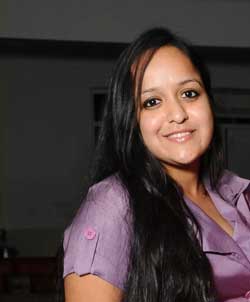
  • Khushi Pandya, PhD Scholar, University of Westminster, on higher studies, SoPs and Practice at Gujarat HC

    Khushi Pandya, PhD Scholar, University of Westminster, on higher studies, SoPs and Practice at Gujarat HC

    Khushi Pandya is a currently a Doctoral Researcher at University of Westminster. She is an alumnus of Maharaja Sayajirao University of Baroda. She pursued her LL.M in International Commercial Law from University of Westminster. She was a practising advocate before the Gujarat High Court. She has also served as a Grievance Redressal & Legal Consultant at Woman & Child Development Department, Government of Gujarat.

    In this interview she talks about:

    • LL.M and Ph.D from the University of Westminster
    • Tips on SOPs, Recommendation Letters and publications
    • Practising at the High Court of Gujarat
    • Working as a Legal Consultant in a Government Department


    Given that most of our readers are law students and young lawyers, how will you introduce yourself to them?

    Hello! I am Khushi Pandya, currently a Doctoral Researcher at University of Westminster, London. I am a proud alumnus of Maharaja Sayajirao University of Baroda, India from where I read my law degree – B.A. LL.B.  I have done my LLM in International Commercial Law from University of Westminster, London in 2011-2012. I was a practising advocate before the Gujarat High Court, State Legal Consultant with Government of Gujarat and a proud volunteer engaged with Mahiti Adhikari Gujarat Pahel. I hold an ordinary and average kind of student profile. I belong to Ahmedabad, Gujarat and have completed my schooling in the vernacular.


    How did you gravitate towards law? Tell us about your college life at  Maharaja Sayajirao University of Baroda. What activities did you partake in?

    Well, my inclination to pursue law developed as early as Class 10. My father is a journalist based in Ahmedabad and was extensively engaged from 1996 to 2005 covering various feature stories involving human rights issues or rather, I would say, stories which outline the common man’s struggle for getting what they are entitled to under the laws of our country. Hence, from the age of 8-9, consciously or sub-consciously I too, was associated with the thoughts and stories he used to share with his fellow colleagues and it gradually developed my interest in the subject. My father’s profession indirectly provided me a platform to understand that in reality, the struggle for rights has somehow become a part of an ordinary man’s life. By the time I reached Class 9 or 10, I very well understood that law is the mechanism which helps people to redress their grievances against many odds.  I completed my schooling in 2005 and chose MSU to pursue five years integrated law course – B.A. LL.B. I was in the first batch of integrated law course- B.A. LL.B at Baroda School of Legal Studies, Faculty of Law, The M. S. University of Baroda and it had all the factors you come across by being the first batch of any Course and that was mostly related to infrastructure and scarcity thereof. But renowned and experienced faculty members played very a important role during this time to nurture students’ knowledge and perspective as budding lawyers. Having renowned mentors help you a lot in getting insight of practical aspects of law. Faculty of Law, MSU gave many Justices in various High Court and Supreme Court, Advocate General, Government Pleaders, Senior Advocates and it has helped us extensively.

    At the same time, one should remember that MSU is the only residential University of Gujarat and it has its positive aspects. Like any college student, I have enjoyed a lot for five years. As one of my favourite writers C.K. Bakshi has rightly said that, “You learn more from outside of class than from within four walls of a classroom.” MSU provided me many opportunities to explore and expand my vision – be it extensive and intense election process, weeklong Youth Festival or cosmopolitan environment.

    As far as academic activities are concerned, I was ordinarily involved with studies throughout five years. During the first year of study, I was kind of an obedient student but in the following years I have bunked many classes and have spent time in the canteen discussing various developments in legal and political field. I have always scored well in semester examinations without any ATKT. I was overall a good student. Apart from day to day studies I have participated in various Legal Research and Writing Competitions/Seminars/Workshops – both in English and Gujarati language and have performed well too.

    As far as extra-curricular activities are concerned – I have extensively participated in various activities during Youth Festivals like –story and poetry writing competitions, debate or poetry recitation. I topped in Story and Poetry Writing Competition for two consecutive academic years.

    By and large those five years at BSLS, MSU were extra-ordinary in every sphere – it gave me a lawyer’s perspective by observing all facets of University life.


     What were your areas of interest during your graduation? How did you go about developing expertise and knowledge in these areas?

    Ever since I decided to take up law as a career, my entire consideration was towards issues which affect human life. Hence, during my college days my area of interest remained more towards Human Rights or instead should I say my inclination was towards Human Rights based approach. I was associated with a voluntary group which runs a legal aid clinic and focuses on legal awareness. Stories from people who came to attend such programmes are much more interesting and a kind of reality-check. Expertise come with years of practise but the various internships I undertook have definitely helped me to develop my perspective. Talking with seniors/fellow colleagues/clients, attending office helps you to gain knowledge and practical aspects of legal procedures  and that’s how you understand things. For practising law you need to understand practical aspects more; of course, books do help you but you need to understand what is termed by practising advocates as “Court Craft”.


    After graduation, you started practicing before the Gujarat High Court. What kind of difficulties did you face during that period? How did you overcome them? How would you describe your experience as?

    After graduation, I joined the Chambers of Dr. Mukul Sinha at High Court of Gujarat in May 2010 and trained until August 2011. I would say the experience was simply the best in each aspect – the kind of comfort and freedom you get as a fresher, I was made part of all kinds of discussions, I was allowed to participate in all court matters, I had access to all infrastructures and I learnt a lot. The reason behind mentioning all these is that ‘law firm culture’ is not yet developed in Ahmedabad and there are very few juniors – esspecially anyone without a background in the legal profession who get such freedom and liberty and comfort to work with Senior Advocates.

    My experience as a junior member at the Bar was fair enough. I was exposed to a variety of matters in this short span like – matters pertaining to service law, contempt law, furlough applications, constitutional matters and few other matters involving civil rights of people against politically motivated actions.


    khushi-pandya-3

    What made you pursue your LL.M from University of Westminster, London?  How would you describe your experience as? Tell us about the course structure and specialization of Master of Laws at University of Westminster?

    After working at Gujarat High Court I felt that exposure in foreign country to pursue Masters Degree in Law would be worth it. At the root of making the decision to pursue LL.M from abroad was just to get exposure – both professionally and personally. Also, the idea of going back to the classroom is always fascinating one. I made a decision in May 2011 that I want to study further and started searching for Universities and short listed a few Universities in UK. I got offers from Queen Mary, Nottingham, Durham, Birmingham and Westminster. I was awarded the Taught LL.M Scholarships 2011-12 – a fee waiver scholarship at University of Birmingham. But somehow I finalised University of Westminster to pursue my LL.M.

    The prime reason behind choosing UoW was faculty members – Dr Reza Banekar, Richard Earle, Adam Samuel, Dr Aurora Voiculescu, Simon Newman, John Flood, Joseph Tanega and many more. All of them are oceans of knowledge and I was lucky to have mentors like them. Classroom discussions and lectures were interactive in nature and it helped me a lot in developing a skill to speak up my mind and raising my views to a larger audience.

    LL.M Course at UoW is divided into  7 modules – two compulsory modules and they were : Foundations of International Commercial Law and Dissertation; five  optional modules and I took up : International Commercial Litigation, International Commercial Arbitration, Comparative Commercial Arbitration, Corporate Social Responsibility, Business and Law and Research Methodology. The course is of 180 credits – 6 modules comprising of 20 credits each and dissertation module comprising 60 credits.

    The assessment method is totally different from the one we have in LL.M courses in India. Assessment of one module is divided in two or three parts – open book class room exam, research essay, assignment to finish from morning to afternoon and problem solving questions.  Further, Masters Degree in Law from UoW requires its students to answer their questions within a specific word limit and it nurtures your habit to frame your arguments in a most precise manner. Gradually it developed the skill to reach your audience in few words.

    One of the other reasons behind choosing Westminster was that it is situated in the heart of London – just a minute walk from Oxford Circus tube Station!.

    Most fascinating and important part about studying at UoW was its library service and kind of resources you get for your research – it was simply the best.


    What are the key ingredients of a well written SOP? Can you make it personal? Any tip to those making their SOPs? What might be the one mistake that the majority make?

    Well, there is no strict formula to write an SOP. It varies from  need to need and as far as SOP for a course in a University abroad is concerned, they provide you a frame within which you have to explain yourself and that is too general and simple. My personal belief is that a well written SOP should be free of any jargon. When any organisation asks you to write a Statement of Purpose, it has to be your statement behind your inclination to take up something and your objective behind the same can be anything – personal reason, fascination, or just like that. A well written SOP, as per my opinion, can include reason to join a specific course – personal reason or any professional mileage you may get after completing that course. My suggestion rather than a tip to those making their SOPs is: write your SOP at your own, don’t copy from others’ SOP and most importantly – your consultant for higher education abroad is not supposed to write your SOP, it’s you who has to write it and penning down your mind might take up a day or two, but at the end it will exactly reflect your mind and would be far better from a stereotypical SOP written by your Consultant. I would certainly say that majority of students who consult Foreign Education Advisors leave it up to them to write one. Please don’t do so.

    Writing an SOP for applying for a scholarship/studentship equally requires you to pen down your need to seek financial assistance. When the SOP is for a scholarship, don’t embark solely on your achievements or need. All you can do is, collaborate your achievements, need and the benefit you are going to get after completion of the course.

    As far as writing down your thoughts is concerned, to sum up I would quote Friedrich Nietzsche that, “Style ought to prove that one believes in an idea; not only that one thinks it but also feels it.”

    I believe writing down your thoughts and perspective will definitely make a good SOP and  it has certainly helped me to get the Law Research Studentship Award to pursue Ph.D at UoW.


    khushi-pandya-2

    Do you think that having your recommendation letters written from distant acquaintances with influential position may backfire against you while making your application? What is the proper thing to do instead?

    My opinion is that all you need is a Recommendation Letter and it can be from anyone who knows you well – professionally or academically. Majority of institutes ask for recommendation letters from the last academic institute you have attended and in some cases they allow to have a recommendation letter from your employer. Recommendation letters are to support your application to an institute and the institute does not decide on your application solely on the basis of the recommendation letter – they do look at your grades, SOP, whether you meet  other criteria or not,  etc.


    You have publications in various renowned journals. How should one go about writing papers and getting the same published? Please share somehighlights of your best work.

    The first legal research paper I wrote was for a seminar organised by Bhavnagar University and that was in Gujarati language, discussing violence against women coming from culturally nomadic tribes. An important point to keep in mind is – writing what appeals to you is necessary – it may be purely legal, socio-legal, a novel, a story or a poem. It is said that practice does make you perfect and being in a legal profession, the habit of writing at regular intervals help you a lot. Nowadays we are in the era of social media – everything is virtual and so is your presence! As a Doctoral Researcher, during my interactions with many renowned Professors across the world, they have repeatedly advised that writing is the most important element for this profession. Publication indeed is an important factor because what you write or analyse must reach others and that’s how it is channelized across the wider community and that’s what academia actually means.

    I am in the process of producing my best work. But issues on which I have written include – Right to Potable Water in this era, Muslim Personal Law with special reference to Fatwa, scientific methods used in criminal investigation and its impact, right to information, unification of arbitration law, investor-state dispute mechanism under investment treaty regime, interface between human rights law and Bilateral Investment Treaty regime, to name a few. Currently along with my Ph.D research work, I am engaged with the  task of codifying various Government of Gujarat Resolutions along with relevant parts of Land Revenue Code pertaining to agricultural land and associated rights of farmers. I am genuinely looking forward to the outcome of this project and believe that it will be very helpful to farmers in understanding their rights and will bring awareness.


    How did publishing affect your legal career? Apart from academia, does it help one to secure jobs at all?

    I would say it boosts your confidence when you see your thoughts or work published in any peer-reviewed journal, newspaper or magazine. If you want to pursue career in teaching, having good publishing record will definitely play an important role and that is one of the University Grant Commission’s requirements too. My opinion is that solely a good publication record really does not help one to secure a job but along with that you are required to meet particular job criteria. If you are looking for a core litigation work area where you would  attend courts and meet clients on weekends or in the evenings, your senior might not be even bothered whether you have any publishing record or not. But I am told that when you are willing to secure a job in top tier law firms, publications during your academic years might be of important consideration.


    How do you identify and decide on a topic or area of law to write on? What is the process like? What are the top three things you consider as sine qua non for great research work?

    During the initial years, topic or area which appeals to you in some way or the other, you write about it. There is no strict formula or process. You choose a topic and start writing. A good point about participating in legal research paper writing competitions is you are given a specific area to write about and it makes the task easy. I believe that finding a topic to write is bit difficult and most of the time  lapses in thinking about the topic only.

    Three things as sine qua non for good research work are:

    • Interest in the topic – and be clear about three things – what you want to research on, why you want to research and how you want to research?
    • If you are involved with serious kind of research (M.Phil/Ph.D/Post-Doc kind of research) – please be aware of all developments taking place in your research subject, know all big shots involved in this research area and do in-depth reading.
    • Time-table and discipline – be clear about the time frame within which you want to finish your research work because as a human being you may procrastinate and it delays the process. So many developments are taking place and it may happen that what you are dealing with has already been dealt with by many other people just because you didn’t follow your time frame. You need to follow a military discipline at times.

    I used to serve as a Volunteer for Mahiti Adhikar Gujarat Pahel, Ahmedabad from March 2013 until I came to UK, for free Legal Aid Clinic where a number of people across Gujarat come to seek advice about various legal issues they are facing. Many a time, stories from general people help you to find a topic to write an article on. You can very well co-relate the social issues they are facing and the law/rules pertaining to the same and research further and shape it as an article.

    It is not always necessary to get it published in a journal or news paper or magazine. You can put it on your blog and seek a wider audience.


    At present, you are a Doctoral Candidate at University of Westminster. What motivated you to pursue a Ph.D.?

    Ever since I took up my LL.M dissertation, I have thought of taking it further to Doctorate research. My interest in the subject was the prime motivation to pursue a Ph.D. Along with that, encouragement and support provided by my Director of Studies who was my LL.M dissertation supervisor too, my professors, my parents and friends motivated me to take up this research project. Since my teenage years I had vaguely dreamt of pursuing a Ph.D before I turn 30; so that factor has also played a role in enrolling for a Doctorate Programme.

    It is not about studying too much. It is unlike a typical study or course and in fact, it is a kind of work i.e. research and writing which you like and that’s how you go further into it. It is a process of evolving during years of your doctorate studies – both personally and professionally. But there is some inner force which keeps on motivating you to take the process further and further. That’s all.


    Prior to pursuing a Ph.D , you’ve also worked as Grievance Redressal & Legal Consultant at Woman & Child Development Department, Government of Gujarat. Please tell us about it.

    Yes, I was a Grievance Redressal & Legal Consultant at Women & Child Development, GoG. A walk-in interview was scheduled for the appointment where all candidates had to undergo a written test and if short listed; had to face an interview. As many as 55-58 candidates appeared for the written test and 8 were shortlisted for interview and I was one of them.  Five panellists were there – Principal Secretary, WCD; Director, ICDS and three other top officers of WCD and the interview lasted for 7-8 minutes. They asked a  few general questions about my alma-mater MSU, laws pertaining to prohibiting sexual violence against women, drafting skills and my course at UoW. It was a kind of formal talk after waiting for 7.5 hours at WCD Office at Gandhinagar.

    Being a State Consultant there were many tasks to deal with. My main task was to handle all litigation before High Court and Supreme Court, preparing affidavits in reply, co-ordination with Government Pleaders. Majority of cases were Public Interest Litigation, service law matters and commercial matters arising out of tender process. Apart from that contract vetting was one of  my tasks.


    Please tell our readers about the environment of a Government department. How do the daily activities take place?

    Working with a Government Department is a different experience altogether. Important tasks include preparing affidavits in reply, monitoring all Court matters, instructing District Offices about matters pending before District Courts, briefing  higher authorities about any important developments, conferences with GP/AAG/AGP.

    In a Government Department, everything goes on file and you will hear people saying “file chalana padega iske liye”. The working environment is typical and in your initial days it annoys you too. The working style is completely different from the one you have in Chambers or Law Firm.   You keep on searching for a particular file and still couldn’t find because the person who initiated that file was transferred to some other department and the new one would say he actually doesn’t know about this issue because it’s a new subject for him/her. But gradually you learn to handle such situations and get the work done. But at the same time working with top officers of the State is also a learning opportunity.

    I was the only legal consultant in the Department managing all sorts of legal issues and had many responsibilities to deal with. Normal days were packed with work and handling various matters and attending Court. Overall it was a nice experience.


    What is your Ph.D research topic.? What was your motivation behind the selection of that topic?

    My thesis deals with the interface between the Bilateral Investment Treaty regime and International Human Rights Law. I show the conflict seen between two regimes of law- Investment law and Human Rights Law and it aims to study the need to balance investor protection vis-a-vis human rights obligations of the state and sovereignty of the state under Investment Treaty regime.


    What plans do you have once you finish your Doctoral Research? What do you plan to accomplish in the coming five years?

    I will be looking forward to teaching. But my long term goal is to get actively involved in spreading right based legal awareness in India.


    Lastly, what would be your message to law students interested in going for higher studies from India?

    If you have a dream or are willing to pursue higher studies in foreign country, you should absolutely go for it. But at the same time it must be kept in mind that higher studies in foreign country might not guarantee a dream job at the first instance when you return to India simply because you hold foreign LL.M Degree and that’s why your  purpose has to be to explore a new world- academically and personally rather than solely aiming at job employability; and  a commitment to your own self to excel in whatever work you take up would benefit ultimately. Make the best out of your one year LL.M or any other Programme in all aspects and explore a new country – culturally, academically and personally. And at last, be ready to embrace the uncomfortable!

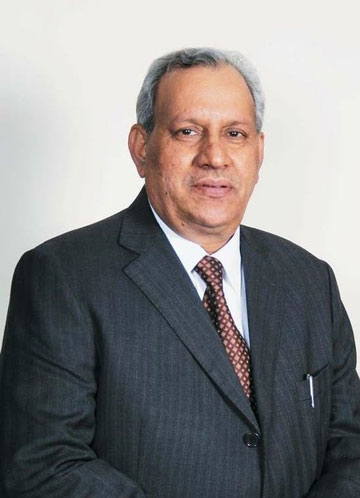
  • Jayakar Bathula, Practicing Advocate and Researcher at NALSAR, an inspiring story of facing odds

    Jayakar Bathula, Practicing Advocate and Researcher at NALSAR, an inspiring story of facing odds

    Jayakar Bathula graduated with an LL.B degree from Mahatma Gandhi Law College, Osmania University. After that he pursued an LL.M degree while specializing in International Trade and Business Law from NALSAR, Hyderabad. He currently works as a Legal Assistant with a group of advocates called Chamber of Lawyers’ Collective, High Court of AP and TS at Hyderabad.

    Jayakar is an inspiring story that needs to be told and retold. The education that he has attained is mostly about the struggles that he had to endure while pursuing them. He is an example and personification of the word ‘tenacity’. Being from a very humble family, he is currently a practising lawyer and also contributes to NALSAR’s repository of study materials through his in-depth aptitude in research and learning.

    In this interview, he talks about:

    • Studying law at Mahatma Gandhi Law College, Osmania University.
    • LL.M from NALSAR, Hyderabad.
    • Preparing study materials for the One Year LL.M Course at NALSAR, Hyderabad.
    • Working at Chamber of Lawyers’ Collective, High Court of A.P and T.S at Hyderabad.


    Our readers consist of law aspirants, law students and young lawyers. How will you introduce yourself to them?

    This is a good opportunity to introduce myself to all law aspirants, students young lawyers and the readers. Briefly, I am working as Legal Assistant with a group of advocates called Chamber of Lawyers Collective, High Court of A.P and T.S at Hyderabad.


    jayakar-bathula-2

    Please tell us a little bit about your childhood and background. Why did you decide to pursue law and what influenced your decision?

    The first and foremost thing which influenced me to pursue law is my social background. I am from a rural village in a hilly area called Morriguda. In my childhood I faced many problems in this village. There was no power, no water and no connectivity, only street lamps which were used by the village heads to show that there is some habitat during night times. We used to drink pond water, carried by my mother from a watering hole outside the village. The street in my village were not even ‘street’, just dirty and muddy pathways.

    The only primary school where the teacher never came, was destroyed by the high flow of the river valley. So I faced lot of problems to get primary education. We went to other villages’ primary schools which were far away from ours. We struggled for primary education. But we smiled even in the crucial times and we enjoyed well.

    These things affected me to pursue higher education in life. Some times every one of us can face money problems. I faced lot of money problems in paying school fees, college Fees, and University fees also. So I worked as a hotel boy at Suprabath Hotel, Hyderabad. Now it has become Royal Derby Hotel, which is good as it has developed. Sometimes, I also worked in MGNREGS to pay University fees.


    From which college did you pursue graduation? Did you have any guidance on how to go about your academics, co-curricular activities and internships?

    I completed my LL.B from Mahatma Gandhi Law College, Osmania University. It was really a great thing in my life; it has given me a good opportunity to work with a group of Advocates called Chamber of Lawyer’s Collective. My college and the Ranga Reddy District Court Complex both are opposite to each other and the Lawyer’s office is also just 5 minutes away from my college. I stayed behind my college. So I would ordinarily attend courts with Senior Advocates and work as a Legal Assistant under them. It has given me good knowledge.

    If we talk about guidance in life… society has been the first guide in my life. I made so many mistakes but I when society has given me punishment, I realised that, this is a mistake I would never do again, I was bound by it.


    What were your areas of interests in college? How did you go about gaining knowledge in these areas?

    The area of my interest was Administrative law and policy. I used to read all the G.O’s which were framed by Governments, Contract and Company Law regulations. I followed journals regularly, and discussed with seniors to clarify my doubts. I pro-Actively participated in all kinds of legal discussions along with senior advocates. Later on we conducted free Coaching classes for A.P JCJ.


    When and how did you decide to pursue an LL.M from NALSAR? Have you thought of applying for foreign universities?

    Once there was advertisement which said that the best law University in India is NALSAR, Hyderabad. So I decided to go NALSAR for higher education. Applying and appearing for the CLAT was ‘O.K’ for me, but I was worried about the University fees and expenses. I let the financial apprehensions go and decided to try the CLAT first, and then see what happens.

    After the CLAT results were declared, I applied to NALSAR, NUJS, NLUJAA, NLIU Bhopal, NLU Delhi, and was selected by NALSAR.

    I started arranging money with the support of friends. I started with 25,000/- and sold my sister’s gold chain (she completed her M.B.A from Hyderabad Central University).

    I went to NALSAR and requested the V.C, Prof. Faizan Mustafa but he had to reject my admission due to no scholarships available and payment of total fees was necessary. I had some friends in NALSAR in their 4th year and I requested them to convince the V.C. Danda Madam cooperated and later V.C Sir called the CLAT Convener and confirmed my seat with a little bit of amount. My LL.M seat was confirmed in NALSAR. My uncle suggested and supported me for an Education Loan with which I settled the NALSAR fees.

    For the rest of the things, my friends have given their shoulders. “The lamp of education needs the oil of finance”.

    Now, how do you say I go abroad to pursue my LL.M? It is only a day dream in my life.

    Here, the most important thing is that after every formality of admission was done with, my every moment was being spent in NALSAR, I was in the Library for almost 18hrs per day with books, journals and laptop. It provided me with a lot of knowledge on international trade and business laws and various emerging fields in law.


    You’ve completed your post – graduation from NALSAR in 2014. How would you describe your experience?

    My experience was good. I did drafting work for the SAARCLAW Bi-Annual Journal under Prof. P.V Rao Sir and prepared short notes for Air and Space Law Students. I was SAARC conference Member; a Legal Adviser for India GEO SPATIAL Conference, as well as a Legal Adviser for the India International Aviation Conference. And this credit goes to my Guide Prof. Balakista Reddy, who is now the Registrar at NALSAR. Congratulations to Prof. Balakista Reddy Sir.


    What motivated you to choose ‘International Trade and Business Law’ as your specialization for LL.M?

    Basically, during my graduation I used to read Administrative Regulations. I was more focussed on contract and Company Laws. Because of this impact I was motivated to opt for International Trade and Business LawsIt is vast area; it deals with Cross Border Business Transactions, the idea that we are living in the Global Village seems true with this.


    jayakar-bathula-1

    What was your topic of dissertation for LL.M? Why did you choose that subject for research?

    This is most important thing I did in my LL.M course. My Dissertation was on the Aviation Sector. It was titled “Air Lines Regulations In India And China: A Critical Analysis”.

    The reason is that the Administrative body, the policy makers, the Administrative mechanisms make some regulations and impose them on the Aviation Sector. I wanted to do research on how the rules and regulations are affecting the Indian Aviation Sector, and what its impact on India’s Economy Growth is. I also discussed so what kind of regulations are there in China, what is not there in India, (like policy regulations, no Uniform Code on Aviation Fuel Tax) Fuel Tax Regulations in India, Region wise Monitoring in China, Monopoly Monitoring system in India, need of Subsidiaries in India and Liberalisation of Air Craft Purchasing in India.

    We have even seen the Kingfisher bankruptcy and M&A in Aviation Sector. There is a need of Regulation in Indian Aviation Sector to access Low Cost Carriers, and to access World Wide Air Crafts, like India allowing the Big Bird from Singapore to land in the Delhi International Air Port. Many things are there in the Dissertation.


    You have prepared LL.M study materials on various subjects for NALSAR. How did you go about preparing such study materials?

    Sometimes we think a hundred times before starting a project, even if it is 30 pages, because we have to take care of Research Methodology, Hypothesis, etc till the Conclusion. My LL.M was a Two Year Course, now it is One year Course (which is great, because now, “Less money + less time = LL.M”).

    International Laws mean you are talking about another Sovereign’s Laws, Regulations, and Administrative System which is unknown, since you are standing in your own Country. The clubbing and framing of two years of material for the One year Course has to look after each and every word consciously and I did this important thing. For this purpose I followed Empirical Research Methodology.

    I referred to books, Journals, On-Line Journals, Westlaw, Lexis Nexis, International Arbitration Council Regulations, ICJ-Regulations, weekly Journals. I collected the material, clubbed and framed it.

    The subjects were “International Telecommunication Laws”, “IPR Law: Relating to Space”, “Mergers and Acquisitions in International Trade”, “Aviation Regulations and M&A in the Aviation Sector” and “Corporative, Comparative and Competition Laws in USA, U.K, E.U, Canada and India”. I also separately prepared material on “Business Aviation Opportunities in India: A Golden Threshold”, “FDIs in Air Ports and Air Traffic Management in Indian Aviation Sector-Under ICAO and IATA-Regulations” and am currently preparing “International Migration and Emigration Laws”.


    How do you think students will benefit from your study materials?

    Exactly, this material is prepared depending on contemporary issues and how to regulate them. At the end of the day all students came to me and collected this material for their future reference. It may be useful for all “International Trade And Business Law” students. We also have to look after the latest regulations and be updated.


    What is the relevance of studying from those materials when there are so many books available in the market?

    Yes, there are so many books on “International Trade And Business Laws” written by prominent authors in the Market. All of these are useful. But my material is prepared depending on latest regulations and updates. Like, U.S.A Federal Laws and States Laws are different. They have a Uniform Commercial Code. It is a command for all the states, but not California which has its own laws. Similarly, E.U Laws are common for all states, and every state has its own sovereign laws. But in India it is different. India is a Union of States; Law is equal into all states. In this, we have to describe, choose, club and frame it for the benefit of our students. 


    Do you think keeping study materials handy helps students in last minute revision before an exam?

    Of course, the handy material may be helpful to students for the sake of examination, but not in practical life.


    What are your future plans?

    I am presently working with the same group of Advocates, Chamber of Lawyer’s Collective. I may get a Law Faculty Position as an Assistant Professor. If I do, I will go for Ph.D, otherwise stay with the Group of Advocates. But I am interested in teaching.


    Going forward, how do you expect the LL.M experience to influence your career?

    Obviously, the LL.M experience will influence my life because my specialisation is “International Trade And Business Laws”. We are in a Global village where Global Consumers are there to consume our Global Products in the Global Market.


    What message would you like to give to our readers?

    Actually, I am not in a position to give such a message. However a few words: Dear readers, I suggest only one thing. Just do the hard work tenaciously, the result will be there.


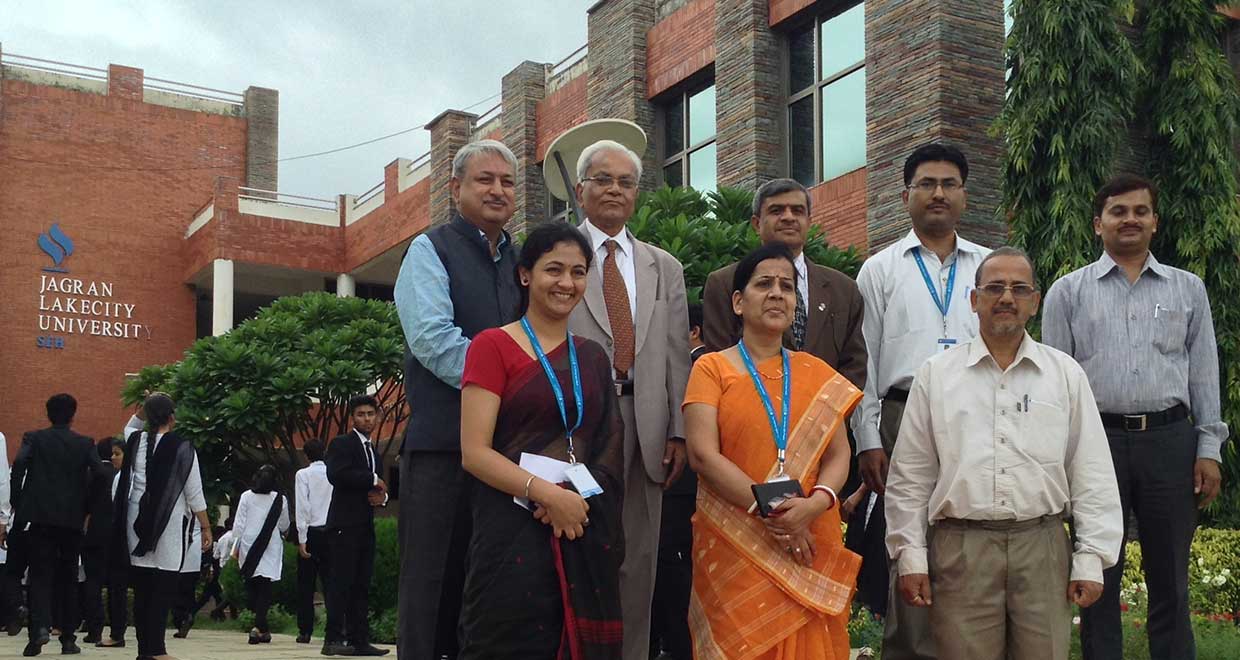
  • Nidhi Khare on pursuing LL.M from NLIU, work as an Assistant Professor at Jagran Univ

    Nidhi Khare on pursuing LL.M from NLIU, work as an Assistant Professor at Jagran Univ

    nidhi-khare-3Nidhi Khare completed her graduation and post-graduation from National Law Institute University, Bhopal in 2013 & 2014 respectively. She was an avid mooter during her B.A.LL.B. days and has multiple publications to her name. She had always planned to pursue a career in academics since her days in law school. Presently, she is working as an Assistant Professor at Jagran University, Bhopal.

    We asked her to share her experiences and strategies she used over the years.

    • In this interview, she talks about:
    • Pursuing B.A.LL.B. and LL.M. from NLIU, Bhopal
    • Importance of co-curricular activities for a law student
    • Opting for teaching


    Most of our readers are law students and young lawyers. How will you introduce yourself to them?

    Well as far as introducing myself is concerned, I am a law student from the last six years and I am working as an Assistant Professor at School of Law, Jagran University, Bhopal. I take pride in the fact that I continue to be a law student and I have chosen a field wherein I can share my knowledge of law with young legal minds and carry on with the process of learning of law.


    How did you gravitate towards law? Why law and not engineering or medical studies?

    It wasn’t like I always wanted to do law. To be honest, initially I had a fear in mind about law and the heavy books that they are supposed to read. I got into law at my family’s advice but once I was into law, I found it is all just about logic and its practical application. I had no particular reason as to why not engineering or medical except the fact that I wasn’t good at physics and chemistry.


    How would you describe your five years of law school at NLIU?

    Five years at NLIU have changed me as an individual, as an intellectual to be precise. I believe the opportunities that a student can get at NLIU, or any national law school for that matter, are sufficient to develop the legal acumen that a law student needs. Also, I feel no shame in admitting the fact that before entering law school I used to have a tremendous public fear but by participating in competitions such as moot courts, client counselling, etc., I got rid of my public fear and I think I owe a lot to these opportunities that I could think of entering the profession of teaching.


    What kind of internships did you do while you were a student? Any remarkable experiences during your internships that shaped your career choices later?

    When I entered the law school, I did not have a set frame of mind as to what I want to do after graduation. When you enter a law school, especially if it is a National law school, there is a lot of hype created about working in law firms and Corporates and it is not unusual for a student to get carried away with it. To clear the mist that had settled in my mind, I interned in Majmudar & Partners, a leading law firm, and Wipro Technologies to have my share of experience, both with firms and Corporates. I also interned with ONGC to know about the work culture in government set ups. It was during these internships only that I realised that I had no interest in working on company contracts or fighting cases in Courts.


    You have been a member of multiple committees while in law school. Do you think these enhanced your skill-sets? Please share a few of your memorable experience.

    Yes I have been a member as well as Convenor of the Cell, as we call it in NLIU, and it has definitely taught me a number of things which probably classroom experiences don’t teach you. As a member of the Environment Cell, I learned the usual qualities of team work and patience but when I was a Convenor of the Consumer Cell, I learned to work and manage while dealing with people of different attitudes and mind-sets. It taught me the quality of being a patient leader.


    You have participated in various moot court competitions. Tell us how important is mooting and what effect does it have on one’s CV?

    Mooting, I think, is one of the most important exercises that a law student must do because it greatly improves your communication and argumentation skills. It also makes you think from a different angle altogether towards legal problems. Then ofcourse mooting helps a lot in removing the fear of public speaking. It brings clarity to your thoughts since when you know that you can be grilled by the judges on any assumption you make, you certainly do an in-depth research to have an authority backing all your arguments. It thus also improves your research skills.


    Right after graduating, you went for LLM.  What was your motivation behind pursuing LL.M.? When did you finally decide that you need to do masters?

    When I decided I have to go into teaching that was the point I knew I had to have a masters degree to be able to teach in a Law University. Also, because my interest area has always been criminal law but graduation doesn’t offer you an in-depth study into any particular field of law, I opted for LLM in Criminal Law.


    Tell us something about your LLM year at NLIU. How did this influence your career?

    I did the one-year course. It was actually introduced in that very year only. As far as the experience is concerned, yes it does certainly increase your knowledge on particular areas of law and the dissertation makes you have a deeper understanding of a particular concept.


    What was your topic of research for LL.M? Why did you choose that subject for research?

    My interest has always been women-centric laws, and I have worked a lot on sexual offences against women. I have a number of publications on sex trafficking of women, I have presented a number of papers both at national and international level on anti-trafficking laws and owing to this interest of mine, I chose rape as my area of study. My topic for research was ‘Development of Rape Laws in India: a Critical Analysis.’


    nidhi-khare-2

    What do you like best about teaching? What is the best thing about being a Professor and what’s the worst?

    I get a lot of satisfaction from teaching. This I realised when I used to teach the poor children staying in the village nearby our university who we used to teach as part of PULER, an NGO of our University, and they used to understand and learn from me. That was the point I decided that I will go into teaching. I taught in a coaching institute in Bhopal in my 5th year and while I was doing my LLM and those two years made me clear that this is the only thing I want to do for my entire life. I think the best thing about teaching is that you constantly learn and this profession offers you an opportunity to share knowledge and learn from others as well, including students. As far as the worst thing is concerned, I will say it’s not worst but it is bad that in India we don’t realise the importance of teachers in a student’s life as well as for the nation-building. They are considered to be doing an easy job and people think that if someone wants an easy life, he should go for teaching which is an absolutely wrong notion. A teacher has to do a lot of preparation to even stand for 15 min before the students. It is not an easy job at all.


    What are your favorite subjects? What subjects are you currently teaching?

    My favorite subject is criminal law. As of now I am taking contract law for the undergraduate students and I teach Business laws to students doing MBA in finance stream.

    Do you think students should behave the professors like friends, or is it necessary to maintain a disciplined environment to create a good classroom environment?

    I think it should be a combination of both.

    Describe an outstanding teacher. What do you think makes this educator outstanding?

    I don’t know how to define an outstanding teacher but I think a good teacher is someone who can communicate his thoughts clearly to the students and who feels that he is there to discuss with the students rather than to tutor them.


    Any important things which law school didn’t teach you but ‘teaching’ did?

    Yes, it brought more clarity to my understanding of concepts because when you are teaching, you can’t be anything less than perfectly sure of your concepts.


    Where do you see yourself five years from now?

    I see myself interacting with students in a class, and on the verge of or already completed my Doctorate.


    Lastly, what would be your message to people who want to take up a career in teaching?

    I will just say do not take up teaching just because you don’t see any other better option because as a Professor you are responsible for the life and career of all those students you teach, which you definitely cannot put at stake. So teach only if you enjoy teaching.

  • Sanyukta Banerjie on LL.M in IPR from NUS and building a career in academics

    Sanyukta Banerjie on LL.M in IPR from NUS and building a career in academics

    sanyukta-banerjie-1Sanyukta Banerjie is a 2014 Batch graduate of Gujarat National Law University, currently pursuing her LL.M from NUS, Singapore. She has been one of the brightest students at GNLU and has actively participated in theatre and music during her college life. In this interview with Superlawyer, she shares her passion for IPR and teaching and the various considerations one should keep in mind while applying for a Masters Degree.


    How would you introduce yourself to our readers who are mostly young students of law and lawyers?

    I would introduce myself as a student of law as I believe what we study in law school, or learn over internships or even on the job is really just a fraction of the expertise that is required. As cliché as it sounds, the study of law really is a life-long journey.


    Please tell us a little bit about your childhood and your background? Why did you decide to pursue law and what affected your decision?

    My childhood was spent more among books than people. In fact I remember my Mum would send me off to play with the neighbourhood kids and I would instead sidle into their rooms and pore over their collection of Pinkie, Chacha Chaudhary, Enid Blyton, etc. Come to think of it, I might have come across as a bit of a prig! Reading led to writing and coupled with the fact that I usually had an opinion on almost everything, law seemed the inevitable choice. I can’t exactly pinpoint when I had that moment of epiphany so to say, but I do think my fascination with law started because at that stage of my life, and being part of the education system that I was in, law was the only medium which permitted me and in fact encouraged me to question all that I saw around me.


    Tell us a bit about your life in law school. What activities were you involved in apart from the regular academic curriculum?

    Oh law school! Well, I think I tried my hand at almost everything once (Except sports. Everlasting anathema). I think that’s the best part of law school, or perhaps the times we live in. Every activity is so democratically organized that even if you have a fledgling of an interest in anything, there would a club for it and people as enthusiastic as you, if not more, to share that interest with you. I was part of the Theatre Club, the Music Club and the Quizzing Club. I enjoyed mooting and writing. (Even if it be just academic papers, as nerdy as that sounds.)


    Any fond memories which you would want to share with our readers related to your days in law school?

    Haha! This question makes me feel so old. I don’t know if it’s just me but law school has you living this strange dichotomous life where your superiority complex is matched only by your self-loathing. Anyway, 2012 for me was the year of a particularly high degree of self-directed hate. But in March we stood runners up at a moot court competition and I was adjudged the best oralist which helped me put things in perspective and calmed me down immensely (only for it to start all over again next year!)


    As a law school student you have done a number of internships. Please tell us a bit about them and how they helped shaping up your future career prospects.

    As depressing as it might sound to certain people depending upon their private beliefs, most fundas about law school internships are actually quite accurate. Yes, interning at a place does spike your chances of securing a job there. No, it does not matter how you secured that internship or what your grades were. And yes, the nature of the beast demands a fair amount of hobnobbing and that includes both corporate and litigation sectors.  Since I was still finding my feet career-wise when I came to law school, I went step by step. So I interned with NGOs, litigation practises and law firms and I am really glad for having sampled each of these avenues. I think they helped me define my ideas about a career vis-à-vis work culture, office environment and quality of work in a manner that reading about them or asking my seniors never would have.

    Even though my ultimate aim is to teach in India, I will always be glad to have picked up such work experience along the way because when I was pursuing undergraduate studies, I remember that those teachers who had prior experiences working in legal institutions had a sounder understanding of their subject.


    When and why did you decide to pursue an LL.M and what were the considerations you had in mind while looking at various universities? What was your motivation behind doing an LL.M. abroad? Why not an LL.M. in India?

    My wish to teach lay at the core of my intention to pursue an LL.M. I was in my last year, had vetted almost every avenue of law through internships and quite exasperatingly, I had enjoyed all of them. As you can imagine this did not particularly ease decision-making with respect to picking a career. My college conducts an ASP (Academic Support Program) program where seniors provide remedial classes on any subject of their choice/expertise. I used to volunteer for that program and would occasionally take classes. Apart from that sometimes our curricular assignments required us to conduct presentations on a particular topic in class. And I remember all along…how do I put this? I remember just being very happy doing it. Standing before a class of forty odd students and attempting to tell them about a topic in a way that would make them engage and learn; to me was a tremendously exciting proposition. I don’t know about all that found-my-calling business but I know that teaching, in any capacity, makes me happy.

    Like any other Indian kid, I wanted my decision to receive the blessings of my parents. They were onboard with it, but my Mum insisted I pursue an LL.M outside India. What I had not completely grasped at that point, but do realize now, is that an LL.M abroad really is an educational sea-change. I have not had the opportunity of pursuing an LL.M in India but I can certify to this that an LL.M abroad (from a reputed institution albeit) really does put the ‘masters’ in the Master of Laws degree.


    Given the Rupee-Dollar exchange rate, it is quite costly to do masters from a foreign country. How did this factor influence your decision?

    For me, pursuing an LL.M abroad (in the absence of a scholarship) was treading a tightrope between pursuing economy and checking college credentials. So that necessarily ruled out an education in America even though some of the IPR courses there are really good. Ultimately it came down to UK or Singapore. But at that point of time UK with its immigration policy post 2010 and the more theoretical tone of its IP course, fell short. Additionally factoring in the comparative cost benefit analysis, I opted for Singapore.


    What were your areas of interest while you were an undergraduate student and how have they helped in choosing your subjects/courses for the LL.M programme?

    Owing perhaps to the dynamic nature of the subject and the excellence of the teacher (Dr. William Nunes), my areas of interest had been Political Science and International Relations. Then the moot happened and I found the love of my academic life – IPR.   It’s worked perfectly for me, because IPR with its WIPO origins is a subject that requires an international perspective for a comprehensive interpretation and an LL.M with a specialization in IPR provides me with that.


    Tell us about your days at NUS? How rigorous is the academic schedule?

    Rigorous! You can say that again and then underscore it. Whoever refers to an LL.M degree abroad as a one-year vacation is either a crazy genius or needs to get his or her head examined! A compact one year course means a year of continuous information overload and there is no way you can cheat the system. There really isn’t. On the other hand if you pick a subject that you like (and that’s usually an option with LL.M) then NUS is the best place to be. The professors really push you but all in a really clever underhand way that makes you feel like crap anytime you slack.


    How is the Indian fraternity over there? Were there many Indian students?

    Well I have met some really friendly, intelligent and fun people. But the way I see, if you go in with an open mind, then you are bound to meet all kinds of interesting people which I am lucky to say I have. The majority students are naturally Singaporean, followed by Chinese and then Indian. Although in terms of diaspora, depending upon the electives, the class composition completely changes.


    How does one go about the scholarships? Does the institute offer any scholarship? What are the key scholarships one should look for?

    Depending upon the specialization that one’s opting for, the university does offer scholarships. For example, in case of IPR there is the Ella Cheong Intellectual Property Scholarship which is merit based and all LL.M applications are automatically vetted for it at the stage of admission. Apart from that the NUS official website has a page entirely dedicated to listing scholarships that a prospective student can look into before applying, as and when something comes up. My humble two cents on procuring a scholarship – plan ahead and have obscenely good academic records because it is quite competitive.


    What about extra-curricular activities and your hobbies at NUS?

    Postgrad for me is a complete volte face; which is code for zero extra-curricular activities. Although, as dorky as it might make me sound I love attending conferences! I really do. Mostly they are on topics that have nothing to do with my electives. It’s such a welcome break from the routine sometimes! For one, I don’t have to do any preparatory reading, so I just pop in, listen to these really amazing experts and come away with a way more nuanced understanding of a topic than the standard Wikipedia entry on it. It’s like trivia surfing but for the non-virtual world – time flies and it gets addictive real quick!


    Tell us a bit about the difference in studying at NUS and at GNLU.

    Well the most observable difference for me was in terms of the student-teacher equation. Partly due to the culture and perhaps owing to a certain amount of independence that pursing a postgraduate degree permits, the structure is a lot less hierarchical. The lack of any obvious duress on part of teachers makes students feel more in control and thereby more liable for their academic result. So naturally they apply themselves more.


    Going forward, how do you expect the LL.M experience to influence your career?

    For someone who plans on teaching law in the future, I can already sense the way this course has changed my perspective on law as well as on teaching. In spite of the wide-ranging content of this course, I constantly feel like I have so much more to learn. I think that’s always a good takeaway for anyone who plans on imparting education in such a dynamic field as law.


    Any suggestions which you would want to give for students wanting to pursue higher studies abroad?

    I would suggest them to start REALLY early. So whether it is gathering material, researching on prospective colleges, preparing their statements of motivation, arranging for scholarships or procuring letters of recommendation, just start already. You won’t even realize but just getting into the process gives you such clarity of vision with respect to what you want out of an LL.M degree or if you want one at all.

  • Sapna Sainath on being the Principal of Bangalore Institute of Legal Studies and experience as a teacher

    Sapna Sainath on being the Principal of Bangalore Institute of Legal Studies and experience as a teacher

    sapna-s-1Dr. Sapna Sainath is an Associate Professor & the Principal of Bangalore Institute of Legal Studies. In this interview we ask her about her story from being a law student to the Principal. She shares her experience as a researcher, a public speaker and a teacher. She also tells us about what is expected out of a student to make the most out of his/her law school life.


    Please tell us a bit about your pre-college years, you as a student, your ambitions as a child. Did you have lawyers in your family or among close relatives?

    I was born in Bangalore and have always lived in the old, traditional and conservative part of the city-Basavanagudi. After completing my schooling at Sri Kumarans Children’s Home (SKCH), one of the most well known schools in the south of Bangalore, with a merit scholarship, I did my Pre-University with Science in Vijaya College, again a landmark in South Bangalore. Coincidentally, I am now the Principal of BILS, which is under the management of Vijaya College.

    After II PUC, came the cross roads of professional courses where I had to choose between BE and Dental, as I had secured seats in both. But, I made my choice easily and very fast with Law. The reason being that, my father, Shri. Sainath, is an Advocate who specializes in Tax and Company Law Matters and, on and off, has been to the US to brief cases. It was easy sailing through seven years of LLB and LLM and I secured a First Class First Rank in both, all credits to the utterly law school environment at home. Because, by then, my brother had also joined Law, my mother was no less than an experienced lawyer’s office assistant and there always used to be a big crowd of people, the clients and juniors, with the top floor of our house being converted into another branch of the office.


    What were your objectives when you thought about law while still in the preliminary years of Law College? What were your goals after graduating? What were the options available to you? Did you want to practice as an Advocate just like your father?

    My foray into the academic line was simple obedience of my father’s instructions. I joined Bangalore Institute of Legal Studies (BILS) in 1999, an LLM in hand and fresh out of college. I was lucky to have had the initial mentorship of Prof. S.S. Alur, then Principal of BILS and teaching experience with an enthusiastic student community, which has only grown better over the years.


    You have pursued PhD from NLSIU. What was your motivation behind pursuing PhD? When did you finally decide that you need to do it? What was your topic of research for PhD? Why did you choose that subject for research?

    The year 2010 proved to be a milestone in my teaching career because that year, I registered for my PhD at NLSIU under the guide-ship of Dr. Sarasu Esther Thomas. Dr.Sarasu, has not just been my guide for my doctorate but a Guru in the real sense who changed my thought process and gave a new direction to my academic career. I worked under her for research papers in Human Rights under the Ford Foundation Project.

    My PhD dissertation topic is titled, “Employment and Related Laws in the Information Technology Enabled Services Sector (ITES) in Bangalore- A Gender Perspective”. My research has adopted a Feminist Methodology and the investigation is on women-centric issues like sexual harassment at work place, gender discrimination etc., I was conferred with a PhD in August 2014. Since then, gender issues have become my core research area and I have also published many articles in this area in Indian Bar Review, International Journal of Law and Policy Review, to name a few, in the course of these three years.

    I have realized one thing; constant, serious research is oxygen if you need to be in the academic field. It’s my passion for research which got me the enrolment in LLD at the NLSIU, even before I was conferred with the PhD degree. My research area will alternate between Institutional Child Abuse or Cyber Crime and Security Issues- only time will tell.


    You have taught a number of both traditional legal subjects and the trending ones from Criminal Law to Human Rights to International Law. Which of these you enjoy teaching the most? Also, which other subject would you like to teach?

    Though as a law student, I studied the subjects more from the examination point of view, my real studying and understanding the concepts came only after I started teaching. I have thoroughly enjoined interacting with students on law of Torts (it still remains my favourite subject) and Jurisprudence.


    Tell us about your teaching methodology. Do you encourage students to take notes or do you engage your students in active class participation? What advice do you share with your students on scoring higher grades?

    I have adopted a teaching methodology of my own without being overtly formal about the so-called ‘pedagogy’.  I just enjoy communicating and sharing with the students. The different perspectives that pour in from the students have been a great learning experience. Case law discussion figures prominently in my classes.


    Please share your journey as an Associate Professor at BILS.

    When I look back at my journey from being little more than a college girl when I joined BILS to being promoted as Senior Lecturer, then Assistant Professor of Law, then Associate Professor of Law and finally the Principal, I only want to thank God for putting me in a place which helped me grow as a person and gave me professional freedom to pursue my career.

    In October 2013, when I took over as the Principal of BILS, the institution where I grew as a person as well as a professional in the last fifteen years, it was my second milestone. BILS had become a second home to me and therefore, on one hand, as its Principal, it was an advantage being on home turf and on the other, it was a huge responsibility to be put at the helm because the aim to do the best and to perfection so, nothing should go wrong for BILS, was a bit of pressure.


    You have been a Chairperson of Board of Examination for MG University, Kerala. What was your scope of responsibility?

    I have held various University positions from which, I have had varied experiences in the course of these fifteen years. As an examiner, I have been in a position to tell students the importance of presentation in answering a University Examination. Having evaluated hundreds of answer scripts, I know what makes a scoring paper and what does not. Being on the University Board of Studies many times, has improved my editing skills.


    You have been invited to address several seminars and public lectures. Having been a delegate at the Seminar on “IP Management  And IP As A Profession” conducted by United Nations Industrial Development Organization in collaboration with Brain League. How has the experience been?

    Seminars and Presentations in the initial stages used to be on voluntary basis, but now it is on invitational basis as a resource person. Public speaking which addresses a target audience has always given me immense satisfaction and I have always come back richer with experience and contentment. Most of my Seminars are gender thematic which has helped me develop and recognize my own inner voice and strength.


    How do you say a student can manage to stay ahead of the ‘rat race’? What are your long term goals as the Principal of BILS?

    The most important milestone has been the establishment of research centre at BILS called- B-CARL BILS CENTRE FOR APPLIED RESEARCH IN LAW. As a first project, the Centre will undertake the research into an important area – sexual harassment of women at work place. The objective will be to review the working of the 2013 anti-sexual harassment law. It has already garnered much interest from the Women and Child Development Ministry (WCD), India and we are confident that it will go a long way. As a Director of B-CARL, I will be directly reporting to the Dean of BILS, who will be Chairman of the Centre. His rare mix of an IPS Officer, hard core Advocate and efficient administrator as Vice-President of our Management will add a new dimension because I will, for the first time, be foraying into research on the applied side as against the doctrinaire research which is a dangerous streak for academicians.

    From whatever  little experience I was fortunate to gain over the years, one thing about whichI am now certain- anything done with dedication, diligence and determination will bear fruit. I have been fortunate to find two gurus in my professional life, though a little later in the day- one in the form of my PhD guide and the other in the form of the Dean, BILS from whom I have learnt certain very important lessons and they are-

    • Total Focus & Dedication in whatever you do.
    • Perseverance- never give up anything that you undertake.
    • Most importantly, keep your word once you have given it.

    These are lessons not just for one’s profession but one’s life. They were not difficult for me to follow as I have been brought up with the same values. What it definitely did, was to reaffirm my faith in them that no modern work place or technology can be a substitute for values.

    At BILS we have always stood by these values as the first teaching with academics following next. Today’s students have no doubt more exposure than we did fifteen years back and that again means the competition will be equally high. Let each student remember first to enjoy the college life- it will never come back. Take joy in winning a moot, participating in a debate, presenting a seminar or gaining experience as an internee. Just as a busy man has time for everything, a good law student will have to do everything from internship, to debate, to seminar, to moot court, paper publication et al.


    Lastly, what would be your message to our readers?

    My message to students is- it’s all about time management. If you want what you want, you have to do what you have to do.

  • Prof. Faizan Mustafa, VC, NALSAR, on his experience in academia, and being a prolific author

    Prof. Faizan Mustafa, VC, NALSAR, on his experience in academia, and being a prolific author

    Prof. Faizan Mustafa graduated from Aligarh Muslim University in History and Law. Thereafter, he pursued his doctoral research in Intellectual Property Law. He is currently the Vice Chancellor of NALSAR University of Law, Hyderabad, he was also the Founding Director of KIIT School of Law and National Law University Odisha, Cuttack.

    He was also consulted in the drafting of Eritrean Constitution and Asian Human Rights Charter of Asian Human Rights Commission, Hong Kong. As a keen researcher and avid academician, Dr. Mustafa has authored several books and has about hundred national and International papers to his credit. Supreme Court of India has also quoted his article in its decision on the right to die. He has worked in unexplored areas like Copyright Law, HIV Law, Art.356, Strict Liability Law, Freedom of Information Law, Religious Conversion Laws, etc.

    We requested him to share his views on:

    • His illustrious experience
    • Life in academia
    • Being a prolific author


    How did you decide to opt for the field of law?

    I was admitted in Allahabad University in 1982. My elder sister was doing her M.A. (History) and I used to read her History books and developed interest in History. Aligarh Muslim University’s academic session was delayed and therefore I got enrolled at Allahabad University. When I came for Durga Puja holidays, I received a call letter from AMU and since it was my desire to study History under Prof. Irfan Habib, I left Allahabad University and joined Aligarh Muslim University. I enjoyed my graduation in History at AMU and was taught by some of the best historians such as Prof. Athar Ali, Prof. Shireen Moosvi, Prof. M.A. Alvi, Prof. A.J. Qaiser, Prof. I.A.Khan, among others. Due to my interest in debating and having studied History quite well, I opted for Law and I thoroughly enjoyed my legal education at AMU Law Faculty. This University was the best place after Campus Law Centre, Delhi to study law at that point of time. The departmental politics in History Department was another contributing factor for me to leave the discipline which was my first love.


    Do you feel that the legal profession has significantly changed from the time when you decided to study law?

    I agree that legal profession has significantly changed from the time when I studied law. At that point of time most people did not do law out of choice as engineering and medicine were the prized courses. But the kind of diversity I had in my class was great as I had some B.Tech graduates and Post-Graduates of various subjects in sciences and humanities in my class. We had one M.B.B.S. graduate as well. The establishment of National Law School, Bangalore and other National Law Schools brought in a paradigm shift and law is today a very prestigious course. We attract very bright youngsters and they have proved their worth. The demography of Law Schools and colleges has completely changed in last 25 years.


    Which areas of the law fascinated you the most as a law student?

    Law Department of AMU was established in 1891 and this department has given maximum number of Vice-Chancellors to National Law Universities. Prof. Madhava Menon, Founder Vice-Chancellor National Law School, Bangalore and West Bengal National University of Juridical Sciences, Kolkata himself studied and taught at AMU. Prior to my joining law, some leading teachers of the University had already moved out of Aligarh or had gone abroad such as Prof. S.Dayal, went to Panjab University, Prof. S.C. Agarwal and Mrs. Agarwal went to Pune University. Prof.Tahir Mahmood went to Delhi University. Prof. Mohd. Ghouse had gone to Ananthapur University and several other Professors including Prof. M.R.Zafar and Prof.Syed Khalid Rasheed had gone to Nigeria but we still had Prof. S. Misbha-ul-Hasan who had studied at Yale, Prof. V.S.Rekhi who subsequently became founder Vice-Chancellor of National Law Institute University, Bhopal, Prof. M.Z.Siddiqui, Prof. Ahmed Siddique, Prof. Mustafa Ali Khan and Dr. Musheer Alam, Prof. G.A.Khan etc. on the faculty.  All of them were great teachers and they have influenced me in a big way. Prof. M.Z.Siddiqui taught me for five years for LL.B., LL.M. and then guided my Ph.D. and proved to be a teacher, philosopher and friend in the true sense of the term. Prof. V.S.Rekhi was a great constitutional law teacher. Because of him I developed interest in this subject. Due to these teachers of great eminence, I developed interest in law particularly in criminal law and evidence. If you have a good teacher then learning becomes a fun activity and the teacher would help you in developing quest for clarity which would lead to good understanding of complicated legal problems. Law quickly became my second love.


    What are the 3 most important tips that you would like to share with law students for consistently excelling in academics?

    My three tips to students to consistently excel in academics are:

    • Develop interest in the subject you are doing
    • Read good text books and articles from the journals and finally
    • Never miss classes.


    Why did you choose copyright law in particular as the subject for your Ph.D thesis?

    Copyright was the 5th topic which I selected for my Ph.D. In 1980’s IPR was not there as a subject in most law colleges and faculties including Aligarh. Even today as per Bar Council of India regulations on legal education, IPR is only an optional subject. India was blacklisted by U.S. under Super 301 and this controversy about our IPR regime was responsible for choosing copyright law as a subject of my research. Moreover the country has just initiated a debate on the reforms which are to be brought in the Copyright Act of 1957. I believe that in addition to personal interest in choosing a Ph.D. topic, we should also think of its current relevance for the country.


    faizan-mustafa

    What role do legal researchers and academics play in the Indian legal system?

    Legal researchers and academics are not considered important stakeholders in our legal system. We have not yet appointed any professor of law as the Judge of the Supreme Court even though Art.124 of the Constitution explicitly talks about the appointment of an eminent jurist as Judge of the Supreme Court. The establishment of Law Schools and the involvement of Chief Justice of India as their Visitor and Chief Justices of High Court as their Chancellors has opened up avenues of dialogue between academics and judges and I am sure that this would help them to learn from each other.


    Tell us about your Diploma in International and Comparative Human Rights from International Institute of Human Rights, Strasbourg, France.

    The Strasbourg Course in International and Comparative Human Rights was an intensive course and had several processes of evaluation including a Moot Court in which you are given a problem to argue before European Court of Human Rights at Strasbourg. The course had good input of practical issues and helped me in understanding human rights problems. Human Rights was also not there as a subject in most law colleges including Aligarh. I introduced this subject at AMU Law Faculty.


    How did you decide to go into academics?

    I was persuaded to join teaching by my Dean Prof. M.Z.Siddiqui as per the tradition of the University to recruit Gold Medallists. I had qualified IAS Prelims but he asked me not to write Mains exam. I was appointed within one month of my completing LL.M. and since I had seen some of the best law teachers, I tried to emulate them and started enjoying teaching. My advice to law students who want to join academia is that the amount of autonomy which you get as a teacher you cannot get in any other field.  Nobody is your boss and nobody writes your confidential appraisal reports.


    When would you say that an academician is successful?

    A teacher is successful if he is able to ignite fire in the minds of students. A law teacher would be considered successful if he has taught his students how to find law. He is not supposed to tell them what is Law. The goal of a legal academician should be to produce competent and socially relevant lawyers. Today anyone who is appointed as an Assistant Professor in Law and he is good would surely end up as Vice-chancellor of some National Law University. Thus in appointing Assistant Professors I also consider how would they shape up as Vice-Chancellor.


    You were involved in the drafting of the Eritrean Constitution and the Asian Human Rights Charter. What were the most intellectually stimulating aspects of this experience?

    Eritrea came out as a country out of partition from Ethiopia. Ethiopia was never colonized except Italian occupation of some parts of Eritrea for about five years. They had uninterrupted monarchy for about 3,000 years. They also had the experience of socialism prior to the drafting of the constitution.  I gave number of suggestions on the fundamental rights and the government-people relationship. Similarly, Asian Human Rights Charter was drafted in 1995 and legal luminaries like Justice V.R. Krishna Iyer were involved in its drafting. As a young law teacher I learned great deal during the consultation on the drafting of this Charter. Justice Iyer’s presence and conversation with me are still fresh in my mind. I specifically recall sessions on Rights of Elderly and HIV patients which were indeed intellectually enriching.


    How did you find time to produce so many scholarly articles?

    (Dr. Mustafa has authored several books and have written approximately 100 national and international research papers on a large array of subjects pertaining to Information Law, Religious Conversion, HIV, the Right to Die, mandatory death sentence, etc. His article was also quoted by the Supreme Court in its decision on the Right to Die.)

    I do not think I have written anything substantial. In fact I feel bad when I read my own writings. The only consolation which I get is that I tried to study areas of contemporary relevance. I took up Right to Information Law in 1995 and wrote another book on this subject in 2003. Parliament enacted a law on RTI in 2005. Similarly I had written on HIV Law some two decades ago but the country is yet to have a law on this subject. I had written on mandatory death sentence many years ago but we continue to have laws which still provide for mandatory death sentence in spite of it being held unconstitutional by the Supreme Court way back in 1983.

    I had also written something on recognizing domestic work as work two years ago. Supreme Court of India was shocked to note that the work performed by the housewives is not considered as productive work and house-wives are clubbed together with prostitutes and beggars. Ministry of Welfare tried to salvage the situation and came up with a proposal whereby housewife would be paid 15% of the salary of their husband. I again opposed this proposal because it reduces wife to the status of an employee. Fortunately nothing happened thereafter.

    I have also been writing on the inconsistency in the decision of the Supreme Court on the commutation of death sentence. ‘Right to Die’ has been another area of my interest and continues to be relevant because new BJP government proposes to delete Sec.309 from IPC. If you have an idea which you want to communicate with others or initiate debate on an important issue you will feel compelled to write. I think teaching schedule has no relationship with one’s writings as the maximum number of classes a Professor takes in a week is not more than twelve. Moreover, we have long winter and summer breaks. One can also take sabbatical to write books, etc.


    Any time management tip for budding legal academics?

    Time management is an individualistic trait. If a teacher writes even one paper a year, I think it is good enough. A good academic should spend lot of time in reading.


    When would you say a legal academician is ready to start writing books?

    One should write when one feels he must write.  From one’s teaching one gets ideas for research and writing and therefore teaching and research go hand in hand. It is painful that good teaching is not given any importance in the selection committee of teachers. The focus is only on the number of publications. UGC should do something about it.


    What, in your view, are the few most important skills that law students should strive to acquire in order to write research papers effectively?

    I do not believe in teaching research methodology. I never taught this course. Research is like swimming and no amount of teaching can help you in learning it. You need to go in water and learn. Similarly you need to start writing, over the years you would improve your writing skills.


    What have been the biggest challenges and impediments in building institutions?

    (Dr. Mustafa is the founder Vice-Chancellor of National Law University, Orissa as well as the founder Director of KIIT Law School.)

    I had a great time in Orissa and believe me I enjoyed every minute of my stay in Orissa. KIIT Law School is like second home to me and I feel more at ease in Bhubaneshwar than in Aligarh. Dr. Achyuta Samanta, Founder of KIIT University is a human being par excellence who believes in “art of giving”. He has too much of positive energy. He is a living legend of our time. He has set up Asia’s biggest tribal school with 25,000 students who are given education free of cost and the school takes care of their food and clothing. He gave me full freedom to set up a law school and I am sure in the years to come KIIT Law School would become a leading institution of legal education.

    My challenge as founder Director was to create a space for KIIT Law School and I feel that KIIT Law School can be easily compared today with several National Law Schools. Establishing National Law University at Cuttack was my other significant assignment in Orissa and I got full support from the dynamic Chief Minister of Orissa. I continue to believe that NLUO was a unique experiment in terms of innovation in the curricula. My most effective strategy was to create ownership of NLUO amongst judges and lawyers of Orissa. We conducted first 3 admission tests and each year NLUO’s admission test was rated as the best law admission test of the year.


    Do you think the reputation that precedes NLU’s far supersedes their actual quality?

    There is some truth in it that with the establishment of National Law Schools the quality of law students has gone up but the quality of law teachers has gone down. But then it is the problem of all professional courses. We are not able to attract our brightest students to teaching. I feel the solution is to make B.A.LL.B. as the qualification for appointment as Assistant Professor. At NALSAR, I have succeeded in persuading some of our young graduates to join academia. Moreover I believe readymade teachers are not available anywhere. It is the duty of the Vice-Chancellor and other senior Professors to train youngsters. In the recruitment of Assistant Professors I always look at their potential and my ability to train the selected candidates in becoming a good teacher.


    Does law school prepare its students adequately to face real life scenarios?

    The Law School curricula may not be completely outdated. But it is certainly stressful. I am a firm believer of reducing academic stress. I also believe that the number of projects should be drastically reduced and the students should not be asked to do more than one project in a semester. Our curricula has not been made after receiving inputs from the industry. We need good Law School – Industry interface in preparing curricula. We should also accept the fact that classroom is not the only place of learning.


    What do you have to say about top notch law schools being inaccessible to many owing to their fee structure?

    Law schools are islands of excellence and should therefore just like IITs be directly funded by Ministry of Human Resource Development, Government of India. Due to the small number of students, the fee collection is very small and government has to give generous grants to these institutions to keep them functional.  If government agrees to liberally fund then the fees would be automatically reduced.


    What steps should be taken to usher in greater uniformity in the quality of legal education in the country?

    1085 odd law colleges are in pathetic state and there is an urgent need to bring them at par with National Law Universities. Admission to all law colleges should be based on CLAT. If this is not possible, CLAT would collapse. Vacant teaching positions should immediately be filled and National Law Schools as part of their CRC should be asked to adopt at least one law college every year and give training to their teachers and help them in building libraries.


    Any thoughts on the current system in place to train the Indian judiciary and continuous legal education of lawyers?

    I think we should quickly have Indian Judicial Service in place to attract bright youngsters. National Judicial Academy and State Judicial Academies are doing well to train our judges. Judicial training is different from judicial education. National Law School and Judicial Academy, Assam is a novel experiment where law school and judicial academy have been integrated. A closer relationship between Judicial Academies and Law Schools may help us in the long run. A programme for training lawyers was also initiated by Government of India and I think it was a welcome step.


    NUJS and GNLU have introduced online courses that are receiving much attention and attracting professionals from various backgrounds. What are your thoughts on these?

    Online education is the in-thing today and a country of our size badly needs it. We run number of courses in the proximate and online onsite mode (P.G. Diploma in Cyber Law, Media Law, Patent Law, International Humanitarian Law, Two-Year Master’s Degree in Aviation Law and Air Transport Management (MALATM); Two-Year Master’s Degree in Space and Telecommunication Laws (MSTL); One-Year Post-Graduate Diploma in Aviation Law and Air Transport Management (PGDALATM) and One-Year Post – Graduate Diploma in GIS & Remote Sensing Laws). We need to further strengthen these courses. We are going to launch some new courses as well.


    As the current Vice Chancellor of NALSAR, how do you feel NALSAR can take a greater role in social engineering in India?

    In my opinion in terms of academics, NALSAR is doing exceedingly well and is the best destination for legal education in the country. I had introduced number of academic reforms such as flexible choice-based credit policy, huge number of electives, diversified project scheme etc. We are indeed producing highly competent law graduates. If we can produce some socially relevant lawyers it would be good for the country. We are offering number of unique courses which help our students in appreciating social issues.


    Do you feel that there should be an independent CLAT body?

    There is an urgent need to bring structured reforms in CLAT and compel all Law colleges of the country to admit students only on the basis of CLAT scores.


    What would be your message to those hard working law students who did not make it to a top NLU but want to excel in the profession?

    None of the leading lawyers of the country went to top National Law Schools. In the long run it does not matter from which institution you got your degree; if one is hard working one would surely succeed in life. There is no short-cut to success. Those who are not admitted to top National Law Universities should not feel frustrated, they are no less than anybody as CLAT or for that matter any competitive examination is not a perfect measurement of one’s merit and talent.

  • Supritha Prodaturi, Research Associate, Jindal Global Law School, on studying at Oxford, and interest in academia

    Supritha Prodaturi, Research Associate, Jindal Global Law School, on studying at Oxford, and interest in academia

    supritha-prodaturi-1Supritha Prodaturi graduated from Rajiv Gandhi National University of Law, Patiala, batch of 2013. She then went on to pursue Bachelor of Civil Law from Oxford University. Currently, she is a Research Associate at Jindal Global Law School.

    We asked her about:

    • Experience at Oxford
    • Joining JGLS as a research associate
    • Prospects as a student belonging to a new law school


    How would you introduce yourself to our readers?

    I am a law graduate from Rajiv Gandhi National University of Law, Punjab (2008-13) and post graduate from University of Oxford. I was always clear since my initial days at law school that I wanted to explore all the legal facets as a law student but not at the cost of academics which helped me eventually in getting an admission to Oxford. After five years of law school, I had in my hand not just good grades but also decent success and experience in co-curricular activities. Before making up my mind for higher studies, I did various corporate law firm internships too in order to have a fair idea of what all this world has to offer. At present, I am working as a Research Associate at Jindal Global Law School.


    How did you decide to apply at Oxford?

    In my first year I had come across the profiles of Oxford Alumni and was very inspired. It is then that I decided that I should aim to study there one day. I wrote to a lot of alumni asking for guidance and all had graciously replied. With the help of their guidance and my determination I started working towards my goal. I realised that academic excellence is of prime importance for my application and hence started concentrating more on it. Alongside I also worked in developing a well balanced CV.


    Please take us through the application process for Oxford.

    The Applications for Oxford open in the month of September. Oxford, like any other good law school, needs a good Statement of Purpose and three reference letters. The SOP is of paramount importance and has to be written with due care. Oxford also requires you to submit an article written by you in the recent past. Once you submit your application, you will hear from them by March.

    Attention should be given to the scholarship applications. There are various scholarships available by the Law Faculty and also by different colleges in Oxford such as Exeter College. Moreover, there are also various external scholarships such as Felix, Commonwealth, Inlaks and Mahindra.


    Please describe your year-long experience there.

    The city of dreaming spires was an inspiration and will always remain to be. The academic vigour at Oxford is very different. It has a uniquely cosmopolitan academic angle which helped me foster an unparalleled international and interdisciplinary outlook in teaching and research. Oxford does not only teach the subjects but redefines the boundaries of the subjects. Being able to grow under the guidance of world’s leading legal scholars and legal luminaries helped me to develop my personality as a whole. I am confident that the skills and expertise which I gained from Oxford will help in nurturing me into a skillful professional. That one year experience also provided me with a platform where my efforts were appreciated, recognized and my mistakes were corrected.


    What inspired you to choose teaching as a profession?

    I have always aspired to become a professor and disseminate the light of knowledge around me. One would agree that there is no end to learning and as a teacher, I would yearn and yield at the same time. I wish to make paramount contribution to the legal fraternity through my research and learning. I want to put the skills endowed upon me, by the luminaries who taught me and mentored me, to good use.


    Could you please describe your job profile as Research Assistant?

    My job profile includes teaching and as well contributing to the research of the institution. JGLS being an institution which promotes global and interdisciplinary outlook is a wonderful place to teach at. The institution also gives the much needed intellectual freedom, which helps to teach and research better. Teaching though very challenging has a thrill of its own. Every class is a new learning experience for you. But if you enjoy doing it, it will be more of a treat than a challenge.


    What should one accomplish in order to become a Professor in one of the premier national law schools?

    I personally believe that to be a good academic you need to be an all-rounder. Academic excellence would of course give you the much needed edge.


    Being class topper, how did you manage to juggle academics with extracurricualr engagements?

    Balancing my academics with co-curricular activities had always been my priority. Being a law student you have so many co-curricular activities and opportunities in front of you, and you should choose wisely. Small things may create the finest balances. I for example, would try converting my academic projects into journal publications, so that I would fare well in both the arenas. Moreover, I would opt for moots in alternate semesters so that my academic performance doesn’t get disturbed.


    What according to you should be the top-most things in the to-do list of someone aspiring to follow your footsteps?

    Firstly, you need to have definite goals in life and sort out the means to achieve those goals. Secondly, hard work and persistence are very important for achieving anything in life. Thirdly, I feel you should never let the passion for the subject die in you.


    Not being from an ‘elite’ law school a lot of people believe that it acts as a hindrance. Has that been a point in your case?

    Being from one of the new law schools is not that big a hindrance. I feel I had more opportunities to prove myself in RGNUL, than I would have got if I had gone to any other law school. I have seen people from my batch doing very well for themselves in which ever field they ventured into. All you need to do is to ward off the negative attitude and work hard. Of course, being from a new law school will need an extra amount of effort from your side but at the end of the day it will all pay off. And what is the joy of getting something so easily?

  • Prof. Ranbir Singh, Vice Chancellor, NLUD, on legal education in India, and his experience

    Prof. Ranbir Singh, Vice Chancellor, NLUD, on legal education in India, and his experience

    Prof. (Dr.) Ranbir Singh is the current Vice Chancellor of NLU, Delhi. Before taking charge at NLUD he had been at NALSAR, Hyderabad’s helm of affairs since its inception. Prof. Ranbir Singh had a long association with Kurukshetra University, as a student, as a PhD Scholar and then as a faculty member. Thereafter he moved onto Maharshi Dayanand University at Rohtak and continued there till he joined NALSAR. He has played a critical role in reviving legal education in the country and recasting it so as to make it more relevant to contemporary concerns.

    In this interview we ask him about:

    • Difference between traditional universities and the NLUs
    • The legal education regime in India
    • Challenges faced by researchers & academics


    Tell us a bit about your childhood.

    I started my education in a village school and continued to study in a village till my higher secondary education. I belong to an educated family who knew the value of education and there was lot of emphasis on education. During this education I learnt to respect my teachers, my elders and I strongly believe without their blessings it is very difficult to achieve anything in life.


    Why did you decide to opt for the field of law?

    Initially, I never thought to join Law neither had I any idea about the legal profession. There was nobody in my family pursuing this profession. I was in fact trying to do an M.Sc. after my B.Sc. education, but family circumstances and destiny forced me to join Law and then I decided to pursue LL.M. and did Ph.D. I started my teaching career in 1974 at Kurukshetra University itself where I was a student for my B.Sc., LL.B., LL.M. and also Ph.D.

    Teaching law is very stimulating and came as natural flair to me and as they say, “There are two ways of spreading light: to be the candle or the mirror that reflects it”, best describes it.


    What were the highlights of your journey as a law student?

    [sociallocker] At Kurukshetra University, it was a tough journey initially, but this was a time when in the Law faculty we had best of teachers who were very dedicated and learned. The teaching staff was very good but there was a complete disconnect between the teachers and students in those days in the class rooms as there was no interaction and so teaching and learning did not happen simultaneously.

    My favourite subject was Jurisprudence.
    prof-ranbir-singh-1

    What, in your view, are the qualities that a law student should strive to possess in order to rise a notch above the rest?

    The following are the basic qualities one should keep in mind to succeed as law student. Follow these Commandments for Success:

    • Attend classes regularly
    • Maintain proper discipline in campus and inside hostel.
    • ‘NO’ to ragging
    • Proper dress code
    • No misuse of mobile and internet facility
    • Proper use of library and legal software
    • Taking part in Moot Court Competitions and other events like seminars/conferences/workshops and debates etc.
    • Participating in legal aid activities
    • Taking research seriously
    • Adopt gender sensitive anti-discriminatory behavior
    • Positive leadership
    • Jealously guarding the reputation of the Institution


    Starting out, where did you envision your career would take you?

    I chose Academics as I did not like the Court environment. When I was doing Law I visited courts and realised that this is not the place for me and so I pursued higher studies & came into academics.


    Did you ever question — or did others question — your decision to focus on what some consider a less lucrative field than other fields in the legal profession?

    In fact nobody questioned my decision to join Law and academics. I for one believe that, if you are seriously committed to achieve what you want to do and achieve it successfully, nobody questions you. Ultimately success silences your critics.


    How different, would you say, are NLUs from traditional law institutions?

    (Professor Singh has taught at traditional law faculties at Kurukshetra University and Maharshi Dayanand University as well as at National Law Universities such as NLSIU and NALSAR.)

    My journey from a traditional university to Law School, Bangalore made me learn new ways of teaching and research in Law. My time at National Law School of India University (NLSIU), Bangalore was a turning point for my life, which helped me to acquire new teaching techniques and importance of research in legal education. In the era before 1980’s not many students came to law by choice, they came by chance and somehow succeeded. After the introduction of 5 year’s Law Degree Course in the year of 1983 and then with the establishment of first law school at Bangalore (NLSIU) in 1988. The students of this institution were admitted by the entrance exam and started to join Law by choice not by chance. The reforms in legal education started being taken up seriously.

    My decision to accept the challenge and move from a traditional law faculty to NLSIU, Bangalore in 1996-97 made me realize the importance of challenges in life. I realised life is a big challenge, accept it if you aspire to achieve something higher in life.


    How difficult has it been for you to find time to write research papers?

    (Professor Singh has written on a diverse array of subjects including jurisprudence, human rights, legal education, personal laws, etc and have more than 50 publications to your credit.)

    I always believe that if you have passion to do something you can always find time for it. I personally never felt that one is short of time for teaching and research. It is only a matter of setting your time table and academic priorities. Once one starts enjoying teaching and research and additionally prioritizes academic activities like seminar, conference etc, research work will automatically be carried on. There is so much research to do in almost all fields of Law that one can contribute to research in the big way which can be of great use to society.


    How should law students go about selecting topics for research publications?

    One should look for areas of interest in research and also for topics, where research is meaningful and useful to the society. The Editorial Board should additionally look at the hypothesis, the methodology, the advantage of research, critical component and conclusions etc matching with the overall concept of research undertaken.


    What, in your view, are the biggest challenges that a young law student wanting to go into academia has to face in India?

    The biggest challenge that a student has to face is getting into a good institute for legal education. All Law related activities whether in courts, corporate law firms etc. need a very strong research based approach to resolve their legal disputes effectively. With the Himalayan heaps of legislation passed by the Parliament and the state legislation in the last 2 decades, legal research has become more complex in the present circumstances. There are more challenges faced by legal researchers. Research in India was not taken seriously before the advent of the law schools with very few exceptions of some law faculties. But for the last 20 years or so legal research has picked up and there is an ever increasing upward trend in legal research and scholarship in India.


    What are the biggest challenges that you had to face while building NALSAR?

    (Professor Singh was the founder Vice Chancellor of NALSAR University of Law, Hyderabad.)

    The biggest challenge of creating a law school in a State is to seek liberal financial support for the creation of the University and the infrastructure and then the having best of faculty. For me the biggest challenge was to create my own space for NALSAR University of Law, Hyderabad as NLSIU, Bangalore had already earned reputation of a prestigious institution in Law. I had a mandate not only to compete with NLSIU but also to work hard to overtake it as soon as possible. NALSAR University of Law, Hyderabad started in 1998 and 2008 it was rated as the best law school among the other law schools in India.


    What are the factors that played the biggest role in NALSAR’s success?

    It is easy and it is also difficult. It is easy if we have enough resources to motivate faculty for teaching, research and for organising and attending conferences. One has to motivate students to acquire technical and professional skills through moot court competitions and other activities and also have a dedicated non-teaching staff. If you don’t have any of these it will be difficult to create a good law school. Above all more important is a leadership factor in the institution, somebody who will have a vision and the capacity to take everybody along for achieving overall excellence and lead by example from the front.


    You are also the founder vice chancellor of National Law University, Delhi. Tell us about the experience.

    Compared to NALSAR I did not face much challenge at National Law University, Delhi because of the initiative of the Delhi High Court and also very liberal financial support from the Govt. NCT of Delhi. NLU, Delhi was fortunate to attract the best of senior and young faculty to teach and train the students in research.

    At NLU, Delhi the faculty acquired a place of reputation in a very short span of time for itself by engaging in research and opening research centres and helping various Ministries, Commissions etc. in providing research inputs. The University is actively participating in preparation of reports i.e. Justice Verma Committee Report for amendments in Criminal Law and continues engagement with the Ministry of Law & Justice and Law Commission of India and also providing inputs to the Standing Committees of Parliament on Law.


    What are the biggest challenges that you have had to grapple with as the Vice Chancellor of NLUD?

    Initially, the biggest challenge was to create good infrastructure especially IT enabled classrooms and seminars, conference halls, etc. A good library with the most advanced legal data base in Law is essential for creating a good library along with the books, reports along with reference books. Library being the nerve centre of a Law schools for legal learning and research has to be given top priority.

    The second challenge was to attract the best of students through our separate All India Law Entrance Test (AILET) and also the best of faculty. It should be possible by motivating faculty through liberal financial assistance for attending conferences, giving them academic space to grow, separate rooms for research and enough funding for research projects.


    What is your vision for NLUD?

    Within a short span of six years NLU, Delhi has already made a place for itself and it is reputed as one of the best Law Universities in the country. In a span of 10 years we are already on way to compete with the best of Law schools outside India.


    As someone who played an instrumental role in the introduction of CLAT, how successful has the entrance test been in your opinion?

    In fact, I should not comment on CLAT and the strategy which they have adopted as I am not a part of the CLAT. At the same time, since I was one of the main initiators of CLAT I deem it my duty to share it with you that CLAT would be a successful test format only when it has a centralised and permanent body responsible for maintaining the standards of CLAT and effectively conducting the tests. Main cause of criticism for CLAT has come because of the fact that the rotational policy conducting tests hasnot paid dividends because every school may not have the perfect expertise and vision as to what is the standard aptitude and skills to be examined in a legal test.


    What are the pros and cons of having different entrance tests for different universities?

    (NLU Delhi has a separate entrance test called AILET.)

    CLAT was introduced only for the reason that it would be able to avoid multiplicity of tests which makes it difficult for students to focus fully on one entrance test. NLU, Delhi decided to go for a separate test mainly because we were not sure about the quality of the test and whether it would be conducted effectively, as CLAT was only in its second year of operation in 2008 when NLU, Delhi was established.


    Do you think that standardized testing is the best way going forward?

    In a country like India the foreign standards of testing may not be very successful. Because that requires higher degree of integrity. Emphasis should be on standards of the aptitude and skill tests related to Law.


    Can you tell us about your association with institutions that seek to effect social and legal change?

    (Professor Singh has been associated with several renowned institutions like the National Legal Services Authority, Indian Law Institute, National Police Academy, National Commission for Women, etc in an advisory role.)

    Law is a great tool for social transformation and change. Effective Laws for social justice if effectively implemented can go a long way in solving problems of millions and millions of people in this country. Those who are have nots and down trodden, dalits, harijans and all those who belong to disadvantaged groups including Women and Children.


    Do you think that the curriculum prescribed by the BCI equips law students with the skills necessary for solving real life problems?

    I have been associated with Bar Council of India (BCI) for a long time and I think the course curriculum designed by BCI is perfectly fine as it leaves lot of scope for changes allowing changes according to local needs. Participative institutions can give importance to priority areas, but the problem lies somewhere else. Earlier the country was faced with the problem of mushrooming of 3 years law colleges with no infrastructure, library or the faculty. The same has started happening to 5 years law colleges which are almost more than 1000 in numbers, out of which not even 10% adhere to best standards and norms for good legal education. Unfortunately, for the last 20 years after the introduction of the ‘Rotational Headship Schemes’ in the law faculties and also because of ‘Automatic Promotion Schemes’ in the Universities, the standards of academic research and teaching have miserably come down.


    What steps can be taken to turn law schools into justice schools?

    Law schools have adopted the model of five years teaching in Law for acquiring Law Degree and all law schools have to compulsorily teach social science subjects i.e. Sociology, Economics, Political Science, History and Law Language and Literature. This criticism is more true and should be addressed to three years course in Law.


    Do you think NLUs, owing to their fee structure, remain inaccessible to a large section of people?

    Most of the NLUs and I have personal experiences of NALSAR Hyderabad and NLU, Delhi provide liberal financial assistance to all the category of students after they join law schools. I had a policy in this direction at both the Universities which we still follow. I have no instance to quote where any student has to leave the law school/university because he or she could not afford the education. The fee structure in the Law Universities is far less than a prestigious primary school in Delhi.


    What is your view on the opinion that students pursue law only to get high paying jobs?

    It is highly misplaced criticism because the law schools have this kind of criticism which has been faced by IITs and IIMs. But I shall like to answer this question by asking a counter question – as to why the products of law schools should not have the freedom to choose career of their own choice. The majority of the students admitted to these law schools are from middle class families and most of them are first generation students aspiring to have the Law degree. One can ask, is there any system in place in this country created by the BCI, the Bar Association of Supreme Court of India or the respective High Courts and by the Senior Advocates of the Supreme Court and High Courts including efforts if any by the Government to attract the young talent which is highly competent to join litigation. Since they fund their own education in their law schools joining the corporate law firms may be necessary for them. But at the same time in the present times not many students are going to corporate firms rather they are joining diverse fields including civil services. Let me share this with you that in the coming 10 years maximum candidates qualifying civil services will be from the law universities and they will overtake IITs.


    Does law school put too much pressure on its students?

    This kind of criticism applies to the best of professions and institutions like IITs, IIMs etc and Law Universities are not any exceptions. I for one don’t mind that if the students in the Law Universities have to work hard, wherein most of law colleges in the country are producing not even half baked lawyers.


    What advice would you like to share with those hardworking students who were unable to get into the top NLUs?

    Most of the Law Schools are a lot better than what they used to be during our time, still as a matter of fact a lot of us graduated started work and many are currently known internationally for their achievements. One should have the sense of pride where anybody joins; one should work hard to be professionally competent, technically sound and socially relevant to succeed in law education. Since, Law Universities have become a brand and known for good education, standards certainly vary from one institution to another. But, those students who work hard come out successful from all institutions.
    [/sociallocker]