Tag: advocate on record

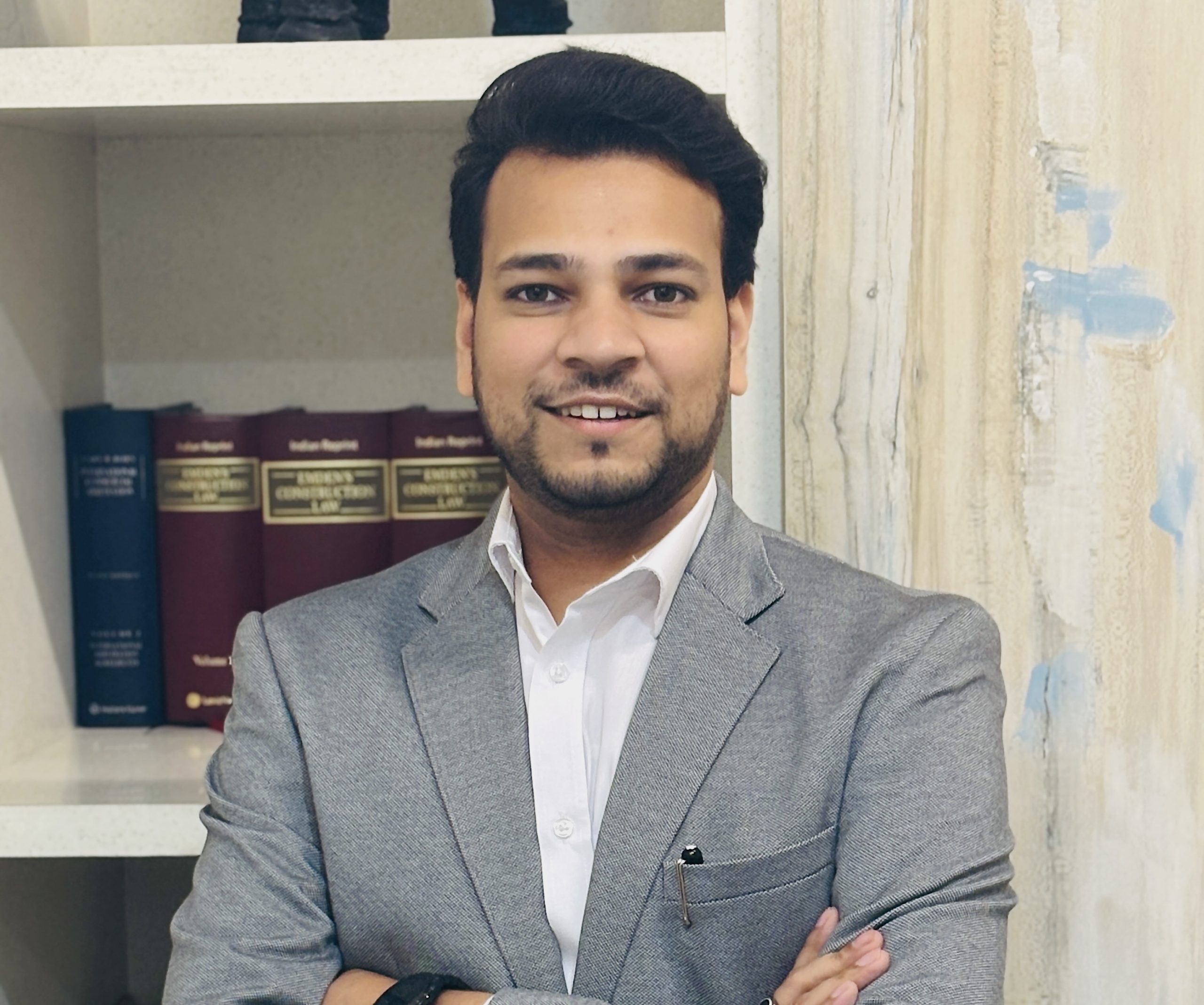
  • “To handle a wide range of cases effectively, a litigator must develop a robust set of core skills that transcend subject matter.” – Nishank Tyagi, Advocate on Record at Supreme Court of India.

    “To handle a wide range of cases effectively, a litigator must develop a robust set of core skills that transcend subject matter.” – Nishank Tyagi, Advocate on Record at Supreme Court of India.

    This interview has been published by Anshi Mudgal and The SuperLawyer Team

    Being an AOR today with nearly a decade of experience, what initially motivated you to pursue law as a career? Was there a defining factor that guided this decision?

    If I was to sum up my decision to opt for law, I would say that I was running away from engineering and landed up at law school. Law was not the obvious choice for me initially. I was a science student in school and my parents wanted me to prepare for competitive exams and pursue engineering as engineering was the obvious choice for all science students, however, very early on in 11th standard in school, I realized that it was not my cup of tea. I wanted more than just a simple 9 to 5 desk job. I wanted a career which would make me look forward to work everyday and also give me an opportunity to serve the society and that is how law, especially litigation became the obvious choice for me.

    In your early years, you worked with various lawyers and law firms. What were some of the experiences that laid the foundation for your practice, and how did you deepen your understanding of law during that period?

    I consider myself extremely fortunate to have worked with some of the greatest minds in the field of litigation very early on in my career. After completing law, my focus was to learn the complexities of litigation and understand the world of Trial Courts. I had initially joined the chamber of Mr. Ratan. Kumar Singh, Senior Advocate where I learned about arbitration and commercial litigation which was an enriching experience. Later, I joined BAV Partners where I got to work with Mr. Vibhor Garg, whom I deeply regard as he gave me ample opportunities to appear before various courts in Delhi. Mr. Garg encouraged me to argue matters independently and to cross examine witnesses whenever required which honestly laid down the foundation of the litigator that I am today. I also worked at a prestigious law firm like Dentons Link Legal where I saw the more organized and structured side of litigation and arbitration and handled some high-stake matters under the guidance of Mr. Atul Sharma and Mr. Ravi Varma who are both luminaries of the legal fraternity. 

    What challenges did you face being a first-generation lawyer?

    Just like any other profession, litigation also has its share of challenges and being a first-generation lawyer sometimes puts that extra burden on your shoulders, however, I am a firm believer that first generation lawyers should stay away from these negative debates of “insider-outsider”. Thinking too much on these lines will put you in a negative loop and divert your focus from important things. Rather than focusing on other people’s plate, one should put their head down and focus on improving core skills that a litigator requires. At the end of the day consistency and hard work can beat any kind of legacy.

    After almost five years in the legal industry, you took the step of establishing your own practice with Adel Legal. What inspired this decision, and what initial hurdles did you face in setting up your firm?

    From day one of me joining litigation, I was absolutely clear that someday I will set up my independent practice/firm. Though it always confused me as to what should be the timing of going independent and how much experience would be enough to go independent. Later, I realised that there is no straight jacket formula to this and everyone has their own circumstances. I knew that as I progressed in the world of law firms, both remuneration and responsibilities would increase but my risk-taking capacity would decrease. Hence, I thought the sooner the better for me and decided to take this calculated risk of going independent with just 5 years of experience.

    Having represented a wide range of clients, including banks, government entities, and foreign corporations before diverse judicial forums, what do you consider the most critical skills a litigator must develop to handle such varied cases effectively?

    To handle a wide range of cases effectively, a litigator must develop a robust set of core skills that transcend subject matter. Analytical & Strategic Thinking, Oral & Written Advocacy, Interpersonal & Negotiation Skills are important to name a few. A litigator must have a good sense of judgment and he must know when to push aggressively versus when to negotiate or settle. Also, litigation is adversarial and often high-stress. The ability to maintain focus, motivation, and composure through long, contentious cases is essential.

    With your experience in arbitrations under international institutions such as ICC, SIAC, and LCIA, how do you see the role of international arbitration evolving for Indian practitioners and clients in the coming years?

    I am extremely positive about the role of international arbitration evolving for Indian practitioners and clients in the coming years. Practitioners need to stay abreast of legislative reforms, institutional rules changes, and emerging jurisprudence. Indian parties are very active users of foreign arbitration institutions for international contracts. At the same time, there is increased demand for India‑seated or Indian institutions to handle international arbitrations, which reflects growing trust in domestic institutions. The Supreme Court and High Courts have increasingly issued pro‑arbitration judgments, pushing back against unnecessary judicial interference in arbitral awards, enforcing foreign awards.

    Having represented the Government of Delhi before the Delhi High Court, what has been one of the most challenging cases in your practice, and how did you approach and handle it?

    Handling Government litigation often involves chasing various departments, officials and civil servants for the required instructions, which is an additional challenge. I had recently worked on a case where government land worth hundreds of crores right in the heart of south Delhi had been encroached upon and even sale deeds were executed which were used to claim title over the said land leading to loss of revenue for government authorities. However, with the correct strategy and timely instructions, we were successfully able to defend the possession of the government authorities over the said land. 

    How has been your experience of working as Jail Visiting Advocate with the Delhi High Court Legal Services Committee?

    I got empanelled as a Jail Visiting Advocate with the Delhi High Court Legal Services Committee in the year 2022. I visit various jails in Delhi every week and interact with prisoners to know their grievances and ensure that they get the required legal help and adequate representation before the High Court of Delhi and Supreme Court of India. I file bail applications for under trial prisoners and file appeals on behalf of inmates who have been convicted by trial courts. I have closely experienced the working of jails and have tried to contribute in making lives better for the prisoners. Overall, it has been one of the most satisfying experiences of my career.

    What resources or methods do you rely on to stay updated with the latest legal developments, and what advice would you give to students aspiring to enter litigation? What habits should they build early in their careers?

    One doesn’t need subscriptions of any legal database or fancy website to stay updated on legal issues. The website of the Hon’ble Supreme Court and various High Courts are good enough to keep you updated about the latest judgments and legal trends. But one must develop the habit of reading.

    I consider myself a student of law and still learn from my mistakes, so I am not sure what advice I can offer but I can list down couple of mistakes I made in my career and would request my young friends joining litigation to avoid the same if possible:

    • Not doing enough internships with litigators and Judges.
    • Not networking enough from the very beginning.

    I learnt it the hard way but the above mistakes can be avoided. Be Patient: Litigation takes time to pay off.

    Becoming an AOR is a significant achievement. Could you share your journey towards this milestone and the responsibilities it brings to your role?

    The Supreme Court of India conducts the AOR examination every year and the syllabus and study material can be found on the Supreme Court’s website. Preparation for the AOR exam was a learning curve, however, since I had been in practice for many years, that experience along with a solid strategy helped me sail through in my first attempt. Becoming an AOR and representing clients before the Supreme Court of India is a matter of great pride for me, but it does come with its share of responsibilities. The Supreme Court Rules and various landmark judgments of the Apex Court define the duties and responsibilities of an Advocate on Record. The Supreme Court only recognises AORs for the purposes of filing and an AOR can be held accountable for anything filed under his name and signature. But the biggest perk is that you get to file cases and represent clients from all parts of the country before the highest court of the land.

    Balancing multiple responsibilities as an AOR and as the founder of your own firm can be demanding. How do you manage to strike a balance between professional commitments and personal life?

    This is one challenge almost all litigators face in their lives, however, with effective time management one can easily wrap up work in reasonable working hours. I personally believe in putting in effective working hours and leaving office by 7pm and encourage associates at our firm to do the same. Unfortunately, at a lot of law firms working till late hours has become the new trend. I personally do not support or encourage that working style. Even in high-pressure environments, one should try to maintain core working hours and stick to them. Dinners with family, workouts, or personal hobbies should be treated as non-negotiable meetings.

    Get in touch with Nishank Tyagi –
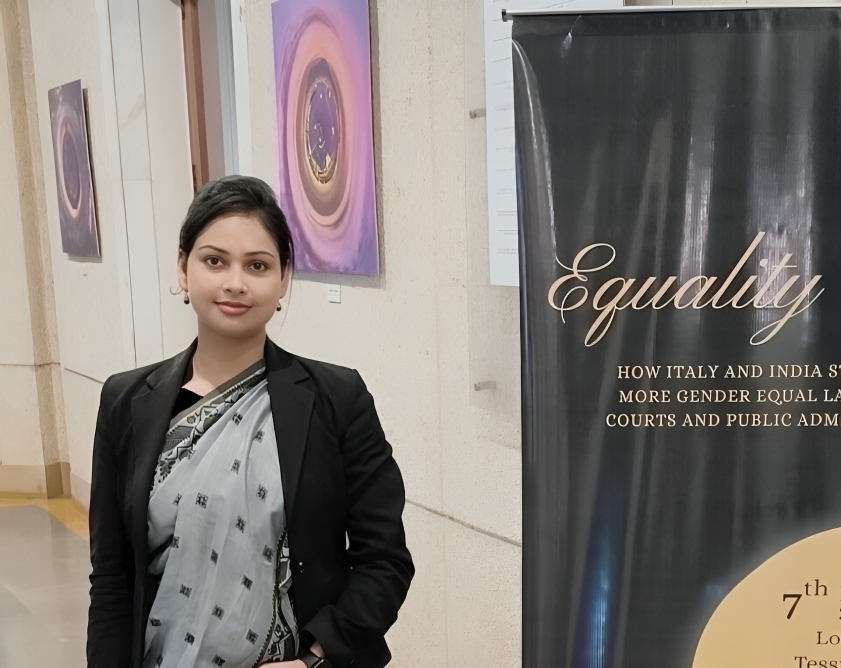
  • “Litigation is not a one-time choice; it’s something you must choose every single day despite the distractions and difficulties.” – Yashwant Singh, Advocate -on- Record at the Supreme Court of India.

    “Litigation is not a one-time choice; it’s something you must choose every single day despite the distractions and difficulties.” – Yashwant Singh, Advocate -on- Record at the Supreme Court of India.

    This interview has been published by Anshi Mudgal and The SuperLawyer Team

    Growing up in Siliguri, far from the conventional legal hubs, what influenced your decision to pursue law, and how did your years at Chanakya National Law University shape your early perspective on the profession?

    Growing up in Siliguri and studying at Don Bosco School shaped me in many ways. At home, the environment was always encouraging. I was an average student in academics, but active in debates, quizzes, and other co-curricular activities. With the benefit of hindsight, those experiences built my confidence- something I still consider as my biggest asset. Initially, I was preparing for a career in engineering, but somewhere along the way, I realized it wasn’t something I could truly be passionate about. My parents stood by me wholeheartedly. It was then that I decided to choose law.

    My years at CNLU were truly defining. Coming from a younger NLU, we were always conscious that we had to work harder to stand out. A new institution brought with it both challenges and opportunities, and much like our university, we were eager to carve out our own space in the larger scheme of things. Those 5 years taught me the importance of taking ownership of one’s plans and seeing them through. Most importantly, CNLU gave me the final clarity that litigation – with all its pros and cons- was the path I really wanted to pursue. That conviction has guided almost every professional decision I have made thereon.

    In the initial phase of your career, you worked closely with the litigation team for over four years. What were some of the most formative experiences during this time, particularly in handling matters related to taxation, constitutional, and regulatory law?

    I began my career with the litigation team at PDS Legal, New Delhi, under Mr. Tarun Gulati. I had interned there during law school and was fortunate to receive a pre-placement offer in my final year. As someone new to both the city and the profession, I found tremendous support from my team and colleagues, who helped me settle in and grow.

    The foundation of my advocacy was built at PDS Legal- right from drafting and preparing a matter to eventually presenting it in court. If there is one lesson I particularly carry from those years, it is that effort alone is not enough; planning and organisation are equally critical. Clients and colleagues alike value a professional who is methodical in approach. My seniors were patient and supportive, and my peers were always helpful, which kept the momentum going in what could otherwise have been a daunting phase. Looking back, my time at PDS Legal not only gave me the skills but also the confidence and clarity to eventually venture out and establish my independent practice.

    Transitioning from a structured law firm environment to establishing your independent practice in 2021 must have been a pivotal moment. What motivated this move, and what were the initial challenges and learnings in setting up on your own?

    I had always wanted to establish my own practice. The satisfaction of building something of your own is unparalleled, and that desire kept me motivated. At the same time, my early days in litigation taught me that there is only so much you can prepare from the sidelines – you have to take the plunge, start from scratch and build gradually.

    The switch was not easy. Coming from a law firm where I was constantly working on heavy matters to suddenly having only a handful of briefs was a stark contrast. It is natural to have doubts and question your decision. But if you ask me, the real trick is to hang in there. Independent litigation is a choice you make every single day, despite the distractions and the reasons that may tempt you to leave. In the end, this profession rewards perseverance and patience. If you stay the course and keep developing yourself, things do fall into place.

    Since then, you have handled a wide spectrum of commercial, criminal, and civil disputes. Could you share one of the most challenging cases from your independent practice that significantly strengthened your confidence as a litigator?

    It is difficult to pinpoint a single case that became the fulcrum of my practice. For me, it has been a series of moments that reassured me I had made the right choice in setting up independently. One such matter was when a doctor’s license to practice had been suspended by a High Court in a contempt proceeding. I had the opportunity to lead the matter in the Supreme Court, and we managed to secure the desired relief. That case gave me something invaluable at that stage- acknowledgment, financial stability, and, most importantly, confidence as a litigator.

    Another turning point was when I first started handling criminal matters. Having had little exposure to criminal law during my time at the firm, those cases initially felt daunting. But they also reinforced a simple truth: in litigation, effort makes all the difference. If you are willing to put in that extra bit of preparation, you will eventually find your footing. Both these experiences strengthened my belief that perseverance pays, and that independent practice, though challenging, was the right path for me.

    In 2025, you achieved the distinction of becoming an Advocate-on-Record. What inspired you to pursue this qualification, how was your preparation journey, and in what ways has the AoR title impacted your practice and professional opportunities?

    Becoming an Advocate-on-Record was always a clear goal for me once I started my independent practice. Practising in Delhi makes you realize very early how competitive the profession is, and that the Supreme Court is the final stop for matters from across the country. When you pitch for mandates in the Supreme Court, the first question often asked is- Are you an AoR? If your answer is no, it does have a bearing, especially with clients outside Delhi. Qualifying the exam, therefore, gives you that foot-in-the-door and instills an additional layer of confidence in clients.

    Preparing for the exam definitely demands seriousness. Like most who clear it, I had to balance practice with study, which sometimes may get a bit difficult. I was fortunate to have friends and seniors who supported me—whether with study materials or helping me manage my matters. But I believe one thing must be acknowledged: preparing for the AoR exam is in itself an enriching experience. Irrespective of the result, you come out a better professional.

    Alongside your practice, you often engage with law students through moots and guest lectures. How do you view the balance between active practice and mentoring the next generation of lawyers?

    I genuinely enjoy interacting with students- there’s always a fresh perspective and a new learning to take away. Having been on that side of the spectrum myself, I know how good it is to have people from the profession engage with you. Judging moots or delivering guest lectures is also a great way to sharpen my own legal acumen, whenever you discuss an issue, you inevitably end up learning too. Balancing it with active practice is not always easy, but whenever I get the opportunity, I truly enjoy taking it up.

    Looking ahead, with your growing independent chamber and experience across varied domains, what vision do you hold for your practice over the next decade, and what advice would you offer to young lawyers aspiring to build a career in litigation?

    For me, every professional is a brand in himself, and the journey is really about improving that brand each day. My vision over the next few years is to evolve as a reliable practitioner and to build a team that is known for being effective and dependable in the legal community. Reputation in this profession takes years to build but can be lost in a moment, so the aim is to grow steadily, sincerely- and also to enjoy the process along the way.

    I don’t think I am in a position to give advice, but I can share my story. If there’s one thing I have learnt, it is that this profession rewards patience, perseverance, and planning. At the same time, litigation is not a one-time choice; it’s something you must choose every single day despite the distractions and difficulties. And while doing all of this, it is equally important to have fun and enjoy the process- because that’s what makes the journey worthwhile.

    With new legal developments and judicial precedents emerging almost daily, how do you keep yourself updated on the latest trends and ensure that your practice stays aligned with the evolving legal landscape?

    For me, curiosity and social consciousness are an asset in this profession. A lawyer should always be curious about the things happening around him, both inside and outside the courtroom. I genuinely enjoy reading, and I feel any lawyer who enjoys reading will always have an edge. We live in an age where information is power, and with technology, access to that information has become much easier than it used to be. There are plenty of platforms today that help us stay updated with what’s happening around.

    But beyond books and screens, our courts themselves are exciting places to learn. I’ve often found that indulging in conversations in the corridors, sometimes over a simple cup of coffee, leaves you walking away with more insight than you bargained for. That in itself sounds like a good deal ! 

    Get in touch with Yashwant Singh –

  • “In my view, not every conflict calls for the rigours of litigation, many can be effectively  resolved through dialogue and a planned, structured settlement process.” – Ankita Sarangi, Advocate-on-Record and  IMI Accredited Mediator.

    “In my view, not every conflict calls for the rigours of litigation, many can be effectively  resolved through dialogue and a planned, structured settlement process.” – Ankita Sarangi, Advocate-on-Record and  IMI Accredited Mediator.

    This interview has been published by Anshi Mudgal and The SuperLawyer Team

    Looking back at your formative years and legal education, what early experiences  shaped your perspective towards law and inspired you to pursue a career in  litigation and dispute resolution? 

    Born and brought up in Delhi, I completed my schooling at DPS RK Puram, studying  from nursery to 12th grade, with the initial years up to Class 5 spent in the junior wing  of the school. 

    I belong to the pre-CLAT era, when each law school conducted its own entrance  examination. At that time, choosing a college also meant carefully evaluating both its  location and the professional opportunities that followed. I had intentionally decided  against taking multiple entrance exams, but a trusted recommendation persuaded me to  attempt the entrance for the National University of Advanced Legal Studies (NUALS).  I was later formally informed that I had successfully cleared the entrance exam and was  eligible to secure admission to NUALS. However, after passing the entrance exam for  Indraprastha University (Amity Law School), I chose to enrol there, as its location in  Delhi-NCR and its ranking in the top ten law colleges in India, were rather significant  factors in my decision at the time. 

    My decision was primarily driven by the fact that Delhi provided a far more conducive  environment for pursuing a career in law, particularly in litigation, which was my area  of interest. However, with the benefit of hindsight, I now believe that institutional  rankings are of limited consequence in the long run, especially for those committed to  a career in litigation since law is a profession that transcends classroom learning and genuine mastery can only be forged through practical application and real-world experience. 

    While the school provided a solid platform, it was the inspiration I drew from my  parents, both of whom had worked with the government and were highly accomplished from an early age, that set a high benchmark for me and encouraged me to take my  academics seriously while also pursuing co-curricular activities such as debates and  beyond. I was always drawn to writing and was made aware that I had a natural ease with language. Outside the school curriculum, I found joy in exploring a variety of non  fiction books and articles, driven by a curiosity to better understand how the world  works. I was particularly drawn to topics in psychology and neuroscience, which still continue to captivate me. I believe this reading has also quietly shaped me in becoming more empathetic, a quality that proves valuable particularly in mediation. I’ve always  found satisfaction in tackling problems and working toward practical solutions, and was  grateful that others felt comfortable seeking my advice. Through helping them resolve  personal conflicts and find common ground, I developed a sincere interest in  Alternative Dispute Resolution. 

    During my academic years, I remained actively engaged in co-curricular activities,  including parliamentary debates, Model United Nations, coupled with several extra  curricular such as taking part in inter-school competitions, winning as a solo singer in  important music competitions as well as inter school level athletics which I believe does give one confidence and discipline while also encouraging prompt, judicious thinking  under pressure, and embrace competition. In my opinion, extra-curricular and co-curricular activities teach early on that winning and losing are both part of the game,  something I came to appreciate through sports and other competitions in these formative years, and which continues to shape my approach as a lawyer. 

    During your time at Law School, you undertook intensive internships with leading  law firms, arbitration centres, and the offices of Additional Solicitor General. How  were they transformative, and how did they influence your career path?

    Internships were not mandatory for students at that time, unlike the current practice in  most colleges, following the BCI notification. The primary reason to pursue them for  me, was to gain exposure to the profession at an early stage. I was very keen on  exploring a wide range of laws, including unconventional areas such as Sports Law and  TDSAT matters, which were not commonly taken up. I enjoyed the process of securing  internships through my own effort which has also helped me become independent. I  actively went for interviews, followed up with offices, and treated the process as a  learning experience in itself. Alongside this, I also participated in many inter-college  and intra-college moot court competitions as a speaker and was fortunate to secure good  positions and awards. After graduating, I have been invited to judge college moot  courts, which often reminds me of my own time as a speaker and participant, recalling  the long hours and sometimes several months of preparation that went into each round.

    One experience from the internship days that stands out for me is when I wanted to  intern with the office of an ex-ASG, which was very coveted, and very few students  would get selected or allowed to intern at the office at a time. I pursued the application  consistently, without using any references, and was ultimately offered the chance to  intern. When he later realized that my family was acquainted with him, he asked why I  had gone through the entire process, but for me, the satisfaction lay in doing it  independently. Similarly, I secured internships at several law firms and at DIAC (at the  time known as Delhi High Court Arbitration Centre), again through persistent  applications and interviews. At DIAC, I gained early exposure to institutional  arbitration and was introduced to how such proceedings are conducted in practice. 

    It’s worth mentioning that all my internships, except one, were unpaid and I never had  any reservations about that. It was generally understood that internships were about  learning rather than stipends; payment, if offered, was considered a bonus, not an  entitlement. The one exception was at a law firm where, at the time of joining, I was  clearly informed that I would be paid a fixed amount for the duration. If an internship  is undertaken mainly or solely for financial reasons, it is important that this be  communicated at the outset, since paid internships carry a very different set of  expectations. Raising monetary demands midway is neither fair to the seniors nor  consistent with professional conduct. Any agreement regarding payment should,  therefore, be clearly confirmed in writing, preferably over mail. 

    Each firm I interned with also gave me insights into its specialized practice areas, which helped me appreciate the finer aspects of the profession and further helped me  develop a sense of independence very early on. I believe internships are extremely  important for law students, as they offer a practical glimpse into what lies ahead after  law school. During my internship, I often worked long hours, staying back even after  the associates had left to complete the work they had assigned, often under strict  deadlines, and was usually among the first to arrive each morning, not with the intention  of being absorbed in the firms, but simply to absorb as much as possible and maximize  the learning experience.

    You began your professional journey assisting the Additional Solicitor General at  the Delhi High Court, where you were exposed to high-profile government  litigation at a very early stage. Soon after, you worked with an Advocate-on Record at the Supreme Court. Looking back, what lessons did you draw from  these formative experiences, and how did they shape your understanding of  appellate practice and prepare you for eventually qualifying as an AOR yourself? 

    Immediately after graduation, I joined as an associate with the then ASG and had the  opportunity to work on high-profile cases, including the “Nirbhaya” case among others. My time in the office gave me practical exposure to handling government matters,  understanding the functioning of such offices, and working in a fast-paced environment  where cases often arrived late in the evening and required the four associates to read  files and prepare briefs within tight deadlines for the next day’s listing, which was quite  demanding and often required working late into the night. While attending meetings  and briefings was an interesting learning experience, starting the career in a designated  senior’s office has its limitations, particularly in drafting, which is an essential skill for  any litigating lawyer. Seeking more substantial drafting experience, I decided to join  an AOR in the Supreme Court with whom I was already familiar. This arrangement  allowed me to pursue my own private practice before lower courts and tribunals part time while working in the office, where I would take initiative to draft SLPs and  government-side Counters, as the office was on the panel for the State Government. 

    While this may not hold true for everyone, I had recognized that taking the AOR exam  would be professionally significant, yet I could not have anticipated the profound  impact it would have on my career once I qualified. I was aware that becoming an  Advocate-on-Record, particularly in the current generation, carries significant prestige, responsibility and accountability. Most who qualify today have amassed significant  experience across various courts and tribunals before reaching the appellate stage  practice, which equips them with a deeper understanding of the nuances of such  practice, a perspective that is harder to acquire when starting directly at that level.

    By 2014, you had taken the bold step of establishing an independent practice.  What were some of the challenges you faced and how did you navigate them? 

    When I began my independent practice, my work was mainly in lower courts, service  disputes before the CAT, and High Court litigation, and much of it non-contentious. Initially, I dedicated time to working on several pro bono cases. One of the turning  points came when I was empanelled with DLSA/DSLSA for the CAT panel, where I  was one of the five advocates and was selected on merit through a shortlisting and  interview process. It is often assumed that legal aid is confined to the economically  weaker sections, but under The Legal Services Authorities Act, children, women, senior  citizens, disabled and socially backward classes are equally entitled irrespective of  income. This gave me exposure to clients from very diverse backgrounds and allowed  me to develop the ability to handle people and their concerns at an early stage. 

    What made the experience especially meaningful was the trust it created. The  beneficiaries who appreciated my commitment towards their cause and work, often  referred me to their acquaintances, and I would also receive referrals from some  unexpected sources, such as court staff in some courts and other professional networks.  The referrals have not been confined to service matters, but I have also been entrusted  with their personal matters, including criminal, property, and matrimonial cases, among  others. These acknowledgments strengthened my belief in sincerity and perseverance  as the foundation of practice.  

    On a more personal note, I come from a family of high achievers and accomplished  individuals, most of whom have pursued structured and conventional career paths. 

    Except for my grandfather, who had earned great respect in his time as a prominent  lawyer, I had not personally heard of anyone establish an independent practice and face  the unique challenges that come with it, though I often wish he had still been practicing  when I entered the profession as he was a great inspiration and influenced my decision  to pursue law. I grew up hearing stories of how clients valued his exceptional legal  acumen and how he consistently achieved favourable verdicts. 

    Choosing litigation, and doing so as a self-made woman lawyer, brings its own set of  hurdles, but it also gave me resilience, confidence, and the satisfaction of building a  practice on my own merit. I believe it is important for anyone to have some support  system, and for me, that strength came primarily from my grandfather and parents, who  consistently encouraged me to pursue my dreams without being bound by the  conventional expectations of society.  

    You’ve dealt with a wide spectrum of cases in the Supreme Court as an Advocate on-Record, a few of which resulted in reportable judgments. How do you see these  experiences contributing to your professional and personal journey? 

    While my work in the High Court and lower courts has spanned matters, including appearances both for the government and for private parties, much of my work in the  Supreme Court has involved representing predominantly private parties, including  matters against different State Governments. What I’ve really valued about being an  AOR is the chance to engage with a wide variety of matters, all under one roof in a  short span. Over the years, I’ve handled cases touching on GST, Customs, SEBI,  statutory appeals from NCLAT, Service disputes, Transfer Petitions, and criminal  matters including bail, with some of them resulting in reportable judgments. Among  those, most recently, I argued a batch of cases concerning compassionate appointments,  where the Hon’ble Apex court upheld the High Court’s decision in favor of my clients,  granted the relief we sought, and issued important directives to the State. 

    On the professional and personal front, it is truly the vagaries of litigation that will shape you the most over time. There are days when I appear for a Petitioner/Applicant on a particular issue, and almost immediately thereafter, I may find myself defending  the Respondent on the same point in another matter. This frequent transition between perspectives necessitates not only a versatile approach to advocacy but also enhances the way one navigates difficulties in life, while also serving as a reminder that the law  is never unidimensional. 

    Your work as a mediator accredited by the International Mediation Institute  reflects a strong commitment to alternative dispute resolution. Alongside  mediation, you also have substantial experience in arbitration. In your view, how are these mechanisms evolving in India, and what role do you see them playing in  the future of dispute resolution? 

    In my view, not every conflict calls for the rigours of litigation, many can be effectively  resolved through dialogue and a planned, structured settlement process, a perspective  also endorsed by several sitting and retired judges across different courts. This line of  thought naturally steered me towards arbitration and mediation, reflecting an  inclination I had held from early on.  

    The journey for me in mediation began with intensive training of 120 hours initially with an international institute based in Germany, which involved regular simulations  and close interaction with participants from diverse jurisdictions. This foundation  gradually opened opportunities to mediate international disputes alongside colleagues  from different countries, many of whom became professional associates during the  course of training. I became involved in this sphere when mediation was still at its  nascent stage, much prior to the establishment of a statutory framework and I was aware  that it was a burgeoning field with great potential in future. Referrals followed naturally,  leading to further exposure and practice. I would like to think of mediation, by its very  nature, as an inherent skill while also one that is refined through experience and  continuous practice. Once qualified as a mediator, one need not wear the mediator’s hat  at all times. The profession demands the ability to know how to switch hats, as the skill  set of a mediator differs fundamentally from that of an advocate. 

    During mediation training, we are introduced to several techniques, which come in  handy, one of which is the classic ‘Orange parable’, it illustrates how two daughters  quarrelled over an orange; one wanted the fruit to eat, the other the peel to bake a cake.  By simply dividing it in half, each lost half of what she truly needed, but had the mother  asked why they wanted it, both could have received 100% of what they sought. The  story highlights how exploring underlying interests, rather than positions, often creates  outcomes that add value at no extra cost. 

    My interest in arbitration began during college while preparing as a speaker for a  prestigious international arbitration moot court competition. The research and learning  involved sparked a deep curiosity about the entire process. This led me to apply for an  internship with the DIAC, where I spent a few months gaining first-hand exposure  while still in college. Gradually, I began handling arbitration matters and found the process very engaging, particularly the intricacies of cross-examination, which require  precision and technicality rather than generic questioning, given that its appreciation in arbitration differs from that in a trial. A few years later, I found myself as an arbitrator  in a matter that was successfully steered towards settlement. Over the years, I joined  several national and international arbitration organizations through paid annual  memberships. While these affiliations offer valuable professional connections, I believe  the primary focus should remain on steadily building meaningful work in the field as  accumulating memberships alone, without gradually building substantive work, may  not serve a deeper purpose in advancing one’s practice or the profession. 

    It is becoming increasingly clear that ADR is not merely an alternative but represents  the future of dispute resolution. With technological advancements enabling Online  Dispute Resolution (ODR) and the legal framework evolving accordingly, it is  especially being recognized as the way forward for cross-border disputes. Even for that matter in domestic arbitration and mediation, the ability for counsels and parties to  participate remotely is a convenience that was virtually unknown until recently and with  that convenience comes a greater willingness among people to engage in the process, leaving fewer excuses to avoid it. 

    Beyond your work in courtrooms, you have also been invited to various forums  and platforms. Could you share how such opportunities have enriched your  professional journey? 

    My longstanding interest in subjects extending beyond law such as international  relations/foreign affairs, which I have actively explored by writing articles on diverse  topics that were published in reputed newspapers and journals, I believe for me, has  opened doors to unique opportunities beyond conventional legal practice. These  engagements have allowed me to be invited to various forums, media platforms and  different Embassies, participate in discussions on cross-border issues, and build  meaningful connections with diplomats and professionals in the field and beyond. Such  interactions also help to enrich your professional outlook.

    Alongside your independent practice, you serve as a Senior panel counsel for  prominent government bodies like MTNL, NDMC, MCD, DDA and others. How  different is it to represent government and public sector entities compared to  private clients, and what unique responsibilities come with it? 

    Representing government and public sector entities presents challenges and  opportunities that are distinct from a private practice involving private parties. The  outcomes in public sector matters often have far-reaching implications, potentially  impacting public funds, policy decisions, or matters of governance, rather than just  individual or corporate interests. The process of receiving and executing instructions  often involves multiple layers of guidance and approvals, requiring both patience and  clear communication as directives pass through several officials. There is also an  increased sense of accountability, as being a lawyer for the government involves  safeguarding the public interest in addition to advancing the client’s position. Timelines  and strategies can be shaped by the internal institutional protocols and procedural  requirements, yet the obligation on the panel counsels to maintain the highest  professional standards is unwavering. It requires not only a certain level of legal  expertise, understanding of the court craft but also a balanced approach that respects  both the letter of the law and the wider societal stakes involved. At the same time,  private practice from the private Petitioner and Applicant’s side offers unique rewards.  The chance to work closely with clients, shape the strategy of a matter, and see the  tangible impact of your work makes the experience deeply satisfying, while each setting  brings its own distinct professional lessons.  

    It bears mention that I have often encountered conflict of interest, since many  individuals approach me for matters involving the same departments where I am  empanelled. This highlights a limitation one cannot afford to put all their eggs in one  basket. In fact, empanelment is sometimes perceived as the ultimate goal for many  freshers, whereas in reality, it should only be meant to an end. The real challenge lies  in the dynamics of whether matters are actually assigned which has numerous variables  at play that are not always apparent to individuals aspiring for empanelment. In my  view, empanelment is valuable only if one has a reasonable prospect of leveraging them  over the long term, since more often than not they come at the cost of opportunities in  private practice that one has to forgo.

    With constant changes in legislation, regulatory frameworks, and commercial  practices, how do you stay updated on the latest legal developments? What advice  would you offer to students and young lawyers who aspire to build successful  careers in litigation and dispute resolution?

    First and foremost, I believe it is important to discover one’s own “Ikigai” , a concept  beautifully articulated in the book by the same name, which speaks of finding one’s  true purpose. For me, law was never about money or wealth, it goes much deeper. 

    At the same time, conviction alone is not enough, the law demands continuous learning,  and purpose finds its true meaning only when matched with consistency and diligence. To stay current with the constant changes in legislation, regulatory frameworks, and  commercial practices, I rely on a blend of traditional resources and contemporary tools.  I am subscribed to reputed legal journals and follow bi monthly if not weekly updates  from regulatory bodies. If a particular webinar or conference interests me, I make it a  point to watch the sessions or recordings whenever time permits, as they invariably  provide practical perspectives that go beyond what one finds in print. 

    On a more practical level, I find some WhatsApp groups to be useful for timely updates  though one must be selective, as some are driven by informal exchanges rather than  substance. I have also maintained paid subscriptions to legal databases, and whenever  possible, I even like to read international publications such as The Economist and The  Guardian to keep a more rounded view. In litigation, time management is extremely  critical. There is always too much to read and absorb, so the key lies in prioritizing  credible sources and ensuring that learning remains consistent, even if not exhaustive. After all, there are perhaps only a few professions/roles that demand knowledge across  a vast spectrum of disciplines and engagement with society at large namely those of a  judge, a civil servant and an advocate. Therefore, as a lawyer, the reading cannot be  confined to judgments alone. 

    For students and young lawyers aspiring to build careers in litigation and dispute  resolution, my advice is to not follow someone else’s path just because it worked for  them. Your journey is unique, so find what resonates with you and let it guide your  growth in this dynamic field.

    Get in touch with Ankita Sarangi –

  • “International arbitration demands not just legal proficiency but also adaptability, cross-cultural awareness, and a strong grasp of commercial realities.” – Sarthak Gaur, Advocate-on-Record at Supreme Court of India.

    “International arbitration demands not just legal proficiency but also adaptability, cross-cultural awareness, and a strong grasp of commercial realities.” – Sarthak Gaur, Advocate-on-Record at Supreme Court of India.

    This interview has been published by Anshi Mudgal and The SuperLawyer Team

    With your impressive and extensive legal background, what first ignited your passion for law? Was there a defining moment or experience that influenced your decision, or did your interest evolve gradually over time?

    As a first-generation lawyer, my journey into the legal field wasn’t a conventional one, nor was it influenced by early exposure or family tradition. In fact, until I was in 12th standard, I had never considered law as a career option. I was raised in an environment where engineering and medicine were viewed as the most respectable and secure professional paths. Surrounded by mainly engineers and scientists, I too felt the societal pressure to pursue these fields, especially during the early 2000s, when Computer Science and Information Technology were rapidly gaining traction and many of my seniors were securing promising opportunities both in India and abroad.

    Despite this prevailing narrative, I never truly felt drawn to either engineering or medicine. I found myself searching for something different, a discipline that would not only challenge me intellectually but also allow me to connect with the world in a more meaningful way. Around that time, I was also deeply interested in photography, which sparked my curiosity and creativity. However, during those years, building a stable career in photography seemed unconvincing and uncertain, particularly given the expectations around me. It was during my 12th grade in the year 2011-12 that I first came across the 5-year integrated law program. The more I explored it, the more I realised that ‘law’ resonated deeply with me.

    What attracted me most was the law’s interdisciplinary nature, its ability to intersect with almost every aspect of life, from economics and politics to human rights and technology. It struck me as a subject rooted in real-world issues, one that was dynamic, intellectually stimulating, and, most importantly, closely connected to society. This alignment felt natural to me, especially because I had grown up witnessing my parents’ active involvement in social work. Their dedication to community service instilled in me a sense of responsibility and an urge to make a meaningful contribution.

    Convincing my parents initially took some effort, given our family’s lack of familiarity with the legal profession. However, once they saw my determination and passion, they became my strongest supporters. Since then, they’ve been unwavering in their encouragement, always motivating me to excel and make a mark in this field.

    Looking back, choosing law was a turning point that defined not just my career, but my identity. What began as a curiosity evolved into a deep-seated passion, and I remain inspired by the impact this profession can have on individuals, communities, and the broader social fabric.

    Looking back at the early stages of your career, which experiences were pivotal in enhancing your understanding of the law? How did these formative moments shape the trajectory of your professional journey?

    Looking back at the early stages of my legal career, there were several defining experiences that significantly shaped my understanding of the law and laid a strong foundation for my professional journey.

    During my time in law school, I made a conscious decision to pursue a career in litigation. This clarity helped me seek out internships with litigation-focused law firms and seasoned advocates, where I was exposed to the practical aspects of the legal system early on. Beyond classroom learning, it was the experiences in moot courts, college seminars, and conferences that truly enriched my perspective. These platforms gave me the opportunity to engage with practising lawyers, judges, and professionals from diverse areas of law. I was also fortunate to have had the guidance and encouragement of some exceptional professors, whose mentorship played a crucial role in shaping my legal thinking. Their support and accessibility created a nurturing academic environment that motivated me to explore the subject deeply and confidently pursue a future in law.

    One of the most pivotal phases in my early career was my time at Parekh & Co., a reputed law firm in New Delhi. It was here that I transitioned from theory to practice. The firm provided me with hands-on exposure, and the mentorship I received from the partners and senior colleagues was instrumental in helping me build a strong legal foundation. I was entrusted with significant responsibilities early on, which greatly accelerated my learning curve.

    My professional development continued at Karanjawala & Co., where I had the chance to further expand my legal expertise across a wider range of matters. The firm offered a dynamic and fast-paced environment, where I was exposed to varied practice areas and a broad client base. It also allowed me to deepen my understanding of litigation strategy, court procedures, and the practice of law.

    Across both firms, I was fortunate to handle high-stakes and complex litigation, appear for prominent clients, brief some of the country’s top senior advocates, and even gain international exposure in specific legal domains. These experiences collectively played a pivotal role in shaping my professional outlook and strengthening my commitment to the field of litigation.

    Together, these formative years were essential in defining my career path. I had the benefit of working under exceptional mentors, gaining valuable practical insights, and being consistently challenged in ways that helped me grow as a legal professional. These opportunities not only nurtured my passion for law but also instilled in me a strong sense of purpose and resilience that continue to guide me today.

    Becoming an Advocate-on-Record is a significant accomplishment. How has this role influenced your practice, what responsibilities does it entail, and what opportunities have arisen as a result of this distinction?

    Becoming an Advocate-on-Record (AoR) in the Supreme Court of India is a significant professional milestone, and for me, it was a goal I had set early in my career. Having consistently worked with AoR firms (law firms officially registered with the Supreme Court owing to the presence of multiple AoRs), I was fortunate to be immersed in an environment that demanded high standards, deep procedural knowledge, and a commitment to excellence in litigation. This experience not only shaped my early understanding of Supreme Court practice but also inspired me to pursue the AoR qualification. Clearing the exam was both a deeply fulfilling personal accomplishment and a pivotal step forward professionally.

    The role of an AoR comes with exclusive responsibilities and privileges. Only Advocates-on-Record are authorised to file petitions, vakalatnamas, and other pleadings before the Supreme Court in their name. In addition to representing clients, AoRs are responsible for ensuring strict procedural compliance, coordinating legal strategy, briefing senior counsel, and serving as a vital link between the client and the apex court. To become an AoR, an advocate must undergo formal training and clear a rigorous examination, an intensive process that ensures only well-prepared professionals are entrusted with this role.

    For a first-generation lawyer, this distinction has been particularly empowering. It has enhanced my credibility, allowed me to represent more clients before the Supreme Court, and significantly expanded the scope of my practice. The AoR title is widely recognised as a mark of legal competence and reliability, which has naturally led to increased client trust and broader professional opportunities.

    At Vayam Legal, the law firm I co-founded, my qualification as an Advocate-on-Record has further strengthened our firm and added significant value to our litigation practice. It aligns with Vayam Legal’s commitment to delivering strategic, high-quality legal solutions across all forums, including the Supreme Court of India.

    Since attaining the AoR qualification, I’ve experienced a clear evolution in the nature of work I engage with, ranging from constitutional and commercial matters to public interest issues. It has reinforced my belief in the importance of long-term goals, continuous learning, and building a practice grounded in credibility and trust.

    In essence, becoming an Advocate-on-Record has not only strengthened my individual practice but also helped shape the vision and capabilities of Vayam Legal. It’s a responsibility I carry with pride and a milestone that continues to define my professional journey.

    Over the years, handling special leave petitions, civil, and criminal appeals before various courts and tribunals, which case stands out as both interesting and particularly challenging? How did you approach such a case, and what resources did you rely on?

    As I’ve mentioned earlier, I’ve had the privilege of working with some of the leading litigation firms in the country, which exposed me to a wide variety of matters across multiple forums, ranging from the Supreme Court and High Courts to tribunals and regulatory bodies. This diversity of experience has brought with it a number of cases that were both intellectually stimulating and professionally demanding.

    It’s difficult to single out just one case as the most interesting or challenging, as there have been several that tested my legal acumen in different ways. High-stakes commercial litigation, in particular, often stands out. These matters are inherently complex and highly contested, as both sides typically engage top-tier legal teams. The margin for error is minimal, and even the smallest legal point can tip the balance. Crafting a strong legal strategy, whether in advancing a claim or defending against one, requires not only deep legal research but also the ability to anticipate the opposing party’s arguments and prepare precise counterpoints. These cases challenge you to be at the top of your game, both in court and behind the scenes.

    On the other hand, I’ve also found cases relating to accessibility and inclusivity for persons with disabilities to be particularly meaningful. While these matters may not always involve procedural complexity, they are socially significant and present unique challenges in terms of real-world impact. With the introduction of the Rights of Persons with Disabilities Act, 2016, there has been a legal framework in place to empower persons with disabilities, but actual implementation, especially in rural and under-resourced areas, remains limited. Working on such cases provides an opportunity to contribute to a larger social cause, even though the challenge often lies not in obtaining favourable court orders, but in ensuring their effective enforcement.

    In both types of matters, commercial or public interest, the approach remains rooted in meticulous preparation, strategic foresight, and collaboration. I rely heavily on thorough legal research, insights from recent judgments, and sometimes interdisciplinary perspectives, especially in socially sensitive cases. These experiences have deepened not only my legal skills but also my sense of responsibility as a practitioner who can influence both legal outcomes and broader societal change.

    You have dealt with a range of matters in the Indian automotive manufacturing sector. What, in your experience, have been the major legal challenges in cases involving electric vehicles?

    I have had the opportunity to handle several matters in the automotive manufacturing sector, including those involving electric vehicles (EVs). These cases have largely revolved around tender disputes, mediation, and arbitration, each presenting unique legal and strategic challenges.

    The Indian EV sector, being relatively new and rapidly evolving, brings with it a distinct set of legal complexities. One of the major challenges I’ve encountered involves the interpretation and application of tender conditions in public procurement, especially for electric buses and related infrastructure. As government-backed tenders are central to EV adoption, disputes often arise over eligibility criteria, technical specifications, and compliance, requiring a deep understanding of administrative law, procurement procedures, and the technology involved.

    Another recurring issue is the absence of stable regulatory standards. As the policy landscape continues to develop, frequent changes or ambiguities, particularly concerning battery safety, environmental clearances, and fiscal incentives, often create uncertainty. 

    With increased EV adoption, challenges are also emerging in areas such as product liability, safety compliance, and consumer protection. 

    Overall, dealing with matters in the EV space requires not only legal expertise but also a strong grasp of the sector’s fast-changing regulatory and technological landscape. It has been both a challenging and rewarding area of practice, offering insights into the intersection of law, policy, and innovation.

    In handling matters under the Copyright Act, 2012, particularly with respect to the use of music during marriage processions and social events, what key legal challenges have you encountered?

    In matters involving the use of music during marriage processions and social events under the Copyright Act, 1957 (as amended), one of the key legal challenges has been the interpretation of Section 52(1)(za), which exempts performances during bona fide religious and certain social functions from being considered infringement.

    The complexity often lies in determining whether the exemption applies when such events are hosted in commercial venues. The question typically arises as to whether the setting alters the personal or social character of the function, especially when claims are made that licensing fees are required despite the event being a private celebration like a wedding.

    These matters frequently involve navigating the tension between copyright enforcement and longstanding cultural practices. It becomes essential to analyse the legislative intent behind the exemption, relevant judicial precedents, and the extent to which such performances are truly commercial in nature.

    Another layer of difficulty is the practical enforcement and compliance landscape, where different interpretations can create uncertainty for event organisers and service providers. Addressing these challenges requires a nuanced understanding of copyright law, industry practices, and the social context in which such events occur.

    When representing clients in high-stakes international arbitrations, especially where foreign laws are applicable, how do you typically approach the complexities of cross-border legal frameworks?

    Approaching high-stakes international arbitrations, particularly those involving foreign laws and cross-border parties, requires a carefully structured and collaborative strategy. One of the key complexities lies in reconciling different legal systems, especially when the governing law of the contract differs from the procedural rules of the arbitration.

    These matters typically require close coordination with foreign legal experts to ensure accurate interpretation and application of the applicable substantive law. Working across jurisdictions also means navigating diverse legal traditions, commercial practices, and procedural expectations, which makes clarity in drafting, advocacy, and case presentation especially important.

    Effective communication with international stakeholders, whether clients, opposing counsel, or arbitral tribunals, is essential, as is an understanding of cultural nuances and business sensitivities. Strategic planning, well-supported evidence, and cohesive teamwork are all crucial to managing the complexity in disputes.

    Overall, international arbitration demands not just legal proficiency but also adaptability, cross-cultural awareness, and a strong grasp of commercial realities, especially when foreign laws and parties are involved.

    What advice would you offer to aspiring law students who wish to follow in your footsteps and build a successful career in law? What skills or qualities do you think are essential for success, especially in the evolving field of technology law?

    Law has become a highly respected career, and with the rise of top law schools, the standard of legal education has improved significantly. For aspiring law students, it’s crucial to build a strong foundation through both classroom learning and internships. Early exposure to practical work helps in understanding various legal fields and in making informed career choices, whether in litigation, judiciary, corporate law, or in-house roles.

    Clarity of direction, combined with patience, perseverance, and a positive attitude, is key to long-term success. The legal profession often demands time and resilience before tangible results appear, especially in litigation.

    As law continues to evolve alongside technology, students must stay adaptable and committed to continuous learning. Familiarity with areas like data protection, intellectual property, and tech regulation will be increasingly valuable. Above all, success in law comes from consistency, ethical practice, and a genuine passion for the profession.

    Balancing a successful career with a commitment to public service and education is no small feat. How do you maintain a healthy work-life balance, and what advice would you give to others who aim to follow a similar path while managing both professional and personal responsibilities?

    Law is undoubtedly one of the most demanding professions, both mentally and physically. The long hours, high-pressure environments, and the constant need for precision make it challenging to maintain a work-life balance, let alone dedicate time to public service or education. However, I firmly believe that striking this balance is not only possible but also essential for long-term growth and well-being.

    Constantly working without pause or personal reflection can lead to early burnout and diminished productivity. Incorporating activities outside of regular practice, such as contributing to legal education, engaging in pro bono work, or participating in public interest initiatives, provides a healthy shift in perspective. These engagements allow one to step out of a purely commercial mindset and reconnect with the broader role of law in society. They also remind us of the lawyer’s place as a trusted advisor, problem-solver, and social contributor.

    I also find that travelling and meeting people from different walks of life play an important role in maintaining balance and staying inspired. Travel gives me a chance to step back, recharge, and return to work with a fresh perspective. Interacting with people from diverse backgrounds broadens my understanding of society, exposes me to different viewpoints, and often shapes how I approach my work.

    Maintaining balance doesn’t mean taking grand measures; it’s often about small, conscious steps, setting clear boundaries, taking short breaks, or making time for personal interests. Even small efforts can help preserve clarity, resilience, and creativity in a demanding field.

    To those aspiring to build a meaningful and well-rounded legal career, I would say, stay dedicated to your professional goals, but always make space for causes and interests that keep you rooted and inspired. This balance not only prevents burnout but also enriches your journey as a lawyer in ways that pure professional success alone cannot.

    Get in touch with Sarthak Gaur –

  • “When a brief comes your way, defend your client like a warrior: with full commitment, clarity, and confidence.” – Angad Baxi, Advocate on Record and Principal Associate at J. Sagar Associates.

    “When a brief comes your way, defend your client like a warrior: with full commitment, clarity, and confidence.” – Angad Baxi, Advocate on Record and Principal Associate at J. Sagar Associates.

    This interview has been published by Anshi Mudgal and The SuperLawyer Team

    Coming from an academic background in economics, what inspired you to pursue a career in law? Has your background in economics enhanced your ability to navigate complex commercial and transactional disputes?

    Looking back, I believe I was always meant to be a lawyer. I distinctly remember in Class 6, I wrote in my slam book that I wanted to be one, without fully understanding what it meant. One vivid memory is from a school session where we talked about our parents’ professions, and I was fascinated by a friend whose family included a prominent criminal counsel — I was hooked. My time at Modern School, Vasant Vihar, further shaped this instinct. I was drawn to history, public speaking, dramatics, and editorial work, all of which naturally nudged me toward law.

    However, as a first-generation lawyer with no immediate role models, I had to be practical. At that time, I had topped in economics and was equally passionate about history. I faced a real conundrum: pursue economics, follow history academically, or take the uncharted path into law.

    I chose to study Economics (Hons.) at Delhi University, knowing well that if law was truly my calling, I could always pursue the three-year law course later. That clarity helped me focus. Though I did well academically, I realized early on that economics was not my true passion. I enjoyed its rigour but not the heart of it. The day I graduated was the day I gave myself permission to fully pursue law.

    That said, I don’t regret my economics background — it has deeply shaped my approach to litigation. Understanding economic models, financial structures, and market behaviour enables me to unpack complex commercial disputes with greater insight. Whether it’s a shareholder conflict, contractual dispute, or regulatory challenge, my economics training helps me grasp the underlying commercial drivers, spot inconsistencies in financial narratives, think strategically and to ask “why” until something actually made sense. In high-stake litigation, clarity of thought and structured analysis make a tangible difference, and this analytical discipline has been a real asset throughout my career.

    Early in your career, you worked with a range of law firms and senior lawyers. What are some of the foundational experiences during that period that continue to shape your legal practice today?

    Early in my career, as a first-generation lawyer with a three-year law degree, I was acutely aware that I needed to make every internship count. I sought out diverse experiences, interning with Tier 1 and Tier 2 law firms, specialized litigation boutiques, corporate firms, and even spending time with trial court, High Court, and Supreme Court lawyers. This breadth gave me a panoramic view of the profession and helped me understand its many facets.

    My final internship was with Mr. Amarjit Singh Chandhiok, Senior Advocate, which eventually led to me joining his chamber. Many questioned my choice to work with a senior counsel straight out of law school, but I knew the value of the environment I was entering. Fali S. Nariman’s phrase resonates deeply with me: “When you mention a famous racehorse, the first question is always, ‘From which stable?’ The stable matters.” For me, Mr. Chandhiok’s chamber was that stable, the ideal place to hone one’s craft.

    Mr. Chandhiok is the quintessential mentor. His razor-sharp eye for detail, encyclopaedic knowledge of civil and commercial law, and unmatched clarity of thought set a high bar for anyone aspiring to excel in litigation. It was there I truly understood the critical importance of strategic thinking before stepping into court and the necessity of being impeccably prepared. The chamber handled a wide spectrum of complex cases—arbitrations, election petitions, shareholder disputes, guardianship matters, civil suits—each presenting unique challenges and learning opportunities.

    The work ethic instilled in that chamber remains with me. Often, the briefs would come only by late evening, requiring all-nighters to prepare comprehensive notes for Mr. Chandhiok’s arguments the next day. This rigorous training taught me the value of hard work, discipline, and an unwavering attention to detail. But beyond the technical skills, it was Mr. Chandhiok’s words of wisdom after every case, his humility, and relentless pursuit of excellence, that reminded me there is always more to learn and room to grow.

    Many successful lawyers speak warmly of their formative chambers, and I echo that sentiment. That environment shaped not just my legal skills but my approach to the profession and to clients, grounded in diligence, strategy, and integrity. It remains the foundation upon which I continue to build my practice today.

    What made you switch from a Senior Counsel’s chamber to a tier 1 law firm, JSA Advocates & Solicitors. What changes did you encounter making the shift from a senior counsel to a law firm. 

    I wanted to broaden my horizons and take on the role of a drafting and filing counsel, while engaging with a wider spectrum of complex commercial and transactional disputes. I first learned about a vacancy on Mr. Dheeraj Nair’s (Partner) team through my best friend who works at JSA. I had also seen Mr. Nair in action, strategizing thoughtfully and decisively alongside Mr. Chandhiok during a court hearing, which left a lasting impression on me.

    Having now worked alongside Mr. Nair for seven years, I can confidently say that I owe much of my professional growth and success to his exceptional mentorship. He is not only an outstanding lawyer with a deep strategic mind but also possesses exemplary client management skills. It was with him that I truly understood the importance of building long-term client relationships, something that requires not just hard work but countless sleepless nights until those eventual eureka moments arrive, and trust me, they always do. His ability to simplify complex problems, think several steps ahead, and communicate with clarity is truly inspiring. What stands out most is his commitment to nurturing young lawyers by instilling confidence and encouraging independent decision-making, qualities essential to growth in the formative years of a legal career.

    JSA is a visionary firm that genuinely values every lawyer’s contribution, fostering a culture of collaboration, continuous learning, and innovation. The firm’s forward-thinking approach and emphasis on teamwork create the ideal environment to develop as a well-rounded legal professional. At JSA, talent is recognized and nurtured, and I continue to learn and grow every day.

    Of course, working at a law firm involves a shift in perspective. You move to the other side of the spectrum, from pure advocacy to client interface, drafting, filing, conferencing, arguing in court, and even raising bills. You need to stay on top of all these aspects. Importantly, it is here that you truly appreciate the commercial side of law, the strategic thinking, client focus, and business realities that shape legal advice and advocacy.

    What made you give the prestigious Advocate-on-Record examination? As an Advocate-on-Record at the Supreme Court of India, how has this designation influenced your practice, particularly when appearing before the Supreme Court? What additional responsibilities does this role entail?

    My decision to pursue the Advocate-on-Record (AOR) examination was inspired by Mr. Dheeraj Nair, who is an AOR himself. His expertise and professionalism motivated me to deepen my engagement with Supreme Court practice. The AOR designation is a prestigious credential that signifies mastery over Supreme Court procedures, drafting, and advocacy.

    Being an AOR has significantly influenced my practice by enabling me to file and argue cases directly before the Supreme Court, enhancing my ability to manage cases end-to-end. It has sharpened my drafting skills, improved my understanding of complex procedural nuances, and instilled a greater sense of responsibility and ethics.

    Additionally, the role involves coordinating with multiple teams within the firm who seek to file cases before the Supreme Court, which helps expand one’s professional reputation. Being an AOR requires a comprehensive approach that balances client expectations, legal strategy, and court requirements. This designation has been instrumental in broadening my professional capabilities and strengthening my commitment to delivering high-quality advocacy at the highest judicial level.

    You’ve advised on a wide array of legal issues including shareholder disputes and commercial contracts. What is your approach?

    I have advised on a wide range of legal issues, with shareholder disputes being a key area of specialization. These disputes involve complex interpersonal dynamics, competing interests, and nuanced corporate governance challenges. Successfully resolving them requires a solid grasp of company law, contractual frameworks, and sharp negotiation and strategic skills.

    My approach combines meticulous fact-finding with anticipating opposing strategies, crafting compelling arguments, and managing sensitive negotiations. This combination of legal acumen and practical strategy enables me to help clients navigate these disputes toward effective and sustainable outcomes.

    With respect to gaming laws and regulatory compliance, how would you assess India’s legal framework in comparison to internationally accepted norms? What are the major compliance challenges businesses in this sector face?

    India’s legal framework for online gaming is evolving but remains fragmented compared to more cohesive international models. The 2023 amendments to the Information Technology Rules introduced self-regulatory bodies and defined permissible real-money games, but the overlap between central guidelines and varied state laws continues to create compliance uncertainty.

    Major challenges include regulatory ambiguity, inconsistent licensing processes, complex tax structures, and an aggressive enforcement climate. In contrast, many global jurisdictions offer streamlined, centralized regulation that promotes industry growth and investor confidence.

    To align with international standards, India needs a unified national policy that reconciles state and central regulations and provides long-term clarity. In this landscape, lawyers play a key role in helping businesses navigate legal risks, ensure compliance, structure operations, and engage effectively with regulators.

    You regularly advise foreign clients on Indian legal matters, especially in high-stakes, cross-jurisdictional transactions. How do you navigate the differences between the legal systems?

    Advising foreign clients on Indian legal matters, particularly in complex, cross-border transactions or disputes, requires more than just a knowledge of Indian law. It involves simplifying the law, explaining the procedural nuances, and often, the practical vagaries of the Indian legal system. A lawyer’s job in this context is not only to identify the risks but to provide clear, actionable solutions.

    Foreign clients and firms come to us for results, not just analysis. I make it a point to move beyond theoretical advice and focus on pragmatic, commercially viable strategies. Over time, I’ve built strong rapport with several international clients and counterparts, owing to my problem-solving approach and my ability to communicate local complexities with clarity and confidence. That balance between legal insight and practical execution is what truly makes cross-jurisdictional work successful.

    Given your work with India’s leading e-commerce platforms, what are the recurring legal challenges these platforms face regarding intermediary liability and content removal, especially amid changing digital regulations? How effective are current mechanisms in resolving these disputes?

    E-commerce platforms in India operate under increasing regulatory pressure, particularly concerning intermediary liability and content takedown obligations. While the IT Act provides a “safe harbour” to intermediaries, the practical enforcement of this protection remains inconsistent.

    Many courts across the country are still hesitant to extend timely protection under the safe harbour principle, which creates urgency in seeking relief. Given how time-sensitive these issues can be, I often find myself moving quickly between courts in different parts of the country to secure interim protections and maintain operational continuity for clients.

    A key challenge lies in navigating overlapping obligations, balancing compliance with evolving IT Rules, addressing takedown demands, and mitigating exposure to reputational and legal risks. Current mechanisms such as self-regulatory bodies and grievance redressal structures help to an extent but lack uniform enforcement and often do not provide swift remedies.

    From a strategic perspective, it is essential for intermediaries and e-commerce platforms to establish clear internal protocols, escalation frameworks, and litigation preparedness. As counsel, we do not just advise on what the law says, but help clients anticipate regulatory action, build proactive compliance systems, and craft legal strategies that ensure effective and timely results.

    Could you share your experience handling one of the most challenging cases you’ve come across? How do you approach such complex matters, from research to strategy and how do you manage the pressure in high-stakes situations?

    I cannot single out one particularly challenging case because my work spans a wide range of complex matters. I regularly handle commercial and contractual disputes, shareholder and joint venture conflicts, domestic and international arbitration, banking fraud, insolvency, white-collar crimes, gaming laws, regulatory compliance, and public law issues. Many of these cases require creative thinking and tailored strategies, which clients expect from us.

    I focus on extracting detailed information from my clients because as lawyers, we often find solutions or key documents that laypeople might miss. Asking questions, and then asking more, is essential. Clients appreciate this thoroughness over time. One important lesson I have learned from senior colleagues is the power of asking the right questions. An eye for detail makes all the difference.

    My approach starts with deep research and understanding of both legal and commercial aspects. I develop dispute resolution strategies that combine pre-litigation efforts with litigation or arbitration while always aligning with the client’s business goals. Managing pressure in high-stakes matters requires discipline, preparation, and staying calm under uncertainty. Working across courts, tribunals, and regulatory bodies, I rely on meticulous planning and teamwork to navigate complex situations and deliver effective results.

    This broad exposure has helped me develop a flexible mindset and problem-solving skills to meet clients’ needs even in the most challenging matters.

    With rapid developments in data privacy laws and digital regulation, how do you foresee the legal landscape in India evolving over the next few years? Are there any trends that businesses or legal professionals should be particularly mindful of?

    India’s data privacy and digital regulation landscape is evolving rapidly and is expected to become much more robust in the next few years. The upcoming comprehensive data protection law will impose stricter requirements on how businesses collect, process, and transfer personal data, emphasizing user consent, data security, and cross-border data flows. This will push Indian companies and foreign investors to enhance their compliance frameworks and technology safeguards.

    Regulators are likely to increase scrutiny, focusing on transparency, accountability, and enforcement against violations. Cybersecurity norms will also tighten, and there will be closer coordination between data privacy laws and sector-specific regulations like finance, healthcare, and telecom.

    As a lawyer advising clients in India, I focus on helping them understand these evolving rules in practical terms, not just the legal text. This means guiding them through data audits, compliance program design, and risk assessments, while also preparing them for potential regulatory investigations or breaches. 

    I work closely with clients to build proactive strategies that balance legal requirements with their business realities, helping them stay compliant while minimizing disruption. This client-centric, solution-driven approach is critical given how fast and complex the regulatory environment is becoming in India.

    Is there a guiding principle or professional motto that you’ve followed throughout your career? What  advice would you offer to young law graduates aspiring to build a career in litigation and dispute resolution?

    A guiding principle I’ve followed throughout my career is to be practical, business-friendly, and bold in representing my clients. While developing strong legal arguments are important, often the most effective solutions come from understanding the client’s commercial realities and crafting strategies that balance legal rigor with practical outcomes. When a brief comes your way, defend your client like a warrior — with full commitment, clarity, and confidence.

    Also, keep saying YES. Even when it feels daunting or you feel unprepared, step forward and volunteer. Some of the most defining moments in my journey came from saying yes to opportunities I wasn’t sure I was ready for.

    For young law graduates aspiring to build a career in litigation and dispute resolution, my advice is to develop not only your legal knowledge but also your ability to think strategically and communicate effectively. Be willing to ask the right questions, dig deep into facts, and understand the context behind every dispute. Litigation or Dispute Resolution is not just about winning arguments; it’s about delivering solutions that work in the real world. Stay bold, stay curious, and never lose sight of the client’s goals. Practicality and fearlessness will set you apart as a trusted advocate.

    You maintain a diverse and demanding practice appearing in courts, advising clients, contributing thought leadership, and more. How do you find balance between your professional obligations and personal life, and how do you manage stress in such a high-intensity career?

    There is no such thing as work-life balance in law—that’s the honest truth, and I wouldn’t want it any other way. A good lawyer never really stops working; clients’ legal challenges keep coming, and you’re constantly thinking through solutions and next steps. Trust me, all of us in this profession enjoy that challenge. 

    To manage stress, I try to make some time for reading non-fiction, playing pickleball, taking family vacations, and catching up with my non-lawyer friends to stay grounded and keep my “other” world alive. But I’d be lying if I said there is any perfect balance between work and life.

    Get in touch with Angad Baxi –

  • “Above all, maintaining integrity, doing the right thing even when no one is watching, has been a guiding value.” – Rahul Gupta, Advocate-on-Record at Supreme Court of India and Founding Partner at Maximus Legal.

    “Above all, maintaining integrity, doing the right thing even when no one is watching, has been a guiding value.” – Rahul Gupta, Advocate-on-Record at Supreme Court of India and Founding Partner at Maximus Legal.

    This interview has been published by Anshi Mudgal and The SuperLawyer Team

    Your academic trajectory from B.Com (Hons.) to Law, Company Secretaryship, and an  M.Com reflects a strong interdisciplinary foundation. What inspired you to pursue both law  and the CS qualification simultaneously, and in what ways has this combination given you  an edge in advising clients on matters of corporate governance, regulatory compliance, and  financial structuring? 

    From the very beginning, I was drawn to the intersection of law, commerce, and corporate  governance. Pursuing Company Secretaryship alongside my legal studies was a conscious decision as it allowed me to build a foundation that wasn’t just legally sound, but also rooted in financial  and regulatory nuances. This interdisciplinary approach has been extremely helpful, especially in  matters involving corporate litigation, insolvency, and compliance. Clients often benefit when legal advice is well-integrated with an understanding of statutory filings, boardroom dynamics, and financial frameworks. I’ve also noticed that having both an LLB and CS qualification adds to  my credibility in the eyes of clients. They feel more assured that their legal matters are being  handled with a broader understanding of business and compliance. 

    During your time with Advocate-on-Record Abhinav Shrivastava, you worked on several  significant matters, including cases involving medical negligence, public infrastructure, and  high-stakes regulatory disputes. Which of these experiences had the greatest influence on  your legal mindset or courtroom confidence, and why? 

    Each case taught me something unique, but one that stands out was the medical negligence matter  which ultimately led the Delhi High Court to direct the Medical Council of India to frame  sentencing guidelines against doctors. The case was layered with complex medical facts and  touched deeply on issues of public interest and human emotion. Working under the guidance of  Mr. Abhinav Shrivastava in this matter was instrumental. He gave me the opportunity to argue before  the Supreme Court in the very first year of practise. His clarity of thought, meticulous approach to  drafting, and strategic vision shaped how I began to understand litigation at a deeper level. Observing how he navigated the matter and collaborated with senior counsel not only sharpened my legal thinking but also instilled in me the confidence and discipline required in court, something  no textbook alone can provide. 

    You also contributed to the due diligence process for a major international brand like  Burger King. How did this corporate compliance role differ from your litigation work, and  what insights did you gain into global business operations and cross-border regulatory  frameworks through that engagement? 

    That engagement was eye-opening. While litigation often focuses on resolving disputes, due  diligence work is more about anticipating and mitigating future risks. Working at Burger King  allowed me to see the meticulous backend of corporate transactions: compliance checks, property  evaluations, and regulatory assessments. It gave me a global perspective on how multinationals  approach legal risk and localization, which I now carry into advising Indian startups.

    Since embarking on your independent practice and founding Maximus Legal , you’ve  handled a wide variety of matters before bodies like the NGT, NCLT, and the Supreme  Court. What have been the most significant challenges and turning points during this  journey? What initially motivated you to take the leap and establish your own firm? 

    Starting my own firm was less about ambition and more about purpose. I wanted to build a practice  rooted in accessibility, integrity, and multidimensional legal service. The biggest challenge was  transitioning from being an associate to becoming a first point of contact for clients. The turning  point came when I successfully argued for a client in a habeas corpus matter involving child custody, a deeply sensitive issue that reaffirmed my decision to take this path. Founding Maximus Legal has allowed me to offer end-to-end solutions across practice areas, with a team that shares  this commitment.

    Your experience spans a wide legal spectrum from consumer protection and matrimonial  cases to environmental litigation and complex insolvency proceedings. Could you share one  particularly challenging case that tested your legal acumen or professional resilience? 

    One of the most challenging cases was representing a group of industries before the NGT, Principal Bench regarding the air quality of my hometown Mandi Gobindgarh, Punjab. Balancing  environmental concerns with the economic realities of industrial stakeholders required not just  legal knowledge, but nuanced negotiation and strategy. The matter demanded extensive  groundwork, collaboration with technical experts, and the ability to argue for sustainable solutions.  It was a test of endurance, but also of finding balance in public interest litigation. 

    Having facilitated over 50 trademark and 25 copyright registrations including  international filings you’ve built a solid IP practice. In your experience, what are the most  common hurdles startups and individuals face during the IP registration process, and how  can these be effectively addressed from a legal strategy perspective? 

    Many startups underestimate the value of early IP protection. The most common hurdles include  inadequate documentation, lack of awareness about global classifications, and conflicts with  existing trademarks. I believe the solution lies in proactive education. At Maximus Legal, we guide  clients from day one, not just in registration, but in building an enforceable brand identity.  International filings also require understanding treaty frameworks like the Madrid Protocol, which many startups overlook. Strategic foresight, coupled with clear documentation, can save  significant time and costs down the line. 

    Now leading your litigation practice and having cleared the Advocate-on-Record exam,  what guidance would you offer to young lawyers hoping to build a career path similar to 

    yours? What specific skills, values, or tools have proven vital to your growth and long-term  success? 

    The most valuable skill is consistency, whether in drafting, client communication, or court  appearances. Young lawyers often look for shortcuts, but the law rewards diligence and depth. I  would also stress the importance of mentorship, both formal and informal. Working under  experienced professionals taught me discipline and nuance. Tools like legal research databases,  structured daily schedules, and clear documentation habits have helped me immensely. Above all,  maintaining integrity, doing the right thing even when no one is watching, has been a guiding  value. 

    Could you walk us through your experience of preparing for and clearing the Advocate on-Record examination? How has achieving AOR status influenced your professional  standing and the scope of your legal practice? 

    Preparing for the AOR exam was rigorous. It required not just legal knowledge but also the ability  to think practically under pressure. I had to revisit core procedural law, refine my drafting, and  understand the unique ethos of Supreme Court practice. Clearing the exam has been a milestone.  It has enhanced client trust and opened doors to file directly before the apex court. Interestingly, I’ve noticed that people look at you a little differently when they hear you’re an Advocate-on-Record, it carries a sense of credibility and seriousness in the legal community. More than  anything, it’s a personal reminder that persistence and preparation truly pay off. 

    High-stakes litigation is often intense and time-consuming. How do you maintain balance  between the demands of your profession and your personal life? Has your approach to well being, stress management, or time allocation evolved throughout your career? 

    Yes, it has evolved a lot. In the early days, I was constantly on edge, running from court to office  and barely taking time off. Over time, I realized that burnout doesn’t serve anyone. I now prioritize  structured schedules, take short breaks, and occasionally unplug completely to reset. Being in court  almost every day is demanding, but creating boundaries and nurturing personal interests, like travel  or spending time with family, keeps me grounded. 

    Get in touch with Rahul Gupta –

  • “My approach to handling high-profile constitutional cases and PILs, particularly those involving the Union of India is grounded in rigorous legal research, collaboration with seniors, and a steadfast commitment to upholding constitutional integrity.” – Sahil Sood, Advocate On Record at Supreme Court of India.

    “My approach to handling high-profile constitutional cases and PILs, particularly those involving the Union of India is grounded in rigorous legal research, collaboration with seniors, and a steadfast commitment to upholding constitutional integrity.” – Sahil Sood, Advocate On Record at Supreme Court of India.

    This interview has been published by Anshi Mudgal and The SuperLawyer Team

    With your impressive and extensive background in law, what initially sparked your passion for pursuing a legal career? Was there a specific moment or experience that motivated your decision, or did your interest gradually evolve over time?

    My passion for a legal career ignited during my early twenties, sparked by a single, transformative experience. I was working a summer job at a local nonprofit when I sat in on a community meeting where a pro bono lawyer was helping a group of tenants fight an unjust eviction. The way that lawyer wielded the law, calmly dismantling the landlord’s arguments with precision and turning a seemingly hopeless situation into a victory for those families, was nothing short of inspiring. 

    It hit me then: the law wasn’t just a set of rules; it was a tool to level the playing field and give a voice to those who might otherwise be silenced. I started reading everything I could about legal precedents and civil rights, and I found myself drawn to the intellectual challenge of untangling complex problems. 

    Law school only amplified that drive, as I discovered the satisfaction of building a case and seeing it through. Over the years, what began as a spark of admiration has matured into a deep-seated passion for using my skills to advocate, solve problems, and uphold justice—whether in the courtroom or beyond.

    Given your varied internship experiences at prestigious firms, how did these formative experiences shape your legal perspective? How did they guide your eventual decision to specialize in arbitration and energy law, which have become key pillars of your practice?

    My internships at prestigious law firms provided a robust foundation for my legal perspective and career trajectory. V. Shekhar Mohan, a distinguished Senior Advocate, was the first in this fraternity to guide me when I was in my first year, mentoring me throughout my five years of college during my internship with him; tragically, his passing during COVID-19 was a profound loss to the legal community, where he had served as a Special Tax Counsel and amicus curiae in numerous matters before the Supreme Court.

    I also interned  in corporate law, where I assisted in drafting agreements and gained insight into the intricacies of business transactions—an experience that honed my analytical skills. Subsequently, I have interned at leading laws firms of India including Khaitan & Co, Amarchand Mangaldas (now Shardul Amarchand and Cyril) , Luthra & Co (Now Split into Luthra and Saraf) specializing in real estate law, where I engaged with property transactions and regulatory frameworks, deepening my appreciation for precision and detail. My most formative experience came during an internship focused on mergers and acquisitions, where I contributed to due diligence and risk assessments for large-scale corporate deals. The intellectual rigor and strategic thinking required in that environment profoundly influenced my approach to problem-solving.

    Upon graduating, I joined the office of the Additional Solicitor General at the Delhi High Court, where I spent several years immersed in high-stakes litigation and advisory work. This role exposed me to complex constitutional and public policy matters, refining my advocacy skills and broadening my understanding of legal systems at the intersection of law and governance. Following this, I transitioned to private practice at leading law firms, where my focus shifted toward arbitration and the regulatory sector, particularly energy and petroleum law. My early exposure to arbitration during internships resonated with me, as I valued its efficiency and resolution-oriented nature—qualities well-suited to the corporate and M&A work I had encountered. 

    In the energy domain, I developed expertise in regulatory frameworks, including the operations of DISCOMs and the tariff-setting processes overseen by electricity commissions, which involve navigating intricate balances of cost, compliance, and policy. These experiences collectively shaped my specialization. 

    The internships instilled a versatile skill set and curiosity for complex legal challenges, while my tenure at the ASG office provided a rigorous grounding in advocacy and public law. Together, they guided me toward arbitration and energy law, which now form the cornerstones of my practice, blending practical dispute resolution with the dynamic regulatory landscape of critical industries.

    Your involvement in assisting senior counsels on landmark constitutional matters and public interest litigation is truly commendable. Could you provide insights into your approach when handling high-profile constitutional cases, particularly those involving the Union of India or challenging critical policy decisions?

    My approach to handling high-profile constitutional cases and public interest litigation, particularly those involving the Union of India or challenging critical policy decisions, is grounded in rigorous legal research, strategic collaboration with senior counsels, and a steadfast commitment to upholding constitutional integrity. Over the years, assisting senior counsels on landmark matters has equipped me with the tools to navigate complex legal frameworks, anticipate executive responses, and advocate effectively for justice.

    One notable instance was my involvement in the Serious Fraud Investigation Office (SFIO) matter concerning Bhushan Steel, where I assisted senior counsel in addressing allegations of financial misconduct involving the diversion of funds through  associated companies. My role included analysing extensive financial evidence to support arguments on corporate accountability within constitutional and statutory bounds—an exercise that demanded precision under intense scrutiny. 

    Similarly, I contributed to arbitrations between the Government of India and other countries, where I helped interpret treaty obligations and domestic laws like the Arbitration and Conciliation Act. These cases often required ensuring India’s sovereign interests were robustly defended, drawing on precedents like White Industries to address enforcement delays, blending constitutional and international law perspectives.

    I’ve also assisted in cases where procedural challenges arose, such as matters before tribunals that could not proceed due to an incomplete quorum. For instance, I worked with senior counsels on disputes where the absence of requisite tribunal members stalled adjudication, requiring us to strategize interim reliefs or push for administrative resolutions under constitutional provisions like Article 14 and 21. These experiences underscored the importance of adaptability and leveraging judicial oversight to address systemic gaps.

    In another significant case, I supported senior counsel in a citizenship matter involving a Pakistani citizen visiting India. This involved dissecting the Citizenship Act alongside Article 14, balancing national security with individual rights. The Rakesh Asthana matter at the CBI was equally impactful. I assisted the ASG involving Sathish Sana Babu in the money laundering case related to the controversial meat exporter Moin Qureshi.

    Currently, I’m engaged in two critical PILs. One seeks approval for regulated stem cell therapy under Article 21, where we’ve achieved a milestone with the High Court granting permission for its use in autism cases. My role involves coordinating with medical experts and advocating for a broader regulatory framework, aligning public health with constitutional rights. 

    The second, still pending, addresses the tragic death of a child due to alleged negligence by GNCTD hospitals and schools. We’re examining lapses in duty of care, drawing on precedents of state liability, and seeking both compensation and structural reforms—though the case remains unresolved due to ongoing proceedings.

    Across these matters, my approach remains consistent: anchor arguments in constitutional doctrine, collaborate closely with seniors to refine strategy, and pursue outcomes that balance individual rights with public interest. Whether addressing Union policies, tribunal delays, or systemic negligence, I aim to ensure the law serves as a robust instrument for accountability and equitable relief.

    What inspired you to take the bold step of establishing your own practice? Was there a particular vision or experience that motivated you to venture into entrepreneurship within the legal field, and how has this decision shaped your professional journey?

    The decision to establish my own practice was a bold evolution, sparked by a wealth of professional experiences and the transformative guidance by the seniors I have worked with. 

    In my early years, Maninder Acharya, Senior Advocate, laid the bedrock of my legal journey. She instilled in me the essentials—ethical practice, thorough preparation, and professionalism—equipping me with the resilience and integrity needed to navigate the initial challenges of a legal career. 

    Later, it is Dama Seshadri Naidu, Senior Advocate and former judge of the High Courts of Hyderabad, Kerala, and Bombay, who inspired me to take the entrepreneurial leap into chamber practice. His mentorship elevated my capabilities, sharpening the advanced skills that now define my independent work. His influence is profound and multifaceted. A seasoned jurist turned advocate, he brought a rare blend of judicial insight and courtroom mastery to his mentorship. Having served on three High Courts, he adjudicated complex constitutional and regulatory disputes, and his return to practice as a Senior Advocate in 2021—arguing before the Supreme Court—demonstrated a fearless adaptability that he urged me to emulate. 

    He saw chamber practice as the ultimate test of a lawyer’s mettle, and he took it upon himself to refine my abilities to meet that standard. He sharpened my drafting skills, insisting on clarity and precision. His feedback was exacting: ‘A good lawyer argues; a great lawyer persuades,’ he’d say, pushing me to craft submissions that were not just sound but compelling.

    He also honed my advocacy skills, emphasizing the art of oral argument. His tenure as a judge had given him an uncanny ability to spot weak links, and he trained me to pre-empt them. Beyond technical skills, he instilled a strategic mindset—how to read a case’s broader implications, a perspective honed from years of authoring judgments. His passion for legal education, evident in his guest lectures at judicial academies  and it inspired me to deepen my own research, ensuring my arguments were rooted in robust precedent and policy. He pushed me to lead these cases independently, refining my drafts to withstand scrutiny and my arguments to drive systemic change.

    Establishing my own practice was the culmination of this journey. Dama Seshadri Naidu’s vision—that a lawyer’s true strength lies in autonomy—aligned with my desire to focus on constitutional advocacy, arbitration, and regulatory reform, passions forged through energy and petroleum law work. His training empowered me to tackle the cases with expert collaboration. 

    This path is demanding—building a practice requires grit—but with his mentorship, it’s become a platform to effect change on my terms, reflecting the excellence he demanded.

    As an Advocate on Record at the Supreme Court of India, how do you navigate complex legal issues in representing clients in arbitration and cases under the Arbitration Act? Can you share examples of particularly challenging cases that tested your legal expertise?

    As a recently appointed Advocate on Record at the Supreme Court of India, I draw on years of handling matters before the apex court to navigate complex legal issues in arbitration and cases under the Arbitration and Conciliation Act, 1996. My approach hinges on a deep dive into statutory frameworks, a strategic grasp of judicial restraint, and relentless preparation to represent clients effectively—whether in arbitration disputes or broader civil litigation. The Supreme Court’s nuanced oversight demands precision, and my role as an AoR amplifies my responsibility to streamline filings and argue with clarity, honed over time through challenging cases.

    One case that tested my expertise was an election matter under the anti-defection law in the Tenth Schedule. Representing a party contesting a legislator’s disqualification, I grappled with interpreting ‘voluntarily giving up membership’ against merger exceptions. Another arbitration matter involved a clause drafted to exclude ‘financial defaults’ from arbitration, limiting remedies to civil courts. I argued under Section 11, citing Vidya Drolia v. Durga Trading Corporation, to sever arbitrable disputes while preserving parallel remedies—a tightrope walk of contract interpretation and jurisdiction.

    An SLP against a Section 37 order under the Arbitration Act posed a steeper challenge. The appellate court had upheld an arbitral award my client deemed unconscionable, and the Supreme Court’s minimal interference narrowed my window. I crafted the plea around ‘patent illegality’ under Section 34, distilling a dense record into a focused argument, testing my ability to balance arbitration’s finality with judicial review. Contempt matters have been equally demanding, especially when my client faced direct contempt. In one instance, a senior official’s public defiance of a court order triggered suo motu proceedings. Defending required navigating the Contempt of Courts Act, securing compliance through apologies, and arguing proportionality—stretching the diplomacy and advocacy under fire. Complex property civil suits have also been a significant part of my practice, often involving intricate interpretations of the Code of Civil Procedure (CPC). 

    Execution proceedings further complicate matters. Enforcing arbitral awards and court decrees—whether against reluctant parties or tangled assets—often faces resistance, like in a case where a decree holder struggled to attach property due to third-party claims. 

    As an AoR, I now channel these lessons into tackling the Supreme Court’s exacting standards, ensuring complex issues—from arbitration to CPC-driven suits—find resolution through rigorous, client-focused advocacy.

    In your experience representing DISCOMs, transmission companies, and PSUs before various courts and tribunals, what are some of the key challenges you face in interpreting and enforcing the Electricity Act, 2003? How do you ensure that your clients comply with its evolving regulations?

    1. Key Challenges in Interpreting and Enforcing the Electricity Act, 2003
    • Unclear Rules and Provisions:   


    The Electricity Act, 2003, aims to modernize India’s power sector by encouraging competition and consumer benefits, but some of its sections—like those governing open access to transmission lines or setting tariffs—are not clearly defined. This lack of clarity often leads to disagreements between companies, regulators, and consumers, resulting in legal battles before courts or tribunals like the Appellate Tribunal for Electricity (APTEL). For example, terms like “non-discriminatory access” can be interpreted differently, creating confusion.

    • Frequently Changing Regulations: 


    The power sector is dynamic, with new rules, amendments, and policies introduced regularly by the Central Electricity Regulatory Commission (CERC), State Electricity Regulatory Commissions (SERCs), and the Ministry of Power. For instance, requirements like renewable purchase obligations (RPOs) or grid stability standards evolve over time. Keeping up with these updates is tough, especially when court rulings may not yet reflect the latest changes, leaving companies uncertain about compliance.

    • Financial Struggles of DISCOMs:


    Many Distribution Companies (DISCOMs) face significant financial losses due to high operational costs, unpaid bills, and subsidies they must provide. This financial strain makes it challenging to invest in infrastructure upgrades or meet regulatory mandates under the Act, such as reducing losses or adopting new technologies. Transmission companies and PSUs also face pressure to balance profitability with public service obligations.

    1. How Compliance is Ensured
    • Staying Updated with Changes: 


    Companies must actively monitor updates to the Electricity Act, regulatory notifications, and judicial decisions. This involves reviewing orders from CERC, SERCs, and government policies to ensure their operations align with the latest requirements.

    • Relying on Expert Guidance: 


    Legal and technical experts play a key role in interpreting complex provisions of the Act and advising on compliance. For instance, they help navigate tariff disputes or ensure adherence to open access rules, reducing the risk of penalties or legal challenges.

    • Training and Awareness: 


    Regular training programs for employees—covering topics like regulatory obligations, renewable energy targets, or consumer rights—help ensure that staff understand and implement the Act effectively. This is especially important for frontline teams dealing with customers or grid operations.

    • Strategic Planning and Execution: 


    Companies develop long-term plans to meet mandates, such as integrating renewable energy sources or reducing transmission losses. This might involve upgrading infrastructure, improving billing systems, or securing funds to address financial gaps, ensuring they comply with both the letter and spirit of the Act.

    1. By addressing these challenges with proactive measures, DISCOMs, transmission companies, and PSUs can better navigate the complexities of the Electricity Act, 2003, and its evolving framework

    You’ve represented a diverse range of clients, from builders and road contractors to energy companies. What are the most significant legal hurdles these industries face, particularly in terms of contract disputes, compensation claims, and force majeure events especially during challenging times like the pandemic?

    1. Contract Disputes
    • Construction Industry (Builders and Road Contractors): 
      Contract disputes often arise due to delays in project timelines, cost overruns, or disagreements over scope of work. For instance, builders may face conflicts with clients or subcontractors over incomplete payments or quality of materials, while road contractors deal with government agencies disputing milestones or penalties for delays. Ambiguities in contract terms—like unclear deadlines or variation clauses—frequently escalate these issues.
    • Energy Companies:
      DISCOMs, transmission firms, and PSUs often encounter disputes over power purchase agreements (PPAs), tariff adjustments, or delivery obligations. For example, a DISCOM might argue with a generator over pricing during low demand, while transmission companies face disputes with contractors over infrastructure delays. Rigid contract terms can complicate renegotiation during unforeseen events.
    1. Compensation Claims
    • Construction Industry:
      Builders and road contractors often file compensation claims for additional costs incurred due to delays, such as extended equipment rentals or labor expenses. However, proving entitlement to compensation is tough—clients or government bodies may reject claims citing inadequate documentation or failure to mitigate losses. During the pandemic, claims surged due to halted work, but proving the extent of loss was a hurdle.
    • Energy Companies:
      Energy firms, especially DISCOMs, face compensation disputes with consumers or suppliers. For instance, consumers may demand refunds for outages, while generators seek payments for idle capacity during low demand (e.g., pandemic lockdowns). Regulatory caps on tariffs and financial distress often limit their ability to settle claims, leading to prolonged litigation.
    1. Force Majeure Events (e.g., Pandemic)
    • Construction Industry:
      Force majeure clauses—covering events like natural disasters or pandemics—are critical but often poorly defined in contracts. During COVID-19, builders and contractors struggled to invoke these clauses to excuse delays or seek extensions, as clients argued that pandemics weren’t explicitly listed or that mitigation wasn’t attempted. Courts had to interpret whether lockdowns qualified, creating inconsistency in rulings.
    • Energy Companies:
      Energy firms faced similar challenges. For example, DISCOMs saw demand plummet during lockdowns, triggering disputes with generators over “take-or-pay” obligations in PPAs. Invoking force majeure was contentious—generators argued it didn’t apply to payment duties, while DISCOMs cited revenue losses. Regulatory interventions, like moratoriums, added complexity to enforcement.
      1. Common Challenges Across Industries
    • Proving Causation and Loss: Both sectors struggle to link delays or losses directly to events like the pandemic, requiring detailed evidence (e.g., timelines, financial records) that’s often incomplete.
    • Cash Flow Strain: Compensation delays or disputed payments worsen financial pressures, especially for contractors and DISCOMs already operating on thin margins.
    • Regulatory Uncertainty: Shifting government policies—e.g., pandemic relief measures or tariff revisions—create confusion, making compliance and dispute resolution harder.
    1. Addressing These Hurdles
    • Clear Contracts: Drafting precise terms for scope, timelines, and force majeure events reduces ambiguity.
    • Documentation: Maintaining robust records of delays, costs, and mitigation efforts strengthens claims.
    • Negotiation: Early dialogue with counterparties can resolve disputes before they reach courts.
    • Legal Expertise: Engaging specialists helps navigate complex regulations and precedents, especially during crisis.

    With your vast exposure to both national and international legal practices, what advice would you offer to aspiring young legal professionals who wish to pursue complex commercial litigation, particularly in sectors like infrastructure, energy, and regulatory law?

    Advice for Aspiring Legal Professionals

    1. Build a Strong Foundation in Core Skills

    • Master Contract Law:
      Commercial litigation in infrastructure and energy hinges on contracts—whether it’s construction agreements, power purchase agreements (PPAs), or regulatory tariffs. Understand how to draft, interpret, and challenge contract terms, especially clauses like force majeure, liquidated damages, and termination rights.
    • Sharpen Research and Analysis:
      Cases in these sectors often involve technical details (e.g., grid stability, project delays) and evolving regulations. Develop the ability to dig into statutes like the Electricity Act, 2003, or international standards like FIDIC contracts, and connect them to case facts.
    • Hone Advocacy Skills:
      Whether before courts, arbitral tribunals, or regulators like CERC, persuasive communication—both written (pleadings) and oral (arguments)—is key. Practice clarity and precision to stand out.

    2. Specialize Early, but Stay Versatile

    • Pick a Niche
      Focus on infrastructure (e.g., roads, real estate) or energy (e.g., renewables, DISCOMs) to build expertise. These sectors have unique challenges—land acquisition disputes in infrastructure or tariff battles in energy—that reward deep knowledge.
    • Understand Regulatory Law:
      Regulatory bodies (e.g., SERCs, NHAI) heavily influence these industries. Learn how they function, their rules, and how judicial review works (e.g., APTEL rulings). This sets you apart in litigation involving policy interpretation.
    • Adapt Internationally:
      Global projects often use frameworks like FIDIC or involve cross-border disputes. Familiarize yourself with arbitration under ICC or UNCITRAL rules, as infrastructure and energy cases increasingly go international.

    3. Get Hands-On Experience

    • Work with Firms or Seniors:
      Join a law firm or assist a senior advocate handling commercial litigation in these sectors. Exposure to real cases—say, a road contractor’s delay claim or a DISCOM’s tariff dispute—teaches practical nuances no textbook can.
    • Engage with Tribunals:
      Shadow or clerk at forums like APTEL, NCLT, or arbitral panels. You’ll see how technical evidence (e.g., project timelines, financial losses) is argued and adjudicated.
    • Take on Pro Bono or Small Cases:
      Early in your career, handle smaller disputes (e.g., consumer energy complaints) to build confidence and courtroom experience.

    4. Understand the Business Side

    • Learn the Industry:
      Litigation isn’t just about law—it’s about the client’s world. Study how infrastructure projects are financed (e.g., PPP models) or how energy markets work (e.g., renewable integration). This helps you craft arguments that align with commercial realities.
    • Think Beyond Winning:
      Clients value solutions—settlements, renegotiations—that save time and money. Develop a problem-solving mindset alongside litigation skills.

    5. Stay Ahead of Trends

    • Track Policy Shifts:
      Laws and regulations evolve—think renewable energy mandates or infrastructure funding schemes. Read government notifications, industry reports, and case law updates to anticipate legal challenges.
    • Embrace Technology: 
    • AI tools, e-courts, and data analysis are transforming litigation. Learn to use them for research, case management, or presenting evidence.

    6. Build Resilience and Networks

    • Prepare for Complexity:
      These cases can drag on for years, involve multiple parties, and demand stamina. Cultivate patience and attention to detail—success often lies in outlasting the chaos.
    • Network Actively:
      Connect with peers, industry experts, and regulators at seminars or bar associations. Relationships open doors to mentors, clients, and insights into sector-specific disputes.

    Given your extensive involvement in both procedural and strategic aspects of legal representation, how do you successfully balance the demands of appearing before high courts, tribunals, and arbitration proceedings, while also maintaining a fulfilling personal life?

    1. Prioritize and Plan Strategically

    • Case Management:

    Handling high courts, tribunals (like APTEL), and arbitration proceedings requires juggling tight deadlines and complex preparations. Prioritize tasks by urgency and impact—focus on filing deadlines or key hearings first, delegating research or drafting where possible. Use tools like case management software to track schedules across forums.

    • Time Blocking:
      Reserve specific hours for court appearances, client meetings, and strategy sessions, while carving out non-negotiable personal time—say, evenings for family or mornings for exercise. Planning ahead ensures neither sphere is neglected.

    2. Leverage a Strong Support System

    • Professional Team:
      Rely on junior advocates, paralegals, or associates to handle procedural filings, initial drafts, or evidence collation. For example, while arguing a tariff dispute before a high court, delegate tribunal paperwork to the team. This frees up mental bandwidth for strategic thinking.
    • Personal Network:
      Lean on family or close friends for emotional grounding. A quick dinner with loved ones or a weekend getaway can recharge you, making it easier to return to a contentious arbitration with focus.

    3. Master Efficiency Without Sacrificing Quality

    • Preparation Discipline:
      High-stakes forums demand thoroughness—whether it’s mastering a construction delay claim for an arbitration or a regulatory challenge in a tribunal. Develop a streamlined process: skim key documents first, then deep-dive into critical issues. This saves time while keeping arguments sharp.
    • Travel Smart:
      Frequent appearances across cities mean travel. Use downtime—flights or train rides—to review briefs or unwind with a podcast, blending productivity with relaxation.

    4. Set Boundaries and Protect Personal Time

    • Say No When Needed:  
      Decline non-essential commitments—like an extra case with a tight deadline—if it risks burnout or family time. For instance, after a grueling week at the Supreme Court, politely defer a new client pitch.
    • Unplug Regularly:
      Switch off work calls or emails during designated personal hours. A Sunday hike or movie night without interruptions can feel as rewarding as winning a case.
    • Take Short Trips:
      Whenever you get a breather—say, a long weekend or a gap between hearings—plan a short trip. A quick drive to a nearby hill station or a day by the beach can refresh you, offering a mental reset from the grind of legal battles.

    5. Integrate Passion and Purpose

    • Find Meaning in Work:
      Strategic wins—like securing compensation for a road contractor or defending an energy company’s tariff—can be energizing. When work feels purposeful, it’s easier to justify the long hours and stay motivated.
    • Personal Fulfilment:  
    • Pursue hobbies or causes outside law—gardening, mentoring students, or charity work. These outlets provide joy and perspective, balancing the intensity of legal battles.

    6. Stay Physically and Mentally Fit

    • Routine Matters:
      Long days in court or arbitration can drain you. Exercise (even a 20-minute walk), eat well, and sleep enough to sustain energy. A sharp mind wins cases and enjoys life.
    • Stress Management:
      Techniques like meditation or journaling help process the pressure of a lost motion or a tough cross-examination, keeping you steady for both work and home.

    Get in touch with Sahil Sood –

  • “I believe, in litigation, it is all about perseverance, focus and hard work. There is no short-cut to that.” – Tanvir Nayar, Advocate-on-Record at the Supreme Court of India.

    “I believe, in litigation, it is all about perseverance, focus and hard work. There is no short-cut to that.” – Tanvir Nayar, Advocate-on-Record at the Supreme Court of India.

    This interview has been published by Anshi Mudgal and The SuperLawyer Team

    With such an impressive and diverse range of experience spanning constitutional, commercial, civil, and intellectual property rights matters, what initially inspired you to pursue a career in law? Were there any particular moments or experiences that had a significant impact on your decision to embark on this journey?

    I always found law intriguing. The way it stimulated my mind to find a logical answer to a particular solution, encouraged me to choose this profession. So, it was after my 10th CBSE Board examinations, that I actually made up my mind to have law as an option. Accordingly, I chose the subjects for 11th and 12th, which included history, political science, economics and maths. History gave me the background and political science the foundation to pursue law after my 12th. I was also a part of my School’s, DPS Mathura Road, cricket team, which used to play practice matches with the various teams viz. Delhi High Court Bar Association and Bar Council of India. Thereby, I got an opportunity to interact with Advocates who were in litigation. 

    Having started your career working on Civil, Consumer, Arbitration, Debt, and Criminal matters, what were some of the key learning experiences in the early stages that shaped your understanding of the law and helped pave the way for your remarkable career progression?

    Being a first-generation lawyer, and having no one in my immediate family in law to guide me, I was always open to learn and try everything which came my way. Right after law college, I had an offer to pursue my L.L.M from Kings College, London. However, I thought that without a clear path of which field I wanted to follow i.e. either corporate or litigation, I would have not been able to justify the course. Alternatively, since the placements in college were also not forthcoming, I actually ended up in litigation out of sheer luck. Then I got an opportunity to work under Mr. Sunil Goel, who also practiced in various courts viz. High Court, District Courts, Debt Recovery Tribunal and Consumer Courts. Whereby I got a flavour of different subjections and jurisdictions. However, since I was inclined to do corporate work, I joined a firm to do private equity and debt financing work. This gave me another perspective to law, esp. the commercial aspect. It also cleared my thought process, that litigation was what I wanted to do. Then I got the best opportunity or I would call the break-through, i.e. to work with Hon’ble Ms. Justice Indu Malhotra (prior to her elevation). From then onwards, with the tutelage of Justice Malhotra, the profession has been kind.

    Assisting the esteemed Hon’ble Ms. Justice Indu Malhotra in various legal domains such as constitutional law, arbitration, and public law must have been an invaluable experience. How did her approach to legal research and arguments influence your understanding of complex legal matters, and how has that shaped your own legal practice?

    Getting an opportunity to work under Hon’ble Ms. Justice Indu Malhotra, was the foundation I required as a first-generation lawyer. Despite her achievements, which are continuing even till date, there was no respite from her end. She was so through on facts and law, that it really opened my horizon and prepared me to handle complex matters. The answer was simple, be so well prepared on the facts and law, and to know the brief  from front to end and end to front. Thereafter, the way Justice Malhotra articulated the arguments, was another aspect to learn. Being good in law and also being a good orator, is the best combination any lawyer would wish for, and she had it all. Her relentless hard work is second to none. Watching and getting to learn all this close and first hand, has made me an advocate I am today.

    After gaining such extensive experience in diverse areas of law, what motivated you to establish your own independent practice? What challenges did you face along the way, and what strategies did you use to overcome them and build your firm?

    Starting an independent practice was also a decision, made partially out of choice and partially out of necessity. I would have liked to continue to hone my skills under Hon’ble Ms. Justice Indu Malhotra, for a few more years. However, her very well-deserved elevation to the Hon’ble Supreme Court, gave me the push I probably needed. At the same time, I prepared and gave the Advocate-on-Record examination. However, since the result is declared almost 9-10 months later, I started my practice on the original side as well. Thereby, I started going to District Courts in Delhi and also the Delhi High Court. Since I had a few clients to sustain my practice, I could concentrate on building my network. I was lucky that since I belong to Delhi and was staying with my parents, I did not have to worry about basic sustenance. Without this, probably, I may not have started my independent practice at that time. During the same time, my childhood friends – Samar Khan and Abhishek Bakshi had also started their independent practice and were doing criminal litigation. Their requirement for a person to handle civil and commercial litigation, and my need to increase my practice to other fields coincided. Hence, came the foundation and incorporation of M/s. Aecus Legal.  

    As an Advocate-on-Record at the Supreme Court of India, you’ve undoubtedly dealt with some highly complex constitutional and commercial issues. Could you share one of the most challenging cases you’ve worked on, and what steps do you take to thoroughly prepare for and research such high-stakes cases?

    There have been many notable cases I got an opportunity to be a part of. However, the four most notable cases would be the Vyapam Scam, Manesar land scam, Challenge to the vires of the bond condition signed by Doctors pursuing PG/ MD etc., and the challenge to the Section 24(2) of the Right to Fair Compensation and Transparency in Land Acquisition, Rehabilitation and Resettlement Act, 2013 from two judges up to the Constitution Bench. The simple answer to prepare any matter, being high-stake or not, is to be first well-versed with the facts and then to be through with research. Sometimes, even an issue which may seem small, can be the turning point. That can only be achieved, if one does in-depth research. At the end of the day, there is no short-cut to hard work.

    Given your vast experience representing clients in diverse legal forums, including the Supreme Court, District Courts, and NCLT, how do you tailor your litigation approach to suit the nature of each forum, be it constitutional, commercial, or quasi-criminal? Also, where do you see your firm, Aecus Legal, in the next 5-10 years?

    One does need a certain degree of knowledge, which can only be achieved with experience, to handle different jurisdictions. However, the basic is again to be prepared with the brief on facts. Then, one also needs to be updated on the recent judgments being passed on the said subject. Especially, with the advent of Insolvency and Bankruptcy Code 2016 and formation of NCLT and NCLAT, there is a new judgment on some aspect or the other, every week. Hence, one needs to keep oneself updated.

    Our firm has grown at a steady pace and gone onto represent many international clients, as well. However, in the next few years, we would be making more specialised teams on different subjects, and then also have a separate general litigation team.

    Clearing the Advocate-on-Record (AOR) examination is a remarkable achievement. What aspects of the exam did you find most challenging, and how did you prepare to successfully navigate this prestigious examination?

    Not undermining the hard work required, I must say that since I extensively practiced in the Supreme Court from 2015 onwards, so the basics were clear. I did not effectively take a break in my profession to prepare for it, but the month of May was primarily focussed on studying for the exam. The most challenging aspect is that one loses touch to write an exam within three hours. For that, I started preparing my notes by writing them, at least one month in advance. The second challenge was to read all the judgments. However, once you are in that zone of studying, slowly and steadily one can manage. It is also important to attend the lectures given by prominent Senior Advocates, some of them also set papers. But I am sure, the advocates who do not practice in Supreme Court on a regular basis, do find the exam challenging.

    Balancing a high-profile legal career with personal life is no easy feat. How do you manage to strike a balance between your professional responsibilities and personal well-being? What strategies do you use to maintain your health and overall well-being while managing such a fulfilling and demanding career?

    To be frank, it is really difficult to maintain a balance. Especially in the early years, and on starting an independent practice. The profession always keeps you on the toes, and it is easy to lose that balance. However, I believe in today’s time, it is required that one does take some time off to just clear one’s mind. Travelling or playing a sport is one way, which has worked for me to un-wind and re-energise. Secondly, I have set-up an office space in my residence as well. So, when the days are light, I work from the residence, which gives you the time to relax at home and also spend time with your family. All this is needed, as I said, it is easy to maintain the balance. On a lighter note, I am still learning.

    With your vast expertise across multiple legal domains, what advice would you give to young lawyers who aspire to have a diverse practice like yours? What key skills and qualities do you believe are essential for success in such competitive and multifaceted fields?

    I believe, in litigation, it is all about perseverance, focus and hard work. There is no short-cut to that. However, one does need some luck. Some of the luck one can make by networking and always  being open to learning. Also, client handling is one thing no one teaches, however is very important. Since lawyers cannot solicit, the best way to advertise is doing your best for your clients. I strongly believe that the profession is an Hon’ble one, and a person can really make a difference. 

    In today’s changing times, as mentioned above, networking has become an important aspect. Though I do not subscribe to the view of making videos on YouTube or Instagram. However, people do not realise that maximum work advocates give to each other, so making a good network of advocates also helps one to get new matters and clients.

    Get in touch with Tanvir Nayar –

  • “I believe that one should broaden their perspective beyond law, as a fair understanding of business, economics, philosophy, and current affairs can make one a more effective lawyer.” – Shubham Saigal, AOR at Supreme Court of India and Partner at Jain & Saigal Law Offices.

    “I believe that one should broaden their perspective beyond law, as a fair understanding of business, economics, philosophy, and current affairs can make one a more effective lawyer.” – Shubham Saigal, AOR at Supreme Court of India and Partner at Jain & Saigal Law Offices.

    This interview has been published by Anshi Mudgal and The SuperLawyer Team

    With over eight (8) years of distinguished experience in the field of law, including being an Advocate-on-Record (AOR), Supreme Court of India, what initially inspired you to pursue a career in law? What was the driving force behind your decision to join such a prestigious profession?

    Studying law after school was never on my list; I loved Physics and Mathematics, so I chose “Science with Maths” after 10th grade. Simultaneously, I started preparing for IIT-JEE – a common choice for a Science student. One day, on my way to coaching, a traffic police officer stopped me, checked my documents, and made me wait 30 minutes without assigning any reason. I complied, unaware of my rights and the police officer’s powers. This incident sparked my interest in Political Science and Civics, which discussed the concepts of rights, duties, government, democracy, civil liberties, etc. I discussed this new interest with my parents, who were astonishingly supportive of my shift in career aspirations. In fact, it was my father (not a lawyer) who suggested me to pursue a career in law – a suggestion I was keen to explore. The idea that knowledge of the law could empower individuals became a driving force in my decision to pursue law. My father introduced me to a law student, who apprised me of CLAT and National Law Universities. Thereafter, I appeared for CLAT and secured admission to National Law University, Odisha in 2012—an achievement I deeply cherish.

    How has your journey as an advocate evolved, contributing to your expertise and success in the field?

    My journey has been both exciting and challenging. Despite being a first-generation lawyer, I’ve been fortunate enough to have great mentors—from college seniors to the seniors in the profession, especially my bosses—who have played a crucial role in shaping my career.

    Towards the end of law school, I interned with the Supreme Court team at Karanjawala & Co., a top-tier law firm. I was lucky to secure a job there during my internship, marking the start of my career in law. As a fresher, I gained invaluable experience at Karanjawala —assisting in briefing senior advocates, preparing update emails for clients, managing paperwork, and analysing court cause lists. These foundational skills continue to help me till date. I would like to make a special mention of my senior Mr. Utsav Trivedi (now Managing Partner at TAS Law) for his guidance.

    I later joined Luthra & Luthra Law Offices, the team of Mr. Faisal Sherwani, Partner. He was not just a boss, but a true leader—the one who leads by example. Mr. Sherwani has been instrumental in shaping my career and continues to do so. His passion for constitutional law once led to a discussion on the Supreme Court’s judgments on “basic structure doctrine”. This discussion inspired me to prepare for the Advocate-on-Record (AOR) exam. Mr. Sherwani himself is an AOR and I have learnt a great deal from him. 

    At Luthra, I handled diverse matters pertaining to property disputes, IT laws, motor vehicle laws, IP, and criminal law. I significantly honed my drafting skills during my time in Luthra. However, I always aspired to start my independent practice—an idea fully supported by Mr. Sherwani.

    After starting my independent practice, I realized the need to refine my courtroom advocacy. Seeking mentorship, I joined the chambers of a prominent senior advocate, Mrs. Madhavi Divan (former Additional Solicitor General of India), who was kind enough to include me in her team. No discussion on my career trajectory would be complete without mentioning her contributions.

    Madhavi ma’am has a strong work ethic and unwavering consistency in preparation and performance. Despite thoroughly reading briefs, I often felt underprepared in conferences with her, as her questions pushed my intellectual limits. Over time, I began following her line of arguments and anticipating her questions. While assisting her in various matters, including arbitration, insolvency, property disputes, constitutional matters, I learned key advocacy skills—when not to speak in court, how to gauge a judge’s mind, restructuring arguments on the spot, etc. Mrs. Divan has been instrumental in my growth, and I continue to learn from her.

    Having worked with law firms and a senior advocate, what motivated you to establish your own practice? What were the initial hurdles you faced, and what inspired you to take the leap into independent practice, building a firm that reflects your values and legal expertise?

    I think every advocate in dispute resolution aspires to argue before the courts. While working at top-tier law firms, I worked on high-stake matters and assisted in briefing senior advocates but rarely got the chance to argue—rightly so, as I lacked the skills then. However, the urge to start my independent practice never faded. Unfortunately, the demanding law firm schedule left little time to act on it.

    Ironically, the Covid-19 lockdown gave me the opportunity to rethink my career path. Instead of picking up a new hobby, my then flatmate, Mr. Siddharth Jain (now my partner in our law firm), and I focused on taking up independent matters. We started by sending legal notices for corporate clients—companies looking for young lawyers who offered quality work at competitive fees. This instilled confidence in some clients, leading to the launch of our law firm, Jain & Saigal Law Offices, in September 2020.

    Starting out wasn’t easy. The biggest dilemma was leaving a handsome retainer for complete uncertainty—a tough decision every entrepreneur faces. Renting office space, hiring associates, and managing operations brought hidden challenges we hadn’t anticipated. But our determination and positive attitude helped us navigate the journey and build something we truly believed in.

    Starting your career as an associate in law firms and participating in high-profile and landmark insolvency cases must have been a significant learning experience. Could you share some key insights from these cases?

    When I had entered into the profession i.e., in 2017, the Insolvency and Bankruptcy Code, 2016 (IBC) was in its early days. The Reserve Bank of India had identified twelve (12) highly stressed corporate debtors—the “dirty dozen”—for resolution under IBC. Given the stakes, litigation was inevitable, with cases reaching the Supreme Court of India to address legislative gaps and uncertainties in the law. Most of the law firms across the country were engaged in these high-profile matters.

    My interest in insolvency law developed during law school days, even before IBC was enacted. I closely followed mechanisms like Corporate Debt Restructuring and Strategic Debt Restructuring, introduced after statutes such as SICA, SARFAESI, etc. failed to achieve the intended objective. Naturally, I wanted to work on the insolvency matters, and at Karanjawala, I was fortunate to be involved in cases concerning the “dirty dozen”.

    Attending long-hour conferences with clients and senior advocates was invaluable. These conferences made me learn about different perspectives involved in preparing arguments to be presented before the courts. It is not just the provisions of the statutes and their interpretations, or researching the case laws, but also the business’ perspective. In addition to studying the laws applicable, it is equally important for an advocate to understand the intricacies of its client’s business. Laws are meant to regulate business and commerce and not to prohibit them. Thinking beyond legal texts and grasping real-world business implications was my biggest takeaway from these experiences.

    Clearing the AOR exam is a remarkable achievement that speaks volumes about your legal acumen. How did you prepare for this challenging exam, and how has passing the AOR exam enhanced your legal practice, especially in terms of the quality of your representation and legal strategy?

    Preparing for the exam was a nostalgic experience. I studied with my law firm partner and an ex-colleague and a friend I met in Mrs. Divan’s chambers. It felt like college days again—last-minute cramming and somehow making it through. We had organized our schedules efficiently, giving us a full twenty (20) days to prepare. Fortunately, friends who had cleared the exam in the past few years guided us well.

    For me, self-study was the key. I had numerous notes and strategies from friends and other contacts, but they only added to my stress. What truly helped was analyzing past question papers, watching lectures by senior advocates, and studying the material available on the Supreme Court of India’s website. I am immensely grateful to the senior advocates who took time from their busy schedules to help us prepare through their lectures and notes.

    It’s still early to assess how passing the exam has impacted my legal practice, as the results were declared just a couple of months ago. However, the “Supreme Court matters” section in my firm’s “list of matters” is growing noticeably. We remain committed to delivering our best while strictly adhering to the Supreme Court Rules, 2013, and the Apex Court’s directions for the AORs.  

    Representing a high-profile retired bureaucrat in criminal defamation matter, is certainly a critical responsibility. What key legal arguments did you present in this case, and how did you approach defending such a prominent individual against serious allegations, ensuring a successful outcome?

    Unfortunately, this matter is sub-judice before the High Court of Delhi, therefore I cannot comment on this.

    You have been representing homebuyers in multiple courts across Delhi in recovery proceedings initiated by banks against those unable to pay EMIs after being deceived by builders. Could you share the key legal challenges you faced in these cases and the strategies you employed to secure a favourable outcome for your client? Additionally, how do you foresee the evolution of laws surrounding homebuyers’ rights and real estate projects in India moving forward?

    Despite multiple legal remedies available to homebuyers against builders under consumer laws, IBC, and RERA, they lack protection from banks’ recovery proceedings. Many homebuyers, after investing their savings and taking home loans for their dream house, continued paying EMIs, only to realize they had been duped by builders who never began construction or could not complete it in time. When some stopped paying the EMIs, banks initiated legal action(s) against them.

    The clauses of the contract obligates the homebuyers to repay the banks. Therefore, one of the biggest challenges was to determine the appropriate legal forum and remedies to protect the clients from banks’ recovery proceedings. Approaching the Delhi High Court under writ jurisdiction was not fruitful, as the Delhi High Court denied exercising its writ jurisdiction in matters concerning rights of the homebuyers arising purely out of contracts. Thus, beseeching the Supreme Court’s inherent jurisdiction was the only recourse. Initially, the Supreme Court stayed proceedings against homebuyers, but it has now allowed the proceedings before DRT and other tribunals to continue—while prohibiting the issuance of recovery certificates. Additionally, the Apex Court has ordered a special investigation team to probe the nexus between banks/ financial institutions and builders.

    The legal framework for homebuyers’ rights and real estate in India is evolving to enhance consumer protection and transparency. While RERA has strengthened safeguards, enforcement remains a challenge.

    Moving forward, I anticipate further judicial and legislative developments aimed at addressing delays in project completion, streamlining dispute resolution mechanisms, and imposing stricter compliance requirements on builders and banks/ financial institutions. Additionally, the interplay between RERA, insolvency laws and consumer laws, particularly in cases where builders default, might see further clarifications to ensure that the homebuyers’ rights are prioritized.

    There is also a growing demand for digitization in real estate transactions, which could lead to the integration of blockchain technology for property records and increased transparency in financial dealings. The state of Andhra Pradesh has already taken steps in this direction. The role of AI in addressing industry challenges remains to be seen. 

    Your unwavering commitment to the legal profession is truly inspiring. What has been the most rewarding aspect of your legal career so far, and what continues to fuel your passion for law? Additionally, what advice would you offer to the younger generation aspiring to build a successful career in law?

    The most rewarding aspect of my legal career has been the journey of establishing my own law firm. Building my practice from scratch, navigating complex legal challenges, and progressively gaining clients’ trust has been both fulfilling and humbling.

    As a first-generation lawyer, the challenges are constant and sometimes make me question my decision. However, these very challenges push me to improve, adapt, and thrive. The core driving force remains my fundamental duty—to listen to my clients’ concerns, provide them with the best possible solutions available under law, and represent them effectively before the courts.

    I am not sure if I have gained enough experience in the profession to be able to give advices. However, there are a few personal thoughts I can share from my journey so far. As a professional, one needs to always show up and inspire confidence in one’s surroundings—this profession demands commitment, and it is important to rise to the occasion. I also believe that one should broaden one’s perspective beyond law. A fair understanding of business, economics, philosophy, and current affairs can make you a more effective lawyer. Additionally, never trust the shortcuts that would inevitably come your way. Success in any profession is a marathon, not a sprint! Lastly, there is no thumb-rule for success, every individual has its own trajectory. One must trust the process and continue to give one’s best, success and excellence will follow.  

    Balancing a demanding legal career with personal well-being is undoubtedly challenging. How do you manage to strike a harmonious balance between your professional responsibilities and personal life, and what strategies do you employ to ensure that both aspects thrive without compromising either?

    Balancing a demanding legal career with personal well-being is undoubtedly challenging, and honestly, I often find myself struggling to fulfill my personal responsibilities. While I firmly believe that achieving harmony between professional and personal life is essential, I am yet to devise an effective strategy. It is something I am actively working on, especially because my mentors have always emphasized the importance of managing work in a way that ensures every aspect of life is taken care of. I hope that with time and effort, I will be able to strike that balance.

    Get in touch with Shubham Saigal –

  • “My motivation stems from a desire to make a tangible difference through my work. Every case is an opportunity to advocate for justice, contribute to governance, and create a positive impact.” – Amod Kumar Bidhuri, Advocate On Record at Supreme Court Of India.

    “My motivation stems from a desire to make a tangible difference through my work. Every case is an opportunity to advocate for justice, contribute to governance, and create a positive impact.” – Amod Kumar Bidhuri, Advocate On Record at Supreme Court Of India.

    This interview has been published by Anshi Mudgal and The SuperLawyer Team

    What initially inspired you to pursue a career in law? Were there specific factors that shaped your decision?

    The decision to pursue law was driven by a confluence of personal experiences and values. Coming from a family where integrity and public service were paramount, I grew up watching my father, Chaudhary Veer Singh, uphold honesty and credibility in every aspect of life. His example instilled in me a desire to pursue a career that could make a meaningful impact on society.

    During my tenure as Executive Counsellor in the Delhi University Students’ Union (2003–2004), I encountered the real-world challenges of governance and conflict resolution.I saw firsthand how law plays a pivotal role in addressing grievances and maintaining order. Advocating for students’ rights and negotiating with authorities underscored the importance of the law as a tool for empowerment. These formative experiences, coupled with a desire to address societal inequities, solidified my commitment to the legal profession. I realised that law is not just a profession but a tool for creating meaningful change and that realisation became the foundation of my career.

    What pivotal moments helped develop your legal knowledge and skills early on? Did you face any significant challenges?

    Working with seasoned lawyer Sh Charan Singh Verma in District Court, Saket was what laid the foundation of my career but the most pivotal moment in my career was joining the cChambers of Advocate-on-Record Ankur Prakash in Hon’ble Supreme Court of India. His mentorship was instrumental in shaping my understanding of Supreme Court practice. Under his guidance, I learned the art of drafting pleadings, including special leave petitions, writ petitions, and counter-affidavits. His insistence on precision and thorough research helped me develop a strong foundation in procedural law.

    A particularly defining experience was assisting him in a complex constitutional matter that required interpreting conflicting statutes. Through his mentorship, I gained not only technical skills but also the confidence to handle high-pressure situations. Challenges during this period included managing tight deadlines and navigating the intricacies of Supreme Court practice. However, these experiences laid the groundwork for my future success as an independent practitioner.

    What prompted you to establish your own practice, and what initial challenges did you face?

    After years of learning under my senior/ mentor I felt a strong desire to create my own professional identity. Working with mentors like Ankur Prakash gave me the skills and confidence to start my practice. I wanted to take ownership of my career and build a legacy of trust and excellence in the legal field. Establishing my practice allowed me to work on cases that aligned with my values and aspirations.

    The initial challenges were significant—building a client base, gaining recognition in a competitive environment, and managing operational responsibilities were all daunting. However, the lessons I learned under my mentors proved invaluable. For example, in one of my early independent cases—a property dispute involving multiple parties—I applied the negotiation skills and strategic planning techniques I had observed during my time with  my mentor. Successfully resolving the case helped establish my reputation and brought in more clients.

    Could you share an example of a complex case you handled and how you resolved it successfully?

    A particularly challenging case involved representing a government body in a constitutional matter where the validity of a state policy was questioned. Opposing counsel argued that the policy violated fundamental rights, making the case both high-stakes and politically sensitive.

    Drawing on years of my experience with Ankur Prakash, I approached the case with meticulous preparation. I analysed the legislative history of the policy, collaborated with subject-matter experts, and prepared arguments that balanced individual rights with the policy’s public interest objectives. By presenting clear and well-supported arguments, I was able to secure a favourable judgment for my client. This case demonstrated the importance of combining legal expertise with strategic thinking and reinforced my belief in the power of collaboration.

    What are your responsibilities as a Panel Lawyer for the State of Rajasthan and NBCC? What cases do you typically represent?

    As a Panel Lawyer for the State of Rajasthan, I handle constitutional challenges, criminal  & civil appeals, and administrative disputes. These cases often require balancing the state’s interests with broader public welfare considerations. For NBCC, my responsibilities include managing commercial disputes, advising on contractual obligations, and ensuring compliance with regulatory frameworks.

    My responsibilities include drafting pleadings, representing clients in the Supreme Court and providing legal advice on important issues. These roles require me to balance legal acumen with an understanding of policy implications. Ensuring that my clients interests are effectively represented in critical matters. These roles demand not only legal acumen but also strategic foresight, qualities I developed through years of experience and mentorship.

    What motivates you to stay focused and driven, and how do you maintain a balance between work and personal life?

    My motivation stems from a desire to make a tangible difference through my work. Every case is an opportunity to advocate for justice, contribute to governance, and create a positive impact. My long-term aspirations—to become one of India’s leading lawyers and a respected political figure—keep me focused on continuous improvement.

    Balancing professional and personal life is challenging but essential. I prioritise spending time with my family and engaging in activities that refresh and inspire me. Personal time with family and moments of reflection are essential for maintaining perspective and energy. This balance not only keeps me grounded but also enhances my professional effectiveness.

    How has your role as an Advocate-on-Record shaped your approach to handling complex matters in the Supreme Court?

    Being an Advocate-on-Record has deepened my understanding of the procedural and substantive nuances of Supreme Court practice, it also demands accountability and precision. Handling cases before the Hon’ble Supreme Court of India has sharpened my ability to navigate procedural complexities and distill extensive case records into compelling arguments. 

    My time of association with Ankur Prakash prepared me for this responsibility by exposing me to high-profile cases and teaching me the importance of precision and accountability.

    One unique challenge has been dealing with cases involving conflicting judicial precedents. These require innovative legal reasoning and persuasive articulation to guide the court toward a favourable interpretation. My approach involves detailed research, crafting concise submissions and anticipating questions from the bench to ensure comprehensive preparedness.

    What advice would you offer to young lawyers starting out, especially those interested in both criminal and civil law?

    I encourage young lawyers to focus on building a strong foundation in legal principles and honing their research skills. A criminal and civil law require different approaches – criminal law emphasises procedural precision, while civil law demands analytical reasoning and negotiation skills. Networking with peers and senior advocates is essential for gaining insights and opportunities.

    Additionally, I cannot overstate the value of mentorship. My own experience with Ankur Prakash taught me that having a seasoned professional to guide and challenge you can accelerate your growth and open doors to new opportunities. I also advise young lawyers to embrace challenges, maintain ethical integrity and cultivate resilience. Success in the legal profession is a marathon, not a sprint and consistent effort over time is the key to growth which requires perseverance, and early struggles are stepping stones to long-term achievements.

    How do you prepare for high-pressure legal proceedings, and what strategies do you use for effective advocacy?

    Preparation begins with a comprehensive review of the case file and identifying key issues. I invest time in drafting concise submissions, researching precedents and anticipating counter arguments. Revising /rehearsing my submissions ensures clarity and confidence during hearings.

    In high pressure situations, adaptability and presence of mind are critical. I focus on engaging with the court, addressing questions directly and presenting logical well structured arguments and maintaining composure. I view high pressure situations as opportunities to demonstrate my expertise and adaptability. Effective advocacy, in my view, is about crafting arguments that resonate with the court while addressing the clients objectives. 

    Get in touch with Amod Kumar Bidhuri –