Tag: advocate on record

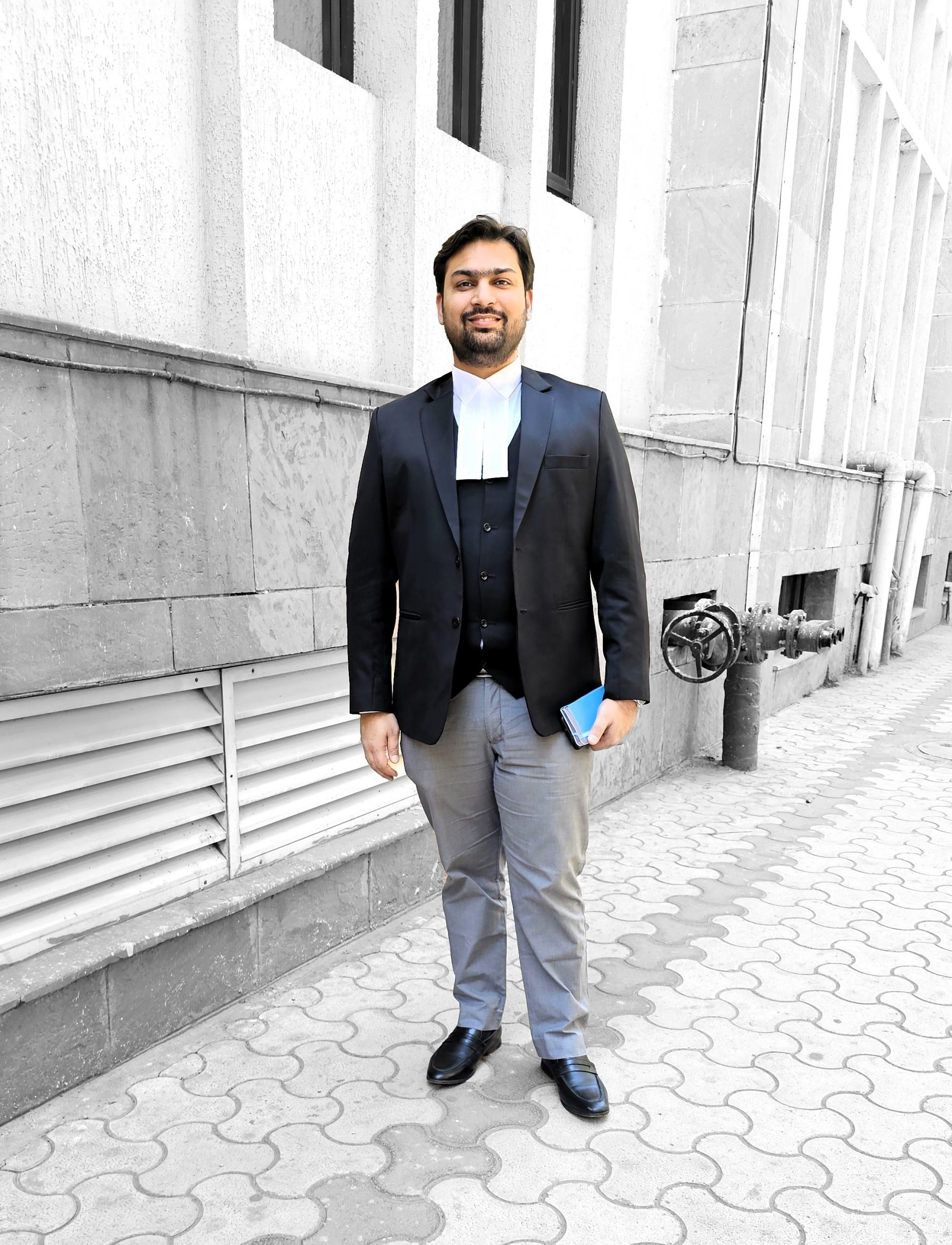
  • “In the dynamic landscape of legal practice, a client-centric approach  stands as the cornerstone of success for lawyers, striving to excel and that means  developing a process for building and sustaining relationships”- Rakesh Kumar Singh, Advocate-on- Record, Supreme Court of India

    “In the dynamic landscape of legal practice, a client-centric approach  stands as the cornerstone of success for lawyers, striving to excel and that means  developing a process for building and sustaining relationships”- Rakesh Kumar Singh, Advocate-on- Record, Supreme Court of India

    This Interview has been published by Pragya Chandni and The SuperLawyer Team
    Can you tell us about your journey into law? What inspired you to pursue an LL.B and later an LL.M in Corporate/Banking & Insurance law?

    My journey into law is not an easy Journey. It was my Childhood dream to  become a lawyer, but initially destiny had planned something else for me and due  to the compelling economic conditions of my family and my zeal to serve the  country, I had joined the Indian Air Force at the age of 17 Years as an Airman in the  year 1996. 

    While serving the Indian Air Force I have pursued my higher education.  When I was posted at Air Force Station, Nashik, I attended evening law college  after my working hours in the Indian Air Force for a law degree. I did my LLM from  Kurukshetra University. 

    I am a first-generation lawyer with no lawyer in the immediate or distant family.  Being from a humble background, I was always inspired by this profession and  believed that lawyers have the unique opportunity to help others and make a  difference in their lives.  

    You have extensive experience in the Supreme Court of India, High Courts, and Tribunals. What were some of the most challenging cases you handled early in your career?

    Most of the cases I handled initially were challenging. I would like  to talk about two of those cases: – 

    There is a reported case of CBI, wherein, we all have encountered a unique  legal issue, that whether the statement of an accused can be recorded under  Section 313 CrPC, Since the accused is not able to write and speak. The Ld. The Trial  Court Judge has cancelled the bail granted to my client (accused) stating that the  accused is deliberately not answering the question put to him under Section 313  of Cr PC. We had only two days’ time to get relief from the higher court. I had  done all the mentioning and could get the case listed on the same day. The Hon’ble  High Court ruled that “As per the medical report, the accused is unable to write  and speak and therefore the Statement under Section 313 of CrPC cannot be  completed.

    In another case, through SLP (Criminal) I ensured cancellation of bail of a  murder accused from the hon’ble Supreme Court of India, in which indirectly I  received threat from the accused side. 

    Your role as in-charge of the Air Force Legal Cell at the HQ Western Air Command is quite intriguing. Can you share some key experiences and challenges you faced during your tenure there?

    As in-charge of the Indian Air Force Legal Cell, one needs to have a much more holistic understanding of law. Right from the management of  litigation in Courts and Tribunals for Union of India and Indian Air Force to  management and conduct of Court Martial and Court of Inquiry, management of  all the applications and 1st and 2nd Appeals related to Indian Air Force under the  Right to Information Act, 2005. Defended 2nd Appeals on behalf of the Indian Air  Force under the Right to Information Act at Central Information Commission,  Management and conduct of Charge Trials for the minor offence committed by  Indian Air Force personnel, to provide general legal administrative and  Secretarial support to Command Judge Advocate. 

    Further, you are not only in charge of the Legal Cell, but you are a trusted  advisor, making sure that the legal department of Command Headquarter and  Units under its area of operations functions properly and smoothly. 

     Managing litigation on behalf of the Union of India/Indian Air Force must have been a significant responsibility. What strategies did you employ to effectively manage and resolve these legal issues?

    Strategy is one of the most critical aspects in effectively managing  and resolving legal issues of an important organization like the Indian Air Force. A  good strategy acts as the bedrock on which the entire legal department functions  efficiently.  

    I started understanding the work and worked closely with Command Judge  Advocate Generals to set clear legal goals that fit with the Organization’s overall  plans. Good and effective Communication within the team members and with  other departments were the key for everyone to work together smoothly and in  tandem. I used to talk regularly with the Unit Legal Cells of the Command to  understand their Legal needs and extend all the possible help round the clock.

    You have a strong background in drafting various legal documents. What do you think are the most critical aspects of drafting effective legal documents?

    Legal Drafting is the most important instrument of legal  Communication. The Skill to draft well, is the skill to think and Communicate  Well.  

    In my legal draft I judiciously select words, phrases and clauses adhering  to the intricacies of the subject matter. Whether it’s contracts, Agreements, or  Petitions, each document necessitates bespoke attention to details. 

    A proficient drafter must bridge the gap between precision and  comprehensibility leaving no room for ambiguity. Documents must not only be  legally sound but also strategically crafted to achieve the desired outcomes for  the clients. 

    One needs to follow the principles of drafting legal documents i.e., clarity  and precision, simplicity and conciseness, specificity and completeness and  compliance with legal requirements. 

    Maintaining excellent relations with clients and legal counsels is vital in your profession. Can you share your approach to building and sustaining these relationships?

    In the dynamic landscape of legal practice, a client-centric approach  stands as the cornerstone of success for lawyers, striving to excel and that means  developing a process for building and sustaining relationships. 

    I make a compelling argument for why clients should choose us. My approach  is to build lasting relationships with the clients and ensure they don’t feel like  mere rupee signs. It is important to understand the client’s needs, the  communication should be transparent, I should be able to manage the expectation  of my client and I should be ready to walk an extra mile by providing exceptional  services. 

    Building and sustaining strong client relationships is paramount in the legal  profession, where trust serves as the CornerStone for Success. For an Advocate  -on-Record, most of the Clients are legal Counsels of High Courts and trial Courts  through whom briefs come.

    You’ve obtained favorable judgments for clients in several high-profile cases, including the Delhi Metro Rail Corporation project and Armed Forces personnel cases. Could you elaborate on these achievements and their impact?

    The legal field is known for being highly competitive with lawyers,  Paralegals and legal professionals all striving to outperform one another. This  intense environment often resembles a constant legal battle where success is the  ultimate prize. In such a challenging arena these achievements become imperative. 

    This was the long pending issue of Delhi Metro Rail Corporation project  due to which DMRC has suffered revenue loss of Crores of Rupees. I had perused  the legal issues of land acquisition and rehabilitation of people from one place to  another place. The said DMRC project was affecting the residents of Trilokpuri. 

    There were multiple litigations pending in various Courts including the Supreme  Court of India on the issue. The 58.6 Kms long Mukundpur Shiv Vihar Corridor  was to be the longest Corridor on Delhi Metro Network. The Delhi Metro had  missed the deadlines for its Phase III project. A Communal twist has prevented  Delhi Metro from relocating nearly 400 families at Trilokpuri. The DMRC was  struggling to resolve this issue. The Delhi Metro was given an alternative land in  Pocket 16,17, and 18 for rehabilitation of People living in pocket 15 in 2014 itself,  but DMRC was not able to carry out the rehabilitation work even after the  completion of the construction of flats due the non verification of documents and  multiple litigation pending in various Courts. 

    I have successfully undertaken the project of rehabilitation of the affected  person to the alternate location by verifying their documents and clearing the way  for the long pending DMRC project, which further settled all the litigations pending  in various courts. 

    In one of the landmark Case of Armed Force, I successfully argued before  the Principal Bench of the Armed Forces Tribunal, wherein, the Hon’ble Bench  has directed the Ministry of Defence and Indian Air Force to issue a No Objection  Certificate (NOC) to Serving personnel of Indian Air Force, Sgt Samant Singh  Sengar, clearing his way to join as an Assistant Professor of History in Madhya 

    Pradesh Public Service/Commission. In 2017, he applied for the post of Assistant  Professor with the Madhya Pradesh Government and cleared the exams. However,  he could not secure permission from the IAF since his current Skill grade did not  qualify him for the post. In the revised Policy of the Air Force, possession of  professional skill grade ‘A’ was added as a mandatory requirement to apply for  Gp A/B Civil exams. 

    This landmark Judgement has paved the way for many similarly situated aspiring airmen. 

    Finally, what advice would you give to fresh law graduates who are just starting their careers? What key skills and mindset should they develop to succeed in this field?

    My advice to fresh law graduates who are just starting their career  is to focus on basic concepts and constantly stay informed about changes. It’s  important to stay updated on new developments and technologies. 

    They should work on and develop analytical abilities to assess the complex  legal issues, analyze statutes and case laws. Effective written and oral  communication skills are paramount in law. The young lawyers should also  develop proficiency in legal research to gather relevant information, examine  precedents to support their legal arguments. 

    Nevertheless, fresh law graduates should always strive to maintain a high  standard of professionalism, ethics and integrity in all their work. Law is a noble  profession, and it’s important to uphold its values and principles.

    Get in touch with Rakesh Kumar Singh-


  • “The law is not static; it evolves over time through amendments and the introduction of new legislation to reflect changing moral and societal values”- Ashima Mandla, Partner at Mandla & Singh Law Chambers

    “The law is not static; it evolves over time through amendments and the introduction of new legislation to reflect changing moral and societal values”- Ashima Mandla, Partner at Mandla & Singh Law Chambers

    This Interview has been published by Pragya Chandni and The SuperLawyer Team

    Can you share a bit about your journey into the field of law? What inspired you to pursue this career path?

    When I was in school, I was rather drawn to the criminal justice system, whether it was from what was covered in the news in then ongoing cases, criminal novels and shows which piqued my interest. Thereafter, I did my graduation in Psychology Honors from LSR, where my primary field of study was abnormal psychology, being intertwined with criminal laws. Even though during the first year of LL.B, like most of us, I was also equally attracted to the Corporate side and ended up interning for 6 months at Trilegal, the first day I set foot inside the Apex Court while interning with Mr. K.T.S. Tulsi sir, all my aspirations in this field shifted and I knew I wanted to practice criminal laws. 

    As a Partner at Mandla & Singh Law Chambers, what are some of the most rewarding aspects of your work?

    In litigation, mostly everyone aspires to go independent someday and establish their own practice. For me, that juncture came a little earlier than expected and Mandakini Singh, (my senior associate from the Chambers of Tulsi sir) and I started this litigation chamber in 2018. Undoubtedly, it takes significant time and effort to get your independent practice off the ground, especially being first-generation lawyers, but then there were many seniors who were exceptionally kind to us to offer support and even refer work. The most rewarding aspect in running your own practice is the opportunity to not only build cases by formation of a narrative but also to oversee the outcome. It gives you a platform and opportunity to understand your shortcomings and actively work towards growth. 

    Your involvement in drafting legislation such as the Criminal Law Amendment Bill, 2019, reflects a deep commitment to legal reform. What drives your passion for advocating for change within the legal system?

    The law is not static; it evolves over time through amendments and the introduction of new legislation to reflect changing moral and societal values. As our worldview and perceptions shift, so do the nuances of the legal system. Every judgment that explains or expands the scope of any section or act is an active step toward changing the limits and understanding of the legal system. Law and society are intertwined, each contributing to shifting the perspective of the other.

    Could you tell us about a particularly challenging case you’ve worked on and how you navigated through it?

    The most challenging case has been the Tablighi Jamaat case. There were 955 foreigner nationals from 48 countries which were detained for 2 months and when the Habaes Corpus case was preferred before the High Court of Delhi for their release, overnight chargesheets were filed against the foreigners. Even though there was not a single medical report which was placed on record in the chargesheet showing anyone as Covid-19 positive, yet the narrative in the media was running contrary to the evidence on record, which also colored the public perception. The impact and perception of media trials, particularly in sensitive and high-profile cases was highlighted. Media trials can lead to premature judgments and public opinion that may not align with the legal proceedings and the principle of “innocent until proven guilty.”  Furthermore, 2 months into the litigation, it surfaced that there were second FIRs against the foreign nationals and those who were repatriated on humanitarian grounds of plea bargaining after depositing costs to an extent of Rs. 52L to the Government, they were once again estopped from returning to their homes. It led to an arduous and protracted litigation” of 150 hearings, 955 bail applications, 5 writs, 44 discharge applications, 26 quashing petitions, 80 revision petitions, 15 hearings before the Supreme Court and then a trial in a Delhi court over 9 months. Even though there was not a single conviction in Delhi as even all the foreigners who chose to contest the charges in the trial were acquitted, this case was unprecedented under the unforeseen circumstances across the globe.

    The other case, which was recently viewed as a landmark judgment in Pavana Dibbur v. Directorate of Enforcement.,2023 SCC OnLine SC 1586 wherein the Hon’ble Apex Court was pleased to quash the complaint u/s 44/45 of the PML Act, 2002 (akin to chargesheet) on the ground that s. 120-B IPC can be invoked only in reference to a predicate scheduled offence, was rather challenging as a case, as there were no authorities on this issue and all judgments of the Apex Court as well as various High Courts were ambiguous. The coming of this judgment reinforced the confidence that one can build arguments from bare reading of provisions and interpretation of statutes even if there are no judicial precedents precisely on the issue. Needless to say, it would not have been possible without the fierce and structured arguments led by Senior Advocate Meenakshi Arora ma’am.

    Your achievements in both academia and extracurricular activities are impressive. How do you balance your professional responsibilities with your personal interests and commitments?

    I believe that lawyers led stressful lives as is, which makes it imperative to have interests outside of work, to balance out. More often than not, the demands of every day work and deadlines puts personal lives at the backseat. I personally make it a point to travel, even if it is a short trip, whenever the opportunity presents itself. It gives you something to look forward to as well. Apart from that, there are many tournaments organized by various Bar Associations, which are an amazing way to break the ice, forge better bonds with your peers and seniors. 

    Being an Advocate-on-Record before the Supreme Court is a significant achievement. How did you prepare for and approach the examination, especially achieving such a high rank on your first attempt?

    I had started my career at the Apex Court as a junior, so I was always enchanted and inspired to become an Advocate-on-Record before the Apex Court. Truly, with running my own practice, I was able to only devote 20-25 days of study towards the examination and managed to secure a Rank #4. However, the fact that a lot of the concepts tested in this examination especially in the papers of Practice and Procedure as well as Drafting have nexus with everyday practice before the Apex Court, having practiced for 5 years, in terms of drafting, filing and arguments, before appearing in this examination made those papers fairly easy to prepare for. 

    As for the other two papers namely Leading Case and Advocacy and Professional Ethics, most of those cases were a part of the curriculum in college and hence were formative concepts which are widely referred to and relied upon across a spate of judgments and thus, if the basic concepts in law are clear, the examination is not all that tough. Therefore, the syllabus ought to not be viewed as something one can mug up for the examination, but if you truly read the judgments in its entirety, you will benefit in your practice as it will enhance your concepts and knowledge base, with concepts or sub-concepts which were perhaps not completely understood during college.

    With your experience in criminal defense litigation, what do you find to be the most common misconceptions people have about this area of law?

    It is no surprise that the salary for freshers in litigation is not comparable to the corporate sector, which has been a driving factor for an increased number of graduates preferring the latter. However, criminal defence litigation is far more rewarding in all aspects as compared to the corporate sector. Furthermore, another misconception is that criminal defence litigation is not for women, and for most of us, even our families are not comfortable with the thought of women visiting jails, police stations and lower courts. We have legal stalwarts such as Senior Advocates Ms. Meenakshi Arora ma’am, Ms. Indira Jaisingh ma’am, Ms. Rebecca John ma’am, Ms. Shobha Gupta ma’am, who are not just counted as the best female advocates, but in the list of the best advocates.  Therefore, the field is not an old boys club. 

    As someone who has accomplished a lot in their legal career, what advice would you give to recent law graduates who are just starting out in the field?

    Be patient, zealous and persevere. Law demands layers of intricate knowledge which is gathered across a spectrum of fields over a period of time. There are essentially no shortcuts to success and the only way to conjointly sustain and grow is through day-to-day perseverance. The skill-set which needs to be developed in this profession to stand out, are built over years of backbreaking work. Join offices which teach you work, develop your skills and offer you opportunity to grow. 

    Get in touch with Ashima Mandla-

  • “Don’t chase money but try to gain as much experience as you can during your initial years into the profession”- Paritosh Anil, Advocate on Record and Partner at AKS Partners

    “Don’t chase money but try to gain as much experience as you can during your initial years into the profession”- Paritosh Anil, Advocate on Record and Partner at AKS Partners

    This Interview has been published by Pragya Chandni and The SuperLawyer Team

    Can you share with us the story of what initially drew you to pursue a career in law, and what motivated you to specialize in criminal, civil, and arbitration disputes?

    I did my graduation in English (H) and then wanted to pursue either CA or Law. Ultimately, I was more inclined towards law as the pursuit for justice and a desire to make a positive impact on society is something which can only be achieved in this profession. During the 2nd year of my LLB, I realised that litigation is my calling as I was fascinated with the dynamics of the criminal justice system. Later, during my initial training period, I was fortunate enough to have worked under the guidance of Mr. Ramesh Gupta (Senior Advocate) and those initial years of running around in the corridors of Patiala House Court is what further motivated me to pursue litigation as I was a witness to the countless lives which were touched by my senior daily. The relief on the faces of the clients and their gratitude towards the assistance provided to them by their counsel is what makes it all worthwhile at the end of the day. With passage of time, I ventured into civil and matrimonial matters and then from 2015 onwards Arbitrations as a field started gaining pace in India and a natural progression for me was to start delving into this new field.

    As you are aware litigation (specifically criminal and civil litigation) is tough and the initial gestation period is around 5-6 years for any lawyer to start earning a respectable fee. However, if you have the grit and determination to sustain these initial years, then this profession gives you the maximum satisfaction of being a beacon of hope for so many individuals. Additionally, you are constantly learning something new every single day and the learning experience itself keeps you invigorated and makes you a better person and a better professional. This satisfaction of making a difference in someone else’s life by performing my professional duties to the best of my abilities is what motivated me to pursue litigation, and this is my guiding light even today after almost 16 years of being in the profession. 

    Reflecting on your extensive experience, can you tell us about a particularly challenging case you handled, and what you learned from it?

    Well, there have been many memorable and challenging cases which I have dealt with but the one which stands out as being the most challenging of them all would be a CBI case in which allegations of forgery and bribery were levelled against the clients who were builders. The basic allegation was that land acquisition was done based on forged and fabricated sale deeds with the help of officials from tehsildar office. After going through the entire documentary evidence and the purported forged and fabricated sale deeds I managed to identify that the allegation of forgery was prior in time to when my clients had entered into the picture and their sale deeds were based on the previous chain by another person who was not even made an accused in the case whereas the allegations of forgery were of that period. Based on this glaring discrepancy which was highlighted before the Ld. Judge, ultimately my clients were acquitted because of this major flaw in the case put forth by the prosecution. The matter involved meticulous investigation into a lot of documents filed along with the chargesheet and it was all worthwhile in the end. This case taught me to be absolutely thorough with the reading of case documents since a simple date on a document could be the difference between a win or a loss for the client.

    You’ve represented clients before some of the highest courts in India, including the Supreme Court and the Delhi High Court. How do you prepare for such high-stakes cases, and what does a typical day look like when you’re gearing up for a major court appearance?

    Well, for any litigation lawyer a typical day starts at around 7.30-8am in the morning when you start preparing for your court hearing and post court timings it is usually conferences and meetings till later in the evening. Then by the end of the day you are preparing for the cases which are listed on the next day so to sum it up you are working round the clock as a litigation lawyer and that’s what a typical day looks like for me as well. This pressure has only increased since my foray into a firm as now I am also responsible for the work which my entire team is doing, and I must keep them motivated as well to put in their best efforts in all the tasks which are assigned to them.

    There are a few days of temporary respite when there is a long weekend coming up but then that also must be utilised for the purpose of business development meetings. When a high stakes matter is involved then obviously your focus shifts completely for the preparation of that case and rest of the things take a backseat. The team working under me also prioritises on preparation of important matters whenever the need arises, and rest of the work is reallocated accordingly. 

    Your profile mentions your involvement in both substantive and procedural law. Can you explain how you balance these two aspects in your practice and why both are crucial for successful legal representation?

    From my experience I can confidently state that procedural law should be the focus for any fresh graduate who wants to pursue litigation. The learnings from your formative years into the professional when you are either interning or working under a senior, are what will decide on how professionally sound you will be in the future. Substantive law can only provide you with broad guidelines in which you have to move but procedural law is what will determine how you will be able to succeed in a particular case. 

    I was fortunate enough to have worked under seniors who were doing extremely good trial court work and training under their guidance helped me in honing my procedural law skills. For any litigation aspirant practical knowledge of court craft including the art of cross examination of witnesses is the most important aspect of his learning and growth. Once you are confident in the procedural aspects, you automatically gain a better understanding of the substantive aspect of law as then reading through the relevant provisions of any act or rules becomes easier for you. Based on the knowledge and advice imparted to me by my seniors, I had also focused on the procedural and practical aspects of court craft during the formative years of my practice and that is what has helped in becoming a better professional. I keep myself abreast with any new developments in law by reading recent judgments of higher courts, books and commentaries of different fields of law and online articles on topics relating to my field of work. Reading is something which is imperative for any legal professional and that helps you in maintaining the balance between substantive law and procedural law. 

    Public speaking and interaction management with strategic clients and senior counsels are highlighted as your skills. How have these skills contributed to your success in the legal field?

    From my law college days, I used to participate in moot court competitions which helped me in getting over stage fright since I had always been an introvert during my school days. I think doing my graduation in English language also helped me in becoming more confident while interacting in public. Client interaction is something which you get better at with experience and the same holds true for me as well. With time I got better at understanding the needs and requirements of clients since no two clients are the same and you must deal with each client accordingly. Being a good listener is an important skill in any lawyer’s repertoire as clients want a personalised experience where they feel comfortable discussing all their doubts and apprehensions with their lawyer. Ethics and integrity are two other aspects which are non-negotiable in my practice, and I believe that has helped me in retaining many of my clients as clients also appreciate honesty and sound advice from their lawyer.

    I have briefed many seniors during my career and share an extremely cordial and respectful relationship with them. Briefing seniors is an important learning experience as watching them deal with a matter through their own vast experience gives you fresh insight and perspective on how to deal with a particular issue or case. 

    You’ve worked on cases involving the Indian Penal Code, Civil Procedure Code, and numerous other acts. Which legal area do you find the most complex and why?

    All cases are challenging but for me particularly civil matters are more technical in nature and require thorough understanding of the Code and mere procedural defects can lead to unwarranted outcomes. Other than civil matters, cases involving IBC and SFIO are also technical in nature, and these are evolving fields, so they also offer some challenge and excitement due to complexities involved in interpretation of the statute and relevant rules. But to be honest, complexity is what keeps you on your toes and makes you a better professional as the need to learn and evolve constantly is permanent in this profession. 

    In your current role as Partner (Litigation) at AKS Partners, what are some of the significant trends or changes in arbitration and litigation that you’ve observed, and how do you see the field evolving in the next few years?

    This is my first stint in a law firm so transitioning from an independent practitioner to a partner has been an interesting experience. I am thankful to my Managing Partner Mr. Sonal Kumar Singh for reposing his faith in me and for his constant help and guidance. This has been an extremely important learning curve in my professional journey.

    Now to answer your specific question, commercial suits and arbitration have taken precedence over traditional civil litigation since they offer quicker resolution for commercial clients. With the recent amendments in both Commercial Courts Act and Arbitration & Conciliation Act, the lawmakers of the Country have tried to resolve some of the procedural aspects which were causing delays in the trial thereby making the process faster and more efficient.

    One of the main reasons for me to join the firm was to gain more relevant experience in International Commercial Arbitration for myself and to enhance the ‘white collar crime’ practice of the firm. AKS Partners is renowned for its expansive arbitration practice and in recent years Government is also focusing on making India a major hub for conducting International Arbitrations. I see a tectonic shift in the Arbitration landscape of the Country in the near future with establishment of major Arbitration Centres like Delhi International Arbitration Centre as well as establishment of Arbitration Bar of India.

    Finally, what advice would you give to fresh law graduates who are just starting their careers and aspiring to achieve success in the diverse areas of law that you have mastered?

    Try to do as many internships as possible in order to gain experience in all fields of law whether it is corporate or litigation as that will help you in deciding which field attracts you the most. Clarity on this aspect is crucial for your growth as your initial years of training will determine your future in your chosen field of law. 

    If litigation is your chosen path, then be patient during the initial years. Don’t chase money but try to gain as much experience as you can during your initial years into the profession. Try gaining maximum exposure in trial courts for at least 3-4 years as that is where you will learn the procedural aspects of litigation including the art of cross examination of witnesses which I believe is imperative for any litigation lawyer. To all young professionals my most important advice will be to be thorough with the Evidence Act as that is the bread and butter for any litigation lawyer. 

    Finally, don’t be afraid of making mistakes as they will be your greatest teachers in your professional journey. Be faithful to your craft and never compromise on your ethics and professionalism.

    Get in touch with Paritosh Anil-

  • “Don’t resist any new experience or challenge, it is only in the deep end that we really learn how to swim”-  Tishampati Sen, Counsel at the Supreme court of India

    “Don’t resist any new experience or challenge, it is only in the deep end that we really learn how to swim”- Tishampati Sen, Counsel at the Supreme court of India

    This Interview has been published by Pragya Chandni and The SuperLawyer Team

    Can you share with us how your journey into law began? What inspired you to pursue a career in this field?

    My journey with law started only incidentally. As a child finishing high school, all I knew of what I wanted to do – was join the corporate world, and be a corporate honcho – I wanted to walk in my father’s rather large shoes – as I had always seen him as a top corporate executive. But I soon learnt that engineering was not for me. No matter how hard I  tried – I just didn’t grasp the concepts for JEE exams, while for my friends it was a piece of cake. Then someone told me of a few prominent corporate executives who were actually lawyers by training. Since I had always been a debater, the common opinion was that I would do well in law. That is what I wanted to do, complete my LL.B., do some work, pursue an MBA and then proceed with life. But clearly life had other plans. I started enjoying reading law in law school, and started performing well in Moot Court competitions. But even then I had no plans of pursuing law post my LL.B. Then one day in an international arbitration competition held in Delhi, I was awarded the best speaker, and more significantly, a scholarship to National University of Singapore for an LL.M. No one, in their right mind, can let such an opportunity go by and so that is how I went ahead and pursued my LL.M, even with no intention of continuing with law. When I returned to India, I decided to work in a law firm for about a year (or two) before I would go ahead for my MBA – as previously planned – but my tryst with law, started at JSA under Mr. Sumanto Basu, and that is when I fell in love with law, and with being a lawyer. I saw large corporations, value and plan entire business strategies based on the advice given by Mr. Basu, who in turn based his advice on the work done by us! That realisation was empowering and humbling at the same time. After this, there was no looking back.

    You graduated from NLU Jodhpur and then pursued your LL.M from the National University of Singapore. How did your academic experiences shape your career in law, especially in international commercial laws?

    Both NLUJ and NUS have had significant contributions to my life. These institutions helped create the foundation for the legal acumen, and the understanding of the principles of law and practice. I owe a lot to NLUJ of course, the fundamentals of our legal understanding, the basic concepts of law, jurisprudence, drafting and advocacy was taught to us, and ingrained in us by the alma mater. NLUJ taught us research methodology, how to articulate one’s opinion coherently in articles, and the art of persuasion – through moot court competitions. The plinth on which I have built my practice, was created at NLUJ. But I think even beyond the academic training, NLUJ played a very big role in the development of my personality. I don’t think law school, at the undergrad level especially, should be looked at only as a place to read and learn law. Much more importantly, this is a place where you’re mixed into a melting pot, and you learn a lot about yourself, and your relationship with the world. 

    NUS, because I was much older when I went there, and also because the LL.M. is only for a year or so – is where the focus was predominantly on academic rigour. I had the opportunity to sharpen the understanding and application of the laws. In an international LL.M., one is reading foreign law, which may or may not be relevant later. But that is precisely why an LL.M may be important. It trains you to read and comprehend all sorts of legislations – even those which you may not be able to relate to. What was very different in NUS for me, was the way examinations were held. Most of the exams were open – book exams, they didn’t want to assess one’s memory, but one’s understanding of the concepts. This forced me to learn to comprehend and articulate faster, rather than just mug things up. The LL.M. also taught me that there are multiple viewpoints available for the same issue, and that it often varies based on what one’s life journey has been and the culture / society one has been exposed to. This also became relevant and useful when interacting with other lawyers and arbitrators in the international context.

    Starting your career at J Sagar Associates, you worked on both the transactional and litigation sides of law. How did this dual experience influence your professional development and perspective as a lawyer?

    There is a marked difference in the way transactional lawyers and litigating lawyers deal with clients and with the mandate before them. In both, of course, you keep the client and the client’s interest at the forefront, but there is a difference in the approach. On the transactional side, the focus is on advice and in enabling the client to get a deal done. One is often batting for the client, against another party but, importantly, towards a common goal, i.e., arriving at an agreement, which is mutually beneficial to both the parties involved, and which will govern the relationship of the parties going forward. The understanding of the industry, the Client’s business, its weaknesses and needs, governs your advice and actions. 

    Whereas in litigation, it is almost always adversarial, where one has to strive to defeat the other side and their version –  in order to make one’s own client win. Here, the facts of the case, the law, and the specific personality of the court / tribunal, are what reign supreme in the mind of the advocate. Of course, this is overly simplified, and a generalisation, but that there is a difference in the approach is clear. I can happily say that I thoroughly enjoyed both sides of the coin, but it is the litigating and adversarial side of the practice that I love. The fact that I have received invaluable training from prominent people in both these fields in JSA, I feel I have widened my viewpoint and perspective as a lawyer, which has helped me to grasp issues in a matter, and also comprehend the business realities which cause the clients to make certain decisions. Some of the law firms require freshers to be on rotation, and go through various practice areas for the first 6 – months or so. Given my experience, I think it’s wonderful and long may it continue. 

    You’ve had the opportunity to work under prominent figures like Mr. Vipin Nair and Mr. Gopal Subramanium. How did these experiences and mentors impact your approach to practicing law and handling significant cases?

    My seniors have not merely had an impact on my approach to practicing law, they have all shaped me into the lawyer and the person I am today. My practice, and how I present myself in court and to other advocates / clients, is entirely a reflection of all my mentors and seniors. I have had a number of mentors in my life, but significantly, I must mention Mr. Sumanto Basu – who took me under his wing when I was an absolute fresher and who then taught me not just how to practice law, but even how to conduct myself. Mr. Amar Gupta – who was instrumental in my transition to litigation and who planted in me the love for litigation and court craft. Mr. Vipin Nair and Mr. P.B. Suresh taught me the tips and tricks of independent practice, advocacy, effective drafting and most importantly demonstrated how important it is to build a rapport with the Bench, other members of the bar and the court staff. From Mr Gopal Subramanium, of course, as a very senior and eminent senior counsel, I learnt how a person of his stature prepares for matters, deals with the pressure, the adulation and the criticism, and keeps the dignity of the Court and the need of the matter at the forefront. 

    Your practice covers a wide range of areas including corporate litigation, arbitration, and consumer law. How do you manage such a diverse portfolio, and what challenges have you faced in balancing these different specializations?

    It isn’t about managing a diverse portfolio, I have a practice that covers a wide range of areas, purely because I enjoy a wide range of subjects and each area comes with its own style of pleading, practice, and its own jurisprudence. It is a lot more enjoyable (at least for me), and the issues and the clientele that I interact with are also dynamic and different. As far as I am concerned, it keeps the hunger and the attraction for the law and litigation going. Having said that, I must clarify that having a wide practice area is not unusual, there are several other counsels as well, who practice in several fora and we regularly meet each other in different courts. Those predominantly practice in one type of practice area, do so probably because they have attained true expertise in that field of law and therefore are now required to devote most of their time assisting the courts, and advising clients, in that area of legal practice.

    You have been involved in several landmark cases, such as the class action matter involving data privacy and the whistleblower suit. Could you tell us more about these cases and what they mean for the legal landscape in India?

    Both of these matters that have been mentioned, are sub – judice, and so I don’t want to get into them in detail. But in short, the data privacy matter is an interesting one, where medical data entrusted with a cloud storage service provider went missing. The service provider took the defence that no liability can be attributed to it, since it provided a back – up only in the more expensive version of its service. The complainant therein was aggrieved by this position since the complainant felt that such a defence cannot be taken when data (and sensitive data such as this) has been admittedly lost based on the negligence and internal glitch of the service provider. Recognizing that this will be an issue for all those who have not taken the more expensive version of the service, a consumer complaint, with an application to treat the same in the interest of the class of consumers was filed. The National Commission passed certain significant orders in the matter (although the matter is pending adjudication), the issue is now before the Supreme Court. 

    Clearly this is an important issue because this not only deals with the sensitivity with which data must be dealt with, but also as to whether a class action proceeding can be maintained for an issue such as this. With data becoming the currency in the new world, matters such as this, would certainly become relevant for the law to develop appropriately. 

    The whistleblower matter is another interesting matter, where a person brought to the attention of the internal management of a large MNC that unethical practices were rampant within the organisation. Pursuant to an internal investigation, the admitted whistleblower was terminated from the employment on the ground that he too had been involved in the said unethical conduct. The whistleblower filed a civil suit challenging the said termination claiming that this is an attempt to penalise the person for blowing the whistle internally. He has also filed a Writ Petition bringing to the attention of the Court the fact that the law in India is woefully inadequate as far as according protection to whistleblowers is concerned while several countries have robust laws to protect whistleblowers and to prevent retaliatory conduct. A Judgment of the court in this regard, will certainly have a major impact and may actually cause the law and businesses to provide realistic mechanisms to prevent unethical conduct and to protect those who wish to speak out against such conduct. 

    As someone who has achieved considerable success in the legal field, what advice would you give to fresh law graduates who are just starting their careers?

    Its very nice of you to say so, I don’t know if I can be said to have achieved considerable success – as yet, but if I had to share a couple of my learnings with fresh law graduates, it would be this:

    Know your subject and the law very well. Please read the law. This includes being updated with the recent judgments and reading the bare acts. I have come to learn that knowing the law really well puts you at an advantage on any side of the practice. There is simply no substitute for it and those who really become prominent, almost always, have a strong command on their subject and are armed with a profound knowledge of the law.

    Not many really know what is good for them, and what they are meant to be, especially so, when you’re a fresh law graduate, and your only understanding of the legal world is through limited internships and maybe SUITS! Therefore take on all experiences wholeheartedly. Don’t resist any new experience or challenge, it is only in the deep end that we really learn how to swim. Plus, it is the ability to see a problem or a legal issue, from various viewpoints and perspectives, that sets one apart from the rest and that ability is honed especially by having a varied bouquet of life experiences. So don’t sweat the small stuff and dive – in deep.  

    Get in touch with Tishampati Sen-

  • “There are no shortcuts to success. Your ability to read and analyze will set you apart from others, Always read the provision or judgment independently before considering others opinion” – Amit Shrivastava, Advocate on Record & Managing Partner at Imperial Law Offices

    “There are no shortcuts to success. Your ability to read and analyze will set you apart from others, Always read the provision or judgment independently before considering others opinion” – Amit Shrivastava, Advocate on Record & Managing Partner at Imperial Law Offices

    This interview has been published by Namrata Singh and The SuperLawyer Team

    It’s a pleasure to have you with us. Could you share with our readers a bit about your journey, from how you embarked on your career in law to becoming the Managing Partner at Imperial Law Offices? What inspired you to choose law as your career path?

    Thank you Namrata and team Super lawyer for having me here. Well my journey in law started with guidance from my best friend’s father Mr. L.D. Borasi, who was an Additional District Judge then in Madhya Pradesh. He knew me personally and was of the view that I could do really well in law. On his encouragement I did my research on the subject and came to know that the legal profession suits my personality.  Then I took admission in BA LLB (Hons.) course in Devi Ahilya VishwaVidyalaya, Indore (M.P.). I completed my law in 2009 and started my practice in Delhi, things started happening. and here I am 15 years later.

    As a co-founder of Imperial Law Offices, what inspired you to establish your own legal practice, and what unique approach do you bring to the legal profession?

    The idea of embarking upon the entrepreneur journey was always there in the back of mind. However, I was very lucky to have an opportunity to work in the top law firms of the country. It was a very enriching experience working there and was a tough decision to quit the job. The idea of starting Imperial Law Offices germinated after meeting my co-partners who themselves having worked in top law firms of the country were looking to start  a law firm. As a law firm we bring to the table a full service law firm for our clients with partners having more than decade and a half years of experience of representing leading Multinational Companies in the country. The Firm’s global perspective is based on its deep knowledge of the sector/industry and the prevalent practices. The team of professionals understand issues across a broad spectrum of business and legal practices. This fluency allows the Firm to bring the right talent and knowledge to deliver commercially pragmatic advice to our clients. 

    Your extensive experience (as a litigation lawyer) spans across various legal domains, including Insolvency & Bankruptcy, Tax, Real Estate and Arbitration. Among these, do you have a particular area that you find most fulfilling to work in? Could you tell us why?

    These are my core practice areas, it is very difficult to choose between them. However, the best thing I like about being a litigation lawyer is that it always keeps you on the edge and keeps throwing new challenges at you. However long you may have practised there will always be something or the other which you will be dealing with for the first time. As they say, you are always a student of law. Each day you learn new things. So there is never a dull day in litigation. This is what keeps you going. Another thing which is very satisfying is the ability to make an impact on society and help others. 

    Given your extensive experience in taxation and insolvency matters, what advice would you give to young lawyers aspiring to specialize in these areas of law?

    Both these fields, especially taxation, are very dynamic in nature. There are lots of amendments, notifications, circulars and clarifications by the government very frequently on these subjects which govern the interpretation of law. Not to mention the day to day case laws coming in from courts/ tribunals. So one of the key features of practicing in these subjects is to be able to trace out the legal history of the provision you are dealing with to understand the mandate of the legislature. Another very important part of practicing in these areas of law, especially while dealing with international taxation matters is that you will have to deal with various international treaties and international jurisprudence. Apart from the above strong knowledge of constitution law and basic understanding of accounting principles are must. So if you have these basics covered, you can excel in these subjects. 

    For the current generation aspiring to build successful legal careers, what would be your top piece of advice or mantra for achieving professional excellence and fulfilment in the legal field?

    To young lawyers my piece of advice is that one should inculcate the habit of reading. There are no shortcuts to success. Your ability to read and analyse will set you apart from others. Also never make your belief on the basis of the opinion of others without actually reading the provision/ judgement yourself independently. First read the provision/ judgement unbiased by the opinion of the others or common belief, then see what others are saying. This habit will give you a closer understanding of the law and will eventually lead you to success. Also your command over language is a very important factor which will contribute towards success.

    In today’s world where there are lots of branches of law apart from litigation, where you can excel relatively easily. Career in litigation, unlike old times, has become a choice. Clearly life in litigation initially is not very financially gratifying, however if you have the bent for it and are willing to put in the long hours, it can prove to be a very enriching career. 

    You’re an Advocate on Record at the Supreme Court of India. Can you shed some light on the challenges and significance of clearing the Advocate on Record exam, and how it has impacted your legal career?

    The Advocate on Record exam is more of a practical knowledge based exam. If you are regularly practising in the Supreme Court and are well aware of the practices and procedure of the Supreme Court it becomes slightly easier to clear the exam. The next big challenge in this exam is that question papers are very lengthy, so you will have to be very clear and concise in your answers, it is only then you will be able to attempt all the questions. 

    Qualifying the exam really helped me as it gave an added advantage as a litigation lawyer. Clients/ friends from high courts started  approaching me to file matters before the Supreme Court. This increased my client base, which was very important for me professionally as my independent practice is quite new. As a law firm we were able to comfort our clients that we can represent their cases till the Supreme Court. Also one of the good things about practicing as an AOR is that you get to do matters from different fields of law, one day you are arguing a criminal law matter and other day you may be dealing with a tax law matter related to transfer pricing. This type of variety is very rare otherwise. So it has been quite an enriching achievement.

    Your involvement in landmark judgments and complex legal matters is evident from your extensive list of reported judgments. Among these, is there a particular case or judgment that you found particularly challenging or rewarding, and why?

    I will tell you about the most recent ones before the Supreme Court and NCLAT. Last year I was approached to file a very complicated criminal matter wherein parties involved were from two rival political parties. In 2017, during a politically charged environment, there was a skirmish between the two parties during an election campaign involving exchange of gunfire, leading to cross FIRs from both sides. In the FIR against my client, SC/ST Act was falsely invoked, just to jeopardize his contention in elections. We were against dismissal of discharge applications by the courts below, especially qua SC/ST Act. There was a battery of senior advocates from both sides. It was a hard fought case, in which we were able to obtain a positive order from the Supreme Court in December 2023. This resulted in my client successfully contesting election this year. It was a very satisfying win, given the pressure situation and the amount of hard work that was put in by us. 

    The other very satisfying win was before NCLAT wherein we were challenging the NCLT order dismissing our petition seeking CIRP (Corporate Insolvency Resolution Process) against a very influential real estate company, on the ground that our debt is barred by limitation. In holding so NCLT had misinterpreted the definition of acknowledgement of debt and had also missed certain documents on the basis of which we were claiming extension of limitation. I argued the matter myself, the bench was initially not convinced, however, after two days of hearing accepted our arguments. This was a very satisfying win as initially the bench was totally against me and was not holding back in communicating the same to me ☺.

    The most recent one was a anticipatory bail application which I argued before the Hon’ble Supreme Court, though it was a very regular matter, I was pleasantly surprised as Hon’ble Mr. Justice Hrishikesh Roy appreciated me for arguing the matter well in open court. It was a very special moment and a huge encouragement.

    Starting your career in chamber practice before the Delhi High Court and Supreme Court must have been quite a journey. What valuable lessons did you learn during those formative years that still resonate with you today?

    It was indeed a very enriching experience, because in a chamber practice being the only junior, I was expected to help my senior with literally everything, right from conferences with new client, coordinating with them and obtaining the documents, researching law points, drafting the petition, filing the petition, preparing for arguments, attending hearing (if you are lucky and your senior is busy in some other court, arguing the matter or at least starting the arguments till your senior reaches the courtroom ☺). And last but not the least raising invoices and making follow ups for like ever ☺. I was very lucky in my initial days, I got a chance to work with very good advocates who have now become Senior Advocate, Senior Partners at leading law firms of the country. I am still in touch with them and they keep helping me whenever I need them.  

    Whatever I have learned is virtually because of the time I had spent with my seniors and their constant encouragement. However, the most important thing which I have learned from my formative years is the importance of  hard work and preparation. You will always be recognized for your hard work and preparation. Till date this habit helps me. Clients always have an eye on you as to how you are handling the matter. When they see your hard work and commitment, they remain with you even if the matter does not go according to your liking. 

    Thank You.

  • “Strong coordination and regular liaising with law enforcement authorities is the key in initiating swift actions against the counterfeit activities”- Kshitiz Karjee, Managing Partner,  Semita Legal, Advocates & Solicitors 

    “Strong coordination and regular liaising with law enforcement authorities is the key in initiating swift actions against the counterfeit activities”- Kshitiz Karjee, Managing Partner,  Semita Legal, Advocates & Solicitors 

    This Interview has been published by Pragya Chandni and The SuperLawyer Team

    Can you share a bit about your journey into the legal profession? What inspired you to pursue law, and how did you navigate your career to reach your current position as an Advocate-on-Record before the Supreme Court of India?

    Being a science student in school, I had no idea about law as a profession until just before the Class 12 Board Exams I happened to read in the newspapers about CLAT which was happening for the first time in 2008. Out of curiosity I began to research about the legal profession in general and it struck to me that I have to be litigator given my persona and aptitude. Moreover, I wanted to enrol in a professional course which would enable me to later have my own practice. Though I cracked a few of the prestigious engineering entrance exams, I was firm in my mind that I would study law. Accordingly, I studied law in Delhi during 2008-13.

    Being a first-generation litigation lawyer, I was fortunate to be placed at Economic Laws Practice (ELP) a top tier full-service law firm. I met some amazing professionals and colleagues at ELP who moulded my thought processes and the inherent need of the profession to put in the extra hours. Post gaining experience on commercial matters and client interactions, I set up my independent practice in 2015 in the fields of commercial laws, white-collar crimes and IPR enforcement and litigation under the name SEMITA LEGAL, Advocates & Solicitors.

    While in independent practice, I happened to be guided and groomed by a senior Advocate-on-Record at the Supreme Court who inspired me to keep working without expecting any rewards. Due to his blessings and the support of my entire family, I became an Advocate-on-Record before the Hon’ble Supreme Court. The constant support of seniors, colleagues and juniors through my professional life have played a key part in my practice.

    Your experience covers a wide range of legal areas, from corporate commercial disputes to white-collar crimes and regulatory litigation. What drew you to specialize in these specific fields, and what challenges have you encountered along the way?

    Being trained at ELP in commercial disputes and white-collar crimes, I gravitated towards this branch of law. Our team at ELP focussed on a wide variety of disputes primarily concerning commercial and regulatory issues for large corporate clients. Apart from this, I also happened to be involved in advisory and litigation regarding two of the biggest scams of the times – 2G Spectrum Scam case and the Coal Block Allocation Scam case. Exposure to such matters strengthened my confidence as a lawyer to take up independent mandates.

    Primary challenges for young professionals in commercial disputes and white-collar crimes are instilling trust in the minds of the senior in-house legal counsels in multi-national companies that you can ably assist on the legal challenges and confidently brief senior counsels wherever required. Coupled with this is the challenge to deliver top notch advisory and representation and at the same time hustle for new mandates and clients while keeping abreast with the legal developments wherein currently a lot of regulatory updates flows in every day.

    You’ve been involved in high-stakes litigations and arbitrations, including cases related to government contracts, telecom, and power sectors. Could you share a particularly memorable case or experience from your career and how it shaped your approach to litigation and dispute resolution?

    A corporate client was blacklisted by a PSU, which enjoys a 100% dominance in the railways ticketing and allied services, from participating in any future tenders due to a fault attributable to the railways and the PSU itself. From the time the client got the debarment order, we prepared the petition overnight, filed the petition the next morning and got the matter listed urgently. We were able to secure immediate relief for the client from the Delhi High Court within approx. 24 hours of the debarment. Post this matter, I did a couple of similar matters on blacklisting; however, was not able to secure interim stay in those matters since the clients in those matters had not understood the fact that while approaching the constitutional courts in writ matters, timing was of utmost importance and the alacrity in taking steps weighs in with the judges while deciding interim applications.

    As a member of various legal associations and with extensive experience representing clients before different tribunals and courts, what are some key lessons you’ve learned about effective advocacy and navigating the complexities of the legal system in India?

    During the initial years of advocacy, an advocate must spend some time with the Court clerk to understand the nuances of filing of petitions and removal of defects apart from the drafting of petitions. This helps with getting to know about the intricacies of working at different tribunals and courts and gives an idea about the listing procedure. There are courts which list fresh matters the same afternoon, while there are courts and tribunals which list matters after a week or fortnight of the matters being filed and the defects being removed. Having a clear picture about the same, goes a long way in devising the strategy and appraising the clients.

    The nomenclature and the short names for landmark judgments cited before a particular tribunal and court are to be noted for an effective practice at such forums and to give a sense to the Bench that you are adept with the developments in that particular branch of law.

    Your work also extends to advising clients on regulatory actions and compliance issues, as well as defending against investigations by agencies such as the CBI and ED. What strategies do you employ when representing clients facing such challenges, and how do you ensure the protection of their interests?

    I advise clients to keep records of all transactions and possible leakages/ ramifications flowing therefrom. Drawing down a list of potential threats on liberty and property arising from actions by investigation agencies helps in strategizing the course to be followed while defending the interests of the clients. Pointing out pros and cons to the senior counsels during conferences helps to charter a clear course to be adopted at appropriate stages of trial.

    With your expertise in IPR enforcement and brand protection, could you discuss some notable cases or strategies you’ve employed to combat counterfeiting and piracy issues? How do you stay ahead of emerging threats in this area?

    My practice of IPR enforcement and brand protection at Semita Legal, Advocates & Solicitors, which I spearhead along with my wife involves a multifaceted approach:

    ·         Monitoring and surveillance – employment of advanced tools and services such as keyword monitoring etc to track online mentions on social media and e-commerce platforms

    ·         Collaboration with online marketplaces for reporting counterfeit listings and consequent takedowns

    ·         Legal measures to actively monitor infringements and take legal action against counterfeiters to protect brand’s goodwill and market share

    ·         Consumer awareness to identify genuine products and distinguish them from counterfeit ones; provision of information on official websites and packaging about authentication methods etc.

    ·         Supply chain transparency and security to prevent unauthorized access to products or intellectual property. Implementation of technologies such as blockchain to track and authenticate products from manufacturing to distribution

    ·         Engagement with law enforcement agencies to investigate and prosecute counterfeiters

    ·         Regularly review and update the brand protection strategies to stay ahead of emerging threats and technologies used by counterfeiters.

    Strong coordination and regular liaising with law enforcement authorities is the key in initiating swift actions against the counterfeit activities. The most effective way to handle this is to always be prompt and responsive to any support being sought from the authorities, whether understanding the law, conducting regular training, providing prompt responses to notices, all of which ultimately aids in timely filing of chargesheets. Once the authorities develop confidence that proper support has been provided, they equally support in nabbing down the counterfeiters. Basically, it’s two-way traffic and to foster a positive roadmap to curb this menace, we need to be transparent and responsive to each other’s requirements.

    Your involvement in both domestic and international legal matters is impressive. How do you adapt your approach when dealing with clients from diverse backgrounds and legal systems? Are there any unique challenges or opportunities that arise in such cases?

    My IPR enforcement practice helps me interact with foreign clients quite frequently. While most of them by now are abreast with the Indian legal system, the pace at which the system works really bothers most of them. My interaction with the marketing/ sales team of the corporates seeking enforcement actions on the counterfeiters allow me to break down the processes and present a seamless scenario so as to help them navigate challenges of dealing with enforcement authorities without being bothered about possible harassment at their hands.

    Finally, considering your extensive experience and success in the legal field, what advice would you offer to recent law graduates aspiring to follow in your footsteps? What key skills or qualities do you believe are essential for success in the legal profession, especially in today’s rapidly evolving legal landscape?

    Read law and non-law matters every day for some time. With technology in place, this is sorted and only requires a routine to be followed. Interact with senior lawyers and watch Court proceedings to learn the nuances. In the initial years, work with lawyers in different stages of their careers to learn from each phase of a lawyer regarding how to approach a case. Explore different branches of law. The professional has endless opportunities – if you are patient and keep working and associating with the senior professionals, rewards will flow naturally.

    Get in touch with Kshitiz Karjee-

  • “Don’t ever lose hope, be patient, and focus on your work, as there are no shortcuts in this profession.” – Himanshu Tyagi, Advocate-on-Record at the Supreme court of India

    “Don’t ever lose hope, be patient, and focus on your work, as there are no shortcuts in this profession.” – Himanshu Tyagi, Advocate-on-Record at the Supreme court of India

    This interview has been published by Namrata Singh and The SuperLawyer Team

    Your journey from Meerut to becoming an Advocate On Record at the Supreme Court is quite inspiring. Could you share some pivotal moments or challenges you faced during your early years in Delhi, and how you overcame them to establish your practice?

    Once you step out of your comfort zone every first thing seems to have its own challenges. However, on the professional front I can say that I decided to take the plunge to the Capital with dreams and hope to make it big, in spite of not having any significant father figure in the field of law. Initially the first question which was required to be answered was from where to start as there was hardly anyone to suggest or guide what are the choices one could make while entering the profession. I made my choice and started with litigation as I had attained little experience while being associated with the chambers of Mr. Ravi Shanker Tyagi for a very brief period in Meerut Bar which was initially very helpful as Courts in Delhi are much more refined in terms of infrastructurally and in other avenues as well.

    Your journey as a first-generation lawyer is truly commendable. What were the key principles or values that guided you in your career, especially during the initial stages when the path might have been more challenging?

    Yes, being a first generation lawyer is a very difficult choice to make especially when you are in litigation. But all that I can say is don’t ever lose hope, be patient and focus on your work, as there are no shortcuts in this profession, the only way you can accelerate is through your abilities to make hard choices and by burning midnight oil.

    Becoming an Advocate On Record involves rigorous training and experience. How was your time with Retd. Justice S.R. Singh shaped your understanding of the legal field, and what key lessons did you carry into your independent practice?

    I was fortunate enough to join the Chambers of Retd. Justice S.R Singh ( Retd. Judge from Allahabad High Court) Sr. Advocate in the year 2009.  After working with Mr. Singh for almost two years and having gained opulent experience by understanding the nuances and intricacies of legal field along with drafting, filling and everything that the field entails.

    One judicious adage told to me by my very veteran Senior was that “ Vakalat is your first wife” if you want to do justice to your profession and I have ever since imbibed this in my practice till date and I am always grateful to all my seniors and colleagues from the chamber and outside the chamber for always guiding me in the profession. 

    As Ex. Additional Advocate General for the State of H.P., you’ve handled significant cases. Can you share an experience where your role had a meaningful impact on the state’s legal representation, and what insights did you gain from that experience?

    It was a very enriching journey while discharging my duties as AAG for state government before the Hon’ble Supreme Court as such opportunities help you bring the best out of you. As while holding such an esteemed office one has to be very candid with all the briefs while representing the State before the Court.

    Handling cases involving state entities like the Himachal Road Transport Corporation (HRTC) requires a nuanced understanding of administrative and constitutional law. Could you elaborate on the challenges faced and strategies employed in representing HRTC in various legal matters?

    It is always challenging to represent Road Corporation before the Hon’ble Courts as the mostly the matters pertaining to the Corporation is of higher monitory significance be it MACT matters or service matters. What I can say from experience is that you are required to be more updated with the law and recent judgments so that you can provide better assistance to the Hon’ble Court.

    Handling criminal matters requires a different set of skills. Can you share an experience from a criminal case you’ve worked on, discussing the complexities involved and the strategies adopted for a successful outcome?

    Through my experience in handling criminal matters I must say one should have a very fair understanding of criminal jurisprudence as most of the criminal matters involve personal liberty which is of utmost importance.  During my time at bar I have done several criminal trials, appeals but what always challenges me is the stage of cross examination as in my view Cross examination in any criminal matter is the heart and soul of the Trial.

    Apart from your legal pursuits, do you have any personal hobbies or interests that you find to be a great source of relaxation or inspiration?

    I can say visiting places and spending time with family and friends keeps me motivated other than work. 

    Coming from a small town like Meerut and making a mark in the legal profession in Delhi is undoubtedly a significant achievement. Could you share some extra efforts or unique strategies you employed in your journey to overcome any perceived challenges or biases associated with being from a smaller town?

    Once you make your mark , and in this industry that is possible only when you garner some accomplishments in your name. The bias associated with a small town only remains so long as you let it affect your mental make up. If you are determined enough, the tag of coming from a small town and making it big in the capital only adds to your reputation , which at the same time works as an inspiration for people coming from the same background, and are hesitant in pursuing their goals. My only advice to the budding generation of lawyers is to fight your demons and always be hopeful and take each day as it comes. The road to success may seem endearing but it sure is fruitful at the end.

    You emphasize the importance of hard work and dedication in your career. What advice would you give to the current generation of aspiring lawyers to navigate the challenges of the legal profession and build a successful practice?

    I can vouch for the fact that hard work is the key “what you are seeking is seeking you”. I make my juniors understand that to be candid with clients and accurate in analysis and strict in study, you will achieve whatever you aim for as there are no shortcuts in this profession.

    Having experienced both your own student journey and now interacting with the current generation, what notable differences do you observe in the approach and mindset of today’s law students compared to your time? Are there specific areas where you believe current students could focus on improvement to excel in the legal profession?

    The major shift that I witnessed in the mindset of the students in comparison to when I was one, is the availability of resources and better infrastructure that can help them achieve their goals with a lot of help which is easily available, of which there was a dearth during our college  days. Accessibility and availability are the major factors that determine the early years in one’s legal career as initially apart from all the teachings done at college level, the practical learning is also very vital if you wish to stay in this field.  

    Get in touch with Himanshu Tyagi-

  • ” I like the variety that comes with being a practising advocate. I did not deliberately choose these practice areas, most lawyers don’t get that choice– at least not initially when you’re starting out”- Devyani Gupta, Advocate-on-Record, Supreme Court of India

    ” I like the variety that comes with being a practising advocate. I did not deliberately choose these practice areas, most lawyers don’t get that choice– at least not initially when you’re starting out”- Devyani Gupta, Advocate-on-Record, Supreme Court of India

    This Interview has been published by Pragya Chandni and The SuperLawyer Team

    Could you please share with us the pivotal moments or experiences that led you to pursue a career in law, particularly your journey from your undergraduate studies at National Law Institute University, Bhopal, to earning an LL.M. from Cornell Law School?

    I just went with the flow and ended up where I did. When I was in school, I was very sure that I’ll be studying English Hons. in Delhi University. Most of my classmates in school were heading to DU and I felt like that is where I want to be as well. But I cleared CLAT and allowed myself to be talked into studying law – and boy, am I glad I did! Although I was quite average academically, the five years I spent at Bhopal were very fulfilling. The decision to apply for Masters was also one without a lot of planning behind it –I was in the final year of my course, I had no job and I had no idea what I wanted to do. I made a last minute decision to apply for LL.M.. In fact, some of the admission deadlines for colleges had already passed by the time I got around to applying. My LL.M. year was very enriching and I thoroughly enjoyed it.

    As an Advocate-on-Record at the Supreme Court of India, you have a diverse range of experiences, including representing political parties and government departments. What motivated you to specialize in areas such as commercial law, service law, constitutional law, and election law?

    I like the variety that comes with being a practising advocate. I did not deliberately choose these practice areas, most lawyers don’t get that choice– at least not initially when you’re starting out. You say yes to all kinds of work. For me, this diversity is what keeps the work exciting and interesting.

    During your time at Cornell Law School, you served as an Associate Editor for the Cornell International Law Journal and as a Researcher for the Center on the Death Penalty Worldwide. How did these roles shape your perspective on the legal profession, and how do they contribute to your current work?

    My work as an Associate Editor for the Cornell International Law Journal felt like a natural extension of my work at the NLIU Law Review when I was in Bhopal. I had been a part of the journal since the first year, and continued up till my final fifth year when I was effectively in-charge of the Editorial Board – Content Review. At CILJ, I had an exposure to how much more professional these journals are; you work on tight deadlines, the articles and publications are by well-known academics, the editing is strict, the citations must always be as per the Bluebook. I feel like my editing experience helps me write and draft better. It instills an ability to discern good writing quickly.  

    My time as a Researcher with the Death Penalty Worldwide was shorter. I felt like I had taken on too much, what with all the credits and extra-curricular activities, and could not continue it for longer. 

    Drafting and researching constitute a big chunk of my professional responsibilities, so I’d say, yes, these experiences definitely help me now.  

    From your extensive internship experience, including working at Parekh & Co., Amarchand & Mangaldas & Suresh A Shroff & Co., and others, which experiences had the most significant impact on your development as a legal professional, and how did they influence your career choices?

    I did not do as many internships as some of my classmates and colleagues. But from the ones I did, I got a fair look into the workings of litigation chambers, litigation law firms and corporate law firms. I also got to work with an Intellectual Property Rights team, specifically the patents team of a law firm. Through these experiences, I realised that (A) I’m probably better suited as a litigating lawyer over a transactional one, and (B) I’d rather work with a small team of a few colleagues than with a large team of people. The internship experiences brought that clarity at some point.

    You’ve been involved in varied cases relating to Constitutional matters, and also many election disputes involving RP Act, symbol order etc. Can you share a specific case or experience that challenged you professionally and how you navigated through it?

    I think each case is a new challenge in itself. I cannot think of anything specific at the moment but I am looking forward to a few 7-judge bench matters that are scheduled to be listed where I am involved as the Advocate-on-Record. 

    What made you decide to take the New York Bar Exam? Have you had the experience of handling cases before US Courts as an Attorney and Counselor-at-Law in the State of New York. 

    Most international students in my LL.M. cohort were very keen on taking the New York Bar Exam. On finding that I can easily fulfil the eligibility requirement by taking certain credits from a list of a few select courses, I decided that I will also take the exam and see where it takes me if I pass. I was open to exploring work opportunities outside but I didn’t know what kind of law I wanted to practise. 

    I passed the NY Bar, but I came back to India soon thereafter and joined the litigation chamber of an Advocate-on-Record. The NY Bar qualification is now just an embellishment on my CV. My feet – and practice – are firmly planted in the Supreme Court of India.

     Lastly, considering your rich and varied experiences, what advice would you give to recent law graduates who are embarking on their legal careers?

    There is no straight line to success and everybody’s experiences are different. Don’t compare your path to others’. Stay motivated and stick it out. Showing up is half the battle.

    Get n touch with Devyani Gupta-

  •  “I have come to the conclusion that in the intensely dynamic environment that we live in where the laws are revolving on a constant basis, it is imperative to have at least the bare minimum knowledge of all fields of law, so as to best advise your client” – Shashwat Tripathi, Advocate on record at the Supreme Court of India

     “I have come to the conclusion that in the intensely dynamic environment that we live in where the laws are revolving on a constant basis, it is imperative to have at least the bare minimum knowledge of all fields of law, so as to best advise your client” – Shashwat Tripathi, Advocate on record at the Supreme Court of India

    This Interview has been published by Pragya Chandni and The SuperLawyer Team

    Can you share with us how your journey in law began, and what inspired you to pursue a career in litigation and dispute resolution?

    Specialization and Expertise: Commercial Litigation, Insolvency and Arbitration. 

    To be honest, I belong to a family of lawyers, my father and my elder brother are both lawyers, although both have worked/work in starkly different fields. One (my elder brother), being a hardcore IPR expert and the other (my father) who has seen the growth of litigation in the once colonial town of Allahabad and been actively involved in service matters before various High Courts. 

    As they say, you sooner or later become a victim of your surroundings. However, in my case, it worked for the best and I can turn the statement around and say, “I am a true by-product of my enriching and encouraging surroundings”!

    I would often as a child accompany my father to the court or interact with his colleagues and associates at home as well as in social spheres. In my opinion (of course as lawyers we are bred in a manner to specify our opinions !) my liking and fondness towards the profession began then itself, in my formative years. Thereafter I saw my brother go to law school as well, which is when my intentions to pursue a career in law solidified and I was sure that I wanted to become a lawyer. 

    My decision to pursue litigation is however a result of my internships and work experiences at various law offices. The irony is that my first job offer and might I add, with a hefty pay in a big firm, was NOT in litigation but the General Corporate  team. However, even then, I refused to take up that opportunity and decided to start all over with the process so long as I was given Litigation. Thus, inherently, my brain and heart were always drawn towards litigation. 

    With expertise in civil and commercial disputes, arbitration, intellectual property, and more, what specific aspects of law drew you in, and how did you develop such a diverse skill set over the years?

    My personal favourite has always been the constitution, which is why I was driven to even appear for the Advocates-on Record examination, which I successfully cleared in the year 2022!

    However, over the last couple of years, I have come to the conclusion that in the intensely dynamic environment that we live in where the laws are revolving on a constant basis, it is imperative to have at least the bare minimum knowledge of all fields of law, so as to best advise your client. Let’s say you have a client who approaches you for a simple case of corporate fraud, your advice however will start on the basic provisions of companies act in the north pole and span to filing a criminal complaint in the south pole. For the naked eye, one is a civil remedy and one is criminal, but for me, both are equally important. Thus, I feel, skill sets also develop over the years based on the kind of matters and briefs you receive or work on as well as the happenings  and trivia in the legal fora, which in my view, every budding lawyer should keep pace with. 

    Establishing your own law firm is a significant accomplishment. What motivated you to form Aeddhaas Legal, LLP, and how has the experience of working with accomplished legal professionals influenced your approach to legal practice?

    From the time I decided I wanted to pursue a career in litigation, I had my eyes on like a hawk!! on opening my own law firm and setting up my practice. 

    I was fortunate to have met people who I connected and bonded well with, who echoed the same feeling as mine, and thus, we all got together and created Aeddhaas. 

    One thing I learnt the most from all the stalwarts at the bar as well as all the accomplished legal professionals I have worked with is the golden rule of always being prepared. One thing I preach to every lawyer is that you must always read your brief to the fullest  (of course over time you learn the art of swiftly navigating ) as well as prepare your draft after a detailed research to seal any/all loopholes. A good draft in my opinion is not one which runs into 100 pages but one which briefly summarizes the issue in question. At the same time, a good argument is not the one which involved showing to the court every document (in most cases pleadings exceed 10000 pages!!), but one where the advocate runs through the essentials, to touch the heart of the case. 

    I also learnt the benefits of team work and how to be calm and patient even in the time of an urgency to take the right decisions. 

    Thus, Aeddhaas for me is the final dish, of all such ingredients, hard work, team building, patience (most important virtue of a lawyer) and attentiveness! 

    Your experience in handling matters under the Insolvency and Bankruptcy Code is extensive. Can you share insights into the complexities involved in such cases and the strategic considerations one needs to keep in mind?

    Insolvency and Bankruptcy code is now one of the most commonly invoked statutes in our country. I have always had an affinity towards commercial laws and hence, once the code was published, I was naturally drawn towards the same. 

    To be frank, as it is still fairly new as a law in our country, it still keeps evolving. It’s an extensive statute with various regulations and rules made thereunder. 

    I would recommend that to be abreast, the best way is to read the recent judgments and monthly updates released by various legal media. Nowadays live law and bar and bench upload updates even before the judgments are released online! Life has become easy because of them. So, we must use these mediums to our benefit. 

    For handling matters under the IBC, strategy planning with regard to the end goal at the very initial stage, whether you are for the corporate debtor or the creditors, goes a long way.  

    With a focus on arbitration matters, including those related to construction contracts and commercial agreements, what role do you see arbitration playing in resolving disputes, and how has the landscape evolved during your career?

    Arbitration is the need of the hour. In my opinion an arbitration clause has become as important as a confidentiality clause in any agreement/contract and there has been a paradigm shift worldwide towards arbitrating disputes viz entering into long drawn litigation battles, which in case of international commercial contracts is a nightmare, be it in the initial stages of overcoming the hurdle of jurisdiction or seeking the enforcement of a decree. 

    Having said this, even though the Indian Arbitration Act was enacted to be time bound, today, realistically speaking the Appellate courts are burdened with appeals and challenges to the awards passed by arbitrators, leading to a delay in execution. All in all however, the interim reliefs and ease of dispute management are unparalleled with arbitration. 

    Unlike courts that are often overwhelmed with a high volume of cases each day, comparatively, arbitration provides parties with more time and opportunities to present their arguments. In arbitration proceedings, parties have more flexibility in scheduling hearings and presenting evidence, which can result in a more efficient and streamlined resolution of disputes. This is because arbitration is a private and confidential process, and the parties have more control over the proceedings, including the selection of the arbitrator (who can be a specialist in case of subject matter being technical in nature). As such, arbitration can be a more attractive option for parties seeking a faster and more cost-effective resolution of their disputes.

    Reflecting on your career, what would you consider as the key milestones or turning points, and how have any challenges or setbacks contributed to your growth as a legal professional?

    Well I am fortunate to not come across any setbacks as yet and I hope it continues to be the same. My journey so far has been exactly the way I thought it would be. Turning point is of course setting my own practice and qualifying the Advocates-on Record examination.

    The transition from working for someone else or a law firm to establishing one’s own practice presents numerous challenges beyond just completing tasks. In addition to securing new clients and meeting their expectations, there are other obstacles to overcome such as financial management, marketing, and building a reputation in the legal community. These challenges can be overwhelming, but successfully navigating them is a significant milestone for any lawyer.

    As a legal professional, it is my duty to provide my clients with the most effective solution within a specific timeframe. So far, I have been doing justice to my work and that I think the actual growth one should be aiming for.

    As someone with a wealth of experience, what advice would you offer to law graduates entering the field today, especially those aspiring to build a successful career in litigation and dispute resolution?

    Law is a dynamic field. You could be making policies sitting in the parliament  or  challenging their implementation. You could be the mastermind behind a watertight contract or the person whose job is to find ways to read into the clauses. You could be the one because of whom we resonate a tick to Nike and an apple to Apple) or the one because of whom an acquisition or merger failed.

    My advice is simple, whatever it is that you intend to do, be it corporate, litigation (civil or criminal), be it IPR or policy, one should begin planning their way forward the day you step foot in law school. I am sure there are days when confusion is bound to occur, however, the sooner you surpass that, you will be way ahead of many others by the time you graduate. You would get the advantage of taking up internships in the specific field and building your CV, additional courses, writing papers and attending conferences in the field of your preference. This way, by the time you graduate out of law school, you are not a ripe student looking for direction, but someone who would add value to the place which hires you.

    Get in touch with Shashwat Tripathi-

  • “Conducting cross-examinations is the true test of a disputes lawyer. It tests your drafting, critical thinking, articulation, strategic ability, presence of mind, knowledge of human behavior and much more. The foremost challenge lies in the exhaustive groundwork that precedes the actual cross examination.”- Rohan Batra, Partner, Anagram Partners

    “Conducting cross-examinations is the true test of a disputes lawyer. It tests your drafting, critical thinking, articulation, strategic ability, presence of mind, knowledge of human behavior and much more. The foremost challenge lies in the exhaustive groundwork that precedes the actual cross examination.”- Rohan Batra, Partner, Anagram Partners

    This Interview has been published by Pragya Chandni  and The SuperLawyer Team

    Can you please share the story of how you decided to pursue a career in law, and what specific factors or experiences led you to specialize in disputes, particularly company and commercial disputes?

    The decision to pursue law was not a straight choice but a process of elimination and discovery. Given my family background and as someone who opted for commerce, I was presented with two choices: follow my father’s footsteps as a chartered accountant or pursue my studies in commerce. Right after my boards, I enrolled myself in esteemed colleges like CBS and SRCC.

    In this time, I had developed a keen interest in analysing and comprehending intricate concepts, coupled with a passion for engaging in public speaking. It was during this period that I had the privilege of witnessing the legendary, Late Ram Jethmalani, showcase his extraordinary oral advocacy skills. This experience left an indelible impression, and my intuition directed me to the pursuit of law. Once I decided to pursue law, I naturally gravitated towards disputes or as we litigators colloquially refer to where the real “juice” of the legal profession is. Immediately after the last term, I explored a corporate position placement. However, I ultimately declined, much to the bemusement of my peers who continue to jest about my decision till day.

    With over 12 years of experience in the field, can you walk us through the key milestones and challenges in your career, from joining Shardul Amarchand Mangaldas & Co. to founding your boutique litigation chambers in Delhi in 2019?

    My journey commenced with a stint at a tax litigation firm, Economic Laws Practice. Under the mentorship of Mr. Tarun Gulati, today a distinguished tax senior counsel, who led the Delhi tax litigation practice at the time, I learnt the basics of basics. Transitioning to SAMCO marked a pivotal juncture. Here, I was exposed to the world of arbitration and commercial litigation. I was fortunate to be guided by Mr. Dhruv Dewan, my supervising partner at the time. Under his guidance, I refined my legal acumen and navigated the landscape of challenging yet intellectually stimulating work. In those days, burning the midnight oil was not just a phrase but a frequent reality. I vividly recall a period where I was given the opportunity to single-handedly manage three high stake live arbitrations, overseeing cross-examinations, evidence, and final hearings in a span of twelve months—an arduous yet immensely rewarding experience. Personally, my involvement in the Tata-Mistry legal battle was a watershed moment that transformed my perspective on legal strategy, which was akin to playing a highly strategic chess game. SAMCO, for me, was an institution where every case became a classroom, and every challenge was an opportunity for growth. I am grateful to Mr. and Mrs. Shroff and all my former colleagues for this immensely enriching experience.

    In hindsight and given that I hail from a non-legal background, the decision to establish my boutique litigation chambers in 2019 was characterized more by audacity than meticulous planning. Gratefully, the leap of faith bore fruit. This transition has been instrumental in introducing me to the practice of law, its diverse challenges and putting me on an entrepreneurial journey.

    Your profile mentions your involvement in a 5 Judge constitutional bench, Cox and Kings, before the Supreme Court of India. Could you provide insights into the significance of that case and how it reflects your expertise in arbitration and company disputes?

    My involvement in the constitutional reference before a 5-Judge bench of the Supreme Court of India in Cox and Kings was unexpected. I had the honor of closely working with Mr. Darius Khambata, Senior Advocate, a renowned arbitration expert, in shaping our strategy and articulating our case. Mr. Khambata aptly coined our approach as establishing “guardrails” to manage the expanding purview of the Groups Company Doctrine (GCD)- a legal doctrine rooted in the Chloro Controls India (P) Ltd. v. Severn Trent Water Purification Inc. & Anr. case.

    In the field of arbitration, we observed a concerning trend wherein GCD was being indiscriminately applied to bind non-consenting parties to arbitration. Our task was to conduct a comprehensive analysis of global practices pertaining to the application of GCD, presenting a legal threshold, and spell out safeguards for invoking and applying GCD within the context of arbitration. It is personally gratifying to note that majority of arguments put forth by Mr. Khambata were accepted by the constitutional bench in the Cox and Kings case, which is now the authoritative ruling on GCD in arbitration. For me, this experience underscores the challenge of navigating complex constitutional issues whilst balancing the contemporary challenges in the field of arbitration.

    Congratulations on your Amazon bestseller, “Monk Your Mind: 10 Secrets to Transform the Mind.” What inspired you to write a book, and how do you see the connection between your legal expertise and the themes explored in your book?

    While the direct connection between my legal practice and my debut book is not overt, the book reflects a convergence of two key elements. Firstly, my training as a lawyer played a crucial role in honing the skills necessary for writing a book. Secondly, the professional challenges inherent in my legal career significantly influenced the themes I chose to explore in the book.

    The book fundamentally emphasizes the notion that each individual possesses the capacity to transform their mind and leverage it to achieve their goals. Drawing from the rigors of legal practice I experienced, the book advocates embracing trials in life. It underscores the principle that undertaking difficult endeavors is the catalyst for personal growth and simplifying life, challenging the conventional notion to the contrary.

    What motivated your move to Anagram Partners, and how does your current role differ from your previous experiences, especially in terms of handling alternative dispute resolution, commercial and corporate litigation, insolvency, and bankruptcy?

    Joining Anagram Partners marked the initiation of a new chapter in my professional journey, and the motivation behind this transition was multi-faceted. From a workplace, Anagram Partners distinguishes itself through exemplary work practices- a candid feedback system, constant pursuit of excellence and a focus on executing superior legal strategy.

    Since the inception of Anagram Partners, I have had the privilege of being deeply involved in the disputes practice. Working alongside partners who are eminent legal experts in their respective domains has contributed immensely to my professional growth. It’s here I transitioned from a practice of law to “business” of law. As a firm, we operate as a cohesive unit, and leverage cross-practice expertise. This helps in providing a comprehensive and nuanced approach to handling matters, thereby enriching the quality of advice provided to clients. With its diverse disputes profile, Anagram Partners has not only afforded me the opportunity to refine my legal skills but has also instilled in me a profound understanding of the holistic dimensions involved in legal practice. I am immensely grateful to all my partners for this opportunity.

    Given your proficiency in conducting cross-examinations of witnesses before courts and tribunals, could you share some insights into the strategies you employ and the challenges you face in the process?

    Conducting cross-examinations is the true test of a disputes lawyer. It tests your drafting, critical thinking, articulation, strategic ability, presence of mind, knowledge of human behavior and much more. The foremost challenge lies in the exhaustive groundwork that precedes the actual cross examination. Achieving proficiency in this aspect requires an in-depth understanding of the case from both sides’ perspectives. Prior to formulating questions, I try to wear the hat of not just a lawyer but that also of the witness, the opposing counsel, and even the presiding judge or arbitrator. Although time-consuming, this comprehensive approach not only fosters a nuanced understanding of the case but also provides a strategic edge over potential challenges in the cross-examination process.

    You’ve published pieces on commercial laws, arbitration, and foreign investment. How does your commitment to writing contribute to your legal practice, and how do you approach speaking engagements at both domestic and international fora on arbitration?

    Writing on topics related to commercial laws, arbitration, or the field of law I practice is driven by a genuine desire for self-expression. It is my belief that speaking and writing are strong mediums through which one can articulate, share and influence perspectives on various issues. While the external perspective may be to positiononeself as a thought leader, the intrinsic motivation should stem from the joy of writing and speaking itself. Rather than focusing solely on establishing oneself as a thought leader, authenticity and a true desire to contribute valuable legal insights should guide these endeavours. This is especially if the objective is to be consistent.

    Considering your journey and accomplishments, what advice would you like to share with law graduates who are just entering the field? Are there specific skills, mindsets, or lessons that you believe are crucial for success in the dynamic and challenging world of legal disputes?

    Reflecting on my journey and looking at what lies ahead, thriving in this field requires a combination of specific skills, mindsets, and lessons::

    1. Strong work ethic: The ability to work hard and consistently put in the effort cannot be overstated.
    2. Kaizen Mindset: Embrace a Kaizen mindset- focusing on constant and relentless improvement of your craft. This mindset is key to adapting to the ever-evolving legal landscape.
    3. Openness to learning-  Be willing to learn from everyone, whether they are younger or more senior colleagues. Cultivate the humility of a perpetual student, as there is valuable knowledge to be gained from diverse sources.
    4. Acceptance of Mistakes: Acknowledge and accept mistakes. Ego should not stand in the way of learning and growth.
    5. Ambition: Foster a strong ambition to achieve your goals.

    One thing is certain- a lawyer in a family means the entire family is part of the legal profession. Managing personal and professional aspects, thus, requires constant calibration. There is no optimum work-life balance- it’s the balance that suits you the most.

    In the end, these are only my personal views, which are shaped by my life experiences and observations. Take them with a pinch of salt!

    Get in touch with Rohan Batra-