Tag: AOR

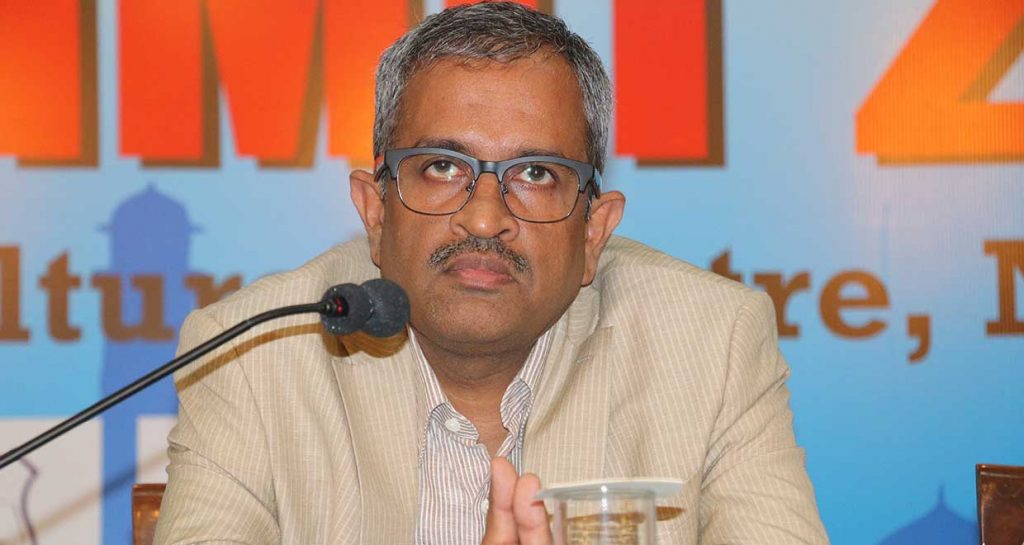
  • Dilip Annasaheb Taur, Advocate on Record, Supreme Court of India, on humble beginnings and work experience in Criminal and Civil Litigation

    Dilip Annasaheb Taur, Advocate on Record, Supreme Court of India, on humble beginnings and work experience in Criminal and Civil Litigation

    Dilip Taur is a graduate in law from MP Law College, Aurangabad, batch of 2003. He subsequently went on to pursue a master’s degree in law from Mumbai University. Born into a family of agriculturalists, Dilip braved all odds to become a first generation lawyer. Astute in both civil and criminal law, Dilip has fought and won several crucial high profile cases in the past. He is perhaps known best representing former Maharashtra Home Minister Madhav Kinhalkar in the controversial case of paid media charges pressed against former Maharashtra CM Ashok Chavan.

    With an illustrious career spanning over a decade and a half, Dilip has had experience in all levels of judiciary in India. Currently, Dilip owns and heads Dilip Taur & Associates, a legal firm that deals in filing cases at the Supreme Court of India, High Court of Delhi, National Green Tribunal, Delhi (NGT) and the National Consumer Redressal Commission (NCDRC).

    In this interview, we speak to him about:

    • The importance of getting a hands-on experience in legal procedure versus classroom curricula
    • His experience practising before numerous fora, across all levels of the judicial hierarchy
    • Battling pressure in high profile lawsuits
    • His inspiring journey from a small village in Maharashtra to the Supreme Court of India


    You graduated from MP Law College, Aurangabad. Can you tell us something about the experience?

    I hail from the rural pocket of Marathwada. MP Law College was one of the only options available to me, owing to lack of resources and its proximity to where I lived. The college was not at par with other law colleges in the state such as GLC Pune or Mumbai. I was also fairly irregular in class as I was trying to focus more on practice-based learning by attending court sessions frequently.


    How did attending court proceedings regularly, as opposed to attending class, impact your learning?

    During my college days I would regularly attend JMFC and sessions court. I used to maintain a court diary and would follow senior advocates’ case dates without even knowing them. I used to attend every hearing of important cases. In fact, this experience helped me a lot with my education. The impact of court attendance was such that I was very confident while taking my college exams. I never felt like I was missing out on much by not attending classes in college.


    What is the importance of regularly reading judgments?

    Reading judgements has helped me understand the law, technical difficulties and procedural lapses while dealing with cases. It helped me grasp the various nitty-gritties of law and established legal principles which have been upheld by the Supreme Court. It boosted my confidence when I was drafting cases on my own. Law is constantly evolving and reading judgements helps you stay updated on ongoing developments in the field. I would advise all students of law and amateur lawyers to read judgements regularly in order to understand legal procedure better.
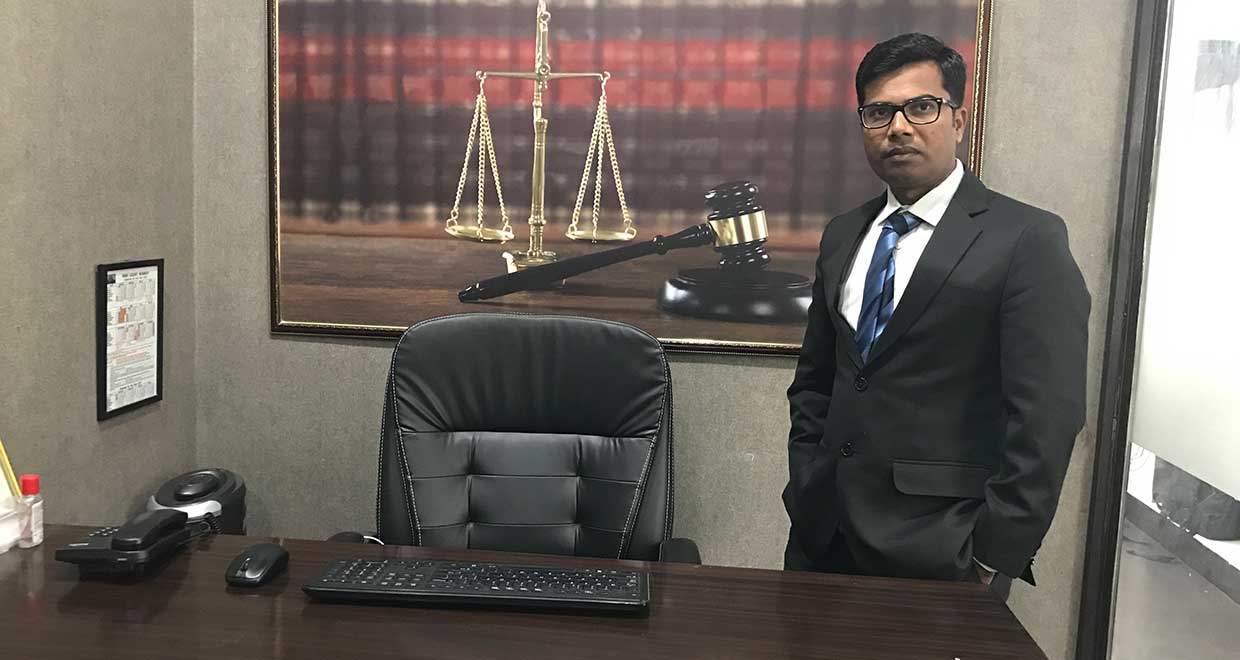
     

    You thereafter practised in the chamber of Mr. Raja Thakre in the Mumbai High Court. Tell us about the most memorable case you dealt with there.

    One of the most memorable cases I dealt with under the tutelage of Mr. Thakre was an application seeking custody of my client’s stolen property. Mr. Thakre guided me through the procedure and was very encouraging. He also gave me the chance to make an appeal to the High Court, which was my first appearance in the High Court.


    How did working in the chamber of Mr. Raj Thakre make you aware of the difference between being an intern and being a practising lawyer?

    During my time working in his chamber I realised that I should concentrate on drafting cases and work on my arguing skills. I would listen to him with rapt attention whenever he was arguing in court. I also learned a lot from my other senior colleagues whose expertise in the field of criminal law was edifying.

     

    Tell us about the skills you picked up during your time with Mr. Thakre, and how that paved the way for your litigation career.

    When I joined Mr. Thakre’s chamber I was an amateur with raw skills. Mr. Thakre’s working style influenced me to a great degree. I was always eager to hear his arguments. Initially I used to attend magistrate court sessions with him. Then I started attending sessions court in Mumbai. While working there, I was thoroughly impressed with the drafting skills of his colleague, Mr. Chimalkar, who continues to remain an authority in criminal drafting. I was fortunate enough to learn the craft from the best. In Mr. Thakre’s chamber I attended full-fledged trials, right from framing of the accused till the pronouncement of judgement.


    You had a sudden change of heart and decided to try your hand in the civil and corporate field. What made you make the switch?

    After working for almost two years in criminal law, I realised that criminal law has its limitations and it is restricted to the IPC, CrPC and Evidence Act. So I decided to move to the civil and corporate field.


    Being someone who has practised both civil and criminal law, what are the factors aspiring lawyers should take into consideration before making a choice between the two?

    Someone who has had experience dealing with both sides of the coin will find himself at an advantage during a court proceeding. It helps you identify the criminal element in civil litigations and civil matters in criminal cases. I would personally advise young lawyers to familiarise themselves with both kinds of law in their initial days, before making a definitive choice.


    You have practised before numerous fora including the Supreme Court. Describe one memorable case you have dealt with.

    One of the most memorable cases I handled in the Supreme Court was the infamous case of paid news in the matter of Ashok Chavan, former Chief Minister of Maharashtra and my client Dr. Kinhalkar, former Home Minister of Maharashtra. This case was very challenging and I worked very hard on it. I had briefed the erstwhile Sr. Counsel Uday Lalit (now a Supreme Court Judge) that the opponent was led by stalwarts like Kapil Sibal, Abhishek Singhvi and Mohan Parashar. I handled this case for three years before the Election Commission of India, then handled it for two years before the Delhi High Court and further two years before the Supreme Court of India. We won the case before all the fora. This case gave me the opportunity to closely work with Sr. Counsel Uday Lalit. During these five years of litigation I have worked under immense pressure but never succumbed to it. This case is very close to my heart and I will always cherish it.


    Another forum you deal with is the NGT. What is your view on tribunalisation of justice in India?

    Tribunalisation of justice has been a successful endeavour in India. Tribunals reduce the burden on the High Court and Supreme Court. Also most of the crucial issues related to obtaining environmental clearance for mining projects or disputes pertaining to the same are now being promptly resolved because of the NGT. Earlier, these files would just pile up in the offices of the High Court and Supreme Court, with no action being taken for years.


    For a prospective lawyer looking to go into litigation, how important is it for them to have prior contacts to help guide them?

    For a prospective lawyer I don’t think prior contacts are the only way. Yes it does matter, but all of it is secondary to your competence in the field. The briefing lawyers will identify you and can send the counsel briefs. In this way you can make contacts. Also by joining the chambers of senior members of council you can build contacts. I am the son of a farmer, I had to start from scratch, with no resources at my disposal. That should be testimony to the fact that it is your ability that takes precedence over everything else.


    Did you have such contacts? How did it positively affect your career?

    I started off with no contacts. My only priority was so work hard and in the process I made the acquaintance of some very influential people. Knowing them has helped my career in litigation.


    Do you believe in arguing cases you have don’t agree with morally? Have you ever done it?

    That differs from case to case. As an advocate, I believe I am obligated to fight every case that comes my way. I was morally conflicted during a rape case that I was handling, but that case got dismissed altogether eventually.


    How do you cope with pressure in case of high profile lawsuits?

    During my sixteen years of experience in litigation (three year as an intern and thirteen years of practice) I have handled various high profile cases. There was enormous pressure but I always found myself handling it with relative ease. I love the adrenaline rush of a high profile case. It pushes you to outdo yourself, it keeps you motivated. I actually look forward to sleepless nights; I find that it helps me stay at the top of my game.


    From being an intern to having your own firm, you have done it all. What, in your opinion, are the defining characteristics of a successful litigant?

    I have appeared before all fora from quasi-judicial authorities such as the tahasildar, collector, commissioner, minister and from magistrate courts to JMFC, sessions court, civil courts, High Court, consumer forum, tribunals and finally the Supreme Court. Nowadays lawyers start practice directly at the Supreme Court. I firmly believe that all lawyers should practise before lower courts for at least ten years before moving on to the Supreme Court, as it is in the lower courts that you learn the most.


    If you had to give one piece of advice to our readers, what would it be?

    My only advice to readers is that if you want to become a successful lawyer, work hard. Have experience before quasi-judicial authorities, lower courts. Follow at least 5 full-fledged trials before joining higher courts. Furthermore, work with honesty. Nowadays, even litigants are in pursuit of lawyers who are honest, rather than successful. If you are honest, success will follow.

     

  • Enatoli Sema, on being the first from Nagaland to crack the AOR exam and work experience with Mr. Neeraj Kishan Kaul

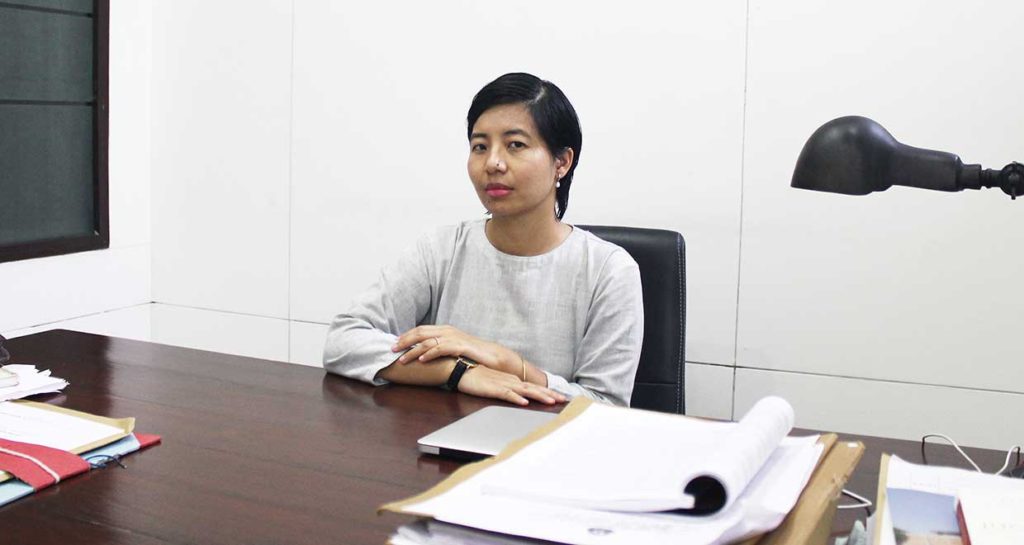
    Enatoli Sema, on being the first from Nagaland to crack the AOR exam and work experience with Mr. Neeraj Kishan Kaul

    Enatoli Sema graduated from Campus Law Centre, Delhi University in 2005 after completing a Bachelor of Arts degree from St. Stephen’s College. In the pursuit of her determination to do litigation, she joined the chambers of Mr. Neeraj Kishan Kaul, Senior Advocate before starting her independent practice in the Supreme Court. Being the first from Nagaland to have passed the AOR examination of the Supreme Court, she talks in this interview about:

    • Her decision to pursue law
    • Experience at Campus Law Centre
    • Professional and personal challenges after graduation
    • Working at the chambers of a Senior Advocate
    • Cracking the Advocates-on-Record examination
    • Following her passion for litigation


    Please introduce yourself to our readers. Where did you grow up and attend school? What was your initial career plan?

    My name is K. Enatoli Sema, I come from the State of Nagaland. I grew up in Kohima and that is where I did part of my schooling and then shifted to the Convent of Jesus & Mary, a boarding school in Shimla.


    You completed your Bachelor’s degree from St. Stephen’s College in Delhi University, which is a very prestigious and difficult college to get admission into. How was your college experience? Did you decide from the beginning to study law after graduation?

    I feel privileged and blessed to have attended this prestigious college during the most crucial years of one’s life. It is during this period that I was constantly faced with situations and circumstances that questioned my roots, faith, identity, foundation and my core values. At first, I did not know how to respond to them but as a result I was forced to grow up and decide who I am and who I want to be rather than being defined by others.

    Studying law was also an option for me because of my family background but I was not too sure if I really wanted to do it immediately after graducation. In fact, after graduating from St. Stephen’s and after a year in CLC, I took a gap year just to be sure that I really wanted to study law.


    How was your law school experience? Looking back, do you wish you had done anything differently?

    (Enatoli graduated from Campus Law Centre, Delhi University in 2005)

    CLC was a very different experience altogether, something I wasn’t prepared for. I realised how sheltered and protected I was in St. Stephen’s. At first it was overwhelming, the sheer number of students in the class was enough to make you feel small and insignificant. There were some classes I enjoyed more as compared to others. We had execellent faculty members because of whom my love, interest and curiousity for law started. The one thing I wish I could have changed about law school was probably being more active in campus. I would usually try and find a quiet place in a corner and read and did not interact much.


    How was your first year after graduation? What were your thoughts and in hindsight how did they work out?

    The first few months after graduation was difficult for me. Nothing prepares you for what you are going to face especially if you choose to do litigation. There is no similarity between the theory and practice and it takes time to get used to it. As time passed, I grew more intrigued with the drama and process of how law evolved in court room proceedings. My first year went just fine, there is nothing I would like to change about it. But yes, I wish someone would have told me that it is OK to feel lost and clueless in the first few months of practise and that everyone goes through it.


    enatoli-sema-2

    You worked as an associate in the chambers of Senior Advocate Neeraj Kishan Kaul from 2007 to 2009. What did your work consist of? Were you free to take up your own cases, independent of the ones your senior allotted you?

    Joining the chambers of Mr. Neeraj Kishan Kaul, Senior Advocate, was the one of the wisest steps I took as a young lawyer who was interested in doing purely litigation. Being in the chamber of a Senior Advocate, the work of the junior associates mostly revolved around legal research, analysis and assisting him with our notes and preparations. Working in his chambers trained and exposed me to the basics of law in a variety of subjects within a short span of time. In his chambers, I was not only taught law but I also learned professional ethics and discipline which is crucial for any Advocate who views this profession seriously.

    Mr. Kaul’s chamber was very demanding as working in any top notch Senior Advocate’s chamber would be so there was really no time to take up any independent cases and since I was just freshly out of law school, I don’t think I had the experience to take up cases on my own.


    You became the first from Nagaland to pass the AOR exam of the Supreme Court. How did you prepare for it? What do you think are the reasons that no person from your state has ever passed it?

    As I started my independent practise in Supreme Court, I realised that it was very important for me to take the AOR exam. I was encouraged and guided by AOR’s who had taken and passed the exam. I was blessed to get sound advice and guidance by fellow colleagues who were already AOR’s.

    There are very few lawyers from Nagaland practising in Supreme Court and partly that is the reason why there were no AOR’s from Nagaland. I hope that in the coming years there will be many more AOR’s from Nagaland.


    Please tell us more about the AOR exam. When do you think one should start preparing for it and attempt it?

    It is important to familiarize yourself with the syllabus and the study material that is available for taking the exam. I started preparing for it around the month of February-March since our exam was in June. It is always better to start preparing earlier because you have to juggle your work and studies at the same time. Sitting for an examination after years of gap did not help but the idea is to remain focused and hydrated in the Delhi heat! For me attending the lectures given by the examiners helped a lot while studying because they give you an insight of what to expect.


    Currently, you are Standing Counsel for the state of Nagaland in the Supreme Court of India. What do the duties and responsibilities include?

    Being a Standing Counsel for any State is a matter of great honour and a privilege. Since I have been away from Nagaland for so many years, personally I see it as a chance to stay connected to my people. I also see it as an opportunity to contribute towards my society as a legal professional. The duty and responsibility is to ensure that your State is effectively represented and that the Government is given sound legal advice and guidance at all times.


    What are your plans for the future?

    As of now, the only plan is to be a lawyer whose work is respected.


    Lastly, what advice would you give to law students wishing to make a career in litigation?

    Litigation has its share of fun and adventure but it is also taxing. Choosing to do litigation while your other friends from law school may be joining fancy law firms is certainly tough. But if your heart is in litigation and that is what you want to do, then don’t let go of your dream and be prepared to slog and work hard towards it.

    When I expressed my desire to do only litigation after a year into practise, I was advised and warned by a wise man to be prepared to put in a lot of hard work for at least 10 years. As a naive young lawyer, I thought that that his ‘old school’ philosophy talking. I now understand what he meant. This profession, specially litigation will also remain ‘old school’ and I hope that it continues to do so. There is no short cut if you want to be someone who truly works for justice.  So, take your time to decide if litigation is really what you want.

  • Sanjay Hegde, Senior Advocate, on building a legal practice, arguing on landmark cases and on legal journalism

    Mr. Sanjay R Hegde, is a Senior Advocate at the Supreme Court of India. He began his illustrious career back in 1989 while working as a lawyer with M/s Mulla & Mulla & Craigie Blunt & Caroe Solicitors. He gained his LL.M while at work and thereafter moved to Delhi to practice in the Supreme Court in the Chambers of Senior Advocate Mr. G. Ramaswamy. During this period he worked on several high profile cases, appeared for the Government of Indian before an international arbitral tribunal and from 1996 to 2004 was on the Union of India’s arguing panel before the Supreme Court. He also worked for a decade as the Advocate on Record for the State of Karnataka and thereafter focused on private practice. He has frequently engaged in legal journalism including appearing on television panels and writing as a columnist for newspapers.

    In this interview, he talks to us about:

    • His career choices and the reasoning behind them.
    • His experiences in the various roles and offices he has assumed over the years.
    • His opinions on miscellaneous topics – the importance of mooting and writing for students, ADR in International Law and legal journalism.
    • His advice to law students while studying, practicing and moulding their careers.


    Please elaborate on the motivating factors which helped you in choosing legal studies.

    I assume you mean, why did I decide to study law? Well, in our days, choosing a career in law, was not a matter of choice but circumstance. Often one did not set out to become a lawyer, but did drift into the profession after exhausting most other avenues. My father was a lawyer as was his uncle and grand-uncle. So as the first of five children, of a not very successful lawyer, a legal career, while available was not necessarily a first choice. I did law, while working in a computer company and studying for the civil services examination. I also did an LL.M simultaneously while working with Mulla & Mulla.


    Please tell us about how you decided to pursue litigation. Were you considering any other opportunities?

    I got selected by the UPSC for a non-IAS service, which I kept on hold for a couple of years, while I started out in the Supreme Court with the then attorney general Mr.G.Ramaswamy who was my guru in court-craft. I had been a debater and a quizzer in my times, so a quiet life behind my desk in a solicitor’s firm (that’s what we called corporate law then), did not appeal to me. It had to be courtrooms or nothing in my case.


    How were your years in college? Did your study prepare you in any way for real-life practice in Courts?

    When I see kids in law schools these days (my son included), prepare so hard with presentations and papers, I am reminded of how little I did in college. I did spend good time in my law college in Bombay (K.C.Law) making friends and eating sandwiches from Ramesh Sandwichwala. My life as a law student, was evening classes after work in my computer company’s administrative job. I attended classes which had good teachers and neglected other subjects. I passed the examinations with undistinguished marks and often found that I scored badly in subjects which I knew well by studying original texts. In those days, examiners had got used to answers mugged up from guides (three test papers) and original stuff may have fazed some of them. Suffice to say, the course did not prepare me for life in court, but I did learn a bit by tagging along with my father and his friends.


    What should a law student do, in your opinion, to shape up his profile for litigation?

    Practice simple things like public speaking and elocution. You would be surprised to see how badly some people express themselves in court, and how judges are grateful to any lawyer who can clearly state the problem, before attempting to persuade them to his side. Some experience of dramatics and the stage are also useful. Both Kapil Sibal and Rajeev Dhavan, had experience in theatre which went a long way towards making a courtroom presence.


    How important do you think Mooting and Academic Writing are for a Law Student aspiring to become an Advocate?

    Both are very important. Mooting helps you deconstruct issues, prepare memorials and briefs and present them to trained minds. Writing is even more important. An ability to clearly express oneself in writing, in simple sentences, is the hallmark of a good mind. While taking people on board, I am more likely to choose, someone who can give me a quick written note, than someone who can turn a wonderful phrase in conversation.


    After your enrolment at the Bar in 1989, you worked in Mumbai for a period of three years. How did these formative years mould you as a lawyer?

    They taught me about handling corporate client problems, and how to turn around work reasonably quickly. More importantly they taught me the value of friends in the profession and the constant peer-review that always accompanies life at the bar.


    You have a rich experience of working under Mr. G Ramaswamy, Senior Advocate and former Attorney General. You have also assisted several distinguished Senior Advocates at the Supreme Court. Please tell us about your work under them.

    Each senior advocate addressing the court, is essentially a performing artiste. At the end of the day, he is not so much concerned with the judgment which is the judge’s job. He is concerned that his performance was the best that could be summoned from within him and that it best expressed all the points in his client’s favour. Mr Ramaswamy had an amazing depth of knowledge and experience, which enabled him with a bare instruction on facts, to argue for hours and place a case in its entire legal perspective. He had the ability to hear a whispered phrase as an instruction from the advocate by his side, and to know exactly what was meant and what needed to be said. In other words, an amazing pickup on the fly. I find the same ability in Sibal and Rohatgi, as well as Salve and Fali Nariman. The latter two also share the breadth of learning that GR had, and Mr Nariman particularly is almost oracular in his wisdom. Among the others I have instructed Mr Sorabjee, stands out for his ability to hit all the right notes without making it seem too heavy, Mr Ashok Desai’s ability to paint a picture and scrap through to a conclusion without angering anyone is a gift to be envied. The late Goolam Vahanvati must be mentioned for his understated, efficient manner of delivery and his incredible ability to turn around written submissions and pleadings in a very short time.


    Many students aspire to practice at the Supreme Court and High Courts. Should a student first practise at the Trial Court to learn the nuances, or is it fine to start at a High Court itself?

    I’d say go wherever there is enough work to keep you occupied. Do not get hung up because you hang around the superior courts, do not feel low in the lower courts. A good grounding in the trial courts, stands you in good stead thereafter. Mr Ramaswamy spent 11 years in the trial courts before moving to the Madras High Court and his base in civil and criminal law, gave him an advantage over his peers who had been appellate court lawyers throughout.


    What are the differences that you see between a practice in a High Court and a practice in the Supreme Court?

    The Supreme Court has greater turnover and greater mortality. In the Supreme Court, you prepare a lot, only to see it destroyed in a two minute performance. High courts are more relaxed but more time consuming.


    What is your opinion on the recent judgement of the Supreme Court which upheld the ‘Collegium’ system?

    (Mr Hegde had appeared for Union of India In Re: Special Reference 1 of 1998 i.e. The Third Judges’ Appointment Case).

    I did assist Mr Sorabjee the attorney general in the Third Judges case. That judgment and the current one, all revolve around independence of the judiciary. Can we have independent judges, if their appointments are made by politicians? The court is part of the political system in a manner of speaking, how far can you keep routine politics away. Has insulating judges, resulted in the creation of a self-perpetuating jurocracy? My personal opinion is that the striking down of the NJAC, is a good blow for judicial independence, especially in an era of majoritarian politics.


    How effective, in your opinion, are Alternative Dispute Resolution mechanisms in International Law?

    (Mr Hegde has appeared before an International Arbitral Tribunal for the Union of India.)

    Well my case was the Government versus Suzuki Motor Corporation which was essentially a private contractual dispute. But in public international law, in the absence of pre-decided judicial forums, alternate dispute resolutions are often the only options available.


    sanjay-hegde-2

    Could you elaborate on your experiences as an AOR for Government of Karnataka?

    (Mr Hegde has been an Advocate-on-Record for the Government of Karnataka at the Supreme Court for a period of ten years, during which he handled many sensational and landmark cases, like the Kaveri and Krishna Water Disputes, Rajkumar Kidnapping case, Swami Shraddhananda case etc.)

    It was personally exhausting, tough and immensely educative all at once. As long as one was not bothered about being adequately paid for the effort, working for the state made me the all-round lawyer that I am. I learnt Criminal law and indirect taxation on the job. A wealth of memories include a chief minister being hauled up for contempt, a chief secretary’s perjury prosecution being stayed, a godman or two being kept in jail for a long period of time. I remember early on Rajkumar being kidnapped and the state preparing to release his associates, till Justice Bharucha yelled, “If you can’t govern constitutionally, then quit”. A few years after the incident, some of the same associates, got death sentences in appeal, where the TADA court had given life imprisonment. So many memories require a book and not a question.


    Other than the Supreme Court, you have appeared before various fora, how is a practice before these Tribunals different? What is your opinion on “Tribunalisation”?

    (Mr. Hegde has appeared before many such tribunals as CESTAT, TDSAT and NGT.)

    Tribunals are more specialised areas and often the monetary impact is much heavier than normal courts. I do think that tribunalisation is the way to go, though courts have increasingly frequent misgivings. After all judges can’t know everything about complicated technical decisions, but experts in these fields can make decisions if judicial members control the fairness of the process.


    You are a designated Senior Advocate of the Supreme Court of India. How is the life of a Senior Advocate different from a normal Advocate? How do you manage the responsibility?

    A senior advocate is a bit like a taxi for hire, for day and date only. If the ride is not smooth he is unlikely to be hired again. But flippancy apart, the biggest responsibility is to give the client and the briefing lawyer, a pre-view of how the case is likely to be appear to the eyes of a judge. A good senior will in all probability leave you with a forecast of how the game will play out in the court and should advise you on your best options, including the negotiating of a settlement if one is possible. Unfortunately people come to seniors at the last minute to try for a win but not for the available reasonable option, of a realistic assessment of their chances in court.


    You are a well-known newspaper columnist and Television Panelist on pressing legal issues. What, in your opinion, is the future of legal journalism as a career, for aspiring people?

    There is a great demand for people who can decode legal processes and put it in simple terms that an ordinary viewer or reader can understand. We still have to develop a culture of great legal reporters in the mould of an Adam Liptak, a Joshua Rozenburg or a Dahlia Lithwick. Indian reporters, out of fear of contempt laws, often tend to get into bare bones reporting of fact, without too much accompanying analysis.


    Students tend to take up plush Corporate Firm jobs, as they find the prospect of an initial struggle at the Bar scary. What would be your message to them?

    They are right to choose whatever makes them comfortable. After all many of them are first generation lawyers, who have spent fortunes on their education and need to start earning as soon as possible. However a law school must provide you with the ability to make decisions and see them through to fruition. If litigation is your thing stick by it, keep working away, offer your services free if needed, to lawyers who are too busy or too tired to attend hearings. If you keep pegging away, cracks will appear in seemingly closed doors and you will make it. Keep going without getting disappointed or turning to drinks and the like, and you will find your niche from which to grow.


    What advice would like to share with our readers who are mostly young lawyers and law students?

    Be curious, read a lot, keep writing from time to time, but argue everything, every time, even if it is within yourself. For a lawyer, the unargued life is not worth living. Have fun and stay within the boundaries of truth. The world will accept you and find a use for you.


    This interview was taken by: Shreesha Kailankaje, IV year, GNLU, Gandhinagar