Sir, please tell us how did you get interested in pursuing law as a career?
I was always passionate about co-curricular activities during my school time. I pursued my primary and secondary education from Delhi Public School, Mathura Road where I got the opportunity to serve as the Head Boy in Junior Wing (2000-2001) as well as Senior Wing (2007-2008). Being an avid debater, I always had a knack for formulating arguments and envisioned myself as a litigating counsel. While my interest in public speaking was one of the aspects that pushed me towards studying law, the role of a lawyer as a social engineer fortified my decision of pursuing law as a career.
Could you tell us more about your experience as a Law Researcher with Justice Hima Kohli at the Delhi High Court? What was it like to prepare briefing notes for the Hon’ble Judge on fresh matters and research on challenging legal propositions?
I started my career in law as a Law Researcher with Justice Hima Kohli at Delhi High Court (now Judge, Supreme Court of India). It was an enriching experience to prepare briefing notes for the Hon’ble Judge on fresh matters. This helped me learn the art of reading a brief and summarizing the fulcrum of the dispute with ready reference to the relevant annexures. The experience also taught me the skills of researching on challenging legal propositions. Clerkship acted as an excellent stepping stone in my career as it offered a brilliant opportunity to observe contentious hearings and heated arguments to learn court craft and articulation.
What motivated you to gain more exposure in high stake matters by joining J SagarAssociates (“JSA”)?
The following two aspects motivated me to join a good law firm – (i) quality of pleadings filed by Tier – I law firms; and (ii) exposure of briefing and assisting variety of senior counsel.
While preparing briefing notes during my clerkship, I realised the importance of pleadings which is the first element of a case that a judge peruses even before considering arguments. I could easily differentiate between the standard of pleadings drafted by reputed law firms involved in high stake matters as compared to other run of the mill matters. Also, I was always intrigued by the arguments presented by good senior counsel who were usually engaged in high stake matters. I realised that working with a law firm would provide me exposure as I would get opportunity to assist a variety of senior counsel who are experts in their respective fields of law.
What did you learn during your time at JSA and how did it help shape your career as alawyer?
My stint atJSA taught me discipline, grit and perseverance. Turning around deliverables with rigorous deadlines prepared me for bringing out the best even under pressure. Associating with international clients further enhanced my personality and helped me transform into a mature professional. Furthermore, the exposure of appearing in different courts across the country helped me gain confidence to establish my independent practice.
What inspired you to establish your independent practice, and what have been some ofthe most rewarding experiences so far?
I have always been passionate about addressing arguments in Court. After a point of time, felt I was becoming too comfortable and complacent with my job at the law firm. I was striving for more opportunities to argue. The freedom to argue your own matters inspired me to establish my practice. One of the most rewarding experience is the satisfaction I see on my clients’ faces after they see me perform in Court. Recently, after achieving a favourable outcome for one of the legal aid beneficiaries, I was invited by him to visit his house and meet his family so that I could meet and inspire his children. Such instances augment my trust in the legal profession and remind me that I am on the right track.
Could you share more about your role as an Assistant Advocate General of the State ofHaryana in the Supreme Court of India?
As an Assistant Advocate General of a state, one is required to represent the concerned State in matters that are marked to the officer. The officer is expected to be well acquainted with both civil and criminal law as the officer can be asked to represent the State in any matter where the concerned State has been impleaded. The officer is required to coordinate with the concerned department of the State Government to seek instructions and assist the Court. My responsibilities as an Assistant Advocate General included arguing matters before the Supreme Court and drafting Special Leave Petitions and counter affidavits.
What are some of the most challenging cases you have handled in your practice, andhow did you approach them?
Each brief has its own challenges. Sometimes, a case may be straightforward but the Bench may be non-receptive. On other occasions, the opposite counsel may create unexpected hurdles in a matter which is otherwise not complicated.
Some of the challenging cases that I have handled include the landmark decision of Maharashtra Seemless Limited v Padmanabhan Venkatesh & Ors., reported as (2020) 11 SCC 467. I also appeared before Supreme Court in a landmark matter titled Aruna Oswal v Pankaj Oswal & Ors., reported as (2020) 8 SCC 79 involving interpretation of law of nomination under Companies Act, 2013 vis-à-vis law of intestate succession.
I have also represented a person with benchmark disability in a service matter before the Delhi High Court and Central Administrative Tribunal. I argued for securing his preferred post on the principles of non-discrimination and reasonable accommodation enshrined in the Rights of Person with Disabilities Act, 2016.
My Approach
Prepare a narrative, storyline of the matter and plug loopholes, if any.
Become the Devil’s Advocate and identify all ostensible arguments of the opposite side.
Present the matter before the Judge with a simple and logical approach. All courts appreciate brevity.
Up to date background research on the Judge who will be hearing the matter and judge’s approach in similar situations.
Understand the pulse of the Court which is very important during a hearing.
Prepare flexible strategies basis mood of the Court. Most of the urgent reliefs sought before a Court are discretionary. The art of articulation and persuasiveness to convince the Judge in passing a favorable order is the most important.
Could you talk about your experience representing various corporate, governmentdepartments, and financial institutions, and how do you balance the interests of thesedifferent clients?
You need to be versatile. Each client has a different way of dealing. Corporates expect you to be responsive so that they are updated with each development in their matter. However, government departments do not encourage too much hand holding. For me, all matters are equally important and I try to distribute my time basis the nature of the brief irrespective of the nature of client. I strictly adhere to professional ethics and do not engage in any manner in a matter where I may be conflicted.
Lastly, what advice would you give to aspiring lawyers looking to build a successfulcareer in litigation and dispute resolution?
While pursuing a career in law, you always remain a student as there is so much to learn. One must continue learning throughout their life and accept new ideas. I urge the budding lawyers to have a clear vision and plan their actions accordingly. There is no substitute to hard work and no shortcut to success.
In my view, the skills and qualities which a lawyer must possess to excel in his career can be derived from the word “Success” itself :-
Ma’am, to start this conversation, could you please tell us a little bit about your background and how you became interested in law?
Well, to be honest, I didn’t always know that I wanted to be a lawyer. In fact, when I was younger, I had aspirations of becoming a doctor, just like my late father. However, when I was in my teens, Delhi was witnessing some trials- such as the Priyadarshini Mattoo case, Jessica Lal case- which were being widely reported. The the strategy developed by the lawyers in those cases, coupled with their past experience were the subject of media attention. I was fascinated by how small legal points, which the common man was not even aware of, could be used for or against them when they found themselves in the middle of a legal trial. I used to diligently read up all reports on such trials and gradually, my interest in the world of law grew, and I decided to pursue it as a career.
You have worked on some high-profile cases in the past, such as the Ayodhya dispute and the Triple Talaq matter. Can you talk about what it was like to work on these cases and the impact they had on you personally?
Those were definitely some challenging cases, but also very rewarding ones. Working on such high-profile cases was an incredible learning experience, and it taught me a lot about myself, my abilities, and the legal profession as a whole. Personally, it was a great feeling to be a part of these landmark cases that had such a significant impact on Indian society. These matters involved important constitutional questions and when one is assisting a counsel before the Hon’ble Constitution bench, you have to make sure to deliver your best work, and the judges are always so well prepared and one has to be ready for all kinds of questions. It therefore takes a lot of time to focus and prepare for these hearings. In fact, when I was working on the Ayodhya matter, I had not imagined that the regular hearing will start in the month of July 2019 (as the matter had been adjourned several times before) and I was actually scheduled to get engaged in that month. However, once the hearing dates were fixed by the Hon’ble Court, everything had to take a backseat and I decided to postpone my engagement. I think for any lawyer it is a lifetime opportunity to assist the stalwarts who have appeared in these matters, and while giving your best shot, you also get to learn so much just by being around them.
You have experience in litigation, arbitration, and corporate law. Which of these areas do you enjoy working in the most and why?
Well, I enjoy all of them for different reasons. Litigation is exciting because you get to argue your case in front of a judge and put your legal skills to the test. Arbitration allows for a more collaborative approach to dispute resolution, which I find fascinating. And corporate law is great because you get to work with companies and help them navigate the legal complexities of running a business. So, it really depends on the situation and the client. But if I had to choose, I would say litigation is what I enjoy the most. There’s something incredibly exhilarating about standing before a judge and arguing your case. Plus, every case is unique and presents its own set of challenges, which keeps things interesting.
What do you think are the most important skills for a successful lawyer to have?
There are many skills that are important for a successful lawyer to have, but I would say that the most important one is willingness to put in the hard work- one needs to read every paper, each word- several times, this is absolutely non-negotiable. Other important skills are attention to detail, good communication skills, and the ability to think on your feet are some of the most important. In addition, being able to empathize with your clients and understand their needs is crucial in building trust and creating a successful attorney-client relationship.
Can you talk about a particularly challenging case you worked on and how you overcame the challenges you faced?
One of the most challenging cases I worked on was the Ayodhya matter, wherein so many issues arose for the first time, such as whether idol is a perpetual minor?. When I am faced with complex legal issues, I try to read all literature which is remotely connected to it, be it from India or outside, it usually gives me the answer directly or at other times equips me to navigate the issue.
In my day to day practice, I find the cases concerning medical negligence really challenging as they require a deep understanding of medical terminology and it requires a lot of research to build a strong case. But, I have been fortunate enough to have a team of experienced doctors who have graciously helped me in understanding the medical aspects of such cases. Through their guidance, I have been able to build a strong arguments and perform in this niche area.
How has the legal profession in India changed since you began practicing law, and what do you see as the biggest challenges facing the profession today?
When I first started practicing law, I noticed that there was a lot of resistance to change, especially when it came to adapting to new technologies and working remotely. However, the pandemic has forced everyone to embrace remote work and virtual proceedings, and I believe this has opened up new opportunities for the legal profession to become more accessible and efficient.
The biggest challenge facing the profession today is the lack of diversity and inclusion. We still have a long way to go in terms of increasing representation of marginalized communities and women in leadership roles, especially in the judiciary. When I started out, we used to only see 1-2 women judges in the Supreme Court, however things have definitely improved and I have been fortunate enough to witness so many women judges, including 4 of them at the same time in the Supreme Court. However, I am waiting for the day when this ratio is equal and of course, eagerly waiting for a female Chief Justice of India. I think all of us, as officers of the court need to actively work towards creating more inclusive and diverse environments, not only to improve representation but also to bring in fresh perspectives and ideas.
You have experience working as an independent legal practitioner as well as an associate at a law firm. What are the main differences between these two roles, and which do you prefer?
The main difference between being an independent legal practitioner and working at a law firm is the level of autonomy you have. As an independent practitioner, you have the freedom to choose your own clients and cases, and you have complete control over your schedule and work style. On the other hand, working at a law firm can provide you with more resources, support, sustained income and opportunities to work on high-profile cases.
Personally, I enjoy the flexibility of being an independent practitioner, but I also appreciate the collaborative and supportive environment that law firms can provide. It really depends on your individual work style and goals.
As a woman working in the legal profession, have you faced any difficulties or challenges that your male counterparts have not? If so, can you tell us about those challenges and how you overcame them?
Yes, as a woman in the legal profession, I have faced some unique challenges, such as gender bias, microaggressions, and sometimes being underestimated by my clients and peers. It can be frustrating to feel like you have to work harder to prove yourself, but I’ve learned to channel that frustration into motivation and dedication to my work. In fact, I feel that these people really pushed me to become more thorough with my brief and ultimately contributed to my growth. Over the time, when these clients saw my work, they also reposed faith in my capabilities as a lawyer.
Lastly, what advice would you give to someone who is considering a career in law, particularly someone who is just starting out?
My advice to anyone starting out in the legal profession is to keep an open mind and be willing to learn and adapt. The legal profession is constantly evolving, and it’s important to stay up to date on new developments and technologies. Additionally, don’t be afraid to take on new challenges and try different areas of law to find what you’re passionate about. Further, put in as much work as you can, in this profession, it is very difficult to survive without putting in the work and once you find something that you have a passion for, hard-work will not feel nearly as dreadful. Lastly, always strive to maintain high standards of professionalism, ethics, and integrity in all your work. The legal profession is a noble one, and it’s important to uphold its values and principles.
Ma’am, could you please share with us how you began your career in law, and what motivated you to pursue this profession?
I completed my B.A.LL.B. degree from National Law Institute University, Bhopal in 2013 and enrolled as an advocate in the same year. Propelled by my keen interest in International Criminal Law, I pursued my LL.M in International Crime and Justice from United Nations Interregional Crime and Justice Research Institute and Università degli Studi di Torino, Italy in the year 2014.
Immediately after returning to India, I cleared the All India Civil Services Examination in 2015. My position thereafter provided me with great exposure. I took the charge of Assistant Director, Office of Regional Director (North Zone), Ministry of Corporate Affairs, New Delhi for two fulfilling years. Since December 2018, I have been pursuing my career in law as a Legal Practitioner and as the co-founder of Pethia and Shergill Law Offices which is now being rebranded as Swarnim Partners and Associates.
My passion for social justice and litigation were the main factors that motivated me to pursue law as a career. As I was pursuing my B.A.LL.B., I witnessed workplace inequalities, social inequality, and injustice. It ignited a strong desire in me to make a difference in people’s lives by being there for them to fight for their rights. I also had a keen interest in the Indian legal system and its workings, which further fuelled my decision to pursue a career in law.
As an advocate on record at the Supreme Court of India, and a registered advocate with the Bar Council of Madhya Pradesh, could you tell us what it takes to become a successful advocate in India’s legal system?
I’m a panel lawyer for the State of Madhya Pradesh before the Supreme Court of India since 2020 and qualified for the Advocate-on-record exam in the year July 2022. To become a successful advocate in India’s legal system, I feel that, one must have a strong foundation in legal knowledge. It is important to continually learn and evolve in this profession. If you are first generation lawyer, then you also need a lot of patience because it takes time to start getting your own clients. Till that time, one must try to gain as much practical knowledge of law as possible.
From my personal experience, I have observed that the kind of exposure my LL.M. degree gave me is immeasurable. After that, I cleared the AOR exam, and preparing for it again was an evolutionary process. Every exam’s preparation will always give you something in return.
Moreover, excellent communication and analytical skills are also two significant requirements for a successful litigation career. It is also essential to stay up-to-date with the latest developments in the field of law. In addition to that, I believe that one of the most important traits of a successful lawyer is to build a good rapport with clients and to empathetically understand their needs and objectives. Additionally, networking within your profession also plays an important role in building a successful career.
You ranked 593 in the UPSC Civil Services Exam in 2015 on your first attempt. How did you prepare for this exam, and how has your experience in the Indian Corporate Law Service informed your current work as an advocate?
My preparation for the UPSC Civil Services Exam involved a lot of hard work, strategic planning, and dedication. I studied by dividing hours each day systematically and focused on improving my knowledge in new areas. I also took several mock tests to help me better understand the format of the exam and to build my confidence.
Taking the charge of Assistant Director, Office of Regional Director (North Zone), Ministry of Corporate Affairs, New Delhi has played an invaluable role in my independent litigation practice and also in co-founding my firm. It not only invoked my interest in corporate law but also enhanced my knowledge and understanding of the same. The profound experience helped me to advise my clients better on matters related to corporate law and IBC. Additional capabilities cultivated during my tenure as a civil servant such as strong analytical and problem-solving skills have also proven to be useful in my litigation practice.
You have extensive experience in commercial litigation, including representing private and government. Could you speak to the challenges of working in this area of law and how you approach them?
There are various challenges in commercial litigation. If I have to name a few, then the complexity of cases and voluminous documentation involved. To overcome voluminous documentation, I have adopted a meticulous and organized approach to document management. The shift towards electronic gadgets has also been a saviour in this regard. The complexity of the case is not a challenge per se, but it requires a deep understanding and interest in the subject to bring out fruitful results for your clients.
Additionally, maintaining transparency with clients by regularly updating them on the progress of the case, and providing them a realistic assessment of the case’s potential outcome also helps in dealing with the complexities issue. Ultimately, it takes a mixture of interest, skill, experience, and diligent work to succeed in commercial litigation.
In addition to your work in law, you have also served as a member of several internal complaints committees established under the Sexual Harassment at Workplace Act. What inspired you to take on this role, and what lessons have you learned from it?
As someone who strongly believes in ensuring safe and equitable workplaces for all women, I was inspired to take on the role of serving as the Independent External Member on the Internal Complaints Committees of the Lok Sabha Secretariat, Parliament of India, Swarovski India Private Limited, Cvent India Private Limited. Through my work on these committees, I have learned that creating a safe and supportive environment for women to report incidents of sexual harassment is crucial in preventing and addressing these issues in the workplace. With my keen interest in workplace equality, I have also founded an organization namely Equalplus. The sole purpose of this organization is to ensure workplace equality.
It is of paramount importance to approach every complaint of sexual harassment with the utmost sensitivity, empathy, and dedication to deal with a complaint with impartiality and fairness. At the same time, it is also about protecting the rights of the respondent as well. This role has strengthened my belief in the requirement for constant efforts to raise awareness and educate the public at large about the seminal importance of preventing sexual harassment at workplace.
You hold an LL.M. in International Criminal Law, which you earned from the United Nations Inter-Regional Crime and Justice Institute and Universitá Degli di Torino, Italy. How has this advanced degree influenced your legal practice, and what are some of the key takeaways you gained from your studies?
Having pursued my LL.M. in International Crime and Justice, I have been able to enhance my knowledge of criminal law beyond the domestic Indian legal system. It helped me understand the relevance of comparative studies and understanding the other prevalent criminal justice systems around the world. The degree has also given me a much deeper knowledge of international criminal law.
Having a broader understanding of other nations’ judicial systems has also made me better understand the domestic Indian justice system, and has helped me represent my clients with a strategic approach domestically.
Overall, my LL.M. from United Nations Interregional Crime and Justice Research Institute and Università degli Studi di Torino, Italy has helped me to become a more well-rounded and informed advocate and has given me the tools to approach legal issues from a more nuanced perspective. As I have mentioned earlier, the legal profession is ever evolving and the only way to survive in this profession is to learn and expand your knowledge.
You have published several articles on legal topics, including “To Bail or Not to Bail?” and “In the Light of Growing Prison Population Should We Look for Alternatives to Imprisonment?” What inspired you to begin writing about the law, and what message do you hope to convey through your work?
The legal profession is not just about practicing law, it is more than that. It is an ever-growing process to learn. It is very important to share your thoughts and views with the public at large and then have a critical analysis of your thoughts from others. This is one of the best ways to grow and learn.
My articles reflect my insights on the issues related to reluctance in granting bail, overburdening the already overburdened jails by non-strategical imprisonment, and my thoughts on alternatives to imprisonment.
The reluctance of granting bail to the accused is an issue that has recently been pointed out by the Hon’ble CJI D.Y. Chandrachud as well. As a progressive nation with an independent judiciary that believes in the idea of transformative constitutionalism, there is a need to have an effective change in the criminal justice system to make provisions regarding the alternatives to imprisonment. Through my writing, I hope to encourage meaningful conversations about these important topics and promote reforms that can lead to a more just criminal justice system.
As a member of various complaints committees, you have likely seen how the law impacts people’s everyday lives in profound ways. What do you believe are some of the most pressing legal issues facing India today, and how do you think they can best be addressed?
Working in several complaints committees has given me the exposure to see first-hand how the law leaves an impression on people’s lives in remarkable ways. I believe the most pressing legal issues which India is facing today are, the lack of equal access to justice for all, the lacunas in our justice system, being less vocal and active in addressing gender-based violence and discrimination, and the inability to protect and defend the rights of marginalized communities.
The best way to address these challenges is to promote legal literacy and awareness. This can be done with the help of various law schools in India, and by enhancing the efficiency of our justice system by being more alert on the issues related to corruption. It is important to work towards creating an environment that is more inclusive to protect the rights of everybody. Additionally, efforts must be made to address the root causes of social and economic inequality, which can exacerbate legal problems for marginalized communities.
Lastly, what advice would you like to give to all the law graduates who are at the beginning of their careers?
As a legal professional with several years of experience, I would advise young law graduates to continually strive to expand their knowledge base. Since the field is constantly evolving, it is imperative to stay up to date with the latest developments.
Another significant piece of advice for young lawyers is to be patient in their quest to have an independent legal career. By expecting success overnight in this challenging field, they set themselves up for disappointment. However, through persistent efforts and dedication, they can achieve their goals and make a lasting positive impact on society.
Sir, please tell us about the person you thought you would become when you reach your current age.
There is no person as such whom I thought I would become at my age. Professionally speaking, there are senior advocates from whom all young lawyers derive inspiration at different times. I also derived inspiration from senior colleagues at bar.
Please enlighten our audience about effectively preparing for AOR examination.
The AOR examination comprises of 4 subjective question papers of 100 marks each. To clear the exam, the aspirant needs to secure atleast 20 marks (60%) in aggregate and atleast 50 marks in individual papers. The papers are – Practice & procedure of the Supreme Court, Drafting, Leading Cases and Professional Ethics. There is a well defined syllabus including a readily available list of leading cases for that paper. The exam is going to be conducted in June 2023 now. I had prepared a short course with Eastern Book Company (EBC) on this which is available here – https://www.ebcwebstore.com/product_info.php?products_id=99097675&trk_bn=1
We would like to know more about your experience as Law Clerk cum research assistant to Hon’ble Mr. Justice Kurian Joseph.
It was an enriching experience with Justice Kurian Joseph. I was selected as a Law Clerk cum research assistant in 2013 and was attached with him for an year. He was my first professional mentor. There was so much to learn from him not only on law but spirituality as well. We worked on important matters particularly the coal block allocation scam case. I wrote an article on his superannuation which can be read here – https://www.livelaw.in/passionate-and-compassionate-justice-kurian-joseph/.
Having a good experience in the area of research, please give our audience few tips in order to conduct effective research.
Always look for the primary source. For example, if you are researching on a particular point of law and in your commentary or journal you find a reference of a particular judgment, locate that judgment and read it. Then follow up with judgments which have followed it or distinguished it and update yourself with the latest law on the subject.
Please enlighten us about the area of practice you like the most.
All areas of law and equally thrilling as they are collectively required to maintain order in the society. I practice more on the criminal side.
Lastly, could you please give a piece of advice to the legal professionals who are in the initial years of their legal journey?
I can only advise on colleagues who are starting their respective journeys in the field of litigation. Focus on observing senior members of the bar and try to learn how do they present a case. Learn filing work from the clerk in the chamber you are associated with. Keep a diary with you and keep making short notes and keep visiting them once in a while. Keep yourself engaged with a sport. Initial few years are taxing, treat your mentor’s matters as your own and always compete with yourself. Don’t compare yourself with anyone.
To start this conversation, please tell us about your decision to pursue law.
I finished schooling in 2007, not so long after my father’s retirement from judicial service and right after enrolment of my brother with Bar Council of Delhi. I got to see both of them in invigorating discussions over nitty-gritties of law. This influenced me considerably in making my mind to pursue law. Also, I realised that graduation in law can be foundation for various vocations.
Can you tell us about your experience as a Law-Clerk-cum-Research Assistant in Supreme Court of India? How did this experience shape your career in law?
In 2012, few month before my graduation from National Law University, Jodhpur, I got the opportunity to intern with Retd. Justice Dalveer Bhandari, Former Judge of Supreme Court of India. This experience encouraged me to seek engagement as a Law Clerk-cum-Research Assistant. At that time, Supreme Court of India conducted interviews for selection to pool of graduates for post of Law Clerk-cum-Research Assistant. After I was selected, I got assigned to the office of Retd. Justice RM Lodha, Former Chief Justice of India. He was a very hard task-master and very disciplined. However, he was very kind to allow me to pursue LL.M. while working in his office. My experience as a Law Clerk-cum-Research Assistant enabled me to have a better understanding of jurisdictions of different court(s) and tribunal(s) as paper-book filed in Supreme Court of India are comprehensive vis-à-vis question of law / issue. After my term as Law Clerk-cum-Research Assistant got over, I got the opportunity to work as an associate in office of Mr. Sidharth Luthra, Senior Advocate & Former Addl. Solicitor General of India.
What inspired you to start independent practice and focus on trial court work?
I got to learn a great deal about working of superior courts in office of Mr. Sidharth Luthra, Senior Advocate. During my time at his office, I realised that when one is young in the profession, judges, senior members of bar & court staff accommodate & condone mistakes to enable a learning curve. However, similar treatment is not easily offered to someone who has some experience at the bar.
Over the period of more than 7 years, since I have been independently practicing, I have made my own set of mistakes and I have learned from them. A large part of my learning curve, in trial court, is influenced by my stint as panel lawyer for Magisterial Courts with Delhi State Legal Services Authority and by rendering assistance to my father with his work.
In my opinion, it is very crucial for a lawyer to have a reasonable understanding of workings of court(s) of first instance, especially procedural law(s). It also helps in having a better understanding of the legal issues while working in appellate courts.
Would you share a cross-examination technique or approach?
I do not think that art of cross-examination can be taught. It is developed organically by every lawyer through his / her own experiences.
I have garnered some experience to identify certain crucial concepts. For example, I have seen many witnesses falling prey to confirmation bias. As a lawyer, while doing cross-examination, it is imperative to identify the potential confirmation bias in the testimony of witness and exploit it to raise doubts on credibility of testimony of the witness
In 2020, you got enrolled in the Supreme Court of India as an Advocate-on-Record. Why did you choose to enrol since you focused on trial court work?
While working in trial court, I got many indigent clients whose case had merit for them to be argued before superior courts. I could continue providing legal services in the High Court of Delhi but not in Supreme Court of India since I could not do filing there. I got enrolled as an Advocate-on-Record to become eligible to file and pursue such matters before the Supreme Court of India which, in my opinion, need consideration qua individual right of such litigant or have a larger impact.
Can you tell us about a particularly challenging case you worked on and how you overcame the challenge?
One of the challenging cases I got to work upon was a medico negligence case. I represented the interest of complainant who, who was otherwise suffering from a terminal / chronic illness, having been advised for a particular surgery, had undergone surgery which did not have a favourable outcome. The complainant chose to contest the matter before State Consumer Commission asserting medical negligence against the surgeon / doctor and the hospital. During the pendency of the matter, upon order of State Consumer Commission, an opinion of medical board from a reputed hospital was taken which recorded that there was no medical negligence. However, eventually, the State Consumer Commission declined jurisdiction as compensation sought was beyond its pecuniary jurisdiction.
Thereafter, complainant approached me to pursue the matter before National Consumer Disputes Redressal Commission. Upon seeing the file, I advised the complainant to pursue the complaint before the National Consumer Disputes Redressal Commission on the grounds of lack of informed consent and deficiency in service as complainants’ consent form was a standardised pre-printed form. The National Consumer Disputes Redressal Commission, in its judgment, though dismissed the complaint but acknowledged that the usage of pre-printed forms for consent, by the hospital, was administrative arbitrariness and one-sided high handedness and imposed heavy cost on the hospital.
You have also worked on notable cases such as Rajesh Tyagi v. Jaibir Singh, FAO No. 842 / 2003 before Hon’ble High Court of Delhi. Can you tell us about it?
The Hon’ble High Court of Delhi in matter titled Rajesh Tyagi v. Jaibir Singh, FAO No. 842 / 2003, dealt with procedural issues faced by Motor Accident Claims Tribunal(s) having jurisdiction in Delhi. The Hon’ble High Court of Delhi directed for Modified Claims Tribunal Agreed Procedure to be followed by all Motor Accident Claims Tribunal(s) which are subordinate to Hon’ble High Court of Delhi and for filing of Detailed Accident Report by investigation agency before concerned Motor Accident Claims Tribunal. These directions have alleviated a large number of concerns faced by Motor Accident Claims Tribunal(s) such as irregular averments in claim petitions, delay in production of documents like proof of income, investigation documents, insurance documents etc., time consumed qua first appearance of parties etc. This has, consequently, resulted in reduction of time span between the date of incident / accident and passing of award.
I got involved in this matter as an associate to Mr. Sidharth Luthra, Senior Advocate who was appointed as an Amicus Curiae. However, after lapse of some time, I got the opportunity to assist the Hon’ble High Court of Delhi in my own capacity.
To start the conversation, please tell us how you ended up pursuing law.
Even as a child, the legal field excited me, though at the same time I could see the uphill battle that it is. My father being a practising advocate, I had seen his long hours of reading and his associates staying in the office till late hours doing drafting. However, when he would share stories of the day of interesting courtroom experiences at dinner time, those discussions would have me hooked for hours. My interest in the field started developing and I started wondering if I could pursue law as a career. I enrolled myself for law entrance coaching for 2 month – crash course, gave my entrance exams, cleared it and joined NALSAR in 2004.
Please tell us how our judicial system has evolved over the years.
During my internship days, the physical access to courts was more. Interns could witness the Supreme Court proceedings and learn. Further, the clients/ litigants did not have to go through such lengthy procedures to obtain court pass. None of the advocates needed a proximity card but of course, this had to be balanced with rising security concerns. Virtual hearings today, are balancing as well as playing their part in increasing efficiency and transparency in court proceedings. It took some efforts to overcome infrastructural and connection issues but it was handled well. Supreme Court has also introduced judgments in vernacular languages to make judgments accessible to more and more people. Recently, the Constitutional Bench of the Supreme Court began live streaming of its hearings which gives an opportunity to law students as well as citizens to virtually observe the approach that the Apex Court is adopting. Efforts by the Supreme Court for e-filing and soft petitions have been environment conscious steps. Over the years, access to justice has seen a sea change.
When it comes to the pendency of cases, the Supreme Court, by making some procedural changes to disposal of cases, took the bull by its horns. The common man has its hope resting on the judiciary. The court has attempted to reign the contents and limits of PIL in order to avoid frivolous PILs. Further the Supreme Court has been giving many landmark judgments such as lifting of the ban on women’s entry to Sabarimala temple, Section 377 IPC decriminalization; recognizing individual rights thereby ushering an era of social transformation. However, judiciary should also take steps to achieve greater transparency and providing access to justice and to maintain the independence of the judiciary.
Given a very busy schedule, please tell us about how do you maintain a work life balance.
This profession is invariably demanding. Running from one court to the other, endlessly waiting for the matters, research, drafting and client dealings starting mostly in the third quarter of the day, every day brings its own challenges which takes up most of your time.
I believe that a fit body is key to an active mind, which is the greatest asset of a lawyer. Apart from law, I love spending time with my family and my dog or watching sports and I try to ensure that I take an hour or so out to do these things every day. It helps me start the day with full enthusiasm. Also, I love to travel both within and outside the country. Take frequent breaks, relax, rejuvenate and re-energize to be back at work or else stress could burn you out.
What skills do you think one must possess in order to draft effectively?
Drafting is very important in a case, it is a winner or a buster.
Firstly, one has to develop the skill of reading the case papers in depth in order to have every detail needed to draft and marshall the facts. Secondly, proper research of the law and applicable case laws. Thirdly, have a structure including a sequence of happenings and not being repetitive, keeping it crisp, to the point and use of unambiguous language. Lastly, we have to keep in mind the prayer that we are going to make even at the time of drafting the pleadings.
We would like to know about that one case you will always remember.
This is a difficult one. Law is dynamic, and every case brings with itself a whole new gamut of challenges, and with that comes new possibilities. I remember this case where a higher judiciary officer’s promotion and annual grading were in question. The opposite counsel was certain of his win (as he was usually winning these cases representing the high court), and overlooked placing some vital documents before the court, and that went in our favour. From this I learnt that no matter where you are in your career, how cast iron your case is, one should never be over-confidant.
Please tell us about the struggles you face during your initial years of practice and how has it changed for you now?
I had taken the plunge of becoming a litigator, and it is tough. Waiting for clients, long hours of research in the Supreme Court library, filing of matters without the help of any clerk. I worked hard to meet the clients’ expectations and make a mark with my arguments on points of law. But the most difficult task was to make the clients pay the fees, obviously.
As years go by, you mature into a wiser, more informed counsel, the clients rely on you and so does the court. Being an AOR also contributes in establishing your name as a regular practitioner.
How far does being a fair counsel take you?
It is very important to be fair to the opposite side and not to try to mislead the court. Concealment of facts that are prejudicial to your client will not benefit anybody. Maintaining your integrity is imperative. The judges should have absolute faith in the assistance provided by the counsel. That a goes a long way in establishing your practice. In Supreme Court when one appears for the AOR exam, he/she has to also study professional ethics. That provides you with an insight with respect to the importance of ethical practice and its positive impact in your relationship with all the stakeholders including your colleagues, clients and the judges.
How do you keep up with the recent developments in your field?
I update myself with legal digests and journals and keep a tab on the online legal news portals. With the emerging legal events in our country, it has become essential to keep yourself informed about the developments which always gives you an edge while strategizing and preparing arguments in the matter.
Could you please give some advice to the young legal professionals who are looking forward to start their practice?
What is constant in this profession is learning and hard work. Perseverance is the mantra. Being only in my 14th year of practice, still one thing that I have learnt and would like to share is that never take your losses to heart and success to mind and do not keep measuring your efforts in terms of the outcomes. As long as you’ve provided the Client and the Court with your best assistance, you should move on. Also, don’t compare yourself to others, everyone has his/her own journey and trajectory. Further, time management is very important and to always be prepared, each time you step in the courtroom. As far as Supreme Court practice is concerned one has to identify the question of law which would get the judges interested in your matter and present it to be easily comprehensible and in least possible time.
What inspired you to choose law as a career? How has been the decision so far?
I’ve wanted to be a lawyer for as long as I can remember, so much so that I don’t really remember ever wanting to be anything else! My earliest memories of wanting to be lawyer date back to when I was in primary school. What triggered the idea of becoming a lawyer in the first place was becoming the voice of people or the voiceless who for some reason are unable to speak for themselves or they are not heard. There are people who fear to approach the court and ask for justice.
This deeply impacted my thought process and since then, I set a goal for myself and from then on my focus was on one thing – to become a lawyer so that I could serve the people; the needy and the unheard. Many of us have childhood dreams which end up being just that, dreams. Life takes us in different directions and those childhood dreams become distant memories. I was a very determined child. My decision or the journey so far has been of trial triumphs. All I can say is despite the odds the journey has been good and worth it.
What were the challenges that you faced in the beginning of your career?
Ans: Despite the Constitutional guarantees and amendments in the laws women are still far away from the desired level of treatment from society. They still face bias. The legal profession is no different. Here also the women have to confront gender bias at several levels. According to senior advocate Pinky Anand, women in litigation have it harder as they have to face clients, lawyers and judges, most of whom are male, on a daily basis. In a way, they have to confront gender bias at several levels. We say we live in a modern society, but gender inequality is still evident in several professions, including law.
According to data published by the American Bar Association’s Market Research Department in April 2016, women comprised only 36 percent of legal professionals in the country. Though the number of women is growing in private law firms as well as the judiciary, they don’t have equal access to senior positions.
The working environment and office hours in most law firms are still more suitable to male lawyers compared to their female counterparts. Women entering the legal profession have to face a multitude of obstacles to pursue a successful career. Three issues still continue to be the biggest problems to a woman’s advancement in the legal profession. They include traditional sexual stereotypes, inflexible workplace structures and inadequate access to mentoring.
Besides, women also face problems such as inequality in pay and sexual harassment in the workplace. There is a wide gap which still needs to be addressed and women ought to be given better work environment as we know they can give a boost to the economy if they participate actively. It’s high time that they are not repressed, suppressed and oppressed.
What strategies do you use to ensure successful outcomes for your clients?
Well…advocates are mere representatives of their clients. It’s all about facts and circumstances when you reach the court room. The advocates certainly have to do a lot of research, studies and observations to ensure a positive outcome for the clients. At the same time even the clients have to be truthful with the facts and documents so that things turn out to be positive. In short, it requires a lot of hard work from the lawyers and cooperation from the clients.
Vidyottma, how do you keep up with the changing laws and regulations in your field?
This is an era of globalization. It has impacted almost every sector and legal profession is no exception to it. The impact is both qualitative and quantitative. In fact, the past revolution has been a sort of mini-revolution in the legal service sector with the greatest impact on corporate legal arena, activities in the field of corporate taxation, corporate governance, environmental protection, competition law, intellectual properties etc. The number of law firms dealing with such work was very few so there has been discerning shift in the disposition of emerging legal sectors towards settling disputes through ADRS rather the adversarial litigation mode of dispute resolution. Globalization has thus expanded the internal and external demand for legal services.
Among all the cases, i.e, Environmental law, Service matters, Family and matrimonial disputes, Cyber laws and IP, etc, Vidyottma which one do you find the most interesting and challenging?
All these areas are different. In fact law itself is vast, diverse like an ocean. It has various facets. Choosing one stream over another won’t be fair as all are very interesting and important. Still if I need to choose I will choose Environmental law and Cyber law as they have grabbed much attention in recent times due to the changing paradigms in the legal sector in the era of globalization.
How do you handle ethical dilemmas that may arise in your work? Could you highlight some ways to tackle the same?
The Bar Council has codified the laws that relate to the ethics for the practicing lawyers. According to the Bar Council Rules the advocate has to accept any brief in the Courts or Tribunals at a fe consistent with his standing at the Bar as per the nature of the cases. An advocate can say ‘No’ in certain cases according to the Rule 11 of Bar Council of India. He has to give valid reasons for not accepting the briefs. It could be due to non-availability, not practicing in such area as the case relates to or if an advocate has to go out of station he can decline from accepting the brief.
According to you Vidyottma, as you are also involved as a speaker on various issues, like sexual harassment of women, hit and run cases, PoSH, etc, do you think it is implied in local committees where women are neglected in informal sectors?
Yes, it is implied and women face myriad challenges in no matter which sector they work in be it informal sector or any. Women are not given the requisite treatment. They are denied their rights. Though the Constitution guarantees equal rights to all irrespective of gender. The onus is upon us, the society as a whole; to give them equal footing in every area. It should not be just said that they deserve to be treated equally rather it should be manifested.
Talking about work-life balance, there has been ample amount of discussion on health issues as a lawyer, what do you believe are the best practices to maintain the equilibrium?
The work-life balance for an Attorney can’t be defined just once. It is rather a process that evolves and grows with time. One has to discover self in order to chart a course of action which is flexible on the one hand and committed on the other. Besides, it should add to the overall well-being and mental health.
Also, one’s mindset towards achieving a balance is very important. Mindset would include positive stress and growth which can pay positive dividends in the way you process the work. So, the work-life balance could be achieved by the lawyers only by way of non-negotiable commitment to yourself and developing an understanding of an idea that no two definitions of the term will look alike. An attorney has to delve deep, process and channelize their work in such manner that it does not affect their health especially mental health.
Few advice for our young law professionals?
Well… for the new generation lawyers I will suggest to go where the expectations and demand to perform are high. This will give them the opportunity to grow. They should refrain from joining the easy crowd that won’t help in the long run though it may seem easy in the beginning. Then you will always have two ways in front of you; the easy way and the right way.
Not only in law school but in life also you will come across these two every now and then; committing to choosing the latter over the former can help you not only grow as a professional but also as a person.
The shortcuts may seem easier but it may haunt you later. Law graduates have number of opportunities they just have to take their time, delve on every option available and think about it analytically and then decide which career path suits them the most.
I strongly believe that we know ourselves the best and whatever career option we choose is a reflection of our choices that we make. I suggest to think and decide for that one should talk to the seniors, the teachers and the mentors who can help in clearing the doubts and take the best decisions.
Tell us about yourself, what motivated you to choose law as a career path?
I am an Advocate-on-Record at the Supreme Court of India. My practice is primarily focusses on civil, commercial and constitutional disputes.
How I came to choose law as a career was partly by elimination and partly by choice. As a high school student I was interested in history, political science, debates, I was a regular at MUNs and was also quite certain that I didn’t want to pursue a career in science stream.
So, I chose to study commerce to keep my options open – between pursuing CA and Law. Eventually, given my co-curricular interests and the width of learning that studying law provided, Law came on top.
Even with my commerce background, law seemed like a good professional course to undertake and so with the idea of pursuing a integrated course in BBA-LLB (it would eventually not be so as I switched to BA-LLB), I embarked on the journey of clearing CLAT and studying law.
How did you envision you career while you were in law school and how did it turn out?
Honestly, I did not envision a career in law. My primary goal was to clear the civil services exam and become a diplomat or a bureaucrat. Law, for me, was a backup option. But while in law school I was certain to not treat the course as Option-B and explored different options by undertaking internships across board.
By my penultimate year I was certain that I enjoyed dispute resolution more than anything else and so if law were to become my career it would be in dispute resolution. So, in those terms I am doing exactly what I wanted to do.
Where my plans differed from my reality was in terms of execution. I had always imagined being at a law firm and rising through the ranks; or alternatively I would be in the non-profit sector but instead I ended up at the jungle jump of counsel practice. Now I do a good mix of pro-bono and commercial disputes in equal measure.
One thing I must say is that I imagined it to be straightforward career path but it has been quite a journey thus far with lots of twists, turns and even stoppages – all of which have contributed to the end result. And I am very hopefully looking forward to whatever’s to come next.
We all know you have dealt with a plethora of cases in your career, is there any special case that has affected you deeply as a person or which has changed your mindset towards the litigation world?
In a way every case one deals with is a learning curve of some shape – some are very steep, others not so much; and each of these cases, in my limited experience tend to give you a new perspective.
The ambit of the question you put to me is quite large in the sense that “litigation world” entails within its ambit multiple small universe. However, there are some instances I would definitely want to highlight.
First is regarding the reach or impact that a case you do has – however big or small. I recently did a probono case where an inter-faith couple that had eloped to get married was slapped with false and fabricated criminal charges as a measure of punishment by their family. If in terms of revenue or even legal questions one were to see, it was a rather straightforward open and shut case but the impact it had on someone’s life was quite large. After fighting and winning in court only can they today imagine returning home.
Second, in terms of reach, I have been involved in the case where recently the Supreme Court interpreted that Medical Termination of Pregnancy Act and in another case where provisions of the Surrogacy Act and the Assisted Reproductive Technology Act have been challenged for being in violation of rights guaranteed by the Constitution – the number of people who have reached out to be me from parts of the country I didn’t even know exist to thank me and my colleagues for undertaking these projects is tremendous!
Third, on a different note, litigation has an image problem that there are certain families which dominate the professions – while strong family presence is undeniable but one thing I’ve learnt from experience is that even if you do not have family in the profession but you’re sincere about your work, there are many at the bar who will stand by you and support your growth. The condition, however, is full and complete sincerity towards work.
Lastly, practitioners are least expected to say this but my academics, especially the courses I undertook during graduate studies, greatly impacted my understanding of litigation. It gave me perspective which I lacked until then of looking at issues holistically and of exploring any given case from different perspectives before deciding on the best alternative.
Appearing before various tribunals and forums needs extra effort, how do you plan your work to be super-efficient?
Most important requirement to be efficient is to be organised. In litigation, if one wants to be efficient it is essential that one learns the art of time management. Unlike structured organisations here you have no HR to monitor your performance in terms of time given to do a task.
This can be a boon or a bane depending on how one handles time. Work, by its nature, tends to expand with time. So I set for myself deadlines and try and stick to them.
Apart from that I necessarily do a review of work twice a week– to ensure I complete all that was planned for the week and to ensure that there is sufficient time at hand to do things that I enjoy apart from work.
Secondly, on most days one attempts to not spread oneself too thing across fora and since my primary practice is in the Supreme Court I try and avoid any other forum on Monday and Friday. In the older system of non-miscellaneous days (Tuesday, Wednesday and Thursday) I used to first attend the matters in SC and then attend other forum but now with the system of regular matters being taken up first, that issue has been taken care of.
Lastly, as lawyers we often face flake that we have too many holidays but litigation is a stressful job –a lawyer takes upon themselves troubles of their client and then constantly engages in mental gymnastics of getting relief. Apart from that litigation itself is also a physically draining profession.
It requires your presence in court at 10:30 every morning extending well into the afternoon and the “desk-job” aspect of practice mostly starts only around 5 pm which is when most other jobs close shop. So, to maintain efficiency it is necessary that regular breaks are taken.
Could arbitration be seen as just another trend or does it hold a future?
I think arbitration is too entrenched in our system of dispute resolution to be compared to a trend. It is sure to stay here in the near future. However, it may be said that in the Indian markets arbitration hasn’t yet reached its optimum beneficial levels. Arbitration is certainly a buzz word in dispute resolution circles in tier-1 cities but many a businesses operate in tier-2 and tier-3 cities where arbitration is still surely but rather slowly developing.
This mode of dispute resolution is also facing some teething troubles in the sense of limited number of experts, high costs and judicial interference (which is steeply declining with every passing day). But these are common initial troubles across jurisdictions, which will be resolved as arbitration takes stronger roots in the Indian dispute resolution universe.
At macro-level if one were to see most practitioners – and even academicians – today are only engaging with commercial arbitration between organisations whereas arbitration holds potential to resolve disputes also between individuals, between commercial organisations and countries, and between countries even.
These are practices that exist globally and are widely studied too. However, in India we are still in nascent stage and these constitute an untapped market and an under-studied academic field for us.
Looking, however, at how there is a concerted effort now from the government as well as the legal industry and business community, arbitration is certainly going to flourish in India in the near and long term.
Based on the list of cases that you handled, is there any particular case that boosted your legal career?
For a young lawyer every case done which leads to a further referral and/or the client is satisfied with outcome of the case, is a career-boosting case. I am happy to report that I have been fortunate to have a good amount of those cases for me.
That said, I think I have done the most landmark case of my life thus far only recently when I got the opportunity to assist the Court in interpretation of the Medical Termination of Pregnancy Act.
I am now working with my friend and colleague Ms Mohini Priya on a case where constitutional validity of provisions of the Surrogacy Act and ART Act have been challenged before the Supreme Court. Reproductive jurisprudence is not very well developed in India yet and some clarity and certainty is required by the court.
Apart from litigation I think what also gave a big boost to my career was the opportunity to work with the International Law Institute where I got the opportunity to pen a report in International Investment Arbitration, which was tabled before the UNCITRAL Working Group-III for wider consultation and consideration on reforming investment arbitration.
What are the preparation tips you would like to give for our readers wrt AoR Exam?
AoR Exam is a great learning experience, let’s start with that. So, first off I’d say it would be best not take it as merely an exam but also an opportunity to undertake an in-depth study of how the Supreme Court of India really works.
Now regarding the syllabus, it seems a little overwhelming at first but it’s not much if you have practical experience of practice before the Supreme Court so ideally practice for at least two years at the Supreme Court before embarking on the journey of taking the exam (of course a pre-requisite for the exam is one year training with Aor, additional years, in my experience, only prove more beneficial).
This is especially useful for the paper on Practice and Procedure, the syllabus for which is essentially in part Constitution and in part Supreme Court Rules – both of which can be mastered best by practice.
Secondly, stay updated on latest legal developments, particularly landmark judgments delivered by the SC because the aim of the exam is not to test your legal knowledge per se but to test how much you understand about the working of the Supreme Court. This exercise will also help aspirants while tackling the paper on “Leading Judgments”.
Thirdly, and I don’t know for how long this advice is going to be useful but at least so long as the exam is not computer based, I’d say aspirants must stay in practice of writing on paper. This is particularly important today when we’re moving completely away from physical filed and pen-paper world in law schools as well as at courts.
Would you like to give any career/life tips to the readers?
I am not sure if I’m qualified enough to give tips yet on life or career but I’d say be sincere and honest to yourself on whatever path you choose for yourself.
In the field of law today a plethora of career paths exist – choose the one which really interests you because each of these paths has a long gestational period. Unlike other professional careers, law demands an intentional consistency of dedication towards your career.
I would also suggest that students and young professional reach out to their role models and seniors who have been working in the field of their choice.
Not everyone will respond but you’d be surprised the number of people happy and willing to help you if you show promise. All the best!
What was your “slam-book career aim”? How well did it go?
My Slam Book Career Aim was to be a lawyer since the time I was around 8 years old. I studied in ICSE SCHOOL QUEEN MARY , I enjoyed literature and that fascinated me to get into law . I liked the English Lawyer style. I was from my early teen days involved in social work and have worked on multiple causes in slums and also have uplifted few transgender by providing skill center to them. I always liked questioning if I saw something wrong I could not stop objecting. I planned my career from my school days as I opted to choose commerce as an option in school and economics instead of maths and science .
My career plans from my secondary school had already started towards law. I did my BLS LLB from government law collage, church gate , I must reveal I had done my first year law from Pravin Gandhi Law Collage at Juhu and topped that college WITH HIGHEST SCORES BOTH THE SEMESTERS to get transferred in GLC which was the best collage in my times in Mumbai. SO JOURNEY HAS BEEN ADVENTUROUS – from academics to article ship and to be a solicitor which is like the toughest exam to crack , I think was very fortunate and I owe a big thank you to my family and best friend(my buddy who was with me in my toughest phase of life –he was there for me in my struggle phase and helped me to be what I wanted to be).
I also took up courses from my first yea example r of law for diploma in cyber law while studying first year of law in 2005 and I studied MASTERS IN INTELLECTUAL PROPERTY RIGHTS AND INFORMATION TECHNOLOGY. I took my second master’s degree in MASTERS IN PUBLIC POLICY.
I was always a court person so I chose to be a Counsel and I got to see reality of arguing before fantastic judges in my junior days gave me glimpse of court craft.I got my first appearance before Justice S J.Kathawalla it boosted my confidence , Justice Rajesh Ketkar who appreciated my hard work in his order made me feel I can do better and Justice Shantanu Kemkar who corrected me on a point when I was arguing made me feel there is lots to learn with every matter in hand.
Three to four experiences from the bench I personally experienced -made me feel more hard work more better results. It was learning experience and it still is. I also got best opportunity to be junior Justice B.N. SRIKRISHNA and I must say with pride he has been a fantastic mentor.I joined him to get exposure in arbitration and I absolutely got to gain lot of knowledge working with him.
I also decided to take up matters which meant to make difference in the society like national level matters METOO MOVEMENT where I appeared pro bono for Vinta Nanda. I also took up social issues in covid-19 times pertaining to door to door vaccination for bed ridden people and senior citizen and succeeded as couple of policies were framed by state and centre by the directions in my PIL. From High Court Litigation to matrimonial DISPUTES in Family Courts made me get my focus on mediation and I established myself into trained mediation. I am empanelled International Arbitrator as well which makes me feel it is good journey so far.
I have taught law from 2012 in various colleges in Mumbai and even now I teach law and train students on various academic subject . It is like what you have that is knowledge must be shared is what I believe in . Many times I am appointed as amicus curie in matters where courts feel I can be of good assistance. I also appear for civic bodies and government bodies apart from my private practice. I am also doing transactional work and that keeps me happy. Being an ADVOCATE-ON-RECORD, SUPREME COURT OF INDIA –I ENJOY APPEARING IN APEX COURT OF OUR COUNTRY. I have experienced appearing for all kind of individuals including politicians to celebrities to pro bono matters and that has been my complete hard work that’s been put in for than 13 years now as a lawyer and 12 years as a solicitor.
What can be the real challenges while establishing a career in the field of law?
To get a nice chamber to join , or a branded law firm to join is not easy for first generation lawyer and then to prove your talent and ability is hard core competitive market is a major challenge.
Sometimes as juniors you may get less opportunities so one must be patient. Invest 5 to 10 years in profession to make your name by doing honest work. Fees are compromised unless you have a brand created.
How was your experience while judging during the moot competitions?
I feel the young talent pool of brilliant to be lawyers are there -while I judge them , I feel all of them work too hard as to do their best . Sometimes it gets difficult to actually give marks and gives you a feel of a sitting judge to decide either one way or the other. I enjoy momentary pleasure of being a judge and I feel I too have learnt a lot from students who have participated. It is enriching experience.
How challenging has it been maintaining a work-life balance and how young legal professionals can learn to strike that balance in their professional lives?
I have my own chamber where I usually meet attorneys/clients after court hours. I owe my time for my family during dinner I make it a point I am with family on dinner table so 9pm-10pm no one can disturb me on calls or messages.
Weekends I get into my relaxing mode I partially work and I catch up with friends. I keep some ME TIME .. I LIKE FREE TIME TO CHILL OUT, travel , music therapy and sports. Balancing your physical health vis a viz mental health with luxury of what you like is a must and that will help bring out quality work.
Follow this- work time work-play time play . Vacations are for experiencing new things-learn , evaluate your work performance, try out good food if you like it will give you happy refreshing feeling to join back and perform better.
According to you, how crucial is Psychology in matrimonial matters and how sufficiently it can be used there?
It plays a vital role I would say counselling –psychology works there. Take an example A wants Y amount as alimony, B desires to give nothing yet A wants it -how do you make A get Y AMOUNT OF X Amount? . You got see what will TEMPT A’s mind and how will he/she come up to negotiation for something rather than nothing and how that something would make A feel I have got something close to Y . That juggling in minds and art of negotiation is inter-related with human psychology and as lawyer to know clients mind and psychology is essential.
YOU LEARN IT WITH EXPERIENCE.
As digital platforms are consistently increasing, such as Metaverse, Do you think there would be a large scope for lawyers because of this?
Yes indeed. Global world will be here right before us . Experience we had in covid-19 times and e-concepts talks volumes. We have seen the success rates of performance which is booming up. BUSINESS WORLD GETS CLOSER AND EASILY CONNECTED AND THAT BRINGS GLOBAL CLIENTS IN THE MARKET WHICH DEFINITELY WILL BOOM COMMERCIAL MARKETS IN LEGAL INDUSTRY.
What were the activities, curricular and extra-curricular, that you undertook during your law school days which helped to shape your career? / What kind of internships did you undertake during your law school?
I took up courses and moots I participated in . article ship 3 years I did it as that’s mandatory for me to get trained to appear for solicitors exams that kept me too busy and internship molded me practically. I worked on the grass root level to understand public policy and socialism. I started writing articles which are published in newspapers as well.
Do you think it is crucial to have a career plan beforehand or one should move with the flow?
Certainly you must have some plan MAY BE 5 YEARS PLAN IN HAND TO EXECUTE. AFTER 5 YEARS JUST GO WITH THE FLOW.
What would be your parting message to our readers and the young budding lawyers?
Believe in yourself, If I can do it you too can do it! Have confidence and please never ever get bullied by anyone. You are best in your own way. Don’t mix with negative people if you get positive vibes with people you associate with be there or leave. Them There are many opportunities waiting for you. Be honest and go ahead and do your best and leave the rest. Take compliments but don’t get elated.
You still have miles to go before you sleep so keep working hard as that’s the only key to success. Live a dignified life as that ultimately holds you high.
Let’s start at the beginning, how did you decide upon making a career in Law?
When I was in school, I didn’t have even the slightest interest in being a lawyer, although my father, Mr Arabinda Chatterjee (Senior Advocate) was a practising lawyer (quite successful!) in the High Court at Calcutta. I was interested in pursuing my career in Economics or, being a Chartered Accountant. However, as rhetorical and ironic as it was, when one day (I was in the 12th grade as far as recall), I had to go somewhere in the afternoon and my dad had asked me to come to his office near High Court, as the car was parked there. When I went there, I saw my dad’s office packed with junior lawyers and clients who were busy discussing their cases. Then it struck me, that, this profession is the one for me, as it will allow me to study the social strata more and help people to advance their causes in every sense.
At that juncture, I decided to pursue my career in law. Further, as I was a commerce student, I wanted to pursue law with B.B.A. School of Law, KIIT University, Bhubaneswar was offering the course and I qualified the entrance and graduated in 2013. I qualified for the Bar (AIBE) in July/Aug 2013. This was my journey from school till I qualified to be a lawyer.
You hold expertise in various areas of practice like Civil Law, Constitutional Law, Insolvency Laws, Taxation Laws, Labour Law, Criminal Law, and Arbitration. You are also qualified as an Advocate-on-Record in the Supreme Court of India. How would you describe your journey in the field of litigation so far?
I started my career in this profession, in the chambers of Late Shri PP Rao (Senior Advocate) and after his demise, I had a short yet effective stint as a junior to Mr P.S. Narasimha (now- Hon’ble Justice PS Narasimha, Judge, Supreme Court of India).
Both my seniors do not need any introduction, as they have been doyens of the legal profession and have nurtured so many successful lawyers. It was an honour to work with both of them.
During my initial days, I learnt the following things in the chambers of Late Mr Rao,
Patience
ability to work hard
“To desire something, I should deserve it first.”
At the very outset, Sir (Late Mr Rao) had told me that, “decision to become a lawyer is a very tough one, it is not a 9 to 5 job, it is a 24-hour profession and that, it is a jealous mistress…the more you give, the more it will demand, but with time, you will be rewarded with the fruits. Initially earning will be less and there will hardly be any time for social life. If you are prepared, then carry on….else be an ornamental junior and then one day you will be nowhere.”
During those days, Insolvency laws, particularly IBC (which came in Dec. 2016) were not there, so a majority of cases where I was involved with Sir were related to civil laws (education, land, reservation, service law et all.), arbitration disputes, some criminal matters and the matters relating to important questions of law in the realm of constitutional law. That is how I developed an interest and honed my skills in the aforesaid branches of law.
Once I was somewhat independent, the first matter, which I had dealt with was before the Hon’ble National Company Law Appellate Tribunal (NCLAT) and the question involved in that matter was related to the payment of gratuity to employees and workmen in a company undergoing liquidation under IBC. I somewhat had achieved success in that and thereafter I did quite a few matters before NCLTs (Delhi, Allahabad and Chandigarh) wherein I had the opportunity to study the law and the precedents minutely.
Thereafter, an opportunity came my way, I successfully argued the case of workmen of Moserbaer India Limited (In liquidation) before NCLT Delhi, NCLAT and Hon’ble Supreme Court.
For the last four years or so, I have been doing cases related to IBC extensively and have appeared in matters before NCLTs (Delhi, Hyderabad, Mumbai, Chandigarh), NCLAT and Supreme Court.
I do not however agree with the term, “expert”, as I believe that “we are students of law from the beginning till the end.” The day, the learning ends, lawyers are bound to board the flight from God’s airport (quoting Late Mr Jethmalani and Mr Nariman together)
My journey so far (almost a decade) has been a mixed match with lots of twists and turns. However, with the good wishes of my peers, friends and blessings of my father and seniors in the profession, I can say that I have had a satisfying beginning to a race, where I intend to run to the fullest extent.
The credit for me being an Advocate-On-Record in the Supreme Court goes to my father and my late senior, Late Shri PP Rao. They were my guiding light and a strong force, which inspired me and instilled confidence. Sir is no more (he passed away on 13.09.2017) but in every difficult situation, I try to remember his guidance and take a cue from the experience I had in his office (2013 to 2017).
Litigation is a profession and not a job. One should remember, that the clock is the last thing that you should look at, during your work. This profession has no end time. It depends on you and how you prioritize your work. The mantra is to work hard during working days/hours and enjoy to the fullest during vacations. It is true for every gender. Nothing comes easy, at every step, there will be people to challenge you, dissuade you, demoralize you and there will be people and friends to inspire you and tell you/give you confidence that “yes you can”. Therefore, one must choose their friends/peer groups well. Hence, according to me, irrespective of the gender and issues involved in litigation, one should look at the brighter side of the profession and always strive to work hard and achieve the best.
In your college days, you have interned at various organisations ranging from Judicial Clerkship at the Hon’ble High Court Judicature of Kolkata, to interning at reputed firms like Amarchand Mangaldas, Trilegal, to name a few. How important according to you is picking the right internship for one’s career ahead in Law School?
Choosing the correct path is very important. Many people will try to guide you in different ways, but one should always weigh the advice with respect to their career choices. Most importantly, there is no branch of law, which will fetch a lawyer easy money and humungous earnings from the word “go”.
In those places, they train you to be responsible and how you should work in a super competitive atmosphere. Further, you are taught how to move out of your “comfort zone” and strive toward excellence.
Internship, especially in the formative years (4th and 5th year of law school/penultimate year in 3-year courses), plays an important role, for students to understand their niche areas and work towards it professionally. Students should remember that filling up their resumes/CV(s) with twenty to thirty internships, in my opinion, will not be useful, unless they have done something fruitful and worthy in those internships. Students should be aware and trained to draft their CV(s) properly, as in, the work/tasks done in those internships, should be properly mentioned and not as “attended court proceedings.” These sorts of sentences are vague and carry no meaning.
Therefore, choosing of internships in the formative years, as I said, is important and plays a definitive role.
Please guide our readers about the nuances of becoming an AoR, the responsibilities that follow, and the nature of work one can expect to take up as an AoR.
Advocate-On-Record (AoR) is a designation which has to be earned upon qualification of one of the toughest examinations in India. It is conducted by the Hon’ble Supreme Court, on yearly basis.
An advocate is eligible to appear, once, the advocate has completed 4 years of practice and a further one year of training with an AoR with an experience of ten years or, more as an AoR in the Supreme Court. Therefore, a total of 5 years of experience is required to be eligible to appear for the exam.
It is both a test of elimination and qualification and the pass percentage hovers around 10% to 15%. The pass marks in individual papers (4 papers total) is 50 and the overall candidate needs to score 240 out of 400 (therefore overall it is 60%). The papers are subjective and one needs to write answers by hand.
The papers are (i) Practice and Procedure before Supreme Court (ii) Drafting in Supreme Court (iii) Professional Ethics and Advocacy and (iv) Leading Cases (list of cases is on the website of the Supreme Court).
The majority have an idea that being an AoR is simple and they are only to be used as signatories to a petition to be preferred/filed before the Hon’ble Supreme Court. AoRs are NOT notaries. They hold a position of responsibility and it is a designation to be proud of. AoRs can be described as the “spinal cord” of the bar in the Supreme Court and of course, they come after the Ld. Senior Counsels who hold the fort with an AoR. Therefore, we need to be very careful about our drafts, the conduct and mannerism used and followed in Court. Being an AoR is not easy. It is like a “crown with a lot of thorns.” You are entrusted with drafting/ensuring the draft is according to the standard followed by the Supreme Court, filing and follow-ups with the registry, briefing a senior counsel (if required and instructed by the client) and on some occasions arguing the matter. It is a difficult but enjoyable journey as an AoR and a position to be proud of.
You have dealt with various service matters and labour disputes across various jurisdictions. How was your experience in this category of litigation and, what would your advice be for lawyers and graduates who are interested in this area to take their skills a notch higher?
It is a normal idea and thinking, that service matters/jurisprudence is easy. As I said, nothing is easy and it goes similarly for service matters unlike any other field of law. Service / Job for a human being is equally precious as his life. Livelihood depends on it. Therefore, it needs proper research, care and caution to present the case with precision and endeavour to get the relief, as much as possible.
Sometimes, the cases and the pain involved in some disputes get onto you. Remember that one has to be partisan as a lawyer and cannot get into the client’s shoes. It is very important to let the client know the possible outcome (in the fair opinion of the lawyer) of the case; even if it is negative. Some clients may go away and some may not follow the path. However, the reputation you carry will soar high and you will be regarded as an honest person. Being a lawyer is not only about the money and billing you do (it is important to an extent) but it is also important to advise correctly and try to sort out things, if possible, in the quickest and most effective manner.
The important skills according to me are:
Being patient (earning will come but be patient in the beginning).
Read the facts/papers well (do not leave any paper/fact).
Research on the precedents based on the factual situation.
Lastly, have your basic English and grammar in place.
Sacrifice holidays/Sundays in the beginning and also work hard and if possible, for long hours without affecting the health.
Observe your senior and learn how he approaches the matter and his/her presentation skills.
If an Advocate, in my opinion, follows the aforesaid (basic and not exhaustive) things, mostly will be successful and the rest is the luck factor. If you work hard, success is bound to come (sooner or later).
You are also a lifetime member of the Indian Institute of Arbitration and Mediation (IIAM). How essential do you believe Arbitration and Mediation is in today’s time and age and how should young professionals approach this area of practice?
I am actually thankful to my friend, Iram Majid (the guiding force behind IIAM), who inspired me and inspires me constantly in this branch. A visionary and an excellent human being have been working very hard in this field for more than a decade now. I am happy to be a part of the prestigious IIAM.
With the increasing burden in Courts, arbitration had already carved out its importance. However, mediation is also an important tool and we lawyers have to focus more on mediation and try and solve disputes as much as we can and to the extent possible by sitting across the table.
Advocates should advise clients, where ever possible and to the extent possible to discuss, mediate with the other side and solve the disputes. However, cases which need arbitration and adjudication can surely be continued in Courts and await the verdict. This approach shall forward the cause of the client and also lessen the burden on the Courts.
Young professionals should have an open mind and perceive ways and train themselves to solve and mitigate disputes along with their training to argue cases as well. An open-minded approach is necessary for successful mediation and we as lawyers should accept the approach of mediation with an open heart and mind.
Earlier, you worked as a Principal Associate for Saraf and Partners, and now you are engaged in your own practice at Law Chambers of Swarnendu Chatterjee. How did you decide upon establishing your own practice and what are the challenges one can expect when making this move in their legal career?
I had an amazing experience working as a Managing Associate in L&L Partners and thereafter as a Principal Associate in Saraf and Partners, Law Offices. I was in the dispute resolution team in both firms.
In L&L, I was working with Mr Wasim Beg (Partner). It was an awesome experience for me. He is an excellent human being and has an open mind. He always listens to the ideas and promotes his team members. His forte being criminal law, I had the opportunity to hone my skills in that area by assisting him in some of the most complex and difficult matters in criminal law before the Hon’ble Delhi High Court, Bombay High Court, Esplanade Court (Mumbai), Rouse Avenue Court Complex, Tis Hazari Court Complex and Patiala House Court Complex.
In Saraf and Partners, I had the opportunity to represent clients in Insolvency matters, like top nationalized banks, private banks and top resolution professionals, et all. I worked mainly in matters relating to Insolvency Disputes, SARFEASI, Companies Act and some matters related to civil disputes and arbitration.
As I had the idea of counsel practice in my mind and I always wanted to argue cases, I thought, it is the best time now to branch out and do what I always intended to do. Hence, this decision to move out and establish my own chambers.
It is not easy to move out from the comfort of the heavy pay packages which the firms offer you, especially when you have experienced something like the pandemic (Covid-19). However, sometimes, you must decide, what you want to do and make a move accordingly.
As I have mentioned, I wanted to be an arguing counsel and practice accordingly, therefore, I planned a move at a juncture, when we can dare and say we have braved the waves of Covid-19 and even if it comes back, we are presumably well prepared with the e-courts system working well in Delhi at least.
I intend to grow my practice as a counsel and as an Advocate-On-Record. My chambers are open for people/clients from every stratum.
Young lawyers, who intend to learn and work hard and most importantly are enthusiastic about litigation (not form ideas based on paycheque and the clock) are welcome to join. However, I do not intend to have a big team of juniors/colleagues. A small and efficient team works well for me.
Finally, a word of advice for the lawyers and law graduates who are passionate about litigation?
The only advice which I can share is litigation is not a T20 or One-Day match. It takes time to flourish. Hence, as I said, one needs patience, and the ability to work hard and research well. One should read about law, literature and the works of great advocates (like MC Setalvad, PP Rao, Shanti Bhushan, FS Nariman and so on).
Further, write research papers, and hone your skills, so that the ability to write and bring out argumentative skills emanate from within.
Further, do not get dissuaded by the common understanding that a particular branch of law pays well and others do not. With time, this profession rewards you with all laurels and honours provided you treat the same with all your best efforts and honesty.
Lastly, do not go by the clock, learn to work hard and long, when required and try to advise clients properly and thereafter leave it to them for their decision; meaning do not try to make money when according to you the case has no merit at all. Even if it has 1% merit, you can go for it.
Rest is all about how it spans out. There is a common understanding, that you need godfathers to flourish in litigation. It is not always true. If you don’t have godfathers, don’t feel out of place, then take it like Kapil’s Devils in the 1983 world cup. No one gives you a chance or has any expectations upfront, therefore, once you have the chance, make the most of it and make a mark in your career.
All the best to team SuperLawyer for this interview. Cheers and thanks!!






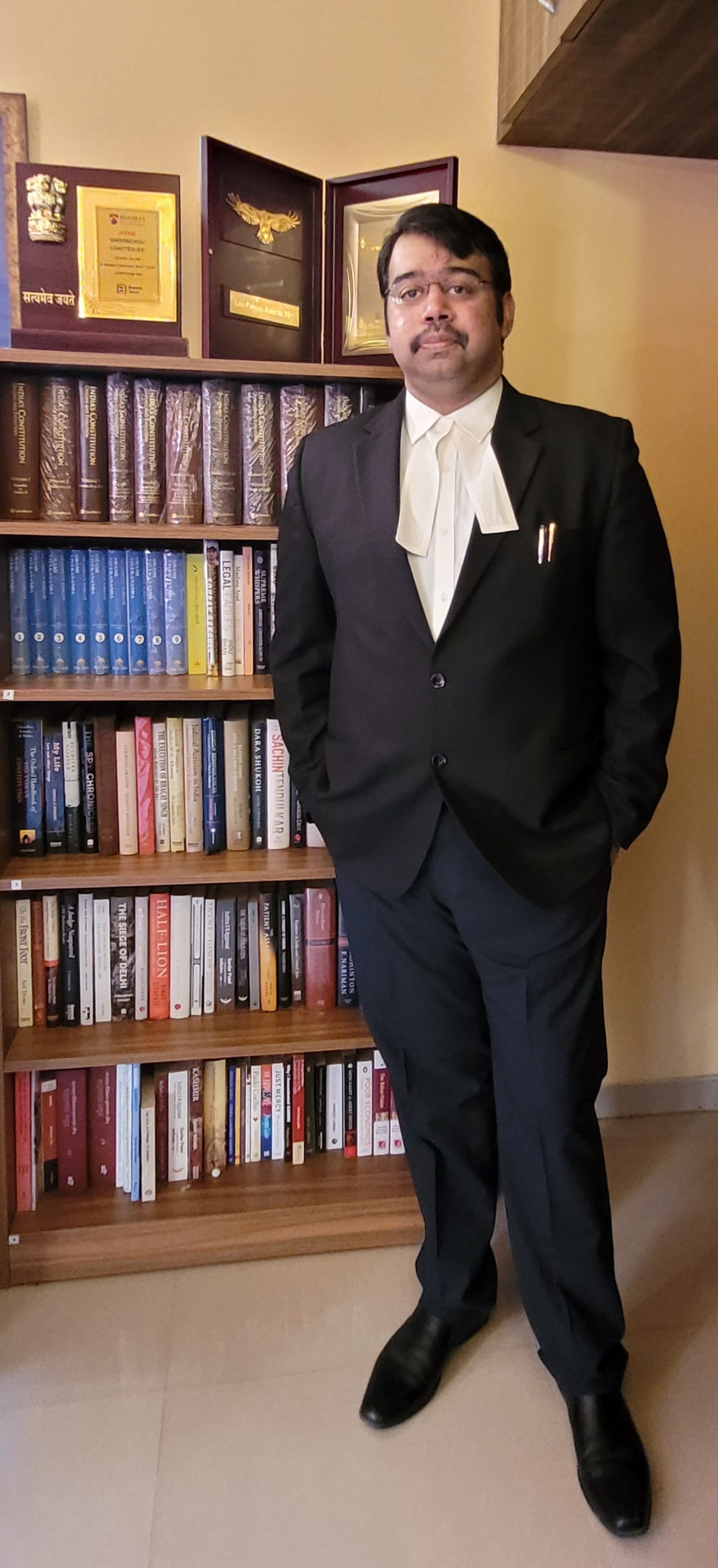


 Allow notifications