Tag: AOR

  • It is seen that many fresh graduates being carried away with the burst of information and content on social media attempt to have their hands in everything but end up not having a meaningful impact in either-Shoumendu Mukherji, Advocate on Record, Supreme Court of India

    It is seen that many fresh graduates being carried away with the burst of information and content on social media attempt to have their hands in everything but end up not having a meaningful impact in either-Shoumendu Mukherji, Advocate on Record, Supreme Court of India

    This interview has been published by  Priyanka Karwa and The SuperLawyer Team
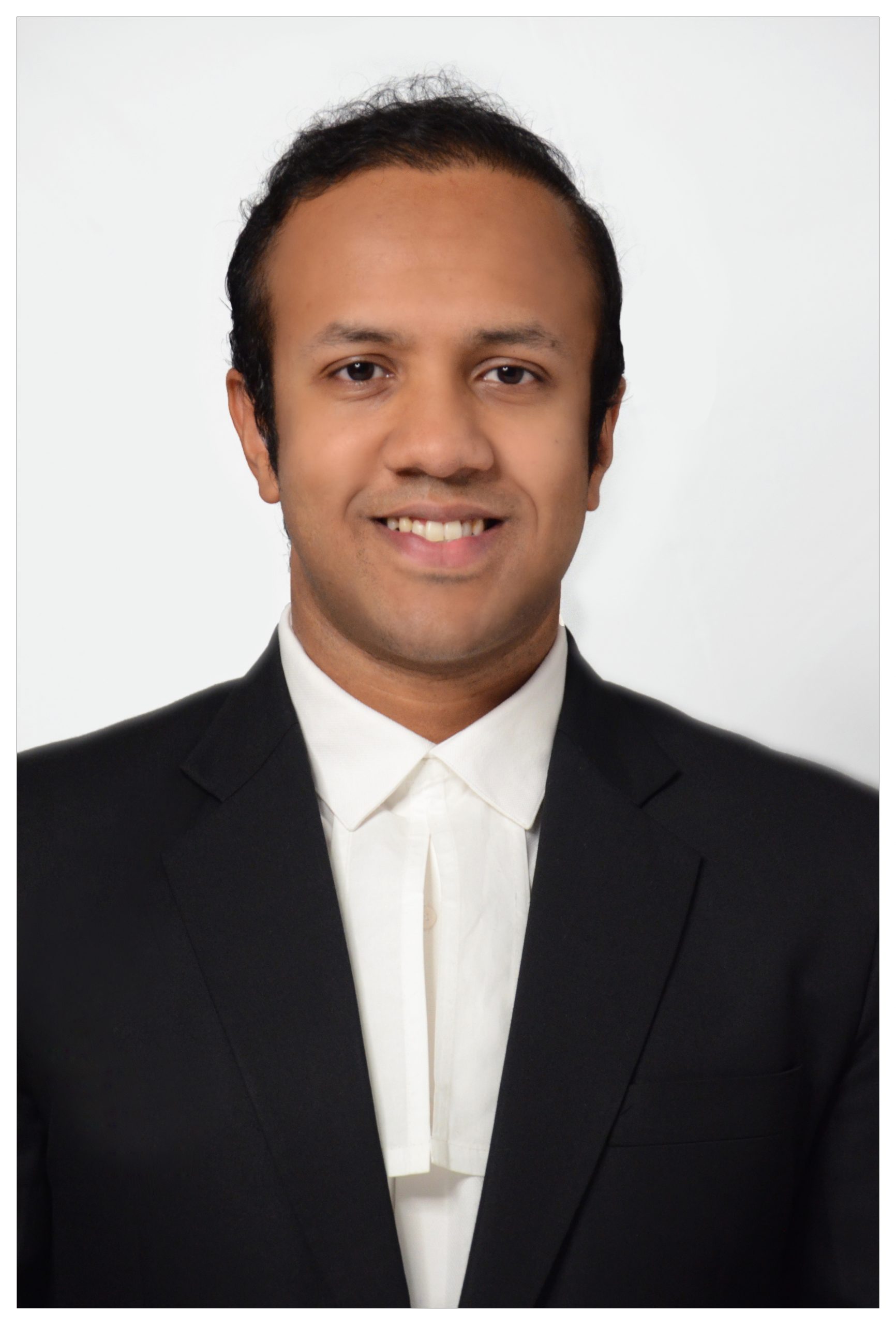
    Can you share your journey into the field of law and what motivated you to pursue a career in this field, including your experience at the National University of Juridical Sciences (NUJS)?

    I would say ‘Law’ happened by chance and it was not that I had planned for it for long. During Class 12, my parents came to know of law as a career from a friend of theirs. Once I started preparing for CLAT, the subjects that were offered grew on me, especially the sections on logical reasoning and current affairs. I enjoyed the preparations and was able to crack the exam that led me to my second home i.e. the City of Kolkata for the next five years. My parents were a constant source of encouragement during the preps. The only distant pre-existing link in my family with the field of law that I can think of is that my grandfather had been an Additional District Magistrate in the Bihar Civil Services.   

    Being at NUJS was an experience to cherish. For the first time I came into contact with peers from across the country. The different languages, foods, habits, it was an in-depth lesson in learning about the diversity of India. It was not too hard to make friends, as I was always an ardent participant in different extracurricular activities. There was a thriving atmosphere of Sports, Cultural events in college apart from moots and debates that developed the competitive spirit in all of us. NUJS was also popular in hosting the largest sports fest among law schools “INVICTA”. I had the honour of leading the fest in my 4th year as Convenor which also instilled a sense of leadership, and also won a national level moot court competition. These qualities did come in handy at the time of branching out with my independent practice.              

    As a first-generation advocate, can you describe the early years of your career? What were some of the challenges you faced, and how did you overcome them?

    The early years as an independent litigator were certainly challenging. There would be days when I would have no briefs in hand and I would wonder whether I took the right call to branch out this early (merely 2 years into my career). However, whenever you sense the overwhelming cloud of despair, every time there does emanate a beacon of hope from somewhere or the other which consolidates your belief to keep going further, into the path of uncertainty you’ve chosen. That beacon of hope may be from an entrepreneur friend who was looking for a lawyer to his start up, or the relative who had familial property issues to sort, or the acquaintance looking for advice on a will. The only way to overcome these initial challenges, in my experience, is to keep networking, and meet new circles of people. Social gatherings are also a healthy way to make new clientele, who knows what’s on the mind of a fellow invitee looking for quick and free legal advice!    

    For the initial two years after college, I had worked with a college senior of mine Mr. Ankur Sood, Advocate on Record. His office helped me inculcate nuanced drafting skills and the filing processes / preparation of a Petition thanks to his highly experienced clerk Sajid Ji, who would take me along to the various court registries to help me get a wind of what goes on behind the scenes of the glamour of the courtroom, and what all it takes to finally place a Petition on the Hon’ble Judge’s desk.  

    Your work spans a wide range of legal areas, from civil and criminal cases to intellectual property and arbitration. Could you share a few memorable cases or experiences from your career that have had a significant impact on you?

    I would say that being part of the Delhi Legal Aid Services (DLSA) initially at Saket District Court and handling cases as a ‘Legal Aid Counsel (LAC)’ for economically weaker litigants in the initial years in a way shaped me as an Advocate and emboldened my commitment towards the profession. The glee and the gratitude in the eyes of mothers on being told that their son had been acquitted or had got bail was very gratifying. Obtaining orders for domestic violence victims being awarded interim maintenance was also equally pleasing. It made me realize the social importance of our profession, and the impact it can have on the lives of thousands, that the long helping hand of law is not too far from any person in our society. 

    Obtaining a John Doe order for a multinational publishing house in the initial years from the Hon’ble Delhi High Court followed by raids on the infringing publishers at Daryaganj was my first brace with big ticket litigation and a memorable learning curve.   

    During the Covid pandemic, there was this huge controversy about reduction in school fees as no physical classes were being held. I was approached by an Association of 250 ISC / ICSE Schools from West Bengal for obtaining relief from Supreme Court as Calcutta High Court had passed an adverse order directing the schools to charge only tuition fees, which was impractical as schools also had to pay salaries, other running expenses for the upkeep of their infrastructure. The High Court had also ordered for showing of schools’ balance sheets and appointed a committee composed of the Petitioners’ Advocate to address grievances of parents. The controversy was fostered owing to an absence of a fee regulatory body in West Bengal. We were faced with an onerous 3 judge bench in the Supreme Court with Justice MR Shah on it. However, we managed to obtain a stay order from SC, and for the next 12 months were a roller coaster of a journey dealing with an unpredictable bench of the Calcutta High Court which was passing contradictory directions at every hearing date at a frequency of 2-3 months. I also had to make frequent trips to Calcutta to attend the Court-appointed Local Commissioners’ hearings on behalf of the school management. Ultimately the Supreme Court gave a quietus to the issue as Covid had passed and all the directions were kept restricted to the Covid years alone. 

    During my tenure as a Counsel for the Union of India I appeared for the Department of Atomic Energy before the Appellate Tribunal for Electricity (APTEL) at New Delhi. The matter pertained to a demand of Rs. 289.59 Crores under the head “Grid Support Charges’ ‘ made by Govt of Telangana. After hearing arguments, the Hon’ble Tribunal was pleased to stay the said demand in favour of the Union of India holding that under Section 184 of the Electricity Act, 2003 exempted the Ministry or Department of the Central Government dealing with Defence and Atomic Energy from applicability of the Act. 

    You’ve represented various Central Government Departments and have extensive experience in litigation. How has your role as Senior Panel Counsel for the Union of India shaped your legal practice?

    Being on the prestigious Senior Panel representing the Union of India has thrown open the window of opportunity to appear before the Delhi High Court on a daily basis before different benches. It adds to the sheer volume of briefs that you prepare for on an everyday basis and a rich experience to shape your future career. Each brief brings with it an unique point for consideration and the high stakes that come along with it. As a counsel holding a brief for the Union of India, you are expected to be on top of your game day in day out. The Hon’ble Judges expect you to be fair and well prepared as every new Petition on the Supplementary List starts with a Stay Application to oppose and the Government’s action to defend! Thus, one cannot afford to take any brief lightly. Usually, the new matters are marked to the Govt. Counsels the evening before, thus we only get that evening and next morning to take instructions from the respective Department and gear up for the admission hearing. It is thrilling, greatly satisfying and a big honour. 

    During the day in Court, we get to rub shoulders with Senior Advocates on the other side that adds to the challenge and gives you an added motivation to go to Court with your best prep forward. The sheer diversity of matters moulds one’s skill sets, one day it can be a Service Matter involving Promotion or Pension, on another day it may be Section 34 Challenge to an Arbitral Award, same day there may be a final hearing listed for a Miscellaneous Writ, on some days Tender matters, on some LPAs and Appeals against Tribunal decisions etc. Our younger crop of Panel Counsels also get enriched by the constant motivation and encouragement of our Seniors and Standing Counsels as well as Ld. ASG Sir who we keep crossing along the corridors of Delhi High Court and learning from their vast experiences.         

    You’ve been empaneled with organizations like GAIL (India) Limited, Delhi Development Authority (DDA), Council for the Indian School Certificate Examination (CISCE) and the Enforcement Directorate (E.D.). Can you discuss the importance of these empanelments and how they have contributed to your professional growth?

    One must realise that empanelments are only a push to give you volume of work, which you are eligible for only after 4-5 years into your practice. The initial years preceding that eligibility period you have to really grind it out. I would say that is the gestation period. Empanelments help you get a good grip on a specific type of subject area, and some empanelments with retainers ensure a fixed income per month securing you financially. But you need to keep performing and maintain the standards otherwise someone else will take your place.   

    How has Becoming an Advocate on Record further helped diversify your practice? 

    It has given a foot in the door for establishing an independent Supreme Court Practice. Not that I have not been working on Supreme Court matters earlier. Thanks to my college senior Mr. Kunal Chatterji, AOR who had given me a volume of Supreme Court drafting to do in my initial years when I had branched out independently. His clerk Sukanta Ji also taught me the nuances of SC Filing Procedures, I will be forever grateful to them. Becoming AOR is one thing, but getting those AOR briefs for filing is the second step that follows. For this, it is important to carve out a network of lawyer colleagues from different states who can send you those SLPs, Civil Appeals and Transfer Petitioners. During our first orientation organized by the Supreme Court Advocates on Record Examination (SCAORA), Justice Sanjay Krishan Kaul who had himself been a AOR gave us all a golden advice to not be merely postmen but to read and give finishing touches to drafts that came our way so that the knowledge gained during the AOR Exam preps can be put to good practical use. Justice Kaul advised us to refrain from filing Petitions without reading them which holds good in today’s times.   

    You have also been involved with certain matters of political nature. Could you throw some light on them and their professional benefits? 

    I would say these are our social responsibilities. In the aftermath of the West Bengal Vidhan Sabha Elections of the year 2021, there was large-scale violence that broke out targeting the members, workers, voters of the Bharatiya Janata Party (BJP) who had voted / campaigned against the ruling Trinamool Congress (TMC). As soon as the results were declared, there were murders, loot, arson, and even gang rapes. Although the State of West Bengal has a history of bloody elections and many would declare such violence to be ‘normal’, however at some point of time that ‘normalcy’ must be questioned. In all other States elections are held peacefully, then why an aberration in only this one State. I was part of the team that appeared for the victims in the Hon’ble Supreme Court and Hon’ble Calcutta High Court. I would put in all nighters to draw up the pleadings explaining the gruesome incidents and plight of the families. Finally, the Calcutta High Court ordered a CBI probe into the various incidents. 

    Earlier this year, after the Municipal Corporation of Delhi (MCD) elections and appointment of a new Mayor in Delhi there were separate elections held for the 6 positions of the MCD Standing Committee which is voted by Councillors. Owing to a fracas in the house and expecting an unfavourable outcome, the Mayor who was a Councillor elected on an Aam Aadmi Party (AAP) ticket cancelled the elections and ordered re-elections even though the process had been completed and only results were left to be declared. The Hon’ble Delhi High Court declared the Mayor’s action to be illegal and directed pronouncement of the results immediately. 

    Being involved with political matters provides one a hand to work for the betterment of our systems and appear for MPs, MLAs and various leaders of the said political party. It gives one a platform to interact with such elected representatives and public personalities to learn from their world view, perspectives. Moreover, such matters often attract a lot of media attention and it thus gives one an additional edge and experience of regularly appearing in such media-friendly ‘high profile’ matters. I also have had the opportunity of assisting the BJP during election cycles, both at the National and State levels pertaining to Election Commission compliances which has helped cultivate different kinds of skill sets.                

    Finally, as someone who has built a successful legal career with diverse experiences, what advice would you like to give to fresh graduates who are entering the legal profession today and aspire to make a meaningful impact?

    Foremost takeaway from what I have experienced, is to be patient and not be in too much of a rush. Yes, be ambitious but be practical as well. It is seen that many fresh graduates being carried away with the burst of information and content on social media attempt to have their hands in everything but end up not having a meaningful impact in either. The race is long and lawyers don’t retire. If one is sincere, dedicated and hard working, rewards will come, even if not today then certainly in the next few years down the line. What is essential however is to have in place a working culture and a disciplined lifestyle. Those abashed college years are over, in the real world a lot more is riding on every brief and your every appearance than just a few marks of a moot court competition! 

    Get in touch with Shoumendu Mukherji-

  • As a dispute resolution lawyer, I have understood that what a litigant desires the most is to be heard by an adjudicator and the arbitration proceedings conveniently affords that comfort to a litigant- Soumya Priyadarshinee, Advocate-on-Record, Supreme Court of India

    As a dispute resolution lawyer, I have understood that what a litigant desires the most is to be heard by an adjudicator and the arbitration proceedings conveniently affords that comfort to a litigant- Soumya Priyadarshinee, Advocate-on-Record, Supreme Court of India

    This interview has been published by  Priyanka Karwa and The SuperLawyer Team

    Ma’am, please tell us about your educational background and how you ended up pursuing law? What motivated you to choose this career path?

    Prior to joining law school, my educational trajectory was fairly linear-small town CBSE schooling. I am a first generation lawyer. I decided to become a lawyer when I was just 13 years old. It was largely borne out of the urge to depart from the trend of making the stereotypical choices of either becoming an engineer or a doctor. Some of the credit also goes to the copious amounts of legal fiction which I read at that time.  However, all these years later, for entirely different reasons, the decision to become a lawyer seems more correct than ever.

    You have an impressive work experience, ranging from independent practice to working at various prestigious offices. How did your journey progress from your early career to where you are now?

    The seeds of my litigation career were sown through my law school internships where  I first learnt grasping legal propositions and delivering accurate legal research. Then, as a lawyer, being the youngest member of the team, executing the smallest of tasks with responsibility became a priority. Reading my corrected drafts several times to understand the shortfalls was a practice which has stood me in good stead. With time my drafts have evolved. As the years passed, my approach shifted from finding the correct law to finding the optimum solution for the client. The sweetest part came around the 5th year of my practice, when I started arguing before the Hon’ble High Court of Delhi. What seemed overwhelming in the beginning, slowly became thrilling and enjoyable. The feeling of having conveyed my case satisfactorily across the bar, is by far the most gratifying feeling for me; irrespective of the win or loss that follows.

    During your stint at the Office of Ms. Rukhmini S. Bobde, you handled criminal matters and intellectual property disputes, among others. How did these experiences contribute to your growth as a legal professional?

    Litigation is a nuanced craft. Working with Ms. Bobde, first as an intern and then as a lawyer has helped me immensely. Crystal clear instructions and  adherence to professional practices have been a good primer for me. For example, one can never expect a hassle free briefing session with her without having read the brief cover to cover. Similarly, remaining poised and attentive even in high pressure situations during court hearings is a core part of her arguing style which I have been able to imbibe.  The best part about working with her has been her inclusive way of teaching me. She would always ask my opinion about the possible outcome of a hearing or about the starting point of an argument. The deliberation that follows has taught me the difference between arguing a fresh matter for admission before the Hon’ble Supreme Court and addressing final arguments before an Arbitral Tribunal. In the former, identifying and pitching the best point of a case becomes cardinal. While in the latter, being lucid while marshalling facts is a must. 

    Your work experience at various law firms involved handling cases related to environmental matters, infrastructure disputes and mining regulations. How did you navigate through these complex and diverse legal areas?

    Every new kind of dispute poses a two-fold challenge. The first is to understand the law around it and the second is to get the technicalities straight.  Over the years, I have found that a thorough reading of the brief (however unfamiliar it may be) followed by a meticulous session with the clients who are experts in their fields, such as Engineers and Chartered Accountants etc. gives me good control over the brief. From this point, traversing through the law becomes simpler. Capturing the crux through written submissions seals the deal. This approach cuts across the different domains of disputes. 

    During your independent practice, you dealt with a diverse range of disputes, including public law matters and commercial arbitrations. Could you share some memorable experiences or cases that had a significant impact on your legal career?

    There are many. But one experience from March, 2023 is extremely bittersweet. I was representing a client for the very first time before the Hon’ble High Court of Judicature at Bombay in a case under s. 9 of the Arbitration and Conciliation Act, 1996. I had worked very hard. However, I somehow felt that my arguments did not meet the mark at all. And as my luck would have it, I also managed to get scolded by the Judge that day. The clients were present in court. I was disheartened. I even made the affidavits and the vakalatnama and sent it to the clients in anticipation of having to file an appeal. However, two days later, on the date of pronouncement, I was pleasantly surprised to know from the local lawyer that not only had the Judge decided partly in my favour but he had also praised me in open court. He in fact appointed me as an arbitrator in another matter. I was relieved and so was my client. Needless to say, more work has followed since, from that client.

    You have also lectured for educational organizations such as Law Sikho and Adani University. What drove you to take up teaching alongside your legal practice?

    I belong to a family of teachers which includes my mother and my grandmother. So, I think I have some natural inclination for teaching.  

    My stint at M.V Kini & Co, New Delhi had me working on the litigation portfolios of NHAI, BHEL, AAI and the likes. This acquainted me with technical nuances  of those industries such as the different kinds of Infrastructure Contracts including Engineering Procurement and Constructions Contracts, Build Operate Transfer-Annuity Contracts, Hybrid Annuity Contracts etc. As a result I was able to contribute with a mix of practical experiences and theoretical information while teaching. 

    Similarly, I am taking some classes for Law Sikho which caters to the aspirants of the Advocate-on-Record (‘AOR’) Examination. I just cleared this exam in December, 2022. The curriculum is fresh in my mind. Therefore, I decided to take up the opportunity to help out AOR aspirants.  

    Balancing a successful legal career and taking on outstation assignments can be challenging. How do you manage your professional commitments effectively?

    The challenges behind taking up outstation matters include getting used to the listing process and ensuring defect free filing. The style of drafting also differs. Similarly, when it comes to handling arguments, a new court and a new judge can be disconcerting in the beginning. But these are challenges that disappear sooner than they appear provided one is a keen observer and relies on a good local lawyer. I manage my professional commitments vis-a-vis outstation matters by appearing through video conferencing on non-effective dates, by maintaining my court calendar carefully and by collaborating with competent local lawyers. 

    Throughout your career, you’ve been involved in arbitration proceedings and mediation. Could you share some insights into the benefits of alternative dispute resolution methods in the legal system?

    As a dispute resolution lawyer, I have understood that what a litigant desires the most is to be heard by an adjudicator and the arbitration proceedings conveniently affords that comfort to a litigant. Additionally, the earnest effort of the parties, advocates, and arbitrators to dispose of the matter within a limited time frame augurs well. As judicial intervention is restricted and can be exercised only on limited grounds, the parties are much more likely to accept the arbitral award and save themselves from the seemingly endless cycle of appeals and revision etc.

    Mediation has also proven very effective, particularly for certain genres of disputes. Long years of litigation between family members on matters of property etc have an emotional cost. Thicker the tie, the harder it is to remain objective. However, when mediated effectively, I have seen parties settling old property disputes resulting in disposal of long drawn disputes. The same is true in Matrimonial disputes as well. I have attended many mediations in the Supreme Court Mediation Cell where often chequered disputes between estranged spouses end with a reasonable and dignified settlement. 

    Many fresh law graduates aspire to have a successful legal career like yours. What advice would you give to these graduates who are just starting their journey in the legal profession? What key qualities or skills do you believe are essential for their success?

    Success is a relative term and still seems elusive to me. Delivering my best on each and every opportunity has been my only priority. The two indispensable qualities that come in handy for a lawyer are humility and honesty. As rhetorical as it may sound, I feel with humility, one can identify and embrace one’s shortcomings and work on them effortlessly . With honesty, one can win trust and reliability. These eventually translate into valuable social capital. 

    As a successful legal professional, what are your future aspirations? Are there any particular legal areas or causes that you are passionate about and would like to focus on in the coming years?

    I wish to develop a career as an arguing counsel. Till that materializes, I am happy doing it all, namely arguing, drafting, filing, briefing etc. The core idea is to deliver quality legal services in every case.

    Lastly, could you share a personal or professional mantra that has guided you throughout your legal career and life in general?

    It is true that personal life and professional life tend to run hand in hand. But keeping the two separate is the test of a true professional. Having clinical objectivity towards my professional life has helped me protect and nurture it against the inevitable and sporadic turbulences in my personal life.

  • I believe everyone should practice litigation for some year even if they eventually decide the pursue corporate law practice- Abhay Pratap Singh, Managing Partner at GnS Legal LLP and Advocate on Record at the Supreme Court of India

    This interview has been published by  Priyanka Karwa and The SuperLawyer Team

    Can you tell us about your educational background and how you ended up pursuing a career in law with a specialization in Business Law?

    I have done my schooling from New Delhi then I joined NLU Jodhpur after clearing their entrance examination in 2007. That time there was no CLAT examination and each college had their own individual entrance exams. I decided to pursue Business Law Hons because at that time NLU Jodhpur was offering in unique degree of BBA.,LLB (Business Law) Hons which was not given by any other college and since I wanted to pursue commercial law/ commercial litigation, I proceeded with specialisation in Business Law.

    What inspired you to focus on corporate advisory, commercial disputes, and various areas of law such as legal metrology, and insolvency and bankruptcy law?

    My initial days after graduation led to focus on these areas. Immediately after graduation, I joined a law firm and was with a senior advocate who had a substantial amount of commercial litigation work. That acted as a base for my practice and thereafter, I was fortunate enough to get associated with Clients who required advisory services in Legal Metrology and IBC Laws.

    Could you share some highlights from your work experience over the past 10 years, particularly your involvement with the Supreme Court of India, Delhi High Court, and various tribunals?

    Every court has a different learning experience and in the past 10 years, I have worked on a variety of matters including some constitutional law matters, commercial litigations as well as niche areas of law. I believe everyone should practice litigation for some year even if they eventually decide the pursue corporate law practice. It is in the courts that you understand completely how clauses are interpreted and how the law (through judgments) is laid down. I believe any lawyer should experience such things before moving into specialisation. 

    As the Managing Partner of a full-service law firm, GnS Legal LLP, how do you manage the diverse range of legal services provided by your firm?

    I am fortunate enough to have had the opportunity to open a law firm with people who were my friends for a long time. Because of the ease and comfort, due to knowing each other for a long time, we have been able to divide the areas of law firm management. Each partner handles a particular aspect of managing the firm and for issues requiring the involvement of all partners, we generally make a consensus and operate accordingly. 

    What are some of the challenges you face in litigations at the Debt Recovery Tribunal and insolvency proceedings before the NCLT and NCALT?

    When IBC was introduced, NCLT and NCLAT were functioning really well and cases were getting adjudicated upon at a very fast pace. Unfortunately, now due to a number of factors including but not limited to limited benches, increase in number of case and specially interim applications and also no adherence to timelines prescribed under the IBC, NCLT and NCLAT have slowly become like DRT/ DRAT. Cases for pending since long with no final decision in slight. In one of my cases, CIRP was initiated in the year 2018, COC passed the resolution plan in April 2020, however, till date the case is pending before the LD. NCLT for hearing and approval of the plan. 

    As part of your practice, you advise clients on commercial transactions and fundraising strategies. What are some key considerations and legal aspects that clients should keep in mind in these areas?

    Everyone should realise that the cost of non compliance is much higher than cost incurred in legal compliance. Our country is moving towards highly regulated businesses and therefore, it is important for everyone to take proper legal advice wherever necessary. 

    Lastly, what advice would you give to fresh graduates who are considering a career in law, particularly in the areas of business law and corporate advisory?

    I would like to say, internships are very important both from a learning perspective as well as building early contacts in the professional world. One has to be patient irrespective of the practice they decide to pursue, be it a law firm or joining a litigation chamber. Young graduates should not be in a hurry to go independent, and I personally believe one should work at different offices/ firms/ chambers for atleast 6-7 years before going independent. This is important to make sure you have enough experience before directly advising the Clients. 

    In litigation, having a good mentor is very important and if you find a good mentor, make sure to spend a reasonable amount of time in their office.

    Get in touch with Abhay Pratap Singh-

  • I believe, the practice of law is very deep rooted with our society and social leanings and learnings- Adeel Ahmed, Advocate-On-Record at Supreme Court of India

    I believe, the practice of law is very deep rooted with our society and social leanings and learnings- Adeel Ahmed, Advocate-On-Record at Supreme Court of India

    This interview has been published by  Priyanka Karwa and The SuperLawyer Team

    Can you share with us how you became interested in pursuing a career in law and what motivated you to specialize in litigation?

    From my childhood itself, i have looked up to lawyers and the way they represent the destitute and the needy. that they are the Voice for the Voiceless, and it always intrigued me to see the process of Justice being administered in various Courts of law. I was always interested in various aspects of Law, and later on, during my studies of Political Sciences and law, i became more passionate about the same. 

    As a qualified lawyer and legal practitioner, you’ve had the opportunity to represent litigants in various courts and tribunals, including the Supreme Court of India. Could you tell us about one of your most challenging or significant cases and the impact it had?

    Every case is a challenge and is a frontier to test new boundaries and arenas of law. But some of the most perplexing of  cases have been the Public Interest Litigations with which I have been involved on ‘hate-speech’, CAA-NRC, Foreigners detention Laws, Conversion cases, Hijab ban, et al. These have been cases where not only the matter is to be handled inside Court, but also the challenge lies in containing various aspects of the case, outside the Court as well, in that dealing with public anxiety and conscience has definitely been a most daunting and uphill task

    Your expertise spans across a wide range of legal areas, such as corporate and commercial matters, taxation, real estate, family laws, women’s rights, intellectual property, and more. How do you manage to stay updated and proficient in such diverse fields?

    I’ve been an avid reader, and I try to stay updated with various legal events. Not only do Journal and Reports provide you various insights, but the fact that they are available on a digital platform, makes it easier to learn the nuances of the trade. Moreover, if your a patient listener, many a times, it’s the Client which gives you keen insight into the case.

    In addition to your litigation practice, you also work as a legal consultant to the Indian Statistical Institute, Delhi Center. Could you share some insights into your role and the type of legal issues you handle in that capacity?

    It’s been a privilege being associated with  Indian Statistical Institute, Delhi Center. It has led to a more fulfilling experience in terms of diverse kinds of legal problems with which the Institute has had to grapple with including for that matter it being an Institute of academic importance. Vetting Contracts involving international grants and funding can be a tricky piece of legal advice where you do not want the Institute to suffer, and at the same time, maintain an amiable atmosphere for academicians and staff.

    You have been empanelled with various state governments and government bodies, including the State of West Bengal and the High Court of West Bengal. How did you establish these professional relationships, and what are some key responsibilities that come with being empanelled?

    I have had the fortune of being associated with a Chamber cum office of the Late G.S. Chatterjee, and subsequently, Mr. Raja Chatterjee, who’ve been always represented and worked with and for these and other numerous States, and Bodies thereunder. It is indeed challenging to defend Government Policy, and stance, particularly, like that of West Bengal, which could be at a difference with the Center. But then such is the beauty of the Federation that we are, and such are the peculiar workings of the great Nation that we are part of.

    As a representative for public sector units (PSUs) like GAIL and NAFED, you have experience in arbitration matters and representing clients before specialized bodies like the Debt Recovery Tribunal (DRT) and the Debt Recovery Appellate Tribunal (DRAT). Could you discuss some of the unique challenges and strategies involved in these types of cases?

    The DRT and DRAT are the protectorate of “public money”. And if you are a defaulter the noose tightens. But yes, if you can explore alternative ways to resolve disputes, and be creative in seeking redressals, both sides stand to gain. 

    Apart from your professional work, you have also dedicated your time to social causes and volunteered for various social organizations. How do you balance your legal practice with your commitment to these important causes, and how do they complement each other?

    I believe, the practice of law is very deep rooted with our society and social leanings and learnings. During my college days, I was a peer-ed with NAZ Foundation, and was trained as an educator to educate fellow friends and students on HIV and AIDS. By being associated with such concerns, it has given my practice a social side which helps me better understand various social issues and their implications.  

    Finally, based on your vast experience and knowledge, what advice would you give to fresh law graduates who are about to embark on their legal careers? Are there any particular skills or areas of focus you would recommend they develop to succeed in the field?

    Keep your Mind Open ! You probably learned something today, but that doesn’t mean you cannot learn better, or rather unlearn tomorrow. Decide if possible which area of law you wish to pursue, and then start taking measures to achieve that by equipping yourself with the skills required. It’s these ripples which cause waves later on ! 

    Get in touch with Adeel Ahmed-

  • The practitioner must give a candid and honest opinion to the best of his ability and also let the client know the probable results of anticipated or ongoing Litigation- Rahul Krishna, Advocate on Record at Supreme Court of India

    The practitioner must give a candid and honest opinion to the best of his ability and also let the client know the probable results of anticipated or ongoing Litigation- Rahul Krishna, Advocate on Record at Supreme Court of India

    This interview has been published by  Priyanka Karwa and The SuperLawyer Team

    Can you tell us about your journey and how you ended up practicing law, particularly in the areas of indirect tax cases, company law, intellectual property rights, and the Anti-Money Laundering Act?

    I gravitated towards law as a career because I felt practicing law gives you an opportunity to articulate yourself and is an intellectual challenge. Our professors back in college (Faculty of Law, Delhi University), while taking lectures and discussing case laws, would often take us to the stories of courtroom duels. Being a First Generation lawyer, I had very little exposure to the field of law. However, hearing about the Legal Luminaries and their art of advocacy fascinated me a lot. While pursuing LL.B from Law Faculty at Delhi University, the stories of its stalwart alumni further pushed me towards Litigation. I guess that’s how I ended up practicing law after my LL.B. Being a legal practitioner, in the initial years of your practice may not be monetarily rewarding, but as that is taken care of as you grow in practice, additionally, the social recognition that comes with experience is a reward in itself.

    The chamber I joined after graduation majorly had matters pertaining to Indirect Taxes and Financial Crimes. What attracted me the most about tax Statutes is that it touches practically everything and their dynamic nature. Benjamin Franklin famously said, “In this world, nothing can be said to be certain except death and taxes.”  Since Tax touches almost everything and everyone, Tax law is equally important for individuals, small businesses, MSMEs, or big enterprises. That widens the scope of practitioners of Tax law to practice before different forums for a variety of clients.

    Much is the same for corporate law, IPR, and Anti Money laundering. India, post-liberalization, has witnessed massive growth. The growing economy and greater integration with the world economy have necessitated laws to be in sync with international standards. Thus we have seen overhauls in Company law, Competition laws, the introduction of stringent Anti Money Laundering guidelines for financial/reporting entities, and an overhaul of IPR laws such as copyright, Patents, etc. Such changes have also created the need for specialist legal counsel. 

    You have extensive experience practicing before judicial and quasi-judicial authorities. Could you share some notable cases or experiences that have shaped your career as an advocate?

    The last quarter decade has seen tremendous growth in the role of Administrative Law and Quasi-judicial bodies. The Tribunalisation has opened a great many avenues for legal practitioners. Soon after I joined the Profession, I started in tribunals and before the administrative adjudicating authorities. In Tribunals, we have both Judicial Members (who are mostly Retired judges or legal practitioners) and Technical Members (those retired from Governmental departments and are no longer attached to the Government). The challenge before the Departmental adjudicating authority is that they are the serving officers of the Department itself. This raises the issue of Official Bias, which appears to be one of the biggest challenges in the adjudication process. In one of my cases, objections were raised by the Governmental Audit department with respect to the benefit of duty exemption on manufactured goods. The client had availed the said exemption, which was based on the Department’s own Notification. At the pre-Show Cause Notice Consultation stage, we furnished the authorities, precedents, and genesis of the exemption notification and the concerned law. Despite having precedents in our favor, our contentions were dismissed, and the Department went on to issue the SCN. The Original adjudicating Authority also held against us, confirming the demand. However, in a concise judgment, the Tribunal upheld our contentions and ruled in our favor. The entire process took a little over five years. That not only increased the cost of business for the client but also blocked a part of his working capital. 

    The case being adjudicated by the serving officers is a phenomenon not unique to the law related to Taxation but also pervades other statutes. Take, for example, “The Prevention of Money Laundering Act 2002 (PMLA)”; the Director of the Financial Intelligence Unit- India has the power to issue the Show Cause Notice to the Reporting entities. The Director heads the investigation and adjudicates the SCN, which is the culmination of his own investigation. The cardinal principle that no one should be a judge in his own case goes for a toss. Even in the new Goods and Service Tax Act (GST Act), as in the erstwhile Central Excise Act, the adjudication proceeding is carried by the departmental officers depending upon monetary limits, and they discharge functions in the capacity of quasi-judicial officers.

    Therefore, in the context of administrative adjudication, client counselling assumes great importance. The practitioner must give a candid and honest opinion to the best of his ability and also let the client know the probable results of anticipated or ongoing Litigation. This may help the client to decide the future course of action and be prepared for any adverse situation.

    As an Advocate on Record before the Supreme Court of India, what are the key responsibilities and challenges you face in this role?

    Practicing before the Apex court of a country is a matter of great honor and pride. But practitioners have to be mindful of the fact that they are pleading and arguing before, and sometimes against, some of the best legal minds in the country. Therefore once a year, the Supreme Court conducts an examination before enrolling an Advocate as an AOR. The examination, in addition to testing the legal understanding of the candidate, also ensures that the candidate is well-versed with the Court’s rules, practices, and procedures. But for me, the most significant duty of an advocate on record is Professional Ethics. The Apex court has frowned and has shown its discontentment with AORs who just lent their names to the pleadings without studying and verifying the same. Recently the Hon’ble Court raised concern over the indiscipline of AoRs who had filed pleadings in which derogatory remark was made about a High Court judge. Since an AOR is accountable for pleadings filed in the Apex court, he is expected to perform all due diligence. I, for example, make sure that I read every word of the draft and that the pleadings are concise and to the point. The synopsis filed along with pleadings should never be extravagant or too voluminous. Using simple language and sequential structuring of the facts and law are the main pillars of good drafting. One has to be mindful that in Fresh matters before the Supreme Court, 90 percent of the chances of getting notice issued are based on the pleadings alone. 

    Intellectual Property Rights seem to be an area of particular interest for you. How did your interest in this field develop, and how do you assist your clients in securing their intellectual property rights?

    IPR has attracted me since the days of my college. The fact that something as trivial as a Pen, an object of our daily usage, has an IP history going back more than 100 years is truly astonishing. The case laws we studied during our college days, exposed me to the novel arguments raised in the context of IPR, which were very unlike those raised in other traditional subjects.

    In fact, the first case I handled independently before the Delhi High Court dealt with the issue of Trademark infringement concerning the exhaustion of rights in parallel import cases. While researching the case, I went through several journals and articles. I specifically remember the one article written by Late Prof Shamnad Basheer, in which he examined the ambiguities in the law regarding the exhaustion of rights and Trademark infringement. These articles and case laws helped me realize the potential of issues concerning Intellectual Property Rights. Another aspect of intellectual Property that attracted me the most was the ethical aspect. The balancing of monopolistic rights and free and fair use of Intellectual Property in the face of rapid technological development is another area to watch out for.

    As for my clients, especially start-ups and freelancers, my first line of questioning is about the protection of their Intellectual Property. There are many reasons why it should be done. A simple Google search will give you a number of reasons for protecting your IP rights. 

    You mentioned your dissertation coursework on “Sports and its Interaction with the Antitrust Law.” Can you elaborate on this topic and explain the connection between sports and antitrust law?

    The origin of sports was exclusively a social phenomenon. With the increasing dominance of economics in the sporting arena, conflict with the law was only natural. One such apparent conflict we have seen the world over is the conflict between sports and antitrust laws.

    Take, for example, Sporting Bodies/Federations. We have the ruling from the Competition Commission of India that the Sporting federations are Dominant entities in terms of Section 4 of the Competition Act, 2002. Therefore the question that comes to mind is whether the restrictions or the interference with the right of staff and players to carry on their Profession will amount to ‘Abuse of their dominant position.’ 

    Since these federations enjoy power under the pyramid structure of sports governance, it gives a practical monopoly to them. However, these sports federations are unique in the sense that they are the sole players in the market and have no competition from any other quarter. One of my arguments was the concept of ‘Position of strength’ as envisaged in the definition; will it necessarily need to have another existing competitor in the market, or is it sufficient to cover a single entity in the market?

    There are other hosts of issues such as broadcasting and merchandising rights, ownership and acquisition of player’s contracts by franchises, illegal cartel behavior and collusion between sporting Franchises, anti-bidding behavior between the sporting clubs, etc. 

    We have authorities from foreign jurisdictions concerning anti-competitive practices in sports, which are almost close to 100 years old. The Competition Commission of India has also caught up with the anti-competitive activities in Sports, but there is a host of issues with sports that we may see ripening into dispute in times to come. 

    Apart from your professional endeavors, you also mentioned your interest in sports. How has your involvement in sports influenced your career as an advocate, and what lessons have you learned from it?

    I am a sports enthusiast. I like spending time on the field playing sports. I have played cricket for my school and college teams. Over the period of time as a practicing advocate, I have realized the importance of fitness and a sports-ready mind. Starting point for any good practitioner of law, like any other profession, has to be a fit mental and physical setup. Sports bring a sense of discipline, instill perseverance and resilience in a person, and teach about dealing with uncertainties in life. To that extent, sports resemble the Profession of advocacy where irrespective of the intensive preparation, on a given day; it may or may not work out for you. Even if a day doesn’t work for you, given you have a good mental and physical setup, it’s relatively easier to bounce back and be better prepared next time. 

    Could you share some insights into your role as a partner at LexAlly Advisory LLP? What motivated you to establish the firm, and what kind of Litigation and consultancy support do you provide to your clients?

    We co-founded LexAlly Advisory LLP in 2015 with a vision to bring within its umbrella both the Litigation and the Advisory/consultancy part. The law firm was essentially set up, realizing the fact that it gives me more freedom and control over my working ecosystem. We started modestly and are trying to find our way. But it gives me immense satisfaction that besides the litigation work, we have been able to advise our clients in their day-to-day legal matters. What gives us greater satisfaction is the fact of dealing with new-age entrepreneurs who are coming out with all kinds of novel issues in their business. In a short period of time, we have advised our clients on issues such as business transfer/slump sale agreements, Taxation, IPR protection, general contract management, privacy policy, etc. With a rapidly changing legal landscape, we also try to keep ourselves updated with respect to the newer business models and potential legal complications with such business models. There may be challenges of great proportion running your own shop, but it also gives you that extra independence and flexibility to deal with any legal problem, and the satisfaction that comes after a good job is a reward in itself.

    As someone with experience in providing legal consultancy to business corporations and start-ups, what are some common legal compliance issues that companies face, and how do you assist them in navigating these challenges?

    Issues with the start-ups are basically domain related. For example, an App developer may face the issues of privacy policy and data protection. Another issue may be with respect to managing the IPRs related to the source code and object code of its application. And it’s a possibility that the owner of the App or IT Programme may not be the original author of such codes. Similarly, those working on disruptive technologies may need assistance in dealing with a host of issues such as IPR, Competition law, etc. The traditional business models need assistance with respect to advisory on issues of Taxation, dealing with administrative authorities, compliances under Company law, etc. Our primary goal is to guide them, provide consultancy to such entities or individuals, and avoid possible conflicts. 

    Having practiced law for over a decade, what advice would you give to fresh graduates who are considering a career in the legal Profession? What key lessons have you learned throughout your journey that you believe would be valuable for them to know?

    Over time, I have realized that the work of a legal professional requires an analytical and objective thought process. It doesn’t matter whether he/she is working as a corporate counsel, working in a law firm, or having an independent practice. For those wanting to enter the arena of Litigation, patience and perseverance are the most essential tools. Withstanding criticism and maintaining the dignity of the Court is essential. For any new entrant in the Profession of advocacy, it is also essential to listen to those who have years of experience. I recall an interesting precept that I received early in my career. While I was arguing a case, the opposite counsel started interjecting me in a loud and unsavoury tone. Naturally, I got agitated and wandered off from the line of my argument. When the matter got over, a senior Bar member sitting in the courtroom very briefly counselled me, asking me to control my reactions, maintain composure, and give due respect to the Bench. These virtues are non-negotiable for advocates. The decorum of the Court must never be disturbed. That left an indelible mark on me. 

    A legal Practitioner shall always have the insight to learn and unlearn. There will come many occasions for a practicing advocate who might not get direct counselling or words of wisdom, but just by observing the legal ecosystem and watching court proceedings,  one can learn so much. In the world of advocacy, experience is the best teacher.

    Is there anything else you would like to share with our audience, or any final thoughts or advice you would like to leave them with?

    My only advice to young advocates wanting to make a career in law is to always be thoroughly prepared. Only enter any courtroom or client counselling with thorough preparation of facts and law. Becoming a law expert may just not be enough, but keeping oneself updated with General Knowledge and current affairs is also important, as it goes a long way in developing the intellectual understanding of a legal practitioner.

    Get in touch with Rahul Krishna-

  • Organisations all over the world will now need to develop a data protection/management and Artificial Intelligence strategy, especially given the pace with which these technologies and our reliance on them are growing-Dinkar Kalra, Solicitor, Senior Courts of England & Wales and Advocate On Record, Supreme Court of India

    This interview has been published by  Priyanka Karwa and The SuperLawyer Team

    Can you tell us about your journey and how you ended up pursuing a career in law, specifically as a Dual Qualified Solicitor (England & Wales) and Advocate on Record?

    My mother was a Civil servant who served both at the Parliament and the Ministry of Home Affairs. It was through her that I was introduced to the world of Legislation and law enforcement and the important role that they play in society. I also had the opportunity to interact with the then Attorney General, Senior Advocate Shri Soli Jehangir Sorabjee. That really sparked my interest in law and I decided to pursue it as a career.

    After completing my studies and enrolling in the Bar I started my practice in the Supreme Court. As is the rule, all filings were done through an Advocate on Record and I had the opportunity to work with several very talented and inspiring advocates. This strengthened my resolve to appear for the AoR examination as soon as I was qualified and I was lucky enough to qualify in my first attempt.

    As an AoR I represented certain clients who had business interests in the UK and occasionally had to deal with English Solicitors. I was fascinated by how far the English law had come since our independence and decided to qualify in their Jurisdiction so as to get a better understanding of it.

    You have extensive experience in Privacy Laws, including GDPR and CCPA, as well as expertise in Crypto Currencies and Artificial Intelligence. How did you develop an interest in these areas of law, and what drew you to specialize in them?

    I have always had a keen interest in technology. Through my education and practice I have been a witness to how and why technology outpaces legal developments and what the lack of effective guardrails can mean. These last couple of decades have redefined how we socialize, communicate, share/absorb information and take decisions. The more I engaged with technology the more I realized that a convergence of scientific developments, ethical considerations and legal boundaries are necessary to ensure that these developments are a boon for society and not its bane. The connections and sometimes, the tensions between Technology and law have not only become my profession, but my passion as well.

    Could you share some of the notable cases you have handled, particularly those where you appeared and argued before the Supreme Court of India? How did those experiences shape your career?

    One of the most impactful cases where I got the opportunity to argue before the Hon’ble Supreme Court was in the batch petitions challenging Aadhar linkage with various schemes and benefits. The manner and speed with which Aadhar was being linked with every facet of live for Indian citizens raised serious fears about the creation of a surveillance state. On 24th August 2017, the Hon’ble Supreme Court delivered a landmark judgement that declared privacy to be a fundamental right under Article 21, overruling verdicts given in the M.P. Sharma case in 1958 and the Kharak Singh case in 1961.

    Another very interesting and impactful case that I was fortunate enough to act as an intervenor in a batch of petitions that sought legislation for the regulation of Crypto currencies and challenged an R.B.I. Notification which barred regulated entities (Banks and other regulated Non-Banking Financial Entities) from dealing with Crypto Currency entities before the Hon’ble Supreme Court.  The R.B.I. had not taken any regulatory stance on Crypto Currencies and yet it effectively sought to scuttle the Crypto Currency industry by denying them access to banks. The Hon’ble Supreme Court was pleased to hold that the circular was a disproportionate restriction on fundamental rights, as RBI needed to show at least some semblance of any damage suffered by its regulated entities and there was none. The Court also held that there was no law that made dealing in Virtual currencies illegal.

    In both these cases, I was blessed enough to appear alongside Industry stalwarts and the decisions of the Court renewed my faith in law and the independence of the Judiciary.

    As a legal professional, you have advised companies, web/application developers on compliance with various data protection laws and regulation of Artificial Intelligence. What are some of the key challenges faced by organizations in navigating these complex legal landscapes?

    Organisations all over the world will now need to develop a data protection/management and Artificial Intelligence strategy, especially given the pace with which these technologies and our reliance on them are growing. A lot of concerns arise from the lack of understanding about what shape regulation will take and how it will impact the development of these technologies. The fact is that there are no Internationally accepted rules for their regulation, there are certain laws such as the G.D.P.R and guidelines issued by the O.E.C.D but the fact is that legal regimes everywhere are adopting different and sometimes conflicting standards. Organisations also need to be wary of the fact that any mistakes involving the use of these technologies can substantially damage their brand value. It is time to start making substantial investments in R&D to address the issues of data protection, bias, accountability and transparency.

    You have also provided guidance on data subject rights, reporting of data breaches, and dealing with regulators. What are some of the best practices you recommend for companies to ensure they handle data responsibly and maintain compliance?

    The O.E.C.D. had in 1980 issued its “Recommendations of the Council Concerning Guidelines Governing the Protection of Privacy and Trans-Border Flows of Personal Data” containing the following 7 principles for protection of personal data:

    1. Provide notice—data subjects should be given notice when their data is being collected;
    2. Disclose Purpose—data should only be used for the purpose stated and not for any other purposes;
    3. Obtain free and fair consent—data should not be disclosed without the data subject’s consent;
    4. Maintain system and data security—collected data should be kept secure from any potential abuses;
    5. Honour the data subjects right of disclosure—data subjects should be informed as to who is collecting their data;
    6. Provide data subjects with access—data subjects should be allowed to access their data and make corrections to any inaccurate data
    7. Be accountable —data subjects should have a method available to them to hold data collectors accountable for not following the above principles

    These 7 principles have formed the bedrock of many international treaties such as the Convention 108 and national laws such as the G.D.P.R. There are, of course, many national rules such as those concerning Children’s data and other special categories of data such as Financial, Health and sexual orientation that must be complied with.

    With your expertise in cryptocurrency and blockchain, you wrote a paper about the introduction of a Central Bank Digital Currency in India. Could you elaborate on some of the issues raised by such a digital currency and its impact?

    A CBDC is the legal tender issued in digital form and is exchangeable one-to-one with government-issued money. In theory a CBDC could offer multiple benefits to users such as lower transaction costs and faster settlement times. However, there are several concerns that have not been addressed so far. The primary concern is that since the digital rupee would be programmable money, it could encompass features that were never really meant for a central bank. Some examples would include retail operations, surveillance over the citizenry and the power to introduce negative interest rates on accounts maintained with it. All this merits legislative and judicial oversight, not to mention the fact that a CBDC creates a centralised point of failure that could cripple the entire financial infrastructure in case of a hack, or even a simple system outage. The provisions of present laws were simply not drafted keeping in view these considerations.

    Throughout your career, you have worked as both an in-house counsel and a litigator. What are some of the unique perspectives and skills you gained from these different roles?

    In my experience acting as an in-house counsel makes one more focused on compliance and timely resolution of issues, preferably through means of alternative dispute resolution. It helps that you access to have better resources and more man power. You also learn to be quite proactive, identifying problems before they arise and resolving them and adopt a business focussed approach.

    Litigation instils a strong sense of public service and gives you a more straightforward and cost-effective approach. It gives you more independence but also makes you more accountable. It can be quite daunting, but quite rewarding as well.

    As a successful legal professional with a diverse background, what advice would you give to fresh graduates who are aspiring to pursue a career in law? What key skills or experiences should they focus on developing?

    The most important advice I can give to any aspiring lawyers is to hone their research skills. This is an important and often overlooked part of legal education and initial years of practice. They must learn not to be limited to their text books, but must also read through judgments, legal journals and periodicals. This will empower them and give them enough confidence to conduct original research and write papers themselves, thus giving them invaluable domain knowledge.

    Get in touch with Dinkar Kalra-

  • I opine that a lot of women in this country are not aware of their basic legal rights- K.V. Muthu Kumar, Advocate on Record, Supreme Court of India

    I opine that a lot of women in this country are not aware of their basic legal rights- K.V. Muthu Kumar, Advocate on Record, Supreme Court of India

    This interview has been published by  Priyanka Karwa and The SuperLawyer Team

    To start the conversation, can you tell us about your journey in the field of law? How did you end up pursuing a career in law, and what motivated you to specialize in business law?

    Law fascinated me when I was preparing to give the entrance exam in NLSIU, though I did not clear it I made my decision that I would study law. As far as Business Laws I felt that with changing times where law was not confined to the traditional boundaries and the need for specialization in the areas of commercial and corporate laws a specialization would become helpful.

    Could you share your experience of practicing law in the District Courts, Magistrate Courts, and tribunals in Bangalore? What kind of cases did you handle during that time?

    I was fortunate enough to start my practice in a office which had plenty of work in the District Courts, Magistrate Court, and tribunals everyday because of which I could work on civil cases relating to property, intellectual property, arbitration, matrimonial cases, service matters, land revenue, Cheque bounce, Domestic Violence, 498A and much more. 

    You mentioned being appointed as a court commissioner by the High Court in a property dispute. Can you tell us more about that experience and the significance of the case?

    It was an interesting case relating to a property dispute of a joint family where litigation was pending between the parties for several years. Justice Aravind Kumar in High Court was the judge(presently sitting judge of Supreme Court) wanted to bring quietus to the issue through settlement for which parties had agreed, however since some of the parties were not educated there was an apprehension regarding the consent of all parties to the settlement. Justice Aravind Kumar therefore passed an order for appointing a court commissioner to resolve the issue and I who was regularly attending his court at that time got the opportunity to become the Court Commissioner in that matter, pursuant to which I personally visited the parties prepared a report and submitted it to court which was accepted and the litigation was brought to an end.

    In December 2012, you shifted to Delhi and began practicing in the Supreme Court of India. How was the transition from practicing in Karnataka High Court to the Supreme Court? What kind of cases did you handle in the Supreme Court?

    It was a totally different experience altogether to start practicing in the Supreme Court having practiced in the High Court as the time to address the arguments before the Supreme Court is short as compared to the High Court and the preparation of the draft has to be more meticulous in Supreme Court.

    In the Supreme Court I have handled different cases pertaining to Constitution, Civil and Criminal matters.

    Can you share some notable achievements or reported judgments where you have appeared and argued, both in the Supreme Court and other courts?

    As my work has been predominantly in the Supreme Court in my career, I have appeared in important cases of constitutional importance such as Sabarimala, Article 370. That apart some of the cases where I have argued the judgments got reported, but the landmark of mine would be Manoj Suresh Jadhav vs. State of Maharashtra (2019) 17 SCC 362- This is the first case where Supreme Court held that a person cannot be re-arrested post grant of bail merely on the fact that an additional offence has been added.

    As an advocate on record in the Supreme Court, what are some of the most challenging cases you have worked on? How did you approach those cases, and what were the outcomes?

    There are many cases which turn out to be challenging especially the ones where there’s an extreme urgency and burn the midnight oil to draft the case get it filed in the morning and mention it in the morning and get it listed the next day, that apart the cases in which the client has lost in all the courts up till the Supreme Court is more challenging as the odds are stacked against your client and it’s always a tough task in convincing the Supreme Court in such type of cases. 

    Apart from your legal practice, you mentioned being involved with an NGO working on women’s rights and causes. Could you tell us more about your work in that area and why it is important to you?

    I am associated with an NGO working on women’s rights and causes called Chetana Conscience of Women. Being associated with it, I opine that a lot of women in this country are not aware of their basic legal rights and what was so impressive about them is their cause was towards financial improvement of women by focusing on their property rights.

    With over 14 years of experience in the legal profession, what advice would you give to fresh law graduates who are just starting their careers? What key lessons have you learned along the way that you would like to share with them?

    I don’t know whether I am worthy enough of advising, but based on my experience especially as a first gen advocate I would like to say that in this profession sustaining oneself in the initial years of the profession is the most difficult part and it takes courage, consistent efforts and patience to sustain oneself.  Post that phase, achievements turn out to be much easier.

    Get in touch with K.V. Muthu Kumar-

  • Tenacity and a strong work ethic are crucial attributes that can never be replaced- Varun Dev Mishra, Advocate-On-Record, Supreme Court of India

    Tenacity and a strong work ethic are crucial attributes that can never be replaced- Varun Dev Mishra, Advocate-On-Record, Supreme Court of India

    This interview has been published by Priyanka Karwa and The SuperLawyer Team

    Sir, could you please share with our readers how you ended up pursuing a career in law? What inspired you to choose this path?

    My journey into the field of law was a combination of serendipity and destiny. After completing my 10th board exams, the only apparent option seemed to be pursuing a subject that would lead to engineering. However, fate had a different plan for me. During the summer vacation, I had the opportunity to witness a moot court competition organized by NLU Bhopal near the city auditorium. The atmosphere in the room was electric, as the final rounds were judged by esteemed judges from the Hon’ble Supreme Court and High Courts. The participants’ relentless efforts to unravel the epistemological intricacies of the law struck me. It was at that moment that I realized my true passion lay in the realm of law.

    As a first-generation lawyer, what were some of the challenges you faced during your journey to becoming an Advocate on Record at the Hon’ble Supreme Court of India and the Hon’ble High Court of Delhi?

    Regardless of whether you come from a long line of lawyers or you are the first in your family to enter the legal profession, the challenges faced by lawyers are often similar. Tenacity and a strong work ethic are crucial attributes that can never be replaced. However, as a first-generation lawyer, the need to work harder may be more pronounced, as you may not have the same network or familial guidance in navigating the legal landscape.

    In my personal journey, I was fortunate to have friends and mentors who provided invaluable guidance and support at every step. As an alumnus of a prestigious National Law University (NLU), I had the advantage of knowing fellow lawyers practicing in various states across the country. Within a year or two of starting my independent practice, I began receiving work related to Hon’ble Supreme Court. It is worth mentioning that being an Advocate-on-Record (AOR) can significantly contribute to establishing oneself as a Supreme Court counsel.

    Could you tell us more about your specialization in criminal law practice? What drew you to these particular areas of law?

    I was always clear that to have a good litigation practice I need to start with the basics. With that in mind, I started my practice as a trial court advocate. The trial of Criminal law is very interesting. Every day you are representing someone whose dignity to life and property is at stake. Although all cases hold equal value, but in criminal matters, the exigencies are much higher. In trial court, the case revolves around hard facts and circumstances. It is in this spectrum of criminal jurisprudence the value of argumentative skills, research and legal strategy is put to real test.

    With over nine years of experience in handling litigation at the Supreme Court and various courts and tribunals in Delhi, could you share some memorable cases or achievements that stand out in your career so far?

    Throughout my nine-year career as a lawyer (which is relatively young), I have had the privilege of working on some captivating cases that have left a lasting impact on me. One particular case from my early years stands out, where I had the opportunity to represent a client who, as a woman, filed a domestic violence case against another woman. This presented an intriguing legal question: Could a woman file a domestic violence case against another woman? The courts in Delhi took notice of this matter and graciously decided to delve into the issue. Eventually, the High Court settled the matter, providing much-needed clarity on this aspect of the law. It was a significant moment, and I am grateful to have been a part of it, contributing to the understanding of domestic violence laws in such cases.

    At present, I find myself involved in a matter before the esteemed Delhi High Court that necessitates the interpretation of Section 143A of the Negotiable Instruments Act. This specific issue revolves around whether directors should fall under the purview of this section. It is a thought-provoking legal debate, given the absence of clear precedents or extensive jurisprudence on this particular matter. The court’s forthcoming decision will not only provide guidance on this issue but will also contribute to the evolving body of law in this domain.

    Additionally, I am currently engaged in another case where the Delhi High Court is carefully considering the scope and applicability of Sections 219 and 220 of the Criminal Procedure Code. The crux of the matter lies in determining whether multiple cases can be consolidated. This presents a captivating legal challenge, as it requires a meticulous interpretation of these provisions and an understanding of their practical implications. The court’s eventual ruling in this case has the potential to establish a noteworthy precedent and guide future proceedings involving the consolidation of cases

    As a panel counsel for many PSU and MNC clients, what are the key responsibilities and challenges that come with representing such diverse clients?

    Every client, regardless of their background or case, has similar expectations from their legal counsel. As an independent counsel in the legal service industry, it is essential to approach each case with honesty, dedication, and a genuine commitment to the work at hand. Maintaining a high level of professionalism and adhering to the client’s brief is paramount in providing quality legal services.

    Being an independent advocate also comes with the challenge of staying updated with the evolving landscape of the law, particularly when dealing with a mixed practice. However, I am grateful for my colleagues with whom I share my practice, as they provide a valuable network for knowledge-sharing and staying abreast of legal developments. Additionally, my associates contribute to the endeavors of each day, collectively working towards providing the best possible legal assistance to our clients.

    By fostering a culture of collaboration and continuous learning is necessary in current times. It is through this collective effort and dedication that I am able to navigate the complexities of the legal profession and meet the expectations placed upon by my clients. Further maintaining the highest standards of integrity, sincerity, and commitment in my practice is not only a professional obligation but also a privilege.

    In your experience, what are the crucial factors that contribute to a successful settlement in litigation, especially when dealing with matters of recovery, contractual disputes, and consumer laws?

    As I embarked on my legal career, I witnessed the increasing prominence of mediation and conciliation processes as essential components of the legal system. Recognizing the mounting burden on the judicial system, courts have established mediation centers within their premises, and certain statutes now mandate pre and post-litigation mediation. Embracing and respecting the process of mediation/conciliation has proven to be crucial in achieving successful settlements.

    As an advocate, my role is to guide clients towards settlement options and set aside personal interests during mediation. By actively participating in the process and facilitating negotiations, we can strive for amicable resolutions. Embracing mediation not only avoids lengthy and costly court battles but also empowers clients to actively shape the outcomes of their disputes.

    You have presided over a bench and been appointed as an arbitrator, Could you share any insights or lessons you’ve learned from these experiences?

    I have had the privilege of serving as a legal member from the bar in the National Lok Adalat, where I presided over cases. Additionally, I have been appointed as an arbitrator by parties to resolve their disputes. The role of an arbitrator or presiding member differs from that of an advocate. In India’s adversarial system, the presiding person is expected to maintain a non-interventionist stance. This means that as an arbitrator, I am obligated to be non-partisan and impartial, basing decisions solely on the submissions made by the parties and the records presented. It is not my role to act as a devil’s advocate in search of equitable justice.

    Maintaining neutrality as a non-partisan individual can be challenging, particularly given the overwhelming number of pending disputes that require resolution within a single day. However, it is important to remember that we are dealing with people and not just statistics. Striving for equanimity and impartiality is paramount, despite the difficulties. Each case before me represents real individuals and their concerns, and I always made sure that it is my duty to approach each matter with the utmost fairness and objectivity.

    As a pro bono advocate, how does it feel to provide legal representation to underprivileged sections of society? Could you share a significant pro bono case that made a positive impact on your career or personal life?

    As a panel counsel of DHCLS (Delhi High Court Legal Aid Service) and Delhi District Legal Aid, I have had the privilege of providing legal assistance to undertrial prisoners and underprivileged sections of society. In the pursuit of justice, it is essential to pay attention to the marginalized segments of Indian society, even amidst the economic growth the country is experiencing.

    In the realm of criminal law practice, there is often a focus on representing clients involved in white-collar crimes, where the potential sentences are relatively low. However, there are many instances where young adults are falsely implicated in cases such as mobile phone robberies, which carry significantly higher sentences. It becomes challenging for these individuals to secure legal representation throughout the trial, which typically lasts 2-3 years. In such scenarios, the availability of free legal aid and pro bono services becomes crucial. Advocates should consider it their commitment beyond their profession to provide pro bono service.

    During the COVID-19 pandemic, I had the opportunity to interact with an undertrial inmate in Tihar Jail. Despite having already served the maximum punishment of three years, the inmate was still languishing in jail due to delays in obtaining a release order caused by the limited functioning of the courts. Moved by the situation, I took immediate action and filed a bail application on a court holiday, presenting it before a duty magistrate. Through this effort, I was able to secure a release order on the same day, providing relief to the individual.

    These experiences highlight the importance of dedicated legal aid services and the commitment of advocates to serve society. By extending our support to underprivileged individuals and fighting for their rights, we contribute to a more just and equitable legal system.

    Finally, what advice would you like to give to fresh graduates who are aspiring to pursue a career in law? What qualities or skills should they focus on developing to succeed in this profession?

    Law is an intriguing field that has been evolving alongside the changing times. It is important to recognize that there are numerous career options in law available after graduation, beyond traditional paths like litigation or corporate law practice.

    For a litigating lawyer, certain skills are essential. Firstly, honesty is paramount. It must extend to the client and to the honorable court. Upholding honesty and integrity in all aspects of legal practice is crucial for maintaining the trust of clients and the integrity of the judicial process.

    Secondly, perseverance and hard work are key.  Contrary to the portrayal in John Grisham novels, the reality of a successful legal career necessitates ongoing dedication and consistent effort. One significant case does not negate the facet of continuous hard work. It is through sustained perseverance that an advocate can navigate the complexities of the legal profession and further it is important to recognize that success is not achieved overnight. It is a culmination of integrity, diligence, and an unwavering commitment to the ethos which you promised to yourself before entering the profession.

  • I believe the important lesson for any fresh graduate “is to be humble”-Talha Abdul Rahman, Advocate on Record, Supreme Court of India

    This interview has been published by Priyanka Karwa and The SuperLawyer Team

    Sir, could you please share with us how you decided to pursue law as a career and what inspired you to take this path?

    To begin my professional story, I must start in Faizabad, where I grew up. Faizabad did not have many great educational opportunities, which led me to relocate to Lucknow. As a teenager, computer science, and technology generally, engrossed me and was all set to study computer science engineering. However, towards the end of Class XII, I had begun to take great interest in work that involved a more people-centric approach and leadership positions. I became increasingly interested in works that could affect people in a very personal way. Naturally, I veered toward the law. Of course, my family was surprised by my decision and  I did face resistance. Here was a bright student who could have potentially entered a great engineering college and secured his life or, at least, this is how my family saw it back then. My family did not consider law to be a profession of choice.

    Was it a rebellious decision to study law? I would say, yes. You see, the law was not as popular a course as it is today. And my mini-rebellion had to be tempered by studying law at the best place one could find in India. NALSAR fulfilled this criterion and with my family’s blessings, I got into NALSAR in 2003 and really enjoyed the next 5 years. I enjoyed law and legal studies and was almost smitten by it.  I am glad that I followed my heart and pursued law.

    Right after my graduation, I was offered the Shell Chevening Centenary Scholarship to study for a bachelor of civil laws (BCL) at Oxford University in 2008-2009. My time in Oxford grounded me in the law – overall it was a very humbling experience.  Until now, my most significant revelation has been the recognition of the vastness of the law as a discipline and  the extent of my ignorance. 

    The seminar system employed at Oxford acquainted me with distinct fields of study and acquainted me with fundamental concepts and ideas. These subjects were subsequently explored in greater detail during tutorials. Such a process necessitated diligent reading, and assimilation of cross-jurisdictional legal thoughts.

    Thereafter, I came to India and began work in the dispute resolution team at AZB & Partners (Mumbai), where I had the occasion of working with the very best litigators that a lawfirm in India had to offer. 

    I passed the Advocate on Record (AoR) Examination in 2017.

    You have a broad range of experience in different legal domains. Can you share with us how you gained exposure to such diverse areas of law?

    I have never tried to confine myself to any particular subject within the broad field of law. Obviously, there are areas within this broad field that I find more relevant or more interesting, but each area has its own charm—whether it be taxation law, dispute resolution, constitutional law, environmental law, commercial law, or criminal law, etc. The law is quite fluid. Indeed, as lawyers, we deploy disparate sources and subjects to put forth a particular interpretation of the law. It requires being insightful about a subject, but also to have a broadside view of the entire field. You should be able to see where your argument fits in the grand scheme of things – especially when law itself is fluid. In other words, one should not miss the forest for the trees. 

    My stint at AZB & Partners in Mumbai helped me familiarize myself with the various facets of dispute resolution and developing a solution oriented approach to working. Back in Lucknow, litigation work was varied, which involved everything from labour law to pure commercial law.   While at AZB, I was still guided by seniors; but at Lucknow with a different set of clients I had greater creative freedom. 

    Similarly, working in the chambers of former Solicitor General of India, Mr. Gopal Subramanium, exposed me to practical work in commercial, constitutional, criminal, and arbitration matters. I think, largely because of Mr Subramanium himself appeared in all kinds of matters, I began to assist him in variety of matters and eventually developed a practice that is diverse. 

    Could you talk to us about a case that you handled that was particularly challenging and how you managed to navigate through it successfully?

    Most cases in the Supreme Court come with their own set of challenges. One case that I particularly remember was the case concerning a town planning scheme in Raipur.  It was one of my earliest cases before the Supreme Court. After the first hearing, Mr. Subramanium who along with Mr Huzefa Ahmadi was leading us, advised us to get a complete record of the case running into several hundred pages and to make sure to have examined every page for legal points.  We managed to navigate through the case because we were very thorough with facts; and consequently managed to get the Supreme Court to decide the law also in our favour. It’s a different matter that the Government brought an ordinance to dilute the impact of the judgment. 

     As young lawyers, and perhaps even otherwise, we cannot neglect the facts and going through every page in the file is a necessity.

    As someone who has represented clients before both the Supreme Court of India and other courts, what are some of the differences in the approach that you take when representing clients in different courts?

    There is a marked difference in approach. This is primarily down to the nature of the jurisdiction of each court. Every step in a case is crucial and the approach differs in terms of the nature of arguments presented. First, the Supreme Court is the highest court in the land, and it is the final court of appeal. This necessitates a different approach than what you would normally take before a high court or a tribunal. This different approach entails finding out the error committed by the court below and identifying which point to place first. The window of presenting your argument is very short; and any delay or error in identifying the correct points worthy of Supreme Court’s interference is fatal. Even when questions of law are wrongly decided by the High Court, the Supreme Court may not want to interfere given the facts of a case.

    Second, in High Courts, the facts matter a little more; and on account of the obligation to give reasons – the hearing is also a bit elaborate.  Thus, the different approach is more down to the role of each court.

    I must point out that a counsel must be fully prepared no matter where the case is listed, because the basics remain the same.  When it comes to time, I feel that courts follow a pyramidical structure where the most amount of time is taken before the trial court and High Court.  In some cases, this is upset as well – which results in error which the Supreme Court then needs to correct. When this case goes before different courts, one needs to be mindful of the rules and legal principles that govern the jurisdiction and powers of the said court.  

    Can you share with us your experience working as a Junior Standing Counsel for the Income Tax Department and the Directorate of Revenue Intelligence?

    I was appointed as Junior Standing Counsel for Income Tax Department before the Allahabad High Court at the age of 26. In 2017, I was also appointed by the Government of India as Junior Standing Counsel of Directorate of Revenue Intelligence before the Delhi High Court.

    As a Junior Standing Counsel for the Income Tax Department and the Directorate of Revenue Intelligence, I was responsible for representing the Government of India in various legal proceedings, including litigation in the High Courts and the Supreme Court. I also provided legal advice to the Government on a variety of tax and revenue matters.

    My work as a Junior Standing Counsel was challenging and rewarding.  One thing that stands out is that while working with Income Tax Department as well as DRI, the officers are up to date with facts and sharp with law. They instructed me and for that matter all counsel generally pretty well. I enjoyed the professional approach that officers had while briefing their counsel.

    I had the opportunity to work on a variety of complex and high-profile cases, and I learned a great deal. I also had the opportunity to work with some of the best lawyers in the country. More importantly, I gained considerable experience by understanding the perspective of the state when it litigates before courts.

    What do you think are some of the essential skills that a lawyer must possess to be successful, and how have you developed these skills throughout your career?

    A lawyer is an amalgam of knowledge and communication skills. If you lack either, you are not a complete lawyer. Building a repository of knowledge requires a lot of sustained reading, and reading not just the law but various other subjects as well; and above all, listening. Writing comes next. Therefore, reading good texts and even well-written novels will help improve your vocabulary and the way you frame sentences – keeping in mind the audience.   Skills of critical thinking and analysis, are subsumed in the skill of acquiring knowledge.

    The other skill is communication, which comes in various shapes and sizes. From writing emails, to letters, to applications, to pleadings – we, lawyers write many documents, and in addition engage in serious oral advocacy – which again is a form of communication.  Lawyers need to be able to communicate effectively with judges, lawyers, clients, and even the general public. This includes being able to write clearly and concisely, and to speak persuasively. I developed these skills through my education, both at NALSAR and Oxford, through watching my seniors and peers, and inculcating the values of professionalism and hard work in my own work as an advocate. Having said that, I continue to work on it.

    Could you talk to us about any particular legal issue that you are particularly passionate about and why?

    I recently worked on the legal issues surrounding citizenship. I am fascinated by its legal conception and how the idea of citizenship has evolved over the years and its link to other rights. Hannah Arendt called citizenship “the right to have rights.” Arendt was skeptical about the concept of human rights—which, in theory, belong to every person but we are not sure how these rights are to be guaranteed. What role does the law play in securing rights to people is what fascinates me. The taking away of citizenship renders people stateless, a person who is not considered as a national by any State under the operation of its law. Statelessness often has a severe and lifelong impact on those it affects. They have little access to basic needs of life. I have written about the power of the state to render a person stateless, to strip them of citizenship and its attendant rights. In my paper titled, “Identifying the ‘Outsider’” in The Statelessness & Citizenship Review, I analyzed the law and the manner in which different courts addressed the issue of statelessness. The paper concluded that the framework of adjudication by Foreigner’s Tribunals does not constitute effective adjudication under the Constitution of India.

    Finally, what advice would you like to give to fresh graduates who are starting their career in law?

    I believe the important lesson for any fresh graduate is to be humble. This means treating everyone with utmost respect and humility, and to learn from everyone you come across. I have learned that you can gain valuable insight in the most non-traditional situations and from people you probably would not classify as “well-read”. When I started, and even today – I still often paginate petitions, correct typos, be corrected by junior and senior colleagues at the Bar, and take criticism with humility. 

    Shining on account of your work, wisdom and merit – continues to be one of the best ways to get work as a lawyer – despite what LinkedIn may suggest. It is important to be visible but the boundaries of ethics must never be breached. Where possible, attend various events for the sake of knowledge and reach out to lawyers in your area of interest. Building a relationship is important. 

    One also must learn to be patient, both with others and yourself. It takes time to build a successful career as a lawyer. Don’t get discouraged if you don’t find success right away. But you must put in the hard work and develop skills a lawyer must possess to succeed.

    Lastly, be passionate about the law. If you’re not passionate about the law, it will be difficult to succeed in the legal profession. Make sure you’re committed to the law before you pursue a career in it. One must have an attitude that if one lives a hundred years, one will learn a hundred years. Each day must be filled with some new judgment, principle, proposition, law, book, or an article that enhances your understanding of the law – or generally learn something new every day.

    Get in touch with Talha Abdul Rahman-

  • Working in the Supreme Court on a wide range of issues from various fields and areas of law requires a multidimensional approach, which is rewarding- Aditya Bharat Manubarwala, Counsel, Supreme Court of India

    This interview has been published by Priyanka Karwa and The SuperLawyer Team

    Sir, could you please tell us a little about your background and how you first became interested in pursuing a career in law?

    I was born and raised at Mumbai before I finally shifted my primary base to New Delhi to practice at the Supreme Court of India apart from maintaining a dual practice in other regions of India particularly- Mumbai and Chandigarh. I hail from a quintessential family of Advocates and Solicitors. My mother is practicing as an arguing counsel at the Bombay High Court and other forums at Mumbai since the past 37 years while my father is an Advocate, Solicitor qualified from the Bombay Incorporate Law Society and Advocate on Record at the Supreme Court. This year (2023) he completes 50 years as a practicing Advocate. My elder brothers and their wives are Advocates as well. My father founded a full service law firm at Mumbai 45 years ago. I have subsequently established the litigation practice of the firm at New Delhi, Chandigarh and Ahmedabad with associate offices at Vijaywada, Chennai and Kolkata. Interestingly, my wife and her entire family including her parents and grand-father are also Advocates based at Shimla Himachal Pradesh. I have founded my own Litigation Chamber-set at New Delhi by the name –‘Chambers of Aditya Bharat Manubarwala’. My wife – Akriti A Manubarwala and I jointly operate the Chambers; our team includes four full time Junior Counsels as well as Six Of-Counsels at New Delhi and Mumbai.  Undoubtedly, being raised in a family of lawyers had its impact on me; my causal visits to my parents’ law firm, my interaction with their lawyer friends, my occasional visits to the courts, particularly the Bombay High Court made me develop basic knowledge and idea about the legal profession much more profoundly in comparison to my non-lawyer family background friends. However, despite this background, my interests as a child lay in becoming a Doctor; as a teenager I wanted to be a journalist.  My views changed completely after I got exposed to the lectures and interviews of Mr. Arun Jaitley, Senior Advocate, Supreme Court of India and former Finance Minister of India. I have been an ardent follower of Mr. Jaitley and a self-proclaimed fan since my school days. Since school days, it has been my deep desire to contribute to the growth and development of India. Initially I thought I could do so by being a doctor or a journalist, however, upon closely observing Mr Jaitley’s journey, I got inspired to practise litigation while concurrently dabbling in the field of public policy and politics. As a seventh grader, I was caught by parents mimicking an Arun Jaitley speech in front of the dressing table in my house. I feel, subconsciously, I continue copying and attempting to emulate him. He was truly Guru Dronacharya to me. He was a guru I never met, saw, or spoke with, but whose profound influence continues to shape my career and personality to this day and will almost certainly shape me until my death….

    Tell us about your journey from law school, to Supreme Court including your experience pursing the prestigious Master in Law (LL.M) in International Law Degree at the University of Cambridge?

    I graduated from Pravin Gandhi College of Law, University of Mumbai. Being from a conventional law college has its share of challenges in this NLU-driven legal education regime that we find ourselves in. Faced with this gargantuan challenge of proving my worth, I embarked upon my legal education in a rather structured manner thanks to the advice offered to me by Dr. Justice DY Chandrachud, Now Chief Justice of India, then Chief Justice of Allahabad High Court, who suggested I follow a theme-based model in relation to planning my internships. Themes suggested were – an NGO internship, a policy internship, judicial internship, litigation internship, etc. Apart from following the aforesaid model, I concurrently spent a significant amount of time and energy honing my public speaking skills by way of debates. I won fifteen national and international debate competitions and was even featured in The Indian Express for them. I wrote extensively, first in my own blog, then research papers in law journals and finally in newspapers and blogs. My habit of writing has continued, years after my graduation. I believe writing requires clarity of thought and precision derived from sound research. Writing regularly is akin to working out the mind, and this in turn has a direct positive impact on one’s speaking abilities. Regularly writing and researching has helped me develop my courtcraft as a counsel to a great extent. As of 18-10-2021, I have been published in newspapers and journals across nine countries, including the USA, UK, Belgium, Thailand, Bangladesh, Pakistan, India, Nepal, and Afghanistan. Even now I regularly contribute Op-Ed articles to prominent news papers like – The Hindu and The Indian Express    

    Looking back, it seems like quite a journey. My first brush with the Supreme Court was as a “Research Associate” in 2016 to Mr Justice F.M.I. Kalifulla, then a Judge, of the Supreme Court of India. I remember a rather funny anecdote. I was interning with Mr Justice Shantanu S. Kemkar, then a Judge of the Bombay High Court, in June 2016. It was my first judicial internship. Upon completion of my internship in June with Justice Kemkar, I informed him about my next internship as a Research Associate being in the Supreme Court of India in July 2016. Justice Kemkar in jest said that “you got promoted from High Court to Supreme Court in just a month, certainly much faster than me”. Although said in complete jest, his statements proved correct in a rather different sense. Upon commencing work at the Supreme Court, I grappled with vast, disparate laws. The breadth and sheer diversity of the work I experienced in the Supreme Court was far more than what I experienced in the Bombay High Court. It dawned upon me that practising in the Supreme Court is certainly difficult, but the experience and knowledge gained is insurmountable and unparalleled to working in any other court in India, or maybe the world.  My next brush with the Supreme Court was upon my selection as a Law Clerk-cum-Research Assistant to Mr Justice Vineet Saran, Judge, Supreme Court of India. I worked on one thousand cases whilst there. Working as a law clerk and subsequently as an Advocate at the Supreme Court of India has been one of the most enriching experiences of my life. Working in the Supreme Court on a wide range of issues from various fields and areas of law requires a multidimensional approach, which is rewarding.   As a law clerk, I provided significant research on on-going cases up for final hearing. Amongst other things, I also prepared short briefing notes which essentially summarised the entire special leave petition in 1 or a maximum of 2 pages. My ability to comprehend, process, and interpret vast, diverse, and frequently complex legal propositions grew significantly as well. One of the Judges of the Supreme Court of India once told me early in my tenure, that a lawyer, who can write well, is a lawyer who can speak well. I could not agree more with this. As a law clerk, a significant amount of time is spent reading paper books related to important cases, which is then processed and churned out into concise notes; a logical corollary of this is improved writing skills, which, in turn, significantly improves verbal communication. A clerkship serves as a great prepping experience for a lawyer attempting to build his/her life in litigation, especially as an arguing counsel.   Upon completion of my tenure as a law clerk, I pursued an LLM at the University of Cambridge. While there, I was offered a job as an associate by a top-tier law firm in London. However, all my life I viewed the law as a tool towards social transformation. I always believed in making a difference by being the difference. I deftly avoided succumbing to the temptation of a high paying “fancy” job in the UK and decided to return to India to play my small part in nation building. Once back in India, my experiences and exposure as a law clerk motivated me to commence practice at the Supreme Court of India as a counsel. I closely work on cases on behalf of the State of Maharashtra, State of Goa and State of Madhya Pradesh at the Supreme Court, apart from maintaining a commercial and corporate practice at the National Company Law Appellate Tribunal, New Delhi and Bombay High Court. I also appear on a regular basis before Arbitral Tribunals presided over by former Supreme Court and High Court Judges Apart from my life as a litigating lawyer, I also deliver guest lectures and speeches at national law universities, law colleges and professional bodies. I also work closely with the Parliament of India on issues of law and public policy. I have been appointed by the Union of India and the State of Madhya Pradesh as their Counsel at Supreme Court, making me one of the youngest Advocates representing them at Supreme Court.

    Kindly share with our readers your experiences as a young litigator at Supreme Court and share any advice you would like to young law students planning to join the field of litigation.

    I will not lie; initial years as a young litigating lawyer are tough. It is not a bed of roses. There is an assumption that having a legal background helps one get flooded with work. I beg to differ. Clients trust a lawyer by his own ability and more than anything else the results delivered. The best publicity in the legal profession is by word of mouth. It takes several years of hard work and consistent performance for ones practice to start developing. I have been fairly fortunate to have work coming to me from the word go. I initially joined the Chambers of Mr. Tushar Mehta, Solicitor General of India and concurrently worked as Of-Counsel to the then Mr. Arun Pednekar, Standing Counsel of Goa at Supreme Court (now Judge of the Bombay High Court.) Both my seniors were very encouraging, they helped me not only learn the tricks of the trade in terms of knowledge development and exposure but also gave me the freedom and confidence to develop my own private practice. I was advised by Mr. Soli Sorabjee who was our family friend that to survive at Supreme Court one needs appeals coming from at least two states regularly. I took these words very seriously and spent considerable amount of time developing my relations and networks in multiple Indian States including Maharashtra, Goa, Andhra Pradesh, Himachal Pradesh, Punjab, Haryana and Gujarat. Initially, I did not get much success but as time went by my work increased from all these States and now I have regular work flowing from these States. As my work started increasing, I would re-invest my earnings back in the profession by establishing my own office, dedicated team of staff and junior counsels. I believe that for optimal and sustained growth, young professionals should avoid saving money, they should re-invest what they earn back in developing their profession. For every amount invested in the profession, the profession gives back in leaps and bounds. It is important for a young lawyer to not get demotivated or dejected. The first five years in litigation are very demanding and most leave the litigation field due to lack of success. It is also important to not compare your financial growth with your peers in corporate law. The growth in litigation after initial years of struggle is multi-fold and much more than any possible increment in salary. A successful litigating lawyer is any day more well to do financially than a corporate lawyer. I also sincerely suggest young lawyers to never limit themselves to any one forum. I have been fortunate to get lot of work at Supreme Court initially but I am always open to going to other forums for work. Being a ‘Yes man’ is a mantra every young lawyer should master in relation to being open for work in other forums. It is also important to have your work coming from diversified sources. Being too dependent on one source can be very dangerous. For instance, I have not let any one source of work exceed 20% of my total work. This way even if one source of work stops, there is no devastating impact on ones work flow and income.    

    Can you share the type of work you do on a daily basis and the kind of cases you take up?

    I do a mix of commercial, corporate, criminal, service and civil litigation. I also appear on behalf of State of Madhya Pradesh and Union of India as their Counsel at Supreme Court. I also regularly appear before Hon’ble Supreme Court of India, New Delhi High Court, Bombay High Court, National Company Law Appellate Tribunal, National Company Law Tribunal, National Green Tribunal, Central Administrative Tribunal, National Consumer Forum, State Consumer Forum, Appellate Tribunal for Electricity. My area of practice broadly includes – Public & Constitutional Law, Banking law, Corporate laws, Insolvency & Bankruptcy Code, Civil and Commercial law, Energy law, Consumer and Insurance Law, White Collar crimes, Environmental law, Service and Labour law, Real Estate and Property

    Law, SEBI, Electricity laws amongst others.

    You have been in many international roles from the time you graduated-Advisory Board Member for Asian-African Chamber of Commerce and Industry, Global Peace Ambassador to India, Special Advisor to President of Afghanistan. What is the most challenging role you took up? And what is your most favourite role?

    All roles have had their share of challenges. I cannot single out one particular role, but the most unconventional role has been that of being Special Advisor to the Office of the President of Afghanistan, Ashraf Ghani. I assisted in working out a framework for the Afghan National Water Policy, focusing particularly on the international water dispute resolution mechanisms between Afghanistan and Pakistan and Iran. I also prepared a policy document on reforms to the courts and administrative system of Afghanistan adopting a comparative international approach, particularly studying the Indian, UK and American models.

    Get in touch with Aditya Bharat Manubarwala-

    Phone number- +91 98198 25338

