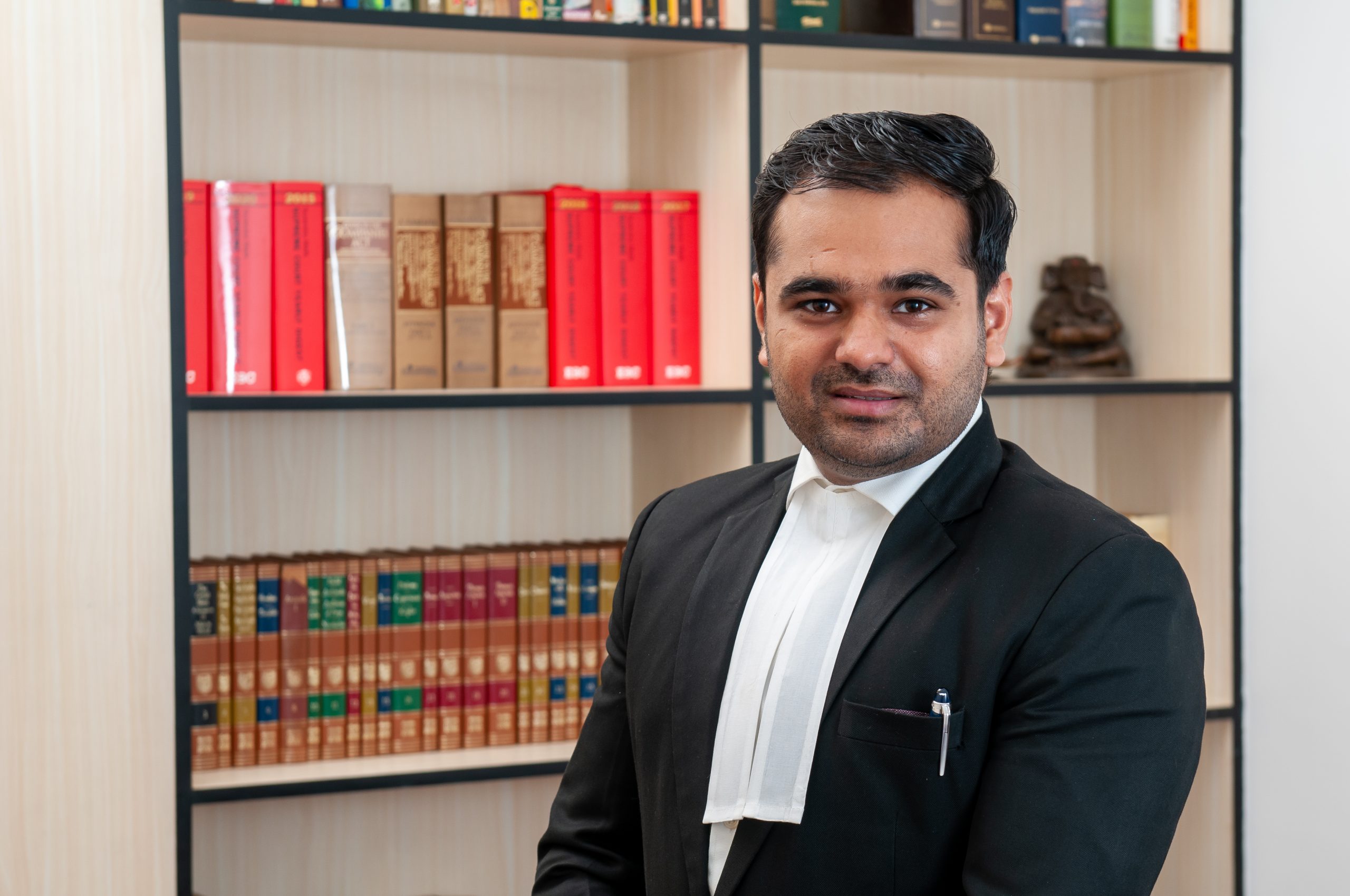
Sir, could you please share your journey of how you ended up becoming an Advocate-on-Record at the Supreme Court of India and a Principal Associate at Dua Associates? What motivated you to pursue a career in law?
The starting point of my journey with law was a matter of chance. During my school days I never imagined myself studying law, however, when I look back today, I think that joining law school was one of the best decisions which I took. I got through Gujarat National Law School, Gandhinagar in the year 2005 and started my journey in the profession in the year 2010 under the able guidance of Ratan Kumar Singh, Senior Advocate. Thereafter, I joined Kapil Sapra & Associates in the year 2012 where I dealt with multifarious works. Being a small set up, work was of different kinds, and the exposure there helped me understand the finer nuances of corporate commercial laws. In the year 2016, I joined Lakshmikumaran & Sridharan, where I dealt with high stake arbitration matters amongst others. Therefore, the exposure at this firm was of a completely different nature. In the year 2020, I joined Dua Associates as a principal associate and continue to work in this firm. I firmly believe that one must keep upgrading his skill sets to be relevant in the legal field. This belief led me to write Advocate-on-Record examinations and I cleared the same in my first attempt. I have enjoyed and learned immensely from different stints in the legal profession.
With a specialization in commercial/civil litigation, insolvency laws, and alternate dispute resolution, can you discuss a particularly challenging or significant case you’ve worked on? What lessons did you learn from that experience?
Every case presents a different set of challenges. Therefore, as a lawyer one must understand each case of its merits and treat the same accordingly. I started my practice with a strong foundation of civil, commercial and arbitration laws, which has helped me in dealing with other laws as well. With the advent of insolvency laws, the options available with the parties have increased manifold. Therefore, the first challenge which a lawyer faces today is to decide the right course of action in the given facts and circumstances. Whilst I have worked on various cases which have been challenging or significant, I have been recently involved in a matter before the National Company Law Tribunal, where I represented the financial creditor, in an application filed by the homebuyers, seeking to commence insolvency proceedings against a real estate developer, to which the financial creditor had lent money. Whilst the law is fairly settled, and in case the homebuyers meet the threshold and there is a default, insolvency proceedings should be commenced. However, I argued that the tribunal should not act mechanically and should see the financial health of the company, in addition to the intent behind the filing of the application by the homebuyers which can be fraudulent. I also argued that the interest of homebuyers who are not before the tribunal should also be considered before arriving at a final decision. The tribunal is yet to pass an order, however, this is significant because law is all about being creative within the realm of judicial precedents and legal principles.
As someone who appears regularly before various courts and tribunals, can you shed light on the dynamics of practicing law in different forums? How does your approach differ when dealing with cases in the Supreme Court compared to other fora?
Every forum presents a different set of challenges, and a lawyer should be flexible to deal with such challenges in case one intends to practice before a different forum. By flexibility I mean adapting to the situation at hand. A lawyer who regularly appears before a district court has a particular way of dealing with the cases, however, the same may not be applicable with higher forums. Similarly, a lawyer who practices before the higher forums, will find it difficult to practice before the district courts. That’s why a lot of lawyers choose forums and stick to it. My approach is different because I have been associated mostly with chambers and firms. I started with district courts, tribunals and gradually shifted to high courts and supreme courts, and therefore had the benefit of knowing finer nuances of various courts practice. The best approach according to me is to stick to the basics, i.e., mastery over facts, reliefs sought and an understanding of the forum where the matter is listed.
Given your extensive experience in handling commercial disputes and arbitration matters, both domestic and international, could you highlight some key trends or changes you’ve observed in the legal landscape over the years?
The legal landscape has undergone some of the most significant changes in recent years, due to technological advancements and subject-specific specialization. In addition, the legal profession is also moving towards a multidisciplinary approach, where there is an integration of legal services with other disciplines, such as technology, finance, and business. The areas which have seen significant change include information technology related laws, cyber laws, environmental law, arbitration law etc. In order to cater to the evolving laws and changing trends, a legal professional is required to be updated and focus on specialization.
Having dealt with cases across diverse sectors such as Oil & Gas, Infrastructure, Telecom & IT, Banking & Finance, etc., how do you stay updated on the intricacies of different industries? How important is industry-specific knowledge in your field?
It’s very essential for a lawyer to be updated with latest legal developments and changes, especially in the areas in which he/she works. The way in which I stay up to date is by regularly reading legal updates online and offline. These days there are various newsletters being issued by firms, organisation which contains useful industry specific updates. In addition, I also attend to webinars and conferences, whenever the time permits in order to stay updated. Industry-specific knowledge is very essential in my areas of practice since different industries have different styles of operation. For example, a banking and finance industry has a different style of operation if one compares the same with an oil and gas industry. Therefore, it becomes imperative for a legal professional to deal with every industry after understanding and analysing the basic difference. Once there is a clarity on the basics, one can deal with the issue at hand with ease.
What role does advisory work play in your practice? Can you share an instance where your advice made a significant impact on a client’s case or decision-making process?
Advisory assumes a great importance in my practice areas. Advisory does not only mean a written/oral legal advice, but it includes the day to day dealing with clients, and answering the queries, and extending support to them in the usual course as and when required. One of the opinions which according to me made a significant impact on a client’s case or decision-making process, relates to an analysis of attachment orders issued by district collector, pursuant to the recovery certificates issued by National Consumer Disputes Redressal Commission, and suggesting the future course of action. Pursuant to our thorough analysis and opinion, the attachment orders were quashed and the same was a big relief for the clients.
With over 13 years of experience in the legal field, what advice would you give to fresh graduates aspiring to pursue a career in law, considering the evolving nature of the legal profession? What qualities or skills do you believe are crucial for success in this field?
My advice to a fresh graduate aspiring to pursue a career in law is to focus on the basics first. One can excel in the field and do specialization only if the base is strong. Secondly one has to be humble and have a humane approach. The legal profession is a noble profession wherein we have to deal with various human beings on a daily basis, therefore being humble is very essential. In addition, being sincere and meticulous also helps a lawyer in the long run. Also, having a commercial bent of mind is also important for a lawyer, especially for lawyers who deal with commercial disputes, arbitration, insolvency, corporate laws, and others. Constant upgradation of skill set is also required for a lawyer who wants to succeed in the legal profession. Lastly, one must be solution oriented and should have clarity of thought. This can only come through continuous learning and adapting to the situation at hand.
Can you share the journey of how you decided to pursue a career in law, especially with a focus on Government Litigation ?
Firstly I would like to thank Superlawyer for this interview and convey my deep appreciation for their endeavor. Law graduates would find my insights useful while planning their professional journey.
Being the second generation lawyer, law was the obvious choice as I have been watching my father attending court. Also the fact that law is one such mechanism which touches human lives .It is one such avenue which can bring about positive changes in this inequitable world.
I got through the National Law Institute University , (NLIU) Bhopal in 2007.I started my practice at Allahabad High Court. After the elevation of my father as a High Court Judge, I shifted to Delhi to practice at the Supreme Court in 2013. One does not start with government litigation in the formative years . I landed with ‘government panels’ after spending considerable time in private practice. By God’s grace , I have been continuing the work for the past many years before the Supreme Court and different tribunals across Delhi. It’s indeed a privilege to be part of a competent team of government lawyers where I get to work on complex and high profile cases. I have gained considerable experience while representing State Governments and Corporations.
With extensive experience in dealing with both State Governments and Corporations, can you highlight a particular case that has been the most challenging or memorable in your career so far?
I have been extremely fortunate to have worked on a wide range of cases.While every case I argue is close to my heart , but the one that stands out is the service matter in which I appeared as a standing counsel on behalf of the Delhi Transport Corporation before Delhi High Court. An Employee had resigned after rendering 29 years of service.The court was inclined to grant relief on equitable ground. I could successfully convince the court that the word “resignation” and “voluntary retirement” cannot be used interchangeably in the case of an employee and thus not entitled to retiral benefits.
Another satisfying case has been of a gazetted government officer wherein I was able to secure the quashing of criminal proceedings as well as divorce under Article 142 of the constitution from the Supreme Court . There were multiple cases lodged by his wife in different districts.
I have had the opportunity to assist the Senior Advocate/Advocate-on-Record(s) in several high profile cases like CBI autonomy ,Triple talaq Article 370 etc to name a few.
How did your academic background shape your perspective and approach towards practicing law?
Apart from my legal background , I believe my law school NLIU played an important role in shaping my personality.Be it moot court participation or time bound completion of research papers involving rigorous research or internships with top law firms have all contributed to my professional growth . The interdisciplinary approach taught there has also enabled me to develop a broader perspective which is helping me to diversify my practice .No wonder , I never found any hurdles in adapting to the distinct practice culture of the Supreme Court after shifting to Delhi from Allahabad (now Prayagraj) in 2013. I cracked the Advocate-on-Record (AOR) exam in my very first attempt in 2019.
It has been an enriching experience to represent the Government of India ,Uttar Pradesh and Uttarakhand before the Supreme Court of India. I also appear before different High Courts like Allahabad , Chandigarh etc frequently.
You have an LL.M. in Cyber Laws and have published articles in prestigious journals. How has the specialization in Cyber Laws influenced your practice, and what challenges do you often face in this dynamic field?
After some years of practice, I wanted to pursue post-graduation However it was not possible to leave active practice and pursue studies. Coronavirus Pandemic provided me an opportunity to pursue a two year masters’ program in Cyber Laws from School of Law and Legal Studies, Guru Gobind Singh Indraprastha University [GGSIPU], Delhi. These two years not only gave me invaluable insights, but also provided me with an alternative perspective that is going to benefit my career as a lawyer.
E-commerce in India is moving forward by leaps and bounds. With it , there are bound to be cyber crimes.We all have seen critically acclaimed web series ‘Jamtara-Sabka Number Ayega’ where the phishing, a type of cybercrime, is undertaken in an organized manner by the village teenagers . I believe that the role of Artificial Intelligence (AI) in the realm of cyber security looks promising.The challenge remains to be seen in respect of effective implementation of AI systems given the fact that such systems are going to be trained in safeguarding data.
As an Advocate-on-Record, you’ve appeared before various courts and tribunals, including the Supreme Court and High Courts. Could you share some insights into the differences in presenting cases in these forums and how you navigate through them?
I believe the approach varies from court to court.This is due to the fact that the jurisdiction of each court is different . For instance, the Supreme Court is not only the highest court of the land but also the final court of appeal.This mandates lawyers taking a different approach which one would not take before High Court or Tribunal(s). It is like identifying the error committed by Court /Tribunal below and presenting it in a limited time frame before Supreme Court judges. The case with the High Court(s) is different as lawyers have the liberty to argue at length.
Practice in Trial courts involve more procedure laws while Higher courts involve mostly appellate or writ jurisdiction dealing with legal issues relating to substantive law. Facts are the main weapon of choice before the Trial courts while Higher courts deal with nuances of law.However, I would add a caveat. Facts are the backbone of every case irrespective of courts involved and lawyers should always be well versed with them .If left to me , I would say that every case is decided on the facts and law helps in unearthing the truth and reaching at the correct conclusion to promote justice.
Given your interest in writing articles and being invited by universities to judge legal events, how do you balance your advocacy work with these academic pursuits, and how do they complement each other in your professional growth?
Being an Advocate actually provides the satisfaction of directly representing the ‘aggrieved’ before the court. Whereas writing legal articles or mentoring law students reflect my commitment of giving back to the legal fraternity.
Both Advocacy and Academic pursuits might be distinct but they are essentially complementary. Writing articles or mentoring allow me to engage with burning legal topics on a broader scale. It provides me a platform to share my knowledge
and insights with my peers. It would be wrong If I don’t admit that writing brings about an in-depth understanding of the legal principles. Meeting ‘like-minded’ professionals is another advantage.
Thus balancing practice with academic pursuits is challenging but immensely fulfilling.
You’ve worked with different government bodies, including the Government of India and various state governments. What unique challenges or considerations arise when representing government entities compared to private clients?
I have been appearing before the Supreme Court of India , Delhi High Court, NCLT, NCLAT, and NCDRC. With over a decade of experience, I personally feel that the case of Government bodies is often strong legally but lacks either professional advice or proper representation. For instance, crucial evidence is not adduced or documents vital for adjudication of the case are not annexed before the Court/Tribunal(s) .Such instances have led to the dismissal of cases before Supreme Court having financial ramifications.
When entrusted with a case , I try my best to go through the records thoroughly and ensure superfluous claims are nipped in the bud and genuine claims, if any , remain for adjudication. Professional fee offered by the Government bodies is although meager but the volume of cases give consistent opportunity to appear before the Courts which enhances one’s nuanced understanding of law , not to forget court craft.
Private clients on the other hand approach lawyers after taking painstaking research about the reputation one enjoys in the market. I found such clients smart and attentive. But the problem crops up when it comes to managing their
expectation especially at a place like the Supreme Court where the dismissal rate of cases is high at the admission stage.
I have been fortunate enough to get the best of both worlds. It has been so far a transformative experience that has broadened my horizons and equipped me with the skills necessary to handle extremely challenging propositions.
As a Managing Partner of Avika Law Offices LLP, and with reported judgments to your credit, what advice would you offer to law graduates entering the profession, particularly those interested in government litigation ?
My journey from a law student to Managing Partner of Avika Law Offices LLP has been a rewarding experience. I would urge law graduates aspiring to enter this dynamic profession to look for good mentors. It is extremely important to have a good chamber in initial years which lays down a strong foundation. Embrace lifelong learning considering the vastness of law as a discipline. Constant updation is sine qua non .Go for additional qualifications to hone skills .There are no shortcuts in this profession. Always uphold integrity.
Lastly, frequent interaction with peers and legal professionals is a fruitful idea as
It provides both guidance and opportunities in the profession.
Can you share some insights into your journey in the legal profession and how you decided to specialize in dispute resolution, particularly in areas such as arbitrations, insolvency, and regulatory practice?
Being the fourth-generation lawyer in a family of reputed criminal lawyers, it was clear that I will build my career in dispute resolution. During internships at various prestigious law firms in Delhi, I had the opportunity to work in various areas of practice in litigation, including Arbitrations, Company Law and Securities Law, which eventually opened new horizons for me. I began to realise that with increasing tribunalisation and diversification of the legal field, one cannot have a short-term vision. I believe that in our legal profession, initial three to five years are most crucial for self-development and therefore, in order to gain as much practical exposure as possible in my initial years, I ventured in all practice areas by associating with senior professionals specialising in different areas like Civil Trials, Company Law, Arbitrations, White Collar Crimes, Telecommunication Law, Electricity Law, Securities Law, Service Law and Constitutional Law.
You have extensive experience representing clients in various high-profile cases before different courts and tribunals. Could you highlight a case that you found particularly challenging or rewarding, and what lessons did you learn from it?
Many of the cases, argued by me, have been widely reported by news and legal journals, ranging from landmark judgments in Arbitration, Insolvency and Commercial Law issues to the judgments granting bail in Delhi Riots case and establishing the principle that ‘holding weapon is not a fundamental right’. I have worked on numerous high-profile cases, including those involving leading FMCG companies, real estate developers, hospitality group, electricity transmission cos., 2G spectrum allocation trial proceedings, challenging constitutionality of provisions of Companies Act, as well as cases related to SFIO, EOW, ED prosecutions involving hundreds of crores, and SEBI and FEMA violation cases. Each of these cases has been a different learning experience, particularly, in forming strategies to build the case in a manner that achieves the desired relief.
I always believe that litigation is akin to a game of chess where you must anticipate three to four steps of your opponent’s preparation accordingly. With time, I have also learned the importance of identifying the “fulcrum of the case”, that one crucial point in the brief around which the case needs to be built. Proficiency in drafting and research is invaluable in devising the right strategy. However, it’s important to emphasize that in my philosophy, I do not discriminate between cases or compromise my level of commitment based on factors such as monetary value or property valuation, or the stature of the individual / organisation involved.
Your career includes handling SFIO, EOW, ED prosecutions involving hundreds of crores and SEBI and FEMA violation cases. How do you navigate the complexities of economic offences and regulatory issues while dealing with such cases?
I have handled economic offences, regulatory violation proceedings and white collar crimes ranging from alleged Ponzi Schemes to alleged manipulation of accounts, incomplete disclosures to regulatory authorities and the 2G spectrum allocation process, where the alleged quantum is in multiples of hundred of crores based on initial investigations., These cases are unique as they require an understanding of accounts, commercial law, criminal intent and ultimate loss or injury caused. Additionally, one must gauge the aggrieved party’s nature of loss or injury caused and accordingly analyse the case. When representing clients in such cases, I adopt the simplest approach of assuming the client is placed at the weakest point and start self-questioning regarding the alleged act as presented, level of involvement shown, possible intent and natural consequences or repercussions on others as well as on the client.
Having worked with various senior advocates and legal luminaries, how has that shaped your professional growth and influenced your approach to legal practice?
In the past 16 years, I have been fortunate to work closely with many legal luminaries, senior advocates, namely Mr. Mukul Rohatgi, Dr. Abhishek Manu Singhvi, Mr. Sudipto Sarkar, Mr. Amit Sibal, Mr. Amarjit Singh Chandhiok, Mr. Dhruv Mehta, Mr. Neeraj Kishan Kaul, Mr. Arvind Nigam, Mr. Ashwini Kumar Mata, Mr. Mohit Mathur, Mr. Vikas Pahwa, Mr. Tarun Gulati, Mr. U.K. Chaudhary and my mentors Mr. Meet Malhotra, Mr. Vivek Kohli and Mr. Sumeet Pushkarna.
From my interactions and close work with all these respected senior advocates, I have learned that one must be a master of the facts of their brief. The entire facts, pages and interconnection of different documents must be mapped in your mind so clearly that you can anticipate the questions from the Bench and opponents and be ready with references in the case file instantaneously. While arguing in Court, you cannot leave grip of the facts because sometimes, you need to frame the argument thinking on your feet. Clarity of thought while preparing the case and explaining the case or arguing in Court is the most crucial aspect to be learned.
You have worked with government departments such as the Central Government, State Government, departments like Delhi Electricity Regulatory Commission, Delhi Transport Corporation, Delhi Jal Board, Employees’ Provident Fund Organisation. How has your experience with these government bodies influenced your approach to handling cases and managing client expectations?
Working with Government Regulators and Departments has been an enriching experience for me. I have had the opportunity to handle a variety of issues, ranging from defending constitutionality of Acts / Rules / Regulations to defending discretion in approvals, licensing, allotment of tenders, as well as intent and implementation of policies & schemes and also dealing with service law related issues.
Being a government lawyer is a position of utmost responsibility. It requires careful handling of confidential files and also defending executive actions, each of which is taken after detailed deliberation and approvals at different levels within the concerned department and ministry. I must commend government departments for their diligence in adhering timelines granted by Courts for preparation of pleadings or compliance with any interim or final decisions. In recent times, government departments have significantly ramped up recruitment of legal officers, leading to an overall improvement in case management at departmental level.
As an Advocate-on-Record with a significant presence in the Supreme Court, could you share some insights into the dynamics of presenting cases before the highest court in India? How do you approach advocacy in such a distinguished forum?
As an Advocate-on-Record, when filing pleadings or presenting cases before the Hon’ble Supreme Court, it is paramount to be thoroughly knowledgeable about the subject matter of the case. Being well-read extends beyond understanding the legal issues at hand, it also entails being familiar with judicial precedents and legal developments pertaining to the relevant statute.
The Hon’ble Supreme Court plays a pivotal role in the ongoing process of evolution of law, adapting to changing societal norms and refining legal complexities. This includes redefining principles of bail, fundamental rights, shaping jurisprudence of economic offences or commercial laws. Therefore, it is imperative to possess a strong foundation of legal knowledge when assisting the Bench.
Considering your extensive experience, what advice would you give to law graduates who are entering the legal profession today, especially in terms of specialization and adapting to the ever-changing legal landscape?
As I mentioned earlier, the initial three to five years in the legal profession are extremely crucial for professional development. Certain good practices, such as reading judgments, if cultivated since the beginning, prove invaluable in the long run. When I refer to “reading”, I don’t mean merely skimming legal news or excerpts of judgments available on various portals but reading the entire judgment – the original text.
Learning should not be confined to assignments alone. It’s only when you immerse yourself in reading and compiling research subject-wise that you can not only identify your areas of interest but also be well-prepared to adapt to the ever-changing legal landscape in any field of law.
Can you share the journey that led you to pursue a career in law, starting from your education at Hidayatullah National Law University? What motivated you to choose law as a profession?
Honestly speaking I stumbled upon law by chance. I was always interested in humanities and social sciences but took up a Science in my plus 2. But I soon realised that I was not very good at it. A friend of mine then informed me that there are these institutions called the National Law Universities and people graduating for these institutions are getting well-paying jobs. It was the first time that CLAT was being conducted for admission to these colleges. I did some research and thought that it might suit my interest. So I must admit candidly that I chose law to avoid doing Engineering and was lured by the promise of a Fat Pay Cheque .
As an Advocate-on-Record at the Supreme Court of India, you’ve handled matters of constitutional and national importance. Could you discuss a specific case that stood out to you, and how it shaped your perspective on legal practice?
Ans. As an AOR one matter which really stood out for me was a case wherein My Client, who is an RTI Activist, was not being allowed to reside within the confines of a District on the basis of false FIR’s registered against him. The FIR’s were registered by the same people against whom action was being taken on the basis of representations made by My Client. The Supreme Court while allowing the Appeal observed and reiterated that the fundamental right of Free Movement and Residence across the Country cannot be curtailed on flimsy grounds.
Your experience involves representing clients in various High Courts, dealing with matters related to the Arbitration and Conciliation Act, 1996. Can you share insights into the challenges and strategies you often encounter in this area of law?
Ans. An Arbitration is nothing but a trial being conducted by a judge chosen by the parties and as per rules chosen by the parties. Therefore every Arbitration has to be approached in the same manner as one would approach a Trial before a Court of First Instance. As is the case with any Trial, even in Arbitration, it is of utmost importance that all the documents and facts, which are essential for establishing the claim, are brought on record. Even though it is said that one should not hide any facts from a doctor and a lawyer, however it is also a part of Human Nature to narrate only those facts which are beneficial to us. Therefore it is our job as lawyers to even extract those facts and documents, which are harmful to us so that we are not blindsided by them during the Arbitration. If you are thorough with your facts then all other challenges are manageable.
In your independent practice, you’ve represented clients before the National Company Law Tribunal and drafted appeals before the National Company Law Appellate Tribunal. How did this experience contribute to your understanding of corporate law and insolvency matters?
As a firm our primary focus is towards commercial litigation and naturally that includes litigation before the NCLT and the NCLAT. Since Insolvency Law is still at a fairly nascent stage, every case brings with it a new set of challenges. That also gives you the opportunity of contributing towards the Insolvency Jurisprudence as a whole. One case that stand out for us, which also then became a landmark judgment with respect to powers of NCLT under the IBC, is the case of E.S. Krishnamurthy v. Bharath Hi-tech Builders Ltd. We handled that case from the NCLT uptill the Supreme Court and therefore it is very close to our Hearts.
As an Associate at Gohil and Singh Law Chambers, you were involved in drafting and researching on petitions before the Supreme Court. Can you share a memorable case and the legal issues you tackled during that time?
Mr. Pradhuman Gohil, has played a big role in my development as a lawyer. I worked with him for four years and extensively worked on matters before the Supreme Court. There were several cases which helped me to hone my skills as a lawyer. However one case which stands out was a Criminal Appeal in which we were defending a person convicted for murder. The case was based purely on Circumstantial Evidence and primarily based on statements of witnesses. We prepared for that matter for over six months and the hearing went on for 3 weeks. That case had all the issues can can think of a in a Criminal Case, ranging from importance of a Statement under Section 313 CrPC, Completion of Chain in a case of Circumstantial Evidence, Veracity of the testimony of a Hostile Witness, etc.
During your association with the office of Mr. Ajit Kumar Sinha, Senior Advocate, you were involved in researching matters before the Supreme Court and High Courts. Can you elaborate on the types of cases you worked on and the legal principles you engaged with?
Mr. Ajit Kumar Sinha is my mentor in the profession. I did majority of my internships under him and eventually started my career with him. I worked under his guidance for 2 and a half year. During my time with Mr. Sinha, I had the opportunity to work on matters pertaining to mining laws, service laws, Land Laws, Tender Matters etc. I also had the opportunity to assist him in the Coal Scam Matter and the NJAC matter.
Given your diverse legal background, from constitutional matters to criminal law and commercial transactions, what advice would you offer to recent law graduates aspiring to build a versatile legal careerandthose interested in practicing law at a high level and dealing with matters of constitutional significance?
My Advice to recent law graduates to not restrict themselves to practising only in one area of Law. The Beauty of the profession lies in its diversity and therefore one must try and grab onto all the work that comes their way. One must be a jack of all trades, because that goes a long way at retaining clients. The aim has to be that for your Client you should be the one stop shop.
Every person has a different journey and one advice that a friend of mine once gave me is to not compare my journey with that of others. Law, and especially litigation, demands perseverance. You just need to stick around and give your hundred percent, and at the cost of sounding preachy, I must say that there are no short cuts.
Could you please share with our listeners how your journey in law began? What inspired you to pursue B.Sc. LL.B. (Corporate Law Hons.) from the National Law University, Jodhpur?
It’s a fairly interesting story. To be true, being from a family of lawyers and judges, my father never wanted me to be a lawyer. For the final two years of my schooling I was preparing for engineering and did not even fill the forms for law entrance examinations. After clearing the entrance test for Engineering, while depositing the fee in an engineering college in Bangalore, I felt that I don’t want to be an Engineer and rather, want to become a lawyer. Hence, I requested my father to not deposit the fee and expressed my willingness to prepare for the law entrance examination. Being from Rajasthan, NLU Jodhpur was my first preference and luckily, I cleared the entrance next year.
Your experience spans both litigation and corporate law. What led you to choose a career path that includes extensive practice in the Supreme Court and various other courts and tribunals?
After my graduation from NLUJ, I was fortunate to get placed with Amarchand Mangaldas, Mumbai. I was part of the Funds Team and was involved in structuring venture capital funds. One year in Amarchand gave me hands-on experience and confidence to take up corporate work which would benefit me later in my career. However, I couldn’t see myself doing only corporate work for the rest of my life and shifting to litigation was better sooner than later. I therefore shifted to Delhi and started with a litigation journey.
Beauty about having an independent practice is that one is not confined to a particular forum or field of law and can push boundaries. Delhi being hub of litigation work, there are ample of opportunities in various courts and tribunals. One has to rather restrict himself from taking up work in multiple forums. I try to confine myself to the Supreme Court, but work naturally spills over to the High Court and various Appellate Tribunals.
You’ve worked in diverse areas such as banking, arbitration, constitution, consumer, debt recovery, and more. Could you elaborate on how you found your niche within the legal profession and the areas that resonate with you the most?
Trend lately has been on super specialization in law. The law firms have dedicated teams to handle one subject or even one area of the subject. This trend is seen more in Tier-1 and Tier 2 law firms. While specialization is necessary, I strongly believe this approach is prejudicial to the interest of fresh graduates or ones with a couple of years of experience. In my view, any young lawyer should not specialise at an early stage of his career, rather a lawyer should have an experience to deal with as many subjects, fields and branches of law as possible. It not only gives an overall better understanding of law but also gives the ability to apply principles, precedents, and concepts from one field to another. Interplay of various subjects of law is an important tool which needs to be understood and applied both in courts and while undertaking advisory work.
I encourage my juniors to take up matters across various forums and subjects and not confine themselves to any particular field. While allocating work as well, I ensure that my team gets to work on different subjects. I believe it not only helps them to have confidence in undertaking new assignments but will also aid them later on in their career.
From being an associate at Amarchand Mangaldas & Suresh A. Shroff & Co. to becoming a partner at Pricus Legal LLP, can you discuss the pivotal moments and experiences that shaped your career trajectory?
Getting through Amarchand in college placement was one of the most memorable moments of my life. It was nothing short of a dream coming true, and of course it was financially highly rewarding. I was awed by the corporate culture, high profile clients and of course the stakes involved. However, having worked there for a year, I couldn’t find my calling in corporate work. As a result, I took the difficult decision of resigning from the firm and shifting to Delhi.
I was fortunate to get a chance to work in the chamber of Mr Parag Tripathi, Senior Advocate, who was also Additional Solicitor General of India at the time. He is one of the finest orators and sharpest minds in the legal fraternity. I am proud to be part of his chamber and couldn’t have prayed for a better ‘Guru’. Working in his chamber gave me a chance of working on thousands of cases. Every day over 20 matters were listed which were split amongst 4–5 juniors. On an average each junior had to brief sir in 4 to 5 cases everyday. Every briefing used to be like a short moot court for us where we had to be ultra precise and to the point in our briefing yet making sure we don’t miss out anything relevant and at the same time answer a volley of questions. Doing this for nearly 4 years prepared us well for anything the future had to offer.
I took yet another difficult decision to leave the chambers of Mr. Parag Tripathi and started my practice in the later part of 2012. Subsequently, I also cleared the Advocate-On-Record exam in 2015.
Having handled litigation both for individuals as well as companies, over the years, I started getting corporate advisory work as well. As we were getting corporate advisory and transactional work alongside litigation, we decided to formally incorporate Pricus Legal LLP to better manage and handle corporate work.
Being from a litigation background, I find that the way a litigating lawyer perceives things even in any corporate transaction or documentation is very different from a corporate lawyer. Experience in litigation comes in handy to foresee possible disputes and loopholes. Therefore, as a matter of practice in our firm all corporate advisory/transaction has to go through the litigation team as well.
As a registered Advocate-on-Record in the Supreme Court of India, you have been involved in several landmark judgments. Could you share one or two cases that you found particularly challenging or significant in your career?
An interesting case which comes to mind is that of Bhagwan Singh v. Dilip Kumar where son of sitting MLA was involved in gang rape of a minor and was granted bail by the High Court on the ground that FIR was lodged nearly over a year after the incidence and there was no direct evidence to connect the accused with commission of alleged crime. I was representing the minor victim who approached the Supreme Court against grant of bail by the High Court. We were able to persuade Hon’ble Supreme Court to set aside the bail on the ground that High Court can’t look into the evidence at the stage of bail and should confine itself to criteria like seriousness of offence, statement of prosecutrix, likelihood of influencing the trial et cetera while deciding the bail. Judgement makes an interesting read.
Another decision which I recollect is that of Ravi Khandelwal versus Taluka Store in which we challenged an order passed by the Larger Bench of the High Court in a reference involving question of interpreting Section 14(3) of Rajasthan Rent Control Act which provided a protection to the tenant against any suit for eviction for the first five years of tenancy. The Supreme Court overturned the conclusion of Larger Bench of High Court holding that even if a suit is filed within five years of commencement of tenancy, but during the pendency of suit five years lapse, the defect in the suit stands cured and the protection granted is achieved. However, what was more interesting was that the Hon’ble Supreme Court directed eviction of premises directly even when the appeal of the tenant was pending before the Single Judge of the High Court. Direction of eviction directly by the Supreme Court even while appeal on merits was pending before the High Court to my mind is unprecedented.
You’ve been a panel lawyer for various esteemed organizations. How did these associations come about, and how does being a panel lawyer for such entities impact your legal practice?
Getting any panel is fairly difficult, particularly in initial years of practice. Working in the office of ASG, all of us were empanelled with the Union of India which opened the doors for panels of other PSUs. One panel thereafter led to another over the years. Even though these panels are not usually financially very rewarding, they give an opportunity to appear and argue before the court and provide a constant source of work. In initial stages when individual clients are scarce, panel work comes in handy and ensures regular appearances before the court.
With your extensive experience in various legal domains, including banking, insurance, constitutional law, and more, how do you balance staying versatile with the need for deep specialization?
There is a saying that clients choose lawyers specialization. As I mentioned earlier, I strongly believe that lawyers, particularly in litigation, should not get specialised early in their career. It is only after a few decades of practice and incidentally handling a particular kind of cases more than others, that lawyers would get specialised on their own in a particular field. Personally, I would any day choose to do a variety and different kind of work every day rather than get super specialised in any particular field. One of the reasons why I shifted from corporate to litigation was to do a variety of work, but I think that’s a very personal choice.
Lastly, considering your journey and achievements, what advice would you like to give to fresh law graduates who are about to embark on their legal careers? What are the key lessons you’ve learned that you would like to share with them?
I would strongly advise young lawyers to explore different fields of law for the first few years of their career before choosing and settling into one which matches their aptitude and liking. Fresh graduates should not be reluctant to change their field, particularly in the first few years of their career and do something which they can call their calling. As one progresses into his career it becomes exponentially difficult to venture into these experiments.
I also highly recommend that every fresh graduate should start his career with litigation and rough it out in courts at least for sometime. It is only then one understands actual application of law and gives a perspective completely different from mere theoretical understanding. Even if eventually, they decide to move into a corporate setup, the experience in litigation will give them immense confidence. Getting into a super specialized team right out of college is not something I would recommend. Legal Profession is not a 5 year long but a 50 years long career and the initial few years should be an investment on oneself.
Could you take us through your journey from your college days to becoming an Advocate on Record at the Supreme Court? What inspired you to pursue law as a career?
During my college days, I used to study and make friends who were like-minded and interested in studying and understanding law. I used to make friends whom you could find in the library only or after professors asked questions. Most of our freedom fighters were Lawyers of course that motivates me and of course, the respect a lawyer gets in Society.
Being the AOR for the Hon’ble Chief Minister of Sikkim is a distinctive role. How did this association come about, and what are some of the challenges and rewards of representing such a high-profile client in the Supreme Court?
I got the chance to represent the Hon’ble chief minister of Sikkim before the honourable Supreme Court through the Standing Counsel for the state of Sikkim in the Supreme Court who had previously engaged me in many of his cases and therefore gave me a chance. the rewards are always high but the expectations are also high.
In your extensive career, you’ve handled cases related to Builder-Buyer disputes, Recovery of Refunds by RERA, Criminal Cases, and more. What motivates you to take on such diverse cases, and how do you stay well-versed in multiple areas of law?
From the beginning of my law career, I, used to handle builder buyer cases as many of my close friends and relatives were cheated by builders and providing them good results brought me many cases. I have offices and associations in Delhi NCR and many of my associates, friends and lawyers keep me engaged in their cases and that keeps me updated with all kinds of cases.
As someone who has dealt with international companies and MNCs, what nuances or differences do you find in representing their cases compared to domestic ones?
Cases of MNCs and international companies are not of a very different sort but their challenges are also as same as those of a domestic company for example for a Japanese company I got an FIR registered against the top brass of management in Gurugram a complaint filed by their Parent Company and a Ukrainian company was cheated by Transport vessel company and for other Dubai and Japanese companies facing trouble because of Labour, Employees, Tax and POSH cases.
Your practice spans different courts and forums. How do you adapt your approach when dealing with cases in various jurisdictions, from District and Session Courts to the Supreme Court?
The only thing I keep in my mind while approaching any Courts from Distt. to Supreme Court is that I should be well-versed and well-prepared with my case.
Becoming an Advocate on Record involves a rigorous examination process at the Supreme Court. Can you share your experience preparing for and clearing the AOR exam? What advice do you have for aspiring lawyers who aim to achieve this milestone in their careers?
I really put all my efforts into clearing the same and was a herculean task. the only mantra is hard work and study plus one should join lectures delivered by examiners THEMSELVES conducted at ILI.
Your chamber plays a crucial role in shaping the professional journey of budding lawyers. Can you tell us about the work culture and environment in your chamber? Additionally, how do you approach mentoring and guiding interns who join your team?
Yes, it plays a very important role but I like my colleagues to enjoy work within spheres of discipline in my chamber. I don’t like the late-night work culture. Law interns, they really enjoy a lot because We expose them to every court and forum of Delhi-NCR which enhances their knowledge in unravelling intricacies of Law.
Having seen the evolution of legal education and the influx of interns and upcoming lawyers, what differences or challenges do you observe in the skill set or approach of students today compared to when you were starting your career? Are there specific areas where you think interns or young lawyers might need additional focus or development?
Yes, nowadays the legal profession is in vogue. It’s very difficult for a beginner to earn bread and butter in this profession in their initial days. There is a misconception floating around about a lot of money in this profession and therefore the students are choosing this profession but no one tells about the struggle which breaks them. The legal profession is a very noble profession. But not an easy money-making profession. In our days we knew what we were doing and how we would do it and were prepared to face struggles mentally and physically. I used to attend courts by using Public Buses and Trains, which for a modern new Lawyer is not possible if he/she belongs to a humble family and puts a financial burden on their parents.
Beyond your demanding legal career, everyone needs some downtime. Could you share with us what passions or activities you pursue in your free time? What brings you joy and relaxation outside the courtroom?
I really enjoy gossiping with friends and of course travelling to the hills.
Having pursued an LL.M., yourself, could you share your perspective on how further academic specialization contributes to a legal career? What advice would you offer to young lawyers considering pursuing an LL.M. and how can they maximize its benefits for a successful legal career?
Well, higher studies always help boost your confidence and add a new chapter to your success story. For young lawyers I advise them to pursue all sorts of courses available to help boost their knowledge and enhance confidence, there are so many diploma courses and LL.M helps new lawyers to shape their career by specialising in some chosen field.
Can you share a bit about your background and upbringing, especially how you ended up pursuing law as a career?
My journey into the field of law is somewhat unconventional, rooted in an upbringing that seamlessly blended athleticism and a commitment to education. Hailing from Himachal Pradesh, I was born in Bangalore and received my education in Patiala, Chandigarh, and Delhi, reflecting the diverse cultural influences that shaped my worldview.
My parents, with my father being a Dronacharya Award Winner in Judo and my mother serving as the Chief Judo Coach with Sports Authority of India for over 35 years, instilled in me the values of humility and hard work. The mantra that ‘hard work has no substitute’ became a guiding principle, thanks to my father’s wisdom.
Initially immersed in a promising career in sports, representing Himachal Pradesh in various BCCI tournaments from U-15 to U-23 levels, my trajectory took an unexpected turn due to a sports-related injury. This setback prompted a moment of introspection, leading me to re-evaluate my career path.
Amidst the contemplation, the decision to transition into law emerged organically. Inspired by a desire to push beyond my comfort zone and propelled by the encouragement of my parents, I embarked on the journey to become an advocate. This shift was marked by rigorous preparation for the Delhi University entrance exam, which I successfully cleared, ultimately choosing to enrol at Campus Law Centre, Delhi University.
It was during my time at CLC that I discovered the rich legacy of its alumni, further deepening my appreciation for the profession I had serendipitously found myself in. In retrospect, I didn’t so much choose law as it chose me, a realization that has fuelled my commitment to excellence and continuous growth in the legal field.
I am profoundly grateful for the opportunities that shaped my journey, and I carry forward the invaluable lessons of discipline, resilience, and dedication instilled in me through my unique blend of experiences. Today, as a seasoned lawyer with nine years of experience, I draw upon both my sporting and legal backgrounds to approach challenges with a well-rounded perspective and unwavering determination.
You completed your LLB from Campus Law Centre, Delhi University. What factors influenced your decision to study law, and were there specific experiences during your academic years that shaped your interest in the legal field?
Honestly, after cricket I had no other option but to choose law, there is no specific reason or any decision that influenced me to study law. I pursued my LLB at Campus Law Centre, Delhi University, and my journey into the legal field was somewhat unconventional. Having initially aspired to pursue a career in cricket, the transition to law emerged organically.
In my first year, following the advice of my seniors to enjoy the initial phase, I focused on grasping the fundamentals and keeping a balance between academic studies and my passion for cricket. It was during this time that I discovered a genuine interest in Criminal Law, sparking the beginning of my journey in the legal domain.
As I progressed into my second year, subjects such as Criminal Procedure, Evidence, and Civil Procedure captivated my attention, deepening my understanding and enthusiasm for the legal intricacies. An internship experience further exposed me to the practical aspects of legal work, where I engaged in clerical tasks, gaining invaluable insights into the operational side of the profession.
The turning point came in my third and final years of college when I made a conscious decision to fully commit to my legal studies. Realizing that my cricketing aspirations were taking a back seat, I explored potential career paths. A pivotal moment occurred in March 2015 when a senior connected me with an internship at Luthra and Luthra, providing me with a firsthand experience of the legal profession.
Simultaneously, a subsequent internship with Mr. KTS Tulsi, Senior Advocate, in April further solidified my interest in law. The dynamic and challenging nature of the work at both offices fueled my passion, ensuring that each day was intellectually stimulating.
The opportunities I got was only because of cricket which landed me to my internships, which shaped my professional trajectory. These experiences have not only enriched my legal knowledge but have also instilled in me a deep sense of commitment and enthusiasm for the legal field.”
You’re currently engaged in independent legal practice, handling a diverse range of cases. Can you walk us through the pivotal moments that led to your decision to transition from working with law firms to establishing your independent practice?
Embarking on my legal journey, my initial exposure to the legal profession unfolded through internships at Luthra and Luthra, a prominent law firm, and later under the guidance of Mr. KTS Tulsi, Senior Advocate. These experiences, though disparate, were pivotal in shaping my journey as a lawyer.
During my stint in a law firm, the routine was structured, demanding undivided attention to assigned tasks within the confines of an office. However, my subsequent internship with Mr. Tulsi, Senior Advocate, introduced me to a different world—a dynamic blend of courtroom advocacy and after court management. Witnessing the strategic use of skills, experience, and court craft to win cases ignited a profound fascination within me.
Despite the allure of firm remuneration, I recognized a deeper passion for the courtroom. The prospect of being confined to an office space without the vibrancy of court experiences did not resonate with my vision for a fulfilling legal career. Driven by a belief instilled in me since childhood—that hard work paves the way to success—I transitioned to LawRato, where I honed my communication skills with clients. However, the confinement of a firm environment eventually led me to seek a more dynamic setting.
Gratefully, I found mentorship under Mr. Jaspreet Singh Rai, a period that contributed significantly to my growth and gave me a fair bit of experience in Trial Court. Destiny smiled upon me when I secured a position at the Chambers of Mr. Tulsi, a dream opportunity by the support of Mr. Amit Sharma and Mr. Raj Kamal.
Before venturing into independent practice, I had the privilege of working with Mr. Karan Bharihoke, Advocate-on-Record who played a transformative role in shaping me from a novice into a confident, independent lawyer. His mentorship instilled in me the courage to appear before the court and the resilience needed to pursue my goals.
You’ve had significant experience in handling high-profile cases, including criminal matters, civil matters, and more. Could you share a challenging or notable case that you’ve worked on and the lessons you learned from it?
In my not so extensive legal career spanning nine years, I’ve had the privilege of handling some high profile cases, each carrying its own weight of significance. High-profile cases, in particular, demand a heightened level of diligence and responsibility, given the elevated stakes involved for both the client and the legal representative.
Throughout my journey, I’ve had the honor of collaborating with seasoned advocates and independently handling noteworthy cases. One such pivotal experience that stands out is my involvement in the Nirbhaya Case (Appeal) at the Supreme Court, where I assisted my senior who was representing the parents. The magnitude of this case not only underscored the gravity of criminal law but also provided me with a profound insight into the nuances of Supreme Court procedures.
This experience served as a springboard for my subsequent work, notably in preparing and drafting the Petition in the Arushi Talwar Case. The lessons gathered from these high-profile cases have been instrumental in deepening my understanding of criminal laws and honing my legal skills.
I am deeply appreciative of the trust placed in me by seniors, which has been a constant source of motivation throughout my career. Every case, regardless of its nature, has been a stepping stone for my professional growth. I firmly believe that embracing and learning from each experience is imperative for continuous development as legal professionals.
In essence, my journey has been shaped by a commitment to excellence, a deep appreciation for the opportunities afforded to me, and an unwavering belief in the transformative power of every legal experience.
You’ve worked with esteemed advocates such as Mr. KTS Tulsi, Mr. Harin P. Raval, and others. How has mentorship played a role in shaping your career, and what advice do you have for young lawyers in finding the right mentors?
In this profession finding the right mentor is what every young lawyer would dream. In my legal career, the significance of mentorship has been profound and instrumental. I have had the privilege of working alongside distinguished advocates such as Mr. KTS Tulsi, Mr. Harin P. Raval, Mr. Karan Bharihoke, and Mr. Raj Kamal, each of whom has played a pivotal role in shaping my professional journey.
The mentorship I received from Mr. Bharihoke and Mr. Kamal, spanning the entirety of my career, has been invaluable. Their guidance has not only illuminated the path but has been a constant source of support during challenging times. I consider them beacons of wisdom, always approachable for clarifications, and ready to provide insights into the intricacies of the legal profession.
Reflecting on my experience, I would advise young lawyers to seek mentors who not only possess exceptional legal acumen but are also genuinely invested in nurturing the next generation of legal professionals. The essence of a good mentor lies in their ability to impart knowledge, offer constructive criticism, and share their practical experiences. A mentor should be someone who sees beyond the professional competition, taking the time and effort to contribute to your growth.
I am deeply appreciative of the guidance I have received, and it has instilled in me the importance of paying it forward. As a seasoned practitioner, my advice to young lawyers is to actively seek mentorship, be receptive to constructive feedback, and cultivate relationships with mentors who prioritize your professional development. In doing so, not only will you acquire valuable skills and insights, but you will also contribute to the perpetuation of a culture of mentorship within the legal community.
From your perspective, how would you describe the current legal landscape in India, especially in areas like economic offenses, commercial dispute litigation, and recent legal developments? How has technology impacted the practice of law in recent years?
Thank you for the opportunity to share my perspective on the current legal landscape in India, particularly in the areas of economic offenses, commercial dispute litigation, and recent legal developments.
The landscape of economic offenses in India has seen significant changes in recent years. The country has witnessed legislative developments aimed at addressing white-collar crimes, with a focus on laws such as the Prevention of Money Laundering Act, 2002, and the Prevention of Corruption Act, 1988. These laws, along with the Companies Act, 2013, and the Indian Penal Code, 1860, form the backbone of India’s regulatory framework against economic offenses. In 2023, pivotal judicial decisions brought clarity and precision to the nuanced aspects of money laundering, including territorial jurisdiction, bail eligibility, and the procedural obligations of enforcement agencies.
Commercial dispute litigation in India has also evolved, with the establishment of specialized commercial courts designed to provide efficient and timely resolution of conflicts. These courts employ case management techniques to streamline proceedings and encourage parties to explore alternative dispute resolution methods such as mediation and arbitration before proceeding to trial. The trend towards alternative dispute resolution methods is increasingly being embraced by companies in India.
Recent legal developments in India have been multifaceted, reflecting the complexity of the challenges faced by the nation. The legal system plays a pivotal role in addressing economic and social disparities, with ongoing efforts to create a more inclusive and equitable society. The Supreme Court and High Courts have been active in shaping the legal landscape, with rulings on a wide range of issues.
Technology has had a profound impact on the practice of law. It has streamlined processes, improved access to legal resources, and enabled more efficient communication. In the context of commercial courts, technology integration has been instrumental in promoting a more effective dispute resolution process.
Drawing from my nine years of experience in the legal field, I would advise aspiring lawyers to stay abreast of these evolving trends and developments. It’s crucial to understand the interplay between law and technology, and to adapt to the changing dynamics of the legal profession. Always strive for excellence, but remember that the pursuit of justice should be at the heart of all we do as legal professionals.
In conclusion, the legal landscape in India is dynamic and evolving, shaped by legislative developments, judicial precedents, and the integration of technology. As legal professionals, we must navigate these changes with diligence, adaptability, and a steadfast commitment to justice.
You’ve been involved in cases that have gained public attention, such as the Aarushi Talwar Murder Case. How do you manage the pressure and public scrutiny that comes with handling high-profile matters?
Each case, regardless of its prominence, brings unique challenges and learning opportunities. Drawing from my sports background, I understand the importance of timing – knowing when to start and when to stop. This philosophy translates into legal practice, emphasizing a focus on the task at hand.
Handling high-profile cases, like the Aarushi Talwar Murder Case, demands a blend of professional poise and personal resilience. Recognizing the inevitable pressure and public scrutiny, my approach revolves around a practical mindset.
I prioritize client objectives over the name of the case, steering away from unnecessary pressure. Overthinking is counterproductive. Trust in thorough preparation and professional competence forms the foundation of my approach.
Anytime you appear before a court, you always have butterflies running through your stomach. But my only mantra is not to think much and deal with every case as it comes. My experience in high-profile cases underscores the need for a strategic and composed outlook. Success hinges on maintaining professional rigor while navigating the intense scrutiny, much like delivering a top-tier performance in sports.
Having excelled academically, how do you balance the theoretical knowledge gained in law school with the practical challenges faced in the legal profession? What advice do you have for fresh law graduates entering the field?
Honesty, Patience and Hard Work is the advice I shall give fresh law graduates entering the field. In my experience, I’ve noticed a shift among interns and young lawyers, with some placing undue emphasis on stipends and remuneration rather than on learning and professional growth. (I know the younger generation would not like this part). Patience is paramount in our field; the legal profession offers boundless opportunities for those who approach it with dedication and a long-term perspective.
Hard work, another cornerstone of success, involves staying focused on your goals, mastering procedural intricacies, understanding the law thoroughly, and presenting your cases with unwavering commitment. Success, I believe, is an outcome of consistent, diligent effort.
Addressing the evolving nature of law, it’s imperative to keep abreast of daily developments in statutes and judgments. However, the true essence of this profession manifests in the courtroom—where legal theories transform into practiced skills, confidence, and court craft.
For aspiring legal professionals, my advice is to approach each day as an opportunity to learn, adapt, and refine your skills. Embrace courtroom experiences as they come; there’s an undeniable beauty in the synthesis of theory and practice. As you navigate this dynamic field, you’ll discover the profound fulfilment that stems from a genuine passion for the law.
I encourage new entrants to the legal field to embrace this journey wholeheartedly, with humility, and to derive satisfaction not only from personal achievements but also from contributing positively to the legal community.
Considering your achievements and experience, what advice would you like to offer to fresh law graduates who are embarking on their legal careers today? If there’s one piece of advice you wish you had received at the beginning of your career, what would it be?
I am still learning and I have a lot to achieve in life. As a friend who possesses a little bit of experience over the others who would be graduating soon or have entered the profession.
Reflecting on my own journey, if there’s one piece of advice I wish I had received at the outset of my career, it would be to find joy in the process of learning. This profession is dynamic and ever-evolving, presenting opportunities for growth at every turn. By immersing oneself in the school of learning, one not only acquires knowledge but also cultivates a mindset that views every experience as a valuable lesson.
I often share the sentiment that in the legal profession, you never truly lose – you consistently gain insights that contribute to your professional evolution. Aspiring legal professionals should approach their careers with a clear vision, a full commitment to the journey, and an unwavering determination to learn from every experience. In the words of a mantra I hold dear, ‘Clear Eyes, Full Heart Can’t Lose.’
Can you share with our listeners the journey that led you to pursue a career in law, especially considering your impressive academic achievements at Amity Law School?
The journey that led me to law began in 11th standard when I chose Science with Computers only to realize that I have an interest in neither. Like many others, I was merely following the herd. Fortunately, my computer science teacher at Modern School sat me down and encouraged me to start law school training while pursuing science at school. The days I spent in law school training were most interesting and made me realize that I may have a genuine liking for legal subjects and reasoning. By the end of my final year at school, my entire section and my teachers knew that I was a science student preparing to become a lawyer.
I joined Amity Law School, Delhi (IP University) which at that time was in the top 10 law schools in India. I would prepare for my classes, ask way too many questions (sometimes even got punished for it), and worked hard for my exams. I would take time out to represent the law school in a few national and international moots and MUNs every year. After the first semester, I had topped the University, which was extremely encouraging and subsequently I received the Raja Rai Best Student of the Year award for all 5 years at law school. It was the first time I understood the meaning of the word aptitude. I was excited to move forward on this path.
How did your experience as a Law Clerk to Hon’ble Mr. Justice Sanjay Kishan Kaul and as an intern with HMJ (retired) S Muralidhar shape your perspective on the legal profession?
Working as an intern with Justice Muralidhar and as a clerk with Justice Sanjay Kishan Kaul allowed me to gain insight into the life and cycle of arbitration cases at the Delhi High Court. While Justice Muralidhar handled the original side arbitration cases amongst others, Justice Kaul was handling the arbitration appeals. I had a front row seat in the Delhi High Court that enabled me to witness some of the best orators/Senior Advocates presenting their cases before some of the brightest legal minds.
In my internship with HMJ Muralidhar, I was responsible for preparing a Compilation of summaries of judgments delivered by the Hon’ble Delhi High Court in that calendar year that contributed to the development of law. This proved to be an excellent exercise for a newly graduated law student as it provided me with further training in reading lengthy judgments in a short period of time and extracting its essence in a few short paragraphs. This, I believe, is a skill to be honed in every lawyer.
As a clerk to Justice Sanjay Kishan Kaul, my roster of responsibilities was a bit wider as I was responsible for checking the daily orders, sat in Court to hear arguments while noting important cases quoted, conducted extensive legal research in order to assist the Judge in dictating judgments and prepared the odd speech to be delivered by the Judge.
My experience at the Delhi High Court, working with two brilliant Judges allowed me to carefully observe court craft and court etiquette. It gave me a unique opportunity to understand the considerations that weigh with judges while deciding cases and also allowed me to stay updated with the latest caselaw on various legal issues, as they would be regularly quoted in the Court. It was helpful to maintain a diary of daily case proceedings and important notes during the course of my clerkship.
Your Master’s in Law at the University of Cambridge focused on International Law & EU Competition Law. How did this international exposure contribute to your understanding of the legal landscape?
To be a Masters student at one of the oldest most prestigious Universities in the world – (with arguably the most beautiful campus) – was a matter of great privilege as well as pride for me. It has contributed significantly to my growth, not just as a professional but also as a person. I was fortunate to be in a multicultural environment and to be taught by highly respected professors such as (late) Prof. James Crawford whose small groups sessions at the Lauterpacht Centre for International Law would be riveting to say the least.
It was a remarkable opportunity to understand the various facets of EU Competition law from experts such as William Allen, a former competition law partner at Linklaters, which I have consistently relied on in competition law cases in India. The masters not only contributed to my understanding of the legal landscape, but it broadened my horizons allowing me to be more confident and self-assured as a litigator in India.
At Cambridge, I was elected as the Student Council Representative at Darwin College which enabled me to voice the concerns of the students at Darwin and stand up for issues that mattered. After coming back from Cambridge, I have also been closely associated with the Oxford and Cambridge Society of India (having been elected on three successive Committees) organizing academic, social, cultural and sporting activities with Oxbridge alumni in Delhi.
How do you stay updated on the latest legal developments, especially in the dynamic field of competition law?
In order to stay updated with legal developments in competition law, I read some important competition law journals (Indian and foreign) as well as judgments from India, EU and US. I spent 2 months in Brussels in 2023 attending multiple conferences pertaining to the developments in EU competition law and competition law globally.
You transitioned from working in the Chambers of Aditya Narain to establishing your independent practice. What were the pivotal moments that led to this decision, and how has the experience been for you?
After completing my masters, I worked with Mr. Aditya Narain, Advocate (as he had a very strong background in antitrust) for 5 years and I was primarily involved in cases pertaining to competition law and consumer disputes. In fact, during the very first week back in India, I was assigned the Ericsson vs Intex/Micromax (Standard Essential Patents) case where Mr. Narain was appointed the Amicus Curiea by the Hon’ble Delhi High Court. It was the first case of such a nature dealing with the conflict between competition law and IP law.
Thereafter, I sat for the AOR exam in 2019, as I had always aspired to practice at the Supreme Court of India, even as a young law student. Once I cleared the prestigious AOR exam, I started my journey as an independent counsel and an Advocate on Record. To be an Advocate on Record, in my honest opinion, is one of the most fulfilling experiences for a lawyer as it presents you with opportunities to develop and present high stakes cases in the highest Court, pertaining to all subjects whether civil, criminal, constitutional etc. Often, the AOR dons different hats i.e. of a lawyer, clerk, typist, translator and that can be a bit exhausting. I have been fortunate to have been involved in some extremely interesting cases before the Supreme Court that have contributed to the development of law. This was always my dream.
Your current practice involves handling a variety of cases, including competition law, consumer disputes, constitutional law, insolvency & bankruptcy, and more. How do you manage to navigate such diverse legal areas effectively?
As an Advocate on Record practicing before the Supreme Court of India, one has to be open to learning diverse and complex laws in a limited amount of time. Not just learn, but with the right doses of legal research, one has to often master those laws in order to argue the case at the highest Court or even brief Senior Advocates on the matter. One needs to retain a sense of being a generalist. But as a law graduate, there cannot be a better avenue to learn and practice across such a diverse variety of legal subjects.
With the aid of some brilliant and hard-working colleagues, support from mentors as well as effective time management skills, it is possible to practice across such a wide array of legal subjects. It would be apposite to mention that with the evolution of technology and e-filing software’s/virtual courts, it has become much more convenient to practice as a litigator.
You recently represented a leading tire company in a significant challenge to a Competition Commission of India decision, resulting in one of the largest fines imposed by CCI. Can you share the key challenges you faced and lessons learned from this case?
It is indeed an honour to be a part of the tyre cartel case as I have had the opportunity to brief the brightest most well respected seniors such as Mr. Fali S Nariman and Mr. G Masilamani in the matter and work alongside some of the best competition law firms in the country. The matter is pending before the Supreme Court and therefore I would not be able to comment in detail about the case. However, I can say that the Competition Commission of India is one of India’s most robust and active regulators responsible for maintaining fairness in both the retail and online marketplace in India regulating matters pertaining to abuse of dominance and anti-competitive agreements. It is equipped with an investigative arm i.e. the Director General’s office that comprehensively and meticulously investigates matters pertaining to abuse of dominance and anticompetitive agreements.
In the tyre cartel case, unfortunately, the investigation report of the DG found evidence of existence of a cartel and the CCI passed a penalty order of around Rs. 1788 Crores against 5 tyre companies in the market for Truck and Bus bias tyres. This was one of the largest fines imposed by the CCI. The biggest challenge was to impress upon the Hon’ble National Company Law Appellate Tribunal, that this is one case where the DG and the CCI, both, have made some serious errors in calculating and comparing prices. Ordinarily, the decision of an expert body such as CCI is hard to challenge before the NCLAT, and even harder to have annulled by the Appellate Tribunal. However, in the tyre matters, we were above to demonstrate that the case set up by the DG and accepted by the CCI of price parallelism and cartel was ill-founded and factually incorrect. The DG and CCI had overlooked certain crucial details and numbers and those errors clearly demonstrated that no price parallelism existed and therefore no cartel existed in the market. It was one of the rare cases when the CCI admitted to making those errors (which seldom happens, as regulatory bodies such as the CCI are meticulous and comprehensive in their investigations). However, the NCLAT, while setting aside the CCI penalty decision, remanded the case back to the CCI for deciding the matter afresh in light of the errors made in the CCI decision. In my view, the NCLAT may have considered finally disposing of the matter instead of remanding it and therefore we have filed a limited challenge to the remand of the matter back to CCI. The CCI, of course, has challenged the entire decision of the NCLAT and both cross appeals are pending before the Hon’ble Supreme Court.
To sum up, the biggest challenge we faced in the matter was to show that the decision of the CCI was contrary to the facts as well as the settled law. We had briefed two of the leading seniors to argue on our behalf i.e. Mr. Mukul Roahatgi and Mr. Krishnan Venugopal who successfully represented our case before the NCLAT. What I learnt in the process was that in order to challenge any decision of any expert regulatory body, one must have tremendous research and preparation skills. The briefing for both the Senior Advocates was rather different and our team had to be attuned to their queries and styles prior to the briefing.
Having worked with notable judges, senior advocates, and in various legal capacities, how has mentorship played a role in shaping your career, and what advice would you give to aspiring lawyers on finding the right mentors?
Mentorship is a vital aspect of our profession, especially in litigation. I have had the good fortune of working with some of the best legal minds in the country, and I have most certainly learnt something from each one of them. There have been lessons on patience, legal ethics, hard work, humility, legal research, oration etc which have helped shape me, not just as an Advocate but also as a person.
I draw inspiration from Mr. Fali S Nariman, Sr. Adv (as do most lawyers) who I have had the opportunity to brief multiple times. Briefing Mr Nariman, as many would know, is never about fancy conference rooms and coffee machines. It is about hard facts, in-depth research into the law, reading your brief, re-reading your brief, re-re-reading your brief and culling out the crux of it. Until, every word of every sentence of every paragraph is not crystal clear, no pleading or note ought to be presented to the Court in his name. A clarity of thought, I learnt, is a crucial aspect for a lawyer, as only then can the pleading reflect such a clear thought and move a Judge to rule in one’s favour.
I learnt another very valuable lesson while briefing Mr. Nariman, something that he also writes in his book. It is that we must take the time out to think about our cases. What that means is that our level of commitment and passion should be such that whenever we have any spare time, we must think about our cases, discuss with colleagues and try and figure out whether there was a better way to present it or even develop it, whether there was an argument that we missed or an argument we took that may not work, how to respond to an argument the other side may make etc. This self-analysis forms the foundation of growth in the profession, in my view.
If an aspiring lawyer gets the luxury to choose a mentor, he/she should choose one who not merely knows the law well, but also encourages junior lawyers, gives them opportunities to argue and research, who is transparent and ethical in his/her conduct, discusses cases with his/her juniors, shares anecdotes and occasionally gives notes on how to improve.
For those who do not get the luxury of choice, just begin! Take any opportunity and start working. Regardless of how your mentor or senior is, there will be a lot to learn provided you are receptive, observant and inquisitive. Learn what you can and move on.
Considering your achievements and diverse experiences, what advice would you like to offer to fresh law graduates who are embarking on their legal careers today?
I remember briefing an extremely well respected Senior Advocate in Chennai High Court in a cartel case and I was convinced that a particular argument ought to be made by him. The Senior sensed my conviction and excitement but felt that the argument could be detrimental to our case. Only, I failed to understand his point and kept arguing to the contrary.
Young lawyers are often full of energy and confidence, ready to fight the fights and in that endeavor often become less receptive and flexible to other (often opposing) arguments. Sometimes we don’t know when to stop. Being too rigid may have some adverse effects in a Court of law, especially when a Judge strongly disagrees with your viewpoint. It is then that you must acknowledge the opposing argument and redirect yourself in order to meet that argument. Such versatility to maneuver ensures longevity as an orator and a litigator.
I would also add that in order to be a successful lawyer, one must read the latest judgments, and foreign Court decisions in an attempt to stay abreast. Maintaining a diary of relevant cases is something I have learnt from my seniors and it has saved me on a number of occasions. We must be polite and assertive in Court and never go to Court without reading the brief, even if it is to take a postponement on behalf of another lawyer because if experience has taught me that, on the day that you don’t prepare and go to Court, it is exactly on that day that the Judge will want to hear you argue. Last but not least, one of the most relevant pieces of advice I learnt from seniors and mentors, was not to lose hope in this profession, especially litigation. Litigation will test you, there will be days when you learn nothing (and more days when you will earn nothing) but the litigator must remain passionate, inquisitive and steadfast in his/her pursuit. ‘Just keep swimming’
Dr. Shrikant Hathi, it’s an honor to have you for this interview. Could you share some insights into your remarkable journey from being admitted to the Bar Council of Maharashtra & Goa to your current role as the Managing and Practicing Partner at Brus Chambers, Advocates & Solicitors, and the recognition you’ve received from prestigious legal entities?
Certainly, it’s my pleasure to share insights into my legal journey. My legal odyssey began with my admission to the Bar Council of Maharashtra & Goa as an Advocate in India then completing my master’s in law and my doctorate. This was followed by acquiring the qualification of Solicitor from India through the Bombay Incorporated Law Society. Subsequently, I expanded my horizons by successfully completing the solicitor’s examination through the Oxford Institute of Legal Practice (OXILP) (Oxford University and Oxford Brookes University), enabling me to be enrolled with the Solicitors Regulation Authority (SRA), United Kingdom, as a practicing solicitor. This dual qualification, coupled with my admission as an Advocate on Record with the Supreme Court of India, has provided me with a unique perspective on legal matters across India and the United Kingdom. Mr. Charles J E Grundy played a pivotal role in shaping my career as a shipping professional. As the Managing Partner at Little & Co, Solicitors, he served as my mentor, imparting invaluable knowledge and expertise. I owe a significant part of my understanding of shipping to his guidance and leadership during that time.
My journey to becoming the Managing and Practicing Partner at Brus Chambers, Advocates & Solicitors, has been shaped by a blend of unwavering dedication, continuous learning, and a passion for legal excellence. Over the years, I have honed my expertise in shipping, projects, and dispute resolution, particularly in ship arrest matters. This expertise has been recognized by esteemed legal entities, including Legal 500, which has consistently ranked me as a Leading Individual for shipping work in India since 2005. I am also part of the Legal 500 Hall of Fame for my contributions to shipping law
Throughout my career, I have strived to provide exceptional legal counsel to my clients, consistently exceeding their expectations. My commitment to integrity, professionalism, and client-centricity has been instrumental in building my reputation as a respected legal practitioner.
Here are some key highlights of my journey:
Admitted to the Bar Council of Maharashtra & Goa as an Advocate in India
Acquired the qualification of Solicitor from India through the Bombay Incorporated Law Society
Successfully completed the solicitor’s examination through the Oxford Institute of Legal Practice (OXILP) (Oxford University and Oxford Brookes University)
Enrolled with the Solicitors Regulation Authority (SRA), United Kingdom, as a practising solicitor
Admitted as an Advocate on Record with the Supreme Court of India
Managing and Practicing Partner at Brus Chambers, Advocates & Solicitors
Consistently ranked as a Leading Individual for shipping work in India by Legal 500 since 2005
Inducted into the Legal 500 Hall of Fame for contributions to shipping law
I am grateful for the opportunities and recognition I have received throughout my career. My journey continues, and I remain committed to providing the highest quality legal services to my clients while also contributing to the advancement of the legal profession.
Your expertise spans shipping, commercial arbitration, infrastructure projects, and more. How has your dual qualification and experience as an Advocate in India and a practising solicitor in England and Wales shaped your approach to handling diverse legal matters?
My dual qualification and experience as an Advocate and solicitor in India and a practising solicitor in England and Wales have been instrumental in shaping my approach to handling diverse legal matters. This unique blend of legal expertise has provided me with a comprehensive understanding of both Indian and English legal systems, enabling me to navigate the complexities of cross-border transactions and disputes effectively.
Broader Legal Perspective:
Dual qualification has equipped me with a broader legal perspective, allowing me to identify potential legal issues early on and advise clients on the most strategic approach to minimize risks and maximize their interests. This in-depth understanding of both Indian and English legal systems allows me to provide seamless legal advice to clients operating in a globalized marketplace.
In-depth Knowledge of Multiple Legal Areas:
My expertise in shipping, commercial arbitration, and infrastructure projects stems from my diverse legal practice in both India and England. This specialized legal knowledge enables me to provide tailored advice to clients operating in these sectors, ensuring that their specific legal needs are met effectively.
Cultural Sensitivity and Global Understanding:
Dual qualification and experience have instilled in me a deep appreciation for cultural sensitivities and global perspectives. This understanding is crucial when handling cross-border legal matters, as it allows me to build trust with clients from different backgrounds and communicate effectively with international legal teams.
Ability to Adapt to Different Legal Systems:
My experience in both Indian and English legal systems has honed my ability to adapt to different legal frameworks and procedures. This adaptability is essential for handling cross-border transactions and disputes, where legal requirements and practices can vary significantly.
Network of Contacts and Relationships:
Dual qualification has enabled me to build a strong network of contacts and relationships with lawyers, arbitrators, and industry experts in both India and England. This network provides me with valuable insights into the legal landscape and facilitates collaboration on cross-border matters.
In essence, my dual qualifications and experience have provided me with a unique toolkit to handle diverse legal matters effectively. I am able to navigate complex legal landscapes, provide specialized advice, and build strong relationships with clients and legal professionals across borders. This combination of expertise and global perspective allows me to deliver exceptional legal services to clients operating in an interconnected world.
Your career spans across India and the United Kingdom, with impressive credentials in both jurisdictions. How do you balance the legal landscapes of these two countries, and what unique perspectives do you bring to your role as Managing & Practicing Partner at Brus Chambers?
Balancing the legal landscapes of India and the UK:
Having practiced law in both India and the UK has enriched my professional journey and equipped me with a unique perspective. Balancing the legal landscapes of these two diverse countries requires an adaptable and nuanced approach. Here’s how I navigate this:
1. Maintaining a deep understanding of both legal systems:
I continuously update my knowledge of legal developments in both jurisdictions through ongoing research, engagement with legal professionals, and participation in relevant conferences and seminars.
I actively cultivate relationships with legal experts in both countries to access local insights and ensure my advice is tailored to the specific legal landscape.
2. Identifying common grounds and leveraging comparative law:
While the legal systems of India and the UK differ significantly, there are often common threads and underlying principles. I strive to identify these commonalities to devise legal strategies applicable across both jurisdictions.
My familiarity with both legal systems allows me to leverage comparative law, drawing on relevant precedents and legal principles from one jurisdiction to inform my approach in the other.
3. Building cross-cultural understanding and communication:
Effective legal representation necessitates understanding not only the legal system but also the cultural nuances of each country. I actively engage with both Indian and UK legal communities to stay attuned to cultural differences and ensure culturally sensitive communication with clients and colleagues.
My ability to navigate both cultures facilitates seamless collaboration with teams and clients across both jurisdictions, fostering trust and effective communication.
Unique perspectives brought to Brus Chambers:
This combined legal expertise allows me to offer clients a unique set of advantages:
1. Strategic guidance across jurisdictions:
I can advise clients on legal matters spanning multiple countries, providing a holistic and integrated perspective.
I can identify potential legal challenges and opportunities across different legal systems, enabling proactive risk management and strategic decision-making.
2. Cross-cultural expertise:
My understanding of both Indian and UK cultures allows me to build strong relationships with clients and stakeholders from diverse backgrounds.
I can effectively navigate cultural differences in communication and collaboration, ensuring a smooth and successful legal process.
3. Global legal network:
My experience and connections in both countries have allowed me to develop a strong network of legal professionals across the globe.
This network enables me to access resources, expertise, and support beyond the boundaries of India and the UK, further enhancing the value I can provide to clients.
In summary, my experience in both India and the UK has equipped me with a unique blend of legal expertise and cultural understanding. This allows me to navigate the complexities of international legal matters and provide clients with strategic guidance, effective representation, and a global perspective, all hallmarks of my role as Managing & Practicing Partner at Brus Chambers.
You are a co-author of the book ‘Ship Arrest in India and Admiralty Laws of India.’ What motivated you to contribute to the literature, and how do you believe such resources benefit both legal professionals and the broader community?
My motivation stemmed from two key factors:
1. Filling a critical knowledge gap: Admiralty law, particularly as it applies to ship arrests in India, is a complex and evolving field. Existing resources were limited and often scattered, making it difficult for legal professionals and academics to access comprehensive and up-to-date information. I saw a need for a comprehensive and authoritative work that would distil the complexities of the law and provide clear guidance on the practical aspects of ship arrest procedures.
2. Promoting informed practice: The consequences of ship arrests can be significant, impacting both maritime businesses and the broader economy. By contributing to this book, I aimed to empower legal professionals with the knowledge and tools they need to handle ship arrest cases effectively and responsibly. This, in turn, would contribute to a more efficient and predictable legal framework for the maritime industry.
How do you believe resources like “Ship Arrest in India and Admiralty Laws of India” benefit both legal professionals and the broader community?
I believe this book offers several key benefits for both legal professionals and the broader community:
For legal professionals:
Comprehensive and authoritative reference: The book provides a detailed analysis of the relevant legal framework, including the Admiralty (Jurisdiction and Settlement of Maritime Claims) Act, 2017 and applicable international conventions.
Practical guidance: The book offers practical guidance on various aspects of ship arrest procedures, including drafting applications, handling objections, and navigating court processes.
Case studies and precedents: The book includes real-world case studies and precedents, providing valuable insights into how the law is applied in practice.
For the broader community:
Improved understanding of maritime law: The book helps to demystify the complex legal framework surrounding ship arrests, increasing transparency and accountability within the maritime sector.
Enhanced predictability and efficiency: By providing clear guidance on legal procedures, the book can contribute to a more predictable and efficient legal environment for maritime businesses, facilitating smoother operations and reducing costs
Promoting fairness and justice: By ensuring that legal procedures are followed correctly, the book helps to uphold fairness and justice within the maritime industry, protecting the rights of all stakeholders.
Overall, I believe that “Ship Arrest in India and Admiralty Laws of India” is a valuable resource that can play a significant role in strengthening the legal framework for the maritime industry in India and beyond. I am proud to have contributed to this important work and hope that it will continue to benefit legal professionals and the broader community for years to come.
My book Shop Arrest in India is available on the internet you can download the book at free of cost. Very soon my book will be integrated with artificial intelligence and will continue to remain free for all.
Your career includes significant recognition, such as being listed in the Legal 500 “Hall of Fame” and as a “Leading Individual” since 2004. How do you handle the pressure and expectations that come with such acclaim, and what motivates you to maintain this level of excellence?
While I am deeply honored to be recognized in the Legal 500 “Hall of Fame” and as a “Leading Individual” since 2004, I don’t see these accolades as pressure or expectations, but rather as affirmations of the dedication and commitment I bring to my work. Instead of feeling burdened, I find these recognitions to be motivational forces, driving me to continuously strive for excellence and exceed my own expectations.
Here are some key strategies I employ to handle pressure and stay motivated:
1. Refocusing on My Core Values:
I ground myself in my core values of integrity, excellence, and client service. These values guide my decisions and actions, and remind me of the purpose and passion that drive my work. By staying true to these values, I feel confident and motivated, even under pressure.
2. Embracing Continuous Learning:
I believe that there is always room for growth and improvement. I actively seek out opportunities to learn new things, expand my knowledge base, and refine my skills. This ongoing learning process keeps me engaged, motivated, and confident in my ability to tackle new challenges.
3. Setting Realistic Goals:
I set specific, measurable, achievable, relevant, and time-bound (SMART) goals for myself. These goals are ambitious but attainable, and they provide me with a clear direction and sense of purpose. Achieving these goals fuels my motivation and reinforces my belief in my abilities.
4. Maintaining a Positive Mindset:
I cultivate a positive and optimistic outlook. I focus on the progress I’ve made and the opportunities that lie ahead. This positive mindset helps me bounce back from setbacks and stay motivated in the face of challenges.
5. Prioritizing Well-being:
I recognize the importance of maintaining a healthy work-life balance. I make time for activities that I enjoy, such as spending time with family and friends, exercising, and pursuing hobbies. This allows me to recharge and return to my work feeling refreshed and motivated.
6. Utilizing a Supportive Network:
I surround myself with positive and supportive individuals, including mentors, colleagues, and family members. These individuals provide me with invaluable feedback, encouragement, and support, which helps me stay motivated and on track.
Finally, my greatest motivation comes from the satisfaction of helping my clients achieve their goals. Knowing that I have made a positive impact on their lives is truly rewarding and fuels my passion to continue exceeding expectations
In conclusion, I don’t view recognition as pressure, but rather as motivation to keep pushing myself and reach even greater heights. By embracing continuous learning, setting SMART goals, maintaining a positive mindset, prioritizing well-being, and relying on a supportive network, I am able to sustain a high level of performance and continue to deliver exceptional results for my clients.
You’ve been involved in various professional associations and committees. How does your role as the President of Shippinglawyers.NET contribute to your broader vision for the maritime legal community, and what initiatives are you passionate about in this regard?
I’m passionate about the maritime legal community and firmly believe in the power of collaboration and collective action to advance the field. My involvement in various professional associations and committees, culminating in my current role as President of Shippinglawyers.NET, allows me to contribute to this vision in several ways:
1. Fostering a Global Network: Shippinglawyers.NET is a unique platform that connects maritime legal professionals worldwide. As President, I strive to strengthen this network by:
Organizing virtual and in-person conferences and events that facilitate knowledge exchange and collaboration across diverse legal systems and jurisdictions.
Developing online resources and tools that support the professional development of maritime lawyers, particularly young practitioners.
Promoting best practices and ethical standards within the industry.
2. Advocating for Industry Interests: Shippinglawyers.NET plays a vital role in advocating for the interests of the maritime legal community. We actively engage with international regulatory bodies and government agencies to:
Promote sound maritime legislation and policies that balance economic interests with environmental protection and safety at sea.
Defend the rights and interests of maritime stakeholders in legal disputes and policy discussions.
Contribute to the development of a more efficient and sustainable maritime industry.
3. Shaping the Future of the Profession: The maritime legal landscape is constantly evolving due to technological advancements and emerging challenges. As President of Shippinglawyers.NET, I am committed to:
Preparing the next generation of maritime lawyers for the challenges and opportunities of the future.
Promoting innovation and technology adoption within the legal profession.
Ensuring that the maritime legal community remains agile and adaptable in the face of change.
Initiatives I’m Passionate About:
Several initiatives are particularly close to my heart:
Bridging the knowledge gap between developed and developing nations: I believe it’s crucial to ensure that maritime lawyers worldwide have access to the latest knowledge and resources, regardless of their location.
Promoting diversity and inclusion in the maritime legal profession: A diverse legal community is essential for fostering creativity, innovation, and effective solutions.
Advocating for sustainable practices in the maritime industry: We must ensure that the maritime industry operates in an environmentally responsible manner.
By focusing on these initiatives and leveraging the power of the Shippinglawyers.NET network, I believe we can build a stronger, more vibrant, and future-proof maritime legal community that serves the needs of the industry for generations to come.
Brus Chambers has been consistently recognized as a top-tier law firm for shipping work in India What, in your opinion, sets the firm apart, and how do you ensure excellence in delivering legal services to your clients?
Brus Chambers’ consistent recognition as a top-tier shipping law firm in India is a testament to our unwavering commitment to excellence in legal services. Several key factors underpin our success:
Specialization and Depth of Expertise:
Dedicated Shipping Practice: Unlike many firms with a general practice, Brus Chambers boasts a dedicated team with extensive experience and expertise in the entire spectrum of dry and wet shipping law. This specialization allows us to provide clients with in-depth knowledge and nuanced understanding of the complexities involved in maritime legal matters.
Recognized Leaders: Our team includes Dr. Shrikant Pareshnath Hathi, consistently listed as a “Leading Individual” for shipping work in India by Legal 500 since 2004 since few years am also listed in the Hall of Fame by Legal 500. This recognition reflects the exceptional skills and expertise of our individuals, which translates to superior client service Our firms other partners are also listed as Leading Individual; Rising Star ; Next Generation partner and are in the spotlight for shipping work in India. In this regard I would like a special mention of my wife and partner Ms. Binita Hathi who works alongside with me in shipping matters.
Client-Centric Approach:
Tailored Solutions: We build strong relationships with our clients, taking the time to understand their specific needs and objectives. This allows us to tailor our solutions to their individual circumstances, delivering practical and commercially-driven advice.
Proactive Communication: We believe in clear and proactive communication throughout the process. We keep our clients informed of developments and potential challenges, ensuring they are actively involved in all decision-making.
International Perspective: Recognizing the global nature of shipping, we offer an international perspective, drawing on our network of associates and partners worldwide to provide clients with comprehensive legal support across jurisdictions.
Unmatched Track Record:
Proven Success: Our impressive track record in handling complex shipping disputes and transactions speaks for itself. We have successfully represented a diverse range of clients, including shipowners, charterers, cargo interests, and financial institutions.
Top-Tier Recognition: We are consistently recognized by leading legal directories such as Legal 500; Who’s Who Worldlawyers and Chambers & Partners as a top-tier shipping law firm in India. This independent recognition confirms our expertise and high-quality legal services.
Commitment to Excellence:
Continuous Learning: We are dedicated to providing our team with ongoing training and development opportunities to ensure they remain at the forefront of legal knowledge and best practices in the shipping industry.
Investment in Technology: We leverage technology to optimize our processes and improve efficiency, ultimately leading to a better experience for our clients.
Quality Assurance: We have a rigorous quality control system in place to ensure the accuracy and consistency of our work.
By combining specialization, a client-centric approach, a proven track record, and a commitment to excellence, Brus Chambers has established itself as a leading force in Indian shipping law. We are dedicated to exceeding client expectations and delivering exceptional legal services that contribute to their success.
With a busy and challenging legal career, how do you unwind and find balance? Can you share a bit about your personal hobbies or interests that provide a break from the legal intricacies?
While the legal world can be demanding and complex, maintaining a healthy balance is crucial for well-being and long-term success. In my personal journey, I prioritize several strategies to unwind and find balance:
1. Prioritizing Time for Disconnection:
Setting boundaries: I practice strict boundaries between work and personal time, ensuring I disconnect from emails and calls outside of designated work hours.
Digital detox: Regular digital detoxes, where I completely switch off from technology, allow me to reconnect with myself and my surroundings.
2. Embracing the Power of Movement:
Regular exercise: Physical activities like running or cycling help me release stress, improve focus, and boost energy levels.
Yoga and meditation: Incorporating yoga and meditation into my routine provides a powerful tool for inner peace and stress reduction.
3 Cultivating Creativity and Connection:
Exploring artistic pursuits: I find immense joy in engaging in creative hobbies like painting, writing, or playing music. These activities allow me to express myself and unwind from the analytical demands of law.
Nurturing relationships: Spending quality time with loved ones, friends, and family provides a sense of belonging and support, fostering a healthy work-life balance.
4. Engaging in Activities that Spark Joy:
Learning new skills: Continuously expanding my knowledge base through learning new skills, whether it be a foreign language, or photography, brings me immense joy and keeps my mind active.
Exploring the outdoors: Immersing myself in nature through hiking, camping, or simply enjoying a quiet walk in the park allows me to reconnect with the world around me and find peace.
5. Embracing Mindfulness:
Practicing gratitude: Regularly reflecting on and appreciating the positive aspects of my life helps cultivate a sense of contentment and well-being.
Living in the present moment: Mindfulness practices, like focusing on my breath and being fully present in the moment, help me manage stress and anxiety, allowing me to savor each experience.
By prioritizing these strategies, I’ve discovered that maintaining balance is not only possible but essential for achieving personal and professional fulfillment. While legal work can be demanding, by nurturing my passions and dedicating time to self-care, I ensure that I show up energized and focused, ready to tackle any challenge legal practice throws my way.
For junior lawyers aspiring to excel in the legal field, especially in areas like shipping and commercial arbitration, what new skill sets do you believe are crucial for achieving success in today’s legal landscape?
Emerging Skill Sets for Success in Shipping and Commercial Arbitration
The legal landscape is continuously evolving, driven by technological advancements and a rapidly changing global economy. For young lawyers aspiring to thrive in fields like shipping and commercial arbitration, mastering traditional legal expertise is no longer sufficient. Success demands a broader skill set that equips them to navigate the complexities of these dynamic fields. Here are some crucial new skill sets that junior lawyers should focus on:
1. Technological Proficiency:
Data Analytics: Familiarity with data analysis tools and platforms is crucial for effectively handling the increasing volume and complexity of legal data in shipping and arbitration. This includes extracting insights from contracts, invoices, and other documents to support legal arguments and identify potential risks.
Legal Technology: Understanding and leveraging legal technology, such as contract management software, artificial intelligence-powered legal research platforms, and e-discovery tools, can significantly enhance efficiency and accuracy in legal work.
Cybersecurity: As legal proceedings increasingly move online, understanding cybersecurity principles and best practices for protecting sensitive client information is essential.
Artificial intelligence: Artificial intelligence is the next hop and is growing at a very high speed, this cannot be ignored. AI assist in improving our quality.
2. Communication and Collaboration Skills:
Effective Communication: The ability to clearly and concisely communicate legal concepts and strategies to diverse audiences, both verbally and in writing, is paramount for success in arbitration and complex legal matters.
Cross-cultural Communication: Understanding and navigating cultural differences is crucial for working effectively with clients and colleagues from diverse backgrounds in international shipping and commercial arbitration.
Collaboration: Building strong relationships and collaborating effectively with colleagues, clients, and experts from other disciplines is vital for achieving successful outcomes in complex legal matters.
3. Business Acumen:
Commercial Awareness: Understanding the commercial realities of the shipping industry and the broader business environment is crucial for providing clients with commercially sound legal advice.
Negotiation and Dispute Resolution: Mastering the art of negotiation and developing strong dispute-resolution skills are essential for resolving complex legal issues efficiently and effectively.
Project Management: The ability to effectively manage legal projects, meet deadlines, and stay organized is critical for handling complex legal matters with multiple stakeholders.
4. Adaptability and Continuous Learning:
Adaptability: The legal landscape is constantly changing, and lawyers must be adaptable and willing to learn new skills and technologies to stay relevant and competitive.
Critical Thinking and Problem-Solving: Developing strong critical thinking and problem-solving skills is essential for analyzing complex legal issues, identifying potential solutions, and developing effective legal strategies.
Continuous Learning: Cultivating a commitment to continuous learning and staying abreast of legal developments, industry trends, and emerging technologies is crucial for long-term success in the legal field.
In addition to these specific skill sets, young lawyers should also cultivate strong ethical values, professional judgment, and a commitment to client service. By developing these diverse skill sets and remaining adaptable and eager to learn, young lawyers can position themselves for success in the ever-evolving legal landscape of shipping and commercial arbitration.
From your diverse experience in the legal arena to your recent recognition with the ‘BW 40 Under 40’ award, can you share a bit about what motivates you in your legal journey?
My journey in the legal field has been fueled by a combination of factors. At its core is a deep-seated passion for justice and equality, using the legal platform to advocate for these values in individual cases and broader policy realms. The legal profession’s intellectual demands and ever-changing landscape provide ongoing challenges and learning opportunities, which I find stimulating and rewarding.
The impact of legal work on society is a significant motivator for me, as I aim for excellence and integrity in all my endeavors, understanding the substantial influence my work can have on people’s lives and societal norms.
The recognition and achievements, such as the ‘BW 40 Under 40’ award, validates my efforts and propel me to continue contributing meaningfully to the field.
Being part of a community of legal professionals and mentoring emerging talents enhances my journey, helping to shape the next generation of lawyers. This amalgamation of personal passion, intellectual curiosity, societal impact, professional recognition, community engagement, personal growth, and advocacy for change continues to drive my legal journey.
You’ve had an extensive legal career, from district courts to the Supreme Court. How has your approach to cases evolved over the years, and are there any experiences from your early days that significantly shaped your legal philosophy?
Reflecting on my extensive legal career, which has spanned from district courts to the Supreme Court, I have noticed significant change in my approach to legal cases. I moved to the Supreme Court in 2014 before which, I was at the Punjab and Haryana High Court at Chandigarh for 10 years. I essentially started my practice in 2004 at the District Courts Rohtak and later moved to Chandigarh when I got the opportunity to become an Assistant Advocate General in 2005. I left the office of the Advocate General in 2008 to start my own private practise and became retainer to the Haryana Urban Development Authority. In 2011, I became Additional Advocate General, Haryana.
In my early days, my focus was primarily on learning and applying basic legal principles. However, as I delved deeper into the intricacies of law, my understanding and approach became more nuanced, especially when arguing before the Supreme Court.
One of the most profound changes has been in my analytical skills. Initially, my approach was straightforward, centering on the direct application of the law. But with time and experience, I’ve shifted towards more complex legal reasoning and constitutional interpretation, considering various legal precedents.
Moreover, my legal philosophy has evolved considerably. Landmark cases and mentorships in my early career significantly shaped my views.
I treat every new case with a new perspective and fresh outlook. My first major trial as a young attorney remains an experience that has definitely shaped my legal philosophy. It taught me the importance of thorough preparation and the profound impact of the legal system on an individual’s life. My father’s advice – “a good lawyer is not one who knows the law, rather one who knows where the law is” captures a profound truth about the practice of law. Over time, I realised that what mattered more was developing the skill to research efficiently, understand the context of the laws, and apply them appropriately to different scenarios. It is not just about what you know, but how you use your knowledge to find solutions.
You have worked as an Additional Advocate General for the State of Haryana in the past and presently you have an independent counsel practice at the Supreme Court. What do you think is the difference in both the kinds of practice? Would you go back to being a government counsel?
Transitioning from being an Additional Advocate General (AAG) to an independent counsel practicing at the Supreme Court in India marks a notable shift in roles and responsibilities within the legal profession.
As an AAG, my primary focus was on representing the State’s interests in various legal matters. It involved offering legal advice to government departments, handling constitutional issues, and representing the state in litigation proceedings. Working closely with government agencies, providing legal opinions, and defending the government’s stance in court were key aspects of this role.
In contrast, as an independent counsel at the Supreme Court, I’ve had the opportunity to represent private clients or organizations across a wide spectrum of cases. This entails a broader range of legal issues spanning constitutional law, civil matters, criminal cases, and public interest litigations. The autonomy to select cases and clients and the diversity of legal subjects have been enriching aspects of this practice.
The transition has brought about a shift in focus and clientele. While government counsel primarily revolves around serving the state’s interests, independent practice offers a more varied landscape, allowing me to choose cases aligned with diverse interests and work across multiple areas of law.
The decision to return to government counsel or continue as an independent practitioner depends on various factors. While government service offers a sense of duty and the opportunity to serve the public, independent practice provides flexibility, a wider scope of cases, and personal career growth. My decision would be guided by a balance between these factors and my aspirations within the legal profession.
As a legal professional with a commitment to growth and development, how do you balance your role as an Advocate-on-Record with your position as a Visiting Faculty and your involvement in various professional and academic bodies? How do these diverse roles contribute to your overall professional fulfillment?
Balancing my roles as an Advocate on Record with my position as a Visiting Faculty and an active membership of various professional and academic bodies is indeed challenging but immensely fulfilling. Each role complements and enriches the other. As an advocate on record, I deal with complex legal issues firsthand, which I then bring into my role as a Visiting Faculty, making my lectures more relevant and dynamic. On the other hand, interacting with students keeps me abreast of fresh perspectives and emerging legal theories, which informs my practice. My involvement with various professional and academic bodies allows me to keep myself updated with the latest legal development and professional standards. My diverse roles provide me with opportunities for networking with legal professionals, academicians and students. At times, these interactions lead to collaborative projects, thereby enriching my professional experience and contributing to my growth. Juggling these roles is not just about career advancement; it’s deeply fulfilling. Teaching allows me to give back to the legal community, shaping future legal minds. My court practice keeps me grounded in the practical realities of law, and my involvement in professional bodies lets me contribute to the legal profession’s evolution.
Beyond the courtroom, you’ve been recognized as a BW 40 Under 40 Best Lawyer and Legal Influencer. How did it feel to receive such an award, and what does this recognition mean to you personally and professionally?
I remember quite vividly that I received the email stating that I had won the BW 40 under 40 at 1:30 am at night and I felt extremely elated and joyous. I remember feeling extremely grateful for people who have supported me throughout my career and have pushed me in the right direction. Receiving an award of high stature indeed brings numerous rewards, including recognition and visibility, both personally and professionally. On a personal level, such an honor serves as a validation of my hard work and dedication. It’s a tangible acknowledgment of the countless hours, effort, and perseverance that I have put into my legal career. This recognition goes beyond mere professional achievement; it resonates with my commitment to excellence and the values I uphold in my practice.
Professionally, an award of this nature symbolizes the high standard I have set as a lawyer. It enhances my credibility and reputation in the legal community, signaling to peers, clients, and the industry at large that my contributions are significant and impactful. This visibility can open doors to new opportunities, collaborations, and professional growth.
Moreover, such recognition can serve as an inspiration to others in the legal field, especially emerging lawyers who may see in my journey a path to aspire to. It is a reminder that dedication and quality work are noticed and appreciated.
In essence, while the award is a personal achievement, its implications extend far beyond, enriching my professional journey and potentially influencing the broader legal community.
Your involvement in the Indo-French Chamber of Commerce & Industry highlights your connection to international matters. How do you navigate the legal landscape when working with French companies, and what unique challenges or rewards does this bring to your practice?
My involvement with the Indo-French Chamber of Commerce & Industry indeed adds an international dimension to my legal practice, particularly in navigating the legal landscape when working with French Companies. Working with French companies requires an appreciation of cultural differences in business and legal practices. This includes understanding formalities, negotiation styles, and the general approach to contracts and disputes. Being culturally sensitive and adaptable is key to building strong professional relationships and trust. This provides an opportunity to work on diverse and often complex international legal matters, enhancing my expertise and broadening my professional horizon. It also allows for significant networking opportunities fostering a global perspective.
Outside the legal realm, what activities or hobbies do you engage in to unwind and recharge? Is there a particular hobby or interest that you find complements your legal profession in unexpected ways?
Outside the legal realm, I engage in several activities and hobbies that help me unwind and recharge.
I used to be captain of my University Lawn Tennis Team at the time I was pursuing BA LLB. I really enjoy playing sports, whether it is Lawn Tennis or Cricket or Badminton. I regularly take part in SCBA Cricket Tournaments.
One of my favorite pastimes is reading. Delving into various books, without any specific genre preference, allows me to explore a wide range of ideas, cultures, and philosophies. “Tuesdays with Morrie” by Mitch Albom is a personal favourite of mine. It’s narrative is centered around Morrie’s reflection on life as he confronts ALS, and it provides invaluable lessons on the essence of human existence and relationships.
Apart from this, I greatly enjoy watching movies. They offer a complete escape into different worlds and narratives, providing a mental break from the rigors of law. My favourite movie is The Godfather.
Each of these hobbies, in their own unique way, complements my legal career. They provide balance, enhance skills relevant to my profession, and keep me grounded and focused.
With over two decades in law, what advice would you give to young lawyers starting their journey in the legal field, especially those who aspire to make a significant impact?
The best advice I would give someone who is just starting their legal journey is that there is no substitute for hard work and there is no shortcut to success. A legal professional should always work hard and have faith in what he/she does.
Arguing in court is what every law student strives for. However, initially the focus should be entirely on honing your drafting skills and developing the skills of doing extensive and exhaustive research. In law, learning never ends. Even today, after practicing for 20 years, I continue to learn something new every single day. Law is constantly evolving and changing and you should try to keep yourself updated. Whether it is through legal news apps such as SCCOnLine or LiveLaw or following your mentors and senior lawyers on LinkedIn or through conferences and seminars.
When it comes to arguing in court, it’s okay to stumble occasionally. Everyone has ups and downs. The goal isn’t always to be the best but to make your point clear. Judges often understand and are patient with newer lawyers. Prepare well and present your case in simple terms. A solid grasp of the relevant law and case facts is essential.