Tag: AOR

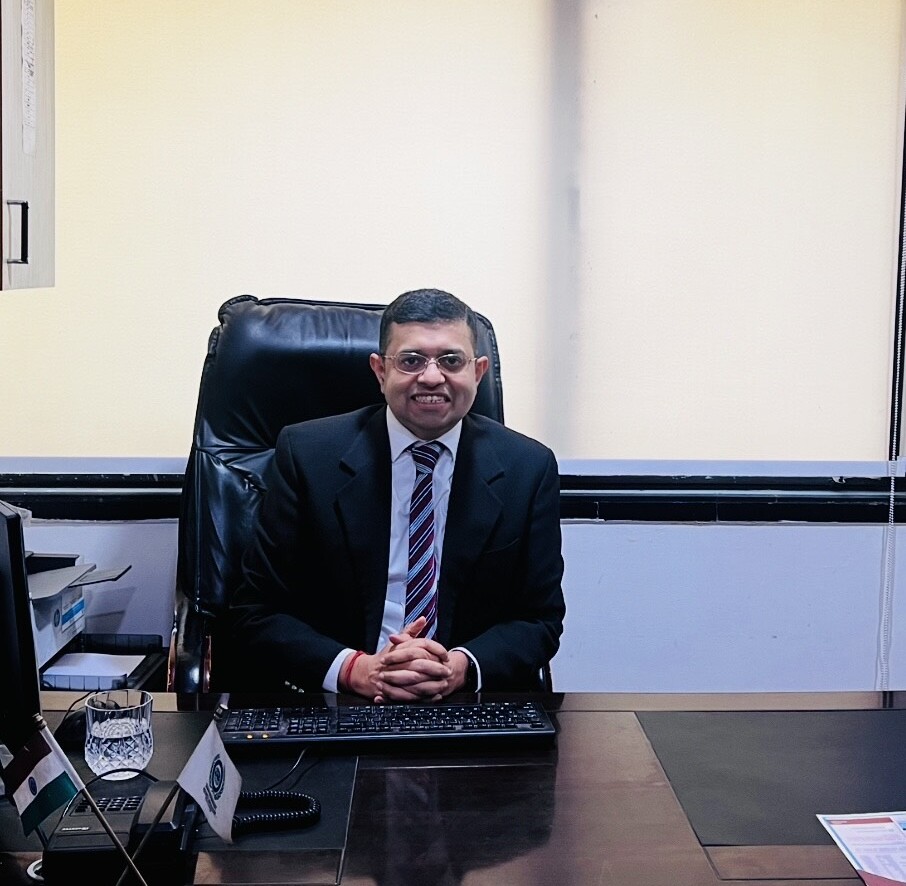
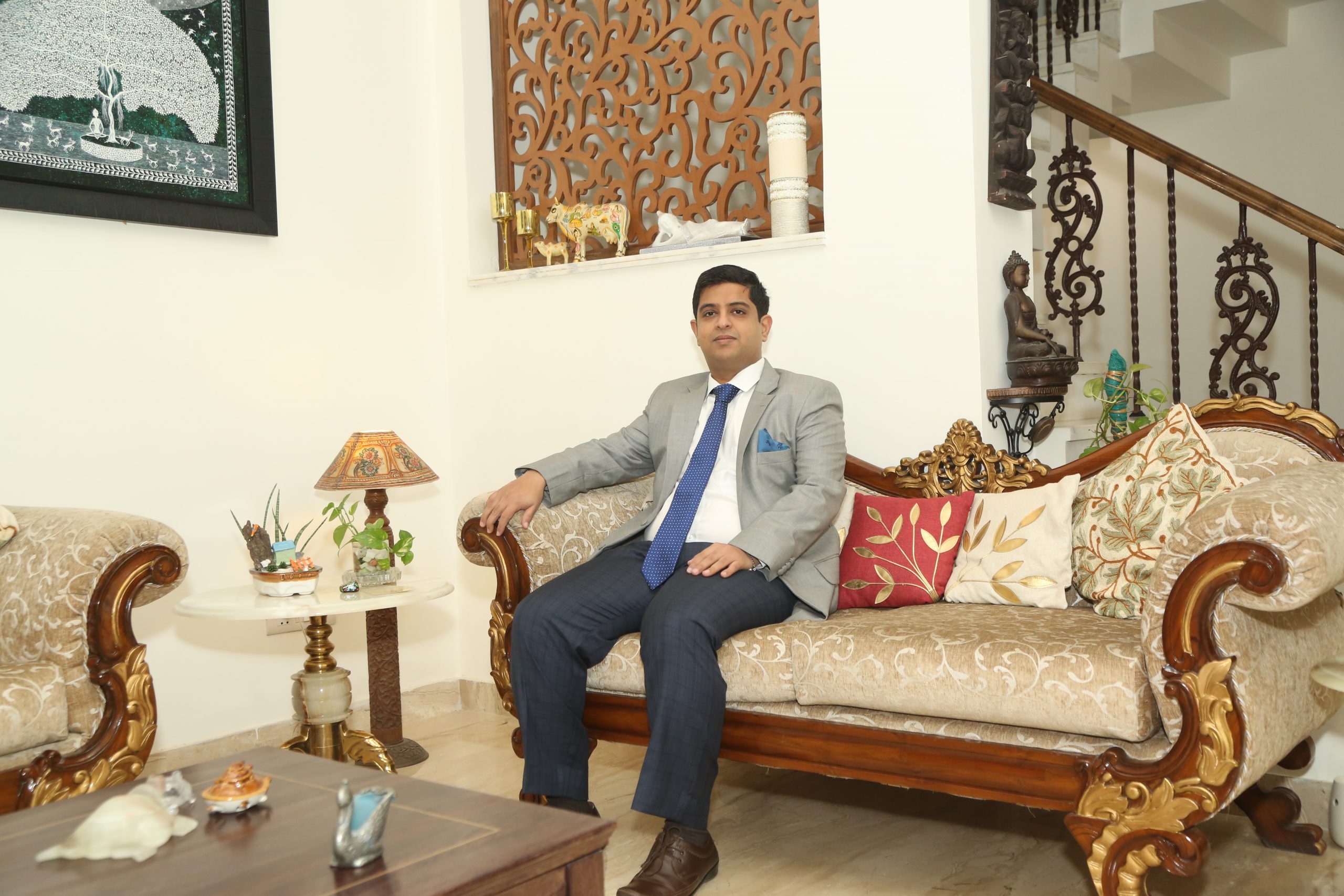
  • “The ability to work hard, good recollection capacity, vivacity, positive attitude are what I feel some of the most important qualities for a litigation lawyer” – Nishant Kr. Srivastava, Advocate-on-Record at Supreme Court of India and the Founder & Managing Partner at Actus Legal Associates & Advocates.

    “The ability to work hard, good recollection capacity, vivacity, positive attitude are what I feel some of the most important qualities for a litigation lawyer” – Nishant Kr. Srivastava, Advocate-on-Record at Supreme Court of India and the Founder & Managing Partner at Actus Legal Associates & Advocates.

    This interview has been published by Anshi Mudgal and The SuperLawyer Team

    As an Advocate-On-Record (AOR) and with over a decade of experience in the field of law, what initially inspired you to pursue a career in law, and how did your passion for the legal field evolve over the years?

    Honestly speaking, it was destined for me to become a lawyer! I had been a Civil Services aspirant after my Graduation and had also reached till the Interview stage the Civil Services Exam (CSE) conducted by UPSC. In 2005 I joined Law Centre-II (at that time evening classes at Atma Ram Sanatan Dharma College) of the Faculty of Law, University of Delhi, Delhi during the later period of my CSE preparations. However, in the same year I once again cleared the Prelims and had to write my UPSC Mains and the dates coincided with my First Semester Law exams and I had to make a choice. I chose the UPSC Mains over the law exam and so did not attend the law classes resulting in shortage of attendance and my not being able to fill the form and appearing in the exams. 

    Later on in 2009, I again joined the Faculty of Law, but this time the Campus Law Centre (CLC), Faculty of Law, University of Delhi, Delhi. 

    Coming from a relatively small city i.e., Gorakhpur (UP), I, for the first time, realised during my preparation period in Delhi that law is just not only a respectable career option, but also Delhi is the best place for anyone who has no other support system/ a first generation lawyer, apart from her/his own hard work and competence. 

    Also, from the college days, my friends used to tell me that I was good at communication- both oral as well as written, and once my attempts at CSE were over in 2006, I was faced with a grim situation and I was required to find a career option, where I could utilise my strengths to support my choice of career. And at this time law as a carrier option looked to me as the best career option, looking at my ability to study for long hours (honed during my CSE preparation days) and a good communication skills, especially in English, and having my earlier small brush with the study of law made the decision to pursue law as a career option a forgone conclusion. 

    In the early stages of your career, you worked with trial court seniors and also managed your independent practice, handling cases across all the three tiers of the courts in Delhi-trial, High Court and the Supreme Court of India. What were the most valuable lessons you learned during this phase that helped shape your career path?

    In my 2nd year at the CLC became the Student Convenor of the Seminar & Discussion Society of the CLC, apart from being one of the Student Editors of the Delhi Law Review (DLR), the renowned Journal published by the Faculty of Law, University of Delhi, Delhi, and I was also one of the Student Convenors of the Legal Aid Society of CLC. This gave me enough exposure and opportunity to meet and initiate an informal conversation with some of legal legends and top jurists of the country. It was during those discussions and interactions, I realised that being a first generation lawyer, I must know the basics and go for an organic growth and progression in my career- from trial works to appellate works. When all my Batchmates were planning to join some of the top lawyers and chambers in the Supreme Court and the High Court, I was searching for a good trial court senior, by the time I completed my course.

    Building a career in litigation can be challenging, especially as a defense lawyer dealing with white-collar crimes. What were the initial obstacles you faced, and how did you navigate and overcome them to establish yourself in this competitive field?

    Usually in any case involving allegations of a white collar crime, the accused is a well to do person having all the facilities, including a battery of lawyers. In such a scenario, initially it was difficult to make such risk aversion taking people to convince that I can handle their case well and have the requisite competence and skills, however I think what worked for me was the fact that in the courts whenever I was acting as a defense counsel, even in smaller cases, I used to give my 100% and used to put more hard work than many of the established lawyers would have put. This became noticeable not only to the Presiding Officers, Additional Public Prosecutors, Niab Courts and the police officials, but also to the litigants waiting for their cases to be called. This gave me visibility. Also, I enlisted myself with the South District Legal Aid Society (DLSA-South) in the initial days and rendered my services to the best of my abilities  as a Legal Aid Counsel (LAC) in those matters where the poor accused persons, because of lack of wherewithal, were unable to get good representation in the courts. 

    When handling both ad-hoc and institutional arbitration cases, what core skills and strategies do you rely on? Can you share an example of a particularly difficult arbitration case that you were able to resolve successfully?

    I would honestly say that Arbitration is akin to an exalted Civil Trial. And if one doesn’t have the experience of conducting trials, especially in civil cases starting from drawing up the case from the scratch and skill in cross-examination of witnesses, that is going to be a big handicap for the lawyer intending to succeed in the field of arbitration. Fortunately, I started my career in the beginning years in trial courts, apart from frequent appellate and HC/ SC/ NCDRC works. And this decision to start from the trial courts was only because I was fortunate enough to interact with the stalwarts and who and who of the Indian legal system during my Law Faculty days as the Student Convenor of the Seminar & Discussion Society of the CLC. It was one unanimous piece of advice, as a student of law, I had received from them, i.e., to know the basics and to learn the trial works, especially being a first generation lawyer and an outsider in Delhi. 

    In my first Arbitration case, the seat of which was in Kolkata, West Bengal, before the Ld. Sole Arbitrator Sh. Sushanta Chatterjee (who recently passed away), former Judge Calcutta High Court, where the Respondent had, citing a big theft at their site because of the alleged deficiency of service and dereliction of duty on the part of my client (a Manpower Supplier), had withheld payments of my client. Much depended on the veracity of the story of theft as alleged by the Respondent. At that point of time, my first-hand experience at cross-examination stood in good stead in Kolkata and I was able to show/ expose that the alleged theft never took place and it was a just ploy on the part of the Respondent to not to pay the dues of my client. This clinched the case in my favour and I won the Award for my client.

    In defending clients in cases involving economic offenses, such as those handled by the EOW, CBI, or ED, what do you believe are the key considerations in crafting an effective defense strategy? Could you highlight a case that was particularly interesting to you?

    Usually, and if I may say, invariably, the EOW and CBI has a penchant for filing voluminous chargesheet and enlist 30/50/85 witnesses, if not more. And here there is enough scope of contradictions and loopholes. As a defense lawyer representing an accused, I am not required to prove that my client is innocent beyond reasonable doubt, since the same is the burden of the Prosecution and not the accused. A careful reading of the chargesheet and statements particularly of the key witnesses, gives sufficient points and opportunities to show to the Court that there is difficulty in accepting the case of the prosecution and there are doubts and contradictions and there are two views possible and after that I leave the rest to the Court to decide. In fact in many EOW cases, I have got my clients discharged at the initial stage itself. Obviously, the knowledge about the latest judgment is something, inter alia, which clinches the decision in your favour. In an interesting case being tried u/s 420 IPC, the CBI has summoned on a single day a number of witnesses. The trial had started almost 6/7 years after the case was registered. By that time many witnesses were not traceable and those who had come had shifted to different places outside Delhi and had travelled to Delhi from distant places. That very day, due to the sheer number of witnesses (complainants) and the heavy board of the court concerned, matter was getting adjourned. The witnesses showed reluctance to come again for the examination in chief and cross-examination. At that point of time, I was able to get them to compromise and get their statements recorded. On that single day most of the witnesses compromised with the accused and the case became very weak. Later on, in the cross examination of the few remaining witnesses, I was able to show that the prosecution was not able to prove its case beyond reasonable doubt.

    You are highly regarded for your expertise in matrimonial disputes and family law. How do you view the changing landscape of women’s rights in matrimonial cases, and what are the major challenges you come across while dealing with matrimonial cases?

    Unfortunately, matrimonial disputes are one of the fastest increasing legal disputes in India, at least in Metropolitan cities like Delhi. The ability to adjust and let go of certain things, which at the first place should not have been an issue at all, I am sorry to state, has become more and more scarce these days. Intervention of the family members, especially because of the instant calls and the tendency of the people to “create evidence” has weekend the mutual trust and faith a couple ought to have for any marriage to work. I am happy to see that the Courts in Delhi have become more and more gender neutral, especially in the matters instituted under the various provisions of the Hindu Marriage Act, 1955. The same is the situation in cases instituted under s.144 of the Bhartiya Nagarik Suraksha Sanhita (BNSS) (old s. 125 CrPC). Over implication of the relatives and distant relatives in DV Act matters by the aggrieved are being frowned upon by the Judicial Magistrates. 

    The major challenge, I think, is the lack of cogent and convincing evidence in matrimonial disputes, since most of the allegations pertain to something which had happened within the four walls of the matrimonial home. And this many a time, gives opportunity to a party to level baseless and sometimes ridiculous allegations!  I am also especially sad to see how the children suffer due to the mutual fight between their own parents. I strongly  feel that any lawyer handling such matrimonial cases must be a sensitive person herself/ himself because that is the only thing which might help the litigating couple who are blinded by their mutual distrust and hate towards each other and who would go to any extent to prove that the other person was wrong and he/she has been wronged. 

    As the founder and managing partner of Actus Legal Associates, how do you effectively manage a team of 7-10 lawyers while ensuring consistent performance and a steady flow of work across the firm?

    I believe in self-control and believe that no one can help a person who is not willing to help herself/ himself. So, I always try to make my colleagues and juniors realise that they have to take responsibility and deliver the results. Litigation, among other legal areas of practice and when compared with other areas of practice in law, is very demanding. Only highly motivated people can survive in litigation. 

    I believe in situational leadership and delegation. Once the expectations are clear and one is clear with the facts of the case at hand, I trust my team to deliver the results. Discussions and deliberations and constant evaluation of the progress of the cases we are handling through our own internal mechanism, I think helps us to ensure consistent performance and steady flow of work across the firm.

    For young lawyers aspiring to specialize in litigation, arbitration, or criminal defense in India, what advice would you offer? What key skills and personal qualities do you believe are essential for success in these areas of law?

    Your this question is precisely the same question, which as a law student and the Student Convenor of the Seminar & Discussion Society of the CLC, I used to ask the Legal Luminaries, since I was one coordinating and inviting those Supreme Court and High Court Judges and the doyens of the Bar to the CLC for events, lectures and conferences and many a time, I used to get some free time with these seniors in the profession. Since many of them were alumni of CLC, the chats were pretty friendly. I was told invariably by everyone I had put this question, that I must know the basics and spend some initial years learning trial work, both civil and criminal and this is what I will advise the young lawyers aspiring to specialize in litigation, arbitration or criminal defense in India. 

    Inter alia, the ability to work hard, good recollection capacity, vivacity, positive attitude and what I feel are some of the most important qualities for a litigation lawyer, I also feel that a litigation lawyer must be ready and be there in the court much before the court starts. Being before time, gives sufficient time to once again go through your file, talk to the client and be abreast with facts of the case at hand. Many times, your ability to keep an open mind and not acting only as per your strategy made last evening, just being alive to the requirements and queries of the court, carries the day for you. Ability to network with people outside your profession is also one of the important skills and qualities, I believe are essential for success in these areas of law.

    Looking back at your career, what has been your most fulfilling case, and what were the learning experiences that you’d like to share with us?

    In one of the matrimonial disputes cases, where both the parties had married with each other after their unsuccessful first marriage and had a baby born out of this second marriage, I played a crucial role to ensure that the matter is settled through mediation in which there was no intervention of the families of both the parties. Actually, I sensed during the initial days of my engagement as a counsel for one of the parties that the real culprit for the impasse were the parents of both the parties and the couple were having almost cordial relationship and it was only because of the unintended but damaging interference by the parents from both the sides, the relations had become strained to the extent that one of them had filed a petition for divorce on the ground of cruelty. I impressed upon the Ld. Family Court to send the matter (despite I having been drafted the WS and carrying the same in my hand to the Court) to the Mediation Centre and be taken up under the supervision of the most experienced Mediator and the parents of both the parties be strictly barred from entering the Mediation Room. That worked! The moments the parents were barred from interfering, the couple was able to come to an amicable settlement and resolve their grievances. I am happy to inform you that as on date those warring couples are living happily together with their beautiful child. 

    The experience which I gained here was that a lawyer must also be a good listener, especially in family matters and the best way to resolve a matrimonial dispute is amicable settlement. Dehors the din, usually matrimonial matters are more about small issues generally connected with adjustments and if one is able to point out and target and resolve those small issues, many families may be saved from disintegration and ending up in divorce.

    Get in touch with Nishant Kr. Srivastava –

  • “The legal profession grants creative and financial freedom, but true success comes when one learns to focus on enhancing their lawyering skills without indulging in comparisons.” – Rishi Raj Sharma, Advocate-on-Record at the Supreme court of India and Founder of Law Chambers of Rishi Raj Sharma.

    “The legal profession grants creative and financial freedom, but true success comes when one learns to focus on enhancing their lawyering skills without indulging in comparisons.” – Rishi Raj Sharma, Advocate-on-Record at the Supreme court of India and Founder of Law Chambers of Rishi Raj Sharma.

    This interview has been published by Anshi Mudgal and The SuperLawyer Team

    What inspired you to pursue a career in law, and how did you begin your journey in this field? What motivated you to establish your own practice in 2016, and what challenges did you face in the initial stages?

    Belonging to the family of civil servant, I was influenced by prominent members of legal fraternity who were family acquaintances. When I was around 9-10 years old, my father pursued LLB course from Agra University (though he never practised), which gave me access to judicial precedents that I used to read as bed-time stories. Being academically inclined, I was pursuing the IIT-dream, when I came across Harper Lee’s To Kill a Mocking Bird, which fructified my decision to pursue law. 

    My parents readily agreed to allow me to pursue law with the condition that I get admitted to one of the top law schools. I missed NLSUI-Bangalore seat by a whisker. However, I got selected in almost all other top law schools in country, but decided to join ILS Law College-Pune. During my five-years at law school, I worked hard on academics as well as all extra-curricular and sports activities. During college vacations, I did my internships with law firms, senior advocates, and high court judges for my all-round development as a complete lawyer.

    With an initial focus on work-discipline, I joined Remfry & Sagar, where I had an illustrious career for nearly five years. My memorable tenure at Remfry & Sagar taught my punctuality and sharpened my comprehension skills, which I feel are the key essentials for every good lawyer. Thereafter, for short periods, I joined few other legal offices, law firms, senior advocates, etc. to learn court-craft and get an exposure on the variety of work on offer in the market, and then, I set up my own chamber practice in the year 2016. With my experience, I advise that in our country, the legal profession is structured in a manner that one gets complete creative and financial freedom for work and growth only in self-owned law-firm/chamber practice. However, being a first-generational lawyer, the biggest initial challenge that I faced was handling clients and sometimes the lack of them. My advice to every aspiring and young lawyer is to not indulge in comparative analysis, and instead focus on enhancing the lawyering skills, and success will follow.  

    How did your time working with former Solicitor General Mr. Ranjit Kumar and former Additional Solicitor General Mr. Sanjay Jain shape your legal acumen? Can you share some insights from your time working with them?

    Both these two gentlemen are God’s men, and my two gurus, and legal legends in the true spirit. They have completely different lawyering kills and court-craft, but humbleness and kindness are common to them. When you spend long hours with someone together, especially your teacher/guru, a special bond develops with them. My life is deeply indebted to both of them in a lot many ways. Having worked elaborately with both of them, I say that Ranjit Kumar sir has an orthodox teacher-pupil like approach, where for gaining true knowledge, one has to first completely surrender and unlearn everything. Whilst Sanjay sir has a rather modernized approach, to teach and learn at the same time. 

    Can you share some insights and experiences from handling high-profile cases like Lajpat Nagar Bomb Blast case or the 2G scam?

    My third guru, Uttam Datt sir has taught me that all cases are equally important. The nature of court forum and the nature/gravity of the case should neither cause anxiety/over-keenness, nor deserve any special attention/concession. I do my best in every case and opportunity that lands at my door step. It is the small steps we take on daily basis that prepares us for the one large big step. Certainly, Rome was not built in a day. In my short career of fifteen years, God has been kind enough to provide me the opportunity to be associated with several high-profile cases defining legal jurisprudence in the country. I am grateful to Sanjay Jain sir for providing me with the opportunity to be involved in several high-profile cases such Lajpat Nagar Bomb Blast, 2G scam, and Antrix-Devas. All high-profile cases come with the baggage of voluminous court records and long-sitting hours. The happiness and satisfaction achieved by success obtained in these high-profile cases has no bounds and cannot be measured. 

    What are the unique responsibilities and challenges of being an Advocate-on-Record at the Supreme Court of India? Could you describe a typical day in your life as an Advocate-on-Record, and how do you manage the demands of such a prestigious and demanding role?

    Being an Advocate-on-Record at Supreme Court of India is a prestigious designation for any lawyer. We must understand that Supreme Court is the final frontier for all litigation disputes, and therefore, the biggest responsibility and challenge faced is to meet the expectation of clients. With the court hearings being conducted via hybrid mode – physically/virtually, and considerable infrastructure development, appearing before the Court has been made easier for the lawyers as well as the litigants. However, for listing of the case, one has to coordinate with the Registry, which since past few months has not been functioning at optimal level. Though the silver lining in the dark clouds is that some changes are lined-up, and we can expect things to improve in near future. 

    My chamber-practice is very structured and organized. Having an efficient and loyal clerk like Anand-ji helps.  We are planned/prepared in all our cases a week before the court-date, courtesy which I am able to appear before two-three different courts in a day. In my initial days of practice, I would be working 15-16 hours a day. However, things have changed post-COVID. Now, as opposed to the general practice of law chambers starting work post 4:00 pm, I start my work day at 7:30 am, and try to finish the major drafting work by 9:30 am. Courts are attended to from 10am to 4:30pm. The time available between court hearings is spent on reading case files, legal research, client meetings, etc. After court hours, 5:00pm to 6:30pm is spent on preparing for the next day or some client meetings. Unless there are some urgent pressing work commitments, I do not attend to any office work after 7:00pm. On a daily basis, 30 minutes is specially dedicated on reading the latest judicial precedents as bed-time reading.   

    As a legal advisor to media companies and projects like the documentary series “HUNT FOR THE INDIAN MUJAHIDEEN”, how do you balance creative freedom with legal compliance?

    Contrary to popular belief, the only role lawyers play in media and corporate houses is to red flag possible legal hurdles and issues, and suggest ways to avoid any hurdles/issues by making changes in the document, script, characterization, dialogues, nature of depiction / representation, drafting / vetting agreements/ NOCs / disclaimers etc. with the objective of retaining the creative freedom for the artists, who are essentially your clients. The final outlook of the visual content created and the market reception of the same is not in domain of the lawyer, whose job is to be handle and avoid all legal objections / possible legal objections from all sections of the society. This is relatively easier for fictional works, but for documentary works a lot of time is spent verifying the sources, whilst the problematic areas from lawyer perspective are inspirational works and biographical works.   

    Outside of your legal career, what hobbies or interest do you pursue, and how do they help you maintain a work-life balance?

    Litigation practice is a full-time job and serious work. I do not get time for pursuing hobbies and interests. I am immensely fond of reading and playing chess, but it has been a decade since I read a novel or played chess at club-level. All my days are structured and planned about a fortnight in advance. Whatever limited time I get from work, I spend with my family and go out for shopping, movies, social gatherings, temple visits, picnics, long-walks, sports, vacations, etc. During winters, I do play sports like badminton, cricket, and hockey at club-level. As a rule, I keep one day a week exclusively for family. I do cook once a week, which calms my mind.  

    Are there any specific legal reforms or policy changes you are passionate about advocating for, based on your experience in the field?

    My litigation practice is diverse to include civil, corporate and criminal matters, both at original and appellate levels. I strongly believe that the drastic changes need to be made in the judicial system to make it speedier. Justice delayed is Justice denied. We need more competent Judges at District Court level. All civil and criminal trials should be done on day-to-day basis. All cases should be processed chronologically. Hefty costs should be imposed for seeking adjournments. There are numerous judgements by Supreme Court and High Courts on this issue, but in ground reality, things still move at snail pace. 

    What trends do you foresee shaping the future of legal practice in India, and how are you preparing your firm to stay ahead of these trends?

    I feel law firm practice will be way forward. However, independent counsels / people with small chamber-practice will never be out of work. The focus is to keep enhancing the lawyering skills on daily basis. People with top skills are never out of work, be it in any field.  

    As someone with significant experience, how do you approach mentorship and leadership within your firm and broader legal community? What advice would you give to young aspiring lawyers who are just starting their legal careers and looking to make significant impact in the field?

    At this stage, mentorship are big shoes for me to fill. In the past, I have visited quite a few colleges to share my experience with the students. I am accessible to all young lawyers for guidance and advise, and many of them do consult me from time to time. My general advice to everyone aspiring to be a litigation lawyer is to keep head down, learn, work, and be patient for at least 8-10 years. As opposed to other professions, the legal profession requires considerable maturity, compassion, and years of skill and learning. I would suggest them to not compete with anyone or to do comparative analysis or to be influenced by social media influencers, and rather they must try to be a person with substance, and an empty noisy vessel.  

    Get in touch with Rishi Raj Sharma-

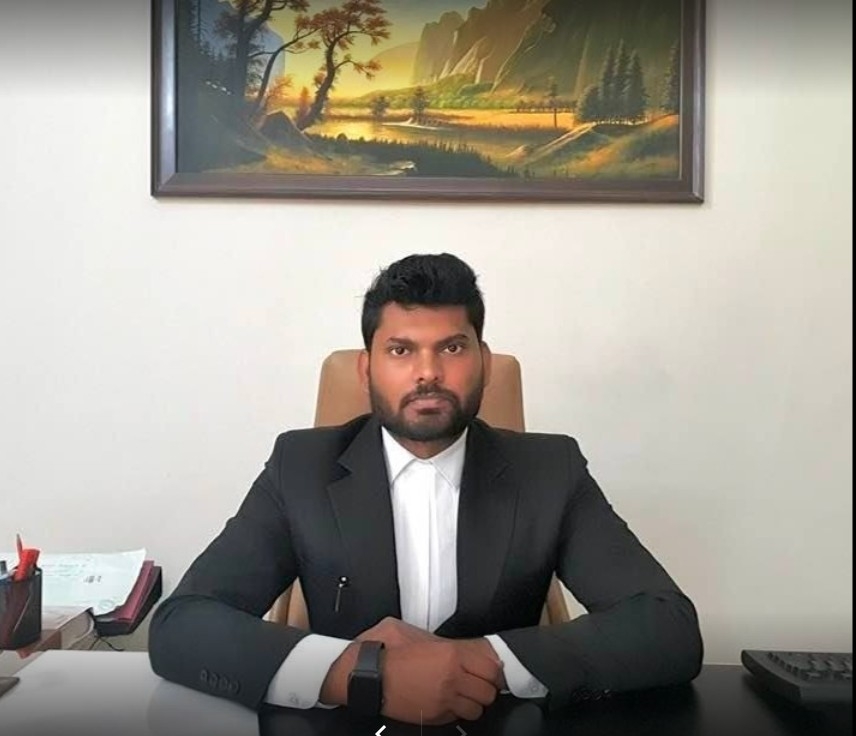
  • “In the process of litigation you may lose some small battles, but the idea is to win the war and not every single individual battle” – Avinash Amarnath, Partner at Chandhiok & Mahajan

    “In the process of litigation you may lose some small battles, but the idea is to win the war and not every single individual battle” – Avinash Amarnath, Partner at Chandhiok & Mahajan

    This interview has been published by Namrata Singh and The SuperLawyer Team

    A very warm welcome to everyone! The SuperLawyers team is back with another enriching and informative session. Today, we are thrilled to introduce our guest, Mr. Avinash B. Amarnath. Thank you so much for accepting our invitation. Avinash sir is currently a Partner in the Competition and Disputes team at Chandhiok & Mahajan Advocates and Solicitors. He leads the firm’s Hyderabad office and South India disputes practice, specializing in advising clients on complex competition law and dispute matters.

    A very warm welcome from the entire SuperLawyers team.

    Thank you. It’s a pleasure to be here.

    Sir, after a decade of commendable excellence in the legal profession, could you share with us why you chose law? Was it a calling, or a conscious decision from the start?

    For me, law has always been part of the family. My father is a practicing lawyer, and my mother, though not a practicing lawyer, is a law graduate. However, law was never imposed on me—I had the freedom to choose. I would say it was a conscious decision. Honestly, I chose law almost by a process of elimination. I didn’t want to pursue science, and I had a choice between commerce and law. Law seemed intriguing, especially because I had an interest in humanities during school. I felt that studying law would allow me to explore subjects like political science, which is why I chose it.

    That was concise and insightful. Moving on, you’ve been working in the corporate sector for years now. What keeps you going in this environment? Do you have any particular routine or professional discipline that you follow?

    So, I think the first thing I would say is that the routine that works for me may not work for everyone. My first piece of general advice is that everyone has to find their own routine. However, a few tips I’ve noticed that generally help include sleeping early, waking up early, and avoiding screen time.

    You’ll find that you actually have a lot more time in the day than you think, especially if you follow these guidelines. It’s also very important, particularly in this stressful corporate culture, to prioritize your family and yourself.

    One of the best pieces of advice I received as a young lawyer was from someone who used to run a law firm. This advice has stuck with me for a long time, and I try to follow it: no matter how much work you have or how tight the deadlines, always dedicate three to four hours to the following things:

    1. Spending time with your family.
    2. Engaging in physical exercise.
    3. Pursuing any personal hobbies.

    Guard this time scrupulously and strictly. This is what I try to follow to maintain discipline. Of course, the most important thing in this is that, the corporate culture demands flexibility.

    So, while this is a routine, it often gets broken, and you have to be innovative. For example, I travel a lot, and when I do, some of this strict routine gets disrupted. But you have to be innovative and find alternatives.

    If I’ve been traveling too much, I make sure to completely reserve that weekend for my family. Even when I’m traveling, I try to fit in quick 10 to 15-minute exercises in the morning. This is something I’ve realized over time. It took me 10 years to figure out this routine, so it will take time. As I mentioned at the beginning, this works for me; it may not work for someone else. The idea is to find your own routine and what makes you tick.

    Thank you, sir. I’m sure we all recognize the importance of limiting screen time and balancing various aspects of life, especially in such a high-pressure environment. This wisdom is particularly valuable for those of us just starting out. Let’s move on to our next question: Dispute resolution involves a lot of strategizing and planning. How did you develop your flair in this area, and how much do you enjoy it?

    Absolutely. I was fortunate to have very good mentors and guides when I started in the profession. The most important thing in litigation, especially in strategizing and planning, is paying attention to detail. One of the first things I was told very early on is to read the entire file—whatever it is, even if it’s a small transfer petition matter.

    Even if the matter is just getting adjourned, I was still told to read the file as thoroughly as possible, front to back. This habit, ingrained in me from the beginning, made me realize that sometimes, the more you read and reread, new things come to light that you wouldn’t have noticed before.

    This attention to detail really helps in planning and strategizing. When a client first approaches you, they provide a broad perspective, often their own, which may not be reflected in the documents. So limiting yourself to just what the client says isn’t sufficient. You need to verify their perspective by examining the documents. As I mentioned, the devil is in the details.

    This practice slowly developed my flair for this work. The more I read, the more confident I became with the case, and the better I could strategize. It’s a process of evolution, right? As a young lawyer, your role is often limited to knowing the facts well. If you have a strategy, great, but usually, you’re expected to have a solid understanding of the facts, along with thorough legal research.

    As you grow older in the profession, you start engaging in actual strategizing. It’s like a game of chess—you make a move and see how it plays out. Sometimes it works, sometimes it doesn’t. When it doesn’t, you go back, regroup, and try a new move. It’s a constant game of chess, and I enjoy that.

    Strategizing and planning, especially in litigation, is like sports. It’s not always going to be a perfect victory on the first try. There will be setbacks, but what’s important is to focus on the long-term goal—for both the client and yourself—and work towards that in the best way possible. You may lose some small battles, but the idea is to win the war, not every single battle. That’s how I approach and enjoy it.

    You have been involved in a lot of high-profile cases. That has received media attention. And we all know how media attention can turn both ways. It can celebrate you one day. It can suddenly criticize you unnecessarily the other day. How do you keep calm in these specific high-profile matters where really high stakes are involved?

    I think I’ve been a bit fortunate because I haven’t had to face intense media pressure directly. However, there were instances where difficult questions were asked, and I received calls from media houses seeking comments on a very contentious case. In such situations, we were strictly instructed by the client not to make any comments.

    Generally, in cases, I always try to focus solely on the case itself and block out any external noise, as I call it—whatever is happening outside. I believe that in high-profile cases, it’s even more important to understand that your role is limited to being a lawyer in that case and not to worry about the repercussions or consequences. Your job is to provide the best strategy, whether it’s a defense or prosecution, and offer the best advice to your client. The outcome is not in your hands, nor is what people make of it or think about it. You have to let it go. In one word, you need to develop a thick skin and ignore what the media is saying.

    Moving on to the next question, your academic excellence at King’s College is truly commendable. As someone who has studied both in India and abroad, how was your law school experience different there compared to India?

    I should start by saying that my law school experience was 10 years ago, so I’m sure things have changed in India since then. However, back then, my experience in India was that law education was still heavily focused on rote learning and less on application. When I studied abroad, that was the biggest difference I noticed.

    The way classes were conducted there was different. Typically, in India, you come to class, open the book, and learn the concept then and there. But there, the structure was different—you were given a set of reading material before class, and you were expected to read it on your own. This might also be because it was a master’s course, so there was an assumption that most people already had a basic understanding of the law. Still, I really liked that system. You do your reading at home, and when you come to class, you’re taking the discussion to the next level. You’re applying the knowledge you’ve already gained to difficult questions or discussing specific, controversial, or complex topics in more detail.

    Even the exams were different. The questions were mostly problem-based, requiring you to apply what you’ve learned and provide solutions, rather than just reproducing information. This was a significant difference for me. Another major difference was the encouragement from the faculty to have and express opinions. They would encourage students to form their own opinions and make it clear that there is no right or wrong answer, as long as you can back it up with solid logic. They might challenge your logic if they disagreed, but if you could defend your position, they respected that. This openness and application-based learning were aspects I truly enjoyed at King’s College.

    That was very interesting. I’m sure law schools in India are also starting to embrace these changes, though we still have a long way to go in fully adopting application-based learning. How did this experience shape your legal perceptions once you returned to India and began practicing?

    To be honest, it was partly that education, but also working with some lawyers here who were educated abroad, that really changed my entire perspective on law.

    In most subjects in India, let me take law or even medicine as an example—you’re often considered a good doctor if you can quickly prescribe the right treatment. Similarly, the expectation for lawyers in India is that you should know every section and answer legal problems on the spot, complete with section numbers and details. However, I realized that’s not what practicing law is really about, nor is it what makes a good lawyer.

    It’s impractical for a lawyer to know every single law by heart, especially given the vast range of knowledge required. What’s important, and what changed my perspective, is knowing how to read and interpret the law. When presented with a problem, you should be able to identify the relevant subject, pick up the relevant law—perhaps one you’ve never read before—and immediately apply yourself to it. You should be able to analyze the law and argue points based on the definitions and sections. The focus should not be on merely retaining knowledge, but on how to use that knowledge effectively and strategize.

    So, in that sense, my approach to practicing law changed completely. I no longer stress about remembering every detail; instead, I focus on how to strategize and apply the knowledge that’s available in front of me.

    How to read the law is such an application-based concept, which we should all imbibe no matter whether or not our colleges and our educational setups are telling that. We can definitely make it a practice. Thank you so much, sir.

    Talking on these lines, sir, how do you balance this personal life with professional commitments, any hobbies or any passion, or interests, that keeps you lively?

    As I mentioned earlier, I think it’s important to revisit the discipline points we discussed because maintaining those habits helps me balance professional and personal life. I want to touch on hobbies, but something else just came to mind. When you’re at work and you get a call from home, you might answer, but usually, even if you do, you say, “I’ll call you back, I’m at work.” I believe the key is to give that same level of importance when you’re at home, spending time with family, or doing something personal. There will be emergencies, and sometimes you genuinely need to take a call and work, and I completely understand that. However, more often than not, if someone calls you, even if it’s from work or a client, you can tell them, “I’ll call you back.” It’s important to give the same respect to your personal time as you do to your work time. If someone calls you while you’re with your family, it’s okay to tell them, “I’ll call you back in a bit.”

    Now, regarding hobbies, I’ve always been a sports fan, particularly passionate about cricket, especially test cricket. When I’m not working, I’m usually either following cricket, trying to play wherever I can, or discussing it with everyone I know. One of the things I love about sports is how it parallels what we do as lawyers, especially in court. It’s like a game of chess, similar to sports where you constantly see strategies and counter-strategies. I find that very appealing, so I try to follow and play sports as much as possible.

    Moving on, how would you compare the corporate work culture in law firms versus the litigation culture in chambers? If you had to choose between the two, which would you prefer based on your experience? Could you elaborate on that?

    Sure. Both have their pros and cons, and I’ll explain my preference based on my personal reasons. I found litigation chamber work more appealing, but I think the ideal scenario is to combine the best aspects of both, which I see happening, especially in our firm.

    In corporate work culture, one of the pros is that you are more directly in touch with the client, which gives you a very different understanding. In corporate and commercial law, there’s a legal position and a commercial reality. For a client, especially a company or a business, the end goal is that commercial reality—whether they’re trying to make or save money or achieve some other goal. The legal position may not always support that goal, so the challenge is to find an alternative or a middle path that satisfies that goal while staying within the confines of the law. In pure litigation chambers, responses can be more black-and-white: “This can be done, this cannot be done.” But in a corporate law firm, you develop the art of finding solutions, saying, “This strictly cannot be done, but we can explore this alternative.” That’s crucial as a commercial lawyer—you have to be solution-oriented, not just give yes or no answers.

    Another advantage of law firms is that you get more time to work on a particular case. In litigation chambers, files often come to you the day before a hearing, leaving you little time to fully understand the case. In a law firm, you might work on the same case for two to three months, allowing you to interact with the client, get all the necessary clarifications, and build a strong strategy.

    On the downside, one con of law firms, and this varies, is that sometimes there’s too much focus on presentation—form over substance. A document might look very polished, but if the substance isn’t strong, it shouldn’t pass the test. Another con is the lack of court time—you don’t get to go to court every day, maybe once a week or a few times a month.

    In litigation chambers, the focus is primarily on the substance because you don’t have time to worry about presentation. The emphasis is on points of law, developing legal arguments, and finding and interpreting judgments. In a litigation chamber, you’re expected to read judgments thoroughly, knowing both the points that favor you and those that don’t. Plus, being in court every day is a significant advantage.

    However, a con of litigation chambers is the lack of time to fully apply yourself to a file, as you would in a law firm.

    At Chandhiok & Mahajan, especially within the disputes team, we’re trying to combine the best of both worlds. We don’t just recommend briefing senior counsel for every matter; we’re happy to argue cases ourselves, which gives us the litigation chamber experience while also benefiting from the client interaction typical of a law firm. We try to push for this as much as possible, although it’s ultimately the client’s preference.

    So, to sum up my long-winded answer, I would say that combining the best of both worlds would be my ideal scenario.

    Thank you, sir. Talking about work and everything, first of all, since you have been involved with dispute resolution and you so beautifully summarize the entire strategizing process as a game of chess, how do you think the new ADR mechanisms, such as the mediation bill, will impact India’s ADR structure in the coming years?

    I think we’ve all realized that with arbitration, certain mistakes were made as a system, which is why it hasn’t worked the way people had hoped. The main issues were delays and court interference. If we don’t repeat those mistakes with mediation, I believe it could be very effective—perhaps even more so than arbitration. The reason is that mediation is fundamentally based on the consent of the parties. In arbitration, you consent to having a decision made by someone outside the court, but in mediation, you consent to the substance of the settlement itself. This significantly reduces the scope for court interference.

    I think we’ve got a great opportunity now, and rightly so, the government is pushing mediation as a preferred form of ADR. However, we must be cautious and learn from our past mistakes. Firstly, we need to minimize court interference. Secondly, it all comes down to the will of the parties involved. Sometimes, as litigation lawyers, we see ADR as just another method to delay things. Everyone might agree to mediation, but they might not take it seriously. The mindset often is, “Okay, it will go into mediation and take another six months.” If that’s the approach, it won’t work.

    So, perhaps some level of court interference could help. Currently, once a case enters mediation, courts are very hands-off, and extensions are given when requested. I think courts should perhaps ask for interim reports on how the mediation is progressing. If the court feels it’s not working out, it might be better to pull out of mediation rather than prolong an unnecessary process.

    I genuinely hope mediation works, but it will come down to addressing these challenges and the will of the parties involved.

    Understood, sir. You’ve highlighted several important aspects, and it’s crucial to exercise caution as we move forward with the mediation bill and act, as you mentioned, to avoid repeating the same mistakes and to hope for a better structure. Sir, this next question is from young lawyers and law aspirants who are in the early stages of their careers. As someone who has emphasized the importance of strategizing, what advice would you give to those who are struggling to find a strategy in the initial phase of their legal careers?

    I would say, keep it simple. Sometimes, people tend to project law as more complicated than it really is. So the first thing I would say is, don’t worry—it’s not rocket science. I often tell my colleagues that people who work in science and innovation require a much more complex skill set. Law, at its core, is a social science; it’s human-related.

    One of the key aspects to understand is that it’s a lot about psychological insight, especially for litigation lawyers. Of course, you need to know the substance of your matter, but it’s equally important to understand who you’re talking to and where they are coming from—not just the judge, but also your client. This is something we focus on extensively in our sessions. One of the most important things to remember is that the client is ultimately a human being with certain considerations. Understanding what the client wants and the pressures they are under can make things a lot easier.

    The only other piece of advice I would offer is that young lawyers today are much more aware of their rights, which is a very good thing. They demand work-life balance, recognizing it as a right rather than a luxury, and they are comfortable with technology, which makes them efficient. However, I would advise them to occasionally go back to being old school. With technology, you might miss out on important details, and those details are crucial. So, use technology to your advantage, but don’t forget the importance of manually double-checking and thoroughly reading every document. It’s sometimes good to be old-fashioned in this regard.

    If you’re feeling confused about your career path, I’d say there are many opportunities in law now, so don’t be afraid to try different things. Coming out of law school, it’s impossible to be clear about what you want to do because you don’t get enough exposure. Internships can help, but they don’t provide the full picture. So, try out different things—corporate law, litigation, clerking, media reporting—everything. Don’t think it’s too late to make changes. There’s plenty of time to find your niche.

    Sir, the way you’ve elaborated on this point, particularly the notion that coming out of law school doesn’t always equip you with the decision-making skills needed to know exactly what you want to do, is a relief to many of us who are just starting out in our careers. We also appreciate the emphasis you’ve placed on planning and the balance you’ve achieved at your firm. So, what are your long-term plans in terms of your personal trajectory in this profession, as well as your plans for your firm?

    I was working in Delhi until two years ago, and most of my career has been based there. For both professional and personal reasons, I saw a unique opportunity to come to Hyderabad and set up an office. I believe Hyderabad has a lot of untapped potential, and the proposition we’re building here is unique. We’re aiming to run an entire South India disputes practice out of Hyderabad.

    We faced several challenges initially, especially when virtual hearings weren’t common, as travel could be quite a problem. But thanks to the initiatives taken by the current Chief Justice of India, high courts are now hybrid, which really helps us manage matters. For district courts, we sometimes have to rely on local counsel, but overall, it’s a very unique proposition, and I’m enjoying the roles we’re building here.

    My immediate goal is to continue developing this practice into what we envisioned—a comprehensive South India disputes practice. In the long term, I plan to continue in litigation, with a particular focus on competition law. I don’t see myself leaving competition law, as it’s a specialization I consciously chose early in my career. Eventually, I hope to argue more matters in court and continue doing interesting work.

    Your insights have been amazing today. Once again, thank you so much from the entire team of LawSikho and SuperLawyers. We are sure that with the wealth of practical experience and tips, which you have given us today, we have benefited all the young ones.

    Thank you.

    Get in touch with Avinash Amarnath-

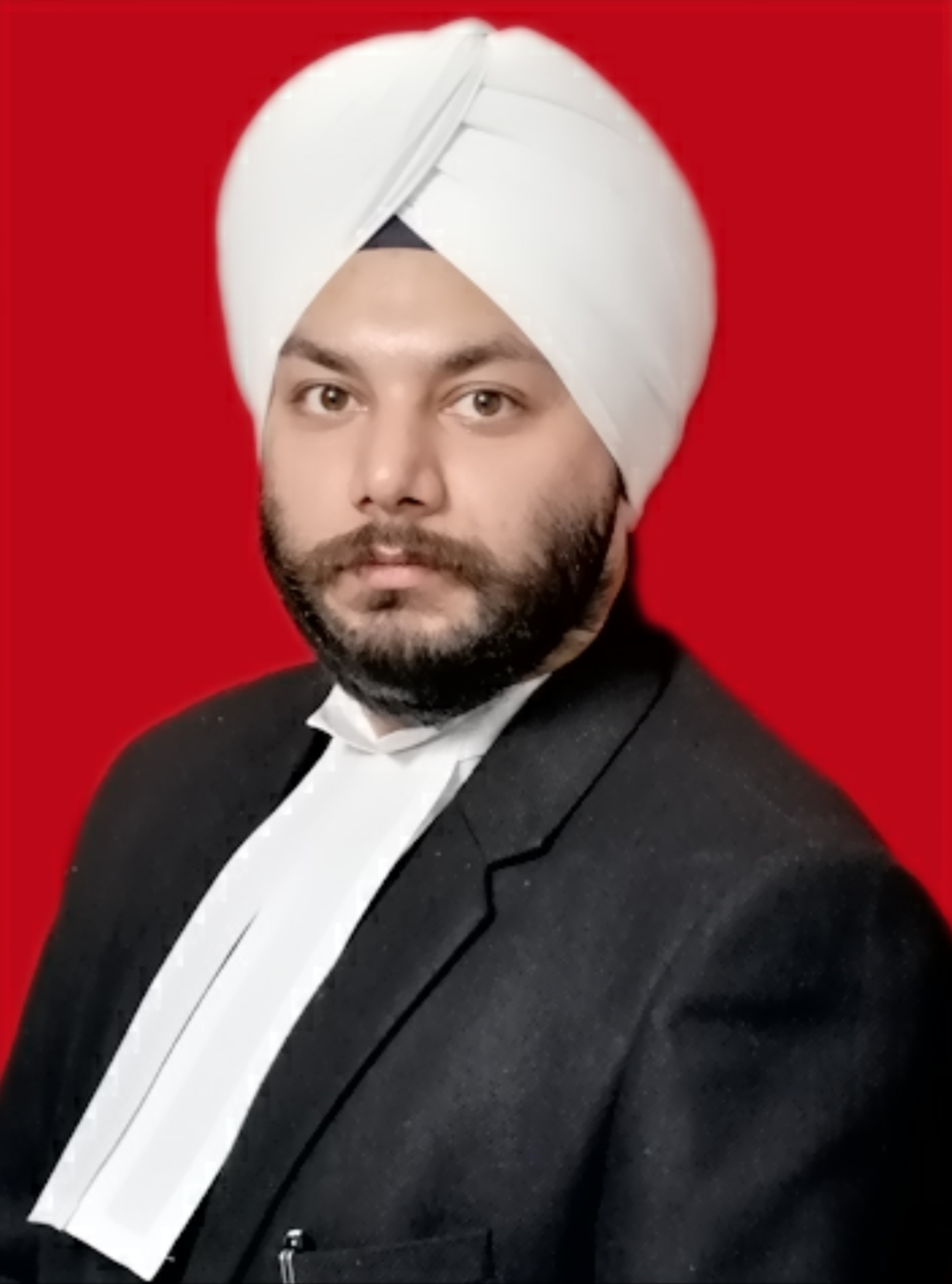
  • “Witnessing my father’s dedication and integrity as a lawyer taught me the value of empathy, diligence, and ethical practice,” – From the Grassroots to the Supreme Court of India, Sanpreet Singh Ajmani, Advocate on Record.

    “Witnessing my father’s dedication and integrity as a lawyer taught me the value of empathy, diligence, and ethical practice,” – From the Grassroots to the Supreme Court of India, Sanpreet Singh Ajmani, Advocate on Record.

    This interview has been published by Namrata Singh and The SuperLawyer Team

    Can you share the journey of your career from starting your practice at the District and Sessions Court in Dehradun in 2008 to becoming the President of the Youth Bar Association of India?

    I got an opportunity to join the Office of Mr. TS Bindra, Advocate in Dehradun, who is having a flourishing practice. His hard work and devotion to the profession is tremendous. I have seen him working as “One Man Army” nay to say, dealing with clients, and then settling the petitions, doing research work i.e. finding the case-laws and finally arguing the matter before the Hon’ble Court. Furthermore, working at the grassroots level i.e. the original side taught me invaluable lessons in legal practice, ethics, and the importance of diligence in serving as a legal practitioner.

    During my early years, I handled a diverse range of cases, which provided me with practical experience and a deeper understanding of the complexities of the law. This period was crucial in shaping my foundational skills as a lawyer and instilling in me a passion for justice and advocacy.

    As I progressed in my career, I became increasingly involved in various legal forums and associations. These experiences expanded my professional network and fuelled my interest in addressing broader issues within the legal community. I recognised the need to empower young lawyers and advocate for their rights and professional development.

    When I started practising on the criminal side, obtaining a copy of FIR was a very troublesome and difficult task. However, it was readily made available to influential lawyers and even the litigants were suggested to engage said lawyers. Poor litigants, having no option, were constrained to engage and pay a hefty amount to such lawyers, in the guise of professional fees. I found the situation to be vulnerable. Apart from this, I noticed that the young lawyers have very limited say and their ideas and voice were throttled. I have seen my friends losing hope in this profession, due to lack of proper guidance and support at the initial stage of practice. That was the moment, which prompted me to have an Association of Young Advocates. 

    Finally, they discussed the idea with some of my seniors, who mocked it but at the same time, few appreciated this idea. I must mention the names of Mr. Saurabh Pandey, Mr. Nirpendra Singh Rautela, Ms. Anjali Chauhan, Mr. Gaurav Pandey and Mr. Lovekesh Choudary.  Ultimately, we got the Society registered under the name of Youth Bar Association of India (in short YBAI) to create a platform to support young lawyers across the country. Serving as President of YBAI has been a privilege and a responsibility that I cherish deeply. 

    It has allowed me to contribute to initiatives that promote legal education, advocate for reforms beneficial to the legal fraternity, and foster a sense of community among young lawyers. We have conducted various webinars and Virtual Summer School on Mediation, which are available on the YouTube Page. 

    My journey from starting at the District and Sessions Court in Dehradun to leading YBAI has been marked by continuous learning, dedication to service, and a commitment to advancing the interests of young lawyers in India. I am grateful for the opportunities I’ve had and look forward to continuing to make a positive impact in the legal profession.

    What inspired you to pursue a career in law, and how has your father’s influence shaped your legal practice and career choices?

    I was inspired to pursue a career in law due to a deep-seated passion for justice and a desire to make a meaningful impact in people’s lives. Growing up, I witnessed firsthand the dedication and integrity with which my father practiced law. His commitment to upholding justice and serving his clients ethically left a profound impression on me.

    My father namely S. Bhupendra Singh, had worked in the original civil side at the grass-root level i.e. the District Court. Later in the year 2001, after the creation of the State of Uttarakhand, he got an opportunity to serve as a “Standing Counsel” for the Govt. of Uttarakhand, which he continued for almost 10 years. My father is a first-generation lawyer, who comes from a very humble background. He started his journey with a lot of struggles for sustainability. My mother passed way, leaving the responsibility to me and my younger sibling (Dr. Jaspreet Kaur); I was just 2 years of age. We have spent a considerable long time, in rented accommodation. I have witnessed my father carrying bulky files. Sometimes he has to wait at the taxi stand, as travelling in a sharing cab is cost-effective. His hard work and dedication taught me, the value of money and being humble. At the same time, what is more powerful to learn from him, is he never opted for short cuts and unethical ways. His continuous study and determination still influences me. His influence has been instrumental in shaping my legal practice and career choices. He instilled in me the importance of empathy, integrity, and diligence in every aspect of legal work. His guidance has taught me to approach each case with a holistic perspective, considering not just the legal nuances but also the human aspects involved.

    Moreover, seeing my father’s dedication to his clients has motivated me to strive for excellence in my legal career. His mentorship has been invaluable in helping me navigate challenges and make informed decisions that align with ethical standards and the pursuit of justice.

    Your wife, Harsheen Anand, played a significant role in the formation of the Youth Bar Association of India (YBAI). Can you elaborate on how her contributions have influenced your professional journey?

    She is a vigilant person and more educated than me. Though she has done a Masters in Law, she is currently practicing as a Chartered Accountant. She helped us to give a legal entity to YBAI, which we got registered under the Societies Registration Act. She actively participates in the affairs of YBAI. 

    I feel, I have been unfair to her, because where both the parents are working, either one has to compromise in terms of career; as the responsibility of kids is fastened upon them. In our case, she has groomed and nurtured the kids more than me, for which I shall always remain indebted to her. However, now, I used to devote my maximum time to the kids. It’s a mesmerising feeling. I have started living my childhood with my kids.   

    Was practicing independently the choice you made from the beginning of your career, or was there a specific theory or reason behind your decision to establish an independent legal practice? Can you share the thought process and motivation behind this decision?

    I must mention here about my appearance at the Supreme Court. I got my first independent case but frankly, the law point involved was not much impressive. However, while discussing the matter with my senior colleagues, particularly Mr. Nagendra Singh Ji, I was made to learn the basics of legal practice, nay ‘not to be judgmental’, as the work of an Advocate is to put forward the grief and facts of the litigant before the Court, which alone has the jurisdiction and competence to decide the same. With the able guidance of my senior colleagues, I prepared the matter and I was made to understand by Mr. Nagendra Singh Ji that he will argue the matter. I still remember it was a cheque bounce matter (U/s. 138 NI Act), the transfer of which was sought from Kolkatta (West Bengal) to Pithoragrah (Uttarakhand). The matter was listed before the Bench of Hon. Justice Altamas Kabir, one of the most humble Judges, who later became CJI. After reaching the court premises, I called Mr. Nagendra Singh Ji, who asked me to argue the matter, as he intended that I must confront the Court. There I was guided by another senior colleague Mr. Rabir Singh Kundu, a very eminent lawyer. Ultimately, I got a favourable order. From that point of time, I made up my mind, to establish my independent legal practice. But at the same time, I got loosely associated with my seniors.    

    Initially, I joined the chamber of Mr. Jitendra Mohan Sharma Ji, Senior Advocate, with whom I am still associated. He is a most humble person and there is a lot to learn from him. I have worked with and briefed various legal luminaries. When I joined the Supreme Court, Mr. Ram Jethmalani Ji was the President of SCBA and I had attended various legal conferences and programs with him. Age was just the number for him. He was bold and dynamic. His arguments in some cases are tremendous. 

    Anyways, establishing an independent legal practice was a deliberate choice that evolved throughout my career, influenced by both personal aspirations and professional considerations. From the beginning, I was drawn to the idea of having the autonomy to shape my legal career.

    Early in my career, while gaining experience at the District and Sessions Court in Dehradun, I recognized the value of independence in providing legal services that align with my ethical principles. This firsthand experience solidified my belief that establishing an independent practice would allow me to best fulfil my commitment to advocating for justice and serving the needs of litigants effectively. Moreover, the decision was also driven by a desire to contribute to the legal profession in a meaningful way. By founding my practice, I aimed to create a platform where I could apply my expertise, engage in diverse legal matters, and foster a supportive environment for both, clients and colleagues.

    Ultimately, the thought process behind establishing an independent legal practice was rooted in the belief that it would afford me the flexibility to pursue my passion for law while upholding the highest standards of integrity and professionalism.

    What motivated you to take up the leadership role in the Youth Bar Association of India, and what initiatives have you introduced to support young legal professionals? Please share some insights in your role as a president and your contributions.

    As I mentioned earlier, the situation for young, budding advocates has been quite disheartening. There was a lack of mechanisms to address their challenges or offer them the necessary support. Young lawyers often became easy targets for exploitation—they were given inadequate guidance and then reprimanded for unintentional mistakes. Despite being hardworking, many young advocates face discouragement at various levels due to a lack of procedural understanding. What they truly need is a proper mentor to guide them on the right path.

    One of the first significant achievements of the Youth Bar Association of India (YBAI) was obtaining a directive that mandated the uploading of every FIR on the police website. This directive can be found in AIR 2016 SC 4136 or 2016 (9) SCC 473, “Youth Bar Association of India versus Union of India and Others.”

    YBAI also organized its First National Conference, which was graced by many legal luminaries, including Mr. Soli Sorabji. The Chief Guest was Hon’ble Justice Ranjan Gogoi, the then Chief Justice of India, and the conference was moderated by Senior Advocate Ms. Aishwarya Bhati. The event was a resounding success.

    I was motivated to take up the leadership role at YBAI out of a deep commitment to empower and support young legal professionals across India. Recognizing the challenges young lawyers face in their careers, I felt compelled to create a platform where they could thrive, receive mentorship, and advocate for their rights.

    As President of YBAI, I introduced several initiatives aimed at enriching the professional lives of young legal professionals. One of our key initiatives is providing educational workshops and seminars to enhance their legal skills and knowledge. These sessions cover a wide range of topics, including legal research, advocacy techniques, and career development strategies. Additionally, we have established mentorship programs where experienced lawyers guide and support young members, helping them navigate the challenges and opportunities within the legal profession. This mentorship not only fosters personal growth but also strengthens our legal community by passing on invaluable insights and experiences.

    Another important aspect of my role has been advocating for policy reforms that benefit young lawyers. We actively engage with policymakers to address issues such as access to legal education, professional development opportunities, and equitable representation within the legal system.

    Moreover, I have worked to create networking opportunities through conferences, forums, and social events, enabling young lawyers to connect with peers and mentors from diverse legal backgrounds.

    We also conducted a Virtual Summer School on the topic of Mediation during the COVID-19 pandemic to ensure that the process of learning continued. All the sessions are available on the YBAI’s YouTube and Facebook pages.

    Serving as President of YBAI has been both a privilege and a responsibility that I approach with dedication and enthusiasm. My goal is to continue expanding our initiatives, advocating for the rights of young legal professionals, and fostering a supportive community that empowers the next generation of lawyers in India.

    With your vast experience, can you share some insights on the evolution of arbitration law in India and how new lawyers can prepare for the future of these fields?

    With the evolution of civil and arbitration law in India, we’ve witnessed significant advancements that have reshaped the legal landscape and opened new opportunities for young lawyers. Civil law has undergone reforms aimed at expediting judicial processes, enhancing access to justice, and promoting alternative dispute resolution mechanisms like arbitration.

    Arbitration, in particular, has seen substantial growth as a preferred method for resolving commercial disputes. The enactment of the Arbitration and Conciliation Act, along with amendments to streamline procedures and enforceability of arbitral awards, has bolstered its credibility and efficiency. This evolution reflects a broader trend towards a more robust legal framework that supports both domestic and international arbitration.

    For new lawyers aspiring to excel in these fields, preparation involves several key strategies:

    • Developing a solid understanding of civil procedure codes, arbitration laws, and recent judicial precedents is crucial. Keeping abreast of legal updates and participating in relevant training programs or workshops can provide essential insights.
    • Actively seeking opportunities to gain hands-on experience through internships, clerkships, or apprenticeships with experienced practitioners in civil litigation or arbitration firms is invaluable. Practical exposure helps bridge the gap between theoretical knowledge and real-world application.
    • Embracing legal technology tools for research, case management, and document review is becoming increasingly important. Familiarity with e-filing systems and digital evidence management enhances efficiency and client service in civil litigation and arbitration proceedings.
    • Effective communication, negotiation, and client management skills are essential for success in these fields. Building a professional network through bar associations, legal forums, and industry events facilitates mentorship and career opportunities.
    • Upholding ethical standards and professionalism is non-negotiable. Demonstrating integrity and reliability enhances credibility and trustworthiness as a legal practitioner.

    In summary, the future of civil and arbitration law in India holds promising opportunities for young lawyers who are prepared to adapt to evolving legal trends, leverage technological advancements, and uphold high professional standards. By cultivating specialized knowledge, gaining practical experience, and nurturing essential skills, new lawyers can position themselves for a rewarding and impactful career in these dynamic fields.

    Beyond your professional life, what hobbies or personal interests do you pursue, and how do they contribute to your overall well-being and professional effectiveness.

    Outside of my professional life, I am passionate about roaming around. I love to visit new places and meet different people. These pursuits play a crucial role in maintaining my overall well-being and enhancing my professional effectiveness in several ways.

    Firstly, I love to do matters involving public interest or legal questions, which require the indulgence of the Hon’ble Courts. There are various such matters, wherein YBAI has been successful in obtaining directions. I must mention the case of “Habib Khan versus of State of Uttarakhand”, wherein after many rounds of litigation; the Hon’ble Supreme Court has held that Class-IV employees are entitled to PENSION by reckoning the period of their temporary services i.e. from the date of their initial engagement. Later, the said decision was approved by the larger bench in the case of “Prem Singh versus State of Uttar Pradesh”. This is a case, that is very close to me because the clients were elderly people of having age of about 70 years and I have seen them struggling for livelihood. 

    Further engaging in outstation matters, provides me with a creative outlet and a sense of fulfilment that rejuvenates me after demanding workdays. This helps me approach challenges with renewed energy and clarity.

    What are your views on the importance of pro bono work, and can you share an experience where your pro bono efforts have made a significant impact?

    I believe that pro bono work plays a crucial role in ensuring access to justice for underserved communities and advancing the principles of fairness and equality within our legal system. It is not only a professional responsibility but also a moral imperative for lawyers to contribute their skills and expertise to serve those who may not have the means to afford legal representation. Moreover, pro bono work not only enhances professional skills and broadens legal knowledge but also strengthens the bonds between lawyers and the communities they serve. It fosters a sense of civic duty and reinforces the ethical foundations of our legal profession.

    In conclusion, pro bono work is not just about providing free legal services; it is about promoting justice, equality, and the rule of law. It is an integral part of my commitment to using my legal skills to make a meaningful difference in the lives of others and to contribute positively to society.

    What advice would you give to current law students and young professionals to help them navigate their careers and make meaningful contributions to the legal field?

    As someone who has navigated the legal profession and is committed to its advancement, I have several pieces of advice for current law students and young professionals:

    1. Build a Strong Foundation: Focus on developing a solid understanding of foundational legal principles and procedures. Mastering the basics will provide a robust framework upon which you can build specialized knowledge and expertise.
    2. Seek Diverse Experiences: Take advantage of internships, clerkships, and opportunities to work with experienced lawyers in different practice areas. Exposure to diverse legal environments will broaden your perspective and help you discover your interests and strengths.
    3. Embrace Lifelong Learning: The legal landscape is constantly evolving. Stay informed about current legal developments, case law, and legislative changes. Continuously seek opportunities for professional development and continuing legal education.
    4. Cultivate Practical Skills: Beyond legal theory, hone practical skills such as legal research, writing, negotiation, and client management. These skills are essential for effective legal practice and client representation.
    5. Build a Professional Network: Networking is invaluable in the legal profession. Attend industry events, join bar associations, and connect with peers, mentors, and senior professionals. Building relationships can open doors to opportunities for collaboration, mentorship, and career advancement.
    6. Commit to Ethics and Integrity: Uphold the highest standards of ethical conduct and professionalism in all your interactions. Trust and integrity are essential for building a credible and successful legal career.
    7. Engage in Pro Bono and Community Service: Dedicate time to pro bono work and community service. Contributing your legal skills to help those in need not only serves a noble purpose but also enhances your professional growth and fulfillment.
    8. Stay Resilient and Persistent: The legal profession can be challenging, but perseverance pays off. Stay resilient in the face of setbacks, learn from your experiences, and keep striving towards your goals.
    9. Find Balance: Maintain a healthy work-life balance. Taking care of your well-being is essential for sustained success and happiness in your legal career.
    10. Make Meaningful Contributions: Ultimately, aim to make a positive impact through your legal career. Whether it’s advocating for justice, advancing legal reforms, or championing causes you believe in, strive to leave a lasting and meaningful mark on the legal field and society.

    By following these principles and continuously refining your skills and knowledge, you can navigate your legal career successfully and make significant contributions to the legal profession.

    Last but not least; I would like to thank my intern Ms. Prachi Agarwal, a student of Law College Dehradun who helped in completing this task. 

    I would also like to thank my current team, namely Mr. Kuldeep Singh, Mr. Bhavya Pratap Singh Rautela, Mr. Amit Kumar, Ms. Ayushi Arya, Mr. Sanyam Thareja and Ms. Japjeet Singh along with Ms. Amitoz Kaur, Mr. Arpit Jain and Ms. Pallavi Tripathi 

    Get in touch with Sanpreet Singh Ajmani-

  • “Lawyers are tools of social change in society. Observing my surroundings, where there are prevalent economic and social inequalities, I always wished to be a tool for social change.” – MANOHAR PRATAP, Advocate-on-Record at the Supreme Court of India.

    “Lawyers are tools of social change in society. Observing my surroundings, where there are prevalent economic and social inequalities, I always wished to be a tool for social change.” – MANOHAR PRATAP, Advocate-on-Record at the Supreme Court of India.

    This interview has been published by Namrata Singh and The SuperLawyer Team

    Can you share what initially inspired you to pursue a career in law, especially coming from a remote rural area in Bihar? Who showed you this career path of Law? Please allow us to walk through your journey.

    Right from the very beginning, i.e. primary school days, I used to read that most of the freedom fighters, politicians and ministers were lawyers. This fact developed thinking inside my mind that lawyers are tools of social change in society. Observing my surroundings, where there are prevalent economic and social inequalities, I always wished to be a tool for social change. Though initially, I tried social upliftment in the village through arranging plays, cleanliness drives and free tuition after passing intermediate examinations, I decided to choose law as a profession so that my passion could also be fulfilled.

    Transitioning from a Hindi medium school to studying law in English must have been challenging. How did you overcome these hurdles, and what advice would you give to students in similar situations?  

    Transitioning from Hindi Medium to English was the biggest challenge. Initially in school, I learnt translations from books, but later I chose more convenient ways to learn English by listening to Hindi and English news broadcasts respectively. Hindi and English broadcasts of BBC, DW (Deutsche Welle) and All India Radio on short waves helped me to a greater extent. Later in college, I used both Hindi and English medium books to study, however I used to write examinations in English. Watching English movies with subtitles also helped me in gaining vocabulary. After joining the courts, reading judgments regularly improved my English.

    Young students who are in similar situations are advised to read lots and lots of bilingual study materials and switch to English gradually. In the current times, knowledge of the English Language is a must for success at least in Supreme Court and High Courts. However, no one should feel shy in trying even if he/she feels that his English is not perfect. Even today, after almost a decade of law practice, sometimes I fail to find or remember exact English words for feelings that I wish to express to Court or somewhere else. So the most important part is to keep trying and to remember that none of the Indians speak English as their mother tongue and they all have learnt English sooner or later as a second language only.

    You have an extensive background working with legal stalwarts like Mr. K. K. Venugopal and Mr. Kapil Sibal. What are some key learnings you gained from these experiences?  

    Briefing legal stalwarts like Mr. K. K. Venugopal and Mr. Kapil Sibal are insightful. I have briefed them on many occasions in my independent matters. The biggest learning from briefing them is, to hear briefs patiently and carefully. Even though they are themselves an authority on some legal subject matters, but then also they take briefings very patiently and accommodate the viewpoints of juniors. In one of the matters wherein interpretation of the MMDR Act was involved, Mr. K. K. Venugopal, who was the Attorney General of India, had many detailed discussions with me as assisting counsel before giving the final Written Opinion to the State of Chhattisgarh.

    Since shifting your focus to the Supreme Court in 2016, how has your approach to handling cases evolved, and what unique challenges have you encountered?  

    After shifting practice in the Supreme Court, my approach has remained simple and steady. I never draft unnecessary bulky briefs and have never tried to mislead the Hon’ble Court or the opposite party. In the beginning years, my focal point of briefs was scattered but with experience, gradually, I have learnt to pinpoint the main legal issues involved in a case, so that the Hon’ble Court may not waste valuable judicial time in finding legal issues in a brief.

    The most unique challenge I have faced in the Supreme Court is the unbalanced approach of Hon’ble Benches in hearing cases that are led by Senior Advocates and Advocates. There is a general tendency among Judges that if a matter is represented by relatively young counsel, it must not be an important matter. Some benches even get angry and try to dissuade them from appearing in the Supreme Court threatening with costs.  

    You have been involved in various public interest litigations aimed at improving the judicial system. Can you discuss a specific PIL you worked on and its impact on society?  

    I remained part of many PILs. However, the most important PIL was ‘Youth Bar Association of India V Union of India’ reported in (2016) 9 SCC 473 wherein the Hon’ble Supreme Court was pleased to direct all states and Union Territories to upload a copy of FIR on respective websites within 24 hours of its registration. This judgment had a huge impact on the administration of justice. Earlier, common citizens were not able to get copies of FIR even after many attempts, now it can be obtained through some clicks online. In one of PIL ‘Manohar Pratap V Union of India’ W.P. (C) No. 780 of 2019, I raised issues of the deaths of hundreds of children in Bihar due to Encephalitis. The Hon’ble Supreme Court took a serious view in the matter and in reply filed by the State of Bihar, it was found that there is a complete lack of medical services in Bihar. Later the matter was disposed of with liberty to approach the High Court of Patna.

    During your tenure as Deputy Advocate General for the State of Chhattisgarh, what were some significant cases you handled, and what did this role teach you about state-level legal issues?  

    During my tenure as Deputy Advocate General, most of the matters handled by me were related to the MMDR Act and NGT Act. There are no such remarkable judgments to point out, however representing the state I learned about the stage-wise implementation of policies, and lacunas in State machinery leading to non-implementation of judgments.

    As a staunch supporter of mediation in matrimonial cases, how do you see mediation contributing to a more efficient and humane judicial process?  

    Mediation is an important tool for resolving disputes. From my personal experience, I found that there is a 50% success rate for resolving disputes through mediation, which is much better than dragging cases for years.

    As a staunch supporter of mediation in matrimonial cases, how do you see mediation contributing to a more efficient and humane judicial process? Can you elaborate on its effectiveness in resolving disputes compared to traditional litigation?  

    Most mediations are in matrimonial disputes arising from transfer petitions. I don’t do adversarial litigation in matrimonial disputes and always try to find an amicable solution through the help of mediators from the Supreme Court Legal Services Committee. Meditations in matrimonial disputes are completely averse to traditional litigation. When parties in matrimonial disputes go to Courts in traditional hearings, they develop animosity against each other which further deteriorates their relationship, and litigation keeps going on for years and years. However, in Mediation, when parties sit face to face in the presence of a mediator, with the comfort that their words cannot be used against each other in a Court of law, they open up and issues are generally resolved in 1 to 3 hearings. Which saves a lot of judicial time.

    Outside of your legal practice, what personal hobbies or interests do you pursue, and how do they help you maintain a work-life balance? 

    Outside my legal practice, I am a pet lover and I like to travel to serene places. I am a good swimmer. In my free time, I watch a lot of documentaries based on various social and other issues around the world.

    Looking ahead, what are your goals for your independent practice, and how do you plan to continue contributing to the legal field and society at large?   

    My goal in independent practice is to keep gradually rising and make space among already established names in the Supreme Court. For my contribution to society, I do many pro bono cases, mostly for persons in custody. All the matters that I argue in the Supreme Court are aimed towards strengthening the civil liberties and rights of common citizens. I believe that every advocate owes a duty to challenge arbitrary actions of Govts. which are aimed towards curtailing liberty in any manner. 

    Get in touch with Manohar Pratap-

  • “The legal profession is not just about earning big money but making citizens aware of their legal rights and protecting them from being exploited,” – Shipra Ghose, Advocate-On-Record at the Supreme Court of India

    “The legal profession is not just about earning big money but making citizens aware of their legal rights and protecting them from being exploited,” – Shipra Ghose, Advocate-On-Record at the Supreme Court of India

    This interview has been published by Namrata Singh and The SuperLawyer Team

    You have a distinguished career as an Advocate-on-Record at the Supreme Court of India. Could you share with us how you began your journey in law?  And your father, Late Sankar Ghose, was a Senior Advocate at the Supreme Court of India. How did his career influence your decision to enter the legal field, and what lessons did you learn from him?    

    I was always  interested in studying law coming  from a family of lawyers. I graduated in Political. Science (Hons ) from Delhi University  wherein I studied  the Indian Constitution, international relations and other allied subjects and in my third year I had participated in model Parliament organized by the Delhi University and all  these  factors  reinforced my desire to pursue a 3 year LLB course from the  Faculty of law,  Delhi   University  (1988 -1991  batch). Thereafter  I  had wanted to pursue LLM in international law, as my first love was to pursue a  career   in  academia   and  research   however   the   same   didn’t  materialize  and   my   father  motivated  me  to  join  the  legal    profession  as  a  practicing  lawyer. He  felt  that  I  had  good communication  skills. He  also  emphasized  there  was  ample  scope  for  research while  studying   a question  of  law in  a case, the  lawyers needs  to  have clear  understanding  of  law, conduct   legal   research   to  support   the  client’s  case  and stay  updated  with  recent  judgements, laws  and  give  his  client  the  most  appropriate  advice  in  a particular  situation.  

    After  I graduated  in  Law   for  a year  I  worked  with  M/s  Khaitan  &  Company,  Delhi  appearing  in their Delhi High   Court  matters  ( mostly  of  Civil  nature)  and also also  drafting  related documents  and  also conducted a  few admission/denials. My father always  insisted  before  one finally  steps   into  the  Apex  Court  work  one must  learn  the   original   side  work  and  conduct  trials and  master  the  Code  of Civil  Procedure .   

    I  joined  the  legal  profession  in September 1991  and I  passed  the  Advocate  on  Record   Examination  in 1997 in  the  first attempt. My father  was  suffering  from  Prostate  cancer from the year 1996  and I lost him in  February 1998.      

    I  had  an  opportunity  many  a times to  work   with  my  father  while  attending   his  chamber ,  I  researched  on  various   questions  of  law  and  I also drafted   notes  of  Arguments and I learnt from him how to improve upon  them and make them more precise. This  itself was a great learning experience.         

    You have been on the panel of the Supreme Court Legal Services Committee, often dealing with criminal and matrimonial matters, and have served as Amicus Curiae. How do these roles contribute to the legal system, and what impact do you believe your work has on the lives of individuals seeking justice? Additionally, what drives your commitment to pro bono work, and how do you choose the cases you take on?

    I  being  a Panel Counsel  of  the  Supreme  Court   Legal  Services Committee  ( SCLSC)  and Amicus  Curiae   get  an  opportunity  to provide  legal   services  to  the  less  fortunate people in the society  this stems   from   my  belief   nobody   should   be  deprived  to  represent  himself  or  herself  through  a  lawyer  irrespective  of   his  or  her social  status  and  justice  is accessible  to  all. I also  feel  by  doing  pro bono  work  I  am   able  to  give  back  to  society. The  legal  profession  is  not  just  about  earning  big money  but  I  think  we  lawyers  have  a duty  to   make  citizens,  the less  fortunate ones  aware  of  their  legal  rights  and  also  protect  them  from   being  exploited .

    I  have  dealt  with  many criminal  matters being  in  the  above two  panels, in  one  of  my  cases the appellant had already undergone more than 21 years incarceration and I  had  prayed he should be released on sympathetical considerations. The  Apex  Court  observed  since  the appellant has undergone such a long period in custody, he may apply for remission as per the policy of the Government  in vogue and  further directed that even in case, the appellant was not  able to make any application for remission, the State was obliged to consider this aspect in accordance with the policy of the State.  The  Apex   Court  dismissed  the  Appeal  with  the  above  observations(Criminal Appeal No(s). 1681/2013 PANKA VIZ PANKU(s) VERSUS THE STATE OF CHHATTISGARH   decided  on   08. 05.2024). I  feel  the  above  observations  would be  a great  help  to  the  accused. In certain  criminal matters  

    I  also had   an opportunity  to work  on   matrimonial  matters  and  civil  matters  bring  on  the  panel  of  SCLSC  panel ,I  had  an  opportunity  to draft  many  transfer  petitions  for  wifes  and  got  their   matrimonial matters  transferred from one state to another ,these days in some cases the wives are working and well paced , it was not easy to get their matter transferred but one has to convince the Court that the wife is facing genuine difficulties only then one succeeds in getting a transfer.

    I  have  represented  a few  clients   before  the  Supreme  Court  Mediation Cell   where  some  cases  involving   matrimonial   disputes, and  other civil   disputes  were  referred  to  Mediation  Cell  by  the Judges  of Apex  Court wherein  we  the  lawyers  from  both  sides  had an opportunity  to  make  the   parties sit   under  one  platform  under  the  guidance  of  mediators  and  impressed  upon  them that   where  a child  was  involved  in   the  well  being  of  their  child  they  should  live together, were we  failed  to convince  the  parties  to  live together, the  mediator‘s  impressed  upon them that   instead of  filing  contentious  cases  against  each  other  they  should   resolves  all  their  disputes  and  part  amicably. In  some  cases the  meditators  was  able   to  prevent custody  battles  amongst  parents  and  worked   out   a  shared custody  of  the  child  and sharing  of  expenses  for  the  child,  in  some  cases  where the  wife was   not working,  the meditators worked out  a  lump sum  alimony  for  the  wife  and child  and  visitation  rights for  the   father of  the  child. I  feel we  lawyers  should  always give  the  correct  and  appropriate   advice to  our  clients  and  if  there  is  a possibility of  out  of  court  settlement  we  should  encourage  the  same  as  that  it  would  be  beneficial  for  the  client, our  legal  system, save  costs and   not  unnecessarily  prolong  litigation.

    What do you consider the most important qualities and skills that a successful lawyer should possess today? What advice would you give to the new generation of lawyers to help them excel in the field of law? Are there any specific skills or strategies you believe are essential for success in today’s legal landscape?

    To be  a  successful lawyer one  must possess excellent communication skills, analytical  skills, argue with persuasiveness before the Court of Law,  which  can be learned and developed by appearing  in  various  cases  and  watching   and  observing   seniors  argue cases. A lawyer  should  not always take the paths of the precedents  but  should be creative and possess the ability to think out of the box  to   reach  the   best  possible solution.

    I  feel a newcomer  after law school  if   he opts for  litigation, he  should  either join a lawyer with 10-15 years of experience who has a lot of work, or with a government lawyer, or litigation law  firm. I  also  advice   law   students during  their  five  year  law  course  to  do varied internships  like  work  with  a NGO, work  with   a  litigation  law  firm or  corporate  law  field  (whichever  field  they  wish  to choose)  and  make  informed  career  choices. 

    In today’s time  Lawyers have to stay updated with all  legal developments, changes in law and  be techno savvy.

    Given your broad experience across different legal areas, how do you incorporate interdisciplinary approaches in your cases, especially in complex matters that intersect with economics, sociology, or technology? And how do you manage to stay updated and proficient in such diverse fields of law?

    My broad expertise developed through years of studying and practicing law across different domains. I  was   also   an empanelled  ‘B’ counsel of Union of India, Supreme Court from 30.9.2009 to 29.9.2014  wherein  I  had  the  opportunity  to   draft, appear  and  brief   law  officers  and  Senior Counsel  in  matters relating to direct and indirect taxation, Land Acquisition matters, Defence matters/ Military matters, Service matters, Matters relating to Railway, Trade Mark n  Matters, Arbitration matters.

    I  am  also  in the panel of PSU’s, wherein  I had an  opportunity   to  work on cases involving disputes arising out of     Construction Contracts  and therein we  took  assistance  of  engineers  to  understand  the  technicalities of  the   Construction   Contracts . These disputes were often  referred  to  Arbitral   Tribunal.The composition of an arbitral tribunal may involve each of the claimant(s) and the respondent(s) appointing one member each while the two so appointed, nominate the presiding arbitrator. In such a situation, government agencies could consider nominating a technical member on the arbitral tribunal so that the tribunal is not required to seek external expert assistance on matters of technicalities     

    I find the diversity of legal issues fascinating. The intersection of law with other disciplines such as economics, sociology, business, finance, technology etc., are   becoming increasingly  dominant. We   lawyers have  to possess interdisciplinary skills  and  must   sometimes   work   as   a team  of  varied  professionals depending  on  the  nature  of  legal  work   to  provide the best  possible  solution  to  complex legal issues.

    Balancing a demanding career and personal life can be challenging. How do you manage to maintain this balance, and what hobbies or interests do you pursue to unwind?  

    I think  it  is  very  important  to  balance  professional and  personal  life, after  becoming  an  advocate  on  Record  I  embarked  upon  my Independent  Practice, it was initially very challenging to ensure inflow of  regular work  to my office, to continuously follow up  payments and ensure all establishment costs are made.

    However having a home office had its own advantages as  I  had  a growing   daughter, it  was  easier  to  manage  home, work  and  spend  quality  time  with  her. Since  the year 2019 I  have a chamber in the  Supreme  Court, now   my  daughter is  now a working  professional, I can afford  to  spend  more  time  in  my  Supreme  Court  Chambers.

    I  don’t  get  much  time  to  pursue  my  hobbies  but  I am fond  of traveling, photography,  and listening  to  good  music .

    With the increasing integration of technology in the legal field, such as virtual courtrooms and AI-driven legal research, how do you see technology reshaping the practice of law?

    Technology  is  a boon, every  lawyer  needs  to  embrace technology  in today’s era  and  as  the  same helps  in enhancing efficiency  of  lawyers.  Legal Tech provides lawyers with instant access to vast databases of legal information and facilitates faster and  enables lawyers to find relevant precedents, analyze legal issues, and develop stronger arguments. 

    When this COVID pandemic arrived, the Indian courts adopted this new system of  digitalization. Virtual  hearings were  introduced which  have multifarious  advantages  The  above  system  has  introduced  e filing. Physical hearings continue side  by side. Lawyers and parties spread across  different states, and even countries, can file cases and argue their case from the comfort of their home.  Many  Courts  in  India launched a digital platform to ensure that all its orders are available online with digital signatures free of cost for the lawyers and litigants. This provides the dual benefits of cost and time saving. We hope  the  digitalization  of  Courts  in India  will  help to clear  the  backlog of cases.

    As someone who has worked under distinguished legal minds like Late Dipankar Gupta and in firms like Orr, Dignam and Co., how important do you think mentorship is in the legal profession? Also could you please share how these work experiences helped you in nurturing your legal knowledge and expertise?

    My mentors and  seniors  have not merely made  an impact on my approach to practicing law, they have all  shaped  me  into the lawyer and the person I am today. My father  Late   Sankar  Ghose  Senior  Advocate was my first  mentor  who imbibed in me the love for litigation and court craft. I  worked  in the office of  Mr. Late  Dipankar Gupta Senior Advocate  when he  was  the  Solicitor General  of  India  for  a year. I learnt  to work on  Government  Briefs. I learnt how a person of his stature prepares for matters, deals with the pressure, the adulation and the criticism, and keeps the dignity of the Court and the need of the matter at the forefront.

    I had an opportunity to work with the law  firm, ”Orr  Dignam  &  Company  (Solicitors and Advocates  law  firm“ from the year 1995 to 1997 when Rahul Dave, Advocate on Record had taken over the Delhi office  it was a growing  law firm  with  three partners and six associates. I got better opportunities to learn and work on matters independently as  it  was an upcoming law  firm.  I was  looking  after  their  Supreme Court  matters,  drafting  SLPs, TP.s and Writ  petitions  and  also  argued matters  before  the  Apex  Court and briefed Senior Counsels. I got an opportunity to extensively work on Civil, Taxation, indirect taxation  Arbitration matters contractual and criminal matters. I  also got an opportunity  to appear  in various  other  forums like Consumer courts, Company law Tribunal, Delhi High and also have  drafted matters  to  be filed  in  these  forums. 

    The  partners  in the  firm were  encouraging   towards  each  of  their associates. Since I was  regularly doing their Supreme Court work involving  myself  in the process, right from researching to preparation to  drafting to filing, listing and arguing the matter, all  this  severed  as  a ground  work for preparation  for  my Advocate on  Record  exam. Thereafter, I cleared my Advocate on Record exam in the year 1997 in the first attempt  and  embarked  upon  my independent  practice

    You have been in the legal profession for over three decades. Can you share the ups and downs you experienced while establishing yourself, especially considering the challenges of your times? Additionally, please provide some unique insights on the learning and evolution of the legal landscape from when you started to the present day.  

    My  initial years of practice  was  all  about   learning, seizing  each  and every opportunity that came my way wholeheartedly. I  never  said   no  to  any case  be  it a corporate client  or  a  less fortunate  client  (pro bono  cases ) as  I  felt  no case  is big  or  small,  as  every case  provided  an unique  learning  opportunity and   makes  one grow  immensely. Similarly  I  was  open to  learning  all  branches  of  law  be  it  civil, contractual, taxation,  arbitration,  rent  cases, service, criminal  etc.,  on  whatever  I  got  an  opportunity  to  lay  my  hands  on and consequently I emerged  a  an  general  practitioner which   greatly helped  me in  my  practice  as an Advocate on Record  of  the  Supreme  Court  of  India.         

    One  of  the  biggest  challenges  was   passing my  Advocate  on  Record  Examination in  the  first  attempt  in the  year  1997 while I was working in a law firm and my daughter was only 3 years old. After  becoming  an  Advocate  on  record  I  had  an  inflow of some basic works  like  Transfer Petitions,   Service Matters, Land Acquisition matters, Indirect Taxation , Rent matters, Arbitration matters and Criminal matters.

    I also   managed   to  get  some  work   from   the  lawyers  in  Calcutta  High  Court, even  if  a  drafted  SLP had  come  to my  office  I always  went   through  the  drafting   and   ensured  the  every  matter  which  is  filed  through   my   office  is  drafted  in  a language   appropriate   with  the Court  norms.  I  have also   drafted  many  special  leave   petitions, transfer   petitions  and  writ   Petitions,  argued  many matters  independently  and  briefed  Senior  Counsels  as  and  when  required. Sometimes  I  appeared  and  argued as  an AOR  on  cases  involving  a pure question  of law which  involved  extensive  research . One  such case  of  the Apex Court  being   State  of   West   Bengal  vs   Sarkar   &   Sarkar  being   CIVIL APPEAL NO.5939 OF 2007 decided  on 19th  April  2017 where  I  argued and   got  a verdict  in  favor  of  my  client.

    In  another  public   interest  litigation  which I filed  ‘SAYAN MUKHERJEE vs. THE PRINCIPAL SECRETARY TO HIS EXCELLENCY THE GOVERNOR OF WEST BENGAL Diary No.- 12854 – 2024‘  challenging the inaction on the part of the West Bengal Governor Dr C.V. Ananda Bose in giving assent to the West Bengal Universities (Amendment) Bill 2022, which was passed by the State legislature in June 2022, the  Apex Court on 22nd April  2024  issued notice and  has sought a response from the Principal Secretary to the Governor of West Bengal, the Union as well as the Principal Secretary of the Department of Higher Education in this regard.    

    Along with my AOR practice in the Apex Court I continued my practice in other forums like Delhi High Court, consumer courts, district Courts, Debt recovery Tribunal etc. I never  got  any  clients from  my  father  as  he being  Senior  Advocate, never entertained litigants directly. I also had to  build my law practice from scratch and my journey is  full of high and lows and when I was able to get justice for my client, I was happy but at the same time I learnt from every mistake I made.

    Get in touch with Shipra Ghose–

  • “Keep going. Never consider a case too small or too petty for you to take up. Visibility in the court matters, and every experience teaches you something.” – Dr Swati Jindal Garg, Advocate-on-Record at the Supreme Court of India

    “Keep going. Never consider a case too small or too petty for you to take up. Visibility in the court matters, and every experience teaches you something.” – Dr Swati Jindal Garg, Advocate-on-Record at the Supreme Court of India

    This interview has been published by Namrata Singh and The SuperLawyer Team

    Hello everyone. We are here today again with Dr. Swati Garg. We want to introduce her as the best female lawyer, I would say, who has opened her office doors for every student or learner. Because she is that humble that she can accept the realities of life and she can guide you through the whole process with a smile on her face. Welcome, Ma’am. And thank you for accepting our invitation to SuperLawyer.

    Absolutely.  See, I have a background of more than 15 years of teaching experience. And I tell all my students that look, guys, you’re most, most welcome to my office.

    Anytime that you need any support in understanding a matter, filing a matter, or taking it ahead in arguing, feel free, don’t ever think that because you’re a first-generation lawyer, you don’t have an office or staff. I tell them that you have me and you will not believe that my office is the DU adda of the place.

    At any point in time, all my students are here. They just drop in and ask for suggestions and request me to review their work and I love it. I mean, I feel that as a senior this is the best you can do for your juniors, right?

    I have been extremely lucky, people were very kind to me and I just feel what comes around goes around and I can’t even think of any reason to not help your colleague or your junior because you’ve also reached where you are with someone’s help. You did not just parachute land on whatever position that you hold right now.

    And, it is very nice, you know, when you go to the courts and people come and touch your feet and they’re like Guruji and you know, that kind of respect. Once a teacher, always a teacher. That’s why I love so many aspects of this profession. I can’t even imagine doing something else.

    I love the fact that there is no retirement age in law because I feel you’re growing every day. And, you know, you’re growing on a day-to-day basis. You’re more aware, and more confident today than you were an hour back.  So that is the level of learning that you get in this profession.

    When did you decide to become a lawyer? What motivated you? And also through your practice years, when did you decide to become an AOR and how has it helped you become the personality that you are?

    As for the question of when I decided to become a lawyer, I didn’t really make the decision myself. Others made it for me. Even back in school, for as long as I can recall, I enjoyed arguing and often took the weaker side. It wasn’t about my personal opinion; rather, it was about embracing the challenge. My teachers would often question why I involved myself in certain debates, but I believed every issue deserved a voice, including mine. As I grew older, my teachers encouraged me, saying, “Swati, you’re destined to be a lawyer with your passion for arguing. Why not turn it into a profession?” So, the path was somewhat predetermined, and I didn’t have to ponder much about it.

    I’ve always been intrigued by people’s problems and genuinely enjoy listening to them. Often, just lending an ear can alleviate half their troubles. I consider it one of the most fulfilling aspects of my profession. If not a lawyer, I could have pursued a career in psychology, as I believe a lawyer often serves as a counsellor to their clients.

    Regarding the AOR designation, I’ve always been drawn to pro bono work, especially in the Supreme Court. However, I realized that financial constraints could hinder access to justice. Without an in-house AOR or someone willing to take on the case pro bono, filing in the Supreme Court becomes challenging. So, I decided to pursue the AOR exam. Although I didn’t achieve top rankings, I approached it with humility and a desire to contribute.

    Certain matters may not be universally appealing, and convincing others to take them on can be necessary. However, I decided to take it upon myself, realizing that instead of wasting time persuading others, it would be more efficient to become an AOR myself. This decision was not driven by compulsion but rather by the realization that it would streamline my work. I am generally adaptable, as long as the work is accomplished.

    When such tasks begin to impact your efficiency, taking matters into your own hands becomes a logical step. Becoming an AOR is feasible; many have done it successfully. I believe the only barrier to achieving something is the extent of your desire for it. If you truly desire something, you can attain it. Look at Vicky Kaushal, who married Katrina Kaif—his determination is a testament to this. Ultimately, it all comes down to how much you truly desire something. Desperation often leads to success.

    How did you manage to pursue a PhD alongside your busy professional life? How has this academic pursuit contributed to your professional and personal growth? Furthermore, what motivates you to advocate for causes like POSH and combat sexual harassment? How do you sustain this motivation and continue your efforts?

    I really don’t know myself. It’s as if the path has been decided already. And I just keep walking. As far as the POSH thing is concerned, this was very close to my heart for a long time. I remember I used to work in the area of domestic violence.

    Then it was one of my mentors who suggested that look Swati, you are doing wonderful work in the field of domestic violence. Why don’t you look into this field also? It’s an upcoming field. And at that point, I realized that yes, it is indeed a very important field because the percentage of women in the working sector is increasing by the day.

    So definitely this is going to cause problems in the future. It is sheer chance that it did turn out to be a hot topic for debate today. And, because I feel strongly passionate about it, it kind of comes through. As far as teaching is concerned, it is definitely becoming more and more difficult with my schedule, but I tell myself that, look, people are doing it right. And, teaching I feel has aided a lot because it gives you that finesse, you know, you are confronting a class of what 80 to 100 students. And all of them are in Delhi University. They have succeeded in reaching that place.

    They have eliminated the competition. So they are difficult minds, to say the least. And you are confronting 80 to 100 brains. You’re trying to teach something to them, which makes sense to them. They are going to be coming up with their own questions. So you’re practically training yourself as to how you need to convince a person, how you need to deal with their questions, and how do you continuously speak for two to three hours without getting tired?

    Because see the throw of the voice, the projection of the voice, your body language, whether you feel comfortable speaking to a group, whether you feel comfortable addressing a crowd, all these things cannot be learned overnight. Now I have quite a few TV appearances regularly.

    I would say two to three TV appearances a month, sometimes more. There was a time when I used to palpitate, thinking, “Oh my God, this is live TV. What if I end up making mistakes?” Like I said, it’s there for perpetuity; you cannot erase it. If it’s a live program, it will be there forever. And you lay yourself open to so much ridicule, and people can kind of show it to you, saying, “Look, this is what you did. This is what you said.” I used to palpitate before every appearance. And now I’m like, “See, it is what it is. We are humans, prone to making mistakes. How does it matter? I mean, if you’ve given an honest effort and ended up saying something incorrect factually, you can always go back and correct it or apologize. As long as you do not do it deliberately or negligently, I’m sure it can be forgivable because you cannot just stop doing things, fearing that you might do them incorrectly.

    You have to start somewhere.” So I think academics have helped me a lot. And as far as I think one of your questions was, how has a PhD helped me? Well, it has. At the point in time when I was doing it, I told myself, “Why am I even doing this unnecessarily?” And then people would come to me and say, “Isn’t your practice going well that now you are studying again and teaching?” You know, that used to be very demoralizing at that time. But then I would say, “Well, maybe they haven’t been fortunate enough to get such opportunities, and that’s why they talk like this, right?” And now when the judges address me as Dr. Jindal, I feel so proud of myself. You know, somehow at some level, you have brought yourself out of a regular crowd. I remember once one of my colleagues pointed out to a person of very humble means who happened to be an advocate. I mean, you could make out. He was somehow just loitering around the court complex.

    That person was an AOR who pointed it out to me. He said, “Look, what is the difference between him and you? There is no difference. He’s also an advocate and you are also an advocate. So how is it that you two are different?” I said, “Well, I’m a doctor who is an advocate and he’s probably only an advocate. That is the difference.” So any kind of value addition that you do to yourself. I’m not humbling all the advocates out there. So you have to realize that they’re all LLBs and it is very difficult. It’s a five-year course or a three-year postgraduate course. It’s not an easy task. You have to clear around 30 papers if you’re doing a three-year postgraduate course to become a lawyer. Even if you clear 29 out of 30, you’re still not an advocate. It’s as simple as that.

    So any kind of value addition that you do to yourself, whether it is as a doctorate or it is as an AOR, anything that you do, will set you apart from that core group of advocates. And I would say that learning is a permanent procedure, that is why you call a lawyer’s practice, you know. It is not like I am a lawyer. People always say that I’m practicing as a lawyer. I’m practising as an advocate, which shows that you can never really be perfect, even if you die around Jethmalani, you will still be practicing. Nobody’s perfect. And they all say that practice till you are perfect. And in this profession, you can never be perfect. So it is sort of a moment for you to sit and self-reflect and tell yourself today.

    I had a meeting in the ministry and, the joint secretary told me, “Well, you know, this is a very complicated matter, madam.” And, it was connected to some environmental matters and how the islands need to be protected from sinking and all that. So he was throwing some technical terms and he said, “Look, this is a very complicated matter and somebody would need to convince the judges.” And I was like, “Okay, we’ll try our level best to convince the judges because we would convince ourselves first.” So he said, “This is what I love about lawyers that they are willing to learn new things every day.” I said, “We just take it like somebody has thrown us in the water and it’s either drowned or you learn how to swim.” So only a lawyer would know the nitty-gritty of, for example, construction or in a medical-legal case, they would know about medical negligence. So they know what can go wrong in a human body. They would also know as to why a wife was tortured in the house. The nitty-gritty of who gets to cook in the morning, who’s cooking in the evening. They would also know some sort of injury that happened to a person during playing, or participating in a sport. So this is one field where, practically everything, you know, as many cases as you have handled, you would know as many issues.

    What inspired you to write your books, particularly concerning women’s issues? Could you share the motivation behind addressing these topics and discuss your books?

    You’ll find it quite unbelievable. Even I do, for that matter. It’s not like I had a plan that I will write a book someday. Things sort of keep happening to me by chance.

    The only good thing I can say about myself is I don’t give up the chances I get. So I’ve been writing for a long time, even way back in school. I used to write a lot, even if only for the school magazines. I used to participate in a lot of debates. So writing was a habit.

    I used to love reading and writing. It was never forced. I mean, it was never a chore for me to read and be like, “Oh, now I’ll have to read even this.” Never like that. I’m the sort of person who would also read the labels on a shampoo bottle. You know, if I’m just sitting there with conditioner in my hair, I would be like, “Let me just read the label on this bottle while I’m waiting.” That’s sort of an attitude I have.

    So it’ll be difficult for me to pass those two minutes. So I would randomly read available things. So, as I was doing my PhD, I remember one of the publishing houses approached me, asking, “Would you like to write a book on this topic?” And I said, “But I have never written a book before,” you know, that was the level of naivety I had at that time.

    He said, “Madam, you’ve been writing so much anyway. You’ll just have to write this book in such a way that whoever reads it can understand this topic better.”

    And I told myself, “Well, why not? If they’re ready to print, then how does it matter to me?” I mean, I was amazed that you know, if there are takers for this sort of thing, then why not? So, I sort of went ahead and wrote a book on my PhD thesis at that time. At that moment, because somebody approached me, one of the publishing houses approached me. And, you know, I remember at that time I told myself, “Well, if they don’t have a problem printing it, then why should I have a problem writing it?”

    That is the kind of attitude I have. And that is how it all started. That was one book I wrote in totality. And there were a couple of other books that I wrote as co-authors. And then thereafter, I’ve been writing regularly in a lot of legal magazines.

    Till last year, I was writing one whole page in a national daily, a daily newspaper. So I had one page that used to come out every Wednesday, which was on law and justice. And now also I write in magazines that are weekly magazines. Then there are fortnightly magazines on social issues, primarily related to law, but once in a blue moon, I would also like to write something on a spiritual footing because I like to believe that I’m a spiritual person.

    I mean, some of my friends are going to be laughing their asses off hearing the statement, but very, very deep down inside, I do believe that yes, I am. I like to think that I’m a spiritual person. I’m a very God-fearing person. I believe you will get only what you deserve and nothing less and nothing more.

    Could you please share how writing has impacted your career and personal growth? Specifically, we’re interested in learning about any increases in reach, career refinement, and personal development you’ve experienced through writing. Your insights on the importance of writing, whether it’s articles, journals, or books, would be invaluable for our learners.

    Let me provide another example. If you have two baskets, and in one basket, there are myriad colors – different colored balls – and you have to sort those balls, pick up some of them, and put them in another basket. How many choices are you making? The first choice is whether you want to do it or not. The second choice is which color you should select first. The third choice is looking for that colored ball, picking it up, and putting it in the other basket. Now, the next choice that confronts you is whether you want to continue this task, having finished one color, or do you want to end it there? You know what I mean? What I’m trying to tell you is that when you take that active conscious decision to separate the balls of different colors, you have to make a conscious effort to select some of them and put them together in such a way that it solves your purpose.

    So in your mind, you have millions and millions of words. When you make that active conscious decision to put those words to paper, the first thing you need to decide is what you want to write on. If, let’s say, you want to write on women-related issues, for example, how working women today are being sexually harassed at their workplace and what laws are in their favor? What is it that they can do? If you decide to write on it today, let’s say that you want to write a 1500-word article. To write a 1500-word article, you would need to read thousands and thousands of words. Only then will you be able to select some of those words, and put them down on paper, in such a way that they make sense to the readers.

    So when you decide to write, you unconsciously, invariably also end up reading, which is imperative for anybody in this field. For any one article that you write, you probably have to read for a week. And then there will be a time when you decide that all the reading you’ve done over the years will somehow be there in your mind subconsciously. And there will be enough words inside of you that you can take them out and put them on paper whenever you want. This is the importance of writing. I don’t know if I could have put it in a better way.

    Do you apply similar planning methods to your POSH trainings? How do you structure and conduct these sessions, and what impact have they had on your practice? Additionally, how can individuals, especially lawyers, become involved in such initiatives?

    I’ve encountered various trainings, and I’m always intrigued by different approaches to conducting POSH trainings. I’ve noticed that some can be overly academic, simply relaying the law without adding much value. I believe that for any training session, there should be a meaningful takeaway for both the participants and myself. It’s not just about repeating what the law already states.

    Often, I conduct sessions for trainers, such as IC members or officers. Tomorrow, for instance, I’ll be training members of the Airport Authority of India. These individuals are well-versed in the law, so my aim isn’t to reiterate basic legal principles. Instead, I focus on real-life cases and practical scenarios to illustrate how to avoid similar issues in their workplaces.

    I emphasize the importance of integrating legal knowledge with practical insights to make the training relevant and engaging. It’s like cooking with spices and vegetables – everyone has the ingredients, but it’s how you combine them that makes the dish enjoyable. Similarly, I aim to blend legal concepts with practical applications to provide meaningful guidance.

    Rather than dictating what should be done, I prefer to present options and their potential outcomes. It’s about empowering individuals to make informed decisions and be accountable for their actions. This level of accountability is essential in creating a culture of responsibility.

    How do you approach complex legal challenges like those involving the Ministry of Environment, Forest, and Climate Change, which have far-reaching impacts on both the environment and human lives?

    The only answer you have is knowledge. So if you’re faced with any challenge, the only aspect of the challenge that scares you is not knowing. If you’re in a dark room at night and the light goes out, you’ll only be scared to go out if you don’t know what lies outside.

    Once you have an idea, why do people feel so brave when they have a torch in their hand? Because that torch guides them. It tells them that there’s nothing outside, just the plant that was shaking. So the only thing that gives you power is knowledge. Once you are prepared with the problem, once you know the solution, once you know the way ahead, you can tread ahead with full confidence and that confidence will shine through.

    The general perception is that the government is not doing anything, and the judiciary is not doing anything. It’s easy to sit in one place and say that they’re not doing anything. When you go and see the efforts the government is making, there’s no one person called the government. If we litter on the roads, is there a government guy roaming around to pick up the trash and put it back in your car from where you threw it? It has to be a social responsibility which lies on everyone’s shoulders. As far as ministry cases about the environment are concerned, getting panelled in this field opened my eyes and I realized that many steps are being taken by the government, and they’re working day and night. Whatever can be done is being done in this area to make the country more habitable, and more compliant. The only thing that remains is for the public to take their way forward in the same direction and be compliant themselves because ultimately the laws can be made, but compliance has to come from the ground level. So I think the best method to prepare for a case is to read as much as you can. Once you’re aware of the idea, what it is that you have to find out, and what are the laws about that particular matter, you will feel better about it. And you will be in a position to give your own opinion. And from there on, the sky’s the limit.

    You are in a profession that demands too much seriousness and how do you relax yourself? How do you find time for your family? How do you unwind yourself?

    See, I’ll tell you what, I just like to find little amounts of, I call them my stolen moments. So when you go to the court and you realize that, okay, there is a gap between two matters. I would say a chai samosa is my stolen moment.

    I would chat around with my friends and just do small things. It doesn’t matter. I tell you, I would call myself a very cheap date. It’s very easy to please me. I mean, you wouldn’t have to take me to ITC or the Taj. I’m quite happy. It depends on the moment.

    I think we all need to kind of appreciate the small pleasures of life and not wait for that big moment to come, and that is when we will be happy. So that is imperative, I would say.

    What recommendations would you offer for individuals just starting out in their career journey? Considering your earlier advice on the importance of reading, writing, and academic pursuits, how would you advise them to plan their career trajectory?

    See, there is only one thing that I would like to say to all the people who are planning to join this profession. I would just say keep going. That is the only thing that never consider a work or any kind of case to be too small or too petty for you to take up. It’s better than sitting idle, right? So don’t wait for that big case to come to you, which will enable you to create a name for yourself. And you will take only a big case because no case is small, the smallest of cases would teach you something. If nothing else then commitment. At least you will end up going to the court. So your visibility in the court matters and visibility does not mean chai samosa. Okay. You’re not just going there to have tea and eat samosa. You’re going there to appear before the court. So any kind of work that you get initially, basically, I would say beggars are not choosers.

    When you start in the profession, you are a person who’s begging for work and how does it matter? Go ahead and beg. We are not supposed to solicit work, but if any work comes our way, as long as your expenses are taken care of, forget about your professional fee, because at the end of the day, are you actually contributing professionally to that matter? It’ll be years before, you know, you deserve the consultation fee that you get.

    Are you even making sense suggesting people pay for it? To become the person others would pay for wisdom, you must have enough words at your disposal. Until then, doing matters for free hardly matters. I recall times when I spent from my own pocket, a practice I still maintain for matters I deem worthy of legal attention. This is why it’s called a noble profession — only nobility can afford to work without pay. Monetary rewards often come late, leaving little time to enjoy them personally; they become the legacy enjoyed by family, children, or the office. When money does arrive, there’s scarcely time to appreciate it. Needs are minimal for a lawyer: books, a Wi-Fi connection, good shoes, and clean clothes suffice. Peace and quiet become prized commodities for focused work. By then, the enjoyment of work surpasses the desire for money; holidays become a puzzle of what to do with free time. Workaholism becomes a natural byproduct of being a lawyer; creating work is instinctual when idle.

    Get in touch with Dr. Swai Jindal Garg-

  • “Every lawyer has their own trajectory, there is no competition. My only contact is God, the rest everyone I meet in the journey is a blessing.” – Esha Mazumdar, Advocate on Record at the Supreme Court of India & Founder of Curare Legal

    “Every lawyer has their own trajectory, there is no competition. My only contact is God, the rest everyone I meet in the journey is a blessing.” – Esha Mazumdar, Advocate on Record at the Supreme Court of India & Founder of Curare Legal

    This interview has been published by Namrata Singh and The SuperLawyer Team

    As a first-generation lawyer, could you walk us through your journey? What was your motivation or inspiration for pursuing a career in law? Additionally, can you share some insights about your childhood and any experiences that shaped your path? What is something unique about you that our readers should know?  

    I think not only for a first-generation lawyer but for every lawyer the journey is very unique in itself. Every lawyer has their own trajectory, there is no competition. The only difference for a first-generation lawyer is the initial years where you build your reputation, where you make a conscious choice regarding your future. The profession no doubt demands a lot of sacrifice especially if you are practising independently. For me personally, discipline and hard work are the most important things. Lot of people advice me that I should build my contacts, my only answer to them is, my only contact is God, rest everyone I meet in the journey is a blessing.

    My father in fact wanted me to become a lawyer, it was he who always encouraged me to start an independent practise. He always taught me that honesty and hard work never go in vain.

    My childhood has played the most important role in shaping my path. I belong to a family of Army and Air Force Officers. The discipline that has been imbibed in me because of my background has stayed with me and discipline in any field takes you a long way. My mother who has been a homemaker has always stressed on the importance of being financially independent.

    Unique I’m not sure but I have come to experience, if I take up a task I do not leave it mid way, I take it to it’s logical conclusion.

    You have acquired your LL.M. in International Business and Commercial Law from the University of Manchester, but as we know, dispute resolution has always been your first love. How has this international LL.M. helped shape your legal perspective and approach to dispute resolution?  

    LL.M. from Manchester has given me immense exposure and on a lighter note, I can proudly say I have friends (who are lawyers) all around the world. That apart, the understanding of different cultures, the idea of seeing things through a wider lens definitely helps in litigation. Litigation is not just about the one case that you are doing, there can be various perspectives, you just have to see which one is best suited for your client.

    Having studied and worked in the UK, what international legal trends do you think could be beneficially adopted in the Indian legal system and What changes or improvements would you like to see in legal education to better prepare future lawyers for the challenges of the profession?

    Legal education should be more practical, industry oriented and should be focussed more on creating independent thinking.

    How do you balance the varied demands of independent practice, being a founder of Curare Legal, and your past role as a Government Counsel? Please share some insights on challenges you faced since you started your firm.

    Well I was a Govt. Counsel for about 4 years, I used to be quite overburdened with Govt. work, not leaving me with much time for private matters. Having said that, I thoroughly enjoyed my work as a Govt. counsel also, I got an opportunity to work with some of the brightest officers. It gave me an opportunity to look at things from a very different perspective. I think every independent practitioner at some point should work on some Government panel. Not to mention I was amazed to see the knowledge that the Section officers or dealing hand had about the matter. It was an amazing experience.

    Independent practise only demands one thing, that is consistency. Consistency is key, be it hard work, be it not giving up after you have had a rough day in Court. The right balance between being open to ideas from your clients and filter when you present your case in Courts.

    The biggest challenge of course was to break even when I started the firm,  and then increase revenue enough to expand the infrastructure and to be able to pay a respectable amount to Associates, paralegals, etc. Even now in fact every month is not the same, so revenue can be a struggle in some months.

    You were the counsel in a landmark case under the new Land Acquisition Act decided by the Delhi High Court. Can you discuss the significance of this case and its impact on land acquisition laws?  

    Yes, that was a case under Section 24(2) of the New Land Act, 2013. Much water has flown since then and the recent Constitution Bench Judgment in Indore Development Authority vs. Manohar Lal & Ors. has brought about some changes in so far as the interpretation of Section 24(2) is concerned. But yes, the impact is that the acquisition under the current regime is much more difficult as it requires social impact assessment etc and even the compensation is much higher that what was provided under the 1894 Act, which was more exploitative in nature.

    What were some of the most challenging and rewarding aspects of your tenure as Additional Standing Counsel for the Government of Delhi?

    Challenging of course the entire work of a Govt. counsel is very challenging. I was handling quite a few matters every day, so waking up at 4 AM in the morning every day, going through the brief thoroughly because as Govt. counsel we mostly defend the interest of the public at large, secondly there’s always a sense of urgency in private clients regarding hearing of their matters, so it’s difficult to get an adjournment as a Govt. counsel.

    Rewarding aspect, of course the grind that I went through has sharpened me to prepare more than 2 briefs for lengthy arguments in about an hour or so. Also I always measure success by the people that we win and my reward is the number of officers and various staff of Departments who are still in touch with me.

    After serving as government counsel, what motivated you to return to private practice in 2021, and how has the transition been for you?   

    So honestly, as a Govt. counsel I was doing only one kind of matters. Since time was still on my side, I wanted to explore a little more and do more variety. As fate had it, I was also blessed with a daughter after I left the panel and I could effectively manage both sides i.e., taking care of my daughter and the independent matters.

    Your first independent matter was a PIL for increasing compensation for rail accident victims. What challenges did you face, and what did you learn from this experience? Being your first case, what was your overall experience, and how did it shape your approach to future cases?

    I have done two PILs, one for increasing compensation for rail accident victims and one for free sanitary pads and education on menstrual hygiene to Govt. School girls, both are very close to my heart. There were no challenges as such but PIL requires a lot of research, so doing all of it at a time when we did not have associates or interns to help with, one of the initial cases being a PIL would mean that we were paying even our office rent from our pocket but as it is said do good and good will come to you, I guess that is what happened with us. The 1996 Rules were amended, the compensation amount payable to rail accident victims was doubled.

    So far as the overall experience is concerned, I think Delhi High Court has this very unique feature of being extremely welcoming towards younger counsels. The warmth, the seriousness with which the Judges take your arguments if you are well prepared, this really helps in boosting your morale. I remember once on the Original Side, we were young, the brief had just come a day before and we were not prepared, in fact we had just gone to seek an adjournment since certain documents were yet to come. So the Judge started recording whatever we would say in the Order sheet including that we are not prepared to argue and all I said was we are very young in the profession, Lordship may kindly remove the observations, just saying that was enough and the observations were removed. So we have the most compassionate and wonderful Judges here, it’s just about having the tact and being honest to yourself and to the Court.

    Given your demanding career, how do you manage work-life balance, and what tips would you offer to other legal professionals?

    Ok I get asked this question a lot and I will not lie here, I have the most wonderful husband who is also a lawyer. He encouraged me to give the Advocate on record exam after we were blessed with a daughter and I qualified it in the first attempt. I think if you are married, having a supportive life partner is a real plus. 

    Secondly, online hearing which is constantly being encouraged by the current CJI, is of great help to women mostly. 

    Tip: I can only say keep the mental state right, as long as you are mentally fine you will sail through one additional hobby, it can be sports, photography, music, movies anything at least once a week, because the profession is very demanding, you cannot limit it to 9-5. It affects you mentally even before you know, so maintain your sanity.

    For young lawyers contemplating a specialization in their legal careers, what factors should they consider, and how did you decide on your focus areas?  Please share some tips for them to excel in their field.

    For younger lawyers, I think firstly please do not focus only on money. You have to know your work first, money will not be a problem thereafter.

    Secondly, one should not just stick to one kind of practise initially, i.e., just criminal or only civil laws. There is a lot of scope and opportunities, give yourself some time. Try different areas before you finally know what you like.

    My focus areas actually just happened to me by the kind of matters that came to me and I am still open to trying different areas. A lawyer never stops learning.

    Lastly for the younger lawyers, just have faith in the process, go through the grind, you will get there gradually.

    Get in touch with Esha Mazumdar-

  • “Engaging in public discourse…contributes significantly to society by promoting legal literacy, influencing policy, and advocating for justice.” – Manish Kumar, Advocate On Record at the Supreme Court of India

    “Engaging in public discourse…contributes significantly to society by promoting legal literacy, influencing policy, and advocating for justice.” – Manish Kumar, Advocate On Record at the Supreme Court of India

    This interview has been published by Namrata Singh and The SuperLawyer Team

    Can you please share your childhood memories, what were some key experiences or influences that led you to choose a career in law? Was there anyone who particularly inspired or motivated you to pursue this path?

    I was raised in a middle-class household in Bulandshahr, Uttar Pradesh, where I was born in 1991. My family moved to Delhi in 1995, and I have lived there ever since. My education consisted of eight classes at Sant Vivekanand Public School, followed by classes nine and ten at Hindon Public School, and classes eleven and 12 at Mukherjee Memorial School. I then completed my B.Sc. (Physics) at the University of Delhi’s Ramjas College. I have no legal family background as such I had no interest in law until my first year of graduation, and I never thought to become a lawyer in the Future. However, as I started my second year of graduating, I learned about the numerous well-known characteristics of the Campus Law Center and its graduates.

    Can you share some of the challenges you faced during the initial days of your legal career, and what motivated you to take the Advocate on Record (AOR) exam?

    During my time in law school, I decided to pursue a career as an Advocate-on-Record (AOR) in the future. To qualify for the AOR examination, I needed four years of practice as an advocate and one year of training with an existing AOR. Therefore, I decided to start from scratch and join the chamber of Sh. Rajesh Mahindra, a well-known civil advocate at Tis Hazari Court. Under his mentorship, I learned the fundamentals of civil law, drafting, arguments, and procedural aspects.

    In 2017, I took a significant step in my career by joining Intelia Law Offices as a Senior Associate, where I worked until 2018. Following this, I embarked on my independent practice at Tis Hazari Court. My dedication and hard work led to my appointment as a panel counsel for the Delhi Legal Services Authority (DLSA). Since then, I have been serving as a panel counsel on the civil panel in the North East and West districts of DLSA, continuing to hone my skills and contribute to the legal community.

    How do you manage your multiple roles, including being a legal aid counsel, a media panelist, and an advocate, without compromising on any of them?  How do you balance your legal practice with media engagements, and what value do you see in this role?

    Balancing multiple roles is challenging but achievable with disciplined time, management, and effective delegation. Media engagements complement my legal practice by enhancing public awareness and professional visibility, ultimately contributing to my growth as an advocate and public servant. 

    As an Advocate on Record, what are some of the most challenging cases you’ve handled at the Supreme Court, and how did you approach them? Please share your first experience appearing in court? What were the emotions and challenges you faced, and how did that experience shape your perspective on advocacy?

    I became an Advocate-On-Record last December only as such I do not have too much experience as an Advocate-On-Record but I have been practicing in the Supreme Court for four years and appeared in hundreds of matters and gained a lot of experience. You can approach the client by your hard work which must be reflected in your case.  

    How does your work with the Delhi State Legal Services Authority impact the community, and what motivates you to continue providing legal aid?

    I have been working with the Delhi State Legal Service Authority since 2017 appeared in more than hundreds of cases and finally left after becoming Advocate-On-Record. Working with DLSA is a different type of experience where you are blessed to help needy people who do not have money to fight for their legal rights. Being a Legal Aid Counsel, you have an opportunity to meet the persons who are needy and don’t have any knowledge, source of income to get justice.

    You’ve published many articles and received recognition in various media outlets. How important is it for legal professionals to engage in public discourse and share their knowledge?

    Engaging in public discourse and sharing knowledge is increasingly important for legal professionals for several reasons: 1. Public Education and Awareness 2. Professional Credibility and Influence 3. Shaping Legal and Policy Debates 4. Legal professionals can use their platform to advocate for social justice and reforms. 5. Professional Development and Building Public Trust in the Legal System

    Overall, legal professionals who engage in public discourse not only benefit their careers but also contribute significantly to society by promoting legal literacy, influencing policy, and advocating for justice.

    You attended an advocacy workshop organized by George Washington University Law School. What insights did you gain from this experience, and do you recommend similar workshops for new entrants in the legal field?

    By attending a workshop, especially new entrants in the legal field may enhance their communication skills, strategic thinking, practical experience and confidence in the legal Field. I highly recommend similar workshops for new entrants in the legal field. They offer a comprehensive introduction to the practical aspects of legal advocacy and provide foundational skills that are essential for a successful legal career.  

    Outside of your legal career, what are some of your personal hobbies or interests that help you maintain a work-life balance?

    I like playing cricket, archery, and writing poems.  It is very difficult to maintain a work-life balance along with Advocacy but when you love your profession everything is possible.

    What advice would you give to young lawyers who aspire to practice at the Supreme Court or start their chambers?

    I would like to advise young lawyers that they should start their practice from the trial court and read at least one judgment daily on any topic that they like. I do not suggest any young lawyer to start your practice just after passing the LLB. He should work with a senior Advocate for at least three years to explore the practical knowledge of this profession.

    What prompted you to establish the Law Chamber of Manish Kumar, and what vision do you have for its future? What are your future goals in the legal profession, and what new dimensions do you hope to explore in your career?

    My wife who is also an Advocate encouraged me to start my law office i.e. Law Chamber of Manish Kumar. I do not want to share my future dream but you will have come to know my future goals in future. 

    Get in touch with Manish Kumar-

  • “My commitment to pro bono work is motivated by a fundamental belief in justice accessible to all”- Highlighting the role of lawyers in ensuring equitable access to legal representation and advocacy : Suvendu Suvasis Dash, Advocate-on-Record & Managing Partner at Vaibhav & Dash Law Associates

    “My commitment to pro bono work is motivated by a fundamental belief in justice accessible to all”- Highlighting the role of lawyers in ensuring equitable access to legal representation and advocacy : Suvendu Suvasis Dash, Advocate-on-Record & Managing Partner at Vaibhav & Dash Law Associates

    This interview has been published by Namrata Singh and The SuperLawyer Team

    Can you take us back to the beginning of your career? What motivated you to pursue law, and how did you start your journey in this field? 

    My journey into the realms of law began serendipitously as I turned the pages of an old magazine that featured an obituary of the legendary constitutional lawyer, Nani Palkhivala. The year was 2004, and I, a science student at the time, was at a crossroads about my future. Palkhivala’s profound influence on the legal landscape struck a chord with me, prompting my decision to pivot from science to law. This epiphany led me to enroll in a 3-year LL.B course with a deep-set desire to build a career in litigation and emulate Palkhivala’s mastery in constitutional law and interpretation of statutes. My affinity for literature blossomed simultaneously, nourishing my analytical skills and enriching my legal acumen. Eventually I would read a lot of literature on Palkhivala and read many judgments where he had argued. 

    Before pursuing your LL.B., you completed a B.Sc. in Physics. What was your career plan during your time studying physics, and what inspired you to transition to law?  

    While my initial academic pursuit in Physics was driven by a fascination with science and an aspiration to become an air force pilot, my career trajectory took a decisive turn following a series of introspections and a pivotal setback in the air force selection process. The rigorous analytical training from my science background seamlessly transitioned into legal studies, where I discovered a profound passion for law. This newfound path was not just a career choice but a calling to delve into the intricate domains of statutes and societal norms. 

    As an Advocate-on-Record at the Supreme Court, what unique challenges do you face compared to other courts and tribunals?

    Supreme Court practice is a unique ball game in itself. The challenges aren’t many but with constant and consistent preparation, it’s a delight to practice here in the long run. It eventually becomes more rewarding with passing years. As a Supreme Court lawyer, we require to inculcate all the requisite qualities of a good lawyer across all courts and tribunals. The emphasis however is on acquiring more and more knowledge on law, precedents and statutory interpretation. 

    Practicing at the Supreme Court is akin to playing in the major leagues of law where each case can set a precedent or influence national jurisprudence. The key challenges here are the rigorous scrutiny of Special Leave Petitions under Article 136 and the statistically low acceptance rates of such petitions. This requires a deep understanding of both law and material facts to present substantial questions that warrant the apex Court’s intervention. 

    Despite these hurdles, the satisfaction of advocating at India’s highest Court, where the stakes are monumental and the outcomes deeply impactful, is profoundly rewarding. The great thing about the practice in the Court is that it is the last resort of a litigant to get Justice and the Court, in many cases, allows substantial questions of law and also questions of fact to be opened up for rendering Justice to see that Justice is done in the case of deserving litigants. 

    You were associated with Dr. Justice Akshaya Kumar Rath and Mr. Ashok Panigrahi. How did these associations shape your professional path and legal philosophy?

    Both my seniors imbibed in me a sense of industriousness and punctuality during my early years of practice. Dr. Rath was eventually elevated as a Judge of the Hon’ble Orissa High Court. He is a man of unwavering integrity and imbibed in me those principles. He has voracious reading habits and that’s from where I picked up a taste of reading a lot on all subjects- from law to biographies, literature, spirituality, philosophy and science. He keeps himself updated on judgments and precedents and was a very good taskmaster. Subsequent to his retirement, we keep in touch and exchange a lot on our current reading. We talk about foreign judgments and articles in journals like Harvard Law Review etc. Dr. Rath instilled in me the virtues of diligence and broad intellectual curiosity.

    Mr. Panigrahi was very influential during my early years at the Supreme Court. He helped me connect with a lot of people. He reposed a lot of trust in me while pursuing drafting assignments during my early years.  He helped me a lot on the minute nuances in Supreme Court practice and the best methods to prepare a case and brief a Senior Advocate. 

    I shall always remain grateful to my seniors for where I am now and to have helped me set higher standards. These formative associations have not only crafted my legal perspective but have also deeply ingrained a commitment to excellence and ethical practice.

    Given your top position in the Advocates-on-Record Examination, can you elaborate on the importance of this exam for legal professionals and share some tips for aspiring candidates?  

    Passing the Advocates-on-Record examination is a sort of rite of passage into long-term, successful and progressive practice in the Supreme Court. It offers pan-India recognition as a Supreme Court Advocate and builds a great reputation while appearing in various Courts and jurisdictions. The preparation for the examination involves acquiring minutes of Supreme Court practice and procedure, developing deft drafting skills, building up good ethics in the practice of law, sound knowledge on legal principles, interpretation and precedents. The more a person spends time in the Courtrooms, administrative offices and sections of the Court, one builds up a sound practical idea about how things work in the Court. The academic environment in the Supreme Court with illustrious Senior Advocates and colleagues is also very conducive to efficient learning of legal concepts and effective performance of aspiring lawyers. 

    The Advocates-on-Record exam is also a quality control system adopted by the Supreme Court, akin to the Solicitor’s exam, to maintain high quality amongst Supreme Court practitioners. The exam stands as a gateway to distinguished practice in the Supreme Court, signifying a benchmark of competence and credibility. For aspiring candidates, my appeal is to immerse oneself in the daily proceedings of the Court, engage with seasoned practitioners, and maintain an unwavering commitment to the profession’s highest standards. This not only prepares one for the exam but also for a fulfilling career at the bar.

    What are some of your hobbies and personal interests, and how do they help you manage the demands of your legal career?  

    My personal interests—ranging from aviation to literature and community service through the Rotary Club—enrich my life beyond the courtroom and provide a balanced reservoir of calm and resilience. These pursuits offer fresh perspectives and a creative outlet that enhances my professional stamina and mental acuity, crucial for navigating the demanding landscape of legal practice. I relish reading a lot on diverse subjects, travelling, spending quality time with my family and small circle of friends. I find it interesting to keep myself updated on the latest trends in the aviation industry. I’ve been associated with the Rotary club and I am the incumbent secretary of my club where I engage in various social activities. I like going on long drives. I enjoy cooking on holidays. These help me maintain an inner calmness. Reading legal literature, biographies, legal anecdotes, science, fiction and technology related topics helps me build a balanced perspective on life. These activities not only provide relaxation but also keep me grounded and focused, enhancing my productivity and approach to legal practice.

    You recently completed a Diploma in Bhagavad Gita from ISKCON Bhagavata Mahavidyalaya. What inspired you to pursue this diploma, and how has it influenced your personal and professional life?  

    I was amazed as well as intrigued by being introduced to the life led by the Brahmachaaris at ISKCON who have renounced the worldly affairs and have dedicated their lives towards studying and learning of the Vedas and Vedic scriptures, and acquiring knowledge on their underlying philosophies. From them I came to know about the significance of Srimad Bhagavad Gita. Each verse of the Gita is a treasure trove of deep and elegant philosophies of life. The meditation and chanting techniques discussed therein are of a superlative order in the impact that they exert on our thoughts, way of life, and understanding of things, circumstances and people. The way of life enunciated in the Srimad Bhagavad Gita is par excellence. It has helped me gain perspectives in my personal, social and professional life. Recently, I faced something immensely life-threatening. My reference to verses of Gita and my association with instructors from ISKCON helped me face things with courage and positivity. 

    Life’s ephemeral nature coupled with its fledgling possibilities are sufficient reasons for one to study and understand the philosophies from Gita. It certainly helps me maintain equanimity of thoughts in both gains and losses. Pursuing the Diploma in Bhagavad Gita was an exploration into the philosophical bedrock of existence and ethics. The profound wisdom of the Gita provides a powerful framework for personal and professional resilience, guiding me through life’s tumultuous phases. This spiritual grounding enriches my legal practice, allowing me to approach each case with a balanced perspective and deep humanity

    Which area of law are you most passionate about, and what drives your interest in this field? Please share some memorable cases in this area.

    I am passionate about Constitutional Law, Administrative law and Criminal law. The vast amount of literature on the philosophy of law hovering around constitutional law, interpretation, evidence etc. have always drawn my interests. Such fondness helps me take up cases on diverse subjects of law. It helps me take up challenging work for my Law Firm. I have worked in a number of challenging cases both in the private practice arena as well as in the capacity of a government Advocate for the Orissa State. 

    My passion for Constitutional, Administrative, and Criminal Law is driven by the dynamic interplay between law and societal values. These fields offer a platform to address fundamental rights and freedoms, challenging me to forge paths of justice in complex legal terrains. From cases involving civil liberties to intricate administrative disputes, my role as an advocate and a managing partner at Vaibhav & Dash Law Associates provides a continuous engagement with law’s transformative power. I have come across some of my most memorable cases while representing the state in a number of criminal cases involving the offence of murder, cases involving land allotments made by the government, land acquisition cases and service matters involving intricate issues of pay scales and promotions. 

    While dealing with private cases, we were recently able to get an order of quashment of FIR from the Supreme Court in a case involving a purely commercial dispute which was given the cloak of a criminal prosecution. We have also been able to amicably settle a number of disputes before the Supreme Court through effective mediation.

    Can you share some of the pro bono cases you’ve worked on? What drives you to take on these cases, and how do you think they impact the community?  

    My commitment to pro bono work is motivated by a fundamental belief in justice accessible to all. I have worked on a number of pro bono cases in various courts including the Supreme Court. These are mainly criminal cases, consumer disputes, service matters for young recruits and matters for students in cases of admission to educational institutions. By some quirk of fate, I met an auto rickshaw driver in Delhi who was an accused in a death by negligence case. We prepared the case well and he was acquitted by the Trial Court.

    I have appeared in the NCDRC for an insurance claim of a person whose property was stolen during the super cyclone in Odisha. I have represented a person with disability suffering from mental disability while seeking recruitment in the All India Services before the Central Administrative Tribunal and the Delhi High Court. I have appeared for young medical students in matters relating to their fees and admission to post graduate degree courses. These cases reinforce the societal impact of law and underscore the profound responsibility lawyers have towards equity and advocacy.

    You are presently empanelled as Advocate-on-Record for the State of Odisha, Cuttack Development Authority (CDA), Odisha Hydroelectric Power Corporation Ltd (OHPC), and Canara Bank. Could you share some work details and responsibilities involved in these positions?  

    Being an advocate for the government, various public entities and corporations offer immensely enriching experience on diverse subjects. I have garnered a significant amount of professional work experience through working in matters concerning these institutions. While appearing in such matters the advocate is expected to maintain high standards of integrity and assist the Court on facts when needed. The work involves multifarious areas of law and requires a meticulous approach to legal and procedural details, ensuring that the entities I represent adhere to the highest standards of legal conduct and fairness. The responsibilities of a lawyer in these positions are heightened, and so do the standards expected of them from the Courts. It also involves dealing with government officials and advising them properly on the standards expected of their actions in Courts in respect of procedural propriety, fact based approach, correctness in the pleadings and avoidance of tardiness in approaching the Court while taking legal recourse and complying with Court’s orders and directives. 

    The sense of responsibility expected by Courts from state entities, as public trustees and model employers, is far too greater in comparison to ordinary litigants. A lawyer representing the state entities has to, therefore, (as expected and imperatively required) be very vigilant, maintain high standards of responsibility and integrity and act as a facilitating bridge between the Court and the state entities in the quest for justice. 

    Get in touch with Suvendu Suvasis Dash-