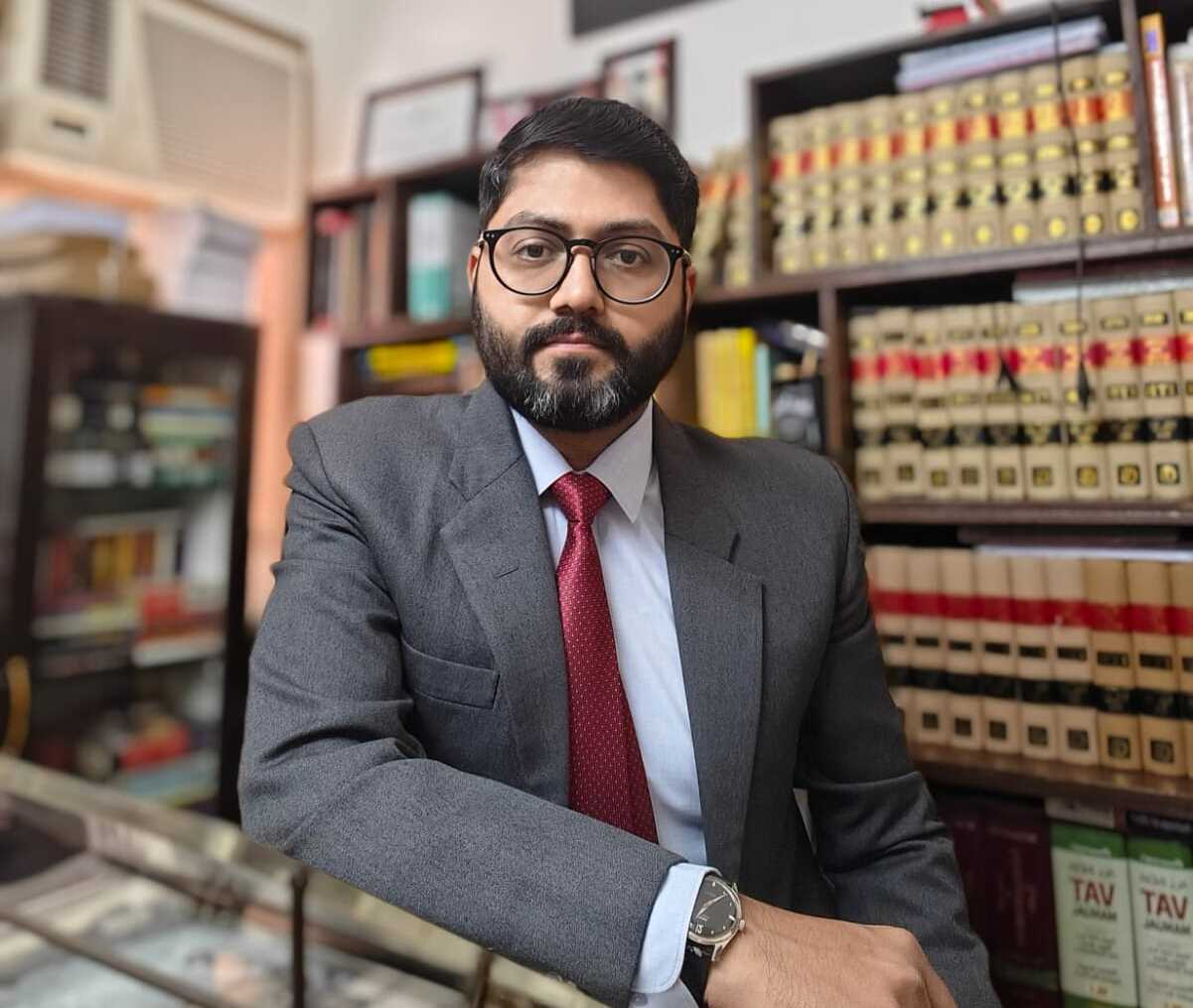
Tag: AOR

  • “The most rewarding aspect of my legal career has been the ability to make a tangible difference in people’s lives.” – Shubham Singh, Advocate-on-Record at Supreme Court of India and Partner at Inca Law Partners.

    “The most rewarding aspect of my legal career has been the ability to make a tangible difference in people’s lives.” – Shubham Singh, Advocate-on-Record at Supreme Court of India and Partner at Inca Law Partners.

    This interview has been published by Anshi Mudgal and The SuperLawyer Team

    With over 9 years of remarkable experience and as an esteemed Advocate-on-Record (AOR), what initially inspired you to pursue a career in law? What was the driving force behind your decision to choose this prestigious profession, and how has your journey evolved over time?

    Well, as far as my inspiration to pursue law as a career is concerned the same may easily find its way back to my hometown, Allahabad now Prayagraj. The idea and motivation to have a career in law is mostly from the city and from my father who’s a practising Advocate in Allahabad High Court. Although, putting a caveat to the first thought coming to the mind of everyone that I might have chosen law because of my father, he actually never wanted me to be a lawyer owing to the extremely busy lifestyle of lawyers. The city of Prayagraj is famous for many reasons and one of the most popular reasons is the Allahabad High Court and it’s legendary Advocates. There are many names to mention in the list of legal luminaries who have inspired me to make a mark in this profession but I would like to make a special mention of the legend Shri Pandit Kanhaiya Lal Mishra. Shri Mishra was a celebrated lawyer of the country and was offered Hon’ble High Court Judgeship and also the prestigious Judgeship of the Hon’ble Supreme Court He also served as the Advocate General of the state of Uttar Pradesh for 17 years, irrespective of the fact as to whose government it was in the State. People like him inspired me to become a lawyer.

    So far as my journey is considered, I must tell everyone’s journey in this profession might be different. Initial years for lawyers (especially the first generation lawyers) entering into litigation, money could be a serious problem but if you keep working on your skills with patience and perseverance and be true to your profession, then sooner or later you’ll manage to break even. Leaving everything that my father had built in the legal profession in Prayagraj and shifting to Delhi was frankly quite a tough decision for me and for my family as it also turned many heads around. I believe my brother trusted my conviction and supported me which boosted my confidence and my trust in my own self that I might also make a mark on my own. My personal journey is filled with a lot of ups and downs. Sometimes you give your everything to the case but you don’t get the favourable orders, many times you expect a negative order from the Court but you get relief. I think, the only aspect a lawyer should be worried about is the value he is adding in his work so as to assist the Courts in the best way. All we need is to work with patience and perseverance. And as of now, I have reached a level where my first priority is to deliver quality work and fortunately we have been delivering reliefs to our clients.

    Also, I have been very fortunate in terms of the support that I have from my family, friends and my office staff.   

    Having had the privilege of working with renowned senior Advocates and esteemed law firms early in your career, that must have been a truly enriching experience. Could you share some key experiences from that time that significantly enhanced your legal acumen and set you on the path toward excellence?

    I think that you can shape an excellent academician in a Law School but you can’t shape a good lawyer there. The future of a young lawyer depends a lot upon the offices and seniors with whom he’s associated. The initial years of practice establish the very foundation of your career. 

    Since I was not from any NLU, it was quite a task for us back in the days even to be considered eligible for internships. I had the opportunity to intern in the Delhi Office of JSA wherein I was exposed to the working culture of a Tier 1 Law Firm in the country and honestly, I was really impressed. I thoroughly enjoyed my time there but I also concluded that I don’t want to pursue a career there. In my personal opinion, the problem that most of the law students who come from humble backgrounds who ultimately want to become Advocates and establish their own practise is that they initially join a good law firm with an idea to leave in future but the lucrative amount of compensation which is given by the law firm never ever allows them to leave. I, being a young law student, always had one thing in mind that I will not compromise with my dream to become an advocate irrespective of the amount of compensation I might get to do something else. Initially when I came over to Delhi just after college, I interned with Sh. Ashok Kumar Sharma, Senior Advocate, Supreme Court of India and later on joined him as an Associate. Thereafter, I joined Sh. Romy Chacko, Senior Advocate, Supreme Court of India. The experience that I gained from the office of Mr. Chacko was immeasurable. Then for a short period I joined Lex Indis Law Office as an Associate. I am lucky enough to say that I still have great relationships with all the offices that I have worked with. All my mentors in the profession have helped at all steps of my life to shape me into a better lawyer and a better human being. 

    After gaining valuable experience with various legal entities, what motivated you to establish your own law firm? What vision did you have in mind when starting it, and were there any challenges you had to overcome during its initial phase?

    It was always a dream of mine to establish my own Law Firm. When I was deciding to leave Allahabad and practise at New Delhi, I had 2 goals, one to establish my own Law Firm and the other to become an Advocate-on-Record. Fortunately, I have achieved both the professional goals that I had set for myself at that time. The primary vision to establish a law firm was to provide Clients a one roof solution to all their legal problems and to have a systematic structure of working. At our Firm also, we always try to cater all the needs of our clients.

    There are a lot of problems that you face while starting your own law firm. One of the biggest tasks is to have a founding partner with whom you can see a long term professional understanding. I was fortunate to have Sh Aditya Singh as my Partner. The other problem is managing the expenses and work management. So far, I have not faced a lot of issues with respect to these and that could be because of the understanding that we Partners have. So, my advice is that if you wish to start your own Law Firm, choose your team wisely.

    Your involvement in numerous cases related to minority educational institutions has been pivotal. Could you share one of the most fascinating and impactful cases you’ve handled, and how it shaped the legal landscape for such institutions?

    I have handled many cases of minority educations institutions. Even currently I am representing St Stephen’s College, St Charles School, Ryan International School and a few other institutions in ongoing cases. One of the cases that I would like to share with everyone is a civil appeal with respect to appointment of Headmaster in a minority institution before the Supreme Court. In that case I truly understood the spirit of Article 30 of the Constitution of India. In that case it was held by the Hon’ble Apex Court that a Minority Institution has the right to appoint any qualified person as its head or principal ignoring merit. The awareness with respect to this position of law is not that much. Many of the institutions still struggle to claim the benefit of being a minority institution as they don’t know where to get that recognition from. The National Commission for Minority Educational Institution at New Delhi is the body where institutions can apply for a certificate to be declared as a minority educational institution be it linguistic or religious. Minority institutions enjoy autonomy in their management, particularly in decisions related to admissions, curriculum, teaching staff, and other operational matters. However, this autonomy is subject to some regulatory oversight in the interest of quality education and public welfare. 

    The Supreme Court has clarified that while minorities have the right to establish and administer institutions, they must not violate the rights of others, such as admitting students on discriminatory grounds or failing to meet educational standards. In T.M.A. Pai Foundation v. State of Karnataka (2002), the Court emphasized that while minority institutions have certain rights, they must still adhere to principles of merit, fairness, and the welfare of society.

    Indian competition law is evolving rapidly, especially with the growth of tech companies and ride-sharing services. Having represented clients in such high-stakes cases, could you elaborate on the key legal challenges faced and how you navigated these complex matters? Your insights into this area would be invaluable.

    Indian competition law, under the Competition Act, 2002, is evolving to address the growing complexities of market dynamics, especially with the rapid rise of tech companies and ride-sharing services. This sector has experienced a significant increase in mergers, acquisitions, and market disruptions, which often challenge traditional legal frameworks. There are various legal challenges being faced in this industry like the Anti-competitive practices like predatory pricing. While I was working with Lex Indis Law Offices, we were handling the Ola, Uber and Meru’s competition case before NCLAT on behalf of the CCI, one of the issues of predatory pricing only. In my opinion Companies can navigate this by ensuring that their pricing practices do not harm the long-term viability of competition in the market. They need to demonstrate that low prices reflect efficiency or are necessary for market entry, not just predatory strategies. The other major problem is market dominance and the abuse of market dominance. With the rising teach industry in the nation, the problem of merger control and acquisitions is also becoming apparent. Especially in the ride-sharing sector, acquisitions of smaller competitors or startups are common. While mergers and acquisitions are not inherently anti-competitive, they can raise concerns if they lead to a significant reduction in competition or create a dominant player with too much market control.

    As an Advocate, your involvement in landmark cases is commendable. Can you provide an overview of the P Mohanraj v. Shah Brothers case you argued before the Hon’ble Supreme Court? What were the legal principles at play, and what made this case so significant in shaping legal precedents?

    I was appearing in one of the connected matters in the P Mohanraj Case before the Hon’ble Supreme Court of India. The question before the Supreme Court was whether any proceedings can be initiated against a Company under Section 138/141 of the Negotiable Instruments Act, 1881 (“NI Act”) for dishonoured cheques, if NCLT has already passed an order of moratorium under the Insolvency and Bankruptcy Code, 2016 (“IBC”) against the Company. As per Section 14 of the IBC, if Corporate Insolvency Resolution Process (“CIRP”) is initiated against a Company, a moratorium is provided on all judicial proceedings against the Company. The Supreme Court Bench comprising Justice RF Nariman, Justice Navin Sinha and Justice KM Joseph vide its judgment dated March 1, 2021 followed the logic with respect to the object of the IBC Code, if such proceedings will cause a depletion of the assets of the corporate debtor during the CIRP process which will negatively affect the Corporate Debtor from getting back on its feet during the resolution process. The Apex court analyzed this issue from various angles and held that the proceedings under Section 138/141 of the NI Act cannot be initiated against a corporate debtor if the NCLT has already passed an order of moratorium under the IBC. The Supreme Court observed that a quasi-criminal proceeding like the one under the Section 138 of the NI Act will result in the assets of the Corporate Debtor being depleted as a result of having to pay compensation which may amount to twice the amount of the dishonoured cheque. Although, the Court did not extend the same benefit to the Directors of the Corporate Debtors. This case gave a new shape to the interplay between the NI Act and the IBC Code.

    Your role as a guest lecturer at St. Thomas Law College and Asian Law College is truly admirable. How does teaching law complement your busy legal practice, and what personal fulfillment do you derive from educating the next generation of legal professionals? How do you manage to strike a balance between such a demanding career and your personal life?

    I find teaching an extremely noble and satisfying job. If not a lawyer, I would have chosen to become a Teacher. I have been teaching for a very long time in different capacities. I still remember that during my college days, when I was in 3rd year, after my classes I used to teach 4th year B. Tech students at Engineering Colleges for their Campus Recruitment Training. It was an extremely satisfying experience for me during those days. Since then, in some way I have been keeping myself in touch with the academics. After joining the professions, I had the privilege of giving guest lectures at law colleges and conduct seminars for the law students. Teaching law alongside a busy legal practice can be incredibly rewarding both professionally and personally. For many legal practitioners, it offers a unique opportunity to share their experience and expertise with the next generation, while also enhancing their own understanding of the law. Teaching complements legal practice and forces you to stay sharp and up-to-date with legal concepts, theories, and developments. As a practitioner, you may not always have the time to revisit foundational topics or explore new areas in depth, but teaching requires you to stay current, reinforcing your understanding and perhaps even challenging your assumptions. This intellectual engagement can help improve your skills and contribute to your practice. It gives you the opportunity to shape future lawyers, imparting practical knowledge and ethical values that can influence their careers. 

    While I used to teach as a Guest Faculty, I have always focussed to teaching the students the practical aspects of law. I used to take classes on drafting and pleadings, cpc, crpc, evidence, company law, family law and property law. Even workshops in law schools really help and expose the students to the practical world of the profession. I had ventured to teach students at United University about drafting and pleadings at the Supreme Court while conducting a one day workshop.

    Given your extensive experience providing legal consultancy to start-ups, what are some of the most common legal challenges faced by emerging businesses in India? How do you guide them through these challenges and ensure their long-term success in a complex regulatory landscape?

    In my opinion the start-us and emerging businesses in India are facing a variety of legal challenges, particularly given the complex regulatory environment. The very inception comes with the legal hurdles like business registration and compliances, whether to register as sole proprietorship, partnership, limited liability partnership (LLP), private limited company based on their objectives, funding sources, and long-term goals. Navigating through the documentation and formalities required for the registration. The protection of the Intellectual Property Rights and its infringement. Most of the Start-ups that contact us, their primary concern starts with funding and investment issues like raising capital, whether through equity, debt, or hybrid instruments, often involves legal complexities, particularly in structuring the deal, preparing shareholder agreements, and complying with regulatory filings. If the business is seeking foreign investment, it must comply with India’s FDI regulations, which can be quite specific depending on the industry. As start-ups grow and attract investors, conflicts over ownership structure, control, and profit-sharing can arise, necessitating well-structured agreements upfront. I have been advising the Start-ups to have a structured due diligence at the very start, as it helps them have stability and attract more investments. In my opinion an emerging business in India can mitigate these challenges by seeking early legal advice, creating clear business structures, staying on top of regulatory changes, and drafting well-defined contracts and agreements. Consulting with experienced legal professionals who specialize in start-up law can help avoid common pitfalls and establish a solid foundation for growth.

    Your unwavering commitment to the legal profession is truly inspiring. What has been the most rewarding aspect of your legal career, and what continues to drive your passion for law? Additionally what advice would you give to the younger generation who wish to have a successful career in law?

    The most rewarding aspect of my legal career has been the ability to make a tangible difference in people’s lives. Whether it’s advocating for a client in need, helping to ensure justice is served, or navigating complex legal issues, knowing that my work can have a positive impact on others is truly fulfilling.

    When I look back I can certainly relate to many of the law students who believe that the profession is a lot about money and power. But I have evolved to understand that this noble profession is like an art and the most rewarding thing is the recognition that you get from the Hon’ble Judges and the senior members of the Bar. I still remember while I was arguing a case before the bench of Hon’ble Justice B R Gavai and Hon’ble Justice P S Narsimha, at the end of the hearing the Bench praised my arguments but I was in such a disbelief that I confirmed from the Court if they praised me or asked a question, resultantly they affirmed their opinion. There has been no fee that has been more rewarding than that particular recognition to me. 

    For younger generations interested in a career in law, I would advise them to remain persistent and curious. Law is a challenging field, but it’s also incredibly rewarding. It’s crucial to develop strong critical thinking skills, cultivate emotional intelligence to understand the people behind the cases, and always prioritize ethics and integrity in every step of your career. Networking and seeking mentorship from experienced professionals in the field can also provide invaluable guidance and opportunities for growth. Finally, I would say to never stop learning—law is dynamic, and the best lawyers are those who are always evolving.

    Get in touch with Shubham Singh –

  • “While I entered tax litigation because of its unique mix of corporate and courtroom work, I stayed because of the intellectual challenge, the unpredictability, and the sheer excitement of the practice.” – Deepak Thackur, Advocate on Record, Supreme Court of India and Director at Lumiere Law Partners.

    “While I entered tax litigation because of its unique mix of corporate and courtroom work, I stayed because of the intellectual challenge, the unpredictability, and the sheer excitement of the practice.” – Deepak Thackur, Advocate on Record, Supreme Court of India and Director at Lumiere Law Partners.

    This interview has been published by Anshi Mudgal and The SuperLawyer Team

    As an Advocate-on-Record before the Supreme Court of India, with a deep understanding of procedural complexities and a strategic approach to complex tax disputes, what motivated you to pursue a career in law initially? How did your experiences at Rajiv Gandhi National University of Law, Punjab shape your journey?

    Like many first-generation lawyers, my journey into law began more by chance or perhaps, more accurately, by a process of elimination. In school, I took Physics, Chemistry, and Mathematics with the intention of joining the defence forces, particularly the Air Force. However, due to imperfect eyesight, that option was ruled out. The next conventional choice at the time was engineering, but I was certain that it was not for me. Around that time, a family friend who was studying at GNLU introduced me to CLAT. I found the course material interesting and developed an instant liking for law. At that stage, there was no deep-seated motivation but just a practical decision that I had to pursue something meaningful.

    My time at Rajiv Gandhi National University of Law, Punjab, turned out to be an enriching experience. Coming from a small town with a near Hindi-medium schooling background, adjusting to law school, where extroversion is often applauded, was challenging at first. But RGNUL had an intellectually stimulating environment that instilled in me the desire to work on myself. More importantly, I had an amazing group of friends who, in their own ways, taught me valuable lessons. All of this collectively fostered my analytical skills and deepened my appreciation for the law.

    One of the most impactful moments of my time at RGNUL came during our convocation, which was chaired by Justice T.S. Thakur. One of my dearest friend received three gold medals, and just like that scene in “3 Idiots”, I found myself feeling a mix of happiness for my friend and regret for not achieving the same. Then, Justice Thakur delivered a speech that, to this day, remains with me. He acknowledged that while some students had won gold medals, many had not but that did not determine success in the legal profession. He emphasized that success in law comes from following the Five Ps: Patience, Perseverance, Persistence, Passion, and Practice. It felt as if he was speaking directly to me.

    That moment reinforced something I have carried throughout my career. While my initial decision to study law was incidental, my time at RGNUL cemented my passion for the field and gave me the clarity to pursue litigation. Looking back, I can say with confidence that law, whether by chance or choice, turned out to be the right path for me.

    During the early stages of your career as an Associate, what key experiences stood out that deepened your legal understanding and influenced your decision to specialize in tax disputes?

    My interest in tax law started during my internship at a tax litigation firm. Tax litigation has a unique mix; it allows you to work on complex corporate matters while also experiencing the thrill of courtroom advocacy. That combination intrigued me and ultimately led me to choose tax as my area of practice.

    During the early years of my career as an Associate, I had my fair share of lessons, some humbling and others eye-opening. One incident, in particular, stands out. I was working on a case where I advised a client purely from memory. I have always had a strong recall, and in my overconfidence, assumed I knew the provision perfectly. I overlooked the fact that tax laws change frequently. The client later pointed out an amendment that completely changed the position I had advised on. It was a moment of realization that no matter how confident you are, never rely on memory alone. That experience taught me the importance of always verifying the law rather than depending on recollection. From that day on, I made it a habit to double-check and stay updated.

    I was fortunate to start my career under the guidance of Mr. Pramod Kumar Rai and Mr. Puneet Agarwala, both of whom have been incredible mentors. Their approach toward juniors is something I try to imbibe today. They never raised their voices or scolded but always guided with firm yet encouraging clarity. One of the most valuable lessons they taught me was to always stay updated on the law, no matter how busy the day gets. Even today, my mornings begin with reading legal updates because I learned early that in tax law, staying current is non-negotiable.

    Another crucial lesson I learnt was that litigation is unpredictable. You can never be too certain about what will happen in court. Early on, like many young lawyers, I sometimes assumed that a matter would be adjourned and did not prepare as thoroughly as I should have. That assumption was short-lived when, in one of my cases, I almost got a dismissal order. My senior gave me an advice that has stayed with me: “Deepak, always come to court as prepared as if you are arguing Keshavananda Bharati. So that when you ARE arguing a matter that big, you are ready.” That advice changed my mindset. From that day forward, I never walked into a courtroom unprepared, no matter how small or routine the case seemed.

    I remember another incident where my senior asked me to find a judgment on a potential question that might be raised by the judge. The request came late at night, and like any junior, I was frustrated about the timing and wondered why I was working on hypothetical scenarios. Still, I burned the midnight oil and managed to find the answer. The next day in court, the very first question the judge asked was the one my senior had anticipated. Because we had the answer ready, we moved past it smoothly. That experience taught me two things: (1) litigation, at times, is like war. Be a good soldier and follow the command of your seniors, and (2) some things come only with experience. Stay humble and keep working.

    Looking back, those early years were filled with invaluable lessons; some learned the hard way, others through the wisdom of my mentors. I learned that confidence must always be backed by diligence, that preparation is non-negotiable, and that every case, no matter how minor, deserves serious effort. While I entered tax litigation because of its unique mix of corporate and courtroom work, I stayed because of the intellectual challenge, the unpredictability, and the sheer excitement of the practice.

    Having cleared the AOR exam on your first attempt, what challenges did you face during your preparation, and how has earning the AOR title impacted your practice and professional growth?

    When preparing for the AOR exam, the biggest challenge is time management. Most advocates taking this exam are full-time practitioners, managing court appearances, client meetings, and drafting work daily. Finding the time to sit down and study consistently is easier said than done.

    In my view, the AOR exam does not fall into the category of being extremely difficult. The concepts are straightforward, but the real challenge lies in the sheer volume of material that needs to be covered. The questions are not the kind that one encounters in daily practice, so prior experience alone is not enough. There are no shortcuts. You have to go through the prescribed material, cover to cover.

    Another challenge is structuring answers effectively. The questions in the AOR exam are often lengthy, yet the time to answer them is limited. In litigation, we are used to explaining arguments in detail, but in this exam, brevity is the key. Answers need to be crisp, precise, and well-structured, striking a balance between conciseness and completeness.

    But perhaps the most underrated challenge is ‘writing’ the exam itself. We have become so accustomed to typing on laptops and dictating drafts that writing for hours at a stretch feels almost unnatural. The AOR exam requires handwritten answers, and I remember struggling with writing speed and endurance. I even had to practice writing answers just to get my hand used to it again.

    Clearing the AOR exam was a significant milestone. It wasn’t just about earning the title but because of the journey. The process of preparing for it deepened my understanding of procedural law and reinforced the importance of consistency. It has allowed me to take greater responsibility in Supreme Court matters and strengthened my credibility as a litigator. The efforts it took to clear the exam was worth it, and the experience has helped me grow in the profession.

    Given the demanding nature of your profession, what methods do you employ to unwind and strike a healthy balance between your professional duties and personal interests?

    The practice of law, especially in the field of tax litigation, is undoubtedly demanding. My work takes me to the Supreme Court, High Courts, and Tribunals, often involving travel to different cities. The long hours and unpredictable schedules can be exhausting, but I genuinely love what I do. At the same time, I also recognize that longevity in this profession comes from accepting that you are not a machine. Law as a profession requires your undivided attention. No human being can be attentive all the time and if you are burnt out, in a way you are doing disservice to your client. So, learning when to pause and step back is much needed, which is of course easier said than done in our profession.

    Work-life balance is highly subjective. For me, unwinding is not about carving out large chunks of time. It varies from reading to watching a movie or playing on PlayStation or simply just relaxing with the family. Recently, it has been my two-year-old son who eagerly waits for me to come home and play with him. Those moments are priceless, and no matter how hectic the day has been, I make sure to come back home and play with him. Also, the travel, though often work-related, also becomes an opportunity to explore new places, even if just briefly, which helps in breaking the monotony. 

    What are some of the most common tax-related challenges that businesses and entities typically encounter, and what proactive strategies or best practices can they implement to minimize or avoid these issues?

    In my experience I have seen that: department rarely accepts a tax position without questioning it. In most cases, the authorities argue that the company has suppressed facts, misrepresented details, or acted fraudulently, even when the issue is merely a difference in interpretation. This often turns a straightforward tax position into a protracted legal battle.

    At the same time, I’ve also seen companies take tax positions that are legally untenable by relying on interpretations that have already been rejected by courts or positions that are directly contrary to statutory provisions. What’s surprising is that many of these decisions stem from well-meaning but flawed sources such as random internet searches, AI-driven answers, or informal advice from non-experts. While technology has made information more accessible, it has also made misinformation more widespread. A company’s tax strategy should never be based on a ChatGPT response or a Google search alone as it needs professional scrutiny.

    To minimize these challenges, businesses should adopt a proactive approach. Some examples would be: 

    • Regular tax reviews and audits: Companies should periodically review their tax positions with professionals to ensure compliance with evolving laws and precedents. Instead of relying solely on online sources, businesses should consult experienced tax advisors who can provide tailored, legally sound guidance.
    • Document everything: A well-documented tax position, backed by legal provisions, case laws, and expert opinions, strengthens a company’s defense in case of a dispute. Further, intimate the tax position to the Department so that they cannot allege suppression of facts. 
    • Stay updated on legal developments: Tax laws are constantly evolving, and staying informed through professional updates, industry discussions, and expert opinions is crucial.

    Tax disputes are inevitable in business, but a well-informed, strategic approach can significantly reduce litigation risks and ensure compliance while optimizing tax positions effectively.

    With the continuous evolution of tax regulations, how do you see the future of tax law shaping up? What advice would you offer to aspiring lawyers interested in tax litigation, and could you recommend any resources to help them stay updated on the latest developments in the field?

    Tax law is evolving rapidly, and while the Government is making an effort to create business-friendly policies and curb unnecessary litigation, anyone who has dealt with the tax department knows that tax disputes are far from over. The tax department, by its very nature, is litigation driven. No matter how much simplification is introduced, the nature of taxation itself ensures that litigation will always be a part of the system. 

    For anyone looking to build a career in tax litigation, one thing is non-negotiable i.e. you must stay updated. Tax law is not static. It is shaped by frequent amendments, evolving judicial interpretations, and shifting departmental positions. The best way to develop expertise in GST or indirect taxes is to go back to the roots by reading landmark judgments under Excise, Service Tax, VAT, and CST. Many of the key issues under GST today are not entirely new and have their roots in Excise, Service Tax, VAT, and CST because GST is essentially a conglomerate of these laws. A strong foundation in these older tax regimes will give a deeper understanding of GST and help in tackling complex issues that arise today. Understanding how courts ruled on classification disputes, valuation issues, and input tax credits under the old tax laws will provide a strong foundation for handling similar issues under GST.

    For staying updated, there are plenty of sources available online such as Taxscan, Taxsutra, and GSTSutra provide daily updates, case summaries, and expert opinions. It can be overwhelming as the updates are repetitive; to avoid that one can opt for GSTR journals as it captures the most relevant cases and amendments. 

    Get in touch with Deepak Thackur –

  • “The cornerstone of a successful and fulfilling career in litigation lies in unwavering dedication, perseverance, and relentless hard work.” – Devashish Bhadauria, AOR at Supreme Court of India and Founder & Managing Partner at Bhadauria & Associates, Law Offices.

    “The cornerstone of a successful and fulfilling career in litigation lies in unwavering dedication, perseverance, and relentless hard work.” – Devashish Bhadauria, AOR at Supreme Court of India and Founder & Managing Partner at Bhadauria & Associates, Law Offices.

    This interview has been published by Anshi Mudgal and The SuperLawyer Team

    Law is often considered both an intellectually stimulating and socially impactful profession. Could you share what initially inspired you to pursue law as a career? Was there a defining moment or a personal experience that deeply influenced your decision to enter this field? Furthermore, how did your early experiences during law school help shape your long-term career goals and aspirations?

    After completing my senior secondary education in 2010, my father encouraged me to pursue a career as a Chartered Accountant, given my background in Commerce. However, I was drawn to the legal profession, which I regard as one of the most esteemed and impactful fields. The study of law not only offers an opportunity to contribute meaningfully to society but also provides a comprehensive understanding of its various facets. 

    I pursued a five-year integrated B.A., LL.B. (Hons.) degree from Amity Law School, Delhi, affiliated with Guru Gobind Singh Indraprastha University, Delhi and my academic journey was enriched by the institution’s distinguished faculty, participation in inter-college competitions, and engagement in various legal seminars. Additionally, I undertook internships every year, gaining substantial practical exposure by working with Advocates and Law Firms across diverse practice areas. These experiences were instrumental in shaping my professional aspirations and provided valuable insights into the legal profession.

    I firmly believe that internships play a pivotal role in a law student’s career. Exposure to different legal domains and organizational structures is essential in making informed career decisions. Without such practical experience, it would be challenging for a student to identify the most suitable area of practice.

    After completing your law degree, you worked with several senior advocates, law offices, and law firms. During the initial phase of your career, when you were just starting out, what were some of the key learning experiences or challenges that left a lasting impact on you? How did these early professional encounters enhance your understanding of the law and propel your career trajectory forward?

    After gaining diverse experience through internships at various law offices and firms, I decided in the final year of my legal studies to pursue a career in litigation with the ultimate goal of establishing myself as an independent practitioner.

    In August 2015, I commenced my professional journey at the Law Office of Mr. Vibhor Verdhan, Advocate, and Mr. Shwetank Sailakwal, Advocate-on-Record, based in Jangpura Extension, New Delhi. As their first and sole Associate at the time, I had the privilege of receiving extensive exposure to litigation practice. Subsequently, I joined the chambers of Mr. Manohar Malik, Advocate, where I once again worked as the only Associate, gaining significant hands-on experience in different fields of law.

    In 2018, I transitioned to a full-service Law Firm, Sondhi Narula Dalal & Associates, Law Offices, where I worked under the guidance of the Firm’s Partners – Mr. Sunil Dalal, Ms. Sangeeta Sondhi and Ms. Ruchi Gour Narula. During my tenure, I was actively involved in handling complex and high profile litigations, further honing my legal acumen.

    In 2021, following the designation of Sunil Sir as a Senior Advocate, I had the distinct opportunity to assist him and continued working in his office for an additional year.

    I remain deeply grateful to all my seniors for their invaluable mentorship, trust, and the opportunities they provided, which have significantly contributed to my professional growth and shaped me into the legal practitioner I am today.

    As the Founder and Managing Partner of Bhadauria & Associates, Law Offices, what motivated you to establish your own legal practice? Were there any specific challenges or obstacles you faced in the initial stages of setting up the firm? What is your long-term vision for the firm, and how do you plan to navigate its growth and success?

    From the outset of my legal career, I aspired to establish my own law practice after gaining substantial experience in litigation. In pursuit of this goal, I commenced my independent practice in April 2022 and co-founded a Law Firm in East of Kailash, New Delhi, along with my wife, Ms. Sristi Sengupta, who is also a Partner. She leads the Firm’s Intellectual Property prosecution and litigation practice.

    I am deeply grateful to my seniors for their unwavering support and guidance in establishing the Firm. This milestone would not have been possible without the blessings and encouragement of my parents, who have been my pillars of strength and motivation.

    Transitioning to independent practice was a significant shift, but I was able to adapt within a few months, and I have not encountered any major challenges in managing the Firm. I firmly believe that the cornerstone of any successful legal practice is client satisfaction. I have always maintained transparency and fairness in my dealings with clients, ensuring they have confidence in their counsel. Regardless of the outcome of a case, I am committed to diligent advocacy, which fosters trust and long-term professional relationships with my clients.

    Your appointment as Senior Panel Counsel for the Union of India is a significant milestone in your career. Could you elaborate on how this appointment came about and the responsibilities it entails? Additionally, being empanelled with prominent Government of India Enterprises such as PEC Ltd., NBCC, EESL, how has this shaped your legal practice?

    Pursuant to my application, I was appointed as a ‘Senior Panel Counsel’ in March 2024 to conduct Central Government litigations and appear for Union of India before Hon’ble High Court of Delhi. This appointment entails significant responsibility, as I am entrusted with matters involving various government entities, including the Central Industrial Security Force (CISF), Indian Railways, Delhi Police, Directorate of Revenue Intelligence, and several Ministries.

    Additionally, my empanelment with several Government of India Enterprises, such as PEC Ltd., NBCC (India) Ltd., Energy Efficiency Services Limited (EESL), and Telecommunications Consultants India Ltd. (TCIL), has been instrumental in strengthening my independent practice. These engagements have provided me with extensive experience in handling government litigation and further solidified my expertise in the field.

    Clearing the Advocates-on-Record Examination on your first attempt is a remarkable achievement. Could you share your experience of this rigorous process and what it means to you personally and professionally? How has this accomplishment impacted your career and opened up new opportunities for you in the legal field?

    Although I was exposed to the practice before the Hon’ble Supreme Court of India from the very beginning of my legal career, I had not initially considered pursuing the designation of Advocate-on-Record (AoR). However, after establishing my independent practice in 2022, I sought to expand my professional engagements before the Apex Court. Recognizing that obtaining the AoR designation would enable me to effectively handle matters before the Hon’ble Supreme Court of India, I appeared for the Advocates-on-Record Examination in June 2024 and successfully cleared it on my first attempt.

    This achievement has opened new avenues in my legal practice, allowing me to independently file, argue, and appear before the highest Court of the country, further strengthening my ability to represent clients at the top level of the justice delivery system.

    In your work with prominent clients like The Times of India and Mankind Pharma Limited, especially when handling complex intellectual property (IP) cases before the High Court of Delhi, and District Courts, what are some of the primary challenges you face regarding IP protection? With the digital age advancing rapidly, how do you foresee the evolution of IP law, particularly in light of the growing trends in digital technologies and online platforms?

    I have been retained by Corporates like The Times of India Group and Mankind Pharma Limited since 2024, for whom I am working as their panel counsel and representing them before various Courts and Forums. The protection and enforcement of intellectual property (IP) rights in today’s rapidly evolving digital landscape present several challenges. The proliferation of digital platforms has significantly increased instances of copyright and trademark infringement. Unauthorized reproduction, counterfeiting, and domain squatting have become prevalent, making enforcement more complex. Identifying and holding infringers accountable, particularly when they operate from foreign jurisdictions, poses a significant legal hurdle. With the rise of e-commerce and social media platforms, determining the liability of intermediaries in cases of IP violations has become a contentious issue. Companies face significant challenges in protecting their brands from counterfeit goods, particularly in the pharmaceutical and consumer goods sectors. The enforcement mechanisms, though robust, often require swift legal action, including Anton Piller orders, John Doe orders, and cross-border enforcement strategies.

    The legal fraternity, along with policymakers and stakeholders, must work towards an adaptive and robust IP framework that aligns with technological advancements while ensuring adequate protection of rights of holders. As Counsel, my focus remains on providing strategic legal solutions to clients to safeguard their intellectual property assets in this dynamic landscape.

    Given your wealth of experience, what advice would you offer to aspiring lawyers and law students looking to build a successful and fulfilling career in law and especially cracking the AOR exam?

    The cornerstone of a successful and fulfilling career in litigation lies in unwavering dedication, perseverance, and relentless hard work. There are no shortcuts in this profession, and a ‘never say no’ attitude is indispensable. I have consistently prioritized my professional commitments and embraced new challenges with the belief that each experience contributes to my growth and new learning. Furthermore, maintaining a respectful and collegial approach towards seniors and colleagues at the Bar is essential. 

    For those aspiring to become an Advocate-on-Record (AoR), practical exposure to proceedings before the Hon’ble Supreme Court is invaluable. The mandatory one-year training under an AoR provides critical insights into Supreme Court practice. Additionally, the official website of the Hon’ble Supreme Court offers extensive academic resources, including video lectures, notes, and other reference materials, which are instrumental in guiding and strategizing for the AoR Examination.

    Balancing a demanding and dynamic legal career with personal well-being is a challenge many face. How do you manage to maintain a healthy work-life balance, ensuring that both your professional responsibilities and personal life thrive without one compromising the other?

    Maintaining a healthy work-life balance remains a significant challenge for legal professionals engaged in litigation. Given the nature of litigation practice, there are no fixed timings for a legal practitioner and there are times when a person has to work even after returning home or on weekends. As integral members of the justice delivery system, we are expected to be accessible to our clients at all times, ensuring their legal concerns are addressed promptly and effectively.

    In my case, I am fortunate to have a spouse who is also a legal professional and fully understands the complexities and demands of this profession. This mutual understanding has been invaluable in navigating the challenges associated with a career in litigation. Since establishing my independent practice in 2022, I have been able to exercise greater control over my schedule, allowing me to manage both professional and personal commitments more effectively. While the demands of litigation remain rigorous, having the autonomy to structure my work has enabled me to maintain a more balanced approach to my professional responsibilities while fulfilling other personal obligations.

    Get in touch with Devashish Bhadauria –

  • “Many complex arbitrations involve legal grey areas, and my research experience has helped me anticipate how tribunals might handle such issues. Additionally, the ability to analyse arbitration decisions critically, especially in the absence of binding precedent, has shaped the way I strategize arguments” – Ritunjay Gupta, Advocate-on-Record and Founding Partner at Vidvat Legal.

    “Many complex arbitrations involve legal grey areas, and my research experience has helped me anticipate how tribunals might handle such issues. Additionally, the ability to analyse arbitration decisions critically, especially in the absence of binding precedent, has shaped the way I strategize arguments” – Ritunjay Gupta, Advocate-on-Record and Founding Partner at Vidvat Legal.

    This interview has been published by Anshi Mudgal and The SuperLawyer Team

    Having a background in Business Economics, what inspired you to pursue a career in law? How was your experience during law school, and how did it shape your professional journey?

    Law was not my first choice, nor was it the obvious path after studying Economics and Finance. My initial academic inclination was towards Finance, and I pursued it earnestly, even completing a Master’s degree. However, during my undergraduate years, I was introduced to Business Law and Company Law, subjects that I unexpectedly found both engaging and intellectually stimulating. I excelled in them, even receiving an award for my performance, which planted the first seed of curiosity about the law. That curiosity remained dormant until a friend encouraged me to attempt the Delhi University LLB entrance exam. Securing admission to the Campus Law Centre, Faculty of Law felt like an opportunity worth exploring, and once immersed in the study of law, I realized it was where I truly belonged.

    Campus Law Centre was an eye-opening experience. Unlike my previous academic settings, it was a melting pot of individuals from different backgrounds, each with unique motivations – some preparing for civil services, others drawn to political or judicial service roles. Few, like me, were focused on litigation and active practice. Studying law in this environment expanded my perspective, making me more attuned to the socio-political landscape and the practical realities of the legal profession. It wasn’t just about learning the law from textbooks; some of the most insightful debates happened informally, in the ‘Bamboo Garden’ next to the canteen.

    Beyond academics, law school imparted valuable lessons that have remained with me. It taught me the importance of being approachable to people from diverse backgrounds and recognizing that intelligence is not determined by fluency in English, especially in courts across the country where different languages are used for argument. It also deepened my understanding of the intricate relationship between law and the broader socio-political landscape. Above all, it reinforced the importance of perseverance, a quality that continues to guide me in my legal career.

    You completed your Masters at Columbia Law School, New York. What motivated you to choose Columbia Law over other institutions, and how has your experience there influenced your career? How has this degree been advantageous in your legal practice?

    I chose Columbia Law School for its strong focus on international arbitration and commercial law, fields I was keen to specialize in. Columbia’s arbitration faculty is among the best in the world, led by Professor George A. Bermann, Director of the Centre for International Commercial & Investment Arbitration, alongside Professors Kabir Duggal and Robert Smit. Their presence attracts leading professionals and practitioners to engage with students through guest lectures and lunchtime seminars, making Columbia a hub for arbitration discourse. The fact that Columbia is located in New York was an added advantage. The city’s vibrant legal ecosystem offers unparalleled exposure, from regular events at top-tier law firms to seminars and workshops organized by the NY City Bar and State Bar associations. Columbia Arbitration Day is another standout event, bringing together global stalwarts in arbitration to discuss the latest developments in the field. 

    Studying at Columbia reshaped how I approached the law. The learning environment encouraged critical thinking, collaboration, and exposure to global perspectives. With classmates from over 50 countries, discussions went beyond textbooks, offering insights into different legal systems and approaches. The faculty also made a lasting impact. For example, Professor Paul Shechtman, who taught Evidence and Criminal Adjudication, often used courtroom scenes from movies like ‘A Few Good Men’ and ‘12 Angry Men’ to explain legal principles, making learning engaging and memorable.

    A key highlight was working as a Research Assistant to Professor Bermann, contributing to his book ‘Twilight Issues in International Arbitration. This experience deepened my understanding of arbitration and reinforced the advantage of pursuing an LLM after gaining work experience. Unlike traditional academic programs, an LLM at Columbia is not about competition but personal and professional growth.

    The degree has been invaluable in my legal practice, particularly in refining my approach to complex disputes and arbitration. It has also given me access to leading legal professionals across the globe. With cross-border transactions and disputes becoming increasingly common, it is essential to have access to legal knowledge that transcends jurisdictions. Having friends and colleagues working across different legal systems has been incredibly beneficial. For instance, very recently, in an international arbitration involving U.S. laws and a Delaware corporation, a corporate lawyer and dear friend from Columbia, well-versed in those laws, helped me strategize my approach to the dispute. This is just one of many such instances. Additionally, referral work from friends abroad has been an added bonus. I often serve as their point of contact in India, which has been mutually beneficial.

    Most importantly, the degree has given me credibility, which is invaluable in my profession. With so many lawyers in the country offering, on paper, similar skillsets, the LLM and a foreign-bar qualification has helped me differentiate myself. It has ensured that clients view me in a different light, recognizing the value I bring to the table. In a competitive market, that distinction is crucial.

    At J. Sagar Associates, you worked on a diverse range of matters, including constitutional law, corporate governance, insolvency etc. How did working across such varied legal domains shape your understanding as a lawyer? What were the experiences that have stuck by you?

    JSA was my first job, and like any young lawyer, I was just learning the ropes. What made the experience truly enriching was the diversity of matters I was exposed to across various forums, including the Supreme Court of India. Unlike many large firms where junior associates rarely see the inside of a courtroom, JSA had a strong culture of ensuring its lawyers attended court regularly. This early exposure to court craft played a significant role in shaping my understanding of litigation.

    Working on high-stakes, complex disputes meant that research was at the heart of everything we did. As juniors, we were expected to delve deep into legal principles, dissect arguments, and anticipate counterpoints. This process instilled in me the discipline of extensive reading, a habit that continues to serve me well. Another key advantage of being at a top-tier firm was the opportunity to interact with some of the finest Senior Advocates in the country. Sitting in case conferences with them, observing how they analysed a brief, structured their arguments, and approached strategy was an invaluable learning experience.

    I was also fortunate to work under a mentor who was exceptional in corporate and contract law. His insistence on first-principles thinking kept me on my toes. I had to be thoroughly prepared before even approaching him for a discussion. This ensured that I developed a strong foundation in legal reasoning and analytical skills early on.

    JSA’s marquee clients in the construction and banking sectors further honed my expertise in arbitration and financial law. Many of these cases laid the groundwork for my later specialization in insolvency and arbitration. The firm’s rigorous environment, 100+ hour weeks, working weekends, and months without a holiday was undeniably demanding. But it taught me the value of perseverance, attention to detail, and consistency – qualities that are indispensable for success in the legal profession.

    As a Research Assistant at Columbia Law School, you contributed to drafting chapters for the book Twilight Issues in International Arbitration. How did this research experience deepen your understanding of international arbitration, and how have you applied these insights in your own practice?

    Working with Professor George A. Bermann on ‘Twilight Issues in International Arbitration’ was an incredible learning experience. Every year, Professor Bermann takes on several research assistants, but only a select few get the opportunity to contribute to major projects like this book. I was fortunate to be among those chosen. The book was a four-year project, and during my time at Columbia, I had the privilege of assisting for a year alongside five other students.

    Before this, I had read about international commercial arbitration but had little exposure to twilight issues. These are matters that lack clear legal authority, leaving tribunals to rely on ‘soft law’, general principles, or comparative approaches. Researching topics such as corruption, res judicata, iura novit curia, collateral estoppel, lis pendens, costs, and ethics helped me understand how arbitration functions beyond codified law. This experience also gave me a nuanced perspective on how different jurisdictions approach these unsettled issues and whether international standards are emerging.

    One of the most unique aspects of the research was our access (albeit limited access), granted with Professor Bermann’s approval, to hundreds of confidential arbitral awards from the American Arbitration Association (AAA). Studying these awards provided rare insight into how tribunals across different legal traditions navigate twilight issues. It also deepened my understanding of international arbitration from a common law perspective, particularly the reasoning processes of U.S. based tribunals.

    In my practice, this exposure has been invaluable. Many complex arbitrations involve legal grey areas, and my research experience has helped me anticipate how tribunals might handle such issues. Additionally, the ability to analyse arbitration decisions critically, especially in the absence of binding precedent, has shaped the way I strategize arguments.

    While at IndusLaw, you represented clients in ad-hoc and institutional arbitrations, both domestic and international. How do you view the Indian arbitration framework in comparison to international arbitration mechanisms, and what do you think the future holds for arbitration in India?

    At IndusLaw, I had the opportunity to work on a range of high-stakes arbitrations, including leading a major SIAC arbitration seated in Singapore. Collaborating with top global legal professionals and law firms reinforced my understanding of international arbitration frameworks and best practices.

    While India has made strides in arbitration, it remains far from being a global hub. Judicial intervention, procedural rigidity, and the tendency to appoint retired judges often make arbitration as slow and expensive as court litigation. The frequent challenge of arbitral decisions in courts undermines the efficiency arbitration is meant to provide. Alarmingly, some public sector entities are even moving away from arbitration in their contracts.

    The outlook is not entirely bleak. Both the government and the private sector are advocating for institutional arbitration, businesses are increasingly prioritizing settlements, and the rise in foreign investments is leading to adoption of more institutional arbitration clauses. For arbitration to progress meaningfully, young practitioners must refine their expertise through advanced education, specialized training, and practical experience. Additionally, India needs to foster a pool of specialist arbitrators with a deep understanding of modern commercial disputes, rather than relying predominantly on retired judges. With increasing cross-border transactions, Indian arbitration cannot function in isolation. It must align with international best practices to remain competitive and truly serve its intended purpose of efficient and effective dispute resolution.

    What inspired you to establish Vidvat Legal? Leading complex litigation and arbitration matters across various forums, could you share some of the most challenging and impactful cases you’ve handled since founding your firm? What strategies do you adopt to manage high-stakes disputes and ensure a successful outcome for your clients?

    Starting Vidvat Legal was a conscious decision driven by the need to push my boundaries as a lawyer. After years in top-tier firms, I had gained extensive experience handling high-stakes matters, honing research and drafting skills, and learning to navigate complex disputes. But I wanted to go beyond just being a skilled practitioner. I needed to understand the business side of law i.e., how to generate and retain clients, build long-term relationships, and create tangible value for those I represent. Equally important was the challenge of operating independently, without the built-in support systems of a large firm. Independence has also allowed me to explore areas I had never ventured into before, such as trust law, employment law, land law and constitutional matters.

    One of the more challenging cases I handled after founding Vidvat Legal was representing a Sequoia-funded startup (operating in over 60 countries) in a SIAC arbitration seated in Singapore. The dispute, against a London-based customer, centred on claims for service fees, resource costs, and setup charges under the company’s master services agreement. The case’s multi-jurisdictional nature required navigating international arbitration frameworks and foreign contract laws. Midway through the proceedings, I led settlement negotiations and secured a favourable resolution of over USD 200,000. After the matter was resolved, I worked closely with the client to strengthen their master services agreement and localize employment contracts, ensuring they were more robust and better equipped to prevent similar disputes in the future.

    Another impactful matter was representing (pro-bono) a batch of Delhi University students whose first-year examination results, conducted during COVID, had not been declared even as they approached their final year. The delay had severe consequences, preventing them from applying for higher studies and job opportunities. With college officials unable to resolve the issue, I studied university byelaws, and education guidelines to build a strong case. After petitioning the university, the matter gained traction, and during the pendency of the case, DU finally released the students’ grades, providing them the relief they had been waiting for.

    Success in high-stakes disputes is not just about winning but about managing client expectations and mitigating risks. My approach is simple. Master the facts, conduct rigorous research to ensure well-founded arguments, and draft pleadings that are clear, concise, and structured for ease of comprehension. Keeping clients engaged with timely updates and feedback is crucial. In hearings, I focus on being articulate, respectful to the bench and opposing counsel, and ensuring that every argument serves a strategic purpose.

    With your admission to practice in both India and New York, and now serving as an Advocate-on-Record at the Supreme Court of India, how do you navigate the differences between the legal systems of these two jurisdictions? How has practicing in both countries shaped your approach to legal matters, and what challenges or advantages have you experienced in doing so?

    I do not actively practice New York law, but my understanding of it plays a crucial role in international disputes, especially those governed by common law principles. While the procedural aspects of different jurisdictions vary, at its core, law is about logical reasoning. Beyond the specific wording of statutes, common law principles remain largely consistent and are applied in similar ways by courts in India and abroad. Rather than navigating stark differences, my experience in both systems complements my practice and allows me to approach disputes with a broader perspective, particularly in cross-border matters.

    Your legal expertise spans a broad array of fields, which is commendable. What advice would you offer young lawyers who aspire to build a diverse and successful legal career like yours? What skills, qualities, and mindset do you think are essential to thrive in today’s competitive and multifaceted legal environment?

    Building a diverse and successful legal career begins with a strong foundation. While specialization has its advantages, early exposure to different practice areas provides a broader understanding of the legal landscape and equips you to handle complex, multi-faceted matters. The ability to think critically and apply legal principles across domains is invaluable, allowing you to refine your focus over time based on your strengths and interests. Success in law goes beyond knowledge of statutes and precedents. It requires a problem-solving mindset, adaptability, and a commitment to continuous learning. In a field shaped by evolving regulations and judicial trends, those who stand out are not just those who work hard but those who work smart by seeking mentors, building strong professional relationships, and finding ways to distinguish themselves in a competitive environment.

    The reality of the profession is that it is not always a level playing field. Opportunities do not come equally to everyone, whether in securing internships, landing jobs, receiving promotions, or even in the way clients and courts perceive you. Merit is important, but it is not always enough on its own. Recognizing this early and focusing on positioning yourself strategically will help you navigate these challenges more effectively.

    Commitment to the profession often comes at the expense of personal time, with long hours and urgent matters disrupting plans. Flexibility and resilience are necessary to thrive in this demanding environment. Despite the challenges, the intellectual stimulation, career growth, and the impact you can create make the sacrifices worthwhile. If you remain dedicated, disciplined, and focused, the legal profession will offer immense rewards in the long run.

    Managing a demanding legal career while maintaining personal well-being is undoubtedly a challenge. How do you manage to strike a balance between your professional responsibilities and personal life, and what strategies do you use to ensure both aspects are in harmony?

    Balancing a demanding legal career with personal well-being is an ongoing challenge, and I would not say I have mastered it yet. It is a constant effort, with some days feeling overwhelming and others more manageable. There is no perfect formula, but I have learned to prioritize based on impact. When it comes to case preparation or any matter that directly affects a client, I ensure that I dedicate the necessary time and focus. However, when it is about networking or attending outreach events, I make a conscious effort to prioritize my personal life, spending time with family and friends.

    Time with family is something I deeply value, and I make it a point to take breaks whenever possible to step away from work and be with those who matter most. Even during busy periods, I find small ways to stay connected. For instance, while driving, I use the time to catch up with friends and family over calls, making the most of the uninterrupted hours in traffic. Striking a balance is not easy, but being intentional about how I spend my time helps ensure that both my professional commitments and personal well-being receive the attention they deserve.

    Get in touch with Ritunjay Gupta –

  • “One of the most significant lessons I’ve learned is that you must never allow yourself to be caught off guard. Being fully prepared not only helps in presenting your arguments convincingly but also helps you gain the court’s confidence.” – Ramchandra Madan, Advocate on Record at the Supreme Court of India.

    “One of the most significant lessons I’ve learned is that you must never allow yourself to be caught off guard. Being fully prepared not only helps in presenting your arguments convincingly but also helps you gain the court’s confidence.” – Ramchandra Madan, Advocate on Record at the Supreme Court of India.

    This interview has been published by Anshi Mudgal and The SuperLawyer Team

    With such a diverse range of skills and experiences, when you reflect on your journey, what were the pivotal moments that led you to choose law as a career? How did your time at Symbiosis Law School, Pune shape your legal interests, and which areas of law caught your attention early on?

    Growing up in Shimla, a town known for its serene beauty and quality of life, I was fortunate to receive a good education. However, the opportunities for students to explore diverse interests and extracurricular activities were relatively limited. This changed when I moved to Delhi and joined Vasant Valley School, an institution renowned for its academic and extracurricular excellence. The shift broadened my perspective immensely.

    At Vasant Valley, I actively participated in theatre, debates and business competitions, which helped me develop critical thinking, public speaking and teamwork skills early on. At the time, my plan was firmly set on pursuing entrepreneurship, an idea that took shape after I won an international business competition alongside my team, earning me a prestigious scholarship However, on the advice of teachers, peers, and family, I decided to also appear for law entrance exams while awaiting results from some top business schools. This decision, made at the last minute, turned out to be pivotal for my career path.

    Joining Symbiosis Law School in Pune was a transformative experience. It was my first time living independently, away from the comfort of home and I found myself surrounded by incredibly intelligent peers. In Pune, I continued to explore my passions, albeit with some limitations. Theatre, which I had always loved, took a backseat, but I remained active in debating, public speaking and participating in moot court competitions. Representing Symbiosis at both national and international moot court competitions was a highlight of my time there, giving me invaluable practical experience and honing my legal acumen.

    Law school also instilled in me a strong sense of community. The alumni network, which remains robust and supportive, has been an anchor in my journey in litigation. I was also fortunate to intern with some of the most respectable legal professionals, including Mr. Neeraj Kishan Kaul, Mr. Prashant Mehndi Ratta, Ms. Nandita Rao, and Mr. Sameer Oberoi. These internships were a window into the world of litigation and I liked the view! My law school experiences helped me discover my passion for law and I haven’t looked back since.

    Having yourself pursued an LLM at the prestigious LSE, can you talk about your experiences studying there and also outline the advantages of getting a master’s degree? 

    The decision to pursue an LLM should not be made with the sole objective of securing a higher salary. An LLM is best pursued for the academic and holistic growth it offers. While it undoubtedly enhances one’s credentials, especially as an independent practitioner, it’s not a guaranteed pathway to higher financial rewards.

    Initially, I hadn’t planned on pursuing an LLM, having interned extensively with my senior, Mr. Neeraj Kishan Kaul during law school, I was eager to start my litigation practice under his tutelage. However, at the encouragement of close friends, I decided to try my luck and applied to a handful of prestigious schools. To my surprise and delight, I was accepted into the London School of Economics & Political Science (LSE), an institution renowned for its remarkable legacy and association with eminent academics, lawyers and thought leaders, including luminaries like Dr. B.R. Ambedkar. Additionally, the central location of London, a global cultural and academic hub, was a significant factor in my decision. 

    I was also accepted and awarded a partial scholarship for taking residence at The Goodenough College, a highly selective residential college for distinguished graduate students from around the world. This scholarship made my decision to join LSE even more compelling as it would have significantly reduced my financial burden.

    My experience at LSE was transformative. The faculty’s expertise and the rigorous academic environment pushed me to expand my intellectual boundaries. I delved deeply into subjects such as competition law, arbitration law, refugee law and international law, examining them through post-colonial and literary perspectives. These courses broadened my understanding of the law and shaped my approach to legal issues in a nuanced way. I was also fortunate to read under experts such as Dr. Chaloka Beyani, my supervisor, who is the former UN Special Rapporteur on the Human Rights of Internally Displaced Persons. 

    Equally enriching was my time at the Goodenough College, where I had the privilege of living amongst some of the brightest minds across various fields. Even our regular, dinner table conversations were intellectually stimulating and inspiring. Beyond academics, living in London allowed me to experience its vibrant cultural scene—world-class theatre, opera, orchestral performances—and explore Europe on a shoestring budget, further enriching my worldview.

    The admissions process was rigorous but immensely rewarding. For aspiring students, my advice would be to focus on crafting a strong personal statement that highlights not just academic achievements but also a clear vision of how the LLM fits into your long-term goals. My journey to LSE taught me the value of taking unexpected opportunities and it’s a decision I’m deeply grateful for.

    Prior to going independent, you worked alongside Mr. Neeraj Kishan Kaul, Senior Advocate. How did this experience enhance your legal expertise, and what valuable lessons did you gain from working with such an esteemed mentor?

    When I first joined Mr. Kaul as an intern as early as 2012 I knew that I wanted to follow in his footsteps and be a litigator. I was in such awe of Mr. Kaul that I even kept the cause list from my internship days as souvenirs. Even when I chose to pursue my Masters in London, I knew I was never going to stay on and was going to come back to India to litigate. Which is why when I was invited to join Chambers with Mr. Kaul I was elated. 

    Working with Mr. Kaul was like a crash course in litigation and the art of advocacy- there are only a few, if any, who understand how to read the Court as well as him. Here, you can expect an extremely steep learning curve, where nothing short of perfection is expected from a Junior. We were always expected to add value to the brief by coming up with new arguments that even the solicitors missed out on. We were to pre-empt questions, whether direct or ancillary, that may fall from the Bench. 

    Equally important was the fact that Mr. Kaul‘s Chamber gave me invaluable colleagues who became my professional family, supporting me as I began my career and always a text message away whenever I needed to pick their brains or discuss strategy despite their own busy schedules. I will forever be grateful to Sir and my seniors and colleagues at the Chamber on who’s shoulders, today, I try to stand.

    You have successfully argued some important cases before the Hon’ble Supreme Court of India, the NCLAT and the Delhi High Court. Could you walk us through the challenges you encountered while arguing and how you navigated them?

    Each case presents its own unique challenges, but for a first-generation lawyer, especially one considered young in the profession, the hurdles are particularly distinct. Ours is a profession built on trust—trust from clients, peers, and, most importantly, the Courts. This trust must be earned, and for a young lawyer who is an unfamiliar face, the road can be difficult. Courts often view you with a degree of skepticism, and there is a natural resistance to accepting your arguments until you establish your credibility. 

    Arguing cases before forums such as the Supreme Court, the NCLAT, and the Delhi High Court has taught me that preparation is the key to overcoming these challenges. The only way to level the playing field—especially when appearing against eminent senior counsels—is to be thoroughly prepared, often better prepared than your opponent. Creativity and hard work are what help young lawyers stand out. When you can bring to the table insights or arguments that others, even with years of experience, might overlook, you begin to gain recognition.

    Every appearance in court must be treated with the seriousness and dedication of a final hearing. There is no room for complacency. Judges often test the mettle of young lawyers by probing their understanding of the case and the law. If the court perceives even a hint of unpreparedness, it is likely to challenge you even more. Anticipating these challenges and preparing meticulously has been my strategy in navigating these situations.

    One of the most significant lessons I’ve learned is that you must never allow yourself to be caught off guard. Being fully prepared not only helps in presenting your arguments convincingly but also helps you gain the court’s confidence. Over time, as you consistently demonstrate your competence and dedication, that initial resistance from the Court, gradually gives way to trust and acceptance.

    While the challenges are real and sometimes daunting, they are also what drive me to work harder, think deeper, and perform better with each case. The journey of a young, first-generation lawyer is not easy, but it is incredibly rewarding when you start seeing the trust you’ve earned reflected in the court’s acknowledgment of your efforts.

    You have been involved in a lot of pro bono work. What inspired you to dedicate time to legal aid, and how has this shaped your broader legal practice?

    Law is often referred to as a noble profession and as officers of the court, our primary duty is to the cause of justice. For me, this principle has always been at the heart of my practice. I find enormous satisfaction in being able to provide my services to those in need, and I strongly believe that no person should be denied justice due to their financial constraints.

    A significant portion of my practice has been dedicated to pro bono work. I was associated with the Delhi State Legal Services Authority (DSLSA) on the Criminal Panel for three years. This experience was both a profound learning opportunity and a stark reality check, as it exposed me to the vast inequalities in access to justice. It brought into sharp focus the glaring class divide in our country.

    What struck me most during my time with the DSLSA was the reality that for the majority of Indians, litigation begins and ends at the trial courts. Even in a city like Delhi, where the High Court and Supreme Court are often less than 10 kilometres from any district court, access to justice remains out of reach for many. The economic and social barriers faced by individuals trying to navigate the legal system were a stark reminder of the responsibility we hold as lawyers.

    Today, my private practice serves as a means to support my pro bono initiatives, allowing me to contribute meaningfully to society. I believe that as lawyers, we must recognize our obligation toward the community. Rendering services to those who cannot afford them is not just an act of charity—it is our duty to uphold the ideals of justice. 

    You’ve represented social media influencers and journalists in defamation cases against corporations. Given the fast-evolving nature of digital media, how do you approach defamation law in this context?

    Freedom of speech and expression is one of the most vital facets of the fundamental rights enjoyed by individuals in India. Beyond being a constitutional guarantee, it is also recognized as a human right, forming the cornerstone of any democratic society. The right to express freely and without fear gives meaning to all other rights, making it essential to uphold. However, this right is not absolute and is subject to reasonable restrictions under Article 19(2) of the Constitution.

    In my experience representing social media influencers and journalists in defamation cases, I have observed a worrying trend- powerful entities often misuse criminal and civil defamation proceedings to suppress fair and honest criticism. Freedom of speech in India, while constitutionally guaranteed, comes at a cost—it must be zealously protected from those who attempt to silence dissent or critique.

    The rise of digital media has democratized the exchange of ideas like never before. Today, with greater means available to everyone to voice and exchange opinions without the institutional barriers that once limited public discourse, people are more empowered to engage in critical dialogue, satire, and even humour- all of which are essential for a healthy democracy. One must be mindful, however, that this freedom cannot be used to justify the spread of hate speech and malicious falsehoods. 

    My approach to defamation law in the digital age emphasizes striking a delicate balance. On one hand, it is crucial to safeguard freedom of speech and resist any attempts to weaponize defamation laws to curb legitimate critique, satire, or dissent. On the other hand, the right to reputation and privacy, both of individuals and corporations, must also be protected from truly defamatory or intentionally harmful statements.

    Our society must develop a greater tolerance for humour, satire, and criticism while ensuring that boundaries are maintained to protect against harm caused by defamatory speech. In representing influencers and journalists, my goal is to advocate for the right to speak truth to power while promoting responsible discourse. The evolution of defamation law must adapt to this changing landscape, fostering an environment where free expression and accountability coexist.

    Throughout your career, you’ve been invited to judge competitions, participate in panels, and deliver lectures. What role has mentorship and legal education played in your own professional journey, and how do you view the future of legal practice for young lawyers in India?

    Mentorship and legal education have been integral to my professional journey, as they are for any lawyer striving to succeed in this noble profession. In law, one’s growth often relies on the guidance and wisdom of seniors, colleagues, and even opponents at the Bar.

     My own journey has been deeply rooted in the mentorship I have received from my seniors and peers, as discussed previously. I have been fortunate to experience the kindness and support of both the Bar and the Bench, which has enabled me to make small but meaningful strides in my career.

    Here’s where an interesting titbit comes to mind. Historically, in England, a lawyer qualified as a barrister and was called to the bar only after attending a series of formal dinners. While this tradition may seem unusual, it symbolized an important truth: the essence of legal education lies in the exchange of ideas and the wisdom shared by those who have walked the path before us. This spirit of learning continues in courtrooms, where lawyers and judges alike contribute to the collective growth of the legal community.

    The law, being one of the oldest professions in the world, carries a rich tradition of passing the baton of knowledge from one generation to the next. For anyone who has attended court proceedings, it is evident that the legal fraternity operates as a community invested in nurturing young talent and preserving the integrity of the profession.

    I view mentorship not just as an opportunity, but as a duty. One of the primary responsibilities of a lawyer is to carry forward this noble tradition by supporting and guiding the next generation. Whether through judging competitions, participating in panels or delivering lectures, I see these opportunities as ways to contribute to the ongoing dialogue of legal education and to help young lawyers navigate the challenges of a demanding profession.

    As for the future of legal practice for young lawyers in India, it is both exciting and challenging. The landscape of law is rapidly evolving with technological advancements, the growth of niche areas like data privacy and fintech law, and increasing global interconnectivity. Young lawyers must adapt to these changes while staying rooted in the foundational values of the profession—integrity, diligence, and a commitment to justice.

    As an Advocate-on-Record with extensive experience, what advice would you offer to young lawyers just starting out, particularly those interested in specializing in areas such as arbitration, company law, and bankruptcy?

    I believe young lawyers embarking on their journey, particularly in specialized areas such as arbitration and bankruptcy, must approach their careers with a clear sense of purpose and dedication. Here’s my advice for those starting out:

    • Patience and Grit Are Essential: Success in the legal profession is a marathon, not a sprint. It requires unwavering patience and resilience. The journey can be slow, but perseverance and consistent hard work always pay off.
    • Prioritize Quality Work Over Monetary Gains: Early in your career, focus on gaining valuable experience and honing your craft. Money will follow as a byproduct of expertise and reputation. 
    • Volunteer and Be Available: Offer to assist seniors on briefs and be available whenever they need help. The willingness to learn and support seniors demonstrates your commitment and eagerness to grow, which will open doors for mentorship and challenging opportunities.
    • Always Be Prepared and Professional: Every appearance in court, every draft you submit, is an opportunity to make an impression. Your reputation is built over years of consistent effort but can be lost in an instant. Never take any task for granted and always strive to be at the top of your game.
    • Stay Up-to date with the law: Laws specially like the IBC and Arbitration in India are still evolving and have not yet fully settled. Whether it’s new judgments, legislative amendments, or emerging trends, constant learning and staying up to date is a non-negotiable part of a lawyer’s journey.
    • Read the Travaux Préparatoires: To understand new laws like bankruptcy, it is essential to study the Travaux Préparatoires—the preparatory documents and discussions that shaped the legislation. For instance, the Bankruptcy Law Reform Committee (BLRC) Report, along with various Law Committee reports, provides invaluable insights into the origins and objectives of the Insolvency and Bankruptcy Code (IBC). By examining these foundational documents, one can better grasp the reasons behind the law’s enactment and its subsequent amendments, leading to a deeper and more nuanced understanding of the IBC.
    • Adopt a Holistic Perspective: No law operates in isolation. Having a broad-based understanding of other areas of law and industries will provide context and depth to your practice, making you a more versatile and effective lawyer.

    The legal profession is demanding, but it offers unparalleled opportunities for growth and impact. By focusing on continuous learning, maintaining the highest standards of professionalism, and demonstrating a commitment to the law, lawyers can carve out successful and meaningful careers in arbitration, bankruptcy, or any other field.

    Given your demanding professional commitments, how do you manage to strike a balance between your career and personal life? Are there specific practices or strategies you use to maintain focus and well-being?

    “Law is a jealous mistress” is a saying often repeated for its undeniable truth. To pursue a career in law, especially in litigation, one must be deeply passionate about the profession, as it tends to permeate every aspect of a lawyer’s life. 

    While striking a good-balance is often very difficult when court is in session, litigators are fortunate to have court vacations scattered throughout the year, and I make the most of these breaks by traveling. I make the most of such breaks and ensure to plan at least one trek and one surfing trip each year to help me disconnect and recharge.

    On weekends, I enjoy attending plays and concerts in Delhi, which provides a creative and cultural outlet. Maintaining health is also a priority; I’ve recently started swimming 2–3 times a week, which helps me keep physically active.

    Ultimately, striking a balance is about finding activities that allow you to unwind and maintain focus. For me, travel, the arts and physical activity are key to sustaining my well-being alongside my professional commitments.

    Get in touch with Ramchandra Madan –

  • “The early stages of a lawyer’s career can be analogically likened to the early stages of development of a child. One needs to have an extremely inquisitive and childlike approach towards learning the law and the legal procedures in the early stage.” – Anuj Tyagi, Advocate-on-Record at Supreme Court of India.

    “The early stages of a lawyer’s career can be analogically likened to the early stages of development of a child. One needs to have an extremely inquisitive and childlike approach towards learning the law and the legal procedures in the early stage.” – Anuj Tyagi, Advocate-on-Record at Supreme Court of India.

    This interview has been published by Anshi Mudgal and The SuperLawyer Team

    Given your extensive expertise and experience, was law always your first choice of career, or did your path evolve over time? Could you share some key moments from your academic journey at National Law Institute University, Bhopal?

    Law was never my first career choice. I even prepared and appeared for engineering entrance examinations, including IIT JEE.  Law happened completely by happenstance. My father heard his colleagues including a District Magistrate speaking to another colleague (in the context of his son’s higher education) about entrance examinations of National Law Universities which, in their words, were like the “IITs of Legal Education” and if one could get through such NLUs, they would have a very bright career. After enquiring further with the said District Magistrate about the NLUs and the entrance procedure, my father, in the evening broached the possibility of my appearance for law entrance examinations. In a way, law immediately sparked my interest, and I immediately went to the so-called ‘cyber-cafes’ of those days and researched further about the scope of the entrance examinations and how I could prepare for the entrance examination. I then came across Law School Tutorials (LST) and ordered their study material and started my preparation. I subsequently qualified the entrance examinations of Symbiosis Society Law School, Pune, Army Law School, Mohali, GGSPIU, NLIU (Bhopal) and several other entrance examinations and eventually joined NLIU, Bhopal, after briefly enrolling and studying at SSLS, Pune. So clearly, the road that led me to law evolved over time.

    After completing your law degree, what motivated you to pursue an LL.M. at Queen Mary University of London, and how did it enhance your previous education? Can you also share your experiences and the differences you observed in their teaching pedagogy?

    I was of the firm belief that at all times after you graduate, you must either be in the pursuit of earning or learning. I had been harbouring this desire to pursue an LL.M. right since I graduated.  When COVID-19 struck, I took this opportunity and enrolled myself for an LL.M. in International Dispute Resolution at QMUL, UK. It was very hard to keep up with the expectations of the teachers in terms of the pages to be read per day, despite the substantially reduced work pressure but I somehow managed to graduate with Merit. The biggest difference in the teaching pedagogy between the two great institutions was that at NLIU, at the undergraduate stage, the focus somehow remained more on foundational, theoretical, lecture-based learning while at QMUL, in the graduate programme, stress remained on in-depth analysis, critical thinking, and practical understanding of key concepts. There was no scope of securing good marks at QMUL, if one did not understand the intricacies of the key concepts concerned. Mostly the questions were in the form of real-life situations and one was supposed to write a suggestive note as to what one, as a Counsel, would have advised one’s client in the fact situation concerned. The other key difference was in the method of marking and evaluation at QMUL. Upon the end of the evaluation of the answer sheets, at QMUL, we would not only receive the marks but also detailed comments from the evaluating teachers which would further help us acquire an in-depth understanding of the concept and also help us understand where we lacked in the evaluation of the given factual situation. That was, in my view, a game-changing aspect. If one would not understand what one could have done better, one would commit the same mistakes again and achieve the same range of marks. However, a clear understanding of the areas where one could have done better in terms of expression or otherwise, would always promote a deeper learning of relevant concepts.

    In the early stages of your career, you must have encountered various learning experiences. Could you share some of these with aspiring lawyers? Additionally, what prompted you to start your own practice, and what were some of the initial challenges you faced in establishing it?

    I would like to first underscore the importance of the answer to this question for your readers. Please note that this is the most important and relevant part of this interview, from the perspective of an aspiring lawyer or a law graduate. I was indeed exposed to many learning experiences, especially in the early stages of my career. I would begin with saying that the early stages of a lawyer’s career can be analogically likened to the early stages of development of a child. One needs to have an extremely inquisitive and childlike approach towards learning the law and the legal procedures in the early stages of one’s career. The first year was mainly about familiarising myself with the procedures and practices at the Hon’ble Supreme Court, the Hon’ble High Court, the District Court and the various buildings and rooms that formed a part thereof. I, fortunately, had a senior from my college who was working as an Associate at the first chamber I joined immediately after graduation. I used to pose at least 100 questions to him on a daily basis in the course of our daily trips to the court. He was very patient with me and answered all my questions with calmness and ease. Thanks to him, I quickly understood the basic legal procedures, including but not limited to the courtroom etiquette, which side of the dias to stand on when representing either side, how to give appearance slips to the court staff, how to hand over documents/judgments at the bar, the position of the various courts, the important offices of the officers of the registry, how to inspect the file etc. It is very important to have gone through the grind yourself at the initial stages because if you haven’t done something yourself once, you’ll never get to understand the procedure in detail and will encounter issues even while delegating it to your juniors/clerks in future.

    One of the early learning experiences taught me to show up at the courts at least 15 minutes before the designated court commencement timings to avoid missing your matters and eventual embarrassment, regardless of the position of your matter on the causelist. In my initial years, a matter was listed at item no. 42 in a cause list listing a total of 70 matters for consideration of the Hon’ble Court. Assuming that the matter would certainly not be called out in the first hour, I turned up at 11:30 am instead of 10:30 am when the court concerned would commence the hearing. Much to my surprise, the matter had already been called out and taken up. Upon enquiry with the court master, I learnt that between Item no. 1 and 42, there were two connected batches cumulatively concerning 35 matters and that the rest of the matters had been passed over and therefore the matter came up for consideration earlier than expected. I had to wait till the court had taken up all the other matters and was to rise when I mentioned my matter and got my presence recorded and thankfully prevented any harm to the client’s interests. 

    Through one of the other learning experiences, I learnt to not take pleadings casually and to be absolutely accurate with the words while drafting pleadings. In one of the cases being conducted by one of the Advocates I was associated with in my early years (who held the brief for the defendant), I observed that while denying the pleadings of the plaintiff in the written statement, instead of the word ‘plaintiff’, the word ‘defendant’ was wrongly used. The enormity of the consequence of this inadvertent error was such that a civil suit filed by the plaintiff was decreed, under Order XII Rule 6 of the Code of Civil Procedure, 1908, on the sole basis of this inadvertent ‘admission’. This caused immense loss to the client and massive embarrassment to the concerned Advocate. After learning this important lesson, I haven’t ever filed any pleading/statement in any case without reading it at least thrice and believe you me, I have found some mistakes even in the third reading. I feel there is no other way to ensure accuracy. I further think that as an Advocate, you shouldn’t be making careless mistakes. You are paid not to make mistakes by the client. As such, you must conduct your cases with a heightened sense of responsibility. 

    Another learning that I drew from the whole episode was that one should keep one’s eyes and ears open and learn from the mistakes committed by others, without waiting to commit a mistake oneself, at the expense of one’s client. 

    Lastly, through another experience that I had with a client, where the client abruptly denied a clear understanding which I had with a client, I learnt that an Advocate should record the understanding arrived at with the client in regard to any aspect of the matter being handled for the client. Before filing pleadings/statements on behalf of the client, one should always email it to the client and ask the client to read the same in great detail and then respond to that email with an instruction to file the same if the same is in order. In my experience, following this practice will certainly save a legal practitioner from many embarrassing situations on more than one occasion in future. Further, in answer to question at serial no. 8, I have enlisted many other useful lessons I have learnt in the last 15 years as an Advocate.

    In so far as the second part of your question is concerned, there comes a stage in every lawyer’s life when you feel that you’re ready to take the plunge. The stage is usually marked by reasonable confidence that the lawyer would be able to handle a given matter by himself/herself before the court and that he/she will be able to sustain his/her basic expenses without any external help. When I got reasonably sure in regard to both the aspects mentioned above, I took the plunge into private practice, in October of 2015 and god has been kind ever since. I always tell my associates that the biggest challenge in advocacy is not advocacy itself, but the art of dealing with the clients so as to ensure that the clients pay up your fee well in time and your relationship with your clients remains cordial and transparent, built on the edifice of trust. In this regard, please note that the issue of fee should be discussed and settled soon after the client has conveyed his decision to hire you, without any delay. There should be no hesitation in discussing and settling fee with the clients at the earliest opportunity. I realise that this is easier said than done and that it takes years to get good with this but this is one of the most important aspects of advocacy. That said, the other biggest challenge which you have to overcome in setting your own practice is to get enough clients to sustain your practice and to grow it sustainably. You may be an exceptional advocate, but you don’t get to display your skills unless you appear before Courts frequently and that doesn’t happen unless you hold enough briefs for your clients to make that happen. The initial challenges for me too, therefore primarily pertained to having a good number of clients, getting those clients to realise the value of my legal advice and getting them to pay up my fee on time.

    Having represented clients in both domestic and international commercial arbitration, could you describe one of the notable cases you’ve worked on, especially your experience in the ICC Arbitration in Zurich?

    The international arbitration matter between an Austrian Company which was represented by me and a government organisation functioning under the aegis and administrative control of the Government of India, deserves a special mention here. Brief redacted facts were that my client was an Austrian Company which, along with its Indian Collaborator, supplied a complex chemical plant to a government organisation. The contract subsequently ran into rough weather and our client issued a Request for Arbitration [RFA] to the said government organisation, in accordance with the terms of the contract and the ICC Arbitration Rules [ICC Rules]. The seat of arbitration was Zurich and the other side was represented by a well-known and established Indian law firm which was substantially bigger in size than our team. The valuation of the subject matter of this arbitration was in excess of Rs. 1000 crores. We first represented the client before the Hon’ble Delhi High Court and obtained a stay against encashment of the client’s bank guarantee. This reaffirmed the client’s faith in us and led us to represent the client in the entirety of arbitration proceedings. The arbitral tribunal comprised of 3 members, including a former Chief justice of India, and a German engineer as co-arbitrators and a lady from Beirut, Lebanon, as the chairperson of the tribunal. The arbitration was administered under the aegis of ICC and governed by the ICC Rules. We had the hearings of this arbitration at Zurich, Paris and London and eventually succeeded in the case. Our claim was largely allowed and the Respondent’s counterclaim was dismissed. The victory was significant and it sparked my interest in arbitration which would become a lifelong association in times to come.

    You have significant experience in sports-related litigation. Can you discuss some landmark cases you’ve handled involving National Sports Federations and the Indian Olympic Association?

    I was introduced to sports-related litigation by a dear friend of mine in the year 2020 and since then, it’s been a constant in my practice. I have represented/advised the Kho Kho Federation of India, the Handball Association India, the Rajasthan State Olympic Association, the UP Olympic Association, the Pondicherry Olympic Association, the Delhi State Kabaddi Association, and famous discus thrower in a wide array of legal proceedings, including proceedings before Hon’ble Courts/arbitration tribunals. One of the landmark cases that I’ve been a part of is the PIL bearing W.P(C) 195/2010, titled “Rahul Mehra vs. Union of India and Ors.”. In this matter, I represented KKFI, which was an impleadment applicant. By way of the judgment dated 16.08.2022, a division bench of the Hon’ble High Court of Delhi held that the National Sports Code is applicable to the Indian Olympic Association and the National Sports Federations along with their constituents. The Hon’ble Court further extensively dealt with and ruled on various aspects of the administration of the Indian Olympic Association and National Sports Federations including the validity of permanent posts like life president in IOA, differential voting rights to National Sports Federations and State Olympic Associations in IOA, the applicability of Model Election Guidelines, the applicability of age and tenure guidelines on members of the Executive Committee of NSFs and IOA, size of the Executive Committee, eligibility of a person against whom charges have been framed to contest the elections. Though the judgment is under challenge before the Hon’ble Supreme Court, it makes for an essential read for every sports lawyer in the country just for the ground it covers in the realm of sports regulation and administration.

    The said judgment was challenged by the Indian Olympic Association before the Hon’ble Supreme Court by way of SLP(C) 14533/2022. In the said matter, the Hon’ble Supreme Court initially appointed a one-man committee headed by a former judge of the Hon’ble Supreme Court tasked with the mandate to suggest amendments to the constitution/Memorandum and Rules of the Indian Olympic Association. The said committee held public hearings at the Jawaharlal Nehru Stadium, which were attended by all stakeholders including the representatives of the National Sports Federations and State Olympic Associations. I represented the Kho Kho Federation of India, the Handball Association India and the Rajasthan State Olympic Association at the public hearing. The matter is still pending adjudication before the Hon’ble Apex Court and I am fortunate to be representing the Kho Kho Federation of India and the Handball Association India who are the impleadment applicants before the Hon’ble Apex Court in the said matter.

    Another seminal sports-related litigation was a challenge to the elections of the then President, IOA by way of a civil suit for Declaration preferred by an eminent sportsperson whom I represented. The matter was hotly contested with several senior counsels representing either side. The matter went on for a couple of years and was ultimately rendered infructuous midway as the then President, IOA, voluntarily resigned from the said position before the end of his term and the matter was rendered infructuous as the desired objective was achieved before the conclusion of the trial.

    With your background in sports law and international arbitration, how do you foresee the future of sports law in India over the next 5-10 years?

    I foresee great developments for sports law showing up on the horizon. As of this day, the sports organisations, principally being the Indian Olympic Association and the National Sports Federations are regulated by the government through the Ministry of Youth Affairs and Sports [MYAS] by issuance of executive instructions, circulars and letters which are binding on the NSFs and IOA. A compilation of such executive orders, instructions, circulars, and notifications issued by the government over a period of time, created in the year 2011, came to be referred to as the National Sports Development Code of India, 2011 [National Sports Code]. The National Sports Code has been holding the field to date. However, recently, the MYAS introduced the Draft National Sports Governance Bill, 2024, which was also put up for public consultation in the recent past. The bill proposes many reforms, making provisions for establishment of Sports Regulatory Board of India to regulate and supervise the National Sports Federations (NSFs); establishment of an internal grievance mechanism for athletes and coaches; establishment of an Appellate Sports Tribunal tasked specifically with the objective of adjudication of sports-related disputes, reservation for women and sportspersons of outstanding merit [SOM] in Executive Committee posts; establishment of Athlete’s Commission; relaxation of eligibility criteria for contesting of Executive Committee posts for wider representation.  Once the National Sports Governance Bill, 2024 is promulgated into law, it is going to revolutionise the administration and regulation of sports and herald a new era of sports development in India. 

    How do you manage the complexities of handling a wide array of civil and criminal matters at the Supreme Court of India? Can you share an example of a particularly interesting case and how you addressed the challenges it presented?

    My practice before the Hon’ble Supreme Court of India is mostly confined to matters on the civil side. That said, one can manage the complexities of any case, one handles, with an in-depth knowledge of the factual and legal issues involved. The soundness of your research, the clarity of your expression, and the dint of your hard work would dispel the complexities with ease.

    One particularly interesting case that I can immediately remember was a bunch of 5 SLPs preferred by a group of Nursing Colleges situated in a particular state, inter-alia, against the Nurses Registration Council [NRC] of the said state. The Petitioners were represented by a number of AORs, Counsel and Senior Advocates and the NRC was singularly represented by me as its Standing Counsel. The matter came up before Court No. 2 of the Hon’ble Supreme Court, headed by a division bench of 3 Hon’ble Judges of the Hon’ble Court, quite early in the morning and since the matters cumulatively comprised at least 2000 pages, I requested the Hon’ble Court to grant me some time for filing of proper counter-affidavits to the said SLPs. Considering the stress on the ‘urgency’ involved in the said matter and considering the ‘future of the students’ was said to be at stake in the said matters, the Hon’ble Court declined my request and asked me if I could prepare a summary and a chart to assist the Hon’ble Court by the following day. Daunted at the prospect of being able to comprehend and assist the court effectively with the matters in less than 24 hours, I requested the Hon’ble Court to grant me time till the day after. The Hon’ble Court, kindly agreed to my request and posted the matter for final hearing after two days. The task was daunting, still as these were the first 5 matters assigned to me by the MPNRC and I was at that point in time, not familiar with even the applicable statutory provisions, rules and regulations governing the subject matter of the said SLPs. Regardless,  I put everything else aside and started grasping the essence of each one of the said 5 SLPs. With great difficulty, after sleeping for less than 6 hours in the intervening 48 hours, I ended up making a note and table for the Hon’ble Court’s consideration. When the matter was taken up, I cumulatively argued for more than 30 minutes, without having to look at any of the case files. Several Advocates and Senior Advocates marshalled their arguments against the position taken by me. However, at the culmination of the hearing, the Hon’ble Court thankfully dismissed the entire batch of matters, on the strength of the arguments advanced by me and barred the Petitioners therein from approaching the Hon’ble Apex Court ever again on the said issue. The process that led to the culmination of the aforementioned matter not only enriched me immensely as an advocate but also reaffirmed my faith in my advocacy and on the principle that with hard work you can surmount insurmountable odds. Further, as is the case with the overcoming of any challenge, I felt victorious and encouraged to work harder and harder to sharpen the essential tools for my law practice.

    What advice would you offer to young lawyers who aspire to have a successful career like yours? Are there any resources or practices you recommend for staying updated with evolving legal trends?

    Some of the good habits I would encourage young lawyers to inculcate in the early years are:

    • Treat the matters of your senior as your own and handle them with the same level of ownership and responsibility. This will help you immensely later when you start your own practice.
    • Read your drafts at least thrice before filing the same. Every time you run through it, mark my words, you’ll find mistakes. Impeccable drafts create a great primary impression in the mind of the judge.
    • Never try taking shortcuts in the profession. They’re likely to do more harm than help you.
    • Read the whole judgment. Don’t just read the headnote to grasp the ratio. 
    • Never give in to the lure of unethical practices.
    • Always be loyal to your client but at the same time, remember that your ultimate loyalty lies with the court. 
    • Never mislead a judge and answer questions posed by the bench directly and promptly.
    • Have a sincere demeanour becoming an advocate while sitting inside the court. Don’t engage in fun or banter inside the court.
    • Communicate your fee structure to your client promptly, and without delay, and if possible, during the first meeting itself. 
    • Be thorough in your research and endeavour to know the jurisprudence regarding the legal proposition applicable to your case, in all its variations and limitations.
    • Lastly, remember that above-average intelligence, along with sincerity and hard work will do the trick for you in the profession.

    Further, it is substantially easier to stay abreast with the evolving legal trends than it was for the previous generation of lawyers. Earlier, to stay updated, lawyers had to rely majorly on law reports and journals. In contrast, today you have the advantage of a world connected with hi-speed internet which makes this job a whole lot easier. The other day, while I was patiently sitting and waiting for my matter to be taken up by the Hon’ble Supreme Court, a matter pertaining to legal ramifications arising from obscene comments made by a popular content creator was taken up by the Hon’ble Court. I was surprised to note that even before the matter got over, a popular online platform publishing legal news had already published a whole article on the issue. Today we live in a fast-paced world driven by technology where one has ready access to online law journals, online news portals, online legal research portals, video lectures on law by prominent jurists, and the latest addition to the list is AI driven legal research tools. With all this at one’s command, one can learn immensely and stay abreast with the latest legal trends at the same time, with ease.

    Managing a demanding legal career alongside a personal life can be difficult. How do you balance your professional commitments while maintaining a healthy work-life equilibrium?

    My senior once told me that if you’ll not strike a work-life balance, you will never find enough time to complete the endless work that will keep you drowning till neck deep in its vast expanse. He always told me to leave for home on time every day so that you make the most of your days with your family. Law, as they say, is a jealous mistress. It certainly demands a lot of time and dedication from you, if you aim to excel in the legal profession. However, I am a firm believer of the age-old adage which states in the relevant part, that “if health is gone, everything is gone”. I endeavour to go to the gym 3-4 times a week to ensure my physical and mental well-being and I try to leave the office by 7-7:30 pm every day so as to be with my family by 7:45-8:15. These two habits have helped me in maintaining a healthy work-life equilibrium.

    Get in touch with Anuj Tyagi –

  • “As a lawyer, I have the chance to advocate for people’s rights, help those who need it most, and work toward a fairer society.” – Sudipto Sircar, Advocate-on-Record at Supreme Court of India

    “As a lawyer, I have the chance to advocate for people’s rights, help those who need it most, and work toward a fairer society.” – Sudipto Sircar, Advocate-on-Record at Supreme Court of India

    This interview has been published by Anshi Mudgal and The SuperLawyer Team

    Your legal journey spans nearly a decade, during which you’ve handled a wide array of cases. Could you share what initially drew you to the field of law and if there were any particular experiences or influences that guided you toward this path?

    When I reflect on my journey into law, I can’t point to one single moment or experience that set me on this path. It was more like a gradual, almost magnetic pull. You could say it was a slow evolution, starting from my desire to pursue a career in journalism after my 10th class board exams. At one point, I was seriously thinking about a career in music – I’ve always loved playing the bass guitar, and during my final school years, I would practice for hours, often losing track of time and neglecting my studies and preparations for the law entrance exams. There were nights when I’d be lost in my music, while my textbooks sat untouched.

    But then came a pivotal moment. One evening, my father sat me down with a look of concern and said, “You need to make a decision. Choose a path.” And that was the wake-up call I needed. Sure, I still play the bass with as much passion as ever – it’s my way to unwind after a busy day in the courtroom. By day, I’m a lawyer, and by night, I’m a bassist. It’s quite the balance, one that keeps me grounded and inspired.

    What draws me to law is its ability to make a real difference. As a lawyer, I have the chance to advocate for people’s rights, help those who need it most, and work toward a fairer society. It’s not always glamorous, and it’s definitely not as simple and straightforward as it might seem from the outside—there are challenges, frustrations, and setbacks along the way. But despite all that, it’s about using the law to level the playing field, ensuring everyone is heard and treated fairly. At the end of the day, it’s about creating tangible change, and that’s something I find deeply fulfilling.

    In the early stages of your career, working as an associate must have been a valuable learning experience. Having worked with big names, could you highlight a few key lessons or insights that significantly shaped your understanding of the law and contributed to your professional growth?

    I say now in hindsight, particularly for pursuing a long-term career in litigation, but the hardest (and the most important) part of starting your journey in this profession is finding and joining a good Chamber. It can literally decide the course and quality of your career. Honestly, being a first-generation lawyer, I did not have this understanding at the time, but I am grateful as to how life has worked out. I have had the good fortune of working under Mr. A.D.N. Rao (he was an Advocate-on-Record during my days under him) and Mr. Shyam Divan, Senior Advocate, and it has been (and continues to be) an amazing journey.

    If I had to highlight the key lessons I’ve learned, it would be threefold. First, it all comes down to hard work. It’s not always easy, and yes, it means sacrificing weekends and putting in long hours. But the more you give, the faster you learn. It’s the foundation for everything that follows.

    Second, embrace the diversity of work, especially when you’re just starting out. The more varied your tasks, the broader your understanding of the field. It’s in the variety that you truly grow.

    And lastly, be ready to take responsibility for your mistakes, no matter how tough it is. Whether it’s a scolding from a senior over a drafting error or a misstep in court, don’t let it bruise your ego. Mistakes will happen—there’s no way around it. What matters is acknowledging them, learning from them, and using those lessons to become better. Every mistake is a step forward if you let it teach you.

    Having appeared before both the Supreme Court of India and several High Courts, you’ve dealt with a wide range of legal issues. How do you approach preparation for such high-stakes cases, especially those requiring in-depth legal analysis and argumentation? What’s one crucial skill you believe every legal professional should cultivate early in their career?

    When preparing for high-stakes cases, especially those requiring complex legal analysis, my approach is grounded in thoroughness and meticulous planning. First, I immerse myself in the facts of the case—ensuring that I fully understand every detail before moving to the legal aspects. I believe that every great argument begins with understanding the context. Once I have that, I turn to the law itself—scouring precedents, statutes, and legal commentary. I approach each piece of research with a critical eye, looking for nuances that might not be immediately obvious but could make or break an argument.

    Beyond the legal research, I focus on refining my arguments by simulating different scenarios and anticipating possible challenges. This helps me stay flexible and confident in court, ensuring that I can respond effectively to unexpected questions or shifts in direction. 

    As for one crucial skill, I would say it’s the ability to think critically and analytically. Developing the habit of breaking down problems into their core components and approaching them with a clear, logical mindset is essential. This skill doesn’t just help in court—it’s what will guide you through the toughest cases and the most complicated legal challenges. Cultivating this skill early in your career will set the foundation for everything else that follows.

    Your practice covers a wide spectrum of areas, including compliance, agreement drafting, IPR protection, and more. Looking back, what has been the most challenging case you’ve worked on, and what strategies did you employ to navigate the complexities of that matter?

    There have definitely been many challenging cases! And let’s be honest, the definition of a “challenge” evolves as you grow. When I first joined the Bar, even my first appearance before the Supreme Court (just a mentioning, mind you) felt like a monumental task. Now, after a few years, I’ve worked on plenty of complex matters, so the “challenge” isn’t necessarily in the complexity anymore—it’s more about maintaining the same level of attention and quality across every case. It’s like trying to keep your enthusiasm for a TV show after the 10th season… You just have to keep the energy up!

    But if I had to pick one instance that stands out, it would have to be the Ram Mandir dispute. It was my first day under Shyam Divan Sir, and he handed me the small task of diving straight into over 200 volumes of pleadings and evidence. And, mind you, this was pre-COVID days—so we’re talking about physical volumes here, the kind that could double as gym equipment. And later, it turned out that by the end of the week, I was required to prepare the first draft of the Written Submissions. 

    Needless to say, I ended up spending my nights in the office, burning the midnight oil every day from the very first week. And honestly, I loved every minute of it. I was grateful for the trust Shyam Sir had placed in me, and I was determined not to let him down. Looking back, I can confidently say that it was one of the most intense but fulfilling experiences of my career. If you ask me now, I wouldn’t trade that first week in his Chamber for anything!

    In your advisory role with various companies, especially in the telecom sector, you deal with a constantly changing regulatory landscape. What are some of the biggest challenges you face in this area, and how do you navigate the evolving regulations to ensure compliance?

    The biggest challenge is keeping up with the ever-changing regulatory landscape. It’s like trying to catch up with a moving train, except the train keeps changing direction and speed. The simple solution I’ve found is to read—constantly. I devour multiple newspapers and magazines (and thank goodness for Magzter, which has been a lifesaver for both domestic and international updates), and I make it a point to regularly check the websites of regulatory bodies. They’re the first to spill the tea, so I’ve got to be there.

    But beyond just staying updated, ensuring compliance is a constant back-and-forth with various departments. I’ll admit, it’s like trying to decode a puzzle at times, but the experience has generally been positive. Most bureaucrats, when approached with an issue, are surprisingly understanding and willing to help clarify things. They get that regulations can be tricky, and they’re usually happy to work towards a solution. I always tell my clients to steer clear of litigation unless absolutely necessary. With regulatory work, litigation should always be the last resort—sort of like trying to use a sledgehammer to crack a nut. It’s far more effective to talk it through first.

    Your work in environmental law, particularly as assisting the Amicus Curiae in major Supreme Court cases, speaks to your deep commitment to this field. What first sparked your interest in environmental litigation, and what drives you to keep contributing to this area? Furthermore, how do you assess the evolution of environmental jurisprudence in India, particularly in the context of judicial interpretations of laws like the Forest Conservation Act and the Environmental Protection Act?

    To be honest, I didn’t set out to specialize in environmental law or mining law when I first entered the profession—it just happened. It all started because Mr. A.D.N. Rao is the Amicus Curiae in several landmark environmental cases [T.N. Godavarman Case (Forest Conservation Case), M.C. Mehta (Taj Trapezium Case), Goa Foundation (Goa Mining Case), Common Cause (Orissa Mining) and Samaj Parivartana (Karnataka Mining Case)]. He was also very active before the National Green Tribunal. So naturally, I was more than happy to assist him in these high-profile cases. It was chaos, but it was one heck of a learning experience. Mr. Shyam Divan is also the Senior Amicus in Samaj Parivartana.

    Fast forward, when I joined Mr. Shyam Divan’s chamber, my work on Samaj Parivartana continued. In fact, some of my colleague’s joke that this case is what officially got me into the Chamber, since it’s how Shyam Sir got to know me—thanks to my constant presence at briefings with A.D.N. Sir. Alongside that, under Shyam Sir, I also became heavily involved in the Krishna and Cauvery River water disputes, which was a whole new world of learning.

    Through all of this, I can now confidently say I’ve by now internalized environmental law, mining law, and water disputes law. All the major judgments and orders from these cases are by now permanently etched in my brain.

    As for the evolution of environmental jurisprudence in India, I think we’re entering a new phase. In the 1980’s and 1990’s, right up until 2014-2015, the Supreme Court was basically the environmental superhero, swooping in with orders and directions that the government had to follow— It was practically the Court which was running the show.

    But now? Things are shifting. This new phase sees the Court stepping back a bit. Why? Well, for one, many of the major environmental issues the Court was grappling with have been resolved or are winding down. Secondly, we now have a dedicated Environmental Tribunal, which takes up a lot of the heavy lifting that the Supreme Court used to earlier. And, of course, the government is playing its part too, providing more clarity in compliance—though some might argue that this clarity is more developer-friendly than environment-friendly, but that’s a debate for another day.

    The bottom line is, the Court has moved from being the enforcer of environmental laws to more of a law interpreter, and I think it’s striking a balance between being pro-environment and pro-development. It’s no longer just the hammer; it’s more like the guide. And I think the Court is doing a good job of maintaining an equilibrium.

    Enforcing occupational health and safety regulations in India, particularly with respect to the OSH&WC Code, 2020, presents several challenges. From your perspective, what are the key hurdles in ensuring effective enforcement of these regulations? Additionally, could you shed light on your role as a legal consultant in finalizing the standards under the OSH&WC Code, and how your involvement helped shape these regulations?

    The biggest hurdle in enforcing the OSH&WC Code? Well, it’s like trying to run a marathon with one shoe—it’s all about infrastructure and resources. On the bureaucratic side, there are still far too many vacancies in government departments, and that’s not changing anytime soon. On the industry side, especially in the MSME sector, it’s a whole other ballgame. Large corporations can foot the bill for compliance, but for micro and small enterprises? It’s like throwing another weight onto an already overloaded backpack. And let’s not forget, many of these enterprises operate in the informal sector, which only makes enforcement more challenging. This has been a long-standing issue, and there is no quick-fix magic wand in the Code or the regulations that will suddenly solve it overnight.

    As for my role as a legal consultant, I was brought in when the regulations were getting fine-tuned for submission to the Ministry. And let me tell you, it was a race against time. I practically set up camp at the Headquarters of the Director General Factory Advice Service & Labour Institute (DGFASLI) in Bombay for an entire week. It was me and a team of experts from across the country, working long hours, getting up at the crack of dawn and going till evening, vetting every line of the regulations. We worked even during the weekend. But the real fun for me began when the day’s work was over. I stayed up late into the night fixing all the errors and amendments we had discussed for the portion that was completed, so that the next day, there was an updated draft before the team to confirm and finalise.

    On the first night, the DGFASLI staff got a bit of a shock to find me still working past regular office hours into the night. The night guard practically kicked me out of the building so that he could lock up. So the next day, I spoke to the Director and got permission to keep a room in the main building open and running with the guard staying awake to lock up after me. I am pretty sure he was cursing his luck to be stuck with me at night, but hey, we got the job done!

    But in the end, it wasn’t just about hitting deadlines—it was about shaping regulations that could make a real difference and make life a little easier for everyone in the industry. Sure, there were some late nights and a few cups of coffee that felt more like lifelines, but the experience was fulfilling, and I’m proud to have played a part in it.

    With increasing focus on technology, sustainability, and corporate responsibility, how do you see the future of environmental law and occupational safety evolving in the next decade? What emerging trends do you think young lawyers should be preparing for? Also, what advice would you offer to young professionals aspiring to excel in law, particularly in fields you’re deeply engaged with?

    If you asked me what’s changed the most in environmental law, I’d say it’s paper. Pre-COVID, we were practically drowning in it, with piles of pleadings that could take over entire tables, with additional mini towers on the side. Big environmental litigations often run into thousands of pages. But with e-filing and PDFs taking over, paper use has drastically reduced. It’s still a bit of an adjustment for me. I still prefer scribbling down notes on paper with a pen during final arguments, but overall it’s better for the environment, and the back and arms, which were practically crying from the weight of all those files. 

    Looking ahead, I see compliance becoming even more central to environmental law and occupational safety. With technology, sustainability, and corporate responsibility gaining traction, the pressure to comply with environmental standards will only increase. Add to that the rise of AI, and we’re looking at a future where regulations and compliance will be handled more efficiently (but no less seriously) than ever before.

    For young lawyers entering this field, I think the biggest trend to prepare for is the shift towards smaller offices. Technology has already made it possible for lawyers to do what used to require an entire team of stenographers, typists, clerks, and assistants. When I started out, if you didn’t have a good stenographer, you were essentially behind the curve. Now, you can draft petitions on your laptop without needing anyone else to type them out. The upside? It means less overhead costs, making it easier for junior advocates to set up their own practice. The downside? Fewer jobs in law chambers, because there’s less need for large teams to manage all the paperwork.

    So, what does this mean for fresh law grads? It means adaptability will be your best friend. If you’re tech-savvy, you’ll have an edge. But, and this is important, you can’t just rely on the machines. AI might help with drafting and research, but nothing beats good old-fashioned brainpower and creativity when it comes to solving legal problems. Similarly, technology may assist with legal procedures, but it can’t replace the art of persuasion or the nuanced skill of court craft. Those come with experience—and time.

    So my advice to young professionals is two-fold: First, be a sponge—absorb as much knowledge as you can, and do it fast. The legal world is changing, and you need to keep pace. Second, as you adapt, don’t forget the fundamentals. Stay curious, stay sharp, and remember that no amount of technology can replace the value of your own thinking. And, of course, no matter how advanced AI gets, it will never be able to match your charm in the courtroom. That’s the stuff that wins cases.

    As both a legal consultant and advocate-on-record, you manage a broad range of responsibilities. How do you maintain a work-life balance in such a demanding profession? Are there particular habits or practices you’ve adopted to stay focused and energized in this high-pressure field?

    It’s tricky, for sure. But I didn’t enter this field by accident—so I’m not about to complain. The reality is, work-life balance in law is more of an ideal than a constant state. It’s hard to achieve it when your schedule is always in flux, whether you’re waiting in court or running to brief a Senior Advocate. There’s also the drafting, vetting, and admin work that’s part of the daily grind.

    But here’s the thing—there will never be enough hours in the day to do everything. So instead of stressing over the balance, I focus on making time for what truly matters. I make sure to spend time with my wife and family, because that’s the best way I know to recharge. I’m also a philatelist, and I try to dedicate at least a little time each week to that hobby, even if it’s just 30 minutes.

    Beyond that, I walk and meditate when I can. Some days I miss them, and that’s okay. But I also use my car rides—whether I’m heading to the office or coming home—as a chance to think through the day ahead or unwind after a busy one.

    So no, I don’t have a perfect “work-life balance” in the typical sense. But I do make time for the things that keep me focused and energized in a profession that demands a lot.

    Get in touch with Sudipto Sircar –

  • The Endless Journey of Learning and Growth: Why a Career in Law Keeps You Forever Young –  Mayuri Raghuvanshi, Advocate on Record (AOR) at the Supreme Court of India.

    The Endless Journey of Learning and Growth: Why a Career in Law Keeps You Forever Young –  Mayuri Raghuvanshi, Advocate on Record (AOR) at the Supreme Court of India.

    This interview has been published by Anshi Mudgal and The SuperLawyer Team


    Having such immense experience in diverse fields, can you share the story behind your choosing law as a career and what kind of moments or experiences have motivated you to continue for almost two decades now?

    Well, I think simply because one life is not enough for law. Every day passes by, and you know you have learned something new. There will not be a single day in this profession where you will not go to bed with a feeling that you have learned something new today. And yet when you try to ask yourself, do I really know the subject, the answer will definitely be no, because it’s vast, it’s huge, and it is dynamic.

    For example, several of the subjects we practice today, we have not studied in law college. They are new to us, and we learn every day. And the profession, I mean, now, of course, there are various aspects. Once you have your law degree, there are various ways in which you can put your legal education to use. But even if we are just talking about litigation alone, every day you will learn something new. I have been doing this for almost two decades, as you rightly pointed out, but there are still so many areas of law that are new to me, and I’m still looking for an opportunity to learn and grab that.

    So I think that’s the romance of law. That’s the whole idea and the fun of being a lawyer: you learn every day. I mean, look at it like this — suppose I were in a different profession, you would have called me a middle-aged woman, but I’m a toddler in the profession still. We have a very long professional life that keeps us young and alive, and that’s the beauty of the profession. That’s why it’s all worth it.
    When we were in school, the usual thing was that if you’re a good student, you would study science. So, I also wanted to believe that I was a good student. I took maths with biology as a subject in class 12, which clearly shows that I was confused and not very clear about what I wanted to do. But yes, everybody said, we have to now sit for the competitive exam. I had though had one advantage, my parents had studied law. And I think by far, I have, in that sense, inherited my father’s passion for law, for the subject. So, I remember my evenings were earmarked for me with my father. And once, where I think what sparked the interest was when I was in class 7th or 6th, my father was reading Lord Denning’s closing chapter. And he would come back, and, you know, I still have a very vivid memory of the time he would spend with me asking me what I was doing. He would sit on the corner of a sofa and just sit with a book, and perhaps he was so engrossed in reading it.

    I thought, who is this bald man who has eaten up all my time? I wanted to know who this bald man was, not knowing that who actually Lord Denning was. And that’s where I started actually going through his books and all. So, very often it happens that we are interested in, or we choose a field because we have a role model, and we want to become something, we want to become a lawyer. So, we want to study law. In my case, it was the other way around. I was so confused about what I wanted to study and what I really enjoyed reading. Today, I am able to articulate it, but when I was a young girl, I had difficulty in articulating or understanding my own interest.

    So, while I was interested in stories, history, and all sorts of books around me, when I looked at even science subjects like Math, Physics, Chemistry, and Biology, the ones I was reading to score marks, it was more out of a curious interest. My hobby or the time when I had to recreate or my leisure was all filled with all kinds of books. My father once pointed out to me that, “Look here, this is your bent of mind. This is what you should look at making your profession.” So I would write poems, I would read poems, I would do things, but I was really never able to understand it. And as I was telling you, I did clear an engineering entrance exam.

    And a day before I cleared, and interestingly, when we were in school, the whole quest about getting into a law college — there weren’t so many law colleges then — and my father is the old-world person in that sense of the term, believing that if you want to study law, you should have certain maturity. He says, “You can’t teach fundamental rights to a 17-year-old boy.” That’s how he looked at it. So, when I first started expressing myself that I wanted to study law, my father was of the view that I should do a graduation program in any subject I wanted and then take up a three-year law course. Because, as he still believed, how could a 16-year-old person understand jurisprudence or what is a fundamental right? And he would always tell me, “To understand the right to life, you have to live a life.”

    There were some five-year law colleges that had come up. So, I finally managed to convince my father to let me sit for an entrance exam. Or, if I can recollect correctly, there was National Law School, Bangalore, which I could not appear for because by the time I convinced my father, the dates had closed. So, the only entrance exam I took was for Symbiosis. In those days, there was only one Symbiosis, which was in Pune and affiliated with Pune University. It wasn’t even a deemed university then. I remember I had my entrance exam at Teen Murti Bhavan, and I enjoyed the entrance exam like anything. I knew the answers at the back of my hand.

    See, Maths, Physics, those legal deductions, when you were studying Math in class 12, were like baby steps. It wasn’t difficult at all. General knowledge — I realized that’s where I really understood that I knew almost everything. For example, there was this question, “What does Parliament consist of?” I knew that it was Rajya Sabha, Lok Sabha, and the president. There were questions on legal news and current affairs, and I knew all of that. I remember when my name came up, I was at serial number eight on the list.

    So, when I went to my father and said, “Let’s go for this,” and that’s where my mentor, Dr. Akilen Pandey, played a very important role in my final decision. Because, all said and done, even in those days, someone would call you a fool for giving up engineering and studying law. But I was glad I was surrounded by people passionate about law, who were able to guide me and show me how beautiful the subject was. And once I was in college, I remember after the first class, I called up my father and said, “I finally know what I’m going to study for the rest of my life.” My soul had found its place. So, for me, it was more about the passion for law. Even today, you know, while I am a lawyer, I practice law in court, it’s not about what I want to become; it’s always the subject that is the core of everything I do. It’s the love for the subject that takes precedence over everything else.

    I enjoyed it, actually. You know, there are two exams that I enjoyed thoroughly. One was my law entrance and the other was my advocate-on-record exam. Even if a bomb would have dropped outside, I would have cared less. I would have perhaps continued participating in the process.


    Ma’am, at the very start of your career, you had the option of joining esteemed advocates like Advocate Gopal Subramanium. How did that experience shape your approach towards law, your research, and the way you work today?

    You know, the most important thing in a lawyer’s life is the chamber they start from. I had been exceptionally blessed because of the people I worked with, particularly in the initial years. In our profession, we say that the horse is from which stable—that’s your genealogy, your pedigree. And I am very lucky in that way because that’s what shapes you. On the face of it, it may look like we were just assisting them, but the relationship between a senior and junior is very much like a parent and child.

    When you are a baby, you hate everything that your parents say. You disagree with them. You don’t understand why they’re doing something. Sometimes, you find them irrational. But as you grow up, you begin to realize why they behave the way they do. And to your nightmare, you’ll realize that you’ve also turned into them.

    So, in a way, there are things, like for example, Mr. Subramanium’s chamber — I can bet you, you go to any junior who has come from that office, you will see we all have a style of preparing a note that we take to court. This is the note we used to prepare for sir. I still don’t know how to read a file or go to court without a note in my hand. Now, of course, my notes have shifted to electronic notes, but even today, while I use LiquidText and its features, I still make my note. All my files have a note. It’s a very typical thing, and I can bet any junior today from Mr. Subramanium’s chamber would not have a note in their file. We don’t know how to read our files without the note.

    So, it’s like I just said, this is one thing we’ve all imbibed. We’ve all imbibed certain traits, the way we work, the way we think. For example, Mr. Subramanium was an early riser. He would start early in the morning. Now, most offices work late into the night. I have, by default, become an early morning person. I can start early because he worked that way. So we got acclimatized to the way he worked.

    Those things you may not realize like I didn’t realize it for a very long time, but now, when I sit back and reflect, I think I’m always more comfortable starting early rather than doing something late at night. I like to read my files, revise them early in the morning, or have a meeting with clients in the morning rather than late at night.

    So, it defines almost everything. And it’s not just the people you work with — we also have the benefit of working with some of the stalwarts in the profession, assisting them. Every time we assist them, there’s something you learn from them. By just observing them, watching them. If you ask me, the person who actually teaches you the law is the judge sitting on the other side. That person, and if you want to learn the procedure, the person sitting in the registry will teach you the procedure. So, these two people are actually our gurus in that sense, because we learn while interacting with them. They are the best teachers, actually. The judges are the best teachers in that sense.

     Ma’am, you practically take out all that guru factor from everywhere you go—from the registry to judges, to even your juniors, and seniors. Obviously, everyone has their own style. How did you choose your style, and when did you decide to start your own practice? What kind of motivation was behind all of it? Because it’s not always easy, I would say, to make the decision to go independent and start a whole firm for yourself. When and how did you decide to take that step?

    So, there wasn’t a particular moment when I decided. I started working at my first chamber, which was an advocate-on-record’s chamber. I had the advantage of being clear in my head that if I wanted to practice in the Supreme Court, I needed to become an advocate-on-record (AOR).

    I knew it would take me five years, but effectively six, because our results in Pune University were declared in June, so by the time we got our certificates and enrolled, it was July. The AOR rule requires you to complete one year of training after four years of enrollment before taking the AOR exam. For us, post-April enrollments meant an additional year, so it became a six-year process for me. I started preparing for the AOR exam during this time.

    My journey began in the chamber of an advocate-on-record. After that, I got an opportunity to work with Mr. Subramanium. Back then, he was Solicitor General, and his practice was focused entirely on Supreme Court work. I worked with him for a while, but the exposure I gained was mainly in the Supreme Court.

    By 2009, after three years of practice, I realized I had zero experience in original side work, trial courts, or High Courts. The only forum I’d worked in was the Supreme Court. However, being based in Delhi, I had the advantage of having access to various courts and tribunals, and I was eager to learn. I started taking up work from different people and assisting whenever I could in trial courts, learning things I hadn’t done before, like drafting plaints.

    Then, Mr. Sanjay Ghosh came into the picture, and his practice in the High Court gave me my first exposure to original side work. I also started volunteering for arbitration proceedings, marking them on my calendar and following them as if they were my own cases, even though I had no client or fee.

    By the time I became an AOR, I had some matters here and there. But once I passed the exam, my practice truly began to take off. One major benefit of being an AOR is the liberty it offers—you can take on a case pro bono and still handle everything, from drafting to arguing, without needing to depend on anyone else. This flexibility allowed me to build a practice independently and create opportunities for myself.

    Ma’am, there are times when people question this aspect as well that if you keep doing things for free, when will you start charging? I’m just stating what has often been said. How have you navigated such challenges and strategized your practice? What suggestions would you have for newcomers or people who want to create their own path? You’ve worked in such diverse areas like service laws, company laws, taxation, civil, constitutional law, etc. How have you managed all of that?

    One of the best strategies is not to let an opportunity slip by, even if it seems like something that cannot be monetized immediately. Sometimes, what appears to be free work today can translate into valuable opportunities later.

    For example, when the Sexual Harassment Act was passed in 2013, many organizations struggled to set up their sexual harassment committees. Some of my clients from PSUs reached out to me for advice, and though I didn’t charge for it initially, I helped them understand the new rules and how to form committees. It seemed like free work at the time, but it eventually led to more billable work, and what started as a small thing turned into a significant opportunity.

    It’s important to note that this doesn’t mean you should work for free indefinitely. In fact, it’s essential to know your worth and charge for your time when it’s appropriate. But early in your career, you must recognize that sometimes giving away a bit of your expertise for free can build trust and open doors.

    For instance, my pro bono work with the All India Judges Association started in 2014. Although I wasn’t paid, that work led to other opportunities. Similarly, the work I did for free or at a minimal rate built a foundation for my practice to grow.

    The key here is not to have a myopic view of your career. Understand that, as a lawyer, you are not an employee. You are an entrepreneur. It’s different from a regular job where you can clock in and clock out. As a lawyer, particularly if you’re aiming to be an arguing counsel, you need to realize that you’re in charge of your own success.

    Once you understand this, everything becomes easier. You won’t get caught up in the conventional expectations of time sheets or packages. You’ll embrace the ups and downs of the profession because you’re building your own practice, and that mindset will ultimately make the journey smoother.

    Ma’am, you have also been involved in a lot of gender awareness initiatives, especially your role in the internal complaint committee under the Sexual Harassment of Women at Workplace Act and your position as an external member for organizations such as Rashtrapati Bhavan. What kind of challenges do you face when addressing gender sensitization issues, particularly concerning sexual harassment prevention? How do you assist or advocate for individuals in overcoming these issues, especially with more women entering the workforce in various environments? How have you addressed these challenges under your supervision?

    There are two main aspects to the work I’ve done. First, gender sensitization is a subject I’m deeply passionate about. In fact, I’m currently pursuing a PhD in feminist jurisprudence, an area of growing interest for me as I continue working on these issues. I’ve had the opportunity to engage with this law in three capacities: as a lawyer, where I represent clients in court; as a member of an internal committee, adjudicating complaints under the law; and through conducting awareness workshops, which I love doing. These workshops have been conducted in various institutions, each with its own unique challenges.

    One of the biggest challenges is that, as a country, we’re still not entirely clear on what constitutes sexual harassment from a legal standpoint. For example, the Vishakha guidelines were established in 1997, and although the 2013 Act is essentially a continuation of those principles, the law remains quite skeletal. It states that sexual harassment includes any unwelcome advance, but what qualifies as an advance is not clearly defined. In the virtual world, what might be considered a form of sexual harassment could be something as simple as sending a WhatsApp message or insisting on a cup of tea when someone is uncomfortable. It’s unclear how these actions should be categorized.

    Another issue is the diversity of workplaces – the law applies to a law firm, a school, a multinational company, and even Anganwadi workers, each with distinct sensitivities. For example, in multinational companies, a simple gesture like a peck on the cheek may not be seen as problematic, but in other workplaces, it may be inappropriate. So, determining where the line is between workplace conflict and sexual harassment is often not easy. The definition of sexual harassment is still a point of confusion, even within legal circles.

    I’ll give you an example. In 2015, the Ministry of Women and Child Development came out with a handbook categorizing various incidents as “sexual harassment,” “may or may not be,” or “definitely not.” However, this handbook is just a guide and not legally binding. So, even though it can help, it still leaves room for confusion in how to conduct inquiries and address harassment cases.

    A particularly common mistake is when people try to substitute their own sensibilities for the person making the complaint. For example, if a woman reports that a man tried to touch her, a person might dismiss it as just a handshake. But we need to understand whether the person making the complaint is genuinely uncomfortable with it. This has been a difficult concept for many, including judges, to grasp. The challenge is to put aside your own sensibilities and view the case from the perspective of the individual making the complaint. We need to ensure we’re not dismissing their feelings just because we would have acted differently. It’s essential to have training that allows us to understand these issues in layman’s terms so that people can really apply these systems with clarity.

     Ma’am, you’ve stated that you’ve gone paperless and, in your words, you’ve become a semi-technology-equipped lawyer. With more of our lives going online, such as court appearances and meetings, do you think we’re addressing online harassment in the same way we’re addressing physical harassment? In particular, the psychological impact of online harassment, which can be unforeseen, and what steps are being taken to address that?

    That’s a great question. In fact, Rajasthan High Court recently ruled that the concept of “workplace” under the Sexual Harassment Act should also apply to virtual spaces. This means that online meetings and virtual workplaces are covered under the Act, which is a step in the right direction. The issue is now clear: even online harassment is covered. There’s also international precedent, with countries like Australia issuing similar guidelines during the COVID-19 pandemic. Many organizations have updated their sexual harassment policies to ensure that online platforms, emails, and WhatsApp groups are covered.

    The challenge is that people often still don’t recognize that online harassment exists. It’s difficult for many to comprehend that harassment can happen without any physical contact. Even in situations where we’re having a conversation online, harassment can occur. That’s why sensitization is so important. People need to understand that harassment isn’t just about physical actions—it’s about respecting another person’s comfort level.

    It’s also crucial to recognize that sexual harassment doesn’t always involve a clear sexual offense. Many people confuse harassment with sexual offenses, simply because the word “sexual” is involved. Some individuals believe that their actions, such as making a comment or joking, are harmless because they don’t intend to cause harm. But it’s not about intentions; it’s about whether the other person feels uncomfortable. Understanding each other’s sensibilities is key to creating a respectful environment, whether online or offline.

    Ma’am, balancing your roles as an advocate, faculty member, and the head of your law firm is incredibly demanding. There’s also the aspect of mental health in this profession, something that isn’t often discussed. How do you manage to balance all of these responsibilities? What advice would you give to young professionals entering this field, which is both demanding and stressful?

    You’ve raised an important issue. The most important thing for a successful lawyer is good mental health, but we don’t talk about it enough. As lawyers, people come to us with problems—emotional, financial, personal—and we bear that burden too. Balancing all the different roles you mentioned requires resilience. For me, it’s essential to find time to laugh, stay positive, and not get overwhelmed. Burnout is a real issue, especially with the long hours we often work. Many of my students, after about 10 years in practice, experience this burnout.

    The first thing I would advise young professionals is to pay attention to your health—both mental and physical. Don’t skip meals, don’t compromise on sleep, and make sure you’re doing something that rejuvenates you, whether it’s exercise, reading, or even just watching a movie. I often ask my interns when the last time was that they went out for dinner or watched a movie. Many of them are so stressed out they don’t even want to talk about it. It’s important to take a step back and realize that life isn’t just about work.

    As women in this profession, there’s also the issue of “pipeline leakage,” where many women drop out between the ages of 30 and 45, especially when they’re balancing career and family life. It’s a challenging time, and the profession doesn’t always make it easy. But for me, having a supportive environment at home has been a huge privilege. I live with people who are gender-neutral and more progressive than I could ever claim to be, which makes a huge difference.

    I always tell young lawyers that there’s no rush. The profession is long, and you don’t need to achieve everything by the age of 30 or 35. Take care of your mental and physical health, and enjoy what you do. If you enjoy your work, it won’t feel like a burden.

    Ultimately, work-life balance is individual. Everyone has their own version of balance, and you have to find what works for you. For me, teaching gives me a different perspective and rejuvenates me to come back to my litigation work. So, I stay busy, but I enjoy everything I do. And that’s the key: to find joy in your work and make time for fun along the way.

    Get in touch with Mayuri Raghuvanshi –

  • “I believe an inherent interest and love for the Law, coupled with deep reserves of patience is an absolute essential if choosing to pursue litigation.” – Aditi Tripathi, Advocate-on-Record at Supreme Court of India.

    “I believe an inherent interest and love for the Law, coupled with deep reserves of patience is an absolute essential if choosing to pursue litigation.” – Aditi Tripathi, Advocate-on-Record at Supreme Court of India.

    This interview has been published by Anshi Mudgal and The SuperLawyer Team

    With over a decade of experience now, what initially sparked your interest in pursuing a career in law? Was it a deliberate decision to enter the legal profession, or was there a specific event or experience that inspired you to take this path?

    I never had to look for inspiration beyond home. My father, Justice Ajay Kumar Tripathi, was a first generation lawyer, who in turn was encouraged to pursue law by Prof. N. Madhava Menon, the architect of modern legal education in India. Watching my father burning the midnight oil in preparation for matters, and listening to his stories about particularly challenging days in court was always fascinating. Even as a child I could glean that here was a career that encouraged inculcating intelligence, quick thinking, and an ongoing quest for knowledge coupled with an element of public service. 

    By the time I was at the cusp of entering college, my father was elevated to the bench, which gave me fresh and unprecedented insight into the gruelling demands of the profession, not only as part of the Bar, but even on the Bench. Having an innate inclination towards humanities over the sciences, I loved studying history and political science and ultimately, decided to appear for the law school entrance exams.

    During my time at NUJS, Kolkata I endeavoured to gain a broad spectrum including during internships. In my penultimate year of law school my elder sister, also a lawyer, advised that I apply for an internship with Amarchand & Mangaldas & Suresh A. Shroff & Co., New Delhi (now Shardul Amarchand Mangaldas/SAM). I interned with the Litigation and Disputes Resolution practice area at AMSS. I assisted the associates in active matters with research and drafting. It was exciting and challenging, and led me to realise that litigation was my true calling. Having liked my work, AMSS recruited me while I was still in my 5th year.

    Having worked with several distinguished legal chambers and law firms, how did these early experiences shape your approach to legal practice? Are there any key lessons or insights that you gained from these experiences that continue to inform your work today?

    My litigation journey started with the Litigation and Disputes Resolution Team at AMSS. AMSS is one of India’s top-tier law firms, while you feel fortunate to be a part of the organization, life at a law firm is gruelling. The long hours, in a high pressure environment is ‘baptism by fire.’ However, working at one of the leading law firms of the country, I learnt to emulate the industry’s best. Law firms give you great exposure, both at a professional and personal level. Handling high stakes matters, I inculcated critical thinking, which makes for a good lawyer, and as a solicitor, I also mastered skills like time and client management. The most important skill I imbibed at AMSS was attention to detail. Another learning from Mrs. Pallavi S. Shroff, the Managing Partner was to always be prepared with the brief, even if you are the junior-most lawyer on the matter. She guided young lawyers to learn every aspect of the matter, including the most fundamental things like ensuring no typographical errors, correct pagination of briefs, preparing proper case compilations, and brief management. Even now in the era of digitisation, these skills continue to serve me well and have set high standards for my final work product.

    Wanting to be in courts more regularly, I joined the Chambers of Mr. Paras Kuhad, Senior Advocate and Former Additional Solicitor General of India. The experience at a senior’s chamber after a law firm was equally if not more challenging and demanding. The most important insight Mr. Kuhad provided was that as a litigator one has to marshall the facts of a brief. Arguments may be subjective, depending on the side you are defending, but not the facts. In court, I frequently see Judges calling upon young counsels to apprise them on the facts of a petition. Judges are always encouraging of juniors who are well prepared. As a young counsel, to receive a compliment from the court is an unparalleled feeling, and goes a long way in building your confidence. This also instils a sense of ownership towards the brief.

    I also had the privilege of being a part of Mr. P.S. Narasimha, Senior Advocate’s chamber (as he then was). While the volume of work made it a high pressure work environment, it was also the most ideal office, with an exceptionally congenial atmosphere. The biggest insight I garnered during my time there was that – with the right attitude and guidance, people thrive and are encouraged to show up and give their 100% every day. As a part of Mr. Narasimha’s office, I worked on matters, which engaged the attention of the nation. Observing Mr. Narasimha, I learnt that keeping your composure, no matter the complexity of the brief, is the touchstone of a good lawyer, and also of a good human being.

    Undoubtedly, the common thread running through all the offices I have been a part of is that there is no substitute for hard work in our profession. 

    After gaining experience with various legal entities, you chose to establish your own practice. What motivated this decision, and what challenges did you face in the early stages of building your independent practice?

    While mentorship under a Senior Advocate helps lay the foundation to your foray into the practise, it is still a bubble. I had already received a taste of solicitor practise, and realised I enjoyed being a litigator more. Therefore, instead of going back to a law firm, I dove into the deep end.

    I decided to go independent while the world was still overcoming the rigours of the pandemic. It was daunting, and there were difficult days. Work was slow and sporadic. After being accustomed to working at a 100 miles an hour, 7 days a week, for close to a decade, this was a new normal. I had to make peace with a different pace. As a silver lining, I got time to prepare for the Advocates-on-Record Exam, which I cleared in 2022.

    The idea is not to get disheartened. Litigation is a patience game, and the patient are surely rewarded. 4 years later, slowly yet steadily, work and clientele has grown, and life has come a full circle. The familiar hectic nature of the practise, 7 days a week is back. I have come to relish it as I now get to work on my own terms. 

    Being an Advocate on Record, what are some of the most challenging legal issues you have encountered? How do you approach representing the Government in the Supreme Court, and can you share an example of a significant matter you handled for the Union?

    The Advocate-on-Record is a bridge between the clients and the court, ensuring compliance with legal formalities and maintaining the integrity of the judicial process. Managing client expectations along with the strict scrutiny from the Court is a fine balance to be struck on a daily basis.

    As Panel Counsel for Union of India, the challenge arises from the multifaceted nature of litigation involving the Government of India. Representing the government requires a nuanced understanding of both legal and administrative issues, with the added pressure of ensuring that the legal positions are consistent with existing policy and legislative frameworks. In cases involving matters of national significance — such as land acquisition, criminal laws, or fiscal regulations — the government’s stance must be defended without compromising on constitutional principles. One dons two hats in such cases, i.e., that of a counsel and also an officer of the court. The responsibility and care when drafting on behalf of the government is also greater. This demands an in-depth grasp of public law, detailed preparation, and an ability to respond swiftly to dynamic legal developments in a high-pressure and high-stakes environment.

    My approach to high-stakes matters involves meticulous preparation and intelligent strategizing. One has to be ready for all possible questions that fall from the Bench. By being proactive, I work towards achieving favourable outcomes even in the most complex issues and questions of law.

    You represent a variety of public-sector organizations. How do the legal challenges differ when representing government-owned entities compared to private clients? What strategies do you employ to address complex issues, particularly when public interest is at stake?

    The most significant challenge is striking a balance between the rights of individuals, the existing policy framework and the larger public interest, especially in cases that involve public welfare or environmental protection. In such cases, stakes are often high, and the outcome can have far-reaching consequences. Additionally, interpretation of laws, particularly in unchartered questions of law and in evolving social and political landscapes, add a layer of complexity that requires constant adaptability and precision.

    You have represented clients in arbitration cases involving significant monetary stakes. Can you elaborate on your approach to high-stakes arbitration and the strategies you employ to achieve favourable outcomes? Additionally, how do you navigate the complexities of cross-border disputes, especially those involving international arbitration bodies?

    In high-stakes arbitration, my approach centres on a deep understanding of the legal nuances, the facts of the case, and the business interests of my clients. With significant monetary stakes involved, my priority is to build a strategy that is both legally sound and strategically astute.

    First, I focus on thorough case preparation. This means not only understanding the applicable law in-depth but also conducting a meticulous review of the evidence, the contract terms, and any prior communications that could impact the dispute. I always anticipate potential challenges and prepare pre-emptive responses. At the same time, I try to understand my client’s broader goals—what outcome they are hoping for beyond just the legal victory—and this informs how I present the case.

    A key part of my strategy is identifying and leveraging early opportunities for settlement or negotiation. Arbitration, while a powerful tool, can be a time-consuming and costly process. If we can settle on favourable terms, I pursue that route, ensuring my client secures a win without unnecessary delays. I assisted Mr. Narasimha in drafting the Mediation Bill under the aegis of the Supreme Court Mediation and Conciliation Project Committee. In the course of the same, I realised the merits of Mediation in assisting clients finding speedy resolutions to their disputes, while the courts grapple with pendency. However, when arbitration is the only viable option, I embrace it fully and leave no stone unturned in presenting the case at its strongest.

    In terms of navigating the complexities of cross-border disputes, especially involving international arbitration bodies, I recognize that each jurisdiction has its own unique set of rules and procedural nuances. My approach to cross-border disputes is based on a clear understanding of both the international arbitration framework and the local legal systems at play. This includes knowing the procedural rules of the institution governing the arbitration, anticipating enforcement challenges, and managing any potential jurisdictional issues that arise.

    International arbitration requires a blend of legal expertise and global perspective. I pay careful attention to jurisdictional choices, as these can have a profound impact on the outcome. A robust understanding of public international law, private international law, and the evolving trends in international dispute resolution ensures that I can effectively navigate the complexities of cross-border disputes and craft arguments that resonate with international tribunals.

    Finally, I focus on maintaining effective communication with all stakeholders involved, including clients, opposing counsel, and arbitrators. Building trust and confidence in my representation is critical, especially in high-stakes matters where the pressure is intense.

    Looking back, what has been one of the most interesting or difficult cases you have handled? How did you approach and navigate the complexities of that particular matter?

    While every case presents its own complexity, in the past couple of years, I have had the privilege of being part of legal teams appearing before Constitution Benches of the Supreme Court. It is incredible. The matters that stood out for me are – the Ayodhya Ramjanmabhoomi Dispute, In Re: Article 370 (the abrogation of Article 370), and the Aligarh Muslim University Minority Status dispute. Apart from being some of the leading cases of their time, these matters also provided the unique opportunity to assist and learn from some of the finest legal minds of our time.

    The learning curve in such cases is undoubtedly steep. In such matters, I learnt that one has to navigate two aspects of the matter – One is the preparatory aspect. Each of these matters were highly contentious, with voluminous pleadings, running into thousands of pages. The facts as well as the dispute itself, in each of these cases also presented the unique challenge of spanning decades. There was also the challenge of tight timelines. While the sheer size of the pleadings can initially feel very daunting, it is important to understand that to be able to effectively assist a Senior Counsel in trimming down all the weight to come up with the best arguments, one’s role as a briefing counsel assumes great significance. The briefing counsel has the task of setting up the foundation for the arguments to be put forth by the Senior Counsel. Here, one gets the opportunity to be creative and come up with novel arguments in support of the brief. For this, one has to be well-versed with the matter including facts, arguments, documents and pleadings – both in support of and against one’s case. 

    It may seem like an oversimplification but in my experience, the only way to do that is to take it head on and get into the depth of the brief. The devil is in the details. The preparatory part of the matter can be gruelling with long hours of research, reading, refining and reshaping of arguments. Of course, it helps that the courts have become committed to going paperless and that makes handling the records in such cases much easier.

    The second aspect is the hearings. Constitution Bench matters pose the challenge of being time-bound, which means the matters may be heard on a day-to-day basis, often spanning many days, from morning to evening. As a briefing counsel, one not only has to keep up with the arguments of the day, note the questions and observations falling from the Bench, but also prepare for the next day, alongside assisting the senior in refining arguments as the matter progresses. Cases of such magnitude and public importance, help develop promptness, lateral thinking and the ability to handle pressures.

    Having worked in both private practice and public sector legal roles, how do you view the evolving landscape of Indian legal practice, particularly in fields such as arbitration and regulatory disputes? How do you see the role of legal practitioners evolving with the advent of technology into the sector?

    The most striking facet of the Indian legal landscape is its dynamism and constant evolution. The ease with which we have been able to navigate hearings before Constitutional Benches of the Supreme Court, such as the ones I mentioned before, is evidence of our profession’s adaptability and the efficacy of going paperless.

    The Indian legal sector is undergoing a period of rapid transformation, driven by both domestic shifts and global developments, and I see this as a golden opportunity for young practitioners like myself.

    In arbitration, India has become an increasingly attractive hub for both domestic and international arbitration, with courts taking steps to reduce delays and create a more favourable environment for dispute resolution. Government of India’s focus on strengthening arbitration laws through reforms, has been vital in this evolution. I also believe that the growing emphasis on institutional arbitration, alongside India’s position within global arbitration networks, will elevate the country’s standing as a leading arbitration venue.

    Regarding regulatory disputes, India’s economic growth and regulatory framework are becoming more complex. Areas like competition law, antitrust, and environmental regulations are seeing increasing levels of scrutiny. Government initiatives to streamline regulations through digital platforms, like the Ease of Doing Business reforms, have also led to a surge in litigation, especially involving corporate governance, compliance, and tax matters. These regulatory shifts require legal professionals to stay ahead of developments and offer creative, proactive solutions to clients who are navigating these dynamic environments.

    In my view, the role of legal practitioners in India is evolving in exciting ways due to the integration of technology. Legal tech tools, artificial intelligence (AI), and data analytics are already reshaping how we research, draft, and even negotiate. The use of AI for contract analysis, predictive legal outcomes, and managing case precedents is quickly becoming standard practice. For young lawyers, this means we need to become proficient with emerging technologies to stay competitive. 

    At the same time, technology provides opportunities to streamline processes, reduce costs, and improve the efficiency of legal services, which can be particularly valuable in high-stakes disputes and regulatory matters where timelines and costs are often significant concerns.

    Furthermore, technology is also facilitating greater access to justice, especially through platforms that enable online dispute resolution (ODR). This is a significant shift in the way legal services are being delivered, and I think it will greatly benefit sectors such as arbitration, where parties can engage in virtual hearings, consultations, and settlements. From a strategic perspective, these technological advancements allow legal practitioners to work more effectively, handle higher volumes of work, and cater to a more global client base.

    While technology will drive efficiency, I firmly believe that the need for human judgment, creativity, and expertise will always be central to legal practice. The ability to navigate complex regulatory environments, understand nuanced legal principles, and build persuasive arguments for arbitration cases or regulatory disputes cannot be replaced by technology. As such, the evolving role of lawyers will likely involve leveraging these technological tools to enhance their practice while continuing to hone traditional legal skills.

    What advice would you give to aspiring legal professionals looking to build a career similar to yours, particularly those interested in litigation, arbitration, and constitutional law? Are there specific areas of law or skills they should focus on to thrive in today’s legal environment? Additionally, could you recommend resources to help them stay informed about the latest legal developments?

    It’s heartening to see the competitiveness and acceptability Law as a profession has achieved. It is also wonderful to see the diverse avenues available to law graduates these days, as compared to the time when I went to law school. But I believe with respect to some aspects of the profession, the more things change, the more they remain the same. This is especially true for litigation as a preferred choice of career for young legal professionals. I believe an inherent interest and love for the Law, coupled with deep reserves of patience is an absolute essential if choosing to pursue litigation. 

    A career in litigation is like a 5-set tennis match. It is important to remember that it is a marathon and not a sprint. To win, one needs to invest time and hard work, while keeping in sight the larger picture. While you may win or lose a particular point, you have to move on and continue to play the next point to win the game, the set and the championship. Similarly, each brief that a client comes to you with, each order, favourable or adverse is a lesson and the building block for sharpening your skills and honing  your court craft. The learning never stops. Recently, Mr. Sidharth Luthra, Senior Advocate, happened to see me during arguments. He met me after and gave me very sound advice – the outcome of a matter is a combination of many factors, and it does not matter whether you win or lose. The important thing is to be on top of the matter and give your best. Hence, one must remain committed to putting in the hard yards and give your best shot at every juncture. 

    Another advice I would like to give to aspiring legal professionals is to initially try and gather as much varied experience as possible. In the initial years it is better to be a jack of all trades. Many young law graduates these days on being asked what their preferred career trajectory is, tend to answer that they would like to pursue a full-time career in one field of law such as arbitration, intellectual property, technology law, etc. While an interest in a specific field of law and clarity in the early years is great, however, the legal arena is ever-expanding. For a well-rounded development as a good litigator, it is advisable to have a general approach so as to learn as much as possible. 

    As for keeping oneself informed, about the latest legal developments, there is no dearth of information, especially in the era of social media and dedicated portals that update latest legal pronouncements and developments in real time. That being said, one must guard against falling prey to the tendency of the “3-second attention span” and scrolling culture. The idea is not only to be aware but well-informed. Therefore, it is important to read, not just the news flashes but the very judgments and reflect on the same. I am somewhat old school that way and have found in my experience that books and commentaries are great allies when wanting to understand the evolution of the law, and achieve greater clarity on principles of law.

    With your career balancing both high-profile legal work and professional responsibilities, how do you manage your work-life balance? What strategies or practices help you maintain personal growth and stay motivated to excel in such a demanding and fast-paced field?

    Managing work-life balance in a demanding career requires a combination of personal discipline and regular self-reflection. The hard truth is, the practise of law is not for the faint-hearted. Personally, the concept of work-life balance has eluded me throughout the better part of my career. That being said, court vacations provide a welcome opportunity for respite, offering precious time to reconnect with family and loved ones. Beyond these breaks, I believe it is essential to cultivate at least one hobby or interest outside of work. My mother encouraged me to take up gardening. Spending time in my garden is my favourite way to destress. I also find travel rejuvenating. It helps to reset perspectives and makes returning to the demands of the daily rigmarole more manageable. I also try to catch up on reading. Not just the law books, but good old literature. Sports is also a great way to get centered. I love to swim, play tennis and practice yoga. I try to be regular, even on working days. I recently picked up ballroom dancing. While one’s career is undeniably important, it is only with a healthy body and a healthy mind that one can give their best.

    Get in touch with Aditi Tripathi –

  • “The field of litigation is like a pyramid with limited competition at the top! With sincerity and focus any lawyer may reach the top.” – Sarvesh Singh, Advocate-on-Record at Supreme Court of India & Managing Partner at V&S Law Offices.

    “The field of litigation is like a pyramid with limited competition at the top! With sincerity and focus any lawyer may reach the top.” – Sarvesh Singh, Advocate-on-Record at Supreme Court of India & Managing Partner at V&S Law Offices.

    This interview has been published by Anshi Mudgal and The SuperLawyer Team

    Reflecting on your extensive experience, what inspired you to pursue a career in law, despite not coming from a legal background? What motivated your decision to choose the Army Institute of Law for your studies? How did your time there shape your understanding of the law, and how did the integration of Army discipline with legal education influence your approach to practicing law?

    The charm of uniformed service is unmatched. My grandfather was in the Police, and my father was in the Army. Litigation provides an opportunity to wear the band and gown, with no retirement age, and experience the thrill of a duel in an arena while cross-examining a witness, advancing final arguments, and even playing war games with the applications filed in a case! I was inspired to have such a way of life.     

    Army Institute of Law (AIL) offered a 5 year integrated law course. It was a residential Institute with a focus on sports, extracurricular activities, internships, and studies. Being from an Army background, I was certain AIL would nurture the students well. 

    I was told in the first year itself that one is wedded to law!  Being a residential institute, the Professors acted as our guardians and guided us in all walks of life. We were asked to develop the habit of going through the latest law journals which made us understand the divergent views argued and a reasoned judgment on the subject. Moot Court Competitions were another aspect that was extensively undertaken in AIL. 

    The study of law with its application makes it more interesting. Discipline is a common feature in the Army and Law and AIL made us disciplined. The basic traits of being punctual, and being courteous to the Judge as well as the opposite counsel aids in daily practice. The art of advancing arguments is to throw light,  not heat, which I  learned from the Moot Court Competitions.       

    During your time in law school, you completed numerous internships. What were the most valuable lessons you learned from these experiences, and how did they help you build a strong foundation as you transitioned into real-world legal practice?

    Internships are important to enable the student to see the diverse fields of law, be it litigation, working in a law firm, or taking teaching as a profession.  Internships are a distinct feature on a CV and may enable a student to secure a placement.  

    My internships provided great learning experiences and helped me build valuable connections. My first internship was under Mr. R. Venkatramani who is the present Attorney General of India. I had the opportunity to witness the hearings in the Supreme Court during my first internship.      

    However,  to gain exposure, I also interned with Titus and Co., Lall and Sethi, Singhania and Co., Juris Consultants, and the “Indian Society of International Law”. 

      What were your early experiences like working at a top-tier firm? What key lessons did you learn there, and how did those experiences shape the direction of your career?

    I was fortunate to get placed in one of the best law firms, Remfry & Sagar.  Late Dr. Sagar, the founder of the firm, valued the time of associates,  and the firm’s working hours were 9 AM to 5:30 PM, with weekends off. The associates focused and worked diligently during this time rather than the practice in some firms where late evenings are usually spent in the Office.  

    It was a great experience to work with foreign clients and MNCs, I recall Japanese clients being the most punctual in conferences and responding to queries immediately. Needless to say, such clients expected a similar swift response. 

    I realized that the best a lawyer can ensure is punctuality and diligence toward the case entrusted by the client. Even in case of an adverse order, many clients retain the same lawyer to challenge the impugned order or judgment because they have witnessed the lawyer’s diligent work.

    What motivated your decision to transition from working at a top-tier firm to starting your own independent practice? Given the stability of your previous role, what factors influenced this significant decision? Additionally, litigation is often described as thrilling and unpredictable. What aspects of litigation excite you the most, and how do you prepare for its inherent unpredictability?

    It was a good experience to sit comfortably in the Ivory Tower and work for foreign clients. I learned a lot about Intellectual Property Rights. Mr. Ashwin Julka, who was the Managing Partner of the firm, trained me well both in the field of law and the art of dealing with clients.    

    However, I missed the thrill and charm of going to the Court on a daily basis and dealing with different subjects of law. I felt that a lawyer, just like an actor, should not confine themselves to limited roles! One should seek challenging roles as well and the focus should be on learning diverse subjects of law.  

    I started my Advocate-on-Record (AoR) training under the Late Mr. Satya Mitra Garg and Mr. Ashok Panigrahi who had worked in the Chamber of Venkatramani Sir previously. You may just consider how immense internships maybe even after several years of practice. 

    The thrill of a gladiator in litigation comes with some uncertainty. However, the law of averages aids a lawyer, and with grit, strategic patience, and proper networking, one can overcome the cloud of uncertainty. 

     How did your training under various Senior Advocates equip you for the demanding role of an Advocate-on-Record (AoR)? What were some of the major challenges you encountered in the early stages of your practice, and how did you navigate those obstacles?

    In my training days, I drafted petitions concerning diverse fields of law which were either argued by the AoR or a Senior Advocate. As a lawyer, one realized that once a petition is filed, the scope of argument is limited to the grounds raised, and hence drafting a petition well was crucial, and annexing relevant annexures was important. That apart, it was essential to be privy to the Supreme Court Rules, leading cases as well as the latest Supreme Court Cases.    

    The challenge faced in the initial days of independent practice relates to getting clients. I realized that an invisible highway must be built for cases to flow from the respective High Courts and Tribunals. I built a decent network of connections – from lawyers who graduated from AIL to people I interned with. I was helped by Justice Manmeet Arora (then a lawyer), Abhijat Sir, and Ronny Sir in the initial years of my independent practice.

    What led you to specialize in Arbitration, and what makes this area of law distinct in terms of its challenges compared to others? Could you share an example of a particularly challenging arbitration case you worked on, and how you prepared for it? 

    The time frame for making the Award under the Arbitration and Conciliation Act, 1996 is one year from the date of completion of pleadings and the scope of appeal is limited. Therefore, the Arbitration clause is one of the essential elements incorporated in most of the contracts between the parties inter se. Time is of the essence when filing and conducting cross-examinations in arbitration cases, and seeking an adjournment is akin to committing a sin!   

    One of the important Arbitration cases was regarding the denial of payment and the imposition of huge penalties which were imposed clandestinely. Since the other side failed to appoint an Arbitrator, the High Court appointed an Arbitrator.

    It is said that “The truth is often shielded by layers of lies”. The other side filed an application seeking that the claims were fraudulent and hence it was out of the purview of the Arbitration proceedings. We countered by relying upon the wide definition of Section 17 of the Indian Contract Act, 1872 which encompasses the alleged fraud as well. The judgment of Avitel Post Studioz Ltd. & Ors. v HSBC Pi Holdings (Mauritius) Ltd. was relied upon by us. The Arbitrator was pleased to dismiss the application with costs.  

    Interestingly, extensions of the contract were given by the other side. On this aspect, the concerned witness from the other side was cross-examined in detail. After some detailed cross-examination, the concerned witness admitted that extensions were due to the satisfactory services and after compliance with the terms and conditions of the contract. Concerning the issue of penalty, the other side was directed to produce the computation of the penalties as not even a Show Cause Notice was issued. We were able to demonstrate that the other side acted as an emperor with scant regard for the principles of natural justice. Furthermore, the quantum of penalty, though stipulated in the agreement, was excessive, burdensome, coercive, and against the principles of law contained in Section 74 of the Indian Contract Act, of 1872. The judgments of Fateh Chand v. Bal Kishan Das and Kailash Nath Associates v DDA were relied upon by us. 

    The Arbitral Tribunal was pleased to award the amount due without any penalty along with interest and legal costs.   

    Being an AoR and handling your Chambers, you must carry significant responsibilities. How do you manage these responsibilities, and what strategies do you employ to unwind and relax after a long, stressful day?  

    An AoR has to be present in all the proceedings and even the SLP and applications are signed by the AoR, barring the affidavits. The SLP and applications have to be read diligently before filing and I ensure to attend all the proceedings. This has become easier with the online hearings and even the filings are online.  

    I am an avid golfer and do happen to meet different players on the Golf Course. Golf is a social game, so networking is natural. An opponent or a teammate in a game today turns out to be my client tomorrow! I would advise lawyers to pick up any one sport. Apart from health, it may be good for wealth, too!    

    Making the transition to litigation, especially after having a stable job, requires great courage. What advice would you give to law students who are currently navigating their legal journey and aspire to excel in the field? Furthermore, what resources would you recommend to keep them updated on the latest developments, particularly in arbitration law?

    I concede that the initial days in litigation do not appear stable. However, in the long run, the life of an Independent lawyer is stable with no fear of losing a job! If that invisible highway is maintained well, cases are bound to travel from the respective High Courts.     

    My advice to students is to undertake diverse internships and start building connections from their first internship. Secondly, reading the latest law journals is another habit that would aid. In the field of Arbitration, the Indian Contract Act, of 1872 may be studied in detail and one may witness the proceedings in a Commercial Court. 

    Looking back at your journey from law school to becoming an Advocate-on-Record in the Supreme Court, how would you describe your evolution as a legal professional? What key qualities do you believe a law student should possess if they wish to become an AoR and succeed in litigation?

    One has to be agile to adapt to the changing times in the legal profession. The online filings and online hearings sounded unreal pre-COVID time but have now become the norm. In the initial days, all the cases were undertaken by me but now one may weigh the cases and stop counting. In the legal profession, having a student mentality is essential and I don’t hesitate to learn something from my colleague or an intern who has researched well on the subject. 

    With sincerity, focus, and training for one year, it is not difficult to become an AoR. To excel in the legal profession, develop deep and unwavering commitment. Being an independent lawyer is a superpower – you would be a master of your time!   

    Lastly, Litigation is like planting a mango tree, which requires time for the tree to bear fruit.  Do not compare such a tree with a plant whose flowers bloom within a month and wither away in a few days! Furthermore, the field of litigation is like a pyramid with limited competition at the top! With sincerity and focus any lawyer may reach the top. 

    Get in touch with Sarvesh Singh –