Tag: AOR

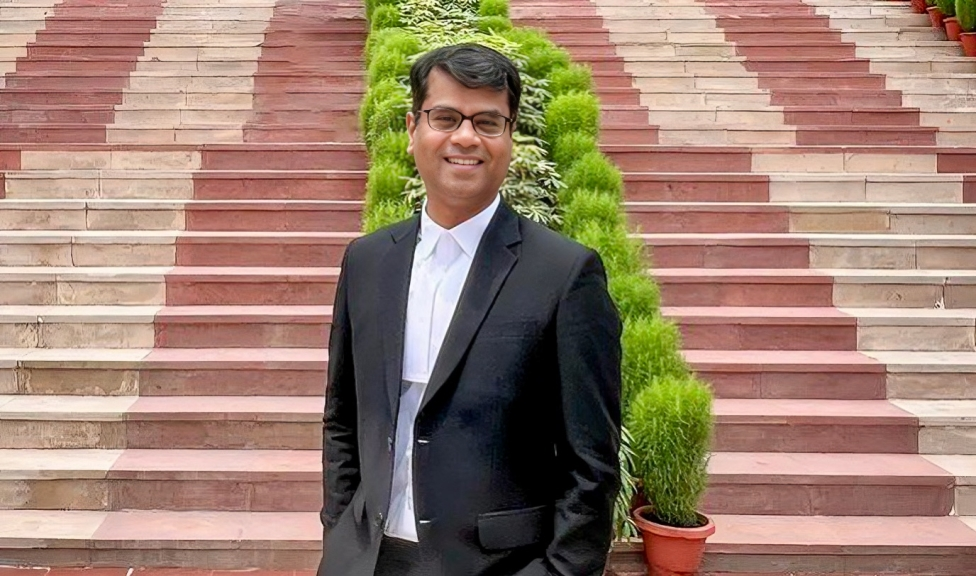
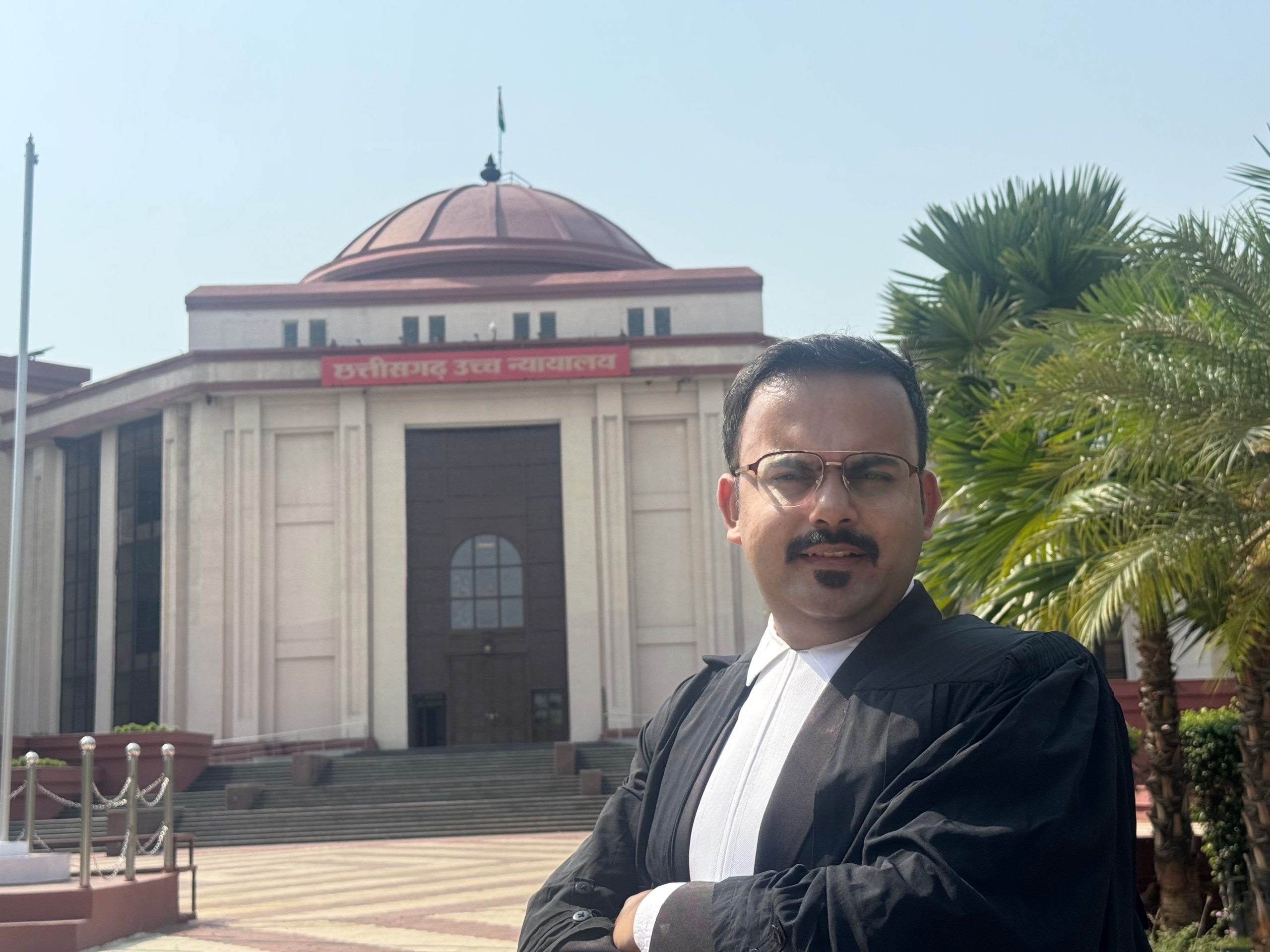
  • Inside the practice of a First generation Litigator & Supreme Court AOR – Gagan Narang, Partner at Triumvir Law.

    Inside the practice of a First generation Litigator & Supreme Court AOR – Gagan Narang, Partner at Triumvir Law.

    This interview has been published by Anshi Mudgal and The SuperLawyer Team

    Let’s start with your remarkable, successful career of being an Advocate on Record and partner at Triumvir Law. Looking back, what was the initial motivation behind pursuing the career in a law and was there any specific driving factor that you chose this field?

     So to start with, my parents, my family is a family of professionals and that is where the work ethic or the drive to be a professional.  Both my parents are doctors. Having said that, I was always into multiple different domains. I was always multifaceted, having multiple interests. Was involved in quizzing, debating, in fact was involved in the equity markets, had an interest in the equity markets in very early years as well. And that is where somehow the journey towards law shaped in, because I understood law to be a profession wherein you’ll get exposure to all kinds of environments, all the kinds of businesses, all the kinds of different facets of the world where every case in the legal field is a new case. Every case is unique in its own way, and that is the advantage that the legal profession gives. It keeps  things interesting, it keeps things fresh. That’s how my career shaped towards law in the first place.

    Also, I was kind of a rebel as a kid, did not wanna get into medicine because of those reasons as well.

    Thank you for openly sharing your decision to not pursue medicine despite your parents being doctors. You made it to Gujarat National Law University that shaped your legal and business acumen? Starting with a top law firm in Mumbai to now leading your own litigation practice in New Delhi, how was that journey? As a first-generation lawyer, what challenges did you face, and how did you overcome them?

     So, let’s put the first generation thing first. Multiple times in the process there have been days when you think that maybe a profession in the medical field would’ve been better because obviously there would’ve been some legacy that I would’ve carried. But having said that, the work ethic that was instilled or the work ethic that was put into me and the way I’ve seen my parents go about their days right from 8 in the morning to maybe 11 in the night. I’ve seen them working and that’s where the idea of hard work that is required in your professional field came into picture, and that is probably what helped in getting into the GNLU, that is Gujarat National Law University as well. 

    Everything basically came in a flow, so I started off at LKS – Lakshmikumaran & Sridharan and it was through the college, got college placement, went to Bombay, did tax advisory for a year or so. Tax was considered to be the toughest field of law that existed while we were in college and even today in practice I see there is a niche that’s been created about tax. And a big advantage that my experience that LKS gave me was that I understood probably what people or what lawyers don’t even want to get into because it’s a very specific, very niche field. A criminal lawyer is still comfortable doing civil law. I’ll not say anything is easy or tough, but with due respect to everyone, there are multiple lawyers dealing in different domains that do not actually want to get into tax.

    Working at LKS gave me that exposure and gave me that understanding that the toughest, probably the perceived toughest facet of law can also be understood, just by applying yourself to it. Something about GNLU, GNLU is one of those unique law schools which allows you to study multiple domains of law. So there is a BBA LLB which I pursued then there is a B.Com LLB that is going on. There is a BSc LLB  as well. There is a BA LLB, normally law schools have BA LLB, BBA LLB so they have multiple facets. Additionally, there are various co-curricular  activities, there are Interdisciplinary schools such as Center for Sports Law, Center for Public International Law. So there were a lot of opportunities that came my way thanks to these centers and thanks to these programs that the college provided. While pursuing all these courses, you always have the option to learn more, to understand more assets and not just understand the law in itself, but understand various domains as well.

    That is where the institute helped me a lot, besides, GNLU is always very proactive in moot court competitions, in debates, in parliamentary debates in MUNs as well. So that is another facet which helped in developing that personality, the exposure was always there. No matter where I was sitting in a remote corner in the Western part of the country, the exposure was always there to learn more and gain more knowledge in the journey.

    You have been representing clients both nationally and internationally in arbitrations, including obviously the cases that you have represented in Abu Dhabi, which was a SAP company in an international arbitration.

    What were some significant challenges that you encountered during those cross- border arbitrations and what unique difficulties do you see while you are doing those cross-border arbitrations and the way you strategize to overcome them?

      Cross-border arbitrations are a unique ballgame. When we understand a domestic arbitration or when we understand the way arbitration is practiced in India, mostly the arbitrators or mostly the tribunals are either retired judges or some significant authoritative figures who know the system that is applicable in a domestic arbitration very well. The system that is the Indian law very well. When you come to an international arbitration, the ballgame shifts completely. First and foremost, the arbitrators mostly, up to a certain extent, are mostly lawyers themselves.

    More importantly, these arbitrators mostly are from neutral backgrounds and neutral jurisdiction. So they per se might themselves not know the procedures that are involved in the applicable procedural law or the substantive law. They might not be privy to the substantive law in the first place.

    It becomes very important for the practitioner, for the council to specify, to take the tribunal along with them in the substantive law and in the procedural law because the arbitrator sitting might not correct in a domestic arbitration. An arbitrator might correct you if you’re going wrong in the procedure at least. An international arbitrator, the arbitrator themselves might be new or might be knowing the substantive legal part of it less, and therefore you need to take the arbitrator along with yourself. The second and more important facet is there is always a language or a communication gap that will exist. There is a specific way in which English is pronounced by us, which is Indian English. When you’re sitting in an international arbitration, the accent changes, the pronunciation changes and the understanding of the accent also changes. So it is very important to not just be clear in what you’re saying or what you’re thinking, but also to articulate your thoughts in a much better and a much simpler manner so that it’s conveyed properly to the opposite party, to the arbitrator, to everybody.

    This becomes an important aspect there. It is very important to be a very good listener in an international arbitration as well, because you have to be on your toes to decide your strategy later on, and for that you need to understand what your opposite party is saying or what is falling from the tribunal as well. These are the three observations that go besides the legal parts of it, but coming to the legal parts.

    The challenges always exist because when you’re doing an international arbitration, the domain entirely shifts. Now, the law that you might be dealing with, the substantive law that you might be dealing with is not the local law of your in-line that you practiced since whenever you started your legal education.

    So what happens is that you need to be very aware, you need to be very thorough and very well researched about the laws that you’re dealing with. So for example, the arbitration that you were talking about, the local law was of Abu Dhabi or United Arab Emirates. Now, a lot of facets came from Muslim law. A lot of facets came from Islamic law, per se, Sharia law per se. And when we initially got on to it we were not very privy to it. It did not come naturally to us, so we also had to go through a lot of details. We had to also go through the law in many details. Had it been a common law country, I would’ve said it still comes naturally because following common law, you know, the flow, you know the logic behind things.

    But when it comes to a country where the procedure, where the substantial law is entirely different from yours, comes, you need to be very thorough and very well researched in that aspect as well. So these are the few challenges that you face now.

    You have an expertise which spans through commercial litigation, international arbitration, as well as white collar disputes, which are often considered very high risk, and obviously confidentiality becomes a very important corner store for white collar crime.

    What kind of key factors do you focus on while you are dealing with these kinds of areas of law, which are not only very, very confidentiality centric, as well as privacy centric , because confidentiality is for the whole case, and privacy is for the parties. So how do you deal with all these?

    What I basically focus on, whichever field it is, is to break it down to the simplest molecule possible, to the simplest form of a thing possible. And when you come to white collar and you try to break it down, as I see there are two elements involved.

    There is one, a business or a company transaction that is happening and a company’s interest that is happening. And the other aspect is basically the criminal laws that are applicable to the same. So when we look at a white collar crime, it is a company doing a monetary transaction wherein the financial interests of the company are involved and maybe some element of criminal law to achieve those financial goals.

    When you are defending a company, or the corporate or the financial transaction, it is simpler because the transaction may be good, may go in your favor, the transaction may go against you but what is at stake is only the monetary aspect of it, which while is important to the company’s interest. Does not paramount the personal interest of the directors or the stakeholders sitting in the company. When you deal with white collars, the parameter expands and the personal aspects become more important because there could be a lifting of corporate will, there are criminal laws involved, so there will always be a liability or a penal liability that can arise in the form of imprisonment, in the form of fines, penalties on the directors, on the shareholders, on key managing personnel as well.

    What is important in the first place is to understand that most of these people, if there is an element or if there is an allegation of a crime that is alleged might not…, the boundaries of law are so thin and so bleak that they might not themselves know when they have actually transcended the boundary.

    Something which might be very obvious or something which might be very simple for someone, that person might have transcended the boundary a bit, and it becomes important in the first place to explain in a very normal, in a very conversational manner, without losing the confidence of the client, that there might be an issue or where the issue first or foremost arises.

    Obviously there will be transactions where there is a willful default and there is a willful transaction. But when there is not, it’s important to explain to the client where that particular transaction has happened. In other transactions, there might just be that there is an allegation, but there is actually no substance to the allegation and it becomes important to explain considering the Indian judicial sphere and considering the pendency in India that there will be light at the end of the tunnel. There will be justice at the end of the day. And these are procedural regulatory issues that will be handed in due course of time just by putting the best foot forward or the most transparent foot forward.

    One more aspect that is important to be understood is.

    Normally when a person thinks of crime, the person automatically becomes defensive. Even  as individuals, when these clients are in front of you, it becomes very important to get the truth or the exact truth out of them. So you need to be very careful with what you ask. Sometimes they’ll not tell you the entire thing because either they want to hide something or they don’t consider it to be important themselves.

    So it is important for you to ask the right questions, to get the right answers, and then formulate the strategy accordingly.

    In addition to all these kinds of legal responsibilities, you also have developed business for yourself, administrative tasks that you have taken up, and you are managing your Delhi office as well.

    How do you manage all of this and over the years, how has your role evolved in each of the segments of the organization? What kind of experiences are there in those challenges that you have overcome and the roles that you have kept on changing over time?  

     The challenge is an everyday thing. It’s still a challenge. It continues being a challenge, and I think it’ll continue being a challenge forever. And that’s the best part of it because every day when you deal with a challenge, you successfully come out of it. You feel you have achieved something which will help you sleep better that night . Having said that, I joined Triumvir Law back in 2021 when it was a smaller organization compared to what we have now, but we were gaining a reputation. The organization was gaining reputation in leaps and bounds back then as well. When I joined, my tasks were cut out very clearly for me, which was to start with making a base for the firm .

    And to also handle the litigation part of it because Anubhav, Akash, my partners were themselves getting overloaded with the kind of work that was coming in that is exactly where Anubhab reached out and asked me to join in, being friends since almost 2015, it was a no-brainer to go ahead. Since I left my firm role in 2018, I had only worked as an advocate. It was more about the legal thing, more about the matters, more about the cases rather than about a firm, rather than about running an organization or rather than about thinking of the business aspect of it. So the first challenge that came into picture and the challenge that keeps on probably repeating every day when I deal with it is to consider it to also be a business, to consider it to also be a profession that you are there to grow, that you’re there to make money, and not just to sit there as an advocate dealing with the legal aspects of it. That’s a dilemma that will always be there because unfortunately in India, what the problem is that legal fees are always considered to be a cost or a liability. So you have to make the client also understand how you become useful to the client in the longer run, and that is the transition that you achieve from an advocate to say a contributing member in a firm and a partner in a firm to bridge that challenge.

    A lot of my time being in courts, being litigating a lot of my time, always went into the court work because that is how court life is. So starting the day at say 10.15, 10 AM or 10.30 in the morning from court, you never know. Your matter might reach in two minutes, your matter might reach in four, six hours at 4:00 PM as well, and a lot of the time is wasted.

    So you have to be very careful how you spend time with increased responsibilities, with the responsibility of building an office, the responsibility of building a base, growing the base in Delhi. Time management has become a key issue. Time management becomes the biggest issue right now, and it’s very important, the way I look at, it’s very important to establish systems for each and everything in place so that almost every exercise is automated to the best possible manner.

    Secondly, it becomes very important to have the right personnel to work with you and develop a team to work with you so that 80% or 60% of your responsibility in one facet is covered by the team. And then obviously you are there to oversee, you are there to manage whatever is required. There will be clients who will always require you to be present on board, but it is important to make the client also understand that the team is good enough or maybe better than yourself to handle the cases themselves as well.

    But you’ll be there whenever you need to be there. Similarly in the administrative part, also in the business development part, it’s important to make the client understand that the primary point of contact will be handy enough and will be a good substitute for me.

    When you have those systems in place, it becomes easier with passage of time and that is what we have seen in bigger firms as well.

    So you have transitioned from so many roles and kept on learning and enjoying every bit of it. While doing so you have also advised on online gaming platforms, obviously, on legal matters and other forms such as digital wallet regulations and RBI licensing.

    Given the kind of nature of the sector and the new challenges that it faces every day, particularly around regulatory compliances, how have you set your agenda of breaking it down again, in your own words to singular molecules and finding those solutions for your clients who are actually involved in these kinds of gaming platforms?

     So sports law or say gaming law is a niche field in law itself, which is still up and coming. Having said that, it’s not something like, say, a tax law, which has entirely a different kind of practice. A sports field or a gaming law field is an interplay of multiple different facets of traditional laws.

    Basically, there will be some element of the company’s law involved there. There will be some corporate advisory involved there. There will be some element of litigation that will be involved there, and there will obviously be regulatory compliances and tax compliances, so on and so forth that are inward.

    For these kinds of transactions when we were handling, the most important part where in the legal bit, the litigation mind came into play was the discourses that the Supreme Court had over a game of chance or a game of skill. So this law had been evolving and is still probably evolving to certain extent, wherein what is considered a game of chance and what is a game of skill, what element of a game of chance will be allowed, what element and to what extent the game of skill will be allowed to say be legalized in a country or be considered legal.

    And there will always be games wherein there will be a mixture of both game of chance and game of skill and the important question to be answered in all of these for all of our clients would’ve been that a particular game that they are proposing mostly and specifically in the online domain.

    Whether that game is a pure game of chance, then obviously the law doesn’t allow it. You have to remove it, you have to either find a way around it or you have to structure it in a manner that there is a level of skill involved. Secondly, if there is a mixture or an interplay of game of chance and a game of skill, then whether that interplay can be put in a manner to state that it is more of a game of skill, and that is why it can be allowed in the country. Having said that, now where the complexity or where the problem becomes multifold is that sports laws or gaming per se, comes into the state list. Now there is a national list, there is a union list, and there is a state list and there are concurrent list.

    So these facets fall under the state list. And every state has different kind of legislations on it. There are states who have legalized or who have allowed certain games. there are states which completely banned even game of challenge and game of skills as well.

    Now when you are dealing with an online platform, the other thing that becomes important is where do these games actually happen? Or which are the platforms that you go on? So even today, if you see an Android Playstore, you’ll not find a game of skill also on an online platform, a game like, I don’t want name, but let’s take an example of a Dream 11 per se

    or My 11 circle, which is currently the IPL is going on My 11 circle is the sponsor for IPL, Dream 11 has been a sponsor for the Indian team, so definitely the operations that they’re involved in are very much legal, considered to be legal in India. However, still Android Playstore does not have the kind of apps there because there are Android policies or regulatory policies which do not allow Android to have those games on their app store. So that is where the lawyer’s role comes into picture, or our role came into picture to understand what are the regulations? Why are the regulations in a manner, if possible, to make the platforms also understand whether these can be allowed or not, or to find a way around them as well.

    And an interesting element that exists in this field is that the tax aspect of this field is still under question. There was a giant casino company in India that has been called by the tax authorities and has been asked to pay taxes on the entire sum that a person gets as winnings and not just the winning aspect itself.

    And if you actually calculate the tax on the entire sum then probably the platform will be left or the company will be left with nothing to show in their books and they might even go bankrupt.

    So this is an interesting evolving element. We’ll have to see where the Supreme Court takes it or where the laws in India take it, probably, there could be some form of government interference there as well, or the government stepping in to allow certain things. These are the evolving aspects of it, but that is where sports law or gaming law is there.

     In India’s evolving legal landscape like with cryptocurrencies being taxed despite not being legal tender, navigating grey areas is key. With your background in both BBA and law, has this unique combination shaped your litigation practice and business development approach? Do you feel that a business degree like a BBA or MBA offers an edge in understanding the commercial aspects of running a legal chamber?

    Has it helped you in strategizing and scaling your practice over the years? And overall, how has this blend of business and law influenced the way you approach the profession today?

    Okay, I’ll start from a personal example, and I know a lot of my friends in the legal fraternity who have been doing that, and probably this will also be a suggestion for all the upcoming lawyers , especially once they go independent.

    When you start and when you have joined a firm and somebody else is paying you a retainer or a compensation.

    And there is a fixed element to it, it becomes easier for you because all you need to do is tell your one savings bank account details to the person that salary or compensation will be transferred there. However, once you go independent or when you’re starting a firm, all of these things, when you’re doing, now, it becomes important for you to understand how a business runs and understand what is the importance of a current account, what is the importance of different business accounts, to separate, as they say, your personal from your professional. When you’re running the practice at a smaller scale, what happens is these lines get blurred a lot. Just like your time, your time also gets blurred a lot. You’re working at your will, so you’re working probably through 24 hours. Anytime, there is no personal time, there is no professional time demarcated.

    But over time, it becomes important for you to demarcate it and it’s better or the best for individuals to understand it in the beginning, get those compliances sorted in the beginning itself where a BBA comes helpful to that is BBA is basically Bachelor of Business Administration.

    You understand business organizations, business setups, very importantly and very clearly in the first place. When you have a clear cut idea, theoretical idea also what a business organization is and how different business systems work, it becomes easier for you to understand what will work for yourself or what idea can be theoretically good for you, and try and implement that practically as well.

    It becomes further more important for you to help yourself understand the client’s requirements or how the client’s organization works as well. When you have that basic idea of how businesses work. Every business might work in a different way. Every corporate client might work in a different way, but you understand where the eventual goal lies, how they distinguish their profits, how a balance sheet is made. From making a balance sheet to arriving at profits and losses to understand where the assets go, where the liabilities go, once you have sorted that out for yourself, it becomes easier for you as a litigator, as well as a corporate advisor to basically get the hang of it.

    Secondly, it plays even a bigger role when you’re in a corporate advisory sector, so supposedly we are advising on a share purchase transaction or an acquisition. Certain elements of the company’s law are very intricately connected with the finance aspects, the business administration aspect.

    And once you have that basic background, it becomes easier for you to explain to your clients also what different forms of  shares are, what are hybrid securities, all of those. And it becomes easier for you also to implement or structurize those transactions for your clients. So that is where the business BBA knowledge comes into picture and helps you with that.

    Keeping all this in mind, you were talking about when you start your own firm or when you work individually, you tend to work even for 24 hours. I would request you to talk a little bit more about the kind of mental health impact that it gives when you are under pressure while developing your litigation practice or developing your own firm. How have you taken care of that particular aspect, given the fact that your parents are doctors?

    And what is your advice to the new entrants who are so desperate in making it within overnight or something like that, that we just have to make our names bigger?

    Just to clarify, when I said 24 hours, I didn’t mean you’re working 24 hours. What I meant was your professional and your personal timings are blurred. Say a person in a job will actually come home, spend time with family, or do something personal, might go to the gym. They have their set patterns as an individual, especially freshly independent, you’ll not have those patterns.

    Or when you’re working to grow an organization at that point of time, you might blur those lines and those patterns. That is why you’ll be working in different domains and that’s what we have done and that’s what we keep doing at Triumvir Law as well. When a case needs us, when a transaction needs us to work overnight, we will still be working overnight.

    However, the attempt will always be, the aim will always be to reduce that kind of work and to form such systems that will help you in the longer run. As a freshly graduate person, as a person who has started an organization or as a person who has just gone independent, it’s easier to do that in the first place and those blurred lines help you in probably maximizing the results for yourself and to an extent satisfying the clients there. However, these will never be sustainable in the longer run. You’ll have added responsibilities. At the initial phase, your number of clients are also restricted. You can give that amount of time to a client where you can give that attention. Once you have gone a bit ahead in your journey, the number of clients will increase and automatically, if you start being available all the time, it’ll become a problem for everybody. Now, how you tackle it in the first place, you make good systems. I started earlier as well. It’s very important to form those systems so that it becomes easier for you in the longer run.

    Once you go ahead, you get, as I said earlier, you get a good team with yourself who can take away the day-to-day load from your shoulder and your inputs are required only when something new crops up in the middle. So that is where in the longer run, preparing the fresher talent in a manner that they can also independently work. They can apply themselves independently, but the work in the system becomes important.

    And most important advice to everybody will be to choose the people that you work with very properly and very wisely. I am blessed to have the kind of people that I work with, the kind of partners, the kind of team that I work with. They ensure that whenever that break is required, somebody’s there to follow up, somebody there to fill in your shoes so that you can take the burnout break. You can always enjoy that rejuvenation and be back at work while somebody’s handling the work as well. That’s the advice. That’s how I saw it in my family. That’s what I see in my partners. That’s what I see around me.

    All of us have some kind of interests, which are beyond the legal sphere. Always work on your interests. You might say a specific sport, you might not be good at it. You might be very good at it, but play that sport. I heard an influencer say this, and I was very impressed by this dialogue.

    It was actually not an influencer. I don’t remember who but yeah, in a podcast I heard this, especially in your twenties and thirties, go to that concert you wanted to go to.

    Attend that cricket match that you want to see, attend that stand-up comedy show that you want to do, whatever is your interest. Follow that as well along with your work because eventually in life you will have to compromise on that as well. So when you have that kind of time, take time out from your professional life that will help you make your professional life better in the longer.

    And although I’m sure after this answer, my partner will be complaining to me that you do nothing of that, but this is what it is.

    Keeping that in mind, I would request you to suggest or rather talk a little bit about how you have transitioned along with the technology because obviously without technology today we would not be having this conversation.

    How do you see the technology has helped you have a better representation, have better way of learning and the kind of disruptive tech that is happening today, especially AI, IOT, blockchain? How have you equipped yourself with the new understanding of this and where do you see that our legal field is moving towards, along with these kinds of technologies that are infiltrating our law fraternity as well?

    Just a disclaimer, I am very bad with modern technology. When I say very bad, I’m trying every day to adapt to more things, but not at the pace where the generations that are coming ahead will be. Having said that, we are trying to do whatever we can to reduce our burden or to reduce our workloads, and that is probably the whole aim of implementing technologies in your daily life or in your professional life. So how we normally do it or how we are trying to do it, to start with was a big transition from those hefty files to basically an iPad and a cloud account where, all your files, all your devices are scanned and stored, so you don’t need to carry those empty files to courts.

    And in the recent past, we have seen the courts also transcend towards promoting. And I have personally seen in court, in the Supreme court before the former chief justice actually asking senior designated lawyers also to follow a practice of reading the briefs on iPad and not on paper files so they can also transcend towards the newer technologies.

    That’s the basic beginning and we are still trying to harness and maximize that sphere. So that is the first place saving a lot of paper. Obviously with our workload, we are only supposed to carry one iPad now and not the entire set of files, so that is where it helps in the first place.

    Secondly, now thanks to the digitization of all the records. And neutral citations present, like the entire databases shifting to technology based data share bases. We are not required to maintain those libraries that were earlier a compulsion. Now they have over time become a luxury of sorts.

    So it is more of an interest or a hobby kind of a thing to maintain that library. Having said that, thanks to the tools that are available and thanks to technology. It’s become much easier for us to operate on devices rather than those volumes or those libraries.

    Just to add what you are saying, we have incorporated an AI platform with us. We are trying to automate the contracts that we do, to basically reduce the amount of time that we spend on it and to get the regularities sorted. That is how AI is transforming for us as well. The regular stuff is always there where we use whatever AI tools are available for say emails or drafting basic things, but in the longer run we are also looking to incorporate AI outputs into our deliverables as well.

    Get in touch with Gagan Narang –

  • “Litigation demands more than a sound understanding of the law; it calls for strategic thinking, creativity in argumentation, and a deep sense of ethical responsibility.” – Dushyant Tiwari, Advocate-on-Record at Supreme Court of India.

    “Litigation demands more than a sound understanding of the law; it calls for strategic thinking, creativity in argumentation, and a deep sense of ethical responsibility.” – Dushyant Tiwari, Advocate-on-Record at Supreme Court of India.

    This interview has been published by Anshi Mudgal and The SuperLawyer Team

    Having graduated from NUALS, Kerala, and starting your practice directly before the Hon’ble Supreme Court of India, what inspired you to pursue such a high-stakes litigation career so early on ?

    My decision to pursue litigation particularly by starting directly at the Supreme Court was rooted in both personal ambition and the exposure I received during law school. Coming from a first-generation legal background, I didn’t have familial connections in the profession. That absence could have been a limitation, but in many ways, it became a motivator.

    A key factor that empowered me was the strong support of my family, especially my elder brother. His advice and encouragement played a crucial role in helping me make bold career decisions, including the step to begin my practice at the apex court. His belief in my potential gave me the confidence to pursue a path that was unconventional and challenging.

    During law school, I had the opportunity to intern with a diverse set of accomplished lawyers. These experiences offered me valuable exposure to different styles of practice and deepened my understanding of litigation as more than just dispute resolution. I saw firsthand how litigation can serve as a powerful tool—not just for individual justice, but for broader policy reform and societal impact.

    What truly attracted me to litigation was its intellectually rigorous nature. It demands more than a sound understanding of the law; it calls for strategic thinking, creativity in argumentation, and a deep sense of ethical responsibility.

    Starting out at the Supreme Court was undoubtedly intimidating, but it gave me a unique opportunity to engage with complex, high-stakes matters early in my career. I was able to learn directly from senior advocates and constitutional experts. While building a reputation from scratch came with its own set of hurdles, the process made me more resilient, disciplined, and committed to the principles of justice.

    What were some key challenges and lessons you learned while transitioning from working with an Advocate-on-Record to establishing your own practice in 2016, and later founding Scripta Lex Law Firm in 2018?

    The transition was both challenging and transformative. One major hurdle was building a client base from the ground up. As a first-generation lawyer, I lacked industry connections and had to rely solely on the quality of my work and my ability to earn trust.

    Running an independent practice also introduced me to the administrative side of law—budgeting, staffing, operations, and more. Shifting from solely legal work to managing a full-fledged firm required developing a new skill set quickly.

    The most valuable lesson I learned was the importance of building and nurturing relationships. In the absence of a network, I made a conscious effort to connect with senior counsel, peers, and clients. Legal expertise is essential, but trust and communication are what sustain a practice.

    Running my own firm has also taught me to take full ownership of every case. Beyond legal strategy, I now consider a client’s broader goals and circumstances. It’s given me a holistic approach and a deeper understanding of how to lead both in the courtroom and within my firm.

    As a qualified Advocate-on-Record (AOR), what are the unique responsibilities that come with the role, and how do they affect your practice?

    Being an AOR comes with significant responsibility. Only AORs have the right to file documents before the Supreme Court, which means every filing must be flawless in terms of format, compliance, and timing.

    As an AOR, I’m also the official point of contact between the client and the Court. This means that my role extends beyond documentation, I must ensure that clients are informed, and expectations are managed appropriately.

    This responsibility has enhanced my attention to detail and refined my organizational skills. It has also deepened my appreciation for the precision and professionalism that the Supreme Court demands, ultimately shaping me into a more disciplined and reliable practitioner.

    You have significant experience across varied forums, Supreme Court, High Courts, NCLT/NCLAT, NCDRC, and more. How do you approach such diverse jurisdictions and areas of law? Which field has evolved the most in the last decade?

    Each forum requires a distinct approach. At the Supreme Court and High Courts, cases often involve constitutional or public interest elements. These require legal foresight and arguments that resonate at a policy level.

    In contrast, corporate forums like NCLT/NCLAT demand a deep understanding of statutory frameworks like the Insolvency and Bankruptcy Code (IBC). I frequently collaborate with financial experts to address the commercial realities involved.

    In the NCDRC, which deals with consumer disputes, the emphasis is on practical solutions and timely resolutions. These forums call for clarity, efficiency, and client-centric approaches.

    Among all, Insolvency Law has evolved the most over the past decade. The IBC has transformed corporate debt resolution in India. As it continues to evolve through amendments and judicial interpretation, staying updated and agile is crucial.

    Consumer Law has also seen major developments, especially with the growth of e-commerce. The introduction of the Consumer Protection (E-Commerce) Rules, 2020, reflects this shift and has changed how we approach digital consumer disputes.

    Navigating these forums successfully demands continuous learning, adaptability, and cross-disciplinary collaboration.

    With your expertise over various aspects, can you share a defining case that shaped your outlook on litigation?

    One defining case was a complex corporate insolvency matter under the IBC before the NCLT. The company in question had multiple stakeholders—each with competing interests. The legal issues were intricate, but so were the financial and strategic considerations.

    What made the case significant was its timing, it occurred when the IBC was still evolving. We were navigating uncharted waters, relying on fresh judicial interpretations and creative legal solutions.

    This case reinforced my belief that litigation isn’t just about resolving disputes; it’s about contributing to systemic and economic recovery. Lawyers play a vital role in shaping not only legal outcomes but also financial futures and social stability.

    What gaps do you see in consumer awareness, and how should the Consumer Protection framework evolve?

    A major gap lies in the lack of awareness, especially in rural and underserved areas. Many people don’t know their basic consumer rights or how to seek redress. Even in urban areas, legal processes can seem intimidating and inaccessible.

    With digital commerce, new challenges like cross-border transactions, misleading ads, and jurisdictional issues have emerged.

    To address these, the framework must evolve by:

    • Expanding legal literacy through targeted outreach programs
    • Simplifying online complaint processes
    • Strengthening digital consumer protection mechanisms
    • Enhancing enforcement to ensure timely justice
    • Creating user-friendly forums for efficient dispute resolution

    Improving access and responsiveness will help make the system more inclusive and effective.

    How do you balance pro bono commitments with your commercial practice?

    For me, pro bono work is not just a commitment, it’s a principle. I believe access to justice should never be determined by one’s ability to pay.

    Balancing both requires discipline. I set aside dedicated time and ensure that pro bono matters are managed with the same attention as commercial cases. In fact, these cases often sharpen my empathy and creativity, enriching my approach to complex commercial matters as well.

    Pro bono work reminds me why I chose this profession—to make a meaningful impact. It grounds me and enhances the human side of my legal practice.

    Where do you see the greatest opportunities for young legal professionals today?

    There’s immense opportunity in emerging areas like data privacy, technology law, and insolvency law. With growing digital transactions and evolving privacy concerns, lawyers with expertise in tech-law intersections are in high demand.

    The IBC continues to offer opportunities in corporate restructuring, cross-border insolvency, and distressed asset resolution.

    Young lawyers should focus on:

    • Staying updated with legal-tech trends
    • Carving niches in emerging fields
    • Embracing specialization
    • Building digital fluency alongside legal expertise

    Those who adapt early to these trends will be best positioned to lead the future of legal practice.

    What advice would you give to law students or young advocates entering litigation?

    • Master the basics: Strong fundamentals are your best asset.
    • Seek mentorship: Learn from seasoned lawyers—it shapes your growth.
    • Be patient: Litigation is a long journey; focus on consistency and credibility.
    • Build relationships: Clients value trust, not just technical knowledge.
    • Work in teams: Collaborative success is sustainable success.
    • Use technology: Legal tech enhances efficiency and reach.
    • Specialize and build focus: Develop niche expertise to differentiate yourself. Alongside this, cultivate the habit of reading books—legal and otherwise. Deep reading enhances comprehension, critical thinking, and focus in a way that passive scrolling through social media never can.
    • Take care of yourself: Mental and physical well-being are vital for long-term growth.

    And most importantly stay curious, stay ethical, and stay resilient. Litigation rewards those who show up, stay prepared, and work with purpose.

    Get in touch with Dushyant Tiwari –

  • “The allure of working at the apex court and daydreams of arguing before a Constitution Bench inspired my aspiration to become an AoR.” – Shivank Pratap Singh, Advocate on Record at the Supreme Court of India.

    “The allure of working at the apex court and daydreams of arguing before a Constitution Bench inspired my aspiration to become an AoR.” – Shivank Pratap Singh, Advocate on Record at the Supreme Court of India.

    This interview has been published by Anshi Mudgal and The SuperLawyer Team

    Becoming an Advocate-on-Record is a notable milestone. How has this role influenced your practice, and what added responsibilities and opportunities has it brought with it?

    At the felicitation event for the Advocate-on-Record (AoR) cohort I was part of, one of the office bearers remarked on how many current Supreme Court judges and successful senior advocates once held the AoR designation. I fully agree, it is indeed a significant milestone. From the very beginning of my legal career, I have been involved in matters before the Hon’ble Supreme Court. Even as a law student, while interning with a Senior Advocate who was then the Additional Solicitor General of India, and another renowned Advocate-on-Record, my interest in practicing at the Supreme Court grew substantially. The allure of working at the apex court and daydreams of arguing before a Constitution Bench inspired my aspiration to become an AoR. Professionally, becoming an AoR has had a profound impact on my practice. A significant portion of my clientele comprises corporates, PSUs, and government bodies, many of whose matters ultimately reach the Supreme Court. Knowing that I am an AoR provides them the assurance that I can seamlessly handle their cases from initiation to conclusion. Furthermore, the AoR designation has opened new avenues, particularly access to appeals originating from courts outside Delhi, which make up a large portion of the Supreme Court’s docket. This has allowed me to engage with unfamiliar legal terrains, such as matters relating to mining or religious endowments, that are not commonly litigated in Delhi, thereby broadening both my exposure and expertise.

    You began your career with some of the top law firms in the country. What were some of the most impactful experiences during that time that significantly shaped your professional trajectory?

    Looking back, I feel quite lucky to have started out at some of the leading law firms in India. Making the shift from law school to a Tier-1 firm was a bit of a shock to the system at first. One day you’re attending lectures and the next you’re handling serious matters for big companies, many of them multinationals with huge stakes involved. There was a real sense that everything had to be perfect from the get-go, especially when it came to drafting and research. As a junior associate, that kind of pressure can either rattle you or sharpen you.

    In my case, I think it did the latter. The fast-paced, high-stakes environment taught me to be meticulous and put in the work, right from day one. That habit stuck, and it’s something I still carry with me, no matter what kind of matter I’m dealing with.

    One memory that stands out from those early days was when I was asked within my first week to brief Mr. P. Chidambaram, Senior Advocate, on a writ petition related to service tax. I won’t lie, I was nervous. I stayed up most of the night going over every detail of the case so I’d be ready. It was a trial by fire, but somehow, it went well and gave me a real boost of confidence.

    Beyond individual moments, what really shaped me was the overall work culture particularly during my time at AZB & Partners and Cyril Amarchand Mangaldas. I got to work with international clients and interact with foreign lawyers, which gave me a fresh perspective. One thing that really stood out was how structured and transparent their approach was; frequent updates, clear timelines, and detailed billing were the norm. I’ve tried to bring some of that structure into my own work now, and it’s definitely helped in building better client relationships.

    Having worked with both reputed law firms and Senior Advocates, what key differences have you observed in terms of work environment, nature of responsibilities, and overall approach to legal practice?

    The common aspect of both law firms as well as senior advocates is that as associates/juniors there is an expectation of high level of professionalism. Working in a dispute resolution team at a law firm entails a lot of team work and coordination. Law firms also have a hierarchical structure and within a few years an associate upon getting promoted is expected to lead, guide and train junior members of the team as well. It is also noteworthy that in full service law firms we often worked with lawyers from corporate, transaction and tax teams where their clients got into matters of litigation. This is an advantage of working at full service law firms where even though you may be in a litigation team, there are instances where you get to experience and work along with peers from different practice areas which broadens your horizon. In contrast, when you are working with a senior advocate, there is no hierarchy as such and juniors are expected to directly assist the senior. In turn, however, you get to learn directly from the senior who has decades of experience in the field. There is also no expectation or requirement to lead or supervise other chamber members as each of them would assist the senior in their individual capacities. As far as the responsibilities are concerned, there is a clear distinction in role one plays as a lawyer at a law firm in contrast to a junior in the chamber of a designated Senior Advocate. Most of your readers would already know that Senior Advocates do not engage with litigants directly and the solicitors are their clients essentially. Further, Senior Advocates chambers do not draft pleadings and do not file matters. The aforesaid tasks are to be executed with great sincerity and precision in a law firm. I was lucky to have incredible mentors like Ms. Roopali Singh, Former Senior Partner AZB and Partners and currently the head of dispute resolution at Vritti Legal. I learnt the basics and nuances of drafting under her tutelage. In the initial years of practice at law firms, all filing related tasks are handled by the junior members of the team in collaboration with the court clerks. It is an art to file a petition with minimal or no defects and in cases which are time sensitive and urgent in nature, it can be a make or break thing. I think my experience in law firms also helped me gain proficiency in filing procedures dealing with the registry which is often overlooked as a rudimentary task. 

    In contrast, working with a senior advocate is totally focussed on mastering the facts and the law of the case and working with the Senior to bring out the most impactful and precise arguments for addressing the court. My Senior, Mr. Prashanto Chandra Sen, Senior Advocate is a product of Dr. AM Singhvi’s chamber and the first thing I learnt from him was a particular style of preparing a note for arguments which he had learnt from his senior, Dr. Singhvi. This consists of a list of relevant dates, submissions and response to contra points. I still follow this format for matters that I argue on my own and even for briefing other Senior Advocates in my matters. Working in a senior’s chamber also means more number of cases to deal with on a daily basis for hearings as compared to a big law firm where the number of hearings per day would be significantly lesser. 

    With a background in Computer Science (BTech), what inspired your transition to a career in law? How did your experience in law school shape your journey, and in what ways has your engineering education contributed to your legal practice? 

    A career in law was never on my list. I had started preparing for MBA exams like CAT in my final year of engineering and scored well in my first attempt. I decided to improve my score to get into a top IIM and dropped a year after completing Btech to reappear in CAT. In the meanwhile, on a friend’s suggestion, I gave the Delhi University, Faculty of Law entrance and cleared that. I enrolled and started attending classes out of curiosity. As fate would have it, I liked what was being taught in law college and jettisoned the plan of doing the MBA, leading to a switch in a career to law. 

    The Delhi University 3 year course experience is quite different from 5 year BA LLB residential programs. Even though we had excellent professors, there was a lack of guidance regarding career options post law school. So I decided it was best to intern as much as possible and get a taste of different practice areas and offices. Being in Delhi helped because there were several options from law firms to reputed chambers where one could look to land an internship. After interning extensively in various offices, I felt that being a first generation lawyer, the best option for me was to join a law firm preferably a tier one firm which pays well ;). I was lucky to intern a couple of times at the AZB and Partners Delhi Office and had offers to join the capital markets team and dispute resolution team. Given my interest in litigation I chose the latter. That was the formal start of my journey in litigation which I thoroughly cherish. 

    My science and engineering background has helped me immensely in practice. This was felt particularly while working on matters of interstate river water disputes where I was on the legal team from the State of Andhra Pradesh, led by Mr. R Venkatramani, Sr Adv and presently Attorney General of India. Water disputes require advocates to understand highly technical concepts related to hydrology, cropping etc. which in my humble opinion can be grasped better, faster and deeper by a student of science and technology as compared to someone who hasn’t received training and education in sciences. Even in my construction arbitration practice I have reaped the benefit of my science background, particularly on disputes arising out of issues relating to design and specifications in a construction contract. 

    You’ve advised and represented construction and project management firms in high-stakes arbitration involving contractor and subcontractor disputes. What are some of the recurring challenges in such matters, and how do you approach them to secure effective outcomes?

    A lot of claims in construction and infrastructure disputes arise out of delays. Delays can be on many accounts,  Invariably, when there is a dispute between a private party and government entity, it is the latter who is blamed to cause delay. Delays could arise on various counts such as lack of statutory approvals, late handover of site, change in scope of work and delay in delivery in drawings and designs, which are out of the contractor’s control. On the other hand, if a contractor defaults in its obligations and causes a delay, claims for liquidated damages (if already specified in the contract) or damages for breach can be made against the contractor by the principal. These are situations which should be handled tactically at an early stage before an aggrieved party precipitates the issue to become a legal dispute. A lot of these disputes can even be avoided by careful drafting of contracts which eliminates ambiguity. Proper contract management and risk mitigation is another aspect that parties must consider to avoid and reduce potential liabilities in the event a dispute arises. Once a dispute has been referred to arbitration, the first thing I would try to achieve, in case I am representing a claimant, is to identify if there are special equities in its favour which might result in getting interim relief in the form of stay on bank guarantees and forfeiture of security deposits. This is extremely difficult, albeit, not impossible and can go a long way in securing some level of financial relief for a party at the very inception of a dispute. I also believe that bringing on board experts can prove critical for the outcome in complex arbitration matters. The impact that experts make is greater in cases where there is a sole arbitrator who is trained judicially as a judge or an advocate. Expert reports along with oral testimonies can often bring the desired clarity to an arbitrator’s mind which can tip the scales in such disputes. 

    Another great challenge that counsels may face is the ‘Arbitrator’. Today we have a lot of talks, conferences and events centred on the arbitration practice. Every month something would be organized where lawyers, judges, in-house counsel, people from the law ministry come and give speeches about making India a hub for international arbitration, how challenge to awards and court interference should be limited etc. However, a topic which is often overlooked is the quality of arbitrators we have in our country, particularly with respect to their integrity. Unfortunately, if a party is pitted against an arbitrator who is deciding the matter for extraneous reasons, an effective immediate solution may not always be on the cards. In such cases it may be wise to come to a reasonable settlement. 

    Representing the Union of India and UPSC before various judicial forums, including the Supreme Court, involves complex litigation. How do you manage the legal and strategic dimensions of handling high-stakes public and service law matters on behalf of the government?

    In my humble opinion, the most important part about litigating on behalf of the government is to get proper instructions from the concerned officers. I have been lucky to have worked with incredibly competent and energetic officers during my tenure as a panel counsel with various government entities which has helped me in effectively representing them before Courts. In the Supreme Court, the critical cases involving the Union of India are led by the Additional Solicitor Generals, the Solicitor General and the Attorney General. Briefing such stalwarts on matters which involve questions of interpretation of the constitution, issues related to national security, legality of policy decisions which has implications of thousands of crores is like doing a masters of law on these subjects with real life implications. Working closely with these Seniors on 300 + matters in the Supreme Court, often handling 5 fresh cases a day has helped me develop an instinct to identify what is most important in a petition to highlight and show to the Court. This experience has helped me with the skill to manage client expectations and offer better advice regarding the reliefs that are likely to be granted in their favor, rather than what is initially requested and prayed for. This is an essential part of advocacy whether you are representing the government or a private party. Sometimes our instincts may not be accurate enough, and the client may benefit from providence and get the relief they expected rather than the conservative outcome predicted by their advocate, however, such victories also taste sweet. 

    Looking back, what has been one of the most challenging cases in your career so far, and how did you approach and resolve the complexities involved?

    Well, every case is challenging and has a certain degree of complexity involved, we wouldn’t be in Court otherwise ! I will, however, talk about a couple which came first to my mind when I read this question. This is a recent one where I was appointed as an amicus by the Supreme Court for an accused to whom notice could not be served and accordingly, he didn’t appear before the court. As we know, criminal matters cannot proceed ex parte, so I was appointed to assist the court on behalf of the accused. The allegations in this case were very grave which attracted provisions of POCSO. The challenge here was that I was representing a client who I never interacted with, which was a first for me. Upon thorough and meticulous examination of the trial court record, I successfully presented a defence that was accepted by the Court, resulting in the confirmation of his acquittal against the prosecution’s case.

    A second very challenging case was one where I appeared on behalf of the revenue authorities before the Supreme Court and the question of interpretation of a customs and excise circular was involved. The other side was represented by Mr. Arvind Datar Sr Adv. After Mr. Datar’s arguments were concluded, the bench was convinced that I had no case, in fact the question put to me was – “what is left to argue now ?”. It is only because I had extensively prepared the matter, made a comprehensive note for arguments which had all the relevant page numbers cross referenced and had a compilation of judgments which was again numbered with an index which indicated the relevant paragraphs, that I could persuade the court to consider my submissions which lasted for around 45 minutes. It involved rigorous grilling from the bench as well. The judgment was reserved and the opposite party got the relief sought, but the experience I gained was something remarkable and gave me the confidence to have faith in myself irrespective of the stature and calibre of the counsel on the opposite side.  

    Given your diverse expertise across litigation and arbitration, what guidance would you offer to young lawyers who are just starting out, especially those aspiring to build a robust career in litigation?

    Today a fresh graduate who wishes to pursue litigation has 3-4 different kinds of workplaces to start out. It could be the chamber of an advocate or senior advocate, a law firm, an in-house role where substantial litigation work exists or as a research associate/law clerk with a High Court or Supreme Court Judge. Out of these, 3 roles are transitory and one cannot continue in that position or establishment for their entire career. Law firms are one such place where you can start as an associate and rise up the ranks in a fairly structured and predictable manner. I would suggest someone who is a first generation lawyer without significant financial support from their family who does not have a great appetite for risk and uncertainty (which is certain in private practice), should try and join a law firm. It will give them financial stability, reasonable exposure to courts along with other advantages of working in law firms which I have already touched upon in some earlier questions. People who are passionate about law and want to build their own practice in the future should join a busy chamber and then look for a good senior’s chamber to polish and sharpen their skills further. Another thing worth noting in litigation is that one should be ready and available to work everyday of the week for long hours on a consistent basis under mentors and bosses who are strict and demand the highest standards. Going through such rigours is the best thing that a budding litigator can do for themselves. A quote attributable to a great figure- Abraham Lincoln may give my suggestion more context, which goes – “You can’t sharpen your razor on velvet”

    Is there a core philosophy or guiding principle that you’ve followed throughout your legal career? Looking ahead, how do you envision the growth of your practice in the evolving legal landscape in India?

    I have been a lawyer for a decade now. A core philosophy or guiding principle which has been there through and through is absent as far as I am concerned. But along the way I have learnt a few things which guide me now and I view them as beneficial generally. 

    There is one quote that I picked up from a book called “The 38 Letters from JD Rockefeller to his Son”. In one of the letters JD Rockefeller tells his son that – “To eat an elephant, you need to eat one bite at a time. The same goes to when you are doing something. If you want to accomplish everything in one go, you will only let the opportunity slip away.”  

    So, this field is a big elephant, you have to eat it one at a time. We cannot be an expert in every field of law or build a great network or have a great team or accomplish several other things which are essential for a successful practice, all at once. If we attempt that, there will be chaos which would lead to anxiety and nothing will be accomplished. Therefore, my 2 cents on an approach to a career in law would be to gradually advance, be patient, and take actions which are planned, structured and precise. This will slowly build into something very impressive and worth cherishing.  

    The second would be to be bold and ready to get outside your comfort zone. When I observe, read and hear about the great individuals who have been in this profession, the thought which comes to my mind is that if they could do it, why not me. This thought keeps me going when the chips seem to be down and doubt arises. 

    Third and last one is – to prioritise learning and upskilling. Look out for the latest trends and take the first mover advantage in this highly competitive market. 

    We are a rapidly growing firm led by two partners and one tax consultant. Apart from the conventional practice areas we are also looking at the future and emerging fields such as law and regulations surrounding AI, its impact on intellectual property, cybersecurity, energy law and data privacy. These fields are interesting from an academic as well as practice stand point. Jurisprudence on these subjects will rapidly develop in the future. As I have said before, there are opportunities for the early entrants which is golden for new firms like ours as the entry barriers are less. It goes without saying that we will build upon our strengths and continue serving our existing clients with top notch tier one level service in a cost effective manner, while we strive to grow by expanding our teams and clientele.  

    Get in touch with Shivank Pratap Singh –

  • “With the evolving jurisprudence in arbitration law, cyber and tech law, India is on the right path to becoming a robust jurisdiction for global business.” – Ankit Chaturvedi, Advocate on Record at Supreme Court of India.

    “With the evolving jurisprudence in arbitration law, cyber and tech law, India is on the right path to becoming a robust jurisdiction for global business.” – Ankit Chaturvedi, Advocate on Record at Supreme Court of India.

    This interview has been published by Anshi Mudgal and The SuperLawyer Team

    With a specialized academic background in Intellectual Property Law and experience in arbitration, what first sparked your interest in these fields, and how did you chart your path toward building a niche?

    My interest in Intellectual Property (IP) Law and Arbitration developed early during my legal education, as I observed how legal structures could facilitate innovation and enable efficient dispute resolution. The interplay of creativity, commerce, and protection within IP law captivated me, while arbitration appealed to my inclination toward structured, time-bound mechanisms for conflict resolution. Recognizing their growing relevance in a globalized, technology-driven world, I pursued a specialization in Intellectual Property Law and complemented it with a Diploma in Cyber Law and a Diploma in Alternate Dispute Resolution. Early in my career, I had the opportunity to work on both IP-centric transactions and arbitration matters, particularly for technology and media clients. This exposure helped me build core competence in these areas. Over the years, I have advised and represented clients in complex IP disputes, as well as high-value arbitrations, thereby developing a niche, multidisciplinary litigation and advisory practice.

    With over 12 years of diverse litigation experience across multiple domains, what inspired you to establish your own independent practice? What were some of the initial challenges you faced, and how did you overcome them?

    The decision to establish my independent practice was a natural evolution in my professional journey. After years of working with reputed law firms and handling high-stakes litigation and arbitration, I felt the need to channel my experience into building a practice that reflects my values and strategic approach.

    Presently, I am regularly engaged by clients and fellow advocates for representation and strategic assistance in matters before the Supreme Court of India, the High Court of Delhi, the NCLT/NCLAT, NCDRC, and Arbitral Tribunals. My practice spans a wide range of civil, commercial, and arbitration matters, with a strong emphasis on tailoring strategy to suit the forum and the nature of the dispute.

    That said, the transition to independent practice came with its own set of challenges, particularly as a first-generation lawyer. Unlike those with family legacies in the profession, I did not inherit a chamber, a network, or a ready set of clients. Every brief, every introduction, every recommendation had to be earned through consistent effort and credibility. 

    One of the most immediate hurdles was building a reliable and cohesive team that aligned with the standards and expectations I had set. Another was gaining visibility and establishing credibility in a competitive legal ecosystem where institutional names often carry weight. Financial unpredictability, especially during the initial phase, was a very real concern.

    But persistence, the trust of long standing clients, and the support of peers in the profession helped me navigate those early hurdles. Looking back, the absence of a safety net made the process harder, but it also made every milestone more meaningful.

    You’ve represented various corporates and associations before the Hon’ble Supreme Court. What are some key strategic and procedural considerations when preparing matters for the Apex Court?

    As an Advocate-on-Record, I am closely involved in ensuring procedural compliance at every stage, whether it is curating the record, certifying pleadings, or meeting filing timelines. The smallest procedural oversight can delay a matter or, worse, affect its prospects, so attention to detail is non-negotiable.

    Strategically, it’s essential to identify and frame substantial questions of law that warrant the Court’s attention, especially when seeking special leave. The task is not just to argue well but to demonstrate why the matter deserves to be heard at the apex level. This often involves a careful study of precedents, anticipating the judicial approach, and distilling complex factual matrices into crisp legal propositions.

    When representing corporates or industry bodies, an added layer of responsibility arises, ensuring that litigation strategy is aligned with their internal governance, compliance protocols, and long-term commercial outlook. In such cases, the objective is not only to secure relief but to do so in a manner that reinforces institutional credibility and legal preparedness.

    Ultimately, preparation for the Supreme Court is not about volume of material, but the clarity of thought and brevity in presentation. Every word counts and every argument must serve a precise purpose.

    With the rapid rise of technology including AI and digital platforms, how do you see the landscape of dispute resolution changing, particularly in the realms of IP and commercial litigation?

    The rapid evolution of technology, particularly artificial intelligence, and digital platforms, is fundamentally reshaping the legal landscape. In the realms of commercial litigation and arbitration, we are already seeing an increased reliance on digital evidence, virtual hearings, and AI-enabled legal research tools. 

    In the context of intellectual property, technology has created both opportunities and complex challenges. Issues like digital piracy, AI-generated works, and automated infringement detection demand legal interpretations that go beyond traditional IP frameworks. The pace of innovation often outstrips legislative response, placing greater responsibility on lawyers and Courts to bridge that gap with well-reasoned, forward-looking arguments.

    From a procedural standpoint, the integration of e-filing systems, hybrid hearings, and digital evidence management has significantly improved access to justice and case efficiency. These changes, initially introduced out of necessity during the pandemic, have now become institutional features, and rightly so.

    Looking ahead, I believe technology will not just augment dispute resolution but redefine it. Online dispute resolution (ODR), smart contracts, and AI-assisted decision-making are likely to become more mainstream. For practitioners, this underscores the need to stay agile, continually upgrade their understanding of emerging technologies, and reimagine advocacy in a digital-first environment.

    Having said that, while AI can assist in streamlining legal tasks, it cannot substitute the nuanced reasoning, ethical judgment, and strategic insight that human intelligence brings to the legal process. Law is not only about rules, it is about context, persuasion, and the ability to interpret human conduct. These are areas where human advocates remain irreplaceable. It will likely take considerable time, and fundamental shifts in legal philosophy, before AI can meaningfully replicate that depth of analysis and discretion. For Advocates today, the challenge lies in integrating new-age tools without losing the craft of advocacy. 

    In advising international clients, especially in technology-related matters, how do you navigate cross-border legal systems? Do you feel India’s evolving legal framework is now aligned with global standards in this space?

    Advising international clients requires not just legal expertise but also cultural and regulatory sensitivity. I ensure that our advisory is aligned with both Indian legal requirements and the client’s jurisdictional obligations. This involves collaborating with foreign counsel, staying updated on global developments, and contextualizing advice for transnational operations. India’s legal framework, particularly in arbitration, data protection, fintech, and IP, is increasingly converging with global best practices, though there is room for further harmonization. With the evolving jurisprudence in arbitration law, cyber and tech law, India is on the right path to becoming a robust jurisdiction for global business.

    Having handled numerous high-stakes arbitrations, what are the key challenges you’ve encountered? In your opinion, how is Alternate Dispute Resolution shaping the future of dispute resolution in India?

    Arbitration, particularly in sectors like construction, infrastructure, and real estate, often brings with it layered complexities, voluminous records, overlapping issues, technical details, and multi-party coordination. One of the foremost challenges I have encountered is ensuring that the presentation of evidence remains streamlined and digestible for the arbitral tribunal, especially when dealing with expert reports, engineering documents, or financial data spanning several years.

    Coordinating with technical experts, be it structural engineers, accountants, or valuation professionals, also demands careful calibration. Their inputs must be integrated in a legally coherent manner while preserving clarity. Additionally, procedural inefficiencies, such as fragmented hearings, delayed cross-examinations, or challenges in securing timely interim relief, can dilute the effectiveness of arbitration if not proactively managed.

    Enforcement remains another practical concern. Winning an award is one part of the battle; ensuring its timely execution, particularly in cross-border contexts, can often test both patience and strategy.

    That said, I firmly believe that Alternate Dispute Resolution is no longer just an alternative, it is becoming central to the evolution of commercial justice in India. With institutional arbitration gaining maturity, greater judicial support for party autonomy, and statutory amendments aimed at reducing timelines, ADR is now seen not only as a faster route to resolution but also as one that offers confidentiality, flexibility, and sector-specific expertise.

    In my own practice, I have seen clients grow increasingly open to ADR mechanisms, not only for dispute resolution but also for pre-dispute risk management. The shift is encouraging and, in many ways, necessary for a modern, efficient legal ecosystem.

    What guidance would you offer to young lawyers who aim to develop a multifaceted practice in litigation and advisory, especially in specialized areas such as intellectual property and arbitration?

    Young lawyers have more access today than ever, judgments are online, mentors are more approachable, and the legal market is broader. But with this comes pressure to specialize early.

    My advice is to not to rush it. Spend your first few years building a strong base helps immensely. Attend court. Observe. Take notes. I still remember sitting in the back row of a courtroom during my early days, watching a senior counsel argue a simple interim application. The way he positioned facts, paused, and responded taught me more than any classroom could. That moment stayed with me.

    Do not hesitate to ask questions or seek feedback. Invest in courses, read beyond textbooks, and keep your curiosity alive. Most importantly, find mentors who do not just teach the law, but help shape how you think. I have been lucky in that regard and I try to offer the same to juniors in my chamber.

    Honestly, there is no one-size-fits-all formula. But if you stay honest with your work, remain open to learning, and surround yourself with people who push you to grow, the law has a way of rewarding your efforts.

    Being enrolled as an Advocate-on-Record at the Supreme Court is a significant professional milestone. How has this achievement influenced your practice, and what additional responsibilities does it entail?

    Becoming an Advocate-on-Record at the Supreme Court has been one of the most defining moments of my professional journey. It has brought me honor and repute. It is both a privilege and a significant responsibility, one that has deepened my involvement in constitutional, commercial, and regulatory litigation at the highest level.

    The designation has brought with it the ability to independently file and conduct matters before the Supreme Court, which naturally expands both the scope and depth of my practice. It has also instilled a heightened sense of accountability, not just to clients, but to the institution of the Court itself. Every filing under my name carries the weight of professional integrity and procedural precision.

    As a first-generation practitioner, the journey to clearing the Advocate-on-Record examination and earning the trust of clients in this capacity has been particularly meaningful. The recognition has not only enhanced my standing within the legal fraternity but has also opened doors to more complex and high-stakes litigation assignments, often requiring strategic foresight, coordination with senior counsel, and deep research.

    Managing a demanding legal practice, especially as an AOR, can be intense. How do you maintain personal well-being amidst professional commitments? What does unwinding and relaxation look like for you?

    Managing a demanding legal practice, especially in the role of an Advocate-on-Record, requires more than just professional discipline. It calls for conscious balance, perspective, and self-care. The pace can be relentless, with high expectations and tight timelines, but I have learned over the years that sustainability in this profession depends on how well you manage your energy, not just your time.

    The unwavering support of my family has been the bedrock of that balance. Their patience and encouragement, especially during peak court seasons or when critical matters are listed back-to-back, provide a sense of stability that anchors me amidst the intensity of litigation. Knowing that there is understanding and reassurance outside the courtroom makes the pressures inside it more manageable.

    I also try to be deliberate about switching off. Reading, particularly outside of law, is something I turn to regularly. Even a short walk or a quiet break during the day can bring a surprising amount of clarity. Setting boundaries around work hours and consciously unplugging when possible has helped me stay mentally alert and emotionally steady.

    Ultimately, it is the combined support system at home and at the workplace that sustains consistent performance and personal fulfillment in this profession.

    Get in touch with Ankit Chaturvedi –

  • “For me, every case is equally challenging and personally memorable. Once you put your name to a matter, you inevitably invest a part of your professional identity in its outcome.” – Deepanjan Dutta, Advocate-on-Record at the Supreme Court of India.

    “For me, every case is equally challenging and personally memorable. Once you put your name to a matter, you inevitably invest a part of your professional identity in its outcome.” – Deepanjan Dutta, Advocate-on-Record at the Supreme Court of India.

    This interview has been published by Anshi Mudgal and The SuperLawyer Team

    Coming from a different academic background, what sparked your decision to pursue law as a career? How did your law school years shape your perspective on the legal profession?

    To be honest, I never intended to pursue a career in law. I come from a completely non-legal background. I’m a first-generation lawyer with no one in my family, even distantly, associated with the legal profession. When I moved from Assam to Delhi, it was with the goal of preparing for the UPSC examinations. However, my father, who always believed in the value of having a professional degree, strongly encouraged me to pursue law first. At his insistence, I enrolled in the Faculty of Law at Delhi University, while simultaneously preparing for UPSC.

    In the beginning, I had little understanding of how the legal system functioned or the vital role it played in shaping our democracy. That changed during my time in law school. As I started reading landmark judgments in our course materials, I began to understand the transformative role the judiciary had played in protecting rights, interpreting the Constitution, and ensuring accountability. For the first time, I saw how the law could be used to empower the weak and uphold justice against power.

    This intellectual shift deepened during my internships when I visited the Supreme Court of India and the High Court of Delhi. Watching senior advocates argue passionately on behalf of their clients was a defining moment for me. It became clear to me that as a lawyer, I could make a meaningful impact.

    That realisation shaped the course of my legal education. I decided early on to focus on litigation rather than corporate or in-house roles. Thus, throughout law school, I interned exclusively with practicing advocates and senior counsels to better understand the courtroom and the craft of advocacy. That foundation continues to guide my journey in the legal profession today.

    After years of working with several reputed law firms, what inspired you to set up your independent practice? How has the transition been, and in what ways have your prior experiences enriched your current approach to litigation?

    When I started out as a junior counsel, my senior, who primarily practiced before the High Court, assigned me matters before trial courts in Delhi. This early exposure to trial work which included arguing applications, conducting cross-examinations, and making final submissions proved invaluable. It allowed me to develop a strong foundation in procedural law. I learned how to adapt during cross-examinations, think on my feet, and refine strategy in real time. More importantly, it taught me how a case is built from the ground up, starting from when a client walks in with a set of facts and documents, to seeing it through to its conclusion.

    My trial court experience shaped the way I approach litigation, even later during my years at law firms. At the firms, I worked on complex, high-value disputes and was mentored by seasoned partners. I developed a better understanding of client management, commercial awareness, and the importance of structured preparation. The exposure to varied matters and corporate clients broadened my perspective and added discipline to my practice.

    As for my decision to start an independent practice, it felt like a natural progression. Most litigators, at some stage, aspire to have their own practice. Moreover, clearing the Advocate-on-Record examination served as an additional catalyst as it strengthened my resolve to build a practice in the Supreme Court alongside my existing work in other forums. The transition has been both challenging and fulfilling since it demands not just legal skill, but consistency, judgment, and the ability to run both the legal and operational aspects of practice. My prior experience has helped me maintain clarity, structure, and strategic thinking, qualities that I continue to rely on in my current practice.

    In the early stages of your career, you worked with various advocates and law firms. Could you share a few pivotal experiences that significantly influenced your legal thinking and helped expand your expertise across diverse domains?

    A range of matters across forums has shaped my legal thinking and approach to litigation. Working on construction and infrastructure arbitrations gave me hands-on experience in drafting pleadings, framing cross-examination strategies, and arguing before arbitral tribunals. These technically complex and document-heavy disputes helped me develop a structured, detail-oriented approach to fact-intensive cases.

    In arbitration-related litigation, I have drafted and argued petitions under Sections 9, 11, and 34 of the Arbitration and Conciliation Act, dealing with issues of procedural fairness, jurisdiction, and the scope of judicial review. I have also handled cross-border disputes involving foreign parties in infrastructure and shipping disputes, which required navigating enforcement, foreign law, and complex contractual structures.

    My broader civil and commercial work has included recovery suits, partition and specific performance claims, landlord–tenant disputes, defamation, banking, and insurance matters. All these experiences have enabled me to develop a forum-conscious, legally rigorous, and strategically adaptive litigation practice.

    You’ve represented both Indian and foreign clients in civil matters and commercial matters ranging from salary disputes to high-value recoveries. How do you bridge the differences between the international legal system and the Indian legal system while navigating such cases?

    In cross-border disputes involving foreign parties, it is important to ensure that the legal strategy is not only consistent with Indian procedural norms but also communicated in a manner that is clear, accessible, and contextually appropriate for clients unfamiliar with the Indian legal system. My central consideration in such matters is to meet domestic procedural requirements while also reflecting upon the broader commercial and contractual context from which the dispute arises. Foreign clients often approach Indian proceedings with assumptions shaped by how similar disputes are handled in their own jurisdictions, whether in terms of timelines, document disclosure, or court processes. It therefore becomes essential to bridge that gap by managing expectations and crafting a legal strategy that acknowledges those assumptions, while remaining firmly within the framework of Indian law.

    You’ve been part of both ad-hoc as well as institutional arbitrations. What do you believe are the main reasons institutional arbitration has not flourished in India as it has in other jurisdictions?

    Institutional arbitration in India hasn’t taken off as it has elsewhere largely because the ad hoc proceedings remain the default in commercial contracts. Many parties simply insert a bespoke arbitration clause, viewing that as more directly under their control and cost-effective. At the same time, there is limited awareness of institutional rules and best practices among contract-drafting teams. As a result, institutions seldom feature in the underlying agreements. Moreover, institutional arbitration has struggled to gain traction largely due to preferences for ad hoc proceedings, concerns around cost, and a historical lack of trust in domestic arbitral institutions. Many parties, particularly public sector bodies have opted for ad hoc mechanisms, believing them to be more flexible and cost-effective. 

    However, recognising these systemic hurdles, the Government in the Draft Arbitration and Conciliation (Amendment) Bill, 2024 has made an effort to strengthen institutional arbitration. The bill proposes clearer recognition of arbitral institutions, limits judicial interference during the pendency of proceedings, introduces enforceable emergency arbitrator provisions, and empowers institutions to manage certain procedural aspects that were previously routed through courts. These reforms are a step toward creating a more credible and self-sufficient arbitral ecosystem in India, but institutional arbitration will only become the norm when users, both private and public, begin to see these changes reflected in actual practice.

    With a practice spanning commercial litigation, matrimonial cases, and consumer disputes, what has been one of the most challenging or personally memorable cases you’ve worked on, and what made it stand out?

    For me, every case is equally challenging and personally memorable. Once you put your name to a matter, you inevitably invest a part of your professional identity in its outcome. Since I have to mention one, I would like to speak about the first case I was independently engaged in during the very first year of my practice. The client had filed a suit for recovery of damages against a courier company for the loss of machinery in transit. The advocate representing the client had, for some reasons, missed multiple hearings and by the time I was engaged, the court had already closed the plaintiff’s right to cross-examine the defendant’s witness and listed the matter for final arguments.

    At first, I considered filing an application to reopen the defendant’s evidence and recall the witness. However, upon examining the record, I figured out that nothing much was going to come out of the cross examination as the Defendant in his defence primarily relied upon a term at the back of the invoice which limited his liability to Rs. 100/-. Hence, I decided to proceed with final arguments as I had a strong case legally. The court ultimately decreed the matter in favour of my client, despite the defendant’s evidence remaining unrebutted. 

    You’ve worked with clients across sectors like infrastructure, pharmaceuticals, and technology. How do you keep pace with the constantly evolving regulatory landscape, and what tools or resources would you recommend to young legal professionals to stay informed and ahead of the curve?

    I primarily rely on Lexology for its daily sector-specific and jurisdiction-specific newsletters, while Mondaq offers in-depth insights into emerging regulatory trends across industries. For real-time updates on Indian law, I follow Bar & Bench and LiveLaw, which provide reliable coverage of all legal developments in the country. Young legal professionals may subscribe to these resources which are largely free and develop a routine of reading beyond their immediate areas of work. Over time, this habit not only sharpens legal awareness but also builds the contextual understanding needed to advise effectively in a fast-evolving legal landscape.

    Clearing the Advocate-on-Record (AOR) examination is a major milestone. What aspects of the AOR exam did you find most challenging, and what strategies did you use to prepare effectively for this prestigious qualification? Additionally, how has the AOR designation influenced your professional practice?

    The most challenging aspect of the AOR exam for me was managing the subjectivity and time pressure, particularly because I opted for the handwritten mode of the exam. Having worked on the laptops for so many years, I had lost the habit of writing for extended periods, and improving my writing speed became a real challenge. In terms of strategy, I began with the papers on leading cases and professional ethics, as these required substantive reading. I made notes, knowing I might not have time closer to the exam to revisit lengthy judgments and texts. This also helped me get back into the habit of writing regularly. For the papers on practice and procedure and drafting, prior experience in the Supreme Court was definitely helpful, as I was already familiar with the format of petitions and procedural nuances. I also relied on the Supreme Court Rules, 2013 and the Supreme Court handbook on practice and procedure for the preparation. Citing relevant case law in the practice and procedure paper also added value. For the drafting paper, I focused on solving previous years’ questions within the stipulated timelines to build both accuracy and speed.

    The AOR designation has long been regarded as a mark of credibility and respect within the legal community, and earning it has been both empowering and confidence-building. Since becoming an AOR, I’ve seen a shift not only in the nature of work I receive but also in who approaches me since my clients now include not just litigants, but also lawyers who are not AORs and seek assistance with filing and pursuing matters before the Supreme Court. The designation has added a level of professional trust that has meaningfully expanded both the scope and responsibility of my practice.

    Finally, what guidance would you offer to law students and aspiring litigators hoping to chart a path like yours? Is there a particular mindset, skill set, or approach you believe is essential in today’s dynamic legal environment?

    I find that today’s law students are far more informed and situationally aware than I was during my time in law school, which is truly encouraging. However, I also see many of them constantly under pressure, whether it’s the next moot, internship, or securing a PPO. While these things are important, I would urge them not to lose sight of the bigger picture. It’s equally important to enjoy the process, make memories, and meaningfully engage with the subjects taught in law school. 

    For aspiring litigators, I would add that law is a demanding field. If you don’t allow law to become a part of your life, you’ll always struggle to find the so-called work-life balance. Even the most celebrated senior advocates who have reached the very heights of success continue to work as hard, if not harder, than those just starting out. That says something about what this profession demands. Those who approach it purely as a source of income often find it difficult to sustain in the long run. I also believe that spending time in trial courts is invaluable as there is no better way to develop procedural clarity, practical judgment, and courtroom instinct. That is where a litigator truly understands how a case unfolds. Lastly, building relationships and nurturing a professional network is just as important since law is a people-centric profession, and the connections you make often shape the opportunities that come your way.

    Get in touch with Deepanjan Dutta –

  • “Litigation tests your character before it builds your career.” – Akhil Hasija, Advocate-on-Record at the Supreme Court of India.

    “Litigation tests your character before it builds your career.” – Akhil Hasija, Advocate-on-Record at the Supreme Court of India.

    This interview has been published by Anshi Mudgal and The SuperLawyer Team

    The field of law is intellectually stimulating but undoubtedly comes with its own set of challenges. What initially inspired you to pursue a career in law, and what continues to drive your passion for this profession?

    During my school days, even though I was a backbencher, I was deeply committed to my studies and consistently ranked among the top five students. In 12th grade, my sole focus was to score well in the board exams. At that stage, I didn’t have the right exposure or mentorship to guide me through structured career entrances like CLAT, so I missed that opportunity. But in hindsight, I believe everything unfolded as it was meant to.

    My journey into law began soon after, and it felt like a natural progression. What initially inspired me was the intellectual challenge the field presents—law requires critical thinking, structured reasoning, and a constant engagement with real-world issues. I was drawn to its power to bring order, resolve disputes, and protect rights.

    What keeps me passionate today is how dynamic and impactful the profession is. No two matters are ever the same. Whether I’m drafting arguments, interpreting statutes, or strategizing for a client, there’s always something new to learn and contribute. The sense of purpose that comes from knowing my work can help individuals, shape policies, or uphold justice is incredibly fulfilling. Law constantly challenges me to grow, not just as a professional but as a person. That’s what keeps me inspired every single day.

    After completing your law degree, what motivated you to pursue a Master’s in Corporate and Business Law from Gujarat National Law University? Why did you choose this particular specialization and institution?

    Before pursuing my Master’s, my journey as a first-generation lawyer was rooted in curiosity and a hunger to learn through experience. With no mentors in the field, I gravitated naturally toward litigation. My first internship was under Hon’ble Mr. Justice Aniruddha P. Mayee, who was then an Advocate-on-Record at the Supreme Court and is now a sitting judge of the Gujarat High Court. Observing his sharp advocacy and structured thinking left a lasting impression on me. It was there I discovered the energy and depth of courtroom practice, and I knew litigation was my path.

    Being a hands-on learner, I expressed a desire to continue training under him. He encouraged me to first build a strong foundation at the trial court level, and referred me to a boutique litigation firm in Jangpura. For nearly three years, I balanced my law school schedule with intensive training at the firm, gaining invaluable exposure to real-world practice.

    Later, I decided to pursue a Master’s in Corporate and Business Law from Gujarat National Law University. Having missed the NLU experience earlier, I was determined to learn in that ecosystem. GNLU’s academic rigor and national stature gave me the perfect platform to complement my practical litigation background with a solid corporate legal framework.

    In the early stages of your legal career, what were some formative experiences that deepened your understanding of the law? How significant do you believe was the role of mentors or seniors during this phase?

    In the early stages of my legal career, what truly deepened my understanding of the law was being exposed to its ground-level application. Working closely at the trial court level, I learned that law is not just about theory or interpretation; it is about people, timing, and precision. I saw firsthand how a strong cross-examination or a well-crafted written submission could influence the outcome of a case. This practical immersion gave me a sense of how justice is pursued step by step.

    One particularly formative experience was learning to draft under tight deadlines in live matters. I understood the value of clarity, accuracy, and urgency. No classroom could have replicated that intensity.

    Mentors played a critical role during this time. Their guidance was not limited to legal advice; they taught me how to carry myself in court, how to listen, when to push, and when to hold back. Their trust in giving me real responsibilities early on helped build my confidence. Being corrected in real time and then being encouraged to do better was more valuable than any textbook. These early lessons laid the foundation not just for my knowledge of law but for how I practice and perceive it to this day.

    You have represented constitutional writ petitions involving sensitive issues, such as the rights of transgender and sexual minority prisoners. What inspired you to take on such complex matters? How do you approach the legal, ethical, and emotional dimensions of cases that receive widespread media attention?

    Yes, I’ve always been deeply driven by causes rooted in social justice and constitutional values. My journey into such complex and sensitive matters began in 2020, when I filed a PIL in my own name before the Delhi High Court, seeking protection of attorney-client privilege in virtual communications during the COVID-19 pandemic. The court issued directions to the Bar Council of India, following which the BCI requested the government to specify secure apps for confidential communications. That experience showed me how a focused legal intervention can protect fundamental rights, even in emerging digital contexts.

    Shortly after, I was approached by a legal correspondent who brought to my attention a disturbing gap, the complete absence of data regarding transgender in the NCRB’s prison statistics. This struck a chord with me. I filed another PIL arguing that in a system where transgender persons are neither acknowledged on paper nor provided with basic facilities in jails, their dignity and identity are systematically denied. I sought urgent judicial intervention to include “third gender” as a separate category in national prison statistics.

    The Hon’ble Court took serious note, and the Union Government committed to including transgender persons in future jail data reporting.

    Cases like these require more than legal knowledge, they demand empathy, courage, and a strong ethical compass. I approach such matters with humility and responsibility, knowing that they affect real lives and attract public scrutiny. My role is not only to argue persuasively but to uphold the dignity of those whose voices often go unheard. Media attention never distracts me, it reminds me of the greater duty I carry as a lawyer committed to constitutional values and human dignity.

    After working with various Advocates-on-Record and Senior Advocates, what led you to establish your own independent practice? What were some of the initial hurdles you encountered, and how did you navigate those challenges?

    I was fortunate to work under some of the finest legal minds in the profession, who not only sharpened my understanding of the law but also instilled in me the discipline, ethics, and confidence essential for courtroom practice. The exposure I received, whether through detailed research, complex drafting, or closely observing strategic litigation, made me realize the kind of advocate I aspired to become.

    Eventually, I felt the urge to take ownership of my own matters and arguments. I believed that building an independent practice would allow me to grow beyond execution and step into strategic thinking, decision-making, and direct client advocacy. It was not an easy transition.

    One of the biggest hurdles was earning the trust of clients without the backing of a senior’s name. I had to prove my capability in every brief and every appearance. There were also financial uncertainties and administrative pressures that come with running your own practice. But I overcame them through consistency, networking, and staying deeply committed to every matter I took up, big or small.

    The challenges were many, but the sense of professional growth and personal fulfillment that comes with independence has made the journey deeply rewarding.

    As an AOR you represent both private and government clients, particularly in matters under the Electricity Act. What are some recurring legal or procedural challenges you face in this domain?

    As destiny would have it, my exposure to electricity and regulatory law began early in my career at one of the offices I worked in, where I had the opportunity to assist on matters for a panel representing electricity distribution companies before the Delhi High Court. That experience sparked a genuine interest in the regulatory framework under the Electricity Act. I gradually took on more responsibilities, working closely on drafting, strategy, and regulatory filings. Recognizing my growing familiarity and aptitude for the subject, the panel encouraged me to formally associate and handle matters independently. That marked the beginning of my journey in this specialized field.

    Electricity law is a unique blend of legal, technical, and regulatory dimensions. One recurring challenge is navigating the procedural overlaps between forums such as the State Commissions, the Central Electricity Regulatory Commission, and Appellate Tribunal. Each has its own timelines, jurisdictional nuances, and compliance obligations. Another frequent hurdle is the technical complexity of issues, including tariff computations, grid code compliance, and power purchase agreements, which often require a detailed understanding of engineering and finance concepts.

    To overcome this, I make it a point to engage regularly with technical experts and stay updated on evolving regulatory guidelines and judicial precedents. Whether I represent government utilities or private players, I approach each matter by balancing legal strategy with technical clarity. This intersectional understanding is what helps deliver real value to clients in this challenging yet intellectually rewarding area of law.

    What has been one of the most challenging cases you’ve handled so far? Could you share insights into how you prepared for it and managed its complexities?

    There have been several challenging cases in my journey, and each one, whether a high-stakes regulatory dispute or a sensitive constitutional matter, has tested my legal acumen in different ways. What I’ve learned is that no case is “simple” once you delve into its details. Every matter demands thorough preparation, a clear strategy, and a deep understanding of both law and facts.

    I approach complex cases by breaking them down systematically, starting with exhaustive legal research, understanding procedural nuances, and aligning the facts with the most persuasive legal framework. Often, the real challenge lies in navigating unpredictability, whether it is evolving judicial trends, stakeholder expectations, or tight timelines.

    Support from peers and mentors, along with constant self-discipline, has been critical. I believe the ability to remain calm under pressure, think logically, and communicate clearly both inside and outside court is what ultimately helps turn legal complexities into opportunities for impactful advocacy.

    What advice would you offer to young lawyers starting their careers? Are there specific habits, mindsets, or resources that played a key role in shaping your professional journey?

    My advice to young lawyers, especially those stepping into litigation, is to embrace patience and perseverance. This profession doesn’t offer immediate rewards but it promises lasting growth for those who are committed. In the early years, it’s easy to feel disheartened when you see peers in other fields earning more or progressing faster. But law, particularly litigation, is a long game. The knowledge, credibility, and client trust you build over time compound into something far more meaningful than just a paycheck.

    One habit that shaped my journey was showing up consistently, even when the work felt repetitive or unrewarded. Staying curious, reading beyond case files, and learning from seniors helped me sharpen both my understanding of the law and the courtroom. I also found it crucial to remain humble. This field rewards those who are open to learning every day.

    Litigation tests your character before it builds your career. But if you remain focused, disciplined, and honest in your work, the profession will eventually give you more than you imagined. There’s no shortcut, only the steady climb. And that’s what makes every milestone worth it.

    Being an AOR and balancing a demanding legal practice with personal life can be challenging. How do you manage your professional responsibilities while also making time for yourself? What do you do to unwind and stay focused?

    Balancing a demanding legal practice as an Advocate-on-Record with personal life certainly has its challenges, but I’ve come to believe that balance isn’t about doing everything; it’s about doing what truly matters with focus and intention. I’ve learned to manage my schedule by prioritizing what needs my attention most and creating small pockets of time for myself, no matter how busy the day is.

    To unwind, I rely on simple but grounding routines: spending time with loved ones, going for long walks, and staying physically active. I also make it a point to disconnect from screens and step away from work conversations when I’m off duty. That break, however brief, allows me to return to work sharper and more focused.

    For me, it’s not about achieving a perfect work-life balance every day, but about being present in whatever I’m doing, whether I’m in court or at the dinner table. That mindset keeps me centered. Over time, I’ve realized that sustaining a successful legal career isn’t just about how hard you work; it’s also about how well you care for your own well-being along the way.

    Get in touch with Akhil Hasija –

  • “It is one of the privileges of being a litigation counsel to have the opportunity to contribute directly to the evolution of the law through arguments addressed in court.” – Kumar Sudeep, Founder & Principal at Chambers of Kumar Sudeep.

    “It is one of the privileges of being a litigation counsel to have the opportunity to contribute directly to the evolution of the law through arguments addressed in court.” – Kumar Sudeep, Founder & Principal at Chambers of Kumar Sudeep.

    This interview has been published by Anshi Mudgal and The SuperLawyer Team

    Sir, your journey is truly inspiring. After completing a B.Tech in Computer Science & Engineering, you made a noteworthy shift to the field of law. What inspired this transition? 

    I finished schooling from Delhi Public School, R.K. Puram in 1999. At that point I had an offer for a B-Tech degree in Computer Science & Engineering from GGSIP University in New Delhi. Not being very clear about where I wanted to be in the long term, I decided to take up the offer and figure things out with work and life experience. Various opportunities came my way after graduation of which the most noteworthy was a startup called Montalvo Systems with offices in Bengaluru and Silicon Valley, California. This company was acquired by SUN Microsystems in 2008. The feeling of being a bird of passage in engineering came to a head for me at that point in time. I was not feeling very keen on repeating the technology cycle all over again. I joined Nvidia in Bengaluru and while working there started thinking from first principles about a long-term career best suited to my interests and inclinations. This process culminated in my returning to Delhi and joining Campus Law Centre, Delhi University for an LLB degree.  

    In school I rather enjoyed languages and the acts of reading, writing, and argumentation. It was a delightful and easy-going kind of engagement with the use of language; and  it never occurred to me that it could be the basis for any full-fledged career. It was like breathing. It is only after work experience and self-examination that I let these instincts guide me to law as my long-term career. The peace of mind that comes from working alongside, and not too far away from your natural inclinations, is priceless and an abundant source of mental energy. 

    How has your engineering background continued to inform or benefit your legal practice? How has your technical education influenced the way you approach complex cases before the Intellectual Property Division and Commercial Courts of the Delhi High Court?

    A technical degree in a subject like Computer Science or Electronics can enable one to appreciate and analyze a technical system in its entirety: from the top-level algorithm, to the software that implements the algorithm, through the hardware that executes the software, down to the circuits which constitute the hardware, and even the underlying semiconductor materials on which the circuits are etched.

    As a lawyer one can then pause at the required depth in this chain, depending upon the requirements of the case at hand, and synthesize and elucidate the matter in appropriate legal terms to assist the court in reaching a decision. Ultimately technology lawyering is a synthesis of the science of understanding and the art of communicating.

    Further, the general analytical rigour typically imbibed in the study of engineering and technology also seems to carry over naturally to law where precise and accurate analysis of legal and factual propositions is of value. 

    In the initial stages of your legal career, you must have encountered a variety of formative experiences. Could you share a few experiences that deepened your understanding of the law and shaped your approach?

    After LLB., I had the opportunity to work in the chambers of a very experienced and encouraging lawyer at the Tis Hazari courts. Thereafter I joined a law firm and came to the High Court of Delhi and practised primarily in IPR and media law related matters. In 2017 I moved out from the firm and helped set up a new law firm with some of my friends and colleagues from Bengaluru and Chennai —this was the genesis of my Supreme Court practice. I was appointed an Advocate-on-Record by the Supreme Court in 2020. Presently I work as an independent chamber counsel engaged by clients, lawyers, and law firms for their matters at the Supreme Court, High Court of Delhi, and the NCLT/NCLAT.

    Working in the trial courts as a fresh graduate, I recall, gave a feeling of both empowerment and emancipation: empowerment in terms of getting hands-on experience in practice, and emancipation in terms of a mindset shift that with due effort one could learn and practise any branch of the law in any forum available. I therefore usually recommend experiencing the trial courts to law students and lawyers starting out in the profession.

    Another formative experience was listening to other matters being argued in court while I waited for my own matter to be called. This was an easily accessible and enriching source of learning, and it improved my approach to the drafting of pleadings (it was sobering to see experienced lawyers sometimes being put on the spot by the judge for not having impleaded necessary parties, or not having pleaded the cause of action properly, jurisdiction etc.). It also taught me about speaking more, speaking less, and speaking to the point in court.  I still like to listen to the back-and-forth between the bench and the bar while waiting for my matters. 

    What motivated you to take the leap and establish your own legal practice? What were some of the significant challenges you encountered while building your Supreme Court practice, and how did your long-term vision help you navigate the journey particularly leading up to becoming an Advocate-on-Record?

    It was clear to me during LLB. that I wanted to have an independent chamber practice in due course. I was fortunate in getting the work experience and the work opportunities (which sometimes came through sheer happenstance) that enabled me to eventually graduate, as it were, into chamber practice. 

    It also helps to keep in touch with colleagues from the various High Courts who may call upon one for assistance with their appeals to the Supreme Court. Practising in New Delhi provides one the opportunity of being of service to lawyer colleagues from across the country.

    As a salutary reminder of the role of time and chance, along with human effort, I have this quote from Ecclesiastes written in my personal notebook of quotations:

     “I returned, and saw under the sun, that the race is not to the swift, nor the battle to the strong, neither yet bread to the wise, nor yet riches to men of understanding, nor yet favour to men of skill; but time and chance happeneth to them all.” 

    On a lighter note, some practice of writing with pen on paper helps in surviving the Advocate-on-Record examination. I had numb fingers by the end of each three-hours long paper!

     Which are some of the areas of law where you have had an opportunity to make a contribution to the evolution of jurisprudence through the matters you have handled so far?

    My practice has been primarily in commercial litigation, involving: appeals to the Supreme Court from the various High Courts; suits and petitions before the IP Division and the Commercial division of the High Court of Delhi; IBC and Company law matters before the NCLT/NCLAT (New Delhi).

    Accordingly, some of the reported judgements that come to mind also pertain to these areas of law.

    The High Court of Delhi decided a trademark matter where interpretation of the prior-use defence under S.34 of the Trade Marks Act, 1999 was at issue. The court explained the operation of S.34 and laid down elaborate tests for the applicability of the section in trademark disputes.

    In another commercial suit, the High Court of Delhi elaborated the law on the intersection of a counter-claim under the Civil Procedure Code, 1908 with the provision for moratorium under S.14 of the  Insolvency & Bankruptcy Code, 2016. 

    The Supreme Court in an appeal from NCLAT, New Delhi under the Insolvency & Bankruptcy Code, 2016 clarified the law that when a large number of invoices are unpaid by the corporate-debtor, and some of these invoices are older than three years, then the whole claim under S.9 cannot be dismissed as time-barred so long as the invoices that are within limitation together constitute the threshold amount for initiating insolvency resolution.

    A matter, somewhat atypical to my usual practice, was recently decided by the Supreme Court. The matter pertained to retrospective appointment of candidates as medical officers in the State of Karnataka. The court dismissed the appeal filed by the State of Karnataka against such retrospective appointments. I had the opportunity to address arguments as Advocate-on-Record and lead counsel for the respondent.

    There are various ongoing matters where interesting points of law are at issue, and where I am looking forward to the eventual pronouncements. It is one of the privileges of being a litigation counsel to have the opportunity to contribute directly to the evolution of the law through arguments addressed in court.

    What advice would you offer to budding lawyers, especially those looking to transition into the legal field from other professions? Are there specific resources or skills you would recommend they focus on to successfully make this shift?

    Law has traditionally been open to and accepting of graduates from many fields through the three-year LLB. courses. This is reflective of the importance that the field of law has placed upon different streams of knowledge and experience.

     It was only after the introduction of five-year integrated LLB. degrees that interested students had the opportunity to join a law college directly after school. I understand that one of the most reputable of such colleges offering five-year courses now also offers a three-year LLB. course open to graduates from various fields. This seems to me to mark the coming of a full circle in legal education. 

    The decision to transition into law ultimately is a personal decision driven by the individual’s aspirations and motivations. A thorough self-examination is necessary to determine these motivations and aspirations. As the Oracle of Delphi says: Know Thyself.

    In terms of studying the law and then practising it, I only remind the interested of the three-step classical formula which, in my subjective opinion, leads to good outcomes: 1) attentive reading, 2) careful reasoning, and 3) lucid communication —both written and oral.

    Litigation can be mentally and emotionally taxing. How has your long-standing involvement in martial arts, particularly its focus on discipline and mental resilience, helped you maintain balance, composure, and clarity under pressure in your professional life?

    I have trained actively and intensively in the martial arts from the age of eight. I hold a black-belt in Karate, and used to teach pro bono in self-defence workshops during halcyon undergraduate days, and also later, when finding free time used to be easier. More than delivering blows it is a particular kind of mental resilience that comes from the practice of martial arts that I encourage people to explore. I have personally found it beneficial in many aspects of life.

    Sports generally seem to have a good effect on building discipline and mental resilience. Hobbies too are a great source of engagement, entertainment, and the occasional succour when circumstances may seem too much. In due course everything passes, and it is largely about staying busy and positive in the meantime! 

    Get in touch with Kumar Sudeep –

  • “Law is very similar to life as it throws a lot of surprises which may not be in good taste many times. To tackle or navigate in a journey, one must always find a mentor who can unselfishly hold your hands.” – Devashish Tiwari, Advocate on Record at the Supreme Court of India.

    “Law is very similar to life as it throws a lot of surprises which may not be in good taste many times. To tackle or navigate in a journey, one must always find a mentor who can unselfishly hold your hands.” – Devashish Tiwari, Advocate on Record at the Supreme Court of India.

    This interview has been published by Anshi Mudgal and The SuperLawyer Team

    Having achieved consistent success in your career as an Advocate-on-Record, what initially inspired you to pursue a career in law? Was there a particular factor or event that led you to choose this field?

     I am eternally grateful to the team of Superlawyer for having me over. I truly appreciate their endeavor in providing a gridline which is constantly transmitting and distributing incredible experiences of the legal professionals generated during their journey from struggle to success. 

    Now coming to this question, landing myself in the field of law was more of a compulsion than choice as I never took interest in science or mathematics. I, though, pursued commerce in 10+2 but then at that juncture I didn’t see myself enjoying a career in the field of commerce down the line. Being born and brought up in a small town of Chhattisgarh i.e., Baloda Bazar, we were exposed to limited career options as available now so the sector that remained within my periphery was humanities. 

    Ultimately, the option boiled down to law for two reasons. One is my father is practicing law in the District and Session Court at Baloda Bazar so I have grown up around the musty smell of files, and with gossip regarding bar and bench at the dinner table which I feel that subconsciously pushed me into this field of law. Another reason is that I was into debating during my school days, and in the year 2012, a movement led by Mr. Anna Hazare for Lokpal Bill had caught the limelight all around. While researching on those topics, I was enjoying watching the parliamentary debate by the titans of the bar i.e., Late Mr. Arun Jaitley, Dr. AM Singhvi to name a few. Their art of persuasion was mesmerizing to that extent that my conscience at that fag end of teenage swept me in this field without much introspection or analysis.

    During the early stages of your career, you interned with several lawyers and worked on research papers covering topics like IPR and Arbitration. How did these internships and research experiences shape your understanding of the law, and in what ways did they contribute to your professional growth?

    In this regard, I convey my sincere thanks to my alma mater ILS Law College, Pune. The rich legacy and alumni network that our college holds, facilitated me to attract the bundle of skillful internships. Further, its faculty and the vast library played a vital role in developing our legal acumen. At that juncture, we were suggested by the seniors to intern with the Non-Governmental Organizations in the 1st year then at the District and Sessions Court in the 2nd and 3rd Year followed by the internship at the Constitutional Court or a law firm in the 4th and 5th year. Following that path, it gave me an idea as to where my passion lies, and provided me a short glimpse of practical exposure as to how law learned in the classroom unfolds in the courts. 

    In so far as research experience is concerned, we were fortunate enough to be guided by few of the country’s best legal minds who were also serving or served as a member of Law Commission of India or International Law Commission or were authors of the classical commentaries on law of contract, administrative law etc. Their lessons helped me in understanding the fundamental jurisprudence and interpretation of law.  

    After gaining experience working with renowned law firms in an Associate capacity, handling arbitration, litigation, and court appearances, you transitioned to independent practice as an Advocate/Counsel before the High Court of Chhattisgarh. What motivated this shift, and what cultural differences did you observe between working at firms and practicing independently?

    The shift was motivated by the following quote which I read somewhere while commuting from my accommodation to office in Mumbai Local ie. “If you don’t design your own life plan, chances are you’ll fall into someone else’s plan. And guess what they have planned for you? Not much.”

    Another motivation was the grandeur of counsel practice that I observed in the original side of Bombay High Court during my stint with the law firm Naik Naik and Co., Mumbai. The uniqueness, integrity and ethics that I discovered in the Bombay Bar was par excellence.

    With specific reference to the cultural difference, I would say that working at a law firm is essential for a young law professional because the law firms create a base for litigation and imbibes discipline. By being in direct touch with the client, an associate or fresh law graduate gets first-hand experience of litigation as to how correspondences are built between the parties to strengthen their cases in the dispute. Once the dispute is ripened for resolution in the Court or Tribunal then the independent advocates are engaged to put forth the submission especially in Tier 1 city.

    Another major cultural difference is the receipt of a fixed amount at the end of every month while working with the law firm. People who support this route justifies that law students who are paying a hefty sum for their legal education these days are entitled to work with firms while learning the foundation of this profession, however those who oppose say that fixed pay check at the end of month kills the desire to learn law. I favor the former over the latter in the current scenario as there are a majority of lawyers who go brief less for very long duration while going independent and at the same time, they are discharging their obligation towards educational loans. Such circumstances develop severe frustration as it makes survival very hard for young lawyers. 

    Your tenure at VSA Legal, particularly in drafting and arguing Special Leave Petitions and Writ Petitions before the Supreme Court of India, has been impactful. How has this experience shaped your approach to dispute resolution and regulatory practice, especially in landmark cases like the Chhattisgarh reservation case and the invalidation of the tricycle tender process?

    Credit for that impact goes to those three partners cum mentors of VSA Legal. While observing the dogged and clever advocacy of Mr. Sumeer Sodhi, ingrained with in-depth scholarly knowledge and incessant painstaking effort of Mr. Aman Nandrajog while preparing for arguments and industrial ingenuity of Mr. Varun Tankha gave me courage to handle high stakes litigation independently without any fear and prejudice. 

    Starting your own practice is a significant leap. What were your thoughts and motivations behind taking this step, and what challenges did you face in the initial stages of setting up your independent practice?

    The onset of Covid 19 from 2020-2022 was a major blow to my plan of going independent.   It brought a lot of confusion with regards to place and area of practice to commence. I introspected a lot and researched on the market where I found the dearth of advocate-on-record in the Supreme Court of India to represent the accused facing financial crunch or litigant in the tier-3 or tier 4 cities. Without any trial, the accused are languishing in jail for years by giving up after the refusal of their application for release on bail before the High Court. The helplessness of a plethora of government employees facing termination or litigants losing their land without any cause are hesitating to approach the Supreme Court of India owing to high costs and travelling expenses. In view thereof, I decided to put my efforts to qualify for the Advocate on Record Examination, and serve the needful in these areas to the best of my ability.

    Waiting for work was the biggest challenge I faced post establishing my office in Bilaspur, Chhattisgarh. The local briefing counsel wasn’t able to muster the courage to engage me as I was barely 5 years into the practice, however, time, humanity and hard work became the best healer to overcome that challenge. 

     Clearing the Advocate-on-Record (AOR) examination is a major milestone. What aspects of the AOR exam did you find most challenging, and what strategies did you use to prepare effectively for this prestigious qualification? Additionally, how has the AOR designation influenced your professional practice?

    Indeed, it is a major milestone. During preparation, the reading of entire 64 landmark cases (now 86) was although worthwhile but cumbersome, and during appearance, the preparation of 4-5 drafts in the limited time of 4 hours was a tedious task. 

    I made my notes by analyzing the previous year’s question papers and referring to the latest law on it. I also divided my schedule for 2 months’ preparation as per the subjects. I diligently attended the lectures conducted by the exam cell as well as the Supreme Court Advocate on Record Association. Focusing on the drafting during my training, and assisting the clerk in filing documents or curing defects provided clarity in the procedure which is generally tested in the practice and procedure paper. 

    Being the only AoR qualified from Chhattisgarh this year brought me closer to some leading practitioners in the State as well as from my previous place of work i.e., Mumbai who are bestowing their valuable trust upon me to represent their clients before the Supreme Court of India.

    Throughout your distinguished career, maintaining a healthy work-life balance must have been essential. What strategies have you employed to achieve this, and what advice would you offer to others looking to balance their professional ambitions with personal commitments?

    Realization of the importance of work-life balance came to me when I got admitted in the hospital for a treatment of mosquito bitten disease which severely affected my body due to low immunity. Though achieving perfect work-life balance is far cry in our profession, doing pranayam, kriyas and yogas with a balanced diet helped me tremendously in getting my house in order. Another concern which I am trying to resolve these days is excessive screen time which sometimes causes brain fog or affects memory power.  I would just advice that the first wealth is health followed by the immediate family.  It is therefore, spare 2-3 hours for the health and family along with a minimum 6 hours’ sleep to rejuvenate yourself.

    With your extensive experience across various areas of law, your advice would be invaluable to aspiring legal professionals. What guidance would you offer to students aspiring to build a successful legal career? Are there particular resources or strategies you would recommend for them?

    1. Mentorship: Law is very similar to life as it throws a lot of surprises which may not be in good taste many times. To tackle or navigate in a journey, one must always find a mentor who can unselfishly hold your hands. I am always indebted to my encouraging mentors in the profession i.e., Ms. Manisha Karia, Senior Advocate, Supreme Court of India, Managing Partners and former colleagues at Naik Naik and Co. including but not limited to Mr. Ameet Naik, Mr. Abhishek Kale, Mr. Avdhoot Prabhu and Ms. Swati Singh for showing me light at the end of the tunnel. 
    2. Drafting and reading skill: Whether its corporate or litigation, one must shed its toil, tears and sweat at the initial days of career in improving their drafting skills. I am grateful to my mentors who suggested me to spend some time in Bombay for learning this invaluable skill as some of the country’s best draftsman are sitting there. Another important aspect is cultivating the reading skills from first year in the law schools especially the concepts such as property, crime and punishment, democracy etc. which has been borrowed into our system from the foreign land. 
    3. Discipline and Ethics: are the values that is vanishing into thin air in the profession. Touts, corruption in the judiciary, nepotism etc are putting negative impact. Without taking much care about such professional evils, one must always be truthful to himself/herself by following seven lamps of advocacy crystallized by Edward Abbott Parry. Whenever feeling low, take out and read some autobiography of the giants in the profession which will make you realized that you are not alone to struggle in this road to success. 
    4. Law is a jealous mistress – Lastly, success in the profession demands a lot of sacrifice. To keep yourself going on in the journey, one must remember the quote by John Scott i.e., To succeed as a lawyer, a man must work like a horse and live like a hermit. 

    Last but not least my advice to our law aspirant is embodied in the locus classicus of poem “If” by Rudyard Kipling i.e.

    If you can dream—and not make dreams your master;

    If you can think—and not make thoughts your aim;

    If you can trust yourself when all men doubt you,

    But make allowance for their doubting too;

    If you can wait and not be tired by waiting,

    Yours is the Earth and everything that’s in it,

    And—which is more—you’ll be a Man, my son!

    Get in touch with Devashish Tiwari –

  • “My biggest piece of advice would be that do not compare your journey with others. Everyone has their own pace, and there is no single “right” way to succeed in this profession.” – Akshay Srivastava, Advocate-on-Record at Supreme Court of India.

    “My biggest piece of advice would be that do not compare your journey with others. Everyone has their own pace, and there is no single “right” way to succeed in this profession.” – Akshay Srivastava, Advocate-on-Record at Supreme Court of India.

    This interview has been published by Anshi Mudgal and The SuperLawyer Team

    Having built a successful legal career and currently being an AOR, what initially inspired you to pursue law? Was there a defining moment that confirmed your decision to embark on this profession? Additionally, how did your experience at Symbiosis Law School Pune contribute to shaping your legal journey?

    Honestly, law was not my first choice. I initially wanted to join the army as I was into sports and athletics. However, nobody in my family has been in the forces and everyone I had or looked up to was a professional working in different areas. My parents are entrepreneurs and my elder brother had already chosen IT and Engineering sector, which was considered very rewarding then. I had the option of wanting to do something different and got all the support from my family. By class 12th I ended up eliminating the army option. I had narrowed down my choices to business administration or law. Back in 2011 law was still a lesser-known option for students and there was some novelty in the prospects of joining a law school. At that time, I was lucky because one of my cousins had joined RGNUL, Patiala in 2009, and I also got some very positive feedback from him regarding the subjects for the course. Few of my very good friends had also started their preparation for law entrance in class 11 and an interaction with them, and looking at the past law school entrance test papers interested me enough to sit for these exams. I ended up writing a couple of these exams and joined Symbiosis Law School, Pune, which was the best decision I ever made. Symbiosis played an instrumental role in shaping my journey. The kind of exposure I got there by interacting with people from different backgrounds, participating in moot court competitions and other extracurriculars really helped me grow both personally and professionally. 

    As you began your legal career, what were some of the key learning experiences that shaped your path? Starting as an Associate with a litigation office, what were the pivotal moments and challenges that were faced by you?

    Despite my urge to sound positive and encouraging, I must admit that the initial years were quite tough. As a first-generation lawyer in a new city, everything felt overwhelming—getting nervous before every matter, second-guessing my drafts, worrying about whether my seniors would approve, etc. But I was lucky to have some great mentors who have been very supportive and have led by example to instill in me the values and importance of consistent hard work, developing an eye for detail and being clear in thought and words.

    After transitioning to another firm and handling a variety of cases, including landmark Supreme Court cases for homebuyers, could you share your experiences from these cases? Specifically, what challenges did you face while representing homebuyers, and how did the judgment/order, particularly regarding the definition of homebuyers as ‘financial creditors’ under the Insolvency and Bankruptcy Code, affect their rights?

    After working for almost a year at the office of a Senior Advocate, I moved to PSP Legal in 2017, where my legal career really picked up pace. At PSP we handled a lot of cases for aggrieved homebuyers across the NCR region. When I had joined in 2017, the prevalent option with the homebuyers was to go under the consumer protection regime. However, the process had its own limitations where although the homebuyers were successful in obtaining decisions in their favour, yet there were constraints in having them executed against the real estate entities. Needless to say, we faced tremendous opposition from the real estate players to refuse enforcement, often citing poor financial health of the sector as a whole. 

    We had also explored other legal remedies where criminal proceedings were also initiated on behalf of the homebuyers against a few promoters of the real estate entities for their criminal actions where all monies of the homebuyers had been siphoned off for their personal gain. 

    The laws around insolvency and its application to the real estate sector were still evolving at that time. However, we took charge and had initiated IBC proceedings against several established real estate players. Again, there was severe resistance against these actions, and the proceedings were dragged across several forums (NCLT, NCLAT, Delhi High Court and Supreme Court) in a relatively small amount of time, and we were fortunate to represent the homebuyer interests in all these proceedings. 

    The big breakthrough came when the Supreme Court confirmed that homebuyers are financial creditors under the IBC, in Pioneer Urban Land and Infrastructure Limited & Anr. v. Union of India &Ors. (2019). In this case we faced an initial setback as the Supreme Court had stayed all NCLT proceedings under IBC against the real estate builders initiated by the homebuyers. Finally, this judgment came as a big relief for the homebuyers and the homebuyers were confident in initiating similar proceedings across the country. 

    The whole journey (which is still ongoing), involving working non-stop in preparation for days, has been very rewarding. The cause of the homebuyers has become something very close to my heart, as some of our clients had put in their entire life savings and were left with nothing—not even legal clarity on how to fight back. To play a small part in their betterment, and in the development of the law was very satisfying. These cases also put a spotlight on PSP’s practice in this niche area of law. 

    With your extensive experience in both arbitration and real estate law, how do you foresee the future of these areas evolving, especially considering the continuous changes in regulations and legal developments?

    In real estate law, there is still a lot of uncertainty especially with conflicting court rulings on similar issues. Whether it is RERA or the Consumer Protection Act, we also have to deal with situations where there are overlapping remedies under different legislations, and it becomes an important factor for advising on solutions to a particular legal problem. However, considering that the legal framework in the sector, especially under RERA, is still nascent, we are hopeful that critical issues (like construction of stalled projects, issues with banks disbursing loan amount directly to the builder without any due diligence and enforcement of the orders/directions) would be ironed out soon.

    Arbitration has a lot of potential, but it is still expensive and not as efficient as it was designed to be. There is a lot of talk about India becoming a global arbitration hub, but we have got some ground to cover in terms of legal reforms and meeting the practical challenges.

    Another big challenge is enforcement/execution of decisions, which is native to both real estate law and arbitration. Even after you win a case, enjoying the fruits of the decision can take years. The Supreme Court’s judgment in Periyammal (Dead) Through Lrs & Ors.  v. V. Rajamani & Anr. Etc. (2025) is a step in the right direction as it has brought much needed reform and accountability in how lower courts/tribunals handle execution matters. However, how these directions are carried out into actions by the executing courts (especially in the face of shortage of judges and court staff, and judicial pendency) is something which we must look out for.

    Becoming an AOR is a significant achievement. What motivated you to take the exam, and what steps did you take to prepare and succeed? How has becoming an AOR enriched your legal practice?

    The AoR exam and the system of representation only through AoRs has a reputation of its own—and rightly so. I found the exam to be tough, mostly because you need to know the procedural aspects of law inside out, and it requires you to write longhand answers, which we are not used to any more after college. 

    What pushed me was the desire to have a separate identity at the Bar. As a first-generation lawyer, becoming an AoR felt like a major personal and professional milestone. Initially, as I was slowly getting familiar with the practice at the Supreme Court, I realized that being enrolled as an AoR would be a good value addition to my career and would give me a foothold towards perhaps setting up my own practice in the future. 

    The preparation for the AoR exam takes time so you must be consistent towards digesting the mandatory reading material, including study several landmark judgments which are part of the exam syllabus. However, I liked the process of preparation as it makes you pause and revisit several fundamental concepts, particularly for understanding procedural law and constitutional law principles, which are often missed out in the humdrum of day-to-day practice. It also helps in being updated with the recent developments in several topics of law.

    Since qualifying, I have noticed a positive difference in how clients and colleagues perceive my work and me as a lawyer, which is very encouraging.

    Can you discuss your experience of appearing and arguing before the Supreme Court in a case where the Court directed the CBI to place before it an action plan to probe the nexus between banks and real estate developers? What were the key legal challenges, and how does this ruling impact the protection of innocent homebuyers?

    This litigation battle started during the pandemic in 2020, when homebuyers were facing a double-edged sword: while the builders were delaying the delivery of units on time, and the banks were also aggressively trying to recover against the home-loan amounts. The homebuyers were faced with a very peculiar situation that although the banks had disbursed more than 70% of the sanctioned loan amount directly to the real estate builders, and progress in construction of the projects was barely significant. This left the homebuyers in a situation where they do not have their homes (and often paying rent for their current accommodation) and also having to repay the EMIs of their home loans. 

    We first approached the Delhi High Court, which granted interim relief in early 2022 but ultimately, we lost the battle before the Delhi High Court. Later, the litigation reached the Supreme Court in 2023 after the High Court dismissed the petitions and the SC not only extended the protection but also rightly appreciated the issue and ordered the CBI to investigate the possible builder-bank nexus.

    The biggest challenge was to highlight that this was not just a legal issue—it was a human one as thousands of families were suffering. Thankfully, the Court took a balanced view. It did not rush to conclusions but made it clear that if any wrongdoing is found, action would be taken against the builders and the concerned banks. For the homebuyers, this was a huge moment—they finally felt like their voices were actually heard.

    With your diverse experience across various legal sectors and your practice at the Supreme Court, what advice would you give to aspiring lawyers who wish to specialize in these fields? What skills or personal traits do you believe are critical for success in the legal profession?

    My biggest piece of advice would be that do not compare your journey with others. Everyone has their own pace, and there is no single “right” way to succeed in this profession. I believe that one must stay honest, work hard, and be patient. Also in the early years, try exploring different areas of law. That experience will help you figure out where your strengths and interests lie. Lastly, never stop learning—every case file, every court hearing and every client interaction teaches you something new and you should embrace it with open arms.

    Throughout your distinguished career, how have you managed to maintain a healthy work-life balance? What advice would you offer to others trying to balance their professional goals with personal responsibilities?

    Balancing work and life in this profession is tricky—it is easy to let work take over everything. For me, weekends and short breaks have been very important in unwinding—whether it is catching up with family, taking a short trip, or just disconnecting for a bit. Apart from all that, what keeps me motivated of late is maintaining a fit and healthy lifestyle, and now I have been an amateur long-distance runner for the past couple of years.

    My advice to others would be that do not wait for a “perfect” time to take a break. Start small—an evening off, a Sunday without work, a mid-week chilling session with college friends—and build from there. Over time, it makes a big positive difference in your overall personality.

    Get in touch with Akshay Srivastava –

  • “My approach to handling high-profile constitutional cases and PILs, particularly those involving the Union of India is grounded in rigorous legal research, collaboration with seniors, and a steadfast commitment to upholding constitutional integrity.” – Sahil Sood, Advocate On Record at Supreme Court of India.

    “My approach to handling high-profile constitutional cases and PILs, particularly those involving the Union of India is grounded in rigorous legal research, collaboration with seniors, and a steadfast commitment to upholding constitutional integrity.” – Sahil Sood, Advocate On Record at Supreme Court of India.

    This interview has been published by Anshi Mudgal and The SuperLawyer Team

    With your impressive and extensive background in law, what initially sparked your passion for pursuing a legal career? Was there a specific moment or experience that motivated your decision, or did your interest gradually evolve over time?

    My passion for a legal career ignited during my early twenties, sparked by a single, transformative experience. I was working a summer job at a local nonprofit when I sat in on a community meeting where a pro bono lawyer was helping a group of tenants fight an unjust eviction. The way that lawyer wielded the law, calmly dismantling the landlord’s arguments with precision and turning a seemingly hopeless situation into a victory for those families, was nothing short of inspiring. 

    It hit me then: the law wasn’t just a set of rules; it was a tool to level the playing field and give a voice to those who might otherwise be silenced. I started reading everything I could about legal precedents and civil rights, and I found myself drawn to the intellectual challenge of untangling complex problems. 

    Law school only amplified that drive, as I discovered the satisfaction of building a case and seeing it through. Over the years, what began as a spark of admiration has matured into a deep-seated passion for using my skills to advocate, solve problems, and uphold justice—whether in the courtroom or beyond.

    Given your varied internship experiences at prestigious firms, how did these formative experiences shape your legal perspective? How did they guide your eventual decision to specialize in arbitration and energy law, which have become key pillars of your practice?

    My internships at prestigious law firms provided a robust foundation for my legal perspective and career trajectory. V. Shekhar Mohan, a distinguished Senior Advocate, was the first in this fraternity to guide me when I was in my first year, mentoring me throughout my five years of college during my internship with him; tragically, his passing during COVID-19 was a profound loss to the legal community, where he had served as a Special Tax Counsel and amicus curiae in numerous matters before the Supreme Court.

    I also interned  in corporate law, where I assisted in drafting agreements and gained insight into the intricacies of business transactions—an experience that honed my analytical skills. Subsequently, I have interned at leading laws firms of India including Khaitan & Co, Amarchand Mangaldas (now Shardul Amarchand and Cyril) , Luthra & Co (Now Split into Luthra and Saraf) specializing in real estate law, where I engaged with property transactions and regulatory frameworks, deepening my appreciation for precision and detail. My most formative experience came during an internship focused on mergers and acquisitions, where I contributed to due diligence and risk assessments for large-scale corporate deals. The intellectual rigor and strategic thinking required in that environment profoundly influenced my approach to problem-solving.

    Upon graduating, I joined the office of the Additional Solicitor General at the Delhi High Court, where I spent several years immersed in high-stakes litigation and advisory work. This role exposed me to complex constitutional and public policy matters, refining my advocacy skills and broadening my understanding of legal systems at the intersection of law and governance. Following this, I transitioned to private practice at leading law firms, where my focus shifted toward arbitration and the regulatory sector, particularly energy and petroleum law. My early exposure to arbitration during internships resonated with me, as I valued its efficiency and resolution-oriented nature—qualities well-suited to the corporate and M&A work I had encountered. 

    In the energy domain, I developed expertise in regulatory frameworks, including the operations of DISCOMs and the tariff-setting processes overseen by electricity commissions, which involve navigating intricate balances of cost, compliance, and policy. These experiences collectively shaped my specialization. 

    The internships instilled a versatile skill set and curiosity for complex legal challenges, while my tenure at the ASG office provided a rigorous grounding in advocacy and public law. Together, they guided me toward arbitration and energy law, which now form the cornerstones of my practice, blending practical dispute resolution with the dynamic regulatory landscape of critical industries.

    Your involvement in assisting senior counsels on landmark constitutional matters and public interest litigation is truly commendable. Could you provide insights into your approach when handling high-profile constitutional cases, particularly those involving the Union of India or challenging critical policy decisions?

    My approach to handling high-profile constitutional cases and public interest litigation, particularly those involving the Union of India or challenging critical policy decisions, is grounded in rigorous legal research, strategic collaboration with senior counsels, and a steadfast commitment to upholding constitutional integrity. Over the years, assisting senior counsels on landmark matters has equipped me with the tools to navigate complex legal frameworks, anticipate executive responses, and advocate effectively for justice.

    One notable instance was my involvement in the Serious Fraud Investigation Office (SFIO) matter concerning Bhushan Steel, where I assisted senior counsel in addressing allegations of financial misconduct involving the diversion of funds through  associated companies. My role included analysing extensive financial evidence to support arguments on corporate accountability within constitutional and statutory bounds—an exercise that demanded precision under intense scrutiny. 

    Similarly, I contributed to arbitrations between the Government of India and other countries, where I helped interpret treaty obligations and domestic laws like the Arbitration and Conciliation Act. These cases often required ensuring India’s sovereign interests were robustly defended, drawing on precedents like White Industries to address enforcement delays, blending constitutional and international law perspectives.

    I’ve also assisted in cases where procedural challenges arose, such as matters before tribunals that could not proceed due to an incomplete quorum. For instance, I worked with senior counsels on disputes where the absence of requisite tribunal members stalled adjudication, requiring us to strategize interim reliefs or push for administrative resolutions under constitutional provisions like Article 14 and 21. These experiences underscored the importance of adaptability and leveraging judicial oversight to address systemic gaps.

    In another significant case, I supported senior counsel in a citizenship matter involving a Pakistani citizen visiting India. This involved dissecting the Citizenship Act alongside Article 14, balancing national security with individual rights. The Rakesh Asthana matter at the CBI was equally impactful. I assisted the ASG involving Sathish Sana Babu in the money laundering case related to the controversial meat exporter Moin Qureshi.

    Currently, I’m engaged in two critical PILs. One seeks approval for regulated stem cell therapy under Article 21, where we’ve achieved a milestone with the High Court granting permission for its use in autism cases. My role involves coordinating with medical experts and advocating for a broader regulatory framework, aligning public health with constitutional rights. 

    The second, still pending, addresses the tragic death of a child due to alleged negligence by GNCTD hospitals and schools. We’re examining lapses in duty of care, drawing on precedents of state liability, and seeking both compensation and structural reforms—though the case remains unresolved due to ongoing proceedings.

    Across these matters, my approach remains consistent: anchor arguments in constitutional doctrine, collaborate closely with seniors to refine strategy, and pursue outcomes that balance individual rights with public interest. Whether addressing Union policies, tribunal delays, or systemic negligence, I aim to ensure the law serves as a robust instrument for accountability and equitable relief.

    What inspired you to take the bold step of establishing your own practice? Was there a particular vision or experience that motivated you to venture into entrepreneurship within the legal field, and how has this decision shaped your professional journey?

    The decision to establish my own practice was a bold evolution, sparked by a wealth of professional experiences and the transformative guidance by the seniors I have worked with. 

    In my early years, Maninder Acharya, Senior Advocate, laid the bedrock of my legal journey. She instilled in me the essentials—ethical practice, thorough preparation, and professionalism—equipping me with the resilience and integrity needed to navigate the initial challenges of a legal career. 

    Later, it is Dama Seshadri Naidu, Senior Advocate and former judge of the High Courts of Hyderabad, Kerala, and Bombay, who inspired me to take the entrepreneurial leap into chamber practice. His mentorship elevated my capabilities, sharpening the advanced skills that now define my independent work. His influence is profound and multifaceted. A seasoned jurist turned advocate, he brought a rare blend of judicial insight and courtroom mastery to his mentorship. Having served on three High Courts, he adjudicated complex constitutional and regulatory disputes, and his return to practice as a Senior Advocate in 2021—arguing before the Supreme Court—demonstrated a fearless adaptability that he urged me to emulate. 

    He saw chamber practice as the ultimate test of a lawyer’s mettle, and he took it upon himself to refine my abilities to meet that standard. He sharpened my drafting skills, insisting on clarity and precision. His feedback was exacting: ‘A good lawyer argues; a great lawyer persuades,’ he’d say, pushing me to craft submissions that were not just sound but compelling.

    He also honed my advocacy skills, emphasizing the art of oral argument. His tenure as a judge had given him an uncanny ability to spot weak links, and he trained me to pre-empt them. Beyond technical skills, he instilled a strategic mindset—how to read a case’s broader implications, a perspective honed from years of authoring judgments. His passion for legal education, evident in his guest lectures at judicial academies  and it inspired me to deepen my own research, ensuring my arguments were rooted in robust precedent and policy. He pushed me to lead these cases independently, refining my drafts to withstand scrutiny and my arguments to drive systemic change.

    Establishing my own practice was the culmination of this journey. Dama Seshadri Naidu’s vision—that a lawyer’s true strength lies in autonomy—aligned with my desire to focus on constitutional advocacy, arbitration, and regulatory reform, passions forged through energy and petroleum law work. His training empowered me to tackle the cases with expert collaboration. 

    This path is demanding—building a practice requires grit—but with his mentorship, it’s become a platform to effect change on my terms, reflecting the excellence he demanded.

    As an Advocate on Record at the Supreme Court of India, how do you navigate complex legal issues in representing clients in arbitration and cases under the Arbitration Act? Can you share examples of particularly challenging cases that tested your legal expertise?

    As a recently appointed Advocate on Record at the Supreme Court of India, I draw on years of handling matters before the apex court to navigate complex legal issues in arbitration and cases under the Arbitration and Conciliation Act, 1996. My approach hinges on a deep dive into statutory frameworks, a strategic grasp of judicial restraint, and relentless preparation to represent clients effectively—whether in arbitration disputes or broader civil litigation. The Supreme Court’s nuanced oversight demands precision, and my role as an AoR amplifies my responsibility to streamline filings and argue with clarity, honed over time through challenging cases.

    One case that tested my expertise was an election matter under the anti-defection law in the Tenth Schedule. Representing a party contesting a legislator’s disqualification, I grappled with interpreting ‘voluntarily giving up membership’ against merger exceptions. Another arbitration matter involved a clause drafted to exclude ‘financial defaults’ from arbitration, limiting remedies to civil courts. I argued under Section 11, citing Vidya Drolia v. Durga Trading Corporation, to sever arbitrable disputes while preserving parallel remedies—a tightrope walk of contract interpretation and jurisdiction.

    An SLP against a Section 37 order under the Arbitration Act posed a steeper challenge. The appellate court had upheld an arbitral award my client deemed unconscionable, and the Supreme Court’s minimal interference narrowed my window. I crafted the plea around ‘patent illegality’ under Section 34, distilling a dense record into a focused argument, testing my ability to balance arbitration’s finality with judicial review. Contempt matters have been equally demanding, especially when my client faced direct contempt. In one instance, a senior official’s public defiance of a court order triggered suo motu proceedings. Defending required navigating the Contempt of Courts Act, securing compliance through apologies, and arguing proportionality—stretching the diplomacy and advocacy under fire. Complex property civil suits have also been a significant part of my practice, often involving intricate interpretations of the Code of Civil Procedure (CPC). 

    Execution proceedings further complicate matters. Enforcing arbitral awards and court decrees—whether against reluctant parties or tangled assets—often faces resistance, like in a case where a decree holder struggled to attach property due to third-party claims. 

    As an AoR, I now channel these lessons into tackling the Supreme Court’s exacting standards, ensuring complex issues—from arbitration to CPC-driven suits—find resolution through rigorous, client-focused advocacy.

    In your experience representing DISCOMs, transmission companies, and PSUs before various courts and tribunals, what are some of the key challenges you face in interpreting and enforcing the Electricity Act, 2003? How do you ensure that your clients comply with its evolving regulations?

    1. Key Challenges in Interpreting and Enforcing the Electricity Act, 2003
    • Unclear Rules and Provisions:   


    The Electricity Act, 2003, aims to modernize India’s power sector by encouraging competition and consumer benefits, but some of its sections—like those governing open access to transmission lines or setting tariffs—are not clearly defined. This lack of clarity often leads to disagreements between companies, regulators, and consumers, resulting in legal battles before courts or tribunals like the Appellate Tribunal for Electricity (APTEL). For example, terms like “non-discriminatory access” can be interpreted differently, creating confusion.

    • Frequently Changing Regulations: 


    The power sector is dynamic, with new rules, amendments, and policies introduced regularly by the Central Electricity Regulatory Commission (CERC), State Electricity Regulatory Commissions (SERCs), and the Ministry of Power. For instance, requirements like renewable purchase obligations (RPOs) or grid stability standards evolve over time. Keeping up with these updates is tough, especially when court rulings may not yet reflect the latest changes, leaving companies uncertain about compliance.

    • Financial Struggles of DISCOMs:


    Many Distribution Companies (DISCOMs) face significant financial losses due to high operational costs, unpaid bills, and subsidies they must provide. This financial strain makes it challenging to invest in infrastructure upgrades or meet regulatory mandates under the Act, such as reducing losses or adopting new technologies. Transmission companies and PSUs also face pressure to balance profitability with public service obligations.

    1. How Compliance is Ensured
    • Staying Updated with Changes: 


    Companies must actively monitor updates to the Electricity Act, regulatory notifications, and judicial decisions. This involves reviewing orders from CERC, SERCs, and government policies to ensure their operations align with the latest requirements.

    • Relying on Expert Guidance: 


    Legal and technical experts play a key role in interpreting complex provisions of the Act and advising on compliance. For instance, they help navigate tariff disputes or ensure adherence to open access rules, reducing the risk of penalties or legal challenges.

    • Training and Awareness: 


    Regular training programs for employees—covering topics like regulatory obligations, renewable energy targets, or consumer rights—help ensure that staff understand and implement the Act effectively. This is especially important for frontline teams dealing with customers or grid operations.

    • Strategic Planning and Execution: 


    Companies develop long-term plans to meet mandates, such as integrating renewable energy sources or reducing transmission losses. This might involve upgrading infrastructure, improving billing systems, or securing funds to address financial gaps, ensuring they comply with both the letter and spirit of the Act.

    1. By addressing these challenges with proactive measures, DISCOMs, transmission companies, and PSUs can better navigate the complexities of the Electricity Act, 2003, and its evolving framework

    You’ve represented a diverse range of clients, from builders and road contractors to energy companies. What are the most significant legal hurdles these industries face, particularly in terms of contract disputes, compensation claims, and force majeure events especially during challenging times like the pandemic?

    1. Contract Disputes
    • Construction Industry (Builders and Road Contractors): 
      Contract disputes often arise due to delays in project timelines, cost overruns, or disagreements over scope of work. For instance, builders may face conflicts with clients or subcontractors over incomplete payments or quality of materials, while road contractors deal with government agencies disputing milestones or penalties for delays. Ambiguities in contract terms—like unclear deadlines or variation clauses—frequently escalate these issues.
    • Energy Companies:
      DISCOMs, transmission firms, and PSUs often encounter disputes over power purchase agreements (PPAs), tariff adjustments, or delivery obligations. For example, a DISCOM might argue with a generator over pricing during low demand, while transmission companies face disputes with contractors over infrastructure delays. Rigid contract terms can complicate renegotiation during unforeseen events.
    1. Compensation Claims
    • Construction Industry:
      Builders and road contractors often file compensation claims for additional costs incurred due to delays, such as extended equipment rentals or labor expenses. However, proving entitlement to compensation is tough—clients or government bodies may reject claims citing inadequate documentation or failure to mitigate losses. During the pandemic, claims surged due to halted work, but proving the extent of loss was a hurdle.
    • Energy Companies:
      Energy firms, especially DISCOMs, face compensation disputes with consumers or suppliers. For instance, consumers may demand refunds for outages, while generators seek payments for idle capacity during low demand (e.g., pandemic lockdowns). Regulatory caps on tariffs and financial distress often limit their ability to settle claims, leading to prolonged litigation.
    1. Force Majeure Events (e.g., Pandemic)
    • Construction Industry:
      Force majeure clauses—covering events like natural disasters or pandemics—are critical but often poorly defined in contracts. During COVID-19, builders and contractors struggled to invoke these clauses to excuse delays or seek extensions, as clients argued that pandemics weren’t explicitly listed or that mitigation wasn’t attempted. Courts had to interpret whether lockdowns qualified, creating inconsistency in rulings.
    • Energy Companies:
      Energy firms faced similar challenges. For example, DISCOMs saw demand plummet during lockdowns, triggering disputes with generators over “take-or-pay” obligations in PPAs. Invoking force majeure was contentious—generators argued it didn’t apply to payment duties, while DISCOMs cited revenue losses. Regulatory interventions, like moratoriums, added complexity to enforcement.
      1. Common Challenges Across Industries
    • Proving Causation and Loss: Both sectors struggle to link delays or losses directly to events like the pandemic, requiring detailed evidence (e.g., timelines, financial records) that’s often incomplete.
    • Cash Flow Strain: Compensation delays or disputed payments worsen financial pressures, especially for contractors and DISCOMs already operating on thin margins.
    • Regulatory Uncertainty: Shifting government policies—e.g., pandemic relief measures or tariff revisions—create confusion, making compliance and dispute resolution harder.
    1. Addressing These Hurdles
    • Clear Contracts: Drafting precise terms for scope, timelines, and force majeure events reduces ambiguity.
    • Documentation: Maintaining robust records of delays, costs, and mitigation efforts strengthens claims.
    • Negotiation: Early dialogue with counterparties can resolve disputes before they reach courts.
    • Legal Expertise: Engaging specialists helps navigate complex regulations and precedents, especially during crisis.

    With your vast exposure to both national and international legal practices, what advice would you offer to aspiring young legal professionals who wish to pursue complex commercial litigation, particularly in sectors like infrastructure, energy, and regulatory law?

    Advice for Aspiring Legal Professionals

    1. Build a Strong Foundation in Core Skills

    • Master Contract Law:
      Commercial litigation in infrastructure and energy hinges on contracts—whether it’s construction agreements, power purchase agreements (PPAs), or regulatory tariffs. Understand how to draft, interpret, and challenge contract terms, especially clauses like force majeure, liquidated damages, and termination rights.
    • Sharpen Research and Analysis:
      Cases in these sectors often involve technical details (e.g., grid stability, project delays) and evolving regulations. Develop the ability to dig into statutes like the Electricity Act, 2003, or international standards like FIDIC contracts, and connect them to case facts.
    • Hone Advocacy Skills:
      Whether before courts, arbitral tribunals, or regulators like CERC, persuasive communication—both written (pleadings) and oral (arguments)—is key. Practice clarity and precision to stand out.

    2. Specialize Early, but Stay Versatile

    • Pick a Niche
      Focus on infrastructure (e.g., roads, real estate) or energy (e.g., renewables, DISCOMs) to build expertise. These sectors have unique challenges—land acquisition disputes in infrastructure or tariff battles in energy—that reward deep knowledge.
    • Understand Regulatory Law:
      Regulatory bodies (e.g., SERCs, NHAI) heavily influence these industries. Learn how they function, their rules, and how judicial review works (e.g., APTEL rulings). This sets you apart in litigation involving policy interpretation.
    • Adapt Internationally:
      Global projects often use frameworks like FIDIC or involve cross-border disputes. Familiarize yourself with arbitration under ICC or UNCITRAL rules, as infrastructure and energy cases increasingly go international.

    3. Get Hands-On Experience

    • Work with Firms or Seniors:
      Join a law firm or assist a senior advocate handling commercial litigation in these sectors. Exposure to real cases—say, a road contractor’s delay claim or a DISCOM’s tariff dispute—teaches practical nuances no textbook can.
    • Engage with Tribunals:
      Shadow or clerk at forums like APTEL, NCLT, or arbitral panels. You’ll see how technical evidence (e.g., project timelines, financial losses) is argued and adjudicated.
    • Take on Pro Bono or Small Cases:
      Early in your career, handle smaller disputes (e.g., consumer energy complaints) to build confidence and courtroom experience.

    4. Understand the Business Side

    • Learn the Industry:
      Litigation isn’t just about law—it’s about the client’s world. Study how infrastructure projects are financed (e.g., PPP models) or how energy markets work (e.g., renewable integration). This helps you craft arguments that align with commercial realities.
    • Think Beyond Winning:
      Clients value solutions—settlements, renegotiations—that save time and money. Develop a problem-solving mindset alongside litigation skills.

    5. Stay Ahead of Trends

    • Track Policy Shifts:
      Laws and regulations evolve—think renewable energy mandates or infrastructure funding schemes. Read government notifications, industry reports, and case law updates to anticipate legal challenges.
    • Embrace Technology: 
    • AI tools, e-courts, and data analysis are transforming litigation. Learn to use them for research, case management, or presenting evidence.

    6. Build Resilience and Networks

    • Prepare for Complexity:
      These cases can drag on for years, involve multiple parties, and demand stamina. Cultivate patience and attention to detail—success often lies in outlasting the chaos.
    • Network Actively:
      Connect with peers, industry experts, and regulators at seminars or bar associations. Relationships open doors to mentors, clients, and insights into sector-specific disputes.

    Given your extensive involvement in both procedural and strategic aspects of legal representation, how do you successfully balance the demands of appearing before high courts, tribunals, and arbitration proceedings, while also maintaining a fulfilling personal life?

    1. Prioritize and Plan Strategically

    • Case Management:

    Handling high courts, tribunals (like APTEL), and arbitration proceedings requires juggling tight deadlines and complex preparations. Prioritize tasks by urgency and impact—focus on filing deadlines or key hearings first, delegating research or drafting where possible. Use tools like case management software to track schedules across forums.

    • Time Blocking:
      Reserve specific hours for court appearances, client meetings, and strategy sessions, while carving out non-negotiable personal time—say, evenings for family or mornings for exercise. Planning ahead ensures neither sphere is neglected.

    2. Leverage a Strong Support System

    • Professional Team:
      Rely on junior advocates, paralegals, or associates to handle procedural filings, initial drafts, or evidence collation. For example, while arguing a tariff dispute before a high court, delegate tribunal paperwork to the team. This frees up mental bandwidth for strategic thinking.
    • Personal Network:
      Lean on family or close friends for emotional grounding. A quick dinner with loved ones or a weekend getaway can recharge you, making it easier to return to a contentious arbitration with focus.

    3. Master Efficiency Without Sacrificing Quality

    • Preparation Discipline:
      High-stakes forums demand thoroughness—whether it’s mastering a construction delay claim for an arbitration or a regulatory challenge in a tribunal. Develop a streamlined process: skim key documents first, then deep-dive into critical issues. This saves time while keeping arguments sharp.
    • Travel Smart:
      Frequent appearances across cities mean travel. Use downtime—flights or train rides—to review briefs or unwind with a podcast, blending productivity with relaxation.

    4. Set Boundaries and Protect Personal Time

    • Say No When Needed:  
      Decline non-essential commitments—like an extra case with a tight deadline—if it risks burnout or family time. For instance, after a grueling week at the Supreme Court, politely defer a new client pitch.
    • Unplug Regularly:
      Switch off work calls or emails during designated personal hours. A Sunday hike or movie night without interruptions can feel as rewarding as winning a case.
    • Take Short Trips:
      Whenever you get a breather—say, a long weekend or a gap between hearings—plan a short trip. A quick drive to a nearby hill station or a day by the beach can refresh you, offering a mental reset from the grind of legal battles.

    5. Integrate Passion and Purpose

    • Find Meaning in Work:
      Strategic wins—like securing compensation for a road contractor or defending an energy company’s tariff—can be energizing. When work feels purposeful, it’s easier to justify the long hours and stay motivated.
    • Personal Fulfilment:  
    • Pursue hobbies or causes outside law—gardening, mentoring students, or charity work. These outlets provide joy and perspective, balancing the intensity of legal battles.

    6. Stay Physically and Mentally Fit

    • Routine Matters:
      Long days in court or arbitration can drain you. Exercise (even a 20-minute walk), eat well, and sleep enough to sustain energy. A sharp mind wins cases and enjoys life.
    • Stress Management:
      Techniques like meditation or journaling help process the pressure of a lost motion or a tough cross-examination, keeping you steady for both work and home.

    Get in touch with Sahil Sood –