Tag: Arbitration

  • “While the legal procedures and practices in the United States and India share many commonalities due to their common law roots, they differ significantly in terms of court structures, procedural details, speed of proceedings, and access to justice.” – Ojas Patil, Esq., Associate Attorney at Phillips Law Group, United States.

    “While the legal procedures and practices in the United States and India share many commonalities due to their common law roots, they differ significantly in terms of court structures, procedural details, speed of proceedings, and access to justice.” – Ojas Patil, Esq., Associate Attorney at Phillips Law Group, United States.

    This interview has been published by Anshi Mudgal and The SuperLawyer Team

    Having completed your law degree at Government Law College in Mumbai and your Juris Doctorate at the University of Arizona, how do you think the teaching methods at both universities differ? What steps did you take to prepare for your transition to the University of Arizona for your JD?

    Esteemed faculty members at both the Universities provided an invaluable learning experience. However, their teaching methodology and philosophy differed significantly. While the education system in India often focuses on rote learning and memorization, the US education system tends to focus more on critical thinking, problem-solving, and creativity. More often than not, professors in India are generally seen as authority figures leaving little room for engaging in discussions in such a formal environment. In the US, the teacher-student relationship is more informal and collaborative, with students even addressing their professors on a first-name basis. The Socratic method of teaching is widely prevalent in the US which encourages critical thinking, dialogue, and the development of deeper understanding through questioning. Professors use open-ended questions to stimulate critical thinking, challenge assumptions, uncover contradictions, and deepen understanding. ‘Cold calling’ is a concept used by the US law school professors to randomly call on a particular student to answer questions or engage in a discussion pertaining to the reading assignment for that particular day. Although it was daunting at first, my experience was really enriching since it gave me a chance to put forward my thoughts and get constructive feedback. Transitioning to the US law school system was exciting as well as challenging. It was really helpful to understand the nature of the program, the classroom environment, the cultural nuances, academic expectations amongst several other factors. Speaking with other seniors tremendously alleviated my anxiety as they were super helpful in guiding me each step of the way. 

    Given your specialization in Intellectual Property Law and your thesis on ‘Deciphering Trademark Dilution – A Comparative Analysis of U.S. and Indian Law,’ can you share your key findings on the differences between the U.S. and Indian trademark law?

    In my opinion, the most notable difference in the US and Indian trademark law is with respect to the concept of ‘fair use’. In India, fair use of a trademark is mainly limited to descriptive use, comparative advertising, and honest concurrent use. It is more restrictive when it comes to the scope of nominative use. To simplify Nominative fair use with an example, an auto repair shop may be able to advertise their services with an inclusion of famous automobile brands such as BMW or Audi under this concept. On the other hand, fair use is broader under US law, with provisions for nominative fair use, non-commercial use, and descriptive fair use. US law provides a clearer path for comparative advertising and non-commercial uses, like parody or commentary. 

    During your time at Krishna & Saurastri Associates LLP, you assisted foreign attorneys with trademark registrations in India and through the Madrid Protocol. What were some of the major challenges you faced in navigating both local and international trademark laws? 

    As a trademark attorney, it is pivotal to understand the precise needs of your client. Once that is accomplished, the next step is to identify and categorize the goods and/or services of the client accordingly. Under both, the Indian Trade Marks Act, 1999, as well as the Madrid Protocol, the classification of goods and services for trademark registration follows a system called the Nice Classification (also known as NCL), which categorizes goods and services into 45 classes. Applying for an international application under the Madrid Protocol requires a national trademark application or registration in your home country. This is known as the basic application or basic registration (in the case of India, the trademark must be registered with the Indian Trademark Registry). The World Intellectual Property Organization (WIPO) administers the Madrid application once filed. WIPO does not substantively examine the trademark but ensures that it complies with international standards. The challenging part is deciding on whether to stick with a national application or to opt for the international Madrid application. The Indian Trademark Registration system is ideal for businesses that plan to operate only within India. It is simpler, more cost-effective, and straightforward but limits protection to India. Whereas the Madrid Protocol offers a streamlined and cost-efficient way for businesses that intend to expand internationally to secure trademark protection in multiple countries. However, it requires a valid basic application or registration and involves procedural complexities for each country. Depending on the client’s business areas and their potential to expand internationally, I was able to advise them as to the pros and cons of each system which allowed them to make an informed decision.

    At Family Housing Resources, you reviewed contracts to ensure compliance with affordable housing regulations. Could you describe the challenges you faced initially while ensuring compliance with local, state, and federal laws and how you navigated them?

    At Family Housing Resources (FHR), I was able to contribute in a dual capacity. First, as a program manager for several state and federal programs including Rent and Mortgage assistance. Second, as an in-house counsel for advising and maintaining compliance with the local, state, and federal laws. Joining FHR right after completion of my Juris Doctorate marked a significant milestone in my career as this was my first full-time position in the US. Initially, my focus was oriented towards the research aspect of the affordable housing regulations. Gradually, I was able to acknowledge the differences between the different US states and systems. Once my research was complete, my next goal was to design and frame a robust system for FHR in order to provide safe, secure, and affordable housing to low- and middle-income individuals and families. Identifying the requisite subsidies and tax incentives, land acquisition and zoning laws, city and state building codes, and stakeholder engagement was quintessential. The final step in this process was working and collaborating with several NGOs and social enterprises that specialize in housing solutions for low-income groups. These organizations brought innovative and cost-effective housing designs or financing mechanisms. Being a complete fresher, this journey was enriching and equally challenging. 

    While working as a Summer Judicial Extern under Hon. Greg Sakall at the Pima County Superior Court, what key experiences helped shape your understanding of US family laws and influenced your career in international legal practice?

    During the summer of 2019, I was fortunate to receive a judicial externship under the Hon. Greg Sakall of the Pima County Superior Court. Judge Sakall was the then-presiding judge of the Family Law division of the Pima County Superior Court. As judicial externs, we were able to observe Family Law hearings pertaining to Dissolution of Marriage, Child Support, Parenting Time, Spousal Maintenance, Orders of Protection, and attended Resolution Management Conferences. Each day, we researched relevant statutes and regulations, discussed and deliberated the factual and legal position of the cases listed or heard with the Judge and received his feedback. Toward the end of my externship, I was able to draft an Office Memorandum for the judge pertaining to ‘Third-Party Visitation with respect to children under A.R.S. § 25-409. These courtroom experiences bolstered my confidence and cemented my ambition of litigating cases. This externship provided a crucial insight into the US court system, how legal arguments are presented, and how the judges make decisions. Preparing daily bench memoranda immensely improved and honed my legal writing skills which helps me even today.

    At Cruz & Associates, you handled Workers’ Compensation cases. Can you walk us through a particularly complex case you worked on, including how you managed the case, negotiated and navigated hearings before the Industrial Commission of Arizona?

    After joining Cruz & Associates in April 2023, in their Workers’ Compensation department, I was able to start a new chapter of my life. This was my first law firm experience in the US, and it kickstarted my litigation journey. Workers’ Compensation in Arizona is a no-fault system wherein an employee/worker injured in the course of his employment is offered financial compensation and medical benefits. The aim of this system is to try to make the injured person whole by providing a remedy for workplace injuries. A notably challenging case at hand was of an elderly person who suffered a catastrophic spinal injury at work. The injury was of such a nature that our client was unable to continue working and was provided a permanent impairment rating during an independent medical evaluation with long-term work restrictions. However, even with such severe injuries the insurance company for the employer denied future care benefits under the pretext of a degenerative condition which resulted from old age. Our client was understandably distraught from this decision, and we were able to successfully challenge this stance before the Industrial Commission of Arizona (ICA). This was possible with a thorough investigation and due diligence of the client’s prior medical history and with the medical causation report authored by a neurosurgeon which pointed to the workplace injury aggravating his previous condition. Ever since the COVID pandemic, the ICA hearings were conducted virtually which facilitated ease of access to clients who relocated/migrated to different states in the US.

    In your current role as an Associate Attorney at Phillips Law Group, you draft motions, pleadings, and handle depositions among other tasks. How do you find the legal procedures and practices in the U.S. differ from those in India, especially when dealing with personal injury cases?

    While the legal procedures and practices in the United States and India share many commonalities due to their common law roots, they differ significantly in terms of court structures, procedural details, speed of proceedings, and access to justice. The U.S. system places a significant emphasis on jury trials and adversarial litigation, while India’s system is more judge-centric with a greater focus on written procedures. The US has a dual system of court system – Federal (for Federal matters) and State (for State matters). Each state has its own legal system and judicial infrastructure, although they all follow the basic principles of common law. A personal injury case typically falls under the State court’s jurisdiction, however, can be removed to Federal court if it fulfills the requisite criteria. Once a lawsuit is initiated by filing the complaint, the other side is served with a copy of the complaint and needs to file an answer within 30 days depending on the residential/incorporation status of the entity. Once an answer is filed, both the parties then engage in what is called a discovery process in which information is exchanged transparently, witnesses and documents are disclosed, depositions (formal interviews) are conducted of the involved parties. After the end of discovery phase, typically a mediation is set wherein both parties try to resolve the dispute out of court and attempt to reach a settlement. If no settlement ensues then the case proceeds to trial. The most unique part about a US trial is that the case is decided by the jury and not a judge. A jury of 6 to 12 US citizens decides the verdict based on facts of the case, while the judge instructs them on the law to be applied. I was able to be a co-chair for a trial back in September 2024 wherein I presented the opening statement and conducted examination of a damage witness. The experience was surreal and there were plenty of takeaways by the end of it. 

    How did your educational background in India influence your approach to practicing personal injury law in the U.S.? Additionally, how has passing the Uniform Bar Exam and qualifying to practice across multiple jurisdictions enhanced your practice and understanding of the Law?

    Coming from a family of doctors, my family always embodied altruism through the medium of serving the community. After pursuing the Science stream in my high school years (11th and 12th), I followed my instinct and applied to GLC Mumbai. My ambition to pursue law stemmed from my mother, who had herself completed a law degree after getting married. She encouraged me to follow my passion and commit myself to the profession. During my time at GLC Mumbai, I was able to participate in several moot court competitions and model united nations (MUNs), each time fueling my passion and learning from every single experience. Starting my journey with Family Housing Resources (FHR), which was a local non-profit organization, couldn’t have been more apt. Transitioning from that, I was able to join Cruz & Associates in their Workers’ Compensation team. Being closely knitted with injury law, I realized that my ultimate destination was being able to contribute towards personal injury law. 

    Passing the Uniform Bar Exam (UBE) in October 2020 is one of my most memorable and cherished moments. I still remember those three months wherein my daily routine only consisted of studying for the bar apart from eating and sleeping. It was a life changing moment to pass the UBE with a high score sufficient to transfer and practice in all 41 UBE states. Graduating from an Arizona law school, it made the most sense to get licensed in that state and it has been a truly rewarding journey so far. 

    You enjoy soccer, cricket, and hiking in your free time. How do you manage a demanding legal career while maintaining a healthy work-life balance? How do these activities help you stay relaxed and motivated in your legal practice?

    Maintaining a good work-life balance is pivotal in one’s life and is a priority for me. I have been really fortunate to be with Phillips Law Group who support this practice, which also aligns with our firm’s objectives. Studies have shown that when individuals have time to recharge, they return to work with a clearer mind and increased focus. A well-rested and emotionally balanced person is more productive, creative, and efficient at work. Soccer, cricket, and hiking are those activities for me which help me complete my 3 ‘R’s – Relax, Recharge, and Rejuvenate. Life outside of work is equally essential for personal growth and self-fulfillment. For me, legal profession is a marathon. If one does not take necessary breaks to complete their 3 ‘R’s then chances are pretty high that they might run out of energy to sustain a long-term career. 

    What advice would you give to young law students and professionals who aspire to build an international legal practice, similar to your own career journey?

    Never, ever give up! When we take up law as a profession, this is a motto we should embody every step of the way. We may falter often at first, but everything is a learning process which is gradually building you into a seasoned lawyer. The journey of being a multi-jurisdictional attorney has been full of ups and downs. Fulfilling admission requirements, bearing tuition fees, overcoming language barriers and cultural nuances, navigating through visa challenges, preparing for the bar exam, are some of the most critical challenges a law student faces while studying in a foreign country. Nevertheless, there is always light at the end of the tunnel and your hard work will pay off eventually. If you aspire to pursue a foreign degree, start researching and preparing for every little step in the way. Try to ascertain the area of law you want to pursue and get the requisite experience before taking the next step of applying. Feel free to reach out to me via LinkedIn for more details and I will be happy to share my thoughts and experiences.

    Get in touch with Ojas Patil, Esq. –

  • “For any professional, and particularly for a first-generation lawyer, mentorship is crucial in shaping their skills and understanding of the trade.” – Shyam Kumar, Partner at ALT INDIA LEGAL.

    “For any professional, and particularly for a first-generation lawyer, mentorship is crucial in shaping their skills and understanding of the trade.” – Shyam Kumar, Partner at ALT INDIA LEGAL.

    This interview has been published by Anshi Mudgal and The SuperLawyer Team


    With over a decade of experience in the legal field, what was the initial inspiration that motivated you to pursue a career in law? 

    Honestly, I joined law school primarily because I didn’t want to pursue a career in medicine or engineering, as my parents had hoped. Convincing them that there could be a respectable career outside these two professions was challenging. However, with their blessings, it has turned out to be a better choice for all of us. 

    You began your professional journey in law during your final year of law school under the mentorship of Mr. A.P. Singh. How did this early exposure to infrastructure arbitration shape your career path, and what key lessons did you learn from working with him that have influenced your approach to legal practice? 

    For any professional, and particularly for a first-generation lawyer, mentorship is crucial in shaping their skills and understanding of the trade. While time and experience help hone one’s abilities, a professional’s approach often reflects the quality of mentorship they receive and the kind of people and environments they work with.

    I began my professional journey in the 4th year of law school under the guidance of my first mentor, Mr. A.P. Singh. I worked with him in my final year of college and continued after obtaining my degree and enrollment for over a year. Working with him provided my initial exposure to infrastructure arbitration, which became the foundation of my early practice—frequenting arbitration tribunals in venues like Neeti Bagh Club, India Habitat Centre, and five-star hotels more than the courts. This unique start gave me a different perspective on legal practice, which proved invaluable later. Mr. Singh has been a constant guide in my professional journey and continues to be so to this day.

    After your initial experience, you moved to Fox Mandal to gain experience at a law firm. Could you describe how your time there expanded your legal horizons, especially with regard to high-profile international arbitrations? 

    My time at Fox Mandal was immensely enriching, offering me the opportunity to work on high-profile, high-value international arbitrations and litigations. The experience of engaging in contests against magic circle firms significantly broadened my understanding of the global legal profession and deepened my knowledge of the complexities involved in cross-border disputes. In fact, I chose to decline higher paying job offers from Tier-1 law firms, opting to remain at Fox Mandal because of the exceptional quality of work and exposure it provided—an opportunity I deeply valued for its impact on my professional growth.

    Having worked in a smaller firm environment at Lotus Law Partners, how did this experience differ from working in larger firms like Fox Mandal? What specific aspects of working in a smaller firm did you find most beneficial for your development?

    My stint with Lotus Law Partners, led by Mr. Keshav Mohan, was brief but insightful. At the time, Mr. Mohan, counsel for Sahara Chief Mr. Subrata Roy, had recently gained prominence. Tragically, we lost him to the COVID pandemic. 

    In my experience, smaller offices foster stronger friendships and closer collaboration. They offer greater access to the overall strategy, as well as the finer details of decision-making processes, providing a more holistic understanding of legal practice. 

    Your time at Jaitley & Bakhshi must be pivotal in honing your leadership skills. Can you elaborate on how your role at the firm helped you develop the skills necessary to lead a team and understand corporate clients’ needs?

    There’s a significant difference between executing an assignment and effectively getting it executed by a team. The latter is a critical leadership skill that builds upon mastering the former. My time at Jaitley & Bakhshi challenged me to step into this role, helping me develop the ability to lead a team, manage responsibilities, and understand corporate clients’ needs from a leadership perspective. 

    What makes my tenure at Jaitley & Bakhshi more special is its personal connection to why I chose law in the first place—my admiration for Mr. Arun Jaitley. His charismatic oratory and debating skills left a lasting impression on me during my younger years. To work with his family office and have the opportunity for personal interactions with him was nothing short of a dream come true. I am deeply grateful to Sonali Jaitley and Jayesh Bakhshi, the firm’s partners, for their invaluable support and mentorship.

     In 2018, you made the bold decision to start your independent practice, Alt India Legal, despite being in a stable position. What motivated you to take this leap, and how did you prepare yourself for the transition from working within established law firms to running your own practice?

    My decision to start independent practice surprised many, given my stable professional and financial position at the time. However, I had come to realize that true growth only happens when you step outside your comfort zone. This belief motivated me to take the leap, and looking back, I’m glad I did. The transition from working within established law firms to running my own practice was undoubtedly challenging, but it has been incredibly fulfilling. Drawing on the experiences from my previous roles, I focused on building a practice that serves clients across key sectors, striving to deliver practical and effective solutions.

    Specializing in contractual and commercial disputes, employment litigation, insolvency, and infrastructure arbitrations, can you share an example of a particularly challenging case from your career, and how you navigated the complexities involved?

    There have been many challenging and interesting cases which are worth mentioning here but I would stick to a very recent case wherein the Supreme Court has agreed to consider the issue of lack of procedural guidelines in investigating the crime of fake/ counterfeit drugs being rampantly sold in Indian markets including private and government hospitals. 

    The background stems from the Supreme Court’s 2020 judgment in Union of India vs. Ashok Kumar & Ors. (AIR 2020 SC 5274), which removed the power of investigation in such cases from the police and entrusted it to drug inspectors. While the decision was well-intentioned, it has led to significant practical challenges. Drug inspectors, primarily functioning as licensing and regulatory authorities, lack the necessary wherewithal to investigate complex criminal activities.

    We are representing an association of 23 leading pharmaceutical companies in India, united in their fight against this menace. This case is not only about protecting the rights and business interests of these companies but, more importantly, about safeguarding the right to life of citizens. Counterfeit drugs pose a direct threat to consumers, who are often unaware they are the ultimate victims of such counterfeiting.

    Given your extensive career, what advice would you give to law students and young professionals aspiring to succeed in the legal field, particularly those interested in arbitration, insolvency, and corporate law?

    I understand that law schools have become more expensive, and students feel pressured to recoup these costs early in their careers. However, it’s important to approach the profession realistically and recognize that it differs from conventional jobs. My advice is to value mentorship and focus on acquiring the right skills—money is merely a by-product. Trust me, in the long run, this profession is financially rewarding and socially empowering. 

    Balancing the demands of managing your firm, practicing law, and personal commitments, how do you prioritize self-care and find time to unwind?

    Balancing the demands of managing my firm, practicing law, and personal commitments is undoubtedly challenging, especially given the constant urgency the profession demands. However, I recognize the importance of allocating time for health and family, making it a non-negotiable aspect of my life. I am fortunate to have a very supportive spouse, an adorable son, and very caring parents who constantly inquire about my health, much like the most diligent clients following up on their assignments.

    Get in Touch with Shyam Kumar –

  • “Anyone who seeks to build a career in Law must learn to master time management, particularly in a dynamic field such as litigation.” – Hiresh Choudhary, Advocate on Record at Supreme Court of India and Partner at C&S Law Chambers.

    “Anyone who seeks to build a career in Law must learn to master time management, particularly in a dynamic field such as litigation.” – Hiresh Choudhary, Advocate on Record at Supreme Court of India and Partner at C&S Law Chambers.

    This interview has been published by Anshi Mudgal and The SuperLawyer Team

    What initially inspired you to pursue a career in law, and what factors influenced your decision to enrol at the National Law Institute University in Bhopal, Madhya Pradesh?

    When I decided to pursue a career in law, my understanding of the legal profession was limited to what happens in courtrooms. The idea of litigation seemed quite appealing to me. While I have since discovered a number of other facets of the legal profession, I remain enamoured with a disputes oriented practice. 

    The decision to enrol at NLIU Bhopal was quite an easy one. When I was applying to law schools, it was ranked in the top five universities in the country. They also had an excellent faculty and a vast alumni network. 

    After 3 years of practice, what motivated you to pursue an LL.M. at Columbia Law School? Additionally, could you elaborate on the admission process, particularly for young aspirants in the field of law?

    While an undergraduate program provides a broad survey of the various areas of law, a postgraduate degree such as the LLM enables one to dive deeper into specific areas and even undertake a comparative analysis. Practising for a couple of years before applying to universities allowed me the opportunity to narrow down my areas of interest through a process of elimination. I was keen to attend Columbia Law School because of its flexible approach to its curriculum. Students get complete freedom to choose any of the courses offered by the Law School and even other schools at the University. Given my interests in arbitration law, I was also quite keen to take the International Commercial Arbitration course taught by the legendary professor George Bermann. 

    From what I understand, most law schools look for candidates who have a clear vision of their academic and professional goals and are able to describe exactly how the LLM can help them achieve those goals. It also helps to have a balanced CV that can demonstrate a mix of academic excellence, extra-curricular interests and work experience. 

    Having worked with a prestigious law firm for three years before pursuing your Masters, how did this experience contribute to your professional development and shape the trajectory of your legal career?

    In my opinion, the first few years of practice greatly influence your career trajectory. This is the time when you develop a work ethic which inevitably tends to mirror that of your seniors. I spent three years at Wadhwa Law Chambers in the team led by Mr. Anirudh Wadhwa, who has been a great mentor to me. Working in his team exposed me to a wide range of cases and provided ample opportunities to take independent charge of cases. He also encouraged me to apply for the LLM. It is a testament to our rigorous professional training that all my colleagues from WLC continue to excel in different roles, most of whom have now set up successful independent practices. I still enjoy a great relationship with Mr. Anirudh Wadhwa and we often brief him as counsel in several cases. 

    In 2021, after gaining vast experience you decided to establish your own practice. What inspired you to take this step, and what were the initial challenges you faced when setting up your own legal practice?

    Starting my own practice was always part of the plan, but timing a major decision such as this is quite tricky. Everyone has different ideas about it. I set up C&S Law Chambers with Surbhi Sharma when we felt confident in our ability to effectively advise clients without supervision. 

    It has been rewarding and challenging in equal measures. On the work front, the challenges were along expected lines. But we were also confronted with unexpected challenges across the other dimensions of running a practice, such as managing client relations, building a team, setting up office infrastructure, hiring staff, etc. We are constantly learning and finding ways to navigate such challenges. 

    Clearing the Advocate on Record (AOR) examination is a remarkable accomplishment. What aspects of the AOR exam did you find most challenging, and what steps did you take to successfully prepare for this prestigious examination?

    The AOR exam is considered challenging for a couple of different reasons. First, you become eligible for it only after 5 years of practice. This means that you are now entering that phase in your career where you are expected to take independent responsibility for the cases you are working on, whether or not you run your own practice. Finding the time to study for the exam becomes the primary challenge. The second challenge is that the exam is a handwritten one. This can seem insignificant but plays a huge role. After spending years mastering typing speed and accuracy, one has to now go back to writing by hand. Even the petitions for the drafting exam have to be written by hand. It took a lot of practice to get used to writing by hand while maintaining speed and legibility. I started preparing for the exam around 2 months in advance and whenever possible, tried to spend a couple of hours studying for the exam in the evening after completing the work for the day. 

    You have represented parties in both international and domestic arbitration. Could you provide an example of a particularly complex arbitration case under ICC or VIAC rules? What was your role in the process, and what were the key challenges you faced in navigating international arbitration laws?

    I can discuss a recent case where we secured a favourable award for an Indian company against a Vietnamese company in a Vietnam seated arbitration. This was a case for recovery of certain unpaid dues arising out of a contract for supply of equipment for a hydropower plant. Since the agreement was governed by Vietnamese law, we had to first engage a Vietnamese firm to represent the client. We also had to spend a fair amount of time trying to understand the structure of Vietnamese commercial law and the remedies available to parties so as to assist the client in taking the right call. 

    We advised the client to institute arbitration proceedings under the arbitration rules of the Vietnam International Arbitration Centre (VIAC). Interestingly, the VIAC Rules permit the parties to invite witnesses to attend the hearing and even submit fresh documents or evidence during the final hearing. During a marathon final hearing that went on for 11 hours from 7 AM (IST) to 6 PM, the Respondent introduced several fresh factual arguments in an attempt to suggest that the equipment supplied by my client was failed to meet the technical specifications. Rather than seeking time to respond, we took the collective call to address these new submissions in the same hearing. I had to then act as a real-time link between the client’s team in India and the Vietnamese lawyers who were addressing the Tribunal. We were able to work with the client to provide point wise response to all the fresh submissions – all within the 2 hour lunch recess. Thankfully, the Tribunal passed the award in our favour. 

    Now we are navigating the fresh challenges that arise with enforcement of the award. I think the key take away is that each case comes with its own unique challenges and there are no easy cases. But that is what makes our work so engaging. 

    You were involved in challenging the constitutionality of the Haryana State Employment of Local Candidates Act, 2020. How did you approach preparing for such a challenging case, and what strategies led to a favourable outcome? 

    It would not be proper to go into the merits of this case since an SLP is still pending before the Hon’ble Supreme Court. I can only discuss my involvement in the case, which was one of the best learning experiences of my career so far. 

    We were representing one of the two main petitioners (both associations of industries in different districts of Haryana) who had challenged the Act before the Hon’ble Punjab and Haryana High Court. Working on cases such as this is always a team effort. We must credit the client for taking a bold decision and promptly providing us with the necessary instructions and supporting documents. At the time of drafting the Petition, we had to do a broad review of all the possible arguments and incorporate them as grounds of challenge. Then we worked with our colleagues practising in Chandigarh, who advised us on the applicable procedures and helped us in briefing the senior advocate. Finally, the most important role was that of the senior advocate, Mr. Akshay Bhan. He quickly grasped the case and was excellent in his arguments. He also guided our research in the right direction and we learned a lot working with him. 

    Given the demanding nature of your practice, how do you manage to maintain a balance between your professional responsibilities and personal life?

    I like to limit the number of hours that I work in a given day, since there is a noticeable dip in my productivity beyond that. Of course, there are situations of extreme urgency where we need to file applications seeking interim relief and time is of the essence. But those situations are exceptions rather than the rule. 

    It also helps that we run a digital office with little to no requirement for any physical documents. There is no need to stay in the office, even where urgent work requires putting in a few extra hours. I can always go home for the day, spend some time with my family, reset mentally and then continue my work from where I left it. I advise our associates to follow a similar approach to the extent possible. 

    What advice would you offer to law students aspiring to build a successful career in law? Are there any specific resources, tools, or practices you regularly rely on when navigating the complexities of the legal profession?

    Anyone who seeks to build a career in law must learn to master time management, particularly in a dynamic field such as litigation. Your plan to work on a given task is always in tension with time spent in courts, the timelines imposed by courts and tribunals in different cases, response time of clients, instructions of senior advocates and the case load of your own team members. You have to constantly reassess what requires your immediate attention and how much time you can afford to spend on a given task. I like to plan all the work that needs to be done for a given month, then split the tasks into different weeks and take a call on a daily basis as to what requires immediate attention on a given day. This allows sufficient flexibility to work on any urgent tasks that may come up while still meeting my weekly goals.

    Law school certainly provides a flavour of this time management dilemma through the challenge of juggling your time between course readings and other activities such as competitions, sports, clubs, etc. One can get better at time management by thinking more intentionally about it and testing out different strategies. 

    Get in touch with Hiresh Choudhary –

  • “I firmly believe that by embracing these two principles: maintaining patience during the foundational years and being open to diverse cases, young litigation lawyers can build a successful and fulfilling career in law.” – Amit A. Tungare, Managing Partner at Asahi Legal.

    “I firmly believe that by embracing these two principles: maintaining patience during the foundational years and being open to diverse cases, young litigation lawyers can build a successful and fulfilling career in law.” – Amit A. Tungare, Managing Partner at Asahi Legal.

    This interview has been published by Anshi Mudgal and The SuperLawyer Team

    You completed your Law degree while also pursuing a CS qualification. What inspired you to undertake both of these courses simultaneously and how has CS qualification helped you in your career?

    My interest in corporate law first sparked during my 12th standard commerce studies, specifically through the organization of commerce subject. But the real turning point came during my law school admission day at ILS Law College. While waiting in the long admission queue, a chance conversation with a fellow aspirant introduced me to the Company Secretary (CS) program and its potential to enhance a legal career. This serendipitous encounter proved to be life-changing.

    What made pursuing both qualifications simultaneously possible was the supportive environment at ILS Law College, which actively encouraged students to pursue additional professional qualifications. My hostel mates who were also pursuing their CS qualification became my support system and study partners. Their presence and mutual encouragement created an atmosphere of healthy competition and motivation. Looking back, I realize that the company you keep during your academic journey plays a crucial role in achieving your goals.

    The combination of these qualifications has proven invaluable in my litigation practice. I draw upon my CS knowledge almost daily while handling corporate cases. For instance, in one significant case, I had to cross-examine a company director regarding shareholder interests. My CS background provided me with deep insights into directorial duties and corporate compliance, enabling me to conduct a thorough and effective examination. In another case, I successfully defended an independent director by demonstrating that they weren’t involved in day-to-day operations, leveraging my understanding of corporate governance structures and directorial responsibilities.

    Today, I view both my law degree and CS qualification as equally vital to my career. They complement each other perfectly, providing me with a comprehensive understanding of both legal principles and corporate governance, which has significantly enhanced my effectiveness as a litigator.

    After enrolling as an advocate, how did your early career experiences help you navigate the challenges of becoming a prominent legal professional?

    After enrolling as an advocate, I made a strategic decision to first gain experience in a corporate legal environment before committing to litigation. This led me to join ESSAR’s legal and company secretarial department, where I simultaneously completed my mandatory 15-month company secretary articles. This dual experience proved invaluable, as it provided me insight into the workings of an in-house legal counsel while fulfilling my professional requirements. My time at ESSAR actually reinforced my original inclination toward litigation, with my senior colleagues strongly encouraging me to pursue this path despite its initial challenges.

    Following my stint at ESSAR, I began my litigation career under the mentorship of my father, Mr. Atul Tungare, who has established a respected practice in civil and criminal law at the Mumbai City Civil Courts. Working alongside him, I gained comprehensive exposure to both civil trials and criminal law. This apprenticeship was instrumental in teaching me the nuances of case management – from gathering client instructions and developing litigation strategies to representing clients from trial through appeal. Perhaps most significantly, working directly with clients from day one helped me understand their expectations and taught me an invaluable lesson: sometimes, the best service we can provide isn’t necessarily litigation, but rather counseling clients and helping them find alternative dispute resolution methods they might not have considered.

    What factors have motivated you to establish your own practice and what were the initial challenges you faced while establishing Asahi Legal?

    My journey as an independent practitioner has been deeply rewarding, particularly because it has allowed me to pursue a diverse range of legal matters without being constrained by conventional fee structures. This flexibility has enabled me to expand my expertise across multiple domains – from criminal and civil litigation to corporate law and cooperative societies.

    While I’ve thrived as an independent practitioner for the past decade, the decision to establish Asahi Legal stemmed from a desire to provide my existing clients – including corporate NBFCs, banks, and individuals – with comprehensive, tier-one legal services through a structured firm environment. In fact, the impetus to transition from an individual practice to a law firm came largely from my existing clients, who recognized that a formal firm structure would enhance the professional services they were already receiving.

    Looking back at the six months since establishing Asahi Legal, I realize this transition could have been made earlier. However, I’m gratified to see how the firm has evolved exactly as envisioned. With the invaluable support of my team and colleagues, we’re successfully meeting the needs of our growing clientele while maintaining the high standards of service that have always been central to my practice.

    You have significant expertise in handling cases under the Insolvency and Bankruptcy Code (IBC). Could you discuss one of the most challenging cases you’ve worked on in this field and the strategies your team employs to navigate the complexities of the IBC?

    One of my most challenging cases involved representing a Resolution Professional in the early days of the IBC, around 2016-17. The case centered on a resolution plan that had been approved by the Committee of Creditors but included several unusual requests – specifically, relief and concessions from prosecution by various government authorities.

    The primary challenge we faced was the relative novelty of the IBC at that time. With minimal precedent to draw upon – there were few reported judgments from either appellate benches or coordinate benches in other cities – we had to craft innovative legal strategies. This scarcity of case law required us to think creatively about how to present our arguments.

    Our breakthrough came when we decided to deeply examine the parliamentary debates that preceded the IBC’s implementation. These debates proved crucial in demonstrating Parliament’s true intent behind the legislation. Our key argument was that denying these concessions would effectively revert us to the previous Companies Act regime, where government dues took precedence over creditors’ claims – precisely the situation the IBC was designed to reform.

    Initially, we faced considerable skepticism from the bench, as courts were traditionally reluctant to grant such broad concessions. However, we successfully demonstrated how approving these reliefs aligned with the IBC’s core objectives of maximizing asset value and ensuring efficient resolution. We also emphasized the potential precedential value of this decision for similar cases across the country.

    Ultimately, the NCLT approved the resolution plan with all requested reliefs and concessions intact. This case was particularly significant for my team, as it later became a valuable reference point for similar matters we handled before the NCLT.

    This experience reinforced a crucial lesson in legal strategy: when dealing with novel legislation where precedents are scarce, parliamentary debates can serve as powerful tools to illuminate legislative intent. Sometimes, the most compelling arguments lie not in the letter of the law, but in understanding and articulating its underlying purpose.

    Given your experience with the Companies Act, how do you approach corporate disputes and regulatory matters, especially when dealing with large corporate entities? Could you share a case where your legal strategy resulted in a significant outcome for your client?

    In my legal practice, I maintain a fundamental principle: every client deserves equal dedication and professional expertise, regardless of whether they’re an individual from a modest background or a listed corporate entity. This approach has been crucial in building trust and delivering consistent results.

    My methodology for handling corporate disputes and regulatory matters follows a structured approach. First, I conduct a thorough analysis of each case’s merits and challenges. I believe in absolute transparency with clients from the outset. Before taking on any case, I ensure the client fully understands the potential outcomes, legal precedents, and applicable regulations. This upfront honesty serves two purposes: it allows clients to make informed decisions and enables me to proceed with complete ethical clarity.

    Let me share a particularly illustrative case. We handled an appeal for a corporate client where the stakes were significant. What made this case successful wasn’t just the favorable outcome, but our approach to it. Because we had established clear expectations with the client from the beginning, our team could focus entirely on the legal merits without the burden of managing unrealistic expectations. This strategic transparency allowed us to channel our entire energy into developing and executing a robust legal strategy.

    I’ve found that this approach – combining thorough preparation, transparent communication, and unwavering professional dedication – consistently leads to optimal results, whether we’re dealing with complex corporate disputes or regulatory challenges. It allows us to maintain both ethical integrity and peak performance throughout the litigation process.

    As an advocate with experience in both civil and criminal law, how do you balance representing clients across such different legal domains, and how do you stay updated with developments in each area?

    In my experience, civil and criminal law are more complementary than different. While there are distinct procedural aspects to master, having expertise in both areas has actually enhanced my ability to develop comprehensive litigation strategies for my clients. This dual perspective often allows me to identify innovative solutions that might not be apparent when viewing cases through a single lens.

    I often hear from law students who believe they must choose between civil and criminal practice. However, I strongly disagree with this perspective. As a litigation lawyer, having a thorough understanding of both areas is invaluable. A narrow focus on just one domain can potentially limit the solutions we can offer our clients, preventing them from achieving the best possible outcomes.

    As for staying current with legal developments, the digital age has made this task significantly more manageable. Our firm subscribes to several national legal publications, and I actively encourage our associates to make use of these resources. Staying informed about the latest precedents isn’t just good practice – it’s essential to effective advocacy. Missing a recent ruling relevant to a client’s case could significantly impact the outcome, regardless of how strong the underlying position might be.

    With the wealth of legal information now freely available online, there’s really no excuse for not staying current, whether you’re a seasoned practitioner or a newly qualified lawyer. I believe this commitment to continuous learning is fundamental to providing excellent client service and maintaining high professional standards.

    Having represented clients at some of the most prestigious forums in the country, what personal values and principles have guided your career, and how do you ensure that these values are reflected in the work done by Asahi Legal?

    When I began my litigation practice, my primary motivation wasn’t financial gain but rather the opportunity to gain diverse experience across various legal forums. I deliberately kept my fees minimal, just enough to cover costs, because I was driven by the chance to represent clients in different jurisdictions and forums across the country. I’m deeply grateful to my clients who trusted me with their cases, as these opportunities have been instrumental in building my practice.

    This fundamental value – prioritizing experience and growth over immediate financial rewards – is something I actively instill in every associate at Asahi Legal. We emphasize that regardless of a client’s size or the fee structure, each case presents a unique learning opportunity. As litigation lawyers, we believe that the chance to appear before a new forum or handle a novel type of case adds invaluable experience to our professional growth, something far more precious than immediate monetary compensation.

    This philosophy continues to guide our firm’s approach today. At Asahi Legal, we remain enthusiastic about taking on unusual or challenging cases, including matters in forums where we haven’t previously appeared. We view such opportunities as chances to expand our expertise while delivering favorable outcomes for our clients. This openness to new challenges, combined with our commitment to excellence, has been crucial in shaping both our firm’s culture and our success in the legal field.

    What advice would you give to young law students and aspiring lawyers who wish to excel in the field of law?

    Based on my experience, I believe patience is the most crucial attribute for young lawyers starting their careers in litigation. Whether you’re practicing independently or working under a senior lawyer, it typically takes 4-5 years to truly gain mastery over your field. These initial years can be challenging, but it’s essential to embrace this period with optimism because it fundamentally shapes your entire career trajectory.

    During this phase, you might notice your peers in corporate law or working as in-house counsel earning significantly higher compensation. However, maintaining faith in your chosen path is crucial. Once you successfully navigate this learning period, litigation becomes an incredibly rewarding career. Unlike more routine legal work, litigation offers the excitement of handling diverse cases daily, challenging you to think creatively and keeping you intellectually stimulated.

    Additionally, I strongly advise young litigation lawyers to diversify their case portfolio, even if some cases don’t offer substantial fees initially. Each case, regardless of size, provides valuable courtroom experience and opportunities to develop your advocacy skills. Often, these seemingly modest cases can lead to connections with larger clients and more lucrative opportunities. Therefore, I encourage young lawyers not to dismiss cases solely based on immediate financial returns, provided they cover basic costs.

    I firmly believe that by embracing these two principles – maintaining patience during the foundational years and being open to diverse cases – young litigation lawyers can build a successful and fulfilling career in law.

    Get in touch with Amit A. Tungare –

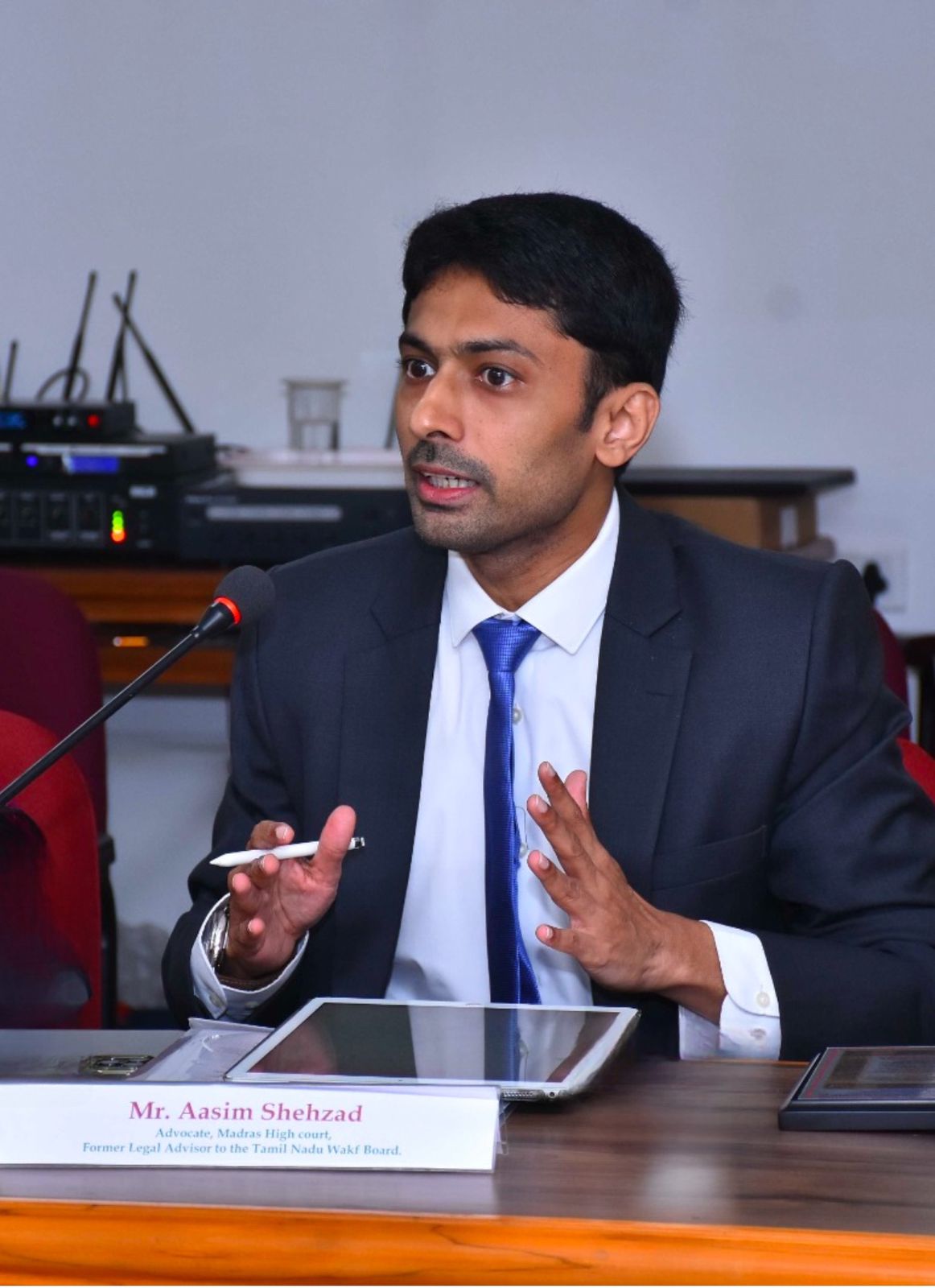
  • “The legal profession is not just about personal growth but also about service to society. Uphold the rule of law, work for the right cause and contribute positively to the legal community and the society at large.” – Aasim Shehzad, Founding Partner at BFS Legal and Counsel at Madras High Court.

    “The legal profession is not just about personal growth but also about service to society. Uphold the rule of law, work for the right cause and contribute positively to the legal community and the society at large.” – Aasim Shehzad, Founding Partner at BFS Legal and Counsel at Madras High Court.

    This interview has been published by Anshi Mudgal and The SuperLawyer Team

    With over two decades of experience in various areas of the law, looking back, was law a planned career path for you and what inspired your practice specifically in Arbitration & Constitutional Laws?

    Law has always been a deeply personal and deliberate career choice for me—a passion that took root when I was just 10 years old. My fascination with the legal profession was sparked by moments such as seeing my father in his lawyer’s robes and observing advocates gathered outside the District Court, which I passed by daily on my way to primary school. Reading landmark judgements featured prominently on the front page of the newspapers and the role played by the lawyers further motivated me. The courtroom’s dynamic nature—the challenge and intellectual rigor of the adversarial process inspired me to imagine myself as an advocate. These early experiences left a profound impression on me, fostering a deep admiration for the sense of purpose and justice inherent in the practice of law. My parents (Mr.K.M.Shafeeq Ahmed & Mrs.T.Akthar Sultana) deserve a mention for providing their unwavering support and encouragement which gave me the confidence to pursue my passion, ultimately transforming a childhood dream into a lifelong vocation.

    When I enrolled and started my legal practice in 2003, Arbitration caught my interest as it emerged as a growing field offering effective and efficient alternative dispute resolution mechanism. It was a welcome change to witness a system that allowed resolution of disputes outside traditional courtrooms, in a manner that preserved fairness, saved time and resources and proved highly effective when compared to the conventional mode of dispute resolution.

    As for constitutional law, a deep understanding of the Constitution is indispensable for any lawyer. It serves as the foundation of our legal system- not only safeguarding fundamental rights but also acting as a benchmark to test the validity and vires of other laws, rules and regulations.

    Having appeared before various forums from Supreme Court of India to High Courts at Allahabad, Delhi, Hyderabad and Madras, Principal District & Sessions Courts, Armed Courts Tribunal, Company Law Board, Central Administrative Tribunal etc., can you share with us the journey that led you to founding BFS Legal? What were the initial challenges you faced when establishing the firm?

    The journey to founding BFS Legal is a testament to perseverance, professional growth and the importance of teamwork. It all began with a strong foundation laid during my initial years of practice under the guidance of Mr.J.Sivanandaraaj (now a designated Senior Counsel) whose mentorship exposed me to a diverse range of branches of law and instilled key values of discipline, professionalism and ethics. The early exposure to branches like Arbitration, Constitutional Law, Commercial Litigation, Company Law and Business Crimes clearly shaped my professional interests and trajectory.

    My extensive experience briefing eminent Senior Counsel and arguing cases across various jurisdictions greatly refined my legal acumen and advocacy skills. This journey was firmly rooted in my formative years as a mooter, representing Dr. Ambedkar Government Law College, Chennai (formerly Madras Law College), at prestigious international competitions such as the Willem C. Vis International Commercial Arbitration Moot in Vienna and the Stetson Environmental Law Moot Court Competition in Florida, alongside numerous domestic moot court competitions.

    The transition in 2007 when my senior decided to merge his practice with a firm having pan India practice became a pivotal moment, sparking the creation of BFS Legal. My determination to retain my identity as a litigation lawyer and the camaraderie with my colleagues, Mr.P.V.Balasubramaniam (now a designated Senior Counsel), Mr.D.Ferdinand and Mr.Akhil Bhansali were instrumental in this decision.

    Establishing BFS Legal, however, was not without its challenges. Identifying a suitable office location and setting up infrastructure within a tight timeframe was a significant hurdle, especially during the court vacation period. Yet, our collective resolve and resourcefulness enabled us to overcome those initial obstacles, setting the stage for BFS Legal to grow into a successful and respected firm, it is today. This journey underscores the importance of a strong professional foundation, collaboration and the courage to take risks to achieve one’s vision.

    You’ve argued several precedent-setting cases before the Madras High Court. Could you share one of the most significant cases you’ve worked on, and the impact it had on your career or the legal landscape?

    One of the most memorable and challenging case that I worked on involved filing an appeal against the dismissal of an application under Order 6 Rule 16 of the Civil Procedure Code (CPC) by a Single Judge of the Madras High Court. The appeal was heard by the First Bench, comprising the Chief Justice Ms.Indira Bannerjee and Mr.Justice M. Sundar. The primary issue was the maintainability of an intra-court appeal against an order that was not final in nature, as such orders are generally not appealable.

    For two days, I had the privilege of arguing before the Hon’ble Judges, presenting comprehensive arguments on how the provisions of the CPC risk becoming ineffective if litigants were compelled to endure a protracted trial when the outcome was evident due to inherent flaws in the pleadings. The Bench rigorously examined and grilled me on my submissions, challenging every aspect of my reasoning. This experience was invaluable in deepening my understanding of how appellate courts test appeals and interpret statutory provisions and the thoroughness of the judicial process.

    This case is memorable for me because it sharpened my ability to articulate complex procedural issues and strengthened my confidence in handling challenging legal questions under rigorous judicial scrutiny by the sharpest minds. On a broader level, it underscored the importance of procedural fairness and judicial efficiency in civil litigation. Arguing the case before a bench that subjected me to intense questioning right from the word go had a profound impact on my professional journey, reinforcing my belief in the transformative power of well-constructed legal arguments and the ability to think on the feet to withstand intense questioning by the Judges.

    Your expertise in arbitration has been recognized by your appointment as an arbitrator at the Madras High Court Arbitration Centre. How do you see the evolution of arbitration in India, and what role do you think it will play in the future of dispute resolution?

    Arbitration in India has come a long way, evolving significantly over the years to address inefficiencies and delays. Historically, litigation in India has often been criticized for being time-consuming, leading to the adage, “Process is the punishment.” Alternative Dispute Resolution (ADR) mechanisms such as Arbitration, Conciliation and Mediation have emerged as a critical solution to mitigate these delays and provide efficient avenues for dispute resolution.

    Legislative amendments to the Arbitration and Conciliation Act, particularly in 2015 and 2019, have been instrumental in enhancing the arbitration process. By introducing stricter timelines for pleadings, arguments, and the delivery of awards, these reforms aim to ensure that arbitration remains an efficient alternative to traditional litigation. The treatment of appeals under Sections 34 and 37 as special proceedings, distinct from regular civil appeals, further reflects the judiciary’s intention to preserve the expeditious nature of arbitration as contemplated by the Parliament.

    The institutionalization of arbitration centres, such as the Madras High Court Arbitration Centre under the auspices of Madras High Court, is another significant development. These centres promote professionalism and ensure adherence to timelines, thereby increasing the credibility of the process. As an arbitrator, I have witnessed firsthand how these changes have streamlined proceedings and enhanced the experience for litigants.

    As businesses demand quicker resolutions to maintain continuity and reduce costs, arbitration offers a viable path. Additionally, the integration of technology, online dispute resolution platforms and the increasing emphasis on mediation and conciliation as complementary processes will further strengthen the ADR ecosystem. Looking to the future, arbitration will play an increasingly dominant role in dispute resolution, particularly in commercial and cross-border disputes.

    However, the ultimate success of arbitration in India depends on a continued focus on minimizing judicial intervention, ensuring uniform standards for arbitral awards, and fostering trust in the system. With these advancements, arbitration is well-positioned to become the preferred mode of dispute resolution in India, balancing efficiency with fairness.

    You have acted as legal advisor to the Tamil Nadu Wakf Board and also have had a unique opportunity to work on public interest litigation matters. Can you tell us about your experience in this area, and your preparation for approaching such cases?

    Working as a legal advisor to statutory body like the Tamil Nadu Wakf Board and engaging in public interest litigation matters has been a deeply enriching experience, marked by unique challenges and opportunities. It requires balancing the legal intricacies of governance with a commitment to justice and public welfare.

    Representing statutory bodies involves navigating several hurdles, primarily arising from systemic constraints. The sheer number of ongoing cases can be overwhelming, and prioritizing urgent matters demands effective time management. Due to staff shortages and administrative bottlenecks, panel lawyers often receive incomplete or delayed information, which can hinder case preparation. Lawyers frequently need to take the initiative to gather and verify data to ensure accurate representation. This involves persistence and innovative problem-solving to piece together the required context. Panel lawyers often have to devise innovative strategies to collect and corroborate data, ensuring that the responses are both accurate and comprehensive.

    Handling Public Interest Litigation (PIL) cases requires a thoughtful and strategic approach, as these cases often involve matters of broad social significance, addressing the rights of marginalized communities or issues that affect public welfare. Here are key steps to approach PIL cases effectively:

    1. The issue should affect a larger section of the population, not just a specific individual or group.
    2. The case must have a legitimate public interest element, such as a violation of Constitutional Rights, Public Health, Law & Order, Environmental Protection, Human Rights, Law & Order or those affecting public at large.
    3. Thorough Research and Legal Grounds requires
    4. Examining the relevant statutes, constitutional provisions, and precedents.
    5. Clearly identifying the legal violations.
    6. The petition should speak for itself setting out clear facts and the legal grounds in order to make a compelling argument. Emphasis should be on how the issue affects a large section of the population or public welfare. It is imperative to highlight the urgency for judicial intervention.
    7. Ensure that you rule out alternate remedy that may be available for achieving what you seek through PIL.
    8. Consult with affected communities to bring out the practical side of the issue.
    9. Judges often scrutinise whether issue is being brought before the court in good faith or for seeking publicity.
    10. Courts may want to know a clear remedy. Therefore, one should be ready to offer practical solutions for the Court’s consideration.

    Ultimately, representing a statutory body or addressing public interest issues have not only deepened my understanding of the law but also reinforced my belief in its transformative power to address systemic challenges and serve the greater good.

    You’ve been a guest lecturer at Tamil Nadu Dr. Ambedkar Law University and judged several national and international moot court competitions. What advice would you give to young law students and aspiring lawyers today?

    For young law students and aspiring lawyers, I’d emphasize these key principles to guide their journey in the legal profession:

    1. Choose a Senior of Repute & Knowledge: My primary advice to young lawyers is to focus on building a strong foundation by working with a senior of repute and expertise in your chosen area of law. A knowledgeable and respected mentor can provide invaluable guidance, help refine your skills, and expose you to diverse facets of legal practice. Learning under such a senior not only sharpens your understanding of the law but also instils discipline, work ethic, and professionalism—qualities essential for long-term success in the legal field.

    2. No Substitute for Hard Work: The legal profession demands immense dedication, and the effort you put in during your formative years will shape your career. Stay disciplined, dive deep into your studies and refine your skills tirelessly. Never forget that there are no shortcuts to success and consistent hard work is the foundation of a strong career.

    3. Stay Focused: In a world full of distractions, focus is your greatest ally. Set clear goals, prioritize learning, and avoid shortcuts. Success in law is a journey, not a sprint.

    4. Integrity is Non-Negotiable: Trust and Integrity are the cornerstones of a lawyer’s reputation. Never compromise on these values, as they are your greatest assets in earning respect and building lasting professional relationships. Always uphold honesty and integrity, both with clients and in court.

    5. Never Mislead the Court: Credibility is everything. Judges and peers respect advocates who present their cases truthfully and ethically.

    6. Learn by Observation: Courtrooms are classrooms. Observe how experienced advocates present their cases, frame arguments and handle judges’ questions. There is immense value in observing and learning from others.

    7. Have an Alternate Argument: Always be prepared for contingencies. A backup argument demonstrates your understanding of the case and readiness to adapt.

    8. Chase Excellence, Not Money or Fame: Focus on becoming the best in your field. Success, Recognition and Rewards are the by-products of excellence. Focus on mastering your craft, and everything else will follow.

    9. Challenge Your Limits: Instead of fearing challenges, embrace them. Use every obstacle as an opportunity to grow and continuously push yourself to improve. The legal field is vast, and the more you stretch your boundaries, the more you’ll achieve.

    10. Look for Opportunity in Adversity: Challenges often bring hidden opportunities. Approach setbacks with a problem-solving mindset and use them as stepping stones to success.

    11. Being Good Pays: Kindness and professionalism go a long way. Treat everyone with respect and courtesy.

    Lastly, remember that the legal profession is not just about personal growth but also about service to society. Uphold the rule of law, work for the right cause and contribute positively to the legal community and the society at large.

    What motivates you to provide pro bono legal services to those in need and how do you see the role of lawyers in social justice? How important is espousing larger cause through Public Interest Litigation?

    Pro bono work allows lawyers to challenge injustices, advocate for marginalized communities, and harness the power of law to drive social change. I firmly believe that lawyers play a vital role in promoting social justice. As officers of the court, we are uniquely positioned to bridge the gap between the legal system and the public, ensuring that justice is not a privilege for the affluent but a fundamental right accessible to all. Public Interest Litigation (PIL), in particular, exemplifies this ethos. It enables lawyers to address broader societal issues—whether it’s environmental protection, safeguarding fundamental rights, public health, law and order or rectifying administrative failures. The impact of such work often extends beyond individual clients, influencing policies and creating precedents for a better society.

     Given the demanding nature of your obligations at work and your commitment to social justice and pro bono work, how do you manage to maintain a balance between your professional obligations and personal well-being?

    Maintaining a balance between professional commitments, social causes and personal well-being is undoubtedly challenging, but it’s essential for long-term sustainability in a demanding profession like law. Here’s my framework to approach such balance:

    1. Starting the Day Early with a Clear Plan: Beginning the day early allows me to plan effectively and approach my professional obligations with focus and clarity. A well-structured day ensures that no time is wasted, enabling me to stay productive and efficient.

    2. Setting Clear Boundaries: Defining specific work hours and creating time for personal activities helps maintain a boundary between professional and personal life.

    3.Prioritizing and Delegating: Identifying tasks that require my direct involvement and delegating those where my absolute involvement is not required ensures that my energy is spent on what truly matters.

    4.Exercise for Body and Mind: I start my day with exercise, which helps keep my body healthy and my mind sharp. Physical activity is essential to stay energized and manage the stresses of a demanding schedule.

    5.Aligning Work with Purpose: When professional work resonates with personal values, it can become a source of emotional contentment.

    6.Practicing Time Management: Efficiently managing time by breaking tasks into smaller, actionable steps helps avoid mind blocks and burnouts.

    7.Family Time: Spending time with family is non-negotiable. It provides a sense of balance and fulfilment, even amidst a busy schedule.

    8.Commitment to Social Causes: Allocating some time in a week for social causes is important. Contributing to society through these efforts is both rewarding and a meaningful extension of my professional life.

    9.Reflecting and Adjusting: Regularly reflecting on what’s working and what’s not can help recalibrate commitments to ensure they’re sustainable in the long term.

    10.Reading and Traveling: Reading books on diverse subjects and traveling are vital for broadening perspective and providing mental rejuvenation. They inspire me and offer a much-needed break from routine.

    By maintaining this balance, I ensure that I can meet my professional obligations while also nurturing my physical health, personal relationships and social commitments. This harmony sustains my productivity and passion in every aspect of life.

    Get in touch with Aasim Shehzad –

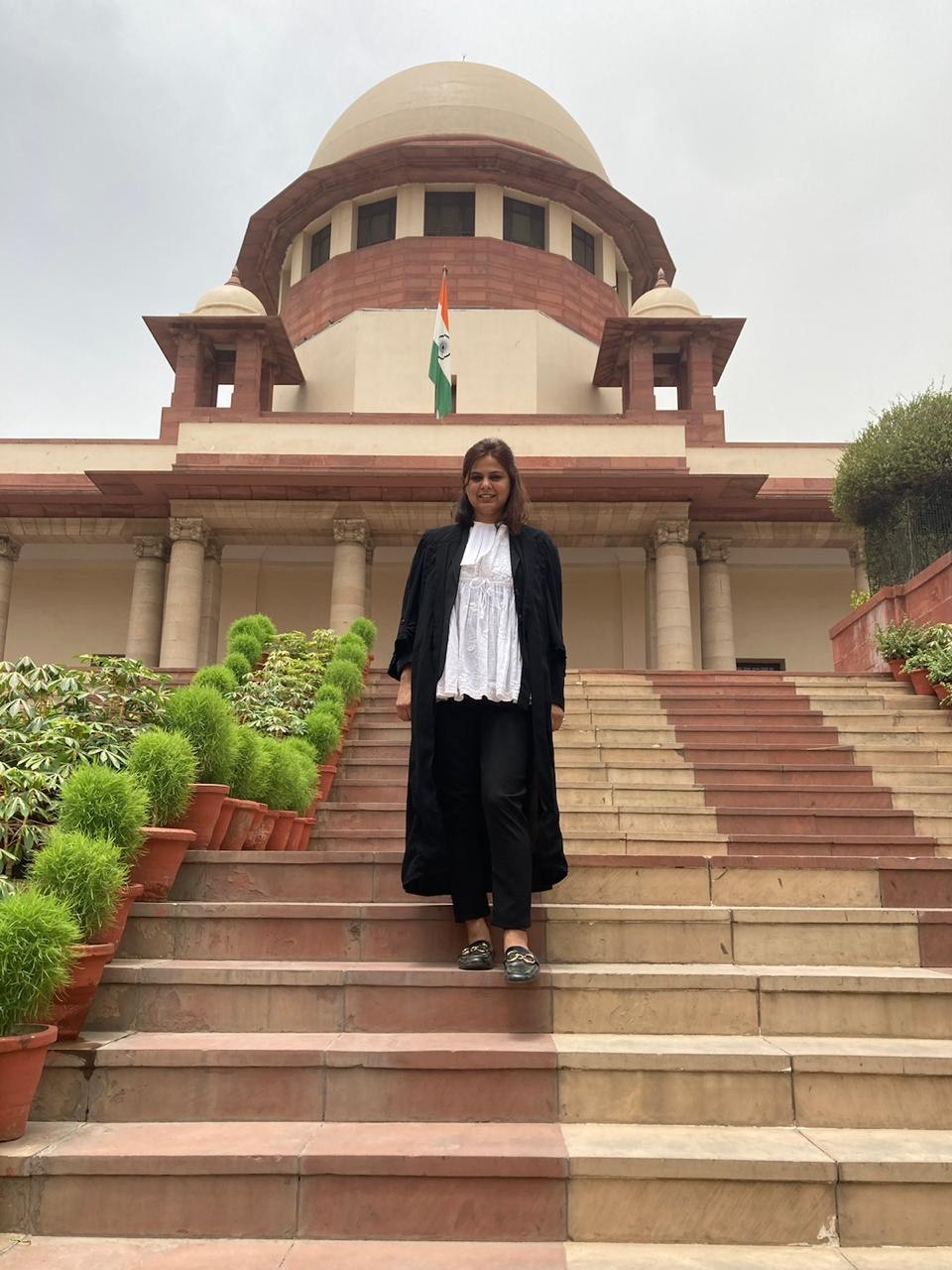
  • “My takeaway from my journey in the field of law has been to be patient, to keep up the hard-work, and to know that every opportunity and every win or loss is a golden ticket to learn something new.” – Shraddha Deshmukh, Advocate-on-Record at Supreme Court of India.

    “My takeaway from my journey in the field of law has been to be patient, to keep up the hard-work, and to know that every opportunity and every win or loss is a golden ticket to learn something new.” – Shraddha Deshmukh, Advocate-on-Record at Supreme Court of India.

    This interview has been published by Anshi Mudgal and The SuperLawyer Team

    You completed your Bachelor in Civil Law at Brasenose College, University of Oxford. Was law always the career path you envisioned for yourself and what motivated you to pursue law as a profession?

    My tryst with law was accidental. I had lost my Civics book, a day prior to my final exams in school. My father sat me down with a copy of the Constitution of India and spoke about Keshvananda Bharti. Whilst reading through the charter on Fundamental rights and duties, I came across the wide powers of the courts as enforcers and protectors of rights and therefore, by default, the duty of the lawyers to bring causes to justice. That was it! Dreamy eyed about the change and difference that lawyers can make to society (of course also influenced by Alan Shore from Boston Legal), I decided to pursue Law as my profession.

    Early in your career, you worked at several prestigious law firms before transitioning to work with Senior advocates like Mr. Akhil Sibal and Mr. K.K. Venugopal. How would you describe the cultural differences between these two environments, and how did you adapt to each?

    There are definite distinctions and also certain similarities in the working culture of a Law Firm when compared to a Counsel’s Chamber. 

    Starting with the distinction first, at a law firm, you are exposed to direct client dealings, extensive drafting and working with many counsels and senior counsels. You are involved with filing and getting matters listed, billing and preparing recording letters for the client. 

    On the other hand, working in a Senior Advocate’s chamber gives you a balcony view into the mind of the lawyer- her/his quirks, style of presentation, method of preparation and the ultimate act of reading the law and convincing the bench with arguments. Preparation of briefing notes involved detailed churning of legal research with factual analysis.

    Coming to the similarity– at both places, you are expected to work hard and stay abreast with the law and the legal system. The working hours don’t get better at either, and you learn and gain immensely at both!

    Therefore, whilst the scope of work for the junior may differ in a Law Firm when compared to a Senior’s chamber, the expectations from her/him to give their best- remains the same.

    Having worked closely with prominent Senior Advocates like Mr. K.K. Venugopal, what are some of the most valuable lessons you’ve learned from them, and how have those lessons shaped your approach to legal practice?

    Working with a venerated counsel like Mr. Venugopal- who is an institution in himself, was a guiding factor in me truly coming to love the law and understand the rigours and discipline that are basic tenets for a lawyer. Boss, as we all call him in his chamber, taught us that there are no shortcuts to success. Even today, whilst preparing for a matter, he refers to judgments and makes copious notes, with the same curiosity as he would have if he were reading it for the first time, despite having argued many of them himself and having applied them in several instances. During arguments, Boss could ask any question from the briefing junior, which was born from the facts stated in the file or beyond, which meant that we had to always be on top of things and be prepared for a volley of questions- sometimes tougher than what came from the bench itself. This taught us to be prepared beyond the file, to ask questions and analyse, to fact-check and to never argue on conjectures. Boss would rarely ever raise his voice at us and his disappointment was often remarked with a long sigh reverberating in a whistle, the consequence of which was far stronger than mere words. He taught us the discipline to reach court early irrespective of how late your matter was on board. He taught us to be fair and to act as an ethical officer of the court. He treats every colleague of his as an extension of his family. One instance that I will never forget was, when I was seeking a passover for him in Court as he was stuck before another bench, and the concerned Judge asked me to argue the matter instead. He came in the middle of my arguments, but patted me on my back and asked me to continue arguing and sat right next to me-that kind of encouragement to a young counsel starting out in their career meant a lot! Despite working so hard, boss also taught us to not take ourselves too seriously and to always remain curious. In his own words, he taught us that “to know that you don’t know is the beginning of knowledge.” I am truly blessed to be a part of his chamber- which has had a large part in shaping me as a lawyer. 

    Working with Mr. K.K. Venugopal on landmark cases like the Right to Privacy case must have been an enriching experience. Could you share some insights from your involvement in that case and how it has influenced your career?

    Being a part of the 9 Judge bench’s unanimous declaration of the right to privacy as a fundamental right definitely stands out for me as one of the most exhilarating experiences in my short stint as a lawyer. Days preceding and during the hearing were spent reading countless judgments, articles, international covenants, and expert views on the issue. As a student of law, partaking in thought-provoking arguments from some of the finest minds in the country- at bar and on bench, was outstanding. It exposed me to understand the many different silos that exist in the right to privacy, beyond its manifest existence in body integrity. As a counsel, I have applied the said doctrine in my matters dealing with data privacy and boundaries of authentication and digital records. We are all richer in our rights by the said decision and I couldn’t be more grateful for having been a part of this landmark case. 

    After gaining experience with top law firms and senior advocates, you made the transition to establishing your own practice. What motivated that shift, and what were some of the challenges you faced when starting your independent practice?

    Like any other counsel, I also dreamt of having my own independent practise and to put my training to task. So, after about 8 years of apprenticeship, and with a small handful of clients, I decided to take the plunge and went independent. The initial days were tough especially as the quality and quantity of work that comes to you as a fresh, off the hook, independent counsel is very different from what you may have done in the senior’s chambers or in firms. But the free time gives you an opportunity to read and update your knowledge base. Being on the panel for the Union of India at the time gave me the opportunity to work on diverse areas of law and appear in court regularly. Soon after, I was appointed as the Deputy Advocate General for the State of Chhattisgarh. As special counsel, I successfully represented the Special Task force in Rajasthan in a multi-cooperative society scam involving thousands of crores of Rupees, which added to my experience. When I look back, my takeaway has been to be patient, to keep up the hard-work, and to know that every opportunity and every win or loss is a golden ticket to learn something new. I am extremely grateful for my fears and experiences, which play a part in shaping me as a lawyer today. 

    As an Advocate on Record and now running your own practice in areas like Constitutional and Administrative Law, Arbitration, Data Protection etc. You’re clearly dealing with highly complex issues. Could you share one of the most interesting or challenging cases you’ve worked on, and how did you prepare for that case?

    A very interesting case that I recently argued was the 7 judges constitutional bench reference on the issue of sub-classification of reservation benefits to Scheduled Caste and Scheduled Tribe seeking re-consideration of the decision in E.V. Chinnaiah v. State of Andhra Pradesh and Ors. [(2005) 1 SCC 394]. In order to justify the reversal of the earlier judgment required presenting the Hon’ble court with constituent assembly debates- to show the original intent of the constitutional framers. I argued that Compensatory discrimination, as a subset of Affirmative Action, has the preliminary goal of curbing discrimination and the ultimate goal of its eradication. I presented empirical data to show that Scheduled Caste as a group is heterogeneous in its form and acute disparity exists within the groups and treating them with the same brush of representation is antithetical to the concept of substantive equality. Several scholarly writings on the subject, such as Marc Galanter’s book-Competing Equalities: Law and the Backward Classes in India, J.H. Hutton’s book, Caste in India: Its Nature, Functions and Origins, celebrated Austrian Economist Friedrich A. Hayek’s work on the Constitution of Liberty, to name a few, came to my extensive aid. We are now in receipt of the landmark judgment, where my arguments have found mention, and which lays down the distinguished principle of sub-classification of reservation benefits as a facet of substantive equality. 

    Given the demanding nature of your work, especially your role as Counsel for the Union of India in the Supreme Court, how do you manage to maintain a work-life balance? What strategies do you use to recharge and stay passionate about law?

    I remember reading the quote somewhere that “The law is a jealous mistress and requires long and constant courtship. It is not to be won by trifling favors, but by lavish homage.” I couldn’t agree more- it takes away most of your weekends and expects you to burn the midnight oil. But the profession is also like riding a wave, some days are crazier than others-So in my free time, I love to read, spend time with my family and pursue my hobbies.  Also, the court calendar sets out long vacation periods, allowing us to travel or take time off, which for me, is the best energiser. Staying passionate about law comes from staying in tune with the changing times and also from rigorous reading and discussions. Even if I am not involved in a matter, I love watching cases being argued in court and to witness legal jurisprudence develop. Discussion with my colleagues in the office is an enriching exchange of fresh ideas. Legal conferences can also be a great venue to brainstorm and to learn from other’s experiences and discussions. 

    For young lawyers just starting out, particularly in the fields of litigation and international/domestic arbitration, what advice would you offer to help them navigate these complex areas and build a successful career?

    Young lawyers just starting out today have far more exposure and better understanding of the nuances of law and its practise, than I remember having, when I started out. The only thing that I sometimes find lacking in young lawyers is patience. I see young counsels diving into calling themselves specialists without knowing basic procedural laws. Also, whilst arguing matters in the Apex Court or doing big ticket arbitrations is a thrilling experience, learning from the ground carries you higher. Walking through the registries and learning how to get defects cured and getting matters filed and listed, to me, is as crucial as knowing how to argue a case. These learnings help you especially when you start out on your own and have to run an office and give time commitments to your client. In today’s time, being comfortable with technology is a must- both for litigation and Arbitration. Staying abreast with evolving law helps you stand out. AI based research may have made life easier, but it is crucial that the foundations are laid stronger and provisions in a statute are read before diving into research. In my opinion, perseverance, hard work and integrity are key ingredients to success for any and all. 

    Get in touch with Shraddha Deshmukh –

  • “From Humble Beginnings to Independent Practice: A Litigator’s Reflection on Hard Work, Mentorship, and the Road to Success” – Nitish Bagri, Founder & Managing Partner at NBA Legal Consultants.

    “From Humble Beginnings to Independent Practice: A Litigator’s Reflection on Hard Work, Mentorship, and the Road to Success” – Nitish Bagri, Founder & Managing Partner at NBA Legal Consultants.

    This interview has been published by Anshi Mudgal and The SuperLawyer Team

    Given your over a decade of experience, how do you reflect on your journey when you look back? What key insights or experiences stand out that you would like to share?

    I was a weak-kneed student of science & math and was moderately okay with economics and at the same time, was argumentative & good with logics. This coupled with the fact that I have a history as my family was into the legal fraternity. Therefore, the path of law came naturally. I was intrigued by the procedures & day to day hearings, which I got to know in my early age. That is why I chose the path of law.

    I joined Bharati Vidyapeeth’s Law College in Pune in 2006 under the mentorship of the then Principal Late Mr. Mukund Sarda Sir and Head of the Department Ms. Ujwala Bendale ma’am, who had immense love and affection over me during my college days. They had given the opportunity to me to participate & represent in moot court competitions, both at national and international level and that gave me a sense of belonging in the field of law, as well as help me choose specifically litigation as my career path.

    And thanks to my internship in AZB Partners, PKA Advocates and with Senior Advocate Mr. PP Rao, which gave me a sense of belonging that I want to pursue litigation as my career path. So that is probably the way I entered this profession and God has been kind to me for the last decade. It has been a very good ride working in this profession.

    I would say that it is a roller coaster ride on a daily basis. I wouldn’t say that it was a set path because every person has his own way of looking into the field of law and it has its ups and downs. It has its pros and cons. But certainly, it is, for me, one of the most interesting fields which I could have chosen as my profession.

    Having had the opportunity to work with prominent advocates such as Mr. Virender Lodha and Mr. Sajjan Singh, what were some of the most valuable lessons you learned during your formative years, particularly in the context of litigation for government corporations, that you believe should be shared with aspiring learners?

    When I graduated in 2011, I joined the chambers of Mr. Sajjan Singh Rajpurohit at Jodhpur. It was one of the most reputed civil law chambers at Jodhpur. And having joined his chambers, he had given me immense opportunity to argue, appear, draft, and deal with the clients on the civil side. Very interestingly, five days into joining the chamber, he had given me an opportunity to argue ‘an admission with stay’ matter belonging to a real estate issue, a writ petition before the single bench of the High Court. So that was the kind of freedom and the confidence my senior had bestowed upon me to argue those kinds of matters in the initial days of profession.

    For two years, I’ve worked with Mr. Sajjan Singh ji Rajpurohit at Jodhpur. Thereafter, I shifted from Jodhpur to Jaipur and joined the Chambers of Mr. Virendra Lodha, Senior Advocate at Rajasthan High Court, Jaipur. The chambers basically dealt on the constitutional, commercial and the service side of the litigations.

    He was on the senior panel for many Government Authorities & corporations. So, while working in his chamber, I was doing service matters, large stake arbitration and commercial matters. Being associated with him and earlier with Mr. Sajjan Singh ji, has given me three basic principles that are good for being in the profession i.e. perseverance, patience and consistency. These are the three principles which I’ve followed in my career path.  I’d seen them working for 18 hours a day, from morning 7 o’clock to mid-night they’re dealing with clients, they are getting brief, preparing for the next day and having followed them and closely worked in association with them allowed me to gain extensive experience. At the primitive stage, it might look that you’re working 18 hours a day but truth remains that It is a very demanding & hardworking profession.

    Thankfully, working for long hours with my seniors subsequently helped me to start my own chambers in 2015.  The hard work which they had made me do at that particular point in time helped me in sourcing the clients for myself. I’m very thankful to my seniors, both Mr. Sajjan Singh ji Rajpurohit and Mr. Virendra Lodha Ji for making me do all the good work in the chamber.

    I’ll quote an incident that when I was working in the chamber of Mr. Virendra Lodha Ji, there was a call from a briefing counsel at 11.30 pm that there is an urgent brief coming up for Admission – Stay matter and he needs to be briefed for defending on behalf of Respondents. So, at 11.40 in the night the conference was fixed. Sir had called me back in the chamber to prepare for this matter. The briefing concluded at 12.30 in the night.

    In Rajasthan, during summer season we have Morning Courts where courts hours are from 8.00 AM up till 1.00 PM. The next day in morning at 6.30 am, he was sitting in the chamber preparing for that matter, which was to be argued. So that is the kind of hard work he has done and he has also made me do it. So, I’m very thankful to him for all the opportunities he has given me in his chamber.

    Over the course of your career, you’ve appeared in numerous cases across various areas of law, particularly constitutional law. Is there a specific case that, when you first took it on or started preparing for it, you never anticipated would have such a profound impact on you, either personally or professionally, for a longer period of time?

    Yes, I remember one such case. When I was in the chambers of Mr. Sajjan Singh ji Rajpurohit at Jodhpur which was related to change in land use and master plan of the city. At that point of time, it seemed to be just another litigation in which we were representing one of the parties, and we had to put the best interest of the client.

    But subsequently, post a couple of years after I had left office, that became one of the landmark judgments of the State of Rajasthan, which specifically laid down that there cannot be a change in land use against the master plan and guidelines in relation to the change of land use. The landmark judgment goes by name of ‘Gulab Kothari V. State of Rajasthan’.

    After working with senior advocates for a brief period of four years, you transitioned to starting your own practice with NBA Legal Consultants. What challenges did you face during this shift from a structured environment to running your own practice? Additionally, what key insights or advice would you share with those looking to start their own legal practice?

    When I was working in chambers of both Mr. Sajjan Singh ji Rajpurohit and Mr. Virendra Lodha, they had encouraged to take independent brief other than the office briefs so that you have independent work.

    In 2015 when I took the decision to start my own chambers and get independent from the office, the first transition, which I felt was necessary as an independent litigator is sourcing of work.  When you are working under a mentorship, the work is already there in the office and you have to research or argue or draft or assist your senior in the chamber but when you have your independent practice, the first thing is how would you get clients? How would you justify your fees when you are getting the work? And obviously, when you see from the client’s perspective, having trust or faith in an independent lawyer with two years – three years’ experience is a little difficult because something like property, service career and if there is a criminal case, then someone’s life is at stake. So that trust has to be built.

    Another important aspect is that you need to retain clients and give them appropriate results coupled with the fact that you have to be honest about the case because in a general mindset of the client, they always have the best case and as per them there is so much wrong which has happened, however, this may not be the case when it comes to the law. Law may have a different perspective. The case may not be as good as what the clients think. So, you have to give them a clear picture with the fact that you have to give the best performance for the client so that they retain you for their future litigation or future work. 

    Also, when you’re working under some mentorship, there is a fixed set of work. So, when I used to work in the chambers, I was dealing on the issues of litigations or my core work was litigation but when I started my chambers, I was given Non – Litigation work also.  Despite my limited experience of such work, I had taken up the issues and thankfully was successful in delivering to the requirement of clients.

    When you get independent, you cannot be very sure of the kind of work you’d be getting. You must be prepared. You must be open to all kinds of work which you may receive. For Example: You probably might not have drafted a criminal complaint in a chamber but when you get start your own practice you will come across such situations that you have to file an FIR and if the police authorities are not registering an FIR, you have to file a Criminal Complaint before the Magistrate Court.

    What I intend to say is that you must be prepared for transitioning when you get independent. The experience must be taken with open arms, and initially you should not restrain yourself to one practice of law.

    You have extensive experience in dispute resolution, particularly within the real estate and EPC sectors, handling a wide range of industry-specific disputes. Given your background, how do you approach delivering innovative solutions and identifying the best outcomes for your clients in these areas? Could you share some key traits or strategies that are essential for success in this type of work?

    Every industry has its own difficulties, and every difficulty comes with a problem and the answer to the problem is always different. When you represent EPC companies, they have a contractual dispute, bidding dispute which may go for an arbitration or a writ petition in the concerned high court.  But when you represent a news media company, essentially the disputes are related to either that of defamation as some news article is published, which may or may not align with the facts. Then they have labor disputes as the workers have legitimate expectations, but the financials of the company cannot fulfill those legitimate expectations which in turn create dispute between them. During negotiations with unions, you have to put forth the best interest to find a middle way in resolving the disputes

    When you represent real estate companies, essentially disputes are of following natures:

    1. There is a builder-buyer dispute, the appropriate forum is consumer courts under Consumer Protection Act or Permanent Lok Adalat under Legal services Authority Act, authority or Authority under The Real Estate Act 2017. This on a large scale covers builder – buyer dispute.
    2. There is a dispute relating to the landowner which generally leads to specific performance suit or an arbitration coupled with criminal litigations alleging cheating and its alikes.
    3. Dispute with the government in relation to the allotment or nature of land. Example: The original nature of land was that of Charagah which cannot be usually converted for any other purposes except specified and that has been allotted and subsequently say a third right has been created leading to some construction that has happened. So, the ‘legitimate expectation’ of that real estate company which developed the land will come into picture.
    4. Dispute with government may arise in relation of GST, Labour cess, compliance of Local Self Governments (Municipal Corporations etc.),   

    These are widely the set of litigations or the problems the industriy faces. I feel that before initiating litigation, it is always good to go for mediation. Litigation in the current times, is an expensive procedure. There are court fees, advocate fees and time consumption.  So if there is a middle way out, or the problem can be resolved through mediation, it should be the first preference. Even if you have to forgo some of the rights which you think are legitimate but if that closes the dispute you should opt for it. This is my take on alternate dispute resolution.

    Whatever I have suggested is not the thumb rule but only a generic advice. The problems come with its own game play. I strongly suggest that a lawyer should always be open to hearing the client’s view.  You should be open to a recourse, which the clients suggests but at the same time try to figure out a way which could avoid litigation and get the business going.

    In cases involving sensitive information and confidential matters, building a high level of trust with the client is essential, and ensuring their satisfaction is a key priority. How do you strike the balance between maintaining client privacy and meeting legal requirements? What approach do you take when handling these types of discussions, and could you share your insights on how you navigate this delicate process?

    That is a very good question. I believe on the very first instance, the client will never share the critical or confidential information. And, until and unless you have dealt with certain issues of the client in the past, they will not be ready to divulge confidential secrets.

    Initially they would give you litigation, which might not involve such complexities, but subsequently, if that client has retained you or has given you regular work, they have built a confidence on you that whatever information they have shared is in good hands and shall not be misused. Thankfully, the Indian legal system under the Advocates Act 1961 protects the confidential information which is given to the advocate by the client. As a lawyer, you must keep the professional standard high so that your client has enough confidence in you to share all such information which may be sensitive in nature but generally is always useful in building the case.

    I would like to add one more thing that when the client comes up with a problem, he might come up with a particular mindset. They must have heard that resolution lies in arbitration or a writ petition or to approach a particular forum under a statute, but then you must give them a realistic picture that this position or adjudication methods might not be very helpful to you in your case as the set of facts on which this litigation will go is different. Sometimes what happens is that a client has an eagerness to do litigation or go into a dispute resolution process, but might not be aware of its side effects. So, they must be informed about that also. Example:  When you go into this litigation, you must be ready with those counterblast adjudicatory processes, which the client may not presume will happen. So, you must be honest in your opinion to the client. It may be harsh and rude, but you must be honest in your opinion to the client.

    At the end of the day, your first opinion which you give to the client after hearing the issue at hand will always be in his mind. You may win or you may lose the dispute, but that first opinion will always be in his mind so be truthful about the same.

    With your extensive experience at the Bar, having worked in both tier 1 and tier 2 cities, how do you envision the future of the legal profession, including law firms, lawyers, and litigators, particularly in tier 2 cities? Given the growing trend of work shifting from tier 1 to tier 2, what advice would you offer to new entrants in these cities to build a successful career and establish themselves professionally in their local markets?

    Yes, the transitioning in relation to the work from tier 1 to tier 2 is happening. Earlier, the best of litigation or the best of mind in the legal fraternity were restricted to tier one cities. But over the period, it been growing to tier 2 cities as well. You would see some brilliant legal minds joining in tier 2 cities and obviously if you are resident of that city, you know the comfort of home is always there.

    There are some good opportunities in Tier 2 cities. So, over the period specifically after 2014, tier 2 cities in India have seen a tremendous growth in terms of business, in terms of real estate, in terms of expansion of big companies. The major sectors of the country have gone out of their comfort space of working only in the tier 1 cities to shifting to tier 2 or tier 3 cities which has helped legal professionals in expanding the work.

    My take is that tier 2 cities have a brilliant future in the coming times & these cities will see a very good growth.  The new entrants would have enough diverse work in future.

    I’d like to combine two questions: First, what challenges did you face while establishing NBA Legal as a brand, and how did you navigate through those difficult times? Second, given the demands of building a business, how have you managed to maintain a balance between your mental health, personal life, and professional responsibilities? Balancing all three is never easy, how have you approached it?

    During my time in senior’s chamber, I worked on the private as well as the government side which has helped me in positioning myself to provide legal services, which includes corporate advisory, litigation, drafting of contracts, due diligence in relation to the solar and real estate companies. The work which I’ve done has helped me in sourcing clients.

    In litigation, I’ve always maintained that I need to be very truthful about my opinion. If you feel that client have good case or a bad case, be very truthful to the client.

    In Non-Litigation work, establish clear communication about scope of work, be specific & realistic about the timelines and deliverables. 

    Coming to second part of the question, I will say that take your vacations very seriously. Go out, travel or do your hobby activities, whatever you like, but get out of your normal work life to do something which you cannot do in a regular work time.

    I try that whenever there is a long weekend or otherwise a time off, I would do activities of my choice. I would go out, meet my old friends, watch probably a good Netflix movie or series and when the time permits travel to new places.

    For mental wellbeing, one thing that helps me is that you should meet your old friends. So, they keep you in order. They have been with you for long period, and they know what kind of person you are and what kind of work pressure you are dealing with and will always be happy to support you in tough times. Burnout is common in our profession. Setting boundaries and maintaining personal hobbies or interests outside of work helps rejuvenate your mind and boosts professional efficiency.

    What advice would you offer to aspiring lawyers or those early in their careers, especially when facing challenges like not having the right senior guidance? Many struggle to find the right fit, as not everyone is suited for litigation or corporate law. How should they maintain a positive mindset, stay focused, and identify the right career path for themselves? Any key tips or guiding principles you’d recommend?

    In my view there is no strict checklist, but I would say that there must be consistency in whatever work you are doing i.e. either in the law firm or getting work from your mentor or as an in-house counsel, there should be consistency.

    Secondly, you need to be updated with the latest position of law. You cannot stop reading. You must be updated about what is the position of law, what is the judge’s perspective on this issue. There are multiple judges hearing rosters, what are their views on a particular subject which will help in crafting the arguments. Stay proactive about your learning. Read landmark judgments, legal commentaries, and case studies. Online courses and certifications in niche areas can help build expertise and open new opportunities.

    For Non-Litigation work, you need to be active in networking, be updated on the ever-changing requirements of the industry. While passion for law is essential, practical considerations like work-life balance and job satisfaction are equally important. Align your career decisions with both your heart and your head.

    I would request you to give us some golden nuggets for us as well as the new learners and even the seniors, because sometimes, yes, our profession makes us a little overthinkers, but sometimes it’s the humbleness which helps us grow?

    See as they say that the word is ‘Legal Practice’. So, it is a practice because it’s constant learning on a daily basis. The law is a dynamic field. Whether you are just starting or are a seasoned professional, continuously update your knowledge. Stay informed about recent judgments, amendments, and global legal trends.

    A humble approach towards clients and colleagues fosters trust and long-lasting relationships. Empathy enables you to truly understand the concerns of your clients and advocate for them effectively.

    While overthinking can be a tendency in the legal profession, balancing it with structured critical thinking helps you stay productive. Use frameworks to analyse cases and focus on practical solutions. Encourage collaboration with peers. Sharing insights and discussing cases with others can lead to innovative solutions and fosters camaraderie within the legal community. The profession can be challenging, with setbacks being inevitable. Resilience and persistence are key to overcoming obstacles and achieving long-term success.

    Get in touch with Nitish Bagri –

  • “The legal profession demands not just brilliance but a deep sense of responsibility. I’ve always believed that a lawyer’s word should carry as much weight as a legal document.” – Kanhaiya Singhal, Advocate-on-Record at the Supreme Court of India and Founder of Kanhaiya Singhal Law Office.

    “The legal profession demands not just brilliance but a deep sense of responsibility. I’ve always believed that a lawyer’s word should carry as much weight as a legal document.” – Kanhaiya Singhal, Advocate-on-Record at the Supreme Court of India and Founder of Kanhaiya Singhal Law Office.

    This interview has been published by Anshi Mudgal and The SuperLawyer Team

    You completed your B. Com (Hons.) degree in 2002. How did your background in commerce shape your decision to pursue a career in law?

    Ah, actually I never dreamt or thought to become an advocate and did my graduation in Commerce to become a Chartered Accountant. Somehow, when I was about to start my studies for CA Exams, I was advised by my Uncle who is a CA himself to choose law as a career. He was of the view that an Advocate has the capability to represent the Client for fervently. I had a passion for justice as I belong to a sub-rural area of Uttar Pradesh and during my schooling days and so of college days, I had seen many such instances of injustice. I will say thanks to almighty to allow me to do graduation in Commerce as the skills and understanding of financial systems and economic principles, which I developed while pursuing my B. Com (Hons.) degree, later proved to be crucial in handling intricate income tax and benami matters. My choice of studying law was certainly not my choice, however, since after completion of my studies of law, pursuing the practice of law was/is not just a career choice for me and in fact, it is a commitment to contribute towards building a fairer society.

    After enrolling as an advocate with the Bar Council of Delhi in 2006, how did your early career experiences help you navigate the challenges of becoming a prominent legal professional?

    My early years in practice were like stepping into a rigorous legal boot camp.My senior was a very humble person and he always allowed me to appear in Courts and during my 4 and half year stint as an associate in his office, I got the opportunity to travel throughout the Country and had appearance in almost more than half of the High Courts of Country. I had the benefit of doing arbitration, civil and services including Telecom dispute cases. Every brief, every court appearance sharpened my skills. I remember juggling diverse matters, from criminal matters to intricate civil matters. This exposure taught me resilience and the art of crafting compelling arguments. More importantly, it imbibed a sense of humility and the understanding that every case, no matter how small, deserves meticulous attention.

    As a Special Public Prosecutor for the Income Tax Department under the Income Tax & Black Money Act, what has been your experience handling cases in this role?  

    Representing the Income Tax Department has been both challenging and fulfilling. Each case is a battle against financial complexities and ingenious tax evasions. I have been entrusted with the task of prosecuting several high profile cases like Gautam Khaitan, Sanjay Bhandari etc. I have the privilege to be appointed as Special Counsel by the Ministry of Finance to represent prosecution matters at Bhopal as well. So, what I learnt is that, the Officers who are the work force behind these prosecution matters, meticulously examine their cases which is generally the result of hard work and patience. The role of Public Prosecutor does not remain stringent to the documents provided but also to personally examine the merits/demerits and properly opine. Being the SPP, I had the occasion to provide several key opinions which were very well appreciated and the same carried satisfaction in terms of intellectual well being.  

    As a lawyer with almost two decades of experience, what personal values and principles have guided you throughout your career, and how do you continue to motivate yourself amidst challenging cases?

    Integrity and diligence are my north stars. The legal profession demands not just brilliance but a deep sense of responsibility. I’ve always believed that a lawyer’s word should carry as much weight as a legal document. Motivation, for me, comes from the pursuit of justice, knowing that my efforts can shape lives, industries, and sometimes even policies.

    As an Arbitrator with the Delhi International Arbitration Centre (DIAC), how do you approach the arbitration process? Could you also share any particularly challenging arbitration cases you have handled and your key findings in that case?

    Arbitration is about adjudication of disputes while keeping in mind the sound principles of law, public policy with efficiency. My approach is to foster collaboration while adhering strictly to legal principles. One challenging case related to arbitration is still pending before the Hon’ble Division Bench of High Court of Delhi, however, upto limited extent, i can elaborate by pointing out that the  biggest challenge to arbitration is larger time being taken at the stage of objection u/s 34 & further appeal u/s 37 of the Arbitration & Conciliation Act. 

    Given the demanding nature of your practice and responsibilities, how do you unwind and balance your personal commitments alongside your professional obligations?

    Balance is key, though it often feels like an art rather than a science. I find solace in reading, both legal and non-legal literature, and spending quality time with family. Occasionally, a quiet walk or a weekend getaway helps reset my mind, allowing me to return to work with renewed vigor. I love to travel.

    How does your law firm KSLO foster an environment of collaboration and continuous learning within the firm to maintain its standing as a multi-disciplinary legal expert?

    KSLO thrives on a culture of mentorship and innovation. I always wanted to develop a law firm which would provide easy solutions to its clients and assistance seekers. We actively encourage our team to engage in cross-disciplinary training and discussions. Every team member is both a student and a teacher, sharing insights from diverse cases. This collaborative approach ensures that we stay at the forefront of legal expertise. I am planning to expand more by having offices in different cities of our country. 

    As a first-generation lawyer, what advice would you give to young law students and aspiring lawyers who wish to excel in the field of litigation and public law?

    My advice? Embrace the grind litigation brings in your life. Litigation is a marathon and not a sprint. Don’t forget success comes to those who combine patience with persistence. Never stop learning as laws evolve, and so must you. Most importantly, stay grounded as your integrity and reputation will be your strongest assets in this profession. Last but not the least, stay for a firm time with one good senior who can guide you in the profession. 

    Get in touch with Kanhaiya Singhal-

  • “The Legal profession demands hard work, dedication, perseverance, and a great deal of patience. While it is undoubtedly challenging, it is equally fascinating and rewarding.” – Yoothica Pallavi, Advocate on Record at Supreme Court of India.

    “The Legal profession demands hard work, dedication, perseverance, and a great deal of patience. While it is undoubtedly challenging, it is equally fascinating and rewarding.” – Yoothica Pallavi, Advocate on Record at Supreme Court of India.

    This interview has been published by Anshi Mudgal and The SuperLawyer Team

    Coming from a science background, was pursuing law a deliberate decision for  you? How did you prepare to gain admission to Chanakya National Law University,  Patna? 

    This question brings back a wave of nostalgia, and I find it hard to decide where  to begin—it’s quite a story. I belong to a generation where most students were drawn  towards either medicine or engineering. After completing my 12th in 2007, I, too, took  a gap year to prepare for engineering entrance exams. In 2008, I had secured admission  to an engineering college through my AIEEE rank. 

    However, my father, an IITian himself, always had a keen interest in law that ultimately  inspired me to consider law as a profession. 2008 was also, if I recall correctly, the  inaugural year of the CLAT examination. At his encouragement, I decided to take the  exam, and soon after, I found myself admitted to CNLU, Patna—without having spent  even a single day in an engineering classroom. 

    My father often says, “Law is nothing but science,” and it wasn’t long after stepping  into this noble profession that I realized how true this is. Law is fundamentally rooted  in logic and reason. Looking back, I am grateful for the redirection and for discovering  a field where I truly belong. 

    You have significant experience in education law and have represented clients in  cases such as the NEET UG Test 2024 case. What do you believe are the most pressing  legal challenges currently faced by students and educational institutions in India? 

    Talking in legal context, students are among the most vulnerable segments of  society, and it deeply concerns me when they are forced to seek relief through the courts.  I have had the privilege of representing and seeking relief for several students who, after  completing their MBBS degrees from foreign universities, were denied eligibility  certificates by the National Medical Commission (NMC). This certificate is essential  for appearing in the Foreign Medical Graduate Examination (FMGE), which is a  prerequisite for practicing medicine in India. Unfortunately, in some cases, the NMC  denies these certificates due to non-fulfilment of specific conditions. 

    The situation is particularly distressing for students who, after investing more than five  years to earn their MBBS degrees, find themselves unable to practice in India due to  technicalities. These students are left with no choice but to approach the courts. 

    Similarly, I have encountered cases where students are denied admission or faced issues  related to unfair examinations, such as those arising in NEET-UG 2024. For instance, I  had the opportunity to represent tribal students from Meghalaya in the NEET-UG 2024 dispute.

    On the other hand, educational institutions also face significant challenges, particularly  regarding recognition from regulatory bodies like the University Grants Commission  (UGC) or the All India Council for Technical Education (AICTE). One particularly  intriguing case I am currently handling involves a dispute over granting recognition for  a dual-mode university (for running conventional and open courses both) to a university  with “Open” in its name. 

    In addition to these issues, there are numerous disputes concerning fee regulation,  inadequate infrastructure, reservations, and other systemic challenges within the  education sector. These matters highlight the pressing need for robust policies and a  student-centered approach to ensure that education serves its intended purpose  effectively. 

    In your early years of practice, you worked with various advocates and law firms,  handling diverse areas such as Constitutional Law, Civil Law, Arbitration Law, and the  Law of Limitation. How did these experiences shape your approach to litigation, and  what key lessons did you take away from them? 

    When I joined law school, one thing I was certain about was my desire to practice  in courts. I never had any second thoughts about it. However, when I initially entered  the profession, adapting to court life was quite challenging. During those early years, I  was exclusively practicing in the Delhi High Court as I was working under the guidance  of Hon’ble Mrs. Justice Mini Pushkarna, who was then Standing Counsel for Municipal  Corporation of Delhi. I was fortunate enough to have regular appearances before the  High Court on a daily basis and that gave me confidence and encouragement to handle  the matters in Court even in adverse situations. I have many anecdotes also which I would never forget. 

    However, contrary to what it may seem to beginners, litigation is not solely about  appearing in court and presenting arguments. It encompasses much more. The process,  from drafting a case to getting it listed before the court, is a journey in itself. Litigation  also involves various registry-related tasks, which are crucial for any lawyer to learn  and understand. In my experience, I firmly believe that a lawyer first has to become a  clerk to grasp the basics of the profession and its importance one would realise after  beginning her/his own practice. It didn’t take long for me to realize the immense  physical and mental effort required in this field. 

    Another vital lesson I learned over time—though I underestimated its significance in  the beginning—is the importance of client handling. As lawyers, we are not only  officers of the court but also advocates for our clients’ interests. Effective client  management is a core skill for building a successful legal practice. A lawyer must  understand client’s needs, build trust, communicate effectively, and provide advice  within ethical boundaries. 

    Currently, at Indus Law Associates, you handle litigation and arbitration before the  Hon’ble Supreme Court of India, the Delhi High Court, the Meghalaya High Court and  various District Courts. Can you share one of the most challenging cases you’ve  encountered, and how did you approach your preparation for it? 

    While working in my current office, I have had the opportunity to handle a variety  of cases across different forums. Among the most notable were two cases involving  students who were denied eligibility certificates after completing their MBBS degrees  in Ukraine. Securing favourable orders in these matters was particularly challenging. 

    Primarily practicing in civil litigation, I faced a unique challenge while handling a  criminal case in the District Court. This bail matter involved allegations of forgery and required navigating proceedings from the Magistrate Court to the District and Sessions  Court. The case provided me with valuable insights into the fundamentals of criminal  law. Additionally, it offered the rare experience of visiting Tihar Jail for a client meeting,  which further broadened my professional exposure. 

    I am also handling election petition before the Hon’ble High Court of Meghalaya, which  has been a challenging and enriching experience. This case has allowed me to explore  a new area of law, delving into its intricacies and technicalities, thereby by broadening  my experience.  

    Could you explain your experience in arbitration, particularly your role in  representing clients such as the Meghalaya Urban Development Authority? How do you  ensure effective representation in arbitration as compared to traditional litigation? 

    Arbitration and litigation are fundamentally different methods of dispute resolution. Arbitration offers an efficient and flexible approach, making it particularly  suitable for commercial disputes. In contrast, litigation is generally preferred for cases  requiring public scrutiny due to its broader scope. 

    For a lawyer, excelling in arbitration demands a deep understanding of the field’s  complexities, especially the Arbitration and Conciliation Act. While the Act may appear  concise, it raises numerous intricate legal questions. Arbitration is often more complex  than litigation, requiring extensive time, effort, and meticulous attention to  documentation and record-keeping, which are critical to the process. 

    Evidence is pivotal in arbitration proceedings, making cross-examination one of the  most essential advocacy skills for arbitration lawyers. 

    Representing government clients in arbitration adds another layer of responsibility.  Cases involving government entities, such as MUDA, necessitate a careful balance  between safeguarding public interest and protecting public funds. These matters often 

    involve substantial sums of money and require adherence to public policy  considerations, given their sensitive nature. 

    Arbitration indeed, is challenging but also interesting.  

    What do you find most fulfilling about your practice as an Advocate on Record,  and what motivates you to continue pursuing this challenging and demanding  profession? 

    Becoming an Advocate on Record (AoR) in the Supreme Court was a significant  milestone in my legal career, something I had always aspired to achieve. The journey  to earning this title was not without its challenges, particularly as I became an AoR in  2020 during the height of the Covid-19 pandemic. It was a time of rapid digital  transformation in the judiciary, and adapting to the newly introduced procedures was  initially challenging. However, this digital shift proved to be a great relief and a stepping  stone toward a more efficient system. 

    A common misconception about AoRs is that they function merely as filing agents for  the Supreme Court. While it is true that an AoR must be well-versed in the Court’s  procedural rules, I soon realized that their role goes far beyond filing documents. Early  in my practice, there was an expectation that my involvement would be limited to  lending my name and signature. Fortunately, with the guidance of my seniors, I quickly  understood the deeper purpose and responsibility of an AoR. 

    AoRs are not just intermediaries; they are the “face of the case” before the Hon’ble  Supreme Court. This role demands accountability, and a deep understanding of the  matter being presented. The Supreme Court itself has recently underscored the critical  responsibilities of AoRs, issuing strict guidelines to ensure that cases are filed and  presented with the utmost diligence and professionalism. 

    Beyond the procedural responsibilities, the designation of “AoR” brings a sense of  professional recognition and respect. It is both a privilege and a significant  responsibility. The journey as an AoR is undoubtedly challenging, but it is also  immensely rewarding, offering the opportunity to make significant contributions in  delivery of justice at the highest level. 

    Considering the demanding nature of your legal career, how do you manage to  balance your professional duties with personal commitments? 

    Litigation is undoubtedly a demanding profession, requiring unwavering dedication and the ability to work under constant deadlines. As a lawyer, the work never  truly ends—court hours are followed by preparation for the next day’s cases, client  meetings, drafting, and various other responsibilities.

    For me, balancing this rigorous professional life with personal commitments, especially  as a mother, presents new challenges every day. Maintaining a work-life balance is  crucial, but I won’t deny that there are moments of panic and stress. 

    However, I firmly believe that in both personal and professional spheres, no one can do  it all alone. Teamwork plays a vital role in navigating challenges and achieving success.  I am incredibly fortunate to have a strong support system—both in my personal life and  in my professional circle. Their encouragement, collaboration, and assistance enable me to meet the demands of my profession while fulfilling my responsibilities at home.  Without their support, it would have been nearly impossible to strike this balance and  carry out my duties effectively. 

    What advice would you give to young lawyers looking to follow a similar career  path in litigation and arbitration? 

    This profession demands hard work, dedication, perseverance, and a great deal of  patience. While it is undoubtedly challenging, it is equally fascinating and rewarding.  Be willing to learn from failures and adapt to the demands of each case. Never  compromise on integrity and ethics.  

    Keeping oneself updated with legal developments and regularly reading and analysing  judgments is indispensable. It is one of the critical skills necessary for excelling in  litigation, enabling lawyers to stay informed, craft stronger arguments, and navigate the  evolving legal landscape effectively. 

    On a lighter note, this profession also gives the benefit of the summer and winter  vacations. These small breaks offer lawyers a well-deserved opportunity to relax,  unwind, recharge, and prepare for the challenges ahead. 

    Get in touch with Yoothica Pallavi-

  • “Commitment to continuous learning and professional development drives success in the legal field. Aim big, do bigger tasks, explore territories where you were never before.” – Devendra Joshi, General Counsel(Vice President-Legal) at Crystal Crop Protection Limited.

    “Commitment to continuous learning and professional development drives success in the legal field. Aim big, do bigger tasks, explore territories where you were never before.” – Devendra Joshi, General Counsel(Vice President-Legal) at Crystal Crop Protection Limited.

    This interview has been published by Anshi Mudgal and The SuperLawyer Team

    With over two decades of experience across various areas of law, what initially motivated you to pursue a legal career, especially coming from a science background?

    After passing my Law Exam from GPG College Gopeshwar Uttarakhand, I began my journey as a lawyer in 1998. My path into law was driven by a deep-rooted curiosity and a desire to make a tangible impact on society. As a very social and emotional person, I have always been keen to see the world as a happier place. Coming from a science background, I was trained to think critically and solve complex problems. However, I soon realized that many societal issues required not just scientific understanding but also a framework for justice and advocacy. This realization led me to enroll in a law course.

    During my B.Sc. days, I actively participated in debates, wrote poetry, was student editor of college Magazine, I was also involved in the Separate Uttarakhand Movement at that time. Some untoward incidents during this movement were a turning point for me, highlighting how legal systems could drive change and protect rights. Witnessing these events firsthand solidified my belief in the power of law to effect positive change.

    As technology and computers advanced, I became increasingly inspired by cases where law intersected with technology and environmental issues. These areas allowed me to leverage my science knowledge to address complex legal challenges. This blend of science and law offered a unique opportunity to contribute to meaningful advancements and uphold justice.

    My journey into law has been shaped by a combination of personal experiences and professional aspirations. The intersection of my scientific background with legal practice has enabled me to approach problems with a unique perspective, ensuring that I can make a significant impact in both fields. This multidisciplinary approach continues to drive my passion for law and my commitment to creating a just and equitable society.

    You began your career as an associate lawyer before transitioning to the corporate sector. What inspired this shift, and how does working in-house at a corporation differ from private practice?

    After Coming to Delhi, I started my Journey from Patiala House Courts at New Delhi. I have done my Private Practice for almost 9 Years. Although my transition from private practice to the corporate sector firstly was solely driven by a desire to earn livelihood but later it was converted for a more integrated role within a business environment. As an associate lawyer, I enjoyed the intellectual challenge and the variety of cases I handled. With the passage of time in Delhi, I was keen to see the broader impact of legal decisions on a company’s strategy and operations and was very much willing to be part of entrepreneurial Journey.

    I am very fortunate that I have started my journey very closely with Late Sh. DC Jain Ji, who was promoter of AKUMS DRUGS & PHARMACEUTICALS LTD which is the largest Contact manufacturing Company of Medicines in India. He honed my skills as a person, changed my perspective to see life, and gave me liberty to work as I am the owner of my organization. As you know, working in-house offers a unique perspective. Unlike private practice, where the focus is often on specific legal issues, in-house counsel are involved in the day-to-day business decisions and long-term strategic planning. This role allows for a deeper understanding of the business, fostering a proactive approach to legal risk management and compliance. Additionally, being part of a corporate team provides the opportunity to collaborate closely with various departments, contributing to the overall success of the organization.

    I am fortunate that my promoters always gave me liberty to think out of the box and always believed me, as a result in every organization where I worked I have tried to do maximum work inhouse so that legal cost can be curtailed and ownership can be elongated.

    Now a days Both Private Practice and Inhouse roles are becoming the same, and as far as I am concerned In-house roles are of more onus than Private Practice, however in Private practice you can have more flexibility of time, money and autonomy. 

    Your career includes a range of leadership roles. How have these experiences shaped your approach to legal practice, and what key lessons or insights continue to guide you today?

    When I joined the AKUMS Group, the Legal Department was initially managed by individuals without a legal education background. However, as the industry grew, the visionary approach of Mr. Jain and his sons, Sanjeev and Sandeep, led to the establishment of a dedicated Legal Department within the group. At that time, it was uncommon for Indian companies to have a formal Legal Department, with Company Secretaries often leading legal functions. Mr. Jain’s proactive approach provided me with the opportunity to establish and lead the Legal Department.

    In my current organization, Crystal Group, I found myself in a similar role. Under the mentorship of our Chairman, Mr. N.K. Aggarwal, and the leadership of our Managing Director, Mr. Ankur Aggarwal, I received full support in my endeavors.

    My leadership roles have profoundly influenced my approach to legal practice, instilling a blend of strategic thinking, empathy, and adaptability. Leading teams has taught me the importance of clear communication, collaboration, and fostering a supportive environment where every team member feels valued and empowered.

    One key lesson I’ve learned is the significance of proactive problem-solving and leading by example. In leadership, anticipating challenges and addressing them before they escalate is crucial. This mindset has translated into my role as GC, where I prioritize risk management and strategic planning to mitigate potential issues.

    Another insight is the value of continuous learning and adaptability. The legal landscape is ever evolving, and staying abreast of changes is essential. My leadership experiences have reinforced the need to be flexible and open to new ideas, ensuring that my legal strategies are innovative and effective.

    Lastly, empathy and ethical integrity are cornerstones of my approach. Understanding the human element behind legal issues and maintaining a strong ethical compass guide my decisions and interactions, ensuring that my practice not only serves the business but also upholds justice and fairness.

    My experiences have taught me to trust my team, give them challenges, approach tasks with an entrepreneurial mindset, and always lead by example when they seek guidance.

    Given your extensive experience in civil, criminal, and commercial litigation, which type of case do you find most challenging? Could you share a particularly complex case you’ve handled and how you navigated its challenges?

    Among civil, criminal, and commercial litigation, I find criminal cases to be the most challenging. The stakes are incredibly high, often involving someone’s freedom or significant societal implications. As a legal professional, whether it concerns the top management of the company or an employee, each case holds equal importance to me. In pharmaceutical or agrochemical companies, sample matters are particularly significant. The complexity of criminal law, combined with the need for meticulous attention to detail and the emotional weight of these cases, makes them especially demanding. Nowadays, matters related to the CBI, PMLA, FEMA, or other authorities are equally important.

    While I would not like to disclose details of any specific case due to the privileged nature of lawyer-client communication, I can elaborate on my approach to handling such situations. In promoter-driven organizations, the most complex scenarios often arise when top management is accused of a serious offense. These cases are further complicated by extensive media coverage, which adds public pressure and potential bias. Navigating this requires a multi-faceted approach by the legal team, who do internal investigation in the matter, communicate with relevant stakeholders, gather documents, mitigate risk by strategic communication with outside stakeholders, taking expert legal advise, giving hope to Client, which is in our case our management; to give them hope that ultimately all is well.

    Ultimately, our comprehensive approach often leads to favorable outcomes, highlighting the importance of diligence, strategic planning, and empathy in handling complex criminal cases.

    Besides criminal cases, I have a strong interest in intellectual property rights (IPR) matters, including trademarks, patents, and copyrights. As for commercial litigation and contracts, these are routine matters in my practice.

    With the ever-evolving legal landscape, particularly in areas like commercial law, IPR, and mergers & acquisitions, how do you stay updated with changes in the law? What strategies do you use to ensure continuous professional development?

    To stay ahead in the ever-evolving legal landscape, particularly in commercial law, IPR, and mergers & acquisitions, I employ a multifaceted approach to continuous professional development. I leverage advanced legal research software and databases to access the latest case laws and statutes. Reading two newspapers daily keeps me informed about current events and legal trends, ensuring I stay updated.

    I believe that true knowledge enhancement often happens outside office hours, so I dedicate time after work to study new legal developments, attend webinars, and participate in online courses. Collaboration is key; I actively seek insights from colleagues and engage in discussions to gain diverse perspectives. Delegation is another strategy I embrace, as it allows me to focus on strategic tasks while empowering my team.

    Professional development programs, workshops, seminars, and conferences are integral to my growth, providing opportunities to learn from experts and network with peers. Mentorship from seasoned professionals offers invaluable guidance, helping me navigate complex legal issues. Staying adaptable and open to new ideas ensures my strategies remain innovative and effective. Networking is crucial for success in any field.

    By combining these strategies, I ensure continuous learning and professional excellence, enabling me to provide top-notch legal services to my organization. I would like to take this opportunity to thank my boss, Ankur Aggarwal, Managing Director of Crystal Crop Protection Ltd, who gave me the freedom and opportunity to be part of the Deal Team. I am happy to share that in my journey of over four years with Crystal Group, I have been part of five deal transactions. Commitment to continuous learning and professional development drives my success and effectiveness in the legal field.

    With your wealth of experience in drafting commercial contracts and agreements, how do you see legal technology impacting case management, contract drafting, and legal research? What tools or innovations have you found most helpful in your practice?

    There is no doubt that Legal technology is revolutionizing case management, contract drafting, and legal research, significantly enhancing efficiency and accuracy. Advanced software like Manupatra, Mykase, Mikelegal, and Complinity are some tools I use for case management, organizing and tracking details, deadlines, and documents. I do not use Automated contract drafting tools as every organization requires Customisation and we do it without help of software. Legal research platforms like Manupatra and Casemine provide access to vast databases with powerful search, delivering relevant results swiftly. For IPR we are using Mikelegal, software is beneficial, allowing us to focus on strategic thinking. The new generation is very tech-savy and embracing these innovations is essential for staying competitive and delivering high-quality legal services. However, I strongly advise against total dependency on software. While technology offers incredible tools, it is our unique human qualities of critical thinking and imagination that truly drive innovation and effective problem-solving. These abilities should be nurtured and strengthened, not allowed to weaken or become extinct. Balancing the use of technology with our innate human insight ensures we leverage the best of both worlds, maintaining our creative and analytical edge in the legal field.

    Can you outline your responsibilities in your current role? Given the demanding nature of your career, how do you manage to maintain a balance between your professional obligations and personal well-being?

    In my capacity as the General Counsel (Vice-President) and Head of Legal at Crystal Crop Protection Ltd, I am entrusted with a broad spectrum of legal and strategic duties. My primary responsibilities include overseeing litigation, intellectual property rights (IPR), and contract management. Additionally, I am an integral part of the Deal Team. I manage litigation cases, represent the company in legal disputes, and safeguard the company’s interests in court. Ensuring regulatory adherence is crucial, so I ensure compliance with all pertinent laws and regulations, including those related to the CBI, PMLA, FEMA, and other regulatory bodies. I provide strategic legal counsel to the board and senior management on various business initiatives and transactions, and identifying potential legal risks and formulating strategies to mitigate them is a key part of my role.

    In contract management, my team and I draft, scrutinize, and negotiate various agreements such as Contract Manufacturing Agreements, Principal to Principal Agreements, Loan-License Agreements, and Confidentiality Agreements. Most of the IPR matters, especially trademarks, are handled in-house. Additionally, I lead and mentor the legal team, fostering a collaborative and efficient work environment.

    Balancing a demanding career with personal well-being requires a strategic approach and effective time management. Earlier in my career, I used to seek validation from others, but now I focus on myself. If you are honest, you don’t need validation from others. In my organization, we believe in the FITECS values (Family, Integrity, Trust, Entrepreneurship, Customer-centricity, and Sustainability), and adopting these values in daily life helps achieve work-life balance.

    Remember, we are all ‘musafirs’ (travelers) in this journey called life. Be a traveler, not a tourist; enjoy every moment of #thejourneyoflife. Prioritizing my personal well-being by setting boundaries and ensuring I have time for family and personal interests is essential for maintaining long-term productivity and job satisfaction.

    What advice would you offer to young aspiring lawyers who are eager to excel in the field of law? What key qualities or practices should they focus on to build a successful career?

    For young aspiring lawyers eager to excel in the field of law, all I can say is, work hard, do not procrastinate, try to learn new things, do not be afraid of life, what will happen tomorrow? Aim big, do bigger tasks, explore territories where you were never before. This is the best profession in the world, you are king here, explore your kingdom. For inhouse lawyers my advice is treat your job as if you are running your own company. Approach every task with dedication and responsibility. Face each challenge with the precision of a trial, avoiding procrastination and leaving your ego aside. Continuous learning is essential; stay updated with the latest legal developments through research tools, journals, and newspapers. Dedicate time outside office hours to study, attend webinars, and take online courses. Collaboration and networking are vital for success now a days. 

    One thing I strongly wish to communicate is that you decide early whether you wish to pursue an in-house role and as Practicing Lawyer? Because confusion will take you nowhere and you will suffer. Prioritize personal well-being by setting boundaries and ensuring time for family and interests. Surround yourself with friends who are more intelligent than you, more visionaries and having big dreams. Always Remember that you are an average of 5 persons around you. Lastly whatever you achieve in life remember that best is yet to come, “Abhi Udaan Baki hai”

    Lastly, Commitment to continuous learning and professional development drives success in the legal field.

    Get in touch with Devendra Joshi-