Can you tell us about how you began your career in law and what led you to do law and specialize in commercial litigation, arbitration, and maritime law? Please allow us to walk through your journey.
During my undergraduate law studies, I discovered a fascination with the legal aspects of business. An internship at a law firm provided invaluable practical experience, sparking a passion for advocating justice. As I explored various legal areas, my conviction grew. Commercial litigation, arbitration, and maritime law perfectly merged law and commerce, captivating me. The dynamic nature of commercial disputes and solving complex problems drew me in. Specializing in arbitration enabled efficient conflict resolution outside the courtroom, benefiting businesses. Maritime law’s international trade and unique challenges further solidified my interest. My journey toward specialization was driven by curiosity and a passion for justice. Working on diverse cases reinforced my dedication to honing skills in these fields.
Maritime law is a unique area of practice. What drew you to admiralty and maritime matters, and what are some key insights you’ve gained from dealing with ship arrests, maritime liens, and international arbitration?
My fascination with admiralty and maritime law has been sparked by the intricate and global nature of this field. The convergence of law with international trade, shipping, and commerce presents distinctive challenges and opportunities. Through my involvement in ship arrests and maritime liens, I understood the critical role these legal mechanisms play in safeguarding the interests of creditors in a swift, high-stakes environment. Grasping the intricacies of jurisdiction and the interaction between various legal systems is essential, given that maritime cases often span multiple countries.
Given your extensive work with the Insolvency & Bankruptcy Code (IBC), what challenges have you encountered in insolvency matters? How do you think the IBC has transformed the legal landscape in India?
Let me tell you, working with the Insolvency & Bankruptcy Code can be quite a rollercoaster ride. One of the major challenges I’ve encountered is navigating through the complex legal framework and understanding all the intricate details of insolvency proceedings. The code is quite extensive and can be tricky to navigate, especially when it comes to interpreting certain provisions and their implications. It’s like diving into a maze sometimes, trying to figure out what steps to take next. There’s always pressure to meet tight deadlines and adhere to strict timelines laid out in the code, which can be stressful at times.
The Insolvency and Bankruptcy Code (IBC) has been a game-changer in India’s legal landscape by providing a more structured and efficient framework for dealing with insolvency cases. With the introduction of the IBC in 2016, companies now have a more streamlined process for resolving insolvency matters, which has significantly reduced the time taken to complete such proceedings.
The lBC has also brought about increased transparency and efficiency in insolvency proceedings, creating a more favourable environment for both creditors and debtors. Additionally, the IBC has encouraged a culture of accountability among businesses, as it mandates timely resolution of insolvency cases to prevent financial losses for creditors. Overall, the IBC has transformed the legal landscape by providing a faster and more effective mechanism for resolving insolvency cases efficiently.
Your work involves representing cases in various courts, including the Bombay High Court, City Civil & Sessions Court, NCLT/NCLAT, and Family Court. How do you prepare differently for civil suits versus arbitration or family law matters?
Preparing for civil suits, arbitration, and family law matters requires tailored approaches due to their distinct legal frameworks and procedural requirements.
When it comes to civil suits, my focus is on gathering comprehensive evidence, drafting detailed pleadings, and understanding the applicable laws and precedents. Court procedures, such as discovery and witness preparation, are crucial aspects that require meticulous attention. This often involves extensive research and documentation review to build a strong case.
In the case of arbitration, the emphasis shifts towards confidentiality and efficiency. I prepare by thoroughly reviewing the arbitration agreement and focusing on procedural rules specific to the chosen institution. Developing persuasive arguments and preparing for a more informal setting are essential, as well as strategies for cross-examining witnesses.
Family law matters involve emotions and relationships along with legalities so preparation may involve counselling clients about potential outcomes and helping them navigate complex personal dynamics. While documentation remains important, the approach often leans towards mediation and negotiation to resolve disputes amicably, with a focus on the best interests of any children involved.
Although the core legal principles may overlap, the strategies and considerations for preparation differ significantly based on the context and desired outcomes. Each area of law requires a unique approach to ensure the best possible outcome for clients.
As a visiting faculty and someone who frequently interacts with students and freshers entering the legal field, what are your thoughts on the current generation of aspiring lawyers? In your experience, what strengths do they bring to the profession, and in which areas do you think they need to improve or focus more on for their personal and professional development?
The current generation of aspiring lawyers is incredibly driven and passionate about making a difference in the legal field. They are eager to learn, and open to new methodologies, which can enhance efficiency in legal practice. Their familiarity with technology and innovative approaches to problem-solving brings impressive strengths to the profession.
I am impressed by their passion and dedication to the field, these students genuinely care about making a difference in society through their work. They are tech-savvy, well-informed, and have a strong sense of social justice, which is very encouraging to see. However, there are areas for improvement. One key aspect is the development of practical skills, such as negotiation and client management, which are essential for success in real-world legal practice. I also notice that they struggle with time management skills due to the heavy workload and pressure to excel. Encouraging internships and hands-on opportunities, enabling students to put their theoretical knowledge into practice and cultivate the essential skills needed for their future endeavours. Furthermore, I have observed a deficiency in practical experience among certain students when it comes to real-world legal environments, a crucial element in shaping a holistic comprehension of the field.
I am impressed by the dedication and enthusiasm of these aspiring lawyers as they have the potential to bring about positive change in the legal professional no doubt that they will go on to achieve great things in their careers.
For young lawyers aspiring to build a strong foundation in litigation, what key steps or practices would you recommend they focus on during the early stages of their career to establish themselves in this competitive field?
For young lawyers aspiring to build a strong foundation in litigation, several key steps can help establish a successful career
1. Gain Practical Experience: Seek internships and clerkships with litigation-focused firms. Hands-on experience in courtrooms and exposure to case preparation are invaluable.
2. Develop Strong Research and Writing Skills: Mastering legal research and effective writing is crucial. Focus on drafting pleadings, motions, and legal briefs to enhance clarity and persuasion.
3. Understand Court Procedures: Familiarize yourself with the rules and procedures of the courts where you plan to practice. Knowing the ins and outs can significantly impact case management.
4. Build a Professional Network: Attend legal seminars, join bar associations, and connect with experienced practitioners. Networking can lead to mentorship opportunities and valuable insights.
6. Stay Informed: Regularly read legal journals, case law, and various updates to remain current on developments in litigation and related areas.
7.Learn Continuously: Be open to constructive criticism and use it to improve your skills. Learning from both successes and failures is key to growth.
By focusing on these areas, young lawyers can create a solid foundation for a successful career in litigation.
With such a demanding career in law, how do you unwind and relax after a challenging day? Do you have any personal routines or activities that help you maintain a healthy work-life balance?
Maintaining a healthy work-life balance is essential in a demanding legal career. After a challenging day, I find it helpful to unwind through several activities:
Spending Time with Family and Friends: Engaging in quality time with loved ones helps me recharge and provides a supportive network. I am a mother of a toddler so my little one helps me to recharge my energy completely after a hectic day at work.
Hobbies: I also dedicate time to hobbies like cooking and shopping which provides a creative outlet and distraction from work.
These routines help me maintain perspective and stay grounded, enabling me to approach my work with renewed energy and focus.
You’ve worked with renowned legal minds like former justices and senior counsels. Can you share a memorable experience or piece of advice from a mentor that has profoundly influenced the way you approach your practice?
One memorable experience with my mentor Mr. Pradeep Kumar Jain, the Managing partner of Singhania & Co LLP, He often reminded me that the legal profession is not just about winning cases but also about upholding justice and serving clients with honesty.
His advice to always consider the broader impact of our work—on clients, the legal system, has profoundly influenced my approach. It reinforced the idea that every case is an opportunity to contribute positively to the legal field. This perspective has guided me in making thoughtful decisions and striving for fairness, rather than merely focusing on outcomes. It’s a principle I carry with me in every aspect of my practice.
With such a broad spectrum of specializations within the legal field, what advice would you give to young lawyers on the best ways to decide which area of the legal industry they should enter? How did you navigate this decision in your own career?
Deciding on a specialization in the legal field can be challenging, but there are several strategies young lawyers can use to find their path:
The young lawyers should get exposure through internships, clerkships and court work. This hands-on experience can help identify what interest the individual the most. The most important to excel in the legal field is seek mentorship by connecting with experienced lawyers in different specialities. Consider what aspects of law excites you be it advocacy, negotiation or analytical work. The last piece of advice that I would like to share with all budding lawyers is, be open to changing your mind as you gain more experience. Many lawyers find their niche evolves over time.
In my own career, I navigated this decision by engaging in diverse experiences early on, which helped me discover my passion for commercial litigation. I was fortunate to have my mentor who guided me, allowing me to make informed choices about my interest. Ultimately combining passion and dedication with practical experience has been key to my journey.
Welcome to SuperLawyer, Mr. Rishabh Gandhi! We’re excited to have you here with us today.
Thank you so much for having me here! It’s truly a pleasure to be speaking with you, and I’m looking forward to our conversation.
We’re going to ask you a few questions about your journey as a lawyer, academician, judge, and your general experiences in life and learning. Shall we begin?
Certainly! I’m all yours. I’m looking forward to sharing my experiences and thoughts.
Your academic journey is truly distinguished, including topping the MPSC interview, being a Gold Medalist, achieving top ranks as a university topper, receiving the Chief Minister’s appreciation, winning in national research, debates, and moot court competitions, presenting and publishing internationally, and now as a PhD research scholar of law and religion with a thriving legal practice. How have these accomplishments shaped your legal practice, and how do you integrate these experiences into your daily work as a lawyer?
(Smiling after hearing the question) Ah, now I get why your team was so keen on my CV!
My academic journey has been truly fulfilling. Coming from a Marathi medium background until the 12th standard, English was my 5th language, so the early years were certainly challenging. I had to work harder, learn faster, and adapt quickly. But once I found my rhythm, I was able to keep pace.
I wouldn’t say I was the most brilliant or intelligent, but I was certainly the most sincere. Looking back now, these accomplishments don’t seem as significant as they once did, but at the time, each one pushed me to work a little harder and aim a little higher.
What I truly gained from this journey was a deep appreciation for sincerity and hard work. These values have shaped my approach to everything—whether it’s diving deep into legal research or crafting arguments for arbitration and litigation.
The discipline of thorough preparation, structuring complex arguments logically, and presenting them persuasively—all stem from the principles that guided me throughout my academic years.
And perhaps, more than anything, it’s about maintaining that sense of curiosity—always wanting to learn more, to dig deeper, and to apply that knowledge in ways that can truly make a difference, whether in the courtroom or beyond.
Clerking with Hon’ble Justice Dr. D. Y. Chandrachud at the Bombay High Court, interning at Fox Mandal and other law firms, and working with firms like J S Wad & Co. and Karnik and Karnik Advocates must have been highly formative experiences. Could you share any particularly interesting or challenging situation from these roles and what you learned from it?
I vividly remember my first day clerking with Justice Chandrachud—it was November 11th, his birthday, and in the evening after court hours. I walked into his ante chamber and introduced myself, and he responded by saying, ‘Hello, I am Dhananjay.’ A senior high court judge introducing himself with his first name—it was remarkable. I was nothing compared to his stature, yet his humility and grace left a lasting impression on me.
I also recall how Justice Chandrachud would take a bag full of files home with him every day, preparing for the next day’s work. His dedication and commitment to preparation were powerful lessons that have stayed with me throughout my career. I still think about the case we discussed involving Section 295A of the IPC and Section 95 of the CrPC before a full bench. His depth of analysis was inspiring and shaped my approach to complex legal issues.
(Pauses, reflecting) At Karnik and Karnik Advocates, I learned the ABCs of civil procedure. It was the first time I appeared in court, even if it was just for an adjournment. But for me, it was a big opportunity to successfully convince the judge. I also gained my first experience drafting plaints, applications, and written statements. I’ll never forget one incident during the Facebook era—I was in the court chambers during lunch, using the office computer to check Facebook, when suddenly my senior walked in! Panicking, instead of closing the page, I shut off the computer—losing hours of unsaved work. It was a naive mistake, but it taught me two valuable lessons: never mix social media with work and always save your files—Ctrl + S became my best friend after that! (Chuckles)
(Pauses, then continues) At J S Wad & Co., I had the opportunity to handle civil and commercial disputes from start to finish. I was heavily involved in drafting, arguing interim and final matters, and conducting witness examinations and cross-examinations. I even got a taste of the corporate working style.
Turning down an MNC offer to pursue litigation must have been a significant decision, especially as a first-generation lawyer practicing away from your hometown. What factors influenced that choice, and how did you navigate the obstacles you faced early in your career? Reflecting on your journey, what advice would you give to others in similar positions who may be considering a similar path?
The offer from Infosys appeared quite lucrative, but I wasn’t drawn to the job profile. I felt that litigation and dispute resolution were where I truly belonged. Litigation is fascinating—each day brings new challenges, different cases, different people.
In the beginning, there were financial challenges, but over time, you find your rhythm. I’m happy I chose litigation over that offer, and if I had to make the decision today, I’d still do the same.
For those starting out, don’t focus on money early on. There will be struggles, but with patience and perseverance, the rewards will come. Patience is the key.
Your time as a Trial Court Judge must have offered unique insights into the legal process. Can you share an experience that challenged your views or required you to rethink your approach to law?
(Pauses, reflecting) As a Civil Judge and Judicial Magistrate, I had the opportunity to handle many complex partition suits relating to agricultural lands, specific performance suits, and injunction cases. These matters required extensive reading and strengthened my understanding of contractual obligations. I particularly recall granting a status quo ante in a case, which required deep thought and careful consideration.
Apart from that, I also served as a judicial member of the Juvenile Justice Board. Handling juveniles was quite different—it required a more humane and understanding approach. The process and environment were kept less formal to make it less intimidating for the juveniles. It was challenging, but also incredibly rewarding.
In my time as a Magistrate in criminal cases, I often encountered witnesses turning hostile. Navigating those situations required quick thinking, patience, and adaptability.
I must also mention the incredible training we received from the Maharashtra Judicial Academy. The training was rigorous and went beyond legal skills—it worked on discipline and integrity as well. The academy instilled a strong ethical foundation in us, which has shaped my approach to every case since.
Why did you leave the judiciary? What motivated you to transition from the judiciary back to legal practice, and how has your experience as a judge influenced your work in arbitration and litigation?
Why did I leave the judiciary? That’s a question I’ve been answering since 2016, and it still follows me! There’s no single reason, but I’ll share some pivotal moments.
The thought of resigning first crossed my mind just two months into my appointment when my leave application for my pre-planned wedding was rejected by the Principal District Judge. Fortunately, after escalating the matter to the Bombay High Court, the Principal District Judge was directed to grant me two days of leave.
However, that wasn’t the reason I ultimately left. After completing my training and taking charge, I enjoyed my work in the judiciary. But over time, there were some health issues and personal reasons. After much reflection, I made the decision to step down. I paid the compensation for the bond to the Government and resigned.
That said, my experience as a judge continues to shape my work in arbitration and litigation. Sitting on the bench taught me how arguments are perceived, what judges prioritize, and the importance of precision in presenting a case. I apply these lessons in every case I handle, whether it’s arbitration or litigation, giving me a more well-rounded approach to dispute resolution
You’ve handled high-profile cases, including the defamation case involving Justice P. B. Sawant and the Osho will forgery case. How did you approach these complex cases, and what lessons did they teach you about advocacy?
The Osho will forgery case was incredibly complex. It involved multiple police statements and a voluminous record, with the media closely watching. The case required detailed preparation, touching on international legal aspects like letters rogatory, multi-country assets, and the accused residing in another country who was never arrested. The police investigation had its flaws, and the case is now sub judice before the appellate court, but it remains one of the most interesting cases I’ve worked on.
As for Justice P. B. Sawant’s defamation case, I was retained by J. S. Wad & Co. as the advocate on record, alongside Late Adv. Nahar in the trial court. The case involved Times Now mistakenly displaying Justice Sawant’s photo and name in connection with a scam involving another judge, Justice Samanta. The trial was intense, with many witnesses and considerable media attention.
In the end, the court ruled in our favor, ordering Times Now to pay ₹100 crore in damages, though the case is now under appeal. The judge didn’t just refer to one of my submissions but actually included it in her judgment. I had quoted the Bhagavad Gita, where Lord Krishna tells Arjuna that damage to one’s reputation is worse than death, and she wrote that shloka verbatim in her decision.
Both of these cases taught me that working on minute details is crucial. As lawyers, we must not only refer to laws and precedents but also draw inspiration from broader sources, like the Gita in this case. It reminded me that advocacy goes beyond legal knowledge; it involves a deeper understanding of context and philosophy as well.
With experience in commercial litigation, real estate, and arbitration, how do you manage the demands of these different areas? Are there common challenges across these fields, and how do you address them?
In commercial litigation, the parties are typically corporate entities, which means communication must be prompt, and clients expect regular updates. Having a strong understanding of contract law and specific reliefs is essential, but it’s also about thinking with a businessperson’s perspective. You need to understand the business context in which the dispute arises to offer strategic legal solutions that align with the client’s goals.
Real estate, on the other hand, presents its own unique challenges. One of the biggest is untangling complex revenue records and land ownership histories. Real estate disputes often involve intricate, layered documentation, and resolving these disputes requires a meticulous approach to both historical and legal records.
Arbitration brings a different set of challenges. Domestic arbitration, especially when led by retired judges, has unfortunately become time-consuming, resembling traditional court processes. International arbitration, particularly institutional ones, tends to be more streamlined, although the complexity of cases can be higher due to jurisdictional issues. Arbitration has also become more expensive, and recently, the Government of India has discouraged arbitration for government-related cases below ₹10 crores in value.
It’s clear that Indian arbitration stakeholders need to reflect on this trend and revisit how the process can be streamlined. Making domestic arbitration more cost-effective and efficient is essential for restoring faith in the system. Across all these fields—whether commercial litigation, real estate, or arbitration—careful preparation, client communication, and strategic thinking are key to managing the demands and challenges effectively.
Arbitration is becoming increasingly important in India. What trends do you observe in this area, and how do you see arbitration evolving in the future, particularly in light of recent legal developments?
The legal profession is undergoing significant transformation due to technological advances, particularly AI. How do you view the role of AI in law, and do you see it as more of an opportunity or a challenge?
AI is playing an increasingly important role in law, and I see it as more of an opportunity than a challenge. Tools like live streaming, live transcription, and auto-dictation are revolutionizing court proceedings, making them more transparent and efficient. Research has become easier with AI-powered tools that can analyze case law and statutes in seconds. These advancements allow lawyers to focus more on strategy and less on routine tasks. However, it’s vital to remember that while AI can enhance efficiency, it can never replace human judgment, empathy, and ethics in legal practice. So, while AI is a powerful tool, it should complement human expertise rather than replace it.
Looking ahead, what do you see as the most significant trends or challenges that will shape the future of the legal profession? What skills and attributes will be most crucial for young lawyers in this evolving landscape?
(Pauses, reflecting) Looking ahead, the legal profession will be shaped by several transformative trends. Technology, particularly AI, will continue to streamline legal processes, but it will challenge lawyers to balance efficiency with human judgment. Globalization will intensify cross-border disputes, and alternative dispute resolution mechanisms like arbitration will become even more prominent as courts face backlogs.
For young lawyers, adaptability and technical proficiency will be crucial, but patience will be equally important. This is not a profession that yields instant rewards. You need to give it time—years, even—before it truly bears fruit. It’s essential to build a solid foundation of experience, knowledge, and client trust, which only comes with time. Emotional intelligence, resilience, and a strong ethical foundation will remain indispensable as well.
Patience, combined with a willingness to embrace new challenges, will set apart those who not only succeed but thrive in this evolving landscape.
Reflecting on your career, what have been some of the most important lessons you’ve learned? Were there any experiences that particularly shaped your philosophy as a lawyer?
(Pauses, reflecting) One of the most important lessons I’ve learned throughout my career is that patience and persistence are key. As the Mahabharata says, धैर्यं सर्वत्र साधनम्। ‘Patience is the solution to everything.’ Success in law takes time—years, even—and it’s essential to build a solid foundation before you see the real rewards. Equally important is humility. Be humble; humility helps. As the shloka says: अश्वस्य भूषणं वेगो मत्तस्य भूषणं क्षमा। वश्यस्य भूषणं विद्या विनयः शीलस्य भूषणम्।। ‘The ornament of a horse is its speed, of an elephant, its forgiveness; the ornament of a wise person is knowledge, and of character, humility. You don’t need to exhibit your knowledge or oratory skills to impress the courtroom. Instead, focus on persuading the judge. Argue to convince, not to show off. Don’t play to the gallery—play to the judge. It’s about expressing to persuade, not expressing to impress.”
This version effectively integrates the shloka with your original thoughts, reinforcing the importance of humility and persuasive advocacy in law.I’ve also learned that every suit has its own fate. You may feel you have a favorable case, or the law is on your side, or you’ve argued brilliantly, but the outcome might still go against you. Likewise, there are times when the facts and law aren’t favorable, and yet you receive a favorable order. Don’t let outcomes—favorable or otherwise—affect your state of mind. Remember, there’s always an appeal in case of an unfavorable judgment.
Networking is crucial in this profession, as is clear communication with your clients. Always be transparent and never give false hope. Be clear about the realities and complexities of their cases.
Above all, READ. You must constantly educate yourself. Reading will always be your most powerful tool in law. And finally, respect your peers, whether senior or junior. It’s important to show respect to opposing lawyers, as professional courtesy will always take you further.
With your extensive experience in trial court practice, what do you believe are the most critical skills or mindsets for young lawyers who want to succeed in litigation?
(Pauses, reflecting) For young lawyers entering litigation, several critical skills and mindsets are key to success. Preparation is everything—mastering the facts and anticipating courtroom questions is vital. Patience and persistence are equally important, as litigation is a long journey with inevitable setbacks.
Cross-examination skills are crucial: knowing what to ask, what not to ask, and how to read a witness can make or break a case. Understanding the foundational principles of evidence and a deep knowledge of procedural laws are essential. Minute procedural understanding ensures that you’re not caught off-guard by technicalities.
Communication is key, both in court and with your client. And finally, humility and respect—towards judges, staff, and opposing counsel—are non-negotiable. Litigation isn’t just about legal knowledge; it’s also about how you conduct yourself professionally.
As someone deeply involved in both legal practice and academia, what areas of law do you think need more attention in legal education? How can law schools better prepare students for the practical challenges they will face in the profession?
There are a few areas in legal education that I believe need more attention. First, there needs to be a greater focus on procedural law and its practical applications. Many young lawyers enter practice without a deep understanding of procedural intricacies, which can be critical in litigation.
Cross-examination techniques and understanding the nuances of evidence law should also be emphasized more. Law schools should introduce more hands-on training, such as moot courts, mock trials, internships, and regular court visits, to provide practical insights into how the legal system operates and bridge the gap between theory and practice.
Research skill enhancement is vital, as the ability to conduct thorough legal research underpins strong advocacy. Moot courts and mock trials are invaluable for simulating real-world courtroom experience, while regular court visits provide students with a real-time understanding of courtroom proceedings. Internships allow students to apply what they’ve learned in real-life scenarios, helping them gain practical exposure.
Moreover, legal education should adopt a multidisciplinary approach, integrating subjects like business, technology, and international law, which are increasingly relevant in today’s legal landscape. Finally, developing skills like client management, ethics, oratory, debating skills, and clear communication—often learned on the job—should be incorporated into curricula to better prepare students for the profession’s demands.
Your role as an Arbitrator and Mediator offers a unique perspective. What trends do you observe in dispute resolution in India, and how do you see the future of arbitration and mediation evolving?
In recent years, there’s been a noticeable shift toward arbitration and mediation, with more businesses seeking quicker and less adversarial alternatives to litigation. However, domestic arbitration in India is becoming slower and more expensive as many arbitrators, particularly retired judges, follow procedures resembling court litigation. This is a trend that Indian stakeholders need to revisit to ensure arbitration remains efficient and cost-effective.
On the other hand, international arbitrations, particularly institutional ones, are more streamlined and efficient, despite the complexity of the cases. The processes are smoother, and parties benefit from a structured framework. One recent development is the government’s decision to discourage arbitration for disputes under ₹10 crores in value for government contracts, which raises questions about the accessibility of arbitration for smaller cases.
Mediation is also growing in acceptance, particularly in commercial disputes and family matters. Its ability to resolve disputes amicably without prolonged court involvement is being increasingly recognized. I believe mediation will continue to evolve, with a focus on better training for mediators and a more robust framework for implementation.
A model that I think has great potential in India is Arb-Med-Arb. This hybrid approach allows parties to begin with arbitration, transition to mediation to seek a collaborative solution, and return to arbitration if mediation fails. It combines the best of both processes, reducing the adversarial nature of disputes while ensuring a final, enforceable resolution through arbitration. I see a bright future for Arb-Med-Arb, especially in complex commercial and civil matters.
You’ve been a visiting professor at many law colleges and frequently give guest lectures. How has your experience been in these academic roles?
Teaching is, to me, one of the most pious professions. I genuinely enjoy it, and I believe one learns a lot while teaching. The curiosity and enthusiasm of students are always fascinating. I fondly remember giving coffee lectures under the trees at one college—those informal discussions were some of the most memorable. I also cherish moments like when a class at ILS Law College, Pune, choreographed a dance on the last day of my lecture—it was such a sweet gesture, and I’ll treasure it forever.
One of the most rewarding experiences is seeing my former students standing across from me in court, arguing passionately. It makes me feel incredibly proud to see how far they’ve come and to know that I played a small part in their journey.
You manage a team of lawyers and paralegals while running a boutique law firm in Pune. What are some of the challenges you face in operating the firm, especially when dealing with high attrition rates? Is it difficult to manage and sustain a law firm in such a competitive environment?
High attrition rates are a universal challenge for law firms, and the key is to avoid becoming overly reliant on any one individual. You need to operate with the understanding that any employee may submit their notice at any time, which is why strong management and delegation skills are so important.
Some lawyers struggle with delegation—they prefer to handle everything themselves. However, effective delegation allows you to focus on high-priority work without micromanaging. Trusting your team empowers them and creates an efficient workflow while enabling you to invest time in strategic decisions.
Balancing client expectations, case management, and team dynamics can be challenging, but with clear leadership, a vision, and consistent professional development, it becomes manageable. Ultimately, running a successful law firm is about nurturing relationships—both with the team and clients—while ensuring everyone is aligned with the firm’s goals.
With your demanding career, how do you manage to unwind and find balance in your life? Are there any hobbies or activities that help you recharge and stay grounded amidst your busy schedule?
Balancing work and life is tricky, but I make it a priority because it’s essential to stay sharp. I wish I could say my hobbies include something fancy like golf or late-night partying! But I’m quite simple—a good book, good food and a solid night’s sleep, and I’m happy. Eating is honestly my hobby! I love trying different vegetarian cuisines, and sleep is my ultimate relaxation.
I enjoy visiting temples, especially old ones. I find a sense of peace there that helps me reconnect with myself. I also enjoy Family get-togethers, meetings with friends, beach vacations. It’s all about finding balance, and in the end, it’s the little things that keep me grounded and ready for the challenges ahead.
Reflecting on your diverse career, what advice would you give to aspiring lawyers or young professionals who are just starting their journey in law? What mindset or approach has been most valuable to you, and what would you encourage them to focus on as they build their own path?
For aspiring lawyers and young professionals, I would say: patience, persistence, and humility are key. The legal profession is a long game—success doesn’t come overnight, and you’ll face your share of challenges and setbacks. Embrace the process, and don’t focus solely on the end result. Learn from every case, whether you win or lose.
We must always remember the wisdom from Hitopadesha: उद्यमेन हि सिद्ध्यन्ति कार्याणि न मनोरथैः। न हि सुप्तस्य सिंहस्य प्रविशन्ति मुखे मृगाः।। ‘Success is achieved through effort, not by mere dreams. A deer doesn’t enter the mouth of a sleeping lion.’ With this in mind, we must put in all the efforts required.
Most importantly, maintain integrity. Be ethical in your dealings with clients, colleagues, and the court. Focus on continuous learning—read widely, stay curious, and never stop honing your craft. And remember, law is not just about knowing the law; it’s about understanding people, managing relationships, and balancing the technical with the human side of the profession. If you can do that, you’ll go far.
What inspired you to pursue a career in law, and how did starting as a law clerk for Justice Kurian Joseph at the Supreme Court shape your early understanding of the legal profession?
From a very early age, I was fascinated by the concept of law, justice and the judiciary. Conversations about justice, ethics, and the intricate workings of the legal system would often surround me. I would often visit the courts or spend time in my father’s chambers. It was all these things coupled with the conversations that generally happened at home that played a monumental role in piquing my interest in Law. His thriving practice, a short stint as a Sessions Judge, and power-packed career as a special prosecutor painted a vivid picture of what I wanted my tomorrow to be.
Over the years, my father encouraged me to look at multiple viewpoints or to think critically. I would look forward to the lengthy dinner-time discussions with him, where he would dissect varied matters and he would explain to me the nitty-gritty. I can recollect the lengthy discussions that would span over a few hours to a few days over civics lessons relating to working of the parliament and the judiciary, etc. Though I could grasp only as much in my nascent years, early interactions with several legal luminaries and their working etiquettes taught me that law is more than just a set of rules- it is a breathing, evolving framework that shapes the society. This was enough to gravitate towards the profession.
Now for the second part of your question, I want to tell you after graduating from Symbiosis Law School, Pune, I was fortunate to work as a judicial clerk cum research assistant with Justice Kurian Joseph, a former judge of the Supreme Court of India. As a raw professional, learning from a noteworthy Supreme Court Judge was an unforgettable experience that was instrumental in paving my legal journey from there. My responsibilities involved undertaking extensive research (they could sometimes get pretty daunting) and learning how landmark judgements come into existence. I remember sitting in the judge’s library of the Supreme Court on many occasions for hours like once we had to look at the Cooperative Societies Act of all the Indian states to find out which states have the provision to recall the elected nominees or during the NJAC case when we had to look at all the countries of the world how they appoint their higher judiciary. I used to be pleasantly surprised as Justice Joseph would spend quality time with all the clerks and interns, providing feedback to our research and perspectives to the cases argued in front of his bench on that day. I also had the opportunity to watch the country’s best lawyers showcase their impeccable court craft and legal acumen. It was like a dream brought to life for an aspiring counsel like me.
However, something else about him will forever be etched in my mind and soul. My precious takeaways were that I could closely observe his dedication, discipline, work ethic and eye for the most astute and acute details. I would love to tell you how on a couple of occasions he would take Suo Moto cognizance of Delhi’s most neglected causes like the case of the deplorable conditions of the Delhi public parks. In my interview he had asked me questions about the lesser-known fundamental duties, something which the law students generally miss out on while learning constitutional law, and the fact that he has authored a book on the same shows his eye for detail. The way he made the work look effortless is evidenced by the fact that he was a very vibrant judge and has authored 1110 judgements, the 10th highest among all the supreme court judges till today. Working under a visionary like Justice Kurian Joseph sir not only broadened my vision horizon but was also instrumental in shaping my core principles.
You’ve mentioned providing pro-bono legal services. What drives you to take on such cases, and how important do you think it is for lawyers to contribute to access to justice for all?
There is a quote by the American author, Raymond Chandler,” The law isn’t justice. It’s a very imperfect mechanism. If you press exactly the right buttons – and are also lucky – justice may show up in the answer. A mechanism is all the law was ever intended to be.” And I swear by it. As an officer of the court and a member of the legal fraternity, I feel, the importance of public trust in the judicial system is paramount. People will put their faith in the legal system only if they believe in it. The access to the justice system shouldn’t be restricted to the top 1%; it must also extend to the remaining 99%. More and more people need positive experiences with the system to build trust and to retain it. Hence, many litigants who cannot afford the best legal services but fight for just causes need to be seen and heard. I genuinely believe that, as lawyers, we are the voice of the common man who stands behind the closed doors of justice waiting and hoping for the miracle to happen.
It is about giving back to society. Do you know that once, while working at the office of Mr. Sidharth Luthra, he asked me if I knew why lawyers with extensive practice opt for the bench, the positions like the ASG/SG/AG, or undertake pro bono cases? After a few moments of pondering, he told me they want to make society a better place for their children. These words have never left me and have acted as my compass as I walk this journey.
With such diverse experience, what would you advise young legal professionals who are just starting their careers and aim to navigate the complexities of litigation?
As a budding lawyer or a young professional, you must explore various fields before finding your true calling. As popularly quoted by Julian Assange — ‘What we know is everything, it is our limit, of what we can be.’ So, budding legal entrants should try to know everything to find out where and how they can channel themselves.
My father’s wisdom often reminds me that law is prudence- it is a manifestation of common sense. It revolves around what a person of normal prudence would do in a given situation. This practical, judicious perspective is the foundation of interpreting any law.
One common myth I encountered early in my legal journey was the idea of ‘Sundays in litigation’. There is a very famous interview of a Senior Counsel who has said that there are no Sundays when you work at a litigation office. It is absolutely true. While the entire week goes attending to matters in court, weekends are spent in litigation offices drafting and conducting conferences. It’s a life of dedicated hard work and discipline. I believe, success in litigation is not about being a born genius, but about years of hard work, dedication, honesty, patience, integrity and self-belief. In the end, like my father says, law is just common sense.
As far as my journey as a young professional goes, my clerkship at the Supreme Court was immensely helpful. I took lessons in court craft from the country’s best counsels which was through self-learning as they argued in front of the court. I would say, that for those who don’t have time to invest in clerkship, spend some time sitting in the court halls and observing the court proceedings— that is where the best learning experience lies. One should also invest time in learning about the trial court proceedings even if you aspire to practice in the appellate courts. If you are unaware of how the artist performs critiquing the art, is something you cannot self-learn. Keeping up with the latest judicial pronouncements by the High Courts and the Supreme Court is something that you can’t miss on this journey. These are the basic blocks to making a career as a sound counsel.
You’ve worked on both prosecution (such as the 1993 Bombay Bomb Blast case) and defense (such as the Kamala Mills fire case). How do you balance these two perspectives, and what key lessons have you learned from each side?
Once you get a decent grasp of the law, you realise that defence and prosecution are just two sides of the same coin. It is a matter of perspective. A good litigator should be able to anticipate both the prosecutor’s and defence’s arguments trajectory. It’s like when you argue at the Writ court, there are several parties involved. As a legal counsel, you must safeguard the client’s interests while also keeping an eye out for the bigger picture.
At the trial stage, the prosecutor shoulders the most challenging task. As per the Supreme Court, the prosecutor’s job is to assist the court to come to a judicious conclusion, but in reality, it involves proving every fact in the chargesheet beyond a reasonable doubt. This requires presenting the entire chain and sequence of events with utmost precision while the defence attempts to discredit their narrative.
The defence tries every trick in the book to get some relief for the undertrial accused persons. I remember in one of the recent trials the defence lawyer did everything in his ability to delay the trial and he also argued on the fact about the continued delay to try to secure bail. The issue of systemic delays in courts in India has become so rampant that the courts have laid down precedents to avoid punitive detention of the undertrials. But the same is now being misused in this fashion. While the prosecutor is proving the charges, he also has to counter the defence’s attempt to take undue advantage of the systematic delay. Balancing these multiple counteracting factors while being fair to the accused is akin to balancing on a tied rope.
The job of a defence attorney is akin to that of a hawk. They must meticulously examine the entire prosecution story, searching for the weak links that can be exploited without disturbing certain aspects of the prosecution’s story. As a defence lawyer, you align with the prosecutor until it doesn’t incriminate you, and you must converge just enough to avoid liability. The goal is not to disprove the whole theory but to create enough doubts to hint at the fallacies in the prosecutor’s premise.
Practically, therefore, it’s not a difficult task to balance out the two perspectives and as a lawyer, professionally, you should not let the moral compass get in the way of your balance.
How did pursuing your LL.M. at Queen Mary, University of London, enhance your understanding of international legal systems, and how has that influenced your practice in India?
Pursuing my LL.M. at Queen Mary, University of London, significantly enhanced my understanding of international legal systems. The program allowed me to interact with peers representing different nations and learn from globally renowned professors. This exposure broadened my perspective on legal frameworks in various jurisdictions, particularly in the context of commercial law and arbitration.
When the Supreme Court faces any legal dilemma, we look up to the legal frameworks of other international jurisdictions to find solutions, especially the commonwealth countries. Similarly, a commercial law-arbitration comparative study assists in determining how the law is going to evolve.
Studying alongside brilliant legal minds from multiple jurisdictions allowed me to gain insights into how different courts behave and interpret laws. Understanding these differences has been invaluable in my practice in India, especially when dealing with cross-border disputes. It has also helped me navigate the complexities of international arbitration and work towards establishing uniformity in interpreting and implementing arbitration awards.
Overall, the experience has equipped me with the knowledge and tools to navigate the complexities of international legal systems and apply comparative insights to my practice in India.
Looking back on your career so far, what do you believe is the most significant impact your work has had on your clients and the legal system, and how do you hope to continue shaping the legal landscape moving forward?
Every small relief we secure has a profound impact on the lives of the litigants. For them, it can be a life-changing moment. We deal with people’s lives, and it feels like a lifesaver when you bail out an innocent person or secure an acquittal. A favorable judgement not only impacts their life but also extends to many more lives dependent on them. I recall a case from Kolhapur in which I had taken pro bono. The accused and his father had killed the accused’s brother over a property dispute, leaving three women in the family without any support or protection. We fought tirelessly to get his bail rejected, knowing that this rejection order meant saving the lives of those three women. For every client, each order we secure makes a significant impact.
There was another case in which, as sad as it may sound, a 13-year-old girl was molested by her own uncle. The accused secured anticipatory bail from the trial court within a week without notice to the victim. We approached the High Court to get his anticipatory bail cancelled, even the Supreme Court refused to grant him protection and thereafter he was finally arrested.
However, there are many systematic delays which happen in the judicial system. So many times, the essence of the order is only when the court decides in a time-bound manner. Otherwise, the impact can be subdued or the meaning entirely lost. Hence, I strive to resolve matters as early as possible through my work. I do not believe in unnecessary adjournments to fuel selfish goals. There have been instances when I have secured an ABA from the Bombay High Court for a client within 4 days from the filing date. I try and minimise systematic delays at my end as much as possible. Sometimes, the delays are imminent, but as an officer of court, you can at least try. A pioneer of this can be Justice Kathawala, who sat till 5:00 AM on the day before Diwali vacations. Not that in one day he could solve the issue of pendency, but everyone deserving relief on the day got one which could have been prolonged for a month at least.
The unfortunate reality is that many have lost faith in the country’s two limbs, but there is still hope in the efficacy of the judiciary system. It is crucial that justice is not just done, but, done in a timely manner. Justice delayed is justice denied, and it is only by ensuring timely justice that we can restore faith in the judiciary and uphold the rights of every individual.
With your busy schedule and involvement in high-profile cases, how do you unwind and maintain a work-life balance? Are there any specific hobbies or activities that help you recharge?
As a litigating lawyer, I know that there are effectively no Sundays. But everyone deserves and needs that breath of fresh air now and then to keep re-fueling the inner juices. But, as we are city dwellers, there is a way to escape. Hence, as litigating lawyers, court vacations must be spent out of your residential town, somewhere you can’t be disturbed. I love travelling. I travel with my wife on longer weekends and during court vacations. It helps me ease out of the monotone.
When time is short, I turn to simple activities like swimming or running. These acts of self-care can work wonders, refreshing and rejuvenating the mind, body, and soul. There’s something almost therapeutic about a peaceful run or a swim before starting a hectic day, it’s like meditation. And on those rare days when I wrap up early, indulging in OTT content is my guilty pleasure. On rare occasions, I also love to don my chef’s hat and cook up a storm. Finding time for these activities and also indulging in meaningful conversations with my law school friends keeps me grounded during this journey.
Can you take us through the journey of how you started your legal career, from your early days at Maharishi Dayanand University to becoming a Partner at MV Kini Law Firm? What made you choose law as your career initially?
I come from a small city, and I completed my LLB from a small town as well, though Maharishi Dayanand University has always been considered a reputable institution for law courses. Growing up in a small town presents its own set of challenges. When I pursued my LLB, a career in law was typically seen as either practicing in district courts, securing a government job like ADA, or preparing for the judiciary. But I had bigger dreams — I wanted to move to Delhi and carve a different path for myself.
As a first-generation lawyer, I had to find my own way. The lack of proper resources and guidance, especially compared to those from metro cities, made things difficult for me. My journey began with working in an LPO (Legal Process Outsourcing), where I worked for a brief period. At the time, LPOs were booming.
After a year, I transitioned to the corporate sector, but I quickly realized it wasn’t where my passion lay. I’ve always been drawn to the courts, so I made the decision that for me, law meant “litigation,” and that’s what I truly wanted to pursue.
I eventually applied to my current firm, and after years of hard work and dedication, I am now a Partner here. However, the journey was far from easy — it wasn’t a bed of roses. What kept me going was my commitment to hard work, my dedication, and my unwavering love for the courts.
You’ve appeared before various legal forums, including the Supreme Court, High Court, and Arbitral Tribunals. Could you share the key differences in how cases are presented, argued, and decided across these different courts, and how you adapt your approach based on the forum you’re in?
Definitely, there is a difference in how we present and argue cases before different forums, such as Arbitral Tribunals, High Courts, and the Supreme Court. In my view, the key difference is that with each advancing stage, arguments become more concise.
For instance, when presenting a case before an Arbitral Tribunal, a counsel needs to lay out the case in as much detail as possible. Every relevant factual detail must be presented to the Tribunal without fail. However, when it comes to the High Court, the focus shifts to explaining why an award is flawed in law and how the challenge fits within the legal grounds or criteria.
Finally, when arguing before the Supreme Court, the presentation should be as brief and precise as possible. The synopsis of the Special Leave Petition (SLP) essentially encapsulates the entire case, and it should be drafted in a manner that allows the judge to grasp the case without needing to delve further.
As someone who is proficient in handling mainstream commercial litigation, what are some of the emerging challenges in this field, and how should legal professionals prepare to tackle them?
Nowadays, commercial dealings are centred around arbitration. Almost every contract agreement includes an arbitration clause, with one of the primary objectives being to secure a speedy remedy that avoids the procedural complexities of court proceedings. However, we are gradually drifting away from the advantages of arbitration. Arbitration proceedings are increasingly resembling court processes, as arbitral tribunals adopt similar procedures. In my view, this should not be the case. If arbitration starts functioning like a court, what is the point of having an arbitration clause?
I began handling arbitrations in 2010 and have attended almost hundreds of proceedings since then. The way arbitration was conducted back then was very different from how it is now. It was more party-friendly than compared to the current scenario. As a lawyer, one must continuously learn and be open to accepting changes, as the arbitration process evolves over time.
Your successful representation of NHAI in several landmark cases has set significant legal precedents. Could you share the key factors that contributed to your success in these cases?
For me, the key factor that helped me getting success in the cases is “to be focussed on the issue”. Just be thorough with the facts, updated on the law point and be very relevant in the arguments. I personally don’t believe in the length of arguments; I believe in the merits of arguments. For me “crisp and to the point” is the mantra.
Further, when it comes to arbitration/dispute resolution, law is getting stricter with regard to court’s interference so whenever an award is challenged, it’s very important to just focus on the key points of the case where courts can interfere rather just presenting a long history of case when courts can only deal with question of law. Further, I believe to give a right advice/opinion to my clients and do not encourage habitual litigation.
You’ve led litigation teams for several years. How important do you think mentorship is in the legal profession, and what role has it played in shaping your career? Do you actively mentor young advocates?
Mentorship is very important in every field. It gives a certain kind of confidence and motivation. I remember I was so naïve when I joined this profession. I have also had my own struggles of coming from a small city. So, I always try to make sure that young lawyers joining the firm get my support, mentorship. I believe in Teamwork.
Not every case ends in success. Can you share an experience where the outcome was not in your favor? How did you handle that, and what lessons did you take from it?
I have been representing government clients mostly and have been appearing on behalf of the government in very high-stakes and complex matters. I will not feel shy to say that success rate of government is less in comparison to private parties in commercial matters. So, I also have an experience of not getting the outcome in my favour. But what I have learnt is that our approach should be defend or fight for our client to a maximum level possible. In dispute resolution/Commercial litigation, specially in Arbitrations, outcome is not always in the form of black-and-white. For eg. defending a client and getting 5 out of 8 claims rejected is also a win to an extent. In the same way, getting an award of 100 crores out of the claimed amount of 150 crores, is also a win.
As a leader in your field, what is your vision for the future of arbitration and litigation in India? What reforms or changes do you believe are necessary to improve the efficiency of the legal process?
Without any doubt, future of litigation in India is commercial litigation. After acknowledging the need of developing a strong dispute resolution mechanism in India, amendments of 2015 and 2019 were made in Arbitration and Conciliation Act and Commercial Courts act was introduced. The way Commercial Courts Act has simplified the process of litigation in commercial disputes is commendable.
Arbitration has been a continuously growing filed. However, it comes with its own challenges which require to be addressed practically. First and foremost is regarding the cost involved in the arbitrations as arbitration these days has become a luxury litigation. In my view, 3 issues which require immediate attention are: Cost effectiveness, procedural simplification and impartiality.
As a female partner at a prestigious law firm, what challenges, if any, have you faced in the male-dominated legal industry, and how have you overcome them? What advice would you offer to women aspiring to reach leadership positions in law?
I have been lucky enough to not face any gender-based discrimination at my organisation. However, there is one challenge which I have always felt in this profession is Networking. A male lawyer can easily go out with clients, have a professional dinner (which many a times ends up getting more work) but a female lawyer has to consider many things before doing any such networking. So, even if we don’t face any man-made discrimination but some natural discriminations are there in our society.
My advice to young women lawyers is that just keep going, no matter how many struggles come in your way.
Given your extensive workload and responsibilities, how do you manage to balance your professional life with your personal life? What do you do to recharge and maintain a healthy balance?
Legal profession is a very demanding profession and there is no chance of negotiation. So, to balance it out with my personal life, I try to finish up my work by 7.30 pm and that’s only possible with proper planning. Though our profession is full of surprises when it comes to work but I try to plan everything which makes it possible for me to wrap up major portion of my work by 7.30 pm. Another thing is that I always prefer to reside near office area which helps me save travelling time.
When it comes to health, litigation lawyers unlike corporate lawyers remain physically active by walking entire day in court which is a benefit to us. I am not a gym or fitness enthusiast, but I try to do 30 mins brisk walk in my colony park. Whenever I get some more time, I try to do little bit of running. I have also successfully run Delhi Half Marathon (21 kms) twice.
Apart from physical health, mental health is equally important. Everybody can see your physical illness, but nobody sees your mental illness. And due to “work pressure” and for some “no work”, lawyers are more vulnerable to it. I am a mental health advocate and want to do something more concrete in this area to spread mental awareness.
Could you share the story of how you began your career in law? What motivated you to pursue this path, and how has your journey evolved from your early days at Gujarat State Petroleum Corporation Ltd to your current role at Hitachi Energy?
It has been a journey from experiment to passion. Although I had opted for Science and Maths when I was doing higher secondary in School, I was clear I would not pursue engineering and wanted to try my hand at something different. I tried getting admitted to a few merchant navy schools. Thereafter, found law to be an exciting upcoming career choice.
Pursuant to taking exams at various law schools (pre-CLAT era), I was admitted to the National Law University Jodhpur. The Hon’ble Vice Chancellor, Mr. N L Mitra, had a truly inspiring vision for the law school. It was my first meeting with Mr Mitra, post-admission, that gave me confidence that I had made an excellent choice.
I had done my specialization in IPRs and however fate had other plans. I opted to join a company as an in-house counsel. My first job at GSPC Legal Department, taught me the 3 most relevant capabilities, an in-house lawyer should possess (1) Attention to detail (2) Reading the facts at hand, meticulously (3) Research skills.
From GSPC I moved to BHEL at their Corporate Office in New Delhi. BHEL is a mammoth organization, with numerous law officers. The variety of work and the exposure at BHEL was incomparable. I handled numerous disputes along with International arbitrations as well. I had the opportunity to brief and to interact with Senior Counsels quite frequently. 2016, I moved to the Industry Sector Division of BHEL, which was more focused on new businesses and I got to work on agreements pertaining to renewables and e-mobility. This gave a new insight, wherein the focus shifted from being a lawyer to becoming a Business lawyer. Business lawyers are not only supposed to provide opinions in ‘YES’ or ‘NO’, but to provide solutions that can operate in the best interests of the Business.
Same journey of developing self as a specialist Business Lawyer continued to my current role at Hitachi Energy. With the varied experiences of working and Government organisations as well as Private firm, the perspective as a lawyer has improved and the focused attention is on Business requirements, at the same time highlighting the risks involved and providing mitigation solutions to the said risk. Therefore, a journey which had started as a student looking for career choices, to an experienced In-house counsel is enriching and could not have asked for better experience
After completing your law degree, you joined Gujarat State Petroleum Corporation Ltd. Was that simply an opportunity that came your way, or had you already decided that you would focus on corporate legal work rather than pursuing a career in litigation? What factors influenced your choice at that stage?
As I have already mentioned, I chose to join a company as a Corporate Lawyer. I did not want to get into litigation since I don’t belong to a lawyer’s family. During Campus recruitment I got offers from Zydus Cadila and GSPC. GSPC being energy sector, seemed a more lucrative choice. The factors that influenced my choice were (1) Getting a career choice, wherein Litigation is not involved (2) GSPC being in Petroleum/energy sector, which is most promising sector even as on date. (3) Getting to know nuances of working a public sector.
Reflecting on your experience representing NLU Jodhpur in the 12th Inter-American Human Rights Moot Court Competition, how did this experience shape your approach to real-world legal challenges? Do you see any parallels between moot court competitions and your work today?
I went as a researcher and obviously, the experience was outstanding in terms of providing an exposure to interact with teammates from all across the globe. Also, exposure of knowing perspective of international judges and panellists was more than what anyone could have asked as a student. A moot court competition cannot be compared to and real life work, however, if it’s a real life situation or a competition, practice and preparation are the key to be successful in your deliverables.
Given your vast experience in contract negotiations and dispute resolution, what are some of the most significant lessons you’ve learned that you believe could benefit the next generation of legal professionals?
Contract negotiations are not yet that developed in India as compared to Cross jurisdictional negotiations. The opportunity of Legal to Legal interaction is comparatively lesser. From the other party the person negotiating can be Contract Manager, Procurement head or even a Marketing person. Therefore, the key is patience and also translating your legal acumen into a language that is understood by the other person, irrespective of his field. Logical and clearly articulated reasons are the key to successful negotiations.
In case of negotiations with Lawyers, the key is to stick to your course of argument and to provide a reasoning which cannot be denied. Opposite side lawyers are also generally more focussed on resolving the deadlock because that is what is expected in a business organization. Cross Jurisdictional negotiations are generally based on other factors such as culture etc. that can influence the negotiations.
Your experience includes handling both domestic and international arbitrations. How do you approach the complexities of these cases, and what advice would you give to young lawyers aspiring to specialize in arbitration?
It is sad that arbitrations have neither proven to be cost effective, nor do they save on time. We are defending a Section 37 application in respect of arbitration award that was passed 10 years back. As a business organization, the huge costs incurred in Arbitration can be huge hit to the business. Therefore, emphasis should be more on pre-arbitration dispute resolution mechanisms such as mediation/conciliations. The contractual conciliations are also given more importance and the decision of the conciliation panel is also given relevance. All these mechanisms have grown in importance because of the costly resolution that arbitration offers.
How important is it for legal professionals to have a global perspective in today’s interconnected world?
Global perspective is most important for lawyers these days. This not only opens up opportunity for cross jurisdictional hiring, however in a managerial role the expectation is to be conversant with laws of Jurisdictions the business operates. Therefore, it is not an additional qualification but mandatory expectation in a business firm working in different jurisdictions.
Along with the above, India offers a talent HUB who can cater to different Jurisdictions. Like engineers and other professionals, Lawyer Hubs are also being developed across organizations who can cater to different jurisdictions. Young aspirants therefore having cross jurisdictional expertise have good chances of being absorbed in MNCs.
Recovery proceedings and insolvency cases are critical areas of your expertise. How do you navigate the intricate legalities involved in these proceedings, and what role does innovation play in resolving such disputes effectively?
Litigation strategy formation is the key for any success. Once a dispute/situation is at hand, the key is to analyse all the pros and cons and to evaluate best course of action. This analysis includes reviewing the costs involved, the time a probable action would take and also will the desired objective be met if a proceeding is opted. The insolvency although not a recovery proceedings, has been proven to be a very effective measure to deter companies to pay genuine dues. Interim injunctions also have proven to be a effective coercive measure against the parties, so that desired results are obtained.
The legal profession can be demanding and stressful. How do you maintain resilience and mental well-being in such a high-pressure environment? Any hobbies you pursue that help you to unwind?
Mindfulness is key for every lawyer. “We live in times where we forget the Present” . Lawyers are poor listeners and also with the ever increasing pressure, the mind is constantly at work. Therefore, overthinking cannot be avoided. Mindfulness activities such as meditation and other mindful activities can help train the mind to be focussed on the problem at hand. Stress is caused when you are thinking about a problem or for issues you have no control. Once mindfulness is inculcated as part of daily practice, stress can be reduced tremendously. There is also no stress when you actually love what you are doing at work.
Disclaimer – Views expressed are personal to Puneet Vyas and does not represent views of Hitachi Energy.
What inspired you to pursue a career in law, and how did your journey begin at the National Law Institute University, Bhopal?
I was always inspired by a desire to make a difference, always had an interest in justice and fairness, and a passion for resolving issues. It either had to be civil services or advocacy for me! Starting law school at NLIU Bhopal was an exciting experience. I was all set to tackle law and life. However, initially, it is like being hit by a whirlwind of confusion, trying to get a hang of things. Eventually, you get used to the law school life, make friends, and, ironic as it sounds, they end up becoming your partners in crime! By the end of your time at NLIU, you’ll emerge not only as a legal professional but also as a treasure trove of memorable experiences and friendships that will last a lifetime.
When you first began your career in litigation, what were some of the key challenges you faced, and how did you overcome them? Additionally, how has your approach to handling complex litigation evolved over the years, given your extensive experience across various legal domains?
In the early stages of my litigation career, one of the main challenges was adapting to the high-pressure environment of court proceedings and developing the ability to think quickly and strategically. Building my reputation and gaining trust in such a competitive field also took time and effort. I focused on learning procedural law, improving my courtroom skills, and seeking advice from my seniors and other experienced lawyers. Taking on smaller cases helped me build confidence and experience. Over the years, my approach to handling complex cases has become more strategic. With more experience, I now focus on aligning legal strategies with my client’s long-term goals, managing teams effectively, and navigating the complexities of challenging cases. My methods have evolved to be more thoughtful and aimed at achieving the best possible outcomes.
Working with prominent figures like Mr. Sumeet Pushkarna and Ms. Jyoti Mendiratta must have been enriching. What were some key learnings from these experiences?
Working with Mr. Sumeet Pushkarna and Ms. Jyoti Mendiratta was an incredible experience. These experiences were both, the founding and the building stones of my career in litigation. From Mr. Pushkarna, I learnt the importance of time and developed the ability to multitask. Working with him inculcated a sense of discipline and punctuality, which has helped me immensely in my professional life. Ms. Mendiratta, on the other hand, taught me the value of empathy and understanding in legal practice. She showed me how important it is to truly listen to clients and understand their concerns. Both of them emphasized the importance of maintaining integrity and professionalism in all aspects of the job. These lessons have been invaluable for me.
You handle a diverse range of cases, from civil and criminal matters to arbitration and consumer disputes. How do you manage such a broad spectrum, and what are the challenges and rewards of this diversity?
Juggling such a variety of cases is like running a legal marathon! It keeps my mind constantly engaged, and my days are anything but boring. The key is to stay organized and to keep learning. I make it a point to stay updated with the latest laws and rely on my network and colleagues for advice when things get challenging. The main challenge is balancing the demands of each type of case. Criminal cases can be quite urgent and intense, while arbitration involves more strategic thinking and patience. Despite the challenges, diversity is ultimately rewarding. It keeps me on my toes and allows me to help a wide range of clients, which I find not only satisfying but also fun. Each case teaches me something new and contributes to my growth as a lawyer.
Could you discuss a few notable cases you have worked on, particularly those involving public interest litigations or significant legal challenges?
One notable experience that stands out for me in my litigation career was my first-ever arbitration case, handed over to me by my senior. It was a complex dispute, and I had the opportunity to handle it from start to finish. The arbitration award was in our favor, which was a significant win for our client. What made this case particularly memorable was the recognition I received not just from the arbitrator but also from the opposing counsel, who appreciated my work.
What advice would you give to young lawyers entering the profession today? What key skills and attributes should they focus on developing?
My advice to young lawyers in a single line would be: Brace yourselves for a wild ride and keep a sense of humour handy. Jokes apart, I would advise young lawyers to never stop learning. The legal field is constantly evolving, so stay curious and keep up with the latest developments. Networking is crucial, too. Build relationships with colleagues and mentors, they’ll be invaluable throughout your career. Additionally, I would advise them to work on their communication and to be respectful, empathetic and resilient. The legal profession can be demanding and unpredictable and it is important to be able to bounce back from setbacks. Finally, keep your passion alive.
Outside of law, what are your personal interests or hobbies? How do these activities help you maintain a work-life balance?
Maintaining a work-life balance is of immense importance to me. I try not to bring my work back home and have a personal life beyond it. I usually turn to music and movies to unwind and enjoy catching up with my friends and family after work. These things help me maintain a work-life balance by providing a healthy distraction and keeping me refreshed. They remind me that there’s more to life than just work, which is essential for staying motivated and avoiding burnout.
Can you share your experiences with pro bono work? How do you choose the causes you support, and what impact do you hope to make through these efforts?
There’s something remarkably fulfilling about being able to help and give back to society. I would like to think that I try to do it to the best of my capabilities, not only legally but otherwise as well. I typically choose causes that resonate with me or where I feel I can make a positive difference, even if it’s small.
You have the unique experience of practicing in various courts, from District Courts to the High Court and the Supreme Court of India. How do the experience and approach differ when handling cases in these different judicial environments, and what insights can you share about the nuances of working at each level?
Practicing in various courts and fora has shown me just how varied the legal process can be at each level and how each level has its own approaches and challenges. It makes you understand the importance of learning both the procedural aspects and the strategic elements of legal practice. In District Courts, the focus is on gathering facts and building the groundwork of a case. In High Courts, you need to be able to present clear and persuasive arguments and dive deep into legal principles. At the Supreme Court, the focus shifts to bigger legal questions. Practicing at each level has taught me to be adaptable and helped me grow as a lawyer.
As an experienced advocate, how do you mentor junior lawyers and interns in your chamber? What are the key lessons you emphasize to them?
Mentoring junior lawyers and interns is as rewarding as it is demanding. It involves guiding them through the practicalities of legal practice, fostering their professional development, and instilling core values. I’m anyway more of a friendly colleague than a tough taskmaster to them. I give complete freedom to my junior associates to take up independent work. Allowing independence while maintaining a supportive framework helps junior lawyers and interns develop essential skills and confidence, preparing them for more significant responsibilities in their careers.
Can you share what initially inspired you to pursue a legal career and how this journey has shaped your professional philosophy?
My introduction to law happened in my 7th or 8th grade (around 2002) – my father was arguing a matter before the High Court – I knew nothing about what a Court is, what a lawyer does or for that matter, even what a Judge did. I was curious because I wanted to know what my dad did for a living.
It was a tax matter that he and his team were arguing – I didn’t quite understand the matter because I went on the 3rd day of their arguments, so a large part of the matter had been argued. But I understood the underlying transaction and the business model.
This pulled me into reading newspapers, especially the business section, to understand the changing aspects of the business environment, new technologies etc. I decided then, that science and aspects of science, are not my cup of tea and to pursue arts and commerce, which eventually led to law (clubbed with my very menial academic scores).
Studying for an examination and/or interviews has never been a strong suit of mine, so cracking anything in the first instance was out of the question – which is why, I liked the concept of doing something with ‘practice’ – I played cricket when I was in school and university (under-graduation and graduation), so I know the impact of practising before a game. I think of law the same way, where a Courtroom is a beautiful playground where there is an interpretation of something in black and white against the backdrop of the kind of businesses – law catches up with changing business experiences.
My philosophy for practising law is based on everyday practice and reading – there is no escaping hard work and long hours, no matter which generation relays this out – there is no denying that there needs to be a balance between work and life, but there will be many instances where work will take away many vacations and time away from life and family, so choose well.
Your academic credentials include a Master’s degree in Competition Law from Queen Mary University of London. How has this international education influenced your practice, and what value do you think global exposure brings to a lawyer’s career?
Interestingly, many seniors I spoke to during my law school days and the first two years of my practice, said a master’s degree in law was completely unnecessary to practice in Indian Courts. But 2 years into practice, I got so engrossed in work, with long hours and no breaks, and that was when I had a moment of realization that led me to think – I like working and the long hours, but the longer I stretch this out, the harder it will be to come out and become a full-time student with a lot of time on my hands.
I then decided to maybe take a couple of years when I could (luckily with no financial and other obligations), to study something I wanted and also, see a part of the world, meet different people across the world, understand different cultures, learn different business models, firm models etc. To this day, I value and cherish my period in London and the connections I made then.
I think a master’s degree abroad is good and valuable when you have a specific goal in mind – I wanted to study Competition Law (from an EU and UK perspective) and understand how the Magic / Silver Circle law firms work, how the ‘Chamber’ model works in the UK. Plus, I like driving and travelling, so there was no better place than the UK for me (even considering the cost, since it is significantly cheaper than the US).
You have a rich background in various areas of law, including Competition and Antitrust, Corporate and Commercial laws, Taxation etc. Could you share how you developed such a diverse expertise, and what drew you to specialize in these specific fields?
Antitrust was and continues to be my first love, I fell in love with it in law school because there is a very balanced economic approach to it. Unfortunately, I do not practice it as much as I would like, but I do keep up with its evolution.
The other intriguing area that is coming up and that has excited me for a while is data protection – especially, with the current growth of AI – it will be very fascinating to bring out a fine line between right and wrong, in this technologically advanced society.
Tax for me is a much-liked inheritance – having started with despising the area because of its complexities, my growth in law has been because of tax matters. I have over time, grown into and loved tax, with these same complexities it creates.
I think coming to like a subject/area in law, is intensely personal. I know lots of friends, who love doing original civil and criminal work since it gives them a different kind of joy – muddled in facts and evidence, interpretation of a different area of law and procedure daily etc. – different Courts of practice (original, appellate, quasi-judicial), city of practice etc. also make for a decision.
But if I were to specialise in a certain area, I’d give myself a good 5 years, before I can even begin to think that I have a hold on the subject.
Your firm, Shivadass & Shivadass (Law Chambers), is known for its work in Litigation (taxation, commercial etc.), Corporate Law etc. How do you approach building a specialized practice in these areas, and what advice would you give to young lawyers aspiring to excel in these fields?
Building a practice is convoluted. Some factors are beyond control (time, place, resources etc.), but quality of work and staying updated with the law is always within one’s control. Sometimes, a pragmatic approach towards the question of law and the transaction goes a long way in assisting both the Client and the Court.
I’ve also noticed that knowledge sharing by way of writing articles, and books, helps dissipate your point of view of a certain area or provision of law. This also gives people a chance to gauge their understanding of law and personality.
Unfortunately, building a practice takes a long time. But should lawyers choose to build a core practice, my advice would be to let your growth in that area be ‘organic’ – it will be more credible that way. Avoid instant marketing and instant gratification, because as a field, instant gratification in law tends to break you more than you would think.
Having worked with top law firms and the office of the Solicitor General of India, how did these experiences shape your perspective on the practice of law, and what key learnings have you carried forward into your own firm? Please share your experience.
For this question, I will consider my experience from both my internship and practice perspective – be it firms, companies or chambers (including the SG’s office).
You garner different perspectives of law when you either intern or work. Big law has never fascinated me much, but I’ve always wanted to learn how big law functions – administratively i.e., marketing, practice area development, quality of work and output, deadlines, team structure, management structure etc., as opposed to a chamber practice, where your quality is determined by your legal prowess and how you present the case before a Court – the marketing here, is your presentation and skills before a Court, which spreads more by way of word of mouth, often the older marketing tactic.
Having become a lawyer and spent nearly 12 years so far, I have now come to terms with what areas I want to specialise in and how I want to take this forward. Therefore, while driving this ethos for our ‘boutique firm’, I draw a fine balance between a law firm model and a chamber model. It’s been a great learning and there is so much more to learn – but I don’t shy away from making mistakes because, for me, mistakes are the only way to test your ideas.
As a trained Carnatic classical singer and a state-level cricket player, how do you balance your demanding legal career with your hobbies, and do you believe these interests contribute to your professional success?
I honestly wish I’d kept up with my singing and/or my cricketing abilities – to date, I feel I’ve spent more time on work and law than my hobbies, which is not a good sign. Frankly, having a passion/hobby outside of law is of real benefit.
While people do say that work is passion etc., I must admit, there are situations in my very small career, where reading books, musical therapy (be it in the form of listening to new music styles or immersing yourself in age-old classics) or catching a small practice game or tapping a few balls in the nets, helps clear your mind off negative energy, which tends to be a lot more in this industry.
We get stuck with trying to achieve a great deal, too soon, that we fail to realise that life as a lawyer is a test match (that ends on day 5 at 4.30 PM) and not a t-20 that ends in 3 hours. Teamwork and building a team (any team), is the fulcrum of any sport.
Music, on the other hand, brings out the creative energy and strength in a person, which helps in clear thinking and concentration. I often ignite my spiritual side with a little of MS Subbulakshmi and some Carnatic music daily, which then moves to some Indie-rock, classic rock etc. It also gives you a sense of calm in toxic situations and keeps your emotions in check.
This has helped me in various ways to keep that balance and I genuinely encourage everyone, not just lawyers, to have these hobbies (and just think of them as hobbies and not ‘side hustles’). This keeps you grounded.
With your extensive experience, what do you consider to be the most important skills or qualities that a lawyer should develop to succeed in litigation?
By default, every lawyer has to read – there is no escaping. You may have a team either giving their comments on an agreement or briefing you on a matter (post discussions with Clients) – but unless you pick up the draft or file to read and make your notes, it will never survive the quality you want to achieve and build a name for yourself. We have to read for life, so the sooner this realisation hits, the better. We must strive to constantly read, and there is enough for everyone who wishes to absorb. Reading also makes your life easy when drafting, presenting a case before Court or simply, comprehending a bulky file in a time-efficient manner.
The second skill is to use simple but effective words and learn the art of presentation and speaking. A lawyer should never have visible ‘stage fright’ – you may be shaking with fear within, but strong oratory skills and clarity of thought, take you a long way.
The third and rather important skill is to treat ‘time’ as a dear friend –‘time’ can make or break you. Usage of time effectively and efficiently is an art in itself and respecting time is another. We cannot strive to have a silk gown within 10 years of being an advocate and yet, not use 24 hours effectively and efficiently.
I take whatever pending work I have to Court, for instance – while waiting for a matter, I read up on new cases, correct opinions and other drafts and/or, watch proceedings and note down similar cases that are being argued, which can be used as a precedent for some of my cases. I trust the process and patiently wait for my time to shine, while choosing all along, to keep putting my head down and working.
You’ve been involved with a wide variety of matters across different forums / Courts. How do you navigate complexities of different matters across these forums?
A few years ago, I was in Court as part of a batch matter and the leading Senior Advocate on the matter was sitting beside me. Out of curiosity, I asked him, ‘Sir, do you think the matter will end today?’. He smiled, looked at me and said ‘Just remember, every matter has its fate and destiny’. I’ve come to realise that line today when on certain days, the Bench is with you and then flips completely the very next day. There are also situations, where you may be close to a disposal of a matter, but the matter never reaches and is not picked up for the next 6 – 8 months.
Amongst other things, which is reading the file (concrete factual aspects, the law and the application of law to facts), making your notes etc., some other things we keep in mind is the language of the Judge i.e., the Judge’s view on an area or subject of law, their insistence on procedure, decorum in Court, manner of presentation, grip and handle on the subject, etc.
We don’t realise it often, but Judges today are under the immense pressure of workload – it is never an easy task being a Judge; social media only brings out one side of it but there is a side that only arguing counsels know – on an average day, each Judge (of whatever position), works at least 16 – 18 hours. It is sometimes inhumane but that is the reality. If you keep this in mind, you know how to navigate in a Court viz., your facts, arguments and the law. Being always prepared is never a bad thing – 5 minutes is enough to turn a case around and get a positive order from the Courts.
Given your extensive experience, what advice would you offer to young legal professionals aspiring to become litigating lawyers?
I know this will be hard for many to read – but give litigation a chance. I do understand that the hard work and long hours with menial pay are not as attractive as the fancy pay and lifestyle of big law or a corporate law firm – but if one can push themselves, there isn’t a place to be at, other than a Court. The money, name/fame, and adoration, that you receive from Judges, peers etc., is unmatched.
The second is to never take a file/matter, lightly – even if it is just for an adjournment/Passover or the fact that it is ‘just a matter at consumer court’ or ‘just a civil court hearing’. Every matter, of whatever nature, is absolutely important to your credibility as a litigator.
Third – find a mentor; a mentor who is willing to take risks with you, a mentor who not only guides you but allows you to fail and learn, a mentor who gives you opportunities. Unfortunately, such mentors may not be in a position to pay you much – but, when you have such opportunities, you can create your own brand, perhaps even get some of your cases to cover up the balance in terms of pay.
A very warm welcome to everyone! The SuperLawyers team is back with another enriching and informative session. Today, we are thrilled to introduce our guest, Mr. Avinash B. Amarnath. Thank you so much for accepting our invitation. Avinash sir is currently a Partner in the Competition and Disputes team at Chandhiok & Mahajan Advocates and Solicitors. He leads the firm’s Hyderabad office and South India disputes practice, specializing in advising clients on complex competition law and dispute matters.
A very warm welcome from the entire SuperLawyers team.
Thank you. It’s a pleasure to be here.
Sir, after a decade of commendable excellence in the legal profession, could you share with us why you chose law? Was it a calling, or a conscious decision from the start?
For me, law has always been part of the family. My father is a practicing lawyer, and my mother, though not a practicing lawyer, is a law graduate. However, law was never imposed on me—I had the freedom to choose. I would say it was a conscious decision. Honestly, I chose law almost by a process of elimination. I didn’t want to pursue science, and I had a choice between commerce and law. Law seemed intriguing, especially because I had an interest in humanities during school. I felt that studying law would allow me to explore subjects like political science, which is why I chose it.
That was concise and insightful. Moving on, you’ve been working in the corporate sector for years now. What keeps you going in this environment? Do you have any particular routine or professional discipline that you follow?
So, I think the first thing I would say is that the routine that works for me may not work for everyone. My first piece of general advice is that everyone has to find their own routine. However, a few tips I’ve noticed that generally help include sleeping early, waking up early, and avoiding screen time.
You’ll find that you actually have a lot more time in the day than you think, especially if you follow these guidelines. It’s also very important, particularly in this stressful corporate culture, to prioritize your family and yourself.
One of the best pieces of advice I received as a young lawyer was from someone who used to run a law firm. This advice has stuck with me for a long time, and I try to follow it: no matter how much work you have or how tight the deadlines, always dedicate three to four hours to the following things:
Spending time with your family.
Engaging in physical exercise.
Pursuing any personal hobbies.
Guard this time scrupulously and strictly. This is what I try to follow to maintain discipline. Of course, the most important thing in this is that, the corporate culture demands flexibility.
So, while this is a routine, it often gets broken, and you have to be innovative. For example, I travel a lot, and when I do, some of this strict routine gets disrupted. But you have to be innovative and find alternatives.
If I’ve been traveling too much, I make sure to completely reserve that weekend for my family. Even when I’m traveling, I try to fit in quick 10 to 15-minute exercises in the morning. This is something I’ve realized over time. It took me 10 years to figure out this routine, so it will take time. As I mentioned at the beginning, this works for me; it may not work for someone else. The idea is to find your own routine and what makes you tick.
Thank you, sir. I’m sure we all recognize the importance of limiting screen time and balancing various aspects of life, especially in such a high-pressure environment. This wisdom is particularly valuable for those of us just starting out. Let’s move on to our next question: Dispute resolution involves a lot of strategizing and planning. How did you develop your flair in this area, and how much do you enjoy it?
Absolutely. I was fortunate to have very good mentors and guides when I started in the profession. The most important thing in litigation, especially in strategizing and planning, is paying attention to detail. One of the first things I was told very early on is to read the entire file—whatever it is, even if it’s a small transfer petition matter.
Even if the matter is just getting adjourned, I was still told to read the file as thoroughly as possible, front to back. This habit, ingrained in me from the beginning, made me realize that sometimes, the more you read and reread, new things come to light that you wouldn’t have noticed before.
This attention to detail really helps in planning and strategizing. When a client first approaches you, they provide a broad perspective, often their own, which may not be reflected in the documents. So limiting yourself to just what the client says isn’t sufficient. You need to verify their perspective by examining the documents. As I mentioned, the devil is in the details.
This practice slowly developed my flair for this work. The more I read, the more confident I became with the case, and the better I could strategize. It’s a process of evolution, right? As a young lawyer, your role is often limited to knowing the facts well. If you have a strategy, great, but usually, you’re expected to have a solid understanding of the facts, along with thorough legal research.
As you grow older in the profession, you start engaging in actual strategizing. It’s like a game of chess—you make a move and see how it plays out. Sometimes it works, sometimes it doesn’t. When it doesn’t, you go back, regroup, and try a new move. It’s a constant game of chess, and I enjoy that.
Strategizing and planning, especially in litigation, is like sports. It’s not always going to be a perfect victory on the first try. There will be setbacks, but what’s important is to focus on the long-term goal—for both the client and yourself—and work towards that in the best way possible. You may lose some small battles, but the idea is to win the war, not every single battle. That’s how I approach and enjoy it.
You have been involved in a lot of high-profile cases. That has received media attention. And we all know how media attention can turn both ways. It can celebrate you one day. It can suddenly criticize you unnecessarily the other day. How do you keep calm in these specific high-profile matters where really high stakes are involved?
I think I’ve been a bit fortunate because I haven’t had to face intense media pressure directly. However, there were instances where difficult questions were asked, and I received calls from media houses seeking comments on a very contentious case. In such situations, we were strictly instructed by the client not to make any comments.
Generally, in cases, I always try to focus solely on the case itself and block out any external noise, as I call it—whatever is happening outside. I believe that in high-profile cases, it’s even more important to understand that your role is limited to being a lawyer in that case and not to worry about the repercussions or consequences. Your job is to provide the best strategy, whether it’s a defense or prosecution, and offer the best advice to your client. The outcome is not in your hands, nor is what people make of it or think about it. You have to let it go. In one word, you need to develop a thick skin and ignore what the media is saying.
Moving on to the next question, your academic excellence at King’s College is truly commendable. As someone who has studied both in India and abroad, how was your law school experience different there compared to India?
I should start by saying that my law school experience was 10 years ago, so I’m sure things have changed in India since then. However, back then, my experience in India was that law education was still heavily focused on rote learning and less on application. When I studied abroad, that was the biggest difference I noticed.
The way classes were conducted there was different. Typically, in India, you come to class, open the book, and learn the concept then and there. But there, the structure was different—you were given a set of reading material before class, and you were expected to read it on your own. This might also be because it was a master’s course, so there was an assumption that most people already had a basic understanding of the law. Still, I really liked that system. You do your reading at home, and when you come to class, you’re taking the discussion to the next level. You’re applying the knowledge you’ve already gained to difficult questions or discussing specific, controversial, or complex topics in more detail.
Even the exams were different. The questions were mostly problem-based, requiring you to apply what you’ve learned and provide solutions, rather than just reproducing information. This was a significant difference for me. Another major difference was the encouragement from the faculty to have and express opinions. They would encourage students to form their own opinions and make it clear that there is no right or wrong answer, as long as you can back it up with solid logic. They might challenge your logic if they disagreed, but if you could defend your position, they respected that. This openness and application-based learning were aspects I truly enjoyed at King’s College.
That was very interesting. I’m sure law schools in India are also starting to embrace these changes, though we still have a long way to go in fully adopting application-based learning. How did this experience shape your legal perceptions once you returned to India and began practicing?
To be honest, it was partly that education, but also working with some lawyers here who were educated abroad, that really changed my entire perspective on law.
In most subjects in India, let me take law or even medicine as an example—you’re often considered a good doctor if you can quickly prescribe the right treatment. Similarly, the expectation for lawyers in India is that you should know every section and answer legal problems on the spot, complete with section numbers and details. However, I realized that’s not what practicing law is really about, nor is it what makes a good lawyer.
It’s impractical for a lawyer to know every single law by heart, especially given the vast range of knowledge required. What’s important, and what changed my perspective, is knowing how to read and interpret the law. When presented with a problem, you should be able to identify the relevant subject, pick up the relevant law—perhaps one you’ve never read before—and immediately apply yourself to it. You should be able to analyze the law and argue points based on the definitions and sections. The focus should not be on merely retaining knowledge, but on how to use that knowledge effectively and strategize.
So, in that sense, my approach to practicing law changed completely. I no longer stress about remembering every detail; instead, I focus on how to strategize and apply the knowledge that’s available in front of me.
How to read the law is such an application-based concept, which we should all imbibe no matter whether or not our colleges and our educational setups are telling that. We can definitely make it a practice. Thank you so much, sir.
Talking on these lines, sir, how do you balance this personal life with professional commitments, any hobbies or any passion, or interests, that keeps you lively?
As I mentioned earlier, I think it’s important to revisit the discipline points we discussed because maintaining those habits helps me balance professional and personal life. I want to touch on hobbies, but something else just came to mind. When you’re at work and you get a call from home, you might answer, but usually, even if you do, you say, “I’ll call you back, I’m at work.” I believe the key is to give that same level of importance when you’re at home, spending time with family, or doing something personal. There will be emergencies, and sometimes you genuinely need to take a call and work, and I completely understand that. However, more often than not, if someone calls you, even if it’s from work or a client, you can tell them, “I’ll call you back.” It’s important to give the same respect to your personal time as you do to your work time. If someone calls you while you’re with your family, it’s okay to tell them, “I’ll call you back in a bit.”
Now, regarding hobbies, I’ve always been a sports fan, particularly passionate about cricket, especially test cricket. When I’m not working, I’m usually either following cricket, trying to play wherever I can, or discussing it with everyone I know. One of the things I love about sports is how it parallels what we do as lawyers, especially in court. It’s like a game of chess, similar to sports where you constantly see strategies and counter-strategies. I find that very appealing, so I try to follow and play sports as much as possible.
Moving on, how would you compare the corporate work culture in law firms versus the litigation culture in chambers? If you had to choose between the two, which would you prefer based on your experience? Could you elaborate on that?
Sure. Both have their pros and cons, and I’ll explain my preference based on my personal reasons. I found litigation chamber work more appealing, but I think the ideal scenario is to combine the best aspects of both, which I see happening, especially in our firm.
In corporate work culture, one of the pros is that you are more directly in touch with the client, which gives you a very different understanding. In corporate and commercial law, there’s a legal position and a commercial reality. For a client, especially a company or a business, the end goal is that commercial reality—whether they’re trying to make or save money or achieve some other goal. The legal position may not always support that goal, so the challenge is to find an alternative or a middle path that satisfies that goal while staying within the confines of the law. In pure litigation chambers, responses can be more black-and-white: “This can be done, this cannot be done.” But in a corporate law firm, you develop the art of finding solutions, saying, “This strictly cannot be done, but we can explore this alternative.” That’s crucial as a commercial lawyer—you have to be solution-oriented, not just give yes or no answers.
Another advantage of law firms is that you get more time to work on a particular case. In litigation chambers, files often come to you the day before a hearing, leaving you little time to fully understand the case. In a law firm, you might work on the same case for two to three months, allowing you to interact with the client, get all the necessary clarifications, and build a strong strategy.
On the downside, one con of law firms, and this varies, is that sometimes there’s too much focus on presentation—form over substance. A document might look very polished, but if the substance isn’t strong, it shouldn’t pass the test. Another con is the lack of court time—you don’t get to go to court every day, maybe once a week or a few times a month.
In litigation chambers, the focus is primarily on the substance because you don’t have time to worry about presentation. The emphasis is on points of law, developing legal arguments, and finding and interpreting judgments. In a litigation chamber, you’re expected to read judgments thoroughly, knowing both the points that favor you and those that don’t. Plus, being in court every day is a significant advantage.
However, a con of litigation chambers is the lack of time to fully apply yourself to a file, as you would in a law firm.
At Chandhiok & Mahajan, especially within the disputes team, we’re trying to combine the best of both worlds. We don’t just recommend briefing senior counsel for every matter; we’re happy to argue cases ourselves, which gives us the litigation chamber experience while also benefiting from the client interaction typical of a law firm. We try to push for this as much as possible, although it’s ultimately the client’s preference.
So, to sum up my long-winded answer, I would say that combining the best of both worlds would be my ideal scenario.
Thank you, sir. Talking about work and everything, first of all, since you have been involved with dispute resolution and you so beautifully summarize the entire strategizing process as a game of chess, how do you think the new ADR mechanisms, such as the mediation bill, will impact India’s ADR structure in the coming years?
I think we’ve all realized that with arbitration, certain mistakes were made as a system, which is why it hasn’t worked the way people had hoped. The main issues were delays and court interference. If we don’t repeat those mistakes with mediation, I believe it could be very effective—perhaps even more so than arbitration. The reason is that mediation is fundamentally based on the consent of the parties. In arbitration, you consent to having a decision made by someone outside the court, but in mediation, you consent to the substance of the settlement itself. This significantly reduces the scope for court interference.
I think we’ve got a great opportunity now, and rightly so, the government is pushing mediation as a preferred form of ADR. However, we must be cautious and learn from our past mistakes. Firstly, we need to minimize court interference. Secondly, it all comes down to the will of the parties involved. Sometimes, as litigation lawyers, we see ADR as just another method to delay things. Everyone might agree to mediation, but they might not take it seriously. The mindset often is, “Okay, it will go into mediation and take another six months.” If that’s the approach, it won’t work.
So, perhaps some level of court interference could help. Currently, once a case enters mediation, courts are very hands-off, and extensions are given when requested. I think courts should perhaps ask for interim reports on how the mediation is progressing. If the court feels it’s not working out, it might be better to pull out of mediation rather than prolong an unnecessary process.
I genuinely hope mediation works, but it will come down to addressing these challenges and the will of the parties involved.
Understood, sir. You’ve highlighted several important aspects, and it’s crucial to exercise caution as we move forward with the mediation bill and act, as you mentioned, to avoid repeating the same mistakes and to hope for a better structure. Sir, this next question is from young lawyers and law aspirants who are in the early stages of their careers. As someone who has emphasized the importance of strategizing, what advice would you give to those who are struggling to find a strategy in the initial phase of their legal careers?
I would say, keep it simple. Sometimes, people tend to project law as more complicated than it really is. So the first thing I would say is, don’t worry—it’s not rocket science. I often tell my colleagues that people who work in science and innovation require a much more complex skill set. Law, at its core, is a social science; it’s human-related.
One of the key aspects to understand is that it’s a lot about psychological insight, especially for litigation lawyers. Of course, you need to know the substance of your matter, but it’s equally important to understand who you’re talking to and where they are coming from—not just the judge, but also your client. This is something we focus on extensively in our sessions. One of the most important things to remember is that the client is ultimately a human being with certain considerations. Understanding what the client wants and the pressures they are under can make things a lot easier.
The only other piece of advice I would offer is that young lawyers today are much more aware of their rights, which is a very good thing. They demand work-life balance, recognizing it as a right rather than a luxury, and they are comfortable with technology, which makes them efficient. However, I would advise them to occasionally go back to being old school. With technology, you might miss out on important details, and those details are crucial. So, use technology to your advantage, but don’t forget the importance of manually double-checking and thoroughly reading every document. It’s sometimes good to be old-fashioned in this regard.
If you’re feeling confused about your career path, I’d say there are many opportunities in law now, so don’t be afraid to try different things. Coming out of law school, it’s impossible to be clear about what you want to do because you don’t get enough exposure. Internships can help, but they don’t provide the full picture. So, try out different things—corporate law, litigation, clerking, media reporting—everything. Don’t think it’s too late to make changes. There’s plenty of time to find your niche.
Sir, the way you’ve elaborated on this point, particularly the notion that coming out of law school doesn’t always equip you with the decision-making skills needed to know exactly what you want to do, is a relief to many of us who are just starting out in our careers. We also appreciate the emphasis you’ve placed on planning and the balance you’ve achieved at your firm. So, what are your long-term plans in terms of your personal trajectory in this profession, as well as your plans for your firm?
I was working in Delhi until two years ago, and most of my career has been based there. For both professional and personal reasons, I saw a unique opportunity to come to Hyderabad and set up an office. I believe Hyderabad has a lot of untapped potential, and the proposition we’re building here is unique. We’re aiming to run an entire South India disputes practice out of Hyderabad.
We faced several challenges initially, especially when virtual hearings weren’t common, as travel could be quite a problem. But thanks to the initiatives taken by the current Chief Justice of India, high courts are now hybrid, which really helps us manage matters. For district courts, we sometimes have to rely on local counsel, but overall, it’s a very unique proposition, and I’m enjoying the roles we’re building here.
My immediate goal is to continue developing this practice into what we envisioned—a comprehensive South India disputes practice. In the long term, I plan to continue in litigation, with a particular focus on competition law. I don’t see myself leaving competition law, as it’s a specialization I consciously chose early in my career. Eventually, I hope to argue more matters in court and continue doing interesting work.
Your insights have been amazing today. Once again, thank you so much from the entire team of LawSikho and SuperLawyers. We are sure that with the wealth of practical experience and tips, which you have given us today, we have benefited all the young ones.
Was pursuing law an inner calling for you, or did someone or something inspire you to choose this path? Please walk us through your journey to becoming a legal professional.
I have my mother to thank for me becoming a lawyer… but not in the way you are probably imagining. I was your typical college student, very sure of what I did not want to do; but not very sure what I wanted to do.
My mother is a Professor of Psychology and one of her areas of specialization is in career counselling. I turned to her for advice and learnt that I was best suited for a career in either law or journalism. While I enjoy writing as well, law particularly appealed to me.
Perhaps it was my love for mystery novels and crime-solving that drew me to law. At that time, problem-solving and law seemed intrinsically linked in my head. While I have since learnt that law is far more nuanced, the intricacies of it have only made it more interesting for me. Now, I cannot imagine doing anything else.
Your college notes have been a legacy for future batches at University Law College. How do you feel about this, and what impact do you think it had on the students who used them?
I had no clue that my notes would get distributed the way they did! When I first prepared them, they were a means of studying for my law exams. It was the practice in college for seniors to hand down their notes to their juniors. Like many other, I did as well. I thought the story ended there.
It was only a couple of years later, when unknown students started contacting me and thanking me for my notes, that I realized that they were still in circulation and had taken on a life of their own. It’s still a bit of a shock to be recognized for my notes. The most memorable time was when we had recruited a new associate in my previous firm and he was being introduced to the team. I was about three years into the profession at that time. On being introduced to me, he went “So, you’re Pallavi Bhogle who wrote all the notes? I thought Pallavi Bhogle was some old lady…..”
Other than being mistaken for an old lady, I will admit that I derive deep satisfaction from knowing that a lot of people benefitted from my notes. As the law keeps evolving, my notes may not retain their relevance for much longer, but until then I hope that they make exams a little more bearable for future lawyers.
Huilgol Law Chambers has been making a significant impact under your leadership. Can you elaborate on the major practice areas your firm focuses on and how you are helping to develop and support the next generation of legal professionals within your firm?
My partner, Sandeep Huilgol, who heads the litigation and tax practice in the firm is the true ‘captain of the ship’. He founded Huilgol Law Chambers in 2019 and laid the foundation stones for a successful practice. Sandeep provides litigation and advisory services in diverse practice areas, especially in taxation proceedings. He has also addressed numerous training programs on the Insolvency and Bankruptcy Code and has authored articles on taxation issues that have been published in tax journals.
I joined Huilgol Law Chambers in 2022 to head the corporate and commercial law practice of the firm. I advise on general corporate agreements, private equity and venture capital investments, joint ventures, mergers and acquisitions, legal structuring and labour matters. I particularly enjoy mentoring start-ups. There is a joy in seeing something grow from an idea to a business.
It is similar to the next generation of legal professionals. Watching a junior become the lawyer he or she was meant to be and knowing that you have played a small part in their journey, is a wonderful feeling. I enjoy mentoring and hope one day to find the time to teach as well. Being a mentor is a huge responsibility. Your mentor, especially your first boss, plays a big role in defining who you are as a lawyer. The way you think, the way you approach any deal, and even the way you interact with a client are all influenced by the person who mentors you. I am very conscious of this fact and actively remind myself of this every time I mentor any law student.
What motivated you to co-found Huilgol Law Chambers, and how has leading the corporate and commercial law practice been different from your previous roles?
There comes a time in every professional’s life when the only way to grow is to push yourself out of your comfort zone and take a risk. Co-founding Huilgol Law Chambers was the biggest leap of faith I have taken, in my professional life. I can truly say, there has not been a single day so far that I have regretted putting faith in my ability.
My previous roles prepared me well for this position and I had no difficulty in handling the clients and doing the legal work. The biggest learning experience was in handling a firm. Like a start-up, in the beginning, you have to wear every hat. I had to learn to handle the accounts, the administrative work, the staff and the everyday issues that crop up when you have your own business. It gave me an insight into what start-up promoters experience and reinforced my desire to help them and at least take the legal work off their plate.
You emphasize maintaining a healthy work-life balance. How do you manage to balance your demanding career with personal time, and what advice would you give to young legal professionals in this regard?
“Unfortunately, the legal industry isn’t naturally conducive to a work-life balance, so making that choice can feel like a compromise, especially early in your career. In India, unlike some of our colleagues overseas, lawyers are expected to work long hours and be available 24/7. The consequence of not prioritizing work often means missing out on promotions or pay raises. It’s a culture that I strongly believe needs to change—and we can change it! We should recognize hard work and dedication without glorifying overtime.
For me, achieving a balance has been possible due to the flexibility I have in managing my work schedule, coupled with incredible support from my family and colleagues. However, this balance is a recent development; I, too, spent years compromising on sleep and missing family events due to deadlines. It took time to learn how to work smart, prioritize, and eliminate unnecessary stress.
To young professionals, I would offer the same advice that was given to me: communicate. Speak with your law partners and clients about timelines, and set realistic goals. Once everyone understands the timeline for deliverables, you can plan your days and make room for personal time as well.
Can you discuss a particularly challenging case or transaction you’ve worked on, such as the acquisition of Funtoot by Reliance Industries Limited’s (RIL) subsidiary Embibe, and what unique insights you gained from it?
The Funtoot transaction is particularly memorable for me. Our client, Edreams Edusoft Private Limited, popularly known by its brand name Funtoot, was being acquired by its rival ‘Embibe’. Embibe had, at that time, recently become a subsidiary of Reliance. Being in the same business sector, and rivals no less, our client was extremely (and understandably) hesitant to disclose some of its more confidential information, as there was always the risk that the acquisition may fall through. This made the negotiation for us all that harder!
This transaction underscored my belief that for a transaction to be successful, there needs to be trust between all persons involved. The Funtoot transaction finally closed because the parties explained their concerns to their lawyers and trusted us to look out for their interest in the investment documents. As lawyers, we need to envision the worst-case scenario and protect from that. As parties, you need to envision the future and work towards that.
You regularly mentor start-up companies and their founders. What are some common legal challenges start-ups face, and how do you help them navigate these issues?
Start-ups often overlook the legal compliances that every company must adhere to, as their promoters are (understandably!) more focused on building their business. As a result, essential legal requirements, such as proper employment agreements or safeguarding confidential information, may be neglected.
A core area of my practice involves acting as the legal department for start-ups, helping them establish the contracts and policies necessary to operate smoothly. We create templates for the day-to-day agreements they’ll need and educate their teams on the importance of these practices. When start-ups receive contracts from other parties, they often pass them on to us for review. Our role is to ensure that no burdensome obligations are inadvertently accepted, while still protecting the start-up’s rights and maintaining positive business relationships with their counterparts.
You have pursued various diplomas and courses in different legal areas. How important do you think continuous learning is for legal professionals, and what areas do you think they should focus on in the future?
Continuous learning is essential for every professional, regardless of their field. There’s no doubt that knowledge gives you an edge in your career. However, I must admit that reading about the same subject day in and day out can become monotonous. This is why, alongside studying subjects directly related to my specialization, I pursued diplomas in other legal areas as well. Currently, I hold diplomas in IP law, media law, and cyber law.
There are so many fascinating fields within the law, each offering vast learning opportunities. Even though corporate law is my primary focus, my knowledge of other areas allows me to provide more comprehensive advice to clients and tailor contracts to better suit their business needs.
Having worked on numerous private equity investments, what are some of the most unique or unexpected challenges you’ve encountered, and how did you overcome them?
I have had the benefit of working on both sides of the table in private equity investment and this has helped me understand what each party considers critical or a ‘deal breaker’ for them. You would be surprised to see how this can change in every investment! Understanding your client’s motivation for the transaction is crucial. Once you understand this you will know where to push back to protect your client and where to compromise.
Having to compromise on certain clauses and explaining to your client the necessity of doing so can be particularly challenging. A contract that will stand the test of time is fair to both parties. This necessarily means that you would need to compromise on some of your asks in the agreement.
For me, taking the time to understand your client’s point of view and building trust with them is extremely important for you to be a successful lawyer.
In your experience, what are the most critical aspects of corporate governance and ethics that companies often overlook, and how do you ensure that your clients adhere to these principles?
Companies often forget that they are what they are, because of their employees. Employee agreements and employee handbooks are quite often a low priority for companies. Something to put in place to satisfy a condition precedent or condition subsequent in an investment document.
An employee can so easily make or break a company, and it is important to have a document clearly defining the relationship between a company and its employees. This protects both the employee and the company.
This is one area I try to regularize in all clients, especially my start-up clients. I find that when I give my clients a clear roadmap and put in place an onboarding and offboarding policy for their employees, it reduces the labour issues they face. The employees also have a clear picture of what benefits they can expect from the company and recourse if they do not receive what is promised to them.
Can you share some key milestones in your 9-year career as a civil lawyer? Please allow us to walk through your journey.
My upbringing was immersed in legal discussions as my father, Mr Rakesh Malhotra, an established lawyer, handled high-profile cases and provided legal aid to those in need. Despite financial constraints, these clients compensated him with unwavering loyalty and respect. Witnessing this left a lasting impression on my brother, Mr Kushal Malhotra, and me, shaping our understanding of the legal profession. Since then, we have strived to emulate his dedication and principles.
During my tenure as a civil lawyer and senior partner at Tritent Legal LLP, I have undergone a remarkable and transformative journey marked by numerous challenges and triumphs. My unwavering faith in God and a steadfast commitment to my work have granted me the strength and clarity to navigate the intricacies of the legal profession.
In the early stages of my career, establishing myself in a competitive field proved daunting. Despite moments of uncertainty and setbacks, the invaluable learning experiences balanced these challenges and shaped my approach to law. A significant early success was securing a favourable order in my first week of litigation, boosting my confidence and solidifying my reputation within the firm and the broader legal community.
A defining aspect of my career has been my involvement in legal aid work, focusing on representing clients from underprivileged backgrounds. Winning cases for these individuals has been profoundly rewarding, and witnessing their relief and gratitude is a powerful reminder of why I chose this profession—to make a tangible difference in people’s lives.
In addition to these victories, mentoring young lawyers has been an honour, as I encourage them to pursue their passions while upholding the highest standards of integrity and dedication. Their growth and achievements bring me tremendous pride, as do the respect and recognition I have earned from my colleagues and clients.
Throughout this journey, the support of my team, my parents, and my mentors has been instrumental. Their unwavering encouragement and belief in my capabilities have been a driving force, propelling me to overcome challenges and celebrate victories with humility and gratitude.
Overall, my career has been a long, emotional, yet motivating journey, filled with challenges and profound moments of satisfaction. These experiences have enriched my professional life and strengthened my determination to continue advocating for justice and equality for all.
Each day, I am reminded of the privilege of serving as a voice for those in need and the profound impact that dedicated legal work can have on individuals and communities.
In conclusion, the transition from witnessing my father’s legal practice to leading a successful law firm, Tritent Legal LLP, has been a profound evolution guided by a fundamental principle—the commitment to good work. This commitment is reflected not only in the high-profile cases in our portfolio but also, more importantly, in the continuation of a tradition that places pro bono work at the heart of our legal practice. It is a commitment to justice, compassion, and the understanding that the true impact of the legal profession extends beyond courtrooms and legal precedents—it resonates in the lives touched and the societal change fostered through the pursuit of justice for all.
What motivated you to pursue a career in civil litigation? How do you envision the future of civil litigation evolving, and how are you preparing for it?
With unwavering conviction, I’ve chosen to pursue a career in civil litigation. My deep-rooted belief in the law’s ability to champion justice and amplify the voices of the overlooked has been the driving force behind my decision. The intricacy and dynamism of civil litigation have always captivated me, offering unique opportunities to grapple with complex legal matters and deliver powerful resolutions. I take on the responsibility of representing individuals and organizations in disputes with utmost reverence and dedication.
When I envision the future of civil litigation, I foresee a rapidly evolving landscape propelled by technological advancements and the emergence of artificial intelligence. These groundbreaking innovations are poised to revolutionize the legal sphere, reshaping how we approach e-discovery, case management, client interactions, and legal research.
Integrating AI-driven insights and automation tools can bolster our analytical prowess and streamline processes, resulting in more efficient, precise, and accessible legal services. Our commitment to harnessing technology is instrumental in ensuring that our firm remains competitive and adept at meeting the diverse needs of our clients.
Furthermore, the legal domain is experiencing a noticeable shift towards embracing alternative dispute resolution (ADR) methods like mediation and arbitration as clients seek cost-effective and expedited solutions. This transformation necessitates a focused drive towards honing negotiation and conflict resolution skills, which I actively pursue to provide clients with innovative and tailored solutions.
By embracing these methods, we can offer flexible approaches that align with our client’s objectives and priorities. Sailing through the future requires vigilance in adapting to new laws and regulatory challenges arising from societal and technological advancements. Staying abreast of these developments is pivotal to offering informed and effective representation to clients. Whether deciphering the implications of new data privacy regulations or adapting to changes in employment law, a proactive approach ensures that we can anticipate and address the challenges that lie ahead.
I am dedicated to perpetual learning and professional development to thrive in this dynamic environment. At Tritent Legal LLP, we cultivate a culture of innovation and adaptability, encouraging our team to partake in ongoing educational opportunities and embrace pioneering ideas and methodologies. This proactive approach doesn’t just bolster our firm’s capabilities but reinforces our commitment to delivering exceptional service to our clients. As we embark on this journey into the future, I am both exhilarated and prepared to confront the challenges and seize the opportunities. With a firm foundation of integrity, excellence, and client-centred service, I am confident that we will continue to wield a positive influence in the legal profession and beyond, championing justice and propelling progress in an ever-changing world.
How do you manage and balance your extensive responsibilities as a senior partner at Tritent Legal?
Balancing the extensive responsibilities as a senior partner at Tritent Legal LLP is like juggling flaming swords while riding a unicycle—it’s all about focus and timing, with a dash of humour to keep things light! Effective time management and delegation are key to managing these responsibilities, allowing me to focus on what truly matters while ensuring our firm operates smoothly.
One of my guiding principles is to emphasize effort over outcomes. I constantly remind my team to care about their efforts when pursuing a case rather than getting overly fixated on the results. After all, if you love what you do and give it your best, everything tends to fall into place. This mindset helps us stay motivated and passionate, even during the most challenging times.
Delegation is essential in maintaining balance. I trust our talented team to handle significant tasks and decisions, fostering a collaborative environment where everyone feels valued and motivated. By leveraging our team members’ strengths, I can concentrate on high-level strategic initiatives and client relations, knowing that the daily operations are in capable hands.
Time management is another crucial component of my approach. I allocate specific blocks of time for focused work, client meetings, and team collaboration while keeping some flexibility to handle the unexpected. Regularly reviewing my schedule and adjusting priorities ensures I stay agile and responsive to the ever-changing demands of legal work.
Maintaining a healthy work-life balance is also essential for long-term success and well-being. I make it a point to spend time with family, pursue personal interests, and care for myself. After all, a happy lawyer is a productive lawyer, and a balanced life enhances both professional performance and personal fulfilment.
Of course, I do make mistakes, but I view them as valuable learning opportunities. Each mistake is a chance to gain insight and improve, and I believe in moving on with lessons learned. Ultimately, managing and balancing responsibilities as a senior partner involves a combination of strategic planning, effective delegation, and a healthy dose of humor. I strive to lead Tritent Legal LLP with integrity and a smile—values I’ve learned from my father, who is the managing partner. By fostering a supportive and collaborative environment, embracing flexibility, and prioritizing professional and personal well-being, I aim to lead with the same integrity and warmth he embodies.
You have been recognized with several awards and honors, such as the Indian Achiever’s Award and being appointed as an Amicus Curiae. How do these accolades impact your professional journey?
The recognition of receiving several awards and honors, such as the Indian Achiever’s Award and being appointed as an Amicus Curiae, has profoundly influenced my professional journey. These accolades are not just a validation of my hard work and dedication, but also a source of motivation and inspiration. They remind me of the responsibilities that come with being a lawyer and the trust placed in me by many people.
Receiving the Indian Achiever’s Award was a significant milestone that reinforced my commitment to excellence in the legal profession. It’s gratifying to see our efforts at Tritent Legal LLP being recognized on such a prestigious platform. This award has not only bolstered my confidence but has also heightened my sense of responsibility to uphold the standards of integrity and professionalism it represents.
Being appointed as an Amicus Curiae was another honor that allowed me to contribute to the legal system in a different capacity. This role provided an opportunity to offer impartial advice and contribute to the development of legal principles in cases of significant public interest.
These accolades carry the weight of responsibility, as many look to me for guidance and leadership. They enhance my visibility within the legal community and beyond, opening doors to new opportunities for collaboration and leadership.
They inspire me to continue pursuing excellence and contribute meaningfully to the legal field, all while maintaining the values of integrity, fairness, and service that are central to my practice. Looking ahead, these recognitions also motivate me to set higher goals and seek further achievements. I am committed to continuously improving and expanding my contributions to the legal profession, ensuring that I continue to meet and exceed the expectations set by these honors.
What advice do you offer to aspiring legal professionals under your mentorship?
Dear aspiring legal professionals under my mentorship, I would like to offer some comprehensive guidance. It is paramount to always uphold fairness and honesty in your interactions with both yourself and your superiors, as integrity forms the bedrock of a prosperous legal career. When approaching your duties, do so with a clear purpose and have faith in your own abilities, understanding that the pursuit of excellence is defined by your unwavering commitment to doing your absolute best. Regard your professional journey as an ongoing process, akin to a wolf ascending a hill; concentrate on the climb and the continual advancement rather than fixating on attaining a specific high-ranking position. Even as you accomplish significant milestones, remember that the journey persists, presenting an array of new challenges and prospects to pursue. Embrace each phase with modesty and enthusiasm, relishing the experience of development and knowledge acquisition. By maintaining this outlook, you will not only thrive in your career but also discover fulfillment in the voyage itself.
How do you stay updated with evolving legal precedents and industry trends?
I am looking forward to staying updated with evolving legal precedents and industry trends through a dynamic and engaging approach. While it will certainly be challenging to keep pace with the constant flow of new information, I am excited about actively seeking out diverse sources of knowledge. I am eager to read legal journals, periodicals, and online resources to stay informed about recent case law and regulatory changes. I am also looking forward to attending conferences, seminars, and continuing legal education (CLE) programs to gain valuable insights and stay connected with current discussions in the legal community. I am excited about engaging with the people around me to learn and grow. I am looking forward to interacting with colleagues, mentors, and clients, gaining insights from their experiences and perspectives. Observing court proceedings will also be a vital source of learning for me, as it will allow me to see firsthand how legal principles are applied in practice. In addition, I am eager to follow influential legal blogs and thought leaders on social media to stay updated on emerging trends and debates. At the firm, I am enthusiastic about encouraging knowledge sharing by organizing internal discussions and workshops on recent developments, fostering a collaborative learning environment. As our elders used to say, “Don’t waste your time but keep your head and mind open to learn.” This mindset will help me gather knowledge and stay adaptable, ensuring that I remain at the forefront of legal practice and can provide the best possible representation for my clients.
How important do you believe internships are for securing a position at Tritent Legal LLP? Can you share any advice for interns looking to transition into a full-time role within your firm?
Internships at Tritent Legal LLP serve as a crucial bridge between aspiring legal professionals and our esteemed firm, providing a vital opportunity for both interns and the firm to assess the potential for future collaboration. These immersive experiences offer hands-on training that allows interns to gain insight into our firm’s unique culture and operations, while enabling us to evaluate their skills and commitment. For individuals aspiring to transition into a full-time role, my recommendation is to approach your internship with a blend of eagerness and proactive determination. Display a proactive attitude by enthusiastically embracing new challenges and demonstrating genuine zeal for the work. Pursue additional responsibilities that resonate with your interests and career objectives, surpassing the fundamental requirements.
Maintaining a steadfast commitment to professionalism in all interactions and tasks is paramount, as it underscores your dedication to upholding our firm’s exacting standards. Seize every learning opportunity by actively seeking feedback and leveraging it to enhance your performance.
This willingness to evolve and adapt demonstrates resilience and a dedication to continual improvement. Equally crucial is comprehending and aligning with our firm’s culture and values. Communicate your career aspirations and illustrate how your skill set and ambitions harmonize with our mission and values.
By amalgamating enthusiasm, a growth-oriented mindset, professionalism, and cultural alignment, you will not only showcase your worth but also instill confidence in your ability to make a substantial contribution to our firm. Your proactive endeavors and unwavering commitment will pave the way for securing a permanent position, steering you toward a successful and rewarding legal career.
Balancing a demanding career with personal life can be challenging. How do you manage work-life balance, and any hobbies or interests that help you unwind
Juggling a high-pressure career with my personal life can be quite an adventure, but I tackle it with boundless enthusiasm and a dash of humor. I must establish clear boundaries between work and personal time, allowing me to fully immerse myself in activities that rejuvenate and inspire me. I love unwinding with music – both playing and listening – as it provides a much-needed creative escape from the daily hustle. And guess what? I’m currently diving into the world of dance(Just Kidding) ! It’s a whole new journey that brings immense joy and growth to my life. While I am still mastering golf, taking up dancing reaffirms my belief that it’s never too late to embrace new experiences and keep learning.
Cricket is my ultimate passion – whether I’m playing in a friendly match or cheering from the sidelines, it’s a thrilling physical outlet and a wonderful way to bond with friends who share the same zest for the sport. And family time? It’s priceless. From shared meals to engaging activities and simply enjoying each other’s company – family time is the foundation of my life, providing unwavering support and boundless joy. By intertwining these diverse interests into my daily routine and making family time a top priority, I create a vibrant and fulfilling life. This perfect blend of relaxation, play, and personal connections not only enhances my well-being but also ignites my drive and effectiveness in both my professional and personal pursuits.








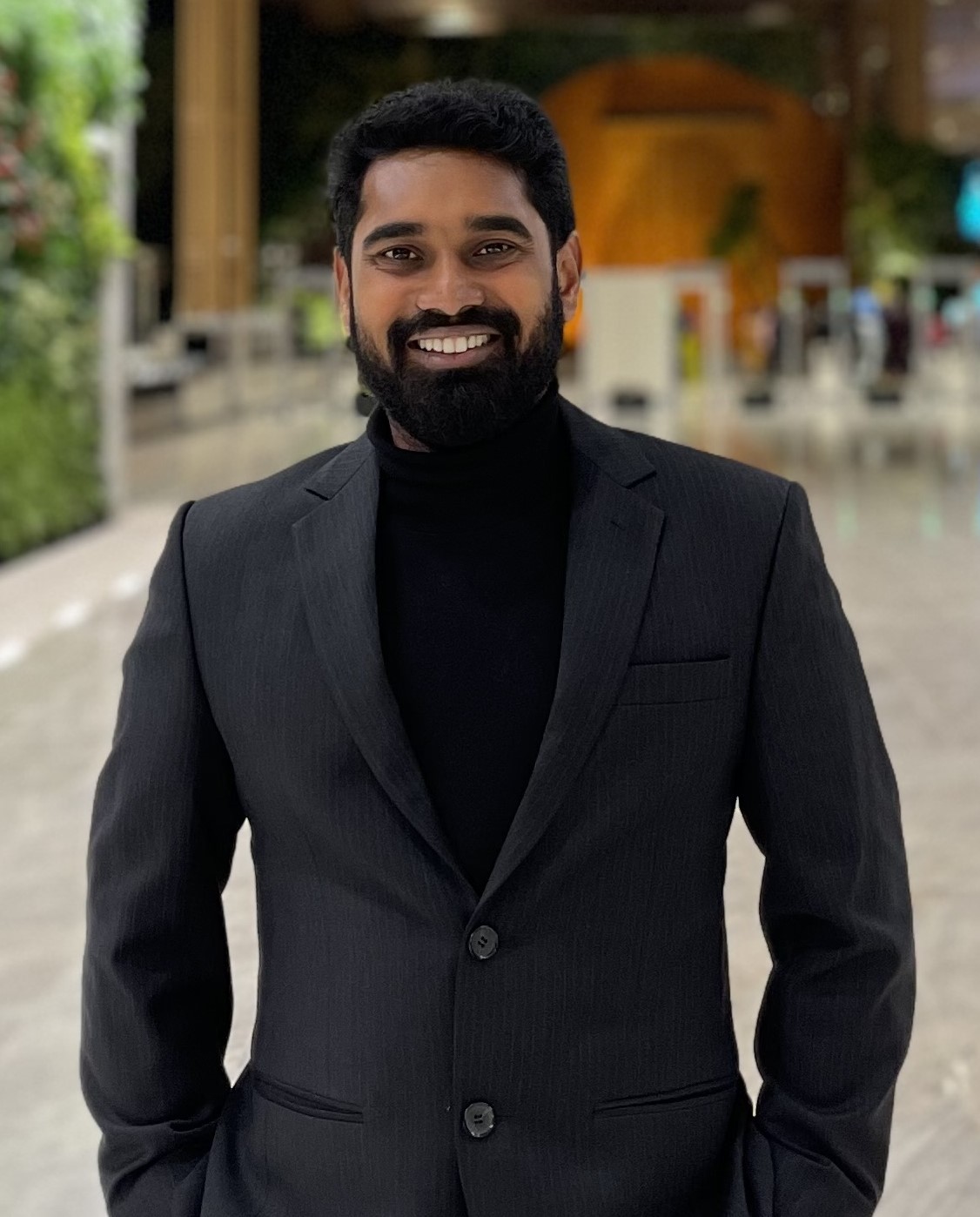






 Allow notifications