Tag: Business Law

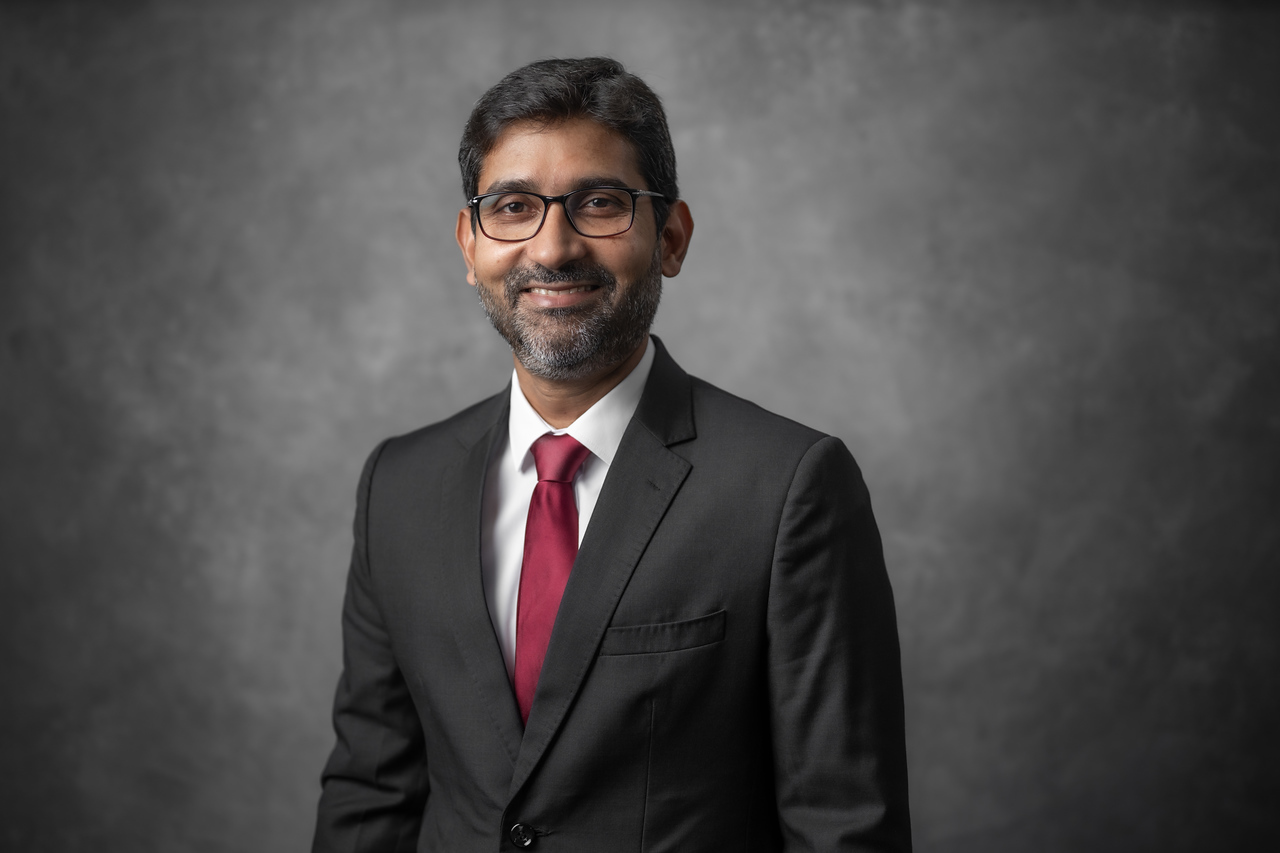
  • “Today, businesses operate in an environment where regulatory frameworks and expectations are rising faster than internal systems can adapt.” – Anandini Purohit, Founder & Partner at Simpli Counsel.

    “Today, businesses operate in an environment where regulatory frameworks and expectations are rising faster than internal systems can adapt.” – Anandini Purohit, Founder & Partner at Simpli Counsel.

    This interview has been published by Anshi Mudgal and The SuperLawyer Team

    With over 14 years of experience in corporate and banking litigation, what initially motivated you to pursue law as a career, and what early experiences strengthened that decision?

    My interest in law was sparked quite early, I was drawn to the way legal frameworks shape real-world outcomes. I found the intersection of reasoning, language, and impact particularly compelling. What truly cemented my decision, however, were my early internships and court visits during law school. Watching senior advocates argue complex matters and observing how legal strategy could influence the course of businesses and individuals made me realize that this was a profession where intellectual rigor meets tangible change.

    In your early years with law firms, what experiences shaped your understanding of banking laws and guided you toward this specialization?

    In my formative years at leading law firms, I had the opportunity to work closely on recovery actions and regulatory compliance matters for major banks. My involvement with corporate recovery teams gave me a ground-level understanding of how financial institutions operate, where the friction points arise, and how legal intervention can create both risk mitigation and strategic advantage. These experiences naturally drew me toward banking, corporate and financial litigation,  a field that demands precision, meticulous research, commercial awareness, and long-term perspective.

    Having worked extensively with banks, corporates, and financial institutions, what do you see as the most pressing challenges businesses face today in managing disputes and compliance?

    Today, businesses operate in an environment where regulatory frameworks and expectations are rising faster than internal systems can adapt. Disputes often arise not just from contractual breaches but from operational gaps, inadequate documentation, and ever-evolving regulatory landscapes. The most pressing challenge I see is the lack of proactive legal risk mitigation & management. Many entities still view legal strategy as a reactive tool rather than an integrated business function, which leads to avoidable disputes, compliance lapses, and reputational risks. As the saying goes ‘prevention is better than cure’.

    You’ve also advised on digital and social media laws, as well as data privacy. How do you see these evolving areas influencing the future of corporate legal practice in India?

    Digital regulations and data privacy are no longer niche concerns, they’re becoming central to corporate strategy. With the Digital Personal Data Protection Act and increasing regulatory oversight, companies must build data governance and responsible handling into their core structures. Social media presence, influencer marketing, and tech platforms are creating entirely new legal questions around liability, consent, intellectual property and reputation. I believe corporate legal practice in India is at an inflection point where traditional commercial law will increasingly overlap with technology, media and communication laws, and lawyers will need to re-equip and upgrade constantly.

    What inspired you to establish Simpli-Counsel, and how does your approach to advising startups, Gen Z entrepreneurs, and corporates distinguish your consultancy?

    Simpli-Counsel was born out of a simple observation: many startups, Gen Z founders, and even established businesses need practical, clear, and commercially aligned legal advice — not just legalese. After years of working with large institutions, I wanted to build a consultancy that bridges structured legal strategy with the agility that modern businesses require. Our approach is deliberately collaborative and solutions-oriented. We focus on simplifying complex legal frameworks so that founders and business teams can make informed decisions swiftly, without feeling overwhelmed by jargon or legal process.

    Looking back, what has been one of the most complex or high-stakes matters you’ve handled, and what were your key learnings from it?

    One of the most challenging matters I’ve handled involved a multi-jurisdictional recovery action for a consortium of banks against a large corporate borrower. The case involved layered security structures, parallel insolvency proceedings, and regulatory sensitivities. Navigating this required not only deep legal analysis but also constant coordination between stakeholders across jurisdictions. My key takeaway was the importance of strategic clarity and communication — aligning diverse teams behind a coherent legal roadmap can often make the decisive difference in complex disputes.

    In your transition from working with established law firms to building your own consultancy, what have been the biggest challenges and most rewarding aspects?

    The transition from structured law firm environments to building my own practice has been both demanding and deeply fulfilling. The biggest challenge has been stepping out of established institutional systems and creating operational, branding, and business development structures from the ground up. But the reward has been immense: the freedom to shape a practice aligned with my values, the ability to work closely with clients as strategic partners, and the joy of seeing the building something authentic and future-oriented.

    Data privacy is becoming increasingly critical. What practical advice would you give startups and entrepreneurs on mitigating legal risks early, especially in this domain?

    Startups often underestimate data protection until they face a regulatory hurdle or breach. My advice is: embed privacy-by-design early on. Map what data you collect, define clear consent processes, implement basic security hygiene, and assign responsibility for compliance. Even simple steps like robust terms of service, privacy notices, and access protocols can dramatically reduce risk. More importantly, build a culture of respect for data & privacy — because in today’s world, trust is currency.

    What vision do you hold for the future of your practice, and what guidance would you offer younger professionals aspiring to build careers in data privacy and banking law?

    My vision for Simpli-Counsel is to build a modern, agile legal advisory practice that combines deep subject expertise with empathy for how businesses actually function and not how they should. I see tremendous opportunities at the intersection of corporate, technology, and regulation, and want to help clients navigate this evolving landscape with clarity and confidence.

    For young professionals, my advice is twofold: develop strong foundational legal skills, and stay curious about emerging areas like fintech, data privacy, and digital laws. The future belongs to lawyers who can blend legal acumen with strategic foresight and adaptability.

    Beyond your legal career, you are passionate about heritage crafts, travel, and fitness. How do these interests help you maintain balance and perspective in your professional journey?

    Law can be an intense profession, and for me, travel, heritage crafts, and fitness offer grounding and perspective. Exploring crafts connects me to India’s rich cultural fabric, travel fuels my curiosity and adaptability, and fitness keeps me focused and energized. These interests remind me that while our work is serious, our growth is richer when we remain open, balanced, and inspired by the world beyond our desks.

    Get in touch with Anandini Purohit –

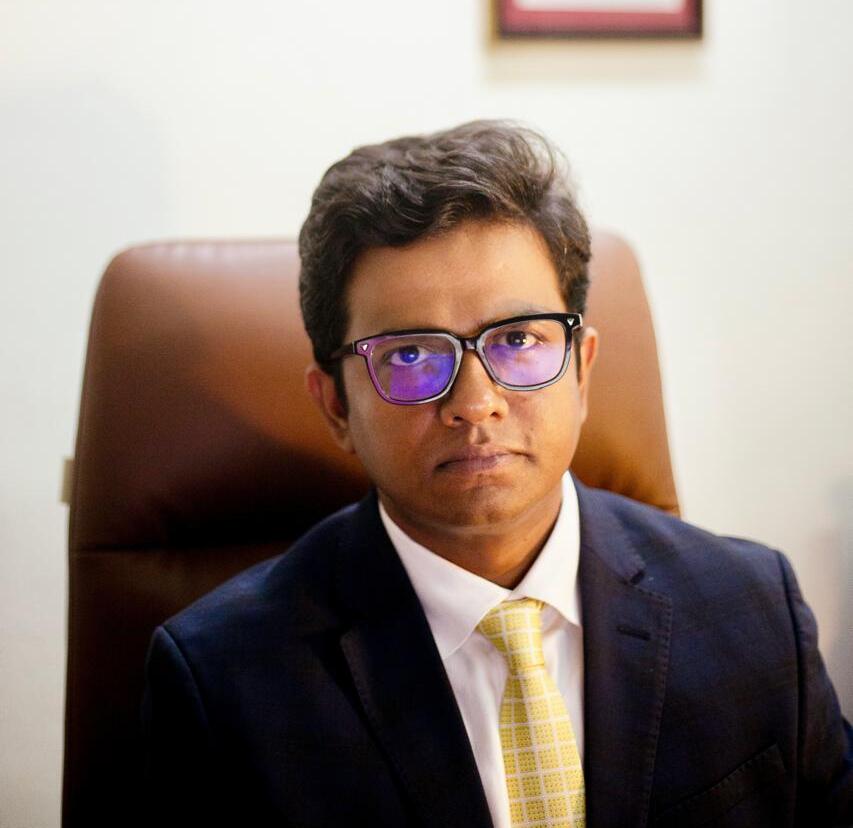
  • “The future belongs to companies that proactively manage risks, draft robust agreements, and embrace arbitration as a tool to secure their interests.” – Abhijeet Gathraj, Founder of Gathraj & Co.

    “The future belongs to companies that proactively manage risks, draft robust agreements, and embrace arbitration as a tool to secure their interests.” – Abhijeet Gathraj, Founder of Gathraj & Co.

    This interview has been published by Anshi Mudgal and The SuperLawyer Team

    Sir, you’ve built an impressive and diverse practice, spanning corporate, commercial, and dispute resolution matters. What inspired you to establish your own firm, and what has been the most defining challenge in leading it?

    The decision to establish my own firm was born out of a deep conviction that law should be practised with independence, integrity, and an unwavering focus on client trust. I always envisioned creating a practice that was not only about providing legal advice but also about becoming a trusted partner in my clients’ journeys, helping them navigate complexities with clarity and confidence. This dream was not easy to pursue—it meant stepping out of my comfort zone, taking risks, and proving myself in a market already dominated by established players and multi-generational professionals.

    The most defining challenge was earning credibility in those initial years. With limited resources and no big name to lean on, every client I secured was through persistence, sleepless nights, and consistent delivery of results. It was a struggle marked by countless rejections, long hours, and sacrifices. Yet, these challenges shaped me into the professional I am today—resilient, determined, and deeply committed to excellence.

    You dropped out of Chartered Accountancy after giving 4 good years to it before pursuing law. What motivated you to transition into law, and how has your strong commerce background shaped your perspective and strategy in handling complex commercial disputes? 

    Dropping out of Chartered Accountancy (CA) was a nightmare for my family. After giving 4 long years pursuing CA, one fine day I decided that my calling is into Dispute Resolution and the very fact of appearing in court, preparing arguments and representing the other side of the dispute motivated me to transition into law. Accountancy background gave me a strong foundation in numbers, corporate structures, and financial regulations, but I realised early on that the “why” behind every transaction lay in the law. I wanted to go beyond balance sheets and immerse myself in the world of contracts, disputes, and advocacy, where strategy and persuasion could alter outcomes. The transition was not easy, but it felt natural. I was drawn to the dynamic nature of legal practice, where every case presented a new challenge and an opportunity to make an impact.

    My commerce background has been invaluable in my legal career, and pursuing one of the toughest accountancy courses prepared me for the hard work that is required in the legal profession. It allows me to see disputes not just as legal problems but as business realities. When handling complex commercial matters, I can dissect financial nuances while aligning them with legal strategy. This dual perspective gives me an edge in cross-border disputes, shareholder conflicts, and regulatory advisory, where understanding the commercial heartbeat is as crucial as the legal framework.

    In the early phase of your career, which experiences were most formative in laying the foundation of your practice, and what advice would you offer to students who are in that phase?

    The early phase of my career was defined by struggle, humility, and relentless hard work. I vividly recall handling matters that brought in little financial reward but demanded every ounce of preparation and commitment. Those small victories—whether drafting pleadings late into the night or representing clients who had no one else to stand for them—taught me the real meaning of responsibility and the power of trust people place in their lawyer.

    To students, my advice is simple: there is no shortcut to success, and neither is there any alternative to hard work. Never cheat your client and always be honest. Believe in yourself, focus on building your skills and resilience in the early years, rather than chasing titles or monetary gains. The foundations you build now: discipline, diligence, and the ability to think critically, will carry you throughout your career. 

    This profession rewards patience and persistence far more than instant success.

    As an empanelled attorney for multiple foreign consulates and high commissions, you handle roles that require immense precision and discretion. How do you balance these legal nuances, and what challenges have you encountered in representing such esteemed clients?

    Being empanelled with a few of the foreign consulates, high commissions, and foreign missions in India itself is an honour and privilege, as very few practising advocates and firms get this opportunity and not all. Representing NRI clients in their legal disputes itself is challenging and a responsibility that goes beyond routine practice. Every communication, every piece of advice, has to be meticulously crafted, knowing that the stakes often extend beyond the client to international relations and reputation.

    The greatest challenge has been balancing urgency with accuracy. Foreign clients and NRIs operate on strict timelines, and there is no room for error. I have often worked overnight to deliver outcomes that meet both the legal requirements and the client expectations. These experiences, though demanding, have shaped my ability to remain calm under pressure and deliver with unwavering focus.

    Having made significant contributions to dispute resolution and commercial law, what emerging trends do you foresee in cross-border disputes and arbitration involving Indian companies over the next five years?

    In the coming years, I foresee arbitration becoming the preferred mode of dispute resolution for Indian companies engaged in cross-border business. The global push for speed and enforceability, coupled with India’s growing recognition as an arbitration hub, will make this trend even stronger. I also anticipate a rise in disputes around technology, data, and e-commerce as businesses continue to expand into digital markets.

    Another trend will be the increasing need for companies to become contract-conscious. Too often, businesses treat contracts as formalities rather than safeguards. In cross-border contexts, this can be catastrophic. The future belongs to companies that proactively manage risks, draft robust agreements, and embrace arbitration as a tool to secure their interests.

    Your commitment to legal education through judging moot courts and client counselling competitions is commendable. Which skills do you believe law students should prioritise to stay future-ready and uphold the high standards expected in today’s profession?

    The profession today demands much more than just knowledge of statutes. The most future-ready lawyers will be those who can think critically, research deeply, and communicate with clarity. In a world where technology is advancing rapidly, adaptability and tech-savviness will be key. Students must be prepared to embrace new fields such as fintech, AI, and compliance law, while still mastering the fundamentals of litigation and arbitration.

    Above all, integrity is the cornerstone of this profession. Skills can evolve and be learned, but values remain constant. A lawyer who is trusted for their honesty, dedication and commitment will always stand apart, regardless of the changes the profession undergoes.

    Looking back at your career, could you share one of the most challenging cases you’ve handled so far? What were the key complexities involved, and how did you navigate them?

    One of the most challenging cases I have handled in my career involved a transnational child custody dispute, where I was appointed by a City Council in the UK to represent the interests of a 14-month-old child who was placed under foster care. The case was uniquely sensitive—not only did it involve intricate questions of international jurisdiction and child welfare, but it also carried an immense emotional weight. My role was to secure an interim order for the safe transit of the child to India, which required balancing legal precision with humanitarian urgency.

    Convincing the District Court of First Instance to hear the matter on an urgent basis was no easy task. The odds were against us—procedural hurdles, the complexity of cross-border custody laws, and the natural caution courts exercise in such delicate matters. I vividly recall preparing the case under extraordinary time pressure, knowing that every moment’s delay had real-life consequences for a child’s future. The hearing was conducted on a working day between Diwali and the New Year, a period when courts are generally overburdened, which added another layer of difficulty.

    What made this matter truly defining was the responsibility it placed on me—not just as a lawyer, but as a human being. I had to persuade the court that this was not just another legal dispute but an urgent humanitarian concern that required immediate judicial intervention. Ultimately, the case taught me that persistence, empathy, and the ability to rise above procedural roadblocks are what define a lawyer in moments of true challenge. It remains etched in my memory as a reminder of why I chose this profession—to make a tangible difference when it matters the most.

    As a registered trademarks attorney, your expertise in intellectual property is widely recognised. How do you see IP laws evolving in India and globally, and what guidance would you give students aspiring to excel in this dynamic field, both in terms of skills and professional values?

    Intellectual property is one of the most dynamic areas of law today, both in India and globally. With the rise of digital markets, I foresee stronger frameworks for online infringement, greater protection of trade secrets, and increasing international harmonisation of IP laws. India, too, is rapidly maturing in this space, and the opportunities for young professionals are immense.

    For students aspiring to specialise in IP, my advice is to go beyond statutes and cultivate an understanding of industries like technology, pharmaceuticals, and media. IP law is about protecting innovation, and one cannot protect what one does not understand. At the same time, cultivate patience and precision—IP is often a long game where persistence and values matter as much as knowledge. Read landmark judgments on IP laws and get a hold of the principles decided by the courts in such judgments.

    Reflecting on your journey from studying law at Gujarat University to becoming a trusted advisor for consulates and leading corporates, you’ve taken on highly varied and demanding roles. How do you balance these professional responsibilities while maintaining your personal life and well-being?

    Balancing professional responsibilities with personal life has been one of my greatest struggles. In the early years, work consumed every waking hour, and personal time was a luxury I could not afford. But over time, I realised that sustainability in this profession requires more than just hard work—it requires balance, discipline, and self-care.

    Today, I consciously prioritise three things: utmost discipline in managing my time, delegation to empower my team, and detachment to ensure I don’t carry every professional battle home. My family has been my strongest anchor, reminding me of the importance of perspective. At the end of the day, success has meaning only when it is achieved without losing oneself in the process.

    Get in touch with Abhijeet Gathraj –

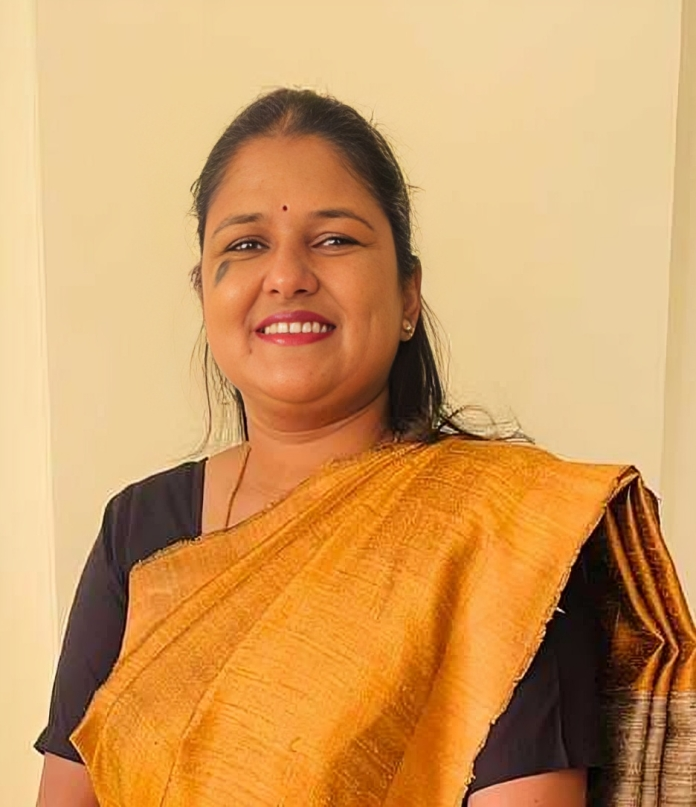
  • Bridging Borders: Making Law Accessible for Startups Worldwide – Priyanka Mandhani, Corporate lawyer, Company Secretary and Founder of Juris Summit.

    Bridging Borders: Making Law Accessible for Startups Worldwide – Priyanka Mandhani, Corporate lawyer, Company Secretary and Founder of Juris Summit.

    This interview has been published by Anshi Mudgal and The SuperLawyer Team

    I will start backwards. I’ll not start with the very first question, why you chose law, but I would request you to answer first why and when you decided to start Juris Summit, what was the reason that you started it so soon? What are your plans? How are you going to work on the cross border business laws, and what do you see and where do you see yourself and Juris Summit in next, let’s say five years and a decade?

    I’m so thankful and grateful for all of the SuperLawyer team for bringing this opportunity to me. And yes, I’m looking forward to collaborating with you people and also to giving guidance to all the newcomers who are wishing and willing to start their career on an international platform.

    So, yeah, you know, there are some things, like we said, we get it out of WhatsApp chat.

    So me and my partner Sohan, we met in a WhatsApp group, like in a freelancer group, and at that time, back after two years, we had started our individual freelancing journey. So, we individually found that startups, they struggle, particularly startups, they struggle a lot because there are two things.

    First thing is, particularly I’m talking about the US startups. The United States law firms charge a lot. I would say 800 dollars per hour, and even beyond that. So I was like, what is this? Why are they charging this much?

    Of course, they provide services and they do everything that needs to be done, but we also are authorized to do that, and we can also do it at a lesser price. So that was the first point. And the second point, startups, they want everything fast. They approach any lawyer or somewhere that gives us a template, we will do it ourselves. And in that template, the alignment of business, the clauses, they’re not properly as per their business. They’re not aligned with their business.

    So these are the two things which I felt that I needed to bridge a gap between this thing. So at that time, I had a talk with Sohan. Sohan, this is the problem, we need to fill it out. So he said, so let’s go, let’s build an agency. Then let’s work together.

    And I said, yeah, let’s do it. Why not? And then without a second thought, it was just like bam! Out of a WhatsApp chat. We set up an agency.

    Amazing journey. Amazing start. So let’s now get back to the basics. How did you become convinced that you have to do law as well as company secretaryship?

    And with this kind of dual qualification, how did you pave your way towards not only being an Indian lawyer, but also a lawyer who’s internationally acclaimed and who has moved to Germany and is working from there?

    So, the thing is, I wanted to become a chartered accountant firstly, so I started my journey back then. I’ve cleared my CPT, and after that I could not understand what was happening, but suddenly in that period of time, my interest was very much into law. Then I thought of the professional course of company secretary, and without second thought, again, I enrolled myself into company secretary and successfully I’ve completed everything in the first attempt. And side by side, as this is a law field, I also enrolled myself for an LLB course, a three years course. So I’ve also completed my LLB, and fortunately in the last year of LLB I topped the university, Swami Ramanand Teerth Marathwada University.

    So, this is how I wanted to prepare myself fully, and after all these things were done, still I felt like something was missing. Then I found courses like US corporate laws, then diploma in international business laws.

    And that thing fascinated me. I said I want to do this. I want to set up a remote practice for myself. I wanted to do this thing. So without a second thought, I enrolled myself. And today I’m here so that I can work from Germany with US law firms, and not only US, all over the world, I can work with every country’s client.

    So, with all these things, which you decide on a first go, what kind of experience do you have of the transition that you have done from traditional legal practice to starting, founding and running a specialized legal agency, which is right now catering mostly to international clients, particularly in US, like you already have explained about startups. How is your experience about the agency and how does it work for you and your partner and the kind of challenges that you see in having Indian laws, having international laws and their comparison? How does that work for you?

    I would start with the traditional law firms in India or wherever we can say. So, at the law firm I had access to a predictable environment, and consistent staff support was there. Then we had a particular library where we can read and where we can update ourselves. But mostly there were domestic clients, and there were Indian timelines, as you must be aware of, then billing expectations. And so all these things were somewhere I feel they’re keeping me down, they’re setting up boundaries for me.

    So, when I started a legal agency, these were not the things. There were, obviously, challenges because time zone and communication are the biggest challenges when we start an agency that is hundred percent remote and which deals with international clients.

    So, we have staff, obviously we have staff, and what we do is someone between us is always awake at US time zone so that we can grab all the opportunities, so that we can reply to all the clients. And even if he’s not there, what do we do, because we use technology, right?

    We have to use technology. We set auto replies to that particular person. In that way, we don’t push the client, we can’t talk right now, and it’s not our time zone. This is how we work.

    So even if there is any urgent matter or something  because we see clients that want something within 24 hours, within a few hours we actually do that. We don’t say we can’t do this. This is not a timeline to deliver everything, nothing like that. We’ll do everything.

    Someone from us will have to do that. And we have set our agency like that only. So these are the challenges: timeline and communication.

    So, talking about communication, recently we had a client from Saudi Arabia, and I personally had to deal with him.

    So, the first time I didn’t understand what he’s talking about, his accent was so difficult to understand. But thanks to the notes we take, whenever we start a meeting, on the other end we start taking notes. So thanks to all these things, thanks to technology, we understand these things.

    So these are the challenges we overcome, and that’s how it works.

     This shows that the kind of work that you are doing is getting more and more  reach, and that is something which is the value addition to your work at Juris Summit.  So the kind of driving force that you, your partners and the people who work with you have, what kind of gaps or insufficiencies or legal issues you have seen in US business laws as compared to Indian business laws? And the kind of observation that has helped you overcome those challenges and help US companies or businesses have their legal work done with you.

    Okay, so, I mentioned this before, that for billing, the US firms charge a lot. So this is the first thing that we wanted to fill the gap  to provide services at a lower price than the US law firms.

    The second thing, obviously, about the DIY route you know, templates from online platforms and Reddit forums they get. So these are the gaps Juris Summit set out to fill. We offer a third party responsive, startup-savvy legal support delivered by us. Like we are experienced, we have an experienced team and at a cost that makes sense for early-stage companies.

    I’m talking particularly here about the early stage because businesses which are already set, normally, they don’t hesitate or they don’t struggle this much. So, we focus on flat fees. Not an hourly basis. There’s no surprising billings and nothing like that. Scope-defined engagements and what we call it legal sprints.

    So, founders know exactly what they are paying for. So for example, what if there is a review document with us, we have to review that document, we make sure we provide another document  that we just don’t review it and tell him that these are the findings and these are the loopholes that we need to fill.

    And these are the liability clauses and everything. Not like that. What we suggest from the very first clause, to try to make him understand in a simple language. We make a document and we write it in a simple language, clause to clause, that you should know what you are signing. So this is our approach  to make him understand everything.

    We speak their language in short, I can say we speak their language. We don’t just recite, deliver code or GDPR clauses, we explain what it means for their product, their fundraising, or any contractor agreement. So this is how we work.

    And Juris Summit is all about delivering clarity, speed, strategy at the point where founders need it most. We don’t just drop documents, we help build legally sound businesses one decision at a time. And that’s the gap we saw and the reason we are here.

     So on that note, how do you guys keep yourself updated with the new changes in laws in different jurisdictions. Not only the US, like you just now said that you dealt with a client from Saudi Arabia, then other jurisdictions also. So what is your way of keeping yourself updated and keeping your team updated as well?

     So, what happens is normally when we start our day, normally, we start our day at 9:00 AM. 

    So for the first half hour, particularly of mine, I look for all the US jurisdictions, the updates and everything.  There are many newsletters which I have subscribed to.  Then I also have many attorneys. Like we have a group with US attorneys to get the updates. Hey, what’s going on? What’s new? We talk normally like that. So  I get updates from them. And on the other hand, Sohan, he handles Indian jurisdiction, all the Indian and Asian. So basically our first hour or half an hour is only to update ourselves with all the knowledge.

    And apart from this, what we do is set a meeting every 15 days or weekly, biweekly. And, we exchange each other’s knowledge. Hey, what’s new? What did you see? What did you see in the last 15 days? Please share with us what’s up? And everything is online, so we keep a very friendly manner, very relaxed atmosphere, everyone shares his or her thoughts. So like that we exchange our thoughts and we keep updated.

    Are there any specific reading materials or any channel which you especially look out for? Because there are so many of them. If you could name a few, it would be very helpful for the learners as well.

    There are many channels, newsletters. See, it depends upon the learner, how they find it, how easy it is to get the knowledge from that particular newsletter or particular journal or everything.

    So it depends upon the learner, there are many. If you Google it, you will find it. And there are many AIs. Research tools or even if you go to LexisNexis or Westlaw websites. These are the websites where you get all the knowledge.

    Even if you type, what’s the update here tonight? If you even Google it, you’ll get an idea. You will get a list thoroughly. So not a particular channel or anything I follow, but it depends upon, what exactly I want to see on that particular day, that’s how I Google it. And there are a number of websites and journals and everything.

     So let’s move ahead and understand how you help the startups and SMEs, especially those that are led by non-US founders,  but they are being navigated by US federal laws or state laws. How do you make sure that you explain those things, especially tax compliance and other overwhelming aspects of law to your client and make sure that it has been taken care while you help their startup being established in us from scratch until the time they need your help.

     Yeah, as you mentioned that US Federal and tax compliance may be overwhelming and to simplify this is our job, so we simplify US federal and state tax compliances for non-US founders by removing the overwhelm and breaking everything into clear and actionable steps. So for example, we begin with a founder friendly roadmap.  We draft a simple PDF, a simple agreement or like an information document and that outlines all the key tax obligations across federal or state levels.  So this includes important filings like the EIN, then form 5472 then franchise tax and sales tax registration with its timeline and responsible parties that is clearly indicated in that particular document. So since we don’t use a client portal, we ensure accessibility and clarity by sharing checklists and guides over email and tools like Google Drive, we use that. So, you know, founders can track their progress step by step.

     We provide all necessary templates where it’s 83 B, election letter or a sales tax exemption certificate with instruction return in plain English. This is how we manage it. And for ongoing compliances as well, we partner with experienced CPAs.

    Like we have many CPAs in our touch and bookkeepers who specialize in cross-border entities. So this is how we provide all the information to them.  And once introduced, we stay in loop to ensure filings are accurate, then deadlines are met. And the startup stays in solid ground.

    So, as I mentioned earlier, our goal is very simple. Remove all the complexities, bring structure to compliances and let non-US founders focus on building and remove that overwhelmingness.

    How do you manage your physical and mental health while you are doing all of this in different timelines?

    Because obviously sitting in one timeline and working. But managing different timelines, having that presence all the time, that all 24 hours we are available for clients. How do you manage that particular aspect of your life where you have to take care of your physical health as well as your mental health?

    Yeah, start your day with meditation. And hitting a gym, that thing keeps me going all day because, as you have also already mentioned, I have to keep aligned with every time zone and everything. So obviously, this is hectic, this is not easy. But if you manage things properly, it’s all about time management.

    We can’t say we don’t have time, we can’t say that. We have to manage the time, and then we’ll have time automatically. And for my mental health, I walk a lot. It gives me clarity when I walk. It clears my mind. Take a walk in nature for, let’s say, 15 to 20, even 20 minutes, just one round or something.

    It’ll help you boost your thinking and give clarity on what you are doing. And after every two hours, take a break of 10 minutes. It’ll boost your productivity, we would say. So we have to manage. I don’t say no to anything.

    I say I can do it. So there is nothing that you can’t do, I feel. You have to do it. If you decide, there will be a way. You will have to find a way and you can do it.

     You can do everything with an amazing understanding and the way you are doing it, may you have all the success that you have planned for yourself. It’s an amazing experience to understand how you have gone so far, just by the sheer willpower of being able to do anything and everything under the sun.

     It’s an overwhelming thought as well that you carry forward yourself with the thought of being able to do it.

     One more thing. It’s not easy to keep motivated and to stay positive all the time. Because there were times in my life as well where  I started this freelancing journey, there were times where I didn’t get clients. I had to struggle. But the thing is we have to keep going without giving up.

    This is the mantra. Don’t give up. Stand back. There will be your time.  You can’t give up. That’s it. You can’t give up. You have to keep putting in the hard work.

    Get in touch with Priyanka Mandhani –

  • “In essence, global success in law is no longer reserved for the privileged few. With the right mindset, a commitment to growth, and the courage to take that first step, no matter how small, you can carve your own path.” – Medini Sourav Dutta, Regional Lead Legal at The Hershey Company, Malaysia.

    “In essence, global success in law is no longer reserved for the privileged few. With the right mindset, a commitment to growth, and the courage to take that first step, no matter how small, you can carve your own path.” – Medini Sourav Dutta, Regional Lead Legal at The Hershey Company, Malaysia.

    This interview has been published by Anshi Mudgal and The SuperLawyer Team

    Your journey from a remote village in India to a senior legal role in a century-old American multinational is incredibly inspiring. What early experiences or turning points played a pivotal role in developing your interest in Law in the first place?

    Growing up in a remote village in Assam, access to resources was limited, but the values instilled in me, resilience, curiosity, and a strong sense of justice, were profound. I vividly remember witnessing everyday challenges faced by people in my community, often due to a lack of awareness of their rights or access to legal support. These early observations sparked a deep interest in the mechanisms of justice and how the law could serve as a tool for empowerment.

    A pivotal moment came during my school years when I had the opportunity to assist a local teacher who was helping villagers draft and understand basic legal documents. That experience, though informal, was transformative. It opened my eyes to how meaningful an impact legal knowledge could have when applied with empathy and purpose.

    Later, during my university studies, I was drawn not just to the theory of law, but also to its application in real-world, cross-border business scenarios. This interest deepened as I began to understand the role legal professionals play in shaping not only individual outcomes but also the trajectory of entire organizations.

    Each step of the way, from the modest beginnings in my village to engaging with multinational teams across continents, has been driven by a belief that the law, when practiced with integrity and foresight, can be a powerful enabler of growth, fairness, and progress.

    Spanning over 15 years across industries like pharmaceuticals, IT, and manufacturing, your career reflects both depth and versatility. What foundational lessons from your early roles continue to guide your practice today?

    One of the most enduring lessons from my early roles is the importance of listening deeply and understanding the business context before offering legal advice. Early in my career, I realized that being technically sound in law is essential but not sufficient. To be truly effective, a legal professional must align legal strategy with business objectives and operational realities. This perspective has consistently guided my approach across industries.

    Another foundational lesson is the value of clarity and simplicity in communication. Whether I was supporting a pharmaceutical company on regulatory compliance or helping an IT firm scale its contract operations, I learned that demystifying legal complexity for non-legal stakeholders builds trust and accelerates decision-making. The ability to translate legal language into practical guidance is something I continue to emphasize and foster in the teams I lead.

    Lastly, adaptability has been a constant companion. Working across different geographies and regulatory frameworks, from India to the Americas, taught me to stay agile, culturally sensitive, and open to learning. The legal landscapes may differ, but the need for sound judgment, ethical integrity, and strategic foresight remains universal.

    These early principles, business empathy, clear communication, and adaptability, have become the cornerstones of my practice and continue to shape how I engage with stakeholders, lead teams, and deliver value in complex, evolving environments.

    At The Hershey Company, you’ve played a key role in ensuring compliance with corporate governance, legal obligations, and regulatory standards across regions including APAC and Europe. Could you share one of the most challenging situations you’ve encountered in this journey, and how you effectively navigate it?

    Thank you for the question. While I must respect the confidentiality obligations inherent to my current role and cannot discuss specific internal situations, I can share that navigating complex compliance challenges across diverse jurisdictions requires a combination of proactive stakeholder engagement, cross-functional collaboration, and adaptability to evolving regulations.

    In my experience, the key to effectively managing such challenges lies in fostering open communication with local experts, aligning legal strategies with business goals, and maintaining a flexible yet rigorous approach to compliance. This mindset has consistently enabled successful navigation of complex regulatory environments without compromising confidentiality.

    With extensive experience in negotiating high-value contracts, what common pitfalls have you observed in commercial negotiations and how can legal teams proactively avoid them in high-pressure environments?

    One of the most common pitfalls I have observed in high-value commercial negotiations is focusing too heavily on legal minutiae without fully understanding the commercial drivers and deal dynamics. While it’s crucial to safeguard the company’s legal interests, an overly rigid approach can alienate the counterparty or delay progress, especially in high-pressure environments where timing and agility are critical.

    Another frequent misstep is insufficient alignment between the legal team and internal business stakeholders before negotiations begin. When legal teams are brought in late or are not fully briefed on the business objectives and risk tolerance, negotiations can become reactive rather than strategic, leading to missed opportunities or poorly structured outcomes.

    To proactively avoid these pitfalls, I emphasize the following approaches:

    1. Early and continuous collaboration: Involving legal professionals at the outset of the deal cycle fosters a proactive, strategic approach rather than a reactive one. By gaining a deep understanding of the underlying business rationale, legal teams can craft solutions that not only mitigate risks but also actively facilitate and enable the successful execution of the deal.
    2. Scenario planning and fallback positions: In high-stakes negotiations, pressure can lead to rushed decisions. By preparing fallback positions and pre-approved negotiation levers in advance, legal teams can respond quickly without compromising on key risk parameters.
    3. Clear internal alignment on priorities: Before entering negotiations, I ensure that all internal stakeholders, from finance to operations, are aligned on what is negotiable and what is not. This clarity helps present a united front and prevents conflicting messages during the negotiation process.
    4. Balancing firmness with flexibility: Successful negotiations often require finding creative middle ground. Legal teams that are solution-oriented, commercially aware, and culturally attuned are far better positioned to achieve outcomes that are both compliant and commercially viable.

    Ultimately, effective negotiation is about understanding both the legal and human elements of the deal. By staying calm under pressure, communicating clearly, and staying focused on the end goal, legal teams can not only protect the business but also enhance its reputation as a trusted and pragmatic partner.

    Legal technology and process optimization are central to your work. What do you see as the biggest opportunities and challenges for legal departments embracing automation and AI in contract lifecycle management?

    The rise of automation and AI in contract lifecycle management presents an exciting opportunity for legal departments to transform from being reactive support functions to strategic enablers of business efficiency and growth. When implemented thoughtfully, legal technology can drastically reduce cycle times, improve compliance, and deliver actionable insights from contract data, turning legal operations into a source of competitive advantage.

    With AI-powered analytics, legal teams can extract trends from thousands of contracts, identifying risks, renegotiation triggers, or compliance gaps proactively. Automation also enables standardization and scalability, especially for high-volume, low-risk agreements, freeing up legal talent to focus on complex, strategic matters.

    However, the challenges are equally significant. One major hurdle is change management. Legal functions have traditionally been risk-averse, and shifting mindsets toward embracing technology can be slow. Without clear alignment between legal, IT, procurement, and business teams, implementation can become fragmented, resulting in poor adoption and underutilized platforms.

    Another challenge is balancing automation with judgment. AI can streamline workflows, but legal decision-making still requires human insight, especially in nuanced or high-stakes scenarios. Ensuring that automation enhances, rather than replaces, critical thinking is key.

    To navigate this journey successfully, I believe legal departments should focus on three core principles:

    • Start with process clarity and optimize before automating.
    • Select tools that integrate seamlessly into existing ecosystems and workflows.
    • Invest in capability building, ensuring teams are trained not just on how to use technology, but how to extract its full strategic value.

    Ultimately, the goal is not just to automate for efficiency but to elevate the role of legal as a proactive, tech-enabled partner in the business ecosystem.

    You’ve led teams and collaborated across functions globally. What leadership principles have stayed with you, especially when working with diverse legal and business stakeholders?

    Leading and collaborating across diverse legal and business teams, often spread across different geographies, cultures, and regulatory environments, has taught me that effective leadership is grounded in empathy, clarity, and trust.

    One principle that has consistently guided me is the importance of active listening and cultural sensitivity. In global environments, legal and business perspectives can vary significantly depending on local norms, risk perceptions, and market dynamics. Taking the time to understand those perspectives, before offering solutions, builds credibility and strengthens collaboration.

    I also believe in leading with clarity of purpose. Whether I’m guiding a legal team or partnering with cross-functional stakeholders, I strive to clearly communicate goals, expectations, and the rationale behind key decisions. In complex projects, especially those involving regulatory or commercial risk, clarity helps align efforts and fosters collective ownership.

    Another key principle is empowerment through trust. I have found that giving people the space to take ownership while being available as a sounding board, creates stronger, more resilient teams. It is especially important when managing legal functions across time zones, where micromanagement is not only ineffective but also unsustainable.

    Finally, I try to lead by example, particularly when it comes to integrity and accountability. In legal roles, your credibility often precedes you. Being consistent, dependable, and fair, even under pressure, helps build long-term trust across both legal and business communities.

    In essence, leadership in a global legal context isn’t just about directing, it is about connecting, aligning diverse perspectives toward common objectives, and doing so with authenticity, respect, and strategic foresight.

    Your early exposure to litigation and dispute resolution must have provided valuable perspective. How did you decide to transition to an international practice and how did you navigate the complexities involved with it?

    My early exposure to litigation and dispute resolution gave me a solid ground in the fundamentals of legal analysis, advocacy, and risk assessment. Working on contentious matters in the Indian legal system taught me to think critically, anticipate challenges, and understand the nuances of courtroom dynamics, all of which are invaluable skills, even outside the litigation context.

    However, over time, I became increasingly drawn to the preventive and strategic side of legal practice, particularly how legal frameworks could be leveraged to support business growth, mitigate risk before it materializes, and enable long-term value creation. I saw international practice as a natural evolution of this interest. It offered the opportunity to work across jurisdictions, partner closely with business leaders, and help organizations navigate regulatory complexity on a global scale.

    The transition wasn’t without challenges. Moving from a litigation-focused role to an in-house, cross-border environment required me to reorient my mindset from issue resolution to issue prevention, and from adversarial negotiation to collaborative problem-solving. I invested significant time in understanding international legal systems, both common law and civil law traditions, as well as gaining fluency in business operations and corporate governance.

    One of the most effective ways I navigated this shift was by embracing continuous learning and remaining adaptable. I took on roles that expanded my exposure to multinational operations, built relationships with colleagues across functions and cultures, and sought mentors who had successfully made similar transitions.

    In hindsight, my litigation experience gave me a strong foundation in legal rigor and risk management, while my move into international practice allowed me to broaden my impact, helping businesses not just survive legal hurdles, but thrive through strategic legal support.

    Having worked across both common and civil law systems, what key differences do you notice in legal operations, and how do you keep up with the ever changing dimensions of legal compliances across jurisdictions?

    Working across both common and civil law systems has deepened my appreciation for the diversity in legal reasoning, procedural approaches, and the role of precedent in shaping legal outcomes. In common law systems, there is a strong reliance on case law and judicial interpretation, which demands a nuanced understanding of precedent and how it evolves over time. In contrast, civil law systems are more codified and statute-driven, requiring a close reading of the legislative framework and its administrative interpretations.

    From an operational standpoint, these differences manifest in contract drafting styles, dispute resolution mechanisms, and compliance expectations. For instance, civil law jurisdictions may favor more concise contracts that rely on statutory provisions, whereas common law jurisdictions often require more detailed, self-contained agreements. Similarly, the pace and approach to regulatory enforcement can vary widely. What is standard in one jurisdiction may be seen as intrusive or inadequate in another.

    To manage these complexities, I take a proactive, layered approach to legal compliance:

    • Local Expertise: I collaborate closely with local counsel and regional experts to stay aligned with jurisdiction-specific interpretations and enforcement trends. This ensures that our global strategies are grounded in local realities.
    • Knowledge Sharing and Internal Training: I prioritize creating internal awareness through cross-functional training, compliance toolkits, and internal policy updates, making sure legal and business teams are equipped to operate responsibly across borders.
    • Regulatory Monitoring and Strategic Technology Use: I leverage legal tech solutions and regulatory intelligence platforms to track evolving legal landscapes, particularly in areas like data privacy, ESG, and trade compliance, where change is rapid and multidimensional.
    • Harmonization with Flexibility: Wherever possible, I advocate for harmonized global processes that can be tailored for local adaptation. This allows for consistency in core legal and compliance principles while respecting jurisdictional nuances.

    Ultimately, navigating these varied legal systems requires not only technical knowledge, but also cultural sensitivity, open communication, and a commitment to continuous learning. It is this blend of structure and adaptability that allows legal operations to remain effective and compliant in a constantly shifting global environment.

    What advice would you offer to young legal professionals particularly those from non-metropolitan backgrounds aspiring to make a mark globally? And how do you personally stay ahead in this ever-evolving legal ecosystem?

    To young legal professionals, particularly those from non-metropolitan or modest backgrounds, I want to say that your origin does not define your destination. What matters most is your willingness to learn, your resilience in the face of challenges, and your ability to adapt. I come from a remote village in Assam, and I understand firsthand the barriers, both visible and invisible, that can make global aspirations seem out of reach. But those very roots can also be your greatest strength. They teach you humility, grit, and the power of persistence.

    My advice is to focus on building a strong foundation in both legal knowledge and practical skills. Be curious, ask questions, and don’t shy away from stepping outside your comfort zone. Seek mentors, even if informally, and be open to feedback. Language, geography, or access may feel like limitations initially, but with consistency, self-discipline, and digital access to global knowledge, those gaps can be closed.

    Also, understand that legal excellence today goes beyond black-letter law. Develop a commercial mindset, be tech-aware, and build cultural fluency. In a globalized legal ecosystem, your ability to collaborate across time zones, cultures, and functions is just as critical as your ability to interpret a statute.

    As for how I stay ahead in this evolving field, it is a combination of continuous learning, strategic networking, and hands-on collaboration. I make it a point to stay informed through industry publications, legal tech forums, and cross-functional discussions. I also learn immensely from mentoring others which offers fresh perspectives and keeps me grounded.

    In essence, global success in law is no longer reserved for the privileged few. With the right mindset, a commitment to growth, and the courage to take that first step, no matter how small, you can carve your own path.

    Get in touch with Medini Sourav Dutta –

  • “If you are passionate and ready to put in the work, you absolutely can build a successful international legal career.” – John Mathew, Founder of Team Counsel.

    “If you are passionate and ready to put in the work, you absolutely can build a successful international legal career.” – John Mathew, Founder of Team Counsel.

    This interview has been published by Anshi Mudgal and The SuperLawyer Team

    How did your academic journey from earning a B.A., LL.B. at Karnataka State Law University to completing an LL.M. in Business and Finance at The George Washington University Law School shape your approach to international transactions and corporate advisory work? 

    By my third or fourth year of law school, I knew that I wanted to be a corporate transactions lawyer. I didn’t know much about the field back then, but I knew this was the path for me. Interning with top-tier Indian law firms during college gave me a strong foundation and later working in those firms helped sharpen my skills. 

    When I decided to pursue an LL.M., I wanted to expand my horizons. At George Washington University, my focus was Business and Finance Law, but the university also had a strong International Law program. This gave me the perfect blend. I studied U.S. corporate law and international investment law side by side. 

    The exposure I got there, especially learning from professors who worked with major international companies and firms, helped me develop a more global, practical, and mature approach to law, something I continue to apply every day at Team Counsel. 

    In the early phase of your career at a law firm, what were some of the key experiences that enhanced your understanding of the law? How would you describe those formative years in practice? 

    The early years were intense but transformative. I was in the trenches doing due diligence, legal research, drafting contracts, and attending negotiation meetings, all of which helped shape my legal thinking. 

    One lesson stood out: the 10,000 hours matter. There’s no shortcut, you have to show up, keep your head down, and learn the craft patiently. Those formative years were very impactful, they shaped who I am today. They also gave me the foundation I needed to make the most of my LL.M. and continue building a better, more thoughtful practice. 

    While working as a research assistant to Mr. Marcelo Vázquez-Bermudez at the United Nations’ International Law Commission, what insights did you gain that shaped your perspective on international investment law and cross-border legal frameworks? 

    Assisting Mr. Marcelo Vázquez-Bermudez, the Special Rapporteur for the UN International Law Commission, provided invaluable insights into international law. I contributed to a landmark research project on general principles of law under Article 38(1)(c) of the ICJ Statute, focusing on their application within the Indian legal system as both a domestic and international source of law. This experience deepened my understanding of how legal frameworks are developed and influenced across different jurisdictions. 

    During the same time, I was selected for a semester-long externship at the Multilateral Investment Guarantee Agency (MIGA), part of the World Bank Group, where I was exposed to investment guarantee transactions in Asia and Africa. To better understand the real world implications of my research project, I also had the opportunity to help organize a discussion event at MIGA with the Special Rapporteur.

    All these experiences helped me understand international law and investments from a global, systems-level perspective, something that continues to inform how I support clients navigating cross-border issues today at Team Counsel. 

    After working with various top-tier law firms and international organizations, what motivated you to establish your own practice? What was your vision behind founding Team Counsel, and how do you see it evolving in the future? 

    I always knew I wanted to start my own consulting practice, but I thought it would happen much later. Life had other plans. 

    Just before the pandemic, I was finishing up my LL.M. and preparing to take the New York Bar, with plans to join a global law firm abroad. But COVID changed everything. I returned to India and joined a top law firm, amazing team, big-ticket deals but deep down, something felt off. 

    Shortly thereafter, I left Big Law, and joined a global venture capital fund, supporting venture growth investments across India, Southeast Asia, and the U.S., which gave me deep insight into cross-border deals and the startup ecosystems around the world. I helped close over 45 investments worth USD 12 billion across India, Southeast Asia, and the U.S within a period of a year or so. 

    It was exciting work, but I realized I wanted more. I wanted to work with startups and use my experience to help them grow. And, I wanted to build something of my own. 

    But most importantly, I wanted to disrupt legal for the startup ecosystem with innovative and client centric service models. 

    That’s how Team Counsel was born from two clear goals: 

    1. Make world-class legal support accessible to startups without burning their budgets. 

    2. Build transformative legal solutions that help startups operate more efficiently and grow sustainably. 

    The startup ecosystem has been so welcoming. Today, we have supported 20+ startups and investors, guiding them from start to finish, and we are just getting started! Most importantly, we have built a passionate team that’s hungry for more wins. Much like in my favorite poem, “The Road Not Taken” choosing the road less traveled and starting Team Counsel has made all the difference for me. 

    You’ve closed over 80 high stakes deals across multiple jurisdictions. What has been the most complex transaction you’ve worked on, and how did you overcome its challenges? 

    Over my decade-long career, I have worked on numerous complex high-value M&A, PE, and venture-growth deals, closing almost 90 transactions worth USD 20 billion across 8+ jurisdictions, including India, Southeast Asia, and the U.S. 

    But honestly, I find the most challenging deals are often the early-stage ones. That’s because founders and investors are new to the game. There’s a lack of clarity, experience, and sometimes, even awareness. A big part of my role is to educate both sides, helping founders understand investor expectations and

    guiding investors on what really matters at that stage. It takes patience and step-by-step effort to bring everyone on the same page. 

    With your membership at New York Bar Examination and experience in cross-border transactions, how does dual qualification enhance your ability to advise clients on international legal matters, especially between India and the U.S.? 

    While I’m not yet a New York bar qualified Attorney, I am eligible and had planned to take the exam before COVID hit. Travel restrictions delayed everything and I got busy with work, but it’s still on my list, hopefully next year! 

    That said, my U.S. education and work experience already help me a lot. At Team Counsel, we work with clients in the U.S. and other jurisdictions regularly. Being familiar with both Indian and U.S. legal systems gives me an edge in handling cross-border matters more effectively from understanding regulatory expectations and deal structures to anticipating potential risks across jurisdictions. 

    There’s real value in being dual-qualified, especially in today’s global economy where startups and investors are constantly crossing borders. It builds trust, adds credibility, and allows me to bridge legal systems with confidence. 

    You’ve advised across a wide range of sectors, from renewable energy and pharmaceuticals to media and education. When working with startups both domestic and international, what do you see as the major legal challenges they face in navigating regulations, particularly in India? 

    Startups face a very different landscape compared to large corporates. When I worked with global enterprise clients, they typically had experienced legal teams and established processes in place. But for most startups, especially in India, the reality is quite different, there’s often a lack of awareness about legal obligations, limited access to quality legal support, and no tailored regulatory framework designed specifically for early-stage businesses. 

    One of the biggest challenges is helping founders recognize that legal compliance isn’t just about avoiding problems, it is a key driver of long-term value. At Team Counsel, we work closely with startups to simplify the complex, break things down into actionable steps, and guide them through building a strong legal foundation. Our focus is on making them investor ready, helping them scale with confidence, and ultimately supporting the creation of sustainable, high impact businesses. 

    Outside of your legal career, you enjoy reading and spending time with your pet. How do these personal interests help you maintain balance and resilience in such a demanding profession? 

    I love reading and spending time outdoors with my boy, Rocky. These simple joys help me stay balanced. They allow me to disconnect from the day-to-day rush, clear my head, and come back with a fresh perspective. 

    In a profession that can be all consuming, it is important to have something that grounds you. For me, these moments are a reminder that there’s more to life than just deadlines and deals and that clarity makes me better at what I do.

    What advice would you give to young lawyers and law students aspiring to build an international legal career like yours? Are there any specific resources or habits you’d recommend for staying ahead of the curve in this dynamic field? 

    As a first-generation lawyer, I started out with no roadmap, just a lot of questions and a strong sense of curiosity. What made the difference was staying committed, being open to learning, and finding mentors who guided me along the way. If you are passionate and ready to put in the work, you absolutely can build a successful international legal career. 

    My biggest advice is to be proactive, read industry reports, keep up with global legal and business trends, and show up at events that push you out of your comfort zone. Also, the legal profession is evolving rapidly with the rise of AI and tech, so it’s crucial to always plan with a long-term mindset, think five years ahead. And most importantly, don’t be afraid of your weaknesses; if you embrace them, they can become your greatest strengths. That’s where your edge lies.

    Get in touch with John Mathew –

  • “As a lawyer, I’ve always aimed to give my best and carry forward the legacy my father and Senior built. There’s no “end goal” in this profession, it’s a constant journey.” – Palash Tiwari, Managing Partner & Founder at LexLoft LLP.

    “As a lawyer, I’ve always aimed to give my best and carry forward the legacy my father and Senior built. There’s no “end goal” in this profession, it’s a constant journey.” – Palash Tiwari, Managing Partner & Founder at LexLoft LLP.

    This interview has been published by Anshi Mudgal and The SuperLawyer Team

    You’ve built an impressive legal career over the years, beginning your journey at the Chhattisgarh High Court alongside your father. How did that early mentorship influence your legal perspective and shape your advocacy style?

    Being a second-generation lawyer, I was fortunate to learn the basics of litigation from my father, Shri Prakash Tiwari. At home, I was his son—but in the office, I was treated like any other junior, and I always referred to him as “Sir.” From the very first day of my legal career, I felt the responsibility of carrying forward his legacy. So, I made sure every brief I held on his behalf was thoroughly prepared. That discipline helped shape both my drafting and advocacy skills.

    Early in your career, you argued the landmark Aditya Tiwari vs. State of Chhattisgarh case. What moments stood out during that experience, and what were some key challenges you faced in handling such a high-profile constitutional matter?

    When the Ordinance was promulgated by the Hon’ble Governor of Chhattisgarh—raising the reservation in government jobs from 52% to 82%—several petitions were filed, including Aditya Tiwari vs. State of Chhattisgarh. Many of them were led by some of the most prestigious Senior Counsels practicing in the High Court. But seeing my enthusiasm and excitement, they allowed me to lead the challenge.

    The subject of “reservation” is complex, sensitive, and incredibly important—so the stakes were high, and there was no room for error. I had just three days to prepare the entire brief. I was guided through the drafting by Learned AOR Kaustubh Shukla (Supreme Court), whose mentorship was invaluable.

    On the day of the hearing, I was both excited and nervous—especially being the youngest lawyer in the courtroom. That nervousness intensified when I saw who was on the other side: Senior Advocates Vijay Hansaria and Manish Singhvi. But I composed myself and began my arguments, which I continued for about 45 minutes. After I concluded, I turned to my Senior with a nod—and in return, he and two other Seniors gave me a “thumbs up.” That was a moment I’ll never forget. Later, Sr. Advocate Manish Singhvi placed a hand on my shoulder and said, “Well argued, young man.” That’s something I’ll always carry with me. The Ordinance was eventually struck down.

    In 2022, you assumed prestigious roles representing the Union of India, SECL, the State Bar Council, and most recently, the Competition Commission. How have these shaped your legal approach?

    These appointments—especially my role as Central Government Counsel and as Standing Counsel for SECL—exposed me to a whole new side of litigation, where I primarily had to “defend.” This helped me understand how public institutions function and the protocols that must be followed. It wasn’t just about gaining designations—it was about learning how to operate within structured frameworks. I was also introduced to newer areas of law like Land Acquisition and Mining Law, which broadened my legal understanding beyond service law.

    Service law has become a major focus in your practice. What initially attracted you to this area, and how do you view its evolution today?

    It was my Senior who introduced me to Service Law. He holds a substantial number of briefs in this area and possesses a deep understanding of its nuances. Whether it’s about promotions, reservations, pensions, terminations, or departmental inquiries—he guided me at every step. While I don’t claim to know everything about this vast subject, I know where to look, and I know whom to ask. That guidance has shaped my confidence in handling service matters.

    Your public interest litigations have covered areas from internet accessibility to environmental protection and road safety for animals. What motivates these efforts?

    Being a lawyer isn’t just about representing clients—it’s also about serving your surroundings. That may sound cliché, but it’s true. Many young lawyers aspire to land big clients early on, and there’s nothing wrong with that—but we must also remember the voiceless.

    For example, in the Fly Ash PIL: Chhattisgarh is among the top states in power generation from coal, leading to widespread and illegal dumping of fly ash near thermal plants. While urban residents can avoid these areas, villagers are forced to live with the consequences—health hazards, pollution, and more. I had to fight for them.

    The cattle-on-roads PIL is still sub judice, so I can’t comment much, but I strongly believe the state must adopt a robust mechanism and a zero-tolerance approach toward stray cattle. Too many lives—human and animal—have been lost due to administrative apathy.

    Establishing LexLoft Legal Advisory LLP and stepping into Media and Entertainment Law, especially from a tier-two city, is unique. What inspired that journey?

    My passion. I’ve always loved music. In fact, I was once a DJ and music producer during college—infamously known as “DJ Palash.” Some of my songs are still floating around on Spotify and other platforms. That passion inspired me to stay connected to music, but from a legal perspective.

    Interestingly, the contacts I made during those early days helped me a lot when I started. And over time, many of my clients came through referrals—people liked how the firm functioned. While we’re based in Bilaspur, most of our clients are from Mumbai. Of course, sometimes I lose out on potential clients due to the “proximity factor,” but at the end of the day, I know I’m on the right path—doing what I love.

    Not to mention, my Partner, the other co-founder “Prasoon Agrawal” has always stood along with me whenever, in any situation – boldly.

    Having worked with artists and events like MTV Hustle and BMW Joytown Festival, what are the recurring legal challenges in entertainment law?

    The most common challenge is getting the other party’s legal team to agree even on basic terms. I believe most media lawyers face this—statements like “Sorry sir, this can’t be changed, it’s company policy” are all too familiar. The frustrating part is that neither side truly “wins”—because in the end, the client or commercial team just wants the deal closed “as soon as possible.” Navigating that deadlock is where the real skill lies.

    You’ve managed to balance high-stakes litigation with running a growing law firm. How do you maintain focus, energy, and time across these roles?

    That’s probably the hardest question! Honestly, I dedicate most of my time to the profession—and I’m incredibly grateful to my wife, Nidhi Purohit and mother Gayatri Tiwari for their unwavering support. My workday includes not just two but four major areas: my individual practice, daily matters from institutions like SECL, Railways, and Legal Aid; cases assigned by my Senior; and then the law firm itself.

    It gets hectic. In fact, my wife has strictly banned me from touching my laptop on Friday evenings! But I’m actively working on building better time management.

    Looking ahead, what are your goals for your practice and for LexLoft? What advice do you have for young lawyers blending traditional and modern legal fields?

    As a lawyer, I’ve always aimed to give my best and carry forward the legacy my father and Senior built. There’s no “end goal” in this profession—it’s a constant journey.

    But when it comes to LexLoft—I’m greedy! I want it to grow into one of the most recognized names in Media and Entertainment Law. And for starters, I’d love to see “LexLoft” mentioned in an aftermovie’s end credits.

    To young lawyers: This profession may look glamorous from the outside—but it truly tests your patience. It’s not about just one big client or one case—it’s a slow, consistent process. If you remain loyal to the profession, all your hard work will eventually pay off. Just be patient and continue doing the work with consistency.

    Get in touch with Palash Tiwari –

  • “Unlike other professions, law practice is mostly regional and for those aspiring to have a more International appeal, they could, besides pursuing an LLM abroad, consider taking the Bar exams and qualifying in other jurisdictions such as UK, US or Singapore.” – Mohammed Shadaan Saipillai, Founder & Partner at Calibre Legal.

    “Unlike other professions, law practice is mostly regional and for those aspiring to have a more International appeal, they could, besides pursuing an LLM abroad, consider taking the Bar exams and qualifying in other jurisdictions such as UK, US or Singapore.” – Mohammed Shadaan Saipillai, Founder & Partner at Calibre Legal.

    This interview has been published by Anshi Mudgal and The SuperLawyer Team

    Having over two decades of experience and initially coming from a commerce background, what inspired you to pursue a career in law? How has your commerce degree influenced and complemented your legal career?

    It was because of my commerce degree and my evolved liking towards company and commercial law modules, that I decided to pursue law. Pursuing law degree was never in the scheme of things until the final year of my commerce degree in the year 1997. While my friends were wanting to make progression by pursuing MBA, I chose to be different and decided to tread the uncharted territory. I aspired to become a first-generation lawyer and started preparing for the law entrance exam with a lot of dedication. To be able to compete with thousands of law degree aspirants and to successfully pass the entrance examination in the open category, made me more confident in pursuing law as my career. By pursuing a full time 3-year commerce degree from The New College, University of Madras and thereafter, 3-year law degree from Government Law College, Madras, I believe I was able to take advantage of both the degrees to full extent. Further, my law degree helped me learn company and commercial law modules in greater detail with in depth learning of not just the statutes but also the jurisprudence behind them as well as the settled judicial precedents.

    Your LLM in International Finance from Queen Mary University of London undoubtedly played a pivotal role in shaping your approach to corporate law. How did this advanced education enhance your ability to advise multinational clients on cross-border financial and regulatory matters? What made you choose Queen Mary University, considering its prestigious reputation?

    I completed my law degree and enrolled in 2001. My plan initially was to join a good senior counsel to learn and practice on the litigation side. I joined the office of Mr. G. Masilamani, Former Advocate General of Tamil Nadu and Addl. Solicitor General of India. After two years of litigating in courts, I joined a leading National law firm (Chennai office) in the year 2003 to pursue my interest in corporate and commercial law practice. Although I was harbouring the desire to pursue my Master of Laws (LLM), I was too busy working and got around to take the bold decision much later in 2010. I had already put in over 9 years of experience and was a Senior Associate in the law firm. It was a strategic decision for me to pursue LLM to get out of my comfort zone and better my chances of being promoted to Partner position. Pursuing LLM at Queen Mary University of London (QM) was one the best decisions that I made. I chose QM for many reasons including: (i) it is one among the Russel Group of Universities, (ii) highly ranked for law, (iii) renowned faculty, and (iv) centrally located in London. The whole experience living in London and learning from the best faculty was a rewarding experience. And when I returned to India, equipped with an LLM from QM and based on my past work experience, I found there were a lot more opportunities with other National law firms coming my way. Fourteen years later, LLM degree still comes in very handy especially when working on cross border mandates dealing with foreign counsels including inhouse General Counsels (GC’s) as it adds to the credibility and enhances the international appeal. As more and more Indian organisations look at expanding their businesses abroad, I am able to benefit domestic clients seeking assistance in foreign jurisdictions through leveraging on the foreign lawyer contacts across the globe developed at QM.

    Throughout the early stages of your career, you gained invaluable experience working with both national and international organizations. Can you share some of the defining moments or key experiences that significantly contributed to your deep understanding of the law and propelled your career to such remarkable heights?

    Be it working with Senior Counsel as a junior advocate, to working for leading law National firms as Partner, to working in the US for a top tier firm for a few months, each and every experience has been a great learning experience for me. Working for Holland & Knight LLP in Atlanta, Georgia, as a foreign lawyer trainee, afforded me the opportunity to work within a team of 30 lawyers on a large M&A transaction. This opportunity gave me a deep insight on the hard-working culture among lawyers in the US. Through my experiences spanning 24 years working for law firms to eventually founding Calibre Legal, I believe I have done the full circle and I have learnt important values including adhering to good professional ethics, hard work and client satisfaction. 

    As the Founder and Managing Partner of Calibre Legal, you have not only built a successful law firm but also positioned it as a leader in the industry. What motivated you to take the bold step of starting your own firm, and how have you witnessed the legal landscape evolve, particularly in Chennai?

    Having joined a law firm in 2003 when the concept of law firms was at a nascent stage in Chennai, I have witnessed the evolution of the legal landscape from close quarters. Chennai clients were predominantly relying on senior counsels and individual litigating practitioners. However, this scenario has changed leaps and bounds. With newer legislations including amendments to existing statutes, coming into force and with the focus shifting towards compliance and good corporate governance, clients are realising the importance of seeking legal advise prior to entering into any transaction to protect themselves from future litigation rather than approaching an advocate when they have already landed in legal issues. Further, the clients are increasingly realising the importance of working with a team of lawyers in a law firm enabling them to avail end to end legal support across diverse practice areas. As regards starting Calibre Legal, having already put in 18 years of experience and with a passion to provide National law firm standard legal service in a boutique set up to the MSME sector companies, I believed that it was the right time to set up Calibre Legal in the year 2019. Our founding principles are (i) Responsive – emphasising on client satisfaction embracing high levels of Partner accessibility and responsiveness, (ii) Resourceful – engaging dedicated professionals to achieve client objectives, and (iii) Reliable – building strong client relationships through providing commercially oriented reliable legal solutions. Our focus is always on our clients and their expectations and due to their invaluable testimonials, Calibre Legal has been ranked in the recent past by leading International agencies such as India Business Law Journal (IBLJ), Asian Legal Business, Legal 500 and Chambers and Partners. 

    As a qualified Solicitor of the Supreme Court of England and Wales, your dual qualification is a testament to your exceptional legal acumen. How has this unique qualification enhanced your ability to advise clients across multiple jurisdictions, and how do you navigate the complexities of bridging the differences between Indian and English legal systems in your practice?

    London is a leading jurisdiction for International arbitration involving International Chamber of Commerce Rules of Arbitration and is relevant in cross border transactions. Being dual qualified helps significantly especially considering my desire to collaborate with UK based solicitors and barristers to help domestic clients seeking appropriate recourse in the UK. Considering the commonality in common law jurisdiction plus with an LLM degree from the UK, qualifying as a UK solicitor was a natural choice. And because of this qualification, I am not just assisting domestic Indian companies with cross border transaction but also being retained by middle-east based organisations to assist with resolution of International commercial disputes.

    You’ve advised high-profile clients such as Firstinsight Technologies and GP Strategies, guiding them through India’s intricate regulatory framework. Can you share some of the key challenges you faced while helping these multinational corporations establish operations in India and how you effectively navigated these challenges with your vast expertise?

    One of the significant concerns for any multinational company (MNC) is to be able to navigate through the complex legal landscape in India. Typically, the GC or inhouse legal team of any MNC would reach out to a law firm in the local jurisdiction to advise them in relation to, amongst others, the foreign direct investment, tax implications, the various RBI compliances, reviewing employment law contracts and policies from an India law perspective. Assisting MNC’s in relation to setting up operations in India are one of the Firm’s core practice area. With our vast experience in hand holding MNC’s, we are able to anticipate their concerns and queries and are able to provide them the right legal advise and assistance. Labour and Employment laws is another area of concern as an organisation cannot simply hire and fire an employee who is in the workman category. For one of our MNC clients looking to terminate the services of an employee suspected of financial irregularities, we assisted them through providing them end to end legal support in drafting a detailed show cause notice, advising them on the due process and until the employee voluntary resigned from employment. This was a sensitive matter for them and we were advising their HR team based out of Singapore and the GC based in the US in addition to the key officials based in India. 

    One of your significant client mandates involved advising RX Ventures LLC in relation to a commercial dispute with an Indian entity. Given your exceptional track record in dispute resolution, what were the primary challenges in this project, and how did you utilize your expertise to address these effectively, ensuring a successful outcome?

    Dispute Resolution and litigation is another core area of our practice. The way we approach litigation is that we use it as a last resort to get the parties to the negotiating table to resolve their dispute. No client, particularly an International client, wishes to engage in protracted litigation as it is time consuming and expensive. When RX Ventures LLC (RXV), which is a US based company, approached us to recover a substantial sum of money outstanding from an Indian entity, we advised them on the recourse available including under the Insolvency and Bankruptcy Code and under the Commercial Courts Act. These laws are a big boon to businesses and ensure that the disputes are resolved in a time bound manner. Based on the circumstances of the case, we advised RXV regarding initiating proceedings under the Commercial Courts Act (Act) and filed an application for Mediation under the Act. The Mediation process went on for 3 months and at the end of it, the parties reached a settlement and the settlement money was recovered by our Client in less than 6 months. Our client had initially thought that it would take several years to recover the money and was pleasantly surprised at how quickly he could recover the outstanding payment.  

    As a respected member of both the Bar Council of Tamil Nadu and The Law Society in the UK, your career has undoubtedly set a high standard for others to follow. What advice would you give to aspiring law students who dream of achieving an international legal career like yours? What resources do you rely on to stay ahead of industry developments, ensuring that your knowledge remains cutting-edge?

    Aspiring law students must bear in mind that law practice is akin to playing a test match cricket as opposed to a T20 game. There are no short cuts and they must be prepared to put in a lot of hard work and work towards learning the nuances of the profession and law with patience and perseverance in order to achieve success. Unlike other professions, law practice is mostly regional and for those aspiring to have a more International appeal, they could, besides pursuing an LLM abroad, consider taking the Bar exams and qualifying in other jurisdictions such as UK, US or Singapore. As regards keeping oneself abreast with legal developments, in addition to updating oneself on case laws, it would help to subscribe to various International legal directories including IBLJ, Legal 500, Chambers and Partners, Legal Era and Mondaq. With the increasing role of Artificial Intelligence, research has become a lot easier but it is important to take time out to read and update oneself. 

    Balancing the demands of a highly successful legal career with personal life is no small feat. Your ability to thrive in both areas is truly inspiring. How do you manage to maintain a healthy work-life balance while ensuring that both your professional commitments and personal life are equally prioritized?

    Rather than work-life balance, I like to call it work-life integration. It is all about prioritising on what is important at that point in time and giving your 100% to the task at hand. In addition to work and family, it is important for legal professionals to ‘externalise’ themselves that includes attending and speaking at conferences and being part of networking organisations as these help with building client contacts. Further, I strongly believe in the ‘Givers Gain’ philosophy that only when you give back to the society generously – whether it is time, knowledge or support, you ultimately receive more in return. I have recently founded and working towards strengthening ‘Startup LEAP’, which is a non-profit legal aid programme to help provide information and guidance to those beginning their entrepreneurial journey. I also volunteer my time at Anjuman-E-Himayath-E-Islam, which is an orphanage with over 800 children and also serve as part of the leadership team in a couple of social organisations including my alma mater, Don Bosco Egmore school alumni association. 

    Get in touch with Mohammed Shadaan Saipillai –

  • “There are many roads to the same destination- so if you are a young lawyer, explore more and find that aspect of law which excites.” – Shwetambara Mani, Global Counsel – Commercial, Legal Operations & Privacy at Integrated DNA Technologies.

    “There are many roads to the same destination- so if you are a young lawyer, explore more and find that aspect of law which excites.” – Shwetambara Mani, Global Counsel – Commercial, Legal Operations & Privacy at Integrated DNA Technologies.

    This interview has been published by Anshi Mudgal and The SuperLawyer Team

    With 15 years of experience and leadership across six continents managing legal operations, what initially sparked your interest in law, and what continues to drive your passion for the field today?

    I cannot think of that one aha! moment, when I decided to be a lawyer, but I think the spark was lit by my mother. She saw something in me, long before I could recognize it myself. I was in class 7 when my cousin asked me what I wanted to be when I grew up. I thought for a bit and said maybe a journalist. My mother was sitting across the room and said, “Why not a lawyer, you do love to argue”! That sentence sat with me, and interest slowly turned into curiosity and learning, and then into my goal and journey. 

    The first few years of my career, I was pulled in different directions, and this was a quite confusing time for me. My masters, followed by relocating to South Africa and moving in house reignited my passion for law. I enjoyed being curious again and realized that the constant learning and variety of being an in-house counsel excites me. My job gives me a chance to add value and enable outcomes, while meeting many brilliant minds while doing so! This drives me and makes me look forward to my work every day. 

    After your time at a top-tier law firm in India, you decided to pursue a Master’s degree from UCLA School of Law, USA. What prompted this decision, and how did your experiences at UCLA shape your career path? How was the experience of being awarded the Dean’s Tuition Fellowship Award?

    2 years into my first job, I felt the hunger to learn and explore. While I enjoyed the comforts of having a stable job- it became increasingly clear that I wanted to step out of my comfort zone. I was eager to explore the world and felt it was time to be a student again. I applied to a few law schools in the US and Europe and was grateful to be accepted into UCLA School of Law. UCLA has a well-rounded Masters Program in Business Laws, Media and Technology Law- and it was the best fit for me. The Dean’s Tuition Fellowship is awarded to students based on merit and need and is a straightforward application process. Being awarded the fellowship came as a blessing and eased the financial burden of pursuing the degree. 

    Pursuing further education is an investment in yourself- it is resource intensive and expensive. However, like all good investments, value is reaped not immediately but in spurts, and over a long period of time. The academic curriculum of the LLM degree built on the skills I had acquired in my Bachelors and became a strong point in enabling a career outside of my home turf. 

    However, what has continued to positively impact my career path is the softer skills I acquired such as cultural awareness and adaptability- which was facilitated by the larger educational experience of meeting so many people from different cultures, countries and backgrounds.

    What early experiences in your career helped shape your legal expertise and set you on the path to success? After working with several law firms in India, you transitioned to working with the Corporates in South Africa. How did you adjust to the cultural shifts between these environments, and how did you navigate those differences?

    After my stint in law firms, I spent 6 months teaching at Christ University, School of Law before moving to South Africa. What began as a journey to teach ended up being a journey of learning. I loved working with the young energy my students brought to the table, their curiosity became a way for me to sharpen my own skillset. My students taught me that preparation gets you closer to success, and good communication gets you there! This lesson became the biggest enabler for my transition into South Africa. 

    My move to South Africa was a leap of faith, hoping that it would all work out. It was incredibly humbling to be in the job market in South Africa- where the firms I had worked for or the university I graduated from did not carry the weight it carried on home ground. I had to up my game, learn new skills and explore the flavor, politics, laws and people of the country. I volunteered at a few organizations and networked with several professionals in the quest for my next step. It took time to let go, relearn, unlearn and adjust. I landed a job at CNBC Africa about 1 year after my move! By that time, my heart and mind had grown to embrace South Africa, and South Africa embraced me back!

    When you are in a law firm, you are the external neutral party bringing in your wisdom and expertise. As an in-house lawyer, you are more like a one-stop shop for all legal solutions- you facilitate outcomes and provide guidance. I had to develop a deeper understanding of the business, the product and the people. Reading, researching and preparation for my daily tasks helped. I had to use my knowledge of familiar systems like India and the US and transfer it to a South African context- conceptually compare them and find real life and real time solutions! It was very exciting and offered a sharp learning curve in legal and people skills.

    In your current role, you’re responsible for implementing global privacy strategies. What strategies do you employ to cater to compliance with the diverse privacy regulations across regions? Additionally, can you share an example of a legal dispute you’ve managed relating to privacy compliance and the factors you took under consideration to effectively manage it?

    Privacy has emerged as a consistent stream of work, and most in-house teams are now upskilling their resources or getting onboard talent to effectively address this area of work. Another area we have noticed traction in the past couple of years is laws relating to AI. 

    While the global network of privacy laws has rapidly increased after the enactment of the GDPR, the principles they embody and the efforts they require from an organization are largely similar. Our approach is to assess these legislations and measure our compliance with the most stringent standard. Of course there are times when we have to customize our approach based on the jurisdiction and issue at hand. 

    A well-built privacy program for a company deals with both proactive and reactive efforts. Our teams proactive efforts include training high touch point teams, awareness campaigns, privacy impact assessments for vendors, diligence and risk assessments for vendors and customers, and data protection agreements. Reactive efforts include things like managing data incidents and addressing data subject requests. 

    In my experience reactive efforts in managing data privacy and addressing data incidents are a delicate balance between speed and cautiousness, a difficult mix! We manage to navigate complexities through collaborative efforts with teams such as IT, Information Security and Governance and Risk, subject matter experts, external counsel and tools for tracking and monitoring. While there can be a standard approach, it is also critical to customize your approach based on the facts which are unique each time around. 

    Given your extensive experience managing intellectual property matters across diverse regions such as India, Africa, and the Netherlands, how do you approach the protection of IP assets in these varying legal frameworks? Could you share a specific example of an IP infringement case you’ve encountered, and how you navigated the legal complexities in those different jurisdictions?

    Over the past six years my team has relied on specialized IP teams and in house subject matter experts to protect our assets, and my role has been to facilitate their guidance and support. However, during my time with CNBC Africa & Forbes Africa protecting our IP portfolio within my role- and it was interesting because Africa is such an active landscape for IP law, issues and litigation. Being in the media industry, infringement had 2 angles- we had to ensure that our brand was not being infringed, including the content we were putting out every day; and we had to ensure that we were not infringing copyright and other IP rights in the content we created and curated on a real time basis. So there never was a dull day!

    My first day at CNBC Africa & Forbes Africa involved finding legal representation in the High Court of Nairobi for a copyright allegation we were defending. I remember reading the paperwork and spending a nerve-wracking night converting my IP law classes in NALSAR and UCLA to the Kenyan context. It was much like a suspense thriller, where I found the right representation and guidance just at the nick of time. 

    As an in-house counsel covering IP among other tasks, I relied on local counsel and subject matter experts to provide me with in-depth guidance and representation. My value add was in translating this guidance into the context of the business and giving the business a strong assessment of the facts, the risks, timelines, costs and impact on the product and organization, to enable them to make decisions. 

    As a woman in a leadership position, have you faced any hurdles while managing and motivating a global team of commercial counsels and paralegals across regions? Additionally, what is your idea of supporting and empowering other women in your team to thrive in the workforce? What is one piece of advice or principle that you live by that continues to influence your work today?

    While workplaces can present hurdles in terms of navigating complex people and cultural dynamics- the biggest hurdle was often my own self-doubt. When you conquer the conversation in your head about yourself, it breaks you free to do things with confidence. Confidence in myself, helps me add more value to people’s lives at work and home. 

    I am fortunate to work at an organization where diversity, equity and inclusion forms a part of the social fabric of our work life and is integral to our ethos as a team. Our team actively encourages us to bring our whole selves to work. Supporting and empowering others around you becomes easier when the entire organization and work culture backs you to do it. 

    Support and empowerment are powerful words but are so human and can be achieved through simple things. A few years ago, I was tired and anxious about a new project, it didn’t help that my daughter was teething, and the sleepless night routine seemed endless. In the middle of the mania, there was an unexpected parcel on my desk! It was a present from my manager which had a teething necklace for my daughter and a scented candle, with a note “relax, you’ve got this”! I was moved by her act of kindness. What struck me is that she had listened to me, listened to what I was telling her, and to the things I was not really telling her. With this small act of kindness, she showed me she cared, she supported and empowered me all at the same time!

    I have the honor of working with many strong women across different countries, in different age groups, with different backgrounds and unique perspectives, my way of supporting and empowering them is by showing that I care- this can mean hopping on a call on short notice, sending the contract a day ahead of time, helping on a tough assignment, giving someone an afternoon off, or giving a new mother or grandmother flexibility, pet sitting, or sending a teething necklace! 

    Women and men have many roles to play outside of their employment, they are parents, caregivers, pawrents, children, siblings and friends. Allowing them to embrace all these aspects of their life allows them to bring their best to work, be more productive and find value in their work. The principle I live by is ‘be kind to the person in front of you, you do not know the battle they fought to be here today’!

    What advice would you give to law students or young lawyers aspiring to pursue an international career in legal compliance and advisory? What resources or strategies would you recommend for staying current on the latest global legal trends?

    There are many roads to the same destination- so if you are a young lawyer, explore more and find that aspect of law which excites. An international career often begins with a good education or career at home- the Indian law degree is incredibly versatile and prepares you well to understand, compare and transition into common law countries. The core principles which you learn also help in navigating complex legal systems with higher compliance risks. 

    Please take a chance and explore areas of the law which get you curious, even the less popular ones. You can build on your education and experience by doing an LLM or MBA abroad, joining a multinational company which offers exposure to other jurisdictions, secondments at an international law firm or Indian law firm with offices abroad. 

    Based on the path you choose, or the path which chooses you- there is no shortage of resources available. From online literature, information groups to resources which specialize in international careers. It is important to find a good mentor in the field of your choice – so invest in connecting with people who have a career graph you aspire to have. 

    International taxation, laws related to data privacy and AI, international dispute resolution and trade compliance, are some areas which can help with transitioning your degree and experience into an international context. 

    After taking a parenting break, how did you navigate your return to work, particularly in a leadership role? What strategies or support systems helped you balance your professional responsibilities with your personal life, and how did the experience shape your approach to leadership moving forward?

    Before I had my first child, I underestimated the demands of caring for a little human being! I thought I would head back to work in a few weeks. But after my daughter was born- realization hit home that I wanted to be a part of her journey and give her more time. So, I did not rush back- but when the day to head back came around, I still remember being very anxious! I was constantly looking at my phone, waiting for it to ring! 

    Support systems can come in many forms- mine turned out to be family and flexibility! Since I was far from home, my husband and I had to rely on each other as a support system. We juggled our days and calendars and made sure one of us was around with the little ones. My husband remains my strongest support network- and much of what I do would have been impossible if not for him. My parents and brother pitch in with emotional encouragement, advice and humor- indispensable emotional support!

    Flexibility continues to give me the support system I need- my manager and teammates are considerate and provide me with the much-needed flexibility to make it work. 

    The only strategy I continue to use to help me balance is I let go of my fear and ask for help- from my partner, my family, my employer and manager, my colleagues and friends. Most times people always are willing to help! 

    To a new parent heading back after a break, please know that it is always scarier in your head! When the day finally comes – whether it is the first day back at work, or having to wear your baby for a meeting, or when you must reschedule your life because work or your child needs you, you find the strength!  Don’t be afraid to be transparent and let people know what you need. Most people at work or around you, want to help, but don’t know how they can set you up for success- so ask for what you need, be it flexibility, change in hours or the longer lunch break. 

    Some skills are life earned and may not always find a place in your CV, but the impact is still there! After several months of consecutive all-nighters and nappy changes- I discovered a newfound confidence in myself. Becoming a parent was the biggest turning point in my life, it impacted me deeply both personally and professionally. I found that I had more compassion, humility and empathy. My passion for work, focus, my ability to prioritize and efficiency improved greatly- making me a better teammate and leader. Overall, my children really have brought out the best in me!

    Given the demanding nature of your work, how do you manage to unwind and maintain a healthy balance between your professional responsibilities and personal interests?

    Over the years I have learnt the importance and strength of saying no! I try not to spread myself too thin with multiple commitments and social engagements. I try to keep my focus simple for each day, between work and the kids. Even with that, balance looks different on different days- so I truly take it one day at a time. 

    My personal interests have evolved over time, and at this phase of my life most of my own interests be it theatre, music, staying fit or reading is customized to a child friendly format! We also end our day together through a fam-jam session with music and a meal as a family- which is the best part of my day! 

    I believe life has phases, and in this phase of my life, my children are small and enjoy my company- I have been told that this doesn’t last forever, so I am trying to make the most it! Me time during this phase is also ‘we time’ with the kids, so a 20-minute workout, a bicycle ride (since I live in the Netherlands)! or reading. As this phase changes, my definition of balance and me time will also change, so I look forward to more adventurous experiments on balance in the seasons to come! 

    Get in touch with Shwetambara Mani –

  • “Goodwill and relationships, and an overall commitment to excellence are invaluable in the legal profession.” – Govind Manoharan, Founder of Godiyal & Manoharan Chambers.

    “Goodwill and relationships, and an overall commitment to excellence are invaluable in the legal profession.” – Govind Manoharan, Founder of Godiyal & Manoharan Chambers.

    This interview has been published by Anshi Mudgal and The SuperLawyer Team

    With over a decade of experience across various areas of law, do you believe law was always your destined path, or were there particular factors that steered you in this direction?

    For me, it was a mix of both. While studying at Loyola School, Trivandrum, we had only two main options after school: engineering or medicine—there were no streams for humanities or commerce. I initially leaned towards engineering but decided to keep a backup. The year I finished school was the first year of CLAT, which consolidated various law entrance exams into one. Law seemed like a good alternative, partly because my father had a law degree, though he pursued a career in journalism.

    Interestingly, I performed well in my engineering CETs but not in CLAT. Despite this, I was so fatigued by the STEM curriculum that the backup suddenly became my first choice. Eventually, I chose ILS Law College, Pune over GLC in Mumbai because my family felt more comfortable with Pune—though the reasons remain unclear to this day!

    Once I joined ILS, I grew to love the idea of a career in law. After a few internships in Mumbai and New Delhi, I gravitated towards litigation. Mr. Kishore Vussonji at Kanga & Co., with whom I interned a few times, suggested I start practicing in New Delhi rather than Mumbai. I took his advice, and it was the right decision—Delhi has been very kind to me.

    You began your legal journey at the office of an Advocate-on-Record (AOR) at the Supreme Court of India. How did this initial experience shape your understanding of the legal profession and influence your subsequent career choices?

    Until recently, the ‘traditional’ path at the Supreme Court involved starting in an AOR’s office, then moving to a senior counsel’s chamber, and eventually starting independent practice. Though this route is no longer dogma, it’s the one I followed.

    I interned with Mr. Senthil Jagadeesan, Senior Advocate, during my final year of law school. He offered me a position in his chambers post-graduation, which aligned perfectly with my goal to practice at the Supreme Court. His chambers was an AOR office then, and under his guidance, I focused on learning court processes, you know, getting familiar with the Supreme Court, drafting, and understanding the nuances of the profession—the ‘ropes’ as they say. This was foundational. 

    Later, I joined the chambers of Mr. Shyam Divan, a four-year stint that I consider transformative for me. Court craft is something you keenly watch and learn at a senior’s chamber—of course Mr. Divan’s style is inimitable, although I must confess many of us have tried in vain to copy it! Another thing we learnt by watching was the high degree of rectitude and integrity one had to maintain when acting as counsel—towards the court, clients & co-counsel, all. Finally, he would insist that you must always attempt to ‘elevate’ your brief as counsel, especially at the Supreme Court. It matters what you bring to the brief over and above what is written in it. These are lessons that have profoundly shaped my practice.

    Can you share your experience of completing your LL.M. at Harvard Law School? What motivated you to choose this institution, and could you share with us the admission process and criteria for our young readers?

    Harvard Law School was both enriching and humbling. I decided to pursue my LL.M. six years into my career, unlike many Indian applicants who apply straight out of college. Initially, I was hesitant because I didn’t want to lose my small but growing practice. Dr. Menaka Guruswamy, Senior Advocate, among other seniors at the bar encouraged me to consider it, and I eventually decided to apply to U.S. law schools for their rigorous yet compact programs.

    The application process for most Ivy League schools is somewhat same, and involves submitting a strong statement of purpose, solid references, and academic essays. My SOP—which shouldn’t be a flamboyant CV—was a simple, personal essay. Personal essays, I had become fond of as a form having read its champions such as Didion, Sontag and Baldwin, so I felt that was the easier bit. Harvard required an additional academic proposal, which I based on my reflections about the Supreme Court’s role in post-conflict scenarios. This proposal evolved into my dissertation under the guidance of Dean Martha Minow, a renowned scholar in transitional justice.

    I feel my time at Harvard was important to me for two major reasons. Academically, it gave me a framework and a language to express my already brewing concerns about the judicial process. I learnt from the giants of the Critical Legal Studies movement—Roberto Mangabeira Unger, Duncan Kennedy, David Kennedy & Mark Tushnet—and the ideas that were discussed in class spoke to my bare-bones thoughts and reflections. On a personal level, it gave me a huge cohort of friends, strewn all over the world doing great things, and some of whom I get to collaborate with every now and then. Both are important reasons, and I think I’m better off for having spent some time in the little town of Cambridge, MA. 

    After gaining significant experience working with various big names in the legal industry, you chose to start your own practice. What prompted this decision, what challenges did you face in the early stages, how did you overcome them?

    In January 2022, I co-founded Godiyal & Manoharan Chambers with Samiksha Godiyal, a friend and colleague from Mr. Divan’s chambers who shared my vision for a chamber practice. Seniors encouraged us to go independent, and by then, we had experience managing independent briefs alongside chamber work.

    The early challenges were universal: balancing roles as CFO, COO, and CMO while maintaining high standards of legal service. Putting in place systems and strategies has helped overcome these challenges, and prepare the chambers for the long game.  New challenges always crop up, but they are welcome—they keep you sharp and motivated. One of our keen focuses is on more tech-integration in the processes, which we have been able to achieve to an encouraging extend benefiting service excellence, and the practice in general; keeps the chambers future-ready. 

    You’ve been involved in several landmark Supreme Court decisions, such as the marriage equality case, the Cauvery River dispute, the Right to Privacy case, and the decriminalization of consensual same-sex relationships. Could you share one particularly interesting case you’ve worked on and how you prepared for such a complex matter?

    All these cases you have mentioned were very interesting to me and have resulted in mixed outcomes from the Indian Supreme Court. As we speak, we have dismissal from the court on our review petitions in the marriage equality case, something I have been involved in right from 2020 when the first petitions were filed in the Delhi High Court. All briefs are interesting briefs, some make news, others don’t, but that’s the beauty of having a generalist practice, one can never get bored!

    The Cauvery River Water Dispute that you mentioned is the one that ended with a judgment from the Supreme Court in 2018. Now this is a niche area of law, inter-state river water disputes. There are about 10 or so in the history of the country, and I was able to be part of two—the other one was the Mahadayi river dispute among Karnataka, Maharashtra and Goa. This niche area of law involves complex questions of federalism, prior use rights, and equitable water distribution. The Supreme Court’s 2018 judgment marked its first appeal over a water tribunal’s decision. Preparation involved examining over 50 U.S. court decisions on river water sharing to distill first principles of equitable distribution. These principles helped guide the Supreme Court’s analysis of the tribunal’s award. 

    I suppose with climate change we will see more of these disputes not only of a domestic character but also at the global level. There will be more dams as countries try to achieve their national renewable energy goals, and more or less water in rivers to share owing to changing weather patterns. It’s an area of growing importance. 

    You had worked as counsel representing the National Council for Teacher Education (NCTE) before the Delhi High Court for about two years? What key challenges did you encounter in handling regulatory disputes, particularly in light of your experience representing a regulator?

    Representing NCTE was my first experience as counsel for a statutory regulator. I found that judges respond well to state counsel if they are handy with timely instructions on most occasions, and at all times, fair and prepared. I think that was key to assisting the court from the State’s side.

    Often regulatory disputes on the writ side of the high courts or specialised tribunals like APTEL or SAT have to deal with petitions seeking to compel the statutory regulator to do their job or petitions examining the correctness of adjudicatory decisions of the regulator. These are disputes related to the regulatory activity itself. The other cases, which I got to see a fair share of was, disputes on policy—which may enter courts as a vires challenge. My experience at Harvard where the policy-oriented approach is often reflected in case law was useful in litigating these disputes in our courts. Sound policy arguments, alongside technical legal points, are crucial in such cases.

    On the private side of things, like for any other regulated entity in business you are looking out for the commercials while litigating. Something that we try to do at chambers is to understand that the commercials at stake in a case, the ‘pain-point’ so to say—legal arguments and strategies will flow accordingly.  

    As a member of the LAWASIA Human Rights Committee, could you share some of the key initiatives or challenges you have encountered in your role? 

    LAWASIA is a regional association of lawyers, judges, jurists and legal organisations, which advocates for the interests and concerns of the Asia Pacific legal profession. They’ve been around for over six decades, and is one of top associations of lawyers in the region. I’ve been a member for a few years now, and since February 2024, as part of its Human Rights Committee, I focus on the intersection of business and human rights. 

    Apart from being a brilliant network spanning across regions, LAWASIA hosts very significant conferences each year on various areas of the law, apart from its annual conferences. In February this year, LAWASIA along with the Nepal Bar Association is hosting the 5th International Human Rights Conference in Kathmandu. I am able to join friends who are excellent lawyers and scholars from Malaysia, Taiwan, Japan, South Korea & Australia in our committee and also, learn from folks who do brilliant work in Singapore, China, Vietnam and other jurisdictions in the region. 

    LAWASIA’s conferences and webinars provide invaluable insights into regional legal issues, emphasizing both shared experiences and unique challenges. Recently there was a discussion on “Human Rights at Sea,” where we heard from those advocating the cause of stateless fishing communities. These forums offer opportunities to learn and collaborate across jurisdictions.

     As you have written a piece on mental health and the legal profession, could you share some key insights or recommendations on how the legal community can address these issues? Additionally, what role do you believe law firms and legal institutions should play in fostering a healthier work environment? On a personal note, how do you manage the balance between your personal and professional commitments?

    Mental health interventions in the workplace are a dime a dozen. Addressing mental health begins with acknowledging the profession’s high-stress nature and fostering open conversations. 

    Discussions on mental health in the legal profession have significantly evolved since I wrote about the topic in The Caravan in 2016. Back then, it wasn’t a mainstream conversation, but now we see greater awareness, better vocabulary, and even acknowledgement from senior figures like chief justices.. So, that’s a good thing—but then as they say, talk is cheap. 

    I wanted to draw attention to the issue at the time—much like that famous ‘mission statement’ from Jerry Maguire (though thankfully, I didn’t lose my job over it like he did!). Meaningful change requires more than lip service. Judges and senior members of the Bar must lead serious discussions and implement effective systems to make the profession more accommodating.

    Personally, I balance work by spending time with loved ones, enjoying music, and staying active. Remembering that work is only part of life—and learning not to take oneself too seriously—can make a big difference.

    What advice would you give to young lawyers who aspire to build a successful career like yours? How should they approach planning their career trajectory and advancing in the legal profession?

    Goodwill and relationships, and an overall commitment to excellence are invaluable in the legal profession. While financial success is important, pro bono work should not be overlooked—it’s equally rewarding. Success is personal and evolving. Take time to define success on your own terms—if you are able to do that, you’ve solved half the puzzle!

    Get in touch with Govind Manoharan –

  • “In terms of latest trends – I think AI and its impact in different sectors and the legal nuances surrounding that would definitely be something over the next five and ten years.” – Shruti Iyer, Advocate-on-Record at Supreme Court of India and Partner at SA Law.

    “In terms of latest trends – I think AI and its impact in different sectors and the legal nuances surrounding that would definitely be something over the next five and ten years.” – Shruti Iyer, Advocate-on-Record at Supreme Court of India and Partner at SA Law.

    This interview has been published by Anshi Mudgal and The SuperLawyer Team

    With your broad expertise in areas such as Insolvency Law, Competition Law, Administrative Law, and more, could you share the story of how you first embarked on your legal journey? What inspired you to choose law as a profession? Was it a deliberate decision, or did your passion for law evolve gradually over time?

    I did not think I would be a lawyer. So I’m a lawyer by chance but I’m glad that I pursued law because now that I think back I am sure it is my calling. I don’t think I could have been so happy doing anything else. As destiny would have it I got admission into ILS Law College, Pune and I can safely say that I spent the better part of my life there. I was fortunate to study under some excellent faculty like Dr. Jaya Sagade, Prof. Nilima Bhadbade and Prof. Smita Sabne to name a few. Their teachings and guidance have been invaluable to me. 

    You participated in the dual LLM program in Global Business Law at New York University School of Law and National University of Singapore. Could you kindly share your experiences during that time and also ponder upon how the program equipped you to navigate the complexities of international corporate and financial services law? What challenges did you encounter during the application process, and what impact did the Dean’s Award from New York University have on you?

    I think I was extremely fortunate to be part of the NYU-NUS Dual Masters’ Program. It was truly one of a kind and we used to joke that we were part of a “limited edition”. Unfortunately, the Dual program has stopped. But it was a brilliant experience.  It was very intensive and taxing to do two programs in one year because when one university was on break we would have the classes and exams for the other. But the faculty was top notch. We got to experience the best of both worlds and had a natural kind of insight into comparative law without even having that as an elective. There is often this debate about whether it is worth pursuing an LLM abroad if you want to come back and work in India and especially in Litigation and I would like to say that if you have the resources you should definitely pursue one. Personally I feel it broadened my horizons in ways I could not have imagined. The bonus is I made some lifelong friends. The Application process was very smooth. It was completely online and I don’t recollect any hassle.  The Dean’s Award definitely helped me financially to be able to afford the program

    In terms of learning, I was extremely fortunate to be able to do my dissertation on International Investment Law under Prof M. Sornarajah. At NUS I interacted and studied under some excellent faculty like Prof. Umakanth Varottil and Prof. Arun Thiruvengadam. For the NYU Program we had some legends like Prof. Jose Alvarez for International Investment Law and Prof Stephen Choi for M&A and Securities. There are so many things that I learned during the program which I am able to use in my practise today especially when it comes to subjects like Competition Law and International Arbitration Law , apart from principles of corporate and financial laws. 

    In the early stages of your career, you worked with a major corporation. How did you approach the legal intricacies surrounding the Copyright Act and Cable TV regulations during that period? What key takeaways from that experience helped shape the foundation of your career and propelled your professional trajectory?

     I was lucky to work with some major corporations so early on in my career. It was a great learning curve for me. I dealt with several issues under the Copyright Act and Cable TV Regulations which were very relevant at the time. More than that, it helps me now immensely while dealing with in – house clients. I understand their issues and try to resolve them to the best of my ability. 

    After gaining valuable experience working in-house, what prompted your decision to transition to litigation, working alongside Senior Advocates? How did you find the shift between the two environments, and what major differences stood out to you? 

    I had a great learning experience working in – house but I always felt I was missing out on attending court. So I decided to finish my masters and switch to litigation. At that time the thought was if I don’t like it I can always go back. But I took to litigation like a fish takes to water. I loved coming to court and still do. It is what drives me. I feel like we make a difference to our client’s lives in whatever small way possible and that gives me a sense of purpose and immense satisfaction. The shift was not difficult, both have its pros and cons. But the working culture is very different. While working in – house my deadline was often completing a draft or sending an email. In litigation we are racing against time to secure bail or stop a demolition. So we cannot compare. Both are invaluable learning experiences.

    I am immensely grateful to my seniors Mr. T. Srinivasa Murthy and Mr. Senthil Jagadeesan, who have been my Gurus and Mentors in this profession. I have literally learnt everything I know from them and I continue to work and learn from them. 

    After working with various legal entities, you went on to establish your own practice. What motivated you to take that leap, and what were some of the initial challenges you faced in setting up your own firm and how did you navigate them?

    I cleared the Advocate on Record Exam and became an AOR of the Supreme Court and felt that I could start something on my own so my Partner Anandh K and I set up SA Law. It is based on our philosophy of doing good work and helping our clients. When we work in some other organisation we are always bound by their rules. Setting up my own practise gives me the freedom to do what I want both professionally and personally. It also helps me do other activities like teaching or interacting with law students and doing pro bono work without any pressure. In terms of the challenges we faced- we are both first generation lawyers from outside Delhi. We don’t have any Godfathers here. We have struggled and grown brief by brief and survived by word of mouth of our clients who have trusted us. 

    As a Founding Partner at SA Law and an AOR, you oversee a variety of practice areas, including land acquisition, civil rights, POSH (Prevention of Sexual Harassment), arbitration, and competition law. Could you share a fascinating case you’ve handled in the field of competition law and how you approached the complexities of such a case, especially for our younger readers looking to understand this area of law?

     I think one of the biggest cases I have handled is the cement cartel case. The case is now pending before the Supreme Court. But I was fortunate to work on the case from the CCI stage to the appeals before erstwhile COMPAT and then NCLAT and now Supreme Court. Working on a case through all the stages is a great learning experience. I think one of the fascinating aspects of competition law is how much we rely on foreign judgments and concepts – both the US Anti-Trust Law and EU and also compare it with our own jurisprudence. I think my LLM came in very handy in dealing with this. 

    Your passion for teaching is evident in your contributions to judging moot courts, delivering guest lectures, and conducting seminars and workshops for law students. What advice would you give to aspiring lawyers who are just beginning their legal careers?

    I don’t think I can give much advice- there are far more learned people for that. I would say enjoy your time at law school. Most of them would be doing the 5 year law course. When I look back at my time in Law College – I just remember that I had fun. I participated in all the activities in college both curricular and extra-curricular. It helped me make so many friends. And maybe I would say use that time to read and write a lot. 5 years is a long time. It is ok if you don’t have 10 internships in 5 years or don’t do many moot courts or write research papers. Of course, doing all this helps. But utilise the time doing something. I spent a good amount of time doing Purshottam and Firodiya Karandak in Pune which had a big Marathi Theatre Scene. It helped me learn one more language which is a life skill and comes in handy even today. 

     Perhaps I would add one thing – it is very easy to be enamoured by the profession when we are in college – especially when we hear Senior Advocates or Judges come to our college and talk and advise youngsters to pursue litigation. There is nothing wrong with that. Perhaps even I would give the same advice. But the initial years are tough. It is sometimes very easy to feel dejected, especially if you fall in the trap of comparison. Social media doesn’t help. Litigation is a marathon with very slow returns and requires a lot of consistent effort. And sometimes, even after a lot of hard work you may not get material returns or recognition. And that is ok. As long as you are able to feel satisfied that you are doing some good work, you should be ok with that. There are many loopholes in the system, all the more for women, but there are many good people as well- whether in terms of seniors, peers or mentors – there is no dearth of good people who will help you both personally and professionally and I think the camaraderie of the Bar is one of the best parts of this profession. Last but definitely not the least – there is no substitute for hard work. You may keep hearing about networking and legacy and luck and it is very easy to get lost in this hubris but there are no shortcuts to success. 

    As someone dedicated to staying at the cutting edge of legal developments and inspiring your colleagues to do the same, what do you consider to be the key emerging trends in your areas of expertise, such as Intellectual Property and Competition Law, particularly with the rise of Artificial Intelligence and technological advancements? How do you stay informed about these evolving fields, and what direction do you see them taking over the next five to ten years? Additionally, could you suggest any resources for our readers to stay up to date on the latest legal trends?

    In terms of the latest trends – I think AI and its impact in different sectors and the legal nuances surrounding that would definitely be something over the next five and ten years. The other emerging trend is the DPDP Act and its enforcement and the complications that arise out of them. In terms of staying updated, I think there are way more resources now than we had, especially online resources. I would say the good old way of reading law reports is also invaluable. 

    How do you manage to balance your professional growth with your personal interests? What hobbies or activities do you enjoy that help you unwind and relax after a demanding day at work?

    I think we always try to balance and if someone says that they have figured it all out then perhaps they are lying. But I try. I recently gave birth to my second child.  So I am currently in the depths of everything postpartum, but I would say whatever time I have I like to spend with my children. 

    Get in touch with Shruti Iyer –