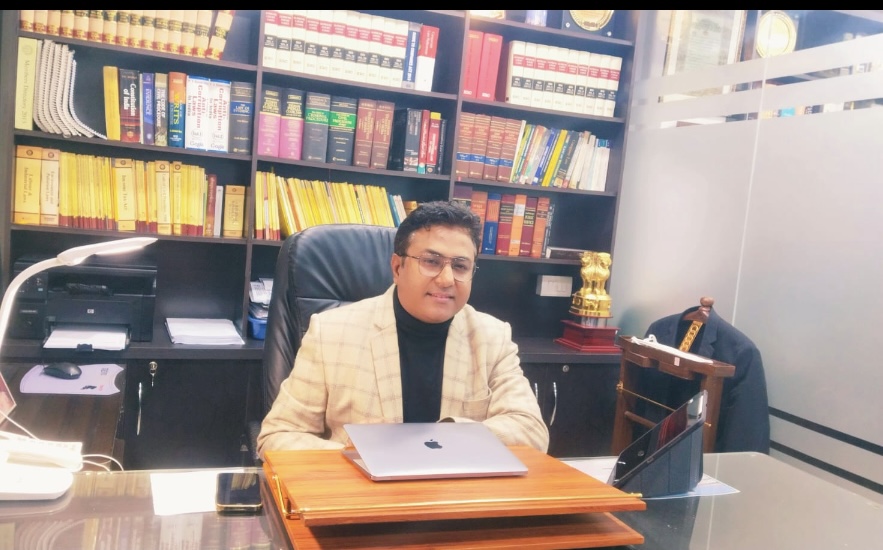
Tag: Constitutional law

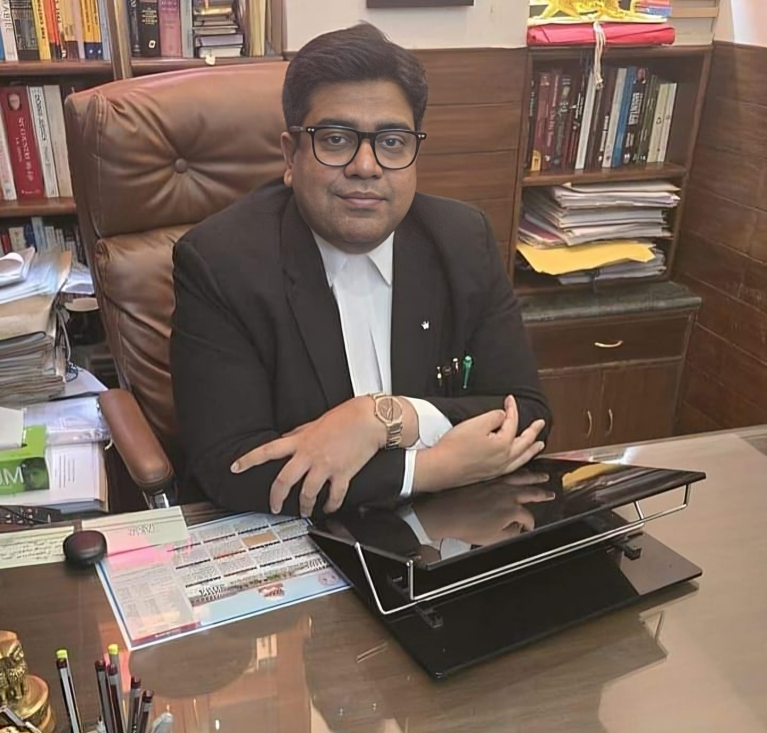
  • “The Legal profession demands hard work, dedication, perseverance, and a great deal of patience. While it is undoubtedly challenging, it is equally fascinating and rewarding.” – Yoothica Pallavi, Advocate on Record at Supreme Court of India.

    “The Legal profession demands hard work, dedication, perseverance, and a great deal of patience. While it is undoubtedly challenging, it is equally fascinating and rewarding.” – Yoothica Pallavi, Advocate on Record at Supreme Court of India.

    This interview has been published by Anshi Mudgal and The SuperLawyer Team
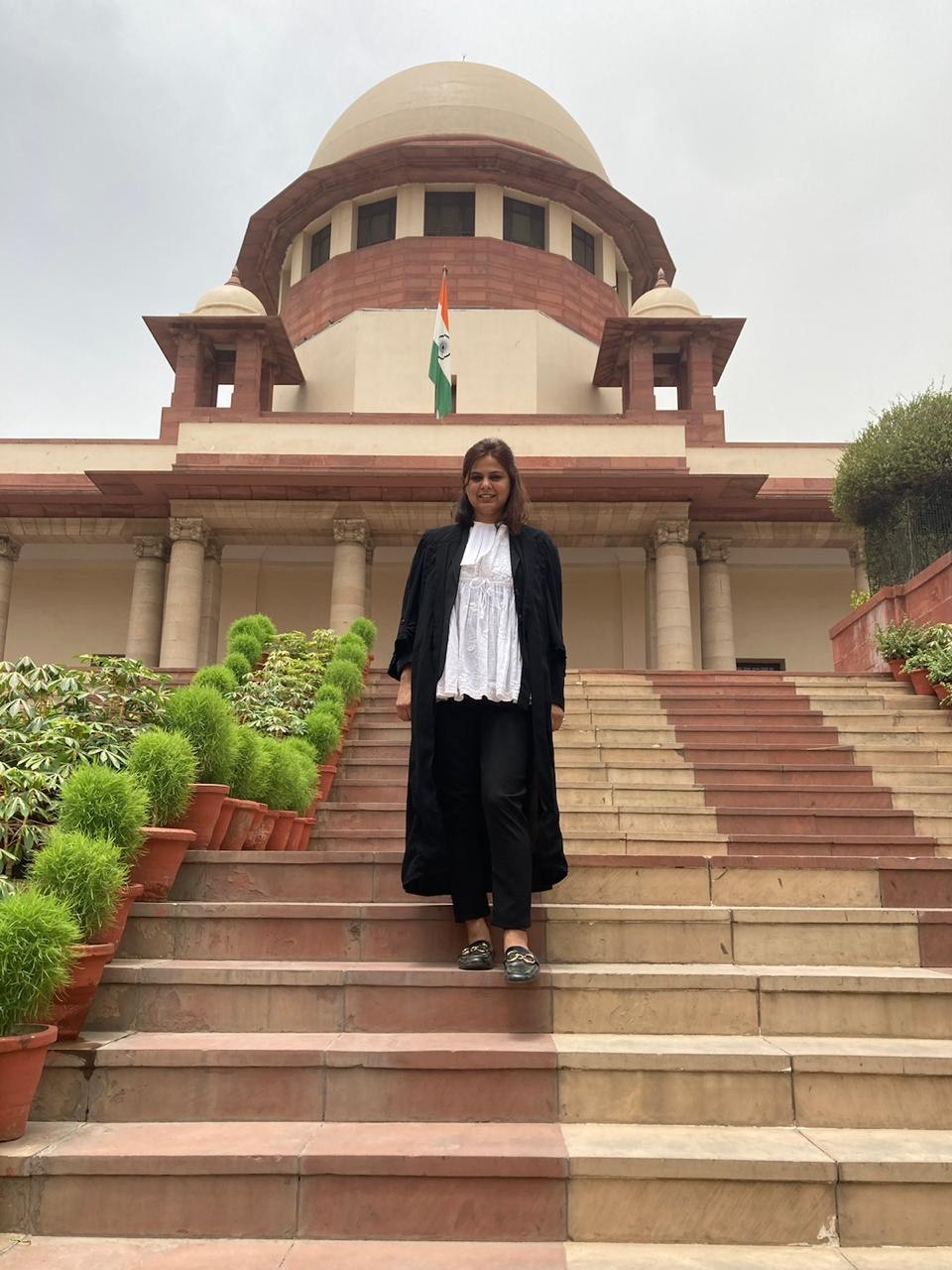
    Coming from a science background, was pursuing law a deliberate decision for  you? How did you prepare to gain admission to Chanakya National Law University,  Patna? 

    This question brings back a wave of nostalgia, and I find it hard to decide where  to begin—it’s quite a story. I belong to a generation where most students were drawn  towards either medicine or engineering. After completing my 12th in 2007, I, too, took  a gap year to prepare for engineering entrance exams. In 2008, I had secured admission  to an engineering college through my AIEEE rank. 

    However, my father, an IITian himself, always had a keen interest in law that ultimately  inspired me to consider law as a profession. 2008 was also, if I recall correctly, the  inaugural year of the CLAT examination. At his encouragement, I decided to take the  exam, and soon after, I found myself admitted to CNLU, Patna—without having spent  even a single day in an engineering classroom. 

    My father often says, “Law is nothing but science,” and it wasn’t long after stepping  into this noble profession that I realized how true this is. Law is fundamentally rooted  in logic and reason. Looking back, I am grateful for the redirection and for discovering  a field where I truly belong. 

    You have significant experience in education law and have represented clients in  cases such as the NEET UG Test 2024 case. What do you believe are the most pressing  legal challenges currently faced by students and educational institutions in India? 

    Talking in legal context, students are among the most vulnerable segments of  society, and it deeply concerns me when they are forced to seek relief through the courts.  I have had the privilege of representing and seeking relief for several students who, after  completing their MBBS degrees from foreign universities, were denied eligibility  certificates by the National Medical Commission (NMC). This certificate is essential  for appearing in the Foreign Medical Graduate Examination (FMGE), which is a  prerequisite for practicing medicine in India. Unfortunately, in some cases, the NMC  denies these certificates due to non-fulfilment of specific conditions. 

    The situation is particularly distressing for students who, after investing more than five  years to earn their MBBS degrees, find themselves unable to practice in India due to  technicalities. These students are left with no choice but to approach the courts. 

    Similarly, I have encountered cases where students are denied admission or faced issues  related to unfair examinations, such as those arising in NEET-UG 2024. For instance, I  had the opportunity to represent tribal students from Meghalaya in the NEET-UG 2024 dispute.

    On the other hand, educational institutions also face significant challenges, particularly  regarding recognition from regulatory bodies like the University Grants Commission  (UGC) or the All India Council for Technical Education (AICTE). One particularly  intriguing case I am currently handling involves a dispute over granting recognition for  a dual-mode university (for running conventional and open courses both) to a university  with “Open” in its name. 

    In addition to these issues, there are numerous disputes concerning fee regulation,  inadequate infrastructure, reservations, and other systemic challenges within the  education sector. These matters highlight the pressing need for robust policies and a  student-centered approach to ensure that education serves its intended purpose  effectively. 

    In your early years of practice, you worked with various advocates and law firms,  handling diverse areas such as Constitutional Law, Civil Law, Arbitration Law, and the  Law of Limitation. How did these experiences shape your approach to litigation, and  what key lessons did you take away from them? 

    When I joined law school, one thing I was certain about was my desire to practice  in courts. I never had any second thoughts about it. However, when I initially entered  the profession, adapting to court life was quite challenging. During those early years, I  was exclusively practicing in the Delhi High Court as I was working under the guidance  of Hon’ble Mrs. Justice Mini Pushkarna, who was then Standing Counsel for Municipal  Corporation of Delhi. I was fortunate enough to have regular appearances before the  High Court on a daily basis and that gave me confidence and encouragement to handle  the matters in Court even in adverse situations. I have many anecdotes also which I would never forget. 

    However, contrary to what it may seem to beginners, litigation is not solely about  appearing in court and presenting arguments. It encompasses much more. The process,  from drafting a case to getting it listed before the court, is a journey in itself. Litigation  also involves various registry-related tasks, which are crucial for any lawyer to learn  and understand. In my experience, I firmly believe that a lawyer first has to become a  clerk to grasp the basics of the profession and its importance one would realise after  beginning her/his own practice. It didn’t take long for me to realize the immense  physical and mental effort required in this field. 

    Another vital lesson I learned over time—though I underestimated its significance in  the beginning—is the importance of client handling. As lawyers, we are not only  officers of the court but also advocates for our clients’ interests. Effective client  management is a core skill for building a successful legal practice. A lawyer must  understand client’s needs, build trust, communicate effectively, and provide advice  within ethical boundaries. 

    Currently, at Indus Law Associates, you handle litigation and arbitration before the  Hon’ble Supreme Court of India, the Delhi High Court, the Meghalaya High Court and  various District Courts. Can you share one of the most challenging cases you’ve  encountered, and how did you approach your preparation for it? 

    While working in my current office, I have had the opportunity to handle a variety  of cases across different forums. Among the most notable were two cases involving  students who were denied eligibility certificates after completing their MBBS degrees  in Ukraine. Securing favourable orders in these matters was particularly challenging. 

    Primarily practicing in civil litigation, I faced a unique challenge while handling a  criminal case in the District Court. This bail matter involved allegations of forgery and required navigating proceedings from the Magistrate Court to the District and Sessions  Court. The case provided me with valuable insights into the fundamentals of criminal  law. Additionally, it offered the rare experience of visiting Tihar Jail for a client meeting,  which further broadened my professional exposure. 

    I am also handling election petition before the Hon’ble High Court of Meghalaya, which  has been a challenging and enriching experience. This case has allowed me to explore  a new area of law, delving into its intricacies and technicalities, thereby by broadening  my experience.  

    Could you explain your experience in arbitration, particularly your role in  representing clients such as the Meghalaya Urban Development Authority? How do you  ensure effective representation in arbitration as compared to traditional litigation? 

    Arbitration and litigation are fundamentally different methods of dispute resolution. Arbitration offers an efficient and flexible approach, making it particularly  suitable for commercial disputes. In contrast, litigation is generally preferred for cases  requiring public scrutiny due to its broader scope. 

    For a lawyer, excelling in arbitration demands a deep understanding of the field’s  complexities, especially the Arbitration and Conciliation Act. While the Act may appear  concise, it raises numerous intricate legal questions. Arbitration is often more complex  than litigation, requiring extensive time, effort, and meticulous attention to  documentation and record-keeping, which are critical to the process. 

    Evidence is pivotal in arbitration proceedings, making cross-examination one of the  most essential advocacy skills for arbitration lawyers. 

    Representing government clients in arbitration adds another layer of responsibility.  Cases involving government entities, such as MUDA, necessitate a careful balance  between safeguarding public interest and protecting public funds. These matters often 

    involve substantial sums of money and require adherence to public policy  considerations, given their sensitive nature. 

    Arbitration indeed, is challenging but also interesting.  

    What do you find most fulfilling about your practice as an Advocate on Record,  and what motivates you to continue pursuing this challenging and demanding  profession? 

    Becoming an Advocate on Record (AoR) in the Supreme Court was a significant  milestone in my legal career, something I had always aspired to achieve. The journey  to earning this title was not without its challenges, particularly as I became an AoR in  2020 during the height of the Covid-19 pandemic. It was a time of rapid digital  transformation in the judiciary, and adapting to the newly introduced procedures was  initially challenging. However, this digital shift proved to be a great relief and a stepping  stone toward a more efficient system. 

    A common misconception about AoRs is that they function merely as filing agents for  the Supreme Court. While it is true that an AoR must be well-versed in the Court’s  procedural rules, I soon realized that their role goes far beyond filing documents. Early  in my practice, there was an expectation that my involvement would be limited to  lending my name and signature. Fortunately, with the guidance of my seniors, I quickly  understood the deeper purpose and responsibility of an AoR. 

    AoRs are not just intermediaries; they are the “face of the case” before the Hon’ble  Supreme Court. This role demands accountability, and a deep understanding of the  matter being presented. The Supreme Court itself has recently underscored the critical  responsibilities of AoRs, issuing strict guidelines to ensure that cases are filed and  presented with the utmost diligence and professionalism. 

    Beyond the procedural responsibilities, the designation of “AoR” brings a sense of  professional recognition and respect. It is both a privilege and a significant  responsibility. The journey as an AoR is undoubtedly challenging, but it is also  immensely rewarding, offering the opportunity to make significant contributions in  delivery of justice at the highest level. 

    Considering the demanding nature of your legal career, how do you manage to  balance your professional duties with personal commitments? 

    Litigation is undoubtedly a demanding profession, requiring unwavering dedication and the ability to work under constant deadlines. As a lawyer, the work never  truly ends—court hours are followed by preparation for the next day’s cases, client  meetings, drafting, and various other responsibilities.

    For me, balancing this rigorous professional life with personal commitments, especially  as a mother, presents new challenges every day. Maintaining a work-life balance is  crucial, but I won’t deny that there are moments of panic and stress. 

    However, I firmly believe that in both personal and professional spheres, no one can do  it all alone. Teamwork plays a vital role in navigating challenges and achieving success.  I am incredibly fortunate to have a strong support system—both in my personal life and  in my professional circle. Their encouragement, collaboration, and assistance enable me to meet the demands of my profession while fulfilling my responsibilities at home.  Without their support, it would have been nearly impossible to strike this balance and  carry out my duties effectively. 

    What advice would you give to young lawyers looking to follow a similar career  path in litigation and arbitration? 

    This profession demands hard work, dedication, perseverance, and a great deal of  patience. While it is undoubtedly challenging, it is equally fascinating and rewarding.  Be willing to learn from failures and adapt to the demands of each case. Never  compromise on integrity and ethics.  

    Keeping oneself updated with legal developments and regularly reading and analysing  judgments is indispensable. It is one of the critical skills necessary for excelling in  litigation, enabling lawyers to stay informed, craft stronger arguments, and navigate the  evolving legal landscape effectively. 

    On a lighter note, this profession also gives the benefit of the summer and winter  vacations. These small breaks offer lawyers a well-deserved opportunity to relax,  unwind, recharge, and prepare for the challenges ahead. 

    Get in touch with Yoothica Pallavi-

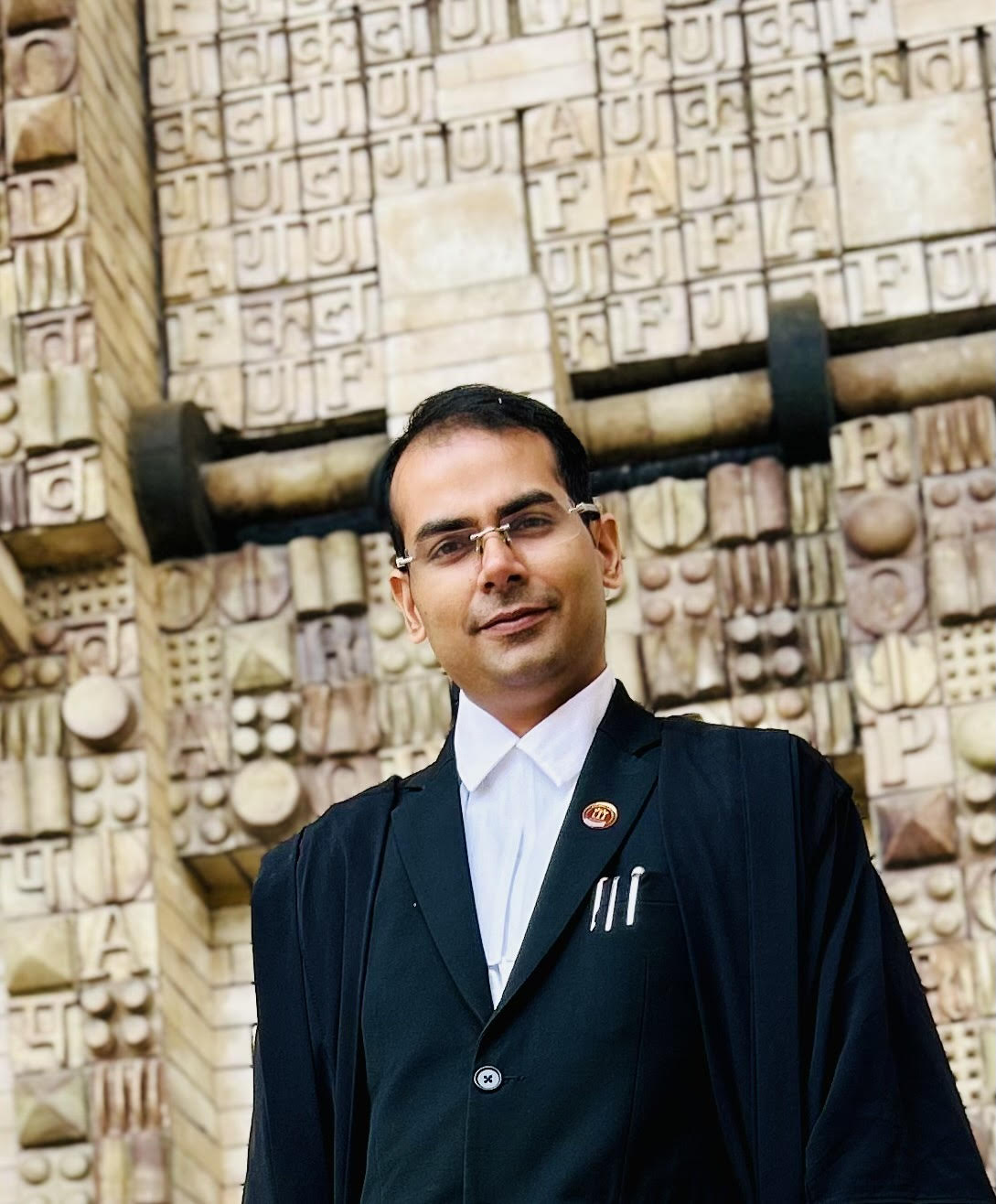
  • “Stay focused, work hard, and build discipline as a core habit. Success comes from commitment, perseverance, and consistently applying these principles in both practice and life.” – Tariq Ahmed, Co-Founder of Ahmadi Law Offices.

    “Stay focused, work hard, and build discipline as a core habit. Success comes from commitment, perseverance, and consistently applying these principles in both practice and life.” – Tariq Ahmed, Co-Founder of Ahmadi Law Offices.

    This interview has been published by Anshi Mudgal and The SuperLawyer Team

    Your legal career spans a wide range of practice areas. What inspired you to pursue law as a profession, and what led you to specialize in Corporate Law at NLU Jodhpur?

    My journey into law was deeply influenced by my early childhood experiences. Growing up in a household where my father, both a law graduate and government officer, instilled a profound respect for the legal system, I developed a natural gravitation toward the profession. His influence, combined with my inherent desire to pursue justice, solidified my decision to study law during my school years.

    During my time at Aligarh Muslim University, I was fortunate to learn from distinguished law professors who shaped my understanding of legal principles. 

    A particularly transformative experience was my exposure to Nehru studies, which opened my eyes to the crucial relationship between economics and law. This course helped me understand how even minor policy oversights could significantly impact market dynamics and national growth. A pivotal moment in my academic journey was my introduction to Eric Posner’s groundbreaking work on law and economics. His analytical framework and insights into how legal rules affect economic outcomes resonated deeply with me and ultimately shaped the trajectory of my legal career. Looking back, I see how this exposure laid the intellectual foundation for my current approach to my practice.

    These experiences naturally led me to pursue a specialization in Corporate Law at National Law University, Jodhpur. The robust curriculum in the course, with its strong emphasis on foreign trade and corporate governance, perfectly aligned with my growing interest in the legal framework that emerged in the wake of India’s transformative 1991 liberalization policies. This has proven invaluable in my practice, enabling me to better serve clients navigating the complexities of modern corporate law.

    Having worked alongside senior advocates like Mr. Irshad Ahmed and Mr. A. Samad, what were some key lessons or insights you gained during your early practice that have shaped your approach to law?

    My early legal career began under the mentorship of a senior law officer of Uttar Pradesh, which provided an excellent foundation in legal practice. While those initial years were enriching, I soon recognized that staying within my comfort zone would not serve my professional growth. This realization prompted me to pursue a more challenging path in economic offenses and white-collar crimes.

    A defining moment in my career was the opportunity to work with Mr. Abdul Samad, whose visual impairment never hindered his exceptional legal acumen. His mastery over money laundering laws, indirect taxation, customs, DRI, and financial fraud matters was remarkable, which I had the privilege to observe and imbibe first-hand. What truly set him apart was his meticulous attention to detail and unwavering professional discipline. Under his guidance, I had the privilege of working on diverse cases across India, from Guwahati to Bengaluru, including complex corporate matters and cases under COFEPOSA. 

    After spending nearly six years working as an associate with senior lawyers, what motivated you to start your own practice? What were some of the initial hurdles you encountered in that transition?

    After two enriching years with Mr. Samad, I began to recognize that independent practice would allow me to fully embrace the challenges and responsibilities of the legal profession. The timing proved fortuitous – as the market began recovering from the second wave of COVID-19, my elder brother, Mr. Shariq Ahmed, and I established Ahmadi Law Offices, which is a registered Advocate on Record Firm based in Delhi.

    While we faced the typical challenges that first-generation lawyers encounter, our journey was thankfully smooth, thanks to our strong foundation and support system. My brother’s unwavering faith in divine justice and constant encouragement were instrumental in our success. I must also acknowledge the invaluable guidance of Ms. Vibha Datt Makhija, Senior Advocate, whose mentorship has been crucial in our professional development.

    As stated earlier, our background had equipped us with the mental fortitude necessary to overcome professional obstacles, and this resilience has been key to our firm’s growth. Looking back, what might have seemed like hurdles were actually stepping stones that helped shape our practice into what it is today.

    With over a decade of experience, you’ve regularly dealt with complex Money Laundering and FEMA matters. Could you share details of one particularly challenging case, and how you approached its preparation?

    White collar crimes and economic offences particularly those involving Money Laundering and FEMA, represent some of the most challenging areas of legal practice. The sensitive nature of these cases, combined with constantly evolving jurisprudence, demands exceptional attention to detail and precision in deploying the appropriate legal strategy.

    In my experience handling these matters, I have learned that no two cases are identical, as each presents its unique set of complexities and challenges. The stakes are invariably high, and the margin for error is effectively non-existent.

    For me, each case is a child I nurtured, requiring careful preparation, from researching relevant precedents to crafting precise legal arguments. While every case has been uniquely challenging, success consistently depends on meticulous planning and effective presentation. The key lies not only in understanding the law but also in anticipating its application to each distinctive situation.

    Handling cases that intersect environmental, industrial, and corporate law can be challenging. How do you ensure a smooth workflow while effectively managing your practice?

    My answer might seem clichéd but success in legal practice follows a compound effect which means that one well-handled case leads to many opportunities. The practice of law, especially when dealing with intersecting areas, requires more than just technical knowledge. It demands unwavering confidence and self-belief to effectively manage both the practice’s growth and workflow complexities. I have found that maintaining strong organizational capacity while staying adaptable to changing circumstances is key to handling these cases effectively.

    Given the high demands of your role, particularly Independent Practitioner and Co-founder Ahmadi Law Offices, how do you manage personal obligations? What strategies do you employ to recharge and stay motivated in your legal career?

    Maintaining work-life balance is crucial in our demanding profession. I make it a point to spend quality vacation time with my family, and always outside Delhi, to truly disconnect from work. While weekends tend to sometimes blur into workdays due to professional commitments, I ensure we maximize our vacation time. 

    To stay grounded, I find solace in literature and arts – reading biographies, enjoying poetry in Hindi, Urdu, and English, and listening to Ghazals.  I am particularly drawn to Satyajit Ray’s work, especially “The Apu Trilogy.” The way he portrayed human relationships and societal transitions in films like “Pather Panchali” resonates deeply with me. They are a constant reminder of the human elements that underlie our professional work.

    Given your broad experience across different legal domains, what advice would you give to young legal professionals who aspire to have a corporate practice as you?

    My advice to law students and aspiring lawyers is very straightforward: maintain unwavering focus and work consistently toward your goals. Remember that no challenge should shake your confidence. Success in this field is built on the fundamental pillars of commitment, hard work, patience, and perseverance. Most importantly, make discipline your core habit – it is not just about managing your practice, but about making it an integral part of your life. This discipline will naturally reflect in your work quality and professional relationships.

    Get in touch with Tariq Ahmed-

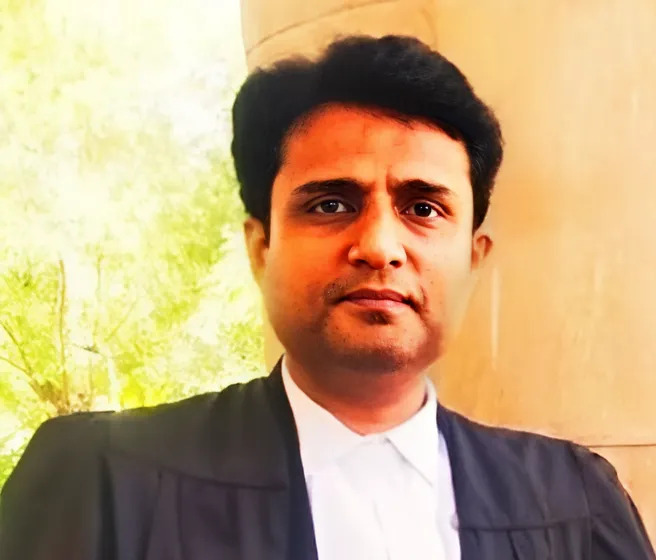
  • “Law is demanding and requires continuous learning. Be open to mentorship, value hard work, and understand that building a reputable practice takes persistent dedication over time.” – Abhas Mishra, Founder at Chambers of Abhas Mishra.

    “Law is demanding and requires continuous learning. Be open to mentorship, value hard work, and understand that building a reputable practice takes persistent dedication over time.” – Abhas Mishra, Founder at Chambers of Abhas Mishra.

    This interview has been published by Anshi Mudgal and The SuperLawyer Team

    With over 14 years of experience, do you consider law to be a planned choice for you? What was your motivation to pursue this field?

    It was certainly not the case in the beginning. Back in the early 2000s as students of a government school, we didn’t know any better than doing engineering. However, once I started giving the entrance examinations, I realised that I’ll not make it into the elite government institutions, and I felt it would be a waste of time, money, and effort to graduate from a mediocre university. Around this time, a friend mentioned he was taking law entrance exams, which was news to me—I hadn’t known that law colleges had entrance exams! This was pre-CLAT, so each university had its own exam, and deadlines for many had already passed. Among the remaining options, I was waitlisted at a National Law University, which led me to consider alternatives. By this time I became really passionate about Law, Polity and Jurisprudence. I got an admission in DES Law College, Pune and loved it so much that I did not even try elsewhere. Rest, as they say, is history.

    With more than a decade of experience across different sectors, what inspired you to focus on mediation as an additional vertical in your office? Could you share a specific example from your mediation practice where you successfully navigated a particularly challenging dispute?

    Mediation is a relatively new vertical in my chambers. I was selected for mediation training by Samadhan – the Delhi High Court Mediation and Conciliation Centre in 2019 but only qualified in 2022. No, I did not flunk! The pandemic years delayed the process. 

    My interest in mediation grew as I witnessed how timely intervention by expert mediators resolved issues without prolonged litigation. If you follow the news, mediators are being appointed in various disputes including between governments.

    There are many complex mediations and each brings its own unique challenges. Family disputes are often emotionally charged, while corporate disputes tend to involve parties digging their heels in and refusing to change their positions. However, most rewarding mediation for me was one where I got the matter settled between a Music Company and a Government Department. Government officials are often reluctant to settle, fearing accusations of corruption. Navigating this case was challenging due to the power imbalance between the parties, but through structured dialogue over multiple sessions, we managed to salvage the relationship and reach a mutually beneficial agreement.

    During your early years of practice alongside senior advocates, what key lessons did you learn that significantly shaped your legal career?

    My first office taught me the importance of efficiency and understanding all aspects of practice. In a boutique law firm, it is easy to be inundated with work and get burned out. from drafting to filing, handling registry objections, getting matters listed, and even standing in for seniors. This experience made me self-sufficient quite early on in my career. 

    My second office is where I actually felt mentored. Just like me, my senior was also a first generation advocate. When I asked him about which specialisation or field of law should I concentrate on, he told me to “Just be an Advocate” and the clients will determine what they want to engage you for. Working with a senior advocate taught me the art of strategy and patience. Observing his approach to complex cases, I learned that thorough preparation and clear communication are crucial. These early experiences instilled a respect for detail, discipline, and the importance of upholding integrity in advocacy. 

    You also undertake legal-aid activities. How has your experience with the Delhi High Court Legal Services Committee influenced your perspective on access to justice for marginalised communities?

    It has been a rich and rewarding experience. My work with the Delhi High Court Legal Services Committee reinforced my desire for inclusive access to justice. Through this role, I’ve seen firsthand the hurdles that marginalized individuals face. The idea is to ensure that legal aid to the poor is not poor legal aid. Recognizing that equitable access to legal assistance is essential for a fair justice system has deepened my commitment to pro bono work. 

    Having argued various landmark cases and the most recent of them being Balaji Exim v. Commissioner, CGST reported in 2023 (73) G.S.T.L. 350 (Del.). Can you share a few insights with us regarding the key legal principles involved in your approach to the case?

    I don’t think one can plan to get any landmark case. In each case, one should keep an open mind and look at the issue thoroughly from all angles. In Balaji Exim, a critical point was upholding procedural fairness in GST adjudication. The department was implementing a constricted reading of the law in case of Input Tax Credit by denying the recipient benefit because of an ongoing investigation against the supplier. We argued that suspicion cannot be a ground for denial of credit. The court agreed and observed that the accusation of availing fake credit by the supplier could not be a ground for rejecting the petitioner’s refund application of ITC unless it is proved that the petitioner has not received the delivery of goods or had not paid for them. Our approach aimed to balance statutory interpretation with principles that prevent arbitrary power.

    After working with various Law Offices for 4 years you established your own practice. What motivated this transition and what were the initial challenges that you faced?

    There’s never a perfect time to go independent; it’s a leap of faith. As long as one is learning and growing, it’s natural to stay associated with an office. However, at some point of time, we must ask ourselves the hard question. Do you wish to climb the corporate ladder of a firm or fly solo? I was very clear that I enjoy being the counsel the most and that is the most important thing for me. It helped that my senior allowed me to take up my own matters so the transition was not so sudden.

    I started my chambers with a total of 3 good clients. So the initial challenge was to get more clients and make enough money to sustain the people who have decided to be part of your whimsical dream. I spent all my savings on setting up the office and it would have been very easy to call it quits. Fortunately, the staff was cooperative and clients also spread word of mouth. After some years, the next set of challenges emerge which is hiring the right people and putting processes in place so your ability to do everything on your own does not become an inefficient obsession.

    How do you stay updated on the evolving dynamics of Indirect Tax Laws, such as GST, Customs, Central Excise, Service Tax, FEMA, Foreign Trade Policy, Anti-Dumping Duty, and related regulations, particularly from an international perspective?

    Indirect tax is just like any other field of law that requires you to go through recent decisions, amendments and government notifications. The only issue is that these are far more frequent when compared with the traditional fields. Therefore, staying updated involves a multi-pronged approach—regularly reviewing amendments, studying landmark judgments, attending seminars, and engaging with professional networks globally. The practicing advocates of CESTAT also have a very helpful WhatsApp group for new developments in the field. Additionally, I try to follow developments in international politics, as these often influence policies domestically.

    As the founder of your law chambers, how do you ensure effective communication workflow while balancing it with your personal life?

    I prioritize streamlined communication within my chambers by implementing clear protocols and encouraging teamwork. I avoid micro-management as it is very frustrating and time consuming. Instead, I delegate and only follow up on specified deadlines. Since we are a small team, everyone is comfortable directly approaching me in case of an issue they are not able to resolve themselves. On a personal level, I allocate time for family and personal well-being, which helps me stay balanced and focused. Unfortunately, through all this, sleep sometimes is a casualty but I am actively trying to remedy that.

    You frequently visit various law colleges and universities for guest lectures and chairing various competitions. What advice do you give to the younger generation who wish to achieve excellence in the field of law?

    To quote a Louis Armstrong song, “They’ll learn much more than I have ever known”. It is hard to give advice to the younger generation who already have vast knowledge and exposure. But since you have asked for it, my advice is to cultivate perseverance, curiosity, and ethical integrity. Law is demanding and requires continuous learning. Be open to mentorship, value hard work, and, most importantly, understand that building a reputable practice takes persistent dedication over time.

    Get in touch with Abhas Mishra-

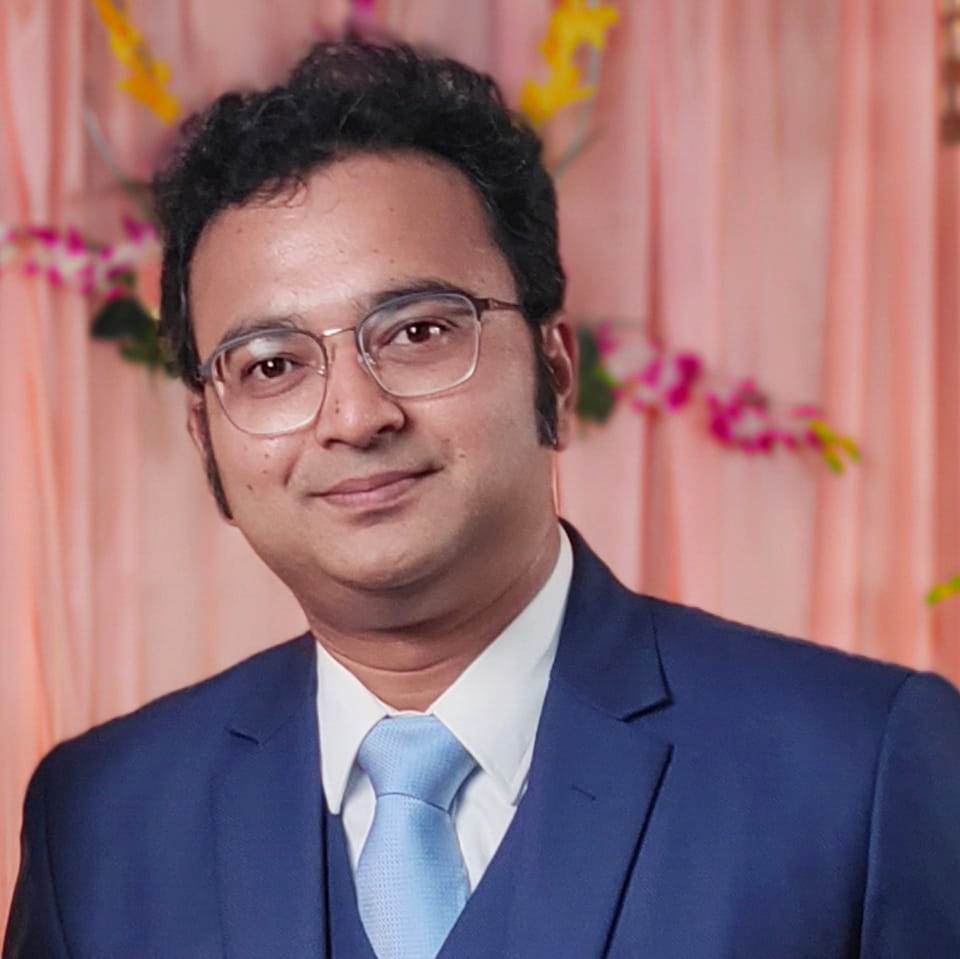
  • “There will be challenges in the core litigation initially especially for the first generation lawyers but ultimately by investing the initial most  productive time you are building your permanent asset as an independent  practitioner.” – Shantanu Jugtawat, Advocate at Supreme Court of India and Senior Public Prosecutor at National Investigation Agency, GOI.

    “There will be challenges in the core litigation initially especially for the first generation lawyers but ultimately by investing the initial most  productive time you are building your permanent asset as an independent  practitioner.” – Shantanu Jugtawat, Advocate at Supreme Court of India and Senior Public Prosecutor at National Investigation Agency, GOI.

    This interview has been published by Anshi Mudgal and The SuperLawyer Team

    What initially inspired you to choose law as your career path? Was there  a particular moment or individual that influenced your decision, and how did  your journey begin at National Law Institute University, Bhopal?  

    I was a student of Science-Mathematics, so initially I wanted to  become an engineer. In my 11th standard I came across an edition of India Today which talked about Country’s top advocates. I was deeply impressed by their  prowess and authority, most importantly their contribution to the political and  legal development of the Nation. It created a subtle effect in my subconscious  mind and gradually I started inclining towards the legal profession. 

    After which I cleared the entrance test of National Law Institute University,  Bhopal and joined NLIU. At NLIU I have been exposed to different approaches to  legal interpretation for example case based approach to see how the law  has evolved over a period of time. It helped me immensely in my future litigation  especially in constitutional and Service matter cases. 

    The initial exposure which I received at NLIU was commendable, for example the  lectures delivered by the Supreme Court and High Court Judges and designated  Senior lawyers. I am quite grateful to the support which I could gather from my  Seniors at law school, for example my Senior Mr. Faizee got me an internship at  the chambers of Additional Solicitor General of India, Late Mr. Amrendra Sharan  in 2007 and eventually, I joined his chamber only. Moreover through the Clerkship programmes by NLIU at Jabalpur High Court I could observe the  minute intricacies of core litigation arguments. 

    When I joined NLIU, I was not clear about my priorities. But then the lectures of  the leading Supreme Court advocates and the Judges created fascination towards the core litigation. But I made sure to have enough exposure to the  corporate side , which was probably the dominant idea in NLIU at that time so I  did internships in almost all the top law firms in corporate areas. Gradually I became convinced to the core that my inherent interest lies in the Core litigation  as in Constitutional and Service matters. Being a first generation advocate, had  no guidance in the legal field, had to create my own path.

    You were associated with the cases like Bar Council of India Vs A.K. Balaji  and Kantaru Rajevaru Vs Indian Young Lawyers’ Association and other landmark  judgments by the Supreme Court. How do such cases shape new legal  dimensions, and what key insights did you gain from working on them? 

    Bar Council of India v. AK Balaji underscores the importance of  regulating the entry and practice of foreign lawyers in India. The judgment  reaffirms the restrictions imposed by the Advocates Act, 1961, on foreign  lawyers practicing law in the country. By upholding these regulations, the court  aims to preserve the ethical standards and integrity of the legal profession in  India while allowing for limited engagement of foreign lawyers in specific legal  activities such as providing legal advice on foreign law and participating in  international arbitration proceedings. This decision strikes a balance between  promoting legal exchange and collaboration while safeguarding the interests of  Indian advocates and maintaining the sanctity of the legal system. 

    Whereas in Sabrimala Case (Indian young lawyers Association versus Union of  India), the Supreme Court upheld the concept of constitutional morality, where  the judiciary interprets the Constitution in a manner that upholds its core values  and principles and went on to clarify that in case of Conflict between  Constitutional morality and Social morality, the objective standards of  Constitutional morality will prevail.  

    While working on these case I have realized that these Landmark cases often  have a profound impact on society, influencing public policy and societal norms,  for example Sabrimala decision allowed the female’s entry into the temple with  in age group of 10-50, hence redefined the standards of social morality in  accordance with Constitutional morality. 

    These cases provided me with deep insights into judicial reasoning and the  interpretative methods used by judges. In fact these cases provided me with  insights which not only enhanced my legal acumen but also contributed to a  broader understanding of mine as to how the law interacts with society and  evolves over time.

    Tell us about your legal journey and mentorship at the Supreme Court of  India. How did that experience shape your foundational years, and how have  those early lessons influenced your practice today? Could you please walk us  through your journey?  

    After my graduation from NLIU I joined a law firm for a brief period but  soon lost interest in law firm culture. I also appeared for Delhi Judicial Services  2010, where I secured 34th rank.  

    Then I joined the chambers of Late Mr. Amrendra Sharan Ji , Additional Solicitor  General at Supreme Court of India, at that time. It helped me a lot in terms of  exposure, especially on the Govt side. As A juniors at his chamber I assisted him  in drafting legal opinions for different government departments, assisted in  arguments before the Supreme Court and drafted replies on behalf of the  government. I have briefed him on many occasions. Later on when I became the  Standing Counsel for the State Govt of Rajasthan, this experience helped me a  lot. He passed away on 12th August 2019. He was a person of eminence, mentor  and guide to many including myself. He will be remembered for his lucid  arguments and his pleasant demeanor at the Court and outside the Court. He  may not be with me physically today but his teachings will always be there. His  gentle demeanor, his smile, and caring disposition will always be missed. 

    My second innings of advocacy started with Senior advocate Mr. Mahabir Singh  Ji at the Supreme Court. A plainspoken man of substance and humility. I was  always amazed at his diversified legal acumen. I have briefed him in my  independent matters also. The biggest learning from briefing him is, to hear  briefs patiently and carefully. Even though he himself is an authority on legal  subject matters, still he would always take briefings very patiently and  accommodate the viewpoints of juniors. The teachings learned at his office  helped immensely in my future practice at the Supreme Court of India.  

    After that I started my own independent practice with Mr. Mukesh Kumar singh, who is now the executive member of SCBA. Together we worked upon many  landmark reportable judgements pronounced by the Supreme Court like Richal  versus Rajasthan Public Service Commission, Employees provident fund  organisation versus Sunil Kumar, Kantaru Rajeevaru versus Indian Young  Lawyers Association ( Sabrimala case), Satyama Dubey Versus Union of India (  Hathras Rape case ), Saurav Yadav versus State of Uttar Pradesh, related to  Vertical and Horizontal reservations in public services etc. to name a few. An  overwhelming sense of pride surges within me as I witness Mr. Mukesh Kumar Singh growing in practice and stature in the legal profession as recently for the third time  he has been elected as Executive Member of Supreme Court Bar Association. I owe him greatly in terms of establishing my private practice at the Supreme Court  of India. Till date we both work as a team.  

    With your extensive experience in handling tax, constitutional, and service matters, could you share your key roles as Standing Counsel for state and national bodies and highlight some important legal opinions you’ve provided? Also, could you explain some settled principles of service law jurisprudence?

    By the grace of Goddess Sh. Karni Ji, I got enough opportunity to defend  the state as well as various Corporations and other national bodies. 

    I have been appointed as Standing Counsel for the Department of Finance  (Commercial Taxes). In that capacity I defended cases for the Department of  Finance, Govt of Rajasthan. In such Writ petitions, Sales Tax Revisions dealing  with GST, VAT, I got them dismissed at the very outset, on preliminary grounds  like not exhausting the alternative reliefs available. 

    Also appointed as Standing Counsel at National Consumer Dispute Redressal  Commission at Delhi for Govt of Rajasthan, National Company Law Tribunal and  NCLAT Delhi for Govt of Rajasthan, Standing Counsel for Department of Stamp  and Registration for Govt Of Rajasthan, Standing Counsel for Rajasthan State  Ganganagar Sugar Mill, Rajasthan State Beverage Corporation Limited.  

    While defending the Corporations I have learned the intricacies of Service  Matter Jurisprudence. In such matters successfully defended the corporations  from being compelled to regularize the services by persons working for a  placement agency. I ensured that we get a categorical order from the Court in  such Service matters directing the petitioners to provide an affidavit proving the  existence of employer – employee relationship between them and the  corporation. This again reinforces the settled legal position that regularization cannot be sought without a clear master- servant relationship. 

    I have drafted the legal opinions as a Standing Counsel for the finance department,  Rajasthan Govt in the matters of Commercial Tax Officer versus M/S Larsen  Toubro Ltd., Apollo Pipes Pvt. Limited Vs Tonk Water Supply Limited, Kishna Grit Udhyog Vs State of Rajasthan and Ors. Drafting legal opinions involves high  responsibilities as depending upon your opinion, the state will adopt a future Course of action. Hence the legal opinion should always provide clear and concise  conclusions and it must answer the legal question posed at the beginning while discussing all the relevant statutes, case laws and legal principles which apply to  the issue. 

    Recently you have been appointed as Senior Public Prosecutor for the National Investigation Agency by the Ministry of Home Affairs, Union Government,  this role will be entirely different from core litigation in Constitutional or Service  matters, so in that capacity what will be your role and challenges? 

    My appointment as a special public prosecutor for the National  Investigation Agency (NIA) involves handling cases related to national security  and terrorism. The NIA is India’s primary counter-terrorism law enforcement  agency, and it investigates and prosecutes offenses affecting the sovereignty,  security, and integrity of India. 

    In this capacity, I would be responsible for presenting the NIA’s cases in court,  ensuring that the prosecution is robust and that justice is served. This includes  preparing legal documents, presenting evidence, and arguing cases in court. This  work often involves high-profile and sensitive cases that require a deep  understanding of both national and international law. 

    In the initial years of my practice I always ensured that I gave myself enough  exposure at the Session Courts, especially Criminal side. I have argued criminal  cases on behalf of the accused especially in POCSO and Session trials. I have also  succeeded in keeping a high acquittal rate for my clients in that capacity. But this  time as Public Prosecutor at NIA my role will be from the State side and I would play my level best to prosecute the accused, ensuring that justice is served and the accused gets conviction beyond any reasonable doubt. 

    How do you manage the workload and pressure from these diverse roles and what strategies do you use to maintain a balance between your professional  and personal life?  

    Definitely many a time the litigation becomes hectic and stressful due  to high Stakes involved and demanding nature of the profession. With the  increase in workload I have deployed a team of junior lawyers and started  allocating them specific work. Since I have to maintain my private practice at the Supreme Court so I made myself available at Supreme Court in the matters  which required my direct involvement. At the same time I started delegating work  at the High Court to my juniors, they helped me a lot. I am thankful to  Sudeep Lakhotia, who helped me immensely in Commercial Tax Litigation  matters at Jaipur High Court. I trusted my team and delegated tasks that don’t  require my direct involvement.  

    In fact the post COVID phase brought tremendous changes to the core litigation. Now a lawyer sitting at any remote place can attend the litigation at the  Supreme Court quite easily. All thanks to COVID and advancements in  technology. It has enabled me to manage multiple cases very easily simultaneously, sitting at one place and giving time equally to diverse legal forums.  

    As an experienced lawyer, do you actively mentor young advocates or law students? What is your approach to mentoring, and what values do you aim  to instill in the next generation of legal professionals?  

    In fact I am an advocate by profession and teacher by passion. I am  always very keen on taking lectures over Constitutional Law of India and its  evolution over a period of time. Many of my students of Constitutional law and  Indian Polity have successfully cleared Civil Services and Judicial Services Examinations. I take immense pride in their Success. I have been associated with  Government initiatives for providing free education to the students of Civil  Services. 

    In fact, for the last 15 years of my practice and teaching students, I am learning  from my students. Students are the most effective teachers of their teachers. I  owe a lot to them for keeping me younger and updated. Every batch  of students brings refreshing vibes and intellectually stimulating energies.

    I always ensured that my students first develop an interest into the discipline,  knowledge and its application will be the by-products automatically. It’s the  interest into the discipline which will ensure the application part and will  subsequently help them, cracking the questions. Students have always  appreciated my teaching methodologies, especially when they have cracked the  judicial or civil services and went into the field. They could successfully connect  the theory with practice. Without knowing the practical application, theories are  meaningless. While teaching the students I always emphasized the importance of integrity, honesty and ethical behavior in all professional activities. 

    For fresh law graduates aspiring to pursue a career in litigation, what  would your advice be—should they start at the district courts or aim for the High  Court or Supreme Court early on in their careers. Especially what is your advice  for law students from law schools where the dominant idea is always in favor  of joining corporate law firms? 

    It is always advisable to start practice at the District and lower courts  where one will learn basic advocacy, nuances of conducting a trial and client  handling which eventually help him in the long run in the career as an advocate. In fact for a brief period I was also associated initially with the Session Court  where I argued in the POCSO cases and Session trials. After that one can move  to the High Court or Supreme Court. 

    My suggestion to current NLIU students will be to break their comfort Zone which is being provided by corporate law firms in the initial years after their graduation. There will be challenges in the core litigation initially especially for the first generation lawyers but ultimately by investing the initial most  productive time you are building your permanent asset as an independent  practitioner. In most of the law firms after a certain point the growth becomes  stagnated.  

    In this context it’s also important to identify your inherent interest in the field, I  mean it’s highly a subjective question. I personally felt that at NLIU there was  always a dominant trend in favor of corporate law firms, even I was perplexed  many a time but then ultimately it’s your inherent inclination which is bound to  supersede every other consideration. Don’t give too much importance to the  monetary considerations initially because these years are the most productive years  in which you can construct a business for yourself.

    Having been part of many landmark judgments, can you throw some light over your pro bono work in terms of teaching law students or at litigation where such work not only impacted the society but also changed your personal  perspective of profession?  

    I have been part of pro bono work at both the levels as in litigation as  well as teaching law students especially the Constitutional Law of India. 

    At the level of litigation my first Pro Bono case pertained to an employee of  Hindustan Salt limited and Samber Salt Limited, ( A Government enterprise ) for  revising the payment scale and releasing the arrears and other emoluments.  

    At the level of teaching I have taken many lectures on Constitutional law of India on a pro bono basis, many of such students have also been successful in Judicial Services as well as Civil services. Nothing can be more satisfactory than  enabling the students to understand the intricacies of the complex legal  principles. Engaging in pro bono teaching helps law students develop practical skills that are essential for their future careers. They gain exposure to real-world  legal issues and learn how to apply theoretical knowledge in practical settings. 

    Pro bono teaching allows students to explore different areas of law and develop  competencies they might not encounter in the classroom. This experience can  be invaluable in shaping their career paths.

    Get in touch with SHANTANU JUGTAWAT-

  • “A legal career, just like Rome is never built in one day, it’s like trust and based on it, which is built over a longish period of time and even greater service through GRIT, sincerity and hard work.” – Soumyadeep Biswas, Attorney at Law, at High Court of Calcutta

    “A legal career, just like Rome is never built in one day, it’s like trust and based on it, which is built over a longish period of time and even greater service through GRIT, sincerity and hard work.” – Soumyadeep Biswas, Attorney at Law, at High Court of Calcutta

    This interview has been published by Anshi Mudgal and The SuperLawyer Team

    Can you take us through your early journey as a lawyer? What inspired you to choose law as a career, and how did you build your path to where you are today?  

    “I am standing in a courtroom before one of the senior most judges of the Hon’ble High Court, and I started, My Lord, the Petitioner wants immediate intervention of My Lord in the nature of a mandamus (I wanted to sound important, I guess and college made me superfluously over-confident); The immediate reply, though a simple one came in a resounding baritone- ‘Yes, Mr. Counsel, Mandamus! Why? Tell me, what do you want! ’, while I took the Hon’ble Court through the merits of the Petitioner’s case, the Hon’ble Judge listened to me intimately with an amusing chuckle on his face to denote that he was already abreast with the relief claimed and the merits of the matter, however he, with immense patience granted a hearing to an absolutely green junior and awarded me with a win”- An overwhelming pleasure as a lawyer but I was rewarded with a fee, so meagre that would not even cover the expenses; it’s quite evidently a mixed feeling. Albeit, one experience should never deter a young practitioner from going on especially since each and every experience is unique and distinct in its flavour and nature, not always salty and more often than not it’s actually rewarding. A legal career, just like Rome is never built in one day, it’s like trust and based on it, which is built over a longish period of time and even greater service through GRIT, sincerity and hard work.

    With a career that bridges multiple aspects of law, how do you see the legal landscape in India evolving, particularly with respect to consumer protection, banking disputes, and taxation?  

    It’s rightly put by you and it really seems to be the future of the legal landscape where monetary disputes would seem to rule the profession in the coming days.

    As someone who upholds the rule of law, how do you balance professionalism with empathy when dealing with cases that involve sensitive or personal matters, such as criminal defense or family disputes?  

    Your question warrants two separate answers, I believe. With regard to empathy, I have my own standards and method of choosing the clients I represent and often I choose to represent client’s pro bono and with regard to criminal defense I believe it ought to be the ethical code which should guide us in efficiently representing the clients. In family matters, well it’s really the worst of it all since it’s where everything including each and every intimate details of a household comes to be strained through the test of evidence and testimony and is often exhausting. Nevertheless, it’s your legal aptitude which saves the day and rescues you from the difficult trenches of matrimonial mudslinging. It’s not easy, but it’s the job and it demands your objectivity and so it lets you go on with the interests of the client at heart.

    With a strong foundation in arbitration and dispute resolution, what are your views on the importance of Alternative dispute resolution methods in the Indian legal system? How can they help reduce the burden on courts and offer quicker justice? 

    Alternative Dispute Resolution is without any ambiguity the future and we must resort to it more often, especially since the need of the hour is avoidance of protracted litigation in any matter.

    What advice would you give to young lawyers who aspire to specialize in diverse areas of law, from arbitration to constitutional law? How should they navigate the complexities of building such a broad skill set?  

    Specialization in terms of academic qualification cannot be equated with professional specialization. A young lawyer must aim to and actually practise each and every aspect of law and if so desired and necessitated navigate towards one or more specializations later on not before.

    With your experience in both litigation and arbitration, which of the two do you find more rewarding and why? Can you share an instance where you felt arbitration was a more effective approach than traditional litigation?

    It would be unfair to compare traditional litigation to arbitration and to be truthful both are equally rewarding. However, since arbitration tends to do away with strict rules of procedure it certainly aims at an expeditious resolution.

    You hold a diploma in Medical Jurisprudence & Forensic Science, which is quite unique for a civil and criminal law practitioner. How has this specialized knowledge influenced the way you approach cases, particularly those involving forensic evidence?  

    I must confess, I am more based in the High Court which more often than not lets me not use my knowledge gained in studying Forensics however at conducting Trial at Trial Courts I am at an immense advantage where I am easily and quite effectively able put such knowledge to use in deciphering the case details put forth by the prosecution and find the obvious and not so obvious loopholes in it favouring in criminal defense to my benefit.

    Could you share some of the key differences you’ve experienced in practicing law across different courts, and what do you see as the major distinctions when representing a government client versus a private client?  

    Yes, Trial Courts are often so accommodating to you to put forth facts, law and so on in a detailed manner however, the Hon’ble High Courts are often so about your capacity to put forth your submissions in a concise manner supported by sound legal principles which are ‘jointly and severally’ so rewarding.

    After handling intense and high-profile cases across various legal domains, what are some of your favourite ways to unwind and recharge outside of work? 

    My unwinding is far away from the legal domain. We’ve heard ‘all work and no play…’ and I believe it verbatim. As a matter of fact, I love trekking, travelling the most besides having a Bengali Adda with friends with a simmering hot tea and incidentals.

    Get in touch with Soumyadeep Biswas-

  • “The field of cyber is ripe for youngsters to enter and the scope is immense. With each new law that is enacted in the field of cyber, the opportunities open up further”- Nappinai N S, Senior Advocate,  Supreme Court & Founder-Cyber Saathi

    “The field of cyber is ripe for youngsters to enter and the scope is immense. With each new law that is enacted in the field of cyber, the opportunities open up further”- Nappinai N S, Senior Advocate,  Supreme Court & Founder-Cyber Saathi

    This Interview has been published by Pragya Chandni and The SuperLawyer Team

    Can you share with us what initially drew you to the field of law, and how your journey began?

    I decided to become a lawyer and declared my intent as early as in my 7th grade and am happy to share that the passion for law burns bright. Whilst I come from a family of lawyers up to my grandfather’s generation, my father’s generation skipped it. My interest in law could have stemmed from the stories I heard of the cases my grandfather handled but I faced the struggles of a first-generation lawyer whilst commencing practice.  

    You’ve handled cases in Constitutional, Criminal, Commercial, IPR, and Cyber laws. You are also a trained mediator. How did you develop such a broad spectrum of expertise, and what challenges did you face along the way?

    My initial focus was on Criminal and Constitutional laws. Interestingly, I studied law to practise criminal law – my interest in this field was strongly rooted on principles of human rights and liberties. I simultaneously also focussed on IPR as it was an evolving field at that time (1991). I value my association with an eminent and revered senior Shri. N. T. Vanamamalai, Senior Advocate for 3 years as a student intern and thereafter continued to practise from his chambers. My other senior during practice was Shri. V. Gopinath, Senior Advocate. The person who recognised my potential and added wind to my wings by making me part of the firm Amarchand Mangaldas Suresh A. Shroff & Co., (as it then was), albeit briefly, was Shri. Cyril Shroff, who I attribute my learning on client handling and composure apart from the skills I acquired in structuring of private equity and debt transactions. Apart from this, each senior counsel I have briefed for cases contributed to developing my skills and approach to law.

    Whilst I honed my skills in Constitutional and criminal laws in my seniors’ chambers, my expertise in IPR was rooted in extensive reading (which in those days of no computers or devices meant opening books and visiting libraries) and applying the same to cases, I was briefed in from early days. I also learnt to apply my learnings from litigation to draft commercial and IPR transaction documentation. My involvement in Cyber evolved from around 1995-96 due to the IPR cases I handled in software licensing. From there I gained expertise in cyber laws reading the evolving legal landscape across foreign jurisdictions and model UN laws and honing my knowledge and skills and simultaneously keeping abreast of technological advances. With cyber being an exponentially evolving field, it was imperative for me to keep reading and honing my knowledge and skills in this field since then.  

    I was truly blessed to have grown in this profession without even an iota of concern over gender bias or obstacles due to the same. I did not face the usual obstacles that I have heard from other practitioners be it those of 1st generation or lady lawyers. This was certainly a boon considering the male-dominated fields of expertise I chose. 

    There were of course the other obstacles of developing clientele from scratch as a first -generation lawyer. I have in effect set up my practice from scratch thrice – first in Chennai, then Mumbai and thereafter before the Supreme Court in Delhi. Each time I believe, at the cost of sounding cliche, that it was sheer hard work that helped. Apart from hard work my sincere advice to the young practitioners is to maintain composure and a pleasant demeanour in Court and with peers, particularly with opponents. We, as practitioners, have to learn to distance ourselves from the briefs we handle and learn to be fair. I can safely confirm that it was my advice to clients to be fair that helped garner the respect and trust of my clients. For, in the long run, the clients benefit more from a balanced approach.

    Mediation is again a passion, which I manifested in multiple forms from handling court referred mediations to assisting in formulation of and setting up of mediation centres. The training helped me to become a better Advocate, particularly whilst handling clients and negotiations such that I was able to successfully conclude litigations that were festering for several decades. Mediation training is another skill set I believe is critical for all law students. 

    Could you tell us more about your experience as Amicus Curiae before the Supreme Court and representing a State Government in the data protection case during the pandemic lockdown? What were the key issues at stake?

    The Amicus Curiae experience in “Re: Prajwala Letter dt.18.2.2015. Violent Videos & Recommendations” was profound. Of the many cases handled, this was a satisfying journey, which gave me the opportunity to contribute to online safety of women and children. I proposed the use of Artificial Intelligence (AI) for this purpose, and argued for use of tech to protect users, which was a first. The consensus proposals mooted through the Government Committee I was part of and the Supreme Court making the same an order of court were seminal steps towards bettering online safety. 

    The case before the Kerala High Court was during the covid pandemic and another satisfying engagement wherein I advised use of anonymisation to protect sensitive personal health information, which the State Government accepted and submitted and was made an order of Court. Significantly, under Section 43A of the Information Technology Act, 2000 (as amended) (“IT Act”) Government is not covered and hence volunteering as above was a proactive measure. 

    What inspired you to start Cyber Saathi®, and what are the primary goals and achievements of the foundation?

    I founded the non-profit – Cyber Saathi Foundation (www.cybersaathi.org), which is focussed primarily on contributing to law and policy making in the field of cyber and emerging technologies and for online safety of women, children and other soft targets (such as LGBTQ+) through awareness and peer first responder support through “Be A Cyber Saathi” (Cyber Saathi translates to “Cyber Friend”).

    I first conceptualised Cyber Saathi in 2016 after a meeting in the UK during my Chevening fellowship, when I realised the gravity and spread of offences against children. The reason for the name is also based on the young adult / child psyche i.e., that they will reach out to a friend first. Hence the name “Cyber Saathi”. I must add here that each of my fellowships have contributed to my evolution and helped me to contribute more to society. My first was the International Visitor Leadership Program – IPR (2005), and then the Cybersecurity Chevening Fellowship in 2016 and thereafter my Stanford CDDRL Fellowship on Democracy, Development and Rule of Law (2019). 

    You train judges, police, armed forces, and intelligence agencies on cyber laws and safety. How do you approach such a critical and diverse audience, and what are some key messages you emphasize?

    My involvement in such training or capacity building initiatives commenced from about 2003 and continues. It has been most gratifying to have been able to contribute to nation building through these initiatives. I have conceptualised and conducted cyber law training programs spanning all subjects on cyber. Anyone who wishes to undertake such initiatives just needs to have the urge to contribute, be willing to set aside time for the same including personal time and be generous and conscientious in the preparation and sharing of knowledge. The field of cyberlaws is constantly evolving. Keeping abreast not only of law but also of technology innovations and developments is critical and ensuring the bridging of tech and law is essential to lend value to such initiatives. 

    You have been involved in various national and international committees, including presenting before the UN’s UNODC Ad Hoc Committee on Cross Border ICT Crimes and the Parliamentary Standing Committee on IT. How do these engagements influence policy and legal frameworks?

    It is more about how much we can contribute to the narrative. I bring my expertise as a practitioner, which I believe is the most critical, as I can speak about the practical impediments to implementing a law at grassroots level. I also contribute, as a civil society member and speak for a balanced approach ensuring protection of human rights whilst enabling law enforcement. My engagement in training and capacity building for judges and police has contributed immensely to enriching discussions and negotiations at policy level. 

    As a prolific writer and author of several seminal books on technology laws, how do you see the role of legal writing in shaping public understanding and policy?

    Books still form the foundation of practise of law and my intent was to contribute to “democratising practise of cyber”. I wanted more practitioners to enter this field of specialisation, particularly youngsters. The move from the structure I adapted in the first book to my second book probably also reflects the evolutionary process in legal writing. Whilst my first book Technology Laws Decoded (2017) published by LexisNexis was in effect a compendium on cyber laws, my second book CSassy Tales – Cybercrime Stories & The Law (2022) published by Oakbridge Publishing takes a unique approach of teaching through storytelling. I am glad to share that both books have been received extremely well both by practitioners and industry and the latter book by users also who were also the target audience.  

    What advice would you give to fresh law graduates who aspire to make a significant impact in the field of law, particularly in emerging areas like cyber law and digital rights?

    The field of cyber is ripe for youngsters to enter and the scope is immense. With each new law that is enacted in the field of cyber, the opportunities open up further. For instance, data protection is a niche field of practice and once the rules are notified in India the floodgates would open up for advisory and adversarial practice. Similarly, cybercrime, IPR and cyber are fields which are already reasonably robust and will get further impetus from emerging laws such as the Digital India Act proposed. 

    Learning basics of the technology that drives a specific field of law, understanding the intersection between law and tech and also of existing and evolving laws and always applying fundamentals irrespective of whichever field of law that a practitioner chooses are my advice to any practitioner who decides to focus on cyber laws. 

    Get in touch with N. S. Nappinai-

  • “Environmental law is a growing field with a broad scope of work encompassing issues related to Pollution Control, Protection of Natural Resources, Waste Management, and Wildlife Protection, etc.”- S S Rai, Senior Manager -Legal, Goods and Services Tax Network

    “Environmental law is a growing field with a broad scope of work encompassing issues related to Pollution Control, Protection of Natural Resources, Waste Management, and Wildlife Protection, etc.”- S S Rai, Senior Manager -Legal, Goods and Services Tax Network

    This Interview has been published by Pragya Chandni and The SuperLawyer Team

    Your journey into law is quite remarkable. Can you share with us what initially inspired you to pursue a career in law?

    Honestly speaking I entered the legal profession not by design, but destiny took me to this profession. Initially, I was quite skeptical and had a lot of hesitation but with time I recognized its worth and started enjoying my profession and the rest is history. I believe that Law colleges play a pivotal role in shaping your career interest and I owe a lot to my alma mater i.e. Faculty of Law, University of Delhi where from day one I got exposure to real case law study with the flair of litigation. Moreover, I feel lucky to have had a great mentor during my juniorship in Delhi High Court for the initial period of struggle who not only mentored me but supported me at every tough phase in my professional journey.

    With your extensive experience in litigation management, can you tell us about some of the most challenging cases you’ve handled and what you learned from them?

    I have dealt with several high-stake writ petitions including PILs filed against the Union of India wherein particular provisions of a Government /State’s Guidelines/ Office Memorandum/ Subordinate legislations etc. are challenged being ultra-vires to the Constitution of India, in addition to seeking interim stay in the matter. Such kinds of cases are very sensitive and require prompt action and timely briefing from the respective department to protect the interest and avoid any adverse order from the Hon’ble Court. Managing the aforesaid crisis is a bit of a challenging task keeping in view the limited time frame, however, having access to the department’s key personnel getting inputs and a good understanding of the court’s craft has helped me deal with such situations.

    You’ve worked on a wide range of legal matters, from Constitutional law to Intellectual Property Rights. Which area of law do you find the most intriguing and why?

    I found Constitutional law most intriguing because it encompasses everything, and all rights and respective duties of Citizens as well as States originate from it. Moreover, I have a very strong affinity for other areas of law including Administrative Law, Service Matters, Corporate Law, GST Law, Intellectual Property Rights, and Data Privacy law.

    Drafting and reviewing complex legal documents like MOUs, NDAs, and contracts require great attention to detail. What strategies do you employ to ensure accuracy and compliance in your work?

    In the corporate legal world drafting and reviewing legal documents including MOUs, NDAs, and Contract hold a very specific importance that not only requires an understanding of the genesis of the transactions based on such documents but also an in-depth knowledge of various branches of laws operating behind such transactions, viz; Contract law, Arbitration, IPR, Data Privacy law in addition to the general provisions of laws dealing with jurisdiction, etc. So far as my approach to dealing with the task above, I believe in the popular proverb ‘two heads are better than one’ which insists on adopting a ‘Four Eyes Principle’ for accuracy in addition to thoroughly checking every clause in line with organizational goals as well.

    Your profile mentions your interest in the Environment, Health Issues, and Data Privacy Law. How do you see these areas evolving in the coming years, and what role do you hope to play in their development?

    Environmental law is a growing field with a broad scope of work encompassing issues related to Pollution Control, Protection of Natural Resources, Waste Management, and Wildlife Protection, etc. Global Warming and Climate change have already taken Centre stage on the world canvas requiring multilateral cooperation amongst the various stakeholders.  Moreover, Health Law in India is yet to be fully explored keeping in view the current state of the health sector in India. Article 47 of the Constitution of India’s Directive Principles imposes the duty on the state to raise the levels of nutrition and the standard of living and to improve public health as among its primary duties. Nevertheless, people are facing numerous health challenges in India which requires well-crafted policy implementation and trained legal professionals to realize the goal enshrined under the Constitution of India. So far as the Data Privacy law is concerned, it is still in its nascent stage in India, nevertheless, in the age of digital and technological advancement striking a balance between organizational goals and ensuring privacy parameters poses a great challenge and fresh opportunity as well. I’m eager to see the full-fledged exploration of potential outcomes impacting the common man’s life in the coming years and have already contributed through my research article etc. spreading awareness in my professional arena.

    Managing litigation for various entities, including government departments, can be quite demanding. How do you balance the high-pressure environment while maintaining your strong work ethics and integrity?

    Managing litigation for Government departments demands specific skill sets and an understanding of the Government’s points of view. A single order or direction against the departments can impact the functioning of the Govt. and sometimes open a Pandora’s box, if not properly defended proactively, considering the high stakes involved. Strong work ethics and integrity are the hallmarks of the legal profession, and the same applies to a person defending the Government’s interest, therefore, every legal professional must strive to act with a high level of professionalism and integrity. Being in the Legal profession for more than a decade I always acted keeping in view the aforesaid principles in all challenging situations.

    You’ve authored several legal research papers and presented at international conferences. How do you think your research has influenced your professional practice and the broader legal community?

    Well, research is a part and parcel of the legal profession wherein one is used to search for case precedence on particular facts and issues. However, researching beyond the court’s case precedence and striving to explore something that is neither being explored nor any precedence is available makes a difference in the long run. Many a time such kind of research may prove a deciding factor in deciding a case or formulating new policy guidelines to be implemented. Some of my research articles have been cited by other researchers to supplement their case/hypothesis thereby broadening the knowledge base. However, such kind of research requires new-age tools and techniques to justify your hypothesis with good analysis of data to come up with plausible solutions to the research problem. Moreover, for me, presenting and publishing a research article/paper at an international conference/ Journal helps me in aiding new insight to many subjects and new thoughts for legal exploration. It offers good networking with peers’ researchers and academia that is an added advantage.

    Outside of your legal practice, what personal hobbies or interests do you pursue, and how do they help you maintain a work-life balance? 

    Outside my legal practice, I love reading good literature, which serves as food for my thoughts. Moreover, I’m very much involved in writing and my latest book “Witnessing the Sacred: Powerful Affirmations for Eternal Happiness and Success, occupies a place of prominence as Amazon Bestseller (https://amzn.in/d/hNPzUgg). I routinely appear as a key Speaker in panel discussions on contemporary socio-legal issues. Additionally, I served as an expert assessor, judging national-level Moot Court and Negotiation Competitions organized by leading Law Schools in India.

    What is your stake in the National Litigation Policy (NLP) that has now been finalized by the Law Ministry?

    The National Litigation Policy (NLP) has been pitched as a major reform aimed at streamlining government litigation. As per the data available on the National Judicial Data Grid, more than 4.48 crore cases are pending in various courts, with the government and its agencies being the main litigants in various courts and tribunals across the country. This reform was much needed, and the judiciary has also emphasized the need for such a policy dealing with the high pendency of litigation. The Hon’ble Supreme Court in Chief Conservator of Forests Govt. of A.P. Vs. Collectors and Ors. 2003 (3) SCC 472 held that the States/Union of India must evolve a mechanism to set at rest all inter-departmental controversies at the level of the Government and such matters should not be carried to a court of law for resolution of the controversy. The Law Commission in its 126th Report, has also stressed the importance of a litigation policy to avoid litigation or reduce it thereby alleviating the burden on the court system. The finalization of NLP at the Ministry level is a welcome step, and I hope its implementation (post approval from the cabinet) will transform the Government into an efficient litigant whose primary responsibility is to protect the rights of citizens.

    Finally, what advice would you give to fresh law graduates who are just starting their careers and aspire to have a successful career like yours?

    The legal profession is a noble profession among all, and it offers numerous opportunities compared to any other profession in the world since it is not just limited to Advocacy or Judgeship. A law graduate has options to make his/her career in the Legal and Compliance Department of PSUs/Government Department /Private Companies/Bank/, NGOs/ International Organizations, and Academics. However, for all the fresh law graduates who are just starting their careers in litigation practice, I would advise being mentally prepared for tough terrain in the beginning. It requires a lot of hard work under intense pressure to perform. Nevertheless, with time, their hard work will pay off not only in terms of money but also in knowledge. However, for all the students aspiring to have a career in the legal field, I must emphasize the importance of choosing your Law College wisely since it plays a very crucial role and can have a lasting impact on your legal career.

    Above all, I would like to say that legal knowledge not only empowers individuals by making them aware of their rights and duties, but it also provides for seeing society differently. A public-spirited lawyer can make a phenomenal impact on society by advocating for the social and economic rights of the people, as the fundamental ethos of the legal profession is the service to society.

    Get in touch wit S S Rai-

  • “I am acutely aware of the need to constantly further one’s learning (especially in our profession), and have worked towards this to pursue my career goals”- Rakshit Sharma, Legal Director at Tata Digital

    “I am acutely aware of the need to constantly further one’s learning (especially in our profession), and have worked towards this to pursue my career goals”- Rakshit Sharma, Legal Director at Tata Digital

    This Interview has been published by Pragya Chandni and The SuperLawyer Team

    Can you share a bit about your background and what initially inspired you to pursue a career in law?

    I spent my childhood in two wonderful, yet very diverse, cities – Hyderabad and Delhi. Moving cities and changing schools at a young age provided me with a rich tapestry of experiences and the chance to develop new interests. I discovered a passion for history and quizzing, which fostered an innate curiosity and interest in delving deep into complex issues. My involvement in debates on various geopolitical issues further fuelled this curiosity. These early interests, coupled with a desire to explore and understand intricate societal issues, naturally led me to the field of law, where I believed these interests would be best nurtured and developed.

    What was your experience like at Nalsar University of Law, and how did your time there shape your legal career?

    I am fortunate to call Nalsar as my alma mater, and my time there was incredibly formative and enriching. At Nalsar, I had the privilege of working as a research assistant for Professor Amita Dhanda at the Centre for Disability Studies. Professor Dhanda’s courses (specifically, Law and Poverty) were not only expertly taught but were also personally impactful. These courses instilled in me a strong sense of academic rigour and discipline; qualities that continue to serve me well in my legal career.

    In addition to the academic exposure, my internships with top corporate law firms such as Khaitan & Co and S&R Associates were pivotal experiences. Although the duration of these internships was short, they were invaluable for learning and absorbing practical skills. These stints provided me with the opportunity to engage in a professional environment, understand the workings of high-pressure legal practice, and build essential interpersonal skills. These experiences collectively laid a robust foundation for my career, blending academic excellence with practical insights.

    How did your LL.M. at The University of Chicago Law School influence your perspective on law? 

    The LL.M. program at the University of Chicago Law School was an experience of a lifetime. UChicago attracts the very best of faculty and students, creating an environment rich in intellectual diversity and extraordinary talent. Studying from leading practitioners in diverse areas of law (including Antitrust Law, Constitution Law and several practice-oriented courses) meant that the experience was rigorous, yet immensely intellectually satisfying.

    The Law School also promotes multidisciplinary education in the truest sense, and I had the opportunity to cross-register for courses with other departments outside the Law School. I pursued my passion for History with the South Asian Languages & Civilizations Department, and took Professor Martha Nussbaum’s course on “Opera as Idea & Philosophy”. It was fascinating to learn from, and submit a paper for evaluation to a person whose work was an integral part of the courses I had studied in Nalsar.

    These diverse academic pursuits, combined with the rigorous legal training at UChicago, significantly broadened my perspective and equipped me with a well-rounded approach to addressing legal challenges.

    You recently completed the Tata-Blue Mint Leadership Program. How has this program impacted your role at Tata Digital?

    The Blue Mint Leadership Program, which I completed a few months ago, was a transformative six-month experience. Selected for the program, I had the privilege of attending classes taught by esteemed faculty from the London Business School. As the sole lawyer in the program, I gained invaluable insights on understanding business through modules such as digital transformation, sustainability, inclusion and finance for non-finance professionals. This was broadened by business acumen and underscored the importance of cross-functional collaboration; a key takeaway being that working in diverse, multidisciplinary teams can drive greater impact within organisations.

    The exposure provided by the Blue Mint Program has significantly contributed to my professional growth and leadership development. These enhanced capabilities have been a tremendous value-add at this stage of my career, enabling me to contribute more effectively to my organisation’s strategic initiatives and cross-functional projects.

    Your career spans prestigious positions from Khaitan & Co to IndiGo Airlines, and now Tata Digital. Can you walk us through some of the pivotal moments that defined your career path?

    I am acutely aware of the need to constantly further one’s learning (especially in our profession), and have worked towards this to pursue my career goals. Among the pivotal moments that have defined my career path, there are three that I would say were pivotal moments for me: 

    First, choosing to work with the competition law team at Khaitan & Co, gave me exposure to complex transactions under the mentorship of an excellent team leader. At the time, competition law was a nascent practice area in India, which made it that much more exciting to be so deeply involved in the creation of precedent. My penchant for research helped in this practice area, given the need to look for precedent from jurisdictions that have been around much longer.

    Second, pursuing the rigorous LL.M program at the prestigious University of Chicago Law School (on partial scholarship) after working with a law firm for 5 years,  fundamentally changed my outlook and reinforced my dedication to intellectual growth.

    Third, on a personal note, the decision to move cities, start a new role, and welcome the birth of my daughter – all within a single week during January 2022 – taught me invaluable lessons in resilience and maintaining a positive outlook amidst rapid change.

    These pivotal moments collectively define my career path and continue to drive my professional and personal development.

    What advice would you give to fresh law graduates who are just starting their careers in the legal field?

    As Roger Federer has said in his recent commencement address at Dartmouth – resilience, grit (over talent), and learning from failure are pivotal. Words of wisdom which, in my opinion, hold true not just for fresh law graduates, but for all of us!

    Get in touch with Rakshit Sharma-

  • “E-commerce in India is moving forward by leaps and bounds. With it , there are  bound to be cyber crimes”- Aviral Saxena, Advocate-on-Record at Supreme Court of India

    “E-commerce in India is moving forward by leaps and bounds. With it , there are  bound to be cyber crimes”- Aviral Saxena, Advocate-on-Record at Supreme Court of India

    This Interview has been published by Pragya Chandni and The SuperLawyer Team

    Can you share the journey of how you decided to pursue a career in law,  especially with a focus on Government Litigation ? 

    Firstly I would like to thank Superlawyer for this interview and convey  my deep appreciation for their endeavor. Law graduates would find my insights  useful while planning their professional journey. 

    Being the second generation lawyer, law was the obvious choice as I have been  watching my father attending court. Also the fact that law is one such mechanism  which touches human lives .It is one such avenue which can bring about positive  changes in this inequitable world. 

    I got through the National Law Institute University , (NLIU) Bhopal in 2007.I  started my practice at Allahabad High Court. After the elevation of my father as a  High Court Judge, I shifted to Delhi to practice at the Supreme Court in 2013.  One does not start with government litigation in the  formative years . I landed with ‘government panels’ after spending considerable  time in private practice. By God’s grace , I have been continuing the work for the past many years before the Supreme Court and different tribunals across Delhi. It’s  indeed a privilege to be part of a competent team of government lawyers where I  get to work on complex and high profile cases. I have gained considerable  experience while representing State Governments and Corporations. 

    With extensive experience in dealing with both State Governments and  Corporations, can you highlight a particular case that has been the most  challenging or memorable in your career so far?

    I have been extremely fortunate to have worked on a wide range of  cases.While every case I argue is close to my heart , but the one that stands out is  the service matter in which I appeared as a standing counsel on behalf of the Delhi  Transport Corporation before Delhi High Court. An Employee had resigned after  rendering 29 years of service.The court was inclined to grant relief on equitable  ground. I could successfully convince the court that the word “resignation” and  “voluntary retirement” cannot be used interchangeably in the case of an employee  and thus not entitled to retiral benefits. 

    Another satisfying case has been of a gazetted government officer wherein I was  able to secure the quashing of criminal proceedings as well as divorce under  Article 142 of the constitution from the Supreme Court . There were multiple cases lodged by his wife in different districts. 

    I have had the opportunity to assist the Senior Advocate/Advocate-on-Record(s) in several high profile cases like CBI autonomy ,Triple talaq Article 370 etc to  name a few. 

    How did your academic background shape your perspective and  approach towards practicing law

    Apart from my legal background , I believe my law school NLIU  played an important role in shaping my personality.Be it moot court participation or time bound completion of research papers involving rigorous research or  internships with top law firms have all contributed to my professional growth .  The interdisciplinary approach taught there has also enabled me to develop a  broader perspective which is helping me to diversify my practice .No wonder , I  never found any hurdles in adapting to the distinct practice culture of the Supreme  Court after shifting to Delhi from Allahabad (now Prayagraj) in 2013. I cracked  the Advocate-on-Record (AOR) exam in my very first attempt in 2019.

    It has been an enriching experience to represent the Government of India ,Uttar  Pradesh and Uttarakhand before the Supreme Court of India. I also appear before  different High Courts like Allahabad , Chandigarh etc frequently. 

    You have an LL.M. in Cyber Laws and have published articles in  prestigious journals. How has the specialization in Cyber Laws influenced  your practice, and what challenges do you often face in this dynamic field

    After some years of practice, I wanted to pursue post-graduation  However it was not possible to leave active practice and pursue studies.  Coronavirus Pandemic provided me an opportunity to pursue a two year masters’  program in Cyber Laws from School of Law and Legal Studies, Guru Gobind  Singh Indraprastha University [GGSIPU], Delhi. These two years not only gave  me invaluable insights, but also provided me with an alternative perspective  that is going to benefit my career as a lawyer. 

    E-commerce in India is moving forward by leaps and bounds. With it , there are  bound to be cyber crimes.We all have seen critically acclaimed web series  ‘Jamtara-Sabka Number Ayega’ where the phishing, a type of cybercrime, is undertaken in an organized manner by the village teenagers . I believe that the role of  Artificial Intelligence (AI) in the realm of cyber security looks promising.The  challenge remains to be seen in respect of effective implementation of AI systems  given the fact that such systems are going to be trained in safeguarding data. 

    As an Advocate-on-Record, you’ve appeared before various courts and  tribunals, including the Supreme Court and High Courts. Could you share  some insights into the differences in presenting cases in these forums and  how you navigate through them?

    I believe the approach varies from court to court.This is due to the fact that  the jurisdiction of each court is different . For instance, the Supreme Court is not  only the highest court of the land but also the final court of appeal.This mandates lawyers taking a different approach which one would not take before High Court  or Tribunal(s). It is like identifying the error committed by Court /Tribunal below  and presenting it in a limited time frame before Supreme Court judges. The case  with the High Court(s) is different as lawyers have the liberty to argue at length. 

    Practice in Trial courts involve more procedure laws while Higher courts involve  mostly appellate or writ jurisdiction dealing with legal issues relating to  substantive law. Facts are the main weapon of choice before the Trial courts  while Higher courts deal with nuances of law.However, I would add a caveat.  Facts are the backbone of every case irrespective of courts involved and lawyers should always be well versed with them .If left to me , I would say that every case  is decided on the facts and law helps in unearthing the truth and reaching at the  correct conclusion to promote justice. 

    Given your interest in writing articles and being invited by universities  to judge legal events, how do you balance your advocacy work with these  academic pursuits, and how do they complement each other in your  professional growth

    Being an Advocate actually provides the satisfaction of directly  representing the ‘aggrieved’ before the court. Whereas writing legal articles or  mentoring law students reflect my commitment of giving back to the legal  fraternity. 

    Both Advocacy and Academic pursuits might be distinct but they are essentially  complementary. Writing articles or mentoring allow me to engage with burning  legal topics on a broader scale. It provides me a platform to share my knowledge 

    and insights with my peers. It would be wrong If I don’t admit that writing brings  about an in-depth understanding of the legal principles. Meeting ‘like-minded’ professionals is another advantage. 

    Thus balancing practice with academic pursuits is challenging but immensely  fulfilling. 

    You’ve worked with different government bodies, including the  Government of India and various state governments. What unique  challenges or considerations arise when representing government entities  compared to private clients

    I have been appearing before the Supreme Court of India , Delhi High  Court, NCLT, NCLAT, and NCDRC. With over a decade of experience, I  personally feel that the case of Government bodies is often strong legally but  lacks either professional advice or proper representation. For instance, crucial  evidence is not adduced or documents vital for adjudication of the case are  not annexed before the Court/Tribunal(s) .Such instances have led to the  dismissal of cases before Supreme Court having financial ramifications. 

    When entrusted with a case , I try my best to go through the records thoroughly  and ensure superfluous claims are nipped in the bud and genuine claims, if any ,  remain for adjudication. Professional fee offered by the Government bodies is although meager but the volume of cases give consistent opportunity to appear before the Courts which enhances one’s nuanced understanding of law , not to  forget court craft. 

    Private clients on the other hand approach lawyers after taking painstaking  research about the reputation one enjoys in the market. I found such clients smart and attentive. But the problem crops up when it comes to managing their 

    expectation especially at a place like the Supreme Court where the dismissal rate of  cases is high at the admission stage. 

    I have been fortunate enough to get the best of both worlds. It has been so far a  transformative experience that has broadened my horizons and equipped me with  the skills necessary to handle extremely challenging propositions. 

    As a Managing Partner of Avika Law Offices LLP, and with reported  judgments to your credit, what advice would you offer to law graduates  entering the profession, particularly those interested in government  litigation ? 

    My journey from a law student to Managing Partner of Avika Law  Offices LLP has been a rewarding experience. I would urge law graduates aspiring to enter this dynamic profession to look for good mentors. It is extremely  important to have a good chamber in initial years which lays down a strong  foundation. Embrace lifelong learning considering the vastness of law as a  discipline. Constant updation is sine qua non .Go for additional qualifications to  hone skills .There are no shortcuts in this profession. Always uphold integrity.  

    Lastly, frequent interaction with peers and legal professionals is a fruitful idea as

    It provides both guidance and opportunities in the profession.

    Get in touch with Aviral Saxena-

  • ” I like the variety that comes with being a practising advocate. I did not deliberately choose these practice areas, most lawyers don’t get that choice– at least not initially when you’re starting out”- Devyani Gupta, Advocate-on-Record, Supreme Court of India

    ” I like the variety that comes with being a practising advocate. I did not deliberately choose these practice areas, most lawyers don’t get that choice– at least not initially when you’re starting out”- Devyani Gupta, Advocate-on-Record, Supreme Court of India

    This Interview has been published by Pragya Chandni and The SuperLawyer Team

    Could you please share with us the pivotal moments or experiences that led you to pursue a career in law, particularly your journey from your undergraduate studies at National Law Institute University, Bhopal, to earning an LL.M. from Cornell Law School?

    I just went with the flow and ended up where I did. When I was in school, I was very sure that I’ll be studying English Hons. in Delhi University. Most of my classmates in school were heading to DU and I felt like that is where I want to be as well. But I cleared CLAT and allowed myself to be talked into studying law – and boy, am I glad I did! Although I was quite average academically, the five years I spent at Bhopal were very fulfilling. The decision to apply for Masters was also one without a lot of planning behind it –I was in the final year of my course, I had no job and I had no idea what I wanted to do. I made a last minute decision to apply for LL.M.. In fact, some of the admission deadlines for colleges had already passed by the time I got around to applying. My LL.M. year was very enriching and I thoroughly enjoyed it.

    As an Advocate-on-Record at the Supreme Court of India, you have a diverse range of experiences, including representing political parties and government departments. What motivated you to specialize in areas such as commercial law, service law, constitutional law, and election law?

    I like the variety that comes with being a practising advocate. I did not deliberately choose these practice areas, most lawyers don’t get that choice– at least not initially when you’re starting out. You say yes to all kinds of work. For me, this diversity is what keeps the work exciting and interesting.

    During your time at Cornell Law School, you served as an Associate Editor for the Cornell International Law Journal and as a Researcher for the Center on the Death Penalty Worldwide. How did these roles shape your perspective on the legal profession, and how do they contribute to your current work?

    My work as an Associate Editor for the Cornell International Law Journal felt like a natural extension of my work at the NLIU Law Review when I was in Bhopal. I had been a part of the journal since the first year, and continued up till my final fifth year when I was effectively in-charge of the Editorial Board – Content Review. At CILJ, I had an exposure to how much more professional these journals are; you work on tight deadlines, the articles and publications are by well-known academics, the editing is strict, the citations must always be as per the Bluebook. I feel like my editing experience helps me write and draft better. It instills an ability to discern good writing quickly.  

    My time as a Researcher with the Death Penalty Worldwide was shorter. I felt like I had taken on too much, what with all the credits and extra-curricular activities, and could not continue it for longer. 

    Drafting and researching constitute a big chunk of my professional responsibilities, so I’d say, yes, these experiences definitely help me now.  

    From your extensive internship experience, including working at Parekh & Co., Amarchand & Mangaldas & Suresh A Shroff & Co., and others, which experiences had the most significant impact on your development as a legal professional, and how did they influence your career choices?

    I did not do as many internships as some of my classmates and colleagues. But from the ones I did, I got a fair look into the workings of litigation chambers, litigation law firms and corporate law firms. I also got to work with an Intellectual Property Rights team, specifically the patents team of a law firm. Through these experiences, I realised that (A) I’m probably better suited as a litigating lawyer over a transactional one, and (B) I’d rather work with a small team of a few colleagues than with a large team of people. The internship experiences brought that clarity at some point.

    You’ve been involved in varied cases relating to Constitutional matters, and also many election disputes involving RP Act, symbol order etc. Can you share a specific case or experience that challenged you professionally and how you navigated through it?

    I think each case is a new challenge in itself. I cannot think of anything specific at the moment but I am looking forward to a few 7-judge bench matters that are scheduled to be listed where I am involved as the Advocate-on-Record. 

    What made you decide to take the New York Bar Exam? Have you had the experience of handling cases before US Courts as an Attorney and Counselor-at-Law in the State of New York. 

    Most international students in my LL.M. cohort were very keen on taking the New York Bar Exam. On finding that I can easily fulfil the eligibility requirement by taking certain credits from a list of a few select courses, I decided that I will also take the exam and see where it takes me if I pass. I was open to exploring work opportunities outside but I didn’t know what kind of law I wanted to practise. 

    I passed the NY Bar, but I came back to India soon thereafter and joined the litigation chamber of an Advocate-on-Record. The NY Bar qualification is now just an embellishment on my CV. My feet – and practice – are firmly planted in the Supreme Court of India.

     Lastly, considering your rich and varied experiences, what advice would you give to recent law graduates who are embarking on their legal careers?

    There is no straight line to success and everybody’s experiences are different. Don’t compare your path to others’. Stay motivated and stick it out. Showing up is half the battle.

    Get n touch with Devyani Gupta-