What was your experience like pursuing the B.S.L., LL.B. program at Symbiosis Law School, Pune University? What inspired you to choose law as a career path?
I was part of the 2000-2005 batch at Symbiosis Law School, Pune. At the time, that was the only campus of Symbiosis and it was affiliated to Pune University. Coming from the heartlands of Uttar Pradesh, where I studied across various districts, transitioning to a cosmopolitan campus was a cultural shift. School life in U.P. was more traditional and structured, but at Symbiosis, I experienced diversity, freedom of thought, and a broader outlook on the law and society.
I was never inclined toward science or mathematics, which were often the only options given to students back then. I wasn’t great at either. Fortunately, coming from a legal background, law was always present in my environment. It lingered in my mind and triggered a serious interest soon after school. I appeared for the entrance exam and secured admission into Symbiosis, and from that moment onward, I knew I had found my calling. The depth of civil and criminal law captivated me from the very beginning — corporate culture was never my cup of tea. I always wanted to be a courtroom lawyer, and that conviction only grew stronger during my law school years.
In the early stages of your career, you served as State Counsel for Uttar Pradesh at the Supreme Court of India. How did that experience shape your legal perspective, and what impact did it have on your professional growth?
I’ll be honest — nepotism does exist in our profession. But having said that, the opportunity to serve as State Counsel for Uttar Pradesh at the Supreme Court early in my career was a transformative phase. I was entrusted with drafting Criminal SLPs, Article 32 petitions, Reviews, and more. But it wasn’t just about the legal work, it was mainly the environment that shaped me.
Being in court every day, watching legendary lawyers argue, listening to courtroom banter… it was mesmerizing. That exposure taught me courtroom craft like nothing else. It is often said that a lawyer must be crystal clear on the facts, because the judges already know the law. That wisdom stayed with me. The court isn’t impressed by ornamental arguments; it respects clarity and preparation.
What inspired you to establish your own independent practice? Could you share some of the initial challenges you faced and how you navigated through them?
I started my independent practice quite early, opening a one-room office on the second floor of a building in Lajpat Nagar. It wasn’t easy. I had to knock on different doors, asking for work. Gradually, I got empaneled with banks and insurance companies. Alongside, I took on private civil and criminal matters and even matters related to IPR.
I never said no to any work — whether it was registering a marriage or conducting due diligence for agricultural, residential, or commercial properties. That consistency and “go-getter” attitude paid off. Word of mouth remains the best marketing strategy, and that helped me earn the trust of top professionals in MNCs.
Having the bank and insurance panels helped extend my practice pan-India. I proactively offered pan-India services and built a network of trusted lawyers across the country. It wasn’t easy. Far from it! It was, in fact, full of unexpected challenges, but persistence paid off. Today, I can proudly say that I run a reliable pan-India litigation practice serving multiple clients nationwide.
You’ve represented the Delhi Police in numerous cases involving fundamental rights and constitutional matters. Is there a particular case that stands out as especially challenging or impactful?
Every case has its challenges. But the ones that stay with you are those that show you both the human side of crime and the imperfections of our system. I remember one particular case: a brutal murder on a public road using large knives and swords. There were eyewitnesses, there were recoveries, and I was representing the victim.
There was strong evidence, but the accused were powerful. Witnesses were threatened, some were even bought off. I remember walking into the courtroom flanked by over a hundred men glaring at me. We had to move multiple applications to secure protection for the witnesses. Some still turned hostile. Working closely with the police, I saw firsthand how their hard work can be undone by manipulation and intimidation. That case deeply affected me — it showed me both the resilience and the vulnerability of our justice system.
When handling high-stakes criminal matters, how do you balance the legal complexities with the emotional and human elements that often accompany such cases?
In high-stakes criminal matters, it’s never just about law books and precedents. There are real people, real emotions, and very often, deep trauma involved. I’ve seen crimes born out of vengeance, impulse, and even false allegations. Whether I’m representing the victim or the accused, I try to understand the ‘why’ — in legal parlance, the “motive” — the story behind the act. It helps me build my case, because crimes are rarely black and white.
One must be both empathetic and analytical while handling criminal cases. That balance helps in framing a stronger legal strategy and also in dealing with clients and especially their families, who are often emotionally shattered.
In your experience handling matters under Labour & Employment Laws, what are the most common issues establishments face, and how can these be addressed proactively in the early stages?
Being associated with MNCs and institutional clients, I frequently deal with labour and employment contract issues. The most common problems arise due to ambiguous employment agreements, non-compliance with termination procedures, misclassification of employees, and disputes over wages or bonuses.
To avoid these issues, companies must ensure their employment contracts are drafted with legal precision, HR policies are clear and compliant, and they follow due process during hiring, termination, or disciplinary actions. Early legal intervention and internal audits can prevent most of these problems. A stitch in time truly saves nine in labour law.
What are the key considerations and recent developments in bail jurisprudence that legal practitioners should be mindful of when representing clients before the Supreme Court, various High Courts, and district courts in Delhi, Uttar Pradesh, and Haryana?
“Bail is the rule, jail is the exception”: this principle from State of Rajasthan v. Balchand (1977 AIR 2447) is often quoted but rarely followed in spirit. Bail today is a discretionary and often inconsistent domain. Two identical fact situations can yield two very different bail outcomes.
Judgments like Arnesh Kumar v. State of Bihar have helped reduce unnecessary arrests, especially in offences punishable with less than 7 years. But we still lack uniformity. Courts are supposed to consider whether the accused will tamper with evidence, flee, or pressurize witnesses. But over time, “gravity of offence” has taken disproportionate weight, which was never meant to be a primary criterion.
I’ve seen false cases filed to settle personal scores, even invoking POCSO where minors are tutored to speak against relatives in matrimonial disputes. Allegations under 376 IPC or Section 354 are sometimes misused in civil or employment-related vendettas. Of course, not every case is false; but the potential for misuse is real. Legal practitioners must push for more consistency and emphasize the fundamental principles of liberty and fairness.
What advice would you offer to young professionals aspiring to build a career in litigation? Are there any particular habits, resources, or practices that have helped you stay current and sharp in this fast-evolving field?
Use AI and digital tools wisely. They’re helpful, but they’re no substitute for deep legal understanding. Read every word in your draft. Don’t blindly trust technology or florid language from thesauruses or ChatGPT. Courts appreciate clarity and precision, not jargon or verbosity. Big, long drafts may work in corporate circles, but they don’t impress judges.
Precision wins cases. Read regularly — judgments, legal updates, articles — and never stop refining your drafting and argumentation. Litigation is a responsibility. Be present. Be prepared.
Looking ahead, what is your vision for the future of your legal practice and your personal journey within the profession? How do you maintain focus and mindfulness in pursuit of that vision?
Advocacy has become more than just a profession for me. It is my lifestyle, my identity. I cannot imagine a day without the rhythm of courtrooms, case files, and client interactions. It’s what keeps me grounded, challenged, and constantly evolving. My vision is to continue offering honest, effective legal solutions, build on the pan-India practice I’ve established, and serve every client with the same commitment, till my last breath. There is no looking back.
Law runs in my blood; we are a family of lawyers. My father, a retired High Court Judge, has been my lifelong mentor. His insights, clarity of thought, and sense of balance in legal reasoning continue to guide me. Whenever I’m stuck, I know exactly where to turn. My wife is an in-house counsel, my mother (though not practicing) has a deep understanding of law, and not a day goes by in our house without spirited legal debates. Sometimes it’s lively, sometimes it’s noisy, but it’s always engaging. Along with the love and care that bind us, law is also the force that connects and energizes us.
Focus and mindfulness for me come from consistency and determination. The determination to read every document carefully, to understand every client personally, and to never compromise on precision. I believe in showing up — fully present and fully prepared — every single day. That’s what shapes long-term success.
I’ve also been fortunate to have worked under some of the finest seniors, whose mentorship helped me in understanding not just the letter of law, but also the unwritten code of ethics and decorum in the courtroom. Their teachings stay with me even today.
As the profession evolves with technology and new challenges, I remain rooted in traditional advocacy values: clarity, credibility, and compassion. That’s the compass I follow on this lifelong journey.
Let’s understand why and how you chose to pursue a career in law while you had already completed your Bachelor’s in English from Delhi University?
It’s a very interesting question though. I never thought of becoming a lawyer, but I had this idea in my mind that I wanted to do something which has a larger public interest. It was my father who wanted me to become a lawyer. I was a UPSC aspirant and I used to say, this time I’m sure that I’ll clear UPSC. And he used to say that you will become a very good lawyer. So it was his inspiration and the journey when I entered into law. And when I did my first internship, it was at the Delhi Commission for Women. I had goosebumps when I went there for the first time. And for the first week, I could not sleep. I used to say to my mom that I never thought that women are in such a bad condition. What I was seeing was a nine-month pregnant lady saying that her husband pushed her back, threw her out of the house, and beat her so much that she ran away. Another female was raped by ten men. She had married one, and he just captured her in her home, and she was being raped daily by ten people. She said that she had just run out of that place. So that sort of complaint was coming from very basic people who never knew what law was, who never knew what resort they had or where they could go and complain. And when I saw that this power a lawyer has, this knowledge a lawyer has, any female lawyer or a male lawyer can deliver this justice or help in taking that path, this internship changed my outlook. And this was the reason that I decided I will not go for judiciary, I will not go for UPSC, but I will go for litigation.
During the very early stages of your legal career, what kind of experiences do you see have shaped your thoughts in relation to the kind of practice that you want to take forward because you are doing something very unusual? Why? Because your points towards bringing in that social justice in society are very different. And I really would request you to bring in those aspects which were so inspiring for me. And I really don’t want to push anything, but I just want to understand how you came to that thought process because it’s not easy for anyone to just give up something so big and plan something to do for society that easily.
So basically, I had a plain paper when I entered into litigation. No one from my family, no one from my in-laws, no background from lawyers or litigants to the nearest or the far more relatives I could see. I had never experienced or listened to any lawyer or their experience. I just did law and I came as a practitioner. But as soon as I came, I realized that this is the only field which is gender neutral. Gender neutral in the sense that the hard work a male has to do, the same a female has to do. You have to earn your client on your own. You have to work on your own. Suppose I say today that I want to practice in the field of IPR or I want to practice in the corporate field, but I want to be in litigation. That means I should have my own clients. But then I’m getting divorce cases, I’m getting property disputes, depending on the social exposure that I have or the client base or the people who know me as now becoming a lawyer. So the first and foremost thing I realized after becoming a lawyer is that you cannot choose your profession, the profession chooses you. That means the field you can’t choose, the field will choose you. Otherwise, in a job in various law firms, you can apply for a job in which you are interested. But becoming a proper advocate, practicing independently as a litigant, you have to wait for your clients. Then, when I say it is a gender neutral process, a client comes to you, a client doesn’t bother if you are not feeling well, you are married, you have shifted to a new place, you have kids, you don’t have kids, you’re pregnant, you’re not pregnant. Doesn’t matter. For them, they need the delivery of their work. Doesn’t matter whether you’ve eaten or not. And the same things apply to a male. They don’t bother if there’s some mishap in the family, if they’re struggling with something, or if they don’t have people to come. Whatever the problem a male faces, the same problem and even more a female has to face. So I understood that I can’t cry like a crybaby. I have to make sure that I have my own setup. I have my own work culture. I have to set my own standards, and I have to start working the way every second person in this profession is working. Every colleague is working with the same passion that I am working with. What difference do I have to offer to my clients? I should trust them. I should be loyal to their work. I should be readily available to them. These are very important points. It’s very unfortunate that I’m saying this, but clients come to me with this problem that their lawyer is not picking up the call. It is very shocking because taking a case means taking the whole life of an individual. So this moral social obligation that we as lawyers have, ethics also, we know what our ethics say. But fortunately or unfortunately, whatever the circumstances are, I can’t comment on that. But these are three to four very essential things as a lawyer irrespective of whether you are a male or a female, you have to face. But when I went to the court, I saw that actually the condition, the infrastructure is very poor. I strived in the chamber for almost four or five years. I worked from the chamber, and what I realized was that there were no basic amenities, no washroom facilities. If a female is pregnant, then she might have some medical condition if she’s using those washrooms on a daily basis. And when it comes to hygiene, it was very bad. And with respect to females, there’s another factor of hygiene. It was very bad. And with respect to females there’s another factor of regular day-to-day monthly hygiene and basic facilities and amenities, but all of them were lacking. I realized that one of my colleagues, she started practicing with me. She got married, she was blessed with a baby girl, and then she was nowhere to be seen in the court. I asked her, why aren’t you coming? So she said that my baby is too small, and coming to court means you have to start by 9 in the morning, and you don’t know whether you will be reaching back by 8 or 9 or 10. The time is not limited. And I can’t leave work. There is no facility in the court where I could come with the baby and use a creche facility, leave her, do my work, and go back. And this is not about the Honorable Supreme Court or Honorable Delhi High Court. The basic infrastructure at the district court level, where most of the females are working and being independent lawyers, they get cases, independent cases, that means they have their own client base. So they have to first start with district court only. Nobody will give you a direct SLP of the Supreme Court. So they have to struggle for that. And with the gap of the maternity time period, their family also says that you can’t take the child, what are you earning? It doesn’t make sense because those first five years are pretty hard for every lawyer, either male or female. And when we see that there are females of 20 to 25 years, 30 years of age groups from 20 to 30 years, and then you see females from roughly around 40 and above because in those 10 years, most of the females are engaged in their household activities. So for that, I observed that in order to sustain in this field, every female has to find a way out. First, it’s better to establish yourself, and it’s very important that as a female you have a better family who understands you, after marriage and before marriage, who understands your work, respects it, and helps cater to those four to five years of growing up and understands your development and growth. So the challenges of being a female lawyer are very interesting, and it’s very deep. And I enjoy those challenges. And then I see myself that I have actually come out of it, so I feel that it’s worth living.
My next question would be, how do you see all these kind of challenging impacts help you either get better perspective towards law or help you get clients or help you do the networking, because all of these things at the end of the day end up either having a better network which will bring in a long term of change or have better clients who may or may not bring in that particular change.
So how do you see your practice moving towards a specific area of such sorts which actually points out such important things that are not there. That is basic infrastructure, just to practice. So how do you see yourself in times to come?
See, what future to predict I don’t know, but what I can say is it has made me a better human being in that perspective because being a lawyer, being from a well off family, or a family who promotes females to get educated and also in my next family where I am married. They also promote females to be educated, to go out and to have work.
She’s struggling that there are no washrooms in the capital of Delhi in the main courts where almost five to ten lakh people are coming on a daily basis. And again, I’m not talking about Honorable Delhi Court and Honorable Supreme Court. They have very good facilities.
But when we come to district court, I can’t say what Uttar Pradesh, Rajasthan, Punjab, Haryana district courts are to offer to the lawyers. But when I see that there’s no creche facility, no washroom facility.
I can feel that a female who’s not empowered, who’s not having that support from the family, who is not educated, now they have to face daily life problems.
Their husband might die and they might end up in domestic violence disputes with their in-laws.
Or they have husbands who are not supportive. Or the family, they got married and she has to run off and she might be facing some other issues from the family or a girl who has taken a step out and she got married but it doesn’t work the way she had thought. And now she wants to explore legal remedies.
So, since India has so much population, and the population has so much thought process and every individual is different, I feel that this experience which I had in my past five, six years, it not only evolved me as a person but also gave me a thought process that how much a female or a male or a person on daily basis is struggling every day going out and earning for the family and then facing legal issues, what all they have to experience. So when I look down on myself for the next five to ten years, I see that I have to make sure that those people who are actually loyal to their work, who are actually loyal to the system, who actually look at justice as God. They get what law has provided in its books, and it should not be just a book, it should be a delivery system. And we being the representative, we should deliver it to those people.
So, my journey as a whole has started from district court and then High Court and then Supreme Court. If I had gotten a golden plate, I would have started from Supreme and I could have not seen what cross examination is. I could have never seen what evidence is, what are the documents that need to be added in the file, what all evidence I need, and what is the written statement that I have to file.
Or what are the basic ingredients that plaint should have. This is what I have learned from my clients. They have told me that, you know, this document needs to be added because it has this relevance. But when I look into SLPs what I see is down paper trail. Oh, in district court, this paper was not there. Now our case is weak.
So a well learned, educated lawyer should come to district court, they should practice there, and then they should proceed to Honorable High Court, to Honorable Supreme Court, and this should be the step. But nowadays, the generation is that as soon as they do law, they feel that we are lawyers of suits and we just have to jump into some lavish kind of practice. We will get some fame. I don’t know what they think of it.
Actually, they should come to district court and they should understand what a life of a lawyer and clients are.
How does the court function? Very interestingly, I would say, I was in the Rouse Avenue Court. We had one argument in the CBI matter and one of the senior advocates from Maharashtra was there, and I was addressing readers of some work and I said I’ll ask Alhmad. So the senior advocate said, who’s Alhmad? So I said that there is this person who looks into the court’s day to day activity. So he said, but in Maharashtra we don’t call him Alhmad. So how does the court practices vary from state to state?
Even I would not know. I go to a new place, what a reader is called, and when we go to Ghaziabad court, a reader is called Babu.
But being an independent practitioner, I should be aware of all these practices. Even if my clerk would come to me and say that, you know, this much is the cost, I should know that I have gone through all these things. I know how much it may cost. So a lawyer should be the clerk first, then should be an intern, and then should be a litigant.
And this is what I have learned through my journey till now.
Let’s move on and understand certain challenges that you may have encountered while you were dealing with sexual harassment complaints or administrative inquiries during your representation of plans or universities per se, especially University of Delhi.
How have you strategized that and how have you overcome those kinds of challenges?
So I’m not specifically talking about any university per se, but we have to understand the importance of the POSH act. Unfortunately, most of the people are not understanding what POSH act is about and why the POSH act was born.
So in that case, what happens is females are using it, first of all, and also misusing it. So in every sort of institution, administration, these are first and foremost important things that we make sure to understand the genuineness of the case. Secondly, the males are offensive in that case, what they say is, we’re also harassed, this is what I face in most of the training sessions. What the male’s outlook is with respect to the POSH act. We are also being harassed. There are fake female complaints. There are administrative issues with respect to promotions and with respect to work culture, with respect to the hours that they have to work and they do not feel like working.
They file a complaint under ICC, so even males are not understanding where that line is being crossed and it becomes a case of POSH act.
Third and the foremost thing is the ICC committee itself, they’re not even aware what is procedure first of all, they feel they are not even comfortable with the environment that, if a complaint has come how it should be dealt with. Either they panic. What I have observed in most of the corporate companies, what they do is without getting into investigation, they suspend the accused or the respondent. And this is a very dangerous situation. Just in order to prevent your name, your company’s name, you suspended a person without getting to know what has actually happened, without even investigating.
So what’s important is the awareness. Training of POSH is a very fundamental and important aspect that is ignored by most of the institutions until and unless there are complaints which have come. Then they will recommend their final finding that POSH sessions are recommended.
But it is not similar to any gender committee. It’s not similar to any disciplinary committee. It has its legal liability. It has its legal obligation that has to be complied and the birth of the POSH is because of Bhavari Devi case and Nirbhaya rape case.
That is to be understood. It cannot be compared with a male harassment or disciplinary committee harassment. It’s very different perspective and it evolves around that definition of sexual harassment only and those points only determine the complaint. So these are the challenges which I have faced while dealing specifically with the POSH act and the complaints before ICC most of the time.
I would now like to ask you about establishing your law firm at such an early stage. You have made NS Solicitors and after working for such a short span of time, you have built a name for yourself. What do you see or what plans do you have as a mission and vision for your firm, along with the kind of causes that you are fighting for, or you are bringing in those topics, which are absolutely required.
So how do you plan to take forward your law firm, along with the passion that you have for social causes?
One thing which I feel as a lawyer is that a law firm is mandatory for me.
All the juniors, all the associates associated with me, I feel that they should be independent and their independence is not in association with me. Whenever associates or an intern come to me, first and foremost I say you are not here as a permanent member.
You have created your own practice. How can I help you? You have to take my help. You have to go out in public. You have to create your own face. This is how I started. This is how my seniors helped me, and this is how I should help you. This is my obligation that you are being associated with me.
And I should make sure that you have your own life ahead. So the concept of a law firm for me is that all the associates with me, I am associate and they are also associates. I never call myself a founder. I never call myself head of the team. If I am working on a case, I make sure one associate with me is working so both are equal at the stage. I never named my law firm as Niyati Sharma and Associates because not all of us are associated with my name. If they as a lawyer are dealing with their client, they have my office, they have their law firm name, and they can have their card made, they can use their file which has NS Solicitors, and they have their own name on their card.
They’ve got their name on their file. They feel independent, they don’t need infrastructure, they don’t need money for that. So, the idea of a law firm is only for that. Another reason for the law firm is that I have different sects of corporate, civil, criminal, and we all have the head of all the sects and specifically with the IPR. So, I had one of my associates who started his practice from a very early stage. But he was not sure where he had to go and how he could explore cases, how he could get more cases.
So for him specifically, we highlighted a few aspects that were he’s coming from, where his family belongs to, what sort of work he’s into. So what we used to do is, I used to give them Saturday off and they have Sunday off. So on Saturday, they had to go to their gatherings.
They had to meet people and then distribute their cards and tell them that I have my office at this place and if you have any issues with respect to your work, you can let me know. It took him six months. And those regular practices like going on weekends, going to some meetings, some family gatherings, social gatherings.
What I have seen usually is nine to eight associates working, no Saturday or only Sunday off, and it’s a packed job. But whenever my associates touch wood as of now, if they ask for a leave, I make sure they have to inform me beforehand. So, we designed their work in such a manner that it took him six months and one year or so, and gradually his first case came.
And, whenever a first case comes, we make sure we have a cake cutting ceremony or we distribute sweets for our associates. And then randomly another case came, and then another case came. Now that the associate has his own office in Delhi, but he is again associated with us till now.
So, this is how I feel. I do not want to restrict any newcomer. They have their own life. They have their own family. They have their own perspective of looking into society and why should that perspective be limited to my office only.
So I’ll have 10 offices, then it would not be only my single office. So, this is the way I function my law firm, and today I’m proud to say that I have associates and juniors from all over India. From Kolkata, from Nagaland, from Haryana, from Delhi. Those who can obviously travel to Delhi and want to work.
I am open to every sort of work culture just because of the reason that everyone should get equal opportunity and they should get that scope of practicing in Delhi. And they should not be held back that I don’t have anyone, I do not have anyone in Delhi, where should I go. So this is how I want my law firm to be. Today also, when I see interns, I make sure that not specifically Delhi, I have students from different, different parts of states. If they’re applying to me through email, I very proudly welcome that. Just because of the reason that they’re doing so much hard work that they’re finding out the advocates online, and then they’re applying. They’re not coming through their father’s call or through their uncle’s call or through someone. So this is how an experienced advocate who has seen all the journeys should treat youngsters.
Such a positive and noble gesture that you are imparting on so many people. It is already bringing in a lot of change and I feel like it’ll be bringing in a lot more change if everyone whosoever is associated with you, expands their services and their purpose. It’ll be very influential for social causes as well as the practice itself.
So, do you think in doing all of this, has social media contributed in any way, bringing in these kinds of changes, bringing in your awareness aspect in front of the society? And how has that helped you establish even more authority and authenticity in your practice?
Let me say that social media and online practices have evolved a lot. When I started there was no social media. Post Covid, there was actually the beginning of online virtual hearing. And I do remember that when I was in the early phase of my pregnancy, I had an abortion though. During that time, I was running to court and I was sweating and I was out of breath.
And I felt that I might have to end my practice here because I can’t come for another few months in such a conducive environment where I have to run and reach the court. I have to park my car and have to run, move fast and my items are about to reach, this is how lawyers are working, you know, very fast, super fast, but then gradually after 2021, by the end of 2021. There was a transformation to virtual hearing.
And this empowered mostly females who are having maternity issues, who are having health issues, who are having their young ones, and they cannot travel that often that a male advocate can. Obviously, they can go to their office for a few hours and then come back home but they have virtual hearing. If the child is not feeling well, if their husband is not feeling well, if someone in the family is not feeling well, they can take that time, which is involved in traveling and through virtual hearing, they can do that. So the litigation has empowered females a lot via virtual hearing.
Specifically, those females who are around the age of 25 to 40, they can establish their litigation. They can have their family. They can have their clients. Even a female in one room setup at their home can establish her litigation with a virtual hearing setup. She need not go to the chamber, she need not go to office, she need not join another person’s office just because she does not have her own setup.
So, the virtual hearing has increased the participation of women. So. I have this data which says that only 15% of the females used to practice when there was no virtual hearing, but after virtual hearing, the participation of females has increased a lot. Now, a female doesn’t take a break of even six months. So virtual hearing has evolved so much that it has empowered the females.
When it comes to social media, we see that there are so many reels that advocates are making these days, so when I say that while I was starting my practice, I had one case in a month. And another 29 days, I had nothing to do. I used to call people or talk with my friends, or I used to think of it. Now I don’t have time. But when I see those youngsters who have just done their law or are into practice, they started developing their social media to that level. Now they have thousands, lakhs of followers.
And gradually they’ll get work from that space. So, now the client base is not just limited to your near and dear ones. The client base has now changed to social media also.
You get a lot of work from social media and this has empowered those who might not have a circle where they might get a case, but they have that idea where they can deal with artificial intelligence, they can deal with space law, they can deal with environmental law, they can deal with sports law, which is not a common practice when it comes to civil or the criminal sort of work.
So, social media, I guess this is the way it has impacted.
So while you were talking about all these burning issues, I would say, they bring in a lot of food for thought, especially for young lawyers who are starting not only their career, but their lives as well. What is your take on maternity leaves or rather parental leave or paternity leave? How do you see that will bring in more workforce back if one gets ample amount of leave after having a baby?
So this issue was raised by one of the advocates, before the Honorable High Court of Delhi. And it was observed thereby that advocate is a professional-based service and therefore there is no need for maternity leaves. But I would like to add to that, that it’s not just the professional-based services, rather for a female who’s an independent advocate, who is appearing before the court and having a good amount of attendance. The bar should take that criteria in that if you are having supposedly 20 appearances in a year and you have to take maternity leave. So the bar should give a stipend of let’s say 5 thousand, 10 thousand, so that she can take care of herself and her baby during those six months when she’s off from her work. Even the family won’t say that you are not getting anything, being a lawyer.
If you would’ve got a government job, it would’ve been a better position, what are you getting from being a lawyer? So in that case, a small support from the bar will help the females to get out of the six months phase, and then gradually she can start the practice. But when as a female we see that we do not have any support, even if taking leaves, then the gap from going out of career and the line of going out of career starts.
So I think maternity for females is an important aspect, which I think the bar should take that decision just like they had helped in COVID providing stipend to those young advocates who were not doing that good and required some basic stipend. Similarly, those females who are not from that well-off family or they need support to establish their career, they can have this six months stipend. A specific amount should be decided and they should have an attendance prior to practicing or they should have an attendance continuously so that they are eligible for the maternity leaves or the parental leave, let’s say.
You mentioned the bar’s role during COVID, how do you see bar associations, both state and national, contributing to the lives of lawyers in India, especially in promoting gender equality? Given the lack of basic amenities like toilets and maternity support, what role should the bar play, and how does this compare to international bar practices?
So I think now the bar has also become a very strong, opinionated platform where the lawyers and the youngsters are getting into.
Let me tell you, with respect to the Delhi High Court elections, this time there were more recorded voters than ever before. So the participation of advocates is increasing. Similarly, the youngsters are coming into the bar elections. So now the perspective of the bar has changed a lot and the bar has a very important role to play with respect to the basic amenities, the facilities, the outlook, the perspective of lawyers, and what are the challenges the lawyers are facing. It is the bar that takes it up. So, when it comes to the international community how they make sure that the facilities are there,
The perspectives are there. I must tell you, it is the first time that female reservation in the bar came up this time. So the role of the bar has evolved because there were no females, so there were no requirements, there was no urge. So we are at a revolutionary stage with respect to the bar also.
The representation of females has increased. The candidates you may see there are so many females now coming up. In campaigning, there are so many females involved. So now the bar has an important role to play with respect to the basic amenities, the facilities. And now the bar is coming online through social media and telling that these are all the things we have done in the court.
So very interestingly, I’ve seen the president of Delhi High Court or the elected bars of Saket Court, let’s say Dwarka Court. Now they are coming up with what they have done.
Just on the first day of their bar being elected, they come and say that these are the things that we have done. They’re now accountable to lawyers through the social platform also. So that is the reason I’m saying that only the bar can take this issue ahead with respect to maternity and paternity leaves.
Since we have already discussed all these things, all the advice that you have given, we would request you to impart some more wisdom and give some golden nuggets for the aspiring law students who want to build such a kind of social impactful legal career as you are making.
Particularly in the kind of fields that you are interested in that is gender justice, legal policy, public interest litigation, and other social causes which will bring in long-term change.
I would like to say to my young fellows who are now entering into the field or will enter into the field very soon.
I have always seen a few female advocates and a few female judges who had all the things in their life, all the comforts, all the facilities, but they dedicated their life to social work. I might point out a few judges whom I really admire Justice Swarna Kanta Sharma, she has published so many books.
She actually works for the justice of the females. She has worked from Delhi courts to Delhi High Court, and she’s now continuously working for the females. Justice Bela Trivedi, she has worked so much for the cause of females. So I would like to say that first, you have to empower yourself. If you feel that you want to contribute to society,
The first and foremost thing is to make sure that you have your hold on your profession, and through your profession, you have to deliver into society. And this is how all the successful males and females in this field are working. And secondly, you have to target your career and divide it in three-year spans. First three years, you should have a target, next three years, you should have a target. First three years, you should have a target that people should know you. After people should know you, after three years, those people should get back to you. You have to make sure that if there is an advocate, your name should come to their mind.
And then comes the golden phase next three years and you will not know how, after 10 years, you are into those top 10 lawyers. But you have to make sure as a litigant, it’s not a piece of cake that you are entering with lavish gowns, flowing and photographs. This is a very beautiful way to display your profession, but your objective should be clear, your target should be clear that first three days all my people should know that I’m an advocate. You should not expect anything else more than that. And once you’re an advocate and people are coming back to you, then you’re a lawyer. You have established yourself in your field. So this is my message to all the young generation. See what all successful people have done, learn from their mistakes, and then decide how you will be taking your five years ahead.
And one thing more as an advocate, when I started, people used to say it’ll take you five years to establish. I used to say they’re very slow people. They don’t know how to establish themselves. But when I came into this field, I understood why they used to say five years. It is not that you won’t get work till five years. You will get work.
The pace of the work will be very slow. You’ll have to go through a lot of patience and then things will fall into place.
How did your academic journey from earning a B.A., LL.B. at Karnataka State Law University to completing an LL.M. in Business and Finance at The George Washington University Law School shape your approach to international transactions and corporate advisory work?
By my third or fourth year of law school, I knew that I wanted to be a corporate transactions lawyer. I didn’t know much about the field back then, but I knew this was the path for me. Interning with top-tier Indian law firms during college gave me a strong foundation and later working in those firms helped sharpen my skills.
When I decided to pursue an LL.M., I wanted to expand my horizons. At George Washington University, my focus was Business and Finance Law, but the university also had a strong International Law program. This gave me the perfect blend. I studied U.S. corporate law and international investment law side by side.
The exposure I got there, especially learning from professors who worked with major international companies and firms, helped me develop a more global, practical, and mature approach to law, something I continue to apply every day at Team Counsel.
In the early phase of your career at a law firm, what were some of the key experiences that enhanced your understanding of the law? How would you describe those formative years in practice?
The early years were intense but transformative. I was in the trenches doing due diligence, legal research, drafting contracts, and attending negotiation meetings, all of which helped shape my legal thinking.
One lesson stood out: the 10,000 hours matter. There’s no shortcut, you have to show up, keep your head down, and learn the craft patiently. Those formative years were very impactful, they shaped who I am today. They also gave me the foundation I needed to make the most of my LL.M. and continue building a better, more thoughtful practice.
While working as a research assistant to Mr. Marcelo Vázquez-Bermudez at the United Nations’ International Law Commission, what insights did you gain that shaped your perspective on international investment law and cross-border legal frameworks?
Assisting Mr. Marcelo Vázquez-Bermudez, the Special Rapporteur for the UN International Law Commission, provided invaluable insights into international law. I contributed to a landmark research project on general principles of law under Article 38(1)(c) of the ICJ Statute, focusing on their application within the Indian legal system as both a domestic and international source of law. This experience deepened my understanding of how legal frameworks are developed and influenced across different jurisdictions.
During the same time, I was selected for a semester-long externship at the Multilateral Investment Guarantee Agency (MIGA), part of the World Bank Group, where I was exposed to investment guarantee transactions in Asia and Africa. To better understand the real world implications of my research project, I also had the opportunity to help organize a discussion event at MIGA with the Special Rapporteur.
All these experiences helped me understand international law and investments from a global, systems-level perspective, something that continues to inform how I support clients navigating cross-border issues today at Team Counsel.
After working with various top-tier law firms and international organizations, what motivated you to establish your own practice? What was your vision behind founding Team Counsel, and how do you see it evolving in the future?
I always knew I wanted to start my own consulting practice, but I thought it would happen much later. Life had other plans.
Just before the pandemic, I was finishing up my LL.M. and preparing to take the New York Bar, with plans to join a global law firm abroad. But COVID changed everything. I returned to India and joined a top law firm, amazing team, big-ticket deals but deep down, something felt off.
Shortly thereafter, I left Big Law, and joined a global venture capital fund, supporting venture growth investments across India, Southeast Asia, and the U.S., which gave me deep insight into cross-border deals and the startup ecosystems around the world. I helped close over 45 investments worth USD 12 billion across India, Southeast Asia, and the U.S within a period of a year or so.
It was exciting work, but I realized I wanted more. I wanted to work with startups and use my experience to help them grow. And, I wanted to build something of my own.
But most importantly, I wanted to disrupt legal for the startup ecosystem with innovative and client centric service models.
That’s how Team Counsel was born from two clear goals:
1. Make world-class legal support accessible to startups without burning their budgets.
2. Build transformative legal solutions that help startups operate more efficiently and grow sustainably.
The startup ecosystem has been so welcoming. Today, we have supported 20+ startups and investors, guiding them from start to finish, and we are just getting started! Most importantly, we have built a passionate team that’s hungry for more wins. Much like in my favorite poem, “The Road Not Taken”choosing the road less traveled and starting Team Counsel has made all the difference for me.
You’ve closed over 80 high stakes deals across multiple jurisdictions. What has been the most complex transaction you’ve worked on, and how did you overcome its challenges?
Over my decade-long career, I have worked on numerous complex high-value M&A, PE, and venture-growth deals, closing almost 90 transactions worth USD 20 billion across 8+ jurisdictions, including India, Southeast Asia, and the U.S.
But honestly, I find the most challenging deals are often the early-stage ones. That’s because founders and investors are new to the game. There’s a lack of clarity, experience, and sometimes, even awareness. A big part of my role is to educate both sides, helping founders understand investor expectations and
guiding investors on what really matters at that stage. It takes patience and step-by-step effort to bring everyone on the same page.
With your membership at New York Bar Examination and experience in cross-border transactions, how does dual qualification enhance your ability to advise clients on international legal matters, especially between India and the U.S.?
While I’m not yet a New York bar qualified Attorney, I am eligible and had planned to take the exam before COVID hit. Travel restrictions delayed everything and I got busy with work, but it’s still on my list, hopefully next year!
That said, my U.S. education and work experience already help me a lot. At Team Counsel, we work with clients in the U.S. and other jurisdictions regularly. Being familiar with both Indian and U.S. legal systems gives me an edge in handling cross-border matters more effectively from understanding regulatory expectations and deal structures to anticipating potential risks across jurisdictions.
There’s real value in being dual-qualified, especially in today’s global economy where startups and investors are constantly crossing borders. It builds trust, adds credibility, and allows me to bridge legal systems with confidence.
You’ve advised across a wide range of sectors, from renewable energy and pharmaceuticals to media and education. When working with startups both domestic and international, what do you see as the major legal challenges they face in navigating regulations, particularly in India?
Startups face a very different landscape compared to large corporates. When I worked with global enterprise clients, they typically had experienced legal teams and established processes in place. But for most startups, especially in India, the reality is quite different, there’s often a lack of awareness about legal obligations, limited access to quality legal support, and no tailored regulatory framework designed specifically for early-stage businesses.
One of the biggest challenges is helping founders recognize that legal compliance isn’t just about avoiding problems, it is a key driver of long-term value. At Team Counsel, we work closely with startups to simplify the complex, break things down into actionable steps, and guide them through building a strong legal foundation. Our focus is on making them investor ready, helping them scale with confidence, and ultimately supporting the creation of sustainable, high impact businesses.
Outside of your legal career, you enjoy reading and spending time with your pet. How do these personal interests help you maintain balance and resilience in such a demanding profession?
I love reading and spending time outdoors with my boy, Rocky. These simple joys help me stay balanced. They allow me to disconnect from the day-to-day rush, clear my head, and come back with a fresh perspective.
In a profession that can be all consuming, it is important to have something that grounds you. For me, these moments are a reminder that there’s more to life than just deadlines and deals and that clarity makes me better at what I do.
What advice would you give to young lawyers and law students aspiring to build an international legal career like yours? Are there any specific resources or habits you’d recommend for staying ahead of the curve in this dynamic field?
As a first-generation lawyer, I started out with no roadmap, just a lot of questions and a strong sense of curiosity. What made the difference was staying committed, being open to learning, and finding mentors who guided me along the way. If you are passionate and ready to put in the work, you absolutely can build a successful international legal career.
My biggest advice is to be proactive, read industry reports, keep up with global legal and business trends, and show up at events that push you out of your comfort zone. Also, the legal profession is evolving rapidly with the rise of AI and tech, so it’s crucial to always plan with a long-term mindset, think five years ahead. And most importantly, don’t be afraid of your weaknesses; if you embrace them, they can become your greatest strengths. That’s where your edge lies.
While you reflect on your diverse career you are certified as a PoSH trainer, also a certified mediator, policy consultant, analyst, and IPR enthusiast, as you have done your PhD in that what was the reason behind you choosing law as your career? And while you were doing so, while you were pursuing your legal career, how did you plan on becoming such an ardent academician as well as legal researcher? We would love to hear that.
I guess this journey is more of a cinematic type of journey.
The reason for taking up law—and I’ve said this on various forums, I guess that’s how my first introduction usually goes too—is that I come from a family of lawyers. My blood group is LLB positive. And the reason for saying this is very clear: I’m a fifth-generation lawyer. I’m a first-generation academician. So, from my great-great-grandfather to everyone else, my father is currently practicing in the Gorakhpur district courts—it’s been more than 42 years of his practice.
My brother is in the Allahabad High Court; he’s practicing. So that was the first step for why I took law. I guess the answer is very plain, clear, and simple. And yes, as everybody thought—being the youngest in the family, with my father in the district court, elder brother in the High Court—Deevanshu’s gateway to the Supreme Court was already opening by the end of his final years.
But that made me take a point: okay, everybody in my family has done this. And being the youngest, it was like what everybody’s doing, and it came to me as a baggage itself—oh, you’ll have to practice because your father is there, your elder brother is there. Your way is too easy for those things.
And then I came to know of this subject called intellectual property rights in my fourth year—thanks to my teachers then. At that time, I was the first in my entire family to pursue an LLM. So I wrote my CLAT examinations for the PG and I got an All India Rank of 49, and, at that rank, I was able to get into top nationals
But the reason for opting for NLIU Bhopal was because I had already spent five years in Bhopal for my graduation, and the subjects of intellectual property rights were very much fascinating to me. As I said, during my graduation, I was inspired by the articles and words of Professor Shamnad Basheer Sir, who unfortunately, is no longer with us physically.
But I guess his way of teaching, how IPR took a place, is something that still stays with us. And that helped me take up IPR in NLIU Bhopal under the guidance of Professor Dr. Ghayur Alam sir, another stalwart of IPR. And that is how I felt fortunate to be under the guidance of Professor Alam and Professor Dr. Mona Purohit Ma’am, under whom I pursued my PhD in intellectual property rights. These are the two people who not only inclined me toward intellectual property rights but also toward becoming an academician. The purpose of law, as we all say, is only to convince.
Rather than being the king, it’s better to be the kingmaker. So now, with so many years—more than a decade—coming up on that, I can proudly say that there isn’t a district court left in Madhya Pradesh or in Uttar Pradesh where my students are not present—as advocates, judges, or legal officers.
So through them, I relive this particular domain, and intellectual property rights are again one thing I still say I am a student of. I can never say that I am an expert in IPR, but being a student has helped me not only to do research but to understand the nuances of how even in the coming times, technology is evolving and how these things are developing.
All these things come together.
You’ve been deeply involved in IPR, AI, and cyber laws—fields that weren’t as prominent when you started. What challenges did you face in choosing such a niche area at that time? How did you handle the uncertainty around whether to go into practice or academia? What helped you stay confident in your choice despite limited awareness and acceptance of the field? How did you convince both yourself and your loved ones that you could succeed in this path?
Thank you so much for that question. I could just say one thing: what majorly turns out to be a challenge, I guess in my case, was more of an opportunity. I guess no law school in our country is left out of the scenario where, in your third year or fourth year, one of your professors comes in really pissed off at the entire batch for making noise or not doing something, and they say, “You know, each year 10,000 advocates come out of the country. Where do you see yourself?” and all those things.
So I’ll tell you honestly, by that time I was deeply and madly in love with IPR. This was, again, during my two years of LLM—and in my days, it was a two-year LLM. I guess I was part of the second-last batch before the two-year LLM was on the verge of being phased out.
By then, research had already taken a hold of me. I felt that research and IPR were going together. And the best part—my PhD in IPR, in law—was titled Online Infringement of Trademarks. I’m talking about having chosen this topic in 2013–2014. Now imagine that online Infringement of Trademarks makes sense to everyone in 2025.
Back in 2013–2014, everyone was like, “Okay, this topic hasn’t yet been taken.” I said, “Thank you so much for validating that. Okay, my PhD topic is good to go.” Second thing—I did a comparative study. This comparative study was on the US, India, and China. By the end of 2017, I submitted; by 2018, I was awarded.
By 2018, I was very clear about the laws relating to online infringement of trademarks—a provision that is absent in the Indian Trademark Act of 1999. There isn’t much talk about online infringement. This is similar to how there’s no express provision for e-contracts under the Contract Act of 1872.
They say we are guided by the same principles, wherever the contract happens. And the same thing was told to me—that wherever trademark infringement happens, whether it’s online or offline, the rules remain the same. Now, this was the point where I felt out of the league because I wasn’t taking constitutional law or criminal law.
So that was one thing—and a very funny story I’ll share with you: there were only five students in my LLM specialization of IPR and Business Law—just five. Out of a batch of 60 students, only five took this. The rest were in criminal law or constitutional law.
So I’d say 90% of my batchmates were either in criminal law or constitutional law. And the rest? “Okay, IPR? Are you sure?” And believe me, the syllabi at that time for the two-year LLM—that’s why I’m still a big advocate for keeping the two-year LLM—was comprehensive and beneficial.
Then came the journey of PhD with research. It helped me understand the laws of countries we are already engaging with. As we say, China and the US are nearly 15, if not 20, years ahead of where India currently is. So, this helped me work on something we knew would eventually come to India, because the US, EU, China, and other countries had already adopted it.
As always, something that comes to the world first reaches India later. But I guess the perspective is changing. Today, at par, when I look around—that foundation helped me. Even recently, as we speak, I completed my second arbitration, which was in the domain of IPR.
So IPR has always been the core, and I’ve kept aligning everything else around it. This is also one of my messages to all of you out there: never feel that just because you’ve chosen one domain, you can’t explore others. This was something I told my students the year before last, when the three new criminal laws were introduced in our country.
They asked, “Sir, what will happen to us? We haven’t studied them.” I said, why are you seeing it as a challenge? Why not see it as an opportunity? A 20-year senior lawyer who studied IPC, CrPC, and the Evidence Act is now on the same footing as you when these new laws are enforced.
So, it’s not about the laws—it’s about how well you’ve understood the jurisprudence behind them, and how well you’re going to take that forward. Anything that is posed as a challenge—if you are capable enough to identify an opportunity in it—I guess you’re already in the right place, irrespective of where the crowd is going.
So, don’t follow the crowd. Stand at a point where the crowd will follow you. And that, I guess, would be the best way to conclude my answer.
You’ve clearly shown how IPR aligns with many fields, and your academic journey reflects that.But while doing all this, you also became the founding head of the Jagran School of Public Policy and International Affairs.How did that transition happen from a core legal and IPR background into public policy?What key challenges did you face as a lawyer stepping into the public policy space?
Sure, I’ll just tell you one thing very clearly. For me personally, I’m saying this—there were only two positives out of COVID. One was that I took the headship of the Public Policy School, and the second one was online platforms, which I generally say, thanks to COVID—Zoom interactions and other things increased significantly at that point.
And as I said in my previous answer, I’ll relate it here as well. I’m not saying that I’m ahead of time. I’m just telling you that 2019 was the first time I came across the concept that there is something called a think tank. Now, a think tank for me at that particular time was a very fascinating term.
The reason is, I’m a very big fan of arcade games, PS5, and playing assassination games and all those things. So I said, “Okay, think tank—well, tanks do not think.” And then I came to know about law and public policy. That’s how I came across PRS Legislative, the LAMP fellowships, and other things.
I was too late for it. But as a teacher, you are never too late. The reason is very clear—because I get to relive that through my students. And I’ve always been a follower of one particular statement in my entire life: you should be the version of yourself that you want to be with. So whether it’s a PhD, whether it’s any small IPR subject to be understood, whether it is good eating joints, whether it is good places to move around, things to do in Banaras, places to eat there—whatever it is—be a person who, if I was alone at that place, could help myself out.
So with this, when it came to think tanks and public policy, I thought there is a very, very close-knit relationship. I wouldn’t even call it a first cousin—it’s more like a sibling to what law as a domain entails.
And even today, if you look at the major think tanks in our country—you name them, you’ll find vacancies—and the people working there are majorly from political science, law, or economics backgrounds. Major assistance given to Members of Parliament today comes from people with these academic profiles.
Because we’ve all studied that a law exists. But the question always popped up for me—why do we need a law? And that’s how the policy angle always came into play. For example, there’s a debate today about revamping colonial laws and introducing new criminal laws with desi Hindi names.
What about students from the South who can’t even pronounce those names? A good friend of mine, when she was an HOD at Central University in Tamil Nadu, mentioned a new act called Bhartiya Vayuyan Adhiniyam. And she asked, “What is this all about?”
She questioned why they couldn’t include both names, or alternative English terminology. If you look at Article 1 of the Constitution, it says “Union of India, that is Bharat.” So they were giving similar formats. Yes, Hindi is one of the prominent languages of our country, but we must acknowledge there are nuances. I’m not getting into the language debate or what Tamil Nadu thinks about Hindi, but the key is understanding where these things are coming from.
As law students—and this is my message again—you need to understand the context. For example, it’s always said: to understand why something was made a fundamental right, read the Constituent Assembly debates. That will absolutely help you.
That’s why, when we saw the Waqf Amendment Bill being introduced and a late-night debate happening in both houses, these debates held importance to understanding the text. The reasoning behind them is often mentioned in Supreme Court judgments.
This helped me understand how laws are made—identifying a problem and reaching the root cause—and that’s where public policy comes into play. So it was an opportunity for me.
By that time, I was already immersed in the legal domain. But with public policy, the major challenge—especially in Central India—was that people didn’t consider it a proper subject. They thought public administration was fine because it’s an optional in UPSC. But public policy? “You’ve created your own subject,” is what some parents told me.
In response, I reformulated the course. At the undergraduate level, the course was called BA in Public Policy and Administration. My way of explaining it was: in one course, I’m giving you two degrees—public policy and public administration. That’s the advantage of being in a private university, I would say.
The master’s course was an MA in Public Policy and International Affairs. Both these courses were unique in Central India. No other university or institution in Madhya Pradesh, Chhattisgarh, Uttar Pradesh, or Uttarakhand was awarding these degrees.
That’s how it started. Yes, it began in July 2020, during the first phase of the pandemic and lockdowns. It was affected, but I’m proudly saying this today: when the first batch graduated and the first postgraduates completed their course, the students were either serving with the government or pursuing higher education abroad.
These efforts helped them. We also introduced a very important component—something we, as law students, know as a dissertation in the final year. We introduced, for the first time, a capstone project. This project involved identifying a root problem and formulating a policy to address it.
It was majorly a fieldwork-based study, and the students learned these intricacies before moving forward. That’s how I transitioned into public policy, and then eventually returned to law. That’s how things unfolded.
Now that you’ve started as the Dean and Founding Dean of GL Bajaj, do you think India is ready to allow academicians to actively practice law and practicing attorneys to take up full-time teaching roles, not just as visiting faculty? In developed countries, this dual role is common and beneficial. Wouldn’t such a model greatly enrich student learning and bridge the gap between theory and practice? Given your experience launching innovative programs, do you foresee such a shift happening soon? Especially now, with rapid changes in law due to AI, IoT, blockchain, and other disruptive technologies?
Okay, so I would like to answer that, I’m not going to tell you something that has not been happening.
So all credit, and I’ll just take you back with something called as the National Education Policy. We all have been hearing this NEP 2020, if not many, then once in a day. That comes across to our ears as well. Also, I’ll really compliment what you just asked me, that I’m not the first person to answer that.
UGC, the University Grants Commission, has introduced a concept of professor of practice. There is an entire portal which is available on UGC’s site and there are two particular sub-tabs to it. First, any professional who has completed a minimum of 15 years—one five years—of his practice in the field, which excludes teaching.
So this automatically, like for example, I’m an academician. I have retired after serving for more than 30 years. Now I cannot go back as a POP to an educational institution. Completely banned. But what has been there is that a person who has been in the industry—and this industry can be private practice, served as a judicial officer, served as a legal officer in any of the companies, served as a corporate lawyer in any of the law firms—with a minimum of 15 years of practice can enroll on that portal as a professor of practice, and major universities can adopt them with that particular thing.
As a professor of practice, the POP thing that comes onto, number one. Number two, now you asked me the flip side of the question was that you being an academician, don’t you feel like, so I’m also telling you that I have seen, and a couple of my teachers have been, and I’ll name one who’s presently the Vice Chancellor of National Law University Delhi, respected professor, Dr. G.S. Bajpai, sir, he served as an amicus in one of the Delhi High Courts. So what I’m trying to let you know is that this venue is also getting open now. And one critical thing that I’ll say on that point, for example, any advocate, I’m just giving an advocate because I posed this question to my own father who has been practicing for more than four decades now.
So more than 40 years, 43 years on the civil side. So I have seen him put a bookmark without any note on it. And I have my own library where I put a bookmark and I scribble a note on it. Okay, why am I putting this bookmark here? Is it a case law? Is it something valuable? And he puts a blank bookmark even today.
And I just randomly said, why a blank bookmark? Because I know what is written on that page. I said, is it? So he says, Yes. So it’s just a blank page that I can remember why you’re seeing the AIR of 1978. This is why I would’ve taken that. Now, I asked him, why don’t you come and teach them? My law students will require you.
And he is like, look, I only have 24 hours in a day, where I’m spending more than 12 hours or nearly 10 hours in the court and then coming to my chamber and spending more than 4 hours there, you give me more than 24 plus anything hours, I’m ready to come and teach for that plus hours in your law school.
So it’s not like I can’t, I have to sit with my client. I have to study the file. And as I’ve been always saying to my young people who are in their 11th and 12th and are planning to take law and medical, the only answer is why are these practices called as a practice—because you never become with this practice as a perfect, and you have to study your entire life, whether it’s medical, whether it’s legal, so whether it’s case laws, whether it’s new law books, whether it’s precedents.
You name it, you’ll have to study it. So I’ve seen my father, even after having his dinner late, he goes back to the chamber. I see my elder brother. Okay, no, I have to prepare a brief for tomorrow and it should go like this. And I guess that is also one of the ways I’m answering that will AI change the perspective and you’ll not be requiring—the answer is a big no.
So the only perspective to see that if a successful advocate, whether it’s in a corporate law firm, whether it’s a private practice, asking them to come back to the law school, they can only dedicate a small time because they cannot leave their plan A first. And that is why they have earned that stature where we are requesting, yes, retired judges, a lawyer never retires.
So this is one thing that my father has always told me. I have asked him various times. Look, now your son is a dean, your elder son is a practicing Advocate in Allahabad High Court. You leave your practice, you come and live with us. And he said, no, no, no. I have more cases than what you people would combinedly ever have.
I still have that. And that’s how the point is very clear that yes, if you are growing, the purpose of introducing such a system by UGC is yes—to bridge that gap between industry and the academic colleges. And this is not merely limited to law, but open, inclusive of law, which includes engineering, management and all those things.
So yes, it is already prevalent and I’m pretty confident next five years you will find more of it. And I’m so happy. A couple of my very good friends in the law firms today who are at a senior partner level and they’re like, Deevanshu, enough of what we have done, now we’d like to come. Your life is very easy.
We’d like to become an academician. I said, the grass is always greener on the other side. I would like to live a life of a law firm partner as well. So they say, yeah, we understand that payment-wise we might be on a very higher scale, but ask us—is it the payment or, in the end, the relaxation or the comforting thing that we come onto?
We generally do a thankless job, but you are surrounded by gratitudes and other things. And that, I guess, is something that we require in our lives as well. So answering your query and to cut it short again, to conclude—yes, the opening of professors of practice, and not merely as guest faculties, adjunct professors and all those things.
Even the Bar Council of India has allowed us that we can have the people from the local bar, from the bench, to be part of our law schools. And that definitely is not only shaping up a good law student but also a young lawyer for that particular perspective.
The UGC has introduced many reforms, but real change is needed at the grassroots level, especially in a populous country like ours. Moving on, I’m curious how you managed to publish 43 papers and present at over 60 conferences. Your topics are cutting-edge and highly informative—how do you tackle and anticipate these challenges? Since foresight is your strength, especially in your niche PhD field, how do you maintain this momentum? And how many more papers and books do you have in the pipeline?
Again, one thing I’ll say that every time you pose a question, which is revolving around challenges, I’ll answer you as an opportunity with that.
So I’ll tell you honestly, the base of writing a good research or base of doing a good research, I have said it, and I know many of your viewers who have been my students or who have heard me at various forums. Would re-agree to me by saying, if you read well, you write well. Plus whenever I get a newspaper in my hand and I still get a newspaper in this era of digital, where all my apps are there, so I have a Times of India app as well. I have all my apps ready, but I still get a newspaper in my hand. That’s the first thing that I would really want and I search as I was told, and I recall again, an IPR thing.
So I was told by my professor, which was surrounded by IPR, right in the morning, the toothbrush and the toothpaste that goes in your mouth is an IPR. And by the time you go back to your sleep and you switch on your AC, it itself is an IPR. So you are surrounded by it. I urge and I request young minds, young legal fellows here to have this habit of searching law right at the front page news to even the sports news.
To even the editorials that you wrote and you missed out. I’m now writing more of the editorials for newspapers. Now this is helping me because I have to read it, I have to read it well, I have to understand, I have to curate it well, and then I need to focus that particular thing ahead as well. So if you read well, you get these ideas, don’t just stop it there.
Have that habit of jotting down those ideas. And sooner or later, today or tomorrow, you might get to expand those particular ideas as well. So this helps me to write, parallelly I’ll be very honest, and if you’ve asked me how many are in pipeline, so I’ll tell you honestly, this afternoon itself, I presented a paper.
And it’s not like I have become a dean. I should do that. I guess this is only and I recall that I’m still a student. Don’t let that student and a young researcher inside you ever die. So the moment I’ll see, okay, I’ve already done this, what’s the need of it? So I’m not presenting in conferences for certificates.
I’m not presenting that thinking I should write that in my CV. But I’m presenting because I get peers. I get some ideas from my peers who are presenting. I get some wonderful chairs to share those ideas. And I get some critical analysis as well.
One more, and a very special request to all of you out there. Be open to criticism and do not take it as how dare somebody tell me, okay, I’m a dean and he’s an assistant professor here and he told me that I should incorporate this, what he thinks or what she thinks. No, take it gracefully and you should ideally thank them that he or she has given you that idea.
That can be a next research paper or a research idea for you. And as it has been said, nobody copyrights the idea. It’s the expression of the idea which is copyrighted. So parallelly you and me might be thinking on the same idea, but the expression of Divya ma’am and expression of Deevanshu, would be completely too copyrightable items on our table as well.
So read well to write well, and just don’t read and do not write. So when you’re reading whatever idea is coming to you, and I have said this thing as a researcher as well, that the easiest thing to start for a young law student as a research is to write a case comment. And why I’m telling you this is that gives you a leverage, that you can criticize based on reasoning that this judgment could have been a better one.
Borrow the minority judgment. Read the entire judgment, not half of it. Read the entire judgment. Nowadays, the young lawyers are blessed with apps like Live Law and Bar & Bench, and I do not take any such thing. They’re doing a fabulous job in what is happening at Supreme Court at 2.30 is being reported at 3.30 or 4.
What else can we ask for? It’s not like us where we have to report that when the SCC or AIR would come, then only I’ll come to know for that particular matter. So that is very, very helpful. The e databases like Manupatra, LexisNexis, be it Supreme today with AI versions of it, have enhanced the researchers as well.
So time is being saved, things are getting onto, I even promote usage of AI. So believe me, there is hardly any AI app, which I have not used in my personal life. You name it. And I have been using it at all above level, like Chat GPT 4.0. Perplexity, Gemini, you name it, I have used it all. So the purpose is when I go and teach that thing in the classroom, I need to be up to date.
And I have always said it. And with your forum, I’m also utilizing it, and I know you are a big fan of AI, so I say it is a tool and let it be a tool. Do not let it become your master. It’s not like you’ve given the command. Whatever output comes, you copied and you pasted it. Don’t do that. Take ideas from it.
Okay? And that is what I’m saying. It gives me varied opinions. Okay. On this line, I can also think on this line, I can also think, and on this line, I can also think. So read well and write so that you can write well. And that is the basic motto for me to do these researches. And I don’t count with numbers, it’s just one point.
I know major of them have not been reflected in my CV as well, so it’s not about putting numbers in the CV, it’s more of how and what I’m learning about it.
Thanks for the insightful response! As a policy consultant for Cyber Peace Foundation, how do you see emerging fields like cybersecurity and digital law shaping public policy in India? Given rapid global developments, how do you ensure these advances are integrated into both theory and practice? How effective are Indian think tanks compared to international ones in influencing legislation? And how do you bridge this gap to prepare students for real-world challenges?
Thank you so much for that particular question because the answer that I’m going to tell you is exactly what we have been practicing.
So the entire thing that I’ve told also in the past or in the coming time is not that I’m just a creature for that particular matter, it’s all have been practiced and been taken around. Now just understand, I’ll take a minute to make people understand the concept of think tanks is what I have seen.
So think tanks are the catalysts. Think tanks are basically research agencies. And what are the basic two objectives? Number one, is to do that ground research about something, to something that I call a base of a policy, and to bring it ahead, number one. Number two is to create awareness. So these are the two majors of what a policy or a think tank is generally revolving around.
Now, it’s not merely the legislative that is taking on. Now, why I’m saying this, yes, the think tanks submit their report, which is taken by a member of parliament, whether it’s opposition, whether it’s from the government. The new trend in India is that even these prominent think tanks reports are cited by the judiciary as well.
Now, this is something when in a judgment, the base of such a thing is being done. So think tanks are, as I used the word catalyst, and we all know what catalysts do. Catalyst just enhances the reaction in a faster time. And that is what these important think tanks in our country are doing.
And to name a few, they have identified their areas. Now, I was a consultant with the Cyber Peace Foundation. How institutionalized and why they are getting educationists as a part of their think tanks as well is number one, how these awareness would be gone. And I’ll tell you small examples. For example, the maximum number of cyber frauds.
And one small thing as a caller tune, which was a very well acknowledged initiative by TRAI that you’ll get these things have created an awareness, talking on those things that these are the new ways how these things are being taken up. Now what I’m trying to tell you is that these think tanks alongside institutions are also launching.
And we have launched, we have done international conferences. We have done international working paper series, podcasts. And launch certificate courses in addition to law and other perspectives. So at my institution, it’s not merely a BA LLB or an LLB that a student would get, but during the tenure of that five years or three years, in the case of a three year LLB, the student is also earning two certifications in each semester.
And that is an all choice based thing. So I know that is not possible. But if Divya is coming as a student to me, I know her inclination is towards IPR and AI. And in her three years law course, she can have an LLB course plus a difference of six certifications in the parameter of six semesters that you can have, number one.
Number two, if she’s not interested and it’s more of a criminal law and other perspective, how additional certifications in the criminal law perspective can be given . So the think tanks are in collaboration and all have to work not in silos, but in collaboration. So think tanks in collaboration with academic institutions, think tanks in collaboration with NGOs and together how they are bringing it on.
Nowadays, the think tanks have also collaborated with national law schools to establish a dedicated center for research at their law school itself. And these are the small initiatives which are on the verge of togetherness, they are bringing a change of practical changes, which no law school is teaching.
The Bar Council of India and I must acknowledge and applaud the efforts of The Bar Council of India, in May, 2024 they came out with a regulation, which is a mandate to all law schools, to teach subjects like AI and tech law and financial laws, FinTech laws. Their law schools. I understand, and I know that smile on your face is so they came out with a regulation, but how many law schools in the country have actually followed it?
And my answer to you Divya for that would be one step, even as I say in my classroom as well, when I go and teach a subject in a batch of 60 students. And even if six have grasped and they’re on a good path, I guess my role as a teacher gets fulfilled. Similarly, not all but few who will do and believe me, it’s not many times the teacher or the body who will be directing and the people who do it, but it is always with the peers.
So out of 1800, if 18 institutions in the country follow that regulation or that compliance from The Bar Council of India and couple of years down the line, they come out as the Centers for Excellence in this particular matter. Out of the major 1800, at least 180 would again be inspired to do and to bring that thing.
And you see, forensic labs. So the National Forensic Science University, a great initiative again by the government of India. Each state should have one. They should have a forensic law lab, something we would’ve never thought of. I was very happy in seeing that In FBI, there was a series that used to happen, way back when no Netflix and other things were there and I was very inspired.
Oh wow. And then we had the Indian version of CID happening. So our aspiration was not of that of forensic doctor. You are a good example again that from an engineer background doing law and then taking AI law or FinTech law, I guess that’s the best example that I can cite right now in front of me as well.
So similarly, the newer avenues, the bodies like The Bar Council of India, who are the parent body for legal education, I would say they are the guardians of legal education in our country. And the establishment and the way they’re taking it up is something which is commendable. I know major law schools in our country are lacking, but I’m on a very hopeful and a very positive approach that yes, coming years are going to be where we are going to have unified systems of teaching.
Couple of things are coming on a very good prospect for legal education. These things are no more, something that will be kept on a background, but something that the student would demand on his own. So while choosing a law school, it’s not merely an LLB course or a BA LLB course, but how well the industry driven certifications and add-ons, skill add-ons are given to a law student should also be taken.
And I guess where think tanks would be coming above the catalyst role and would be an equal partner in disseminating these particular subject knowledge.
Your clear explanations could transform at least 10% of law schools, creating a more international and skilled legal workforce. This shift will likely encourage greater global collaboration and intervention. As you mentioned, it’s not just about think tanks, but also understanding why lawyers need these tools to enhance their practice. The Supreme Court’s adoption of AI, thanks to the former Chief Justice, is a great example. This progress reflects how technology is becoming integral to the legal field.
I’ll just add, sorry, I’m pausing you in between. So I came across this, so I’m a big, big fan of DYC. And it’s been like four occasions where I’ve met him, such a down to earth person. Now one very important instance that I’m sharing, yesterday, he rolled out a junior associate and in brackets, it’s written retainership , for his own office. So it’s the office of DYC. And I’ll tell you, a junior associate, Divya, guess the salary. The salary is one lakh rupees per month. And you know it, I know it, his tenure at the Supreme Court, the young researchers, something that we used to call it the Articleship, the legal clerkship thing.
They were young and number of publications that were out. Whether it is the Supreme Court handbook on addressing women, what words should not be used , even for that smallest thing that I’ll say. And he shared that thing. I was a part of it last month itself, and he said even addressing the issue of women washrooms at the Supreme Court, he was one of those particular things, the standard of food items at the Supreme Court.
He made sure that those things were there. The corridors had chairs for juniors to sit there. Now, as a chief justice, if he’s thinking about junior advocates, I guess something, if all of us can imbibe onto to that particular thing, and I’ve learned it, I might be the dean and other such things, but I still see, okay, if my student is walking, it’s very warm, like it’s on 41 right now in Delhi. Can I have a closed path for them to walk from the gate to my building? Now I know this is not a big thing, but yes, this is making you apathetic. This is making you humble and this is making you think about the future and you’re raising it through your teaching itself. I am sorry that I interrupted you in between, but I guess this was one point whenever DYC’s name comes, with all respect, like, I can say a fanboy moment again, for me, when it comes with Justice DYC, for that matter.
I’m a huge fan, not just for his work but for his focus on gender sensitization, which is essential for everyone. Despite his legacy as a 5th generation lawyer, he remains grounded and humble. How does he ensure his messages truly impact not only lawyers but also everyday people who often don’t know their legal rights? In India, awareness of the Constitution and rights is limited, so how does he address this gap? Lastly, how does he stay calm and humble while handling such diverse responsibilities?
Okay, so I’ll answer that part first. How to keep yourself humble and calm. So I’ve always been a big advocate of a fact that there are only two teachers, which a student generally faces.
So first of all, you’ll have to believe you are a student. The moment you start believing, okay, I have crossed this age, I’ve crossed that student thing, I guess your learning stops. So for me, I was blessed. To have teaching both with my parents and my elder brother. And I really like to mention my elder brother because what I see today, myself as a dean or as a student of law, and the best part, we share common among me, my elder brother and my father.
We have our own libraries and we hate sharing books. So each book, the moment it comes, the first thing that we used to do is to put an OM on it and write our names there. So that’s one thing because we hate it, like it’s my book. It needs to be there in my library. And the reason is I have my own habit of underlining and reading.
And his books are very neat and clean. He said, why to make the books dirty. And I said, this is not dirty. It’s like, I’ve read this book. So that’s how, so we disagree. So what I’ve learned is from my parents, my elder brother and my teachers, and the lot that I took the name as, and many more to add to that, they are all humble.
And so what I have learned is what I was trying to tell you, that not all things are taught with textbooks. Some things are by your gestures as well. Fortunate enough, when I started teaching, fortunate enough, the law firms that I went for my internships, I met people who were very humble.
They’re still, I just mentioned about DYC, that why am I a fanboy thing? It’s not like I’m a regular practitioner to the Supreme Court. But there would be hardly any judgment of his, if it’s his name, I’ll have to read it. This is as simple as this. He has always said, and I will quote him again.
He was speaking and he said, I know you all would love to buy the books, and I can see at your background as well, you love to buy the books of your own choice. We all have our own genres to read. This type of book is something I want, this, that, and all those things. But always have this habit of what somebody’s gifting you as a book.
Because it is, and this is where I’m putting a base of my next answer, the second part of your question as well, how you make things understand to people, whether it’s legal, whether it’s non-legal or something like that, is when somebody gives you a book, he actually is giving his particular genre to you, which is an area for you to explore because you have already cleared and mastered your own genres.
And you asked me what is the best way to understand a person’s perspective, so I’ll be very honest and these questions were not pre shared with us that we are trying to script it up and bring it out. These things are not paid enough by either part of us.
So the point which is very clear, is that the questions that Divya, you are posing to me. I am trying to step into your shoes to make you understand that answer and that satisfaction with a smile on your face is something that I’m achieving as well. Now this, whether it’s my student around the table corner, it’s my elder brother, it’s even his daughter.
When she asked me why this Disney character has longer hair and why I do not have that long hair. I’m standing at the first floor of my balcony and my ponytail should go at the ground floor. Now these are exactly the things are, and then the other day she was watching my favorite cartoon Popeye.
And so she asked me why Popeye is called Popeye. Now, this is where my research would come into place. I said, look, his eyes popped out and that is why it’s Popeye. And she was convinced. And this exactly is where I’m not made that cartoon favorite of mine, only because of the fact that it is my favorite.
But I have to research about it. So interested in those particular things. And my answer would be the same. So whenever you are asked something, try to step into the shoes of that particular person, whether it’s your client, whether it’s your student, whether it’s your friend, whether it is anybody for that matter.
And humility and humility I guess, goes hand in hand. So it is nothing like, it is one dinner that I had and I’m more humility, or I can mix it with Horlicks milk in the night, drink and in the morning I’ll become a humble person . So be humble is, again what I’m saying, it’s not by learning from me or you, but we have grades in our country.
In legal domain one again is again, I’ll repeat his name,Justice DYC . So these are people who are existing and being on the top position of the country. And even if you meet him today, if it is not that crowded, he’ll not hesitate to shake hands. He’ll come sit right next to you without any such thing.
And that speaks volumes about him. And again, one thing I’ll tell you, and this was one challenge that I faced when I was a POSH trainer and I got my certification. I went for my first training. Everybody was like, you are a male, and will you be a good POSH trainer?
And I said, okay. So where it is written that only females can be a POSH trainer. No, I know your reaction is saying everything to me, Divya. But again, this is where the point was coming on, and this is where I’m answering the third part of your question: that I was a student in my class eight.
We had compulsory subjects like civics, which was clubbed with history at that particular time. And civics was nothing but preamble, the constitution, part three, part four. And that is how law was something that we’ve taken off. Even today, I ask each of my students who all remember the preamble. And this is, again, I could have posed this question to you Divya, as well.
So you need not open a book and tell me the preamble. And this is simple. So it’s not about the people of India. There is one wonderful line that I’ve always like I have opened that line clearly to everyone, is the liberty of thought, expression, belief, faith, and worship. Now, as an English student let’s say liberty of thought, expression, belief, faith, and worship.
So belief, faith and worship are synonymous terms. And in law we do not have synonyms. So when the words are used, they are used for a proper intent. And tell me, and this is again, I’m giving some homework, as a good teacher, even if my interviews do not have homework, I guess I’ll not be a good teacher.
I just want the students to understand what is this expression of thought, belief, faith, and worship. So they need to understand why this particular thing is there. And the preamble uses the term liberty. The entire constitution lacks the term liberty. This converted into freedom. Now, what’s the difference between liberty and freedom for that matter?
Now these are small things that we as law students should dive into. Okay? If this word is used, why this word is used? And my advice to all young law students out there, two books that I would definitely recommend. One, please buy a Government of India legal Glossary. Don’t buy a legal dictionary.
And there is a difference between a glossary and a dictionary. Glossary never gives you the meaning. Glossary would put you to the place where the word is defined. For example, consideration, which is in Hindi and the best part of legal glossary, government of India, gives you the exact legal Hindi out of it, which is helpful for my students who are preparing for their main exam for judiciary, where you get a Hindi English translation.
So consider, the meaning is pratiphal in Hindi. And it says Section 2D, Indian Contract Act 1872. So as a law student, you know that you need to open the Indian Contract Act, section 2D to understand the definition of consideration, and this is exactly how the glossary and dictionary differs. So answering all the three parts, I guess I have answered all three parts for you as well.
You are being a true academician, true teacher, professor, doctor, everything. Amazing! I’m loving the interview with you. One last curious question. How do you nurture your students not only better and good professionals, but the best human beings as well?
Number one, I never ask my students to follow what I am saying.
I know I might be criticized on this particular line, but we at law schools, we are a buffet provider. A buffet of what is kept on the table and where I know all my 60 students in one particular batch, that’s a maximum that I’m talking about are not of the same likings.
And this is also one of my messages to all my young students. Don’t just take it up because your best friend is taking it up, and think okay we are going to the same intern place so that one month we can be together. No, try, see what suits you and what doesn’t suit you. And this again, as I say, we see our favorite actors wearing a particular outfit.
We go, we try the same outfit on our own and we are not satisfied. That was looking good on that particular person. Now you need to identify your own path. The only thing that I create to my students is whichever path you are taking. And I have said that if I wouldn’t have been in an academician, and as rightly said at our times when we were scolded by our parents, that if you can’t do anything, at least run a samosa stall..
I’m telling you very honestly, if that would have been my career objective, I would have been the best samosa sales person in my entire locality. Now, the reason I’m saying this is only to achieve your excellence, whichever domain it is. Whether it’s criminal law, whether it’s civil law, whether it’s IPR, whether it’s, I do not know what new laws are coming up as well.
Today anything that we are talking about will involve a law. And I came to know, somebody asked the other day on aviation, it was a good talk that birds fly. There is no law governing them. When humans fly, there is a law governing them.
And he said, wherever you’ll find humans, you’ll find a law, simple. Now, when I say this, what I mean is very clear that if it is human anything that we as humans see books, water, air, laptop, technology, whatever it is, it would be accompanied with a law. Just identify your domain. There is no obsolete domain in law.
Law can never be obsolete and there is no thing which many are taking. Even if many are taking, you are the competitor. And that’s where I conclude by saying we only practice in the legal domain. Whether it’s forty years of practice, whether it’s five years of practice, whether it’s one year of practice.
If you practice it well, you can practice well. So that would be all from my end.
Get in touch with Prof. (Dr. ) Deevanshu Shrivastava –
Looking back, why did law resonate with you as your chosen path?
My early inclination toward debate, theatre, and structured argument made the law a natural fit. The profession offered intellectual rigor, stability, and a meaningful way to engage with real-world issues, both theoretically and practically. During my early career, I had the opportunity to work in in-house roles and Litigation Chambers, which confirmed my affinity for litigation. Since then, there has been no turning back.
What truly drew me in was the dynamic and intellectually stimulating nature of courtroom practice. Over time, it became a calling. The constant influx of new challenges kept me engaged and reaffirmed my decision to pursue law as a lifelong profession.
Your initial years in legal practice involved real estate disputes and civil litigation before transitioning to regulatory and commercial litigation. How did those early experiences shape your legal philosophy and prepare you for handling high-stake, sector specific financial regulatory matters today?
Starting out in civil and real estate litigation helped hone essential skills, such as precise drafting, procedural discipline, and strategic planning. Early mentorships were instrumental. I was fortunate to begin at Bhave & Co. and later work under Mr. Mehernosh Pardiwala. Both mentors entrusted me with complex matters early on and encouraged independent advocacy, which helped build courtroom confidence and strategic maturity. It was compounded by the faith reposed in me by Ms. Priyanka Khemani at the then Anand & Anand & Khimani.
Civil litigation, particularly involving title disputes and contractual claims, instilled in me a sense of procedural rigor and the value of legal precision. These foundational skills now serve me well in high-stakes regulatory disputes where the stakes often involve reputational risk, statutory interpretation, and deep sectoral insight.
At Regstreet Law Advisors, I have the privilege of working under Mr. Sumit Agrawal, a leading authority in securities and financial regulatory law. We as Regulatory Lawyers use our nuanced understanding of how law, policy, and financial markets intersect. One may not expect the need to interpret balance sheets or NSE / BSE disclosures in legal pleadings, yet these elements often define the outcome in financial regulatory litigation. For instance, we recently succeeded in a matter involving allegations of non-disclosure of a penalty imposed by the Hon’ble National Green Tribunal. To secure a favorable outcome, we had to integrate environmental law, civil and criminal procedure, and corporate and securities law, a true example of the 360-degree interconnectedness that defines modern regulatory law practice.
What inspired your decision to begin independent practice in 2017? Could you share some of the key challenges you faced during that transition, and how you overcame them?
As a first-generation lawyer, the desire to build something of my own, grounded in courtroom skill and client trust, was a powerful motivator. Independent practice meant owning every aspect of litigation, drafting, arguing, client relations and even managing office logistics.
I was deeply inspired by senior advocates on both the Original and Appellate Sides of the Bombay High Court. Watching them argue with clarity, depth, and composure reinforced my aspiration to take ownership of cases end-to-end.
The transition was demanding. With no safety net, just grit and a phonebook, I began reaching out to friends and seniors across Maharashtra to offer court appearances, even for simple mentions or adjournments. These appearances helped me gain visibility and build trust. Gradually, I started receiving direct briefs and appellate work.
My first office was a modest 4×8 sq. ft. space in Yeshwant Chambers near Kala Ghoda. I managed everything from filing, setting up a library to client meetings personally. I also appeared in matters across jurisdictions, MIDC property disputes in Ankleshwar, revenue entries before Tehsildars in Jalgaon, and DV Act matters in Vasai. I even had the opportunity to appear in PMLA and Economic Offences Wing matters. These diverse experiences added to my procedural agility before I eventually streamlined my focus on the Bombay High Court and City Civil Court.
Those early years, though uncertain, taught me resilience, the value of consistency, and the importance of professional relationships, all of which remain central to my practice today.
You’ve represented both high-profile individuals and corporate clients. How do you balance legal strategy with media attention and client confidentiality so that the integrity of the case isn’t compromised by public narratives or media trials?
Legal strategy must always be rooted in facts and law. However, in an age of media trials, perception management becomes a necessary adjunct. Often, public narratives overshadow judicial processes, which can unfairly influence outcomes or reputation.
In a world of deepfakes and viral outrage on Instagram, WhatsApp and X (formerly Twitter), courtroom integrity matters more than ever. Public biases whether toward ultra-high net worth individuals or marginalized communities are amplified. Blind faith in authority, or public outrage, can distort the legal lens. My goal is to maintain faith in the judicial process and focus on the courtroom while maintaining a strict code of discretion. The courtroom, not the comment section, is where justice belongs.
In my experience with high-profile matters, media attention peaks during accusations but dramatically drops once a favorable order is obtained. That’s why strategic restraint is often more powerful than a soundbite.
I believe the only legitimate forum for justice is the courtroom. Media narratives can’t be controlled, but they should never dictate strategy. While the clients may feel anxious, a lawyer ought not to. With preparation, discretion, and a client-first focus, we safeguard both legal and reputational interests.
As head of the Litigation & Dispute Resolution practice at Regstreet Law Advisors, how do you approach complex regulatory disputes in rapidly evolving sectors such as competition law, especially considering your involvement in the landmark litigation against Reliance Jio?
Regulatory disputes require a unique blend of legal depth, policy awareness, and sectoral insight. At Regstreet, we adopt a layered approach, combining doctrinal legal strategy with industry expertise and real-time regulatory updates.
I’m supported by a remarkable team of associates whose diligence ensures that factual accuracy, procedural compliance, and early-stage preparation are solid. This foundation allows me to focus on broader strategy and advocacy.
Mr. Sumit Agrawal, our Managing Partner, has been an invaluable mentor. His regulatory background as a former SEBI officer allows him to anticipate the thought process of prosecuting authorities – insight that has shaped my litigation instincts and strategic outlook. Our philosophy is clear: respect the regulator, understand the sector, and advocate with clarity.
In the Reliance Jio case, I represented one of the respondents in the writ petition and the original complainant before the CCI. The matter involved allegations of cartelisation to deny Points of Interconnection (POIs) and delay Reliance Jio’s market entry. Being part of that matter so early in my independent practice and arguing alongside some of the most eminent names in the legal profession was transformative. It reinforced my faith in preparation, consistency, and perseverance.
With growing legal scrutiny on digital platforms, how do you balance the defence of artistic freedom with the legal thresholds of defamation and public sentiment in media law cases?
Balancing artistic freedom with legal thresholds requires a constitutionally grounded yet sensitive approach. A recent matter involved a stand-up comedian who made remarks about a political leader. While some viewed the act as satire protected under Article 19(1)(a), others saw it as defamatory. This divergence typifies the legal tightrope in media law.
In one case, I represented an artist (a well-known comedian) whose show faced an injunction on the grounds of hurting religious sentiments. The Hon’ble Delhi High Court dismissed the plea, allowing the show to be released. That experience affirmed the strength of our democracy and the judiciary’s role in balancing expression with accountability.
Ultimately, the independence of our courts allows satire and expression to coexist with legitimate legal recourse. In handling such cases, we focus on ensuring the content stays within legal bounds while vigorously defending freedom of expression.
You’ve been actively involved in legal education, teaching business and media law, and engaging with students through workshops and seminars. What is your motivation behind taking up this role and what key advice would you offer young legal professionals entering the field today?
My involvement in legal education stems from a simple but pressing need to bridge the gap between what law schools teach and what legal practice actually demands. The endless debates of NLU vs. non-NLU, Tier 1 vs. boutique, money vs. exposure are increasingly irrelevant. The real game is about learning faster than the world changes. It’s about upskilling every single day.
Statutes and case law are taught well in classrooms. But what about courtroom craft? The silence before an objection? The art of managing client trust or decoding what’s unsaid in a negotiation? These are rarely part of the syllabus, yet central to practice. Through lectures and workshops, we practitioners try to fill in those blanks to make legal education more holistic, grounded, and practice-ready.
Teaching, for me, isn’t just a way of giving back. It keeps me intellectually agile, sharpens my thinking, and refreshes my perspective. Being around young minds curious, unfiltered, and sometimes irreverent is energizing. It also ensures I stay tuned in to emerging thought and even pop culture, which often influences how the law is perceived and applied.
My advice to young professionals? Focus on substance. Master procedural law, contracts, evidence, and constitutional principles. Explore internships widely, be it litigation, corporate or policy to discover your true calling. Build a reputation for reliability, not just credentials. Law is a marathon, not a sprint. Stay curious, stay adaptable and most importantly, stay grounded.
Further, as Artificial Intelligence evolves, legal practice must evolve with it. The issue isn’t the use of ChatGPT or Deepseek – it’s a powerful tool, and we must embrace it. But no matter how advanced technology becomes, it cannot replace the value of human judgment, analysing the source of law or using your strategic insight. We must continue to apply our minds, not just automate our outputs or look for a “template”. The real edge will always lie in how well we integrate emerging tools while staying true to the craft.
Law is a marathon. It requires adaptability, resilience, and lifelong learning. As Steve Jobs said, “Stay hungry, stay foolish” – a mantra that resonates deeply in the legal profession.
With a demanding career that spans high-stakes litigation, teaching, and public speaking, how do you maintain a sense of personal balance and well-being? What practices or routines help you sustain performance without burnout?
Litigation demands mental stamina, emotional composure, and the ability to stay sharp at all times. But clarity doesn’t come from constant motion, it requires deliberate pauses. I make it a point to disconnect periodically. Without that reset, it’s easy to slip into autopilot, and litigation is no place for mechanical thinking. Strategy needs space.
At Regstreet, we believe in celebrating the process, whether it’s watching a film together, attending a play, or unwinding at a concert after a long matter. These shared moments go a long way in keeping the team grounded and cohesive.
Cricket has been a personal outlet. I’ve had the privilege of playing for and leading the Bombay High Court team in several tournaments. It’s more than a game; it’s a way to channel focus, discipline, and camaraderie. I also turn to theatre, trekking, cooking, and cinema to recharge. Saturdays are usually reserved for such pursuits, while Sundays often involve preparing for the week ahead.
Teaching, too, is a form of balance. It renews my intellectual curiosity and gives me space to reflect beyond the courtroom.
Everyone’s rhythm is different. For me, personal well-being isn’t an indulgence – it’s a professional investment. It’s what keeps the passion alive and the performance sustainable.
Your academic trajectory from B.Com (Hons.) to Law, Company Secretaryship, and an M.Com reflects a strong interdisciplinary foundation. What inspired you to pursue both law and the CS qualification simultaneously, and in what ways has this combination given you an edge in advising clients on matters of corporate governance, regulatory compliance, and financial structuring?
From the very beginning, I was drawn to the intersection of law, commerce, and corporate governance. Pursuing Company Secretaryship alongside my legal studies was a conscious decision as it allowed me to build a foundation that wasn’t just legally sound, but also rooted in financial and regulatory nuances. This interdisciplinary approach has been extremely helpful, especially in matters involving corporate litigation, insolvency, and compliance. Clients often benefit when legal advice is well-integrated with an understanding of statutory filings, boardroom dynamics, and financial frameworks. I’ve also noticed that having both an LLB and CS qualification adds to my credibility in the eyes of clients. They feel more assured that their legal matters are being handled with a broader understanding of business and compliance.
During your time with Advocate-on-Record Abhinav Shrivastava, you worked on several significant matters, including cases involving medical negligence, public infrastructure, and high-stakes regulatory disputes. Which of these experiences had the greatest influence on your legal mindset or courtroom confidence, and why?
Each case taught me something unique, but one that stands out was the medical negligence matter which ultimately led the Delhi High Court to direct the Medical Council of India to frame sentencing guidelines against doctors. The case was layered with complex medical facts and touched deeply on issues of public interest and human emotion. Working under the guidance of Mr. Abhinav Shrivastava in this matter was instrumental. He gave me the opportunity to argue before the Supreme Court in the very first year of practise. His clarity of thought, meticulous approach to drafting, and strategic vision shaped how I began to understand litigation at a deeper level. Observing how he navigated the matter and collaborated with senior counsel not only sharpened my legal thinking but also instilled in me the confidence and discipline required in court, something no textbook alone can provide.
You also contributed to the due diligence process for a major international brand like Burger King. How did this corporate compliance role differ from your litigation work, and what insights did you gain into global business operations and cross-border regulatory frameworks through that engagement?
That engagement was eye-opening. While litigation often focuses on resolving disputes, due diligence work is more about anticipating and mitigating future risks. Working at Burger King allowed me to see the meticulous backend of corporate transactions: compliance checks, property evaluations, and regulatory assessments. It gave me a global perspective on how multinationals approach legal risk and localization, which I now carry into advising Indian startups.
Since embarking on your independent practice and founding Maximus Legal , you’ve handled a wide variety of matters before bodies like the NGT, NCLT, and the Supreme Court. What have been the most significant challenges and turning points during this journey? What initially motivated you to take the leap and establish your own firm?
Starting my own firm was less about ambition and more about purpose. I wanted to build a practice rooted in accessibility, integrity, and multidimensional legal service. The biggest challenge was transitioning from being an associate to becoming a first point of contact for clients. The turning point came when I successfully argued for a client in a habeas corpus matter involving child custody, a deeply sensitive issue that reaffirmed my decision to take this path. Founding Maximus Legal has allowed me to offer end-to-end solutions across practice areas, with a team that shares this commitment.
Your experience spans a wide legal spectrum from consumer protection and matrimonial cases to environmental litigation and complex insolvency proceedings. Could you share one particularly challenging case that tested your legal acumen or professional resilience?
One of the most challenging cases was representing a group of industries before the NGT, Principal Bench regarding the air quality of my hometown Mandi Gobindgarh, Punjab. Balancing environmental concerns with the economic realities of industrial stakeholders required not just legal knowledge, but nuanced negotiation and strategy. The matter demanded extensive groundwork, collaboration with technical experts, and the ability to argue for sustainable solutions. It was a test of endurance, but also of finding balance in public interest litigation.
Having facilitated over 50 trademark and 25 copyright registrations including international filings you’ve built a solid IP practice. In your experience, what are the most common hurdles startups and individuals face during the IP registration process, and how can these be effectively addressed from a legal strategy perspective?
Many startups underestimate the value of early IP protection. The most common hurdles include inadequate documentation, lack of awareness about global classifications, and conflicts with existing trademarks. I believe the solution lies in proactive education. At Maximus Legal, we guide clients from day one, not just in registration, but in building an enforceable brand identity. International filings also require understanding treaty frameworks like the Madrid Protocol, which many startups overlook. Strategic foresight, coupled with clear documentation, can save significant time and costs down the line.
Now leading your litigation practice and having cleared the Advocate-on-Record exam, what guidance would you offer to young lawyers hoping to build a career path similar to
yours? What specific skills, values, or tools have proven vital to your growth and long-term success?
The most valuable skill is consistency, whether in drafting, client communication, or court appearances. Young lawyers often look for shortcuts, but the law rewards diligence and depth. I would also stress the importance of mentorship, both formal and informal. Working under experienced professionals taught me discipline and nuance. Tools like legal research databases, structured daily schedules, and clear documentation habits have helped me immensely. Above all, maintaining integrity, doing the right thing even when no one is watching, has been a guiding value.
Could you walk us through your experience of preparing for and clearing the Advocate on-Record examination? How has achieving AOR status influenced your professional standing and the scope of your legal practice?
Preparing for the AOR exam was rigorous. It required not just legal knowledge but also the ability to think practically under pressure. I had to revisit core procedural law, refine my drafting, and understand the unique ethos of Supreme Court practice. Clearing the exam has been a milestone. It has enhanced client trust and opened doors to file directly before the apex court. Interestingly, I’ve noticed that people look at you a little differently when they hear you’re an Advocate-on-Record, it carries a sense of credibility and seriousness in the legal community. More than anything, it’s a personal reminder that persistence and preparation truly pay off.
High-stakes litigation is often intense and time-consuming. How do you maintain balance between the demands of your profession and your personal life? Has your approach to well being, stress management, or time allocation evolved throughout your career?
Yes, it has evolved a lot. In the early days, I was constantly on edge, running from court to office and barely taking time off. Over time, I realized that burnout doesn’t serve anyone. I now prioritize structured schedules, take short breaks, and occasionally unplug completely to reset. Being in court almost every day is demanding, but creating boundaries and nurturing personal interests, like travel or spending time with family, keeps me grounded.
You’ve built an impressive legal career over the years, beginning your journey at the Chhattisgarh High Court alongside your father. How did that early mentorship influence your legal perspective and shape your advocacy style?
Being a second-generation lawyer, I was fortunate to learn the basics of litigation from my father, Shri Prakash Tiwari. At home, I was his son—but in the office, I was treated like any other junior, and I always referred to him as “Sir.” From the very first day of my legal career, I felt the responsibility of carrying forward his legacy. So, I made sure every brief I held on his behalf was thoroughly prepared. That discipline helped shape both my drafting and advocacy skills.
Early in your career, you argued the landmark Aditya Tiwari vs. State of Chhattisgarh case. What moments stood out during that experience, and what were some key challenges you faced in handling such a high-profile constitutional matter?
When the Ordinance was promulgated by the Hon’ble Governor of Chhattisgarh—raising the reservation in government jobs from 52% to 82%—several petitions were filed, including Aditya Tiwari vs. State of Chhattisgarh. Many of them were led by some of the most prestigious Senior Counsels practicing in the High Court. But seeing my enthusiasm and excitement, they allowed me to lead the challenge.
The subject of “reservation” is complex, sensitive, and incredibly important—so the stakes were high, and there was no room for error. I had just three days to prepare the entire brief. I was guided through the drafting by Learned AOR Kaustubh Shukla (Supreme Court), whose mentorship was invaluable.
On the day of the hearing, I was both excited and nervous—especially being the youngest lawyer in the courtroom. That nervousness intensified when I saw who was on the other side: Senior Advocates Vijay Hansaria and Manish Singhvi. But I composed myself and began my arguments, which I continued for about 45 minutes. After I concluded, I turned to my Senior with a nod—and in return, he and two other Seniors gave me a “thumbs up.” That was a moment I’ll never forget. Later, Sr. Advocate Manish Singhvi placed a hand on my shoulder and said, “Well argued, young man.” That’s something I’ll always carry with me. The Ordinance was eventually struck down.
In 2022, you assumed prestigious roles representing the Union of India, SECL, the State Bar Council, and most recently, the Competition Commission. How have these shaped your legal approach?
These appointments—especially my role as Central Government Counsel and as Standing Counsel for SECL—exposed me to a whole new side of litigation, where I primarily had to “defend.” This helped me understand how public institutions function and the protocols that must be followed. It wasn’t just about gaining designations—it was about learning how to operate within structured frameworks. I was also introduced to newer areas of law like Land Acquisition and Mining Law, which broadened my legal understanding beyond service law.
Service law has become a major focus in your practice. What initially attracted you to this area, and how do you view its evolution today?
It was my Senior who introduced me to Service Law. He holds a substantial number of briefs in this area and possesses a deep understanding of its nuances. Whether it’s about promotions, reservations, pensions, terminations, or departmental inquiries—he guided me at every step. While I don’t claim to know everything about this vast subject, I know where to look, and I know whom to ask. That guidance has shaped my confidence in handling service matters.
Your public interest litigations have covered areas from internet accessibility to environmental protection and road safety for animals. What motivates these efforts?
Being a lawyer isn’t just about representing clients—it’s also about serving your surroundings. That may sound cliché, but it’s true. Many young lawyers aspire to land big clients early on, and there’s nothing wrong with that—but we must also remember the voiceless.
For example, in the Fly Ash PIL: Chhattisgarh is among the top states in power generation from coal, leading to widespread and illegal dumping of fly ash near thermal plants. While urban residents can avoid these areas, villagers are forced to live with the consequences—health hazards, pollution, and more. I had to fight for them.
The cattle-on-roads PIL is still sub judice, so I can’t comment much, but I strongly believe the state must adopt a robust mechanism and a zero-tolerance approach toward stray cattle. Too many lives—human and animal—have been lost due to administrative apathy.
Establishing LexLoft Legal Advisory LLP and stepping into Media and Entertainment Law, especially from a tier-two city, is unique. What inspired that journey?
My passion. I’ve always loved music. In fact, I was once a DJ and music producer during college—infamously known as “DJ Palash.” Some of my songs are still floating around on Spotify and other platforms. That passion inspired me to stay connected to music, but from a legal perspective.
Interestingly, the contacts I made during those early days helped me a lot when I started. And over time, many of my clients came through referrals—people liked how the firm functioned. While we’re based in Bilaspur, most of our clients are from Mumbai. Of course, sometimes I lose out on potential clients due to the “proximity factor,” but at the end of the day, I know I’m on the right path—doing what I love.
Not to mention, my Partner, the other co-founder “Prasoon Agrawal” has always stood along with me whenever, in any situation – boldly.
Having worked with artists and events like MTV Hustle and BMW Joytown Festival, what are the recurring legal challenges in entertainment law?
The most common challenge is getting the other party’s legal team to agree even on basic terms. I believe most media lawyers face this—statements like “Sorry sir, this can’t be changed, it’s company policy” are all too familiar. The frustrating part is that neither side truly “wins”—because in the end, the client or commercial team just wants the deal closed “as soon as possible.” Navigating that deadlock is where the real skill lies.
You’ve managed to balance high-stakes litigation with running a growing law firm. How do you maintain focus, energy, and time across these roles?
That’s probably the hardest question! Honestly, I dedicate most of my time to the profession—and I’m incredibly grateful to my wife, Nidhi Purohit and mother Gayatri Tiwari for their unwavering support. My workday includes not just two but four major areas: my individual practice, daily matters from institutions like SECL, Railways, and Legal Aid; cases assigned by my Senior; and then the law firm itself.
It gets hectic. In fact, my wife has strictly banned me from touching my laptop on Friday evenings! But I’m actively working on building better time management.
Looking ahead, what are your goals for your practice and for LexLoft? What advice do you have for young lawyers blending traditional and modern legal fields?
As a lawyer, I’ve always aimed to give my best and carry forward the legacy my father and Senior built. There’s no “end goal” in this profession—it’s a constant journey.
But when it comes to LexLoft—I’m greedy! I want it to grow into one of the most recognized names in Media and Entertainment Law. And for starters, I’d love to see “LexLoft” mentioned in an aftermovie’s end credits.
To young lawyers: This profession may look glamorous from the outside—but it truly tests your patience. It’s not about just one big client or one case—it’s a slow, consistent process. If you remain loyal to the profession, all your hard work will eventually pay off. Just be patient and continue doing the work with consistency.
Your impressive journey in the legal field is truly inspiring. Whatfirst motivated you to pursue a career in law, and were there anypivotal moments or formative experiences that influenced yourdecision to embark on this path?
My introduction to law was due to my father. He was in the administrative services. While in service, he was posted as an Additional Collector in Pune. The charge required him to conduct appeals arising from revenue authorities. I would see him study the case, read law, dictate orders, which fascinated me. He would often say that having knowledge of law is extremely crucial for every citizen and empowering. That stuck with me.
I was always interested in social science and hence took up Arts stream in junior college. Those two years in Ferguson College, Pune, helped me gain a basic understanding of what law as a subject would entail. I had a wonderful professor of Political Science in Fergusson, she motivated me to study law. Fergusson also conducted lectures and talks by luminaries in the profession, which further inspired me.
With a decent score in 12th board exam and with a State Scholarship, I qualified for admission in the prestigious ILS, Pune.
Your decision to pursue an LL.M. in Corporate Law at Queen MaryUniversity in London is a remarkable step in your career. Whatspecifically attracted you to this area of specialization, and how didyour experience there differ from studying in India? Could you shareany memorable moments from that time?
Subjects such as corporate governance and investment in developing countries were of particular interest to me. So I decided to explore further through a Masters program. Queen Mary, University of London, had one of the best LLM programs.
When I went there, the college offered induction sessions, offering the students to attend classes of all subjects and then take a final call. Having attended various lectures and upon having a basic understanding of the structure and the modules, I decided to opt for LLM in Corporate Law, which included corporate governance and investment in developing countries.
Exposure to a different education system was interesting, as it promotes deeper understanding of the subject, with extensive reading lists. The attempt is to introduce a student to both sides of any given concept and promote analytical thinking. London is a melting pot of international students, interaction with people from diverse backgrounds gives you perspective and appreciation for ideas and expressions of a problem.
The techniquesI learnt during LLM, of reading and research, continue to help me in practice as well.
Your career has clearly been shaped by a wealth of experience. In theearly stages of your professional journey, what were some keyexperiences that helped refine your skills, particularly in ArbitrationLaw, and deepened your understanding of the field?
I was introduced to arbitral proceedings quite early in my career. In my experience, one should not confine oneself to only a particular subject of law. A holistic experience is necessary, especially court appearances and knowledge of trial. What truly helped me was observing hearings in Court Rooms. The lessons one can take away by simply sitting in court and observing court proceedings are massive.
Having been involved in a variety of suits, writ petitions, and trials,your diverse experience speaks volumes. Which case stands out asone of the most interesting, and how did you navigate it?
One of the cases which I dealt with, in early years of my independent practice, was that for Wardha Municipal Council. The issue involved was regarding a works contract and whether the disputes arising out of a work contract can fall within ambit of MSMEDAct,2006. The stage at which the brief came to me was when the order of the lower court rejecting relief under Section 9 Petition was stayed by the Hon’ble High Court. When I read through the papers, I engaged with the executive engineer, who was in charge of the project on behalf of the Council and tried to understand how the contract actually worked. Having realised that it was a composite contract, I re-visited the legal definition of the term “works contract” and the jurisprudence regarding the same. The jurisprudence on the issue was settled by a judgement of the Hon’ble Apex Court and the Hon’ble High Court Bombay, observing that a works contract is a composite contract and hence will not be governed by provisions of the MSMED, Act, 2006. The other issue involved was whether an MSME can take benefit of the MSMED Act, retrospectively, as it registered itself after being awarded the contract. The matter was heard extensively and the Hon’ble Court was pleased to hold in my favour. Subsequently, various High Courts followed the said judgement.
What was interesting about the matter was the research aspect as also the interest I developed in understanding the MSMED, Act, 2006. The Act being an important and beneficial piece of legislation, I was intrigued by it and by researching more, I have also dwelled into writing articles on varied aspects of the MSMED Act.
With your extensive background in handling numerous arbitrationmatters, what do you foresee for the future of arbitration in the country,and how do you see technology influencing the ADR process and itsmechanisms?
I believe that given the current socio-economic status of our country, globalization and with the aim is to make our country a hub/center for international arbitration, the scope and importance of ADR process is going to be massive. Another reason is the fact that it is less time consuming and cost effective. Speaking of commercial disputes, with compulsory pre-mediation requirements under the Commercial Courts Act, 2015, I have seen a large number of commercial disputes being settled at pre-mediation stage. May it be commercial disputes or private disputes, the parties involved will always prefer an effective solution to their problems, which is offered by ADR. Having said that, it is also necessary that institutional arbitrations and mediations are promoted. The advantage that such institutional centers would hold, is availability of technical experts, who can help resolve issues in an effective manner.
Technology and its development has been positively impacting all professions, including the legal profession. Post COVID-19, the comfort and ease in conducting proceedings virtually, has grown immensely. The same is convenient and cost effective. Technology has also given impetus to ODR (Online Dispute Resolution) and one can see a rise in ODR.
Your role as a visiting professor at both NUJS and Government LawCollege Mumbai adds an incredible dimension to your already impressivecareer. What motivated you to take on this role, and how does itcomplement your independent legal practice?
During COVID 19 and the Lockdown, I had an opportunity to co-author an article with a friend of mine, which was carried in the Asian Business Law Journal. It was this article which caught the attention of one of the members of NUJS and they approached my friend and me to conduct lectures.
May it be NUJS or GLC, Mumbai, in both the cases I realised that students are extremely well read and aware. The Internet facilitates immediate access to information. The only edge a lecturer has, is the practical experience of how law is interpreted and applied by Courts of Law.
While preparing for the lectures, I referred to various commentaries and reading materials, which helped me brush up my knowledge. The experience has been extremely enriching. I have thoroughly enjoyed it.
Given your wealth of experience across various areas of law, youradvice would undoubtedly be invaluable to aspiring legalprofessionals. What guidance would you offer to students looking tobuild a successful career in law? Are there specific resources orstrategies you would recommend?
Over the years I have realised that litigation requires a lot of persistence, reliance and tests you at all times. However, it is one of the most satisfying professions.
My senior Mr. M.M. Vashi (Senior Advocate), would always stress on the necessity of reading your brief cover to cover and have a thorough research. He would always maintain that the skill of a lawyer always lies in sticking a fine balance between being an officer of the court and presenting your case persuasively. The fear of the outcome is natural but that shouldn’t deter you from putting forth your case in the best and the most fair manner possible.
This advice continues to guide me as an independent practitioner.Observing and hearing court proceedings is another excellent way of learning both the law and court craft.
Throughout your distinguished career, what strategies have you used tomaintain a healthy work-life balance? What advice would you give toothers striving to balance their professional ambitions with personalcommitments?
It’s extremely important to have a supporting family and good friends, both , within and outside the profession. My family has always been a motivating and an anchoring factor in my life.
During down time, especially on a Friday evening, my other lawyer friends and I often go out to explore different cafes in the city.
I am personally a great believer in leading a healthy lifestyle and having a dedicated fitness regime. My workout sessions are like mediation for me. It not only helps as a stress buster but is also refreshing. I truly believe that if one is looking for longevity in any profession a healthy body and mind is crucial. It brings in the required discipline, a sense of routine and dedication, essentially, all attributes necessary for a steady career, in whichever opted field.
I would surely recommend making concrete efforts in carving out some “me time”, honing a hobby, which helps you unwind and refresh.
Given your distinguished and extensive legal background, could you share what initially sparked your passion for the law? Was there a particular defining moment or experience that influenced your decision to pursue this path, or did your interest gradually develop over time? Additionally, how would you reflect on your time at NUSRL in shaping your legal journey?
Just like any other student fresh out of school, I was clueless as to what to pursue as a career. In my family, everyone had pursued different areas of interest with Noah’s arc being my grandfather, Mr. Jaluram, who himself was a senior advocate and one of the founding members of the Rajasthan High Court Bar at Jodhpur. He started practicing law in the year 1956 along with legal luminaries and politicians like Nathuram Mirdha and many more. His reputations transcends generations and his social connectivity which initially inspired me to pursue law with added guidance by my elder brother Mr. Chakra Vardhan Singh who introduced me to CLAT. I think the decision to pursue law was innate in me as I always had curiosity to understand the logic behind legality and illegality, law enforcement and its interpretations and checks and balances of the Executive. This inquisitiveness with legacy factor always led my inclination towards pursuing the law.
Reflecting back on my legal journey and role at the National University of Study and Research in Law (NUSRL), Ranchi requires altogether a complete day. It was an exhilarating experience and complete college life I could have asked for. Those five years were not only the blessings but also gave full authority to be responsible and drive my life to the present day. During those five years, with the supportive faculties, we as one of the foundation batches had privilege and autonomy to pursue everything of our interest including Moot, MUNs, Debates, Research, field visits. Though we had privileges, we had our fair share of challenges as well including funds shortage of university, lack of permanent campus initially and ever changing hostel addresses, lack of alumni base and much more. During those five years, classmates became friends who are now family, had kept my interest in the law and to develop the same in times to come. I am so grateful and thankful for each and every one at NUSRL who have in their unique way contributed in the journey. Navigating those five years with such wonderful experiences has been a blessing for the lifetime and have paved my career path.
Following your graduation, you pursued a master’s degree in corporate and commercial law. What motivated you to specialize in this particular area, and how has this specialization influenced the trajectory of your career?
Since I had decided to pursue litigation and more specifically in the field of corporate and commercial law it was imperative to further pursue a master’s degree in corporate and commercial law. Therefore it required special and technical skills, knowledge which would go along with my area of interest and also I joined master’s degree to live college life again. It was a very enriching experience to pursue master’s degree having practical knowledge in hand and at the same time active academic discussions with the faculties. It was also an experience through which I came across other like-minded people from different backgrounds who ultimately helped in getting diverse opinions on certain topics. I aspire for more academic pursuit in the times to come.
Looking back at the early stages of your career, particularly during your tenure as in-house counsel at Wipro, what key experiences significantly enriched your understanding of the law? How did these formative experiences shape the direction and trajectory of your professional journey?
To find myself interning in Wipro with their Consumer Care and Lighting Division was true serendipity for law student like me. It had a very strong impact on trajectory of my career and if given the chance to repeat one experience, my first priority would be interning at Wipro. I had very supportive and informative sessions from legal team of Wipro including Mr. Sudipta Mukherjee (presently in legal counsel at Daimler-Mercedes), Mr. Amit Mathur (presently legal counsel at Amway), Ms. Rovena David (presently legal counsel at Titan), Mr. Vishal Mittal (presently consultant at Tattvika) and Mr. Manoj Jain (Ex- General Counsel – Wipro Enterprises). Admittedly, it was the perk of being the youngest in the team and fresh out of college that these mentors helped in shaping my career and enabling me to take independent decisions.
Each one of them provided me with the exposures at an early stage of my career by sharing their valuable experiences, enabling me to interact with top management and board meetings with a lot of guidance to navigate through the first and foremost phase of my career. Experiences at Wipro has led me to where I am today.
Having worked with several companies in an in-house capacity before co-founding your own firm, what prompted you to establish your own practice? Were there any particular challenges or hurdles you encountered during the initial stages of building your firm?
Our law firm, KAY & Partners is not a result of a recent collaboration but the seeds of this project were planted back in his college days (intentionally or unintentionally). It is a dream of every college friend that they must start something together, so that the life we lived during the college days can be continued. Likewise, Akshay Uppal who was a financial planner for our teams during various intra-University league matches and foods fests also happens to be my business partner now. While the same Kushagra Srivastava who survived the terrors of the monkeys all across our Rishikesh trip is also a partner of the same venture. Harshit Singh Sisodia has been a silent but vigilant actor all around. So it is a college love story which has turned into a marriage for lifetime.
To start any project, everyone faces various challenges, we have had our fair share of challenges. The first and foremost challenge we faced was we all four were having been placed in different cities and it was difficult to initialize and plan the roadmap of the firm. Though it was a challenge but there was an opportunity to get together in hindsight. Another challenge we faced was recurring expenses and financial management, but thanks to the Clients we have they were right on time and till today we are holding onto our clients very close to us.
As an experienced litigator in commercial, civil, and criminal law, what have been the most challenging cases you’ve handled, particularly in the domain of intellectual property litigation and prosecution?
In intellectual property matters, every matter is significant and has importance as such matters directly affects the businesses. IP litigations are technical in the sense that until and unless the lawyer does not understand the nuances of the business, it becomes very difficult to litigate in the IP litigations especially Trademark cases. Lower judiciary needs to be sensitised with IP laws as IP litigations are prominently dealt with by only a few High Courts. It becomes very difficult to explain the dynamic nature and concepts of IP laws at a lower judiciary level.
Apart from this acquisition of trademarks and IP is also one of the aspects which require careful due diligence and one over side may result into imperfect title in the IP rights it is equally important to have the preventive actions in place including trademark watches which should protect the trademark rights before it is being spilled over to another entity-in-interest.
To recall, one of the interesting yet challenging cases was during my stint at one of the companies wherein an allegation in respect of trade dress and design infringement coupled with comparative advertisement and trademark tarnishment was central issue in the litigation. As most of the IP litigations are critical and reputational matters for the marketing team, therefore I had to rigorously understand the marketing side of the case and marketing terminologies, concepts of marketing and financial implications of such litigations. At such a nascent stage of my career though it was exhilarating, I also had my restless moments because of the gravity and potential significant impact that such litigations can have on the businesses. Yet again I am thankful to my mentors who enabled me to navigate through such situations and prepare the matter for litigation.
I would like to share another anecdote wherein an acquisition was on the verge of completion however it had come to our knowledge that the trademark that we were acquiring was an encumbered one. This information was missed by our advising reputed Indian law firm and foreign law firm. This information was of the nature which could have terminated the ongoing acquisition proceedings, but we were able to resolve the situation by taking an expeditious route of rectification of records to perfect the title. All in all I must say all experiences and my mentors have taught me how to be business friendly and be businesses’ lawyer rather than minding my lawyers business.
In your experience handling insolvency proceedings, what alternative dispute resolution (ADR) mechanisms do you typically utilize to guide clients through these complex situations? Furthermore, how do you foresee the future of ADR evolving in the Indian legal landscape?
In my opinion it is important to have an effective ADR mechanism in place in this present complex business conditions. It is imperative for a business to thrive in conducive conditions where quick and simplified dispute resolution mechanisms are placed in by the government. One of such ADR mechanisms which has been introduced by the government is under MSME Act, 2006. MSME Act provides for an MSME facilitation cell which can be very crucial for resolution of disputes pertaining to MSMEs. It is important that such mechanisms are effective only if it gets due attention and supervision from government and Higher Courts respectively. MSME facilitation council, if provided considerable support and due acknowledgement, can result in effective resolution of commercial disputes which in effect decreases the burden of Courts which are otherwise engaged and overburdened with other litigations.
As India is aspiring to be one of the biggest economies in the world it needs to have effective dispute resolution mechanisms. Achieving such an ambitious yet needful goal, India must have lucrative, speedy and accessible dispute resolution mechanisms. If need arises, Presiding Officers and Arbitrators must be trained to hear and preside over the disputes of specific natures. Additionally, institutional arbitration can play a significant role in such scenarios. It is highly expected from the government and judiciary to promote and develop a conducive environment for evolution of arbitration and ADR mechanism and jurisprudence. Needless to say it would also require efforts from entire legal fraternity including academicians, in house counsels, lawyers, government officers to promote and help in development of jurisprudence around ADR mechanisms in India
What advice would you offer to aspiring law students who aim to follow a career path similar to yours? What skills or qualities do you believe are essential for success in this dynamic and increasingly important area of law?
The first and foremost advice that I would like to give to inspiring law students aiming to follow or pursue a career path in corporate or as in house counsels in the present set of world would be to engage in the internships and training activities with them. It is equally important to make such internships count and have their presence felt in the organization through their work and dedication which should result in the recurring internship and ultimate engagement with the company. Corporates, law firms, lawyers do not expect thorough knowledge of law from a law student, however it is expected from them to be diligent, faithful and updated in respect of the area of law that they are dealing. In this dynamic and increasingly important area of law I believe and recommend for the young graduates and inspiring law students to stay updated, read and read a lot and first understand the business and the requirements of the business or their Clientele. Once they understand the requirement and the nature of the relief/opinion that they (business or Clientele) expect, gravity or urgency of such relief or opinion, it is important to deliver based on such a requirement to their expectation within the set timelines. In this dynamic and increasingly important economic environment it is equally important to deliver the legal services professionally and at par with global standards.
Balancing a successful career with commitments to public service and education is no easy task. How do you maintain a healthy work-life balance, and what advice would you offer to others who seek to strike a similar balance between their professional ambitions and personal responsibilities?
To be honest it becomes very difficult to maintain public services and personal responsibilities and professional ambitions together. As a lawyer one needs to have a healthy work life balance and at the same time be social. Though it differs from person to person what is their mantra for healthy work life balance, we at KAY and Partners have decided that we should not only offer a healthy work life balance to ourselves as the partners but also to each and everyone associated with the firm. It is equally important that due to such search decisions the interests of our clients are not hampered. Effective delegation and supportive team members at KAY & Partners is paramount to my healthy work life balance. I must thank all present and past teammates for their efforts and support to achieve what we have done today.
Having over two decades of experience and initially coming from a commerce background, what inspired you to pursue a career in law? How has your commerce degree influenced and complemented your legal career?
It was because of my commerce degree and my evolved liking towards company and commercial law modules, that I decided to pursue law. Pursuing law degree was never in the scheme of things until the final year of my commerce degree in the year 1997. While my friends were wanting to make progression by pursuing MBA, I chose to be different and decided to tread the uncharted territory. I aspired to become a first-generation lawyer and started preparing for the law entrance exam with a lot of dedication. To be able to compete with thousands of law degree aspirants and to successfully pass the entrance examination in the open category, made me more confident in pursuing law as my career. By pursuing a full time 3-year commerce degree from The New College, University of Madras and thereafter, 3-year law degree from Government Law College, Madras, I believe I was able to take advantage of both the degrees to full extent. Further, my law degree helped me learn company and commercial law modules in greater detail with in depth learning of not just the statutes but also the jurisprudence behind them as well as the settled judicial precedents.
Your LLM in International Finance from Queen Mary University of London undoubtedly played a pivotal role in shaping your approach to corporate law. How did this advanced education enhance your ability to advise multinational clients on cross-border financial and regulatory matters? What made you choose Queen Mary University, considering its prestigious reputation?
I completed my law degree and enrolled in 2001. My plan initially was to join a good senior counsel to learn and practice on the litigation side. I joined the office of Mr. G. Masilamani, Former Advocate General of Tamil Nadu and Addl. Solicitor General of India. After two years of litigating in courts, I joined a leading National law firm (Chennai office) in the year 2003 to pursue my interest in corporate and commercial law practice. Although I was harbouring the desire to pursue my Master of Laws (LLM), I was too busy working and got around to take the bold decision much later in 2010. I had already put in over 9 years of experience and was a Senior Associate in the law firm. It was a strategic decision for me to pursue LLM to get out of my comfort zone and better my chances of being promoted to Partner position. Pursuing LLM at Queen Mary University of London (QM) was one the best decisions that I made. I chose QM for many reasons including: (i) it is one among the Russel Group of Universities, (ii) highly ranked for law, (iii) renowned faculty, and (iv) centrally located in London. The whole experience living in London and learning from the best faculty was a rewarding experience. And when I returned to India, equipped with an LLM from QM and based on my past work experience, I found there were a lot more opportunities with other National law firms coming my way. Fourteen years later, LLM degree still comes in very handy especially when working on cross border mandates dealing with foreign counsels including inhouse General Counsels (GC’s) as it adds to the credibility and enhances the international appeal. As more and more Indian organisations look at expanding their businesses abroad, I am able to benefit domestic clients seeking assistance in foreign jurisdictions through leveraging on the foreign lawyer contacts across the globe developed at QM.
Throughout the early stages of your career, you gained invaluable experience working with both national and international organizations. Can you share some of the defining moments or key experiences that significantly contributed to your deep understanding of the law and propelled your career to such remarkable heights?
Be it working with Senior Counsel as a junior advocate, to working for leading law National firms as Partner, to working in the US for a top tier firm for a few months, each and every experience has been a great learning experience for me. Working for Holland & Knight LLP in Atlanta, Georgia, as a foreign lawyer trainee, afforded me the opportunity to work within a team of 30 lawyers on a large M&A transaction. This opportunity gave me a deep insight on the hard-working culture among lawyers in the US. Through my experiences spanning 24 years working for law firms to eventually founding Calibre Legal, I believe I have done the full circle and I have learnt important values including adhering to good professional ethics, hard work and client satisfaction.
As the Founder and Managing Partner of Calibre Legal, you have not only built a successful law firm but also positioned it as a leader in the industry. What motivated you to take the bold step of starting your own firm, and how have you witnessed the legal landscape evolve, particularly in Chennai?
Having joined a law firm in 2003 when the concept of law firms was at a nascent stage in Chennai, I have witnessed the evolution of the legal landscape from close quarters. Chennai clients were predominantly relying on senior counsels and individual litigating practitioners. However, this scenario has changed leaps and bounds. With newer legislations including amendments to existing statutes, coming into force and with the focus shifting towards compliance and good corporate governance, clients are realising the importance of seeking legal advise prior to entering into any transaction to protect themselves from future litigation rather than approaching an advocate when they have already landed in legal issues. Further, the clients are increasingly realising the importance of working with a team of lawyers in a law firm enabling them to avail end to end legal support across diverse practice areas. As regards starting Calibre Legal, having already put in 18 years of experience and with a passion to provide National law firm standard legal service in a boutique set up to the MSME sector companies, I believed that it was the right time to set up Calibre Legal in the year 2019. Our founding principles are (i) Responsive – emphasising on client satisfaction embracing high levels of Partner accessibility and responsiveness, (ii) Resourceful – engaging dedicated professionals to achieve client objectives, and (iii) Reliable – building strong client relationships through providing commercially oriented reliable legal solutions. Our focus is always on our clients and their expectations and due to their invaluable testimonials, Calibre Legal has been ranked in the recent past by leading International agencies such as India Business Law Journal (IBLJ), Asian Legal Business, Legal 500 and Chambers and Partners.
As a qualified Solicitor of the Supreme Court of England and Wales, your dual qualification is a testament to your exceptional legal acumen. How has this unique qualification enhanced your ability to advise clients across multiple jurisdictions, and how do you navigate the complexities of bridging the differences between Indian and English legal systems in your practice?
London is a leading jurisdiction for International arbitration involving International Chamber of Commerce Rules of Arbitration and is relevant in cross border transactions. Being dual qualified helps significantly especially considering my desire to collaborate with UK based solicitors and barristers to help domestic clients seeking appropriate recourse in the UK. Considering the commonality in common law jurisdiction plus with an LLM degree from the UK, qualifying as a UK solicitor was a natural choice. And because of this qualification, I am not just assisting domestic Indian companies with cross border transaction but also being retained by middle-east based organisations to assist with resolution of International commercial disputes.
You’ve advised high-profile clients such as Firstinsight Technologies and GP Strategies, guiding them through India’s intricate regulatory framework. Can you share some of the key challenges you faced while helping these multinational corporations establish operations in India and how you effectively navigated these challenges with your vast expertise?
One of the significant concerns for any multinational company (MNC) is to be able to navigate through the complex legal landscape in India. Typically, the GC or inhouse legal team of any MNC would reach out to a law firm in the local jurisdiction to advise them in relation to, amongst others, the foreign direct investment, tax implications, the various RBI compliances, reviewing employment law contracts and policies from an India law perspective. Assisting MNC’s in relation to setting up operations in India are one of the Firm’s core practice area. With our vast experience in hand holding MNC’s, we are able to anticipate their concerns and queries and are able to provide them the right legal advise and assistance. Labour and Employment laws is another area of concern as an organisation cannot simply hire and fire an employee who is in the workman category. For one of our MNC clients looking to terminate the services of an employee suspected of financial irregularities, we assisted them through providing them end to end legal support in drafting a detailed show cause notice, advising them on the due process and until the employee voluntary resigned from employment. This was a sensitive matter for them and we were advising their HR team based out of Singapore and the GC based in the US in addition to the key officials based in India.
One of your significant client mandates involved advising RX Ventures LLC in relation to a commercial dispute with an Indian entity. Given your exceptional track record in dispute resolution, what were the primary challenges in this project, and how did you utilize your expertise to address these effectively, ensuring a successful outcome?
Dispute Resolution and litigation is another core area of our practice. The way we approach litigation is that we use it as a last resort to get the parties to the negotiating table to resolve their dispute. No client, particularly an International client, wishes to engage in protracted litigation as it is time consuming and expensive. When RX Ventures LLC (RXV), which is a US based company, approached us to recover a substantial sum of money outstanding from an Indian entity, we advised them on the recourse available including under the Insolvency and Bankruptcy Code and under the Commercial Courts Act. These laws are a big boon to businesses and ensure that the disputes are resolved in a time bound manner. Based on the circumstances of the case, we advised RXV regarding initiating proceedings under the Commercial Courts Act (Act) and filed an application for Mediation under the Act. The Mediation process went on for 3 months and at the end of it, the parties reached a settlement and the settlement money was recovered by our Client in less than 6 months. Our client had initially thought that it would take several years to recover the money and was pleasantly surprised at how quickly he could recover the outstanding payment.
As a respected member of both the Bar Council of Tamil Nadu and The Law Society in the UK, your career has undoubtedly set a high standard for others to follow. What advice would you give to aspiring law students who dream of achieving an international legal career like yours? What resources do you rely on to stay ahead of industry developments, ensuring that your knowledge remains cutting-edge?
Aspiring law students must bear in mind that law practice is akin to playing a test match cricket as opposed to a T20 game. There are no short cuts and they must be prepared to put in a lot of hard work and work towards learning the nuances of the profession and law with patience and perseverance in order to achieve success. Unlike other professions, law practice is mostly regional and for those aspiring to have a more International appeal, they could, besides pursuing an LLM abroad, consider taking the Bar exams and qualifying in other jurisdictions such as UK, US or Singapore. As regards keeping oneself abreast with legal developments, in addition to updating oneself on case laws, it would help to subscribe to various International legal directories including IBLJ, Legal 500, Chambers and Partners, Legal Era and Mondaq. With the increasing role of Artificial Intelligence, research has become a lot easier but it is important to take time out to read and update oneself.
Balancing the demands of a highly successful legal career with personal life is no small feat. Your ability to thrive in both areas is truly inspiring. How do you manage to maintain a healthy work-life balance while ensuring that both your professional commitments and personal life are equally prioritized?
Rather than work-life balance, I like to call it work-life integration. It is all about prioritising on what is important at that point in time and giving your 100% to the task at hand. In addition to work and family, it is important for legal professionals to ‘externalise’ themselves that includes attending and speaking at conferences and being part of networking organisations as these help with building client contacts. Further, I strongly believe in the ‘Givers Gain’ philosophy that only when you give back to the society generously – whether it is time, knowledge or support, you ultimately receive more in return. I have recently founded and working towards strengthening ‘Startup LEAP’, which is a non-profit legal aid programme to help provide information and guidance to those beginning their entrepreneurial journey. I also volunteer my time at Anjuman-E-Himayath-E-Islam, which is an orphanage with over 800 children and also serve as part of the leadership team in a couple of social organisations including my alma mater, Don Bosco Egmore school alumni association.





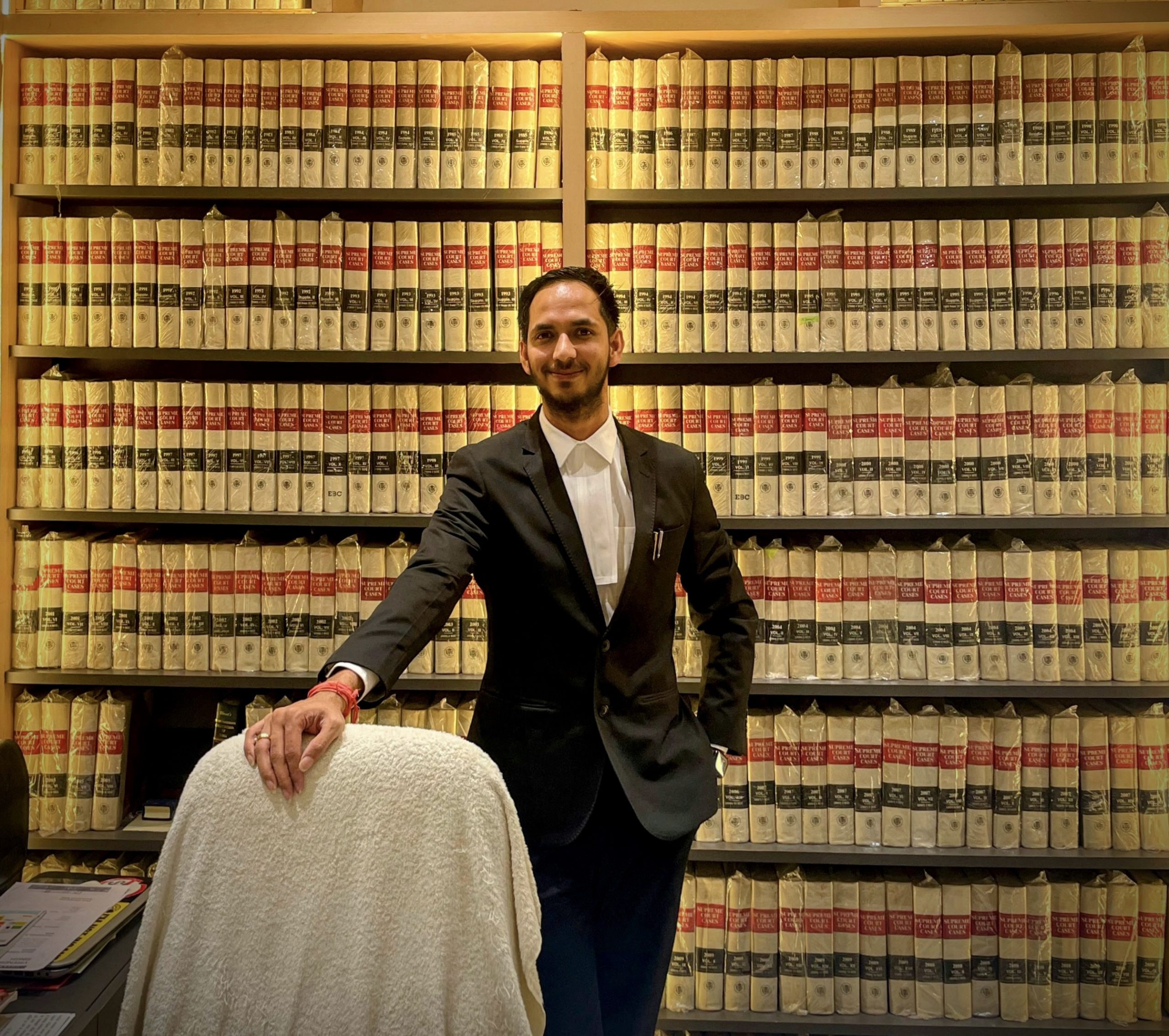


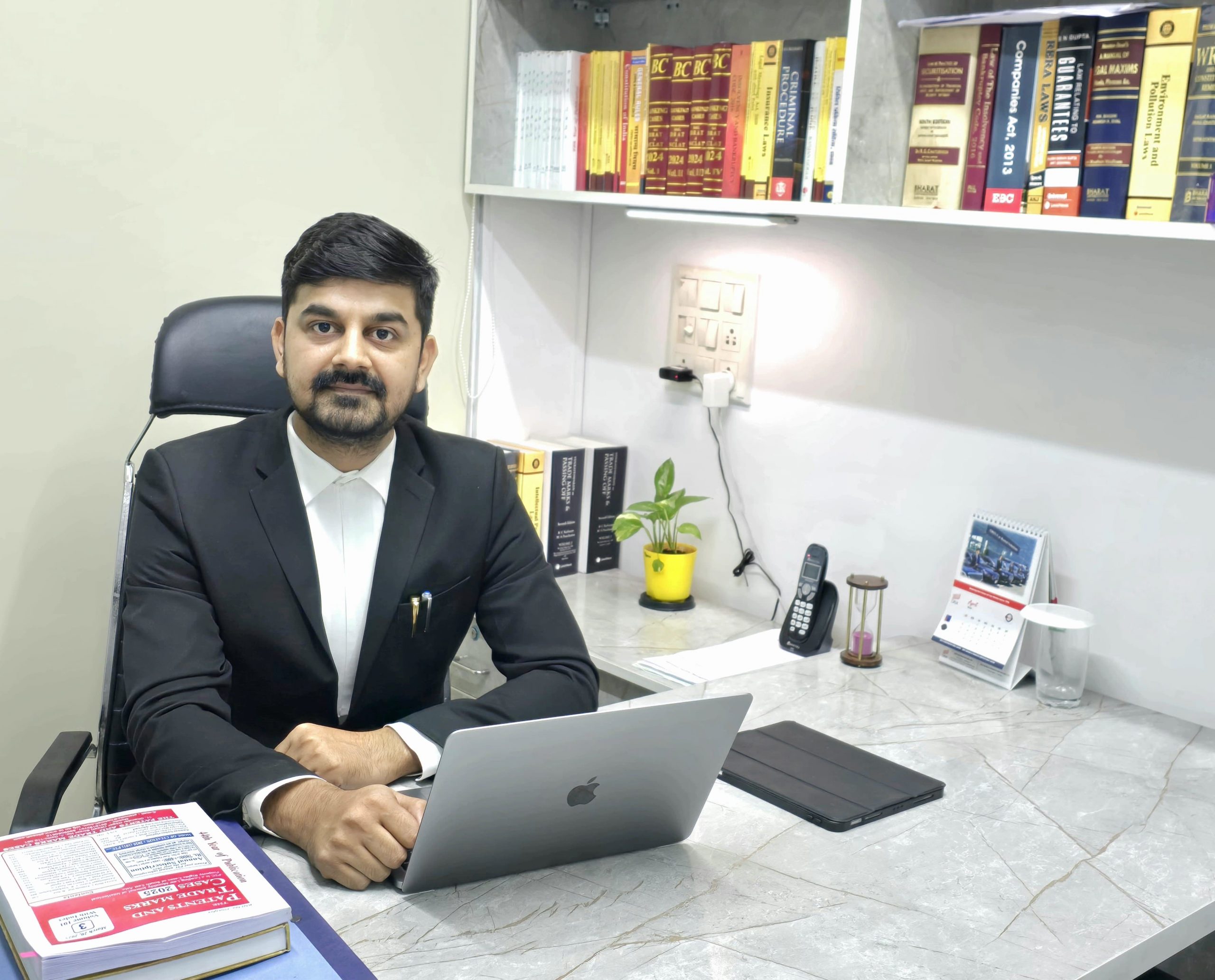



 Allow notifications