Tag: Corporate Law

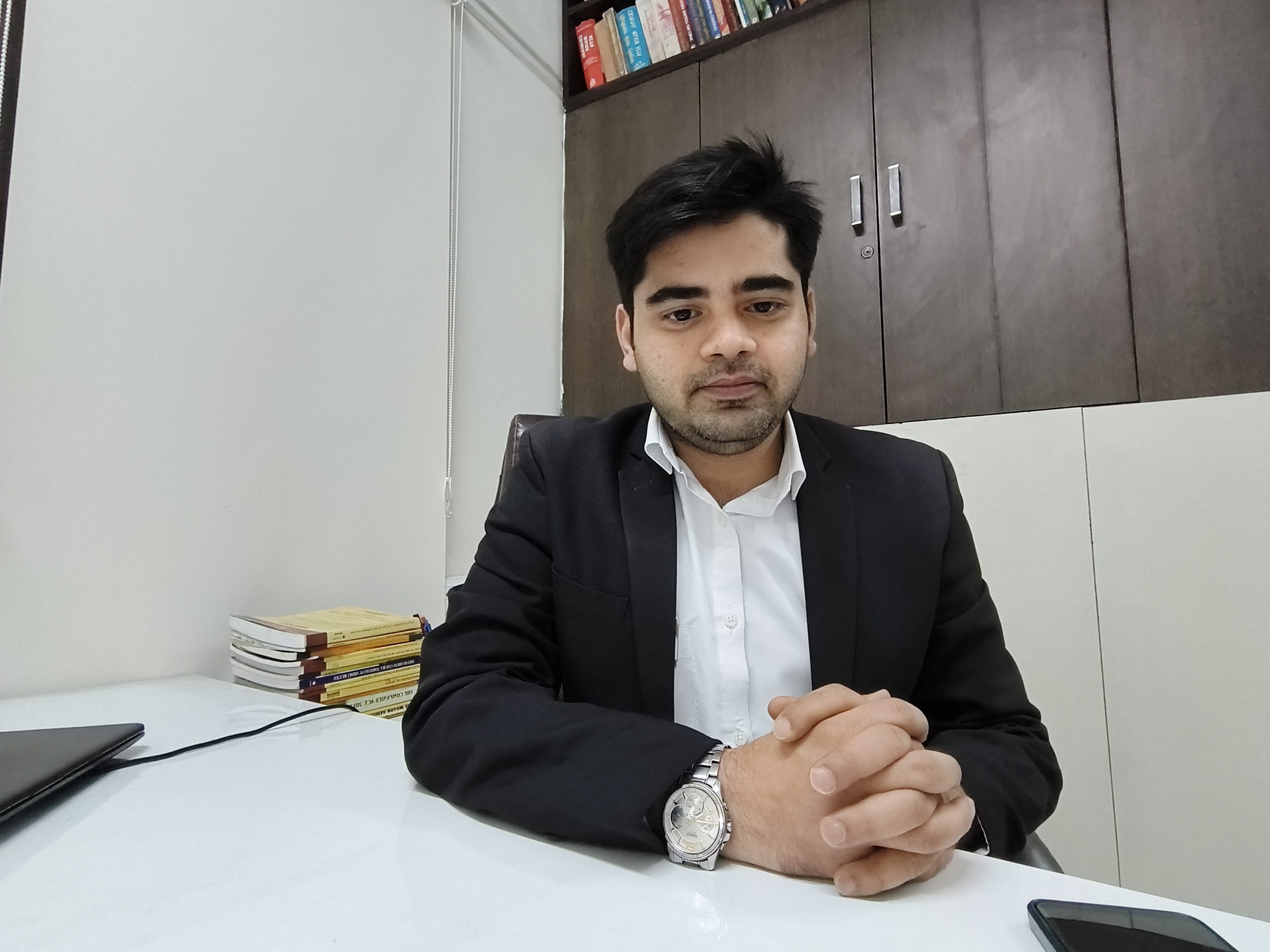
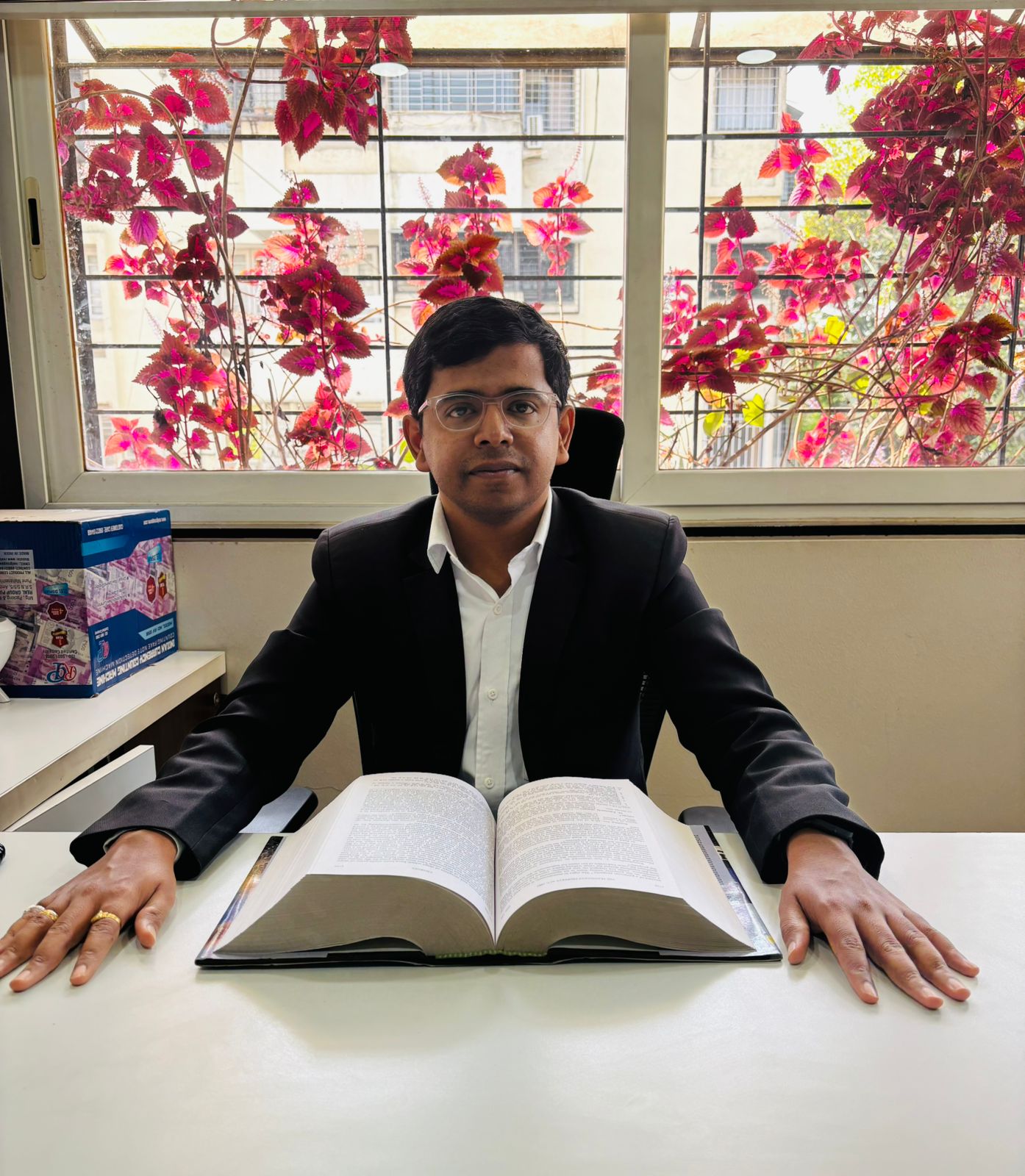
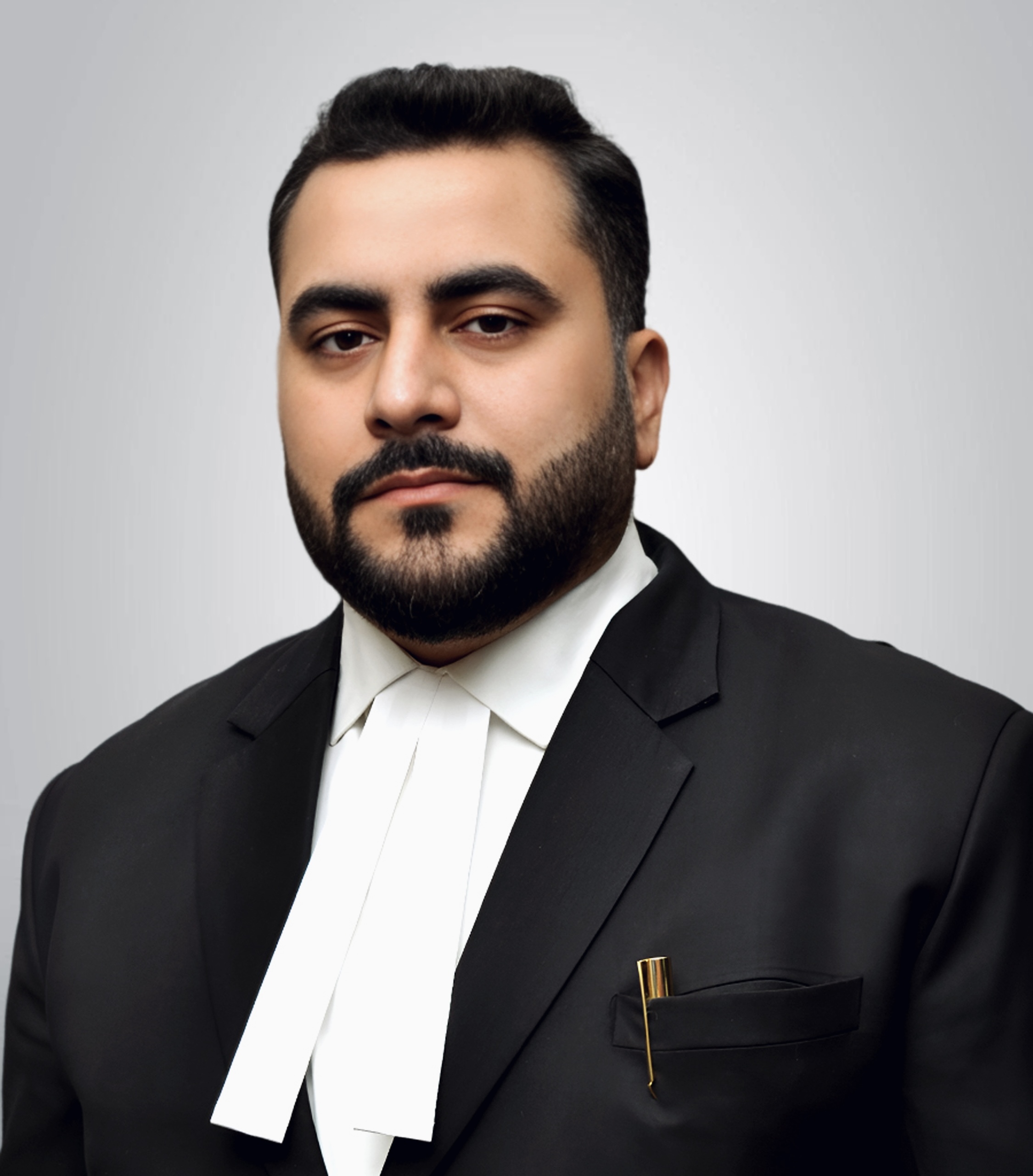
  • “The most rewarding aspect of my legal career has been the ability to make a tangible difference in people’s lives.” – Shubham Singh, Advocate-on-Record at Supreme Court of India and Partner at Inca Law Partners.

    “The most rewarding aspect of my legal career has been the ability to make a tangible difference in people’s lives.” – Shubham Singh, Advocate-on-Record at Supreme Court of India and Partner at Inca Law Partners.

    This interview has been published by Anshi Mudgal and The SuperLawyer Team

    With over 9 years of remarkable experience and as an esteemed Advocate-on-Record (AOR), what initially inspired you to pursue a career in law? What was the driving force behind your decision to choose this prestigious profession, and how has your journey evolved over time?

    Well, as far as my inspiration to pursue law as a career is concerned the same may easily find its way back to my hometown, Allahabad now Prayagraj. The idea and motivation to have a career in law is mostly from the city and from my father who’s a practising Advocate in Allahabad High Court. Although, putting a caveat to the first thought coming to the mind of everyone that I might have chosen law because of my father, he actually never wanted me to be a lawyer owing to the extremely busy lifestyle of lawyers. The city of Prayagraj is famous for many reasons and one of the most popular reasons is the Allahabad High Court and it’s legendary Advocates. There are many names to mention in the list of legal luminaries who have inspired me to make a mark in this profession but I would like to make a special mention of the legend Shri Pandit Kanhaiya Lal Mishra. Shri Mishra was a celebrated lawyer of the country and was offered Hon’ble High Court Judgeship and also the prestigious Judgeship of the Hon’ble Supreme Court He also served as the Advocate General of the state of Uttar Pradesh for 17 years, irrespective of the fact as to whose government it was in the State. People like him inspired me to become a lawyer.

    So far as my journey is considered, I must tell everyone’s journey in this profession might be different. Initial years for lawyers (especially the first generation lawyers) entering into litigation, money could be a serious problem but if you keep working on your skills with patience and perseverance and be true to your profession, then sooner or later you’ll manage to break even. Leaving everything that my father had built in the legal profession in Prayagraj and shifting to Delhi was frankly quite a tough decision for me and for my family as it also turned many heads around. I believe my brother trusted my conviction and supported me which boosted my confidence and my trust in my own self that I might also make a mark on my own. My personal journey is filled with a lot of ups and downs. Sometimes you give your everything to the case but you don’t get the favourable orders, many times you expect a negative order from the Court but you get relief. I think, the only aspect a lawyer should be worried about is the value he is adding in his work so as to assist the Courts in the best way. All we need is to work with patience and perseverance. And as of now, I have reached a level where my first priority is to deliver quality work and fortunately we have been delivering reliefs to our clients.

    Also, I have been very fortunate in terms of the support that I have from my family, friends and my office staff.   

    Having had the privilege of working with renowned senior Advocates and esteemed law firms early in your career, that must have been a truly enriching experience. Could you share some key experiences from that time that significantly enhanced your legal acumen and set you on the path toward excellence?

    I think that you can shape an excellent academician in a Law School but you can’t shape a good lawyer there. The future of a young lawyer depends a lot upon the offices and seniors with whom he’s associated. The initial years of practice establish the very foundation of your career. 

    Since I was not from any NLU, it was quite a task for us back in the days even to be considered eligible for internships. I had the opportunity to intern in the Delhi Office of JSA wherein I was exposed to the working culture of a Tier 1 Law Firm in the country and honestly, I was really impressed. I thoroughly enjoyed my time there but I also concluded that I don’t want to pursue a career there. In my personal opinion, the problem that most of the law students who come from humble backgrounds who ultimately want to become Advocates and establish their own practise is that they initially join a good law firm with an idea to leave in future but the lucrative amount of compensation which is given by the law firm never ever allows them to leave. I, being a young law student, always had one thing in mind that I will not compromise with my dream to become an advocate irrespective of the amount of compensation I might get to do something else. Initially when I came over to Delhi just after college, I interned with Sh. Ashok Kumar Sharma, Senior Advocate, Supreme Court of India and later on joined him as an Associate. Thereafter, I joined Sh. Romy Chacko, Senior Advocate, Supreme Court of India. The experience that I gained from the office of Mr. Chacko was immeasurable. Then for a short period I joined Lex Indis Law Office as an Associate. I am lucky enough to say that I still have great relationships with all the offices that I have worked with. All my mentors in the profession have helped at all steps of my life to shape me into a better lawyer and a better human being. 

    After gaining valuable experience with various legal entities, what motivated you to establish your own law firm? What vision did you have in mind when starting it, and were there any challenges you had to overcome during its initial phase?

    It was always a dream of mine to establish my own Law Firm. When I was deciding to leave Allahabad and practise at New Delhi, I had 2 goals, one to establish my own Law Firm and the other to become an Advocate-on-Record. Fortunately, I have achieved both the professional goals that I had set for myself at that time. The primary vision to establish a law firm was to provide Clients a one roof solution to all their legal problems and to have a systematic structure of working. At our Firm also, we always try to cater all the needs of our clients.

    There are a lot of problems that you face while starting your own law firm. One of the biggest tasks is to have a founding partner with whom you can see a long term professional understanding. I was fortunate to have Sh Aditya Singh as my Partner. The other problem is managing the expenses and work management. So far, I have not faced a lot of issues with respect to these and that could be because of the understanding that we Partners have. So, my advice is that if you wish to start your own Law Firm, choose your team wisely.

    Your involvement in numerous cases related to minority educational institutions has been pivotal. Could you share one of the most fascinating and impactful cases you’ve handled, and how it shaped the legal landscape for such institutions?

    I have handled many cases of minority educations institutions. Even currently I am representing St Stephen’s College, St Charles School, Ryan International School and a few other institutions in ongoing cases. One of the cases that I would like to share with everyone is a civil appeal with respect to appointment of Headmaster in a minority institution before the Supreme Court. In that case I truly understood the spirit of Article 30 of the Constitution of India. In that case it was held by the Hon’ble Apex Court that a Minority Institution has the right to appoint any qualified person as its head or principal ignoring merit. The awareness with respect to this position of law is not that much. Many of the institutions still struggle to claim the benefit of being a minority institution as they don’t know where to get that recognition from. The National Commission for Minority Educational Institution at New Delhi is the body where institutions can apply for a certificate to be declared as a minority educational institution be it linguistic or religious. Minority institutions enjoy autonomy in their management, particularly in decisions related to admissions, curriculum, teaching staff, and other operational matters. However, this autonomy is subject to some regulatory oversight in the interest of quality education and public welfare. 

    The Supreme Court has clarified that while minorities have the right to establish and administer institutions, they must not violate the rights of others, such as admitting students on discriminatory grounds or failing to meet educational standards. In T.M.A. Pai Foundation v. State of Karnataka (2002), the Court emphasized that while minority institutions have certain rights, they must still adhere to principles of merit, fairness, and the welfare of society.

    Indian competition law is evolving rapidly, especially with the growth of tech companies and ride-sharing services. Having represented clients in such high-stakes cases, could you elaborate on the key legal challenges faced and how you navigated these complex matters? Your insights into this area would be invaluable.

    Indian competition law, under the Competition Act, 2002, is evolving to address the growing complexities of market dynamics, especially with the rapid rise of tech companies and ride-sharing services. This sector has experienced a significant increase in mergers, acquisitions, and market disruptions, which often challenge traditional legal frameworks. There are various legal challenges being faced in this industry like the Anti-competitive practices like predatory pricing. While I was working with Lex Indis Law Offices, we were handling the Ola, Uber and Meru’s competition case before NCLAT on behalf of the CCI, one of the issues of predatory pricing only. In my opinion Companies can navigate this by ensuring that their pricing practices do not harm the long-term viability of competition in the market. They need to demonstrate that low prices reflect efficiency or are necessary for market entry, not just predatory strategies. The other major problem is market dominance and the abuse of market dominance. With the rising teach industry in the nation, the problem of merger control and acquisitions is also becoming apparent. Especially in the ride-sharing sector, acquisitions of smaller competitors or startups are common. While mergers and acquisitions are not inherently anti-competitive, they can raise concerns if they lead to a significant reduction in competition or create a dominant player with too much market control.

    As an Advocate, your involvement in landmark cases is commendable. Can you provide an overview of the P Mohanraj v. Shah Brothers case you argued before the Hon’ble Supreme Court? What were the legal principles at play, and what made this case so significant in shaping legal precedents?

    I was appearing in one of the connected matters in the P Mohanraj Case before the Hon’ble Supreme Court of India. The question before the Supreme Court was whether any proceedings can be initiated against a Company under Section 138/141 of the Negotiable Instruments Act, 1881 (“NI Act”) for dishonoured cheques, if NCLT has already passed an order of moratorium under the Insolvency and Bankruptcy Code, 2016 (“IBC”) against the Company. As per Section 14 of the IBC, if Corporate Insolvency Resolution Process (“CIRP”) is initiated against a Company, a moratorium is provided on all judicial proceedings against the Company. The Supreme Court Bench comprising Justice RF Nariman, Justice Navin Sinha and Justice KM Joseph vide its judgment dated March 1, 2021 followed the logic with respect to the object of the IBC Code, if such proceedings will cause a depletion of the assets of the corporate debtor during the CIRP process which will negatively affect the Corporate Debtor from getting back on its feet during the resolution process. The Apex court analyzed this issue from various angles and held that the proceedings under Section 138/141 of the NI Act cannot be initiated against a corporate debtor if the NCLT has already passed an order of moratorium under the IBC. The Supreme Court observed that a quasi-criminal proceeding like the one under the Section 138 of the NI Act will result in the assets of the Corporate Debtor being depleted as a result of having to pay compensation which may amount to twice the amount of the dishonoured cheque. Although, the Court did not extend the same benefit to the Directors of the Corporate Debtors. This case gave a new shape to the interplay between the NI Act and the IBC Code.

    Your role as a guest lecturer at St. Thomas Law College and Asian Law College is truly admirable. How does teaching law complement your busy legal practice, and what personal fulfillment do you derive from educating the next generation of legal professionals? How do you manage to strike a balance between such a demanding career and your personal life?

    I find teaching an extremely noble and satisfying job. If not a lawyer, I would have chosen to become a Teacher. I have been teaching for a very long time in different capacities. I still remember that during my college days, when I was in 3rd year, after my classes I used to teach 4th year B. Tech students at Engineering Colleges for their Campus Recruitment Training. It was an extremely satisfying experience for me during those days. Since then, in some way I have been keeping myself in touch with the academics. After joining the professions, I had the privilege of giving guest lectures at law colleges and conduct seminars for the law students. Teaching law alongside a busy legal practice can be incredibly rewarding both professionally and personally. For many legal practitioners, it offers a unique opportunity to share their experience and expertise with the next generation, while also enhancing their own understanding of the law. Teaching complements legal practice and forces you to stay sharp and up-to-date with legal concepts, theories, and developments. As a practitioner, you may not always have the time to revisit foundational topics or explore new areas in depth, but teaching requires you to stay current, reinforcing your understanding and perhaps even challenging your assumptions. This intellectual engagement can help improve your skills and contribute to your practice. It gives you the opportunity to shape future lawyers, imparting practical knowledge and ethical values that can influence their careers. 

    While I used to teach as a Guest Faculty, I have always focussed to teaching the students the practical aspects of law. I used to take classes on drafting and pleadings, cpc, crpc, evidence, company law, family law and property law. Even workshops in law schools really help and expose the students to the practical world of the profession. I had ventured to teach students at United University about drafting and pleadings at the Supreme Court while conducting a one day workshop.

    Given your extensive experience providing legal consultancy to start-ups, what are some of the most common legal challenges faced by emerging businesses in India? How do you guide them through these challenges and ensure their long-term success in a complex regulatory landscape?

    In my opinion the start-us and emerging businesses in India are facing a variety of legal challenges, particularly given the complex regulatory environment. The very inception comes with the legal hurdles like business registration and compliances, whether to register as sole proprietorship, partnership, limited liability partnership (LLP), private limited company based on their objectives, funding sources, and long-term goals. Navigating through the documentation and formalities required for the registration. The protection of the Intellectual Property Rights and its infringement. Most of the Start-ups that contact us, their primary concern starts with funding and investment issues like raising capital, whether through equity, debt, or hybrid instruments, often involves legal complexities, particularly in structuring the deal, preparing shareholder agreements, and complying with regulatory filings. If the business is seeking foreign investment, it must comply with India’s FDI regulations, which can be quite specific depending on the industry. As start-ups grow and attract investors, conflicts over ownership structure, control, and profit-sharing can arise, necessitating well-structured agreements upfront. I have been advising the Start-ups to have a structured due diligence at the very start, as it helps them have stability and attract more investments. In my opinion an emerging business in India can mitigate these challenges by seeking early legal advice, creating clear business structures, staying on top of regulatory changes, and drafting well-defined contracts and agreements. Consulting with experienced legal professionals who specialize in start-up law can help avoid common pitfalls and establish a solid foundation for growth.

    Your unwavering commitment to the legal profession is truly inspiring. What has been the most rewarding aspect of your legal career, and what continues to drive your passion for law? Additionally what advice would you give to the younger generation who wish to have a successful career in law?

    The most rewarding aspect of my legal career has been the ability to make a tangible difference in people’s lives. Whether it’s advocating for a client in need, helping to ensure justice is served, or navigating complex legal issues, knowing that my work can have a positive impact on others is truly fulfilling.

    When I look back I can certainly relate to many of the law students who believe that the profession is a lot about money and power. But I have evolved to understand that this noble profession is like an art and the most rewarding thing is the recognition that you get from the Hon’ble Judges and the senior members of the Bar. I still remember while I was arguing a case before the bench of Hon’ble Justice B R Gavai and Hon’ble Justice P S Narsimha, at the end of the hearing the Bench praised my arguments but I was in such a disbelief that I confirmed from the Court if they praised me or asked a question, resultantly they affirmed their opinion. There has been no fee that has been more rewarding than that particular recognition to me. 

    For younger generations interested in a career in law, I would advise them to remain persistent and curious. Law is a challenging field, but it’s also incredibly rewarding. It’s crucial to develop strong critical thinking skills, cultivate emotional intelligence to understand the people behind the cases, and always prioritize ethics and integrity in every step of your career. Networking and seeking mentorship from experienced professionals in the field can also provide invaluable guidance and opportunities for growth. Finally, I would say to never stop learning—law is dynamic, and the best lawyers are those who are always evolving.

    Get in touch with Shubham Singh –

  • Balancing Courtrooms and Corporate Governance: A Lawyer’s Journey to Building a Multi-Faceted Legal Career. – Akshay Goel, Founder of A. G. & Associates.

    Balancing Courtrooms and Corporate Governance: A Lawyer’s Journey to Building a Multi-Faceted Legal Career. – Akshay Goel, Founder of A. G. & Associates.

    This interview has been published by Anshi Mudgal and The SuperLawyer Team

    We would love to learn more about the mentoring work that you do with the NGO called Youth Against Injustice Foundation and how you ended up co-authoring a book at such a young age. With your 13 years of experience, we would love to know more about how you ended up pursuing law and what motivated you to make that choice.

    Thank you for this opportunity. To begin with, I am a first-generation lawyer. There are no lawyers in my family; everyone in my family is an engineer, so in a way, I’m the rebel because they wanted me to pursue engineering, but I chose law instead. Due to peer pressure, I was made to choose PCM (Physics, Chemistry, and Math) in my 11th and 12th. However, after my 12th, I decided not to pursue engineering.

    The reason behind this was that I lost my father at a very young age, and during that time, I realized how complicated things could get. For instance, even obtaining a death certificate and managing the transfer of the bank accounts was full of issues. At the post office, they updated my mother’s name with a different spelling, so we had to run to court to get an affidavit declaring that both names referred to the same person.

    That experience became a trigger point for me. I realized that this profession needed me, and I should do something to help others who face similar issues. That’s when I decided to pursue law. I joined the LLB course at Pune Law College, Bharatiya Vidyapeeth University, and after completing my LLB, I was fortunate enough to start my career with a lawyer in Defence Colony, who gave me a lot of freedom. I was allowed to argue cases from day one, and that support really helped me gain confidence.

    Within five or six months, I was handling my own independent case before the Delhi High Court. It was a writ petition, a service matter, and I had promised myself that I would never take on service matters. But ironically, my first independent case was in service law. I won the case, which gave me a major boost in my career. I started getting more independent cases, and in 2012, I joined the LLM evening course at ILI. I was juggling my time between court, the office, and college, but it gave me confidence that I could do a lot with the limited resources I had.

    After completing my LLM, I became an independent lawyer and started working with companies on a retainership basis. I then thought about starting my own law firm that could help young lawyers and mentor them, so they could have the kind of opportunities I didn’t get when I started. I’ve been mentoring interns and associates, making sure that they learn from the work they’re given and aren’t just there for a certificate. I try to teach them the practical nuances of law because most of the interns come for short periods, so it’s important to make the most of that time.

     That’s an inspiring journey. We also want to understand your decision to pursue an LLM. It’s often said that once you’ve completed law and are doing litigation, there’s no need to pursue further studies. How did that decision enhance your presence in the legal fraternity?

    From the beginning, I’ve had an inclination towards teaching. I used to help teach my junior batchmates during my LLB days. So, I decided to pursue an LLM, and I wanted to study at the best institute. I didn’t want to give up on my litigation practice either because that’s where my passion lies—appearing in courts. There were only two institutes in Delhi offering evening LLM courses—ILI and DU. I chose ILI because it’s one of the best in India, and the fact that it’s backed by the Supreme Court of India was an additional attraction.

    I got selected after giving an entrance exam, and that gave me the chance to meet people from various backgrounds, including batchmates who were IPS officers, IAS, and IRS officers. It was fascinating to see how they were at the top of their careers but still pursued further education. The guest lectures from renowned personalities, including Supreme Court judges, were another highlight.

    What I also learned during my time at ILI was how to handle pressure. Before joining ILI, I was someone who would always complete my work ahead of time. But during this course, I learned how to manage last-minute work, which has really helped me in my career today, especially when I’m under time constraints in the legal world.

    That’s a great lesson on adapting to time pressure. Moving on, we’d love to learn more about your law firm, which functions both as a litigation and consulting firm. Many people often think that law firms are either litigation-based or consultancy-based but not both. How have you managed to maintain this balance in your firm?

    My partner, who is also my wife, is a company secretary, and she handles the consultancy side of things, while I focus on the litigation and legal aspects. We’ve divided the work based on our strengths. Clients generally approach law firms for legal services like case representation, agreement vetting, or intellectual property filings, while for consultancy services like company registration or secretarial work, they tend to approach professionals like chartered accountants or company secretaries.

    Since my wife is a practicing company secretary, she handles all the consultancy work, and I can focus on litigation. We’ve managed to portray our firm as a one-stop solution for all business needs, from company incorporation to winding up, taxation, secretarial compliance, and more. We also provide a virtual CFO service to startups and assist with funding rounds, negotiations, and business proposals.

    The difference between litigation and consultancy is that while lawyers can provide legal consultancy, a consultancy firm provides a full package, handling everything from audits to legal opinions and business strategy.

    It’s clear that you’ve built a successful partnership. What inspired you to start your own firm so early in your career? What challenges did you face in the beginning, and how did you navigate them?

    I started my firm before I even got married. The inspiration wasn’t my wife—though she has been incredibly supportive—but I wanted to establish a law firm and take it to new heights. The challenges I faced initially were tough. Many people had promised to give me work, but they backed out. It was a very low phase, and I had invested all my savings into setting up the office. I started off getting only two or three cases a month, which was not enough to cover my expenses.

    But slowly, I built relationships with people who helped me get more cases. Social media actually played a big role in my early success—I got my first big client through Facebook. From there, the business grew. I also did pro bono work, which helped with word-of-mouth marketing.

    During the COVID-19 pandemic, business came to a standstill, but within two to three months, I was back on my feet and getting clients again. Despite having associates, I still prefer to be in court and actively involved in the work. Hard work and dedication have definitely helped me in growing my firm.

    After marrying my wife, the consultancy side of our firm expanded, and now we have offices in the GCC region as well. Our services have grown, and we now provide solutions across multiple jurisdictions.

    Keeping all that in mind, we would like to move forward and understand more. You are also an empaneled advocate for Punjab National Bank and IIFCL, that is, India Infrastructure Finance Company Limited. Could you share some key challenges that you face while representing these public sector organizations, especially in both litigation and corporate matters? What have you encountered, and how have you managed or made a roadmap for overcoming these challenges?

    I’ve been handling their litigation work, not the corporate work of those banks and financial institutions. The challenge I face is that we always have to be on our feet. The trick I’ve learned is that I should do the work before they ask me to. They follow up with me, and because I do not wait to be asked, I stay ahead. I have learned that diligence is key, especially when working for these organizations. I make sure to handle all drafting and compliances well before the court hearings. Additionally, I make sure to follow up with them to get everything done on time.

    It’s difficult to get things moving in government organizations because many approvals are required. So, I ensure that I get the necessary approvals early, so things can be done ahead of time before the court registry and the date comes up. One of the things I’ve learned working with them is how the financial sector works, especially how loans are given and the challenges of repayment. Many people come to court blaming the bank or financial institutions, saying they were not properly informed or their documents were not handled correctly. It’s challenging to manage these cases, but I try to be diligent in ensuring everything moves forward smoothly.

    You have a booming litigation practice, but you’re also an independent director, registered with the Independent Director Database. How do you manage all of this? How did you end up taking this role, and how do you guide the companies with corporate governance and ethics, particularly as an outsider? How do you influence them to be more ethical and oriented toward better corporate governance practices?

    I got my start as an independent director in 2014. I was appointed as an additional director at a company, and that’s how I got my director identification number. I helped them with diligence, corporate governance, and everything happening within the company. Later, I wasn’t a director for 2-3 years, but then I was appointed as an independent director for a company getting listed. However, I had to resign because I couldn’t pursue litigation cases while being an independent director, and I felt it was limiting my ability to perform my job fully.

    When the Independent Director Database came about, I registered myself, and during the COVID period, when courts were closed, I qualified for the exam and later received opportunities to be an independent director for a couple of companies. I assist them with all their compliance needs, such as forming committees, handling labor issues, and guiding them through necessary legal updates. For example, I worked with a manufacturing company that had unskilled and skilled laborers. They weren’t aware of changes to daily wage norms, so I helped them avoid potential legal scrutiny.

     With your booming career and all the work you’re doing, you also teach as a guest lecturer at Dharmshastra National Law University. How do you engage with the students and bridge the gap between theoretical knowledge and the practical application they will encounter in their legal careers?

    When giving guest lectures, I teach them both theoretical and practical aspects. For instance, when teaching them about pleadings, I don’t just explain the theory behind it—I give examples of how this particular order or section is used in court. I teach them how to draft and file applications, the basic nuances to keep in mind while drafting pleadings. I provide formats and give hands-on experience so they can understand how this works in practice.

    I also teach them about client counseling, jurisdictional nuances, and the practicalities involved in court cases. For example, I teach them about the pecuniary jurisdiction in Delhi, explaining that cases below ₹3 lakh are filed before the civil judge, while cases above ₹3 lakh go before the District Judge and those above ₹2 crore go directly to the High Court. I also focus on the Commercial Courts Act, explaining how things like recovery suits were impacted after its enactment.

    You have extensive experience and are heavily involved in international arbitration bodies such as DIAC, MIAC, and the Young ICCA. How has your participation in these institutions impacted your practice, and what role do you see these organizations playing in the field of commercial arbitration?

    I’ve recently got attached to these institutions, so I don’t have hands-on experience yet. However, I can see how they are helping institutional arbitrations move forward. Previously, ad hoc arbitrations were handled by retired judges, but now these institutions are also paneling advocates as arbitrators, which gives a faster, more efficient way to handle cases.

    A new aspect that’s coming into play is emergency arbitration, which became prominent after the Future Group case. These institutions provide a platform for urgent interim orders, which helps expedite matters when needed. While I haven’t had hands-on experience yet, I am looking forward to becoming more involved in the future.

    You also balance your professional life with being a part of the NGO Youth Against Injustice Foundation, where you’re committed to social justice. How do you manage your time for all your professional responsibilities and still find time for social causes?

     I manage my work-life balance by taking family trips regularly. Every month or two, I make sure to take some time off, go on a trip, and spend time with my family, especially my children. This helps them not feel neglected despite my busy schedule.

    Regarding my work with the NGO, we focus on helping people involved in false rape cases and those who face difficulties registering FIRs. We also mentor students, providing them with knowledge about the legal aspects of pursuing cases related to harassment or abuse. I assist the NGO in guiding victims through the legal system and help create awareness.

    You’re truly making an impact in many spheres. As we conclude this interview, could you offer some advice for law students or professionals who aspire to follow in your footsteps, whether in litigation, corporate law, or social justice?

    My advice would be to dream big and be patient. If you want to succeed in litigation, take it step by step. My first five years were all about learning the basics. The next phase was about building a client base. And now, in the third phase, I focus on growing my practice and ensuring success.

    I’d advise law students to be patient and go through these phases. The first five years should be focused on learning and building knowledge. Once you get clients, you’ll need to know how to handle them and offer the best services. Do not enter this profession solely for the sake of earning. The journey may be slow at first, but once you start earning, the possibilities are endless. Focus on knowledge, and the success will follow.

    Get in touch with Akshay Goel –

  • “Trial advocacy is story telling. It is the skill of bringing out what really happened and this principle is true no matter the nature of the dispute.” – Mikhail Behl, Counsel, Arbitrator & Mediator at Chambers of Mikhail Behl.

    “Trial advocacy is story telling. It is the skill of bringing out what really happened and this principle is true no matter the nature of the dispute.” – Mikhail Behl, Counsel, Arbitrator & Mediator at Chambers of Mikhail Behl.

    This interview has been published by Anshi Mudgal and The SuperLawyer Team

    Was there any particular experience or realization that solidified your commitment to pursue a legal career?

    Let’s just say that there have been moments in my life as well as in the lives of the people I hold closest to me where we could have benefited from having someone advocate for us. 

    After completing your law degree, you went on to pursue a Master’s at The University of Edinburgh, a highly respected institution. Could you share some insights from your time there and elaborate on why you chose this particular university over others? Additionally, being a recipient of both the University of Edinburgh’s International Masters Scholarship and the R.D. Sethna Memorial Trust Scholarship is an impressive achievement. How did these scholarships impact your academic journey?

    I was considering two schools, Columbia and the University of Edinburgh. Both their LLM programs in IPR were being run by people who I thought were at the forefront of Copyright law, Jane Ginsburg and Charlotte Walde respectively. 

    I opted for the Edinburgh LLM program because I was granted the University’s scholarship for India which together with the RD Sethna scholarship covered tuition. At the time my father who is a veteran of the Armed Forces had just retired from service and honestly without the assistance from these scholarships further studies would not have been possible at all.   

    You were a law clerk in the Bombay High Court. What are your takeaways from your clerkship at the Bombay High Court?

    My clerkship period taught me how important it is to have good people in high office. Ultimately, the justice delivery system is a human agency and as a law clerk in a High Court you will see how immense and immediate an impact it has on the lives of people. 

    After your Masters, you joined the chambers of Senior Advocate Dinyar D. Madon. Describe chamber life and how that period influenced your practice?

    I remember as if it were yesterday walking into Mr. Madon’s Chambers with just my C.V. in hand – no appointment and no references. It was a few days before Courts were to resume after the Diwali vacations and in Mr. Madon walked with his assistant Sanjay bhai carrying his freshly dry cleaned monkey jacket and gown. While I waited for an opportunity to speak with him, I had my first interaction with Cyrus Ardeshir (now himself a Sr. Advocate), his most senior junior at that time. I recall Cyrus stopping the dictation of a draft and speaking to me for a good five to ten minutes. I didn’t know it at the time but I think now that was ‘the interview’.  When I finally had a meeting with Mr. Madon, it was less than a minute and Mr. Madon told me he couldn’t take me in because chambers was full, he told me he had just taken on two more juniors just days before. I asked him to keep my C.V. but resigned myself to this being another rejection. In all, I was probably rejected by 20 chambers across the city most refusing to even see me.    

    A couple of days later, however, I got a call from Mr. Madon asking me to join from coming Monday. I couldn’t believe it, I later learned it was Cyrus putting in a good word for me that convinced Mr. Madon. I treat that moment as the first door that had been opened for me in the profession, every opportunity that I have had thereafter could only have been possible because Mr. Madon and Cyrus took a chance on a young stranger. There was no reason for Mr. Madon to call me back, I was a nobody and had no references to speak on my behalf. But this is who he is at his core, someone who helps. I wish more people knew this about him he is immensely charitable. 

    I know a lot of people probably think Mr. Madon’s chamber is too strict or old fashioned. Chambers had a strictly ‘no stubble’ policy. Interns have been sent away from work for breaking this rule. If we were leaving court for chambers it was bands off and ties on. Ties were mandatory in chambers. I wish I could tell you this was difficult for me, but I come from a very disciplined background, my father is a veteran, his brothers are veterans and his father was a veteran. My grandfather on my mother’s side was also a veteran. I loved it! In a lighter vein being clean shaven came easy for someone who till this day can’t grow a proper beard, so I may have gotten away with just shaving every other day. 

    I think I was very fortunate to join Mr. Madon at that particular phase of his career. He was absolutely flooded with work and would have anywhere between 20 to 40 matters on board on any given day. It was not unusual for evenings to have as many as 10 briefings. Then there was also Cyrus’s work. The juniors in Mr. Madon’s chamber shared a common work area and I think I learned how to draft just by listening to Cyrus dictate his drafts. I probably found my regular briefing attorneys through Cyrus as well who would ask me to fill in if he couldn’t it make it for a matter. All in all the exposure was immense. Chambers had a great library managed by Jairam a savant at whom you could literally throw any random proposition and within minutes he would just magically show up with the citation or source you needed.  

    If you haven’t worked with Mr. Madon, let me tell you he reads vertically and not horizontally and he does this super-fast. Most people think he is just flicking pages until he corrects them about the contents of an Affidavit or pleading. Working with him caused you to develop “coping” or “keep up” abilities that benefit me till this day. For me initially, this meant working very long hours and so I was entrusted with the keys for chambers. I locked up almost every night I was at his chambers. I think my key takeaway however from my period in Chambers was how important it was to develop your first principles. These principles if readily at your disposal are definitive of the fate of a proceeding and obviously also your career.  

    The immense exposure at chambers helped me realise my own strengths, weaknesses and interests. Just being associated with chambers gave me my first opportunities as an arbitrator. Judges knew that I was from his chamber and that everyone from his chambers had both ability and integrity the most important attributes of an arbitrator.  

    With over 50 trials and a breadth of experience across multiple legal domains, what advice would you offer to young lawyers aspiring to develop a diverse practice similar to yours? Which specific skills or qualities do you believe are essential for success in such a competitive and multifaceted field?

    Trial advocacy is story telling. It is the skill of bringing out what really happened. This principle is true no matter the nature of the dispute. Once you understand this things start falling in place. The skills required are actually fairly achievable, I do not personally subscribe to the belief that this is any form of mysterious craft or skill. The ideal trial lawyer builds an understanding of how things should have been or were intended to be and works out the anomalies in the case before them from this understanding. A good trial lawyer should also work on building their intuitive powers, because understanding who they are examining and how those persons think and behave is vital. They will accordingly do well to learn to identify ‘tells’, traits and patters in people as this will help them in any trial. 

    In handling intricate trademark infringement and passing-off cases, you demonstrated remarkable expertise. Can you walk us through your approach in addressing complex issues like packaging similarity, particularly in the context of pharmaceutical products? 

    In these kind of cases, one is really presenting to the Court the likely perceptions of an imperfect and average human being as grounds for granting or refusing relief. Understanding this standard is definitive of success in this area of law.  

    Tell us something about the journey involved in setting up your own chambers and your decision to specialise in ADR?  

    I think setting up one’s independent chambers is fairly universal in the city of Mumbai. The more difficult question is probably the decision to specialise. This requires both introspection and courage. For me mediation and arbitrations fit well into my core skill sets. I think I am a good listener, I actually enjoy listening to people more than I do speaking. I love writing and it is something I think I do well. Over time I think I have developed a very distinct identity in my writing style as well. Writing is the most core ability an arbitrator can possess. Ultimately the entire arbitration is about the arbitrator’s award/order and if this output is lacking the process is meaningless. The fact that the Supreme Court has a constitutional bench mulling over the need for adapting an award is testimony to the importance of a well written award. 

    Balancing a successful legal career with personal life is undoubtedly challenging. How do you maintain this equilibrium? What strategies or routines do you employ to ensure both your professional commitments and personal well-being are well-managed, especially considering the demanding nature of your career?

    I wish I could tell you I have the perfect life. But that would be a lie. I have always wanted to be a “sports and extracurricular dad”. My most recurring dream is me teaching or watching my child learn the sport of their choice. But that dream hasn’t worked out for me. 

    That failing aside, I do have very many interests outside of law and I have no hesitation or shame in saying I am not a slave to the profession. I do not believe law is a jealous mistress. Because I know lawyers benefit from knowing things outside of law! I actively engage with a network of friends outside of the profession. I am always curious to know from them how their businesses’ work and how they deal with variable situations as and when those may arise in their respective fields. This network of friends has given me unimaginable insight into varied areas of commerce and trade. One I could never have obtained from just reading briefs or limiting my interactions to just other lawyers. 

    I am an avid mountaineer and have done several expeditions and treks both solo and through organised treks. My earliest memories are of camping in the Himalayas with my father of learning to pitch a tent probably at the age most kids learn to tie their shoes. I am extremely fond of landscape and architectural photography and have had my photographs featured in exhibitions around the world. 

    Over the last 7 years I have actively invested in learning and becoming proficient in Olympic weightlifting and powerlifting. I have done two accreditation courses as well, though I have no intention of teaching anyone other than myself. This activity in particular is what keeps my health both mental and physical well managed. I wish more lawyers understood the benefits of strength training. It is literally a lifesaving and life enhancing activity. I think most of the stresses lawyers encounter and even the insecurities lawyers have about themselves would disappear if they explored a more healthy life. I have also studied nutrition and follow a good sustainable diet and have a very healthy relation with food. 

    But the number one thing that brings me peace and happiness is spending the weekend with my parents. Every night before I sleep I thank god for my parents, they are truly remarkable people who have overcome such tremendous odds to become extremely well respected and loved people within their community. My father is a renowned oncologist and my mother is an adored educator. Trust me if you knew the circumstances they came from this shouldn’t have been possible. There is pure magic in their spirit. It is such a fortuitous conspiracy that they are my guides in this world. They gave me every opportunity they did not themselves have.  

    As a sole arbitrator in more than 100 arbitral proceedings and a member of several prestigious panels, including those of HKIAC, SIAC, and ADGM, how do you envision the future of Alternative Dispute Resolution (ADR) in India, particularly in relation to complex commercial disputes? How do you see the evolution of ADR in comparison to global institutions?

    I see ADR as the only hope for private dispute resolution in India. The court system is incapable of meeting India’s needs to resolve private disputes efficiently. The court system should in my opinion be limited to a scrutiny of citizen-state actions. The proposed introduction of arbitration appellate tribunals and recognition of emergency arbitrators is a great step towards developing an appropriate eco-system for private dispute resolution. What also needs to be done is to provide a separate execution mechanism and robust measures such as contempt and criminal prosecution against bad actors, both users, lawyers and arbitrators functioning within this private dispute eco-system. 

    Having successfully navigated the Bar Standards Board application process in the U.K. and being granted exemptions based on your experience, how has this international qualification enhanced your legal practice both in India and the U.K.? Furthermore, how has your accreditation as a mediator influenced your dispute resolution strategies and the way you approach conflict in your legal career?

    Becoming a barrister was an ambition I had to put aside for a while as I had to return home after my Masters for personal reasons. For fate to conspire and to later be made a barrister through the accelerated process with full exemptions from all academic and vocational training components was a miracle. Being called to bar at Lincoln’s Inn by none other than the Master of the Rolls was a surreal moment one that is etched in my memory and one I will cherish forever. Being dual qualified now allows me to not only receive instructions as counsel in multiple jurisdictions but to also act as arbitrator in disputes where English law applies. 

    My decision to undergo formal mediation training was born out of past experiences. I have seen far too many likely settlements fail both as counsel and arbitrator to not recognise an underlying failing within me as cause thereof. I am not one to let such failings persist. 

    The mediator training course at the Royal Society of Mediators taught me path breaking techniques that I apply subtly all the time as counsel and arbitrator. I think I am now always silently working away at a likely mediated settlement. When I function as a neutral the pure joy of using these techniques to bring people to a principled dialogue is by far the most satisfying part of my legal practice. To be honest, it has helped me immensely in my personal life as well. It is finely tuned my instincts and improved my communication abilities. An earlier version of me listened to respond and the new me listens to understand.  

    Get in touch with Mikhail Behl –

  • “I believe that studying not only briefs but also judgments, articles, and legal news helps clarify concepts, improve vocabulary, and enhance drafting skills.” – Navin Kumar Jha, Advocate at Delhi High Court.

    “I believe that studying not only briefs but also judgments, articles, and legal news helps clarify concepts, improve vocabulary, and enhance drafting skills.” – Navin Kumar Jha, Advocate at Delhi High Court.

    This interview has been published by Anshi Mudgal and The SuperLawyer Team

    You completed your law degree in 2015. Was pursuing a career in law something you had always planned, or did it develop as an interest over time? What early experiences solidified your decision to pursue a legal career?

    Interest towards law developed during secondary school when we were  introduced to Political Science where we studied about the Constitution and rights.  Since then I have had a keen interest in law. Although at that stage we lacked  information regarding different laws viz. civil laws, criminal laws however I  wanted to dig more into the subject and gain knowledge beyond the syllabus. I  opted for science in my high school but It was only after high school, I decided  to pursue law as a career. 

    Regarding experiences that solidified my decision to pursue law as a career would  more be attributable to the fact that back in late 2000s, engineering was getting  very popular and engineering was the most common career choice. I did not want  to pursue engineering and pursuing law as a career made me stand out from the  general inclination towards engineering. Moreover it was more of a practical  decision to choose law as I believed that engineering as a career had reached its  saturation. 

    In the early stages of your career, you worked as a legal executive. How did this experience shape your understanding of the law, and in what ways did it contribute to your professional growth and career trajectory?

    I joined Sand Legal Services Pvt Limited and we provided compliance services  to our clients. The scope of work was client oriented where in we had to navigate  through the business of the client and understand what statutory compliances are  to be observed by the client so as to avoid any penal repercussions upon the client.  At Sand Legal Services, I understood the importance of due diligence and  compliance for the smooth functioning of any business. At Sand Legal, I had the  first experience of catering to the needs of client myself being a lawyer. Since  the stakes were high, any omission could not be afforded and an eye for detail  developed. At Sand Legal, other developments also happened viz improvement  in communication skills which is an essential part in modern advocacy especially  when you are dealing with corporate clients. At Sand Legal as part of job, I read  bare acts such as Factories Act, Shops and Establishment Act, Legal Metrology  Act, Payment of Wages Act etc line by line and their corresponding state rules.  A habit of reading bare acts and applying the law into the realm is what I would  say was a take away from Sand Legal.  

    I would say my first job at Sand Legal gave me a first hand experience in the field  of law and I was fortunate that my superiors were present to correct my mistakes  but eventually I learned that mistakes while dealing with law are costly which  was handy in my future roles.

    After working in an in-house legal capacity, you transitioned to litigation with a law firm. What motivated this shift, and what cultural differences did you observe between working in-house versus within a law firm environment?

    I had gained two years of experience in due diligence and compliance at sand  legal, although for a subject which is so vast, two years of experience is  negligible. However while working at Sand legal, I had made up my mind that it  would be better for me to build a career around litigation. 

    It would not be possible for me to effectively differentiate my experiences at Sand  Legal and in a Law firm dealing in litigation. Even at Sand Legal, the role was not  purely in-house but more of client-oriented which is as of any law firm. The  striking difference is only that in a Law Firm, focus shifted on litigation, rather  than due diligence and compliance. The Setup at law firm and Sand Legal was in  principle alike. Both the organisation endeavoured towards client services. On one hand where Sand Legal attempted due diligence and compliance which  play a key role in avoiding litigation, at law firm litigations were handled. The  stakes are much higher in litigation as litigation is the last resort, I would say and  therefore the advocates are in a better position to command the strategy and path  for safe exit of the client from the legal conundrum. 

    After gaining valuable experience with several legal entities, you chose to establish your own practice. What inspired you to take this step, and did you face any significant challenges when founding KPNJ LEGAL?

    Starting my own practice had been my objective since the beginning of my career. It was important that I train myself under able guidance so to begin my law firm KPNJ Legal. 

    There were difficulties initially and continue even today. For any person who wishes to start his own setup in any profession or business, finance is the biggest  concern. A profession like law may not need a high capital investment as  compared to any other profession, however for a young advocate who wishes to  setup his own office, he/ she must bear in mind that he may continue bearing  expenses towards his office rent, juniors without any inflow of money and that  may last for months until you land clients who graciously pay. Another challenge  is that landing clients should be regular because you have to maintain an office.  

    The role and focus of a litigator shifts from only being a student of the law to different other roles viz he has to work towards networking so that clients keep  coming and secondly he steps into managerial shoes where he has to manage  affairs of his office, the deputation of his juniors, clerks in various courts etc.  These challenges do not end with time but keep on growing with time if you are  on the right track and if you have a growing practice.

    How do you approach civil litigation cases, especially those involving recovery, damages, and rent control issues? Could you share some of the most notable challenges you’ve faced while handling injunction and declaration suits?

    First thing first, in any case involving civil, criminal or any other sort of litigation  is that I have to get my facts right. By the phrase get my facts right, I mean that I should understand the unfolding of events in chronological order. If only I understood the facts, I would be able to contemplate the relief that I desire from  the courts. Facts and relief are the backbone of draft in civil litigation. Knowledge of law plays along in the process of drafting. Questions such as whether I have  taken adequate measures to curve out the cause of action, court fees, limitation, jurisdiction and whether the relief I am seeking is tenable in law are to be  addressed and envisaged in the draft itself. The challenge is that your case should  not be dismissed for any of the aforesaid reasons. 

    Regarding injunction and declaration, I would narrate a very recent case which is  still ongoing in a civil court in Delhi. Some person whose application for interim  restraint was dismissed approached me and I was given the brief to file an appeal  for the same. The trial court had observed that the possession of the person over  property qua which restrainment order was sought is not prima facie clear. Our  ground of appeal was that the trial court erred in observing that the possession  was not clear. Ultimately the order of the trial court was overturned and interim  stay was granted. Now in this case, the trial court has come up with another issue  that is in regard to its jurisdiction. Since the reliefs are constrained to injunction  and declaration and fixed court fees have been paid, the trial court has questioned us regarding the value of suit for the purpose of jurisdiction. When it comes to recovery cases, damages, rent control where a certain liquidated amount is in  play, the jurisdiction of courts become very clear but with the case in hand which  seeks injunction and declaration, the value of the suit for the purpose of  jurisdiction is to be satisfied to the court. 

    In your arbitration practice, particularly with cases before DIAC, what common issues do you address, and what strategies do you employ to ensure successful resolutions for your clients? 

    DIAC has a large panel of wonderful arbitrators who are competent enough to  understand the complex nature of commercial transactions and adjudicate upon  it. The Infrastructure at DIAC is again State of the art. The deputy counsels are  prompt. The information system regarding dates and orders are also functional.  Overall the dispute resolution experience at DIAC is wonderful. 

    However a major issue which I believe at DIAC is its fee structure which I would  say is on a higher side. When there is a dispute between two corporate giants, they  have budgets to pay the DIAC fees but on the other hand proprietorship firms, 

    MSMEs who prefer Arbitration outside the scope of MSME Samadhan,  individuals, and small businesses may find it difficult to pay the fees at DIAC. No  wonder to maintain a world class centre such as DIAC, enormous money has to  be spent, but then again the purpose of ADR which should be quick and cost effective  resolution is being defeated. 

    The other major issue is that there is no effective way to compel the Defendants  to pay the DIAC fees. In case defendants do not pay his part of fees, the claimant  is burdened to pay the same to keep his case going. Later the claimant can execute  the decree and recover the fees but the fact that a person already in distress has to  pay for the cost of another party seems unfair. 

    Sadly no strategy can be adopted to overcome this situation. However, since you  ask, I would narrate a recent incident at DIAC where the claimant had approached  DIAC and I, being from the defendant side, appeared before the DIAC. Settlement  was reached between the parties and the arbitrator was informed of it. The Arbitrator  ordered that a claim petition should be filed and accordingly consent decree was to  be passed. The claim petition had to be invited to ascertain the DIAC fees. The Claim petition was filed, the DIAC fees was ordered to be paid but subsequently  now the claimant has stopped appearing before the DIAC. The matter is still  pending. It would be interesting to see what methods are adopted to recover the  fees. 

    As global compliance becomes increasingly important, how do you ensure compliance with international legal standards? Could you share an example where global compliance considerations had a significant impact on a case or transaction?

    Global Compliance has several verticals viz ESG Standards, Whistleblower  policy, privacy policy, anti-corruption and bribery policy etc. A corporate should  ensure that he has a functional and well documented policy for all the above. It  should be ensured that the policies are strongly implemented. As an advisor, my  duty is to keep my clients updated of the changes/ updates in the compliance  sector. Framing of policy is a one time thing but keeping the policy updated is a  continuous practice wherein my role becomes significant. Ensuring that the  policies are implemented in letter and spirit is also a continuous process.  Compliance audit is an effective way to ensure compliance. 

    In practical scenarios, a balance has to be drawn between companies’ operation  and growth that sometimes may not align with ESG standards. 

    Balancing a demanding career and leadership responsibilities is challenging. How do you personally maintain work-life balance? Additionally, what steps do you take to foster a healthy work-life balance within your team, while still driving professional success?

    It’s true that leadership responsibilities shift focus from the core nature of work  that is to study and practice law. The focus shifts rather to team members  performing well but it has a positive aspect. We are as good as our team. A well  groomed team makes things simple. 

    To me personally work life balance has never been an issue. Time management and plans made well in advance avoid chaos at the last moment. Yes there are  times when an unplanned meeting comes up or an exigency erupts, court hearings  elongate etc and then I need to prioritize things which may be difficult sometimes 

    The same goes with team members. However a strong team keeps things moving despite challenges and individual  absences. I believe that work is a part of life and one should not draw rigid  boundaries between them. If there is an exigency during the office hours, I would  not see the pending works and the same goes the other way that if there is midnight  call at work of importance, I should attend to it. 

    However such situations are rare and with efficiency, time management and  planning one may need not to bother about work life balance. 

    What advice would you offer to aspiring lawyers looking to make a meaningful impact in diverse areas of law, as you have? Are there any resources or strategies you would recommend for staying current with the constantly evolving legal landscape?

    I am still a young and aspiring lawyer, I would say. But yes, few things have  worked for me which I can share. First of all, study. Not only the brief we have at  hand but also some articles, some judgement, legal news etc which are published.  Read Judgments. That would clarify the concept of law, increase your vocabulary  and enhance your language which will help in drafting. When it comes to artistic literature, there is a popular saying that if you read one thousand lines, you would  be able to write ten lines. Same goes with the profession, If you read, then only  you can draft, either it be a contract or petition. 

    Live law and Bar and Bench are great platforms to know and remain updated with  things happening in Indian Courts. 

    Get in touch with Navin Kumar Jha –

  • “To advance your career, focus on specializing in a niche area of property law or civil litigation, continue learning through seminars or  certifications, and embrace technology to stay ahead in an increasingly digital legal  landscape.” – Siddhesh Mahurkar, Founder at SM Legal Associates.

    “To advance your career, focus on specializing in a niche area of property law or civil litigation, continue learning through seminars or  certifications, and embrace technology to stay ahead in an increasingly digital legal  landscape.” – Siddhesh Mahurkar, Founder at SM Legal Associates.

    This interview has been published by Anshi Mudgal and The SuperLawyer Team

    With your extensive experience across various legal areas, what initially inspired  you to pursue a career in law, and what continues to fuel your passion for it? How  did you first enter the legal profession, and what led you to specialize in civil  litigation, cooperative law, and property-related matters? 

    Initially, I didn’t come from a legal background. After completing my 11th and 12th  grades in the commerce stream, I was inclined toward pursuing a career in commerce,  banking, and even considering company secretaryship. At that point, law was never  really on my radar. However, as I explored both streams, I realized that my true calling  was in the legal profession. 

    This passion continues to fuel my work today. The opportunity to advocate for clients, to  navigate complex legal issues, and to contribute to the fair and equitable resolution of  disputes is incredibly rewarding. Every case presents unique challenges and  opportunities to learn and grow, constantly pushing me to refine my skills and deepen my  understanding of the law.  

    As I began to practice law, I found myself particularly drawn to civil litigation, cooperative  law, and property-related matters. Civil litigation appealed to me because of the  intellectual challenge and the direct impact it has on resolving disputes. Cooperative law and property law was another area I gravitated toward because Cooperative law and  property law encompasses a wide range of legal issues, from internal governance and  member disputes to regulatory compliance and commercial transactions. Advocating for  my clients, and helping them achieve the best possible outcomes keeps me motivated  every day. Ultimately, it’s the law as a tool to make a real difference in people’s lives that  continues to inspire me and drive my career forward. 

    What were some pivotal experiences early in your career that deepened your  understanding of the law, particularly in real estate matters, and how did they shape  your professional trajectory? 

    “Early in my career, I had the privilege of working closely with senior advocates at Bhansali  Landmarks. This experience proved pivotal in shaping my understanding of real estate  law. I was involved in a diverse range of matters, including land acquisition, property  disputes, and construction contracts. I also assisted in drafting and reviewing complex  real estate agreements, such as sale deeds, leases, and joint venture agreements. 

    One particularly challenging case involved a complex land dispute that required  extensive research and creative legal solutions. Successfully navigating this challenge  instilled in me a strong sense of resilience and a deep appreciation for the importance of  client advocacy.

    These experiences instilled in me a meticulous approach to detail and a deep  understanding of the importance of thorough due diligence in all real estate transactions.  This foundational knowledge continues to guide my practice today, enabling me to  effectively advise clients on a wide range of property-related matters and navigate the  complexities of the real estate market with confidence.” 

    By incorporating these suggestions, you can create a more compelling and impactful  narrative that effectively communicates the value of your early experiences in real estate  law. 

    How has your current role evolved, especially in the context of property law? Could  you elaborate on your responsibilities and experience with drafting agreements,  sale deeds, and handling RERA-related matters? 

    My role has evolved significantly over time, especially in the context of property law.  Initially, I started by focusing on general civil litigation, but as I gained more experience, I  became increasingly involved in property-related matters. Over the years, I’ve developed  a specialized focus on real estate law, including drafting agreements, handling sale  deeds, search titled report and dealing with regulatory issues, especially under the Real  Estate (Regulation and Development) Act, or RERA. 

    Whether it’s ensuring that the terms of a sale deed are clear, protecting my client’s rights  in lease agreements, or structuring development agreements in a way that avoids  potential disputes, attention to detail is paramount. My meticulous attention to detail has  resulted in the successful negotiation and drafting of numerous complex real estate  agreements, minimizing potential risks and ensuring favorable outcomes for my clients.  I strive to provide clear and concise legal advice to my clients, explaining the implications  of different legal options and guiding them through the complexities of real estate  transactions. 

    In terms of RERA-related matters, my experience has expanded significantly over time as  the Act has become a central piece of real estate regulation. I advise developers and  homebuyers on compliance with RERA, whether it’s ensuring that developers are  meeting the timelines and quality standards promised to buyers, or ensuring that  homebuyers are aware of their rights under the Act. I have represented clients in disputes  involving non-compliance with RERA provisions, such as delays in possession or failure  to provide agreed-upon amenities. 

    I find that my expertise in this field has allowed me to make a significant impact, helping  clients navigate the complexities of real estate deals and ensuring that their interests are  protected.

    Can you share your experience dealing with disputes involving cooperative  societies? What are the major legal issues cooperative societies are facing today  and how do you handle conflicts between builders, or management? 

    I have handled a wide range of legal issues involving cooperative societies. One of the  primary challenges these societies face today is property disputes, especially those  related to ownership and the transfer of titles, particularly the Conveyance Deed.  Disputes also arise when there is confusion among society members regarding  membership rights, which can lead to complex and prolonged legal battles. Another  significant issue is the non-payment of maintenance charges, which often leads to  financial instability within the society, triggering legal action for recovery. 

    When addressing conflicts, especially between builders or management, my approach  is to start by thoroughly reviewing all relevant agreements, including builder-buyer  contracts, society by-laws, and other related documents. This helps establish a clear  understanding of the rights and obligations of each party. However, when these methods  fail or prove unsuitable for resolving the issue, I proceed with issuing legal notices or  filing a case in court, depending on the severity of the dispute. 

    My primary focus is ensuring that both the cooperative society and builders comply with  applicable laws. Ultimately, my goal is to facilitate a fair resolution that upholds the rights  of society members and ensures that all actions taken are in compliance with the  governing laws. 

    When drafting RERA Agreements, what common issues do you encounter from both  builders and property buyers? How do you navigate these challenges to ensure the  agreements are comprehensive and balanced? 

    For builders, a common issue is setting realistic project timelines. Builders may face  unforeseen delays, but buyers are concerned about delayed possession. It’s essential to  clearly define timelines, including grace periods for delays, and establish penalties for  non-completion within the agreed time. On the other hand, buyers often face confusion  regarding the carpet area vs. super built-up area. Builders may calculate area differently,  which can lead to overcharging concerns. To avoid this, I ensure the agreement precisely  defines terms like “carpet area” and “super built-up area,” providing clarity on what  buyers are paying for. 

    Another significant issue is the payment schedule and interest clauses. Builders typically  want to ensure timely payments, but buyers seek a payment structure tied to project  milestones, ensuring that they don’t overpay before the work is completed. Balancing  these interests is key, and I work to establish a fair schedule that protects both parties.

    Warranty and defect liability periods are also contentious. Buyers often expect a  reasonable warranty on construction defects, while builders may try to limit their liability.  I ensure that warranty clauses comply with RERA’s provisions, which mandate clear  terms for defect liability periods, providing sufficient protection for the buyer. 

    Lastly, disputes over possession and handover timelines are common. Builders may seek  flexibility, while buyers want guarantees of timely possession. In these cases, I ensure  that the agreement complies with RERA’s possession timeline rules and includes clear  consequences for delay. 

    To navigate these challenges, I ensure that the agreement is drafted with clarity and  precision, making sure all terms are well-defined and in compliance with RERA  regulations. I also incorporate fair dispute resolution mechanisms, often using mediation  or arbitration, to address potential issues efficiently. Ultimately, my goal is to create an  agreement that protects both the interests of the builder and the buyer, ensuring a  balanced and legally sound contract. 

    During your time at AM Legal, you were involved in IPR and commercial litigations.  How did these experiences expand your legal expertise, and in what ways do they  complement your current focus on property and civil law? 

    During my time at AM Legal, I had the opportunity to work extensively on Intellectual  Property Rights (IPR) and commercial litigation, which greatly expanded my legal  expertise. In the commercial litigation domain, I handled a variety of cases related to  contracts, breach of agreements, and arbitration. These experiences deepened my  understanding of corporate governance, risk management, and dispute resolution  strategies. Working with clients on these matters enhanced my ability to analyze  contracts, negotiate settlements, and adopt a strategic approach to litigation, which  directly complements my current focus on property and civil law. 

    These skills align seamlessly with my work in property law. Both areas require precise  contract interpretation, attention to detail, and the ability to navigate complex disputes.  

    Moreover, my experience in IPR has given me a broader perspective on the value of  protecting assets, which is crucial in property law as well—whether it’s protecting land  titles, construction permits, or real estate branding. Overall, these diverse experiences at  AM Legal have enriched my legal practice, allowing me to offer a more holistic and well rounded approach to my current work in property and civil law. 

    Of all the cases you’ve handled, which one stands out as particularly interesting?  How did you approach preparing for that case, and what made it unique? 

    One case that stands out as particularly interesting involved a property dispute between  a developer and a housing society. The developer initiated construction without obtaining  the mandatory consent from the society, violating Section 7 of the Maharashtra 

    Ownership Flats Act (MOFA). This legal oversight led to a court order granting an  injunction against the developer, effectively staying the construction. The case  highlighted the importance of adhering to statutory provisions and safeguarding the  rights of housing societies in redevelopment matters. 

    To prepare for the case, I thoroughly reviewed the contracts, sale deeds, and RERA  compliance documents, carefully scrutinizing every clause for potential  misrepresentations. I also gathered evidence from property registries and consulted  with land experts to verify title authenticity. Given the complexity of the case, I examined  the developer’s obligations under RERA, focusing on consumer protection laws and  builder-buyer agreements. 

    What made this case unique was the interplay between property law, consumer  protection, and real estate regulations. The case required me to navigate a  combination of contractual interpretation, regulatory compliance, and consumer  rights while also addressing the emotional concerns of buyers who had invested their  savings in the property. My approach not only focused on legal arguments but also  considered alternative dispute resolution methods to settle the matter more efficiently. Ultimately, the case was resolved in favor of the buyers, with the developer agreeing to  compensation and fulfilling the missing contractual obligations. This case stands out  because it was a rare instance where multiple legal frameworks—from property law to  consumer protection under RERA—intersected, requiring a nuanced and multi dimensional approach to resolve the matter. 

    Given your experience, how do you see the real estate industry evolving, particularly  in light of the ever-changing rules and regulations that govern it? 

    The real estate industry is undergoing a significant transformation, driven by evolving  regulations and technological advancements. We’re seeing a clear trend towards greater  transparency and accountability, fueled by regulations like RERA, which empower buyers  and demand ethical practices from developers. This push for transparency is further  amplified by the digitalization of land records and transaction processes, reducing  ambiguity and potential for fraud. Sustainability is no longer a buzzword but a necessity,  with stricter green building codes and environmental clearances becoming the norm. The  rise of proptech is revolutionizing how we search, buy, and manage properties, while  construction technology is introducing innovative building methods.Simultaneously, the  industry is grappling with the need to provide affordable housing, prompting government  initiatives and innovative financing models. Looking ahead, we can expect a stronger  consumer-centric approach, with regulations further empowering homebuyers and  promoting fair practices. However, challenges remain, including the need for the industry  to adapt quickly to these changes, balancing regulation with growth, and ensuring  effective enforcement. Ultimately, the real estate sector’s future hinges on navigating this evolving landscape effectively, embracing  technology, and prioritizing sustainable and  inclusive development to build trust and foster long-term growth. 

    What advice would you offer to young lawyers aiming to build a career in property  law and civil litigation? Specifically, what skills should they focus on, how can they  effectively network, and what steps should they take for career advancement? 

    For young lawyers aiming to build a career in property law and civil litigation, my advice  is to focus on honing key skills such as legal research, contract drafting, and  negotiation. A solid understanding of property laws, regulatory frameworks like RERA and MOFA, and the intricacies of civil litigation will be fundamental to success. Building  strong client relationships is also crucial, as property law often involves direct  interaction with clients, whether they’re buyers, developers, or housing societies.  Effective networking is essential—attending industry events, joining professional  associations, and connecting with experienced mentors will open doors to opportunities  and valuable insights. Gaining practical experience early on, whether through  internships, associate positions, or working on diverse cases, will help you understand  the complexities of the field. To advance your career, focus on specializing in a niche  area of property law or civil litigation, continue learning through seminars or  certifications, and embrace technology to stay ahead in an increasingly digital legal  landscape. Finally, maintaining a reputation for integrity and competence is key, as  trust and reliability are paramount in both property law and litigation.

    Get in touch with Siddhesh Mahurkar –

  • “Goodwill and relationships, and an overall commitment to excellence are invaluable in the legal profession.” – Govind Manoharan, Founder of Godiyal & Manoharan Chambers.

    “Goodwill and relationships, and an overall commitment to excellence are invaluable in the legal profession.” – Govind Manoharan, Founder of Godiyal & Manoharan Chambers.

    This interview has been published by Anshi Mudgal and The SuperLawyer Team

    With over a decade of experience across various areas of law, do you believe law was always your destined path, or were there particular factors that steered you in this direction?

    For me, it was a mix of both. While studying at Loyola School, Trivandrum, we had only two main options after school: engineering or medicine—there were no streams for humanities or commerce. I initially leaned towards engineering but decided to keep a backup. The year I finished school was the first year of CLAT, which consolidated various law entrance exams into one. Law seemed like a good alternative, partly because my father had a law degree, though he pursued a career in journalism.

    Interestingly, I performed well in my engineering CETs but not in CLAT. Despite this, I was so fatigued by the STEM curriculum that the backup suddenly became my first choice. Eventually, I chose ILS Law College, Pune over GLC in Mumbai because my family felt more comfortable with Pune—though the reasons remain unclear to this day!

    Once I joined ILS, I grew to love the idea of a career in law. After a few internships in Mumbai and New Delhi, I gravitated towards litigation. Mr. Kishore Vussonji at Kanga & Co., with whom I interned a few times, suggested I start practicing in New Delhi rather than Mumbai. I took his advice, and it was the right decision—Delhi has been very kind to me.

    You began your legal journey at the office of an Advocate-on-Record (AOR) at the Supreme Court of India. How did this initial experience shape your understanding of the legal profession and influence your subsequent career choices?

    Until recently, the ‘traditional’ path at the Supreme Court involved starting in an AOR’s office, then moving to a senior counsel’s chamber, and eventually starting independent practice. Though this route is no longer dogma, it’s the one I followed.

    I interned with Mr. Senthil Jagadeesan, Senior Advocate, during my final year of law school. He offered me a position in his chambers post-graduation, which aligned perfectly with my goal to practice at the Supreme Court. His chambers was an AOR office then, and under his guidance, I focused on learning court processes, you know, getting familiar with the Supreme Court, drafting, and understanding the nuances of the profession—the ‘ropes’ as they say. This was foundational. 

    Later, I joined the chambers of Mr. Shyam Divan, a four-year stint that I consider transformative for me. Court craft is something you keenly watch and learn at a senior’s chamber—of course Mr. Divan’s style is inimitable, although I must confess many of us have tried in vain to copy it! Another thing we learnt by watching was the high degree of rectitude and integrity one had to maintain when acting as counsel—towards the court, clients & co-counsel, all. Finally, he would insist that you must always attempt to ‘elevate’ your brief as counsel, especially at the Supreme Court. It matters what you bring to the brief over and above what is written in it. These are lessons that have profoundly shaped my practice.

    Can you share your experience of completing your LL.M. at Harvard Law School? What motivated you to choose this institution, and could you share with us the admission process and criteria for our young readers?

    Harvard Law School was both enriching and humbling. I decided to pursue my LL.M. six years into my career, unlike many Indian applicants who apply straight out of college. Initially, I was hesitant because I didn’t want to lose my small but growing practice. Dr. Menaka Guruswamy, Senior Advocate, among other seniors at the bar encouraged me to consider it, and I eventually decided to apply to U.S. law schools for their rigorous yet compact programs.

    The application process for most Ivy League schools is somewhat same, and involves submitting a strong statement of purpose, solid references, and academic essays. My SOP—which shouldn’t be a flamboyant CV—was a simple, personal essay. Personal essays, I had become fond of as a form having read its champions such as Didion, Sontag and Baldwin, so I felt that was the easier bit. Harvard required an additional academic proposal, which I based on my reflections about the Supreme Court’s role in post-conflict scenarios. This proposal evolved into my dissertation under the guidance of Dean Martha Minow, a renowned scholar in transitional justice.

    I feel my time at Harvard was important to me for two major reasons. Academically, it gave me a framework and a language to express my already brewing concerns about the judicial process. I learnt from the giants of the Critical Legal Studies movement—Roberto Mangabeira Unger, Duncan Kennedy, David Kennedy & Mark Tushnet—and the ideas that were discussed in class spoke to my bare-bones thoughts and reflections. On a personal level, it gave me a huge cohort of friends, strewn all over the world doing great things, and some of whom I get to collaborate with every now and then. Both are important reasons, and I think I’m better off for having spent some time in the little town of Cambridge, MA. 

    After gaining significant experience working with various big names in the legal industry, you chose to start your own practice. What prompted this decision, what challenges did you face in the early stages, how did you overcome them?

    In January 2022, I co-founded Godiyal & Manoharan Chambers with Samiksha Godiyal, a friend and colleague from Mr. Divan’s chambers who shared my vision for a chamber practice. Seniors encouraged us to go independent, and by then, we had experience managing independent briefs alongside chamber work.

    The early challenges were universal: balancing roles as CFO, COO, and CMO while maintaining high standards of legal service. Putting in place systems and strategies has helped overcome these challenges, and prepare the chambers for the long game.  New challenges always crop up, but they are welcome—they keep you sharp and motivated. One of our keen focuses is on more tech-integration in the processes, which we have been able to achieve to an encouraging extend benefiting service excellence, and the practice in general; keeps the chambers future-ready. 

    You’ve been involved in several landmark Supreme Court decisions, such as the marriage equality case, the Cauvery River dispute, the Right to Privacy case, and the decriminalization of consensual same-sex relationships. Could you share one particularly interesting case you’ve worked on and how you prepared for such a complex matter?

    All these cases you have mentioned were very interesting to me and have resulted in mixed outcomes from the Indian Supreme Court. As we speak, we have dismissal from the court on our review petitions in the marriage equality case, something I have been involved in right from 2020 when the first petitions were filed in the Delhi High Court. All briefs are interesting briefs, some make news, others don’t, but that’s the beauty of having a generalist practice, one can never get bored!

    The Cauvery River Water Dispute that you mentioned is the one that ended with a judgment from the Supreme Court in 2018. Now this is a niche area of law, inter-state river water disputes. There are about 10 or so in the history of the country, and I was able to be part of two—the other one was the Mahadayi river dispute among Karnataka, Maharashtra and Goa. This niche area of law involves complex questions of federalism, prior use rights, and equitable water distribution. The Supreme Court’s 2018 judgment marked its first appeal over a water tribunal’s decision. Preparation involved examining over 50 U.S. court decisions on river water sharing to distill first principles of equitable distribution. These principles helped guide the Supreme Court’s analysis of the tribunal’s award. 

    I suppose with climate change we will see more of these disputes not only of a domestic character but also at the global level. There will be more dams as countries try to achieve their national renewable energy goals, and more or less water in rivers to share owing to changing weather patterns. It’s an area of growing importance. 

    You had worked as counsel representing the National Council for Teacher Education (NCTE) before the Delhi High Court for about two years? What key challenges did you encounter in handling regulatory disputes, particularly in light of your experience representing a regulator?

    Representing NCTE was my first experience as counsel for a statutory regulator. I found that judges respond well to state counsel if they are handy with timely instructions on most occasions, and at all times, fair and prepared. I think that was key to assisting the court from the State’s side.

    Often regulatory disputes on the writ side of the high courts or specialised tribunals like APTEL or SAT have to deal with petitions seeking to compel the statutory regulator to do their job or petitions examining the correctness of adjudicatory decisions of the regulator. These are disputes related to the regulatory activity itself. The other cases, which I got to see a fair share of was, disputes on policy—which may enter courts as a vires challenge. My experience at Harvard where the policy-oriented approach is often reflected in case law was useful in litigating these disputes in our courts. Sound policy arguments, alongside technical legal points, are crucial in such cases.

    On the private side of things, like for any other regulated entity in business you are looking out for the commercials while litigating. Something that we try to do at chambers is to understand that the commercials at stake in a case, the ‘pain-point’ so to say—legal arguments and strategies will flow accordingly.  

    As a member of the LAWASIA Human Rights Committee, could you share some of the key initiatives or challenges you have encountered in your role? 

    LAWASIA is a regional association of lawyers, judges, jurists and legal organisations, which advocates for the interests and concerns of the Asia Pacific legal profession. They’ve been around for over six decades, and is one of top associations of lawyers in the region. I’ve been a member for a few years now, and since February 2024, as part of its Human Rights Committee, I focus on the intersection of business and human rights. 

    Apart from being a brilliant network spanning across regions, LAWASIA hosts very significant conferences each year on various areas of the law, apart from its annual conferences. In February this year, LAWASIA along with the Nepal Bar Association is hosting the 5th International Human Rights Conference in Kathmandu. I am able to join friends who are excellent lawyers and scholars from Malaysia, Taiwan, Japan, South Korea & Australia in our committee and also, learn from folks who do brilliant work in Singapore, China, Vietnam and other jurisdictions in the region. 

    LAWASIA’s conferences and webinars provide invaluable insights into regional legal issues, emphasizing both shared experiences and unique challenges. Recently there was a discussion on “Human Rights at Sea,” where we heard from those advocating the cause of stateless fishing communities. These forums offer opportunities to learn and collaborate across jurisdictions.

     As you have written a piece on mental health and the legal profession, could you share some key insights or recommendations on how the legal community can address these issues? Additionally, what role do you believe law firms and legal institutions should play in fostering a healthier work environment? On a personal note, how do you manage the balance between your personal and professional commitments?

    Mental health interventions in the workplace are a dime a dozen. Addressing mental health begins with acknowledging the profession’s high-stress nature and fostering open conversations. 

    Discussions on mental health in the legal profession have significantly evolved since I wrote about the topic in The Caravan in 2016. Back then, it wasn’t a mainstream conversation, but now we see greater awareness, better vocabulary, and even acknowledgement from senior figures like chief justices.. So, that’s a good thing—but then as they say, talk is cheap. 

    I wanted to draw attention to the issue at the time—much like that famous ‘mission statement’ from Jerry Maguire (though thankfully, I didn’t lose my job over it like he did!). Meaningful change requires more than lip service. Judges and senior members of the Bar must lead serious discussions and implement effective systems to make the profession more accommodating.

    Personally, I balance work by spending time with loved ones, enjoying music, and staying active. Remembering that work is only part of life—and learning not to take oneself too seriously—can make a big difference.

    What advice would you give to young lawyers who aspire to build a successful career like yours? How should they approach planning their career trajectory and advancing in the legal profession?

    Goodwill and relationships, and an overall commitment to excellence are invaluable in the legal profession. While financial success is important, pro bono work should not be overlooked—it’s equally rewarding. Success is personal and evolving. Take time to define success on your own terms—if you are able to do that, you’ve solved half the puzzle!

    Get in touch with Govind Manoharan –

  • “Exposure to different legal frameworks not only enhances your technical knowledge but also sharpens your ability to think strategically and solve complex problems.” – Pankaj Singla, Partner at Mulberry Law.

    “Exposure to different legal frameworks not only enhances your technical knowledge but also sharpens your ability to think strategically and solve complex problems.” – Pankaj Singla, Partner at Mulberry Law.

    This interview has been published by Anshi Mudgal and The SuperLawyer Team

    With over 15 years of experience, could you take us back to your academic journey, beginning with your time at the Faculty of Law, Delhi University? What inspired you to pursue a career in law, and how did studying at Kyushu University in Japan influence your approach to the legal field, particularly in the realm of international law?

    My academic journey began at the Faculty of Law, Delhi University, where I developed a strong foundation in legal principles and discovered my passion for corporate law. I was drawn to the field because of its potential to solve complex business challenges while fostering growth and compliance.

    Studying at Kyushu University in Japan was a turning point. Immersing myself in a different culture and legal system enhanced my understanding of international law and cross-border transactions. It taught me the value of precision, discipline, and a global perspective, all of which continue to shape my approach to the legal field.  These experiences have been instrumental in building my career and refining my ability to navigate both local and international legal landscapes effectively.

    Throughout the early stages of your career, you worked at several esteemed law firms in both India and Japan. What key experiences did you gain during this time that were instrumental in shaping your career path and refining your skills?

    Working at full-service law firms in India and Japan provided me with unparalleled exposure to high-stakes transactions and diverse legal frameworks. In India, the fast-paced environment of firms honed my ability to think critically under pressure, manage complex deals, and collaborate with multidisciplinary teams. The emphasis on precision and delivering results in time-sensitive scenarios taught me the importance of efficiency and client-centric solutions. In Japan, I was introduced to a meticulous approach to law, with a focus on structure, compliance, and cross-border considerations. This experience deepened my understanding of international legal systems and enriched my ability to navigate the nuances of global transactions.

    One of the most valuable lessons I learned during this phase was the importance of adaptability. Moving between jurisdictions and working with culturally diverse teams sharpened my interpersonal skills and broadened my perspective on problem-solving. These experiences were pivotal in shaping my career and continue to influence my approach to delivering comprehensive legal solutions.

    What led you to specialize in corporate law, with a particular focus on mergers and acquisitions (M&A)? Were there any pivotal moments or turning points that reinforced your decision to choose this specialisation and have a multi-jurisdictional M&A practice?

    My interest in corporate law, particularly M&A, stemmed from the dynamic nature of the field and its significant impact on businesses and economies. Early in my career, I was drawn to the challenge of structuring complex transactions, negotiating deals, and solving intricate legal issues that arise in M&A.

    A pivotal moment was my involvement in my first cross-border transaction. The experience of navigating differing legal systems, cultural nuances, and regulatory frameworks was both challenging and deeply rewarding. It reinforced my decision to focus on multi-jurisdictional M&A, as it allowed me to combine technical expertise with strategic thinking.

    Over time, I’ve found this specialization to be uniquely fulfilling, as it requires a balance of legal acumen, commercial awareness, and adaptability—qualities I’m passionate about cultivating and applying to every deal I work on.

    With your experience in both India and Japan, how have these distinct legal environments impacted your approach to transactional work? What specific skills or insights have you gained from each jurisdiction that you now apply in your practice?

    Working in both India and Japan has given me unique insights into how different legal environments shape transactional work. In India, the legal landscape is dynamic and fast-paced, which has taught me to think quickly and manage complex, high-volume transactions. It has also emphasized the importance of flexibility and adaptability when dealing with diverse stakeholders and varying business practices.

    In contrast, Japan’s legal system is highly formal and meticulous, with a strong focus on the process, detailed documentation and compliance. This experience deepened my understanding of the importance of process, precision, thoroughness, and risk mitigation, particularly in cross-border transactions. 

    Combining these experiences, I now approach multi-jurisdictional transactions with a well-rounded perspective, balancing the need for agility in India with the emphasis on structure and diligence in Japan. This allows me to tailor solutions to clients’ needs in a variety of legal environments.

    In your current role, you’ve worked across various industries, from luxury retail to electric vehicles and defense. What unique challenges do international companies in the electric vehicle sector face when establishing operations in India? Can you share an especially memorable or complex case you’ve handled in any of these industries?

    Working with clients from various industries is always very rewarding as each sector and industry comes with its own unique requirements, challenges and solutions.

    International companies entering the electric vehicle (EV) sector in India face several unique challenges, primarily around regulatory complexities, market dynamics, and infrastructure. One key challenge is navigating India’s evolving regulatory framework, which is still in the process of developing clear policies for EVs, particularly around subsidies, taxation, and incentives. Companies must ensure compliance with various environmental and safety standards while also anticipating future changes in the regulatory landscape. Additionally, the EV market in India is still in its nascent stages, and all stakeholders must address infrastructure concerns, including limited charging stations and supply chain issues related to battery production. The growing competition within the sector also means that companies need to create intellectual property, adopt new technology, innovative business models and engage with local partners who understand regional market dynamics.

    Given these challenges, companies often need to work closely with local government bodies, business partners, and regulatory experts to ensure smooth market entry. This collaborative approach helps in navigating the complexities of the Indian market, ensuring that businesses can align their operations with both local opportunities and challenges. Understanding the market’s long-term trends, such as the growing emphasis on sustainability and electric infrastructure development, can also help companies develop more effective strategies.

    In one case, I worked with an international retail brand planning to expand into India. The challenge was navigating the complexities of India’s FDI (Foreign Direct Investment) policies, particularly in the retail sector, where there are specific regulations around multi-brand retail and sourcing requirements. The client was keen on setting up flagship stores across major cities, but we had to carefully craft the entry strategy to ensure compliance with the local sourcing norms and ensure alignment with the client’s global brand standards. We have had similar experience with clients in the defence industry which continues to be heavily regulated and the regulations are very dynamic in nature.

    These cases reinforced the importance of understanding local regulatory nuances, market realities and working closely with clients to craft a strategy that aligns with both global standards and local requirements. Such transactions are challenging but are also extremely rewarding experiences for us as a firm.

    In multi-jurisdictional transactions, clients often face challenges arising from conflicting laws and regulations across different countries. How do you navigate these complexities when advising on cross-border mergers, acquisitions, and expansions? Can you provide examples of particularly intricate deals you’ve worked on, and the strategies you used to manage these challenges?

    Navigating the complexities of multi-jurisdictional transactions requires a deep understanding of the regulatory and legal frameworks across different countries, and reliable partner firms in foreign jurisdictions. Clients often face challenges when laws and regulations conflict or vary significantly between jurisdictions. My approach begins with a thorough analysis of the legal landscapes in each relevant jurisdiction to identify key regulatory issues, such as antitrust concerns, foreign investment laws, and sector-specific restrictions.

    For instance, when advising on cross-border mergers or acquisitions, I prioritize coordinating with local counsel in each jurisdiction to ensure compliance with the laws specific to each region, while also considering the overarching strategic goals of the client. This collaboration helps in mitigating risks related to legal incompatibilities and ensuring that the deal structure accommodates the different regulatory requirements. I also work closely with tax advisors to address any cross-border tax implications, which can vary widely depending on the jurisdictions involved.

    One particularly intricate deal which we have recently worked on involved an Indian client acquiring a company in Europe. The challenge was dealing with conflicting foreign investment regulations and structuring the deal to ensure compliance with India’s ODI policies while addressing the strict regulatory environment of both jurisdictions on foreign ownership in certain sectors. Additionally, both jurisdictions had different corporate governance practices that required us to align the deal structure with local laws while maintaining the client’s global operational standards.

    To manage these challenges, we adopted a phased approach—first by ensuring all local regulatory approvals were obtained, followed by aligning governance structures, and then addressing the cross-border tax issues. The key strategy was to maintain a constant dialogue with local regulators and key stakeholders, ensuring that the deal complied with both local and international legal frameworks without compromising the client’s objectives.

    Having worked in rapidly evolving sectors such as electric vehicles, IT, and new technologies, how do you stay ahead of emerging regulatory changes and the legal challenges facing these industries?

    Staying ahead of emerging regulatory changes in fast-evolving sectors like electric vehicles, IT, and new technologies requires a proactive approach. The trick is to make it a priority to continuously monitor industry trends and legal developments, and engage with regulatory bodies and industry experts. This allows you to anticipate changes and advise clients on potential risks before they materialize. Additionally, it helps to collaborate closely with clients to understand their business strategies, ensuring that legal solutions align with both current regulations and future trends.

    By remaining well-connected with industry networks and regulatory authorities, one can provide clients with timely, informed guidance that helps them navigate the legal complexities of emerging technologies and evolving markets.

     Looking back on your career, what advice would you give to aspiring lawyers who wish to follow a similar path, especially those interested in gaining international experience and working across multiple legal systems?

    Looking back on my career, the most important piece of advice I would offer to aspiring lawyers is to work hard, remain curious and open to new opportunities. Gaining international experience and working across multiple legal systems requires a deep commitment to learning and adaptability. My advice would be to seek out diverse experiences early on, whether through formal education, internships, secondments, or working with teams that handle cross-border matters. Exposure to different legal frameworks not only enhances your technical knowledge but also sharpens your ability to think strategically and solve complex problems. In addition, developing cultural awareness and building strong professional relationships in different jurisdictions is crucial. Working in multiple legal systems isn’t just about understanding the law; it’s about navigating the cultural nuances that influence business decisions and legal outcomes.

    Finally, be patient and persistent. International experience often requires flexibility and the willingness to step outside your comfort zone. But with determination, you can develop a unique skill set that sets you apart and positions you to handle increasingly complex, multi-jurisdictional matters.

    Given the demanding nature of your work across multiple legal domains, how do you manage your role at the firm and your personal obligations effectively? What do you do to unwind and relax?

    Balancing the demanding nature of my work with personal obligations requires careful time management and setting clear priorities. At the firm, I ensure that I stay organized by structuring my day and breaking down complex tasks into manageable chunks, which helps me meet deadlines without compromising the quality of work. I also rely on effective delegation when appropriate, collaborating with colleagues to share the workload and maintain focus on key matters.

    Outside of work, I prioritize personal time by setting boundaries and carving out space for activities that help me unwind. Whether it’s spending time with family, reading, or staying active at the gym, I find that these activities allow me to recharge and maintain a healthy work-life balance. I also try to schedule regular breaks throughout the day to avoid burnout and keep my energy levels up. Maintaining this balance is essential for long-term productivity and well-being.

    Get in touch with Pankaj Singla –

  • “As a first-generation lawyer, my journey into law was driven by a deep sense of purpose to stand up for justice and help those in need and underprivileged.” – Kunal Gosain, Founding Partner at KG Law Offices.

    “As a first-generation lawyer, my journey into law was driven by a deep sense of purpose to stand up for justice and help those in need and underprivileged.” – Kunal Gosain, Founding Partner at KG Law Offices.

    This interview has been published by Anshi Mudgal and The SuperLawyer Team

    As a first-generation lawyer, what inspired you to pursue law as a career? Were there specific moments or experiences that motivated you to take this path?

    As a first-generation lawyer, my journey into law was driven by a deep sense of purpose to stand up for justice and help those in need and underprivileged. I lost my father at the age of 16 which was a transformative moment for me personally. It taught me the value of resilience and perseverance, hard work and determination which eventually became guiding principles in my life. 

    To be honest, I initially aspired to become an actor or a journalist, as I have always been a creative and artistic person with a deep appreciation for creative pursuits and  finer things in life.I remember that in school days we used to perform street Theatre in Association with “Jan Natya Manch”(Founded by Safdar Hashmi), Yuva Ekta Foundation(An initiative of Tehelka) for social causes and spreading awareness like Child Labour, Education and its importance, HIV, Corruption, Right to Information, Right to Education, Child marriage to name a few. I always wanted to do something for the society and I did not want to just stop at spreading awareness but also wanted to empower the underprivileged, give them a voice and make a difference in our society. 

    The vast experience I gathered from interacting with people from all walks of life and looking at their lives and challenges closely, coupled with the unwavering support of my mother and brothers, instilled in me a sense of purpose and determination to carve out my own path in the legal field. It would not have been possible without my family which is my biggest strength.

    I believed I possessed the necessary skills that this profession demands and once introduced to courts and law as a field I felt a deep sense of belonging within the courts. This made law the ideal profession for me to channel my passion and drive to create a meaningful impact in society.

    In the early stages of your career, you likely encountered both valuable learning opportunities and challenges. Can you share some key experiences that helped you build a strong foundation in law and influence your career path?

    The initial years of my legal career were pivotal in shaping my understanding of the profession. I had the privilege of working under some of the most accomplished legal minds, each of whom contributed significantly to my growth. Starting in the chambers of Senior Advocate K.K. Manan provided me with a solid grounding in criminal law. During my time there, I learned the essentials of court craft and the nuances of legal practice, which played a crucial role in helping me overcome my initial hesitation in appearing before the High Court. This early exposure instilled confidence and prepared me for the challenges of litigation.

    Later, my time with Mr. J Ajay Digpaul  (before his elevation) and Ms. Arti Bansal allowed me to represent the Union of India/Central Government in significant High Court matters, further refining my skills in drafting, argumentation, and handling complex procedural frameworks. Working with them deepened my understanding of litigation and advocacy, while also reinforcing the importance of meticulous preparation and clarity in legal reasoning.

    A defining phase of my career was working with my mentor, Mr. Saurabh Prakash, a disciple of the revered Shri Paramhansa Yogananda and an accomplished IIT Kanpur graduate in Chemical Engineering who transitioned to law. Under his guidance, I gained insights into diverse practice areas, including civil disputes, employment law, and writ petitions and diverse disputes including a Fake encounter case. He emphasized the importance of thorough preparation, reading files meticulously, conducting in-depth research, and crafting well-drafted pleadings, which he often described as the backbone of any case. During this period, I had hands-on experience drafting writ petitions, suits, SLPs, and contracts, among working on other diverse cases.

    What truly stood out about Mr. Prakash was his unwavering commitment to maintaining the highest level of morals and ethics in the practice of law. He not only emphasized these principles but lived by them, setting an example for those under his guidance. He frequently reminded me to “always take the longer route in approaching a case, don’t look for shortcuts. While it may take more time, the learning it brings is invaluable.” This philosophy has been instrumental in shaping my approach to legal practice and my outlook on the profession.

    Before entering the profession, I received valuable advice from a Judicial Officer, now a High Court Judge, who emphasized the importance of mastering civil law, drafting, and research before delving into criminal law. This guidance helped me lay a strong foundation for my career. Additionally, during a judicial internship with a now-retired judge of the Delhi High Court, I had the rare opportunity to view cases from the bench’s perspective. This experience gave me a deeper understanding of judicial reasoning and the critical role of precision and clarity in legal arguments.

    These formative experiences taught me to approach every case with diligence, empathy, and unwavering integrity, laying the groundwork for a career defined by commitment to excellence and ethical practice.

    After gaining significant experience with various law firms, what prompted you to establish your own practice? What were the driving forces behind this decision, and what challenges did you face when starting out?

    Establishing KG Law Offices was born out of a desire to serve clients with a personalized and solution-driven approach. I wanted to build a space, a niche for myself that reflected my principles, provided personalized legal solutions, and addressed clients’ challenges with integrity and commitment and while having a relief-oriented approach. 

    Truth be told, starting out on my own and establishing independent practice was not without its hurdles, I literally had not many cases or briefs when I decided to go independent! While there were many raised eyebrows and my friends and colleagues being apprehensive about the step being too early to start out on my own , I was determined and had faith in God and myself. I just kept going on one day at a time.    

    There were significant challenges; right from building a client base, making a place for yourself, generating enough money to sustaining the practice, earning trust as a first-generation lawyer in this highly competitive environment, getting recommendations which I faced and had to overcome by sheer hard work and having a client centric and relief-oriented approach and needless to say delivering results and relief to clients. 

    The driving force behind this decision were all these experiences which reinforced my determination to carve a niche and create a firm where professionalism, empathy, and excellence guide every decision. 

    In this odyssey of self-discovery and finding my calling, I must say that every step of it has been equally humbling and rewarding, allowing me to contribute meaningfully to the profession and society which gives me a sense of satisfaction and fulfilment. I do not have any regrets or would not want to have it any other way.

    This is one of my favourite quotes I live by ! “Be Among Those who dare to follow their dreams”

    Over the years, you’ve represented high-networth individuals (HNIs), NRIs, and international corporations. Could you share one of the most memorable cases and the strategies you employed to achieve successful outcomes?

    One of the most memorable cases I handled involved an intellectual property rights dispute related to the works of a revered spiritual figure associated with one of the most prestigious Ashrams or monastic orders. This case was complex, as it spanned multiple jurisdictions and involved overlapping Indian laws, including personal laws, intellectual property rights law, and international law. Additionally, there was a critical need to balance the protection of intellectual property with the sensitivity of cultural and religious considerations, especially since the dispute had international implications.

    A particularly valuable aspect of this case was the opportunity it gave me to engage closely with the lives of Sanyasis and Monks, allowing me to gain insights into their practices and teachings. This personal experience enriched my understanding of the subject matter and gave me a deeper appreciation of the spiritual context in which the legal dispute arose.

    The complexity of the case was heightened by the fact that the legal framework governing Sanyasis, Monks, and Sadhus is relatively limited, especially when it comes to intellectual property disputes. The dispute was not related to immovable property, which is more commonly associated with religious institutions, but rather to intellectual property rights. In this context, the Sri Krishna Singh vs. Mathura Ahir case (1979) –AIR 1980 SUPREME COURT 707 which became the locus classicus on the laws concerning Sadhus, Yatis, and Sanyasis – proved to be pivotal. This landmark judgment of the Supreme Court of India extensively discusses various aspects of the legal status of Sanyasis and Yatis, and it provided critical guidance on how to approach cases involving religious figures and their intellectual property rights.

    The decision of the Apex Court in Mathura Ahir became essential in shaping our strategy, as it was a key reference point for understanding the legal standing of the individuals involved and their rights. The judgment clarified multiple legal aspects that were directly relevant to our case, including the succession and rights of Sanyasis, and it provided invaluable precedents for addressing the unique challenges we faced.

    The strategy we employed was comprehensive and meticulous. It involved in-depth legal research, careful documentation, and the alignment of the client’s objectives with the applicable laws. Our approach also emphasized clear communication and teamwork, with each team member contributing to the development of a strong case.

    This case and how we evolved the strategy regarding the said case was a testament to the importance of hard work, thorough legal preparation, and collaboration. It underscored how a deep understanding of the legal and cultural context, coupled with a strategic use of relevant case law can resolve the most complex and sensitive legal matters.

    It was a collaborative effort, where clear communication and attention to detail played a critical role. The successful resolution of this case reinforced my belief in the importance of clear communication, hard work, meticulous preparation, and team work. 

    You have handled cases for various clients, including public sector undertakings (PSUs). Can you describe a particularly complex issue you’ve dealt with while representing PSUs, and how does your approach differ in dealing with private clients?

    One of the more challenging cases I handled for a PSU involved coordinating with multiple departments spread across different states, each with its own set of processes and jurisdictional hurdles. It was a test of patience and persistence, as aligning everyone on the same page while ensuring all legal and procedural requirements were met was no small task.

    What made it particularly complex was managing the flow of communication between the PSU’s central office, regional branches, and external parties, all while adhering to tight timelines and keeping in mind the courts directives. To navigate this, I relied on a systematic approach, breaking the problem into manageable parts, using technology to stay organized, and maintaining open and frequent communication with everyone involved.

    Ultimately, we achieved a favorable outcome, and the experience taught me the value of teamwork, clear communication, and strategic planning when representing organizations with such intricate structures. It’s cases like these that remind me how important it is to approach such cases with a steady hand and a collaborative mindset and how paying attention to detail becomes crucial.

    Working with PSUs often involves a more structured and procedural approach. There are layers of approvals, formalities, and timelines that require careful management. On the other hand, private clients usually expect faster, more flexible, and tailored solutions. With private clients, it’s about being agile and adapting strategies to their specific needs, while with PSUs, it’s about patience, meticulous planning, and ensuring that everything aligns with institutional frameworks.

    Each approach has its own challenges, but both have taught me to balance efficiency with attention to detail, which is essential in delivering the best outcomes.

    In addition to your legal practice, you’re involved in social causes. Can you tell us more about your work with organizations like Jan Natya Manch and Yuva Ekta Foundation, and how you use your influence to raise awareness of important social issues?

    My involvement with Jan Natya Manch, founded by the late Safdar Hashmi, was one of the most enriching experiences of my life. Under the guidance of Moloyshree Hashmi, I performed street plays addressing critical social issues like child labor, education, HIV awareness, corruption, the Right to Information, and child marriage, among others. Similarly, my association with the Yuva Ekta Foundation, an initiative of Tehelka Magazine, allowed me to connect with young minds and raise awareness about pressing societal concerns while pursuing my creative passions.

    During my college years, I continued to explore my artistic side, performing in street theatre and full-length drama productions. I even ventured into professional acting and worked on a few ad films. However, as I approached the completion of my studies, I realized that my true calling was in the legal field. The sense of purpose and belonging I felt in courts and within the legal profession inspired me to fully dedicate myself to this path. Over the years, my passion and admiration for the field have only deepened.

    As a legal professional, I firmly believe that our responsibility extends beyond the courtroom. Advocacy isn’t just about arguing cases—it’s about raising awareness and inspiring change in the society we serve. My involvement with these organizations was an expression of that belief.

    Recently, my legal team and I worked on a significant case against a renowned educational institution in Delhi that had unlawfully expelled 30 students belonging to the Economically Weaker Section (EWS) category. We secured a favorable interim order, ensuring the students’ reinstatement. The judgment not only upheld the rights of these children under the Right to Education (RTE) Act but also sent a strong message to all schools in Delhi about the sanctity of a child’s right to education. No one should be denied their right to education—it’s a fundamental and valuable right that must be protected at all costs.

    Such cases reaffirm my belief in using the law as a tool to bring about meaningful societal change and to stand up for those whose voices often go unheard.

    Having faced numerous challenges along your journey, what keeps you motivated to continue striving for excellence in your legal career and contributing to the legal community?

    My motivation comes from a deep sense of responsibility toward my clients and the legal profession. Throughout my journey, I have faced numerous challenges, but fortunately with the unwavering support of my mother and two elder brothers, and the blessings of my late father. Their encouragement, combined with the mentorship of individuals like Mr. Saurabh Prakash, has played a pivotal role in shaping my career due to which I was able to overcome these adversities and pursue my passion for law, charting my own path. 

    My family, faith, and mentors provide constant strength and guidance. An ardent devotee of Lord Shiva, I attribute my strength and success to my mother, my family, my guru (Shivji), my late father’s blessings, and the invaluable mentorship of Mr. Saurabh Prakash.

    I find immense inspiration in knowing that my work can bring tangible relief and justice to my clients. Whether it involves mentoring young lawyers, addressing societal inequities, or advocating for those in need, every success reaffirms my dedication to the principles of fairness, integrity, and service. 

    This blend of professional purpose and personal fulfillment fuels my determination to continue growing and making a positive impact on both the legal profession and the community at large

    With nearly a decade of experience, how do you foresee the future of the legal profession, particularly with the rise of technology? What steps are you taking to adapt to these changes?

    Technology is transforming the legal landscape, making processes more efficient and accessible. At KG Law Offices, we embraced digitization early, moving away from traditional diaries to digital case management systems a long time ago, that is much before COVID, therefore we have evolved a system of case management of our own and don’t need expensive “Case management” Softwares and tools. We have leveraged technology and use Tools like e-filing, cloud storage, Digitization of case files and paperless operations. Some of the steps like “Efiling”,”Digital e- inspection” and “Video conferencing have really increased productivity and have showcased transparency and accountability but these are just limited to the metro cities and not remote areas of our country which are in dire need of a robust justice dispensation system and lack basic infrastructure. Its surprising that while we live in Metro cities and we see courts being digitised and everything available on a click of button, the remote areas and the rural areas are deprived of even basic infrastructure and are still in the archaic era and leveraging technology In such areas can really bring in a lot of progress and change the whole scenario.

    While AI and automation are valuable tools, it is important to recognize their limitations. However, technology can only complement human intervention, it cannot replace the insight and empathy lawyers bring to their work. For instance, AI can streamline research but lacks the nuanced judgment required in legal decision making. We are committed to using technology responsibly to enhance transparency and accountability while ensuring that the human element remains at the forefront. Our goal is to use these advancements not just for operational efficiency but also to contribute to a more inclusive and effective legal system, bridging the digital divide

    What advice would you give to aspiring lawyers, particularly those from non-legal backgrounds, who wish to follow a career path like yours? Additionally, could you recommend any resources that help them stay informed about the latest developments and trends in the legal field?

    Aspiring lawyers, particularly those from non legal backgrounds, should approach the legal profession with patience, perseverance, and a deep commitment to continuous learning. Establishing oneself in this field requires resilience and a long term vision, much like planting a bamboo tree, which takes years to grow strong roots before it flourishes. Similarly, the initial 3-5 years in law are crucial for laying a solid foundation, building skills, and understanding the nuances of the profession.

    It is important to acknowledge that practicing law can be challenging, especially for those without financial support. The profession often demands a substantial investment of time and effort before yielding tangible rewards. Salaries for fresh graduates are often modest, and the competition in the legal field is intense, with a significant increase in the number of practicing lawyers over the years. However, these challenges should not deter determined individuals from pursuing their dreams. With dedication, strategic planning, and a genuine passion for justice, success is achievable.

    For those starting their journey, Staying up to date with Judgments , reading Judgments delivered by the Supreme Courts and High Courts of our country readily available on websites is an excellent resource for honing skills and staying informed about recent developments in law, you need not have expensive subscriptions to reporters , you can also effectively use the Libraries of the courts which are well equipped these days. Additionally, reading case law regularly, attending legal seminars, participating in moot courts, and engaging with experienced mentors can provide invaluable insights and most importantly being mindful of your company and who you hang out with also matters a lot. Aspiring lawyers should also focus on cultivating soft skills such as communication, negotiation, PR skills, client counselling, critical thinking, which are indispensable for a successful legal career.

    Most importantly, never lose faith in your ability to make a difference, no matter your background. The legal profession is one of service and impact. Stay grounded, work hard, and remember that your integrity and dedication to the cause of justice will define your legacy in this noble profession. One should approach the profession with humility and a sense of service. Remember that our work is about helping people and assisting the courts as we are officers of the court and a crucial part of the justice dispensing system, it is not just about winning cases or making money solely.

    Aspiring lawyers must always remember that integrity and principles are the foundation of this profession. Never compromise on your character or values for material gains, this is the golden thumb rule I firmly believe in and follow. 

    I have a guiding philosophy which I have devised and live by, which emphasizes not only professional success but also the ethical conduct and higher purpose of the legal profession. 

    As per me broadly speaking, the cases a lawyer handles can be categorized into three types, each serving a distinct purpose and contributing to one’s growth:

    • Cases for Name and Reputation: These cases, in essence, translate to “Ek kaam naam ke liye karo”—One of the goals is to work for reputation and recognition. These are cases that may not bring immediate financial rewards but provide unparalleled exposure and recognition. Handling such matters puts you in the spotlight, allowing you to showcase your talent and build credibility. I always advise aspiring lawyers that you could be the most talented individual, but without a platform and opportunity, your abilities might remain unnoticed. Moreover, as I often say, “Your network is equal to your net worth.” Lawyers must develop excellent PR skills to build connections and relationships in the profession. 
    • Cases for a Cause or Pro Bono Work: These cases, as I see them, translate to “Ek kaam seva ke liye karo kisi ki madad ke liye”work for service and for making a difference.  Taking on cases to help those who are in need and are underprivileged without expecting financial compensation, is one of the most fulfilling aspects of this profession.The exposure and sense of fulfillment that comes from empowering someone through legal support are unmatched. Pro bono work reminds us of the higher calling of our profession—to seek justice and uplift the underprivileged. 
    • Cases for Financial Empowerment : These cases translate to “Ek kaam paise ke liye karo”—work to earn and build your financial independence. While name and service are important, financial independence is equally vital. Handling cases that offer significant monetary compensation empowers you economically and boosts confidence, especially for first-generation lawyers. There is no greater joy than being self-made and financially secure. This is why I encourage young lawyers to begin accepting briefs even while working under a senior, provided the senior is supportive. I also urge mentors and seniors to provide opportunities to the younger generation, as it helps them grow professionally and personally. 

    Balancing these three types of cases in your career ensures not only professional growth but also personal satisfaction and a meaningful contribution to society. As lawyers, we must aim to uphold the nobility of our profession, maintaining a fine balance between serving others, earning a livelihood, and building a reputation that lasts a lifetime.

    Get in touch with Kunal Gosain –

  • AI, Mentorship and the Future of Law: Insights on Embracing Change in the Legal Profession – Bill McCormick, Legal Expert and Mentor, Greater Chicago Area, United States.

    AI, Mentorship and the Future of Law: Insights on Embracing Change in the Legal Profession – Bill McCormick, Legal Expert and Mentor, Greater Chicago Area, United States.

    This interview has been published by Anshi Mudgal and The SuperLawyer Team

    In your profile, you described AI as a “young associate” in the legal field. Could you elaborate on how AI is redefining traditional legal roles and the kinds of responsibilities we might pass on to AI? How can lawyers adapt to this shift?

    I came to law from a manufacturing and engineering background, which gave me a unique perspective. The legal industry differed dramatically from manufacturing and engineering—specifically the accountability and lack of measurement. Much of law is learned through apprenticeship, which is vastly different from the formal training in engineering. In fact, I felt law school left me far less prepared for my career compared to the preparation engineering school provided for engineers.

    When I entered the legal field, I realized law practices could be more efficient. I compared it to medicine, where patients now play an active role—researching symptoms, diagnosing themselves (sometimes overly so), and bringing their questions to healthcare professionals. Medicine became somewhat democratized, allowing patients to take ownership of their health, for better or worse. This shift hasn’t happened in law on the same scale.

    Most of my career has been in corporate law, and I observed real changes in other corporate departments, like accounting and finance, which moved away from manual tasks toward insightful, risk-based processes supported by software. By contrast, legal departments stayed static for many years. While there were incremental innovations, such as moving from typewriters to word processors or shepherdizing cases online, none of these fundamentally transformed the legal industry. 

    One significant development came with Alternative Legal Service Providers (ALSPs), which began specializing in areas like eDiscovery in litigation. They didn’t threaten traditional lawyers because these tasks were in untraditional fields. Similarly, in-house legal operations began to introduce the idea of running law as a business, but even that didn’t fundamentally change legal practice, which remained heavily relationship-driven.

    We also saw the rise of skilled paralegals, legal process-outsourcers, and other support, but the core practice of law didn’t evolve significantly. In the U.S., access to justice remains a major issue. A large portion of the population can’t afford legal assistance unless they are at a very high-income level. While many dedicate themselves to justice-based work, the problem persists.

    Where I see generative AI playing a significant role is in finally shifting some of the ways legal services operate. Generative AI has the potential to fundamentally change the role of outside counsel by improving productivity, reducing rote work, and allowing legal professionals to practice at the top of their expertise. It could bring greater satisfaction to legal roles by enabling lawyers to focus on higher-level thinking, problem-solving, and client strategy. I’d like to believe this will make the field more engaging—and even more fun.

    Many lawyers fear AI might take over the legal profession. You’ve been teaching AI engineers to understand “how humans do law.” What surprising or challenging aspects of this collaboration have you encountered? How has your legal and engineering background shaped your perspective?

    I wouldn’t go so far as to call myself a “professional” engineer, but my engineering mindset informs everything I do. Regarding AI, I understand the fear—that it might replace lawyers. But I see it differently. As AI reduces costs and improves productivity, legal services become more accessible. More people will be able to afford legal help, and demand will rise. In turn, lawyers will manage more clients while performing at a higher level.

    AI isn’t going to take over the legal profession. It’s going to be a tool—a partner and an enabler. This means lawyers can focus on preventing problems, conducting root-cause analyses, and understanding systemic issues instead of repeating the same tasks or racing against time. That’s why I encourage younger associates not to fear AI but to embrace it, adapt to the inevitable pace of change, and maintain a mindset of continuous learning.

    What have been the most important skills or mindsets you developed while working on more than 35 M&A deals across 13 countries? How did you navigate the cultural and demographic differences in those deals?

    Every culture, country, and even corporation has its own personality. Two key lessons stand out from my experience: humility and collaboration. I don’t assume I know everything. For example, even if I’ve done M&A work globally, the local counsel advising me always knows far more about the nuances of their jurisdiction. They bring priceless insights that I wouldn’t have on my own. Similarly, I’ve learned to be transparent about my preferences, expectations, and objectives while fostering trust.

    In any negotiation, it’s critical to show truth, trust, and vulnerability to create an environment where others feel safe to reciprocate. That allows for the best possible collaboration and outcomes.

    You’ve negotiated with Fortune 100 companies and Big Four banks. What challenges and rewards have you faced in those negotiations, and how have those experiences influenced your role as a mentor?

    The hardest part of negotiations is working with someone unprepared, especially when you’re doing most of the work for both sides of the deal. It doesn’t make for great results. On the other hand, negotiating with the Big Four banks was challenging but rewarding. They were experts—specialists who deeply understood nuanced regulations like credit reporting laws. Collaboration required me to respect their expertise and remain concise and factual while educating them on where our roles aligned. 

    In negotiations, preparation and confidence are essential. But you must also align closely with your team and communicate openly to achieve success.

    You heavily emphasize mentorship and learning. What’s the most impactful piece of advice you’ve received that you pass on to mentees?

    Be true to yourself. Focus on developing your strengths rather than obsessing over weaknesses. I believe we’re all given unique gifts. While it’s important to address our shortcomings, trying to “fix” them at the expense of our strengths does more harm than good. The key is to leverage your natural abilities while minimizing distractions from your weaknesses.

    You seem to live a life of continuous learning. How do you practice implementing new knowledge in both your personal and professional life?

    The key is repetition. Whether it’s a new skill, concept, or even something as simple as someone’s name, using it consistently helps retain it. Skills, particularly technical ones, are perishable if not employed regularly. Teaching, in particular, has been a way for me to cement what I learn. When I share knowledge with others, I not only reinforce what I know but also open myself to learning from their insights.

    Your profile mentions a love of backpacking. How has that hobby helped you manage stress or shaped your approach to life and law?

    Backpacking forces me to unplug. It takes me back to the essentials of life: reaching the destination, managing supplies, and supporting those hiking alongside me. The simplicity is both grounding and rejuvenating. It reminds me to keep stress in perspective and appreciate the privilege of the work I do.

    You’ve had a diverse career across industries like fintech, MedTech, and law. How has this versatility shaped your perspective?

    My career has been a journey of curiosity and learning from diverse environments. Moving between fields allowed me to bring insights from one industry into another. For example, working across corporate governance allowed me to see how brilliant leaders approach complex issues. These experiences have helped me ask better questions, foster collaboration, and apply versatile approaches to newer challenges.

    Ultimately, people matter more than tasks. Empathy, kindness, and respect guide my interactions, whether I’m working with a Fortune 500 CEO or a junior colleague. Maintaining humility and staying true to these principles is essential.

    As technology and societal shifts disrupt the legal profession, how are you preparing for the next decade? How do you mentor others to adopt a similar mindset?

    The legal profession is undergoing the most significant inflection of my lifetime, and I’m excited to be part of the generation ushering in this change. To prepare, I focus on continuous learning—keeping up with technology, gaining simulation-based experience, and staying abreast of fast-paced changes.

    Personally, I see the democratization of justice as a key issue for the next decade. I hope to leverage my skills and technology to support pro bono efforts and improve access to justice. While the system is imperfect and broadcasts its flaws, history shows us that societies cannot exist without the rule of law. Ensuring we uphold and adapt that system responsibly is a challenge I’m ready to embrace.

    Get in touch with Bill McCormick –

  • “Be consistent, work steadily, even when success seems distant and most importantly, remain determined, litigation is not an easy path, but it is one that rewards those who persevere.” – Kunal Kumar, Independent Counsel.

    “Be consistent, work steadily, even when success seems distant and most importantly, remain determined, litigation is not an easy path, but it is one that rewards those who persevere.” – Kunal Kumar, Independent Counsel.

    This interview has been published by Anshi Mudgal and The SuperLawyer Team

    What motivated you to pursue a career in law, and what factors influenced  your decision to enter this field? 

    While I was a PCM (Science with Mathematics) student in school, I always knew  that engineering or any science-related field wasn’t my calling. At the same time,  my family never imposed their aspirations on me, thus allowing me to focus on  what truly resonated with me. 

    What stood out to me about the law was its dynamic nature and its potential to  impact society. During my senior year of school, I had the opportunity to meet  one of my father’s friends, now a reputed senior advocate. He shared how the  profession is not just about arguing cases in court but about shaping the law,  resolving disputes, and bringing meaningful changes to people’s lives.  “Curiosity, consistency, and determination,” he said, “are the pillars of success  in the legal field.” Those words struck a chord with me and broadened my  understanding of what a career in law could entail. Choosing law was not just  about ambition; it was about aligning my interests with my strengths. I’ve always  been drawn to structured reasoning, persuasive communication, and finding  creative solutions to challenges. 

    Looking back, my decision to pursue law feels both deliberate and intuitive,  shaped by personal experiences, influential encounters, and the freedom to  chart my own course. It wasn’t a single moment but a combination of factors that  made me realize that law was where I could thrive and make a meaningful  impact. 

    You went on to pursue your LL.M. in Dispute Resolution from the Straus  Institute at Pepperdine University, California (2015), where you were  awarded the prestigious Straus Fellowship Award of USD 25,000. What was  the driving force behind choosing this institution for your Masters? 

    During my bachelors in law, I had the privilege of interning with Mr.  Veeraraghavan Inbavijayan, one of the foremost arbitrators in the field, who  became both a mentor and an influential figure in my professional growth. This  internship, although conducted online in 2013—when digital internships were  not as widely recognized as they are today—was an incredibly rewarding  experience. Mr. Inbavijayan tasked me with researching and preparing detailed  notes on various case laws pertaining to construction, maritime, and  commercial disputes, areas in which he was actively serving as an arbitrator. The  real value of this internship came not just from the legal research, but from the  unique opportunity to observe the intricate process of arbitration from a neutral,  impartial perspective.

    This exposure gave me invaluable insights into how arbitration operates as a  mechanism for dispute resolution. What stood out to me the most was the  flexibility inherent in the process, which allows parties to resolve conflicts in a  more streamlined, cost-effective manner compared to traditional litigation. The  freedom arbitration affords to the parties, especially when it comes to choosing  the governing laws and procedural rules, deeply fascinated me. This flexibility  allows for the customization of the proceedings, making it an appealing choice  for complex, multi-jurisdictional disputes that require tailored solutions. The  dynamic nature of arbitration, coupled with its efficiency, was exactly what I was  looking for in the field of law. 

    It was during this time that I became certain that arbitration and dispute  resolution were the areas I wanted to specialize in. This passion led me to pursue  an LL.M. in Dispute Resolution from the Straus Institute at Pepperdine University  in California. I chose Pepperdine not only because of its reputation as a leading  institution in the field of dispute resolution and its leading ranking, but also  because of its practical, hands-on approach to teaching and its strong emphasis  on international arbitration and resolving disputes. The Straus Institute’s unique  curriculum, combined with its faculty of esteemed professionals who have made  significant contributions to the field, made it the ideal place for me to further my  knowledge and skill set. The opportunity to study under experts in the field, while  also engaging with a diverse, international student body, further solidified my  decision. My experience at PepperdineUniversity, particularly being awarded the  prestigious Straus Fellowship Award of USD 25,000, gave me both the academic  foundation and the practical tools to excel in this field. It was a pivotal step in  shaping my career as a dispute resolution professional, and I look back on it as  one of the most transformative periods of my professional life. 

    During your early career, what valuable insights did you gain from your  internships in Dubai, particularly regarding international arbitration? How  were they different from the law firms in India? 

    During the early stages of my career, I had the opportunity to intern at several  prominent law firms in Dubai, which provided me with invaluable insights into  international arbitration, particularly in the context of the Middle East and cross border disputes. These internships were pivotal in shaping my understanding of  the practical aspects of arbitration and the unique challenges faced by  practitioners in a globalized legal environment. 

    One of the most significant takeaways from my time in Dubai was the exposure  to the complexity of multi-jurisdictional arbitration cases. Unlike India, where  many arbitration matters are still in the process of evolving, Dubai is known for  being a hub for international arbitration due to its strategic location and modern  infrastructure. The Dubai International Financial Centre (DIFC) and the Dubai  International Arbitration Centre (DIAC) offer a dynamic and highly regulated  environment for resolving disputes that involve parties from different legal systems. I had the opportunity to work on cases involving international  commercial disputes, construction contracts, and trade agreements, often  involving parties from diverse backgrounds and legal traditions. This taught me  the importance of understanding and navigating the cultural, legal, and  procedural differences that impact the way arbitration is conducted in different  parts of the world. 

    The most striking difference I noticed between law firms in Dubai and those in  India was the level of global exposure and the emphasis on handling cross border disputes. In Dubai, arbitration is seen as a preferred method of dispute  resolution, and the legal landscape is highly international, with professionals  from all over the world practising together. This globalised atmosphere made it  clear that international arbitration requires not just expertise in local law but also  a deep understanding of international conventions, and the nuances of various  national legal systems. The law firms in Dubai, where I interned, placed a  significant emphasis on teamwork and collaboration with international partners,  which helped me develop a more holistic view of the legal process. 

    In contrast, the firms in India, while still handling complex arbitration cases, were  more focused on domestic laws and issues that were more localised,  particularly due to the legal framework in India being still relatively in its  development phase compared to more established jurisdictions. Arbitration in  India often involved navigating a system that had a more procedural and  statutory focus, with a stronger emphasis on litigation and court involvement in  certain cases. This made the experience in Dubai refreshing, as I was exposed to  a more streamlined and flexible approach, where the role of arbitration centres  and the autonomy of the arbitrators were much more pronounced. 

    Overall, these internships in Dubai not only broadened my knowledge of  international arbitration but also deepened my appreciation for the importance  of adaptability, cultural sensitivity, and global legal practices in today’s  interconnected world. The exposure to both global legal practices in Dubai and  the evolving legal landscape in India has given me a comprehensive  understanding of how arbitration can function on both local and international  stages. 

    How was your experience at Pepperdine University, California? Were there  any other courses which were not strictly related to arbitration? How was the  experience of learning different from the law school you attended in India? 

    My time at Pepperdine University in California was an enriching and  transformative experience. Studying at the Straus Institute for Dispute Resolution exposed me to a world of legal education that was dynamic,  interdisciplinary, and practical. One of the courses which was not strictly arbitration  related, and which I truly enjoyed was ‘Mediation – Theory and Practice’, which  was taught by one of the most reputed professors at Pepperdine. The professor’s expertise and real-world experience made the class not only intellectually  stimulating but also deeply insightful. I came to appreciate how mediation, as a  dispute resolution process, can often be more valuable than arbitration,  especially in cases where preserving relationships and finding mutually beneficial solutions are paramount. While arbitration is structured and often  adversarial, mediation allows the parties to have greater control over the  outcome. In mediation, the role of the mediator is not to impose a decision but  to facilitate a dialogue that helps the parties reach their own resolution. This  process, which emphasizes collaboration, negotiation, and empathy, is  especially valuable in disputes involving long-term relationships, such as family  businesses or international partnerships. I found that in many cases, mediation  can help preserve ongoing relationships that could be irrevocably damaged  through arbitration or litigation. For example, in a commercial dispute between  two family-owned businesses, mediation could have been a better approach to  help the parties maintain their business relationships while resolving their legal  issues amicably. 

    Another course that had a profound impact on me was Cross-Cultural Conflict  and Dispute Resolution, which taught me the importance of understanding how  culture influences the way people approach conflict and resolution. This course  was particularly relevant in the context of international arbitration, where the  parties often come from diverse cultural backgrounds. I learned that cultural  differences can significantly impact negotiation styles, communication, and  even perceptions of fairness. For instance, I discovered that in some cultures,  maintaining harmony and avoiding confrontation is more important than directly  addressing the issue, while in others, a more direct, assertive approach is  preferred. A great example of this is the difference in conflict resolution  approaches between Western and Eastern cultures. In the West, particularly in  the United States, a direct, problem-solving approach to conflict is common,  with a focus on resolving issues quickly and efficiently. In contrast, many Asian  cultures, such as those in Japan and China, place a higher value on maintaining  face and relationships, often preferring a more indirect, collaborative approach  to resolving disputes.  

    The educational experience at Pepperdine was vastly different from the law  school I attended in India. In India, while the legal education is rigorous, it tends  to be more focused on theoretical learning and the application of Indian law, with  a strong emphasis on preparing students for the Indian legal system. The  approach at Pepperdine, on the other hand, was much more interactive,  practical, and globally oriented. The emphasis on skills like negotiation,  mediation, and understanding cross-cultural differences was something that  added a whole new dimension to my legal education. I appreciated the  interactive classroom environment, where we engaged in simulations, role playing exercises, and discussions with peers from diverse legal backgrounds.  This collaborative learning approach was a refreshing change from the more  traditional, lecture-based style that I was accustomed to in India.

    Moreover, the diverse student body at Pepperdine University, representing  various nationalities and legal systems, provided a unique opportunity to learn  not just from professors but also from peers. This multicultural environment  enriched my understanding of international dispute resolution and made me  more aware of the complexities involved when resolving conflicts between  parties from different legal traditions and cultural contexts. 

    What motivated you to establish your independent litigation practice in  2020, particularly during the COVID-19 pandemic? How did the transition  from large firms to independent practice unfold, and how did you manage the  shift? 

    Since the beginning of my law career, I was certain that I wanted to eventually  establish my independent practice. While working with several reputed law firms  and distinguished lawyers, I gained invaluable insights into the intricacies of legal  practice, but I always envisioned carving my own path. By 2020, I felt confident  that the time was right to take this step. 

    Launching an independent practice during the COVID-19 pandemic presented  its own set of challenges. The legal landscape had shifted dramatically, with  virtual hearings becoming the norm and access to clients and courts being  heavily restricted. Yet, I saw this as an opportunity to adapt, innovate, and build  a practice rooted in resilience and client-centric solutions. 

    I distinctly remember my first case under my independent practice—a  matrimonial dispute. A wife approached me after her husband had filed a divorce  petition on the grounds of cruelty and had even gone so far as to challenge the  legitimacy of their child. It was an emotionally charged and legally complex case,  especially since the opposing counsel presented substantial evidence to  support their claims. 

    With a methodical approach, I focused on crafting a strategy that emphasized the inconsistencies in their arguments while drawing attention to the factual and  emotional dimensions of my client’s situation. After meticulous research,  evidence collation, and persuasive arguments, we succeeded in securing  reasonable maintenance for both the wife and child. Additionally, we were able  to successfully defend the allegations regarding the child’s legitimacy as well as  the grounds he had taken for filing the divorce petition. Eventually, the parties  resolved their differences amicably and opted for a mutual consent divorce. 

    That case was pivotal for me—not just because it was my first as an independent  lawyer, but also because it reinforced the realization that independent practice  requires a broad-based approach. While arbitration had always been a key focus  for me, this experience made me realize the importance of diversifying my areas  of expertise to serve a wider spectrum of clients. The transition from large firms to independent practice wasn’t without its hurdles. From setting up an office and building a network of clients to manage administrative responsibilities single handedly, it required immense dedication and adaptability. However, the sense  of autonomy and the ability to directly impact clients’ lives made the journey truly  fulfilling. 

    Could you describe some of the arbitration cases you handled in your experience over the years?  

    Throughout my legal career, I have had the opportunity to handle a diverse array  of arbitration cases spanning commercial, maritime, construction, and other  specialized disputes. My work has taken me across various jurisdictions and  arbitration forums, including proceedings governed by the rules of SIAC, LCIA,  ICC, and DIAC, among others. 

    One notable segment of my practice involves construction disputes, which often  require a deep understanding of technical issues, contractual frameworks, and  project-specific challenges. Many of these disputes are governed by FIDIC  contracts, where issues such as delays, price variation, cost overruns, defective  work claims, and contract terminations frequently arise. For instance, I  successfully represented a client in a complex arbitration concerning a multi million-dollar infrastructure project. The dispute revolved around delay penalties  and other related issues and allegations under the FIDIC Silver Book. My  approach combined a meticulous analysis of technical reports with a robust  presentation of the contract’s terms, ultimately securing a favourable arbitral  award for my client. 

    Another compelling case I worked on involved an international arbitration under  LCIA Rules. This dispute was unique, revolving around the ownership and  authenticity of a painting by a renowned artist. It was a fascinating blend of legal  and art historical issues, requiring close collaboration with art experts,  authentication agencies, and valuation professionals. Navigating through  conflicting expert testimonies, I was able to establish the authenticity of the  artwork and protect my client’s ownership rights, leading to a successful  resolution of the dispute. 

    My experience also extends to maritime arbitration cases, where I have dealt with disputes involving charter party agreements, cargo claims, and shipbuilding  contracts. One such case involved a dispute over demurrage claims under a  charter party agreement, where my ability to interpret contractual clauses and  maritime regulations proved critical in achieving a favourable award for my  client. In addition to these, I have handled several high-stakes commercial  arbitrations, often involving breaches of contract, shareholder disputes, and  joint venture agreements. Each case has contributed to my understanding of  arbitration as a dynamic and multifaceted process. I remain committed to delivering effective and pragmatic solutions for my clients in this ever-evolving  field.

    Having handled various matrimonial cases in your independent practice,  what significant trends or changes have you noticed in matrimonial laws? 

    In my experience handling a wide array of matrimonial cases, one of the most  frequent inquiries from clients revolves around questions like, “Do I have to pay  alimony to my wife?”, “Can I file for divorce?”, “How much maintenance can I  expect?”, etc. While these questions are valid, the answer is often one of the  most quintessential lawyerly responses: “It depends.” Matrimonial law does not  operate on a one-size-fits-all formula. Alimony, maintenance, and divorce  settlements hinge on a variety of factors, including but not limited to: The  financial standing and status of the families involved, The standard of living  enjoyed by the couple during the marriage, The financial needs of the wife and  children (if any), The income sources and earning capacities of both parties.,  Educational qualifications and professional opportunities are available to both. 

    It is crucial to emphasize that just because a wife earns more than her husband,  it does not automatically disqualify her from seeking maintenance. The courts  adopt a balanced approach, taking into account the overarching principles of  fairness and justice. One recurring question I encounter, particularly from male  clients, is: “Why are matrimonial laws so wife-centric?” This perception is  shaped, in part, by social media narratives/influencers that often paint a one dimensional picture. It’s important to understand that laws like the Protection of  Women Against Domestic Violence Act are designed to address systemic and  pervasive issues of abuse that continue to exist across many regions in India,  especially in non-urban areas where such incidents frequently go unreported. 

    At the same time, I acknowledge that not every case filed by a wife is genuine.  Instances of misuse of these laws do occur, leading to false allegations against  husbands. However, this does not undermine the broader objective of such  legislation. Trusting the judiciary to scrutinize and differentiate between genuine  and false claims is imperative. A case that exemplifies this nuanced approach  involved a husband with negligible income compared to his wife, who was a high earning professional. Despite the apparent disparity, the court granted  maintenance to the husband (and not the wife!) under the Hindu Marriage Act,  recognizing his genuine financial dependence and needs. The takeaway here is  that matrimonial disputes are inherently complex, and the determination of  alimony, maintenance, or grounds for divorce varies significantly from case to  case. It is always advisable for individuals to consult a qualified lawyer for  tailored legal advice, rather than relying solely on information found online or  anecdotal accounts. 

    Reflecting on your journey, what advice would you offer to students and/or young lawyers who are just starting out in their legal journey? 

    A piece of advice I’d offer to young lawyers and students embarking on their  legal careers is this: “Follow the law, not the money.” In the initial stages,  particularly in litigation, the financial rewards may seem modest compared to other legal fields. But the real value lies in the experience you gain, the lessons  you learn, and the skills you develop during these formative years. Litigation demands hard work, patience, and resilience. You may take on cases that  don’t pay much, or even refer cases to seniors or colleagues, but ensure that you remain actively involved. Follow up, understand the intricacies of each matter, and use every case as a learning opportunity. Remember, the more  cases you immerse yourself in, the sharper and more seasoned you’ll become  as a litigator. 

    I was once told: “Curiosity, consistency, and determination are the pillars of  success in the legal field.” These words have stayed with me throughout my  career. Stay curious, delve into the nuances of the law. Be consistent, work  steadily, even when success seems distant. And most importantly, remain determined, litigation is not an easy path, but it is one that rewards those who  persevere. 

    So, to all young lawyers: don’t give up. The early years may feel overwhelming,  but with time, effort, and a genuine passion for the law, you will find your place in this profession. Success in litigation is not measured overnight; it’s a  journey of constant growth, built one case, one argument, and one lesson at a  time.

    Get in touch with Kunal Kumar –