As a highly experienced legal professional with over 12 years in the field, what initially inspired you to pursue law, and how did your early years shape this decision? Kindly reflect on your time at law school.
My decision to pursue law was driven by a strong sense of justice and a desire to help people understand their legal rights in a system that can often feel overwhelming. Growing up in a family where my grandfather was a police officer and my father an advocate, I witnessed situations where legal awareness and timely assistance could have made a difference. This understanding inspired me to become an advocate. My early years were marked by an interest in understanding human conflicts and resolving disputes fairly.
However, my experience at the law school was transformative. My professors played an important role in cultivating my curiosity for constitutional and dispute resolution matters, which remain central to my practice today. Looking back, I can say the early learnings and guidance shaped my analytical abilities, sharpened my understanding of the legal system, and introduced me to the practical side of the law. Indeed, the experience served as a foundation that gave me the knowledge and the confidence to enter this profession.
How did working with Senior Advocate Mr. Sunil Sethi impact your early career, and what key lessons did you learn?
Working with Senior Advocate Mr. Sunil Sethi was a defining period in my career. He taught me how to develop a meticulous eye for detail and the importance of presenting a case with clarity and conviction. He has a very calm personality, which has influenced my attitude towards life and my profession significantly. Under his guidance, I learned to build strong legal arguments rooted in logic and evidence, which proved invaluable in courtrooms.
Mr. Sethi’s dedication to his clients and ethical practice further taught me the significance of trust and professionalism in the legal field. Additionally, watching him handle complex cases with precision inspired me to adopt a similar approach in my independent practice.
What inspired you to establish Meridian Law Chambers in 2022, and what were your main goals for founding the firm?
After years of experience in independent practice and working with senior legal stalwarts, I founded Meridian Law Chambers in 2022. I started the venture with a vision of creating a law firm that offers effective legal solutions while maintaining personalised client attention. When I began, I wanted to build a team capable of addressing modern legal challenges across sectors like infrastructure, banking, real estate, and defence. However, my primary goal was to address the gap between specialised legal services and a client-centric approach. Today, I am proud to bring the vision to reality. The team has been adept at leveraging expertise across litigation, arbitration, and advisory to deliver tailored solutions to all our clients.
How do you balance leadership responsibilities with your advisory and consultancy roles as Head of Meridian Law Chambers?
During my journey, I have learned that balancing leadership and legal roles requires an effective time management strategy and a collaborative team structure. This insight encouraged me to ensure that responsibilities are well-delegated within the firm so that every case and client receives undivided attention. I oversee major cases personally while empowering my associates to handle specific aspects of litigation, advisory, and due diligence.
Over the years, by maintaining open communication, mentoring my team, and prioritising strategic matters, I have tried to balance my leadership responsibilities alongside my advisory roles. Hence, you can say that the journey so far has been about trusting the team while staying deeply engaged with the firm’s overall direction.
Can you describe your role as Standing Counsel for the Reserve Bank of India in Jammu & Kashmir and Ladakh and the challenges you face?
As Standing Counsel for the Reserve Bank of India, my role involves representing the RBI in key litigation matters, protecting its interests, and ensuring compliance with changing financial and regulatory frameworks. The primary challenge I often face pertains to addressing complex financial disputes and the need to stay ahead of changing legal and economic landscapes.
Throughout my career, my go-to approach to face these challenges has been through proper research and clear advocacy. I have always believed that it is vital to understand the nuances of financial regulations and their interplay with the judicial process to defend a client’s interest. The approach continues to help me uphold the institution’s interests and its beliefs successfully.
What are the significant legal challenges faced by hydropower and infrastructure projects in India, and how do you ensure compliance as a consultant?
Historically, hydropower and infrastructure projects in our country face several challenges, particularly those related to regulatory clearances, land acquisition disputes, environmental concerns, and contract enforcement issues.
Additionally, delays in obtaining permits and disputes over compensation often create hurdles for such projects. As a legal consultant, it is my duty to ensure compliance by conducting comprehensive due diligence, analysing risks, factoring in evolving environmental laws, and advising clients on regulatory frameworks. This approach has helped me draft contracts that account for contingencies to mitigate risks while maintaining compliance with legal and environmental mandates.
Could you share your approach and strategies in the case pertaining to the termination of the Chairman of Jammu and Kashmir Bank?
In this particular case, I had the opportunity to represent the Reserve Bank of India, which is a proud and significant assignment. Since the matter pertained to the termination of the chairman of a reputed bank, it was a high-stakes case for me with wide-reaching implications. Typically, in high-stakes litigation, there is little to no room for errors. So, I had to be extra cautious with my approach.
I focused my strategy on the legal and regulatory framework governing the case and combined the findings with detailed research. However, I made sure my strategy inclined more towards presenting a clear and factual argument for this sensitive case without jeopardising procedural and substantive legal principles.
What advice would you give aspiring lawyers to succeed in today’s competitive legal environment?
My advice for aspiring lawyers is to be confident about your abilities and focus on three core principles: first, master the basics like how to start legal research, draft documents, and conduct court procedures. Next, you must stay informed about the legislative changes and legal trends. Lastly, remember that work ethics, integrity, and perseverance are non-negotiable and key to building trust with clients. Above all, I advise them to be open to challenges and learn from both success and failure to ensure a successful career in the legal profession.
How do you maintain a healthy work-life balance, and what motivates you to write alongside your busy practice?
To be honest, it is quite challenging to balance work and personal life in this profession. However, I try to prioritise spending quality time with my family and indulge in activities that help me rewind and recharge. Over time, maintaining clear boundaries, delegating tasks, and managing time efficiently have helped me strike a much-needed balance in my life.
Writing and researching contract law, consumer law, and cyber law is my passion, which I take seriously. However, what excites me the most is that my insights and contributions to legal discourse could help others understand their legal struggles better.
With over 13 years of experience in various courts, including high courts NGT and Supreme Court as well. What were the personal experiences that may have influenced your decision to build your career in the legal fraternity and how was the path? How did you intend to follow it and how have you built your practice around it?
My journey in the field of law honestly started purely by chance. I was never supposed to be in the field of law, but it happened purely by chance. And as soon as I got into it, I started developing interest. In fact, I would say I’m more a product of reverse engineering than anything else, where my interest developed as I started working in the field. I predominantly come from a business family and as every person born in the business family, your first inclination is towards the family business. But as I started working in the field of law, as I started interning and thereafter, once I graduated and I started working with some law firms and some senior lawyers, it set out this kind of a feeling in me that I could work in this field and I could succeed in it. And it also enabled me to create my own niche, to create my own identity. And the rest is, as they say, is history.
You have also done MSc in management from Bradford University. What was the motivation behind doing this degree after law? And how has management degree or management education helped you in not only running your law firm, but actually working in the business operations field?
Because usually we have hardly seen lawyers doing management degrees. So how has it turned out for you?
As I came from a business family, I needed something to fall back upon because, you know, I joined the five year law course. So, obviously I had no knowledge about our business administration per se, apart from the practical side of things, which I saw how my family business was being run. So I believed that I needed some backup. Just in case my legal career doesn’t take off, I should have something to fall back upon. But, to be honest, my decision to do an MSc in management, and especially from the UK has reaped amazing rewards for me in my legal field, simply because, you know, when you are into corporate advisory or you work closely with companies.
A lot of times as lawyers, it is very difficult to understand the mindset behind doing business. And you normally would only look at the business or you would look at the company from the purview of what the statute says or what the law says. What the MSc basically helped me do is to differentiate and understand the business of my clients better. And, hence the advice that I would give them was more in terms of enabling them or rather giving them a better footing for them to do their business and to also help them create a more solid foundation while doing business. As lawyers, a lot of times we tend to be a little pessimistic towards things that’s an occupational hazard I would say.
That being said, if you are able to understand your client and your client’s requirements, especially somebody who has either got a startup or is well established entity, you are able to guide them in the proper manner and basically just enable the law to become more like a safety net for them rather than being an impediment. So, that’s how the MSc has really helped me.
Sir, before starting your career you have worked with several advocates, senior advocates as well. How was that journey helpful in shaping your career as well as if you could share some key learning experiences from the time when you were practicing with them, learning the nuances of the trades. Also, before you started your own practice, how did you make up your mind? Or how did you decide that now I can go independent?
I started interning with a senior lawyer here in Pune and what he helped me understand is that when you’re in practice, every little task that is given to you is of great importance. As I always tell even my juniors who work with me, my first task was, for the first maybe two or three months, not only stapling the notices, but also how the staple should be done, and how the letter should be folded. These are little little things. Then when it comes to the aspects of court, a lot of times you have to make applications which are handwritten. How the paper needs to be folded, how those decreases need to be done. All these little, little things were taught to me. So, law requires a lot of patience and I was lucky that I had mentors like the seniors that I had, who basically enabled me to understand the final nuances of law. See, when you are practicing, especially in the field of litigation, you come across various aspects. Simple things like, you are in court, you need to file a particular bunch of applications or a bunch of documents. They have to be threaded or you have to drive that thread through the top corner of how do you do that?
How do you go about it? A lot of times, you know, you’re privileged if you have a clerk with you, but if you don’t, how do you fend for yourself? And these smaller nuances helped me a lot. Even today if you leave me alone in my office, I can still operate on my own without anybody’s help. So, learning all these final nuances. Then came the aspect of the art of advocacy, how to present yourself in court. One of my seniors would often tell me this, that lawyers are like stage actors. The courtroom is your stage and everything that you do is noticed. Every word that you speak, everything that you cite, it gets you your attention.
Ensure that you’re well prepared with what you’re doing. You know what you’re saying. You can’t just go blabbering what you want over there. So even simple things like the way you would appear in court or your entire getup, whether you’re well taken care of. How your coat is, how your band is, if your shoes are polished or not. For men, if you’ve shaved or not, these are little, little things that even matter because at the end of the day, you’re creating an impression.
You’re creating an impression in the eyes of the judge, you’re creating an impression with the opposite side lawyer, and you’re creating an impression, not just with your client, but also with the other members of the fraternity. So, learning these little, little things is very important. I see a lot of times, the newer generation does not have the patience, they want to get from point A to point B in a jiffy. So law doesn’t work like that. It’s a process. You have to experience every element of that process. And if you are able to enjoy that process, the field of law really ensures that you’re well taken care of. If you start getting impatient, you will realize that a lot of people leave the field of law or they get into things like corporate practice or they get into things like joining some company. Litigation is tough, but it’s fun. And you have to enjoy it. You have to enjoy being in the court. You have to enjoy every moment of being in court. Just as is when it comes to non litigation practice. It also requires a lot of patience because you are restricted to your office. You have to understand what your client requires.
You have to understand how the market is behaving. You have to understand the field in which your client is currently operating. How does that field operate? What are the global ramifications of what you’re doing? So you have to understand all these nuances while applying the various facets of law to a particular document. You have to be well aware about everything around you. See you learn from every person that you meet. So it’s not just your seniors. I think I’ve learned a little bit from everybody that I’ve either seen in court or I have come across during my entire 13, 14 year journey. But yeah, my seniors have played a massive role in shaping me as to where I am today. And I credit them for that.
What was the inspiration behind establishing Regulus Advocates & Consultants after years and years of practice, what factors actually influenced you or your decision to start your own practice? And how was it that you built the resources for the same?
When I decided to go independent, it was a very tough decision because what happens is when you’re working with a senior, you’re living a life in a cocoon. Even if you make a little mistake, you know that you have somebody who’s covering up for you.
You know that a little here and there is fine because your senior is going to take care of it. But when you’re breaking out on your own, you are the whole and soul of whatever you’re doing. You’re responsible for every action that either you or your juniors are doing. So that being said. A lot of people find it tough going independent one is predominantly because, especially if you’re in the field of litigation, that work comes in slowly, and the gratification for that work comes in even later.
So a lot of times, you will have lawyers who work for minuscule fees just so that they can get to work, but that doesn’t mean that it keeps their cash flows going. And a lot of times it’s like working at a loss, but you do it for the experience. Going independent is like diving into the deep ocean. The moment you feel that, yes, you’re well equipped intellectually and with a little bit of experience to back you up, that’s the time you should start thinking of going independent. And so far as starting Regulus was concerned. I am a strong believer in the fact that consolidation is very important.
If you can bring various people together and work as one unit, it helps serve the purpose better than working as a lone wolf. You can’t behave like an individualistic person, when it comes to this, you have to think that collectively what you can offer to people. And that is what Regulus is all about.
We basically believe in providing a one stop shop solution for all our clients. So a lot of times we have clients who come to us with a particular legal requirement. And during the course of handling that client. The client itself realizes, Oh, I have another issue that needs to be taken care of. Now, they need not go out to any other lawyer because they know that my office is well equipped to take care of that. So that is what was the thought process behind starting Regulus. And, we’ve been able to do that to a large extent, I would say we’ve been able to do that. Where we helped clients in various walks of life, whether they’re individual clients or whether they’re companies.
So we’ve really been able to help them, secure them, and that’s how we want to keep working. So even whether it’s me or whether it’s my partner, our singular focus is to ensure that we don’t treat law like a business, but we treat law as something that we are passionate about. And through that passion is what we generate business. So it doesn’t work the other way around.
You have been involved in many cases at the Supreme Court as well. If you will be able to share or shed some light on the particular airline ticket refund case which has had bigger implications, what strategies did you follow or how was it that you planned and you had that particular favorable outcome for yourself and your client obviously? Also, how has your management degree helped you in building that particular strategy over here in this particular case?
To be very honest, I was the second lead on the matter. I was not leading the case. This case predominantly was happening during the lockdown and post lockdown scenario during Covid, it was in 2020 when the government had basically put a stop on all air travel. And when that happened, you had a lot of people who were either passengers or travel agents, facing tremendous losses because they had paid for their tickets for the travel during those months when the airlines had stopped operations and they were unable to get their money back.
And there was a notification by the central government saying how the money will be returned back to the passengers and things like that. Now, there was a petition that was filed by one organization. In the Supreme Court. I happened to be representing a travel agents association and it was tasked upon me to see whether we could intervene in this particular case.
I was lucky that I had the guidance and support of a very senior lawyer in Delhi. Who today is a sitting judge of the Bombay High Court, Dr.Neela Gokhale who was basically engaged by us to lead the entire matter. Now, interestingly, what happened was there were two other senior lawyers who were representing other organizations and then the airlines came all guns blazing with creme de la creme of the legal field where you had people like Hari Salve, Arvind Dada, Mukul Rohatgi and you know, the works. And you obviously had the Solicitor General also appearing for the Union of India.
Honestly, for me, that was extremely intimidating because I had never appeared in the matter where you had such a star studded opposition and people who I have looked up to in this field. So, it so happened that on the day of the arguments, Dr.Neela Gokhale’s mic couldn’t work and that was the only opportunity we were given for arguments. And it was absolutely magnanimous on her part where she said, look, you know, the case, just go ahead and argue. And I argued and I was plain lucky that the bench of the Supreme Court heard me out in detail. And see what happened was till date, till that case, The element, or rather, who is a travel agent was never really explained to any other court. But travel agents were always treated like a middleman or a dalal, as you would say.
But I basically went forward and explained the role of a travel agent and how that entire thing worked which struck a chord somewhere. And when the judgment came, the court basically put down all the suggestions and all the points that I had argued as a part of the judgment, which was tremendous. I mean, for me, that was incredible because the court mentioned my name in that, that because I have stated.
So it was a wonderful experience. And, I would say it’s a feather in my cap because it ended up being a reported judgment, and which was the only reported judgment right now that I have to do my entire work.
Over the years of your experience, how have you seen the legal landscape change and take shape, especially when it comes to corporate advisory or tech law or all these fields which are very emerging ones and how have you worked around your own role and how do you think all these technologies are going to play any role in future of your legal practice and of others, keeping in mind the way it is changing?
I would say that you have to look at law or rather any field for that matter in a pre COVID vis a vis a post COVID scenario, because what the pandemic really did was it changed the landscape of how work is done across the world.
Now, if you were looking at a pre COVID scenario, this interview would be happening face to face. I don’t think any of us were even aware about a platform called Zoom or Webex or any of that nature till before the pandemic came into play. I mean, I remember only using platforms like Skype. I was completely unaware about things like Zoom till the pandemic really came about.
And in the legal field, what it did was, It brought about a sizable revolution in so far as how the courts function. So a lot of the courts, like the High courts and the Supreme courts, the NCLT or the NGT for that matter are going virtual. I remember during that time we would appear in the NCLT in various matters.
And we would be appearing in various cities. So I would be sitting in my office in Pune, appearing in the morning, maybe in Mumbai, in the afternoon session, maybe in a place like Ahmedabad or Delhi. So what they did was that enabled people like me sitting in places like Pune to appear across India.
Even that Supreme Court case that I could handle, it was a virtual case, all the councils were appearing virtually. So what they did was it brought about a revolutionary change. Also, it brought about something which is known as e-Filing. Like all documents which are filed in the court are e-Filed today. Where in the past we would, you know, go and submit everything in the court. Now, it is all uploaded onto a platform and it is submitted there. So what happens is, it brings in technology to a large extent and it helps various people from various walks of life to also be involved in this field.
Now in the state of Maharashtra, you have the Bombay High Court, which is located in three places. You have it in Mumbai, you have it in Aurangabad, in Nagpur and then you have also one in Goa. But let’s keep Goa aside for the moment, we look at these three places. Now, each of these three benches have certain districts which have their jurisdiction to the Bombay High Court.
A lot of these people who are from these districts which are far away from Mumbai or from Aurangabad or from Nagpur have to travel every time to the respective places to attend the matters. Today, what happens is I’m able to sit in Pune, or the lawyer is able to sit in a place like Kolhapur or in Solapur, attend the matter in Mumbai virtually, without having the trouble of traveling all the way there.
So it is less time consuming, it is more productive. And it also enables a person who’s sitting in a remote place to have the experience of appearing before the High court. So, what technology has done is, it’s broken down the entire monopoly of certain lawyers in certain places that If it is a matter in the High court, only those lawyers will handle it.
That’s not the case anymore. So technology is making way for the Superb revolution in the field of law. You’re seeing it even in business and it is also bringing about a lot of complications with it. It has its advantages. It also has its disadvantages. You’re seeing cybercrime, you’re seeing all these things happen.
But that is also enabling a new generation of lawyers to come into play who are focusing more on these activities. We had the Information Technology Act, which was passed way back in the year 2011 2012, or even before that. But the actual implementation is actually happening now. In a post COVID scenario, you are seeing cybercrime, you’re seeing scams happening over using information technology, you’re seeing all these things happen.
And law is playing a huge role in that lawyers are playing a huge role in helping agencies understand how to work on it. Till about three, four years ago, you would not have any lawyers in India understanding what the GDPR guidelines were. But now you have a lot of lawyers who are understanding that, taking courses in that, and working in that field, advising companies on those fronts.
So, the post pandemic scenario has been, I think, great for the field of law. Yes, for the older generation, it has been quite a setback because they’ve had to unlearn a lot of things and relearn a lot of things, but it has helped them to a large extent as well because they have engaged juniors who understand the usage of technology. But for the newer generation, it’s become like a cakewalk.
There are skepticisms that there are chances that AI will take over all the work, we will not be left with much of the work. How do you see that particular fear and how would you like to suggest some ways of overcoming that fear and making sure that even if technology is coming in head on, still we have better chances of not only surviving, but thriving in those practices?
The way technology is an advantage, it’s bringing its disadvantages hand in hand. Now, you have a lot of the newer generation of lawyers or this newer generation of clients who come to you with solutions that they find on platforms like chatGPT. Now, even if you put an input on Chat GPT that drafts me an entire petition, it does that for you in a matter of seconds. You tell it, give me a case law on a particular subject. It gives you about 5, 10 case laws on a particular subject. But the problem lies in how much reliance do you base on it?
See finally, you can use these tools as mere reference points rather than being your primary source of information, they can be used as enablers of making your work simpler than being used as a primary source of drafting or creating a document. And unfortunately, I’m seeing a lot of people doing that. I’m seeing a lot of people using it in a manner in which they’re so reliant on that platform, on AI, which is not the best thing to do. For a simple reason is because the AI is also still learning.
It is, I would say, still at an infancy stage, it is also learning, it will take its time for it to understand what inputs and what it’s supposed to really give out as an output. But that does not take away from the fact that as a lawyer, your primary source of information has to be the books of law.
It has to be the statutes that are there available, and they have to be the commentaries and the various precedents set out by the various courts in the country. Yes, it is going to create a scenario where future generations of lawyers may have to face certain hardships. But I always say this, that when you look at it not as a problem, but you look at it as an opportunity. It also brings about various elements of opportunities to do different types of work. And you should use AI to work on a global stage then. You have to then aim higher and AI is only there to enable that for you. If you can do it, that’s the best, you should.
You actually juggle in your legal practice, then your firm management, then also with your social contribution with Drishaan Charitable Trust. How do you actually prioritize your responsibilities? How do you have that work life balance? And how do you make time for yourself? How do you make sure that you are in absolute perfect shape for your practice for yourself as well?
So far as my philanthropic work is concerned, that is something that I started about 15 odd years ago. So even before I got into the field of practice of law, I had started my organization and we’ve done a lot of work since then. Obviously, prior to me getting into the field of law, the amount of attention and work I could do in the field was much greater than what I can do today.
But that being said, our primary focus today is to ensure that we are able to provide financial assistance to anybody, any underprivileged child out there. Whether he or she requires medical aid or whether he or she requires educational help. So we are working towards that.
We’ve helped a lot of kids. In fact, just a couple of days ago, we conducted a massive eye camp just on the outskirts of Pune with the assistance of another organization, where we treated close to about, 4 and a 1/2, 5, 000 people, students, basically from the underprivileged backgrounds. And we did free eye checkups and we gave glasses off to whoever required it. So, this is something that we do. The reason we keep doing this or rather I keep doing this is basically it helps me have a different perspective about how the world is. That’s number one.
Number two, it also enables me to get my mind off the regular work kind of things. And, it is extremely satisfying. As I always say to my friends that you know, it is something that gives me a massive kick and I do it for that. But when you talk about things like mental health, a lot is said about it these days.
I think my generation or the generation before that were not really so bothered about our mental health and things like that, because we were made to grind our teeth to the very core and because we were made to work extremely hard, you know, there was nothing like saying no to any task.
So because of that, this element of feeling entitled to a particular thing never really arose for us. I feel a lot of the newer generation of the students that I see are always in this entitlement trap and because they feel that they are entitled to a particular thing and when they don’t get it, it starts putting a mental pressure on them.
Yes, there are a lot of people out there who work in some toxic places where they’re made to work, where the remunerations are not as good and the entire environment is not really good. Yes, in such places, there are cases of mental breakdowns, but at the same time, what the field of law really does is if you really grinded your teeth well enough, it toughens you out. And it helps you take on the world like no other profession can because see what happens, especially if you’re in litigation, you learn the art of talking to the lowest person in the court to the highest person who is the judge.
If you have to get your work done, how do you convince the lowest person in that, from say the person who calls out the case to the bench clerk, to anybody else, how do you work around it? That’s also an art. And it teaches you this, it enables you to learn these things. So people understand, human resource understanding is something that gives you a lot of insight.
All that is not that easy as well the way you were saying that even people do understand that we have to work hard but sometimes the work itself takes a different kind of toll. Don’t you think?
Yes, But to these people I’ll always say that you need to have a hobby that you can pursue, whether it is music, whether it is sport, anything else.
I mean, there are people who just like to take maybe a Sunday off and just go drive somewhere or cycle somewhere or take the motorcycles and go somewhere. You need that little bit of me time that you need to give yourself. And that is quite a lot to rejuvenate your mind and body. And it is important that you stay away from unnecessary vices.
I’m not saying you should not have a vice, but you stay away from the unnecessary ones. So, that will also help you keep your mind alert and be focused. Like, you know, I have a simple rule that if I’m going to be socializing over the weekday, I will ensure that I will never have any alcoholic beverages. It’s a rule because it can unnecessarily tamper with your mind. So you need a little bit of self discipline as well. And that nobody else can do for you that only that individual can do for himself.
What kind of key skills or mindsets that you emphasize while you are mentoring the young law students or your interns or your juniors and what kind of advice do you give them in order to make sure that it helps them stand out in the kind of competitive environment and the legal market that we are currently in?
The most important aspect for any young lawyer or any lawyer, I would say, young or old, new or experienced is the ability or the thing that you have to read, if you are averse to reading, then you’re not meant for this field. So even whether it means, reading the statute, whether it is reading the case law or whether it is reading your case file, a young lawyer or any lawyer has to have the ability to read . The second thing is reading between the lines is very important. So a lot of times you’ll come across documents which are running through thousands of pages. But how to have a quick read, how to read in a jiffy yet grasp and understand what is said in there so that you can give your inputs on it and give your advice on it in the proper manner.
That is most important. Another skill that I always emphasize upon is the use of technology. So, basic things like how to use your Microsoft Words or Excels or PowerPoint presentations, these are very important. Your command of the English language, especially if you want to practice in the higher courts is very important. In fact when you’re practicing in law, you need to have command all the languages that you either speak, but having knowledge and command over English is very important because if you get an opportunity, especially if you’re practicing in the lower courts and you get an opportunity to practice or conduct a matter before the High court or the Supreme court, you should have the to speak over there.
That also goes for, if you get a job or an opportunity to work with a law firm, and you’re going to be drafting contracts, your contracts are going to be in English. And therefore your command over that language is very important. That being said, the command over your native language is also important, because when you practice in the lower courts, which is the trial courts, A lot of times you will use your native language, which is like in Maharashtra, you’ll use Marathi or up North, you’ll use Hindi, down south, you’ll use any of those four or five languages that they speak there.
But if you’re going to be living in those places and practicing in those areas, you need to know the language there for sure. So that is another skill set that is very important and the most important aspect of it all is the, I won’t say the ability, but rather the desire to work hard. So if you can work hard, you can definitely excel in this profession.
While reading about you and the kind of work which Drishaan has done. How did you pick up that you have to work in the eye department because you started with Drishaan Charitable Trust in order to make sure that you work for not only students, but also those who need help with the eye and it’s not very easy for a non doctor to organize such big camps. How did you do that?
You don’t need to be a doctor or you don’t need to be equipped with that particular skillset to do that kind of work, to be very honest. I was all of 18 years old when I started doing this work, and it started off by me, to be very honest, using the money that I had collected during my 18th birthday, and I decided that I will utilize it to help one child get their eyesight back.
How I came to work on the aspect of the blind is predominantly because the college that I was studying in at that time would have these blind students there, and I would often see their struggle. So I said that if I can help one, maybe I can help start something with that. What happened was, when I did that particular activity, and I did it purely for myself, I didn’t do it for publicity, I didn’t do it for anybody’s attention.
It so happened at the hospital that I helped this child get operated in and things like that, they informed the local newspaper and that newspaper kept asking me to do an interview, which I rejected for a very long time until the editor in chief himself gave me a call one day and said that, look, I would like to speak to you regarding what you’ve done.
And it so happened that by then my next birthday had come up, I’d again helped another child. So they said, look, you want to know who you are and what you’re doing. So I went there for a regular chat. And I just spoke about what I’m doing and why I’m doing what I’m doing. Interestingly, without me knowing, he actually wrote an entire editorial about me in the local newspaper and that paper got circulated in various parts of Maharashtra and it created a position for me where I had people from across the state of Maharashtra coming to see me.
And meet with me and basically contribute to what I was doing. And that basically laid the foundations for Drishaan because by then I’d collected so much money from so many people that I could not obviously retain that money for myself. So then I formed a trust and through that trust since 2010, we’ve restored the eyesight of over 150, 175 odd kids till date. We’ve conducted various eye camps.
So what happened was we started working in this field and we realized that there is a disease called rubella. So, I started doing my own research on this. And then I started understanding that there is nobody who’s really working towards this. And it so happened that I realized that there’s no immunization program for it as well.
So I started writing to the government and I was writing to various authorities saying that they should start immunization programs. So that we can eradicate this disease out of India. Interestingly, in 2014, when the present dispensation came into power, I happened to write to the Honorable Prime Minister and in about three, four months, I got a response from the Ministry of Health saying that whatever I have stated out is being forwarded to the nursery departments and they are working on an immunization program.
So, that was extremely satisfying. And since then, because I also got busy with my work and things like that. My fieldwork reduced and my focus changed toward more of, helping kids or rather the underprivileged kids by way of financial help. So in order to do that we conduct small little programs where they’re more like fundraisers and things like that.
And it also creates awareness amongst people. And my logic behind it is simple, so in Hindi, as we say, “sirf drishti nahi drishtikon dena hai” That’s how we are doing it. So, what we are doing is, we are working with the underprivileged children, on one side, and at the second side, we are also now, we started a new program, where we’re calling various thought leaders to come and speak on certain subjects, because we want to change and imbibe the feeling of nationalism and patriotism in the youth.
So we are working on that as well now, slowly. So we recently did a program in the month of March or April, where we had various speakers come and speak on the subject of Savarkar. So we’re going to organize more programs in the future to speak about various other people and basically instill a sense of nationalism and patriotism in the youth.
What that also does is that also inspires them to carry on the work that I’m also doing because finally what we are doing is helping the children of the nation. And we are creating them for tomorrow.
With over 10 years of experience in commercial litigation and arbitration, what initially inspired you to pursue a career in law, and how has your professional journey evolved over time?
My parents were not from a legal background, and as such, the inspiration to take up law did not come from my immediate environment. However, during my formative years, I found that my acquaintances in the legal profession always displayed an unwavering sense of purpose. I also remember getting inspired by the views that Mr. Rajeev Dhavan, Senior Advocate, would express on public issues, all rooted in constitutional values, and without any fear of the popular opinion. This, coupled with a deep disinclination towards pursuing a career in engineering, made law a natural choice.
During my time at NLIU Bhopal, I developed a particular interest in international arbitration, which is reflected in my dissertation on jurisdictional aspects of international investment arbitration. What truly drew me to this field was its dynamic nature and the intellectual challenge of navigating intricate commercial disputes.
Over the years, my practice has evolved from focusing purely on arbitration to encompassing a broader spectrum of dispute resolution. My experience at Luthra & Luthra helped shape my approach to complex commercial litigation. When we started EP Advocates in 2020, I focused greatly on disputes involving insurance law and insolvency, which is something I had already extensively undertaken in the past as well. Now, my role as an Advocate-on-Record at the Supreme Court has added another dimension to that practice. The evolution has been organic, driven by a desire to provide comprehensive dispute resolution services to clients.
You completed your LLM at Queen Mary University of London, specializing in International Commercial Arbitration among other areas, what drew you to this specialization, and how was your experience at the university?
My choice to pursue an LLM at Queen Mary was deliberate, given its renowned reputation in international arbitration. QMUL and MIDS Geneva are the only programmes that I had applied for. The program’s focus on comparative and international dispute resolution perfectly aligned with my academic interests and professional aspirations. I particularly valued the exposure to diverse perspectives, studying under leading practitioners and scholars in the field. The experience was transformative – I graduated with distinction in my dissertation on ‘The Relevance of Local Remedies in ICSID arbitration,’ and the program’s practical approach to complex international disputes has significantly influenced my practice. The modules provided insights that I apply to this day.
With respect to your current focus, could you share some of the most challenging disputes you’ve encountered and how you managed the complexities of those cases?
Some of the recent disputes, where we have prevailed include: (i) in insolvency, we were able to negotiate a settlement for certain homebuyers whose rights had been extinguished by the Resolution Plan, when the matter was pending before the Supreme Court – the challenge was that the Resolution Plan had already been approved by the NCLT and NCLAT; and
(ii) in insurance, before an arbitral tribunal, we were able to successfully defend an insurance company against a commercial entity on the quantum of claims that had to be paid – the challenge for our team was more with respect to adopting the best strategy for our arguments, given that the case involved various issues of ‘industry practice’ and voluminous documentation.
In these cases, and even otherwise, I have found that one does not have to ‘manage’ complexities, if they are avoided. I believe complexities can be avoided if:
you can anticipate and discuss with your clients, the difficulties in their case, and explore the possible arguments and solutions;
simplify the case, present facts and arguments in a manner that is holistic but concise, and do not present a complicated picture without a solution;
stick to first principles throughout the case and justify your arguments and pleadings using those principles.
Having worked with a leading law firm for over six years before establishing your own practice, what were some key lessons learned early in your career, and what motivated you to start your own firm?
My six years at L&L Partners were instrumental in shaping my understanding of dispute resolution and law practice. Leading a young disputes team at the Mumbai office taught me invaluable lessons about team management, client relationships, and strategic dispute resolution. One key lesson was the importance of understanding not just the legal aspects, but also the commercial implications of every dispute for the client. The decision to establish my own practice stemmed from a desire to provide a more personalized service to clients. The experience of independently handling major mandates under the Insolvency & Bankruptcy Code and leading significant arbitrations in areas of construction law gave me the confidence to take this step.
What were some of the initial challenges you faced while founding your practice at EP Advocates, and how did you navigate them?
Starting EP Advocates in 2020 came with its unique set of challenges. The primary challenge was establishing a new practice during the pandemic, which required adapting to remote working while maintaining the highest standards of legal service. We focused on building a lean, technology-driven practice that could deliver sophisticated legal solutions efficiently.
Another significant challenge was transitioning from a large law firm setup to building systems and processes from scratch. However, this also presented an opportunity to implement modern practice management techniques and create a more agile organization. Within two years, we successfully built a strong client base including major entities like National Insurance Company Limited, Dish TV India Limited, BSNL, and NTPC Limited, validating our business model and approach.
Given that you are an Advocate-on-Record before the Supreme Court of India, could you share with us some significant cases ?
Being qualified as an Advocate-on-Record has been a significant milestone. Even prior to becoming an AOR, I was a part of teams that handled significant arbitration-related cases. One notable matter involved advising the Petitioner on issues relating to appointment of arbitrators given the inter-connected nature of several agreements, each of which had a separate arbitration clause. The judgment in that case is now a leading decision on appointment of arbitrators in international arbitrations under Section 11 of the Arbitration Act.
Recent cases, as an Advocate-on-Record, have involved representing a leading bank in Special Leave Petitions (SLPs) filed by debtors challenging eventual court-ordered auction of properties. With respect to insolvency, I recently had the privilege of representing one of the impleadment parties in a Civil Appeal titled Ayush Agarwal v. Jaypee Infratech Limited & Others, where the Supreme Court’s intervention ensured that rights of certain active homebuyers did not get extinguished by a Resolution Plan.
You have represented major clients in complex disputes. What are some unique legal challenges faced during long-drawn litigation, and how do you help navigate these?
Long-drawn litigation presents multiple challenges, particularly in maintaining consistency in approach while adapting to evolving circumstances. One key challenge has been managing the intersection of public policy considerations with commercial interests.
We help clients navigate these challenges through:
regular strategic reviews and updates on regulatory changes;
proactive risk assessment and mitigation strategies;
maintaining clear communication channels.
For instance, in insurance matters, we’ve developed specialized approaches for handling claims under various policies, from Standard Fire & Special Perils to Bankers’ Indemnity Policies, always keeping in mind the evolving regulatory landscape.
What advice would you give to law students or young professionals aspiring to build a career in areas of insurance or insolvency law? How should they prepare to handle high-stakes disputes and gain expertise in this area?
My advice would be threefold:
First, develop a strong foundation in commercial laws. Understanding the business aspects is as crucial as knowing the legal provisions.
Second, gain practical exposure through internships and hands-on experience. The field of insolvency law, in particular, requires understanding practical aspects of business operations. Insurance law requires a good understanding of how insurance companies handle claims, and what regulations apply, and one must know these irrespective of the side they appear for.
Third, stay updated with evolving regulations and judicial interpretations. Both insurance and insolvency laws in India are rapidly evolving, and staying current is crucial.
I would also emphasize the importance of developing strong analytical skills and the ability to handle pressure, as these areas often involve time-sensitive, high-stakes matters.
With your extensive professional commitments, how do you manage to balance your personal life with the demands of your legal practice?
Maintaining work-life balance in a demanding practice requires disciplined time management and efficient delegation. Technology has been a great enabler – we’ve implemented systems that allow for effective remote working while maintaining high service standards.
I believe in building strong teams and empowering them to handle responsibilities effectively. This not only ensures better service delivery but also helps maintain a sustainable work environment. Regular team meetings and clear communication channels help manage workload efficiently.
Additionally, I make it a point to stay involved in academic activities, such as conducting lectures at law schools. These activities provide a refreshing break from practice while contributing to the legal community.
Looking at your impressive career in corporate law, what initially inspired you to pursue a legal career, and what piqued your interest in areas like Cross-Border Transactions, International Trade, and FDI?
From my childhood days, I always looked forward to pursuing a career in law. Further, my inclination for corporate law started from the days when I was in my seventh semester of the five-year law course. Subsequently, in the initial years of my practice, I had the privilege of working with some of the biggest corporates globally, handling their legal matters. These experiences solidified my passion for corporate law, particularly in Cross-border Transactions, International Trade and Foreign Direct investment they offer dynamic challenges and opportunities to contribute to the global business landscape. So far, I have successfully executed five multi-million dollars foreign direct investments (FDI) in India, providing strategic support to foreign investors in navigating the complexities of Indian market. Further, with respect to International Trade numerous disputes have been handled by me and my law firm/office and amicably resolved, consistently achieving favourable outcomes for a niche and discerning clientele. These experiences have underscored the immense potential for growth, both in terms of professional learning and financial opportunities, in practicing corporate law within specialized areas such as Cross-Border Transactions, International Trade, and FDI in India. This niche focus has allowed me to develop a deep understanding of the legal and commercial nuances in these domains, further enhancing my ability to deliver tailored and effective solutions.
Having gained significant experience with various law firms early in your career, what were the most valuable lessons you learned that deepened your understanding of this profession?
Working with various law firms, the most valuable lessons I learnt are to be thorough with research and respect the timelines. These lessons shaped my approach to providing reliable and timely solutions in my legal practice. Apart from these, one has to follow a proper schedule and endeavour to develop a robust system not only within himself/herself but also within the organisation. One has to be always updated with respect to the latest developments in the legal arena and especially with respect to the practice areas where the Advocate is offering legal services. Court visits are must throughout the career as it gives in depth insights with respect to the constant evolution of the legal system. Certifications and courses should be availed and completed with respect to the particular practice area where the Lawyer choses to specialise or opt for in his/her career path.
At My Lawyers Advice, with your vast expertise in debt recovery, how do you navigate the complexities of cross-border debt recovery in India, particularly when working with multinational clients?
As the Founder of My Lawyers Advice (www.mylawyersadvice.com) I leverage my experience to navigate the complexities of cross-border debt recovery in India, offering customised boutique legal services to our esteemed niche clients. This involves working in close liaison with their in-house legal teams. Our approach involves crafting bespoke legal documents and maintaining a work schedule of 24×7 while duly considering the working time zone of the client. Not only these, we at My Lawyers Advice offer a plethora of legal services to International clients which includes legal services to Non-Resident Indians (NRIs) with respect to addressing legal issues with respect to customs compliances and violations, representation before the Reserve Bank of India and the Ministry of Corporate Affairs, Enforcement Directorate and other Investigating Agencies for FEMA compliances and violations, rendering legal advisory services for foreign institutional investors with respect to legal audit and forensic audit before they invest in Indian companies and other corporate related issues and matters.
With your extensive background in Arbitration, especially dealing with prominent organizations, how do you approach the arbitration process to resolve disputes and what do you see as the future of Arbitration in India?
Arbitration already has a global acceptance and undoubtedly has a bright future in India. I approach the arbitration process with a specific strategy wherein our clients’ claims or counterclaims are strategically presented to be well-placed in the case. Further, continuous efforts for amicable resolution of disputes and entering into firm negotiations are equally important. The Arbitration & Conciliation Act of 1996 has seen requisite amendments and the Union Parliament is making endeavours to make the arbitration process more friendly and swift. Further, International Arbitration Centres are already set up and working in Delhi and Mumbai and the entire arbitration process is being streamlined in such a way to achieve the objective of the Act. The future of arbitration is bright and young Lawyers should endeavour to explore career opportunities. There are also specific certification courses offered by Colleges, Universities and several online platforms which can be definitely pursued by young Lawyers to attain deep knowledge and skills.
After working with several prominent firms and legal entities, what motivated you to establish your own practice, and what were the initial hurdles you faced when setting up My Lawyers Advice?
Motivation to Establish My Own Practice: The idea of starting my own practice wasn’t something that came up overnight. During my college days, my batchmate, Mr. Rituraj Kumar, and I had already decided that one day we’d set up our own firm and work together. We shared a lot of milestones graduating together, enrolling with the Bar Council of Delhi, taking the AIBE exam, and clearing it in one go.
Afterward, we intentionally took separate paths, working with different firms and legal entities to gain as much experience as possible. These years were about sharpening our skills and understanding the profession better. In 2014, we finally took the leap and started our independent practice with a small office in Connaught Place, Delhi. While many have joined and moved on from our team, Rituraj and I have remained a constant, working together as partners since day one.
Initial Hurdles in Setting Up My Lawyers Advice: One of the biggest challenges we faced was figuring out how to create meaningful, value-driven content for the public. My Lawyers Advice (https://mylawyersadvice.com/blog/) was launched as an online platform to provide free legal knowledge through blogs, but producing consistent, high-quality content was a daunting task at first.
This hurdle was overcome thanks to our partnership with LawSikho, which provided us with talented law students who worked as researchers and sometimes even co-authors. With their support, we’ve managed to publish over 750 blogs in the last four years. Today, we still work with fantastic interns from LawSikho and collaborate with their Legal Freelance Team to create top-notch, research-based solutions for our readers.
Looking back, those initial challenges were tough, but they pushed us to grow and innovate, laying a strong foundation for what My Lawyers Advice has become today.
Given your experience in structuring Foreign Direct Investment (FDI) and advising international clients on entering the Indian market, how do you navigate the complexities of aligning foreign businesses with India’s legal regulations, especially in the context of complex cross-border investments?
The Modi Government has streamlined things for foreign Corporations and foreign Investors to set up their businesses in India. However, there exists the ease of doing business in India, yet in some places, it still needs improvement. For India Business Entry/India Market Entry, we work in close liaison with the foreign Attorneys and CPAs of our client and ensure they understand the legal, financial and taxation related compliances before sharing them with the Directors and Founders.
Undoubtedly the Indian legal system and the tax regime stands deeply embedded with complexities and the same needs to be dealt with a lot of caution and care. Now from an Investor’s point of view he/she does not want to involve themselves into such complexities. Here comes the challenge, to balance out compliances and investments. The entire process involves numerous and tedious rounds of dialogues and discussions before a consensus is reached. Once we are on the same page then the actual work commences. Over here I would like to thank our Associates and Partners for their commitment and long-standing support.
What advice would you give to aspiring legal professionals who wish to follow a career path similar to yours?
Young and aspiring legal professional should always substantiate their words and work with proper research. They should decide which practice area of law they want to work in and then put their heart, body and soul into it, and success shall definitely come to them. In the initial three years of career, they should concentrate on learning over earning. Once they are able to attain top notch skills and decide their practice area and career path then earnings shall eventually follow. Next best thing is to team up with likeminded people and work in conjoin and commence practice. Legal profession in a dynamic profession and is ever evolving and thus one needs to be always thorough and updated with all the requisite skills i.e. legal skills, IT skills etc. in order to achieve the desired goals and to remain relevant. One cannot afford to lose relevancy because irrelevant people don’t matter to anyone.
Given the demanding nature of your work, how do you manage to strike a balance between your professional responsibilities and personal life?
A work-life balance is important, but many times it is hard to maintain. The legal profession is always very demanding and time is of utmost essence. There is no straight jacket formula for work-life balance, but for me, short trips in 3-4 months are mandatory. Indeed, it is very difficult to maintain an adequate work life balance and especially when you are working on maximum time zones yet endeavours are definitely made to attain equilibrium. I cannot say that I am perfectly able to maintain a work life balance but I can definitely say that I love doing my work to the fullest and am happily enjoying my life. Yes, sometimes there are ups and downs but they are necessary for a joyful living as things will become monotonous. The basic idea is to enjoy work and life together.
With over two decades of experience in various areas of the law, looking back, was law a planned career path for you and what inspired your practice specifically in Arbitration & Constitutional Laws?
Law has always been a deeply personal and deliberate career choice for me—a passion that took root when I was just 10 years old. My fascination with the legal profession was sparked by moments such as seeing my father in his lawyer’s robes and observing advocates gathered outside the District Court, which I passed by daily on my way to primary school. Reading landmark judgements featured prominently on the front page of the newspapers and the role played by the lawyers further motivated me. The courtroom’s dynamic nature—the challenge and intellectual rigor of the adversarial process inspired me to imagine myself as an advocate. These early experiences left a profound impression on me, fostering a deep admiration for the sense of purpose and justice inherent in the practice of law. My parents (Mr.K.M.Shafeeq Ahmed & Mrs.T.Akthar Sultana) deserve a mention for providing their unwavering support and encouragement which gave me the confidence to pursue my passion, ultimately transforming a childhood dream into a lifelong vocation.
When I enrolled and started my legal practice in 2003, Arbitration caught my interest as it emerged as a growing field offering effective and efficient alternative dispute resolution mechanism. It was a welcome change to witness a system that allowed resolution of disputes outside traditional courtrooms, in a manner that preserved fairness, saved time and resources and proved highly effective when compared to the conventional mode of dispute resolution.
As for constitutional law, a deep understanding of the Constitution is indispensable for any lawyer. It serves as the foundation of our legal system- not only safeguarding fundamental rights but also acting as a benchmark to test the validity and vires of other laws, rules and regulations.
Having appeared before various forums from Supreme Court of India to High Courts at Allahabad, Delhi, Hyderabad and Madras, Principal District & Sessions Courts, Armed Courts Tribunal, Company Law Board, Central Administrative Tribunal etc., can you share with us the journey that led you to founding BFS Legal? What were the initial challenges you faced when establishing the firm?
The journey to founding BFS Legal is a testament to perseverance, professional growth and the importance of teamwork. It all began with a strong foundation laid during my initial years of practice under the guidance of Mr.J.Sivanandaraaj (now a designated Senior Counsel) whose mentorship exposed me to a diverse range of branches of law and instilled key values of discipline, professionalism and ethics. The early exposure to branches like Arbitration, Constitutional Law, Commercial Litigation, Company Law and Business Crimes clearly shaped my professional interests and trajectory.
My extensive experience briefing eminent Senior Counsel and arguing cases across various jurisdictions greatly refined my legal acumen and advocacy skills. This journey was firmly rooted in my formative years as a mooter, representing Dr. Ambedkar Government Law College, Chennai (formerly Madras Law College), at prestigious international competitions such as the Willem C. Vis International Commercial Arbitration Moot in Vienna and the Stetson Environmental Law Moot Court Competition in Florida, alongside numerous domestic moot court competitions.
The transition in 2007 when my senior decided to merge his practice with a firm having pan India practice became a pivotal moment, sparking the creation of BFS Legal. My determination to retain my identity as a litigation lawyer and the camaraderie with my colleagues, Mr.P.V.Balasubramaniam (now a designated Senior Counsel), Mr.D.Ferdinand and Mr.Akhil Bhansali were instrumental in this decision.
Establishing BFS Legal, however, was not without its challenges. Identifying a suitable office location and setting up infrastructure within a tight timeframe was a significant hurdle, especially during the court vacation period. Yet, our collective resolve and resourcefulness enabled us to overcome those initial obstacles, setting the stage for BFS Legal to grow into a successful and respected firm, it is today. This journey underscores the importance of a strong professional foundation, collaboration and the courage to take risks to achieve one’s vision.
You’ve argued several precedent-setting cases before the Madras High Court. Could you share one of the most significant cases you’ve worked on, and the impact it had on your career or the legal landscape?
One of the most memorable and challenging case that I worked on involved filing an appeal against the dismissal of an application under Order 6 Rule 16 of the Civil Procedure Code (CPC) by a Single Judge of the Madras High Court. The appeal was heard by the First Bench, comprising the Chief Justice Ms.Indira Bannerjee and Mr.Justice M. Sundar. The primary issue was the maintainability of an intra-court appeal against an order that was not final in nature, as such orders are generally not appealable.
For two days, I had the privilege of arguing before the Hon’ble Judges, presenting comprehensive arguments on how the provisions of the CPC risk becoming ineffective if litigants were compelled to endure a protracted trial when the outcome was evident due to inherent flaws in the pleadings. The Bench rigorously examined and grilled me on my submissions, challenging every aspect of my reasoning. This experience was invaluable in deepening my understanding of how appellate courts test appeals and interpret statutory provisions and the thoroughness of the judicial process.
This case is memorable for me because it sharpened my ability to articulate complex procedural issues and strengthened my confidence in handling challenging legal questions under rigorous judicial scrutiny by the sharpest minds. On a broader level, it underscored the importance of procedural fairness and judicial efficiency in civil litigation. Arguing the case before a bench that subjected me to intense questioning right from the word go had a profound impact on my professional journey, reinforcing my belief in the transformative power of well-constructed legal arguments and the ability to think on the feet to withstand intense questioning by the Judges.
Your expertise in arbitration has been recognized by your appointment as an arbitrator at the Madras High Court Arbitration Centre. How do you see the evolution of arbitration in India, and what role do you think it will play in the future of dispute resolution?
Arbitration in India has come a long way, evolving significantly over the years to address inefficiencies and delays. Historically, litigation in India has often been criticized for being time-consuming, leading to the adage, “Process is the punishment.” Alternative Dispute Resolution (ADR) mechanisms such as Arbitration, Conciliation and Mediation have emerged as a critical solution to mitigate these delays and provide efficient avenues for dispute resolution.
Legislative amendments to the Arbitration and Conciliation Act, particularly in 2015 and 2019, have been instrumental in enhancing the arbitration process. By introducing stricter timelines for pleadings, arguments, and the delivery of awards, these reforms aim to ensure that arbitration remains an efficient alternative to traditional litigation. The treatment of appeals under Sections 34 and 37 as special proceedings, distinct from regular civil appeals, further reflects the judiciary’s intention to preserve the expeditious nature of arbitration as contemplated by the Parliament.
The institutionalization of arbitration centres, such as the Madras High Court Arbitration Centre under the auspices of Madras High Court, is another significant development. These centres promote professionalism and ensure adherence to timelines, thereby increasing the credibility of the process. As an arbitrator, I have witnessed firsthand how these changes have streamlined proceedings and enhanced the experience for litigants.
As businesses demand quicker resolutions to maintain continuity and reduce costs, arbitration offers a viable path. Additionally, the integration of technology, online dispute resolution platforms and the increasing emphasis on mediation and conciliation as complementary processes will further strengthen the ADR ecosystem. Looking to the future, arbitration will play an increasingly dominant role in dispute resolution, particularly in commercial and cross-border disputes.
However, the ultimate success of arbitration in India depends on a continued focus on minimizing judicial intervention, ensuring uniform standards for arbitral awards, and fostering trust in the system. With these advancements, arbitration is well-positioned to become the preferred mode of dispute resolution in India, balancing efficiency with fairness.
You have acted as legal advisor to the Tamil Nadu Wakf Board and also have had a unique opportunity to work on public interest litigation matters. Can you tell us about your experience in this area, and your preparation for approaching such cases?
Working as a legal advisor to statutory body like the Tamil Nadu Wakf Board and engaging in public interest litigation matters has been a deeply enriching experience, marked by unique challenges and opportunities. It requires balancing the legal intricacies of governance with a commitment to justice and public welfare.
Representing statutory bodies involves navigating several hurdles, primarily arising from systemic constraints. The sheer number of ongoing cases can be overwhelming, and prioritizing urgent matters demands effective time management. Due to staff shortages and administrative bottlenecks, panel lawyers often receive incomplete or delayed information, which can hinder case preparation. Lawyers frequently need to take the initiative to gather and verify data to ensure accurate representation. This involves persistence and innovative problem-solving to piece together the required context. Panel lawyers often have to devise innovative strategies to collect and corroborate data, ensuring that the responses are both accurate and comprehensive.
Handling Public Interest Litigation (PIL) cases requires a thoughtful and strategic approach, as these cases often involve matters of broad social significance, addressing the rights of marginalized communities or issues that affect public welfare. Here are key steps to approach PIL cases effectively:
The issue should affect a larger section of the population, not just a specific individual or group.
The case must have a legitimate public interest element, such as a violation of Constitutional Rights, Public Health, Law & Order, Environmental Protection, Human Rights, Law & Order or those affecting public at large.
Thorough Research and Legal Grounds requires
Examining the relevant statutes, constitutional provisions, and precedents.
Clearly identifying the legal violations.
The petition should speak for itself setting out clear facts and the legal grounds in order to make a compelling argument. Emphasis should be on how the issue affects a large section of the population or public welfare. It is imperative to highlight the urgency for judicial intervention.
Ensure that you rule out alternate remedy that may be available for achieving what you seek through PIL.
Consult with affected communities to bring out the practical side of the issue.
Judges often scrutinise whether issue is being brought before the court in good faith or for seeking publicity.
Courts may want to know a clear remedy. Therefore, one should be ready to offer practical solutions for the Court’s consideration.
Ultimately, representing a statutory body or addressing public interest issues have not only deepened my understanding of the law but also reinforced my belief in its transformative power to address systemic challenges and serve the greater good.
You’ve been a guest lecturer at Tamil Nadu Dr. Ambedkar Law University and judged several national and international moot court competitions. What advice would you give to young law students and aspiring lawyers today?
For young law students and aspiring lawyers, I’d emphasize these key principles to guide their journey in the legal profession:
1. Choose a Senior of Repute & Knowledge: My primary advice to young lawyers is to focus on building a strong foundation by working with a senior of repute and expertise in your chosen area of law. A knowledgeable and respected mentor can provide invaluable guidance, help refine your skills, and expose you to diverse facets of legal practice. Learning under such a senior not only sharpens your understanding of the law but also instils discipline, work ethic, and professionalism—qualities essential for long-term success in the legal field.
2. No Substitute for Hard Work: The legal profession demands immense dedication, and the effort you put in during your formative years will shape your career. Stay disciplined, dive deep into your studies and refine your skills tirelessly. Never forget that there are no shortcuts to success and consistent hard work is the foundation of a strong career.
3. Stay Focused: In a world full of distractions, focus is your greatest ally. Set clear goals, prioritize learning, and avoid shortcuts. Success in law is a journey, not a sprint.
4. Integrity is Non-Negotiable: Trust and Integrity are the cornerstones of a lawyer’s reputation. Never compromise on these values, as they are your greatest assets in earning respect and building lasting professional relationships. Always uphold honesty and integrity, both with clients and in court.
5. Never Mislead the Court: Credibility is everything. Judges and peers respect advocates who present their cases truthfully and ethically.
6. Learn by Observation: Courtrooms are classrooms. Observe how experienced advocates present their cases, frame arguments and handle judges’ questions. There is immense value in observing and learning from others.
7. Have an Alternate Argument: Always be prepared for contingencies. A backup argument demonstrates your understanding of the case and readiness to adapt.
8. Chase Excellence, Not Money or Fame: Focus on becoming the best in your field. Success, Recognition and Rewards are the by-products of excellence. Focus on mastering your craft, and everything else will follow.
9. Challenge Your Limits: Instead of fearing challenges, embrace them. Use every obstacle as an opportunity to grow and continuously push yourself to improve. The legal field is vast, and the more you stretch your boundaries, the more you’ll achieve.
10. Look for Opportunity in Adversity: Challenges often bring hidden opportunities. Approach setbacks with a problem-solving mindset and use them as stepping stones to success.
11. Being Good Pays: Kindness and professionalism go a long way. Treat everyone with respect and courtesy.
Lastly, remember that the legal profession is not just about personal growth but also about service to society. Uphold the rule of law, work for the right cause and contribute positively to the legal community and the society at large.
What motivates you to provide pro bono legal services to those in need and how do you see the role of lawyers in social justice? How important is espousing larger cause through Public Interest Litigation?
Pro bono work allows lawyers to challenge injustices, advocate for marginalized communities, and harness the power of law to drive social change. I firmly believe that lawyers play a vital role in promoting social justice. As officers of the court, we are uniquely positioned to bridge the gap between the legal system and the public, ensuring that justice is not a privilege for the affluent but a fundamental right accessible to all. Public Interest Litigation (PIL), in particular, exemplifies this ethos. It enables lawyers to address broader societal issues—whether it’s environmental protection, safeguarding fundamental rights, public health, law and order or rectifying administrative failures. The impact of such work often extends beyond individual clients, influencing policies and creating precedents for a better society.
Given the demanding nature of your obligations at work and your commitment to social justice and pro bono work, how do you manage to maintain a balance between your professional obligations and personal well-being?
Maintaining a balance between professional commitments, social causes and personal well-being is undoubtedly challenging, but it’s essential for long-term sustainability in a demanding profession like law. Here’s my framework to approach such balance:
1.Starting the Day Early with a Clear Plan: Beginning the day early allows me to plan effectively and approach my professional obligations with focus and clarity. A well-structured day ensures that no time is wasted, enabling me to stay productive and efficient.
2. Setting Clear Boundaries: Defining specific work hours and creating time for personal activities helps maintain a boundary between professional and personal life.
3.Prioritizing and Delegating: Identifying tasks that require my direct involvement and delegating those where my absolute involvement is not required ensures that my energy is spent on what truly matters.
4.Exercise for Body and Mind: I start my day with exercise, which helps keep my body healthy and my mind sharp. Physical activity is essential to stay energized and manage the stresses of a demanding schedule.
5.Aligning Work with Purpose: When professional work resonates with personal values, it can become a source of emotional contentment.
6.Practicing Time Management: Efficiently managing time by breaking tasks into smaller, actionable steps helps avoid mind blocks and burnouts.
7.Family Time: Spending time with family is non-negotiable. It provides a sense of balance and fulfilment, even amidst a busy schedule.
8.Commitment to Social Causes: Allocating some time in a week for social causes is important. Contributing to society through these efforts is both rewarding and a meaningful extension of my professional life.
9.Reflecting and Adjusting: Regularly reflecting on what’s working and what’s not can help recalibrate commitments to ensure they’re sustainable in the long term.
10.Reading and Traveling: Reading books on diverse subjects and traveling are vital for broadening perspective and providing mental rejuvenation. They inspire me and offer a much-needed break from routine.
By maintaining this balance, I ensure that I can meet my professional obligations while also nurturing my physical health, personal relationships and social commitments. This harmony sustains my productivity and passion in every aspect of life.
What inspired you to pursue a career in law, and what led you to specialize in intellectual property (IP), particularly in trademarks and copyright and designs?
Getting into law school was a decision guided by my mother, who is an English teacher, and who made sure I had an excellent grounding and appreciation of the language, which has helped me in the field to a great extent. In my fourth year in college, I was lucky enough to work at an internship at a leading New Delhi law firm – Lall & Sethi. My internship at Lall & Sethi was an eye-opening experience, and seeing the practical aspects of advising brands on their trademarks, copyright and designs was a career shaping occurrence. Since then, intellectual property law has been a passion which I have pursued.
Even today, after years of practice, the study of this field of law still excites me, since there is so much happening in terms of developments. Almost everyday there is something new in the field, which challenges practicing professionals to re-think how laws are shaped and interpreted. For example, the rising challenge of artificial intelligence is the most immediate and daunting challenge for IP lawyers, since it is a complete game changer in terms of how the law is practiced and implemented.
The boundaries of intellectual property law touch almost each and every aspect of our lives today, from brands making sure we have safe food and medicines, to e-commerce providing us with almost everything delivered to our doorsteps, to characters and streaming platforms shaping how we entertain ourselves, to our how we earn our livelihoods and more.
You began your career working with law firms in Delhi, handling intellectual property management for both multinational and Indian clients with global business interests. How did this early experience shape your understanding of IP, and in what ways did it influence the development of your practice?
I have been fortunate enough to receive the opportunities to work in firms with global clients which has immensely added value to my career growth. I have also had the chance to gain invaluable experience through cross-border collaboration with multiple legal teams. Every company has its tailored methods of working, and as external counsel, learning and adapting to their style is important to be able to provide clear and actionable guidance.
While the basics of IP remain the same, each and every client has its own distinct way of functioning, meaning that even a straightforward scenario can have unexpected outcomes. In one instance, we were advising the client to take enforcement action against a particularly slippery third party. However, despite our repeated advice, the client did not seem willing to go forward, leading to damages to their local business. It took a call with their senior leadership to understand and overcome their reluctance, which was stemming from a particularly bad case they had handled earlier in another country.
Working with multinational companies teaches the importance of legal advice that extends beyond an India-centric perspective, to calculate the implications in the other countries that the company operates / functions. For Indian clients expanding abroad, practical advise which works well here in India does not always work well in other countries. In India, there are some deadlines which we know are extendable, in practice, but when we were advising on a deadline in Australia, it turned out to be a couple of weeks shorter than our estimation, due to an early holiday season, leading to a panicked last-minute filing for the Indian client.
Can you share your experience working on the Trade Marks Manual project with the Controller General of Patents, Designs, and TradeMarks (CGPDTM) and International Trademark Association (INTA), and how did it contribute to deepening your expertise in IP? What were some of the key challenges you faced, and how did you approach resolving them?
The Trade Marks Manual project, although it still remains incomplete, is a mammoth project on its own. This required distilling decades of office practices, condensing legal procedures, and mapping future changes to the practice, which is likely the reason why a final version has not yet been published by the Indian Trade Marks Registry. Even today, a draft version is available on the IPIndia website, to serve as a guide or a starting point, but it is not binding on its officers.
My involvement with the project in its early stages meant working with teams of lawyers having experience in similar projects in various countries, and there was much to learn from their guidance. The INTA organisation has a very effective set of professional committees which are meant to share knowledge and advance the study of trademark law worldwide. I highly recommend young lawyers to try and join such committees, and making the most of such collaborations, since the committees are invaluable in terms of practical knowledge and mentorship opportunities. I am glad to say that my participation in the entire process gave me a lot to learn in terms of collaborating on a massive project.
I do hope that the project is finalised in the near future, since it will serve as a guiding light for trademark practice for future lawyers, who can refer to the manual as a guide for common queries, and perhaps advance the study of this niche field of law.
Having advised clients on trademark filing strategies in over 25 countries, what are the most important factors you consider when crafting a global filing strategy for international trademark protection?
An effective filing strategy envisages multiple aspects which are important to a brand and a company, including cost, identifying risks, forecasting solutions, and practical, on-ground advice, and these aspects can generally require years of experience to get them right.
Even so, it is quite impossible to predict any and all legal challenges which may arise, and quick and effective solutions, require close monitoring and actions. Assignments across multiple jurisdictions are generally very tricky to get it right, particularly when time is of the essence.
Prior to 2013, filing trademarks outside India meant engaging local counsel. Since India acceded to the Madrid Protocol in 2013, this opened an entirely new avenue of trademark filings in other countries. Initial usage of the Madrid Protocol was low, and this in my opinion, still remains an area of growth in future. Even today, Indian companies can effectively utilise this system for quick and effective registrations abroad. This does not mean that this system is devoid of any risks, and proper legal advise should be sought before considering expanding a trademark portfolio abroad.
Your success in trademark opposition cases across countries like the USA, Brazil, the EU, and the UK is impressive. How do you approach the preparation and defense of trademark opposition cases in such diverse legal landscapes?
The creation of a worldwide legal strategy for Indian brands is a tough challenge, but must be done to ensure success in new markets. Each country has its own set of legislations, market forces, and pitfalls, which must be navigated for any brand. In my opinion, the most important step in ensuring success for a brand in a new country would be choosing a trusted local expert. I am glad to say that I have worked with brilliant lawyers in such countries which ensured that I was able to handle legal risks and challenges with positive outcomes for clients.
I assisted a large Indian IT services company for their worldwide filings which led to a lot of challenges, particularly in navigating legal procedures of countries with advanced legal systems like the US, UK, EU, Brazil, Japan, Australia. The set of deadlines meant keeping constantly in touch with local counsels across multiple time zones and tracking deadlines across countries. This also meant anticipating needs in advance, and keeping multiple solutions forecasted, in case the local business decided that they needed to change their strategy.
Working with multinational companies means that their brand identities and market strategies are already well-defined, however, working with Indian companies expanding internationally requires extensive groundwork to ensure success in foreign markets. An effective brand strategy which identifies, and balances risk means that solutions to looming problems can be thought of well beforehand. Trademark law stems from international treaties, which means that preparing defense of opposition cases can be done quite consistently. However, practical guidance from local counsel is absolutely indispensable. Brazil, for example, has a completely different procedure for trademarks, as compared to India, and opposition proceedings required extensive research and in-depth studying of local laws. The European Union, requires that adverse parties conduct settlement talks before starting opposition procedures, which is designed to reduce the backlogs on the EUIPO.
You helped create a Geographical Indications (GI) training module for FICCI. What do you believe are the most critical elements of GI protection, and why is it especially important for India to focus on this area?
Back when I was assisting in creating a knowledge module for Geographical Indications with FICCI, the act was fairly under utilized, and there was much work to be done in this field. I am glad to see that there are currently about 600+ registrations for various products since the inception of the act, for protecting GIs. India has an immense wealth of knowledge when it comes to products originating from various regions within the country. From Darjeeling Tea, which was the first registered GI, to Basmati rice, Lucknow Chikan Craft, Kullu Shawls, and more, each product is steeped in history and represents unique opportunities for communities to commercially exploit such products for the benefit of the entire region as a whole. Protecting the product ensures that the community reaps the benefits, consumers can identify the GI, leading to increased knowledge and development of the GI itself.
There are still additional challenges to be overcome, in this field, as shown by the European Union, and China, which currently lead in the number of GIs registered worldwide. The European Union has shown the way in protecting and commercially exploiting their food & beverage products, which are protected under local laws, leading to immense commercial benefits to the producers of such products, particularly in export markets worldwide. I believe that there is an immense scope of expansion of Indian origin products, particularly to international markets, and this can start with the first step of seeking registration under the GI Act.
The Indian Department for Promotion of Industry and Internal Trade (DPIIT) is currently in the process of amending the GI Act, which will be a welcome improvement for the legislation.
With such a demanding professional schedule, how do you unwind and maintain a work-life balance amidst your high-level commitments?
Work life balance is very difficult to achieve, especially in the early years. This does not mean that one should not strive for it, but it may not always work out in the way that you expect. I think that this depends on a lot of circumstances, but most important is the kind of team that you work with. The times when I have been able to rely on my teammates have been good periods of time in terms of work life balance, and similarly, when their schedules demand it, I have stepped in to take over and manage work for them. Your team is quite important in terms of what it takes to have a good work life balance, since you cannot do everything on your own.
Even then, working in law firms, there are certain days in which much more is expected, since work flow can be quite unexpected. There have been more than a few instances of all nighters, since deadlines need to be met, as well as calls in the wee hours, to accommodate schedules of people from around the world. Slowly you get to learn and understand what to expect, and you can predict busy or lean weeks / months to plan and manage your schedule well.
My wife has been a blessing in managing my schedule and making sure everything gets done, no matter how busy it gets. She also has a job which is sometimes unpredictable, so we try and split responsibilities between us.
What advice would you give to young professionals aspiring to follow your path and build a successful career in intellectual property law?
During the beginning of my career, I had to devote long hours to research and learning. Whenever I came across something new, which was almost everyday, I made it a point to learn about it from whichever sources I could find information, such as bare acts, commentaries, caselaw, blogs, etc. My advice would be to learn about anything new by reading as much as possible. It may not make sense at first, but gradually the pieces start to fit together a few years later. IP law is about intuition and instinct, and not so much about memorisation or rote learning.
IP laws may differ from country to country, but overall the concepts and fundamentals remain the same. Reading on blogs about practice in the US like TTABlog or EU such as IPKat or other countries also helps build your perspective on how the law should be practiced. Indian court decisions are becoming increasingly sophisticated, but reading foreign decisions is quite interesting, to see how each country’s jurisprudence is evolving.
Another piece of advice is that every client offers a unique learning experience, and there is no piece of work which is too small at the beginning. Some of the most interesting cases I have worked on have been from start-ups. Advising a small client who relies on you completely requires a certain amount of teaching, and to teach anything is the best way to learn, since you are yourself applying the concepts into practice.
In about 2015, I had the chance to study a foundational course in copyright law – covering not just the way it is implemented, but also why it was created. I would recommend that anyone who is interested to check out the course called CopyrightX, which is designed by the Harvard professor William Fisher, and is offered online, once a year to anyone. The course, although offered with a US based perspective, offers fascinating explanations on why the field of IP law was created, and what benefit does IP offer our society as a whole.
Given your over a decade of experience, how do you reflect on your journey when you look back? What key insights or experiences stand out that you would like to share?
I was a weak-kneed student of science & math and was moderately okay with economics and at the same time, was argumentative & good with logics. This coupled with the fact that I have a history as my family was into the legal fraternity. Therefore, the path of law came naturally. I was intrigued by the procedures & day to day hearings, which I got to know in my early age. That is why I chose the path of law.
I joined Bharati Vidyapeeth’s Law College in Pune in 2006 under the mentorship of the then Principal Late Mr. Mukund Sarda Sir and Head of the Department Ms. Ujwala Bendale ma’am, who had immense love and affection over me during my college days. They had given the opportunity to me to participate & represent in moot court competitions, both at national and international level and that gave me a sense of belonging in the field of law, as well as help me choose specifically litigation as my career path.
And thanks to my internship in AZB Partners, PKA Advocates and with Senior Advocate Mr. PP Rao, which gave me a sense of belonging that I want to pursue litigation as my career path. So that is probably the way I entered this profession and God has been kind to me for the last decade. It has been a very good ride working in this profession.
I would say that it is a roller coaster ride on a daily basis. I wouldn’t say that it was a set path because every person has his own way of looking into the field of law and it has its ups and downs. It has its pros and cons. But certainly, it is, for me, one of the most interesting fields which I could have chosen as my profession.
Having had the opportunity to work with prominent advocates such as Mr. Virender Lodha and Mr. Sajjan Singh, what were some of the most valuable lessons you learned during your formative years, particularly in the context of litigation for government corporations, that you believe should be shared with aspiring learners?
When I graduated in 2011, I joined the chambers of Mr. Sajjan Singh Rajpurohit at Jodhpur. It was one of the most reputed civil law chambers at Jodhpur. And having joined his chambers, he had given me immense opportunity to argue, appear, draft, and deal with the clients on the civil side. Very interestingly, five days into joining the chamber, he had given me an opportunity to argue ‘an admission with stay’ matter belonging to a real estate issue, a writ petition before the single bench of the High Court. So that was the kind of freedom and the confidence my senior had bestowed upon me to argue those kinds of matters in the initial days of profession.
For two years, I’ve worked with Mr. Sajjan Singh ji Rajpurohit at Jodhpur. Thereafter, I shifted from Jodhpur to Jaipur and joined the Chambers of Mr. Virendra Lodha, Senior Advocate at Rajasthan High Court, Jaipur. The chambers basically dealt on the constitutional, commercial and the service side of the litigations.
He was on the senior panel for many Government Authorities & corporations. So, while working in his chamber, I was doing service matters, large stake arbitration and commercial matters. Being associated with him and earlier with Mr. Sajjan Singh ji, has given me three basic principles that are good for being in the profession i.e. perseverance, patience and consistency. These are the three principles which I’ve followed in my career path. I’d seen them working for 18 hours a day, from morning 7 o’clock to mid-night they’re dealing with clients, they are getting brief, preparing for the next day and having followed them and closely worked in association with them allowed me to gain extensive experience. At the primitive stage, it might look that you’re working 18 hours a day but truth remains that It is a very demanding & hardworking profession.
Thankfully, working for long hours with my seniors subsequently helped me to start my own chambers in 2015. The hard work which they had made me do at that particular point in time helped me in sourcing the clients for myself. I’m very thankful to my seniors, both Mr. Sajjan Singh ji Rajpurohit and Mr. Virendra Lodha Ji for making me do all the good work in the chamber.
I’ll quote an incident that when I was working in the chamber of Mr. Virendra Lodha Ji, there was a call from a briefing counsel at 11.30 pm that there is an urgent brief coming up for Admission – Stay matter and he needs to be briefed for defending on behalf of Respondents. So, at 11.40 in the night the conference was fixed. Sir had called me back in the chamber to prepare for this matter. The briefing concluded at 12.30 in the night.
In Rajasthan, during summer season we have Morning Courts where courts hours are from 8.00 AM up till 1.00 PM. The next day in morning at 6.30 am, he was sitting in the chamber preparing for that matter, which was to be argued. So that is the kind of hard work he has done and he has also made me do it. So, I’m very thankful to him for all the opportunities he has given me in his chamber.
Over the course of your career, you’ve appeared in numerous cases across various areas of law, particularly constitutional law. Is there a specific case that, when you first took it on or started preparing for it, you never anticipated would have such a profound impact on you, either personally or professionally, for a longer period of time?
Yes, I remember one such case. When I was in the chambers of Mr. Sajjan Singh ji Rajpurohit at Jodhpur which was related to change in land use and master plan of the city. At that point of time, it seemed to be just another litigation in which we were representing one of the parties, and we had to put the best interest of the client.
But subsequently, post a couple of years after I had left office, that became one of the landmark judgments of the State of Rajasthan, which specifically laid down that there cannot be a change in land use against the master plan and guidelines in relation to the change of land use. The landmark judgment goes by name of ‘Gulab Kothari V. State of Rajasthan’.
After working with senior advocates for a brief period of four years, you transitioned to starting your own practice with NBA Legal Consultants. What challenges did you face during this shift from a structured environment to running your own practice? Additionally, what key insights or advice would you share with those looking to start their own legal practice?
When I was working in chambers of both Mr. Sajjan Singh ji Rajpurohit and Mr. Virendra Lodha, they had encouraged to take independent brief other than the office briefs so that you have independent work.
In 2015 when I took the decision to start my own chambers and get independent from the office, the first transition, which I felt was necessary as an independent litigator is sourcing of work. When you are working under a mentorship, the work is already there in the office and you have to research or argue or draft or assist your senior in the chamber but when you have your independent practice, the first thing is how would you get clients? How would you justify your fees when you are getting the work? And obviously, when you see from the client’s perspective, having trust or faith in an independent lawyer with two years – three years’ experience is a little difficult because something like property, service career and if there is a criminal case, then someone’s life is at stake. So that trust has to be built.
Another important aspect is that you need to retain clients and give them appropriate results coupled with the fact that you have to be honest about the case because in a general mindset of the client, they always have the best case and as per them there is so much wrong which has happened, however, this may not be the case when it comes to the law. Law may have a different perspective. The case may not be as good as what the clients think. So, you have to give them a clear picture with the fact that you have to give the best performance for the client so that they retain you for their future litigation or future work.
Also, when you’re working under some mentorship, there is a fixed set of work. So, when I used to work in the chambers, I was dealing on the issues of litigations or my core work was litigation but when I started my chambers, I was given Non – Litigation work also. Despite my limited experience of such work, I had taken up the issues and thankfully was successful in delivering to the requirement of clients.
When you get independent, you cannot be very sure of the kind of work you’d be getting. You must be prepared. You must be open to all kinds of work which you may receive. For Example: You probably might not have drafted a criminal complaint in a chamber but when you get start your own practice you will come across such situations that you have to file an FIR and if the police authorities are not registering an FIR, you have to file a Criminal Complaint before the Magistrate Court.
What I intend to say is that you must be prepared for transitioning when you get independent. The experience must be taken with open arms, and initially you should not restrain yourself to one practice of law.
You have extensive experience in dispute resolution, particularly within the real estate and EPC sectors, handling a wide range of industry-specific disputes. Given your background, how do you approach delivering innovative solutions and identifying the best outcomes for your clients in these areas? Could you share some key traits or strategies that are essential for success in this type of work?
Every industry has its own difficulties, and every difficulty comes with a problem and the answer to the problem is always different. When you represent EPC companies, they have a contractual dispute, bidding dispute which may go for an arbitration or a writ petition in the concerned high court. But when you represent a news media company, essentially the disputes are related to either that of defamation as some news article is published, which may or may not align with the facts. Then they have labor disputes as the workers have legitimate expectations, but the financials of the company cannot fulfill those legitimate expectations which in turn create dispute between them. During negotiations with unions, you have to put forth the best interest to find a middle way in resolving the disputes
When you represent real estate companies, essentially disputes are of following natures:
There is a builder-buyer dispute, the appropriate forum is consumer courts under Consumer Protection Act or Permanent Lok Adalat under Legal services Authority Act, authority or Authority under The Real Estate Act 2017. This on a large scale covers builder – buyer dispute.
There is a dispute relating to the landowner which generally leads to specific performance suit or an arbitration coupled with criminal litigations alleging cheating and its alikes.
Dispute with the government in relation to the allotment or nature of land. Example: The original nature of land was that of Charagah which cannot be usually converted for any other purposes except specified and that has been allotted and subsequently say a third right has been created leading to some construction that has happened. So, the ‘legitimate expectation’ of that real estate company which developed the land will come into picture.
Dispute with government may arise in relation of GST, Labour cess, compliance of Local Self Governments (Municipal Corporations etc.),
These are widely the set of litigations or the problems the industriy faces. I feel that before initiating litigation, it is always good to go for mediation. Litigation in the current times, is an expensive procedure. There are court fees, advocate fees and time consumption. So if there is a middle way out, or the problem can be resolved through mediation, it should be the first preference. Even if you have to forgo some of the rights which you think are legitimate but if that closes the dispute you should opt for it. This is my take on alternate dispute resolution.
Whatever I have suggested is not the thumb rule but only a generic advice. The problems come with its own game play. I strongly suggest that a lawyer should always be open to hearing the client’s view. You should be open to a recourse, which the clients suggests but at the same time try to figure out a way which could avoid litigation and get the business going.
In cases involving sensitive information and confidential matters, building a high level of trust with the client is essential, and ensuring their satisfaction is a key priority. How do you strike the balance between maintaining client privacy and meeting legal requirements? What approach do you take when handling these types of discussions, and could you share your insights on how you navigate this delicate process?
That is a very good question. I believe on the very first instance, the client will never share the critical or confidential information. And, until and unless you have dealt with certain issues of the client in the past, they will not be ready to divulge confidential secrets.
Initially they would give you litigation, which might not involve such complexities, but subsequently, if that client has retained you or has given you regular work, they have built a confidence on you that whatever information they have shared is in good hands and shall not be misused. Thankfully, the Indian legal system under the Advocates Act 1961 protects the confidential information which is given to the advocate by the client. As a lawyer, you must keep the professional standard high so that your client has enough confidence in you to share all such information which may be sensitive in nature but generally is always useful in building the case.
I would like to add one more thing that when the client comes up with a problem, he might come up with a particular mindset. They must have heard that resolution lies in arbitration or a writ petition or to approach a particular forum under a statute, but then you must give them a realistic picture that this position or adjudication methods might not be very helpful to you in your case as the set of facts on which this litigation will go is different. Sometimes what happens is that a client has an eagerness to do litigation or go into a dispute resolution process, but might not be aware of its side effects. So, they must be informed about that also. Example: When you go into this litigation, you must be ready with those counterblast adjudicatory processes, which the client may not presume will happen. So, you must be honest in your opinion to the client. It may be harsh and rude, but you must be honest in your opinion to the client.
At the end of the day, your first opinion which you give to the client after hearing the issue at hand will always be in his mind. You may win or you may lose the dispute, but that first opinion will always be in his mind so be truthful about the same.
With your extensive experience at the Bar, having worked in both tier 1 and tier 2 cities, how do you envision the future of the legal profession, including law firms, lawyers, and litigators, particularly in tier 2 cities? Given the growing trend of work shifting from tier 1 to tier 2, what advice would you offer to new entrants in these cities to build a successful career and establish themselves professionally in their local markets?
Yes, the transitioning in relation to the work from tier 1 to tier 2 is happening. Earlier, the best of litigation or the best of mind in the legal fraternity were restricted to tier one cities. But over the period, it been growing to tier 2 cities as well. You would see some brilliant legal minds joining in tier 2 cities and obviously if you are resident of that city, you know the comfort of home is always there.
There are some good opportunities in Tier 2 cities. So, over the period specifically after 2014, tier 2 cities in India have seen a tremendous growth in terms of business, in terms of real estate, in terms of expansion of big companies. The major sectors of the country have gone out of their comfort space of working only in the tier 1 cities to shifting to tier 2 or tier 3 cities which has helped legal professionals in expanding the work.
My take is that tier 2 cities have a brilliant future in the coming times & these cities will see a very good growth. The new entrants would have enough diverse work in future.
I’d like to combine two questions: First, what challenges did you face while establishing NBA Legal as a brand, and how did you navigate through those difficult times? Second, given the demands of building a business, how have you managed to maintain a balance between your mental health, personal life, and professional responsibilities? Balancing all three is never easy, how have you approached it?
During my time in senior’s chamber, I worked on the private as well as the government side which has helped me in positioning myself to provide legal services, which includes corporate advisory, litigation, drafting of contracts, due diligence in relation to the solar and real estate companies. The work which I’ve done has helped me in sourcing clients.
In litigation, I’ve always maintained that I need to be very truthful about my opinion. If you feel that client have good case or a bad case, be very truthful to the client.
In Non-Litigation work, establish clear communication about scope of work, be specific & realistic about the timelines and deliverables.
Coming to second part of the question, I will say that take your vacations very seriously. Go out, travel or do your hobby activities, whatever you like, but get out of your normal work life to do something which you cannot do in a regular work time.
I try that whenever there is a long weekend or otherwise a time off, I would do activities of my choice. I would go out, meet my old friends, watch probably a good Netflix movie or series and when the time permits travel to new places.
For mental wellbeing, one thing that helps me is that you should meet your old friends. So, they keep you in order. They have been with you for long period, and they know what kind of person you are and what kind of work pressure you are dealing with and will always be happy to support you in tough times. Burnout is common in our profession. Setting boundaries and maintaining personal hobbies or interests outside of work helps rejuvenate your mind and boosts professional efficiency.
What advice would you offer to aspiring lawyers or those early in their careers, especially when facing challenges like not having the right senior guidance? Many struggle to find the right fit, as not everyone is suited for litigation or corporate law. How should they maintain a positive mindset, stay focused, and identify the right career path for themselves? Any key tips or guiding principles you’d recommend?
In my view there is no strict checklist, but I would say that there must be consistency in whatever work you are doing i.e. either in the law firm or getting work from your mentor or as an in-house counsel, there should be consistency.
Secondly, you need to be updated with the latest position of law. You cannot stop reading. You must be updated about what is the position of law, what is the judge’s perspective on this issue. There are multiple judges hearing rosters, what are their views on a particular subject which will help in crafting the arguments. Stay proactive about your learning. Read landmark judgments, legal commentaries, and case studies. Online courses and certifications in niche areas can help build expertise and open new opportunities.
For Non-Litigation work, you need to be active in networking, be updated on the ever-changing requirements of the industry. While passion for law is essential, practical considerations like work-life balance and job satisfaction are equally important. Align your career decisions with both your heart and your head.
I would request you to give us some golden nuggets for us as well as the new learners and even the seniors, because sometimes, yes, our profession makes us a little overthinkers, but sometimes it’s the humbleness which helps us grow?
See as they say that the word is ‘Legal Practice’. So, it is a practice because it’s constant learning on a daily basis. The law is a dynamic field. Whether you are just starting or are a seasoned professional, continuously update your knowledge. Stay informed about recent judgments, amendments, and global legal trends.
A humble approach towards clients and colleagues fosters trust and long-lasting relationships. Empathy enables you to truly understand the concerns of your clients and advocate for them effectively.
While overthinking can be a tendency in the legal profession, balancing it with structured critical thinking helps you stay productive. Use frameworks to analyse cases and focus on practical solutions. Encourage collaboration with peers. Sharing insights and discussing cases with others can lead to innovative solutions and fosters camaraderie within the legal community. The profession can be challenging, with setbacks being inevitable. Resilience and persistence are key to overcoming obstacles and achieving long-term success.
With over 13 years of extensive legal experience as an Advocate and over 6 years as an Advocate on Record at the Supreme Court of India, what inspired you to choose law as your career path?
The inspiration to pursue law came from multiple sources. My mother is a significant influence— she joined the legal profession at the age of 45, once my elder brother had joined the Army, my elder sister was in college pursuing medicine, and I was transitioning from Class 10 to 11. Her resilience and passion greatly inspired me. Growing up, I was also deeply interested in reading newspapers and absorbing information. This habit nurtured my analytical thinking and my drive to stay informed, traits that have greatly helped me in my legal career; I became fascinated by the stories of lawyers and how their work shaped society. The idea that lawyers could make such a difference, combined with the intellectual challenge and professional independence aligned perfectly with my aspirations and personality, making law the ideal career choice for me.
What motivated you to start your own practice after completing your law degree, and what were some of the initial challenges you encountered while setting up?
Once you choose to become a practicing lawyer, the natural progression is to set up an independent practice. The real challenge, however, is deciding when to take that step. For me, the motivation was always there—it was a matter of timing. I started as a chamber junior, gradually assisting other lawyers on case-to-case basis, and eventually became an Advocate-on-Record in 2018, which marked my readiness to embrace independent practice. Every stage before that was preparation, building the skills and confidence needed to take the plunge.
A key factor in making the transition successful is cultivating strong professional relationships. In our profession, seniors often move on to more complex and high-value cases as they gain experience, leaving opportunities for younger lawyers to handle the work they previously did. If you maintain positive relationships and avoid burning bridges, seniors are more likely to trust you with cases or clients they can no longer manage, providing you with both work and credibility.
The challenges of independent practice are significant. Financial uncertainty, ensuring timely client payments, and retaining clients require tact and effort. Additionally, during slow periods, staying productive is crucial. These moments should not feel like “off days.” Instead, they are opportunities to improve skills, network, and prepare for future cases. Success in independent practice requires resilience, adaptability, and consistent effort to navigate uncertainties and grow.
Given your diverse legal practice, could you share a particularly challenging constitutional law case you have argued before the Hon’ble Supreme Court of India? What strategies did you use in preparing for the case?
One of the most challenging constitutional law cases I argued before the Hon’ble Supreme Court involved the arbitrary exercise of legislative and executive powers in notifying sporting events as “Events of National Importance” under the Sports Broadcasting Signals (Mandatory Sharing with Prasar Bharti) Act, 2007. The case raised critical questions about the violation of Article 14 of the Constitution, focusing on the lack of objective criteria for determining such events, which led to inconsistencies and arbitrariness in notifications.
The case attracted significant attention as it directly impacted the sports broadcasting industry, threatening the revenue models of major broadcasters who relied on exclusive rights. During the admission hearing, the courtroom saw intense arguments from several senior advocates representing the broadcasters, emphasizing how arbitrary classifications undermined their profitability and autonomy.
Our challenge focused on the absence of transparent guidelines, arguing that such notifications disregarded constitutional principles of equality and fairness. Drawing comparisons with global best practices, such as the “anti-siphoning lists” in Australia and “listed events” in the UK, we highlighted how these systems balanced public access with commercial interests.
Preparation of the case, required multi-faceted approach to address its complexity and ensure a robust argument. This began with in-depth legal research, focusing on judicial precedents related to Article 14, comparative analysis of global practices, including the “anti-siphoning lists” in Australia and “listed events” in the UK, to highlight the lack of transparency and objectivity in the Indian framework. A meticulous review of the notifications issued under the Act revealed inconsistencies, demonstrating how events of significant public interest were excluded while less important ones were arbitrarily included. Collaborative brainstorming with colleagues helped refine arguments and anticipate counterpoints, especially given the presence of senior advocates representing major broadcasters. Mock arguments further ensured clarity and precision in presenting key submissions. The strategy also involved framing the issue as one that extended beyond commercial concerns, emphasizing the public interest in accessing culturally significant events.
Can you share some impactful experiences from the “Lawyers on Borders” project that demonstrate the critical role of legal support for soldiers and their families?
The “Lawyers on Borders” initiative, launched by the KhushHal Bharat Public Charitable Trust in collaboration with VanGuard Legal, addresses the legal challenges faced by serving and retired Indian Armed Forces personnel and their families. Since November 2023, it has provided free legal consultancy, litigation support, and educational resources to over 50 soldiers and their families, covering civil, criminal, service, and consumer matters. Leveraging its extensive network and technology, VanGuard Legal operates a dedicated helpline, offers pro bono advisory services, and provides litigation support on a needs basis at most reasonable fees. Regular updates are shared via helplines, emails, Google Meet, and WhatsApp, ensuring convenience and accessibility even for soldiers in remote areas. This initiative embodies a commitment to safeguarding the rights and dignity of those who serve the nation, delivering legal solutions with the professionalism of a top-tier law firm.
How do you manage the dual responsibilities of being an Advocate on Record at the Supreme Court and leading VanGuard Legal? What challenges do you face in balancing both roles effectively?
Managing the dual responsibilities is undoubtedly demanding, but it is also deeply fulfilling. It requires careful planning, thoughtful delegation, and a sharp focus on priorities. I ensure my court work and client commitments are well-structured, allowing me to give focused attention to both roles. At VanGuard Legal, I am fortunate to have a dedicated and capable team that manages day-to-day operations, while I oversee strategic decisions and maintain the quality of our services. To ensure efficiency, my chamber and the firm operate as separate entities from distinct physical spaces.
Balancing time and energy can be challenging, particularly during peak litigation periods or when handling complex cases. However, open communication with and within the team and leveraging technology have been crucial in streamlining processes and ensuring that both roles align seamlessly. What inspires me the most is the work we are doing at VanGuard Legal, especially through the Lawyers on Borders project. It is more than just legal work—it feels like a way to repay our debt to the country and give back to those who serve us selflessly. This sense of purpose keeps me motivated and committed to making a meaningful impact.
How has your experience as an Advocate on Record at the Supreme Court contributed to the growth of your professional practice, and how do you keep yourself updated on the latest trends in the legal field?
It has profoundly enhanced my professional practice, allowing me to deepen my understanding of complex legal issues while honing my skills in drafting, advocacy, and strategy. It has also pushed me to develop my intellectual and cognitive faculties, sharpening my ability to analyze and address intricate cases. Representing a diverse range of clients at the highest judicial forum has strengthened my confidence, broadened my professional network across the country, and exposed me to the multifaceted challenges of the legal profession.
Beyond professional growth, this journey has enriched me personally. Becoming an AOR brought with it the honor of representing my peers as an elected member of the Supreme Court Advocates on Record Association—a responsibility I hold close to my heart. Securing the runner-up position in the first Hackathon organized by the Hon’ble Supreme Court was another milestone that reinforced my belief in innovation and teamwork.
Reflecting on this journey, from a small-town upbringing to standing before the Supreme Court, fills me with both immense satisfaction and a renewed sense of resolve.
To stay updated on the latest trends in the legal field, I make it a point to actively follow landmark judgments, legislative developments, and esteemed legal publications. Engaging in discussions with peers and participating in seminars, lectures and other programmes organised by SCAORA, SCBA and other platforms allows me to exchange ideas and gain fresh perspectives. I also rely on technology to access global legal resources, which keeps me informed and well-prepared for the evolving challenges of the profession.
In my free time, I enjoy exploring emerging tools like GPTs and similar platforms, where I engage in debates, discussions, and predictive analyses of legal and broader issues. While no one can predict the future with certainty, these interactions offer fascinating insights into the potential directions the profession might take. It excites me to imagine how legal practice could evolve and to prepare myself for those changes. At the same time, this exploration serves as a refreshing intellectual exercise, keeping me curious and forward-looking.
As a mentor to younger lawyers and law students, what advice do you offer to those aiming to build a successful career in litigation and corporate practice?
Start by mastering the fundamentals of law, developing strong drafting and research skills, and gaining hands-on experience through internships in diverse areas. Ideally, start from the Trial Courts moving up to Higher Courts. Work under experienced mentors who can guide you and help refine your skills while navigating the challenges of the profession. Communication and interpersonal skills are critical—both for courtroom advocacy and collaborative corporate work. Stay updated on legal developments, leverage technology to enhance your efficiency, and actively network with seniors and peers to create opportunities rather than waiting for them to come to you. Success, especially in our profession takes time, so be patient, persistent, and disciplined. Treat each day as a new opportunity—finish what you start, avoid procrastination, and tackle challenges with calm determination. Take pride in your profession, remain mentally agile under pressure, and continuously train yourself to be a powerhouse of knowledge and eloquence. Always maintain humility in your interactions, even as you take confidence in your growing abilities. This is a lifelong learning process—embrace it with passion, adaptability, and integrity, as your reputation and commitment to excellence will ultimately define your success.
How do you manage the demands of being an Advocate on Record and leading your firm, while also maintaining balance with your personal obligations?
We all operate within the same 24-hour framework, balancing the demands of personal and professional life. However, how effectively we use these hours determines our success and well-being. These days, many people adopt irregular routines, staying up late and following inconsistent sleep schedules. While a number of conversations these days often emphasize flexibility in choosing one’s schedule, the reality is that our profession demands a disciplined and structured approach to time management.
While it is essential to identify your own personal rhythm—understanding when you are most productive and at your best, however, a time-tested approach for our field is adhering to the principle of “early to bed and early to rise.” This routine not only ensures physical health but also sharpens mental clarity and focus, both of which are non-negotiable for success in the legal profession. Good health and wisdom form the bedrock of this career, and financial success inevitably follows when these two are in place. In a demanding profession like ours, maintaining discipline in your daily routine is not just advisable—it is essential for sustaining long-term excellence and balance.
One essential quality every lawyer should cultivate is the ability to switch between their professional and personal modes, even more so when family members or close friends are also part of the legal profession, such as in husband-wife, parent-child, or sibling relationships. While it is natural for discussions about law to spill over into personal spaces, it is equally important to consciously step out of your “lawyer mode” when you are with your family and friends.
Learning to disconnect from the professional mindset allows you to nurture your personal relationships, which are your greatest sources of strength, comfort, and happiness. Your loved ones offer the emotional balance and support needed to thrive in a demanding profession. By creating boundaries between your professional and personal life, you ensure that your personal relationships remain fulfilling and unaffected by the pressures of work, ultimately contributing to both your mental well-being and professional success.
You started your educational journey at the University of Mumbai, where you achieved rank holder status. Reflecting on that time, was law a predetermined career path for you? What motivated you to eventually pursue an MBA?
Law wasn’t always a clear-cut path for me. I kind of stumbled into it, like someone taking the scenic route and unexpectedly discovering a hidden gem. Becoming a rank holder at the University of Mumbai made me realize that I had a real talent for it, and it opened doors to a fulfilling career. Pursuing an MBA was a natural next step—it felt like adding a new dimension to my skill set. I wanted to combine my legal expertise with a business mindset, giving me an extra edge. After all, understanding the rules is important, but mastering the strategy is what truly makes a difference.
After completing your bachelor’s degree in law, you pursued a Master’s degree specialising in Business and Corporate Law. What sparked your interest in this specialisation, and how has it influenced your career?
Specializing in Business and Corporate Law was like deciding to take on the whole challenge, not just a part of it. I’ve always been fascinated by how businesses operate—from their internal structures to the deals that shape their growth. Getting into this field gave me the opportunity to hone my technical skills in areas like contract negotiation, risk management, and regulatory compliance. Managing mergers, acquisitions, and high-value contracts has become second nature, and I’ve gained the ability to analyse the finer details that make or break a deal. It’s not just about understanding the law but about applying it strategically to achieve the best outcomes. This specialization has equipped me with the expertise to craft legally sound documents while ensuring that the business objectives are met, making me confident in driving complex negotiations from start to finish.
At the beginning of your career, you worked for 4 years as a legal associate before finally switching to corporate as an in-house counsel. What inspired your transition and could you share your experience working in both cultures?
Transitioning from a legal associate to an in-house counsel felt like going from being a spectator in the stands to actively playing on the field. As an associate, the focus is more on legal technicalities, but in-house, you’re embedded in the business, facing challenges side by side with your team. One key aspect I’ve realized is that having a solid understanding of litigation is essential for any in-house counsel. It helps in recognizing potential legal risks, understanding the procedures, and confidently handling disputes when they arise. In fact, as in-house counsel, we often handle certain litigation matters ourselves, which has allowed me to become more comfortable with the unknown. This experience equips me with the knowledge to not only address issues as they surface but to anticipate them and strategically guide the business through them.
Having collaborated with many prominent names, you are now the Head Legal Counsel for Knowledge Works Global Ltd. (KGL), a CJK Group Company. What has been one of the most interesting cases you’ve worked on, and what was your approach to handling it?
Oh, where to start! One of the most exciting parts of my work is handling tech deals. I love collaborating with the tech teams—there’s always something new to learn. Sometimes I wonder if I’m asking too many simple questions, but honestly, it’s an amazing journey, and those questions help me dive deeper.
That said, if I had to choose one standout contract, it would be the one I handled for Virat Kohli’s brand promotion with HSBC. The negotiations were intense, and it took me more than six months to finalize. By the end, I could feel the exhaustion setting in, but I knew I had to keep a cool head when the stakes were high. The approach? It was all about meticulous preparation, staying patient, and playing the long game. At the end of the day, it came down to finding that sweet spot where everyone walked away happy—or at least convinced they had come out ahead. After all, it’s not just about how you play the hand, but how you sell it to the table.
In your impressive career spanning over 10 years, you’ve likely worked with numerous national and international clients. How has being a Certified Information Privacy Professional/Europe (CIPP/E) enhanced your understanding of the complexities surrounding privacy issues in different international jurisdictions?
Being CIPP/E-certified has been crucial in enhancing my understanding of the complex landscape of privacy laws across various jurisdictions. While it’s fundamental to recognize the existence of privacy laws, comprehending the specific nuances and differences between countries is where the real expertise lies. For instance, Europe’s General Data Protection Regulation (GDPR) imposes strict requirements on data handling and protection, while other regions may have more relaxed policies that vary significantly.
This certification has equipped me with the knowledge necessary to provide effective advice to clients regarding cross-border data flows. It allows me to help businesses understand their obligations under different legal frameworks and the implications of non-compliance. Moreover, in a constantly evolving legal environment, staying updated on these regulations is essential for ensuring that my clients not only meet legal requirements but also adopt best practices for data protection.
Ultimately, my CIPP/E certification enables me to offer strategic insights that empower my clients to navigate the complexities of international privacy laws confidently. It’s about providing them with the tools and knowledge to thrive in a global market while safeguarding their data and maintaining compliance with relevant regulations.
During your time at Book My Show, you managed contracts for major live events featuring international artists. In your opinion, what are the key aspects that a legal practitioner, particularly one specialising in contract management, should consider when drafting contracts with international legal implications?
When drafting international contracts, it’s essential to approach the process with the mindset of a strategist, anticipating potential developments well into the future. This involves several key considerations, such as thoroughly understanding the regulatory landscape in each jurisdiction involved. Selecting the appropriate governing law is crucial, as it sets the framework for how the contract will be interpreted and enforced.
Additionally, addressing data privacy concerns at the outset is vital, given the varying regulations across countries. This ensures that all parties are aware of their responsibilities regarding data protection from the beginning. Furthermore, incorporating flexibility in critical terms, such as force majeure, is important, particularly when contracts involve live events that may be susceptible to unforeseen circumstances, ranging from a global pandemic to natural disasters.
The goal is to effectively address potential “what ifs” without unnecessarily complicating the agreement. This balance allows for a comprehensive contract that protects the interests of all parties while maintaining clarity and simplicity in the terms. By doing so, we can create agreements that are not only legally sound but also adaptable to the unpredictable nature of international business.
As a strategic legal counsel supporting the company’s legal operations across global jurisdictions, how do you believe the Digital Personal Data Protection Act 2023 is reshaping the digital landscape in India? What practices would you implement to navigate the changes introduced by this act?
The DPDP Act 2023 is fundamentally transforming the landscape of data privacy, compelling companies to rethink how they collect, process, and safeguard data. This legislation encourages organizations to enhance their data-handling practices and embrace a privacy-first mindset.
To effectively respond to these changes, I recommend that businesses prioritize updating their data management policies and conducting regular audits. It’s also crucial to ensure that the entire team is thoroughly familiar with the new compliance requirements. Think of this process as analogous to upgrading your operating system—it’s essential to ensure that everything operates seamlessly and efficiently, minimizing the risk of unexpected challenges. By proactively adapting to these new standards, organizations can not only achieve compliance but also build trust with their customers.
With over a decade of experience, what advice would you offer to our young readers who aspire to become successful corporate and commercial lawyers in the future?
Always bring your best to the negotiation table—being the most knowledgeable person in the room means understanding not only when to speak but also when to listen.
First and foremost, it is essential to adopt a mindset of continuous learning, as the legal landscape is ever-evolving. Staying current is vital for success in this field. It is important not to confine oneself to theoretical knowledge; gaining practical experience through real-world cases can greatly enhance one’s understanding. Additionally, developing both legal expertise and business acumen is crucial. By combining these skills, as a legal professional one can solve complex situations more effectively and make informed decisions that benefit all parties involved.
How did you prepare yourselves to get into NLU Bhopal and what was your motivation to pursue a career in law?
I’d like to say that when it comes to choosing law as a profession, it came to me naturally by virtue of wanting to be someone who wanted to solve a problem and be someone of value. I was very fond of reading about providing proper solutions to people. I grew up in a family with a very strong academic background. And they always encouraged me to think about a solution-oriented approach to complex problems. So that’s how eventually I zeroed down to law because I did not want to be an investment banker. I was not great with math. So, that’s the core of my practice when I started the profession. And that’s the core of my practice even today. Solving problems through value addition is really what I wanted to do.
After completing your career as a law graduate, you started with a tier 2 law firm and then moved your way to a tier 1 law firm like Shardul Amarchand Mangaldas & Co. What was your experience relating to the cultural shift in both the establishments and what were the adjustments you made while making this particular transition?
Yes, this is a personal background story that not many people know of. When I graduated from NLIU, I did not get into the Tier 1 law firms although I had a fantastic base, it is just that my interviews did not go as well as was planned because I was anxious, nervous and attached and it was a very human thing. Therefore, I started off with a Tier 2 law firm, but I think everything does happen for a reason.
I’m very thankful for my journey. The entire journey of going to a tier 2 law firm and then moving to a tier 1 law firms through my work, honing client handling skills and learning to deliver value has been a wholesome journey that happened for a reason and therefore now that I look back at it, it all just adds up, beautifully.
If you were to ask me today, there’s nothing about my journey I’d like to change. When I was in a tier 2 law firm, I experienced a lot of personal training. I experienced people paying attention to my work. Seniors were a little more approachable and relaxed and that is also when I started my preparation for the tier 1 law firms. I joined a lot of courses in LawSikho and gradually the preparation led to Tier 1 which was a different experience on its own and boom I had a couple of offers, I could choose from after my experience.
In Tier 1, there was a lot of exposure relating to international clients and a varied work culture while working with a Tier-1 Law firm.
So, both Tier 2 and Tier 1 firms have taught me a lot. The experiences and the values have been different in terms of what I have taken away from both of them. But, like I said, the journey was the journey for a reason.
Moving on from there, would you be interested in sharing any case, which was very interesting for you while you were working in these top tier law firms, especially in the sector of corporate governance?
I think I’ve been very fortunate to be in a lot of very good deals where I’ve had a lot to learn.
But if you were to talk about my work experience in terms of what I learned, I think I learned the most in SAMVĀD Partners in the sense that the training was very in-depth and they taught you how to think. That skill is irreplaceable. I remember a particular bunch of cases that we did for a couple of venture capital investors, where they were investing in different sectors in India. Preparing the diligence reports required a lot more thought than what people generally think it is, it’s not black and white. There were different types of transaction documents and different natures of transactions which I was exposed to.
I think it’s difficult to pick one case. But let me just say it was so perfect and so beautiful. I learned at every step of the journey. Actually, if you’re in a fast-paced law firm, you learn so much on a regular basis because you work with a different team.
There’s so much to take from there. You work with a senior, learn tricks like how to handle a document better, there’s something to take from everyone. So, everything combined goes a long way.
After working with high-profile law firms, when did you decide to switch to freelancing? What key learnings do you continue to uphold while working with these international clients from over 50 countries?
This is interesting, when COVID hit and the markets were down, at least for me in a tier 2 at that time, I felt the wrath of it because there were salary cuts. There was so much happening. That’s when I explored Fiverr, so this was way back in and at that time I remember I did not have the money in my bank account to have an Upwork profile and buy connects, and I still give Upwork the feedback that, they are expensive for somebody who’s trying to begin their journey because on Upwork one keeps applying initially and it takes time to really crack the market. I remember at that time it was so hard, I couldn’t justify buying so many connects. So, I was only on Fiverr for about 2 months and each month I made a decent amount of money at that time, I mean thank God I had food on the table during COVID. So, for me, I did well on Fiverr and I was happy but the scalability was still missing.
Then I thought, okay, let me explore and go to a law firm. So, I happened to get on the law firm track and then life just took a full circle with Upwork, when I finally reached out to Abhyuday, while I was in a tier 1 law firm and talked to him about how I feel like giving Upwork a real shot.
There was something in me at that time that told me I was prepared for Upwork. From January to August, 2023, I was just recouping and was just all over the place, nothing productive but in August, 2023, I told myself, I need to get my life together and my life unveiled to me the most beautiful journey there could have been as that is when I started Upwork. One more noteworthy factor is that I was never attached to the idea of making USD 100,000 in 14 months or 12 months. I was out there genuinely enjoying what I was doing and that is why I was doing what I was doing without any breaks or without any need for a break.
I really liked it and the profile kept growing. I told Abhyuday somewhere around September/ October, 2023 that this is what I was supposed to do all this while. This is my life journey and I attracted my mentors who helped me through it all – Jean-Luc, Abhyuday, Ramanuj, Priyanka. In my family, my parents, specifically my mom, mama and chacha were always there for me and so was my friend Kartika, she has helped me manage my not-so-good days.
Upwork has taught me a lot even in terms of soft skills. It has taught me first that every project is not going to be perfect, maybe one project in a 100 will not go as planned but we should still do the best we can. You learn through your mistakes, say that it’s fine and that everyone has bad days. And the second thing is that if you put out value, people will value you. Like I said, I don’t undersell myself too much on Upwork. It’s not like I’m the cheapest freelancer there and neither am I the most expensive, but I charge my worth and put out real value to the best of my abilities.
So don’t do something that doesn’t make you feel good in the long run. Charge your worth and be reasonable.
Maintaining a constant workflow of projects and dealing with various clients all over the globe must be very tedious to you. How do you actually manage the same while balancing your personal life?
Okay, Number one, the trick to this when I was discussing this with Ramanuj also, is that you save time if you have a repeat client. So, if you have a repeat client, imagine you don’t have to pitch, you don’t have to go out to someone and convince them of your abilities again, the same client hires you again and again.
Establishing a repeat customer rate makes life easier and saves you time. And therefore, you can take out some time for your personal life.
I have 3 pets at home, actually. I have 1 dog and I have 2 rabbits and I’m in the process of, hopefully if everyone in the house agrees, then also have fish in the house. I take care of my pets also. So, there is a personal life and it’s how you save time by virtue of establishing a clientele, which will help you go a long way.
There must be various statutes and laws that you must research before providing the advice to the clients as they are from different jurisdictions. How do you actually prepare for such opportunities? And what kind of strategies have you developed over the years to keep up with the new emerging trends?
So firstly, there are certain jurisdictions where my clients are concentrated. I have a lot of clients in the US, UK and Australia. So those are 3 jurisdictions, which I know I need to focus on. And secondly, there is a certain joy that I find in reading about a more evolved law in certain aspects. Now when I read different laws, I see that there is a certain level of evolution in specific legislative areas.
So, I find a lot of joy in that process, which is the joy of discovering something new. And it comes with practice but it’s about studying, reading and working on something new every day. It compounds and accumulates over time and you don’t have to overwhelm yourself; in one month saying, I’m going to become an expert. There is no expert – we are all works in progress, working on ourselves, striving for excellence.
What would be the advice given to your younger self, going back a couple of years or the younger generation, which is entering the field of law, on how to make this vertical of freelancing a success for them?
I think to my younger self, I would definitely say, please chill, relax a little bit, life’s not going to end and there’s no one victory or one defeat, which will define your career that doesn’t happen. Take care of your mental health, your needs and be kind to yourself first. Then find a bigger purpose. My bigger purpose is to care for animals and maybe create an animal shelter one day, invest in mental health, financially help especially abled people – that gives me more joy than anything else.
I would also tell myself that it is every day work that defines who you are. And there is no such thing as big or small. I remember when I had started working on Upwork, there were a lot of people who felt it’s just not glamorous enough or not “big enough” for them. So, I would say that, there’s nothing that’s too small. If you think there’s a client you want to work with on Upwork or on Fiverr, whatever your place of interest is, if you like and enjoy it, you should do it. There’s nothing like small – you define your small, you define your big.
And second is don’t undersell yourself because of a client. That’s just something I’ve realized because what I feel is that I have only 24 hours in a day. It makes sense for me to define what I want to do in those 24 hours and who it is that I want to be associated with in those 24 hours.
I therefore like to have my own boundaries in terms of what are the prices I charge or what is it that I put forward in terms of value. So, you should define what keeps you in the journey for the long run and work as per those principles and put out values that match those principles and I think that’s just the way of it.
It’s the interweaving of your values, what you put out and what you really think you deserve. Also, it’s just everything put together, which culminates into a beautiful journey.

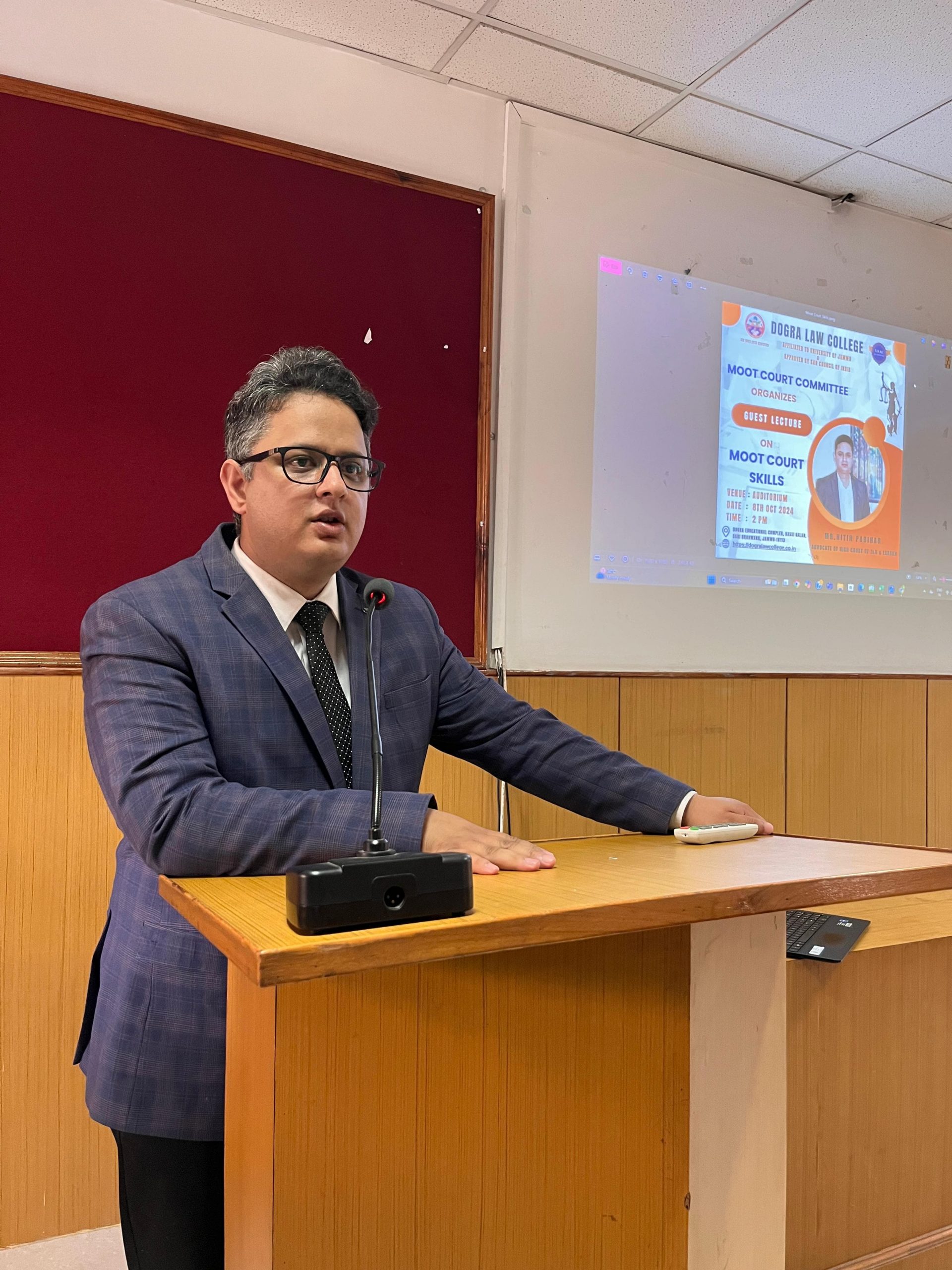



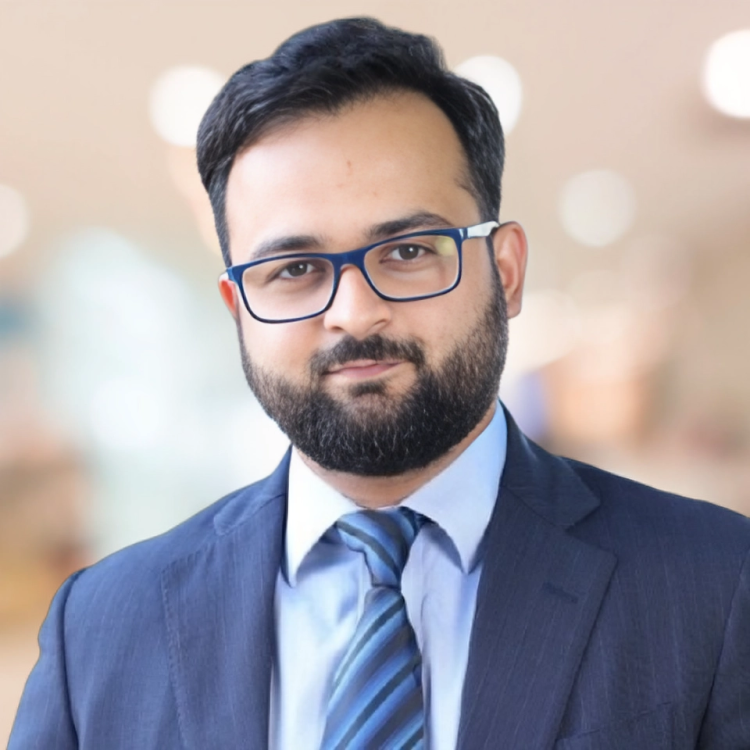



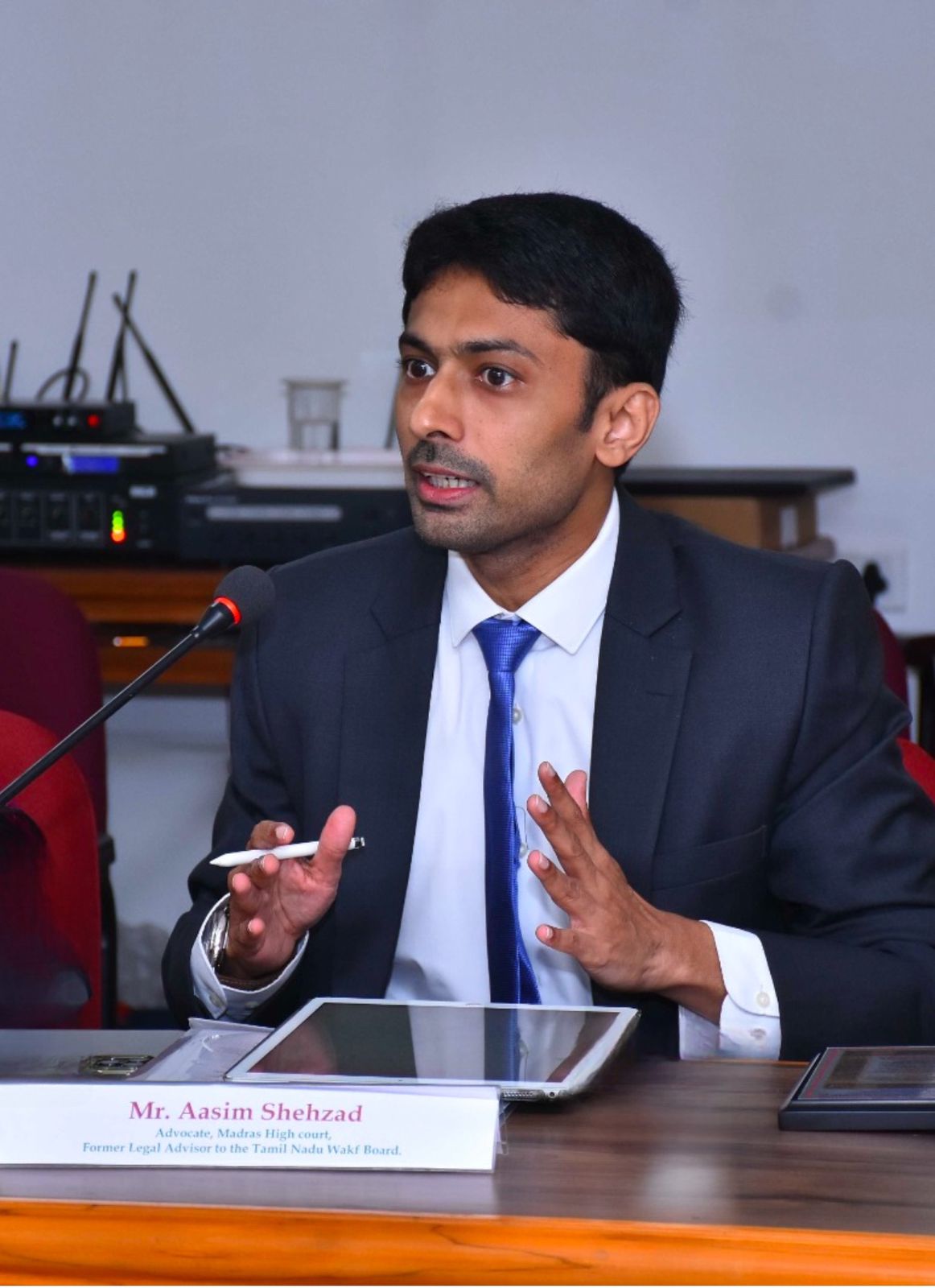



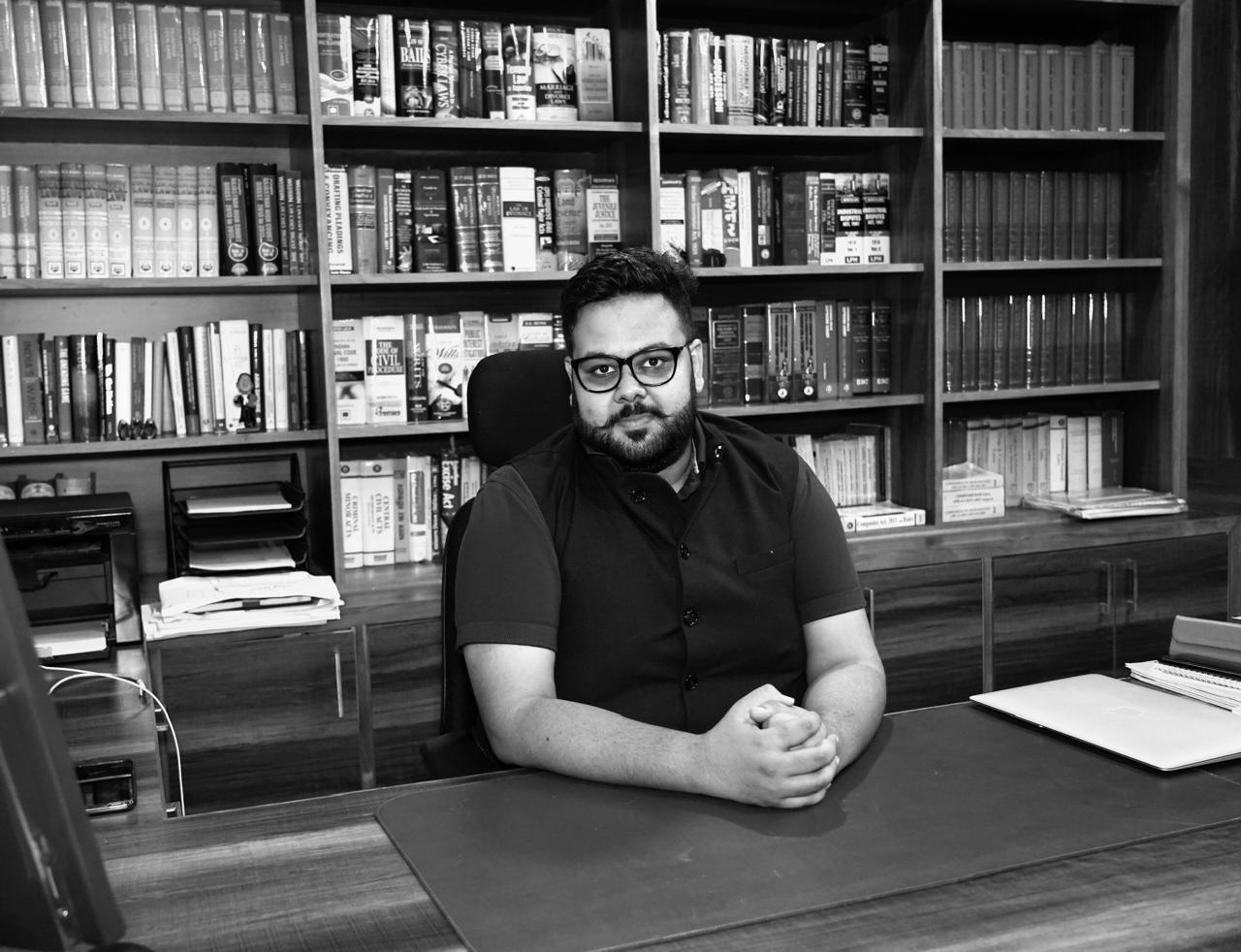








 Allow notifications