Can you share what inspired you to pursue a career in law and how you embarked on this journey?
Growing up, I always had a keen interest in understanding the intricacies of systems, whether economic, social, or legal. However, after completing my Economics Honors degree, I was still determining my next steps and decided to take the Delhi University LLB exam. The decision to sit for the Delhi University LLB exam was initially driven by practical considerations; law seemed like a vocational course with promising career prospects.
However, as I delved into my law studies, I developed a keen interest in commercial laws, particularly in the area of Intellectual Property (IP). This interest was sparked during internships at leading IP firms, where I witnessed the importance of trademarks and other IP elements in protecting business identities and innovations. My enthusiasm for law translated into academic success; I consistently ranked among the top 5% of my batch, which comprised around 800 students. My dedication led to an opportunity with Anand & Anand, a prestigious IP firm, which marked the beginning of my professional journey in law. What started as a pragmatic decision evolved into a fulfilling career focused on the intricate and impactful field of IP law.
You’ve managed high-stakes litigation for leading companies. Can you describe one of the most challenging cases you’ve handled and the key takeaways from that experience?
In my career, I’ve been involved in several trademark litigations, successfully enforcing rights related to brand names, logos, trade dresses, copyrights, and other similar IP rights. One of the most challenging cases I’m currently handling is an ongoing appeal at the Delhi High Court in a patent matter. The dispute centers around the appropriate jurisdiction for filing an appeal against a refusal order issued by the Delhi Patent Office, despite the patent application being initially filed in Mumbai. We contend that the Delhi High Court should have jurisdiction since the refusal order was passed in Delhi.
The case took a complex turn when a single judge bench at the Delhi High Court declared the appeal non-maintainable. We have now escalated the matter to a division bench, seeking a reconsideration of the jurisdictional issue. This case is particularly intriguing as it could set a precedent for similar jurisdictional disputes in IP law. The outcome will significantly impact the strategic considerations for patent litigation in India. The ongoing appeal is a testament to the complexities and nuances involved in IP litigation and underscores the importance of jurisdictional clarity in legal proceedings. [FILO EDTECH INC. Vs UNION OF INDIA LPA 375/2024]
As an expert in Intellectual Property Law, what do you consider the most critical elements when managing trademark prosecution and litigation?
In managing trademark prosecution and litigation, I find that the most critical elements revolve around preparation, strategy, and adaptability. First and foremost, comprehensive research is key. Before filing a trademark, it’s crucial to conduct thorough searches to ensure the mark is distinctive and doesn’t infringe on existing rights. This groundwork helps avoid potential conflicts and sets a solid foundation for the trademark’s protection.
Another important aspect is strategic planning. Anticipating challenges whether, during the prosecution phase or in potential litigation, allows us to develop a proactive approach. For instance, being prepared for opposition or knowing when to negotiate versus litigate can significantly influence the outcome.
Communication also plays a vital role. Clear and persuasive communication with clients, examiners, and even opposing parties can make a big difference. Whether, it’s drafting responses to office actions or presenting arguments in court, articulating our position effectively is crucial.
Lastly, I believe in staying adaptive and informed. The landscape of IP law is constantly evolving, so keeping up with the latest legal developments and industry trends is essential. This not only helps in staying ahead of the curve but also in providing the best possible advice to clients.
Overall, it’s a mix of thorough preparation, strategic thinking, clear communication, and continuous learning that I find most critical in managing trademark prosecution and litigation.
What emerging trends in corporate and intellectual property law do you believe will shape the future of legal practice, and how should legal professionals prepare for these changes?
Emerging trends in corporate and intellectual property law are increasingly shaped by advancements in technology, particularly AI. AI is revolutionizing how we draft legal documents, from contracts to IP pleadings, by streamlining the process and handling repetitive tasks more efficiently. This shift is exciting because it allows us to focus more on the strategic aspects of our work and provides clients with faster turnaround times. However, while AI can handle many routine tasks, we legal professionals must remember that the nuanced understanding and strategic insight we bring to the table can’t be replicated by machines.
To prepare for these changes, we need to embrace technology and stay updated on the latest tools and trends. Learning how to use AI effectively will enhance our productivity, but we should also focus on developing skills that complement these tools, such as critical thinking and personalized client interactions. By combining technological proficiency with our unique legal expertise, we can continue to add significant value and remain indispensable in a rapidly evolving legal landscape.
You developed an online certificate course on Copyrights for Lawctopus. How do you see the role of online education in shaping the future of legal training?
Online education is revolutionizing legal training by making valuable knowledge more accessible and affordable. Platforms like Lawctopus, where I developed a course on Copyrights, exemplify how online courses provide keen learners with the opportunity to dive deep into specialized areas of law without the constraints of traditional, lengthy, and costly degrees. For me, online courses have been a game-changer. When I wanted to expand my practice to include complex corporate law assignments such as multi-jurisdictional M&As, advisory on equity structures, cross-border transactions, and corporate restructuring, these well-crafted courses allowed me to gain the necessary expertise efficiently and economically.
The beauty of online education lies in its ability to offer flexible learning options that cater to various levels of expertise and interest. It empowers professionals to stay current with evolving legal trends and deepen their knowledge base, all from the comfort of their own homes. This democratization of education not only enhances individual careers but also contributes to a more knowledgeable and agile legal community.
Outside of your professional life, do you have any hobbies or interests that you feel contribute to your legal thinking or problem-solving skills?
Outside of my professional life, my hobbies play a significant role in enhancing my legal thinking and problem-solving skills. I’m an avid reader with a broad range of interests, including fiction, history, and philosophy. Additionally, I have a strong interest in personal development literature, which offers valuable insights into human behaviour and decision-making. This diverse reading habit sharpens my critical thinking and helps me approach legal issues from multiple perspectives, enriching my problem-solving abilities.
Travelling is another passion that complements my legal work. Exploring different cultures and engaging with people from various backgrounds provides me with unique viewpoints and approaches to problem-solving. This exposure fosters a more adaptable and open-minded approach, which is essential for tackling complex legal challenges. Both reading widely and travelling allow me to bring fresh insights and innovative solutions to my legal practice.
As someone deeply involved in the legal aspects of emerging technologies, what do you see as the most pressing IP challenges in areas like AI and cybersecurity?
In the realm of AI, one major challenge is defining and protecting intellectual property rights for innovations that are driven by machine learning algorithms. Determining ownership of AI-generated inventions or works can be complex, especially when AI systems are creating novel solutions without direct human intervention. This raises questions about patentability and copyright, and whether current IP frameworks are adequate for these advancements.
In cybersecurity, the challenge is ensuring that our intellectual property is safe from cyber threats. One notable example was when I was involved in a case where a company’s proprietary encryption algorithms were compromised during a sophisticated cyber-attack. The breach not only jeopardized their trade secrets but also raised complex questions about the effectiveness of their security measures and their legal obligations to protect their IP.
A key technical challenge here was understanding the intricacies of how the encryption was bypassed. This required working closely with cybersecurity experts to assess the vulnerability and determine how it could have been exploited. We had to delve into the specifics of the encryption technology, analyze the breach, and then figure out how to fortify the IP protection moving forward. This experience highlighted the need for a legal approach that’s deeply integrated with the technical aspects of cybersecurity. It’s not just about having legal protections in place but also understanding the technology to ensure that our IP safeguards are robust and adaptable to evolving threats.
Considering your diverse experience, if you could create a new area of IP law to address future challenges, what would it be and why?
If I could create a new area of IP law, it would focus on AI-generated innovations and Ownership Rights. As AI technology advances, it’s increasingly capable of generating new inventions, designs, and creative works autonomously. However, current IP frameworks are struggling to keep up with these developments, particularly in defining ownership and protection for AI-generated outputs.
The new area of law would address several key issues: establishing clear guidelines for determining ownership of AI-generated inventions, defining the role of human contributors versus AI systems, and creating a framework for protecting AI-created intellectual property. This would involve setting standards for patent and copyright eligibility when an AI is the primary creator and resolving disputes related to the rights of the developers versus the AI itself.
This proposed IP domain is crucial because it would ensure that as AI continues to innovate, the legal system can adequately protect and manage these advancements. It would help address the gaps in current IP laws and provide a structured approach to the future of creativity and invention in the age of AI.
You’ve witnessed the rise of digital platforms and their impact on IP. How do you envision trademark and copyright law evolving to address challenges in the digital space?
On the trademark front, online counterfeiting is a significant menace that demands more effective legal measures. In the digital landscape, where brands are prevalent across social media, online marketplaces, and app stores, companies face persistent issues with unauthorized use of their trademarks. This often involves numerous counterfeiters operating anonymously or under false identities, making it challenging to address each instance individually. Therefore, trademark law needs to implement more robust policies and practices to combat these widespread infringements efficiently. Instead of pursuing multiple litigations against individual offenders, we need a streamlined approach that can address these issues comprehensively and proactively.
As regards copyright, the digital revolution has made it incredibly easy to copy and distribute content, which complicates enforcement. I’ve dealt with cases where copyrighted materials were pirated across multiple platforms, making it a daunting task to track and address infringement. The law will need to evolve with better digital rights management tools and more effective takedown procedures. Additionally, as user-generated content becomes more widespread, we need to rethink how copyright law balances protecting original works by accommodating the way people build upon and remix existing content. This may involve developing new legal frameworks that both safeguard the rights of original creators and support the collaborative and adaptive nature of digital creativity.
As someone who’s navigated law firms, what insights can you share about the different dynamics and challenges in these environments?
Navigating law firms across different cities has given me a unique perspective on the varying dynamics and challenges in these environments. While the essence of law firms remains consistent—a client-driven focus aiming to provide top-notch services and build strong portfolios—there are notable differences influenced by local practices and court systems.
For instance, I’ve observed distinct operational nuances between law firms in cities like Delhi and Mumbai. The Delhi High Court and the Bombay High Court, for example, have different procedural practices and court cultures. Understanding these regional variations helps law firms tailor their strategies and services to better meet local demands and navigate the specific challenges of each jurisdiction. It also highlights the importance of adaptability and local expertise in providing effective legal solutions across different cities.
Can you share how you began your career in law and what motivated you to pursue this path? Was there someone who inspired or motivated you to make a career in Law?
I have seen my father crusading the cause of litigants, most of whom were poor and oppressed, and his commitment to the cause of justice, irrespective of whether his clients could pay his fees. With his excellence as a private counsel, who rose to the position of the Chief Standing Counsel for the State, rescuing public departments from many a piquant situation that arose during his tenure, I held him (and still keep him) as my role model and therefore I had no ambition, no aspiration, no other option but to study law and to serve and aid the ailing humanity with the power of Law.
With over 25 years of diverse experience in the legal field, what significant changes have you observed in the practice of law?
The technological developments worldwide have lessened the gap between fellow humans across the globe and social interactions which now happen worldwide on various social media platforms have not only broadened the horizons for budding lawyers but have enhanced their capacities and abilities. In olden times, legal research which mandated visits to libraries, and reading through books, journals and digests is now available with the click of a mouse. The information, which is available freely on the world wide web can be accessed by anyone and everyone, but then, there is certainly a word of caution for those who just believe in cut and paste, as many times, deceptive websites may offer a concocted information which may land the user in trouble. Technology and Law go hand in hand, but so do caution and care, which need to be exercised by those using technology to aid their research.
In your private legal practice, you have handled various cases in Family Laws, Civil, and Criminal Litigation. Can you share a memorable case and its impact on your professional growth?
Post Covid, there has been a spurt in cases relating to matrimonial relationships where the couple fight a concerted battle, which results in multiple FIRs being filed from either sides and related litigation in the form of a maintenance case, a case under Domestic Violence Act also being agitated in courts of law. A close look at the cases would reveal that these cases are mostly an outcome of an ego clash between the spouses where the role of an Advocate is more of a counsellor, who must use his skills to mediate and bring the parties to a consensus as, in a matrimonial case, and the cases that ensue, it is not only the couple which suffers, it is their families which suffer the trauma. In my role as an Advocate in matrimonial cases, I have successfully closed dozens of cases brought about an amicable settlement between the parties, withdrawn criminal cases, ensuring a better tomorrow for the estranged couple, by way of an agreement that created a win-win for the estranged couple.
A Memorable case that I would share related to a frantic phone call to me from a lady, a mother whose daughter aged about 13 years, complained of stomach ache and was taken to a nearby hospital where it was revealed that the girl child was pregnant and was carrying a live foetus. The family extremely poor, was devastated. On our intervention and request made to the SP, an FIR was registered and the culprit was arrested and sent to judicial custody. The bigger concern was the pregnancy which would have cost the girl child, her life. We coordinated, got a petition filed in the High Court and procured permission to abort the foetus, at state expenses. Post this traumatic incident, we handheld the girl, ensured that she was treated well and left her home, while also ensuring the payment of a compensation of 3.00 Lacs from the government, which would go a long way in sustaining her in the drama called life. All this was done gratis, pro-bono for which not a single penny was charged from the family/child.
Another memorable achievement, which is worth sharing, is the case of tourist guides of the all-famous Husainabad Trust, which owns the majestic and most beautiful monuments of Lucknow, the cultural hub of north India, and includes the signature monument of Lucknow – Rumi Darwaza, Asafi Imambada and Bhool Bhulayya, Chota Imambada etc. These tourist guides were not even paid the wages that were payable to an unskilled worker. At their request, we took up their cause pro-bono and ensured the grant of the minimum pay scale to these lesser privileged brethren, besides other social security initiatives, an effort which was lauded worldwide.
Having worked both as an in-house counsel and as an independent advocate, can you share your experiences and insights on the distinct challenges and rewards of each role, and how they have shaped your overall legal perspective?
Having aced my academics with distinction (Securing First Place in the LL.B. Examination from Jamia Millia Islamia and then having topped the Merit list of LL.M. from the University of Lucknow, securing 2 gold medals), I always craved knowledge on the working of the public as well as private institutions and I spent a considerable time, working for a central government PSU and a corporate giant, heading their legal wing. I learnt that while in government, officers are only conscious about saving their skin and trying how to delay and thereby stall a project (as one only becomes accountable when a particular action that is taken turns bad after a few years, making those who initiated and concluded the said appraisal vulnerable) private sector is just the reverse. The private sector is result/solution oriented, meaning thereby that the private sector understands the concerns and procedural hiccups but an in-house counsel is required to provide solutions on how to get a project going. In the private sector, it is the result that matters and the result is the determinant of the continuance of a job in a private entity, notwithstanding the business group which controls it.
The learnings from both the government and provide sectors which I have gathered through these formative years of my professional career are helping me in discharging my functions as a private counsel, as I understand the concerns and issues of both these enterprises and have an edge on my peers who are less aware on how the decision making takes place on these divergent sides. This knowledge and understanding help me serve my clients in a better and promising manner.
Your work in the preservation of heritage monuments in Lucknow is well-known. What inspired you to take up this cause, and what has been your most rewarding experience in this area?
Protecting and preserving culture, which is a determinant of an individual’s personality is a fundamental duty of every Indian, and when I work towards the concertation and preservation of monuments, I do so in the discharge and fulfilment of my fundamental duty. The monuments of Lucknow and adjoining districts are uniquely distinct and have an aura that resonates once you even have a cursory glance over them. These monuments have always fascinated me as a child and I used to fight with my friends who would scribble on the monuments. The fascination turned into a passion when in the year 2008, I was entrusted with a monument (Mausoleum of King Amjad Ali Shah, Hazratganj, Lucknow constructed in 1847) as a trustee appointed by the State Waqf Board. In a struggle that ensued, it transpired that the monument, which was a centrally protected monument was obscured, vandalised and on the verge of an imminent collapse, forming a part of the “Lost Monument” of Lucknow. Since neither the Wakf Board, nor the earlier committee of the Waqf had any documentation regarding this monument, the RTI Act came to our rescue and the RTI Applications we filed before the concerned authorities, visits to the Archives, regular follow-ups with the authorities resulted in the initiation of action, initially with the removal of encroachments from within and around the monument, and then its conservation and preservation, as a result whereof, the monument now stands restored as a live monument. Unfortunately, during the first COVID lockdown, the outer gate of the monument crumbled down, which has also now been fully repaired and conserved as a result of our efforts and follow-ups with the concerned stakeholders. The most rewarding moment was being adjudged “One Man Preservation Movement” by the internationally acclaimed magazine “The Economist” in Oct 2016.
The learnings gathered from the Mausoleum of King Amjad Ali Shah are now being replicated for the other similarly situated monuments of Lucknow which are equally vandalised, encroached and unkempt. I am confident that I shall be able to ensure a proper conservation of our cultural heritage, with guidance from the Hon’ble High Court where my PIL on this count is engaging regular attention of the Hon’ble High Court whose intervention is proving to be a boon for the monuments and their conservation.
Your research on the Allahabad High Court Rules led to a significant amendment. What drove you to undertake this research, and what impact has it had on the legal community? Please share some insights if you can.
An Advocate, to be able to do justice with his profession, has to be inquisitive. In my endeavour to secure the rights of my fellow citizens, I came across this provision of the Allahabad High Court Rules in the form of Chapter XVIII Rule 18(3)(a) which mandated a 10 days notice to the Government Advocate (to enable him to seek instructions from the districts regarding criminal antecedents of the bail applicants and instructions on the said applications). This notice period was necessary before the bail application was placed before the Hon’ble Court for hearing. This rule indicated the deprivation of the right to life and personal liberty of an individual sans “due process of law”. This intrigued me and I initiated research on the subject, studying similar rules across the country only to note that no rule akin to this patently unjust rule existed in any High Court across the country, irrespective of geographical areas of the states. The rule was therefore challenged before the Hon’ble Supreme Court, by way of a PIL which was drafted after thorough research and in terms of the directions of the Hon’ble Supreme Court, the Rule was amended from 10 days to 2 days, to the respite of thousands of those who languished in jails without hearing, for a minimum period of 10 days, which even extended further on account of procedural technicalities. The rule that stood in the rulebook for almost 4 decades was not challenged and led to the deprivation of the rights of scores of citizens. This in fact, is my contribution towards my fellow citizens and profession which I cherish.
Winning the prestigious Changemaker Award for five consecutive years is a remarkable achievement. How did these awards influence your work and inspire others?
The corporate sector, especially the larger companies with substantial turnover has a CSR wing, adhering to a legal mandate, and some of these companies including the Bharti group get involved in several far-reaching social initiatives and walk the talk by motivating their personnel towards public causes. I, for one, have been a Samaritan for whom public service and aiding the ailing humanity has been a priority had been crusading for many public causes all through, which were identified by the company’s foundation which enlisted my socially oriented individual efforts in the category for in-house professionals and post a detailed review which comprised of a committee of distinguished personnel and social activists selected globally, my initiatives were found laudable and creditworthy and they were rewarded by way of Changemaker Awards 5 years in a row, till I switched to a different role and reverted to hardcore advocacy.
As a visiting faculty at various institutions, what key lessons do you impart to your students, and how do you prepare them for a successful legal career? Also, what advice would you give to young legal professionals who are just starting their careers in the current legal landscape?
We, Indians have proven acumen and are conscious about our rights and reach the authorities whenever any of our rights are infringed, seeking prompt redress. While agitating for our rightful claims is our right, we have an equally important set of duties that are enshrined in Article 51A of the Indian Constitution. Unfortunately, most of my fellow countrymen are hardly aware of these duties and those who are aware, do not perform these duties. In all my interactions with the students and officers, I always insist that we must not only read, understand and perform the fundamental duties, but also imbibe upon our younger generation, especially the budding lawyers to inculcate these fundamental duties in our persona, and I am confident that if we do so, our country shall gradually rise and shine, becoming a world leader, a position which we aspire for and rightly deserve.
The young lawyers who are about to enter the unfathomable legal profession need to know that there is no alternative to hard work, and their interactions with the clients and the needy need to start with a notebook in their hands, where they need to give a patient hearing to the concerned, note down the concerns and then decide upon the course of action suited for a particular situation.
Outside of your professional life, what personal hobbies or interests do you pursue, and how do they influence your approach to your legal practice?
My personal hobbies include social interactions, reading and writing and these hobbies enable me to learn the human values of commitment, dedication, and devotion and to a larger role of a social reformer which an Advocate has to play as a person who is not only leaned but also knows how to interpret laws and write the petitions aimed at aiding the ailing humanity. The knack of a lawyer as a crusader for the rights of the poor and the oppressed is beautifully expressed by poet Waseem Barelvi when he writes :
Can you share the journey of how you started your career in law and the key experiences that have shaped your path to becoming the Managing Partner at TJA Law Chambers? Please walk us through your journey starting from selecting Law as a career and your time at NLU, Jodhpur.
My journey in law is deeply rooted in my upbringing in Nagina, a small town in District Bijnor of Uttar Pradesh. Despite our humble background, my parents ensured that we received a quality education from the best convent school in the district. As the youngest of three siblings, I was greatly influenced by my father, a dedicated lawyer practising at the trial Courts. Since the court premises were within walking distance from our home, I spent my summer vacations at my father’s chamber captivated by watching him argue in Court. My father noticed my fascination with court proceedings and envisioned me following in his footsteps, aspiring to become a lawyer in the Supreme Court.
Early Challenges and Decision to Pursue Law: Tragically, I lost my father when I was in the 12th standard. This loss left a significant void in my life and threw my future into uncertainty. Until I completed my 12th standard, I had no clear direction for my career path. Although I was a student of science, the influence of my father’s legacy and my desire to honour his dreams led me to opt for a career in law after completing my 12th.
Academic Achievements: I pursued 5-year law degree with determination and dedication, earning a gold medal for being the University Topper. This achievement not only solidified my passion for the field but also opened doors for further opportunities. In my final year of law school, I also enrolled in a postgraduate diploma course in Cyber Laws at the Indian Law Institute, New Delhi, which required me to travel to Delhi every alternate day. The travel experience in UP Roadways and retuning hometown by train was a time to remember. After completing my law degree, I worked briefly at the Allahabad High Court before deciding to further my legal education by pursuing an MBA-LLM at National Law University, Jodhpur.
Time at NLU, Jodhpur: Choosing to pursue an MBA-LLM degree at NLU, Jodhpur, was a pivotal decision. My time there was transformative, providing me with a comprehensive legal education and shaping my professional outlook. The diverse exposure to life experiences, meeting people from across India, and engaging in various activities significantly transformed my personality. Being from a small town, this meant a lot to me. The rigorous academic environment, coupled with opportunities to participate in competitions and internships, honed my analytical and advocacy skills. These experiences were instrumental in building a solid foundation in legal principles and practice, helping me build my practice and learn to read people better.
All these experiences of highs and lows in life left a fathomless mark on me and somewhere encouraged to make a bold decision to start my own law firm.
You began your career from High Court and subsequently held various managerial roles in legal departments before taking the Advocate-On-Record (AOR) exam and founding your firm. How have these diverse experiences across different legal roles and sectors contributed to your approach to managing and running TJA Law Chambers? What insights did you gain from each phase of your career that have shaped your current practice?
My journey in law has been marked by a series of diverse and enriching experiences that have collectively shaped my approach to managing and running TJA Law Chambers. Each phase of my journey has provided me with unique insights and skills, which I have integrated into my current practice.
I began my legal career at the Allahabad High Court, where I initially did my judicial clerkship under the able guidance of Mr. Justice R.K Agrawal, who was later elevated to become a Supreme Court Judge. This initial experience exposed me to the fundamentals of courtroom procedures, legal research, and the importance of meticulous preparation. It also taught me the value of strategic thinking and the complexities involved in litigation.
After completing my post-graduation, I joined various reputed companies as an in-house counsel like GMR Energy, Indus Towers Limited and Sterlite Power Limited to name a few. Working in-house was a distinct experience compared to practising law in courts. Supporting the organization and other departments from a legal perspective taught me a lot about corporate governance, compliance, and risk management. It also highlighted the importance of effective communication, teamwork, and aligning legal strategies with business objectives.
Before founding my law firm, I had a short stint at a law firm called Advaita Legal. My distinct experiences allowed me to understand the nuances of private practice, client management, and the importance of building a professional network. It reinforced the need for thorough research, strategic thinking, and delivering client-centric legal solutions.
Founding TJA Law Chambers: It was always my dream to have an independent practice, but being from a small town and without a godfather in the profession, it was challenging. Nevertheless, I took the plunge and founded TJA Law Chambers in late 2019 with no significant clients in hand. Shortly after, the pandemic hit, which for my legal practice turned out to be a blessing in disguise. Despite the global challenges, I received work directly from foreign clients, which kickstarted the firm’s growth. There has been no looking back since then, and we are now catering to companies like ONGC, NTPC, EESL etc.
Advocate-On-Record (AOR) Exam: With my dream to establish my law firm, I also aspired to establish my practice in the Supreme Court, fulfilling my father’s dream. To this end, I started preparing for the Advocate-On-Record (AOR) exam last year and cleared it on the first attempt. This credential not only enhanced my credibility but also deepened my understanding of Supreme Court practices and procedures. The rigorous preparation for the AOR exam honed my analytical abilities and reinforced the importance of staying abreast of legal developments.
What motivated you to pursue the Advocate-On-Record (AOR) examination, and how did your mentor or any influential figures support you through this process? What are your thoughts on the significance of the AOR exam in a legal career?
Establishing a practice in the Supreme Court was a way to pay tribute to my father and the values he instilled in me.
Self-Guided Journey: Unfortunately, I did not have the benefit of a mentor or any influential figures to guide me through the journey of the AOR exam. This made the journey more challenging but also incredibly rewarding. I had to rely on my self-discipline, determination, and resourcefulness. I meticulously studied the Supreme Court rules, procedures, and landmark judgments. I sought out study materials, attended relevant workshops, and engaged in self-study to ensure I was thoroughly prepared for the exam. Achieving success on my first attempt was particularly gratifying and reinforced my belief in the power of perseverance and self-reliance.
The AOR exam’s significance in a legal career cannot be overstated, as it enhances credibility, provides exclusive rights, contributes to professional growth, instils client confidence, and opens up numerous career opportunities. I am now reaping the benefits of becoming an AOR.
As the Managing Partner and Founder of TJA Law Chambers, what were some of the significant challenges you faced while starting the firm? Now, after five years, how has the firm’s approach evolved in handling complex cases, and what types of cases have become a focus for your team?
Challenges Faced While Starting the Firm: Starting TJA Law Chambers came with significant challenges, primarily due to the absence of a godfather or established network and the onset of the COVID-19 pandemic. These factors made business development and client acquisition particularly difficult. The pandemic restricted our ability to engage in traditional business development activities and necessitated a shift to remote operations. One of the initial breakthroughs was receiving our first assignment from clients in London and Luxembourg. This opportunity was crucial, as it involved negotiating and drafting high-stakes agreements across various jurisdictions, including China, Hong Kong, the UK, Russia, and Europe. This international work was a ray of hope, helping to establish our reputation on a global scale.
Adaptations and Strategies: Despite the pandemic’s constraints, working from home allowed us to save on office expenses, which was a critical advantage during the early stages. By focusing on delivering the best results for every assignment, we demonstrated our commitment and capability. This dedication paid off as our reputation grew, leading to subsequent opportunities and an influx of work. As a result, we were able to secure empanelment with prominent organizations such as ONGC, EESL, DERC, and Kolkata Port. These empanelments were pivotal in solidifying our presence in the legal market.
After five years, TJA Law Chambers has evolved significantly. Holding the prestigious Advocate-On-Record (AOR) designation, we are now well-positioned in the legal landscape. Our approach to handling complex cases has matured in several ways.
Our firm has developed deep expertise in representing corporate clients and handling complex legal matters across various sectors. Enhanced Services: We provide comprehensive legal services in areas such as energy law, regulatory compliance, dispute resolution, contract management and advisory services. Our practice now spans several key forums, including Arbitration, the Appellate Tribunal for Electricity (APTEL), various Electricity Regulatory Commissions, the National Consumer Disputes Redressal Commission (NCDRC), the National Company Law Appellate Tribunal (NCLAT), and the National Company Law Tribunal (NCLT), in addition to various High Courts and the Supreme Court.
Strategic Growth: The firm has strategically focused on building a strong client base and expanding our service offerings. Our growth is driven by a commitment to excellence and adapting to the evolving legal landscape.
Client-Centric Approach: We have refined our approach to ensure that we meet the unique needs of each client, providing tailored legal solutions and maintaining strong, transparent relationships.
Do you engage in any pro bono work or community service? How does this aspect of your career influence your professional perspective and personal satisfaction?
While we prefer not to disclose specific details, I want to emphasize that TJA Law Chambers is committed to supporting those in need. Our office is open to assisting individuals who are unable to afford legal services, regardless of their financial situation. We believe that everyone deserves access to legal representation and justice, and we are dedicated to helping those who face significant challenges.
It enhances our professional perspective, provides personal satisfaction, and strengthens our commitment to justice and community service.
The legal field is constantly evolving. What are some emerging trends or challenges in commercial litigation and corporate law that new lawyers should be aware of?
The evolving landscape of legal practice increasingly emphasizes the growth of Alternative Dispute Resolution (ADR). Mechanisms such as arbitration and mediation are gaining preference over traditional litigation, primarily for their cost-effectiveness and efficiency. Lawyers must grasp these processes to effectively navigate and resolve disputes, harnessing the benefits of ADR to better serve their clients.
Additionally, the impact of technology and artificial intelligence (AI) on the legal field cannot be overstated. AI tools are revolutionizing legal research, document review, and case outcome predictions, providing unprecedented accuracy and efficiency. Lawyers are encouraged to leverage these advancements to enhance their practice, embracing the future of legal technology.
Staying current with new judgments from the Supreme Court and High Courts is also crucial. As laws, such as the Insolvency and Bankruptcy Code (IBC), continue to evolve, understanding the latest judicial decisions is essential for grasping the development and application of the law. Regularly reviewing these judgments ensures that legal professionals remain informed and adept in their practice.
Could you share some of the landmark cases you’ve handled throughout your career and discuss the key challenges you faced in those cases? How did these experiences contribute to your understanding of the legal field and what lessons can current and aspiring legal professionals draw from them?
I have had the opportunity to be part of several landmark cases involving important questions of law. However, one case in particular stands out to me. While it may not be a landmark case, handling it independently had a profound impact on me.
This was at the inception of my independent practice. An elderly woman had her pension stopped due to a mismatch in her name in government records. This pension was her lifeline, provided due to her late husband’s job. I took up her case, but unfortunately, she passed away before it was resolved. Despite my repeated requests for an early hearing, citing her dire financial and health conditions, the court did not give serious consideration to expediting the case. This was a disheartening moment for me as it felt like our judicial system failed her.
The second notable case was my first as an Advocate-on-Record (AOR) in the Supreme Court. It involved the rights of homebuyers in the context of insolvency proceedings under the Insolvency and Bankruptcy Code (IBC). The issue was the denial of rights to homebuyers who did not file a claim form. The Supreme Court has issued a notice in this case, and its outcome could become a landmark judgment for homebuyers’ rights. This case is particularly challenging as current IBC provisions and Supreme Court judgments support the exclusion of those who haven’t filed claims. We are eagerly awaiting the court’s decision as it could introduce a new legal precedent.
With my limited experience in the legal field spanning over 14 years, I could say that every day presents new challenges, and as legal professionals, we must embrace and welcome them. You strive to achieve the best outcomes for your clients, but sometimes, due to court delays or other reasons, you might not get the desired relief. The important thing is to continue fighting for your clients with the same zeal and dedication.
There will be cases where you face strong opposition. If you have worked on the minute details and thoroughly prepared your brief, even if the law is not on your side, you will earn respect and recognition in the court.
Beyond your legal career, what are some of your hobbies or interests? How do they contribute to your overall well-being and professional performance?
I am an avid adventurer, thriving on the thrill of exploring the great outdoors. I have summited peaks reaching 16,000 and 14,000 feet, embracing the challenges of high-altitude trekking. My passion extends to biking, swimming, and playing cricket, as I constantly seek new ways to stay active and connected to nature. As a true nature lover, I find immense joy in travelling and discovering new places, immersing myself in the beauty and wonder of the natural world. This blend of physical and mental challenges has enriched my professional outlook, enhancing my ability to tackle complex problems and adapt to various situations with a fresh and dynamic approach.
With your vast experience, what advice would you offer to current legal professionals and law students who aspire to make a significant impact in their careers?
Though I feel I am still on my journey if I were to offer advice, it would be this: Embrace life-long learning, clearly define your goals, create a structured plan to pursue them and always be ethical. With dedicated focus and determination, you can achieve anything.
What inspired you to pursue a career in law, and how did your education at ILS Law College and your qualification as a Company Secretary contribute to your professional development?
I find the dynamic nature of legal work exciting. In the corporate world, the landscape is constantly shifting—new regulations emerge, industries evolve, and global markets interconnect in unprecedented ways. Each day brings forth a fresh set of challenges that demand not only legal acumen but also strategic commercial thinking and a nuanced understanding of business dynamics. Whether negotiating a complex merger, drafting a crucial contract, or navigating regulatory hurdles, I am driven by the impact my work can have in value creation for my clients and the broader business community.
ILS Law College, with its strong alumni and emphasis judicial services focuses on jurisprudence-based teaching, which gave me a robust foundation of legal practice and legal perspective. Complementing this, my Company Secretary qualification offered a comprehensive grasp of corporate law procedures. I believe having dual degrees positively enhances my credibility, reinforcing my ability to deliver comprehensive legal counsel.
With extensive experience in corporate transactions, what are some of the most challenging deals you have worked on, and what were the key factors that led to their successful closure?
I recently concluded a brand acquisition which involved bifurcation of a long-standing family business. The transaction involved complex nuances of brand identification and family settlement. In such transactions, there are multiple layers of commercial and legal negotiations involved. Bringing all the elements together under one umbrella was a challenging task. The transaction’s success hinged on rigorous due diligence, effective communication among stakeholders, extensive negotiation rounds, and a comprehensive grasp of regulatory framework. Skillfully navigating these intricate challenges and anticipating potential hurdles was pivotal in achieving a seamless transaction. My team’s ability to navigate these complexities and foresee potential obstacles was critical in ensuring a smooth transaction.
How do you approach mentoring junior lawyers at EVA LAW, and what qualities do you believe are essential for their growth and success in the legal field?
At EVA Law, we’ve consciously moved away from the traditional hierarchical culture that is common in many law firms. Our approach to mentoring junior lawyers involves fostering an environment where designations and titles take a backseat in favour of hands-on experience, open dialogue, and regular feedback.
We encourage junior lawyers to immerse themselves in real-world legal challenges from the outset. Practical experience is invaluable, and we ensure that they have opportunities to work directly on transactional documents and negotiations. This hands-on approach not only builds their confidence but also sharpens their analytical skills and deepens their understanding of legal complexities.
We prioritise continuous learning and the importance of effective research, because a fail-safe differentiating factor that a young lawyer can have is ‘knowledge’. We encourage our lawyers to be approachable and reliable, qualities that build trust and enhance collaboration within the team.
From your time as an Associate at Thakker & Thakker to your current role as a Partner at EVA LAW, what are some of the most significant lessons you have learned that you would like to share with young legal professionals?
As an associate, I was often tasked with reviewing extensive documentation, which underscored the critical importance of attention to detail. Ensuring accuracy and thoroughness in these tasks established my reputation for reliability among peers and superiors. In my role as a Partner at EVA Law, I am required to think beyond the immediate legal issues and consider the broader business implications of my advice. One invaluable lesson which I would like to share is that as a lawyer one should constantly question the rationale behind our actions. This vision drives us to delve deeper into our work, gaining a thorough understanding of our decisions and ultimately enhancing our professional capabilities.
Another significant lesson I learned early on was the importance of accountability and that one should not have an ‘employee mindset’. Even as a junior lawyer, I took a lot of pride in my profession and felt personally answerable and accountable to the client, before sending any draft to a senior.
To young legal professionals, I would advise that while legal knowledge is fundamental, the ability to connect with clients and colleagues is equally essential. Strive to be reliable and approachable, and always be prepared to go the extra mile to deepen your understanding of the law and its application.
As a prominent female leader in the legal field, what challenges have you faced, and what advice would you give to young women aspiring to enter and excel in this profession?
I feel fortunate to have had incredibly supportive mentors who have treated me as an equal and provided me with the flexibility to manage both my professional and personal responsibilities effectively. Building rapport and trust with colleagues and mentors, irrespective of gender, is crucial. My mentors could always rely on me to balance my professional engagements while having a fulfilling personal life.
For young women aspiring to enter and excel in the legal profession, my advice is to remain confident in their abilities and seek out supportive mentors who can guide and advocate for them. It is equally important to advocate for oneself, assert your value, and consistently strive for excellence in all aspects of your work.
Have you been involved in any pro bono work or initiatives? How do you believe legal professionals can contribute to social justice and community service?
Pro bono work represents a crucial avenue for legal professionals to contribute to social justice and community service. Legal professionals can contribute to social justice through pro bono work by advocating for marginalized communities, supporting nonprofit organizations, and assisting individuals facing legal challenges.
What is your vision for the future of EVA LAW, and how do you plan to contribute to its growth and success in the coming years?
Given our strong foundation and the significant strides we have made in just under a year, my vision for EVA Law is to continue focusing on its expertise, client-centric approach, and innovative solutions in the legal landscape. Client relationships will always be at the core of EVA Law’s success
What motivated you to pursue the Company Secretary (CS) qualification alongside your LLB, and how has this dual qualification benefited your legal career and the clients you advise?
The motivation to pursue the CS qualification alongside my LLB stemmed from a desire to deepen my understanding of corporate governance and regulatory compliance. This dual qualification has enabled me to provide holistic legal advice that encompasses both legal and corporate governance perspectives, thereby adding significant value to the clients I advise.
Outside of your legal career, what personal hobbies or interests do you pursue, and how do they contribute to your overall well-being and professional performance?
Beyond work, spending quality time with my family is a top priority. After work hours, I look forward to going home to my daughter, who eagerly waits to share every little detail about her day. This time together is incredibly precious, and it helps me unwind and recharge. Being involved in her life while being able to effectively contribute and enjoy my work brings a sense of fulfilment and joy that balances the demands of my professional life. In addition to family time, I have found yoga and meditation to be immensely beneficial for my overall well-being. Practicing yoga and meditation provides a much-needed mental respite from the pressures of work.
Can you share with us how you began your career in law and company secretarial work? What inspired you to enter this field, and how did you progress to your current position?
Interestingly, my journey towards becoming a legal counsel and law professional started accidentally. When I was in college pursuing my B.Com, I aspired to become a Chartered Accountant. To gain some working experience before enrolling in CA, I joined an organization to work in the accounts function after completing my B.Com. There, I met the Company Secretary and Legal Counsel, and I was impressed by their role, interacting with top management, handling significant matters, and sitting in board meetings. I was fascinated by that role and, instead of CA, I joined the CS course.
However, as fate would have it (and I believe that destiny plays a very important role in our lives), after becoming a Company Secretary and joining an organization as CS back in the early 90s, I was given the charge of the legal function as well. Since CS work also involves a lot of legal and compliance responsibilities, I was happy to take on this additional role. That’s where my journey as a legal counsel began, and I later completed my graduation in Law as well.
Since then, I have always worked as a legal counsel or legal head, mostly in-house. It’s been around 30 years since I took on these roles, working with different Indian and multinational organizations. From the moment I was first given charge of the legal function, I realized that this was what I always wanted to do. Initially, I gained exposure in litigation, then contracting, followed by IPRs, brand protection, and all other related fields, including compliance and risk management. Of course, I have continued my role as a Company Secretary and take pride in that.
The past three decades have flown by like it was yesterday. Presently, I am the Sr. Vice President and Head of Legal at UFlex Ltd., a multibillion-dollar organization and India’s largest multinational flexible packaging and solutions company. UFlex manufactures a wide variety of flexible packaging films for various industry sectors across the world. With headquarters in Noida (National Capital Region), the company has packaging films manufacturing facilities in India and overseas under the global subsidiary packaging films brand ‘Flex Films’ in UAE, Mexico, Poland, Egypt, Russia, USA, Hungary, and Nigeria, with a cumulative capacity of over 609,000 TPA.
Can you share some of the most challenging legal cases or compliance issues you have faced and what you learned from those experiences? Additionally, what are some emerging trends in the legal field that you believe will shape the future of corporate law and compliance?
Data privacy is an important legislation that has a significant impact on all organizations. Cyber risk is another area that requires serious monitoring, review, and an effective framework. Additionally, SEBI’s existing and upcoming regulations and compliance on Responsible Business and Sustainability have brought ESG and sustainability to the forefront of all organizations. This is beneficial not only for the organizations but also for the nation and the world as a whole.
During your tenure at DCM Shriram Ltd., you held the position of VP (Corp. Law) & Company Secretary for almost a decade. What were some of the key achievements and challenges during this time?
In the last ten years, particularly after the new Companies Act and new SEBI regulations, the role of in-house counsel and company secretaries has significantly increased and become very challenging. Compliance with SEBI Listing regulations, SEBI (Prohibition of Insider Trading) Regulations, FEMA compliance, Companies Act, and other corporate compliances require constant attention and a high level of proactiveness. Shareholder governance has also become a new challenge, with shareholder activism on the rise in India. This is beneficial for both the company and the shareholders. Therefore, providing appropriate and accurate disclosures with all relevant information to shareholders and the public has become a priority in governance today.
Compliance and governance of insider trading and SEBI regulations are complex and challenging roles that require a proactive approach, including regular awareness sessions and training for employees and other connected persons. As we operate multiple businesses, each with its own dynamics, this is crucial.
Outside of your professional life, do you have any hobbies or interests that you are passionate about? How do they help you maintain a work-life balance?
I am very passionate about golf. Every weekend starts with a round with friends. I am truly in love with this game and can’t imagine myself without it. Golf is purely a mind game and teaches you a lot of life lessons. Playing twice or thrice a week is a must for me. If I don’t play in any given week, it feels incomplete. This game not only relaxes and recharges me but also reveals one’s true character on the course. Golf is the best thing that has happened to me, and I could talk about it for pages.
As a visiting faculty and guest lecturer, what topics do you find most crucial to impart to your students? How do you ensure they are prepared for the evolving legal landscape?
I usually teach corporate laws, IPRs, labor laws, and data protection. However, today’s generation needs to be fully geared up with technology in legal, what we call Techlegal. This is the time of AI, ML, and GenAI, and routine tasks will increasingly be handled by technology. To excel in the field, students need to be proficient with technology and demonstrate creativity and new ways of working.
For students and young legal professionals trying to decide between pursuing a career in litigation or as an in-house counsel, what advice would you give to help them understand which area might be the best fit for them?
I think both have their taste. It depends on what is of your interest. However, in both situations, my advice to youngsters is – Be yourself – You are what you are – be original and don’t copy anyone. You are unique and have your personality. Find yourself to the optimum. Of course, there are many things one should learn from the seniors and other leaders that should be part of your development and increase your skillsets but don’t lose your originality, no one can replace you. Further as a career advice, since we are today living in a dynamic time and things are changing so fast that by the time you get to the details of a thing the new version or new avatar is already there. Therefore one needs to get to speed with this. Technical competency is mandatory but being proficient in technology is the need of the time as we are already in the era of AI, M, and Metaverse and it’s a reality. Keeping yourself updated with the time is crucial for the counsels to be successful. The other two most important things – one they should understand the business first before they advise and the second is the quick responsiveness and proper research.
You initially pursued a Bachelor’s in Business Management before shifting to law. What motivated you to transition from BBA to LLB, Can you share how your journey began, including any mentors or specific experiences during your education at College that significantly influenced your career path?
The transition was not voluntary and Hon’ble Supreme Court had a major role to play in it.
In 2003, between the choice of joining National University of Advanced Legal Studies, in Kerala, and ICFAI LAW School, although I hailed from Kerala, I choose to join ICFAI LAW School for B.B.M LL.B. (Hons) at it Hyderabad Campus. The primary reason for choosing to join ICFAI LAW School was being allured by the course content and teaching methodology, advertised in the brochure then, was very promising. The principle ‘Caveat Emptor’ was taught by life example by ICFAI then. Before completion of the 2nd year, in 2005, it was informed that the B.B.M and LL. B degree of the College which was affiliated under Chhattisgarh Private Sector University Act, 2002, was struck down as unconstitutional by Hon’ble Supreme Court and that the batch of ours could not be continued. It had come to almost an existential crisis that not only two years of college life is lost, probably a career in law was never going to be there.
It was after a lot of talks with the College Authorities, solutions emerged and it was offered that we complete the last year of Graduation at the Dehradun Campus of ICFAI University and will be conferred with B.B.A degree and thereafter whoever was interested to pursue M.B.A, would be given lateral admission to M.B.A degree to the ICFAI Colleges and whosoever was interested to pursue law could pursue law from Colleges of their Choice. Although distraught, accepting the offered solution, we went to Dehradun. Undeterred to the dream of being a lawyer, pursuant to final exam, I applied to ILS Law College, Pune and Campus Law Centre, Delhi. Until I secured admission, I moved to Delhi and started working with IBM and later at Convergys (BPO Sector). Working in the BPO sector, improved my communication skills and during the training period, befriended and met a lot of interesting individuals. Spending time with people and understanding their nature, especially from different parts of India, the discussions on various topics improved my perspective on how to narrate the facts and impress upon it. These discussions, had later, came to be of use while drafting Plaints and Petitions and while arguing cases.
I was able to secure my admission in ILS Law College, Pune (2006-09) for three-year course. I was staying in an apartment next to ILS Law College where the other roommates were from Symbiosis Law College including my dear friend Advocate Rony John. Most of my dear friends among the legal fraternity were formed here. The apartment used to house at time more than 30 college students. We had a library with the discarded books of the roommates who left for jobs after the final year college. The apartment was first choice among many students for preparing moot court memorials and research. More law was learnt during the discussions in the apartment with friends who were preparing for moot courts.
During my three-year law course, much to various other factors shaping my decision, I was lured to attempt the Civil Service Examination. After my final examinations in 2009, I shifted back to Delhi for preparing Civil Service Examination. Thrice I cleared preliminary examination, but could not clear Mains Examination. After 2012 Mains attempt which I wrote in Kerala, while waiting for the results, I applied with M/s Menon and Pai Advocates in Ernakulam for the post of Associate Lawyer. The aspirant in me knew there was no further aspiration to attempt once more if I don’t clear the Mains. It was time to adorn the black gown.
I had applied with M/s Menon and Pai Advocates around September, 2012 and my confirmation came in December, 2012. For around two months I was attached with Chambers of Advocate K.S Babu at Ernakulam. Adv K.S Babu Sir’s son, Advocate Babu Shankar, was a dear friend and being absolutely new to Court practices, I was introduced to trial court practice. Representing during roll call is an art in itself and I learnt how to submit during roll calls and obtain adjournments and even ensure adjournment requests by opposite side lawyers are not acceded by the presiding Judge stating the urgency in the case. In fact, the office Clerk Mr. Murali encouraged me to take representation chits from other offices too and make as much representations as possible so as to gain experience, acquaint with other fellow lawyers and be a known face in the Court.
Upon joining M/s Menon and Pai Advocates, I started initially with the High Court practice, primarily Writ Courts, then moving on to Labour Law practice. I had the opportunity to appear before Assistant and Regional Provident Fund Commissioners, Authorities under the ESI Act, EPF Appellate Tribunal Camp Sitting in Kozhikode, Labour Courts at Kollam, Ernakulam, Kozhikode and Kannur, Industrial Tribunals at Trivandrum, Kollam, Idukki, Alappuzha, Palakkad, Kozhikode, Statutory Authorities under the Payment of Wages Act, Bonus Act, Minimum Wages Act and also under Industrial Disputes Act. Cross examination of Claimant and Claimant witness and cross examining the statutory officials, was enriching experience to prep myself for the in depth trial court practice on the Civil side in the years to come. Around 2015, at my instance, I shifted internally within the firm into Civil practice. It is during this tenure, I jumped into the deep waters of Civil law practice starting my tryst with Civil Procedure Code, 1908. I was also fortunate to associate myself on drafting Plaints and Written statements in Original suits; Writ Petitions and counter affidavits in Writ matter; First Appeals from Orders against Interlocutory orders in Original suits, Appeals from Final decrees, Second Appeals from First Appeal Orders; Claim petitions and Defence statements in Arbitration matters; Versions on behalf of Opposite party in Consumer matters. The Pleadings and nature and style of drafting each, are not only different and has to be structured differently according to each Court and sometimes according to the presiding judges. I was fortunate to have my drafts corrected by Senior Partners of Menon and Pai – Justice Jaishankar Nambiar Sir (High Court of Kerala), Justice Gopinath Menon Sir (High Court of Kerala), Senior Advocate E K Nandakumar, Advocate Gopikrishnan Nambiar Sir, Senior Advocate Benny P Thomas Sir (now Senior Partner with Thomas and Thomas Associates), Advocate John Mathai Sir, Advocate Joson Manavalan Sir. What has to be said, how it has to be said and where it should be said are the hallmarks in pleading. I learnt the same and even understood the nuances of how different the pleadings are in Original Suit vis- a-vis Writ Petition, between Claim Petition in an Arbitration and Original Suit for Specific Performance, between Appeal suits and Writ Appeals etc. during my practice at M/s Menon and Pai Advocates.
The journey took me from Kerala to Hyderabad to Dehradun to Delhi to Pune and then back to Delhi and later back to Kerala. The journey although was strewn with hardships, existential crisis at times including closing down of the College I had enrolled with; the people I met at the cross roads of the journey, the problems and how the solutions came across in life, looking aback, prepped me for the life ahead. The hardships were definitely rewarding and as its goes, “What doesn’t kill you, makes you stronger”, made me stronger to face the hardships the life of a Lawyer would bring upon.
Having represented clients in more than 400 litigations since 2017, can you discuss one particularly challenging case and the insights you gained from it?
Being a first generation lawyer, I could never conjure the courage to start my independent chamber practice. Dear friend of mine, Advocate Krishnamohan Menon, inspired me to take the first step. Even if abject poverty could become the outcome, the hunger to practice law with one’s own clientele, was alluring to start independent chamber practice. Another dear friend of mine, Advocate Unni Kappen, offered to share space in his Chamber and thus was born M/s Navodaya Law Solutions in March, 2017. My first work was to draft a Memorandum of Understanding for a purchase of a property. This drafting was done by me carefully wording the clauses. I was fortunate to have drafted and vetted several agreements on behalf of M/s BPCL and M/s Symega Food Ingredients Ltd among many other clients, that Contract drafting and its nuances was taught during my discussion with the senior officials of the respective companies. Mr. Venugopal (Retired Senior Legal Manager) of BPCL and Mr. Mathews Jacob (Retired -CFO- Symega Food Ingredients Ltd) have been instrumental in helping me understanding the nuances of the Contract drafting. These skills came to help in drafting the MOU, which when later had ended up as a land grabbing case by impersonating my client and executing the Sale Deed, I was fortunate to have the confidence of my Client who in spite of being advised to engage a Senior Counsel, entrusted the brief with me and I was able to get the land grabbing undone, the registered documents declared as forged and the revenue records rectified. An act of registration of sale deed by impersonation amounts to an act of fraud. I was able to advise my client, not to resort to the remedial course of Civil Court declaration and injunction simpliciter, but approach the Inspector General of Registration (IGR) for setting aside the document. The land grabbers had grabbed not only my Clients property but also adjoining properties of the relatives of my Clients. While they were suggested by their respective counsels to move the Civil Court and had instituted Original Suits after remitting hefty Court fees, I moved the IGR for cancellation of the deeds and also moved the High Court to direct the sub registrar to not permit any further conveyancing of the disputed property until IGR decided my application. High Court was pleased to issue the directions and also directed IGR to consider my application at the earliest. Finally, IGR was able to ascertain that the Sale deed was registered by an act of impersonation and the sale deeds were cancelled. The clauses of the Agreement were also tested by both Civil Court (in Suit for Specific Performance filed by Land grabbers) and High Court for whether the land grabbers had a charge on account of advance payment and were entitled for prayer of specific performance. I was able to convince the Court that charge was not possible as the clause was clearly worded that Advance payment was not refundable if the sale was not completed at the instance of the purchasers. As the purchasers, admittedly committed the act of land grabbing, there is not possibility of the proceeding with the sale, and therefore, the Advance amounts being not refundable, the charge on the property was not possible and the specific performance was not possible.
The challenge in the entire proceedings was that the land grabbers were politically connected and the police authorities were completely hesitant to act. The complaints before police authorities were on the garb of investigation moving at a snail’s pace, I had to think out of box and invoke the High Court’s writ jurisdiction to ensure that the further conveyancing of the property was not undertaken, albeit the same even if registered may have no validity in the eyes of the law, a further transaction would bring in more respondents to the proceedings and therefore further time spend on that. The lessons learnt from my Seniors and practice at M/s Menon and Pai Advocates, helped to me use statutory remedy for cancellation of sale deed than approaching a civil court for declaration and invoking High Court for interim remedy. This act and course of action, adopted, proved to be successful and the entire course of proceedings culminated in less than a year.
I was also fortunate to be the lead Petitioner Counsel in the issue of Director Disqualification wherein I had filed 100 plus writ petitions on behalf of 100 plus directors of various companies challenging the acti of disqualifying the Directors from acting as Directors of their Companies for five years and was also the lead Petitioner Counsel for candidates who failed in the Review Medical Examination in Combined Examination for Assam rifles and CAPFs. At both occasions, without engaging Senior Counsel, clients had entrusted the matters to me to argue before the High Court, in spite of the stakes involved. I have been also glad that I have always been approached by Lawyers to be handed briefs as I had varied experience in handling matters arising from Arbitration, Intellectual property Law, Labour, Electricity, Consumer, White Collar crime, Company and Insolvency, Securitisation etc. and roughly 40 percent of my cases are Lawyers briefs in my practice at Kerala. I will always recommend that if one can burn the midnight oil, and conduct your cases diligently, you will also be engaged by fellow lawyers to conduct their briefs and this will cement your belief, yes one is moving in the right direction. I would also say, do have the courage to refer mattes to fellow Advocates who have better experience in the subject area so that you do justice to your Client and learn in the process too.
Over the years, you’ve handled numerous arbitration cases, including high-stakes ones like the Tamil Nadu PWD appeal, which had a significant impact. Can you elaborate on how your approach to arbitration has evolved throughout your career? What specific strategies or methodologies have you developed, and how do you ensure you remain at the forefront of arbitration practices?
My tryst with Arbitration Laws started while assisting Advocate Joson Manavalan Sir in Arbitrations. Arbitration resolves disputes, primarily, based on what documented right or obligation has been vitiated and therefore the game is won based on documents. The art of pleading has to more to do with art of pleading the documents. If by documentary evidence, one can substantiate the award can be granted, then the Arbitration is won before it has been awarded. However, if the documents are not a clear winner, then it will all rest on the cross examination and arguments. The art of preparing the Defence Statement in Arbitration is another skill altogether. The difference between Defence statement in Arbitration and written statement in an original suit are two different pleading styles. While at first blush, one would think aint it all a game of denial, however, the art of denial is different in both. While Civil Procedure Code, 1908, clarifies the nature of denial in written statement, denial in defence statement are governed by terms of contract, procedure of the Arbitral Tribunal e.t.c. In arbitration, the Claimant and the Respondent being parties to most of the documents, the defence lawyer has relatively a tougher role to play pleading that the Claimants prayers are to be rejected inspite of admission of documents.
Time and ease of procedure is what attracts the litigants to Arbitration. My approach has been to advise the Client from the time of drafting the Arbitration Clause into the Agreement, including the number of arbitrators, timelines, interest payable, capping of Arbitrator fees etc, the issuance of section 21 notice and the disputes clearly stated in them, filing of Section 9 Application and Section 11 Application. Preferably, prepare the Claim Statement and Section 17 Applications, if any, and file it on the first sitting, thereby cutting timelines for a speedy culmination of proceedings, if appearing on behalf of the Respondent, file section 16 Application, study the documents threadbare, preparing for the cross examinations and be ready for the hearing without taking adjournments. I have not developed any methodologies separately for Arbitration, except the study of documents. Its interesting to see what a documents offers as aid when the documents are examined and re-examined multiple times.
The only way to ensure to remain at the forefront of Arbitration is to update on daily basis the interesting developments in the field of Arbitration law. High Courts are competitively coming out with judgements and interpretations in the field of Arbitration Law and there is never a dull day in the evolving of Arbitration law. Although judicial review has steadfastly attempted to apply the pigeon hole theory and thereby let the sanctity of the Award and the Arbitrators application of facts remain paramount, arbitration is evolving and has unfortunately evolved to absorb all lacunae’s of civil litigation. Throw in the whims and fancies of the Arbitrator, at times, Arbitration stands on the threshold of losing its importance to Mediation. The recent choice of Central Government not to have Arbitration for disputes above 10 crores and above is a clear sign of the weariness of the system of Arbitration has evolved into. If Central Government directs officials to resort to Mediation for disputes above 10 crores, then is time the stakeholders in Arbitration learns how to skim and streamline the present Arbitration process.
Right from appointment of Arbitration under Section 11, the Arbitral Tribunal, if consisting of three Arbitrators, convening and completing the proceedings therein, moving to Section 34 Challenge of Award and Section 37 Appeal results in years of time spend in Arbitration and Court proceedings. A contractor who has not been paid, invoked Arbitration and even after obtaining the Arbitration Award does not see the awarded amounts, will have no use when the money is ultimately paid after 7 to 8 years.
Arbitration Act ought to have a major overhaul to ensure Arbitration achieves what it promised to achieve i.e., speedy and less expensive dispute resolution process compared to Civil Courts, generally tedious and expensive dispute resolution process. However, with Commercial Courts functioning with strict timelines, summary judgement in commercial suits being pronounced much faster compared to the timeline an Arbitral tribunal culminates its proceedings by issuing the Award, it is time for stakeholders and Advocates ‘of’ Arbitration and ‘in’ Arbitration to introspect.
White-collar crime cases often involve intricate financial transactions, regulatory compliance issues, and complex legal frameworks. Could you elaborate on the unique challenges these cases present, and how your approach navigates these complexities to ensure effective representation for your clients?
White Collar crimes stands elusive as a niche area of practice as it involves intricate financial transactions, regulatory compliance issues, and complex legal frameworks. However, as its nothing complex compares to Rocket science, one will need ardent interest to learn the subject, patience to review the document multiple times, threadbare understanding of the technicalities with the help of the subject expert and ability to understand the loopholes. Every Criminal proceedings needs the Advocate to obtain first if possible anticipatory bail, otherwise, custodial bail, interim reliefs during the time at the jail, quash of the complaint or proceedings or FIR or chargesheet, conduct of trial and final hearing. A thorough understanding of the criminal procedure code and the statutory provisions relating to the offence, is key to undertaking the brief. There are certain provisions that without being aware if one undertakes a brief, and not taking recourse to the non compliance of the provision which necessitates grant of bail, are unpardonable mistakes being committed at the cost of the liberty and life of the Accused.
As I said, this field of Law only needs us to be thorough on facts and law in relation to the brief. It wouldn’t take aeons to achieve this optimality to undertake the brief, but anything less would ensure the Accused would spend donkey years in prison.
I have been fortunate to have been guided in defending my Clients under the tutelage of Senior Advocate Raman Pillai, from whom I learnt how to traverse the complex technicalities. I was initially not well versed with the complexity in white collar crime. It took dedicated reading and was able to defend and also presently defending my clients alleged scams over several hundred crores. The proceedings being sub-judice, it will be best I leave the facts arising out of it from my answer herein.
What I have learnt is again threadbare reading of the documents filed by the Police. The eye has to be trained to see the chinks in the FIR, Charge sheet, mahazaar, arrest memo etc. There are mistakes committed by Magistrate Courts too while issuing directions to register FIR. Once these are identified, then ‘go for the kill’ is the best expression I could say. But knowing what it is, is the key. Its need several years of practice and attending Court proceedings on a regular basis.
How do you manage to balance your extensive litigation work across various courts and tribunals in both Kerala and Tamil Nadu?
Over the period of years, I was concentrating my practice around commercial law. Due to various factors including geo-political handicaps, the nature, complexity and variety of Commercial litigations that I could undertake were limited in Kerala. I felt, the my knowledge and depth in practice was getting stagnated and not feeling challenged about the litigations I was being handedover. The neighbouring state, Tamil Nadu, in my observation was having the Appellate Tribunals NCLAT and DRAT; National Green Tribunal for South India. The Principal Bench of High Court at Madras had Original side jurisdiction and that attracted me further to watch the proceedings online during Covid lockdown.
While I did not want to go back to Delhi to further enhance my practice areas, I thought it is best to take a risk to move to Chennai and see if I can make it work. Strong personal reasons too conspired the decision, and I was fortunate to connect with Advocate Thomas T Jacob of M/s Thomas And Associates, Anna Nagar, Chennai through my dear friend Advocate Krishmohan Menon, and was offered to be the Partner, Practice Head-Litigation. It was interesting to learn Letters Patent Act, 1970 and Original Side Rules, 1994 among others to learn about Madras High Court. Although the risk was high in losing out practice in Kerala by moving to Chennai, I was sure of myself that I will be able to make it. I was given several examples of people who attempted this and had to go back. It gave me all the more reasons to go all guns ablaze. In the very first year, I was able to appear before NCLT Chennai, NCLAT, DRT Chennai and DRAT, NGT, High Court, Subordinate Courts initially through matters of M/s Thomas And Associates and slowly briefs were entrusted to me from the brother lawyers. I had quit M/s Thomas And Associates in the month December, 2023 and was Independently practicing.
I was fortunate to meet Advocate Jacob Kurian, Senior Partner, KRIA Law, through a business platform, and an expression of interest to join KRIA LAW was offered to me. After discussions with Advocate M.S. Bharath, Founder and Senior Partner, KRIA Law, and Advocate Jacob Kurian, in the month of April, 2024, I joined M/s KRIA LAW as its Partner (Litigation) and merged my practice with KRIA Law.
I manage both the works at Kerala and Tamil Nadu through KRIA Law. KRIA Law has a very structured litigation handling process put in by Advocate M.S. Bharath and the young lot at the firm are very enthusiastic and its through them I now handle the litigations and Clients of Kerala. The video conferencing and option to reach Kerala by air travel within hours makes it easy to handle the work and Clientele.
As a lawyer, my experiences till date, since moving to Chennai in 2022 has been enriching, daunting and was naturally filled with struggles. I believe, struggles are a constant part of life. Either you create struggles in your life or life will create struggles for you. When you choose your struggles, you have an option to traverse it at your wish and will. Growth follows struggle. Hence, Iam of the opinion, choose your struggles, before life chooses one for you.
Outside of your legal practice, do you have any hobbies or interests that help you maintain a work-life balance?
I have a very rewarding sedentary life which gives me ample time to do more work. I am made to understand that will not fly for long. Hence, apart from my only interest of reading books, I have started on certain other interests. But it’s too early to say, where that road leads.
It’s necessary to have work-life balance. The latest trend being work life integration. I am working towards it. I try to engage myself and spend more time at home on Saturdays and Sundays, and I would not want to be preaching when I have not practiced it, but can definitely say, if the balance/integration is not stable, the repercussions arising out of it makes the heavy work life not worth it. Hence, I would offer as my suggestion, work optimally but live fuller.
What advice would you give to young lawyers who aspire to have a diverse and impactful career like yours?
Diverse Yes, but ‘Impactful career like mine’ is far-fetched, I have just scratched the surface. Dedication and loyalty to the brief, if not to your office; determination and mind set to Grit to traverse through office politics, complaining seniors and irritated judges and sly opposite side lawyers. One of the best quote to know is “your client is your first enemy”. A wrong order will make the Client to go bonkers on you. Hence loyalty to the Client, I would advise is not the right option, loyalty to the brief is what I suggest. Even if the Client irritates you, ignore it, concentrate on the brief. The brief has found its way into your hands, therefore treat it and take care of it with all your wits and determination. Think out of the box and don’t rely on judgements. Have original thoughts and read statutes on the issue of law than trying to find answers to issues of law through judgements. Calm your nerves when Judges are not ready to hear you, understand that they might be having a reason to react. Find that out and resolve it rather than simmering over why you were treated that way.
Invest in Books, invest in yourself. Travel destinations, expensive wines and watches will always be there. Work hard and it will find its way to you than you finding your ways to it.
You’ve represented high-profile clients like SONY and Makemytrip in consumer forums. What strategies did you employ to ensure the best outcome for your client, and what lessons did you learn from the experience that have influenced your approach in subsequent consumer protection cases?
SONY was not a direct client and I was handed the work by Advocate Rajat from Delhi. Consumer cases are mostly skewed in favour of Complainant. Opposite party should be ready to take the beating. Its by raising technical issues, you win consumer litigations in favour of opposite party. Makemytrip matter was also engaged by a counsel Advocate Afif. In that matter, I had cross examined the Complaint on the issue of maintainability as the Complaint was filed in Ernakulam CDRF and the territorial jurisdiction, according to me ought to be in Thrissur CRDF. It was admitted by the Complaint that the booking was made by the Complainant while he was in Thrissur and therefore no cause of action arose in Ernkualam to institute the Complaint. I had to cross examine and bring out the fact that by making the witness affirm the time he took for driving from Ernakulam to Wayanad and the booking time shown in the map would place him further from Ernakulam and more in or around Thrissur, calculating the time he reached the hotel where the deficiency of service was alleged. The questions on time forced the answer.
While at M/s Menon and Pai Advocates, I was representing Corporate Entities mostly Builders, FMCG companies etc. The cases are defended mostly on technical grounds and if the deficiencies are quite evident, reliance on the documents was paramount. It was after starting Independent practice, I was filing complaints for consumers. The learning curve was good as after having defended Corporate entities, I was mostly aware of the grounds that will be taken and while drafting the Complaint I didnt leave any chance for that to be taken as a ground to reject the Complaint.
In Consumer matters and even in any other matter, the search for details among the documents and the relief prayed are important to assess the course of the litigation. If the documents do not clear the path to favourable judgement, then cross examination of the witness is the key. Understanding the witness and knowing when to crack the witness are key traits one picks by diligently assisting Seniors and watching cross examination of good lawyers.
Strategies always depends from case to case. I try not to leave the outcome of the litigation to luck. If I lose a matter, I should be able to say I did my best and no other lawyer could have done any better. Otherwise, the Client would have been wrong in choosing you. That fear drives me to work diligently on the file. There are certain approaches I do employ on being presented with a brief. But its mostly case to case. One should know whether being offensive or defensive and when to be evasive. These nuances, form as though process by working on briefs under guidance of seniors and later on ones on briefs not for the financial benefits but for the value the profession wishes to render to the society. As lawyer, especially trial lawyers, we forge history in the courtrooms and the black gown gives us that power. When you have a stake in creating history, better be prepared to adorn that black gown with dignity.
What skills does your firm look for when selecting interns, and how did your own internship experience shape your professional development?
I had done a two month’s internship in the year 2005, with the Chambers of Advocate Challa Kodanda Ram (who was later designated as Senior Advocate and then elevated as High Court Justice). I was sole intern to nearly twelve plus lawyers, where I was assigned research works, drafting work, make notes of cases in which Challa Kodanda Ram Sir had appeared and was reported in the Law journals. The notes of the cases were completely handwritten and went in two volumes. The arduous task multi-tasking between the research and drafting for all the lawyers single handedly, not having a laptop then, and not being in a position to carry office files to hostel, leading to me taking permission and staying late in the office, resulting me in sleeping in the office and waking early to go to hostel and reach office to brief Advocates of the research done and the drafts corrected. I ended up also drafting a Writ Petition in its entirety under the guidance of Challa Kodanda Ram Sir. Presently Senior Advocate, Mr Vikram Posserla, who was then attached to the office then, was the main Advocate I was reporting to. I learnt a lot of Vikram Sir, who had openly told me that he will make the internship hard enough for me and told me to be ready to go through it. True to his words, Vikram Sir used to ensure that Iam given work load of two days to be completed in a day and ensured that before leaving, ask me the status. It was then when after struggling and coping with the pressure, Vikram Sir had ensured that I was ready to be a Litigating Lawyer. The Chambers of Challa Kodanda Ram Sir was practicing in almost every area of law possible and therefore I was introduced to almost every area of law including the Subordinate Courts functioning and High Court. I stand heavily indebted to Challa Kodanda Ram Sir, Vikram Sir and the lawyers present there then in introducing me to the world of Litigation and giving first-hand experience.
The only skill I look for an intern is the mindset to take the tasks head on and work on it. Figure things out and reach out when they hit the wall. Interns should realise that whatever work given will always be beyond them, but as per the lawyer what they should be ready to explore. Attempt it with full heart and the intern will see how enriching and rewarding will be their efforts. There are time Interns stumble upon certain judgements for a hearing and it becomes useful for the Lawyer. Sometime a third perspective comes from the intern in the issue of law being researched upon. Enjoy and value your Internship time is what I would advise Interns. Keep your statues closely, read them and acquaint yourself with law. You will see its benefits later.
Could you share what motivated you to pursue a career in law and how your journey began, especially your initial experiences in the legal field?
I am a second-generation lawyer, many people think that it is only because my father is an Advocate, that I have come into this field. It is partly true, watching him as a kid has always been the real source of inspiration. But I always wanted to be into Sports, to be honest. I have played at National Level Cricket, but being in the shoes of an Advocate is something I have always been passionate about. And if I rightly remember, I have been visiting the Court since I was 6 years old.
Reflecting on your early career, what were some of the significant challenges you faced when you first started practicing, and how did you overcome them?
After completing my LLB degree, I simultaneously pursued my education in Diploma in Corporate Law and a Diploma in Housing Law. I also worked with a Real Estate group that was engaged in buying and selling of properties that initially had my liking. However, I completed my LLM from University of Glasgow, Scotland and I intended to work in the United Kingdom itself. But maybe it wasn’t destined. I came back to India and immediately went to Mumbai and joined Jaykar and Partners. It was a good experience. One fine day, I got a call from my close friend who was facing multiple cases, and since the “fee” part wasn’t the initial criteria for me, I took up his cases and that’s how the real journey began. Contrary to what others think, my father did not entertain me in his firm, which I believe was a good decision. As of the challenges you may ask, yes, it was difficult, I used to take guidance from many friends and seniors who sometimes did guide well. The truth is, you never find perfection in practice, there is nothing called stability, l or fixed income, there are always going to be downfalls, it depends on every individual how sportingly he takes it and faces the situation. For me, I have always taken it positively, as the legend says, every Storm is followed by the calm.
How did your time at the University of Glasgow, particularly studying LLM in International Commercial Law, influence your approach to legal practice and contribute to your expertise in handling complex cases?
There is a vast difference between studying LLB and LLM, on top of it there is a huge difference between the LLM in India as well as the LLM in Scotland. The LLM courses in the United Kingdom also differ from university to university. Just as any other ordinary kid, I was guided by the Consultancy firms to opt for a good university. In 2013, University of Glasgow, School of Law ranked No. 1. It was but natural I opted for taking admission there. The course was indeed difficult, but you learn through the course. Not just in studies, I had the opportunity to meet new people and explore new opinions, new cultures, new traditions, and new concepts and I also found small-time jobs where I made new friends. All this affects our thinking plus the Dissertation studies also helped me a lot to work on research techniques. In real life, these things help a lot. In simple words, you find out that to reach the top of the mountain, there are multiple ways, you just have to find the right ones. In situations of studying and appearing complex and complicated cases, sometimes hiring an expert along with you always gives a new direction and a new perspective with experience of course.
You were awarded the Cyber – Techno Legal Pioneer award in 2021. Could you elaborate on the contributions that led to this recognition?
When I begin my practice, initially I only wanted to work in the Corporate field and that was the exact reason I completed my LLM in Commercial Law and I joined a corporate firm. But down the line, handling my friend’s case and the cases referred by friends and relatives, had a variety in them. From Civil disputes, Matrimonial Disputes, criminal cases, etc., to mediation, all of this variety pushed me into the different types of matters which were neither of the same nature nor similar facts. Since I did not completely understand the law regarding electronic evidence or I would say there was not much awareness about the same in the beginning of year 2015, I started researching on the authenticity of electronic evidence. In this phase, cyber frauds had also started to begin, and this was something worth exploring. I started to handle matters that had the part of electronic evidence, electronic records and areas that covered the Information Technology Act. It is here I received appreciation from the legal fraternity, including Police officers who would also call me up and ask for guidance. I have in fact delivered over 75 lectures to various colleges and institutions which covers the topic of Cyber Crimes. The word quickly spread and it’s here. I came into contact with Dr. Rohan Nyayadhish who recommended my name for the Cyber-Techno Legal Pioneer Award in 2021. It felt really good.
With over 1000 cases handled, can you discuss a particularly challenging case and what unique legal strategies you employed to achieve a successful outcome?
Well amongst thousands of cases that me and my firm have handled, we dealt with a case of rape and bigamy. There has been a long debate as to whether Matrimonial Rape is punishable or not, but this unique case we dealt with was regarding Bigamy and cheating as well. So whether this can amount to Rape (having sexual intercourse with a second wife), was a real question. Although the Indian Penal Code defines Consent, in this case, we had to research the very concept of “Consent” obtained by deceit and fraud. The case was almost 13 years old and because of the strict guidelines of the hon’ble High Court, this case was expedited to be concluded within 3 months. The prosecution testified several witnesses to prove every section in isolation and I had the opportunity to cross-examine them at length. This case also had the angle of Information Technology where we challenged the “65B certificate” as it was not in proper format. We succeeded in getting our client acquitted because of various lacunae of the prosecution and the failure by prosecution to prove the “fraudulent intention” of our client.
How do you see the role of technology evolving in the practice of law, particularly in the areas of criminal and cyber law, and what steps have you taken to integrate technological advancements into your legal practice?
Technology has become a basic need for our human society. Hate it or love it, you cannot ignore it. With the Rapid growth in digitalisation and the courts also moving towards adopting the good uses of Artificial Intelligence, there are going to be several challenges to not just the Courts, but also to the investigation agencies and this also means a good area of practice to all the lawyers to explore. Since the implementation of mandatory e-filing and the requirement to upload every application online first, we have no choice but to work in hybrid mode. So we have to adopt what is existing and although there is no smoothness in the work as yet, it will eventually become normal, we have to go with the flow and adopt the changes. For the basics, getting a good-sized semi Commercial Printer Scanner Xerox machine is what every lawyer needs along with a good speed Internet and a good Mobile Tablet with a good camera. This has been a modern-day basic in practice.
You’ve been a guest lecturer on various legal issues at numerous prestigious institutions. How has this experience contributed to your professional growth and understanding of the law?
I have delivered lectures to various institutions on various topics. Every time I have to deliver a lecture, I make sure to give at least 2 full days for its preparation. I also prepare a PPT which gives the listeners an ease in understanding the concept. Once again, before any lecture, what I do is research. This is something I have learned during my LLM course and this has helped me alot to sharpen my own knowledge. To simplify it, the more and more books you read, the more and more you understand a concept and then you can explain it to the others which again sharpens your knowledge. Delivering lectures is stressful, but the sense of satisfaction that I see on the faces of the listeners at the end of it is everything that matters. In all my lectures, the only thing I try to do is, Keep it simple.
Working with a team of 17 advocates and 6 interns at Patil and Mantri Associates, how do you ensure effective collaboration and maintain high standards of legal practice? And what advice would you give to young lawyers and law students who aspire to specialize in criminal and cyber law?
To all the students, aspirants and upcoming lawyers and freshers reading this, I would suggest you, welcome and be open to collaboration on a sharing basis. You cannot become a master of all the concepts overnight. Law is vast, but you can always be smart enough to accompany another advocate who has an expertise in that matter and work alongside them for the benefit of your client and a fair amount of professional fee. With the debate going on in various parts of the country over the stipend, I would suggest you to aim for higher. “Stipend” will cut off your wings and settle you down for less, but working together along with an advocate or your friend on a sharing basis will yield better fruits. Once you are into a good experience, take up pro-bono matters, work for legal aid and use your experience, expertise and knowledge to give back to society. To the lawyers, I advise you to read a lot of articles, case laws, judgments etc and observe the cross-examinations in Trial Court, do not jump to higher courts. And to the law students, I would suggest in addition to all of these, participating in the Moot Courts, it helps.
You’ve mentioned interests in activities like gym and American football. How do you balance these personal hobbies with the demands of your legal career? Please share how important it is to unwind yourself from work?
Well, I do have a lot of interest in staying fit. I have been into sports since childhood; I have played National Level Cricket and have also for a brief period, been into kickboxing. I have also held the Vice-president post for Wako Kickboxing Trust, Pune and I suggest that every lawyer must give at least an hour of his busy schedule daily to work on his body. A good appearance and a wonderful personality is a positive energy. A positive energy keeps the mind calm and open to learning new things. No man on earth is so busy that he cannot give time to work on his health, so please make sure you stay fit. Be it any sport you love. Do not settle for less.
What motivated you to pursue a career in law, and could you walk us through your journey from your early days in law school to becoming a partner at Factum Law? Additionally, could you share some of the challenges you encountered during the initial stages of your career and how you overcame them?
The Question should be ‘Who?’ and not ‘What?”. I owe my professional life to my grandfather Mr. V.V. Ramanatha Iyer who was a prominent Lawyer in the Vellore District. As a school going kid, I used to accompany my grandfather to the Munisiff Court at Ranipet where he predominantly practised. It was his wish that I take after him. I joined Law School much against the wishes of my mother who like many others at that time thought that I would end up a Lier to be a successful lawyer. It took a while to convince her and she reluctantly agreed after I promised her that I will not Lie. It was my grandfather who sowed the seed in me to be a Lawyer and it was he who taught me that a Lawyer can be honest, truthful and successful. Legal education in those days were more theoretical unlike today and we hardly ever stepped into a Court during our Law School days. Of course there were quite a few exceptions to this and a few of my friends started interning quite early.
But I was a Reluctant Lawyer, when for the first time I set foot in Court almost 29 years ago. Growing up, I was very quiet, reserved and had all qualities uncharacteristic of a Litigating Lawyer. When I started my practise as a junior to my grandfather at Ranipet, I was just happily going around the corridors of the Subordinate Courts as a privileged grandson but without actually knowing the fundamentals of being a Lawyer. I felt I was in the middle of a jungle with my eyes tied shut. I did not know what was happening. I became a lawyer because of my Grandfather and also because I did not know what else to do with my life.
What inspired you to specialize in contentious and non-contentious litigation in areas such as IP, corporate, and commercial laws?
When we started our careers as lawyers, we had only two options. Either to litigate or go inhouse. Since I followed my grandfather’s footsteps, contentious and non-contentious litigation was the obvious choice. But to sustain and keep up with that choice is a completely different challenge. I would say, Intellectual Property Rights and Commercial Laws chose me rather than me choosing them. A year into practice, my illustrious grandfather advised me to relocate and start afresh with a good Senior Practitioner at the Madras High Court. He felt that the Subordinate Courts were being bifurcated and it would be difficult for me to run around from one Court to the other in the Vellore District of Tamil Nadu. I am glad I took his advice and moved to the High Court where I was given the opportunity to join the chambers of Mr. V. Veeraraghavan, one of the most prominent Lawyers in the field of Intellectual Property Law in Chennai then. It was more like an institution where we got to learn the practice of IPR and commercial Litigation. Mr. Veeraraghavan was instrumental in tutoring many other stalwarts like Mr. Prabhakara Reddy and Mr. Perumbulavil Radhakrishnan who were also my mentors and still continue to guide me in my journey. All these mentors inspired me and continue to inspire me to do well. And IPR as a subject is so unique and different from all the other areas of laws, it is but natural to be drawn to this area of specialization.
We noticed you’re a senior panel lawyer for ‘The Institute of Chartered Accountants in India.’ How did this collaboration come about, and what does your role entail?
I have been a Senior Panel lawyer for ICAI the past few years. The collaboration started after a process of application and selection through an in person interaction. As a Senior panellist, I am entrusted with representing ICAI before the Madras High Court in select matters of complex legal issues. It has been both a learning and a rewarding experience representing one of the premier Statutory Bodies of the Country.
Given your extensive experience, what advice would you give to aspiring lawyers looking to specialize in intellectual property law?
The Legal profession generally is a very noble profession which is also very satisfying and rewarding to all the genuine practitioners. I would most certainly tell all the youngsters who are looking at Law as a career, that honest, sincere hard work would make you very efficient and successful. It is imperative to believe that a lawyer is allowed to interpret a law but not facts.
Our profession has spread its wings far and wide now in terms of the avenues for a lawyer to get into. Earlier a lawyer had no other alternative but to either choose litigation or become an inhouse Counsel. But the options that are now available are much more. However, It is my firm view that every lawyer on their enrolment should litigate in any Court of their Choice and convenience for a minimum of three years before choosing any other option. Because Litigation teaches us everything that one needs in life including Man Management. Right from just seeking an adjournment, to substantial arguments it is just an art. I always believe that the lessons a young lawyer learns from litigation in the first three years, would keep him/her in good stead for the rest of his/her life in whatever they choose to do. So my first advice, if I may call it, is to gain experience as a litigator for a minimum period of three years before they decide to opt for any other avenues of the profession.
As for Intellectual Property Rights, this is the only area of law whose value stems from the public perception of such IPR (except Patents of course) and therefore every case would be different from the other. This is also a subject that just keeps evolving with every new invention and/or creative work. This to me is the unique aspect that makes it even more interesting than any other areas of law. The entry of AI now is taking to different heights and it would be interesting to see where else it goes.
Can you share any insights into the legal landscape in India, particularly in terms of intellectual property rights and brand protection strategies?
The Legal landscape is pretty promising as I believe that India of all the Major economies of the World has the best IPR protection in terms of Statutory Laws. Having said that, I also believe that we have to improve a lot in its implementation. Our Judiciary has been doing a lot to improve/ fasten the time for delivering Justice which by itself is no mean feat considering the population and the number of Judges we have.
As for strategies, I keep thinking that the brand owners take a long time to realise the potential value of their IPR’s and more often than not, the time delay in seeking Statutory protection by way of registering one’s brands or Patenting their new invention results in them losing value. Statutory protection of IPR’s should be the first on the agenda for a brand to be valuable. Registering a brand alone is not enough but maintaining it and protecting it from infringement at the right time is also equally important. In my little experience, I have come across quite a few brands losing their brand value just because they did not take action at the right time. It is also imperative for brand owners to understand that the cost and expenses for protecting and maintaining their brand is more of an investment than just an expense.
Looking back at your career journey so far, what are some key milestones or turning points that have shaped your professional growth and approach to law?
Looking back, It just amazes me that I am able to sustain in this competitive field and quite well. I would like to think that the entire Universe comes to your aid if you just keep working without thinking about the result or the consequences. I take this opportunity to thank all my Seniors who nurtured/ mentored me and who still guide me in my journey. There are quite a few turning points since the day I started my career as a lawyer. I very vividly remember my Grandfather’s loving advice to relocate to the High Court and the day I joined the Chambers of my Senior Mr. V. Veeraraghavan who helped me transition into a High Court Practitioner.
The year I spent at the Franklin Pierce Law School in the USA would be the turning point or a milestone in my career. It is not only the Legal Skills I acquired there that made it a milestone, but the people I met there and the multi-cultural life that I was introduced to, changed me as a person. I went in as an Indian and returned as a true International. I still am in touch with most of my friends and teachers and I will always cherish my year at my alma mater. This camaraderie with all these people in a foreign Country for one full year taught me to be affable and friendly to all and guides me in my approach to the Legal Profession even today. Starting our own firm ‘Factum Law’ in the year 2017 was another key turning point in my professional life and with the right people to work with, this has been a very interesting and rewarding journey so far.
The International Trademark Association of which I have been a member since 2008, has also shaped my knowledge throughout. The Annual Meeting every year and the opportunity to meet thousands of IP practitioners from around the world in one place is always satisfying. This also helps me and my colleagues in keeping ourselves updated with all the developments of Law around the world.
None of this would have been possible if we did not have the right team to depend on. I am eternally grateful to all my team members for being with me through thick and thin. Thanks to them I am certain of many more milestones in my Professional life.
Reflecting on your time at UNH Franklin Pierce School of Law, could you share your experience and highlight any notable differences you observed between the educational approach there and the legal education system in India? How do you think these differences have influenced your practice of law?
The life I spent at Pierce Law is the most memorable and life changing. I would be failing in my duty if I don’t credit Pierce Law for all of my achievements so far in my life and whatever I am destined to do more in this professional life. The Education system is more pragmatic whereas we in India still focus on theory. I am however told that it is changing here as well. There are no lectures in the US education system but only discussion. Which means you have to be prepared to be part of the discussion in every class. And you will be tested in the exams only on the discussion you had in the class. So it is imperative that you are well prepared even before attending the class and you get to participate in the discussion. This I believe is the most pragmatic way of teaching subjects and I hope Law Schools in India follow suit on this kind of pragmatic education. This has greatly influenced my thinking and my preparation for a case.
As a faculty member at EBC Learning and an alumnus of the Franklin Pierce Law Centre, do you incorporate your international experience and the teaching methodologies you encountered during your LLM into your approach to teaching? If so, how do you adapt these methods to suit the needs of your students and the legal education landscape in India?
Whenever I get the opportunity to address the students on some topic of interest, I make sure I follow the lessons learnt at Pierce Law. That of being pragmatic in my approach. So I try to make it an interactive session rather than just a lecture. This certainly aids in the students improving their thought process and their knowledge. This approach is imperative for Lawyers. I am also of the view that no Law school or college in India produces Lawyers. They can only produce a good Law Student. It is the legal practice that moulds a student into a lawyer and that takes a minimum of three years. So a pragmatic approach would equip the students better in their transition to a professional lawyer.
Could you walk us through what a typical workday looks like for you, and how do you ensure you stay updated on the latest developments in the legal field amidst your busy schedule?
Life of a lawyer is very demanding and unless we are prepared to sacrifice that ‘me time’, it will be very difficult to succeed. There are times when one feels overburdened but that comes with the territory. A typical day for me starts at 9.30 AM if not earlier. That depends on my Court work. Evenings are spent in preparing for the next day’s work and so on and so forth. Law journals and commentaries accompany me many times even in my travels. There can never be a day where a lawyer can say or feel he knows everything and the day one feels as such, would either be his last day of practice or after his retirement. Since Law is something that keeps evolving and changing with times, we as lawyers have to keep updating all the time. So I would only say ‘keep working’ to keep updated.
Do you remember the first time when you fought a case? Please tell us some anecdotes that happened in the courtroom.
Very Vividly. That was my second day at the Madras High Court. I was asked to appear for a contemnor in a Trademark Infringement case against a formidable and successful lawyer who later became a Senior Counsel. I remember struggling to even mouth ‘May I please your Lordship” and the Judge had to lean forward to hear me. I was so nervous that I didn’t even know how I reacted in a room full of stalwarts. Within a few months, I became better at it and started enjoying my appearances in the High Court. Full credit to my senior who constantly encouraged me. It is those opportunities that I got from my seniors that exposed me to successful litigation early in my life.
Could you share with us one of the most interesting and challenging cases from your career that still resonates with you, and walk us through the complexities you encountered and how you navigated them?
There are quite a few. Particularly at the beginning of my career where I was assisting a Senior Counsel in a Trademark case. It was an appeal and the Senior Counsel appearing for the Appellant swayed the Bench completely in his favour. It looked as though we wouldn’t even have a chance to argue.
When it was our chance, all we did was to pick some errors in the Appellants documents and in no time the Division Bench turned in our favour. It showed me what presence of mind and a thorough knowledge of every single piece of paper filed in Court could do. That was a lesson I carried all through my life and I still make it a point to thoroughly study the files. You never know where the spark would come from.
I have also enjoyed my experiences in appearing in trial Courts and conducting cross examinations. One can never be fully prepared to cross examine a witness and a presence of mind is most essential to be a successful trial Lawyer. Conducting trials is an art by itself and every Law Student should expose himself/herself to the art of cross examination. A good cross examination has the potential to turn litigation in your favour. I will end by saying that every day in a Lawyers Life is an experience and a learning. I most certainly love the challenges that this profession throws at me every single minute.
Could you share with us the story behind your decision to pursue a career in law? Does anything change for a women post-marriage? Looking back, would you revisit your career path?
Becoming a lawyer was my childhood dream. Unlike an add-on degree, I wanted the legal profession to be my primary career. My father was an accountant while my mom initially was a homemaker and later turned into an entrepreneur. Fortunately, as a child there was no pressure from my parents to choose the career path of their preference or excelling in academics. My choice of electing a legal profession as a career option was welcomed and completely supported by my parents. Relentless support from parents meant a lot to me, which motivated me to achieve a Gold Medal in my bachelor’s degree.
Family support for any lady post marriage undoubtedly helps her to retain her identity whereby she can balance her career aspirations with familial responsibilities. I have been fortunate to receive encouragement from my husband and kids, that I was able to achieve a Gold Medal in my Master’s degree 17 years after I completed my bachelors.
Time files, it has been more than 2 decades. If I look back, I feel it is deeply fulfilling and gratifying. I wholeheartedly thank my mentors, seniors, peers and family who contributed to my professional growth and being part of my life’s journey.
As a legal advisor across various sectors, including IT & ITES, Manufacturing, Real Estate, Pharma and Techlaw, what common challenges do you encounter, and how do you address them while ensuring compliance and legal efficacy?
Every client reposes trust on their advisors, either legal or financial. As a legal counsel I pre-empt and aid our clients navigate through complex situations and challenges and comply with the laws to avoid potential risks and liabilities and seamlessly concentrate on their business goals.
Every organisation requires to comply with a plethora of laws which makes it important for companies to place reliance on subject matter experts. As a legal counsel, we advise on various laws based on the needs of our client, which include data protection, labour & employment laws, consumer protection laws, intellectual property rights, corporate and commercial laws.
Creating awareness and conducting training sessions to the appropriate functions helps us to interact with the teams to explain to them the need for compliance and adverse effects of non-compliance. These sessions instill a value system and is a collaborative work as we share real time experiences and challenges. We advise on legal compliance after assessing each client’s pain points and prepare policy or guidelines to suit their requirement within the legal framework. Periodic supervision, audits and team reviews with clients aid to keep a watch on adherence with ever changing laws. Compliance is not a one-time event but an on-going task. By doing so, organizations ensure they meet legal requirements, uphold ethical standards, and manage risks effectively. This proactive approach not only reduces the likelihood of non-compliance but also enhances overall organizational resilience and reputation.
As a practitioner in Anti-Sexual Harassment Law, how do you approach training and awareness sessions for employees and internal committee members to foster a culture of respect and inclusivity within organizations?
Sexual harassment is a social issue. It has been nearly a decade, that our Government enacted the Prevention of Sexual Harassment of Women at Workplace (Prevention, Prohibition and Redressal) Act, 2013 (POSH Act) yet many establishments remain oblivious to its existence or compliance. Like Consumer awareness this also needs to reach the people. Like the impact created by the ‘Jago Grahak Jago’ awareness program run by the Government, we need a similar movement to sensitize and create awareness of this beneficial legislation.
Regular meetings with IC members is highly recommended, awareness sessions for employees are important likewise orientation to IC members is also equally critical, as they redress the complaints. IC members have to be trained to ensure judicious redressal, as most of IC members are seniors and experts in their field but may not be from legal background hence may need assistance to understand the nuances of law and manner of conducting redressal process in a time bound manner.
Usually, participants /audience are silent for the first 15-20 minutes, some voice their concerns during the session while some wait until we conclude. But there are many queries which can be resolved only by training and interactive sessions. These sessions are to be attended by all, it should not be a women’s day event. Government has enacted the law but its implementation is a collective responsibility.
Could you elaborate on your involvement in Estate & Succession Planning and share insights into the importance of such planning for individuals and families, especially in the context of evolving legal frameworks?
Estate and succession planning are complex processes that require careful consideration of legal, financial, and personal factors. It is a collaborative effort of legal, tax and financial professionals to meet their goals and safeguard their properties. Will is the most sought out option for many as it is easy. Whereas for High Networth Individuals and Ultra High Networth Individuals s structuring, distribution and transfer of assets /wealth to beneficiaries or legal heirs upon death is a complex task. Identifying assets, including real estate, investments, savings, retirals, insurance policies, prized possessions, and personal belongings itself is the first step, which is followed by structuring and so on. Trusts can be useful for minimizing taxes, legal attachments, and providing for minor children or individuals with special needs. Pre-empting pros and cons and advising clients is challenging yet fulfilling once we reach the desired outcome. We partner with reputed financial advisors and family office experts to give our clients holistic solutions.Although we have laws, healthcare/ advance medical directives, such as living wills, outline an individual’s preferences for medical treatment and appoint someone to make healthcare decisions on their behalf if they are unable to do so. This is a very sensitive topic similar to that of a Will. No child can ask his parent to execute a Will to safeguard our assets or have advance medical directive in place to avoid issues in case of incapacity of parent to make a decision.
Justice M S Sonak, who serves on the Goa Bench of the Bombay High Court, became the first person in Goa to register a “living will”, an advance medical directive for his family for when he cannot make his own decisions. Such trailblazers pave the way and pass on a message that nothing is permanent. It is rational to pass on responsibility of taking decisions in case of health in case of an emergency or wealth in case of eventuality.
What inspired you to embark on the journey of founding your own firm, IUSTUS LEGAL, and what specific vision or goals did you aim to achieve through this endeavour? Could you share some of the significant challenges you encountered when establishing IUSTUS LEGAL?
Starting a law firm or independent practice is a logical and common path for any legal professional in practice. I believe a silver lining during pandemic for me was clients both domestic and international realised that corporate legal services can be rendered effectively and efficiently using technology. E-meetings became the go-to venue and virtual data room a repository of documents. Personally, I noticed there were avenues and opportunities which were opened and I wanted to explore the waters as the market dynamics were changing and legal compliance was gaining a foothold due to enormous foreign investments and funding which prompted legal due diligence and paved the way for diversified agreements and mandated compliance under corporate and labour laws.
I truly believed that it was the right time for me to make my deep rooted vision of providing just and fair legal services to clients into a reality. Initially, I was apprehensive, as it could be risky moving out of my comfort zone and setting up a firm from scratch. It meant less to no work and less to no steady income. I took a leap of faith and established IUSTUS Legal. IUSTUS is a name derived from IUSTITIA, the Lady of Justice (Nyaya Devta) and also means righteousness, ‘dharma’, being just and fair which is based on the vision to create value to every client in every entrusted matter. It is fulfilling when a client entrusts a matter to you and feels content when the desired outcome and refers to new clients or more matters.
It has been nearly 3 years since I ventured on this journey and we are expanding. I feel elated when I say it was an all women team (and young mothers) who continue to balance both professional and personal responsibilities effectively. We are expanding with young professional minds joining us. I am grateful to the Almighty for being the guiding light, to our amazing clients, competent team and my wonderful family.
Entrepreneurship comes with its risks and challenges, but if you have conviction in yourself and faith in God, the journey is beautiful.
What challenges did you encounter as a woman along the way that shaped your journey to becoming a seasoned legal professional and Managing Partner at IUSTUS LEGAL?
Conventionally, the representation of women in the legal profession is low. Despite significant advancements, women face challenges and many let go of this profession due to gender discrimination, demanding timelines, constant comparisons, unrealistic expectations, work-life balance, motherhood etc. Support from seniors and family is important for any woman to pursue their career aspirations. I was fortunate that there have been only a few such instances more gender based, but have heard so many experiences from my friends and colleagues to quit the profession and change their career paths.
In fact many women colleagues leave the profession due to familial responsibilities or unsupportive family, post marriage or childbirth. Out of 30 women students in my class of 2000 batch, hardly a handful women are continuing in this profession, which is disheartening.
I truly believe and advise young mothers, who have no support but have legal acumen and skill sets, could take up tasks where they could work from home or work as freelancers.
Earlier, litigation or corporate law were the only options, now the legal profession has further branched out. One can be a legal correspondent, legal analyst, part time lecturer, corporate lawyer, labour law consultant, POSH advisor. Quitting is easy, navigating through odds is a challenge worth trying.
How do you balance your work-life as a legal professional? How do you manage your work day?
Time is the most precious commodity which is non-renewable, but we need to value both time and money. Legal profession is highly demanding. Striking a balance is not an easy task as profession and personal life are equally important. Based on situations, I have prioritized both professional growth and personal life.
In response to your question, I prioritize work every day before I start my work, I read a matter and make hand noting this helps me recollect the matter easily, avoid procrastination, except in case of emergencies and keep a watch on the deadlines, in case work spills beyond expected timeline I ensure apprising clients helps in maintaining a healthy and long standing professional relationship. I believe enriching client relationships and being updated with domain areas is also spending time productively as a lawyer. delegation of work with a team helps in productivity, time management and ability to focus on priority and high risks matters.
Most of all, I believe in spending time with family and taking short breaks/getaways as it rejuvenates me. This helps growth of professional and personal lives
What advice or suggestions would you offer to the next generation of aspiring legal professionals who are entering the field, especially in light of the evolving legal landscape and emerging challenges?
Self-trust is the primary requirement for any aspiring student as comparisons are bound to happen and that should not adversely impact on your growth. Embarking as a lawyer is an exciting yet challenging journey. Understanding the fundamentals of law and research are key skill sets but good communication, time management, team work, dedication, critical thinking and adaptability are also equally important.
Formal education gives aspiring lawyers an overview of law but practical learning under a senior /mentor and gaining insights from experienced professionals enhances the knowledge, legal reasoning and application of the education judiciously. Attending workshops, conferences, networking aids in an impactful way to foster continuous learning. A legal professional must be willing to be a lifelong student to sustain and grow. My motto ‘if you are not updated, you are outdated’. Stay updated to continue and shine in this noble profession and collaborate with colleagues. One may not know everything but everyone will know something.
I am happy to have been part of this pious profession and strongly urge students to consider this as their career option, if it aligns with their skill sets, interests, and career aspirations. Lawyers can positively influence the Country’s law & policy, make key contributions in people’s lives and decisions through their expert legal guidance.
Could you please tell us about your journey from your early days at DAV Jawahar Vidya Mandir to becoming the Sr. Legal Counsel and Department Head at Maruti Suzuki India Limited? What motivated you to pursue a career in law? Please share your journey from your choosing law as a career to where you have reached today.
During my school days the priority for almost all the parents was to get their children to pursue engineering. The same mindset used to flow down to the children. I was not an exception to it. After my matriculation, opting for science stream was an obvious choice for me. I took up mathematics but thankfully I could not get much clarity on concepts of physics, chemistry and math which allowed me to look for a career beyond engineering. I used to read newspapers and take interest in societal and government affairs, and hence my inclination was towards journalism. However, one fine day my father informed me that one of his colleagues is getting his ward admitted to law. That clicked with me and after a few days I asked my father to explore the possibility of my admission as well. That suddenly changed my track, and I ended up taking law.
Once I started college, I was cognizant that it was the second and the last opportunity for me to build my career and there wouldn’t be any third chance. This resulted in a sense of fear as well. I started exploring options available in the legal profession and resultantly started doing internships. I ended up doing 14 internships during my 5 years stint which gave me exposure to a variety of laws ranging from Competition law, FEMA, IP, SEBI regulations, IT laws etc. However, during 2009 recession hit the globe including India and hardly there were available jobs in the market. Fortunately, Bajaj Allianz agreed for campus recruitment from our college, and I too got an opportunity to face the interview. I got selected which relieved me from the stress of getting a job. But the catch was that I was not aware about the job profile and the place of work, but I was excited to join irrespective of what I will be doing. Just a week before the scheduled date of joining, I was informed that I have to join the Raipur office which was a shock but at the same time I was grateful that at least I didn’t have to wait for a job. At Bajaj Allianz I gained excellent exposure to handle litigations, to appear before courts, to draft petitions etc. I learned CPC, Cr.PC, Evidence to which I never had paid attention during my college days. After 2+ years, in order to move to a bigger city, I looked for a change and I switched to ICICI Lombard at New Delhi. However, though insurance was a new subject for me, I exhausted all opportunities to learn insurance laws and at the same time continued reading the laws of my interest which I had developed during my internships. I got an opportunity to work with a law firm as a litigation counsel but due to internal business rearrangement at the firm, I could not continue for long and I ended up going back to insurance and joined HDFC ERGO General insurance as zonal head. Gradually I developed my team over there and handled various matters at all levels of courts spread across north India. Finally, after spending half a decade, I got an opportunity at Maruti Suzuki where initially I handled litigations which were of similar nature. After a while, I was elevated as Department Head at Maruti Suzuki and my then superior and General Counsel gave me the charge of handling matters and advisories relating to Competition law, Metrology, IBC, Customs and other corporate legal issues. My internship exposure and core interest in corporate laws had driven me to accept the challenge and in fact acted as impetus for me to deliver as well.
As the head of the Dispute Prevention & Advisory team at Maruti Suzuki, what are some of the most complex legal issues you’ve had to address, and how do you prioritize and manage these challenges?
There are many complex legal issues that I am currently dealing with. One area which I consider as a challenge is Customs litigation. Customs law comprises multiple notifications, regulations and exceptions which are very dynamic in nature. So no process or approach, which though being followed in an organization for a long time, can be called the right approach since with one small change in law, the entire process/approach may become redundant. The area was new to me but reading and only reading has helped me to forego the challenges. Priority management is a common challenge for everyone. In such situations, it is important to identify what all things will have a greater impact on the management. Accordingly, priorities are to be set.
How has your experience in a law firm influenced your approach to legal counsel in the corporate environment?
I have gained almost 12 months of law firm experience as an intern and almost similar length of experience in working in a law firm. Though the time period is very short as compared to my overall working experience, it has helped me to understand the psychology of the other side. The law firm experience helps me a lot while partnering with law firms in any matter. I believe such experience gives comfort to both clients as well as law firms and the end result that comes out is in the best interest of the organization.
Having transitioned from the insurance sector, where you worked with companies like Bajaj Allianz, ICICI Lombard, and HDFC ERGO, to now being with Maruti Suzuki in the automobile industry for the past five years, what were the major differences or challenges you faced? How did you adapt your legal strategies to meet the distinct needs of the automobile sector?
In fact there was a three tier transition. From corporate internships in law firms to the insurance sector and then to automobiles. All the transitions were challenging. However, my learnings at the insurance sector gave me the dimension to understand the litigation and procedural laws which is very important for becoming a general counsel. Though there was a sudden shift in industry, it did not trouble me much. Firstly, because I already had exposure to laws I am dealing with at Maruti and I got to know that if the fundamentals in law are clear, it hardly matters as to which industry you are catering to. A bit of more reading will be sufficient to adjust in a new environment. The major difference I faced while moving from the insurance industry to auto is in terms of length and breadth of applicable laws. In the insurance sector, knowing four to five legislations will be sufficient, however in the auto sector more than 1000 legislation is applicable and if you are in a function of dispute prevention then you have to be ready to deal with any issue which will come to your table. The only strategy that works is to have motivation and a go to team which loves reading law. I am fortunate to have team members with a like minded approach.
During your internships with prestigious law firms such as Trilegal, J Sagar Associates, and Nishith Desai Associates, how did these experiences shape your career trajectory? Could you share insights into how you secured these internships and what qualities you believe these firms value most in candidates seeking to intern or work with them?
The internship experiences have contributed a lot to my career. It gave me a horizon to think beyond what is taught in colleges. It gave me the push to keep myself updated on corporate legal affairs which resulted in my developing interest in reading Economic Times since I was in my third year. On securing internships at prestigious law firms, I think my then existing internship and the assignments I had taken up there played a vital role. At law firms like Nishith Desai and Lexygen, I had to face interviews. Since my areas of interests, publication works and assignments undertaken during past internships, as mentioned in my CV, were aligned with the practice area of the law firm, it resulted in my selection. I believe these firms assess your focus area and some evidence in your CV to corroborate with your focus area while selecting the candidate for internship. Error free cover letter/email application and crisp but impactful CV do play a vital role in selection.
Over the years, how have you seen the legal landscape evolve in areas like Competition law, Insolvency & Bankruptcy, and Legal Metrology? What future trends do you foresee?
I believe Competition and Insolvency laws are still in a nascent stage but are evolving fast with time. The recent amendment in Competition law has brought Indian Competition law regime almost at par with global practices. Whereas introduction of Digital Competition Bill shows how India has become futuristic and can lead the world. The stringent provisions as well as recent actions taken by CCI have made the corporates extremely cautious with respect to Competition law compliances. Insolvency law is assisting in revival of struggling corporates however there are various challenges being faced by RPs as well as creditors due to the complex nature of transactions happening in today’s business landscape. There have been frequent amendments and landmark judgments setting right the current law, however I believe that there is a long way to go for a stable legislation on insolvency. Metrology law is somewhat stable with changes being brought in to suit today’s business needs. However, there is a strong need to decriminalize the law completely to prevent the misuse of inspector raj in today’s world.
Outside of your professional life, what personal interests or hobbies do you pursue, and how do they contribute to your overall well-being and effectiveness in your legal career?
After office hours there is hardly any time left to think about hobbies. With a small kid at home, it becomes very difficult to pursue my hobbies. Right now, I have made it my hobby to spend maximum time with my kid which also contributes as a stress buster and keeps me rejuvenated which in turn increases my productivity and focus at work.
What advice would you give to young legal professionals aspiring to reach a senior position in a large organization? What skills and experiences do you believe are crucial for success?
It is very important for young legal professionals to first realize that during the initial phase of professional life there is ample time to learn and enhance skills. Learnings can be enhanced by writing articles/blogs/judgment analysis etc. After identification of any particular area of law, one should write on any trendy issue related to that area of law. Such writing requires deep analysis and research which in turn makes the learning forever. One should then focus on perfectionism i.e. flawless writing skills, whether it is email writing, opinion or any drafting. These initial learnings make a big impact at a later stage of the career. One must understand that at a senior position, you will hardly get time to learn and only the knowledge and skills developed during the initial stage of your career will help in the long run.
Given your extensive experience, are there any innovative approaches or methodologies you’ve adopted in legal practice or dispute resolution that have yielded unexpected successes or efficiencies?
As an in-house counsel, it is very critical to have legal as well as business acumen. While I am a lawyer, I have to be cognizant that I am also part of an organization and hence have adopted an approach which is a blend of legal as well as business skills. As an in-house counsel, one does not deal with clients but stakeholders. With this approach, you will give comfort to your stakeholders and ultimately fulfill the organization’s objective. My approach is to partner with business for fulfillment of the organization’s broad goal. This approach has yielded a good and healthy work atmosphere and gained the trust of stakeholders. Once your stakeholders look up to you for any solution, it gives immense satisfaction.





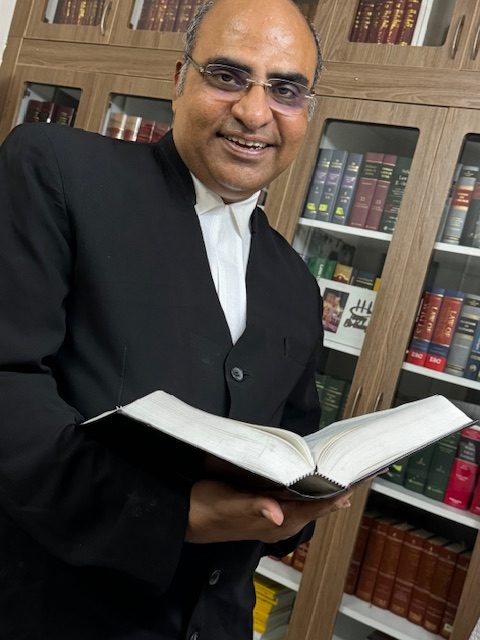






 Allow notifications