Tag: Corporate Law

  • “I feel each role contributes to your overall growth and helps in your evolution, if performed with full dedication”- Anjali Jain, Partner & Head – Insolvency & Restructuring Practice at Areness

    “I feel each role contributes to your overall growth and helps in your evolution, if performed with full dedication”- Anjali Jain, Partner & Head – Insolvency & Restructuring Practice at Areness

    This Interview has been published by Pragya Chandni and The SuperLawyer Team

    Can you please share the journey of how you ended up specializing in Insolvency and Restructuring practice, considering your educational background in Constitutional and Criminal Law?

    I always had a keen interest in Business, Economics, Finance and Commerce. I started my education with a B.Com (H) from Lady Shriram College, Delhi University and followed it up with LLB from Delhi University itself. While I had delved into Constitutional and Criminal Law for my Masters, my interest continued towards how law affects the economics of businesses and country as a whole, my post-graduation further strengthened my research and interpretation skills. The Insolvency Law in India has taken a rebirth in the year 2016 and post completion of my Masters, the newly enacted Insolvency & Bankruptcy Code, 2016 proved just to be the perfect practice area for me. IBC is one of its kind laws in India, more of a revolution. As I had already groomed myself on how to focus on a specific domain of law, specialising in Insolvency was only a path to be chosen. What really intrigued me about the Code, was how the law was laid from scratch with no baggage or burden of its previous laws and limited subject jurisprudence as well, I had the freedom to explore the various facets of law in light of statutory interpretation, legislative intent and judicial outlook. Also, lastly, I feel that building a practice in such a new law with hardly any precedents, skills developed in my Masters in Law from NLU – Delhi did help a lot. 

    What would you say has been the most challenging case you’ve encountered, and how did you navigate through it?

    Perhaps, every case brings with its own challenges, expectations, anticipations, and anxiety. To be honest, I am not a litigation practitioner, however, as a subject matter expert, we do participate in devising legal strategies. Sometimes the matters are at a very nascent stage where we get ample time for a 360-degree evaluation and then there are those cases where you have to prepare your front-facing team members for split second decisions. Each case brings with it its own experiences and learnings. If you have to ask me the most challenging case, mentioning one would be too unjust for the others, for reasons unknown to me so far, we are more often than not engaged in very typical particular matters only!

    As a member of INSOL International, you’ve been part of various national and international forums. Could you tell us about a specific instance where you felt your participation made a significant impact or contribution to the discussions on Insolvency, Banking, and Corporate Affairs?

    I have been very privileged to have been a part of discussions on law. What started as a resource person for law colleges, went onto being called for forums of policy discussions. Initially, it was more of an academic role with me professing how IBC works to law students. I also am actively involved as an industry resource for the Graduate Insolvency Programme at the Indian Institute of Corporate Affairs. Some time back, I was invited by State Bank of India as a part of a training session of its Law Officers on IBC and its inter-relations with the Banking sector. In one of my most memorable discussions, a global conference held on Insolvency in December 2020 where I discussed the future of IBC, especially in the post CoVid era. Lately, I have been involved in policy discussions at ASSOCHAM.

    Your professional journey involves managing a team, devising legal strategies, and handling financial planning. How do you balance the legal and managerial aspects of your role, and what advice do you have for aspiring legal professionals aiming to take on leadership positions?

    When you transition from a technical or a professional role to a management role, there is a high probability of dilution of your technical skills. For me, it came as a matter of no choice to be honest to you. If I look back, I feel it was also my interest which motivated me to assume responsibilities of Management. As I mentioned earlier, I am really passionate about the Insolvency Law and the Management responsibilities are an additional charge for me. Luckily, I am able to devote time on Practice as well besides the Management, I feel it helps me in my continuous growth and evolution. What has helped me throughout has been a very supportive team. I have also learnt a lot from attending short term Management courses as well as reading Management books. 

    My advice for aspiring legal professionals is to actively participate in various functions at their organisations such as client interviews, research, events, team management, etc. A sense of belonging towards your organisation, zeal to constantly learn and grow, participation in team meetings, events, etc., the leadership journey requires perseverance and persistence and there are countless minor unnoticeable steps which you have to climb to reach that leadership level. But not to miss out, invariable, leadership is a crown of thorns.

    Given your involvement in numerous workshops for legal officials of PSBs, including SBI, what key insights or lessons have you gained from these sessions that you think are crucial for professionals in the field of Insolvency and Banking?

    What I feel today’s times call for super-specialisation in any domain. In our interactions with officials of PSBs, what I have felt is lacking is perhaps being too overburdened with Managerial roles that professionals with such roles fall short of time for upscaling themselves on the subject. A law such as Insolvency is a very fast paced one. Not just the process, but the judicial pronouncements, policies, regulations and rules are almost updated every few days. I feel adequate time has to be devoted by every professional towards keeping himself/ herself updated on the latest developments of law.  

    You’ve been recognized as a Rising Star in 2021 by Legal Era. What do you believe are the key attributes that contributed to this recognition, and how do you continue to stay at the forefront of your field?

    I am not sure I can ever have an answer for that. I believe in simply delivering my responsibilities towards the best of my abilities regularly. However, if I have to answer that, I can only repeat that I push to keep myself updated on the law and the industry. What may have also worked for me is a complete client – centric approach which helps me start with the end in mind when I am assigned with any case, opinion or draft by our clients.

    In addition to your legal practice, you’ve authored several publications and columns. How do you manage to balance your role as a practicing advocate with your commitments as a columnist and resource person for various platforms?

    Balance is my life’s driving motto. I feel each role contributes to your overall growth and helps in your evolution, if performed with full dedication. I will give you an example here. For me, every column and publication gives me an opportunity to read in-depth on a particular proposition which I may not have in our daily professional commercially driven responsibilities. Likewise, every event where I participate as a speaker or a Resource Person, I read through comprehensively to ensure consistency and correctness. In a lot of our research reports, I get an opportunity to gain knowledge from a vantage point. So, you can say, every event, every publication or column also betters me and assists me in delivering my responsibilities as a practising advocate better. Also, it keeps the monotony at bay!!!!

    As someone who has been actively involved in legal education, what advice would you give to fresh law graduates entering the field today, particularly those interested in Insolvency and Restructuring?

    Though I feel it is still early days for me in this profession, still if I have to advise, I will only recommend law graduates to read a lot. As they say, there is no shortcut to success, likewise as much I promote advancement in technology and its use in the field of law as well, however, for a professional, responsibility is magnanimous. In the legal profession, we use our knowledge and skills for our clients at times, as officers of courts at others and for the public as a whole as well. Every judgment I have read through as a whole has helped me learn a lot more than giving me a solution for the matter at hand. Barring those who perhaps prepare for judiciary services, I find few actually even going through the entire statutes. Blogs and tools like ChatGPT can offer quick solutions when there is dearth of time, however, in early years, I would just advise young law graduates to read as much as they can. Lastly, I would say that in the initial years of your career, try to gain as much knowledge as possible and try to strengthen an overall understanding of how law works and over the years, choose a specific domain of law and build expertise in it.

    Get in touch with Anjali Jain-

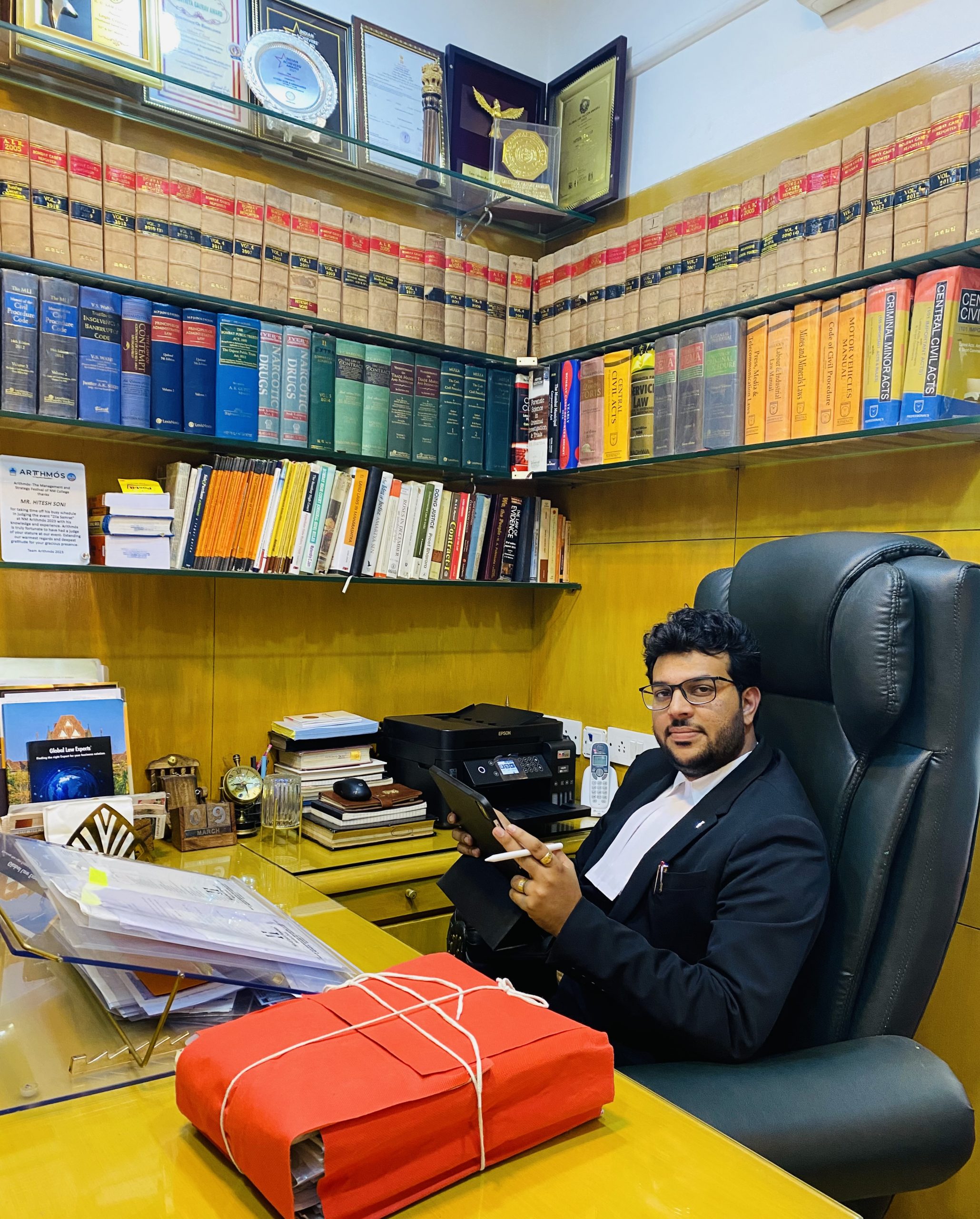
  • “The legal profession is a triangle where you have only one edge, while the other edge is the opposition lawyer, and ultimately, the judicial system, which ultimately takes its time and decides finally”- Hitesh C Soni, Founder & Managing Partner at Hitesh Soni & Associates

    “The legal profession is a triangle where you have only one edge, while the other edge is the opposition lawyer, and ultimately, the judicial system, which ultimately takes its time and decides finally”- Hitesh C Soni, Founder & Managing Partner at Hitesh Soni & Associates

    This Interview has been published by Pragya Chandni  and The SuperLawyer Team

    Can you share with us the journey that led you to pursue a career in law, and what specific experiences or influences played a role in your decision to become a lawyer?

    I am a first-generation lawyer and hail from Mount Abu, the only hill station in the state of Rajasthan. While my childhood was spent playing soccer and exploring the wilderness of my town, little did I know I would be becoming a lawyer. Well, I can say the first thought ever came to my mind to become a lawyer was in 8th grade when my father, a businessman, once bought the constitutional book for his simple curiosity of reading it. No, he never wanted to become a lawyer, nor did he understand the legal text, but his choice to bring that book changed my life forever. Of course, television plays an important role in seeing court functions and, most importantly, seeing a duty on a lawyer to fight for someone he or she didn’t know. Another reason that motivated me to become a lawyer was my connection with the wilderness. When you’re close to nature, it is very obvious that you would be very philosophical, and I firmly believe that those encounters with nature were another quite solid reason for me to dream of becoming a lawyer. I was very curious, and the next thing I did was wonder how I could achieve this dream of becoming a lawyer. There was none who could guide me, but I also believe a path searched and chosen by oneself is the one where you do not get lost. I succeeded and joined a law college in Jodhpur.

    Establishing a law firm at the age of 26 is quite remarkable. What motivated you to take on such a significant endeavor at such a young age, and what were some of the challenges you faced in building your own legal practice?

    When you have clarity of thought and are able to take risks in life, things become achievable. Though it does not guarantee success, it warranties you, assures you to keep going, and when you feel down, it gives you hope to continue. I never followed the crowd collecting the internship certificates and academic accolades. I knew that law books are the same for everyone, and a degree from Harvard or Oxford is no guarantee of success in life. Though worthy degrees can give you placement, they can never give you a sense of satisfaction, especially when your dream is only to become a lawyer who practices law in the real sense and nothing else. Therefore, during my law school for the entire five years of my law, I joined a permanent internship with Rtd Chief Justice Rajesh Balia and majorly interned with Sr. Advocate Vikas Balia in Jodhpur. Since Jodhpur was not my hometown, I still had a choice to choose my life wisely. Bombay was next, a city that changed my life. It not only changed my life but also gave me a platform to show my merit. Immediately, shifting to Mumbai in the month of June 2017 with no background and only after a year of experience was a tough choice, which I never regretted. At the beginning, I faced very common issues like shelter, food, and survival, but God rewarded me with the risk. I was standing tall with limited earnings from individual briefs. I started my law firm, M/s Hitesh Soni & Associates, on November 27th, 2017, with no surety of covering the expenses in the future. I was always confident that if I had merit, I could do it every time. I never looked back then.

    Congratulations on receiving the ‘Mahatma Gandhi Lifetime Achievement Award’ at such a young age. How did it feel to be recognized with such a prestigious honor, and how do you believe your work contributed to earning this lifetime achievement award?

    Thank you. At first, it sounded like a dream and more of a fear with the title, as it is a precept to give to someone who wishes or thinks that he or she is going to retire from his or her profession, but after interaction with the award presenter, Smt. Meira Kumar, former Speaker of Lok Sabha, and noted personalities like Shri Lal Thanhawla, former Chief Minister of Mizoram, my perception proved wrong. I received the award at the age of 31, when I had just completed six years in the legal profession and five years at Hitesh Soni & Associates. I was the only young awardee in the field of law. Well, from the beginning of my practice until I received this award, I worked in a diverse field of law. This honor is more focused on how I started in a place like Mumbai, with no background, established something, and continued the same spirit, which must have contributed, and the rest are cases I worked on that I feel I should not discuss.

    Your expertise covers a wide range of legal areas, including constitutional law, corporate and commercial law, international trade, customs law, immigration law, and white-collar crime. What drew you to these specific fields, and how do you manage to excel in such diverse areas of law?

    These practices can never start with the practice of law, but the root is somewhere else. In my case, it is related to my law school days. I never studied for law exams only, but I interpreted the text as if I was going to deal with such cases in the future, and that’s the key. Reading is the key, and reading in a way not just for examination, is to keep in mind. Simply put, I never had any extra interest in any particular subject of law, but I was inclined and interested equally. In fact, if I can share more candidly, you have to be an expert in all subjects; what’s your next case? You never know.

    Being featured in the “2023 Annual Guide to the World’s Top Lawyers” and receiving various awards like the International Achievers’s Award and the Rashtriya Gaurav Award is truly impressive. How do these accolades impact your approach to your work, and what do they mean to you personally and professionally?

    Thank you. These recognitions bring a great deal of sense of maturity, integrity, and responsibility, specifically when justice in India is not always served hot. Actually, it is also another wrong perception; laymen think urgent reliefs are not justice. The legal profession is a triangle where you have only one edge, while the other edge is the opposition lawyer, and ultimately, the judicial system, which ultimately takes its time and decides finally. In the midst of this lies the other skill of a lawyer: to calm his clients and keep giving them hope, but more than simply giving them hope, you have to keep making consistent attempts for your client because, for you, it may be one of hundreds of cases, but believe me, for your client, that’s the only case and it matters a lot for them. I take it that way, and it helps me a lot. These awards remind me that when I saw a dream of nature somewhere, a prayer for my success was heard and answered. Though there is a lot to be done, it is just the beginning of a lifetime.

    Your law firm, Hitesh Soni & Associates, has expanded its presence to multiple locations, including Bombay, BKC, and New Delhi. What challenges did you encounter while expanding your firm, and how do you ensure consistent quality and service across these different locations?

    Mumbai was and will always remain a base for Hitesh Soni & Associates; after all, this is the place where my dream took flight. I am not so frequent, but I am a decent visitor to the Supreme Court of India. Whether it is related to our firm client or any other brief, Delhi is something you cannot avoid, not only the highest judicial body but also many other authorities, tribunals, and whatnot. We started the firm in New Delhi last year, in June 2023. The initial challenge for me was handling it without any partners there. Our firm is primarily operated and run by me and my wife, Adv. Vaishali H. Soni, and we are based in Mumbai, so it is a challenge for us to find a team of trustworthy individuals. I believe any law firm cannot go beyond the quality of minds that make it up. Thus, yes, it is challenging to look for like-minded individuals who can understand your value to the firm.

    As the founder of an award-winning law firm, what role do you believe innovation and adaptability play in the legal profession, and how do you incorporate these elements into the services provided by your firm?

    After international law firms came to India, good things happened, boosting innovation and adaptability for Indian law firms. Like ours, we have to keep adapting to innovation. Innovations for me are not just adopting AI and software but also matching the international industry standard for staff, juniors, and interns, who are ultimately India’s upcoming legal faces. Thus, it has a great role to play; without it, a law firm becomes outdated, and in these changing times, no one can afford to be that.

    Given your extensive experience and success in the legal field, what advice would you offer to law graduates who are just starting their careers and aspiring to make a significant impact in the legal profession?

    If you read my story, you would have experienced the challenges and had an idea of how I have done it, but to all fresh law graduates and aspiring lawyers, I advise you that it is immaterial how you started, where you started, and how you are going to start, but what is important is to remember that you are never going to feel down when you do not get an internship or a job; you do not get upset when you lose a case or a client backfires on you; and always remember that nothing can force a sun to set for a lifetime. Believe me, you are a sun, and the next sunshines are yours. Wait for your dawn to come. All the best.

    Get in touch with Hitesh C Soni-

  • “Recognizing that the initial move in every case may not necessarily involve approaching the court, I find it essential to adopt a holistic and commercially minded approach to achieve the desired result”- Adit Shah, Partner at  Arrow Law Partners

    “Recognizing that the initial move in every case may not necessarily involve approaching the court, I find it essential to adopt a holistic and commercially minded approach to achieve the desired result”- Adit Shah, Partner at  Arrow Law Partners

    This Interview has been published by Pragya Chandni and and The SuperLawyer Team

    Can you share with us the journey that led you to pursue a career in law, and what motivated you to specialize in dispute resolution?

    I developed a keen interest in law early in my academic journey, drawn to its complexities and its potential to address societal issues. Additionally, in my formative years, I was heavily inspired by my grandfather who was also a lawyer but never had an opportunity to practice due to certain family obligations. During my LLB course, I engaged in various legal internships, gaining exposure to different areas of law. It was during this time that I discovered a particular fascination with dispute resolution. My dedication to this field grew stronger as I observed its profound impact on individuals and businesses. The prospect of aiding parties in resolving conflicts became a compelling force guiding my career path. During my tenure at both Spectrum Legal and Trilegal, I was given ample opportunities to delve deeper into my interest in dispute resolution, establishing a robust foundation in the process. These experiences afforded me extensive exposure to a diverse range of matters and an overarching understanding of dispute resolution strategies.

    Your experience at Spectrum Legal involved handling a diverse range of legal issues. Could you highlight a specific case or project that you found particularly challenging or rewarding and share the key lessons you learned from it?

    Due to the confidentiality of several cases I handled, and their ongoing status, I am unable to disclose specific party names. However, I can reference several significant cases I worked on, some of which have been publicly reported on forums such as Bar and Bench. One of the initial cases that I extensively contributed to involved addressing alleged defamatory content posted by a journalistic entity against a highly esteemed startup. This particular case underscored the substantial impact that swift action and a well-thought-out strategy can have on a company’s business, emphasizing the importance of meticulous drafting. The primary challenge in this matter was ensuring the prompt filing of the plaint and getting quick interim relief, as time is crucial in all civil defamation cases.

    From your time at Arrow Law Partners, what aspects of being a Partner have you found most fulfilling, and how has your role evolved compared to your previous experiences as an Associate?

    This question holds particular interest for me, given that I established Arrow Law Partners just a few months ago, and the experience has been incredibly enlightening. As an associate, one can rely on various colleagues and partners for support and assistance. However, stepping into the role of a partner has meant taking on the sole responsibility of ensuring that I deliver the best possible advice and service to my clients. The most rewarding aspect of this transition has been engaging in discussions with clients, where my focus is on presenting all available options alongside my recommended suggestions for approaching a matter. Recognizing that the initial move in every case may not necessarily involve approaching the court, I find it essential to adopt a holistic and commercially minded approach to achieve the desired result. Consequently, the practice of dispute resolution strategy itself has become a vital component, emphasizing the importance of considering alternatives rather than advising every client to directly pursue court action or initiate arbitration. 

    In your role at Trilegal, you contributed to the dispute resolution team and participated in due diligence processes for potential mergers. How did this experience shape your perspective on the intersection of litigation and corporate transactions?

    My experience at Trilegal has proven to be invaluable in fortifying my expertise in dispute resolution and expanding my perspective on approaching various matters and disputes. Involvement in due diligence and merger applications played a crucial role in deepening my understanding of the commercial aspects inherent in each case. This exposure shed light on the considerations companies weigh before delving into discussions about potential mergers Initially, with my primary interest lying in dispute resolution, I may not have seen the immediate merit in working on such matters. However, through active engagement with these cases and collaboration with other teams, I gained insights into the practical intricacies associated with mergers. This experience illuminated how any dispute could significantly impact the potential success of a merger, providing me with a more comprehensive understanding of the interconnected nature of legal practice. 

    Given your extensive experience in the legal field, what advice would you offer to recent law graduates who are embarking on their careers, especially those interested in dispute resolution and arbitration?

    My primary advice is to immerse yourself in diverse experiences and tackle various types of legal matters by diving in to the deep end. Given the increasing number of law graduates each year, the upcoming generation of dispute resolution lawyers will focus on specialisation. The key to understanding your interests and identifying your niche lies in gaining exposure to a range of cases Starting by actively participating in different aspects of legal work, including running around to handle various tasks, is crucial. This hands-on experience is where you acquire the fundamentals and practicalities of dispute resolution. I often advise new lawyers and interns to attend court sessions and observe proceedings, as it offers valuable insights into argumentative styles, reading the judge, and presenting effective arguments. This exposure is indispensable for honing essential skills in the field.

    Get in touch with Adit Shah-

  • “Embrace change, stay open to new technologies, and be willing to pivot when necessary to meet the evolving needs of clients and the legal profession”- Prerna Oberoi, Founder at Lex Mores Law Firm

    “Embrace change, stay open to new technologies, and be willing to pivot when necessary to meet the evolving needs of clients and the legal profession”- Prerna Oberoi, Founder at Lex Mores Law Firm

    This Interview has been published by Pragya Chandni and and The SuperLawyer Team

    Ma’am, could you please share with our readers how your journey into law began, and what inspired you to pursue a career in the legal field?

    Certainly! My journey into the field of law began with a strong desire to have a voice and advocate for what is right. Growing up in India, like many others, I experienced the challenges of a patriarchal society. Having a voice at the right time and articulating oneself intelligently became incredibly important to me.

    The legal field stood out as the perfect avenue to channel my passion for justice and equality. It offered the tools and knowledge to not only understand the intricacies of the legal system but also to actively participate in shaping and influencing it. Law, to me, was a means to effect positive change, challenge stereotypes, and work towards a more just and equitable society.

    The inspiration to pursue a career in law came from witnessing the power that legal professionals have to make a difference in people’s lives. Whether it’s advocating for the minorities, upholding the principles of justice, or fighting for the rights of individuals, the legal field holds immense potential to drive meaningful change.

    I was particularly drawn to the idea of using the law as a tool for social justice and empowerment. My journey into law has been a journey of self-discovery, growth, and a continuous commitment to making a positive impact on the world. It’s a field that allows me to stand up for what I believe in and contribute to a fairer and more equitable society.

    In summary, my journey into law was inspired by the desire to have a voice and articulate myself in the right manner, working towards a more just and equitable society where the principles of justice and equality prevail. It has been a fulfilling and purpose-driven path, and I remain passionate about the transformative potential of the legal field.

    Given your diverse experiences as a Lawyer at various organizations, what were the key factors that led you to establish Lex Mores as a global law practice?

    Pursuing my Masters in Law at Osgoode Hall Law School, York University, in Toronto, Canada, and gaining diverse experiences in both India and Toronto played a pivotal role in leading me to establish Lex Mores as a global law practice.

    During my time abroad, I recognized the global perception of law as a noble profession, where clients seek ethical and moral legal guidance. This understanding deeply resonated with me, and it became a top priority to uphold ethical standards in my practice. Hence, I chose the name Lex Mores, which signifies “law with morality.”

    My experiences abroad also exposed me to legal ecosystems designed to discourage litigation. Measures such as higher court fees and an informed consumer base facilitated swift dispute resolution. This contrasted with the mindset I encountered upon returning to India, where the focus was often on resolving legal issues rather than preventing them. Here, the importance of legal guidance and establishing clear obligations at the outset of business ventures was frequently underestimated.

    My tenure working with one of Canada’s largest retail chains, combined with my Masters in International Business Law, allowed me to draw parallels between business practices in Canada and India. I came to realize the profound impact of legal awareness on business operations. This revelation motivated me to educate my clients, especially startups and MSMEs, about the crucial role of legal counsel right from the inception of their businesses.

    While larger companies in India understood the need for corporate legal advice due to their higher stakes, startups and MSMEs often overlooked this essential aspect. I firmly believed that instilling in these smaller businesses the significance of legal guidance from the outset could enable them to structure their operations more effectively and reduce the risk of disputes with partners, employees, vendors, and other stakeholders.

    In essence, my international experiences and legal knowledge fueled my passion to establish Lex Mores as a global law practice. My overarching goal has been to empower businesses, especially startups and MSMEs, with the legal insights they need to build well-structured enterprises and contribute to the reduction of litigation in India.

    In your role as the Founder and Managing Partner of Lex Mores, how do you navigate the challenges posed by market disruptions and ever-evolving legal landscapes?


    As the Founder and Managing Partner of Lex Mores, with over a decade of experience in the legal industry, I have come to appreciate the positive impact of evolution. Change is a constant in life, and I firmly believe that market disruptions and the ever-evolving legal landscape are not challenges but opportunities.

    At Lex Mores, we have taken proactive measures to navigate these changes effectively. We understand that disruptions can bring us closer to our purpose, which is to make corporate law accessible and beneficial to startups and MSMEs. To achieve this goal, we entered the realm of Legal Tech through Lex Mores Tech Pvt Ltd, leveraging technology to raise awareness about the importance of corporate law among our clients.

    In addition, we have developed a platform called “www.contractbazar.com,” which facilitates proactive legal work conveniently and offers transparent pricing and standardization. This platform is specifically tailored to cater to startups and MSMEs, making it easier for them to establish robust businesses in India.

    With the changing dynamics of society, businesses are becoming increasingly aware of the need for the right legal advice. Technology plays a pivotal role in enabling businesses to work with lawyers without the burden of heavy infrastructure investment or exorbitant fees associated with retainers.

    In essence, we view disruption as an opportunity to enhance and innovate our services. By embracing technology and adapting to the evolving legal landscape, we can better serve our clients and empower them to thrive in the dynamic Indian market.

    Having worked in legal roles across different countries, how do you leverage your global experiences to provide solutions in both developed and emerging economies?

     
    Having worked in legal roles across different countries, I have gained a deep appreciation for the need to adapt to diverse legal systems and cultures. This global experience equips me to better understand the needs, desires, and problems of my clients, allowing me to provide comprehensive solutions to clients operating in both developed and emerging economies.

    I leverage my insights from various jurisdictions to offer well-rounded strategies that are not only legally sound but also culturally sensitive. By drawing on the best practices I’ve encountered, I can tailor solutions to address the specific challenges presented by each economy.

    In essence, my global experiences enable me to bridge the gap between different legal landscapes and guide clients toward successful outcomes in both developed and emerging markets.

    Can you share a memorable or challenging experience from your work experience, either abroad or in India, that has significantly contributed to your professional growth?

    Certainly, I have a significant and memorable experience from my legal career, which occurred during my tenure in Canada while working at a law firm. I had the privilege of learning from a senior lawyer while we were providing legal counsel to a small startup entangled in a contractual dispute with a much larger corporation. The founder of the startup was incredibly passionate about his business and was resolute in protecting its interests.

    In our initial meeting, the startup founder candidly expressed his concerns, objectives, and the emotional toll the dispute had taken on him. As we delved into the legal complexities of the matter, it became evident that the issue transcended mere contractual terms; it was intricately tied to his dream and vision for his company.

    Rather than immediately delving into legal jargon and tactical strategies, my senior chose a different path. He decided to empathize with the founder’s predicament, and we listened attentively, not only to the words but also to the emotions underlying them. This approach allowed us to genuinely comprehend the founder’s ultimate goal.

    My senior advised that instead of pursuing litigation, we should explore mediation as a remedy. This approach might require some concessions, but it would help save the company without disrupting its operations, which could have been a possible outcome if the case went against us. This solution served the bigger purpose for the client.

    Through this experience, I came to realize that while the legal aspects were undeniably important, what mattered most to our client was not just winning the legal battle but preserving the essence of his startup. It was about safeguarding the dreams and aspirations of his team members who had poured their passion and dedication into the venture.

    This experience significantly influenced my understanding of the importance of fulfilling our clients’ expectations as lawyers. However, the professional satisfaction I gain as a lawyer from working in the right manner with my clients and mastering the art of empathy became even clearer when I read the book “Think Like a Monk” by Jay Shetty . The book underscored the concept that true fulfilment comes from meeting the needs of others and highlighted the synergy between “Varna” (passion and skills) and “Sewa” (understanding the needs and serving others). Together, these principles contribute to one’s “Dharma” or purpose in life. This philosophy has since become an integral part of my approach to both my legal career and life as a whole.

    As the legal profession increasingly integrates technology, how do you employ cutting-edge legal technology to assist clients in overcoming challenges in today’s economic system?

    In today’s evolving legal landscape, technology plays a pivotal role in enhancing the services we offer to our clients. We harness cutting-edge legal technology to efficient and cost-effective solutions. Our focus extends beyond the traditional legal advisory role; we aim to empower clients to make informed business decisions right from the inception of their ventures.

    At www.contractbazar.com we are developing solutions that help clients gain a clear understanding of their business needs, enabling them to make strategic decisions. By engaging with corporate lawyers early in their business journey, clients can navigate potential legal challenges with foresight and confidence.

    By embracing these technologies, we ensure that our clients are well-prepared to navigate the intricacies of the modern economic system, ultimately helping them achieve their goals effectively and efficiently.

    You pursued an LL.M. in International Business Law at York University – Osgoode Hall Law School and then passed NCA exams to be a lawyer in Canada. How has this additional qualification enhanced your capabilities and influenced your approach to handling global legal challenges?

    Pursuing an LL.M. in International Business Law at York University – Osgoode Hall Law School and clearing the NCA exams to become a lawyer in Canada has significantly enhanced my capabilities and greatly influenced my approach to handling global legal challenges.

    In-Depth Understanding of International Law: The LL.M. program provided me with a comprehensive understanding of international law, trade, and business regulations. This knowledge is invaluable when dealing with cross-border legal issues and international transactions.

    Cultural Sensitivity: Studying and practicing law in a diverse and multicultural environment like Canada has heightened my cultural sensitivity. It has taught me to approach legal challenges with an awareness of cultural nuances, which is crucial when working on global matters.

    Multi-Jurisdictional Expertise: The NCA exams and subsequent qualification as a lawyer in Canada equipped me with expertise in Canadian law. This dual qualification allows me to navigate legal issues involving multiple jurisdictions with ease and confidence.

    Global Network: During my studies and legal practice in Canada, I had the opportunity to build a global network of legal professionals. This network is a valuable resource for gaining insights, collaborating on international cases, and accessing legal expertise from around the world.

    Client-Centered Approach: My international legal education and experience have reinforced the importance of a client-centered approach. Understanding the unique needs and goals of clients from diverse backgrounds is essential in providing tailored legal solutions.

    Risk Assessment: Handling international business law matters requires a keen ability to assess and mitigate risks. My additional qualifications have honed my risk assessment skills, allowing me to provide proactive legal advice to clients entering global markets.

    Adaptability: Dealing with international legal challenges often involves adapting to varying legal systems, languages, and business practices. My education and experience have made me adaptable and resourceful when encountering unfamiliar legal terrain.

    Global Perspective: I now approach legal challenges with a broader global perspective. I consider how local and international factors interplay in legal matters, enabling me to provide comprehensive advice that takes into account the bigger picture.

    In conclusion, my additional qualifications have not only expanded my legal knowledge but have also shaped my mindset and approach to handling global legal challenges. They have equipped me with the skills, expertise, and perspective needed to navigate the complexities of international business law effectively and provide top-notch legal solutions to clients operating in the global arena.

    Considering your journey from being a law student to the Founder of Lex Mores, what advice would you like to give to law students or fresh graduates aspiring to thrive in a dynamic legal environment?

    My journey from being a law student to the Founder of Lex Mores has been a rewarding experience filled with valuable lessons. To law students and fresh graduates aspiring to thrive in today’s dynamic legal environment, I offer the following advice:

    1. Embrace Lifelong Learning: The legal field is constantly evolving, and it’s essential to have a thirst for knowledge. Never stop learning, whether through formal education, professional development courses, or staying updated on legal developments.
    2. Develop Soft Skills: While legal knowledge is crucial, soft skills such as communication, negotiation, and problem-solving are equally vital. Focus on honing these skills, as they will set you apart as a well-rounded legal professional.
    3. Build a Strong Network: Networking is key in the legal industry. Cultivate relationships with mentors, peers, and professionals in various legal sectors. A strong network can provide guidance, opportunities, and support throughout your career.
    4. Seek Practical Experience: Practical experience is invaluable. Look for internships, clerkships, or pro bono opportunities to gain hands-on experience and understand how legal theory translates into real-world practice.
    5. Be Adaptable: The legal landscape is dynamic, and adaptability is essential. Embrace change, stay open to new technologies, and be willing to pivot when necessary to meet the evolving needs of clients and the legal profession.
    6. Ethics and Integrity: Uphold the highest ethical standards in your practice. Trust and integrity are the foundation of a successful legal career.
    7. Pursue Your Passions: Find your niche within the legal field that aligns with your passions and interests. Specialization can lead to a more fulfilling and impactful career.
    8. Persistence Pays Off: Success in law often requires persistence and resilience. Don’t be discouraged by challenges or setbacks; they are opportunities for growth.
    9. Balance Work and Life: Achieving work-life balance is crucial for long-term success and well-being. Make time for self-care, family, and personal interests.
    10. Stay Visionary: Have a clear vision of where you want your legal career to go. Set goals, both short-term and long-term, and work diligently towards achieving them.

    By embracing these principles, you can not only thrive in the dynamic legal environment but also make a meaningful and lasting impact in your legal career.

    Click below for the link tree of Prerna Oberoi-

  • “Today our societal norms and values are seeing rapid changes and thanks to technological advances and social media, people are voicing their concerns more openly and are constantly connected”- Ashish Kumar, Partner, Jurisperitus Law Offices

    “Today our societal norms and values are seeing rapid changes and thanks to technological advances and social media, people are voicing their concerns more openly and are constantly connected”- Ashish Kumar, Partner, Jurisperitus Law Offices

    This Interview has been published by Pragya Chandni and and The SuperLawyer Team

    Your academic journey includes studying law both in India and the USA. How did these diverse educational experiences shape your perspective on the legal profession, and how do you think it contributed to your success in the field?

    While the principles of law are more or less the same everywhere, the manner in which the law is taught varies. It is however the overall experience that enriches you. In India, we studied law from the perspective of the statute and its applicability in different kinds of situations; in the USA we did case studies and advanced our reasoning of the applied law on such cases. What was different was the vast networking opportunities offered even at the institutional level in the USA when compared to India. Some of the friends I made then are now well established and recognized in the legal field and at senior positions in some of the top law firms and in-house. 

    With expertise spanning commercial litigation, arbitration, consumer protection, real estate, and more, how did you decide on such a diverse legal practice? Can you share a pivotal moment or experience that influenced your decision to specialize in these areas?

    My initial interest as a student of law was on the corporate side. I was during the time fascinated (like many students) of the work that corporate lawyers did, the transactions, the numbers etc. But as destiny would have it, after enrolling at the Bar and working for one year as a corporate lawyer, one day in court was all it took. Since that first day in court, I have not looked back while I may admit that I still do general corporate work as well. With respect to specialization, while there was no specific pivotal moment as such, I never wanted to be limited to only one particular area. I have enjoyed all that the learning that the profession has had to offer me. While some may argue a specialization has its own advantages, which I do not doubt, I know that there are many people who feel limited in their ability/outreach because of the specialization whereas I on the other hand am very comfortable appearing before various judicial and quasi judicial fora in different kinds of matters. I am as comfortable appearing before a Consumer Commission in a consumer matter as I would be before the National Green Tribunal in an environment related issue or before the High Court or Supreme Court for a commercial/contractual dispute. 

    As the head of the “Japan Desk” at your Firm, you handle the firm’s Japanese practice. Could you elaborate on the challenges and rewards of managing international legal matters, and how does it tie into your broader practice areas?

    Japan has been very close to my heart for a number of reasons. Not only is the country a close ally of India, the two nations have seen significant growth in bilateral relations through trade and commerce, culture and in the recent few years – cuisine. Anyone who has had the good fortune of being connected or has worked with Japan one way or the other would agree that the experience completely changes the person for the better. From the time I started more than 10 years ago to now, I can confidently say that it has been a rewarding experience. The Japanese build their relationships on trust and respect. If you can earn the respect of a Japanese person, you have earned yourself a lifelong friend. They are very thorough and extremely professional in their approach, which is what is also expected by them from their counsel. Unlike in India, where being late by 10 – 15 minutes for a business meeting and by almost an hour at parties is considered normal, Japanese value and respect your time. You will always see them arrive 10 minutes before the scheduled time so as to timely start the meetings. In case you require assistance, they will go out of their way to ensure that they can help you. Every trip to Japan or my interaction with a Japanese person has taught me something new. At the Firm we follow the policy of ‘Kaizen’ which means continuous improvement. We believe in the combined and collective talents of all our team members irrespective of position or rank, to propel growth of the Firm and to continuously improve ourselves in order to better cater to the needs of our clients. We advise and represent from time to time many Japanese companies including the sogo soshas in their business activities in India apart from hand holding companies that wish to come to India. Japan has a significant investment in the Indian market which is only going to grow with time and we are proud to be a part of this growth story.      

    You’ve had notable achievements, such as being one of the youngest Additional Advocate Generals and receiving recognitions like the 40 Under 40 Rising Star (2023) by Legal Era and 40 Under 40 (2022) recognized lawyer by BW Legal World. How do you balance leadership responsibilities with the demands of your legal practice, and how has this contributed to your professional growth?

    What I am today is the blessing of my seniors who mentored me and my peers who gave me their wholehearted support. Like you cannot clap with one hand, similarly every success story cannot involve only one individual. I have been very fortunate to have been honed by some of the best mentors and seniors in the profession. Growth is never constant and every turn brings with it a new meaning. I was taught to take responsibilities head on from a young age and with such responsibilities also came leadership positions. After a certain stage in life, professional growth does not remain limited only to how well you can execute or how much business you can develop. Professional growth is how you are perceived by your peers and seniors in the profession, by your clients and friends from various walks of life, how much you have contributed back to society and how well you trained your juniors. Ultimately all these and more factors will shape and determine the growth of an individual.

    As far as balancing leadership responsibilities with demands of the legal practice is concerned, it is all inter connected and you cannot fix timelines in a day for either one of them. As the great Mr. Fali Nariman, Ld. Sr. Advocate has said, for lawyers there is no start and end time. You cannot look at the watch and say it is time to go home.

    Given your involvement in diverse leadership roles and professional activities, including being a former Member of the World Economic Forum’s Global Shapers Community and young leader of the Science & Technology in Society Forum (STS Forum) of Japan, how do you see the intersection of law and broader societal issues? How has this influenced your approach to your legal practice?

    Law is one of the most noble professions, second only to that of medicine/doctor. To a great extent our legal system is based on our societal values and beliefs. Today our societal norms and values are seeing rapid changes and thanks to technological advances and social media, people are voicing their concerns more openly and are constantly connected. The Judiciary plays a very critical role in keeping a fine balance between past, present and future requirements of the evolving society. As officers of the court, it is our duty to the best of our ability, to represent and raise the voices of concern of our society, to be the voice of those who are unheard or have limited or no access to justice. The World Economic Forum as well as the STS Forum act as a strategic partner and platforms respectively for world leaders, policy makers, members of the business and professional community to come together, discuss and debate on a host of issues concerning our global society as a whole. The Global Shapers Community was promoted by Klaus Schwab to encourage and train the young leaders of tomorrow. We discussed, debated, raised concerns, held key discussions and representations with those in power, on a number of issues. The result was that we as individuals also got more sensitized to the ills of society and in one way or the other pledged to ourselves to try to make a difference. Similarly, the STS Forum is an excellent platform which discusses the environment, carbon footprint and the rapid growth of technology and AI all of which require regulations and safeguards. These discussions are important from a legal perspective as well as we are able to look at law concerning these areas not only from the point of view of what the law says but holistically for the larger good of society. 

    You’ve successfully represented the State of Rajasthan before the Supreme Court of India and the High Court of Delhi. Can you share a challenging case you’ve worked on and the strategies you employed to secure a favorable outcome for your client?

    You need to do your best for the client. The outcome is the destiny of the client. There have been many challenging cases. But to briefly share, two in specific –  one of the first cases that I had handled and was led by Dr. Manish Singhvi, Ld. Sr. Advocate, pertained to the exercise of powers of the Government in creation / demarcation/ reorganization of the boundaries of gram panchayats and panchayat samities under the provisions of the Rajasthan Panchayati Raj Act, 1994. A constitutional question was involved as the Hon’ble High Court, contrary to the clear bar under Article 243(O), had interfered with the powers of the State Government to perform such exercise. As there was more than one notification, however all notifications connected with each other, the Hon’ble High Court in the impugned order while taking cognizance of the bar under Article 243(O) for one notification, held the other notifications to be void, therefore making the impugned judgment mutually contradictory. We had successfully argued in the Supreme Court that the constitutional bar would equally apply to all notifications and since the elections were around the corner had also obtained a stay on the order of the Hon’ble High Court. This was a matter of critical importance given the significance as well as the timelines. I remember the entire team had worked day and night to get the SLP ready and filed before the winter vacations of the Hon’ble Supreme Court.

    Another interesting matter inter alia involved the argument on the applicability of the doctrine of “proof beyond reasonable doubt” / rules of evidence which govern a criminal trial, in a disciplinary/departmental enquiry. On behalf of the State, I had argued that unlike in a criminal trial, a disciplinary enquiry was not mandated to be governed by the rigor of the said doctrine and that only “preponderance of probabilities” was sufficient to establish guilt in a departmental enquiry. It was argued by the Respondent that since he was acquitted in a criminal trial therefore he should be reinstated in the services. On behalf of the State, while arguing on the applicability of the doctrine above mentioned to departmental enquiries a distinction was also made on the basis of an acquittal which was “honorable” and one which was on the basis of “benefit of doubt”. On the basis of law and arguments on facts, a favourable order was obtained for the State. 

    The strategy adopted for every matter is simple. Know your facts well. Read every document line to line, word to word and understand the implication. Once the facts have been mastered, read and analyze the law and then the judgments both in favour as well as against. Once all three things have been done, you will be in a better position to frame your arguments. I have always made hand written notes for my arguments by bifurcating various arguments and supporting each argument with relevant facts and case law. As an officer of the court it is also your duty to inform the court of any law (judgment) which may be against you and also to do our best to try to distinguish the facts of that matter from yours. Additionally, I always look at the Supreme Court first for judicial precedents. Being the top most court, the decisions are binding on all courts below. Further, in case you are relying on a judgment/order of a High Court or a Tribunal/Commission for matters before such forums, it is imperative to do a check on whether the order/judgment relied upon has been challenged/appealed or stayed or upheld. You do not want to be caught in a situation where you are relying on some law which is no longer applicable. But the first principle is to know your facts. If you are not fully aware of your facts you cannot apply the law. Last but not the least, you have to wear the hat of your client and think why certain contracts/clauses (in case of a commercial matter) were drafted. What was the intention? Once you understand this, you will be able to better understand and appreciate a document in the context of the issue at hand. 

    In addition to your legal pursuits, you are passionate about technology, automobiles, AI, and space science. How do these interests intersect with your legal career, and do they influence your approach to handling cases or advising clients in specific industries?

    Not everything of interest or passion needs to intersect with the career. Having said that, AI is fast gaining importance in the legal field and we all need to be updated with the rapid changes in the field of technology as well as adopt them. AI is a great facilitator with respect to time management, case management and research. However, in the argument of AI vs the human brain, the latter will always prevail. Through technology, it has become easier to get more information to keep one better informed and better prepared. Since time is precious, we have consciously been using various interfaces for virtual conferences to avoid the need to travel either for the client or for the Firm’s counsels, unless absolutely necessary. The Chief Justice of India is a great source of inspiration and encouragement when it comes to technology. Thanks to his persistent efforts to make our judicial system technologically sound, we are able to represent more clients in multiple forums in a timely manner, clients sitting in far away places can participate in the proceedings and see first hand how their matter is progressing instead of solely relying on the word of the counsel, the pressure on physical infrastructure will also with time ease as more and more judicial and quasi judicial fora get technologically sound. With respect to advising clients in specific industries, since I like to understand about technology, I make a special effort to study and understand how my client’s business, machines, industry etc. works. If you are a commercial practice lawyer, it is very important for you to first understand your client’s business and its functioning. Once this is understood you will find yourself in a better position to represent the facts before a court. My other passions, such as automobiles or space science have nothing to do with the profession. I love cars from classic to modern. But I feel that automobile designers in their pursuit for making something different are losing the touch of designing beautiful cars that are pleasing to the eyes as they once were. The study of space and life beyond what we know, the thought that there are other life forms somewhere far away more advanced in every sense than us, has always fascinated me.   

    Finally, drawing from your diverse experiences and achievements, what advice would you give to law graduates entering the field today, especially those interested in pursuing a path similar to yours?

    No path is easy or difficult. You need to have patience and give yourself time to grow. Today I see a trend where law graduates tend to quickly shift from one place to another within a span of 6 months to a year if not less. There is an assumption that one has learned everything one could in this time span. This is not correct. Knowing a particular section or 10 cases for reference is not knowing the law. To evolve as a lawyer you need to be consistent and stable. The sections will always remain, what will change is how you interpret and apply them to different fact situations. That is when you will derive a new meaning. Litigation is an exciting field. Everyday is a new day to learn, to absorb, to experience. My advice to the law graduates looking to enter into this practice would therefore be that they do not restrict themselves to only one court. They should gain experience in all courts. If someday you do not have a matter assigned, take out time and just sit in a courtroom and absorb the proceedings. Understand how the Courts are seeking clarity/asking questions, how the counsels are arguing, how the law is being applied. Specially sit in your respective High Court’s and if possible the Supreme Court and hear the arguments of some celebrated Senior Counsel’s. There is a great deal of learning. The more hands-on experience you will have the better you will learn. In addition to this, never stop reading. We have very good reference books on all areas of practice and subjects which explain concepts clearly. Take out at least one hour every day to spend on reading reference books as well as new cases to enhance your knowledge. Further and most importantly, practice your oratory and legal writing. No amount of knowledge will be beneficial if you cannot fluently put it on paper or argue in court. Last but not the least, take criticism or review in a positive way. The fact that your mentor/senior/colleague has taken out time to point out mistakes is a blessing in disguise meant for you to reflect on and improve.

    Get in touch with Ashish Kumar-

  • “To be a successful professional one has to have a fire in the belly and eyes on the target.” – Embark on a journey through the professional milestones of Prakhar Sharma, General Counsel of Kotak Alternate Asset Managers

    “To be a successful professional one has to have a fire in the belly and eyes on the target.” – Embark on a journey through the professional milestones of Prakhar Sharma, General Counsel of Kotak Alternate Asset Managers

    This interview has been published by Namrata Singh and The SuperLawyer Team

    Could you share a bit about your professional journey, from your early days in the legal field to your current role as General Counsel at Kotak Alternate Asset Managers?

    I still remember that when I started my career as an intern, the first task assigned to me was to draft a joint venture agreement and I had no clue what to write in the contract other than the name of the parties ! Unfortunately there was no google to help so it took me a week to do my research and then draft my first contract at work which was quite appreciated. 

    I’ve grown up with middle class values and started my professional journey from ground up, whether it was drafting contracts or plaints, attending courts, doing legal research or conducting due diligence exercises. 

    Subsequently, my international experience of leading complex cross border M&As as well as handling litigations in foreign courts further helped me in taking a more holistic approach on various legal issues. 

    Legal profession has gone through a sea change in the last two decades. Advent of technology and evolving regulatory framework has made the profession quite interesting. While complexities may have increased, the fundamental principles remain the same.

    As someone who has successfully navigated the realms of litigation, dispute resolution, and complex investment banking transactions, how do you approach the challenge of balancing these contrasting worlds, and what strategic approaches have you found effective in doing so?

    It’s just like when we are in school, we learn all the subjects with the object of excelling in each one.  As a chartered accountant I love finance and numbers that helps me understand complex business transactions, while law has been my passion. So I’ve always adopted a holistic approach towards managing litigations as well as investment banking transactions. I believe that every contract, at inception itself needs to be analysed with the “what if this were to test the courts” scenario to ensure it is robust.

    You’ve been a key player in numerous cross-border M&A deals, private equity transactions, and capital market transactions. What insights can you share about the evolving landscape of such transactions, and how do you stay ahead of the curve in this dynamic environment?

    M&A and private equity deals have definitely become more complex and that is because the business landscape is dynamic and the regulatory framework has to keep up with the changing pace. But the root of even the most complex deal is a simple business transaction. The effort should be to understand that underlying basic transaction and the rest will fall in place.

    Technology is another aspect that one needs to imbibe in the legal profession, as early as possible, to stay ahead of the curve. Use of central repositories, data analytics tools, AI have become a necessity for developing and analysing various alternatives for strategic decision making.  

    Your involvement in the CII panel for insolvency and bankruptcy laws showcases your thought leadership. How do you contribute to industry forums, and what motivated you to recently publish a research paper on IBC in the Insolvency & Bankruptcy Board’s publication “Anusandhan” (2022)?

    I regularly contribute to various industry forums through paper presentations in various seminars and conferences, writing articles in books and journals, providing my inputs on policy matters to market regulators and government bodies through discussion papers etc. This also helps me in staying updated on the latest market as well as regulatory trends.

    I have been actively practising and advising on matters relating to the Insolvency and Bankruptcy Code (IBC) for quite some time now and my research paper on IBC, which got published, was an attempt to discuss the emerging trends in the bankruptcy law.

    You’ve achieved notable success in NPAs recovery and litigation at Kotak Mahindra Bank. What challenges do you typically face in these areas, and what principles guide your approach in dealing with complex cases?

    Litigations whether in relation to contractual breaches or NPA recoveries are like edge of the seat thrillers which keeps you hooked on to them till the climax i.e till a final court verdict is not received. One has to pursue each matter diligently on its own merits till the last. Like one of my seniors once aptly put it “there are only a few arrows available with you in your armoury, the trick is to know which one to shoot and when to shoot”.

    Apart from your professional achievements, you’ve been awarded the “Super Mentor” in the ‘Evolve’ Mentoring Program at Kotak Mahindra Bank. How do you approach mentorship, and what advice do you offer to mentees aspiring to succeed in the legal and banking industries?

    “Evolve” was an excellent initiative by Kotak Mahindra Bank, in which there was a mentor assigned to each mentee for a year. The aim was to create an informal, meaningful and interactive relationship between the mentor and the mentee to ensure that the mentee is able to utilise the practical insights from the learnings and experience of the mentor. 

    I believe it’s very important that one constantly shares one’s  learnings and experiences with their team members and younger colleagues. This is a two way process in return one also gets to learn from their experiences.

    Now, as the General Counsel at Kotak Alternate Asset Managers, what aspect of your current position excites you the most, and how do you foresee the future of PE in India evolving?

    Being a part of the strategic decision making process and acting as a business enabler is quite exciting. The role of the General Counsel is that of a “solution provider” and not that of someone who merely “identifies a problem”. Everyday brings new challenges and learnings, so I feel like a student going to school and eager to learn something new.

    The PE industry has just started shaping up in India and galloping its way to stand in line with banks and NBFCs as a major source of capital for the industry. A lot can be credited to the “India Story” and the continuous economic reforms coupled with conducive regulatory framework that has drawn the investors towards alternate assets (PE investments). Kotak Alternate Assets, being the largest domestic asset managers today manages assets way over USD 18 billion ( AUM exceeding USD 18 billion). What is now required is that this momentum should carry on.

    How do you unwind or indulge your personal interests to maintain a healthy work-life balance, and could you share a bit about your hobbies or leisure activities?

    I like reading and watching movies. One can relate to a lot of work life scenarios from books and movies and they can serve as a good break out from the monotony. My other passion is sports, and whenever I get a chance, I play badminton and squash. It’s a natural stress buster.

    Given the evolving landscape, how do you see technology influencing the legal profession, especially in areas like alternative assets?

    Technology now plays a key role in the legal profession and alternative assets is no exception. We leverage standardized templates for most of the routine contracts and maintain centralized repositories. Proactive communication with all stakeholders is a must to ensure clarity and consistency throughout the investment lifecycle. With continuous risk analysis, transparency, and data-driven insights, we optimize efficiency and resource allocation. One can remain ahead of the curve by continuously learning and embracing emerging technologies.

    Given your extensive experience and expertise, what suggestions or advice would you offer to the upcoming generation of legal and financial professionals, especially those aspiring to take on leadership roles in the industry?

    I believe that to be a successful professional one has to have a fire in the belly and eyes on the target. A constant hunger for work and learning and by working I mean working smartly, hard work is a given. 

    Get in touch with Prakhar Sharma-

  • “As a transactional lawyer, one has to comprehend all the future eventualities while drafting agreements and documents between parties”- Hemant Kothari, Advocate and Legal Consultant

    “As a transactional lawyer, one has to comprehend all the future eventualities while drafting agreements and documents between parties”- Hemant Kothari, Advocate and Legal Consultant

    This Interview has been published by Pragya Chandni and and The SuperLawyer Team

    Sir, can you share a bit about your journey in the field of law, from your early days to establishing your own chambers? What inspired you to pursue a career in law?

    I come from a small town in Rajasthan called Merta, where we stayed for the major part of my childhood before moving to Jodhpur where I completed my schooling. In Merta, my Nanaji (Maternal Grand Father) was practicing as a Sales Tax Attorney and had established a small but niche and respectable practice advising the businesses in and around Merta, on their Sales Tax compliances. Even though he was not a traditional court going lawyer and mostly did departmental practice, he was fondly referred by everyone in the town as ‘Vakil Sahab’, which I used to consider a title of respect. 

    Also, despite coming from a predominantly business family, I had keen interest in social sciences while growing up. 

    Therefore, with the benefit of hindsight, I think my choice to pursue law was the fortunate amalgam of having grown up looking up to a tall and respectable figure in my Nanaji and the opportunity to explore my interests in social sciences when I got to know about NLUs after moving to Jodhpur.

    Coming from a small town, the opportunity to study law at NLU Delhi was a privileged experience, which for me was not only a place to train as a lawyer but opened the world to me in a manner that I had not envisioned. I am what I am today because of the five years spent in the company of the dearest friends and peers, apart from some of the most exceptional faculties at NLU Delhi.

    After completing college, I joined Khaitan & Co (KCO) in Mumbai. In my first year at KCO, I rotated and worked with the Banking & Finance team, Indirect Tax team and the Investment Funds team, before finally joining the Banking & Finance team. I had a great mentor and guide in my partner at KCO, Mr Kumar Saurabh Singh from whom I have tried to imbibe the ability to think holistically as a lawyer, instead of a tunnel view, on any given issue. 

    During my time at KCO, the Insolvency and Bankruptcy Code, 2016 (IBC) had just been introduced and top 12 defaulting companies then were referred to the process under IBC. With the team at KCO, I was involved in the CIRP proceedings of three (3) companies, being Essar Steel India Limited, Alok Industries Limited, and Electrosteel Steels Limited, apart from other assignments under IBC. Invariably, all the processes went into litigation, which gave me the opportunity to work on both transactional and litigation aspects in the aforesaid matters and to closely interact with the leading Senior Advocates in the country.

    The exposure to handle litigation in high stakes matters re-affirmed my interest in litigation but at the same time, I did not want to completely forego working on the transactional side. 

    From a long term perspective, I always wanted to settle in my home state, i.e. Rajasthan.

    Accordingly, after a stint of around three and half years with KCO, I moved to Jaipur and for the first few years, I wanted to just learn as much as possible in terms of managing court practice, advocacy and understanding the intricacies of litigation. In Jaipur, I initially worked with Chir Amrit Legal LLP as a Senior Associate, where I was fortunate to learn under Mr Sanjay Jhanwar (Sr. Advocate) and Mr Prakul Khurana.

    In 2020, I joined the Chambers of Major RP Singh, Sr Advocate and the then Additional Advocate General (AAG), as Assistant to AAG and continue to work under his guidance even today. Under his guidance, I received intensive training in court craft and advocacy, which has certainly helped me improve immensely as a lawyer. He graciously allowed me the flexibility to take up my own matters and to gradually build an independent practice. 

    With the support and blessing of my Seniors, I was fortunate to set up my independent Chamber in August, 2022 after extensive training of more than six (6) years.

    Your experience includes representing the Government of Rajasthan in key disputes. Can you highlight some of the challenges and highlights from your time handling matters related to finance, revenue, indirect taxes, and other departments?

    The experience of representing government departments does help one to gain a deeper strategic understanding of matters from the perspective of the government; in understanding how the institutional machinery works on policy matters; and generally in terms of how the decisions are taken. 

    Now practicing on the private side, the learnings from my experience in representing and advising government does help me in having a better perspective in matters where the government is on the opposite side. 

    Also, governments are the biggest litigators in our legal system and in representing it, one gets to work on a diverse range of matters and really fast forwards the pace of learning.

    In your current chamber practice, you cater to both transaction advisory and dispute resolution mandates. How do you balance these two aspects of legal practice, and what unique challenges do you face in each?

    As I said, during my time at KCO, I had the unique opportunity to work on transactional and litigation aspects simultaneously, for matters under IBC. While traditionally there is a clear segregation between transactional work and litigation work, but in my experience I have realised that one is a better transactional lawyer with the experience of litigation and similarly, one is a better litigation lawyer, with the experience of transactional work.

    As a transactional lawyer, one has to comprehend all the future eventualities while drafting agreements and documents between parties. Having a perspective that how the document so drafted will be construed in arbitration or courts, if it goes in dispute, helps one to give better advise at the transaction stage. The reverse is also true for litigation lawyers, particularly for those practicing in commercial laws. 

    I have experienced so while representing and handling complex commercial arbitrations or court matters involving large volumes of contracts such as Concession Agreements, Financing Agreements, Shareholders Agreement, EPC contracts, Service Contracts, etc. 

    In terms of managing a practice to advise on both transactional and litigation aspects, I have separate teams in my Chamber which work exclusively on transactional and litigation matters, respectively and the final advise or work product is reviewed by me. The chamber also focuses on training the associates to have multi-disciplinary understanding such that they are also trained to deliver a holistic solution to the client. 

    Obviously, with my litigation practice when I am in Courts for a good part of the day, it may at times be difficult for me to singularly manage the transactional practice which requires more desk work. Therefore, I have focused on retaining and nurturing experienced associates dedicatedly working on transactional matters to be able to deliver holistic work products in a timely manner in a Chamber set up, where the end responsibility remains mine.

    Could you share an anecdote or case that was particularly challenging and how you approached it?

    There are various interesting and challenging matters which I cannot talk about since they are still sub-judice in appellate forums. 

    One of the challenging matters I did was a road construction arbitration during the COVID-19 pandemic. I found it challenging since (a) I was the only Counsel responsible for preparing, drafting, researching, coordinating with the Government Officers and also to brief the Senior Counsel on behalf of the Government to defend a claim of more than Rs. 250 Cr.; and (b) barring last one hearing in the arbitration, the entire arbitration was held virtually including for cross-examination.

    The work on this arbitration went on for around one and a half year and I had to really burn the midnight oil on many nights to prepare and be ahead of the opposite side, which was represented by a Tier-1 law firm. 

    Generally as a lawyer one is only trained to look at legal principles, but the added interesting work involved in the matter was to understand the intricacies of road construction and engineering to be able to do proper synthesis of technical matters. I cannot say I became an expert in road construction after this matter, but it certainly tells you that as a lawyer, one gets to work on a variety of matters that keeps the urge to learn alive on each day.

    While we succeeded only partly in the matter, I was humbled to have received the kind appreciation from the Presiding Arbitrator, upon conclusion of the final hearings, as also from my Senior.

    As retained advisor to large Indian business and startups, you describe your role as an external general counsel. What does this role entail, and how do you oversee both transactional and dispute mandates for your clients?

    I do not have any title as External General Counsel but in order to summarise the range of services that I deliver to my clients, I use the term in an informal manner and also because most of the clients may have in-house legal team for general compliances but not to advise and coordinate with the management / business teams on complex legal-commercial issues. 

    As I have already explained, my chamber caters to both transactional and litigation services, which has fortunately been appreciated by a number of large businesses, who have retained me for overseeing and helping them with all their transactional and litigation matters with the expectation that I understand their business and commercial needs while advising them holistically. 

    Increasingly, I have felt that the upcoming businesses or for that matter even established businesses require steady and continued legal support from a lawyer, who is in active practice interacting with other clients and not in their in-house system, to be able to have a better outsider or on-field view on various issues, as early as possible before they rake up. This is possible only based on continued association with the clients to be able to understand and appreciate the needs of the client from a broader perspective while advising on specific issues.

    In this capacity, it is not necessary that we undertake the entire work but sometimes depending on commercial requirements of the client, I advise my client to engage services of other professionals/law firms with whom my chamber works in coordination. The underlying principle being that my role is not only to provide legal services but to keep the best commercial and legal interests of my client to help them navigate their requirements. 

    Thankfully, I have been receiving positive feedbacks from my clients so far on this working model and hope to grow this area of practice more.

    Your advisory work spans restructuring, insolvency transactions, GST matters, investment fund advisory, and more. Can you share a specific transaction or advisory mandate that you found especially interesting or complex?

    The earliest and cherished experience for me was to work on a large multi-jurisdictional financing transactions during my time at KCO. Apart from the long night calls due to the difference in time zones, I learned how one has to apply the prevailing laws and regulations to tailor make an agreement by incorporating the commercial wishes of the parties in the best manner possible. Being a multi-jurisdictional financing transactions, we dealt with the rules under FEMA and the RBI directions to accommodate the terms of the transaction between parties. The entire process of negotiating on the commercial aspects with the legal interpretation of the applicable laws was something that I found really interesting and complex, as it then helped me build an understanding that as a lawyer when one negotiates or takes a position, it has to be backed by sound legal reasoning else the other side can simply roll you over.

    There are many such experiences and learnings but the core principle that I have come to understand is that as a lawyer, one must not stop thinking or prematurely jump to assumptions or conclusions and one  must keep exploring and reinterpreting the bare texts of law as much as possible.

    Considering your diverse experience and success in both private practice and government representation, what advice would you give to law graduates entering the field today? Are there specific skills or mindsets they should cultivate for a successful legal career?

    From my experience so far, I can only say that give your best at your work place. Whatever assignment or work comes your way, take responsibility for it like you have to be personally answerable to the Court or the client, for your work. If you start inculcating such an attitude, your work will speak for you.

    In terms of skill set, the fresh graduates should focus on developing a multi-disciplinary understanding and keep themselves abreast with all the new legal developments to gain knowledge about other areas of law, in which they may not be working. Law evolves and develops every day and as new entrants into the profession, you have the benefit of looking at everything from a fresh perspective to contribute to better development of law.

    Get in touch with Hemant Kothari-

  • “It’s essential to grasp the intricacies of a client’s business, their specific needs and to accordingly offer tailored solutions”- Dhruv Grover,IP Litigation Attorney at Shardul Amarchand Mangaldas & Co.

    “It’s essential to grasp the intricacies of a client’s business, their specific needs and to accordingly offer tailored solutions”- Dhruv Grover,IP Litigation Attorney at Shardul Amarchand Mangaldas & Co.

    This Interview has been published by Pragya Chandni and and The SuperLawyer Team

    Could you please walk us through how you initially decided to pursue a career in law, and what motivated you to specialize in Intellectual Property (IP) Litigation?

    As a first-generation lawyer, I leaned heavily on mentors to guide my path. Initially, my academic inclination was towards science during my 11th and 12th standards. However, an unexpected meeting with a seasoned lawyer (who turned out to be my first mentor in the field) at a family gathering shifted my perspective. He illuminated me on the vast horizons and multifaceted opportunities that were offered by the legal profession (beyond its cliché portrayal in popular media).

    While law school introduced me to a plethora of intriguing subjects, it was Intellectual Property (IP) that resonated the most with me. A defining moment came during an internship when a senior partner posed a thought-provoking question: “Why specialize in IP?” My response: “If it is not new or novel, it is not IP and if something is new or novel on every turn, it is always interesting and worth specializing in”.

    Further fuelling my interest were dedicated professors, particularly in IP and CPC, who recognized and nurtured my enthusiasm. Their encouragement and insights solidified my decision to specialize in IP Litigation.

    Your career has taken you through notable firms like Remfry & Sagar, Khurana & Khurana, and now Shardul Amarchand Mangaldas. Could you share the pivotal moments and experiences that shaped your journey in the field of IP law?

    Every step in my career, from drafting my first legal notice to my first court appearance, has been a significant learning opportunity. One particularly memorable matter involved a client alerting us about an imminent shipment of counterfeit goods destined for India within just two days. The urgency of the situation warranted immediate actions: identifying the shipment, liaising with Indian Customs offices, and swiftly filing a lawsuit seeking injunctive relief in Court. Those intense 48 hours, while challenging, imparted invaluable lessons in handling time-sensitive IP matters.

    Working at a full-service law firm like Shardul Amarchand Mangaldas has further enriched my professional journey by providing me an opportunity to work and interact with experts from diverse legal domains. This experience has further honed my ability to perceive and cater to client’s expectations from a holistic standpoint.

    Having handled diverse aspects of IP, from drafting pleadings to appearing before various courts and tribunals, what aspects of your work do you find most challenging and rewarding in the realm of IP litigation?

    Legal profession is a continuous journey filled with multiple learning opportunities. Reflecting on my early internship days, I recall discovering quicker methods to navigate court files during time-sensitive situations. Drafting intricate pleadings in complex cases was initially daunting during my early professional years. I vividly remember the apprehension of my first solo court appearance; the nerves were palpable. However, with each challenge encountered, I recognized them as important learning milestones that made me the lawyer I am.

    In the realm of litigation, the most rewarding moment is undoubtedly when a favourable order is pronounced. All the hard work and preparation culminating in a successful result is profoundly gratifying.

    Your profile mentions engagement in business development activities, including client meetings and conferences. How do these activities contribute to your professional growth, and what role do they play in enhancing your practice in IP litigation?

    Engaging directly with clients through meetings and conferences is fundamental in any client-centric profession. It’s essential to grasp the intricacies of a client’s business, their specific needs and to accordingly offer tailored solutions. Through these interactions, one can gain deeper insights into the challenges clients face, especially in IP disputes.

    For example, while some clients might prefer a more diplomatic approach to resolve IP disputes through legal notices or mediations, others might seek immediate legal action to safeguard their IP, perhaps on account of the potential impact on their business. By actively participating in such engagements, one can better align their strategies and advisory to suit the unique requirements and preferences of each client, ensuring a more effective and personalized approach to IP disputes.

    You’ve conducted training sessions for clients on IP laws. Could you elaborate on the importance of client education in the field of IP and share any specific challenges you’ve encountered in helping clients navigate intellectual property issues?

    Often, the primary focus of clients is on business growth and revenue generation, sometimes overlooking the critical aspects of IP protection. For instance, we have often seen clients approach us to enforce their design registration, only to later discover that they’ve been using the design for years prior to filing the design application. In such cases, we have to inform them that their design registration might be vulnerable for cancellation due to prior self-disclosure. In these situations, design registration certificates may be nothing more than a toothless paper.

    This underscores the vital role of client education. By proactively educating clients about the nuances of IP and the associated timelines, one can prevent potential pitfalls. It’s essential for businesses to recognize that robust IP protection is integral to their long-term success.

    You’ve appeared before various specialized tribunals and high courts in India. How does your approach differ when dealing with IP matters in these forums compared to more traditional court settings, and what skills do you consider crucial for success in such specialized areas?

    In specialized IP forums, there’s a heightened awareness and appreciation for the technicalities revolving around the field of IP, which often results in more streamlined communication and understanding of complex issues. This environment is conducive for IP practitioners, making it important for them to remain updated with the latest developments in the IP landscape. Unlike traditional court settings, specialized forums demand a deep understanding and familiarity with both domestic and international IP trends. Therefore, staying abreast of advancements in IP not only enhances an IP lawyer’s credibility but also equips them to leverage the unique opportunities presented by these specialized forums.

    Your academic achievements include gold medals, debate/moot wins, and publications. How has your academic background contributed to your success in the legal profession, particularly in the specialized field of IP law?

    During my time in law school, every academic experience was crucial for learning skills that are requisite for becoming a successful lawyer. Participating in debates and challenging moot court sessions didn’t just help me in honing my oratory skills but also taught me how to work in a team. On the other hand, writing research papers on interesting IP topics deepened my understanding of the subject at a jurisprudential level. 

    While I didn’t realise it then, each activity wasn’t just an academic exercise or an assignment, it was a step towards understanding the legal world that was awaiting after 5 years of law school.

    Drawing from your experiences, what advice would you like to share with law graduates who are just beginning their careers, especially those interested in pursuing a specialization in IP law? Are there any lessons or insights you wish you had known when you started your journey?

    Of late, IP practice has become more lucrative and is attracting numerous law graduates to specialize in this domain. While the rewards of this practice are undeniable, I believe it is important for law students and young professionals to determine if the subject truly resonates with them. Engaging in IP internships or dedicating time to study and write about IP can offer some clarity in this regard.

    Reflecting on my early days in the IP practice, I recall focusing all my energy in understanding the developments in and around the field of IP. While this approach enhanced my understanding of the subject, I inadvertently overlooked developments in fields outside of IP. Over time, I realized the value of maintaining a balanced perspective, acknowledging that while specialization requires depth, a holistic understanding of law across domains is invaluable. 

    Get in touch with Dhruv Grover-

  • “Continuous learning, adaptability, seeking mentorship, and maintaining integrity are the keys to building a successful and fulfilling legal career” From In-House Counsel to India’s Top Lawyer – Nitin Jain, Partner at Agama Law Associates

    “Continuous learning, adaptability, seeking mentorship, and maintaining integrity are the keys to building a successful and fulfilling legal career” From In-House Counsel to India’s Top Lawyer – Nitin Jain, Partner at Agama Law Associates

    This interview has been published by Namrata Singh and The SuperLawyer Team

    Nitin, we are extremely delighted to have you with us for this interview. Could you please introduce yourself and share the key milestones in your professional journey that led you to become a Partner at Agama Law Associates?

    Corporate law firms are a testament to the spirit of finding lateral solutions. Being one of the partners managing an established yet ever-expanding corporate law practice, I embrace business agility and dynamism. And I think, serendipitously, every milestone in my professional journey set me up for it. 

    Even before ALA, I have seen legal problems not just through the lens of arguing notable cases, but also through strategic contributions, ultimately culminating in my current role. I was fortunate to wear both hats. It helps to see legal issues from 360 degrees which my role in the house lent itself to Day-to-day contractual and compliance issues, transactions as well as disputes going hand-in-hand at all times leaves very little to be overwhelmed with. Corporate systems are the added icing on cake, demonstrating how everything can be tackled so long as there are systems. On the other hand, being a practitioner I had a front row view to the action in court, the understanding of procedures, the art of drafting was absorbed from the best – the solicitor chambers. Everything has been imperative to now being capacitated to work out client solutions that are not half-baked or with gaps on the practical perspectives.     

    Your professional journey includes senior management positions in various industries, blending in-house and external legal counsel roles. How has this diverse experience shaped your approach to handling commercial disputes, compliance, and regulatory matters at Agama Law Associates?

    A lot of business has to do with expectation management, and there’s nothing better than watching the interplay of multiple sectors as one from within them, to understand various concerns. My journey as In-house Counsel working with logistics, automobiles, chemicals and nutraceutical industries has provided me with a holistic understanding of varied business dynamics. This, coupled with my legal expertise, enables me to approach commercial disputes, compliance, and regulatory matters at Agama Law Associates with a strategic and business-oriented mindset. I strive to align legal strategies with overarching business goals, fostering effective resolution.

    What can readers learn from your extensive experience navigating the international arbitration domain?

    Certainly, one standout moment was successfully representing a client in a high-stakes international arbitration. Navigating intricate cross-border legal nuances and securing a favorable outcome not only showcased the depth of my expertise but underscored the importance of meticulous preparation and a strategic approach in the realm of international arbitration and specially when we have not only got a favourable result for our clients but made a win -win for both parties, which made a memorable moment.

    Beyond your legal prowess, you’ve been acknowledged as India’s Super 50 Lawyer by Asian Legal Business and listed in the 100 Top Lawyer A-List by India Business Law Journal. How do you stay grounded amidst such accolades, and what role do these recognitions play in your professional journey?

    I remain cognizant of the fact that accolades are a reflection of collective efforts of the entire team and not of an individual. These recognitions also serve as reminders to stay committed to excellence and continuous learning. They reinforce the responsibility to uphold high standards in the legal profession and inspire me to contribute to the legal community at large with fostering a positive impact on clients.

    In your role at Agama Law Associates, you focus on developing legal strategies for corporate clients’ new ventures and acquisitions. How do you strike a balance between legal diligence and fostering business growth, especially in the context of complex corporate disputes?

    With Agama’s varied sector experience and having seen challenges for mid-size legal entities to large corporate’s, have a repository of the issues faced by the clients and providing them timely legal strategy and solutions, by anticipating their challenges I actively collaborate with stakeholders, aligning legal strategies with business objectives. This synergy ensures that corporate disputes are addressed strategically, promoting not only legal resilience but also contributing to the overall success and sustainable growth of our clients’ businesses.

    Your involvement as a speaker and author reflects your commitment to thought leadership. What drives you to share your insights, and how do you think such knowledge-sharing events contribute to the legal community’s growth?

    I’m driven to share insights because knowledge-sharing is integral to professional growth. By participating in speaking engagements and authoring content, I contribute to the collective wisdom of the legal community. These exchanges foster a culture of continuous learning, enabling practitioners to stay abreast of industry trends, best practices, and innovative approaches. Ultimately, such knowledge-sharing events serve as catalysts for the legal community’s growth, nurturing a dynamic and informed professional landscape.

    You’ve successfully handled cross-border disputes, insolvency restructuring, and business regulatory advisory. Can you share a challenging situation you’ve encountered in your career and the key strategies you employed to navigate it successfully?

    Cross-border disputes are challenging because of the web of regulatory intricacies – regulation is a fluid beast to foresee and plan for and when it involves international angles, it also weaves in inconsistencies between the approaches of the regulators of all jurisdictions involved. The only strategy that stands a chance is one which considers as many variables as is possible to imagine.  The starting point is always  a comprehensive risk assessment. And the fulcrum that drives the process forward to fruition is to engage in, and maintain, proactive communication with all stakeholders. Collaborating with international legal experts, we crafted a tailored resolution approach that factored in both legal and business considerations. This integrated strategy proved effective, leading to a successful resolution while minimizing potential regulatory hurdles and preserving the client’s business interests.

    Away from the legal arena, what are some of your personal hobbies or interests that provide a break from the complexities of your professional life? How do you unwind and recharge outside of work?

    Outside of work, I find solace in reading, particularly exploring diverse genres to broaden my perspective. Recently finished reading Atomic Habits by James Clear and How to Win Friends and Influence People by Dale Carnegie. Engaging in outdoor activities, whether it’s hiking or simply spending time in nature, helps me unwind and recharge. 

    Considering your extensive experience, what advice would you give to young legal professionals entering the industry today, especially those aspiring to build expertise in commercial disputes resolution and international arbitration?

    For young legal professionals entering the industry, my advice would be to cultivate a robust foundation in legal fundamentals while actively seeking diverse experiences. Patience and perseverance should be their Mantra, since there is no shortcut to success. Embrace continuous learning, stay abreast of industry and legal developments. Building expertise in commercial disputes resolution and international arbitration requires a combination of legal acumen covering various laws and a deep understanding of business dynamics. Actively seek mentorship and be adaptable to change. Lastly, maintain integrity, as it is the bedrock of a successful and fulfilling legal career.

    Get in touch with Nitin Jain-

  • It is not necessary to know everything about what a transaction entails in your initial years, but you should either find answers to or have the will to ask questions regarding aspects that are introduced to you-Pranav Gadi, Founder – Gadi & Associates

    It is not necessary to know everything about what a transaction entails in your initial years, but you should either find answers to or have the will to ask questions regarding aspects that are introduced to you-Pranav Gadi, Founder – Gadi & Associates

    This interview has been published by Priyanka Karwa and The SuperLawyer Team

    Can you walk us through your journey and share what led you to pursue a career in law, particularly with a focus on corporate mergers and transactions? 

    Many decide their career paths while they are about to enter Class 10 in school. While my mind was always inclined to take science and pursue a career in medicine, destiny took me to Accountancy in my 11th and 12th. Blessing in disguise, as it felt that I got into the subject where I belong. So my journey started there. With the preliminary learning of accountancy, I decided to pursue a career in commerce and took admission in B.Com (H) in Delhi University. It was around the end of 2008, where I was still wondering whether it would make sense to do an MBA (like my peers) and move on to joining a bank or a consultancy in finance, but then again I was destined to be introduced to a subject called ‘Corporate Law’ during my 2nd year of B.Com. It was fascinating as I was always keen to learn about companies and their functioning, given that we grew in the era of blooming joint ventures, international tie ups and growth of Indigenous businesses in India. I was intrigued to know how much running a company is driven by accounts and mathematics, and thus, that’s where it all began. I chose to pursue a career in law. However, maybe I wasn’t prepared enough, and I failed my first attempt into Delhi University (Law Faculty) in the entrance exam. It was 2009, peers had found their place and here I was wondering what I should do now. I decided its time to drop a year, work with a financial advisory company and reattempt the Law entrance exam. I joined Law Faculty in 2010 and graduated in 2013 with a degree in B.Com (H) and LL.B. During my student days at the Faculty I continued interning with different law firms in New Delhi, NCR. My most memorable internships were at J. Sagar Associates (my first job). I was given an opportunity to join JSA in August 2013 and I continued working there for a while before I moved onto other law firms such as Shardul Amarchand Mangaldas. My focus area in all these firms was corporate-commercial and I was given an opportunity to assist team members in ongoing live transactions ranging from business transfers, joint ventures, private equity, and other general corporate advisory services. I believe that if I wasn’t given this chance, life would probably have been very different. Thus, if at all I can say that I have gained knowledge in the field of law, the credit truly goes to those seniors who gave me the opportunity to learn. Thus, through this medium I would like to thank Mr. Jyoti Sagar (Chairman and Founder) and Mr. Upendra Nath Sharma (Partner, JSA).

    After years of learning from different lawyers and gradually taking steps to lead transactions and advise clients, in 2020 I set up a small law firm – Gadi & Associates (GnA). It was tough and challenging to make this decision but I believe that sometimes as a lawyer you have to take steps that are beyond your comfort zone to ensure that you give the soundest and best legal advice. Thus, while keeping that thought in mind, I took this decision and set up a shop (a table and a chair in my house and a banner on the window). The shop was now open. I have primarily gained experience in corporate law and so my first instinct drew me to help Clients in contractual matters. It’s not uncommon that once you disassociate with bigger brands, Clients take time to get that confidence in you, but I am grateful to my initial clients who had that faith in me and gave me my first assignment.

    2020 was the birth year of GnA with a single member team and today I run a law firm with a strength of 25 (all inclusive).

    Given your extensive experience with tier 1 law firms and now as the founder of Gadi & Associates, what motivated you to establish your own legal practice in New Delhi? 

    The key motivation to establish GnA and to take on this journey was to challenge myself in an environment with cut-throat competition. I genuinely feel that every lawyer has his/ her own way of expressing opinions and assisting clients, so one shoe doesn’t fit all. The key was to demonstrate to clients that my style of thinking and my approach to matters is unique and could yield results which they probably wouldn’t expect. While I never discount my learning years, I did feel that it was time to practice in a style and manner as I independently wished to apply, rather than aiming to make a change in the existing set up of other law firms. Having said that, establishing from scratch without any legacy in the industry did throw its own challenges and sometimes made it difficult to work, but I always kept repeating this to myself – ‘Don’t be ashamed if you fail, be ashamed if you fail without trying’. So I kept at it and kept trying. GnA came into existence and grew bigger and bigger in size, with its first office in 2021 and with now a new office in 2023. What back then in 2020 felt would be impossible, started becoming a reality and now is being lived each day with the focus to make other impossibilities a reality. So I can say this with all conviction that it was not easy to start and was surely not easy to continue, but now when I look back I say to myself that it was not that difficult too. My other motivation  was to try and bring a different approach to corporate matters. While as counsel we typically work on agreements and assist clients in negotiations, I try to understand the financial modelling behind each transaction or commercial tie up. Definitely I do not give any opinions on accounts but given my background and keen fondness to learn different aspects of accountancy, it helps in understanding and advising best legal resources and positions to have in such matters. Needless to say that a commercial tie up or a strategic alliance are primarily driven by the accounts behind it, so as a commercial lawyer it is our job to understand that relationship and advise accordingly.

    You’ve been involved in a variety of high-value transactions, including representing a global private equity fund in a multi-billion-dollar acquisition. Can you share some insights into the challenges and strategies you employed in such a complex deal? 

    It wouldn’t be fair to give any critical details in the public domain, but it a few aspects that I would like to share are: (i) Commercial Sense – When I got introduced to the transaction I was only trying to figure out in my head the commercial sense behind the matter and if the deal at that particular value made sense. That gave me an opportunity to learn something new that I hadn’t been introduced to earlier, and that was the economic benefit of the future. Many times I have heard people use the phrase ‘does this make any commercial sense’, even by me while discussing the matter with colleagues. However, I did get the answer to this question in a manner that I hadn’t expected. It wasn’t necessary to see the commercial sense of the matter in the present but rather what it would be in the near future or within a period of time being envisaged by the acquirer. While doing the matter, we get involved with the details of the matter but somehow miss seeing the macro approach of the said industry vis-à-vis other industries. So it wasn’t necessary for just this business to grow but to see how it is important for other industries to flourish and grow at the same time to ensure that the growth of this business continues and eventually that commercial sense comes to light. (ii) Due Diligence – If there is something that helps in undertaking transactions or ensuring that a lawyer is doing his/ her job, it is important to take note of the criticality of due diligence. It is not merely a report, but an action item that can change or mould the frame of the transaction. We do hear of different forms of due diligence reports, but at the end the critical aspect is ‘due diligence’. I believe my key learning here was to be a part of the due diligence team and understanding the different forms of compliances and key requirements to put together one list of critical aspects. If there were any findings that showed any legal issues then it is important to also find the recourse to such legal problems and assist in implementing the solution. We did find a few critical legal challenges here as well, but given the experience of the team I was working with, it was easy to help in implementing the correct solution and take the transaction forward. So in a nutshell as a strategy to a transaction, due diligence is key and must be undertaken with great importance.

    Your role involves advising multinational companies, startups, and family-run businesses. How do you tailor your approach when dealing with such diverse clients, each with its unique set of challenges and priorities? 

    Truly, this journey started with GnA. Prior to starting GnA it was mostly assisting large scale companies in their matters including transactions, general corporate advisory, compliance, etc. It is only when I started GnA that I understood the importance of being a ‘Generalist’. While I do say that my key focus area in law is corporate – commercial, I started branching into other aspects of law and advising diversified clientele in a variety of matters. While the category of clients in question still seem to be hinting more on corporate work, in reality it entails a number of legal aspects such as promoter relationship, family lineage planning with succession plans, asset management under different vehicles for betterment of operations, etc. This may also at times include undertaking real estate transactions, preparing wills and settlements and also managing the operations of smaller set ups in terms of division of roles. One key aspect here to note is that it is not limited to operating out of one vehicle for family businesses, our laws give us many ways of undertaking such plans. For instance a division of businesses is not merely to be driven by settlements, it could be that we divide businesses by way of demergers, slump sale, etc., and the meaning behind these transactions are completely different than what we generally do for other corporations. In the case of start ups, it is critical for a lawyer to understand the drive of the promoter(s). As lawyers it is important to understand that a promoter(s) does not generally know about compliance and applicable laws. It is the duty of a lawyer to ensure that the start up business becomes compliant with all laws while ensuring that the Promoter(s) can stay on course with the project that they initiated.

    Having assisted in the acquisition of a refractories plant and the fund raise for a logistics company, could you highlight the key considerations and legal intricacies involved in transactions within the manufacturing and logistics sectors? 

    The former was an asset purchase transaction, different from the typical slump sale transaction. In an asset purchase the key factor is identified: purchase price of the assets and transfer of each individual asset be it a plant, machinery, equipment, land, etc. Frankly, while the entire transaction was similar to any other asset purchase deal, the critical aspect of this deal was the transfer of real estate. This was probably the first time experiencing a transaction with respect to real estate where my involvement was not limited to preparing the definitive document but also to assist the client in the entire registration process. This experience was beneficial and educational as it helped my journey to start working on more real estate transactions and today at GnA we have a full real estate practice where we help with sale, leasing, mortgage and joint development transactions. The latter was a large-scale private equity transaction, where I was a part of the team that represented the company and the promoters. What was critical here was the fact that the business that we represented was becoming the growing need of the ever-evolving logistic sector of the country assisting ecommerce. As I have said earlier that not many times do you get the commercial sense from the transaction itself, but when you apply it with other sectors that are supportive sectors and see the immense opportunity there, you can co-relate as to why this sector would grow too and therefore, investments in such companies became the growing need. Although as a counsel, I did work on the investment document and assisted in the effective transaction closure in a timely manner.

    In addition to your transactional work, you’ve also assisted clients in matters relating to disputes. How do you decide to diversify from corporate to litigation? 

    Well, as I mentioned, GnA was the reason I thought it was best to be a ‘Generalist’. Where I could have decided to remain a part of other firms and continued working only in corporate law, I did choose the other path and started GnA. Given this decision it became even more important to see the world of law in the Court of Law. Thus, it all started with a simple legal notice in the case of an employee dispute. I was approached by one of my existing clients to pursue a case against an employee involved in embezzlement. This was something that in my other organisations I would have passed onto my colleagues, but at GnA I chose to take this up as my very own and moved on with the mandate. As the matter progressed and went on, I started learning this aspect ‘on the job’. It’s been roughly 3.5 years since that first notice and today I engage in large scale dispute matters ranging from arbitration, company law petitions, insolvency matters, recovery matters, etc. In fact, starting a disputes practice gave me a better understanding of how words in a contract could have different meanings in different situations. Therefore, now drafting a contract makes it critical for me to examine each provision/ clause with such combinations that maybe wouldn’t have been the case if I wouldn’t have stepped into the world of litigation. I sincerely believe that each lawyer (corporate or litigation) should gain experience of both worlds as they are complementary in nature and not as alternate professions.

    With a wealth of experience, what advice would you give to law graduates aspiring to specialize in corporate law and mergers and acquisitions? 

    To the aspiring law graduates who wish to enter the field of corporate law whether for M&A, PE, VC or general corporate advisory, it would help if you start from the basics. It is not necessary to know everything about what a transaction entails in your initial years, but you should either find answers to or have the will to ask questions regarding aspects that are introduced to you. In practice, many seniors use terms and abbreviations which any aspiring law graduate/ intern may not understand (the same happened with me), which makes it even more difficult to comprehend the entire discussion which is taking place. Thus, an on-the-job experience makes it even more important to learn such aspects by either spending time to find the answers or questioning the seniors. A senior colleague of mine once said to me ‘sometimes I forget that my junior colleague has not read this in his life’, which basically means that seniors do know that you are new to this world and will take your own time to learn, but it still will demand your full involvement in the matter by being inquisitive and focussed. A great way to get a kickstart in the field of corporate law is by doing internships with corporate law teams of firms that generally undertake transactions. As a law student who still has a couple of years left before he/ she graduates, if you are keen on becoming a corporate lawyer, you should find data about transactions and the partners of firms who undertook those matters and then try and get internships with those partners to ask them questions about the transaction. Having said that, law is a journey that involves never ending learning and every lawyer has something to share for you to learn.

    Get in touch with Pranav Gadi-