Tag: Corporate

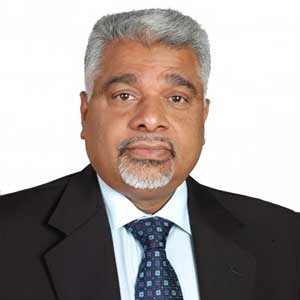
  • Arun Gupta, Founder, Factum Legal, on a profile in Corporate Commercial work and the Corporate Secretarial

    Arun Gupta, Founder, Factum Legal, on a profile in Corporate Commercial work and the Corporate Secretarial

    Arun Gupta is a Fellow member of ICSI and a member of the Bar Council of Delhi. He graduated with a B.Com(H) degree in 1995 followed by CS degree in 1999 and later qualified in law.  Arun is a lawyer with more than 15 years experience in Corporate and Commercial matters.

    Arun acted as a key contributor to the book authored by Corporate Professionals titled “Insight into Companies Bill 2012” and he is also an author of a book titled “Companies Act 2013- Impact on foreign companies in India” published by CCH, Wolters Kluwer in 2014.

    He started his own firm – Factum Legal, Advocates and Solicitors in 2013.

    In this interview he tells us about:

    • Life, law and the choices he’s made while pursuing it.
    • The benefits of having a commerce background while practicing corporate law and the value of additional degrees.
    • Factum Legal – its establishment and his plans for expansion.
    • His publication and the role of academic pursuits in a lawyer’s career.


    How would you like to introduce yourself to our readers, most of whom are students studying law?

    This is Arun Gupta, a Law Graduate and also a Fellow Member of ICSI, presently practicing as a lawyer in Corporate & Commercial Laws. I love to learn a lot and I’m always keen to upgrade my knowledge of changes in law and the impact of the same on industries.


    Tell us about your life before you joined college. Where did your interests lie as a student and what made you gravitate towards law?

    I was from a business family so as usual, I did not plan anything in my childhood. So I tried my luck in the family business also along with my studies, but after just a few months I realised that this is not my cup of tea and God had planned something else for me. I was always good in terms of scoring marks in school exams and enjoyed the law subjects, while doing regular B.com (h), so I think that was the beginning of an inclination to enter the field of corporate law.


    You specialize in corporate matters, Mergers & Acquisitions, tax law, among others. How did your interests develop in this field?

    Yes I specialise in corporate matters, Mergers & Acquisitions, Due Diligence, Compliances & Governance etc. Actually being a qualified company secretary and practitioner of Corporate Law what I enjoyed the most, from the beginning of my professional career, was to find solutions in all type of transactional issues in restructuring and also assessing and finding the potential risk in any acquisition or joint venture apart from governance and compliances issues. Being part of some fund raising activities including Initial Public Offer (IPO) & Preferential Allotment etc by corporates in India, the interest towards such areas developed and sharpened.


    How helpful was your background in commerce in aiding you with a better understanding of corporate law? Would you recommend professional degrees like the Company Secretary degree or any other such degree?

    This is very interesting, I strongly believe that a commerce background really helped me a lot in understanding commercial law, Economic and accounting issues. I initially registered myself for the science stream after passing class X, but after 5-7 days I shifted to the Commerce stream and I am extremely happy for that decision and thankful to one of my teachers for such wonderful advice. Well, I believe that an LLB degree itself gives a wider horizon in commercial, corporate, and Personal laws, but if somebody wants to explore Corporate law then a Company Secretary course would definitely add value to that person. My CS degree really helps me a lot in all kinds of Corporate Transactions and General Corporate Advisory, however one must not forget that the most important part in practical life is not really additional degrees but the approach in handling complex situations.


    Tell us about your initial years in practise – from starting out independently to the time you founded your own firm. What challenges did you face initially?

    Well, the initial years of practice were very tough, I started practicing from the beginning of my professional career and no one in my family was either an advocate/ Chartered accountant or company secretary, so to setup an independent practice was really a daunting task. But I did not bother about monetary earnings, what I concentrated on was whether I was earning knowledge or not and that really helped me in setting up own firm in 2013 again. So I think you need to maintain your patience also to be in the practice of law.


    arun-gupta-1

    Your firm, Factum Legal, has been featured as one of the Promising Legal consultants of India, 2015 by SiliconIndia. Tell us about the firm in general and the kind of work you deal with on a daily basis.

    Yes, we have been recognised as one of the Promising Legal consultants of India 2015 by a business magazine Silicon India and the credit goes to the hard work of our team factum legal and the trust of our clients. We are a boutique law firm providing a comprehensive range of legal services and solutions for domestic and international clients. Our practice area embraces advisory, execution and representation services and dispute resolution.  We are involved in all kinds of M& A transactions, Legal Due Diligence, Commercial Agreements, Corporate Compliance, Governance & Secretarial Practice, Private Equity help desk, Litigation & Alternate Dispute Resolution, Inbound & Outbound Investment Transactions, Registration and Licensing Services, Renewable Power Projects.


    What would you advise young lawyers who are starting out working in the corporate sector. What areas might they find interesting?

    My advice is don’t jump into corporate law because it is a lucrative career, but do what you enjoy most. We are lucky that we are born and practicing the profession in India as there are ample opportunities in every sphere of Legal services, so you should choose the subject based upon your knowledge and interest. My advice to all young lawyers and students is that there is no shortcut to gain knowledge, you have to work hard to become an expert in your area of interest.


    You have authored a book on the Companies Act 2013 and have quite a few publications to your name. How helpful is an academic pursuit in the life of a practising lawyer and how can one find time out for the same considering the hectic schedule one inevitably finds himself in?

    Authoring a book or writing articles and publications needs a huge time investment, and you cannot do such things just for the sake of doing them. You can write articles on a particular topic when you have command over the subject. The practice of law is based upon knowledge and expertise and an academically strong lawyer can really achieve a lot in a short period of time. If you ask about finding time, then I am of the view that time is essential, time is precious but if you enjoy something you always have time to pursue those things. Just to inform you, now also, I am working on a book relating to Companies Act 2013.


    In the present environment of cross border transaction among corporates, what is your strategy to expend internationally?

    We as a firm, believe in collaboration and mutual cooperation, so in that direction, we have joined an international legal network, which will surely help us in gaining knowledge and executing cross border transaction with local and cultural expertise. Further we have also entered into a strategic relationship with a European Full service Law firm ‘Adamas’ to serve our clients in their cross border transactions in the best and most effective manner. We will continue to expend internationally with such mutual cooperation for another few years.


    Finally, what would be your parting advice to our readers?

    I would like to suggest everyone ‘Have a zeal to learn, work hard, and discover your interest area as early as possible’ and the rest will follow on its own.

  • Sajai Singh, Partner, J. Sagar Associates, on work profile and experience in Corporate Commercial Practice

    Sajai Singh, Partner, J. Sagar Associates, on work profile and experience in Corporate Commercial Practice

    Sajai Singh graduated in B.Sc from St. John’s College, Agra and later qualified in law from Delhi University in 1990. Sajai is currently a partner at J. Sagar & Associates and the Chairperson of the firm’s Corporate Commercial Practice. Having experience spanning over more than 25 years, Sajai is an acclaimed transactional lawyer. Sajai has been the President of the International Technology Lawyers Association and is a member of the American Bar Association. In this interview he shares with us:

    • His college life, education and becoming a partner at JSA.
    • His experience as the past president of International Technology Lawyers Association, and also the field of Technology law.
    • The work entailed in his position and the field of corporate law dealt with.


    How would you like to introduce yourself to our readers, most of whom are aspiring lawyers?

    I am a first generation lawyer. My growing up years were spent moving from one cantonment to another as my father was in the Indian Army. Growing up in the army background bought a sense of discipline and commitment in me. I changed schools every two years if not earlier and my first exposure to living in a big city was when my father was posted to London and I joined him after completing my 12th Board exams, for one year.


    Could you tell us a little about your college life and why you decided to pursue a legal career?

    In college I studied Science. Chemistry was my favourite subject. Post College I studied Business Management and had an interest in International Trade. As I read more about International Trade, I realised the interplay and the key role played by Law.  It was the glue that made business possible in an organised and harmonious manner. Without the principles of law governing every aspect of business, a business transaction, like may others, would be anarchic. We had to keep referring to the ‘rules’ to answer any response to a ‘why’, a ‘how’ or a ‘what’. This was interesting, and at the same time intriguing.  That’s when I got interested in study of Law. Subsequently, I joined the Campus Law Centre, Delhi University.


    You completed degrees in B.Sc and PGD Business Management before pursuing law. Have these courses helped you in your work?

    Not just my qualification in Science and Business Management but also my secondary education in the Kendriya Vidyalaya system helped my overall growth and awareness, eventually assisting my study and practice of Law. Science taught me technical skills, while my Business Management background developed my analytical skills. My multidisciplinary exposure helps me understand the needs of my corporate clients better.


    What kind of activities did you take part in while at law school?

    Writing has always been a passion for me. While studying Law in the 80’s, mooting and debating opportunities were fewer compared to today. We made the most of the opportunities that came our way. Students today are blessed to have far more opportunities and avenues open to them. And they are not limited by geography.


    Did you do many internships while at law school? In retrospect, how important were these internships in shaping your career?

    Internship opportunities were few during my Law School days. I was, however, working while studying law. My passion for writing got me an opportunity in a leading advertising agency and I used to work in the copy department of the same. I also did part time work at Doordarshan and All India Radio. From the money I earned, I paid my rent and met my other needs. While the money I earned was not much, things were simpler, choices were scarce and my needs were simple. It were these life experiences that helped me realise the value of hard work.


    Having participated in a number of international programmes and workshops, what would you say were you biggest take-aways from each?

    I feel international exposure not only builds confidence for people from developing nations but also allows one to understand how to function in a flat world. The learning is both ways between developing and developed economies; between modern and ancient cultures; and between different professions. I have been lucky to have done courses in Wharton and with the Euromoney Institute. But the single most impactful experience for me was with the Centre of International Legal Studies/(CILS) Austria. I did a Certification Program in International Practice with them. This program took me to Dallas, where I spent 4 months working with the US law firm, Jackson & Walker. This time was an eye opener and prepared me for my forth coming move to set up open and run the Bangalore office of JSA in 1996.


    sajai-singh-1

    You have worked with J. Sagar & Associates (JSA) for 23 years now. Can you tell us the best and worst things about working in a corporate environment in general, and JSA in particular?

    I started my career as a Litigator. I moved to Corporate Law after 2 years of Litigation and Arbitration practice. I would recommend all future corporate lawyers to have some exposure to Litigation and the Court system before they shift work exclusively in the Corporate Law field. My tip on this point for aspiring lawyers would be to spend as much time in the Court Registry as they can. This exposure is key to understanding process and how the backbone of the justice system works. Contentious work develops quick thinking, contextualising and research ability, which is very useful for a Corporate Lawyer. While exciting in its own way, it may take time for Corporate Law work to replace the adrenal rush of arguing a matter before judge.

    My Experience in Corporate law field is limited to JSA. Therefore, I would not be able to comment in general about corporate law firms. JSA has been a very International, forward looking and broad canvas exposure for me. Its institutional character, ethical rooting and transparent interactions make it a very happy and comfortable environment to practice law in.


    As the Chair of JSA’s Corporate Commercial Practice, how do you recall your career traversed to bring you to your current position? What is your current work profile like?

    Since 1992, when I joined JSA, some months after it started, I worked extensively for multinational clients setting up business in India. Those were the years when India was slowly liberalising its economy and JSA was working closely with its overseas clients to try and maximise value for them as a part of their India entry strategy. Other than foreign exchange regulations, the other laws that I initially worked with were Company Law and Contract Law. With years of focus on these statutes I had a background which led to me being made the Chair of JSA’s Corporate Commercial Practice. It is my endeavour to continuously expand this practice including in areas that I am passionate about and feel will become strong practice areas in their own right very soon. These are Employment Law, Anti-corruption Law, Data Protection & Cyber Security. I am doing a fair amount of work in both these areas. In terms of my work profile, in addition to doing billable work, I am also expected to create a business development strategy, training schedules and curriculum, recruitment and HR needs and implement them for the overall growth of the practice.


    Please tell us how do you approach work with regard to management and delegation.

    As with any progression it is important to nurture the younger generation and allow it to grow develop and play a larger role. I follow the same principle in my practice. I have always been surrounded by brilliant young lawyers who have worked closely with me in delivering extraordinary service to clients. I believe in delegation. I believe in trusting my colleagues and their ability. At the same time I do feel a challenging is a good way to obtain the best performance. Unless a matter requires involved supervision or is evolving with time, I tend to keep my role limited to supervision and emerging essentials.


    Tell us about an interesting case you handled recently. What is your favourite part in the life cycle of a given matter or case?

    One of the recent anti-corruption investigations, that I worked on, involved out-of-the-box time critical thinking. Most of the challenges came from the human element rather than from a law or a regulator. And it is the ingenuity of the human mind that emerges as the most fascinating aspect of any transaction. Unravelling and anticipating this aspect is my favourite part. Using technology as an able tool has proven to be a wonderful experience.


    How did you develop an interest in Technology law?

    (Sajai was the immediate past-president of the International Technology Lawyers Association, which is a first for any Asian.)

    I have always been interested in new areas of law, which evolve with the development of Society. Be it Television Broadcast Law, Cable Television Law, Copyright Law, or information Technology Law, I have seen all of them evolve before my eyes and these have been fascinating experiences. I am sure there will be other and newer areas of law that will grab my fancy in the coming years. I look forward to that.


    Please give us some practical insight into the Information Technology sector in India juxtaposed with the same in the global context.

    From being the back office of the world, India today provides the world cutting edge consulting and advisory support. I see entrepreneurs come up with new ideas and technological breakthrough on an encouragingly frequent basis. I do hope India would evolve into an IT product, Software and Patent creations hub in the near future.


    Could you please provide us with some context in regards your long standing association with the American Bar Association?

    Since most of my clients were American Corporates doing business in India, I had to closely work with US lawyers and US General Counsel. These interactions led to me being invited to speak at several Seminars and Conferences, including those organised by PLC, IBA and ABA. These and many other associations welcomed me and my thoughts into their fold.

    ABA seemed a natural fit for my practice as it helped me understand the US legal landscape. My clients operated in this space and I had to keep abreast with it if I wanted to adequately service my clients, Thus began my association with ABA.


    Please tell us a bit more about the Private Equity and Venture Capital Committee that you are the Chair of.

    As a part of my leadership of the PE/VC Committee, I collated International experiences, regulations and understanding to what may be considered a cross border phenomenon – PE/VC investments. These collated thoughts, updates and experiences were presented to the Committee members at meetings and online.


    You conducted skill development courses on Negotiation and Transactional skills at the NLS Bangalore. What is the structure and curicula of this course?

    I like to teach and work with students. They have so many new ideas and life is looked at with different perspectives. As a part of this interest I taught at the National Law School, University of India Bangalore. Now due to time constraint I’m only able to conduct shorter skill development programs and not teach semesters as in the past. My Negotiation Skills and Transaction Skills Courses were focused on practical development of the students rather than on teaching theory. I wanted to provide my students with an opportunity to understand how negotiations are conducted in practice and the life cycle of a transaction with several live examples exercises and fact patterns. My students got an opportunity to role play in a controlled environment which I hoped would prepare them for the practice of corporate law.

    I also conduct legal workshops in different universities across the world as a part of my education initiative for ITechLaw. The recent ones that I conducted were in Colombia, Ecuador, Peru and Chile. I hope to conduct one in Cuba next year.


    What advice would you like passed on to an aspiring lawyer?

    My advice to any aspiring lawyer is to remain curious, ask questions and try to learn one new thing every day!

  • Priyanka Sinha, Legal Executive, Voltas, on law school and work experience as an in-house counsel

    Priyanka Sinha, Legal Executive, Voltas, on law school and work experience as an in-house counsel

    Priyanka Sinha graduated with a B.L.S.LL.B. degree from ILS Law College in 2013. As a law student she has been quite active and participated in many parliamentary debates, moot court competitions, MUNs and conferences. She has also won Best Speaker and Best Memorial awards in few of these competitions. She also has multiple publications to her name. She has been working with Voltas Ltd., as a Legal Executive since after her graduation. We have taken this opportunity to ask her about the several decisive moments in her career amongst other things including:

    • Importance of co-curricular activities and internships
    • Research papers
    • Recruitment and work at Voltas Ltd.


    How did you decide to study law? Did you have lawyers in your family?

    My decision to study law was quite impulsive to be honest. I had once heard my father say that these days law as a career is quite prospective. Still trying to figure out what he meant by that; but I would not regret the decision whatsoever.

    I am the 1st generation lawyer in my family. It depends on which stream of the profession you want to venture. As you can see, I am answering this interview without having any lawyers in my family; which I believe stands testament to the fact that you really do not need a family base if you wish to enter the corporate world. In the litigation sphere, I have heard it helps, although I do not have any personal account to share in that regard.


    How did you fare in your academics at ILS Law College, Pune? What are your thoughts on CGPA and co-curricular activities?

    I was always quite a research oriented student and I love to read. (Yes, the law books as well). So it would be fair to say that I was a decent performer in my college. A great CGPA certainly helps you to crack the seat for an interview, but to transform that to a job offer, it all depends on your understanding of the subject.

    If you are one of those stage frightened students, then these activities tend to push you out from your zone and challenge your limits. Otherwise, these activities certainly impart that extra perspective to add to your knowledge base and understanding of the legal industry as a whole.


    Having won best speaker at a few moots, what would be your one advice to budding mooters?

    Just be confident in whatever you wish to state before the judges. That is all that helps once you are inside the courtroom. Prior to that, I feel if you have done your research properly, it should not be much of a problem.


    priyanka-sinha-3

    Can you give us a few tips to ace the art of paper writing?

    During my internship days, if I did relevant research on any subject matter I used to pen down my thoughts. Even if not for publication, a write up on any subject matter helps you at any point of time.

    You have to be articulate and know the exact problem that your paper is trying to resolve. I always tried to provide a solution via my research papers. Doing a sporadic research and accumulating data isn’t what a great paper should contain. Infact a good piece of writing must contain a solution to an intricate problem.


    You have been working with Voltas Ltd., as a Legal Executive since after your graduation. Tell us a little about your work profile and the responsibilities you have been entrusted with.

    Being a Tata Group Company it has a distinct style of working and believes in recruiting people who have an appetite for learning.  As a prospective employee you can’t be choosy and must take up every opportunity that comes your way and in due course develop an interest and start working towards that.

    As an In house lawyer, I’m exposed to not only arbitration, general corporate & commercial law, Construction law, Engineering Contracts and policy matters but also substantial part of my work includes research and advisory.


    Can you tell us about a few of the most challenging problems you have faced thus far? How do you manage the workload and your personal life?

    As a fresher the biggest challenge that you face is to understand the commercial and technical aspects. It is easy to ignore the technical bit and restrict to the legality. However, it is necessary for a In-house commercial lawyer to understand the business methods with a lot of patience and bridge the gap between the growth of business and legal aspects.

    I’m equipped enough to prioritize my work and passion for dance (Kathak) and travelling.

    I believe it is not about the hours you spend at work rather it is all about willingness, enthusiasm and a right set of people around you.


    priyanka-sinha-2

    What do you think an intern should accomplish in the course of their internship to get a “callback”?

    Enthusiasm, eagerness to learn, diligence and punctuality-these are few of the essential traits that an intern must possess. For a call back, things may be different, but the aforesaid qualities generally are well appreciated by the superiors.


    What would be the one misconception you’d say you’d always held about real life legal work till the time you were an intern but changed once you started working as a lawyer?

    As an intern it was all about assisting somebody in drafting or carrying out research work but now as a lawyer it involves taking independent decision, work with minimal assistance and research coupled with advisory.


    If you could re-live your 5 years in Law school, is there something you would do differently? Where do you see yourself ten years down the line?

    No. I am quite content with the 5 years I had spent at my alma mater. I would love to go back and relive the same life again.

    I love the work that I am currently doing. I would definitely consider myself to be immensely lucky as I can boast of a job which satisfies me. Consequently, I would want to establish myself as a name in the world of Arbitration.


    Lastly, what would be your message for our readers?

    Just find meaning in whatever you do. Life is short, do not waste your time in something which you do not enjoy or feel content while doing it. As Steve Jobs once famously asked, “If today would have been your last day, would you have been doing what you are doing now?” If the answer is in the affirmative, well done, you are successful already.

    All the best!


  • Kavya Nagaraj, Associate, Tatva Legal, on an unconventional law school experience and work experience

    Kavya Nagaraj, Associate, Tatva Legal, on an unconventional law school experience and work experience

    Kavya Nagaraj graduated with a BBA.LL.B. degree from National Law University, Jodhpur in 2013. During college, she was on research work and has penned down a number of paper for various seminars. She also has an excellent series of internships with a mix and match of law firms and corporations. Soon after graduation, she joined Tatva Legal and currently works as an Associate there.

    We have taken this opportunity to ask her about the several decisive moments in her career amongst other things including:

    • A unique Law school experience at NLUJ
    • Importance of internships
    • Induction and work at Tatva Legal


    What motivated you to choose law as a career? How did you get through to NLU, Jodhpur?

    Choosing law as a career was definitely not a backup option for me. I used to interact with one of my seniors from school who was then studying in NLSIU, Bangalore. I got to know the mechanics of a law school mainly from him. Later when I discussed this with my parents, they were very supportive and more excited than me; specially my father. There are no lawyers in my family; so I thought I should go for this.

    I wrote CLAT in the year 2008 and according to my ranking, I got through NLU, Jodhpur. I did not attend any coaching classes; I browsed through the newspapers for the current affairs and brushed up with basic knowledge of law.

    According to me, choosing law as career should not be a backup option. It is one of the best career choices anyone can make. One can gain knowledge every day. Law is not constant; it keeps on growing, which is one of the things that make legal studies to stand out from other professions.


    How would you describe your time at NLU, Jodhpur? Please tell us about the manner in which you approached academics while in college.

    NLUJ is one of the best things that have happened to me so far. I have got to learn a lot from this experience, both academically and personally. To be honest, I did not take academics seriously in my first two years of college. Gradually I picked up and started off. Nobody can explain how one can approach academics per se, because everybody has a style of their own in dealing with it. As for me, I gave my best in whatever way I could. I did not go out of my way to do things that would make me dejected just to get highest marks in the subjects. I did not worry much if I sometimes got bad reports, because, hey, there is always a next time. I think that worked well for me. I have a good CGPA and experience in my account.


    Would you say a great CGPA is a necessity to kickstart a good career in the legal profession?

    As I said, I was an average student in NLUJ. I was not among the toppers, but I always gave my best in whatever I did.

    According to me, a great CGPA is not a necessity to kickstart a career, because it’s all about putting the things you learnt in college in force. If you know what you are good at and you can let others know that, that is enough to convince the employer that you are ready for that job.


    What were your areas of interest during your graduation? How did you go about developing expertise and knowledge in these areas?

    I was always interested in corporate law. That is the reason I chose Business Law as my honours course. We had the best faculty in our college. I learnt a lot from them and of course, our college library had every book that we could ask for. I started writing all the projects and seminar papers from scratch and used to take opinion from the faculty members regarding the writings.

    I think one can be an expert in certain area of law only by experience. I cannot say that I am an expert in corporate law, because there is still a lot to learn, all I need is more experience, more exposure and a lot of learning.


    Did you find that your law school education had prepared you for the real world practice?

    Yes, definitely. What the law school provides us is the basic knowledge of law that we require to make use of in whatever field we go into, which is very much necessary. All we have to do is to make use of that knowledge and put it in action. We get a lot of exposure during the internships. That is one of the best things that a law student can experience, as he/she will get to know the mechanics of a legal profession while he/she is still pursuing the studies. They can get a basic picture as to what to chose and how to go about with their career choice.

    The internship experience helps a lot when you finally land up a job. That happened in my case. Since I did most of my internships with law firms, I had a general idea of the work culture. So, it was easy for me to gel in Tatva because of the experience I gained in my previous internships.


    How has your mooting experience been?

    Mooting has not been my cup of tea. I participated in the moot courts held in our college for academic purposes only.


    What would you suggest a fresh law graduate should do to hold spirit and utilise the opportunities available during the first year after graduation?

    Yes, I agree that the first year after graduation is the most defining time of a fresh law graduate. You get immense number of opportunities and choices, when you are fresh out of college. It is the time when you can patiently sit down and decide what you have to choose and how pursue your career. Many people think that one has to have a job at the end of fourth or fifth year or else their life is doomed. I do not believe in this at all.

    It is the time when you have to decide patiently what you want to do and how to make use of your education, rather than to be pressurised by others. At the end of the day, it is not everyone else’s decision; it is yours. So, choose wisely.


    Please tell us about the recruitment process at Tatva Legal?

    The recruitment process at Tatva Legal is very closed. They recruit only when there is a vacancy. I had applied to Tatva Legal through their website, after graduation. Eventually, they called me for an interview and I got selected.


    How was the job interview? Do you remember any of the questions asked to you? Please give our readers some tips to nail a law firm interview.

    The job interview was very professional. I was interviewed by the partners, Mr. N.K. Dilip and Mr. Vasudev. I don’t exactly remember the questions asked by them since it’s been two years, but the questions were about general corporate and mergers and acquisitions.

    There is no tip to nail a law firm interview. It is just as any other interview! You basically have to have knowledge of the areas that you are interested in and of the work that the particular law firm does. As many know, a law firm is a small group of lawyers. There will be no big rounds of interviews like aptitude, group discussion etc.  So, the main thing is having confidence and the ability to convince the interviewer that you know the law.


    kavya-nagaraj-2

    How tough were the first six months at your workplace?

    Since I do work relating to real estate along with corporate, it was pretty difficult to get to know the technicalities of real estate, as it was completely a new field for me. But gradually I picked up and my colleagues helped me a lot in learning. The first six months is the most defining period where you have to be patient and trust yourself that you can do all the tasks. Many give in to the pressure and confusion and end up quitting during this period. That is one of the biggest mistakes one can make. You have to work through this crucial period and emerge. Gradually, you will realize that it was a piece of cake.


    What are your day-to-day responsibilities? What is the most challenging aspect of your job?

    My day-to-day responsibilities include legal due-diligence, both corporate and real estate, along with general drafting and review of agreements and contracts.

    I would rather say that my job is an immense learning process rather than calling it a challenging task. My experience so far has been good; and I hope it will continue the same.


    How do you manage the workload and your personal life?

    I think it is an art to manage the workload and personal life. One should know when to spend time at home and when the work needs to be given priority; and you learn it on the job. Everyone has different parameters and zones. I give priority to my personal life on a different level and professional life on a different level. I avoid mixing them both. There are instances when I have to give more time to my professional life. But I compensate that by taking time off to be with my family and friends. It is all about managing your time efficiently.


    How do you keep yourself abreast with latest industry news and trends?

    Through newspapers, internet and of course, by researching for all the deals that we take up in our firm.


    What are the primary professional ethics you follow while at work? What has been your strategy to deal with errors and mistakes?

    I follow the instructions that I’ll be given by the partners. We are like a family at Tatva. So, if there are any concerns, I openly discuss with my colleagues and sort it out immediately. Errors and mistakes are to be taken into account and learned from so as to not repeat them again. I acknowledge my mistakes, if there are any; and I try my best to correct them and avoid repeating those mistakes in future.


    Please tell our reader about the internship and recruitment process at Tatva Legal.

    As I said, the recruitment process at Tatva Legal is close-ended. Candidates can apply through the official website of Tatva Legal and if the requirement is met according to the available vacancy, they will be called for an interview. As for internships, the candidates can again apply through the website, a month prior to the slot they want to intern.


    What do you feel makes an intern stand out and is very important for him to do to have a chance of getting a call back or even a PPO?

    A basic thing one can do to stand out is to perform well in the tasks that he/she is assigned. If the interns show the ability to handle the tasks assigned efficiently, they will have a chance of getting a call back. But of course, that would happen only if there is a vacancy. Two of the candidates who were interning in Tatva, Bangalore have been given a PPO.


    kavya-nagaraj-3

    The question that whether one should specialise in a particular area of law or be more of a general lawyer often comes up before law students. What is your opinion on the same?

    According to me, that’s a personal choice any lawyer could make. It depends on the individual to specialise in a particular area or be a general lawyer. I chose corporate law because I am interested in the subject and want to grow in this field. It is best to choose what you are passionate about than to give in to the pressure and choose what you are disinterested in and end up disliking your profession.


    Many lawyers would say that the actual learning takes place in the years of practice. How far would you say it is true?

    Yes, that is true. You learn through practice, especially in the field of law. Legal practice is where you put all your knowledge in force. I have experienced the same. I have been given an opportunity to showcase my ability to utilize the knowledge that I have gained. The motto, ‘Practice makes man perfect’, should be adopted by every lawyer. There are no set rules in becoming a lawyer; one has to keep learning and growing.


    What do you cherish most about the experience you’ve had over the past two years?

    I cherish every instance where my work has got appreciated. Appreciation is one of the ways one can show that the other person is good at what they are doing. I have had a wonderful experience in the past two years. I have got to learn a lot from all the people I work with, in one or the other way. I have grown both professionally and personally.


    Lastly, what would be your parting message for our readers?

    The profession of law is a noble calling. It is one of the most brilliant learned and attractive professions. It needs not only high depth of learning but also a sense of social responsibilities which calls for the high and noble conduct. If you have chosen this profession, you are contributing a lot to the society.

    Follow your heart. Never give in to the pressure of others. Choose a field that you would love to build your career in and make your work life blissful.

  • Kunal Kashyap, Legal Counsel, Mahindra & Mahindra Financial Services, on writing essays, on bagging a corporate job and law school experience at KIIT

    Kunal Kashyap, Legal Counsel, Mahindra & Mahindra Financial Services, on writing essays, on bagging a corporate job and law school experience at KIIT

    Kunal Kashyap graduated from KIIT Law School in 2014. He has interned at various top law firms and corporate like Udwadia Udeshi & Argus, DSK Legal and Tata Motors to name a few. During college, He also had the opportunity to work as a Research Assistant at Centre for Disability Studies, NALSAR University of Law and Indian Council of Social Science Research, Gangtok.

    As a law student he has been quite active and participated in various co-curricular activities. He has also won various essay writing competitions including KIIT University NSS Essay Writing Competition and fourth position in Essay Writing Competition organized by the Comptroller and Auditor General of India. By the time he graduated, he had received a job offer from Mahindra and Mahindra Financial Services Ltd. and is currently working there as a Legal Manager.

    We have taken this opportunity to ask him about the several decisive moments in his career amongst other things including:

    • Law school experience at KIIT Law School
    • Internships and co-curricular activities
    • Winning essay competitions
    • Recruitment and work at Mahindra


    How would you introduce yourself to the legal fraternity?

    Warm Hello to all the readers of this wonderful initiative SuperLawyer! I am a corporate lawyer born and brought up in Siliguri, the gateway to the Queen of Hills – Darjeeling. I attained my law degree from School of Law, KIIT University with a specialization in Business Law. I am presently associated with Mahindra Finance as an in-house lawyer for the past 1.6 years. Besides, my interests also flow in areas related to blogging, reading and owning a startup.


    How did you decide to choose law as a career?

    Law in particular was never a path for me to reach my goals which have always been guided by creativity. It all began to fall into place when I was in my 12th standard and this “law firm with huge financial remuneration” bug hit me.  Once I got into the law school, I started understanding the nuances of this field. I saw that I could be creative in this sphere of education and at the same time be independent on its completion, and this is what motivated me to the core.


    As a graduate of School of Law, KIIT University, have you faced any bias? What would you say to the future legal graduates of KIIT?

    I feel bias is a subjective expression, and use of such term is far away from reality. I was placed at the beginning of my final semester.

    The brand NLU gives an edge to students from NLU’s but that has to be looked with positivity and hence, a non-NLU student should always be on his/her toes and become a ideal material for industrial recruitment. The resources available are similar for both sets of recipients and one need to grab the best from them.


    What were your areas of interest during your graduation?

    My area of interest during graduation and still is anything related to the Business of Law. The commercial impact of the application of law is what excites me. I always try to keep myself updated in this area and try to build an opinion on such kinds of news.


    You have worked for Udwadia Udeshi & Argus Partners, Tata Motors, DSK Legal, TRAI, Transparency International India etc. as an intern. Our readers would be quite curious to know about the work you had to do there.

    Internships are an integral part of the development of a law student to a lawyer, and I was very particular about it. Thanks to the great bunch of seniors I interacted with! My internships with such known brands were a result of planned approach and a continuous analysis of what could be good for me.

    You will find my internships at array of areas, which was mainly because I wanted to have a feel of where my interest would ultimately lie. While the work at Udwadia Udeshi gave me a hang of the compliance activity, I gained an experience of drafting and litigation at Tata Motors & DSK Legal. TRAI was more about sharpening my research skills and also to understand how regulatory authority works.

    Every internship had its importance as they were done with a lot of passion & dedication to learn and so was the experience at Transparency International India wherein I worked on the eradication of corruption at PSU’s and on the laws involving the same. (I was also offered a lifetime membership at TII, on starting a successful initiative called “ALAC – Advocacy & Legal Advice Centre” which aims for social empowerment through Legal Awareness).


    You’ve also worked at Centre for Disability Studies, NALSAR and Indian Council of Social Science Research, Gangtok as a Research Assistant. Please tell us about the application process and your experience at both these places.

    Working with CDS, NALSAR under the guidance of eminent Professor Amita Dhanda was one of the best activities that I could do in an around 2nd Year of my law school. I had applied through email, on which I was selected post interview and was a part of a team that assisted in the drafting of First Country Report on the Convention on the Rights of Persons with Disabilities (CRPD).

    Working as a research assistant at ICSSR was more of an inter-college selection wherein I was selected to conduct a survey for the Government of India in the city of Gangtok to understand the functioning and the role of the police machinery and its impact on the common public. It was a great fun and a learning experience.


    Did you find that your law school education had prepared you sufficiently for your internships and job?

    I completely believe that everything I could do or achieve was all because of the kind of training we received at our law school. All thanks to the set of experienced faculty line up that we had and the seniors along with our friends who have become an integral part of the extended family by now.


    Please give our readers few tips on acing essay writing competitions.

    (Among other competitions, Kunal managed to secure the first position in KIIT University NSS Essay Writing Competition and fourth position in Essay Writing Competition organized by the Comptroller and Auditor General of India.)

    I have always loved expressing myself through write-ups. To ace competitions like these, one has to understand the target audience and the most important tip is to be creative while remaining original. It should be an opinionated piece which tends to bring a new thought process and not just re-surfacing the material already published and calling it research.


    How important do you think are mooting, debating, etc. in shaping the legal career of a law student?

    I consider all these activities as confidence-building measures. I believe the skill sets come with time and experience, which is the maturity to handle various situations. I believe what is more important is to have an attitude & passion towards learning. The more one gets into all these activities full throated, the sharper and skilled one becomes and what better place to try than in a Law School!


    kunal-kashyap-1

    How did you go about bagging your job of a Legal Manager at Mahindra and Mahindra Financial Services Ltd? Please tell us about the recruitment process at M&M?

    I was taken at Mahindra Finance through the process of campus recruitment. We had two rounds of interview. In the 1st round we had a situation given to us to check our skill-sets and the 2nd round was more on the confidence element and the attitude to learn. Fortunately, my answers clicked with the recruiters and I bagged the job in my 1st Campus Interview itself.

    We at Mahindra Group have a stable HR Policy. All applications for internship & recruitment are to be routed through the HR Team to the concerned department.


    What kind of legal work do you get there? What is the most challenging aspect of your job? How is the experience so far?

    I believe I represent the most important department of my organization that has a very dynamic role for an In-house Lawyer. My daily activity is to advise the best practices for conduct of businesses and minimise the number of legal risks against the company through an informed legal advice.

    In the company we also look after a portfolio comprising of stressed assets and try to close them through legal tools. This is the most challenging and the interesting part of our role. There is not a single day when we don’t have a new and challenging assignment.


    Many lawyers say that the first year after graduation is the most difficult year. How has been your first year after graduation?

    Frankly, yes it is difficult because it is not easy to change gears from a law student to a potential game changer employee. I was blessed to have my seniors who showed a lot of patience and gave me a chance to learn by myself so that I could explore and find a niche area within the framework which could be my forte.

    The biggest challenge as an in-house lawyer was to understand the culture of an organization and to suggest best legal practices within the framework which was a Win-Win situation for all.


    If you could re-live your five years in Law school, is there something you would do differently?

    The expectations and dreams are never ending phenomena and they will always remain under-achieved. Having said that, frankly speaking, on a personal level, if one thing if I could do differently, that would be to have more FUN.


    Where do you see yourself a few years down the line? Do you aspire to become someone you look upto?

    That’s a difficult question. Ten years down the line I would see myself as an established In-House Lawyer and trying things at something new and exciting as always.

    I don’t aspire to be like somebody but I do believe in continuously analysing my strengths and weaknesses and working hard towards them and becoming a better human being.


    What is your message for our readers?

    Finally, to all the young and dynamic readers mainly law students I would like to say that it was not long ago that I was on the other side of the line. Guys have fun, enjoy and live the moment. Analyse your capabilities and live your life with passion and dedication. Never forget that you are what you are because of your parents. Show some gratitude and try to be as good as them.


    Signing Off! Cheers!!

  • Varun Kalsi, Manager, Dua Associates, on LL.M in corporate law from NYU and work experience in General Corporate

    Varun Kalsi, Manager, Dua Associates, on LL.M in corporate law from NYU and work experience in General Corporate

    Varun Kalsi graduated in law from Amity Law School in 2007. After which he went on to pursue an LL.M. in Corporate Laws from New York University. At present Varun works as a Manager at Dua Associates.

    In this interview we talk about:

    • His journey as a law student from Amity Law School
    • Studying LL.M from New York University and how it influenced his career
    • Working at Dua Associates.
    • How to gain expertise in corporate law


    What brought you into studying law as your profession?

    I’d say both but more of planning. Like most lawyers though I am good with my numbers, Mathematics was not my favourite subject. Back in 2002, the options were, therefore, pretty much limited to hotel management, media or law. Personally, I chose law since it seemed to me to be a more empowering medium that turned you into a professional, and is one where people hold you in great esteem, either out of admiration or fear or both!


    How did you fare in academics at Amity? Would you say a great CGPA is a necessity to kickstart a good career in the legal profession?

    I’d say I was amongst the bright ones in my batch with nice and healthy grades throughout my 5 years at law school and would also, like to add that, in my opinion, my batch was probably the best our law school had seen, in so far as academics and extra-curricular activities were concerned. There was immense competition even amongst friends but all in good spirit, which, in fact, led us to achieve much more than we would have done otherwise.

    Considering that a fresh law graduate will not have great work experience (other than legal internships/clerkship), a potential recruiter’s primary focus would be on the candidate’s academic performance (grades and other achievements) whilst at law school. However, even if one’s CGPA is not the best, he/she may be hired by a recruiter on the basis of the candidate’s overall personality, the recruiter’s immediate requirements and the way he/she conduct himself/herself in an interview.


    What skills did you get to hone as the Executive Member, Amity Law School Moot Court Society?

    Acquiring organisational skills, inter-alia, was a great advantage of being an integral part of the Moot Court Society and we were nicely tested every time our college hosted the annual Moot Court Competition. Also, the exposure to other teams in terms of their manner of preparation and the way they prepared for the competition was always something one could learn and imbibe.


    What is your advice to budding mooters?

    (Varun has participated in various moot court competitions like Stetson International Environmental Law Moot Court Competition, Surana & Surana Corporate Law Moot Court Competition and Amity National Arbitration Moot Court competition.)

    The first time you think about it, it might be difficult and you may put it on the backburner but my suggestion would be to push yourself to participate in a Moot Court competition, just for the sake of the experience. If I was never “pushed/encouraged” by my friend/batchmate- Apar Gupta, I am certain I would not even done half of what I eventually achieved. The idea is to get in there and get a feel of things as you’d never know whether you like it or not until you try it. By the aforesaid, I don’t mean that it is mandatory but I’d highly recommend that you at least give it a try, once. Perhaps, it is instrumental in your decision as to the path you’d eventually choose in your legal career, i.e. being a litigator or a corporate lawyer.


    What kind of internships did you do in your law school? Did you have institutional support for procurement of internships?

    I actually did a variety of internships right from with a High Court lawyer, an Advocate-on-record, few law firms (Corporate and IPR) and so on. For me, internships were always an avenue that could help me make that difficult decision- what kind of practice would I relish as a lawyer?

    There was minimal institutional support available for procurement of internships.


    varun-kalsi-2

    Do you think being from a non-NLU has ever proved to be a hindrance for you? What has been your experience?

    I think it depends on the organisation as to what it values more- the individual student’s calibre or his/her institution itself. To be fair to the students there are indeed organisations that openly practice such “discrimination” but then that’s not the case with the others. Also, one has to bear in mind that the institution will always play a key role for any fresh law graduate as a recruiter may view his/her abilities from the fact that the student is a product of that particular institution. I am sure such issues are also faced by MBAs who are not from ISB or IIMs but then there are always other options.


    Many lawyers say that the first year after graduation is the most difficult year for young lawyers. How did you learn the ropes and what were the biggest challenges you faced?

    Well, isn’t that true for all professionals? I firmly believe that all professionals are valued in terms of their experience and expertise, which can only be learnt the hard way, i.e. one has to go through the whole process or loosely speaking, the grind. My first year was challenging too especially since my senior was an experienced and seasoned lawyer who would not accept anything less than perfect but was always available to answer my questions and discuss legal issues with me. I would ensure (and still do) that I do not repeat any of my mistakes and strive to improve my drafts/opinions basis the hands-on knowledge and on-the-job experience that I’ve acquired while at work.


    Right after graduating, you went on to pursue LL.M from New York University School of Law. Why did you decide to go for higher studies?

    After doing different kinds of internships I was inclined towards being a corporate lawyer and therefore, felt that it would be great if I could improve upon my knowledge of Corporation laws with an international perspective to it. I’d say that I was extremely fortunate to get through NYU as its faculty, especially for courses like Corporation law and M&A, is par excellence and added a new dimension to the way I perceived the corporate law practice.


    Tell us something about your LL.M year at New York University School of Law. How did this influence your career?

    Not only did this year add to my legal acumen it also brought me in touch with a bunch of talented individuals who had come there from all across the globe. Also, it helped me evolve as an individual and in the process I even learnt few new things about myself. The NYU stint brought more clarity to my thought process in so far as concerns the sub-practice areas within the corporate law practice and helped me forge certain lifetime relationships, which influenced my career greatly.


    Do you think it makes sense to students to go overseas to study law when they want to work/practice in India?

    It’s a personal choice. For instance, for me it was a better and sounder understanding of Corporation laws with an international twist and then the thought of working abroad for a few years. I was able to achieve only the former. Therefore, it totally depends on the individual’s goal. Studying overseas is no guarantee that you will get a chance to work there too, therefore, if the ultimate goal is to work abroad it may not be the best route. It is pertinent to note that there are individuals who had been practicing in India and now are with law firms abroad and vice-versa. Thus, there is no direct co-relation between studying abroad and practicing in India.


    Tell us about the nature of work you are entrusted with and what’s a typical day like?

    There is no typical day for a lawyer like me as my practice areas are wide in nature being general corporate/commercial advisory and Real Estate. There are days when you are swamped with work and do not know when night falls and then there are some when you have some breathing space. Having said that, I am always on something all the time whether it is execution of work for clients or business development activity as ultimately I have to justify my cost to my firm.


    How do you say one can gain expertise in corporate law? What does it take to be a good corporate lawyer?

    (Varun’s key practice areas are General Corporate laws including Defence and Foreign Exchange Regulations and  he is also engaged in major Real Estate Transactions.)

    My recommendation would be to firstly, get the basics right. The fundamentals of the Company’s Act (as amended) and the Contract Act should be clear as these, inter-alia, are the main statutes that govern corporate transactions and are followed by other laws and regulations depending upon the nature of a transaction. Also, it would be a good idea to follow deals such as acquisitions and mergers through news items and trying to understand the drivers and mechanics to these deals as much as possible.


    How do you keep yourself abreast with latest industry news and trends?

    Nowadays, there are several options available such as news items, legal websites and other resources that provide me with the latest legal developments and happenings in India and around the world. Another prominent resource is keeping in touch with your colleagues working with you and otherwise.


    How do you maintain a work-life balance? Are there any specific time management tips you would like to share?

    The best tip is always to finish your work as soon as possible and not sit on it till the penultimate moment. This way, one may have an opportunity to have some free time to indulge in other activities. Having said that, it totally depends on the volume of work and how you manage it that eventually determines your work-life balance.


    When you lawyers are hired, what kind of skills and profile are looked for?

    The legal fraternity hires on need basis, i.e. in proportion to their requirements and intended revenue and other projections. For freshers, while recruiting things that matter are the institution, candidate’s academic performance and the overall personality of a candidate in order to determine his/her suitability to the job and the possibility of his/her adaptability to the work environment and the team, which he/she shall join. For working lawyers, it’s their grip of their practice areas, legal acumen, business development skills, work ethics and his/her suitability to the job and the possibility of his/her adaptability to the work environment and the team, which he/she shall join.


    You must have guided several interns. How would you say that an intern can generate a positive feedback in the limited time they have?

    There is only one way- ‘do as much work as you possibly can’ as only this will give you the necessary exposure. There can be times when you are not called upon for a few days to do an assignment but that should not deter you from going to different lawyers within the firm and politely asking if they could do with some assistance. Also, the other key is to carefully listen and note down the instructions given for an assignment. This will ensure that your research work is on track and if the lawyer is pleased with your work, he/she will give you more work or you may even stand a chance of an offer from the organisation in some cases.


    You recently got promoted from an Associate to Manager. Which skills would you say contributed towards this promotion?

    The Manager designation is one step away from becoming a Partner and in that context, it is a crucial career milestone. It brings with itself lot more responsibility and commitment both in terms of work and business development activities, which need to be met.

    It’s been a while since I have been with Dua Associates, right from being an Associate to a Senior Associate and now, a Manager. I think a nice mix of some hard work, sincerity, interpersonal relationships with colleagues and good fortune are the reasons. I firmly believe that if one is consistently putting in the efforts he/she will get the necessary recognition, which may be sooner for some and perhaps, a little later for the others but it will come.


    What would be your parting message to our readers?

    It is important to enjoy whatever you are doing so choose your path accordingly. If you enjoy your work, you will deliver and succeed in your endeavours. Do not fret about success as it will follow your hard work with a mix of some good fortune, of course!


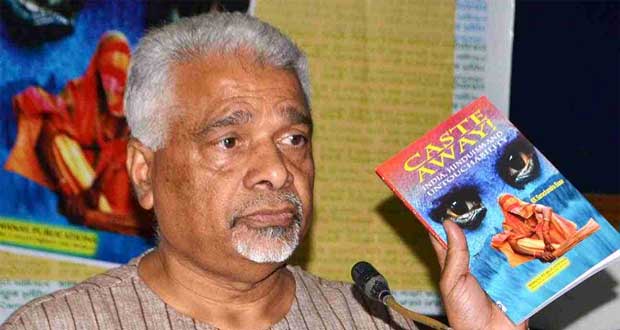
  • K K Sarachandra Bose, Senior Corporate Lawyer and Civil Rights Activist on the ‘Caste Eradication Bharat Yathra’ and value of social work

    K K Sarachandra Bose, Senior Corporate Lawyer and Civil Rights Activist on the ‘Caste Eradication Bharat Yathra’ and value of social work

    K K Sarachandra Bose is a corporate lawyer with experience in Dubai and various other jurisdictions over the last three decades. A member of the International Bar Association, he studied law from R.L. Law College Belgaum, Karnataka, and graduated in 1976. Currently he is a partner at Dal Al-Adalah Advocates & Legal Consultants at Dubai, and Bose & Bose & Nair at Cochin.

    Between all his commitments of being a lawyer, he has found out time and energy to pursue a very noble mission: Eradication of caste system in India. He plans to achieve this by effecting a paradigm change in Indian law through constitutional reforms. He is the author of the book “Caste Away – India, Hinduism and Untouchability.”

    In this interview he tells us about:

    • What prompted him to spread social awareness in India for 54 days and travel across 18,500 km.
    • Eradication of Caste Discrimination in India.
    • His second Bharat Yathra, i.e. the ‘Caste Eradication Bharat Yathra’ which starts today.


    kk-bose-4

    Our site is directed at law students and lawyers. How would you like to introduce yourself to our readers?

    I am a corporate, commercial and contracts lawyer practicing in Dubai and other jurisdictions for the last over 36 years; a member of the International Bar Association, visiting professor in International Business Law, legal columnist in several publications, addressed over 100 law seminars as a guest speaker; Chairman of Global Dialogue Foundation, and Unity in Diversity under the auspices of the United Nations Alliance of Civilizations since its inception in 2007 till date.


    Tell us about your years before law school. Were there particular childhood incidents that proved to be an inspiration for you?

    My childhood was all thrilling. Being born in a very rich family and my father being a Gandhian politician gave away almost all our wealth for the welfare of the society. We lost almost all our wealth and my mother had to sell her land to pay for my college fee. My father took care of the society but not his family and children. This prompted me to first take care of me and my family and then the society. I witnessed low and high caste among human beings during my childhood in my own house when my father served food to field workers, few workers were in an enclosed place and the rest, the vast majority in the open field in pits dug and leaves inserted. I was really pained to see that my own playmates were ill-treated.


    What inclined you towards legal education?

    I was good in mathematics and got admission for Engineering after passing pre-degree (12 grade) but though the college fee was paid, I left Engineering and got a job and then pursued BA as an external student and then law as an internal student in R.L. Law College Belgaum, Karnataka.


    What would you say were the instrumentalities of law school which helped to frame your career?

    I was a studious student, though a college gunda, in the words of my college principal. When our University Vice Chancellor cancelled the Carry Over Benefit (COB) without giving any prior notice, I took the lead and got his order reversed by the State Governor, Chancellor of the University.


    Our readers would be keen to know any specific incident which has driven you to become a social activist.

    From my childhood, I feel the pain if another person is hurt. While in Dubai during 1977 – 1990 period, I used to visit the labour camps with journalists and highlight to the government the pathetic living conditions of the labourers.


    What prompted you take up social activity and spread awareness for any grave social cause in a full time manner?

    (KK Sarachandra Bose is a corporate lawyer by profession and a partner at Dal Al-Adalah Advocates & Legal Consultants at Dubai and Bose & Bose and Nair at Cochin.)

    In the legal profession, I believe my clients like me so much and my opinion on corporate and contract matters are well sought by corporates of the highest order. But I always say, legal profession is for my bread and butter, my blood is social activism for the benefit of the society as a whole.


    Tell us about your whole journey/social drive in your own words.

    (He travelled across India for 54 days to promote the cause and covered around 18,500km along with his 30 member team and distributed books, free of charge, across the country.)

    My 54 day Jathi Nirmarjana Bodhavatkarana Sandesa Bharat Yatthra – 9 June to 1 August 2014 – was really a thrilling one. I visited the entire Shri Mahabharat including the North Eastern states which people say normally nobody visits. I could see and witness the ill effects of the evil caste system in my country. While in Rajasthan, I was told, by some local people considering themselves as low castes there, not to speak about the caste system as the upper caste people may come and harm me. I increased my volume and told very loudly that this is my country and nobody will dare stop me. Some people told me that they want to make the savarna people avarna and paint the buildings in Delhi with the same brush and paste that they are forced to carry every day to clean lavatories. I enjoyed huge support not only from the so-called lower caste people, but from the upper class who hates the caste system. In Tripura, the Buddhist Sangha there promised full support to eradicate the caste system from India.


    kk-bose-1

    You have authored a book “Caste Away – India, Hinduism and Untouchability”. What message did you intend to give to your readers through your book?

    My book “Caste Away – India, Hinduism and Untouchability” is the result of my 40 years of research, studies, discussions and conviction on the subject, caste system in India. I have gone through our history beyond the Vedic period, or to say, prior to Vamana avatar. I have seen, as if I were there, that we had a great past prior to the Vedic period and that was exactly the Brahmanism – Sathyamvada, Dharmamchara, Athidhi Devobhava. This Brahmanism has been killed and murdered in our country for the past over 5000 years and I am re-introducing it and I am asking everyone to adhere to it.


    How far would you say it is possible to eradicate the caste discrimination among Hindus and other religions from India?

    It is very easy to eradicate the caste discrimination among Hindus and other religions from India. We should understand that there was no caste system before 5000 years, there was no caste system before 300 years. Similarly, there was no Hinduism before 5000 years and there was no Hinduism before 300 years. Caste system which is an offshoot of Hinduism, in the words of our Hon’ble Supreme Court, originated during the British India rule and not before. We had colour system in India, the black skinned Adivasi aborigine people and the fair or white skinned aggressors. When I say, aggressors, please do not get confused as they are also our brothers and sisters from the same grandparents, Manu and Satrupa or Adam and Eve as called in the Western world. The whole issue in the world is the two skin colours, black and white skins. Slavery originated in our country 5000 years ago as the fair skinned aggressors enslaved the black skinned Sri Mahabharatvasis. Slavery went out from our country and spread as an epidemic in the whole world. Once caste system is abolished in the Hinduism which is the breeding ground of slavery, then all those who left and became untouchable Dalit Buddhists, Dalit Jains, Dalit Sikhs, Dalit Christians, Dalit Muslims etc., will all become Brahmins in its sense – Brahmjnane iti Brahmana.


    What type of feedback you were you receving from the people at large?

    Feedback from the people at large is tremendous. No one has ever told me that either he or she wants the caste system to continue. There are several letters of support in my file.


    kk-bose-2

    What are the main social causes in your priority list which you intend to promote through your second Bharat Yatra?

    (He is all set to start his second Bharat Yathra, ie, the ‘Caste Eradication Bharat Yathra’ which is commencing today on 9th May 2015.)

    In the Caste Eradicatin Bharat Yathra commencing on 9 May 2015, I will be conducting mass upanayanas in public in the presence of the five headed creator God Bhramadev representing the five elements of creation by priests well versed in pre-Vedic rites declaring all as Brahmins and thus remove that feeling of lowness in the minds of the people.


    Do you follow the ideologies or philosophy of eminent leaders like Mahatma Gandhi or Raja Ram Mohan Roy in regard to eradicate caste system?

    No, I do not follow ideologies or philosophies of any leader. I follow my heart and I have developed my own ideology. For instance, Shri. Mahatma Gandhi wanted to abolish untouchability by retaining the caste system. While Article 17 of our Constitution abolishes untouchability, several other articles in the Constitution reintroduces untouchability through the caste system. How can I follow such a tricky ideology or philosophy? That is why, I have loudly said, quoting several judgments of our Supreme Court, that our Constitution is tricky and there is fraud in our Constitution and it must be amended.


    Did you get any reply from The Centre or do you think the government will take any serious steps or preventive measures regarding the eradication of caste discrimination from India?

    (He also sent a notice to the Indian Government regarding the abolishment of caste system or to banish the caste system from India.)

    I did not get any direct reply to my notice from the Government. But I received several indirect replies and reactions from the Government such as, Janardan Dwivedi’s comments to stop caste based reservations and introduce economic based reservations and Sonia Gandhi’s rebuttal thereto; Mohan Bhagavat’s call to eradicate the caste system; world religious leaders calling for eradication of the Indian caste system by 2020; International Bar Association supporting me; Supreme Court lawyers supporting me; hurried Ghar Vapasi by some Hindu orgainzations in bringing the escaped people back to their earlier low caste or slave status; etc.


    Do you think you will be successful in complete eradication of poverty and casteism from India?

    I am a doubtless person. I will see the end of the caste system in the very near future. Government, I mean the Indian society, will have no option but to amend the Constitution and abolish the caste system.


    Did you get any positive response from there supporting your cause?

    (He has also organized seminars for Indians who visit Dubai and deliver lectures to help them understand the laws, rules and regulations of the country.)

    I am getting support from all quarters.


    Do you think every lawyer should devote some time towards any social cause and work on it?

    I do think that every lawyer should devote some time towards social causes. The lawyers unlike other professionals or businessmen, have the knowledge of the law and also have interaction with the laws, law makers and the law courts. When a layman is also not exempt from the knowledge of the law as law is considered universal, a lawyer has the privilege not only to know the laws but also to counter the laws if found unsuitable.


    Last but not the least, would you like to leave any message for our readers?

    I wish all your readers understand the basic human values and treat another human being as a human being, not as an animal as in the caste system based on the skin colour of the people.


  • Sahana Raghunathan, Associate, JSA, Chennai, on studying at ILS Pune, recruitment and work at a top law firm

    Sahana Raghunathan, Associate, JSA, Chennai, on studying at ILS Pune, recruitment and work at a top law firm

    Sahana Raghunathan is an Associate at JSA, Chennai. She graduated from ILS Law College, Pune with a BSL LL.B degree. She also pursued Diploma courses in Human Rights and Corporate Laws. After graduation, she joined Vichar Partners as an Associate. Vichar Partners was subsequently merged with JSA where she continued to work. In this interview she talks about:

    • Studying at ILS and Diploma Courses
    • Recruitments and internships at JSA, Chennai
    • A career in corporate law and maintaining work-life balance


    How would you introduce yourself? Could you please share a little bit of what motivated you to pursue law as a career?

    Let me start by thanking SuperLawyer for this amazing opportunity. Greetings from the city of Chennai! I am Sahana Raghunathan, Associate, JSA. A Proud 90’s kid and a Corporate Lawyer. Enthusiasm personified.

    Having always been a topper and driven by marks in school, engineering “ought” to have been the natural next step. It was something like a rebellious decision (read: against the typical belief of a “tambrahm” family) to take commerce in class 11. My father likes to believe it’s because he convinced me that law and economics is a good combination. I have been told that two of my great-grandfathers were part of the then judicial system. Let’s just say that this gene skipped many a generation before me! Jokes apart and however clichéd it may sound, it was going to be either law or journalism. One road was taken, the other not. I am now with the corporate team in JSA, Chennai and my main practice areas include private equity, mergers and acquisition, banking and finance and general corporate commercial.


    Tell us about your college life at ILS Law College, Pune. What was the reason behind pursuing various Diploma courses? Was it a professional requirement to enhance more in your career?

    Choosing to pursue law in any city, away from home, was a conscious decision and it had a lot to do with wanting to lead an independent life (not to be read as misusing independence et al).Being the first batch to give CLAT, I was placed in Rajiv Gandhi National University of Law Punjab. But I decided to go ahead with Indian Law Society (ILS) Law College, Pune, as it is a very well established institution and it proved to be the perfect choice. Attending early morning lectures seems to have prepped me for my early morning work hours now. But the main advantage of studying in ILS, apart from the excellent and very approachable faculty, is the fact that we had the rest of the day to ourselves to pursue our other interests, legal or otherwise (no pun intended). The Diploma in Human Rights (in my second year of law school) was to get a feel of that side of law I knew I would not make a career of. When in my third year, the Diploma in Corporate Laws gave me a direction to follow and I was sure of what I wanted to do once I graduated from law school.


    Please comment on the quality and structure of these courses. How much practical knowledge did you gain from it?

    We had the diploma classes as frequent as thrice a week depending on the schedule of the main course (i.e., BSL. LL.B). Excellent part time faculty, who were mostly working professionals, were engaged to take practical sessions and though these sessions were not as effective as internships, they were helpful nonetheless.


    sahana-raghunathan-2

    What were your areas of interest during your graduation? How did you go about developing expertise and knowledge in these areas?

    My internships during law school have been in various fields: IP, corporate litigation, general corporate commercial, banking and arbitration. Though I have always been inclined towards a career in corporate law, I wanted to venture into other areas as well and when better a time than as a student. I was really lucky to have interned with some of the best advocates such as Mr. Satish Parasaranand law firms/legal departments in Chennai such as R&P Associates, HSB Associates and Kotak Mahindra Bank.

    As an intern, the workload is less and the seniors there tend to pamper you as they know life after graduation. Talking to them, learning practical aspects of working from them and also utilising the libraries at such offices always prepared me for a better next year at law school. I knew what to look out for and how to grow professionally.


    Did you find that your law school education had prepared you sufficiently for the many tasks you were required to execute during your internships and later at your job?

    On a theoretical level, law school preps you to know the law. The internships prepare you for the practical aspect, as in how to implement the law and how to work with it. The first few months at work is when you actually get to realise how to work the two in tandem and be creative while balancing the two.


    Soon after graduation you joined Vichar Partners as an Associate. Did all the attorneys from Vichar Partners continue to work after the Merger with JSA? Did it affect your work in any way?

    Yes, that’s correct. It was announced that Vichar Partners was set to merge with JSA, one of the top national law firms, effective April 1, 2014. It was an exciting moment as a young associate to realise that I would get to work with attorneys pan India and the level of exposure I would get while doing so. And yes, all the attorneys and the staff of Vichar Partners were absorbed by JSA post-merger.

    We, at Vichar, always believed in providing outstanding legal solutions, in our chosen practice areas with a strong emphasis on ethics. So it was very easy to fall in line with the mission statement of JSA. The transition was easy as the working culture was similar in both the firms and the merger has been having a very positive impact on our working style.


    What is your take on working at a smaller law firm in early years of career rather than working at a very big law firm?

    I wanted to join a mid-sized firm with an effective presence in the market and Vichar fit the bill perfectly. And I am glad that they decided to welcome me. The reason behind choosing a growing firm like Vichar was so that the hype and pressures around a top firm could be avoided at the beginning stages of my career but at the same time, be exposed to that same level of work and clientele. My time at Vichar was a learning slate that prepared me and gave me the confidence, both professionally and personally, to meld easily into JSA.


    How was your first year after graduation? What were the biggest hurdles and challenges after joining work? How did you deal with them?

    I was a lucky fresher who had a very happening first year at work:

    Mid-sized firm into a top national law firm;

    Companies Act, 1956 to the Companies Act, 2013.

    It was a little confusing at first; we had learnt the old statute while in law school but we were expected to apply the new statute at work. That I would say was one of the top concerns in my first year. At JSA, we give a lot of importance to knowledge management. We regularly have internal team discussions across the JSA offices and internal seminars and presentations that help us stay on top of things and this also ensures networking intra JSA.


    What are the primary professional ethics you follow while at work? How do you deal with mistakes or errors?

    I am a team player. I believe that achieving the same result as that of what the client expects from you is the most satisfying aspect of work. And for that, team work with structured hierarchy is very essential. I value the time my seniors spend in mentoring me, my peers spend in discussions with me and my juniors spend in assisting me. Respecting my colleagues’ comments and the ability to value their input is what has helped me reach the stage I am at today.

    I think a lot of corporate lawyers would agree with me when I say that it is impossible to send out a perfect first draft. In the last one and half years of work, I have learnt that stress is only going to add to my mistakes. Getting the concepts clear, discussing it with your colleagues, reading up on it will minimalize the errors and prepare you for subsequent transactions. Also, do hope that a supreme power (read: mentoring partner/ senior associate) is around to save your dayJ


    There is a considerable attrition rate at the top law firms, what do you think contributes to this?

    I am sure that the reasons are mostly the same irrespective of the field of work. Some of the common grounds may be immense stress or pressure; internal politics; personal issues or plain boredom.


    What would be the one misconception you’d say you’d always held about real life legal work till the time you were an intern but changed once you started working as a lawyer?

    Timelines and deadlines. These two words give every corporate lawyer the same feeling as an e-mail wherein the client negotiates for a lower fee quote. As an intern, I had not been exposed to unimaginable timelines. I was always under the impression that lawyers were above all and our opinion was the law of the land. Apparently not. The clients seem to know, from their experience, as much if not more than a lawyer, the workings of law on a practical basis. And if it is a start-up, they expect the lawyers to learn the law along with them. The respect has been and will always be for the law.


    What are the other related fields where a corporate lawyer can try hand apart from joining law firms and corporate houses?

    This era seems to be sprouting new and innovative law related jobs. One can look at being hired at legal recruitment firms; go on secondments to companies where there is no in-house legal team; join legal database compilation teams; involve in translation of legislations from vernacular languages to English and vice versa etc. And not to forget, I think every lawyer should do his/her share of pro bono work.


    What is the procedure for internship and recruitment at Chennai office of JSA? Please tell our readers about the same?

    Applicants are encouraged to apply at least 6 months in advance of the month during which internship is sought. Applicants may also apply to internship@jsalaw.com. For further details, please visit http://internship.jsalaw.com/application-process.aspx.


    Life for lawfirmites can be very hectic at times. What is your take on work-life balance? How do you unwind?

    I think it is okay to push oneself to a certain limit. Sometimes people work best under pressure as it drives them till they are able to solve their way out. But it is equally important to know and respect one’s health and family and not push away/ neglect the same. I try to keep my weekends as free as possible (atleast Sundays for sure). I find it rejuvenating to open my laptop on a Monday morning if I have seen it last on a Friday night. But since that is a farfetched dream, let’s just go with making the most of weekends and some weeknights when the deliverables for the day are done early.

    For me, unwinding means time for DIY stuff (evidenced from my office desk and walls at home); quality time with family and friends; surfing social media sites and organising/ coordinating events (from family get-togethers to JSA annual attorney retreats).


    What is the current scenario of studying corporate law as a career option in India? What would be your parting message to law students who want to be successful in corporate law?

    To graduate in law within the next few years would be ideal for anyone looking to make an impact in this field. New law firms are emerging; established law firms are either expanding or splitting, and all this leads to the same: boom in the job market with inevitable and intense competition.

    My parting message:

    • Know the law and enjoy working with it;
    • Be disciplined in your work; this is no place to be casual or careless;
    • Treat your clients with respect and acknowledge the fact they know the law as much as you do;
    • And finally, let law be the winner.
  • Amit Sachdeva, Associate E&Y, USA, on double-LL.M from LSE and NYU and being a noted tax practitioner

    Amit Sachdeva, Associate E&Y, USA, on double-LL.M from LSE and NYU and being a noted tax practitioner

    Amit Sachdeva completed his BA.LLB from GGSIPU after which he went on to pursue an LL.M in Corporate and Commercial Laws. On the successful completion of his degree he worked with Vaish Associates. Thereafter, he pursued his second LL.M from NYU. At present he works an associate at Ernst & Young, US.

    His two most cherished achievements are: successfully taking the Diploma in Private international Law from the Hague Academy of International Law – one of the youngest to do so since 1950 and one of the four in India to have it; and getting recognised in Legal500.com and in Tax Directors’ Handbook as an “up-and-coming lawyer who specializes in tax litigation”.

    In this interview with Amit, he talks about:

    • Completing his bachelors in law from GGSIPU.
    • Being a part of the LSE curriculum as an LL.M student.
    • His working days at Vaish Associates.
    • His Diploma in Private international Law from the Hague Academy of International Law – one of the youngest to do so since 1950 and one of the four in India to have it.
    • His experience of studying at NYU, from where he did his second LL.M.
    • Working at Ernst & Young Associates, USA at present.


    Say Hi! to our readers!

    Hello! I am Amit Sachdeva. I was born and brought up in Faridabad, a suburb of New Delhi. Currently, I work as an M&A Tax attorney at Ernst & Young US. I am an alumnus of GGSIPU, LSE and NYU.


    What motivated you to gravitate towards law, as a discipline and a career? Why did you decide to study law at GGSIPU?

    Law for me was a natural career choice. My father, Mr. Madan Lal Sachdeva, was an advocate. I idealize him. I was always inspired by the respect he commanded in the society, by his ability to reason everything and by his natural passion—which was professionally crafted—to defy “aisahi hotahai” (this is how it works) attitude. These early childhood impressions took full shape when I began to realize the difference a lawyer can make to the society.

    While in Class XII all my friends were aspiring to be doctors, engineers and chartered accountants, I wanted to something that was intellectually stimulating, financially rewarding and socially empowering; something that was constant and dynamic at the same time, something that needed patience and excitement simultaneously. Law was like a perfect blend!

    GGSIPU, in 2002, was the only law school in New Delhi that offered a law course straight after high school. I didn’t want to move out of New Delhi—that’s the place we have the Parliament, the Supreme Court and the Ministries. I thought there couldn’t be a better place to study law than in New Delhi. And, as I reflect on it; I don’t disagree.


    Please tell us about your time at GGSIPU. What experiences during these five years would you think particularly helped you shape as a law professional?

    GGSIPU School of Law and Legal Studies was a treat. My experience was very fulfilling. The fact that ours was the second batch had its own challenges and fun. The challenge was that we had to steer our own way. And the fun was exactly that. There is no better way of learning than pioneering. Each day was an experience. Classroom discussions, moot court competitions, summer internships, cricket matches, canteen time, all of them had a part to play in how I got shaped. I think GGSIPU was an experience in itself.


    You have been an outstanding student throughout your school and college years. It’s not every day that someone achieves an academic laurel in each year of school! Please give us a few actionable tips on managing good grades.

    Well, I think there is no mantra to good grades. Quite honestly, I think while grades aesthetically matter, it is the passion for your work that matters more. If you ask me for a tip, it will be this: try to understand a rule for a lifetime, not commit it to memory for an exam. There is a reason behind why a rule is what it is. If you try following the reason, law school exams are not hard to score on.


    Soon after graduation, you went on a full tuition scholarship to London School of Economics and Political Science for an LL.M in Corporate and Commercial Laws. What was the decisive factor that prompted you to choose LSE from amongst the options available?

    As I grew up at law school, I realized the relevance of a fuller education and an international experience to our profession. It was in the early part of the fourth year of law school that I decided to apply for an LL.M. degree. Of the various options, the ones that I was seriously considering were Oxford University and LSE. Although Oxford has an impeccable legal tradition, I decided to join LSE primarily for the very reason I got drawn to GGSIPU five years ago: what better place to study law than the capital city. LSE is in London. Besides, LSE also has, I think, a better reputation for corporate, commercial, and international business laws than Oxford does. Of course, there is an element of subjectivity around it. But that is what I thought. The other reason was that Oxford offered me a partial-scholarship; LSE, a full. I didn’t apply to any law school in the US.


    What should one do differently in college if he/she wants to pursue higher studies after graduation? What according to you is a good profile for securing scholarships and funding?

    Following an LL.M straight after school, or spending a little time at work and then pursuing a master’s degree, is really a matter of personal choice. A lot of factors play in, such as availability of finances, family commitments, etc. Having pursued an LL.M directly after school and then another one after some work ex, I would second that work experience does put a lot of things in perspective.

    As far as admissions are concerned, I think finding an admission in a top LL.M program is hard. And, finding a scholarship is harder. I think the trick is to demonstrate two things. First, an all-round personality and, second, a commitment to the field you want to pursue. Participating in moot court competitions, debates, mock parliaments, summer internships, besides good grades and writing articles should go a long way. Publications are often viewed as synonymous with academic excellence and commitment. A handful of international publications and I think you jump the queue of applicants for a place at a top LL.M program. I must however hasten to emphasize that a reviewer spends a few minutes reviewing a case for a scholarship. So, if you get one, thank your stars; if you don’t, there is no reason to be disheartened… the decision may not be a reflection of your potential. There is just no exact science out there.

     

    amit-sachdeva-3

    Please tell us about your time at LSE. Tell us about the academic pressure, faculty and campus life. What differences did you find between the education systems of India and the U.K.?

    The UK system is as close to the Indian as it can be. An overwhelming majority of our statutes and court decisions are based on or drawn from those of the UK. So, adjustment was not much of an issue. What was however a surprise—a pleasant one of course—was to first-hand experience the level of legal scholarship. I had the opportunity to be a student of some of the most respected scholarsacross the globe. Prof. Paul Davies (author of Gower and Davies, Principles of Company Law), Prof. Trevor Hartley (Private International Law) or Prof. Christopher Greenwood (since appointed as Judge, ICJ), the list is endless; they are scholarship-personified. I think the Indian education system needs two things—sincerity and funding.


    Meanwhile, you were also awarded a Diploma in Private International Law from The Hague Academy of International Law. How did you go about achieving this? Please tell us about the procedure to apply and the course.

    Yes, and I was also one of the youngest persons in the world to achieve this feat since the Diploma was incepted in 1950 and one of the only four Indians to hold this Diploma.

    Every year The Hague Academy of International Law organizes a summer school. The school has two sessions: one in Public International Law and the other in Private International Law. The sessions are taught by some of best professors and practitioners in the world. Each session attracts about 300 students. The applications are announced on their official website. Based on the performance of the students, some of the students sit for the Diploma exam. Although there is no cap, roughly about 10 students take the exam each session. There is a written test and then take an extempore oral test on a topic of international law. This is followed by the panel interviewing the student with questions, some related and some unrelated to the assigned topic. At the end, one or sometimes two students are awarded the Diploma.


    After coming back to India, you started your career at Vaish Associates. How did your appointment take place? Please walk us through your work profile.

    I joined the Direct Taxes team of Vaish Associates in September 2008. I had emailed the HR there. Vaish was one of the most welcoming law firms I came across. They acknowledged my email—something we don’t see too often. I had two rounds of interviews. After the interview with partner I was extended an offer to join their tax litigation team. I grabbed the opportunity.

    As a member of the tax litigation team, I attended client meetings, drafted petitions and appeals, appeared before tax officers and represented matters before the courts. I had the opportunity to handle work for many of the Fortune500 companies. In my first year, my work was more domestic tax focussed, but as I spent more time with the practice, international tax occupied my plate more and more. My partners often engaged me on assignments that involved intensive research into dense regulations, engagements that required knowledge and understanding of laws other than tax law, and matters that challenged constitutional validity of tax statutes. I handled a large number of writ petitions challenging the validity of reassessment proceedings. In addition, I would write tax opinions for our clients and render other advisory services.


    Tell us what did you like the most about your days at Vaish Associates.

    I had some of the best time of my life at Vaish. I worked long hours, made great friends, learnt tax law and partied. Besides, I helped the firm organize conferences, published papers, conducted team trainings, etc. It was a wholesome experience. What I liked the most about the place was the open-door policy. This meant that professionals at all levels, starting from associates and all the way up, had full access to all the partners at all times. Mr. Ajay Vohra, Mr. Rupesh Jain and Mr. Neeraj Jain personally ensured that this work ethic percolated all the way down. Mr. Rupesh Jain continues to be my mentor. I do reach out to him even today for discussions—both at personal and professional levels.
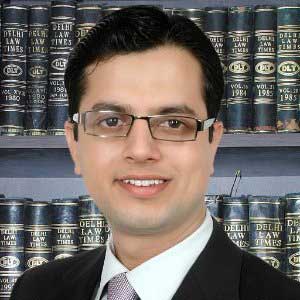
     

    amit-sachdeva-2

    In 2013, you were noted in Legal500.com and in Tax Directors’ Handbook as an “up-and-coming lawyer who specializes in tax litigation”. How did you feel about it?

    “It must be a misprint!” were the first words that I uttered when a colleague of mine at Vaish Associates came to my desk and broke the news to me. I had no idea about it. There was no application process … no submission … no request from my side. I understand that Legal500 and TDHB undertake an independent survey of the market and clients, and report their findings impartially. Once it sank in that my name was noted, I was overwhelmed. On the lighter side, I continue to believe that it was a misprint! By far, this and The Hague Academy Diploma are two achievements that are closest to my heart.


    You were briefly a Visiting Faculty at NLU, Delhi where you taught a semester-long Certificate Course on Direct Taxation. How did you manage to eke out time?

    I have a passion for teaching. I have always wanted to be an adjunct professor. NLU Delhi offers semester long certificate courses. I think these students were some of the most self-motivated ones I have come across. In order to accommodate my professional commitments, my students sometimes sat in classes starting 9 in the evening and going well past midnight. One weekend they travelled all the way from Dwarka to the Vaish office in central Delhi. I think they managed, I did not. All I did was: talk! If any of my former students is reading this interview, I want to say: thank you!


    You left your job to pursue a second LL.M. degree., this time at NYU. Considering that you had already earned an LL.M degree, what prompted you for this?

    My first LL.M was in Corporate and Commercial Laws. But, as it turned out I began practicing tax law. So, the primary motivation was to understand the theoretical underpinnings of the rules I invoked so often in practice. I always believed that there is much to learn from the US and the UK systems, and knowing their laws would boost my practice. Besides, I also wanted to develop an international network of professionals working in the same field as I was. So, that led me to apply for another LL.M. I already had an LL.M. from the UK, I decided to cross the Atlantic and try my luck at some US universities. With God’s grace, I was offered an admission with a scholarship I couldn’t turn down. My mother and my elder brother supported my decision to go.


    Currently you work as an Associate at Ernst & Young, Houston, USA. Which events led to your induction into EY, USA?

    NYU School of Law makes a significant investment in its careers office. There are a couple of job fairs that NYU organizes. The careers office also invites employers from across the country to the law school to interview NYU students. I applied for a number of job interviews, had call back interviews with a few. EY Houston office had also participated in one such interview program. I had a telephonic interview followed by an on-campus interview, and a round of four interviews during office visit. Shortly after the office visit, I was offered a position. The entire recruitment process spanned over three/four weeks.


    What does your current work profile at EY consists of? Share with us a few of the most challenging problems you have faced thus far?

    I work with the M&A Tax team at EY. My practice entails conducting tax due diligence, writing tax memoranda and tax structuring. Typically, a tax DD is like a health check-up from a tax perspective. Tax memoranda are a narrative of what the legal position on an issue is. Tax structuring, which is my favourite, involves informing clients of the different structuring options in which a transaction may be done.

    The complexity of the US tax law is the most challenging part of my work. But, that is also the part I enjoy the most about my practice.


    Tell us a bit about work culture in USA. How is EY, USA different from an Indian company/firm in terms of their working?

    I think as we brisk walk more into this millennium, our practices, behaviours, languages, cultures, ethics are converging. I don’t see too much of a difference between the work culture in the US and India. My friends and colleagues who work EY India endorse this. My personal experience at Vaish was no different.


    Lastly, what would be your parting message for our readers?

    Law School is perhaps the best time one can have in a lifetime. Enjoy it to the fullest. At the same time, be mindful of your goals, and of what you want. Also remember that lawyers are never out of work. If the economy is doing well, there is more corporate activity like M&A, IPOs, project finance, etc.; if it slows down we get involved in a different type of legal work like distressed debts, reconstructions, hedging, asset management, etc. The problem is that our education system focuses so heavily on traditional legal courses, and so little on these more modern ones. My suggestion would be that students should focus on these areas too.

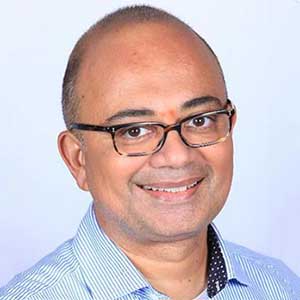
  • Harshavardhan Jogdand, Senior Legal Manager, Volkswagen, on being an in-house counsel and pursuing an LL.M while working

    Harshavardhan Jogdand, Senior Legal Manager, Volkswagen, on being an in-house counsel and pursuing an LL.M while working

    Harshavardhan Jogdand graduated from Pune University in 2006. He is currently a Senior Legal Manager at Volkswagen Group. After graduation, he joined Pratap Pardeshi Associates immediately while simultaneously pursuing a regular two-year LL.M from Bharati Vidyapeeth University, Pune. Therafter, he joined Triton Group as Manager-Corporate Legal. He subsequently joined Bata India Ltd. as Legal Manager of the Western Region.

    In this interview he talks about:

    • Pursuing an LL.M while working at Pratap Pardeshi Associates
    • Working at Bata India Ltd.
    • Being Senior Legal Manager at Volkswagen Group


    Given that most of our readers are law students and young lawyers, how will you introduce yourself to them? What motivated you to choose law as a career?

    I’m a passionate, self-motivated and result oriented legal professional working with one of the biggest automobile companies in the world i.e. Volkswagen. Initially, I admitted myself to the three year law course (LL.B) merely as a backup option, while I was preparing for Civil Services Examination (UPSC Exams). However, since the very first lecture of LL.B. I found the legal profession fascinating and it took me very little time to realise that it was my true calling. I never looked back since then and pursued a career in law wholeheartedly.


    Being a science graduate, did you face any difficulties in law school? Can you share with us certain tips to overcome the issues science students face with law?

    That is true to some extent as we Science graduates are not good when it comes to writing long answers. We are tuned to more of 2+2=4 kind of thinking; but on the contrary in the legal field you need to be more elaborative and descriptive. This is the only problem I as science student faced during this change of stream. Apart from this one issue, a science background is in fact a blessing, as Science and Law are both fields which demand logic and analytical skills and Science stream develops these two qualities to their maximum.

    I took help of the technique of creating ‘mind maps’ while studying and preparing notes, which helped me to graphically summarise concepts and laws. It helped me navigate through different concepts and laws, find connections between them and also to comprehend the content from books in a better way. I would also like to say that citing case laws and their Ratio is extremely important and all law students must develop the habit of reading citations and including them while writing answers. This is not only helpful in scoring marks but it is a vital process if you get into litigation as a practising attorney in future.


    Tell us something about your college life. Which activities did you participate in? What were your areas of interest during your graduation? How did you go about developing expertise and knowledge in these areas?

    As we all believe college days are the best days of anyone’s life when it comes to fun, but for me those were also intellectually stimulating days which equipped me to face the professional world after my degree. As a law student one must be open to challenging set ideas and indulge into debates to shape up one’s personality. I participated in moot courts as researcher which helped me to understand the importance of thorough preparation and research. Thankfully I had a bunch of friends who were all very strong individuals and we used to have debates on various topics all days long and I must say all those debates in the classroom and even outside of it over cups of Chai helped us to sharpen our articulation skills.

    Amongst all the areas of law, Criminal law was and is my most favourite area of law till date. I was lucky enough to have eminent practicing lawyers from Pune as my teachers who not only taught me the theory of law, but also dissected the laws and uncovered their actual implementation. Their ‘out of the box’ approach of focusing on ‘application of law in real life situations’ helped me to understand the ‘reality’ beyond books. Once I realised my penchant towards criminal law, I started attending court hearings in Pune on a regular basis. Out of the many trials I attended, I remember Charge Framing in Abdul Karim Telgi’s Case very vividly. Law students must grab every opportunity they get to visit courts during their student years.


    harshavardhan-jogdand-2

    Many lawyers say that the first year after graduation is the most difficult year for young lawyers. How was your first year after graduation? How did you learn the ropes and what were the biggest challenges you faced?

    I agree that the first year is the most difficult year financially if you don’t associate with any law firm which will pay you a remuneration and work with individual attorneys but I would like to assert that the first year is also the most enriching year as far as the learning is concerned. For me, the first year was the most exciting period as I learnt something new about the legal field every day and felt the daily thrill of affixing the logo of attorney on my vehicle; wearing a black coat and appearing before various courts truly fulfilling. One of the biggest challenges for me in this first year was to accept the hard realities of the Court system which largely involved the issue of grass roots corruption and I must say it was not an easy thing for me to accept. I categorically avoided becoming a part of any such transaction and used to walk out of court after my part in court proceedings was over so I somehow managed to avoid the corrupt practices that unfortunately exist at the grass roots level of our judicial system.


    You had started working at Pratap Pardeshi and Associates right after graduation, and thereafter you joined Triton Group as a Manager- Corporate Legal. What led to this shift? Please tell us about your work experience at both these places.

    I joined Pratap Pardeshi and Associates immediately after my graduation. In fact immediately one week after finishing of final year exam as I did not want to miss out on the excitement of attending courts. Funnily enough, I soon found out that it was the vacation time for Court for transfer of various judges, due to which most of the JMFC (Junior Magistrate First Class) and Sessions courts adjourned matters.

    The two years that I worked with Pratap Pardeshi and Associates were very enriching and fulfilling for me as I learnt the ropes of being a practising lawyer. My time with Pratap Pardeshi and Associates still remains the foundation of my career. It is really critical to get a mentor who will give you freedom and also teach you the nuances of the legal field. I will always be thankful to Mr. Pratap Pardeshi who taught me take my first step in the legal field. My two years as a litigation attorney were full of excitement as I got to become part of various trials as defense attorney including one rare Court Martial proceeding wherein I was associate advocate on record along with Mr. Pratap Pardeshi who was the leading Defense Advocate on records of the proceedings.

    After two years I felt that it was time for me to be practical and become financially stable by shifting to an in-house legal job. Opportunity knocked on my doors in the form of a position with Trition which happened to be a multi-million FMCG Multinational which was in the process of setting up its India Operations. It was the first interview of my life and after two thorough rounds I was selected as the first recruit in the Corporate Legal Department of Triton. I was hired as Legal Trainee and rose to level of Manager Legal within a short span of one and half year. My reporting authority Mr. Vincent Fernandez who is the Executive Director of Triton Group not only gave me the freedom to work as per my conviction but also entrusted me with setting up the entire legal department. I was asked not only to consider the legal aspect of work but also the business side of working. Triton provided me exposure to legal work in a corporate which I was completely unaware of as a practicing attorney. In Triton I was instrumental in setting up Contract Management System, litigation management and standardization of various agreements which included Franchisee Agreements, Non-Disclosure agreements, and Employment agreements for locations outside the geographical territories of India more specifically West Africa and Europe. Obviously I had to identify and work with local attorneys which also added invaluable experience of coordinating with foreign attorneys. Considering the growing ambit of work I recruited one Company Secretary and one more legal professional in my team and we effectively handled the Corporate Legal Function for Triton with guidance and effective leadership of Mr. Vincent Fernandez.


    You left Triton Group to join Bata India Ltd. as a Legal Manager of West Region. What motivated this shift? What does it take to a get job at Bata India at that stage?

    After setting up the processes and the entire corporate legal function for Triton Group and working with Triton for more than three years I thought I was ready for a bigger and more challenging position and I was approached for an opportunity with retail giant Bata India, as their Regional Legal Manager (West Region) My two rounds of interviews with Bata were very tough and was a completely different experience from my earlier interview with Triton as the questions were more technical and situation based. I was asked questions based on case studies and it was as they call a “grilling” interview session after which I was selected by then legal and secretarial head of Bata India Mr. A.B. Anand.


    At all the three places you worked, was the work similar or did you have to learn new skills every time you joined a new place?

    Work at all these three places has been completely different. At Pratap Pardeshi and Associates, I was working purely as a litigation attorney wherein I had to undertake court appearance, preparing pleadings, interacting with Police and other agencies.

    Triton was a foray into the corporate sector wherein I had to undertake working within deadlines, drafting/vetting agreements, more of non-lit as we call it, wherein I had to focus more on drafting legal documents, legal research, standardisation of processes etc., which was a completely different experience than the litigation experience I earlier had. I had to increase my reading considerably more to understand the nuances of legal drafting and it proved more than helpful in my growth as a legal professional.

    Working with Bata was extremely challenging as my role in Bata involved more of making strategies in existing litigations and handling legal matters in five states namely Maharashtra, Madhya Pradesh, Gujarat, Chhattisgarh and Goa in the entire region. My profile in Bata involved more of labour laws and rent laws related work which I had never done in my earlier career. I had to revisit all the applicable provisions of relevant Acts applicable to understand the nitty-gritty of these litigations and to define strategies for successfully dealing with them. My profile also had a hint of Industrial relations wherein I was required to communicate and deal with various government authorities including the Hon’ble Labour Minister and secretaries of state etc. However, the most challenging yet interesting part of my tenure in Bata was tactfully handling very aggressive Labour Union representatives and successfully avoiding conflicts with them and conducting a long due domestic enquiry.


    harshavardhan-jogdand-1

    How did you manage to take out time for a regular two-year LL.M. from Bharati Vidyapeeth University, Pune while working at Pratap Pardeshi and Associates? Please share with us.

    I used to visit the University on weekends and meet the lecturers on a regular basis to understand the progress of the syllabus. I relied a lot on self-study, on weekends and also during holidays I would like to mention the role of my mentor Adv. Pratap Pardeshi who was always kind in granting me leaves for attending LL.M. exams. Without his help it would have been very difficult for me to manage practice and LL.M.


    What are the highlights of your career till joining Volkswagen? How did you decide to leave Bata and join Volkswagen?

    As I have mentioned above, participating in the Court Martial proceedings as Associate Advocate on record during my days with Pratap Pardeshi and Associates, setting up the entire Corporate Legal Department in Triton, reducing number of litigations in Bata drastically were few highlights of my career till I joined Volkswagen.

    I have always been very passionate about vehicles/automobiles and Volkswagen is one of largest automobile companies in the world so I couldn’t let the opportunity go and Mr. Vijay Kamath who’s the “Legal Head and Company Secretary” at Volkswagen conducted my interview and after a brief interview I was offered position of Legal Manager at VW.


    You currently work as a Senior Legal Manager at Volkswagen Group. What qualities do you think helped you to achieve this status?

    Being process driven and result oriented has always helped me a lot throughout my career. The same qualities continue to be driving forces for my work. Also being proactive and taking lead in difficult situations gives me an added advantage.

    One must always remember quality of work is more important than the quantity of work. Hence, the quality of work should never be compromised.


    Many lawyers would say that the actual learning takes place in the years of practice. How far would you say it is true? What was the case in your situation?

    It is all about perception and how you look at it. Having exposure to practice is definitely helpful but it is not the only factor that determines the growth of a legal professional. The dynamics of the legal field over the years have changed, the legal field is not only restricted to court room dramas and theatrics therein but it is now also about board rooms and power points. We as legal professionals have to respect both the aspect of our profession. One cannot undermine the importance of other. For me exposure to legal practice is equally important as exposure to in house legal jobs.


    What is a workday like for you? Has work settled into a predictable pattern or are there new challenges every day?

    A typical workday consists of internal meetings with our brand teams (departments) gathering relevant data, information, for preparing pleadings in our litigations as at VW we have a rare practice of preparing pleadings in house which not many in house legal teams follow. It is followed by coordinating with external attorneys and thoughtful and insightful discussions with Mr. Kamath. Work at VW is never short of excitement as the challenges we face keep on changing on a regular basis and hence I would say the feeling of stagnancy has not yet come to surface in last three years.


    How do you manage to strike a balance between your personal and professional life?

    On the days when I’m on leave I do not think about my office or work I enjoy family time thoroughly and when I’m in office I do not let my personal life affect professional choices and decisions. I would like to make a special mention of our Human Resource policies and VW and Mr. Kamath who always encourage us to take our entitled leaves so that we can have a proper personal and professional life balance.


    How important would you say are business development skills at such higher roles?

    Without business development skills it is very difficult to climb up the ladder. Hence, I would say business development skills are equally important as your technical knowledge. Our work as in house legal professionals must serve the business purpose well and we need to be imaginative and creative enough to alter our advice as per the need of the business within the frame work of regulations.


    The question that whether one should specialise in a particular area of law or be more of a general lawyer often comes up before law students. What is your opinion on the same?

    If you see yourself as a practising attorney then it is better to focus on one practice area than focusing on entire legal field. However, if you see yourself as an in-house general counsel you need to be open for doing all the possible work that comes your way.


    Is there anything you would like to have done differently?

    There are many things that come to mind with this question but in particular I would have definitely liked to complete my Master’s Degree from any of the universities in the United Kingdom as it would definitely have increased exposure and knowledge levels.


    What does Volkswagen look for in their prospective employees and interns?

    At the moment Volkswagen Group does not take interns in the legal department. We at VW call ourselves “VW type” which means you need to be technically good, proactive, result oriented and most importantly possess very a strong ethical value system.


    What would be your message to our readers who are budding lawyers and law students?

    Keep your eyes and ears open all the time. Be open to all the new experiences coming your way. Don’t be afraid to challenge set ideas and put forward your opinions strongly irrespective of any amount of criticism you get.