Tag: Featured Insights

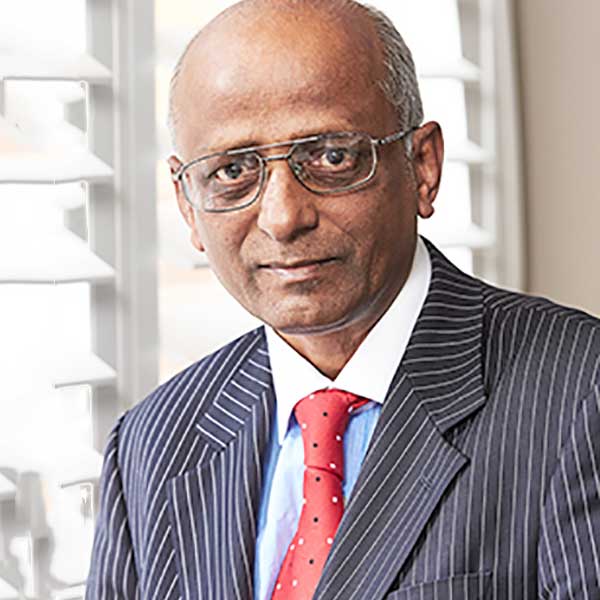
  • Vandana Pai, Partner, Bharucha & Partners, on LLM from Columbia Law School, New York and her 18+ years of experience in Private Equity

    Vandana Pai, Partner, Bharucha & Partners, on LLM from Columbia Law School, New York and her 18+ years of experience in Private Equity

    This interview has been published by Ayush Verma.

    Can you walk us through your journey towards the legal field? What inspired you to read law?

    I come from a family of doctors and engineers, and no one in my family had previously studied law. As part of career counselling at my school we were given aptitude tests, and law was identified as one of the professions’ I had an aptitude for. I have always loved to read, and two of my favourite fictional characters growing up were Perry Mason and Horace Rumpole, both formidable criminal defense attorneys. My parents always encouraged me to think for myself, and were supportive when I decided to pursue law. I sat for the National Law School, Bangalore entrance exam, and as they say the rest is history. 

    You’ve graduated and acquired your LLM and LLB from two of the most decorated universities. How did they aid you in becoming the lawyer that you are today?

    My experience at both National Law School, Bangalore and Columbia Law School, New York have helped me become the lawyer I am today. At both institutions, the learning experiences are not limited to the classroom. The student body is amazingly bright and engaged and pushes you to achieve your best. NLS gave me the opportunity to participate in moots, write articles and experience different facets of law through internships. This helped me to identify that my interest lay in corporate law, rather than litigation. At CLS, I loved interacting with people from multiple countries and backgrounds. The level of intellectual rigor the professors brought to every class was an eye opener and taught me to think outside the box. 

    15 years after acquiring your degree in LLM, do you believe academic qualifications or excellence play an important role for a blooming legal career?  

    I believe that as long as there is a will to succeed, each and every one of us can have a blooming legal career. Hard work and intellectual rigour are more important than mere academic qualifications. However, Columbia Law School is known for its expertise in commercial laws, and many of the professors are partners in New York law firms. The LLM helped me hone my commercial acumen, and develop soft skills, which have proved invaluable while interacting with clients and counterparties from around the world.

    Can you walk us through a typical day for you at Bharucha & Partners as a partner at the firm? 

    I am an early riser and am usually at my desk by 8:30 am. I spend the 1st hour responding to emails, and taking a status update on the various matters and transactions which I supervise. Post that the day is usually spent attending calls and meetings, in negotiations, and reviewing documents for clients. I try to spend some time reading up on changes to existing laws, important judgments, etc as it is critical we stay abreast with the rapidly changing regulations. Each day brings its own challenges and wins, and I can definitely say work is never boring. 

    Right after your graduation from law school, you were placed with a tier one law firm. What kind of activities or internships did you pursue during your law school days to land such an offer? 

    I did a 6 week internship with Amarchand Mangaldas in my final year of law school and received a pre-placement offer at the end of the internship. Prior to this, I had interned with a number of law firms, including doing an internship with Drew & Napier, Singapore. I also had good grades through law school, which helped secure the internship at Amarchand Mangaldas. I was fortunate to get an opportunity to work with a couple of partners at Amarchand Mangaldas during that internship. I have always believed that if you try your best and do your work sincerely, your work will speak for you. The partners were happy with my work, and made me a PPO. 

    You’ve also cleared the New York State Bar exam. How did you prepare for that and how is it different from the India Bar Exam?

    When I graduated, the requirement of taking the bar exam in India was not in force and we could enroll on the basis of our law degree. Consequently, I can’t comment on the difference between the 2 exams. However, I must say that studying for the New York Bar Exam was an exercise in discipline, and the skills I picked up then have stood me in good stead throughout my years of practice. 

    While there are a number of popular bar review courses, these courses are expensive. I signed up as a student volunteer for the Pieper Bar Review, which required me to operate their shop at Columbia Law School a few hours every week during the school year, so I could take their course for free. I found the Pieper focus on Mnemonics, and style of teaching incredibly helpful. In addition to taking the course, it took 12 hour days of intensive studying for nearly 3 months to get me over the line. 

    You’re also on the Advisory Board for Cuddles Foundation since 2014. The Foundation provides assistance to pediatric cancer patients. What inspired you to associate yourself with this specific organisation? 

    I have always believed it is important to give back to the society at large, in whatever capacity that I can, whether legal or otherwise. I actively engage with multiple NGOs, including the Cuddles Foundation, an NGO working on providing nutritional assistance to paediatric cancer patients making it the first and only Indian NGO working in the sector. 

    When I 1st met Purnota, who heads Cuddles, she mentioned how they have realized that many children don’t survive treatment because they are malnourished. Further, many children aren’t able to continue treatment since they are often from rural areas, and their parents have no way of earning a livelihood in the city. Often the family is reduced to poverty bearing the treatment costs, and aren’t able to feed their other children. The passion that Purnota and the entire Cuddles team bring to their work struck a chord with me, and caused me to decide to work with them. 

    Their commitment was especially inspiring during the pandemic. They were faced with the challenge of ensuring that the frontline healthcare workers, who were exposed to significant risk of contracting the infection, were protected while ensuring that their work was not hampered. They had to figure out new ways to stay in touch with the patients who could no longer visit hospitals. They needed to ensure the ration baskets and supplements reached the patients and their families, when supplies chains were disrupted. While challenging, it was also extremely satisfying working with them to navigate the rapidly changing legal and commercial scenarios created by the pandemic, and ensuring that their people and interests were protected.

    You’ve worked with giants like RIL, SIDBI, Tata Opportunities Fund. Is there a specific approach you undertake while working with them?  

    For me, the role of a successful lawyer is not restricted only to attaining a positive outcome for the client, but also involves coming to an all-encompassing arrangement that strengthens the client’s current position and does not compromise with their future engagement with the other parties or affected persons. A transactional lawyer needs to find solutions to problems and not create legal bottlenecks. It is important to build trust with your clients, to truly understand their needs and concerns or needs, to empathise and connect with them, and build a long-lasting relationship. 

    Private Equity and Venture Capitals deployed $47.5 billion in Indian companies, making 2020 a record year for the ecosystem. How has the PE or VC work been affected by the ongoing pandemic and what does the future hold for the industry?

    While 2020 was a record year for the ecosystem, it saw a number of high value deals but fewer mid and small investments. In 2020, many of PE/ VCs focused on stabilizing their portfolio companies but are now looking at new opportunities. The pandemic has disproportionately affected some sectors, and benefited others. We are seeing this in the deal activity also where healthcare and online services have seen an uptick in investment. PE/ VC investors have accumulated huge cash piles, and with corrections in valuations brought about by the pandemic and liquidity crush, these investors are well placed to capitalize on opportunities in the market. 

    Lastly, would you like to share any parting advice with our readers?

    Many junior lawyers seem to believe their legal degree has only equipped them to either be litigators or corporate counsel. They aren’t happy, but don’t feel they have options. However, the opportunities available are so much more – setting up a start-up providing innovative legal solutions, a career in research and policy, consulting, teaching, civil service, etc. I would like to end with a quote, “Everybody has a calling. Your real job in life is to figure out why you are here and get about the business of doing it…”

    What do you see as the role of technology in the practice of law?

    I believe technology and artificial intelligence has the power to disrupt the way we practice law, and all lawyers should not just track, but actively evaluate how they can adopt and implement technology in their work. Technology can also provide exciting opportunities to do something new with the law. In 2020, my Firm participated in the FT Innovative Lawyers Hackathon, organised by Global Legal Hackathon and FT innovative Lawyers programme. The hackathon’s goal was to find answers to the most pressing legal, regulatory and civil society challenges emerging from the Covid-19 crisis, and over 184 projects were submitted with really innovative solutions.

  • Mohit Khubchandani, Judicial Fellow at the International Court of Justice, shares his learnings and experiences from his practice of International Law

    Mohit Khubchandani, Judicial Fellow at the International Court of Justice, shares his learnings and experiences from his practice of International Law

    This interview has been published by Ayush Verma. The Interview was taken by Priyanka Cholera.


    Before we take a closer look at your career, could you share some insights from your law school journey with us?

    I pursued my Bachelors in Arts and Law (BA. LL.B.) degree for 5 years from Amity Law School, Delhi, affiliated to Guru Gobind Singh Indraprastha University, Delhi and graduated in the year, 2015. At the time when I joined law school, there was this trend of distinguishing between National Law School graduates and graduates from other law schools, which is now on the decline. So, the moment I entered into law school, I knew from the word go that I will have to work out of my skin to prove myself and be on the same pedestal as someone coming from a “non-NLU” (as they called it). I always had the innate belief that I had it in me to go the extra mile, and if I really manifest excellence, I would reach wherever I desire to be.  It wasn’t easy, but the joy of achieving your goals as an underdog is inexplicable. I wouldn’t have it any other way. 

    For me, the reason behind getting into law school was to be able to practice international law. So I was very clear since day 1, as international affairs always interested me. When I saw that these pseudo-distinctions between NLU and non- NLUs exist (which shouldn’t exist at all), that’s when I decided that I’m going to focus my law school journey on moot court competitions, primarily international law moots. These are rather helpful for anyone coming from any law school and any country because they place you on a level playing field with the best of the best. Once you are in that moot court simulation, you’re all analysing the same subject-matter. Of course, there might be some inherent difficulties in terms of access to resources, but such experiences expose you to the entire world. Moreover,  competing in such competitions also instilled in me faith and belief that these pseudo tags that exist don’t hold much relevance; what matters is how hungry are you to really make a mark; that’s what I did all throughout my five years. There were some obstacles in terms of trying to find good coaches because sometimes coaches also want to spend their time and energy towards teams coming from more reputable law schools. However, in hindsight, whatever I learnt from them and whatever merit I achieved in those moot courts helped me get publications in the field of international law and gave me the necessary step into the door of international law. I am fortunate that I now get opportunities to serve as a judge in all the moot courts that I took part in as a student. Life comes full circle and one should not really feel bogged down by where they are in a particular moment. It’s just about turning adversities into opportunities. It is important to remember that we’re in a marathon and not a sprint, and your only competition is you and no one else. So pace yourself accordingly. 

    Coming to my publications, I did focus on them, but I was strategic about it. I didn’t just want to be published at any and every opportunity I got. Something I constantly told myself and continue to tell young lawyers is that: publications can come to you throughout your life. Law school is a time and space to do other activities which you cannot do once law school is over. In fact, having published work slightly later in my career helped me get published at better places. So, I first built my profile and my credibility before starting to get most of my publications. 

    You have completed your Masters of Law in International & Environmental Law from Stanford Law School. How did you develop an interest in Environmental Law and how was your experience at Stanford University?

    As I mentioned earlier, when I got into law school, I was certain that I wanted to practice international law. At the same time, I did realize that when you’re going out in the market and trying to sell yourself, you are more likely to receive recognition or appreciation when you sell yourself as a specialist. 

    As a child, I loved going to the zoo, and looking at plastic and other waste not being disposed of properly always irked me. So, that’s the moralistic aspect that led to my choice. Secondly, I thought that if I pursue a master’s degree in Environmental Law, it will open a lot of doors for me. I said to myself, “If you return back to India, then how would this degree help you?” So, I considered practicing before the National Green Tribunal in India. This is one field where we see younger lawyers going there and international environmental law can be argued at the NGT.  See many international concepts being argued at other domestic Indian courts. Environmental Law is still at a nascent stage and therefore relies a lot upon customary international law. So, it was clear to me that this degree would help me whether I am practicing in a domestic context, or, of course, in an international context.  Another attractive aspect of Environmental Law is that it is one such field within international law that perhaps has the most number of interplays with other fields of law (Human Rights, Humanitarian Law and Trade Law to name a few). So this way I get to practice various areas of International Law while also working in International Environmental Law. I would thus like to believe that I am a generalist International lawyer with an environmental lens; because of this toolkit, I can sell myself as a specialist and a generalist at the same time. 

    Coming to your next question, I think when I went to Stanford, the best part about my experience was that the university doesn’t have a grading system; there are no grades or percentiles which reduces a lot of toxicity. It facilitates healthy interactions amongst your peers as well as your professors and you are really there, for the sake of excellence and learning. Scores are inconsequential. Luckily, I was also one of the youngest people in my program because they need a minimum of two years of work experience to apply for that LLM and that is exactly what I had. So, not only did I learn from my professors but also from my peers.

    You started your professional journey at the office of Mr. Mukul Rohatgi, the then Attorney General of India and Mr. Nikhil Rohatgi, Advocate, Supreme Court of India. What were some of the key learnings from that experience?

    Before graduating in 2015, I was doing an internship at Mr. Mukul Rohatgi’s office and immediately after that, I  asked for a job and fortunately, I did find that position. I had two options then: either to join that office or to join a Delhi High Court judge as a law clerk. But I chose to work with the former because the Attorney General’s office by its very nature can get engaged in international law cases. While working at that office I had a very balanced experience because not only was I working with Mr. Mukul Rohatgi but primarily and quite importantly, working with Mr. Nikhil Rohatgi. So, I had the perfect balance of looking at trial cases in the district courts, visiting the Delhi High Court and other tribunals as well as the Supreme Court of India. 

    What I really want to underscore here is that while it is great to chase bigger offices, it is also very important at the same time, especially early on in your career, to have an experience of working in not just the Supreme Court of India, but also in lower courts, because that is where you can draft pleadings. It takes you a long way in terms of learning the nuts and bolts of litigation, rather than just assisting a senior counsel wherein you may not get the chance to draft or to argue before courts.  

    Did you always want to practice international law while working in India or the plan was to move abroad?

    I am trying to charter a path of a natural transition. For any International lawyer, it is important to be well-versed with how municipal litigation operates, since that is from where general principles of international law emerge. To date, it helps me in my current work at the ICJ. Therefore, I wanted to very consciously work in India first, and when I realized that  I have derived what I could from perhaps one of the very few offices that does international law centric work in India, that’s when I thought that now is a time to move further; even after that I worked with the Permanent Mission of India (affiliated to the Foreign Ministry of India) in New York. I was working for India outside of India too. Eventually, I moved into the UN and now going further, I do not crave to be only at the UN. I would absolutely love the opportunity to also work at international law firms and/or even pursue a PhD. Who knows? I’m still traversing.  

    What are your plans for the next five years?

    Especially in a pandemic, making such plans is extremely hard, especially for international lawyers whose careers don’t necessarily proceed in a linear upward direction. One thing that I can tell you is that I have only been at the UN for three years, but in these three years, I have been lucky enough to see New York and the Hague and all the organs of the UN. I would like to come back to the UN, but I am also actively looking for positions at international law firms right now. My conscious and constant endeavour has been to try and experience international law, which is absolutely beautiful in as many ways as is possible. I also never fail to underscore for people that the UN is only the tip of the iceberg. One can get such great work at international NGOs and international law firms. Law firms also do pro bono-work human rights and environmental work, and that’s also what I may try to do. 

    What are your day to day responsibilities as a Judicial Fellow at the ICJ?

    Working as a Judicial fellow is exactly like working as a law clerk to any judge in any court of law. It can involve assisting the judge with speeches that are out-of-Court work and any academic writings that they’re working on. But the primary responsibility is to assist the judge in preparing research memorandums on the cases currently being litigated before the Court. Those memorandums can pertain to factual analysis or on legal points. Essentially, just making your judges life easy and in turn learning a lot.

    In a span of six years, you’ve had the honour of working at all the 6 official organs of the United Nations. What has been the driving force behind these achievements?

    There are miles to go and I hope it’s a progression. I did not chase these six organs and nobody can plan it this way. I certainly did not tell myself that I want to achieve some rare feat in a record time. I also must tell you that working at the General Assembly and the Security Council can be done by working for a government and then I worked for the UN Secretariat and now I’m at the ICJ. But the remaining two, which are the ECOSOC and the Trusteeship Council, are not exactly organs where you can find jobs, they just exist at the UN and as part of your daily work, you end up going there for a few meetings. I would not glorify this thing more than it deserves. I was applying to the UN and international law firms all at the same time and landed up here. At the end of the day, it’s really important, especially for people coming from India, to realize that the opportunities are very limited and it’s just a matter of grabbing what you’re getting. I am still on that path and a very uncertain path if I may say so. It is only incidental that it is coming up the way that it looks. But behind that, there is a lot of uncertainty and a lot of setbacks. 

    How can a law student who wishes to carve out a similar professional path do so?

    The first thing that I had in my mind when I entered into law school was to try and pursue LL.M. from a prestigious university. In order to get to the ICJ as a Judicial Fellow, you cannot be applying as an individual. You have to be sponsored by your law school. It is absolutely imperative for you to have a prestigious LL.M. degree, especially if you are a student coming from India because, generally speaking, Indian law schools do not sponsor the ICJ fellowship program. Also, the pedigree for such an application shows a long demonstrated interest in the field and not just something that you develop suddenly prior to an application. For me, it was a very natural application to make because I knew since the very beginning of law school that I wanted to be at the ICJ. Therefore, doing Moot Courts, Model United Nations (MUN’s), writing publications or participating in ICJ specific competitions can give you an edge over other applications. I think I had worked a lot pertaining to the ICJ and not just international law, that it could have stood out in my application and then of course, French is something that is important and for me, it is still an ongoing process. But I must mention that I only got this position after 3 successive applications. So being tenacious is very important. 

    Did you have any mentors in your legal journey to guide you through all of it?

    Yes, there is one person besides my parents who I’ve looked up to throughout my journey. His name is Rahul Dravid. He’s a cricketer from India and is not even from my field of work. Everything about him, from his tenacity to his work ethic towards the milestones he’s achieved despite not being lucky, makes me relate to him in another dimension. What makes Dravid stand out to me is that he achieved success, not on the basis of some innate talent alone, but sheer hard work through which he’s grown over a period of time. I was not one of the brightest students, in school or college, but I have an immense hunger like him. Even after his retirement, the kind of work he’s been doing for the cricketing community by training younger cricketers instead, while being given the option to coach the Indian team is a reflection of his generosity. I try to follow similar principles in all my professional pursuits.

    You believe that in a parallel universe you’d be acting and dancing in movies. How do you make the time to inculcate and indulge in such interests outside of the legal profession?

    I still dream of making it in the entertainment industry to this day! Contrary to popular opinion, I think it is quite complementary to what I do. Litigating in the Court was a time where I especially thanked my involvement in theatre. It rendered me useful tools like voice modulation, the poise or appropriate pauses and the confidence to speak; all of which I owe to the theatre. I still crave it and I also enjoy dancing. It helps me maintain my mental balance. It has become a mode of reviving my self-confidence, so if I put on a few songs and dance to them, I get re-energised and then get back to my work with more focus. Wherever I go, all my colleagues are introduced to Bollywood music; there’s just no escaping it!

    Coming to my hobbies and interests, while I am not able to do everything everyday, what I do try to actively do is to better utilise my vacuum spaces. So, if I am commuting between work and home, I will talk to my family or I might have a professional audio call while I’m cooking or cleaning. Even when it comes to dancing, if I’m exhausted after a day’s work, I give myself 5-10 minutes to dance before hitting the bed. It doesn’t interfere with my work, rather it helps accentuate it . 

    How has the pandemic affected you professionally? How did you maintain the right balance during these difficult times?

    Before the pandemic, I was in New York for a consultancy which I had to leave and come back to India. I had prospective leads that were generated from this consultancy but all of them were diluted. I had to take up a position that helped me get to the Court but it didn’t pay me. At the age of 28, despite all my work experience, I took up a position with a Member of the United Nations International Law Commission and it was a remote unpaid position but I made sure that there were no gaps on my resume. What I am alluding to is that I’m always chasing intellectual learning rather than money. Simultaneously, I have to recognise my privilege because I had a family that could support me when I chose to work with the ILC instead of applying to a domestic law firm that had nothing to do with international law but might have paid me a great amount.

    I was at a crossroad where I had to make that choice. I could either continue to pursue international law or just shift bases due to the lack of opportunities created by the pandemic. I decided to work towards international law and I got to work towards a session of the ILC which worked out great for me. I kept myself busy by writing articles and ultimately, I ended up at the Court. I had nothing else to look forward to if not for the Court since this was the last application for me. Not here, I don’t know where I would be. It was a situation where I was hanging on the ledge, like it has been time and again for me, since I had no backup and I just looked forward to the future while crossing my fingers.  

    How have you maintained your mental health in the times of the pandemic?

    There’s this philosophy I follow: it is called Nichiren Buddhism. It’s not exactly a religion, but a way of life. We’re familiar with concepts like: thinking of someone else’s happiness before yours but they just hit us when we’re surrounded by dire situations. Whereas in this practice you are constantly reminded of such life ideals. I also actively try to see opportunities in adversities by following a notion they always discuss, known as ‘changing poison into medicine’. Meditation and chanting have been two ways that have helped me feel stable in dealing with uncertainties. I also constantly ask myself: ‘What is the worst that can happen?’, which instantly boosts me. I have come to realise that things might not come to me when I wish for them, but I manifest that they will come if I tell myself that they have to come to me, come what may. Something I do want to tell anyone who’s feeling anxious owing to the pandemic, whilst not finding a job, is that: if you don’t end up in a place you had planned for, there is nothing to be afraid of.  No one saw this pandemic coming and no recruiter should make you feel bad about taking a break on your own, or least of all, being forced to take one. So, I want to put this across as a sense of collective reassurance that all will be well. 

    After having worked internationally and domestically, is there anything you would bring to India or something that you would take abroad?

    I think Indians are very hardworking along with being street smart which is one thing the world can learn from us. We crib less if we have to work on weekends because somehow that is how it is in India. Ironically, this is also exactly the thing I would like Indians to unlearn from abroad. I think only when there is an imminent need, you can step up your game and work hard to get the job done. However, it should not become a habit and this extreme measure should only be used when required and should not be inculcated as a part of our daily work culture. The focus needs to be on effectiveness at work and flexible work spaces and work hours. At the UN in New York, there was in fact training wherein the focus was to show that there’s something wrong if you can’t finish your work within 8 hours and have to work overtime. So, I believe that this kind of approach, transfused with the Indian hardwork is the right balance. 

    According to you, what is the irreplaceable quality or skill that every legal professional must possess to achieve great heights of success like yours?

    Last month, I unexpectedly lost my maternal grandmother to the pandemic. There is one thing that she always said to me which has stuck with me to this day. She said that you have the nerves of steel to survive. I at least try to live by those words. I’ve learnt how to fail with a big heart and stand up upon a fall immediately. I have told myself that you’ve got to be Rocky Balboa! Over a period of time, anxiousness has transitioned into excitement for me as I worked towards my endeavours. Fail big or win big is a mantra I believe in: that is because you can fail a 100 times but you just need that one win to change it all. This may come off as a cliche, but I believe it really is the magic formula, at least for me. 

    In terms of professional skills, people sometimes fail to value professional empathy and sympathy or interpersonal professional communications. You need to come off as a human first and then a lawyer. You need to understand that you’re talking to another human being and trying to solve their problems. Let’s say that you’re giving an interview and you’re talking about your vulnerabilities; it’s okay to display your human side and say ‘I am sorry but I don’t know what this is’. You need to see the line between being a strict professional and giving due regard to situations and using this side when need be. Also, being a lawyer does not mean to win points, but in fact to bring everyone to consensus. So, I think humanistic and moralistic virtues along with professional skills are really important to come across as your most genuine self. It is my innate belief, that at the end of the day, you are remembered the most for the kind of person you were and how you brought happiness in people’s lives more than anything else. 

  • Abhijit Mukhopadhyay, President (Legal) & General Counsel, Hinduja Group, on his illustrious career in In-house legal roles and working in London

    Abhijit Mukhopadhyay, President (Legal) & General Counsel, Hinduja Group, on his illustrious career in In-house legal roles and working in London

    This interview has been published by Ayush Verma.

    What was the motive or inspiration to join the legal field?

    There was no specific reason for joining the legal field. I did my graduation with honors and simultaneously studied company secretaryship and pursued a law degree. I had a sense that in the future, the legal profession would acquire prominence, and fortunately, I was right.

    As General Counsel of a conglomerate, what functions of the company do you look over?

    The Hinduja Group, with an annual turnover of USD 15 billion has 150,000 people working in 60 odd countries. We are in 12 business verticals and we carry out our business in more than 100 countries on five continents. I am involved in the Group’s legal matters worldwide. I am also the director for several group companies in seven countries. In essence, I advise the group companies and the ultimate promoters in legal and strategic matters.

    In your entire career trajectory that we know of, you have always worked as an in-house counsel, did you always have the same plan?

    In my entire career so far, I have worked in-house. I never considered joining a law firm. When I started my career, working in a law firm was not fashionable, so to say. Since the Indian economy did not open up, the applicability of corporate laws was severely restricted or limited. Today the situation has changed considerably and there is good demand for corporate lawyers in external law firms. Be that as it may,  I do not regret my decision as yet! 

    You’re the in-house of a multi-billion dollar company, how does one make decisions, when they shoulder a huge responsibility such as yourself?

    Decision-making requires certain individual qualities. You need to understand your organization, its products, strategy, its people, and most importantly which decision to take at the appropriate time. In today’s business, time is money and you need to decide as fast as you can. There is no perfect decision, so do not aim for perfection but take timely decisions and never regret afterward. When course correction is needed, do the course correction.

    How has life changed after moving to London? What are some challenges you faced as an immigrant?

    In India, I was the General Counsel and Company Secretary simultaneously in several large public sector, private sector, joint sector, multinational, and privately held organizations. What I learned in these organizations came in handy when I joined the Hinduja Group which is a conglomerate.  London is the nerve center of the global legal profession. You won’t survive here unless you have the knowledge and ability to perform. After arriving in London, I acquired further qualifications in law and chartered secretaryship. Then I started updating my legal knowledge on a continuous basis which I do even today. Fortunately, I have not faced any problems being an Indian. Our global headquarters in London, where I sit, have got nationalities from many countries around the world.  

    Do you believe AI will replace the majority of the human force in the legal profession in the upcoming years?

    Artificial Intelligence (AI) has become an enabler or a tool to assist us in our work. Its application and expansion in in-house legal capacity would depend upon the benefits it would bring as compared to the cost. You may rest assured that there is no replacement of human beings by AI.

    During the pandemic, how have you adjusted to the shift to a virtual workspace? In your opinion, how can senior members of the industry adapt to the same?

    The current situation and its impact on human life are profound. However, it has created an opportunity to work from home (WFH). The concept has both advantages and disadvantages which we are aware of. Human beings are receptive to changes of all kinds. We have adapted to the new reality of WFH. In our Group, I am involved in many big business deals that have been ongoing during the pandemic while working from home.  

    You’re a member of several education societies, and address the younger members of the industry frequently; what are the key differences between lawyers of your era and today’s generation?

    What I learned as a student of law has got no relevance in today’s world. Almost all the laws that I learned have become irrelevant today. This has been happening for decades and not only now. You have to keep yourself updated in order to remain relevant. This is true for any generation. I mentor students and I am involved with the Queen Mary University of London in its advisory council which shapes up post-graduate courses. Whenever I address students, I preach what I practice, and if you do not remain a student all your life, you become irrelevant in your profession.

    You have had the honor of addressing students at Harvard Law School; why has your interest in mentoring the younger generation not translated into teaching?

    Along with my employment, I have always been involved in teaching. During my days in India, I was a part of the guest faculties of three well-known universities apart from several academies. I was the paper setter and examiner in professional courses like the Company Secretaryship. Even in London, I address students of several universities. I have not taken up a full-time teaching job. However, I address seminars and conferences all over the world throughout the year. You never know, I may become a full-time teacher in the future!    

    We see a lot of younger lawyers complain about burnout or lack of work-life balance. How have you maintained the right balance being in this career for over 40 years now?

    A lot would depend upon your desire to maintain a work-life balance. 24 hours a day has got a lot of time. Try to see it half full rather than half empty. Use your technology effectively without being excessively reliant on it. Try to do things more efficiently and work on your multi-tasking ability. My strength comes from my family. Therefore, they will always remain my first priority.

    What major changes do you anticipate in the legal profession for the coming years?

    Lawyers need to understand business. While remaining academically inclined, they must develop skills to provide practical solutions to the problems being faced by the business. They need to become an integral part of the commercial activities of an organisation and provide value if they wish to remain indispensable.  

    Looking back on your journey, can you share with us a few career-defining moments that inspire your present work ethic?

    There are many. The most difficult thing in my professional career is to have the courage and ability to say no when work ethics demand it which I have done many times in my career. Trust me, it gives confidence to your employer. However, it should be used judiciously.

    What advice would you like to give to the present set of law students and lawyers?

    Be a lifelong student; update and upgrade your knowledge all the time. Bee articulate whenever you are conveying your thought process. Be sensitive to the needs of others, be helpful and above all, be a good human being. At the end of the day, it is all that matters.

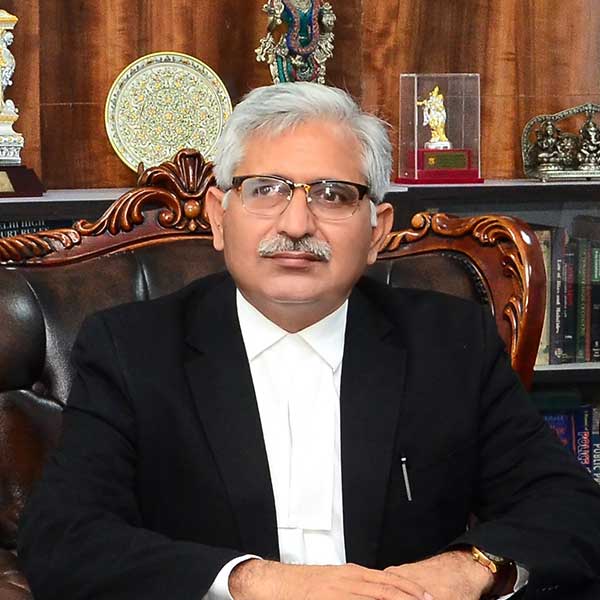
  • Tanveer Ahmed Mir, one of India’s leading Criminal Defense Lawyers, shares insights from his illustrious career spanning over 2 decades

    Tanveer Ahmed Mir, one of India’s leading Criminal Defense Lawyers, shares insights from his illustrious career spanning over 2 decades

    This interview has been published by Ayush Verma.

    WE KNOW YOU AS ONE OF INDIA’S MOST CELEBRATED DEFENSE LAWYERS; IS THERE SOMETHING ABOUT YOU THAT HASN’T BEEN KNOWN TO THE WORLD YET?

    As far as my introduction is considered, I am a criminal trial lawyer with experience of almost 23 to 24 years in a dedicated criminal law practice in and around Delhi and other parts of India. I am extremely passionate about my work and I believe in a “never say die” approach on account of some incidents in my early life. The turning point in my professional and personal beliefs was the unfortunate rape and murder of my colleague, Ms. Priyadarshini Matoo, in 1996 – an incident that incited a lot of public outrage. On the day of the incident, I happened to have my lunch with her. When the case was handed over to the CBI, I was made a witness in that matter. After the incident, the Supreme Court happened to write a judgment called Mahender Chawla vs. UOI which arose from the Asaram Bapu case, approving a witness protection scheme in our country. I was under a lot of pressure while testifying but I was true to my belief and I knew that if I don’t testify, I won’t be able to look at myself in the mirror. This incident had a telling effect on my personality and career. It happened when I was in the final year of law school. The reason why I brought this up is that when I defended Kuldeep Sengar in the Unnao Rape Case, there was a full-fledged witness protection scheme in force. But when my own life was under threat, my calls for witness protection were ignored by the CBI officer. Even today, in large parts of the country, witnesses are still under threat, and witness protection is only given in some specific cases, but at least a law is in force now. 

    AS THE ABOVE INCIDENT HAPPENED IN THE EARLY STAGE OF YOUR CAREER, CAN WE ASSUME THAT IT SHAPED YOUR CAREER AND LED YOU VICTORIOUS IN MANY OTHER CASES?

    It helped me develop a new outlook towards society and the profession. It gave me the ability to withstand tough times and not to fall for unethical means or vices. I remember my school badge bore a bearing “Industria Floremus”, which means you will flower through labor – it reminded me that if you keep working hard, you will flower. You will not flower if you succumb to corruption, vices, and shortcuts or if you want a Mercedes within two years of practice. The field of litigation is over-saturated; it takes time for a lawyer to build his practice and confidence and earn the faith of the clients and the demands of the clients have also changed or if I may say so, degraded because the system has itself degraded lock, stock, and barrel. Clients have also started to look for someone with connections in the legal field but that should not discourage young lawyers. They will succeed if they don’t fall prey to instant gratification. Ultimately, merit is recognized, it may be a little late in one’s career, but success is bound to come. 

    AFTER OBTAINING YOUR LLB DEGREE FROM CLC, DELHI, YOU PURSUED AN LLM IN IPR. HOWEVER, CRIMINAL LAW AND WHITE COLLAR CRIMES ARE YOUR PRIMARY AREAS OF PRACTICE. WAS THIS A CONSCIOUS DECISION AT THE TIME OR DID YOU DECIDE TO PURSUE CRIMINAL LAW FIRST AND THEN DECIDE TO PURSUE IPR?

    It was a mix of reasons. During my LLB days, after my classes would end, I used to take a bus to Tis Hazari Court. I used to be at the district court 3-4 days a week. My motivation was to understand how the courts work, how the lawyers present themselves, and what exactly goes on in a trial court. I used to go to a Magistrate’s Court where I would see witnesses testifying, lawyers cross-examining serious cases like murders, robbery, wildlife crimes, aggravated breach of trust etcetera. Sometimes, the judges would ask me whether I am a litigant or a lawyer. There weren’t as many internship programs back then; most law students used to engage in leisure activities post classes. The judges were always welcoming and they would ask me to stand with the public prosecutor who was very hard-pressed, then and even now. I would stack his files, lag the statements, and he would even tell me to get the witnesses prepared with their statements. So, this was the kind of practical exposure that gave me an insight into how trial lawyers work. The reason for the LLM degree was that I was looking to immigrate to the United States. In the United States, going for courtroom litigation would be a different process because jury trials may be different for a foreign lawyer. Therefore, I was looking to specialize in a niche field and IPR seemed very interesting and I simply happened to specialize in that. 

    I had a special teacher in CLC – a popular lady named Dr. Alka Chawla, and she was phenomenally good in IPR. Sometimes my professors would invite me for dinners, and it was a healthy exchange between the student and the teacher. After completing my LLM, I did not want to leave India anymore and I was back in the trial courts and started a full-fledged practice. Pursuing a career in IPR would involve not going to courts and I would have worked for a law firm. And the moment you are in trial courts, you are doing hard-core civil and criminal litigation. So, the kind of work I got exposed to were criminal matters and I have been doing that since the start of my career. I do appear in IPR matters sometimes and I have represented companies like Tata Motors in courts. But, it’s about acquiring a taste and getting addicted to something. Eventually, in 1997, the Priyadarshini case happened which had a telling effect on me, and here we are today!

    AS YOU MENTIONED EARLIER THAT WITNESSING THE MATTERS IN TRIAL COURTS MOTIVATED YOU TO CHOOSE THIS FIELD. AT WHAT POINT DID YOU DECIDE TO SPECIALIZE AS A DEFENSE COUNSEL?

    The initial years of my career were a time when there were a lot of TADA and POTA detenues behind bars. Mostly, these were poor people, belonging to the Muslim community or from J&K. They had no one to fight for them. The trials used to happen at Patiala House Courts in the late 90s. Looking at the situation of the detenues, I decided to defend them against cops who would usually do shoddy investigations and I still remember the feeling of contentment I used to get by tearing them apart in cross-examinations. One would also see stories of people as young as 21 or 22 years of age, getting picked up from their homes as someone else had planted guns etcetera. Though there were a lot of convictions, one could see that not everything was fair about the prosecutions in those cases. When you seek to defend the defenseless, it gives you a lot of pleasure. It’s a kind of soul-searching satisfaction. 

    Then came a series of cases wherein I defended people charged in murders and took on the ill-prepared prosecution who planted fake witnesses that fell apart like a house of cards. The fee was less but the personal satisfaction in presenting the defence against a strong prosecution and powerful investigating officers was a huge challenge. The motive is always to live up to the challenge. You may not succeed immediately but the learning and churning process is always memorable. Because of these reasons, I decided that criminal practice is what interests me and gives you a good adrenaline boost in the court of law. At the end of the day, you also have to be well-versed in the procedures and concepts involved. Another crucial factor one needs to be mindful of is that one wrong question may dust down four pages of a cross-examination. So, you are always on the edge and your skills are perpetually tested. 

    SINCE YOU HAIL FROM J&K YOURSELF, DO YOU BELIEVE THAT THERE IS ANY DISCRIMINATION OR HARDSHIP THAT A LAWYER HAS TO FACE BECAUSE OF THEIR ETHNICITY?

    When I moved from Srinagar in the early 80s to Delhi, the militancy movement in J&K was at its peak. A lot of hate was being directed towards the people of J&K back then. I remember the first year, when I was looking for a place to rent, I got rejected from at least 6 places merely on account of my ethnicity. That was a difficult time. I remember the time when I had no place to live, before my examination, so a legendary professor, Dr. M. C. Sharma offered me a place in his home. But one has to fight against many biases life-long; it’s written in everyone’s destiny. I don’t believe that there is any society where some amount of discrimination does not prevail – that’s a part of human existence! Certainly, the world would be a better place without it. Certainly, for a person coming from the northeast or J&K, the challenges double up, but I have met several extraordinary people who have inspired me. 

    Coming to the legal community, I didn’t see much discrimination in our profession. The legal community was far more united back then; perhaps because of the kind of religious biases or right-wing ideologies that have crept into the legal community now. Earlier, for every lawyer, the Constitution was the holy book. The situation is quite different nowadays. There are sharp divisions even in the legal community. Back in the 80s and 90s, lawyers were always lending support to each other. But even then, you had to fight against everything, that’s the flavor of life, and that’s destiny. You can’t pack your bags and say that you need to run back home. 

    YOU HAVE APPEARED IN SOME OF THE MOST HIGH-PROFILE CRIMINAL MATTERS AS A LEAD DEFENSE COUNSEL. WHAT ARE THE SKILLS THAT MADE YOU SUCCESSFUL AND WHAT WOULD BE YOUR ADVICE TO YOUNG LAWYERS WHO WISH TO FOLLOW A SIMILAR PATH?

    That’s a very good question. I have defended the accused in the 2G Spectrum case and Dr. Rajesh and Nupur Talwar in the famous Arushi murder case. The key consideration for me was to entirely forget the sensational or controversial part of the case or the fact that you are receiving hundreds of phone calls by journalists and TV crew daily. You shouldn’t pay too much heed to these things and get bogged down by such external pressures. You should also stick to the basics because ultimately no lawyer can win a case in appeal. You win and lose a case only in a trial. You can break the prosecution narrative with a basic set of skills which usually starts with a thorough analysis of what the prosecution case is all about, where it is coming from, and where it is going. You take up a case and have a defense strategy set out in advance. You prepare a defense for each witness and you play the case witness by witness. Have a cross-examination drafted on basic points and strategies. If the prosecution is wholly prepared, then you also need to be wholly prepared. Ultimately, if you can break evidence in the trial court even if the judge writes a perverse judgment, you are going to get an acquittal in the appeal. But you will never get an appeal if the trial court work was not done properly. 

    For example, I got my clients acquitted in the Arushi Talwar murder case after arguing continuously for 4 months. We did the lead arguments. We were a team of 5 lawyers and 3 other people assisted me. We built upon the cross-examination and were able to secure the acquittal, but we didn’t win the case in Allahabad. We won the case in Ghaziabad. When I had walked into the Ghaziabad court, 12 witnesses had already testified, and I examined the remaining witnesses. The statement of the accused went upto 3000 pages. Further, we conducted effective cross-examinations and ultimately, the appellate court agreed with us. The court had gone through each witness statement and cross-examination. So, had we not knocked out the prosecution witnesses, we would not have secured the acquittal. 

    Another relevant example is the JBT Chautala scam. The accused politician had received a 10-year sentence from the Patiala House Court. In the appeal, Mr. Ram Jethmalani came to argue. Despite arguing the matter for 3 months, the appeals were dismissed and when the SLP was filed before the Supreme Court, that too got dismissed. If you have Mr. Jethmalani in the trial and he breaks down the testimony of the prosecution witnesses, you might certainly walk towards an acquittal. Therefore, as far as all these cases are concerned, sensationalism remains on the sidelines, you stick to the basics and take the case witness by witness and brick by brick till the case concludes. One can not get bogged down by the exposure because that will only stray you from the path. So, my advice to every litigating lawyer is that you can be a good litigating lawyer only if you are a good trial lawyer. Therefore, if you don’t spend time in trial courts to learn the art of handling a trial, you can never be a good litigator ever in your life. That’s the mantra. Some cases may go in your favor, some may not, but the important thing is what you can bring to the table for your client and the judge based on which you can set the case up for it to be encashed subsequently. 

    MANY OF THE CASES IN INDIA TAKE YEARS TO CONCLUDE AND A LOT OF THEM ARE STUCK IN THE TRIAL STAGE. WHAT IS YOUR OPINION ON THIS?

    These are two different sets of problem areas – one is that there is a huge delay in the trial system and pendency of cases due to which the trial gets affected. Sometimes people languish behind bars forever, without their appeals being taken up. The problem here is logistics. How many judges are there to provide justice to the people? 

    The second issue is the infrastructure that the government has provided. For a third-world country like India, the justice delivery mechanism is not a priority for the State and the legal community is abhorred by politicians since it is a checks and balances system.

    It is only lawyers who break down issues and take them to various forums. For instance, there wouldn’t be a 2G Scam trial if a petition hadn’t been taken to the Supreme Court with concerns regarding the distribution of the spectrum. The budget allocation for the justice delivery system in India is very minuscule which results in pendency of cases. For instance, two exceptional judges, Justice Pradeep Nandrajog, who retired as the Chief Justice of the Bombay High Court, and Justice Badar Durrez Ahmed, are considered phenomenal by lawyers in Delhi; however, the misfortune is that the best of the judges do not go to the Supreme Court for very oblique reasons. At one point in time, the pendency of cases or criminal appeals in the Delhi High Court was around 10-12 years for a person who was in custody. Justice Nandrajog would labor and encourage young lawyers as well. I remember when I used to prepare for criminal appeals, he used to say, “Alright, Mr. Mir, I will hear your appeal after you do these six cases pro bono and you get prepared in two days and that’s all I’m willing to give to you”. So in one year, Justice Nandrajog while presiding over a division bench had knocked out about a thousand criminal appeals. So, the pendency in the Delhi High Court had been reduced to two years delay. 

    For comparison, a person who was convicted for murder in 2018 would see his appeal being disposed of in 2020 in Delhi, while the Allahabad High Court in 2021 is hearing a criminal appeal that was lodged in 1989. So, let’s say you are stuck in UP and convicted of a felony like murder, you will spend at least 12-13 years in prison before your appeal is even heard. There aren’t enough courts or judges, and the cases remain undecided. The story is the same for the Sessions Court. Over there, the contributory factors for delay are the lackadaisical investigations and the CBI is the biggest culprit there. The CBI will give you four hundred witnesses where only forty are needed. And they will file thousands of documents where not more than three hundred are needed. 

    The multiplicity of witnesses is also a huge problem. Gurmeet Ram Rahim may be the most hated person, even now or way back in 2017 when I had defended him. He is convicted of a felony, two counts of rape, one count of murder and another count of murder yet to be decided and it’s going to be years before he hears his appeal being argued; till then, he will remain in custody and that’s a sad reality which is difficult to resolve. The solution to this problem requires a huge investment in infrastructure, there have to be specific amendments and a holistic approach. The police will also have to understand that they can’t come to the court and say that they will get three hundred witnesses to testify. My thoughts are that the burden on trial courts, rather than getting relaxed, has multiplied over the years. The judges are under a lot of pressure too

    In metropolitan courts, there is at least one prosecutor per court but in mufassil areas, like the Gurgaon District Court, there is only one prosecutor for four courts! If someone is accused of a crime, he should be convicted immediately, but he cannot be denied a fair trial. He has the right to a fair trial, a fair defense, a good quality investigation that is not flawed. There has to be fairness in the system and it has a strong bond with the institutional strength. The institutions have broken down. Nowadays, the police themselves have started targeting lawyers who are defending people accused of certain crimes. So, if you are defending a person who has been charged under UAPA, you will have the police knocking on your door and taking away your computer. Thus, any form of institutional breakdown impedes fairness, and when fairness breaks down, it has a cascading effect on society. A society based on the element of justice will become an illusion. So, yes, the situation of people in custody is worsening. Many people blame the lawyers. At the end of the day, we need a vigilant judge and prosecutor. So, a lot needs to be done. 

    If you go to a developed country you will confuse a court with a five-star hotel because they invest in the justice delivery system and know that a society which is based on the principle of justice will be happy. For the past few years we have been on a serious decline, and the decline is basically on account of attacks on institutional strengths which is extremely deplorable. There cannot be a society where you can say that a particular category of accused will not be defended. Because one day it is two categories, the next day it becomes four, and so on. Such constitutional principles are based on egalitarian understanding which means that every citizen in the eyes of law deserves equal protection. That’s what we’re taught from the beginning. 

    The sad part is when judges with the caliber of Justice Pradeep Nandrajog are sidelined. I believe that Justice Nandrajog was not taken to the Supreme Court because he wrote the Parliament Attack acquittal. You need to have judges with the ability to acquit people in the most horrendous crimes even if their crimes are emanating out of terrorism because at the end of the day what the judges are bound to look at is evidence and nothing beyond that. I was offered a Judgeship of the Jammu and Kashmir High Court in 2017, which I respectfully declined. You have to be realistic about it and it is not only a matter of personal pride, you also have to be able to live up to the expectations you have from yourself along with the expectations of that designation. We should believe in our core strength, keep up the good work, fight against discrimination and let’s hope that we can achieve much more. 

    WHAT WOULD BE YOUR ADVICE TO LAWYERS WHO ARE DEFENDING CONTROVERSIAL CLIENTS WITH PREVIOUS CRIMINAL RECORDS?

    As a criminal defense attorney, your belief is limited to the brief that you take. The moment somebody comes to your chamber seeking defense, that becomes your duty and religion. Of course, I have defended people who have been accused of horrendous crimes. I have defended a person accused of committing seven murders and I got him acquitted in three. As a defense attorney, your core strength lies in the ability to stand up in a court of law and defend your client to the best of your abilities. You should not burden yourself with other factors because the moment you start questioning the credentials of your client and you decide to represent clients based on your personal biases and beliefs, you stop being a criminal defense lawyer. And usually, criminal lawyers are not well-liked and people accuse us of defending criminals but at the end of the day that is our work. We set up examples of how an individual should be prosecuted.

    You introduce a system of checks and balances in the society and the judicial system. In a society based on the principles of democracy and the standing flag of equality for all, there is a huge role played by the legal community, especially the criminal defense lawyers. Therefore, my advice to all my younger colleagues would be that if any person has asked you to defend him, you do not ask him whether he did it or not, you just look at the assignment, build a defense from the prosecution case point of view and do all you can to the best of your ability. And never fall for the wrong things, like influencing the witnesses; be on the right path. 

    “MEDIA TRIALS” USUALLY TURN COURT PROCEEDINGS INTO A SPECTACLE FOR THE NATION TO WATCH. HOW DO YOU KEEP YOURSELF CONNECTED YET DETACHED FROM THE NEWS IN SUCH CASES AND DOES THIS AFFECT YOU IN ANY WAY?

    Well, when you begin your practice, it does have some effect on you but eventually, you get used to it. I have defended cases that have been on the television almost every day; for instance, there is a huge coverage by the media against Kuldeep Singh Sengar in the Unnao rape case. I was asked to lead as the defense counsel in this case and when the case was transferred from Lucknow to Delhi by the direct order of Justice Gogoi, one of the first things that I did was to get a gag order against the media. I succeeded in getting a media gag order because the matter was related to POCSO and subsequently, the media was injuncted from publishing anything about it except some mundane information. Similarly, I got the prosecution counsel injuncted from talking to the media.

    To be honest, Kuldeep Singh Sengar’s case is one of the most obtuse criminal prosecutions that I have ever seen in my life, and it easily outranks the Arushi Talwar-Hemraj double murder in that regard. What’s absurd is that Kuldeep Singh Sengar hadn’t even seen the girl that he was accused of raping. Furthermore, he had a clear-cut alibi, who had also been investigated and verified by the CBI investigators. Unfortunately, he was still convicted. And now we have an appeal pending in the High Court which we haven’t been able to argue because of Covid-19. However, we are hopeful that this year we will be able to argue the appeal and the man gets acquitted. When I examined the Unnao Rape Case, I found out that the CBI had collected evidence which showed that the girl who had accused Kuldeep Singh Sengar of committing a horrendous assault on her between 8:00 PM and 8:30 PM was talking over the phone from 7:52 to 8:16. 

    So the ideal thing to do is to forget what is happening outside the courtroom, forget what is happening outside the files and just concentrate on your brief and prepare it thoroughly; don’t be bothered by the noise. When I am usually working on such cases, I do not look at the television. My team of lawyers and I work day and night because we have our work cut out. We have witnesses coming in every day, so we do not have the time to talk to the media. I’d suggest a person in a similar situation insulate oneself from these external influences and concentrate on the work before them. 

    Sometimes, you may not get the desirable result in the trial court. And this can be attributed to the trial court judges. You may run into judges who are very conviction oriented, sometimes you may run into judges who get scared by the magnitude of the case. However, the trick here is to mount a solid defense which you can capitalize on later in the trial. That is exactly what happened in the Arushi Talwar double murder. The quality of evidence mounted by the defense and the cross-examination had fetched an acquittal in the High Court. A lawyer should have the ability to stand up and say that a particular case is bad and he will defend it despite that. A good lawyer should be the first person to take a bad case. A strong case can be defended by anybody. Handling a difficult case throws a bigger challenge. It enables and brings out that quality in you that even if you do not come out on the side of the victors, there is a lot of soul satiation and professional satisfaction. The whole game in the litigation practice is in the trial courts. Whether it is a criminal or civil trial. In an appeal, there is no fresh evidence. So a lawyer will have to do everything in the trial and all of that has to be done with precision. Therefore, the clients will have to invest in quality lawyers not in the Supreme Court but the trial courts. That is why even if you hire a lawyer like Mr. Ram Jethmalani to argue an appeal, there is no guarantee of an acquittal. 

    WHAT WOULD YOU SAY WAS A VICTORY THAT YOU WILL ALWAYS REMEMBER OR A CASE THAT WILL ALWAYS STAY WITH YOU?

    It is from back in 2012 when I argued before Justice Nandrajog and the name of the case is Kali Ram & Others v. State of NCT Delhi, wherein four persons were sent to trial for three counts of murder and one count of attempt. It was a case of a horrendous robbery done by the members of a very famous gang from Meerut called Rakhi Gang. They were accused of looting an automobile showroom and shooting four security guards, three of whom got killed and one survived. Four of these persons were put to trial in the Delhi Subordinate Court for three counts of murder. I happened to argue those appeals as a lawyer with only thirteen years of experience before the division bench of Justice Pradeep Nandrajog and I got a clean acquittal. All four were acquitted. So, that argument still kind of rings in my ears. 

    Besides this, mounting defense for the Talwars at the Ghaziabad CBI Special Court was a very special experience because that trial was done in one of the most hostile atmospheres that I have ever witnessed. The CBI was working on two huge prosecutions simultaneously then and they had put their best crime prosecutors on this case. In the 2G Spectrum case, they had one prosecutor, while in Arushi Talwar they had four. So the hostility in the trial court was tremendous. When the witnesses were coming, the three prosecutors used to stand around these witnesses and try everything to move the trial to their advantage. So there were frequent brawls in the court and going into that trial for a person with a heart problem would be fatal. Even in that atmosphere, I was able to take the witnesses down, break them apart in cross-examination, mount a good defense, and get excellent admissions from crucial witnesses. I remember I had cross-examined a witness who had come from Hyderabad. When the Division Bench at the Allahabad High Court acquitted the Talwars, they passed some observations against the CBI. And the CBI was held to have tampered with the evidence and also to have deliberately changed the witness testimony to falsely implicate the accused. Now that finding from the Division Bench judgment of tampering with evidence was based on my cross-examination of a witness who testified as Prosecution Witness 25 and his name was S.P.R. Prasad. He came from a forensic laboratory called CDFD Hyderabad. I made him admit in the cross-examination that all his fifty-six exhibits crucial to the case had been torn open. During the heated cross-examination, I had cornered him and he fell apart, despite the prosecutors doing every unethical thing to prevent this from happening. He still, however, broke down and admitted that he did not know who opened his envelopes and this had a telling effect on the Division Bench. The CBI had no answers. And they will have no answers in the Supreme Court also. That is why one of the strongest scriptures against the central federal investigation agency was passed by the division bench. So these two cases are very close. That was a criminal appeal and therefore a little easier because it had been argued on evidence already on record. This one was a lot more challenging because the defense had to be mounted from scratch. You have nothing in your hand to start with and you have to build up an entire defense. It did happen and today by the grace of God, the two who were accused of committing these horrendous double murders have been exonerated. The Arushi Talwar-Hemraj Double murder acquittal is not based on the benefit of the doubt, it is a case of honorable exoneration. These two cases are very memorable and the work that went into these two are very close to my heart and my mind. But as they say, many more miles to walk for every person. I am sure there will be many more challenges in the future. The ability is to take up these challenges and leave them to the destiny of your clients. 

    FROM THE OUTSIDE, PERHAPS PEOPLE ONLY SEE THE ACHIEVEMENTS IN THE HIGH PROFILE CASES. HOWEVER, WOULD YOU CREDIT WHO YOU ARE TODAY MORE TO THE CHALLENGES AND THE DIFFICULT TIMES YOU FACED IN YOUR CAREER?

    Yes, some challenges have a humbling effect on you and there are certain challenges that you face in your life that have an indelible effect. For me, standing up for Priyadarshini Mattoo, going to the court at the risk of life, left an impression on my psyche and my ideologies. There are many other cases where the exchanges that are made in the court have a humbling effect. But ultimately, as they say, you win some you lose some. The ultimate ideology as a criminal defense lawyer is not that if you are not aggressive you are not a good criminal defense lawyer, that is a misnomer. The good part of being a criminal defense lawyer is that you are prepared and you’re strong on your concepts. You know what is admissible evidence and what is inadmissible. You know where to take objections, where not to take objections at all. Also, you give due regard to the judges and always look out to not get steam-rolled. At the end of the day, you have a job to do and you have to defend your client to the best of your abilities and that is what you look forward to doing. 

    WOULD YOU LIKE TO SHARE ANY CONCLUDING REMARKS FOR OUR READERS?

    For my younger colleagues, people who are passing out of law schools, law students looking forward to careers in trial practice – what I will certainly advise is to not get bogged down by the daunting proposition that this is a very long road and it may be at least seven to eight years before somebody decides to shake your hand. The good thing is that you believe in your capabilities and your strengths and a lawyer has to have a special set of skills that one must build. One special skill is to have the good ability to stand up and argue extempore because ultimately you are in a representative profession, so everybody may not have the gift, but you have to develop that. Ultimately, it is a lot of eye-contact with the Hon’ble judges. The best of the lawyers will say that virtual court is alright but to stand in a court of law and to smell the wood and look into the judge’s eyes is altogether a different experience. The position at the top is always battled and your ability to strive and take the plunge and believe in your core strengths is what will matter the most. Pursue your goals and success will not be very far. 

    Mr. Tanveer Ahmed has now left the firm, Lex Alliance, that he founded and has opened his new chambers. He urges students interested in criminal practice to approach him for internships. 

  • Nilima Bhadbhade, Lawyer and Consultant, from being a practicing advocate to Associate Professor at ILS Pune and authoring several law books

    Nilima Bhadbhade, Lawyer and Consultant, from being a practicing advocate to Associate Professor at ILS Pune and authoring several law books

    Nilima Bhadbhade graduated from ILS Law College, Pune in 1982. She started her career as a legal practitioner in Pune District Court and later moved to academia. In this interview we trace her story from being a B. Com student to taking up law and finally moving to academia. She shares her experience as a lawyer, a writer and a teacher.

    In this interview we speak to her about:

    • Her interest in academia
    • Her stint in Pune District for twelve years
    • Her role as a member of the expert committee appointed to examine the Specific Relief Act
    • Being a prolific writer and authoring several law books


    WHAT PROMPTED YOU TO STUDY LAW AFTER COMPLETING B.COM FROM PUNE UNIVERSITY?

    I studied commercial laws, company law and taxation laws at the B. Com course. I liked these subjects, and grasped them better than other subjects.

    Both my grandfathers were lawyers, one practiced general laws in the Osmanabad district and the other practiced criminal law in Pune, and conducted sessions trials throughout Maharashtra. Although I did not have the opportunity to watch them in their practice, this background influenced my decision.

    I was just 18 when I completed B. Com and decided to join law. Career guidance was not in vogue then. Perhaps the decision to join law was prompted by a gut feeling, it was an impulse. But, I had full support of my parents.


    HOW WOULD YOU DESCRIBE YOUR EXPERIENCE IN DISTRICT COURT PRACTICE? WHAT FACTORS INFLUENCED YOUR DECISION TO LEAVE PRACTICE AND TAKE UP TEACHING LAW STUDENTS?

    (She practiced in the Pune District Court for twelve years.)

    I joined the chambers of Advocate V N Mysore. He worked from his chambers, mainly in the field of drafting, conveyancing and consultancy, and visited courts on rare occasions. He impressed upon me the need to observe and learn the nitty-gritty of litigation, and return to him later. That, he said, would give a better understanding of drafting and conveyancing work. I then joined the chambers of Advocate M P Bendre. In the new chambers, I learnt the elementary as well as fine points of advocacy.

    Civil trials are very specialised. Civil trials do not sound attractive. They lack the drama that one associates with criminal trials. Doing civil trials is not easy. One needs to master the fine aspects of the provisions of substantive law (often many laws) involved, and mould the facts of the case into that law, and design the case (pleadings, evidence etc) with a sound backing of the law of procedure (CPC, Limitation, Evidence, Registration, Stamp, Court fees etc.).

    One needs to be patient and steady. One needs to learn the fine aspects of pleadings. My senior always told us that cases can be won simply by presenting pleadings effectively, be it the plaint or the written statement. Learning pleadings requires the guidance of a guru. Examination of witnesses and cross examination was also very challenging. I enjoyed trial more than appellate practice.

    I taught law even while I practised. Teaching complemented practice. One understands a statute or law best when one studies it for the purposes of teaching. Making a provision simple enough for a class requires a deep understanding of that provision and the entire law, and the background in which the law operates.

    Later, I applied for a full time post, sailed through the interview at ILS Law College, and had to decide when I received the selection letter. That was a time when full time teachers could practise if they wished. I did not intend to leave practice. I continued practice for a while, but finally discontinued it as I got more involved in designing and organising co-curricular activities in ILS Law College.

    Much later, the Bar Council required full-time teachers to give up their licence to practice.


    YOU HAD AN EXCELLENT ACADEMIC RECORD IN LAW COLLEGE. PLEASE TELL US ABOUT THE MANNER IN WHICH YOU APPROACHED ACADEMICS WHILE IN COLLEGE.

    I attended classes sincerely. I took notes from the lectures, and from books. I participated in all activities: moot courts, debates, magazine. The library provided opportunities to study and research. The amount received as prizes for topping the University each year went into buying good books on subjects I liked. I had the entire Mulla collection while I was a student.

    Good performance cannot happen without a desire to do one’s best in whatever one does.


    WHAT IN YOUR OPINION SHOULD A LAW STUDENT KEEP IN MIND WHILE CHOOSING A PARTICULAR DOMAIN OF LAW TO PURSUE A CAREER IN THE SAME?

    The current generation of students are fortunate to have so many career options, in terms of nature of work, and opportunities.

    I suggest: Follow your dream. Understand it well first.

    A little introspection can help understand one’s own strength. Am I good at research? Do I write well and effectively? Am I articulate in my expression? Do I have the ability to garner ideas and assemble them? Do I have a head for figures, and for accounts? Am I good at thinking in the abstract? Do I like to solve problems and find solutions?

    All these are different abilities. As a teacher, I found that students have different abilities. I encouraged them to locate their own abilities, and strengthen them first. Then locate those abilities that need strengthening, and work towards developing them. Locating one’s ability will help in the career decision.

    The other aspect is locating one’s goal, in terms of a career and in life generally. It is a good idea to explore and observe persons working in different careers, whether through internships, or just visiting courts. Vacations are useful for this exercise.

    Through the various activities I coordinated at ILS, I attempted to persuade students to join litigation, particularly at trial level. Such litigator is automatically also a consultant. That is the most challenging practice for a law professional. You are your own master.

    Being a judge is an excellent career option. Every year we organised a judgment-writing competition in our College. About 80 to 100 students of the last two years of each course participated. They all loved the experience. They experienced how difficult it is to judge. Judges who visited the competition always told the participants, that being a judge is a great intellectual exercise, and that those who seek intellectual challenges must aspire to become judges.

    I am happy that many of my students (ILS alumni) pursue litigation all over India, and a good number of them are judges.


     WHAT WERE YOUR AREAS OF INTEREST DURING YOUR GRADUATION AND HOW DID YOU GO ABOUT DEVELOPING EXPERTISE IN THEM?

    While in College, I liked family law most. I researched it extensively. I also wrote articles. My interest in contract and property law developed much later.

    How does one become an expert in a law. No one does. One only keeps developing and honing one’s expertise. One must love the subject. One must take keen interest in theoretical perspectives. History of that law gives important insights. One must know principles of interpretation of statutes. One must take keen interest in the contemporary issues in the subject area, or affecting the subject area of one’s interest. One must keep abreast of latest case-law, and developments of that law in other countries. A lawyer is always a student.


    HOW HAS YOUR EXPERIENCE BEEN AS A LAW PROFESSOR? WHAT ADVICE WOULD YOU LIKE TO GIVE TO YOUNG LAWYERS LOOKING TO MAKE A CAREER IN FIELD OF TEACHING?

    My best years have been in academics. It is good to be among the current generation of young persons. They are naturally tech-savvy. In that respect, they have guided me in using technology effectively. Sometimes I learnt from them, and very often they prompted me to learn. They knew about blogging, social networking before I did. Their questions in my IP Laws class compelled me to make friends with the internet.

    A career in teaching will be very satisfying. Each of your student recognizes you. You are bound to run into them in all parts of the world. They remember what you taught them. It is satisfying to receive an email from a student that he applied some principle based on what I taught him, or to get a call from another to tell me how she has preserved the notes she made in my class and uses them for reference.

    One enjoys the freedom of thought and expression as a teacher, more than any other person in the field of law.  One can participate in contemporary debates, express views freely in publications, and of course, on the internet medium, can critique the law and the legal system, and judgments of courts, and contribute effectively in development of law. When a teacher does this with a team of students, she shapes the next generation.


    WHAT WAS YOUR ROLE AS A MEMBER OF THE EXPERT COMMITTEE APPOINTED TO EXAMINE THE SPECIFIC RELIEF ACT?

    (She was a member of the Expert Committee set on examining the Specific Relief Act, 1963)

    I was appointed as a member of the committee appointed by the Ministry of Law to examine and make recommendations for amending the Specific Relief Act 1963, primarily to enable specific performance as a general remedy. The Committee submitted its report. The Government has moved a Bill based on the recommendations of the Committee. It has been passed by the Lok Sabha. It is hoped that the government will publish the report.

    My PhD thesis advocated that specific performance should not be an exceptional remedy, but should be available to anyone who seeks it. This was eventually published as a book titled : Specific Performance of Contracts: The Tests of Inadequacy and Effective Enforcement”. I am happy that my views were noticed, and I could participate in the process where these became part of legislative policy.


    HOW CHALLENGING IS THE TASK OF AUTHORING A BOOK? WHAT WAS YOUR APPROACH WHEN YOU STARTED WRITING AND HAS IT CHANGED OVER THE YEARS?

    (She has revised Mulla’s Indian Contract and Specific Relief Act and Halsbury’s Laws of India-Contracts and authored several books.)

    In the two books: Mulla’s book on Contract and Specific Relief, and Halsbury’s Laws of India (Contracts), I was a revising editor. It was an honour and privilege to be invited to revise them. I had to maintain the existing organisation and style of the two works. My task was to incorporate the latest developments into the works.

    While revising Halsbury’s Laws of India (Contracts), I took special effort to state principles laid down by Indian courts, and was pleasantly surprised to locate, revisit and state the tremendous contribution of Indian judgments on the subject.

    Authoring one’s own book is another task. The book on Specific Performance is different. It deals with contract remedies, and suggests that specific performance (and injunctions in matters relating to contracts) should not be exceptional remedy but available on the asking. It discusses the justification and limitations in adopting this policy. In its appendix, the book gives summary of some judgments relevant for the discussion. I developed my own style while stating these summaries.

    The task of writing a book is challenging. The contents and style depends on its audience.  When I plan to write a text book, and I will use plain language and many examples, mostly drawn from case-law. I will have to choose the most appropriate and relevant case-law that enunciates the principle under discussion. The challenge lies in the magnitude of research and collection of resource material, from India and other countries, and more in selection and expression appropriate to the readers for whom the book is written.


    YOU HAVE ALSO AUTHORED NUMEROUS LEGAL ARTICLES. WHAT ENCOURAGES YOU TO KEEP WRITING? WHAT ADVICE WOULD YOU GIVE TO LAW STUDENTS TO IMPROVE THEIR LEGAL WRITING SKILLS?

    My articles are my expression. There are times when a sudden idea comes to the mind. This has happened to me often while talking in class. An ‘A-HA’ moment that brings to mind  a thought worthy of further exploration, eg, a gap in the law. A question or discussion in the class opens a theme that can be explored. That urges: “I want to find out and say something about it”. A theme for an article is born. I have a list of such questions or themes, and hope to finish stating about them in the coming days.

    The internet is a wonderful medium. People from all parts of the world are able to read what I write, and also participate in a discussion. I was pleasantly surprised to receive an email from a former Justice of the Supreme Court, and another from a former Prime Minister of Bangladesh, stating that they read particular articles and liked them. My article about Stamp duty on Powers-of-Attorney Authorising Sale of Immovable Property that is confined to an amendment to the stamp law in Maharashtra has been viewed 12800 times. Another article about specific performance of development of contract has been downloaded 660 times. This is encouraging.

    Writing requires skills of language, thought and expression. Organising and writing an article consumes some time. The author must understand and digest the subject. He must put together thoughts and organise the content. It is important to avoid the temptation to copy-paste. An effective article must go through multiple drafts before the author makes it final. This applies equally to any well established and experienced author. An author will also be required to reorganise or rewrite some aspects in response to reviewers’ comments.

    My suggestion: Select a theme, decide that you want to write, and start. And be patient.


    WHAT CHANGES DO YOU THINK ARE THE ESSENTIAL IN CURRENT THE LEGAL EDUCATION SYSTEM OF INDIA?

    Legal education can be separated for two categories of professionals. Those who wish to become Advocates, i.e., practice the profession of law in courts, or before Tribunals or other authorities, and those who do not wish to so practice. The latter could be, for example, persons in employment, or working as consultants, or other professionals, who wish to specialise in a particular law with which they are engaged. The latter course can also be made available in the online or external mode.


     AS A CONCLUDING MESSAGE WHAT WOULD BE YOUR ADVICE TO THE CURRENT LAW STUDENTS?

    Be creative. Be original. Be healthy. Be wise. Be happy.


  • Rai Mittal, Partner, Titus & Co, New Delhi shares his diverse experience of 25 years in the legal profession

    Rai Mittal, Partner, Titus & Co, New Delhi shares his diverse experience of 25 years in the legal profession

    Rai Mittal graduted in Law from CCS University, Meerut in the year 1992. Originally being a B.Com student, reading a murder case in one of the law journals at his father’s office made him realize his that Law was his true calling. Back in the early 1990’s Law when Law was not as promising as it is now, Rai started his practice at Muzaffarnagar- his hometown. Later he joined Singhania & Co. Advocates as an associate.

    Currently, he is a Partner at Titus & Co, New Delhi where his work includes- advising clients, working on opinions, formulation of strategies, drafting, legal analysis, court and arbitration appearances and guiding and supervising associates and senior associates.

    In this Interview Rai shares his insights with Rounak Biswas of SLS, Pune on the topics raised by Mihika Gupta of NLU Jodhpur.


    How would you describe your journey as a lawyer?

    I am currently associated with Titus & Co. as Partner. Titus & Co. was set up in the year 1997 and I have been associated with the firm since the very beginning. Prior to that, I spent one year in district court litigation practice on civil, criminal, revenue and labour law sides and thereafter about three years with Singhania & Co. Advocates and with IP firm Lall Lahiri & Salhotra.

    Over the last 25 years, I have been involved in diverse assignments and areas of  practice including commercial and corporate litigation and arbitration, intellectual property matters, general commercial and corporate work, contracts, industry specific advisory work, mergers and acquisitions, legal due diligence matters, franchise and licensing, technology transfers, FDI, regulatory work, investigations and white collar crimes, tax disputes, banking and finance, infrastructure work and employment laws.

    I have had a keen interest particularly in commercial and corporate advisory work, dispute resolution, strategically advice on legal-commercial matters and intellectual property laws.

    I like to work with a problem solving approach, endeavouring to advise clients from a commercial and practical standpoint. Having worked on a wide variety of assignments over two and a half decades, I believe that I am able to review issues as well as uncover issues from different perspectives. It’s, perhaps, like playing the role of a General Counsel while also acting as a specialist lawyer.


    What motivated you to pursue Law?

    It was while reading a reported murder case in a law journal (to which I got access in my advocate father’s library) that I realized that Law as a subject fascinated me. I was pursuing my final year of Bachelor of Commerce degree at that time. I had also become conscious of the fact that I enjoyed working on and solving problems, rather than doing something more of a procedural nature. I also realized that I should pursue a profession where quality matters more than quantity.

    This made me give up the idea of pursuing chartered accountancy course which I had aimed to pursue after graduation. We of course know that the role of a chartered accountant at that time was very different from what it is today.


    Was Law a rewarding profession when you got into it?

    In the late 1980s/early 1990s, Law as a career was not rewarding and prestigious as it is today. Very few Lawyers earned handsomely. Particularly in small cities and towns, earnings were extremely limited and working conditions of Lawyers were poor. It is really good to see how things have improved over the last couple of decades.


    What were your parents’ reactions to your decision to get into legal profession?

    My father, though he a successful and respected Lawyer, was fond of journalism and social work, and he could never adore the profession more. However, I was perhaps destined to become a Lawyer, true to my interest and liking. My parents, though apprehensive, were supportive throughout.


    How was your experience at Law school?

    I was lucky to be taught by many practicing Lawyers and scholars, even though legal education those days certainly was not in good shape. It was a lot of fun cycling to Law school and engaging in discussions on legal topics with professors and other Law students.

    Most Law schools during those days were far below today’s general standards. Only a few students seriously pursued Law as a career. Attendance in Law schools was usually low and classes were held infrequently. There were no debates, no moots, no seminars, no training and no internships. However, despite all shortcomings, there was no dearth of good Lawyers. They were probably as good and knowledgeable as one can be today.


    Describe your early years in the profession.

    I started practising in my home town Muzaffarnagar, U.P. The first year was amazing when I got an opportunity to work on different kinds of legal matters – which included revenue and land matters, labour Law cases, civil, criminal and consumer disputes. I practiced on the original side and in revisions and appeals at different levels with a lot of free hand. Those were the days when I learnt to implement theory in practice. I used to enjoy, which I still do, surprising the other side with a novel argument.

    As cases of substance and importance fascinated me, I moved to Delhi with the urge to practise in the Supreme Court but landed a job as an associate in Singhania & Co. Advocates. The two years of my association with Singhania was extremely useful as I was frequently worked on different tasks, right from IP to Corporate to Dispute Resolution to Firm Management. Singhania was my first experience of practising in international scenario and it was just the beginning.


    What are your views on the importance of higher education?

    Pursuing higher education leads to better prospects. It enhances knowledge and skills enabling a person to analyse things deeply and view a situation from different perspectives. It aids in providing a competitive edge in the career market, higher pay opportunity and better communication skills and makes a person more focused, disciplined and responsible. As LL.M is now a one-year course in most Universities in India and abroad, it makes sense to go for it.


    Describe your work profile at Titus & Co.

    I usually start my day in the office early. Every day is challenging as it brings up new issues of diverse nature. Meetings with clients, working on opinions, formulation of strategies, drafting, legal analysis, court and arbitration appearances and guiding and supervising associates and senior associates takes the entire day.


    Can you recall the first time you appeared in a significant matter in court?

    I prepared for my first few cases by organising and reading files, doing Law research, preparing notes, discussions with seniors, getting tips from colleagues and inquiring about the general attitude and nature of the concerned Judge.

    These days most of the Judges are welcoming and supporting young Lawyers. They encourage young Lawyers to come forward and plead their cases without any fear.


    Which are the good areas for the practice of Law?

    Any and all areas are good. It depends on your personal liking. I would suggest that one should be open to do all kinds of different assignments during the initial few years of Law practise and then choose what fits him or her the most.


    How do you see the future of young law professionals?

    The future of the profession looks quite promising. Opportunities in the profession are immense. With Law getting more and more complicated and of specialized nature, sincere and smart Lawyers would continue to do extremely well in the profession.


    What are the skills one needs to develop to succeed in the legal profession?

    To succeed in legal profession, one should have good communication, analytical and research skills and creativity and ability to persist and convince. One should be focused and have a practical approach.

    Students and young Lawyers can develop requisite skills by regular reading on Law topics, participation in debates, interacting with people in the profession and watching court proceedings. One should focus not only on curriculum, which comprises of studies, mooting, debating, etc., but also learn time management techniques, be positive and always keep looking for new learning opportunities which will help one to broaden horizon and thus help in facing new challenges that come one’s way.

    Most importantly, learn to enjoy the profession!

  • Pinky Anand, Additional Solicitor General of India, on studying at Delhi University and at Harvard, and on the formative years of her career

    Pinky Anand, Additional Solicitor General of India, on studying at Delhi University and at Harvard, and on the formative years of her career

    Dr. Pinky Anand is considered one of India’s top lawyers. She is the current Additional Solicitor General of India and a Senior Advocate. An alumna of the Campus Law Centre at Delhi University, she went on to pursue her LL.M from the prestigious Harvard University on an Inlaks scholarship in 1980. She recently came out with the much acclaimed book, Trials of Truth which is available on Amazon. In conversation with Manushi Desai, she shares her experience as a lawyer and the formative years.


    How were the formative years which resulted in such a strong yet warm personality?

    My parents were married very young. My mother’s sensible nature has rubbed on me and so has my joint family’s sharing and caring nature. I have grown up in the streets of Old Delhi and have fond memories of sharing everything with my family which is my support system and I greatly believe in the idea of balance which my family taught me. I further studied in a convent school and the values of discipline and good virtues were inculcated very firmly in my outlook. I endeavoured to participate in all extra curriculars, especially during the law faculty days where I was the student leader within BJP as well.


    How was your Harvard experience?

    It was an ambition to go to Harvard and I achieved it by providing a systematic approach. I was inspired by the movie Paper Chase based on Harvard. I applied for Rhodes actually, I did not get the Rhodes, however, the Rhodes committee recommended me to the Inlaks foundation and that’s how I got into Harvard. Years later, I was called back to Harvard to give a lecture which is when I stumbled across my thesis in the Harvard library archives which is a must read even now to know more about the concept of public policy in arbitration.


    How were the initial years as a lawyer?

    I am a first generation lawyer. After marriage, circumstances were different since my husband is a lawyer, my father in law is a lawyer, but the intial years were not the same. I did not have any benevolent hand in that sense which is quite a necessary part. However, I did not have as bad a struggle as I should have is because my friend Geeta Luthra, who is a senior advocate now and I started practice together. It was very unknown of women partnering with each other in the profession.


    How did you join politics?

    My tryst with politics started when I joined ABVP as a law student and contested the prestigious Delhi University Students Union (DUSU) elections. However, when I went to Harvard and later partnered with Ms. Geeta Luthra, politics took a back seat. This changed later when I headed the BJP National Legal Cell as the first woman convenor which gave me a chance to change people at a grassroot level.


    You have risen high in your domain and have even been named as India’s top influential women in a book. How was the struggle been?

    The principle struggle is not being a part of the old Boy’s club. There is also a prejudice against engaging women counsels. However, beyond a point when you prove yourself, you actually were acknowledged. You have to continue to be twice a man. So the demonstration effect and the visibility or your proving your mettle is something which has to be done at the first degree level. Having done that, you need to have people who kind of support you. My family is a very big support, my in-laws are very supportive and I think that’s a very important feature too, because professional life is a tough one.


    What was the tipping point in your career?

    I fondly state my tipping point to be the retainership we had from a Marwadi business group through which I got exposure to various kinds of cases. It proved that you learn far more on your feet than you learn from any text book. We got a wide exposure to wide variety of cases from that group not only in Delhi, but in various parts of Delhi. We used to go to various even district courts and in fact I think even trial courts.


    Why practice in trial courts when you could, as a Harvard graduate, have easily started in the Delhi High Court or Supreme Court?

    Trial courts are great fun! I think you learn the most there and you have to understand the set up of what law is about and how law is made. For young lawyers, you are trusted far more with the trial court cases than you are with Higher Court cases- so it was a relation you build- you go up the ladder. The ladder is a very slow one, like snakes and ladders – you go up and then you sometimes come down.


    What is the secret sauce to your success?

    I believe in confidence and determination apart from the support of your loved ones. There is constant juggling of the work life balance but it is important to set goals and challenges and strive to achieve them as well.


    This interview was taken by Manushi Satyajeet Desai. Do read her blog at desaimanushi.blogspot.in and follow her on @manushidesai on twitter and instagram.

  • Ashok Kumar, Chalfont Chambers, Sydney on the jurisdictional differences between Australia, New Zealand and India

    Ashok Kumar, Chalfont Chambers, Sydney on the jurisdictional differences between Australia, New Zealand and India

    Ashok Kumar did a Diploma in Law and an LL.M. from the University of Sydney which enabled him to be admitted as an Australian Legal Practitioner in 1998. He also holds CA qualifications and is a member of the Institute of Chartered Accountant both Australia & New Zealand. He enrolled as Barrister at NSW Bar since 2001 and is heavily involved in litigation matters. In the initial days of his career he was attached as paralegal to Dr Ajit Swaran now District Court judge in Auckland, NZ.

    Mr. Kumar has been involved in many leading matters in Australia and New Zealand which have been published in professional journals and also overseas. He regularly appears in migration judicial review and appellate cases.

    In this interview, he gives us great insights to:

    • The jurisdictional differences between Australia, New Zealand and India
    • How has the change in technology impacted legal research?
    • Can a candidate with Diploma in Law and an LL.M. from the University of Sydney practice in India and England?
    • His message to the young lawyers.

    When did you start your practice? How do you recall the first year as a legal professional?

    Before I commenced work in the legal field I was employed in the accountancy field. In my last role, accountancy / legal matters overlapped.

    In my preliminary foray into law, I was attached as paralegal to Dr Ajit Swaran Singh of Auckland, New Zealand to complete my required training to be admitted in New South Wales, Australia. Dr Singh was appointed District Court judge in 2002 and currently sits in Auckland.

    I commenced work as a paralegal in July 1998. I was admitted as a lawyer of the Supreme Court of NSW, Australia in October 1998 and in New Zealand in November 1998. My admission in New Zealand entitled me to commence practice as a barrister. I continued to work with Dr Singh through to about February 1999. A commercial Law firm that we were doing work in those days approached me to join them as a solicitor. I found work as a solicitor boring and returned to independent bar in Auckland in 2000.

    As a barrister with Dr. Singh who at that time moved to practice in wide range of criminal matters including a murder case although Dr Singh is Fiji’s former Deputy Solicitor-General and Acting Solicitor-General. He had left Simpson Grierson, a pre-eminent commercial law firm in Auckland as solicitor and joined as partner of a boutique law firm (McAlister Mazengarb) which he left before commencing as a barrister. I was a junior running around doing research and ensuring that the files were in order. We discussed case theories of the case we were tackling. Not only I learnt how to strategize and run law cases but also instilled discipline and also reminded of the professional ethics as a barrister. Having learnt the Law in Law school this job put me at the coalface of the application of the Law to actual cases. He was doing interesting cases including a murder case; working on murder case with him at the start of my career was very interesting.

    I returned to Sydney to focus on bigger litigation jurisdiction in 2001.


    What would be your advice to young lawyers who are just starting out?

    I came to the Bar having worked in accounting / finance / management with a chartered accountancy background.

    I started out as a barrister with very good but short experience as a solicitor branch of the profession.

    I was an outsider at the Bar for many reasons. Many come to the Bar having worked in litigation area as a solicitor. They have many contacts that would provide them with work. In my days there were only few Indian barristers at NSW Bar. In that sense too I was an outsider. These days there are many more Indians at the Bar.

    My advice to people starting out is that Bar is not for the faint hearted. You have to be passionate about some area of Law. If you have interest in Law and its development you would do well.

    One of the most important qualities in my view is patience and perseverance. You might lose a case because of are too junior to a more senior lawyer (advocate in India). The loss should not be a deterrent. With time one will succeed but tenacity is required. Believe in yourself but remain humble.

    Always seek mentors whether it be Law School colleagues. In NSW we freely guide people who came to bar much later than us. If I am in complicated case I would ask other people in my chambers or friends at the Bar who practise in that particular area of law whether my approach is correct. Never be afraid to ask questions. Some would not help but many would.


    How has technology changed over the years in your experience?

    I believe that the technology has changed the practise of Law in many ways but in particular one can practically access Laws of other countries in an area there may be no case Law as to how court would apply particular provisions. Australian and New Zealand lawyers are able to research how a particular provision of similar legislation has been interpreted in each other’s jurisdiction. English Law too is available online. These days even less developed countries have started putting the legislation and case Law online. In my view this has given power to practitioners.

    Law firms have harnessed the availability of legal talents such as countries like India and a lot of back end work is now being outsourced. Technology has also enabled the practitioners to work from home. A lot of barristers, both junior and senior are able to do a lot of work from home whereas as in old days hard copy of loose leaf would be in the chambers together with bulky files had to be carted. A lot of briefs these days are sent online. It has definitely helped barristers with young family work from home. Legal research has become much easier. With smart phones and the like there is better connectivity.

    By using the technology I certainly have limited my travel to chambers.


    At what stage did you decide to go for an LL.M. in Tax and Corporate Law? In hindsight, how would you say it impacted your career?

    I also hold CA qualification having worked amongst others with CA firms. As I was completing my undergraduate Law course I decided that Master of Laws would complement the qualifications and experience I already had in both in chartered accountancy practices and in commerce. I commenced my Masters before admission as a lawyer in Australia and New Zealand.

    So starting out it was completely my thought but I did know a few law students who were already studying in the LLM program at University of Sydney and certainly they encouraged it.

    I believe that Master of Laws degree has definitely impacted my career. Some firms particularly a lot of Asian law firms’ value strong academic skills. My relationship with these law firms in Australia and New Zealand has started because of this.

    Sydney Law School where I did my LLM is regarded as most prestigious Law school in Australia probably has assisted.


    What are the primary jurisdictional differences you have found in your practices in Australia, New Zealand and India?

    One thing that is common between Australian / New Zealand and Indian legal system is that all these jurisdictions being former UK colonies have inherited the British Common Law system. Many old imperial Laws still have application today.

    Many factors play out the differences in Laws of Australian / New Zealand to that of India. The primary differences are the first two are western countries. India has different norms and customs. The Indian Laws therefore reflect those differences. So much could be written but here I can only refer to the big picture of the differences in Laws of these States.

    Both countries, there have been much litigation surrounding the Constitution. My area of practice has certainly meant that we have challenged legal provisions and whether laws are valid. Both countries have robust judicial review procedures to challenge the validity of the decisions of administrators as well as the judges as well as the appellate mechanism although there are increasing attempts to curtail these rights. The cases like Bangalore Water Supply v R Ranjappa 1978 AIR 548; 1978 SCR (3) 2018; (1978) 2 SCR 213 at 215 where India’s own character was defined.

    Owing to the differences the laws have been enacted to accommodate the particular society. There is enactment in India such as anti-dowry laws that is not existent in Australia. laws to assist Dalits have been enacted to deal with particular situation in India.

    From time to time Australian superior courts, although not that often, have considered and applied laws as interpreted by Supreme Court of India (leading case like Bropho v Western Australia; Tasmanian Dam case).

    Often solicitors call us in respect Indian clients call us in matters where the implications of laws of both jurisdictions (such as in Family Law cases / dowry cases / property cases) so these complexities. The differences in laws create difficulties.  Even solicitors from larger Law firms have been intrigued and have called for assistance.

    I am aware that Indian lawyers immigrating from India have done well as solicitors. I am not aware of any Indian advocate who has joined the Bar in my time. Very recently some may have joined but I am not aware of any myself. I believe most are local graduates.


    As a Barrister in Australia and New Zealand, how would you compare the Bar exam in those jurisdictions with the one in India?

    The first point to becoming a lawyer is to complete LLB or equivalent course recognized by Legal Practitioners Admission Board (in case of NSW). The second phase is to then attend Practical Legal Training course which can be done online or by attending approved institutions (such as College of Law) and obtain pre-admission experience of 3 months. I understand that Bar Council exams in India are done at about this point. At this point the candidates become entitled to be “Australian legal practitioners” and can obtain practising certificate as solicitors (issued by NSW Law Society or other law societies (issued by NSW Law Society or other law societies in the relevant jurisdictions). There are no further requirements to be Solicitors.

    The barrister branch of the profession imposes additional requirements on solicitors. The starting point is to enrol in bar exam papers in Legal Ethics; Practice and Procedure; and Evidence with pass mark of at least 75%. Then follows intensive Bar Practise course which runs for 4 – 5 weeks (all these detailed requirements could be found on the NSW Bar Association’s website). There are more hands on practical type training.

    I believe that in India the practice as advocate in the superior court is by level of experience. Barristers undergo training as Court advocates. I am not able to comment about Indian Bar exams as I am not aware what is tested and understand that there are no exams to be court advocate in India.


    You have been a part of the Legal Aid Committee and Equal Opportunities Committee of the NSW Bar Association. How is your experience being a member of the same?

    It is indeed been a great honour to be included in the above Committees. Just because one gets appointed to these committees does not mean one is there for prestige. Many hours of our time has been devoted to doing many things that was required to be done. These Committees I have been part of and have been instrumental in bringing considerable changes and actively putting the members’ views on many issues.

    Our Committees played big role in the introduction of Best Practice Guidelines; work on various briefing policies; child care; fund raising for important causes and of course issues affecting legal practitioners.

    The Committee work has been immensely satisfying. As team members we have achieved many things. Of course, friendships have also been forged. Some of the committee members have moved on to become judges or given other statutory appointments.

    There have been frustrating moments when members do not pull their weight or failed to turned up at sub-committee meetings.


    Please tell us a bit about your primary practice areas.

    (Barrister Kumar has worked with various commercial Law firms in New Zealand and Australia.)

    I have only worked for one commercial firm in Auckland. The primary area in that firm was property; commercial matters and some general work. Litigation tasks were also assigned. The primary tasks such as preparing submissions fell on me although the principal may often himself argue the case or run the trial.

    Apart from litigation we did considerable transactional work and I prepared the written opinions for the client. Returning to the Bar from that law firm I have been constantly engaged in running trial matters as well as appellate matters.

    My current practice areas are appellate, commercial, tax, property / leases, family law, administrative law and constitutional law. I have also done considerable work criminal law field. My work is mostly in superior Courts including the apex court (High Court of Australia) often in the original jurisdiction as well as special leave matters. I also appear often in NSW appeal courts.


    You have had considerable work experience in top accounting firms. How did you find the work there as compared to the Law firms you worked at?

    As an accountant I have top roles in companies as well as chartered accountancy firms. I worked for Touche Ross in those days. The firm I worked for now has been restructured as PwC. Some of the partners from my days remain as consultants or partners.

    One of the things about being a barrister is that you are in independent practice and on your own even administrative aspects are handled by chamber staff. As an accountant you can call upon other staff to assist. Even in the circumstances something urgent needs to be done the deadline is not fixed like that of the counsel. We get briefed in matters only because of our specialist skills. Whilst researchers can help the case would be ultimately be argued by the barrister. A barrister has to work under great pressure. The Court orders cannot just be ignored.

    Although I have done interesting accounting work, there is always challenge as a barrister. The solicitors who instruct often cannot figure the issues themselves and that is why the matter is briefed as it involves challenging application of Law

    With a Diploma in Law and an LL.M. from the University of Sydney, can you practice Law in India and in England?

    I qualified in Australia and have also been admitted in New Zealand. I have not really explored the possibility of joining the Bar in India. I understand that Indian PIOs (Persons of Indian Origin) have some relaxation of rules to be admitted as advocates.

    Again as for admission in the UK, I have really not explored the topic as I have not considered moving there. After accumulation of about 2 decades of experience I do not believe that I would have any problem getting the experience recognised or being admitted. There are some transfer tests for solicitors. Upon passing the transfer test Australian solicitors get admitted in that jurisdiction. Some barristers practice in both jurisdictions (UK and Australia). There may not be additional requirements for Australian barristers to practise in UK but I cannot be sure.


    What would be your message to young people who aspire to contribute to the legal fraternity?

    My primary experience has been in litigation so far as my legal experience goes. The Bar is only small part of the legal industry. The majority of lawyers in NSW and NZ are solicitors.

    The law school only teaches you the basics of the law. As I mentioned above, you need to go beyond and read areas of Law that interest you. Reading generally is also recommended as it would broaden your understanding. Sometimes widely read lawyers have that skill to express themselves well in court.

    Otherwise just be yourself.

  • Harsh Sharma, Ex-Member, Special Committee, Bar Council of Delhi, Founder, Prosoll Law Inc on his glorious thirty years in the legal fraternity

    Harsh Sharma, Ex-Member, Special Committee, Bar Council of Delhi, Founder, Prosoll Law Inc on his glorious thirty years in the legal fraternity

    Harsh Sharma, a celebrated name in the legal fraternity graduated in Law from Delhi University in 1987. Hailing from a business community, he developed a fascination for litigation. He is the current Standing Counsel for Bar Council of India since 2014. He represents matters in the Supreme Court of India, Delhi High Court and District Courts of Delhi.

    With aim and vision of great vertical extent, he decided to set up his own practice under the name “Prosoll Law Inc.” a leading law firm with an objective to render the best legal service to society with the highest standard of professional and moral ethical standards.Possessing immense knowledge and experience in various streams of law but Mr. Sharma regards each day as class of new learning being a student of Law.

        “Patience, Perseverance and Constant Study is Basic three Essentials to be a Good Lawyer!” -Harsh K. Sharma

    In this interview, he talks to us about:

    • The relaxed environment of Delhi University back in the ‘80s.
    • How importance does he assign to mentorship in litigation?
    • Some of his high profile cases.
    • His glorified experience of being in the legal fraternity for over thirty years.

    What motivated you take up legal studies? Is there any specific moment that you can recall?

    (Mr. Sharma completing his B.Sc. (Hons.) in Botany from Hansraj College, Delhi University in the 1983.)

    After completing my B.Sc. (Hons.) Botany from Hansraj College, Delhi University, I joined my father’s business of automobile spare parts for full one year. At that time, my father’s firm was the sole distributor for the entire country of a particular branch of automobile spare parts, used by most of the motorcycles, mopeds prevalent at that time as original equipment.

    Yet, now it seems that my destiny was different and was all together away from my dream of thoughts. One of my distant maternal uncle, who unfortunately is no more with us, was a lawyer and was a member of D.A.V. College Managing Trust. He impressed upon my parents to disassociate me from my family business and let me join and pursue LL.B. course from Delhi University. One of my friends from Hansraj College was also planning to join Law course, he only brought the application form for me to apply to Campus Law Centre for LL.B. course and as the luck would have had it, I became a law student but still I did not leave my family business. I used to go to Campus Law Centre in the morning and after completing my classes I used to get engaged in my business activities as usual.

    So far as I remember that in business community, particularly the automobile spare parts industry, legal profession was not considered as distinguished as any other profession. The general impression was that lawyers charge exorbitant fees for the cases pertaining to sales tax & income tax assessment, particularly on the pretext of bribing the corresponding assessing authority.

    Coming from such business community, I was reluctant to become a tax lawyer. After completion of my Law course, I opted for litigation.

    So here I am, litigating from the past 30 years or more, practicing mostly on the cases relating to Prevention of Corruption Act, Prevention of Money Laundering Act and other Economic Offences.


    How was the environment in Delhi University in the early ‘80s?

    Environment in the Delhi University in the early ’80s was extremely relaxed. To be honest, I purchased almost one book on each of the subject, from a vendor selling books at the Campus Law Centre Complex itself on the very first day of my studies in Campus Law Centre. After I had paid him the money for the books he asked me to purchase few more books and he handed over me one of those books. That book was merely containing questions and answers. I asked him about the said book. He responded that it is called “Dukki”. Each book is a key of a particular subject and if I study only the contents of the said book, I can not only clear the exams but may get distinction too. Though I was sceptical, but I bought them. Please remember these all event happened on the first day of my LL.B. 1st Year, 1st Class. In class I found that none of the fellow students were carrying anything. In my first lecture, probably it was given by Dr. K. Madhav Menon, he informed us that we will be getting cyclostyle assignment/case law free of cost from a place near the canteen and we have to study only such case laws and the course of the corresponding subject would be complete.

    No co-curricular activities or Annual Festival were conducted back then and majority of the law students were I.A.S. aspirants, having law as an alternative subject for their exam. People used to be extremely relaxed and no culture of compulsory attendance.


    How do you recall your first hearing at court? What was the attitude of judges towards litigants and advocates and would you say it has changed over the years?

    I remember it was the month of June, 1987. I joined the chamber of one of my friends’ father in the Hon’ble Supreme Court. He was Advocate on Record. By that time, I had also completed a course in Forensic Science, so casually I asked him as to how the same can be utilized by me, in my profession. He jokingly asked me to join the trial courts as the field of Forensic Science has some utility in the trial court only. That motivated me to explore the trial courts. Apart from appearing before the Hon’ble Supreme Court for a short period of four months, I used to hear the arguments addressed at bar. Slowly I realized that it would be better if I switched over to trial courts for the initial stage.

    My first day at the trial court was in the court of Mr. Jaspal Singh (the then Special Judge, Tis Hazari Courts, Delhi). I appeared as junior to one of the lawyer, representing a Magistrate (under suspension), who was facing charges of accepting bribe, at his house, from the complainant. As per normal routine, the court staff called out the name of the said Magistrate who was facing trial to make him appear before the court. Mr. Jaspal Singh (who later retired as a Judge of the Delhi High Court), reprimanded the said court staff in open court by asking as to whether he does not recognize the said Judicial Officer. He further asked him as to why he did not simply go to the said Judicial Officer and requested him to come forward. He then categorically told all his court staff that the said person is still a Judicial Officer and deserves full respect as Judicial Officer till the time the case has been concluded.

    This experience is still a lasting experience for me, as I am representing a large number of senior politicians, bureaucrats, senior government officials and a number of business tycoons. I still advise every lawyer who works with me, in those cases, that it is the misfortune of the litigants that they are facing trial but we should not anyhow show disrespect to them on any account. They are innocent till they are held guilty. I believe that this attitude of judges towards litigants, which I learnt on the first hearing in the court, is slowly weeding away.


    What importance would you assign to mentorship in litigation and who was your mentor?

    After completing my LL.B. from Campus Law Centre, when I joined courts, the concept of mentor was not in existence. One had to merely join an advocate and he was expected to work for him, as his junior normally without any reciprocal emoluments. I originally joined an Advocate on Record in Hon’ble Supreme Court. Being Advocate on Record, his work was primarily confined to drafting and filing SLPs and other misc. petitions in Hon’ble Supreme Court. Thus, I got chance to learn drafting of SLPs.

    I distinctly remember that while drafting an SLP, challenging an order of conviction by Allahabad High Court, I suggested one of the grounds to the A.O.R., with whom I was working, which was in relation to challenging the Ballistic Experts’ Opinion and his deposition. The reason for suggesting the said ground was that apart from completing my Law course, I had also undertaken a course in Forensic Science from Anthropology Department of Delhi University. I was rebuked and I was told that in case I intend to use my Forensic Science Knowledge, I should switch to Trial Courts. Tis Hazari Courts was the largest court in Delhi and the second court was Patiala House Courts. After this particular instance, I joined a lawyer who was having a few cases of Prevention of Corruption Act at the Tis Hazari Courts.

    As the luck would have had it, in January, 1988, Ms. Kiran Bedi, IPS (as she was then DCP/North Zone) ordered the arrest of Sh. Rajesh Agnihotri, (a lawyer practicing in Tis Hazari Courts), paraded in handcuffs, in Tis Hazari Courts at the office of DCP/North Zone. This led to a large protest by the Lawyers, asserting that Sh. Rajesh Agnihotri had been framed. Ms. Kiran Bedi, directed the lathi charge on protesting lawyers and this led to injuries to multiple lawyers. This strike of the lawyers continued for two months and it ended only when the Hon’ble Delhi High Court appointed a two judges commission, to probe the said incident. Justice D.P. Wadhwa Committee found that arrest of Sh. Rajesh Agnihotri, was justified but his handcuffing was illegal and the lathi charge on lawyers was also indiscriminate and unjustified. The report of the committee also observed that Ms. Bedi had connived with a Municipal Counsellor in organizing transporting a mob to Tis Hazari which indulged in violence against the lawyers.

    However, these two months were a blessing in disguise for me on two accounts. The first is I got my Tis Hazari Courts’ Chamber constructed and second is that I started my independent practice. Therefore, from my experience having a mentor or not having a mentor do not count, for any personal or professional development. One has to work hard, keep his knowledge of Law up-to-date and more one learns more successful he becomes.


    You established your own practice “Prosoll Law Inc.” in 1987; what are its core areas of practice?

    The idea behind establishing “Prosoll Law Inc.” was to provide ‘Pro Legal solutions’ to my clients. I believe in effective legal representation, in a cost effective manner which begins with understanding our clients’ quandary.

    Prosoll Law has grown as a team possessing high standards with deep expertise in the field of law. Team Prosoll focuses primarily on quality, ethics and promptness in handling legal disputes and to provide effective professional services.

    In January 1988, I got my first case under Prevention of Corruption Act and it was followed by particular other briefs which included petitions under Delhi Rent Control Act, Summary Suits under Order XXXVII CPC, Probate Petitions, Company Winding-up Petition, Trade Mark Registration and Litigations etc. However, in the year 1995, I was having more than 50 Trap Cases, both registered by CBI and the Anti-Corruption Department of Delhi Government. Somehow, thereafter I started focusing only on the cases originating from Prevention of Corruption Act, both under Old i.e. 1947 Act & New 1988 Act and since then, my area of interest are economic offences rooting from Prevention of Corruption Act and allied matters. However, I take deep interest in the matters pertaining to Constitutional Law.

    Prosoll Law Inc. comprising of enthusiastic advocates having expertise in different fields of Law, handles a gamut of cases pertaining to several substantive laws like conventional crimes, Information Technology Act, the Society Registration Act, Civil Procedure Code, Special Relief Act, Patent and Trade Mark Infringement Cases, Matrimonial Cases etc.


    How many years of practice are required to build a firm clientele?

    (Mr. Sharma has been handling a gamut of clients ranging from bureaucrats / high ranking officials of various government/non-government departments/former judges to politicians and private persons.)
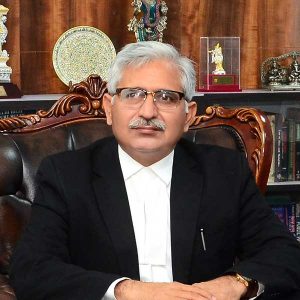

    There is no hard and fast rule, whereby one can assume or assign a definitive period of practice which could be said is required to build a firm’s clientele. As a matter of fact, which is my experience also that one has to constantly endeavour new means to deliver the relief to the client. Of course, these means must originate from respective statutory provisions.

    To illustrate, I wish to reproduce a very scantly used provisions of Criminal Procedure Code, 1973, which by its plain reading makes it clear that when in a Criminal Trial a judgement of conviction is passed to which fine is part of the sentence, the fine is not to be paid till the time appeal is filed or the prescribed period of filing the appeal had expired. This provision also specifies that once an appeal is filed, where fine is a part of the sentence, no such fine is to be paid till the appeal is finally disposed off.

    The corresponding provision of Cr.P.C. 1973 is as follows:-

    1. Order to pay compensation.

    (1)  When a Court imposes a sentence of fine or a sentence (including a sentence of death) of which fine forms a part, the Court may, when passing judgment, order the whole or any part of the fine recovered to be applied-

    (a) in defraying the expenses properly incurred in the prosecution;

    (b) in the payment to any person of compensation for any loss or injury caused by the offence, when compensation is, in the opinion of the Court, recoverable by such person in a Civil Court;

    (c) when any person is convicted of any offence for having caused the death of another person or of having abetted the commission of such an offence, in paying compensation to the persons who are, under the Fatal Accidents Act, 1855 (13 of 1855), entitled to recover damages from the person sentenced for the loss resulting to them from such death;

    (d) when any person is convicted of any offence which includes theft, criminal misappropriation, criminal breach of trust, or cheating, or of having dishonestly received or retained, or of having voluntarily assisted in disposing of, stolen property knowing or having reason to believe the same to be stolen, in compensating any bona fide purchaser of such property for the loss of the same if such property is restored to the possession of the person entitled thereto.

    (2)  If the fine is imposed in a case which is subject to appeal, no such payment shall be made before the period allowed for presenting the appeal has elapsed, or, if an appeal be presented, before the decision of the appeal.

    (3)  When a Court imposes a sentence, of which fine does not form a part, the Court may, when passing judgment, order the accused person to pay, by way of compensation, such amount as may be specified in the order to the person who has suffered any loss or injury by reason of the act for which the accused person has been so sentenced.

    (4)  An order under this section may also be made by an Appellate Court or by the High Court or Court of Session when exercising its powers of revision.

    (5)  At the time of awarding compensation in any subsequent civil suit relating to the same matter, the Court shall take into account any sum paid or recovered as compensation under this section.

    Though I am repeating myself, but in order to bring clarity on the subject answer, I wish to add that a large number of statutory provisions are never agitated upon by us in order to seek relief for the benefit of our clients.

    Thus, I conclude that such measures and constant research to find the exact provision of law or the corresponding case Law, enabling us to seek relief is the only means which a firm needs to build its clientele.


    Please share some of your experiences.

    (Mr. Sharma has been a part of some high profile cases like- The Railway Bribery Scam, the Coal Gate Scam, the Micromax Bribery Case and a lot more.)

    Everyone, whosoever is dealing with such cases or any case for that matter, must read each word of the charge sheet filed by CBI/Prosecution. It is the charge sheet from where the defence would originate. For the purpose of developing strategic defence in any Civil or Criminal Case, the contents of the pleadings of the opposite party, will provide the exact defence required to break the case.

    Illustratively, if a case is based upon Surveillance having been mounted by the CBI/Prosecution as is the case of Railway Bribery Scam or Micromax Bribery Scam one must know delicacies of Electronic /Digital Evidence. One must understand, the Information Technology Act, Section 65-A & B of Indian Evidence Act. The method by way of which, Primary or Secondary Evidence, pertaining to Electronic /Digital Evidence is firstly admissible and secondly it is impeachable.

    Similarly, analysing the Coal Gate Scam, since it involves multitude of institutions like PM Office, Ministry of Coal, Ministry of Steel, Ministry of Power & other Allied Ministries, State Government, Institution of State Government like Department of Industries, Mines of States and apart from them certain corporate houses or individuals to whom it is alleged that allocation of Coal Blocks have taken place, after hatching a conspiracy to do so. It is my belief that in one of the charge sheet filed by the CBI/Prosecuting Agency, no tangible evidence had been brought on record by them, reflecting either meeting of mind amongst the persons working in multiple institutions referred before or a common thread, detailing that work of the corresponding persons working in the different institutions, had a common object. Though there are multiple order of conviction in Coal Gate Cases but on the other hand is the 2G Spectrum Case and the judgment therein had categorically reflected that the element reflecting common object amongst multiple persons, institutions was not in existence.

    Therefore, I intend to highlight that for any given case, the defence lies within the pleadings of the other party, and the attempt which is required to be made is as to how that weak spot in the case of the opposite party is to be found and then exploited.


    What are the skills that you look for when you hire juniors under you?

    Sharpness in responses, eagerness to explore the unexplored field of Law, good command over English (both spoken and drafting). Always an honest attempt to communicate one’s thoughts to the other person coupled with patience and perseverance are the only qualities which I wish to find in any lawyer who comes to me, to become my colleague. I personally do not want to call anybody as “Junior”. My reasoning is that they might be “Junior” to me by age but everyone has equal capacity to imagine, to explore the unexplored and most importantly fresh lawyers always bring fresh ideas.

    The skills which I have highlighted above are to be developed by a person on their own. These are no mathematical equations, which one can provide to another. It is the function of the brain, which will only start functioning when a person puts his brain to work. So, development of skill in legal profession cannot be guided, it is self-development process and that is exactly how I did it.


    As a Member of the Special Committee of the Bar Council of Delhi, what were your roles and responsibilities?

    I remained a Member of Special Committee of Bar Council of Delhi for a short period. We as Member of Special Committee were expected to discharge all the functions of Bar Council of Delhi which included Enrolment of fresh lawyers, looking after Disciplinary Proceedings and to discharge all the functions which Bar Council of India had assigned to the Special Committee.


    How would you describe your experience of over thirty years in the legal fraternity?

    “Satisfying” is the only word, which can describe my experience in the legal profession. If I look back and analyse these thirty years, as a lawyer, I find it really surprising that a person, having no prior experience of the field of litigation, has not only survived in this competitive field but is presently discharging all the duties of a Defence Counsel for a large number of politicians, bureaucrats/high ranking officials, former judges, large corporate entities etc.

    Please provide us insights to your daily schedule. What is a typical work day like?

    Being an advocate, dealing with a handful of cases before different forums, my daily schedule is segregated in a manner whereby I intend to utilize the time in most efficient way.

    Any typical day for me starts at 9.00 AM, when I start for the courts. The work schedule at the court normally ends at 4.30 PM, thereafter I start for my office, wherein I prepare for my upcoming cases and attend conferences between 5.00 PM to 8.30 or 9.00 PM.

    In case, the case is fixed for Miscellaneous Proceedings before the trial court, I normally request any of my colleague advocates to appear, appraise and assist the court appropriately. However, if a case is fixed for evidence, either for examination in chief or for cross examination, then I personally attend it as a priority matter. However, the Stage of Arguments, be it Miscellaneous or Final, are normally taken by the Court at the end of the Board. Thus, I plan my schedule accordingly, so that all miscellaneous work, evidence are diligently catered to in advance and I am available for rendering appropriate assistance to the Court for and on behalf of my client.

    However, for proceedings in Superior Courts, I normally organize my time as per the cause list of the respective court in such a manner that my Trial Court work do not suffer and neither my case pending before the Superior Courts.

    Fortunately, in the present scenario of Artificial Intelligence and other electronic facilities, the time spent by me commuting in my car, i.e. heading to court complex, or commuting amongst different court Premises or while reaching back home, is utilized by me for research purposes, which I do on my I-Pad, with the help of internet facilities.

    As a concluding message, what would be your advice to budding lawyers?

    Please be prepared to work hard, which include research on various Statutory Provisions and the interpretation thereof, as is pronounced by various Superior Courts. Be courteous not only to your client or to the judges, but also to the court staff and all your colleagues so that a feeling of an extended family is established amongst you and all the persons with whom you interact while discharging your responsibilities as a lawyer. Please do not run for money at the very start of your career, as it is bound to come to you automatically once you establish your own identity and character in legal fraternity.
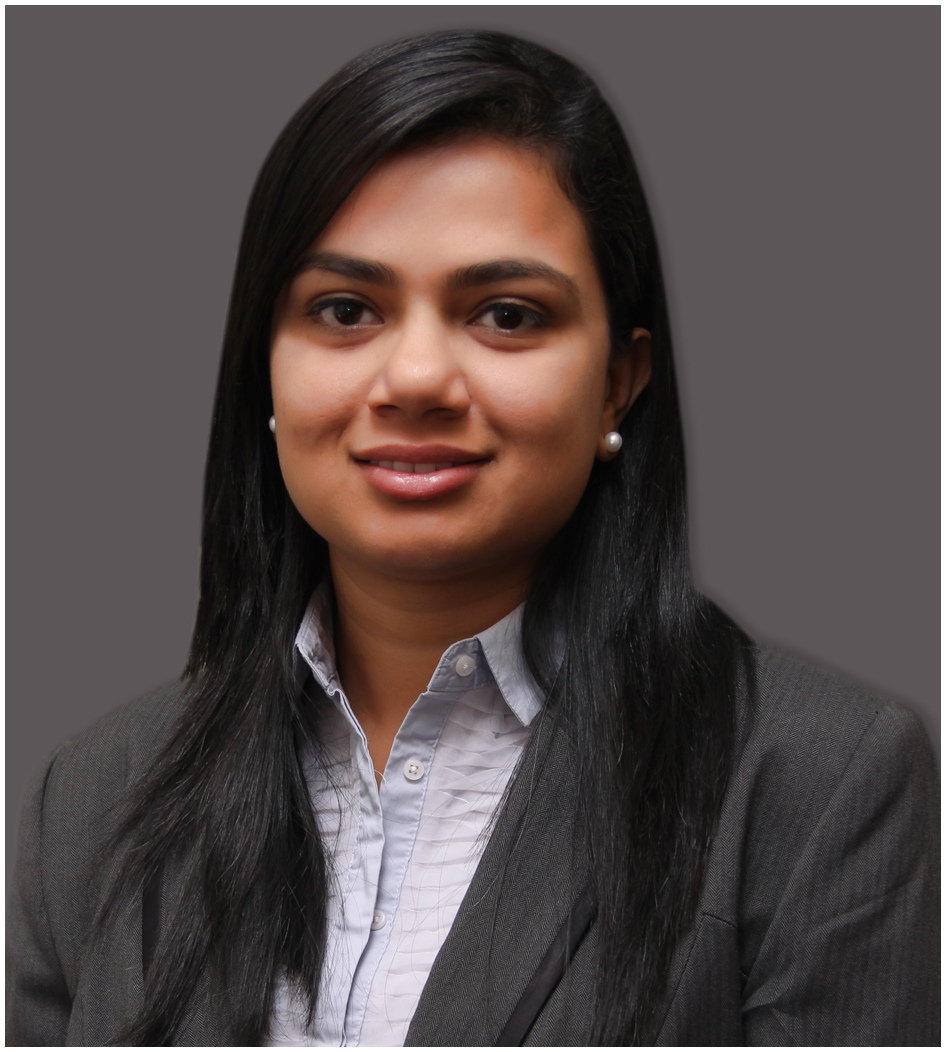
  • Sundra Rajoo, Director, KLRCA, and Managing Director, Sundra Rajoo Arbitration Chambers shares his insight on the arbitration world

    Sundra Rajoo, Director, KLRCA, and Managing Director, Sundra Rajoo Arbitration Chambers shares his insight on the arbitration world

    Datuk Professor Sundra Rajoo graduated in Law from University of London, England in 1994. Currently, he is the Director of the Kuala Lumpur Regional Centre for Arbitration (KLRCA). He has also been the President of the Chartered Institute of Arbitrators (CIArb) Global, which is the world-wide leader in training, accreditation and practice of alternative dispute resolution. Sundra is the Past President of the Asia Pacific Regional Arbitration Grouping (APRAG), a federation of  fourty arbitral institutions in the Asia Pacific region.

    A Chartered Arbitrator and an advocate and solicitor of the High Court of Malaya, Datuk Professor Sundra Rajoo is also a professional architect and registered Town Planner.

    In this interview, he talks to us about:

    • His illustrious practice in Malaysia.
    • How to acquire skills to become a great arbitrator.
    • Are grades really that important?
    • His role in legal academia.


     Tell us a bit about your childhood and pre-college life as well as educational background. Did you have lawyers in your family?

    I grew up in the state of Malacca and later moved up north to Penang. I attended the Francis Light and Penang Free School in Penang during my primary and secondary education. I then obtained my first honours degree in Housing, Building and Planning from University of Science Malaysia, Penang in 1979. Following that, I proceeded to Australia and obtained two professional degrees in Architecture and Town Planning, after which I pursued Law at University of London, England and obtained the Certificate in Legal Practice. I also hold a Master’s degree in Construction Law and Arbitration (With Merit) from Leeds Metropolitan University where I was the winner of the Annual Prize, North-East Branch, the Chartered Institute of Arbitrators, England; and a Master of Philosophy in Law from Manchester University which I completed as a Chevening Award holder.

    I was not surrounded by relatives who were lawyers but shared a close relationship with my father who often told me stories about my great grandfather who was a war hero during the Malayan Revolution period, sparking an interest in history and Law.


    How did you gravitate towards the field of law? Where did you study initially?

    Initially, I pursued my education in the areas of Housing, Building and Planning, and Architecture and Town Planning. I worked for the Central Bank of Malaysia as an Architect and Town Planner in Malaysia and Australia. I gained extensive experience and exposure in construction law. That coupled with my interest in law since I was a child motivated me to pursue my education further in Law.


    Were you a top scorer in your educational journey? How important are grades according to you?

    I fared were very well in the courses that I pursued, however, while grades are important, I do not necessarily believe that it is the most important aspect of education. In my opinion, what is most important is how one equips oneself with the ability to apply the knowledge gained in real-life situations.


    You were a writer, and have been published in various national journals. Do tell us, how you pursued your love for writing.

    Although I was a light-hearted and playful child, I picked up the habit of reading at this stage. Starting with books on war, my interest in reading continued to grow and expand – a habit that has certainly served me well over the years. This motivated me to pick up writing as I developed ideas, thoughts and opinions that I wanted to impart to others. When writing articles, it is important to understand who your readers are to ensure that the message you are trying to send across is conveyed clearly.


     Please give us an insight into your role in academia.

    (He is a visiting Professor at the Faculty of Built Environment, University of Technology Malaysia and Adjunct Professor at the Faculty of Law, University of Malaya.)

    From 2000 to 2003, I continued to lecture at local universities including in the Arbitration Law course offered in the Master of Laws (LL.M.) Programme at the Faculty of Law, University of Malaya. I have been a guest lecturer on arbitration at the Law Faculty, International Islamic University and on the Master’s in Contract Management at University of Technology. I was also an invited contributor to the MSc in Construction Law and Arbitration Programme offered jointly by National University of Singapore and King’s College, University of London in 2004.

    How do you instill creativity and innovation in your employees and in the work environment?

    I instill creativity and innovation in my employees by encouraging brainstorming sessions with them where we make observations and approach things from a new viewpoint, together.


    If I want to be a great arbitrator which university should I go to? Which courses would you recommend?

    Since arbitration is international, you ought to choose an institution that offers programmes of an international nature to ensure that you are remain relevant to as many countries as possible. The most renowned courses to pursue would be, traditionally, those by the Chartered Institute of Arbitrators however in light of changing times and how everybody is looking to the East (think ASEAN Economic Community, Belt Road Initiative, etc.) it would be wise to think Asian institutions such as KLRCA that offers the same.


    How do you keep yourself updated with the latest arbitration issues, news and cases?

    I keep myself abreast of latest developments in arbitration by news related to arbitration from an international front as well as attending conferences and talks on the same.


    Who are the stalwarts in arbitration that you follow?

    That would be the late KC Cheang, a former President of the Malaysian Institute of Architects. KC was well-regarded in the industry. He was skillful and knowledgeable. Everything he did personified professionalism and leadership.


    As the winner of the Cedric Barclay Prize by  the Chartered Institute of Arbitrators, share some tips to our readers.

    A love of reading, perseverance and the drive to succeed are the essentials.


    What qualities do you think have helped you achieve your current position and stature?

    Perseverance is definitely the key to success. Every once in a while, you will fail, and most of the time, the circumstances will be well beyond your control. The key to overcoming this; is this – DO NOT let your failures keep you down. Compose yourself, dust the dirt off, take a deep breath and get back up on life’s saddle and keep going. Failures are part of life. If you don’t fail, you don’t learn. If you don’t learn, you will never change. The world doesn’t care how many times you fall down, as long as it’s one fewer than the number of times you get back.


    What are the skills a law student should try to imbibe to successfully carve out a niche in the arbitration world?

    Analytical reasoning and logical reasoning – law students must learn how to process voluminous information, interpret them analytically, and structure their arguments and reasoning in a logical manner.

    Legal research – it is essential for law students to master the art of legal research especially in terms of legal authorities and citations.

    Technology – With the rise of software and applications used in legal work, it is now a must for students to be familiar with technology.

    Time management – a strong work ethic and the ability to carry out multiple tasks are important and for this, law students are required to manage time well.

    Communication – law students need to equip themselves with both written and oral communication skills in order to convey and gather information clearly.