Tag: GLC

  • Shrutti Rajgarhia, President, Network for International Law Students, India, on pursuing Masters from Cornell Law School and being a professor

    Shrutti Rajgarhia, President, Network for International Law Students, India, on pursuing Masters from Cornell Law School and being a professor

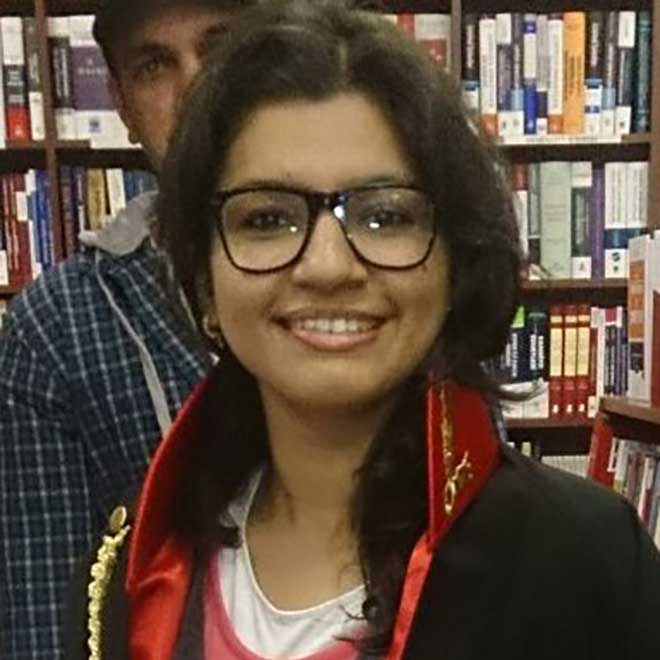
    Shrutti Rajgarhia pursued her bachelor’s degree from Government Law College, Mumbai in the year 2014. She went on to pursue her Masters from Cornell Law School, the U.S in the year 2015. She worked as an Assistant Professor with NMIMS School of Law, Mumbai. She is currently serving as the president of Network For International Law Students, India and the National Lead for Development Policy with One Future Collective.

    In this interview, we speak to her about

    • Her experience at Govt. Law College, Mumbai;
    • Advantages of having a Post Graduate Diploma in Journalism;
    • Her experience on being a professor at NMIMS School of Law; and
    • Being an activist and social worker.


    WHAT COULD BE A SHORT INTRODUCTION OF YOURSELF?

    Shrutti Rajgarhia is an upcoming lawyer, who graduated from Government Law College and received her Master’s in Law (LL.M) from Cornell Law School. Besides being outstanding at academics, she is a very passionate about human rights, with a special focus on access to education for all, volunteering (she feels there is nothing better than working for the upliftment of the community, without expecting anything in return), and food photography (because it gives her an excuse to eat and capture some of the most beautiful moments of life). Currently, she is the National Lead for Development Policy with One Future Collective (onefuturecolletive.org)


    TELL US ABOUT YOUR YEARS BEFORE LAW SCHOOL. WERE THERE PARTICULAR CHILDHOOD INCIDENTS THAT PROVED TO BE AN INSPIRATION FOR YOU?

    Not many people know this (now I guess they will) but I wasn’t the brightest bulb in school (attended Bombay Scottish School). Low on self-esteem and confidence due to a stammering problem, I barely made it through my courses. I did not understand self-confidence, let alone the massive impact it can have on a person’s life until I graduated school. Sadly, the confidence came from my 10th board results. The reason I say sadly because marks should never be the yardstick to measure one’s capability. But, unfortunately, that’s how our education system has ‘educated’ us to think.

    It was also at this point that I realized the importance of standing up for myself and for people who may not be able to stand up for themselves owing to various circumstances (my own example while in school). It was this thought that led to my decision to do law.


    HOW DID THE OPPORTUNITY TO STUDY LAW AT THE OLDEST LAW COLLEGE IN ASIA BENEFICIAL TO YOU? WOULD YOU LIKE TO SHARE ANY MEMORY?

    Government Law College is a very significant part of my life. When I look back to those fives years of BA., LLB, there was a lot that went by in between the Jhabvallas and Mokals. There are many life-defining situations but my most memorable was being General Secretary of the Placement Committee at Government Law College (GLC). I wasn’t sure I wanted to take up the position, in fact, deep down I knew the answer was a straight no. However, one of my closest friends now and then senior at GLC, Manvendra Singh Bhatti, encouraged me, no he actually demanded that I take this position up and refused to take no for an answer. And I’m glad I did because it has contributed immensely to the individual I’m today.

    Recruitment is hard, especially when you have 90% of the law firms and the corporate bodies; wanting to recruit National Law School students over GLC students. Convincing them to come on campus and pulling off two placement weeks, was nothing but the team effort. I had the most hardworking and enthusiastic team. They were as passionate as I was, to get placement for as many seniors as we could. And that’s why we decided to do two placements (it was a new model); one in September and one in January, providing more employment opportunities to our students.

    From managing the staff at GLC, coordinating with other committees and their events, synchronizing the work and updates from over 50 team members, taught me to multi-task and more importantly, to multi-tasking well. It taught that everything will come and go, but the people you work with are extremely important and respecting them comes before anything. A very famous quote by Voltaire will sum up what I learnt from this experience, “I may not agree with what you say, but I will defend to the death your right to say it”.


    YOU HAVE VOLUNTEERED RIGOROUSLY DURING YOUR LAW SCHOOL FOR A NUMBER OF ORGANISATIONS. WHAT MOTIVATED TOWARDS SOCIAL WORKS?

    I realized at a very early age that giving back to society is important. There are too many people in the world, who need help and not enough that are extending the help. Volunteering enables a person to help without expecting in return. It’s a platform that allows you to experience the joy of giving. For me, it was education. I strongly feel that imparting education is one of the best gift’s anyone can give to the community. Yes, you can give clothes, food etc. but all of these are perishable and people are going to run of them at some point. But education- it sticks. Nobody can ever take that way from a person. In my opinion, it is the golden ticket. The golden ticket of empowerment.

    Human rights mean living life with dignity. They are rights every individual is entitled to because he/she is a human being and we as lawyers are responsible to uphold this right and stand for justice.


    WHAT WERE THE BIGGEST CHALLENGES THAT YOU HAVE FACED DURING THE SOCIAL WORKS THAT YOU HAVE UNDERTAKEN, AND HOW DID YOU OVERCOME THEM?

    Groundwork is where reality exists. It’s where the actual work happens. It’s also where connections are built. What do you do once your volunteering time is up with the organization? How do you keep in touch? The children you teach, the staff you train become a part of your life. But, you also have other responsibilities to take care of- a job, a family. The hardest part for me was to keep in touch with the organizations I worked for. Virtually being available is never the same as physically being around to help. The organizations get new volunteers and you go on with your life. The connection that is built with the children is very valuable, for them and for you. That’s something I’m still working on. Working on trying to help make that connection long-lasting.


    WHY DID YOU SELECT CORNELL LAW SCHOOL FOR YOUR MASTERS? WHAT ACTIVITIES DID YOU ENGAGE IN THERE BESIDES ACADEMICS?

    Cornell, had a very interesting mix of International Law subjects, that I was keen on pursuing. I tried to involve myself in a few things there- worked at the veggie salad bar after class, interned with the Agricultural Sciences department, took classes at the B-School, honed my photography skills by taking off on the beautiful trails around Ithaca. Pursuing a Masters abroad definitely gives you a very different perspective about life and people. It also gives you a chance at getting to know yourself better. It helps you venture out of your comfort zone and explore opportunities, you didn’t know even existed.


    WHAT WAS YOUR MOTIVATION BEHIND PURSUING MASTERS AND WHEN DID YOU FINALLY DECIDE TO PURSUE HIGHER STUDIES?

    I realized in my second year of law school, that I wanted to pursue a Masters in Law. I wanted to experience the Socratic method of teaching (method of teaching involving asking and answering questions, that helps develop a critical way of thinking and arriving at conclusions). My main idea behind pursuing a Masters was to study varied courses on International Law, to understand the international community better.


    WHAT ARE THE KEY INGREDIENTS OF A WELL WRITTEN SOP? CAN YOU MAKE IT PERSONAL? WHAT SHOULD BE KEPT IN MIND WHILE WRITING SOPS?

    There is no set format for a Statement of Purpose. The answer to what to keep in mind is in the term itself- ‘Purpose’. Everyone’s idea behind pursuing a particular course is different, everyone’s experiences are different, so how can the way you write a Statement of Purpose be the same? I have always maintained that a Statement of Purpose is an individual’s life story; it is who they are and who they want to be; it is their journey. Like nobody should tell you how to lead your life, nobody should tell you how to write your own life story, when it comes to writing a Statement of Purpose, for a college application.


    YOU HAVE AN ADDITIONAL DEGREE OF POST-GRADUATE DIPLOMA IN JOURNALISM STUDIES AND IN HUMAN RIGHTS. DO YOU THINK THESE DEGREES WAS AN ADVANTAGE IN YOUR CAREER PROGRESSION?

    A P.G Diploma in Journalism is something I pursued because I’m passionate about writing and wanted to get some formal guidance on it. K.C College of Management Studies was a great choice because the faculty at this institute was incredible. Besides, learning a lot about the media, about the know how’s of journalism, I learned a lot about quick knacks on writing. This did help me in my work life. But the aim of taking this course was more to have fun writing and less for any professional gain. The Human Rights course that I’m currently pursuing is to understand the technical aspects of human rights better. Since I feel so passionately about it, I wanted to get a better, holistic understanding of it from the legal standpoint as well as from the developmental side. My advice to students pursuing diploma courses is, do it because you are learning something not because you think it will look fancy on your resume.


    WHY DID YOU DECIDE TO TAKE UP TEACHING AS YOUR CAREER OPTION, DESPITE THE FACT THAT OTHER OPPORTUNITIES WOULD HAVE BEEN MORE LUCRATIVE?

    Teaching at NMIMS, School of Law was one of the best decisions I’ve made. Teaching is sacred to me. I’m super passionate about it and come from the school of thought that it is a two-way street. The teacher not only teaches the students but can also have a lot to learn from them. You’d be surprised the amount students have to share. You just have to keep an open mind about it. There have been many instances where I walked out of class with more information than I walked in with. Teaching for me is about sharing my experiences and learnings. It’s about motivating young people to go out into the world and make a difference. It’s about challenging students to walk out of their comfort zone and embrace differences. It’s about educating them about the right and wrong and encouraging them to fight for justice. Teaching isn’t about teaching from a textbook, it’s about using practical examples and helping mould the way students think. Most importantly, I think it’s about letting students decide what kind of lawyers they want to be; what kind of change they want to bring about and letting them know that they have the capability of bringing about that change.


    YOU HAVE BEEN RECENTLY SELECTED AS A PRESIDENT OF NETWORK FOR INTERNATIONAL LAW STUDENTS. COULD YOU PLEASE TELL US A BIT ABOUT THIS ORGANISATION AND HOW DO YOU WOULD LIKE TO MAKE YOUR CONTRIBUTION TOWARDS THE ORGANISATION?

    The organization aims to further the legal education and the legal profession around the globe. You can read up more about the organization at https://www.nilsinternational.org/

    I’m fortunate to get an opportunity to contribute to the tremendous work this non-profit organization is doing, thanks to Mr. Pratik Bakshi. The aim of NILS, India would be, to create more awareness about law and justice, give students access to new opportunities of learnings in the legal field, help make law students more socially responsible and in all, help law students sitting in India, get an international exposure through our partners across the globe, through interactions with students from different countries and so on.


    WHERE DO YOU SEE YOURSELF IN THE NEXT FIVE YEARS, AND WHAT ARE THE CHANGES YOU EXPECT TO BRING ABOUT IN SOCIETY TILL THEN?

    Thinking of five years down the line is too far away. I don’t know what my life will look like 5 days from now. But, I hope my actions today, help build a strong community in the future. A community with more access to education, with more tolerance for differences and with more hands to help. To all the young people reading this, go out and help your communities, in whatever way you can. A community is a true reflection of the people who build and nurture it.

    LASTLY, WHAT WOULD BE YOUR MESSAGE TO OUR READERS?

    I actually have two pieces of advice that I’d like to share. These are two great pieces of advice I received as a law student:

    Don’t wait for the right moment. There is no such thing as a right moment. The moment is right when YOU decide it’s right.

    Don’t let anybody else’s journey, define yours. There is only one person in the world like you, don’t let anyone tell you otherwise!


  • Sameer Tapia, Founder and Senior Partner, ALMT Legal, on starting his own law firm and a successful career in the field of law

    Sameer Tapia, Founder and Senior Partner, ALMT Legal, on starting his own law firm and a successful career in the field of law

    Sameer Tapia is a founding and senior partner of ALMT Legal, which was set up in London in 2000 and now has offices in Mumbai and Bangalore. He has expertise in corporate-commercial matters, dispute resolution with a strong focus on aviation, real estate, and private clients.

    Sameer graduated from Bombay University with a bachelor’s degree in Commerce. He read Law from the prestigious Government Law College, Mumbai.

    He regularly acts for various multinational clients in pursuing their contentious matters in India and has been retained by several corporates where he has advised them on commercial contracts, risk insurance, liability and regulatory matters.

    Sameer has represented clients before various foras including the Supreme Court of India. He has a strong commercial acumen in dealing with disputes in various arbitration proceedings as well. He has also advised clients in high profile family disputes and matrimonial matters and acted as an arbitrator/mediator in settling complex family disputes.

    He regularly speaks at international conferences and has submitted papers on Indian Laws. He is a regular invitee and guest speaker at law schools and other prestigious institutions in India. He has also written articles which have been published in the International Bar News, India Business Law Journal, and various other chamber publications.

    The Indian Lawyer 250, a guide to the leading business law firms of India, has featured Sameer amongst the top 40 individual leading lawyers, under the age of 45 years, in India.


    HOW WOULD YOU LIKE TO INTRODUCE YOURSELF TO OUR READERS? PLEASE TELL US SOMETHING ABOUT YOUR PRE-COLLEGE LIFE?

    Constructive Lawyer, Thinker, Traveler, Foodie, Passionate about Music Art and Culture.

    Pre College – Was an introvert and shy lad, quite an athlete in school, a sprinter!


    YOU ARE ONE OF THE MOST NOTABLE ALUMNI FROM GOVERNMENT LAW COLLEGE, MUMBAI. WHAT ROLE HAS THE COLLEGE PLAYED IN SHAPING YOUR CAREER?

    A number of Legal luminaries have passed out of GLC which is notably one of the most prestigious and oldest institutions in India. The college had some very able professors and strong faculty during my time that helped me along with my theoretical experience with working as a lawyer.


    YOU ARE THE FOUNDING PARTNER OF ALMT LEGAL WHICH HAS GROWN TO BE ONE OF THE INTERNATIONAL BEST LAW FIRMS. PLEASE SHARE WITH OUR READERS ABOUT THE CHALLENGES YOU FACED INITIALLY AND WHAT IS YET TO BE ACHIEVED?

    It was difficult to set up a law firm, though I must say it was the most fulfilling experience I have had professionally the benefits of which I reap today.

    Every generation that goes by, I feel the competition and level of expertise only increase with time. The most challenging experience was to set up ALMT in the UK and then bring our footprints into India.


    HOW DID YOU CHOOSE YOUR SPECIALISATION? HOW DID YOU GO ABOUT ATTAINING EXPERTISE IN THEM?

    It all happened very naturally – Honestly, your first mentor should be the best one! It flows from there…


    WHAT ADVICE WOULD YOU GIVE TO THE YOUNGSTERS IN THE LEGAL PROFESSION, ESPECIALLY TO THOSE WHO PLAN TO SET UP THEIR OWN LAW FIRM?

    It’s not easy to set up a firm as a young lawyer. You must work and train with a senior for at least 10 years before you decide to take the plunge!

    That will give you a good heads start along with experience for anyone to trust you and come to you for sound advise.


    WHAT IS THE PROCEDURE FOR A LAW STUDENT TO APPLY FOR INTERNSHIP AT ALMT LEGAL? HOW DO YOU SUGGEST THE STUDENTS CONVERT THEIR INTERNSHIPS TO PPO?

    They must write to the Office Manager who is also in charge of HR of the firm.


    WHAT IS YOUR TAKE ON THE EFFICACY OF INSOLVENCY AND BANKRUPTCY CODE. DO YOU THINK IBC COULD HELP THE GOVERNMENT AND BANKS DEAL WITH NPA ISSUE?

    It clearly has helped as we read in the press and companies being taken to task on the basis of their non-performance.


    WHAT IS THAT ONE CASE THAT HAS LEFT A LASTING IMPACT ON YOU?

    I cannot put a finger on one! There are so many…


    HOW DO YOU THINK WE COULD IMPROVE THE DISPUTE RESOLUTION PROCESS IN INDIA?

    To start with we need more Courts, Judges and an aggressive judicial system which needs to catch up with the backlog of pending suits – and not allow frivolous litigation in India.


    IN YOUR OPINION, HAS THE RERA ACT HAS SUCCEEDED IN PROVIDING MUCH NEEDED TRANSPARENCY IN REGULATING THE REAL ESTATE SECTOR?

    Terrifically, but it has its own problems enforcing the Act.


    WHAT WOULD BE YOUR WORD OF ADVICE TO YOUNG LAWYERS AND LAW STUDENTS?

    Good reading habit to start with, which most students lack these days, good vocabulary and English if you want to plead and draft documents. Articulate in being well balanced in theory and knowledge of the law.

    There is a right time for everything – Most students try and get into a firm and want to work and miss out on their theoretical experience in College which offers a lot to them by way of bonding studying, moot competition etc.

    They must do a five-year course and temp with firms whilst they study law and then be sure whether they want to pursue law as a counsel or solicitor ( in a law firm ) depending on the field of law they select whilst in college


  • Siddharth Acharya, Independent Counsel, on challenges of litigation, planning internships, and directing documentaries

    Siddharth Acharya, Independent Counsel, on challenges of litigation, planning internships, and directing documentaries

    Siddharth Acharya graduated from Government Law College, Mumbai in 2014. After a very brief stint at Oasis Council & Advisory and Khaitan Legal Associates, started his own independent practice before Supreme Court of India & High Courts and various forums like the National Company Law Tribunal, National Company Law Appellate Tribunal and Securities Appellate Tribunal.

    In this Interview, we speak to him about

    • His formative days as a transactional lawyer;
    • His transition from a transaction lawyer to a litigator;
    • His fondness for directing films and his documentary “The Abandoned Cranes” which received attention across the globe and
    • His inclination towards working for think-tanks on various public policy related works.


    HOW WOULD YOU INTRODUCE YOURSELF TO OUR READERS?

    Rather than calling myself as a Super-Lawyer, I will introduce myself as an independent practising super-struggling lawyer who is out there to carve a niche for himself in the Meccah of litigation which is New Delhi. I am in process of building my practice brick to brick here and intend to become Advocate on Record in future. I take up consumer matters pertaining to Insurance and company matters pertaining to Insolvency and Bankruptcy as I personally believe consumer forum and National Company Law Tribunal are the best places where you shall start arguing and it is quite heartening to see how encouraging Judges these days encourage you to speak in court. It is an organic process and takes time but yes I am out there to work hard and learn something daily.


    TELL US ABOUT YOUR PRE COLLEGE LIFE. WHAT MADE YOU DESCEND TOWARDS LAW?

    I was an above average student of Bikaner Boys School. During my school days I had keen interest in quizzing, cricket and debates. I was not a rank holder in my class but I use to get decent grades and use to secure highest marks in History and Political Science. My other interest was the theatre which I used to pursue in my school and read novels and plays of Shakespeare, Munshi Premchand, Anton Chekov, Fyder Dostoevsky and George Bernard Shaw. My great-grandfather was a District Court Magistrate and a prestigious senior lawyer in Bikaner. I still have fond memories of seeing him in the profession. He was a voracious reader and had garnered a lot of respect in the legal fraternity of Bikaner. He used to do a lot of pro-bono work and his stature and prestige stayed in my sub-conscious and has a lot of impact on me even till now. Law as a profession did not come to me as a natural choice, I was clueless and confused after my school on what to pursue. I secured admission in reputed Biotechnology College in South and Agriculture University and wanted to prepare for Civil Services but back in 2009 CLAT was gaining a lot of popularity among the youth in my hometown. My cousin ended up securing job in her campus placement in SEBI after finishing her education from National Law School, Jodhpur and suddenly word of mouth spread in the family that if you wish to have a successful professional life and end up in a dignified post after your graduation then it is the best time to pursue law.


    WHO WAS YOUR MENTOR, OR MAIN SOURCE OF INSPIRATION WHO MOTIVATED YOU ALL ALONG THE WAY?

    There are various people who have motivated me in the journey. My initial mentor was Mr. Dinesh Shripat who is my uncle and he had persuaded me to take up law as a career. After I finished graduation, I started working with Mr. Haresh Jagtian in Mumbai. His flamboyance, articulation, magnanimity and charisma is infectious. I really consider him as an institution and one can learn a lot from him be it law or life. His understanding about subjects like Jurisprudence, Evidence and Constitution is exceptional and I was fortunate to have been associated with him directly on PIL which he had filed against the State of Maharashtra on criminalising possession of beef. I got to work with various legal and constitutional jargons of Bombay High Court Bar including likes of Aspi Chenoy and Navroz Seerwai.

    Another person from whom I garner a lot of inspiration is Mr. Sharan Jagtiani and Mr. Somasekhar Sundaresan, both of them are among the most sought after counsels in the fraternity. At their age, if I achieve even a fraction of their accomplishment, I would consider myself successful. Mr. Sakate Khaitan, Managing Partner of Khaitan Legal Associates and Mr.Yogesh Chande from Shardul Aamarchand also have a strong influence on me professionally.


    HOW WAS YOUR EXPERIENCE AT GLC, MUMBAI? WHAT WERE YOUR AREAS OF INTEREST IN THE LAW? DID YOU ENGAGE IN EXTRA-CURRICULAR ACTIVITIES WHILE IN COLLEGE?

    GLC taught me to be independent and courageous. I was a young naive boy who was going through everyday cultural shock as the transition from a small place like Bikaner was a bit painful to go through. I got to intern with various law firms like Junnarkar Associates, AZB and Partners, J Sagar Associates, Luthra to name a few. I found the firm environment extremely challenging and intimidating and to be honest did not really enjoyed it. Coming from a small place and fear of survival mounting on my head in a super-expensive city like Mumbai, I did not have the courage to take up litigation immediately after graduation so reluctantly I decided to join the firm.

    My area of interest was Investment Laws especially Securities as I had obtained post graduation diploma also in it but what really intrigued me was Constitutional Law. I started watching ShyamBenegal’s series Samvidhan on YouTube which covers the constitutional debates that took place in Constituent Assembly before India became Republic in 1950. My love for politics helped me to understand the contemporary political problems of this country along-with nuances and intricacies involved in the drafting of the most sacrosanct document of the nation. The upheaval and challenges which founding fathers of the Constitution must have had gone through. Understanding the entire process made me aware about the importance and indispensability of Constitution to run such a diverse and pluralistic democracy.

    I was engaged in extra-curricular activities like Model United Nations and authored a paper those days on problems faced by Muslim women in India. I also did Moot Courts and Model United Nations. But what I liked doing the most was debates.


    DURING YOUR LAW SCHOOL YOU HAD DIRECTED VARIOUS SHORT FILMS AND DOCUMENTARIES ONE OF THEM WAS THE ABANDONED CRANES WHICH RECEIVED ATTENTION ACROSS THE GLOBE. COULD YOU PLEASE TELL US ABOUT THE DOCUMENTARY AND YOUR CHALLENGES WHILE PREPARING THE SHORT FILM?

    (Siddharth’s documentary The Abandoned Cranesgot screened at the House of Commons and was screened at Brussels in European Union Headquarters. He has addressed the British Parliament and French Parliament on the socio-economic concerns that hound the Kashmiri Pundits. )

    The Abandoned Cranes was a subject which I would say I had lived with for many years before making it. It was a 52 minute comprehensive documentary film based on Jammu and Kashmir conflict. It was an earnest attempt to sneak into the genesis of political problems in the state of Jammu and Kashmir after the rigged elections that happened in the state in 1986. I also traced reasons on how militancy mushroomed in the state thereafter making Kashmiri Pandits leaving their homeland and also analysing Armed Forces Special Powers Act and Public Safety Act. It took me eight months to complete it and interesting fact remains that I did not inform my parents about the making of film and shooting in Kashmir along-with likes of Yaseen Malik and Bitta Karate (dreadful militants of those times) and other surrendered militants. The film was appreciated at various human rights film festivals and I got an opportunity to speak at House of Commons. I came across various challenges as I had literally risked my final year of law in terms of grades and thereafter my career. From shooting till editing I was a learner myself as I did not come from film-making school but I was so deeply entrenched into it that I could not think of anything else at that time. My parents were apprehensive that this would spoil my career as I was not making it with any commercial interest and had abandoned my regular studies for a while. Finishing documentary itself was an accomplishment and I am really glad that it was appreciated by people all around.


    WHAT ARE THE CAUSES YOU FEEL STRONGLY ABOUT?

    I am extremely sensitive towards the plight of people who cannot afford basic medical facilities and health care. The State plays an important role in providing free medical services through health insurance cards but under the guise of schemes like Rashtriya Swasthya Bima Yojana and Mukhyamantri Swasthya Bima Yojana of States, people have been cheated and most of the premium released by government is siphoned off by the private hospitals and Bureaucrats. The lackadaisical attitude of Bureaucrats in resolving the issue and being insensitive towards them is something I am willing to take up soon in Court of Law.

    I am also extremely sensitive towards what is happening today in State of Jammu and Kashmir. The youth in Kashmir today feels oppressed, marginalised and victimised and rants anti-India slogans. Due to poverty and various other reasons, youth there feels completely disconnected with rest of India. On a personal level, I have taken an initiative where I have hired a law graduate Suhail Ghanie from Kashmir University as my sub-ordinate and in coming years will be giving internships to Kashmiri youth. If my practice picks up more in coming years then I will be doing the same experiment in naxal affected areas and other troubled areas. The time has come where new generation in conflict areas have to be psychologically integrated with our country. If they get exposure to justice mechanism and get aligned to the mainstream which other youngsters do then only they will be able to subscribe to the idea of unified India.


    YOU HAVE DONE SO MANY INTERNSHIPS. PLEASE TELL US HOW FAR DID YOUR INTERNSHIPS DURING LAW SCHOOL HELP YOU IN YOUR CAREER AFTER YOUR GRADUATION? HOW WOULD YOU RECOMMEND THE PRESENT LAW STUDENTS PLAN THEIR INTERNSHIPS?

    (Siddharth has interned at the Chambers of Mr. Harish Salve, Senior Advocate, Luthra and Luthra (Law Offices), J. Sagar Associates, AZB & Partners, Anand and Anand, Crawford & Bayley Co and various other places.)

    Numerous internships actually helped me to analyse myself. It helped me to understand my mettle as a lawyer. What I am suited for and what I am not suited for? Like for an example during my stint in J Sagar and AZB, I realised I can’t become a good transaction lawyer. Those internships and small conversations with accomplished legal luminaries helped me to unleash my own calibre and understand that everyone here is gifted with some ability or the other. Like I remember this encouraging conversation coming from a Senior Partner of a reputed law firm, where he said these words “Every law firm intern wants to take up a corporate job and gets disappointed thinking he does not deserve it. We hire people not only considering the merits but also deeply pondering on the entire thought process of the candidate as to whether he or she will able to acclimatise to the working environment of the firm. We tend to not imbibe free thinkers in the firm. That does not mean we don’t like the candidate or we feel they are good for nothing. Someone who has it in him or her will definitely find the path and next five to seven years decide whether you have it in you or not.”

    Also your internships dismantle various myths and pre-conceived notions legal career and teach basic jobs like filing, co-ordinating with court-clerk, adapting to the chaotic phases in the litigation. In the process, you learn to value everyone working around you. What it teaches you the most is discipline and if you get the right mentor then there is no stopping for you.

    I would suggest law students to try their hands in various fields in initial years so as to understand and grasp the nitty-gritty of various things and analyse your potential. It will help discovering themselves.


    HAVE YOU EVER FELT THE NLU AND NON- NLU DIVIDE? DO YOU THINK IT IS A CONSIDERATION FOR EMPLOYERS?

    It is quite unfortunate that it exists in the fraternity and it is a harsh reality. I am an ardent supporter of non-NLUs as during my own college days, I was a victim of this class divide. Like I remember interning in a premier law firm, the Partner of the firm always use to encourage and delegate work to associates from a specific university where he had passed out from. I am not saying this exists everywhere but employers do prefer N schools and there is a clear bourgeoisie-proletariat kind of divide and they are ruling the roost in firm recruitment. N-school graduates do have an advantage in terms of placement and recruitment but ultimately it is non N-school candidates who emerge more successful in the long run as the vision of N-school alumni do not go beyond campuses and big corporate towers.


    HOW DID YOU SECURE YOUR FIRST JOB? HOW IMPORTANT DO YOU THINK A HIGH CGPA IS FOR RECRUITERS?

    All thanks and regards to Mr.Haresh Jagtiani who had given me a chance in his law firm.

    Recruiters and HR in our country feel CGPA is the most sacrosanct thing in a student’s life, securing important CGPA is very important as it shows how diligent and focused a student is.


    WHY DID YOU MAKE A TRANSITION AFTER WORKING AT CORPORATE FIRMS TO PURSUE A CAREER IN LITIGATION?

    I would say circumstances got me into private practice as neither I come from an established legal background nor I am a local Delhi boy or Bombay boy. My fate offered me the opportunity and I could not succumb to the temptation. Litigation and arguing in court gives me more thrill than sitting and working for hours on a long draft and activist bent of mind helps you in litigation more than corporate.


    WHAT WERE THE STRUGGLES THAT YOU FACED AS AN INDEPENDENT COUNSEL?

    I am facing struggles on a daily basis as most clients do not tend to take you seriously when you are in your twenties. You get to do matters which have small stakes and the appeals which you receive from lower courts and commissions and has already been decided against your clients. These matters are called ventilator matters and they make you an expert at condoling people. But honestly, no fat cheque can match the happiness which you get after a favourable order in the court of law.


    WHAT INCLINED YOU TOWARDS PROPOSING, DRAFTING, FRAMING AND SUGGESTING ON VARIOUS PUBLIC POLICY RELATED WORKS FOR THINK TANKS AFFILIATED TO GOVERNMENT OF INDIA?

    (Siddharth has worked on various policy related work pertaining to Life Insurance and General Insurance and regularly gives legal inputs to the Department of Financial Services, Finance Ministry and Health Ministry on National Health Protection Policy.)

    What really made me inclined towards public policy was an unfavourable order I got from Chief Justice K.M. Joseph of Uttarakhand High Court. This was a PIL filed in September, 2016 where I had brought irregularities to the notice of the Court about how tender processes are rigged in the health sector and beneficiaries of healthcare schemes are not getting benefitted at all due to poor claim settlement ratio thanks to private hospitals. Uttarakahand at that time did not have any tertiary level treatment hospital which could cater heart transplant and cure for serious diseases. I realised it was the time to take a plunge to counter the nexus between bureaucrats, politicians and businessman who will destroy the healthcare system of the country. Healthcare being dormant yet important sector is the pillar of modern India. If the system fails to provide it to the needy then what is the difference between India and a remote third world country in Africa.


    WHERE DO YOU SEE YOURSELF TEN YEARS FROM NOW?

    Honestly speaking I am not that foresighted, I intend to do in what comes to me and rise gradually. I would like to be known as an upcoming lawyer in constitutional courts seeing myself arguing on various constitutional matters.


    WHAT WOULD BE YOUR PARTING WORDS TO OUR READERS, WHO ARE PREDOMINANTLY LAW STUDENTS AND YOUNG LAWYERS?

    Have faith in yourself and keep going. There will be moments of highs and lows in your professional career. Stop comparing yourself with your contemporaries or taking a keen interest in their monthly earning and packages and keep experimenting.


  • Aditya Mehta, Senior Associate, IC Universal Legal, shares his insight on independent practice and litigation experience

    Aditya Mehta, Senior Associate, IC Universal Legal, shares his insight on independent practice and litigation experience

    Aditya Mehta graduated from Government Law College, Mumbai, in 2007.  Post graduation, he worked in the Chamber of Advocate Amar N Bhatt. He has more than ten years of work experience and is currently working as Senior Associate at IC Universal Legal, Ahmedabad.

    In this interview we talk to him about:

    • His experience in IC Universal Legal
    • Setting independent practice
    • His experience of a litigation lawyer at a firm


    HOW WAS YOUR EXPERIENCE AT GLC MUMBAI? WHAT ACTIVITIES WERE YOU INVOLVED IN APART FROM THE REGULAR ACADEMIC CURRICULUM?

    After my schooling, I decided to apply for a five year integrated law course from GLC Mumbai. GLC was my first choice as it has the distinction of being the oldest law college in Asia (est. in 1855) and has a rich heritage and pedigree.

    During my academic years at GLC, Mumbai, I was an active member of a Social Service League Committee, which undertook various projects, benefiting students, NGOs and the community at large, which was achieved by tie-ups with Government as well as Non-Profit Organisations. For first three years of my law school I was a part of this Committee, which in collaboration with a NGO helped under-trial prisoners, who were unable to retain services of a Lawyer, to help file their bail applications.

    Overall my experience at GLC helped me build a solid foundation for my future endeavours in the legal profession and I feel proud to be part of an institute that has a very strong and eminent alumnus.


    WHAT IS YOUR TAKE ON ACADEMICS? HOW IMPORTANT ARE GRADES IN LAW SCHOOL FOR AN ILLUSTRIOUS CAREER?

    Academics are really important to understand the principles on the basis on which laws are drafted and implemented. Good academic career may help to understand and implement various provisions of law in better way. However, to be very honest I personally feel that grades are not really as important as having a sound understanding of various subjects. I feel that grades are just a reference for your own evaluation.

    But the aforesaid also depends on what type of practice you choose to take up after your law school, as good grades may help you land a good job. However, for litigation, I personally feel that grades do not matter much, but a better understanding of law and its implementation helps in a longer run.

    Therefore if one intends to practice litigation, I recommend to have more of hands on experience along with academic knowledge, which can be only achieved by undertaking variety of work during internship and also by not neglecting what is being taught at the law school. I also think that actively participating in as many extra-curricular activities as one can will be like adding another feather on the hat.


    HOW FAR DID YOUR INTERNSHIPS DURING LAW SCHOOL HELP YOU IN YOUR CAREER AFTER YOUR GRADUATION? HOW WOULD YOU RECOMMEND THE PRESENT LAW STUDENTS PLAN THEIR INTERNSHIPS?

    Internships during law school are equally important as academics. It helped me immensely in selecting my area of interest. It gave me an insight on different aspects of law like Litigation/Non-litigation in Civil/Criminal/Corporate work. It provided an opportunity to understand the real-life scenario and hands on work experience.

    Speaking for myself, during my internship period, from second year in college till the fourth year, I interned at a couple of law firms in Mumbai, trying my hands on different subjects of law and by the end of internship, I realised that I was not the type of person who can manage to sit on his desk and exclusively do non-litigation work and that my real interest lies in appearing before a Judge or an Authority to defend/protect the interest of litigants. Therefore, for my final year in law school, I chose to intern under a Senior Advocate at the High Court of Gujarat.

    My decision to do an internship in the final year before the courts at Gujarat and not Mumbai, played a very important role in my career.  I would suggest all law students to get most out of their internship and work on as many diverse fields of law as possible and also do an internship in their home state/town, at least for a period of six months, in their choice of field to come to an informed decision in selecting their area of specialisation and place of practicing law after their law school.


    HOW WAS YOUR FIRST YEAR AFTER GRADUATION? WHAT DO YOU THINK WERE THE BIGGEST HURDLES AND CHALLENGES IN THE EARLY DAYS OF YOUR CAREER? HOW DID YOU DEAL WITH THEM?

    After graduating from Government Law College, Mumbai, I decided to return to Ahmedabad, to start practicing on the litigation side. I joined the Chambers of Advocate Amar N Bhatt, wherein I was allowed to take up my own personal cases for my clients since day one. During my tenure at his office, I represented his clients mainly in the Trial Courts and the Tribunal. I also assisted him in various cases in the High Court. During my initial days, I was always advised by my senior that every lawyer should start his practice from the Trail Court and also that he/she has to have experience of conducting a Trial including examination and cross examination of witnesses.

    I truly acknowledge the assistance received from my senior, which helped to build a strong/solid foundation for my career development/growth.

    Right after getting my license to practice, I was fortunate enough to get a chance to represent my very own first client before the Trail Court. I still remember drafting a written statement to be filed on behalf of my client before the Trial Court, I went through the final draft over and over before showing it to my senior for his assistance and inputs and it was at that time I was introduced to Order 8 Rule 2 to Rule 5 of the Code of Civil Procedure, 1908 (which I might have not given much importance during my academic years). Before that I had never paid much attention to such type of provisions. From that day, I understood the importance and requirement of reading.

    Later, as and when the volume of work/responsibilities grows, the challenge mainly rolls around managing the high volume of work across different courts and in order to manage in such situations, we need to thoroughly understand facts and details of each component of the case. We are also required to understand the technical details of different elements involved in each case and efficiently implement the correct measures in order to secure justice. It is at moment you realise the true meaning of ‘PRACTICING Law’.


    YOU HAD INDEPENDENT PRACTICE FOR OVER TEN YEARS. WHAT DIFFICULTIES DID YOU FACE TO SET UP YOUR OWN PRACTICE AND WHAT LED YOU TO JOIN A FIRM AFTER ESTABLISHING YOUR INDEPENDENT PRACTICE?

    From the day, I graduated from law school in 2007, till August 2013, I worked in the Chamber of Advocate Amar Bhatt, assisting and handling cases of his clients before different Forums. During that time, I had few of my own clients that I used to represent in various Judicial/Quasi-Judicial Proceedings. Over a period of time, somewhere about in the starting of year 2012, it so happened that my independent practice started picking up and it became difficult to effectively manage the workload of both my senior’s cases and my own independent practice. I remember, that for a year or so, I used to work on the cases of my senior from morning to evening and manage work of my own clients thereafter, till late in the night and during that period of time I made a decision to start my own office, which was started in around August 2013.

    When I started my own office, my senior gifted me a book on ‘Administrative Law’ signed by him and he quoted the following “When you mention a famous race horse, they always ask you ‘From which stable?’ The stable is important. When you name a lawyer who has done well, people will ask you ‘From which Chamber?’. The Chamber is important.”

    From that period, till I joined the Firm, I was the boss of my own office. It was at that time I realised the importance of having a senior/mentor by your side and that every small mistake you made, were filtered and corrected by him. It is only when you become captain of your own ship you tend to put in your best foot forward and try to muster all the knowledge and experience you gained over the past years and try to achieve the best possible result for your client, without the safety net which always was there when you use to work from a Chamber of a senior lawyer.

    My close friend and childhood buddy Aayush J Modi, who is a partner of the firm, started the Ahmedabad office in June 2015. We have known each other from 1st day of the school. Both of us attended the same law school as well. His area of practice mainly consisted of non-litigation work, IPR and immigration law. Sometime in October/November 2015, he asked me if I was interested in joining as a Senior Associate and heading the litigation department of the Ahmedabad office. I had no second thought and decided to join the office of IC Universal Legal (previously known as ‘Universal Legal’) and brought in to the firm my independent clientele and joined the firm from January 2016.

    My decision to leave my independent practice and to join a law firm was a no brainer. Firstly, in today’s world, with the growth of trade and businesses and with the increase in interstate/cross border trades, it was necessary to be present in more than one city or a state. IC Universal Legal has its presence pan India with having eight offices in seven states in India and also having an exclusive Affiliation with The Chugh LLP, which has five offices in the United States. Secondly, the clients being corporates or even individuals look for firms who can cater to all their legal requirements and can be their one stop solution. By joining the firm I got a chance to setup and head the entire litigation department for the Ahmedabad office, was somewhat like having my own independent practice under the umbrella of expertise and experience of the entire firm.


    AS A SENIOR ASSOCIATE IN IC UNIVERSAL LEGAL, WHAT IS THE WORK EXPERIENCE YOU HAVE GATHERED TILL NOW?

    With the name of the firm attached to my name, I felt more confident in taking up more variety of work and was able to further broaden my field of practice as after joining the firm, I got opportunities to work in collaboration with not only our offices in India but also got opportunities to work with The Chugh LLP, USA, that has an exclusive affiliation with our firm. The opportunity not only helped me provide efficient services to my clientele pan India but also in other countries.

    The years 2017-18 have also proved to be very fortunate for me as in the year 2017, I was accepted as a Member of Young MCIA (Mumbai Centre for International Arbitration) and in the year 2018, I was awarded as the “Arbitration Lawyer of the Year in India, 2018” by the International Advisory Experts and was also awarded as the “Leading Commercial Litigator of the Year, India 2018” by Acquisition International.


    PLEASE TELL US THE RECRUITMENT PROCESS AT YOUR FIRM? HOW DID YOUR APPOINTMENT TAKE PLACE?

    Any candidate, who desires to apply, may send in their resume by post or e-mail to the concerned Office, which they intend to join. Upon receipt of the resume and subject to vacancies in that particular office, a list of questionnaire is shared with the candidate. After reviewing the answers the candidate is then interviewed either in person or through video call. Once the candidate clears the interview, the resume and answers are reviewed by the Partner/s. And once that process is completed, the candidates are informed about their appointment.

    So far as my appointment is concerned, I also went through the same process as mentioned herein above.


    YOU HAVE A VERY DIVERSE AREA OF PRACTICE. HOW DO YOU KEEP YOURSELF UPDATED WITH ALL THE LEGAL DEVELOPMENTS IN THESE FIELDS?

    Since the day I started practicing, I had the privilege to represent my clients in various Judicial/Quasi-Judicial Authorities throughout India on various subject matters. In this profession and from whatever experience I have, I can surely say that no two cases are the same and that the facts and circumstances in every case are different.

    The challenge in having such a diverse area of practice is that you should be aware of all the legal developments happening every day. It is simple and can be done by allotting at least an hour everyday to go through all the legal portals, news websites and forums. The other most important and efficient way to stay updated is to discuss your doubts/queries with your colleagues or friends and sometimes indulge in discussions with them.

    In fact, after joining the firm, which has a wide variety of expertise, it sometimes became difficult when someone asks you queries altogether on a different subject of law that you have never dealt with in your career. To be very honest, I feel that litigants/clients/friends or family thinks that we being a lawyer must be aware of every law or every rules and regulations that exist, even if you practice IPR Laws, they think that you will know rules pertaining to traffic violation also.

    In order to meet a certain level of expectations, we have designed a concept called ‘Classroom Studies’ in our office, where every Friday evening one person has to educate the others on any subject in which he or she has an expertise and such session is followed by a Q&A session. By this way everyone, will be able to have at least basic knowledge on variety of subjects over a period of time.


    LASTLY, WHAT WOULD BE YOUR PARTING MESSAGE TO OUR READERS?

    I would like to share with you this quote:

    “If money is your hope for independence you will never have it. The only real security that a man will have in this world is a reserve of knowledge, experience, and ability” – Henry Ford.


  • Rashna Jehani, LL.M Candidate, Columbia Law School, on choosing higher studies over work experience

    Rashna Jehani, LL.M Candidate, Columbia Law School, on choosing higher studies over work experience

    Rashna Jehani graduated from Government Law College, Mumbai in 2012. After having interned with several top legal firms in India, volunteering with various organizations, publishing some of her legal writing, and working full time as an Associate, Rashna is presently pursuing an LL.M. from Columbia Law School.

    In this interview, she tells our readers about:

    • Co-curricular activities during law school
    • Challenges as a young Associate
    • Experience at Columbia Law School


    How would you like introduce yourself to our readers who are mostly law aspirants, law students and young lawyers.

    I am Rashna Jehani, and I am currently pursuing my Masters in Law at the Columbia Law School. Back in India as a corporate lawyer, even though I was involved in the nuances of commercial law, the focus in every transaction remained on the promotion of the right and prioritizing public virtues over personal gains. My varied work in corporate practice has seen me involved with matters ranging from advising multinational and domestic investors in several private equity and debt transactions to representing a global manufacturer in an arbitration claim and being on the empanelment constituted for a consortium of lenders.


    Tell us about your law school experience and what are some of the co-curricular activities that you took part in?

    I ensured that I paved the path towards achieving my goals by securing a First Class throughout the five years of my LL.B. degree. The study of the subjects provided me with the analytical tools and assisted me in understanding the vagaries of the human mind which turned out to be essential in getting to the grips of the codified laws. I was chosen by my professor (Prof. Pithawalla) to assist him in compiling reference books pertaining to the Civil Procedure Code, 1908, Land Laws and the questionnaire for the All India Bar Examination. As a student who believed that the learnings were beyond the classrooms, I represented the college at several national and state level moot court competitions, volleyball tournaments and won medals in shia and kata karate competitions. My commitment to ethics and social responsibility was demonstrated by drafting bail applications for the under-trial prisoners, organizing colloquia and moderating symposiums under the auspices of the Theosophical Order of Service, conducting debates on public policy and current affairs and being one of the principal organizers who undertook the initiative “Shikhar” an exhibition cum sale to promote the articles made by the underprivileged children. The participation at the Harvard Model United Nations hosted by Harvard University also made me realize that with structured thinking and persuasive negotiations a belief could take the shape of a principle which would find a way into the international law-making process if such beliefs were to fulfil the fundamental requirement of fairness.


    What does being a Paralegal mean? How different is it from being an Associate at a law firm?

    Speaking out of experience, I would say I had the good fortune of working with seniors and partners who did not distinguish between a ‘paralegal’ and say a first year associate as at the end of the day it was the work that mattered. Having said that the learnings as a paralegal were quite crucial which certainly aided on a going forward basis.


    How was your first year after graduation? What were the challenges you faced as a young Associate?

    As a first year associate it is very crucial to be well organized with the assignments, do thorough research and be prepared to defend your views.It would be important to have that readiness of speedily formalising yourself with the relevant regulations as you would then be able to make insightful findings during a diligence or while drafting a transaction document. Lastly display a level of integrity which will take you from meeting the strict requirements of the mandates to contributing effectively towards the development of the firm you are associated with.


    Why did you prefer Masters over your job?

    The matters which I undertook made me conversant with subjects including International Finance Law, Banking Law, Company Law and International Commercial Arbitration where I realised that in the wake of globalization, new approaches to legal and policy will require a domestic lawyer to be thoroughly knowledgeable with international law and practices. With a new India looking towards eradicating poverty and meeting the growing needs of its people by increasing its foreign capital and investments, international and transnational laws play an instrumental role in developing corporate laws to deal with commercial issues and enforce human rights. While editing the economic and foreign policy updates of the firm’s policy dossier, I learnt that issues such as the regulation of the international financial system and the fate of the global problems could be accomplished by consolidated international efforts.


    How did you choose Columbia University over others? How did you go about choosing a university?

    I believed that an LL.M. at Columbia Law School would give me the unique opportunity of creating a course structure which will include the traditional law courses as well as focus on practical courses including corporate finance law, mergers and acquisition, corporate governance, transactional practice and dispute resolution. I have no doubts that the enrolment in this specialized program will provide an opportunity to get a comprehensive understanding of the business and management concepts which will augment my capacity to develop my legal practice. This venture would constitute a novel experience for me as I am benefitting by studying the legal principles in an environment and with people who are honest, public-spirited, thoroughly organized and compassionate towards all the sections of the society, just and cultured.


    Can you share a little about your journey so far at Columbia Law School and other activities you have engaged yourself with?

    (1) Volunteering at the NYC Bankruptcy Assistance Project which provides free legal assistance to low income NY residents facing financial difficulties. The work includes filing bankruptcy petitions for the debtors who then represent themselves through the remainder of the process.

    (2) A Mentor with the Columbia Law School High School Law Institute (“HSLI”) which is a student-run organization that serves talented and motivated high school students throughout New York City. Alongside that a teacher with HSLI’s teaching program where we engage in  academic programming in constitutional law, criminal law, mock trial, and moot court on Saturdays.

    (3) Volunteering with the Human Trafficking Intervention Court Project (HTIC). It is a pro bono project work with Sanctuary attorneys to interview foreign-born individuals with cases before the Human Trafficking Intervention Court to identify any trafficking-based or other immigration remedies potentially available to them.


    Lastly, what would be your parting message for our readers?

    Believing in yourself is the first secret to success.

    Start your day with the following 3 words:

    • Try-For a better future
    • True-To your work
    • Trust-In God

    All your dreams can come true if you have the courage to pursue them.


  • Vikram Koppikar, Senior Legal Manager, TCS, on being In-House Counsel, and his diverse experience

    Vikram Koppikar, Senior Legal Manager, TCS, on being In-House Counsel, and his diverse experience

    Vikram graduated from Government Law College, Mumbai, in 2000. He currently works with TCS and handles India and the MEA regions. He was engaged in the setting up of the first all women BPO in Saudi Arabia, which was the first of its kind. This involved interactions with the Labour Board as well as the Saudi Client. He has also been responsible SPOC for the takeover of an erstwhile Government IT Company – CMC limited, by TCS.

    In this interview we speak to him about:

    • His experience in IP Law
    • His role as In-House Counsel
    • Working for Marico, McDonald’s, Wadia conglomerate, and M/s. Jehnagir Gulabbhai, Bilimoria and Daruwalla

    How would you introduce yourself to our readers? 

    I would probably introduce myself, as the “Accidental Attorney”. I joined law college only because my friends at that time were joining the same. It was only upon attending law school, through the various lectures that I attended I realised, that I had made the right choice!


    How was your experience at law school? 

    I joined Government Law College (Mumbai), and did take part in the odd moot court competition. Through GLC’s recruitment process, I interned with and later joined, the law firm of M/s. Jehangir Gulabbhai, Billimoria and Daruwalla, one of India’s oldest law Intellectual Property (IP) specific law firm. The sheet variety of IP work, kept my interest going, even during my studies.

    You worked with a senior partner at a law firm on IP related matters. Can you describe the nature of the work you did? 

    I worked with the late Prof. Tehemtan Daruwalla, a true giant in the field of IP matters. He insisted that we always get our hands “dirty” in each matter, and ours was the only firm carrying out a manual (physical files) in the trademark registry (when it was allowed) to ensure accuracy of our opinions. In this tenure, Trademark search, opposition, Copyright oppositions (both at a registry and high court level) and patent drafting were all opportunities that I devoured with glee. A copyright case involving Mira Nair’s film Monsoon Wedding was a memorable case that I remember working upon.


    How has the advent of technology impacted the field of IPR law? 

    As Spiderman’s quote says “with great power comes great responsibility”, with strides in technology have arisen ways to counterfeit/ infringe such tech and consequently legislation which is struggling to keep up. For each “Paywall” Netflix subscription comes a “Bit-torrent” where you download the leaked “Game Of Thrones” episode. Of late, tech such as 3-D printing has also made counterfeiting that much easier. IP law, its relevance and furthermore understanding (I’ll touch upon that in my next answer) have never been more important.

    How did you secure a position with Marico? 

    I joined Marico, keen to try an in-house role. My work involved working with their R&D team, in the filing of trademarks, and assisting with drafting, search and opposition of patents. Most frequent were my anti-counterfeiting actions involving pan-India travel to ensure search and seizure of infringers of Marico’s intellectual property. I would stress here that both the knowledge of IP laws as well as the intent to act upon IP violations was markedly lower in those times, amongst police authorities than it is today and as mentioned in my previous answer, the proliferation of social media, technology has led to a greater cognizance of such offences in small town India.


    You have also worked with McDonalds India. How did this appointment happen? 

    I joined McDonald’s to be part of this global brand. Management’s mandate to open restaurants at a hectic pace led to exposure with business agreements, property laws, labour matters, taxes and of course litigation. It was interesting to fend various customer complaints seeking damages in lieu of rude behaviour by staff, or another filed by a parent whose daughter had received a Mickey Mouse with an Indian Flag with her “Happy Meal” thereby hurting his national sentiment! Was this a fall-out of the infamous Stella Liebeck case? I can only guess!


    What motivated you to pursue an LLM while you had a successful legal career? 

    Having had my brush with international legislation, dealing with an American parent corporation (McDonald’s), I decided to pursue my LLM in International, Commercial Law from the University of Durham (UK). I chose the UK, as common law as is practised in the UK serves as precedent for the Indian legal system. I further chose Durham, as this particular course had the right mix of international topics for an In-House career (in India). I would always recommend working for a few years before one opts for an LLM. This is because one’s previous (or future) career path should be supplemented by the LLM content that one chooses. Secondly, previous work experience will help you “value add” to the interactive class sessions, and examinations


    What are your views on the importance of higher education? 

    In my capacity as In-House Counsel of some years, I can vouch that each Indian corporate today, has some overseas business or funding. The importance of international commercial legislation, especially that of the EU, US and even China and Africa is crucial to have knowledge of. My advice to readers, is to first have a firm footing in the legal “stream” of their choice (IP, Tax etc.) and then take this footing further into the “ocean” that is international studies, to provide further impetus .


    How did you secure a position with the Wadia conglomerate? 

    I secured a position with the Wadia Group, through a common friend with Mr. Burjor Nariman, who was the then Head of Legal for the Wadia Group. The choice to continue In-House was a conscious one, as I by then realised the unique advantage that an In-House counsel holds in the management of a company (I will elaborate this in a subsequent answer).  The Wadia Group has some renowned brands such as Britannia Industries, Go-Air and Bombay Realty and the role offered a chance to work across these industries with a focus on litigation, customer complaints and property re-development contracts.


    What caused the shift to Capgemini India? 

    My experience with the Wadia Group focussed primarily on litigation and subsequently, was limited by the inputs I could offer to the senior counsels handling such high stakes litigation. When the Capgemini role of sole counsel came along, I grabbed it eagerly. My tenure saw Capgemini India (CGI) commence its “India Business” operations, which then extended into the Middle East leading to a plethora of business contracts. CGI then took over Ernst and Young’s India consulting division, which brought opened a floodgate of legacy litigation. My challenges as In-House Counsel were two –fold given the sheer volume and variety of work, and that I had previously never been attuned to the “IT Industry”. I can honestly say that this was the hardest time in my career and the lessons that I have learned in this period have helped me to this day.


    How did your appointment at TCS happen? 

    I was recommended to TCS by a previous senior, Mr. Debabrata Dutt. I currently am responsible for the Middle East and Africa geographies at TCS and handle services, licensing and BPO related contracts within these geographies. I was in charge of the take-over of CMC Ltd. an erstwhile Government owned IT Company by TCS. My crowning glory (so far) has been my role in aiding the set-up of the first All Women BPO services unit for a client in Riyadh, Saudi Arabia by TCS. I cite this example because, unlike other business transactions, this one was the first of its kind, and there was no template or precedent for the same. I was initially geared towards ensuring contract closure (as is the case with most In-House counsels). I realised that there were many “pitfalls” in ensuring successful project completion from issues including security (requiring clearance of the Burkha clad Saudi women, archiving video footage) and compliance (the Saudi personnel refused to handle transactions arising from countries such as Israel). Through my interactions with the Saudi Labour Board, I was able to highlight these challenges and obtain concessions/clarifications. In conclusion, not only did I aid the smooth roll-out of this prestigious project, but also a template was put in place, when a similar request came along from another Saudi Client. In closing, I would like to highlight that this set-up has since been visited by our Prime Minister Mr. Narendra Modi and the US First Lady Melania Trump, during President’s Trump’s visit to Saudi Arabia.


    What are the skills and qualities required to succeed as an in house counsel? 

    In the movie The Godfather, Robert Duvall plays Tommy Hagen, the counsel of the Corleone family, who is entrusted with some very unusual requests which he carries out with great patience and diligence. While a real life In House counsel may not get such unusual requests, he nevertheless has to be patient, diligent and protect business interests above all. Indian conglomerates today have stepped overseas and/or entered into diverse business operations and an In-House Counsel has to keep him/herself abreast with legislation both current and anticipated that may arise due to such venture. I remember Mr. Bharat Vasani (ex Legal Head; Tata Sons) mentioning how he underwent a technical training program to understand the DTH business at the time, the TATA group was entering the same (TATA Sky). On a personal level, during my McDonald’s tenure, I spent a week working hands on in a McDonald’s restaurant (serving fries, burgers) to understand the daily routine of the store and developing empathy to the store employee!


    In your experience, how is working in house different from working in a law office?

    An In-House counsel, unlike a law firm lawyer, has two masters, the Law and his CEO! This is because; an In-House counsel is required to be attuned to overall business interests and on some occasions, the whims of the management; from commencing litigation against an overnight friend turned rival or even developing a taste for your CEO’s favourite brand of scotch!


    What advice do you have for our readers who are primarily college students?

    Firstly, enjoy this time! The friends that you will make, will last you a lifetime. Secondly, be open to learning from various streams of law before circumstance requires you to specialise. Lastly, be always aware of trends not only in legislation, but the industry that you cater to. Legal services have changed as much as other industries, and as Richard Susskind predicts, it is going to change further yet!

  • Sarosh Zaiwalla, Senior Partner, Zaiwalla & Co. Solicitors, on International Arbitration, working with His Holiness the Dalai Lama, and his diverse experience

    Sarosh Zaiwalla, Senior Partner, Zaiwalla & Co. Solicitors, on International Arbitration, working with His Holiness the Dalai Lama, and his diverse experience

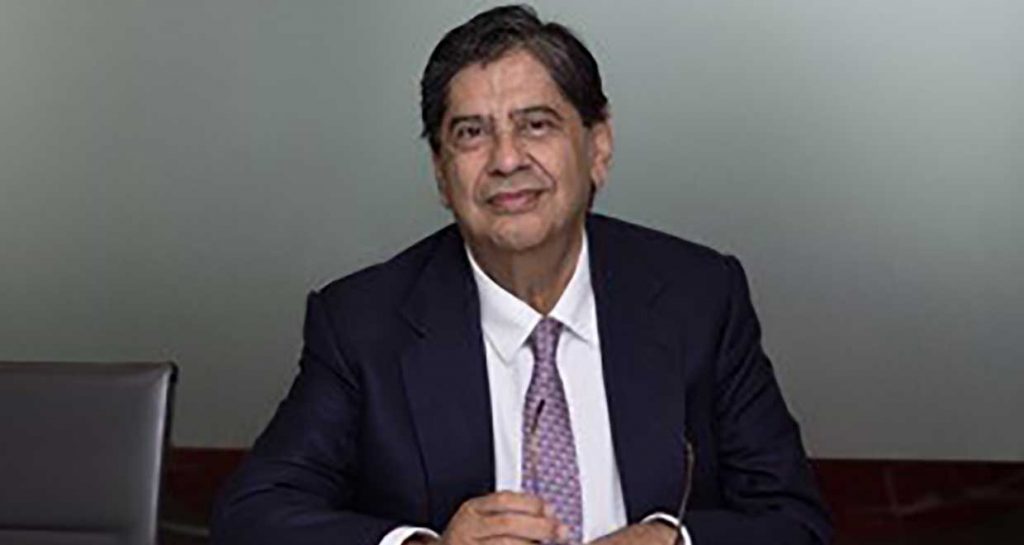
    Sarosh Zaiwalla graduated from Government Law College in 1972. He founded Zaiwalla & Co. Solicitors in April 1982. He oversees all the activities relating to the firm, and also sits as an International Arbitrator. He is the Senior Partner of Zaiwalla & Co Solicitors which has been in the City of London for the past 35 years. His firm successfully acted for the Iranian private bank, Bank Mellat, both before the Supreme Court and the EU Court challenging the listing of bank under Iran Nuclear Sanctions. As a consequence of his firm’s success, Bank Mellat today have a claim of USD 4 billion before the English Court in respect of damages for losses caused because of unlawful listing. His firm were also the first firm which successfully challenged in the EU Court the listing of Iranian companies by EU Council. Zaiwalla & Co have acted for several Iranian companies including Bank Tejarat and Petropars.

    In this interview we speak to him about:

    • His illustrious career
    • Setting up practice in the UK
    • His experience with high profile cases

    Given that most of our readers are law students, how would you introduce yourself to them?

    I founded Zaiwalla & Co. Solicitors in London which is the first English Solicitors firm in the one square mile commercial and financial district in the city of London started by a solicitor born outside Europe. We have been in existence for 36 years and at our 30th anniversary reception in November 2012, the Chief Guest, Rt. Hon. Sir Dominic Grieves MP in his speech said that what my firm had achieved in the development of English law will be remembered even after 100 years. There are today 104 reported judgments in the English law reports where my firm had acted for one of the parties. A judgment is only reported in the law reports if it affects the development of law. We are today one of the leading firms in the field of International Arbitration.
     

    What motivated you to pursue a career in the legal field?

    As a young student in St. Xavier’s High School, Bombay, my career ambition was to join politics and become the Prime Minister of India so that I could change India and make it great again. My father was a solicitor who had qualified in London in 1925. He was the youngest member of his family and as the youngest member of my family, I was encouraged to qualify as a solicitor in London.


    What got you interested in the field of International Arbitration? 

    I did my Solicitors training in an English Solicitors firm called Stocken & Co. who were maritime lawyers and specialised in maritime arbitrations. This gave me the first exposure to international maritime Arbitrations. In those years a Solicitors training was not on a structured basis like it is now and one would start as an assistant to a Senior Solicitor, at first carrying his bags and making cups of tea for him and then later being trained on the job.


    Can you briefly describe your current role as an Arbitrator and an Advisor to clients involved in international arbitrations?

    As the world got smaller, international trade between businessmen from various countries grew. International businessmen want a neutral country to settle their disputes and would therefore opt for Arbitration in a neutral venue with a respectable legal infrastructure. This would normally be London where Arbitration in its modern form, was given birth to, over 300 years ago. In the City of London all the fixtures for ocean going vessels to carry cargo were agreed at the Baltic Exchange. The Baltic Exchange used to be the centre of all shipping chartering contracts all over the world. Whenever a dispute arose as to what was agreed between the brokers, the owners and the charterers, they would at the end of the day ask a senior respectable broker to determine the dispute over a cup of tea.

    This was the beginning of international Arbitration in London. International Arbitration has now grown in a sophisticated fashion and it is also a serious foreign exchange earner for the country where the seat of the Arbitration is located. This is because the seat has no other connection to the parties in the Arbitration who have chosen the seat of the Arbitration but the parties have to instruct for example, English Solicitors for London Arbitrations and also spend on experts, Barristers, hotels and other expenses. As a firm of Solicitors we have recently been consulted by the Russian Government in respect of a potential challenge to USD 50 billion Arbitration award against Russia by the International Arbitration Court in The Hague.

    As an Arbitrator, I recently sat for two weeks in Tel Aviv, Israel, as a Sole Arbitrator to decide a multi-million dollar dispute. I have also sat as an Arbitrator in Bombay with Sir Anthony Evans and Harish Salve to decide an international Arbitration dispute concerning a power plant in South India.
     

    International Arbitration often involves a complex interplay of public and private international law. Can you elaborate on this aspect for our readers?

    This is correct because in international Arbitrations there can be three countries which can play a part. For example, in a contract between say an Indian party and a United States party where the contract provides for disputes to be settled in London, Indian law, US law and English law could all have a part to play. Usually, if the contract provides for Arbitration in a neutral venue as the seat of the Arbitration, say London, then there is a presumption that the parties intend English law to apply to the contract. There was a case which I handled earlier for ISRO of India in respect of an Arbitration claim brought by McDonnell Douglas concerning Satellite inset 1B. The Arbitration provided for London as a seat of Arbitration but with the Indian Arbitration Act to apply. The English Court held that by this term, only the procedural aspect would apply to the Arbitration but on the main issues English law would apply. See Union of India v. McDonnell Douglas Corporation [1993] 2 Lloyd’s Rep. 48 In another shipping case, the contract was governed by English law with the seat of Arbitration being London, but the English High Court held that in construing its term in the contract, as the performance of the term was to be India, Indian law would apply. This was the case of a vessel called “Nestor” which is reported at [1987] 2 Lloyds Rep. 649. In both of these cases my firm had acted for the Indian parties.


    What are your views on the necessity of higher education? 

    Education, including higher education, instructs a student but life experiences educate a student. Higher education is of course of utmost importance because it readily opens doors for good employment or starting ones practice. Higher education is a certificate of competence and knowledge. I have however found that many Oxford and Cambridge educated lawyers were no match for a lawyer with good instincts and wisdom. My advice to your readers would be to go for opportunities available to pursue higher education, it can only do good.


    What was your first job out of law school?

    My first job out of law school was an evening job with the Hinduja brothers at their company Sangam Ltd. I had met GP and SP Hinduja when I was still training at Stocken & Co. and they asked me to join their employment. They had just moved from Tehran to London. I said I did not want to take a job and I wanted to have my own practice after I was enrolled as a Solicitor. So the Hinduja brothers offered me an evening job from 6:30pm – 9:30pm. I had an arrangement with Stocken & Co that if I travel for them overseas, Stocken & Co would bill the Hinduja brothers. This was a great opportunity for me because in one year I travelled 42 times to Geneva with the Hinduja brothers and their right hand Mr. Golikeri. I was part of the team which negotiated contract with top lawyers on the other side and although I was not qualified I acted as Hinduja brothers’ unqualified legal adviser, interpreter and negotiator.

    When I started on my own I was fortunate to be appointed as the Indian High Commission in London’s Solicitor. At that time the High Commissioner was Dr. Syed Mohammed who was himself an ex-English Barrister and he had been the Advocate General of Kerala and Minister of State for Law and Justice in Indira Gandhi’s Government. He was thrilled to see a young Parsee Indian starting a law firm in the City of London keeping his Indian surname.
     

    What motivated you to start Zaiwalla and Co. Solicitors?

    When I was working at Stockens I became friendly with Cedric Barclay who was an eminent and popular maritime Arbitrator. I got to know him and a few months before I was enrolled as a Solicitor, he invited me for a cup of tea at his office. In the course of our conversation over tea, he strongly advised me not to join the big English Solicitors firms. He said, “You are good and well liked, but if you join a large English maritime firm, the Senior Partner will take you for lunch once a year and say, “Good job, old boy”, but you will go no higher.” So he advised me strongly to start on my own. True to his word, when I started Zaiwalla & Co., he personally took me to the offices of big ship owners to introduce me and recommend me to them. Very soon I had a reasonably large Greek ship owning clientele.

    Surprisingly, when I started I did not face any major hurdles with the white professional population. They were somewhat surprised to see a brown face but they were more than encouraging. Appearing before the English Commercial Court Judges was a very favourable experience. The Judges would make sure that I was comfortable and go out of their way to ensure that they had fully understood my client’s case. In a way, I found myself sometimes in a more advantageous situation then the white contemporaries in Court. In due course the word went around and the client base started to build and within five or six years I had 23 lawyers working in my firm and at that stage Zaiwalla & Co. was mainly an international Arbitration firm doing maritime Arbitrations and litigation which was mainly for Indian Government cases in the English Court.


    You have represented major clients including governments. How have you developed and maintained a client base?

    It is hard work to maintain a client base. An essential ingredient for this purpose is to keep in constant contact with the client. What a client expects from a lawyer is integrity, competence and speed. I made sure that I provided all three of these to our clients.


    What are the qualities one needs to develop to become a successful arbitrator? 

    (Sarosh has been appointed as an Arbitrator in a number of multi- million dollar disputes.)

    An Arbitrators task is very different from the task of a lawyer. I have always been a creative lawyer and I believe in the principle that “law is for justice and not justice for law”. My firm and I have built up a reputation of being creative on issues of law. As a lawyer I can put forward a creative proposition of law to fit the facts and it would be for the Judge or the Arbitrator to decide whether there was any value in such a proposition. However, as an Arbitrator it is for me to make sure that I get it right and live up to the trust which the parties had placed in me to give a correct decision. There are times when I am one of the three members of the Arbitration Tribunal. In that case usually the Chairman who is the third Arbitrator prepares the first draft of the Tribunals award. Many times I have sat as a Sole Arbitrator for multi-million dollar disputes and such cases require a lot of thinking in arriving at my decision which is not very easy. The most important quality to be an Arbitrator is integrity and commercial common sense. An Arbitrator is a Judge who is appointed by the private party whereas a Judge is appointed by the state. Recently, there was a case in the UK Supreme Court (Hashwani v Jivraj) which my firm had handled where the issue was whether an Arbitrator is an employee of the parties. The English Court of Appeal said yes an Arbitrator is an employee of the parties but the UK Supreme Court reversed their decision and held that an Arbitrator is not an employee and he perform the same function as a Judge.
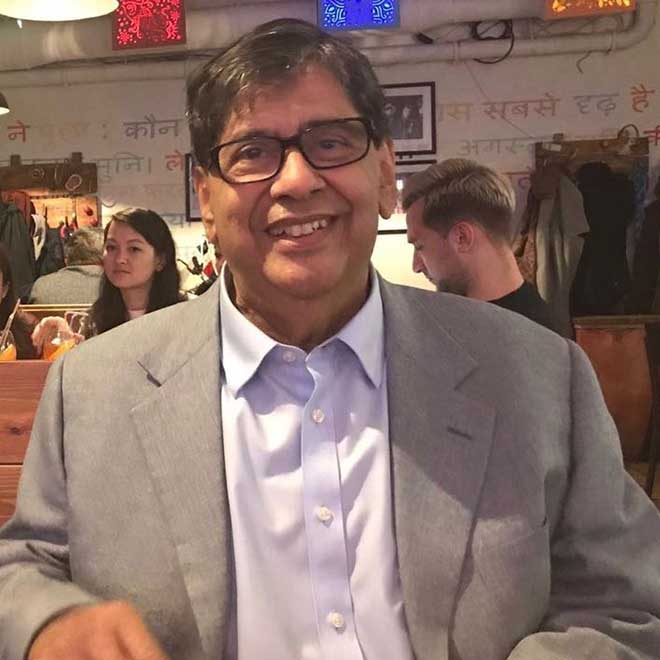
     

    Can you tell our readers about the nature of maritime disputes and how they are unique?

    A substantial part of the international trade of goods and commodities takes place by transporting of those goods by ocean going vessels. In the course of the voyage, often goods get damaged because of dampness in the vessels hold or seepage of sea water in the hold. The other types of dispute which generally arises relates to charter party disputes which includes demurrage disputes, bill of lading disputes, General Average and collision at sea disputes. I have had the privilege of handling all of these types of disputes. India’s first success in the House of Lords in a commercial case concerned the vessel called La Pintada. In this case the charterer was the President of India and he paid demurrage some two years late. The owners of the vessel commenced Arbitration claiming interest on a three month compounded rate basis arguing that they had lost the use of money by the delayed payment. The Arbitrator made an award of compound interest in onus favour. The High Court sent the award back to the Arbitrator for reconsideration on the basis that the award sought to make charterer an involuntary banker. The Arbitrator once again confirmed the award which he had previously made. When Indian Government challenged the award once again in the Commercial Court, the Court referred it straight to the Supreme Court for decision. The House of Lords unanimously decided in Indian Government’s favour. This was a test case because in those years of foreign exchange crisis, Indian Government always paid freight and demurrage late and if India had lost in the House of Lords, they would have had to have paid over £5 million in compound interest because other ship owners would then be claiming compound interest for late payment. Incidentally in this case, the Barrister my firm had instructed was Tony Blair who later on went on to become the Prime Minister of the UK. Please see 1983 1 Lloyds page 39.


    Can you give our readers some insight into the Tibet dispute as well as the efforts being undertaken to resolve it? 

    (Sarosh was appointed by His Holiness the Dalai Lama to mediate with the Chinese government in order to resolve the Tibet dispute.)

    I am a qualified CEDR (Centre for International Dispute Resolution) Mediator. For many years my firm acted for PRC Government in their international Arbitration cases. My firm had an office in Beijing for twelve years. We represented CNPC, CPECC, CPTDC and Min Metals in five major international Arbitrations. Chinese Embassy had heard about my firms successes for Indian Government and the then Chinese Ambassador in 1991 had a meeting with me and asked me to assist China to set up in China a legal system which could work internationally. The Embassy sponsored a trip for me to visit Beijing in December 1991. In 1994, I facilitated a second channel dialogue between 10 Downing Street and the central committee of Chinese communist party on misunderstanding which had arisen concerning the agreement to hand over Hong Kong to China. This was a successful dialogue. Thereafter, my relations with Chinese Government became very friendly and my firm got a lot of legal work from Chinese state corporations.

    A few years later, Mrs. Takla, the representative of Dalai Lama contacted me.  She told me that Dalai Lama was going to visit Glasgow very soon and he would like to meet me. Accordingly, a private meeting was arranged for me in Glasgow with Dalai Lama. I was told by Mrs Takla that Dalai Lama would like me to facilitate a second channel dialogue with China to resolve the dispute between him and China relating to Tibet as he would like to go back to his home, Tibet.

    I informed the Chinese Ambassador about the Dalai Lama’s request for a meeting and before meeting Dalai Lama I had a meeting with the Chinese Ambassador in London. The Ambassador put forward China’s position and told me that one of the things which concerned China was that Dalai Lama was writing forwards to books written where the author claimed that half of China was Tibet. It was a great pleasure and honour to meet Dalai Lama on a one to one basis. I found him to be very frank and honest. He told me that his intelligence had told him that I was one non-Chinese person in the West whom the PRC Government had complete trust and confidence. He sought my help for a second channel dialogue to resolve the Tibet issue.  I told him that China was concerned about his writing forwards to books which claimed half of China was Tibet. Dalai Lama’s response was that he had no option but to do this because his Tibetan people had lived in those parts of China for centuries and it was historically part of Tibet. In a moving gesture, Dalai Lama took my hand and put it on his heart and said, “I trust you”.

    After my meeting with Dalai Lama I had a meeting with the Chinese Ambassador and told him that it would be in China’s interest to resolve the issue with Dalai Lama as he was no longer claiming independence for Tibet. Furthermore , I was aware of the communist Chinas policy towards religion which was that religion was now being permitted provided it was not controlled from outside China. In Dalai Lama’s case, he would be involved in religion from Lahasa, the capital of Tibet which was now part of China. The Ambassador told me that he would communicate his discussion with me to China. A further meeting was arranged between me and the Chinese representative and I was told that the Dalai Lama’s brother had been invited to China for discussion and there was no need for a second channel to take place through me.
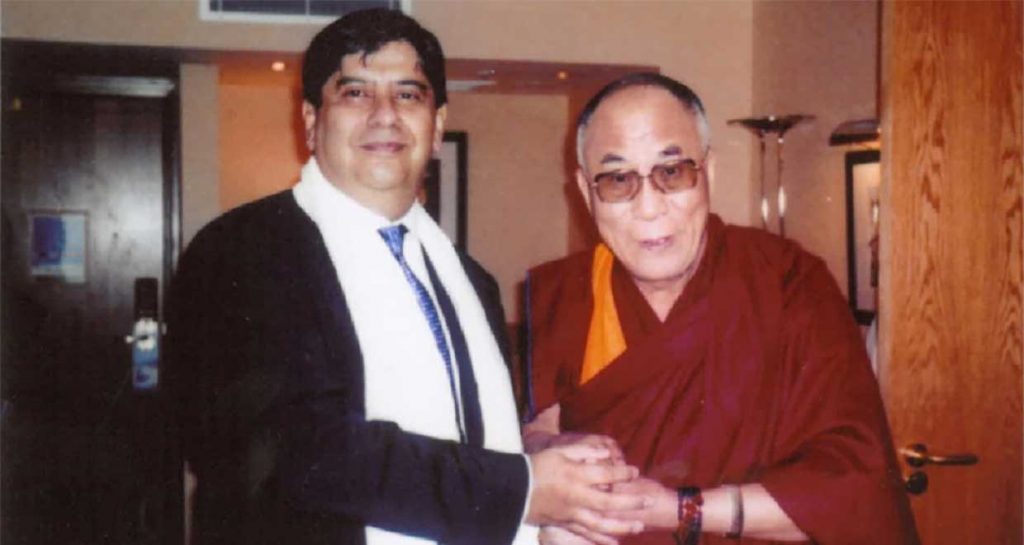
     

    Can you tell our readers about the process of framing arguments and the experience of arguing before the EU court?

    (Sarosh’s was the first firm to successfully challenge the listing of Iranian companies under Iranian Nuclear Sanctions before the EU court.)

    This is correct. Bank Mellat which was Iran’s largest private bank, had challenged the sanctions in the High Court and had lost. Thereafter, Bank Mellat appealed and the Court dismissed the appeal. Bank Mellat’s former Solicitors, Stephenson Harwood, had told Bank Mellat that there was little prospect of Bank Mellat getting leave to appeal from the Supreme Court. I was one of the Solicitors Bank Mellat met with a view to deciding who to instruct for their attempt to appeal to the Supreme Court. I had earlier acted in a major Arbitration for National Iranian Oil Company (NIOC) and had turned around what they had been advised was a hopeless defence in an Arbitration case and was successful for NIOC. So the legal director of NIOC had mentioned my name to Bank Mellat and recommended my firm. The rest is history, we were successful before nine out of the total twelve Judges of the UK Supreme Court. The Supreme Court held that the UK Government had acted unlawfully and irrationally to list Bank Mellat in the list of companies supporting Iran’s nuclear proliferation and to whom the sanctions would apply.

    The Supreme Court referred the matter to the High Court to calculate damages and Bank Mellat is currently pursuing a claim of USD 4 billion for damages in the UK Court for wrongful listing of Bank Mellat on the nuclear sanctions list. It was also the first time that the UK Supreme Court went into a closed, secret hearing on grounds of national security. The trial of this claim is fixed by the English Court for October 2018.


    You are a member of all major arbitration institutions. What is your preferred forum? 

    My preferred forum for international Arbitration is either London Court for International Arbitration (LCIA) or International Court of Arbitration of the International Chamber of Commerce, Paris (ICC). I was a member of the International Court of Arbitration for twelve years representing India. An equally efficient forum and possibly less expensive would be for parties to simply agree London as a seat of Arbitration as this would save the administrative costs of the institutions and the Arbitration would be under direct supervision of the English Court in case something goes wrong in the Arbitration.


    Do you think India has the potential to become a major arbitration hub? 

    Yes, India has great potential to become a major international Arbitration hub but India has a long way to go to achieve this goal. A small country like Singapore has within a few years built up a popular international Arbitration centre and there is no reason why India cannot do so. The international centres of Arbitrations are made by good reputation and law. Reputation is a question of perception. Arbitration in India today does not enjoy a good international reputation. There are rumours of corruption amongst the Arbitrators. I am sure this rumour is unlikely to be true but one must recognise that even one case of corruption poisons the reputation of the whole Arbitration culture in India. I have had many meetings with those who manage international Arbitration in India, including with Mr Arun Jaitley and at each of these meetings I have said that the risk of corruption in the international Arbitration in India cannot be eradicated by passing of law eradicated by self-regulation in the Arbitrators community and the legal profession. Another minus point for international Arbitration in India is the perceived monopoly appointment of retired Judges who then conduct the Arbitration as if it was Court proceedings with adjournments being granted for asking. The new Indian Arbitration Act has restricted Court intervention in the Arbitration process which is a good step forward for India.


    International Arbitration is considered a difficult field to break into. Can you describe your journey in becoming such an authority in this field? 

    This is correct. So far, the international Arbitrators community has been an elite circle where one supports the other with the consequence that a newcomer is not easily accepted unless he blends in by accepting to begin with a second class status. The selection of Arbitrator is an important task. He should be a person with good legal and commercial law experience. The task of a party appointed Arbitrator is not to favour his appointer but he has a duty to ensure that his appointer’s points are considered by the whole Tribunal at the time of making the decision. I have found that many times, Indian parties appoint retired Judges in the international Arbitration and they are indeed very clever but they are not able to communicate with the co-Arbitrators properly, who are normally from developed countries. Often, retired Indian Judges who are product of the British imperialist culture, have enormous egos about their status. Let me give one example.

    I was appointed by the Danish company Volund to be their nominated Arbitrator in the early 90’s. The Arbitration concerned construction of a power plant in Timarpur near Delhi whose fuel would be New Delhi waste. In other words, the power plant would be converting New Delhi waste into energy. The project was supported by Danish aid agency (DANIDA). After the power plant was constructed, it was found that New Delhi waste did not have sufficient calorific heat to be used as fuel for the power plant. India appointed Mr Pathak as their Arbitrator. He was a former Chief Justice of India and retired Judge of the international Court of Justice in The Hague. The third Arbitrator and the Chairman of the Tribunal was Lord McKenzie Stuart, a former Chief Justice of the European Court. He was appointed by the International Court of Arbitration.

    On the first day of the hearing I got a note passed to me by Chief Justice Pathak which said, “You have insulted me by sitting on the right of the Chairman, I am senior to you so I should be sitting on the right of the Chairman and you should be sitting on the left”. I immediately passed the note to the Chairman with a suggestion that he adjourns the hearing for five minutes so that I can change over. He sent the note back to me saying “stay where you are”. In England or in Europe in international Arbitrations it does not matter which side the Arbitrator sits. During the coffee break, Lord McKenzie Stuart told Chief Justice Pathak that it does not matter where the Arbitrator sits and he jokingly told Chief Justice Pathak, “Don’t be a fool”. The Chief Justice took offence to this and throughout the two weeks hearing he did not utter a word and did not speak with Lord McKenzie Stuart throughout the Arbitration reference thereafter.

    The way to break into the field of international Arbitration is to first attach with a law firm or an advocate who is already handling international Arbitrations and then attend international Arbitration conferences.


    Can you describe your work as a solicitor in England?

    A Solicitor in London prepares the case and instructs the Counsel to argue it before the Court. It is now also possible in commercial cases for Solicitors to appear in Court as Advocates, I have done so on many occasions. My firm and I are known for difficult cases where client comes to us after they have been told by the Magic Circle firms that their claim or case is very bad.

    Two examples of this are the international Arbitration award by International Arbitration Court in The Hague which made an award of USD 50 million against the Russian Federation in the Yukos shareholders claim. Russia came to me for an out of box approach for Russia challenging the award in the Dutch Court. Sometime before this, an Indian Government company PEC Limited had come to me and they had an award of USD 8 million against them. On the face of it they had no defence because they had participated in the Arbitration and also the appeal process of GAFTA Arbitration and had lost. I took the point that although English law applied in the contract, the contract was signed by the Director of PEC on behalf of PEC and whether he had authority to do so would be governed by Indian law. Under Indian law, for a Government contract there are rules and for a USD 25 million contract you require two Director’s signatures.

    PEC therefore through my firm argued that the Arbitration agreement was void because the contract was void. In the English Court on the question of Indian law we led the evidence of Mr. Soli Sorabjee, former Attorney General of India and the other side which was a Thailand company, Asia Golden Rise, led the evidence of Mr. Harish Salve. Both of these eminent jurists were cross examined in open Court and the Court preferred the evidence of Mr Sorabjee. This changed the prevalent law.

    The second example was the case of Indian Oil Corporation (IOC) v Coastal Bermuda where IOC had participated in the London Arbitration defending a huge claim of some USD 18 million. The Arbitrators decided against Indian Oil Corporation but one of the Arbitrators, Mr. Gordon Pollock QC, added a post-script to this decision suggesting that Indian Oil’s legal team was not competent and if the team had been competent, the result may well have been different. My firm did not act for IOC in the Arbitration but they came to me after all the big law firms and Queen’s Counsel had told IOC that they had no chance of challenging the award. My firm challenged the award on an innovative ground that the award could be enforced as a judgment of the English Court and for the English Court to enforce a judgment which was not based on the two legal analysis of the evidence would be against English public policy. The English Court accepted this and remitted the award back to the Arbitrators and in its judgment said, “Finality is good but justice is better”. Indian Oil Corporation v Coastal Bermuda [1990] 2 Lloyd’s Rep. 407.


    Where do you stand on the “two hat” debate over whether arbitrators should also act as counsel? 

    There is really no problem. When I am appointed as an Arbitrator, if there is a conflict I will not accept appointment. International Arbitration is a field with many important debates currently going on, with many suggesting reforms such as Bilateral Arbitration Treaty (Gary Born), regulating the ethical conduct of counsels (Swiss Arbitration Association, London Court of International Arbitration).


    Could you discuss the aforementioned suggestions and your take on them or any such significant debates?

    The most important reform which is required is the need of diversity in the clique of international Arbitrators. The current international Arbitrators must be prepared to accept competent Arbitrators in the circle of international Arbitrations. Statistics show that the present international institutions generally favour appointing white Arbitrators from developed countries. This needs to change.


    How do you remain updated with all the new developments in the field of international arbitration and mediation?

    There are at present many press and internet mediums which keeps me informed on all the new developments in the field of international Arbitration and Mediation.


    What advice do you have for our readers who are primarily college students?

    Always act with integrity and remember the legal profession is an honourable profession and honesty and fairness is the most important duty of a lawyer. The policy which I follow is that I can play with the law because the Judge is there to reject or accept my submissions on law but not under any circumstances play with the facts. If I find that the client has told me a lie in his instructions I would refuse to act for that client. I would not make up stories or allegations on behalf of a client simply to support the client’s case. This approach breads both character and increases credibility before Judges. The five mantras for law students, I would suggest, are:

    • Have a vision on where you want the business to go.
    • Have integrity and honest approach in the work you do.
    • Have courage to have an open mind and an out-of-box approach to progress the business.
    • Make the most of all that comes and the least of all that goes.
    • Forgive people for any wrongdoings against you, and leave it to the universe to deal with them.
  • Sana Hakim, Partner, POSH, on sexual harassment laws, being legal counsel, and her diverse experience

    Sana Hakim, Partner, POSH, on sexual harassment laws, being legal counsel, and her diverse experience

    Sana graduated in law from Government Law College, Mumbai, in 2009. Since then she has been an independent legal counsel with practice in civil and criminal litigation matters. Her expertise includes negotiable instruments and personal family law, primarily handling matters pertaining to domestic violence, sexual harassment and divorce. She has practised before the Metropolitan Magistrate Court, Sessions Court, Family Court and Hon’ble Bombay High Court. She also holds a Masters in IPR, from Mumbai University.

    In this interview we speak to her about:

    • Being Partner at POSH
    • Her passion for litigation
    • Her interest in IPR

    Given that most of our readers are law students, how would you introduce yourself to them?

    Firstly, many thanks for thinking me worthy of being a part of this commendable and extremely informative magazine, which I am sure is a great knowledge building tool for all your readers. In brief, I would introduce myself as someone who is hardworking, straightforward, and has a never ending thirst for knowledge.


    What motivated you to pursue a career in the legal field after obtaining a B. Com degree?

    Honestly, it was more of a default option as my father, Advocate Hakim Salim A.R is also an Advocate having more than 30 years of experience in the field. I would say he was the biggest motivating factor for me. Having a commerce degree opened various avenues initially and was almost successful in distracting me from becoming an Advocate; however, destiny had other plans.


    Can you share some memorable experiences from you time at law school? 

    I was involved in debates during graduation, and in law school I was more active in social service. I was exposed to the harsh realities up close from volunteering experience in orphanages to even beach cleaning, which I feel creates empathy in a person, which is something every advocate should possess.


    What was your first job after college? 

    I immediately took the plunge in practising law, and I have a good practice in family matters, domestic violence matters, criminal matters, civil matters and also cheque bouncing matters. All these are extremely varied, which gave me a good idea of both sides of law. Of course, for the exposure and initial push into the profession I have my father to thank for, however, it took a lot of initial setbacks to finally understand, that you will not get to hear always what you want to hear, and also that humility and patience can go a long way in the profession.


    What got you interested in IPR?

    I had taken IPR in my LLB days as an option in my third year. At that time the priority was to get good marks as I had heard it was quite scoring. However, I subsequently developed a keen interest in the subject, and went on to specialise in it in my Masters, and also stood third in the Mumbai University. As far as this area of law is concerned, there are many things that you can do, like become a patent or trademark agent, or specialise and take up litigation in IPR laws such as copyright, trademarks and patents. IPR laws are crucial in this day and age of globalisation, added with cyber laws which also is a part of curriculum of Masters. All of the aforementioned are a gold mine, professionally, in case you have keen interest.


    You have an excellent academic track record. How did you maintain a work life balance in law school? 

    I feel that its imperative to have your priorities set. While focus, grit, determination, and of course, hard work are important, spending time with friends and/or family, taking up a hobby or maybe even just going for a walk to clear your head, helps you puts thing in perspective. As far as possible, setting timelines for studying and even spending time with friends, I would say, is the key, as both are required in healthy proportions.


    You were a Partner at POSH at Work which specializes in combating sexual harassment. What motivated you to take up this cause? 

    I am a partner at POSH at Work which stands for Prevention of sexual harassment at the workplace. While the law on prevention of sexual harassment came into existence in the year 2013, all the three partners of POSH, which include a corporate lawyer and a clinical psychologist along with me, had been actively involved in the law individually. As fate had it, we three partners chanced and met, and formed an organisation which assists all kinds of organisations with end to end compliance of the law on Sexual Harassment of Women at the Workplace (prevention, prohibition, redressal) Act, 2013. We have also been empanelled by the Ministry of Women and Child Development , Government of India, to conduct training and awareness sessions on POSH Act, 2013, we are the only organisation in Maharashtra and Goa to be empanelled.

    The motivating factor was the law itself that is the need of the hour in light of horrendous Nirbhaya gang rape case in Delhi, to various instances pertaining to crime against women, and since am actively involved in practising in laws for women, it was also a natural course for me to take.

    Among the root causes of sexual harrasment are the perverse mindsets and behaviour of the people involved in such unscrupulous activity. In order to prevent it,  one needs to inculcate respect of each other’s boundaries irrespective of the gender you or the other person belongs to. We also need to raise more awareness among all about the SH Act 2013 (as mandated by the SH law itself) and  various crucial amendments (in the year 2013) in the Indian Penal Code etc making punishment for Crimes against Women more stringent. Many people are unaware about whom to complaint to and are apprehensive about getting justice if they complain. Therefore, making them aware and instilling the faith for the law, will also be crucial in prevention of sexual harassment . We at POSH at work through our training and awareness sessions spread awareness among as many people as possible , about the law and its implications, in order to ultimately help prevent sexual harassment.


    What motivated you to volunteer for the Teach India Program? 

    Teach India was a wonderful and motivational learning  experience. Before the actual volunteering, all of us selected as volunteers had to undergo a seven-day rigorous yet fun training, wherein we learnt unconventional methods  for teaching English speaking to adults between the ages of eighteen and 30, in backward areas of Mumbai.  My volunteering experience lasted for three months which helped the underprivileged gain a fair chance in the booming private sector, along with giving me sweet memories for life.


    Do you think law schools, especially NLUs, produce socially relevant lawyers, given that many choose to take up firm jobs?

    To be honest, it is not an attractive profession, and initially there is not much monetary gain. But I believe if you can survive at least three years at a stretch, it prepares you for life, irrespective whether you choose to continue or not. I am not aware of the NLUs, but I think practical knowledge and intention to make a difference in the society,  is pertinent and imperative in order to be socially relevant in this field.

    What are your core areas of practice? How do you prepare for court hearings? How did you go about building a client base

    It would be family matters, domestic violence, criminal, civil and criminal writs, revisions and appeals before the Bombay High Court and cheque dishonour matters. I have a judicial diaspora including the Metropolitan Magistrate courts, Sessions Court, Family Court  as well as the High Court.

    I prepare prior to and  as per the stage at which the case is kept at, by reading the relevant portions of the drafts, along with searching for latest case laws adds weightage to my arguments and submissions before the courts.

    As for your question on building a client base; along with the obvious answers which include hard work, grit and confidence, if you do good work and are sincere, the word spreads pretty quickly and forming a client base becomes incidental.


    Tell us something about your teaching engagements.

    I am currently teaching legal language, Indian penal Code, and also teaching trademarks in the Diploma Course on IPR in a Government Aided Law College for four years now.

    My advice to the students would be to attend the lectures. You gain much more than you think you do. Try and keep yourself updated on current affairs, it helps put things into perspective about the law, as the laws are made for the society, and knowing and understanding the society we live in would be critical in understanding the purpose and object of the law.


    In your opinion, does law school prepare students for real world challenges? 

    Well, the answer would be to a great extent, yes, because it teaches you the subject, you get to interact with practising lawyers through internships, lectures etc. However, you are not completely prepared unless you start appearing, preparing drafts and doing the research work yourself.


    How can a law student shape his/her profile for litigation while still in law school? 

    Irrespective of whether you are practising or not, participating in moots have varied benefits as it helps you understand drafting, research about the law as well as the judgments, and adds a practical perspective  to your curriculum.

    What are your views on the importance of higher education? 

    Do what you love. If any subject interests you, even a Ph.D will not be an enormous task.


    What hurdles have you faced in building your career as it stands today?

    If you are passionate about what you wish to build your career in, you should not let any hurdle stop you. There will be hurdles big and small, but a positive attitude and a never say die spirit are not just bookish, but extremely relevant in any field.

    What are the qualities one needs to develop to succeed as an advocate?

    Positive approach that helps you overcome the complacency which may tend to creep in; humility, and loads of hard work.


    How do you maintain a work-life balance?

    At  times I may have to work seven days a week, but I try and limit that as much, and spend some quality time with my friends and family. Going for long walks along the seaside helps my mind refresh to a great extent.


    What advice do you have for our readers who are primarily college students?

    My advice would be take all experiences possible. Studying and participating in co-curricular and extra curricular activities broadens your horizon, through which you learn to deal with various things and multitask early on in your college days itself, which is extremely beneficial in whatever you choose to do in life.


  • Abhijeet Shinde, Senior Associate, Trilegal, on litigation, the importance of an LLM, and his experience

    Abhijeet Shinde, Senior Associate, Trilegal, on litigation, the importance of an LLM, and his experience

    Abhijeet graduated from Government Law College, Mumbai, in 2008. He then went on to pursue his Masters from the University of Mumbai, batch of 2010. After successful stints with Haresh Jagtiani and Associates(Oasis Advisory and Counsel), Dua Associates, and Bharucha and Partners, he is currently Senior Associate at Trilegal.

    In this interview we speak to him about:

    • Pursuing an LLM
    • His litigation experience
    • His current role at Trilegal

    How would you introduce yourself to our readers?

    A first-generation lawyer, with no prior connection with law or the legal fraternity;  other than a twelve-year long legal battle fought by my family. Some top tier law firm stints and hard work is what has made me what I am today. I am proud of what I have achieved in this short career of about a decade. I am thankful to all my seniors, friends and colleagues in playing an important part in making me.


    What motivated you to pursue a career in law?

    Well I became a lawyer by mistake rather than by my own choice. I was eagerly pursuing to get into IIT’s as is a case with the current generation. Unfortunately (or may be fortunately), I had to abandon the IIT dream due to some compelling personal reasons. However, Mr. Mayur Vora (Managing Director of Mapro Foods Pvt. Ltd., Mahableshwar) had different plans for me. It would be fair to say, had it not been for his faith in my abilities, I wouldn’t have been a lawyer today.    


    Can you tell us about your internship experiences?

    Internship during our college time weren’t as important or sought after as they are nowadays. I did two internships, one with a small firm, and another with a practising lawyer in Bombay High Court. What I understood during these stints was that the legal profession was difficult to pursue and it was even more difficult for first generation lawyers.


    Have you ever felt the NLU and non- NLU divide? Do you think it is a consideration for employers?

    When we got out of college, the divide wasn’t as prevalent as it is today. However, even at that time, the Government Law College (GLC)/Non-GLC divide was quite apparent. People were more inclined to accept a fresher from GLC with lesser grades than from any other college. This, I think, was because most of the well known legal professionals, at that time, were alumni of GLC and were biased towards GLC students. Similarly, the NLU, non-NLU divide is quite palpable today. With the expansion of the legal profession, the desire for proficient resources has grown tremendously. Firms are ready to pay better retainerships than salaries offered to IIT freshers, to get good talent from the college itself. NLUs have provided the infrastructure required for imparting correct form of professional education so that young professionals are ready for the kind of work and culture the firms are desirous of having. It is a great opportunity for the law students from law schools to capitalize on. Though I’m personally not in favour of making this divide black and white, I do, however, appreciate the law schools’ efforts in preparing students for the kind of work they are expected to do.  


    What are your areas of interest? 

    I was always interested in Disputes. I have worked in the disputes teams of Oasis Advisory and Counsel, Dua Associates, Bharucha and Partners, and Trilegal – over a period of nine years. Unlike corporate practice, disputes throw up challenges everyday. The uncertainties and the challenges involved in resolving the disputes matters make this practice quite interesting. Over the years, I have been associated with some great personalities, high stake and interesting disputes cases. My love for my work provided me the additional push required for succeeding in disputes practice, especially, when you are a first-generation lawyer.

    I always advise interns who work with me, to do internships in both areas of practice, so that if they are able to understand and relate to their interests they will be in a better position to make an informed career choice. Difficulty is that, the short internship stints that the students undertake, are incapable of providing them enough insight into the nature of work so as to assist them in making a choice. I personally find it interesting when I meet students who are very clear as to the practice area they want to pursue after passing out of the college. I admire them. The more the students push themselves during internships, the better for them to understand the nuances of the legal field and different practice areas.

    This being an important choice, should be made before they join anywhere, since the firms have a tendency of putting resources in the basket to suit their needs and the students have no choice but to go with the flow even if that means they do something that they do not enjoy doing. Few of my junior colleagues have realised, frankly speaking – quite late in the day, after three or four years of being in corporate practice, that they like doing disputes matters and have requested me to guide them. At this stage it is difficult and quite painful to advise them to let go of their entire experience and start all over again, and with that, also take a hit on the remuneration. Few of them have been brave enough to take decisions to switch their practice areas and have done well even after that. To obviate these circumstances, I would advise students that they will do well to make their career choices at the earliest possible time.    


    What was the motivation behind opting for an LLM? 

    I always wanted to do an LLM. Specialization in Business Laws from Mumbai University was quite sought after at that time. It had evening classes for the course. I had joined Mr. Jagtinai’s chambers immediately after my LLB. It is difficult, if not impossible to do your LLM while you are working. If not for Mr. Haresh Jagtiani, who allowed me to purse my LL.M, it would have been impossible to undertake studying LL.M. It was done quite sincerely, completing the thesis and dissertation as is required, and topped in one of the subjects.

    Higher studies do add value to one’s career and students who have the opportunity do it, should do it, preferably from a recognised university. I have seen students travelling for higher studies to countries which are not known for imparting legal education; these, according to me, should be avoided. The purpose of pursuing higher education should be to add value to one’s career. Another reason it could be pursued, is to get accustomed to foreign law firm culture and get professional experience. This may be quite valuable in days to come.    


    In your opinion, what is the ideal time to pursue an LL.M?

    As I said, the aim of an LL.M should be to add value to your existing knowledge, or give you the extra dimension that was not provided in college. This could either be immediately after LL.B or even after getting some experience in the field that the student desires. The latter gives an option of specializing in a specific area of law.   


    How did you secure your first job? How important do you think a high CGPA is for recruiters?

    It was fairly easy to secure a job with Mr. Jagtaini because of his philosophy and personal views. I completely agree with them. According to him no resource in legal fraternity can be fairly assessed on the basis of his academic performance or in fifteen minutes of the interview. You will have to give a resource a chance of working for some time for anyone to realise his true potential. Specifically, because of this I do not agree on Firm/Corporates looking for students from National Law Colleges only. I have come across great knowlegable resources even from not very well- known colleges. According to me, the college or CGPA should be the last criteria for assessing a resource.  


    Please tell us about the hurdles you faced in the initial years when you were litigating?

    As the saying goes – a law professional is like wine, the older it is the wiser it gets. I was fortunate enough to get associated with Mr. Jagtiani for almost half a decade during which time I was able to hone my legal skills including drafting, application of law and argumentative skills. He at that time had some great senior people working with him. I was able to work closely with them and sharpen my legal skills. I credit my time at Mr. Jagtiani’s chamber to have prepared me for the legal career that I have today. My advice to junior lawyers would be to choose a good boss rather than well paying job. In the long run, this will tremendously add value to one’s career.  


    You have worked on and argued some landmark cases. How do you go about framing and drafting your arguments?

    Law is very dynamic. It keeps on changing and updating every now and then. Government changes and so do the Judges who interpret law. Many a time law is what the judge perceives it to be. All these factors make law very dynamic. A litigator has to be well informed, updated and should be able to convey his point with clarity and in the best possible way. Some of these qualities are inbuilt and some are required to be worked on and are developed overtime.

    One of my seniors, I remember, advised me that drafts should convey a clear message using minimum words. It is a wrong practice that is followed in drafting pleadings today when grounds over grounds and points over points are repeated. Drafts and arguments have to be concise, clear, and easily understandable by the audience it is meant for. Over the years I have worked on building these skill sets. It is always a work in progress. Fortunately, I was able to execute some high profile, high stake dispute matters successfully for our clients.

    What would be your advice to our readers who want to pursue international commercial arbitration?

    (In his time as a Senior Associate at Bharucha and Partners, Abhijeet has worked on a number of arbitration matters.)

    Arbitration is a specialized field. It is bound to grow bigger. Also, in terms of government’s motto of “ease of doing business”, further impetus to making arbitration compulsory as a mode of resolution of disputes is anticipated. Historically, there was a vast difference between ad hoc arbitrations and international institutional arbitrations in respect of timelines and the way they used to be conducted. Amendments to the Arbitration and Conciliation Act, 1996, were necessitated to reconcile the disparity and ambiguity with the rules of international institutional arbitrations and revamp the system in order to compete with these institutions, which due to their structured procedure and administrative support, provided distinct advantages, which were unavailable to parties opting for ad hoc arbitration. In a legal set up such as India’s, with huge population and enormous number of disputes, burdening of the Court system is bound to happen. Arbitration provides that leeway to this system firstly by reducing burden from the Courts and then providing a well structured and timely resolution of disputes with minimal interference from the Courts. To this end, good arbitration lawyers capable of effectively handling ad hoc arbitrations as well as international arbitration is the need of the hour. There is dearth of lawyers who can handle international arbitrations effectively. To my mind, it is a great opportunity to young lawyers to specialize in this area of law.  


    How did you secure a position at Trilegal? 

    My work was quite well known in the litigation circle. Trilegal was looking at someone senior to handle their litigation and mentor a team in Mumbai,  which at that time did not have a Partner. Since the role was to lead and mentor a team, I accepted to join them.

    Trilegal is great place to work and has a culture much different than the other places that I worked with. It is resource friendly. It has some high-profile dispute matters. These include advising and representing clients in different forums and on different aspect of law. Trilegal has a established practice in Delhi. It will take some time for Trilegal to have a robust disputes practice in Mumbai.   


    What challenges have you faced in building up your career as it stands today?

    Frankly speaking, when I look back, it does appear that I have come a long way. This is despite existence of all the issues which I have discussed earlier, particularly in respect of the legal field and personally. It is not easy to have a career in disputes if you are not passionate about law and hardworking. One thing is very clear is – hard work will never let you down and someday it will be rewarded.  

    How do you maintain a work- life balance, given the demanding nature of your job?

    This is a very important question to consider for everyone including my colleagues in the legal field. The professionals are caged due to the hourly billing and time sheet culture. I am not saying that the hourly billing and timesheet culture is bad, what I am saying is that the professionals are busy pleasing bosses or competing for good bonuses by putting in more time. I have done it and I don’t expect this to stop anytime soon. I am fortunate to have a wife who is a lawyer herself, and understands the demanding nature of my work. Otherwise, it would have been a task to balance the two.

    My advice to everyone will be to try and balance it in some way – either by taking up a sport (part time) or build on a hobby or do something unconnected with the profession. It releases pressure and helps increase productivity. It has worked for me, I am sure it will for others.  


    What advice do you have for our readers, who are primarily college students?

    Firstly, as far as choosing a career is concerned, I think it’s important that students decide, or at least converge on the practice area they would want to pursue at the earliest possible time. There’s competition everywhere, even getting into college, and after that, to get a good job. You will do good if you decide which places, if not bosses they would want to work with and try and work towards that. People landing in wrong jobs face many difficulties than the ones who start a little slower but have done so thoughtfully. Life also becomes easier if you do what you have chosen or like. A great law career awaits everyone and I wish students a successful one. I would be available should any of the readers want to contact me for career advise or otherwise.   


  • Bhushan Shah, Partner, Mansukhlal Hiralal & Company, on clearing the Bombay Solicitor examination, and working at Tier-I firms

    Bhushan Shah, Partner, Mansukhlal Hiralal & Company, on clearing the Bombay Solicitor examination, and working at Tier-I firms

    Bhushan Shah graduated in law from GLC, Mumbai, in 2005. He then went on to pursue his Masters at NYU@NUS. After successful stints at J. Sagar Associates, Drew & Napier LLC, and Khaitan & Co., he is currently Partner at Mansukhlal Hiralal & Company. Bhushan heads the corporate team of the firm. He focuses on corporate and commercial transactions such as strategic investments, mergers & acquisitions, joint ventures and general corporate law advisory. Bhushan has also advised clients on inbound and outbound investments as well as structures requiring India entry strategies. Bhushan also has experience in securities litigation and has represented clients on several contentious cases before Securities Appellate Tribunal and Supreme Court of India.

    In this interview we speak to him about:

    • His time as an undergraduate at Government Law College, Mumbai
    • Studying in NYU@NUS
    • His experience at Tier-I firms

    How would you like to introduce yourself to our readers?

    I would like to introduce myself as a (a) Lawyer; (b)Runner; and (c) Soka Gakkai Buddhist member.

    I have been a practicing lawyer for over ten years now. Earlier, I used to style myself as a corporate lawyer. However, over the last five years, i.e. after joining Mansukhlal Hiralal & Co. (Mansukhlal), besides practicing corporate law, I have also been engaging in substantial litigation and real estate transactions. I am enjoying my diverse practice of corporate law, dispute resolution and real estate law.

    As a runner, I have participated in more than ten half marathons and two full marathons. I started running as a stress-buster from the hectic work schedule of a lawyer and it has now become a passion for me.

    Besides running and practicing law, I also follow SGI Buddhism. It is a philosophy which believes that one’s happiness lies in their own hands. As a lawyer, it is common to blame your boss, colleagues, clients etc for one’s hectic work schedule. In this chaos, practicing SGI Buddhism, gives me a sense of calmness and gives me the strength to step up and take responsibility of my work and to keep going.


    Tell us a little about your days in law school. 

    I am a Bombay boy. I did my basic schooling and college from Mumbai. I graduated as a Bachelor of Commerce in 2002 from Jai Hind College, Mumbai University. Thereafter, I enrolled for the three year law degree with Government Law College (GLC) and graduated as a Bachelor of Law in 2005.

    GLC is India’s oldest and prestigious  institute of law. Many of my family members including my father and sister have graduated from GLC. At that time, it was considered as the second best law college after NLS Bangalore. GLC had lectures in the morning and hence my classes used to end by 9:30 AM. In my first year, I participated in several moot courts and was part of the moot court committee for organising moots.  The second year onwards, I signed my articles and started working at JSA.


    What were the activities, academic or otherwise, that you undertook in your law school days which in your opinion have shaped you and your career?

    As mentioned above, I signed my articles at JSA with Mr. Abeezar Faizullabhoy for the Solicitors exam conducted by Bombay Incorporated Law Society (BILS). My dad also being a Solicitor, suggested that I sign articles and take the exam. As known to everyone, the passing percentage of the Solicitor exam is very low and not being an academically brilliant student, I was not very keen. However, my dad believed that the experience of being trained under one firm for three years and preparing for the exam was a challenge I should undergo irrespective of the results. My articleship at JSA was one of the best times of my legal career. Also, I successfully cleared the Bombay Solicitor exams. My articleship really shaped my career and I knew exactly what I liked or disliked about the profession before starting work after receiving my law degree.


    What in your opinion is the level of importance that needs to be attached by a student to the GPA? 

    I believe good grades can aid a student access to Tier I law firms. However, in my view, it is no way to judge anyone’s success in the future. Theoretical and practical knowledge are two very different concepts. Hard work and intelligence with a solution driven approach is a good combination that can lead one to being a successful Lawyer. However, a student who does not have a good GPA can be as successful as the one with an excellent GPA.


    What kind of internships did you engage in during your student years?

    I joined JSA in 2003. It was the same time when Mr Berjis Desai split from UUB and joined JSA’s Mumbai office. At that time, JSA was relatively smaller as compared to its size today. I got an opportunity to work with Mr. Somasekhar Sundaresan (Som).

    Som is an exceptional lawyer to work with and an extraordinary mentor. I got to work with him on SEBI and SAT matters. Later on, I also worked with him on corporate matters. He inculcated my habit of attention to detail, research, and insight in the applicable law. This habit helped me to study for my Solicitors exam and also helped my clients in a cautious manner.


    What are your areas of specialisation and how did you go about choosing these fields?

    I specialise in securities litigation, corporate law and real estate transactions. My passion for securities litigation started from my JSA days when I regularly appeared before SAT, SEBI and CLB. I did my dual degree LLM from NYU and NUS and specialised in corporate law. At JSA, Drew & Napier and Khaitan, I was part of the corporate team. My current workplace, Mansukhlal, is a mid-sized law firm which, before my joining, specialised in real estate law and dispute resolution. With my work experience in  corporate law, I have been able to build a successful corporate law practice at Mansukhlal. However, given that Mansukhlal in itself was known for real estate and litigation, my first assignment at Mansukhlal was a real estate transaction. I have then onwards done a substantial amount of work in real estate sector and assisted developers in real estate transactions.     


    At what stage in one’s law school life must one pick a specialisation?

    Work experience along with the passion for the subject matter is the best way to pick a specialisation. As a student, everyone finds it glamorous to move towards corporate law. However, a junior associate of a Tier 1 or Tier 2 law firm, ends up spending most of his/her time doing due diligence on the transaction. Upon doing due diligence, all the glamour is washed away and interest is lost. Hence, interest in the subject matter along with experience helps one to pick up one’s own specialisation. One should not choose corporate law just for the glamour quotient.

    Also, my advice would be for students to be thorough with their law. As junior lawyers, between finishing all the deliverables and drafting documents, they often ignore the same which at a future stage results in a great loss to the client or his needs.


    Do you believe that L.L.Ms are instrumental to one’s career in law?

    After completing my Indian Solicitors, in the same year, I secured admission into a new program started by New York University called NYU@NUS.

    NYU@NUS was a unique program based in Singapore and New York which was taught by full-time faculty from NYU and NUS. In addition to earning two LL.M. degrees from the two of the world’s leading institutions, this program provides a strong background in U.S. and Asian business laws. I was awarded the Dean’s scholarship for pursuing my LLM program. This scholarship later helped me to procure a job in Singapore which otherwise may not have been possible. My view is that an international LLM is relevant for international opportunities as a lawyer.

    I believe LLM from a recognised university does play an instrumental role in getting a job in an international law firm. I was one of the fortunate ones to get a job at Drew & Napier LLC (one of the leading law firms in Singapore) even in the year when Lehman Brother had filed its bankruptcy and sub-prime crisis arose in USA. My LLM degree did help me get this job at Singapore and also later at Khaitan & Co., upon my return to India.


    Having studied in New York as well as Singapore, which would you recommend to someone who wishes to follow your footsteps?

    Unfortunately, the NYU@NUS course was discontinued by NYU in 2014. Therefore, I cannot recommend anyone to take this course. However, I would recommend students to pursue LLM from NUS as it is the best law university in Asia and falls in the top ten Law Universities worldwide. Further, getting a job in Singapore is relatively easier as compared to the US or the UK.


    What should one expect out of an L.L.M program, if they opt to pursue one?

    LLM from a renowned international university will give a student exposure in international laws, differently styled curriculums and very unique (practical) teaching methodologies. Further, it may assist them in getting jobs abroad, if they are interested.


    What does the CV of a student seeking admission in a premier university offering an L.L.M program have to look like? 

    One’s CV has to have good grades, extracurricular activities during law college and some work experience with recognised law firms. Further, recommendation letters also play an important role for the admission. In extracurricular activities, participating in moots and being part of legal activities are looked upon favourably by premier universities. For American universities, a meaningfully written statement of purpose (SOP) plays an important role. They are looking at the candidates’ real life experiences and learnings from such experiences in the SOPs.  


    Give us some insights on the qualities that Tier-I firms look for in prospective candidates.

    (Bhushan has previously worked with Khaitan & Co. and JSA, two of the most sought after firms for placements by students.)

    I consider myself to be lucky to have worked with JSA and Khaitan & Co. (KCO). Good grades and extracurricular activities help students get an internship in Tier 1 law firms. The new trend of law firms is to offer a PPO during/ after the internship. Hence, I believe that if a student reflects his/ her sincerity at internships, they would be offered a PPO, which would be the easiest way to make ones way into a Tier-1 law firm.


    Give us a brief overview of your current work profile with Mansukhlal Hiralal & Co. What does a regular working day look like for you?

    I joined Mansukhlal in 2012. It is a family firm where my father is the managing partner. Before my joining, Mansukhlal was a team of three partners and five lawyers. In the last five years, we have now grown to five partners and a team of fifteen lawyers.

    I head the corporate law team. Also, from time to time, I look into securities litigation and real estate transactions as certain clients are comfortable working with me on their matters. I spend around ten hours in office for six days a week. Some part of my time is also spent in business development and doing legal updates which are very important for the growth and development of the firm.


    What message or general advice would you like to pass on to our readers?  

    Don’t simply focus on getting a job in Tier-I law firms. While studying law, try to enjoy the subject. This attitude towards studying and enjoying the subject will help students to become successful lawyers.