Tag: GLC

  • Rackhee Trust, Transformational Coach and Holistic Healer, Ojas, on working with Cyril Amarchand Mangaldas, and finding her spiritual calling

    Rackhee Trust, Transformational Coach and Holistic Healer, Ojas, on working with Cyril Amarchand Mangaldas, and finding her spiritual calling

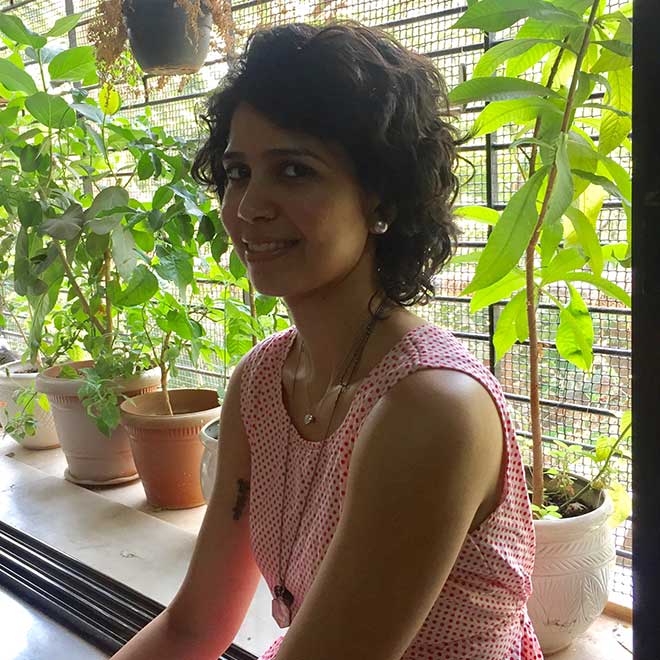
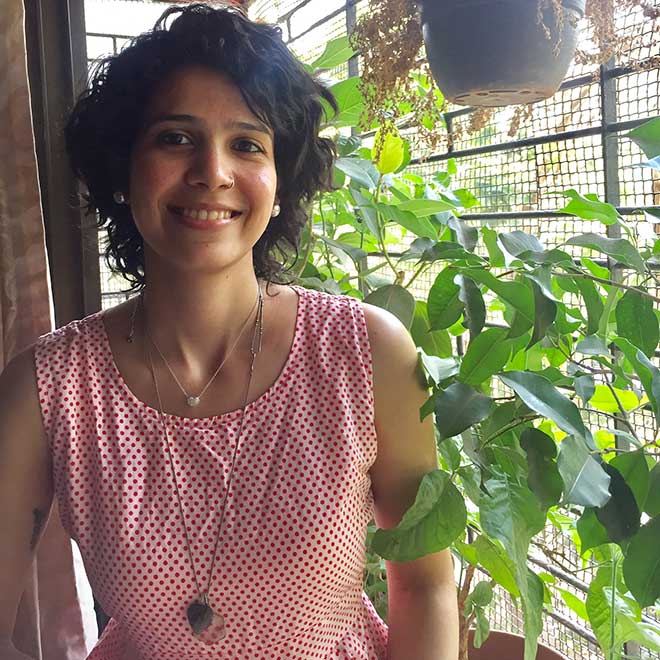
    Rackhee graduated in law from Government Law College, Mumbai, in 2011. After a successful stint with Cyril Amarchand Mangaldas as Senior Associate, Rackhee discovered her passion for spiritual healing, and left a lucrative career in law to purse her calling. Rackhee Trust is a transformational coach and holistic healer who works with individuals, corporates, children and groups to facilitate breakthroughs in all areas of life. in 2016 she founded her independent venture, Ojas, which offers personal development, spiritual advancement and holistic well being workshops, coaching for private individuals as well as corporates, Reiki classes and one-on-one sessions all over the world.

    In this interview we speak to her about:

    • Her time as Research Assistant at Harvard
    • Working for Cyril Amarchand Mangaldas
    • Pursuing a career in spiritual healing


    What would you like to say to our readers in the manner of introduction?

    We have become very accustomed to introducing ourselves in professional terms. Over the years, I have come to realise and experience and that each one of us is far more than just that job, just that role or just that career.

    That said, I am simply a seeker. A seeker of the Self. One constantly discovering more about who I am, my purpose here and what life has to offer.We take up several roles to give us an identity and often lose ourselves in this role itself. My journey has been riddled with several such instances. One such milestone being my short stint of five years as a lawyer. Just as they say you can take a girl out of Bombay but can’t take Bombay out of her, you can take me out of law but can’t take law out of me. I cherish the wisdom and skills law gave me as I continue on my path to everlasting learning, seeking and inner work


    What influenced you to do your undergraduate course in International Relations at Tufts University?

    The need to take up an academically challenging subject that proves to be an asset in my career as a lawyer drove me to majoring in International Relationships during my undergraduate at Tufts University, Boston. Naïve and not realising that pure passion should drive these decisions, I allowed my mind to make a logical decision and yet thoroughly enjoyed my years there.
     

    Tell us a bit about your time studying law at GLC, Mumbai. 

    I was driven to make the most of my time as a law student and gain as much practical experience and exposure during this time. I worked my entire three years during my studentship at GLC, interning in several law firms. I realised even as early as then that this wouldn’t be where I’d end up all the way at the end of my career but it seemed like the right thing to pursue in that moment.


    Could you tell us about the internships you took up, and what you learnt from those experiences?

    My internships were very varied and I am very grateful for that. I strongly urge students to take up diverse internships to explore the different opportunities the law has to offer. Often what we think to be our passion translates into something very different in reality. Getting first hand experience of all those aspects of the law that we know to be of interest or not to be of interest to us can be quite an eye-opener.

    My internships ranged from litigation with a very small home office to a clerkship with a very respected justice of the Hon’ble Bombay High Court, followed by M&A, real estate and banking and finance experience across several prestigious law firms in the city.


    What are the parameters that must be considered in deciding what the next step should be after graduation?

    Given my experience both as a lawyer and law student struggling with a “decision paralysis” as you accurately term it, all I can say is follow your heart. We often make the wrong decision of choosing what is “safe”, “logical”, what will make zyx happy or proud of you. This may not be as easy at it seems because you may need to introspect a lot to really get in touch with what you’re most passionate about or what your heart really wants. However, when you get in touch with your heart you will realise that you also get in touch with the mighty potential deep within you to make that possible.

    The parameters to be considered once you graduate are really: (i) what really makes happy? (ii) for a moment if money didn’t matter what would you be doing? (iii) are you choosing xyz role/job for the money/lifestyle/freedom/independence or something else? (iv) what is really driving your decision? (v) what else can you do to achieve happiness and also the money/lifestyle/independence/something else that you’re looking for?

    If you can answer these questions truthfully to yourself, you will have made the best decision for yourself. Trust that decision and follow through.


    Could you share with us your experiences as a Research Assistant at Harvard’s Center for Public Leadership?

    It was a great experience working as an RA at Harvard’s Centre for Public Leadership, if you like doing research. At this stage, I wasn’t in touch with what I love doing most. The learning experience was wonderful and it definitely honed my research skills which come handy as a lawyer. I encourage all law students to take up as many opportunities to work on their research skills as possible. Not all law schools provide the environment to do so, GLC definitely did not. You may struggle as an intern/lawyer without knowing how best to research.
     

    Tell us about your early professional experiences at Naik Paranjpe & Company.

    This was quite natural for me as I was accustomed to working when this transition took place. In fact I had been working with Naik Paranjpe & Company for over a year before I graduated. The bonus was the associate pay when I did finally graduate! That’s the only real transition.


    From being a Senior Associate at Amarchand Mangaldas, what inspired you to take the leap in beginning your career as a transformational coach and holistic healer?

    Honestly, doing what I currently do has always been my calling. Sometimes it takes many turns and twists to realise that you landed up where you started off and that is truly who you are. I have been a Reiki practitioner for over eighteen years and the foundation of who I am lies in my spiritual journey and practice which began at the very young age of three when I met my spiritual master and Guru, Swami Chidvilasananda. My life has been riddled with experiences where I have constantly sought the answer to several questions surrounding Who am I? What is my purpose in life, why am I really here? and so on. This introspection and constant questioning lead me on my spiritual journey which has eventually culminated in my following my heart and making a life out of it. Taking this so called leap came very naturally as the time was right and the opportunities simply presented themselves. Like I teach my students now, when you open yourself to the universe, everything simply flows as you are aligned with the flow itself.


    What are the challenges and learning opportunities that you were faced with in establishing Ojas? 

    The challenges I faced were self created obstacles. Obstacles of my own limiting beliefs and as I overcame them with the work I do I began realising the power of what I do itself. My obstacles presented me with the opportunity to overcome them for myself before I could be instrumental in others overcoming their obstacles. So be it in their career, personal life (relationships) or physical/mental/emotional health, I experienced that the answer lay deep within ourselves. In fact, the root of the problem too lies within, although often it may seem to be externalised in the form of a situation, pattern, person, experience, consequence or decision. My biggest challenge was attracting clients who didn’t want to pay or didn’t have the money to pay for what I did. My first two weeks in my new role was the most challenging. I remember sitting down with this and working on myself one late night and there has been no looking back since then. Today I am humbled and grateful to say I earn more than what I earned as an associate leaving Cyril Amarchand Mangaldas, and the earning is effortless.

    The outcome of this experience was the realisation that each of our challenges are presented to us merely as an opportunity to discover what lies beyond it. When we tune in and get in touch with what really lies at the heart of this challenge, it feels like the opening up of a Pandora’s box. Suddenly, everything opens up and before you know it that challenge itself is not there anymore (or is not a challenge any more!). This is what my learning in establishing Ojas brought me to. A very deep understanding of who I am and what I really do.

    Ojas seeks to touch lives. To bring every seeker to a space of Self Empowerment through Knowledge of the Self. Healing, coaching, etc. are very limited labels. At Ojas we simply come together as seekers of knowledge, the Self and the truth. The journey reveals the rest.

     

    What courses did you take up in preparation for your job as a transformational coach?

    The biggest course has been the learning as a result of my journey through life. Each experience has given me so much that it has added to my unique skill set. No two people who go through the conventional “courses” or “training” will come out the same because each one’s life journey will mould their individual ways.

    That said, I have been through extensive international training in various paths that lead to the healing of the subconscious mind which carries the key to all our suffering and challenges. I am a Reiki Grand Master and practice Reiki while also teaching it. Other than that I am an internationally certified Emotional Freedom Technique (EFT) practitioner, Matrix Reimprinting Practitioner, Neurolinguisitic Programming Pracitioner, Breakthrough Coach, Magnified Healing Practitioner & Teacher, Bach Flower Therapy Teacher and Practitioner, Angel Healing teacher and Practitioner (among a lot else).


    Did you have a mentor or guide during the formative years of your career? 

    I have had several mentors along my journey. The list is endless and I am very grateful to each of them for the role they have played. This is a question that has almost haunted me all my teenage years because I wondered whether it was essential to have one guide, as I never did. Over the years, I realised that there had been several role models and as I evolved they too kept shifting. So in my experience it is very important to keep having more and more mentors or role models for different aspects of ourselves (as we are multi-faceted individuals and not linear) as we continue to evolve. This allows for our evolution to take place consistently without stagnation and in an all round manner.


    As the Founder at Ojas, what does a typical work day look like for you?

    Every day is very unique and that is what I love about what I do. My day usually begins with some self-work in the form of meditation or some such inner practice. Then my day is typically studded with client appointments all across (beginning as early as 6 am and concluding no later than 6 pm). In between I’m busy writing course material for the several courses I deliver and am continuing to develop. Reading, writing, reflecting, sharing, growing and relaxing typically encompass every day in the life of me. I have a beautiful and constantly growing set of students and clients across the world and we reflect and share and grow on a daily basis. This keep my inner work in check on a daily basis and my inner growth continues to take place thanks to each and every one of them.

    Please share with us the initiatives, workshops and projects that Ojas takes up?

    At Ojas we take up several projects, initiatives and workshops ranging from ones offered to individuals, groups as well as corporates and uniquely created to cater to their goals and needs. There is no cookie cutter approach to anything we do because each individual is unique and so what we have to offer to is needed to be such. Our initiatives and workshops range from Reiki classes, manifestation workshops, stress busting initiatives (that work at the level of the subconscious mind), targeting relationship blocks through various tools, trainings on effective speaking, meditation and heartfulness trainings, teaching about Angels and different realms of energies, monthly meditations, Bach Flower Therapy courses and tons more.


    What are the key attributes that one must develop in order to excel in stressful workplaces in the legal profession? 

    My work has brought me to a state of complete stressfreeness. It is an inner journey to get here really. I can say for all my clients and students that they have achieved this or are getting there and there are no “key” attributes that will get anyone there because each one is wired so differently that the remedy for each will be unique.

    That said, the key to each one’s stress lies in the subconscious and when we deal with what’s deep seated within the subconscious mind, a state of stress-free freedom arises spontaneously. Doctors, therapists, counselors etc. are trained to treat surface level issues. Each symptom is treated in isolation. In the work we do at Ojas, each individual is looked at as one whole comprising of all that which makes up who they are.

    The healing takes place deep inside at the level of the root cause (of all surface level issues). Often the root cause lies in some situation, emotion, event, memory etc. that took place several years or even moments ago. That leads to thoughts, feelings, emotions, beliefs, habits, actions, decisions, choices, patterns and personality which eventually manifests in the form of that which is troubling us (as disease, relationship issues, money/finance/career related struggles etc.). When the root cause is healed, the surface level issue disappears spontaneously. This is the answer to releasing stress at your workplace and in life in general and experiencing waves of joyful abundance through a life that may seem dry and regular. Each one of you can have this experience, the question is whether or not you are ready for it!


    How do you manage your time between your professional and personal interests? 

    There is no difference and yet they are balance. My professional and personal interests are one and the same. I am very blessed to have a partner who loves what I do and so what we do is part of our lifestyle. I believe only when you truly are what you do can you enjoy both personal and professional as one and the same.


    What are the challenges you have faced in building up your career as it stands today?

    We are steadily moving in the direction we had envisioned. We are blessed to be moving forward at a faster pace than we envisioned. I don’t believe in planning and envisioning in as much detail (as a five year plan) because even our vision can limit the limitless possibilities. All I know is that Ojas is on to something very big, a universal revolution. It will take us places as also each individual associated with us in any form.


    What advice would you like to give our readers, who are mostly law students and young lawyers?

    Follow your heart. Listen to your inner voice. You know what really makes you happy. You know what YOU really want. Go for it. Life is a miracle, anything is possible. Believe in this. You are capable of achieving far more than you can even imagine. Just trust in the universe a little more than in your own fear and insecurities and watch where all you end up! Enjoy the journey!

  • R. Thirunavukarasu, Advocate, Independent Practice, on litigation, and his diverse experience

    R. Thirunavukarasu, Advocate, Independent Practice, on litigation, and his diverse experience

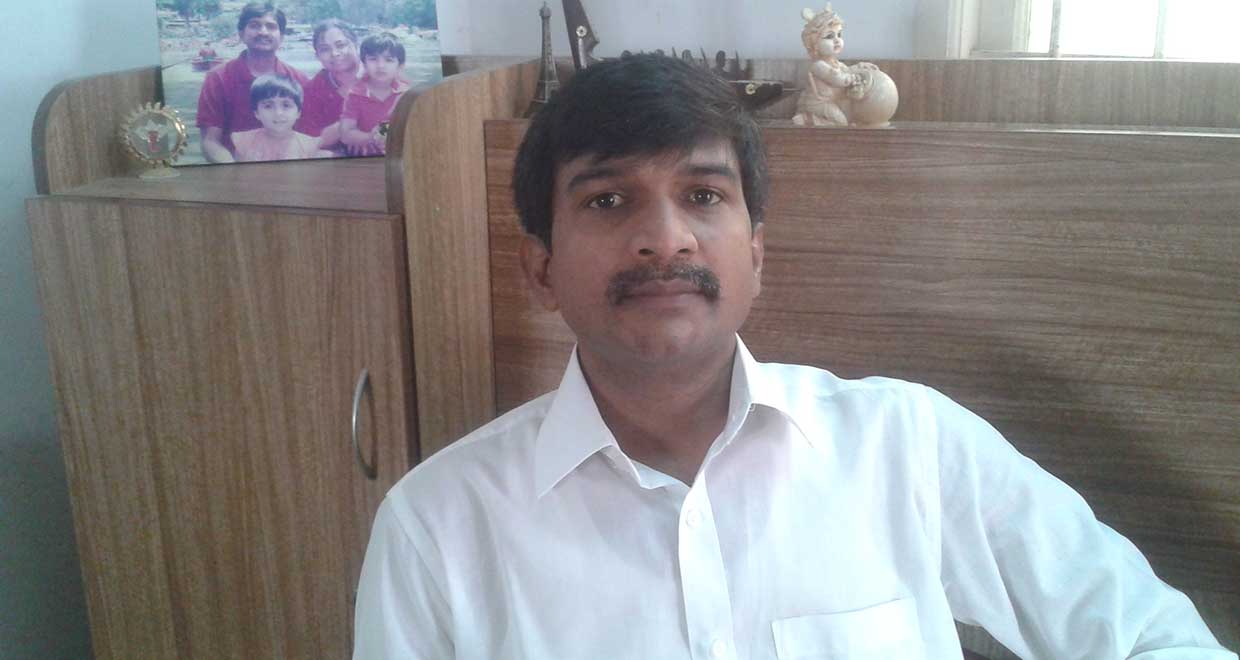
    R. Thirunavukarasu graduated from Government Law College, Chennai, formerly known as Madras Law College, in 1996. With over nineteen years of experience in litigation, he has specialised in company law, arbitration, labour law and consumer law, incorporation of company, debt recovery cases, cases under negotiable instruments act, economic offences, etc. He has  been independently handling cases in High Court, Company law Board, Arbitration, Debts Recovery Tribunal and Appellate tribunal, Magistrate courts, and Consumer Forum. He is presently Standing Counsel for Karnataka State Pollution Control Board(KSPCB) before National Green Tribunal,Chennai. 

    He is currently engaged in independent practice with his wife, Advocate M. Swarnalatha, where they focus on Environmental Law, Competition Law, Company law, Arbitration Law, and appearing for Aviation industry for their customer related issues before Consumer Court.

    In this interview we speak to him about:

    • His illustrious experience spanning nearly two decades
    • His experience in various courts
    • Private practice with his wife

    How would like to introduce yourself to our readers?

    I’m a practical lawyer, I take life as it comes.


    Give us a brief overview of your life in law school. 

    Before joining Law college I attended Loyola college briefly for three months; did B.Sc. Visual Communication. My class was the first batch to have co-educational system. Classes were regular and attendance was  strict. If we miss any class, we had  to give reasons to our HOD. We had five hours of college from 8:30 AM to 2:30 PM with a one hour lunch break. Having experienced this system of college I had lot of expectations while  entering law college. However, it was a different experience altogether in law college. The college building had a majestic look and  a magnificent campus which is more than 100 years old. Boys and girls were divided into different sections. We had only two hours of class per day. We never had full strength in our classroom. We were never certain whether we will have classes on a particular day or boycott. The college will not function most of the time. Attendance can be compensated by paying a condonation fee. The college lacked basic infrastructure and there was no facilitator or coordinator for students to guide or regulate their affairs. But despite all the odds, our college produced bright students and often won the Philip C. Jessup Moot court competition. The students participated in all academic events including oratorical, cultural events and sports. Our college was able to win in all major events.

    Being a first generation lawyer I had no idea about practising law. In fact it was my last option. I was more focused into competitive examinations particularly civil service. I was able to crack the UPSC Ministry of Home Affairs- Assistant Commandant Examination and selected for the post. I got necessary help from a friend in preparing for the physical fitness also. But I was not able to join the force due to personal reasons. My father suggested that I practise law and be stationed at Chennai. On my friend’s suggestion, I joined a public speaking, leadership and assertiveness course to improve my skill in public speaking to overcome initial inhibitions. After completing the course I participated in debates. The course changed my mindset and boosted my confidence. Simultaneously I did B.A.-Public Administration from IGNOU hoping to clear the main paper in civil service.


    What subjects did you take particular interest in during your law school days?

    During college days, I found History of Courts and legislature, Constitutional law, Law of Torts, particularly Jurisprudence very interesting. I was not able to determine my choice in career. I focused on Constitutional law as it was interesting.


    What are your areas of specialization and how did you zero in on this?

    During college days I had no idea which branch of law I should pursue. I liked my senior office and his office was looking into company law, arbitration and civil law. After joining my senior in 1998 there was no question of looking back. Now I have started on environmental law and competition law.

    As far as advice on choices to make, I do not have any. It  depends on the person’s  likes  and attitude towards practice.


    Would you say law school prepared you for the real world of legal practice?

    The answer would be a loud, resounding, “no”.


    Give us some insight into your experience at M/s.Surana and Surana International Attorneys, your first job.

    Mr. Surana’s son was my classmate in Law college. During my fourth and final year I worked  in their firm as paralegal and I did my internship as per BCI Notifications. We were the  first and last batch to do internship before we enrolled  as Advocates. Law firm practice is different from  independent legal practice. In a law firm there are a  lot of restrictions and strict  working hours. I  felt there is  more  freedom of thinking, responsibility and trust in independent practice. Again it all depends on the  individual comfort and attitude. I felt  that  I will not fit into a law firm practice.


    Why did you leave the firm to join the office of a Senior Advocate? 

    I did my internship in the law firm and after enrollment I joined my Senior’s office who is an expert in Company Law and Arbitration. My senior office had limited juniors and  so I  had a prime role to play in the office. My Senior was a thorough professional and I closely observed him and watched  how an Advocate’s office works. I got more opportunities to represent in court and attended Arbitration hearing. I worked with my senior closely in setting aside the award in Pamban Road bridge case connecting Rameswaram island and the Indian mainland. Each day was a great learning experience to watch my senior in conceiving his thoughts and arguments. My senior also specialized in cases relating to mismanagement and oppression under company law. He had remarkable memory and command over language. I worked with him for nearly nine years.


    What in your opinion is the charm of the court which drew you to this profession?

    Initially I was assisting my senior and appearing in the original side of the Madras High Court- Company court, I.P. Arbitration and civil suits. Later on, I also handled white collar crimes cases before Chief Metropolitan Magistrate Courts. I appeared before Company Law Board, and Arbitration Proceedings, with my senior. The Consumer Forum  is another court which actually moulded me in advocacy.

    The power and stature of courts give me immense mental satisfaction, and makes me want to look forward to the next day.


    During your development years as a lawyer, did you have mentors?

    My senior was my mentor who guided and shaped me. I just observed the way he conducted himself in court and his sincerity towards his profession. The fascination for the court and facing the Hon’ble Judges and getting relief to  the clients motivated me to stay in practice.


    What are the challenges that one needs to prepare himself/herself for once they step out of the comfort of law school and into the real working world?

    Frankly, I should confess that my college did not provide either comfort or guidance. In a professional course I believe the students should have good interaction and team spirit should be developed in their college days itself to face the future. Hope the present generation lawyers are effectively groomed by the law university and guiding them in all aspects. Now present colleges have latest infrastructure and periodically conference and workshops are conducted in Law College. My advise to law graduates would be:

    • Enjoy you college days. Too much  thinking about your future  will only spoil the present happiness.
    • Strive to work harder on academics. Keep yourself updated on current affairs.
    • Focus on your strengths and visit to  courts  to get practical lessons
    • Attempt all competitive examinations conducted by UPSC or state service commission and judicial service or any other group–I service.


    When did you take the leap of faith to break away and start your own practice with your wife? 

    I was with my senior for nearly a decade. I was given opportunities to handle a variety of cases. During that period, I got married to my colleague. My senior advised me to start my own practice after a particular point. So with the support from my wife, I started my own practice.


    Give us a peek into what regular life looks like for your wife and you.

    I  attend to  court related work and my wife handles drafting and research. We don’t have fixed working hours and keep it flexible depending upon the volume of work.


    What would be your message to our readers?

    Each and every day gives me a new learning experience. Having a lawyer wife according to me is a blessing as she is not only my partner but also my intimate friend with whom I can share ups and downs in my career  as well as my personal life. I do not know how successful I am in my career but I am very content with my profession and family.

  • Ms. Purvi Kapadia, Partner, Rajani Associates, on completing the Solicitors Exam and Private Equity practice

    Ms. Purvi Kapadia, Partner, Rajani Associates, on completing the Solicitors Exam and Private Equity practice

    Ms. Purvi Kapadia, graduated in law from Government Law College, with a gold medal, in the year 2002 and thereafter passed the Solicitors examination conducted by the Bombay Incorporated Law Society in October 2004. She has an experience of over 13 years in the legal Industry and is at present a partner with Rajani Associates. Interview by Kaushik Dessai of G. R. Kare College of Law.

    IN THIS INTERVIEW SHE TALKS ABOUT:

    • Successfully completing the Solicitors exam

    • Corporate practice

    • What it means to be a good private equity lawyer

    • Current reforms in Law

    HOW WOULD YOU INTRODUCE YOURSELF, GIVEN THAT MOST OUR READERS ARE YOUNG LAW STUDENTS and YOUNG LAWYERS?

    Hi. I am Purvi Kapadia, partner at Rajani Associates, a full service law firm. I handle the private equity practice of the Firm.

    WHAT INFLUENCED YOU TO JOIN LAW?

    Well… a lawyer is what I was meant to be. I am a third generation lawyer of my family and it came as a surprise to no one when I decided to study law.

    WHAT PROMPTED YOU TO PREFER CORPORATE PRACTICE OVER LITIGATION?

    Litigation practice can be very thrilling but also very slow moving. It is no secret that litigation can often be prolonged. As an articled clerk I got a chance to do a fair bit of both, litigation and corporate matters, and the fast pace of a corporate practice is what I came to like.

    WHAT ARE THE CHALLENGES YOU FACED WHEN YOU FIRST STARTED HANDLING PRIVATE EQUITY TRANSACTIONS?

    I am not sure if what I write here describes a challenge exactly, but it is something that I realised very early on in my practice as an important part of this practice and i.e. Negotiation. Both drafting the transaction documents as well as negotiating the same thrill me. But the later thrills me even more as no two negotiations are the same. I believe negotiation is an art that you master more and more with each transaction and you may not exactly start of by being good at it. I know I did not. I was just lucky to work with brilliant seniors then, from whom I could learn and better myself.

    IF A STUDENT OF LAW WISHES TO ULTIMATELY PRACTICE IN THE PRIVATE EQUITY SPACE WHAT WOULD BE YOUR ADVICE?

    While most private equity transactions revolve around the same concepts, rights and obligations, it is very important to understand that the pulse of every transaction and client is different. What may have seemed like the perfect deal for one transaction could work very differently for another transaction. Also, the business and structure of the company in which investment is proposed, as well as the management set up, holds most relevance, and the same must be understood minutely. Lastly, while a due diligence is most often considered as a routine act that simply needs to be swept out of the way, what one must remember is that the findings of a diligence exercise are in fact the very foundation of any transaction. A lot of the drafting of the transaction documents in fact depends on the findings of a diligence. Anyone wishing to practice in the private equity space must first start with doing diligence exercises and understanding the impacts of its findings.

     YOU HAVE CRACKED THE SOLICITORS’ EXAMINATION CONDUCTED BY THE BOMBAY INCORPORATED LAW SOCIETY. THE SAID EXAMINATION IS WIDELY KNOWN AS A TOUGH EXAMINATION. COULD YOU TELL US ABOUT THE STRUCTURE OF THE EXAMINATION?

    Yes, the solicitors examination is a very challenging exam. It is a great feeling to pass it. The examination is set to test ones practical knowledge rather than just theoretical knowledge. Also the questions are interwoven to cover various subjects, so it is never enough to just know the subject of which you are writing the paper. One needs to know all the other subjects as well. It most definitely is an exam that helps you gain multi dimensional knowledge and apply the same.

    WHAT WAS YOUR SUCCESS MANTRA FOR ACHIEVING SUCCESS IN THE SOLICITORS’ EXAMINATION?

    There are no shortcuts for passing the solicitor examination. If you fall in love with each of the subjects you are studying and study the same methodically, you are sure to get through. The key is not to study each subject in isolation but to understand how these laws are interwoven and interdependent. When you read a case study, you should be able to think of all the facets of law that would apply to that particular case study and not just the subject law for which you studying/ writing the paper. This is exactly how you then move on to deal with your clients in real life practice.

    AS A PARTNER AT RAJANI ASSOCIATES, WHAT IS AN AVERAGE DAY AT WORK LIKE? OUR READERS WOULD LOVE TO HEAR ABOUT THE DAY-TO-DAY RESPONSIBILITIES WHICH NEED TO BE HANDLED BY SOMEONE IN YOUR POSITION.

    From simply executing work a few years back, at this position I now mentor my team. An average day at work means a lot of interaction with my team. It is usually conversations revolving around the transactions on hand or changes in law.

    YOU HEAD THE PRIVATE EQUITY INVESTMENTS AND JOINT VENTURE TRANSACTIONS AT THE FIRM. HOW DID YOU BUILD UP YOUR EXPERIENCE IN THE PRIVATE EQUITY TRANSACTIONS?

    I have had both – skilled seniors and skilled teams on the opposite end. Both private equity and M & A transactions entail not only good drafting and reviewing skills but also thorough negotiation skills. From the first transaction I negotiated for – to the last, I have seen myself grow in confidence. Needless to add the seniors I have worked with have taught me a great deal. At the same time, if you keep an open mind you will be amazed how much you can also learn from the seniors sitting across the table.

     WHAT ARE THE OPPORTUNITIES THAT THE PRIVATE EQUITY PRACTICE HAS TO OFFER? WHAT ARE THE ESSENTIAL REQUIREMENTS TO BE A GOOD PRIVATE EQUITY LAWYERS?

    A private equity practice exposes you to various laws, not just Indian but global as well. Also, although every transaction may have the same end intent of taking or making investment, I am yet to work on a transaction that would fit the same parameters as my previous transactions. Each transaction has had its own challenges, its own negotiation meltdowns and high points. In short, no transaction has ever been the same for me and that has been amazing.

    As for the requirements of a good Private Equity lawyer, I strongly feel that a good Private Equity lawyer must learn how to understand the pulse of the transaction at hand. A Private Equity lawyer must be careful not to treat each transaction and client the same as the previous one or straight jacket the transactions. Also lawyers often forget that negotiations are not a personal battle field. What the client needs or is willing to give up or is willing to hold on to no matter what, is paramount, and that it is for the lawyer representing the client to understand and act accordingly. Above all, it is important for the lawyers to guide their clients. Often clients are unaware of, or lose sight of, the immediate or futuristic challenges they may face on the completion or non completion of a transaction and the lawyer must help the client understand the same.

     YOU HAVE BEEN WITH RAJANI ASSOCIATES SINCE 10 YEARS. PLEASE TELL US ABOUT YOUR EXPERIENCE AT THE FIRM?

    Rajani Associates is a great learning ground. No transaction or assignment in this Firm is executed as a matter of fact. Instead, every transaction and every client is handled with utmost care and as a team effort. Every transaction is headed by a partner and the partner constantly imparts both knowledge and experience to the rest of the team. In these past 10 years, I have learnt so much from my senior, the managing partner – Mr. Prem Rajani (and I continue to learn), just as I have passed on knowledge and experience to my team (and will continue to do so).

     THE PARLIAMENT OF INDIA ENACTED THE INSOLVENCY AND BANKRUPTCY CODE 2016. WHAT IS THE EFFICACY OF THIS CODE AND WHY IS IT AN IMPORTANT PIECE OF LEGISLATION?

    Change is always good and especially change in law is always a positive step towards working with the need of the hour. Bankruptcy Code likewise, is a welcome consolidation, an overhaul, of the existing bankruptcy legislations. Providing a much needed relief to the existing debt market of India, an early and faster remedy to the lenders, the Bankruptcy Code is most certainly a very important piece of legislation for India. The efficacy of the Code will however, like any other legislation (new or old), depend on the execution and implementation of the Code. A number of agencies and professionals will need to work together and effectively, to make the Code a success, and it is certainly hoped that this is achieved.

    THERE HAS BEEN A SEVERE CRITICISM OVER PUBLIC SECTOR BANKS WRITING OFF BAD LOANS. WHAT IS YOUR VIEW IN THAT REGARD?

    I partake somewhere in this criticism. Writing off such huge amounts of bad loans does ultimately somewhere come at the cost of burdening honest taxpayers and affect the shareholders of these Public Sector Undertaking banks. While the entire write off may be treated as an accounting act, and although in reality the Banks do continue to pursue their debt claims against the defaulting debtors, the write off does take the compulsion off the Banks to pursue the bad debts.

    WHAT IS YOUR ADVICE FOR FRESH GRADUATES WHO WISH TO ENTER LAW FIRMS AS ASSOCIATES?

    Well, challenges in a law firm and a legal career are the same as in any other profession. Hard work and willingness to learn are paramount. Also, in this profession practical knowledge is very treasured. Reading of law, to its understanding, to its implementation, every step is crucial and this journey can be mastered only with experience.

    WHAT WOULD BE YOUR PARTING MESSAGE FOR OUR READERS?

    Studying and practising law is exciting. Hope to see you on this side soon.


  • Shikhar Thukral, Legal Officer, Bharat Petroleum, on LL.M from Boalt Hall and work experience at a PSU

    Shikhar Thukral, Legal Officer, Bharat Petroleum, on LL.M from Boalt Hall and work experience at a PSU

    Shikhar Thukral graduated from Government Law College, Mumbai in 2013. Upon graduation, he joined Bharat Petroleum Corporation Limited, Mumbai as a legal officer, and has stayed in that position since. In 2015, he completed a Professional LL.M programme from the Boalt Hall School of Law, University of California. He has interned in leading law firms such as Crawford Bayley & Co., and Luthra and Luthra Law Offices while pursuing his LLB degree.

    In this interview he discusses:

    • Law as a tool of social change and his motivation for pursuing it
    • The reason why knowing corporate laws is important even from a social perspective
    • His experience with pursuing a Professional LL.M
    • His publication on Section 377 of the IPC.


    Tell us a little about why you decided to pursue Law. Has this always been your career plan?

    I come from a family of doctors, which would make one presume that the medical profession was my natural calling. However, of my own volition I decided to ‘don a black coat’, as I always believed in law as an agent of social change. I would like to share a story from my school days which I believe is a precursor to my decision of choosing the legal profession. During my 12th standard I was actively taking part in heading the student body and making representations to our Principal for our needs. We came across an instance were some of the school faculty were offering private tuitions to the students. The students who were availing those tuitions had secured good marks in their pre-board terms and other students, though meritorious, were deprived of marks. I personally brought this to the notice of the school management with a detailed written representation, and finally a decision was taken that such tuitions should be stopped. I chose to study law in the hopes that I will be able to represent the community at large for more such social reforms.


    You have worked with several top tier firms. How do you think your experience with them has shaped your approach to the profession?

    Working with law firms gave me a firsthand knowledge of how to deal with clients in a professional manner. I still leverage that experience in my current role dealing with in-house clients. Moreover, in a law firm environment you cater to different industries whereas working for a company restricts you to a single domain. The law firm paradigm helped me understand that the legal profession is very competitive. However, there is scope for everyone to reach up to a certain level. Beyond that, earning a good reputation chiefly depends on your networking skills with clients.


    Have you always been interested in Contract Law and Corporate Law? How did you choose your specialisations?

    shikhar-thukral-2As I have stated earlier, that my ultimate ambition to pursue law was to necessitate advocacy for social change. However over the years I have learnt that it is also important to know the other side of the story. We often keep hearing that “big oil”, “big tobacco”, and “big bank” companies control the economy of the country. A reform, however laudable its social objectives are, cannot disjoint itself from economic objectives. To accomplish such objectives, it was vital for me to engage my faculties in corporate and commercial laws too. Also, I must candidly admit that as an immigrant in Mumbai, my survival from a fiscal point of view had to be taken care of and the pursuit of noble objectives of socio-economic reforms were not rewarding financially. Hence, my decision to engage in studies of Commercial and Corporate law are attributed to both these reasons. Nevertheless, I have not deterred from my initial ambition. I intend to do more social studies and ultimately work towards achieving social reforms. What I am doing currently is only a stepping stone to what I intend to accomplish later


    You presented a paper on Section 377 of the Indian Penal Code. What is your stance on the issue as it currently stands?

    Now, a great deal depends on the outcome of the curative petitions which are currently pending before the Supreme Court of India on this issue. I have always maintained the stand that a person’s orientation is a basic liberty which should be protected by the contours of fundamental rights in our Constitution. It is quite heartening to see that conservationist groups are also now supporting this position. I was disappointed by the outcome of the efforts undertaken by Shri Shashi Tharoor when his proposal to strike down the provision failed in the Union Legislature. However a new CJI has given us hopes that the LGBT community can survive in the society without any fear of persecution. I must add here that there are some pragmatic limitations on every liberty. I believe in decriminalization but that should not lead to glorification. “Your right to swing your arms ends just where the other man’s nose begins.”


    You have worked extensively with Public Sector Undertakings as an in-house-counsel. Can you tell us about your experience with that? What do you think young lawyers aspiring for the same should always keep in mind?

    It is indeed a very good environment to work and the work load is fairly manageable. Your innovativeness in providing legal solutions, especially in supply chain/product companies would be greatly rewarded.  There is tremendous opportunity to learn and you will also be exposed to important and high stake matters from the very start of your career. I remember giving advice on a 100 Million USD transaction in the first three months of my work. You will also be subjected to soft skill trainings on a regular basis to develop your personality. As an in-house counsel for a Public Sector Undertaking, one must keep in mind that you are discharging a public duty and it is enjoined upon you to be fair and impartial in all your dealings. You will undoubtedly be bound to support the Corporation’s stand, but counsels must be firm in their advice to deter certain practices. It is indeed quite a tough call to make and sometimes your advice will be superseded. I would advice my brethren intending to join a PSU to be accommodating and tolerant in such scenarios. Your passion and devil’s advocacy may be put to test.


    As a lawyer, it is very important to be able to negotiate with clients. How do you build the rapport required for that?

    I have always felt that a personal connection with the client aides towards that end. Before meetings, I usually research on the participants and I try to engage in informal conversations on their likes and dislikes by relating them with myself. Try to exhibit a personal interest in your clients as it helps in building trust. I must also modestly admit that I have a very good sense of humour and that comes in handy while building connections. Even if someone is sitting across the table in the capacity of an opposite party, there is no harm in making an enquiry into their character, business and whereabouts. You never know they may be your client tomorrow


    Tell us a little about your time as a Law Student. How did you prioritise your time?

    I must state that I have been a good student, though I spent most of my time as a vagabond in Mumbai. The hostel life caught up to me and I thoroughly enjoyed the same for the first two years. After my pre-law (B.L.S) years, I engaged myself in internships as at that time I thought that in this profession, experience counts more that education. However I never stopped studying and devoted my nights studying the subjects. I also engaged myself as a remedial lecturer in the Government Law College, teaching the pre-law subject Logic to students. I prioritised my time to ensure that my days are devoted towards internships and nights for studies. The weekends were always devoted to leisure.


    After pursuing your B.L.S. and then LL.B from Government Law College, Mumbai, you went on to obtain a professional LL.M. from Boalt Hall School of Law, University of California, Berkeley. Tell us a little about the application process, and how you got in.

    The application process was indeed a harrowing experience as a lot of things had to be arranged over a short period of time. Apart from the application form, you needed a Statement of Purpose, Reference Letters (academic and professional), transcripts, college degrees etc. At the same time I was also working in my current role and so was overwhelmed initially. However when my Corporation supported me to pursue this, I left no stone unturned to ensure that I got through. I was chiefly selected on my academic performance and my SOP for which I was also awarded a tuition fees scholarship. I would recommend that readers aspiring to join the University do their research on the programme as this is a programme split over two summers and is meant for working professionals. The readers may please refer to llbguide.com to know more about the programme and make an informed decision. The application process is clearly explained on lsac.com and the applications can be made from there.


    In your opinion, how exactly did an LL.M. from abroad benefit you? What was your thought process in deciding to go abroad?

    Doing an LL.M. from any foreign University completely changes your perception of studies as compared to India. Speaking from my experience at Berkeley, I must say that the manner of education abroad is far superior. An LL.M. from a foreign University indeed helped me in my current role as I am regularly applying the knowledge gained therewith to my current work-profile. Moreover, it increases your marketability in India and abroad as a candidate for jobs, though not initially but after achieving 3-5 years PQE. Also, the connections that you make there will benefit you and your organization greatly. Today I can safely say that I am in touch with a lawyer in every major city in the world and my Corporation is also availing their facilities. I chiefly intended to go abroad to experience a full-fledged University style of learning. As I mentioned earlier, I did not attend much of my college in Mumbai as I was busy in internships. Coupled with the scholarship, it was a win-win situation and I was able to gain a firsthand experience of learning in one of the most prestigious law colleges in the world.


    For other aspiring students with their sights set on foreign universities, what do you think is essential for them to keep in mind?

    Foreign Universities are meant to impart learning and should not be viewed as an investment to secure better job prospects. There are many benefits you can gain from foreign Universities. One should experience learning in such an environment to assess where they stand as compared to the world. I understand it is a time consuming and costly endeavour, however for students who really wish to understand law from an international perspective must pursue such opportunities. One must also keep in mind that the experience itself will change how you think about the legal profession.


    The progression of your career seems to be a constant upward slope. How did you plan it? Did you have a set plan from day one?

    You are very kind to have made such an observation. I must admit that I never planned how all pieces will fall into place, but yes I had a broad plan in mind from day one. Like I said earlier, my ultimate ambition is fixed and I am working in a phased manner to achieve that objective till date. It involves both learning and working simultaneously. I am still in the nascent stages of my career and I hope that I continue on the path of achieving my dream. What is important to set your eyes on an objective and pursue the same diligently.


    What do you think are the key elements to focus on with regards to planning one’s career?

    The elements will keep on changing with passage of time. First and foremost comes your education which will give you merit to enter into your career. Selecting the right educational path will determine where you land up ultimately. The second is your working. One must decide whether they wish to work for someone or work for oneself. In practical terms for our profession the same translates to working for a law firm/company or working as a practicing advocate. Self-assessment is very important to decide on the two aspects and making the correct choice. In working, the most important element especially for the legal profession is sincerity. In this profession a lot comes from experience and one can only accomplish the same through sincerity.


    What message would you like to give our young readers?

    Experience everything that life has to offer you. The good, the bad and the ugly. Keep an open mind always.

    I would also like to express my sincerest thanks to Super Lawyer for considering me for this interview and I wish them and their readers immense success in all their ventures. It is really encouraging to see profiles of so many people from our profession and learn from the same. Keep up the good work.


  • Mahindra Prabu, Asst. Prof. Law (IPR), TNNLS on pursuing a career in Academics and Teaching

    Mahindra Prabu, Asst. Prof. Law (IPR), TNNLS on pursuing a career in Academics and Teaching

    Mahindra Prabu graduated Law from GLC, Tirunelveli (2011) and then pursued his post-graduation course in IPR from TNDALU, Chennai (2013). He was a University Topper in both U.G & P.G courses of Law. After post-graduation he practised as an advocate in trial courts, worked as a Guest Faculty of Law in ‘School of Excellence in Law’, Chennai. He also worked in IIT Madras as a Project Associate in Ministry of Human Resourced Department (MHRD), IPR Chair. Later he joined TNNLS and presently the faculty-in-charge of Internship and Placement Committee of TNNLS.


    How would you introduce yourself to our readers?

    An innovative young academic who loves teaching.


    What incidents, influences or interests prompted you to think of law as a career? What other options would you have considered for a career?

    To pursue a career in law was purely an accident for me. I was in dilemma of what to choose after completing my higher secondary course. I was brought up in a society where B.E, B.Tech & MBBS are considered as main stream ones and many students usually opt either for engineering or for medicine, which is in fact the basic mantra that is being taught in schools. But, I wished to be different and choose a unique career that led me in the process of exploring different career options which eventually made me say YES for Law. I must thank my mother, it was she who suggested and explained me about the oceans of career opportunities in law. This idea of opting for legal career thrilled me and I encountered it as intellectually challenging right from the first day of my law college.


    Tell us about your childhood and pre-college life? Who was your role model?

    Being a single child to my parents, I was gifted with lots of love and affection from my family. My child hood was filled with lot of joyful memories like watching cartoons, cycling, reading comics and book cricket etc. I was good at studies in school with minimal interests in sports. My role model was none other than my parents. They are my pillars of strength. All that I am, or hope to be, I owe all to my parents.


    You did your under graduation from Government Law College, Tirunelveli? Could you tell us about your experience there and what all curricular and extra-curricular activities you were engaged?

    GLC, Tirunelveli is known for its student friendly atmosphere. The college offers more time for self development and encouraged the students to participate in social awareness programmes for rural people. I was actively engaged in internal moots, debates, seminars and legal aid camps. Our campus being adjacent to the District Court of Tirunelveli, it provides an opportunity to witness law in practice in trail court.


    mahindra-prabu-2

    Why did you choose TNDALU to pursue your LL.M instead of going foreign for your Master’s? How was the academic culture there?

    I prefer to do my masters within Tamil Nadu and desired to do a specialization in IPR. TNDALU was the only option available to me to do a post-graduation in IPR. The academic culture in TNDALU was good and very supportive to students. The library had good collection of books for research and learning. Fortunately, my batch mates positively interact, respect each other and value the contributions of each individual. Thus the academic climate prevailed during my college days ensures overall development for participative students.


    What prompted you to choose IPR as your specialisation in your LLM?

    I wished to pursue something really trendy and different. I preferred to invest time on a subject which is interesting and unique. Being aware of some basics of IPR and its effect on international trade and investment, I thought of doing IPR. The academic discussions I had with my professors developed curiosity over the subject and finally I choose IPR as my specialisation in LLM.


    Tell us about your experience as an advocate in the district court?

    I had some good litigation experience at District Court, Thoothukudi. I focused mainly on enriching my drafting skills. From my college days, I used to spend a lot of time in drafting petitions for variety of cases. The district court practice introduced me the basic ABCs of law, procedural aspects and jurisdiction issues which really made life interesting and taught me tons of terms which I never come across in a law book.


    mahindra-prabu-3

    You have been a Research Associate at Ministry of Human Resourced Department (MHRD) IPR Chair, IIT Madras. How did you get a wonderful offer from there and how was your experience there?

    It was an open invitation for aspiring researchers in IPR, which I came to know from ‘Spicy IP’ website. There was a tough competition but luckily with god’s grace I got selected. I would like to thank my professors who clarified my doubts and guided me in each stages. The environment in IIT Madras is novel for any law graduate in the country. During my tenure as an associate of the MHRD IPR Chair, I mostly involved in research, seminar presentations and editorial works etc.


    Why did you opt to be an Academician?

    When I was a student in high school and Law College, I found myself paying attention to not only what was being taught, but also to how my teachers actually taught the lessons. It wasn’t until my third year in Law College that I began to think that I might want to be a teacher. Slowly at first, then more quickly, and with increasing clarity and depth, I began to visualize myself as a teacher. I wanted to make sure that what I learned must reach the society. I believe that teachers individually and collectively cannot change the world, but they can improve it. My teachers were my inspiration and I am proud to be a part of this noble profession.


    Tell us about your experience in School of Excellence in Law (SOEL)?

    SOEL is a bunch of mixed people. You can find students of various levels and categories. The experience that I gained in SOEL inspired me to transform into a full-time academician. The academic culture and working environment in SOEL helped me to master the art of classroom management and laid one of the best foundation for my career.


    You have been a University Rank Holder with gold medal in both U.G and P.G courses of Law? Could you share your tricks and techniques of academic excellence for young law students?

    There are no specific tricks and techniques. I enjoyed while studying and was regular to my classes and mostly believed on my notes that I penned down while listening to the classes and spend equal time in library and for researching. I would say I am punctual in my studies to some extent. That’s it. I never say that I sticked on to the books always or a book bug. I had enough fun and happiest moments with my friends. All of us had the same wave length and we study when we need to and we enjoyed when we want to. After all, I was a normal student who clearly balanced student life between studies and social life.


    Tell us about your experience in TNNLS and your future plans with the institution?

    Being a faculty of the National Law School is always a flagship in my career. And it’s exactly a year since I joined the TNNLS. I taught Constitutional law, Labour Law and now Intellectual Property Rights. The academic culture in TNNLS is very healthy. In spite of the fact, that we were three year old institution, TNNLS campus filled with lot of intellectual young minds with innovative ideas in the field of law. I always say where ever you work, once you start working on something, don’t be afraid of failure and don’t abandon it. People who work sincerely are the happiest. I am happy being part of an institution which gives maximum academic freedom. Finally, my interests are always aligned towards the betterment of academic quality within and outside TNNLS.


    You are currently the faculty-in-charge of ‘Internship & Placement Committee’ in TNNLS. What is your advice to the students for choosing internship at different levels?

    Internship has become a way of life in National Law Schools. It helps students in shaping their future and they will get an insight of the working nature of the legal profession. I personally advise first year law students to go for NGOs wherein they study the social causes and how to address them. In the second year the students are encouraged to pursue internship with the law making body whereas the third year students are advised to enter into the trial court or district court and observe the proceedings. It is the proceedings of the trial court that act as the pivotal pillar of the student’s career building. In the pre-final year once the students are familiar with the trial court I strongly advise them to pursue their internship in appellate court with main focus on the drafting process which the companies and law firms expects as important criteria when they hire. In the final year, the ball is in the student’s court to decide which type of internship he/she needs to pursue as per his/her area of interest.


    What advice would you give to our budding lawyers and law students?

    The mantra is simple, identify your passion, develop your skills and chase your dreams.


  • Prem Rajani, Managing Partner, Rajani Associates, on building a firm practice and experience in corporate law

    Prem Rajani, Managing Partner, Rajani Associates, on building a firm practice and experience in corporate law

    Prem Rajani graduated from Government Law College in 1990 and is now the Managing Partner of Rajani Associates which was established in 1999. In this interview he talks to us about:

    • His time in law school and how facets of the profession have evolved with time.
    • The importance of moots, debating and internships.
    • Building a corporate law firm profile.
    • Working in Structuring and M&A deals.
    • Advice for young lawyers today.


    How would you like to introduce yourself to our readers, most of whom are university going law students in India?

    Currently I am the Managing Partner of Rajani Associates. Rajani Associates is a full-service law firm based in Mumbai and established in November 1999. The Firm has been involved in domestic and international practice in nearly all fields of corporate law as well as commercial litigation and property law. The Firm closely works alongside firms in the US, Europe, Middle East, South East Asia and Australia to meet the needs of our global clients. Our areas of practice are Corporate & Commercial, Mergers & Acquisitions and Competition Law, Banking and Finance, Domestic and International Capital Markets, Private Equity, Corporate Litigation and Arbitration, fund Formation, Real Estate & Trusts, Projects and Project Finance, Technology, Media & Telecom and Intellectual Property rights, Corporate Debt Restructuring, Structuring, Anti-Bribery and Corruption.


    Tell us about your life before you joined law school. What made you gravitate towards law?

    Immediately after finishing with school and college (commerce faculty from Jai Hind College) I joined Government Law College. The paramount factor that made me take up law was my father’s business that had a lot of dependency on solicitors for preparation of legal documents. Alongside my studies, very early on, I started assisting my father with his business and as a result often met many solicitors. The manner in which solicitors conducted themselves fascinated me. I started getting drawn to legalities and the documents that were being prepared. There came a point that I became so passionate about the profession that I had no doubt left in my mind that a solicitor is all I wanted to be.


    You graduated from GLC in 1990. How were the days? What would you advise our readers is the ideal things to look to get out of university, other than a degree?

    During my time law firms did not retain interns for summer/winter training and as such work training for most of us did not happen till we joined a law firm as an article for solicitor examination training. Most of us therefore very seriously attended college and read books from the library. Today the trend has changed. Young students are getting a chance to intern at a variety of established law firms giving them a chance to know and practice law outside of books and may be college attendance has taken a backseat. However I don’t necessarily mean that in a bad way. I only do wish to suggest to the younger generation that along with collecting work experience they must spend more time reading Bare Acts and established commentary books rather than simply relying on test papers to clear examinations, because after all knowledge of Law is paramount and irreplaceable. The opportunity to participate in moot courts as a student is also great and every student must to his or her best ability try and participate in them, whether as the research team or on the argument team. Lastly, irrespective of which branch of Law one wants to profess, it is my sincere belief and advice that every law student must spend the first two-three years of his or her career practicing hardcore litigation.


    What were your areas of interest in the law? Did you engage in extracurricular activities while in college?

    During my college days my areas of interest were predominantly the Transfer of Property Act, Income Tax Act and a few other substantial laws (such as the Contract Act, Trust Act, Sales of Goods Act, and Negotiable Instrument Act). Somehow, I was not very inclined towards the constitution of criminal Laws. As mentioned above, in my opinion moot court competitions, mediation competitions and debates are extremely important both in terms of gaining knowledge and to get over stage phobia. I used to stand up and address the judge as well as counter the opponent quite comfortably, all of which assisted in my overall development.


    How must a law student decide on choosing his internships?  What criteria did you follow if any?

    As I stated earlier, during the initial days a student must try to do more of litigation and property Law and accordingly select law firms established in these practice areas. In my opinion, an understanding of these Laws builds a good foundation for the general practice of Law. However if a student is already decided and is highly focused on a specific branch of Law (such as IPR) then the student must select a law firm accordingly.


    Tell us about your internship experiences while at university. How did they aid your development?

    The concept of internship did not exist during my college / university days. What existed and what I did sign up for was articleship (a specialized training programme required to pursue the examination of solicitors). I for one had a wonderful experience during my articled days. I was fortunate to have not one but three brilliant seniors. The experience and exposure I received was unmatched and changed my entire perception towards how Law is understood, applied and practiced. During my articleship days there was no access to computers or search engines (life without which is unimaginable by many youngsters today). All research was based on the traditional style of referring to books and a physical library and most often but not self-interpretation. It helped us lawyers from those days to hone our research skills, develop our sense of interpretation and most of all gain an all-round knowledge on various topics of Law.


    What led you to gravitate towards Structuring and M&A practice? What opportunities may one find in this area?

    During 1990 private equities and IPOs did not exit much and as such the corporate world mostly comprised M&A activities. Structuring became a natural choice (and is now a hobby) considering the complex Laws, most of which keep changing from time to time and the fact that no single transaction can be considered  keeping in mind only one single statue. M&A transactions at all points require the analysation of various Laws. For instance issue of a convertible security must be analysed under the Companies Act, the FDI Policy, SEBI Regulations (for a listed company) and Income Tax Act and in certain cases special statutes such as the Banking Act, Insurance Act etc.


    Prem-Rajani-2

    You were well placed after graduation with the then new Foreign Exchange laws coming in post 1991, an area you focus on. Having seen the law evolve and various sectors open up, how did this first-hand experience prove valuable?

    I am perhaps one of the few fortunate lawyers who saw the evolution of FDI from 1991 till date. Not only was I amongst those lawyers practicing the Law in 1991 but was also amongst those few who were then working in a corporate law firm. There has been a material shift from what Laws were in 1991 and what the FDI Laws are in 2016. One good aspect has been that during the past 25 years despite several Governments coming up no Government has reversed the FDI Policy. If at all, each Government has systematically liberalised the policy. The current Government has also been quite active and liberalised the policy significantly within the last 2 years. However, liberalisation at each stage has been well guarded and though one may find that there are still some restrictions, under the given economic situation of the country and the globe at large, personally I feel some of the restrictions and regulations are necessary in the interest of the nation.

    As for my personal experience, I have first hand witnessed the initiation and then the journey of FDI in this country. It has given me the advantage of knowing and understanding each stage of liberalisation. I have had the chance to follow why a certain sector was so heavily guarded and why certain sectors have slowly and gradually been liberalised together with the thought process for each change. All of this has made my journey as a lawyer very exciting.


    You have been ranked by Chambers and Partners and IFLR1000 as a leading lawyer for M&A in India. Could you tell our readers more about what this practice entails, for anyone who may be interested in taking it up?

    As stated earlier M&A is an interesting field of Law and one needs to have an overall 360 degrees view and knowledge of the various direct and ancillary Laws involved. For instance, in case of acquisition of a listed company by another listed company one needs to analyse the applicable provisions of the Companies Act, SEBI Takeover Regulations, Insider Trading Regulations, Listing Regulations, FDI Policy (in case there is a significant foreign shareholder) Competition Act, Income Tax Act, Stamp Act and in the event the target company is engaged in any specific sector (viz Banking, Insurance) then those specific statutes also need to be studied. Along with all of this, there is also always a complex grid of transaction documents to be drafted or reviewed. All of this needs proper synchronization amongst various service providers to ensure that both parties to the deal eventually get what they have bargained for.


    You founded a law firm that is doing very well today. What challenges do you think someone who wishes to start a firm or independent practice is likely to face? What would you advise them to do to mitigate such circumstances?

    The challenges faced by me when I started this law firm in November 1999 are different then what are faced by start-ups today. During 1990s, in a year only two or three new firms were registered or formed, while currently there are almost twelve to thirteen new law firms coming up each year. During 1990s, most founders /partners would usually have 10 to 15 years experience before starting their own firm; but of late I have seen that there are some of the law firm’s with partners having 5 to 7 years of experience. Some of the young law firms start out on the promise or assurance of a handful of clients and that is exactly where these law firms should be cautious, in as much as one cannot start the law firm on the strength of 4-5 clients promising some business. Also all clients at the end of the day expect quality work and at no cost should that be compromised on due to inexperience or the lack of a team.


    prem-rajani-1

    Rajani Associates has consistently been ranked at the top in dealing with Asia-Pacific M&A. Has there been a specific push towards this sector and how have you remained the best?

    We are thankful that we continue to be ranked in the top in dealing with Asia-Pacific M&A. There is no specific push towards this sector. It is just that our work speaks for itself backed by the good wishes and recommendations of our clients and occasionally the counter parties in a transaction.


    As Managing Partner of the firm, what is an average day at work like? We would love to hear about the day-to-day responsibilities that need to be handled by someone in your position.

    I am usually in the office by 9:30 -9:45 a.m. and leave around 10:00 p.m., which is nearly 12 hours in the office. Though the Managing Partner, I still enjoy hands on work in any transaction, more particularly transactions that involve conceptualisation and structuring (whether Corporate or Litigation) and at times negotiations. During the day, in addition to working on some transactions, I also need to devote time to meet clients as well as discuss office related issues with the partners and occasionally also spend time with some associates. All of this goes towards grooming budding lawyers that are the future. No doubt there is a support staff, but there are occasions when some decisions do need my intervention. In addition to all this I enjoy speaking at Seminars (which requires me to spend more time reading and updating). And above all is the updates in Law. I spend my weekends reading the latest in Law, be it judgements or reforms in statutes or policies.


    What advice do you have for fresh graduates who are entering law firms as an associate? What can they be expected to be judged on?

    As I stated earlier, my advice to the fresh graduates is that they must spend at least the first two – three years in pursuing a litigation practice and amongst other substantial statutes they must read and understand Transfer Property Act, Sale of Goods Act, Trust Act etc. These mother Acts form the basic foundation of knowledge which sadly most of the young generation of lawyers are choosing to skip in the lure of directly studying and practicing the specialised statutes. Specialised statutes are very important but without the basic knowledge of substantial statues, young lawyers will find interpretation and drafting a legally enforceable document a bit challenging.


    Finally, what is your parting message for our readers?

    Unlike some of the other professions (Medical, Engineering, MBA) that have a high entry barrier requiring extensive hard work even before graduation, the legal profession has fewer entry barriers. Challenges for lawyers begin after they pass Law. The statutes keep changing from time to time, new judgements keep updating interpretations from time to time and more importantly one’s own ability to interpret Law develops from time to time. A lawyer is required to read and update himself or herself on a daily basis and throughout his or her professional career. A lawyer must have the passion for reading and must be open for different views or interpretations.

  • Abhishek Sinha, Associate Partner at Khaitan & Co., on how to gain expertise in Corporate Law

    Abhishek Sinha, Associate Partner at Khaitan & Co., on how to gain expertise in Corporate Law

    Abhishek Sinha is a dual qualified (England & Wales and India) corporate lawyer with a post-qualification experience of more than ten years. Prior to joining Khaitan, he was working as a ‘Partner’ at Shardul Amarchand, Mumbai. He started his career at a leading law firm in Mumbai (DSK Legal) and later joined the Mumbai office of AZB & Partners. In the year 2012, he was seconded to Morrison & Foerster, Tokyo as an ‘International Visiting Attorney’.    

    Abhishek has been leading transactions involving corporate and commercial laws. Abhishek has wide-ranging experience in advising on private equity matters, as well as structures requiring India entry strategies. He has been involved in various acquisition matters (both domestic and cross-border), contract negotiations, and has regularly advised his clients on investment strategies, joint ventures, strategic alliances, regulatory compliances, exit options and general corporate matters.

    To satisfy his academic inclination, in addition to his legal practice, Abhishek has been a visiting lecturer at ILS Law College (Pune), KC Law College (Mumbai) and Government Law College (Mumbai). He has also handled various academic assignments at several law colleges, including HR College (Mumbai) and the National University of Advanced Legal Studies (Cochin). He has on numerous occasions spoken at several seminars and conferences, including the Institute of Company Secretaries of India and the Institute of Advanced Legal Studies, Pune on issues pertaining to foreign direct investments, due diligence, companies act, the law relating to contracts and related subjects.

    In this interview he talks to us about:

    • Life, law and the choices he made while pursuing it.
    • The work entailed in his position, and the field of corporate law dealt with.
    • The importance of grades at the law school.
    • Importance of socializing in career progression.

    Tell us something about yourself. Where did you grow up and attend school?


    Hi! This is the much-dreaded classic question: “Tell me about yourself”! It reminds me of a quote from ‘The Office’ (I think season 5): “Sometimes I’ll start a sentence, and I don’t even know where it’s going. I just hope I find it along the way.

    I’m a dual qualified (England & Wales and India) corporate lawyer with a post-qualification experience of more than ten years. I graduated from ILS Law College, Pune in 2006 with dual bachelor degrees. Presently, I am working in the Mumbai office of Khaitan & Co, as an associate partner, primarily focusing on private equity transactions. Prior to re-joining Khaitan, last year, I was a corporate partner at Shardul Amarchand, Mumbai. For me, my first office will always remain special, and it must find a mention in this “know me” segment. I started my career at a leading law firm in Mumbai (DSK Legal) and later joined the Mumbai office of AZB & Partners. After a stint of approximately two and a half years at AZB, I joined Khaitan. I have also spent a fair amount of time at the Tokyo office of Morrison & Foerster as an ‘International Visiting Attorney’.

    I grew up in a small town, Ranchi (yes, the same place as Dhoni!) and completed my schooling from DAV Shyamli (yes, the same place as Dhoni!!). Just for my SoBo friends, Ranchi is the capital of Jharkhand (and yes you can google for Jharkhand).

    What brought you into studying law as your profession?


    Law, happened to me, just by chance and not the choice. I was a science student and didn’t score well in the entrance test to grab an MBBS seat. My rank in the CBSE PMT was just enough to get me through BDS, and I never wanted to spend my entire life looking inside someone’s mouth. My dad wanted me to join the BDS, and I was just looking for a way out. India Today magazine came to my rescue; ILS was ranked 2nd in the law colleges ranking that year, and I applied because that was the only college where the admission was based on class 12th marks. Mine was the last name in the 1st merit list. But the real motivation to pursue my law degree seriously happened in the 3rd year of my college. The only good thing about myself (I am just being modest, there are a lot of good things about me), is that once I take things seriously, I take it seriously. I worked hard and topped the Pune University in my 3rd and 4th year of college (that’s a different thing that both the years, after re-evaluation results, I was ranked 2nd). Haha!

    After joining the profession, I had the benefit of having some amazing mentors, and I think my ‘student mode’ will continue for a long time as there’s a lot to learn and I have just started.

    What were the activities you were a part of?


    I was a very active student in college. Name the ‘cell’ or the ‘committee’, and I was there in it. Apart from all the college activities, I was associated with several NGOs and experimental leadership training groups. I used to enroll for every other diploma/certificate course, thinking it may help me in getting a job. Today, the students have a lot of avenues to get information and then decide what is right for them. For me, it has always been the harder way of “hit and trial method”, but I am not complaining at all.

    Apart from the above, I used to teach in a school in Pune over the weekends and go for my long mountaineering trips by cutting down on my internship period by 10 days (well every internship), sell newspaper subscriptions and insurance products (yes I was an insurance agent from 2nd year to 5th year of college and surrendered my license, right after getting placed).

    If today, I am asked to give a list of top 3 things which is essential apart from attending regular classes, the list will look like this: (i) participating in moot courts, (ii) self-reading and writing articles or research papers; and (iii) internships.

    Tell us about the nature of work you are entrusted with and what’s a typical day like?


    Apart from merely leading transactions, involving corporate and commercial laws, I advise on private equity matters, as well as structures requiring India entry strategies. Just to give a quick flavor, my work profile includes advising on various acquisition matters (both domestic and cross-border), contract negotiations, financial investment strategies, joint ventures, strategic alliances, exit options and general corporate matters.

    A typical day at work is the same as any corporate lawyer- attending to client meetings and conference calls; internal meetings, reviewing the documents, responding to emails, etc. However, I make sure that I take out the “me time” for reading the legal updates, chatting with seniors and taking my coffee (and stamina-sticks) breaks.

    To satisfy my academic inclination, I teach at ILS Law College, KC Law College and Government Law College, Securities Law Course, the Institute of Company Secretaries of India (seminars) on issues pertaining to foreign direct investments, due diligence; companies act, the law relating to contracts and related subjects.

    How do you say one can gain expertise in corporate law? What does it take to be a good corporate lawyer?


    There’s no strategy or science behind becoming an expert in any area. If you like the subject, half the work is already done.

    I will digress a little bit, but it’s important. Most of the interviews, students are able to answer (to perfection), the questions, which are out of their regular curriculum (like questions on FDI Policy, FEMA). However, a simple question on contract act, sale of goods act, companies act, will make them scratch their ear.

    The short point is, the basics of law need to be absolutely clear. This cannot be compromised if you want to excel (I am not talking about being an average corporate lawyer). All the other fancy laws can be learnt while working. Always remember, Indian Contract Act 1872 is the “mother of all laws”, and you must know it and know it all.

    Having said all this, please make a note that just by knowing the law (or so called being an expert) will not make you a good corporate lawyer. You need to be a team player, learn to logically articulate your point/ position and never be disrespectful in an argument (unless the other person is a bully). Everything else will fall in place.

    How do you maintain a work-life balance? Are there any specific time management tips you would like to share?


    Though this is tricky, it’s critical for me. Life of a corporate lawyer is very demanding, so one has to make a conscious effort to maintain this balance. For last several years, this has worked for me (not saying that it has worked all the time):

    • maintaining an effective to-do list (and prioritize matters)
    • effectively delegating and keeping the working team on the same page, up-to-date with the matter so the person next in line can take charge whenever required
    • Learning the art of saying “no.” Sometimes this is the key (Caution: use with care).  

    Most of my friends wake up, shower, and go straight to work. They all complain about having no time to do anything. I make sure that I get at least 3 hours for myself in the morning.This makes me more productive and helps in having a peaceful workday.

    Tell us about your journey from being a student to a partner. Whether life changes after being a partner?


    For me, this journey was a natural process. I kept my focus on doing good work and left all other things to my mentors (who never disappointed me). My agenda was to complain only when I wasn’t getting challenging work

    (but that never happened).

    Life doesn’t change if you like your work and have the same vision as the firm. Just be prepared for the responsibility.

    Tell us about your international secondments. How important are these secondments?


    The six months I spent in Tokyo with Morrison & Foerster, provided me with a very different kind of exposure. Japan as a jurisdiction is a unique, distinct and process oriented. I sincerely believe that such secondments are very important for everyone who is on track for a leadership role.

    How to excel in what you do? How to become the star of the firm?


    There’s no rocket science in excelling in anything you do. You:


      • have to be passionate about what you do. If you aren’t, change
      • should keep your focus on quality work
      • shouldn’t get bothered about what people say behind your back (just remember, they are either jealous or simply jealous and that means you are doing good)  
      • Interact with your seniors. You will get to learn a lot, even in a mere 2 min conversation
      • teach a subject at some law school. You will be amazed to see how this will change things in your work life

    select a stream/ segment and be the champion in that enjoy your life.

    • If you keep taking the stress and working all days, weeks and months- what’s the fun in being a star.   

    What is the difference between a hard worker and a smart worker?


    A hard worker is a like a horse with blinkers, just running in one direction without a long-term goal. A smart worker will have a 360-degree vision, will prioritize things and effectively manage his time. No one wants to be in office over the weekends!

    Please note that there’s a difference between ‘shirking away responsibility’ and the ‘art of delegation’. As you go up the ladder, you have to be a smart worker, taking the team together towards the collective vision through effective delegation, prioritizing things and being responsible for team’s action.

    How important are the grades at a law school?


    If a survey is done, this question will top the list of every law student. We should remember one simple point, anything that reflects on ‘what all and how’ have you done things in your five years (or 3 years) of college life- is relevant, very relevant. I am not in any way looking away from the known concerns on curriculum, a pattern of examination and marking strategy. I am just trying to say things are relative, isn’t it the same for every student taking the exam? So you have to be relatively the best! Period.

    Having said this, I don’t believe that just a good grade is an indication of strong fundamental knowledge of the law, but it’s enough to bring you to the other side of the table for an interview. Isn’t that the first hurdle, which you want to cross anyway.

    Is it important to be people’s person for career progression?


    Well, this is a very tricky question. Let me answer this little differently.

    You cannot give importance to a bi-product. However, sometimes, certain bi-products are equally valuable, just like the final product itself. Therefore, the entire process force has to be directed towards the final product, and all other things will fall into place.

    I won’t say that being a people’s person is a critical criterion. But everyone likes to work in a team, which is aligned towards one goal.

    What is the importance of socializing on career progression?


    We need to understand that ‘socialization’ as a construct is not a skill-set, which needs to be developed. We are born with it. The entire premise of civilization and society is based on socialization. Ross (well…not Mike Ross!) defined socialization as “the development of the we feeling in associates and their growth in capacity and will to act together.” Gone are those days where a star corporate lawyer used to steal the show! It’s the era of “we & all” and only collective effort of the team makes an individual and the firm successful.

    Please note that socialization in this context doesn’t mean eating, drinking, smoking, partying and/or gossiping together. It means more than this! Having a meaningful conversation with everyone, greeting them, and being there when they need you (work or otherwise) is the construct, which helps you attain that maturity and stability in the system. Having said this, you shouldn’t confuse this with ‘acting in a manner to please others’.

    I feel that today, a firm may be ready to lose a star lawyer who is not a team player rather than a perfect team player. Productivity and effectiveness are directly proportionate to the collective efforts. The standards these days are so high that every other lawyer has same or similar skill-sets as far as the technical/legal skills are concerned. What will differentiate a good lawyer from the rest are the leadership skill and the ability to make team members a part of transaction/ matter they are working on. In my experience, productivity and learning agility of an associate increases exponentially when he/ she gets a feeling of “my matter” rather than “partners’ matter”.

    What message would you like to leave to our readers?


    Especially for the young corporate lawyers, it’s important that they:

    • learn to write/ draft in simple English;
    • understand and appreciate the commercial construct of transactions, and
    • understand, the client wants a solution-oriented approach.  

    I am not highlighting the obvious that they need to know the law and keeping abreast with the latest developments/transactions.

    I genuinely believe that I am a risk taker. I know that if I don’t take any chances in this short life, I will have a dull and boring life.Who wants a boring life anyway? Having said that, it doesn’t mean you will succeed every time. In fact, you will fail most of the times, but the good part is the experience you get and the fact that you will never regret “not doing it”. Regretting about things ‘that you never tried’ is worst than trying and failing.

    The short point is that you should do whatever you want to do in life if you feel it’s the right thing for you. Period. Whatever you do in life (good or bad), people around you will speak about you. It’s fine, because, at the end of the day, you are here for the experience and not to just please people around you.

    Also, if you’re good at what you do, there’s no reason you can’t brag about it.

    Always remember, we all ‘work to live’ and not ‘live to work’. Being dedicated is one thing and being in office 24/7 is another. Go out, meet with friends, travel, do something for yourself, and patiently hear everyone but listen to just yourself.

    Fitness is not just an important aspect; it’s essential if you want to enjoy your work as well as your personal life. You just can’t ignore it. I don’t need to explain what needs to be done. Everyone knows it, so don’t be lazy, go out and sweat.

  • V. Mohana, Senior Advocate, Supreme Court of India, on the AOR exam, life in litigation and role of a Senior Counsel

    V. Mohana, Senior Advocate, Supreme Court of India, on the AOR exam, life in litigation and role of a Senior Counsel

    V. Mohana graduated from Coimbatore Law College (now GLC, Coimbatore) in 1988, India’s first batch of the five year law course. She joined the chambers of Mr. M. Panchapakesan as a junior after graduation, where she had also interned in her final year. Thereafter, she moved to New Delhi and worked with Ms. Indu Malhotra and Mr. C.S. Vaidyanathan, enriching her expertise in litigation. After successfully passing the Advocate on Record examination in 1996, she has been practising independently in the Supreme Court, Delhi High Court, National Consumer Commission, etc.

    She has worked on matters with eminent seniors like Mr. Kapil Sibal, Mr. K.K. Venugopal, Mr. P. Chidambaram, Mr. Arun Jaitley, Mr. T. Andhyarujina, et al. She was also a Panel Lawyer for the Government of India. She was designated as a Senior Advocate by the Full Court of the Supreme Court of India on 23rd April, 2015.

    In this interview, she talks about:

    • Being a first generation lawyer: college life, internships and interest in litigation
    • Moving to New Delhi and establishing her practice
    • Cracking the Supreme Court Advocate on Record examination
    • Her wide range of practice encompassing various courts, tribunals and as a Panel Lawyer
    • Being one of the few women Senior Advocates of the Supreme Court


    Please introduce yourself to our readers. Were you always interested in pursuing law? Are there any lawyers in your family who motivated you to join law school?

    I am a first generation lawyer, and I have been practicing for the past 27 years. From my school days, I was interested in debating, public speaking, theatre etc. I took an interest in law during my higher secondary education. The sole credit behind my motivation to do law goes to my Mother. There were no lawyers in our family until I finished law. Now there are more than three, and a few more in the making.

    You are a student of the very first batch of the five year integrated law course, introduced for the very first time in India. We would love to know about your college. Was there any confusion/mismanagement, considering it was a new concept?

    Yes, I belong to the very first batch (1983-88) of the 5-Year integrated law course after higher secondary, introduced for the very first time in India in the year 1983. Our college those days (Coimbatore Law College, Bharatiar University, Tamil Nadu) was run in a rented premises. There were very few classrooms during the first year since we were the only batch and the rest of them were three year law students. We had a small library and a very small room for sports activities.

    Our syllabus was structured similar to the present syllabus, but it was not very detailed. We also studied subjects like Sociology, Economics, Legal History, History and Legal Language & Legal Writing etc. during the first two years. The rest of the three years we had subjects like Family Law, Transfer of Property, Constitutional Law, Income Tax, Insolvency, IPC, Evidence Act, CPC and Cr.PC along with Drafting, Pleading and Conveyancing.

    There was no confusion or mismanagement and, of course, the infrastructure was limited. There were few teachers and we had hardly two to three classes a day and only one session either morning or afternoon. There was no hostel for girls and there were very few girls in the class.

    Were there any student activities and opportunities such as debates, moot courts et cetera? What was your typical day like? Did you also pursue any hobbies?

    There were activities and opportunities such as debates, dance competitions, quizzes, etc. which were conducted by other Arts & Science colleges in which we all participated. There were a few moot courts competitions as well that were conducted by colleges outside the city and state, so participation was difficult. Our typical day was very relaxed and had only two classes/lectures. We had a lot of free time to pursue any extra-curricular activities, but we did not have many opportunities. I was in a working women’s hostel and our timings were very restricted. I used to give tuitions for school children in my free time.

    Did you do any internships? What was the work allotted to you like?

    The concept of internships was not in vogue back then. However, we were regularly going to court in the morning since we had classes only in the afternoon. During my final year, I myself went and joined a Senior Civil Trial Lawyer Mr M. Panchapakesan who is one of the doyens in the Civil Bar in Coimbatore. After a short interview and after checking my aptitude, he agreed to take me as an intern and I started going to his office and court in the morning and after college hours. The work I was initially asked to do as an intern was to note the case diary maintained by the office clerk which reflected the entire list of cases on a day-to-day basis for the whole year. Every day we had to note down the date of the particular case in the diary and maintain it regularly so that we get ready in advance for a trial. This habit is something I follow to this day. Apart from that, my senior would dictate legal notices, plaints and written statements which would be taken down by the juniors. I was asked to re-write the same in big font with triple spacing on white sheets of paper and give it to the senior for his correction and editing. By this method, I learnt a lot about drafting and pleading. There was no concept of stenographers in our office those days. Every pleading, application and written submission used to be dictated to juniors. I got the benefit of directly taking the dictation from my senior very soon after I joined as an intern, due to the fact that I could write fast and my handwriting was legible.  I have acquired maximum advantage in profession due to this practice of taking dictation.

    How did you manage the internship with studies? How did the practical exposure compliment the theoretical knowledge imparted to you in college?

    My internship never disturbed my studies. It rather helped me in learning what was taught theoretically in college. For example, we had papers such as CPC, Cr.PC, Drafting, Pleading & Conveyancing in the final year. I feel that these papers should be taught only in the final year. Since I was going to the trial court in my final year and taking dictation in my office, I could practically learn the application of CPC, Transfer of Property, Partnership, Filing Suits, etc. due to the personal practical experience. Even today, it is that training which is helping me. The art of drafting sale deeds, lease deeds etc also helped me in my conveyancing exam.

    Did you consider pursuing higher studies after graduation? How important is it for a lawyer to go for higher studies? Were you inclined at any time, towards the civil services?

    Honestly, we could not think of pursuing higher studies after doing law. Those days, even a five year law course was a luxury and we could not afford to think of any further education, coming from a big family. It is good to go for higher studies if one can get a good scholarship or afford it. However, it is not compulsory if one is planning to do litigation in India. Of course, higher studies abroad gives you wide exposure and analytical approach so it is very helpful. I never thought of civil services at any point of time since I always wanted to practice in a court of law.

    You joined the office of Mr. M. Panchapakesan upon completion of your law degree, with whom you had interned as well. What was the scope of work?

    On completion of my law degree, I continued to work in the office of Mr M. Panchapakesan. Initially, the scope of work was the same as it used to be during my internship. Eventually, he would ask me to prepare notes for trial and involve me in discussions with clients and in taking down depositions of witnesses while it was recorded in the court room, in order to review it in the evening. We also drafted plaints in simple suits and some applications. The working hours used to be 8.00 a.m. to 8.00 p.m. He would allow us to go home on Friday evenings. On weekends we would work full days on Saturdays and half-days on Sundays. It was a pleasure working there and he would always take good care of us. All other juniors were elder to me and they would take very good care of me, being the only girl in the office. They were all like my elder brothers and till date we are in touch like a family.

    How was it to appear in the court for the first time? Can you recall any specific incident?

    It was quite comfortable for me. I was not nervous at any point of time since I have always been confident and had no stage fear even while in school. Of course, whenever my senior was likely to be present in court, I would get nervous. The courts were also very congenial even in those days. I have great respect and regards for courts and judges but I never got scared. Once, I was moving a temporary injunction with a very senior lawyer opposing me. When he was not getting his way, he started saying things like women should not be seen raising their voices in court and that their place is in the house, to which I replied by saying that if he has any point in the case he can argue and that such statements are quite immaterial to the merits of the case. The trial judge also took exception to what he said, but I never got annoyed or lost my temper. I succeeded in the case. He was a fatherly figure and a great lawyer. After a few days, he became very affectionate to me and we both developed a very cordial relationship at the Bar. I only feel that one should never lose their temper in a court of law and one should always respect one’s opponent. After all we are not fighting our personal cases!

    How did you decide to move to New Delhi? What difficulties did you face initially? Would you say Delhi provides more opportunities than any other cities?

    I was in the trial court till the summer of 1992. I had just then started getting a few cases of my own, but it was difficult for women in those days to get cases of their own, especially in small cities. At that time few of my married sisters and two elder brothers were living in Delhi and my senior advised me that if I wanted , I could try my hand in Delhi and was welcome to join him back at any time if I felt uncomfortable. At that point of time my parents also thought that since my sisters and brothers were in Delhi, it would be easier for me. I had no difficulties in Delhi, though I came very reluctantly. Through my very best friend and his contacts I joined the office of Ms. Indu Malhotra, Senior Advocate (then an Advocate-on-Record).

    Delhi provides lots of opportunities, definitely better than any other city. Because you have trial courts, high court, administrative tribunal, MRTP commission (now Competition Commission, Competition Appellate Tribunal), CESTAT, Army Tribunal, etc. and of course the Hon’ble Supreme Court of India. So there is a varied practice and scope for every field.

    How was the experience of working with Ms. Indu Malhotra? How did it feel to interact with and brief some of the best seniors of those days?

    It was a great experience working with Ms. Indu Malhotra. She was one of the busiest Advocates-on-Record doing a lot of private work from Tamil Nadu, Kerala, Maharashtra, Punjab & Haryana, Himachal Pradesh etc. She was also the then Standing Counsel for the State of Haryana in the Supreme Court. That gave me a lot of exposure and I learnt how to draft Writ Petitions and Special Leave Petitions, do research work and brief Senior Counsels. We used to get a lot of appearance in court and that gave me ample opportunity. It was great to interact with and brief some of the best seniors of those days: Mr Kapil Sibal, Mr. Arun Jaitely, Mr P Chidambaram, etc. All these seniors would normally allow us to give our view points in every briefing and also discuss the strategy to be adopted while arguing the case. It gave me lot of confidence and exposure.

    In fact, once in the beginning, I had briefed a senior counsel where we were to oppose a stay in a Special Leave Petition as caveators, and the petitioners were represented by a batch of seniors. Those days, a caveator would never get a Passover when matters are called if the advocates for the petitioner are present. Even today many courts follow this practice. When this matter was called, the battalion of seniors were present for the Petitioner and I was seeking a Passover for our counsel since he was in some other court. Ms. Indu Malhotra was also busy in another court. But, the Passover was refused and the petitioner argued the matter for the interim relief. Due to the conference and guidance of the earlier day, I was successfully able to oppose the petitioners’ counsel and averted an interim order. This instance gave me a lot of exposure and it was only due to the experience of working with Ms. Malhotra.

    You then joined the chambers of Senior Advocate Mr. C.S. Vaidyanathan. What prompted this shift? Was there a change in the kind of work that was allotted to you?

    In August 1993, I joined the office of Mr. C. S. Vaidyanathan, Senior Advocate. Though I was learning a lot and getting to appear in court, I thought I had learnt Drafting to some extent and I needed to sharpen my skills in complete legal research and counsel work. I wanted to work under a Counsel so I could learn how to prepare arguments and improve my research skills.. So, I shifted from Ms. Malhotra’s office to that of Mr. CSV. The nature of work was different in the sense that there was no work involving the drafting of SLPs, going to the registry and briefing other counsels etc. Instead, we had to read files, which would come for the Senior Counsel engagement from different AORs, and prepare notes for the case and do research. We would participate in the conferences and prepare a list of dates and events and case law notes. Sometimes the briefs would arrive at the last minute also, so it was a learning of a different kind.

    Could you share with us any interesting case that you were a part of? How did you strike a balance between family and work?

    Mr. CSV is a fantastic and an amazing Senior Advocate. He is quick in his uptake, has wide knowledge and is a brilliant lawyer. There were several reported cases between 1992 to 1996 that he had appeared in, when I was working under him. There were several interesting cases. Amratlal Prajivandas case (SAFEMA case: 9 judges matter), Mc Dowell case etc., Jain commission after the death of Rajiv Gandhi were all good  and interesting matters where I got opportunities to learn.  I got married in the meantime, so I had to balance both family and office work. But, our working hours were not so bad and we had the flexibility to adjust our office working hours. My husband helped me a lot in all domestic work and so I was able to manage in office and at home.

    Did you require any preparation to appear for the Supreme Court Advocate-on-Record examination? How was the experience? What would be your advice to lawyers appearing for it?

    Yes. One has to plan and prepare for the AOR exam. I had put in a few hours of study every night for a period of about three months. I was not able to study on all days or do it at a stretch. In fact my son was born in 1994 and he was very small when I started preparing for the exam, therefore, it was difficult to concentrate and study. So I feel that a long time planning for few hours everyday will help one to pass easily. I was appearing for exams after a gap, so I was nervous while sitting in the first exam. Thereafter, I became comfortable. My advice to all the lawyers who want to write that exam is to read regularly and attend the classes conducted by the Supreme Court for this purpose prior to the exam. Answer all questions carefully and you can easily pass.

    What was your experience like, to practice in the newly established disputes redressal system under the Consumer Protection Act, 1986? How was it different, in terms of procedure et cetera from practicing in the Supreme Court and the High Courts? Which other tribunals do you appear before?

    I started getting cases in the National Consumer Disputes Redressal Commission. This is the apex commission which has now the jurisdiction for complaints more than Rs. 1 crore and also for appeals from State Commissions and Revisions. This has a summary procedure and evidence in original complaints are by affidavits only. It gives a quick remedy in respect of consumer disputes. It was a very good experience for me. In exceptional cases, they do send interrogatories. It is very easy to practice there if you are thorough with the Consumer Protection laws and related subjects. I used to appear in MRTP (Now Competition Commission, and Appellate Tribunal), CAT, and CEGAT (Now CESTAT).

     You seem to have been a part of cases involving sensitive issues like custody of children of warring parents. Could you share with us any experience?

    I have done a few custody cases. But, as a Mediator in the Supreme Court I have handled these more. They are very difficult to resolve and are usually fought bitterly. In matters of custody between husband and wife, the welfare of the child is always the paramount consideration.

     What responsibilities did you have as a panel lawyer for the Government of India? What exactly does a panel lawyer do? What kind of cases did you handle as a panel lawyer?

    I have been in the panel for the Central Government for many years. The nature of work differs from one panel to the other. There are drafting panels and appearance panels, and I am in the Senior appearance panel. We get the matters and we have to always be ready to appear. In case the law officers are not able to attend we will have to argue. I have handled various subjects like civil, service, criminal, narcotics, prevention of corruption cases, and constitutional law matters etc. It gives a great exposure and wide range of work experience.

    Could you tell our readers about the pro bono and socio-legal work that you have done? Do you also have any academic interests?

    I have been a panel lawyer for the Supreme Court legal services committee and did a lot of matters during 1996-2013. Now, I appear pro-bono for accused in the criminal matters concerning murder appeals, etc. I have been appointed as an amicus curiae by the Hon’ble Court in several matters-both civil and criminal. Other than that, I am a mediator in the Supreme Court. I attend cases in mediation for resolving disputes when they have been referred by court. These are all pro-bono.

    I like to read a lot. I used to be an honorary editor for the Supreme Court Reports (SCR) earlier. Now they have their own editors.

    You were recently designated Senior Advocate by the Supreme Court. Please tell us a bit about the appointment mechanism for our curious readers.

    I was designated as a Senior Advocate by the Full Court of the Supreme Court of India on the 23rd of April, 2015. As far as I know about the mechanism, we have to apply stating our experience and range of practice in sufficient copies to be circulated to the Hon’ble Judges. Then there is a mechanism by which applications, which have some minimum number of recommendations from the Hon’ble Judges, are taken to the Full Court meeting. Then there is a voting procedure by which it is determined.

    What all do you think led to your appointment as a Senior Advocate? Are there any specific benefits of being a senior? Is there a radical shift in the workload?

    I think hard work, sincerity, dedication, and consistency are some of the essential requirements. You also need a lot of blessings from the Almighty, your parents and elders. J There are no specific benefits of being a senior. In fact the responsibility is even more now. Of course, the nature of work is very different. Now, I neither need to do any drafting, nor write letters to clients! My nature of work is to prepare and argue cases, give opinions, settle pleadings etc. Sometimes briefs come in the last minute, so work pressure varies.

    There are very few women Senior Advocates in the Supreme Court. What are your views?

    Yes, there are very few women seniors in the Supreme Court. I feel that the general tendency has changed now. People have started recognising women lawyers and their good work. But there should be more designations and elevations from the women’s section. Women should also work harder and continue to work with sincerity and dedication. I am sure there is scope for everyone with hope, hard work, consistency and dedication.

    How can students wishing to intern under your valuable guidance get in touch with you? What qualities will you look for in an intern?

    I encourage interns and they can always write to me on my email if they need an internship. I look for interns with positivity, willingness to learn and work hard and with some basic knowledge of the subjects which have been taught in college so far. Honesty and sincerity are some of the essential attributes I look for in any intern/lawyer.

    The quintessential question: the NJAC or Collegium for appointment of judges?

    I will not be able to answer since I have been a part of the team on behalf of the Central Government in that matter and the judgment is awaited.

    What is your message for our readers, especially those who aspire to do counsel practice? What hurdles should they expect and what are your tips to tackle the same?

    My message to the readers is: Learn your lessons in college well. Read regularly. Read law related books and articles whenever you get time. Work hard and be sincere. Develop your communication skills and improve your vocabulary.

    Being argumentative does not mean that you will be a good lawyer. You have to be clear in your thoughts, talk only when needed in court, read latest case laws and developments in the law. Be good to all colleagues and be respectful. Dressing well does not mean dressing expensive. Make a good appearance, be healthy, and maintain discipline. There is no short cut to success. The legal profession is highly competitive. In case one is very serious and hard working there is a lot of scope.

    More than winning the cases one has to be honest and sincere to the client, and the court, work hard and suggest the best possible solution for the clients. People don’t come to us overnight. It takes many years, so be patient. Even if there is only one case, one has to take it seriously and do their best. There is a lot of work out there and if one wants to excel there is ample scope.


  • Prem Jumani, Associate, Banking & Finance, ALMT Legal on being a Company Secretary and Lawyer and on law school experience at GLC Bombay

    Prem Jumani, Associate, Banking & Finance, ALMT Legal on being a Company Secretary and Lawyer and on law school experience at GLC Bombay

    Prem Jumani graduated with B.Com. degree from Mumbai University before joining GLC, Mumbai in 2008. Meanwhile he also managed to pursue CS degree. While pursuing law, he worked at Shree Ram Urban Infrastructure Limited as an Assistant Company Secretary.Soon after graduation, he started working at Batliboi Ltd as an Executive – Legal & Secretarial. Thereafter, he also worked at Kamal & Co. Advocates, Solicitors & Notary and Solomon & Co. Advocates & Solicitors. In 2014, he joined ALMT Legal as an Associate in their Banking & Finance and General Corporate team. In the same year, he was awarded with  the title of Rising Star of the 2014 Corporate Intl Magazine Global Award as ‘Corporate Compliance Lawyer of the Year in India’.


    Why did you decide to study Law? What inspired you to do so? How did you get through to GLC, Mumbai?

    My dad was a biggest inspiration for me, who made choose law as my career. Initially I took up law as a supportive degree to Company Secretary (CS). A law with CS is a very good combination for a corporate lawyer. Luckily my score on the board after my commerce graduation in 2008 was good enough to make my place in the merit list of GLC. Since GLC is the oldest law school of Mumbai and holds a huge reputation of building good lawyers it was my first preference in Mumbai.


    What were your areas of interest during your graduation? How did you go about developing expertise and knowledge in these areas?

    My interest was always corporate and commercial laws as I was pursuing CS during my graduation. I was interning with one of the leading infrastructure listed company which gave me a good base of corporate secretarial and capital market practice. Later on, as and when I moved ahead the attitude of ‘never say never’ helped me to get opportunities to do good amount of matters like private equity, acquisitions, banking finance and litigation.


    What do you feel about the perception that students of certain ‘elite’ NLU’s have a much easier time in kick-starting their career as compared to law students from other colleges? Is this true at all?

    Yes, it matters quite alot from which college one has done a graduation, but at the same time it may not possible for everyone to get into NLSIU or NLU. For getting a good start it is preferable that law students must do internships from second year onwards or even sign solicitors, if they wish to do so.


    After graduation, you joined Batliboi Ltd. as an Executive – Legal & Secretarial and later switched to assist Mr. Bulchandani – Counsel at High Court. What was the nature of your work at both these places? How would you describe your work experience as?

    My role at Batliboi Limited was more of corporate secretarial than legal. I felt that a job of company secretary was more of monotonous than a challenging work, I always enjoyed the legal assignments I use to get, but the scope of work was very limited in Batliboi for me. It was then a point of realisation for me that I want be a lawyer and take up the challenging assignments.

    Thus the hunt for finding a place in a law firm law started for me, but it was never easy for me to get in the law firms initially. I had never interned with any of the law firms earlier. After getting rejected by almost all the top tier law firms, I got a chance to assist Mr. Bulchandani in litigation matters at Hon’ble High Court of Mumbai and that’s how I did litigation.

    At the chambers of Mr. Bulchandani my work profile was to support him in each and every matter that was handled by him. I was given an opportunity to work on various matters with a wide scope. I generally use to assist him for High Court and Arbitration matters or even SEBI matter. At times I was pushed for appearing independently in small matters and I was developing a confidence in handling matters at trial courts. The work experience was undoubtedly fantastic with Mr. Bulchandani, but a pinch of moving from a handsome salary of Batliboi to a stipend was really big for me.


    You also had the opportunity to work as an Associate- Corporate Lawyer at Solomon & Co. Advocates & Solicitors. What kind of work you were entrusted with at Solomon and Co.?

    The work profile at Solomon & Co. was again very enormous for me. I had an opportunity to do vide range of matters like acquisitions, Indian Entry, corporate compliance, litigation, capital markets, private equity, etc. Above all Mr. Aaron Solomon is a very sharp lawyer and gem person to work with and I really admire him as a lawyer.


    Currently you work as an Associate in the General Corporate and Banking Finance team of ALMT Legal, Mumbai. How did you appointment take place? What do they look for in their prospective employees?

    My appointment in ALMT was by way of a chance, there was a panel of 4 partners who interviewed me and subsequently within a week I got selected and was asked to join the firm.  ALMT is a good growing law firm and gives a chance to lot of young lawyers a good platform to build their base. One needs to be honest, sincere and hard working for a good future and ALMT expects the same from its associates.


    What kind of work and responsibilities generally an associate at ALMT Legal deals with? What is a typical workday like?

    We generally deal with end to end responsibility in a transaction so right from a stage one to the closing of transaction everything is been handled by an associate. As far as what work a associate handles depends upon his or her expertise and interest.

    At times it’s hectic and we don’t even get a breathing space as any other law firm, but sometimes when we are light on work we make lots of news flash and update ourselves.


    What is the current scenario of studying corporate law as a career option in India? What are the key qualities one should posses for becoming a corporate lawyer?

    Corporate law has a very scope and includes various verticals of practice like private equity, capital markets, M&A, banking finance, corporate secretarial, tax practice, etc. In order to be a corporate lawyer one needs to have an interest and willingness of doing this subjects and it is better to have an additional qualification of a CA or CS or even MBL (Masters of Business Laws) which can give a good base.


    What have been the highlights of your job so far? What does it take to be a good corporate lawyer?

    I believe the diversity of matters is the major highlight of my career so far, as I have worked as a litigator, company secretary, private equity lawyer, capital markets lawyer and at time banking lawyer.

    Corporate law is not a rocket science but it takes smart and hard work plus a handy knowledge of subjects like contact law, CPC, companies act, SEBI, banking laws, etc. to be a good corporate lawyer.


    What has been your strategy to deal with errors and mistakes? How would you suggest a young associate to deal with them?

    Errors and mistakes are the part and parcels of your life, you can’t avoid them and that’s the only way to gain experience. The strategy is to overcome the mistakes by analysing and understanding them and not running away from a situation.


    How do you think a CS degree can prove to be useful in a lawyer’s career in the current as well as future market?

    Undoubtedly, CS qualifications help alot in understanding and dealing the situation.

    CS syllabus helps you to learn subjects of capital market and general corporate in-depth plus a qualification which gives you some accounting and finance knowledge. Though we lawyers do not concentrate on figures much, it helps me to understand better in client meetings at times.


    How do you manage to strike a balance between your personal and professional life?

    Its quiet simple for me because me and my wife both are in the same field and understand each other quiet well. We generally spend good weekends together which help us to manage our personal life better.


    What do you feel makes an intern stand out and is very important for him to do to have a chance of getting a call back or even a PPO?

    Internship in ALMT depends upon the requirements from time to time. A hard work is very important, one needs to ask alot of questions and analyse each and everything in the manner to understand why the things are done in particular way.


    Given a chance to turn back the clock would you have done anything differently from what you’ve done?

    I realised lot of things late in my life. I wasted lots of initial days, which I feel could have turned around my career a bit.


    What would be your message to a law student who is yet to decide his/her career?

    Internships and hard work are the key to success for future.


  • Sanjeevi Shanthakumar, Dean, Faculty of Law, SGT University, on establishing three elite law schools, teaching and academics

    Sanjeevi Shanthakumar, Dean, Faculty of Law, SGT University, on establishing three elite law schools, teaching and academics

    Prof. Sanjeevi Shanthakumar is a graduate from Dr. Ambedkar Government Law College, Chennai (Madras University) (Batch of 1989). Thereafter he pursued LL.M. from Madras University with specialization in International Law and Constitutional Law.

    Currently he is Dean, Faculty of Law at SGT University, Gurgaon [NCR]. Earlier, he was Director of ITM Law School, ITM University, Gurgaon, Director of MATS Law School, MATS University, Raipur; Controller of Examinations of Hidayatullah National Law University, Raipur; Associate Professor of Law at Hidayatullah National Law University, Raipur; Senior Lecturer at Government, Law College, Madurai; Senior Lecturer at Government Law College, Chennai. Before joining the legal academia he had practiced at the Madras High Court for seven years as legal practitioner.

    He has an unique experience of establishing three elite law schools on a self financing mode.

    He shares his experiences in this interview.


    Please tell us a bit about your pre-college years, you as a student, your ambitions as a child. Did you have lawyers in your family or among close relatives?

    During my school days, I was a studious and enterprising child. Believed in honesty and hard work. Very cooperative and helpful to teachers and the school administration. One day when my class teacher was asking about the subjects we like the most, each student was naming either maths or science. When my turn came, I stood up and said “civics” and all the students in the class laughed at me. I never knew those days that this interest in civics will lead me to study law. I never had any lawyer in the family or amongst my relatives. Hence, was complexly unaware of legal profession.


    What were your objectives when you thought about law while still in the preliminary years of Law College? What were your goals after graduating? What were the options available to you?

    As I said, I never knew about this profession. My father wanted me to be a Medical Practitioner. Since I could not get a seat in the Medical College, I got admitted in B.Sc. [Chemistry] and started attending classes. One day, my dad came to my college and said that we need to go to the Madras law college and the interview is scheduled for admission to five year integrated law degree program. I walked with him without realizing that this is going to be a turning point in my life. Went to the Law College, faced the interview and later was declared selected. That was the starting point of my law journey.

    At the law college things were much unorganized. Was very scared to study in that environment. Was feeling very sad and was repenting my decision of joining the law college. Fortunately got few friends who cajoled me. Started developing interest in studies after meeting a friend called Gnanasekar. He was too elderly to be called a friend and hence we used to call him as “uncle”. He was the one who motivated me to study law. He used to call us outside the class room and started explaining to us each and every topic. He never used to carry text books like any other student. He used to carry with him volumes of AIR and read to us the full judgments of the Supreme Court. This created interest in me to read law through cases and law as interpreted by the Courts. He got opportunity to work on a part-time basis at a very popular law firm in Chennai, our interaction with him got reduced and I assumed his role in teaching my friends. This is how; I started teaching though informally.

    Instant recognition and appreciations after a good lecture fascinated me and forced me to take up teaching. Those were the days when there was a serious dearth of good law teachers. I went for a coaching class for preparing for the Civil Services Examination. The Teacher who was teaching Indian Polity could not come to classes regularly due to certain personal reasons. One day I tried to fill the gap by teaching a topic in Indian Polity. The overwhelming appreciation and feedback from my fellow students gave me confidence to become a good teacher. Based on the feedback from student the Director of the Centre Prof. M.F. Khan insisted that I should teach Indian Polity regularly and I got in to active teaching.

    My practice at the Madras High Court was a great experience. I was with one of the top ranking law firms M/s. Aiyar & Dolia and had a roaring practice. Received appreciations from my seniors, colleagues, clients and judges. In spite of these, my passion was in teaching and hence went for a full time Masters Degree Program at Madras University with specialization in International Law and Constitutional Law. After my Masters I cleared the UGC JRF and got the Junior Research Fellowship to do PhD in Law wherein as part of the fellowship terms and conditions, I had to deliver lectures for LL.M. students. Teaching Post Graduate Law students started this way and later got appointed as Senior Lecturer at the Government Law College, Chennai, and I happily started to teach at the college where I studied law. Later, on official transfer went to Government Law College, Madurai from where I resigned and joined Hidayatullah National Law University, Raipur. After HNLU, went to establish a new Law School for MATS University at Raipur as its founder Director, later established ITM Law School at ITM University, Gurgaon as its founder Director and now establishing the Faculty of Law at SGT University, Gurgaon as its founder Dean.


    Which subject do you enjoy teaching the most?

    (Sanjeevy has taught a number of both traditional legal subjects and the trending ones from Jurisprudence to Constitutional Law to International Law.)

    Not only the above mentioned conventional law subjects. I have the experience of designing curricula for Honours Courses wherein I had taught courses like “Biotechnology and Law”, “National Regulation of International Trade”, Science Technology and Law, etc. However, I enjoyed teaching Environmental Law the most and other subjects like International Law and Constitutional Law. I would also love to teach and enjoy teaching Environmental Law.


    Tell us about your teaching methodology. Do you encourage students to take notes or do you engage your students in active class participation? What advice do you share with your students on scoring higher grades?

    My teaching was never a one way process. I was one of the fortunate few teachers to get trained to teach under a World Bank Capacity Building Project and also at Cardiff University, U.K. under the British Council Funded Project. Whatever new teaching methods I learnt at these programs, I disseminated the same to many other young law teachers, through various training programs for law teachers on law teaching methods, at different universities across the county.

    I focus more on active learning rather than on teaching. It was always student centric. I actively involve the students in the process of learning the subject. During a semester, I deliver very few lectures. Most of the topics used to be learnt through small group discussions, role plays, field visits, seminars and projects. My question papers to assess my students understanding were always unique and different. Questions will never test their memory. Instead, it will encourage them to apply the acquired knowledge over a given situation and to come out with unique solutions, both legal and non-legal.

    I encouraged students in small groups to visit environmentally affected areas and to talk to various stakeholders to find out the real reasons for the problem and approach the administrators to find out what measures have been taken and finally to come out with their original solutions to resolve the problem. These methods helped every student to get engaged in the learning process. I made certain passionate students’ members of a Public Trust founded by me and named as “TREES” Trust for Research and Education on Environment and Sustainable Development” through which they continue to do some good work for the cause of environment, thereby engaging them in a life long learning process.

    My teaching methods for teaching Environmental Law was recently recognized by the Asian Development Bank, Manila by conferring on me the “Environmental Law Champions Development Award”.


    What role do legal researchers and academics play in the Indian legal system? What positive changes would you recommend on this aspect of the legal system?

    I personally feel by the legal academics have a greater role in producing quality legal professionals. As it was rightly said, the “Quality of the Bar determines the Quality of Justice”. Hence, it is the primary responsibility of legal academic to ensure the quality of the bar though developing the quality of law students who enter the bar.

    The only change I would recommend to all my law teaching fraternity is that, ‘Please take law teaching seriously and don’t take law teaching for granted. Do justice to your profession; else the nation will fail as a consequence of chain reaction.


    When would you say that an academician is successful? What are the career goals legal academicians should set for themselves?

    A Legal Academician’s success is measured in terms of the quality of legal professionals he produces. I feel successful, when I hear news about the success stories of my students, whom I have taught at different points of time. I could not avoid but sharing this news that this year four of my students got admitted to the LLM Degree Program at Harvard Law School. This gives me, as an academic to feel successful.

    The one point career goal for any legal academic is to be a good teacher and to be recognized as such. All the other positions and opportunities will automatically follow as and when time progress.

    Most of the opportunities I have had so far came to me through the recommendations of my students. One of my students even recommended to her peers and teachers at Oxford University to invite me to give a talk on Environmental Law at Oxford, which I did.  My students believed that I can do and I try not to disappoint them.


    You have authored several books and have written various research papers. How did you find time to write so many scholarly articles?

    For writing books, you need to have a compelling reason. I wrote books on Environmental Law only to help my students, as they were suffering for want of good reading materials, at that point of time, when Universities started to teach Environmental Law as a compulsory course. I tried to help them again with the help of a group of students, who dedicated a lot of time and energy to collect all the information and data required to author a book.


    What was the biggest challenge that you had to face while building the law schools?

    (Sanjeevy is the founder Director of MATS Law School as well as of ITM Law School, Gurgaon)

    The biggest challenge was to attract good students because without good students around me, I will not be able to experiment or innovate in legal education.


    Any thoughts on the current system in place to train the Indian judiciary and continuous legal education of lawyers? How can these systems be improved and made more effective?

    I believe in the importance of “Continuous Legal Education” for lawyers and judges especially in the trial courts. 15 years back, I conducted one “CLE Program for Young Lawyers”, while I was teaching at the Government Law College, Chennai. I received tremendous response for the same and appreciations for the initiative. I wanted it to be a regular feature. Due to transfers and relocation, I could not continue the CLEP. As Dean of SGT University Faculty of Law, I have started doing it again, and hope to continue it.


    As the current Dean of Faculty of Law, SGT University, how do you feel SGT can take a greater role in social engineering in India?

    As Dean of the Faculty of Law of SGT University I try to leave no stone unturned to make the law school a clinical law school where students learn through experience. I believe in “justice education” in contrast to “legal education”. I am trying to provide my students, maximum exposure to the legal profession through various clinical activities.

    I constantly remind them to think critically and not to accept anything just because it is there. To help the students feel more socially responsible I facilitate their visits to the communities for interaction very frequently through the legal literacy club. These visits to the communities and interaction with legal luminaries gives them a complete picture of the working of the Indian Legal System. Since they are made to personally feel the pain and sufferings of individuals, I sincerely believe that they will do their level best to mitigate pain and ensure justice.


    How do you say a student can manage to stay ahead of the ‘rat race’?

    Today, I find students quite impatient. My only advice to the young law students is that, keep working, work with dedication, sincerely and honestly maintaining the integrity and dignity of the legal profession. Results will follow as a natural consequence. Remember the phrase that “Rome was not built in a day”.


    What would be your message to those hard working law students who did not make it to a top NLU but want to excel in the profession?

    Many of those who are on top of the legal profession today were never a student of an NLU. In fact the NLUs started existing in public knowledge only 5-10 years ago. If they can do, why not you?