Tag: GNLU

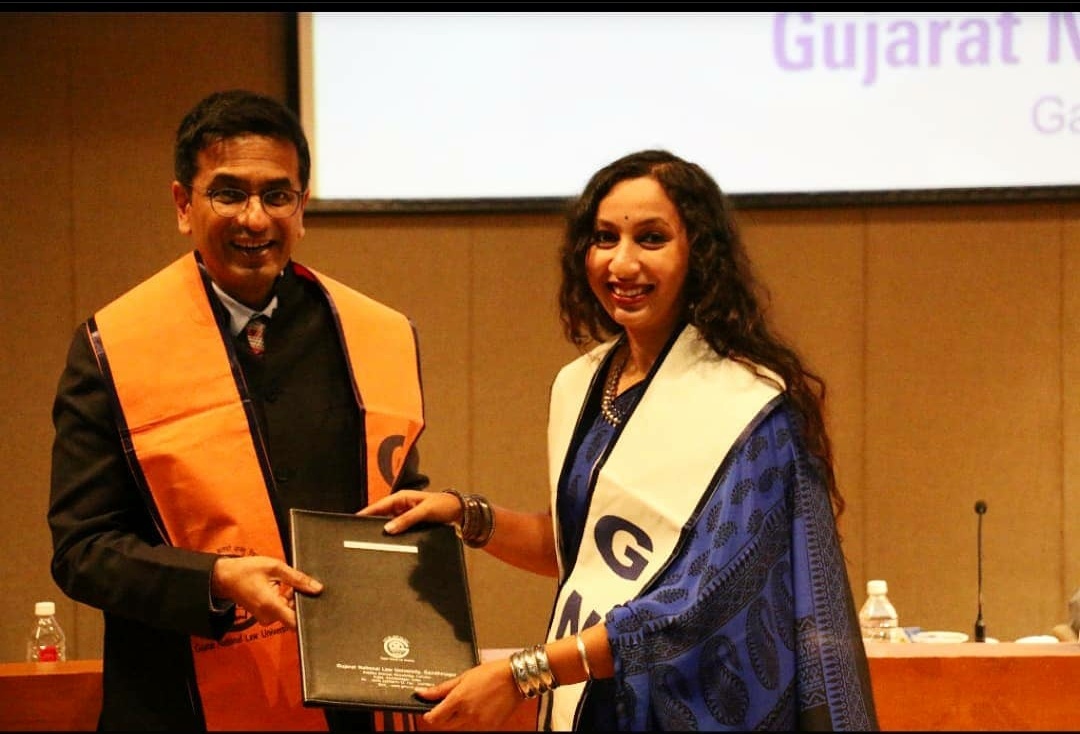
  • As a dispute resolution lawyer, I have understood that what a litigant desires the most is to be heard by an adjudicator and the arbitration proceedings conveniently affords that comfort to a litigant- Soumya Priyadarshinee, Advocate-on-Record, Supreme Court of India

    As a dispute resolution lawyer, I have understood that what a litigant desires the most is to be heard by an adjudicator and the arbitration proceedings conveniently affords that comfort to a litigant- Soumya Priyadarshinee, Advocate-on-Record, Supreme Court of India

    This interview has been published by  Priyanka Karwa and The SuperLawyer Team

    Ma’am, please tell us about your educational background and how you ended up pursuing law? What motivated you to choose this career path?

    Prior to joining law school, my educational trajectory was fairly linear-small town CBSE schooling. I am a first generation lawyer. I decided to become a lawyer when I was just 13 years old. It was largely borne out of the urge to depart from the trend of making the stereotypical choices of either becoming an engineer or a doctor. Some of the credit also goes to the copious amounts of legal fiction which I read at that time.  However, all these years later, for entirely different reasons, the decision to become a lawyer seems more correct than ever.

    You have an impressive work experience, ranging from independent practice to working at various prestigious offices. How did your journey progress from your early career to where you are now?

    The seeds of my litigation career were sown through my law school internships where  I first learnt grasping legal propositions and delivering accurate legal research. Then, as a lawyer, being the youngest member of the team, executing the smallest of tasks with responsibility became a priority. Reading my corrected drafts several times to understand the shortfalls was a practice which has stood me in good stead. With time my drafts have evolved. As the years passed, my approach shifted from finding the correct law to finding the optimum solution for the client. The sweetest part came around the 5th year of my practice, when I started arguing before the Hon’ble High Court of Delhi. What seemed overwhelming in the beginning, slowly became thrilling and enjoyable. The feeling of having conveyed my case satisfactorily across the bar, is by far the most gratifying feeling for me; irrespective of the win or loss that follows.

    During your stint at the Office of Ms. Rukhmini S. Bobde, you handled criminal matters and intellectual property disputes, among others. How did these experiences contribute to your growth as a legal professional?

    Litigation is a nuanced craft. Working with Ms. Bobde, first as an intern and then as a lawyer has helped me immensely. Crystal clear instructions and  adherence to professional practices have been a good primer for me. For example, one can never expect a hassle free briefing session with her without having read the brief cover to cover. Similarly, remaining poised and attentive even in high pressure situations during court hearings is a core part of her arguing style which I have been able to imbibe.  The best part about working with her has been her inclusive way of teaching me. She would always ask my opinion about the possible outcome of a hearing or about the starting point of an argument. The deliberation that follows has taught me the difference between arguing a fresh matter for admission before the Hon’ble Supreme Court and addressing final arguments before an Arbitral Tribunal. In the former, identifying and pitching the best point of a case becomes cardinal. While in the latter, being lucid while marshalling facts is a must. 

    Your work experience at various law firms involved handling cases related to environmental matters, infrastructure disputes and mining regulations. How did you navigate through these complex and diverse legal areas?

    Every new kind of dispute poses a two-fold challenge. The first is to understand the law around it and the second is to get the technicalities straight.  Over the years, I have found that a thorough reading of the brief (however unfamiliar it may be) followed by a meticulous session with the clients who are experts in their fields, such as Engineers and Chartered Accountants etc. gives me good control over the brief. From this point, traversing through the law becomes simpler. Capturing the crux through written submissions seals the deal. This approach cuts across the different domains of disputes. 

    During your independent practice, you dealt with a diverse range of disputes, including public law matters and commercial arbitrations. Could you share some memorable experiences or cases that had a significant impact on your legal career?

    There are many. But one experience from March, 2023 is extremely bittersweet. I was representing a client for the very first time before the Hon’ble High Court of Judicature at Bombay in a case under s. 9 of the Arbitration and Conciliation Act, 1996. I had worked very hard. However, I somehow felt that my arguments did not meet the mark at all. And as my luck would have it, I also managed to get scolded by the Judge that day. The clients were present in court. I was disheartened. I even made the affidavits and the vakalatnama and sent it to the clients in anticipation of having to file an appeal. However, two days later, on the date of pronouncement, I was pleasantly surprised to know from the local lawyer that not only had the Judge decided partly in my favour but he had also praised me in open court. He in fact appointed me as an arbitrator in another matter. I was relieved and so was my client. Needless to say, more work has followed since, from that client.

    You have also lectured for educational organizations such as Law Sikho and Adani University. What drove you to take up teaching alongside your legal practice?

    I belong to a family of teachers which includes my mother and my grandmother. So, I think I have some natural inclination for teaching.  

    My stint at M.V Kini & Co, New Delhi had me working on the litigation portfolios of NHAI, BHEL, AAI and the likes. This acquainted me with technical nuances  of those industries such as the different kinds of Infrastructure Contracts including Engineering Procurement and Constructions Contracts, Build Operate Transfer-Annuity Contracts, Hybrid Annuity Contracts etc. As a result I was able to contribute with a mix of practical experiences and theoretical information while teaching. 

    Similarly, I am taking some classes for Law Sikho which caters to the aspirants of the Advocate-on-Record (‘AOR’) Examination. I just cleared this exam in December, 2022. The curriculum is fresh in my mind. Therefore, I decided to take up the opportunity to help out AOR aspirants.  

    Balancing a successful legal career and taking on outstation assignments can be challenging. How do you manage your professional commitments effectively?

    The challenges behind taking up outstation matters include getting used to the listing process and ensuring defect free filing. The style of drafting also differs. Similarly, when it comes to handling arguments, a new court and a new judge can be disconcerting in the beginning. But these are challenges that disappear sooner than they appear provided one is a keen observer and relies on a good local lawyer. I manage my professional commitments vis-a-vis outstation matters by appearing through video conferencing on non-effective dates, by maintaining my court calendar carefully and by collaborating with competent local lawyers. 

    Throughout your career, you’ve been involved in arbitration proceedings and mediation. Could you share some insights into the benefits of alternative dispute resolution methods in the legal system?

    As a dispute resolution lawyer, I have understood that what a litigant desires the most is to be heard by an adjudicator and the arbitration proceedings conveniently affords that comfort to a litigant. Additionally, the earnest effort of the parties, advocates, and arbitrators to dispose of the matter within a limited time frame augurs well. As judicial intervention is restricted and can be exercised only on limited grounds, the parties are much more likely to accept the arbitral award and save themselves from the seemingly endless cycle of appeals and revision etc.

    Mediation has also proven very effective, particularly for certain genres of disputes. Long years of litigation between family members on matters of property etc have an emotional cost. Thicker the tie, the harder it is to remain objective. However, when mediated effectively, I have seen parties settling old property disputes resulting in disposal of long drawn disputes. The same is true in Matrimonial disputes as well. I have attended many mediations in the Supreme Court Mediation Cell where often chequered disputes between estranged spouses end with a reasonable and dignified settlement. 

    Many fresh law graduates aspire to have a successful legal career like yours. What advice would you give to these graduates who are just starting their journey in the legal profession? What key qualities or skills do you believe are essential for their success?

    Success is a relative term and still seems elusive to me. Delivering my best on each and every opportunity has been my only priority. The two indispensable qualities that come in handy for a lawyer are humility and honesty. As rhetorical as it may sound, I feel with humility, one can identify and embrace one’s shortcomings and work on them effortlessly . With honesty, one can win trust and reliability. These eventually translate into valuable social capital. 

    As a successful legal professional, what are your future aspirations? Are there any particular legal areas or causes that you are passionate about and would like to focus on in the coming years?

    I wish to develop a career as an arguing counsel. Till that materializes, I am happy doing it all, namely arguing, drafting, filing, briefing etc. The core idea is to deliver quality legal services in every case.

    Lastly, could you share a personal or professional mantra that has guided you throughout your legal career and life in general?

    It is true that personal life and professional life tend to run hand in hand. But keeping the two separate is the test of a true professional. Having clinical objectivity towards my professional life has helped me protect and nurture it against the inevitable and sporadic turbulences in my personal life.

  • In conversation with Srishti Chaturvedi – the choice between JAG and academics, and the road so far

    In conversation with Srishti Chaturvedi – the choice between JAG and academics, and the road so far


    This interview has been published by Sonali Parashar. The Interview was taken by The SuperLawyer Team.


    What prompted you to choose Law? Did you always want to take Law as a career? 

    Law was not my first career choice. While in school, I maintained a persistent good grade and was expected to prepare for engineering entrance examinations while pursuing my 10+2. I had never really been only into academics from the early start and was therefore also pursuing vocal music, kathak and karate competitively during the time. A major reason why I started looking for options other than engineering has been NCC though. I had been in the Army wing of NCC in my VIII and IX std. when I participated in the Republic Day Parade in Delhi; after which, I participated in the Senior Wing of Air Wing in my XI and XII std. and received a ‘C’ certificate and was also chosen as the Main Flier for the MP&CG contingent in Vayu Sena Camp. All of this led me to consider Flying as an alternate career option. My parents were not particularly keen on this and as a result, this was deferred till my graduation. I had started exploring other options though. Some of my friends who were preparing for CLAT suggested that my aptitude is better suited for law and so I prepared for the CLAT entrance intensively for a month and got through NLIU, Bhopal.

    While pursuing LLM, you appeared for the JAG exam for the Navy and cleared all the stages. What special effort does the JAG exam require? How did you manage to make out time for both? Would you like to suggest a few tips for its preparation?

    The entrance examination for JAG was during the first month of the LL.M. course and GNLU was accommodating enough to give me academic leave for the 11 days that I stayed at the SSB centre. Since it was the start of the course, I did not have to juggle two things simultaneously. 

    I was recommended for JAG and cleared the medical tests in my first attempt. I liked the experience of the 5 day SSB exam process because, in my opinion, it is one of the few entrance tests that does not promote rote learning and tests the aptitude of the candidates. Some people prepare for it through coaching centres etc. but I don’t think it is necessary. It is adequate to have a thorough knowledge of the various tests and activities that are conducted in the 5 days. The preparation for written tests can be done through any basic book of preparation for SSB (I read Arihant) and the aspirant must have a minimum level of physical fitness to go through the physical tasks of the examination. Having a basic knowledge of the composition and working of the Defence forces is usually very helpful, and having certificates in NCC and sports competitions is an added advantage. Over-preparedness does not help as the tests are structured in a manner to test the aptitude of the aspirants. 

    Do you think TA-ship is important in the LLM programme? How was your TA-ship experience? What was that one learning experience in your TA-ship that you’d credit to have shaped your career and your current role? 

    Yes, I think TA-ship is extremely important in the LL.M. programme, especially for students who want to take up academics as a career. I did my TA-ship under Dr Jagadeesh Chandra, for Law of Evidence classes in GNLU and had a wonderful experience learning about various teaching pedagogies in theory and then seeing him use them in his lectures later. It was his style of interacting with students in an open, relaxed atmosphere and actively engaging in discussions with them, that made me understand the importance of having a mentor and not just a subject-teacher in the life of a student. I have tried adapting a similar role when I am assigned a class to teach or a group of students to interact with, in any other official capacity. 

    PhD is all about extensively researching in the chosen field and gaining an insight into the subject. What new things and skills did you develop while pursuing your PhD? How strenuous was clearing the PhD entrance exam of NLIU? 

    I slightly differ on the view that a PhD is all about researching and gaining insight into a particular topic. Of course, extensive research has to be done even before a topic can be finalized and by the time a thesis is submitted, you have considerable insight into the topic of your research. But there are a lot of other skills learnt. During the course work, we learn a lot about quantitative methods of research which is not covered adequately even during masters. We learn about various statistical, citation and referencing and content-correcter tools. Since every draft is revised and corrected several times before it is finalized, it results in not just better research skills but also far better legal writing and articulation skills than we started with. Most importantly, you learn to be patient with yourself and the people around you since everything cannot be controlled directly, and you learn to work with long-term goals. For a lot of us who had already started teaching for some time before starting our PhD, the coursework period especially presents an excellent opportunity to refresh what is it like being a student and knowing their expectations, learning obstacles and preferences, from a first person’s perspective.

    The exam is honestly not very difficult if you are in touch with the basics of law. When I gave the entrance exam for NLIU in 2018, there were 3 subjective papers for Research Methodology, Constitutional Law and Jurisprudence. Since I was also preparing for UGC-NET at the time, it was not very difficult to prepare for. This was followed by a small interview session where the panel asks questions to know the proposed area of research and how the applicant plans to go about it.  

    Srishti Chaturvedi

    You have observed students very closely and from different perspectives by the virtue of being in different roles. How would you describe the modern era student’s mindset? What improvements do they need in their day-to-day activities to help them succeed?

    I think students today are extremely smart and informed, they know a lot more than we did in our graduation days. However, I also think the competition of getting successful, more and faster, than their peers is making a huge dent in their emotional well being. To study law and build a career in the middle of a pandemic, only adds substantially to this pressure. I have worked with Jagran Lakecity University, NLIU Bhopal, DNLU Jabalpur and now at RNTU in 4 years and I have found one thing which is common in all the students irrespective of all the other differences, that they are under a lot of pressure and most of them are not coping well with it. I cannot emphasize enough how important mental and emotional well being is, to succeed not just in life generally, but also in one’s profession specifically; everyone should make this an utmost priority if they want any kind of success in life.

    I don’t think that the students require a lot of tips about succeeding academically, except that they should be open to all kinds of experiences that the course offers. They should take up extra courses, write research papers, moot, participate in MUNs, present papers, become part of various committees and clubs, and intern in different places till their third year at least. This will help them discover what they like and what they want to do after graduation. The efforts of the next 2-2.5 years can be streamlined accordingly.

    You also started working as one of the founding members of CAN Foundation’s blog ‘Vedanam’ and later, as an Executive committee member of the Foundation itself. Can you tell us a bit about your role at CAN? What all responsibilities did you have? 

    My role as an Executive Committee member is primarily to focus on the execution of the 2 flagship scholarship programs of CAN- ‘Eklavya’ and ‘Dhananjay’. I work with the student committee of CAN from the inception of the project. We set the minimum eligibility criteria to apply, invite applications from meritorious students, go through hundreds of applications and sort them meticulously while also verifying their documentation. Thereafter, we have multiple rounds of meetings with the scrutiny committee and selection committee to finalize the names of the scholarship awardees. The whole process takes a lot of time and organization and cannot be done without the hard work and consistent efforts of the student committee members of the Foundation and the able guidance of Mr Siddharth R. Gupta,(CEO, CAN Foundation). Going through various applications of students who are extremely meritorious even while facing all kinds of financial hardships, since the last 2 years, has further encouraged me to realize my privilege and set long-term goals through which I can contribute back to the community in any form.

    Can you tell us a bit about your current work and role? What do you plan to achieve next in your career trajectory?

    I am currently in the final stages of completing my PhD thesis, and will probably be submitting it this year. However, I kept thinking I wanted an opportunity to do something different and most importantly, I wanted to be back in a classroom. So, I have recently joined as an Assistant Professor of Law in RNTU, Bhopal. My job profile includes teaching UG and PG classes, working on administrative rebuilding and cohesion and working with the local community as the Legal Aid Cell in charge through various projects of the University. 

    My sole aim for my career this year is the successful submission of my PhD thesis. I have been wanting to be an ‘Author’ of a book for some time, but the plan keeps being postponed due to some reasons. So after my PhD, I plan to write a book sometime soon. Working at DNLU made me realize I like taking up administrative responsibilities as much as I like teaching since I was also the Warden, the Faculty in-charge of the Legal Aid Cell and some other committees as well; so I would like to take up roles where I can work more in administrative capacity along with working on my classroom teaching skills.

    What would be your parting message to our young readers?

    My message to the readers, especially students, is to not be too hard on yourself. Read as much as you can, and not just about law, watch good movies, participate in competitions, create a lot of good memories with your friends and take utmost advantage of the facilities and opportunities offered by the University. The time, resources and opportunities that are offered during the 5 years of law school will not come again and they should be experienced accordingly. Everyone succeeds at their own pace, and as redundant as it sounds, every person should only compete with themselves. Someone might get a PPO in 4th year while you may still be giving interviews post-graduation, but that is okay. Someone might select the field they want to work in the first go, while you may have switched 2 fields already and are still not sure about what you want to do, and that is okay. Keep learning, keep exploring, keep working and take adequate breaks to breathe between all of this. Things will start falling in place one after the other.


    Get in touch with Srishti Chaturvedi:

  • Shriya Maini, Advocate, Supreme Court of India, on Independent practice in law, studying an International LLM from the University of Oxford, and writing research papers

    Shriya Maini, Advocate, Supreme Court of India, on Independent practice in law, studying an International LLM from the University of Oxford, and writing research papers

    Advocate Shriya Maini practices at the Supreme Court of India, the Delhi High Court and District Courts at New Delhi. She specialises in Dispute Resolution and as an unabashed feminist particularly enjoys criminal litigation.

    Ms. Maini is a graduate of Gujarat National Law University, Gandhinagar. She joined the Dispute Resolution team of erstwhile Shardul Amarchand Mangaldas and Suresh A. Shroff, as an Associate in their law firm. Subsequently, she went ahead to pursue her Bachelors in Civil Law (LLM) on a full scholarship namely Dr. Ms. Ambuti Salve Scholarship 2014-2015 at the University of Oxford, United Kingdom. Ms. Maini is also a recipient of the Oxford Global Justice Award for Public International Law, 2015 – 16 which gave her the opportunity to assist the President of International Residual Mechanism for the Criminal Tribunals (“MICT”) at The Hague, Netherlands. Currently, she serves as Visiting Faculty at National Law University, Delhi and Lloyd Law College, Noida. Ms. Maini is an independent consultant for International Law and Legal advisor at the LexQuest Foundation.

    Oxford is a dream college for any law graduate. However, what is life at Oxford like? What happens once you have earned your Oxford degree? Is Independent Practice an option? Being an independent litigator or founder of a firm, in the bubble of the bar, is a pretty big deal. Most who step foot in litigation, often only on nominal remuneration (if any) doled out by well-paid senior lawyers, the dream of the day they can finally set up their own shop. While it might seem to outsiders like all it may take to become a successful advocate is talent and passion, the skills required lie in the business realm more often than in legal.

    In this interview we speak to Ms. Maini about:

    • Tips on writing SOPs and Recommendations required to bag scholarships for foreign LLMs;
    • Masters in Law from the University of Oxford focussing on full scholarship;
    • Transition from a law firm job to Independent Practice;
    • Importance of writing research papers.

    HOW WAS YOUR EXPERIENCE AT GUJARAT NATIONAL LAW UNIVERSITY (“GNLU”) AND WHAT WOULD YOU SAY THAT YOU DID DIFFERENTLY FROM THE REST OF THE STUDENTS TO GRAB FOUR GOLD MEDALS AND EVENTUALLY ADMISSIONS IN BOTH OXFORD AND CAMBRIDGE?

    GNLU was a lovely experience, not only in terms of my professional and academic learning but also personal growth. In college, one is straight out of school and is looking for an avenue where he/she wants to achieve the skies, learn something new, besides of course, making new friends. Hostel life and classroom studies can be real tough taskmasters especially in a place which is far away from what we all call our comfort zone – home. What GNLU taught me was how to adjust well in hostile situations and share my knowledge with possibly everyone around. I also think the quality of the law school really matters, be it their faculty, teaching style or available course options. A great idea would be to speak to as many seniors and alumni and gather information online as to what each law school distinctly offers. When you are picking your college even while filling in your CLAT preferences, be very sure of what you want and where do you want to go. Don’t just follow the names, see for yourself what you want to do, be it social work or firm job or Court practice. For instance, I was very sure that I wanted to litigate and hence, I chose a college closer to my hometown and made a conscious choice that Courts in Gujarat and Delhi could perhaps, help me find plausible internships.

    As for your second question, I didn’t do anything different particularly but I think the one thing that I plausibly did differently was that I paid attention in class. There is a current trend of sleeping through law school classes or being very casual about attending classes thinking that during exams, one can read right at the end and score well. However, I believe it is a great exercise to listen in class and make your own notes, supplementing them with a book perhaps for each subject – for instance say Kelkar for Criminal Law or C.K. Takwani for CPC. These individual notes for me turned out to be best possible sources to study for end-term exams which were subjective in nature. This is in my opinion is one of the easiest ways to score very well in almost every subject in law school (be it civil, criminal or corporate law) and achieve a very high CGPA!

    Another thing that I incessantly followed was writing well researched papers when I was doing assignments or projects at law school. I have converted a lot of them today into top quality publications which have been read world – wide and have helped me garner some great work as an Independent Practitioner and Consultant in Public International Law. So I would say take your projects very seriously and critique the law that’s currently in place. Pick a topic which is perhaps a grey area of law or a burning topic for that matter. These could also help you create some cutting edge research ideas which could set you apart from the rest in class.

    HOW DID YOU GET INTO OXFORD, WHAT ALL DID YOU DO?

    I think for admissions to Oxford and for that matter Cambridge as well, it’s very important that you plan well in advance. Should you want to start your studies the next year, I think it’s important that you start gearing up from August-September this year itself. Start collecting your recommendations, prepare a well-researched Statement of Purpose and apply before the scholarship deadline. To sum up, time management is one thing that you must keep in mind while making Applications to foreign Universities for the LLM course. I suggest it’s a great idea to make a chart or table of all the deadlines of various Universities (with and without scholarship) so that the application process becomes far more coherent and crisp. This is what I personally followed, besides carefully monitoring my Statement of Purpose and Recommendations.

    Another aspect to keep in mind is that when you are applying to a stalwart University like Oxford, it is always advisable to research well about the University and its courses offered. Another suggestion would be to speak to a lot of seniors and alumni who have been to Oxford because these are the only few who seem to know the things at the grass-root level. A quick Google search say of the University, any of the past Statement of Purposes uploaded therein could benefit you manifolds. This would give you a wide array of options to pick from and you could then craft an SOP or Recommendation Letter, suited to your own specific needs, depending upon the college. For instance, Oxford Recommendations and SOPs are very academic unlike a London School of Economics, which focuses more on the practical side of law. I had made up my mind for an Ox-Cam degree and hence, I prepared all my documents accordingly. My SOPs and Recommendations were very specific, academic and crisp alongside, distinctly explaining why I wanted to read which course at a foreign University only.


    WHAT WERE THE OTHER ACTIVITIES THAT YOU UNDERTOOK OTHER THAN WRITING AND PUBLISHING RESEARCH PAPERS?

    That’s a great question! I think these activities which you are referring to – that we undertake at law school form the very basis of the contents of any LLM application. Foreign Universities do not decide Applications solely on the basis of academic scores (which are fairly important) but they look for something extra, what I like to call the “X” Factor. These could be moot court competition, research publications, book or commentary writings etc. I was primarily focussed on mooting for public speaking came rather very easy to me. I participated in two moot Court Competition, the Manfred Lachs and Nani Palkhivala – both which dealt with my interest area – Public International Law. So, mooting for me was like learning the law and enjoying myself while doing just that. Infact, Public International Law is a field that I now constructively engage with on a daily basis. So, I would say, keep your focus intact and start preparing step by step, right from the first year depending upon where you see yourself in the next five years. Focus on your interest areas, be it civil, criminal, corporate or tax. This is how I used the mooting process to my advantage – I researched and learnt the law, developed court mannerisms and soft skills besides inculcating team spirit. Additionally, it is also advisable to engage in atleast one extra circular activity, be it painting, dance or music.

    Another activity that I undertook was attending conferences and research based events. This extensively helped me network and realise how communication is the key to success in this profession. I applied for internships and sought answers to my queries by sending e-mails to my seniors. Today, I receive requests on Social Media on a daily basis requesting information on a plethora of topics, be it my work at the United Nations or Oxford or the LLM Application process in general. I make it a point to take out some time and try and respond to as many students as possible.


    WHAT WERE YOUR CONSIDERATIONS WHILE APPLYING AT THE FOREIGN UNIVERSITIES AND WHAT MADE YOU CHOOSE BCL FROM OXFORD OVER AN LL.M. FROM CAMBRIDGE AND HOW ARE THE TWO ANY DIFFERENT?

    One of the most important considerations apart from academic scores is finding scholarship options while making LLM Applications to foreign Universities. Another consideration for me was place of convenience (England being closer to India than America), a specific law you want to study (International Law for me) or place where you want to practice eventually. Let’s go step by step: While applying for both Oxford and Cambridge, I was categorically focussed on applying for a common law university. It’s a good idea to keep your options open if you are not sure what you really want to major in. Apply for a general LL.M unless you are very keen to practice in a niche area of law, such as International Tax or Intellectual Property Law. I too opted for a general LL.M. with 50 subjects on the table so that I could pick my four most preferred subjects.

    As for differences between Oxford and Cambridge – the BCL course at Oxford looks at the law from a very academic point of view unlike Cambridge, which is more practice oriented. Oxford in general has a very theoretical approach to the law because you have a lot of Queen’s Counsels and Professors teaching on campus who have literally helped lawmakers create the law. So, Oxford in effect teaches you why the law i.e. the reasoning behind the formulation of a law. This is a very interesting approach because the same inculcates critiquing abilities in a student and help form arguments and questions of law subsequently in filing Special Leave Petitions for instance. Again said, the Tutorial system in both these Universities is a fantastic model from which our Indian Universities could benefit manifolds. During the tutorials, one writes a research paper critiquing the law, and the tutor gives him/her individual feedback in person. This teaches the students the art of formulating legal arguments, besides describing how the papers must be structured.


    YOU PUT A LOT OF STRESS ON RESEARCH PAPERS AND PUBLICATIONS. HOW MUCH IMPORTANCE DOES PUBLISHING OF A BLOG OR AN ARTICLE ON INDEPENDENT BLOG WEBSITES HOLD?

    Today, blogging has given the power and leverage to almost everyone to put their thoughts onto paper. When used effectively, this could be an easy and inexpensive gain for any Independent practitioner’s work. Like persuasive and binding value of judgements, if you publish an article in a legal journal, it carries more weightage than an independent publication on a blog-site. Hence, I would suggest either you write something so strikingly different on your own blog or write for a blog – site which has a good readership and is well known in the market. For Example – there is a very famous peer-review blog called EJIL which was started by the University of Oxford students. Today, the blog is very highly regarded and every two months, stalwarts share their views on International Humanitarian Law and International Criminal Law. If you have a publication on EJIL, that’s more prestigious than some of the journals as well. I believe, blogs – sites are the way forward – they are the best spaces for Advocates to work on, to enhance their knowledge and clientele.


    COULD YOU PLEASE TALK ABOUT YOUR APPLICATION FOR THE PRESENT STUDENTS?

    Out of the many who apply to Oxford, only a handful are selected, not because the others don’t have the marks or academic prowess but because their applications starkly lack content and structure. It is essential to be aware of the International standards and approaches when one is making such applications. The most important feature of your Application for an International course is an SOP – “Statement of Purpose”. When you draft an SOP you must state clearly why you want to join a particular University, the subjects you want to study or why do you want to study those subjects in that particular University only, perhaps, because the same are not available in an Indian University. Before making my Application, I thoroughly researched about the Universities that I was keen to apply to, their course modules and current as well as adjunct faculty. I request all of you to decide well in advance which are the subjects you wish to pick for your LLM – so you must know before making your Application which course modules you intend to read in which College. This process immensely helped me craft tailor-made Applications for different Universities and their courses. Additionally, I read my Application twice over prior to submission and applied well in advance, within the Scholarship deadline.


    WHAT IF A PERSON WANTS TO PURSUE THE SAME COURSE WHICH IS AVAILABLE IN A GOOD UNIVERSITY IN INDIA? WHAT SHOULD A STUDENT DO IN THAT CASE?

    I think it is important to realise and fathom the fact that we are still miles away to go when it comes to legal education. There’s a reason why people go out and study. I won’t say that there’s no good faculty in India but what they are doing out there is very different and there is no harm in learning from the foreign Universities how and what they teach. Today, many Indian Universities are collaborating with foreign ones for exchange programmes for their undergraduate students. There must be cogent reasons for the same. Should you compare the course modules that an Indian University offers vis-à-vis a foreign University, you will realize how far ahead they are in terms of teaching innovative subjects, hiring excellent practitioners to teach academic subjects and characteristically bright methods of teaching, such as the tutorial system.


    IS AN LL.M. FROM THE UNITED STATES OF AMERICA BETTER OR FROM THE UK? WHAT ARE THE MAIN DIFFERENCES BETWEEN THE TWO?

    The two are essentially very different in their approaches. The UK LL.M. is based totally on Common Law perspectives, though we study a fair bit of Civil Law. On the contrary, the US LL.M. is totally based on Civil Law teachings. This limits the scope of those who want to come back to India at some point in time and practice. So if you want to come back to the Indian Courts, I’d suggest it is always better to go for the United Kingdom. However, many believe that the American market is currently way more welcoming when it comes to hiring Indian students who write the American Bar exam post their LLM. Again said, they both have their own pros and cons.


    HOW IS THE PEDAGOGY AT OXFORD DIFFERENT FROM THE TOP UNIVERSITIES IN INDIA?

    My most favourite memory of the last few years is my time spent at the University of Oxford. This because studying at Oxford is a once in a lifetime opportunity. The environment is intellectually stimulating to the extent that it pushes you to excel, should you take it in the right spirit. It is a student’s city, full of the best minds from all across the globe, bubbling and bursting with knowledge. Even the Pubs and Bars have students lounging and discussing the law. My experience at Oxford taught me how to question and critique the law, without simply accepting and applying it. The teaching methodology at Oxford comprised of lectures and seminars (classroom discussions wherein questions were released a week in advance). We had a system of tutorials wherein we were supposed to write papers every month on topics for subject, only to be assessed and given feedback on in person by our teachers. This personalized attention in a Masters course is what makes Oxford the best of the best. It was inspirational for me to witness how the best University in the world functions, alongside keeping its humanitarian approach intact.


    HOW DID THE 100% SCHOLARSHIP AT OXFORD HAPPEN? COULD YOU TALK ABOUT WHAT HELPED YOU GAIN THAT SCHOLARSHIP?

    I think this is one question I can answer out of sheer experience and nothing else. I never had a Plan A or a Plan B when it came to doing the LLM. I had always decided that I was going to go out and study, and as far as the money was concerned, I knew it was a big amount but I really did not think too much about it while I was making the Application. The best advice that I can pass on is – Do not fret about the funding before applying for a Master’s course. Make your Applications first and alongside or subsequently figure out the funding options available. And the best way to do that is – APPLY EVERYWHERE POSSIBLE FOR SCHOLARSHIPS! This is what I tell all the students who come and ask me about any kind of scholarship questions. The best way to get a scholarship is to apply everywhere because what matters is that one YES, not those numerous NOs. A cent per cent scholarship (including tuition fees and living expenses) may not be easy, but it’s not impossible if you try hard. Almost every University application has a separate scholarship section. So, keep an eye out for these alongside the bursaries and grants that are doled out towards the end of the Application process. There are also numerous Indian donors who can help you out – be it Inlaks or Aga Khan. Please remember all the University linked scholarships have early bird application deadlines with an automatically linked funding application. Also, Universities like Oxford have multiple colleges, be it Exeter or Sommer ville. So, check if any Scholarships are specifically linked to your College. For instance, the Dr Mrs Ambruti Salve Scholarship was linked to Exeter College at the University of Oxford. I was indeed blessed to have received a full grant which included my tuition fees, travel and living expenses.

    Another tip that I give students is that your SOP must in a line or two stress on the need for funds factor. Make it clear and evident even when you are applying to the University that you are looking for funding. Do not feel shy or embarrassed about the fact that you are coming from a third world country, and probably you could do with some monetary help.


    HOW CAN ONE MAKE THE MOST OF A SHORT SUMMER SCHOOL COURSE AT OXFORD UNIVERSITY, MAY BE A MONTH’S COURSE? ARE THEY BENEFICIAL THESE KINDS OF SCHOOLS, OR IS IT BETTER TO GO ON A SCHOLARSHIP?

    I realize that I am on a public platform and I may be quoted if I say this, but I am going to be very brutally honest about it. From a very personal experience, I believe spending money on a month long summer school at a University in England or America is definitely not worth it, unless you have the funding available. I think one can easily enrol for diploma courses online or offline that are available at much cheaper costs in India, instead of these expensive foreign location based summer schools. Please do not spend your parents’ hard earned money, or even your own accumulated money on a summer school option which is only a month long. So, hold on to those green notes for a wiser option, maybe an LL.M.


    WE KNOW FOR A FACT THAT YOU HAVE WORKED AT AMSS BEFORE GOING FOR YOUR BCL. HOW DID YOU UTILISE YOUR TIME AT AMSS TO STEP INTO PRACTICE ?

    The workings of a law firm are very different from how independent practice works. The law firm culture teaches you qualities that practice wouldn’t and vice versa. The most important skill that I acquired from the law firm environment was communication. I learnt how to send out and receive formal e-mails to clients and arbitrators, how to make contacts, how to interact with people, especially client interviews. This is one skill I now utilise in my practice, a lot.

    The second skill which is law firm specific is meeting deadlines. In an independent practice set up, one can get pretty lazy and relaxed, seeking multiple dates for submissions. But the law firm environment teaches you to stick to deadlines because you have a senior to report to. The inherent structural hierarchy teaches you effective time management and smart client billing. These acquired skills are a boon for a practitioner who finds it hard to not only procure work but also bill decently well. I have purely used these skills to grow from one client into fifty more in an ongoing builder-investor dispute. Lastly, the law firm as a junior teaches you how to be resilient and churn out the first draft so that the same can be edited over a series of corrections. Now being in independent practice, I ensure that my drafts are read over and copyedited atleast thrice in the office/chambers before their submission in Court.


    IS THERE ANY POINT IN DOING AN LLM, IF YOU ACTUALLY WANT TO LITIGATE IN INDIA?

    I’m always asked this question because almost all those who cannot make it to an Oxford or Cambridge at the Masters level criticise it thoroughly, saying there is no use wasting a year, better practice in the Indian Courts. However, I do not at all agree with their views. This because the education standards, legal knowledge, command over language and critical thinking are approaches that are best developed at the Masters Level, for the focus becomes very specific on a single subject or topic. This tremendously enhances the aura of a lawyer for he learns how to question why the law. This is why most of the better Supreme Court lawyers in India have a foreign LLM degree. I can proudly say that I draft all my petitions from scratch, analysing precedents and even critiquing them at times, without cut copy pasting judgements. Small skills can go a long way in making a great lawyer. Foreign LLMs train you exactly in that direction and for that purpose. Additionally, foreign LLMs do give you special knowledge which general practice in Court would never. I was fortunate to read International Criminal Law during the BCL at Oxford and today, I teach that subject in Indian Law schools, be it Lloyd Law College or National Law University, Delhi. Indian Court practice wouldn’t have ever taught me the same!


    WHAT CHALLENGES DID YOU FACE DURING THIS TRANSITION FROM THE TOP MOST LAW FIRM TO INDEPENDENT PRACTICE ?

    While at Amarchand, I had waited too long to litigate and appear in Court. The law firm may be a great place for some but I had long realised it was not my calling. When I reached Court, I very well know that I was young and fresh. Noone would so easily entrust me with a brief right at the outset. So I taught myself how to run after work and not money. It took me a few months initially to find my feet but I think I managed rather very well. I was also in an advantageous position because I was a second generation lawyer. These privileges (as much as we shy away from them) do give us a Launchpad and I can never thank my father enough for the same. The best tip is – Do not run after money; lots of money will definitely come to you, at the maximum within a year or two if you’re passionate, hard – working and slightly lucky. Today, I am happy to pass on certain briefs due to paucity of time, only because I was initially hungry for good work and not just good money. Another challenge that one faces is finding work. Now this is the tricky bit. I would suggest you join a boutique law firm or maybe a senior counsel (though for only a few months) before you network for some good work.


    IS THERE ANY EDGE THAT YOU GET OVER THE PEOPLE WHO HAVEN’T DONE AN LLM SPECIFICALLY IF YOU ARE LOOKING FOR A JOB AT THE LAW FIRMS?

    Law firms and I have a very cynical relationship. Don’t get me wrong when I say this – law firms are essentially looking for those who can mechanically deliver on a daily basis what is required of them, may be a contract draft or a petition draft. So, they do not really look at an LLM or a Masters in depth knowledge with any respect because all they want is research and finding out almost every possible detail, without analysing or doing anything path breaking. Many enjoy the economic comforts and benefits of a law firm job and for all those, you can easily get the same with a Bachelor’s degree from India.


    HOW MUCH GPA IS REQUIRED FOR SECURING A PLACE IN A TOP LAW SCHOOL LIKE OXFORD?

    Good question! GPA scores are very important if you are amongst the top three or five in your college. During your Application process, play to your strength and do not forget to mention the same in your Statement of Purpose and Scholarship Application. I wrote almost everywhere that I stood first in my class and this turned out to be a great conversation starter during all my scholarship interviews, besides giving me a cutting edge and good impression. I stressed on how having a high GPA meant that I was one of the best students at my University and I too could bring something unique to the Oxonian high table. On the contrary, if your GPA scores are low, do not mention them unless asked and stress on other aspects such as extra – curricular achievements or books or publications.


    COULD YOU PLEASE GIVE AN ADVICE EACH FOR THOSE WHO ARE APPLYING FOR AN OXFORD LLM; THOSE WHO ARE TRYING TO GET INTO LAW FIRMS AND THOSE WHO INTEND TO UNDERTAKE INDEPENDENT PRACTICE?

    For Oxford Applicants, manage your time effectively and apply well in advance, and of course, flag your scholarship deadlines. Be consistent in your efforts to procure great recommendations from academicians and draft a heartfelt Statement of Purpose. The BCL is a course which you’ll never be able to undertake again in your life, so make the most of it once you are there.

    For Law Firm aspirants, intern at reputed firms all through law school and in a variety of subjects, be it civil, criminal or corporate law. Pick the one that you are most keen in for you have to practice it for a fairly long period of time, once in the firm.

    For Independent Practitioners, dream big to make it happen. Find your feet by interacting with seniors and lawyers alike, network well and be patient. Just run after work and not the money. The latter is bound to follow suit, that too soon.


    Credits : Mr. Manthan Nagpal for transcribing the interview.


  • Shivani Verma, Advocate, Jharkhand High Court, on co-founding Legal Eagle, mentoring law aspirants, and her litigation experience

    Shivani Verma, Advocate, Jharkhand High Court, on co-founding Legal Eagle, mentoring law aspirants, and her litigation experience

    Shivani Verma graduated from Gujarat National Law University, Gandhinagar, in 2011. She has been an Associate with India International Jurists for a year, and is currently an Advocate at the Jharkhand High Court. She is empanelled to represent Canara Bank (Jharkhand), Jharkhand High Court Legal Service Committee, etc. Her area of expertise includes civil and criminal law.

    She is also the co-founder of Legal Eagle, an institute that offers different mentorship programs for Class XI and XII students for various law entrance examinations.

    In this interview we speak to her about:

    • Studying at GNLU
    • Being a co-founder at Legal Eagle
    • Choosing between litigation and corporate law


    How would you like to introduce yourself?

    I am a lawyer by profession with almost five years of active litigation experience,  also now involved with the initiative called ‘Legal Eagle’ where we strive to disseminate important information about the field of law as well as mentor students for various law entrance examinations. I belong to the city of Ranchi, Jharkhand and have returned to my hometown to practice law and contribute to the Legal profession and education in my own way.

    When did you decide to take up law as your profession?  

    ‘Degree in law’ is still looked at with some amount of scepticism by people with no background in law, especially in tier-II cities where they are yet to be exposed to the field. It was no different in my case. I am a first generation lawyer and encountered questions like ‘why law?’ though not from within the family, but outside. The idea of doing law came a little late, but did not involve a lot of overthinking. It was in my Senior Secondary that I realised that I wanted to take up Law. A friend of mine told me about the National Law Schools and the interdisciplinary courses being offered at the law Schools. I really liked the course curriculum designed for the National Law Schools in India and decided to go for it. My father belongs to the field of academics and he was very much aware of the new changes taking places in the profession, especially of the concept of National Law Schools in India and the dynamic course curriculum offered by these colleges. Both my parents were very receptive of the idea of me taking up Law.


    Tell us a little bit about your life as student of law at GNLU. 

    Although, I think I could have explored more in my law school days, both in terms of academics and co-curriculars, yet the five years of studying law remains one of the best experiences till date. There is a lot one can do in those five years, lots of things to learn and a lot of things to unlearn. For starters, the curriculum is so designed that the students are made part of several assignments in the first few days of the college itself and deadlines are already set. This is the time when one has the least amount of knowledge on any subject of law and no clue where to seek help. You end up approaching seniors, faculty members, batchmates, outsiders, anyone who can help. This whole process of trying to find solutions breaks the ice between peers as well as somehow defines your college life in a nutshell, where you end up working in teams in so many situations, may be at the cultural fest, representing your college team in a moot, or other several such competitions or merely working in the mess committee together with different sets of people every time, the experiences are very rewarding. Law Schools is not just restricted to learning but also developing one’s personality through the innumerable meaningful interactions that one has as student of law.

    I was pretty much interested in everything. I had participated in every inter college moot organised by the college in the five years I studied at GNLU, irrespective whether I made it to the next round or not. I got the opportunity to represent the University as part of the team in a National Moot Court Competition. I had participated in many seminars organised both within and outside college, presenting papers on different topics. I was never a topper, but there was always a degree of healthy competition in the environment, which pushes you to be better. This later also helps in the career.

    Dividing time between academics and co-curricular was not very difficult as everyone around me was doing the same, and doing it so well. I thought people in my batch were an excellent bunch of people, so many of them good at so many things. In a lot of ways, it was inspiring, and still is.
     

    How did you develop an interest in litigation?

    Not any one thing in particular, there were several things. The idea of arguing in a matter always seemed to excite me, also a reason I participated in all the moot court competitions in the university. Some subjects like the constitutional law, contract law interested me a lot. As part of academics, I had heard many legal luminaries addressing on several topics and was always fascinated by the real life anecdotes of handling cases and how interpretation of law makes huge impacts in the society we live in. My internship experiences made a lot of things clear to me, also my first job in a law firm where I got the first practical experience of working as a lawyer. This was the time I had decided that I would want go for my independent litigation practice


    Could you tell us about the internships you took up, and what you learnt from those experiences?

    I have undergone several internships during my five years in college, starting from interning at non governmental organisations like CARE International to District Courts at Ranchi, Jharkhand, High Court of Delhi, Supreme Court of India. I interned at some top tier and mid tier- law firms as well like Mulla & Mulla & Craigie Blunt & Caroe Law Offices, New Delhi, Trilegal Delhi, Bharucha & Partners, Mumbai Office, all in the litigation teams. I had also interned at Anand & Anand Law Firm, Mumbai Office for IPR and Publications houses like Indlaw. I tried doing a mixed bag of internships to get to know the work involved and understand where my real interest lay. Litigation somewhere dominated the choice in internships too. All the internships were very rewarding, as along with getting to see the diverse nature of work that the professionals are handling and being part of them, you also get to learn the manner of working in a structured environment.

    How can students avoid a decision paralysis?

    I am of the opinion that ‘Law’ as a field offers the widest arrays of career opportunities and no career choice is bad as such when it comes to a lawyer, as switching from one career option to another is much easier as compared to other fields. Working as an Associate in the Law Firm, and switching to full time litigation in the Courts in India was smooth for me. Similarly, many corporate houses look for candidates with litigation experience to handle their in-house works, so switching from litigation to corporate is also not very difficult and vice versa. There are several examples who have shifted careers and are doing very well in their new fields. ‘Law’ in the country has been ever evolving, and the branches of law ever increasing. One must go with what interests them most and secures their future in it. Decision paralysis, according to me, is only a state of mind. However this can be avoided by undertaking as many diverse internships as one can as a student of law,  if not to understand what one wants than to know what one doesn’t want as a professional

    On the importance of studying further, though I did not opt for further studies right after graduation, I think having a higher degree coupled with in-depth knowledge of a particular branch is always rewarding. Apart from adding to the personality, exposure and confidence of the candidate, a higher degree sometimes becomes vital in terms of the leap you take even in the later stages of your career. Also a higher degree expands the opportunities as some organisations and certain posts are limited for a candidate possessing a graduate degree or more.  It also gives you the flexibility of making big career changes like suddenly switching from a corporate career to academics etc.

    When it comes to deciding what next step is to be taken after graduation, different things work for different people. For some, job satisfaction is more important, some would want more security, while some would opt for creative satisfaction. It is important to choose a path that one may enjoy for the longer run and securing oneself in that. I would also like to add here that even if a decision does not turn out the way one thought it to be, it is never too late to steer in another direction, as sky is the limit in this profession.


    From a law student to a lawyer, how will you describe the transition?

    From a law student to a lawyer, the transition has been at several levels as.  Litigation is a very challenging profession but the results can also bear immense satisfaction for a practitioner of law. Although a lawyer remains a law student throughout his life, the way of looking at things from a professional stand point changes. The profession changes your perspectives on things that you had as a student of law. While a lot of theoretical understanding and brainstorming is done as a student of law, the profession also involves many practical dimensions to an aspect or study. A lawyer who is entrusted with the case owes the highest degree of responsibility to the client as well as to the Court of law and has to accordingly conduct his case. A student of law from the protected environment takes a long leap as a professional amidst cut throat competition.


    Tell us about your early professional experiences as an Associate at India International Jurists. 

    My early professional experiences at India International Jurists was quite an eye opener about the field of law as it was my first job. I learnt a lot while handling diverse kinds of matters in the firm. The confidence of handling the matters on my own and switching to independent litigation are the decisions that followed.

     

    In deciding between Corporate and Litigation practice, what are the parameters that you considered? 

    In my first job at India International Jurists Law Firm at New Delhi, I got the opportunity to work in both Corporate as well as litigation matters. I was appearing before the Delhi and Gurgaon Courts in several litigation matters and simultaneously also working on some corporate cases, but I enjoyed litigation work more than the corporate practice. And that was the only parameter that guided me to take up litigation in the Courts. In my five years stint in the Jharkhand High Court, I have appeared in a variety of matters ranging from Civil, Service, family disputes, Arbitration matters to some Criminal matters as well, representing the Petitioner’s case as well as the State side. But the maximum work has been on the Civil side, especially Service matters which has become a core area of practice now.

    Do you try to consciously build a specific body of work? 

    It is a fact that apart from doing the maximum number of cases that came my way, as a first generation lawyer, I have also consciously tried to build my Curriculum Vitae doing the maximum variety of work as a lawyer, so as to build a good body of work, not restricting myself to anything specific. This is also the reason that apart from working on my own matters, I had worked with the two former Advocate Generals and Additional Advocate General of the State representing the State of Jharkhand in a variety of matters so as to get maximum exposure in terms of work. I have done Public Interest Litigations, Service/ Employment matters, Civil cases, Property matters both representing the Petitioner’s side in some as well as Defendants in some, as I was appearing from the State Government side too. All the matters that have come in the way have been very interesting, though I would refrain from giving a detailed account of them. I have appeared for some social causes through Public Interest Litigations and they have been immensely satisfying experiences. There have been certain cases for implementation of provisions of motor vehicles act to curb the increasing accidents on the roads, challenging the framework of Right to Education act to make it more effective,  framing of rules for formulating rules for the State police to check the incidents of custodial death. There were several other civil and criminal cases. These cases and many more have helped me build my career as it stands today.


    How did you come to become one of the Founders at Legal Eagle? 

    Legal Eagle is an initiative started by my colleague, Shubham Gautum, an NLIU Graduate and me. In fact, I would like to credit him for this brilliant idea. Belonging to a tier II city, being first generation lawyers, studying in National Law Schools and coming back to our hometowns to practice law makes our journey somewhat similar. We were discussing that a lot many people in the town are still unaware of the field of law and the concept of national law universities and other good colleges, the prospects that it offers as a professional degree, when Shubham came up with the idea that we should contribute to the field by spreading information about this field, counselling kids and their parents and also mentoring kids for the examinations. The idea instantly clicked with me. This motivated us to start this initiative from our own understanding and experience. In the year 2016, we held as many as fifteen seminars and interactive sessions at different schools in Ranchi addressing students of Class XI and XII, informing them about the field, how it works, the pros and cons, what to expect as a student of law and as a professional, the current available options of the interdisciplinary degrees etc. With time a number of students have associated with us.



    What gaps in awareness and legal education does Legal Eagle seek to fill? 

    Legal Eagle’ is more of a platform to make the students and parents know of the field of law as it exists today. It is a fact that most of the families in smaller cities in India are aware of the fields of engineering and medicine but have complete lack of information when it comes to less trodden career fields like  Law, Fashion Technology, Mass Communication, Hotel Management etc. Though law is the emerging career of these times but the awareness about the field still remains quite low, especially in smaller cities. In order to bridge these differences, we are holding seminars, discussions, interactions at various forums addressing all kinds of audiences to spread information about the field. Apart from this we are also mentoring students for the upcoming law entrance examinations giving them full class room environment and preparing them for the upcoming examinations.

    What does the scope of work you undertake include at Legal Eagle? 

    The scope of work at Legal Eagle is wide. Apart from the interactive and counselling sessions, as a Mentorship Institute, we are providing the students the best guidance possible to appear in the law entrance examination through class room teaching for examinations like CLAT. We provide them with the materials, a number of Mock tests on different patterns, sectional mocks, quizzes. We are conducting regular classes for different subjects/ topics covered in these tests. We are in regular touch with the parents of the kids being mentored by us by giving them performance maps. With a fresh batch of students coming up in the month of April, after their Board examination, a lot of time will be involved in that as well.

    ‘Legal Eagle’ is a pet project, very close to our heart. Both me and Shubham believe in it and are working everyday towards the goal. We aim to mentor a limited number of student with the best guidance we can. Right from addressing a crowd to counselling a parent or mentoring students, I  love every aspect of the work in ‘Legal Eagle’ and that makes it very enjoyable.


    Did you have a mentor or guide during the formative years of your career? 

    The importance of mentor or guide has to be acknowledged, be it any field. And especially in this field, where a lot depends on the skills and experience of being in the profession. During the formative years of my career as a litigator, I was working with the Senior Advocate, M. Sohail Anwar, a very well known and respected professional in the field. Working with or being attached to someone in the formative years in the field of litigation cannot be overstated as observing and learning the little nuances of the profession becomes very vital when handling a case on your own, as you shape your future in the backdrop of those experiences. The little things like closely watching your mentor dealing with the client and the case at various stages are very important. Especially for a first generation lawyer, who has no exposure whatsoever, of the field.

    Where would you like to see Legal Eagle five years down the line?

    Five years down the line I see ‘Legal Eagle’ bring a big change in the prevailing environment where people’s reservation of opting for the ‘field of law’ is dispelled and the information about the existing scenarios reaches all and people are able to make informed career choices . We hope Legal Eagle makes an indelible mark on the minds of people, especially the students who are associated with us.  We see Legal Eagle soar in five years time.

     

    Do you believe that we are becoming open to careers other than those belonging to the STEM disciplines?

    The prevailing mindsets of most of the parents we come across, is to make their children opt for streams like science in the higher secondary so that they can go for professions like engineering and medicine, without even knowing if their interests lie in that field. Also, the people who have done law are only thought to be the ones practicing in the courts and there’s a particular image of the practicing advocates in our country which is not very positive. They are unaware how much the field has expanded and how much it can offer. In fact it has become one of the most dynamic professions of these times, where lawyers are not just restricted to court rooms, but are now part every company’s board room, small and big agencies, banks, public sector enterprises, start ups, think tanks, local, national and international organisations. Corporate sector is full of lawyers in different roles. Lawyers are entering academics. Percentage of lawyers cracking UPSC every year is on a rise. Most bureaucrats and politicians have a background in law and that gives them an edge. We have counselled a number of students and their parents telling them about this field and what it can offer to a professional. Most of the time, a student is very convinced and wants to take up law but faces dissent of the parents. We then counsel the parents about the profession to dispel their doubts. There is definitely a shift in people’s approach. They are becoming aware and are more willing to go for the new age disciplines today. But then again, in a smaller city, the ratio of such people is very less, as compared to a metro city. Hence the pace of the change in the mindsets is also slower.


    As the co-founder at Legal Eagle, what does a typical working day look like for you?

    At Legal Eagle, the classes usually starts early. Planning and organising takes entire days sometimes. Even when the active sessions are not going, the planning is always going in the background. We keep organising free weekly quizzes for students to take maximum benefit of. For the kids we are mentoring, apart from the regular classes in every subject we conduct as many free mocks, sectional tests etc. for them to take maximum benefit of.


    How do you keep yourself updated about the latest developments in the law?

    The best way to be updated about the latest developments in law or in any other field for that matter is by staying aware of the things happening around on a daily basis. Newspapers are the best way of staying abreast with everything around. Apart from that, like the many developments in the field of law, so are there advanced multiple software for legal search. Being updated with the latest laws and accessing them have become easy in today’s times. Also the fraternity is full of people reading and researching on everything new and the out of court intensive discussions with the peers and seniors serve as great advantage to lawyers.


    What books, judgements that you have read would you say have played an integral role in shaping your legal philosophy?

    Every system is a product of its own unique experience, similar is the case with our very own system. ‘India since Independence’ by Bipan Chandra is one such book that has given an account of the history that has lead to the making of the contemporary times and is a very good read to understand where and why India stands today. Legal Philosophy can be built only on the backdrop of history. Another book, ‘Before memory fades’ by Fali S. Nariman describes his journey as a lawyer and gives perspective to budding lawyers on the field of litigation. There are several judgements which have acted as catalysts for taking up the profession.


    What are the causes you feel strongly about?

    There are many social causes I feel strongly about. One of them is women’s cause in the society. I am yet to do a lot and contribute as a lawyer, in whatever capacity I could. I am an empanelled lawyer of JHALSA (Jharkhand State Legal Services Authority) for giving legal advice and assistance to poor persons who are unable to engage a counsel. I have been representing those clients on behalf of JHALSA.

    It is the concern for the legal field which made me take up a project like ‘Legal Eagle’ where awareness and education is one of the causes that I feel needs to be addressed.


    How do you manage your time between your professional and personal interests? 

    I have always consciously tried to create time for my personal interests apart from the professional life, as my personal time gives me the much needed sanity and boost for the work ahead. It becomes very difficult on certain days where I am caught up in work throughout the day but certain days I have the liberty and time to mould according to my interests. My interests outside law are many. I could spend entire days painting, swimming, reading a book, watching movies or travelling someplace.

     

    What advice would you like to give to students aspiring to build a career in law? 

    For students aspiring to build a career in law, my advice would be to use the immense potential that the degree in law has to offer. Be vigilant, as it is very much important for a law student to be aware of the things happening around. Finally and most importantly, working hard is the only mantra to be successful in your own terms.

    In this cut throat competition, for a student preparing for any competitive examination, the highest degree of commitment is required. The student preparing for the exam should give minimum number of hours of study everyday for the examination and stick to the daily schedule, as being organised is very important at this stage. Solving past year papers, maximum question banks helps one check his speed and accuracy in solving questions. Understanding the nature of questions is very important to understand the examinations. Lastly, belief in oneself should never be lost.

    Like they say, “if the end is clear, the means to the end will take care of itself”.


  • Shobhit Agrawal, Legal Manager, Mahindra World City, on being an avid negotiator, his experience thus far, and the secret to his professional accomplishments

    Shobhit Agrawal, Legal Manager, Mahindra World City, on being an avid negotiator, his experience thus far, and the secret to his professional accomplishments

    Shobhit Agrawal graduated from Gujarat National Law University, batch of 2011. Being an avid participant of negotiation competitions, Shobhit has represented his university at various national and international platforms. During his time as an undergraduate, he has interned with Wadia Ghandy & Co., Paras Kuhad & Associates and Economic Laws Practice firm. After his successful stint as Associate, Corporate Affairs at Porsche, Shobhit is currently Manager of Legal Affairs at Mahindra World City. His role entails drafting, vetting, reviewing, summarizing contracts, tenders, agreements, work orders, financial agreements, Memorandum of Understanding (MOUs), lease deeds, letter of intent, sale deeds, non-disclosure agreements and various other agreements.

    In this interview we talk to him about:

    • Representing his university at numerous international competitions
    • Preferring negotiation competitions to moot court arguments
    • His experience as Legal Manager

    How would you like to introduce yourself? Tell us a bit about your co-curricular interests during college life.

    I am an introvert. But owing to the nature of my profession, there has been a change. However, I continue to remain the same person at the core. During my college days, since it was a five year course, the first year went unnoticed as I took a bit of time to get myself accustomed to the demands of the college. But in my second year I made it a point to do something good for myself as an intellectual. I wrote an essay for the very first time in my life for Manupatra in its Essay Writing Competition and got 4th prize at a National Level which boosted my confidence and then there was no looking back. There were critics who said it was merely a stroke of luck, but it was this criticism that pushed me harder.


    Please share your experience at Gujarat National Law University, Gandhinagar. Why do you prefer negotiation competitions to moot court competitions?

    Ours was the third batch of the college and was therefore in a very nascent stage, so things were developing slowly and steadily. In my college there were some social pressures which made mooting necessary. So initially I participated keeping this core philosophy in my mind & also since it was mandatory, but I realized very soon that it’s not the correct approach so I changed my thinking. I failed at my first two attempts, but eventually succeeded on my third. I was then viewed as a promising candidate, but after participating in a National Moot and getting the best researcher award and third best mooter, I realised that it is not that interesting. The verdict depends completely upon the judge or the presiding officer and you cannot be yourself when you present your case. So I tried for a negotiation competition which is more lively and spontaneous and tests your capability to the highest degree. I got to know about the Negotiation Competition, applied for the same, got assistance from my senior and mentor and cleared various rounds as a team nationally and internationally.

    That success triggered a new path and boosted my confidence. It was a constant effort and choice which I made over moot court–which I continue to have great appreciation for–but I still feel that the amount of poise, charm, enthusiasm which is there in a negotiation or arbitration is not often seen in a moot court. It’s my personal opinion and I love arbitration, negotiation more than the moot court.


    ­­­­­­­­

    What motivated you to pursue law?

    Well, I am from a science background and was about to join a premier engineering college in Bangalore thanks to good rank in AIEEE. But at that time, I also gave law universities exams and luckily got selected. So there were two options to choose between and I chose law as I felt like it would help me engage with society is a more insightful manner. I come from a family of engineers, so I was also tempted to venture into something new.


    Tell us about the significance of pursuing diploma courses.

    It is indeed important to increase your knowledge and for professionals, it is imperative to be updated as in your professional life. You don’t get enough time so these diploma courses give you an insight about the nuances of law and give you an extra mileage and bite over others. It helps groom your personality and also adds value to your CV.

    What are the skills one must acquire to become a legal consultant or a legal manager?

    It’s a common question which is asked and I have a very simple view on this. For any profession, the one most imperative attribute to have is honesty. If you are honest to your work and are dedicated towards the organization you are in, you will definitely come out victorious. To be a manager, the most important thing is to understand the psyche of your team and to make them comfortable. So, it’s important to have a caring attitude towards your team and have a mixed blend of flexibility and firmness. It is alright even if you are no very well versed with the technicalities. Knowledge will definitely come in provided you have opened the window so basically. You just need to keep an open mind and manage your team well. A healthy mind and a pat on someone’s back can do great wonders. So it’s basically an affable attribute which you need to carry with yourself and try to give your team the respect which they truly deserve and then 90 out of 100 times, it will fall in your way.


    What is the secret to your professional accomplishments?

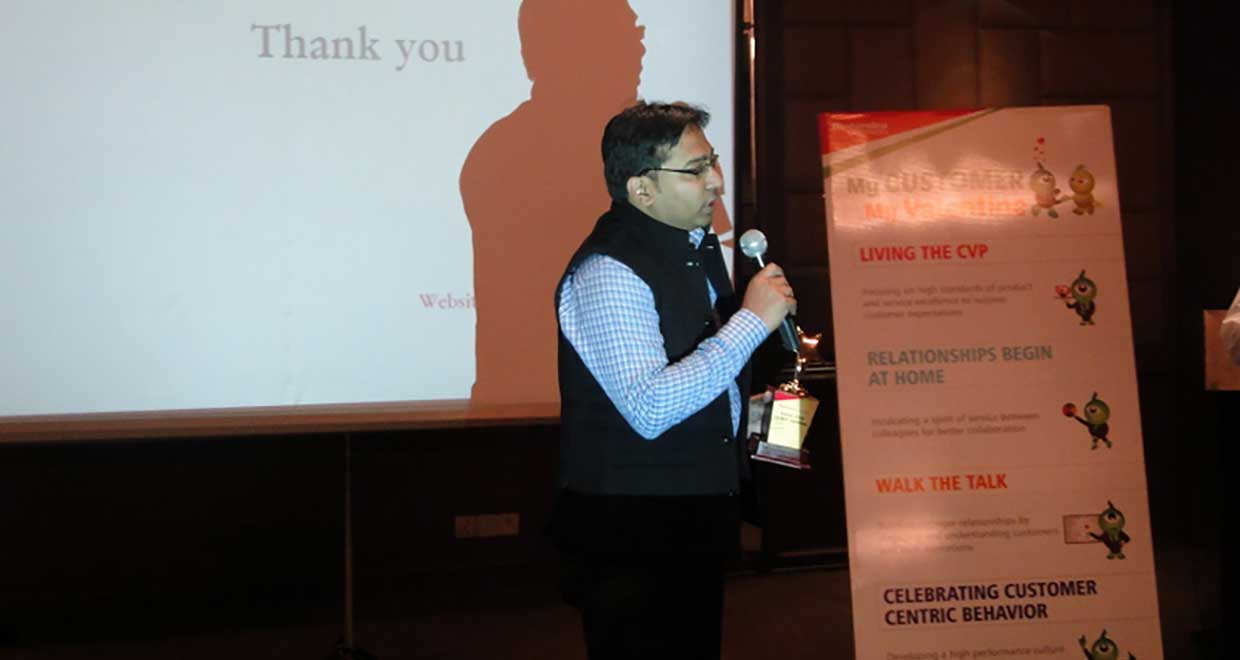
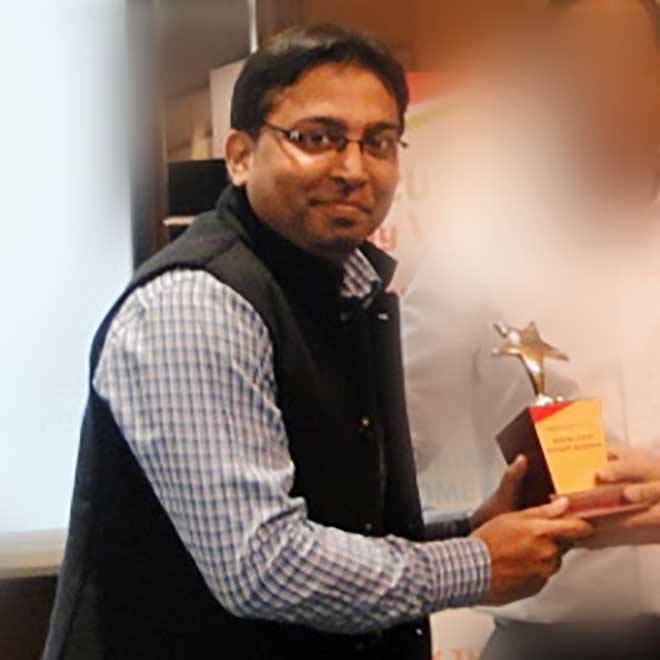
    (Shobhit has received the “Rising Star” trophy from the top management at Mahindra and received various “Champ of the Month” awards)

    Well, it’s basically some hard work, meeting deadlines and tying up loose ends which had helped. It’s a proven fact that when you try hard honestly and give your best, the management also looks at it positively and gives appreciation which can form as a monthly Champ Certificate or a “Rising Star” trophy. The simple mantra is that you either perform or perish. Performance will only come when you do the work sincerely and diligently without making a fuss of situations or excuses.

    What was your experience like as an Associate at Shreyans Group?  

    As an associate with Shreyans group, it was completely a different feel all together as it was my first job, there was a lot to learn and a lot to do. As it was a core company in the automotive sector, my work varied from resolving disputes regarding consumers, custom matters etc. But in Mahindra, I was aware of the sector and its rich values so I tried constantly to be a part of the family in a more subtle manner and I assume I  achieved it too. At Shreyans, I had the luxury of doing work on customs, meeting influential and renowned people as organization dealt with cars like Porsche, Ferrari, Lomborghini etc. But in Mahindra it was a different story all together due to different stream and the area. Here it’s more of drafting agreements, discussions on company policies, lease deeds, labour matters, land matters, company matters etc. and has its own challenge. But I need to be honest that the amount of love and respect which I have received at Mahindra was not the same in my first job. Maybe because I was new and still trying hard to understand the requirements of the job.


    Could you educate our readers about the significance of learning to draft in law schools and writing research papers?

    It’s an important exercise and one has to devote time to it. It is a key skill wherever you go, whether you join a law firm, work as an in-house, NGO or join academics. Writing research papers is more of an art, I would say, as it’s not just cut and copy but its more about understanding the subject matter and interpreting it in your own way, while also checking for plagiarism. Understanding the subject matter as a whole is the key and once it’s there, other things do take their own course naturally.


    Tell us about the experience of representing the country at various international competitions.

    (Shobhit was part of the delegation from the Prime Minister’s office which represented India at the International Negotiable Forum as a team member and the youngest coach in Copenhagen, Denmark)

     It was a moment of great pride. It is exciting, but one must also tread with great caution. It was the competition of a lifetime and I need to mention here that I got the support of all with whom I have interacted. Initially, as I mentioned earlier, people thought that was a fluke but when we again went and did spectacular work, it was answered and the air was cleared. I need to thank my team members who supported me unconditionally. It’s an experience I will cherish till eternity.


    Please give our readers some tips regarding picking the right courses, interning at the right places and activities to undertake to build their CV?

    Let me answer this part by part:

    About picking the right courses – There will be a lot of conflicting advice and opinions from various quarters. Focus on your strengths, interests and made an informed decision.

    Interning at the right places – Before you aspire to work for the higher courts, start with the lower courts. Starting at the grassroots level gives you a hands-on understanding of the law and how justice is dispensed. Lower courts will teach you the basics, which you can later use to your benefit at higher levels of the judiciary, or at law firms.

    Activities to build CV – First and foremost, academics is very important. Focus on research papers, moot courts, negotiations (if you have an interest), attend conferences, seminars and learn. The more you learn the better it will be.

    Keep working hard and never give up. Law is a noble vocation as one gets to serve society. Never deter from giving it your best and you shall succeed.


    Lastly, what would be your message to our readers who are mainly young lawyers and law students who wish to build a career in negotiations?

    Regrets are the worst. Whatever you do, give it your best and be honest to yourself. Negotiation is challenging, tricky but interesting. Focus on discussions by which you can increase your listening ability, be a patient listener, try to understand the psyche of a person, try to get hold of his mental state, try to understand his query, his problems and then device a win-win situation which caters to both parties’ needs and aspirations.

    In law colleges, you get various opportunities to do negotiations, arbitrations at an internship level, attend conferences where you can be in a panel discussion, attend seminars, be in policy making body as lawyer etc. These are some random ways you can get hold of the system and its core demands. It’s more about understanding the individual and once the meeting of minds is there, more chances are in your favour.


  • Shayak Chakraborty, Advocate on Record, Calcutta High Court on starting up with an independent litigation practice right after graduation

    Shayak Chakraborty, Advocate on Record, Calcutta High Court on starting up with an independent litigation practice right after graduation

    Shayak Chakraborty is an alumnus of Gujarat National Law University who graduated in 2013. During his school and college days he was very active in debating and started the Debating League at GNLU. He worked at the Calcutta Sessions Court under the aegis of the Chief Public Prosecutor before assuming a practice at the Calcutta High Court as an Advocate-on-Record. He is a certified mediator and focuses his litigation practice on civil, commercial and corporate, criminal and constitutional law. At present he has an independent practice. In this interview he talks to us about:

    • The required skills and the importance of mentors in litigation
    • The scope of ADR in the Indian judicial system
    • His experience working in the Calcutta Sessions and Calcutta High Court.


    What would be a brief introduction of yourself?

    I graduated from Gujarat National Law University in the year 2013, and I am currently practicing law in the High Court of Judicature at Calcutta. I used to practice criminal law in the lower courts here in Kolkata before making the shift to the High Court last year.


    Were there any activities you participated in that honed your skills as a litigator? How are they relevant now?

    I’d say the activity that helped me the most in litigation was debating. I used to be an active debater during my school days in La Martiniere for Boys, and continued that during my college days, where I founded the GNLU Debating Society in my 2nd year. Debating was a passion for me, although I wasn’t the best debater in my school (which had a fiercely competitive intra-school debating league), I was always an ace in extempore debates, where the skill of thinking on your feet and out of the box is all-important. Looking back, this is what honed my skills the most, because while every lawyer should be able research the law and frame the argument well, how one responds to arguments in Court with little preparation and dodges tough questions from the judge is what separates a good lawyer from the rest. So definitely debating was the most important activity which helped me in becoming a litigator, as it not only improved my speaking skills immensely (I was a very shy kid, and would find it difficult to talk to people before I started debating) but also prepared me to frame convincing arguments quickly.


    Was there anyone who particularly influenced you while deciding on litigation?

    Growing up, two of my father’s close friends encouraged me to take up law –  the late Justice Barin Ghosh, who retired as Chief Justice of Uttarakhand High Court before passing away last year, and senior solicitor Debasis Law. Right from a young age, they told me I had what it takes to be a good lawyer, and thus, right from my school days I always wanted to be a litigating lawyer, having never even heard of transactional practice before I started preparing for law entrance exams. I was very sure that Court practice is what I wanted to do, and so I never wavered in my decision to enter litigation despite being a first generation lawyer.


    Being a certified mediator and an active litigator, what do you feel is the scope of ADR in the judicial system?

    shayak-chakraborty-1As I have been trained in mediation, I am hopeful about its prospects in India. With the tremendous backlog of cases in our courts and the lack of adequate number of judges for a population like ours, more and more people are unwilling to resort to litigation to resolve their disputes. The ever-growing number of arbitrations in our country bear witness to this effect, as today a standard commercial contract will inevitably contain an arbitration clause. However, the real problem comes from land disputes, succession disputes and family matters since those aren’t usually covered by an arbitration agreement. In such cases, mediation can be a very effective way to bring about a resolution without resorting to the court process, and it is increasingly being recognized as such.


    How did you prepare for the bar in a span of a few months?

    The Bar Exam is easy enough to pass, provided you have actually done a reasonable job of studying for your LL.B. degree. It is kind of a refresher exam for your law syllabus, and if you have indeed studied decently for your law exams in college, the Bar Exam won’t give you much trouble.


    What was it like assisting the Chief Public Prosecutor in the Sessions Court?

    Mr. Tamal Kanti Mukherjee, Chief Public Prosecutor of City Sessions Court Kolkata, is a tremendously successful lawyer and a gem of a human being. When I started working in his office, I had no idea about Court practice and had no clue as to how to go about things. While I had done internships during college days, the month or so that one spends on an internship barely gives you even a glimpse as to what Court practice is all about.

    Tamal sir encouraged me a great deal, and helped me gain confidence in my abilities as a lawyer. He would encourage me to read every brief and prep every case for him, and had blind faith in my abilities even when I had no faith in them! With his encouragement and guidance, I learned a great deal about how trial works, and how criminal cases progress. Working for the Chief PP also meant that I interacted with police officers a great deal, and I learned a lot from my interactions with them too. However, I am tremendously grateful to Tamal sir for the constant encouragement he gave me when I was a nervous rookie lawyer. Such was the confidence he gave me that I was appearing on my own merely four months after enrollment!

    shayak-chakraborty-2I was briefed to argue for a de-facto complainant in a massive fraud case, where the value of the fraud was more than Rs 20 crore, and I was to argue against bail of two persons arrested on the very day I was briefed! I was tremendously nervous and excited at the same time, and when I walked into the Magistrate’s courtroom, I saw six lawyers appearing for the two accused! The lawyers argued strongly for bail, the Police Prosecutor opposed the bail in the normal fashion, when I asked for permission to make submissions for the de-facto complainant,  the defence lawyers started shouting that I had no right to make submissions when the Prosecutor was there. Now, Tamal sir never liked to raise his voice, but would never be afraid of shouting down an opponent who was being too aggressive. I shouted back at the defence that I was seeking permission of the Court and I didn’t need their permission. Possibly impressed by my confidence, the Magistrate gave me two minutes to make my argument. I summed up our position on the matter, to which the Magistrate nodded, and sent the accused to police custody for 14 days (the maximum possible time), something completely unexpected for me, as some other juniors had told me not to expect more than 7-8 days of police custody! It was at that moment I knew I could make it as a litigating lawyer if I continued to work hard and persisted with Court practice.


    What was the transition like, moving from work in a Session Court to the High Court? Did you prepare yourself for this change in any way?

    I always wanted to practice at Calcutta High Court, but I could not manage to find a senior’s chamber to join when I returned from GNLU. Now,  my father knew Tamal sir quite well, and when he mentioned to him that I was very confused as to where to start my career and thus had been doing nothing since returning from Gujarat, Tamal sir suggested that I join him for a few days to start with, to get an idea of the lower courts before joining a senior in the High Court.

    After working in the Chief Public Prosecutor’s office for a while, I wasn’t any closer to figuring out a chamber to join in the High Court, so I decided to carry on working in the City Sessions Court, where I was already used to the surroundings and already knew most of the people.

    However, my dream of going to the High Court never changed, and on several occasions I found myself wishing I could do more than just practice criminal law in the lower courts. I was granted a sudden opportunity when a corporate client of mine had a case dismissed in the trial court. They called me in to advise them about their options, and I recommended that they file a revision petition in the High Court. They asked me whether I would take care of the matter in the High Court for them, and I readily agreed! Mind you, I had absolutely zero experience in the High Court at the time, but I was confident enough that I’d be able to figure it out. I managed to find a clerk in the High Court who files matters in the Appellate Side, and took his help in filing that matter. When the case finally appeared in the cause list, I got a major thrill seeing my name alongside it as Advocate for the petitioner. I argued the matter, and it was admitted, and since then I’ve been going to the High Court!


    What are the challenges of being an advocate in the Calcutta High Court? Why did you choose an independent practice as a litigator and not work in a law firm?

    It wasn’t much of a choice, it simply worked out that way! If my client hadn’t entrusted me with the matter, I would probably still be in the Sessions Court looking out for another opportunity to make the shift. I didn’t consider working in a law firm because that entails having absolutely no freedom when it comes to the kind of matters you take up and the manner in which you go about a case, both of which are very important to me. However, it is tremendously tough to work on your own, especially when it comes to getting your own cases. I’ve been blessed by the fact that there are lawyers who have supported me and encouraged me a great deal…I definitely wouldn’t have made it so far without them.


    What are the main types of cases you focus on? How did you choose an area of specialty?

    I actually do all kinds of cases nowadays. While I started out as a criminal lawyer, I was never satisfied doing only criminal cases, although they are very interesting. I started working on civil and commercial matters, including suits, arbitrations and company matters as I went on in the High Court. Soon enough, there were some writ matters that came my way and I loved handling those cases as Constitutional Law has always been my favourite subject. So, I don’t really have a speciality as I have been doing extremely varied matters. I have even done transactional work such as drafting contracts. While there are many lawyers who specialize in their areas of practice, there are several others who do all sorts of matters.


    What is the most challenging case you have ever faced? Is there any case that changed your perspective on the judicial system?

    The most challenging case I have ever worked on is a suit matter currently pending in the High Court, in which I’m the juniormost counsel and I’m assisting reputed Senior Advocates of Calcutta High Court. It’s a Testamentary Suit involving immovable property worth several crores, and even though my role has been negligible in this matter, the sheer complexity of the facts and the stakes involved make me thank my stars that I’ve had the opportunity of working on it. It is also challenging because of the way system works. To even ensure the numerous old and dusty Court records of this suit (filed in 1994!) are available for reference during the trial is a massive task in itself!

    As for a case that changed my perspective on the judicial system, it is an arbitration matter (challenging the award of an arbitrator and a related petition seeking interim measures) long-pending in the Court. Here,  again, I am assisting heavyweight Senior Advocates, and this matter has been kept long pending purely because the State Government, which was the losing side in the arbitration, had adopted delaying tactics in order to avoid paying the massive award passed in the arbitration. I learned through this case how slow the wheels of justice can turn in our system, and how frustrating it can be for a litigant. Even though the arbitration had been resorted to in order to avoid the extremely slow progress of Court, the way our justice system works has ensured that the matter continues to drag on without any sight of coming to an end!


    You are an Advocate-on-Record for matters on the original side at the Calcutta High Court. How did that come about?

    As per the Original Side Rules of the Calcutta High Court, you have to register yourself as an Advocate-on-record with the Registrar of the Original Side in order to file matters and accept vakalatnama from clients in matters on the Original Side. There are certain conditions you have to fulfill in order to register yourself, including having an office within the boundaries set out in Chapter One of the Rules. I never knew about this till I started working at the High Court. A couple of years ago, I had met a senior solicitor, Mr Sarajit Mitra, who had encouraged me a great deal and had taken my advice on criminal matters on a few occasions. I drop in to his office whenever I’m free, as he is filled with excellent stories about the practice of law, and I have learned a great deal about the profession from him. Sarajit sir has also placed great confidence in me and the biggest cases I’ve worked on in the High Court have been the ones in which he has briefed me as junior counsel. When I found out about the fact that not every lawyer can file matters on the Original Side, I asked Mr Mitra about it. Sarajit sir took out an old leather bound volume of the Original Side Rules, and told me to read them. I found that I fulfilled the criteria for registering, and asked what should I do to register myself. Sarajit sir again pointed me to the Rules, and told me to apply in the manner given in the Rules. I did so, and since then, I’ve learned a great deal about the functions and responsibilities of an Advocate-on-record from Mr. Sarajit Mitra, which has helped me to work as an effective Advocate-on-record.


    Are there any suggestions you would like to give our readers especially aspiring litigators?

    Always observe your seniors carefully and learn whatever you can from them. Conduct yourself well, and people will help you out wherever they can. It can be very depressing and frustrating to be a junior lawyer, but you have to faith in yourself and your abilities, and you must have the patience to persist with the profession. Focus on the work, and always seek to learn as much as you can.

  • Anuroop Omkar & Kritika on authoring The Art of Negotiation and Mediation

    Anuroop Omkar & Kritika on authoring The Art of Negotiation and Mediation

    The authors Anuroop Omkar and Kritika are graduates of Gujarat National Law University (GNLU), Gandhinagar and are presently working in the Corporate Department of Lakshmikumaran & Sridharan. They have donned many hats. They jointly run a social service award Bauribandhu Mohapatra and GNLU Award for Social Service, co founded the company Bridge Mediation & Consulting Pvt. Ltd. and have been working tirelessly to spread the concept of mediation among the common masses and commercial groups in India. To give the subject more prominence and acceptance both among the masses and scholars, they decided to pen down a book on negotiation and mediation with LexisNexis. The book is extremely simple in terms of language and international in terms of quality and content. The concepts of negotiation and mediation have been explained with real life examples, childhood learning, mythological anecdotes and case studies of commercial negotiations. The book is titled ‘The Art of Negotiation and Mediation- A Wishbone, Funny Bone and a Backbone’ and is presently available on Flipkart, Amazon and LexisNexis.


    Tell us a bit about your law school experience of preparing projects and dissertations. Did the practice help you to in writing a legal book?

    If you make projects even a little seriously in law schools, they contribute to your knowledge base and enhance your research skills. According to us, making projects becomes interesting only if you choose an interesting topic, a real research area of law. Of course, it is not always possible, but at least in the subjects that you wish to specialize, you can always try to choose a critical area of research. Projects and dissertations help you evaluate what is your area of interest. We know many of our friends from law school who became interested in their practice area after they researched on the subject for a research paper at law school or during an internship.

    Making projects and dissertations was different from writing a book in many aspects. Projects and dissertations were purely law based where we presented the existing laws and gave our interpretation and suggestions. Our book is our attempt to bring law to the common masses. We have tried to present the practice of negotiation and mediation in a way that people who don’t practice law can also easily understand. Additionally, we have also tried to bring in the commercial aspects for businessmen and practitioners. We have also discussed business case studies where applicable.

    Lastly, I (Anuroop) always wanted to write on a subject where I was so comfortable that I would not have to footnote every sentence I write. While it was obligatory for us to footnote everything in our projects, our book is our own take on negotiation and mediation in India. We have made minimal use of footnotes by writing our original thoughts and interpretation. The book has helped me achieve my law school dream of minimalizing or even doing away with footnotes by promoting original thought and innovation.


    Can you please explain to us the sub title of your book ‘A Wishbone, Funny Bone and a Backbone’?

    We use techniques of negotiation and mediation regularly yet without consciously being aware of it in everyday life. Sometimes, the techniques don’t work to our advantage because we have the tool but we don’t know how to effectively use it. The book explains these techniques by relating them to stories, anecdotes or facts we already know but did not realize that they taught us something about mediation or negotiation. So, coming to the subtitle, if you wish to summarize the main attributes of a successful mediator or negotiator he should have a wishbone, a funny bone and a backbone.

    Our subtitle is best explained in our preface. Hence quoting:

    You need to have dream clouds floating in your head. You need a clear vision for what you want. You need drive and an innovative thought process. Or simply an idea that is so simple, it is out of this world. You need a wishbone.

    You need the will power to sustain the setbacks in life. You need to know how to turn a frown upside down. You need optimism to see every situation with a positive twist. You need hope. You need cheer. You need a funny bone.

    And finally to complete the vertebral column of dealing with disputes; you need a backbone. You need to know when your demands are reasonable. You need to know when not to allow someone to take you for a ride. You need to know when not to back out. You need to stand up for the fundamental principles of your life.

    You need a wishbone, a funny bone and a backbone to be the alchemist who comes out of disputes with more than what you had when you plunged into it.


    anuroop-kritika-1

    Both of you being full time Corporate and Transactional lawyers, how exactly did you write a book on ‘The Art of Negotiation and Mediation’?

    Apart from our active legal practice, we also run Bridge Mediation and Consulting Pvt. Ltd. (BMCPL). BMCPL is one of the pioneers in organized international mediation and multi-cultural negotiation training and practice in India. BMCPL is in the process of providing comprehensive, world class training for students, corporate professionals, social workers, diplomats and bureaucrats in India. The training is presently provided in collaboration with Media Logos, Italy who bring in international mediators as trainers. We have held trainings for students and professionals with Tata Institute of Social Sciences (TISS), Mumbai, Gujarat National Law University (GNLU) and National Law University Jodhpur (NLU-J). So, along with our practice, we have been always interested in increasing awareness and promoting the practice of mediation in India.

    Negotiation also, is the main component of every one of our transactions. The terms of a negotiated agreement vary broadly based on practical needs of the client, feasibility and durability of the terms negotiated through the agreement and legal tenability depending on various jurisdictions and sector of business.  If an agreement is well negotiated, the dispute resolution will never have to be enforced by the contracting parties. A fine tuned agreement with clear negotiation based on the abovementioned criteria hardly ends up triggering the dispute resolution clause. Even if in the worst case scenario, if there is a dispute between the parties, a very strong and a reliable mechanism of third party mediation in confidentiality should be resorted to resolve the disputes without washing dirty linen in public.


    Explain to us a bit about the process of mediation.

    In mediation, a third neutral party manages the interaction between disputing parties. This ensures constructive negotiation between the disputing parties and helps them to agree on a resolution that is fair, durable, and workable. It is the disputants and not the mediator who creates and finally agrees on how the dispute needs to be resolved. In a way, mediation is nothing but the use of negotiation to resolve a dispute outside the traditional dispute resolution framework.

    In mediation, the parties retain control over the dispute and its outcome. This central feature of mediation- self-determination by the parties- is a facet of democratic process that the voice and wisdom of people can shape outcomes responsive to particular situations. In this respect, mediation is fundamentally different from litigation and arbitration, where power to determine the outcome is ceded to an arbitrator, judge or jury.

    Many myths surround mediation that mask its benefits and prevent its popularity in the marketplace. There is a common belief among business professionals that mediation lacks closure or binding authority. However this is not the case. A settlement agreement executed by the parties post mediation is as binding as all other contracts.


    There are so many other books by international authors on negotiation and mediation. How do you see your book contributing to the existing literature?

    As you have rightly pointed out, there is good international literature available on negotiation and mediation. We have referred to many of these good books like ‘Getting to Yes’ by William Ury and ‘The Middle Voice’ by Lela Love (who also happens to be one of my (Anuroop) trainers at the program I attended at CEU Hungary). However, cultural variations and cross cultural confluence plays a key role in the process of negotiation and mediation.

    We wanted to elaborate on the concepts and international practices with an Indian flavour. It is important for us to understand that negotiation and mediation are not alien, Western concepts. They have been part of Indian culture since time immemorial. There are so many examples on use of negotiation, mediation, related techniques and concepts in the Aesop Fables, Jataka Tales as also in the Indian epics of Mahabharata and Ramayana. We have tried to introduce these concepts to our Indian readers by co relating these numerous stories we have heard since childhood but did not know had so much significance in our adult life.


    Is the book India specific or does it have any global significance?

    Apart from the easily affordable price of the book in the Indian market and the Indian anecdotes and case studies, the practice of mediation and negotiation has certain established best practices which have proved to work worldwide. However, the psychology, approach, expectations and cultural practices in negotiation and mediation vary significantly in every country. We have tried to present mediation as it is understood in most regions of the world where it is practised widely like USA, Europe and Singapore. So, the book definitely has global significance. Additionally, India is the next global market and the book will be useful for any person who wishes to establish business connections in India and wishes to understand Indian psychology towards negotiation and dispute resolution.


    How is a 40 hour mediation training different from the regular ADR classes attended by law students across various law schools in the country?

    The ADR classes in law schools are definitely very useful in preparing a base for future alternate dispute resolution (ADR) practice. The classes introduce us to the basics and lay the foundation upon which we can specialize and build a sky scraper if we wish to. But Indians presently associate ADR practice with only arbitration and the same reflects in the course curriculum at law schools. Students end up studying the Arbitration and Conciliation Act, 1996 in great detail. A class or at the max two are devoted to mediation. Negotiation is not yet acknowledged as a mode of dispute resolution although lawyers have been informally settling matters outside court since the time court system exists in India. To top it all, ADR is an optional subject in many law schools and students many times end up choosing subjects which are more ‘scoring’ or require ‘less effort’.

    An internationally accredited 40 hour mediation training focuses more on skill development rather than legal interpretation. The training is generally conducted in a round table discussion format and provides participants an insight into not just mediation best practices and procedures but also related psychology, neurosciences, communication and body language. After attending the training, participants tend to approach everyday life differently. The participant’s perception of every conversation and difficult situation changes after the training. Of course, the willingness of a participant to absorb information and practice skills is another matter. That being said, being a good negotiator or mediator is more about a mindset adjustment rather than knowing the law. Most importantly, you do not need to be a qualified lawyer, psychologist or social worker to be eligible to apply for training and be a successful mediator. For instance, the housewives saved India from the impact of global financial crisis through their savings habit without being an economist. These housewives who undertake crisis management daily can also be very effective mediators.


    Can the experience of a lawyer or a judge be a good enough criterion and experience for being an excellent mediator?

    As we said earlier, it is not your qualification or experience in law which makes you a good mediator. What makes you a good mediator is your outlook towards disputes and life in general. For anybody to be a good mediator, you first need to step away from the adjudicatory mindset. You need to dip into the age old Vedic knowledge and be detached from the disputing parties and their conflict. You need to help disputing parties clear the cobwebs of their hurt and aggression to arrive at the real issues underlying the dispute which need to be resolved. A mediator should always approach mediation with an attitude of fortifying long lasting relationships and maintaining public goodwill of the disputing parties. We all know that an emotionally agitated person can never make good decisions. An excellent mediator calms down agitated disputants and helps them achieve an objective outlook of their dispute. Indians have a typical habit of thinking that they can solve anybody’s disputes and that their suggestions are absolute. A good mediator never succumbs to this temptation. He brings the disputants to a position where they themselves chalk out a solution. Only when the disputants themselves come up with the solution, they actually implement it instead of again objecting or appealing the outcome in a court. More and more people are refusing to accept terms being dictated to them by someone else. The rejection of debt terms by Greek public referendum is a strong indication of this changing outlook.

    Also, disputants generally come with very strong emotions and positions on a mediation/negotiation table. But the tight rope walk of a mediator requires him to not be affected by the strong emotions and positions being radiated by a disputant. If the mediator is himself not objective, neutral and highly pragmatic, how will he help the disputing parties?

    Bottom line-anybody can be a mediator if the person can inculcate these qualities and streamline them through training and practice. Your aptitude plus training by the right resource who is knowledgeable in international practices is key.


    Does mediation have any kind of legal sanctity in India?

    Presently, matters at court are being referred to mediation under Section 89 of the Code of Civil Procedure. Similar mechanism for commercial disputes is provided under Section 442 of Companies Act, 2013 but the provision and rules have not been notified yet. Indian laws provide for mediation only after parties approach the courts. Pre-litigation mediation is not governed by any laws in India presently. However, I wish to clarify here that the settlement agreement even in a pre-litigation mediation is binding under the Indian Contract Act, 1872.

    The Arbitration and Conciliation Act, 1996 provides for conciliation but not mediation. It is important here to note that conciliation is not the same as mediation. ‘Conciliation’ implies a stronger form of intervention. The conciliator, not the parties, often develops and proposes the terms of settlement. In conciliation, the conciliator is usually seen as an authority figure who is responsible for figuring out the best solution for the parties. The parties come to the conciliator seeking guidance. In this regard, the role of a conciliator is distinct from the role of a mediator who is more like a referee. Mediation is nothing but assisted negotiation.


    What do you mean by ‘international best practices’ of mediation as referred in your book?

    Mediation is being practiced professionally in United States of America since almost the eighteenth century. Pre-litigation mediation is practised extensively in civil matters in the European Union. Due to this extended practice of professional mediation, these practitioners have come up with certain principles and practices which increase the success rate of mediation. These rules are universal and have worked across the globe. Extensive research and market analysis on how mediation works best has been conducted. In Russian there is a ‘Kahavat’ as we say in India: The wise man learns from someone else’s mistakes, the smart man learns from his own and the stupid one never learns. When the world has already set standards based on trial and error, these standards should first be adopted and implemented by us to build the foundation of mediation in India. At the next level, we should customize these standards based on our own empirical research and innovate further.

    One of the best examples of an international best practice is maintaining confidentiality. The names of the disputing parties, the facts of the dispute, the mediation proceedings and the outcome of the mediation should be guarded by confidentiality. This helps disputants preserve goodwill and resolve their disputes in a way they think best without the pressure of public scrutiny and expectations.


    Has your book been launched officially? If not, when is the official launch of the book? Can the readers attend your book launch?

    Our book is presently available on Flipkart, Amazon and LexisNexis for the readers. But the official book launch is at India International Centre, New Delhi on 7th August 2015. Interested readers who wish to attend the book launch can definitely drop us a mail at omkaranuroop@gmail.com on or before 21st July 2015 and we would love to have them at the launch subject to availability.


  • Aditya Chatterjee, Associate, Keystone Partners, on litigation, Jessup and managing extra-curriculars at law school

    Aditya Chatterjee, Associate, Keystone Partners, on litigation, Jessup and managing extra-curriculars at law school

    Aditya Chatterjee graduated from Gujarat National Law University, Gandhinagar. His aspirations to become a litigator led to his internships with Mr. Nikhil Nayyar, Advocate-on-record, Supreme Court and at Nayak & Srikumar (now Keystone Partners). He is also the Founder Editor of “The Colloquium”, an online views journal.

    His mooting achievements include the Best Memorial Award at the India Rounds of the 53rd Philip C. Jessup International Moot Court Competition where he was also adjudged Fourth Best Advocate. He is currently working at Keystone Partners. In this interview he talks about:

    • Law school experience at GNLU
    • Pursuing litigation as a career
    • Founding “The Colloquium”


    What motivated you to pursue law as a career?

    Atticus Finch from To Kill A Mockingbird 🙂 (Seriously!)


    Tell us a bit about your time at GNLU.

    Five years in law school have, without doubt, been my best days so far. I learnt a lot from what was taught in class and even more from just being in law school (read: hostel). I was not the exam-driven studious kind and was nowhere close to being among the toppers in class; all the same I quite liked studying and went about it in my own way. I was more involved in say organising a screening of 12 Angry Men than I was in scoring well in the evidence law paper. The approach adopted with most courses in law school certainly exposed the inter-disciplinary nature of the study of law to me. I did not like courses where we only stuck to text book material. I am grateful to some of the professors at GNLU for allowing me the freedom to explore subjects just the way I wanted to. I think somewhere this freedom has contributed to my being able to decide on litigation as my career choice early on in law school.

    And academics apart…

    In college I spent a great deal of my time in running GNLU’s cultural committee and starting the film club and photography club. One of football, volleyball or badminton featured in my daily schedule. I dabbled in debates and quizzes; had my share of mooting as well.


    aditya-chatterjee-3

    How would you compare your alma mater with other premier law institutes in India?

    I don’t see how I can make an objective comparison. I have after all studied only in GNLU and know very little about how things are in other law universities. That said, I think GNLU has some extremely good faculty for some subjects, while also having its share of subjects that I would not count among GNLU’s strengths. This I assume would be the case in most other law schools as well. The important bit for me however is that, the attitude to academics in GNLU has not been completely blinkered by an examination centric system. We had enough happening around the core curriculum to keep the courses lively.


    Please tell us about your approach towards academics while in college.

    My approach to academics in college was somewhat unconventional. My CGPA was nothing great. I was essentially a five-point someone and just about managed to cross in to higher grades on a couple of occasions. I did not attach too much importance to studying for exams and scoring high marks. I however did put in a lot of effort into and spent more time on projects and class presentations. At times I volunteered in researching for classes as an informal teaching assistant, while also teaching a few modules to junior batches.


    Tell us about the kind of internships that you did while in law school. Did you have any such experience during an internship which helped you decide your career choice?

    I came in to law school with the idea that I would someday want to argue in court. Litigation was my calling and I picked internships accordingly. I applied for internships based on recommendations from friends who had previously interned under certain lawyers or on suggestions from my bosses at a particular internship. I started off with placements with lawyers who had large trial court practices and then moved on to High Court and Supreme Court internships.

    There was a criminal law (trial) internship that I did in Bangalore with special focus on forensic evidence. Mr. Shankarappa’s (advocate on the criminal law side in Bangalore) practice had a great variety of such matters. I assisted in the evidence stage of a murder trial involving the death of a call-centre employee in Bangalore. This exercise involved a fair bit of understanding of how forensic evidence works. Also this particular case had attracted considerable media attention and had generated some public opinion. To some extent, during this particular internship I was taught to understand things the way a lawyer is expected to, without being too influenced by opinions created outside the case file.

    All my internships have been hugely beneficial. The third year onwards, I deliberately chose to work in smaller offices where the amount of work outweighed the number of lawyers.  During most of my internships I got deeply involved in the cases that were assigned to me and tried to go about research and preparations as if I was going to argue the case. Internship experiences in the chambers of Mr. Nikhil Nayyar, Advocate-on-record, Supreme Court and at Nayak & Srikumar (currently called Keystone Partners – where I am now employed) egged me on to take up litigation straight out of college.


    What are the biggest hurdles and challenges of a litigation career? How do you deal with them and with litigation generally?

    Well, I still am in the early days of my career and challenges are a daily feature. The initial few days I just spent in coming to terms with how little I knew of how courts work.  Over time you learn on the job and things seem more comprehensible, you feel less clueless. The manner in which you deal with these challenges matures with time, as you better your understanding of the job, the law and court procedure. In the first couple of months as a litigating lawyer my sole aim was to see a hearing through without making a fool of myself. There sure were times when I did not manage that, but I must concede that every court outing, good or bad, has been a big learning experience. The only way to learn and get better, I would think, is by spending productive hours in court, preparing thoroughly for every hearing and perfecting your basics. As for court craft, there is no real way of learning it. You probably develop it for yourself by appearing in court regularly and from watching senior colleagues in action.

    As for the second part of the question: Progress in litigation can be slow and testing; the only way forward is by constantly keeping at it and innovating your way through trying situations. At the end of it all though, the high that follows a good day in court makes litigation worth all the time and labour it demands.


    What are the essential soft skills that a law student aspiring to make a successful career in litigation should work on?

    Just the willingness to learn and the drive to keep at it.


    You are the Founder Editor of ‘The Colloquium’, an online views journal. Please tell us about the experience. What made you start this website?

    The initial idea was to create some sort of a platform for stories and news that are not considered news worthy by the mainstream media. Unfortunately most of the mainstream media is constrained by market limitations. The attributes that a particular story needs to boast of to make it to television studios or appear in print ensures that certain kind of news (or views) will forever be denied space. On the other extreme some very pertinent issues of public importance get limited to discussions in peer-reviewed academic journals.  The Colloquium has in its own small way tried to provide space to lesser heard stories.

    The experience of running the journal has been very educative. The interviews with Capt. Lakshmi Sehgal, Justice V R Krishan Iyer and Shyam Benegal have been most memorable. It gave me the opportunity of documenting glimpses of some notably extraordinary lives.


    You’ve represented your university at prestigious moot court competitions. How significant do you think mooting is for law students?

    Mooting can help introduce oneself to preparing a brief or researching on a point of law. That said, it cannot claim to compare with the experience of researching or drafting for a case in court. Moot courts do not always demand a nuanced understanding of the law as much as it recognises the ability to argue a certain legal proposition. As for significance to a law student, I would rate a good internship experience over a good moot experience. But given all of this you cannot take away from the excitement and fun that mooting brings with it. To some extent it teaches you that a good argument in law cannot be confused with good oratory. That substance assumes priority over style and diction is a lesson that mooting has taught me.


    Your team secured the ‘Best Memorial’ award at the India Rounds of the 53rd Philip C. Jessup International Moot Court Competition. Additionally, you were also adjudged the Fourth Best Student Advocate. How did you go about your preparation?

    The credit for this does not belong to me. I was fortunate to be a part of a very good team. The preparation was gruelling, at the same time very enjoyable. We spent a lot of time having heated arguments on propositions that we wanted to plead. It helped that two of my team-mates had very well-reasoned opposing views on almost every point, and thus drafting memos for rival sides became a tad bit easier. Our research was quite exhaustive and a great deal of effort went into ensuring that our memorials were unblemished. With a huge chunk of the ground work having already been done, a decent performance during the argument rounds did not seem very difficult.


    You have also since drafted moot problems and judged argument rounds. What was the experience like to be on the other side?

    Far less stressful!


    Pic Courtesy: Ishani Dave
    Pic Courtesy: Ishani Dave

    How important do you think that extra-curricular activities are to a law student? How can one manage time effectively?

    I did not manage my time effectively. I devoted almost all my time to extra-curricular and co-curricular activities. My approach was simple – I got involved in anything that interested me and everything that I thought was worth exploring. Working on college journals, heading the cultural committee, debating, quizzing, films, photography and sports, all of these exposed me to things that a text book would never teach me. These activities in fact made classroom learning more engaging. Law school would have been quite drab had it not been for these experiences.


    As a concluding message, what would be your suggestions to law students?

    Do not let ‘recruitments’ take control of your life in law school.

    For most of us law school happens just once, have fun while it lasts 🙂

  • Ajay Chandru, Associate, Nishith Desai Associates, on LL.M from George Washington Univ and specialising in IPR

    Ajay Chandru, Associate, Nishith Desai Associates, on LL.M from George Washington Univ and specialising in IPR

    Ajay Chandru graduated from GNLU in 2009 with a B.Sc.LL.B. degree. During his days at GNLU, he attended various summer schools including George Washington University Summer Program, Munich, Franklin Pierce Summer Program, Cork, Ireland, Intellectual Property Summer Program, Macau, World Intellectual Property Organization’s Summer program at Bangkok, Thailand. Soon after graduation, he joined Lakshmikumaran & Sridharan as an Associate and worked there for two years. Thereafter, he went on to pursue Masters in IPR law from George Washington University. Currently, he works as an Associate at Nishith Desai Associates.

    In this interview, he talks about:

    • Summer schools during under-graduation
    • Work experience at LKS
    • LL.M experience at The George Washington University
    • Induction and work at Nisith Desai Associates


    What brought you into studying law? Was it fate or planned?

    I had taken up Science as my stream in eleventh and twelfth standard. Like all science students I followed the herd and joined coaching classes for IIT. However, I and my parents realised after my coaching class IIT test results, I was definitely not cut out for IIT. My dad then spoke to the director of HR at his company to discuss what will be the most in-demand professionals in the next five to ten years. One of the professionals in demand he said would be corporate lawyers.

    I had no clue at that time what corporate lawyers were. I actually wanted to be a pilot and was keen on going to flying school but I realised while looking at the job market in India for pilots back in 2004 that it was not practical. I then googled for the best law schools in India and then I came across the ever so misleading India Today rankings.

    I also came across Law School Tutorials (“LST”) and started solving the entrance exam papers, I found it very easy as compared to IIT entrance exam papers, so I thought law entrance exam would be pretty easy to crack. I used to solve the law school entrance papers even in my free time because I especially loved the General Knowledge section. My Mom thought I was spending too much time in solving these papers and not focusing on my twelfth exams, so she hid the LST prep material and did not give it to me until two weeks before the law school entrance exam. In conclusion you can say that me being a lawyer was a mix of fate and plan.


    Did you take part in moots when at GNLU or indulge in academic legal writing?

    I was never an avid mooter. However, I did take part in a couple of moot courts. I was always focused on Intellectual Property Rights law since the first year of my law school. I never bothered to concentrate on a moot court which was not related to Intellectual Property Law. I think it was in the third year that we first had an internal moot on an Intellectual Property Law issue. I took part in it and actually topped the whole law school in that internal round.

    Looking back, I do feel that I should have taken part in more moot court competitions, especially the international ones because they give you a lot of exposure and you do hone your oral and drafting skills.

    When it came to writing I did end up writing some articles on the subject of Intellectual Property Law. I do think writing academic articles is important. However, it has to be done the right way. The article should contribute or develop the existing legal jurisprudence on a particular subject. Articles should not be written just for the heck of putting that in a resume. It can actually backfire against you. All the big law firms and even companies have started asking for writing samples or published articles for recruitment purposes. It is very easy to identify the quality of the article by briefly reading it on the first go itself. Plus, if you have written an article on a subject, it is presumed your fundamentals on the subject including the leading case laws are within your knowledge off hand.


    During your days at GNLU, you attended various summer schools. What was the reason behind pursuing these programs?

    I attended George Washington University Summer Program, Munich, Franklin Pierce Summer Program, Cork, Ireland, Intellectual Property Summer Program, Macau, World Intellectual Property Organization’s Summer program at Bangkok, Thailand. All these Summer Programs were on the subject of Intellectual Property Rights. I pursued these summer programs mostly from an academic standpoint. It also helps from a recruitment point of view as it shows that you have command on the subject.


    How do you think such summer schools are beneficial for a law student?

    The method of teaching in these summer programs is different. They are very practical and assignment oriented, which make you think on these subjects. This kind of academic exposure I did not get in GNLU. Further, you tend to meet a lot of people from different countries with the same kind of academic mind set. This exposes you to a different kind of thinking, which results in expanding your cultural and academic horizons.


    ajay-chandru-2

    Right after graduating, you joined Lakshmikumaran & Sridharan as an Associate where you worked for two years and then went for LL.M. Why did you decide to go for higher studies?

    I honestly wanted to go for my LL.M right after college. However, I realised it made more sense to go for LL.M after gaining some work experience because I would have a better grasp on the subject by then. This was important, if I wanted to make the most out of my LL.M. Also, work experience gave me a different practical perspective of the subjects I undertook in my LL.M. I ended up taking a lot of practical and very specific interest oriented subjects within Intellectual Property Law and did not undertake a lot of foundation courses on Intellectual Property Law, as I was already familiar with fundamentals on the subject.


    Tell us something about your LL.M year at The George Washington University. How did this influence your career?

    It was an exciting and probably one of the best years of my life. I did study a lot because I was genuinely interested in the subjects I undertook. I did also party a lot I have to confess. Plus, the LL.M programmes are structured in such a way that you so many events to party and most of which are actually funded by the Student Bar Associations of the college, this is apart from the partying that you would do with friends.

    I think if you want to pursue LL.M in Intellectual Property Law, George Washington is the best place to study. One, because of its reputation in Intellectual Property Law and second, is because of its location in Washington DC. The Federal Circuit Court (the appellate court for patent matters), USPTO, the US Copyright Office and the Supreme Court are all located in Washington DC. Because of this most law firms and institutions dealing with Intellectual Property have a presence in Washington DC. This gives George Washington unparalleled access to a lot of resources including excellent part time lecturers.


    Do you think it makes sense to students to go overseas to study law when they want to work/practice in India?

    Honestly, I don’t think so. If you are thinking of doing an LL.M from overseas just to get a job overseas, it’s a bad idea. You need to have a genuine interest in the subject that you want to focus on. The chances are pretty slim that you will get a job overseas. It might be still possible to get a job overseas but the question is what kind of job you want to do. If you have worked in a law firm in India and worked on high profile litigations and transactions or a law firm in India is giving you that opportunity then would you want to do work for a contract management firm or discovery firm overseas, if you are okay with doing this kind of a job chances are you might ending up getting a job overseas, if you try.

    However, what an LL.M does is irrespective of your job prospects, the exposure that you get in an LL.M when you make friends and hang out with people from different countries is extremely invaluable that can’t be quantified by any amount of money. This exposure makes you so culturally aware and shapes your personality, which is very important in your professional careers.


    You have also worked as an intern at Boehmert & Boehmert, Germany. What kind of work did you come across?

    Boehmert & Boehmert, Germany is a law firm specializing in Intellectual Property Law. The kind of work I came across was patent prosecution, trademark related litigation research, European Pharma regulatory research work and trademark prosecution work.

    Working in a German law firm is very different than working in an American or Indian law firm. The working atmosphere was very relaxed. People generally never stayed longer than 6.00 p.m. in the firm. However, people did not waste a single minute while working in the office. The efficiency of the associates, interns, secretaries and paralegals in time management was extremely good.

    The interns in the law firm were treated almost like associates. We had our own cabin and even secretaries assigned to us to help with the backend work and you directly reported to a partner and the work was assigned to you by a partner and not an associate. The responsibility that you are given is also equivalent to an associate. In this way it was completely different than an internship in an Indian law firm.


    You are working as an Associate at Nishith Desai Associates. Tell us about the nature of work you’re entrusted with therein.

    At Nishith Desai Associates (“NDA”) I primarily focus on Patent prosecution, Intellectual Property litigation, Intellectual Property centric transactions, Pharma regulatory litigation, General commercial law litigation and General Commercial Law related documentation.

    At NDA we have 70:20:10 philosophy; wherein you need to spend every year 70 percentage of your time in your core area, 20 percentage of your time in related core area and 10 percentage of your time in an entirely non-related core area. So I do end up doing work, which is not related to Intellectual property law.

    NDA being a research oriented firm, a substantial amount of my time is also spent on drafting research articles and hotlines that get circulated to the NDA external mailing list or get published in national and international publications.


    ajay-chandru-3

    How do you say one can gain expertise in IPR? What does it take to be a good IPR lawyer?

    The first and foremost thing you need to decide if you want to gain expertise in IP is whether you are genuinely interested in the subject, does it excite you, does it make you want to read more and gain knowledge in the subject. If the answer is yes, then you should decide to gain expertise in the subject. As, a student the best way to again expertise in IP would be to intern with a law firm specializing in IP. I think this is one of the best ways of gaining exposure and experience on the subject and it also increases your chances of recruitment. Another is attending summer programs to gain exposure and to have comparative understanding of the subject, which is very helpful as it gives you a broader perspective on the subject. You should also be abreast with the latest development in the subject area by reading blogs and major case laws on the subject.

    To be a good IP lawyer, you need the same qualities as any other lawyer. However, it does help very much if you have an inclination to understand and better grasp the fundamentals of science especially if you want to do patents. Plus, if you have science degree even if from National Law School such as GNLU you are eligible for giving the Patent Agent Exam in India. Having this qualification is also very helpful, if you want to focus on patents.


    Nishith Desai Associates takes on interns as well. What do you feel makes an intern stand out and is very important for him to do to have a chance of getting a call back or even a PPO?

    Interns at NDA generally work across teams. So it is important to have a mindset where you are open to work across subject areas. You should be able to work anywhere, be it in Intellectual Property or corporate or tax or litigation. Dedication to your work, time management, meeting deadlines and consistency in the quality of work are also important. In addition to NDA being a research oriented law firm, we also look for good drafting and analytical thinking skills in a potential recruit. Analytical skills are essential; for example, if you are drafting an article on the latest case law, you need to understand the broader implication of the judgment on the jurisprudence and the industry and your critical analysis of the judgment.


    Is there any success mantra that you follow which you would like to share with our readers?

    I think be it any field or any kind of work, according to me, if you need to be successful, dedication, hard work and time management are the most important. You can’t achieve success without possessing any of these qualities.


  • Snigdha Pandey Kaushik, Associate, Chitale & Chitale Partners, on law school and work experience in Asset Reconstruction

    Snigdha Pandey Kaushik, Associate, Chitale & Chitale Partners, on law school and work experience in Asset Reconstruction

    Snigdha Pandey Kaushik is a graduate from Gujarat National Law University (Batch of 2009). She has interned at CCI and financial institutions such as IFCI and IIDL. She worked at litigation law firms before joining Assets Care and Reconstruction Enterprise Ltd. as an Assistant Legal Manager, followed by the post of Legal Manager at International Asset Reconstruction Company Pvt. Ltd. After working at IARCPL for almost a year, she started practising and joined Chitale & Chitale Partners. In this interview she talks about:

    • Law school at GNLU
    • Working at IARCPL
    • Being an independent legal practitioner


    Please introduce yourself to our readers. Please tell us a little bit about your childhood and your background?

    I am Snigdha and I have graduated from Gujarat National Law Unversity. I come from a family where my father and mother belong to a small city named Indore in Madhya Pradesh. The initial years of my life were spent in Bhopal. Since my father had a transferable job we moved to Bangalore from Bhopal. My perspective of life and my independence were due to Bangalore since Bangalore has the concept of Pre University College so you get exposed to a typical college life at a very early age. I feel that this exposure made me independent at a very early age.


    How did you gravitate towards law? Why law and not engineering or medical studies?

    Early in my life I was clear that Maths and Science are subjects which are not meant for me. I was always comfortable with subjects like History and Civics. Hence, right after my 10th I took Arts and since I was in Bangalore I could not have been away from NLSIU. That’s when I decided that for sure this is what I want to do as this is one subject which I will never be bored of. Hence, Law and I can still say that this is one of the best subjects I studied.


    Tell us about your years in law school. What made your journey with GNLU exciting?

    Law School Journey has been a very memorable one. I feel that in these five years what one learns always stays with you. The best part of law school is that it has taught me that nothing is that what you cannot do.

    The experience of the Hostel life apart from just studies was great. The Hostel is the best part of the Law School. It makes one learn how to make a relationship and how to deal with different kinds of people. The exciting part of GNLU is your friends. I feel that studies are not the only thing you do when in college. You need to enjoy those five years of your college too and the best people with whom you can do are your friends.


    How did you fare in your academics at GNLU? Would you say a great CGPA is a necessity to kickstart a good career in the legal profession?

    Well with respect to my academics at GNLU I have been an average student. Personally speaking, I don’t find it necessary that you should have great CGPA for a good career start. I feel that one just needs one opportunity whichever way you get it and use it for your benefit. It all depends on the individual what he or she wants to achieve and how they will.


    What were your areas of interest during your graduation? How did you go about developing expertise and knowledge in these areas?

    My areas of interest were Competition Law and Finance law. During my tenure I pursued my internship at CCI and at financial Institutions like IFCI, IIDL. I feel that nothing better than an internship can help you to understand your interests as practical knowledge always helps and after having the insight, knowledge about these institutes it helped me a great deal in working on my Dissertation subjects during 5th year of my college which in turn has now made my basic knowledge of the subjects clear.


    snigdha-kaushik-2

    After graduation, you worked with various litigation law firms before joining Assets Care & Reconstruction Enterprise Ltd. as an Assistant Legal Manager. How did the shift from law firms to ARC take place?

    Well yes I started with Litigation as I wanted to understand how courts work. The shift to ARC was not difficult as I was interested in the financial sector so the decision was not difficult. The responsibilities entrusted to me during my tenure at ARC were of a Assistant Legal Manager where I had to make sure of the Legal compliances for the company. I had to keep knowledge of the ongoing cases on a day to day basis and meet with the lawyers/briefing lawyers and  drafting of MOU and Assignment Agreements.


    You also had the opportunity to work as a Legal Manager at International Asset Reconstruction Company Pvt. Ltd.? Why did you prefer working in ARCs over law firms? How did that go?

    Well when you become Manager Legal the work wise responsibilities’ increase as then you are solely made responsible for the company cases as you are expected to do things efficiently and in a way where minimal supervision is required. It was a good experience which gave an insight of how things are for an in house counsel. Well there is nothing like I preferred working with an ARC and not a law firm. It was a conscious decision before making my mind completely about what exactly I want to achieve in my career it was important for me to understand whether can I work as an in-house counsel or not. Hence, now what I am doing is something I know I really want to do.


    After having worked at IARCPL for almost one year, you started you started practicing and joined Chitale & Chitale Partners. Was it pre-planned or it just happened during your days at IARCPL? What prompted you to make this choice and join a litigation law firm?

    It wasn’t pre-planned at all. During my tenure of working in-house there was always something which I was missing at the Courts. In spite of having lots to work I wasn’t happy with just being in office. Well, independent practice is not what I would say I am doing because it’s too soon to be completely independent in the profession for me I am doing my work but also in assistance of the seniors as there is still a lot to learn and achieve and without the assistance of my seniors in the profession it’s not possible.


    What are you main practice areas? How has been your experience so far? Is it more comfortable be your own boss or is the pressure of work almost similar?

    Well since it’s very niche for me so right now I am open to any kind of work coming my way before I establish myself in one field. I have worked from Competition Law to Criminal law to Environment Law, Company Law and Arbitration. The experience has been good so far. Well yes, I find it being more comfortable when you are your own boss as you can work the way you want to and manage time your way but there are days when there is work pressure. That’s the time you miss the helping hands as when you are your own boss from tiniest details to the main work it’s all your work then time management becomes crucial.


    How did you overcome your initial jitters in a courtroom full of experienced lawyers and judges? Tell us about the highs and lows.

    Well it’s your confidence which helps you to overcome the jitters. The good thing is that the judges are encouraging themselves (in my case I have felt that) if a young lawyer is arguing and that encouragement helps you to overcome the jitters. Highs of course are the very opportunity to argue a case and if getting a good response from the Judges. Lows is the time investment required for you to establish yourself it needs a lot of patience and dedication as it’s not something you can achieve in months or in a year time.


    As a practising lawyer how did you manage to learn the basics of court room practice? Did you have anyone to guide and mentor you during the initial days of your practice?

    The basics of Court room practice I have learnt from observing the seniors and the way they argue their cases and the way they present a case before the Judges. This daily observation helps you to understand and prepares you for the day when you have to stand before the Judges. How you should start with your submissions and what is required to grab the attention of the Judges. Well not really but fortunately I have friends and seniors in the profession who help me at times if I feel I am stuck or encourage me well enough to handle situations my own way. Fortunately the transition isn’t bad.


    How did your first hearing as an independent practitioner go? Which are the most memorable cases you argued on?

    Cases I will not have much to talk about as I am still trying to establish myself in the profession. But any case you get to argue becomes a memorable case for you. My first hearing as an Independent practitioner is indeed a memorable one as it took about 6 months plus for the matter to reach its final disposal but the feeling of getting a favourable order in your very first hearing is just ecstatic.


    What is your workday like? Are there new challenges every day or did work fall into a predictable pattern?

    Well, no, the work has never fallen in a predictable manner as when you are independent that’s the time you keep exploring options of how to enhance your practice and how to get more work. Also, if you’re attached with someone it will help so lot of days have been spent working all alone working with friends or working in a small set up law firms to figure out how it will work for you.  I am still looking for that best option.


    How far is theoretical knowledge in law schools consistent with the practical arena?

    Theoretical Knowledge is the basic knowledge what you gain from law schools and the basics always helps you to be consistent in the practical arena.


    Do you think your experience in mooting, debate, ADR and client counselling competitions shall help you in your litigation career?

    Yes absolutely. I am happy that I was a part of the Moot Court competitions in Law School and got an opportunity to be a part of a National Moot Competition as that helps to have the confidence which is required for arguing in a court room.


    What can the law schools do to encourage more people into litigation? Do you think the law school curriculum requires overhaul?

    As per me, not really as I feel that the Law Schools are giving you the right training I feel it’s important for you study both sides of law without any prejudice. It’s the individual who has to figure out what’s the area he is more interested in and what he or she can practice.


    The Bar Council of India has recently come out with new Certificate of Practice and Renewal Rules, 2014 that prohibit an Advocate from starting to practise in the Supreme Court unless they have practiced for at least two years in a trial court and three years in a high court in India. What is your take on this?

    Well honestly I do not agree with such a rule as I feel that an individual has a right to choose his or her forum where they want to practice and where they want to establish themselves as a lawyer. Though personally speaking I would say that it’s very important as a litigation lawyer to have practised in the lower courts too.


    Indian criminal law is, to a large extent, influenced by its British counterpart. Do you think if Indians would have framed our Penal Code, it would have been better?

    Yes, of course. It’s a fact that when you follow somebody else’s law after sometime you do realise that the problem in your country is not similar to the problem the other country faced. Hence, if we would have made our own Penal Code we would have made it keeping in mind the kind of issues our country was facing or the issues which are more prominent here.


    How to make a conscious career choice – corporate vs. litigation?

    Conscious career choice is when you realise your own strengths when you realise that this is what I enjoy and you accept that career along with its negatives and still feel happy with it, that’s when you know you have made a conscious choice.


    What would be your parting message to law students who want to litigate just after graduation?

    My parting message to the law students who want to litigate after graduation is that no matter how slow your growth is in litigation one should be patient as Litigation is one career choice which needs lots of patience with hardly any money in the beginning.  Another important aspect of Litigation is the building of social relationships with your counterparts as it’s very important in Litigation to interact with your counterparts and maintain a good relationship with them.