Tag: GNLU

  • Shriya Maini on choosing Oxford over Cambridge, Scholarships and the role of higher studies in Litigation

    Shriya Maini on choosing Oxford over Cambridge, Scholarships and the role of higher studies in Litigation

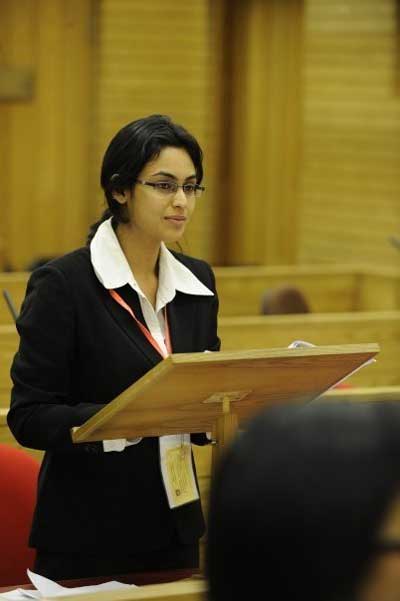
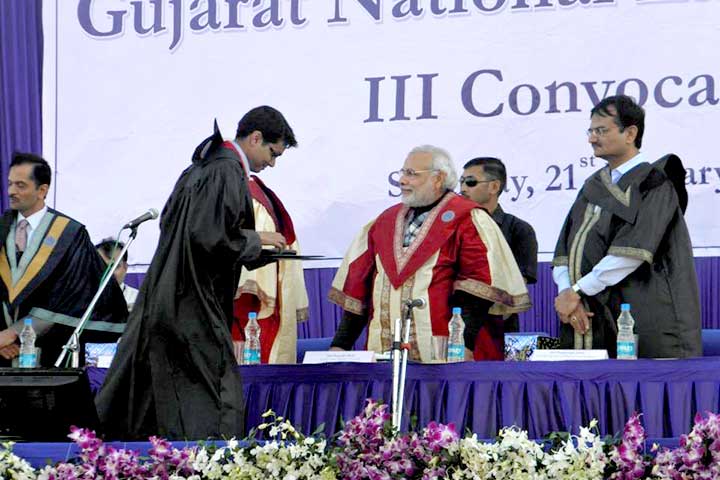
    Shriya Maini graduated first in class from Gujarat National Law University, Gandhinagar in 2013 with four gold medals, including that of Best Student. Thereafter, she joined the Litigation department of Amarchand Mangaldas & Suresh A. Shroff, New Delhi as an Associate in their Dispute Resolution Team. After working there for a few months, she paid heed to her calling and is pursuing the Bachelor of Civil Law Programme from Oxford on a full scholarship. In this interview, she talks about the difference in pedagogy between Indian and Foreign institutes and the relevancy of a traditional BCL degree for litigation practice.

    We took this opportunity to ask her about:

    • Experience working in the litigation department of Amarchand & Mangaldas
    • Importance of Internships
    • Choosing BCL from Oxford over LL.M from Cambridge
    • Writing a proper SOP for an LL.M
    • Applying for different types of Scholarships for high studies


    Tell us a bit about yourself. What motivated you to choose law for a career?

    If I were to answer this question absolutely honestly, I never really wanted to study law. Though, in retrospect, my family lineage reveals a close legal association (my grandfather retired from the Indian Home Ministry and my father is a practising lawyer), I don’t think I was ever motivated to make a career out of law as such. I was busy exploring the scientific world and was rather intrigued by it. I faired well in my A Levels and decided to follow my mother’s footsteps and pursue a career in medicine. Little did I know that future had something else in store for me! Over one of the many dinner table conversations, my grandfather casually mentioned how a centralized national level entrance examination called CLAT was being organized for the very first time for direct admissions to law school. I did not even know of the existence of National Law Universities until then and was reading their names for the first time on the examination brochure. To me this seemed very alluring, as a back up option, in the event that I failed my pre-medical tests. Besides, the examination (fortunately) had no negative marking. A week later, I was walked out of the hall, immensely proud of the fact that I had attempted every question on board, correct or not. Once the results came out, GNLU fell into my lap. I suppose I got lucky with my guesswork! Being a devoted daddy’s girl, I decided not to walk out on him, packed my bags and took the plunge. Hence, law happened purely by chance and not choice.


    How did you plan your internships? Were they all meticulously planned or did they just happen to you as you went through law school? Any tips you would like to share with people who want to intern at top-notch firms?

    As my vita indicates, I didn’t have a strict ‘to-be followed’ normative pattern of internships. However, I consistently endeavoured to intern at each and every place that I possibly could, be it chambers or law firms. I was sure that wherever I interned, I would substantially gain technical proficiency for my knowledge and experience, both were limited. In effect, I knew I had nothing to lose. Hence, on one hand, I thoroughly explored the corridors of the Supreme Court and Delhi High Court and on the other, I vacationed every year with commercial law firms, such as Amarchand Mangaldas & Suresh A. Shroff, Dua Associates and Jyoti Sagar Associates. Such a wide-range of internship opportunities helped me understand the everyday working and nuances of laws, be it civil, criminal or commercial.

    In the penultimate year of law school, I realized that my calling was only in Court. I was drawn towards litigation and the internships most definitely, opened me to a whole new world. I interned twice in the litigation team of Amarchand Mangaldas & Suresh A. Shroff, New Delhi under the guidance and supervision of Mr. V.P.Singh, one of the most dynamic partners of the firm. I had a fantastic experience interning with him. He had a galaxy of juniors assisting him who made the experience even more worthwhile.

    Likewise, by the end of third year, I advise all law students to have a fair idea of what they want to do. I believe the last two years are very crucial when it comes to painting career silhouettes, the so called deal makers or breakers. Hence, I strongly advise that if you haven’t already had some form of internship exposure, now is the time to get that on your CV. It would be a good idea to split the law school tenure of five years into a 3+2 structure and avidly apply for varied internship openings until the third year. Explore what you enjoy, much like the hit and trial method. I would also advise all law students to acquaint themselves with the backgrounds of firms, judges, lawyers and wherever they are making Internship applications, so that they can make an informed choice about joining them. The importance of a tailored CV cannot and must not be underestimated at any cost. I would also caution that the fourth and fifth year, being most important could be channelized towards improving one’s CGPA as much as possible. I can now affirm that though top-notch firms do not solely and specifically look for a high GPA, but it makes for a fine impression if your CGPA is more than respectable. It gives you that ‘added-edge’.


    Right after graduation you got to join the Litigation team of AMSS. How did the appointment take place?

    I secured a job with AMSS all thanks to GNLU’s Committee on Recruitment Affairs (CRA). As a core college body, CRA annually facilitates students and recruiters, on a rolling basis for on as well as off campus recruitments. I was one of the few lucky ones to grab an internship with the Litigation Team of AMSS, in my penultimate year of graduation. The selection was purely based on class rank. I vacationed once again during the winters and six months later, on the College’s zero day, I was offered a job in their Dispute Resolution Team (Litigation and Arbitration).


    What all came under your responsibility at AMSS? How was your first visit to court?

    I was rather lucky to work with some of the most hardworking people in the litigation practice at AMSS. My area of work encompassed commercial litigation and arbitration. Within the team, our supervising partner had allotted a couple of matters to each one of us. I was given an opportunity to work on an international commercial arbitration at a very early stage in my career. I worked under the leadership of some of the best people in the fraternity and handled these matters from scuff. I also drafted the first cuts of Rejoinders for a matter. On a lighter note, if I could pick one responsibility that truly came my way at AMSS, it was drafting e-mails. I learnt the significant skill of ‘written communication’, its necessity and nuances. Though challenging and interesting, these months made me actively re-think my options and pursuits. While I spent hours drafting legal documents and e-mails before a bare computer screen, some part of me began to miss the ambience and actual working of a Courtroom.


    Is it true that it is not possible to get a job in a top tier law firm without top grades and being in the top of the class?

    I am often asked this question. Being brutally honest, top tier law firms often filter students on the basis of class ranks and/or scores. Good grades most definitely matter, at least while securing internships. Unless you are offered a PPO based on your performance during an internship, even during recruitment, most top law firms are bound to take grades most seriously. This is purely due to the fact that a high CGPA depicts an academically consistent upward moving graph. However, I believe that moots and publications could also be an equally essential pointer when it comes to specialized interests. By this I mean that for a law student specifically interested in International Taxation, a paper publication or mooting experience at Nani Palkhiwala could silently speak volumes during a recruitment interview.


    What prompted you to decide to leave the largest law firm and venture out at as a sole practitioner?

    It was the same year, infact within a span of five months that I decided to leave AMSS and venture into entrepreneurial practice. Amidst sleepless nights and long office hours, I was at crossroads with my passion for ‘learning and living the law’. I would often feel academically stagnated while making document summaries, indexing compilations or drafting e-mails. One of those mundane Monday mornings when I had to report to the office at 8, I turned the wheel to reach Court instead. Yes, I admit that it was rather drastic and bold a call to take at such an early point of my age and career. Friends and family tried convincing me otherwise cautioning how hard-hitting litigation practice could be.

    Had it not been for the latter half of the year when I practised at the Supreme Court and Delhi High Court, I would not have been able to secure a scholarship for the BCL at Oxford. Hence, I firmly believe if you are true to your work, you shall most definitely reap its results, if not today then tomorrow.


    Would you say being from a family of lawyers helped you in forming your practice? How did you find your mentor? How important is a mentor in the field of litigation?

    After a brief stint at AMSS, I devoted the next 7 months to independent legal practice. It would be wrong for me to shy away from admitting that my father was the sole reason I could pivot my practice from the position at which I had left AMSS. I was fortunate to land a few cases, which were handed over to me by my father. They were a mixed bag of both, civil and criminal. He gave me a tiny working chair in the chamber apart from full freedom to not only strategize, draft and file matters but also argue them. Before I knew it, I was running a mini-office with 4-5 odd matters.

    So, I didn’t have to find a mentor! He was right there, my father. I think it is very important to have a mentor who would guide you through the myriad experiences of life, especially when we make the strategic shift from law school to the real world of practice, which can be very demanding. The two stages are immensely different and challenging in more ways than one. Law school demands academic mentoring where a guide’s role may be limited to ensuring his student performs well and steers on the right path of intelligible growth. However, at the professional level, especially in the field of litigation which is plagued with cut throat competition, it is rather difficult to perform without a mentor. My father would discuss each and every line of a case with me and always shadow me in Court, even if I was the one arguing. To him, the sole rules of survival in litigation practice were to consistently work hard, be true to your profession and never turn a client back. I hope the same would benefit some of you law students as well.


    Which universities did you apply for LL.M? How did you go about choosing which college to go to for your LL.M.? Did you ever consider Indian colleges for LL.M. now that they are also offering one-year course?

    When I began to practice, I realized that to deal with the complexity of legal and social issues, a mere Bachelors degree would not suffice. For law to evolve, it had to be understood and reasoned, not imitated and blindly followed. I decided to pursue my intellectual drive and made applications to three U.K. law Universities, including Oxford and Cambridge. I specifically did not apply to any of the U.S. law colleges for I was determined to stick to a common law background. It is ironical that now I read a lot of American case-laws, in particular contrasting the civil law approaches as opposed to the common law ones. Within the U.K., my most obvious choice was the Ox-bridge duo.

    Though I didn’t personally consider an Indian LL.M, I am sure it has much to offer. However, from my limited experience of studying my undergraduate degree at an Indian law school, I firmly believe that in terms of teaching methodology and content, we still have a long way to go. I understand that cost could be a pinching factor, but an international exposure with the most intelligent minds of the world is totally worth it.


    How did you plan your SoP? Please share your SoP with us. Please share some tips for a successful application.

    I’d like to first answer the second limb of the question. There is no set recipe of making a successful LL.M Application. A good idea could be to first zero down on a country and then pick colleges accordingly, depending upon your subject interest and of course, University reputation. You could easily find U.K. University ratings on weblinks such as http://www.topuniversities.com/university-rankings/university-subject-rankings/2014/law-legal-studies.

    These could be indeed helpful to begin with. Another piece of advice would be to filter about 5 Universities and make Applications to only those. On a personal note, I spoke to a lot of people, discussing and debating at length how the BCL was different from a conventional LL.M. Hence, I believe interacting with seniors could most definitely be an enlightening experience to help you choose a college.

    Coming to first part of the question now, an SoP should exactly be structured on the lines of the questions you have put forth in this interview. To elucidate, an SoP must explain why you’re applying to a particular University and not any other on the list. Akin matrimonial ads, SoPs in effect are intended to sell oneself in more ways than one, preferably subtle. A good head start could be to divide the SoP into three paragraphs, the first being a general introduction about who you are, where you’re coming from and what you do. The second could be about what you want to do in the future, perhaps stating a subject focus. I also suggest you add a personal touch to an SoP and include a life story or specific incident reasoning how the same prompted you to take up higher studies. For instance, there are a couple of people I know who wanted to specialize in Medical Law and Ethics and they applied to Oxford, describing at length in their SoP a heart wrenching medical story of losing a loved one.

    Another important thing to keep in mind is tailoring the SoP to suit each college. For instance, Oxford SoP must not run beyond two pages. So, an SoP for LSE or Cambridge could be fairly descriptive and detailed, but an Oxford SoP must be very crisp and coherent. You could end your SoP with a paragraph about how you could contribute as an Asian lawyer in the room.

    And yes, I would be more than willing to share my SoP with you all.

    Click here to download the Statement of Purpose


    You had decided to pursue BCL from Oxford University over Cambridge. Any specific reasons for that? How relevant would be a traditional BCL degree for your litigation practice?

    Yes, I was fortunate to have been admitted to both, the BCL (Bachelor of Civil Law) at Oxford and LL.M (Masters in Law) at Cambridge. After thorough deliberation and critical evaluation, I decided to pick the BCL over the Cambridge LL.M. Knowing that it is one of the most rigorous taught Masters in the world, I decided to challenge myself yet again. While the Cambridge LL.M is often picked by those interested in International Law or specifically Corporate Law, the Oxford BCL is definitely more litigation oriented. Hence, I naturally picked the BCL. There is another slightly less known course called the MLF (Masters in Law and Finance) which is jointly taught by the School of Business and Law at Oxford and those of you who are keen in a commerce background could definitely have a look at that.

    Another reason why I chose the BCL was the unique teaching method of Tutorials. Every term (we have trimesters at Oxford), our tutor discusses the erstwhile seminars and lectures with each and every student, in person, in effect clarifying and revising the course content. Students are given a list of questions prior to every tutorial, of which they must attempt one in writing and submit to their tutor a day before the personal session. Such an exercise is immensely helpful for students are well prepared to answer questions well in advance of the examinations. The tutorial system of teaching is unique to Oxford and hence, I would advertise the BCL even more strongly.

    I would be better equipped to answer the second question a year later. However, from hearsay sources and personal interaction with ex-BCL graduates, I can assure you all that the degree most definitely gives you a cutting edge, in terms of legal knowledge and presentation. It pushes you to think out of the box and to some extent challenge the existing laws, aimed at the formulation of ground-breaking legal arguments. Hence, the precedent based litigation practice in India could benefit multi-folds from a holistic and global degree, such as the BCL.

     

    shriya-maini-2

    What should one do differently in college if he wants to pursue higher studies after graduation? Would you suggest having a brief work experience before applying for LL.M?

    There is nothing particularly different that one must do as a prospective Masters student. However, in order to get a Scholarship/funding, it is essential that students keep the following in mind. Apart from consistently studying hard and smart for five years, maintaining high CGPAs and participating in a few moots or ensuring a couple of publications, one should apply well in advance if he or she intends to pursue higher studies. Applications open a year prior to admissions and in the U.K. Universities List, Cambridge is the first deadline to be met. Next is Oxford and then the others.

    Each Application has a scholarship column which all Applicants must tick in the affirmative. These ensure that wherever possible, University/college funding would automatically consider the Applicant’s request for scholarship or fees waiver. I was fortunate to have received the Dr Mrs Ambriti Salve Scholarship 2014-15 and the Bodh Raj Sawhny Memorial Trust Scholarship 2014-15 from the University of Oxford, Exeter College and hence, my studies are fully funded. In a nutshell, I would advice all law students to try and procure scholarships, researching well in advance the criteria for each, be it Inlaks, Aga Khan or the Commonwealth and accordingly, tailor your CV during law school.

    I personally believe a year’s work experience was the sole reason for me having made the cut for the Salve Scholarship. I definitely feel more confident, relaxed and sure of myself than I was when I stepped fresh out of law school. The whole Oxford experience could rather be very overwhelming and emotionally take a toll on someone who, fresh out of law school has not ventured into the real world so to say.


    Please tell us about how you applied to these abovementioned scholarships and ultimately got selected for them. What according to you is a good profile for scholarships like these?

    I was fortunate to have received the Dr. Mrs. Ambriti Salve Scholarship and Bodh Raj Sawhny Memorial Trust scholarship for the academic year 2014-15. Following a generous gift made by Mr Harish Salve, a Friend of Exeter College, University of Oxford, the scholarship is awarded each year on the basis of academic excellence to an Indian student reading for the BCL. The Salve Scholarship fully funds my tuition fees, besides granting me a cover for my living expenses.

    No, I did not make any separate Applications for the abovementioned scholarships. In fact, both of them are College linked, i.e. awarded by the Exeter College, University of Oxford. For such scholarships, you just have to tick the relevant box (affirming you want any and all type of funding available at Oxford) within the main Application that you make for the BCL. However, it would be a good idea to browse through the College websites and have a look at specific scholarships, course wise. These could require a separate application or additional documents. For instance, a useful link where you all could start from would be the official webpage of Oxford enumerating the funding options available –

    http://www.law.ox.ac.uk/postgraduate/scholarships.php.

    There is also a similar provision on the Cambridge GRADSAF for Commonwealth and Gates Scholarships, which you must apply for. No separate Application (only another SoP) is required for the same.

    The other kinds of scholarships are the ones offered by Indian organizations and donor trusts, such as Aga Khan, Narotam Sekhsaria etc. These are also worth applying for but require separate Applications to be made once you have received your offer of admission. Hence, call for such scholarships are usually doled out after March end.

    I guess I was lucky and blessed to have received such a mammoth funding award. I cannot pin point and say how the selection process exactly works but I could share with you some indicators, which could be of help.

    Firstly, it is necessary to have good grades and by this I mean, try and maintain a class rank within the first three of your batch. Secondly, it would be a good idea to pursue extra-circulars such as moots and publications in college. These look very attractive on a scholarship profile. I would also suggest that if the scholarship Application requires a write-up, play up your ‘need’ for funds factor.

    Lastly, you must be able to demonstrate why you wish to undertake studies in a particular subject specific to a College/University. I think preparing answers to these questions would be more than sufficient to organically create a decent scholarship profile.


    Given a chance to turn back the clock would you have done anything differently from what you’ve done?

    No doubt, I have taken some rather risky decisions to pursue what I truly believed in and felt was right for me then. However, I am very satisfied with each of those and stand by them even today. Having tasted the flavours of the commercial world, I am now actively involved in academia, living the law much closer than I could ever imagine. I am thoroughly enjoying and doing what I best like to – ‘studying’. Hence, even if I was given a hundred chances to turn the clock back and do things differently, I’d never do so.


    Lastly, what would be your message to a law student who is yet to decide his/her career?

    My only message to a law student who is at the brink of deciding his/her career would be to have the courage to follow your heart and grit to pull off your plan once you decide to do something different. Just because one of the paths at the crossroad appears financially alluring, it could prove to be rather professionally unpleasant. With age on your side, give yourself a complete gamut of experiences that a lawyer could have without regretting a single decision whatsoever.


    Photo Credits: Pratibimb

  • Sanyukta Banerjie on LL.M in IPR from NUS and building a career in academics

    Sanyukta Banerjie on LL.M in IPR from NUS and building a career in academics

    sanyukta-banerjie-1Sanyukta Banerjie is a 2014 Batch graduate of Gujarat National Law University, currently pursuing her LL.M from NUS, Singapore. She has been one of the brightest students at GNLU and has actively participated in theatre and music during her college life. In this interview with Superlawyer, she shares her passion for IPR and teaching and the various considerations one should keep in mind while applying for a Masters Degree.


    How would you introduce yourself to our readers who are mostly young students of law and lawyers?

    I would introduce myself as a student of law as I believe what we study in law school, or learn over internships or even on the job is really just a fraction of the expertise that is required. As cliché as it sounds, the study of law really is a life-long journey.


    Please tell us a little bit about your childhood and your background? Why did you decide to pursue law and what affected your decision?

    My childhood was spent more among books than people. In fact I remember my Mum would send me off to play with the neighbourhood kids and I would instead sidle into their rooms and pore over their collection of Pinkie, Chacha Chaudhary, Enid Blyton, etc. Come to think of it, I might have come across as a bit of a prig! Reading led to writing and coupled with the fact that I usually had an opinion on almost everything, law seemed the inevitable choice. I can’t exactly pinpoint when I had that moment of epiphany so to say, but I do think my fascination with law started because at that stage of my life, and being part of the education system that I was in, law was the only medium which permitted me and in fact encouraged me to question all that I saw around me.


    Tell us a bit about your life in law school. What activities were you involved in apart from the regular academic curriculum?

    Oh law school! Well, I think I tried my hand at almost everything once (Except sports. Everlasting anathema). I think that’s the best part of law school, or perhaps the times we live in. Every activity is so democratically organized that even if you have a fledgling of an interest in anything, there would a club for it and people as enthusiastic as you, if not more, to share that interest with you. I was part of the Theatre Club, the Music Club and the Quizzing Club. I enjoyed mooting and writing. (Even if it be just academic papers, as nerdy as that sounds.)


    Any fond memories which you would want to share with our readers related to your days in law school?

    Haha! This question makes me feel so old. I don’t know if it’s just me but law school has you living this strange dichotomous life where your superiority complex is matched only by your self-loathing. Anyway, 2012 for me was the year of a particularly high degree of self-directed hate. But in March we stood runners up at a moot court competition and I was adjudged the best oralist which helped me put things in perspective and calmed me down immensely (only for it to start all over again next year!)


    As a law school student you have done a number of internships. Please tell us a bit about them and how they helped shaping up your future career prospects.

    As depressing as it might sound to certain people depending upon their private beliefs, most fundas about law school internships are actually quite accurate. Yes, interning at a place does spike your chances of securing a job there. No, it does not matter how you secured that internship or what your grades were. And yes, the nature of the beast demands a fair amount of hobnobbing and that includes both corporate and litigation sectors.  Since I was still finding my feet career-wise when I came to law school, I went step by step. So I interned with NGOs, litigation practises and law firms and I am really glad for having sampled each of these avenues. I think they helped me define my ideas about a career vis-à-vis work culture, office environment and quality of work in a manner that reading about them or asking my seniors never would have.

    Even though my ultimate aim is to teach in India, I will always be glad to have picked up such work experience along the way because when I was pursuing undergraduate studies, I remember that those teachers who had prior experiences working in legal institutions had a sounder understanding of their subject.


    When and why did you decide to pursue an LL.M and what were the considerations you had in mind while looking at various universities? What was your motivation behind doing an LL.M. abroad? Why not an LL.M. in India?

    My wish to teach lay at the core of my intention to pursue an LL.M. I was in my last year, had vetted almost every avenue of law through internships and quite exasperatingly, I had enjoyed all of them. As you can imagine this did not particularly ease decision-making with respect to picking a career. My college conducts an ASP (Academic Support Program) program where seniors provide remedial classes on any subject of their choice/expertise. I used to volunteer for that program and would occasionally take classes. Apart from that sometimes our curricular assignments required us to conduct presentations on a particular topic in class. And I remember all along…how do I put this? I remember just being very happy doing it. Standing before a class of forty odd students and attempting to tell them about a topic in a way that would make them engage and learn; to me was a tremendously exciting proposition. I don’t know about all that found-my-calling business but I know that teaching, in any capacity, makes me happy.

    Like any other Indian kid, I wanted my decision to receive the blessings of my parents. They were onboard with it, but my Mum insisted I pursue an LL.M outside India. What I had not completely grasped at that point, but do realize now, is that an LL.M abroad really is an educational sea-change. I have not had the opportunity of pursuing an LL.M in India but I can certify to this that an LL.M abroad (from a reputed institution albeit) really does put the ‘masters’ in the Master of Laws degree.


    Given the Rupee-Dollar exchange rate, it is quite costly to do masters from a foreign country. How did this factor influence your decision?

    For me, pursuing an LL.M abroad (in the absence of a scholarship) was treading a tightrope between pursuing economy and checking college credentials. So that necessarily ruled out an education in America even though some of the IPR courses there are really good. Ultimately it came down to UK or Singapore. But at that point of time UK with its immigration policy post 2010 and the more theoretical tone of its IP course, fell short. Additionally factoring in the comparative cost benefit analysis, I opted for Singapore.


    What were your areas of interest while you were an undergraduate student and how have they helped in choosing your subjects/courses for the LL.M programme?

    Owing perhaps to the dynamic nature of the subject and the excellence of the teacher (Dr. William Nunes), my areas of interest had been Political Science and International Relations. Then the moot happened and I found the love of my academic life – IPR.   It’s worked perfectly for me, because IPR with its WIPO origins is a subject that requires an international perspective for a comprehensive interpretation and an LL.M with a specialization in IPR provides me with that.


    Tell us about your days at NUS? How rigorous is the academic schedule?

    Rigorous! You can say that again and then underscore it. Whoever refers to an LL.M degree abroad as a one-year vacation is either a crazy genius or needs to get his or her head examined! A compact one year course means a year of continuous information overload and there is no way you can cheat the system. There really isn’t. On the other hand if you pick a subject that you like (and that’s usually an option with LL.M) then NUS is the best place to be. The professors really push you but all in a really clever underhand way that makes you feel like crap anytime you slack.


    How is the Indian fraternity over there? Were there many Indian students?

    Well I have met some really friendly, intelligent and fun people. But the way I see, if you go in with an open mind, then you are bound to meet all kinds of interesting people which I am lucky to say I have. The majority students are naturally Singaporean, followed by Chinese and then Indian. Although in terms of diaspora, depending upon the electives, the class composition completely changes.


    How does one go about the scholarships? Does the institute offer any scholarship? What are the key scholarships one should look for?

    Depending upon the specialization that one’s opting for, the university does offer scholarships. For example, in case of IPR there is the Ella Cheong Intellectual Property Scholarship which is merit based and all LL.M applications are automatically vetted for it at the stage of admission. Apart from that the NUS official website has a page entirely dedicated to listing scholarships that a prospective student can look into before applying, as and when something comes up. My humble two cents on procuring a scholarship – plan ahead and have obscenely good academic records because it is quite competitive.


    What about extra-curricular activities and your hobbies at NUS?

    Postgrad for me is a complete volte face; which is code for zero extra-curricular activities. Although, as dorky as it might make me sound I love attending conferences! I really do. Mostly they are on topics that have nothing to do with my electives. It’s such a welcome break from the routine sometimes! For one, I don’t have to do any preparatory reading, so I just pop in, listen to these really amazing experts and come away with a way more nuanced understanding of a topic than the standard Wikipedia entry on it. It’s like trivia surfing but for the non-virtual world – time flies and it gets addictive real quick!


    Tell us a bit about the difference in studying at NUS and at GNLU.

    Well the most observable difference for me was in terms of the student-teacher equation. Partly due to the culture and perhaps owing to a certain amount of independence that pursing a postgraduate degree permits, the structure is a lot less hierarchical. The lack of any obvious duress on part of teachers makes students feel more in control and thereby more liable for their academic result. So naturally they apply themselves more.


    Going forward, how do you expect the LL.M experience to influence your career?

    For someone who plans on teaching law in the future, I can already sense the way this course has changed my perspective on law as well as on teaching. In spite of the wide-ranging content of this course, I constantly feel like I have so much more to learn. I think that’s always a good takeaway for anyone who plans on imparting education in such a dynamic field as law.


    Any suggestions which you would want to give for students wanting to pursue higher studies abroad?

    I would suggest them to start REALLY early. So whether it is gathering material, researching on prospective colleges, preparing their statements of motivation, arranging for scholarships or procuring letters of recommendation, just start already. You won’t even realize but just getting into the process gives you such clarity of vision with respect to what you want out of an LL.M degree or if you want one at all.

  • Rohini Sen, Assistant Professor, on LL.M from Leeds, pursuing academics and teaching experience at JGLS

    Rohini Sen, Assistant Professor, on LL.M from Leeds, pursuing academics and teaching experience at JGLS

    Rohini Sen graduated from GNLU, Gandhinagar in 2011 and thereafter she went for an LL.M to University of Leeds. Presently she is an Assistant Professor and teaches at Jindal Global Law School, Sonepat.

    In this interview we speak to her about:

    • Studying B.Sc.LL.B from GNLU, Gandhinagar
    • Pursuing an LL.M. in International Law from Leeds
    • Experience as a teacher at JGLS


    Tell us a bit about your work life, your dreams and aspirations.

    I must congratulate you on this rather interesting and enterprising endeavour. SuperLawyer is very informative for those who need a form of guidance to see them through five years of law school and has a relatable touch to it as well. I am always on the lookout for such creative ideas and that is a good place to start when it comes to me. I am a big believer of constructive communications, collective problem solving and creative dialogues and, academia allows me to experience all of them. Through my academic journey, I hope to bring about some relevant changes in the Indian legal education system. Rote learning has eroded our ability to synthesize information and be mindful of their significance. I want to facilitate the process of independent, interdisciplinary thinking and help students integrate into a knowledge society with ease (I include myself in the student category because I learn new things almost every day through the lessons). I also hope to be able to contribute substantially to international law someday – global identity and perspective being my reference frame.


    Do you reckon any incident that motivated you to choose law as a career?

    No special incident as such, but to bring a perspective I should mention that I come from a family of academicians and have grown up amidst books, liberating discussions and topical debates. Having spent the better part of my childhood and adolescence questioning norms, I always believed that I would be an author and write profusely to make emphatic statements. I knew I wanted to be heard and be famous but I was never quite sure how that might happen! The idea of doing law never crossed my mind until my father picked up a form for GNLU and sent it my way. I was in that indecisive transition stage when he told me about these national law schools and that GNLU’s was the only entrance examination left. Three days later, I wrote the exam and the rest, as they say, is history. It was only when I started college did I realize that others prepare quite meticulously for such entrances and doing law is serious business. Well, law is a subject that requires you to stay on top of things all the time and ensure that any information you possess is absolutely updated. As a result of this constant input, lawyers seem to be generally (I don’t endorse generalizing though) more aware about things and events. This definitely gives you an edge.


    Tell us about your time at GNLU.

    Summing up my time in GNLU in a paragraph is nothing short of sacrilege! I have learnt so much from my time there. My five years of law school have taught me to think like a lawyer when the need arises, be tolerant to contrary opinions and ideas (as long as they do not represent ignorant/harmful practices), to nurture my fondness for creative thinking and diverse subjects. I have learnt something from each and every individual I have met in GNLU and cherish the collective experience. I have several interesting stories and highlights from my GNLU days. But one that stands out the most was winning the Henry Dunant Moot Court Competition at the national and international levels (we won the national and South-Asian rounds and were runners-up in the finals of Asia-Pacific). The moot helped me realize my immense fondness for International Law and IHL and set an invisible marker for the general direction my career would take. I also made some incredible memories and friends in course of the moot –people across the globe who have helped me grow as an individual.


    Can you tell us about B.Sc. LLB course and its advantages?

    That is an interesting question actually. As you correctly pointed out, the Indian universities are yet to pick up that trend. I was a student of science in school and that made B.Sc a fairly natural choice. I was (and continue to be) of the opinion that one can read the BA subjects simultaneously or subsequently, but, B.Sc allows you to have an added edge. The course consisted of the three basic science subjects and interesting law-related additions that possessed bio-chemical and forensic components. As far as I am concerned, this intensive science degree always gives me a well-rounded perspective on things. It allows me to engage deeply with certain topics of IHL (such as weapons, their nature and use, strategic international conflicts/disputes) and environmental law (science-based procedures and mechanisms) because of the technical components. I do think that it is essential to understand the background and context before delving into the law and my B.Sc LLB degree allows me to do that with comparative ease.


    rohini-sen-5

    How did you balance academics with mooting?

    (Rohini has been part of the winning team of the 8th Henry Dunant Memorial International Moot Court Competition.)

    Well, as I already stated, winning Dunant was momentous for me. It pretty much drove me to where I am today. We put in a lot of effort for the moot and that, coupled with our natural flair for the subject helped immensely. We were very determined to win and spent hours in the ISIL and ILI library reading books for background and references (something that few moot teams do these days). This is a practice that all mooters need to inculcate and something I tell my students as well. If you know your subject and its background well, you will have answers to even the most obscure questions.

    The confidence that you gain from reading and good oratory skills will see you through the rest. Balancing academics and mooting is not very difficult actually. I’d recommend that one takes it with stride. The minute you think of these as something that you must balance, it looks a lot more daunting than it really is. My advice would be to instead think of it as something you like doing and devote time to it as you would to any other hobby.


    rohini-sen-4Any incident which is stuck in your mind from Henry Dunant?

    Actually, there is something interesting that I took away from the experience. Right from day one, our only goal was to win and we would psych each other up by saying so on the occasional bad days. The power of this brand of thinking has impressed itself upon my mind rather well.


    Tell us how has being associated with committees helped in building your personality and shaping your career?

    Oh yes! Being an active part of committees and societies is very integral to one’s overall development. It teaches you teamwork which is often dismissed as a clichéd skill but, is very useful when you enter the professional domain. It also teaches you how to network –a skill that is terribly underrated in India and often relegated to the status of “unfair” simply because you choose to use your communication skills in addition to your talent. Of course, one must make the distinction between networking and seeking undeserved favour. And this is something the institutions can teach our law students.

    In GNLU, I was associated with committees that conducted university related activities as well as committees/clubs that involved a lot of social and cultural engagements. The quiz club was a particular favourite and continues to be of immense interest. All these activities were a good blend of work and fun and helped me stay updated and motivated.


    What prompted you to choose the University of Leeds from the plethora of options available?

    The decision to do an immediate LL.M was made a long time ago, but, Leeds happened through some serendipitous and some pragmatic engagements. When I was a child, I had met a Barrister from Leeds and something about that reputed, old world, charismatic and Anglian intrigue became a part of my system. Leeds is one of the oldest and top universities in the UK and when the time came to make applications, it was but a natural choice (The only other university in UK I applied to was Edinburgh). Another important thing to remember is your subject of choice and to pick an institution that offers the subject and is reputed in that domain. When the offers arrived, I had to make a tough decision between NYU, UCLA, Chicago, Edinburgh, Leeds and Pace and Golden Gate. The American universities were expensive and the scholarships afforded by them were far from sufficient. I was fresh out of college and determined to get into academia post my Masters and these factors played an important role in my university selection. I was very reluctant to take a student loan because I wanted financial mobility after graduation. Academia is not really a money making profession yet and I did not want to be stuck in a job just to ensure loan repayment.

    Having eliminated the American universities, Leeds was a very easy choice. I understand that brand name is often a concern for most people. But, having undergone the process and being where I am today, I can safely say that it really is not very relevant. At the end of the day, all that matters is how well you have done and how enterprising you can be.


    rohini-sen-2Tell us about your time University of Leeds.

    I loved my time in Leeds. Given my academic family background and previous travel experience, I was not unfamiliar with global education practices. This helped me ease into my LL.M program well. Indian law schools do not encourage independent thinking or intense research at the undergrad level.

    At Leeds, I was exposed to a system that takes its readings very seriously. It was both liberating and challenging. As a Masters student, we were required to not just read hundreds of pages every week, but, to also ruminate on them. I enjoyed this practice very much and it has allowed me to hone my writing and teaching skills in the process. We engaged in seminar style discussions with each other and the faculty instead of lecture style classes and found that particularly refreshing and valuable. This is a practice that the Indian higher education system should definitely try and emulate. In a Masters class, there is a diverse presence of people from all kinds of backgrounds and age groups who have a lot to share. Everyone, especially the faculty, can learn a lot from this exchange.

    In India, we overemphasize the faculty-student distinction much more than the necessary. In the UK, there is a lot of ease and the faculty make themselves a lot more approachable. So yes, the systems are different, but the difference is not daunting. If you are considering a LL.M you must be prepared to read and think – habits that can only stand you in good stead. Also, a traditional yet innovative university like Leeds takes its dissertation and research very seriously. This emphasis on quality has allowed me to make my work comprehensive and publishable. A year of studying abroad is necessary for everyone for several reasons. It helps you grow as an individual both professionally and personally. And while you figure your way out through the lessons, it is extremely important to have a lot of fun as well. Immerse yourself in travel, cultural exchange, sports, parties and meaningful conversations. You will be surprised at how much you can learn from a mere five minute exchange!


    How did you manage funding and expenses for the LL.M?

    Scholarships for LL.M are quite hard to come by actually. There are merit scholarships as well as need based scholarships, but the numbers are limited. I was given a partial merit scholarship by the university and the rest of it was paid for by my parents. Studying outside the country is an expensive process and I would advise all those who wish to pursue their LL.M to be very judicious in their decision making and take into account all possible scenarios post LL.M. There are some competitive scholarships available within and outside the specific universities. You can apply for the university scholarships while making your applications. If you don’t qualify for the merit scholarship, you may make an application requesting financial needs and stating your reasons for the same.

    The universities will consider your request and grant you aid accordingly most universities follow this pattern. The external scholarships, such as Commonwealth, Chevening etc. are extremely competitive and merit based. But there are few others along those lines and you can keep your eyes open for as and when they come (I missed the deadline for all of them). Also, organizations such as Rotary, Ford Foundation and TATA provide scholarships for prospective graduate students in relevant areas. You just have to be enterprising and be on the lookout for such opportunities.


    What prompted you to choose teaching as a career?

    I have wanted to be an academic for as long as I can remember. Coming from a family of academicians made it a very easy choice. I have grown up observing some of the most brilliant professors, liberal thinkers and inspired individuals. This exposure constantly helped me to be my own person and think of a way to transfer some of what I have learnt and loved to others as well. Academia was the perfect vehicle to do that.


    Tell us about your teaching methodology.

    I would like to believe that my teaching methodology is fluid and anecdotal. I try to simplify the subject as much as I can and attempt to bring in relevant and contemporary references. As a teacher, proper communication of ideas is very important to me. I strive hard to make sure that most (if not all) have understood the very basic concepts.

    Having been a student in the recent past, I try to think from the student’s perspective as much as I can. They sit through a variety of lectures all day and the mind tends to get saturated and distracted. Keeping that in mind, my goal is to make the classes interesting and informative, while keeping the subject structure intact. It is not easy and I try to think of new methods to do so as often as I can. As teachers, we often forget what it was like to be a student. And having seen both ends of the spectrum, I think that academics should never forget the trials and challenges of their student days. This perspective helps in making the lessons more relatable. I am also not a fan of this emphasized distinction between faculty and students. This is a personal opinion of course. I try to soften the barriers in order to make room for better exchange.

    I do not encourage taking notes, but, I am comfortable with the idea of jotting down skeletal points of importance interest. I do ask my students to read and come so that a conversation is possible and try my best to engage them in debates, discussions and other class activities. I also send them any reading that I think is interesting or vaguely connected to the subject. I am afraid I am quite the spammer in that department! I am extremely happy when they ask questions or take interest in a topic. Through these questions, I get to learn new things from them.


    Could you give our young readers certain tips on excelling in academics?

    I really don’t like the idea of quantifying academics and comprehension of subjects. The best way to excel is to read voraciously (all kinds of books), be interdisciplinary and always take time out to reflect on what you have read. This is my overall mantra to doing well. As a teacher, I would recommend spending time with what one has read in order to absorb the basic ideas and concepts. This is very important. If you have understood the essence of a topic or an article, you will be in a position to write a skeletal answer and build upon it from memory or references. Last minute rote learning may help you get the grade, but, if you spend a few more days with the subject you might grow to like it as well. In addition to that, be lucid and simple when you write. If your opinion is contrary to the teacher’s do not hesitate to share it and justify it.


    What do you feel about the Indian legal education system?

    The Indian legal education system is intense but relies unnecessarily on rote learning in some subjects. To be fair, my Indian undergrad helped me stay ahead in my LL.M class all throughout. We cover an impressive spectrum of topics and subjects. However, barring a few instances, the teaching methodology needs to change. Asking students to memorize sections of Bare Acts is redundant since as a practitioner, you will refer to it anyway. Also, it is not at all helpful in simplifying concepts. Instead of such teaching methods, we need to generate more discussions, be more contemporary, practice oriented and analytic.

    Having said that, I must state that the quality of discussions/debates in an Indian classroom is no less than reputed UK or American universities in any aspect. We just need to find a way to channel and hone these diverse minds and interests. We need young academics, a blend of old and new ideas and we need to dismantle bureaucratic practices in the legal education system.


    What would be your message to our readers?

    Read, travel and meet new people. Education is just one of the many components that help you grow and it is much more than a means to employment. Allow it to enhance you and not stifle you. And I’d encourage more law students to join academia in this time and day. Some of us braved it despite the comparatively less financial incentive while others had to settle for more lucrative prospects, despite an academic bent. Do not let that stop you. We are on the road to make change.

  • Jeet Bhatt, Advocate, High Court, Gujarat, on an LL.M from QMUL, and leaving a lucrative career in corporate law for litigation

    Jeet Bhatt, Advocate, High Court, Gujarat, on an LL.M from QMUL, and leaving a lucrative career in corporate law for litigation

    Jeet Bhatt graduated from the first batch of GNLU, Gandhinagar, in 2009. After working for almost a year, he went on to pursue an LL.M in  Corporate and Commercial Law from Queen Mary University of London. After finishing his Masters he had the opportunity to work at Mark & Co. in property matters.

    He later quit Mark & Co. and came back to Gujarat and joined full-fledged litigation practice.

    In this interview we speak to him about:

    • Requirements and selection procedure for an LL.M program at QMUL
    • Work experience at Mark & Co., London
    • Starting up with litigation practice at Gujarat High Court.


    How would you introduce yourself to our readers?

    I am a lawyer practicing in the High Court of Gujarat. I graduated from Gujarat National Law University in 2009 and got enrolled in the Bar. I practiced Law for a year and then went to London in 2010 to pursue my Masters in Corporate and Commercial Law from Queen Mary University of London. I completed my Masters in 2011 and came back to join litigation. It has been five years since I began my journey as a Lawyer and ten years since I joined Gujarat National Law University and I am going to share with you my vivid and some not so vivid experiences in the Legal Profession. I do belong to the Family of Lawyers for it runs in my blood since three generations.


    How were the formative years of your schooling?

    Formative years of my schooling were similar to that of an average guy less interested in studies and more interested in everything else than studies. I was always interested in sports and used to play cricket for my school. I had opted for Science in Higher Secondary and it turned out to be the greatest challenge of my life. Though I could not pass out with flying colours, with the marks that I got in my 12th Standard, my life surely started looking Black and White with Graduation in Arts the only formidable option.


    Why did you choose law as a career?

    I believe it was more by chance then by choice that I got into the Legal Profession. While I was still considering the few options that I had, I decided to go to Courts and spent a day observing what my father did for a living. He took me to the Court. Without understanding anything about law I was certainly lost in this Fort like High Court of Gujarat. I saw my father presenting a matter before the Judge and that point I thought to myself that it is the easiest thing to do in this world (I did not knew then how wrong I would be proved later). So that was it by the stroke of that midnight hour I did have the tryst with destiny and I started considering myself to be a lawyer. Fortunately GNLU started in 2004 and as it was at its nascent stage somehow by god’s grace I cleared the entrance examination got myself admitted and then there was no looking back.


    Tell us about your years in law school.

    Being the first batch of GNLU everything about it was exciting. Being the first batch there were no seniors and therefore no one to help if you end up at the wrong place doing the wrong things. But we managed and we learnt from our own mistakes. Fortunately for us we had some great faculties and teachers who really inspired us to learn law and made our academic life interesting. Learning the Law is not just about sitting in class and attending lectures, it is not just reading the provisions and rules it is much more than that. It requires an interdisciplinary approach and a constant aptitude for learning. It requires asking questions and finding answers. GNLU provided us that platform where we could build a strong foundation. Law School is all about acquiring the correct skills required for the Legal Profession. It is about investing your valuable time in the right direction. GNLU focussed on research and that immensely helped us in improving our research skills. With internships ranging from NGO’s to Law Firms to Courts and International Organisations being part of the curriculum it truly helped in gaining the first hand experience of the Legal Profession. Internships should be done very seriously as it can open up lot of avenues for the students.

    Time at law school should not just be restricted to academics and studies. One has to find time for extracurricular and cultural/other activities for it helps in developing the overall personality which is very important in today’s competitive market.


    When did you decide to pursue Masters?

    I decided in my last year at GNLU that I would still like to pursue higher studies before getting into full time litigation. When I graduated in 2009 I did start asking lawyers in the High Court that whether an LL.M from Foreign University would be helpful in Litigation. Majority of them said it would be a waste of time and money and you would lose a valuable year in Litigation. I then asked few lawyers who had been to foreign Universities for higher studies and they motivated me to go and pursue masters from Foreign University. Despite of all adversities I was firm of pursuing my academic interests.

    My reason for studying abroad was both personal and professional requirement plus LL.M in UK is a one year program whereas in India it was two years at that point in time. Arbitration was one subject which I was really keen on studying and therefore considering that London being the hub of Arbitration I decided on doing my Masters in a University located in London.


    How important are grades for an illustrious LL.M degree? What is more important for a successful candidature: grades or work experience?

    Grades are most important for getting admission in a reputed University abroad. You need to have a distinguished academic career to be placed in the top Universities abroad. They require you to have a good academic record but good internships and recommendation letters do help. Work experience is not a requirement for Universities but I would certainly recommend students to work for few years, gain considerable knowledge of the subject in which they want to pursue masters and then apply to universities for further studies. Experience helps a lot and it makes more sense to go abroad after having a few years work experience. LL.M programs in Universities abroad are basically structured to cater the needs of foreign students and therefore experience of few years really helps a lot as most of the students coming from other countries have around three to four years working experience. Therefore having work experience prior to going abroad would be certainly beneficial.


    Can you tell our readers about how you shortlisted universities for your masters?

    The first and foremost thing to do is to know in which subject you want to pursue your masters. The Universities abroad give a wide range of subjects which one can choose and therefore depending on which area of law one needs to specialise accordingly you must decide the University. I was very keen on specialising in Arbitration laws and therefore I chose Queen Mary University of London as it has the best faculties in UK for Arbitration. School of Arbitration in QMUL has an excellent program for LLM which is considered better than KCL, UCL as well as LSE and therefore I chose QMUL over other Universities. One has to do a preliminary research and be sure where he wants to study and in which subjects depending on that they must apply to Universities. Application procedure is simple and that the Universities websites provides all the necessary details regarding the same. But one must start this entire exercise one year in advance.


    Tell us about your time at Queen Mary.

    What happens in Queen Mary stays in Queen Mary (jokes apart) but yes I will surely share my academic experience. My time at QMUL was truly enriching and enlightening. I was exposed to 500 other students who had come to pursue LL.M from more than 100 countries. It took one week to get introduced to each other. From graduates to people having more than 10 years experience in top law firms to some having their own firms in different countries were my batch mates. With one year experience in Litigation I tried my best to match to them and to adjust to such an intellectual environment surely took a toll but after meeting fellow Indians I knew I was not alone (no offence meant). The first few weeks are popularly known as shopping weeks where we are allowed to attend all the classes ranging more than 100 subjects of law starting from Arbitration to Banking to Copyright to Design, Finance and you name it. Out of all the varied modules that were offered we had to choose 4 modules which was again a hell of a task. Having worked for more than a year, again attending classes and going to college did seem a task but by the end of the first month it all sinked in and I found the new educational system quite suited to my expectations and I got a lot of time for myself where I had the luxury to read and study the subjects I was interested in. Honestly I did not want academic pressure as I wanted to have the freedom to choose what interested me and I got the perfect academic environment. Being in QMUL you get the access to the Institute of Advanced Legal Studies (IALS) which has the best library in the World.

    Having 4 classes to attend in a week it didn’t seem much of a pressure initially and having just moved in to a city like London you need free time to know the city (it is very important). I really enjoyed the tutorial system where for a batch of 10 students there is one tutor with whom you do lot of case studies. It was unique in the sense that you get so many different perspectives from students coming from different jurisdiction and it was truly enriching in every possible manner. It was a different reality and one must surely experience it. If today someone asks me for my advice on studying abroad I would definitely recommend that, provided you make the most of it.

    QMUL Campus is like a lively city within the University. Students Union is one of the most powerful Unions in UK and is bustling with so many activities. From volunteering to learning different languages to teaching to sightseeing everything you need you get it. It is so well connected to all the Universities and colleges and you get the chance to interact with people from so many nationalities. Living in the University accommodation has many advantages though it might be bit expensive but it is definitely worth it. Socialising and communication is a very important aspect of the program it helps tremendously in our profession.


    jeet-bhatt-1

    While pursuing LL.M could you intern at any firm in London?

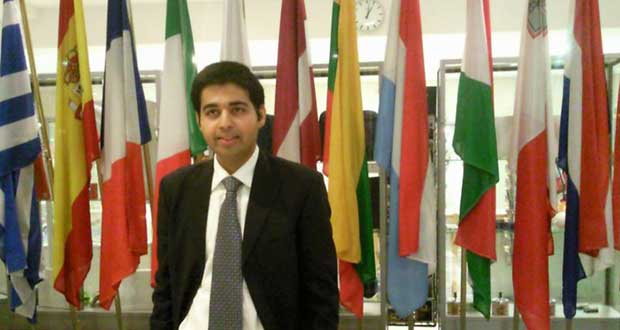
    Yes I did get a chance to participate in many other activities happening in London and around the campus. I did attend a study tour to Brussels to visit the European Union and its parliament and to visit the International Court of Justice in Hague as well as the International Criminal Court and did get to see the proceedings going at the court. There are opportunities to intern during the course but one has to choose the timings wisely as it should not end up affecting your classes and tutorials.


    How did your appointment at Mark and Co. Solicitors take place?

    I would say I got lucky to get an appointment at Mark & Co. Solicitors. I happened to meet the partner of the firm at the airport through a common friend. We stuck a good chord and that was it. I had the opportunity to work in a Law Firm in London. I worked there for a few months before I decided that I want to get back to litigation in India. Mark & Co. had a lot of NRI clients, it dealt with a lot of property issues. One important aspect of firms in UK and lawyers in particular is that they certainly want to avoid litigation and going to courts would be the last option. It certainly is very different from our approach as we want every possible dispute or no dispute to go to courts for adjudication. I could not resist the charm of being in Litigation in India and I decided I wanted to get back in Gujarat High Court.


    What influenced your decision to work in the litigation sector?

    Though I did work in a Leading Law firm in Gujarat for a year and I am still associated with it but I purely deal with Litigation. I tried to do both but Non-lit corporate work is not my cup of tea. I like to be a part of all the action that is going on in the Courts. Being in litigation should not be treated like being in a job. It is surely not an employment it is much more than that. One requires a lot of perseverance and patience along with passion to do well in litigation.


     Is it better to work in the corporate sector for a few years before starting litigation?

    Certainly corporate jobs are much more lucrative and why shouldn’t a student prefer it over litigation? Being in litigation is a very tough decision to make and to survive in litigation is even tougher. One has to devote himself completely to do well in litigation knowing that it does not pay well in the initial years. My first salary was Rs. 2500/-pm. I do not want to discourage students from entering litigation but it has to be a very conscious and well thought decision. One needs to be absolutely sure to be in litigation. Litigation is something that you need to learn from scratch. Learning the law and practicing law are at different ends of the spectrum. It requires completely different set of skills and temperament which comes only through experience. Real court room is completely different from moot court rooms. Being a good mooter to becoming a good litigating lawyer is a different ball game altogether.


    What can the law schools do to encourage more people into litigation?

    Law Schools have made their purpose to encourage students to get into Corporate Sector. The purpose of Law Schools should be to make students good litigating lawyers. It does require a paradigm shift in its approach. Students are taught to run after big packages and plush offices and it certainly takes away the cream into non-lit sector. Students need to be taught how to survive in Litigation and how to do well in it. If they are encouraged to be in litigation they can surely do well.


    What were the difficulties you faced in the early days of your practice?

    Even after five years I still feel I am in the early days of my practice. Every day is a new learning day. Coming from a family of lawyers surely helps at the entry point. You do get guidance and work but then you have to build it on your own. I did face lot of challenges in understanding the procedures and functioning of the courts and the registry. From extracting the relevant information from clients to filing of the petition is a long drawn process, presenting the matter comes last. One has to know this nitty gritty of filing a case and availing the right remedy in law before hand. Getting the eye for details and getting to the crux of the matter is very important and it comes gradually. Sitting in Court and observing the proceedings is a must in the initial years. Presenting the matter before the court is also an art which requires a lot of training and experience. Many times after arguing I felt that I should have said this or said that or I missed to show the important facts or law on that matter. Litigation is full of challenges and I have faced some very tough times in court. Fortunately I have had good mentors and the seniors in the Gujarat High Courts are very supportive and helpful. To sum it up my five years experience in the High Court has been very satisfying. Though small but I have had some significant moments in my career, Senior Judge of the High Court was so impressed with my arguments in one matter that he went on to record it in the order although I lost the case but that went a long way to build some reputation. Few judgments where I appeared got reported in law journals and in few, law was settled.


    What would be your message to law students who wish to start their own litigation practice?

    There is no short-cut to hard work, no over-night success stories in this profession. You have to build your career slowly and steadily. Choose a good senior and prove your mettle to him. Figure out your strengths and start working on your weaknesses. Acquire the correct set of skills required and keep on improving them. Read and be up-to-date with judgments. Prepare thoroughly. Be humble and never forget you are in a noble profession. Work ethically and wait for the right opportunities. Remember what my senior always told me “Don’t just strive to become a successful lawyer strive to become an eminent lawyer”.


  • Srirang Sapre, Law Graduate, GNLU, on maintaining CGPA and getting a PPO from AMSS

    Srirang Sapre, Law Graduate, GNLU, on maintaining CGPA and getting a PPO from AMSS

    Srirang Sapre is a student of GNLU, batch of 2015. During his time as an undergraduate, he has interned with the likes of AMSS, Wadia Ghandy & Co., Jani & Co., Y J Trivedi & Co., among others . He has received a pre-placement offer from AMSS.

    In this interview we talk to him about:

    • Maintaining a good CGPA and building a CV
    • Working diligently and receiving a callback
    • Sailing through the interview and getting a PPO from AMSS


    Tell us about your pre-college life. Did you have lawyers in your family?

    I was lucky to be born and brought in the beautiful city of Ahmedabad. I did my schooling from Best Higher Secondary School, Maninagar, Ahmedabad. I being from a school which had always pressed on academics and extra-curricular activities equally made it easier in later years for me because I was competent to handle both academics and extra-curricular activities together. As far as having a law background goes I have none. I am the only one in my family to have chosen a career in law.


    Should scores of SSC and HSC affect your decision to take up law course?

    Personally, I do not think percentage scored in SSC and HSC should have any bearing on decision of getting into a law course. Getting into law only requires you to have a brain that can think logically and rationally. Apart from that you need to have the dedication and should be willing to work really hard to achieve your goals, that is I think what you should look for when you think about pursuing a career in law. I don’t think there is much of an edge for students having Commerce background or Science or Humanities. But every once in a while I have found myself to getting hang of few topics taught in law school better and faster because the basic concepts of Commerce grasped in my 10+2 education were strong. Further if you are interested in Corporate Law or taking up Company Secretary Course I think having Commerce background will help a lot.

    How should a fresher go about his initial journey in a law school?

    When you step into National Law University as a fresher it’s a start of a whole new chapter in your life. It is a bittersweet moment because you are happy that you cracked the CLAT and terrified that others around you have done the same too and that to may be with better scores. But you soon get used to this new world and its rules. Also be very cautious while choosing your peer group as in a Law School getting carried away or swayed is easy. Friends are very important during your journey here. Some of those friends will be for life.


    How should one prepare for continuous evaluations and end semester examinations?

    Doing smart work is more important and not hard work. One should always bear in mind that there is no straight-jacket formula to go about all subjects offered in a particular semester. You need to think on your feet and assess as to what all is required by the subject and what all points does the faculty expect from students to be covered in the answer. I also recommend group study since it is beneficial in a few law subjects which have vast syllabus and it is not always possible to complete every bit of it single-handedly. Scoring consistently well is extremely important. It should not be a one-semester-show but that also does not mean you need to top every semester, you just have to maintain your average and strive to make it better and better as you make your progress in the law school.


    How important is it to get published in order to build a CV?

    I think to having an all round CV is very important. A couple of articles published in reputed journals/newsletter/websites will take you a long way. All articles can have something to do with any of the various law subjects that you study. However if you want you can also try to streamline your C.V. in a particular direction by writing on similar areas of law. I for one have written on very diverse topics ranging from entrepreneurship to anti-piracy. So to sum it up I feel that getting “articles” published and not just “legal articles” will help in the long run. This shall also help you to achieve command over English language which is like inevitably important in legal profession.


    You have been a member of multiple committees while in law school. Do you think these enhanced your skill-sets?

    It is important to lay strong foundation to aid your progress in crucial final years. According to me being a member is various committees is equally important along with constant focus on academics. There are many on-field experiences and instances which makes every committee I have joined a memorable experience for me. Instead of giving specific occasions as to where it helped me I would rather state that it has immensely helped me to develop my overall personality especially on social front. Also the level of exposure that you get while working in each of these committees is superb. Lastly, it is again a matter of choice you may stick to certain committee(s) or join no committee at all but personally I think positions of responsibility adds considerable credit and weightage to the C.V. which recruiters do look at as well.


    Can you tell us about your internship experience?

    (Srirang has interned with top tier firms such as Udwadia Udeshi, Amarchand, Wadia Gandhy.)

    Frankly speaking, coming from non-legal background it was quite a herculean task for me to secure such internships. Going to any of these firms before III year is not that productive both for the firm and the student since you are still learning commercial laws and are not aware of its intricate topics and hence once I was done with my sixth Semester I started applying personally via emails and following up on status of the application via calls. However it becomes simpler to secure internship in your IV and V year since Internship and Placement Division (IPSD) at GNLU takes up the task of placing students at various firms and I am extremely thankful to IPSD for facilitating me in securing internship at these top-tier firms that eventually culminated into a PPO from AMSS, Mumbai.


    Did your law school education find relevance with the kind of work you were required to do at law firms?

    I was lucky to have seniors to help me plan my internships and other things from time to time. But, I was clear on one thing that I will not just sit idle in any of the breaks and hence made all efforts to secure some or other internship. One should be ready to intern at middle and local firms too, trust me your get to learn a lot. Law school education did help me to start off my work in the law firms but I certainly think many practical aspects can be brought in the syllabus or the teaching methodology across all the NLUs. By that I mean to say for an instance while teaching the transfer of property act some aspects of stamp duty calculation etc can be also made known to the students. However the notes that I used to take down in the class came very handy when I was given a completely new topic to research on. So yes law school education is the first step to the research accomplishment ladder and then it depends on person to person to dig deeper.


    What kind of work did you have to do during your internships?

    Since I started off with an NGO internship, a property law firm and then went onto intern at top tier firms of India that itself reflects that I had excellent opportunities’ coming my way to work on diverse topics such as alternative dispute resolution laws, property law, admiralty law, state specific statutes and of course corporate law to name a few. Well, as far as memorable moments goes highlighting a couple of moments would render others as less memorable and cause injustice too hence every internship that I undertook had memorable moments as each day I got to learn something new of which I was absolutely clueless until just the  night before.


    Have you ever seriously considered engaging in pro-bono humanitarian work?

    Yes. When you get into this one of the most glamorous, challenging and powerful profession and dream of yourself getting close to most prominent lawyers, honorable judges and social activists who fight for making India a better place to live  such a thought  would naturally cross your mind/ and I am  no different. I got this very good opportunity to work on something unique and i.e. framing guidelines for food waste management which is currently very serious issues at global and national level as well. I think if this problem is curbed then social evils like poverty, starvation, malnutrition can be reduced greatly and that shall eventually raise India’s HDI. I do wish to continue giving back to the society in whatever way I can contribute in future also.


    Did you ever plan as a young law student to pursue any socially relevant legal work?

    Certainly I had thought about it and I did take a step by joining Legal Services Committee at GNLU which has been established to render legal assistance to the section of society which is uninformed about legal system or rights as the case may be. I did see ground-reality at villages around my hometown and such low levels of legal awareness existing there moved me. I did try and assist in the process as much as I could. Further, in future as well I look forward to making myself available for social work opportunities that come my way.


    What do you think an intern should accomplish in the course of their internship to get a “callback” or “PPO”?

    I was directly shortlisted for a PPO after my first internship itself at AMSS but I had received a call back at other firm where I interned in my third year hence the dynamics are pretty much the same but the difficulty level gets tougher and tougher as you intern in tier-one firms. For bagging a ‘call back’ or ‘PPO’ there is no simple formula since every single firm look out for different set of qualities in the interns that they select. Plus nowadays every firm has started conducting telephonic or VC interview in intern selection process hence it is very important for each of the applicant to be well-prepared and impress at the internship interview itself. Though I personally do not believe in the saying- “First impression is last impression” but yes first impression do have a lasting impression and hence it is  important and sometimes if you are not lucky enough circumstances might just not give you second chance, moreover an impressive first shot can do wonders for you. Nevertheless the qualities like punctuality, sincerity, humility, thinking on the feet attitude and last but not the least – being genuine (yes genuine not genius) will give you the upward thrust on your ladder to success.


    How important according to you are grades in securing a job?

    Who doesn’t love to score good marks? I guess each student prays to God when exams are around to bless him with good marks in the examination. I must confess I was obsessed to score better marks in every examination and I honestly think controlled obsession for good things always works in your favour and is sometimes necessary to promote healthy competition but you should never let it turn into jealously in case you don’t score well. I was fortunate enough that my efforts were suitably rewarded and I pulled up my average higher. CGPA is not the only parameter for securing the job but I won’t be wrong or unjustified to state it is a very important parameter. On the other side not being able to top is also not a lost affair there are ample of firms that look at consistency and not the always high going CGPA graph.


    Did you have to undergo an interview before securing your PPO?

    You have to undergo interview process and not just that, there might be other layers of shortlisting before one reaches the personal interview level. Tailoring your CV is an extremely important task for any candidate sitting for a firm interview. For interview you need to be thorough with every word printed on your CV and if you can answer any question from and on the basis of CV I think the game is pretty much on your side. Asking someone to take mock interviews also helps to get over nervousness. CV is a tool that will help you market yourself better just think of it as a brochure that describes/explains/markets you in the best manner possible .One small mistake or bluff on your CV can make you pay heavy cost and ruin four to five years of hard work in the interview room. Drafting CV is also an art as you need to make sure as to what firm is looking for and highlight those points in your CV.


    Lastly, what would be your message to our readers?

    My message would be that first learn the rules of the game. Remember that nothing is too BIG or too SMALL to be accomplished and ensure that whatever you do, you do it with all your heart or else all efforts would count for nothing. To conclude trust your guts. Maintain a good CGPA. Strive to be “Jack of all and master of one or more laws”.  There is no harm/shame in taking help of  your elders, seniors, batchmates and the faculty of course for any  turbulence. Be determined towards the goal and keep putting in cent percent efforts and success will certainly knock your door.

  • Varun Chauhan, Law Graduate, GNU, on being the batch topper, a sports enthusiast and receiving a PPO from AMSS

    Varun Chauhan, Law Graduate, GNU, on being the batch topper, a sports enthusiast and receiving a PPO from AMSS

    Varun Chauhan is a student of GNLU, Gandhinagar, batch of 2015. During this time has has interned with Singhi & Co., Unmesh D. Shukla, Gujarat State Petroleum Corporation Ltd., Vaish Associates, AMSS, Khaitan & Co., and Shardul Amarchand Mangaldas. He helps organise ‘Justice League’, the university’s sports fest, and he is also a mentor in the Sports Committee of the university.

    Varun was most recently offered a pre-placement offer from Amarchand & Mangaldas & Suresh A. Shroff & Co.

    In this interview we speak to him about:

    • Topping his batch in GNLU
    • Being a sports enthusiast and his involvement in the Sports Committee
    • Getting a ‘callback’ and a PPO from AMSS


    As a child what were your ambitions?

    As a child I wanted to be many things but when I really started exploring my career options, I decided to become a lawyer. I found law to be very interesting and challenging. It was something that was logical, yet it demanded critical and analytical reasoning. I am going to be a first generational lawyer.


    Tell us about your pre-college life as well as educational background.

    I did most of my schooling at St. Xavier’s Loyola Hall, Ahmedabad. There I was introduced to sports. I became a member of the school football team and represented Ahmedabad District-Urban in the U-14 level. Apart from football I used to represent my class in cricket and basketball. Another part of the school was the leadership camps that were organized by Fr. Charlie. These camps were held every year and it is here that I developed my first lessons in leadership, responsibility and oration.


    How did you plan your academics and other activities as a freshman?

    I consider myself to be extremely lucky to have an amazing set of seniors who were always ready to offer their advice and help. It is their advice and help which allowed me to plan my first year of law school. Since on the first day, they told me to lay most of my focus on academics and then to build an all-round CV. It is under their advice that I have planned all my semesters in GNLU. I still recall that at the end of my first semester, one of my senior’s, told me of how when he was finally preparing his CV to submit to the Committee on Recruitment Affairs-he and his friends had a difficult time in chopping down their five-six page long CVs’ to the three pages. I decided to make this my goal and it really helped me in developing different skills and laws.


    How do you organise events at your university?

    (Varun is an active member of the GNLU Sports Committee and have been majorly associated in organizing Justice League, the first inter college sports fests at GNLU.)

    I remember the day like it was yesterday when Mr. Surya a senior then in his fourth your saw me playing football and asked me to join the Sports Committee. Since, then I have never regretted that decision nor have I ever looked back. I have spent most of my time outside of academics working for the Sports Committee. I rose from a member in the first year to a Secretary in second to a Co-convenor in third and finally, last year I took the role of a Mentor. I believe that working in the Sports Committee has helped me immensely in becoming a person more well acquainted with the real world. My duties since joining, has been to balance the budget, to get permissions and authorizations for Sports Infrastructure, to organize Intra and Inter-University tournaments. I have spent many nights finding ways to balance budgets and to cut costs to get the best Sports Infrastructure. These challenges have helped me grow immensely and they have given me an exposure to the harsh practical realities of life.


    How do you manage to eke out time for sporting activities?

    If you love something, you will always find time for it. I planned my semesters according to the sports calendar. And planning over here means that, I had to decide on what to do and what not to. Which activities could be sacrificed and which couldn’t. There are many things that I had to miss out on but in the end it was all worth it.


    GNLU runs an academic support programme in which you work in the capacity of a teaching assistant. Tell us about the programme.

    I have been a founding member of the Academic Support Programme (ASP) since the idea for it was conceived and executed by Mr. Prashanth Ramdas. The ASP is a program where students from senior classes take sessions for juniors on their request for such sessions. These sessions are mostly requested by students who require more understanding of any particular concept or face a language barrier. I remember that I took a session where everything I said, had to be repeated by me in Hindi so that a student facing difficulties in English could understand.


    Tell us how you managed to excel in academics and also give time to your sporting activities.

    As I said, I was lucky to have seniors who gave me the right advice. So, since Day 1, I knew that I had to be the batch topper. The only way to manage time is to put value to it. If you are studying then put 100% to it, if you are playing or relaxing, then put 100% to it. If you are in conversation or an activity where you are not putting your 100% or where you are not enjoying, walk away from it. You need to learn to prioritize. The beauty or should I say the tough side of learning to prioritize is that the only way you can learn to prioritize is if you take on two to three things at a time. In my first year apart from being in the Sports Committee and ASP, I did not undertake any extra-activity except for a brief Vibrant Gujarat Discussion Core Committee. However, in my second year apart from Sports Committee and ASP, I presented a paper in two conferences and was part of the Maritime Conference Core Committee and did much more extra-work. The third year I did the iPleaders Entrepreneurship Administration and Business Laws course, Bridge Mediation course, a moot and of course Sports Committee and ASP. So you basically get the idea. As I got better at prioritizing, I took on more work and that in itself helped me to get better.


    What is your view on taking notes in class?

    Honestly, it depends on one’s personal choice. Initially I used to take notes in all classes. But, now I am very selective about it. It depends on the subject being taught and my ability to take notes in that subject. Sometimes when you take notes, you stop understanding the concept being taught, so it’s more of a personal choice of what suits you.


    Did you also study from books other than the prescribed ones?

    Yes and no. Again it depended on the subject and more importantly the concept. If I would find a concept to be tough, then I would even go to the extent of reading the commentary on that particularly concept. But, again this is your personal choice. You need to be smart with this.


    Has there been a change in your study schedule after joining law school?

    Yes. I used to spend almost every weekday of my first semester in the library for at least two to three hours. I used to read on jurisprudence and other legal issues which were relevant at the time. On Sundays’ I used to go through my notes of the week. I used to do this as I felt I was new to law and that concepts were at first hard to understand. However, since my second year the time that I spent in the library kept on decreasing and so did my Sunday’s reading. This in no way affected my ability to understand and learn the subjects being taught. The point I am trying to make is that if in your initial years you spend a lot of time in trying to understand law, then later learning different laws becomes really easy.

    It’s like the Latin motto that my school had: A Teneris Impende Laborem– Apply yourself to hard work from an early age.


    What is your take on peer pressure?

    Peer Pressure can make or break you in law school. Its very important to be friends with the right people. Any wrong step and it has a butterfly effect. I was lucky to have a set of friends who always helped me with my concepts, with notes, with having fun, so on and so forth. Its very important that you don’t fall prey to “peer pressure”. Something that maybe right for someone else may not be right thing for you. You are in law-school and its the time to grow up-stay young and innocent while learning but when it comes to making choices and taking tough decisions, make sure you do that with all of your own mind.


    varun-chauhan-2

    How practical do you think are the shows like The Practice, J.A.G., Boston Legal, Suits, etc. and movies like 12 Angry Men, Philadelphia, etc.?

    I would recommend watching them only after you are sure about doing law. You don’t want to be attracted to the glamour as shown in these shows. There is a difference between reality and what really happens. Nevertheless, there are a few benefits if you watch them:

    • It’s good for a conversation because most lawyers watch these shows
    • You get somewhat of a basic idea of the US legal system
    • You learn about different cases and creative lawyering
    • There is some law that you can always learn from these shows if you look closely. I learnt the Crown Jewel takeover defence from Suits.


    What brought you towards Corporate Law?

    My internships at Amarchand & Mangaldas & Suresh A. Shroff & Co., New Delhi brought me towards Corporate Law. I interned here twice before getting my Pre-Placement Offer. The work that I did in Corporate Law here challenged me to analyze problems practically and critically. It intellectually stimulated me to think harder to find solutions to the issues that a transaction could face.


    Please tell us about the Corporate Governance course you undertook under Prof. Umakanth Varottil.

    The Corporate Governance course was organised by my university. Prof. Umakanth Varottil was invited to deliver the lectures. It is one of the best courses that I have attended. Prof. Varottil used the Socratic method of teaching which meant that we had to read and come for class. This allowed for more fruitful discussion and discourse in class.

    The questions posed by Prof. Varottil in itself challenged you to think critically and to analyze solutions to the Corporate Governance problem. This course was really helpful and it gave me a deeper understanding of Corporate Law.


    What are the things you consider sine qua non for positive feedback from an internship?

    An intern needs to be ready to do all kinds of work. Take all work given seriously. Don’t underestimate the importance of a single comma or full stop. Proof reading and due-diligences teach you a lot about the different types of contracts that exist and the way they are drafted. They teach a lot of how businesses run, grow and die. The best place to learn contract drafting is at an internship. It is really important to have a good all round personality. But, the most important of all is the way you speak and have a conversation in English. It is extremely important that you focus on this skill and be fluent in English. Another important virtue that you need to posses is the quality of being humble at all times. While these help you make a good first impression, the next two skills are the ones that make the entire difference when your evaluation is being filled:

    • Research Skills and
    • Eye for detail.

    Most of the work that anyone will receive at any internship is research. To work on your research skills, one should moot, write papers, intern in places where you will primarily be given more research work. To develop an eye for detail is much harder. To develop it, I recommend that you be part of committee organizing a conference or an internship committee or journal review board. One of the tasks in these committee is proof reading and editing. Initially you will be slow but with time, you will get strong at this skill.


    Any tips on how one should go about framing a C.V. and prepare for an interview?

    If a person is applying on their own then they should draft their CV in such a way that it stands out in a professional manner. Put your academics first and then put any moot win or huge publication or award or scholarship you received. Then comes internships. Be as specific and as to the point as you can on the work done in your internships. The top two internships should have at least four to five specific points of the work you did in those internships.


    Keeping academics a priority, what are the things you would say that a student should try other than academics?

    Strive to have an all round CV. Intern with different courts, companies, law firms and do it early so that when you make a final decision, you are sure about it. Represent your University in at least one moot, be part of at least one committee for two years, present at least one paper at a conference and  have at least one publication. No doubt, this will give you an allround CV, but more importantly you will have had different experiences and perspectives of working and thinking about law. These experiences are very valuable in learning and discovering strengths that you never thought you had or you could develop.

  • Ashutosh Ray, Law Assistant, on White Industries and Investment Treaty Arbitrations

    Ashutosh Ray, Law Assistant, on White Industries and Investment Treaty Arbitrations

    Ashutosh Ray had graduated in 2012 from GNLU, Gandhinagar. Thereafter he has been working on various Arbitration Proceedings as a Law Assistant to Mr. Justice A M Ahmadi, Former Chief Justice of India.

    The GNLU Digital Media Team had the opportunity to interview him at ‘Changing Face of Arbitration’ seminar about some very specific areas of the Arbitration Law in India.


    After the White Industries award, what are the implications on Investment Treaty Arbitration today?


    Certainly the White Industries award has opened floodgates to a lot of claims. What should be the approach of the Govt. of India now?


    Your views on the issue of transparency?

    (Transparency is a pertinent issue when discussing Investment Arbitration and Ashutosh recently wrote an article on Transparency Issue for Indian Express.)


    What do you think the Govt. of India should do to reshape the position of investment arbitration law which exist today?

  • Prashant Mishra on being ranked 64th at UPSC while drifting away from the mainstream legal career

    Prashant Mishra on being ranked 64th at UPSC while drifting away from the mainstream legal career

    prashant-m5Prashant Mishra graduated from the Gujarat National Law University in 2011, after which, he spent a year working at Universal Legal. However, he decided to quit his comfortable lifestyle instead and pursue the UPSC. After two years of training, he scored the 64th rank in the All India Civil Services Examination, 2013. We have taken this opportunity to ask him about:

    • His experience as a law student at the Gujarat National Law University.
    • His time as an employee at Universal Legal.
    • Circumstances that prompted him to give up his secure job and pursue the UPSC instead.
    • Tips on clearing one of the toughest examinations in the country.


    Tell us a bit about yourself as an introduction. Do you come from a family of lawyers?

    Hi! I am Prashant. I come from a middle class family. My father is a government servant and my mother is a home maker. I did my schooling from Patna and went on to join GNLU after that. I do not come from a family of lawyers. I am the first lawyer from my family.


    What got you into legal studies? How did you get through to GNLU? Was it all planned or something that just happened by chance?

    It was in class tenth that I was introduced to law by my father. I did some basic internet research about law schools and decided to pursue law after the twelfth. I appeared in entrance tests for almost all law schools and got through to GNLU (3rd Rank) and HNLU (5th Rank). So, yes it was all well planned out and with quite a bit of preparation.


    prashant-m3

    Please share some of the memorable experiences from your GNLU days. What made your college life exciting? What were the various activities you partook of?

    I enjoyed every bit of my stay in GNLU. I partook of various moots, conferences, etc. Hostel life was real fun and the fact that we lived in a campus which was in the heart of Gandhinagar made our lives really easy as everything was accessible.

    I remember our group ‘addas’ with lots of dear friends. There are so many memorable moments; it’s difficult to pick one out.


    What were your major interests as a student of law? Did any specific legal subject interest you more than others?

    I liked legal studies a lot. It never got me overburdened with lots of academic work. Unlike science or humanities, corporate laws, arbitration and jurisprudence were the kind of subjectsthat I knew would interest me.


    You were awarded four gold medals on graduation, which is a goal for many students. Please share some tips on scoring well.

    All the four gold medals which I was awarded were not a result of meticulous or competitive planning. I got those medals in the subjects that I loved to read (quite the subjects mentioned earlier).

    I would suggest that students should enjoy what they read, instead of studying simply for the sake of passing; also one shouldn’t study simply with the intention of becoming the topper.

    It’s important to study at one’s own pace; recognise subjects which are your favourites.

    I was also lucky to have a friend who used to make wonderful notes and more importantly, share all of those notes with me before the exams.


    You were also the Managing Editor of The GNLU Law Review. How was your experience as the Managing Editor of such an academic journal? What did you get to learn from this experience?

    Being a part of TGLR was a wonderful experience. I had the duty of reviewing articles of my peers. I came across some extremely well written pieces which helped me to learn and emulate the art of writing.

    Along with learning teamwork and multi-tasking, I also learnt how to refuse people politely.


    Almost all your internships were at top-notch law firms. Were you expecting to join a law firm even as a student or did these just happen on the go?

    As a matter of fact, I hardly thought about civil service during law school. I was interested in corporate laws and I was also pursuing the Company Secretary course, so that was what I expectatedto do and also, it made perfect sense for me to join a law firm. I used to plan my internships and enjoy the experiences that came along with them.


    prashant-m1

    After graduating from GNLU you had worked at Universal Legal for almost a year. How did the appointment take place? How helpful do you think CGPA is when it comes to getting recruited?

    I applied to UL on my own and got recruited after thorough interviews with them.

    I don’t think law firms use CGPA as a benchmark anymore to select a group of prospective employees.

    It is the interview and substance in the student which actually makes the difference.


    How difficult would you say it is for freshers to get recruited in law firms now,given the increased number of law students graduating every year?

    I do not agree with the proposition that with more number of law students graduating, there shall be an increased difficulty in finding jobs. There are plenty of opportunities for good people in the legal field.


    How was your work environment at Universal Legal? Could you maintain a proper work/life balance? What prompted you to quit it in August 2012?

    The work environment at UL was pretty balanced. I never missed any deadlines and the work pressure was quite sustainable and reasonable. Even as a fresher, I could directly interact with clients which helped in creating a lot of confidence in myself.

    Time was still the luxury that I enjoyed the most and as compared to other law firms, it was quite different.

    I decided to quit because I realised that the work was settling into a predictable pattern and that life had stopped testing my limits.


    Leaving a comfort zone with a secured lifestyle to study and prepare for the UPSC must have been quite decisive on your part. What made you want to study for the UPSC?

    It wasn’t about leaving a comfort zone. I never considered studying to be a difficult task, and most importantly I had all the support I needed from my parents. So, it was not that difficult to decide on studying for the UPSC.

    I also never thought I would have come along this far. At the outset, the idea was to take a whole hearted attempt and give it my best. And in any case I was a lawyer, I had my legal career to bank upon.


    You came to Delhi for your Civil Services preparations. Were you looking for good Civil Service Coaching institutions? Why Delhi and why not your hometown Patna?

    Delhi has a lot of coaching institutes which provide professional guidance. Also, accessing study materials was never a problem for me.

    In any case, after being accustomed to staying away from home for 6 years, I would not have returned to Patna.


    How valuable do you think coaching institutions can be for UPSC preparation?

    Some of the coaching institutes are really good. They provide you with a platform which you can quickly build on. However, it is not indispensable and with proper guidance, one can clear without taking any coaching.


    You prepared for the UPSC for almost two years. What was the routine you followed everyday throughout these years?How did these two years work out for you?

    I did not follow any set routine. At least that was the whole plan – to stay away from routine. Initially, I did not study much. With exams approaching, the study hours automatically increased. These two years went in a jiffy. At times you tend to get bored, you feel like your competitors are taking great strides, while you are stagnated. However, now I can say that it was all worth it.


    It invariably requires huge mental strength and focus to pursue one goal single-mindedly. What is your experience preparing for the UPSC?

    As has been rightly pointed out by you, the examination process is a long drawn affair and it takes minimum one year for it to get over. In retrospect, I think having a strong will-power and motivation is the key to maintain your sanity.


    What did you do to keep yourself abreast of all domestic and international current affairs? How did you study for static GK?

    For domestic and international current affairs I solely relied on The Hindu, and I used to  religiously read it every day. The current exam pattern of UPSC has very little reliance on Static GK.

    I also subscribed to Yojana, Kurukshetra and Frontline apart from my regular reading of standard text books.


    Lakhs of people attempt the UPSC prelims and only a thousand get selected for the main written exam. Which are the prime skills and expertise required to crack the prelims?

    Even though lakhs of people may attempt it, I think there are only 50,000 who take it seriously. Being a competitive exam, it is the relative knowledge that matters. You need to cover a vast syllabus in a limited period of time and retain and analyse a lot of information.


    Could you please share your views on the questions asked in the prelims?

    In the prelims, questions were asked mostly from Indian history, geography, polity, art & culture, science & tech and economics. I did not read on Science and Tech much, those you can say were difficult for me.


    What kind of posts have you opted for in the UPSC enrolment form? How do you want to serve the nation?

    My preferences for the civil services were:

    IAS – IFS – IPS – IRS in the decreasing order.

    I would like to do the kind of things that I always expected from the people who were already there. I would use my knowledge of law to play a major role in administration.

    Right now, I have not planned much. I intend to assimilate as much as I can and give my best in whatever capacity I am put into.


    What would be your message to law students and lawyers who aspire to become a civil servant?

    Purely from an examination perspective, I think law as an optional has a lot of potential. It helps a lot in civil service. I think it is not as difficult as people project and with intelligence, diligence and hard work, it is possible to clear the so called ‘mother of all exams’.

  • Dwijen Joshi on being an exceptional scholar, LL.M. from NUS and a career in International Arbitration

    Dwijen Joshi on being an exceptional scholar, LL.M. from NUS and a career in International Arbitration

    Dwijen Joshi is an exceptionally meritorious student of 2013 batch of GNLU, Gandhinagar. He has been a gold medalist in Arbitration. His interest in arbitration and litigation led him to pursue an LL.M. from National University of Singapore. He talks about the Arbitration proceedings in Singapore and he has a lot to say about the opportunities there.

    We asked Dwijen about:

    • Winning a gold medal in Arbitration and scoring well in exams
    • Studying LL.M. for a career in International Arbitration
    • Faculty, Finances and overall academics at NUS
    • Developing interest in Arbitration and ADR
    • Scope of Indian Lawyers in Singapore


    Most of our readers are law students and young lawyers. How will you introduce yourself to them?

    I completed my under graduation from Gujarat National Law University in 2013. Immediately after completing my undergraduate studies I headed to National University of Singapore to pursue Masters in Corporate and Financial Services Law. Within the broad legal sphere I have carved out my interest for Arbitration Law. Other than Law, I am very passionate about Music. I have been learning/playing Tabla since my childhood. During my time in GNLU I was part of a talented bunch of musicians in the Music Club.


    How did you gravitate towards law? Why law and not engineering or medical studies?

    I chose Law as I think there is no other field that has a convergence with all walks of life. I never saw myself as doing anything else other than being a Legal Professional. This is a profession, which tests your assertiveness and sensitivity to the aspects of society, which requires some attention or examination. I believe law is as much about contemplation and thinking as much as it is about voicing out your stand.

    It is the most dynamic profession that gives you the liberty and tools to question things that would not seem obvious to someone not trained in law. Though there are different branches of law dealing with two main building blocks of society – Government and Corporations, there is one general theme running in the undercurrents and that is of ‘fairness’. I have always been fascinated by this word.

    My family background also influenced my decision to study law. At a very young age, I began to understand the nuances of Law from my father and grandfather. Though, I always had family support in whichever field I joined, learning law was a very natural process and I took the plunge.


    You were one of the most exceptional students at GNLU. It’s not every day that someone bags gold medals! Please give us a few actionable tips on managing higher grades.

    Thanks for a very generous description! I am very grateful to GNLU for awarding me the ‘Late Mr. Milon Kumar Banerji Gold Medal’ for Alternative Dispute Resolution (Arbitration). It is a very heartening recognition.

    As far as studies are concerned it is a very personal thing so what worked for me may not be best for others. Therefore my advice is very holistically directed. I think hard work is sine qua non for good grades. Life in law school is like a marathon you have to keep running till the last semester and closely watch your pace throughout the five years.  I believe that higher grades are the by-products of the grit and passion that you show towards learning and therefore, learning should be the goal and not the grades. This will make studying enjoyable.

    I always preferred to study from my own notes as it narrows down your area of focus and can be helpful for revisions during the exams. It is very important to maintain a good mental outlook throughout the whole process. Also, I would say smart work is more important than hard work. Try to identify more relevant areas and focus on them. Regular studies will help manage your time better throughout the semesters.

    To save myself from falling into nerdy bracket, in my defense, I believe five years is a golden period to enjoy to the fullest. For some it will be the last few years as a student. So it is more important to have fun, engage in extra-curricular activities and have a balanced routine. I have been fortunate to meet amazing people here and forged relationships for lifetime.


    What was your motivation behind pursuing LL.M.? When did you finally decide that you need to do Masters?

    The decision to pursue LL.M. was the most important decision that I made in last two years. It was in my fourth year of undergraduate studies that I felt I still had one more year of student life left and took the decision. Therefore, I did not get myself registered with Committee on Recruitment Affairs (CRA) for placements. My motivation to pursue an LL.M was to have an exposure of studying law in a top ranking International Law School. It was a risky decision as it was an investment of time, energy and money. And I had again exposed myself to academic judging for sixth year in a row. But it was my passion to experience the intellectual rigour of a Law School such as NUS, which kept me driven.

    I had planned to build specialized knowledge base and skill set through an LL.M, which was not possible through an undergraduate degree. An LL.M provided me with a head start into such complex legal concepts which otherwise would be possible only after two or three years of practice.


    How did you choose NUS over others? How did you go about choosing a university?

    I followed bottoms-up approach while making the applications. I sorted out my areas of Interest and my expectations from an LL.M in terms of knowledge and skill-set. Then I went about choosing the universities, which are reputed I was interested in. Finally I had short-listed only five universities where I eventually sent my applications. All were UK based except for NUS.

    I chose not to apply to US, as pursuing LL.M there is little expensive affair. In London-based universities one gets to study four modules throughout the LL.M. whereas NUS requires completion of total 40 credits, which means one has to study 10 modules of four credits each. I chose to go to Singapore also because of my interest in Arbitration Law and increasing popularity of Singapore as a Hub of Arbitration in Asia.


    Does NUS provide students with scholarships? Are there any other institutions, which provide scholarships?

    NUS does provide for scholarships. The criterion for selection is competitive. I am not sure if they have instituted scholarships especially for Indian students. There are some scholarships awarded by British Council for UK universities. Felix and Inlaks scholarships are also very famous amongst law students. The former is only for UK universities. Ministry of HRD also has some scholarship schemes that keep changing so one has to look for it constantly.


    Did you undergo a rigorous academic schedule? How was that different from your under-graduate course?

    Life in NUS was rigorous in comparison to the under-graduate course. Time management is the key to grapple with the demands of the respective modules chosen. The faculty will expect you to go through the reading materials before each class. For some modules the assigned reading for each seminar may be painfully long and may run up to nearly hundred pages or more. The class hours are also very long. One Seminar will be three hours long.

    The class contains a very diverse group of people. Some of them will have had experience of working in law firms in their home jurisdictions on the issues being discussed in the class. So for some modules the faculty recommends to have some foundational understanding. The assessment patterns for the courses are diverse. The assessments are split across the semester and the submissions may fall within close dates. Evaluations include class presentations, research paper submissions, group exercises – I also had a chance to appear in an Arbitration moot for one of my courses.


    NUS is well renowned for its brilliant faculty. How was your experience with the faculty?

    The NUS law faculty consists of professors who have established an international repute for their contribution intheir respective areas of expertise. The best part of NUS is that it invites professors from different universities across the world to come down and conduct intensive courses in NUS itself. Intensive modules last for about three weeks. I had an opportunity to undertake Word Trade Law seminars conducted by Prof. Joseph Weiler. He is currently President of European University Institute, Florence. He is a world-renowned academician in the field of Trade Laws. He is also a distinguished panel member of World Trade Organization. I took a module on International Investment Law taught by Prof. Loukas Mistellis. He is the Director of International Arbitration at Queen Mary University, London.

    Some courses have very high demand and usually oversubscribed including the Mergers & Acquisition course conducted by Prof. Umakanth Varottil. He is an ex AMSS partner who is revered for his expertise in Corporate Law. The way stalwarts like them conduct the seminars sometimes becomes very exhilarating. As, some may follow Socratic method of teaching. In Prof. Weiler’s class it is suicidal to go unprepared. His random questions thrown at you compels you to spontaneously frame complex legal arguments and make you think on your feet. An unanswered question may bring embarrassment. It is this unique learning experience, which helps one develop exceptional skill-set necessary for an international lawyer to be. Some professors prefer lecture method of teaching and the class aura is cool with such professors.


    How difficult was studying abroad in terms of finding accommodation, finances and settling in?

    Finding an accommodation is not an issue at NUS. The university has built state of the art accommodation infrastructure called UTown. It is situated at Kent Ridge campus that is few metro-stations away from the Bukit-Timah campus where the law school is situated. The policy of NUS is to give preference to research students pursuing a doctorate and exchange students while allocating accommodation. Nevertheless, many people are able to successfully get accommodation within the university accommodation itself.

    NUS provide internal bus service to shuttle students between Utown to law campus.  Other than that, there are private hostels, which are just walking distance away from the law campus. Two such places popular amongst LL.M students coming to NUS are Evans Hostel and Singapore International Campus. I was putting up at College Green Villas, which was just a stone’s throw away from the law campus. As for finances my parents supported me.


    You were involved in a Bilateral Investment Treaty (BIT) case last year. What was this all about? How did you get to work on this? What did your job entail?

    International Arbitrations can be broadly classified into International CommercialArbitration and Investment Treaty Arbitration. India is signatory to several Bilateral Investment Treaties (BIT) with various countries. A foreign investor from the country, which is Signatory to a BIT with India, can invoke Investment Arbitration against India under such treaty. This is a developing area of Arbitration and the law is still in formative stage. The issues pertaining to jurisdiction and enforcement are most likely to come-up in such cases. I knew of a law firm in Delhi – Dutt Menon and Dunmorrsett that dealt with the famous Vodafone Tax case. They provided me an opportunity to work with them on a BIT arbitration issue. It was a very exciting opportunity and a constructive engagement before heading back to NUS.


    What are the internship opportunities in Singapore?

    It is possible to get internships in Singapore-based law firms provided the applications are sent at the right time to the right firm. For those coming to NUS for LL.M it will be helpful to them if they prepare a list of the firms where they want to intern before coming to Singapore. During the course of the semester managing internship applications alongside the usual coursework tasks, becomes little edgy.


    How did you develop interest in Arbitration? Where do you see yourself by the end of the coming five years?

    I had an interest in Dispute Resolution especially litigationeven before joining law school. At that time I did not know much about arbitration. My first initiation into the subject was when I chose to write a paper on it in my first year of Law School itself. Gradually with internships, interactions with the experts in the area and of course with formal initiation into the subject in GNLU, I realized that I have a knack for this area. Five years down the line I see myself as a counsel involved in Litigation as well as Arbitration. In the long term I see myself as working in Dispute Resolution practice area of an Indian Law firm. Moreover I see myself as an Indian lawyer qualified to practice in UK and Singapore after having cleared QLTS (Qualified Lawyer Transfer Scheme) and FPE (Foreign Practitioner Examination) for the respective jurisdictions.


    Do you think that Singapore is gradually becoming the hub of Arbitration in Asia, especially for Indian Arbitrations? What are your thoughts on this? What are the opportunities for Indian Lawyers?

    Singapore is becoming a favorite destination for the Arbitration Practitioners across Asia including India. The number of Arbitration agreements involving Indian parties, stipulating Singapore as a seat of Arbitration is increasing. A lot of sophisticated Indian Arbitration disputes are being settled in Singapore International Arbitration Center. It is a preferred destination also for ad-hoc arbitrations as Singapore courts have adopted a very favourable arbitration policy. Many Indian companies have their investments in Singapore so it becomes easy to enforce the award. In Singapore, Foreign-qualified lawyers who pass the Foreign Practitioner Examinations (FPE) can apply for a Foreign Practitioner Certificate (FPC) from the Attorney General to practice in permitted areas of Singapore law.


    Lastly, what would be your message to people who want to take up a career in Arbitration?

    I will say it is an exciting career option.  It is also very challenging at the same time. Arbitration and Litigation are two sides of the same coin. So if one enjoys spending more time arguing cases outside the office comforts, this is where they should see themselves. The skill set required for a counsel arguing before a court and before an Arbitration Tribunal is same. Except in the case of International Arbitration, the style of arguments differs if the Tribunal consists of experts trained in Civil Law in which case the style of arguments is substantially different from what Common Law lawyers like us are trained to use.

    Lastly, I will say for those who do not have a legal background in their family and want to pursue litigation as a career option, just go for it if that is your calling. There will be hardships in the beginning, the incentives are less but in the end it is your passion, which will drive you forward towards success – so that in the end you can proudly say ‘And that has made all the difference’.

  • Anuroop Omkar on truth of law school life, career in mediation & work as a junior partner

    Anuroop Omkar on truth of law school life, career in mediation & work as a junior partner

    Anuroop Omkar is a graduate of 2012 batch from GNLU, Gandhinagar. He has earned a lot of repute in the domain of Mediation and Dispute Resolution in a very short period of time. Presently, he is a Partner at K. R. Chawla & Co, the Managing Director of Bridge Mediation India which is partner of the Media Logos Italia and conducts Mediation for Delhi Dispute Resolution Society. This interview is for all those law students who had sleepless nights, nervous breakdown, anxiety, and lack of appetite, worried about their legal career after reading the earlier interviews.

    Anuroop would tell us about:

    • His unconventional (or rather the most commonplace) law school experience
    • The change from an ordinary student into a mediation enthusiast
    • A career in mediation
    • Being a Junior Partner at K R Chawla & Co.


    Why law and not engineering or medical studies? Was it fate or a deliberate choice?

    I was never good at Chemistry merely as a subject so that did not allow me to pursue a career in either medicine or engineering. I was hell bent on entering a premier institute- IITs, AIIMS, other CBSE medical colleges as an option was ruled out. The only few options along with a premier institute tag was limited to NLUs and NIFTs. There are a couple of premier institutes relating to various other domains of education but I was not well informed those days.

    Moreover, I am a true example of being a deviant, adamant and argumentative Indian. My parents spotted it early on; I fervently desire the world to recognize it in the near future. So even my parents agreed to allow me to pursue my career in law because they felt I will be able to excel in the field. I am really not able to answer whether it was a matter of fate or deliberate choice (choice- rule out other options, fate- not good at chemistry so landed up here).


    How was your law school experience? What do you have to say about moots and academic legal writing?

    My career in law school was extremely dramatic. While writing this interview I was having a chat with my girlfriend. She laughed aloud, agreed and said, “Omkar, you didn’t even give me a moment to breath. It was too dramatic…” I began my series in law school with five ducks and four runs in one match (5 attendance backs and one paper with 4 CGPA on a scale of 7). My point of telling you this is that those days GNLU had a rule that students with back papers could not participate in moots. By the end of third semester when I managed to clear all papers, I had really lost interest in mooting and I decided to continue without any moots on my CV, I was sure that I would anyway crack a job which I managed to do being the first one to get a PPO in my batch in third year.

    However, on the request of my beloved girlfriend, to have something on my CV, I participated in one Corporate law moot where I definitely did not come up with flying colours (all thanks to KK and Surabhi Gupta presently 5th year GNLU for drafting the memo and preparing the compendium as well). Off the record – as I was not well prepared apart from my desire to visit Bhopal, I made a fool of myself during the rebuttal. It is only when you make a fool of yourself in public that you truly realize the importance of preparing before a client meeting. However, I must clarify that I turned a little hardworking in my later series (semesters) and ended my law school with a CGPA of above 6 on a scale of 7 in the last four semesters out of ten.

    I am a strong believer in ‘Non CCPs (Cut Copy Paste)’. I believe many of the articles written by various law school students is merely a subject of cut-copy-paste and a CV building exercise. Write when you feel the urge to write and you believe your write-up can be the best piece with a completely different analysis about a particular issue of law. I am still in the quest of creativity to dawn on me which allows me to write a master piece.

    However, I must honestly admit mooting and legal writing enhances three essential acumen in lawyers – drafting, legal analysis and court craft. May be that is the reason why my friends are doing much better and are way ahead of me in the legal profession. So guys, it’s up to you to decide.


    You have had a wide variety of internships during your time as a college student. Do tell us about the places you have interned at and whether these were all planned or happened on the go?

    As I did nothing during the semesters I decided to learn law during the holidays. Hence, I interned. My internships taught me everything ranging from professionalism, interpreting law from a practical point of view and being a more convincing and deadline-driven individual. I wanted to pursue a career in corporate law. Hence, my internships were somehow planned. I kept my internships limited to corporate law firms as I wanted to grab a PPO (Pre Placement Offer).


    Did your internships help you discover and further develop your interests in the field of mediation law or was this something that happened independent of them?

    My internships had nothing to do with mediation per se. My interest in mediation was fostered through GNLU’s strong focus on international collaborations. Mr. Stefano Cardinale was those days an international visiting faculty to GNLU and also founder of Bridge Mediation Italia. He selected me through an interview process to be sent to USA for a two month extensive mediation training and internship on a full scholarship basis.

    Post my return from USA, I realized that mediation is an amazing route or mechanism to resolve disputes but has not been implemented properly in India. Hence, I decided to work on bringing awareness among the people about international mediation best practices in India.


    You have acquired an Advanced Degree in Mediation from the Central European University & Certificate Degree on Mediation from Bridge Mediation. Was it professional requirements or personal desires which prompted you to do so?

    I think it was a combination of both- personal and professional desire. My personality as a person is such that even when I am trying to resolve personal disputes I like creating a win-win situation for both disputing parties. All relationships, business and personal should never get stuck in the vicious competition of ‘winning an argument’ or ‘having the upper hand’.

    Moreover, I have always found the perception of right and wrong to be very misguiding and confusing. What is wrong here may not be wrong somewhere else. What is right today may not be right tomorrow. Disputes and conflicts are merely outcomes of conflicting views and miscommunication. I realized the importance of this mindset and wanted to introduce it as a professionally managed dispute resolution procedure.


    Further, professionally what are your outlooks on the future of this particular line of work?

    Barring Criminal law practice, mediation can be implemented in all other spheres of law in India as it is more about understanding a human’s psychology and the roots of the dispute rather than just focusing on the delivery of justice. The future of mediation in India is very bright. With the legal awareness coming up in India, people prefer to avoid or delay using the mechanism of litigation. Even the mechanism of arbitration is slowly failing due to factors such as cost, time and corruption. Recent instances of corruption in the judiciary and one sided arbitration awards constantly appealed in the courts is slowly putting off disputing parties from litigation and arbitration.

    The factors which make mediation somehow better than litigation and arbitration in India are comparatively low costs and lesser time required for resolution of any dispute. Litigation and arbitration are not focused on finding a solution. They are a public process where both disputants lose face and more commercial information about the parties becomes public. Mudslinging is common. However, mediation is a completely confidential process where no party is tainted and goodwill is preserved.

    It allows the parties to go beyond the issues that appear on the surface and many times make their relationship stronger than it was before the dispute ever surfaced. Mediation works as a catalyst to promote healthy, positive, sustainable and feasible solution to both parties.

    The new Companies Act, 2013 recognizes mediation and provides for mediation of corporate disputes. Various government setup mediation centres have been very effective in peacefully resolving family disputes and debt recovery disputes for banks.

    More and more people now wish to take control of the outcome of disputes rather than allowing a third person to decide for them. I think mediation is slated to play a very important role in the dispute resolution system of India. Mediation of civil and commercial disputes before approaching courts is already mandatory in Europe. I think India should also come up with such a law. It will go a long way in reducing the backlog at courts and making India a business friendly nation.


    Tell us about your work at the Delhi Dispute Resolution Society?

    DDRS practices pre-litigation mediation in India. Mediation before resorting to litigation is the most effective way of practicing mediation. At that stage, the parties are more open to the idea of finding a solution. They talk more openly about the ‘real reasons’ of the existence of the dispute. They more readily admit to mistakes because no documents or affidavits have been filed before a judicial forum which generally is strongly worded to reveal how a disputant is ‘right’ and the opposite party is ‘wrong’. So, you really get the satisfaction of implementing all skills as mediator. Mediations at DDRS conducted by mediators including me have a high success rate because prevention is better than cure.


    Do you feel the extent of preparation provided at law schools for alternative modes of dispute resolution are adequate to meet real world needs? Where do you feel they need improvement?

    I think mediation to be really effective requires a mediator who has had practical, skill based training by other practicing mediators. Presently, mediation is taught as a part of courses titled ‘Alternative Dispute Resolution’. The curriculum lays a lot of focus on arbitration since it has been legislated upon in India (Arbitration and Conciliation Act, 1996). Of course the Act also has a portion on ‘conciliation’.

    But internationally, conciliation and mediation are two different things and this difference needs to be really stressed on to ensure effective use of the methods. Very few hours are devoted to mediation and the training is not skill based. Hence, skill based training with practical exposure is the need of the hour for law students interested in ADR.


    anuroop-omkar1
    Le Meridien, Delhi – Mediation hot spot.


    In your experience working at Bridge Mediation & Consulting where you’ve conducted many training sessions at law schools what are the qualities and skills you have Indian law students lacking in?

    Students perform differently when they find out that the training requires them to really focus on modifying their personality, developing and adopting skills rather than reading some course material and merely writing an examination.

    I find many law school students lack practical insight into application of law. They require more exposure in the commercial aspects of business transactions as well as emotional aspects of messed up personal relationships. They are very goal oriented and lack empathy. They are focused on creating innovative opposing arguments and hence, it takes them time to switch to instead creating innovative solutions. I find them very theoretical both in the application of law and the problems of life and society in general.

    We as law students should humbly accept that we are an ancillary part of the society and not paramount. We are not all pervasive nor are we big enough to make important decisions for others. Most importantly, we need to keep changing with the demands of times and situations.

    Students need to focus more on being creative and out of the box rather than just interpreting legal provisions and precedents.


    You are a junior partner at KR Chawla & Co. Tell us how your journey has been in this regard and the nature of work you deal with it at this stage in your professional career?

    I have just been lucky to get few good seniors right from my law school days who taught me, guided me and are my well-wishers too. To name a few- Manoj Menon, Partner Dua Associates Bangalore, Ekta Behl, Partner Tatva Legal Hyderabad, Gerald Manoharan, Partner JSA Bangalore, Bikash Mohanty, Managing Partner Lis Partners and my present boss and a very renowned name in the field of corporate law – Dr. Harvansh P. Chawla.

    Presently, at KR Chawla, I deal with a wide variety of legal works including private equity, M&A, joint venture, intellectual property rights, direct taxes, arbitration and competition laws.


    You have seen many interns in your line of work. What advice would you give them so as to make themselves stand out?

    Believe in yourself.


    You are the founder of Bauribandhu Mohapatra & GNLU Award for Community Service. How did you conceive the idea?

    Getting into law school pushes you into a mad rat race. Though the grinding process brings out a very successful, efficient and dynamic lawyer, the process of churning sucks out a great deal of basic human empathy and fellow feeling. Being a successful lawyer definitely entails being a good human and having a sense of giving back to the society. Law schools over the years have recognized talents in the field of moots, high scorers, and good legal writers, everything that adds up to make a good CV. But somehow, the law schools had left out the core of legal system that is all about serving the society.

    From my first year, I saw one of my friends Mr. Konark Rai work tirelessly in the field of social engineering through his NGO Calyphso. However, I never felt he got the due recognition for what he did. This inspired me to come up with this concept of which does not absolutely focus on those certain sections of selfish people who score for themselves, grab a high paying job and only make money for themselves but focus on those people who though try to make their life standard better but alongside do something for the betterment of the society and care for the world.


    Any message you would like to be passed on to the law students reading this?

    Guys, don’t worry for building a strong CV but please try and improve your intellect. If you want to be a successful lawyer, not just merely a retainer with any legal concern, read the legal subjects with utmost passion and a desire to learn. Law is definitely not a set of rule books.

    Practice of law requires an absolutely practical mind which can understand a particular situation and find the specific solution for it compliant with the law. Law requires a reasonable, human approach to a particular situation rather than a black and white legal analysis. Get into the shoes of the person raising the query. Empathy works better than sympathy.