Tag: High Court

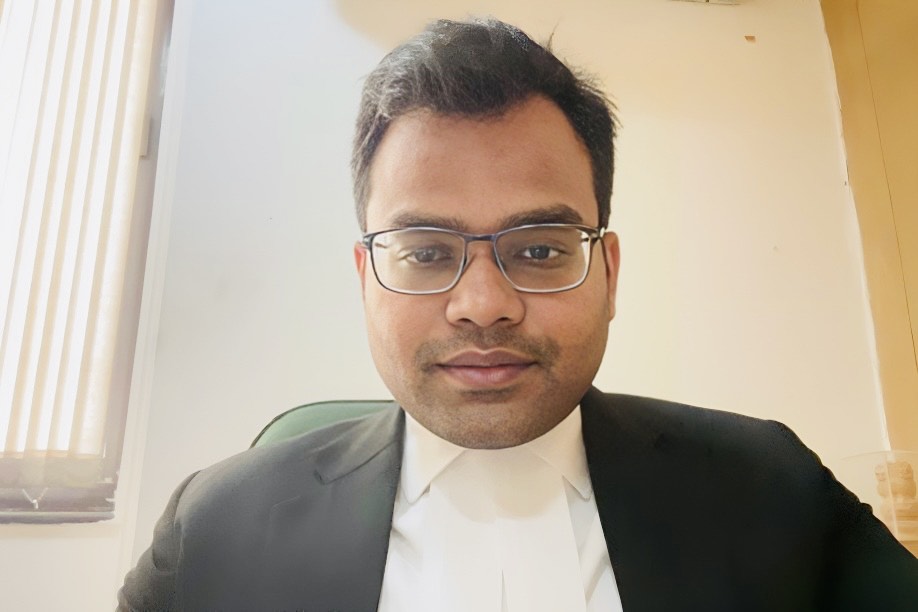
  • ‘History will judge us not by the number of cases we won, but by the no. of young lawyers we trained and empowered and how they contributed to the jurisprudence’- Jai Lodha, Advocate and Legal Consultant at Rajasthan High Court, Jaipur Bench , Jaipur

    ‘History will judge us not by the number of cases we won, but by the no. of young lawyers we trained and empowered and how they contributed to the jurisprudence’- Jai Lodha, Advocate and Legal Consultant at Rajasthan High Court, Jaipur Bench , Jaipur

    This interview has been published by Priyanka Karwa and The SuperLawyer Team

    How would you like to introduce yourself to the readers? Please tell us something about your childhood and background?  

    Hello ! I was born in Jodhpur(Rajasthan) and raised in Jaipur (Rajasthan). I did my schooling from Maharaja Sawai Man Singh Vidyalaya (M.S.M.S.V), Jaipur. I studied law from Government Law College , Mumbai ! I did my Masters In Business Laws from NLSIU (Banglore) . I also hold a certification in Public International Law from The Hague Academy Of International Law ,Hague (Netherlands) and a diploma in Cyber Laws from The Asian School Of Cyber Laws , Pune. I am the managing partner of a law firm called “VSL Law Chambers“. The Firm bears the initials of my Father , Mr. Virendra Singh Lodha , who is a designated senior advocate and practicing primarily before Hon’ble Rajasthan High court with frequent appearances before other Constitutional Courts such as Delhi , Allahabad etc and before Hon’ble Supreme Court Of India. I have an elder brother. His name is Yash Lodha. Yash Bhaiya is a faculty member in the department of Mathematics at University of Hawaiʻin Honolulu , Hawaii. Our parents have always been extremely supportive. They have never imposed any conditions upon us. Both ‘Law’ and ‘Litigation’ happened in my case by design, by choice.

    You have pursued a course in public international law from The Hague Academy Of International Law, Hague, (Netherlands) and also done Masters In Business laws from NLSIU, Bangalore. Please talk about these courses !

    I hold a public international law certification from the Hague Academy Of International Law, Hague. It was an experience of a lifetime. Some of the most reputed and distinguished professors in the world taught us various courses at the academy. Imagine studying and researching in the same building complex that houses the International Court Of Justice. Infact, on two occasions we were allowed/given access to visit the Internal Court Of Justice. It definitely qualifies to be the most memorable experience of my legal journey. I did my masters in Business Laws From NLSIU, Bangalore. It is regarded as one of the toughest Post Graduate Degrees (Law). Basically it is NLSIU’s flagship Masters Programme. It is a two year course and the applicant is required to clear 10 subjects in all. In short it was like an Everest Expedition.

    You have interned at different law firms and chambers, can you share with us some of the most important lessons you have learned from those experiences?

    Internship lessons learnt : 1) At AZB & Partners : The importance of merit + hard work ! You have to be both meritorious and hardworking else you will not survive because competition is cutthroat ! 2) Trilegal : Camaraderie and teamwork ! 3) Dsk Legal : Compassion towards colleagues ! 4) Fox Mandal : You can only grow if you work in a team and work for larger interest of the organization. 5) Trust Legal : The importance of having a mentor and guidance. 6) Hon’ble Justice P.B Majmudar (Former Judge , Bombay High Court), Sr. Advocate Mr. Parag P Tripathi (Former Additional Solicitor General Of India, Supreme Court Of India), Sr. Advocate Mr. M.S Singhvi (Current Advocate General of The State Of Rajasthan), Sr. Advocate Mr. Ashok Mehta (Former Chairman Of Bar Council Of Rajasthan) and Sr. Advocate Mr. Virendra Singh Lodha : Devotion towards practice and passion for the law and their ability to maintain brilliant work life balance !

    What kind of matters have you dealt with and what is your area of specialization ?

    Initially, I worked at Agarwal Law Associates in Delhi where I had dealt with Telecom matters , Electricity Law Matters and miscellaneous matters before Hon’ble Supreme Court Of India , Hon’ble Delhi High Court and other Tribunals. In Rajasthan, I was initially associated with the chambers of Mr. Ashok Mehta , Sr. Advocate and former Chairman Of Bar Council Of Rajasthan, for a period of 2 years where I worked and practiced extensively on the original side before Trial Courts, Consumer Courts and Tribunals ! I subsequently joined the esteemed chambers of my father , Mr. Virendra Singh Lodha (Sr. Advocate) where I worked for 6 years. It was in my fathers chamber that I an opportunity to work and specialize in writs , appeals and complaints in matters and cases pertaining to Mining Laws, Intellectual Property Law ,Taxation Law, Service Law , Insolvency and Bankruptcy Code, Arbitration Law ,Constitutional Law, Criminal Law , Cheque Dishonour (NI Act) , Labour Laws, Electricity Laws, Educational Matters , Motor Accident claims, , Medical Negligence etc Jaipur Bench as well as at Principal Seat (Jodhpur) as well as at National Company Law Tribunal , Service Tribunals , Consumer Courts, Commercial Courts and various other forums. I am currently serving as a Standing Counsel for The Commercial Taxes Department, Government Of Rajasthan , Jaipur and also a panel lawyer for 14 Government companies and organizations. I also represent and contest matters on behalf of a large number of private companies and Business Houses.

    Can you tell us more about your YouTube channel, The Virtual Amicus, and how you came up with the idea for it?How has The Virtual Amicus helped law students and lawyers during the pandemic? 

    In June 2021 , I started a YOUTUBE Channel : The Virtual Amicus. The idea and objective was not only to create legal awareness but also to solve legal issues(both basic and complex) that baffle us. The goal was primarily to help out as many law students and lawyers as possible who were hit and adversely affected by covid-19. On this Virtual Platform, I invite and interview seasoned and distinguished lawyers, respected and noted professors and retired hon’ble judges. I have recorded around 126 sessions/episodes so far since June , 2021. This virtual initiative of mine was my way of giving back to the institution , profession. The idea to anchor my own youtube channel was always in the pipeline but it was covid that gave me ample time to launch/execute it ! I saw some 200 odd webinars in 2020 before I launched this virtual initiative in June 2021.

    How do I approach speakers : Well this one question that I am often bombarded with !
    Here is the answer. On the basis of demand for a particular session on any particular legal
    issue , or legal topic , or a masters programme from any particular university or any other law course , I look for subject experts, field specialists on Linkedin and other platforms and then once I have shortlisted the names , an official invitation is sent via email.
    Since its a one person venture , so I do everything myself , from
    a) invitation !
    b) persuasion(persuading speakers) for doing a session !
    c) Preparing a Social Media Banner !
    d) Preparing Q and A in case of a Q and A format !
    e) Recording !
    f) Editing !
    g) Uploading !
    For the world it’s a herculean task. But for me it’s an effortless exercise since I am extremely
    passionate about it ! My virtual initiative is all set to turn 2 years old on 25th May , 2023 ! 🙂
    Yes it has definitely helped scores and scores of young lawyers and law students. I keep
    receiving emails about these extraordinary breakthroughs achieved by them. At this juncture
    , let me clarify 3 things :
    1) We are not here to ensure placements or get lawyers/law students placed. We are here
    only to help them and provide them with best possible guidance.
    2) Every speaker on our platform is a distinguished and a successful practitioner of
    his/her field .
    3) Our philosophy on the channel is that : “ Philanthropy should never be monetized” !
    We have till date not monetized our channel !

    What advice would you give to young professionals in the legal field?
    Let me make 1 thing very clear.
    First I am an officer of the court , than a lawyer to my client and lastly a managing partner of my firm.
    My advice to law students :
    1) Experiment as much as you can in those 3 years or 5 years of law school but never at
    the cost of academics. Participate in moot courts but not at the cost of
    academics/studies. Participate in College committees and essay writing competitions but not not at the cost of academics/studies. Play sports but not at the cost of academics/studies.
    2) It’s legitimate to be confused after graduation. Don’t worry, If you keep the student in you alive, remain academically inclined and read and read and read , your confusion will vaporize some day.
    3) Short term internships only add cosmetic value to your CV. You don’t end up doing
    anything substantial or meaningful. I would recommend long term internships but not
    at the cost of academics/studies. Also the quality of internships is more important than
    the number/quantity of internships.
    4) Remain attentive in the classroom and focus on academics/studies . Since you are a
    law student , you should give first priority to class room lectures and academics/studies.
    5) Try doing internships in different geographical locations and cities and states. You only learn out of your comfort zone.
    6) Make as many friends as possible from different cultures , cities. Don’t confine
    yourself with friends from the same hometowns.
    7) Try finding a mentor in your professor. Nobody guides the way a professor does.
    8) Try Understanding your parents’ anxiety especially when you are pursuing law from
    a different state . Some students completely cut themselves off from their parents to
    enjoy the freedom their law school offers. This type of practice is not only unfortunate but also ridiculous. One or two calls a day will not damage or hurt your freedom.
    9) Last but not the least ! Fitness is very important. A fit body houses a healthy mind !
    You feel a lot more confident as a person when you are fit. Do play a sport or hit the
    gym on a regular basis every single day for at least 45 mins on campus.

    My advice to young lawyers :
    1) We are in a profession of persuasion. Our job is to be assertive , persuasive and
    humble and not be rude on the dais.
    2) Litigation is not a 100 meter sprint but a marathon. It takes years and years of hard
    work and dedication to build a rock solid reputation as a legal practitioner. One has to
    burn the midnight oil as nothing happens overnight.
    3) History will judge us not by the number of cases we won, but by the no. of young
    lawyers we trained and empowered and how they contributed to the jurisprudence.
    4) Never take shortcuts no matter how tempting or lucrative they are. Those who run
    after quick money through illegitimate means ultimately perish but those who remain
    disciplined , determined ,seeking and keep their integrity strong ultimately flourish.

    5) In Golden Words of Senior Advocate Mr. Janak Dwarkadas (Bomaby) , “ you will
    learn the art of advocacy only if you Observe! Observe! Observe AND
    ANTICIPATE, ANCTICIPATE AND ANTICIPATE . Observe the court proceedings
    vigilantly and anticipate what queries can possibly be posed by the judge.
    6) Brevity must be observed while making legal submissions in court of law.
    Unfortunately, moot courts in law schools do not teach that. The practice of simplifying a complex legal issue and then presenting it to the court would always be appreciated by the court.

    Get in touch with Jai Lodha-

  • The profession has given me so much and so much more, because of which I now firmly believe that our litigation practice truly makes you younger and braver and the more you practice, the more you learn new things- Rajdeep Lahiri, Advocate on Record

    The profession has given me so much and so much more, because of which I now firmly believe that our litigation practice truly makes you younger and braver and the more you practice, the more you learn new things- Rajdeep Lahiri, Advocate on Record

    This interview has been published by Priyanka Karwa and The SuperLawyer Team

    To start the conversation, please tell us what motivated you to pursue law as
    a career.


    Well, initially I was never inclined towards the practice of law, and rather was more interested to work in companies and become an In-House practitioner. Being a 3rd Generation legal professional, I knew the battle ahead to stay in the game. Plus I was [still am] an athlete and played a lot of professional matches, so time had to be matched equally between career and sports.
    Kolkata is where I was born and raised, hence, arguing and negotiating came quite naturally to me, much like all legal professionals from the city. Quite early on I was introduced to the world of litigation, policy brutalities, burgeoning stress of drafting, long hours of excruciating patience, hopping Court to Court, etc. as I used to accompany my mother and grand-father, who were a noted law practitioners in Kolkata.
    I would say that the experience was there [and it was surreal], which is fundamentally why I wanted to avoid it!
    However, with my abrupt migration to Mumbai in the year 2013, I swept my entire time and energy into commercial litigation and thereon, I never really
    looked back, so really the motivation never came early on, but rather stuck with me as I started litigation in Mumbai.

    Sir, you have completed a decade of practice in law. Has the profession given you what you expected out of it?


    Yes, indeed so. I have completed my graduation in the year 2012, then passing the AIBE in the year 2013, so it’s been more than a decade into the field.
    It has made me to travel across the country, representing disputes in their strangest and malignant forms, meeting a diverse group of people, charter me into international disputes and place me as an International Arbitrator and so much more.
    I never expected to have so much exposure to disputes when I was merely an angry young student of law, deeply involved in politics, sports and students’ movement in Kolkata.
    Quite candidly, I never wanted to be so involved too! The profession has given me so much and so much more, because of which I now firmly believe that our litigation practice truly makes you younger and braver and the more you practice, the more you learn new things.

    Our readers would like to know about your areas of practice and your interests over the last 10 years of law practice.


    I come from a generation of lawyers, politicians, and bureaucrats, so criminal law came quite naturally to me as I was fairly accustomed to the nuances of investigation and arrests.
    However, I started off with Winding Up matters under the Companies Act, 1956 [now repealed] and similar commercial disputes. Arbitration sounded
    fancy at the time and gave my hand on couple of ADR matters initially.
    But since being in the chambers of my Senior, who is a full practice litigation professional, it got me experienced in a host of matters, ranging from
    Municipality disputes, cheque dishonour, Suits, complaints, divorce, testamentary and what not!
    Being involved in so many types of litigation opened a Pandoras Box for me, unleashing the opportunity to at least master the practice and procedure [if not the law].
    Over time, I got involved in various other types of matters, involving labour disputes, cyber-crime, bails and trials, Penal sections, Admiralty, IPR, NCLT
    and IBC, etc. making me go places and expose myself to a varied gravy of matters.
    I keep one thing in mind, the basics of dispute is always the same and the principles to resolve any dispute is never complicated. Its more logic and
    reasoned.

    What is a Career in Alternative Dispute Resolution like, especially from an
    international perspective?


    ADR is the future. The facts speak for themselves. There is an indiscriminatory rise in litigation before various Courts and this
    exponential rise in matters, casts an unbearable burden on not only the Judges, but the Advocates, Prosecutors, Pleaders, clerks and the entire system along with it.
    We all have knowledge of ADR in Matrimonial disputes, and further it being
    introduced in the form of ‘Compulsory Mediation’ in Commercial Matters, however, if understood smartly, ADR can be used the same way as litigation, which is commonly used by almost all International Institutions as an effective method to conclude the disputes, by arriving at amicable settlements and charging for the same at pre-determined rates.
    The additional skill sets which will be needed are the necessary tools for effective research, razor sharp strategy and persuasive negotiation skills to effectively resolve disputes.
    I have clients wanting to end disputes, not win a matter for it to be overturned in Appeal, so I suppose ADR is the way forward and now with the extensive advent of technology, practice has never been more convenient and organized.

    Could you please tell us about the personal and professional challenges you
    encountered over the years, up until you established your own firm and
    thereafter?


    Well, it has always been pretty much hard work and putting in the hours of work towards it.
    I have always focused on positives and rarely been idle till date. I have constantly been on the move, shifting focuses and building experiences around disputes and people.
    There have been insurmountable challenges that I have faced along the way, but we always move forth, right? We all do. Professionally, I have worked with Counsels, Advocates and in a noted law firm, and from every such entities, I have developed various skills. Skills in people management, little bit psychology, legal strategy, learning the procedures, knowing more laws, defining my own argument style, knowing when to shut up and sit [or walk away], as I always preach everyone, law is common and everyone is expected to know, what matters is how to interpret it and to whom the same is being interpreted to. One must definitely know how to read the mind of another individual and be aware of the basics of psychology.
    Once I was convinced that I could finally walk on my own, I took the leap, almost impromptu and here I am, better by the day.

    How do You see the development of Alternate Dispute Resolution methods over the coming years?


    I foresee a complete overhaul of the existing system to place litigation in a symbiotic relationship with technology and a consequent yet systematic development of the entire ADR regime.
    Legal professionals will be more adapted to resolve disputes, either through Courts, which mandates the compulsory ADR process, via ADR Institutions or by Advocates engaging with the disputing parties to mediate and negotiate the disputes.
    In my years of experience, it is only recently that I have come across parties that are mediating and settling disputes, only through effective negotiations, at the final hearing stages, thus saving enormous stress on the entire system and its [breaking] parts!
    Final Resolution of disputes would mean an end to the dispute and by the look of it, who would not want to develop it? So as I see it, ADR will play a prominent role in the adjudication of disputes of all nature, without exceptions.

    There are many certifications, like the one given by CIArb (Chartered Institute of Arbitrators) to take up Arbitration as a career. Do you think taking such certifications helps along with practice?


    Education and being educated, are very different. For example, no one teaches you litigation, but you get educated along the way and educate yourself about the nuances of litigation and its practice.
    Similarly, you need to have life experiences to effectively negotiate and mediate. The purpose of any course is to have the empirical knowledge and discuss established principles, which is to be borne in mind when eventually resolving disputes.
    While I believe that by undergoing certification courses [an uncountable number done myself!] definitely aids you, it very important to have a sense of direction in what ones to do, else the certifications shall be only used to cover office walls.
    Think deep, in our profession, life experiences take the first preference. Then the education.
    ADR Institutions are having internationally acclaimed Trainers and Professors, hence, you will get first-hand experience in international disputes and scenarios. So yes, it will definitely help in some way.

    Lastly, what would be your advice for the fresh law graduates who are
    looking forward to opt for ADR?


    Put in the long hours. Dedicate yourself to a routine. Read the laws. Go to the roots of the laws on ADR and get enrolled with ADR Institutions and Advocates practicing ADR to have first-hand knowledge and being conceived with the nuances of practice and procedure.
    But be advised, ADR will outgrow and creep into all litigation domains, so it is very important and wise to practice all domains of law, keeping ADR as its base.
    Lastly, you break the walls down and you keep creating standards!

    Get in touch with Rajdeep Lahiri

  • Kailash Vasdev, Senior Advocate, Supreme Court of India, shares his experience on the struggles, challenges of a career in litigation

    Kailash Vasdev, Senior Advocate, Supreme Court of India, shares his experience on the struggles, challenges of a career in litigation

    Kailash Vasdev is a Senior Advocate at the Supreme Court of India. He has worked with Senior Counsel Nonit Lal, then Justice BN Kirpal, former Chief Justice of India. He cleared the AOR exam in 1981. He became member executive of Supreme Court Bar Association in 1991 and was instrumental in creating 1st Advocates Welfare Fund in Supreme Court. He was designated as Senior Advocate in 2000. He has a huge number of cases to his name, including sensitive cases like that on the death penalty. He has more than 1400 reported judgements to his name.
    In this interview we talk to him about:
    • Designation of Senior Advocates
    • Qualities expected of a fresh entrant in litigation
    • Importance of mentors at the starting of one’s career.


    HOW WOULD YOU LIKE TO INTRODUCE YOURSELF TO OUR READERS? PLEASE TELL US SOMETHING ABOUT YOUR PRE-COLLEGE LIFE?

    I am a lawyer who respects the law and prefer to discharge my duties without fear. It is a lawyer’s obligation to discharge his professional obligations with promptitude, correctness, and expedition.


    COULD YOU TELL OUR READERS ABOUT THE FIRST TIME THAT YOU APPEARED IN COURT?

    Within fifteen days of joining the profession in 1975, we were appointed as amicus to assist detenues under the Detention laws prevailing during the emergency. We were to assist the detenues in obtaining facilities in detention like medical care and other amenities. I knew nothing about detention. The Judge and the Additional Solicitor knew everything about this law. It was challenging for a fifteen days old lawyer to stand frightened in court with a single purpose of getting in client relief. Success came with learning.


    HOW IMPORTANT IS IT TO HAVE MENTORS FOR A YOUNG LAWYER IN STARTING HIS CAREER IN LITIGATION?

    That can be controversial because in today’s professional ethics new entrants necessarily look at high incomes. Good mentors do not have high incomes because they follow ethics both in fees and practice. Youngsters do not accept this. It was after fifteen years that we felt that we had learned some law. Today the feelings are different because all learning comes from behind the screen. Therefore, mentor selection is a choice for young lawyers.


    WHAT FACTORS INFLUENCED YOUR DECISION TO BECOME AN AOR?

    Drafting – learning to draft well because when you draft a petition you learn to be precise on facts and specific on the law. The absence of either kills a good case. Drafting is a learning experience.


    DID YOU REQUIRE ANY PREPARATION TO APPEAR FOR THE SUPREME COURT AOR EXAM?

    There is more to the AOR post exam. There is a prescribed syllabus. One needs to follow the syllabus and prepare themselves for the exam. But the real skills are developed post the exam.


    WHAT SKILL SET IS REQUIRED FOR A YOUNG LAWYER AIMING TO BE DESIGNATED SENIOR ADVOCATE IN THEIR CAREER?

    There are no more skills set – especially after 2017 judgement laying down guidelines for designation of a senior advocate. Eligibility set down by S.C. contractionary to Advocate Act where seniorship was a privilege by the court.

    After Supreme Court judgement and High Court Rules it requires eligibility and skills are no longer required.


    WHAT QUALITIES WILL YOU LOOK FOR HIRING A JUNIOR?

    A young entrant is to learn as he gets along. He must be dedicated. The only single requirement is dedication.


    PLEASE TELL OUR READERS OF SOME OF YOUR MOST MEMORABLE CASES?

    1. Bhushan Singh v. the State of Punjab, 1983 judgment: Three people were sentenced to death; the Supreme Court acquitted one and reduced the sentence of two to life.
    2. R.C. Sood v. the State of Rajasthan: High Court had created false evidence and relied on non-existing persons.
    3. Detention Cases: On false implication, many people were taken into custody. The satisfaction of getting a detenue released on a false accusation is unparalleled.


     WHAT WOULD BE YOUR WORD OF ADVICE TO OUR READERS?

    Keep money as your last call. It comes with dedication. Most importantly dedicate your time reading, understanding and improving the judicially settled law because you can change the judicial pronouncements.


  • Shivani Verma, Advocate, Jharkhand High Court, on co-founding Legal Eagle, mentoring law aspirants, and her litigation experience

    Shivani Verma, Advocate, Jharkhand High Court, on co-founding Legal Eagle, mentoring law aspirants, and her litigation experience

    Shivani Verma graduated from Gujarat National Law University, Gandhinagar, in 2011. She has been an Associate with India International Jurists for a year, and is currently an Advocate at the Jharkhand High Court. She is empanelled to represent Canara Bank (Jharkhand), Jharkhand High Court Legal Service Committee, etc. Her area of expertise includes civil and criminal law.

    She is also the co-founder of Legal Eagle, an institute that offers different mentorship programs for Class XI and XII students for various law entrance examinations.

    In this interview we speak to her about:

    • Studying at GNLU
    • Being a co-founder at Legal Eagle
    • Choosing between litigation and corporate law


    How would you like to introduce yourself?

    I am a lawyer by profession with almost five years of active litigation experience,  also now involved with the initiative called ‘Legal Eagle’ where we strive to disseminate important information about the field of law as well as mentor students for various law entrance examinations. I belong to the city of Ranchi, Jharkhand and have returned to my hometown to practice law and contribute to the Legal profession and education in my own way.

    When did you decide to take up law as your profession?  

    ‘Degree in law’ is still looked at with some amount of scepticism by people with no background in law, especially in tier-II cities where they are yet to be exposed to the field. It was no different in my case. I am a first generation lawyer and encountered questions like ‘why law?’ though not from within the family, but outside. The idea of doing law came a little late, but did not involve a lot of overthinking. It was in my Senior Secondary that I realised that I wanted to take up Law. A friend of mine told me about the National Law Schools and the interdisciplinary courses being offered at the law Schools. I really liked the course curriculum designed for the National Law Schools in India and decided to go for it. My father belongs to the field of academics and he was very much aware of the new changes taking places in the profession, especially of the concept of National Law Schools in India and the dynamic course curriculum offered by these colleges. Both my parents were very receptive of the idea of me taking up Law.


    Tell us a little bit about your life as student of law at GNLU. 

    Although, I think I could have explored more in my law school days, both in terms of academics and co-curriculars, yet the five years of studying law remains one of the best experiences till date. There is a lot one can do in those five years, lots of things to learn and a lot of things to unlearn. For starters, the curriculum is so designed that the students are made part of several assignments in the first few days of the college itself and deadlines are already set. This is the time when one has the least amount of knowledge on any subject of law and no clue where to seek help. You end up approaching seniors, faculty members, batchmates, outsiders, anyone who can help. This whole process of trying to find solutions breaks the ice between peers as well as somehow defines your college life in a nutshell, where you end up working in teams in so many situations, may be at the cultural fest, representing your college team in a moot, or other several such competitions or merely working in the mess committee together with different sets of people every time, the experiences are very rewarding. Law Schools is not just restricted to learning but also developing one’s personality through the innumerable meaningful interactions that one has as student of law.

    I was pretty much interested in everything. I had participated in every inter college moot organised by the college in the five years I studied at GNLU, irrespective whether I made it to the next round or not. I got the opportunity to represent the University as part of the team in a National Moot Court Competition. I had participated in many seminars organised both within and outside college, presenting papers on different topics. I was never a topper, but there was always a degree of healthy competition in the environment, which pushes you to be better. This later also helps in the career.

    Dividing time between academics and co-curricular was not very difficult as everyone around me was doing the same, and doing it so well. I thought people in my batch were an excellent bunch of people, so many of them good at so many things. In a lot of ways, it was inspiring, and still is.


    How did you develop an interest in litigation?

    Not any one thing in particular, there were several things. The idea of arguing in a matter always seemed to excite me, also a reason I participated in all the moot court competitions in the university. Some subjects like the constitutional law, contract law interested me a lot. As part of academics, I had heard many legal luminaries addressing on several topics and was always fascinated by the real life anecdotes of handling cases and how interpretation of law makes huge impacts in the society we live in. My internship experiences made a lot of things clear to me, also my first job in a law firm where I got the first practical experience of working as a lawyer. This was the time I had decided that I would want go for my independent litigation practice


    Could you tell us about the internships you took up, and what you learnt from those experiences?

    I have undergone several internships during my five years in college, starting from interning at non governmental organisations like CARE International to District Courts at Ranchi, Jharkhand, High Court of Delhi, Supreme Court of India. I interned at some top tier and mid tier- law firms as well like Mulla & Mulla & Craigie Blunt & Caroe Law Offices, New Delhi, Trilegal Delhi, Bharucha & Partners, Mumbai Office, all in the litigation teams. I had also interned at Anand & Anand Law Firm, Mumbai Office for IPR and Publications houses like Indlaw. I tried doing a mixed bag of internships to get to know the work involved and understand where my real interest lay. Litigation somewhere dominated the choice in internships too. All the internships were very rewarding, as along with getting to see the diverse nature of work that the professionals are handling and being part of them, you also get to learn the manner of working in a structured environment.

    How can students avoid a decision paralysis?

    I am of the opinion that ‘Law’ as a field offers the widest arrays of career opportunities and no career choice is bad as such when it comes to a lawyer, as switching from one career option to another is much easier as compared to other fields. Working as an Associate in the Law Firm, and switching to full time litigation in the Courts in India was smooth for me. Similarly, many corporate houses look for candidates with litigation experience to handle their in-house works, so switching from litigation to corporate is also not very difficult and vice versa. There are several examples who have shifted careers and are doing very well in their new fields. ‘Law’ in the country has been ever evolving, and the branches of law ever increasing. One must go with what interests them most and secures their future in it. Decision paralysis, according to me, is only a state of mind. However this can be avoided by undertaking as many diverse internships as one can as a student of law,  if not to understand what one wants than to know what one doesn’t want as a professional

    On the importance of studying further, though I did not opt for further studies right after graduation, I think having a higher degree coupled with in-depth knowledge of a particular branch is always rewarding. Apart from adding to the personality, exposure and confidence of the candidate, a higher degree sometimes becomes vital in terms of the leap you take even in the later stages of your career. Also a higher degree expands the opportunities as some organisations and certain posts are limited for a candidate possessing a graduate degree or more.  It also gives you the flexibility of making big career changes like suddenly switching from a corporate career to academics etc.

    When it comes to deciding what next step is to be taken after graduation, different things work for different people. For some, job satisfaction is more important, some would want more security, while some would opt for creative satisfaction. It is important to choose a path that one may enjoy for the longer run and securing oneself in that. I would also like to add here that even if a decision does not turn out the way one thought it to be, it is never too late to steer in another direction, as sky is the limit in this profession.


    From a law student to a lawyer, how will you describe the transition?

    From a law student to a lawyer, the transition has been at several levels as.  Litigation is a very challenging profession but the results can also bear immense satisfaction for a practitioner of law. Although a lawyer remains a law student throughout his life, the way of looking at things from a professional stand point changes. The profession changes your perspectives on things that you had as a student of law. While a lot of theoretical understanding and brainstorming is done as a student of law, the profession also involves many practical dimensions to an aspect or study. A lawyer who is entrusted with the case owes the highest degree of responsibility to the client as well as to the Court of law and has to accordingly conduct his case. A student of law from the protected environment takes a long leap as a professional amidst cut throat competition.


    Tell us about your early professional experiences as an Associate at India International Jurists. 

    My early professional experiences at India International Jurists was quite an eye opener about the field of law as it was my first job. I learnt a lot while handling diverse kinds of matters in the firm. The confidence of handling the matters on my own and switching to independent litigation are the decisions that followed.


    In deciding between Corporate and Litigation practice, what are the parameters that you considered? 

    In my first job at India International Jurists Law Firm at New Delhi, I got the opportunity to work in both Corporate as well as litigation matters. I was appearing before the Delhi and Gurgaon Courts in several litigation matters and simultaneously also working on some corporate cases, but I enjoyed litigation work more than the corporate practice. And that was the only parameter that guided me to take up litigation in the Courts. In my five years stint in the Jharkhand High Court, I have appeared in a variety of matters ranging from Civil, Service, family disputes, Arbitration matters to some Criminal matters as well, representing the Petitioner’s case as well as the State side. But the maximum work has been on the Civil side, especially Service matters which has become a core area of practice now.

    Do you try to consciously build a specific body of work? 

    It is a fact that apart from doing the maximum number of cases that came my way, as a first generation lawyer, I have also consciously tried to build my Curriculum Vitae doing the maximum variety of work as a lawyer, so as to build a good body of work, not restricting myself to anything specific. This is also the reason that apart from working on my own matters, I had worked with the two former Advocate Generals and Additional Advocate General of the State representing the State of Jharkhand in a variety of matters so as to get maximum exposure in terms of work. I have done Public Interest Litigations, Service/ Employment matters, Civil cases, Property matters both representing the Petitioner’s side in some as well as Defendants in some, as I was appearing from the State Government side too. All the matters that have come in the way have been very interesting, though I would refrain from giving a detailed account of them. I have appeared for some social causes through Public Interest Litigations and they have been immensely satisfying experiences. There have been certain cases for implementation of provisions of motor vehicles act to curb the increasing accidents on the roads, challenging the framework of Right to Education act to make it more effective,  framing of rules for formulating rules for the State police to check the incidents of custodial death. There were several other civil and criminal cases. These cases and many more have helped me build my career as it stands today.


    How did you come to become one of the Founders at Legal Eagle? 

    Legal Eagle is an initiative started by my colleague, Shubham Gautum, an NLIU Graduate and me. In fact, I would like to credit him for this brilliant idea. Belonging to a tier II city, being first generation lawyers, studying in National Law Schools and coming back to our hometowns to practice law makes our journey somewhat similar. We were discussing that a lot many people in the town are still unaware of the field of law and the concept of national law universities and other good colleges, the prospects that it offers as a professional degree, when Shubham came up with the idea that we should contribute to the field by spreading information about this field, counselling kids and their parents and also mentoring kids for the examinations. The idea instantly clicked with me. This motivated us to start this initiative from our own understanding and experience. In the year 2016, we held as many as fifteen seminars and interactive sessions at different schools in Ranchi addressing students of Class XI and XII, informing them about the field, how it works, the pros and cons, what to expect as a student of law and as a professional, the current available options of the interdisciplinary degrees etc. With time a number of students have associated with us.


    What gaps in awareness and legal education does Legal Eagle seek to fill? 

    Legal Eagle’ is more of a platform to make the students and parents know of the field of law as it exists today. It is a fact that most of the families in smaller cities in India are aware of the fields of engineering and medicine but have complete lack of information when it comes to less trodden career fields like  Law, Fashion Technology, Mass Communication, Hotel Management etc. Though law is the emerging career of these times but the awareness about the field still remains quite low, especially in smaller cities. In order to bridge these differences, we are holding seminars, discussions, interactions at various forums addressing all kinds of audiences to spread information about the field. Apart from this we are also mentoring students for the upcoming law entrance examinations giving them full class room environment and preparing them for the upcoming examinations.

    What does the scope of work you undertake include at Legal Eagle? 

    The scope of work at Legal Eagle is wide. Apart from the interactive and counselling sessions, as a Mentorship Institute, we are providing the students the best guidance possible to appear in the law entrance examination through class room teaching for examinations like CLAT. We provide them with the materials, a number of Mock tests on different patterns, sectional mocks, quizzes. We are conducting regular classes for different subjects/ topics covered in these tests. We are in regular touch with the parents of the kids being mentored by us by giving them performance maps. With a fresh batch of students coming up in the month of April, after their Board examination, a lot of time will be involved in that as well.

    ‘Legal Eagle’ is a pet project, very close to our heart. Both me and Shubham believe in it and are working everyday towards the goal. We aim to mentor a limited number of student with the best guidance we can. Right from addressing a crowd to counselling a parent or mentoring students, I  love every aspect of the work in ‘Legal Eagle’ and that makes it very enjoyable.


    Did you have a mentor or guide during the formative years of your career? 

    The importance of mentor or guide has to be acknowledged, be it any field. And especially in this field, where a lot depends on the skills and experience of being in the profession. During the formative years of my career as a litigator, I was working with the Senior Advocate, M. Sohail Anwar, a very well known and respected professional in the field. Working with or being attached to someone in the formative years in the field of litigation cannot be overstated as observing and learning the little nuances of the profession becomes very vital when handling a case on your own, as you shape your future in the backdrop of those experiences. The little things like closely watching your mentor dealing with the client and the case at various stages are very important. Especially for a first generation lawyer, who has no exposure whatsoever, of the field.

    Where would you like to see Legal Eagle five years down the line?

    Five years down the line I see ‘Legal Eagle’ bring a big change in the prevailing environment where people’s reservation of opting for the ‘field of law’ is dispelled and the information about the existing scenarios reaches all and people are able to make informed career choices . We hope Legal Eagle makes an indelible mark on the minds of people, especially the students who are associated with us.  We see Legal Eagle soar in five years time.


    Do you believe that we are becoming open to careers other than those belonging to the STEM disciplines?

    The prevailing mindsets of most of the parents we come across, is to make their children opt for streams like science in the higher secondary so that they can go for professions like engineering and medicine, without even knowing if their interests lie in that field. Also, the people who have done law are only thought to be the ones practicing in the courts and there’s a particular image of the practicing advocates in our country which is not very positive. They are unaware how much the field has expanded and how much it can offer. In fact it has become one of the most dynamic professions of these times, where lawyers are not just restricted to court rooms, but are now part every company’s board room, small and big agencies, banks, public sector enterprises, start ups, think tanks, local, national and international organisations. Corporate sector is full of lawyers in different roles. Lawyers are entering academics. Percentage of lawyers cracking UPSC every year is on a rise. Most bureaucrats and politicians have a background in law and that gives them an edge. We have counselled a number of students and their parents telling them about this field and what it can offer to a professional. Most of the time, a student is very convinced and wants to take up law but faces dissent of the parents. We then counsel the parents about the profession to dispel their doubts. There is definitely a shift in people’s approach. They are becoming aware and are more willing to go for the new age disciplines today. But then again, in a smaller city, the ratio of such people is very less, as compared to a metro city. Hence the pace of the change in the mindsets is also slower.


    As the co-founder at Legal Eagle, what does a typical working day look like for you?

    At Legal Eagle, the classes usually starts early. Planning and organising takes entire days sometimes. Even when the active sessions are not going, the planning is always going in the background. We keep organising free weekly quizzes for students to take maximum benefit of. For the kids we are mentoring, apart from the regular classes in every subject we conduct as many free mocks, sectional tests etc. for them to take maximum benefit of.


    How do you keep yourself updated about the latest developments in the law?

    The best way to be updated about the latest developments in law or in any other field for that matter is by staying aware of the things happening around on a daily basis. Newspapers are the best way of staying abreast with everything around. Apart from that, like the many developments in the field of law, so are there advanced multiple software for legal search. Being updated with the latest laws and accessing them have become easy in today’s times. Also the fraternity is full of people reading and researching on everything new and the out of court intensive discussions with the peers and seniors serve as great advantage to lawyers.


    What books, judgements that you have read would you say have played an integral role in shaping your legal philosophy?

    Every system is a product of its own unique experience, similar is the case with our very own system. ‘India since Independence’ by Bipan Chandra is one such book that has given an account of the history that has lead to the making of the contemporary times and is a very good read to understand where and why India stands today. Legal Philosophy can be built only on the backdrop of history. Another book, ‘Before memory fades’ by Fali S. Nariman describes his journey as a lawyer and gives perspective to budding lawyers on the field of litigation. There are several judgements which have acted as catalysts for taking up the profession.


    What are the causes you feel strongly about?

    There are many social causes I feel strongly about. One of them is women’s cause in the society. I am yet to do a lot and contribute as a lawyer, in whatever capacity I could. I am an empanelled lawyer of JHALSA (Jharkhand State Legal Services Authority) for giving legal advice and assistance to poor persons who are unable to engage a counsel. I have been representing those clients on behalf of JHALSA.

    It is the concern for the legal field which made me take up a project like ‘Legal Eagle’ where awareness and education is one of the causes that I feel needs to be addressed.


    How do you manage your time between your professional and personal interests? 

    I have always consciously tried to create time for my personal interests apart from the professional life, as my personal time gives me the much needed sanity and boost for the work ahead. It becomes very difficult on certain days where I am caught up in work throughout the day but certain days I have the liberty and time to mould according to my interests. My interests outside law are many. I could spend entire days painting, swimming, reading a book, watching movies or travelling someplace.


    What advice would you like to give to students aspiring to build a career in law? 

    For students aspiring to build a career in law, my advice would be to use the immense potential that the degree in law has to offer. Be vigilant, as it is very much important for a law student to be aware of the things happening around. Finally and most importantly, working hard is the only mantra to be successful in your own terms.

    In this cut throat competition, for a student preparing for any competitive examination, the highest degree of commitment is required. The student preparing for the exam should give minimum number of hours of study everyday for the examination and stick to the daily schedule, as being organised is very important at this stage. Solving past year papers, maximum question banks helps one check his speed and accuracy in solving questions. Understanding the nature of questions is very important to understand the examinations. Lastly, belief in oneself should never be lost.

    Like they say, “if the end is clear, the means to the end will take care of itself”.


  • Mehboob Rahman, Advocate, Calcutta High Court, on litigation, and his diverse experience

    Mehboob Rahman, Advocate, Calcutta High Court, on litigation, and his diverse experience

    Mehboob Rahman graduated in law from Symbiosis Law School, Pune, batch of 2008. He is an independent legal practitioner at the Calcutta High Court. With over seven years of litigation experience, he has handled matters pertaining to the Companies Act and Sections 9, 11 and 34 of the Arbitration and Conciliation Act, 1996 to Civil Revisions, Appeal Hearings(Civil), Criminal Revisions, Criminal Appeals – all falling under the Original and the Appellate Side jurisdiction of the Hon’ble Calcutta High Court.

    In this interview we speak to him about:

    • His litigation experience
    • Practising at the Calcutta High Court
    • His internship experience


    What would you like to say to our readers in the manner of an introduction of yourself?

    I have been a practicing lawyer for the past seven years at High Court, Calcutta. I have dealt with varied matters such as writs under various groups, criminal and original side suits. It is pertinent here to mention that my father is a senior advocate here at High Court, Calcutta and my mother was a police officer at Kolkata Police. Therefore terms like “law” and “court” were something which I was used to since childhood.  


    What inspired you to take up law? 

    You see, as a child sometimes I used to accompany my father at work and used to play around in his office. I was used to seeing law books, briefs, client conference, and everything else that I see today. All our good family friends were either lawyers or police officers. When I took up law, it was “quite expected” and a predictable move. The best part about Symbiosis Law School at that time was, It had offered the course B.B.A.,LL.B for the first time and mine was the inaugural batch. I had a commerce background in school so it was again a very predictable choice. I always knew that it is either going to be business or law after school. That’s how i ended up in Symbiosis.


    Tell us a bit about your time studying law as an undergraduate student at Symbiosis Law School, Pune.

    Studying Law at Symbiosis Law School was in my opinion the best five years in my life. By this I don’t mean only academics. I don’t think I need to rate Symbiosis on its academic parameters. We already know about it. Its more than that. It was the life there I am talking about. We made some lifelong friends there, friends who are still in touch and going strong. Moreover I did not feel that there is a rat race going on out there. Everyone of us was unique in our own way and being in Symbiosis only brought out the best in everyone. I believe I was a very mediocre student yet I never had any regrets about it because at the end of it I felt loved and co operated by my professors, friends and some exceptional seniors. Symbiosis used to be and still is more than just an institution or a degree, its about the time, about my friends from all over the country and also the city, Pune. My friends used to think that I must be having lot of support back home academically since I have a lawyer in the family. On the contrary when I used to tell my father that I am really panicked about Constitution paper the day after, I used to get replies such as “there is absolutely nothing there, absolutely nothing, simply study Article 226 that is very important and useful,”. I had to switch over to other topics such as finance and sustenance immediately because I knew the discussion is going no where.  During my time we had the opportunity to experience excellent faculties and during our principal’s lectures there used to be 100% attendance not due to fear or respect, it was because she was the best at it.


    Did you take part in co-curricular activities while in college? 

    Co-curricular activities are very important in law students life or for that matter any student’s life because it takes you out of the mundane clockwork routine and classes to something different. I took part in few moot courts though I was not into serious mooting. We had these regular symposiums and guest lectures where we interacted with eminent personalities and it dealt with many topics which was prevalent then. I was an active participant in the committees and the sub committees during an event of our college with the support of my seniors wherein you need to manage events or simply make things work! I was good at interaction and negotiating with people who could be anyone from a vendor to a guest whoever is necessary to make an event successful. Even in litigation the most important resource next to knowledge is people and therefore interaction and counselling plays an important part. Therefore its completely clear how the extracurricular activities plays an important part in ones life in what way.

    What were you areas of interest during your legal education?

    As a student I found the subjects on criminal law quite intriguing. I found it to be very closely related with different human behaviour. As a lawyer I never chose anything specific to specialise in. I have simply gone with the flow. I stick to what my father used to say that its never a lawyer who decides what he/she specialises in, its always the clients.


    Could you tell us about the internships you took up, and what you learnt from those experiences?

    The practical aspect of legal profession is indeed very different when we compare it with what we do during our college days. In real world, there is no syllabus and its not about making your teacher happy by sticking to doing exactly what is expected out of you. It is about making people happy, giving them relief of their misery. You might fail in that attempt but the effort should always be genuine. My internships were all based around litigation working under eminent lawyers. I spent a lot of time at the court listening to arguments and trying to follow court procedures. I realised then that what we learn post graduation in our professional scenario is far different than academics. Internships give you an insight in how to take things and from where, develop research skills, understand the profession better.


    At a time when most students are inclined to taking up corporate jobs, what influenced your decision to take up litigation?

    I believe its completely a personal choice. Both corporate and litigation are perfect in its own sphere and there is enough to learn in both of them. However I will tell you exactly what went in my mind while choosing litigation. Firstly like I mentioned earlier, I like work which are people oriented. In litigation you are constantly interacting with real people. Not just your clients and colleagues but you need to know lot of people within the various departments of the court in order to have a smooth flow of work. I realise now how heavily we depend on someone or the other somehow in litigation at every step. Secondly, I wanted to work for myself. Thirdly, I wanted to be the master of my time. Whenever I get an opportunity I travel, or at least travel to meet a friend probably. Life always happens outside work. One must never forget that.


    What advice would you give students in avoiding a decision paralysis? 

    I wouldn’t term it as a decision paralysis exactly. It’s a matter of objectivity. For example doing an LLM would really be helpful if you are into academics professionally. However it does not really give you an edge as a practicing lawyer. I should not be misinterpreted here, it is completely my personal opinion. Opinions do differ. I always support higher education and it is always enriching, opens up your mind and scope. Therefore it completely depends on what one wants exactly. I have completed a PGDHRM when I got time, taking a short break from work.


    From a law student to a lawyer, how will you describe the transition?

    It’s a metamorphosis actually. Being a law student and a lawyer is completely different. As a student our object was to pass in exams with good grades. At work you need to live up to your client’s expectations while adhering to all procedures. Time is not always in our favour as courts in India are clogged with pending matters and less number of judges to dispose the same, which we all know. As a law student a section, or a chapter of a law book was a tiny part of the curriculum. In court days might be consumed arguing on one application made on a single section. Drafting is again an integral part of litigation which is given very little importance at  a law school. One takes time to get a good hold on that too. As a student your mistakes will lead to a bad grade, as a lawyer your mistake will lead to a cost or consequence for your client. Therefore one can understand the diligence that is required.


    What is the nature of matters that you take up?

    I take up matters both civil and criminal in nature. At the High Court, I am mostly occupied with writs under various group heads such as land, municipality, service etc. I have taken up matters on dismissal/removal of employees of the Paramilitary Forces of India and other services under the state and central government including employees of public sector undertakings. Suits and criminal matters have been an important part of my practice as well, filing and dealing of which mostly takes place at the High Court and various District Courts in West Bengal. I also have a strong affinity for matrimonial matters and counselling. Non litigation work consist of Searching Land Title, Valuation, Conveyance and Registration before Registrar of Assurance and Additional District Sub-registrar. Drafting of various instruments/documents pertaining to Sale, Lease, Mortgages, Power of Attorney and Will.


    How do you manage your time between your professional and personal interests? 

    Personal interests are the ones which define you as a person, as a human being. You might be remembered how good you were professionally but you will surely be remembered how you were as a human. Life is always outside work. I am more of an outdoor person. Travelling is one of my primary interest. It makes you a better human being every time. One must explore places away from home in order to appreciate what we already have in hand. Trekking up a hostile terrain teaches you how comfortable we are back home and we shall never take things for granted. I am passionate about motorcycles and I often go on rides. Riding is extremely rejuvenating. I wouldn’t lie, I actually look for excuses to ride even if it is for a short while.


    How do you keep yourself updated about the latest developments in the law?

    Law is indeed an ever changing field. One must keep himself/herself updated with the new developments in their field through precedence, books, journal, circular, news and of course Google! It is not difficult now as it was before. We have online resources such as manupatra, scc online and airweb to name a few. Socialising with colleagues is surprisingly the fastest way to learn about new developments.


    What advice would you like to give our readers, who are mostly law students and young lawyers?

    To students, enjoy your college life as it is going to happen only once unless you are talented and may extend it. Make friends and make memories there as those are going to last a lifetime. I am not discouraging ambitious students but its okay to take it a little easy with studies as it is more than academics which is going to take you places in professional life. For young lawyers, patience and perseverance are the keys. Look for opportunity to learn at every step. Losing is also learning. Makes you stronger. Lastly love what you do, do what you love.


  • Shayak Chakraborty, Advocate on Record, Calcutta High Court on starting up with an independent litigation practice right after graduation

    Shayak Chakraborty, Advocate on Record, Calcutta High Court on starting up with an independent litigation practice right after graduation

    Shayak Chakraborty is an alumnus of Gujarat National Law University who graduated in 2013. During his school and college days he was very active in debating and started the Debating League at GNLU. He worked at the Calcutta Sessions Court under the aegis of the Chief Public Prosecutor before assuming a practice at the Calcutta High Court as an Advocate-on-Record. He is a certified mediator and focuses his litigation practice on civil, commercial and corporate, criminal and constitutional law. At present he has an independent practice. In this interview he talks to us about:

    • The required skills and the importance of mentors in litigation
    • The scope of ADR in the Indian judicial system
    • His experience working in the Calcutta Sessions and Calcutta High Court.


    What would be a brief introduction of yourself?

    I graduated from Gujarat National Law University in the year 2013, and I am currently practicing law in the High Court of Judicature at Calcutta. I used to practice criminal law in the lower courts here in Kolkata before making the shift to the High Court last year.


    Were there any activities you participated in that honed your skills as a litigator? How are they relevant now?

    I’d say the activity that helped me the most in litigation was debating. I used to be an active debater during my school days in La Martiniere for Boys, and continued that during my college days, where I founded the GNLU Debating Society in my 2nd year. Debating was a passion for me, although I wasn’t the best debater in my school (which had a fiercely competitive intra-school debating league), I was always an ace in extempore debates, where the skill of thinking on your feet and out of the box is all-important. Looking back, this is what honed my skills the most, because while every lawyer should be able research the law and frame the argument well, how one responds to arguments in Court with little preparation and dodges tough questions from the judge is what separates a good lawyer from the rest. So definitely debating was the most important activity which helped me in becoming a litigator, as it not only improved my speaking skills immensely (I was a very shy kid, and would find it difficult to talk to people before I started debating) but also prepared me to frame convincing arguments quickly.


    Was there anyone who particularly influenced you while deciding on litigation?

    Growing up, two of my father’s close friends encouraged me to take up law –  the late Justice Barin Ghosh, who retired as Chief Justice of Uttarakhand High Court before passing away last year, and senior solicitor Debasis Law. Right from a young age, they told me I had what it takes to be a good lawyer, and thus, right from my school days I always wanted to be a litigating lawyer, having never even heard of transactional practice before I started preparing for law entrance exams. I was very sure that Court practice is what I wanted to do, and so I never wavered in my decision to enter litigation despite being a first generation lawyer.


    Being a certified mediator and an active litigator, what do you feel is the scope of ADR in the judicial system?

    shayak-chakraborty-1As I have been trained in mediation, I am hopeful about its prospects in India. With the tremendous backlog of cases in our courts and the lack of adequate number of judges for a population like ours, more and more people are unwilling to resort to litigation to resolve their disputes. The ever-growing number of arbitrations in our country bear witness to this effect, as today a standard commercial contract will inevitably contain an arbitration clause. However, the real problem comes from land disputes, succession disputes and family matters since those aren’t usually covered by an arbitration agreement. In such cases, mediation can be a very effective way to bring about a resolution without resorting to the court process, and it is increasingly being recognized as such.


    How did you prepare for the bar in a span of a few months?

    The Bar Exam is easy enough to pass, provided you have actually done a reasonable job of studying for your LL.B. degree. It is kind of a refresher exam for your law syllabus, and if you have indeed studied decently for your law exams in college, the Bar Exam won’t give you much trouble.


    What was it like assisting the Chief Public Prosecutor in the Sessions Court?

    Mr. Tamal Kanti Mukherjee, Chief Public Prosecutor of City Sessions Court Kolkata, is a tremendously successful lawyer and a gem of a human being. When I started working in his office, I had no idea about Court practice and had no clue as to how to go about things. While I had done internships during college days, the month or so that one spends on an internship barely gives you even a glimpse as to what Court practice is all about.

    Tamal sir encouraged me a great deal, and helped me gain confidence in my abilities as a lawyer. He would encourage me to read every brief and prep every case for him, and had blind faith in my abilities even when I had no faith in them! With his encouragement and guidance, I learned a great deal about how trial works, and how criminal cases progress. Working for the Chief PP also meant that I interacted with police officers a great deal, and I learned a lot from my interactions with them too. However, I am tremendously grateful to Tamal sir for the constant encouragement he gave me when I was a nervous rookie lawyer. Such was the confidence he gave me that I was appearing on my own merely four months after enrollment!

    shayak-chakraborty-2I was briefed to argue for a de-facto complainant in a massive fraud case, where the value of the fraud was more than Rs 20 crore, and I was to argue against bail of two persons arrested on the very day I was briefed! I was tremendously nervous and excited at the same time, and when I walked into the Magistrate’s courtroom, I saw six lawyers appearing for the two accused! The lawyers argued strongly for bail, the Police Prosecutor opposed the bail in the normal fashion, when I asked for permission to make submissions for the de-facto complainant,  the defence lawyers started shouting that I had no right to make submissions when the Prosecutor was there. Now, Tamal sir never liked to raise his voice, but would never be afraid of shouting down an opponent who was being too aggressive. I shouted back at the defence that I was seeking permission of the Court and I didn’t need their permission. Possibly impressed by my confidence, the Magistrate gave me two minutes to make my argument. I summed up our position on the matter, to which the Magistrate nodded, and sent the accused to police custody for 14 days (the maximum possible time), something completely unexpected for me, as some other juniors had told me not to expect more than 7-8 days of police custody! It was at that moment I knew I could make it as a litigating lawyer if I continued to work hard and persisted with Court practice.


    What was the transition like, moving from work in a Session Court to the High Court? Did you prepare yourself for this change in any way?

    I always wanted to practice at Calcutta High Court, but I could not manage to find a senior’s chamber to join when I returned from GNLU. Now,  my father knew Tamal sir quite well, and when he mentioned to him that I was very confused as to where to start my career and thus had been doing nothing since returning from Gujarat, Tamal sir suggested that I join him for a few days to start with, to get an idea of the lower courts before joining a senior in the High Court.

    After working in the Chief Public Prosecutor’s office for a while, I wasn’t any closer to figuring out a chamber to join in the High Court, so I decided to carry on working in the City Sessions Court, where I was already used to the surroundings and already knew most of the people.

    However, my dream of going to the High Court never changed, and on several occasions I found myself wishing I could do more than just practice criminal law in the lower courts. I was granted a sudden opportunity when a corporate client of mine had a case dismissed in the trial court. They called me in to advise them about their options, and I recommended that they file a revision petition in the High Court. They asked me whether I would take care of the matter in the High Court for them, and I readily agreed! Mind you, I had absolutely zero experience in the High Court at the time, but I was confident enough that I’d be able to figure it out. I managed to find a clerk in the High Court who files matters in the Appellate Side, and took his help in filing that matter. When the case finally appeared in the cause list, I got a major thrill seeing my name alongside it as Advocate for the petitioner. I argued the matter, and it was admitted, and since then I’ve been going to the High Court!


    What are the challenges of being an advocate in the Calcutta High Court? Why did you choose an independent practice as a litigator and not work in a law firm?

    It wasn’t much of a choice, it simply worked out that way! If my client hadn’t entrusted me with the matter, I would probably still be in the Sessions Court looking out for another opportunity to make the shift. I didn’t consider working in a law firm because that entails having absolutely no freedom when it comes to the kind of matters you take up and the manner in which you go about a case, both of which are very important to me. However, it is tremendously tough to work on your own, especially when it comes to getting your own cases. I’ve been blessed by the fact that there are lawyers who have supported me and encouraged me a great deal…I definitely wouldn’t have made it so far without them.


    What are the main types of cases you focus on? How did you choose an area of specialty?

    I actually do all kinds of cases nowadays. While I started out as a criminal lawyer, I was never satisfied doing only criminal cases, although they are very interesting. I started working on civil and commercial matters, including suits, arbitrations and company matters as I went on in the High Court. Soon enough, there were some writ matters that came my way and I loved handling those cases as Constitutional Law has always been my favourite subject. So, I don’t really have a speciality as I have been doing extremely varied matters. I have even done transactional work such as drafting contracts. While there are many lawyers who specialize in their areas of practice, there are several others who do all sorts of matters.


    What is the most challenging case you have ever faced? Is there any case that changed your perspective on the judicial system?

    The most challenging case I have ever worked on is a suit matter currently pending in the High Court, in which I’m the juniormost counsel and I’m assisting reputed Senior Advocates of Calcutta High Court. It’s a Testamentary Suit involving immovable property worth several crores, and even though my role has been negligible in this matter, the sheer complexity of the facts and the stakes involved make me thank my stars that I’ve had the opportunity of working on it. It is also challenging because of the way system works. To even ensure the numerous old and dusty Court records of this suit (filed in 1994!) are available for reference during the trial is a massive task in itself!

    As for a case that changed my perspective on the judicial system, it is an arbitration matter (challenging the award of an arbitrator and a related petition seeking interim measures) long-pending in the Court. Here,  again, I am assisting heavyweight Senior Advocates, and this matter has been kept long pending purely because the State Government, which was the losing side in the arbitration, had adopted delaying tactics in order to avoid paying the massive award passed in the arbitration. I learned through this case how slow the wheels of justice can turn in our system, and how frustrating it can be for a litigant. Even though the arbitration had been resorted to in order to avoid the extremely slow progress of Court, the way our justice system works has ensured that the matter continues to drag on without any sight of coming to an end!


    You are an Advocate-on-Record for matters on the original side at the Calcutta High Court. How did that come about?

    As per the Original Side Rules of the Calcutta High Court, you have to register yourself as an Advocate-on-record with the Registrar of the Original Side in order to file matters and accept vakalatnama from clients in matters on the Original Side. There are certain conditions you have to fulfill in order to register yourself, including having an office within the boundaries set out in Chapter One of the Rules. I never knew about this till I started working at the High Court. A couple of years ago, I had met a senior solicitor, Mr Sarajit Mitra, who had encouraged me a great deal and had taken my advice on criminal matters on a few occasions. I drop in to his office whenever I’m free, as he is filled with excellent stories about the practice of law, and I have learned a great deal about the profession from him. Sarajit sir has also placed great confidence in me and the biggest cases I’ve worked on in the High Court have been the ones in which he has briefed me as junior counsel. When I found out about the fact that not every lawyer can file matters on the Original Side, I asked Mr Mitra about it. Sarajit sir took out an old leather bound volume of the Original Side Rules, and told me to read them. I found that I fulfilled the criteria for registering, and asked what should I do to register myself. Sarajit sir again pointed me to the Rules, and told me to apply in the manner given in the Rules. I did so, and since then, I’ve learned a great deal about the functions and responsibilities of an Advocate-on-record from Mr. Sarajit Mitra, which has helped me to work as an effective Advocate-on-record.


    Are there any suggestions you would like to give our readers especially aspiring litigators?

    Always observe your seniors carefully and learn whatever you can from them. Conduct yourself well, and people will help you out wherever they can. It can be very depressing and frustrating to be a junior lawyer, but you have to faith in yourself and your abilities, and you must have the patience to persist with the profession. Focus on the work, and always seek to learn as much as you can.

  • Protik Prokash Banerjee on dealing with success and challenges of a litigator, mettle of law students and opportunities at the Calcutta HC

    Protik Prokash Banerjee on dealing with success and challenges of a litigator, mettle of law students and opportunities at the Calcutta HC

    protik-banerjee7Protik Da talked to us earlier on studying law, career of a litigator at Calcutta High Court and building clientele. This time we requested him to delve more deeper into the nuances of the legal profession. Success, failure, challenges and how he took them on his stride.

    In this interview he shares his insights of:

    • Dealing with challenges and successes
    • Having a few landmark judgments to his credit
    • Difference between the regular and the ‘elite’ law students
    • Opportunities at the Calcutta High Court for an young lawyer


    It is 19 years of your illustrious practice at the Calcutta High Court. You must have encountered difficulties few and far between your successes. What were the most taxing challenges you ever faced? And how did you overcome them?

    The worst challenge I faced was in my early years. I had to appear to argue a Second Appeal before a Division Bench presided over by a very conservative Judge who had, before elevation, a roaring civil practice. The gentleman was so old school that he believed that no junior should argue a second appeal at the stage of Order 41 Rule 11, Code of Civil Procedure unless he had at least ten years’ practice; by that time of course, you were not a junior anymore. He also felt that juniors should lose in his Court at least thrice before they were entitled to an order. The first might have been justified considering the difficulties involved in arguing a second appeal at the Order 41 Rule 11 (popularly but wrongly called ‘admission’) stage, but the second was really tyrannical. I was constrained to argue the matter because the client was standing in the Court room and did not want me to take an adjournment on the ground of the absence of the learned Senior Advocate who had been briefed to lead me.

    The Hon’ble Division Bench first asked me whether I wanted an adjournment; naturally I said I would argue, though I was led by a Learned Senior Advocate. The Judge became very irritated and asked me whether as a Junior I thought I knew enough to argue on a substantial question of law. When I persisted politely, he visibly gnashed his teeth and asked me to begin. He did not look at me or the brief but kept staring out of the window. After gamely going on for an hour, I stopped. He asked me if I had anything more to say. I naturally said that I had completed. He dictated a judgment which did not reflect anything I had argued. It was a rather brief Order by which my second appeal was dismissed on the ground that no substantial question of law was involved. He was the Senior Judge. The Hon’ble Junior Judge, as is customary unless there is strong reason to dissent, indicated his agreement. I came out of the Court Room almost in tears. My client went to Supreme Court. He won there.

    Another time was when I confessed before a Court that my client really had no point on merit but only technical grounds to justify his refusal to allow his tenant to have a separate meter in his name. My client had issues with the tenant and wanted to evict him. The Court became livid since according to it, I was no one to judge whether or not my client had any point on merit, but that it was his duty as a Judge. He recorded my submissions and allowed the writ petition (where I was the private Respondent) and ordered that my client was to pay costs assessed at Rs.5 lakhs each to each of the Respondents and the writ petitioner.

    There were eight respondents apart from my client and one writ petitioner so in effect it was an order for payment of Rs.45 lakhs. This was in the year 1999. It was a big sum in those days. I came out of the Court room stunned, and sat down on a chair outside. I was still dazed when a learned Senior Advocate of our Court, Sri Bikash Bhattacharya, put a hand on my shoulder. I jumped up, to offer him the seat but he forced me to remain sitting. “It’s a blessing in disguise”, he said “now you will easily get a stay from the Division Bench. You can’t just appeal against costs so you will have to appeal against the entire order. Normally with your case you would have lost anyway. Yet now the amount of costs will make the Division Bench be sympathetic.” It worked out exactly in that way.

    My difficulties – then and now – can be summarized in two words. Bad habits. These have ruined my health. Working without sleeping, sometimes without eating and mostly eating the wrong sort of food at odd hours have made it impossible for me to attend Court as regularly I would have liked. Then again, because of my late hours and the consequential effect on the offices of privy, I do not always come to Court on time. These made many learned advocates feel chary about briefing me. Perhaps the worst thing was my substance abuse. I used to drink very heavily and there were times till 2001—2002 when I drank a litre of single malt every day and two litres on Friday evenings. I used to work on, but naturally people get very anxious if they come to brief a lawyer and find him reeking like a distillery. Together these things brought my practice down to nil thrice in these last nineteen years. The fourth time was deliberate, when I became the Standing Counsel for the State of West Bengal. I took a conscious decision to limit my private practice to drafting pleadings, petitions and affidavits in matters where the state government or its agencies were not parties. These three years the challenge was subsisting on the meagre amounts that the government paid, very irregularly, without bringing down my accustomed standard of living. My bank account took a huge blow from which it is yet to recover!


    You became a Govt. Counsel in 2011. What does it take to represent the Govt.? What were the main areas of your expertise you were banking on as a Govt. Counsel?

    I do not claim expertise in anything at all. I am a competent draftsman, and I can speak in English. I read a lot. These are what any lawyer would require to practise law. I had some experience in banking law and interlocutory matters (applications made while a suit is pending, seeking receivers, injunctions and various other interim reliefs and relating to the suit) and I had done some arbitration and winding up proceedings, and I had appeared in quite a number of writ petitions, but these were not what I banked upon. I relied upon my basic honesty and the willingness to learn from anyone.

    I do like the complex laws relating to land in West Bengal. I was briefed in matters of various types, but of these I liked to do land matters most. At one point of time I was briefed in almost all the important land matters of the day. I was also involved in a lot of police inaction or police harassment cases where in my own way I tried to ensure that justice was done and even the writ Petitioners accepted that the State was fair in its treatment.

    To represent the government you need to develop the ability to work for very long hours without getting paid, working on sketchy instructions given by pen-pushers to whom either nothing matters or who are so committed that they stay awake night after night trying to help counsel though they do not get paid anything extra for it. You need to have patience and good manners so that the officer who has come to brief you and who may be your father’s age, does not feel insulted by your behaviour. He calls you sir because your position demands it, but you should also show him the respect that a man of his age or designation is accustomed to. Many of my colleagues working for the government took pride in the fact that they treated Secretaries of Departments and Directors of Directorates like dirt. The way they behaved with lower division clerks – who in most cases know more about the law relating to their department than qualified lawyers – would make you puke. I tried, during my tenure, to treat them exactly as I treated any other client or client’s officer from my days of representing corporates. Perhaps it helped.

    When I left my government position I was humbled by the number of people who expressed their regrets – from my juniors in the government panel of lawyers to the high officers of State whom I had represented and even the staff of the Advocate General’s and Standing Counsels’ offices. This is what I carry with me – the good wishes and blessings of those with whom I have worked. In the end – apart from character and providing for your family – perhaps it is all that matters.


    You have a few landmark judgements to your credit. One which I can readily recall is about amenability of arbitration to the High Court. How does it feel to have a landmark judgment to your credit? Do you think achievements like this can change one’s recognition drastically?

    Landmark judgments do not do much for the client except immortalize his name. Most of the landmark judgments result in a loss for the petitioner. Look at Keshavnand Bharti, Maneka Gandhi or even Olga Tellis. In each of these cases important principles of law were laid down, extolling the Rule of Law, Natural Justice, Basic features and the right to livelihood. Yet after laying down these principles which are vital for any libertarian democracy – the petitioner lost the particular case. Maneka Gandhi’s grievance was held to be one which could be redressed by a post-decisional hearing, the eviction of the squatters was upheld in Olga Tellis and even in Keshavnand Bharti, in the ultimate analysis, I think the Petitioners lost. That is my view.

    The one you referred to is Unik Accurates—v—Sumedha Fiscal. It was the first time that a High Court decided that an arbitral tribunal is amenable to the jurisdiction of the High Court under Article 227 of the Constitution of India. Of course now it has been modified somewhat by the larger Bench of SBP—v—Patel Engineering, where the Supreme Court has laid down that so long as the arbitration proceeding is pending High Courts ought not to intervene due to the existence of an alternative remedy and the statutory scheme, but that does not take away the principle of law settled by the High Court, that under the Arbitration and Conciliation Act of 1996 an arbitral tribunal is a tribunal for the purposes of Article 227 of the Constitution of India, therefore the arbitral tribunal ought to be so also.

    So far oft cited judgments where I appeared are concerned I’d rather not talk about them. They are there online and in law-reports and I am sure if anyone is interested they can be found. I remember fondly only one of them, the case of Labonyamoyee Chanda where a widow of a country doctor was refused treatment and admission by a reputed government hospital on the ground of lack of ‘bed’ though she was in a moribund condition as certified by that hospital while a lady referred by an important politician was admitted immediately, just half an hour later without any bed having been vacated in the meanwhile. My client survived due to charity of people who contributed enough money to have her treated in a private establishment. What made my blood boil was that this lady’s husband, while alive, had given up a lucrative medical career in the city and had devoted his entire life as a doctor in a government hospital treating the poor and indigent but after his death without issues, his wife was treated like a pariah.

    I argued that ‘passing the patient’ was not a game that any hospital could play particularly when she was in a moribund condition and if beds were not available, she ought to have been accommodated on a trolley bed and treated immediately. We won, not merely compensation but also the price of the pace-maker that had to be installed. We were also awarded costs.

    I do not feel particularly different just because a matter which I argued later on became celebrated or is cited very often not just in Calcutta but elsewhere. I will not lie, they make me very happy – but let me make one thing very clear: celebrating reported judgments as landmarks by the lawyer who argued them is like resting on one’s laurels – and that is not the part of the body on which laurels were meant to be worn.


    protik-banerjee5

    You have indiscriminately mentored a lot of students and provided invaluable guidance to many. What are the differences that you found between students of the ‘elite’ law schools and students from other law colleges and traditional universities?

    Those who come from ‘elite’ law schools are also divided into two parts: CLAT and non-CLAT. Those from other law colleges – such as mine – feel that they have a lot more to prove and when they do internships, by and large they are far more open to new ideas and think out of the box. They are taught very little in their colleges and so they know that there is a lot to learn. They keep on ruing that they do not get well paid jobs immediately after graduation, but they are eager to practise for a few years so that ultimately they are picked up by law firms and bodies corporate who want experienced junior litigators to look after procedural matters.

    The students of CLAT law schools, by and large, are very well up on the theory of law. I have had the honour of teaching successive fourth and final year students at the NUJS and have had students from almost every national law school intern with me over the years. Most of them are very good at researching principles of law and cases, even when doing their 3rd semester. This year I wanted to see how their first year students do and though it’s too early to comment, most of them have that brightness in the eye which I want to see in every student. The one thing that I do dislike in the CLAT law school students, though, is their unconscious assumption of superiority just because they have qualified in the CLAT. As I keep on saying an examination is only a test of what you could remember and write on that day. Law as a profession demands consistent excellence every day in the year and not just one day for four or five hours. A lawyer must study. Studying is what you can do equally well while doing a correspondence course so long as you are online. Yes it is true that CLAT law schools have the best libraries I have seen. I am fascinated by the NUJS library which has both reference and text books and journals and which also has a lot of the literature of law. The students are enriched.

    The non-CLAT elite law schools leave me perplexed. Some of them charge almost what a High Court judge makes a year, boast of certifications and collaborations from foreign universities and have their own entrance examinations. They are comparatively new. I know for a fact that their faculty is usually of sterling quality but to afford the fees either you have to be uber-rich or hock your patrimony! I have trained a few students from those law schools and despite the innate goodness of children – for that is how I think of them – I have either smelt the crass stink of easy and new money or the desperation that arranging for student loans entails. I keep asking them, why do you choose to study in those places where neither top-tier jobs nor excellence in practice is certain? They really have no answer.

    I cannot conclude my answer without taking two names: Arun Krishna Dhan, whom I taught in 2006, from NUJS and who knows more Constitution of India and precedents than I did then or would ever know; Koushik Layek, also from the same batch who was the most complete (though a bit of rogue) lawyer I have ever seen. Both showed rare courage in first taking very highly paid jobs in one of the top-tier law firms in Delhi, achieving great heights of both salary and position and then remembering what I had told them about private practice, paying off their student loans, and chucking the jobs to start a private practice. Both are doing well, by God’s Grace.

    Please do not think I am partial to NUJS. I started out hating all National Law Schools, coming as I do from a law college which has a storied past but is nowhere now compared to these law schools. Yet after I went to teach at NUJS as a guest lecturer, I saw these kids first hand, participated in their joys, sorrows and aspirations…and I found something terribly strange: law students the world over are the same; unsure of the step they have taken, the so called glorious uncertainty which can change so quickly into utter failure and mediocrity. Yet they persevere. This experience made me look at National and in fact all law schools in the present light. They are what you must go through to become a lawyer and you cannot be too harsh, for life is short and as Joan Baez sang, nothing is given to man.


    What do you look for in your interns when they apply for a position to work with you? If there is someone who wants your guidance, what should she do?

    Very briefly, I do not like interns who think that they will be able to contribute to my practice or think that they know this field or that very well or want to use this opportunity to hone their skills. I like honest, brief curricula vitae (which I rarely read) and an impression that he or she wants to learn. I want my interns to work very hard when I work hard or ask them to, to play even harder when we are not working, to enjoy internship and think of chambers as a second home. It helps if they mail me or send a private message on Facebook telling me about themselves because ultimately it is a student and a teacher relationship and unless we can respect each other, there would be no process of learning as from a Guru.

    I may not answer telephones but I answer all electronic mails and Facebook and text messages. Sometimes, if the work load is brutal, it might take a few days, but I answer everyone personally. If someone has a query, and it is something I can help them out with I answer questions online personally; they do not have to intern with me for that. Yet with each intern I demand two commitments which persist even after the internship is formally over: they must keep in touch with me so long as I am alive and keep me posted about their work and they ought never to disclose what happens in chambers outside, even to their parents or best friends. This is because critical, confidential and often matters of state importance are discussed in my chambers and except for matrimonial cases I ask my interns to sit in on the conferences. If these leaked out then my clients – especially in high stake matters – would be compromised. Thankfully each of my interns – even those who did not part with me on pleasant terms – has kept this covenant.


    There have been quite a few booms and busts in the legal industry. What do you think about the future of legal education in India? How do you say a student can manage to stay ahead of the ‘rat race’?

    I do not accept that there is a legal industry in India. There is only a profession. A profession is a perennial stream. There is neither a boom nor a bust. There are only professionals who painstakingly and conscientiously do their best for their clients while jealously and vigilantly guarding the rule of law. Those who call themselves lawyers but do not do this, or are only interested in the money have no business being in this river. For them I have only contempt and disgust. These profiteers and speculators in law are the detritus and decay that every institution generates. Let them be relegated to the garbage dump of experience.

    Naturally, in the light of what I feel, the question of staying ahead in a rat-race does not arise. A student must study and acquire and assimilate knowledge. He or she must do a lot of internships to learn the practical side of law. Depending upon proclivities, the student may choose to do more corporate internships or more litigation based internships. The work that a student does imprints itself on the person who checks that work. If the work is good and the student is not obnoxious, the student will get good certificates, good recommendations and most importantly, help which is very important to a young graduate starting out on his career.


    How is the work atmosphere at the High Court presently? Do you think it has become more difficult for a fresher to be successful? What would you advise a fresh graduate as he enters the world of litigation today?

    The opportunities today in the High Court at Calcutta are tremendous and far more than before. Judges accept with good grace juniors submitting before them even on high stake matters. Youth has been given encouragement by our Full Court this year by designating several lawyers with less than 20 years practice as Senior Advocates. All that a fresher needs to know is procedure and there are many older lawyers who are helpful and will guide the junior. For this they neither charge fees nor demand a brief. I guess it is because we all know that freshers are the future of our profession and if we cannot train youngsters to be better than us then the profession as a whole would lose its lustre.

    I would advise him to read and follow knowledge like a sinking star, and perhaps to catch up with it; to learn the procedure and watch as many cases as possible to learn court craft. It would be very helpful if he devilled with a senior in chambers for a year because he would have the benefit of a guidance which I lacked. He should never put on airs, before a Judge or otherwise, but state his case simply and with conviction. If he decides to practice as an advocate on record, it is imperative to work with a solicitor/advocate on record whether a sole practitioner or a law firm, for at least an year or two and follow the solicitor’s clerk to the Department and learn the procedures of filing and taking steps first-hand. I would ask him to analyze all drafts he can get his hands upon to learn the different styles and formats for different proceedings. I would ask him, most importantly, to have patience and not lose faith. Things will work out in the end.


    You must have considered trying out different legal avenues? What are your thoughts about becoming a judge or an arbitrator?

    I have been part of an arbitral tribunal on many occasions. Sometimes I have been a sole arbitrator. Arbitration is a useful way of resolving disputes though being a lawyer in an arbitration is more lucrative than being an arbitrator. I will not recommend becoming an arbitrator by profession. It is something that a lawyer does as part of his profession but it cannot be the only profession of a practising lawyer. Retired judges make very good arbitrators since they are used to judging between man and man.

    A judge is not something one chooses to become in this country. One is asked if one is considered to be worthy. I have no thoughts of it at present except that if asked it would be an honour.


    What would be your advice to all the law students and lawyers regarding success?

    Success is relative. Everyone I know measures success in different terms. Most find success in money, some in fame and a few more in the number of people whose lives they have touched. I can only share with you my life’s lesson: read as much as you can, work hard and do your best even if it be at the cost of your health – leave the rest to God.

    In te Domine speravi non confundar in aeternum.


    You can always reach out to Protik Da on Facebook

  • Protik Prokash Banerjee, Advocate, High Court, Calcutta, on litigation, and his diverse experience

    Protik Prokash Banerjee, Advocate, High Court, Calcutta, on litigation, and his diverse experience

    protik-banerjee3Protik Prokash Banerjee had graduated from Calcutta University in 1994. Thereafter he joined the Calcutta High Court. With two decades of experience as Advocate, Protik Da, as he is fondly addressed by peers and juniors, has several landmark judgments to his name.

    In this interview we spoke to him about:

    • His career as a young lawyer at the Calcutta High Court
    • Learning from his father
    • Studying in Calcutta University


    We had far too many questions to ask him, we have published the rest of the interview here: Protik Prokash Banerjee on dealing with success and challenges of a litigator, mettle of law students and opportunities at the Calcutta HC


    What motivated you to pursue law?

    My father and mother were both lawyers.  Normally this would have been an incentive to follow in their footsteps but in my case they did not want me to be a lawyer at all.  My father wanted me to fulfil the dreams he had abandoned in order to provide for his family – father, mother, brothers and sisters.  He wanted me to be a doctor.  Like Walter Mitty, I wanted to be a Nobel Prize winning author, the Prime Minister of India, an Indian Kal El, the man who won the Nobel Peace Prize by fostering disarmament, a scientist who found the cure for cancer, AIDS and the million ills a flesh is heir to – I had also wanted to be a pilot, an engine driver, an athlete (though my immensely uncouth obese body precluded anything that physical almost at the outset) and on certain occasions both Captain Ahab and the Whale simultaneously.

    From the time that I found myself, and that was a very long time ago, I had wanted to be a professor of English Literature.  I wanted to teach English, its nuances, the stories of the world and its civilization, the fascinating myths that make up humanity and somewhere along the line I had wanted to write.  I wanted to read everything that had ever been written, etched, sculpted, typed or printed.  All of that needed money.

    My father, a Senior Advocate of the Hon’ble High Court at Calcutta, told me in Class X that I could do all of that, of course, but while he would leave me something, it would never be enough to fuel a lifestyle that could afford all of those things unless I did something sufficiently remunerative. He pointed out that a professor did not really make much money – we are talking about 1986, when it was still a Congress Majority, Rajiv Gandhi led government – and what I wanted to do needed a lot more than a salary.

    He had always wanted to be a doctor, but for financial constraints had studied law instead, and law was a good living but he did not want me join law; he said that this profession was a graveyard of many talents, and that there were few other places where there were so many educated beasts.  He wanted me to be a doctor or an IAS officer because in those days the perquisites of the latter allowed a pleasant lifestyle.

    I took a deep look at myself and found that there were only three things that I could actually do – read, write and speak in English.  All of these, including the debates I used to revel in, told me that I might make a go of a career in law.  So I decided, way back in 1986 when I was still in Class X, that I would study law and become a lawyer and practise in the High Court.

    I never told my parents this, because my father had his heart set on a medical career.  I went on to qualify in the West Bengal Joint Entrance and was just about eligible to make it to some small Medical College in the boondocks (in those days all were government colleges here) but ultimately did not submit the form at the time of counselling.  My parents ranted and raved, but I persuaded them that law was what I wanted to do and I would not have been happy as a doctor.


    How did your father’s career influence yours?

    My father practised essentially in the civil and constitutional writ jurisdictions in the High Court at Calcutta.  He was a Senior Advocate.  He met my mother in Court where she practised in the civil side and after six years of courtship they got married and she left the profession and became a homemaker.

    There are so many things that I remember about my father, as a man, as a father, as a professional (though I did not have the opportunity to work with him except in two cases), that it is difficult to choose one memory over the other.  My father’s watchword was “Maaliker Daya” (The Grace of God) and this was his favourite greeting and his answer to anyone who asked after him.

    As a father, I always thought he was the best that a boy could have.  He was a busy advocate, but in my childhood, I never found that to be an obstacle to doing things with him.  He would always keep Friday evenings free for us; that would be an evening when he would take us for a show, whether a play, a show, a music recital or motion picture, and dinner.

    When we came back, he would sit up with me and tell me stories from the books he had read.  He read quite a lot even outside law.  In fact, my long term love affair with books started because I wanted to read the originals of those fascinating stories he would tell me.  The originals were always pale copies compared to the rich tapestry that my father, a story-teller of almost Bardic imagination, would weave for me.  He would adapt the toughest of books, the most adult of themes, to a one person audience: his son.  Saturdays he would work through, but Sunday afternoons he would play cards with his friends.  He regaled us with stories about court-room battles at the breakfast table and dinner and I picked up words like ‘interim order’, ‘status quo’ and ‘caveat’ and when we fought I would say ‘You have no jurisdiction to say this’ or that “I have a right to be heard”.

    He never worked beyond 1 AM, and would, almost religiously, read fiction and philosophy, every night until 3 AM, till 2004.  Nevertheless he would be awake every morning by 5 AM, go to the market and still be in Court by 10:15 AM.  He had three passions apart from his family: books, travelling and going to the market every morning.  Later on, when he had stopped going to Court, he still kept on going to the market, but once a week instead of every day.

    For a man who idolized his father, and who in the ultimate analysis (as I understand now) chose law because he wanted to be like his father and not just for fueling a lifestyle (yes I know that I contradict myself, but I am human and what seemed to be the motivation when I was sixteen or seventeen years old, is not what I found was the real inspiration behind what I became) what happened between my eighteenth year and my thirty second?  I do not know.  For some reason, that is unclear to me even today, though my love for him did not diminish one bit, the distance between our minds grew.

    For these fourteen years, though we shared the same roof and table and went out together and shared space, it seemed to me that he did not love me.  After becoming a lawyer, he threw me out of his chambers within two months, I am sure for just cause, and refused to work with me on any brief; he refused to recommend me to anyone and in fact asked learned advocates on record who wanted to brief the two of us together to take back one of the briefs.

    His most tender comment to me, in those days, when I was hurting after having lost a case or having been lambasted in Court, and knowing that there would be no sympathy still I would grudgingly ask him where I was wrong, was not an analysis of the case and what I should have done, but a seemingly unfeeling “It’s your profession and your case.  You find out what went wrong”. He would of course blandly say what he said to everyone else “When I came to the profession, I had a skin.  Now I have a hide.  Develop a hide.”

    I thought in those days that this was rejection.  Now I know it was not.  He wanted me to make it on my own.  For a long time I thought I had.  Then I re-discovered that every breath I took, I owed to him, and not just my flesh and blood.  I discovered that the books I had read I had first found in his Library.  I discovered that the principles of law I researched and that I argued, I had first heard and retained in my sub-conscious at the dinner table; I did not really have an identity.  To most people I was still “Mukul Da’r chhele” (Mukul da’s son).  I used to resent it then.  I am proud of it now.

    I never heard a word of praise from him till 2001.  In 1998, when I had been practicing for only three years he stopped attending Court regularly, saying that he had worked enough and now it was my turn;  but from 2002 he hardly attended Court and after 2004 when he had his first heart attack, he never visited the High Court again.

    I resolved my issues with him on May 26, 2001.  I remember the date.  That too, was his gift to me.  It was he who initiated the process that brought his prodigal son back to him.  The first word of praise I heard from him was the greatest.  In September 2009, the West Bengal State Unit of the Indian Law Institute was kind enough to award me the Advocate General’s Trophy for Outstanding Emerging Lawyer.  My father had been too ill to attend so I came back with the trophy and showed it to him, ready for some disparaging remark.  The frail old man, my father, rose unsurely from his bed and embraced me.  He said “You have made our family proud.”  There were tears in his eyes.  This was the best, the highest and the most treasured compliment.

    His words of advice were “Read your brief, do not mislead the Court, do your best and the rest is upto the Court.”  I have tried my best to live by these three principles and though, unlike him, I do not refuse a case because the client is not morally in the right, I have always tried, as I once said to an opposing counsel who was elevated later on, and who accused me of only defending bad men and their acts, “My client may be a bad man, but even a bad man is entitled to equal protection of the laws.”

    Lawyers like him are rare.  A gentleman with the same humane treatment for everyone, and an unshakeable sense of what was right, with an integrity that was incapable of being dented and who never supported what he thought was unjust, in life or in law.  I know I can never be like him nor acquire one tenth of his professional stature or status.

    It was only years later that I understood that he had done all this so that I could develop on my own and not have to worry about being in his shadow.  I know now, that I can never be out of his shadow and frankly, I do not want to be.  I’d rather have him alive, casting those long shadows, than be without him.


    You graduated from Calcutta University in ’94. What was the legal profession like back then?

    The High Court at Calcutta was a wholly different place in 1994.  No junior advocate, whether he started out in the Appellate Side or Original Side, would dare to embark on his professional journey without having attended Senior’s Chambers as a pupil for at least two to three years.  Most stayed on for at least five years and did not open their mouths to argue cases until the end of that time, contenting themselves with seeking adjournments and pass-overs of matters for their Senior.

    They spent their time in the Chambers reading law from the law-reports and the text books and bare Acts, working out the cases in which their Senior had been briefed (including preparing a List of Dates, jotting down the page numbers where the material facts were pleaded and the material documents were annexed, and attempting to summarize the points of law involved and the case-laws on the point) for the first five years; if they were devilling with a learned Advocate on Record they usually accompanied the Clerk to the Department to get to know the procedure first hand.  Otherwise, they would attend Court with their Seniors and stand to one side and follow the proceedings or assist him if he so chose.  The present trend where young law graduates enroll themselves, crack the AIBE, put on their bands, morning coat and gown (most do not use wing collars like we do) and accept arguing briefs or cases from the first day, or expect to get cases from the first day and to earn from day one, was unthinkable. For me it still is.

    None of our law-schools or colleges teaches the practice of law.  They only teach the theory and in some cases the law itself.  Litigation cannot be taught in class room.  It is a profession and thus must be learnt by following the practitioners in real life.  One month long internships are not sufficient though they are a start.

    Of course as usual I did not practise what I now profess.  Since I was thrown out of my father’s chambers within 2 months of enrollment (as I wrote in the answer to an earlier question) I had to shift for myself.  I took on cases, shocked seniors with my precociousness and the arrogance of ignorance, made mistakes, got bawled out by Judges and other advocates alike, but corrected them myself after reading the law.

    In 1994 there was another thing that was different from today.  By and large the Original Side of the High Court comprised people who practised exclusively in the Original Side and those who practised in the Appellate Side tended to do so exclusively.  Of course there were glorious exceptions, but from what I saw it was very difficult for a junior lawyer to get briefed in an Original Side matter as junior counsel unless he practised exclusively as counsel in the Original Side or a junior lawyer to get briefed in the Appellate Side as junior counsel unless it was his case and he had signed the vakalatnama.

    I remember only the warm welcome that I received when I, having no background in the Original Side, started appearing in suits and interlocutory matters briefed by a young advocate on record who had just become a member of the Incorporated Law Society.  I would like to flatter myself that I was part of the change that happened.  Now the distinction between the sides and the practitioners has blurred so much that we are all advocates first.  This is a welcome change.

    Another thing that has changed is the plight of first generation lawyers.  As you may understand, law reports, journals and law books are very important for a lawyer to train himself.  Those who have lawyers in their families tend to have it easy because their forbears or relatives already have a rich library.  In 1994, those who did not come from such a family had no access to such books, often rare and very old (such as Indian Appeals of the late 19th century) and there only hope was to find chambers which allowed juniors access to the library even for their personal work.

    These were not rare, but getting into them was difficult.  Now, with the internet and legal software and most particularly Indiankanoon (no they did not pay me to endorse them!) it is no longer a problem.  So long as a young man is prepared to work hard and go through the documents and the digital records, he can access almost any judgment, any case and any principle of law that has been uploaded and most have been, in one archive or another.

    I do not have friends.  I used to have them when I left school but I was the only boy from my batch in Calcutta Boys’ School who had chosen law in 1988.  As I wrote in the answer to an earlier question, I had made it very clear from 1986 that I would study law to become a lawyer, and so my friends were not surprised.  They were surprised though that I adhered to my decision even after cracking the West Bengal Joint Entrance Examinations in the medical stream, however lowly my rank was.

    Very frankly, in the preliminary years of law college I thought that the Code of Civil Procedure which I kept on reading was the most boring thing on the world and the Constitution of India was a very presumptuous document ‘copied-pasted’ from foreign sources by overbearing lawyers with a colonial hangover and chips on their shoulders to try and show-off before the world “See how civilized, liberal, secular and enlightened we are.”  With time my ideas have undergone a change.  I now understand that they were trying their best to guide a largely disempowered multitude from the centuries of forced darkness into light.  I now feel that the Code of Civil Procedure is the most fascinating labyrinth which can exercise our minds.  Apart from the Original Side Rules, that is to say!

    My initial ambitions?  I wanted to be the best arguing lawyer in the country.  To help bring justice to those who could not afford it.  I understood that drafting was important only after an year!


    How was your experience as a student of Calcutta University in the midst of an enlightened community of people?

    The atmosphere in the University College of Law (Hazra Campus) was politically charged but hardly violent.  This is because we had only one party – the Students Federation of India, which ran the Union and for most of my college life, got candidates it supported, elected unopposed.  All our festivals and programmes were given a definite Leftist political slant and while India was facing a balance of payment crisis and was debating entering the open market, we were still discussing the merits of the education system in Cuba over that of USA.  We were discussing the imperialistic aggression of the Allied Forces against Iraq but hardly bothered about the fact that because of V.P. Singh and his ill-judged attempt to create a mark on history, people were burning themselves over reservation for “Other Backward Classes”.  I consider the politics of those days to be puerile, immature and ultimately pointless.

    By and large students participated in politics because they had to and because it allowed them to taste the gravy train of attendance percentage without attending classes, get cheap recognition when they had done nothing to deserve it, because they were friendless and in some cases because they wanted a career in politics and this was the stepping stone.  I was no exception. I mouthed the platitudes, tried to avoid going out in ‘processions’, but used the union connection to get my percentage of attendance without actually attending all the classes.  Those things have ended, now.

    Now, I am told that the administration has become very strict and unless you actually attend classes, you are not shown to have been present. I will not call the community of people at College enlightened.  Some of them were, as they are everywhere, but most were ordinary people like you and I.  It was nothing like your national law schools with the high drama and passion play and moots and what not.  We just served time till we got our degrees.  We learnt very little at College except about University life.  I used the time for binges, orgies and having fun.  Studies were for one month before the examination.  That was sufficient. Of course, I kept on reading a lot throughout college life, not necessarily law.


    What were your plans after graduation?

    I always wanted to practise law. My plans were to join my father’s chambers and start practising in High Court.  Both my plans came true.  However the first ended in two months as I have answered you before.  The second is still continuing.  I never thought of doing anything else.

    In 1994 a fresh law graduate could practise law in the courts or the fast burgeoning tribunals.  He could gather a few years’ experience and sit for his judicial service examinations and become a judge in the subordinate judiciary. He could also sit immediately for the Civil Services examinations where he would get exemption in the law papers. He could become a law-officer in a government concern, but in those days that needed a few years of experience.  He could also take a job in the legal department of business-houses and corporates, but normally these were based on recommendation and contacts and not on merit.

    Of course he could take a job in a solicitor firm (they were not called law firm in those days and most lawyers looked down upon them, yes, even the top tier law firms of today were just ‘solicitors’ to most advocates) but the pay was not very high in those days.  By and large people studied law to become lawyers and practise law and not sit behind desks and get a salary while they specialized in doing research for partners or clients without ever having to argue in court.

    You did not do a ‘fee quote’ or get mandates from your client; your client engaged or retained you and executed a vakalatnama in your favour or wrote a letter retaining your services and paying you an initial retainer or conference fees.

    You yourself took responsibility for what you did and did not hide behind paragraphs of disclaimers and the anonymity of a team.  You learnt procedure and did what lawyers do instead of knowing the theory and hunting around desperately for someone to tell you how to write a petition for adjournment in the lower court.


    Back in ’95 just out of college, how did you manage to get a mentor for yourself?

    As I said, I started out with my father.  That ended two months into my profession.  So that is how I found my mentor and lost him. Thereafter my only mentors were my books and the learned Seniors I was briefed with.  You might say that I was more of an Eklavya than an Arjun.

    Seriously, I think that the only things that distinguish a senior from a junior are knowledge and experience, the latter including court-craft.  Experience you cannot gain without actually putting in those long years of work and doing a lot of cases.  Yet knowledge is something that both seniors and juniors get from the same books.  So long as you have access to books I think you can get by, given the calibre and high quality of law students today.

    In retrospect, I could have done much better if I had a mentor.  If I had devilled under someone like Mr. Anindya Kumar Mitra or Mr. Saktinath Mukherjee, learned Senior Advocates, today I could have been a complete lawyer.  I take those names only as examples, iconic though these learned Seniors are.  In my formative years, I worked a lot with Mr. Bimal Kumar Chatterjee (presently the learned Advocate General of West Bengal), Mr. Pratap Chatterjee, and then Mr. Anindya Kumar Mitra, learned Senior Advocates and Barristers-at-Law.

    After a few years experience I also worked with Mr. Shyama Prasanna Roy Chowdhury and Mr. Ashok Banerjee, learned Senior Advocates and after ten years of practice, with Mr. Kalyan Bandyopadhyay, learned Senior Advocate.  I guess if I had been fortunate enough to have any of them as mentors today I would have a far better grounding in law, court-craft, etiquette and the profession.

    You need a mentor to guide you in the profession, to protect you from the consequences of your mistakes, both in your cases and in the profession.  If you are a first generation lawyer you need a mentor to show you the way in which a case is to be approached, the way in which strategies are formulated, and the manner in which a point of law is formulated and even for the law-resources such as rare law reports, text books and journals.

    Sometimes it is as basic as knowing the format for a draft.  A mentor, a Senior as we call them, in the profession is like a Guru of ancient times.  Junior lawyers must learn how to sit at his feet (figuratively if not literally) and learn from him, what he does and how he does it.  There should be absolute humility, obedience and surrender.  Reminds me of an album by some of my favourite artistes – “Love, Devotion, Surrender”.  Remember, unless you can approach your Teacher with absolute humility and consciousness of your own ignorance, you will never learn; if you are already too full of yourself and what you think you know, nothing new will percolate.

    Remember, litigation means appearing before an adjudicator.  He is only human.  It is the Mentor, with his vast experience, who can guide you and teach you how adjudicators can be lawfully persuaded and what are the ways in which you can train yourself to do it instinctively.

    These are the reasons why a Mentor is still indispensable in the world of litigation.


    How valuable would you say your legal education was at Calcutta University?

    All my theory I learnt from books, some of which I read while at the University.  All of the knowledge of law, the practical field of litigation I learnt while practising in High Court, observing others and from my own mistakes and while doing cases.  I must confess that I learnt almost nothing of law at the University College of Law – not because there was nothing to learn, but because except for a learned Advocate who took us in Legal Language and Drafting, none of our teachers of law actually knew much about what they were teaching.

    Our legal language and drafting lecturer was a practising solicitor of some reputation and he could teach us Conveyancing without referring to any book whatsoever.  He did refer us to one book, De Souza’s Conveyancing, which was an invaluable treasure.  The others just read out notes or from the bare Act which we could have done by ourselves sitting at home.  So I would say that the only reason why the University was important was because I had to go through it to get a degree which enabled me to enroll myself as an Advocate.  I would tend to agree with the people who say that all they have learnt is in their years of practice – with one caveat.  They must have studied in institutions like mine.


    protik-banerjee1

    How was the court atmosphere back then?

    We must make one thing very clear.  Litigation is not about oratory.  It may have been in the years of Cicero and Caesar but not now, not here.  Judges are there to adjudicate cases and lawyers assist them.  Our job is to present the facts of our case as concisely and completely as possible, indicate the questions of law which arise, show the law and precedents if any, on the points and urge why our client should have judgment entered in his favour.  The opposing counsel does the same, while trying to rebut the points we have taken.

    Of course it is important to articulate and to speak in such a manner as would not detract from its content – for example very few lawyers speak English (the official language of our High Court) like an Englishman and many of them speak with a decidedly Indian or Bengali accent but that does not prevent the Judges from understanding them; again, most lawyers in our High Court speak English indifferently, giving scant respect to the rules of grammar and syntax. Yet as long as the Hon’ble Judges understand them justice is usually done.  It is only when someone speaks in such an idiosyncratic manner that it becomes painful or amusing that the delivery starts to damage the content.

    Of course it does not hurt if you speak very well, but you should take care that your flight of oratory does not irritate or bore the Judge who after all has several cases to hear and dispose of, and so your oral submissions should not be so long-winded that they become repetitious or monotonous. I guess the golden mean would be to speak fluently, pleasantly and grammatically, if possible, without putting on any airs.

    Judges took kindly to any advocate who spoke sensibly, briefly and to the point in those days.  They still do.  Sometimes, when it has been a long day and the Court has been listening to similar type of cases all day long, it pays to enliven the tedium by digressing into literature, anecdote or even by presenting the facts of your case in a novel manner, which requires a degree of oratory. Normally the Judges welcome this from lawyers with some standing in Court but discourage it among juniors, since they are afraid that encouraging light-heartedness from those yet to earn their spurs could lead to facetiousness or flippancy, as one Hon’ble Judge (now retired) actually said to me.  It was a company case and my client, an intending auction purchaser, was seeking inspection of the assets of the company being wound up.  The Official Liquidator’s department, which had custody of the movables, was notorious in those days for carelessness and allowing pilferage.

    So, when His Lordship seemed inclined to refuse my prayer and asked me “But they are in the custody of the Court through the Official Liquidator, so why are you bothered?” and I responded with lightning speed, “But that is precisely the reason for my client’s apprehension, My Lord”.  For a moment the entire court was dumbstruck and then everyone broke out in laughter, including the Hon’ble Judge.

    However, in a moment His Lordship turned somber and menacing and said “This Court does not appreciate facetiousness from counsel”.  I was suitably abashed and tendered my apology.  I got the order I wanted after that.  The lesson to be drawn is that the Court understood what I said was perfectly correct and would have probably accepted it in that form if I had been a little more senior, but expected that a junior counsel would rephrase the submission.

    My experience in the first few sessions was ghastly.  The first time I spoke in Court, I choked up for a moment.  This was despite the fact that I had done a considerable amount of public speaking and the Presiding Judge was someone who had been affably chatting with me the evening before, at a soiree, where I had been mixing the music for the performers.  He was the guest of honour.  I ought not to have been afraid.

    Yet the atmosphere, the feeling of being in robes, stiff, wing collars, bands and with the Judges looking down upon you from a great height, the high ceilinged rooms, almost like cathedrals, these create an ambience that is intimidating, to say the least.  It got better after that, but even today, when I rise to speak for the first time in a case, I feel a familiar tingling in my palms, sweat on my brow and a slight trembling of the knees.


    How did you build up your client base?

    I do not have a client base.  I was briefed by learned advocates on record who had a client base.  These advocates on record briefed me because they liked the way I submitted in Court – effective but also cost effective because in those days the others who spoke like I did charged much more than I did.  In our Court there is an understandable but wholly erroneous impression that if you argue well you must also know how to draft well.

    So, I got drafting briefs.  I drafted very quickly, typing them myself, so the solicitors got their work on time without the trouble of stenographers delaying or making mistakes which were required to be corrected.  So they gave me a lot more drafting briefs.

    The more drafting I did I got better at it, until I became, in my estimation, a competent draftsman.  Once it was found that I could draft and speak, those who had briefed me once, continued to brief me.  Yes, many a time my eccentricities, moods and half crazy working style, my irregularity in Court drove my solicitors away.  It once got so bad, I had no case at all for a month, just a few months after my daughter had been born.  It was all savings for a few months.  Then for a few years I gave up private practice and was retained by the Government of West Bengal as its Standing Counsel.  I came back to private practice in March, 2014.  I again started getting briefed by a new generation of lawyers, who had seen me arguing for the government and had heard of me from their seniors.

    A firm clientele base is something that is very enviable and I do have a few clients who keep on coming back to me for everything – whether it is a draft, a conveyance, a case in Court or just an opinion.  These are usually clients who had some business related case where their learned advocate had briefed me once and by God’s Grace we had succeeded in it, and thereafter they insisted that I be briefed in everything that concerned them.

    This therefore is a result of results – in other words, if you work hard and your lay-client appreciates it, chances are that he will ask his learned advocate on record to go on briefing you.  There is, therefore, no hard and fast parameter of any number of years of practice for building up a client base – there is only work that you have do and give your best; my advice would be, forget about getting a client base, and do whatever work you get as well as you can.  The rest will follow.


    protik-banerjee4Did you build everlasting relation with your clients?

    Everlasting relation with my clients!  Are you mad!  If you build an everlasting relation with your clients, better make him your friend and do his work for free.  Why do you think a client does not usually do his case himself?  He knows the facts of his own case better than any lawyer ever can or would.  If he is educated and intelligent he can read the same cases and research the law on the internet.  Arguably, apart from intricacies of jurisprudence, he can put up as good a fight as any lawyer, yet he engages advocates.

    He does this because as a client he is indelibly imprinted with the justice of his own cause and try as he might, he always sees the facts from his own point of view and allows his emotions to cloud his perception about the facts or the defence of the other side.  A lawyer is trained to be dispassionate.  Of course he ought to believe in the merits of his client’s case, but that does not mean identifying with the client.  Yet, if you have an everlasting relation with your client (like a friend of the family so to speak) you lose that element of dispassionate analysis which alone sets you apart.  Besides, as they say in Hindi ‘ghoda ghaas se yaari karega to khayega kya?’

    It is possible for a counsel to build a long term relationship with his advocate on record but that is based on mutual respect and the results that each produce.  Personal friendship is a wholly different matter, and happens between and among people and not necessarily between lawyers and clients.

    I discourage personal relations with my clients.  Yet I treat each client in the same manner as I would treat any other person of his age.  I maintain a line, a very thin line yet a line nonetheless between them and myself.  That is the line which protects the dignity of the advocate from over-familiarity on the client’s part.  Take an example – imagine the same set of clients are briefing you over a period of years because you have worked hard for them in the past and produced results.  In time they have come to know of your daughter’s birthday, your birthday and your anniversary (because you politely declined to sit for a conference with them on those dates), your health and the plans for your vacation.

    So they bring you a cake for the birthday, an expensive sari and a suit-length for your anniversary and three air tickets, business class for your vacation.  You will be perfectly justified in accepting the first, demurring at the second but accepting them with a caveat that this should not be repeated and refusing the last.  If you do accept a gift, make sure that you present something in turn, as you would do in case of any other social occasion.  If they bring you gifts of rare alcohol, do not refuse them.

    Make sure that you send them something good that they appreciate. If they invite you to a wedding in their family, humbly accept the invitation, promise to turn up but do not – repeat, do not – make some excuse, send your juniors or even your most trusted junior along with gifts, but do not yourself accept such invitations.

    You may think that this will be impolite or even alienate your clients, but please remember, they do not fraternize with you or want to socialize with you because of your fascinating personality or your singing voice.  In the final analysis it is your talent and acumen as a lawyer they treasure, and so long as you have that and give every work they bring you the best that you can, they will gladly be with you forever.  They will ultimately end up respecting you for your principles.

    Do not even make the mistake of thinking, because of the above, that you are a service provider such as a driver or a milkman or a cook.  You do not serve your client, if you are a lawyer.  He does not even hire you.  He engages you by the hour or for particular assignments or work, for fees that he pays you or your learned advocate on record and he does it because you are a professional.  It is a profession as defined by the Hon’ble Supreme Court and it is not a part of any service industry.

    Even the government appreciates this distinction by leaving individual practitioners outside the dragnet of service tax.  It is the businessmen of law – the law firms – who render service.  Counsel and individual advocates do not.  We do our clients a favour by accepting their briefs.  The taxi-cab rule does not apply to us.  Come to think of it, the taxi-cab rules do not apply even to taxi-cabs in Calcutta.

    Being an advocate is a very heavy responsibility.  As you grow older you will appreciate it does not consist only of wearing a black coat and bands and doing “Judge Saab” like Sunny Deol in a Bollywood blockbuster or rushing to the police station with a bulging brief case to bail out your gangster client.  It requires a dedication to the rule of law, the ineffable yet ineradicable principles of justice and a commitment to the dignity of the most impartial wing of government, the last bastion of liberty and democracy in an age of increasing commercialism, capitalism and authoritarianism – to the judiciary which is forever a sentinel on the que vive.


    We have published the rest of the interview here: Protik Prokash Banerjee on dealing with success and challenges of a litigator, mettle of law students and opportunities at the Calcutta HC