Tag: Human Rights

  • In Conversation with:- Cynthia Chepkemoi, Data Protection & Privacy Counsel at South-End Tech Ltd , Founding Leader at APLA (Association of Privacy Lawyers in Africa) and IGF Global Youth Ambassador 2022

    In Conversation with:- Cynthia Chepkemoi, Data Protection & Privacy Counsel at South-End Tech Ltd , Founding Leader at APLA (Association of Privacy Lawyers in Africa) and IGF Global Youth Ambassador 2022

    This interview has been published by Prabhjot Singh, Priyanka Karwa and The SuperLawyer Team

    Let us begin with the most important question, did you always dream of becoming a lawyer or, did it happen by chance?

    Yes, I dreamt of becoming a lawyer when I was 9 years old. What stir up this interest was the fact that I once went to court with my mum to collect a decree and in the process, we got into a court where the magistrate was delivering a judgment on a criminal matter and the decision of the court in that matter really got me thinking as the convict was handed a jail term of 15 years and a hefty fine.

    Following the pronouncement of the court decision, the convict became dramatic and started wailing in court that he was not guilty.

    As a young girl, I was struck by the turn of events and vowed to become a lawyer to learn more about how the criminal justice system works. As I grew older, I came to learn that the middle-aged man was wrongly sentenced due to forged and fabricated evidence presented to the court.


    Indeed knowledge is power and that education is the great equalizer. The middle-aged man was unrepresented as he could not afford a lawyer as he was a pauper and the state had not provided one to represent him.

    I chose law as a career as I have always believed that lawyers are justice emissaries and in part, to develop the skills that would allow me to speak truth to power, champion the underdog, and narrow the immense gap between what is and what ought to be.


    What is more, by making people’s lives a little easier, we achieve significance, creating legacies that transcend our own lifetimes. In my opinion, the law is not just a profession. In my sight, it is a medium through which I can serve my nation and people. Law is not just about rules and regulations. Law is also about rights, justice, and understanding human behavior and society. 

    Do you feel it is necessary to have a mentor/ guide to handhold a young lawyer in the beginning years of the profession?

    Yes, a mentor is a very important person in the legal field as they guide and advise on the practical aspects of the law. This varies from litigation practice before different courts and on different subjects, preparation of pleadings, contract drafting and review, file tracking and follow-up, and also client engagement.

    What are the eligibility requirements for becoming a Data Protection Counsel and what are the roles and responsibilities of a Data Protection Counsel?

    I believe one does not need to have a legal background to become a Data Protection Counsel. However, there are added advantages when one has a legal background since issues touching on privacy derive their basis from human rights. The basic requirements of being a Data Protection Counsel are having the skills and technical knowledge in performing the roles of a Data Protection practitioner.

    Some of the responsibilities include; advising clients on data protection and privacy laws, implementing data governance framework for data controllers and processors, drafting and reviewing privacy policies and the ancillary, training the management, board members, and staff on data protection.

    Please tell us about the Association of Privacy Lawyers in Africa(APLA) in detail!

    The Association of Privacy Lawyers in Africa is a non-profit association founded in 2022 with a mission to have a centralized effort towards defining, promoting, and improving the data privacy legal profession in all 54 countries in Africa. It is an invitation-only, selective, and limited membership association of the best African lawyers in data privacy and protection.

    The composition of the APLA is aggressively diverse, with recognition of deserving, experienced, and highly qualified lawyers across all practices relating to Data Privacy and Protection.

    What are the challenges in implementing the right policies and framework for data governance and compliance?

    One of the major challenges is that the law is always lagging behind innovation, hence it tends to be reactive rather than responsive. In that regard, the implementation and uptake of the policies cause a lot of friction due to a lack of awareness of the said policies.

    Also, some institutions expressed that they feel over-regulated and hence there is a lack of harmonization on the implementation of such policies as they overlap with internal processes.

    As someone inclined toward Legal Tech, how far do you agree that Legal Tech and AI will create more opportunities for lawyers in the coming years?

    AI is a fluid area to have a discussion on at the moment, especially in an African context. However, AI will immensely influence and change the practice of law in relation to the time taken to conclude certain tasks. For a tech-savvy lawyer, AI will impact the drafting of commercial agreements, smart contracts, pleadings, and even the general practice of law.

    How would you describe your career up till now? Where can we expect you in the upcoming years?

    As a woman in legal tech, the future is promising. This is due to its cross-cutting nature and intersectionality in a digital economy. In the coming years, with the knowledge and experience I have gained so far in data protection and cyber-security, I see myself running an International Legal Tech Corporate Consultancy.

    Would you like to give some advice to law students?

    Know your strengths! Know your craft! It’s either you are obsessed with it or you are out!


    Get in touch with Cynthia Chepkemoi-

  • Fred Rooney, Attorney-at-Law, on being Fulbright Specialist and Global Advocate for Justice

    Fred Rooney, Attorney-at-Law, on being Fulbright Specialist and Global Advocate for Justice

    Fred earned his J.D. from the City University of New York’s (CUNY) School of Law in 1986.  In 1998 he returned to CUNY Law to direct a “unique public/private partnership” that offered a network of support and resources for CUNY Law graduates committed to increasing access to justice through their solo and small firm practices. The New York Law Journal, New York Times, Legal Times and American Bar Association Journal have highlighted Fred’s successes and bar associations and law school faculty and administrators across the US rely on Fred’s work when designing their own post-graduate programs.

    In January 2010, Fred was awarded the 2010 Father Robert Drinan Award by the American Association of Law School’s (AALS) and on February 5, 2010, he accepted the American Bar Association (ABA) Standing Committee on the Delivery of Legal Services’ 2010 Louis M. Brown Award for Legal Access, which was awarded to CLRN. The Brown Award recognizes innovative programs that meet the legal needs of those who do not qualify for legal aid yet still aren’t able to afford typical legal fees.

    In June 2013, Fred completed a ten-month Fulbright in the Dominican Republic where he launched the first law school incubator outside of the United States.  Three months later, the American Bar Journal named Fred a “2013 Legal Rebel” and recognized him as “the Father of Incubators”.

    On February 5, 2014, the U.S. Department of State’s Bureau of Educational and Cultural Affairs (ECA) and the Institute of International Education’s Council for International Exchange of Scholars (CIES) added Fred to its roster of Fulbright Specialists.  Since October 2014, he has traveled to Pakistan on four occasions to conceptualize an incubator for recent Pakistani law graduates.  Fred was in Islamabad on April 26, 2016 to take part in the formal launching of the first incubator for lawyers in Asia.  He is currently an adjunct faculty member at Texas A&M University School of Law.

    In this interview we speak to him about:

    • Being Commissioner of the ABA’s Commission on Hispanic Legal Rights & Responsibilities
    • His engagement with Community Legal Resource Network (CLRN)
    • His experience thus far and plans for the future

    Why did you choose to pursue a degree in law, amidst the many options that you had?

    After graduating from college, I was employed as a social worker and English instructor for immigrants.  During my years working with immigrants, I was able to see how difficult life is in a foreign country where immigrants are not always welcome.  Many of my clients/students were victimized by discrimination and racism.  I realized that to be more effective as an advocate for the most marginalized and vulnerable members of my community, I needed to become a lawyer.


    Tell us a little about your days in law school, at City University of New York School of Law.

    I was delighted to be accepted to the City University of New York’s inaugural class in 1983.  Many of the reasons I chose CUNY Law are stated on its website.  For example, “CUNY Law students bring a passion to make a difference in their communities”. CUNY Law gives them the tools to make that change. As the nation’s premier public interest law school, we are driven by a mission to enhance the diversity of the legal profession and graduate outstanding attorneys intent on creating change for the better. A CUNY Law education prepares lawyers who are ready to right the wrongs, stand up for the underserved and fight for social justice.

    I thoroughly enjoyed my three years of legal education since as a student, I was able to travel to Latin America, work on issues related to equality in public education, teach juveniles housed in a New York City detention center and  develop the skills I would eventually need to practice law in accordance with CUNY Law mission to further “law in the service of human needs.”


    What are the subjects that you took particular interest in, during your law school days?

    I enjoyed CUNY Law’s clinical approach to learning and courses I took in constitutional law, legal reasoning and writing and a course titled “Liberty, Justice & Equality.”


    What were your initial years after graduation like?

    Because I chose to practice public service law, my first years after graduation were challenging because my income was so low and I had a family to support.  There were times when I was tempted to enter a corporate firm, but I’m glad that I was able to stay true to my deep commitment to using my education, training and privilege in society to help clients of moderate to low incomes.  I also learned the value of pro bono service and tried to provide either pro bono or reduced-fee services whenever possible.  I learned that to do good in one’s community, you had to do well.  Doing well to do good are not mutually exclusive goals.


    Tell us more about Community Legal Resource Network (CLRN) and the kind of activities that it engages in.

    Thirteen years after graduating from CUNY Law, I returned to launch a network for CUNY graduates who, like myself years before, need a helping hand to start law practices with a strong social justice component.  We developed CLRN as a way of supporting our graduates as they opened solo or small firm practices and offered around-the-clock mentoring in how to create economically viable law practices and how to develop one’s professional lawyering skills.


    You’ve been designated the “Father of Incubators”. Kindly explain the concept of legal incubators, for the benefit of our readers.

    In response to a crisis in access to civil justice in and around New York City, CUNY Law launched the first program in the nation to train recent law school graduates. Begun in 2007, CUNY’s Incubator for Justice was designed to assist CUNY Law graduates to develop the skills needed to set up and sustain economically viable small legal practices. Special emphasis was placed on developing solo and small-firm practices equipped to address the ever-growing unmet legal needs of moderate to low-income New Yorkers living in legally underserved neighborhoods. The incubator was modeled on similar programs around the nation for small business owners. Business incubators in general aim to assist start-up business owners by providing the training participants need to enhance their professional and business skills.

    The goal of the CUNY incubator was to offer its participants the same sort of training that new associates receive when they join law firms, corporations and governmental or legal services organizations. Once hired, associates receive immediate access to professional training and support, and they have mentors to help with almost every aspect of their professional development. CUNY Law wanted to ensure that its graduates venturing into solo or small-firm practice had the same sort of access to quality training and mentorship as new associates.

    Since the Incubator for Justice was crafted as a stand-alone project for a maximum of ten lawyers, at no point in its development or implementation did anyone imagine that the new initiative would take on a life of its own and turn into a movement in the United States—and eventually abroad. The expansion of incubator programs was due, in large part, to the economic chaos that began in 2008. As law schools, and eventually bar associations, were faced with a severe lack of job opportunities for law graduates and newly admitted lawyers, the idea of creating incubator programs became increasingly more attractive. Additionally, the economic downturn left greater numbers of people in the U.S., already ineligible for publicly funded legal services, without the resources to retain private counsel. In many ways a perfect storm led legal institutions to consider incubator development to fill a sorely needed gap in opportunities for new lawyers and access to competent and affordable representation for people of modest means.

    What legal incubators are doing:

    According to the 2016 Comprehensive Survey of Lawyer Incubators, published by the ABA Standing Committee on the Delivery of Legal Services and the Lawyer Incubator Directory, more than 60 incubator programs exist today. Additionally, the survey indicates the following:

    • Although the first incubator emerged in 2007, three-fourths of them that responded to the survey have been created since 2014. Some of them have very recently “graduated” their first class of incubator participants, and a few have not even reached that point.
    • The nature, structure and design of incubators vary greatly from one program to another. The survey demonstrates that the development of incubators has been organic. There is no template for their design and operations. While many are sponsored by law schools, several are collaborative efforts, and some are sponsored by other entities such as bar associations and foundations, legal aid programs, law firms and nonprofit organizations. The services offered by incubators, the funding sources and the range of legal services provided by the participating lawyers to their clients all vary considerably from one program to another. The ABA and the Consortium for Access to Justice have provided resources to help incubators share information but, nevertheless, programs tend to reflect the needs of both their communities and their participating lawyers in unique and varied ways.
    • Incubators are aggressively advancing social responsibility through pro bono services and orientations to low- and moderate-income populations. The common denominator running through most incubators is their dual mission to prepare recently admitted lawyers to develop and launch new practices while at the same time providing services to underserved populations. Pro bono is a fixture in seven out of every ten programs.
    • Incubators are providing their participating lawyers with an array of educational and practice management tools. In-kind support from legal service vendors enable incubator participants to test-drive a wide variety of resources designed to support their practices, create efficiencies and enable the delivery of services at lower costs.
    • Innovation is stressed in many programs but has room to grow in others. Several of the programs are introducing concepts such as unbundled legal services, niche markets and alternative billing structures, but some focus on more traditional practice methods. This points to an opportunity for the larger community of incubator programs to draw from the resources of one another and suggests that some level of peer-to-peer technical assistance can expand an environment of experimentation.


    What motivates you?

    My parents and other family members taught me the value of “giving back” to the community many of the blessings that had been bestowed on me.  When I was young, I always believed that I could change the world.  As I got older, I realized that changing the world wasn’t a realistic goal but helping to change the lives of individuals so that their lives were more rewarding and fruitful was a more achievable goal.  Once I became a lawyer, I quickly found out that lawyers can be catalysts for social change, brokers for justice and equality and valuable members of society when they use their knowledge and skills to ensure the rights of each individual in our community are respected and protected.


    Is there something you’d change about the legal education system, if you had the opportunity?

    I believe that law schools have an obligation to do more that simply confer law degrees.  Given the astronomical cost of legal education in the US, law schools should continue to provide education, training and support to its graduates. The Carnegie Foundation’s Report on Educating Lawyers will lend perspectiveLaw school provides the beginning, not the full development, of students’ professional competence and identity. At present, what most students get as a beginning is insufficient. Students need a dynamic curriculum that moves them back and forth between understanding and enactment, experience and analysis. Law schools face an increasingly urgent need to bridge the gap between analytical and practical knowledge, and a demand for more robust professional integrity. Appeals and demands for change, from both within academic law and without, pose a new challenge to legal education. At the same time, they open to legal education a historic opportunity to advance both legal knowledge—theoretical and practical—and the capacities of the profession. Legal education needs to be responsive to both the needs of our time and recent knowledge about how learning takes place; it needs to combine the elements of legal professionalism—conceptual knowledge, skill and moral discernment—into the capacity for judgment guided by a sense of professional responsibility. Legal education should seek to unite the two sides of legal knowledge: formal knowledge and experience of practice. In particular, legal education should use more effectively the second two years of law school and more fully complement the teaching and learning of legal doctrine with the teaching and learning of practice. Legal education should also give more focused attention to the actual and potential effects of the law school experience on the formation of future legal professionals.


    From your experience in legal writing, please share with our readers the kind of topics that one must write on if they hope to gain recognition for their ideas.

    One should write on a topic for which the writer feels a sense of passion.  Writing to help advance one’s passion or commitment to a particular idea or ideal makes writing so much more enjoyable.  An article that I wrote for an American Bar Association publication on how pro bono work produces good karma was easy to do because the contents of the article flowed from my life experiences and from my heart.  The written word, when used for the right purpose, can be a powerful tool to espouse one’s beliefs, as seen through social media, and to advance the idea of using law as a tool to advance liberty, justice and equality in any society.


    What do your responsibilities involve, as Commissioner of the ABA’s Commission on Hispanic Legal Rights & Responsibilities?

    The mission of the ABA’s Commission on Hispanic Rights and Responsibilities to address the challenges and responsibilities facing Hispanics in and within the legal system of the United States.  It strives to accomplish the following:

    1. To provide expertise and resources to develop partnerships among internal and external constituencies of the ABA in order to address the legal issues, that are common to other underserved populations, but within the context of the experiences of Hispanics throughout the United States.
    2. Propose solutions and approaches for the legal profession to meet the opportunities and challenges of the Hispanic community that are exacerbated by such factors as, but not limited to, rapid population growth; language; citizenship and immigration constraints.
    3. Monitor and promote policies that address the unique legal challenges and responsibilities facing Hispanics in the United States.
    4. Develop and support community education efforts, in both English and Spanish, to inform Hispanics about their legal rights and responsibilities on key legal issues such as employment, housing, education, health care, criminal justice, voting rights, and immigration.
    5. Create and advance models through the development of tool kits, social media and communication methodology to transform judicial constructs, legal structures and infrastructures to better address the needs of Hispanic communities, particularly in the areas of language and access to education, employment, and improved public images.


    Is there any other suggestion you would like to give to our budding lawyers?

    As the Quaker missionary Stephen Grellet once said, “I expect to pass through this world but once; any good thing therefore that I can do or any kindness I can show to any fellow creature, let me do it now. Let me not defer or neglect it for I shall not pass this way again.”

    As lawyers, we have the potential to engage in the ongoing creation of a world that truly strives to embrace the notion that all men and women are created equal and therefore deserve to be treated as such.  Helping to improve the lives of the most vulnerable members of our community, while also ensuring that we are able to adequately support ourselves and our families, will make the practice of law more analogous to a vocation than to a profession and will inevitably make that world a better place in which to live.


  • Ajay Verma, Founder, Juris Chambers, on litigation, human rights and International Bridges to Justice

    Ajay Verma, Founder, Juris Chambers, on litigation, human rights and International Bridges to Justice

    Ajay Verma graduated in law in the year 2000 from Agra College affiliated to Dr. B.R. Ambedkar University (Formerly. Agra University) after pursuing a bachelor’s degree in science. In his final year, he interned under Mr. Jayant Bhushan, the then Standing Counsel to the Central Government and joined his Chambers after graduation. After a few years of core litigation practice, he started his law firm Juris Chambers in 2003.

    In this interview he talks to us about:

    • His pre-law school days and experience with the National Cadet Corps (NCC)
    • Decision to pursue college against pressure to join the family business
    • His interests, activities and internships in law school
    • His learning experience under Mr. L. Nageshwara Rao, former Senior Advocate, presently a sitting judge of the Supreme Court
    • Starting up with Juris Chambers
    • His passion about human rights and involvement in the International Bridges to Justice as a Senior Fellow
    • Completing the International Investigator Course from the Institute of International Criminal Investigations and being accredited as a War Crime Investigator


    Please introduce yourself to our readers. Where were you born, brought up and completed your basic education? What was your initial career plan?

    I was born and brought up in Agra. I did my Bachelor of Science and LL.B. from a very old institution called the Agra College, which was established in 1823 by the endowments bequeathed by Pandit Gangadhar Shastri Ji, a renowned Sanskrit scholar in the service of Madhav Rao Peshwa of Gwalior. It is the oldest and biggest educational institute of northern India. During my college days I was actively involved in the National Cadet Corps (NCC) which motivated me to join the armed forces. I was an Aeromodeller during that time.


    You completed a B.Sc. (PCM) and also completed NCC Certificate (Air Wing) with Grade A. When you had a strong background in science and defence, why did you decide to take up law?

    Being a son of a jeweller, I had a lot of pressure from the family to join business. When I joined college, children of my relatives joined their respective family businesses. I was criticized by my relatives for not following this tradition. When I was applying for Air Force and Army through NCC direct entry, I realized that I must continue with my studies. Till the time I joined law school, I was not aware of its importance. However, once I started learning about law and the role of a lawyer in the society, I became passionate about legal practice. During my college days I participated in Indo-Nepal Cycle Expedition from Agra-Kathmandu-Agra for approx. 2500 KM organized for International Peace and Unity by the NCC. This expedition inspired me to continue towards pursuing my goals in life.


    ajay-verma-2

    How was your law school experience? Looking back, is there anything you wish you had done differently? What activities were you involved in when in law school?

    (Ajay pursued law from Dr. B.R. Ambedkar University [Formerly Agra University] and qualified in the year 2000)

    The biggest challenge we faced during law school was with the curriculum, where only theory was taught. It was really challenging for a student of science to start learning about law. The best opportunity we got during our college days was our study circle which was created by our Principal Dr. Mukhtiyar Singh and Dr. N.K. Gosh, a very competent professor of English Department. Additionally, I used to participate in various debate competitions. We also wanted to conduct moot courts but we were not equipped enough in terms of the infrastructure.


    Did you complete any internships as a law student? Please describe each of them and your reasons for taking them up.

    In the year 1999, during my final year I joined the Chambers of Mr. Jayant Bhushan, Senior Advocate as an intern, who was the Standing Counsel to the Central Government at that time. During my internship, I learnt many skills from Mr. Bhushan, who was not only a good orator but also one of the finest Senior Advocates in the Supreme Court of India.


    How have additional  diplomas been useful to you later in your career? Do you think such additional certificate courses and diplomas are essential for a law student?

    (Ajay completed a Post Graduate Diploma in Cyber Laws and a Post Graduate Diploma in International Trade Laws from the Indian Law Institute, New Delhi.)

    Yes, I feel additional certificate courses and diplomas help students to expand their knowledge from traditional law curriculum to a specialized field of law. Interestingly, while I was interning under Mr. Jayant Bhushan, I joined these courses. Initially it was tough for me to handle internship in Delhi and college in Agra at the same time.  So I decided to travel from Agra to Delhi thrice a week to attend the chamber of Mr. Jayant Bhushan besides my evening classes at Indian Law Institute.


    How was your initial experience in litigation? Did you plan to continue with litigation at that time?

    (After graduating, Ajay worked at the Chambers of Advocate Jayant Bhushan followed by Sikri & Company and thereafter at the Chambers of Senior Advocate L. Nageshwara Rao, Supreme Court.)

    While in the office of Mr. Bhushan I decided to shift to Delhi to practice law. After Mr. Bhushan’s office my experience with Sikri & Company was also very good where I learnt about service law and industrial law. This office had a very good learning environment. I planned to continue with litigation and with the urge to learn more I joined the office of Mr. L. Nageshwara Rao, Senior Advocate, Supreme Court.  Those were my golden days of learning when I was with Mr. L. Nageshwara Rao Sir who is now a sitting Judge of the Hon’ble Supreme Court of India.


    ajay-verma-3

    In 2003, you established Juris Chambers, a full-service law firm in Delhi. Please describe your experience of starting a law firm. What were the main challenges you faced? What important steps must one follow for setting up a law firm?

    Juris Chambers was started by me to work in litigation and it is not easy for a first generation lawyer to start up a firm independently. In spite of all the challenges I started this firm which not only focused on litigation but also advised many corporate clients on complex issues.


    What does Juris Chambers look for in potential candidates before recruiting them? What are the main management and HR practices that Juris Chambers follows?

    Before recruiting we look for the competency of the candidate after evaluating his/her cv. The applicant’s interests in various subjects of law and commitment play a major role in the evaluation. We normally hire a person on probation for six months thereafter subject to mutual understanding hire them full time.


    You have been a Senior Fellow at the International Bridges to Justice. What do your responsibilities include?

    Let me first explain what is International Bridges to Justice (IBJ). It began its journey in 2000 and was founded by Karen Tse who is now the CEO of the organization. IBJ was created to promote systematic change in the administration of criminal justice at the global level. Karen Tse has been a public defender and graduated from UCLA Law School and Harvard Divinity School. IBJ is presently headquartered at Geneva, Switzerland.  IBJ is a non-governmental, apolitical and independent organization. It is registered as non-profit organization in the USA and in Switzerland. IBJ has spread its wings through various countries such as Burundi, Cambodia, Vietnam, Rwanda, Zimbabwe, Myanmar, China, India, North America and various other countries from Europe. IBJ visualizes in helping make a world where the rights of every man, woman and child is respected in case of an arrest, where torture is eliminated as the cheapest mode of confession, where competent legal representation is provided, where everyone is aware about his/her rights and where international human rights are respected as local laws. IBJ’s approach is very simple and functions on three very basic principles: Defender Capacity Building, Criminal Justice Reform and Rights Awareness.

    As a Senior Fellow I am currently on the board of IBJ India and working towards the promotion of constitutional rights and other rights of people. I am also working towards improving the capacity of the Lawyers Representing poor persons/person in prison before various criminal courts.


    You have also completed the International Investigator Course from the Institute for International Criminal Investigations. What is the course about? What exactly does the course teach and how has it helped in your work at Juris Chambers?

    Well I have always been passionate about working for human rights so I attended this course. It teaches about War Crime Investigations. After completion I became a qualified International War Crime Investigator and by virtue of the same I have been taken on the roster of Justice Rapid Response (JRR) an organization based in Geneva. Justice Rapid Response (JRR) manages the rapid deployment of criminal justice and related professionals from a stand-by roster. These deployments can be requested by the international community to investigate, analyze and report on situations where serious human rights and international criminal violations have been reported. I love to work as volunteer for these causes whenever I get time from my actual court practice.


    You were a part of the Harvard – Kennedy School Executive Education and received a Certificate in Leadership. Please describe your experience at the academy.

    Attending this course helped me in understanding the importance of leadership and in clearing  many misconceptions about leaders. Prof. Marshall Ganz, a famous professor was our mentor who taught us about Leadership, Organizing and Action: Leading Change. In this course, participants practice leadership by organizing a leadership team to work with him or her to mobilize members of a “constituency” to work together to achieve specific outcomes in the pursuit of a shared purpose by the end of the course. Participants learn five core leadership practices: building committed relationships; using narratives to translate values into the capacity for agency; turning resources into power by strategizing; turning intentions into effective action; and structuring organization so as to develop leadership, engage constituents, and achieve goals.


    Lastly, what is your plan for the future? Would you like to give any advice for the current lot of law students?

    Besides expansion of practice of the firm I plan to be a lawyer who can work towards the improvement of the society, because whatever I am gaining is from the society and I have responsibility to contribute to its improvement. There are many areas where law students can become change makers by involving themselves in social activities. I also plan to promote the pro-bono culture in legal profession.  Law students during their college time may focus on their goals and work towards in achieving the same. They must utilize their time towards skill improvement by attending as many internships and courses as they can. In my view a true lawyer learns about law and skills throughout his/her life.

  • Lawrence Liang, Human Rights Activist, on academic legal research and co-founding Alternative Law Forum

    Lawrence Liang, Human Rights Activist, on academic legal research and co-founding Alternative Law Forum

    Lawrence Liang graduated from National Law School of India University, Bangalore in 1998 and has been the co-founder of Alternative Law Forum. He is based out of Bangalore, and is widely known across the legal fraternity for his campaigns on issues of public concern, especially on conflicts of Intellectual Property and medical accessibility.

    Soon after his graduation he received the Chevening Scholarship and did a Masters in Law and Development from the University of Warwick. He holds a Ph.D in Film Studies  from Jawaharlal Nehru University and a Post-graduate Diploma in Cultural Theory from Centre for Study of Culture and Society, Bangalore. Over the course of his career he has immersed himself in human right issues, media law and legal writing. He is currently a visiting faculty fellow at Yale.
    In this interview he talks to us about:

    • His time at NLSIU and Warwick and his educational qualifications
    • His various experiences as a Fullbright Scholar, Henry Hart Visiting Faculty Fellow, and the Hughes Visiting Scholar.
    • Alternative Law Forum
    • His work with iCommons, the Sarai Institute and Public Access Digital Media Archive (Pad.ma) and Indiancine.ma.
    • How he combined media and law
    • His experience as a member of the Drafting Committee of the Colombo Declaration on Free Speech and Media in 2008
    • His views on human rights advocacy


    What could be a short introduction of yourself?

    Hi, my name is Lawrence Liang and I am a legal researcher and writer based in Bangalore. I was one of the co-founders of the Alternative Law Forum, a collective of lawyers working on public interest issues and I have been involved with ALF for around 15 years. I left ALF in 2015 and I am currently a visiting faculty fellow  at Yale.


    You received an English Honours in English Literature from St. Joseph’s College, Bangalore before graduating with a law degree from NLSIU. What prompted the choice to study law?

    An early fascination with law – possibly prompted by popular culture – drew me towards law, but more than a clear idea of wanting to do law, I was clear that I had no inclination towards the sciences and at that point of time pursuing my first love – literature – didn’t seem like a feasible career option. Also it was the time that the National law school had just been set up and we started encountering a number of the NLS students in the quizzing and debating circuit and they seemed like some of the brightest people we had met. On inquiring further we figured that the law school was an an incredible experiment to revamp legal education and appeared to be the most exciting place that one could be in. My English Honours was actually alongside my time at law school. This was at St. Josephs’ where the department used to offer English Honors programs open to all, and in many ways doing this alongside the law shaped many of my subsequent interests in inter disciplinary studies, and in law and literature. While we we were studying subjects like copyright in law school, we were also being exposed to critical theory at Josephs, and one could start seeing the connections between ideas of authorship which were so central to copyright but being differently interrogated by thinkers like Michel Foucault and Roland Barthes. It convinced me of the need to have a wider approach to the law than just legal formalism.


    What work did your masters in Law and Development involve in Warwick?

    The Law in development program was attractive to those of us interested in a critical perspective mainly because Prof. Upendra Baxi taught there, and his scholarship had been very important to us. Warwick has a wonderful history of a engagement with law from a global south perspective and while there, my main learning was to develop a sharp ideological understanding of law and political economy especially in the way that it impacted questions of justice.


    As a recipient of the British Chevening Scholarship, what opportunities did that open up for you? Was there a process for application for the scholarship?

    The Chevening scholarship was literally the only way I could have afforded doing a Masters in the UK and we were lucky at that time that they had two scholarships for people interested in law and development. There was an application and interview process and the interview was a bit of a disaster, so I was rather lucky that I actually managed to get the scholarship. My time at Warwick helped shape an interest in activist lawyering and I started thinking about the need to set up a space after returning. I also took the opportunity to do courses that allowed me to dive into the continental philosophical tradition which significantly shaped my intellectual and political outlook.


    You were the Best Outgoing Student at Warwick! What activities did you engage in there besides academics?

    It is amazing that I got any work done there actually considering it was also a year of being passionately in love. But since cross border romances are best conducted under the shadows of culture I managed to watch many art house films and plays which I did not get to see in India, and the summer was one long cricket match rudely interrupted with thesis and course work breaks.


    You have a Ph.D from the Jawaharlal Nehru University Film Studies Dept. and a PG Diploma in Cultural Theory from Centre for study of Culture and Society as well. How did you come to cultural studies? Did it have an impact on your approach to law?

    Strangely enough while I turned to cultural studies and film studies from a boredom with law, they also enabled me to return to the law with renewed interest, but with a slightly modified perspective. My interest in cultural theory allowed me to read the law not merely from within its internal logic of rules and norms, but through a symbolic register where one could read law as culture. In recent times it is the discipline of anthropology which has been most exciting for me and the work of legal anthropologists like Pratiksha Baxi, Annelise Riles, Perveez Mody in domains as varied as rape law, international finance and the Special Marriages Act have been very exciting and inspiring for anyone interested in the workings of the law both in theory and practice.


    As a Fullbright Visiting Scholar in Columbia University at the Anthropology Department, what did your work entail?

    My time at Columebia offered me a chance to finish work on my doctoral thesis, and being at the anthropology department was to be a part of a fantastic intellectual community which allowed me to interact with many people whose work I have admired over the years. Brian Larkin who has worked on an ethnography of media piracy is a kindred spirit and he was my host while I was there. In some ways anthropology has emerged as the intellectual refuge for many disciplines and the number of law graduates who have becomes anthropologists is a good indication of what a fertile field it is especially in a country with as complex a legal system as India where numerous legal traditions and temporalities coexist and collide with each other.


    Now you are the Henry Hart Visiting Faculty Fellow, at Yale Univ. for the academic year 2016-17. What do you focus your teaching on?

    I am teaching two courses, one is a cinema course where I look at the social life of cinema in India moving beyond the cinematic text to focus on spatial and technological histories, fan clubs, labour histories etc. The second course I am teaching is on the Trial and its public effects in India where I look at key trials that captured the public imagination in India in the colonial and postcolonial context. I move between cases like the Tilak trial, the INA trials to the Nanavati case and the Arushi trial as a way of looking at the public life of law in India, and the way that trial becomes a critical event that recalibrates ideas of politics and public morality. It also becomes a story about the intersection between law and media since these very public trials become a theatre of justice constantly mediated by different technologies of mass media and legal trials become an effective site for the staging of dramaturgies of justice.


    As the Hughes Visiting Scholar, Centre for South Asian Studies, University of Michigan University in 2014, were there any interesting conclusions to your work then, that you could share?

    Michigan was a brief stint in which I got to test out some of the ideas that I had been working on at the time especially on ideas of forensic imagination and the rise of forensics in legal process. I was interested at that time in the idea of the doctored image, narco analysis etc and my friend Joyojeet Pal who teaches at Michigan is also interested in information politics so there was a superb synergy. I was there just after the Polar Vortex which meant that the extreme cold ensured that you just lock yourself up and do your work without any distraction. Ann Arbor represents the best and worst that a life in ideas could represent- the Ivory tower you are confined in because it is just too snowy to step outside but where you keep warm in good intellectual company.


    You were a Co-founder of ALF. How did the idea develop to start that?

    lawrence-liang-2ALF was both the result of many years of conversations with friends as well as strangers who were as excited about the possibility of the experiment. Most of us had done some time with human rights lawyers or organizations, and while we were inspired by the legacy of critical lawyering India, we also felt the lack of a space that brought together litigation, activism and academic research. ALF was born out of a belief that there was a need to bring together these in a way that broke the barrier between theory and practice, and to a certain extent we were successful even if this was not without its attendant difficulties. The temporal nature of litigation and activism is always about the immediate and the urgent while research has a longer durée, and sometimes these can be in conflict with each other. But at ALF I was lucky to be in the company of extremely passionate and committed people, and I learnt that one’s political stances are not just learnt from the outside world but equally in these small experiments at collective living and working. To believe in an abstract idea of the right to equality is one thing, to actualize it in your practice is much more difficult, but in trying to do so you learn more about the abstract value as well.


    What work does ALF focus on? Is there a unique work culture that volunteers or employees are expected to adhere to or anything in particular that is expected from them?

    ALF works in a variety of areas from access to the criminal justice system, the politics of intellectual property, sexuality, labour etc. From the start we were committed to the idea of a non hierarchical workspace which was organized on the basis of collective responsibility- again much easier in principle than in practice- but I think an informal ethos and a respect for each other’s work is what attracted people towards ALF. Given the relatively modest salaries that we were offering, what made ALF attractive for many people was that it offered a vibrant intellectual and political environment, a collegial space underwritten by friendship and the chance to do work which you could see had some impact at least  on the lives of people.


    What impact has working at ALF had on your life outlook?

    This one will probably need more space than I have, but one simple one is a recognition that while the law is often a leaky umbrella, often it is the only one we have. And the real challenge of an ideological critique of the law is not to disavow it, but to deploy as effectively as possible using its own logic to work for those whom it normally works against. Apart from the professional side, it has shown me via the words of Neil Gaiman that inside everyone are strange and surprising universes and to work together is to be invited to universes that one would not normally be a part of.


    Tell us a bit about the Public Access Digital Media Archive (Pad.ma) and Indiancine.ma.

    Pad.ma is an online archive of video and documentary footage. It seeks to create a visual archive of densely annotated clips and Indiancine.ma tries to do the same for Indian films. These are collaborations with a fantastic group in Berlin, Pirate Cinema and Camp in Mumbai. They arise from a simultaneous interest in visual culture as well as in the radical potential of open access.


    You have shown remarkable commitment to a variety of causes over the years. What are the major causes you espouse? Did you always know what issues you wanted to work on or did that happen with time?

    While one always has a vague sense of values that one is committed to, the commitment to specific issues often arises from a particular context. For instance while I was generally interested in media laws, it was through the process of working with Vikalp (A group of documentary film makers who came together to fight censorship) that you are then forced to dive into and in some sense try and master a particular field. Similarly with issues of access to knowledge, the specific context of the DU photocopy case both confirms the importance of a politics of knowledge even as it refines the political stance you had through the technical prism of law. To be simultaneously committed to things you believe in even as you remain open to contingent forces that change or alter your politics is both exhilarating and inspiring. There is a lovely saying that revolutions should be born out of joy not sorrow, and I think we often derive out vitality from the energy of those we see around us, who in the face of extreme injustice are still defiantly hopeful for a better world.


    Tell us how you have managed to combine media and law?

    We live in a mediatized world where it is difficult to imagine any aspect of our lives which are not touched by media. From cinema to the internet, media occupies and shapes our consciousness, so it no coincidence that the world of law becomes crucially enmeshed with that of media. In a narrow sense that would mean the regulation of media, but in a broader sense it also means the transformation of law itself where law also becomes mediatized. The emergence of sting operations, the prevalence of trial by media are crucially media effects even as they are legal events, and to think of the contemporary is to think of media. Ravi Sundaram whose work has been very influential for me has a book which theorizes India ‘after media’ and in a sense he posits that everything changes after media and as a legal scholar you are bound to account for what that means in the legal world.


    What is you role in iCommons? What do you strive to achieve there?

    The Creative commons movement was a very important moment that showed us the possibility of what an alternative imaginary to the closed world of copyright could be. It expressed a philosophy of sharing and the creative potential of it contrasted with the diminishing of the public domain by strong IP regimes. It was also beset by its own limitations being enshrined within the idea of liberal legality, and for someone coming from India, where you could see the democratizing potential of illicit practices such as piracy, my own role was to contextualize what something like the CC movement meant in the global south, but also to nuance the debate with an understanding of the social and cultural worlds of knowledge sharing beyond the law.


    What work have you done in collaboration with Sarai?

    Sarai was one of the most exciting and important media and cultural spaces that emerged in early 2000’s which opened up all kinds of possibilities in the public discourse around art, media and urban space. It was set up jointly by the Raqs media collective and faculty members of CSDS and they supported the most cutting edge work in theory and practice for many years. The range of fellowships they offered, the legacy of the work they supported (from artists to graphic novelists) has been phenomenal. I started collaborating with Sarai in 2002, and it was a combination of boldness and generosity on their part which also helped ALF in its formative years. They saw a bunch of passionate and smart lawyers who wanted to try something new and supported us (intellectually and financially) helping us set our foundations. In 2005 we organized a global conference on intellectual property called Contested Commons and Trespassing Publics which I think made a significant impact on the global discourse on IP. We also co organized an event called World Information City that brought together artists and theorists thinking about idea and politics knowledge era as they played out in the lives of cities. My conversations with Jeebesh Bagchi, Ravi Sundaram, Ravi Vasudevan, Shuddhabrata Sengupta and others opened up ways of thinking from the diverse worlds of art, cinema and technology. Sarai, I think, allowed for us to see the various expressive forms that thought can take, and the traditional academic form of scholarship was both something they showed the limits of even by pushing the boundaries of how scholarship could be creatively and energetically expanded.


    You have several publications to your credit! How do you choose when to write about what? Do you think research and publishing is very important for a law student?

    Sometimes you choose to write because you are following an intuition, a curiosity and an intellectual itch. Other times a specific areas chooses you by virtue of its immediacy. At any rate for academics to write is to think and even though the act of writing is often a painful process every once in a while in the midst of writing you realize you are expressing thoughts you didn’t even know you had. So yes writing is crucial for law students, and I am grateful for the endless projects that we had to do as law school. I don’t think law school really teaches you law, what it does teach you is how to think about the law, how to forage for research material and how to put together an argument. What I do think is important is to fight the very real possibilities of writing becoming a painful drudgery (often the case with academic writing) and to experiment with different forms which retain the joyfulness of writing. For me writing in a range of forums from art journals, newspapers and academic spaces has been the key to maintaining my sanity since the joy of writing can easily be assassinated by footnotes. But more than a writer I think of myself as a reader, and writing for me is often is an excuse to make sense of what I am reading and to have imaginary conversations.


    Please tell us about your experience as a Member of the Drafting Committee of the Colombo Declaration on Free Speech and Media in 2008?

    This was a considerably difficult period in Sri Lanka, the civil war was at its peak and one of the immediate casualties was free speech. Journalists and editors were being targeted – often killed by the state as well as the LTTE. It was humbling to learn of the incredibly difficult circumstances under which journalists were doing their work and as members of the drafting committee we were privy to a remarkable set of testimonies. It reminded me of Foucault’s idea of parhessia- an idea that preceded the idea of free speech and referred to fearless speech- reminding us of the high stakes involved in speaking truth to power, and the small role that lawyers can play in nurturing a safe home of fearless speech. The experience really shaped my understanding of free speech laws in India and to appreciate the relatively good jurisprudence that exists on free speech in India. All the more crucial in these days when sedition charges are thrown about like cheap change and when shrill blood hungry media anchors become the greatest dangers to free speech.


    What changes do you hope to see in human rights advocacy in India over the next decade?

    With the mushrooming of law schools all over India, I hope that we in addition to producing lawyers for law firms, we also produce a generation of lawyers who continue a critical tradition. The law students I meet today are remarkably bright- certainly smarter than we were- they are born digital and command an enviable ease with all kinds of online research skills, and what would be fantastic is to have more lawyers who are able to engage with human rights issues not just in a generic sense of political empathy, but to deploy their legal skills in understanding and critiquing mainstream areas of law. What the human rights movement needs are more lawyers who know corporate law, insurance, taxation etc. In other words we need lawyers who understand the belly of the beast but also understand that the beast preys upon those who are most vulnerable and to be an effective human rights lawyer means internalizing Part 3 of the constitution, but also understanding how corporate governance can affect the same Part 3.


  • Yashasvi Nain, Hans Wilsdorf Scholar at Geneva Academy, on working in International Humanitarian Law and Human Rights

    Yashasvi Nain, Hans Wilsdorf Scholar at Geneva Academy, on working in International Humanitarian Law and Human Rights

    Yashasvi Nain graduated from the Rajiv Gandhi National University of Law, Punjab in 2013 and went on to do an LL.M from the Geneva Academy of International Humanitarian Law & Human Rights. He is also a recipient of the Hans Wilsdorf scholarship and has worked extensively with the UN on various projects and in different capacities. Currently he is working on a UNHCR project to do with statelessness and a few other projects still in their developing stages. In this interview he talks to us about:

    • Choosing Human Rights as an area of specialization
    • His various internships and experiences ranging from working at the Supreme Court to AALCO to the UN
    • His time at the Geneva Academy and how he received the Hans Wilsdorf scholarship
    • Working at the Universal Centre of Human Rights (London), the UNHCR and the UNHRC
    • Advice for readers contemplating commencing a career in the UN


    Please introduce yourself to our readers. Which factors do you believe shaped your decision to pursue law?

    I belong to Jaipur, Rajasthan. I am a lawyer, specializing in the field of public international law.

    Like any other city in India, in Jaipur, one can start early on their chosen field, which is mostly medicine or engineering. So, I started preparing for medico entrance examinations. I agree I was doing that half-heartedly, but then, my father who is an advocate told me about CLAT and related avenues. Out of all of them, I found that Human Rights requires much work to be done by a lawyer. I have always wanted to spread awareness about these basic rights in society and this was the prime reason why I chose law.

    Eventually, I did my B.A., LL. B (Hons.) from Rajiv Gandhi National University of Law, Punjab. That was followed by LL.M from the Geneva Academy of International Humanitarian Law & Human Rights which is a joint center of the Graduate Institute and University of Geneva.

    Currently I am working on a UNHCR project which deals with the issue of statelessness.


    You have had some very unconventional internships through your law school years with prestigious organizations. Could you share your experiences there?

    Well, after doing internship with law firms in the first two years of law school, I realized that this is not the kind of work I would like to do in long run. In fact, I enjoyed working in my dad’s office during vacations, more. It is about what you find challenging as a budding lawyer and pursuing that when you intern. That’s why I opted for options other than a law firm.

    I worked as a law trainee to a Supreme Court judge. I got this traineeship though my university. It was the first time I got to learn from the other side of the bar i.e. from the bench. The work was good – mostly attending court proceedings, preparing the briefs for the Hon’ble Judge. It was nice sometimes to have discussions with the Judge and to get to know his point of view.

    I also worked with ICRC and it was a great experience. This was the place where I actually got the first taste of working in an international organization. Especially with a multinational and a multi-cultural team. It was really fun, and I learned a lot, and it influenced my career. I was given independence to do my assigned work and was even appreciated by the supervisor at every good task. The feedback at such organizations is prompt and you learn so much. As an intern, I realized how positive you feel when you get appreciated and acknowledged for your work. It encourages you at the right stage of your life and you get the confidence to take on bigger tasks.

    I also interned with AALCO, which was also an International organization. Here, I got the chance to attend various international seminars and conferences organized by AALCO. It was very useful from the knowledge point of view and I actually got to know various national and international law issues in depth. After that I researched with various scholars, Embassies and International organizations.

    All these internships and work experiences helped me stay comfortable while working with OHCHR at Geneva. Though I was impressed by the work culture there. From juniors, to the most senior person there, all work like a team if they are working on a project. It has a very wide variety of work like declaration drafting, followed by negotiations and being a part of the working groups.


    When did you decide to create for yourself a career in Human Rights law?

    As I said, my father was the first person to counsel me about the role law can play in realizing the most basic rights in society.  And during college as well, I was always fascinated by Public International Law and not just Human Rights specifically. My friends Rishab and Arnab shared this view. I remember we asked the authorities so much to start an international law specialization group in my University, because we didn’t get a sufficient number of students to start the specialization.

    During my 4th year of law school I chose to intern with ICRC. I loved the work and that motivated me more, to work in International Humanitarian Law. After that I got chances to work on International Criminal Law, Peacekeeping Operations, International Refugee Law, Internally Displaced Persons, migration in International Humanitarian Law and Human Rights Law, in various capacities.

    My future internships were directed towards specializing in international law thereon. During my final year of law I got an offer letter for an LLM course from Geneva Academy (known for its LLM in IHL & Human Rights) and MIDS (known for its LLM in dispute settlement). It was a tough call but I ended up accepting Geneva Academy’s offer. All my experiences during my internships, whether they were related to work culture or the kind of work, helped me make up my mind to pursue international law.

    At this stage as well as earlier, I do what I like doing the most and am not swayed by any other factors whether economic returns or what others are doing. This is the sole motto that gives me work satisfaction.


    Can you tell us about Human Dignity International?

    I give the entire credit to Late Prof. (Dr.) S.R.S. Bedi. Under his guidance RGNUL started a specialization in international law. Unfortunately he passed away some time before my graduation, but in order to continue his vision and idea of human dignity, I started this organization. It mainly focuses on research in the field of international law and on letting students know about the importance of international law. This is done by giving them opportunities through various research projects. I also got good inputs on this one, by many professors and international law experts around the world, who agreed to be part of it in various capacities.


    What shaped your decision to create a career in Human Rights? How did you go about the application process?

    (Yashasvi went on to pursue an LL.M in International Humanitarian Law and Human Rights from the prestigious Geneva Academy of International Humanitarian Law & Human Rights, Geneva.)

    As I mentioned earlier, I interned in various capacities in order to find out where my actual interest lay.  I was not quite attracted to the work in law firms. I wanted a multi- faceted work front which dealt with international law.

    I started working on my application almost a year before graduation. It is very crucial that you write a good application and get recommendations from persons who know you and your work potential. I appreciate my friends who reviewed my SOPs and helped me replicate what I actually felt. Both these factors go into any good application. In general the application process for Geneva Academy is not very technical. There is no application fee. You have to do everything online. You need your transcripts, recommendation letters, SOP and a motivation letter. Another thing which, makes the application process strict is that you need to choose if you want to apply with a scholarship or without a scholarship. If you chose the former then you will not be eligible for the latter. So you really have to make up your mind.


    Please enlighten us on how to get a full scholarship like you did from the Hans- Wilsdorf foundation.

    Well that was something I never expected in my life. I got the offer letter on the night of my farewell when I returned to the hostel. When I saw the email, I couldn’t believe it. I asked my friends who were standing next to me to confirm so that I could actually believe it was true. For the Hans-Wilsdorf scholarship, applications are considered in their entirety, including transcripts, extracurricular and voluntary activities, work experience, personal background, letters of recommendation, the personal statement and language skills. Through individual considerations, the Admission Committee seeks not only to identify individual characteristics that are important to academic success in the programme, but also other qualities that promote diversity and excellence in the student body.

    I personally think there are three things which play an important role in getting a scholarship offer. First, academics and your efforts (through internships, publications) to pursue your interest, that is in the area where you are planning to apply for your LL.M. Second, your statement of purpose (SOP) that shows what is the real motivation behind your application. Third, extracurricular activities, that is you have to show that you are not just good in academics but do have an overall personality, you can highlight your leadership qualities, sports achievements, or if you have achieved something while pursuing your hobbies.


    What are the ways your year at the Geneva Academy has helped you?

    I would say Geneva Academy as well as the city of Geneva itself helped me a lot in developing professionalism. Let me first tell you about the Academy. The first year at the Academy was extremely stressful though it helped me to understand the basics of various international law subjects not just in theory but also in practice. The Academy prepares you to work in all international organizations, and international courts and tribunals …etc. (for instance, in exams they give you a role of prosecutor or defense lawyer and ask you to give legal arguments). Practical and professionalizing activities in leading international agencies make the course more intense. The faculty at the Academy is the best in their field. It was a good experience to be taught by  professors whose books I used to refer to during moot courts.

    On the other hand Geneva also helped me a lot to improve my interpersonal skills. It’s an amazing city with the UN and international organizations, with easy access to them. Year round there are seminars, talks and conferences organized by various UN Missions or Organizations. This also helped me to stay up to date with contemporary issues.


    yashasvi-nain-2

    You are also a Fellow at the Universal Centre of Human Rights (London). Please describe your role there and how the experience is for you.

    It’s more academic but I like it because it helps me to stay connected to the contemporary issues of international law around the world. Fellows are supposed to be reviewing existing literature and prepare a monograph discussing the major problems and possible solutions to the problem.


    You worked at the Office of the UN High Commissioner for Human Rights, Geneva. Please describe to us your role there. How did you get placed?

    I would say Geneva Academy played a major role by equipping me with a strong master and by providing a platform to meet people. I was guided by my professor to work with OHCHR. OHCHR gave me so many opportunities to learn and work on various issues ranging from migrant smuggling and health and Human Rights to early warning indicators. It also gave me an opportunity to work as a member of the Secretariat responsible for organizing open-ended intergovernmental working group (OEIGWG) transnational corporations, business and Human Rights. Also members of the Secretariat organized the2nd OEWG on the draft declaration on the rights of peasants. Other tasks ranged from preparing the final note of the panel on the rights of persons with disabilities in the Human Rights Council 28thSession; preparing background papers for various initiatives and mandates of OHCHR and preparing the report to be submitted to the General Assembly on cultural diversity.


    It is considered extremely difficult to get into the UN. What are the ways to ensure one stands out and gets noticed?

    Definitely! It is crazy competition out there. Especially for us Indians in the sense that I have observed that Indian students have a great CV but it’s very difficult to break the ice because of the lack of approach.

    I think the easier way is to get close to the system, usually by way of doing an LLM or PhD or by doing an internship with them. Once you get in touch with some employees there, then at least you might get exact advice on where to search for openings and gather requisite skills for those. They are very forthcoming in guiding their internees.

    I would like to highlight that since Geneva or New York are expensive cities and most of the UN internships are unpaid, students are not motivated to apply for those internships. But I am telling you there are many positions which are paid, just need to do little bit of research on what suits you best.

    Another hurdle for us is the language barrier. If I talk about Geneva they prefer French along with the English language. So I suggest learning French or Spanish – you need not be proficient, but it will be a deciding factor in cracking the entry to the UN.


    How was your experience with the field research on UNHCR’s project? How is it different than the work at headquarters?

    I was always told by my mentors as well supervisors at the UN that you should never work at headquarters at the beginning stage, it’s always better to get field experience which will actually help in the future and with growth in your career.

    I personally felt the difference during UN conferences and discussions, where opinions or points raised by officers present in the field are so much more practical. So when I got a chance to work on field work, I was quite excited about it.

    It’s a totally different experience, where you go and do ground work and talk to grass root level organizations and with the stateless refugees themselves. It gives you a feeling that you are actually doing something meaningful. It was a great learning experience of how day to day bureaucracy and government works. At the same time it’s challenging also because many a times people don’t want to share their views and information.


    What do you have planned in the future?

    International law is a vast field with infinite opportunities but at the same time you can’t plan it. However, research projects are my constant engagement. I have some enterprises that are in the pipeline, on which we have been working for quite a time now. I can only talk about them once they are floated.


    How has Human Rights law evolved over the past few decades? Where do you see its significance in the future?

    Human rights were always the most basic rights. But in terms of decadal growth, there has been progress on giving them a legal form and building up mechanisms for better enforcement. We have witnessed in the last few years that the judiciary world over has widened the scope and ambit of Human Rights protection. LGBT rights, right to privacy, limitation to the use of force against civilians, right to land, housing, education etc. are now a reality.

    Unlike old times Human Rights are no more just soft laws. Human rights treaties and customary law are as ‘hard’ as any other law.  Though there is an evolution of challenges at the same time in societies going through transition phases. We see, the right to life being viciously violated in Syria. And even now, the right to food, education, health care and adequate housing are yet to be safeguarded.


    What would you say to some of our readers who contemplate making a career in the field of Human Rights?

    I would say that it is an adventure in itself. You know where you start but you don’t know where you will end. You meet a lot of interesting people, and get opportunities to travel around the world. But you need to have a deep conviction that what you are doing is the right thing. On my journey till now I have met some amazing people who work for humanity and are passionate about their work.

    The downside is, you might not get a high salary in the beginning (you might end up doing an unpaid internship while your mates are getting paid internships in law firms. I am sure that will demotivate you at times!!) You also might get short missions, so if you want to settle down in a place you like, it is a bit difficult.

    I would say just write to people who are in the field. Write a random email – you have nothing to lose. Ask them for guidance. Clear your doubts and march forward.  I believe in the inspiring words of one of my mentors who is in the foreign services – “Just dream, the rest will come at its own pace; you are a movie observer and your job is to enjoy the show”.

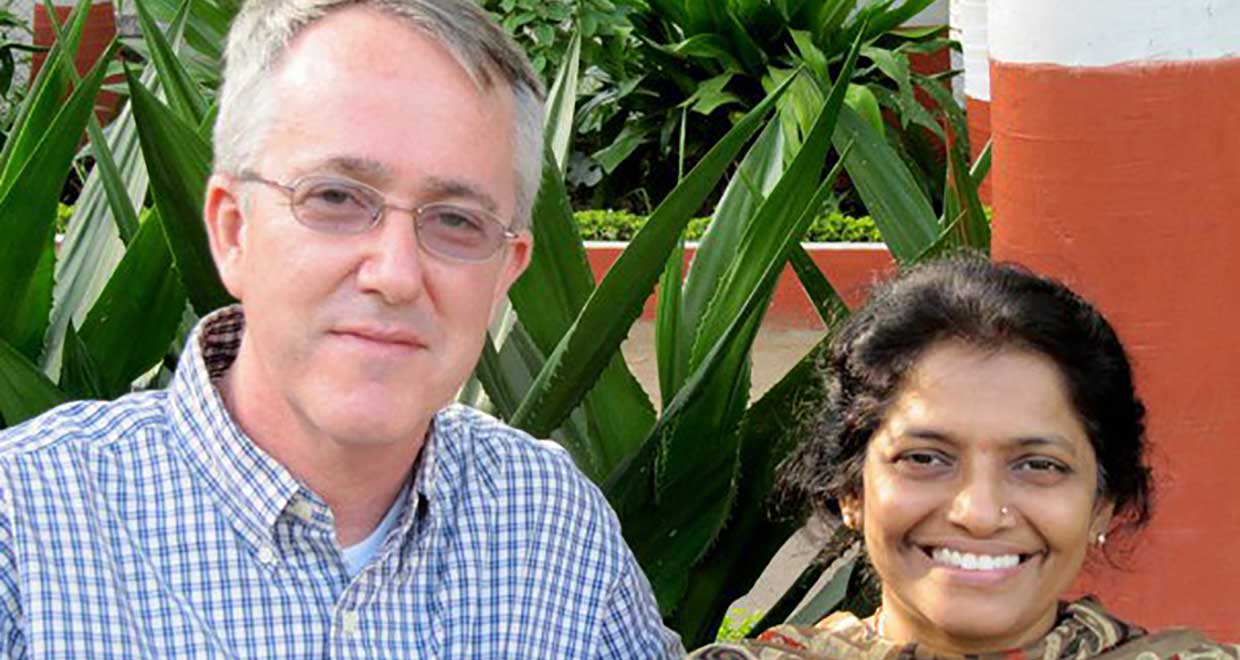
  • Kriti Sharma, Research Fellow, Council for Social Development, on all about a work profile in Human Rights Law

    Kriti Sharma, Research Fellow, Council for Social Development, on all about a work profile in Human Rights Law

    Kriti Sharma is an alumnus of NALSAR, Hyderabad (2012). In 2011, she underwent an exchange programme with Redzyner School of Law, Interdisciplinary Center Herzliya, Israel. Thereafter she worked as a research assistant to Justice Dalveer Bhandari and as a judicial clerk to Justice Khanna.

    In this interview, we focus specially on her experience at Council for Social Development, and how she chose this career path in Human Rights. We also try to trace back her journey to NALSAR, her experience at IDC, and her job of a law clerk. At present, she is working as a research fellow at Council for Social Development.


    Please introduce yourself to our readers. Please tell us a little bit about your childhood and your background?

    Fairly simple background, artsy atmosphere as my father dabbled successfully with Hindi poetry, writing and theatre direction. I formed a companionship with books early on since my mother managed the Ramjas Foundation’s library. I grew up mostly in Delhi, except for a few years in London due to my father’s posting.


    How did you gravitate towards law? Did you have someone who inspired you to study law?

    It seemed a good option after studying humanities along with civil services and journalism. Having arrived from England I was not aware of competitive exams but a classmate prodded me on. I grew up sensitive to social conditions and always voiced my opinion against gender discrimination that I saw in practice. In hindsight, law provides a perfect platform to engage with such issues.


    How was your experience at NALSAR, Hyderabad?

    NALSAR undeniably opens a spectrum of opportunities for individuals and is arguably, the best law school in the country. I wasn’t so excited though, as overall the faculty and course options back then were not as impressive and diverse as they are increasingly becoming now. Discussions on raging issues were fodder to my mind, yet at the same time its location denied me the opportunity to pursue extra-curricular activities as much as I wanted to.


    You underwent an academic exchange programme with Redzyner School of Law, IDC, Herzliya, Israel. What did you benefit from the student exchange programme?

    Going on an exchange involves a considerable cost. Therefore I was only willing to take it up if I got my first choice- Israel. I was made aware by a visiting professor from Berkeley that IDC invites distinguished faculty from U.S.A and Europe for lectures, providing me an insight into graduate academic life abroad. I was also personally interested in understanding geo-political and historical situation of the region, for which I extensively travelled through Israeli-Palestine and Jordanian territories and engaged with the local people, apart from taking up academic courses on Arab-Israeli conflict and peace process.


    Also tell us about your experience working as a Research Assistant of Dean Ron Harris, Law Faculty of Tel Aviv University during your Law school days.

    I have had an interest in legal history and wanted to discover what kind of work really happens in this field. I happened to mention my interest to a professor who forwarded my CV to Professor Harris. Professor Harris had been writing a book for publication by Princeton on the ‘Organisation of Early modern Eurasian trade’ for which a Chapter on ‘Early 15th-17th Century Laws of Maritime Trade in India’ required primary and secondary research in Indian archives, museums and libraries. Upon return from the exchange, I researched on this topic- looking closely at the impact of society, family, women and slaves on indigenous trade which was thriving at the turn of 16th century, before the arrival of foreign powers.


    You have interned under Justice Dalveer Bhandari of Supreme Court of India twice when you were at Law school. How did you obtain this golden opportunity to intern twice under him? What kind of work you came across?

    Justice Dalveer Bhandari, who is presently a member of the International Court of Justice, took active interest in training and educating young lawyers. His office was very welcoming and encouraging to interns but also demanded high quality work, without exception. He gave us an opportunity to work on important cases such as Novartis, Bar Council exam case etc. and since I was interested in gender rights, I also worked on an international sexual trafficking case. Apart from this we were expected to brief him on fresh matters every evening, which really was a test because his legal acumen and experience were unmatchable. For internship, one had to simply send a CV to his office secretary and selected candidates were informed for each internship session. Drafting a good request letter is the key, I highlighted his judgments on right to education and caste violence and why I was keen to work with him.


    Almost all your internships were focussed on non-profit and research work involving primarily matters of Human Rights Law. Were these all planned internships or did you just take them up as they came along?

    I followed what interested me. The classroom teaching was mostly academic but field internships in slum areas of Delhi (with Parivartan) and southern tribal belt of Rajasthan (with Mazdor Kisan Shakti Sangathan) made me understand how the law actually affects daily lives of people. In my third and fourth year I carefully explored all options available to a law student – viz. interning at a law firm, a lawyer’s office, Law Commission of India and the Supreme Court, for me to make an informed choice after graduation.


    How do you think the experience of being a clerk is now helping you in your career path?

    (Kriti was engaged as a Law clerk-cum-Research Assistant in Delhi High Court under Justice Sanjiv Khanna specializing in Criminal and Writ Petitions Roster after her graduation.)

    I wanted a right mix of advocacy and research for my career. I was inspired by Flavia Agnes’s work in the courts on gender rights and was interested in working in a Habeas Corpus roster, which in India mostly deals with family matters and elopement cases. Justice Khanna handled these cases with required sensitivity and often the mediation wing of the High Court was also involved. The criminal appellate roster also dealt with terrorism, juvenile justice and other life imprisonment cases which required regular case preparation and drafting. Evidence in each and every criminal case has to be very carefully evaluated as it is a question of an individual’s life and liberty. I also utilised the court exposure to compile an ethnographic report on hostile witnesses. The centuries old criminal system would do well with reforms and I have certain observations regarding this which can be discussed at length some other time. I also learnt that while working with litigants in gender cases, one cannot take an extremely idealised approach, as in practice things work out differently.


    Is it difficult to get a judicial clerkship with a Delhi High Court Judge? What sort of people would you advise to do a judicial clerkship?

    The Supreme Court follows an organised process of recruitment for which one has to apply through the university in the final year of studies. For High Courts, a few of them have a centralised process but individual efforts need to be made. Previous internship with the judge, networking with college seniors, lawyers and court staff and active pursuit helps and if one has good credentials, ways open out on their own. Students who desire to join litigation can gain from experiencing the other side of the courtroom. The academically oriented students of course find it opportune to engage with real time legal questions and gain practical exposure.


    How did you start working as a Legal Researcher in Council for Social Development (CSD), Hyderabad?

    At the end of the clerkship tenure, I decided I wanted to plunge into active advocacy and research on gender rights issues. I was aware of Professor Kannabiran’s work in this area alongside probes into colonial, constitutional and criminal questions relating to subalterns. This perfectly matched my interests and the Organisation also promised me a platform for interdisciplinary studies. I applied by sending an email detailing my motivations, works and aspirations and how I hoped to contribute to the objectives of CSD. I was called for an interview and thereafter received a confirmation.


    What motivated you to write a book on Tribal Advocacy? Can you illustrate us on your book to our readers.

    (Kriti has co-ordinated the “Training and Fellowship Programme for Tribal Advocates” which focuses on advocacy amongst Koya and Chenchun tribal people, training them in law and writing a book on Tribal Advocacy. Her forthcoming book on tribal advocacy is yet to publish.)

    Council for Social Development has a long track record of working closely with adivasis of Koya, Chenchun and other PVTG communities. In 2012 CSD launched a yearlong training programme for tribal advocates from this community. Through this, I learnt about the ground realities in the tribal villages and their struggles in the face of an apathetic administration. Apart from seeking solutions to our local problems, we tried to relate to tribal situation at national and international level and expand our horizons. I particularly tried to sensitize them on other struggles e.g. situation of tribal women within these communities by teaching gender related laws, policies and cases. I even poked them on homosexuality and we had a refreshing debate. In the whole process, an important realization was that there was hardly any legal literature available to deal with tribal cases. Thus, the idea of writing on tribal advocacy based on street law concept for litigators and social activists. The tribal advocates, of course are now successfully fighting human rights cases and bringing awareness to their communities through para-legal courses.


    What kind of response did you get after presenting a report on pending disability bills to the Parliament of India?

    (Kriti has also drafted and presented a report addressing the Standing Committee, Parliament of India on pending disability bills, reflecting deliberations held during the ‘National Consultation on Disability Rights’.)

    Parliament’s conduct rules prohibit discussion of the meeting outside but the Standing Committee has now forwarded its report to the Parliament and it is heartening to see that many of our suggestions have been included. We hope the Parliament will look at these suggestions closely and pass an effective Act. We had months of deliberation with various organisations before we submitted our findings. One key area of my concern was education. For instance, during my empirical study on minority schools I had observed that disabled children are not being admitted to schools in the first place and, therefore, I had recommended that surveys to identify disabled children should not be conducted only within schools but at community level. It was heartening to see that suggestions like these from civil society have been accepted and forwarded to the Parliament. Overall it was a good learning experience and I am grateful to CSD for giving me this opportunity at such a young age.


    You have also conducted field study on impact of “Right to Education law on India’s backward minorities”. What inspired you to take this initiative?

    I had been thinking of conducting this study since college but only the senior academic staff at CSD could provide me the guidance and support to go ahead with it. I am very inspired to work on education in India and it concerns me that certain sections are evidently lagging behind but not enough efforts are being made to bridge this gap. The study area is Kishabagh- an urban slum and a riot prone area at the outskirts of Hyderabad where Sikh-Muslim riots happened last year. I did not face any hindrance during the month that I spent in the field. The informers- school/madrasa staff, students and parents were very welcoming and involved with the whole interview process. The heart wrenching parts were when for e.g. girls revealed that due to impending marriage or economic situation they would not be able to continue education. Once we went to a junior class room and asked how many students worked after school and nearly the whole class put their hands up.

    The most sensitive interview I conducted was with a girl whose young brother was a victim of the quarrel which started the riot. Suffering from fresh wounds, she narrated her family’s perspective on the situation. Overall, I feel students have aspirations but societal pressures and situations quell them and the right kind of guidance is unavailable as even schools/madrasas operate with particular economic/religious motives. It was discomforting to see sub-standard education being meted out to such bright and promising students. My paper is a work in progress but I hope to deal with various aspects and I am going as far as to argue for recognition of madrasas under the right to education legal movement, keeping in perspective each child’s right to education. I hope it will be well received.


    Please share your experience working with CSD for 2 years till now. What is your workday like? Are there new challenges every day?

    Council for Social Development is a unique place to explore interdisciplinary studies. It is an academic institution which houses international and national academicians from varied social science fields and this makes for interesting coffee conversations and discussion programs. We have a well disposed library on South Asian studies and I have tried to make a good use of it. The work day technically is 9.30- 5.30 P.M., five days a week but it is open till 8.00 P.M. I am most grateful for the freedom the institution provides to its writing staff to explore their creative ideas. The opportunity to work with Prof. Kannabiran has been exciting and insightful at many levels. We have interesting projects happening all around the year and in fact I constantly feel there are so many opportunities and such little time.


    How can one apply to CSD for internships?

    It depends on our project requirements. Please do check by writing to us at secretariat@csdhyd.org. You can check out our website www.csdhyd.org for more information and opportunities.


    It is a common belief that working in the areas of human rights and policy research doesn’t pay well. How much of a hindrance is it for people joining this area of work?

    I wouldn’t tell you otherwise. One has to be mentally prepared for that sort of struggle and plunge into this only if there is genuine interest otherwise it is difficult to sustain. The plus side is there are many people to mentor and guide you through. I have had terrific bosses and encouraging seniors from NALSAR throughout. I cannot juxtapose this against law firms, as both jobs serve different purpose and carry different rewards.


    What would be your message to law students who are research enthusiasts?

    It doesn’t help to follow any ‘rules’ that one should do x,y and z things as a law student. I see many law students writing articles for enlarging their CV. Quality matters more than quantity, so no point cluttering space. People should engage in issues that really interest them and feel they will be able to bring out an interesting analysis. There is no set way to write but passion for your subject matters.

  • Megha Bhagat, Independent Consultant, Human Rights in the non-profit sector, on a career in research

    Megha Bhagat, Independent Consultant, Human Rights in the non-profit sector, on a career in research

    Megha Bhagat graduated from Army Institute of Law, Mohali. She pursued an LL.M in Human Rights from NLSIU, Bangalore before going on to work at NASSCOM Foundation. She has received a Certificate of Recommendation from HRLN for extraordinary participation in the National Convention on Human Rights and Mental Health, a Certificate of Recommendation from the Supreme Court Bar Association and a Certificate of Appreciation from Amnesty International. She currently works as an independent consultant in the non-profit sector.

    In this interview, she talks about:

    • Law college experience at Army Institute of Law, Mohali.
    • Masters in Human Rights from NLSIU, Bangalore.
    • Interning and working at the NASSCOM Foundation.
    • Being an independent consultant in the non-profit sector.


    Please introduce yourself to our readers. How did you decide to take up law?

    I grew up as a typical military brat with schooling all over the country. This probably formed the foundation for making career choices that varied over the years since I got to meet different role models while moving schools. I can never answer “how” or “why” I decided to take up law but I distinctly remember saying to my history teacher back in the 9th grade that I will either be a lawyer or a journalist. I think the need to know how systems work triggered the decision to study law.


    You graduated with a BA.LLB from Army Institute of Law, Mohali. How was your law school experience? Looking back, what would you do differently?

    When I got into law college I was another 18 year old who had just gotten her first sense of academic freedom. The first year was about figuring out what was it about the subject that really fascinated me and this also typically meant not being a student who scored high grades. While the style of academics remained pretty much like school system, I started exploring the practical world of law and started embarking on internships and legal workshops. Since the college provided the option of specialising in human rights, corporate law or litigation in the 4th year I started building my understanding of what I really wanted to do.

    For the first 3 years I interned at all forms of legal offices- be it criminal lawyers in Punjab & Haryana High Court, Khaitan & Co for the corporate experience, district courts in Lucknow or Human Rights Law Network in New Delhi. This was to ensure that I knew with absolute certainty what kind of law inspired me to work in a particular sector. By the time 4th year happened it was clear that I wanted to study human rights law and interestingly I was the only student not only in the college but the complete university that opted to pursue human rights law! I spent the last two years being on my own (no faculty, no peers), not only studying the intricacies of law but also working on workshops and seminars outside the academic circle. That built my overall exposure to the various facets of options I had set for myself and created role models from the sector.

    I gave up on the idea of mooting pretty early in law college and that is one thing I would love to go back and change for myself! I think being a law student, it is a critical skill to evaluate yourself as a court room lawyer, so it’s something I missed out on.


    You received extraordinary accolades while still in law school. Please tell us about these.

    I received a Certificate of Recommendation by HRLN for extraordinary participation in the National Convention on Human Rights and Mental Health in October, 2004, a Certificate of Recommendation by the Supreme Court Bar association in April, 2005, and a Certificate of Appreciation by Amnesty International in August, 2007.

    One thing I was clear about was that I wanted exposure beyond academic life and therefore remained very active in social circles beyond law college. I worked on making long lasting professional connections at the internships I pursued and I was able to get access to opportunities that existed outside college. Since human rights was already my preferred area of expertise, I was able to find mentors very early in college who groomed me in the sector and that led to participating in sector-specific work with organisations like HRLN and Amnesty.

    I was involved in curating content for the mental health convention and leading a panel on mental health discourse. With Amnesty I was involved in working on the campaign against death penalty in India and wrote a paper on the same while at college. The Supreme Court Bar Association organises an annual conference which nominated students also attend and I was nominated by the college to take part in a discussion on changing trends in human rights discourse globally.


    You interned at the NASSCOM Foundation while in law school and were offered a job there upon finishing your studies. What should one do to get noticed in a large organisation during a short, month-long internship?

    It is very important that you are clear about how far off you see yourself in an organisation when you intern there. This gives you clarity in terms of your role in the organisation as an intern and leads you to make a better impression. In a large organisation it is critical that your interview has already hallmarked you as a different intern over others. For me, that has been my absolute strength- to have distinguished myself with specific skill sets over other interviewees. This impression is typically shared by your supervisor with other seniors in the organisation and that also defines the kind of work you will be doing as an intern.

    Secondly, it is important you join an internship with an inherent zeal and capacity to learn and unlearn. While the “interns fetch the coffee” mechanism may apply at most places I find that most organisations are looking at an intern as a nimble footer who can move between projects easily and effortlessly. I actually joined NASSCOM Foundation and before that GMR Foundation on program management roles which had nothing to do with law at all and yet I entered with a simple mantra of “it is never too late to learn new subject matters and skills”, this trait was duly recognised at both the organisations.

    You have to ensure that you have made a few solid skills of yours noticed and recognised. You can be a good researcher, a fantastic orator, a fabulous report writer, an awesome draftsman- you need to ensure that your work has made this known to the supervisor and also senior folks. They hire you back for skill sets they believe are missing in others and you have to figure that out while you are a part of the team. Lastly, socialise with the organisation! I have always believed that anybody is a person first and bosses/colleagues/peers later, so they are looking to know your working style as a person. Create/use opportunities to meet the seniors in the organisation, have personal conversations with them giving them a peek of where you come from and why you are working with them, pick up a few projects that are outside your work role and talk about those projects to the folks in the organisation. While at NF I was handling various projects from very varied perspectives and I had made my relationship building skills known to the organisation for them to hire me back to lead programs.


    You pursued an LL.M in Human Rights from NLSIU, Bangalore immediately after graduating. What were your reasons for doing so?

    I personally think it is an individual choice to pursue higher studies and their motivation to do so. My motivation was simple- I had deep dived deep into human rights studies during my under grad period without any faculty or guide support and I was deeply interested in rigorously studying the nuances of the subject under able guidance. I went on to pursue an LL.M immediately because I did not want a break in my studies and went on to specialise again in human rights at NLSIU. For me it was the best decision I ever made simply because I spent the next two years dissecting closely the working nuances of various human rights mechanisms and gathering more experience through trainings etc.


    Is it better to work for a couple of years and then go for an LL.M or do one immediately after graduating?

    Every law student should prioritise their 2 year plan right after law school early on. If you are interested in getting on with the job, then by all means pursue work immediately after law school. If you are interested in an LL.M adding specific specialities to your resume, then you should have either figured out by your final year of under-grad what subject excites you (through internships) or you can work for a few years and figure out what speciality makes the most sense to you. And of course if you are a learner like me then join an LL.M to explore what else you can extract from theoretical knowledge about the legal systems.


    You were a Research Assistant for a period of ten months on the topic of “Common Resources of Mankind”. Can you tell us the experience of taking part in this conference?

    This was for a Conference on “Commons” held in January, 2011 under the chairmanship of Nobel Laureate Elinor Ostrom. This was a huge opportunity that came along while I was pursuing my masters at NLSIU. We were chosen to participate in the research for the conference and the papers that would be presented thereof. I was a part of a small working group that was collecting global evidence of the “Common knowledge” and sharing growth stories. We worked on putting together data that indicated that not only were resources to be shared amongst nations but also that knowledge shared across nations was more conducive and relevant to the globalised world order.It was personally a very exciting and fulfilling experience since it added to my overall learning growth under such an esteemed academician.


    After graduating, you joined the NASSCOM Foundation, New Delhi as a Business Responsibility Officer. What was your work profile like? What were your main tasks?

    My work profile included program management for CSR, research and publication on relevant CSR subjects and support for the Disability Program of the organisation.

    In the first year I was tasked to build regional industry forums on Corporate Social Responsibility. I was leading 3 regions: Bangalore, Hyderabad and Chennai, and building working groups from within the IT industry to lead social impact projects within the cities. It was an interesting space to work in since it meant that I had to become well versed with all the IT/BPO companies in those regions and curate projects based on the skills that each company possessed and also work with CXO levels to change mindsets around CSR and social impact footprint of the industry.

    In the 2nd year two changes took place- I was handed the responsibility to set up operations for the organisation in Bangalore and also handed the Program Management responsibility for an internationally funded project by the Rockefeller Foundation. I moved to Bangalore to successfully start the Foundation’s south regional office and also worked on new skills of writing funding proposals, managing an international donor and pretty much moved towards program management work. I did stay in touch with the law with the Planning Commission’s work on the 5 year plan where Iwas representing the industry on the change in the disability schemes and law. Similarly, I stayed connected with policy making work while working with the Karnataka government on amending the policy for Rural BPO’s within the state and creating more inclusive policies for small entrepreneurs.


    After two years at NASSCOM, you joined the Fellowship Program at The Rockefeller Foundation. How did you secure your appointment as a Social Innovation Fellow? How was your experience there?

    The Social Innovation Fellowship at the Rockefeller Foundation was a nomination led process. All 18 fellows were selected and nominated by the Rockefeller Foundation based on our areas of specialisation and backgrounds. I was at that point of time also leading a project for the Foundation in India and working on creating a report for the global BPO industry.

    Like most fellowships this was a life changing experience. I was one of the youngest fellows in the cohort and this was especially exciting since I got to learn from very inspiring senior folks from the social impact sector. We were travelling every 3 months to a new country to look at social innovation on the ground and to learn theoretical tools from our faculty from University of Waterloo, Canada and Stockholm Institute of Resilience. The travelling diaries made the beautiful countries seem so much more closer and catered to the travel bug in me.

    It was riveting being amongst social change makers and witnessing NGO’s on the ground that were implementing social impact on a large scale and under various dynamics. At a personal level it made me introspect about my vision for myself and what else I wanted to do to change the world. I not only went on to make great friends but I’m also still inspired by the passion for social change that these amazing social innovators carry. I moved on from NASSCOM Foundation at the end of my fellowship program and started my own journey of creating social impact via various projects and organisations instead of limiting myself to one organisation.


    Please tell us about your current occupation. What do your main tasks and assignments include?

    Presently, I work as an independent consultant in the non-profit sector consulting with the International Institute of Education and Advisor at Education for Development, a non-profit organization in the education sector. I started consulting for non profits and start ups earlier this year. I currently lead operations for IIE’s new project called We Tech (Women Enhancing Technology) and led the foray of the program in India. I primarily work with the IT companies on mentoring high school girls to enter the coding space. The program is just going into its second year and I am working closely with the industry to scale the program.

    In my role with E4D I am working with a very inspiring youngster who graduated from college and decided to change the way learning systems run in the country instead of taking up a plush job. E4D set up a “maker space” on the outskirts of Bangalore and provides an alternative learning system to anybody who wants to learn from making. I work with the start up on business development, outreach to partners and organisation visioning.


    Your interest areas have been education, policy research and business strategy. How did you pursue these interest areas while still in law school?

    I have always been interested in pursuing different subjects and gaining new skills through that exploration. While at law school I was involved with various research organisations like HRLN, Amnesty, etc. and worked on research papers for various human rights subjects including education. I had a lot of time on my hand to write articles based on changing policies and utilised my professional circle to gain access to opportunities to present the research or work on new and developing research. While I interned with foundations of corporate houses I picked up the nuances of business strategy by working closely with the corporate, business development teams of the parent organisation. I was always interested in how one could integrate social responsibility within the DNA. The wide range of exposure got for myself gave me ample playing field to pursue my interests.


    You have been commended by your previous and current employers for being a people’s person and building strong working relationships. How important are social skills for a lawyer and how does one cultivate them?

    Personally I am a typical military girl, which means I am used to forming relationships where ever I go. Add to it the fact that all through my seven years of legal education I dabbled with varied institutions and organisations thus leading to an overall understanding of different industries and professionals.

    As a lawyer, I think social skills are extremely relevant if you want to grow out of your shell at a regular desk job! If you are looking to grow further up in the legal field or diversify later into varied sectors you need to socialise beyond the circle and form learning relationships with various professionals. It is important to go out of your comfort zone and interact with professionals in different fields, to have a childlike curiosity to learn something new and if there is one thing every human likes it is the opportunity to share knowledge. In my experience forming people relationships is an important component to grow as a professional and seeking out collaborators is useful in the long run. Whoever you meet through work should connect with you at a personal level too and that goes a long way in staying on as strong professional networks.


    It is a common belief that working in the areas of human rights and policy research doesn’t pay well or at least as much as a law firm does. How true is that notion and how much of a hindrance is it for people joining this area of work?

    Unfortunately the social impact sector does not have pay grades like law firms. This grim reality has led to keeping fresher level talent away from this sector. The growth in the sector takes place after the initial 4-5 years and “social work” “policy research work” haven’t picked up as mainstream skilled professions leading to much less people joining the sector. The other side of the coin is that the growth is phenomenal if you stay put for initial 3 years and learn the sector well enough. The sector requires nuanced expertise and once you have created a network for yourself and become a subject matter expert it doesn’t take much to grow from post to post.


    What are your plans for the future? What advice would you give to the students reading this interview?

    I intend to keep working in new subject areas and utilise my skills to work on solving varied social problems. I would hate to stay put in a specific area and therefore I see myself drifting from education to technology to urban development challenges to art and literature as forms of ending violence. The variety in the subject matter keeps me excited and thus will move from one project to another keeping my insane urge to travel also satisfied.

    I would say to the students that: Don’t restrict yourself to one particular field of study just because you entered a particular sector. Figure out for yourself what excites you the most and then pursue that ambition with or without law. There are amazing opportunities that exist outside the framework and as a lawyer you are already well equipped to be a rockstar in most of the nuanced sectors! Pursue a particular field because that is what inspires you every day otherwise you will just end up being another lawyer in the country!

  • Nivedita Guha, Consultant, UNICEF, on human rights law, child protection services, and her experience

    Nivedita Guha, Consultant, UNICEF, on human rights law, child protection services, and her experience

    Nivedita Guha graduated in law from CLC, Delhi University, in 2009. Thereafter she pursued her LL.M. from NLU, Jodhpur. She has been involved in a lot of socio-legal work in multiple non-profit organisations. She has worked at HelpAge, Kalyan Ashram, MARG, HRLN and currently she is working at UNICEF.

    In this interview we speak to her about:

    • Pursuing LL.M from NLU, Jodhpur in furtherance to a career in social work
    • Work at different domestic NPOs and at UNICEF
    • Advice to students who want to pursue a career in Human Rights

    How will you introduce yourself to our readers?

    I am a human rights lawyer presently working as a Consultant with the UNICEF office, West Bengal. My area of interest is child protection and women’s rights. Work is my favourite pastime and I believe it is very important to do what you love and not fall prey to the conventional way of life, satisfying societal standards.


    How did you gravitate towards law?

    My grandfather was an Income tax lawyer practicing in the Calcutta High Court. I was in awe of him. I was brought up in Chandigarh and as a kid when I used to visit him in Kolkata during my summer vacations, I used to minutely notice the way he talked. His command over language was impeccable. I used to spend hours flipping through the legal journals stocked in his big law library. His personality had a deep impact in my formative years which I think later instilled the desire to pursue the legal profession in me.


    Do you think that being from a non-NLU made any difference to your career?

    It did not make any difference to me as I was always inclined to work on humanitarian issues and since human rights law is a very unconventional area of law, I always knew that I will have to carve my own way. There are ample job opportunities for corporate lawyers with companies and firms offering good pay packages to them but human rights law is a less sought after area and it was a struggle to choose the right career path. I do not think my struggle would have lessened if I was an NLU graduate.


    How was your experience at HRLN, Kolkata?

    After I left my job in MARG, Delhi, I was looking for jobs in Delhi and Kolkata. A cousin of mine informed me about the vacancy at Human Rights Law Network, Kolkata and I immediately applied for the position. I was called for an interview, I appeared and was selected.

    My work at HRLN involved defending the rights of the victims of domestic violence by filing cases under the Protection of Women from the Domestic Violence Act, 2005, defending the Juveniles-in-conflict-with-law in the legal cases in the Juvenile Justice Boards, I have been in-charge of the Prison Project in HRLN where providing legal aid to the inmates in the prison, parallel to the state machinery, maintaining effective collaboration with the relevant government departments like the Department of Correctional administration has been an integral part of my work. Issues like no physical production of prisoners before the courts, illegal detention of the inmates in Section 107 and 109 of the Criminal Procedure Code 1973 cases in the prisons, inhuman prison infrastructure, improvement of the condition of women and their children in the prisons are some of the issues which have been addressed through fact finding, research and litigation during my tenure in HRLN. I have also trained police officials on the Juvenile Justice (Care & Protection of Children) Act, 2000 and the Protection of Children from Sexual offences Act, 2012.

    Working in HRLN for three years was very enriching. Though one has to put up with lot of difficulties while working in an organisation solely run by lawyers as administration is not their forte but HRLN surely knows how to extract the best from you and the experience one gains is worth all the struggles.


    What was your motivation behind pursuing LL.M.?

    Once I was sure that criminal justice system is my area of work, I immediately started looking for courses on this area of law. I was looking for distance learning courses as I did not want to leave my job and LL.M. in Criminal law, Criminology & Forensic Science at NLU Jodhpur seemed like a very good option. LL.M. from foreign university is there in my mind but only after few more years of work experience.


    What brought you into Human Rights?

    Not any incident but the character of Atticus Finch in the book, To Kill a Mockingbird by Harper Lee inspired me greatly. Atticus Finch is a white American lawyer who defended a black man who was falsely accused of raping a white woman. He fought for racial inequality during the times of apartheid in America. His character, integrity and principles inspired me greatly.


    What inspired you to work with MARG and how did you go about applying to them?

    MARG was my first job after completing LL.B. and I was working there as a legal trainer. I did an internship with MARG as a law student and after I completed LL.B., they approached me for this role which I gladly accepted.

    My work primarily involved training grass root level NGO workers on various important laws in the States of Bihar, UP and Jharkhand.


    What has been your most memorable incident working for these Non-Profit Organizations?

    While I was working in MARG in Delhi, I was on a field trip at a village in Haryana. It was a legal empowerment program and I was assisting my senior in sensitising the women of the area to get trained as paralegal volunteers. During the visit, I noticed that in almost every household I went, I met a woman wearing the traditional red and white bangles which is a sign of a married woman in Bengal. They all spoke fluent Bengali and I was told that their parents live in West Bengal and most of them were from the Sundarban area. They were all married to the families in that village of Haryana. I was perplexed as I did not understand the reason why women from the interiors of Bengal will be married to Jats of Haryana. Soon these women cleared my doubts and very explicitly told me that their families in Bengal were poverty stricken and their in-laws in Haryana are providing for their families in Bengal. So basically, by marrying, they are helping their family back home in getting food to eat and also to live a comfortable life. There is a dearth of girls in Haryana so the families in Haryana go searching for brides in Bengal alluring the families of brides with money.

    I was shell shocked to witness the vicious cycle of atrocity occurring so flagrantly. It was my first stint with reality and concept of cross cutting issues. It was an eye opener.


    What is it like working for an International Organization like UNICEF?

    It has been absolutely amazing to work in UNICEF as working with organisations like UNICEF widens your horizon as you are no longer look at resolving individual cases but you are thinking about the larger picture. I feel more responsible as I know that my work will now impact the masses and not just two or three people. It is also the first time that I am working with the government as UNICEF is a partner of the Ministry of Women and Child Development and I have to work very closely with the Department of Child Development, Women Development and Social Welfare in West Bengal. It is a very different experience from working with NGOs.

    It has only been four months that I am working in UNICEF, I can handle the stress till now.


    Do you think remuneration is a serious impediment to such work?

    Anyone who needs a “higher pay package”, should not even think of getting into the development sector because when you decide to get into this sector, it is not money which drives you but a desire and passion to connect to the masses and serve the people. Yes, initially money is a serious impediment in this field.


    Where do you suggest one can intern or apply for an opportunity if she is interested in working for Human Rights issues?

    For lawyers or law students, Human Rights Law Network and Lawyer’s Collective are great organisations to work and learn. The summer and winter internship program in National Human Rights Commission is also very good. Amnesty International India is also a good place to learn and grow.


    What is the best possible course of action for a law student who aspires to work for international non- profit organizations?

    I would advise students to involve themselves in various humanitarian causes like by volunteering or interning with NGOs and groups working on human rights issues. This way one understands if working on humanitarian issues is their true calling or not. Thereafter, they should focus on understanding issues and think how as a lawyer they can contribute for that particular issue.

    If one is specifically eyeing for international organisations than a foreign degree might help and one has to keep an eye on international vacancies and opportunities but what I have learnt from experience is that the most important thing is your ability to understand issues and build skills to intervene as a lawyer and activist, which is possible only by working extensively in the field.


    Where do you see yourself by the end of the coming five years?

    For the next three years I am solely focusing on my work at UNICEF. I want to complete the work assigned to me successfully. Thereafter, I would want to pursue higher studies abroad.


    Lastly, what would be your message to people who want to have a career in human rights?

    Please do not opt for a career in human rights because you feel it is glamorous to be working in a NGO or United Nations or any other international organisation. There is much much more to it. One has to survive the initial grill with lot of patience and perseverance but if you are driven by the right reason primarily the desire to serve, it will be worth it. Reiterating, the need for a passion to serve does not necessarily means to work without money but when you are passionate to serve you will understand the importance of what you are doing and the great impact it makes.

  • Pankhuri Mehndiratta on working for International Human Rights Organisations and insights of a career in research work

    Pankhuri Mehndiratta on working for International Human Rights Organisations and insights of a career in research work

    pankhuri-a-m-4Pankhuri Anuradha Mehndiratta is a NUJS graduate of the Class of 2014. She has recently joined the Centre for Legislative Research and Advocacy as she is keenly interested in International Human Rights and Public Policy. We have taken out this opportunity to ask her about:

    • Specifically choosing internships that help in Humans Rights Law.
    • The importance of taking up courses that have an impact on one’s career as a Human Rights Researcher.
    • Things to be kept in mind while compiling a research work.
    • Insights for law students who aspire to work for international non profit organisations.


    Most of our readers are law students and young lawyers. How will you introduce yourself to them?

    Hello! I am Pankhuri Anuradha Mehndiratta. I am a graduate of the Class of 2014 from NUJS. I am keenly interested in International human rights and public policy. I have just joined the Center for Legislative Research and Advocacy as a Project Associate.

    I was born and raised in Jaipur and did my schooling at Maharani Gayatri Devi Girls’ School .I trained as a kathak dancer from a very young age and was also the Cultural Head Girl of my school. I love to read, travel and am also a licensed Scuba Diver. I enjoy my adventurous streak. I like to learn new languages and am pursuing French as a foreign language at the moment.


    You studied Humanities before finishing your schooling. How did you gravitate towards law thereafter? Did you have someone who inspired you to study law?

    I took up Humanities in school owing to my inclination towards it. I had always been interested in subjects that relate to the human behaviour and relationships.

    I come from a family of doctors and thus the importance of a profession that adds value to society had been instilled in me at a very young age.The pursuit of law not only trained me to think critically but also gave me the tool to make the change I wanted to see in the world in however small a measure. I am a first generation lawyer and in that sense did not have any person who I looked up to at the time I entered law school. However, along the way I met many admirable individuals in capacities of mentors, teachers and peers who enriched me immensely.


    pankhuri-a-m-3Barring one or two exceptions almost all your internships at WBNUJS were focussed on non-profit and research work involving primarily matters of Human Rights Law. Were these all planned internships or did you just take them up as they came along?

    I do not believe in coincidences. I consciously opted for subjects that exposed me to the various facets of Human rights. I backed my theoretical knowledge with practical and on the job experiences at various national and international organizations through my internships. Apart from one corporate internship which helped me be sure of the fact that I did not want to tread the path of the corporate world, all other internships were consistent and conscious choices.


    Your work shows a great enthusiasm and interest in the field of Human Rights Law. What brought you into Human Rights? Were there any incidents which inspired you into it?

    Thank you. As I said it always has been very important to me that the work I do has a direct and positive impact on the lives it touches. I have never been one to accept things on face value and have always intellectually pushed the limits of what the apparent status quo is in my sphere.

    As for what inspired me, there was not any one definitive moment that did. It was the steady and gradual realisation of how much discrepancy that lies between ‘what is’ and ‘what should be’ which inspired me to work towards bridging that gap.


    You interned at The Office of the Prosecutor, The Special Tribunal for Lebanon, at The Hague. How was your experience as an intern? What work did you get to do there? How did you come across such an opportunity?

    It was truly enriching. Each day was packed with immense experiential learning. The level of mentoring and guidance to the interns was stellar .The STL was at the Pre- trial stage at the time and I got to do lots of research and drafting on topics of International Criminal Procedure as well as Human rights that apply to the victims of terrorism. Since the nature of the work was sensitive and confidential, it is best not discussed on public forums. But most importantly, I got to witness the workings of the various echelons of International justice up close and that to me, was a reward in itself.


    pankhuri-a-m-5

    What are the courses you have taken up as a law student? And which are the ones that may have a long-lasting impact in your career as a Human Rights researcher?

    My university offered quite a few optional as well as credit courses. I took up a few on Human rights and its relations with many aspects of life as and when they were offered. Unfortunately, the practice of offering of the Credit courses is not very regular in most law schools as it is basically dependant on availability of experts in a field and the liasoning of the university with them. Hence, you just basically make your choices based on the available options at the time. I feel each of these courses that I took gave me an added perspective on human rights and its various facets and helped me understand the corpus of International human rights and its various off shoots from different angles.


    What has been your most memorable incident working for these NPOs?

    I think the best part about the field of human rights is the fact that you have your memorable incidents everyday! Considering how I have human rights internships spanning my whole law school career, skimming out only one such incident would be grossly unfair. Suffice it to say that the satisfaction you get after back breaking effort to entitle someone to a better life is mighty addictive.


    What is it like researching for so many International Organisations? How hectic is it? Are there new challenges everyday or has work settled into a predictable pattern?

    I researched for a couple of International and Non Governmental organizations during the course of my law school. It used to be hectic but it was not an impossible task to make time. Most of the work is project based and spanned over a duration of weeks/months. On a lighter note, what else have we learnt in law school if not time management?


    Most of our colleagues would say they need a higher pay package than an NPO can offer to sustain themselves. Do you think remuneration is a serious impediment to pure research based work?

    I strongly feel that research and innovation is a grossly undervalued professional arena in our country and it can be very difficult for people to sustain themselves with the pay packages that NPOs offer and in turn the NPOs lose out on brilliant people as a result of the same. However, it is also true that should one go through the rigours and hardships of the first few years, the experience gathered is unparalleled and the remunerations follow in due course.


    What are the top three things you keep in mind while compiling a research work? How do you suggest we become efficient at it?

    Firstly, the researcher must get acquainted herself with the topic across a range; starting with something as banal as a Google search on the same.

    Secondly, the sources are what differentiate a good research piece from a bad one and it is for this purpose that one should be very sure of the source of the information and its authenticity and admissibility.

    Thirdly, after the information is gathered from eclectic sources and duly analysed, a logical skeletal structure for its presentation must be kept in mind.

    Lastly, the end product/report should be aimed towards the audience and at all times be concise, precise and comprehensive.


    Where do you suggest one can intern or apply for research opportunity if she is interested in working for Human Rights issues?

    There are various levels of organisations at the national, international, micro as well as macro levels. Since the arena of Human rights law is vast, the best thing to do is to identify an area of specific interest and then go ahead and look for available opportunities.


    What is the best possible course of action for a law student who aspires to work for international non profit organisations?

    In my opinion, the peculiar thing about the arena of International law is that it follows the rules of Calvinball. That is to say, that there are no set rules or course of action since it is a very niche area. That being said, the best thing to do is to gather as much experience at various levels and be consistent in your endeavours.


    Where do you see yourself by the end of the coming five years? What are your long term objectives?

    At the end of five years, I see myself as a specialist in International Human rights, making a significant contribution as part of an International Organization.


    What would be your message to law students who are research enthusiasts?

    I would like to tell them that as future lawyers they have a very powerful tool to effectuate social change and that they must use it to its fullest potential. Even though the field of International human rights might look very glamorous from the outside, it requires immense emotional maturity and objectivity. That being said, if anyone is fortunate to have it as their calling, they must absolutely pursue their dreams. In the current law school set up in India, it can feel like a lonely path in the absence of proper mentorship, counselling, guidance and placement efforts, not to mention the assessment of your worth by the pay package you land by your peers. However, they say the roads less taken most often lead to beautiful destinations and that’s the road to take for anyone aspiring to be an International Human rights lawyer.


    Pic credits: Arghya Brata Mandal
  • Sukrit Kapoor on Summer Schools, LL.M. from Essex University & a career in International Human Rights Law

    Sukrit Kapoor on Summer Schools, LL.M. from Essex University & a career in International Human Rights Law

    Sukrit Kapoor had graduated from GNLU, Gandhinagar in 2011. Thereafter he pursued an LL.M. in human rights law from Essex University. Being an international law enthusiast he worked at Gaza Strip for the Palestinian Centre for Human Rights and submitted reports to the UN. He also worked as a Refugee Status Determination Assistant at the UNHCR for quite some time and had joined Commonwealth Human Rights Initiative yesterday.

    In this interview Sukrit tells us about:

    • Attending Summer Schools
    • LL.M. in International Human Rights from Essex University
    • Competing in Concours Jean Pictet
    • Pursuit of a career in International Human Rights
    • Work experience at Gaza Strip


    Hi Sukrit! How would you like to introduce yourself to our readers?

    I completed my undergrad studies from GNLU in 2011 and immediately followed it up with a postgrad degree in international human rights and humanitarian law from the University of Essex in 2012. Despite being a law graduate I can’t exactly classify myself in the conventional binary of corporate lawyers and litigators, as I like to think of myself as an international law enthusiast with an interest and focus on humanitarian issues. I have recently joined an international NGO, Commonwealth Human Rights Initiative, as a Research Officer and I have previously worked with UNHCR in India and with another NGO in the Gaza Strip.


    Please tell us about what life was like in GNLU? What all activities did you pursue while on the course and how did they shape your career?

    For me GNLU, and law for that matter, happened by pure accident. I took up commercial studies during high school and easily envisioned myself becoming a typical number-crunching chartered accountant someday. However, a family friend suggested that having a base in law would boost my accountant pursuits. I ended up in GNLU with absolutely no clue, except for some very clichéd ideas, about lawyers and what they do. Needless to say, I was very lost from day one which lead to my becoming further disinterested in corporate or commercial studies. Luckily for me, I had become friends with two senior students, Kumar Ankit and Hardik Dave, who were seriously involved in establishing the Legal Services Committee and the legal aid clinic at GNLU, and with some encouragement from them I volunteered for the committee in its initial year and got accepted as a member the next year.

    Working with the clinic got me really interested in civil and social issues, but back then I didn’t think I could do similar work for a good part of my life. Interestingly enough, I ended up doing a non-legal marketing internship during my second year and followed it up with an LPO internship with the hope of combining my legal and business skills in the legal outsourcing setting. While interning at the LPO, I got the opportunity to prepare a research brief on international refugee law for an American lawyer who was helping a Haitian asylum-seeker seek refuge in the US and the court ruled in our favour. That satisfaction clicked so well for me that I decided to specialize in international law with a focus on human rights, migration issues, and armed conflicts. Thankfully, the course at GNLU was long enough to allow me to shoot some arrows in the dark while identifying my true interests, and also help me work towards them.


    You have attended a couple of summer schools. What are the aspects you considered while opting for these courses? Would you recommend law students to opt for these courses over an internship?

    I attended three summer courses during my undergrad studies. The first one was an Introduction to International Law at the Indian Society of International Law in Delhi. I attended that course immediately after my first year in law school, purely out of curiosity. The next summer school I attended was on International Affairs and Multilateral Governance: Global Migration, Cooperation and Development at The Graduate Institute of International and Developmental Studies, in Geneva and after that I participated in a programme on Protecting Human Rights Through United Nations Mechanisms, at the Human Rights Law Centre of the University of Nottingham.

    Once I got clarity on the kind of work I enjoyed and the area I wanted to specialize in, the next obvious thing on my list was to garner skills, aptitude, and acumen essential for further pursuing my interests. I reckoned these summer schools were ideal for this purpose. They seemed to be a better and wiser investment over an internship because for they offered me a broader, better and more practical understanding on issues beyond the ordinary textbook perspective, which seemed quite impossible through an internship. Also, professionals from various international organizations taught the course and I even got to visit these organizations’ headquarters and get an idea of their functions.

    So my general advice to one and all will be to opt for opportunities which will for sure help you learn and attain proficiency, and it can be through an internship, a summer school, a moot court or essay writing competition, or for that matter anything else. Remember to do the time-investment-benefit analysis and choose the best way you think you will learn.


    Following up on that, how have these summer courses helped you?

    They have helped me immensely. This might sound a little like Steve Jobs’ Stanford speech where he explains about connecting the dots and how you can only do it looking backwards, but the best example I can give is that my current job with Commonwealth Human Rights Initiative requires me to be proficient and thorough with international human rights mechanisms, so much so that among other essentials this was mentioned as a must-have in the job description. Also, attending these summer courses helped me understand the teaching methods employed by foreign educational institutions, which in turn prepared me to pursue my masters more efficiently.


    sukrit-k2Why did you decide to pursue an LL.M.? What made you choose the University of Essex? Were you considering other universities too?

    I wanted to learn more about working in the realm of human rights, migration, and armed conflicts and the LL.M. at Essex helped me do that and more. I was definitely considering other universities with great repute for masters in international law like Oxford, Columbia, Nottingham, ADH Geneva, but what attracted me towards Essex was that the academics there are professionals with years of experience, including former UN Special Rapporteurs, members of UN treaty bodies, advisers to a range of international organizations (like the OHCHR, UNHCR and WHO), as well as to NGOs around the world, and litigators before national courts, regional human rights commissions and courts, international courts and tribunals, and the UN treaty bodies.They contribute to academia by bringing a remarkable element of practicality in their teachings. Moreover, Essex happens to be the first university in the world to establish a dedicated LL.M. in the area of human rights and this ensured a very strong and omnipresent alumni. The human rights alumni are often called the Essex Mafia, because they are quite literally working in every region of the world with numerous organizations.


    You also participated in the Concours Jean Pictet while studying at Essex. Can you tell us what it is and about your experience competing in it?

    Concours Jean Pictet was one of the highlights of my Essex experience. It is a fascinating, a first-of-its-kind international humanitarian law competition which is held in a different country every year, having been held in South Africa when I participated. Each year, an impressive group of people working with organizations like ICRC, UN, international tribunals, and some academics organize this competition. It is a week-long competition where these experts cook up a hypothetical armed conflict situation which develops as each day passes and the teams participate in a range of simulations where they exhibit their knowledge of IHL and other related subjects while playing different roles of military officers, representatives of the Red Cross, armed rebels, human rights organizations and government lawyers.  Apart from reaching the semi-finals of the competition I made some really amazing friends from differentparts of the world. I strongly recommend it to anyone who wants to specialize in IHL.


    You have been closely associated with human rights ever since GNLU. Why did you choose to work in this field over a lucrative job at a law firm?

    Given the way my career interests shaped up during and post-GNLU, like I have explained earlier, I think it is this field which chose me rather than the other way around and although I am not averse to working with law firms, it isn’t something that I really wanted to do. Simply put, I realized what I enjoyed doing and kept pursuing it.


    How did you start working for the UNHCR? What was your job profile there?

    I stumbled upon the opportunity to work with UNHCR while I was in the Gaza Strip, and got selected for the job after taking a written test and appearing for an interview. I worked with UNHCR as a Refugee Status Determination Assistant, which basically means that I primarily assisted the Office in determining whether an asylum-seeker is a refugee under UNHCR’s mandate or not. I did so by meeting with the concerned asylum-seekers and interviewing them to collect their statements and other relevant information that can be used as evidence. I would then legally analyze and assess their application after thoroughly researching upon their background and the human rights situation in their respective countries of origin. Along the way, I also delivered a lecture at the Indian Society of International Law on behalf of UNHCR and assisted the Chief of Mission in preparing a speech.


    You quit your job at UNHCR recently and are now working with the Commonwealth Human Rights Initiative. Why this change?

    I now work as a Research Officer with CHRI’s Strategic Initiatives Programme, which means I monitor, research, and report on human rights issues in various Commonwealth countries; assist the organization with its advocacy initiatives at the UN, Commonwealth, and other appropriate international human rights forums and mechanisms; and network with human rights organizations in various countries. I did something similar to this in the Gaza Strip while working with an NGO there and realized that my skills are better utilized in such a role. Perhaps you can say that I sort of graduated to this job and hence, the change.


    Tell us about some of your experiences in the Gaza Strip. How has it changed your perspective?

    I landed up in Gaza straight out of university and worked there with the International Unit of Palestinian Centre for Human Rights (PCHR). I was tasked with preparing two reports on the challenges faced by Palestinian civilians in accessing appropriate judicial mechanisms and the difficulties they face in seeking reparations for damages and losses suffered by them owing to armed violence. Thanks to my brilliant colleagues, I further got the opportunity to assist PCHR with submitting various reports to the UN, representing PCHR at international conferences and facilitating partnerships with other NGOs. One of the most interesting assignments I got to work on was preparing reports on the impact of armed drones on civilians in the Gaza Strip which were submitted to the UN Special Rapporteur on promotion and protection of human rights and fundamental freedoms while countering terrorism.

    Many-a-times, I would get frustrated with the general lack of clarity on the application of some fundamental principles of international law to the situation in Gaza, but overtime I realized that such difficult situations can’t be addressed solely from a legal perspective but principled diplomatic and political measures needed to facilitate the effective implementation of law.

    I can easily call it one of the most enriching experiences in both personal and professional terms as Gaza has a charm to itself which is reflected in its people despite all the difficulties surrounding the region. Thankfully, with a lot of support from my family, lovely colleagues, and friends I managed to successfully complete my assignments there. Something that I will always cherish is how some of my Israeli friends checked on me during escalations in armed violence, while I was in Gaza.


    Lastly, what would be your advice to law students in a sentence or two?

    In a sentence or two, it is very easy to lose one’s individuality when one competes in a herd, so don’t settle for something you don’t enjoy, since to succeed naturally, one needs to genuinely love what they do. Just stop being a “rat” and you’ll definitely win the “race”. 😉