Tag: ILS

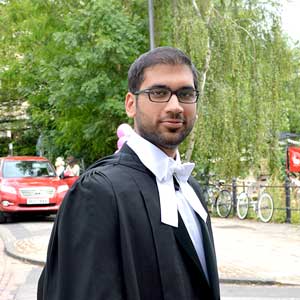
  • Rimali Batra, Associate, Regulatory and Policy team, Trilegal, on pursuing BCL from Oxford, life at law school and varied work experience

    Rimali Batra, Associate, Regulatory and Policy team, Trilegal, on pursuing BCL from Oxford, life at law school and varied work experience

    Rimali Batra graduated from ILS Law College, Pune in 2010. After graduation, she worked at ICICI Bank’s Corporate Banking and Litigation team in New Delhi for a year. Thereafter, she pursued a BCL degree at the University of Oxford. After completing BCL, she joined Jindal Global Law School as a Research Associate. She subsequently accepted a job offer from J Sagar Associate’s Regulatory and Policy team and after continuing there for a while she went on to join her present office at the Regulatory team of Trilegal.

    In this interview she talks about:

    • Reading BCL at Oxford and tips on scholarships
    • Being a Research Associate at JGLS
    • Working at JSA and moving over to Trilegal


    Most of readers are budding and enthusiastic lawyers, how would you like to introduce yourself to them?

    I was born and raised in Delhi. I did my schooling from Montfort Senior Secondary School located in Ashok Vihar, New Delhi. Thereafter I went to ILS Law College, Pune to do my graduation in Law. After ILS Law College, I worked with ICICI Bank’s Corporate Banking and Litigation team in New Delhi. A year and three months later, I went to University of Oxford to read law. After BCL, I joined Jindal Law School, Sonipat as a research associate and worked there for three semesters. During the second half of 2014, I joined J Sagar Associate’s Regulatory and Policy team and worked on matters concerning power (Electricity Act, 2003). I was with Mr. Amit Kapur’s team in JSA for a year and have now moved to Mr. Sitesh Mukherjee’s Regulatory team in Trilegal. I have been at Trilegal for five months now. That’s been my journey thus far.


    You have had many interesting career switches from starting out as a banking lawyer then being a Research Associate at JGLS to your current profile at Trilegal. What all do you consider before taking these decisions?

    One is of course bound to be surprised at the changing courses of my career paths but then it was all a part of the plan, which I hope the readers will see as this interview answers unfold. All decisions that I have made till date connect, and connect wonderfully.

    rimali-batra-2I am a curious individual and don’t shy from taking risks. I have always been experimental in nature and challenges attract me and hold me. Call it my weakness, call it my strength. I believe that I perform well when I multi-task (It’s like enjoying the main course with some side dishes). That is how it has been since school days. For instance, in school I did not just study hard and well, but also trained myself to be a good basketball player (played national and international tournaments), a praiseworthy debater (both at the inter-school level and state level), a leader (school head girl) and a decent quizzer (inter-school level). Similarly in College, I did not settle for just being among the top 10 rank holder for all five years in the Pune University (ILS was one among the 20 odd colleges affiliated to the Pune University), but also represented ILS at various national and international level moot competitions, elocutions and paper presentations. At Oxford too, I read the BCL alongside playing basketball for the University of Oxford. And now whenever I have time and I am not working, I am doing either of the following – pro-bono advisory on energy laws and medical law and ethics, reading books, stock trading / following the market, writing and publishing stories or on issues of law that interest me, teaching English to underprivileged kids at home on weekends, part-time teaching at law schools or travelling.


    Did you have lawyers in your family or in close proximity?

    A little about my family: There are no lawyers in my family (or in extended family for that matter). My father hailed from Sonipat and my mother came to India in my Nani’s womb from Pakistan. My father was a businessmen and my mother assisted him in his business. He was and is my role model. He had no basic formal education and left school in class VI to pursue his dream of setting up a business. My mother was a national level table-tennis player and a B.Com graduate from University of Delhi.

    My elder sister, who is a gold medallist, is a Human Resources manager with a renowned company in New Delhi and my younger brother, who is also a gold medallist in B.Com (H) from University of Delhi is running his own business and takes care of dad’s business. I think I inherited my mother’s sports skills and reading habits and my father’s experimental, risk bearing and helping nature. I believed that a little confusion and nervousness is always good but fear is destructive, and therefore I aim at balancing my fears and my weaknesses with my confidence and strengths, as I move forward. I also leave achievements behind and look at them as a thing of the past and aspire to achieve a little more as days go by. So, in a nut-shell, law and basketball are my passion and I am a learner and observer at heart.


    Why did you decide to be a lawyer? How was your law school experience at ILS, Pune?

    As far as my memory goes, I sealed the decision of being a lawyer in Class Xth – even before I decided whether to take commerce or science. My decision was based on an aptitude test that was conducted in school moral science class. Thereafter I started adding biographies of famous lawyers to my reading rack alongside the already placed biographies of basketball players. I also read a lot of John Grisham. That marked the beginning. In class XII, I joined LST for preparation. I did not fill any other forms (B.Com, Eco (H) etc) but gave entrance tests for N-Schools. At one point in time, when I did not get through Symbiosis, I almost lost hope for making it to any other N-School, but then when I made it NALSAR, I regained my strength. I also made it to ILS on merit and on sports quota. Now, the decision there was simple, but I got swayed by the India Today ranking and picked ILS over NALSAR, as the ranking placed ILS at number 1 in 2005.
    rimali-batra-3

    ILS for me was a place of opportunities. Located in the heart of the city and walking distance from Symbiosis, ASCL, Ferguson College, FTII and Gokhale Institute of Political Science and Economics, it offered a vibrant student crowd and a bundle of opportunities. My learning was not limited to the classrooms of ILS. I participated in moots that enlarged my frame of learning, pursued diplomas in subjects that were not taught as a part of the academic curriculum and interned with NGO’s/human rights organisations in Pune. During college, I successfully completed diplomas in International Arbitration, Cyber Laws, International Business Laws, Securities Laws and Medical Law and Criminology. I was one of the speakers in the team that represented University of Pune at University of Oxford in the quarter-final rounds of the Oxford IPR Moot Competition, 2009. My first publication was on ‘domestic violence’ in the college journal (in 2007), followed by a piece on ‘separation of powers’ in the Ambedkar Law School journal (2009). During college, I also participated in cultural events like poetry writing and recitation, signing and painting. And of course I continued to play Basketball at the Deccan Gymkhana, since our college did not have a functional basketball court. I made some great friends at ILS. Overall, I believe I was able to paint my canvas with so many colours because I was in a college that gave me so much time and space to explore and go looking for opportunities, if they refuse to come to you.


    When people say “Law school”, they look no further than the National Law Universities. As a graduate of ILS, Pune have you faced any such bias? What would be your advice to students in ILS?

    I think the trends are changing a bit. Especially because of so many law colleges mushrooming across the country. ILS has a legacy of being one of the oldest institutions imparting legal knowledge. What ILS lacks is professional training. Meeting my counterparts from N-Schools, always encouraged me to imbibe in me the skills required to think, talk and approach life like a professional. Bias does exit but not all of us have to face it. ILS has a reputation for producing some good litigators however has not earned the same reputation in the corporate world, thereby making it difficult for kids in ILS to crack competitive corporate jobs. I recall an incident during my first job where a senior of my team, while praising my work, introduced me to be from NLS. On my prompting, he corrected himself and toned up his praises even more (considering he was surprised!). I would advise students from ILS to do additional courses and good internships because only studying law at ILS and getting a degree is not going to be enough.

    My advice to students of ILS would be two-fold

    (a) focus on academics in order to score well. Do not consider classroom teaching the end all of academics, that’s just the starting point; and

    (b) Make the most of the time at hand. Involve yourself in activities/course or additional degree’s that interest you. ILS makes space and time for you to incorporate that in your schedule. Most importantly, do both with the sole objective of learning.

    Students can consider requesting administration to take notice of events, moots and competitions that interest them and be rest assured the college will do its part. Student may also invite luminaries in the legal fraternity for lectures and seminars. Basically, what a student in ILS needs is the ‘instinct to initiate’ and ‘go towards opportunities’.


    Please describe the internships that you did in college.

    For internships, I always chose New Delhi, because this is where home was and logistics were easy to manage. My first internship was in the District Courts of Delhi where I read and researched on matters of criminal law and property related disputes. Thereafter, I did my second internship in Delhi High Court where I worked on matters on the original as well as the appellate side on various subjects. In my third year I did internships with Senior Advocates of Supreme Court. I then did an internship with litigation teams of two law firms and my final internship was with the Law Commission of India where I wrote a thesis (which retired into a book) on Constitutional validity of Medical Termination in India. I planned my internships and explored possible avenues for a lawyer in order to better understand my calling. By the end of five years, I was sure of being a litigator (at the least) not sure of the subject area that interests me.


    You worked as a Legal Manager at ICICI Bank. How does a typical day at ICICI work out? What were your main tasks and what responsibility did you undertake?

    ICICI Bank was my first employer. I was placed through college. I was based out of the Delhi office (I asked for Delhi as my location during my interview). I worked in no specific vertical, but was primarily doing litigation for/against the Bank. Anything and everything was a part of my profile. On a day I would be doing ECB lending, security creations and on another I would be researching and preparing written submissions for matters pending in the consumer forum or the Supreme Court and on yet another day I would be doing retail banking advisory. Having such a profile made it interesting to work in ICICI. I worked there for a year and a half, before I decided to do a masters.


    How did your appointment take place at ICICI Bank? What kinds of questions were asked at your interview for ICICI bank?

    ICICI follows a three step procedure, shortlisting on the basis of CV’s, followed by a Group Discussion and finally a personal interview. The Group Discussion revolves around a hypothetical problem relating to law of contracts and consumer protection. The personal interview is primarily based on the resume and a few HR based questions.


    Please tell us about your decision to do an LL.M and how you went about choosing the program and university.

    I decided to pursue my masters from Oxford ever since I visited the University in 2009 for an IPR Moot Competition. On my return, I pursued it like a dream. The advantages of doing a BCL are:

    (a) it offers the students to choose a suitable combination of subjects, based on their preferences as opposed to a custom-made LLM course. So, even though I read only four subjects as part of the BCL but at the same time the rigorous workload and timelines gave me the advantage of specialising in four subjects at one time,

    (b) Oxford targets on strengthening reading, breaking down complex material and articulating the same in form of legal writings/answers/tutorials. They say, don’t study BCL, you read for BCL.


    What do you think clicked in your favour during the selection process for Oxford? What are the scholarships you had applied for?

    I can’t answer this question with certainty. It has to be a combination of my academic performance in ILS, my statement of purpose and the write-up. Also, the fact that I assured my willingness to attend the course and pay for it, in case I did not get scholarships from Oxford, could have boosted my application. However, I did say that I will not attend if I had no scholarships at all. Other than that, achievements mentioned on my CV (like basketball, moots, diplomas etc.), my statement of purpose and my write-up may have added a little value.


    How do you think a law student can build up his profile to get through to top-notch universities like Oxford?

    It’s important to have a strong academic score. A rank in the law school adds value to the application. Apart from that, a student should be able to demonstrate inclination for engaging in theoretical and policy aspects of law. It is also advisable for students to have publications on their side. I remember interacting with the Dean of the University and inter alia, discussing the approach adopted by the University in considering applications from Indian law students. He talked about the law college’s ranking also being a relevant factor, apart from the academic achievements of the student.


    What was your area of study during your masters at Oxford? How was the academic pressure like and did you find time to engage yourself in other activities?

    I read Principles of Financial Regulations, Corporate Laws, Medical Law and Ethics and Philosophical Foundations of Common Law. The courses were rigorous and the readings ranged from being easy to intense and complex. However, I made time to be a part of the Oxford University Girl Basketball team after being shortlisted at the trials conducted at the beginning of the course. I played 4 or 5 inter-university matches and also participated in the legendry ‘Varsity Tournament’ played between Oxford and Cambridge every year.


    Please tell us about the scholarships you applied to and the procedure for each.

    I applied for all possible scholarships I stumbled upon during my research. I started looking for scholarships before making my application. I followed this website -governmentofindiascholarship.com. I specifically applied for Rhodes, Common Wealth Scholarship, KC Mahindra Trust, Jain Trust, Ox-Cam among others. I was awarded the KC Mahindra Trust Scholarship and the Ox-Cam Scholarships. The application procedure is a little detailed as the students need to prepare independent SOP for each and demonstrate availability of the balance funds (in case where the scholarship does not cover for everything).

    The interview rounds for KC Mahindra and Ox-Cam is fairly simple and questions are primarily targeted at (a) ‘Why oxford?’ and (b) ‘What after masters?’

    Additionally, I would suggest students to ask their employers or seniors they have worked with for financial assistance as some firms, seniors or employers are willing to offer funds with or without a promise from the student to come back and work with the said employer or senior.


    Please describe your experience at Oxford. What were the classes and professors like?

    Oxford was a scintillating experience for me. Especially, reading philosophy at Oxford gave me a deeper understanding of law, legal principles and concepts. Oxford has seminars (classroom teaching) which requires students to read before walking in. For my corporate law class I joined a group that was made by students themselves to discuss seminar questions before the seminar and help prepare better for exams.

    At Oxford I was exposed to a system that takes its readings very seriously. As a Masters student, we were required to not just read hundreds of pages every week, but, to also reflect on them during our seminars. I enjoyed this practice very much and it has allowed me to hone my writing skills in the process. A typical reading list will have at least 8-10 important readings (combination of articles, case laws and policy paper series from different jurisdictions, but primarily UK and US). Professors, at best, assist as students deliberate and discuss a topic. One more thing which I found particularly interesting was the presence of an economics, finance and corporate law professor at the same time during seminars for one of my courses, namely, principles of financial regulation.

    The tutorial system is quite unique. There are 4 tutorials for each subject and are spread over three semesters followed by a three hours written exam at the end of the course. I found the tutorials challenging but refreshing as they helped me assess my performance and understanding of the subject alongside attending seminars. They also helped me hone my skills of articulating my thoughts and understanding of the subject.


    You switched to a pure research based career after coming from Oxford. How did this change take place? How did you get to associate yourself with Jindal Global Law School?

    Academics is very close to my heart and still is. For as long as I can remember, teaching and educating has always fascinated me. When at Oxford, I heard about Jindal Law School and its dean, Dr. (Mr.) C. Raj Kumar who happens to be an alumnus of Oxford. I was given an opportunity to work as a Research Associate and lecture two courses ‘Property Laws’ and ‘Corporate Laws’. Honestly, one may see it as a switch in careers, but for me, academics fits in very well for an aspiring lawyer, especially after a masters. I also felt a dire need to re-apply and re-read my subjects, from the Indian law perspective – after I finished my masters.

    Though I chose to be a litigator, I haven’t lost touch with teaching and academics (and hopefully never will). I have conducted seminars and lectured at various law schools in India, ever since I left Jindal. I am a visiting faculty with Symbiosis Law School, Noida and often visit ILS Law College for conducting week long courses, as and when time permits.


    You had worked with Jyoti Sagar Associates and you are now working with Trilegal. Why this switch?

    After two very fruitful and enriching years at Jindal Law School, I decide to do join regulatory litigation. I was with JSA for a year and have been with Trilegal for 5 months now and having been working on laws in the energy sector, especially the power sector. With not much precedent in the sector, the practice is demanding and engaging.


    How is being a research associate or a legal manager at bank different from working at a top – notch law firm? Does the work load increase, how have you managed this transformation?

    When I was in ICICI, I assisted in consumer dispute litigations for/against the bank on subjects involving ‘corporate laws’, ‘banking laws and regulations’. When at Oxford I read ‘corporate law’ and ‘financial regulations’. When at Jindal, I taught ‘corporate laws and financial regulations’. When at JSA, I put together the knowledge and experience acquired from ‘corporate laws’, ‘regulations’ and ‘litigation’; and worked hard in acquiring sector specific knowledge. Electricity/Power sector is a super-niche sector and I find it thrilling and challenging. My work at JSA was very extensive and intense. At Trilegal, I continue working on matters in the power sector with the same intensity and I enjoy it immensely.


    How has the journey been so far? What are your long term goals?

    For me my journey that has been the best part. The people I met, places I visited, life experiences I picked on the way, all add to me being who I am today. For today and tomorrow, I am a litigator, learner and an observer and I aspire to be perfect at what I do.


    Lastly, what would be your message to a law student who wants to excel in the legal profession?

    Let me quote Abraham Lincoln’s message “If you are resolutely determined to make a lawyer of yourself, the thing is more than half done already.” I echo.

    When in law school, plan a little about your future. Immerse yourself in travel, cultural exchange, sports, parties and meaningful conversations, as much as possible. Don’t let your degree define your career limits. Don’t forget to explore and experiment. Take risks sometime, it adds a bitter-sweet flavour to your becoming a lawyer. If you do, then accept your failures as much as your cherish your victories.

    And most importantly, keep your imagination alive.

  • Sahana Raghunathan, Associate, JSA, Chennai, on studying at ILS Pune, recruitment and work at a top law firm

    Sahana Raghunathan, Associate, JSA, Chennai, on studying at ILS Pune, recruitment and work at a top law firm

    Sahana Raghunathan is an Associate at JSA, Chennai. She graduated from ILS Law College, Pune with a BSL LL.B degree. She also pursued Diploma courses in Human Rights and Corporate Laws. After graduation, she joined Vichar Partners as an Associate. Vichar Partners was subsequently merged with JSA where she continued to work. In this interview she talks about:

    • Studying at ILS and Diploma Courses
    • Recruitments and internships at JSA, Chennai
    • A career in corporate law and maintaining work-life balance


    How would you introduce yourself? Could you please share a little bit of what motivated you to pursue law as a career?

    Let me start by thanking SuperLawyer for this amazing opportunity. Greetings from the city of Chennai! I am Sahana Raghunathan, Associate, JSA. A Proud 90’s kid and a Corporate Lawyer. Enthusiasm personified.

    Having always been a topper and driven by marks in school, engineering “ought” to have been the natural next step. It was something like a rebellious decision (read: against the typical belief of a “tambrahm” family) to take commerce in class 11. My father likes to believe it’s because he convinced me that law and economics is a good combination. I have been told that two of my great-grandfathers were part of the then judicial system. Let’s just say that this gene skipped many a generation before me! Jokes apart and however clichéd it may sound, it was going to be either law or journalism. One road was taken, the other not. I am now with the corporate team in JSA, Chennai and my main practice areas include private equity, mergers and acquisition, banking and finance and general corporate commercial.


    Tell us about your college life at ILS Law College, Pune. What was the reason behind pursuing various Diploma courses? Was it a professional requirement to enhance more in your career?

    Choosing to pursue law in any city, away from home, was a conscious decision and it had a lot to do with wanting to lead an independent life (not to be read as misusing independence et al).Being the first batch to give CLAT, I was placed in Rajiv Gandhi National University of Law Punjab. But I decided to go ahead with Indian Law Society (ILS) Law College, Pune, as it is a very well established institution and it proved to be the perfect choice. Attending early morning lectures seems to have prepped me for my early morning work hours now. But the main advantage of studying in ILS, apart from the excellent and very approachable faculty, is the fact that we had the rest of the day to ourselves to pursue our other interests, legal or otherwise (no pun intended). The Diploma in Human Rights (in my second year of law school) was to get a feel of that side of law I knew I would not make a career of. When in my third year, the Diploma in Corporate Laws gave me a direction to follow and I was sure of what I wanted to do once I graduated from law school.


    Please comment on the quality and structure of these courses. How much practical knowledge did you gain from it?

    We had the diploma classes as frequent as thrice a week depending on the schedule of the main course (i.e., BSL. LL.B). Excellent part time faculty, who were mostly working professionals, were engaged to take practical sessions and though these sessions were not as effective as internships, they were helpful nonetheless.


    sahana-raghunathan-2

    What were your areas of interest during your graduation? How did you go about developing expertise and knowledge in these areas?

    My internships during law school have been in various fields: IP, corporate litigation, general corporate commercial, banking and arbitration. Though I have always been inclined towards a career in corporate law, I wanted to venture into other areas as well and when better a time than as a student. I was really lucky to have interned with some of the best advocates such as Mr. Satish Parasaranand law firms/legal departments in Chennai such as R&P Associates, HSB Associates and Kotak Mahindra Bank.

    As an intern, the workload is less and the seniors there tend to pamper you as they know life after graduation. Talking to them, learning practical aspects of working from them and also utilising the libraries at such offices always prepared me for a better next year at law school. I knew what to look out for and how to grow professionally.


    Did you find that your law school education had prepared you sufficiently for the many tasks you were required to execute during your internships and later at your job?

    On a theoretical level, law school preps you to know the law. The internships prepare you for the practical aspect, as in how to implement the law and how to work with it. The first few months at work is when you actually get to realise how to work the two in tandem and be creative while balancing the two.


    Soon after graduation you joined Vichar Partners as an Associate. Did all the attorneys from Vichar Partners continue to work after the Merger with JSA? Did it affect your work in any way?

    Yes, that’s correct. It was announced that Vichar Partners was set to merge with JSA, one of the top national law firms, effective April 1, 2014. It was an exciting moment as a young associate to realise that I would get to work with attorneys pan India and the level of exposure I would get while doing so. And yes, all the attorneys and the staff of Vichar Partners were absorbed by JSA post-merger.

    We, at Vichar, always believed in providing outstanding legal solutions, in our chosen practice areas with a strong emphasis on ethics. So it was very easy to fall in line with the mission statement of JSA. The transition was easy as the working culture was similar in both the firms and the merger has been having a very positive impact on our working style.


    What is your take on working at a smaller law firm in early years of career rather than working at a very big law firm?

    I wanted to join a mid-sized firm with an effective presence in the market and Vichar fit the bill perfectly. And I am glad that they decided to welcome me. The reason behind choosing a growing firm like Vichar was so that the hype and pressures around a top firm could be avoided at the beginning stages of my career but at the same time, be exposed to that same level of work and clientele. My time at Vichar was a learning slate that prepared me and gave me the confidence, both professionally and personally, to meld easily into JSA.


    How was your first year after graduation? What were the biggest hurdles and challenges after joining work? How did you deal with them?

    I was a lucky fresher who had a very happening first year at work:

    Mid-sized firm into a top national law firm;

    Companies Act, 1956 to the Companies Act, 2013.

    It was a little confusing at first; we had learnt the old statute while in law school but we were expected to apply the new statute at work. That I would say was one of the top concerns in my first year. At JSA, we give a lot of importance to knowledge management. We regularly have internal team discussions across the JSA offices and internal seminars and presentations that help us stay on top of things and this also ensures networking intra JSA.


    What are the primary professional ethics you follow while at work? How do you deal with mistakes or errors?

    I am a team player. I believe that achieving the same result as that of what the client expects from you is the most satisfying aspect of work. And for that, team work with structured hierarchy is very essential. I value the time my seniors spend in mentoring me, my peers spend in discussions with me and my juniors spend in assisting me. Respecting my colleagues’ comments and the ability to value their input is what has helped me reach the stage I am at today.

    I think a lot of corporate lawyers would agree with me when I say that it is impossible to send out a perfect first draft. In the last one and half years of work, I have learnt that stress is only going to add to my mistakes. Getting the concepts clear, discussing it with your colleagues, reading up on it will minimalize the errors and prepare you for subsequent transactions. Also, do hope that a supreme power (read: mentoring partner/ senior associate) is around to save your dayJ


    There is a considerable attrition rate at the top law firms, what do you think contributes to this?

    I am sure that the reasons are mostly the same irrespective of the field of work. Some of the common grounds may be immense stress or pressure; internal politics; personal issues or plain boredom.


    What would be the one misconception you’d say you’d always held about real life legal work till the time you were an intern but changed once you started working as a lawyer?

    Timelines and deadlines. These two words give every corporate lawyer the same feeling as an e-mail wherein the client negotiates for a lower fee quote. As an intern, I had not been exposed to unimaginable timelines. I was always under the impression that lawyers were above all and our opinion was the law of the land. Apparently not. The clients seem to know, from their experience, as much if not more than a lawyer, the workings of law on a practical basis. And if it is a start-up, they expect the lawyers to learn the law along with them. The respect has been and will always be for the law.


    What are the other related fields where a corporate lawyer can try hand apart from joining law firms and corporate houses?

    This era seems to be sprouting new and innovative law related jobs. One can look at being hired at legal recruitment firms; go on secondments to companies where there is no in-house legal team; join legal database compilation teams; involve in translation of legislations from vernacular languages to English and vice versa etc. And not to forget, I think every lawyer should do his/her share of pro bono work.


    What is the procedure for internship and recruitment at Chennai office of JSA? Please tell our readers about the same?

    Applicants are encouraged to apply at least 6 months in advance of the month during which internship is sought. Applicants may also apply to internship@jsalaw.com. For further details, please visit http://internship.jsalaw.com/application-process.aspx.


    Life for lawfirmites can be very hectic at times. What is your take on work-life balance? How do you unwind?

    I think it is okay to push oneself to a certain limit. Sometimes people work best under pressure as it drives them till they are able to solve their way out. But it is equally important to know and respect one’s health and family and not push away/ neglect the same. I try to keep my weekends as free as possible (atleast Sundays for sure). I find it rejuvenating to open my laptop on a Monday morning if I have seen it last on a Friday night. But since that is a farfetched dream, let’s just go with making the most of weekends and some weeknights when the deliverables for the day are done early.

    For me, unwinding means time for DIY stuff (evidenced from my office desk and walls at home); quality time with family and friends; surfing social media sites and organising/ coordinating events (from family get-togethers to JSA annual attorney retreats).


    What is the current scenario of studying corporate law as a career option in India? What would be your parting message to law students who want to be successful in corporate law?

    To graduate in law within the next few years would be ideal for anyone looking to make an impact in this field. New law firms are emerging; established law firms are either expanding or splitting, and all this leads to the same: boom in the job market with inevitable and intense competition.

    My parting message:

    • Know the law and enjoy working with it;
    • Be disciplined in your work; this is no place to be casual or careless;
    • Treat your clients with respect and acknowledge the fact they know the law as much as you do;
    • And finally, let law be the winner.
  • Priya Dixit on getting recruited as an Assistant Counsel – Legal at Johnson & Johnson

    Priya Dixit on getting recruited as an Assistant Counsel – Legal at Johnson & Johnson

    Priya Dixit graduated from ILS Law College, Pune in 2011. During law school, she interned at modest law firms and with independent practitioners in order to ensure maximum learning in diverse subjects of law. Soon after graduation, she joined Johnson and Johnson as a Legal Trainee and after 18 months of hard work, she was promoted to the ranks of Assistant Counsel – Legal.

    In this interview she talks about:

    • Studying at ILS Law College, Pune
    • Being an in-house counsel
    • Recruitment and work experience at Johnson & Johnson


    Our readers consist of law aspirants, law students and young lawyers. How will you introduce yourself to them?

    I am an in-house counsel for Johnson & Johnson Pvt. Ltd. (J&J) since 2011. I graduated from ILS, Pune and went on to join my current company as a Legal Trainee. I was fortunate to be the first legal trainee globally to join J&J, as it does not recruit law graduates straight out of college. Since then there has been no looking back and the learning curve has been very steep for me.


    Tell us a bit about your educational background. Do you have lawyers in your family?

    After High School, I opted to pursue my higher secondary studies in commerce. Interestingly, almost my entire family has an engineering background. However, my grandfather was a lawyer and his extensive library always fascinated me. After my grandfather, I am the first lawyer in my family.


    What motivated you to choose law as a career?

    Fortunately, my parents have always been extremely supportive of the choices I have made so far. My interest in law developed over the years while visiting my grandfather during summer vacations and observing him counsel his clients with such ease and candour. The fact that people came to him with their problems and he could provide them with a solution is what fascinated me.


    priya-dixit-3

    How did you get through to ILS Law School, Pune?

    The admission to ILS is on the basis of your 12th grade score. ILS does not have the requirement of an entrance exam .As I enjoyed studying commerce subjects, scoring well in higher secondary was not difficult. This is how I got through ILS Law College, Pune.


    Which subjects did you enjoy during your qualifying degree? What about co-curricular activities?

    After commercial laws, contracts and law of evidence, I enjoyed family law the most! The complexity of family law with each religion specific provision intrigued me.

    Co-curricular activities consisted of the moot courts, research work, competitions and diplomas. For law students reading this post, don’t fret yourself on achieving a long list of co-curricular activities. Involve yourself in co-curricular activities which are of interest to you, that should provide as a good foundation.


    Tell us about the places you have interned at. Did you plan your internships throughout law school?

    To be very frank I don’t have a long list of prestigious internships to boast about. My internships were spread across modest firms and independent practitioners. The basic idea was to ensure maximum learning experience in diverse subjects of law as I was pretty sure about pursuing corporate law in the long run. Therefore the internships around Human Rights, Laws of Evidence, and Intellectual Property, coupled with court assistance experience gave me valuable learning skills and confidence for post qualification work.


    Soon after graduation, you joined Johnson & Johnson as a Law Trainee and currently work as an Assistant Counsel-Legal there. How did your appointment take place? How did your promotions happen?

    The year of my graduation, I was not a part of the group which was selected for campus placements. (Looking back I consider that as fortunate as I was not quite ready to apply and join law firms). After the euphoria of getting my law degree wore off, I applied to a few corporates as well as law firms. During this time I applied for an opening in my current Company (through an online portal) and my Resume was shortlisted for a telephonic interview. After cracking the telephonic interview which was mostly to assess my legal knowledge, I was called for two rounds of personal interview in Mumbai. The personal interviews were conducted by the HR head and the Legal Head. The personal interviews were mostly to assess my confidence and inquisitiveness to learn. The interviewers later told me that what impressed them was the fact that I demonstrated knowledge about the operations of the Company and was aware of its many brands (apart from the Johnson’s Baby Range)

    As the Company did not have a Campus Recruitment Program for law graduates, I was hired as a Trainee to assess if I could fit in the team and developed as a resource. After an exhaustive training of 18 months I was confirmed and ended up being a part of a great team which comprises of some of the best legal experts in the industry.

    On the basis of the feedback I have received from my seniors and peers in the organisation, I have been promoted twice in the last 3 years on the basis of my strong business partnering skills and energy levels demonstrated,


    priya-dixit-1

    What do you think were the biggest hurdles and challenges in the early days of your career? How did you deal with them?

    As a law graduate the most crucial aspect was understanding the business operations. Stating what the law says is only one part of the bigger puzzle. However, I soon realized that complete understanding of the entire puzzle is important in order to foresee the legal challenges which can arise while drafting a contract or advising the business on their next big project.

    I always made sure that I have a clear understanding of the issue before giving any advice. The key is to ask as many questions as possible when in doubt. It goes without saying that as a lawyer you should be aware of the applicable law. Over and above that, know the business, understand the issue, look at it from all possible perspectives and then provide legal advice.


    Tell us about the nature of work you’re entrusted with and what a typical day is like. What is the most challenging aspect of your job?

    In my current profile I am entrusted with compliances around Drugs and Cosmetics Laws, Food Laws, Packaged Commodity Laws, Advertising Regulations, Competition Laws, IPR, Employment laws. etc. In addition to these, on an ad hoc basis, I also advise the business on Real Estate laws, Local Pollution and Environmental laws etc. In addition to the advisory profile I also handle the Litigation portfolio for the Consumer Division of J&J.

    I feel the most challenging aspect of my job is the expectation of instant advice. When you have a strong business connect and network within the Organisation, people just walk upto you for “quick” advice. This requires that I keep myself abreast with the amendments and constantly upscale my legal knowledge across various fields.


    What amount of legal work is there? What have been your failures and successes?

    There is varied work in the organisation. The variety drives away monotony and keeps me on my toes. There are regular internal trainings and presentations which keep my public speaking skills polished. (So I do not miss out on the feel of a Courtroom appearance!)

    Speaking of successes first, I feel my biggest success was when my Manager showed the confidence in me to brief a leading Senior Counsel, by myself, for an important matter in the High Court. Apart from this I have had the opportunity to handle some really complex litigations and crucial company projects. In addition to this I cherish the moment when I was awarded for my work at an Asia Pacific level.

    The learning experience, as I like to call it, were the 8 months in my career where I had to step up to handle my current profile along with the indirect tax profile.. Having no prior experience in tax laws Initially struggled at understanding the taxation concepts as well as the litigation involved. It led to certain delays and I found it difficult to prioritise work. However since then there has been no looking back and the experience taught me time management as well as performing under pressure.


    What are the primary professional ethics you follow while at work? How do you deal with mistakes or errors?

    Johnson & Johnson has a strong value based ethical culture. The transparency and paramount importance given to doing the right thing ensures we are not faced with any ethical conflicts and are able to work with a strong sense of passion and integrity.  As my seniors tell me, there is no mistake which cannot be corrected. On a personal front, I ensure high stake matters are reviewed by seniors and advice is not given based on incomplete knowledge.


    There is a phenomenal obsession amongst law students with maintaining a very high CGPA. How important according to you is this in securing a job?

    Good grades sit on your resume all your life and they are the first measure to assess you as a student / potential employee. However, I feel a more rounded personality is the need of the hour and not just a high CGPA. The plus side with Law Schools is that you get to intern early on and have the opportunity to prove your mettle. So the focus for law students should be a fair mix of giving importance to grades as well as gaining practical exposure as much as they can.


    Does Johnson and Johnson take interns? Please tell our readers about the process for same.

    We do not have an Internship Program for law graduates. However, given the scale of legal work involved I will definitely recommend the option of initiating a summer internship program in my company.


    It is believed that the work of an in-house counsel is restricted compared to that of a law firm lawyer but the latter has less (or no) work-life balance. Do you think this is true?

    I feel the in house work is mostly structured and with a little planning, work-life balance is achievable. In law firm practice, as I understand from my peers, as the day is divided between courts appearances and office work as well as research work, the work life balance maybe difficult to achieve. However, students starting off their career should give more importance to the quality of work in the initial years and learning the nuances of the trade. Work-life balance can be eventually worked out.


    Where do you see yourself five years from now? Would you consider going for an LL.M. abroad?

    I see myself gaining more exposure and growth in the industry. To steepen my learning curve is my highest priority. An LL.M does sound very attractive for qualitative addition of a qualification after a modest amount of work experience. However, many other aspects need to be considered before opting for a foreign degree. I have still not made up my mind about it.


    What would be your parting message to law students?

    There is no fixed formula for success. So don’t lose heart if you did not get through to the National Schools or bag the best internships or get a PPO. Just make sure that whatever you choose to pursue, you do it to the best of your ability. Nobody expects you to be an authority on each and every aspect of law. Know your flair and know it damn well. This achieved, the right attitude coupled with never ending curiosity and patience should always work in your favour!

    Also for students pursuing law in Pune, do not miss out on Barman’s pitcher and some delicious food at Arthur’s Theme!


  • Zaid Zain, Associate, General Corporate Practice, AMSS, on law school, pursuing certificate and diploma courses and work

    Zaid Zain, Associate, General Corporate Practice, AMSS, on law school, pursuing certificate and diploma courses and work

    Zaid Zain is an Associate at Amarchand Mangaldas, Chennai. He is a corporate lawyer in their General Corporate Practice Group with a specialized focus on Technology and Media. Zaid graduated from ILS Law College, Pune in 2012.

    Zaid has also done several Diploma Courses including Diploma in Securities and Investment Law, Corporate Finance, Mergers and Acquisitions and Intellectual Property Law. In this interview he talks about:

    • Studying at ILS Law College, Pune
    • The relevance of additional courses
    • Interning and working at Amarchand Mangaldas


    How would you introduce yourself? Could you please share a little bit of what motivated you to pursue law as a career?

    My name is Zaid Zain, I am a corporate lawyer in the General Corporate Practice Group of Amarchand and Mangaldas, with a specialized focus on Technology and Media. I have been involved with some M&A deals and have also worked on a few capital market transactions. However, as stated above, my primary focus is on Technology Law, which comprises of drafting software-licensing agreements, ‘software as a service’ agreements (SAAS) and hardware procurement agreements amongst others. I thoroughly enjoy working in the technology space, as I feel it is a thought provoking and trend setting practice area to be in.

    As regards my motivation to do law, throughout my life I have always been interested in the idea of being an advisor / trusted confidant. I always felt that it was both incredibly powerful and highly fulfilling to strategize and find ways to help people / corporations solve problems. I was a regular at debating competitions in school and this experience further helped steering me towards a career in law.


    How did you make the initial shift from a science background to law? Would you say it was difficult settling in?

    To be honest, I did not find it difficult at all. I was always sure that I did not want to be an engineer. I didn’t particularly hate science, just that I wanted a career that was more socially oriented. As a lawyer, I love the fact that I get to constantly interact with people from various countries, companies and backgrounds.

    Besides, I feel that my science background gives me better intelligibility while working in the technology arena. I feel that terms, concepts and methodologies related to technology come more intuitively to me because of my science background.  The reality is that we are moving towards an ever more technology centric world. It already touches every aspect of an entity, and going forward I feel that technology law will become a formidable practice area.


    zaid-zain-3

    Tell us about your college life at ILS Law College, Pune. Which activities did you partake in? Please tell us about the manner in which you approached academics while in college.

    In all honesty, college was the defining period in my life. It was in college that I truly underwent a transformation from being a dreamer to a go-getter. I had the privilege of being taught contracts by the legendary Mrs. Nilima Bhadbade. I would give her and my other teacher most of the credit for where I am today in my career.

    As for activities, I took part in various moot competitions and excelled in them. It was quite a rewarding experience too. It gave me valuable insight on how to analyze and apply a particular law as opposed to just reading it.

    I was also fortunate to be amongst friends who were intellectually stimulating. We would spend hours debating various legal, political and policy related subjects. This helped me develop the ability to think beyond the realm of normalcy while approaching and analyzing a topic. I also feel group-studies help law students immensely as we could bounce ideas off each other and face our tests/exams with much greater ease.


    What were your areas of interest during your graduation? How did you go about developing expertise and knowledge in these areas?

    At ILS, my areas of interest were corporate and securities law. I developed proficiency in these subjects by reading articles and scouring the web for information. I am an information junkie, I spend hours on the internet just researching. Whenever I found any topic difficult to comprehend, I would watch documentaries / videos on those topics and this would help me get a holistic and real world idea on the factors surrounding those topics. I also pursued a few diploma courses that helped me get vital insights into how corporations function and deal with each other.


    Did you find that your law school education had prepared you sufficiently for the many tasks you were required to execute during your internships and later at your job?

    Well, my law school education did give me a strong foundation on which I could build the skill sets required to work in a law firm. But as is the case with most professions – you learn as you go. While the subjects taught in college helps one get a grasp of the nature of the work, the real world application can only be understood while dealing with live situations on the job. For example, we all studied about board meeting and shareholders meeting in college, but it’s only when you work on the content of such meetings and its real world repercussion that you truly appreciate the value and criticality of such meetings.


    Currently, you work as an Associate at AMSS, Chennai. How did your appointment take place? What worked for you in securing the job?

    I had previously interned with Amarchand at their Chennai office. During my internship, I got the opportunity to get to know and work with the partner and associates in the office. I worked for them tirelessly and displayed the dedication and commitment required to meet their expectations. I spent long hours in the office and diligently executed whatever responsibilities I was tasked with. I also got along very well with the partner and associates in the office. By the end of my internship, I felt like I was part of their team. While I did not get the job immediately, I was promised a position as soon as a vacancy opened up and in less than a year or so, I got the break that I wanted.


    How was your first year after graduation? What do you think were the biggest hurdles and challenges in the early days of your career? How did you deal with them?

    The first year I would say was the toughest. That is the time when one makes the transformation from passively just studying law to actively practicing it. The biggest hurdle I would say is understanding various legal concepts and the manner and methodology involved in applying such concepts to a given situation. I found it difficult to go through volumes of documents and analytically process them within those stringent deadlines.

    However, the more I worked the simpler it became. I figured out shortcuts and methods to execute the work given to me quickly and resourcefully. I understood time is a big factor in this business, and how critical it is to prioritize matters that involved more risk and forego ones that drag down efficiency.


    What are the primary professional ethics you follow while at work? How do you deal with mistakes or errors?

    Contrary to popular belief, I feel that law and ethics go hand in hand. One must take responsibility for the work undertaken by them and never push someone else under the bus. This according to me is the most imperative ethical value for a lawyer to have. Also, one must always try to do their best for the client no matter what the situation. At no point should the client suffer due to any problems or issues that are personal to the lawyers working on a matter.

    Mistakes and errors are part and parcel of being a corporate lawyer. No lawyer is above mistakes regardless of his social standing. The key is to remember those mistakes and not repeat them in the future. There are days when a draft sent out is cleared instantly while on others there would be errors on the simplest of tasks. To sum up, one should not linger too much on mistakes and should be able to quickly adapt and move on.


    While in law school, you have also pursued many courses. Was it a professional requirement to enhance more in your career?

    While in college I had pursued various Diploma Courses including Diploma in Securities and Investment Law, Corporate Finance, Mergers and Acquisitions and Intellectual Property Law.

    To a certain extent I did undertake those diplomas to enhance my CV and add value to my profile. At the same time, I also wanted to know and understand these areas of law, as I found them to be fundamental to the functioning of corporations.


    Please comment on the quality and structure of these courses. How much practical knowledge did you gain from it?

    I would say the quality of the courses was very good. Every lecture was very focused on the practical aspects of the topics. Most concepts were taught using case studies and I found this to be especially helpful. Also, the classes were very interactive and the Professors were keen on getting the students point of view on. This sort of interactive platform was very enriching and helped me get a deeper understanding whilst clearing a lot of doubts that I had.


    There is a considerable attrition rate at the top law firms, what do you think contributes to this? What has been your personal experience?

    I feel the attrition rate could be due to many reasons. Most people quit for personal reasons such as marriage, migration, sabbaticals etc. Others leave because they feel they want to jump in-house, change practice areas and sometimes even get into other career paths. In my experience, I have seen more of the former than the latter.


    Tell us about a case that you are particularly proud of. What steps do you take to prepare for a difficult case?

    There was this one capital market deal we did. It was one of the first QIPs after the New Companies Act kicked in. It was an exhilarating month where my colleagues and I spent countless days (and nights) working on the matter together. We were all quite exhausted by the end of it. However, once the deal launched we could not have been more thrilled and content.


    What is the current scenario of studying corporate law as a career option in India? What are the key qualities one should posses for becoming a corporate lawyer?

    I would say that the current scenario is ideal for a student to pursue corporate law. If there was one thing I could change it would be to include in the study of corporate law, lessons on the practical application of corporate and commercial hypotheses.

    I would say the key qualities one should possess for becoming a corporate lawyer are: (a) an analytical mind; (b) diligence at tasks; and (c) social skills. Sometimes, the greatest of solutions would be hidden in inconspicuous nuances. Therefore, a strong focus and attention to detail are also essential qualities for a corporate lawyer. Most importantly, one must also remain humble throughout their profession – keeps your eyes on the stars but your feet on the ground.


    What are the other related fields where a corporate lawyer can try hand apart from joining law firms and corporate houses?

    I would say public relations, management consultancy, policy and journalism are all fields that a corporate lawyer could excel in. It could also be a solid gateway to politics.


    Life for lawfirmites can be very hectic at times. What is your take on work-life balance? How do you unwind?

    Yes, it is a fairly accurate assessment that life can get very hectic for a corporate lawyer. While I do enjoy the thrill of having a fast paced life and a busy schedule; it can also be taxing at times. It is therefore imperative, that you make time to do the things you love and also make time for your loved ones. True to any profession, having a good work life balance is pivotal to feeling satisfied as a corporate lawyer.

    I unwind by watching movies and documentaries that engage me. I am also a big foodie and love going for a good meal, so I try to do that as often as possible. Occasionally, I attend social gatherings and find myself enjoying meeting and networking with people from diverse backgrounds.


    What would be your parting message to law students who want to be successful in corporate law?

    My advice to law students would be -Develop the quality of truly understanding the stuff taught to you and visualize ways in which it can be applied to real-life situations. Cultivate a ‘never give up’ attitude and have the courage to persevere against all odds.


  • Jyoti Shekhar, Senior Associate, Legasis Partners on LL.M from Deakin University and work experience in Corporate Law

    Jyoti Shekhar, Senior Associate, Legasis Partners on LL.M from Deakin University and work experience in Corporate Law

    Jyoti Shekar is currently working as a Senior Associate at Legasis Partners, Delhi. She graduated with a B.S.L.LL.B degree from ILS Law College, Pune in 2007. Thereafter she started working at Mindcrest India Pvt Ltd. as a Legal Analyst. She then went on to pursue Masters in Commercial laws from Deakin University, Australia and has thereafter worked with OSC Export Services Pvt. Ltd. and Sahara India.

    In this interview she talks about:

    • Law school experience at ILS, Pune and Deakin, Melbourne
    • Work experience at OSC Export Services Pvt. Ltd. and Sahara India
    • Work as Senior Associate at Legasis Partners


    How would you introduce yourself? Please tell us a bit about how you gravitated towards law.

    Usually, I just introduce myself as a lawyer. I really do take pride in being a part of this industry, however small. Right from my childhood, I have always wanted to do law. Perhaps it had something to do with people telling me to be a lawyer due to my talkative and argumentative behaviour, or perhaps some impression left on me by a very illustrious Supreme Court Judge who was a distant relative and used to tell me stories. Honestly, I don’t know. But I do know that I never had a moment’s doubt about being a lawyer and yes, I still just introduce myself as a lawyer.


    Please tell us a little about your law school days at ILS Law College, Pune. How were you at academics?

    My college life was a lot of fun and a lot of hard work too. I was always a topper during my school days. In fact, my school refused to let me elect commerce in high school. Only after I threatened to quit the school, they reluctantly allowed me to take commerce. But I thoroughly enjoyed accountancy and business studies. I started pursuing the C.A. course along with my LL.B. That’s what kept me busy throughout college life. But I didn’t finish CA after all. But honestly, like any college student does, studying law was a last minute preparation for me, cramming all night and sacrificing sleep. I got average grades but I did have my share of fun in college.


    jyoti-shekar-3

    How important would you say good grades are for an illustrious career in legal?

    Honestly, as a student, marks and percentages mean the world to us. However, to be honest, I believe that experiencing the practical world with different kinds of people, different cultures, behaviours etc. is more important in the real world. Of course, a good grade point average is important to get into good schools for further education and to make your CV look better. But honestly, after your first job, the interviews are more about how you handle people and situations. Book knowledge is something you can always refer to, but living in the practical world and dealing with colleagues, bosses and clients is the key. I guess what I am trying to say is that although a good grade is wonderful, but it shouldn’t be your entire focus.


    How do you think internships are beneficial to law students?

    I think the best way to learn is to practice. Internships are the best source of knowledge. Looking back, I do wish I had done more internships in college. However, internships should not be just about getting certificates. To get a headstart, try to be inquisitive and learn the knack of research, reading a contract, drafting an email, observing in meetings and courts etc.


    jyoti-shekar-4

    Thereafter, you went to pursue Masters in Commercial Law from Deakin University. How would you describe your experience? What motivated you to go in for the same?

    I had an amazing experience during my masters. Actually, after finishing LL.B, I wanted a good job with a good salary. However, my father encouraged me to think long term. He told me that a good qualification will open up opportunities I couldn’t comprehend at that time. And he also said studying in a different country would expose me to different learning methods and will be a life experience. And he was right. I somehow found the courage to go ahead with the LLM plan and even felt excited by the prospect of experiencing a very different culture and academic system. That’s when the idea of going to Australia hit me. And it turned out to be the best decision of my life. When I went there, I did not know anybody in the country. Everything was completely new and different. I slowly learnt to speak their way, I worked in a grocery store, worked in their deli (and I am a strict vegetarian!!), I learnt their way of studying. We did not have exams, we only had research papers instead, lots of them. It was a whole different approach for me. I also learnt to be among people of different cultures and traditions – Australians, Chinese, Sri Lankans, and Europeans. It was very enriching. I am still active with the university’s alumni association in India. They have a lot of business networking events and activities.


    Do you think it makes sense for students to go overseas to study law when they want to practice in India?

    There was actually a time when a foreign degree looked good on CVs and that is partly why I went abroad. But as I mentioned above, it became more of a life experience for me. And another plus is that I learnt a lot about research and writing methods. Now actually, when people ask me this question, I really don’t know how to respond, since our academic system has also improved a lot and I feel it is a personal choice rather than a mandate.


    jyoti-shekar-2

    After coming back to India, you joined OSC Export Services Pvt. Ltd. as a Consultant. How did you secure your appointment? How would you describe your experience working there?

    I simply applied to their vacancy ad. They had a series of written tests which I cleared. Of course, it was quite prestigious for me to start working there after my studies due to its association with Clifford Chance LLP. I got an opportunity to work in Clifford Chance London and New York offices which exposed me to international transactions and practices.


    Thereafter you joined Sahara India as Manager Legal – Corporate Finance. What led to this shift? What kind of challenges did you face during this job?

    Though I was doing quite well in my current job at the time, I wanted to get some in-house experience, which is what I wanted out of my career then – to be an in-house counsel. When the Sahara opportunity came along, I grabbed it, especially because it required me to be in the finance department, which was fast becoming my forte. Even in Clifford Chance, I was associated with their Banking and Finance department. It turned to be an amazing sea of experience with wonderful projects. Each of us lawyers had to deal with our projects independently. I loved every minute of it. The challenges were plenty; I had to pilot transactions right from proposal stage to post closing stage, of course with the assistance of external counsels, especially in other jurisdictions. We reported to the Corporate Finance Head, who had a surprisingly good grasp of legalese. It provided me with a lot of learning and knowledge.


    Currently, you work as a Senior Associate at Legasis Partners. What prompted you to make this choice and what made this shift possible?

    Well, the Managing Partner of Legasis Partners, Mr. Suhas Tuljapurkar, is my absolute role model in this profession. I had interned with him in Mumbai and also worked with him in Pune at the beginning of my career. I jumped at the chance of working with him again in Delhi when the opportunity presented itself. I was planning my exit from Sahara and everything just fell into place.


    What kind of work and responsibilities do Senior Associates at Legasis Partners deal with?

    In Legasis Partners, we are given the opportunity to develop ourselves as professionals as per our interests and skill sets. Here, we do not believe in designations and everybody pitches in to help achieve the common objective of growth. It gives me an opportunity to be independent and learn to take decisions and also to explore various ways in which I can be useful to the organization and hence to my own self as a well rounded professional.


    Tell us about a case that you are particularly proud of. What steps do you take to prepare for a difficult case?

    Well, a parent is equally proud of all their children. Every project I have done so far, be it small or big or high profile, has made me learn new things.

    To answer the second part of your question, in any transaction, homework is the key. I need to know the entire background before starting a project. And I never hesitate to ask questions, even at the risk of sounding ridiculous. If I have a doubt in my mind, then I cannot do a convincing job.


    What is the current scenario of studying corporate law as a career option in India? How challenging is life as a corporate lawyer?

    Corporate law has developed a lot in the past few years. With the new Companies Act in force, there are lots of stringent regulations which necessitate having a strong in-house team in every company. Corporate lawyers can either be in-house or work in law firms. There is no formula for being a successful corporate lawyer, though I personally believe that grasp of legal and contractual language is very crucial to this role. Also important is your negotiation skills which comes with experience. It is also important to understand the business and commercial aspects of the transaction to be valuable to your company/clients.

    Being a transactional lawyer, life can be very hectic while a transaction is in progress. Once I had taken my laptop along on my birthday dinner! But it can be quite exciting at certain times and routine at others.


    What are the other related fields where a corporate lawyer can try hand apart from joining law firms and corporate houses?

    There are LPOs for those who like a little more regular timings and good salaries. However, these days, this depends on projects and deadlines too. Legal journalism is another interesting option. We need a lot of good law professors in different subjects. Then there are research related profiles in legal search engine companies. There are law publishing houses for those whose tastes are literary. People now are specializing in areas like legal recruitments, business development for law firms etc. I have just mentioned a few, there are lots more out there waiting to be explored and discovered.


    What do you cherish most about the experience you’ve had over the past two years?

    I have cherished every stage of my career. I interned with law firms and CA firms. I worked in LPOs. I worked as in-house counsel. I work in a law firm now. Every place has taught me a new perspective in which to look at the law and a new way in which to deal with people and situations.


    What are your plans from here on?

    I love doing different things, learning new areas and doing what I love to do. I am initiating myself in giving lectures also, whenever I can spare the time. Let’s see what the future holds. 🙂


  • Manisha Karia, Advocate on Record, Supreme Court, on quitting law firm and setting up independent practice

    Manisha Karia, Advocate on Record, Supreme Court, on quitting law firm and setting up independent practice

    Manisha Karia graduated from ILS Law School, Pune in 2000. Soon after graduation, she started working as an Associate at Thakker & Thakker, Solicitors & Advocates where she worked for a year. Later she switched to Dua Associates where she worked as a Senior Associate. Thereafter she left her job and started practicing independently before Supreme Court of India, Delhi High Court and other appellate forums at New Delhi. She has been practising independently from last nine years.

    In this interview, she talks about:

    • Work experience at Thakker & Thakker and Dua Associates
    • Co-authoring a chapter in “Electronic Evidence” by LexisNexis, UK
    • Building reputation and clientèle
    • Independent practice and experience of a decade in litigation


    You graduated from ILS, Pune in 2000. What was the legal profession like back then? What were your objectives as a law student?

    I always wanted to peruse challenging carrier to have my own identity as professional and at the same time to serve society. My father always aspired me to take up civil services. There were apprehensions and opposition from friends and relatives about a girl taking up law especially when I was to become first generation lawyer. My parents have been a great support for me throughout. I still remember that with great difficulty, I admission in ILS, Pune as that time five years law course was offered by very few colleges.

    My sole objective was to give my best and to do justice to the opportunity and choice I had made. I made library as my second home and worked really hard to overcome language fear as I have studied throughout in my mother tongue till class 10th. In my 2nd year I participated in moot court competition and I was among top 3 that gave me confidence. My professors were encouraging and involved me in research for Hindu Law and Constitutional Law workshops organised by college. That really diverted me from civil service exam preparation and I was more fascinated to peruse law as my law career and took every opportunity coming on my way and in my 3rd year itself. I started attending chamber of a senior advocate, Mr. S.V. Kanitkar in Pune to understand nuances of original side of civil litigation at trial courts. Initially for 6 months after college, I used to attend court, which gave me clarity about original side of litigation, which is still helping me in my practice in Supreme Court.


    When you pursued law, not much of an importance was laid upon internships. But the scenario now seems to have been changed. How relevant do you think are internships for a present law student?

    During my student years, we only had one internship in final year. Now almost all law schools give prominence to internship as part of curriculum, which I feel is very vital for every law student. Students have options to work with senior advocates, law firms and individual lawyers, PSUs and NGOs. These opportunities provide students an insight into how each practice of law is different from other and they are better equipped to decide about their career in law profession. Also, internship with the judges of High Court and Supreme Court gives fair idea about decision making processes in the Courts. Today is an era of specialisation. Internships immensely help students to determine whether to pursue corporate or litigation practice either in law firms or with Senior Counsel or individual lawyers and also decide area of specialisation.


    How valuable would you say your legal education was at ILS? When did you actually experience the learning curve? What is your opinion when people say that all that they have learnt is in their years of practice?

    As I said, my learning during five years at ILS still helps me every day. Starting from 1st presentation to participating several competitions and workshops and special courses conducted during student days, prepared me to face the challenges of the legal profession. Our professors are still our mentors and guides of lifetime. They treated us as family and guided throughout. We were always encouraged to participate in moot court competitions and many other opportunities for research and presentations. It all depends on how you make best of the opportunities. The Legal Aid Cell helped us to provide practical advice to litigants in early days of student life. The Mock Trials gave us insight into art of cross-examination and in-depth analysis of Evidence Act in practical way, which has become rare in today’s legal education where the subjects on procedural law are being taught in less than six months.

    I believe practicing law is never ending learning process, the older you grow, the expectations and learning increases. Yes, there is no doubt that you learn a lot when you actually start practicing, but if you take student years seriously, that forms a strong base for your further learning. Five years is a long period to built a foundation which none of the law student should miss as once you enter profession with added responsibility and demanding work, one really doesn’t get time improve or devote time to any special skill. I strongly feel that one can only achieve something by investing time and this profession requires dedication in formative years at law school, which can be best used for development of these skills including research, basics of drafting, presentations, debating etc. If the beginning is right, one gets a different level of confidence and clarity in terms of basic knowledge and skills for this noble profession by the time you actually enter the profession.


    How was your work as a corporate lawyer at Dua Associates? Please tell us a little about your work profile while working there. What were the responsibilities you were entrusted with?

    After passing out, being eldest in the family, my siblings were still studying. I wanted share financial responsibility of my father and also gain some law firm experience as I had never experienced firm work culture. Therefore, I joined Thakker & Thakker before even final year results were out. I really learnt a lot starting from how to work long hours (12-16 hours a day) and what is billable and non billable hours, maintaining time sheets and pending work list, drafting of several contracts, FEMA, RBI, SEBI regulations and I got to do my first arbitration and learnt a lot about IPR registrations. I also assisted in two big IPR litigations in Bombay High Court and also got opportunity to do some Tax work.

    Thereafter, I joined Dua Associates, Mumbai office and there again it was branch office of Delhi based firm, so I got to do all kind of work including due diligences, property documents drafting, lots of IPR work (mainly worldwide trade mark and patent registration assignments), attending hearings in Trade Mark Registry and IPR litigation in Bombay High Court along with other corporate commercial litigation. Also I had an opportunity to prepare guidelines/manual for police officers for IPR and information technology law related cases as law was new in India. I was lucky to work in this office and concerned partners had given lot of responsibilities and freedom to work as I was communicating with lawyers / firms from almost 40 countries for trade mark and patent work. I worked in Bombay for about 5 years which were tough years as I used to travel 3 hours every day from New Mumbai to Fort and back, but I really enjoyed work culture and those were foundation years of my life, which really taught me many things in all respect and it was a true struggle as first generation lawyer.


    How did you decide to quit your job and start up with your independent practice?

    That’s like a every girl’s story! I got married in 2004 and shifted base to Delhi. I initially worked with Delhi office of Dua Associates for some time. However, I had to take a break for my daughter’s birth and focus on her upbringing. During this period, I contributed and co-authored a chapter on India in book published by LexisNexis, UK on “Electronic Evidence”, which is an authority on the subject. I also started working with my father-in-law, who is a Senior Advocate and Former Judge of Gujarat High Court and started attending Supreme Court on regular basis.

    I considered options of joining back law firms, but to be able to manage both family and career and to strike that right balance, I decided start up my independent practice. One of my friends from Pune referred Special Leave Petition of her sister in which there was issue as regards to interstate transfer of matter from one state to another state by High Court and I got a chance to argue that matter pro bono before Supreme Court where other side was represented by Senior Advocate. I did my best and it was well appreciated by the Hon’ble Judges as well as other seniors present. I became more confident and I knew that when I do what I love and feel passionate about, I will find a way and can handle the family and my profession too. Then, I started taking matters before High Court of Delhi, NCDRC, Company Law Board and other Appellate Tribunals along with the Supreme Court and after having a few years’ experience in the Supreme Court, I decided to appear in Advocate of Record examination. This has been tough experience with multiple responsibilities, but, yes, I had choice to do my own work at own working hours (apart from courts hours) and family was also taken care of. The clients and briefing lawyers have been really supportive and understanding. Today, after years of struggle, I have my own office and am being able to give full time to my practice.


    What are your main practice areas? How has been your experience so far?

    As an Advocate of Record in Supreme Court, I handle multidisciplinary practice as one cannot have specific practice area we represent and file every type of matter. I have been handling both civil and criminal Special Leave Petitions, Transfer Petitions and Writ Petitions before the Supreme Court. Off late, I have been doing more of Tax and IPR related matters.

    I have been appearing in Constitutional, Company, Consumer, Property, Service law and Environmental law related matters. My journey as a lady lawyer has been full of ups and downs. Legal profession has been somewhat male dominated, however there a change in past few years. I only know how to put my head down and do my work to the best of my abilities and like to take limited work and do justice to the matters I have taken responsibility of.


    As a practising lawyer how did you manage to learn the basics of court room practice? Did you have anyone to guide and mentor you during the initial days of your practice?

    My experience at lower courts during my internship as student gave me real understanding of evidence and procedural aspects and working in a Firm and Bombay High Court really helped me how to handle clients, drafting, preparing for cases and briefing seniors and, yes, I am really blessed to be guided by my father-in-law, who is my mentor and many other seniors who always corrected me and encouraged me. You can really understand court room practice by being vigilant and observant in court rooms and each matter teaches you something new. As young lawyer, in initial days I used to spend lot of time listening to many Senior Advocates arguing in Court during regular hearing days.

    Many things as regards to court room practice, one learns by everyday experience and Supreme Court has wide variety of matters work and has lawyers and clients coming from all over from India. Mastering facts and applicability of law and logical thinking and strategy can really get you through in complicated matters. There is no shortcut and working hard always pays.


    How necessary is it to have a mentor/guide to handhold a young lawyer while still in the formative years of the profession? Did you have one?

    It is very important to have able and good guide/senior in formative years as there are so many things which seniors can help you with their vast experience. It is very necessary to work under an ethical senior and proper guidance as many young lawyers hardly work with seniors or organisations and jump into independent practice and find short cuts to earn fast money. In formative years one needs to work on detail, cultivating habit of reading and full research before drafting and arguing new matters. I was always told by seniors to be updated on recent case laws and by reading judgments one can really improve on legal language. I really learnt basics of litigation from Mr. S. V. Kanitkar and Mr. J. V. Thakker and seniors from the Firms I worked with and in Supreme Court my father-in-law made me understand how to go to the root of the matter by marshalling the facts and doing detailed research before drafting or arguing.


    What were the difficulties you faced in the early days of your practice? How difficult would you say it is to build a reputed practice? How many years of hard work does it require to build a firm clientele?

    Being leady with added responsibility of family, small baby it was very difficult to start and continue with independent practice and survive in the profession in Delhi. It was difficult to revive contacts and get back the trust to come back full time in practice. It takes about 6-7 years to set up full-fledged practice and one need lot of patience, consistency and dedication. Many clients don’t want to pay the due fees to junior lawyers and one has to really struggle hard. In initial days of practice I could barely mange to recover even expenses and to save on cost and time I had office cum residence.


    Did you build everlasting relation with your clients? Please share some of your secret tips on how to boost fiduciary relations with the people we serve?

    Yes, many of my clients and briefing lawyers are old contacts and relations which were developed while working in Mumbai and references from others states. Clients are always result oriented. You may not always get good case, but it depends on how you present it before the Court. If you show your performance by trying your best, many times efforts are well appreciated irrespective of result. I believe in giving clear idea to the clients about favourable and against points in their case and reasonable chance success/failure in the matter before filing any case. Many times this is really helpful and they come back with more work even if the result was not favourable in one of their matters. I have even refused client to file SLP where I felt there was no point when they were advised by others to file the matter. I strongly believe that one has to be honest and sincere to the client. Also being proactive to call or email to keep client updated before they call and to answer queries promptly at any time helps to develop good relations and builds confidence with clients.


    The Bar Council of India has recently come out with new Certificate of Practice and Renewal Rules, 2014. What is your take on this?

    I see the logic and I am sure it is in the interest of young lawyers joining the profession. According to me, basic knowledge and experience of trial court and high court is necessary before starting practice in Supreme Court as that gives better understanding, perspective and ability to conduct cases in efficient and better manner.


    How is the work atmosphere at the Supreme Court presently? Do you think it has become more difficult for a fresher to be successful compared to a decade earlier? What would you advise a fresh graduate as he enters the world of litigation today?

    In the Supreme Court has lawyers and judges coming from all over India and one gets to see diversity and different level of performance, which makes it a very challenging atmosphere. The numbers of lawyers have really increased in past few years and at the same time elevation of eminent practicing lawyers as judges of Supreme Court has really helped in changing the scene. Numbers of designation of AORs as Senior Advocates by Supreme Court and number of practicing lady lawyers and Senior Advocates have also increased. Many Judges are very accommodative and encourage junior lawyers and AORs to argue matters. My advice to the fresh graduate who enters in litigation is to choose good senior or law firm where you will get variety of work to do, improve your drafting as much as you can in initial years, clear your doubts by discussing with seniors, spend maximum time attending court hearing and read judgements on daily basis and research work without entirely relying on online resources. One should never appear in Court without knowing or reading the brief.


    Indian criminal law is, to a large extent, influenced by its British counterpart. Do you think if Indians would have framed our Penal Code, it would have been better?

    Although Indian Penal Code was drafted more than 150 years before it is still effective. Indian laws and entire legal system is largely influenced by English legal system and I do not see that it would have been better if we would have drafted it as over last so many years, we have made several amendments to all archaic laws to meet the changes in society and technology.


    When you hire interns under you, what kind of qualities do you look for? What should an intern do to get noticed in a positive way?

    I prefer interns who are eager to learn and ready to do any legal work assigned with dedication and without any hesitation. As fresher, one would not know how to go about case, but they should ask relevant questions and understand from seniors the subject matter and scope work and research required. To be noticed in positive manner, reading the brief before conferences and hearings and doing detailed research and preparing note on matter in paramount.


    In the last ten years you must have seen the change in litigation field. What would you say about this?

    The litigation field has considerably changed. With e-filing and use of technology, the processes have become easier and faster. It saves time and costs for litigants. Litigation is also becoming very expensive for quality of legal advice. Backlog of cases is increasing every year. With elevation of many eminent lawyers as Judges of Supreme Court and High Courts, the things are really improving. Hopefully, we would see major changes by reducing delays in justice delivery system and making the best legal advice affordable for everyone in coming years.


    What would be your parting message to law students who want to litigate just after graduation?

    In the end, I would like to covey to students to make use of their student years to the maximum, develop writing and speaking skills, do as many internship and participate in moot court competitions. It would really help one develops skills of doing right research and work hard in early days of practice. I wish all students a very best luck in their legal pursuits.

  • Janaki Bhide, Associate, W S Kane & Co., on LL.M in IPR from QMUL and work experience in Intellectual Property

    Janaki Bhide, Associate, W S Kane & Co., on LL.M in IPR from QMUL and work experience in Intellectual Property

    Janaki Bhide graduated from ILS Law College, Pune in 2012. Her interest in Intellectual Property law led her to move to London right after graduation and pursue Masters in Intellectual Property law from Queen Mary University London. She also holds a Diploma in Corporate Commercial Law and Mergers and Acquisition Laws. Thereafter, she came back to India and started working as an Associate at W.S. Kane & Co., one of the prestigious IP law firms in India.

    In this interview, she talks about:

    • Her time at ILS amongst co-curricular activities
    • Deciding to pursue Masters in IPR after graduation
    • Law School experience at Queen Mary University of London
    • Induction and work at a top IPR Law firm: W S Kane & Co.


    Most of our readers are law students and young lawyers. How will you introduce yourself to them?

    Hi all! I am a lawyer working with W. S. Kane & Co. as an associate for the past one year. I graduated from ILS Law College, Pune in year 2012. Shortly after my graduation I moved to London to pursue my Masters specializing in Intellectual Property Law from Queen Mary University of London. Presently I am working in Mumbai. My career as a lawyer has only just begun!


    How did you gravitate towards law? Why law and not engineering or medical studies?

    I belong to a family of lawyers. My grandfather and my father are in the same profession. Since my childhood I have had affinity towards law. In school, I particularly enjoyed political science, English literature and science. I was also actively involved in theatre activities, debates and elocutions and cultural activities. I gravitated towards law as it is a very challenging profession. As a lawyer one has to constantly learn and adapt.


    Please tell us about your time at ILS.

    ILS is a great college. It has a great legacy. So personally I believed it was the right choice for me. It was a big step since it was my first time outside my hometown. It took me some time to adjust, but after that I ended up having a great time in Pune! I made some amazing friends.

    Apart from the subjects which were part of my curriculum, I also took up short specialized diploma courses in International Human Rights, Mergers and Acquisition Law and Corporate & Commercial Laws.

    I was greatly involved in college activities, the cultural team and the theatre group in particular. I participated in many inter-collegiate drama competitions. As a part of cultural team I was responsible for organizing a lot of activities in college. Five years spent at ILS were very instrumental in shaping my personality and making me the person I am today.


    Right after graduating, you went for LL.M. When did you finally decide that you need to do masters? What were the considerations you had in mind while looking at various universities?

    Yes, I went for my masters right after my graduation. I think it is a personal decision. I made the decision after a lot of counselling from home and other senior students. It was general opinion of everyone that it gets very difficult to go back to the learning phase after you start working and making money. I started looking out for good universities in my final year of graduation. I was searching for law schools that offered strong courses in Intellectual Property Law.


    janaki-bhide-3

    How did you choose Queen Mary over other colleges? What was the decisive factor? How should one go about choosing a university?

    I think it is very important while choosing a University to carefully go through the courses offered, the faculty teaching the courses and its reputation. You must keep in mind that the highest ranking university might not have the best academicians for the course you are interested in.

    I was really impressed by the courses offered at QMUL. Intellectual Property courses at Queen Mary are some of the best in the world and students get opportunities to learn from the best IP practitioners and luminaries in the profession

    I would also advise students to also get in touch with the Alumni or current students from the University you are interested in and find out more about the academic as well as the cultural atmosphere surrounding it. I contacted a couple of seniors from ILS who were then studying in QMUL and through them I got a lot of information about the culture in the University.

    .

    Would you tell our readers about the application procedure and other requirements?

    The procedure for application in a foreign Law School is quite standard. Every university has specific conditions/factors that they consider while accepting students. Be sure not to overlook them and apply accordingly. Since India is not an English speaking country, clearing International English Language tests such as IELTS or TOEFL is an important criterion. Another important thing would be getting recommendation letters from your professors, lawyers you have worked with in the order of relevance to your planned course of study. Next up is getting your Statement of Purpose (SOP) right. Your SOP needs to be properly written. Apart from these things every university would obviously be looking into your academic background, extracurricular/ co-curricular activities etc.


    What were your areas of interest while you were an undergraduate student and how have they helped in choosing your subjects/courses for the LL.M programme?

    Your graduation curriculum involves a plethora of subjects that you are required to study during your five years. It is only towards the final two years that you are allowed to choose one subject of your interest in a year. I found Intellectual Property very interesting and entertaining when I attended the first orientation class and I took that up as an optional subject. But of course, studying IP for one semester was way too short a time to understand it completely. It was after that semester I decided that this is the subject I would like to explore more and build my career in.


    janaki-bhide-1

    Tell us about your time during LL.M. What kind of activities were you involved in over there?

    Time spent in QMUL was very enriching and enlightening. I was exposed to new experiences, new cultures and a new lifestyle! Education system there quite suited my expectations. Universities in the UK have a more wholesome approach towards studies. There is less classroom teaching compared to Indian Universities. Students are given study material for pre-class reading so that all students enter the lecture with a basic awareness of the subject. All the students are encouraged by professors to share their viewpoints. As a student of QMUL I had access to two libraries which included access to IALS, one of the greatest libraries in the world. I was quite relieved to have only 4 classes per week, which ensured that I had plenty of time to read up, participate in extra-curricular activities and take up a part time job.

    I got a chance to participate in the “Oxford Price Media Law Moot Court”. It was an altogether different experience for me to be part of an International moot team and compete with the chosen teams from the best law schools and be judged by experts from all over the world. Participating in the moot made this otherwise impossible dream come true!

    I also wrote a runner up prize winning essay for Prieskel Prize Essay Competiton 2012-13 on “Open Source Free Software: Current Issues in IP”.


    Soon after Masters, you joined W S Kane & Co. as an Associate. Tell us about your induction into the firm. What does a normal workday entail?

    Yes, soon after I returned from my masters I joined W. S. Kane & Co. I was keen on working here as it is one of the best firms for IP Law in India. Managing partner of the firm, Mr. Himanshu Kane is one of the most knowledgeable people in the IP circle. Working with someone of Mr. Kane’s standing & expertise is providing me with a strong foundation with regards to IP.

    WSK has a good work culture. People are very friendly and there is a lot of encouragement to new entrants to the profession like me from the seniors. One thing I appreciate the most is their open door policy. Anyone can approach any person from the senior management including Himanshu Sir. People are always willing to help out.

    I am passionate about my work and truly enjoy working in the field of IP. I just finished one year at WSK. My career has only just begun!


    Does W S Kane & Co. take interns? What do they look for in their prospective interns/employees?

    Yes, WSK does take interns. I would say sincerity and a genuine liking for the subject is an important criterion apart from a good academic background.


    Many lawyers would say that the actual learning takes place in the years of practice. How far would you say it is true? What was the case in your situation?

    I absolutely agree with that notion. I finished my graduation and went straight to LLM, but I would say that my real education begun last year when I started working. All the subjects you studied at Law School, everything you know is put to test every day. You also get to learn and develop valuable skills such as drafting, communicating with clients so on and so forth. Since the field of IP is so dynamic and ever changing, there is always a lot to keep up with. It is also very important to keep reading and updating yourself.


    What would be your advice to students interested in Intellectual Property Rights?

    Intellectual Property Law in India is growing at an exponential rate. There is tremendous scope for growth. I would advise students who are interested in making a career in IP to keep up with the latest developments and judgements. They should also try and secure internships with good law firms practising IP. It would also help to take up diploma courses in Intellectual Property. All the best!

    In closing, I would like to thank you and congratulate you for this wonderful initiative that is SuperLawyer. I am sure a lot of young students will benefit from this forum.

  • Rima Bhardwaj, Legal Manager, Wal-Mart India on the job of an in-house counsel

    Rima Bhardwaj, Legal Manager, Wal-Mart India on the job of an in-house counsel

    Rima Bhardwaj graduated from ILS Law College, Pune in 2010. As a law student she has been quite active and participated in many moots, debates, MUNs and conferences. She also has multiple publications to her credit during her five years in law school. Her internship experience is a healthy mix of both law firms (Khaitan and Co., AMSS, Fox Mandal) and corporate houses (Tata Steel, Tata Motors, JUSCO). By the time she graduated, she had received a job offer from Nestle India Limited where she worked for three and half years as an Assistant Legal Manager. Later, she joined Wal-Mart India Pvt. Ltd and currently works as a Legal Manager there. In August 2014, she was awarded with Star Performer of the Year Award and that too within 6 months of joining the organization.

    In this interview, she talks about:

    • Moots, Internships and Publications
    • Work at Nestle India
    • Appointment and work at Wal-Mart
    • Bagging the Star Performer of the Year Award


    How would you introduce yourself? Could you please share a little bit of what motivated you to pursue law as a career?

    A warm ‘Hello!’ to my esteemed colleagues of the legal fraternity and the budding, incumbent entrants to the same. This is Rima Bhardwaj, currently working as a legal counsel for the India arm of the leading retail giant, Wal-Mart. I have a work experience of more than 4.5 years behind me and would identify myself as someone who has set sails for a humble journey to achieve the greater things in life.

    Hailing from a non legal background, the sole motivation to turn towards law was my own conviction and deep respect for this noble profession. It is infact one of the oldest and honoured professions recorded in the history of mankind and; a number of game changers throughout social and political history of the world have been legal luminaries.


    Please tell our readers what motivated you to take up legal studies?

    Right from childhood, I believe I had a knack for arguing well. In fact, my parents often used to joke amongst themselves that I should be a lawyer; little knowing that it would come true! I also had a keen interest in watching legal dramas/movies and analyzing the legal interpretations being taken in each one of them. What followed thereafter was the direct result of this intrigue and fascination towards the subject, born within me right from a young age.

    Rather I feel that more than the mode of motivation, what is important is the fact that you enter into any profession after careful thought and for the right reasons. This alone will ensure sustainability and satisfaction.


    rima-bharadwaj-3

    Tell us a bit about your days at ILS Law College, Pune.

    I studied in ILS for 5 years i.e. from 2005-2010. They were some of the best years of my life. It was also the first time that I was away from home, due to which I could learn the delicate task of balancing freedom with responsibility. The bi-semester course in ILS is very well structured so as not to put unnecessary pressure or burden upon students. The resultant time obtained apart from studying, was used by me in pursuing other productive activities like moot courts, research articles, NGO work, diplomas etc. I believe that for a holistic development, apart from scholastics, any student of law should be exposed to other avenues of learning law as well, which would help him/her to be a more confident individual and less of a bookworm. Such activities help a student to apply the law, to interpret it, to understand its true significance as a consequence of which they would never feel lost in the real world even if they don’t have a textbook handy. I am happy I could be one of those lucky few.


    How were your internship experiences?

    My internship experience is a healthy mix of both law firms (Khaitan and Company, Amarchand Mangaldas Suresh A. Shroff and Company, Fox Mandal) and corporate houses (Tata Steel, Tata Motors, JUSCO). The best experience that I have had as far as internship goes is with Khaitan and Company, Kolkata. The primary reason for the same being that the interns there are trusted with considerable amount of work and information. Any good work done is duly appreciated and rewarded through performance based stipends.

    Internships are a great way of knowing and experiencing a slice of what awaits you once you graduate out of college. However, my primary issue is with the fact that the interns are generally given half baked information or incomplete research to work upon: the larger context or the  actual facts are never explained to them due to which they are often on a wild goose chase of a misinterpreted fact and position. Balancing the confidentiality issues, the concerned associate should spend more time and energy to make their internship more enriching.


    How important do you think that extra-curricular activities are to a law student?

    Extra-curricular activities do give a fresh lease to an individual’s way of thinking and outlook. People who indulge in such activities get the opportunity to take time off from studying or scholastics and devote it to equally productive pursuits. However, at the same time, one shouldn’t lose sight of his/her ultimate goal that is to graduate with good credentials.

    Students should partake of such activities voluntarily. I am a strong advocate of the fact that things which are mandatorily pushed into operation can never be sustainable in the long run. One derives maximum benefit from activities that they enter into, on their own free will.


    rima-bharadwaj-2

    You have participated in various moot court competitions while in law school. Tell us how important is mooting and what effect does it have on one’s CV?

    Taking the aforementioned point forward, the primary reason that I enjoyed participating in moot court competitions was because I wanted to do it myself. Moot court competitions are a great way to test, challenge as well as improve upon your public speaking skills, usage of accurate legal idioms and expressions, legal interpretations, knowledge on the recent trends in judicial pronouncements and case laws relating to your moot question, argumentative skills etc. Being a competition, it also brings out the healthy competitive spirit within you with the opportunity to learn on the way.

    However, from a practical perspective in terms of CV or further job opportunity, it doesn’t hold much material value. The recruiters perceive it as an interesting choice of activity to be engaged in within college but that’s about it. It is so because the actual scenario in the Courts, is much more complicated, drawn out, the issues much more rigged with red tapism and the law/legal decisions very poorly appreciated, which the limited experience of moot courts fail to address.


    Soon after graduation you joined Nestle India Limited as an Assistant Legal Manager. How did your appointment take place?

    I was successful in getting campus recruitment right after college, in the leading FMCG giant – Nestle, in mid 2010. They had come to college with the objective of taking only one candidate. Needless to say it was a tough flight in which 3 gruelling rounds were taken – 1 Group Discussion and 2 personal interviews. I was mostly quizzed in Arbitration, Law of Contracts, Company Law and Disclosures and Civil/ Criminal Procedure Code, which fortunately I could answer to their satisfaction.


    Generally the first year after graduation is the most defining time of a fresh law graduate. What would you suggest a fresh law graduate should do to hold spirit and utilise the opportunities available?

    First year post graduation is a journey of the second league of self discovery and of imbibing the legal profession within oneself as an accepted way of life. My advice for the fresh law graduates shall be to take it easy and to go with the flow. It is also the right time to self assess whether they are happy with the particular avenue they are pursuing, or whether they want to change their course and venture into some other legal field or area of law. Keeping an open mind and receptive attitude shall go a long way, in the first year to establish oneself in the right context. Matured decision making, legal acumen and effective planning shall follow with experience and time.


    You have published a lot of papers in various prestigious journals. Can you give us a few tips to ace the art of paper writing?

    Writing has always been my passion be it fiction or non-fiction. For writing an effective and informed legal article, it should ideally be preceded with an ample amount of research through reading from various modes possible be it books, internet, journals, case laws etc. One has to write and edit through several drafts to perfect the final piece. One also has to keep its reader in mind, and accordingly customize his/her article for a student magazine, university journal, website etc. The flow of the article should be structured, whatever might be the subject, it should always start with the introduction or genus followed by the meaning, any applicable international perception on the same, defining enactments and case laws which shaped the subject, conflicting opinions or pronouncements given and last but not the least a personal conclusion of the writer. It is foremost that your research should shine through and the effort put in clearly discernible.


    Tell us how has paper publishing and other co-curricular activities helped you in acquiring skills that are important for a successful legal career?

    Such activities have helped me to be multi-dimensional in my thought process and approach. When you engage in multiple co-curricular activities in your formative life in college, your way of thinking gets trained to run in more than one direction and process more than one view, even if they are conflicting towards one another. A good lawyer is not only one who subscribes to a particular view but one who keeps challenging his/her own view, multiple times, to arrive at a correct position.


    Currently you work as a Legal Manager at Wal-Mart India Private Limited. What made you choose this particular avenue? How did your appointment at Wal-Mart take place?

    Wal-Mart is relatively at its infancy in India. Considering it hasn’t yet got the FDI nod in multi brand retail, therefore the company is busy instead in establishing cash and carry wholesale model stores all over India, for the first time. Consequently there is a lot of opportunity for legal to be instrumental in helping the company to make an impactful decision and make a difference. It is the right place to be in and therefore I am.

    The hiring process constituted of 3 rounds- 1 HR interview and 2 personal interviews where I was most mostly quizzed on my past work experience and the difference that I can bring in, in case I am hired.


    We would love to hear about your work profile. What is a normal workday like? Being the Legal Manager, what are your responsibilities?

    A normal workday in office is pretty challenging in terms of my work profile. I am responsible for looking after all the litigations, notices, licensing queries, product safety norms and other miscellaneous matters. Due to the expansive portfolio, I get to work on various matters and the dullness of routine never creeps in.

    I would also like to state that unlike a law firm associate, an in-house counsel has to own his opinion and cannot afford to let even an iota of doubt colour his/her viewpoint. They have to be highly well read, first time correct always as well as be a jack of all trades, so that they can question the consulting advocates/ law firms and advance the company’s best interests, in a legally conducive manner. Rather an in-house counsel has a more challenging and tall order to answer to, then a law firm associate, which makes the job all the more interesting and intriguing.


    What were the biggest hurdles and challenges in the first few months? How did you deal with them?

    The biggest hurdle or challenge in joining any new organization is to make your presence felt and heard. People can be quite dismissive at first since they are yet to realize your true merit or potential. There are chances of getting lost in the crowd.

    In the first few months, you should set about doing just that; making yourself indispensable in the mind of the organization. Being well prepared, voicing your opinion smartly, participating voluntarily in discussions, performing within tight deadlines and making effective strategy decisions are some of the ways I made myself be noticed positively.


    In August 2014, you were awarded with Star Performer Award. How did you go about achieving this?

    It was a career highlight for me. I secured this award within 6 months of joining the organization and it was awarded to an individual member of the Legal Team for the first time.

    I set about achieving this by precisely doing the aforementioned activities. Something additional that I did was taking charge of things and taking complete responsibility for the completion of the same. My advice shall be in order to achieve anything, you have to come out of your comfort zone, ditch the routine way of approaching things and take risks. More often than not, you shall come out successful!


    What are the primary essentials of a corporate lawyer? How do you say a fresh graduate can work on building these skills?

    A corporate lawyer should set its client’s interest and well being as his/her top priority. They have to set themselves the task of going above and beyond the black and white precincts of enactments/ legislations i.e. of simply reading up on what’s legal and what’s not and rather explore the grey area of brave and unconventional interpretations as well as find the solutions within the four corners of law. A corporate lawyer cannot afford to be a hardliner opinionist nor a traditional operator. He/ She needs to be ready to break new grounds, challenge obsolete ways of understanding and attempt harmonious construction of a seemingly adverse position.

    Some of the ways of achieving it is to keep oneself well informed, having informed discussions with industry colleagues, and of course the best way is to actually work upon the issue which incidentally also happens to be the best way to learn.


    What is the procedure to apply for an internship and recruitment at Wal-Mart? What should one do and how to contact them to apply for a job? What are the qualities which they look for in one and his/her CV?

    Wal-Mart regularly takes summer interns for a period of 1 month – 2 months every year and also pays stipend. For internship, the candidate may approach through the HR link given in the corporate website or get in touch with me as well.

    As far as job is concerned, just like any other good corporate house, Wal-Mart also seeks multi faceted legal professionals with ability to structure, streamline, regularize and lead the work/ projects given. For applying, the candidate may approach through the HR link given in the corporate website or respond to the individual job postings featured from time to time. A legal degree from a reputed college with some additional work experience helps to get noticed faster.

    The candidate should also be well versed with corporate laws like company law, SEBI, contracts, mergers, acquisition and joint ventures, arbitration, real estate and licensing laws.


    Is there any other tip you would like to give to our budding professionals?

    The most important tip that I would like to give is to keep your individuality and unique way of approaching work and contributing towards it, intact. There is no well defined way or formula of achieving success. Each one of us has to find it using our own special set of skills and acumen; but yes, in short term we may like to model our ways according to the person we admire. Get inspired but not dictated; your belief in yourself and your choices shall hold you in good stead in the long term. Best of Luck!

  • Roshni MS, Associate, Indirect Tax Practice, ELP on a career in tax and Law School experience

    Roshni MS, Associate, Indirect Tax Practice, ELP on a career in tax and Law School experience

    Roshni MS graduated from ILS Law College in 2011. As a law student she has been quite active and participated in various co-curricular activities. By the time she graduated, she had received a job offer from PricewaterhouseCoopers where she worked for nearly three years. Later, she switched to Economics Law Practices and is currently working as an Associate there.

    In this interview, she talks about:

    • Law school experience at Indian Law Society’s Law College
    • First year work experience at PricewaterhouseCoopers (PwC)
    • Building a career in Indirect Tax law
    • Appointment and work at Economic Laws Practice (ELP)


    Please tell us what motivated you to pursue law as a career? How did you get through to ILS, Pune?

    I did a major part of my schooling in Nagpur, a city that I still hold very close to my heart. Studying at the prestigious Bhartiya Vidya Mandir, I was given ample opportunities to touch base with a lot of facets which could eventually culminate into a career, be it sports, fashion or academics. However, all my life I remember being leaning towards academics despite having a good run with sports. And to choose a profession which marries this interest had to be law, considering my aversion to the numerous doctors and engineers in the family!

    Numbers were a great deal in my family and board exams were euphoria in themselves. I’m sure it is like that in most of yours. The gruelling hours put into studying eventually paid off when I saw my name in the first merit list put up by ILS, Pune. My decision to take it up was well thought and well discussed and I am more than happy to say, it’s the best decision I could have made.


    Please tell us a bit about your time at ILS, Pune. Please tell us about the manner in which you approached academics while in college.

    My time at college, by no means of exaggeration, was the best time of my life. The best thing about ILS, apart from other things, was the college timings: the first two years were roughly 3 hours of college and the next three were about 4 hours. You have the rest of the day to figure out things for yourselves. There were the kind who would join language classes, typing classes, work somewhere, join a diploma. I do not think any other college would give you that kind of leverage.

    The first year of college was a mess. You actually didn’t know how to approach your academics. Studying did not help and my scores plummeted. But after two semesters, and speaking with seniors, doing meticulous research, I approached the exams in a smarter, better prepared manner. I would be lying if I said I did not study, honestly I put in 4 times the effort and ended up securing a place in the merit list. And proudly, that continued.


    roshni-ms-2

    What is your opinion when people say that all that they have learnt is in their years of practice?

    Legal Education is just that, theory. It definitely gives you a ready reckoner in your head and can guide yourself appropriately to the law. But the problem is when you need to put them to use. Except litigation, where you are given practical experience in the form of moots, corporate practice differs in humongous proportions.

    The learning curve begins at college, but literally curves when you join a corporate. It is indeed funny, but true, when people say all that they have learnt is in their years of practice. The approach the majority takes in college is to clear the exam. Unfortunately, while it helps that time, it does nothing for you at the workplace. There was no one to tell us this when we were in college, but I hope this helps you.


    How do you think academic research and writing can be encouraged in Indian law schools?

    Students by their own volition take part in numerous competitions for academic research and legal writing. The drafting and nomenclature which is otherwise used once in awhile in these competitions become a way of life once you venture into corporate life. Hence, inculcating this habit should become a norm.


    How was your first year after graduation? What do you think were the biggest hurdles and challenges in the early days of your career? How did you deal with them?

    My first year after graduation was more or less like first year of college. You are mighty confused all the time. But the truth of the matter is everyone goes through this phase and it is more than okay to be that way.

    Apart from the learning you need to impart yourselves, another important factor which helped me immensely was the fact that I got to work with wonderful people. The work environment is an important factor which makes you the person you become.


    How did your appointment at PwC take place? How was your experience working there? Tell us what a typical day at work was like for you?

    PricewaterhouseCoopers, Mumbai (PwC) will always be special one for me, not only because I started my career there but because I met a lot of wonderful colleagues there. Be it my contemporaries or also the seniors I worked with and those I had a chance to mingle with. PwC had come to campus during our placement week in college and I was very happy to have made it through. What was challenging though was I did not study tax in college and to join a firm that specialized in Indirect Taxation which was a mighty decision in itself. My time spent at PwC taught me everything I know of Indirect Tax today.

    A typical day started with a quick meeting with my manager and discussing the things to do and the meetings to attend to. Everything was organised and of course, there was that break you had to take for a coffee with your friends at work. Once that was done, we were back on our seats and punching vigorously into our laptops. At the end of the day, I was mighty pleased with the things I worked on and the new facets of law I had learnt. Every day was a learning and I used to look forward to being there. I strongly recommend PwC Mumbai as one of the ideal work places to be in.


    roshni-ms-1

    You left PwC to join ELP in their indirect taxes wing. What prompted you to make this choice and what made this shift possible?

    When I moved from Mumbai to Bangalore, a lot of things changed. They say location plays a major role on your work profile. Bangalore, as everyone knows is an IT dominated city and my profile had a major chunk of Indirect Tax compliance related assistance. This was a challenge initially but as I picked up this facade, I realised how important it is to understand the compliance involved in the subject you are working in. I strongly advise that everyone involved in indirect tax advisory must spend some time doing the compliance.

    But after spending a good 11 months in the compliance sector, I wished to move back to the advisory role in Indirect Taxation. And ELP arrived in Bangalore at the precise moment while this thought had initiated. And hence, the shift to move to ELP to join their indirect tax advisory practice.


    What kind of work and responsibilities generally an associate at ELP deals with? What should a student do so that he gets placed in a prestigious firm like ELP?

    An Associate at ELP is typically occupied with immense drafting and litigation assistance. You have some interesting legal opinions to work on and draft some meticulous replies to show cause notices and appeals etc.

    Typically, ELP hires post a scrutiny vide your internship and hence it is of utmost importance that you have a chance to intern here.


    What are the primary professional ethics you follow while at work? How do you deal with mistakes or errors?

    Professional ethics come naturally once you are in the workplace. Some simple terms like collaborate, share, speak, admit and question etc. will help you in a long way. The environment you are at work is what you create of it. If you do commit an error, admit it. But make sure you don’t repeat the same thing again. That will only mean that you are not learning from your mistakes and may tick off the Boss.


    How do you say one can gain expertise in tax law? What does it take to be a good tax lawyer?

    There is no substitute to experience. There is no prodigy in tax law. To be a good tax lawyer is not different from being a good lawyer. Be sincere towards the work bestowed upon you.


    Is the work significantly different from other transactional lawyers? How much of your work does involve litigation, if at all?

    Indirect taxation strives on litigation as much as other laws do. But what is great is that this subject also demands equal attention for the advisory work which improves your research, drafting and technical skills, ultimately which will help during the litigation.


    Tell us about the difference between being an In-house counsel and a Law Firm Associate.

    When I did have the chance to join an industry, this is something I thought about diligently. Being a client facing associate, I was exposed to a variety of industries and accordingly to a vast number of issues. That was something I did not want to lose.

    Alternatively, the clientele you interact with from the companies, be in the Legal team or the Finance team are one of the most passionate and brilliant minds in the legal fraternity. They are the go-to personnel of the Company before any major decisions are taken. That feeling should be irreplaceable.

    However, being in a firm, addressing varied client issues since the start of my career, I will be biased to a Law Firm Associate!


    Recently, the Supreme Court declared the National Tax Tribunal as unconstitutional. What is your take on this?

    While declaring the NTT could be construed as a progressive step, what is a matter of concern is the pending litigation for which the NTT was initially set up. This ruling could also affect all similar tribunals set up to decide substantial question of law. Nevertheless, there must be an alternate remedy for the speedy disposals of the pending matters and increase the confidence of the tax payers


    You have excelled in your academics, interned at top-notch Indian. How can one excel as a law student and enjoy college life?

    There were some seniors in college who told me that you must intern every vacation you had and there were the others who said that it really did not matter. So I did a bit of both.

    I made sure I did not intern in my first year of college. And that I would do a maximum of only 5 internships in the 5 years I spend in college. But what I did was to intern at different environments. So I interned with an individual lawyer, a company and law firms. This gave me a heads up on what to expect where.

    As for the fun part, I had a lot of time for that. I spent most of my free time with my friends or travelled back home to be with my family. I used to play tennis and would catch up on the game at a sports club nearby or you would find me drinking glasses and glasses of cold coffee in the cafeteria. Yup, definitely the best days!


    What do you cherish most about the experience you have had over the past two years?

    My time spent at PwC Mumbai is something that will linger on for times to come. It may not be completely true when someone tells you that you do not make friends at work. But fortunately for me, I was glad to have had that.


    What’s next for you?

    There are definitely some plans up my sleeve but for now, I am just going with the flow.

  • Nikhil Singal, Principal Associate at LKS, on all about a career in Tax Law and an MCL from Cambridge

    Nikhil Singal, Principal Associate at LKS, on all about a career in Tax Law and an MCL from Cambridge

    Nikhil K. Singal graduated from ILS, Pune in 2010. Soon after Graduation he started working at LakshmiKumaran and Sridharan as an Associate and then went on to pursue Masters in Corporate Law from the University of Cambridge, U.K. He is also a Company Secretary holding a Licentiate membership of the Institute of Company Secretaries of India. After returning back to India, he joined LKS as a Senior Associate and was promoted to Principal Associate in May, 2014.

    In this interview he talks about:

    • Law School experience at University of Cambridge
    • Interest and expertise in taxation law
    • Growing from an Associate to Principal Associate at LKS


    How would you like to introduce yourself to our readers who are mainly law students and lawyers?

    Hi! I’m Nikhil Singal and I’m currently associated with the Delhi office of Lakshmikumaran&Sridharan (LKS) as a Principal Associate. I graduated from ILS Law College in 2010 and joined LKS right after college. It has been a good journey so far, and I hope it remains the same in the future!

    Over the years, I’ve had the opportunity to work in different teams, handle some very exciting assignments, represent some of the biggest clients, as well as feel good about my personal growth and development. Currently, I’m handling work related to corporate advisory and commercial litigation, along with handling some important tax matters. For a brief period from 2012-2013, I went to pursue my Masters in Corporate Law (MCL) from the University of Cambridge, after which I came back and joined LKS again.

    As a lawyer, my approach has always been to expand my horizon and learn new things. I don’t like to restrict myself to one area of law or one domain. Of course, I understand that it is physically impossible to do everything, or to master everything, and I’m not aiming for that. Instead, I aim to diversify as much as possible and only after a few more years of practice, I will start specializing in a particular field. For me, change is necessary. It gives me a challenge to keep going and to keep exploring. Fortunately, LKS has been very supportive in this approach. As I mentioned, over the years, I’ve worked in different laterals of the firm and in different areas of law. So whether it be work relating to service tax, income tax, contract drafting, transactional work or dispute resolution in any forum in this country, I can very happily do it!


    When and how did you decide to study law? Which universities did you consider for your legal studies? How did you settle for ILS, Pune?

    I actually didn’t decide to study law. As a kid, I was always interested in doing something related to science. I spent three years in Tanzania where my father was posted as a diplomat. I studied in an international school there and loved their teaching approach. I loved all the science subjects. When I came back to India, I found it difficult to cram non-application based science subjects from voluminous books. That is not what I wanted. So I pursued commerce and thought I’ll end up doing Economics from a good college in Delhi. When I finished schooling in 2005, I had an option of going to Hansraj or Venkateshwara College in Delhi. At that time, my father also insisted that I fill up the forms for ILS and Symbiosis, Pune. So I did!

    Ultimately, I had all four options in my pocket and had to make a choice. After much counselling at home, I decided to go ahead with ILS. My parents persuaded me that law is a great field, and with my analytical approach, I would be happier being a lawyer. So honestly, the credit goes to my parents! Nevertheless, I haven’t regretted the choices I’ve made. ILS is a great college, has a great legacy, and personally I believe it was the right choice for me. I enjoy being a lawyer, and I owe a lot to ILS for who I am today.


    Do you think being from a non-NLU has ever proved to be a hindrance for you? Many non-NLU students complain that they feel being discriminated against during career opportunities. What has been your experience?

    Not really. I think what matters the most is what and whom you let influence you, no matter which college it is. ILS has the best of reputation, the best of faculty, and a very good mix of academic and non-academic focus. I admit that everything is not positive, but that is the same in every college or university. In ILS, I met some of the brightest individuals, some of the most dynamic, some radical, some conservative. All of them are doing very well right now, and not all of them have chosen to remain a lawyer. Personally, I believe if you can prove your worth, you eliminate, or substantially reduce your chances of discrimination. This is how my experience has been. I’ve met many Partners from firms in India as well as from London and New York, and all of them know and appreciate ILS as an institution.


    After graduating from ILS, you joined LakshmiKumaran and Sridharan as an Associate. How did the appointment take place? What comprised your work at LKS?

    I did two internships at LKS. The first internship was in the international trade division and the next one was in the service tax division where I focussed on GST. Both my internships were very fruitful. They liked my work and by the end of the second internship, I was offered a pre-placement offer. The placements in college had yet not started, so I was one of the first ones in my batch to get a job! I took the offer knowing very well that the work will be mostly tax oriented, of which I had very little knowledge (though it was interesting indeed).

    Initially, I was assigned to the tax litigation team and focussed on Service Tax and VAT matters. I did this for about a year. It was a good learning experience as the service tax law is still nascent and evolving. I dealt with some very challenging cases, and as any lawyer, there was a lot of grinding! But there was a lot of focus on knowledge enhancement and understanding the working of the law, rather than just doing something mechanically.

    In my second year of work, an option was given to the Associates to opt for shifting in other practices of the firm. I was the only one who opted for a change and I opted for Direct Tax where I spent another year. This was a great opportunity and a great learning experience. I was also doing some service tax work alongside. By doing this, I got the opportunity to understand Indian tax scenario holistically and in totality. This also helped me to understand why and how many commercial decisions are made in businesses around the world. On many matters, I worked directly with Mr. V. Lakshmikumaran and other Senior Partners and all of this ultimately paved my way to get to Cambridge to do my Masters!


    nikhil-singal-2

    Thereafter you went on to pursue Masters in Corporate law from University of Cambridge. Was it a professional requirement to grow expertise in your career? How would you describe your experience as?

    As I mentioned, my tax experience helped me to understand the working of businesses and the reasoning behind various commercial decisions being taken. I was very interested in understanding the rationale behind these business decisions as well as understanding the legal factors which affect the functioning of these businesses. I thought the best way to do this is to study further, and apply that knowledge in my working. I discussed this with Mr. Lakshmikumaran and though this was not a professional requirement, he encouraged me to apply and study further. I thought the time was right and with some professional experience, I went ahead to apply in select Universities in UK and US.

    Cambridge offered me the perfect course and the perfect platform for what I wanted. Ever since I was in ILS, I had it in my mind that I wanted to study in Cambridge for at least a year, and this became a reality! My year at Cambridge was one of the best years I’ve had. Every day was a learning experience, and I met some of the most intelligent and fun loving people from around the world. I don’t think I need to say anything about the quality of education and the faculty etc, as the reputation of Cambridge speaks for itself.

    The course was rigorous, VERY rigorous! The good thing about the course was its practicality. Many of the modules were taught by Barristers and Partners of law firms in London. We worked on live deals and cases. Not only was there a lot of personal development from Cambridge, but this course also greatly helped my transition to being a commercial lawyer, along with having a strong tax background.


    Thereafter you joined LKS as a Senior Associate and currently work as a Principal Associate there. What does it take to be appointed as a Senior Associate at LKS at that stage? How did your promotion happen?

    I had actually never given my resignation in LKS before going to Cambridge. My one year at Cambridge was considered as part of my job profile and was counted towards my work experience. LKS was very considerate in doing this. I met Mr. Lakshmikumaran and the HR upon my return and started working in the corporate advisory and commercial litigation division of the firm. Along with this, as I also do now, I also handled some important tax matters. This profile complemented my experience as a tax lawyer, as well as my academic qualification as a corporate lawyer.

    Therefore, to answer your question more specifically, my promotions were based on my past experience, my academic qualifications, as well as of course the fact that my work was appreciated by my Partner in charge as well as the senior management. The same criterion applies to all Associates in LKS. At times the promotions are “fast-tracked” depending on the performance of the individual, but that is ultimately the decision of the management. In all this, what is most required and appreciated is the hard work coupled with a positive outlook to learn!


    How do you say one can gain expertise in tax law? What does it take to be a good tax lawyer? Is the work significantly different from other transactional lawyers?

    Tax laws are vast and the jurisprudence relating to these laws is very extensive. Within the ambit of tax laws, you can specialize in Direct or Indirect Tax. Even within these categories, you can specialize in corporate taxation, international taxation, service tax, VAT so on and so forth. What is more interesting is that even within these specializations, you can super-specialize in one area. All these specializations and super-specializations are rewarding. In tax laws, it is generally understood and accepted that expertise can be gained by specialization in a particular area over a period of time. This is because each area has its own extensive background and jurisprudence. I’ve also seen and experienced that once you are able to deal with one area of tax laws confidently, dealing with other tax laws and areas becomes much easier. And once you are comfortable in dealing with different tax laws, dealing with non-tax laws becomes much easier. This has been my experience.

    Of course the nature of work done by a transactional lawyer and a tax lawyer is different, but that difference comes mainly at the level of the law and the procedure involved. I know many transactional lawyers who super-specialize in one area within a broad area, whether it be one leg of financing, or a specific type of private equity transaction. The same rules apply in both these contexts.


    How much of your work does involve litigation, if at all?

    Around 60 percent of my work is litigation, a lot of which is commercial litigation and as I mentioned, I am still handling certain important high value tax matters. The good thing here is that I get to do all kinds of litigation, in all forums, and at all levels. The other 40 percent is corporate advisory work.


    Tell us a bit about work culture at LKS and the life of a Principal Associate. What is your current work profile like? Please tell us about the responsibilities you are entrusted with.

    LKS has a good work culture, people are friendly and there is a lot of encouragement to junior Associates by seniors. One thing I appreciate the most in LKS is the ease of access and the open-door policy. Anyone can approach any person of the senior management, including Mr. Lakshmikumaran and Mr. Sridharan. Resources are ample, and people are always willing to help out. This is a big plus point of the firm.

    As I also mentioned above, I am currently dealing with corporate advisory and commercial litigation, along with handling some important tax matters. Many of these matters are dealt directly with Mr. Lakshmikumaran, and many a times with the guidance of Mr. Sridharan. Since LKS is now a full service law firm, the work varies a lot. I’ve handled matters ranging from tax to environment to electricity to competition. The clients I deal with are diverse, ranging from the world’s biggest social networking site to the biggest spiritual society, and LKS allows you to be the point of contact and deal with them directly relating to the matter. There is of course a lot of responsibility on the shoulder of a Principal Associate. Along with mentoring the juniors and ensuring the quality of work, you become responsible for any negative consequences also (though this is all a part of the profession!). There are times when tough decisions are required to be made, and even though LKS allows this freedom to a Principal Associate, the decisions may not always be correct. All of this is nevertheless looked at in positive light by the firm, and is part and parcel of growth process in the firm.


    You must have guided several interns. How would you say that an intern can generate a positive feedback in the limited time they have?

    The most important thing is dedication. You are right about the fact that there is very limited time which the interns have, but many-a-times the interns spend this time doing non-productive work. I’ve mentored interns who were not at all interested in working, no matter how simple the task or proposition was. On the other hand, there have been some interns who have gone a step further and taken the responsibility of the work. Ultimately, if the intern is able to demonstrate that he/she is a team player, willing to accept an assignment, and complete the assignment with diligence and good legal research, the fact that the intern has limited time does not matter.


    What has been your strategy to deal with errors and mistakes? How would you suggest a young associate to deal with them?

    One should always accept and own up to errors and mistakes. Making mistakes is part of the professional learning and without making mistakes you cannot grow in this profession. Nobody is born a good lawyer. But one must always learn from their mistakes, try and reduce the consequences (damage control is necessary!), and try and ensure that the same mistake does not happen again. Sometimes, mistakes in this profession can cost you and the client a lot, and therefore, one has to be extremely careful. This is one of the stress factors of the profession. Nevertheless, all this should be taken in a positive light and part of the growth process.


    People often complain about the highly skewed work-life balance at the top law firms. What is your workday like? How do you maintain your work-life balance?

    Regular work days are always varied, from answering to various clients at the same time to running between different Courts. Work is the only constant, and workhas considerably increased as I’ve progressed in the profession. I’ve definitely learnt to deal with it in a quicker and more efficient manner, and this has helped me to take time out for myself and my family. LKS as a firm also has a good culture of promoting a work life balance and spending time with your family. Of course there are many days when I don’t get to know when the sun rises and when it sets, but this is more than normal in a profession which demands precision and quick turnaround. I have to do some form of physical exercise at least once a day, without which my day is not complete. This keeps me more active at work also. I am also very spiritual and like to read books in this area. Apart from this, I love travelling and watching movies. I spend whatever time I get with my family and try and catch up with friends as often as possible, whom I prefer to be non-lawyers (makes conversations more interesting!).

    I’ve heard quite a few bad stories about different law firms in India, but I honestly think that even there a decent work-life balance can be maintained. Some firms look down at their Associates if they leave on time. This is quite discouraging! Work, if done efficiently and with focus, can be completed in half the time which one normally takes (the Germans are expert at this!). I think this can easily be emulated and unnecessary time wasted in office should be spent on personal development and on something more social and productive!


    What would be your message to our young readers who want to pursue a career in tax laws?

    Pursuing a career in tax laws may sometimes seems intimidating and sometimes boring. This is the impression which I have got from a lot of undergrads. This is actually not the case. On the contrary, it is a very interesting area of law and can be very rewarding once you cross the initial hurdle of understanding how the law works.

    There is a lot of procedure involved and the substantive questions of law are inextricably linked to the procedural part of tax laws. One should always consider this as a positive challenge. Also, as I mentioned above, once you become comfortable with practicing in tax laws, understanding the working of other laws becomes easier. Many of the best counsels in India started off their practice in tax laws and many of them still invariably take up important tax matters.

    Once you start off with your practice as a tax lawyer, there is always a scope for expansion. Even transactional lawyers cannot proceed without understanding the tax position from tax lawyers, and I’ve seen many deals being changed on this count. Tax lawyers are also highly sought after internationally.

    All in all, being a tax lawyer is a highly rewarding, and I highly recommend pursuing a career in tax laws!