Tag: ILS

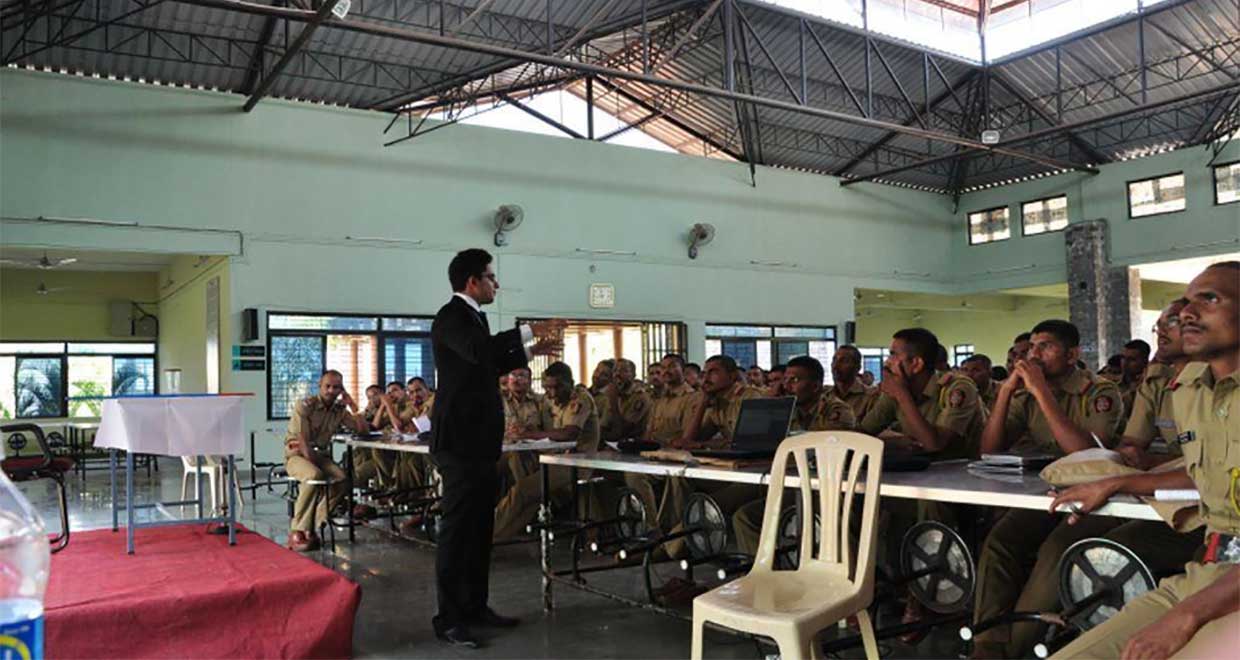
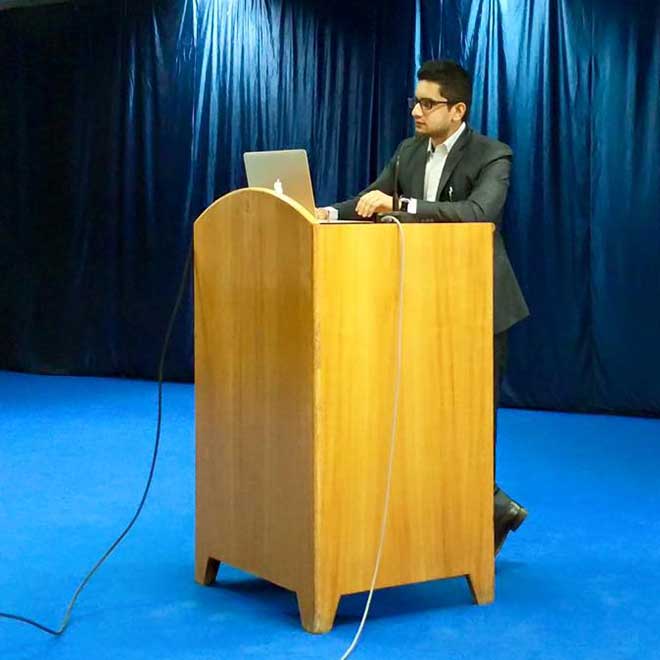
  • Dhruv Sahai, Managing Director, Sentio Advisory Initiative, on Labour Laws, working at AZB, and his experience

    Dhruv Sahai, Managing Director, Sentio Advisory Initiative, on Labour Laws, working at AZB, and his experience

    Dhruv graduated in law from ILS Law College, Pune, in 2009. After starting his career with AZB & Partners in M&A, and spending two years in that role, he decided to join his father’s business of conducting labor law audits across supply chains for multinational brands. Six months later, he set up his current company which specializes in Labor Law Consultation and Development & Implementation of Appropriate Remediation Systems.

    In this interview we speak to him about:

    • His time at AZB & Partners
    • His passion for Labour Laws
    • His experience thus far

    How would you like to introduce yourself to our readers?

    Foodie, comic, lawyer: those are the three words that describe me best.


    Why did you choose to pursue a future in law?

    Throughout my childhood, school, and most part of my life, I have always been in the habit of questioning everything around me, trying to identify logic behind every system, policy, action, etc. It was this trait within my nature that pushed me towards pursuing law.


    What are your areas of expertise, and how did you come about them?

    My area of expertise is Labor Laws & General Corporate. I garnered all my experience in General Corporate during my time with AZB & Partners, and advising my friends/ family in their business ventures and disputes. Labor Law is something I learnt through a hands-on approach. I worked within supply chains advising my clients on the legal requirements and evolved this further by assisting their suppliers in developing and implementing sustainable remediation systems to meet these requirements.


    What is, according to you, the right time to focus on specialization?

    The right time for specialization is when you have explored all the options available to you. This can be achieved by pursuing a variety of internships from the time you start law school. Intern with law firms, litigation specialists, social organizations, MNCs and Government/quasi-government bodies to gain knowledge about what the different fields of law entail; once you have the necessary amount of information, make your choice!


    Please tell us a bit about your experience as a student at the ILS University, Pune. 

    Moving to Pune was a complete change from Delhi and with no hostel culture we were to manage on our own in our own apartments. ILS had the best class timings which were 7 AM till 11 AM, allowing us most of the day to ourselves. I loved participating in moot courts and also pursued related courses from other institutions. The ILS campus is one of the greenest campuses from what I have seen; there was also a hill behind our classrooms, to where we would do an occasional trek, followed by a picnic.


    What were your key areas of interest in academics? 

    M&A and Labor Laws were my key areas of interest. Apart from this, I have always had an interest in the culinary arts and loved hosting cookouts for my friends while I was in college.


    Did you have any specific pattern of approach regarding selection of the internships?

    My approach was simple; start interning from year one and fit in at-least two internships each year. Each internship should be different from the previous one, allowing me to explore the different career options that I would have post completing law school. I started my internship with a mid- level law firm, followed by an MNC, a social organization, a top-tier law firm, a senior advocate, a start-up, a consultancy firm , a quasi-government organization, and finally, the last one at AZB & Partners.


    What would be your advice to the law interns? 

    The advice would be to interact as much as possible with their seniors and volunteer to do as much work as they can. Top- tier law firms give you the opportunity to garner experience in numerous fields of law, but you have to take the initiative to regularly ask for work. While some look at proof- reading exercises as merely clerical work, one could actually use this opportunity to master the art of drafting agreements. Top-tier law firms like to see initiative, perspective & persistence.


    How was the work environment at AZB Partners, one of the top legal firms of the country?

    Amazing! My seniors always pushed me to do more and to get better each day. I consider myself blessed to have worked with the people I did. The partner I reported to continues to be my mentor till date and will remain to do so. While competition between associates was encouraged, it was ensured that this was healthy and beneficial. Everyone was willing to help and there was never a dull moment.


    What are the causes you strongly feel and champion for?

    Workers’ welfare within the various tiers of the supply chains and taking responsibility to prevent environmental degradation. This is what I strongly feel about and this is why I do what I do.


    How far do you think growth in the development sector has reached till now?

    (Dhruv works with various state and central government Ministries regarding social and rural development across the country- including implementing and developing CSR initiatives.)

    Under the current Government, things are moving in a positive direction. More initiatives have been introduced, and with Skill India & Make in India initiatives a huge number of people are being provided with employment opportunities, not just in India but across the Globe.


    Tell us about your role in human rights and development causes as the Managing Director at Sentio Advisory Initiative Pvt. Ltd.

    I consider my biggest achievement is to have moved numerous multinational brands away from the practice of conducting labor law based audits where they would pass or fail their suppliers, to a consultative approach where they follow a transparent & collaborative approach to ensure adherence to both local & international law requirements. Another achievement which I’d like to mention is being asked to compile a Guidance Handbook on Social Compliances for the Indian Handicrafts Industry by the Export Council for Handicrafts in India. This book summarized all important labor regulations of India as well as the International Labor Organization and provided blueprints of multiple systems that could be implemented to ensure adherence to the same.

    Looking in hindsight, what would be your proud moments of glory?

    Starting my career with AZB & Partners and being awarded a Token of Appreciation from the Government of India for my contribution in the Handicrafts Manufacturing Sector.


    How do you manage to balance your time between the corporate world and the social world?

    When you enjoy doing what you do, the balance comes automatically.


    Where do you see yourself in the near future?

    Hopefully, as a successful social entrepreneur and as a venture capitalist promoting social entrepreneurship.


    What are the developments in environment laws in the last couple of years?

    While the modifications to the laws have been limited, the monitoring has become a lot stricter.  With many Indian companies participating in the Higgs Index program and other International Environment Initiatives, things are beginning to move in the right direction.


    Any message you want to share to our readers?

    Life is a lesson, keep learning each day. Most importantly, do not let your passion be substituted for money. My ex- boss and mentor once said to me-“Dhruv, do not run after money, and one day, money will run after you”.  While I didn’t believe him then, I do now!                                                                                                                                                                                                                                                                                                                                                                                                                                                                                                                                                                                                                                                     

  • Pritha Jha, Associate Partner, DSK Legal, on her internships, M&A, and her diverse experience

    Pritha Jha, Associate Partner, DSK Legal, on her internships, M&A, and her diverse experience

    Pritha Jha graduated in law from ILS Law College, in 2007. After a successful stint with Desai & Diwanji, she is currently Associate Partner at DSK Legal, where her role entails managing private equity and M&A transactions.

    In this interview we speak to her about:

    • Her time in ILS Law College
    • Her experience in M&A
    • Her current role as Associate Partner at DSK

    What motivated you to pursue law?

    For me, pursuing a career in any field other than law was never really an option, simply because my mind never contemplated being anything else. As far back as I can remember, I have always wanted to be a lawyer. I always enjoyed logical arguments. Being argumentative came naturally to me. While making a career choice, if you have the option, always choose to make a career in what you love doing. You will never fail because you will never be bored and you will never treat what you do as “simply a job”. When you love what you do, its personal.

    Could you briefly explain your law school experience at ILS? 

    When I started studying law in 2002, law wasn’t considered a serious career option, it was actually considered a “last resort”. There were not many who chose law as their “first option”. There was no CLAT and there weren’t as many NLUs around. At the time, ILS was one of the top three universities. There was no disadvantage.

    ILS Law made opportunities available to those who wanted it. There were classes, there were moots, there were extracurricular activities, but ILS focuses more on the theory of law rather than on the practical aspect of being “market ready”, especially for a corporate lawyer.  


    What kind of internships did you undertake during your student years?

    I didn’t start interning until my fourth year in law. This is primarily because of the way subjects in law school were spaced out. I didn’t see the point in interning when I hadn’t spent any time studying any law. When I did start interning, it was with various law firms to figure out what interested me most. Some of my internships were with a general corporate team, some with litigation teams and when getting an internship at a law firm was hard, I also interned at an LPO. Securing internships can be difficult, but the focus should really be on practice areas rather than just trying to get a big name on your CV. A lot of students think internships are just about that, getting the name of a firm on your CV without realising that if you make the correct impact as an intern at any firm, you may secure a pre-placement offer. To the contrary, if it appears that you’re just out to have fun, you could also be ensuring you never get picked up, even though your CV looks bright and shiny. Attitude towards work always tells a bigger story than the CV.


    What are your areas of specialisation in law? 

    My specialisation is in mergers, acquisitions and private equity. While I’ve worked in a variety of sectors, of late my focus has been on acquisitions through earn out structures. 

    I decided what I wanted to do through my internships and through the first years of being an associate. Speaking with people who have spent some time in the profession helps in analysing the pros and cons of the various options available, whether it be litigation, general corporate, private equity, mergers and acquisitions, taking a position in house, there are lots of options. Every individual needs to understand that they will never have everything they want. You need to decide before hand what your priorities are and what will fit your working style best. Ultimately, people will stick with what makes them happy. That’s how it worked out for me.


    What level of importance needs to be attached to GPAs, in light of the other academic and non-academic activities that may be undertaken in law school? 

    I will not deny that grades are important in giving an individual their first break. But topping your class is not going to help if you do not possess other attributes. Individuals are judged on various levels, their academics, their ability to speak and write English, the way they present themselves, their interests outside of law, everything counts. Rather than focusing on one aspect, one needs to focus on trying to achieve a balance in all. Everything adds to an individual’s personality.


    Is an L.L.M absolutely necessary for a career in law? 

    In my view, an LLM is a good option if your choice of career in law is teaching. From my perspective, an LLM does not really add to what you know after having obtained an LLB. However, an LLM can teach a great deal of things if you choose to pursue it after having gained a few years of practical experience. You relate to the LLM program more and you pick up a few other skills that law school may not have taught you or may not have prepared you for. For example, writing a research paper teaches the mind to think things through methodically, presentations help individuals develop the confidence to speak before large groups of individuals, some courses will also teach business development skills. It depends on each individual and their needs. Lots of LLM programs are offered around the world. If you must, choose from one that helps you achieve your goal. A lot of people join the LLM program for the wrong reasons, sometimes not knowing what they expect to achieve from it. If you don’t know why you’re doing it, don’t do it. Having said all this, is an LLM necessary? Absolutely not.


    When and why did you decide to make the transition from Desai & Diwanji to DSK Legal?

    I made my move to DSK Legal after having spent about two and a half years at Desai & Diwanji. Having spent that time there, I felt like I needed a change because my abilities were not being exploited to their full potential. Being an ambitious individual, I needed to do more and needed to do it more quickly. Added to that, the immediate partner that I worked with back then moved to the United States, and at the time, I was quite emotional about his departure.


    Tell us about your current work profile with DSK Legal. What does a regular work day look like, for you?

    I am an Associate Partner and I specialise in mergers and acquisitions and private equity. Over the last few years I have specialised particularly in mergers and acquisitions in earn out deals in the advertising space. Having recently been appointed associate partner, it’s a shift in focus from delivering work to focusing on delivering and getting new work. It’s a challenging job profile for me.

    I really wish there was something like a regular work day at DSK Legal. There simply isn’t one. Some days are astoundingly fast, some days are excruciatingly slow and then there are days that are just never ending. However, I assure you, it’s never boring.


    What is your message to our readers?

    My message to any young individual aiming to be good lawyers is that their first priority should be on picking up the skills that are required to be a good lawyer. The first few years of being a professional lawyer is all about making sacrifices and learning how to be a great lawyer. It takes a great deal of commitment, and although sacrificing at every turn may not feel the best at the time, it reaps huge rewards in the long run. Work very hard and nothing will stand in your way. Money never comes before hard work, money is a consequence of it. You have to earn it. If you’re good at what you do, you will never need to chase money.


  • Satej Joshi, Legal Manager, Zensar Tech, on his diverse work experience

    Satej Joshi, Legal Manager, Zensar Tech, on his diverse work experience

    Satej graduated from ILS Law College in 2008. Since then, he has been working in the field of corporate law. His first job was with GSPL, Gandhinagar, where he worked for close to two years. His work there was primarily related to exploration laws and laws related to sale and distribution of natural gas. He was also engaged in contracts with respect to natural gas. Post that, he returned to Pune and started working with Zensar Technologies as an Executive. He was involved in negotiating and finalising contracts like MSA, SoW, MoU, NDA, etc. He was also involved in IP and litigation matters. Thereafter, he joined KPIT Technologies in 2013. He then came back to Zensar as Manager in 2016.
    In this interview we speak to him about:
    • His experience at KPIT Technologies
    • His experience at GSPL
    • His role at Zensar

    What would you like to say to our readers in the manner of an introduction of yourself?

    I work as a Manager in legal dept of Zensar Tech in Pune. I primarily look into contracting and IPR.

    What motivated you to pursue law?

    I am first generation lawyer. It was actually my mother who convinced me to get into this profession. I did consult some professionals too before taking up law as a profession.


    Tell us a bit about your college days at ILS Law College. 

    ILS gave me a very fulfilling and enriching five years. I can’t claim that I was particular good in academics. It was around third year of my course I realised that I would pursue Corp Law as area of specialisation. My seniors and faculties helped me a lot in coming to this conclusion. They were always very helpful.   


    Could you tell us about the internships you took up, and what you learnt from those experiences?

    I did my internships in Little and Co. and then at HDFC Bank. Both my bosses were very kind and they taught me various things about the profession. I believe the internships are very important for students. However it is also equally important to prepare yourself for the internship and work really hard.


    What advice would you give students in avoiding a decision paralysis?

    It should be decided on the basis of your strengths and your interest. Discussion with your seniors, faculties and mentors can help a long way. I do believe there is a gap between the academics and the profession. Colleges should do more so that the professionals meet and guide the students. It will help them greatly. I am willing to participate in such programmes. If students benefit from it I will be delighted.


    What areas of law interested you during your legal education?

    Corp law and IPR.


    Tell us about your early professional experiences at GSPL, Gandhinagar. 

    GSPL was a campus placement. It was an exciting place to work. Working in energy company is always challenging and full of learning. I wanted to start my carrier with a stable company. GSPL enjoys a good reputation in market.


    What was the transition like from a law student to lawyer?

    It was a difficult one, I must confess. Suddenly, everybody expects you to be all serious. But as you grow and get accustomed to it you start enjoying it.


    What prompted you to take up a position with Zensar Technologies Limited? 

    I wanted to get hang of IT field. Zensar being in Pune was also one factor. It was a great learning experience. I did get opportunity to work on a few large deals. Also working on IPR matters was great.


    What were the challenges and learning opportunities that you were faced with at Zensar?

    Challenges were aplenty. Also coming to IT from energy sector wasn’t that easy. But apart from that there were many learning opportunities in contracting and IPR.


    How did working with KPIT Technologies help you diversify your work profile?

    Working with KPIT was great. KPIT being heavily present in automobile and smart transportation it was very different working with them.


    On what parameters do you choose the projects you work on?

    I generally don’t get to choose my work. That’s the reality of corporate life. But the plus side is you get to work on everything and it helps building your profile.


    As the Manager –Legal at Zensar Technologies Limited, what does a typical working day look like for you?

    Typical day consists of drafting and negotiating contracts with a few meetings thrown in between.


    What are your interests outside law?

    I like listening to music and travelling. On a typical weekend I for long walks and play TT. Also I am bit of a movie buff.


    Giving the dynamic nature of the field you practice in, how do you keep yourself updated about the latest happenings in the law?

    News, online portals, magazines.


    What advice would you like to give our readers, who are mostly law students and young lawyers?

    I am not sure if I am someone who is entitled to give advice. It surely helps to understand your interest early on in your career. Also, do work on strengths and keep talking to your seniors. But don’t forget to have your share of fun and unwind.


  • Rohini Singh Sisodia, Senior Legal Advisor, Ministry of Finance, on working for the GoI, studying in London, and her diverse experience

    Rohini Singh Sisodia, Senior Legal Advisor, Ministry of Finance, on working for the GoI, studying in London, and her diverse experience

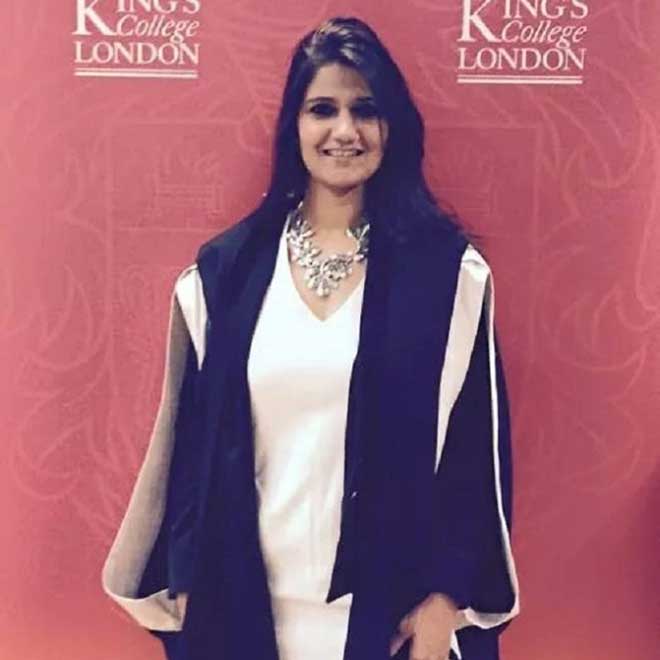
    Rohini Singh Sisodia graduated from ILS Law College, Pune, batch of 2008. After a succesful stint at Amarchand Mangaldas & Suresh A. Shroff & Co., (as an Associate from 2008 and as a Senior Associate from March 2012 onwards) in the dispute resolution department, she went on to pursue her Masters at King’s College London where she completed LLM in International Business Laws with merit. Rohini is currently working as a Senior Legal Advisor with the International Investment Agreement Division, Department of Economic Affairs, Ministry of Finance, Government of India, New Delhi where she is involved in treaty negotiations between India and many other countries, investment treaty disputes, along with the related policy work on national, international and other imminent legal issues involving trade, investment and public international law issues. Rohini has also had the unique opportunity to represent India in investment and trade negotiations and had numerous interactions with well-experienced teams of diplomats and government officials.

    In this interview we speak to her about:

    • Pursuing an LLM in London
    • Her experience in Dispute Resolution
    • Being Senior Legal Advisor at the Ministry of Finance

    How would you like to introduce yourself to our readers?

    I am a dispute resolution lawyer, pursuing a niche area of law (particularly for India) i.e. international investment law and arbitration, which involves international investment agreements (bilateral and multilateral), the combination of public international law and public policy issues, and investment treaty arbitrations. I am also stronger believer in the fact that there is no age for learning, identifying and pursuing what you love doing.
     

    Why did you choose to pursue a degree in law, amidst the many options that you had after school?

    I never intended to practice law. In fact, I am the only lawyer in my family. Studying law was only a medium to get into Civil Services as generally law subjects are likely to enhance chances of getting through. However, those five years at law school changed my mind. Law turned out to be so exciting and with all the madness in law school in terms of debates, moots, competitions, research, internships, I felt like giving it a shot and after that, I never felt like turning back. It’s extremely important to love your profession and what you wake up to every day. Today, I don’t regret my decision and I am very content with my profession. A career in law is demanding, but working towards resolving a challenging issue is exciting and, gives me immense pleasure. Law teaches one to think independently and optimistically changes the outlook towards dealing with all issues in life.


    Could you briefly explain your law school experience at ILS? 

    After passing out from an all girls’ boarding school, moving to ILS was like breaking free. Jokes apart, ILS just lets you be. In the beginning I felt directionless as there were just early morning classes and the whole day we were left with nothing to do. And hearing from other friends at law school where the curriculum was much stricter with many other activities, I wondered whether I made the wrong choice. Within a few months I realised I had the free time to do what I want, which other law students may not have so why not utilise it efficaciously. Rather than being told what to do or being forced to do something, we were given the flexibility to decide what we would like to do in our free time. This not only gave us the freedom to decide but also helped us excel in what we did, as we did it out of choice. With time I have also come to realise that it’s not so much about going to the so called top ten ranked colleges, but about moulding yourself to excel even in all circumstances with given opportunities, because then, you are ready to outshine in all facets of life.


    What were the activities, academic or otherwise, that you undertook in your law school days which in your opinion have shaped you and your career?

    In college, I was an active mooter/debater, organized, participated and secured positions in various national moots and debate competitions. I was also an avid writer and wrote articles for the college magazine, assisted professors in research activities and drafting of regulations and involved in volunteering activities. To make most out of available time, I also completed a diploma course in ‘Alternate Dispute Resolution’ and ‘Mergers and Acquisitions’ from Asian School of Cyber Laws, Pune. I did spend my holidays, like most law students, in taking up internships. Above all, I would say internships in the last two years of law school really helped me get a direction as to what I want to do and where I want to begin my career from.


    What kind of internships did you undertake during your student years? 

    With no legal background and no one to advise at home, I made sure to undertake internships in different spheres of legal fields, starting with a NGO involving understanding of human rights law to other specialised fields/departments in law firms including general corporate, mergers and acquisitions, competition law, policy & regulatory, dispute resolution including arbitrations etc. I can’t stress enough the significance of doing internships in wide array of laws, if one is not fully sure about a particular specialisation or area of interest from the beginning. Internships give you an opportunity to experiment, analyse and decide which area you are particularly interested in. Lawyers with specific expertise are preferred by clients.

    Thus, the strategy is to apply to a wide range of counsels, niche and large law firms, NGOs, in-house opportunities, international schemes and programmes, Indian and internationals courts, and to see where you can get through and try for the other on the next occasion.

     

    At what stage in one’s law school life/career must one pick a specialisation? 

    As I mentioned above, one should leave no stone unturned before you discover the area of specialisation and interest particular to you. Although the traditional opinion is to stick to an area of law right from the beginning, and continue with that. But that thinking has to change, else how would you know, which other fields of law could be interesting for you? So, if one has to ultimately reach that field of specialisation one day, then, why not be satisfied that it is the right one.


    What are your areas of practice and how did you go about choosing these fields to specialise in?

    I took no different approach as I mentioned earlier. After doing various internships, I was most attracted to the dispute resolution field. Unfortunately, to my dislike, when I got a PPO at Amarchand & Mangaldas (now SAM) and was finally placed, I was allocated to the General Corporate team. I continued with the team for six months. Working with the General Corporate team reinforced my decision to move to dispute resolution.  Accordingly, I approached Amarchand’s management for a change of departments. They heard me out and were understanding, and kindly offered me to move to the Dispute Resolution practice. Ever since, my appreciation for the field grew stronger. At Amarchand, I was involved in providing services to a wide range of international and domestic clients, by handling various matters pertaining to strategic advisory on cross-border legal issues, advisory in potential dispute situations, commercial disputes, and corporate fraud investigations. Particularly, I was involved in complex infrastructure and commercial arbitrations (for instance dealing with operation and maintenance contracts, oil exploration and procurement related arrangements and pipeline construction agreements), which provided me with crucial insights into the strategy and management of large and high profile arbitrations.

    I left Amarchand to pursue an LLM at King’s College London, where I completed a Master’s in International Business Laws, particularly focusing on subjects relating to international commercial and investment arbitration. At King’s, I developed a particular interest in the area of international investment agreements, including Bilateral Investment Treaties (BITs) and investment treaty disputes, and I decided to delve further into this area of law. While I was at King’s, BITs were a hot topic of discussion in India as the government was involved in the process of reforming the IIA regime. When I returned from my LLM, the International Investment Agreement Section of the Department of Economic Affairs, Ministry of Finance published an opening for lawyers to assist and advise on investment agreement negotiations, disputes and related policy work. I couldn’t have missed this opportunity, and am very glad to be part of the Government during the internal reformation process and further developments.

    It did take me sometime to figure out my core area of interest and specialisation. Today, I would call myself a dispute resolution lawyer and my area of interest lies in cross-border arbitrations, investment treaty negotiations and advisory. A combination of Investment & Trade law along with public international law is an upcoming area of law, and I would strongly advise students to consider this.


    What made you decide to go for LLM? 

    Given that I was handling transnational disputes, which often involve transnational law elements and implications, it encouraged me to pursue a specialized Master’s program at King’s College London. Accordingly, at King’s, I chose to focus on international commercial and investment arbitration and international business litigation, which not only complemented my practical experience so far, but also improved my legal skills in handling international commercial disputes.

    I think, pursuing an LLM is about the overall exposure and cross-cultural experience that it offers in bringing together a conglomerate of students from all over the world. Apart from the experience of studying in London, notably the hub of integration and reconciliation of major international issues, at King’s, I also had the privilege of being taught by various internationally known academicians and barristers.

    LLM helped me significantly in getting where I am today, but it’s not a given that it would benefit others in the same way. However, no one would deny the overall benefits an LLM offers which are noticeable either in the change in personality, perspective and thinking, or in professional dealings.


    Which is the ideal time to do an L.L.M? 

    I would definitely recommend an LLM after few years of experience. An LLM is a specialised degree and I see no point pursuing one without fully understanding what you want to do. Some practical exposure is necessary to get better perspective on a specialised practice area. I noticed that students with no practical background found it difficult to cope with the LLM schedule and in deciding on the teaching modules. To be able to appreciate LLM courses, which mostly involve studying of issues in the forefront of global academic debate, to the fullest; it is important to have touched upon transnational transactions and disputes before in your professional experience.

    Are there any commendable Indian institutions which you would recommend to a student pursuing an L.L.M, or would you suggest looking only at options abroad?

    Frankly, I never devoted sufficient research on opportunities in the Indian institutions, so I wouldn’t be able to comment upon them. The decision also depends on the faculty of an institution and personal financial situation. As I mentioned above, an LLM is about the overall exposure that you get for a year, if finances/funds or scholarships are available, then my suggestion would be to go abroad and get that exposure. It is definitely worth it and a fruitful break from work.


    How were the first few years after your graduation? 

    (Rohini has previously worked at Amarchand&Mangaldas, one of the most sought after firms by law students, as a senior partner Associate.)

    It was long back when I got a PPO from Amarchand& Mangaldas. I think the best way to get in most law firms is give your best during internships. Most students don’t take internships seriously which is a big mistake. Getting through a Tier-I firm is no longer only about being a topper, firms are looking more and more for the all-rounder qualities a student may have, which include personality, outspoken character, participation in extra-curricular activities (including moots, debates, research projectsetc.), general knowledge, self-confidence, dedication and personal motivation.


    Tell us about being a Senior Legal Advisor at the Ministry of Finance.

    I am currently working as a Senior Legal Advisor with the International Investment Agreement Section, Ministry of Finance, Government of India where I am handling matters relating to International Investment Agreements, particularly involved in bilateral and multilateral investment treaty negotiations between India and many other countries, investment treaty disputes along with the related policy work on imminent national and international legal issues involving trade, investment and public international law. I have had the unique opportunity to represent India in investment and trade negotiations and had numerous interactions with well-experienced teams of diplomats and government officials.


    If given an opportunity, what would you do differently in your career journey up to this point? 

    I think, being a dispute resolution lawyer, I should have started my career from the lowest level i.e. district courts as I feel that’s the best place to get basic practical training. I should have ideally spent a year with a private practice lawyer. I would have spent less time understanding basics at Amarchand, if I had first-hand experience with courts on a daily basis in terms of research, drafting, arguing and handling clients all in my first year. It’s important for every lawyer to experience that fast paced life in courts at least once, even for corporate lawyers.  

    One advice that I have for all law students is just don’t drag on with a field that you are not interested in. I see students, in the mad rush of getting a job and under peer pressure, just take up anything that comes their way, even if it is something they would never like to practice. This is the biggest mistake as that would mislay your interest in law and smother the fire which one has after passing law school. At the most you will not get the best job in the best law firm in the first year of your career. But few years down the lane, you would all be on the same plane, and when you look back, you would at least not regret your decision.


    Is there any other suggestion you would like to give to our budding lawyers?

    Apart from above, my advice to the budding lawyers would be to put in your best efforts in the first few years as they are the most crucial years of your professional life. Moreover, just don’t worry about not earning enough or not the same as your peers in the first few years. Simply concentrate on your work. To be a successful lawyer, it is also crucial to develop upon your networking skills. Keeping this aside, it is extremely important to keep a work-life balance. Now, this doesn’t sound appropriate from a lawyer’s mouth, but I feel nothing is more important than good health, peaceful and happy personal life. Try and maintain that balance.

  • Naga Lakshmi Bhagavatula, Associate Contracts Manager, Amazon, on being a dancer, blogger, and studying in the US

    Naga Lakshmi Bhagavatula, Associate Contracts Manager, Amazon, on being a dancer, blogger, and studying in the US

    Naga Lakshmi Bhavagatula graduated from ILS Law College, Pune, in 2011. After a successful stint at Infosys as Associate Legal Counsel and subsequently as Senior Associate Legal Counsel, she went on to pursue her masters from the University of Pennsylvania Law School, with a focus in business laws. She was also member of the Wharton India Economic Forum, 2015 Organising Committee during her time there. She is currently Associate Contracts Manager at Amazon, where she is member of the Amazon Media Group Legal team, focusing on supporting Sales and Display Ad Services. She works on reviewing and processing all insertion orders (IOs) for the US Sales org, drafts and negotiates Upfront Agreements and MSAs.

    In this interview we speak to her about:

    • Her internship experience and her current role in the e-commerce giant’s legal team
    • Her passion for dance, and how it inspires her
    • Her engagement with blogging, and how she juggles it with the pressures of work


    How would you like to introduce yourself to our readers?

    Lawyer by profession, dancer by passion, blogger by will and a radio jockey by chance. I currently live in Seattle and work in the legal team of Amazon during the day and run a dance school in the evenings.


    Tell us a little about your time in ILS Law College, Pune.

    The five years at ILS are some of the best days of my life. As most of my ILS friends would say, it is a place of opportunities and self-learning. It sometimes got me lazy and sometimes put me on my toes. I learnt how to make mistakes and learn from them, taste success and not fall for it and finally be competitive and not lose the spirit of competition. All in all, I owe lot of what I am today as a person and professional to my times at ILS (people and place).

    Regarding my activities at ILS, I was not much into moot courts. For the major part, I enjoyed being the researcher and work with the team. However, I tried my hand in other stuff like the Model United Nations, client counselling, negotiation and drafting competitions. I was on the editorial board of the college magazine for couple of years and was elected, the Ladies Representative to Pune University in my final year. It was a fulfilling five years.


    What prompted you to pursue this stream?

    Well, as a small town girl, when I was in Class 12, my awareness about career options was limited. All I knew was that I didn’t want to be a doctor or an engineer. I just wanted to do something different. I wanted to be a journalist. But my parents, who were already worried about me discarding medicine and engineering(the two professions in vogue in 2005) were flabbergasted when I said I wanted to pursue journalism and they convinced me that I could pursue journalism as a secondary profession but I should choose a streamlined primary profession. Later I decided I wanted to pursue law.  I am not sure if there was anything specific that prompted me to pursue law. Though my father is an advocate, I don’t remember talking to him about my interest in his profession. It just happened and I am glad it did.


    What role does dance play in your life now?

    I am a native of Kuchipudi village, the birth place of the Kuchipudi dance. I am very lucky to have parents who recognised my interest in dance at a very tender age and found me a wonderful Guru, who made me the dancer I am today. It’s been over 25 years of dancing and it is something that lifts my spirit. I feel absolutely privileged to have imbibed this art form and now be able to pass it on to kids of the next generation. I have a dance school in Seattle area (Purna Mudra School of Kuchipudi Dance) and I have about 40 students and I am thoroughly enjoying my role as a teacher.


    How do you prioritise your profession and passion?

    To put it differently, I am trying to balance my profession and passion. At all times, I feel both are my priorities as they complement each other. I surely owe this balance in my life to my mom. When I was a school going kid, my mom always made sure, that I gave equal importance to both dance and education.  This has in a way become an expectation as I moved on in my career path. Balancing dance and work along with other things has become a way of life. According to me, clarity of thought and zeal to pursue something, are two factors that can help anyone to be on top of their profession and passion without having to compromise on either.


    Tell us about your interest in blogging.

    (On her blog The Dancing Lawyer, she vociferously celebrates the interplay of passion and profession, especially in the segment “The Other U”.)

    Blogging in general started off as a hobby and I try to keep up with my blog now and then with various things that interest and inspire me. In the process of keeping up with my work and dance, I have always admired and been inspired by people who balance their passion, profession and personal commitments. So, the category “The Other U” is recognising and celebrating such people, and in a way showing people that this can be done.


    Can you tell us about your role at Amazon?

    When I was in law school, I was academically inclined towards contract law. When I joined Infosys after law school, I had an opportunity to work on rotation with the corporate team and commercial contracts team. Later I ended up in the commercial contracts team and I thoroughly enjoyed working on contracts and slowly that became my area of specialisation. At Amazon, as Associate Contracts Manager, I work on different contracts supporting Sales and Display Ad Services group of Amazon. It has been great so far working in a new industry and a new working environment.


    Talk to us a little about your internships.

    I had four summer internships during my graduation, one every summer for the first four years. Winter breaks were strictly for fun. I used internship opportunities to explore the different avenues I may want to get into when I am looking for a job. I worked with an NGO and political party (Lok Satta), in-house legal team (Dr. Reddy Laboratories), a big law firm (Dua Associates) and a boutique law firm (Krishna & Saurastri). I chose all my internships in Hyderabad and Bangalore as I knew I wanted to live in one of those cities and they were close to home. With these internship experiences, my choice was clear and easy at the end of fourth year. I was sure I wanted to work in-house and started applying for jobs in that direction.


    How was the experience of studying in University of Pennsylvania Law School?

    Honestly, LLM days at Penn just went by in the wink of an eye. The course work was fast paced and rigorous. I totally enjoyed preparing for my classes, the class participation, the cold calling (I dreaded that for a long time and then ended up loving it) and working with law students from various parts of the world just added to the amazing experience. In choosing courses, I experimented with the teaching and evaluation methods, like the lectures v/s. seminars, closed book v/s. open book exams, one final dissertation v/s. multiple presentations. This helped me add to my learnings and build a new perspective about law in general. I also had an opportunity to audit few courses outside law school at Penn and that helped me get introduced to new areas. Penn Law does not offer a particular specialization and so I chose courses related to commercial and corporate law, concentrating more on the practical learning tools like drafting, negotiation, etc.


    How does one strike a balance between academics and extracurricular interests?

    I believe it is purely a personal choice. I never had top grades in law school, but managed to maintain good academic scores. I think at law school, just after 12th, every student goes through the pressure and confusion in deciding priorities at the beginning, due to several factors (peer pressure being one of them). At the end, it is important to understand what brings satisfaction, and for me it was in being able to participate in co-curricular & extracurricular activities and at the same time manage a decent score.


    Any final piece of advice for our readers?

    As Pablo Picasso said “I am always doing things I can’t do. That is how I get to do them”. This has always been my way of life. Since it is best to preach what you practice, my only advice is to keep trying things that you think you cannot do and come out of the comfort zone(both at work or outside). Make time for everything and keep up the profession, passion and most importantly keep up with you.


  • Rajas Pingle, Partner, Netlawgic Legal Services, on his passion for technology and the state of cyber law in India

    Rajas Pingle, Partner, Netlawgic Legal Services, on his passion for technology and the state of cyber law in India

    Rajas Pingle graduated from ILS Law College in the year 2011. Since then he’s been visiting lecturer at (DSCI – NASSCOM) India Cyber Lab – Pune, and cyber lawyer at the District/Session Court (Pune)  Bombay High Court and Adjudicating Officer (IT ACT). He is currently Partner at Netlawgic Legal Services, offering services to combat cyber crimes, computer security related incidents, corporate espionage, financial frauds, data theft, hacking , computer security related issues, among others. 

    In this interview we speak to him about:

    • Combining technology with law
    • The state of cyber law in India and what he would like to change
    • Training the police force and being invited to the Rajya Sabha


    How would you introduce yourself to our readers?

    In a nutshell there is only one word which defines me, ‘TechnoLawgy’. I have been practicing Information Technology Law for more than six years and have handled almost every type of cybercrime case. I also conduct training sessions for various government organisations and corporates in India and abroad pertaining to Cyber Law and cyber crime. As they say, “Any sufficiently advanced technology is indistinguishable from magic”. Likewise my love for technology drives me to learn new things every day and to discover this magic.


    What motivated you to take up law as your choice of career? Have you always been inclined to a career in this field?

    I have been a technology nerd from the early ages of my life with no intentions whatsoever in pursuing law as a career. Since my parents were practicing lawyers I got into law school. The first two years went by but I lacked precision. It was only in the third year of law, you can say as Buddha obtained enlightenment, I obtained my illumination when I got introduced to this amazing world of Information Technology Laws (Cyber Laws). That was the turning point in my life and from that day forward, I was certain that I am going to pursue cyber law as my profession in an attempt to combine my technology knowledge with law. When career and passion comes together, work doesn’t seem like work anymore.


    Please tell us a bit about the internships you took up during your legal education.

    Candidly, I did not join any lawyer or apply for an internship in a reputed law firm as every ideal law student does. I earnestly desired to do something different so I applied for an internship in DSCI- (Data Security Council of India), Pune Cyber Lab. It is a joint initiative of NASSCOM and DSCI. The lab was mainly established to train police officers in the area of technology and information technology laws. I used to teach information technology laws to police officers. I learnt a lot from this experience, especially real time challenges faced by police officers while investigating cybercrimes. In addition to interning at DSCI-NASSCOM Pune Cyber Lab, I also used to visit court with my father to learn about the court procedure and it helped a lot. I would say that all this helped groom me as a better lawyer.


    How does one acquire expertise in an inter-disciplinary field like information technology law in understanding both the legal and technical aspects that go hand in hand?

    Interactions on real time cybercrime cases with police officers while teaching them information technology law proved beneficial for me as it supplemented my theoretical knowledge with practical experience. Furthermore, while pursuing law I completed following independent courses:

    • Diploma in Cyber Law
    • PG Diploma in Cyber Law
    • Certified Cyber Crime Investigator
    • Certified Ethical Hacker
    • PG Diploma in IPR

    These courses were both technical and legal in nature which helped me to expand my knowledge base. In the course of my journey, I realised technology is like oxygen- ubiquitous, necessary and invisible and thus it is equally important to be apprised of all latest trends in the field.


    Do you think that the present legal framework in India adequately addresses the growing forms of cyber crimes?

    For every lock, there is someone out there trying to pick it or break in. Information technology alone cannot provide us an absolute shield against its evil twin disinformation technology. Our only protection is law. Information Technology Act was introduced in the year 2000 and it was the first technology related legislation in India. Thereafter, in 2008 the Act was substantially amended to include various offences and definitions. The technology is progressing at a very fast pace and the modus operandi of the perpetrator is ever changing and evolving with the technology. Considering these factors, eight years is too long for amendment. If we consider the investigation perspective, many changes are required to increase the conviction rate. Moreover, as per my observation India is a country where people don’t give that much importance to their personal information. One can read in the news every day, how US and EU emphasize on their data protection laws being well established and stringent while in India we don’t even have a data protection regime in place or separate legislation on privacy. We are yet again completing the eight years cycle, let’s hope for a comprehensive amendment soon.

    Share with us your experiences practicing as a cyber-lawyer before the Bombay High Court and the Adjudicating Officer under the IT Act.

    Proceedings before the Adjudicating Officer are largely based on few provisions of the Information Technology Act and the principles of natural justice. As per the law, the Adjudicating Officer needs to pass a final order within six months from the date of filing. Unfortunately it is very rarely followed. In addition to delays, the Cyber Appellate Tribunal has been out of function for the last five years or so. Under the present system, one needs to approach the High Court directly for an appeal from the order passed by the Adjudicating Officer. With not much precedent in the sector, the practice is certainly demanding and engaging. As far as preparation is concerned, I have to look at the case from both angles i.e. technical and legal. Coming to the preparation of complaint, it is always better to simplify the drafting as far as possible to an understandable format instead of using all technical terms.


    You have been invited by the Rajya Sabha to review the IT Act. Could you please tell us about it?

    I was invited by the Rajya Sabha committee on petitions to give my views on the topic of ‘Cyber Pornography’. The agenda for discussion was “To put a check on Cyber Pornography among children by amending the IT Act, 2000”. The current Information Technology Act does not completely prohibit pornography and private consumption is not punishable. There was productive discussion between cyber law experts and legislative members and I was asked to submit a note on the same.


    What has your experience been like while representing international clients and successfully arguing international cyber law cases?

    I am very fortunate to receive international exposure at the early stages. I have successfully represented clients from Texas, New York, and Puerto Rico in various cyber law cases and also mediation. With hard work and luck on my side, I was successful in recovering respectable settlement figures for my clients against U.S. and Japan based companies in the matter of unauthorised copying of data. Additionally, I am closely working with international clients with offices in India and abroad. While handling international clients, I observed stark differences in their working style and culture. Furthermore, I got exposure to diverse laws which assist you to compare your country’s position in relation to such international issues. Overall it’s been a wonderful journey so far.


    Tell us about your role as Partner at Netlawgic Legal Services LLP. What does a typical work day look like for you?

    I started Netlawgic with the sole intention to provide Techno Legal solutions to the industry. Our focus and experience in both areas of Cyber Crime Investigation and Technology law, allows us to provide our clients with specialized attention and problem solving in all aspects of Technology law. That said, I start my day with reading e-news articles regarding cybercrimes across the globe, to keep the zest of learning alive and thus keep myself updated. Rest of the day is pretty simple with meetings, court and office.


    How has your experience in academia been?

    (Rajas has worked with several governmental and non-governmental organizations in training officers in cyber law. He also teaches cyber law at national and international educational institutions.)

    Education is the most powerful weapon which you can use to change the world. Teaching is one of the things I love and whenever I get time I allot it for teaching. While teaching I cultivate new learnings, ignite the imagination and instil creative expressions. It is a very satisfying experience, especially when I have healthy debates among students/officers on different aspects of cybercrime and cyber law. I also tend to learn a lot from these debates. It’s a completely different experience when I teach in international institutes as the exchange of knowledge is on the global platform and is a synthesis of varied legal practices and procedures. It would be difficult for me to choose between the two, I would love to keep doing both, practice information technology law and pass on that knowledge through teaching.

    How do you manage your time, juggling various roles?

    It is said that time and tide wait for none. Based on my experience, I can say that time management is the greatest virtue and the one who learns to manage it effectively will go many milestones in life. I am still learning to manage the same. Many a time, there are clashes among court dates, meetings and lectures on the table, especially when I travel abroad to deliver lectures. In this situation I have to prioritize and move forward accordingly.


    Do you have any role models/ guides or mentors in the industry?

    I learnt a lot about technology from my brother Mr. Harshad Pingle who is an engineer by profession. Other than my brother, Mr. Sandip Gadiya who is a well renowned Cyber Crime Investigator in India guided me along the way. His knowledge in cybercrime investigation helped me gain deeper insight of cybercrime investigation and for that I am eternally grateful to him. It is definitely helpful to have someone to take advice from when you are starting your career. What is important in the end is that you should keep on learning and always learn from your mistakes while moving forward.


    What would be your parting message to our readers?

    I want to quote Steve Jobs here “Sometimes when you innovate, you make mistakes. It is best to admit them quickly, and get on with improving your other innovations”. The same logic is applicable in law practice, you make mistakes, you learn from them and move on. Ultimately find something which you can relate to and love doing. Don’t be a part of the rat race.


  • Dhruv Paul, Senior Associate, Watson Farley & Williams, on studying in ILS, practising internationally and pursuing a niche field of law

    Dhruv Paul, Senior Associate, Watson Farley & Williams, on studying in ILS, practising internationally and pursuing a niche field of law

    Dhruv Paul is a graduate from ILS Law College, Pune, batch of 2008. He is currently Senior Associate in the Corporate and Aviation Groups of Watson Farley & Williams. Based out of the Dubai office, he advises clients on a wide range of largely cross-border transactions. Prior to Watson Farley & Williams he worked in the Dubai office of Clyde & Co. and before that in the New Delhi office of Trilegal. His area of expertise includes acting for global and regional conglomerates, financial institutions and high net-worth individuals on acquisitions, divestment and incorporated & unincorporated joint venture transactions, and corporate matters, across the MENA region and India. He also advises clients in the aviation sector, where he represents financiers, airlines, owners and operators on the finance, lease, sale and purchase, and operation & management of business jets and commercial aircraft.

    In this interview we speak to him about:

    • His time at ILS Law School, Pune
    • His experience working in Dubai and the difference in work culture
    • Specialising in niche areas of law


    How would you describe your time at ILS?

    I had five wonderful years in ILS Law College, Pune. It was my privilege to study amongst some of the most talented and ambitious people that I know. My batch mates as well as senior and junior colleagues were always working on moot courts, legal research and writing, sports and drama, volunteer work, and of course lots of internships!  I think we all pushed each other to strive for success, while not forgetting to have our fair share of fun, building life-long friendships and memories.


    Why did you decide to take up a BSL course as opposed to a B.A. or BBA LL.B. course prior to your LL.B. degree?

    As a youngster just out of school, I was not 100% certain about becoming a lawyer. The BSL LL.B. course of ILS Law College allows you to graduate in three years with a B.A. equivalent degree which qualifies you as a graduate to pursue anything else.  I thought this was a very useful feature to hedge my bets, just in case I didn’t like law school, etc. (of course in retrospect, I didn’t elect to opt out but it was good to know that I had an option without needing to spend two more years studying in futility).


    Did you have a mentor or guide during the formative years of your career?

    Yes, I had one or two seniors in college (who eventually graduated while I was still in college) who were of great help in terms of initial career planning. I have tried to build similar relationships with colleagues in each of the organizations that I have worked in. I still use some of them as a sounding board. I think a mentor/guide can add real value at certain junctures, by adding perspective and sharing experience. A mentor or guide can give you useful insight based on their own experience, and in a field where information dissemination is far from ideal, this is a useful tool. That said, I think it is equally important to have conviction in oneself and back yourself to make the right moves.


    Having worked in both India and Dubai, what is the difference you see in the work culture and environment?

    The key difference is that Dubai is an international financial centre and a significant cultural melting pot, whereas India is more uniform. The work culture and environment in Dubai is influenced by its richly diverse stakeholders whereas (in a strictly work culture and environment sense), India is pretty one-dimensional.

    In terms of my colleagues and counterparts in Dubai I regularly work with a diverse cross-section of lawyers qualified in England, Canada, Egypt, New Zealand, Singapore, Lebanon, New York, etc. Each of them approach matters in a slightly different way and offer different perspectives based on their experience and training. It is always an interesting and enriching exercise to work with such a diverse group, and to generally discuss the world-at-large with people with different perspectives.

    The client base also consists of a wide range of global, regional and local players, each represented by individuals belonging to different cultures and trained in different styles. There is always a challenge around the corner in how to deal with a specific situation. Even in terms of the actual work, transactions often involve two or more jurisdictions and could be inbound or outbound in across the region and beyond. Juxtapose this against a colleague pool of largely Indian qualified lawyers, practising Indian law in a largely inbound or domestic transaction environment, for largely Indian (or a few expat) client representatives.


    What prompted you to shift from working at a prominent Indian law firm to an international one?

    A key reason to shift was to experience the sort of diversity that I have described in my answer above. In addition, I was attracted to work in a large international firm with a wide network that would expose me to a best-in-class practice management, learning and development programme, precedent bank, etc. I also wanted to work in a team that acts as international transaction counsel, as opposed to correspondent local counsel. (I should add that my only experience in an Indian firm was at Trilegal, which fares quite well on most of these parameters in any case).

    My stint in international firms has improved my transaction management efficiency. It has helped me develop an intuitive and proactive (rather than reactive) approach to running transactions. I am encouraged to think commercially and practically in order to get the deal done and achieve the parties’ objectives, while of course remaining within legally acceptable parameters. Of course, working with governing laws that have well settled principles (e.g., English law) or with flexible and investor friendly jurisdictions (e.g., the Cayman Islands and the British Virgin Islands), helps this learning process.

    Tell us a bit about your experience at Trilegal for over five years.

    I joined straight out of law college, completely taken up by the novelty of a BlackBerry, a decent regular income, a plush office and the other bells and whistles. The ‘good life’ feeling was quite swiftly replaced by being hit with a wall of learning and development requirements. The next few years can be classified as a mix of a steep learning curve with long hours at the desk, punctuated by much needed (but all too short) breaks, holidays, retreats and bonus/increments. I received excellent training, and it was my privilege to work in Trilegal during its breakout phase in which it broke into India’s tier I market and metamorphosed from a promising start-up into prominent national player. I left with a sound set of lawyering skills and good relationships with seniors, peers and juniors. I couldn’t have asked for more.


    How did you come to develop expertise in niche areas of law, such as aviation and cross-border transaction?

    Having got through the initial slog of adjusting to working life, learning critical job skills and legal principles, and working on delivering projects and transactions; I assessed where I had reached and what I wanted to do next. I realised that there were a fair number of general corporate lawyers like me in the firm that I worked in and in each of the other firms that I could see myself working in. I then decided to try finding ways to differentiate myself. At the same time, I was inclined towards working in an international firm for the type of reasons that we have already seen above. At this stage, I came across a role that would provide me with some exposure to the aviation sector. My research suggested that this is a high growth sector in the Middle East and India. All of these factors, couple with my fascination for aircraft – the decision was made.


    If you could condense your career graph, how would you do it?

    In the initial stage, the challenges were around job/skill gap. I don’t think this was limited to me, most of my peers agree that our law training barely gives you the type of skills you need to succeed in transactional private practice roles. Even though I did a number of internships while in law school, most of my learning was ‘on-the-job’. Once I got comfortable in my (then) current position, I decided to shift gears by taking up a role in a different jurisdiction with an unfamiliar sector specialisation, in a different city and within a different category of firms. Looking forward, I guess I would like to continue developing my career, during a period which may see liberalization of the Indian legal sector, tech disruptions, macro-economic challenges, and the rest!


    What advice would you give the upcoming generation of lawyers?

    Pick up as many practical skills as you can while still in college/law school, but don’t forget to have fun! Learning a bit of coding might be the next differentiator.


  • Sambhav Ranka, Partner, IC Legal, on his experience, studying in London, and dealing in M&A

    Sambhav Ranka, Partner, IC Legal, on his experience, studying in London, and dealing in M&A

    Sambhav Ranka is a graduate from ILS Law College, Pune, batch of 2005. He subsequently went on to pursue his Master’s degree in Law from Queen Mary, University of London, with a focus on international corporate and commercial laws. Since then he has worked at Morgan Walker Solicitors, LLP and Nithish Desai Associates. He is currently Partner at IC Legal, Advocates & Solicitors and heads the M&A, Private Equity and Venture Capital practice at the firm.

    In this interview we speak to him about:

    • Being a third generation lawyer
    • His diverse work experience
    • Challenges in the field of Mergers and Acquisitions


    How would you like to introduce yourself to our readers?

    I come from a family that has been part of the legal industry for generations now. I too am in the legal profession, but by my own choice, not because it is an evident conclusion. I believe that I belong to a generation, which has broken free from the past practices of following the footsteps of the family profession/business and ours is the generation that has started the practice of having the right to decide the career path of interest and choice. I say this as I had all the liberty to choose a different career path. However, the glory and passion towards the legal field brought me where I am today.


    What motivated you to pursue law?

    My grandfather is a Senior Advocate, Rajasthan High Court. My father is a Judge, Jaipur Bench, Rajasthan High Court and my brother is a counsel. Growing among legal professionals all my life, legal articulation was in my genes and vision. Besides this, meeting and interacting with legal luminaries and legends all throughout my childhood and being in awe of their wisdom, solidity and art of exhibition, I was always inspired to imbibe the same.


    Share with us your experiences as a law student at ILS, Pune.

    ILS Law College laid the ideal foundation for me to join the noble profession of law. The best experiences at ILS Law College were the times invested in the extracurricular activities and looking beyond hard-core academics, which led to a holistic development. All my classmates were from different geographies (even beyond India) which further expanded our horizons. Needless to say, the faculty has always done above and beyond to help us out. Participation in various competitions, events and simultaneous internships at different fora aided in shaping the legal professional in me.


    How did you develop the skills necessary for academic writing?

    The best way to build up the skills for academic writing is by doing ample reading, and more importantly, reading the right content. As lawyers, our profession is anyway built around reading legislations, commentaries, articles, orders, etc. At times, it is helpful to read content that is not related to the legal profession. For example, I make sure that I find time to read the opinion pages from the NY Times, Wall Street Journal, Washington Post and the like. In addition to building vocabulary, such write-ups help in opening the horizon of thoughts and imagination. This helps a lot whenever I try to author any article or write-up myself, as the devil is in the detail.

    In my early days, I was advised about two principles that I believe and follow: 1) Never feel shy in raising any query, whether to a senior, in a meeting or even at a public gathering. No question is stupid. Effective solutions can be arrived at only by questioning everything. Also, not clarifying the fundamentals will make you more susceptible to making bigger mistakes in the future. 2) There is no end to learning, knowledge and education. Even legends in the legal profession (and even beyond) would agree to this. The extent of knowledge that is out there to learn and grasp is enormous, so, it is up to you to capture as much as possible. Among others, these principles have helped me in developing my drafting skills in the legal profession as well as to author articles, etc.


    Tell us about life after college.

    Immediately after college, I pursued my LLM from University of London, U.K. in International Corporate and Commercial Laws and soon thereafter, I was lucky to get into a city based law firm in London called Morgan Walker Solicitors, LLP. The firm had Indian partners and had adequate Indian clientele and work, which I was exposed to. I handled all forms of client work possible, including litigation, corporate, consultancy, etc., which helped me in identifying my interest areas to a great extent. I had a stint of close to a year and a half at the firm in London. This period was immensely important to identify where my interests lie and what areas of law I wish to delve into deeper.

    I started with the London firm as an intern and pursuant to that, the partners were confident to take me on board for a full time position. I have felt that work experience in any form brings in a lot of different perspective than what we typically see or think as a student. Having done my internships at different forums has been tremendously helpful to me to understand the sophisticated work atmosphere that revolves around in a law firm, a chamber or beyond.

    Tell us about your work experience at Nishith Desai Associates.

    NDA has been remarkable in building the foundation years of my legal career. The foremost importance that has been given at NDA is continuing education for the firm members. Everything else in developing an individual concentrated around this principle. Among other practice areas, my initial focus at NDA was in the alternative investment fund space and I gained experience in setting up onshore and offshore funds. Over time, I developed interest in transactional practice and got involved in M&A and private equity investments space. The first three to four years at NDA were focused mostly on two aspects- strengthening the legal and technical knowledge and developing control on different laws relevant to the practice areas, and developing and enhancing the drafting skills for drafting agreements, memorandums, legal opinions, etc.


    What prompted you to pursue an LLM  from the University of London?

    The twofold advantages of pursuing LLM are the in-depth and comparative knowledge that you attain in your area of interest, and the exposure that you gain by learning alongside with students from across the world. These were precisely the reasons for me to pursue higher education and with the recognition that the University of London has, among other top institutions globally, clubbed with the experience of living in the city of London made my decision easier. The common legal system prevalent in India and the United Kingdom made it easy for me to understand the legal processes and hierarchies of the UK legal system. Further, as many key Indian legislatures date back to the British era, the basic tenets of legislations in both the jurisdictions are very similar. Courtesy my LLM, today I have friends in the legal fraternity from all over the world and I have had the privilege of working with quite a few of them in the past years.

    What has your experience of working at ICL been like?

    IC Legal is a young, vibrant and a growing firm compared to many other established firms in India. Two years since I joined them, the firm has grown to almost three times in terms of head count. This speaks of the growth trajectory that we are witnessing here. The firm currently is close to 40 lawyers with seven partners and the team composition is mostly young people. Most of the senior team members have had experiences with leading firms and thus the collective experience ensures that we deliver top quality work to our clients and generate value for them. My other partners at IC Legal are likeminded and we make a great team and passionately enjoy the work that we are doing.


    What are the most challenging parts of being a partner at a law firm? How do you manage to maintain a work-life balance?

    Partnership is all about multi-tasking, and doing all such multiple tasks in the best way possible. As for responsibility, one needs to keep an eye on several aspects in addition to client facing and client deliverables. Business development, firm administration, personnel management, marketing pitches, knowledge management, etc. are some of the regular coups one has to go through.

    Balancing oneself between the professional and personal life is of utmost importance. It does get strenuous at times in the legal profession; however, balancing it with the personal and family time is absolutely critical to bring fresh perspectives to things. Importantly, we all strive to start the day early so that we get off also early and get time with family. It is also important to take off for rejuvenating holidays at regular intervals. Separately, we also do regular firm lunches/dinners, firm weekend outings and annual firm offsite so that there is no overrun of professional life over the personal life.


    What does a typical day of work at ICL look like? What are your roles and responsibilities as Partner at IC Legal?

    There is no fun in doing something unless you passionately enjoy doing it. This has been the mantra for us at IC Legal. We enjoy the work that we all are undertaking. This means also having a bit of fun and laugh during the working hours. Unlike most of the other law firms, we try to keep a light atmosphere at the work place. Cracking jokes, talking movies, discussing sports, etc. keeps us going all throughout the day. However, this does not call for any form of sacrifice to the client work and the respective roles and responsibilities of the firm members.

    Other than developing my own practice area and team, it is important for me to ensure that we are trying to do a holistic development of all the firm members. The objective is to make everyone a better professional and evolve them into swiftly undertaking work under different hats. We try to work from a perspective that everyone in the team should have a basic knowledge of all the practice areas and the related laws and regulations and at the same time one should be an expert in his/her own practice area and knows all the complexities surrounding it. People management, speaking at conferences, practice area development, firm management, administrative concerns, etc. are some of the key roles and responsibilities that I jointly oversee at IC Legal.


    How does one develop an aptitude for a portfolio as diverse as yours?

    We have believed that it is important to develop a sector or industry knowledge for legal experts. Nowadays, clients engage us for not only legal acumen, but also for the strategic inputs and industry familiarity that we are able to contribute. In addition to legal expertise if we generate value for the clients by advising them on additional considerations keeping in mind their specific industry, it goes a long way in cementing the relationship. To develop the knowledge pool for different industries, we regularly keep ourselves abreast with all the latest developments, trends, issues, considerations, etc. affecting different industries so that we can devise innovative solutions and implant such knowledge in our work.


    What are the challenges you face as a lawyer dealing with contentious areas like cross border investments and M&A?

    Cross-border transactions are mostly a complex interplay between laws and regulations of multiple jurisdictions. As an Indian qualified lawyer, we are supposed to be well acquainted with the Indian laws; however, at times, certain transactions require you to analyse and ascertain the best possible solution keeping in mind the laws of other jurisdictions. It then becomes necessary to work closely with attorneys of other jurisdictions on such transactions. The other challenge that at times is faced is with respect to the numerous legal and corporate compliances that the clients have to undertake to ensure that the transaction complies with all the laws and regulations. Given the cumbersome requirements under the Companies Act and the Rules thereunder in addition to the various requirements under FEMA and the regulations thereunder, it becomes challenging to ensure that nothing is missed out from a compliance standpoint. Thus, one needs to keep an eye on the smallest of considerations involved and at the same time keep a solution-oriented approach to achieve efficient outcomes.

    What would be your parting message to our readers?

    First and foremost, it is imperative to know the basics and to make the foundation strong. I have always believed that the initial four to five years in our profession should be dedicated towards building the legal and technical knowledge. Second, concentrate in developing the drafting skills. As a lawyer, drafting agreements, petitions, memorandums, legal opinions, etc. are vital. Capturing the essence accurately is the key. Third, in the initial years of practice, be open to experiencing multiple practice areas and undertake variety of work, until you identify where your interest lies. And, fourth, have patience in whatever you select as your career path. Dedication and hard work will pay off at the opportune time.


  • Priyadarshini Natarajan, Principal Associate, HSB Partners, on Corporate Law Practice, Law School days, and the Company Secretaries’ Course

    Priyadarshini Natarajan, Principal Associate, HSB Partners, on Corporate Law Practice, Law School days, and the Company Secretaries’ Course

    Priyadarshini Natarajan graduated from ILS College, Pune in the year 2007. She has also completed a Company Secretary Course from the Institute of Company Secretaries of India. She is currently Principal Associate at HSB Partners, Chennai and heads its General Corporate Commercial, Mergers & Acquisitions & General Corporate Litigation. She has over nine years of work experience in these domains.

    In this interview she talks to us about-

    • Her legal education at ILS College, Pune;
    • How to make the best use of internships ;
    • Her experience at HSB Partners
    • The importance a CS Course in a corporate lawyers life and
    • How to make career decisions while at law school.


    How would you introduce yourself to our readers?

    I am an enthusiastic person with a thirst for new experiences in life.


    You completed your legal education at ILS Law College, Pune. Tell us about your college experience and how it helped shape you professionally.

    ILS and Pune city were one of the many good things that happened in my life. Having studied and lived in a cocooned home environment in Chennai all through my school years, it was indeed refreshing and an amazing experience to be in the ‘student city’. ILS has an amazing campus, some really good lecturers in the faculty, a fine library, a reading room, huge classrooms, an enormous ground and a hill behind the college where one could go trekking! We had students from different parts of India and abroad and it is wonderful that we are still connected. I had lovely friends who would generously lend me their notes to study, and inspire and support me in all endeavors. The students always had so many ideas, and took many initiatives in both law related workshops as well as extra curricular activities. The college arranges for many guest lectures, diplomas, workshops, moot courts, international certificate programs and has a very good placement cell.


    Did you do extra curricular activities, and if so, how important were they?

    I love new experiences and during college it was the time to experiment with different things each year. I played with the college women’s cricket team, was part of Human Rights Cell in and did a few diploma courses on subjects such as Cyber Laws, Geopolitics and International Relations, and Corporate Laws. I spent three years trying my hand at guitar at the Institute of Modern Music.  I believe that extra-curricular activities  overall development, expand one’s circle, provide opportunities to meet various people and helps one have an open mind. I recollect that once I complained that I did not have enough time to practice playing the guitar every day, to which my guitar tutor, Mr. Shital Kulkarni, retorted “you mean to say you do not have 15 minutes in one whole day to practice?” I was dumbstruck and realised discipline and practice are not that hard and one just needs to make time for it. That voice still echoes in my head. What we learn in one sphere always helps us in other spheres of life.

    You are also a Company Secretary. How helpful is the fact that you are a Company Secretary, in the legal context?

    I pursued CS after I graduated and started practicing. I wanted to do something apart from work and therefore enrolled to do CS. I am always first a lawyer, then a qualified Company Secretary. Therefore, my priority was my law practice and I studied for CS exams only during free time, and I must say I passed CS mostly with the practical knowledge from work. CS does compliment corporate law practice, including due diligence assignments, provided that one is updated on the corporate compliances as much as one is updated on changes in the law.


    What should legal students aspiring to pursue CS course keep in mind whilst preparing for the same? Would you recommend pursuing a CS course during law school or after, and why?

    It really is a personal choice whether to pursue it during law school or after. Personally, I was able to appreciate the course better due to the practical knowledge from work assignments. If one is considering practicing corporate law, then one could consider pursuing it during law school as it gives an insight into the subjects and help in making a decision. However, one must keep in mind that a graduate is eligible for an exemption from taking the foundation exams and therefore could directly progress to the executive program of CS and thereafter the professional/final program. Whether one chooses to pursue it during or after law school, I would recommend going for private tuitions or the ICSI classes so that one can interact with other students and practicing Company Secretaries to get an insight regarding the options as well as to discuss the subject.


    Tell us about the internships you did whilst at law school. What is the most important quality of a good intern?

    We had two months off in a year, one in May and one in December, both being court vacation periods. During my first year of college, I had interned with Dr. Suresh, Mrs. Nagasaila, Mrs. Sudha Ramalingam who were also involved with PUCL, Chennai. I remember Dr. Suresh vehemently opposing the other side’s advocate (a public prosecutor) in vacation court and then came out of the court and shook hands with him. Dr. Suresh, whom I have great respect for, winked at me and said “no permanent enemies and no permanent friends”. All the three advocates as well as the other advocates I met there were not only intelligent, hardworking and inspiring but such amazing, distinct individuals. I was asked to be part of a client meeting, where a lady had come in for filing a case for rape. After the client meeting, the advocate told me the difference between facts and allegations and mentioned how the client (a rape victim) was contradicting her own statements. It does not mean that one ought to doubt the client but I learnt that while the client is giving the pieces of information, I must assimilate it quickly and have the script ready, be it drafting an agreement or filing a litigation. Another interesting person I met was Mr. Jose John, when I interned with King and Patridge, who is so hard working and humble. Other places I have interned are Menon and Gokulaney and Kini and Company. Mr. Ashok Menon and Mr. Harshad Gokulaney have also interacted with me and given some great advice. During internships, it is a stroke of luck to get the so called ‘interesting’ work in the one month period, especially during court vacations. However, there is something to learn from every work assigned to you. I had some exposure to research work, drafting of notices, watching vacation court proceedings, and reading of case bundles. If I speak of one value addition that stands out, it is the very interaction with such amazing lawyers who could give me an insight regarding work life after college, career path, choices to make, and taught me how to focus on the case without getting emotionally tangled in the client’s problems.

    I think the most important quality of an intern is to have an open mind! It is also important to spend quality time and a minimum of 4 weeks in one firm/ under a lawyer as opposed to trying to squeeze in a great number of internships. Honor those hours you get to spend in the office. Keep reading books/laws/magazines if you have not been assigned any work for the day/hour. Don’t hesitate to introduce yourself to the advocates and ask them for work!

    How important are internships for shaping a young legal mind and preparing him/her for the real world?

    I have had the opportunity to interact with many interns, some of them who have amazing confidence and clarity regarding their future career. In that sense I believe that many students are already quite conscious of the ‘real world’. As an intern, the assignment given tends to be etched in their memory for a long time to come. A small task such as numbering pages in a typed set, looking for acknowledgement cards, taking a dictation, doing research, or looking for a phone number of a governmental authority would come in handy when you graduate and start practicing. Try maintaining a log of each day’s assignments in all internships. It helps in self assessment, planning a future and most of all, makes an interesting read with a smile on the face when you finish 6 months or 1 year of practice post graduation!


    You work in HSB Partners, Chennai. Tell us about your experience working at this firm. What are the areas of law that you practice?

    I have been working with HSB Partners for nearly 9.5 years and it has been a wonderful experience with loads of opportunities. My primary areas of practice are corporate litigation, corporate transactions/ advisory and commercial agreements. The firm has a young vibrant crowd and amazing colleagues, both in the past and the present, who have been helpful and inspirational. The partners are not only approachable but are also very receptive to opinions of even the junior-most person, provided it is backed with law/reasoning. That helps in building confidence and the freedom to think independently and provide solutions. Each of the partners is very inspiring to work with and their enthusiasm and eagerness to learn makes one even more interested in the subject. For instance, I was one of those kids who did not like Labour Laws when I was in college. During my first month of work, I recollect that Mr. T.K. Bhaskar (the partner I work with) explaining an assignment to me that got me interested in this subject, which I thought I loathed. Anyone who walks into his room learns something new. In fact, when I was a fresher in the office, every single day I went back home having learnt something new. I used to feel so happy about being a better lawyer than the previous day. This remains true till date. I have learnt a lot from working closely with many esteemed senior counsels as well as a wide variety of clients. I have been fortunate to get the opportunities and mentorship that I have received, which has shaped me to the half way decent lawyer I am today.


    Did you always know that you wished to practice Corporate Law? If not, how did you make the decision to make Corporate Laws your career – what were the factors you took into consideration whilst picking a suitable area of law with a professional point of view.

    When I joined law school, my area of interest in law was Criminal Law and Human Rights. In fact till date, one thing that I want to do is to work for child development, child rights and work against child sexual abuse, though I get to do that only part time. I developed an interest and decided to pursue Corporate Laws after I completed a Diploma in Business and Corporate Laws. Though I never did an internship in this area,  I decided to start my practice in the area of Corporate Law considering my limited exposure during my other litigation internships vis-à-vis my skills, strenghts and suddenly developed an interest.


    What is the basis of recruitment at HSB? What do interested applicants need to keep in mind when applying to HSB?

    The usual- qualifications, past internship/work experiences, aptitude to work hard, sincerity, clarity in thinking, team spirit, achievements and extra-curricular activities. In addition, you must shed the attitude that you are a trainee and walk in as a lawyer.


    What is the most notable improvement from the erstwhile Companies Act, 1956 to the current Companies Act, 2013?

    Some of the notable changes are the introduction of the  concept of One Person Company, increasing the number of members of a private company, introducing the definition and duties of an independent director, making it mandatory to have a woman director in listed companies and certain public companies, introducing the concept of corporate social responsibility (CSR) and casting it as a duty of a director to follow provisions regarding CSR, the concept of Key Managerial Personnel, et al. One of the most important changes is the introduction of National Company Law Tribunal (NCLT) in the place of erstwhile Company Law Board and shifting of all the company matters from High Courts, including matters related to reduction of share capital, schemes/amalgamation, and winding up – to the jurisdiction of NCLT and introduction of the appellate tribunal – National Company Law Appellate Tribunal (NCLAT).


    What are the factors law students need to take into account while making substantial career decisions?

    Most important aspects that would aid in decision making are your interest, your passion, your strength, and your own dreams/goals. Pick something that you like doing. Some of you may not have the clarity as to which area of practice to choose and it may happen that some of you may not be able to find an opportunity to do work in the area that you desire. In both cases, keep your eyes open for opportunities and your ears open for any advice people have to give. If you fall in the former category, read a lot, try discussing with some advocates you have interned with, or batch mates, and try building a good network. Don’t hesitate to ask for help as you may never know from which quarter you may receive it.. If after all this you still do not know which area of law you want to practice in or if you want to be an in-house counsel, do not fret and just go with the flow. Having a good mentor and practicing a particular thing long enough with dedication and sincerity, would slowly make you an expert in a subject and in turn that will bring you success. If you fall in the second category, grab whichever opportunity you get and do your best. What is more important is to be focussed and do your best wherever you are. However, make sure to have your dream/passion/goals in the back of your mind. For example, if you want to specialise in Cyber Law and you end up in Civil/Corporate Laws, pursue your career in the opportunities you have. Optimise on the resources at hand and keep updating yourself with Cyber Laws. There will definitely be a window of opportunity and a break through. Believe in yourself, work hard, fight against all odds and follow your dream.


    What advice would you give current law students?

    Be passionate about what you do. It is a service industry and whichever area of law you choose, understand that you are dealing with and protecting someone’s rights. Anything you do or not do in a case/transaction could make a difference in that client’s life. So, strive to make a good difference. That apart, bear in mind that to understand if an area of law interests you, you must give it time. Patience, hardwork, consistency, sincerity and honesty may sound “cliché” but are the good old principles that will make you successful. Accept whatever work that comes your way and do your best. Be open minded and receptive to changes! All the best!

  • Avaantika Kakkar, Partner, Competition Law, Khaitan & Co., on challenges and landmarks of a career in corporate law

    Avaantika Kakkar, Partner, Competition Law, Khaitan & Co., on challenges and landmarks of a career in corporate law

    Avaantika Kakkar, a 2003 graduate of Indian Law Society’s Law College, Pune, is currently a Partner at Khaitan and CO., heading its Competition and Antitrust Law practice. Soon after graduating, she published her book, “A Perspective on Product Liability Law and Consumer Safety”, and she continues to take active interest in academia, especially if it is linked to Competition Law. In this interview, she tells us about:

    • The passion for indulging in research and how it helps build character;
    • Getting one’s work published;
    • The challenging path to success in a niche area like Competition law;
    • The nature of a corporate job; and
    • The importance of balancing personal and private life (with some great musical recommendations to help students find the crucial balance).


    How would you like to introduce yourself to our readers?

    Simply, I am Avaantika.


    What would you like to share with our readers about your time spent at ILS Pune, both within and beyond the classroom? How did the city itself play a part in your legal education?

    ILS Pune has a fantastic library – that was my favourite hang-out. It’s a college that allows you to be what you want to be and in my time, at least, we had a very supportive and encouraging faculty. We had visiting professors who were practicing lawyers with superb independent reputations, and they allowed us glimpses into what it would be like to practice law.

    One may miss the perpetual ‘internships’  that colleges in other cities offer, but at ILS, the good part is that you have all that time for a real, college life, and you use your vacations for internships and practical exposure.

    About Pune – what can I say? I love the city and keep going back! It accommodates my beautiful Alma Mater, in the heart of the city, with its own scenic hill-side (which students and teachers of the college along with the residents of Pune have to defend against the occasional threats of flyovers and by-pass roads!).

    I lived on what constituted both sides of the city back then – ILS and CAMP area (the cantonment). The city has expanded, and too much has changed, however there is always FTII, MG Road, East Street, Marz-O-Rin and THoaks (Thousand Oaks, for the uninitiated)!


    During your time spent there, what, if any, extra-curricular or co-curricular activities did you take up? How did the same affect your learning experience and prepare you for the legal sector?

    Moot courts and debates, of course. But what I enjoyed most was writing – I finished my book on product liability in India while I was in college. Of course, I felt it was ahead of its time and was never the bestseller that I had intended it to be but, yes – writing it, editing it, and finally, getting it published was a great learning curve. This has helped in moulding the writer in me, and I remain deeply involved with the publication initiatives at Khaitan & Co, and I type really fast!


    Did you always have a passion for research or was it an acquired taste? What specific experiences or circumstances lead you to write your book on product liability and consumer safety?

    I always had a passion for research – still do.

    I guess I wrote on the subject because, in my naïve-student-mind, I felt that this was a subject on which very little had been written, and I was inspired with all that sparkle in the law of torts.


    What advice would you give our readers looking to enter academia and publish their own work?

    It really depends on what you are looking to publish. There are many opportunities now, with online publications for short essays and articles that make it easier than it was. I had managed some publications in international law journals that solicited legal writing by students. There is also self-publishing, whether through e-books or traditional methods (but I would use that after exhausting all other options). Law book publishers are always on the look-out for more subjects and good writing. In fact, they still receive, read and respond to unsolicited manuscripts. Then, there is the Big 6 (or whatever the number is now) and the option of publishing great reference texts or non-fiction through them, but these would have to be extremely meaningful and insightful works that interest the publisher commercially.


    How would you say research publications impact one’s understanding of the law and the legal system? Further, how does the same impact one’s employability or desirability to prospective employers?

    Research publications help one dive deep into the subject – you become alert to nuances and learn to articulate your thoughts. I think that ours is a field that will always value clear-thinking individuals who are able to get to the depth of a problem (and also out of it!). Quality publications (or writing) are often an ask of almost every practice, including Khaitan & Co. and Nishith Desai Associates (where I worked for a brief period).


    avaantika-kakkar-2

    Given your extensive work with Competition Law in India, what would you like to share with our readers about the same as a relatively newer area of law in India?

    Competition Law is exciting because it’s a developing law in India. We are a nascent jurisdiction and it is great to be so deeply involved in the creation of precedent. The really challenging (and thrilling) aspect of competition law is that it puts you in direct touch with the conduct of, and incentive for, businesses across sectors. It’s a great practice area for lawyers who like research – one aspect of this law is that both the regulator and the practitioners look for precedent from jurisdictions that have been around much longer.


    About antitrust and competition law in general, what experiences, internships, or other activates would you say are essential to anyone looking to specialise in this field, during or after law school?

    It helps to have studied the subject extensively (this is true for most practice areas, actually). The challenge is that the subject is not always formally taught in Law Schools so one has to look for online courses or specialised short courses, which are a good start.

    I also think that a background in M&A, general corporate and commercial laws, or litigation experience, goes a long way in making a comfortable transition into this super-specialised field.


    How do you see the future of competition law in India as, and what would you advise those looking to enter the same field? To what extent do you see it as a niche area within the general sphere of corporate practise?

    Yes, competition law could be a niche practice, but I think that the general sphere constitutes an overlap of corporate practice (of course) as well as litigation, commercial laws, data protection, and intellectual property laws, at the very least. I actually see the practice of competition law as rather a melting pot of all of these practice areas. Also, it is already becoming a standalone practice across the firms that were first movers in this area and in the future, I see it as a very important constituent of full service law firms. I also see a future for boutique competition law firms – in the more distant future.


    When and how did you identify competition and antitrust law as your specialization? How did your career path or trajectory change after that?

    (Avaantika worked earlier at Udwadia & Udeshi in their general corporate advisory, and later moved on to broader corporate and commercial matters at Nishith Desai Associates)

    My varied background and diverse experience with complex corporate structuring, advisory work on the commercial side, transactions on the secondary market, my exposure to listing work as well as going private (delisting transactions) and the time that I spent on structured finance and the contentious matters that I was involved with, have all helped me work as a competition lawyer who has some value add.

    I know that today, there is a strong emphasis on specialisation from the day that students graduate – I think this is an unfortunate development of our times, and I was lucky that I had mentors, great guidance and the opportunity to choose specialisation when I had had at least 6 years of varied experience across practices.

    My career path is largely in line with what one may expect. Competition law allows for intellectual satisfaction and deep academic fulfilment.


    What would you like to share with our readers about the general work environment and the demanding nature of a corporate sector job?

    (As a partner at Khaitan & Co Avaantika has led multiple mergers and acquisitions, and acted as an advisor on many transactions and joint ventures, etc.)

    It’s the same everywhere, really. I don’t know of any job that does not demand a deep mental and physical commitment from you. It helps if you let this great profession define who you are. At some level, it impacts who you are as a person, which is not always a bad thing.

    Take some time off, read, get some exercise (or, watch a movie!), spend time with your family, but be equally focussed and committed to your profession.

    I haven’t really found the answer to how one copes with the demanding nature of a job – the truth is, you just have to find balance whenever you can, and it isn’t a very precise scale that you weigh your experiences on!

    It is obviously great to cultivate hobbies and have interests outside of work but there will be days, in fact, weeks and sometimes a few months, when it will be maddening! This is also where the organisation that you work with comes into play – do they care?


    What would you like to say about the trade off, if any, between a personal life outside the office and effort required to make it as an advocate?

    Law is a bad wife. But, she makes a good mistress, right? You have to be there for her!

    The law, the practice of medicine and at least a few other jobs (rather professions), do require us to be on our toes, work hard, work smart and do what it takes to stay relevant. This is a constant, unending process (I am sure most senior, successful doctors and lawyers would vouch for this).

    It helps to surround yourself with family (and friends) that support your passion and your ambition – this is often tougher than finding balance at work (because we don’t always get to choose our families!).

    Having said this – prioritise your work. Prioritise your life. I don’t think that we can lead a life without regrets, but regret is an avoidable circumstance! Some things are pretty obvious – I, for instance, would take no pride in describing how I missed out on important moments in my life or with my family. But, at the same time I take great pride in my work and am unapologetic about its excruciating demands – my work defines who I am – this is who I hold myself out to be – there is therefore, no scope for any misrepresentations!


    Finally, what would be your parting message for our readers, most of whom are law students and young lawyers?

    Work hard, work smart – most of all, enjoy what you do. Give in to the effort that it requires, don’t feel sorry for yourself and try not to take yourself too seriously.

    I love advising students to read (possibly listen to) Baz Lurhmann’s words. Also, listen to The Gambler by Kenny Rogers – let it play in your head and guide you as you make the choices that will come to define you, as an individual and as a professional.