Tag: ILS

  • Anupam Tripathi, Managing Partner, The Practice, on starting independent practice and working as Senior Standing Counsel with IT Department

    Anupam Tripathi, Managing Partner, The Practice, on starting independent practice and working as Senior Standing Counsel with IT Department

    Anupam Tripathi graduated from ILS Law College, Pune, in 2004. After successful stints as Senior Standing Counsel for the Income Tax Department, he founded his own firm, ‘The Practice’.  He is also the managing trustee of an NGO called ‘Fight For Animal Rights’.

    In this interview we speak to him about:

    • Experience working as Senior Standing Counsel for the Income Tax Department, Ministry Of Finance in Delhi High Court
    • Starting his own firm “The Practice”.
    • Current scenario of direct tax law as a career option in india


    HOW WOULD YOU LIKE TO INTRODUCE YOURSELF TO OUR READERS?

    I am a lawyer in the Supreme Court, a social worker and animal rights activist. I am the founder and the managing partner of an east Delhi based law firm called ‘The  Practice’. I am also the founder and managing trustee of an NGO called ‘Fight For Animal Rights’, India.


    WHAT FACTORS INFLUENCED YOU TO CHOOSE LAW AS A CAREER? WHY DID YOU CHOOSE ILS LAW COLLEGE FOR PURSUING LAW?

    I look at law as a means to bring about a social change in the society and in the country. By change I mean progress. My grandfather was a very successful trial lawyer in post-independent India before he was elevated as Judge, Allahabad High Court in the mid 1960s. To a great extent, I was inspired by him and more so by his personality and larger than life character to take up law as a profession. Late Nani Palkhivala has been an inspiration too, along with contemporary greats like Harish Salve and Ram Jethmalani. From very early days, while I was still in school what stood out to me always was that most great men who had achieved some remarkable feats were practicing lawyers (Mahatma Gandhi, Nelson Mandela, my maternal grandfather, Late Kedar Pandey who was two time Chief Minister of Bihar and Railway Minister of India in Indira Gandhi’s cabinet in mid 70s to the early 80s was also a lawyer by profession). All these great men were lawyers. Today, you can add the likes of Barack Obama, former President of USA and our own President of India Shri Ram Nath Kovind are also lawyers by profession.

    I was very clear that I wanted to practice law, i.e., get into litigation and for this reason ILS Law stood out for me as even back in 1999, when I took admission into ILS Law College, it had a reputation and a track record for being a stand out performer in moot court competitions on the National stage and a college where moots were taken very seriously, add to that the August faculty we had at the time- this the choice was obvious. I was privileged and honoured to spend five wonderful years in ILS Law College which trained me to be the lawyer that I have become today. In 2004, when I graduated from ILS, my college was ranked the Number one Law College in the country ahead of National Law School of India University Bangalore that was our arch-rival. In that year (2003-2004), we had won eleven out of the thirteen National Moot Court competitions in the country standing true to the reputation of the ILS Law College. I was privileged to have contributed to these National Moots by winning the Stetson National Environmental Moot Court Competition at the time. I later represented India in the World event of this competition at Stetson Florida, USA, and won a scholarship in the process for an LLM and was later facilitated with a Gold medal by then Chief Minister of Maharashtra Late Sh. Vilas Rao Deshmukh at ILS, Law College and nominated for best student award for outstanding performance in Moot Courts.


    HOW WAS YOUR EXPERIENCE WORKING AS SENIOR STANDING COUNSEL FOR THE INCOME TAX DEPARTMENT, MINISTRY OF FINANCE IN DELHI HIGH COURT? CAN YOU SHARE ANY MEMORABLE OR INTERESTING EXPERIENCES IN YOUR STINT AS A SENIOR STANDING COUNSEL?

    I was privileged to be appointed as a senior standing counsel in the Delhi High Court on behalf of the Income Tax Department, Ministry of Finance, Government of India in the year 2010- 2013. At the time of my appointment which was after the assent and approval by the President of India in August 2010, I was only 29.5 years at the time (and subject to correction) I was supposedly the youngest senior standing counsel for the Central Government at the time in the country (I am told that the previous youngest senior standing counsel stood at 32.5 years). In my initial three months of appointment, I found myself to be struggling to cope up and match the requirements and rigours of the job and the pressures that you face being in that important position. Contesting, arguing with and facing in the court the likes of top tax moguls like Ajay Vohra, S. Ganesh, C.S. Aggarwal, H. Syali, Rakesh Gupta, K. Sampath, Mrs. Kapila Satyan Sethi, Rakesh Aggarwal was not easy to begin with. But I worked very very hard and in less than three months I had found my feet on the job and was now regularly matching these tax moguls argument by argument and submission by submission and having beaten all of them in several matters. I shared an excellent rapport with all my colleagues at Bar some of whom were 30 years my senior and I was also privileged to have developed an excellent standing before the Hon’ble High Court judges in the tax bench I was appealing before. Most these judges today are sitting judges of the Hon’ble Supreme Court today.

    My overall experience as a senior standing counsel was excellent having given me an opportunity to have made more than 1500 appearances in Delhi High Court at the time with more than 100 reported judgments to my name in a short span of three years. It was a great boost to my legal career.


    WHY DID YOU GO INDEPENDENT AFTER WORKING WITH BIG LAW FIRMS?

    I was very clear from early days at law school that after graduating, I wanted to train for not more than two years maximum before branching out my own private practice. I was fortunate to have reached this zone and space where I felt that I could venture into private practice within a year and few months of graduating law. Thus, after briefly working for law firms like AZB & Partners (my first employer) to Associate Law Advisors to later training with Mr. Vikram Kapoor Advocate, I founded ‘The Practice’ on August 5th, 2005 and have been practicing privately since.


    WHAT IS YOUR OPINION ABOUT THE WORK ENVIRONMENT AT BIG LAW FIRMS?

    It would be wrong of me to comment on the work environment in big firms that I have not personally worked with. I can only speak of my experience with the two big law firms I have worked with personally and would hence restrict my comments to my limited experience with them. At AZB & Partners, I was working on the corporate/ transactional side and found the atmosphere for a fresh graduate in law a to be very cold and unwelcoming. I also found that in a big firm like AZB & Partners, there were times when the right hand didn’t know what the left hand was doing. I also found an over emphasis on billing and bottom lines as opposed to winning cases and providing good representation and legal services to clients.

    To sum up, I would describe AZB & Partners at the time (2004) to be a great body, missing a heart & soul with its mind all over the place. But I must admit I have the highest regard for Ajay Bahl and Zia Modi both of whom are genius in their respective fields. Raman Sharma and Nanju Ganpathy are good and kind people too in their  setup. My experience at Associate Law Advisors was lovely. Working on the litigation side here was perhaps helpful as I was in my comfort zone here. Good people, great leadership and friendly colleagues of course helped. Mr OP Bharadwaj and Lira Goswami were wonderful bosses and people to work with and learn from.


    WHAT IS THE CURRENT SCENARIO OF STUDYING DIRECT TAX LAW AS A CAREER OPTION IN INDIA?


    I would advice law students to study direct taxes especially income tax law and think of it as a career option on the corporate/ transactional side where there is huge scope both with the big four accountancy firms as well as with corporate law firms all across India. However on the litigation side (bear in mind my specialty is tax litigation) there is narrower scope and a lot of competition you have to deal with. For example, in the Delhi High Court there is a handful of 8-12 tax lawyers who dominate and have all the cases with them. In the Supreme Court, there is again a handful of 5-8 senior advocates who specialise in tax litigation and dominate. Thus, be mindful of this competition and almost cartel/monopoly that exists which is not easy to breach, no matter how good your standing and ability in tax litigation may be.


    HOW DO YOU SAY ONE CAN GAIN EXPERTISE IN TAX LAW? WHAT DOES IT TAKE TO BE A GOOD TAX LAWYER? IS THE WORK SIGNIFICANTLY DIFFERENT FROM OTHER TRANSACTIONAL LAWYERS?

    Tax law is an extremely technical and specialised field. Simply putting, its tough unlike most of other legal practice areas. The thing about tax law is that either you get it or you won’t. Period!  Once you have got the hang of it, you would begin enjoying and improving at it every day. Being an extremely specialised field, you will also find that the work you do as a tax lawyer would neither be understood by 90% of your colleagues, even judges of High Court and Supreme Court in matters of taxation are few, who understand the field, specialise in it and have command over it. Like every other field, tax litigation too requires hard work and perseverance and a lot of reading and staying up to date with the latest case laws, etc. You can have all the flair as an arguing counsel, but if you are not technically sound with tax, you would struggle.


    YOU FOUNDED A LAW FIRM THAT IS DOING VERY WELL TODAY. WHAT CHALLENGES DO YOU THINK SOMEONE WHO WISHES TO START A FIRM OR INDEPENDENT PRACTICE IS LIKELY TO FACE? WHAT WOULD YOU ADVISE THEM TO DO TO MITIGATE SUCH CIRCUMSTANCES?

    When I started my firm, I had left a salaried job of an associate where I was earning 22,000 per month at that time. My first month turnover in August end of 2005 of my private practice was 3,500 Rupees odd. All my near and dear ones including my own family were doubting and wondering how will I survive and whether I would make it because I had started from scratch. My father was not a lawyer, I had not inherited anyone’s practice or clientele and hence my future seemed gloomy to them. Within a year of private practice, I was touching a turnover of six lakhs per annum i.e. 50,000 per month and from that modest beginning I have come a long way today where when it comes to Income tax litigation, Public Interest litigation, Consumer litigation and Divorce cases litigation – my name and the name of ‘The Practice’ stands out. The money has been good too, but I like to be modest about such things.

    To be brutally honest, I survived and succeeded because I had ability, perseverance and worked very hard. I would advice youngsters to get into private practice only if they are inheriting clientele and private practice of their father or they don’t just think but actually have the kind of ability, grit, determination and perseverance along with a well-worked out marketing and business plan to succeed, or else they will struggle or in fact fail. Youngsters should stick to jobs, unless they have the above, or at least wait for seven to ten years before setting up their private practice.


    WHAT IS YOUR VIEW ON THE ADEQUACY OF ANIMAL PROTECTION LAW IN INDIA?

    The animal protection laws in India are to a very long extent adequate; however their lack of implementation is a serious issue. India, in fact has one of the best animal laws in the World barring the exception of 50 Rupees fine for the first offence of killing a stray dog. Almost all animal laws in India are near perfect. It’s their implementation that’s missing and is key.


    HOW CAN A LAW STUDENT APPLY FOR AN INTERNSHIP AT YOUR FIRM? IF THERE IS SOMEONE WHO WANTS YOUR GUIDANCE, WHAT SHOULD HE/SHE DO?

    Email me at anupamtrip@gmail.com to apply for an internship at my firm or to work as a volunteer for my NGO i.e.Fight For Animal Rights, India after sending your application wait for a revert back from me. If you hear from me in upto two weeks or so, consider yourself selected. If you don’t hear from me, then move on. No amount of email reminders and telephone calls will help your prospect. My firm and NGO has one of the most popular and vibrant internship program not only in New Delhi but in India. I have trained and mentored more than 1000 law students in the last fourteen years and my firm provides internship opportunities to 100-150 interns every year from leading law schools all across the country, there is competition and vacancy issues, so one has to be mindful of this.


    WHEN YOU HIRE JUNIOR IN YOUR FIRM ‘THE PRACTICE’, WHAT QUALITIES DO YOU LOOK FOR?

    I look for six to seven traits in every junior or for that matter in any person who is or shall be ever associated with me in whatever capacity – 1.Ability, 2.Integrity, 3.Energy, 4.Great sense of timing with situational and personnel awareness, 5.Ability to make work fun as purchasable a commodity as sugar & coffee, 6.dependability and 7.Loyalty. Unless, you have these seven traits in you, you may be a genius and may become the future Prime Minister or President of the country but sorry you don’t have a future with me.


    WHAT WOULD BE YOUR WORD OF ADVICE TO LAW STUDENTS WHO ARE ASPIRING TO LITIGATE JUST AFTER GRADUATION?

    My answer is Legal advocacy or “Vakalat” is  about litigation, litigation and only litigation. A real lawyer is one who goes to court, argues his cases, fights for justice for his clients and for larger public good and wins. Everybody else is a law graduate with a Bar license or a corporate suit with a fat salary,  may be a fancy car on EMIs who can’t secure his own bail when in trouble. In other words, graduate and get into litigation, work very hard, and do well. I wish you my kind of struggle, success, satisfaction and happiness!




  • Parvathy Tharamel, Associate, Trilegal, shares her work experience and on converting her internship to PPO

    Parvathy Tharamel, Associate, Trilegal, shares her work experience and on converting her internship to PPO

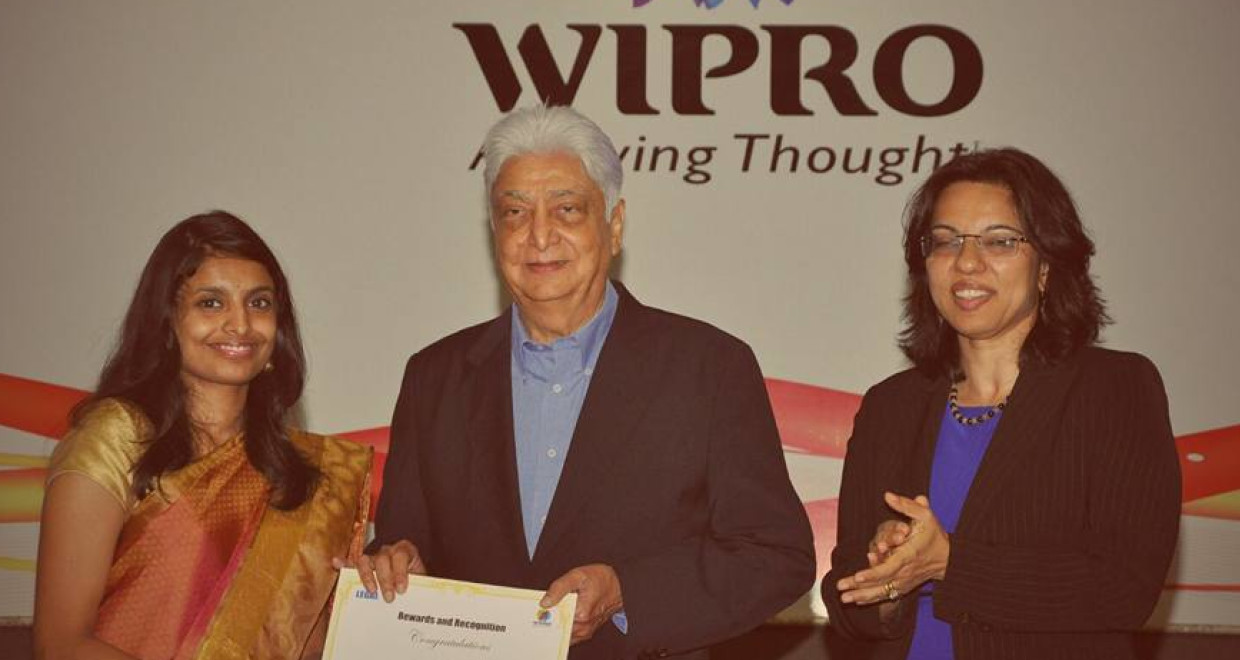
    Parvathy graduated from ILS Law College Pune in 2014. She completed her Masters in Business Laws from National Law School of India. She has an enviable academic record and an excellent series of internships at law firms.  She was also nominated by the faculty of ILS Law School by consensus and was awarded the ‘Best Student Prize’ of the five year law course. Soon after graduation, she started working as a Senior Executive, Wipro, Bengaluru where she worked for close to two years. She is currently working with Trilegal, as an Associate in Labour and Employment team.

    In this interview, she talks about:

    • Work experience at Trilegal
    • Converting internships to PPO
    • Importance of extra circular activities in law student’s life
    • Significance of moots and their preparation


    HOW WOULD YOU INTRODUCE YOURSELF TO OUR READERS?

    Though this is a common (yet difficult) question, I still don’t have a rehearsed answer. Let’s just say, I’m a lawyer by profession with an infectious smile who loves to work!


    WHAT FACTORS INFLUENCED YOU TO CHOOSE LAW AS A CAREER? WHY DID YOU CHOOSE ILS LAW COLLEGE FOR PURSUING LAW?

    The result of an aptitude test was a key decisive factor in choosing law. My uncle is a successful lawyer and his work had inspired me right from the beginning. The environment at my school, St Josephs’ Anglo Indians Girls Higher Secondary School, Calicut encouraged students to look beyond the four walls of classroom and my teachers gave me the confidence to take part in debates, elocution competitions and to express my opinions. All these factors prompted me to choose law as a career option. Above all, my father intended to be a lawyer when he was young. So, when I decided to pursue law, I felt that I am fulfilling his dream in my own special way.

    I wrote CLAT and got through NUALS, Kochi and I also made it to ILS, Pune on merit, based on XIIth board marks. Until then, I’d enjoyed the privileges of being at home and a convent school in Calicut. Hence, my parents felt that the exposure in a prestigious institution in Pune would make me independent and that sealed the deal.


    PLEASE TELL US ABOUT YOUR TIME AT LAW SCHOOL. HOW WAS YOUR APPROACH TOWARDS ACADEMICS WHILE IN COLLEGE.

    ILS was a beautiful learning experience and I truly cherish my five years in Pune. It was not just about learning law and giving exams in ILS. Friends became family and I’m confident they will remain so for life. The discussions outside classrooms during intervals, running around in college, the long queues for collecting marksheets, the podium, the pavilion and the beautiful campus. I miss them all now!

    The state of the art library, the committees, events and other extra-curricular activities run by the faculty offered me tremendous opportunities. I had the chance to meet and work with great legal minds in country while working for the Corporate Law Cell and the Editorial Board. The early morning lectures with the added requirement of 75% attendance taught me punctuality and discipline. I maintained a first class throughout all five years of law school. The lecture schedules provided flexibility to pursue other areas of interest and I could be a part of a research project funded by the Commonwealth foundation and complete my Diploma in Corporate Laws at ILS. As I was pursuing a five year integrated course, I received my Bachelor’s degree from the University of Pune after third year and I was able to apply for my Master’s in Business Laws from National Law School of India University, Bangalore (NLSIU). Hence in 2014, I received my LL.B. as well as my Master’s degree.


    HOW IMPORTANT ARE EXTRA CURRICULAR ACTIVITIES TO A LAW STUDENT?

    Extra-curricular activities have proven to be beneficial for me and I believe it would help individuals to hone their skills. Let me cite some examples. As the Student Coordinator of Moots and other Advocacy Skills Activities for three years, I had the chance to organise moot court competitions, conduct mooting workshops for students. I learned something new each time when I donned the hat of a coordinator because I had to interact with a group of more than 300 students each year, who represented ILS in moots, client counselling, negotiation competitions etc., keep track of these competitions and report the progress to faculty. Being the coordinator taught me teamwork, to be a good listener, how to be organised and mange my time. It also helped me to improve my problem-solving and communication skills. There was a sense of satisfaction when I was able to find solutions to problems. Through presenting papers at seminars, I left behind my fear of addressing an audience. With each and every extra activity and going beyond the curriculum, I was learning to unlock another milestone.


    YOU HAVE REPRESENTED YOUR COLLEGE AT PRESTIGIOUS MOOT COURT COMPETITIONS. HOW DO YOU RECOMMEND ONE SHOULD PREPARE FOR THEM? DO YOU THINK MOOTING IS SIGNIFICANT FOR LAW STUDENTS?

    A while ago, I came across a meme which said that “asking someone to be your moot partner is the single most important decision you make in law school“. I couldn’t agree more and I’ve been fortunate to work with wonderful people on challenging moot problems when I was in ILS. A significant part of the preparation goes in forming the group and identifying the competition one wishes to take part in. The selection procedures may vary from one college to another. But I feel the broad steps to address any moot problem is similar. Once you have the moot problem, the key tasks are to (1) understand the facts, (2) identify the issues, (3) research on the law, (4) apply it to your case (5) draft arguments accordingly and (6) improvise them based on multiple round of practice sessions. This is tried, tested and highly recommended.

    Most of the questions in exams tend to judge the memory of the student rather than analysing their reasoning or logical skills. Mooting provides a platform to test a student’s analytical skills. It also trains a law student to prepare effective arguments and to do thorough, in-depth and exhaustive research. Moreover, it also teaches law students to work in a team. Hence, I believe mooting is important.


    HAVE YOU EVER FELT THE NLU AND NON- NLU DIVIDE? DO YOU THINK IT IS A CONSIDERATION FOR EMPLOYERS?

    No. While this may have been true for some, I think recruiters focus on whether the individual would fit in their working environment rather than their law school. At the end of the day, the work speaks for itself and the NLU or Non-NLU tag will not create a distinction at workplace.


    HOW DID YOU SECURE YOUR FIRST JOB? HOW IMPORTANT DO YOU THINK A HIGH CGPA IS FOR RECRUITERS? TELL US MORE ABOUT YOUR SELECTION PROCEDURE AT WIPRO?

    Wipro offered me a PPO based on my internship.

    Though it may not be the sole criterion, I believe that marks generally play a critical role in shortlisting candidates for interviews.

    For internship, Wipro invited applications through the ILS Placement Cell and shortlisted candidates based on their CVs. Thereafter, interns were selected based on two rounds of telephonic interviews. I was offered a PPO based on my mentor’s feedback, the presentation before the legal team and an interview with the General Counsel.


    TELL US ABOUT YOUR ROLE AND RESPONSIBILITIES AT TRILEGAL?

    I’m part of the labour and employment practice at Trilegal. The employment practice in law firms is not confined to the law regarding factories and industries as taught in law schools. Trilegal has one of the first dedicated as well as the most comprehensive employment practices in the country and I consider myself lucky for being able to work under the guidance of Mr. Atul Gupta who inspires me to find practical solutions to issues. I’ve grown as a lawyer, thanks to his brilliance and insights.

    At Trilegal, I routinely work on a variety of labour and employment issues ranging from recruitment until termination of employment. I assist in advising Indian and multi-national clients on matters regarding disciplinary proceedings, senior management exits, anti-harassment, structuring employee benefits, leave entitlements, immigration, transfer of personal data. I’m also involved in business transfers and related employee transfer scenarios. Trilegal has changed the way I look at problems and I’m grateful to the support I receive from my excellent team who makes every day worthwhile at work.


    YOU WORKED AS A SENIOR LEGAL EXECUTIVE AT WIPRO. WHAT WERE YOUR MAIN TASKS AND WHAT RESPONSIBILITY DID YOU UNDERTAKE?

    Parvathy is a recipient of the ‘Best New Lawyer Award’ which is given annually to Wipro’s best in-house lawyer.

    Wipro is a great place to learn and I was truly blessed to have worked with wonderful mentors and colleagues who motivated me at every juncture. I was part of the Compliance team at Wipro and I was primarily advising on Global Data Protection compliance. My portfolio also included advising business, HR and contracts teams on immigration, employment, export control and other regulatory issues in Europe. With the support and encouragement of my mentors, I also had the chance to assist the Government Advocacy team to on matters regarding public policy and also work with the Ethics Compliance team to ensure compliance with anti-corruption, anti-harassment laws etc. The team dynamics influenced my performance and I had a great journey in Wipro.


    WHAT ADVICE DO YOU HAVE FOR OUR READERS, WHO ARE PRIMARILY COLLEGE STUDENTS?

    This is one of the best time in your life and it is important to enjoy what you do. The thought of internships and career prospects can be overwhelming at times. It’s quite normal and everyone goes through the same. So, don’t worry about it. Be confident and express your views and opinions. Work towards enhancing your writing skills. Try to write on a regular basis. It is essential to articulate your thoughts into words and to write with clarity. As Mathew Arnold once said, “Have something to say and say it as clearly as you can“. Channel all your energy in the direction which interests you. Nothing is impossible!


  • Siddharth Ranka, Assistant Manager-Legal, Scorpio, on pursuing Maritime law, studying in Southampton and his experience

    Siddharth Ranka, Assistant Manager-Legal, Scorpio, on pursuing Maritime law, studying in Southampton and his experience

    Siddharth Ranka graduated in law from ILS Law College, Pune, in 2008. He then went on to pursue his Master’s degree from the University of Southampton, specialising in Maritime Law. After the post graduation, he joined Bose & Mitra & Co as a senior associate he then moved to Allen & Gledhill as foreign associate. He is currently assistant manager – legal, at Scorpio, where he handles the Group’s global contentious and non contentious maritime issues, compliance and general corporate practice.

    In this interview he speaks to us about:

    • Maritime Law as a career and its scope.
    • Experience at ILS Law College and University of Southampton.
    • The difference between legal education in India and abroad


    HOW WOULD YOU LIKE TO INTRODUCE YOURSELF TO OUR READERS? PLEASE TELL US SOMETHING ABOUT YOUR PRE-COLLEGE LIFE?

    I would like to introduce myself to the readers as Siddharth Ranka, an outdoorsy, yet rooted individual with a great respect for my life, my loved ones and the work I do. I grew up in Pune where I spent more time playing sports and being outdoor than indoor. I was an erratic student and a nightmare for my parents and teachers. Being a sports fanatic and extrovert, I wanted to pursue a career in sports or event management, but life had different plans, as it always does, in its charming un-foreseeability.

    Fast forward to today, I am a maritime and compliance lawyer with Scorpio Group (Scorpio). Prior to Scorpio, I worked with Bose & Mitra & Co in their Mumbai office (BMC) and Allen & Gledhill in Singapore (A&G).


    HOW WAS YOUR EXPERIENCE AT LAW SCHOOL? ARE THERE ANY MEMORABLE MOMENTS THAT YOU WOULD LIKE TO SHARE?

    ILS Law College, Pune was a remarkable experience. As a local from Pune, it was probably the first time I met a lot of people from different parts of the country who brought with them their own unique culture. So, one was always learning both in law school and outside. What was not surprising was that the students, and my batchmates, were extremely talented, ambitious and competitive, and at the same time helpful.

    I have tons of memories attached to that time in my life, and two standout the most. First and most importantly, meeting Priyadarshini,my wife. Secondly, the students who stood up against the unfortunate ragging incident that took place in the college campus in 2008.


    WHAT MOTIVATED YOU TO GO FOR A MASTER’S PROGRAMME? WHAT LED YOU TO CHOOSE MARITIME LAW AS YOUR SPECIALISATION?

    A close friend, Riti Tyagi, introduced me to maritime law in my fourth year of law school. At the time, it sounded like a “fun” thing to do; but because we did not have maritime or allied laws in our curriculum, the basic knowledge was missing. What made it tougher back then, was the fact that there was very little information available, with professors, online or in books, regarding its scope.

    When I took up my first job at BMC, I was going into the unknown. Fortunately, I was trained and guided by Amitava Majumdar (Raja) and Shiv Iyer, both of whom had studied maritime law in England.

    What I quickly learnt was that maritime law is heavily reliant on English law – even outside the so-called “commonwealth” so it was important to get a good platform on the subject from an English law perspective. This was essentially, when I made the decision to pursue an LLM in Maritime Law. In my decision to pursue further studies, I had steady and relentless support from my parents, who constantly urged me to follow my passion and pursue higher studies, and Priyadarshini, who was instrumental in grooming and guiding me in my decision to study and work abroad and channelized my efforts into reality.

    Shipping is so internationally connected that if one needs to succeed as lawyer in this niche area of law, you must make contacts not only locally but also with our international counterparts. For this, my LLM proved to be the ideal platform. I studied and met students from more than 25 nationalities, and consequently still refer business and matters to each other.


    WHAT ARE THE NECESSARY TRAITS THAT ARE REQUIRED TO BAG A SCHOLARSHIP FOR LLM?

    I would wholeheartedly suggest getting enough work experience, building a strong academic background and gathering good recommendations from industry personnel. Furthermore, writing articles or technical papers on legal issues which highlight your intent to pursue an LLM will increase your chances to bag that scholarship.


    WHAT SHOULD BE KEPT IN MIND WHILE WRITING SOPS TO PURSUE AN LLM ABROAD?

    One must focus on their motivation, objective and what is guiding them to pursue the LLM, and these must be expressed clearly, but succinctly. One should not say that they are interested in IPR or Competition law, when they are applying for a LLM in maritime law, because that would clearly conflict, showing lack of requisite knowledge, interest and aspiration.

    Lastly, the most important and yet often overlooked facet would be the skill of writing clearly with no grammatical errors.


    WHAT DIFFERENCES DO YOU SEE IN THE LEGAL EDUCATION SYSTEM IN INDIA AND ABROAD? HOW CAN THE INDIAN LEGAL SYSTEM IMPROVE?

    The courses abroad are more structured, and a lot of importance has been given to self-educating. One must be prepared well in advance, for the lectures and classes they attend. Theory is given importance but the scales tip more towards understanding a subject practically. Since law, as a discipline is neither black nor white, there is nothing deemed to be right or wrong – one is allowed to express as they perceive.

    Another pivotal difference is, we have time-allotted “lectures” in India, while abroad you have interactive sessions which are followed up with tutorials or group discussions. This encourages the expression of thought and evokes confidence when speaking in public.

    The Indian legal system is complicated but the most obvious criticism will be the delayed time frame in the delivery of cases.

    To address this, there is an urgent need for reforms when it comes to, imposition of legal costs in commercial litigation and protection of client’s rights against lawyers.

    I am an advocate for courts to be accessible to all, but the process cannot be abused. The Commercial Courts Act does address this effectively, but in practice, courts have been generally reluctant to award costs. The risk of costs exposure would discourage frivolous litigation and go on a long way to reduce the backlog of cases that we presently find in Indian Courts.

    Also, lawyers should be treated in the same manner as doctors or engineers when it comes to negligent advisory. This will not only improve the legal services being offered but also reduce frivolous proceedings, which are filed at the instance of lawyers.


    YOU HAVE WORKED AT ALLEN AND GLEDHILL, SINGAPORE POST YOUR LLM. HOW WAS YOUR EXPERIENCE WORKING IN A FOREIGN LAW FIRM? HOW IS THE LAW FIRM CULTURE ABROAD DIFFERENT FROM INDIA?

    Singapore is a modern story for global financing and business. It has been able to attract professionals and businesses from different parts of the world and has developed into one of the leading dispute resolution centers in the world. The advantage, therefore, is that one is exposed to diverse cultures, different stakeholders and global issues, rather than being jurisdiction specific.

    My stint at the A&G helped me tremendously to mature and evolve as a lawyer. More than legal acumen, it exposed me to soft skills, which include, internal training, importance of presentation – drafting pleadings or advices, client management, file management, etc. It was also stimulating to work with clients and lawyers from different parts of the world, and has greatly impacted my upward learning curve.

    Firms abroad are very structured and lean on transparency in the working culture. There is a great deal of investment put in the employee development and data management, which, improves consistency in work across different departments and better time management.


    WHAT FACTORS INFLUENCED YOUR DECISION TO COME BACK TO INDIA AFTER WORKING IN SINGAPORE?

    I was very interested to see and learn the litigation practice side of the law and wanted to understand the working of Indian courts, both from a strategic and legal point of view. For this, it was important to be in India, considering one sees far more litigation action (in court or arbitration) here than abroad.


    AS ASSISTANT MANAGER-LEGAL WITH SCORPIO, WHAT ARE YOUR ROLES AND RESPONSIBILITIES?

    Scorpio is probably the only foreign shipping company with their shipping legal team based out of India. This basically means that I, along with my team, handle Scorpio’s compliance issues (sanctions, anti-corruption, etc), legal shipping disputes, risk assessment and risk management issues. The role requires my team to assist internal stakeholders in any dispute or issue that they face around the world.

    To give you quick sneak peek, on a particular day, I could be handling a contractual dispute under English law, a collision in the Indian Ocean and conducting a compliance check for a new entity which Scorpio is considering doing business with, simultaneously.

    A lot of the time is spent working internally with stakeholders to understand the issues they are facing and study market trends, understanding how their position can be best protected from a contractual standpoint.

    In addition to the legal side of work, my role involves managing my team.


    WHAT IS THE SCOPE OF A CAREER IN MARITIME LAW IN INDIA?

    When one refers to “Maritime law” they are really speaking about a wide spectrum, ranging from ports, custom, shipbuilding, ship breaking, cargo traders, charterers, ship management and obviously shipping companies.

    This is a niche area and has traditionally been dominated by boutique small sized firms. Recent years have seen an influx of the so-called “big firms”, which enhances the career options in the otherwise less-sought out area of law. Other than law firms, one can look at in-house roles with shipping, chartering, trading houses and ports.

    A lot of foreign shipping companies carry out operations throughout India, but when it comes to legal issues, they are still handled by in-house legal teams based outside of India. At Scorpio, we have done things differently and have an expert team of Indian lawyers who handle legal disputes involving the Group not only in India, but also abroad. For me, this is an area that I can see developing and would increase career opportunities in maritime law.


    WHAT WOULD BE YOUR MESSAGE FOR YOUNG LAWYERS AND LAW STUDENTS?

    I am committed to my contention that to succeed in the legal sector, knowing the law is only half the story; the other and probably more important half is developing your inter-personal skills and the ability to “sell” the services you offer as a lawyer.


  • Sukanya Natrajan, Associate, Shardul Amarchand Mangaldas & Co, on studying at Oxford, her internship experiences, and importance of higher education

    Sukanya Natrajan, Associate, Shardul Amarchand Mangaldas & Co, on studying at Oxford, her internship experiences, and importance of higher education

    Sukanya graduated from ILS Law College in 2016. She then went on to pursue her MSc in Law and Finance from Oxford. She is currently working as an Associate at Shardul Amarchand Mangaldas & Co.

    In this interview we speak to her about:

    • Importance of higher education
    • Her Master’s degree from Oxford
    • Her internship experiences


    HOW WOULD YOU LIKE TO INTRODUCE YOURSELF TO OUR READERS?

    A book lover who loves chocolate and potato? Well, law is what I do but there’s more to me than just that. While I like to think that I’m a serious professional who’s a perfectionist to the point of extreme annoyance, there’s another part of me that still dances to DDLJ songs and recites the dialogues to Kuch Kuch Hota Hai. Besides Bollywood and books, you’ll mostly find me with some wine and Sinatra on quiet evenings discussing conspiracy theories. Oh, and breakfast food for dinner is always good to go.


    WHAT MOTIVATED YOU TO OPT FOR A CAREER IN LAW?

    As a kid I was a voracious reader so naturally authors like Sidney Sheldon and John Grisham glamorised the field for me. I was into debating from a very young age and so it made sense that the most talkative (read: argumentative) person in class takes up law. Even though legal dramas like Suits and Boston Legal make it seem like it’s that simple, being a corporate lawyer in India is whole new ball-game altogether and I guess it was mostly books and engaging conversations with everyone I ever met that made me choose this field.


    WHAT KIND OF INTERNSHIPS DID YOU UNDERTAKE DURING YOUR STUDENT YEARS? ANY ADVICE YOU WOULD LIKE TO SHARE WITH PEOPLE WHO WANT TO INTERN AT TOP-NOTCH FIRMS?

    I have interned at a total of twelve places. My basic objective was to give every field a chance before I spend 40 years of my life doing the same thing. I won’t deny that an internship typically gives you minimal exposure in the first three years and you’re only seriously considered in your penultimate year onwards, but I wanted to experience everything – from NGOs to litigation to corporate firms. I started to develop a liking towards corporate law in my third year of college and hence, started interning more with corporate teams in order to solidify my decision to become a corporate lawyer.

    Well, I would firstly say an experience at any place will teach you something, so don’t be disheartened if you don’t get to intern at top notch firms. One piece of advice – always mould your objectives from firm to firm. I always tailor my CV according to the places I am applying at and I tailor my cover letter as well, instead of sending the same generic piece everywhere. This shows that you have put in efforts to be where you want to be and that you genuinely want to be considered for an opportunity to work with the firm. Lastly, now that I have handled a few interns myself, I’d like to tell them that nobody expects flawless work. Do your best, stick to timelines and be dedicated at what you’re doing.


    WOULD YOU SAY HIGHER STUDIES ARE RELEVANT FOR A CAREER IN CORPORATE LAW?

    Speaking from personal experience, I think higher studies are important if you really want to enjoy what you do. However, I don’t think the timing matters much. I don’t believe there are immediate gains from an LLM degree. For me, the point of higher studies is to broaden my knowledge base of the field and not to score a better-paying job. It does add to your qualifications and employability but it’s not an absolute necessity. So I’d strongly suggest that one should do it because they want to know more from some of the brightest minds in the field and the improved career prospects come in simultaneously.

    With respect to corporate law, higher studies are bound to help you gain that exposure and edge over others. Unlike litigation, corporate law is about strategizing the right way and higher studies in your area of interest will help set you apart from the crowd. It’s all about your knowledge – the more you know, the better it is.


    WHICH UNIVERSITIES DID YOU APPLY FOR LLM? HOW DID YOU GO ABOUT CHOOSING WHICH COLLEGE TO GO TO FOR YOUR LLM?

    I only applied to two institutions – University of Oxford and University of Cambridge. Truthfully speaking, I prioritized the course over the college and so I was only looking to get through either of them – the LLM in corporate laws at Cambridge or the Masters in Law and Finance at Oxford – because their course curriculums had the very same modules that I wanted to study. In fact, MLF is a dear, dear course as it has the perfect interplay of law, economics and finance and thankfully, I got just that.


    WHAT DOES THE CV OF A STUDENT SEEKING ADMISSION TO A PREMIER UNIVERSITY OFFERING AN LLM PROGRAM HAVE TO LOOK LIKE? WHAT SHOULD BE KEPT IN MIND WHILE WRITING SOP FOR LLM ABROAD?  WOULD YOU BE WILLING TO SHARE YOUR SOP FOR REFERENCE OF LAW STUDENTS?

    Well, as sad as it is, grades do matter a lot. I personally don’t think grades should matter as it can never define what a person is, but the world needs standardised scores for them to compare and apparently this seems to be the easiest parameter. So, focus on getting decent grades (sorry guys!). Secondly, interest in the topic and I cannot emphasise this enough. You really need to be passionate about further studies and the subject matter that you have chosen and the way to showcase that is if you have any publications. There has to be yearning to know more and you need to express that interest sufficiently.

    In an SOP, try to stick to crisp and to-the-point sentences that highlight your best qualities. Do not exaggerate. Moreover, there should be a clear flow of thought that is communicated in a simple yet sophisticated manner so it sounds convincing. This is the only two minutes the other person has to review your SOP, so make sure you make for an interesting read.

    I don’t think I have my SOP anymore, but I’d love to help anyone who would like to seek my inputs. People can always reach out to me on LinkedIn, Facebook or Gmail.


    HOW WAS YOUR EXPERIENCE AT OXFORD UNIVERSITY? WHAT DIFFERENCE DO YOU SEE IN THE LEGAL EDUCATION SYSTEM IN INDIA AND ABROAD?

    My year at Oxford was incredibly colourful. I met so many people from different parts of the world and different walks of life, all with a unique story to share. I made tons of good friends along the way and all in all it was a very wholesome environment to learn in. Studying abroad really opens up your eyes and expands your horizons – not only in terms of education but also your perspective towards various other things.

    Fact is in India, law school education is primarily focused on theory and internships are the only way to gain any sort of knowledge about the practicalities of the field (that is, if they give you real work). However, one thing I noticed abroad was how the curriculum itself was more leaning towards pragmatism than theory. It wasn’t just a bunch of random assignments but the whole duration of the course where we were made to draft proposals and subject to expert scrutiny. In a nutshell, legal education or even academics as a whole abroad is no less difficult than India, but the process is taxing in a way which ultimately shapes your thoughts, approaches and perspectives instead of your ability to simply retain information for a two hour examination.


    AT WHAT STAGE IN ONE’S LAW SCHOOL LIFE MUST ONE PICK A SPECIALIZATION? WHAT LED YOU TO CHOOSE SPECIALIZATION IN LAW & FINANCE?

    There is no specific time or age. I know people who knew what they wanted to achieve out of law in their very first year. But you also meet people who you learn and discover these things with alongside in your journey. I feel that one can decide at any level if they’re passionate enough and know enough about the subject matter to justify the choice. I was reading a lot on behavioural economics in my fourth and fifth year of law school and that was what led me to finding the perfect course for me.

    Along with law, I’ve always taken a keen interest in Economics. Seems like a bit of an overstatement but when I discovered the MLF course, I just knew this is what I’d been looking for. To be able to integrate both areas of interest and apply that in my career – MLF was my only way – and it didn’t take me more than 48 hours to convince my parents of the same.


    YOU HAVE DONE ADDITIONAL COURSES AND DIPLOMAS DURING YOUR TIME AT LAW SCHOOL. HOW FAR HAS THE COURSE HELPED YOU IN YOUR CAREER? WOULD YOU RECOMMEND THE CURRENT LAW STUDENTS TO TAKE UP SOME ADDITIONAL COURSES DURING THEIR TIME AT COLLEGE?

    Well, my college was only for four-five hours a day. I had to find some way to kill time so I took up a lot of additional courses to read and learn more about law. I have one diploma each in IPR, competition law and corporate laws in addition to the executive level of CS. I even took up Masters in Business Laws from NLSIU, just to keep myself busy.

    Apart from keeping me productively occupied, taking up extra courses enabled me to understand the subtle nuances of law in various fields, thereby helping me to explore my options. It’s not just about adding an extra line in your cv, but about how your field is applicable in real life.

    I would say take up the courses if you have time to spare and are willing to learn. Don’t do it because you think it’ll impress your interviewer, but because you want to know more and more.


    WHAT WOULD BE YOUR WORD OF ADVICE TO YOUNG LAWYERS AND LAW STUDENTS?

    Don’t fret about not getting big names on your CV. Try for it. If it doesn’t happen, it’s okay. Don’t give up and don’t lose heart. Take any opportunity that you can lay your hands on – learn more, experience more, know more. Those 5 years, I had a lot of time and I regret not spending it more efficiently. Studying in a law school is no different from any other college experience – it is the time for all your firsts. So be active in college, be it debating, moots or sports and at the same time, take time out to chill and make memories with your friends.


  • Subham Chatterjee, Senior Associate, Sterling Associates, shares his insight on Litigation, Corporate Law and work experience

    Subham Chatterjee, Senior Associate, Sterling Associates, shares his insight on Litigation, Corporate Law and work experience

    Subham Chatterjee graduated from ILS Law College, Pune in the year 2013. After this, he joined Dave & Girish & Co., Mumbai. He then went on to pursue his Master’s degree from University of Mumbai in 2014, with a focus on Environmental Law.  He is currently working as Senior Associate at Sterling Associate.  His areas of practice include General Corporate, Capital Markets and Start-up Practice.

    In this interview he talks to us about-

    • His legal education at ILS Law College, Pune
    • Transitioning from litigation to corporate law
    • His experience at ‘Sterling Associate’


    HOW WOULD YOU LIKE TO INTRODUCE YOURSELF TO OUR READERS?

    I would like to introduce myself as a ‘corporate lawyer’ to the readers. My name is Subham Chatterjee and I am currently working in a Mumbai based law firm – ‘STERLING ASSOCIATES’. I have been with the firm for three years now. My core practice areas include private equity, capital markets, general corporate and advisory. Apart from my core practice areas, I also do a bit of litigation work but it is only limited to drafting of pleading papers, briefing counsels and providing legal advice to my clients.

    I graduated from ILS Law College, Pune (the five year course) in June, 2013. Thereafter, I also completed by LLM (masters in law) from the Department of Law, Mumbai University, in the year 2016.

    Just to tell you my background, my native place is Burnpur, a small town in Burdwan district of West Bengal. I attended St. Patrick’s H.S. School, Asansol, which is a very old and reputed school, and which is run by the Christian brothers, who are known for their discipline and punishments.

    Thereafter, I completed my twelveth from Brihan Maharashtra College of Commerce, Pune which is also an extremely well known and reputed college, attracting talent from all over India.

    My hobbies are travelling to new places, reading books and newspapers, listening to music, exercising, and trying new and different cuisines (I am a real food-lover).


    HOW DID YOU DECIDE TO PURSUE LAW AS A CAREER OPTION?

    It’s actually a matter of coincidence that I became a lawyer because as school boy in Burnpur, I had never imagined that I would become one. During my school days, just like many of my classmates, I wanted to become an engineer too. However, by the time I was in ninth and tenth standard and was preparing for my board exams, I realised that I am extremely weak in science. So I stopped thinking about having any career in engineering and started considering other career options. My father, who at that time was posted in Thane district of Maharashtra, suggested that I should pursue my further studies in Pune, which offers plenty of career opportunities in different streams. Therefore, after my tenth standard exams, I shifted to Pune in order to pursue a career in commerce. I was fortunate enough to secure admission in Brihan Maharashtra College of Commerce (BMCC) for my twelfth.

    While in BMCC, in the initial months, the profession of chartered accountancy sounded quite appealing. Many of my friends were planning to pursue chartered accountancy and had started preparing for it (i.e. the CPT – Common Proficiency Test) by the end of eleventh standard. However, I was not kind of liking the subject ‘book-keeping and accountancy’. In fact to be honest, tallying the profit and loss account and the asset and liability side of the balance sheet was a nightmare for me.

    I remember that during my days in BMCC, teachers used to encourage us to read the newspapers especially the business section, as we were commerce students. I followed their advice and somehow I developed an interest in the news relating to mergers and acquisition, joint ventures, business deals etc. which are generally the things which corporate lawyers deal with. Also, one of my roommates in my eleventh standard was a law student and he often used to speak to me about his law subjects like contracts, law of torts etc. Lastly, in BMCC, I participated in a few debate competitions and some essay writing competitions. I also got few of my articles published in ‘Think Track’ – the annual student magazine of BMCC. My teachers and some my seniors in BMCC had appreciated my articles and had told me that I have good communication skills, which are necessary for lawyers. So these were few of the important factors which led to my decision of pursuing law as a career option.


    PLEASE TELL US SOMETHING ABOUT YOUR COLLEGE LIFE? HOW IMPORTANT WAS YOUR COLLEGE IN SHAPING YOUR CAREER?

    I feel privileged to have had the opportunity of studying in ILS Law College, Pune. It is one of best law colleges in the country and provides a lot of opportunities and exposure to its students. The best thing about ILS was that the day I started my college, I had a very strange feeling. It was a feeling which I had never experienced before. This feeling was actually a realisation, that law is the field where I belong.

    The five years of college life in ILS were the best years of my life. I am also extremely fortunate to have had very good teachers in ILS. They not only taught us the subjects but also used to share with us their practical experiences and the challenges in practice. Their counsel and guidance continue to help me even today. They also used to encourage us to take part in co-curricular and extra-curricular activities.

    And of course, I made great friends in ILS and I am still in touch with most of them. We’ve had lots of fun and great moments of joy when we were in college. I do miss those times a lot today. Most of my friends are doing really well in their career and it does give me a sense of pride.

    In my college days, I took part in various activities like debates, essay writing competitions, model united nation (MUN), quiz competitions, moot court competitions, writing articles and research papers etc. Though I was not very good at them, nevertheless I thoroughly enjoyed these activities and also they were good learning experiences for me. These activities taught me life skills which are – to work hard, avoid short-cuts, not to give up easy, believing in myself, figuring out my strengths and weaknesses, and learning from mistakes and failure.

    I was also a part of the ‘Corporate Law Cell’ and the ‘HARIYALI – Environment Awareness Cell’ of ILS. I used to attend the seminars and conferences which used to be organized by them, which also were a great learning experience for me. These seminars which I attended, coupled with my internships and diplomas, helped in developing my interest towards corporate and financial laws.

    Also, a couple of my research papers which got published in law journals helped me get some internships. In my final year in ILS, I got placed on campus with Dave & Girish & Co., a law firm in Mumbai.

    In these ways, ILS was instrumental in shaping my career.


    YOU HAVE DONE ADDITIONAL COURSES AND DIPLOMAS DURING YOUR TIME AT LAW SCHOOL? HOW FAR HAS THE COURSE HELPED YOU IN YOUR CAREER? WOULD YOU RECOMMEND THE CURRENT LAW STUDENTS TO TAKE UP SOME ADDITIONAL COURSES DURING THEIR TIME AT COLLEGE?

    I have done a diploma in cyber law, diploma in corporate and financial laws, and a diploma in mergers and acquisitions. I also completed a certificate course in ‘Competition Law and IPR’ from FICCI in my final year in ILS. As our college lectures used to be for only around three hours in the morning, I used to be free for the rest of day. These diplomas were a way to utilise my time in a better and more effective manner, and was also a way to understand where my interest lies amongst the various specialisations of law.

    The diploma in corporate and financial laws from Symbiosis Law College was quite difficult but was quite helpful. The syllabus was quite extensive but my teachers were really good and they helped me understand even the complicated subjects in a very simple way. I must mention the names of Mr. Nikhil Fulambarkar, who taught us securities laws and competition law, and Mr. Ganesh Hingmire, who taught us international economic laws. They were very helpful and had guided me really well throughout the diploma. In fact I used to get in touch with them even after I cleared this diploma for counsel and help in relation to various queries which I encountered during my law course.

    These diplomas/certificate courses helped me realize/develop my interest towards corporate and financial laws.

    As I have gained from the diplomas/certificate courses, I would suggest that in case any of the law students are keen on figuring out which area of specialization he/she wishes to pursue or wishes to gain additional knowledge apart from the subjects being taught in college, then they may consider pursuing some of the diplomas/certificate courses which are offered by various institutions.


    HOW DID YOU GO ABOUT PLANNING YOUR INTERNSHIPS AT LAW SCHOOL?

    In the initial years, I did not plan my internships at all. I just saw that all my friends and my seniors preparing their CVs and shortlisting the names of law firms where they were planning to apply for internships. Therefore, I just followed their footsteps and happened to apply in a few law firms in Pune, and fortunately landed a four week long internship in a law firm which was completely into litigation in the district and sessions court, consumer forum, debt recovery tribunal etc. I subsequently went on to intern with the same firm’s Bombay and Delhi office in the forthcoming years in ILS. These initial internships were also helpful in developing my interest in corporate law.

    In my third, fourth and final year in ILS, before applying for my internships, I used to shortlist those firms where I, as an intern, could get opportunity to learn new and practical aspects of law, and how a lawyer deals with challenges which he/she encounters in practice. While applying, I also used to check if the law firm has a good corporate law practice so that I would get to learn more about the area of law where my interest lied. Also, while applying for internships, I paid a lot of attention on drafting and presentation of the internship application/ cover letter and my CV and before sending them out, I used to proof read them multiple times, in order to avoid any mistakes, as I felt that any silly mistake in the draft of the application/cover letter and the CV, may jeopardize my chances of securing my internship in that law firm.


    YOU DID LITIGATION IN YOUR INITIAL YEARS AND LATER SWITCHED TO CORPORATE FIRM? WHAT LED YOU TO CHANGE FROM LITIGATION TO CORPORATE?

    Litigation happened to me by chance. I did litigation in my first job i.e. at Dave & Girish & Co., Mumbai. In fact when I was interviewed by the managing partner of Dave & Girish & Co., Ms. Mona Bhide, she had asked me that given an opportunity which department would I prefer to join – litigation or corporate. And without thinking twice I had responded ‘corporate’. However, when I joined there, I was given litigation matters to handle. Nevertheless I thoroughly enjoyed doing litigation assignments during the first couple of years of my career. Litigation was a great learning experience for me especially preparing for hearings, briefing senior counsels and counsels, and occasionally having the fortune to appear and argue the matter myself. It helped improve my drafting and communication skills. Having the opportunity to work on different areas and on matters filed before different forums such as High Court, City Civil Court, DRT, ITAT, Sales Tax Tribunal, Company Law Board etc. was a good exposure, and that experience and knowledge which I have gained working in litigation is invaluable, and that continues to help me even today while drafting contracts or advising clients.

    Now along with litigation, I was also getting some corporate assignments viz. drafting of agreements, legal opinions etc. I gradually realized that though litigation was turning out to be a great learning experience, still my core area of interest continued to be corporate and financial laws, and I still wanted to pursue my career as a corporate lawyer. This is because I still believed that I would be more comfortable and would be in a better position to contribute to my firm and my career by working as a corporate lawyer. I also spoke to some of my friends and seniors in the profession and discussed with them about what I was considering, and took their opinion on the same. Therefore, leaving litigation and pursuing my goal as a corporate lawyer was not a very comfortable decision but it surely was well thought out.

    But I can say from my experience that having a litigation experience of a couple of years, and the skills which I developed while working in litigation, has continued to be helpful to me in my current assignments as a corporate lawyer as well.


    WHAT ARE YOUR ROLES AND RESPONSIBILITIES AS SENIOR ASSOCIATE AT STERLING ASSOCIATES?

    Sterling Associates is out and out a corporate law firm. In Sterling, my practice ranges from capital markets, private equity and joint venture transactions, M&A, fund formation, general corporate advisory, drafting, reviewing and negotiating commercial agreements etc. I am also responsible for rendering legal advice and support to ‘start-ups’. Start-ups form a significant part of Sterling’s clientele. Advising start-ups is interesting but at the same time it is challenging and sensitive. A lawyer advising start-ups for some commercial agreements with third parties or tie-ups or for fund raising etc. must understand the nature of the business, the vision of the entrepreneur, its strengths which should be secured and not compromised in these transactions, the opportunities which the start-up may have in future and challenges/risks which may arise, and therefore a lawyer has to address all these concerns while advising a start-up. Accordingly, the documents/ agreements to be drafted in transactions involving start-ups have to be customized to secure its interests.

    I work with a team of extremely talented and hardworking professionals in Sterling, led by Mr. Ramakant Kini, Managing Partner, Sterling Associates. I am fortunate to have reputed and extremely promising companies, funds and entrepreneurs as my clients, whose assignments I handle on behalf of Sterling. In Sterling, I have learnt to have a solution oriented approach to the assignments for which I am responsible. As a senior associate, my endeavour is to deliver quality results for my clients in a punctual manner by giving due priority to my professional assignments, and at the same time help my colleagues develop and improvise upon their skills and realize their potential. 


    WHAT WOULD BE YOUR WORD OF ADVICE TO YOUNG LAWYERS AND LAW STUDENTS?

    My word of advice to young lawyers and law students would be to work hard, believe in yourself, do not find short-cuts, be humble, never stop learning, surround yourself with good and positive people, AND, no matter what the odds are, never stop trying; because I had read somewhere – ‘TOUGH TIMES NEVER LAST, BUT TOUGH PEOPLE DO’.


  • Ngangom Junior Luwang, Senior Partner, Kochhar & Co., on law school experience, choosing specialisation and work life balance

    Ngangom Junior Luwang, Senior Partner, Kochhar & Co., on law school experience, choosing specialisation and work life balance

    Ngangom Junior Luwang completed his graduation from ILS Law College, Pune. He is currently co-head of the Infrastructure Law practice of the Firm. He has over twenty years of professional experience and has been practicing Corporate, Commercial & Dispute Resolution matters, his sector specialisation being Oil & Gas and Infrastructure. Luwang has represented issues of corporate law in various International Conferences and has also been a speaker in many conferences organised by the Hong Kong University, Law Asia etc. Luwang also has extensive court room experience, mostly in the Supreme Court of India.

    In this interview, we speak to him about:

    • Choosing law as career and his experience in law school
    • Choosing his specialisation
    • Internships every law student should undertake
    • Maintaining a work life balance being Senior Partner


    HOW WOULD YOU LIKE TO INTRODUCE YOURSELF? PLEASE TELL US SOMETHING ABOUT YOUR PRE-COLLEGE LIFE?

    Enrolled in 1995, I am a lawyer with extensive experience in dispute-resolution as well as non-dispute-resolution verticals across diverse facets – handling high-stake Supreme Court & Arbitration matters, contract drafting & negotiation, statute drafting, general legal consultancy apart.

    I grew up at Imphal, Manipur till my 12th standard. I did my primary schooling at the First Battalion Manipuri Rifles High School, Imphal and MBC English School, Imphal till 10th standard and my 11th and 12th at the DM College of Arts, Imphal.


    WHAT FACTORS INFLUENCED YOU TO CHOOSE LAW AS A CAREER? WHY DID YOU CHOOSE ILS LAW COLLEGE FOR PURSUING LLB?

    To be honest, law was my father’s career choice for me and I reluctantly followed my father’s advice. I had always wanted to become a civil servant or a doctor but I have no regrets for, inter alia, the following reasons:

    1. Just as our body is an integral part of our existence, law is as much an integral part since almost every aspect of our existence is governed by some law or the other.
    2. Law is ever-evolving and a lawyer’s adaptation to the same makes a lawyer fully updated and current for sound opinions on different aspects of life and law.
    3. Diversity in laws makes a lawyer’s life as much diverse and professionally challenging, enough to make him/her “Jack of all trades, Master of as much.”
    4. A Law degree also opens up a law student or a lawyer to a number of other possible sub-careers – in-house counsel, hardcore litigator, full-time corporate lawyer with specific specialisation options, academician, LPO professional, Law Firm management professional etc.

    I chose ILS Law College, Pune for, inter alia, the following reasons:

    1. ILS’s heritage as a cradle of legal education for nearly a century then
    2. Credible academic staff
    3. ILS was the best amongst the few law colleges with the five year integrated course in 1989 when I joined ILS.
    4. ILS’s incredible infrastructure, more specifically its library facilities with its unique collection of books
    5. Pune’s academic atmosphere and of course, its unmatched weather.


    WHAT ALL ACTIVITIES DID YOU TAKE PART IN DURING YOUR TIME AT LAW SCHOOL? HOW IMPORTANT IS MOOTING FOR A LAW STUDENT?

    I remember my participation in moot court competitions, mock trials and declamation competitions. Of course, I did some bit of lawn tennis and swimming since ILS campus had the said facilities.

    Since I strongly believe that every lawyer should spend at least the initial first three years of his/her career in Courts of Law/quasi-judicial fora (before exploring other options), mooting is and should be made compulsory for every law student. My specific reasons are as under:

    1. Mooting presents a fantastic platform for problem-solving skills for budding lawyers, something a lawyer is expected to do life-long.
    2. A must for focused drafting skills and oral court submissions.
    3. Mooting certainly exposes a law student to the practical side of law in terms of legal research, strategic thought process, creative interpretation of laws etc.
    4. Mooting is certainly a break from the mostly theoretical approach of classroom lectures.


     HOW DID YOU KICK START YOUR CAREER POST YOUR GRADUATION? WHAT WERE THE CHALLENGES YOU FACED AS A FRESHER?

    I kick-started my career from a chamber in the Supreme Court of India, but handling matters not only in the Supreme Court but also in Delhi High Court, DRT, Consumer Commissions and lower courts. The following were the main challenges:

    1. Identification of a good lawyer/chamber with drafting opportunities for diverse legal/quasi judicial proceedings.
    2. Understanding the different stages of legal/quasi-legal proceedings
    3. Low stipend was indeed an issue for a fresher like me with a rented accommodation.
    4. Lack of opportunities for placement in big law firms then.


    WHY DID YOU DECIDE TO PURSUE HIGHER STUDIES?

    I joined an LL.M course since I genuinely believed that an LL.M course would add up to my knowledge of law, but now, on hindsight, I am of the opinion that exposure to courts of law or being in a Law Firm for the same time period would have taught you more lesions on law and practical sides thereof. A full-time LL.M course could possibly be helpful for students who plan to be in academia.


    HOW DID YOU CHOOSE YOUR SPECIALISATION? WHAT SHOULD A LAW STUDENT KEEP IN MIND WHILE CHOOSING A PARTICULAR DOMAIN OF LAW TO PURSUE A CAREER IN THE SAME?

    I started my practice without any specific specialisation in my mind, but Clients ultimately chose my specialisation! One cannot choose a specialisation unless one is really interested in it and good at it and ultimately, most clients choose you for that specialised area of law you are interested in and equally good at. I believe that a law student should have an open mind and should choose specific domain or specialisation after having a feel of every aspect of law at least in the first three-five years of his or her practice. This having said, the following should be kept in mind, while choosing an area of specialisation or practice domain:

    1. Strong interest in the chosen stream(s) of law.
    2. One’s comfort and professional confidence in executing work of the chosen specialization or domain.
    3.  Client/Senior feedback on works executed qua the chosen stream(s).


    WHAT IS YOUR OPINION ON GRADES AT LAW SCHOOL? MANY LAW FIRMS AND ORGANISATIONS USE GRADES AS YARDSTICK FOR SHORT LISTING PEOPLE FOR THE JOB. DO YOU THINK THE SYSTEM IS FLAWED?

    A more pertinent question will be whether our law schools have the right benchmarks for grading law students. My observations on this issue are:

    1. More focus should be on practical aspects of law. For example, most questions can be on specific facts involving questions of law and students can be asked to apply law accordingly and solve the issues presented.
    2. More emphasis can be on mock-trials and moot courts.

    I think most law firms extensively bank on academic performance of students for campus recruitment since presumably there is no other better way. No system is fully fool-proof and so is this system. Since legal acumen is not all about exam marks, Law Firms may consider having its own independent way of conducing specific test(s) for such recruitment, independent of academic grades.


     WHAT ALL INTERNSHIPS DO YOU THINK A LAW STUDENT MUST UNDERTAKE DURING THEIR TIME AT LAW SCHOOL AS A STUDENT?

    The following internships are recommended:

    1. Internship with a trial lawyer with substantial drafting assignments at a lower court in a small district or town in India, covering both civil and criminal matters.
    2. Internship with a lawyer with substantial drafting work in a High court
    3. Internship with a public sector corporation
    4. Internship with a private commercial entity
    5. Internship with a litigation/arbitration team of a law firm
    6. Internships with different corporate practice teams of law firms
    7. Internship with an arguing Senior Counsel
    8. Judicial Clerkship with a judge of a High Court/Supreme Court.


    WHAT IS THAT ONE ACHIEVEMENT IN YOUR PROFESSIONAL LIFE THAT YOU ARE PROUD OF?

    Rendering both litigation and non-litigation legal services to ONGC Videsh Limited and Oil India Limited in the USD 2.475 billion acquisition of a hydrocarbon block in Mozambique in 2014.


    WHAT IS THE AVERAGE WORKDAY EXPERIENCE OF A SENIOR PARTNER AT A LAW FIRM LIKE? HOW DO YOU MAINTAIN A WORK-LIFE BALANCE?

    Every day is a hectic day with deadlines and meetings lined up. Everyday is indeed a lesion on some legal issue or the other. To be frank, it is very difficult to have such a balance. However, I do try to give enough time to my family and of course, I play and run for at least one hour a day.


    WHAT QUALITIES HAVE HELPED YOU ACHIEVE YOUR CURRENT POSITION AND STATURE?

    It is hard work, hard work and hard work.


    HOW DO YOU STAY UP TO DATE ABOUT THE RECENT DEVELOPMENTS IN ALL THE AREAS WHERE YOU WORK AND HAVE AN INTEREST?

    The different assignments coming to me usually keep me informed and updated. For the rest, social media and internet are good information tools.


    WHAT ADVICE OR SUGGESTION WOULD YOU LIKE TO GIVE TO OUR READERS, WHO ARE PREDOMINANTLY LAW STUDENTS AND YOUNG LAWYERS?

    1. Academic courses are different from actual legal practice.
    2. If one is not ready for hard work in terms of giving at least twelve hours of effective professional engagement daily, one may explore other options (academia, LPO etc.).
    3. At least for the initial three years of one’s career, one should be in litigation practice before various courts/quasi-judicial fora.
    4. Drafting skill should be developed for all types of legal proceedings for as many different courts and legal fora.
    5. A time-line based systematic roadmap on approaching or dealing with each specific legal issue/proceeding should be learnt/developed and followed steadfastly.
    6. Hard work is the key, coupled with due application of mind.


  • Nilima Bhadbhade, Lawyer and Consultant, from being a practicing advocate to Associate Professor at ILS Pune and authoring several law books

    Nilima Bhadbhade, Lawyer and Consultant, from being a practicing advocate to Associate Professor at ILS Pune and authoring several law books

    Nilima Bhadbhade graduated from ILS Law College, Pune in 1982. She started her career as a legal practitioner in Pune District Court and later moved to academia. In this interview we trace her story from being a B. Com student to taking up law and finally moving to academia. She shares her experience as a lawyer, a writer and a teacher.

    In this interview we speak to her about:

    • Her interest in academia
    • Her stint in Pune District for twelve years
    • Her role as a member of the expert committee appointed to examine the Specific Relief Act
    • Being a prolific writer and authoring several law books


    WHAT PROMPTED YOU TO STUDY LAW AFTER COMPLETING B.COM FROM PUNE UNIVERSITY?

    I studied commercial laws, company law and taxation laws at the B. Com course. I liked these subjects, and grasped them better than other subjects.

    Both my grandfathers were lawyers, one practiced general laws in the Osmanabad district and the other practiced criminal law in Pune, and conducted sessions trials throughout Maharashtra. Although I did not have the opportunity to watch them in their practice, this background influenced my decision.

    I was just 18 when I completed B. Com and decided to join law. Career guidance was not in vogue then. Perhaps the decision to join law was prompted by a gut feeling, it was an impulse. But, I had full support of my parents.


    HOW WOULD YOU DESCRIBE YOUR EXPERIENCE IN DISTRICT COURT PRACTICE? WHAT FACTORS INFLUENCED YOUR DECISION TO LEAVE PRACTICE AND TAKE UP TEACHING LAW STUDENTS?

    (She practiced in the Pune District Court for twelve years.)

    I joined the chambers of Advocate V N Mysore. He worked from his chambers, mainly in the field of drafting, conveyancing and consultancy, and visited courts on rare occasions. He impressed upon me the need to observe and learn the nitty-gritty of litigation, and return to him later. That, he said, would give a better understanding of drafting and conveyancing work. I then joined the chambers of Advocate M P Bendre. In the new chambers, I learnt the elementary as well as fine points of advocacy.

    Civil trials are very specialised. Civil trials do not sound attractive. They lack the drama that one associates with criminal trials. Doing civil trials is not easy. One needs to master the fine aspects of the provisions of substantive law (often many laws) involved, and mould the facts of the case into that law, and design the case (pleadings, evidence etc) with a sound backing of the law of procedure (CPC, Limitation, Evidence, Registration, Stamp, Court fees etc.).

    One needs to be patient and steady. One needs to learn the fine aspects of pleadings. My senior always told us that cases can be won simply by presenting pleadings effectively, be it the plaint or the written statement. Learning pleadings requires the guidance of a guru. Examination of witnesses and cross examination was also very challenging. I enjoyed trial more than appellate practice.

    I taught law even while I practised. Teaching complemented practice. One understands a statute or law best when one studies it for the purposes of teaching. Making a provision simple enough for a class requires a deep understanding of that provision and the entire law, and the background in which the law operates.

    Later, I applied for a full time post, sailed through the interview at ILS Law College, and had to decide when I received the selection letter. That was a time when full time teachers could practise if they wished. I did not intend to leave practice. I continued practice for a while, but finally discontinued it as I got more involved in designing and organising co-curricular activities in ILS Law College.

    Much later, the Bar Council required full-time teachers to give up their licence to practice.


    YOU HAD AN EXCELLENT ACADEMIC RECORD IN LAW COLLEGE. PLEASE TELL US ABOUT THE MANNER IN WHICH YOU APPROACHED ACADEMICS WHILE IN COLLEGE.

    I attended classes sincerely. I took notes from the lectures, and from books. I participated in all activities: moot courts, debates, magazine. The library provided opportunities to study and research. The amount received as prizes for topping the University each year went into buying good books on subjects I liked. I had the entire Mulla collection while I was a student.

    Good performance cannot happen without a desire to do one’s best in whatever one does.


    WHAT IN YOUR OPINION SHOULD A LAW STUDENT KEEP IN MIND WHILE CHOOSING A PARTICULAR DOMAIN OF LAW TO PURSUE A CAREER IN THE SAME?

    The current generation of students are fortunate to have so many career options, in terms of nature of work, and opportunities.

    I suggest: Follow your dream. Understand it well first.

    A little introspection can help understand one’s own strength. Am I good at research? Do I write well and effectively? Am I articulate in my expression? Do I have the ability to garner ideas and assemble them? Do I have a head for figures, and for accounts? Am I good at thinking in the abstract? Do I like to solve problems and find solutions?

    All these are different abilities. As a teacher, I found that students have different abilities. I encouraged them to locate their own abilities, and strengthen them first. Then locate those abilities that need strengthening, and work towards developing them. Locating one’s ability will help in the career decision.

    The other aspect is locating one’s goal, in terms of a career and in life generally. It is a good idea to explore and observe persons working in different careers, whether through internships, or just visiting courts. Vacations are useful for this exercise.

    Through the various activities I coordinated at ILS, I attempted to persuade students to join litigation, particularly at trial level. Such litigator is automatically also a consultant. That is the most challenging practice for a law professional. You are your own master.

    Being a judge is an excellent career option. Every year we organised a judgment-writing competition in our College. About 80 to 100 students of the last two years of each course participated. They all loved the experience. They experienced how difficult it is to judge. Judges who visited the competition always told the participants, that being a judge is a great intellectual exercise, and that those who seek intellectual challenges must aspire to become judges.

    I am happy that many of my students (ILS alumni) pursue litigation all over India, and a good number of them are judges.


     WHAT WERE YOUR AREAS OF INTEREST DURING YOUR GRADUATION AND HOW DID YOU GO ABOUT DEVELOPING EXPERTISE IN THEM?

    While in College, I liked family law most. I researched it extensively. I also wrote articles. My interest in contract and property law developed much later.

    How does one become an expert in a law. No one does. One only keeps developing and honing one’s expertise. One must love the subject. One must take keen interest in theoretical perspectives. History of that law gives important insights. One must know principles of interpretation of statutes. One must take keen interest in the contemporary issues in the subject area, or affecting the subject area of one’s interest. One must keep abreast of latest case-law, and developments of that law in other countries. A lawyer is always a student.


    HOW HAS YOUR EXPERIENCE BEEN AS A LAW PROFESSOR? WHAT ADVICE WOULD YOU LIKE TO GIVE TO YOUNG LAWYERS LOOKING TO MAKE A CAREER IN FIELD OF TEACHING?

    My best years have been in academics. It is good to be among the current generation of young persons. They are naturally tech-savvy. In that respect, they have guided me in using technology effectively. Sometimes I learnt from them, and very often they prompted me to learn. They knew about blogging, social networking before I did. Their questions in my IP Laws class compelled me to make friends with the internet.

    A career in teaching will be very satisfying. Each of your student recognizes you. You are bound to run into them in all parts of the world. They remember what you taught them. It is satisfying to receive an email from a student that he applied some principle based on what I taught him, or to get a call from another to tell me how she has preserved the notes she made in my class and uses them for reference.

    One enjoys the freedom of thought and expression as a teacher, more than any other person in the field of law.  One can participate in contemporary debates, express views freely in publications, and of course, on the internet medium, can critique the law and the legal system, and judgments of courts, and contribute effectively in development of law. When a teacher does this with a team of students, she shapes the next generation.


    WHAT WAS YOUR ROLE AS A MEMBER OF THE EXPERT COMMITTEE APPOINTED TO EXAMINE THE SPECIFIC RELIEF ACT?

    (She was a member of the Expert Committee set on examining the Specific Relief Act, 1963)

    I was appointed as a member of the committee appointed by the Ministry of Law to examine and make recommendations for amending the Specific Relief Act 1963, primarily to enable specific performance as a general remedy. The Committee submitted its report. The Government has moved a Bill based on the recommendations of the Committee. It has been passed by the Lok Sabha. It is hoped that the government will publish the report.

    My PhD thesis advocated that specific performance should not be an exceptional remedy, but should be available to anyone who seeks it. This was eventually published as a book titled : Specific Performance of Contracts: The Tests of Inadequacy and Effective Enforcement”. I am happy that my views were noticed, and I could participate in the process where these became part of legislative policy.


    HOW CHALLENGING IS THE TASK OF AUTHORING A BOOK? WHAT WAS YOUR APPROACH WHEN YOU STARTED WRITING AND HAS IT CHANGED OVER THE YEARS?

    (She has revised Mulla’s Indian Contract and Specific Relief Act and Halsbury’s Laws of India-Contracts and authored several books.)

    In the two books: Mulla’s book on Contract and Specific Relief, and Halsbury’s Laws of India (Contracts), I was a revising editor. It was an honour and privilege to be invited to revise them. I had to maintain the existing organisation and style of the two works. My task was to incorporate the latest developments into the works.

    While revising Halsbury’s Laws of India (Contracts), I took special effort to state principles laid down by Indian courts, and was pleasantly surprised to locate, revisit and state the tremendous contribution of Indian judgments on the subject.

    Authoring one’s own book is another task. The book on Specific Performance is different. It deals with contract remedies, and suggests that specific performance (and injunctions in matters relating to contracts) should not be exceptional remedy but available on the asking. It discusses the justification and limitations in adopting this policy. In its appendix, the book gives summary of some judgments relevant for the discussion. I developed my own style while stating these summaries.

    The task of writing a book is challenging. The contents and style depends on its audience.  When I plan to write a text book, and I will use plain language and many examples, mostly drawn from case-law. I will have to choose the most appropriate and relevant case-law that enunciates the principle under discussion. The challenge lies in the magnitude of research and collection of resource material, from India and other countries, and more in selection and expression appropriate to the readers for whom the book is written.


    YOU HAVE ALSO AUTHORED NUMEROUS LEGAL ARTICLES. WHAT ENCOURAGES YOU TO KEEP WRITING? WHAT ADVICE WOULD YOU GIVE TO LAW STUDENTS TO IMPROVE THEIR LEGAL WRITING SKILLS?

    My articles are my expression. There are times when a sudden idea comes to the mind. This has happened to me often while talking in class. An ‘A-HA’ moment that brings to mind  a thought worthy of further exploration, eg, a gap in the law. A question or discussion in the class opens a theme that can be explored. That urges: “I want to find out and say something about it”. A theme for an article is born. I have a list of such questions or themes, and hope to finish stating about them in the coming days.

    The internet is a wonderful medium. People from all parts of the world are able to read what I write, and also participate in a discussion. I was pleasantly surprised to receive an email from a former Justice of the Supreme Court, and another from a former Prime Minister of Bangladesh, stating that they read particular articles and liked them. My article about Stamp duty on Powers-of-Attorney Authorising Sale of Immovable Property that is confined to an amendment to the stamp law in Maharashtra has been viewed 12800 times. Another article about specific performance of development of contract has been downloaded 660 times. This is encouraging.

    Writing requires skills of language, thought and expression. Organising and writing an article consumes some time. The author must understand and digest the subject. He must put together thoughts and organise the content. It is important to avoid the temptation to copy-paste. An effective article must go through multiple drafts before the author makes it final. This applies equally to any well established and experienced author. An author will also be required to reorganise or rewrite some aspects in response to reviewers’ comments.

    My suggestion: Select a theme, decide that you want to write, and start. And be patient.


    WHAT CHANGES DO YOU THINK ARE THE ESSENTIAL IN CURRENT THE LEGAL EDUCATION SYSTEM OF INDIA?

    Legal education can be separated for two categories of professionals. Those who wish to become Advocates, i.e., practice the profession of law in courts, or before Tribunals or other authorities, and those who do not wish to so practice. The latter could be, for example, persons in employment, or working as consultants, or other professionals, who wish to specialise in a particular law with which they are engaged. The latter course can also be made available in the online or external mode.


     AS A CONCLUDING MESSAGE WHAT WOULD BE YOUR ADVICE TO THE CURRENT LAW STUDENTS?

    Be creative. Be original. Be healthy. Be wise. Be happy.


  • Sumit Wadhwa, Partner, IP Litigation, Lall Lahiri & Salhotra on extensive work experience in IPR related issues

    Sumit Wadhwa, Partner, IP Litigation, Lall Lahiri & Salhotra on extensive work experience in IPR related issues

    Sumit Wadhwa graduated from ILS, Pune in 2007. Initially, a B.A Maths (Hons.) from Shaheed Bhagat Singh College, he firmly believes that solving problems, either legal or mathematical is all about using logic and a reliance on logic to solve problems and address issues is crucial in any field. Sumit started his career with Lall Lahiri & Salhotra (LLS) as an Associate in the Prosecution Department and after a year moved to the IPR Litigation and Enforcement team of the firm. He was promoted to Head IPR of the Litigation Department in the year 2015 and later to Partner – IP Litigation

    In this interview he talks to us about:

    • His experience for more than ten years’ in the IP law
    • How with your hard work you can achieve your dream
    • Work ethics which are indispensable for all lawyers in their practice
    • The importance of internships for a law student
    • The discipline of maintaining a work-life balance


    How would you introduce yourself to our readers?

    I am an IP Lawyer, based out of New Delhi, working with Lall Lahiri & Salhotra (LLS) with more than 10 years of experience. I believe that if you work hard, you can achieve your dreams.


    Tell us about your experience at law school?

    The time I spent at ILS was a memorable one and also exceedingly instructive and enlightening. It gave me the tools to become a lawyer, able to look at an issue from differing perspectives and has instilled in me a work ethic that I think is essential for all lawyers in their practice.  During my three years there, I also got the opportunity to meet and interact with people from different cultures and backgrounds, which played a significant role in broadening my outlook and perspective.


    Having done Honours in Mathematics, how would you like to describe your transition from mathematics to law?

    I had decided to pursue Honours in Mathematics but was not sure what will I do after finishing the course. After my last year results, I was not quite clear if I wanted to do Masters in Mathematics and thereafter PhD in Mathematics. The uncertainty also stemmed from my underlying interest in legal studies. Since my family was in the business of law books and my brother was also pursuing law at that time, it did seem like a natural trajectory for me to take. The decision was made easier because my exposure to legal and judicial studies had existed since childhood. I decided to pursue Law and got admission at ILS Law College. While both the courses i.e. Mathematics and Law are totally unrelated, over the course of my time in ILS and later at LLS, I have come to believe that solving problems, either legal or mathematical is all about using logic. I believe that the take away here is that every person does not pursue a fully charted course in their lives and one must be open to making changes and adapting to circumstances. I am quite glad that I made this change since my earlier studies gave me a logical bent of mind and clarity of thought that has helped me in my legal work and also allowed me to pursue the field where my aptitude is more suited. I would advise all students to consider their own interests and if a change is called for, then they should not hesitate in making those changes.


    How do you think your degree in mathematics have helped in your law career?

    As I mentioned earlier, a reliance on logic to solve problems and address issues is crucial in any field. I am of the view that the study of mathematics in which you have to solve problems using deductive logic is excellent training for a lawyer. There exist methodological devices which are used in mathematics that are excellent mental training for addressing issues which correspond to those used in the application of the Law. The ability to look at the big picture while also being able to methodically address smaller components of a problem has been useful to me in the practice of law.


    What all law subjects did you find interest in law school?

    I found the following subjects interesting during my Law course-

    • Intellectual Property Rights
    • Code of Civil Procedure
    • Indian Penal Code
    • Family Law

    I was the Topper in Family Law and was awarded – Shri. D.B Bhopatkar, Certificate; Shri J.R. Gharpure Certificate and Principal Pandit Prizes for scoring highest marks in Family Law-II in LL.B at ILS Law College for Pune University in the year 2005-06. I was also honoured with a gold medal for scoring the highest marks in the subject Civil Procedure Code by the University.


    How did you take a decision to pursue a career in IPR? What in your opinion should a law student keep in mind while choosing a particular domain of law to pursue a career in the same?

    I was fascinated with trademark law. Particularly when you are studying IPR, case studies about different brands and their protection strategies can be very interesting. I found that IPR, which encompasses so many aspects of business and legal areas, allows for a wide range of issues to be addressed and while allowing for specialization, also provides new avenues for challenging one’s mind. This became quite clear during my internships with some of the best IPR law firms. Consequently, I decided to practice IP law and also did a Post Graduate Diploma in Intellectual Property Rights, from National Law School of India University, Bangalore.

    I believe that the student should try to do as much internship as possible while pursuing Law. The internships should be done with Lawyers/Law Firms practicing different fields of Law to obtain maximum exposure to practice in various fields. This will enable a student to make his/her mind about the specialization that attracts that individual. Additionally, one must always keep factors like personal aptitude and interests in mind.


    What is your opinion on grades at law school? Many law firms and organizations look for innovative people and the yardstick they use for short listing people for the job in their organization is the marks. Do you think the system is flawed?

    The grades/marks that a student obtains at law school can be immensely helpful to organisations to ascertain how well the student has studied /knows about the subject. Therefore, such marks and grades are important and cannot be discounted. Having said that, I also believe that these marks are not the only indicators of a student’s merit and there are various factors that need to be considered when selecting a candidate.  If anything, marks or grades should be lower in an organization’s order of priorities when looking at a law student.  Internships are crucial to a student’s resume and the extent of practical knowledge that a student obtains from those internships as well as nature of those internships is vital in selecting a student. Similarly, extra-curricular activities undertaken by the student are very important indicators of certain qualities like initiative, hard work and problem solving, all of which are very relevant criteria for a lawyer. The other important factors that a law firm particularly must prioritize over marks and grades are the ability of the student for rational thinking and problem solving as well as ability to cooperate and work as part of a team. Thinking on your feet is also equally important for a good lawyer and one must be able to address hypothetical problems of law in a cogent manner during an interview.


    What all activities did you take part in your law school?

    I participated in Legal Aid programmes where we had gone to villages and held legal awareness programmes to educate people about their rights.


    Please share with our readers about your experience of transitioning within LLS from an Associate to a Partner of the firm.

    It has been a great working experience at LLS. I have worked under the leadership of Mr. Rahul Chaudhry, Managing Partner; Ms. Anuradha Salhotra, Founding Partner and Ms. Veena Poolakal, Partner.  I have learned a lot at this firm and believe that I truly became a lawyer by working at LLS. Law school can of course give you the tools and education that you need but it is only when you start working that you realize the difference between an academic study of the law and its practical application. LLS is such an organisation for me where I have been allowed to grow and learn. LLS provided me with a team of seniors who are leaders in the field of IP Law and as a new lawyer, I was able to gain insights into the workings of this field of law through their work.

    Over the years, I have had the chance to work at all levels in the team, starting as an associate. As a result, I have been able to understand the scope of responsibilities at each level and the firm has equipped me to handle work with a degree of understanding that I think I would not have otherwise obtained. Having begun my career here, I am able to work in a manner that is in line with the firm’s philosophy and work culture. The importance that the firm places on client satisfaction and flawless work are now also ingrained in my work ethic which echoes the firm’s.


    What all internships do you think a law student must undertake during their time at law school as a student?

    As I mentioned earlier, internships are a vital part of legal education and are also important when considering a candidate for a job. A Law student should undertake as many internships possible while pursuing law and in as many different fields of Law as possible. Even if you are sure of the field of law you want to pursue, I believe obtaining experience of and exposure to other practice areas allows for a student to become better-rounded. The nature of internships is also important and if you want to pursue a career in a particular field then you must try and obtain experience in various aspects of that field. For example, if you want to pursue a career in IP Law, obtain a variety of IP Law experience in internships, such as working on copyright issues, trademark prosecution or litigation. It is also important to intern under Trial Court lawyer to understand the court procedure, functioning, arguments, etc.


    What is your average workday experience like? How do you maintain a work-life balance?

    Work-life balance is important to maintain in order to ensure long term efficiency in your work and also for self-satisfaction with one’s professional life. Since I work in the litigation team and a large part of the day is often spent in court, I have always chosen to live closer to office to reduce time spent in commuting to and from office. This has allowed me to be able to work efficiently while at work but also be available to my family when required.

    For any successful lawyer, certain amount of discipline is also essential. So, time management and prioritising work is vital. Being a litigating lawyer, a typical work day for me starts around 9 at the office after which a few hours are also spent at court. I have found that the scope of my work is quite varied and I work on multiple types of legal actions, such as trademark counterfeiting, IP infringement actions, advertising related matter, customs – registration and enforcement, domain name registration and enforcements. As a result, every day can bring a different challenge and the work is always interesting. As a partner, I also spend time working with members of my team and am fortunate to have seniors who are available to advise my team and me whenever we need any assistance.


    What is your opinion about the concept of mentor and mentee in the legal fraternity?

    In my opinion, this is one of the most important aspects of an individual’s grooming and subsequent growth. Just the way even top professional players (including world’s top most ranked players in Tennis, Badminton, or the teams in football, cricket, hockey etc.) keep experienced coaches, the mentor is an all-time friend, philosopher and guide to be revered as well as a fall back option to seek clarity in complicated matters or conflicting interests and to prevent burn out etc.


    Tell us a bit about the works that you have done so far in the firm.

    I started in the Trade Marks – Protection department of the firm wherein I have drafted replies to the examination reports, attended hearings etc. Thereafter, I was shifted to the Litigation department of the firm – wherein I have undertaken handling of litigation matters, involving the drafting of the pleadings/petitions/applications, attending hearings, conducting civil and criminal raids, briefing seniors, filing domain name actions before the WIPO and .IN registry, Customs applications. I have also done few non IP cases relating to recovery of money, Debt Recovery Tribunal matters.


    How do you stay up to date about the recent developments in all the fields where you work and have an interest?

    I regularly read PTC (Patent Trade Marks Cases) journal, cases on the subject on Manupatra, Linkedln Updates, Spicy IP and other internet websites which provide latest updates on various aspects of the subject. In particular, I try to keep track of some of the most important cases while they are taking place, especially those that contain issues of practical importance or important issues of law.


    What advice or suggestion would you like to give to our readers, who are predominantly law students?

    Pursue your dreams and work hard with full dedication, you will be able to accomplish your dreams. I believe there are no short cuts whether it is in your legal studies or in practice. The legal field involves a continuous study of law and keeping up to date on developments so one must develop a habit of reading new cases and legal precedents, no matter how busy you might be. As an aside, I would like to mention that there can be no substitute for a thorough reading and analysis of all aspects of whatever issue you are tackling, whether at college or in your profession.

  • Nivedita Nivargi, Partner, Samvad Partners, on her current professional role, and her diverse experience

    Nivedita Nivargi, Partner, Samvad Partners, on her current professional role, and her diverse experience

    Nivedita is a 2004 pass out of ILS Law College at Pune. Nivedita also holds a diploma in Consumer Protection Law offered by the Institute of Advanced Legal Studies (IALS), undertaken as part of the ‘Towards Conscious Legal Education’ program. Nivedita started her career in law with Ashira Law, Bangalore. While at Ashira Law, she
    dealt with litigation related to consumer protection, negotiable instruments, family law, and commercial real estate as well as handling of general corporate matters. Nivedita joined Samvad Partners in April of 2006 (then known as Narasappa, Doraswamy & Raja) as the first associate and has been with the firm since then. Nivedita was one of the
    first set of associates to be elevated to partnership from within the firm. Her practice areas comprise corporate and commercial laws with focus on private equity, venture capital funding, mergers and acquisitions, joint ventures and general corporate advisory.

    In this interview we speak to her about:

    • Her time at law school
    • Her role at Samvad Partners
    • Striking a work-life balance

    How would you introduce yourself to our readers? 

    I am a lawyer based out of Bangalore, currently associated with Samvad Partners.  I do not belong to a family of lawyers and am a first-generation lawyer.  I am a fitness enthusiast and aspire to be a long-distance runner someday. I have also been a keen student of several forms of western and Indian classical dancing.     


    What motivated you to pursue law? 

    Although I come from a family of engineers, my family did not influence my choice of career and the decision to take up law was completely my own. During my formative years I always wanted to do something to help the under privileged and those without access to the legal system.  Therefore, my taking up of the formal study of law was in pursuance of this inclination.

    The time I spent at ILS was a memorable one.  During my five years there, I got an opportunity to meet and interact with people from different cultures and backgrounds, which played a significant role in broadening my outlook and perspective.


    Did you take up activities such as moots, debates and sports in law school? 

    While at ILS, I participated in several co-curricular cultural activities. I also took up part time employment with a direct marking associate of ICICI Finance to gain some work experience.  Though this was not entirely relevant (to the practice of law), it helped me inculcate discipline and good work ethics.     


    Can you share some memorable internship experiences with us? 

    During my time, internships were not a compulsory part of the curriculum. As such, my decisions relating to internships were guided to a large extent by the projects that were available and were of interest to me at that time. The internships that I took up were a good mix of corporate as well as NGO work.  One such memorable experience was of the time I volunteered to be part of the relief program conducted by Human Rights Law Network (HRLN), in Gujarat in the wake of the Bhuj earthquake. This was a special experience because it gave me an opportunity to undertake relief work at grassroots level.      

    The trend of increasing competition for internships is a good one, as it requires students to take internships seriously and make the most of the opportunity, with the objective of potentially securing pre-placement offers.     


    What were your areas of interest in law school? 

    At ILS, we did not have a specific comprehensive course on corporate laws as part of the curriculum.  As such, knowledge of various aspects of the practice of corporate laws was mostly gained through corporate internships. My aim was to gain an all-round experience of different fields of law in order for me to choose a definite career path.


    What was your first job after law school? 

    Immediately after graduating from ILS, I joined Ashira Law at Bangalore, primarily as a litigating lawyer, where I was also involved in some pro-bono matters and assisted in representing women in matrimonial disputes.  Apart from practising litigation, I got to deal with general corporate matters, which piqued my interest in corporate law. This gave me the impetus in giving corporate law a try and I really enjoyed it, finally leading to the shift. Since Ashira Law was a fairly new set-up at that point of time, I got the opportunity to be involved with not just client work and deliverables but also with aspects of office management.


    How did your appointment at Samvad Partners come about? 

    I joined Samvad Partners (then known as Narasappa, Doraswamy & Raja) in 2006 as the first associate, and have been with the firm ever since. I got the opportunity to work extensively with the founding partners of the firm and be mentored by them. I must say that this has contributed to a great extent in honing my skills as a lawyer and ingraining the core values of the firm in me. From the very beginning, there was a lot of emphasis placed on building a solid technical knowledge base which has benefited me a great deal.  I was also one amongst the first set of associates who were elevated to partnership from within the firm.  My journey at Samvad has been truly exciting and fulfilling.


    What is the nature of your work as a Partner at Samvad Partners? 

    My practice areas comprise corporate and commercial laws with a focus on private equity, venture capital funding, mergers and acquisitions, joint ventures and general corporate advisory.   


    What motivated you to pursue a diploma in Consumer Protection law? 

    The diploma in Consumer Protection Law was one of the several diploma courses offered by the Institute of Advanced Legal Studies (IALS) as part of the ‘Towards Conscious Legal Education’ program.  In addition to the regular degree course, I pursued this diploma course to add to my knowledge base and it certainly helped since I was also dealing with consumer protection matters while at Ashira Law.    


    What are your views on the importance and necessity of higher education? 

    In my view, higher education is important and helpful if one intends to pursue a career in academia or intends to work abroad.  While higher education provides one with a broader perspective, the flip side would be that one would lose out on additional practical work experience during the time they are pursing higher studies.  Therefore, the decision to pursue higher studies should be a well thought out one.  


    How do you maintain a work life balance?  

    I try and effectively manage my time between work, family and my other interests in order to maintain the desired work life balance. It also helps that Samvad provides an excellent support system and work flexibility, as that gives me the ability to organise my day and prioritise my tasks better.   


    How do you keep yourself updated with legal developments in the numerous areas of law you deal with on a daily basis?

    One needs to follow legal developments on a real time basis to be able to provide up to date and correct legal advice.  Luckily this is not too difficult to do, as most information is now available at the click of a button. I regularly check official websites relating to my practice areas to track any new developments in law.  I also follow a few publications/blogs which carry some excellent articles on topics relevant to corporate laws. At Samvad, we have knowledge building sessions every week, where we discuss specific topics relating to our various practice areas and those help a great deal in gaining knowledge.


    What are the qualities required to succeed in the field of corporate law and in major law firms? 

    In my view, climbing ranks in a major law firm is not the only path that everyone must necessarily follow.  It is important to chart your own path and create a niche for yourself. It helps to be in a place that values your contribution and also in turn contributes to your growth at a professional as well as at a personal level.  Whatever the chosen path may be, I believe there is no substitute for hard work, dedication and tenacity.


    What advice do you have for our readers who are primarily college students?

    I would advise students to make the most of their time at college and participate in as many co-curricular and extra-curricular activities as possible. Not only does this help in building a good CV, but also enables gaining of interesting life experiences and creation of potentially long lasting relationships.    


  • Mekhla Basu, Senior Compliance Counsel, Intel Technologies, on Regulatory Compliance, the importance of higher education, and her experience

    Mekhla Basu, Senior Compliance Counsel, Intel Technologies, on Regulatory Compliance, the importance of higher education, and her experience

    Mekhla Basu graduated in BSL LLB from I.L.S Law College under Pune University in 2005. She is a qualified legal & compliance professional and senior executive with experience in advising top multinationals on operating procedures & business practices for legal & compliance requirements in the Greater Asia Region. In her professional experience, Mekhla has proficiently provided corporate consultancy to management & board of directors in top multinational companies in her career spanning over a decade; has in-depth competence in anti-trust & competition law, Intellectual Property and cyber/ e-commerce laws, privacy & data security, labour & employment, alternate dispute resolution, corporate governance & ethical landscape,  risk mitigation and other complex legal issues applicable to multinational companies across industries like FMCG, Medical & Pharma and IT. Mekhla has been one of India’s youngest Regional GCs, and widely known in the industry for her core competence. Mekhla has also served as country Vice-Chair with Business Software Alliance (“BSA”) in a non-profit role.

    In this interview we speak to her about:

    • The Legal Compliance regime in India
    • Her time at Unilever, GE Healthcare, IBM, and Intel
    • Being one of the youngest General Counsels in the country

    Given that most of our readers are law students and young lawyers, how will you introduce yourself to them?

    I come from a family of business and engineering. In fact, I would like to point out that no one in my extended family has even studied, let alone practised, law. My interest in law started when I was very young. I come from a family of illustrated freedom fighters, including both my grandparents. Since childhood a sense of self respect, freedom and empathy towards human misery was instilled by my family and one of the ways they cleverly did that was by introducing me to reading, very early in life; in fact by the time I started school, I was already home taught to read. A voracious reader as a child, many of the inspiring characters, political thinkers, statesmen of the world were lawyers and I started viewing this profession as a noble one and one where I could help others by standing up for their rights.

    What was it that got you interested in the legal field?

    As I said earlier, my interest in the field of law was purely ideological. I had excellent grades in school, which had offered me an opportunity to pursue any stream – and at one point I did seriously consider studying medicine because psychiatry was another subject that intrigued me (and still does). I have always had a bit of a rebellious streak. In my generation, most bright young people with great grades were pursuing science. I had always loved reading, especially history, sociology, psychology and politics outside of my school curriculum, which had given me enough wisdom to conclude, even at a young age itself that one needs to pursue passion over trends. Even at the cost of criticism from my teachers and well-wishers I took up humanities with pure mathematics as my +2 subjects so I focus on what I want to do next- i.e. law. Through all this, I had unconditional support from my parents on the freedom of choice!


    How was your experience in law school? Do you think law school prepared you for the real world practice of law? 

    My five years in law school was a rewarding experience; partly due to the fact that my education was self-propelled, partly because I had excellent school mates with gifted and curious minds. Debating with class mates over a cup of tea at the famous ILS canteen, or even seniors on jurisprudence was one of our favourite ways to pass time We had very good faculty as well; I still remember Mrs. Jathal and Mrs. Bhadbade who were iconic figures. It was a pleasure attending their classes. However, legal education in India is very theory centric and nothing prepares you for the fast paced, psychotic, dynamic business environment, especially as an in-house counsel that you find yourself landed in, few years hence. I must say however, internships, really help. My interest in extra-curricular was more inclined to human –rights and I had spent a couple of months doing volunteering work during the Gujrat riots, in the violence stricken city of Ahmedabad, especially helping women victims of heinous crimes find their legal rights. As a young adult, this volunteering experience propelled me toward accepting the real, politically tumultuous world we live in. I have also written extensively in books relating to the subjects of women’s rights and violence against women.


    What were your areas of interest in law school? How did you recognise and cultivate such interests?

    My top interest were women’s rights, intellectual property and governance related issues. All of the fields, I have had the good fortune to work in real time. I developed interest in these fields through reading, mostly and they being intrinsic subjects of relevance and interest.


    What are your views about the importance of higher education?  

    I have considered higher studies and to be honest I still am considering. Nothing replaces the power of education and exposure to fellow brilliant minds. My suggestion will be, even though you have scholarship merit or have the means to rely on parental resources—hold-off your masters as long as you can, till you are sure about your interest in the field of law. Also, once you acquire extensive work experience, it is not necessary that an LLM will continue to interest you—getting a degree in management or finance or strategy/ leadership or even risk mitigations are all great avenues for future growth and brand building. Do this outside of India, if you can. Exposure to a foreign culture opens your mind, beyond means you can imagine. Most students use LLM degree to get the ideal job at a mid-career level. Trust me, if you are that lethal combination diligence, resilience and brilliance, you will land great jobs with great companies, anyway. Rather use your PG/ Ph.D or M.Phil degree to enhance your career and the brand you!


    What was your first job after college and how did you secure it? 

    My first job after college was with the biggest IP law firm in the country. I had a fabulous boss who was a senior associate. She taught me the importance of having an eye for detail—the single most important skill that can be acquired through practice and this helps me in my day to day job.


    Do you recall your first time appearing in court?

    There is no end to preparation when it comes to Court appearances. Standing real time, in front of a judge, for a complex IP matter with an equally intimidating oppositing counsel had given me butterflies. However, once I appeared and started arguing my case, my confidence came back—thank god to the power of a thorough homework and doing a lot of research on the client’s business!


    What caused you to move to being an in house counsel from working at a law office? 

    Frankly, I found the experience in law firms a bit limiting and political. Not to criticise anyone, I had excellent mentors in the law firms I had worked and they are still my close friends and confidants in personal/ professional life. I am talking more about the general culture of insecurity and politics and the lack of abject professional attitude with which Indian firms operate. I am extremely to the point and objective by nature who appreciates & deserves fast tracked growth and real accountability—this is where the decision to switch to a multi-national company occurred.


    How did your appointment at Unilever happen? 

    This is an interesting story that reiterates the power of networking—which I am normally very bad at. I had applied to Unilever way back in 2006 but no suitable opportunities were offered. Incidentally, my college mate’s family friend was a senior legal Director in Unilever and during one of my work visits to Mumbai, I went across to meet him. I believe he was very impressed and encouraged me to apply again. I did so after six months, in 2007 in a suitable opening and was called for an interview. I went through five rounds of interview, including one with Executive Director, Legal and was able to impress the senior panelists with my pragmatic sense and foundations of first principles. I was being interviewed for a position in the branch office but post the interview, was told that I will be joining the head office directly, in super interesting newly created role– that of a marketing lawyer. That started my life long journey of being a generalist with an inclination for cutting edge legal issues like competition, privacy, advertising disputes and high value transaction negotiations. Ten years ago, these were very niche fields and very little to fall back on, but I’m truly glad about the trust Unilever reposed on me and having met some fantastic mentors like Mr. Rajesh Bagga and Mr. Saswat Dhar who are almost institutions in the legal fraternity. It goes a long way, when you learn from the best minds.

    How did you secure a position at GE Healthcare? 

    Except for Unilever, in all my jobs, I have been head-hunted. For a personal reason, I needed to move to Bangalore from Mumbai. It was a risk, but one worth taking, hence I took it anyway. Healthcare as an industry is highly regulated and especially in GE the Healthcare division had several sub-divisions like equipment manufacturing, life science, pharma and health care technology. Each of these divisions had their own regulatory as well as ethical challenges and a tight-rope walking to manage the compliance as well as business profitability is a huge challenge for any lawyer in the health care segment.


    How did you secure a position with IBM? 

    Through a leading head-hunter in Asia. This was my first role as a Compliance Officer and the switch I made from a General Counsel to a compliance role. Idealistic, as it may sound, I was tired of making money for the corporations I worked for. I wanted to do something more- make a real difference. Not by doing something drastic like taking up activism, but creating value in the corporate world itself. The role of a Compliance Officer, offers an individual that ability. Just as the nomenclature suggests, appointment as IBM’s Trust and Compliance Officer, made me responsible for the overall ethical and cultural compliance of the company employing over 100,000 people in India alone. Subject area wise, my realm was good governance; anti-corruption; anti-money laundering; employee best practices; in-house forensic investigations and risk identification, analysis and mitigation. As part of the management team, a Compliance Officer has a voice on how to run the company and ensures good governance. There is as much power in this role as there is responsibility.

    Could you tell us how your appointment with Intel happened?

    My appointment with Intel as Intel’s South East Asia Compliance Officer happened earlier this year- again through a head-hunter. In addition to my portfolio in IBM, at Intel, I am responsible for good governance and anti-competition compliance in over 16 countries of operation. The first and foremost challenge is of course- logistical- working across the different time zones, tele-commuting to maximise presence in all the different country’s management teams and establish oneself as a credible leader in Asia. Next, of course, are the differences in legal structure—while a Singapore is very sophisticated and compliant, we have India and Vietnam that are perceived to be corrupt and chaotic markets. Third and the most significant one are the cultural differences that one needs to be mindful of-  not just in the Company but also the eco-system for eg. re-sellers, vendor, distributors partners etc.


    What do you find interesting about Compliance and what are the top compliance concerns in India? 

    Let’s cut a long story short; a company will not go out of operation if there is a mistake in a transaction or if they lose a case in the Court of law, they might go out of operation however, if the employee or even a vendor pays a bribe. We are living in an age where adherence to compliance is increasingly under scrutiny—it helps companies build and retain their brand value, ensures business sustainability and looks after share-holders interest, not only in the country of operation but globally. In the last few years, how many names of companies have you heard that have come under the scrutiny of regulators for unfair business practices, insider trading, unduly influencing Government stakeholders.  Many companies are recruiting top talents from the legal field to join as their chief compliance officer. As a compliance officer, you are acting more like a lawyer to the legal team, a senior executive responsible for the operation of the company at par with CFO or the COO. There is a misconception that compliance is boring, in fact it is exactly the opposite. In how many departments will you get the opportunity to conduct legal and forensic investigations to come to a root of the matter. My advise to young students will be that you consider this field, after a few years into the profession. You cannot however become a good compliance officer unless you are a brilliant lawyer.

    In India there are several compliance related issues that keep me awake at night. Recruiting and integrating lateral hires, into the culture of the company and setting expectations of right conduct. Balancing immense business pressure with ethical demands, is another. Working with third parties who represent the company in the market; expecting them to and ensuring they follow similar ethical standard is a big challenge. Last but not the least, ensuring that there is right tone from top management level and example setting is yet another.

    If I were to list in order of priority, top MNC Tech companies are plagued with privacy and sovereignty of data issue. Along with that comes the challenge to structure innovative distributorship and resell channels, given our burgeoning anti-trust legislation. Many companies hire contract workers, management of contractual workers is also a big issue to be watchful about. Last but not the least, our taxation system is complex and requires much time and resource to manage and simplify.


    How do you stay up to date about the recent developments in all the fields you work in and have an interest in? 

    Read, read, read. Nothing replaces the power of reading and constantly updating what is happening around the world. There is a new trend in the industry to attend several conferences and even at times be a part of panel discussions etc—personally I find that less rewarding and overtly generalised. These days, the largest and the most powerful companies are one that have big data, so imagine what a difference big data can make to personal skills.

    Having said that, in today’s time there is just too much to read and it is important to stream-line one’s interest or goals. But above all, what is happening around the world politically or socially is also strongly connected to the changes in legal field. An example- Brexit is a truth of our generation, can we then delve deep to understand what will be the future of merger control laws? Similarly, if one has an interest—what are the legal implications of self-driven vehicles? There is just too much out there- my suggestion would be to choose your topic in line with your interest and deep dive– this will continue to reward you personally and professionally.


    Can you give our readers some advice that would help them improve their chances of getting published?

    The only advise I have for students or young lawyers when you are looking at publishing is treat your subject like a university dissertation. Three things should come across very clearly- The exact moot point, the analysis- both for and against and a clear, objective conclusion. I read so many article that are pointless and worse still, generic. Please remember, through your article, you are showcasing your intellect and the last thing you want is to show-case is a generic mind. These days there are multiple venues of publications—many online forums. I’m extremely critical about choosing the right medium. Also, if writing is your passion, don’t wait for a forum, start your own legal blog.


    How is being a general counsel different from working in a law office? 

    (Mekhla has been one of India’s youngest General Counsels.)

    Thank you and yes I do feel immensely fortunate in my career to reach an apex point at a young age. I truly believe- you do not need gray hair to show your gray cells. In this entrepreneur and start-up driven world, boards are full of twenty and 30 somethings and it is time large corporations recognise that and value millennials for what they bring to the table- passion, empathy, collaboration, critical thinking, ability to ask probing questions and cultural navigability.

    I get asked this question very often- what makes a successful general counsel and there are no top 5 or 10 qualities. It is, in fact, an amalgamation of a few. A GC should be a fast thinker and a good listener. A GC should have the fragile balance of empathy and assertion. It is important for a young GC to establish quick credibility and in this case, there is no replacement for hard work. I read somewhere, that an average CEO reads 60 books a year—a GC should read more and be totally abreast of legal, social, financial and political issues. I have spoken about eye for detail earlier, this needs to constantly worked on—be that Sherlock Holmes you always wanted to be- your role as an in-house counsel offers you the unique opportunity to be that!

    All these great qualities however are of no use without a reasonable and balanced mind- give yourself regular breaks, spend time with people you value and care and create your own board of directors and supporters within and outside the organisation, who not only vouch for you professionally but as a good person; as a good leader. Look out for your team- they are your family.

    Be kind and be brave.


    What advice do you have for our readers who are primarily college students?

    This may sound professorial, but please constantly self-actualise to see what drives you. Is it the adrenaline rush to appear before court, the sense of fulfilment to stand up for the underprivileged or the fast paced, action packed life of the corporate world. Please experiment and please switch, if it does not suit your personality and aptitude. It is a given that most law students will have an above-average IQ, but do not ignore your building on your EQ. Do as much internships as possible and please do not cast your mind in stone- be adaptable. Please remember, in the end, you will be known for the difference you make in the world and not what your first take-home salary was.