Tag: ILS

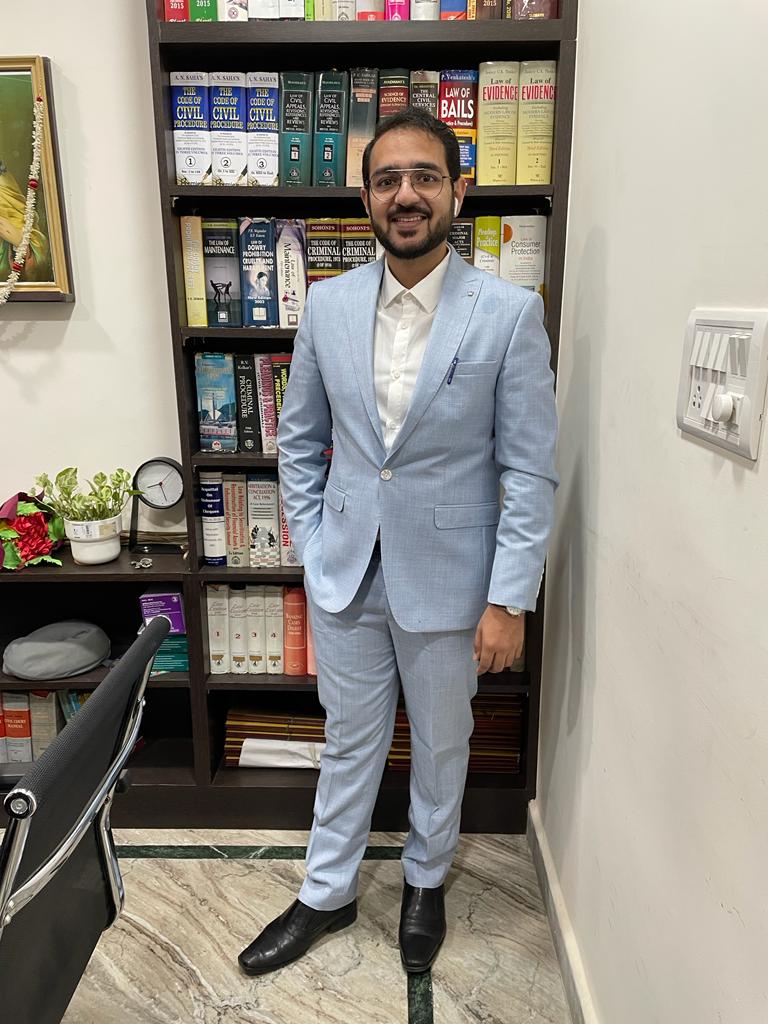
  • Manav Gecil Thomas, Partner at Thomas George and Associates Shares his Thoughts on Networking Strategies in Litigation and Role of Tech and AI in Legal Operations

    Manav Gecil Thomas, Partner at Thomas George and Associates Shares his Thoughts on Networking Strategies in Litigation and Role of Tech and AI in Legal Operations

    This interview has been published by Prabhjot Singh, Priyanka Karwa and The SuperLawyer Team

    What motivated you to take law as a career and how has been the decision so far?

    As all students, I was also confused during my school days as to which profession I should choose. Thereafter, my mom suggested me to take up law in lines of the profession of my father as he has already established a base. I did not qualify CLAT, however, I qualified for UPES, LAWCET and ILS Law College, Pune.

    Keeping the long standing reputation and I decided to join ILS Law College, Pune. All throughout my college life, I enjoyed participating in Moot Court competitions. After completing my law, I immediately joined my father’s law firm i.e., THOMAS GEORGE & ASSOCIATES. Thereafter, my mom was instrumental in insisting me to complete my LL.M.

    I did LL.M in Constitutional Law from O.U.P.G. College, Basheerbagh and secured a Gold Medal which was a lifetime dream come true. My father has been an amazing mentor as he not only trained me in drafting, filing procedures, clerical works but he also gave me the freedom to take up matters and handle them independently from day one …!

    My first appearance itself was arguing a final hearing before the then united Hon’ble Andhra Pradesh High Court of a Criminal Revision Case pertaining to 2008. Ever since then, I have never stopped and I hope to argue many more important cases in the years ahead of my life.

    Arguing the law and interpreting the law are two important facets of my litigation life which I will always cherish. So, though law happened by accident, I am happy to go the way it carries me. There is a unique unexplained sense of happiness that, I feel while arguing cases before different judicial and non-judicial fora throughout the country. With all the tremendous pressures that we as advocates undergo, it is only, that joy that I get, after arguing different kinds of matters that keeps me going ahead…!

    Your internship experiences are filled with reputed Advocates and Judges, was there any roadmap for the same or all did was in flow? How would you guide students in choosing internships?

    As a law student after participating in few moot court competitions, I was inclined towards litigation. My first internship was with my father and mentor who taught me the basic art of advocacy, that includes drafting, filing procedures etc.

    Thereafter, I went on to intern with Designated Senior Counsel Late Padmanabha Reddy where I was mesmerised to see sir argue different kinds of matters at length on his legs from 10:30 AM to 04:30 PM…! I would observe, sir argue most complex matters with utmost patience and he was always calm and composed, the most essential art I learnt. Subsequently, I interned with Adv. S. Niranjan Reddy now Designated Senior Counsel/ Member of Parliament, at whose offices I learnt corporate litigation and its nuances.
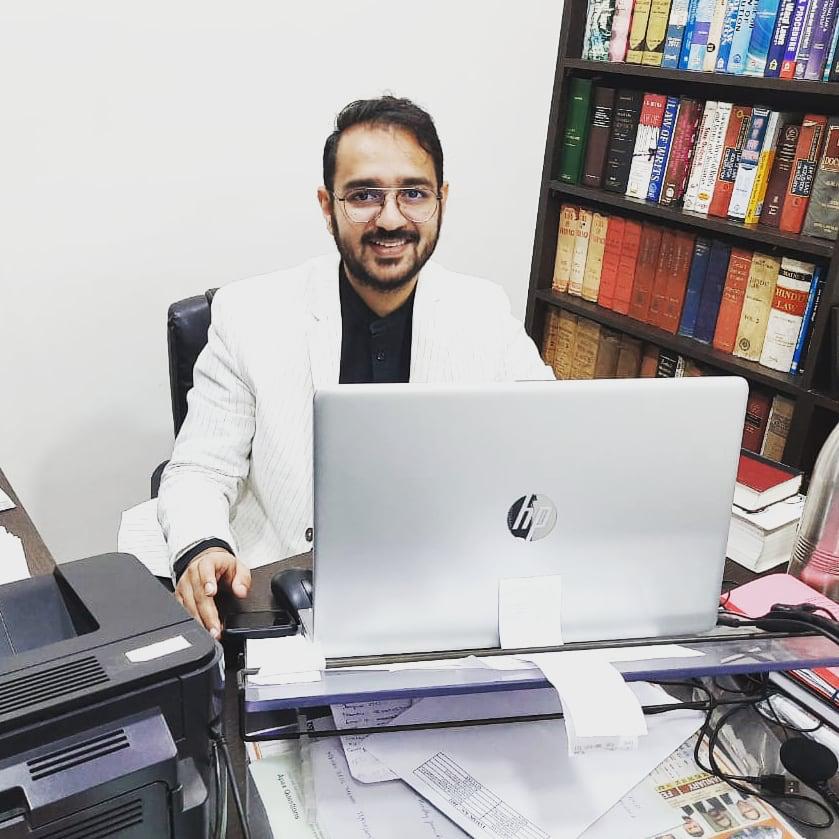
    Thereafter, I had the unique opportunity of working with Honourable Justice Kurian Joseph (Retired), Former Judge Hon’ble Supreme Court of India and while interning with his Lordship, I was able to understand what all goes in the minds of the judges post arguments since, I was also involved in the legal research that would assist judges in arriving at their decisions. I was able to see the judicial process closly that goes on after the arguments and before the judgement is pronounced.

    This experience has channelised my arguments in a slightly different manner and I am dedicated His Lordship for imparting this knowledge in me. Thereafter, I had a short stint with late Advocate Lily Thomas who had shown me no matter whatever hurdles and challenges life throws at us one must keep moving. Lastly, in my final year, I interned with Designated Senior Counsel & Hon’ble R. Basant sir Former Kerala High Court Judge. During this internship I received unique lessons of life & law, wherein I learnt how a mentor can treat his associates, juniors and interns with patience & care and at the same time learnt how hard work and dedication plays an important role in the life of an advocate. Students are not always sure as to what kind of an advocate they want to become after graduating, so it is always beneficial to intern at different places where there are variety of matters.

    Students should always start their internships with advocates who have a variety of trial court matters. In trial courts, students can learn about procedural laws, they can observe Cross Examinations and trial advocacy skills.

    Thereafter, students must intern with advocates practising in the High Courts and then the Supreme Court if possible. After this I would suggest students to intern with different corporate law firms. By the end of their internships, I would say with utmost surety, that, the students will be able to decide their career paths…!

    Manav, any specific reason for choosing litigation over corporate, what created your interest in that?

    I hope my answer to this question does not create any controversy amongst corporate law practitioners. I do not feel that I am made up for only drafting contracts or due diligence as I like to see the law in motion and that, only happens in the courts of law. In litigation, one see and meets different types of clients with different issues and in pursuing those issues one has to appear before different judicial and non-judicial fora and convince the Honourable Judges on unique points of laws and facts. Litigation requires a unique skill of being able to put forth your points with absolute clarity and conviction.

    For the same, one has to be well versed and well abreast with the laws and case laws. In corporate law, there are different nuances of law which are being explored on a day-to-day basis but none of the corporate lawyers are able to see their documents being interpreted in the courts of law. That is why, I choose litigation over corporate law.

    However, one must understand that even though I am a litigating lawyer, on a day-to-day basis, I am dealing with various aspects of corporate law which we cannot avoid being a lawyer. Thus, I believe that the so-called difference between a corporate lawyer and a litigating professional is a grey area which cannot be compartmentalised. So, I fix no label to myself….I leave it to the readers to categorise me as any lawyer they feel based on the work I execute.

    As lawyers, society depends on us in a lot of situations and pro-bono matters is one of them. How far do you resonate with this?

    Society depends on a number of aspects that keeps evolving and law is an important part of this evolving society. The changing needs of the society requires dynamic changes by the practitioners of law. In today’s world where everyone is in the rat race to earn, a lot of poor litigants suffer with inefficient representation as the fees that they can pay is less. I completely believe that in the background of the unique requirements of the society as of today, pro bono matters would definitely assist and help the people in need in a unique and effective manner.

    Many a times, I come across poor litigants who are not guided in the right direction due to which they faced unpleasant consequences. In this background all the us at THOMAS GEORGE AND ASSOCIATES believe in helping the really needy clients and when the situation demands we do take up pro bono matters. In criminal matters I observed that the people arrayed as accused in many matters do not have the necessary sources to finance their litigation expenses and tend to seek help from legal aid.

    Many a times, legal aid is not providing effective and efficient representation thereby rendering the whole purpose futile. Thus, professionals with experience taking up pro bono matters really helps the litigants in need.

    According to you, what networking strategies should be adopted by the first-generation lawyers specifically in litigation?

    The struggles of first-generation lawyers are untold in today’s world. There is no secret mantra that can be told as to the strategies that can be adopted, however, these are a few tools which may come handy in the years to come. Networking is a very important part of litigation which one will understand as they progress in their profession. One must always bear in mind that every person one meets in any walk of life can be one’s prospective client and thus one should interact with people and make them know that one is a practising lawyer.

    There is an apt example for the aforementioned statement of mine; once while I was in a club and while I was on the way to the washroom, I met an acquaintance of mine and in a casual conversation made him know that I am practising in Hyderabad. After a year I received a call by this acquaintance who had referred a very big company for coming on board as their retainer. So, one can land up with a client in any place.

    Keeping in touch with your alma mater and alumni will also help you in being referred matters from different states pertaining to your jurisdiction. Being active on social media can also help to a certain extent. Giving internships to students, is a way of giving back to the society and in return over the years to come, one will see the benefit from the same. Also, one must always remember that hard work pays off and the reason I say so, is your work must speak for yourself and that in turn would result in receiving the due benefits of networking.

    Please elaborate for us your current role

    I am currently the Name Partner at THOMAS GEORGE & ASSOCIATES, Hyderabad. The Managing and Founding Partner of the firm is my father, Advocate Thomas George and the Senior Partner is my mother. This being the background of my firm, the positions that we hold really does not matter for us internally. That being said, on a day-to-day basis I appear on various matters before various Judicial and Non-judicial fora throughout India with my base practice in Hyderabad.

    My entire day goes in arguing matters before different courts of law and in the evening, I spend my time in preparing for matters listed either on the immediate next day or for the days to come and also meet my clients. I supervise the administrative matters of the firm.

    I delegate matters to the juniors/associates at the firm, teach/assign work/cross check the drafts assigned to the Associates/Virtual/Non-virtual interns. I brief the Managing and Founding Partner and Senior Partner of the firm on matters that needs to be argued. I also help my Associates in practising their presentations before the courts scheduled for the next day, so that, they do not face any difficulty.

    So far we’ve seen employees being harassed at workplace wrt different situations, how well do you consider the role of employment laws in the same?

    It is always beneficial for employees to research about the firm where they seek employment before scheduling any interview. I also think it will be beneficial if one can speak to people who worked in the said place prior to joining. The role of employment laws is not very effective as, the internal committee for any kind of harassment consist of members of the same firm.

    Furthermore, if any employee raises a complaint and leaves the organisation the next organisation will always look at this employee with a speck in their eyes and thus there is a fear in employees from making any complaints whatsoever.

    How does AI play a significant role in helping lawyers and what are the consequences for the same?

    AI is already playing a significant role in lives of lawyers. As on today we can see AI’s tremendous use in research while comparing to our senior generation lawyers. The search engines have been extremely helpful in researching for case laws as well as to know overruled decisions, landmark decisions et cetera. Case management has become very simple with the help of various digital applications that provides the statuses of all the matters of the firm with the click of a button. Dictation and drafting have become 10 times easier than what it was with the usage of the software that types out whatever we dictate with almost 90% perfection.

    Another application that I have come across in the recent times is a scanner pen which can be used to copy paste contents from various hard copy of agreements/drafts into the word document. AI will always remain a tool in the hands of a lawyer but can never replace mankind especially lawyers, because, the brain used to interpret law in a unique manner is not AI but it is that unique skill of that lawyer. Furthermore, convincing a judge is done by advocates who present their matters in ways they deem fit which again cannot be substituted by AI. For people who disagree then mankind itself will be overtaken by AI.

    There are also applications that are being developed for taking queries from clients through chat boxes and these apps help in consolidating the client consultations to a certain extent. Such client consultations would in a way save the precious time of lawyers. However, how much ever technology advances, if it lacks  human touch in the works of a lawyer then I believe there will not be effective representation in those cases.

    Manav, we’ve been witnessing students shifting from litigation to corporate or most of the times they dont even take litigation as an option, what can be the reasons for the same?

    Personally, I would like to disagree. In the recent years I have seen many students in fact choosing litigation over corporate law firms. The ground reality is that, as on date, there are no vacancies in many chambers as they are already flooded with young students who have just graduated. However, students do prefer a comfortable and stable life with heavy packages which corporate law firms provide and that can be the only reason that students would prefer corporate law firms over litigation.

    Once litigating lawyers start paying their juniors at least the amounts that are required for the basic survival in the cities they practice, students will definitely choose litigation. What I have observed in corporate law firms is that due to tremendous burn outs over the period of time people shift back to litigation thereby losing their initial precious years of the experience. Students must understand that litigation is like an investment which grows manifolds.

    The life of a corporate lawyer or a judicial officer or a lecturer usually ends upon attaining the age of superannuation, however, the life of an advocate has no age limit and in a lighter note; when all your fellow colleagues are retiring, the practising lawyers start earning even more…!

    Lastly, any piece of advice for our young lawyers

    Repeating what you would have already heard from various stalwarts in the profession, I would like to say that there are no shortcuts to success.

    Hard work, dedication, diligence, perseverance, patience are the keystones to success. We must always remember that success cannot be achieved overnight but it requires tremendous hard work.
    Whenever, we see successful professionals, we only tend to see their achievements without knowing the amount of pain, sacrifices, compromise that they had to undergo to reach the place that they are at today.

    Having patience will definitely play a great role in reaching those heights of success that are channelled for you. One must always remember to maintain a work – life balance which everyone has been talking about in the recent times. One must take time off work, spend time with family and friends as well, which are very important.

    I always tell my hardworking interns not to forget to chill in life. All the best!!!


    Get in touch with Manav Gecil Thomas-

  • Monika Choudhary, on securing 3rd Rank in Rajasthan Judicial Services, preparing for judicial services, and being a Company Secretary

    Monika Choudhary, on securing 3rd Rank in Rajasthan Judicial Services, preparing for judicial services, and being a Company Secretary

    Monika Choudhary graduated from ILS Law College, Pune in 2017. Soon thereafter, she started preparing for the Judicial Services exam. She secured the third rank in the Rajasthan Judicial Services Examination, 2017. Her academic feats also include successfully completing her Company Secretary Course while simultaneously reading the law.

    In this interview, we speak to her about:

    • The process and strategy followed to crack the Judicial Services Examination
    • Tips for facing the nerve-wracking interview
    • The syllabus and books referred to in order to crack the exam
    • Advice to budding lawyers looking at attempting the judiciary exams


    CONGRATS ON YOUR SUCCESS, MONIKA! PLEASE INTRODUCE YOURSELF TO OUR READERS.

    Thank you! And thanks for providing me with this opportunity to connect with your readers 🙂

    Hello everyone. I am Monika Choudhary from Bharatpur, Rajasthan. I have secured Rank 3 in Rajasthan Judicial Services Examination 2017 in my first attempt. I studied law at ILS Law College, Pune and graduated in 2017. Meanwhile, I also undertook Company Secretaries course, which I completed in 2016. I began preparing for Judicial Services examination right after finishing the college.


    WHAT MADE YOU CHOOSE JUDICIARY AS A CAREER OPTION? WHEN DID THE IDEA OF TAKING UP A CAREER IN JUDICIAL SERVICES PROP UP?

    I always knew what I wanted to do but I never knew how. Hence, during my time at law school, I kept myself open for experience and seized every opportunity I got, be it internships or competitions. The more I explored the more I figured that judiciary was the answer to my how.

    I desperately wanted to be instrumental to the change I wanted to see in the world, being part of Judiciary would allow me to do just that. Toward the end of the final year of law school, I had made up mind to prepare for judicial exams.


    WHAT IS THE PATTERN OF THE RJS EXAM?

    Like most judicial services exam, RJS exam comprises of three levels- objective type Preliminary Examination, Written Mains Examination and Interview. The preliminary exam is a hundred marks paper without any negative marking. Out of which seventy per cent weightage is given to law subjects and remaining comprises Hindi and English grammar.

    Mains consists of four papers; Law paper I and Law paper II (each three-hour duration) and English and Hindi essay papers (each two-hour duration).


    TELL US ABOUT YOUR OVERALL STRATEGY FOR RJS PRELIMS.

    There were four pillars to my preparation: Bare Acts, Textbooks, previous year papers and mock test papers.

    Syllabus for mains and pre is quite similar, hence I did not prepare for them separately. However, my mindset and approach for each level were very different.

    I made sure I was thorough with the bare Act before I delved into other sources, but some rather intricate subjects like Evidence and Transfer of Property Act, Contracts law required a simultaneous reading of bare Act and textbooks. I prepared notes from textbooks for most of these subjects and maintained a list of case laws that I needed to remember.

    It’s important to understand that for certain subjects like Juvenile Justice Act, POCSO, Probation Act etc. only reading bare act may be sufficient. But for other major laws such as Evidence, Constitution etc., doing the same would not meet the requirements of the exam.

    For updating myself with current happening in the legal world and latest judgments I relied upon sites such as- Live Law, IndianKanoon, SCC online blog etc.

    For whole one month before the prelims exam I restricted myself to bare Acts and self-notes and followed a simple mantra- Revise, Revise and Revise. During this period I diligently attended as many mock tests as possible to get the understanding and feel of the exam.


    TELL US ABOUT YOUR OVERALL STRATEGY FOR RJS MAINS.

    As I mentioned earlier prelims and mains don’t require separate preparation, I would only mention additional things that I did for the mains.

    Firstly, I did not try to prepare perfect notes at once (Rome wasn’t built in a day! :-)), I kept on updating my notes and revised them regularly.

    Secondly, mains being a written type paper I practised solving as many previous year question papers as I could lay my hands on. It not only helped me understand areas that needed more attention but also equipped me to manage my time well in the examination hall.

    Moreover certain portions such as judgement writing, essay writing only form part of mains syllabus. For preparing essays, topics can be divided into categories such as Rajasthan and its culture, Legal Topics, Contemporary socio-economic issues etc. I prepared model essays for probable topics and practised writing three to four essays per week.

    In retrospect, I feel this should ideally be done before prelims itself.

    Since this year, the paper pattern of RJS has undergone sea changes. Now, problem or case law based questions are asked more than ever. It means that a rote learning of bare act and case laws won’t suffice. One needs to develop the ability to apply the law to any set of given facts. Reading judgements and solving problem-based questions will prepare one to think like a judge and enhance the application of judicial mind.


    HOW DID YOU PREPARE FOR YOUR INTERVIEW?

    My family and friends were my guiding stars during interview preparation. Based on the feedback I received from them, I worked on the areas that needed improvement. In addition to that, mock interviews proved to be of great help as they alleviated my doubts and fear of actual interview.

    A typical interview involves questions based on the following – personal and academic background; current and general knowledge; and Legal knowledge. For all these, I prepared a list of FAQs with precise answers. I also watched the UPSC mock interview on Youtube to get further insights.

    To sum up, since an interview is an assessment of your overall personality, the key to a successful interview is to understand your strengths and weakness and work over it. Don’t be afraid to state your opinion, DON’T give generic answers and be spontaneous.


    CAN YOU SHARE YOUR BOOK LIST FOR ALL SUBJECTS/PARTS (PRELIMS AND MAINS?)

    I referred to following standard books-

    Constitution: M.P. Singh

    Contracts/Partnership/Specific Relief: Avatar Singh and R.K. Bangia

    Torts: R.K. Bangia

    Transfer of Property Act: R.K. Sinha

    Family law: Poonam Pradhan

    IPC: P.S.A Pillai

    Evidence: Batuk Lal

    CPC: C.K. Takwani

    CrPC: R.V. Kelkar

    Hindi Essays (Raj): Rajasthan Adhyayan, R.B.S.E

    Hindi Grammar: Vyakaran Rachna, R.B.S.E

    Previous year papers: Universal’s Guide to Judicial Service Examination

    Other books that I referred to include – law guide for Judicial Service Exam by A.K. Jain, Universal’s DJS Examination by Shailainder Malik.

    I would like to issue a caveat here- reading these books cover to cover is very time consuming and unnecessary, instead a selective approach should be adopted.


    WHEN DID YOU START PREPARING FOR THE JUDICIAL SERVICES? FOR HOW LONG DID YOU PREPARE AND HOW MANY HOURS DID YOU PUT IN?

    I started preparing for the judiciary in September 2017 and appeared for mains in September 2018, so roughly it involved twelve months.

    Initially, I tried to put in a fixed number of hours every day. However, it was hard to put six hours on days like Diwali but easier to put eleven hours on a regular Wednesday. So, I divided syllabus in modules and set up weekly and monthly targets instead.


    WHAT WERE SOME CHALLENGES YOU FACED AND HOW DID YOU OVERCOME THEM?

    I dreaded writing Hindi essay, I was out of practice and writing a full-length essay on a topic is already hard enough. I overcame this challenge by reading Hindi newspaper and practising writing a few pages daily.


    WHAT WERE THE MOST IMPORTANT ‘RIGHT THINGS/STRATEGIES’ YOU IMPLEMENTED?

    What really worked for me was the cliché’ stuff that I read in the interviews of people who had cracked competitive exams. Such as- keeping things simple. Sticking to a schedule. Regular revisions. Staying positive etc. I figure it is cliché because it really works. It did for me.


    HOW WAS YOUR INTERVIEW AND WHAT SORT OF QUESTIONS WERE ASKED?

    My interview was a really good experience. It lasted for about 25 minutes and I was asked approximately 15 questions. A wide variety of questions were put to me, some general question such as –Why did you pursue CS; Why RJS?

    A few opinion based questions such as- What is your opinion on the Sabrimala Temple issue and Triple Talaq Judgement? They further made me draw an analogy between the two.

    Others were purely legal questions like – Differentiate between “Due process” and “procedure established by law”; What are exceptions to Section 300, IPC?; What is the most important ingredient in an offence of conspiracy? State two judgements related to conspiracy.

    Contrary to general perception the atmosphere in the interview room was not intimidating. I was greeted with a smile and the panel even cracked a few jokes in between.


    DID YOU TARGET ONLY ONE STATE’S EXAMINATION OR MULTIPLE STATES’? IN CASE OF MULTIPLE STATES, HOW DID YOU CHANGE YOUR STRATEGIES FOR EACH STATE?

    As my primary aim was to be a judge, I did not restrict myself to any particular state. I appeared for Delhi judicial services, 2017 and Madhya Pradesh Judicial Services, 2018. I qualified for mains in both the exam, but did not write for MP as the final result of RJS had already been declared by then.

    The core subjects for all judiciary are pretty much the same, with the difference of local law, general knowledge and a few subjects here and there. Two to three weeks prior to sitting for the examination, I studied subjects peculiar to those judiciaries and revised the core law subjects.


    WHAT ROLE DID ILS LAW COLLEGE HAVE IN SHAPING YOUR INTEREST TOWARDS THE JUDICIARY?

    ILS has been pivotal in shaping my views and understanding of life. It helped me understand the legal world by providing a platform to learn from and interact with the best of the professors. The invigorating atmosphere of debate and discussions at ILS opened my mind to different ideas and perspectives. The peer learning kept me on my toes while at the same time prepared me well to fight any competition.

    All this played a great role in shaping my personality and developing the confidence to pursue what I wanted.


    DID YOU OPT FOR CAMPUS PLACEMENT?

    No. Towards the end of law school it had become very clear that working in law firms and companies did not appeal to me.


    WHERE DO YOU SEE YOURSELF IN THE FUTURE (IN TEN YEARS OR SO)?

    Giving another interview to you guys! 🙂 Jokes apart, I haven’t planned so far in future. I intend to keep learning and giving my best in every opportunity that comes my way.


    WOULD YOU LIKE TO GIVE ANY TIPS OR ADVICE TO THE STUDENTS ASPIRING FOR JUDICIAL EXAMINATIONS?

    A popular saying goes, well begun is half done. Start strong from the beginning and don’t slack off till you have achieved your goal. Set plausible time limits for clear targets and challenge yourself to stick to it. With a positive attitude, right strategy and hard work, success will be yours.


    ANYTHING ELSE YOU’D LIKE TO TELL OUR READERS?

    NEVER LOSE IT.

    Whatever you want to call it; Maina. Ambition. Hope. Faith. Conviction. There might be times when there is not enough of it. There might be times when you hit the rock bottom.

    Do not hesitate in asking for a helping hand. Whoever lifts you up. Friends. Family. Yourself.


  • Shruti Tripathi, Assistant Public Prosecutor, CBI, on preparing for the exam and securing rank 2 in JRF exam

    Shruti Tripathi, Assistant Public Prosecutor, CBI, on preparing for the exam and securing rank 2 in JRF exam

    Shruti Tripathi graduated from ILS Law College, Pune in 2016. Right after graduation, she did her Masters in criminology from Banaras Hindu University.  She also secured rank 2 in JRF/ NET exam conducted by UGC. She then went on to pursue UPSC(CBI(APP)). She shares her valuable insights with our readers on her experience along with advice on how to crack the exam.

    In this interview, she talks about:

    • Her reasons for choosing law.
    • Her strategy for the preparation of the UPSC(CBI(APP)).
    • Advice to prospective law students aiming to make a career in UPSC(CBI(APP)).


    HOW WOULD YOU LIKE TO INTRODUCE YOURSELF TO OUR READERS?

    I thought I didn’t need introductions anymore. Anyway, jokes aside, I would simply describe myself as a stoic. As a day-dreamer and a sloth, I am quintessentially an ambitious soul trapped in a lazy body. My mind is a battleground, wherein there are more losses than wins. Proving people wrong at every step is an utterly satisfying feeling and continuing to do so is pretty much what sums up my existence right now.  I was supposed to keep it short, so moving on now.


    HOW DID YOU DECIDE TO PURSUE LAW?

    Looking at the hindsight I guess it was destiny, really. I was a Science group district topper from Varanasi. The entire North Indian neighborhood expected me to pursue engineering but, I was always drawn towards the enigma that my father’s chamber had to offer.(Yes! He was the Chairman, UP Bar Council, that time). And if I were allowed a bit of dramatics, Law was running down my family’s blood vessels and that’s how I happened to Law & ILS Law College, Pune happened to me. Don’t judge me for my bad theatrics, I am still learning.


    PLEASE TELL US ABOUT YOUR PREPARATION FOR JRF EXAM IN WHICH YOU SECURED RANK 2? WHEN DID YOU START PREPARING FOR UPSC(CBI(APP))?

    Honestly, I wasn’t really aware all these exams ever existed. Like every other legal aficionado, I had my eyes set at cracking my state judicial exams. I still have that dream, though. Nevertheless, like every other government sector exams which test the threshold of one’s patience, judiciary vacancy never came after 2016. So, the waiting period opened up the Pandora’s Box for me and I realised that there was more to law than just judiciary and litigation. Therefore, I started filling all the forms that I could manage and that’s how I ran into UPSC via CBI(APP)

    Since I had done my Masters in criminology from Banaras Hindu University, I was eligible for examinations for PHD and Assistant Professor, NET/JRF exams formerly conducted by UGC. The syllabus was similar to the judicial service examinations with a little modification. I qualified for Centre sponsored fellowship program(JRF) that awards scholarship up to 30k per month to the research scholars. So, I joined as a research scholar in BHU, shortly after being awarded JRF & started hogging on to that money: the money I never knew even existed.


    HOW DID YOU START PREPARING FOR THE EXAMS? DO YOU THINK COACHING IS A PREREQUISITE TO CRACK THIS OR ANY EXAM?

    Preparation for any competitive exams is a tough mistress and is notorious for going haywire, if executed without a pattern. While there isn’t any yardstick to articulate whether or not an individual will need a coaching, the secret recipe is the right form of guidance & a continuous thrust in the appropriate direction, to keep one motivated throughout the entire preparation period(As it gets really frustrating after a point of time).

    Personally, I joined an institution, Varanasi Law Academy, managed by Praveen Dubey sir. Honestly, the kind of command he has over all the subjects including the ready-to-use dossier on the ever increasing career alternatives in legal field is quite enthralling.

    WHAT WAS THE ROUTINE YOU FOLLOWED EVERYDAY THROUGHOUT THE COURSE OF YOUR PREPARATION?

    It was just get up, eat, sleep, and repeat. Adjusting study routine somewhere in between the important endeavours was the arduous task. Sincerely, preparation is all about wasting time and then end up feeling guilty about it. No matter how much you study, there’s always this humongous section of the day, where you didn’t. Each day the fight was to atone for that lost stretch.

    On an average Day, I stole more time from the first half of the day for tough concept based studies & learning gig, while latter part of the day was devoted to making notes and solving question papers.


    WHAT WAS YOUR STUDY PATTERN? PLEASE MENTION SOME OF THE BOOKS YOU REFERRED TO AND HOW DID YOU GO ABOUT PREPARING FOR EACH STAGE OF THE EXAM?

    It might sound preachy, but success indeed knows no shortcuts. Neither notes, nor any coaching materials are going to help you unless you go back and do it conventional way, that is, the Textbooks. Any book which resonates with your style & understanding level is a good book.

    I referred Takwani for Administrative law and CPC, Pillai for IPC, Avtar Singh for evidence and contract law, H.O. Agrawal for international Law & so on and so forth. I prepared my own notes, conducive for my slow processing brain, and would suggest everyone to do that, for law at least.


    WHAT DID YOU DO TO KEEP YOURSELF MOTIVATED ALL THE TIME DURING THE COURSE OF PREPARATION?

    As I said the primary Fillip to my Preparation module was My Teacher, My guide, My mentor, Praveen Sir. Another pillar to my vital mental sanity was & is my Mother, Anita Tripathi. I am just her conceptualised handiwork and owe everything I have, to her endurance and unwavering willpower.

    For the other times where my mind gave up on me, I tried indulging myself in my poor musical taste and gulping down whatever I got. Having a cup of coffee by the window on a rainy day with my favourite author was therapeutic enough to get me through worst of days.


    COULD YOU PLEASE GIVE SOME TIPS TO THOSE ASPIRANTS WHO ARE PREPARING FOR THIS EXAM? HOW SHOULD THEY GO ABOUT PREPARING DIFFERENT SUBJECTS LIKE GENERAL AWARENESS, OPTIONAL PAPER OF LAW?

    There are no shorthand tips when it comes to exams like these. All I can say is having a robust dominance over the bare acts of all the subjects will give an assured and unqualified edge to the candidate over others. For remembering bare acts, I suggest all the novices to start by splitting the subjects into batches and then having it off pat by the correlation method. That would make it easier and less tiresome.

    General awareness, well, I am sorry for the cliffhanger there, but that’s still a sixty-four dollar question for me too. You got to study all your history, geography and economy and current affairs and yet have to pray to be fortunate enough to be able to touch those minimum qualifying marks. At least that’s how it was for me.


    PLEASE TELL US ABOUT HOW DID YOUR INTERVIEW? HOW SHOULD A LAW STUDENT APPROACH THE INTERVIEW FOR THESE EXAMS?

    Haha! I totally savaged my own interview. I still remember passively crying over how bad I was in that room. One experience that I took back home that day was, that no one can prepare you for interview. Inside that space, in front of the panel, you forget that you were told not to be nervous, or to sit straight or not to fidget with hands & you are back to being yourself. And there’s where the key to cracking any interview is, my friends, be you.

    Cliché as it may sound, but that’s what helped me. So, prepare for that panel since day one of your preparation. Act like you have been shortlisted & have to appear before a panel the day after so that the day you enter that room, which you definitely will, you are just yourself; the sheer perfection.


    WHAT WOULD BE YOU MESSAGE TO THE LAW STUDENTS WHO WANT TO PURSUE THEIR CARRIER IN THE FIELD OF LAW?

    Notwithstanding the fact that I don’t see myself as someone who could remotely give a message of great or any consequence for that matter, I’d surely like to write off my experience for future references. I’d suggest don’t be prejudiced against or oriented towards a particular career option. There are plethoras of option we aren’t conscious about. Also, don’t judge your success on the parameters of others, that’s a trouble-free road to depression & frustration; tread on your own risks. Be vigilant; be assiduous while simultaneously being indolent and blithe.

    Here’s me signing off without further ado. Hope you find something helpful or entertaining, to the least, in the excerpt.


  • Kunal Endait, Head Litigation & IP, Mintkart India, on career in media law, and experience as an in-house counsel

    Kunal Endait, Head Litigation & IP, Mintkart India, on career in media law, and experience as an in-house counsel

    Kunal Endait completed his graduation from ILS Law College, Pune. He then went on to pursue his LL.M from NLSIU. He is currently in-house counsel (Head Litigation & IP) at Mintkart India Pvt Ltd (formerly EBay India and a Flipkart group company). He has over ten years of professional experience and has experience of working in media and newspapers industry. He is skilled in litigation, negotiation, and transactions along with corporate advisory. He shares his experience as a lawyer, in house counsel and a writer.

    In this interview, we speak to him about:

    • Roles and responsibilities as chief manager-legal at Bennett, Coleman & co. Ltd
    • Experience as an in-house counsel at various organisations
    • Choosing a career in media law
    • Importance of writing research papers.


    HOW WOULD YOU LIKE TO INTRODUCE YOURSELF TO OUR READERS?

    A lawyer, born and brought up in a lawyer’s family. I did my graduation in law from ILS and post-graduation from NLSIU. Law comes to me as heredity and I always knew right from the beginning that I wanted to become a lawyer as I had observed my father’s efforts, dedication, knowledge and respect he commended by his popularity as a successful advocate, which were sufficient considerations for me to decide my career path at the very threshold. Frankly, I never thought of any other conventional courses and my goal was fixed right from the beginning.


    PLEASE TELL YOU SOMETHING ABOUT YOUR COLLEGE LIFE? HOW INSTRUMENTAL HAS YOUR COLLEGE BEEN SHAPING YOUR CAREER?

    While I always wanted to opt for law, my parents had a fair expectation that I should make all endeavours to secure my candidature in premium law institutes. To my luck, I secured my seat in one of the best institutes, ILS, Pune. Let me also be candid here, coming from then under developed part of the country and that too from vernacular medium (I belong to Dhule district, Maharashtra), I was skeptical if I would be able to continue with ILS, but then I interacted with my faculty, who all guided me throughout my law curriculum and also made some of my best lifetime friends, who all have always supported me throughout my journey. I was a sport rather cricket follower and would often participate in the various intercollege/university tournaments and that also added to my confidence. Internet and other online resources were yet impact the market then, hence I could spend quality time with books and library of my college. ILS has one of the best law books collection and luckily, I was benefitted. I was not much of bookish person, but always loved reading legal texts, if not literature. I would also like to mention my professors Shri. Deshmukh, Shri. Jaybhay, Bhadbhade Madam, Bhatia madam, who are all known to be the best and they indeed added a lot to my life as their student.


    WHAT MOTIVATED YOU TO GO FOR A MASTERS PROGRAMME?

    It was my father, who suggested that I should contemplate taking up further studies. I was looking at multiple options at that time, including civil services, foreign studies and assignments, however, I found my father’s suggestion quite convincing, though he insisted that I should make efforts to take up my masters in the premium law school. Around the same time I came across NLSIU masters program advertisement in newspaper and I applied for their entrance test. I did not have much of time to prepare for entrance exams, however, my final year of LL.B studies helped me and I got through the entrance test and that’s how I got into NLSIU. I must acknowledge contribution of my professors Prof. Viaykumar, Prof. M K Ramesh, Prof. Devidas, Prof. Ajjappa and others for their kind guidance.


    PLEASE TELL US ABOUT YOUR TIME AT LAWYER’S COLLECTIVE. WHAT LED YOU TO SHIFT TO AN IN-HOUSE ROLE AFTER WORKING IN LITIGATION?

    I owe Lawyer’s Collective as it taught me extensively post academic life and helped me grow as a professional. When I was about to submit my dissertation for my masters, Lawyers Collective happened. I joined them with their HIV/AIDS unit as Legal Officer and was looking into litigation matters for their clients. HIV/AIDS Unit was providing pro bono legal support to the deprived and discriminated people. This came across as the best opportunity I could have asked for. I got to handle plethora of matters involving constitutional issues, writs, criminal issues, civil and property related disputes etc. Nevertheless, the best part was to work directly with Mr. Anand Grover (Sr. Counsel), who was heading the team and the guiding force behind the strategy we would devise to contest matters for our clients then. Gradually, I started handling firm’s matters and that’s when I received extensive exposure to constitution and writ side issues. Mr. Grover is very particular and would often make us read common law judgements, because of which the team also received exposure to common law authorities. Lawyers Collective offered me an opportunity to work on the projects involving property and inheritance rights of women in Indian sub-continent. I visited Sri Lanka and Bangladesh sometimes around 2008, met lawyers, NGOs, Human rights activists etc and that added immense value to me not only as a lawyer but as human too. Working with Mr. Anand Grover as an honour. I would like to also acknowledge contribution of my then Manager, Mr. Vijay Hiremath, who also guided and supported me throughout my stint, he is a successful counsel and continues to guide me even now.


    YOU HAVE DIVERSE EXPERIENCE AS IN-HOUSE COUNSEL AT VARIOUS ORGANISATIONS. WHAT IS THE NATURE OF WORK OF AN IN-HOUSE COUNSEL?

    I feel in-house lawyer cannot really summarise his/her work in a short one page write up. It is always the variety of issues that the in-house counsel needs to address to on a regular basis. Mind you, unlike other sectors, in-house legal team needs to be on its toes as any issue impacting your employer’s interest would have to first run past through the legal team and therefore opinions and advises are required to be issued with real rapid pace, that too ensuring correctness in the advice.

    In my small span of in-house I have handled litigation (civil, criminal, consumer, IP, constitutional etc.), contracts, corporate advisory, notices (private, law enforcement), HR related issues, business transfers along with variety other.

    WHAT WOULD BE YOUR WORD OF ADVICE TO STUDENTS INTERESTED IN MEDIA LAW?

    Being a media lawyer is a responsibility, not only towards your organisation but society at large. Your advice would have bearing on your reader/viewer’s right to know, a fundamental right that enables every individual to have access of every affair that is taking place around him/her in the society and country. Importantly, working into media sector is almost 24/7 assignment and you must always act proactively. Media law is a key sector and those who wish to choose this as their career must bear in their mind that the constitution of India is extremely instrumental in this field along with media and broadcast, press laws. I have enjoyed my time with multiple media entities and I am extremely proud of that. As an in-house, one should indeed explore media opportunity, I feel.


    AS CHIEF MANAGER-LEGAL AT BENNETT, COLEMAN & CO. LTD WHAT WERE YOUR ROLES AND RESPONSIBILITIES?

    I was a team member of their litigation portfolio for the western region of India. Simultaneously was responsible for corporate advisory, property related issues, checking legal compliance, engagement with law enforcement agencies, variety of contracts and the most importantly working with Mr. Amit Rai directly under his guidance. I would like to mention Mr. Rai especially as he is my Guru, who has taught me extensively on the media laws, apart from being a great professional, he’s extremely caring boss and you have a lot to learn from him, particularly his leadership skills and his in-depth hold on law subjects and related issues. It was a fulfilling experience working under Mr. Rai’s leadership at Bennett, Coleman & Co. Ltd.


    IF ANY STUDENT WISHES TO INTERN WITH BENNETT, COLEMAN & co. Ltd WHAT IS THE PROCEDURE FOR APPLICATION?

    Bennett, Coleman & Co. Ltd has its own legal department and the students may approach the team through HR department, who will guide them in a better manner.


    YOU HAVE RECENTLY MOVED TO MINTKART INDIA PVT LTD (FORMERLY EBAY INDIA AND A FLIPKART GROUP COMPANY) AS IN-HOUSE COUNSEL (HEAD LITIGATION & IP). WHAT FACTORS INFLUENCED YOU TO MOVE TO EBAY?

    I think e-commerce is a fast paced sector and would present multiple legal challenges, opportunities for learning as well value addition for a lawyer. It is a privilege to be associated with the market leader, Flipkart, particularly when I will have an opportunity to explore global scenarios through the platform. It is also interesting to work closely with the team in the wake of recent takeover of Flipkart by Walmart.


    HOW CAN A LAW STUDENT APPLY FOR INTERNSHIP AT THE LEGAL DEPARTMENT OF MINTKART INDIA?

    I would advise students to get in touch with HR team of the company and they will guide you through the process.


    YOU HAVE AUTHORED NUMEROUS RESEARCH PAPERS. WHAT SHOULD BE THE APPROACH OF A STUDENT WHILE TAKING UP THE TASK OF AUTHORING A RESEARCH PAPER. WHAT ADVICE WOULD YOU GIVE TO LAW STUDENTS TO IMPROVE THEIR LEGAL WRITING SKILLS?

    I firmly believe, the research papers/thesis cannot be carried out based on hear say or for that matter using internet resources. Most of my research papers were based on empirical research and experiences. For instance, I had authored a research paper on the plight of refugees and legal remedies for them, and for the said project, I had spent 3 days in a refugee camp and interacted closely with the victims and aggrieved people. Getting firsthand knowledge is extremely crucial and one must not rely solely on the third party data. I had implemented similar methodology during my visits to Sri Lanka and Bangladesh.


    YOU HAVE THE EXPERIENCE OF BOTH LITIGATION AS WELL AS IN-HOUSE ROLES. PLEASE TELL US ABOUT THE DIFFERENCE IN BOTH FIELDS. WHAT FACTORS SHOULD A YOUNG LAWYER/LAW STUDENT KEEP IN MIND BEFORE DECIDING WHICH FIELD TO CHOOSE?

    I feel there isn’t much difference, its just that the terminologies very from external clients to internal clients/stakeholders. While I have worked as a practicing counsel as well, in-house has little difference that you must have all round industry knowledge and that yours advises require should be self-sufficient. By that I mean to say that in-house counsel’s advice should be extremely helpful for your external counsels that they merely have to argue the matter based on the in-house advice. Both complement each other.


    WHAT WOULD BE YOUR PARTING MESSAGE TO OUR READERS WHO ARE PRIMARILY LAW STUDENTS AND YOUNG LAWYERS?

    Go for it. Law is a sector, which does not only offer you monitory growth, but will also offer you feeling of adding values to society at large as the core purpose of legal system in our country has this basis. Time is changing, law is no longer what it was, we have ample opportunities, please join the league.


  • Sonam Taneja, Programme Manager, Food Safety and Toxins, on career in indirect tax and Food Safety laws and policies in India

    Sonam Taneja, Programme Manager, Food Safety and Toxins, on career in indirect tax and Food Safety laws and policies in India

    Sonam Taneja graduated from ILS Law College, Pune, in 2010. She currently works with Food Safety and Toxins division at Centre for Science and Environment as programme manager. She has close to eight years of work experience. She also has expertise in Indirect Tax and has worked as senior associate at Lakshmikumaran and Sridharan.

    In this interview, she talks to us about:

    • Her role and responsibilities as Programme Manager –Food Safety and Toxins at Centre for Science and Environment
    • On career in Indirect Tax
    • Importance of mooting in college

    HOW WOULD YOU INTRODUCE YOURSELF TO OUR READERS?

    I am a lawyer, working in the field of food safety policy at one of India’s leading environment policy think tanks. I am passionate about laws and policies that impact the way we eat.


    WHAT FACTORS INFLUENCED YOU TO CHOOSE LAW AS A CAREER? WHY DID YOU CHOOSE ILS LAW COLLEGE FOR PURSUING LAW?

    I was a science student in school. While I enjoyed the logical approach in science studies, my interests lay in reading, writing, questioning and public speaking. Apart from engineering, I had applied for English honours and law at ILS Law College. ILS has always had a very good reputation, when I got through ILS, I just went for it!


    PLEASE TELL US ABOUT YOUR TIME AT LAW SCHOOL. HOW WAS YOUR APPROACH TOWARDS ACADEMICS WHILE IN COLLEGE.

    ILS has an ‘intellectually stimulating’ environment. There is a strong culture of senior students helping and mentoring juniors. ILS gave us the freedom to spend our time after classes the way we liked. I chose to be a part of several co-curricular and extra-curricular activities at college.

    Coming from a science background, initially, I found theory subjects challenging, but gradually caught up. I had always been an academics-oriented student and my scores did matter to me.


    HOW IMPORTANT ARE EXTRA CURRICULAR ACTIVITIES TO A LAW STUDENT.

    I think extra-curricular activities are important everywhere, every time in life. It helps shape a well-rounded individual. ILS has a very good culture of dramatics, dance, music and sports. It was an amazing experience for me to be a part of some of these and closely observe the others.


    YOU HAVE REPRESENTED YOUR COLLEGE AT PRESTIGIOUS MOOT COURT COMPETITIONS. HOW SIGNIFICANT IS MOOTING FOR LAW STUDENTS?

    Participation in moot courts can add a lot to one’s confidence in terms of public speaking, thinking on your feet and working under pressure. I have applied those learnings very often in my professional life.

    But then, nothing is a one-size-fits-all solution. I believe one should continue to get out of one’s comfort zone, whatever be the route. Moot courts were challenging for me and participating in them was my way of pushing myself.


    HOW DID YOU SECURE YOUR FIRST JOB? HOW IMPORTANT DO YOU THINK A HIGH CGPA/PERCENTAGE IS FOR RECRUITERS?

    I was interning at the Delhi office of Lakshmikumaran & Sridharan in my final year and that is when I got an offer. I think marks can reflect sincerity in a candidate to recruiters, but if I was recruiting, I would keep my cut-off for marks at just average and look for a candidate with the right attitude and a learning aptitude.


    WHAT WOULD BE YOUR ADVISE TO READERS WHO ARE INTERESTED TO PURSUE INDIRECT TAX IN THEIR CAREER?

    Indirect taxation has recently seen a makeover since the inception of Goods and Services Tax. I am not in the field right now, but for those interested, I think this would be a great time to be in the field and see a new law shaping up.

    Lawyers play a very crucial role in this field but atleast in ILS, taxation was an optional subject, indirect taxation being just a part of it. If one is interested, getting the exposure during law school by way of diplomas and optional subjects is a good starting point. Another crucial step is to plan internships with good law firms practicing the subject.


    HAVE YOU EVER FELT THE NLU AND NON- NLU DIVIDE? DO YOU THINK IT IS A CONSIDERATION FOR EMPLOYERS?

    Thankfully, no. LnS is a great place to work in many ways including this one. Hard work and merit is valued there and I didn’t feel any NLU and non-NLU divide.


    PLEASE TELL US ABOUT YOUR CURRENT POSITION AS PROGRAMME MANAGER, FOOD SAFETY AND TOXINS AT CENTRE FOR SCIENCE AND ENVIRONMENT. WHAT ARE YOUR ROLES AND RESPONSIBILITIES?

    I have been working in this position for over two years now and to say the least, it has been an amazing experience. I love the field of food related laws and policies. At CSE, I work on policy issues relating to organic farming and organic food in India, labelling and advertisement of packaged food, regulation of pesticides in India and pesticides’ residues in food etc. We closely analyse legal and policy developments relating to these subjects and based on our research of international best practices, we comment on new regulations and policies.


    WHAT ADVICE DO YOU HAVE FOR OUR READERS, WHO ARE PRIMARILY COLLEGE STUDENTS?

    Law is a beautiful field and it opens a lot of doors for us lawyers. It is crucial to love what you do and in order to know that, it’s a great idea to explore the professional options that being a lawyer gives you. College is a great time for that. It’s important to get out of your comfort zone and try new things.

    Prioritising and managing time is very crucial.


  • Tapasya Parihar, AIR 23, UPSC, shares her experience and advice on cracking the Civil Services Exam

    Tapasya Parihar, AIR 23, UPSC, shares her experience and advice on cracking the Civil Services Exam

    Tapasya Parihar is a graduate of ILS Law College, Pune in the Batch of 2015. After graduating from one of the most premier law schools in the country, she decided to pursue a career in Civil Services. She shares her valuable insights with our readers on her experience with the UPSC  along with advice on how to crack the toughest exam in the world.

    In this interview, we talk to her about:

    • Her reasons for choosing law
    • Advantages of having law background in CSE
    • Her advice for our readers on cracking the CSE.


    HOW WOULD YOU LIKE TO INTRODUCE YOURSELF TO OUR READERS?

    I hail from a small village in Madhya Pradesh. My father is a farmer and my mother is the Sarpanch of the village. I did my schooling from Kendriya Vidyalaya Narsingpur. Thereafter, I did my graduation in Law from ILS Law College, Pune.


    PLEASE TELL US ABOUT YOUR PRE-COLLEGE LIFE. DID YOU ALWAYS PLAN ON PURSUING CIVIL SERVICES?

    I decided to pursue civil services after I got my 12th board exam results. I had got a good rank in the merit list and that is when I decided that I would prepare for UPSC CSE.


    HOW DID YOU DECIDE TO PURSUE LAW?

    My stream was science in twelfth std., but I didn’t want to go for engineering. Moreover, one needs to be a graduate to appear for the CSE. Therefore, I chose law keeping in mind my long-term goal of joining civil service, as I believed the study of law would facilitate better administration.


    WOULD YOU SAY YOUR BACKGROUND IN LAW HELPED YOU IN PREPARING FOR CIVIL SERVICES?

    Yes, it definitely did. Basically, there is an overlap between the law syllabus and the GS subjects. Also, understanding of law helped me understand the newspaper articles better, especially the polity related issues and international affairs. Moreover, a study in law develops a different attitude, which makes a person more aware of the Constitution, rights and duties of the people and various other social issues, which come in handy during the preparation for civil services.


    WHEN DID YOU START PREPARING FOR CIVIL SERVICES?

    I started preparing immediately after finishing law school, i.e., in 2015.


    HOW DID YOU START PREPARING FOR THE CIVIL SERVICES EXAM? DO YOU THINK COACHING IS A PREREQUISITE TO CRACK THIS EXAM?

    I came to Delhi to prepare for the exam and I joined a coaching class therefor. However, I would not say that coaching is a prerequisite to clear this exam. It actually depends on the person and his/her level of understanding of the basic subjects. And after having a bad experience with the coaching class, I would suggest the aspirant to go for self-study, as the reading material required to study for this exam includes NCERT books and graduation level reference books, which need not be taught in any class.


    WHAT WAS THE ROUTINE YOU FOLLOWED EVERYDAY THROUGHOUT THE COURSE OF YOUR PREPARATION?

    My everyday plan was part of a bigger plan wherein I had divided the syllabus into different subjects, which were to be completed in a certain number of days. Then, every day I would make a to-do list of all the topics to be covered from that particular subject on that day. Also, to study effectively, I had divided my day into different sessions of 45 minutes each with a break of eight minutes. This I did with the help of an application that has the Pomodoro Clock (I used the Goodtime app, but many more apps like this are available on Google Play Store).


    WHAT WAS YOUR STUDY PATTERN, THE MODE OF STUDY (ONLINE, OFFLINE ETC.,) PLEASE MENTION SOME OF THE BOOKS YOU REFERRED TO AND HOW DID YOU GO ABOUT PREPARING FOR EACH STAGE OF THE EXAM?

    My study pattern was a mix of both. Some topics I did from the NCERT books and the reference books, the remaining I did from various online sources which include online portals like www.insightsonindia.com, www.iasbaba.com and www.mrunal.org

    Some of the books I referred are as follows:

    • Polity- NCERT (std XI and XII), Laxmikanth and books by Shubhra Ranjan on model questions and answers
    • Geography- NCERT (std XI and XII), GC Leong and Atlas for maps
    • Modern Indian History – NCERT by Bipan Chandra and Spectrum publication’s book
    • Ancient and medieval history- book by NIOS and Tamil Nadu State board book
    • Art and Culture- Nitin Singhania
    • Environment and ecology- Shankar IAS
    • Economy- Vision IAS notes and Ramesh Singh
    • Science and technology- book by Vajiram and Ravi
    • Current affairs- newspaper, monthly current affairs booklets by Vajiram and by Vision and PT365 by vision and revision modules by insightsonindia
    • Security issues – vision notes
    • Social issues- Internet
    • International affairs- monthly current affairs booklets
    • World history – vision IAS notes

    Now, the exam has three stages, which need different approaches.

    • The preliminary examination is objective in nature, thus the focus has to be on conceptual clarity and question-solving aptitude. I suggest one must solve two to three test series and revise the test solutions and take the same tests again.
    • Mains need an analytical approach and the ability to interconnect the various aspects of the topic. Here, answer-writing practice is very important, as that is the only way to fetch more marks and secure a good rank. For this, one again needs to join 1- 2 test series. I also suggest writing daily answers, for which the questions are available on insights and iasbaba and various other websites. I suggest the answers to be written in the pattern wherein it contains the introduction, body and conclusion.
    • For the interview, one needs to know oneself well, keeping in mind the DAF and practice speaking the answers in a coherent and logical manner.


    WHAT DID YOU DO TO KEEP YOURSELF MOTIVATED ALL THE TIME DURING THE COURSE OF PREPARATION?

    Motivation is a very important part of this exam, as the time period of this exam itself is long which makes the whole process tiring. I used to motivate myself by writing a diary, talking to my parents, by thinking about my goal and how important it was to keep going, by thinking about my journey and last but not the least, the idea that I didn’t want to regret not giving my best to this exam.

    However, I generally enjoyed the whole process as I was getting to learn so much and I guess due to this, I did not have too many low points in the preparation.


    WHAT IS YOUR EXPERIENCE WITH THE PREPARATION THAT IS REQUIRED FOR THE CIVIL SERVICES?

    I believe the preparation that is required to clear this exam needs to be according to the syllabus and one needs to have the conceptual clarity and ability to analyze issues from different perspectives. Preparation requires hard work with complete dedication and honesty.


    COULD YOU PLEASE GIVE SOME TIPS TO THOSE ASPIRANTS WHO ARE PREPARING FOR THIS EXAM? HOW SHOULD THEY GO ABOUT PREPARING DIFFERENT SUBJECTS LIKE GENERAL AWARENESS, OPTIONAL PAPER OF LAW?

    The first step is to go through the syllabus and the previous years’ question papers. Then, I would suggest that one should watch a few videos of toppers about their strategy and book sources and then make a customised plan keeping in mind her strengths and weaknesses. For every stage of the exam, revision and test series are the most important factors that need to be given equal weight in the plan. Thereafter, the plan needs to be executed properly.

    For general awareness, newspaper reading is a must. I suggest reading the Hindu and the Indian Express daily.

    For the optional paper, I recommend making notes on all the subjects in the syllabus from the books the law graduate refers to in the college. Along with that, notes on legal current affairs also need to be prepared as the questions are generally related to current affairs.


    WHAT DID YOU DO TO KEEP YOURSELF ABREAST OF ALL DOMESTIC AND INTERNATIONAL CURRENT AFFAIRS? HOW DID YOU STUDY FOR STATIC GENERAL KNOWLEDGE?

    The NCERT books cover the basic static general knowledge. Some parts of the syllabus can be covered by making use of the vast variety of material available online. I followed the websites like www.insightsonindia.com and www.iasbaba.com, which have been very helpful in the entire duration of my preparation. They have various free of cost initiatives to cover the current affairs, which complement the newspaper reading.


    PLEASE TELL US ABOUT YOUR INTERVIEW? HOW SHOULD A LAW STUDENT APPROACH THE INTERVIEW FOR THE CIVIL SERVICES EXAM?

    There are three important things to be done to prepare for the interview.

    • Thorough preparation of DAF related questions
    • Revision of basic mains syllabus, current affairs and the graduation subject
    • Mock interviews

    Interview preparation must be focused on the way one structures her answer and presents the same.


    WHAT WOULD BE YOU MESSAGE TO THE LAW STUDENTS WHO WANT TO PURSUE THEIR CAREER IN THE FIELD OF CIVIL SERVICES?

    Be thorough with your optional subject, prepare notes keeping in mind the previous years’ papers and revise accordingly. Work hard with complete honesty and the exam becomes easier to clear. All the best!


  • Kunal Sarpal, Founder and CEO, White Collar Legal, on being an entrepreneur, TEDx speaker and a corporate lawyer

    Kunal Sarpal, Founder and CEO, White Collar Legal, on being an entrepreneur, TEDx speaker and a corporate lawyer

    Kunal Sarpal graduated from ILS Law College in 2016. He is the Founder Partner of White Collar Legal LLP. He is also a company secretary. Very passionate about entrepreneurship, he regularly speaks at various seminars and is also a visiting faculty at various institutes including the TISS, MIT College, Pune. Corporate and IP lawyer, Tedx speaker, entrepreneur, author are only few feathers in his cap.

    In this interview we talk to him about:

    • About specialisation in corporate law
    • Pursuing CS along with LLB
    • Being an Entrepreneur
    • Success of White Collar Legal LLP


    HOW WOULD YOU LIKE TO INTRODUCE YOURSELF TO OUR READERS? PLEASE TELL US SOMETHING ABOUT YOUR PRE-COLLEGE LIFE?

    I was once called a renaissance man by a senior colleague and have always tried to live up to that label. The best part, Leonardo Da Vinci is my all-time idol and inspiration, coincidentally after-whom, the Renaissance man term was coined. Hence, very special for me.

    I practice, teach and preach law and entrepreneurship. By qualification, I’m a Commerce and a Law graduate, a qualified Company Secretary, one of the youngest to clear the course in India at 20 and having started practice immediately.

    I am the Founder Partner of White Collar Legal LLP, a multi-state Corporate and Intellectual Property Law firm, started in 2013 now having over 20 employees and 3 branches.

    I love enterprises and entrepreneurs and how law can be an enabler to anyone who wants to start, scale or save his enterprise.

    I absolutely adore public speaking and hence am routinely giving key note speeches everywhere, am a Tedx Speaker (you can find the talk here https://www.youtube.com/watch?v=-cwTyIOPCC0) and very recently, I have also started making small investments into Social Enterprises.

    Just written a book this year on Internships (you can find it here https://www.flipkart.com/intern-ceo-50-practical-tips-ace-internship/p/itmf3ye9tfhqdbaw)

    Given my love for speaking coupled with teaching, I am fortunate to be a faculty (visiting and adjunct) with Flame University, TISS, MIT and many more, wherein I primarily cover law and entrepreneurship.

    I’d love to go on, but for more (visit my linkedinprofile here https://in.linkedin.com/in/adv-kunal-r-sarpal-3b404635)

    Pre College:

    I can be summoned up in 3 words. Creative. Speaker. Organizer.

    I was all over the place. Extra curricular activities were my thing. Hated academics big time. Still do.

    Loved attending school and college and rarely missed a single day, because there was so much to do!

    Did my schooling from J.N. Petit Technical High School, followed by college at Ness Wadia College of Commerce and ILS Law College. CS was done along-side my Commerce degree. Surprisingly, had great grades throughout after clearing school. Into Top 5 always.

    Throughout school and college, you could find my participating in every event that was going on, be it as a participant, as a delegate or as an organizer. Loved the entire concept of learning from doing. Experiential learning is what they call it today. I have this huge trophy chest and a pile of certificates which I am very proud of.

    Very notorious, always getting into trouble. When my school friends look at me today, they say I’ve changed completely. Few hours spent with them, they realize that not much has changed.


    HOW DID YOU DECIDE TO PURSUE LAW AFTER B.COM? MANY PEOPLE HAVE THE OPINION THAT THE THREE YEAR LLB IS NOT ADEQUATE FOR THE STUDY OF LAW. DO YOU AGREE?

    While I was pursuing my CS along with B.COM, my interest in Company Law and other mercantile laws grew. To satiate this curiosity, I had to do law. Now, after practicing for more than four years, I can safely say that it was a great decision.

    On a lighter note, I’m sure, the only folks who say that are five year law students or graduates!

    To put it straight, the study of law cannot be construed through a tenure or a timeline. It is continuing.

    I enjoyed the three year timeline because it was crisp, all-encompassing and gave me the skill of reading the law. To understand and severe the difference between, what the law is, and between, what the law is for.

    And frankly, that’s all you need to know.

    Interacting with a lot of lawyers now, senior and junior, with a three year and five year law education, I can confidently say that it holds little ground in the long run. Especially in practice. Maybe in employment, the 5 year course is preferred.


    WHAT FACTORS INFLUENCED YOUR DECISION TO SPECIALISE IN CORPORATE LAW?

    My prior education as a CS, study of the legal sector from the practise scope and my inclination towards helping entrepreneurs.

    Since I was the first generation lawyer getting into practise, I knew it’s going to be an uphill task to build clients, generate work, to create a brand and so on.

    Internships were key too. When I interned with lawyers, I realised that litigation at the lower level is not for me. And litigation at the higher level won’t accept me right out of college. So, the choice.

    This also opened a beautiful new area to practise in. The Tribunals. Both NCLT and the IPAT.

    Further, my CS internship with Amanora Group (City Corporation Limited) and my Corporate Law Internship with DSK Legal really gave me exposure to Corporate Law, to practise and to really savour the entire consulting approach to law. I love it till date.

    As a natural corollary, we are now into Intellectual Property Law too.

    I’d say, once you’re really into something you like, things develop. Just give it time. And if you don’t like something, please shift. Don’t give it time.


    YOU ARE ALSO A QUALIFIED COMPANY SECRETARY. WOULD YOU RECOMMEND STUDENTS AIMING TO BE CORPORATE LAWYERS TO ALSO PURSUE CS?

    Oh yes. Definitely. A 100%.

    It’ll help both in employment and practise. Will give you a wider scope and your grasp, especially on Company Law and other allied laws will be super.

    CS is a great course in terms of how it’s administered by ICSI. Especially the examination. Gruelling, lengthy and mind boggling. Application of knowledge is rewarded over reproducing information/retention power. It being a competitive course, clearing it with flying colours will also validate your choice and give you the confidence to choose Corporate Law as a long term career path.


    YOU STARTED YOUR OWN FIRM AFTER YOUR GRADUATION. WHAT WERE THE CHALLENGES IN YOUR INITIAL YEARS? HOW DID YOU OVERCOME THEM?

    Oh my my! (He smiles remembering those days..)

    The challenges just didn’t seem to end for the first few months. As mentioned earlier, no clients, no experience, monthly rent, expenses, over confidence of sitting out of placements, family taunts, not meeting classmates to avoid humiliation, loss of social life, was constantly giving me nightmares. You really need to have to be strong emotionally if you’re starting out from scratch like me. Those were testing times.

    The only thing that kept me going was assignments which came now and then and since I was good at speaking with a decent knowledge of the law, I used to moonlight as a visiting faculty with a few coaching institutions. A habit that stayed, even today, I may have moved on from coaching institutions but am not associated with top Indian Institutions. At most times, I’m teaching students who are my age or older. I think it is fitting to mention here that I’ll be 25 this year.

    By one and half year or so, we had our first employee, office renovated and our names on the building wall with a decent per month takeaway.

    After year two, it was beautiful. A quarter on quarter growth of 25% and above. Since then, no looking back.

    Year three onwards, it’s a well-oiled process driven machine now wherein we target to help 100 new entrepreneurs each year.

    What I did well was, lot of article writing on leading portals and magazines, speaking a lot at conferences and events and teaching. Writing gave me clarity and certain fame. Speaking helped me establish my brand. And teaching helped me stay updated. So in a way, what I loved doing helped me, even though it wasn’t strategic.

    Since we can’t market or solicit clients, the above are excellence avenues to organically create your network. Because your network will eventually become your net worth.


    PLEASE TELL US ABOUT YOUR FIRM WHITE COLLAR LEGAL LLP?

    It’s my baby. My brainchild and comes above everything else.

    To start this journey alone but now sharing it with more than 20+ partners and staff and over 350+ clients is truly rewarding.

    We at White Collar Legal LLP, help individuals and businesses, start up, secure themselves, structure themselves and scale up. Corporate and Intellectual Property Law is where our core competence is. We help execute Ideas. Taking Ideas to IPO or Ideas to Impact.

    We help companies establish their entire legal framework so that the entity is driven by systems and processes and not by promoters or people, so it stands the test of time, the investors and the shareholders. A lot of credit goes to our investors and clients whose constant feedback to us helps us compound our learnings and apply them to future projects. Hence, I’m usually quoted at the office saying that the client feedback is the greatest teacher.

    Right from registering one’s entity to drafting all agreements to getting all the IP secure to advising on M & A, we help entrepreneurs deal with the entire legal framework, partnering with him or her.

    From student startups to large clients like Natural Ice Creams, we cater to them all.


    WHAT DOES IT TAKE TO BE A GOOD ENTREPRENEUR?

    Lots and lots of guts. Being laser focused/Master of one. The ability to eat humiliation for breakfast every day. Clairvoyance to see where you’re industry is headed and accordingly adjusting. A tab on international trends. Using Technology to automate everything non-essential/mundane and for MIS. Incessant reading to keep yourself updated. Very strong skill to sell. A strong WHY/ passion behind doing what you’re doing. Service nature by upbringing. Pro-activeness. Ability to do multiple things. People management. Excellent communication skills. Impeachable character/name/brand. And lastly but most importantly, oodles and oodles of humility.


    YOU HAVE BEEN A TEDx SPEAKER. PLEASE SHARE YOUR EXPERIENCE.

    It was fantastic. Truly. To be able to share your story with the world is something else.

    I feel very lucky and blessed to have had the opportunity. In the Tedx talk, I spoke about youth entrepreneurship. Till date, I keep receiving emails from students about the ideas they have and about people who want to support. An ecosystem is getting built and that’s awesomeness!

    TEDx talk led to many new and better opportunities from a practice, teaching and speaking point of view.


    YOUR FIRM HAS WON NUMEROUS AWARDS. WHAT FACTORS WOULD YOU ATTRIBUTE TO THE SUCCESS OF YOUR FIRM?

    Complete focus on client service. Being their partners in growth and not just cold third party service providers.

    Getting things done. Less talk, more action. Always going out of the way.

    Being young and small, it also helps us stay lean and agile and deploy tech to our advantage, to understand and respond to client needs better.

    The Japanese principle of Kaizen (continuous improvement) is what serves us well.

    To mention my Partner Ms. Isha Eklaspur (ex- VRL Logistics) and two of my key members, Mr. Praful Srivastav and Ms. Gemini Rajgor, who were key in setting the culture of excellence in client service and delivery.


    WHAT SUGGESTIONS DO YOU HAVE FOR LAW STUDENTS AS TO HOW TO BE A GOOD ORATOR? HOW DO STUDENTS OVERCOME STAGE FRIGHT?

    Practice. At every given opportunity.

    Speaking is a skill. And just like archery or swimming or driving or any other skill, you will learn it only by doing it. Not by reading about it or watching videos or listening to lectures.

    10,000 hours of doing anything, will make you bloody good at it!

    And yes, join your nearest Toastmasters Club.


    YOU ARE ALSO A VISITING FACULTY AT TISS, MIT PUNE AND FLAME UNIVERSITY. HOW IS YOUR EXPERIENCE AT TEACHING?

    It is pure bliss and very necessary at the same time. It keeps me updated as I have to read to prepare, it helps me keep in touch with current trends through student discussions and it helps me gain wider perspective, as I have students ranging from all ages and all walks of life.

    I chose to do this only when I received feedback that I was great at it.

    As a student, I always enjoyed listening to visiting, guest or outside faculty a lot. Purely because it brought change and also gave industry perspective. I love doing that with my students. Sharing snippets of what I do with them. Notably, my favorite teachers at college were always visiting faculty. To name a few, Mr. Ajit Kulkarni (for Drafting), Mr. Aglawe (For Land laws), Mr. Dangre (For Criminal law), Mr. Ganu (for CPC) and many others were just fantastic at ILS.

    But we also had equally erudite faculty among others in Mr. Jain (For Constitutional Law), Mrs. Bhadbhade (For Contracts), Mrs. Sagade (For Family law), Mrs. Satya Narayan (For Torts) and Mrs. Sonali Jadhav (For IPC). We were lucky as ILS has the best of both worlds!


    WHAT WOULD BE YOUR WORD OF ADVICE TO YOUNG LAWYERS AND LAW STUDENTS LOOKING TO MAKE A CAREER IN CORPORATE LAW?

    Intern for a minimum of two months and see if you like the work. Work at both small and large firms (at least a quarter dozen) and see if you can do it for 50 years and more of your life.

    Ask questions to your seniors at college and at work. The more the better. The weirder the better. To those who have been there and done that. Don’t assume anything. And don’t settle on Corporate Law or Litigation for extraneous factors such as money, fame or feel good factor. Do it only if you really really love it.

    And if you’re planning to practise, make sure you have all the traits of being an entrepreneur.

    All the best! Crush it!

    Share your thoughts with me at : kunal@whitecollarlegal.in

    Link to company website: www.whitecollarlegal.in


  • Anmol Anand, Associate, AZB & Partners, shares his experience on LLM from Georgetown University and career in taxation law

    Anmol Anand, Associate, AZB & Partners, shares his experience on LLM from Georgetown University and career in taxation law

    Anmol Anand graduated from ILS Law College, Pune, in 2014. He then went to Georgetown University Law for studying LL.M in law of Taxation. After a brief stint as International Tax Analyst at Bloomberg BNA he returned to India and worked with PDS Legal. Currently, he working in AZB & Partners as an Associate.

    In this interview, Anmol talks about:

    • His experience at Georgetown University Law Center
    • Career in taxation law
    • Difference between International Tax and Domestic Tax Practice


    HOW WOULD YOU LIKE TO INTRODUCE YOURSELF TO OUR READERS? PLEASE TELL US SOMETHING ABOUT YOUR PRE-COLLEGE LIFE?

    Not sure how to put this across for readers, but Hi! I am Anmol, just another lawyer with a curious and ambitious mind.

    Well before ILS happened, I had a pretty nerdy journey through the better half of my academic career. I had scored pretty decently in my X and XII, which at that time seemed satisfactory to my ambitious mind.

    Coming from a family full of lawyers, I was on the path to become an engineer. I was a science student with aspirations of making it through the best colleges for B.Tech. I also had law as my backup option since I was a firm believer in not wasting time or creating any gap in my resume. I thought of law as an alternate option in the event I would not get through any of the engineering entrances so as to try a different field while perhaps preparing for taking another shot at the engineering entrances a year later.

    Soon it was all over and I was left with my score in XII standard and an option to take up engineering colleges’ way down my priority list. Bogged down with not making it to any of the preferred institutions for B.Tech I chose to go ahead with law, at least for a year, wherein ILS was the clear cut choice, being one of the better institutions as per reputation. I mean there were couples of reasons for choosing ILS – one that there was no entrance exam and that selection was based on XII score and second it was away from Delhi.

    So from a family of lawyers, and from never having set foot outside Delhi, I chose ILS and flew to Pune.


    PLEASE TELL US SOMETHING ABOUT YOUR COLLEGE LIFE. HOW IMPORTANT WAS YOUR COLLEGE IN SHAPING YOUR CAREER?

    ILS as mentioned earlier, was perhaps a stopgap arrangement for me when I made the decision of studying there. Well, it turned out to be the best decisions of my life.

    I remember my first day in ILS and was immediately hooked on. I was surrounded by highly competitive peers who either had law as a preferred career choice or were far too serious about ILS being a stopgap arrangement for them. However, soon for me, I became adamant of continuing at ILS and taking my career forward from thereon.

    ILS as an institution threw various options at students to pick from. One could enroll oneself in any particular kind of specialised academic cell or pick up a moot-court competition or engage in research paper writing etc. after regular classes. Since regular class hours were not long, I had ample time to pursue a lot of extra-curricular activities.

    I would, therefore, remember ILS as a place that taught me the value of opportunities, self-learning and leadership. From acting in dramas to representing college at national level moots to leading the charge for sports activities, I had bagged various opportunities and converted most of them into success, while also making a lot of friends, who will remain so for life.

    I also took time out to enrol myself in the Company Secretary Course, which was the first time in point when I got interested in tax laws. Although I could not manage completing it, given that I left the country right after ILS for my masters, it’s important to mention that at ILS it is manageable to be able to pursue the CS and that pursuing so opens up a wider perspective that I believe everyone should endeavour to at least discover.

    To conclude, I would say that I had to pick ILS for the lack of better options at that point of time but I am happy to have studied there and gathered most of out.


    WHAT MOTIVATED YOU TO GO FOR A MASTERS PROGRAMME? WHAT LED YOU TO CHOOSE TAXATION AS YOUR SPECIALISATION?

    Well taking up LLM as the next move in my academic career was largely because I had the will to dig deeper in tax laws.

    That does sound boring. But honestly I felt that I had the knack for tax laws once I started pursuing CS, followed by various internships in tax firms. What really had me hooked up to the idea of LLM in tax laws was one of the national moots that my peers and I participated in. It was in international tax and although, unfortunately for us, we ended up as runners up, it opened the idea for me to explore the subject of international tax.

    The other reason why I picked taxation as specialisation, apart from tax being a heavily litigated subject, was perhaps because it was rarely chosen by law students (may be because it sounds boring to a lot of people), which to my mind was an opportunity for the future. I knew I had a knack for a subject, which to a lot of people would always remain a text book that they will dread opening.

    Therefore, before I could to step into the shoes of being a hardcore tax lawyer, I wanted to dig deeper into the subject, which is why I chose to take up LLM in tax laws as my next move, by the end of fourth year in college.


    HOW IMPORTANT IS TAXATION AS A SUBJECT FOR LAW STUDENTS? WHAT COURSE OF ACTION WOULD YOU SUGGEST TO STUDENTS LOOKING TO SPECIALISE IN TAXATION?

    I believe that even if one is not willing to be an expert in tax, one should not neglect it completely. India is the front-runner when it comes to aggressive tax jurisdictions. Newspapers make headlines almost every week with some or the other tax policy or decision which shows the volatile nature of the subject in India.

    It’s not a secret that demonetisation was aimed at booming the revenue by increasing the tax base, GST was brought in for achieving better compliances, GAAR and concepts like equalisation levy were all directed against tax planning and at times to counter what the courts had otherwise held in favour of the taxpayer. It’s important to realise that this country runs majorly on taxes. Most of the times the income tax department tries to extract more than what is allowed to be gathered as taxes as per law. This outreach, apart from being unreasonable, brings with it most interesting issues that are at times dragged to the supreme court only to have the government amending laws to nullify a taxpayer favourable supreme court decision. On the other hand, businesses are always looking to pick up tax advantages in every transaction, which is where the involvement of tax lawyers has become inevitable. Therefore, its time law students should realize the importance of tax laws and work towards putting a couple of pointers regarding the same on their respective resumes.

    Taking up specialised courses in tax, pursuing CS/ CA or like courses, taking up internships or going all the way in spending a year or two in tax LLM would definitely help.


    WHICH UNIVERSITIES DID YOU APPLY FOR LLM? HOW DID YOU CHOOSE GEORGETOWN UNIVERSITY LAW CENTRE?

    The biggest challenge to apply for LLM in tax laws is that not every university around the world has a tax specialised LLM. Therefore, again I chose to have back up options like National University of Singapore for a general LLM program.

    However, I had a preference to go to the United States given its unique and discrete tax policies that are followed world over. I had applied to most of the the specialised tax LLM courses at universities like New York University, Northwestern University, University of Florida, Boston University, Georgetown University Law Centre etc.

    Given that Georgetown University was considered to be one of the best in the world for specialised tax LLM courses, it was the inevitable choice for me. The options for tax courses were extraordinary and were far from being imaginable for a student just out of law school like me. I remember this one course, which was called “international business planning workshop”. It was taught by an adjunct professor who was also the chairman of national tax practice at Baker Mckenzie. The course involved practical international tax planning issues for business looking to restructure globally and was graded on one’s understanding of such issues and capability to present the same. All this is to say that the learning experience at Georgetown that I have had is unparalleled and I would highly recommend law students to explore the option of LLM abroad, if possible.


    WHAT DOES THE CV OF A STUDENT SEEKING ADMISSION TO A PREMIER UNIVERSITY OFFERING AN LLM PROGRAM HAVE TO LOOK LIKE? WHAT SHOULD BE KEPT IN MIND WHILE WRITING SOP FOR LLM ABROAD?

    I believe, that the CV of a student looking to apply for an LLM should be clear and reflective of one’s decision of picking a specialisation, if any. It should be short, preferably one page and should include references to instances that show one’s capability of being an opinion maker.

    SOP on the other hand could be as long as two pages. It should be crisp, should reflect on the personality of the candidate and the flow should come out naturally. The candidate should put in there his/her thought as to how a particular course at a particular university in a particular city will help the candidate in achieving his/her short term and long term goals.


    YOU HAVE WORKED AT BLOOMBERG BNA, WASHINGTON DC POST YOUR LLM. HOW WAS YOUR EXPERIENCE WORKING THERE? HOW IS THE WORK CULTURE ABROAD DIFFERENT FROM INDIA?

    BNA was a fantastic stint. I would rather say that it was an extension of my LLM program since I was working exactly in what I had just been trained for at Georgetown. My job was research oriented and advisory in international tax and I had to play around with tax laws in about 114 countries, which was tedious but interesting.

    Working at BNA under Bruce Reynolds was inspirational. My other colleagues at BNA were very supportive and insightful and it was real fun to be working with them. Work culture was very typical as per American standards. Best part about working in Virgina was that it was about a few minutes away from where I lived in Washington DC, the working hours were decent, people at the organisation were compassionate and respectful and mindful of everyone’s personal life.

    Working here in India, although not complaining, is very aggressive. Everyday here is a new challenge, sometimes with added levels of difficulty. Work hours are long, but none of this makes it worse. It is rather better.


    WHAT FACTORS INFLUENCED YOUR DECISION TO COME BACK TO INDIA AFTER WORKING IN WASHINGTON DC?

    Well the biggest factor that influenced me to come back to India was visa issue. I had the option of opting for a program called CPT, which allows you to study and work alongside, but that seemed to be taking the issue too far for me. Because of the visa issue, it was becoming difficult to find a job at a law firm in the US, since they would not offer one to someone not holding a valid H1B visa already. Clearly that was a vicious circle. With my back against the wall, I decided to move ahead in career and look for jobs in hometown rather than opting for CPT.


    PLEASE TELL US ABOUT THE RECRUITMENT PROCESS AT AZB? HOW IS THE WORK ENVIRONMENT AT AZB?

    AZB Delhi recruitment happens in different manner for different teams I believe. For our team, its need based as is in most cases and we look to identify candidates based on their level of reception to most of the queries and their responses of course. If you are an entry-level candidate, your merits won’t matter as much as your ability to demonstrate interest in the subject.

    I think working at AZB exposes you to the best of all practices. I am part of the tax litigation team here. So primarily, I represent a number of major MNCs pan India. I think it’s much more smoother to do so at AZB, given AZB has presence in major cities like Mumbai and Bangalore and therefore traveling from Delhi to at least either of these jurisdictions assures full ground support.
    I also engage in tax advisory, which flows from various practices that run parallel at AZB. For instance, I also work with corporate partners of AZB located in different cities, on the tax side of a particular transaction/ restructuring.
    What makes working at AZB special is the quality of work and the work culture that I believe is inherent in the nature of every lawyer here. Anyone at AZB can freely walk up to any else for help and help is never denied. Also I should mention that AZB hosts an annual off site for all AZB lawyers across the country, which is an absolute delight to be at.


    WHAT IS A TYPICAL DAY AT WORK LIKE? HOW DO YOU MANAGE TO STRIKE A BALANCE BETWEEN YOUR PERSONAL AND PROFESSIONAL LIFE?

    Typical day at work normally starts with courtroom followed by meetings or calls or just completing pending assignments. The best part about working at AZB is the team that I work with. It is spear headed by Mr. Deepak Chopra who is not only inspirational, but also instrumental in making sure that his associates’ personal lives are not compromised. We as a team work for mostly corporate clients representing them before various forums pan India in relation to issues of international tax and corporate tax.

    I believe that at this stage of my career, its important to invest more time in professional life, while focusing on personal life on the sidelines. In early stages in a lawyer’s career, it’s easier to do so I believe. Most of my time, these days, is spent in traveling and as soon as I get time off, I like to spend that with family, or get some rest or maybe catch up with some friends. I believe that if one is happy professionally, then at least at the earlier stages of career, one is bound to strike balance with one’s personal life.


    HOW IS INTERNATIONAL TAX PRACTICE DIFFERENT FROM DOMESTIC TAX PRACTICE?

    Totally different. International tax issues arise out of cross border transactions. Most of these cross border transactions involve the interplay of tax treaties between India and the other country at the other end of a particular transaction. Rules relating to interpretation of such tax treaties emanate out of documents published by OECD or other international organisation or negotiations between the two countries. They trump the application of domestic law if they are more beneficial to taxpayers.


    WHAT DOES IT TAKE TO BE A GOOD TAX LAWYER?

    To be a good tax lawyer, one needs to have a strong accountancy base. It’s very essential. Secondly, it’s important that tax lawyers, at least in the early stages, focus on lower authorities first rather than jumping to the high court level and Supreme Court level. Thirdly, it’s important for a tax lawyer to keep his/her knowledge up to date, especially given the divergence in view on various tax issues across the country. Fourthly, it is highly recommended for lawyers interested in tax to become acquainted with concepts of international tax and transfer pricing as the world is seeing numerous changes in those fields which are bound to give rise to issues that will be ripe of advisory and litigation in the near future.


    LASTLY, WHAT WOULD BE YOUR PARTING MESSAGE TO OUR READERS?

    My grandfather used to say that a lawyer is a student for life. One should always give importance to self-learning, as the knowledge you gather today will be your biggest weapon in future. Also, learn the importance of networking. Your network will sooner or later decide your fate as to where you land up in future.


  • Varsha Ramann, Junior Associate, Bose & Mitra, on studying maritime law from Southampton University, writing SoPs and bagging Scholarships

    Varsha Ramann, Junior Associate, Bose & Mitra, on studying maritime law from Southampton University, writing SoPs and bagging Scholarships

    Varsha Ramann is a graduate from ILS Law College, Pune in 2015.  She pursued an LL.M in maritime law from University of Southampton, England. She has an excellent academic record and participated extensively in various national and international moots including William C. Vis International Arbitration Moot and Insurance Law Moot at Southampton Law. She is presently a Junior Associate at Bose & Mitra & Co.

    In this interview she talks about:

    • LL.M from Southampton University
    • Tips on writing SOPs and traits required to  bag a scholarship
    • Scope of maritime law in India
    • Work experience in Bose & Mitra & Co.


    HOW WOULD YOU LIKE TO INTRODUCE YOURSELF TO OUR READERS? PLEASE TELL US SOMETHING ABOUT YOUR PRE-COLLEGE LIFE?

    I am a full-time lawyer, a full-time Carnatic classical musician (yes, both form equal facets of my life and one is not more or less important than the other) and a part time Jill of many trades. I love learning languages; as a Tamilian raised in Maharashtra, I automatically learnt four languages simultaneously and later took up French and German. Books and libraries are my best friends. I strive for everything I do to be perfect, much to others’ chagrin and usually set very high standards for myself in whatever I take up. I meditate, practice Yoga and crochet and occasionally dabble in other forms of art when I get some time to myself.

    I did my schooling and junior college in Pune and it came as quite a shock to people who knew me when I picked commerce in class XI, after scoring 91% in my board exams. Having decided to pursue law as a career when I was in Class VIII, it was not a difficult decision to make. Two years of junior college at BMCC were mostly spent being editor of the college’s in house magazine, participating in college fests and occasionally studying! I guess I have always been a proud nerd! (by the time I was done with school, I had exhausted the book collection of two libraries and had asked that the libraries be restocked!!)


    PLEASE TELL US SOMETHING ABOUT YOUR COLLEGE LIFE? HOW INSTRUMENTAL HAS YOUR COLLEGE BEEN SHAPING YOUR CAREER ?

    Although I had decided that I wanted to be a lawyer when I was thirteen years old, being a first generation lawyer, I hadn’t the faintest clue about all the available opportunities out there, the different areas of practice, etc. Movies and shows influenced me at that time (Alan Shore from Boston Legal continues to remain a tremendous inspiration till date) and I walked into ILS wanting to be a corporate lawyer (who doesn’t!). One ‘corporate’ internship later, I knew that that was not my cup of tea. I then got my first taste at mooting in my second year and I was addicted to it! After that point, my entire law school life was divided between mooting, more mooting and studying for my exams (in that order). A combination of obsessive mooting and litigation internships made me realise that my true calling lay in litigation. ILS’s rich mooting legacy has certainly contributed a lot to the path that my career has taken. It was, in fact due to a moot that I got my first academic exposure to maritime/ shipping law, in which field I later went on to do my masters degree.

    ILS also introduced me to Dr. Mrs. Nilima Bhadbhade, with whom I had the good fortune to work closely during my college years. I have grown to admire her as a person and consider her my role model. She once told me “never let your profession get in the way of a timely meal. Nothing is more important than eating on time to ensure you remain healthy enough to work well.” I remember these words every time I miss a meal or eat late due to work and try my best to keep my meals on schedule.


    YOU WERE INVOLVED IN MANY EXTRA CURRICULAR ACTIVITIES AT COLLEGE. HOW IMPORTANT IS IT FOR A LAW STUDENT TO PARTICIPATE IN MOOTS AND OTHER EXTRA CURRICULAR ACTIVITIES?

    I have never believed in being a uni-dimensional person. As a child, my parents encouraged me to try my hand at anything I was even remotely interested in and that resulted in me being curious about anything that came my way. I was into debating and elocution through school and junior college and was exposed to the world of mooting and MUNs in college. MUNs bored me but mooting was my thing. I feel it is very important to participate in extra-curricular activities- it is not only a great stress buster but moots, MUNs etc certainly teach you valuable lessons in team work, division of labour and leadership. Mooting also gives you opportunities to travel to other places and interact with people from other universities, which is a fantastic opportunity for networking.

    Focusing more specifically on mooting, I would say that mooting changes the way you approach a legal problem. It strengthens your analytical skills and most importantly, helps build confidence in standing and speaking in front of a ‘judge.’ The real art of lawyering lies in your quick thinking and presence of mind when you are on your feet before a judge and fielding questions that you may not have prepared answers for. Although mooting is a far cry from how things work in real life in courts, it certainly trains you well to face reality.

    The mooting addiction could not be contained even after graduating. I was chosen to be part of the home team in the Insurance Law Moot hosted by Southampton Law School and managed to reach the semi finals with just two days of preparation. This moot was specifically special for three reasons- first I got to meet and interact with Sir Richard Aikens, got to visit the Supreme Court of the United Kingdom (that’s where the final rounds happened) and this moot gave me the topic for my 15,000 words dissertation in marine insurance law.

    A senior of mine in college and I conceptualised ILS’s very own intra-college Contract Drafting Competition under the able guidance of Mrs. Bhadbhade. We had three successful years of the competition until the time I graduated from ILS. Everything from drafting the problem to managing the logistics upto the day of the competition and later were handled by us and these certainly improved our management skills.


    ARE THERE ANY MEMORABLE MOMENTS DURING YOUR COLLEGE THAT YOU WOULD LIKE TO SHARE?

    The third, fourth and fifth years of my college life were the most eventful in terms of good memories. ILS organises an annual intra-college moot court competition called Raghavendra Phadnis Moot Court Competition which witnesses close to 400 participants every year. The top 60 rank holders get to represent the college at national moots of their choice. I secured rank 1 in the Phadnis moot in my third year. In the same year, our team finished as Runners Up at the Surana and Surana National Trial Advocacy Moot 2013.

    In my fourth year, I was fortunate to be part of a team that represented ILS at the Willem C Vis International Arbitration Moot Court Competition in Vienna, which really gave me a whole new perspective on law, mooting and career options and a bunch of new friends from different parts of the world!

    I returned after Vis, full of ideas to improve the mooting standards in college and along with my Vis teammate, co-founded ILS’s Moot Court Society. The last year was all about giving back to the college and guiding and learning from juniors, who were very enthusiastic and full of new ideas!


    WHAT MOTIVATED YOU TO GO FOR A MASTERS PROGRAMME? WHAT LED YOU TO CHOOSE MARITIME LAW AS YOUR SPECIALISATION?

    I was not entirely sure about pursuing a masters degree by the time I finished my third year because by that time, I had discovered my love for litigation and everyone I spoke to advised me that there was no point in having a masters degree because litigation was all about learning ‘practical skills on the job.’ My father, who is a staunch believer in education never really going waste, encouraged me to not shut out the possibility of continuing my education. It was at such an indecisive time of my life that I stumbled by maritime law.

    My discovery of maritime law was a happy accident. When I was preparing for Vis in my fourth year, I happened to read the Philip C. Jessup moot problem for that year, which was on maritime law. It piqued my curiosity and I dug a little into the subject to see what it was all about. What I read got me interested and led to some more reading. By the end of my fourth year I was pretty sure I’d like to do something in this field. I then did an internship at United Maritime Law Chambers in Kochi to get a taste of the practical aspects of the field. The internship helped me decide that I was interested enough in this field to spend a year living in a different country, cooking, cleaning and washing by myself and generally survive on 4 hours of sleep the whole year. Whether to do an LLM or not is surely NOT a decision one can or must take overnight.


    WHAT ARE THE NECESSARY TRAITS ARE REQUIRED TO BAG A SCHOLARSHIP FOR LLM?

    Having decided to pursue my masters in shipping law, I had zeroed down on England as my country of choice. Each university will have their own requirements for eligibility for a scholarship, although a fairly common academic requirement is to have over 60% as your aggregate score in your undergraduate studies. Even if you don’t make it to the 60% mark, some universities may consider giving you a scholarship if you have a good CV with prior work experience in the designated field.


    WHAT SHOULD BE KEPT IN MIND WHILE WRITING SOPS FOR LLM ABROAD?

    I very strongly believe that SoPs must be genuine, believable and from the heart. A good SoP boils down to honesty, a quality that is rarely appreciated these days. It is important to remember that the people who scrutinise your SoPs have probably been doing that for years and years and they will be able to spot a superficial and unnecessarily glorified SoP from a mile away! I have had a lot of juniors send me their SoPs asking me for my opinion- a common thing I have observed across the board is that they all say that the applicant got into law school because they wanted to make the world a better place, wanted to help the poor wanted to be the next Harvey Specter (nope, not kidding!) Please remember that these are poor clichés and will result in one-way tickets to the shredder for your precious SoP. Remember that there are thousands of other applicants vying for your spot and your SoP needs to make the reader sit up and do a double take within the first paragraph. Bring something fresh to the table, humour in small measures helps. DO NOT start with fancy quotations from great personalities- your SoP is about YOU, not the celebrity you are quoting. Another important tip would be to keep it to a maximum of two pages (1.5 would be ideal); brevity is a virtue that will certainly come to your aid.

    My SoP took me two hours to draft, proof read and finalise, after which it was sent to my father and one of my closest friends for their opinion.


    WHAT DIFFERENCES DO YOU SEE IN THE LEGAL EDUCATION SYSTEM IN INDIA AND ABROAD? HOW CAN THE INDIAN EDUCATION SYSTEM IMPROVE?

    I think we all know the answer to this fairly well already- there is no concept of rote learning abroad. As far as classes go, you are expected to come to class having read at least a bare minimum on the topic that would be discussed. It is true that you may not understand a word of what you read when you do this before class, but as the professor explains concepts in more detail, the foggy words come to life in your brain and everything just fits together beautifully like a jigsaw puzzle. Professors who teach you are mostly stalwarts in the field and are a powerhouse of information. They’ll not only give you academic insights but will also teach you practical ‘tricks of the trade’ where pure academic knowledge may not be of much assistance.

    I must say that I was most chuffed with the manner of assessment in examinations. You are assessed as per your understanding of legal concepts and your ability to apply them to practical problems (yes, your question paper will also contain practical legal problems to which you will be expected to apply the law you studied and provide a solution- it’s like a fun mathematics paper!) Universities abroad do not expect you to remember the names of every case law (you’ll study more than 200 of them during the year!) and reproduce them in your answer sheet. Some people are better at remembering case law in the form of a story that happened and as long as you write the correct facts and ratio, you are awarded full marks even if you did not write the name of the case. Question papers are provided to you 30 minutes before your three hours’ time; you are expected to use this time to ‘think’ about your answers, structure them on a rough sheet of paper and give it the right flow. Such application based evaluation and the importance to quality over quantity certainly makes students better equipped to deal with the shocks of the real world when they graduate.

    I think the Indian education system could do with borrowing a leaf or two from universities abroad and be a little less pedantic in their expectations. We presently proudly tell our graduates that their ‘real’ learning will start only once they step into the practical world. While that is true to a certain extent, our current standards of university education do not do even the bare minimum to equip you to deal with the real world.


    AS JUNIOR ASSOCIATE IN BOSE & MITRA & CO, WHAT ARE YOUR ROLES AND RESPONSIBILITIES?

    Junior Associates at Bose & Mitra get to dive head-first into literally every aspect of practicing law, be it drafting pleadings, legal opinions/ advice, research or the occasional appearance in court. While we prepare the first drafts of every opinion or pleadings, our seniors then vet these drafts and tweak it as they deem necessary. This ensures that as juniors, we get to learn to do the big stuff, the seniors can focus on more work since the juniors have already structured the drafts substantially and while vetting their junior’s work, they also get an opportunity to correct our mistakes.


    WHAT IS THE SCOPE OF A CAREER IN MARITIME LAW IN INDIA?

    India is fast growing as a country of maritime activity. Europe has not yet managed to get back on its feet entirely post the 2008 economic slump and the east is now making hay as the sun shines. The scope of a career in maritime law in India has just widened with the coming into force of the Admiralty (Jurisdiction and Settlement of Maritime Claims) Act 2017. The Bombay High Court now loses its pan India jurisdiction to arrest ships all over the country and it would be interesting to see how other jurisdictions blossom on their admiralty side. Although Bombay still remains a commercially sought after jurisdiction and has a rich heritage of maritime judgments, there is now more opportunity for maritime lawyers in India to open shop in other jurisdictions and establish a good maritime practice.


    WHAT WOULD BE YOUR MESSAGE FOR YOUNG LAWYERS AND LAW STUDENTS LOOKING TO SPECIALISE IN MARITIME LAW?

    Maritime law is definitely extremely interesting as a subject but it is also an incredibly niche field. I would advise students considering the field to take a lot of time before deciding to commit to it. Be at least reasonably sure what your priorities are in life and what you want to do with your qualifications- do you want to practice law or work as an in house counsel for a shipping company? Do you want to combine a degree in maritime law with an MBA and get into core business? The opportunities are endless but you have to find what suits you best. Read up on career prospects and universities enough before you make up your mind. If you wish to work abroad after your specialization, ensure that you are well aware of the odds of success on that front- nobody likes disappointment like that. Most importantly, read about the subject a lot (it’s alright even if you don’t understand much, the subject must keep you hooked) and get a taste of at least some practical exposure before you put in your applications to universities abroad.


  • Rudraneel Chattopadhyay, Project Associate, Quality Council of India, on Young India Fellowship and career as a Public Policy Professional

    Rudraneel Chattopadhyay, Project Associate, Quality Council of India, on Young India Fellowship and career as a Public Policy Professional

    Rudraneel Chattopadhyay graduated from ILS Law College, Pune in 2015. In this interview we trace his story from his time at law school to Young India Fellowship at Ashoka University to working as Project Associate at Quality Council of India.  He is passionate about global governance, multilateralism, and the United Nations, currently engaged in harmonising the Indian sustainability standards ecosystem.

    In this interview we speak to his about:

    • Importance of moots and extra curricular activities in law school
    • Participating in MUNs
    • Young India Fellowship
    • Roles and responsibilities as project associate at QCI


    HOW WOULD YOU LIKE TO INTRODUCE YOURSELF TO OUR READERS?

    A confident hodgepodge. Tangled flat-wired earphones. Learning to swim after taking the jump in deeper waters. Anything that can describe a systematic mess. I am still figuring out myself.

    I am a student – that’s the only thing that will never change. My biggest privileges include being born male (and later to identify as cisgender heterosexual) in an extremely loving, caring and cohesive upper caste Hindu nuclear family, who could, to whatever extent possible, fulfil my desires, my education, my emotional needs, and my upbringing in a manner in which I can never complain that I didn’t receive enough. These, coupled with numerous other privileges and experiences, have shaped me and my identities.

    Cooking is passion-hobby and also therapy – if there’s a clean well-stocked kitchen, you will find me there even after a long day’s work.

    Most of the times I keep forgetting what I have done. So, I list them on LinkedIn, and then safely forget. If you’re a recruiter, or someone interested in that kind of stuff, feel free to read it there.


    PLEASE TELL US SOMETHING ABOUT YOUR COLLEGE LIFE. HOW INSTRUMENTAL HAS YOUR COLLEGE BEEN IN SHAPING YOUR CAREER?

    Again, I am still grappling with the what career means to me. College definitely had no role to play in making me question the idea of a career itself. It was actually pretty straightforward.

    However, my law school life was quite a pleasant accident. I wanted to study law, but not particularly from a national law university. I desired more free time for myself, for an outside-of-campus non-law school social life, and an easy-going curriculum. I wanted to explore different things outside the ambit of just law. ILS gave me that space to grow. It had very limited classroom hours, and numerous scope for other voluntary activities. One could tailor-make their experience, and it could be way beyond just law!

    In all those times, I nurtured my interest in international relations, set up Model UN conferences and trained students in UN procedure, worked with professors on a range of topics, published and helped publish, etc. That way, college was quite instrumental in setting the tone of my life till now.


    YOU WERE INVOLVED IN MANY EXTRA CURRICULAR ACTIVITIES AT COLLEGE. HOW IMPORTANT IS IT FOR A LAW STUDENT TO PARTICIPATE IN MOOTS AND OTHER EXTRA-CURRICULAR ACTIVITIES?

    Very much depends on who you are, what you are passionate about, what drives you, and what do you think you want out of the law education. It depends on where your energies go.

    It’s always good to get out of our comfort zones to try out new things – and all the extra-curricular activities that you have not been part of before fall in that space outside of your comfort zone. Sometimes it’s just a one-time thing – could be fun, could also be terrible. The best feeling is when you try something for the first time and you find yourself resonating with it. That suddenly becomes your thing. You would not have found out had you not tried.

    That said, from an evaluator’s point of view – be it for a job or for higher education, co- and extracurricular activities are sometimes taken note of as reflection of a candidate’s holistic academic experience, and sometimes even of their adaptability and interest in problem-solving.


    YOU ORGANISED THE PUNE MUN CONFERENCE IN 2014. HOW IS PARTICIPATING IN MUNs BENEFICIAL FOR LAW STUDENTS?

    Model UN conferences, when done right (and by right, I mean when the procedure, values of the UN are accurately upheld), can be helpful in inculcating a sense of self-discipline and service to people. That’s applicable for everyone.

    If you are a law student in particular, sincere, dedicated and committed participation in MUNs coupled with good pre-training, can aid in sharpening of your UN-related research skills, your drafting abilities, your understanding of international relations, organisations and protocols, and make your art of negotiation more nuanced.

    The pre-conditions to getting the most out of your Model UN experience are honesty in approach, roleplaying the diplomatic character, painstakingly in-depth research, and refraining from acts unbecoming of a diplomat.


    WERE YOU INCLINED TOWARDS PUBLIC POLICY FROM THE BEGINNING OF YOUR TIME AT LAW SCHOOL? WHAT SPARKED YOUR INTEREST?

    Let’s say that I was inclined to join international civil services (likes of UN). This was from almost seventh grade in school, completely fascinated by the idea of the UN and its purposes. I wanted to serve people of the world through an organisation like that. Back in school, I just knew that there is a subject called international relations which one might pursue in order to join the UN. But there was no IR course in India at the Bachelors level. So I thought, what could prepare me for an education in IR at the Masters level? A lot of IR consisted of political science theories, international law, economics, etc.

    Study of the laws appeared to be the most obvious step in that direction – five years of foundational prep for IR, plus domestic laws that could also help me understand how our country functions.

    When I joined law school, I had the opportunity to engage with various developments in the socio-legal policy-making space – thanks to the various Centres and Cells run by the faculty and students of my college, which acted as the initial nudge for me to read up more on issues that I found interesting. Few of them that I was part of was the Centre for Public Law, Environment Law Cell, Gender Studies Cell, Women Studies Centre, Centre for Mental Health Law and Policy – and so on.

    As I said earlier, I continued doing a lot of Model UN conferences, kept engaging with international laws of all kinds – commercial, trade, economic, public, etc – through various advocacy skills activities. I also started working with the Women Studies Centre and Centre for Mental Health Law and Policy on issues dealing with human rights of women, and that of persons with intellectual and psychosocial disabilities. By then, I had parallely begun freelancing on outsourced jobs for self-represented parties from common law jurisdictions outside India, through a firm that a senior of my college had started. That gave me exposure to contract and investment laws in US, Canada, UK, and Australia. I kept doing whatever came my way. Kept exploring. Did not think of what the next good fit for my career would be.

    With time, I became more and more curious about how law-making and policy-making interact, and how people are involved in these processes, and how this affects foreign policies and international relations – all for one end – to serve the peoples of this world. That’s when, somewhere in my fourth year, I felt like – yes, this is something I can spend a good amount of my life and time doing. Let’s explore the intersection between public policy and international law.


    WHAT FACTORS LED YOU TO APPLY FOR YOUNG INDIA FELLOWSHIP AFTER YOUR GRADUATION AND NOT OPT FOR THE TRADITIONAL ROUTES? WHAT IS THE APPLICATION PROCESS FOR YIF?

    Right from the beginning of the third year in law school, I wanted to do the YIF. The Fellowship had an instant match with my values and curiosity; I was especially intrigued by the variety of subjects and fields that it promised to introduce me to.

    I wanted to learn in a setting like that – where I can just take in a wide array of ideas and information in arts and the sciences, and their interconnections. Play around with concepts which would help me apply them to my life. Put in perspective the stories of people. A whole year where I am not expected to force myself into a unidirectional career path, but just push my limits to keep learning. Keep engaging. I wanted to be a part of this environment.

    For someone who was also playing with the idea of a career in public policy, I felt the need for learning in variety in order to have a multi-dimensional approach for every issue. Hence, YIF.

    The application process for YIF involves a pretty straightforward online application, followed by telephonic and personal interviews. There’s shortlisting done at every stage. The only tip for a YIF application is: be honest and express. There’s no one way to ‘crack’ it.


    PLEASE TELL US ABOUT YOUR TIME AT ASHOKA UNIVERSITY

    For those who may not know, the YIF is a programme of Ashoka University. That one year at Ashoka, doing the YIF, was the fastest and shortest year of my life. As an alumnus, the engagement now has only taken another form.

    YIF was all about exploring, experimenting, and evolving. Coming out of comfort zone. Giving everything a chance. Engaging with whatever came our way. The idea was to learn concepts, think about them, contextualise them, and see if and how they play out in life. Coupled with this was the aspect of peer learning; 190+ young people who are highly accomplished in their own fields and who have their own struggles and stories – all under one roof. Free flow of talent, information, expression and learning.

    The best part about the Ashoka experience is our constant struggle to keep romancing with what should be an ideal university – in midst of all externalities of a socio-political system that looks at ‘ideal’ as a subjective end, than as a standard.

    Ashoka constantly endeavours to be that ideal university space, and on most counts, it flourishes. It has a supremely competent management and administration, crème de la crème faculty, committed founders and leadership, forward-looking infrastructure and most importantly, industrious students and alumni who all believe in upholding the ethos of the University and holding every spoke accountable to the purpose of the larger wheel.


    WHAT ARE YOUR ROLES AND RESPONSIBILITIES AS PROJECT ASSOCIATE AT QCI? DOES A BACKGROUND IN LAW HELP YOU IN YOUR WORK?

    Quality Council of India is an autonomous national accreditation body under the Ministry of Commerce and Industry, responsible for setting up and maintaining the quality infrastructure of the country.

    During my tenure at QCI, I have been part of two major initiatives – one, the Skill Management & AccReditation of Training centres (SMART), a project with India’s National Skill Development Corporation, and the other, India National Platform on Private Sustainability Standards (Indian PSS Platform) – along with several other assignments in the areas of trade, education, healthcare, human rights, good agricultural practices, digitalisation, public policy systems transfers, personnel training, and capacity development where my assistance was sought by the organisation.

    In SMART, I have handled and led workstreams which included establishing the assessment and accreditation criteria, ICT platform, call centre, client interface and parts of execution of the final inspection phase of the project.

    Over the last 20 months, as a member of the Secretariat of the Indian PSS Platform, I am responsible for institutionalising the Platform, stakeholder engagement for understanding and resolving PSS-related issues, organising meetings and presentations for the Platform, interface with partner organisations, initiation of projects that will add to the knowledge on PSS in the country, and related documentation and web presence. I am trying to identify and understand whether sustainability standards have any impact on the Sustainable Development Goals in India, and if they could be achieved through standards compliance by businesses, producers and smallholders.

    Whether a background in law helps at work? I feel that an education in laws helps in anything and everything that you are doing. It just makes you think a certain way. You know what’s the skeletal structure for things that put institutions and policies in motion. You know how they are made. You know what you can do if they malfunction.

    In my work especially, my law background has come to aid in situations where important decisions were to be taken based on contractual offers, honouring of memorandums of understanding, researching legislative and legal positions on policy issues, and drafting appropriately to cater to a wide range of audiences – from national leadership to common persons. The law education helps me design a logically sound and nuanced argument in favour of or against something, which decision-makers often find trustworthy to rely upon.


    YOU HAVE ALSO WORKED WITH PRS LEGISLATIVE RESEARCH. WHAT PROJECTS WERE YOU INVOLVED IN?

    Working with PRS was part of my Experiential Learning Module of the Young India Fellowship, whereby a team of 3 Fellows work with an organisation on a project / set of projects to gain professional insights and experiences into the area of work of that organisation.

    My team’s larger prompt was to design and develop citizen engagement products that would enhance participation of people in legislative affairs at the state and national levels. As part of this, we developed online databases of pan-India legislators and speech videos of MPs, session wraps for summing up proceedings of legislatures’ sessions across 12 states in India, and policy briefs for parliamentarians on State Finance and Union Budget. These have now become scaled digital products which Indian citizens are consuming to enhance their knowledge of and participation in legislatures.


    PLEASE TELL US ABOUT YOUR COURSE AT MGG ACADEMY

    Managing Global Governance (MGG) Academy is a central pillar of the MGG programme of the German Development Institute / Deutsches Institut für Entwicklungspolitik, which is a highly reputed think tank and research institution in Germany. The programme is financially supported by the Federal Ministry for Economic Cooperation and Development / Bundesministerium für wirtschaftliche Zusammenarbeit und Entwicklung.

    The dialogue and advanced training course brings together young professionals from rising powers, such as Brazil, China, India, Indonesia, Mexico and South Africa, and from Germany and Europe.

    The Academy draws on the premise that future change-makers need profound content knowledge and the ability to analyse complex interdependencies as well as personal and social skills. The course blends knowledge components on global governance challenges with the development of the participants’ leadership competencies. In an action-oriented component, participants apply the knowledge and competencies they have acquired and develop a collective change project.

    It also strives to enhance the understanding of policymakers and scholars in Germany and Europe about values, worldviews and policy priorities in rising powers.


    WHAT INTERNSHIPS SHOULD A LAW STUDENT UNDERTAKE IF THEY ARE INTERESTED IN PUBLIC POLICY?

    Any place where one’s energy goes. Honestly, there’s no one set of or type of internships for pubic policy. What is essential is that one spends some time to strengthen their understanding of micro and macro-economics. A lot of what public policy is, is driven by theories of economics. Apart from that, internships can be of any kind.


    WHAT IS THE ONE PROFESSIONAL ACHIEVEMENT THAT YOU ARE PROUD OF?

    I am very grateful for being nominated by QCI and the Ministry of Commerce and Industry to represent the organisation and the country as part of the national delegation at the United Nations Economic and Social Commission for Asia and the Pacific, Bangkok, Thailand for the Asia-Pacific Forum on Sustainable Development. I had the honour of representation and participation across the entire agenda of the forum and I could further India’s contributions in shaping the Asia-Pacific regional road-map for achieving the sustainable development goals. One could also find me delivering a country statement as part of the Indian Delegation under the agenda item on localising the SDGs for their better implementation.


    WHAT WOULD BE YOUR WORD OF ADVICE TO YOUNG LAW STUDENTS ?

    If you have reached reading this till here, I firstly want to thank you for engaging with my thoughts. I also want to tell you that I am in no position to offer you advice without knowing you – your context, your life, your strengths, your struggles, what drives you, what leaves you shocked, what makes you who you are. Would not dare do that.

    I can tell you something that I feel I should have been told when I was a law student through five years, and when the competition and grading system around me made me feel that I am just not made for it.

    (There are a lot of things that I wish I was told about – personal and professional; so, this is only about the legal education and career.)

    And that is, it’s all right to not be the textbook definition of good at everything. It’s okay to not score well. It’s okay to not give that exam that you just don’t have the mental bandwidth to engage with. It’s okay to not win that moot or debate; it’s actually completely okay to not be interested in doing one! It’s okay to feel out of place in college. It’s okay to fail an exam or drop a year. It’s okay to not have a ‘career plan’ ready by end of the course, far so to have it ready in year one. It’s okay to not do internships if you don’t feel like you’re ready for them or they do not drive you.

    I spent a lot of time scared about how I do not have life figured out yet, about what do I tell my parents the next time they want to know what my next step is – especially when the numbers in my marksheet looked like I could use some help.

    I do wish that somebody listened to me and my struggles and told me that it’s completely fine for me to take more time to figure out myself without giving into the atmosphere of competition and peer rush. That it is okay to progress on an uncharted path without knowing what’s the next step. After all, every experience is shaping who you are.