Can you share the story behind your decision to pursue a career in law? What drew you to specialize in corporate law, mergers and acquisitions, and tech law?
My decision to pursue law was greatly influenced by my father, who was an advocate. From a young age, I was fascinated by how companies operate, who holds control, and how decisions are made. This curiosity sparked my interest in corporate law. As a lawyer, I have always believed that our knowledge should extend beyond a single area of law, and we should continually strive to broaden our understanding.
My tenure with two major IT companies offered me the perfect opportunity to deepen my understanding and gain specialized expertise in IT laws.
You have led some high-value M&A transactions. Can you walk us through one of the most challenging deals you’ve handled and the key takeaways from that experience?
One of the most challenging M&A transactions I handled in the last few years involved a cross-border acquisition that spanned multiple jurisdictions with varying regulatory frameworks. The deal required coordinating extensive due diligence across different time zones, managing compliance with complex local regulations, and aligning the objectives of diverse stakeholders. A key challenge was balancing the legal intricacies with the strategic goals of both the acquiring and acquired company.
The key takeaways from this experience were the importance of conducting thorough due diligence and implementing proactive risk management to address potential regulatory challenges before they escalate. In cross-border deals, it’s also crucial to be sensitive to cultural differences, in addition to navigating various regulatory frameworks. Understanding these nuances can help ensure smoother negotiations and successful deal closures. Balancing both legal and cultural complexities is essential for aligning interests and achieving the strategic goals of the transaction.
You regularly contribute to national publications like the Economic Times. What motivates you to share your insights publicly, and how do you think your contributions have influenced the legal community?
When I contribute to national publications, my primary motivation is to share practical insights and knowledge that can reach a broader audience. Contributing to these platforms also helps me stay informed about emerging legal trends and challenges, fostering my ongoing professional growth. I view these contributions as a way to give back to the legal community, ensuring that valuable knowledge is not confined to closed circles but is shared and applied to drive progress and innovation.
Given your experience as a product attorney for cloud products, what unique legal challenges do you foresee in the rapidly evolving tech industry and how should legal professionals prepare for them?
In the rapidly evolving tech industry, particularly with the rise of cloud computing, several unique legal challenges are emerging. One of the most pressing is data privacy and security. As companies increasingly rely on cloud services, the risk of data breaches and unauthorized access to sensitive information has grown significantly. Legal professionals must navigate a complex landscape of applicable regulations to ensure compliance while safeguarding data.
Another critical challenge is managing cross-border data transfers. Cloud services often operate across multiple jurisdictions, which requires a thorough understanding of international data transfer laws. The varying regulations and standards across different countries add to this complexity, making it essential for legal professionals to stay informed about global legal developments.
Intellectual property (IP) protection is also a key concern. Legal professionals advising product engineering/development teams need to ensure that IP rights are rigorously protected while addressing challenges related to the use of open-source software and licensing agreements.
To effectively prepare for these challenges, legal professionals must develop a deep understanding of technology and its legal implications. This involves staying updated on the latest developments in data privacy, cybersecurity, and IP law, and closely collaborating with technical teams to provide informed and proactive legal guidance.
With nearly two decades of experience, what advice would you give to young lawyers entering the field of corporate law, particularly those interested in M&A and regulatory compliance?
I recommend starting by building a solid foundation before delving into complex deals. A comprehensive understanding of corporate law, corporate structures, contract law, and relevant regulations is essential. This groundwork will equip you to confidently navigate the more intricate aspects of M&A and compliance. Given the constantly evolving legal and regulatory landscape, staying informed about new laws and market trends is equally important. Moreover, attention to detail is paramount in M&A transactions, as even minor errors can lead to significant repercussions. Since M&A deals are inherently complex, it’s vital to have a thorough grasp of all facets of a transaction—beyond just the legal aspects—such as tax and financial considerations, to accurately evaluate its legal impact.
What motivated you to transition from working with multinational corporations to starting your independent legal practice? How different is independent legal practice from working with a corporate?
The motivation to transition from multinational corporations to independent legal practice stemmed from my desire for more autonomy, flexibility, and the ability to work on varied matters. In a corporate role, you are part of a structured team with access to established resources and support systems, and your focus is often aligned with a single organization’s specific business and legal needs. As an independent practitioner, you deal with different clients from different industries and are responsible for managing all aspects of your practice. It requires greater self-reliance, adaptability, and business development skills, but it also offers more autonomy and flexibility in choosing clients and areas of focus.
You began your practice working in corporate roles, then transitioned to law firms, and eventually moved back to the corporate sector. Can you highlight the key differences in working in these two environments? How have your experiences in both segments shaped your approach to legal practice?
My career has provided me with valuable experiences in both law firm and in-house roles, each offering distinct perspectives and challenges that have profoundly influenced my approach to legal practice. In a law firm, the focus is on cultivating deep legal expertise and offering specialized advice to a diverse array of clients and industries. The work is fast-paced, demanding precision, thorough research, and a keen awareness of evolving legal trends.
In in-house roles, the focus shifts from pure legal analysis to a comprehensive understanding of the business context. This involves not just applying the law but also aligning with the company’s goals, risk tolerance, and strategic direction. In-house work requires a pragmatic approach, balancing legal risks with business realities and often involves contributing to boardroom discussions where your legal advice directly influences key business decisions.
The combination of these experiences has provided me with a well-rounded perspective. My law firm background instilled the importance of rigorous legal analysis and staying updated on legal developments, while my in-house experience underscored the need for practical, business-focused legal solutions. These experiences together have honed my ability to offer legal advice that is both sound and strategically aligned with organizational goals.
Outside of your professional life, what personal interests or hobbies do you pursue? How do these activities influence or complement your work as a senior corporate lawyer?
Outside of my professional life, I enjoy baking, travelling, and spending quality time with my daughter. Baking provides a creative outlet and a calming respite from the demands of my legal work. Travelling allows me to step back, reflect, and immerse myself in different cultures, which broadens my perspective and enhances my ability to approach challenges with an open mind. Time with my daughter brings immense happiness and helps me stay grounded, enabling me to manage stress and maintain a healthy work-life balance.
Can you share the journey of your career from starting your practice at the District and Sessions Court in Dehradun in 2008 to becoming the President of the Youth Bar Association of India?
I got an opportunity to join the Office of Mr. TS Bindra, Advocate in Dehradun, who is having a flourishing practice. His hard work and devotion to the profession is tremendous. I have seen him working as “One Man Army” nay to say, dealing with clients, and then settling the petitions, doing research work i.e. finding the case-laws and finally arguing the matter before the Hon’ble Court. Furthermore, working at the grassroots level i.e. the original side taught me invaluable lessons in legal practice, ethics, and the importance of diligence in serving as a legal practitioner.
During my early years, I handled a diverse range of cases, which provided me with practical experience and a deeper understanding of the complexities of the law. This period was crucial in shaping my foundational skills as a lawyer and instilling in me a passion for justice and advocacy.
As I progressed in my career, I became increasingly involved in various legal forums and associations. These experiences expanded my professional network and fuelled my interest in addressing broader issues within the legal community. I recognised the need to empower young lawyers and advocate for their rights and professional development.
When I started practising on the criminal side, obtaining a copy of FIR was a very troublesome and difficult task. However, it was readily made available to influential lawyers and even the litigants were suggested to engage said lawyers. Poor litigants, having no option, were constrained to engage and pay a hefty amount to such lawyers, in the guise of professional fees. I found the situation to be vulnerable. Apart from this, I noticed that the young lawyers have very limited say and their ideas and voice were throttled. I have seen my friends losing hope in this profession, due to lack of proper guidance and support at the initial stage of practice. That was the moment, which prompted me to have an Association of Young Advocates.
Finally, they discussed the idea with some of my seniors, who mocked it but at the same time, few appreciated this idea. I must mention the names of Mr. Saurabh Pandey, Mr. Nirpendra Singh Rautela, Ms. Anjali Chauhan, Mr. Gaurav Pandey and Mr. Lovekesh Choudary. Ultimately, we got the Society registered under the name of Youth Bar Association of India (in short YBAI) to create a platform to support young lawyers across the country. Serving as President of YBAI has been a privilege and a responsibility that I cherish deeply.
It has allowed me to contribute to initiatives that promote legal education, advocate for reforms beneficial to the legal fraternity, and foster a sense of community among young lawyers. We have conducted various webinars and Virtual Summer School on Mediation, which are available on the YouTube Page.
My journey from starting at the District and Sessions Court in Dehradun to leading YBAI has been marked by continuous learning, dedication to service, and a commitment to advancing the interests of young lawyers in India. I am grateful for the opportunities I’ve had and look forward to continuing to make a positive impact in the legal profession.
What inspired you to pursue a career in law, and how has your father’s influence shaped your legal practice and career choices?
I was inspired to pursue a career in law due to a deep-seated passion for justice and a desire to make a meaningful impact in people’s lives. Growing up, I witnessed firsthand the dedication and integrity with which my father practiced law. His commitment to upholding justice and serving his clients ethically left a profound impression on me.
My father namely S. Bhupendra Singh, had worked in the original civil side at the grass-root level i.e. the District Court. Later in the year 2001, after the creation of the State of Uttarakhand, he got an opportunity to serve as a “Standing Counsel” for the Govt. of Uttarakhand, which he continued for almost 10 years. My father is a first-generation lawyer, who comes from a very humble background. He started his journey with a lot of struggles for sustainability. My mother passed way, leaving the responsibility to me and my younger sibling (Dr. Jaspreet Kaur); I was just 2 years of age. We have spent a considerable long time, in rented accommodation. I have witnessed my father carrying bulky files. Sometimes he has to wait at the taxi stand, as travelling in a sharing cab is cost-effective. His hard work and dedication taught me, the value of money and being humble. At the same time, what is more powerful to learn from him, is he never opted for short cuts and unethical ways. His continuous study and determination still influences me. His influence has been instrumental in shaping my legal practice and career choices. He instilled in me the importance of empathy, integrity, and diligence in every aspect of legal work. His guidance has taught me to approach each case with a holistic perspective, considering not just the legal nuances but also the human aspects involved.
Moreover, seeing my father’s dedication to his clients has motivated me to strive for excellence in my legal career. His mentorship has been invaluable in helping me navigate challenges and make informed decisions that align with ethical standards and the pursuit of justice.
Your wife, Harsheen Anand, played a significant role in the formation of the Youth Bar Association of India (YBAI). Can you elaborate on how her contributions have influenced your professional journey?
She is a vigilant person and more educated than me. Though she has done a Masters in Law, she is currently practicing as a Chartered Accountant. She helped us to give a legal entity to YBAI, which we got registered under the Societies Registration Act. She actively participates in the affairs of YBAI.
I feel, I have been unfair to her, because where both the parents are working, either one has to compromise in terms of career; as the responsibility of kids is fastened upon them. In our case, she has groomed and nurtured the kids more than me, for which I shall always remain indebted to her. However, now, I used to devote my maximum time to the kids. It’s a mesmerising feeling. I have started living my childhood with my kids.
Was practicing independently the choice you made from the beginning of your career, or was there a specific theory or reason behind your decision to establish an independent legal practice? Can you share the thought process and motivation behind this decision?
I must mention here about my appearance at the Supreme Court. I got my first independent case but frankly, the law point involved was not much impressive. However, while discussing the matter with my senior colleagues, particularly Mr. Nagendra Singh Ji, I was made to learn the basics of legal practice, nay ‘not to be judgmental’, as the work of an Advocate is to put forward the grief and facts of the litigant before the Court, which alone has the jurisdiction and competence to decide the same. With the able guidance of my senior colleagues, I prepared the matter and I was made to understand by Mr. Nagendra Singh Ji that he will argue the matter. I still remember it was a cheque bounce matter (U/s. 138 NI Act), the transfer of which was sought from Kolkatta (West Bengal) to Pithoragrah (Uttarakhand). The matter was listed before the Bench of Hon. Justice Altamas Kabir, one of the most humble Judges, who later became CJI. After reaching the court premises, I called Mr. Nagendra Singh Ji, who asked me to argue the matter, as he intended that I must confront the Court. There I was guided by another senior colleague Mr. Rabir Singh Kundu, a very eminent lawyer. Ultimately, I got a favourable order. From that point of time, I made up my mind, to establish my independent legal practice. But at the same time, I got loosely associated with my seniors.
Initially, I joined the chamber of Mr. Jitendra Mohan Sharma Ji, Senior Advocate, with whom I am still associated. He is a most humble person and there is a lot to learn from him. I have worked with and briefed various legal luminaries. When I joined the Supreme Court, Mr. Ram Jethmalani Ji was the President of SCBA and I had attended various legal conferences and programs with him. Age was just the number for him. He was bold and dynamic. His arguments in some cases are tremendous.
Anyways, establishing an independent legal practice was a deliberate choice that evolved throughout my career, influenced by both personal aspirations and professional considerations. From the beginning, I was drawn to the idea of having the autonomy to shape my legal career.
Early in my career, while gaining experience at the District and Sessions Court in Dehradun, I recognized the value of independence in providing legal services that align with my ethical principles. This firsthand experience solidified my belief that establishing an independent practice would allow me to best fulfil my commitment to advocating for justice and serving the needs of litigants effectively. Moreover, the decision was also driven by a desire to contribute to the legal profession in a meaningful way. By founding my practice, I aimed to create a platform where I could apply my expertise, engage in diverse legal matters, and foster a supportive environment for both, clients and colleagues.
Ultimately, the thought process behind establishing an independent legal practice was rooted in the belief that it would afford me the flexibility to pursue my passion for law while upholding the highest standards of integrity and professionalism.
What motivated you to take up the leadership role in the Youth Bar Association of India, and what initiatives have you introduced to support young legal professionals? Please share some insights in your role as a president and your contributions.
As I mentioned earlier, the situation for young, budding advocates has been quite disheartening. There was a lack of mechanisms to address their challenges or offer them the necessary support. Young lawyers often became easy targets for exploitation—they were given inadequate guidance and then reprimanded for unintentional mistakes. Despite being hardworking, many young advocates face discouragement at various levels due to a lack of procedural understanding. What they truly need is a proper mentor to guide them on the right path.
One of the first significant achievements of the Youth Bar Association of India (YBAI) was obtaining a directive that mandated the uploading of every FIR on the police website. This directive can be found in AIR 2016 SC 4136 or 2016 (9) SCC 473, “Youth Bar Association of India versus Union of India and Others.”
YBAI also organized its First National Conference, which was graced by many legal luminaries, including Mr. Soli Sorabji. The Chief Guest was Hon’ble Justice Ranjan Gogoi, the then Chief Justice of India, and the conference was moderated by Senior Advocate Ms. Aishwarya Bhati. The event was a resounding success.
I was motivated to take up the leadership role at YBAI out of a deep commitment to empower and support young legal professionals across India. Recognizing the challenges young lawyers face in their careers, I felt compelled to create a platform where they could thrive, receive mentorship, and advocate for their rights.
As President of YBAI, I introduced several initiatives aimed at enriching the professional lives of young legal professionals. One of our key initiatives is providing educational workshops and seminars to enhance their legal skills and knowledge. These sessions cover a wide range of topics, including legal research, advocacy techniques, and career development strategies. Additionally, we have established mentorship programs where experienced lawyers guide and support young members, helping them navigate the challenges and opportunities within the legal profession. This mentorship not only fosters personal growth but also strengthens our legal community by passing on invaluable insights and experiences.
Another important aspect of my role has been advocating for policy reforms that benefit young lawyers. We actively engage with policymakers to address issues such as access to legal education, professional development opportunities, and equitable representation within the legal system.
Moreover, I have worked to create networking opportunities through conferences, forums, and social events, enabling young lawyers to connect with peers and mentors from diverse legal backgrounds.
We also conducted a Virtual Summer School on the topic of Mediation during the COVID-19 pandemic to ensure that the process of learning continued. All the sessions are available on the YBAI’s YouTube and Facebook pages.
Serving as President of YBAI has been both a privilege and a responsibility that I approach with dedication and enthusiasm. My goal is to continue expanding our initiatives, advocating for the rights of young legal professionals, and fostering a supportive community that empowers the next generation of lawyers in India.
With your vast experience, can you share some insights on the evolution of arbitration law in India and how new lawyers can prepare for the future of these fields?
With the evolution of civil and arbitration law in India, we’ve witnessed significant advancements that have reshaped the legal landscape and opened new opportunities for young lawyers. Civil law has undergone reforms aimed at expediting judicial processes, enhancing access to justice, and promoting alternative dispute resolution mechanisms like arbitration.
Arbitration, in particular, has seen substantial growth as a preferred method for resolving commercial disputes. The enactment of the Arbitration and Conciliation Act, along with amendments to streamline procedures and enforceability of arbitral awards, has bolstered its credibility and efficiency. This evolution reflects a broader trend towards a more robust legal framework that supports both domestic and international arbitration.
For new lawyers aspiring to excel in these fields, preparation involves several key strategies:
Developing a solid understanding of civil procedure codes, arbitration laws, and recent judicial precedents is crucial. Keeping abreast of legal updates and participating in relevant training programs or workshops can provide essential insights.
Actively seeking opportunities to gain hands-on experience through internships, clerkships, or apprenticeships with experienced practitioners in civil litigation or arbitration firms is invaluable. Practical exposure helps bridge the gap between theoretical knowledge and real-world application.
Embracing legal technology tools for research, case management, and document review is becoming increasingly important. Familiarity with e-filing systems and digital evidence management enhances efficiency and client service in civil litigation and arbitration proceedings.
Effective communication, negotiation, and client management skills are essential for success in these fields. Building a professional network through bar associations, legal forums, and industry events facilitates mentorship and career opportunities.
Upholding ethical standards and professionalism is non-negotiable. Demonstrating integrity and reliability enhances credibility and trustworthiness as a legal practitioner.
In summary, the future of civil and arbitration law in India holds promising opportunities for young lawyers who are prepared to adapt to evolving legal trends, leverage technological advancements, and uphold high professional standards. By cultivating specialized knowledge, gaining practical experience, and nurturing essential skills, new lawyers can position themselves for a rewarding and impactful career in these dynamic fields.
Beyond your professional life, what hobbies or personal interests do you pursue, and how do they contribute to your overall well-being and professional effectiveness.
Outside of my professional life, I am passionate about roaming around. I love to visit new places and meet different people. These pursuits play a crucial role in maintaining my overall well-being and enhancing my professional effectiveness in several ways.
Firstly, I love to do matters involving public interest or legal questions, which require the indulgence of the Hon’ble Courts. There are various such matters, wherein YBAI has been successful in obtaining directions. I must mention the case of “Habib Khan versus of State of Uttarakhand”, wherein after many rounds of litigation; the Hon’ble Supreme Court has held that Class-IV employees are entitled to PENSION by reckoning the period of their temporary services i.e. from the date of their initial engagement. Later, the said decision was approved by the larger bench in the case of “Prem Singh versus State of Uttar Pradesh”. This is a case, that is very close to me because the clients were elderly people of having age of about 70 years and I have seen them struggling for livelihood.
Further engaging in outstation matters, provides me with a creative outlet and a sense of fulfilment that rejuvenates me after demanding workdays. This helps me approach challenges with renewed energy and clarity.
What are your views on the importance of pro bono work, and can you share an experience where your pro bono efforts have made a significant impact?
I believe that pro bono work plays a crucial role in ensuring access to justice for underserved communities and advancing the principles of fairness and equality within our legal system. It is not only a professional responsibility but also a moral imperative for lawyers to contribute their skills and expertise to serve those who may not have the means to afford legal representation. Moreover, pro bono work not only enhances professional skills and broadens legal knowledge but also strengthens the bonds between lawyers and the communities they serve. It fosters a sense of civic duty and reinforces the ethical foundations of our legal profession.
In conclusion, pro bono work is not just about providing free legal services; it is about promoting justice, equality, and the rule of law. It is an integral part of my commitment to using my legal skills to make a meaningful difference in the lives of others and to contribute positively to society.
What advice would you give to current law students and young professionals to help them navigate their careers and make meaningful contributions to the legal field?
As someone who has navigated the legal profession and is committed to its advancement, I have several pieces of advice for current law students and young professionals:
Build a Strong Foundation: Focus on developing a solid understanding of foundational legal principles and procedures. Mastering the basics will provide a robust framework upon which you can build specialized knowledge and expertise.
Seek Diverse Experiences: Take advantage of internships, clerkships, and opportunities to work with experienced lawyers in different practice areas. Exposure to diverse legal environments will broaden your perspective and help you discover your interests and strengths.
Embrace Lifelong Learning: The legal landscape is constantly evolving. Stay informed about current legal developments, case law, and legislative changes. Continuously seek opportunities for professional development and continuing legal education.
Cultivate Practical Skills: Beyond legal theory, hone practical skills such as legal research, writing, negotiation, and client management. These skills are essential for effective legal practice and client representation.
Build a Professional Network: Networking is invaluable in the legal profession. Attend industry events, join bar associations, and connect with peers, mentors, and senior professionals. Building relationships can open doors to opportunities for collaboration, mentorship, and career advancement.
Commit to Ethics and Integrity: Uphold the highest standards of ethical conduct and professionalism in all your interactions. Trust and integrity are essential for building a credible and successful legal career.
Engage in Pro Bono and Community Service: Dedicate time to pro bono work and community service. Contributing your legal skills to help those in need not only serves a noble purpose but also enhances your professional growth and fulfillment.
Stay Resilient and Persistent: The legal profession can be challenging, but perseverance pays off. Stay resilient in the face of setbacks, learn from your experiences, and keep striving towards your goals.
Find Balance: Maintain a healthy work-life balance. Taking care of your well-being is essential for sustained success and happiness in your legal career.
Make Meaningful Contributions: Ultimately, aim to make a positive impact through your legal career. Whether it’s advocating for justice, advancing legal reforms, or championing causes you believe in, strive to leave a lasting and meaningful mark on the legal field and society.
By following these principles and continuously refining your skills and knowledge, you can navigate your legal career successfully and make significant contributions to the legal profession.
Last but not least; I would like to thank my intern Ms. Prachi Agarwal, a student of Law College Dehradun who helped in completing this task.
I would also like to thank my current team, namely Mr. Kuldeep Singh, Mr. Bhavya Pratap Singh Rautela, Mr. Amit Kumar, Ms. Ayushi Arya, Mr. Sanyam Thareja and Ms. Japjeet Singh along with Ms. Amitoz Kaur, Mr. Arpit Jain and Ms. Pallavi Tripathi
Could you please introduce yourself to our readers and share your journey from your early days in law to becoming an advocate-on-record at the Supreme Court of India? We’d love to hear about the pivotal moments, challenges, and inspirations that have shaped your remarkable career trajectory.
After graduating from Symbiosis Law School, Pune in 2009 I joined the Legal (Tax and Regulatory) Department of PriceWaterhouseCoopers (PwC) where I had a short stint of about a year. My work at PwC mainly included doing due-diligences for various organizations and businesses, opening on labour law and employment law queries from pan-india PwC locations. While my time at PwC gave me a lot of exposure to the regulatory side of work, from the point of view of Indian as well as international clients, I felt that I wasn’t being challenged as much – mentally as well as academically. I started speaking to my law school batchmates who were pursuing litigation and that’s when it became clear that I was missing out on the real deal. Even though the economy was in a recession in the year 2009, I did the unthinkable and put in my papers at PwC and joined Parekh & Company, which is a full-service litigation firm. To be honest, it was very difficult to take a 50% pay-cut and say goodbye to the 9 to 5 job where I had the weekends all to myself. Looking back, it was the best decision ever. Upon joining litigation, I realized that there is no concept of weekends and no fixed timings. Juniors were expected to carry work home and make sure the filings were done in time, seniors were briefed well in advance and the clients got the reliefs they wanted. There were moments where I felt I’d bitten off more than I can chew but I just kept at it and before I knew it, I fell in love with the entire process. At Parekh & Co, I was under the guidance of my “first boss” as I call him to this very day – Mr. Sameer Parekh. At Parekh & Co., I had the privilege of working on matters being argued by some of the most distinguished legal luminaries like Mr. Harish Salve, (Late ) Mr. Ashok Desai, (Late) Mr. Ram Jethmalani, Dr. Abhishek Manu Singhvi, (Late) Mr. Goolam Vahanvati, (Late) Mr. T R Andhyarjuna, Mr. Rohinton Nariman, K K Venugopal, Justice P S Narsimha, (Retd.) Justice U. U Lalit to name a few. After working in Parekh & Co. for about three years, I had a short stint at TMT Law Practice which is a technology, media and telecommunications law firm where I had the opportunity to represent clients across the entire spectrum of the media and entertainment industry, including television, films, radio, music, print and publications. Thereafter, I got married to my batchmate from law college – Diggaj Pathak, who was also pursuing litigation full time. Since we had put in about five years into the profession and got a fairly decent amount of work to pull us through, we decided that it was time now to take the plunge and go independent. That was truly the best decision of our lives. Now we were two like-minded individuals ready to take our love affair with litigation to the next level. People say it is difficult to work with one’s spouse and that one mustn’t mix business with pleasure but that has been far from the truth for us and we have had such a successful partnership where both of us have immensely contributed to each other’s growth in this profession. After spending 7 years in litigation, we became eligible to take the Advocate – on – Record examination and cleared it in the first attempt. There was really no looking back after that.
You have an impressive portfolio of legal representation spanning various tribunals and courts. Could you share a memorable experience from your early days in the legal profession that shaped your career trajectory?
Due to the work ethic I was exposed to at Parekh & Co., I learnt that one must never say no to any kind of work and that litigation encompasses more than just the Supreme Court or the High Court. There are so many tribunals and quasi-judicial bodies in Delhi like National Green Tribunal, Ministry of Mines, Central Information Commissions, National Consumer Fourm, Employees Provident Fund Appellate Tribunal, Debt Recovery Tribunal, Central Electricity Regulatory Commission, Armed Forces Tribunal, Appellate Authority for Revenue cases etc. So there is really no dearth of work. There were times when I wasn’t sure if I could do justice to a matter but I was fortunate enough to be surrounded by such encouraging seniors and mentors who provided me with the necessary push so that I could give my 100% to the cases in question. I had the opportunity to appear very frequently before the Telecommunications Disputes Settlement Appellate Tribunal (TDSAT) when Justice Aftab Alam (Retd.) was the Chairman. Justice Alam was extremely encouraging of women practitioners and would often appoint me as Advocate Commissioner in matters which really helped me build my confidence. Similarly, Justice Shiva Kirti Singh (Retd.) also appointed me as Local Commissioner in several cases for which I had to travel outstation and that again really helped me understand the telecommunications and broadcasting sector from close quarters. Apart from TDSAT, I had the privilege of working with Mr. Krishnendu Datta, Senior Advocate on various company matters before the NCLT. I was greatly inspired by Mr. Datta’s work ethic and the way he completely immerses himself into cases really had an impact on me. I also love to brief Mr. Gopal Sankaranarayanan, Senior Advocate for my Supreme Court matters from whom I get to learn so much. He is truly an exceptional individual. Then I had the good fortune of working with Mr. Meet Malhotra, Senior Advocate on several telecommunications and broadcasting matters. Words cannot describe how much Meet Sir helped me in building my practice in the energy sector. His trust and faith in my work has helped me immensely. I am deeply indebted to these individuals.
With your extensive involvement in telecommunications and energy sectors, what sparked your interest in these particular areas of law?
To be honest I never imagined that I would be practicing so extensively in these sectors but that’s the beauty of being a first-generation litigating lawyer – you never know what you’re going to get and sure enough you never say no to any kind of work! Having said that, I had the opportunity to work in the telecommunications sector early on because my partner was already handling the work in that area for a few clients. So, when we started working together, I had to naturally shoulder the responsibilities with him. Some of the cases before TDSAT were extremely high-stakes and in those matters we would brief Mr. Meet Malhotra, Senior Advocate from whom we got to learn so much. As far as work in the energy sector is concerned, I owe most of what I know in this field to Mr. Buddy Ranganadhan. Buddy Sir is an outstanding lawyer and briefing him is such an enriching experience, every single time.
Balancing a career in law with personal interests is crucial for holistic well-being. Could you share some of your hobbies or interests outside of the legal realm that help you maintain a sense of balance?
To be very frank, it is super hard to maintain a work – life balance being a litigating lawyer and even more so if you’re a female litigating lawyer. And if you are a mother, then you need multi-tasking skills of a different level. Even if you ace this time management, be prepared to pay the ‘motherhood penalty’. Yes, the legal profession is not immune to it. Every day of the week, we are in court and the evenings are spent lamenting on the cases listed for the next day. Sometimes, you’re in multiple courts on a single day and your meal-timings go for a toss. Then Saturdays are for the district court cases and Sundays are for drafting assignments, conferences with senior advocates and client meetings. One has to also take out time for social and professional commitments. In all this chaos, it is very easy to actually lose sight of your own health and the health of your loved ones. So, keeping fit – mentally as well as physically – is of utmost importance. I try to be active and take out time to take my toddler out to the park and ensure that I take at least 4 vacations a year. I carry work with me on those vacations too, much to my partner’s dislike, but that’s another story. I also enjoy judging moots and have had the privilege of judging some moot court competitions like the FDI International Arbitration Moot, the KTS Tulsi Mock Trial Competition etc. I also love to interact with young law students, especially first-generation lawyers who are sometimes overwhelmed by litigation practice and have had the privilege of speaking at the Delhi Faculty of Law on the topic of Career as an Advocate-on-Record. I also try to give my services to those who cannot afford it and have done a few pro-bono matters. The appreciation I receive from my pro-bono clients is really immeasurable.
Starting a legal career can be daunting for many young aspirants. What advice would you offer to the current generation of law students and aspiring lawyers looking to make their mark in the legal profession?
There are a couple of things that one must mentally prepare before joining the legal field. Firstly, always and I mean always remain an “eager beaver”. Everyone will see it – Judges, clients, seniors as well as colleagues – it will help you generate new work. Secondly, never say no to any case even if it is small research – you will learn so much from it and that knowledge is to be treasured. Thirdly, be prepared to sometimes miss out on important personal events like weddings, funerals, birthdays etc. as you may have a deadline or the limitation would be expiring in a particular case. If you have taken up some assignment or matter, you cannot leave it halfway no matter what. Having said that, it is also incumbent upon you to then make it up to that family or friend who’s function you missed. Fourthly, there will be times when you may be reprimanded at – by the Judge or your senior. Do not take it to heart, listen to what they are saying as they have experience which you don’t and experience must be respected at all costs. Fifthly, be kind to your support staff – court clerks, driver, office boy, nanny, cook etc. You will be most effective if you have a strong team backing you up. Sixthly, be grounded and grateful. It is easy to lose sight of where you started from when you’re making a lot of money but one must never take any matter – big or small, for granted. Lastly, be fair to your opposite counsel. There is life outside court also. We are a small fraternity and people talk. Not all cases you get would be very high stakes, but be determined to prove yourself. Slowly but surely, the work will start pouring in from all quarters.
Being a female practitioner in a male dominated profession do you have any specific advice for women who are keen to join litigation?
Let’s face it, the ratio of women-to-men in the legal profession is abysmally low. But the demographics are changing over the past few decades. While it is true that the legal profession demands long hours and constant availability, I want to tell these women who want to join litigation that the fruits of the hard work you will put in will be immense. If you are a working mother, and this holds true for any field, you will be perceived as less committed to your career because it is assumed that you choose to work only because you have financial needs to fulfil. Employers are wary of hiring mothers as it is thought that since they have familial responsibilities, they will be less dedicated to their roles. But this notion is completely wrong, and, if at all, only applies to a very small percentage of working women. We can be as passionate, as driven and as ambitious as our male counterparts. We are currently blessed to have Justice D Y Chandrachud as our CJI who is a staunch supporter of increased participation of women in the legal profession. He values inclusivity of women lawyers and makes a mention of it not just in open court but also at every public platform he speaks at. He was very pleased to see a dramatic increase in the number of women appearing virtually before the courts during and post-covid as it provided them the comfort of appearing from the safety of their homes. In 2024, a committee headed by our CJI designated the highest number of female senior advocates that have ever been designated by the Supreme Court in its entire history since 1966. Just imagine, 12 in 75 years and 11 in just one year! Justice Chandrachud has also encouraged more and more women to come forward, contest elections and hold positions of responsibility in the bar associations and the bar councils. He has further advocated for institutional support (like creches in courts) to ensure more and more female lawyers are inducted and retained in the profession. This augurs really well for us women practitioners. We should take full advantage of this changed scenario. In the coming times, I’m sure there will be more designations and more elevations. Personally speaking, I feel so inspired looking at the women senior advocates practicing today. Few senior advocates whom I have briefed and who had a great impact on me include Mrs. V Mohana, Mrs. Madhavi Divan and Mrs. Haripriya Padmanabhan. I hope to one day have the opportunity of working with (Retd) Justice Indu Malhotra, Mrs. Indira Jaisingh and Mrs. Aishwarya Bhati as well, all of whom are outstanding lawyers. So, my advice to young women aspiring to join litigation would be to perform decently at law school, write legal articles, if possible, take your internships very seriously and once you start a career in litigation, just stick with the grind. The results are inevitable.
As an advocate-on-record and panel counsel for esteemed organizations like TRAI, WBSETCL, Eastern Coalfields Limited and Central Coalfields Limited, what strategies do you employ to effectively represent your clients’ interests while upholding your own ethical standards?
Preparation is key obviously. Secondly, I inform the client of all the eventualities because anything can happen in court so one has to be prepared in advance. If the client has been slightly in the wrong, and is informed in advance of the probable reaction from the court, then it can give suitable instructions to his lawyer about the extent of the concession the lawyer can make on its behalf. Thirdly, if there is a senior counsel being briefed in the matter then he/she has to see how invested you are in the case. It makes it all the more interesting for them. Since some of the matters for these clients are very high stakes, I always get instructions in writing to avoid any miscommunication later on.
Your educational journey includes international exposure during your schooling in the United States. How do you think such cross-cultural experiences contribute to a lawyer’s ability to navigate diverse legal scenarios?
I studied in California for about three years and it was such an enriching experience. Since my father was in a transferable job, I changed almost eleven schools and had the opportunity to stay in many different parts of India too. This gave me so much exposure as I had to get used to adapting to a new place every few years. That helped me tremendously. The legal professional is so multi-faceted. You may be able to impress your client with your legal knowledge but if you’re not able to smooth talk your way in a Bihari or a UP accent with the Court Master or the Alhmad to get a certified copy or a shorter date then what is the point of all the fancy education that you have had?
Becoming an Advocate-on-Record involves rigorous training and examination. What motivated you to pursue this prestigious designation, and how has achieving it impacted your legal career and approach to advocacy?
So, it is very important to understand that one doesn’t magically start getting Supreme Court briefs simply because one has cleared the Advocate-on-Record examination. In order for a steady stream of Supreme Court cases to come your way, you have to have what we refer to as a “parent high court” where the advocates from that particular high court keep sending you matters regularly to be filed in the Supreme Court. But the fact of the matter is that many first-generation advocates like myself do not have any such contacts with any high court so the cases initially will be far and few. One has only to ensure that they give their 100 percent to those cases. Soon enough, your client, your colleagues, your seniors will spread the word which will certainly translate into more matters. Having said that, choosing to practice exclusively in the Supreme Court is a completely personal choice and if that is the path you have chosen as a first-generation lawyer then you must keep reaching out to the lawyers practicing at various High Courts to generate Supreme Court work. But I speak for myself, I consciously did not want to restrict myself to practicing only in one court. I took the exam because I wanted to have this added qualification so that in the event a situation arises where I’m required to approach the highest court of the land, I should be able to do so myself without asking anyone else to be my AoR. I was also able to generate supreme court work by practicing in various forums like the National Company Law Appellate Tribunal, TDSAT, National Green Tribunal, Appellate Tribunal for Electricity etc.
You’ve been associated with the law office of DPSS, which holds a prominent position in the legal landscape. Could you share some insights into the working of your firm?
The Law Offices of DPSS was founded by my husband (Diggaj Pathak) and I about ten years ago. Diggaj was my batchmate at law school and we started out with just a handful of matters. We are soon going to complete 1000 files together. Though we have grown since our founding, we are the same agency at heart. We approach each of our clients with fresh eyes to offer them customized and unique strategies. We are result oriented, in as much as we try and get speedy relief for our clients instead of keeping them embroiled in litigation which can sometimes last for several years in our judicial system. If the circumstances permit, then we actively try to mediate and settle the cases for our clients which can sometimes get better and faster results than adversarial litigation. We feel we owe this to our clients and to our judicial system. Ultimately, as lawyers we must not burden our courts unnecessarily and if there is a way to sit across the table and negotiate terms of a settlement then we always explore that option.
How did your journey into law begin? Please walk us through your journey from college to where you are. What were the challenges you faced along the way? And what inspired you to specialize in disputes and commercial litigation?
I hail from a small town, Siliguri in West Bengal and from a business family. While exploring career options after 12th Board exams, I wanted to pursue a career in journalism, given my love for reading and writing. My father however wanted me to study law. He believed in my capability to become a lawyer and nudged me to join ILS Law College, Pune. As luck would have it, I got through the merit list at ILS Pune.
In my initial months in Pune, I was quite intimidated while interacting with students from big cities of India and abroad. In fact, almost 60% of my colleagues were from a background of lawyer/ judge families and civil servants. Albeit, right after the first semester results, I started finding my feet, confidence and good friends.
Throughout college, I aspired to join the fancy corporate law firms and practice corporate laws. In fact, I participated in most mooting events as a researcher and a compiler to hone my corporate drafting skills. I even joined Khaitan & Partners, Delhi in their Banking and Project Finance Team. I had not thought about becoming a litigator.
Initial years of practice is all about being open to learning and working on different aspects and subjects of law. I was also open to learning. In fact, when joined as an associate in LakshmiKumaran & Sridharan, I was a common associate for three teams- Corporate and Regulatory Advisory as well as the Litigation Team. I took up every kind of assignment that three partners in the firm were working on. I dawdled between subjects like FEMA, Legal Metrology, Companies Act, SEBI and at the same time assisted the litigation team. Interestingly, my first two litigation assignments were what sparked my interest and love towards litigation. The first matter was an outstation matter before Gujarat Electricity Commission in Ahmedabad where we secured a landmark favourable order and the second one was a heavily contested banking finance litigation before the Delhi High Court. It was while working on the litigation side that I realised that this was where I belonged.
As an expert in commercial law, white-collar crimes, and insolvency laws, what trends do you foresee shaping the legal landscape in the coming years?
In 2016, there was a major overhaul with the introduction of insolvency code, RERA and the commercial courts act and changes in the arbitration act. It was around this time that the ED- money laundering also started becoming active. It is very interesting how these amendments and legislations have completely changed the face and speed of deciding commercial disputes. These changes being relatively new, they have been developing and updating at an astronomical pace.
I believe earlier, there were mainly three choices of practice- Criminal, Civil and Corporate Law. Over time, commercial law practice has become a homogenous mix of all of the above, since these legislations include criminal prosecution of directors. Commercial laws, especially insolvency laws have blurred the gap between civil/ criminal since they also entail criminal prosecution and even trial for procedural defaults. For instance, corporates and their management are facing civil and criminal prosecution, money laundering and SFIO proceedings in respect of loan default cases, construction default cases and so on. The same companies are also undergoing insolvency. The gap therefore has been bridged.
Courts are also more accessible to business houses as well as individuals since IBC allows individuals to approach the NCLT for every grievance over their claims, without any pecuniary threshold. Homebuyers for instance are more aware of their rights under law, they have become very powerful in exercising their remedies across forums and manipulating insolvency of big corporates. The High Courts and the Supreme Court have also aggressively promoted these changes, as a result, the Tribunals have become powerful. A lot of jurisprudence is being developed at the Tribunal level.
Your educational journey includes both LLB and Company Secretary qualifications. What inspired you to pursue Company Secretaryship alongside your legal career, and how do you believe it has enriched your practice as a lawyer?
While in college, I aspired to become a corporate lawyer and engage with a fancy law firm. I therefore utilised my time after college to pursue Company Secretaries and certain diplomas in business and cyber laws. Any additional degree, especially something as in-depth as Company Secretaries, always adds up to the otherwise textbook knowledge that is gained in college education. In my case, the fundamentals regarding companies compliances, checklist compliances, basics like examining forms under legal provisions to understand the scope of the provision, really helped me gain better understanding of commercial laws. Eventually, it all added up since it helped me do a lot of FEMA, SEBI and Companies advisory work in the early years of my practice. Even now, while examining the role of companies in money laundering matters, I find it helpful to examine the statutory filings from the MCA and check the relevant forms with the registrar of companies.
Beyond your professional achievements, what are some personal interests or hobbies that you’re passionate about?What advice would you give to the current generation looking to pursue a career in law, especially in your specialized areas?
I love reading books on history, fiction, fantasy and recently added genres- mythological fiction. Lately, I have developed a keen interest in reading the Bhagwad Gita by Devdutt Pattnaik. I also take time to travel.
I believe that the habit of casual reading really helps in loving the profession as well. I always advise my younger colleagues to read newspapers. This one habit- not only helps a lawyer keep updated, but subconsciously keeps the curiosity and hunger that is needed in the profession, going.
As opposed to my earlier days, the new generation has it easier on account of law files and entire offices having become digitised, one does not have to carry huge files and journals around, they can read from the comfort of homes, be better prepared because of access to material online. Zoom meetings have made conferences more efficient and less time consuming. With things becoming easier and accessible, the current generation that I have come across, is taking more for granted.
I believe that our legal profession requires tireless first five years and intense hard work, long nights and discipline. I would advise freshers to join the profession with this in mind and thereafter, the legal profession rewards with identity and success that cannot be easily taken away.
Can you share a memorable moment from your career that reinforced your passion for advocating justice?
Recently, the Delhi High Court passed a landmark order, allowing my clients, a group of 250 retired members of the BSF Army, to get possession of their units in a Tower, on as-is-where-is basis from a Company undergoing winding up, instead of them waiting for the liquidator to take steps and then go through the entire payment mechanism under the Companies Act. In doing justice to these set of allottees, the Court exercised its extraordinary jurisdiction in a winding up matter, giving homes to 250 retired persons who had spent most of their life savings for their retirement houses. It has been one of the most fulfilling matters I have done, where not only professionally but personally I have been able to secure justice to ones who deserve.
I started finding my profession immensely fulfilling when people around me- my domestic staff, their neighbours and my neighbours started reaching out to me for legal aid out of hearsay. I became aware of the power and social responsibility attached and it was deeply satisfying to be able to help them. I strongly believe in the wise words of Justice Ruth Bader Ginsburg- “If you want to be a true professional, do something outside yourself.”
Your work often involves representing various entities before different courts and tribunals. What key differences do you find while representing different courts and tribunals, and could you share some nuances or insights you’ve gained from navigating these diverse legal arenas?
Besides the Supreme Court and the High Court, Delhi also is the headquarters for various Tribunals and quasi-judicial bodies. Each of these Tribunals have their own systems in place, filing procedures, and hearings which are peculiar to such Courts.
As I have said earlier, a great deal of jurisprudence is being developed in Tribunals because the High Courts and Supreme Courts are rigorously promoting the development of law at this stage and have reduced their interference with orders passed by them. The Tribunals also are focussed on a special kind of law. The preparation for matters before Tribunals is vastly different and much more detailed from the higher courts owing to the uniqueness of process and procedure before each Tribunal.
Watching the court proceedings, studying the precedents and views taken by the said Tribunal on a subject before approaching them and enquiring from counsels regularly appearing there does go a long way in addressing them better. Over time, it is good to specialise in a few Courts to sharpen the skills and presence in certain courts and Tribunals.
Transitioning to independent practice can be a significant milestone in a lawyer’s career. Could you share your experience of practicing independently and shed some light on the challenges one might encounter in this path, along with any key insights you’ve gained along the way?
As a young lawyer not having any base or family in Delhi, I had never imagined I would get the chance of starting my independent practice and it looked too far-fetched and incredible. The day I took this decision, it was a mixture of uncertainty, turmoil, self- doubt yet some inner voice giving me strength.
The first year is often easier, because one has no great expectations with oneself, the struggle begins once you have surpassed your own low expectations- to maintain and to grow.
Practising independently is a whole new challenge than working in Chambers and law firms. It is a totally uncharted territory whether it is basic day-to-day administration in running the office, or dealing with clients coupled with the uncertainty of a regular monthly income. The same work that one has been doing while working under someone, when done as an independent practitioner, seems like a lot more challenging as the accountability is much more. I have spent days initially, just wondering what fees to quote for a matter.
As an independent lawyer, the biggest handicap I face is engaging good juniors to join and retaining them. This is because graduates are always aspiring to join big firms with higher remuneration or some other reason. There is high attrition for that reason. I also believe that clients are much more demanding with independent lawyers in terms of deadlines and bargain hard on payments.
Having said this, two things I also credit to the legal fraternity- one that it always gives opportunities to ones who are willing to take on the task and second- I did not face any gender discrimination at least in getting opportunities. By and large, most of the people I have worked with have been extremely encouraging and never fail to put in a good word.
Among the multitude of cases you’ve handled, could you share with us which one stands out as your personal favourite? One that presented significant challenges yet provided a rewarding experience in your career journey?
The most memorable dispute which I hold close to my heart was a family dispute arbitration between Ajanta family. I was relatively young and had no experience of arbitration laws and procedure, much less briefing very strict and seasoned senior advocates like Mr. Dushyant Dave, Mr. Gopal Subramaniam and the likes. This matter was a heavily contested litigation, which led me to frequently travel, helped me learn drafting, filing, carrying out a cross examination, handling contempt matters and conducting overall arbitration. The seniors were very patient and kind to me and even the Ld. Arbitrator, Late Justice RC Lahoti appreciated my work and efforts in the Award.
Given your extensive experience, what qualities do you look for when hiring interns to join your practice, and how do you nurture their growth and development during their time with you?
I look for two main things in new joinees- one is their curiosity and passion to learn and explore the legal subject. The second is the effort they are willing to take to quench their curiosity.
I have learnt that the legal profession is not just for nerds, it is also for the street-smart. Although I belonged to the former category, I greatly admire smart workers as long as they can get the job done.
I always advise my younger colleagues to work with passion, but also have a hobby outside of the office. I also encourage them to have a social network of lawyers, it allows exchange of legal anecdotes, assistance and exchange of information which overall helps in development as a good well informed lawyer.
Could you walk us through your journey from college to becoming an established professional in the Media & Entertainment law sector? What inspired you to pursue a career in law, particularly within this niche industry?
Absolutely! My journey as a legal professional wasn’t something that I had preplanned like any other child. Anyone who knows me will tell you how creative and artistic I am as an individual. Craft and arts, including performing arts, have been my favourite subjects. So, the childhood dream was always to be a designer. However, my mom was too fascinated by her brother (my mama) who is a first generation lawyer practising in a different field of law and has always been outperforming. He set the bar so high that my parents somewhere deeply wished for me to be a lawyer like him. So, as they say the universe always has better plans, I started my journey with Government Law College, Mumbai and graduated in 2014. Until my last year I was very sure that I would make a career in criminal litigation, however when I studied Intellectual Property Rights in my last year, I was so fascinated by the subject that I decided to build my career in the same. I had the opportunity to intern with a media distribution company in my last year which further made the decision concrete.
Your journey has been quite remarkable, transitioning from esteemed organizations to establishing your independent practice. Could you share with us how your experiences in those organizations have shaped your approach to legal practice in the Media & Entertainment industry?
The choice between being an in-house lawyer vs a law firm lawyer is a tough one. The remuneration of law firms is high but the work-life balance is off. Similarly, there is good work-life balance in an in-house role but there might not be as much diversity in work as compared to a law firm. I started my career with a leading media distribution company where I also did my last internship. I was given an offer to join immediately after I finished my exams. I was honestly more than elated as I loved the work culture there along with the international level exposure I was going to have. Many times I get asked in interviews as to why I have switched places, well I kept transitioning from one Media and Entertainment sector to another like from distribution company to a production house to studios etc. because each such transition allowed me to learn and master the different verticals in the M&E sector. I strongly believe that in-house roles offer you a better understanding of business as well as commercials. Later on moving out from these in-house roles to getting into a law firm was solely because I lost both my parents in the second wave of Covid in a week and I knew that work is the only thing that will keep me going ahead positively and this challenging role will allow me to have a strong change of environment. I consider myself fortunate to have worked at different organisations because it not only helped me grow as a professional but also allowed me to grow into a better person. Be it handling clients to handling tough situations to standing for/ with your team to extensive learnings to working under great mentors (legal as well as non-legal) it all has been a wonderful journey. Starting up my own practice was something that happened a bit earlier in life than what I had planned for but I am deeply grateful for the amount of trust and respect showered by my clients in me. The aim is to build an organisation where fairness is the key.
Having worked extensively with clients from the Media & Entertainment industry, what would you say are the key challenges they face regarding Intellectual Property rights, especially in the digital age?
Primarily, it’s the protection of their IP’s that the Clients face challenges in this digital age. However, when I started in 2014 there were 3-4 major categories of rights for generating revenues. Whereas if you see now, there is a plethora of rights with sub-categories. With due respect not all at present be it lawyers or clients understand the possibilities that they have when it comes to rights. So, the key challenge I feel they face is to understand the various options they have to monetise the IP and generate as much revenue as they can.
You’ve had the opportunity to work extensively in both Bollywood and the South Indian film industry. How do you adapt your legal strategies and approaches to suit the different dynamics of these industries? Could you please share some insights of emerging trends or challenges faced by these industries?
The aim of moving down south in 2020 was to understand the industry better. I strongly believe that with just legal knowledge we cannot emerge as great lawyers until we actually understand the practicalities and functioning of the business side of any industry. The M&E industry in the Southern states of India functions very differently from the Bollywood. It was my privilege to help set up a branch office for one of my ex-law firms in Chennai. The challenges that are faced there are very different compared to those in Bollywood. The value system, the modes of working, agreements drafting to negotiations, and remuneration received vary in South and in Bollywood. The legal approach is of course the same as the same set of laws apply, however the functioning is not the same. In my honest opinion, entering the market as a leading law firm or as an eminent lawyer will not get you any place there unless you have the patience to wait until being accepted.
Apart from your legal career, you’re also the founder of “KriNi”, aiming to create job opportunities for women. How do you balance your professional life with such philanthropic endeavors, and what role do you think businesses can play in social empowerment?
Crochet is a hobby turned into side business. My mom and my aunts were crocheters in their young days. One day during the first lockdown while I was cleaning a chest of drawers, I came across a crochet needle and a tiny ball of yarn. I picked up a very basic video on YouTube and started learning and it came out so well that I decided to continue. 6 months down the line I was so addicted that I started picking up random projects and tried to better my craft and then started posting it on my Insta page. Crochet is my therapy! I started getting crazy orders so much so that in January 2023 I got KriNi registered. I was falling short of hands and then I decided that I can take help from family or from people outside. I get messages from women in their 40’s-50’s and kids in colleges wanting to tie up because they are studying/ retired/ bored at home and are looking for some sort of extra income. The goal of KriNi is bigger and I hope I achieve it someday soon. I honestly can’t dedicate as much time as I want to but I make sure that I treat it respectfully and do as much justice as I can. Business help’s social empowerment firstly by breaking down barriers, secondly by generating income for livelihood and thirdly by providing mental-emotional support.
Your expertise includes talent management in addition to Intellectual Property rights. How do you navigate the legal aspects of talent management while ensuring the best interests of both the talent and the production houses?
Well, this is one of my favourite aspects of being a M&E lawyer. Having represented multiple artists/ talents in Bollywood as well as South including influencers, when I am on this side of the table the aim is to protect my talents to the maximum possible. That doesn’t mean that I come out with one sided clause. I choose to be a business friendly lawyer who is fair and understands the practicality faced by these production houses but someone who also ensures that the talent is protected as well. I believe closing transactions is an art, we all can very well stretch and argue for hours as lawyers however, it’s important to understand what to fight for and what to let go!
As a recipient of the LEX FALCON GLOBAL AWARDS, what advice would you give to aspiring lawyers looking to excel in the field of Intellectual Property, Media, and Entertainment law?
Firstly, I am honoured to be a recipient of this prestigious award. Today’s aspiring lawyers function contrarily compared to our days. We believed in grilling and not focusing on work-life balance, where money was secondary and grabbing opportunity was primary. Well, the debate on this can go on however my one sincere advice to all aspiring lawyers would be to be honest to your profession. There are plenty of lawyers in the market who might be way more knowledgeable than what you are. But what will make you stand out in the crowd is your honesty and dedication towards your profession. Don’t just stick to the legal side of things, also try to understand the business/ commercial functioning.
Your dedication to educating students and professionals about the legal and business aspects of the industry is commendable. What motivated you to start these private sessions, and what do you hope participants take away from them?
I had just finished my 10th boards when my neighbour asked me to help her kid with studies as she had some personal emergencies. The journey started there! It was purely through word of mouth and was unplanned! I was surprised with the kind of response I received. Until my very last year of law college, I took private classes. While my friends were enjoying their college lives, I was busy teaching school kids post my college hours. Abdul Kalam once said that “Teaching is a very noble profession that shapes the character, caliber, and future of an individual. If people remember me as a good teacher, that will be the biggest honor for me.” I am extremely happy to see all my students well settled today. I personally do not like glamourising this side of mine and love to maintain the nobility of the teaching profession. Over the weekends I take online legal classes. The aim is for my students to not just acquire knowledge about the M&E industry but have a mentor whom they can reach out to for any sort of career guidance.
With such a demanding and dynamic career, how do you unwind and recharge outside of work? Could you share some of your favorite hobbies or activities that help you find balance in your life?
Travel! With the kind of multi-tasking that I do, travel is the only way I unwind and recharge myself. I work hard so that I can earn more and travel more! Travel adds more colour and adventure to your life. Every New Year’s I have a list of places I manifest to explore and ensure I tick them year after year! My work philosophy is “don’t overexert yourself if you don’t have to”. Hence, it’s very important to maintain a work life balance.
Can you share with us the story of how you embarked on your journey in the field of law? What inspired you to pursue a career in this challenging yet rewarding profession?
It was a mere coincidence. I was waiting to join medical college and since my rank was a little high my parents were looking at various options, In the interim my mother insisted that I should expand my General knowledge and write some competitive exams. She was always interested in Law and when she read in the Newspaper that the State of Andhra Pradesh (then a combined state) has a National Law University akin to NLS Bangalore, she decided that I should write the entrance and once I wrote the entrance and was qualified, she wanted me to join NALSAR. 10 days into law school, I knew that I belonged there.
Transitioning from being an independent practitioner to partnering with esteemed law firms like Saraf and Partners must have been significant. What motivated you to make these transitions, and what unique opportunities did they offer?
There is a huge difference between being an independent Lawyer to being a Partner in Law firm or being part of a Law firm. I handled work for some Law firms while I was an independent practitioner and I enjoyed the quality and Variety of work that Law firms offered. Hence when I was offered a position in a Law firm, I decided to accept it. Getting an opportunity to work with Foreign Law firms and assisting them with their local disputes is something I enjoy and believe that only a Law firm can offer. The reason is that Foreign Law firms are comfortable engaging a reputed law firm instead of an individual lawyer as it assures them not only of quality of work but the immediate response and confidence of a team being involved instead of an individual.
As an Advocate-on-Record, you’ve represented clients before various legal forums. Could you share insights into how your approach differs when dealing with different types of cases, be it criminal, corporate, or others?
Connecting evidence to build a case and convincing the court to discard the evidence that falsifies your case is crucial in any Criminal matter. I feel what is required is thorough knowledge of facts and procedure and connecting the same with relevant case law wherever required. Sometimes I rely on the peculiarity/uniqueness of the case in the absence of case law to score an order.
Even in a civil dispute, I believe that a strong hold on facts is necessary as it will help you in taking varied steps without having any negative impact on main issue. Problem-solving and immediate relief are two aspects that the party intends to achieve when it is faced with litigation. I look at the problem holistically and adopt a foolproof approach, acknowledge the loopholes in our case and highlight the strength of our case to achieve better results.
In commercial disputes, my focus is mainly on obtaining immediate relief which gives the party an upper hand over the opponent which finally weighs during the final hearing or settlement.
Being appointed as Amicus Curiae by the Supreme Court for complicated criminal matters is quite an honor. Can you share an experience from one such case where your intervention made a significant impact?
The matters that I represented as Amicus curiae were of convicts facing life imprisonment. I cannot claim to have made a significant impact but it definitely gave me an opportunity to assist the court and bring before the court the facts and evidence which were not appreciated by lower courts.
Outside of your legal career, what are some personal hobbies or interests that you find enriching, and how do they complement your professional life?
I always enjoyed meeting new people, making new friends. I am a very outgoing person. Knowing more people and more life stories helps you in becoming a better person. Understanding others point of view brings a different perspective and I feel that guides me in professional life. When I work with a lawyer or against lawyer, I am able to appreciate some of their unique traits as lawyer which enhances their professional self and I am able to absorb the said qualities to the extent it suits me. I feel that it is because of my personal interest of knowing people that I am able to appreciate them.
Reflecting on your journey thus far, what advice would you give to aspiring lawyers looking to build a successful career in the legal field, especially in today’s dynamic and competitive landscape?
Hard work has always been the key to any success story. And updating oneself with all new developments would help in going long way. With emergence of AI, youngsters should brace themselves with appropriate skills to tackle the competition and stand out.
Recognizing your potential, top law firms have partnered with you. What qualities do you believe set you apart as a legal professional and make you a sought-after partner for these firms?
Giving 100% to work, being absolutely dedicated to organisation that I work for, having an intention to uphold the pride of organisation and doing good business to my potential may be the factors. I have been lucky to be associated with such great firms and people.
Having practiced both as an Advocate-On-Record and as a Partner in prominent law firms, how would you describe the differences in the nature of work and professional dynamics between these two roles?
One major difference is that you understand and act towards the desired results of the client better in a law firm setup. As an independent lawyer, you sometimes may tend to prevail over the client and limit his/her expectations as the same may seem to be beyond the purview of the case but sometimes when you listen to the client there are situations when better reliefs are obtained or at least doors have opened to better reliefs
In your extensive career, you’ve encountered a myriad of legal scenarios. Could you share a particularly unconventional or unexpected challenge you faced in a case and how you navigated through it, showcasing your adaptability and creative problem-solving skills?
I will use the latest example where we filed a review petition against the order in Writ Petition. The client had consulted renowned senior advocates at Hyderabad but could not come up with definitive plan and was confused about the way forward. The Opponents who are the third parties to the specific performance suit filed by the client obtained an order by filing a writ petition for registration of suit property in their favour. This was done by misleading the court that there is no injunction order in favour of my client. When the client approached us the issue was three fold
1. What would be the effect of reversing the order in the writ petition
2. Once the sale is complete can it be reversed by order in review.
3. What would be the right approach since a declaration suit filed by the opponent and a suit for cancellation of the sale deed filed by us are pending before other courts.
We have strategized the case and while taking steps simultaneously before different forums to avoid any further damage to the case, we were able to navigate towards success. Today my client has a favourable order for the cancellation of the sale deed of the opponent.
Could you share with us the pivotal moment or series of events that led you to pursue a career in law? Additionally, how has the support of your family influenced your journey, and what challenges did you encounter during your formative years in the legal profession?
I got acquainted with law quite early in my life. My father laid down the foundation of law in our family. During my school days, my father picked me up after school and I used to spend time at his office – Central Agency, Supreme Court of India before heading back home. So, since class IV, I have been visiting the Supreme Court. After completing my school education, I pursued law for graduation and the interest developed. I kept pestering my father about the legal propositions and understanding of judgments. His library became my favourite place to put what I was taught to test. The like came but love happened later. I joined the chambers of Shri Uday U. Lalit (later elevated as Judge of Hon’ble Supreme Court of India and appointed as Chief Justice of India) firstly as an intern and then as a junior, I saw him mastering the art of reading thick paper-books, applying the legal principles and arguing the matter the next day with utmost precision. Over the years I fell in love with the profession.
My family, especially my father, kept pushing me to venture out of his office and explore the diversity which the profession carries. So I developed the habit of sitting in court and observing seniors argue the matters, preparing notes, noting down judgments advanced and later waiting to read that judgment whenever pronounced. I recollect that sometime in 2012-13 I was in Court No. 2 (Supreme Court) and a trademark suit was being heard at its appellate stage about a matrimonial site saying the other one infringed its right. As the question involved online infringement the Ld. A Senior Advocate assisting the court was asked a question as to how the claim is maintainable. Though I was a mere spectator it clicked me to online search on my mobile phone and see what happened and there it was. I explained it to his associate, the senior was impressed immediately and handed the mobile phone to Hon’ble Judges who noticed the issue and granted relief. These experiences keep pushing you and help you think on your feet.
This profession is a hard task master in many ways. One has to keep learning and being updated about the judicial pronouncements while simultaneously managing clientele and keeping the ethics above all. I find the legal profession to be enthralling and at the same time keeping you resilient.
Your reported judgments span various legal domains. Could you share a particularly memorable case and the legal principles it involved?
There are a few, but I guess I have to refer to Awadhesh Kumar v. State of Uttar Pradesh reported as (2019) 10 SCC 323 wherein the High Court had erred in applying Exception 4 to Section 300 IPC and set aside the judgment passed by Trial court which had found the accused guilty under 302 IPC. The accused persons tried to kill the mother of complainant Awadhesh Kumar (whom I was representing) and a case was initially registered under Sections 307, 504, 506/34 IPC, however, subsequently on the death of Awadhesh’s mother, the case was converted into one under Section 302 IPC. The Trial court had found it to be fit case for 302 IPC and had passed life sentences against one of them and acquitted the other three. The convicted accused moved the High Court which modified the conviction to Section 304 Part I IPC sentencing him to 10 years rigorous imprisonment. I filed a Special Leave Petition on behalf of the complainant, who was not a party before the Trial court or the High Court. My submission was that the High Court committed a grave error in modifying the conviction from that of Section 302 IPC to that of under Section 304 Part I IPC as exception 4 to Section 300 IPC would be attracted only when there is a fight or quarrel which requires mutual provocation and blows by both sides in which the offender does not take undue advantage. Hon’ble Supreme court allowed my appeal and set aside the judgment passed by High Court and modified the conviction from Section 304 Part I IPC to Section 302 IPC and the accused were directed to surrender before the Court concerned to undergo life sentence as was imposed by the trial court.
Mr. Awadhesh had tears in his eyes when the judgment was passed as the accused almost got away with his crime but was finally brought to justice.
As someone who successfully cleared the Advocate-on-Record Examination, could you shed some light on the preparation process? What strategies or resources did you find most helpful in preparing for such a rigorous exam?
This I get to answer a lot. The daily court grinding works as a manure and itself becomes part of preparation. If you are regular to the Supreme Court and involve yourself in all the process, right from researching to preparation to drafting to filing, listing and arguing the matter, you are already preparing yourself for the examination.
I guess the difficult part isn’t the examination itself but the transition from a professional to a student all in the same day as you have to do everything above mentioned during work hours and study like a student during the rest of the day.
To the advocates taking this exam, I would suggest taking your time but read thoroughly the Supreme Court Rules, Leading cases, Bar council rules and practice writing as by the time you are preparing for the exam this habit starts fading away.
Beyond your legal career, you’ve been involved in guest lectures and events related to broader societal issues. How do you see your role as a legal professional intersecting with your broader interests and social responsibilities?
As a person practicing law, you automatically become an activist fighting for a cause, a critic of the government, a benefactor of humankind and with it comes responsibilities. I had the privilege of being invited on women’s day to speak on ‘Women Laws in India’ at an event hosted by Vayu Sanginis (Indian Air Force). Amongst the guest lectures, I recollect one at Rashtriya Raksha University, Gandhinagar, Gujarat which was an enriching experience speaking on the topic of Legal Dimensions of Serial Killers.
During the legal rigmarole, we come across certain individuals who are in need of justice but are economically weak and by default I try helping at least a few by taking up cases pro bono. So, whenever I am approached to educate or help someone needy, I try to serve the society with my limited knowledge.
See we are called ‘officers of the court’ and our foremost duty is towards the court and so the demeanour of a lawyer outside court is more important than his obvious humility towards court. It is our collective duty to allocate time while being committed to the cause.
How does the role of an Advocate-on-Record differ from other legal positions, and what unique responsibilities does it entail? Also what are some common misconceptions about the Advocate-on-Record role, and how would you clarify or debunk them?
The Supreme Court Rules provide for an Advocate-on-Record to plead and file an appearance or act for a party in the Supreme Court of India. The rules further say that no advocate other than an advocate-on-record can appear and/or plead before the Supreme Court unless instructed by an Advocate-on Record. So yes, as you become the natural pleader before the Supreme Court, it is a big responsibility.
Misconceptions are quite a few and I would address one of the most common of them: that only Delhi NCR based lawyers can appear in the AOR exam, this is so far from the truth. Any advocate enrolled with the bar council of any state and having completed four years at the bar and having undergone training from an Advocate-on-Record of at least 10 years standing is eligible to appear in the examination. Yes, having an office within 16 km radius of the Supreme Court and appointing a registered clerk comes later but if one is keen on taking up the exam and practicing before the Supreme Court, this is a given.
Outside of your legal profession, what hobbies or personal interests do you pursue to unwind yourself?
I am glad you asked this, as most people think lawyers are hermits. Someone said that it is very necessary to have vices. The legal profession is daunting and requires passionate commitment but unwinding becomes a necessity to give tranquility to the otherwise pandemonium-infused mind. I love to travel, watch movies and I have an ear for music. During my college years I used to do weightlifting for fun and then couldn’t carry on but I recently developed a penchant for weightlifting. I feel it provides peace and relaxes the brain. My wife and I often play badminton in the evenings.
Given your experience, what advice would you give to young lawyers aspiring to practice at the Supreme Court level or aiming to become an Advocate-on Record?
Equip yourself with the knowledge, experience and procedure as much as you can. Young lawyers often think about practicing directly before the Supreme Court, me included, nothing wrong in it. But from my experience I can say that the command on law required at the Supreme Court is at a much higher pedestal. It would not be wrong to say that there is no scope for error. So, my advice to upcoming advocates would be what I actually did. That is to work with an advocate who appears regularly before the Supreme Court for some time. Later find a chamber which allows you to hone up your skills. And finally associate yourself with a senior who lets you argue to again develop that art too. I am grateful to my father and Shri Santosh Kumar Tripathi (Standing Counsel, Delhi High Court) who helped me develop that art.
As a law officer for the Government of Uttar Pradesh, could you shed some light on the specific duties and responsibilities that come with your role, and how these duties contribute to the effective functioning of the government and the administration of justice?
As I have said earlier, assisting the court is our primary duty and being a lawyer, you become a critic of the policies of the government. Being a law officer, one has to walk the sharp sword of fulfilling both the responsibilities. A lawyer appearing for a State or any institution bears the load of conveying the cause behind the action brought in question by the litigant and in some cases bringing justice where the State acts as a bridge to the society.
The balance of power is needed for effective functioning of the government and there comes the administration of justice, we lawyers in our duty as law officers for the government serve as the escapement ensuring that the wheels never collapse and there is a constant transmission between the government and the justice system.
You’ve experienced both independent practice and working within legal teams. What differences do you notice between the two, and do you find yourself missing aspects of teamwork when working independently, or vice versa? How do these experiences shape your approach to collaboration and autonomy in your legal practice?
Litigation itself involves at least three heads, the applicant, the defendant and the judge. We three work together to bring justice to the aggrieved. Now each of the three heads have their own way of working and have a team which helps them fulfill their tasks. So independent practice basically means where you are heading the show and working within a legal team may or not necessarily mean spearheading. No doubt working with a legal team supplements your approach towards a case but if you are not the decision maker sometimes you just wonder whether there could have been a different outcome. Working independently, you have that liberty albeit risk to proceed forward with your school of thought.
How would you introduce yourself to our readers, considering your diverse background in law, media, and entertainment, along with your successful stint as a model?
Hello, I’m Sudisha Mukherji. With over eight years of experience as a media and entertainment lawyer and IP attorney, my journey through the media industry has been both diverse and enriching. Prior to my legal career, I delved into the worlds of modelling and theatre. I modelled for renowned brands like Garnier, Lux, and Coke, and walked the ramp for various designers at fashion events such as the Bangalore and Pune Fashion Weeks. These experiences, alongside my legal studies, gave me a unique perspective enabling me to adeptly navigate the complexities of the media and entertainment sectors, both in India and internationally, with a deep understanding of their intricacies.
Your journey into the legal profession is quite intriguing. Could you share some key milestones and experiences that shaped your journey from being a model to becoming an esteemed media and entertainment lawyer? How did your experience in the fashion industry contribute to your current role as a media and entertainment lawyer?
My transition from modelling to law was marked by several significant milestones and enriching experiences. Winning MTV’s “Making the Cut Season 1” and being a finalist in Miss India East 2012 were key highlights. Additionally, my active participation in the theatre production ‘Stories in a Song’ offered me a profound insight into the intricacies of the fashion, media, and theatre industries. Meeting my mentor, Adv. Jamshed Mistry, during my MCom, led me to pursue law. Even before I enrolled in LLB, I was certain about specializing in a specific area of law i.e., media and entertainment. This early clarity and guidance have been pivotal in my legal career. These experiences coupled with mentorship have proven to be invaluable in my legal career.
The opportunity to work in fashion, media, and theatre industries equipped me with a deep and nuanced understanding of the inner workings of these sectors, enabling me to provide effective counsel to a diverse range of clients within the media and entertainment industry. This unique blend of practical industry knowledge and legal expertise allows me to approach each case with a comprehensive perspective, ensuring that I am not just a lawyer, but also a strategic advisor who understands the creative and business aspects of the media world.
Managing both legal practice and involvement in the Ethics Committee of Nowrosjee Wadia Maternity Hospital and Bai Jerbai Wadia Hospital for Children is impressive. How do you balance your professional commitments with your responsibilities in the healthcare sector?
My involvement with the healthcare sector, particularly with Nowrosjee Wadia Maternity Hospital and Bai Jerbai Wadia Hospital for Children, spans over six years. In this role, I serve as a Legal Expert on the Ethics Committee, focusing on ensuring adherence to good clinical practices for collaborative studies and research. This responsibility complements my legal practice rather seamlessly.
In all honesty, I don’t view my role in the healthcare sector as an additional task to manage; rather, it’s an integral part of my professional journey. My work with the Ethics Committee enriches my understanding of legal issues in healthcare. The skills and insights I gain from one sphere often benefit the other.
Balancing these commitments comes down to effective time management and a deep passion for both fields. The synergies between my legal practice and my role in healthcare governance allow me to navigate both areas effectively. My experiences in healthcare have provided me with a broader perspective on legal issues, enhancing my ability to advise clients with a more holistic approach. Therefore, rather than balancing two separate roles, I see them as complementary aspects of my professional life that enrich each other.
Your clientele includes a diverse range of entities, from production houses to hospitals. How do you navigate between such different sectors, and what challenges or rewards come with representing clients with varied interests?
Navigating between diverse sectors like production houses and hospitals presents its unique challenges and rewards, and my experience in both the media and healthcare industries plays a crucial role in this. One of the main challenges is the need to constantly adapt to the distinct legal landscapes of each sector. The media and entertainment industry, for instance, involves a lot of intellectual property, contractual, and compliance issues, while the healthcare sector demands a thorough understanding of medical ethics, privacy laws, and regulatory compliance. My background in both these areas allows me to transition smoothly between these different legal environments.
The rewards of representing such a varied clientele are immense. It provides me with a rich, multifaceted perspective on legal issues. Working with production houses keeps me connected to the creative and dynamic world of media, while my involvement with hospitals grounds me in the impactful and socially responsible realm of healthcare. This diversity in my work not only keeps it intellectually stimulating but also allows me to bring a unique perspective to the table, combining creative problem-solving with a deep understanding of regulatory frameworks. In essence, the variety in my clientele enhances my capability as a lawyer. It enables me to approach legal issues with a broader, more informed perspective.
Your journey involves a transition from a legal consultancy role to being an independent practitioner. What inspired you to take this leap, and how has it influenced the way you approach your work?
The decision to transition from a legal consultancy role to becoming an independent practitioner was not so much a choice as a necessity. At that time, I was struggling to find work that aligned with my interests and expertise. However, once I made the leap, thankfully, my practice started to grow organically through word-of-mouth recommendations and referrals.
This journey has profoundly influenced how I approach my work. One of the key aspects is my perspective on learning. I consider myself a lifelong learner; I learn something new every single day. This mindset has been crucial in my journey as an independent practitioner. I’ve learned everything on the job, and I’m deeply grateful to my mentors and seniors who have offered unwavering support, guidance, and encouragement. Their assistance was invaluable in the early days of my practice, and it remains just as important now, whenever I reach out for insight.
Being an independent practitioner has also instilled in me a sense of resilience and adaptability. It has pushed me to be more proactive in seeking opportunities, developing new skills, and expanding my network. This journey has not only honed my legal skills but also sharpened my entrepreneurial instincts. It has taught me the importance of building and maintaining relationships, understanding client needs deeply, and consistently delivering high-quality work.
In summary, the transition to independent practice has been a transformative experience. It has shaped me into a more versatile, knowledgeable, and resourceful professional, enabling me to offer more comprehensive and personalized legal services to my clients.
During your secondment with Zee Entertainment Enterprises Limited on their digital vertical while working for ANM, how do you perceive the ongoing digital transformation in the media and entertainment industry, and what legal challenges and opportunities does it present?
The digital transformation in the media and entertainment sector, fuelled by online curated content platforms, broadens content variety, targeting diverse audiences. This shift brings legal challenges and opportunities in management of rights and online content regulation. Key areas include managing rights through agreements like co-production and licensing, and handling sensitive content and brand associations. Legal expertise is essential to navigate this evolving digital landscape, ensuring compliance and protecting interests amidst changing regulations and audience dynamics.
Beyond the legal realm, what hobbies or activities do you engage in to unwind and rejuvenate?
Outside of my legal career, I find joy and relaxation in spending time with my family and my two wonderful boys. One of my favourite activities is curating sensory bin activities for them, which is both fun and engaging. Additionally, I enjoy unwinding by taking long drives, and immersing myself in the world of books.
With your extensive experience in media and entertainment law, what advice would you give to aspiring lawyers looking to enter this dynamic and ever-evolving field?
To aspiring lawyers entering the field of media and entertainment law, I advise prioritizing mental health due to the field’s demanding nature, where everything often seems urgent. While it’s a learning-rich profession, remember that you can’t master everything at once. Taking time off for yourself is crucial to avoid burnout and maintain a healthy balance.
Sir, can you share a bit about your journey in the field of law, from your early days to establishing your own chambers? What inspired you to pursue a career in law?
I come from a small town in Rajasthan called Merta, where we stayed for the major part of my childhood before moving to Jodhpur where I completed my schooling. In Merta, my Nanaji (Maternal Grand Father) was practicing as a Sales Tax Attorney and had established a small but niche and respectable practice advising the businesses in and around Merta, on their Sales Tax compliances. Even though he was not a traditional court going lawyer and mostly did departmental practice, he was fondly referred by everyone in the town as ‘Vakil Sahab’, which I used to consider a title of respect.
Also, despite coming from a predominantly business family, I had keen interest in social sciences while growing up.
Therefore, with the benefit of hindsight, I think my choice to pursue law was the fortunate amalgam of having grown up looking up to a tall and respectable figure in my Nanaji and the opportunity to explore my interests in social sciences when I got to know about NLUs after moving to Jodhpur.
Coming from a small town, the opportunity to study law at NLU Delhi was a privileged experience, which for me was not only a place to train as a lawyer but opened the world to me in a manner that I had not envisioned. I am what I am today because of the five years spent in the company of the dearest friends and peers, apart from some of the most exceptional faculties at NLU Delhi.
After completing college, I joined Khaitan & Co (KCO) in Mumbai. In my first year at KCO, I rotated and worked with the Banking & Finance team, Indirect Tax team and the Investment Funds team, before finally joining the Banking & Finance team. I had a great mentor and guide in my partner at KCO, Mr Kumar Saurabh Singh from whom I have tried to imbibe the ability to think holistically as a lawyer, instead of a tunnel view, on any given issue.
During my time at KCO, the Insolvency and Bankruptcy Code, 2016 (IBC) had just been introduced and top 12 defaulting companies then were referred to the process under IBC. With the team at KCO, I was involved in the CIRP proceedings of three (3) companies, being Essar Steel India Limited, Alok Industries Limited, and Electrosteel Steels Limited, apart from other assignments under IBC. Invariably, all the processes went into litigation, which gave me the opportunity to work on both transactional and litigation aspects in the aforesaid matters and to closely interact with the leading Senior Advocates in the country.
The exposure to handle litigation in high stakes matters re-affirmed my interest in litigation but at the same time, I did not want to completely forego working on the transactional side.
From a long term perspective, I always wanted to settle in my home state, i.e. Rajasthan.
Accordingly, after a stint of around three and half years with KCO, I moved to Jaipur and for the first few years, I wanted to just learn as much as possible in terms of managing court practice, advocacy and understanding the intricacies of litigation. In Jaipur, I initially worked with Chir Amrit Legal LLP as a Senior Associate, where I was fortunate to learn under Mr Sanjay Jhanwar (Sr. Advocate) and Mr Prakul Khurana.
In 2020, I joined the Chambers of Major RP Singh, Sr Advocate and the then Additional Advocate General (AAG), as Assistant to AAG and continue to work under his guidance even today. Under his guidance, I received intensive training in court craft and advocacy, which has certainly helped me improve immensely as a lawyer. He graciously allowed me the flexibility to take up my own matters and to gradually build an independent practice.
With the support and blessing of my Seniors, I was fortunate to set up my independent Chamber in August, 2022 after extensive training of more than six (6) years.
Your experience includes representing the Government of Rajasthan in key disputes. Can you highlight some of the challenges and highlights from your time handling matters related to finance, revenue, indirect taxes, and other departments?
The experience of representing government departments does help one to gain a deeper strategic understanding of matters from the perspective of the government; in understanding how the institutional machinery works on policy matters; and generally in terms of how the decisions are taken.
Now practicing on the private side, the learnings from my experience in representing and advising government does help me in having a better perspective in matters where the government is on the opposite side.
Also, governments are the biggest litigators in our legal system and in representing it, one gets to work on a diverse range of matters and really fast forwards the pace of learning.
In your current chamber practice, you cater to both transaction advisory and dispute resolution mandates. How do you balance these two aspects of legal practice, and what unique challenges do you face in each?
As I said, during my time at KCO, I had the unique opportunity to work on transactional and litigation aspects simultaneously, for matters under IBC. While traditionally there is a clear segregation between transactional work and litigation work, but in my experience I have realised that one is a better transactional lawyer with the experience of litigation and similarly, one is a better litigation lawyer, with the experience of transactional work.
As a transactional lawyer, one has to comprehend all the future eventualities while drafting agreements and documents between parties. Having a perspective that how the document so drafted will be construed in arbitration or courts, if it goes in dispute, helps one to give better advise at the transaction stage. The reverse is also true for litigation lawyers, particularly for those practicing in commercial laws.
I have experienced so while representing and handling complex commercial arbitrations or court matters involving large volumes of contracts such as Concession Agreements, Financing Agreements, Shareholders Agreement, EPC contracts, Service Contracts, etc.
In terms of managing a practice to advise on both transactional and litigation aspects, I have separate teams in my Chamber which work exclusively on transactional and litigation matters, respectively and the final advise or work product is reviewed by me. The chamber also focuses on training the associates to have multi-disciplinary understanding such that they are also trained to deliver a holistic solution to the client.
Obviously, with my litigation practice when I am in Courts for a good part of the day, it may at times be difficult for me to singularly manage the transactional practice which requires more desk work. Therefore, I have focused on retaining and nurturing experienced associates dedicatedly working on transactional matters to be able to deliver holistic work products in a timely manner in a Chamber set up, where the end responsibility remains mine.
Could you share an anecdote or case that was particularly challenging and how you approached it?
There are various interesting and challenging matters which I cannot talk about since they are still sub-judice in appellate forums.
One of the challenging matters I did was a road construction arbitration during the COVID-19 pandemic. I found it challenging since (a) I was the only Counsel responsible for preparing, drafting, researching, coordinating with the Government Officers and also to brief the Senior Counsel on behalf of the Government to defend a claim of more than Rs. 250 Cr.; and (b) barring last one hearing in the arbitration, the entire arbitration was held virtually including for cross-examination.
The work on this arbitration went on for around one and a half year and I had to really burn the midnight oil on many nights to prepare and be ahead of the opposite side, which was represented by a Tier-1 law firm.
Generally as a lawyer one is only trained to look at legal principles, but the added interesting work involved in the matter was to understand the intricacies of road construction and engineering to be able to do proper synthesis of technical matters. I cannot say I became an expert in road construction after this matter, but it certainly tells you that as a lawyer, one gets to work on a variety of matters that keeps the urge to learn alive on each day.
While we succeeded only partly in the matter, I was humbled to have received the kind appreciation from the Presiding Arbitrator, upon conclusion of the final hearings, as also from my Senior.
As retained advisor to large Indian business and startups, you describe your role as an external general counsel.What does this role entail, and how do you oversee both transactional and dispute mandates for your clients?
I do not have any title as External General Counsel but in order to summarise the range of services that I deliver to my clients, I use the term in an informal manner and also because most of the clients may have in-house legal team for general compliances but not to advise and coordinate with the management / business teams on complex legal-commercial issues.
As I have already explained, my chamber caters to both transactional and litigation services, which has fortunately been appreciated by a number of large businesses, who have retained me for overseeing and helping them with all their transactional and litigation matters with the expectation that I understand their business and commercial needs while advising them holistically.
Increasingly, I have felt that the upcoming businesses or for that matter even established businesses require steady and continued legal support from a lawyer, who is in active practice interacting with other clients and not in their in-house system, to be able to have a better outsider or on-field view on various issues, as early as possible before they rake up. This is possible only based on continued association with the clients to be able to understand and appreciate the needs of the client from a broader perspective while advising on specific issues.
In this capacity, it is not necessary that we undertake the entire work but sometimes depending on commercial requirements of the client, I advise my client to engage services of other professionals/law firms with whom my chamber works in coordination. The underlying principle being that my role is not only to provide legal services but to keep the best commercial and legal interests of my client to help them navigate their requirements.
Thankfully, I have been receiving positive feedbacks from my clients so far on this working model and hope to grow this area of practice more.
Your advisory work spans restructuring, insolvency transactions, GST matters, investment fund advisory, and more. Can you share a specific transaction or advisory mandate that you found especially interesting or complex?
The earliest and cherished experience for me was to work on a large multi-jurisdictional financing transactions during my time at KCO. Apart from the long night calls due to the difference in time zones, I learned how one has to apply the prevailing laws and regulations to tailor make an agreement by incorporating the commercial wishes of the parties in the best manner possible. Being a multi-jurisdictional financing transactions, we dealt with the rules under FEMA and the RBI directions to accommodate the terms of the transaction between parties. The entire process of negotiating on the commercial aspects with the legal interpretation of the applicable laws was something that I found really interesting and complex, as it then helped me build an understanding that as a lawyer when one negotiates or takes a position, it has to be backed by sound legal reasoning else the other side can simply roll you over.
There are many such experiences and learnings but the core principle that I have come to understand is that as a lawyer, one must not stop thinking or prematurely jump to assumptions or conclusions and one must keep exploring and reinterpreting the bare texts of law as much as possible.
Considering your diverse experience and success in both private practice and government representation, what advice would you give to law graduates entering the field today? Are there specific skills or mindsets they should cultivate for a successful legal career?
From my experience so far, I can only say that give your best at your work place. Whatever assignment or work comes your way, take responsibility for it like you have to be personally answerable to the Court or the client, for your work. If you start inculcating such an attitude, your work will speak for you.
In terms of skill set, the fresh graduates should focus on developing a multi-disciplinary understanding and keep themselves abreast with all the new legal developments to gain knowledge about other areas of law, in which they may not be working. Law evolves and develops every day and as new entrants into the profession, you have the benefit of looking at everything from a fresh perspective to contribute to better development of law.
Can you share with us your journey into the field of law, from your decision to pursue it as a career to your experience at Hidayatullah National Law University and GGSIPU for your LL.M. and your recent decision to enrol for a Ph. D. program with IIULER?
First of all, I would take this opportunity to thank Superlawyer for this interview and convey my deep appreciation for this endeavour as it could offer your young readers some valuable insights while planning their life around law as a career.
Addressing the first part of your question on deciding to pursue law as a career; I would like to tell you that I was a student of Physics, Chemistry and Biology up to 12th standard; and had no family member into active legal practice, but I think my flair for languages and my father’s inspiration who despite being a serving Army officer ; pursued Law. Since my scoring in languages had remained stable throughout my school career, the orientation classes helped in getting an insight into the field of law. Thereafter, after completion of my 12th Std, I cleared entrance examinations for Hidayatullah National Law University, Raipur (HNLU) and Army Institute of Law, Mohali (AIL) in the year 2003. I decided to continue with HNLU. HNLU was established in the year 2003, and I could become a part of its 1st Batch having passed out in the year 2008. The State of Chhattisgarh was established in the year 2001, so our batch had a unique distinction of being from a new university in a newly established state, which had its own challenges but, it soon turned into opportunities for all my batchmates.
Now coming to the second part of the question; I would like to say that the professional work environment of a career in law is quite dynamic which entails frequent changes in laws, new legislations, delegated legislations etc. I have always believed that life in general and Law in particular is an ongoing process of learning; one needs to keep a tab on new developments to keep oneself updated and the grasp the diversity of knowledge. I, thus, completed my LL.M in Corporate Law from USLLS, IP University, Delhi during 2014-16 and currently pursuing a Ph.D. from India International University for Legal Education & Research, Goa (IIULER), on the topic of ‘Food packaging and food Contact materials’ and its Regulatory & Legal Standards in India’. IIULER is designated as the 1st International University for Law in India and is an initiative of Bar Council of India Trust-Pearl First.
You have a diverse career path, including working with ZEUS Law Associates, KPMG, and the Ministry of Finance. How did these experiences shape your expertise in tax law and advocacy?
Law as a profession has always intrigued me with its depth and ambit and I have always wanted to explore the diverse verticals that it encompasses. During the final stages of college education, drawing inspiration from revered names in law practice i.e. Sh. Nani Palkhiwala & Sh. Harish Salve had both started their respective careers in the field of taxation. I was deeply inspired to take-up tax as a career option despite the general trend being to opt for court practice, corporate practice or capital markets. Despite being involved in matters of significant constitutional issues having national and international repercussions, they are still considered doyens of tax practice. My professional journey commenced with the tax team at Zeus Law Associates, New Delhi followed by KPMG. Both these stints gave me incredible insights into tax as an area of practice coupled with much desired cross-country work exposure. I had also learnt the importance of working with professionals from different disciplines, since it involved working with Chartered Accountants, Company Secretaries, Architects etc. These interactions gave me immense insight into overall working of ‘business transactions’ and added incredible value in my growth as a lawyer. From early part of 2013, I had ventured into independent practice and started to take-up matters in other areas of law in addition to my continued work in tax. Hence, I would encourage young graduates to bear in their mind that life shall always give you avenues to earn and learn. As long as you are able to identify those avenues which can catapult you and enhance your own sense of individuality, you should choose them over anything else no matter what the costs. I don’t intend to sermonise this but, if one were to practically see within the legal profession and perhaps medical profession too, there are no defined career progression or milestones which more or less exists for other professions. It’s all upto an individual about how one intends to lead his life. Hence, as and when one is able to identify an avenue of personal growth, one must prioritise it and seize the opportunity and work towards enhancing one’s skill set. Please understand that, skill set doesn’t really mean ‘legal skills’ alone it also means honing-up ‘life skills’ and can be as simple as one’s ‘ability to listen’, ‘time-management’, ‘language’ etc. It is for a reason that, law as a career lacks any entry age or retirement age as in life there is no specific age or stage for learning.
Could you tell us more about your role in formulating key proposals and legislative drafting for the Ministry of Finance? What were some of the most significant challenges you faced in this role?
I have had the opportunity to work as a Consultant with the Ministry of Finance, Department of Economic Affairs, Govt. of India in 2016-17. This assignment entailed exploring the arena of legislative drafting and policy making for the said Department. This entailed attending stakeholder’s consultation process, undertaking research, preparing notes from legal standpoint, and drafting of statutory legislations, amendments, circulars etc. as desired by the said Department. I can definitely say that it was quite an enriching experience. It gave me a bird’s eye view regarding the functioning of various securities laws in India and how policy making by the Departments tries to respond to challenges and concerns faced by the stakeholders and the public at large.
Co-founding Integricon Consultancy Services (ICS) is a significant milestone in your career. Can you share the motivation behind starting ICS & ILO and how it has evolved to offer comprehensive consultancy solutions?
The basic idea behind ICS is to bring the concept of seamless cross-practice experience to clients. As a result, myself and two other partners were able to establish ICS in the year 2020 as a one stop consultancy service solution for clients. So as to provide these consultancy services, we have a bouquet of professionals from myriad walks of life viz., bureaucrats, lawyers, chartered accountants, cost accountants, economists, engineers, technocrats and company secretaries. ICS engages with various Companies, PSU’s etc. for meeting their consultancy, research and training needs.
In addition to the same, we had established Integricon Law Offices (‘ILO’) as a full-service Law firm for legal services and as a think tank for research and legal services. The think tank works on various vacuum areas of anticipated legislation world over and elucidates various situations from a legal standpoint involved. On the legal services side, the ILO focuses on litigation practice, corporate practice and tax & regulatory practice. I personally look after the tax and regulatory practice including Food Safety and Standards Act, Legal Metrology Act, NMC Act & related Rules etc.
As someone with extensive experience in the legal field, what advice would you offer to fresh graduates who are just starting their careers in law? What skills and strategies do you believe are essential for success in the legal profession?
All fresh graduates should journal their life and professional experiences. This would not only assist them to traverse through a career in law but also make them mindful of their respective professional/ life environment that they are a part of. This would allow them an opportunity to evaluate their respective strengths and weaknesses. Law offers myriad career choices. Thus, in addition to these career choices, a graduate should also try and develop a sectoral focus by integrating technical knowledge and expertise and not merely restrict to the nature and kind of work coming their way. After all, apart from professional journey it’s a life journey as well hence, both needs separate prioritising. In a lighter vein, I can only say that in this world of T20 cricket, a career in law practice is a like that of a Test Match wherein after surviving a few testing sessions the playing conditions are bound to get better. Hence, it’s all about staying put on the crease while trying to be the best player version of oneself alongside.
It is famously said about lawyers that they have this unique capacity to do what common people might find boring. Therefore, so as to answer your question, fresh graduates who are at the stage of commencement of their careers need to really hone up their capacity to pay attention to details. Moreover, no work should yield satisfaction unless there is an internal assessment of whether one has performed to the best of their capacity on a given day. Late Nani Palkhiwala had mentioned that, graduates coming out of law colleges should not be ‘ethical literates’ and they should inculcate a greater sense of understanding about public good hence, it is important for graduates to develop a public character while pursuing a career in law.
For the lawyers/ young law graduates who aspire to take to court practice, my only advice is to be a keen practitioner who can challenge and alter his/her own thought process every day on settled legal propositions as per human and societal needs because that helps civilisations grow into a certain direction. Also, I appeal to the young lawyers to have an empathetic and humane approach with integrity towards the downtrodden and poor litigants for whom lawyer is the only hope to fight for justice for him/her.
In the end, I would like to once again thank Superlawyer for their initiative which has afforded me an opportunity to try to put my perspective on law as a multifaceted profession before the younger lawyers of the country.



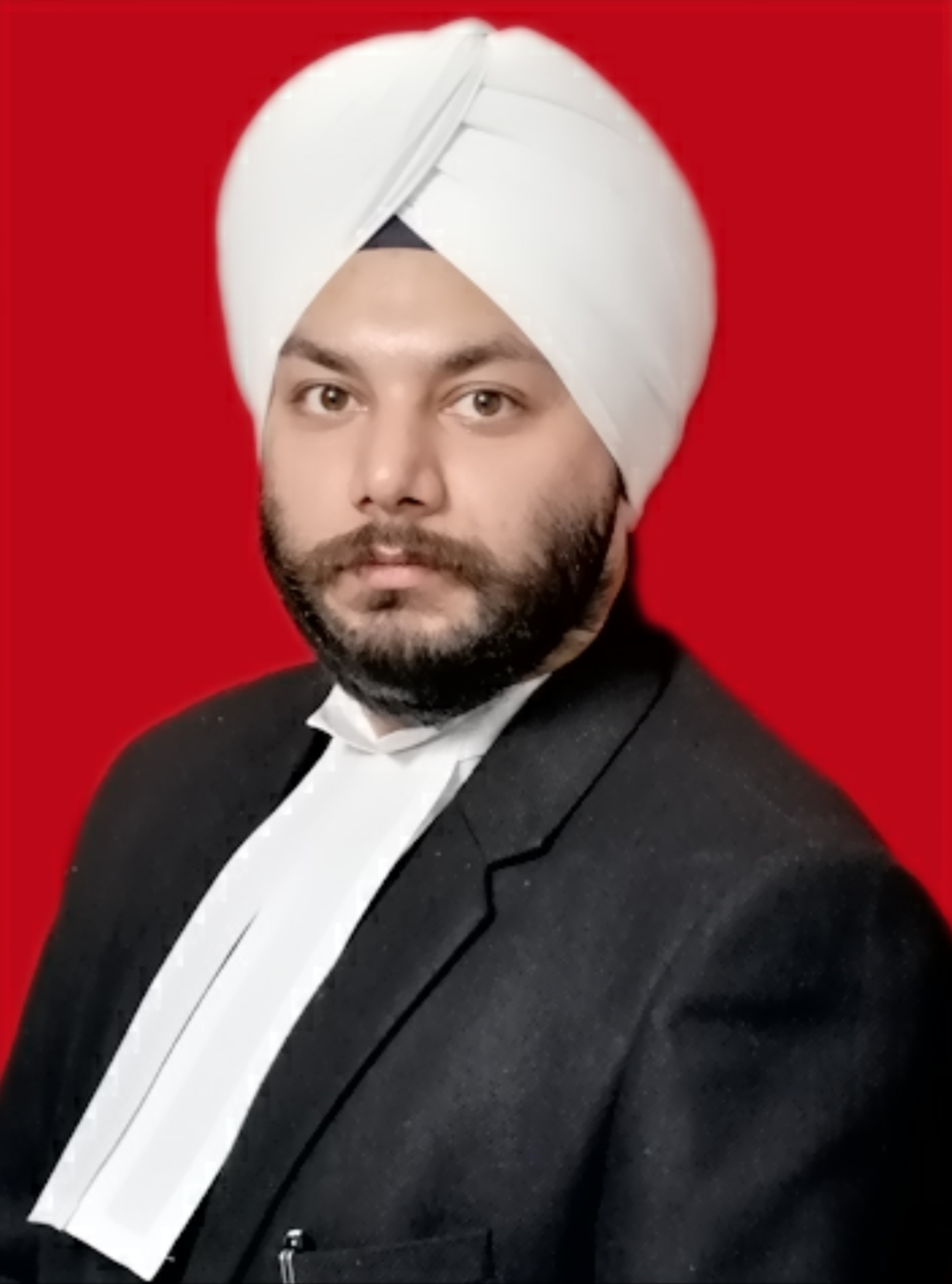

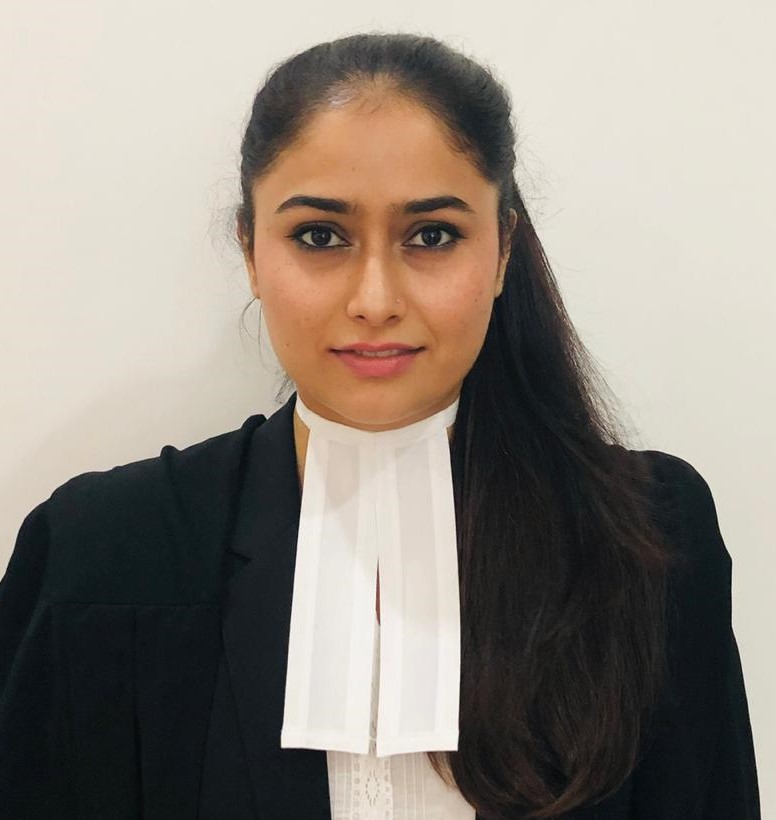





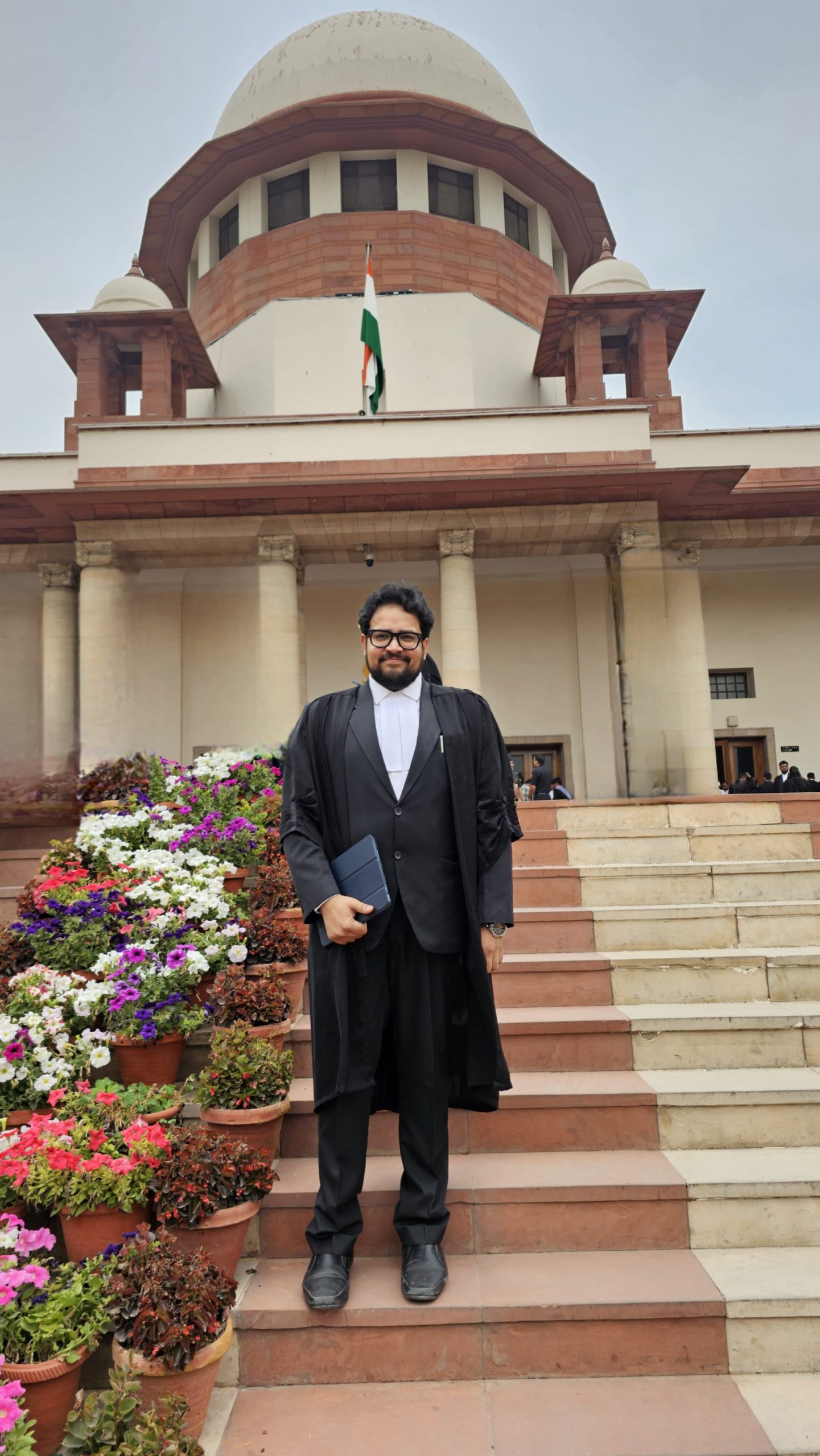



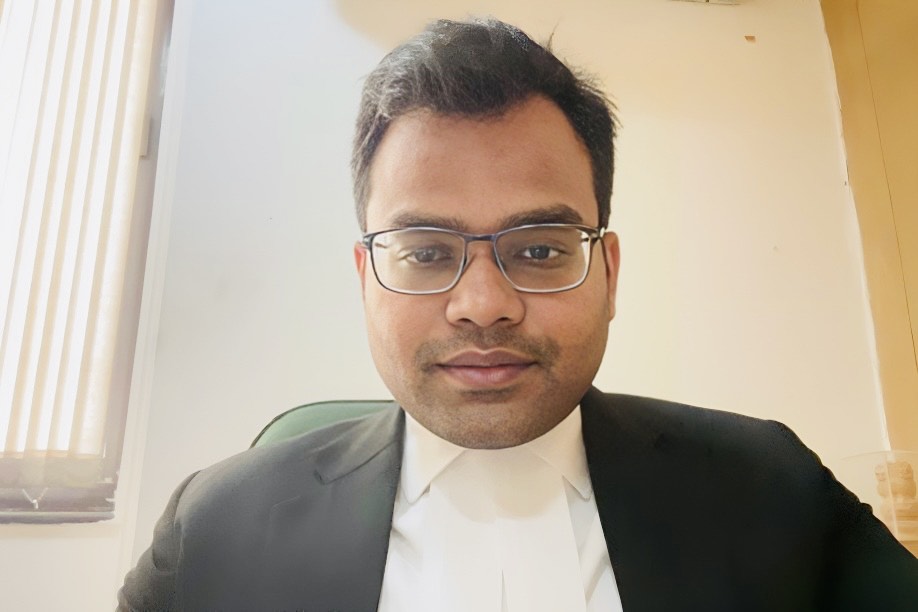




 Allow notifications