Tag: Intellectual Property

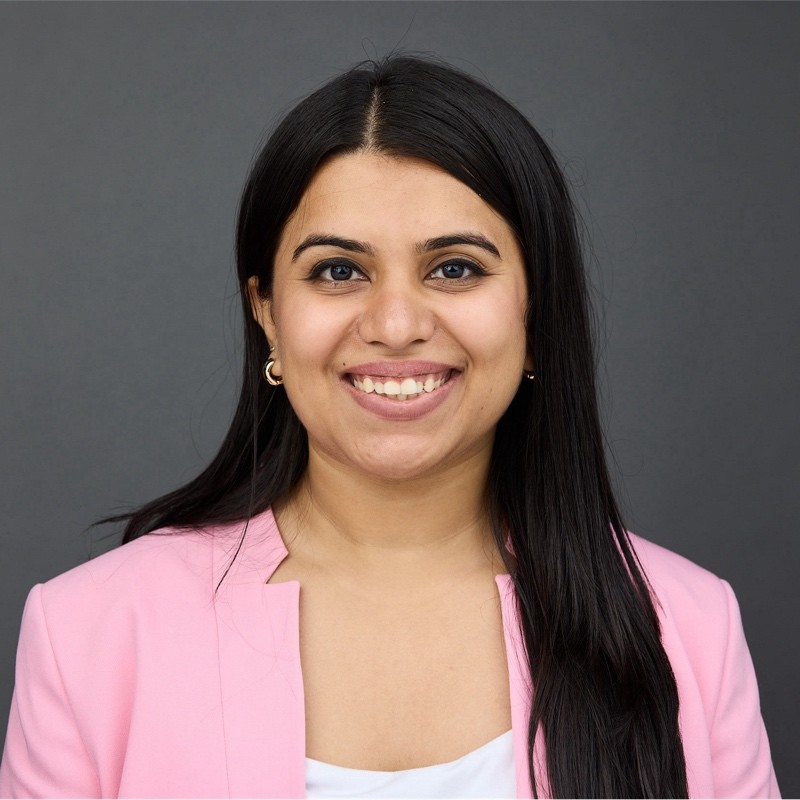
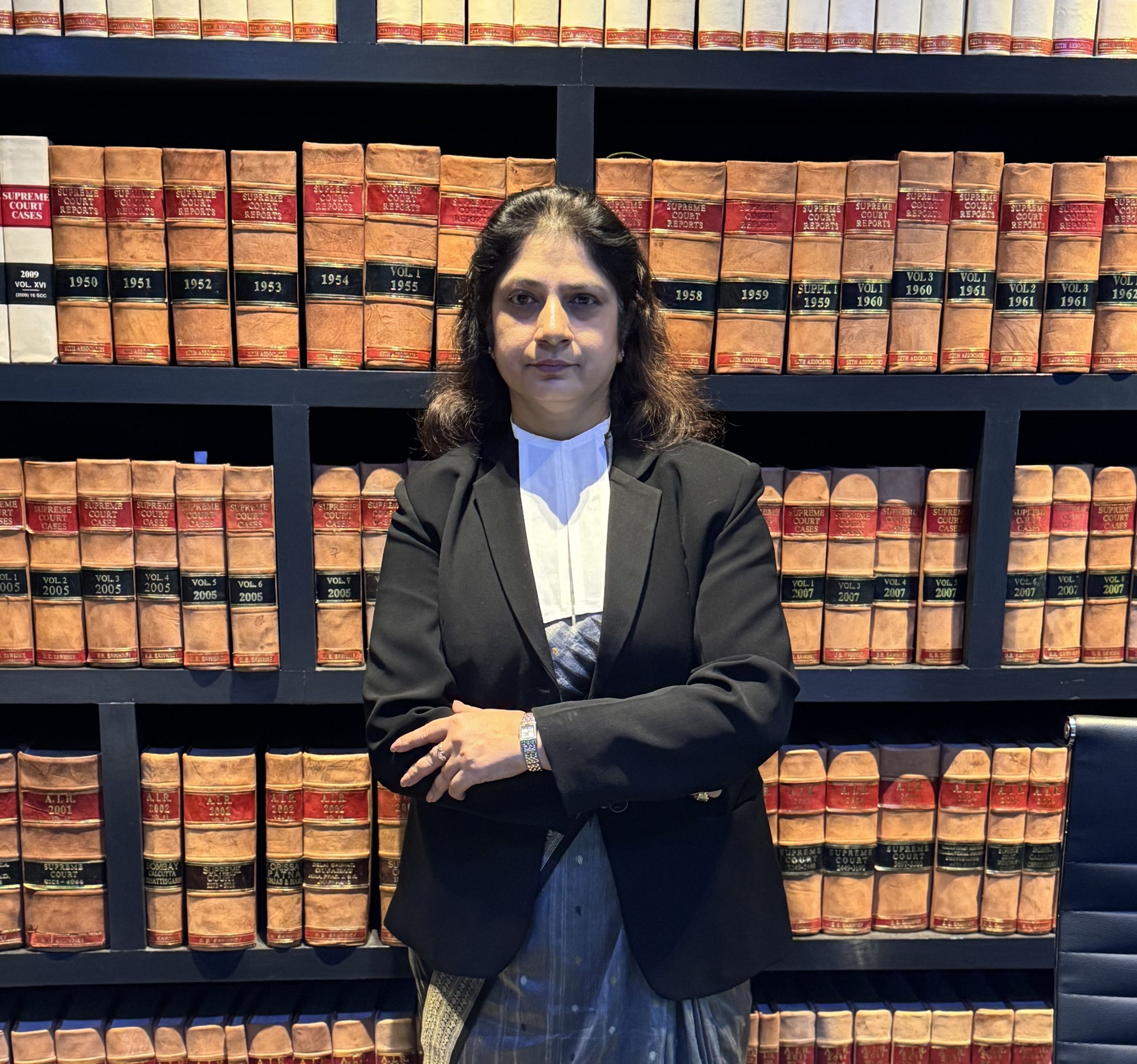
  • “To be able to make a career in the field of IP, one should be creative or at least understand certain facets or methods of its expression. You should have the zeal to learn more and more everyday.” – Zainab Syed, Founder of Zainab Syed & Associates.

    “To be able to make a career in the field of IP, one should be creative or at least understand certain facets or methods of its expression. You should have the zeal to learn more and more everyday.” – Zainab Syed, Founder of Zainab Syed & Associates.

    This interview has been published by Anshi Mudgal and The SuperLawyer Team

    Maam, you have an impressive background, having completed your schooling in Kuwait and your law degree in Kashmir. Can you share some experiences from your early years that inspired you to pursue a career in law? What aspects of the field motivated you to become a lawyer?

    Thank you. Well, from the very beginning, I have been quite principled and straight forward, advocating for whatever I believed to be the right thing. I was also elected as the school head girl, which made me quite responsible and vocal at the same time. My family is my support system, my parents instilled in me and my siblings a good work ethic and the importance of hard work and dedication. So, it was quite natural for me to choose this as a profession. I also landed myself a job with Amnesty International, soon after I gave my class 12th CBSE ( gulf) board exams . The job was at the Indian Embassy of Kuwait, wherein me and my team were helping with sending back Expats to India, who had been forcibly detained in the country with no documents in their possession. We helped so many helpless trapped Indians during that time. This is when I saw the real world, the injustice and helpless people looking for hope in us, being able to help these people made me realise that this is what I want to do in life.

    I am a very empathetic human being, at times it does have a negative impact on my life or my decisions, but I think that is how I was raised and I’m proud of it and always will be. Everything about this field motivates you to become a lawyer, however, if I have to name some of the aspects, they would be as under:

    • It’s a mental marathon that offers endless opportunities for problem-solving and critical thinking. 
    • Lawyers often find themselves at the forefront of societal change, advocating for individuals and communities. 
    • Lawyers stand as the principal architects of legal frameworks that safeguard civil liberties and shield the marginalized.
    • Through their steadfast commitment to furthering social equity, provision of pro bono services, and facilitation of access to justice, lawyers emerge as pivotal agents in fostering equity and parity.

    Early in your career, you worked at the High Court of Jammu and Kashmir, handling cases related to service matters, property disputes, family issues, and more. What are some key experiences from that time that shaped your legal understanding and laid the foundation for your practice?

    After completing my law degree from Kashmir, and getting my license to practice, I decided to join the High Court of Jammu & Kashmir under the guidance of a very renowned and senior Advocate Mr. Syed Manzoor Hussain, who has an expertise of over 40 years now. Working with him, I learnt so many aspects of law which I had only read about. The whole experience of working with him in matters related to Service, property, defamation, Matrimony etc helped shape my career in the initial days. I remember the first time I appeared in Court, I got a favourable order in our matter, and the Hon’ble Justice at that time, commended me for my boldness and confidence, which increased my morale ten times more than what I had walked in with. Working at the High Court with my Senior, taught me that not all days will be in your favour, some may be against you, and it is then that your caliber and patience is tested. I remember working with my senior and assisting him in a service matter wherein even after having worked for more than 20-25 years in the Sericulture Dept of Jammu & Kashmir, the employees were not regularised by the govt, which should have been done, soon after they had finished 7 years of service, and after citing numerous judgements, submitting ample evidence, we finally managed to get them regularised. There were other matters also, like property disputes, salaries being withheld and unlawful terminations that we were able to get relief granted for our Clients. However, it won’t be fair to deny having any bad experiences, and those bad ones teach you to be more particular about your choices, and show you your hidden potential.

    After joining SS Rana as a Senior Trademark Attorney and handling tasks like trademark filing, prosecution, and responding to examination reports, how did your experience in Intellectual Property Law compare to your previous work in the court? How did the work culture differ?

    I shifted to Delhi after the 2013 floods in Kashmir that crippled life there, everything from records to documents were destroyed. It was then that Mr. Senior, who had seen the amount of hard work and dedication I had put in those 2 years, suggested that I move to Delhi as things would take quite some time to get normalized back there. It was definitely a very tough decision to move to Delhi and start afresh, but like they say “Accept what is, let go of what was, and have faith in what will be” , and that is what I did.

    I joined S.S.Rana & Associates as a Junior Associate Advocate. This was an IPR law firm and I had no experience in this field, and IPR had been my favourite subject back in the University. I was lucky enough to be working under Mr. Vikrant Rana ( Managing Partner) in the Trade Marks Department. He believed that we need to partner with our clients, make their concerns our own, understand their businesses, and proactively get out in front of their problems without actually getting out in front of them. I believe that the biggest achievement in my career and what boosted my confidence is when your ideas or suggestions are taken positively and also implemented by Senior Lawyers or whom you work under. Under the guidance of Mr. Vikrant Rana I became a pro in Trademark matters, as I already had a flair for writing, and an eye for detail my examination report replies became popular among the team, Within a short span of time, I was training juniors in Trademark Department, handling complex cases and giving legal suggestions for IPR protection not just to National but international Clients as well.

    I guess it was my honesty and dedication that always made me visible and stand out in the crowd. I had never imagined that Intellectual Property Rights were this vast and interesting, I guess the subject only teaches you 10% of what the law actually is. The work culture differed in this way that instead of having 1 senior to report to at the High Court, here I had the opportunity to learn from everyone, my knowledge was not restricted to the belief and ideas of one individual but it was open to accepting new things from so many different skilled and intelligent minds. Also of course, as we didn’t directly deal with clients on a daily basis unlike my previous workplace, this helped with the stress of client dealing.

    On a lighter note, I remember when I was at the High Court, there was this very old Client of ours, almost 70-75 years of age , he would come to Court almost every other day, even if his matter would have been listed after 3-4 months, he visited every week without fail, asking about the status of his property dispute matter. When asked why are you here every week, he replied “I enjoy seeing you all work like this, I never had to work this hard in my entire life, I guess I was lucky, and to be honest, I don’t actually have anything more important to do”, I am sure, as I write this interview, he must be sitting in one of the courtrooms at Srinagar.

    Following your tenure at a law firm, you transitioned to working as IPR counsel for several companies, managing their IP portfolios and providing legal advisory. What motivated this shift, and how did you navigate the complexities of this role?

    I quit my job after the pandemic hit us, and took the decision of moving back to Kashmir, as we all know how serious it had gone back then, having lost a few loved ones back home, I realized that i had to be where my family is, as my family means the world to me. So it wouldn’t be wrong to say that all Natural Calamities happening in my life, brought with them a new hope and a new beginning for me. As I had already learnt the art of managing clients and their brands, it didn’t take me much time to make a Client base of my own, in my own home town. To be honest, these brands I worked for, all belong to Kashmir, and it was I who had approached them and introduced the concept of IPR protection and the importance of IPR in their business, that is how I got to work with them.

    This role did indeed bring with it many issues or complexities, as Intellectual Property Rights were not very popular or known to the people in my home town, and even though we have way too much IP out there to protect, we had issues, issues like business owners using identical names for their business and wanting to protect their brand, or business owners not wanting to take legal action against parties infringing their IP. For such issues, we started educating the business owners about the importance of IPR and the benefits of protecting their IP.

    What led you to establish your own practice? What were the challenges you faced in the initial stages, and how did you overcome them? What continues to motivate you in your practice today?

    When I was working with my previous law firm, it would worry me so much that out of all those queries coming in about IP on a daily basis, I never came across any query coming from Kashmir. I don’t know why, but people have the misconception about Kashmir being a conflict zone, hence no one there does anything or everyone is living in fear, they have no life of their own. As I knew the real Kashmir, I wondered why no one there was coming forward to protect their brands or even enquiring about it.

    This led to establishing my own law firm Zainab Syed & Associates, which was the first ever IPR law firm in Kashmir. Challenges like I mentioned before were the little of half knowledge about Intellectual Property Rights. The initial year indeed was a very tough one, where converting any query was like winning the Olympic gold medal, as people didn’t want to spend money on something they didn’t feel was necessary to protect, also, there were cases where someone had taken money from them for filing their trademark and they had never reverted after the money was transferred or cases where applications were filed by third party websites ( names not taken) who file applications in bulk without application of mind or a proper search or opinion, which lead to refusal of such marks.

    I am a very competitive person, and the thing is that I only compete with myself. I believe that in this race in life, you run alone, it should never be about how many people went ahead of you, it should always be about what you have to do to finish the race. That is how I was able to face these challenges at work, I never took up matters that I knew had no chances of success, I didn’t think about the number of applications I was filing, what mattered to me was how many applications I could get registered. I was very patient with Client’s who didn’t quite understand why and how of IP, I never gave up on any Client until I would make them protect their brand by filing applications, I was persistent in this goal to protect more and more brands for my home town , or at least make them aware about Brand Protection.

    Looking back how far I have come in this field and in expanding my practice, I am proud to say that I started from scratch and today I not only have Clients from the State of Jammu & Kashmir but from all across India and Abroad as well. Also the biggest motivation has been the success rate of our applications, and the flow of work we get from recommendations from our existing clients. Although I don’t let success get to my head or failure get to my heart, I guess that’s what learning is all about.

    What has been one of the most challenging IP infringement cases you’ve handled to date, and how did you approach its complexities?

    I wouldn’t be able to put them on a scale of 1 to 10, as all IP infringement cases are mostly complex and very challenging. One of our clients had received an infringement notice from the U.S for a name used in their café. They were asked to shut down the café and remove all use of the mark, however, our Client was the registered proprietor of the mark and the opposite party neither had a trademark application for the said name either in India or in their home country, and after almost a year of negotiations and emails and meetings we were able to convince them that the said Intellectual property solely belonged to our Client and there was no way that they could stop him from using the said brand name.

    Also there was a matter where our Client had been using their family business name since almost 40 years and they had a registration that had expired and not renewed due to inadvertence of the previous lawyer, a third party had now taken advantage of the said thing and applied for the said trademark and started using the said name. We filed a fresh application in the name of our Client, filed opposition against the opposite party’s application and sent them a seize and desist notice. The Opposite party gave us an undertaking that they would never file this mark in future or even file a slightly similar mark in the future and also abandoned their trademark application and changed their business name to something else.

    So I believe that overpreparation is the key to success, you should always be over prepared with facts and you should know your Client, and know about your Client, sometimes, your own Client does not have the right facts, so you always need to do your side of research and homework, so its only when you are convinced, you will be able to convince the opposite party.   

    As an IPR consultant and attorney for PHDCCI in Jammu & Kashmir and Ladakh, how has your role contributed to the promotion of Indian industry, trade, and entrepreneurship through intellectual property rights?

    Our Law firm was appointed as their IPR Attorney and Consultant a few months back, and it is indeed an honour to work with this establishment that has changed millions of lives with their constant support and guidance. In these few months, boosting research and development, intellectual property rights (IPR) have contributed significantly to India’s economy. In fact, IPR and economic growth go hand-in-hand as intellectual property rights are essentially designed to aid innovators and reward innovation, This is where IPR comes in. With a patent in hand, innovators can issue licenses for mass production, which directly contributes to the economy. In this regard, we have been able to file 19 patents for PHDCCI and almost 70 Trademark Applications till date. We have also organised various seminars and visited various Universities of Kashmir where we have encouraged young minds and innovators to get their works Patented and protect their IP Rights. Further, we are also working on increasing the number of GI’s filed from the State of Jammu & Kashmir as there is tremendous scope of obtaining a GI registration here in the State.

    With continuous support from the president of PHDCCI Jammu & Kashmir and Ladakh Mr. Vicky Shaw Sir, who is a visionary and a great man, we have been able to achieve the goal we had set for Zainab Syed & Associates, i.e. educating the masses with the need and importance of Protection of Intellectual Property Rights. 

    What advice would you give to young aspirants interested in pursuing a career in IPR law? How can they start early and excel in this field? Are there any specific resources you would recommend for those looking to deepen their knowledge?

    To be able to make a career in this line, one should be creative or at least understand certain facets or methods of its expression. You should have the zeal to learn more and more everyday. This field broadly covers technically complex yet fascinating projects, which invariably require an informed knowledge of trends or developments in line with their type. So, in short, along with enthusiasm, one should have an eye for detail. I would advise them to first start with internships at IPR law firms only and not law firms that have IPR as part of their work. This will enhance their skills and keep them focused on IPR itself, not shifting from one thing to another. The other thing I would advise them would be to never give up on their dreams irrespective of how many times they fail or make mistakes, as one only learns from mistakes. To excel in this field, I would suggest some important points to remember:

    • Before filing a Client’s trademark, always conduct a search on your end, not just in their respective class but in class 35 as well, as this would give you a broader idea.
    • Never rely on the statement “It is a coined term we have not copied the same from anywhere” always do an internet search on if the word means anything or has been taken from an already existing name outside the Country.
    • No similar or identical marks found on the records of the Trade Marks Registry does not always mean you are good to go, it can also mean that the said mark could not have been registered as it is non-distinctive or descriptive or is prohibited under the Trade Marks Act/Rules.
    • Always encourage clients to file applications claiming use of the mark if they are already in business as this gives them prior rights over their mark.
    • Always file applications in the correct class.
    • If a registered mark is cited in your Client’s application, always check if their application had an examination report and how did they reply to the marks cited against them, as this can be used in your reply as submission.
    • Never differentiate the marks in your reply if you intend to oppose the cited mark at a later stage.
    • Always encourage your Clients to change their brand names if they are at the initial stage of their business and have not yet used the name anywhere, and have come to you for suggestions in filing the trademark application, and you see a mark that is either similar or identical to their brand.
    • Always introduce the concept of negotiation to clients or co- existence with the opposite party, where you know that there is a scope of co-existence or negotiation and it is not a straight case of infringement or malice.
    • Be up to date with recent judgements and case laws on IPR and any amendments in the law. Always note down case laws and use them in your replies as and when necessary.

     Also, I would suggest that they visit the WIPO website and get themselves registered for some of the online courses WIPO offers for IPR.

    Given your demanding role, how do you unwind and recharge? How do you effectively balance work and personal life? Do you have any hobbies or activities that help you relax and recharge?

    Being a daughter, a wife, a mother and a Lawyer running my own Law firm, it has always been challenging, but I suppose having that support from your family actually makes a lot of difference. My family has always been very supportive of all my career decisions, and they have always been my strength and motivated me to become a better version of myself. My husband, on the other hand, has always given me the leverage to choose what I want to do in life, he has always supported me in every decision I made after marriage and continues to do so. However, I don’t take that for granted and I understand the importance of having a balance between my personal and professional life by

    • Setting boundaries: This involves establishing clear boundaries between work and personal life by defining specific working hours and separating work-related tasks from personal activities.
    • Time management: Efficiently organizing and prioritizing tasks, ensuring that you allocate enough time for work responsibilities as well as personal pursuits, such as spending time with family, engaging in hobbies, or pursuing personal goals
    • Stress management: Implementing strategies to manage stress levels, such as practicing mindfulness, engaging in regular physical activity, taking breaks, and unplugging from work-related activities when needed
    • Flexibility: Having the ability to adapt and adjust your schedule to accommodate unforeseen circumstances or personal needs without jeopardizing work commitments

    I have a 2-year-old son, I guess that is enough for you to understand what keeps me up and charged.

    Get in touch with Zainab Syed –

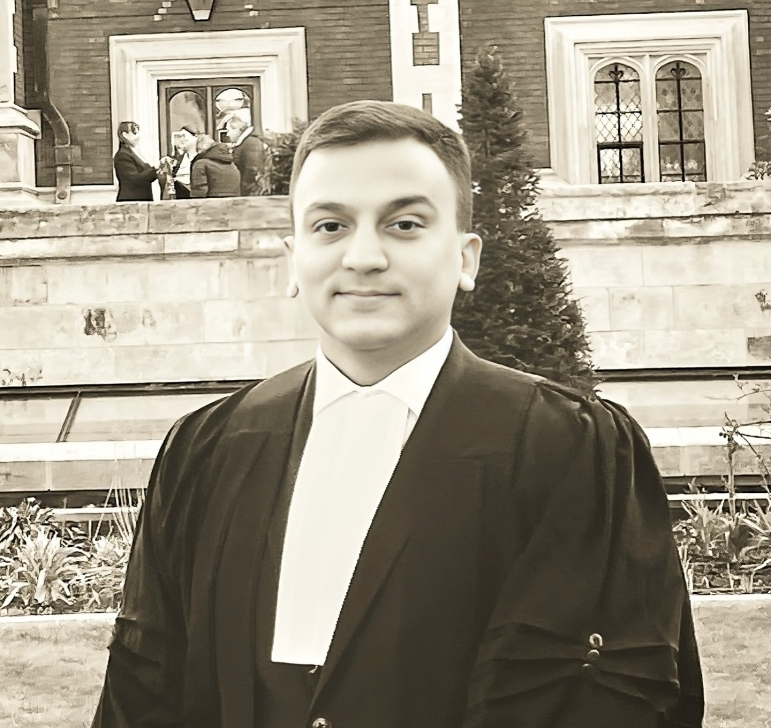
  • “Trial advocacy is story telling. It is the skill of bringing out what really happened and this principle is true no matter the nature of the dispute.” – Mikhail Behl, Counsel, Arbitrator & Mediator at Chambers of Mikhail Behl.

    “Trial advocacy is story telling. It is the skill of bringing out what really happened and this principle is true no matter the nature of the dispute.” – Mikhail Behl, Counsel, Arbitrator & Mediator at Chambers of Mikhail Behl.

    This interview has been published by Anshi Mudgal and The SuperLawyer Team

    Was there any particular experience or realization that solidified your commitment to pursue a legal career?

    Let’s just say that there have been moments in my life as well as in the lives of the people I hold closest to me where we could have benefited from having someone advocate for us. 

    After completing your law degree, you went on to pursue a Master’s at The University of Edinburgh, a highly respected institution. Could you share some insights from your time there and elaborate on why you chose this particular university over others? Additionally, being a recipient of both the University of Edinburgh’s International Masters Scholarship and the R.D. Sethna Memorial Trust Scholarship is an impressive achievement. How did these scholarships impact your academic journey?

    I was considering two schools, Columbia and the University of Edinburgh. Both their LLM programs in IPR were being run by people who I thought were at the forefront of Copyright law, Jane Ginsburg and Charlotte Walde respectively. 

    I opted for the Edinburgh LLM program because I was granted the University’s scholarship for India which together with the RD Sethna scholarship covered tuition. At the time my father who is a veteran of the Armed Forces had just retired from service and honestly without the assistance from these scholarships further studies would not have been possible at all.   

    You were a law clerk in the Bombay High Court. What are your takeaways from your clerkship at the Bombay High Court?

    My clerkship period taught me how important it is to have good people in high office. Ultimately, the justice delivery system is a human agency and as a law clerk in a High Court you will see how immense and immediate an impact it has on the lives of people. 

    After your Masters, you joined the chambers of Senior Advocate Dinyar D. Madon. Describe chamber life and how that period influenced your practice?

    I remember as if it were yesterday walking into Mr. Madon’s Chambers with just my C.V. in hand – no appointment and no references. It was a few days before Courts were to resume after the Diwali vacations and in Mr. Madon walked with his assistant Sanjay bhai carrying his freshly dry cleaned monkey jacket and gown. While I waited for an opportunity to speak with him, I had my first interaction with Cyrus Ardeshir (now himself a Sr. Advocate), his most senior junior at that time. I recall Cyrus stopping the dictation of a draft and speaking to me for a good five to ten minutes. I didn’t know it at the time but I think now that was ‘the interview’.  When I finally had a meeting with Mr. Madon, it was less than a minute and Mr. Madon told me he couldn’t take me in because chambers was full, he told me he had just taken on two more juniors just days before. I asked him to keep my C.V. but resigned myself to this being another rejection. In all, I was probably rejected by 20 chambers across the city most refusing to even see me.    

    A couple of days later, however, I got a call from Mr. Madon asking me to join from coming Monday. I couldn’t believe it, I later learned it was Cyrus putting in a good word for me that convinced Mr. Madon. I treat that moment as the first door that had been opened for me in the profession, every opportunity that I have had thereafter could only have been possible because Mr. Madon and Cyrus took a chance on a young stranger. There was no reason for Mr. Madon to call me back, I was a nobody and had no references to speak on my behalf. But this is who he is at his core, someone who helps. I wish more people knew this about him he is immensely charitable. 

    I know a lot of people probably think Mr. Madon’s chamber is too strict or old fashioned. Chambers had a strictly ‘no stubble’ policy. Interns have been sent away from work for breaking this rule. If we were leaving court for chambers it was bands off and ties on. Ties were mandatory in chambers. I wish I could tell you this was difficult for me, but I come from a very disciplined background, my father is a veteran, his brothers are veterans and his father was a veteran. My grandfather on my mother’s side was also a veteran. I loved it! In a lighter vein being clean shaven came easy for someone who till this day can’t grow a proper beard, so I may have gotten away with just shaving every other day. 

    I think I was very fortunate to join Mr. Madon at that particular phase of his career. He was absolutely flooded with work and would have anywhere between 20 to 40 matters on board on any given day. It was not unusual for evenings to have as many as 10 briefings. Then there was also Cyrus’s work. The juniors in Mr. Madon’s chamber shared a common work area and I think I learned how to draft just by listening to Cyrus dictate his drafts. I probably found my regular briefing attorneys through Cyrus as well who would ask me to fill in if he couldn’t it make it for a matter. All in all the exposure was immense. Chambers had a great library managed by Jairam a savant at whom you could literally throw any random proposition and within minutes he would just magically show up with the citation or source you needed.  

    If you haven’t worked with Mr. Madon, let me tell you he reads vertically and not horizontally and he does this super-fast. Most people think he is just flicking pages until he corrects them about the contents of an Affidavit or pleading. Working with him caused you to develop “coping” or “keep up” abilities that benefit me till this day. For me initially, this meant working very long hours and so I was entrusted with the keys for chambers. I locked up almost every night I was at his chambers. I think my key takeaway however from my period in Chambers was how important it was to develop your first principles. These principles if readily at your disposal are definitive of the fate of a proceeding and obviously also your career.  

    The immense exposure at chambers helped me realise my own strengths, weaknesses and interests. Just being associated with chambers gave me my first opportunities as an arbitrator. Judges knew that I was from his chamber and that everyone from his chambers had both ability and integrity the most important attributes of an arbitrator.  

    With over 50 trials and a breadth of experience across multiple legal domains, what advice would you offer to young lawyers aspiring to develop a diverse practice similar to yours? Which specific skills or qualities do you believe are essential for success in such a competitive and multifaceted field?

    Trial advocacy is story telling. It is the skill of bringing out what really happened. This principle is true no matter the nature of the dispute. Once you understand this things start falling in place. The skills required are actually fairly achievable, I do not personally subscribe to the belief that this is any form of mysterious craft or skill. The ideal trial lawyer builds an understanding of how things should have been or were intended to be and works out the anomalies in the case before them from this understanding. A good trial lawyer should also work on building their intuitive powers, because understanding who they are examining and how those persons think and behave is vital. They will accordingly do well to learn to identify ‘tells’, traits and patters in people as this will help them in any trial. 

    In handling intricate trademark infringement and passing-off cases, you demonstrated remarkable expertise. Can you walk us through your approach in addressing complex issues like packaging similarity, particularly in the context of pharmaceutical products? 

    In these kind of cases, one is really presenting to the Court the likely perceptions of an imperfect and average human being as grounds for granting or refusing relief. Understanding this standard is definitive of success in this area of law.  

    Tell us something about the journey involved in setting up your own chambers and your decision to specialise in ADR?  

    I think setting up one’s independent chambers is fairly universal in the city of Mumbai. The more difficult question is probably the decision to specialise. This requires both introspection and courage. For me mediation and arbitrations fit well into my core skill sets. I think I am a good listener, I actually enjoy listening to people more than I do speaking. I love writing and it is something I think I do well. Over time I think I have developed a very distinct identity in my writing style as well. Writing is the most core ability an arbitrator can possess. Ultimately the entire arbitration is about the arbitrator’s award/order and if this output is lacking the process is meaningless. The fact that the Supreme Court has a constitutional bench mulling over the need for adapting an award is testimony to the importance of a well written award. 

    Balancing a successful legal career with personal life is undoubtedly challenging. How do you maintain this equilibrium? What strategies or routines do you employ to ensure both your professional commitments and personal well-being are well-managed, especially considering the demanding nature of your career?

    I wish I could tell you I have the perfect life. But that would be a lie. I have always wanted to be a “sports and extracurricular dad”. My most recurring dream is me teaching or watching my child learn the sport of their choice. But that dream hasn’t worked out for me. 

    That failing aside, I do have very many interests outside of law and I have no hesitation or shame in saying I am not a slave to the profession. I do not believe law is a jealous mistress. Because I know lawyers benefit from knowing things outside of law! I actively engage with a network of friends outside of the profession. I am always curious to know from them how their businesses’ work and how they deal with variable situations as and when those may arise in their respective fields. This network of friends has given me unimaginable insight into varied areas of commerce and trade. One I could never have obtained from just reading briefs or limiting my interactions to just other lawyers. 

    I am an avid mountaineer and have done several expeditions and treks both solo and through organised treks. My earliest memories are of camping in the Himalayas with my father of learning to pitch a tent probably at the age most kids learn to tie their shoes. I am extremely fond of landscape and architectural photography and have had my photographs featured in exhibitions around the world. 

    Over the last 7 years I have actively invested in learning and becoming proficient in Olympic weightlifting and powerlifting. I have done two accreditation courses as well, though I have no intention of teaching anyone other than myself. This activity in particular is what keeps my health both mental and physical well managed. I wish more lawyers understood the benefits of strength training. It is literally a lifesaving and life enhancing activity. I think most of the stresses lawyers encounter and even the insecurities lawyers have about themselves would disappear if they explored a more healthy life. I have also studied nutrition and follow a good sustainable diet and have a very healthy relation with food. 

    But the number one thing that brings me peace and happiness is spending the weekend with my parents. Every night before I sleep I thank god for my parents, they are truly remarkable people who have overcome such tremendous odds to become extremely well respected and loved people within their community. My father is a renowned oncologist and my mother is an adored educator. Trust me if you knew the circumstances they came from this shouldn’t have been possible. There is pure magic in their spirit. It is such a fortuitous conspiracy that they are my guides in this world. They gave me every opportunity they did not themselves have.  

    As a sole arbitrator in more than 100 arbitral proceedings and a member of several prestigious panels, including those of HKIAC, SIAC, and ADGM, how do you envision the future of Alternative Dispute Resolution (ADR) in India, particularly in relation to complex commercial disputes? How do you see the evolution of ADR in comparison to global institutions?

    I see ADR as the only hope for private dispute resolution in India. The court system is incapable of meeting India’s needs to resolve private disputes efficiently. The court system should in my opinion be limited to a scrutiny of citizen-state actions. The proposed introduction of arbitration appellate tribunals and recognition of emergency arbitrators is a great step towards developing an appropriate eco-system for private dispute resolution. What also needs to be done is to provide a separate execution mechanism and robust measures such as contempt and criminal prosecution against bad actors, both users, lawyers and arbitrators functioning within this private dispute eco-system. 

    Having successfully navigated the Bar Standards Board application process in the U.K. and being granted exemptions based on your experience, how has this international qualification enhanced your legal practice both in India and the U.K.? Furthermore, how has your accreditation as a mediator influenced your dispute resolution strategies and the way you approach conflict in your legal career?

    Becoming a barrister was an ambition I had to put aside for a while as I had to return home after my Masters for personal reasons. For fate to conspire and to later be made a barrister through the accelerated process with full exemptions from all academic and vocational training components was a miracle. Being called to bar at Lincoln’s Inn by none other than the Master of the Rolls was a surreal moment one that is etched in my memory and one I will cherish forever. Being dual qualified now allows me to not only receive instructions as counsel in multiple jurisdictions but to also act as arbitrator in disputes where English law applies. 

    My decision to undergo formal mediation training was born out of past experiences. I have seen far too many likely settlements fail both as counsel and arbitrator to not recognise an underlying failing within me as cause thereof. I am not one to let such failings persist. 

    The mediator training course at the Royal Society of Mediators taught me path breaking techniques that I apply subtly all the time as counsel and arbitrator. I think I am now always silently working away at a likely mediated settlement. When I function as a neutral the pure joy of using these techniques to bring people to a principled dialogue is by far the most satisfying part of my legal practice. To be honest, it has helped me immensely in my personal life as well. It is finely tuned my instincts and improved my communication abilities. An earlier version of me listened to respond and the new me listens to understand.  

    Get in touch with Mikhail Behl –

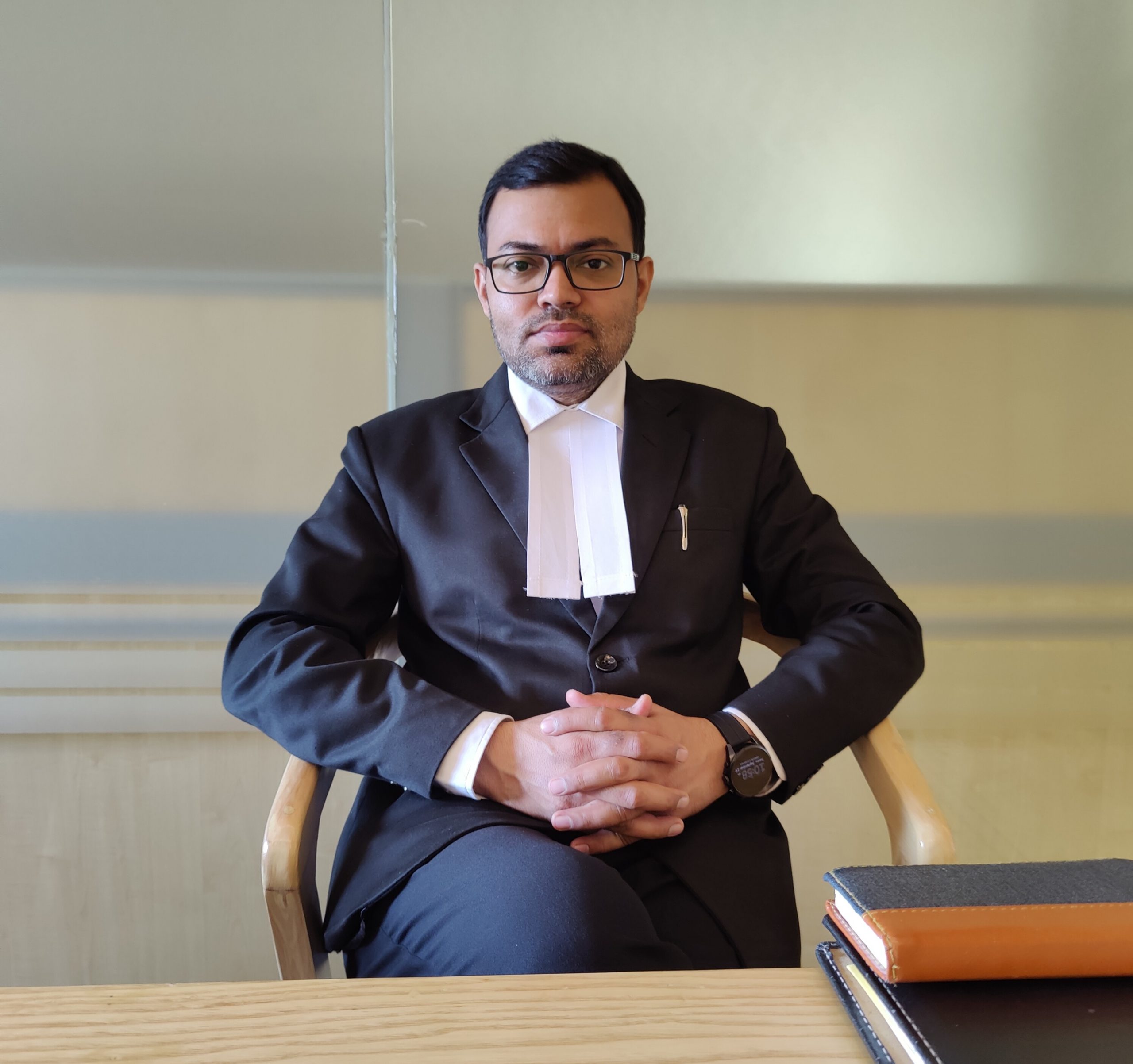
  • “With rapid advancements in technology, particularly with the rise of AI, IP and Data Privacy laws are evolving quickly. Staying updated through IP-specific news, following IP practitioners, and engaging with industry peers will be highly beneficial.” – Isha Gandhi, Senior Legal Associate at R K Dewan & Co.

    “With rapid advancements in technology, particularly with the rise of AI, IP and Data Privacy laws are evolving quickly. Staying updated through IP-specific news, following IP practitioners, and engaging with industry peers will be highly beneficial.” – Isha Gandhi, Senior Legal Associate at R K Dewan & Co.

    This interview has been published by Anshi Mudgal and The SuperLawyer Team

    What initially inspired you to pursue a career in law? What aspects of law sparked your interest and shaped your understanding?

    I chose law as a profession because I’ve always had a passion for writing and speaking. Law provides the perfect platform to combine these interests, allowing me to express ideas clearly through legal writing and to advocate effectively in speaking engagements. The ability to analyse complex issues, craft persuasive arguments, and communicate them both in writing and orally is what truly drew me to this field.

    After completing your law degree, what experiences influenced your decision to specialize in intellectual property law? What were some of the key moments that helped establish your foundation in IP law?

    I developed a strong interest in Intellectual Property Law during my college years, which led me to pursue a specialized diploma in IPR laws from Symbiosis Law School, followed by a course from the World Intellectual Property Organization. The complexity and significance of protecting innovations in an increasingly digital world fascinated me. To deepen my understanding, I also interned with boutique IP firms during my college years, gaining valuable insights into IPR laws.

    When advising multinational corporations on IP protection strategies, how do you navigate the complexities of differing national IP laws and enforcement mechanisms? Can you share an example of a time when you successfully managed cross-border trademark infringement issues?

    Intellectual Property (IP) laws in most countries are largely governed by international conventions and treaties, such as the TRIPS Agreement (Trade-Related Aspects of Intellectual Property Rights), Berne Convention, etc. which establishes a common framework for IP protection. As a result, the fundamental principles of IP law are generally consistent across jurisdictions. However, each country may have its own specific regulations, enforcement mechanisms, and nuances in how IP rights are granted, protected, and enforced. Thus, navigating the complexities of different national IP laws requires a tailored approach.

    A key aspect of advising multinational corporations is understanding the unique regulatory environment in each region and developing a strategy that ensures protection while considering local enforcement challenges. One instance I recall involved a cross-border copyright infringement and trademark passing off issue where the infringer had obtained registration of a concerned trademark in India and the client’s mark was pending for registration. The Trademark laws are territorial in nature and there are multiple cases supporting this principle. In this case we had to establish the malafide adoption by the infringer before the Court and filed multiple rectifications against the fraudulent registrations obtained by the infringer in India. This collaborative approach helped to secure an injunction order in favour of our client.

    With the rise of digital platforms, how has IP infringement evolved over recent years, and what proactive measures can brands take to protect their intellectual property online? Drawing from your experience on the Internet Committee at INTA, which policies do you think are essential in addressing online IP issues, particularly with respect to domain name disputes and cybersquatting?

    The evolution of IP infringement in the digital space has been significant, with an increase in online piracy, unauthorized use of trademarks, and domain name disputes. Brands must adopt a proactive, multi-faceted approach to protect their IP online, including monitoring digital platforms, utilizing digital tools for brand protection, and engaging in vigilant enforcement actions. On the Internet Committee at INTA, we focus on creating policies that balance the needs of IP owners with the realities of the digital space. Policies to address cybersquatting, such as enhancing domain name dispute resolution mechanisms, are critical. Strengthening the cooperation between domain registrars, social media platforms, and IP owners is vital to combatting these challenges effectively.

    As privacy and data protection laws become increasingly significant, how do you incorporate cyber law considerations into your intellectual property advisory, especially when drafting documents such as terms of service, privacy policies, and user agreements?

    With privacy and data protection laws becoming increasingly stringent, especially with regulations like GDPR, it’s essential to integrate these considerations into IP advisory work. When drafting documents such as terms of service or privacy policies, I ensure they reflect both IP protection and compliance with data protection laws. This includes ensuring clear consent protocols for data usage, addressing how user data interacts with proprietary technology, and defining the ownership of data generated by users. The intersection of IP and cyber law is particularly important for tech companies or those with a heavy online presence, as they must navigate these dual concerns with care.

    How do you approach the drafting and strategy behind a commercial suit for trademark infringement or passing off, as well as copyright infringement, considering the complexities of such cases? Can you share an example of a particularly complex matter that required you to appear before the Delhi District Courts or High Court?

    Every case is unique, and before strategizing and drafting a commercial suit, I ensure a thorough investigation of the facts to build a strong case. This includes gathering evidence of use, assessing market presence, and evaluating the likelihood of confusion. Following this, I research the latest legal positions taken by various courts within the country, and in some instances, I also examine international legal perspectives. This ensures that my approach is both methodical and comprehensive.

    One particularly complex matter I worked on involved a copyright infringement case against a well-known global online audio-video streaming platform. The case required a deep dive into copyright infringement on the web and the liability of intermediaries. The research expanded to cover the copyright laws of different countries signatory to the Berne Convention, as well as relevant court decisions from multiple jurisdictions.

    For law students or aspiring lawyers interested in brand protection, what advice would you give them for building a successful career in IP law? Are there specific resources, strategies, or steps they should take while still in law school or right after graduation to get ahead, particularly in the evolving landscape of legal practice and emerging legal fields?

    For law students or aspiring lawyers interested in IP law, I recommend pursuing a specialized course in IP, in addition to thoroughly studying the relevant subjects offered by your college. With rapid advancements in technology, particularly with the rise of AI, IP and Data Privacy laws are evolving quickly. Staying updated through IP-specific news, following IP practitioners, and engaging with industry developments will be highly beneficial. Internships with IP law firms or in-house legal teams, as well as participating in IP-focused Moot Courts and competitions, provide invaluable hands-on experience. Building a solid foundation in both legal theory and practical application is essential as the IP landscape continues to evolve.

    Given the high demands of your profession, how do you manage to maintain a balance between your personal and professional life? What practices do you follow to prioritize your health and well-being while maintaining a successful career in law?

    Achieving the perfect work-life balance is often seen as a utopian ideal that many of us strive for. While there are times when one must prioritize work or personal life, balancing the demands of a legal career with personal life is undeniably challenging. This field is demanding and keeps you constantly on your toes, so it’s essential to make time for regular exercise and prioritize health and well-being.

    Over the years, I’ve learned that delegation is a key part of professional growth, and I make sure to delegate tasks when possible to manage my workload effectively. Having a strong support system—both professionally and personally—also plays a significant role in maintaining this balance.

    In addition to my passion for work, I make time for sports and dance to recharge myself. I’m a Kathak trainee and completed my third-year graduation in the art last year. In 2023, I was the runner-up in both the Singles and Mixed Doubles categories at the Delhi High Court Table Tennis Tournaments. I also practice mindfulness and make it a point to disconnect from work and travel when needed to maintain mental well-being.

    Having been with R. K. Dewan & Co. for nearly a decade, how has your role evolved over the years, and what factors have contributed to your continued growth within the firm? What do you believe has been key to maintaining your passion and motivation while managing such a dynamic and demanding career in intellectual property law?

    Under the mentorship of legal stalwarts Dr. Mohan Dewan, Dr. Niti Dewan, and Mr. N. K. Bhardwaj, my nearly decade-long journey with R. K. Dewan & Co. has shaped me both professionally and personally. Starting as a first-generation lawyer, I have grown to independently advise clients and manage junior lawyers, a progression made possible by the trust the firm has placed in me, which has led to an expansion of my roles and responsibilities over the years. What continues to drive my passion and motivation is the dynamic nature of IP law and the constant challenge of navigating new and complex legal issues.

    Maintaining passion and motivation in such a demanding career comes down to balancing professional challenges with personal interests. I find excitement in solving complex problems for clients, and I stay driven by the impact that intellectual property has on innovation and creativity. Additionally, the opportunity to work on diverse and high-profile cases, along with the trust and responsibility the firm has given me, continues to inspire me. The combination of professional growth, personal development, and a supportive work environment has been key to maintaining my enthusiasm for IP law.

    Get in touch with Isha Gandhi –

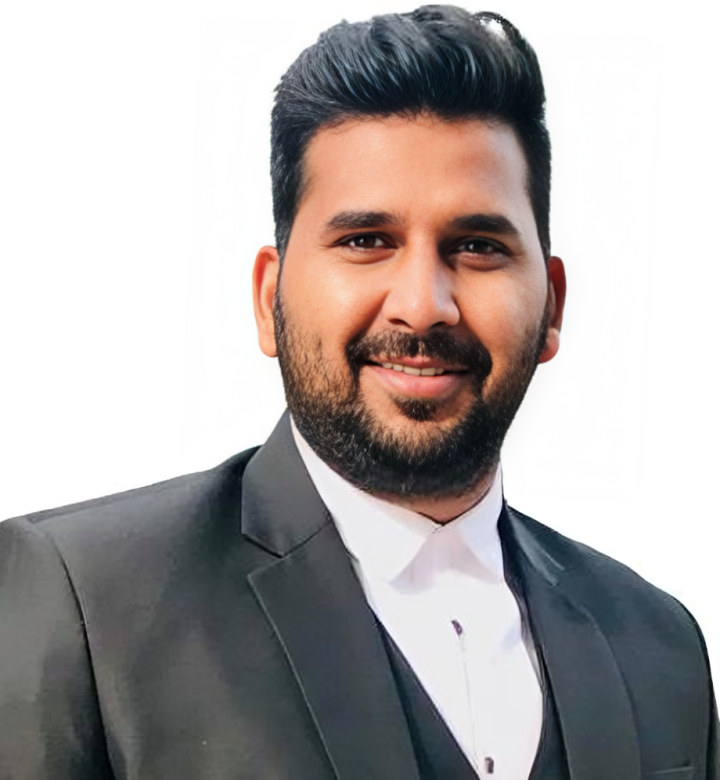
  • “Don’t just focus on learning law. That is essential and mandatory for the litigation career but not sufficient. Keep your eyes and mind wide open.” – Vishal Sharma, Founding and Managing Partner at Sharma & Associates.

    “Don’t just focus on learning law. That is essential and mandatory for the litigation career but not sufficient. Keep your eyes and mind wide open.” – Vishal Sharma, Founding and Managing Partner at Sharma & Associates.

    This interview has been published by Anshi Mudgal and The SuperLawyer Team

    What inspired you to pursue a career in law despite having a background in science? What drove you to choose law as your profession, and how did your B.Sc. (Hons.) Computer Science contribute to your legal career?

    When I completed my B.Sc. (Hons.) in Computer Science from University of Delhi, some of my friends who had completed their engineering were placed in reputed Patent Analysis firms. A good science background is a mandate to work as a Patent Analyst. I found it interesting too and completed a few online primer courses on Intellectual Property Rights (IPR) from World Intellectual Property Organization (WIPO). I also completed a Patent Analyst training program from an institute and thereafter joined a Patent Analysis firm in Noida. During all this I got a good exposure to IPR laws of India. But after some time, I realised that I needed a degree in law to excel more into this field so that I do not remain confined to the corporate offices and thus I resigned. I cracked the entrance exam and joined the prestigious Campus Law Centre, Faculty of Law, University of Delhi for three-year LL.B. 

    A background in science gives me an edge in IPR practice. Apart from this, a good understanding of Computer Science helps me a lot in handling cases of cybercrimes. 

    How was your experience at Campus Law Centre? When did you decide that you will go for litigation?

    In CLC, within no time I realised that it was not just IPR laws that I was interested in but in all types of laws. From my first semester at CLC and till date there has never been a second thought in my mind about litigation. Some of my classmates used to do corporate internships, some used to prepare for government exams, some were planning for LL.M. and some used to prepare for the judiciary. I did none of these. Whenever I got time, I used to go to various courts. I used to watch court proceedings and meet various advocates. 

    From a first-generation lawyer to the Founding and Managing Partner of Sharma and Associates (S&A), how has been your journey? What early experiences in your career were most influential in shaping your understanding of law and motivating you to establish your own practice?

    Immediately after completing my LL.B., I joined the office of a senior in my home town where I got initial exposure to drafting and court craft. I started going to various district courts of Delhi and Haryana and also Delhi High Court. Luckily, I started getting my personal cases also from my relatives and friends. I started accepting my independent cases side by side from the beginning itself which cumulatively later helped me in taking the decision of going independent. 

    I never went for a corporate office. I worked for a very less time with seniors but whatever work I did initially was completely court litigation from morning till evening. I got a full-fledged exposure to the court atmosphere right from the beginning of my career which included interactions with the judges, advocates and court staff. 

    The kind of work that I got from seniors during initial months of my practice played a significant role in shaping my independent practice. I never used to appear with my seniors in the court. I had to handle cases on my own on the basis of the instructions. This created the platform of self-confidence which later helped me in going independent at a very early phase of my career.

    How has your LL.M. (Professional) in Intellectual Property Rights from USLLS, Guru Gobind Singh Indraprastha University, Delhi, helped you tackle complex legal issues in the realm of intellectual property?

    It proved to be a very good decision for my career. The class consisted of practicing advocates, AORs, legal officers, judicial officers and government officers. All used to discuss their works and experiences with each other which significantly increased my understanding of the legal profession. I got a network worth keeping for a lifetime. 

    It was a weekend programme. All the classes and exams used to take place only on Saturdays and Sundays. Thus, my practice did not suffer at all during this course. I recommend this to all practicing advocates in Delhi who wish to pursue LL.M. along with their practice.

    The course was not theory oriented for me. I used to correlate my experiences of IPR practice with the lectures and discussions of the professors. The valuable insights gained during the classes and discussions enhanced the quality of my IPR practice.   

    How do you see the relationship between Alternative Dispute Resolution (ADR) and traditional litigation evolving? When do you think ADR is a more effective alternative compared to litigation in court?

    ADR and litigation go hand in hand these days. There are mediation centres in almost every court with well qualified mediators and staff. There are arbitration clauses in almost every agreement which we come across. Lawyers are common to ADR and litigation. A lawyer can represent his client before any ADR process or court as per the situation. People don’t come to the court to fight cases, they come to the court for relief and solutions. Mediation takes place in so many cases in the court on a regular basis. So, an advocate these days must have an understanding and skills of ADR.

    We at Sharma and Associates have the objective of providing solution-oriented services to our clients whether it be through litigation or mediation or arbitration. We have this strong philosophy that we charge our client not for the case but for the solution. There is a view that if a case gets settled the advocate will not get the fees which is actually not true. People come to court mostly when initial settlement talks fail. So, if an advocate even then gets the case settled between the parties on the basis of his skills, he can always charge his professional fees.

    I always say to the parties in civil and matrimonial disputes that time is money. ADR saves time and money for the litigants. I have personally seen that in settled cases the relation between the parties remains cordial as compared to decided cases. So, ADR is overall good for society as well.  

    Given your vast experience, what have been the most challenging cases you’ve handled? How did you approach the challenges, and what resources or strategies did you employ?

    I had Successfully argued application seeking cancellation of bail of the rape accused before the Additional Sessions Judge (Fast Track Special Court), Tis Hazari Courts, Delhi in 2021. After being granted the bail, the accused had not only launched an aggressive and defaming campaign on Facebook against the victim but had also circulated the victim’s mobile number to various people to harass her. I had been representing the victim pro bono right from the beginning in that case which involved allegations of rape on false pretext of marriage and cybercrime. It took several rounds of arguments by me and consequent detailed investigation by the police team to satisfy the Hon’ble Court about the misconduct of the accused.

    I had Secured Anticipatory Bail for my client in an alleged cheating case (420 IPC) of Rs. one crore related to FMCG goods in 2023 from the Sessions Court in the very first attempt itself. The complainant in that case was a mighty man with very good connections in the Police department and Court. I started my submissions with the clear facts and concluded with the settled laws through case laws. I addressed and satisfied the Court as to why the Custodial Interrogation of the accused was not required in the case. I also relied on the observation of the Supreme Court in Gagan Banga v. Samit Mandal & Anr. [Criminal Appeal No. 463 of 2022] that continuing trend of projecting purely civil financial dispute as criminal matter despite repeated judgments appears extremely disturbing. 

    Considering the demands of your profession, how do you manage to maintain a work-life balance? What strategies do you implement to safeguard your health and well-being while balancing a busy legal career?

    The issue of work-life balance comes before only those people who either take their work as a mandatory burden or who lack interest in their work. For me work and life are not different things. I don’t agree with people saying their work is their life either. Were you not living when you were not working? Will you not live when you will stop working? Work is a very important element of life but remember it is just one of the elements of life. Indulge in your hobbies, spend time with your family and friends, go on vacations and always spare some time for your body and mind. 

    I always ask my team to complete preparations for the cases of the coming month well in advance. I keep a note of pending works whether it be professional or personal in my phone and keep updating it. It is advisable to include different heads in this note like drafting, calls, research, meetings etc. I keep my clothes, bags and files ready for the next day before going to sleep to avoid hurrying in the morning. To be very honest it is not possible for me to go to the gym every day. I wake up a little early in the morning and do light exercises and meditation every day. I practice gratitude in the morning and evening every day to keep myself away from stress. I avoid using lifts whether it be courts or any other places. I can comfortably use stairs for going to the court rooms even on the seventh floor. 

    For aspiring lawyers who wish to make an impact across various areas of law, what advice would you offer? Are there any specific resources or approaches you recommend to stay current with the ever-evolving legal landscape?

    Don’t just focus on learning law. That is essential and mandatory for the litigation career but not sufficient. Keep your eyes and mind wide open. Observe and understand the society around you. Observe and understand the people around you. Your understanding of the society and the people must keep improving. People of all age groups will come to you for their legal problems. Your personality must reflect a certain level of maturity regardless of your age.  

    Networking is another essential requirement for litigation. Don’t meet and network with people just to expect cases from them. I have seen people doing that but trust me it won’t take you long. Keep building long term meaningful relationships and cases will come to you as a side product. 

    There is always a great emphasis on reading judgments of the Supreme Court and the High Courts. That is essential but not sufficient to excel in trial litigation. When I started my practice in trial courts, I adopted a different approach. I used to arrange and read the judgments of the trial courts where my cases were pending. Judgments of the trial courts contain facts, replies, issues, evidence, chief examinations, cross examinations, laws, arguments, relied citations and conclusions. By reading a trial court judgment, you can learn how to fight that type of case on behalf of either of the parties.  

    During initial years of practice, a young lawyer should accept all types of cases and legal queries. This makes your foundation strong. Later you can narrow down your areas of practice as per your interests and circumstances. Try to join a senior who allows you to take up your independent cases. Remember that the habit of salary is a slow poison if you wish to set up your independent practice. Aim to set up your independent practice at a reasonable early phase because later going independent becomes more and more difficult due to financial and other reasons. Some young advocates start their independent practice in partnership with other advocates which gives many benefits if goes well.    

    Get in touch with Vishal Sharma –

  • “I was drawn to the international aspects of IP law and the potential to make a meaningful impact on a  global scale. Moreover, it allows me to work with innovators, entrepreneurs, and  creatives who are shaping the future.” – Rakesh Tanwar, Equator Law Chambers.

    “I was drawn to the international aspects of IP law and the potential to make a meaningful impact on a  global scale. Moreover, it allows me to work with innovators, entrepreneurs, and  creatives who are shaping the future.” – Rakesh Tanwar, Equator Law Chambers.

    This interview has been published by Anshi Mudgal and The SuperLawyer Team

    What inspired you to pursue a career in law, and what key experiences  during your time in law school had a lasting impact on your professional journey? 

    My inspiration to pursue a career in Law was to Strive for Justice i.e. to make a positive  impact and promote fairness. Also, Law school’s rigorous academic environment and  the complexity of legal issues attracted me as I enjoy problem-solving and critical  thinking. During my time at Vivekananda Institutes of Professional Studies,  participating in clinical programs, such as legal aid clinics or externships, provided  hands-on experience and exposure to real-world legal issues. Also, engaging in moot  court and mock trial competitions helped developing advocacy skills, building  confidence, and fostering a sense of community among peers. Moreover, building  relationships with professors, peers, and practitioners lead to valuable guidance and  lifelong connections. Lastly, I would say, contributing to law reviews and journals  helped develop research, writing, and analytical skills, while also providing a platform  for publishing scholarly work. 

    After completing your law degree, you pursued a Master’s in Intellectual  Property Law at Queen Mary University of London. What led you to specialize in  IP law, and why did you choose this particular institution? Can you share your  experience at the university, and did you face any challenges during the admission  or enrolment process? 

    IP law is a complex and nuanced field, requiring a deep understanding of legal  principles, technical concepts, and industry trends. I enjoyed the challenge of  navigating this intricate landscape and helping clients navigate it. It also involves a high  degree of creativity and problem-solving. I relished the opportunity to think outside the  box, develop innovative solutions, and advocate for clients’ rights. IP law has a global  reach, affecting businesses, artists, and inventors worldwide. I was drawn to the international aspects of IP law and the potential to make a meaningful impact on a  global scale. Moreover, it allows me to work with innovators, entrepreneurs, and  creatives who are shaping the future. I find it rewarding to collaborate with clients who  are passionate about their work and committed to making a positive impact. And lastly,  IP law offers a balance of litigation and transactional work, allowing me to engage in  both contentious and non-contentious matters. I enjoy the variety and flexibility that  this balance provides. I also find IP law to be a field where I could make a tangible  difference in people’s lives and businesses. Protecting and promoting intellectual  property rights gives me a sense of fulfilment and purpose. 

    I chose Queen Mary University of London to pursue my master’s in law for several  compelling reasons. First and foremost, the university’s reputation for academic  excellence was a major draw for me. The School of Law is ranked 7th in the UK and  32nd in the world by QS World University Rankings by Subject. Another significant  factor was the diversity of programs and specializations offered by the university. I had  the flexibility to tailor my degree to my interests and career aspirations. Additionally,  the university’s location in London was a huge advantage. Being in the heart of London,  I had access to numerous barristers’ chambers, law firms, and the Royal Courts of 

    Justice, providing unparalleled opportunities for networking, internships, and job  placements. The expertise of the faculty was also a key consideration. The School of  Law has a team of renowned academics and practitioners who are leaders in their fields,  providing students with cutting-edge knowledge and insights. Lastly, the global  perspective and connections offered by Queen Mary University of London were highly  appealing. With partnerships and collaborations with top institutions around the world,  I knew that I would be part of a vibrant and international community of scholars and  professionals.  

    Despite a few challenges that generally appear while taking admission in a foreign  university as an international student, I persevered, and the experience has been  incredibly rewarding. The UK education system differs from my home countries. I had  to adjust to a new grading system, coursework requirements, and exam formats.  Obtaining a student visa was a complex and time-consuming process. I had to provide  extensive documentation, proof of funds, and English language proficiency. Studying  abroad is expensive. I had to secure scholarships, loans, or financial aid to cover tuition  fees, living expenses, and other costs. However, after immense efforts and  perseverance, I was able to secure a National Overseas Scholarship from the Government of  India that covered tuition fees, living expenses and other costs. 

    In the early stages of your career, you had the opportunity to work with  prominent lawyers and law firms. What were some enlightening experiences that  deepened your understanding of law, particularly intellectual property, and  motivated you to explore this area further? 

    I had several enlightening experiences that profoundly deepened my understanding of  intellectual property (IP) law. I assisted in a patent litigation case involving a complex  dispute over patent validity and infringement. This experience helped me grasp the  intricacies of patent law, including claim construction, prior art, and the role of expert  witnesses. I worked on a case involving the misappropriation of trade secrets by a  former employee. This experience highlighted the importance of protecting confidential  information, the challenges of proving trade secret misappropriation, and the strategic  considerations involved in pursuing litigation. I conducted IP due diligence for a client  acquiring a target company with a significant IP portfolio. This experience taught me  the importance of thoroughly reviewing IP assets, identifying potential risks and  liabilities, and negotiating IP-related provisions in transactional agreements. I worked  with expert witnesses in several IP cases, which helped me understand the importance  of expert testimony in IP litigation. I learned how to effectively communicate with  experts, prepare them for testimony, and use their expertise to build strong cases. I  assisted in several cross-border IP disputes, which highlighted the complexities of  navigating different legal systems, jurisdictions, and cultural nuances. This experience  taught me the importance of considering global IP strategies and coordinating with local  counsel to achieve effective outcomes.I counseled clients on various IP-related issues,  including IP protection strategies, licensing agreements, and dispute resolution. This  experience helped me develop strong client counselling skills, including the ability to  communicate complex IP concepts in a clear and concise manner.

    Having worked on international compliance matters, what are some of the  most common challenges you encounter when interpreting cross-border contracts,  especially between U.S. companies and international partners? Additionally,  could you share your observations on the key differences between common law  contract principles and U.S. statutory law? 

    When interpreting cross-border contracts, especially between US companies and  international counterparts, I commonly encounter the following challenges including  Divergent Legal Systems, Language Barriers, Cultural and Business Practice  Differences, Dispute Resolution Mechanisms and Compliance with Local Regulations.  Staying current with changes in laws, regulations, and court decisions across multiple  jurisdictions is an ongoing challenge when interpreting cross-border contracts. Cross 

    Border contracts often involve IP and data protection concerns and navigating these  issues requires expertise in multiple jurisdictions. Contract drafting styles and  conventions differ between the US and other countries and thus, ensuring consistency  and clarity in contract language is vital. 

    There are few major differences between common law principles and US statutory law  and therefore, the importance of understanding both while drafting, negotiating or  litigating, is highlighted. Firstly, US statutory law does not imply terms into contracts  as extensively as common law. Secondly, US statutory law does not require good faith  performance to the same extent as common law. Thirdly, US statutory law does not  emphasize reasonableness as much as common law and Lastly, US statutory law  provides more guidance on contract interpretation, such as the UCC’s rules for  interpreting contracts. On the other hand, common law emphasis on reasonableness in  contract interpretation and performance.  

    In your current role, you handle trademark infringement cases. What are the  primary challenges you face when navigating trademark infringement issues in  India, and how do you address them? 

    Trademarks in India face various challenges in handling trademark infringement issues.  Some of the common challenges are Complexity of Indian trademark law, Limited  resources, Counterfeiting and piracy, etc. To address these challenges, conducting  thorough searches of existing trademarks and pending applications can help identify  potential infringement issues. Registering trademarks with the Indian Trademark Office  provides legal protection and helps to prevent infringement. Sending cease and desist  notices to infringers can be an effective way to resolve disputes without resorting to  litigation. Using technology, such as trademark monitoring software, can help identify  potential infringement issues and streamline enforcement efforts. Educating the public  about trademark rights and infringement can help prevent unintentional infringement  and promote a culture of respect for intellectual property.

    Given your expertise in both Intellectual Property and commercial law, how  do you approach cases where these areas intersect, particularly those involving  brand protection, and commercial disputes? Could you share an example where  you successfully integrated your knowledge of both fields to provide a  comprehensive legal solution? 

    There are several areas of intersection between brand protection law and commercial  dispute resolution, for instance, Disputes arising from trademark provisions in  commercial agreements, such as licensing or franchise agreements; Allegations of  unfair competition, such as false advertising, in commercial disputes; IP protection in  commercial transactions, such as mergers and acquisitions; Addressing issues related  to gray market goods and parallel imports, which can impact brand reputation and sales. 

    Here’s an example: 

    Case Study: Licensing Agreement Dispute 

    A US-based software company developed a popular software platform for managing  supply chains. They entered into a licensing agreement with an India-based company to distribute the software in India. Later began to modify the software without former’s  permission and sold it to other companies, violating the terms of the licensing  agreement. It was discovered and a cease-and-desist notice was sent to the India based  company. However, they refused to comply claiming that the modifications were  necessary to adapt the software to the Indian market. Hence, a US based company needed  a lawyer who could navigate both intellectual property (IP) and commercial law to  resolve the dispute. By analysing and examining the licensing agreement, I negotiated with an Indian company leveraging the IP and commercial law analysis to reach a  settlement. The resolution also involved mediation between both the companies and the  Indian company was required to cease and desist from further modifying and  distributing the software, and to pay damages for the unauthorized use and distribution  of the software. Finally, I lead the parties to negotiate a revised licensing agreement  that better protected US based company IP rights.  

    What tools, resources, or methods do you rely on to stay updated with the  latest developments in trademark law and other related areas of commercial  law? 

    Online resources like information provided by WIPO Academy on Intellectual  property Rights including trademarks, patents, and copyrights, Industry conferences  and seminar focused on trademark Law and commercial law, legal research tools, legal  research platforms like Lexus-Nexus and West Law, professional associations like,  Inta, etc. Helped us to stay updated on the latest developments. 

    What advice would you give to law students or young professionals aspiring to  specialize in intellectual property law? What key skills and qualities do you believe are crucial for success in this field? 

    For law students aspiring to specialising in the field, engage in intellectual  property-themed moot courts and competitions to develop their skills in this field. Attending conferences, seminars, and networking events to connect with experienced  intellectual property lawyers can also be very helpful. Finally, following intellectual  property blogs, news outlets, and social media to stay informed about the latest trends  and cases is also significant.  

    For young professionals, it is important to develop a niche expertise by focusing on  specific areas of intellectual property law, such as patents, trademarks, or copyrights. It  is equally important to foster strong relationships with clients, colleagues, and mentors  to build a professional network. They can also consider obtaining a certification from  WIPO Academy or other similar organisation. Lastly, professionals must be prepared to  pivot and adjust to new developments, technologies, and trends in the field.

    Get in touch with Rakesh Tanwar –


  • Charting a Path in Cyber and Technology Law: A Journey of Innovation, Challenges, and the Evolution of Legal Practice. – (Dr.) Karnnika A Seth, Cyberlaw Expert, Author & Educator, and Founder of Seth Associates Law Firm.

    Charting a Path in Cyber and Technology Law: A Journey of Innovation, Challenges, and the Evolution of Legal Practice. – (Dr.) Karnnika A Seth, Cyberlaw Expert, Author & Educator, and Founder of Seth Associates Law Firm.

    This interview has been published by Anshi Mudgal and The SuperLawyer Team

    Ma’am, with over two decades of experience, when most people didn’t know about cyber laws, intellectual property laws, let alone media laws, what initially inspired you to pursue a career in this field? And what led you to study at the most prestigious King’s College, London? How did you choose this as your specialization?

    Very interesting question at the outset. Well, if I look back at my journey in this field of law, it’s been very fascinating. It’s been evolving just like the dynamic nature of law and technology. Way back when I was studying at Delhi University, I did my law from DU, and at that time, the IT Act 2000 was just enacted, and we were very fascinated to see a new law being enacted in India.

    We were looking at what exactly the nuances of this new field would be, what the challenges would be. Everything was so new that this field of law made me very inquisitive about what could be the legal issues that would arise, considering the inherent nature of the internet would be borderless.

    You know, questions like, will the conventional laws still apply in this medium? How will it change the way people work? How will it change the way people communicate? What kind of complications could arise? For example, jurisdiction issues: if two parties were interacting and contracting online, and there was a dispute, which court would be the right forum to decide? Because there is no global internet court, and there is no global internet law. So that was very, very interesting to think about, and I wanted to read more in-depth into this field, research it further, and contribute to it.

    So, I think it’s basically the fact that it was a completely new and unsaturated area, completely new to explore, and I always like to explore something that is an uncharted avenue of our subject. It makes you brainstorm. And I wanted to do this brainstorming in the field of law.

    And that’s what really kept me energized. Even today, I still feel like a student. Every day, there is so much to learn. So I may have been here for 25 years, but I still feel just like a graduate would. There is so much to learn and contribute. 

    In your early stages, you must have obviously, like us, faced a lot of challenges. There must have been a variety of experiences. As you said, the IT Act had just entered and became a reality. How has all of this understanding helped you make a niche for yourself in technology law? How did you decide where and when to start, what kind of practice you should do, and how you should approach it?

    You are also majorly involved in training and developing public policies with the government sector. How have you shaped your practice around this?

    Well, as I said, the field was unexplored at that time. It was very new. And I wanted to do anything and everything under the sun because this is, you know, learning. And when you’re learning, you can contribute in multifarious ways. As we say, this was a road less traveled, and I took that.

    When I looked at the way in which I could basically learn and gain more experience, I looked at the IT Act. Then I also looked at what was happening across the world. When I studied at King’s, we understood that the approaches to the same issues really varied across various jurisdictions. So we had professors, and we had interactions from different jurisdictions across the world. And with those perspectives and the kind of debates in the classrooms, we discussed issues like criminality. For example, how would criminality apply in the metaverse today? Can we say an avatar is responsible for committing a crime? Is the player liable if it’s an assault in a game that leads to some sort of mental shock to a user? How would one impute criminality in such a scenario?

    We also discussed how jurisdiction would apply if a person commits a crime in one location and damages critical infrastructure in another country. If while deciding a court’s jurisdiction for example, if the protective principle applies, then the courts would pass orders. How would one go about enforcing those orders? These kinds of cross-jurisdictional issues were really at the helm of discussions even at that particular point in time.

    If you look back, the IT Act, when it was just a basic Act, and the way technology developed, the industry grew, cybersecurity became a huge area in itself because with the rising crime, the industry had to catch up. Cyber safety tools were being floated, right from a basic antivirus to spyware to firewalls, and other kinds of technologies. Nowadays, we have blockchain, VPNs, data loss prevention software, and many network safeguards.

    So as the industry developed, they also needed legal compliance, and legal advice. I started advising companies on various issues linked with cyber law, which was also interesting. I helped frame their policies, shape their HR policies, social media policies, and tackled tricky issues like whether companies could scan employee emails in the name of productivity. These policies became very important as e-commerce grew.

    So in this way, my role became more advisory. I was also involved in education. I taught cyberlaw at the Indian Law Institute and Amity University. In fact, I was part of the first batch of PG Diploma in cyber law at AmityI completed after LLB from Delhi University, and that was a significant encouragement and motivation for me to learn more about this field. That was just the beginning, I would say. Then I went on to study Masters at King’s and further pursued my Ph.D. in cyber law.

    It’s been a fascinating journey, but as far as contributions are concerned, there was a need for capacity-building in the country because law was changing. Cybercrime increased phenomenally, so I dealt with those cases, represented clients in various forums, and assisted law enforcement bodies. I also worked on educating and training judicial academies and police academies across India.

    And then came writing, which is also a passion I followed and pursued. I wrote my book on computers, the internet, and new technology laws, which was released in 2012. We have a third edition, the latest edition in the market now. I’ve been writing extensively on this subject, and since it’s been changing so fast, we’ve already had 3 editions since 2012. So you can imagine. This is also one way in which technology has positively impacted me and helped me contribute better to society.

    How do you see the advent of artificial intelligence shaping the kind of technology law that we have? How is it going to influence not only the legal system but all systems, especially the defense system, as you are with the DRDO right now, advising them in different capacities? How do you see all of this being impacted by international AI acts as well? There are so many of them from which we also take a lot of references, like with the DPDP Act, as it happened. Where do you see we lie with artificial intelligence, and what kind of track are we going to take? Obviously, it can only be speculation.
     I’ve been advising the government for more than two decades now, and in my personal experience, it’s been a very enriching journey. The way we have shaped our laws and looked at technology, it’s been a very liberal and progressive approach.

    I do believe, and firmly believe rather, that one should allow technology to advance liberally and support R&D in the country because, truly, India, when we say ‘Make in India,’ ‘Viksit Bharat,’ or ‘Digital India,’ we have seen this revolution, and it is ongoing and in process.

    We are already working towards India at 2047. Looking at that, we are building our roadmaps, and plans are already being implemented. It’s not just in one department; I’m talking about the Ministry of Law, Ministry of Defense, Ministry of IT and Telecom, Ministry of Home, for example—they’re all trying to bring in coordination. There’s scope for more, but with the adoption of the PPP model we see now in AI, India’s AI projects are truly creating a platform for India to progress in the right way.

    There is going to be minimum regulation because if you put too much regulation, it’ll stifle the growth of the industry, and that’s the approach of the government as well. But I do feel that high-risk systems need to be regulated immediately because they can play havoc with people’s lives and bring destruction to countries.

    For that reason, I strongly advocate that there should be a regulation. In fact, in my mind, there should be a separate regulation for AI. As a voluntary initiative to support G20 and as country chair of G100 for AI and cybersecurity, I drafted a proposed code, a proposed Act for India on AI.

    I would like the government to consider it, and in various roundtables with the Honorable Minister, we’ve had discussions. We know the DPDP Act is already there in the offing and it will have provisions for high-risk systems that need to be prohibited and regulated. There will be some regulation to that extent.

    Although I think we’re still far away from having separate AI legislation because there’s no talk on that right now, but you never know. The way technology is progressing, I think this will become indispensable very soon. Let’s see how it goes, but so far so good.

    The government is taking a lot of interest and initiative, and we are truly world leaders in the ‘Make in India’ space, and I think the law will support the government’s approach and initiative because it’s in the interest of the industry.


    With India being quite active in AI, there has been a lot of conversation surrounding its cultural and diversity impact. Ethical concerns and language considerations are important, but cultural aspects must also play a significant role. Where do you see this intersection of culture, ethics, and AI impacting society, and when will these changes be realized by the common man? Currently, a lot is happening at the policy level, but how do you foresee it affecting society when it becomes a reality, especially given that India is a leader in AI yet culturally diverse? How do you see India impacting the global AI scene with its own AI Act, coupled with cyber and intellectual property laws?

     I believe we have already started exploring the key pillars of AI ethics. I’ve been involved in developing ethical frameworks, particularly in national projects and educational institutions, such as my role as a professor at Vivekananda Institute of Professional Studies (VIPS). Here, we’ve introduced an ethical framework for AI, which reflects global principles such as transparency, justice, inclusiveness, sustainable development, and bias elimination. These principles are endorsed globally, though regulations can vary by jurisdiction. In India, while we don’t yet have an AI Act like the EU, we are working on provisions for AI regulation.

    On the industry side, AI development is progressing rapidly, with models being developed for multilingual AI systems that consider India’s diverse languages and cultural contexts. This is already ingrained in the AI models being developed in India, and as a result, the laws need to reflect these cultural nuances as well. However, these laws must also be globally synchronized, given that AI models or data may eventually travel outside India for processing or storage, requiring compliance not only with Indian laws but also global standards.

    Take, for example, the GDPR and its standard contractual clauses (SCC) for data transfers. Similarly, India’s DPDP law also addresses these concerns. While we have cultural diversity, the core principles, like data protection, remain universal. Therefore, I believe we need a harmonized framework that works both for India’s unique needs and the broader global landscape.

    Moreover, there are also concerns about data ownership and intellectual property when training AI models. A current case before the Delhi High Court involving ANI and OpenAI raises these issues, questioning whether permission is required for using copyrighted material in AI training. Such cases highlight the need for clear regulations to determine how intellectual property laws apply to AI and data usage for training.

    AI regulation is already becoming a pressing matter, and I believe it will require global cooperation to set clear principles and enforce them. The lack of a universal convention on cybercrime and AI further complicates enforcement, even when jurisdiction is assumed.

    You’ve managed so much despite being an author, professor, advisor, and now a law firm founder. What motivated you to start your own law firm, especially considering your already extensive involvement in cyberspace and AI law?

    The main driving factor behind starting my law firm was the desire for flexibility. I wanted to contribute to the legal field in multiple ways, integrating the knowledge I gained in various roles—whether it was teaching, advising, policy-making, or litigation. Each experience enriched my understanding of the law, and I believed it was essential to bridge the gap between legal theory and practice.

    Through teaching and advising, I gained deep insights into the law’s practical challenges. When engaging with Public policy, I was able to identify gaps that needed to be filled. For instance, there were complications in the law around intermediary content removal, and after handling cases such as the one involving HubPages and a spiritual guru, I realized how critical it was for the law to evolve with changing technology.

    This interdisciplinary approach—combining litigation, advisory work, policy-making, and teaching—allowed me to contribute meaningfully to law reforms in India, especially in areas like data protection and AI regulation. By establishing my law firm, I could consolidate these experiences and provide a platform for further contributions to legal practice and public policy.

     You’re also well known for your work in women and children’s empowerment, especially in the context of cyber safety. Can you elaborate on your work with organizations like UNESCO and ICMEC, and how these global initiatives are being adapted or modified to protect Indian women and children online?

     Child protection and women’s empowerment have always been at the core of my work, particularly in the realm of cyber law. Online harassment and digital abuse were rising concerns, especially as many women and children lacked awareness of the risks and legal protections. The existing laws were inadequate, and that’s what prompted me to focus on researching and advocating for stronger protections.

    In 2015, I wrote the first book in India on child protection on the internet, which later became the subject of my PhD thesis. In this, I proposed various reforms to strengthen laws such as the Juvenile Justice (JJ) Act and the Protection of Children from Sexual Offences (POCSO) Act. Additionally, I’ve written extensively about women’s rights against cybercrimes, including a book on cyber safety for women.

    Through my work with organizations like UNESCO and ICMEC, I was able to contribute to global policy discussions on child protection and cyber safety. In India, I’ve helped tailor these global frameworks to suit our local context. For instance, I established a not-for-profit organization that focuses on awareness-building in schools and colleges, empowering women and children with cyber safety skills and best practices.

    During the COVID-19 pandemic, we conducted over 50 webinars to raise awareness about online scams, fake emails, and malicious content targeting vulnerable populations. We were able to educate women, children, and educators on how to protect themselves from online threats, and the response was overwhelmingly positive.

    These efforts were particularly rewarding because we saw tangible changes, with many women and children reaching out for guidance, and schools actively engaging in cyber safety education. Through these initiatives, I believe we were able to mitigate harm and empower individuals to navigate the digital world more safely.

    You have also worked extensively in intellectual property protection, particularly in the digital space. Could you share some of the primary challenges you’ve faced in this area and how industries have reached out to you for solutions? Given the rising importance of digital platforms, how can businesses better protect their intellectual property?

    Intellectual property (IP) has grown tremendously over the years, and new laws were needed to address these changes. In the early days, it wasn’t clear whether domain names could be protected like trademarks. But over time, legal clarity emerged, affirming that domain names could indeed be protected as trademarks. I’ve had the privilege of serving as an arbitrator for the National Internet Exchange of India, where I resolved many cross-border disputes involving “.in” domains.

    The expansion of cyber litigation, especially in areas like music piracy, video piracy, and film piracy, has been notable. I also advised Prasar Bharati in overhauling their royalty contracts, ensuring they accounted for the rise of the internet. Many of their contracts, at that time, did not even mention the internet. More recently, we’ve worked on updating these contracts to align with today’s technological landscape.

    Governments and industries are now paying more attention to policies that govern emerging technologies, including AI. In this context, governance and audits have become essential. We must ensure that businesses are not collecting unnecessary data, that the data being used is unbiased, and that proper security measures—such as encryption and data redaction tools—are implemented.

    The protection of trade secrets, copyrights, and trademarks through registration is fundamental. However, in the case of trade secrets, businesses must ensure confidentiality through other means. The development of new technologies, including AI-generated images, music, and art, raises questions of ownership. Who owns AI-generated art—the person who provided the prompt or the AI system itself? These are some of the challenges businesses face, and it’s crucial for them to adopt encryption, anonymization, and pseudonymization to protect sensitive data.

    Moreover, sectors like the social sector, which deal with sensitive data such as donor and beneficiary information, must ensure that data is encrypted and stays within the country. I’ve been advising these sectors on policies, ensuring they comply with legal frameworks. Protecting confidential information is not just the responsibility of the government; the industry must also play its part by adhering to these laws.

    The PPP model is vital. It allows for a collaboration between government resources and industry expertise. The government brings its authority and resources, while the industry contributes its technical know-how and capabilities. When both sectors work together, it results in a win-win situation that benefits the nation’s progress.

    How would you guide aspiring lawyers looking to specialize in fields like media law, cyber law, or IT law, which are expanding rapidly? What skills should they focus on, and are there any particular books, journals, or individuals they should follow?

    To make a meaningful contribution to this field, aspiring lawyers must have the right mindset. You should always consider yourself a student, as there is always more to learn. If you think you know everything, that’s the end of real learning. Passionate research is also key. You cannot delve into the depths of these fields without thorough research and understanding different perspectives. It’s essential to look at how different jurisdictions address similar challenges and tailor those solutions to India’s context.

    Perseverance is another crucial trait. The journey in this field isn’t always easy, and you may face challenges along the way. But consistency and hard work will bring results. The legal profession is full of ups and downs, and while your views might differ from others, time often proves the validity of your perspectives. The world changes, and sometimes the policies you advocate for today become essential in the future. Being open to criticism is important, as it helps you grow.

    Cyber law and IP law are highly specialized fields. Today, we have DPDP laws, AI laws, and entire branches dedicated to IPR, all of which often intersect. A lawyer working in this space needs to have a broad understanding of various legal issues. These fields cannot be treated in isolation, as cases often involve multiple areas of law.

    There are wonderful resources available today that were not accessible when we started law practice. The proliferation of e-learning platforms, educational apps, and online courses is a game-changer. I have personally taken courses such as the Cybersecurity CS50 from Harvard University, which was a fantastic experience. These online platforms provide a wealth of knowledge, allowing students to access information from anywhere.

    Additionally, portals like Manu Patra, SCC Online, and government-backed platforms like Swayam and E Pathshala offer free courses that cover a wide array of subjects. There are also incubation centers at institutions like DSCI and NASSCOM that promote startup culture, which is an excellent opportunity for students to learn hands-on and learn about  new technologies.

    Get in touch with (Dr.) Karnnika A Seth –

  • “While it may sound fancy to see lawyers speaking legal jargon, for me, a good lawyer remains to be the one who can explain the most complex solutions or strategies to clients in the simplest words.” – Vaishali Sharma, Managing Associate at ANAND AND ANAND.

    “While it may sound fancy to see lawyers speaking legal jargon, for me, a good lawyer remains to be the one who can explain the most complex solutions or strategies to clients in the simplest words.” – Vaishali Sharma, Managing Associate at ANAND AND ANAND.

    This interview has been published by Anshi Mudgal and The SuperLawyer Team

    Given your background in science, what initially sparked your interest in pursuing a career in law? Was it a conscious decision to transition into the legal field, or was there a particular experience that motivated you to choose this path? Additionally, how has your B.Sc. degree contributed to your success and approach in intellectual property law?

    I was pursuing my post-graduation in biotechnology when I realised that the potential of research in the biotech industry in India was limited and still in its nascent stages. While researching on various themes for one of my presentations during my post-graduation days at Venkateshwra College (DU), I bumped into the intersection and close connect of patent laws with the research industry. This presentation on patent and design laws sparked my initial interest in exploring a career in law back in 2009. IP law felt the best way I could have stayed connected with the research industry as also utilising my years of education in science. While IP law in India was burgeoning, it was relatively less explored and niche for me and my batchmates at Venkateswara College as most students in my class were interested in pursuing a career in research and were leaving the country to prestigious institutes in the UK, USA and Australia. In fact, out of a batch of 20 students, I was the only one to have made a conscious decision to transition into the legal field and this transition did make many of my friends and relatives inquisitive of the career path that lie ahead for me and its potential.

    Having completed my law in June 2013, I waited anxiously for over 3 years for the patent agent exam which was put on hold (in view of Madras HC Order dated March 15, 2013 in Sp.Chockalingam vs Controller Of Patents (W.P. No. 8472 of 2006)) and eventually conducted only in November 2016. Meanwhile, in my initial years, I got immense exposure to a variety of all IP laws including trademarks, copyright, designs, biotech/ chemical/ pharma patent matters, advertising, marketing, promotional laws amongst others. This diversity in my work exposure and constant intent to deliver my best helped me gain massive knowledge and grow professionally in the industry in the coming years. In 2018, Anand and Anand was nothing less than a dream come true and my journey with the firm streamlined my career trajectory more centric around brand strategy and I have been fortunate to have learnt from amongst the best minds of the industry since then.    

    Despite this swift transition from patent to brands over the years, I feel my B.Sc. degree contributed immensely to the success and approach in intellectual property law and till date remains to be as relevant as ever with my current specialisation in pharmaceutical trademarks. Pharma industry not holding the glamour as that of fashion/ hospitality/ lifestyle industry, at times, may fall short of attracting young professionals at times, but it was clearly not the case with me as I was inherently inclined towards the industry due to my educational background and continue enjoying my work till today.  

    Given your specialization in pharmaceuticals, what unique IP challenges do you typically encounter in this sector? How do you address complex IP issues, especially in relation to patent protection, data exclusivity, and regulatory concerns within the pharmaceutical industry?

    The Pharma industry is considered to be the most sensitive industry as it directly deals with human health and hence demands a greater need for protection. The same is also evident by the latest Reports released by Indian Trademarks Office (TMO), which indicates that trademark filings in class 5 form almost 14% of the total applications filed. And majority of these filings come from domestic businesses reflecting a robust focus on domestic innovation and trademark protection efforts.

    Moreover, with patent expiry of many blockbuster drugs in this decade, Indian generic companies take advance notice and line up to encash on these patented drugs going public by ensuring timely efforts to block brand names adept for their drug launches. Likewise the biosimilar market is growing substantially in India and so are the companies’ efforts in ensuring brand protection remain at forefront. The Indian Courts as well as TMO, to keep up with the public interest, tend to adopt a more stringent approach in allowing pharma marks for registration. Consequently, special attention is being adopted by pharma companies which necessitates the need for exhaustive research while brand selection process.

    Apart from brand names protection, IP protection in pharma industry is being availed for various packaging, labels, logos, get up, layout, combination of colours of the pharmaceutical products. Also, unique tablet designs (for instance capsules with distinct colour combination, some specific numerals/ alphabets embossed on the tablet) and distinctive shapes of containers, bottles, kits among others can be registered as 3-D trademarks/ design registration. Traditionally, foreign MNCs were seeking these special forms of protection but more and more Indian companies are exploring these additional forms to create product differentiation and carve out a niche for their products. These complexities often prompt lawyers devising brand protection strategies for pharma companies to be maintaining an intricate balance of navigating the legal landscape while also delivering business centric solutions to clients in a cost effective and time bound manner. Meanwhile, with several media reports citing  instances where drugs having identical or phonetically similar names have been prescribed for treating different ailments, putting public interest at risk, the Central Drugs Standard Control Organisation (CDSCO) is taking cognisance of the issue. Here, building a database of all pharmaceutical products and combating this overlap of brand names in the market to avoid risk of confusion remains one of the biggest challenges for the Ministry.

    As you began your career, what were some pivotal learning experiences that shaped your professional journey and deepened your understanding of IP law? Could you share any key moments or challenges from the early phase of your career that had a lasting impact?

    Learning in law does not come quickly and constant perseverance remains the key to success. IP law is dynamic and one thing I realised early on in my career is that there is no substitute to reading and keeping oneself updated. With so much development happening in terms of AI law, digital privacy, consumer protection, regulatory developments, there is no shortcut, and the secret to becoming a good lawyer lies in at least spending two hours of reading every day to keep abreast and expand your horizon of learning each day. In fact, being a lawyer, when you meet clients, it’s not just law that you discuss but myriad other topics come into discussion, and one should have enough knowledge to be able to have a conversation around anything. Your knowledge on general topics, at so many times, acts like an ice breaker and makes conversations easier to start.  

    Attention to detail and providing simplified solutions to clients is another important early learning in my career. While it may sound fancy to see lawyers speaking legal jargon, for me, a good lawyer remains to be the one who can explain the most complex solutions or strategies to clients in the simplest words. I learnt this early on from one of my bosses’ who primarily used to approve my advisory but used to devote time simplifying my language to ensure it reaches the right message across to the client. These early learnings have remained with me since the start of my career, and I follow these religiously for all my clients. 

    With your extensive experience in intellectual property, what are some of the most common IP-related challenges you’ve faced, particularly when working with brands in the fashion industry? Could you provide an example of a specific case where you encountered such challenges, and how you navigated them to achieve a favourable outcome?

    As our country is moving towards premiumisation and looks towards its youth population (which is the largest all over the world) for the economy’s 5 trillion dream, our fashion industry has a huge opportunity to grow. The iconic fashion brands have all one thing in common and that is a unique distinct identity that these brands have created over their decades of existence. Be it the Louis Vuitton distinctive ‘LV’ logo or well known touille logo, famous Christian Louboutin red sole, Cartier love bracelet or Hermes’ globally reputed Birkin or Kelly bags, these brands have become status symbol earning immense global goodwill and reputation. Likewise, these international fashion brands, the Indian fashion industry have realised the importance of not only creating their unique IPs but also protecting them from being diluted or misused by third parties in an unauthorised manner. In fact, Mr. Safir Anand is known to have created an industry level specialisation in the fashion space having strategized for Indian fashion businesses to scale up by leveraging the power of IP. Arguing in one such matter (under Mr. Anand’s guidance) for a renowned Indian fashion designer, we were assigned the task of convincing the Hearing Officer as to how a selvedge technique could be a unique IP for the business. We were successful in a registration being granted eventually as the selvedge had aesthetic value and had acquired the goodwill and reputation amongst the audience so as to act as a source identifier for the brand. 

    As a registered patent attorney, how does your expertise in patent law complement your work in brand strategy, particularly when advising clients in product-driven industries? Furthermore, what emerging trends do you see in the intersection of intellectual property law, branding, and patent strategy, especially in the context of a rapidly evolving market?

    My patents background acts like a firm rooting in my working with clients as science provides an analytical approach involving systematically breaking down complex problems into smaller, testable parts, creating hypothetical situations, data collection through detailed research, and going beyond what meets the eye and critical analysis of the entire information at hand thereby allowing for a structured and objective evaluation to reach well-supported conclusions. 

    As regards product driven industries, companies often manifest and tend to intensify efforts into building layers of protection around their patented products and setting up a guarded shield to maintain market share. Such efforts are often amplified by building unique brands, creating distinctive taglines for advertising/ marketing purposes, creating copyrightable promotional material, fictional characters and protecting non-functional aesthetic features and products shape or pattern design amongst others. These additional forms of protection help the patented products to capture niche markets and create their own space in a product segment, which they may continue to hold even after patent expiration. One such popular example is Pfizer’s brand Viagra, which managed to maintain a substantial market share, even after its patent expiration in 2020. The resilience of the drug in the face of generic competition is a testament to the company’s strategic marketing and the drug’s strong brand recognition which played a crucial role in maintaining its market share. This is a clear example showing that concerted efforts in building brand and patent strategy in the context of a rapidly evolving market are crucial for a company to build a sound blueprint for their patented products. Moreover, with the procedural changes brought about in India since the enactment of the Commercial Courts Act, 2015 and setting up of IP Divisions of various High Courts post abolishing of IPAB in 2021, the enforcement regime in IP industry has become robust, which further allows companies to ensure effective enforcement and a well-fortified all rounded protection in product driven industries.

    In your advisory capacity for the Government of India, particularly with regard to the railway project, what were the key considerations you factored into your strategic advice on brand protection? How did you address the challenges of safeguarding intellectual property in such a high-profile government initiative?

    The said project was high stake considering a third party had raised baseless allegations to the project’s brand name just days before the inauguration. As the high-profile project launch had already been widely advertised and covered all across the news portals, it was vital for us to carefully handle the situation factoring in not only the legal considerations but also realising the extreme sensitivity, such that any kind of escalation at that particular stage would have negatively impacted the project launch. This required our team to sit and assess our points of defence in great detail and following an exceedingly cautious approach we were able to successfully and expeditiously conclude the matter out of court. Our team efforts were duly acknowledged by the government officials who appreciated our office’s conscientious handling of the case. 

    What advice would you offer to young professionals aspiring to build a successful career in intellectual property law? Are there any specific resources, tools, or strategies that you would recommend to help them navigate the complexities of the global IP landscape?

    I profoundly believe in Amir Khan starrer- 3 Idiots popular dialogue “Baccha Kabil Bano….Kamyabi Toh Peeche Bhagegi”. That is “Choose excellence and success will follow”. The dominant ideology in India, till date, remains to be building a successful career even if that costs sacrificing one’s passion for it. However, rather than focusing too much on success, in the early years, young professionals should focus on finding what interests them, gaining knowledge on a variety of subjects and identifying one’s strengths and passion. Law is a demanding profession, and we end up spending the majority of our daytime at the workplace, so how we spend our days is how we spend our lives. Hence, choosing a career of self-interest can lead to personal growth as well as an organization’s growth. Surrounding oneself with right connects on LinkedIn is also helpful as it exposes one to industry specific knowledge in addition to gaining academic knowledge. Further, all forms of IP are intertwined intricately in our daily lives and there are so many online certificate courses, news blogs, legal subscription newsletters on all forms of social media, free seminars/conferences/ webinars that can help you track latest updates in IP and if reading all this ignites one’s interest, you should not be holding back and jump in to explore the immersive and ever evolving IP field. In my daily routine, I find WIPO Global Brand Database and USPTO/ EUIPO official websites helpful in tracking international clients’ brand portfolios. Reading the latest case laws on a daily basis is also an indispensable part of my day at work.

    After managing such demanding professional responsibilities, how do you unwind and relax? In what ways do your hobbies contribute to your overall well-being?

    My most favourite way to unwind is to spend quality time with close family and friends. Additionally, being close to nature seeps in me a feeling of abundance making me realise nature’s beautiful amalgamation of the most complex structures in the simplest manner. Replicating this to our profession, I, invariably strive to render the most uncomplicated and easily manageable and executable business solutions to clients.

    I also love travelling to newer places and meeting new people as it pulls one out of their comfort zone and plunges one into the unknown. This remains to be a vital quality to succeed in law as real growth lies in exploring the uncharted territories, challenging yourself to learn new things as the intersection of law and business is extremely dynamic in nature and rapidly evolving. Being in the legal profession one should absolutely avoid becoming complacent or overly comfortable with one’s current performance and achievements, potentially causing a lack of motivation or lack of intent to take on new challenges/ maintain high standards in work, often resulting in stagnation and a decline in quality or productivity. 

    Get in touch with Vaishali Sharma –

  • “In terms of latest trends – I think AI and its impact in different sectors and the legal nuances surrounding that would definitely be something over the next five and ten years.” – Shruti Iyer, Advocate-on-Record at Supreme Court of India and Partner at SA Law.

    “In terms of latest trends – I think AI and its impact in different sectors and the legal nuances surrounding that would definitely be something over the next five and ten years.” – Shruti Iyer, Advocate-on-Record at Supreme Court of India and Partner at SA Law.

    This interview has been published by Anshi Mudgal and The SuperLawyer Team

    With your broad expertise in areas such as Insolvency Law, Competition Law, Administrative Law, and more, could you share the story of how you first embarked on your legal journey? What inspired you to choose law as a profession? Was it a deliberate decision, or did your passion for law evolve gradually over time?

    I did not think I would be a lawyer. So I’m a lawyer by chance but I’m glad that I pursued law because now that I think back I am sure it is my calling. I don’t think I could have been so happy doing anything else. As destiny would have it I got admission into ILS Law College, Pune and I can safely say that I spent the better part of my life there. I was fortunate to study under some excellent faculty like Dr. Jaya Sagade, Prof. Nilima Bhadbade and Prof. Smita Sabne to name a few. Their teachings and guidance have been invaluable to me. 

    You participated in the dual LLM program in Global Business Law at New York University School of Law and National University of Singapore. Could you kindly share your experiences during that time and also ponder upon how the program equipped you to navigate the complexities of international corporate and financial services law? What challenges did you encounter during the application process, and what impact did the Dean’s Award from New York University have on you?

    I think I was extremely fortunate to be part of the NYU-NUS Dual Masters’ Program. It was truly one of a kind and we used to joke that we were part of a “limited edition”. Unfortunately, the Dual program has stopped. But it was a brilliant experience.  It was very intensive and taxing to do two programs in one year because when one university was on break we would have the classes and exams for the other. But the faculty was top notch. We got to experience the best of both worlds and had a natural kind of insight into comparative law without even having that as an elective. There is often this debate about whether it is worth pursuing an LLM abroad if you want to come back and work in India and especially in Litigation and I would like to say that if you have the resources you should definitely pursue one. Personally I feel it broadened my horizons in ways I could not have imagined. The bonus is I made some lifelong friends. The Application process was very smooth. It was completely online and I don’t recollect any hassle.  The Dean’s Award definitely helped me financially to be able to afford the program

    In terms of learning, I was extremely fortunate to be able to do my dissertation on International Investment Law under Prof M. Sornarajah. At NUS I interacted and studied under some excellent faculty like Prof. Umakanth Varottil and Prof. Arun Thiruvengadam. For the NYU Program we had some legends like Prof. Jose Alvarez for International Investment Law and Prof Stephen Choi for M&A and Securities. There are so many things that I learned during the program which I am able to use in my practise today especially when it comes to subjects like Competition Law and International Arbitration Law , apart from principles of corporate and financial laws. 

    In the early stages of your career, you worked with a major corporation. How did you approach the legal intricacies surrounding the Copyright Act and Cable TV regulations during that period? What key takeaways from that experience helped shape the foundation of your career and propelled your professional trajectory?

     I was lucky to work with some major corporations so early on in my career. It was a great learning curve for me. I dealt with several issues under the Copyright Act and Cable TV Regulations which were very relevant at the time. More than that, it helps me now immensely while dealing with in – house clients. I understand their issues and try to resolve them to the best of my ability. 

    After gaining valuable experience working in-house, what prompted your decision to transition to litigation, working alongside Senior Advocates? How did you find the shift between the two environments, and what major differences stood out to you? 

    I had a great learning experience working in – house but I always felt I was missing out on attending court. So I decided to finish my masters and switch to litigation. At that time the thought was if I don’t like it I can always go back. But I took to litigation like a fish takes to water. I loved coming to court and still do. It is what drives me. I feel like we make a difference to our client’s lives in whatever small way possible and that gives me a sense of purpose and immense satisfaction. The shift was not difficult, both have its pros and cons. But the working culture is very different. While working in – house my deadline was often completing a draft or sending an email. In litigation we are racing against time to secure bail or stop a demolition. So we cannot compare. Both are invaluable learning experiences.

    I am immensely grateful to my seniors Mr. T. Srinivasa Murthy and Mr. Senthil Jagadeesan, who have been my Gurus and Mentors in this profession. I have literally learnt everything I know from them and I continue to work and learn from them. 

    After working with various legal entities, you went on to establish your own practice. What motivated you to take that leap, and what were some of the initial challenges you faced in setting up your own firm and how did you navigate them?

    I cleared the Advocate on Record Exam and became an AOR of the Supreme Court and felt that I could start something on my own so my Partner Anandh K and I set up SA Law. It is based on our philosophy of doing good work and helping our clients. When we work in some other organisation we are always bound by their rules. Setting up my own practise gives me the freedom to do what I want both professionally and personally. It also helps me do other activities like teaching or interacting with law students and doing pro bono work without any pressure. In terms of the challenges we faced- we are both first generation lawyers from outside Delhi. We don’t have any Godfathers here. We have struggled and grown brief by brief and survived by word of mouth of our clients who have trusted us. 

    As a Founding Partner at SA Law and an AOR, you oversee a variety of practice areas, including land acquisition, civil rights, POSH (Prevention of Sexual Harassment), arbitration, and competition law. Could you share a fascinating case you’ve handled in the field of competition law and how you approached the complexities of such a case, especially for our younger readers looking to understand this area of law?

     I think one of the biggest cases I have handled is the cement cartel case. The case is now pending before the Supreme Court. But I was fortunate to work on the case from the CCI stage to the appeals before erstwhile COMPAT and then NCLAT and now Supreme Court. Working on a case through all the stages is a great learning experience. I think one of the fascinating aspects of competition law is how much we rely on foreign judgments and concepts – both the US Anti-Trust Law and EU and also compare it with our own jurisprudence. I think my LLM came in very handy in dealing with this. 

    Your passion for teaching is evident in your contributions to judging moot courts, delivering guest lectures, and conducting seminars and workshops for law students. What advice would you give to aspiring lawyers who are just beginning their legal careers?

    I don’t think I can give much advice- there are far more learned people for that. I would say enjoy your time at law school. Most of them would be doing the 5 year law course. When I look back at my time in Law College – I just remember that I had fun. I participated in all the activities in college both curricular and extra-curricular. It helped me make so many friends. And maybe I would say use that time to read and write a lot. 5 years is a long time. It is ok if you don’t have 10 internships in 5 years or don’t do many moot courts or write research papers. Of course, doing all this helps. But utilise the time doing something. I spent a good amount of time doing Purshottam and Firodiya Karandak in Pune which had a big Marathi Theatre Scene. It helped me learn one more language which is a life skill and comes in handy even today. 

     Perhaps I would add one thing – it is very easy to be enamoured by the profession when we are in college – especially when we hear Senior Advocates or Judges come to our college and talk and advise youngsters to pursue litigation. There is nothing wrong with that. Perhaps even I would give the same advice. But the initial years are tough. It is sometimes very easy to feel dejected, especially if you fall in the trap of comparison. Social media doesn’t help. Litigation is a marathon with very slow returns and requires a lot of consistent effort. And sometimes, even after a lot of hard work you may not get material returns or recognition. And that is ok. As long as you are able to feel satisfied that you are doing some good work, you should be ok with that. There are many loopholes in the system, all the more for women, but there are many good people as well- whether in terms of seniors, peers or mentors – there is no dearth of good people who will help you both personally and professionally and I think the camaraderie of the Bar is one of the best parts of this profession. Last but definitely not the least – there is no substitute for hard work. You may keep hearing about networking and legacy and luck and it is very easy to get lost in this hubris but there are no shortcuts to success. 

    As someone dedicated to staying at the cutting edge of legal developments and inspiring your colleagues to do the same, what do you consider to be the key emerging trends in your areas of expertise, such as Intellectual Property and Competition Law, particularly with the rise of Artificial Intelligence and technological advancements? How do you stay informed about these evolving fields, and what direction do you see them taking over the next five to ten years? Additionally, could you suggest any resources for our readers to stay up to date on the latest legal trends?

    In terms of the latest trends – I think AI and its impact in different sectors and the legal nuances surrounding that would definitely be something over the next five and ten years. The other emerging trend is the DPDP Act and its enforcement and the complications that arise out of them. In terms of staying updated, I think there are way more resources now than we had, especially online resources. I would say the good old way of reading law reports is also invaluable. 

    How do you manage to balance your professional growth with your personal interests? What hobbies or activities do you enjoy that help you unwind and relax after a demanding day at work?

    I think we always try to balance and if someone says that they have figured it all out then perhaps they are lying. But I try. I recently gave birth to my second child.  So I am currently in the depths of everything postpartum, but I would say whatever time I have I like to spend with my children. 

    Get in touch with Shruti Iyer –

  • “IPR is relevant across industries, and with the growing awareness of IP, career opportunities in this field are increasing.” – Kavita Mundkur Nigam, Partner at Krishna & Saurastri Associates LLP.

    “IPR is relevant across industries, and with the growing awareness of IP, career opportunities in this field are increasing.” – Kavita Mundkur Nigam, Partner at Krishna & Saurastri Associates LLP.

    This interview has been published by Anshi Mudgal and The SuperLawyer Team


    With your vast experience and accomplishments in the legal field, could you share what initially sparked your interest in law? Was there a defining moment that led you to pursue this career, and what drew you specifically to specialize in intellectual property law?

    The greatest reason or inspiration for taking up law was my maternal grandfather who came from a family having many generations of lawyers including his father and uncles. My grandfather was himself a lawyer by qualification but joined the Sales Tax Department and retired as Commissioner of Sales Tax, Government of Maharashtra. He was extremely passionate about law and on behalf of the Sales Tax Department, briefed and closely interacted with many distinguished lawyers of his time including the then Advocate General Mr. H. M. Seervai whom he deeply admired. The countless anecdotes he narrated to me and the zeal he had for the legal profession had a profound impact on me, unknowingly and when the time came for me to choose my profession, law came as a natural choice.

    While Law was in the family, Music, Literature and Art also ran deeply in my family, my mother being a Hindustani Classical Vocalist and my grandmother, a vocalist, poet, playwright and writer. They would often participate in seminars on copyright in relation to the fields of music, literature and art. I would accompany them and listen to the sessions with great interest. That sparked my curiosity and by the time I completed my graduation in law, I found IP to be a fascinating and an ever-evolving subject having an application across industries and I was convinced to take it up as my field of specialization. 

    You began your career as an Associate with a law firm. What were some of the key experiences during this early phase that helped deepen your understanding of the law, especially intellectual property law, and laid a solid foundation for your expertise in this area?

    I began my career with a full-service law firm Desai & Diwanji where I mainly worked on corporate and commercial transactions. My experience in intellectual property law began when I joined my present firm in the year 2008. Exposure to myriad cases in the areas of IP prosecution, legal advisory, contentious matters, anti-counterfeiting, IP transactions etc. involving different kinds of IP including trade marks, copyright, designs and some aspects of patents, right in the beginning of my tenure, gave me many opportunities to research, learn, resolve issues and deepen my understanding of the subject. Also, I firmly believe that there can be no substitute for hard work in laying a strong foundation, especially in the initial years of your career. I spent a lot of time reading, researching, studying the suggestions of my seniors and colleagues which I continue to do as learning is a never-ending process and updating yourself from time to time ensures you never feel complacent or stagnant. 

    Throughout your career, you have worked on complex IP transactions in industries such as media, entertainment, pharmaceuticals, and FMCG. What do you believe are the primary challenges businesses face when dealing with commercial transactions involving IP rights?

    As for already existing IP of the parties involved, gaps in IP ownership, lack of proper documentation for securing IP rights, third party claims to IP, vulnerability of registered IP to revocation are some challenges seen in commercial transactions involving IP rights. Similarly, while negotiating strategic collaborations or service contracts, differentiating between already existing IP and IP generated under the contract, deciding upon an ownership structure for the IP generated out of such services or collaboration could be challenging.

    Your experience spans both domestic and cross-border IP disputes. How do international IP issues differ from domestic ones?

    IP disputes per se, such as infringement, passing off etc., governed by Indian laws and taking place in India may not have material differences only by reason of one of the parties being a foreign entity. However, where these disputes emerge from cross-border contracts governed by foreign laws and have elements of IP protectable or enforceable under Indian laws, there could be challenges. Similarly, when an Indian entity wishes to enforce its IP rights against a foreign entity for acts done outside India, foreign laws may apply. Although IP laws worldwide have many commonalities, they are not completely harmonized. Concepts of authorship, ownership of IP, infringement, exceptions to infringement, availability of overlapping protection under different types of IP laws such as Copyright & Designs or Trade Mark & Designs, subject-matter of trade marks, copyright, designs or patents (more so in light of emerging technologies) might vary from jurisdiction to jurisdiction. Accordingly, these disputes may have different nuances.

    Could you share your insights from handling domain name disputes under ICANN’s UDRP? In addition, what role does arbitration play in resolving international IP disputes, particularly within frameworks like the ICC?

    The domain name dispute resolution process under ICANN’s UDRP is effective particularly when disputes arise out of cybersquatting or prima facie bad faith registration of domain names. In my experience, this process has been cost effective, expeditious and helpful especially where the adverse party is not located in India or where the registrant’s name and address is not disclosed by domain name registrars. Institutional arbitration, such as under the ICC Rules, plays an important role in resolving multi-jurisdictional / international IP disputes. However, these are typically disputes arising out of contracts and lawyers play a crucial role in informing the arbitrator (who may be qualified in laws other than the governing law of the contract) of nuances in the laws that are applicable to the dispute.

    Intellectual property is often crucial in mergers, acquisitions, and private equity transactions. How do you ensure that IP rights are effectively safeguarded during these processes, and what is their role in such transactions?

    Intellectual property is often the driving force for most acquisitions, mergers and collaborations. Effectively identifying IP, particularly unregistered IP, ensuring a proper and seamless transfer of all IP, registered or unregistered in favor of the acquirer, designing an efficient IP matrix in cases of joint IP ownership / collaboration, identifying third party contribution, claims or rights in IP creation and devising appropriate techniques to secure all IPR through documentation and statutory filings are some aspects to be considered during such transactions.

    What advice would you offer to aspiring IP lawyers or those considering a career in intellectual property law? Also, could you share some resources or strategies you use to stay current with global legal trends, particularly in the IP domain?

    To aspiring IP lawyers, I would like to say that IP is a fascinating subject having many dimensions and is ever evolving particularly with newer and emerging technologies. IPR is relevant across industries and with the growing awareness of IP, career opportunities in this field are increasing. You could choose sub-areas of your interest to practice such as IP prosecution, litigation or transactions and advisory. However, aiming for holistic exposure to various kinds of IP cases especially in the initial years will certainly help in the long run. Needless to say, like in any other field, hard work and a well-balanced approach helps one grow in the profession and also as an individual. These days there are several online platforms, newsletters, digital publications and media offering information and updates on IP related transactions and disputes, both domestic and international. There are also many subscription-based databases where one can find articles, copies of judgments and orders for detailed reading.

    Get in touch with Kavita Mundkur Nigam –

  • “My goal is to bridge the richness of tradition with the dynamism of modern legal practice, creating a meaningful impact for those I serve.” – Rishi Bansal, Advocate & Managing Associate at United & United.

    “My goal is to bridge the richness of tradition with the dynamism of modern legal practice, creating a meaningful impact for those I serve.” – Rishi Bansal, Advocate & Managing Associate at United & United.

    This interview has been published by Anshi Mudgal and The SuperLawyer Team

    As one of the youngest and most innovative minds in your firm, looking back, do you feel that law was always your intended career path, or was there a particular experience or influence that steered you toward this profession?
    Looking back, I feel that law was always destined to be a part of my journey. As a fourth-generation lawyer, I was immersed in an environment where discussions about justice, strategy, and advocacy were part of daily life. While my parents never pressured me to pursue this path, the legacy of law within my family naturally drew me in. 

    My grandfather deeply inspired me, Mr. Krishna Gopal Bansal, and my father, Mr. Shravan Kumar Bansal, whose unwavering commitment to justice and innovation left a lasting impression on me.

    Accompanying them to their office as a child, I was captivated by their meticulous approach to every case and the respect they garnered from peers and clients alike. These experiences shaped my understanding of the legal profession as more than just resolving disputes; it’s about shaping lives, empowering communities, and upholding justice. 

    This profound sense of purpose motivated me to embrace the profession wholeheartedly. Today, as one of the younger members of my firm, I strive to honor this legacy while bringing a fresh, innovative perspective to an evolving field. My goal is to bridge the richness of tradition with the dynamism of modern legal practice, creating a meaningful impact for those I serve.

    What initially drew you to Intellectual Property Law, and what motivated you to pursue an LL.M. (Pro.) in this area? How has your specialization in IP law contributed to your professional growth and success? 

    My interest in Intellectual Property (IP) Law was rooted in both family legacy and a personal fascination with the intersection of creativity, innovation, and legal protection. My great-great-grandfather once advised my grandfather to delve into IP law, planting the seeds for what has become a multi-generational practice in our family. Growing up in this environment, I witnessed how IP law empowers creators, safeguards innovation, and fuels economic progress, sparking my own curiosity and passion for this field. 

    Pursuing an LL.M. (Pro.) in Intellectual Property Law was a natural step in deepening my expertise. The program offered me a comprehensive understanding of the intricate frameworks governing IP law, from international treaties to emerging trends and strategic enforcement mechanisms. It also broadened my perspective, exposing me to global practices and equipping me with the tools to address the complex challenges of a rapidly evolving domain. 

    Specializing in IP law has been a cornerstone of my professional growth. It has allowed me to collaborate with innovators, businesses, and creators, helping them protect their ideas and transform them into impactful realities. This focus has not only strengthened my legal acumen but has also enabled me to carve a unique niche in a competitive legal landscape. It continues to offer diverse opportunities to contribute meaningfully to the intersection of law, creativity, and innovation.

    With your extensive experience handling IP-related matters, could you share your journey from Trainee Associate to Managing Associate? How have your roles evolved over time at United & United, and what key lessons from your early years have had the most lasting impact on you today? 

    My journey from Trainee Associate to Managing Associate at United & United has been enriching and transformative. As a Trainee Associate, I was introduced to the foundational aspects of intellectual property law—conducting meticulous research, drafting applications, and assisting in litigation. Those early years were instrumental in shaping my understanding of the field and building a strong work ethic. 

    As I progressed, my responsibilities evolved significantly. As an Associate, I began managing cases independently, engaging directly with clients, and devising strategies to address complex IP matters. 

    Transitioning to a Senior Associate role further broadened my perspective as I took on mentoring responsibilities and played a more active role in developing firm-wide strategies. 

    As a Managing Associate, I oversee teams, handle high-stakes IP portfolios, and contribute to the firm’s vision of fostering innovation and excellence. Each role has brought new challenges and opportunities for growth, allowing me to refine my skills and leadership abilities. 

    The key lessons from my early years have left an indelible impact. I carry everyday principles such as attention to detail, clear communication, and continuous learning. Most importantly, I’ve learned that building strong relationships—with clients, colleagues, and industry stakeholders—is the cornerstone of long-term success in the legal profession. 

    Having represented leading brands in trademark and design matters, how do you adapt your legal strategies for clients across diverse industries? What unique challenges do you face when protecting trademarks for fashion and consumer goods brands specifically? 

    Representing leading brands across diverse industries requires a deep understanding of not only the law but also the unique market dynamics and creative nuances of each sector. My approach involves tailoring legal strategies to align with the client’s business goals, market position, and competitive landscape. By immersing myself in the specific industry’s trends, challenges, and consumer behaviour, 

    I can craft solutions that resonate with the brand’s identity and long-term vision. When it comes to fashion and consumer goods brands, the challenges are particularly distinct. These industries thrive on creativity, rapid trends, and high consumer engagement, which make their trademarks and designs both highly valuable and vulnerable. Protecting trademarks in these sectors often involves addressing issues like counterfeit goods, fast-paced design replication, and maintaining exclusivity in a saturated market. 

    Additionally, fashion and consumer goods brands frequently operate on a global scale, requiring vigilance against cross-border infringement and navigating varying legal frameworks in different jurisdictions. The challenge lies in ensuring comprehensive protection while enabling the brand to evolve and expand without unnecessary legal constraints. 

    To address these challenges, I focus on proactive measures such as securing robust IP portfolios, continuous monitoring for potential infringements, and leveraging technology-driven tools for enforcement. I also prioritize fostering strong client collaboration, ensuring that my legal strategies not only protect their rights but also enhance their market presence and brand equity. Ultimately, my goal is to help clients thrive in their respective industries by ensuring their creative assets are safeguarded and strategically positioned for sustained success.

    Your expertise in international trademark law is highly regarded. What challenges do you face when securing global brand protection for clients, and how do you manage cross-border trademark disputes or registrations? Can you share a particularly challenging case that tested your skills in this area? 

    Securing global brand protection involves navigating a complex web of legal frameworks, cultural nuances, and market-specific challenges. Each jurisdiction has its own set of laws, procedures, and timelines, requiring a tailored approach to ensure effective trademark registration and enforcement. One of the primary challenges lies in harmonizing these diverse legal standards while maintaining consistency in brand identity and protection strategies. 

    Cross-border trademark disputes further amplify the complexity. Issues such as conflicting trademark rights, bad-faith registrations, and parallel imports often arise, particularly in regions where trademark squatting is prevalent. Managing such disputes requires a combination of strategic foresight, meticulous research, and collaboration with local counsel to ensure compliance with jurisdiction-specific rules while aligning with the client’s global objectives. One particularly challenging case that tested my skills involved securing a global trademark for a tech company launching an innovative product line. The brand name faced conflicting registrations in multiple key markets, including the U.S., Europe, and parts of Asia, where trademark squatters had preemptively filed for similar marks. 

    The case required not only legal acumen but also diplomatic negotiation skills to resolve disputes amicably and cost-effectively. In some jurisdictions, we pursued opposition proceedings and cancellation actions, leveraging evidence of bad faith and non-use. In others, we negotiated coexistence agreements to establish boundaries for trademark usage while protecting our client’s interests. Meanwhile, we implemented a robust monitoring system to prevent future infringements and bad-faith filings. This case underscored the importance of proactive planning, thorough due diligence, and creative problem-solving. 

    By strategically combining legal action with negotiation, we successfully secured the brand’s global footprint, enabling the client to launch their product line seamlessly. Ultimately, challenges in international trademark law demand a balance of legal expertise, strategic adaptability, and cultural sensitivity. My experience in this field has honed my ability to address these complexities while ensuring clients’ brands are well-positioned to thrive in the global marketplace.

    Given that IP law is constantly evolving, how do you see the Indian legal landscape adapting to global changes? What is your opinion on the effectiveness of initiatives like the AI and ML-based Trademark Search Technology and IP Saarthi launched by the CGPTM and DPIIT? 

    Intellectual Property law is inherently dynamic, evolving in response to technological advancements, global trade practices, and the increasing significance of intangible assets. As a rapidly growing economy and innovation hub, India is adapting well to these global changes by modernizing its IP framework and aligning with international best practices. 

    Initiatives like the AI and ML-based Trademark Search Technology and IP Saarthi, launched by the CGPTM and DPIIT, are commendable steps toward enhancing the efficiency and accessibility of the Indian IP system. For instance, the AI and ML-based Trademark Search Technology has significantly streamlined the trademark registration process, reducing the time and effort required for preliminary searches. It reflects a forward-looking approach, leveraging technology to address challenges like backlog and accuracy in trademark examinations. 

    IP Saarthi, aimed at creating awareness and guiding stakeholders, can bridge the gap between innovators and the IP system, particularly benefiting startups and small businesses. It underscores the government’s commitment to fostering an IP-friendly environment by empowering creators with knowledge and resources. 

    While these initiatives are promising, their effectiveness will depend on consistent updates, widespread adoption, and adequate stakeholder training. The continued integration of advanced technologies and robust policy frameworks will ensure India remains competitive globally. As someone deeply invested in this field, I am optimistic about the transformative potential of these initiatives and look forward to seeing their long-term impact on the Indian IP landscape.” 

    In addition to your legal practice, you contribute to the legal community through seminars, publications, and mentoring. How do you view the role of legal education in advancing trademark law, and what advice would you give to young lawyers who want to specialize in this field? Can you also share some resources that students can refer to for staying updates on the latest legal trends in IP? 

    I firmly believe in the transformative power of knowledge, particularly in advancing trademark law and strengthening the intellectual property (IP) ecosystem. Education plays a crucial role not only in shaping the next generation of IP professionals but also in empowering key stakeholders to safeguard the rights of creators and businesses effectively. To that end, my team and I actively organize seminars, webinars, and training sessions, particularly for customs authorities and police personnel. By equipping them with a thorough understanding of IP law, we enable them to play a vital role in enforcing brand protection and combating counterfeiting. These efforts help ensure that government authorities are well-prepared to uphold the rights of brand owners. Equally important is our engagement with students and young lawyers who are eager to specialize in intellectual property law. Through mentorship programs, guest lectures, and interactive workshops, we aim to inspire and guide them to explore the immense opportunities within the IP sector. This field is not only a cornerstone of innovation and creativity but also a driver of economic growth in an increasingly knowledge-based global economy.

    To young lawyers aspiring to specialize in trademark law, my advice is threefold:

    1. Develop a Solid Foundation: Master the basics of IP law, including trademarks, patents, copyrights, and designs, as well as the intricacies of jurisdiction-specific regulations.
    2. Stay Curious and Updated: IP law is constantly evolving due to technological advancements and globalization. Stay informed about new legal precedents, international treaties, and emerging trends in industries like AI, fashion, and technology.
    3. Cultivate Practical Skills: Beyond academic knowledge, focus on skills like negotiation, litigation, and client management, which are crucial in real-world practice.

    For students seeking resources to stay updated, I recommend:

    • WIPO (World Intellectual Property Organization): A treasure trove of international IP resources, reports, and case studies.
    • IP Blogs and Journals: Resources like SpicyIP, LiveLaw, barandbench and Manupatra are a great source of IP Blogs, case studies and latest news.  
    • Professional Networks: Engaging with IP-focused organizations like INTA (International Trademark Association) or participating in IP-related conferences is invaluable for networking and learning.
    • Books: Fostering the habit of regularly reading case laws, bare acts, and staying updated with the latest news is essential for delving deeper into the field of IP law.

    By fostering knowledge at all levels—whether among government authorities, businesses, or students—I aim to contribute to a stronger and more secure IP ecosystem where brands, innovation, and creativity can flourish.

    As the Managing Associate at your firm, you likely have significant responsibilities. How do you maintain a steady workflow while also balancing personal commitments and obligations? 

    As the Managing Associate at my firm, maintaining a steady workflow while balancing personal commitments requires a combination of organization, discipline, and clear prioritization. The key to managing both professional and personal obligations lies in setting realistic expectations and creating structured routines. In my professional role, I rely on effective time management tools and techniques, such as setting clear daily goals, prioritizing tasks based on urgency, and delegating where possible. This allows me to stay on top of deadlines, manage client expectations, and contribute to the growth of the firm. However, I also understand the importance of personal time for overall well-being and productivity. 

    I ensure that I set boundaries by dedicating time for personal commitments, whether it’s spending time with family, pursuing hobbies, or maintaining a healthy lifestyle. I’ve learned that balance doesn’t come from overloading one aspect of my life but by managing them in harmony. Maintaining this equilibrium also requires flexibility; there are days when work demands more time, and other days when personal priorities take precedence. What’s most important is remaining adaptable and staying grounded in both my professional goals and personal values. Ultimately, by fostering a disciplined approach to work and committing to self-care, I’ve found a rhythm that supports both my professional aspirations and personal happiness.

    Get in touch with Rishi Bansal –