Tag: legal compliance

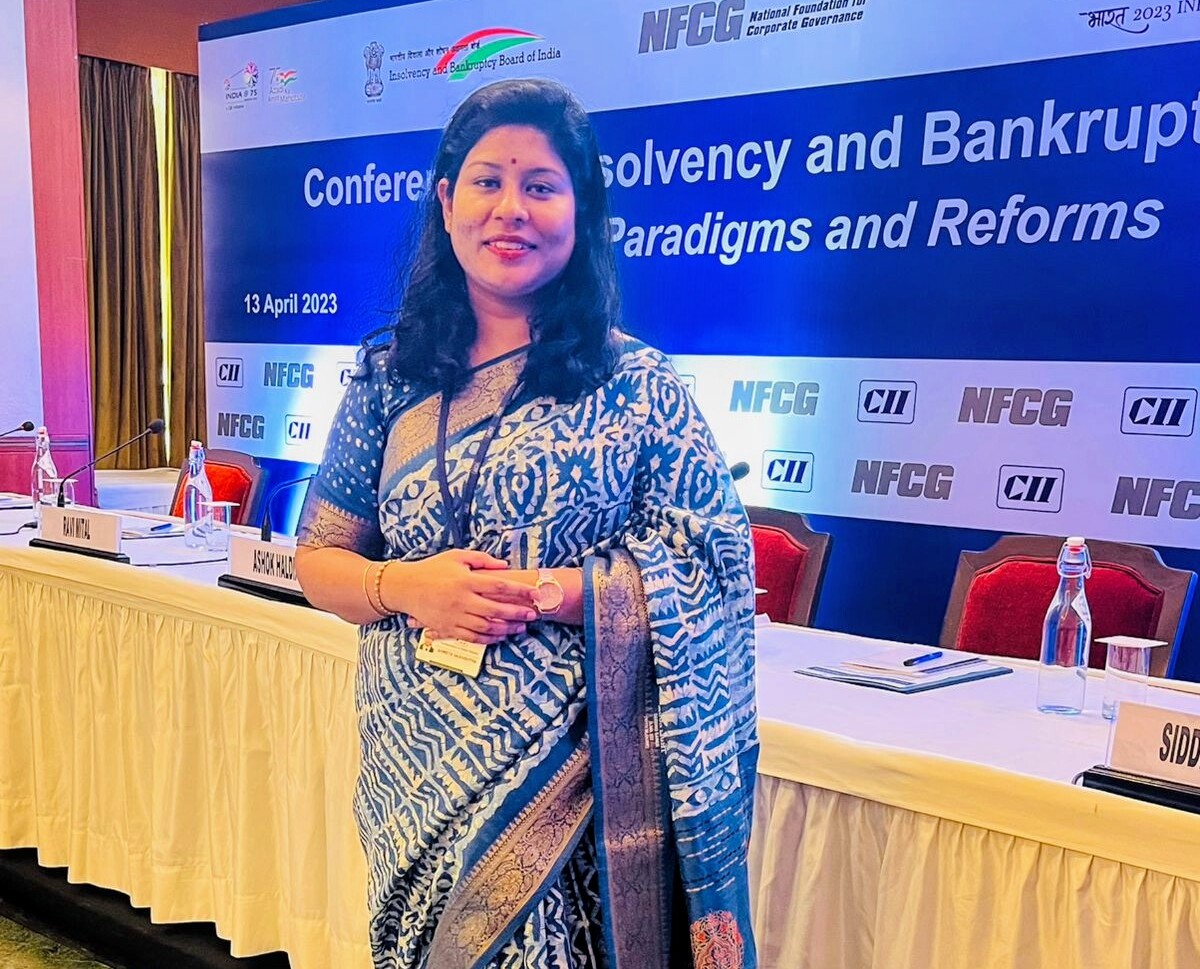
  • “My transition from practicing in India to building an international practice was a natural evolution, shaped by the global environment in which I was raised.” – Dr. Seemantani Sharma, Co-Founder at Mabill Technologies and Legal Manager at the Asia-Pacific Broadcasting Union, Malaysia.

    “My transition from practicing in India to building an international practice was a natural evolution, shaped by the global environment in which I was raised.” – Dr. Seemantani Sharma, Co-Founder at Mabill Technologies and Legal Manager at the Asia-Pacific Broadcasting Union, Malaysia.

    This interview has been published by Anshi Mudgal and The SuperLawyer Team

    With such a diverse academic background, what initially inspired you to pursue law, and how did your early education in India, your LL.M. at The George Washington University Law School, and your PhD at the University of Technology Sydney shape your focus on technology, intellectual property, and governance?

    My journey into law began with a fascination for the Indian Constitution, a passion I nurtured from around the age of 17. I initially enrolled in a Bachelor of Economics at Delhi University, largely following my parents’ preference, but quickly realized that statistics and quantitative subjects were not my strength. They were very supportive when I decided to leave and pursue law instead, a field that truly aligned with my interests in governance, rights, and regulatory frameworks.

    During my legal studies in India, I completed the mandatory year of pupillage and internship, which gave me a clear sense early on that conventional legal practice was not the path for me. After graduating from law school and completing my internship, I chose to work for a media technology company in a legal-business role rather than a core legal role. While I did not learn a great deal about practicing law in that role, I gained invaluable insights into how media companies generate revenues through media rights. This first job laid the foundation for my current role at the Asia-Pacific Broadcasting Union (ABU), where I continue to work at the intersection of law, technology, and media rights.

    After my LL.M. at The George Washington University Law School, I stayed on for a year as a legal researcher at the Estelle and Melvin Gelman Library, working on a grant-funded project. It was during this period that I developed a deep interest in rigorous legal research and began considering pursuing a PhD in the future.

    Several years later, after moving to Malaysia to work for ABU, the PhD opportunity finally presented itself. In 2019, I received a scholarship from the University of Technology Sydney to write my doctoral thesis under two highly respected IP scholars. I chose to focus on the intersection of copyright, performers’ rights, and dance, an unconventional topic that few IP scholars are willing to supervise. My co-supervisor (a leading Australian IP scholar), who happened to be a trained ballet dancer, was supportive of my choice. This allowed me to combine my academic interests with my personal passion as a trained contemporary Indian dancer and a student of Anand Shankar.

    These experiences (from my early fascination with constitutional law, to my LL.M. research, to my PhD under distinguished scholars) have shaped my focus on technology, intellectual property, and governance. They reflect a trajectory guided by curiosity, rigorous research, and the desire to leverage law to protect innovation and creativity across diverse domains.

    In the early phase of your career in India, what were the most formative experiences that laid the foundation for your practice and motivated you to specialize in intellectual property law?

    From an early age, I have always had a global mindset, shaped in part by my father’s encouragement to think beyond borders. Growing up in a family of fourth-generation entrepreneurs, I also knew deep down that one day I would start my own venture. These early influences gave me the confidence to chart a non-conventional path in law, one that could combine rigorous legal expertise with innovation, business, and a global perspective.

    In the early phase of my career in India, I was profoundly shaped by what I observed in conventional legal practice. I was concerned by inefficiencies in the justice system, the backlog of cases, and at times, lapses in ethics among practitioners and judges. It’s not that the whole Indian legal system is flawed, but these experiences made it clear that a traditional legal career was not for me. I had always envisioned a professional journey that would take me beyond India, allowing me to work on global challenges and innovations.

    My first professional role at RSG Media Systems exposed me to the commercial side of media rights. I gained important insights into how media companies generate revenue, yet I realized I wanted a deeper understanding of law itself, particularly in areas intersecting with technology, creativity, and business. Intellectual property law naturally emerged as the perfect bridge between these interests.

    Admission to The George Washington University Law School for my LL.M. became a decisive step toward my vision of becoming a global legal professional. That experience, combined with my subsequent PhD and international roles, reinforced my trajectory toward innovation-driven law, entrepreneurial ventures, and intellectual property strategy. Looking back, these formative experiences (my global outlook, early exposure to media and business, and rigorous legal training) laid the foundation for my focus on technology, IP, and governance on a global scale.

    What inspired your transition from practicing in India to building an international practice, and how did you navigate the challenges of adapting to different legal and professional ecosystems?

    My transition from practicing in India to building an international practice was a natural evolution, shaped by the global environment in which I was raised. Although I grew up in India, most of my father’s clients were foreigners. Our home constantly hosted visitors from across the world. This exposure gave me a deep comfort with cross-cultural interactions and a global perspective from an early age. I did not even have an official “Indian” name until I was 15. My relatives and friends often laughed at my nickname, which didn’t sound very “Indian.” Even in Southeast Asia, people sometimes ask me, “Where are you from?” despite my distinctly Indian surname. From food preferences to clothing choices, many of my everyday habits are shaped by this international environment, reinforcing my adaptability and ease in multicultural settings. Even my astrologer once remarked that I would thrive in international environments, a prediction that, in hindsight, aligns closely with the trajectory of my career. These experiences have been invaluable, enabling me to navigate diverse legal, business, and cultural landscapes with confidence and nuance. These experiences have been invaluable throughout my career, enabling me to navigate diverse legal, business, and cultural landscapes with confidence and nuance.

    While this global exposure came to me naturally, I actively built additional skills to thrive in international environments. I learned basic Mandarin, took courses in cross-cultural negotiations, and continually sought opportunities to expand my knowledge. Adapting to different legal and professional ecosystems required not only understanding local laws and professional norms but also honing skills that allow me to connect effectively across cultures. It was challenging at first, and even now, navigating international scenarios is not always easy.

    These experiences, combined with my grounding in international law and intellectual property, enabled me to develop a practice that is both globally relevant and locally effective. My upbringing instilled confidence and adaptability, and my commitment to continuous learning has been critical in navigating challenges and building an international career.

    You’ve worked extensively on media rights, sports agreements, and international lobbying. What have been the most complex challenges in balancing broadcaster rights with the rapid evolution of digital and OTT platforms?

    I have worked extensively on media rights, sports agreements, and international lobbying, which has given me deep exposure to the complexities of balancing broadcaster rights with the rapid evolution of digital and OTT platforms. The ongoing challenges reflect the nuances involved so much so that the broadcasters’ treaty has not been adopted even after more than 20 years. Even within my organization, we constantly debate fundamental questions such as “what constitutes broadcasting” and “who qualifies as a broadcaster” in a rapidly changing digital environment.

    For me personally, one of the biggest challenges arises when distributing rights. OTT platforms are inherently non-territorial, which creates complexities when determining the exclusivity of sports rights in specific territories. Resolving these issues requires careful negotiation, strategic foresight, and an in-depth understanding of both the technology and the legal frameworks governing media rights.

    The rise of OTT platforms has added additional layers of complexity. Traditional licensing frameworks often struggle to accommodate streaming models, on-demand services, and cross-border content distribution. For instance, the recent bill in India aimed at regulating OTT platforms highlights how governments are still grappling with these shifts, trying to balance consumer access, content regulation, and the protection of established media rights.

    Navigating these challenges requires a combination of legal expertise, strategic negotiation skills, and a clear understanding of how technological disruption transforms the media landscape. My work in this domain has sharpened my ability to reconcile competing interests, draft adaptable agreements, and anticipate regulatory trends, ensuring that broadcasters’ rights remain protected even as the definition of “broadcasting” continues to evolve.

    As a legal consultant advising start-ups and international organizations, how do you approach contracts and IP licensing across jurisdictions such as Asia-Pacific, Europe, and the US? What recurring challenges do start-ups face when entering these markets, and how can they prepare for them early on?

    As an IP expert and co-founder of a clean-tech startup, I have seen first-hand how critical a robust IP strategy is to a start-up’s success. Advising start-ups and international organizations across Asia-Pacific, Europe, and the US, I approach contracts and IP licensing with a global mindset. Every jurisdiction brings its own legal frameworks, enforcement mechanisms, and cultural nuances, and agreements must be carefully crafted to balance protection, commercialization, and investor confidence.

    Start-ups often face recurring challenges when entering new markets. IP regimes are fragmented, copyright, patent, and trademark protections differ, and licensing agreements can become complex when crossing borders. The biggest hurdles arise when trying to align a start-up’s ambitions with local regulatory realities while ensuring that innovations remain secure.

    Preparation is essential. I advise start-ups to embed IP strategy into their business plan from the outset i.e. conducting thorough market and IP due diligence, clearly defining the scope, territory, exclusivity, and enforcement rights in contracts, and engaging experienced legal counsel early. This approach not only reduces potential disputes but also builds trust with investors and partners, enabling the start-up to scale efficiently while safeguarding its core innovations.

    For me, the interplay between law, technology, and business is endlessly fascinating. Helping start-ups navigate these complexities while protecting their innovations has been one of the most rewarding aspects of my career, and it underscores why IP strategy is never an afterthought. It is the backbone of sustainable growth in a global marketplace.

    As Co-Founder of Mabill Technologies, how are you leveraging AI and IoT to build sustainable HVAC solutions, and what role does intellectual property strategy play in protecting and scaling this innovation?

    As Co-Founder of Mabill Technologies, we are focused on leveraging AI to build predictive maintenance solutions for HVAC systems. We have plans to develop a  proprietary AI algorithm in collaboration with a university, with Mabill retaining full intellectual property rights while giving proper attribution to our academic partner. From Day One, I have approached this venture with a strong IP strategy, ensuring that our innovations are protected and positioned for scalable growth. Our IoT roadmap, which will enable real-time monitoring and optimization of HVAC performance, is planned for rollout in the second phase of development. By combining AI, IoT, and a robust IP strategy, Mabill aims to deliver sustainable, efficient, and market-leading HVAC solutions.

    Having advised both start-ups and WIPO on IP law and sustainable innovation, how has your research and writing influenced your approach to balancing commercialization, investor confidence, and long-term climate impact?

    Having advised both start on IP law and working with WIPO for a short consulting project, my research and writing have shaped a practical and principled approach to balancing commercialization, investor confidence, and long-term climate impact. I have come to recognize that investor confidence is ultimately built on trust. Trust that the technology is robust, the team is capable, and the IP is well-protected. My work in IP strategy ensures that innovations are defensible and scalable, which in turn is likely to assure investors. At the same time, my focus on sustainable innovation means that we do not sacrifice long-term climate impact for short-term gains. This dual lens of trust and sustainability guides how I structure ventures, communicate with stakeholders, and make strategic decisions that align profitability with purpose.

    What advice would you give to students aspiring to a career in intellectual property law? What practical steps and resources should they focus on during law school to prepare themselves for this field?

    It’s great to aspire. However, I would advise students not to get overly fixated on choosing a specialization too early. Intellectual property law is a fascinating field, but it is very niche. What matters more in law school is building strong foundational skills that will serve students across any area of law.

    One of the most critical skills is learning how to read i.e. not just reading casually, but developing the ability to process complex legal texts quickly and efficiently. I truly learned this during my PhD. It has been transformative for my career. Many students underestimate the importance of speed reading and speed writing. Nonetheless, in today’s world, these skills are what will set students apart. AI can retrieve statutes and perform basic drafting, but the ability to read deeply, synthesize quickly, and write clearly remains irreplaceable.

    In practical terms, law students should focus on cultivating analytical thinking, precision in writing, and the ability to quickly absorb large volumes of information. Internships, research projects, and exposure to different areas of law will also help develop versatility, which is especially important in niche fields like IP. Some of the best IP lawyers I know are creators, inventors, or entrepreneurs themselves. This combination of legal skill and practical, hands-on understanding of innovation gives them an edge. A strong foundation, combined with curiosity and disciplined study habits, will equip students to succeed whether they ultimately specialize in IP or elsewhere.

    How do you see the future of intellectual property and media law evolving with emerging technologies, and what is your vision for the evolution of your own practice in the coming years?

    The future of intellectual property and media law is poised for a sea change, driven largely by emerging technologies such as AI. Traditionally, IP laws have been human-centric, focusing on human creators and inventors. AI disrupts this framework, raising fundamental questions: Who qualifies as an author? Can a machine or AI system hold authorship? Jurisdictions across the world are actively debating how to address these challenges, and IP laws will likely need to evolve to accommodate non-human-generated works and AI-assisted inventions.

    In media law, licensing for OTT platforms remains one of the biggest challenges, particularly given their cross-border, non-territorial nature and the rapid pace of digital disruption. These shifts require not only technical legal expertise but also a strategic understanding of business models, technology, and regulatory frameworks. For me personally, determining the exclusivity of sports rights in specific territories for OTT platforms is a particularly complex challenge.

    I am registered to take the California Bar Exam, which reflects my legal training and commitment to professional rigor. However, my primary role today is as a founder and legal strategist rather than a conventional practitioner. My goal is to build Mabill into a leading venture while simultaneously establishing my thought leadership brand. I plan to revisit the decision to sit for the exam depending on Mabill’s growth trajectory, ensuring that my focus remains on driving innovation, scaling the business, and shaping the intersection of law, technology, and sustainable solutions.

    I see my role evolving from a technical-legal expert to a legal strategist and systems thinker. I aim to blend my legal background with high-level strategic input for start-ups in regulated sectors such as clean-tech. As a thought leader and clean-tech founder, I am no longer a conventional lawyer. Nonetheless, law continues to inform my work, enabling me to provide insights that protect innovation, anticipate regulatory trends, and support sustainable growth in a technology-driven world.

    You have authored books on the EU AI Act and IP monetization in the AI era, published peer-reviewed articles on piracy, TRIPS, and broadcaster rights, and contributed policy insights at global forums such as WIPO. How do you see this scholarship and thought leadership complementing your role as both a legal strategist and a tech founder and what broader impact do you wish to create in shaping the future of IP and technology law?

    My work as a scholar and thought leader directly complements my role as both a legal strategist and tech founder. Authoring books on the EU AI Act and IP monetization in the AI era, publishing peer-reviewed articles on piracy, TRIPS, and broadcaster rights, and contributing policy insights at global forums such as WIPO has given me a nuanced understanding of the intersection of law, technology, and innovation. These insights allow me to advise start-ups and investors not only on compliance but on strategic IP and legal frameworks that drive value creation and reduce regulatory risk.

    Being a tech founder, myself gives me a first-hand perspective on the challenges innovators face i.e. how to scale responsibly, protect core technologies, and navigate complex cross-border regulations. This combination of scholarly rigor and operational experience enables me to provide high-level strategic guidance that is legally sound, commercially viable, and investor-ready.

    My broader vision is to shape a legal and regulatory ecosystem where emerging technologies like AI are harnessed responsibly, IP rights incentivize creativity, and sustainable innovations (especially in sectors like clean-tech) can scale globally. By bridging the worlds of law, entrepreneurship, and technology, I aim to help founders, investors, and organizations anticipate market shifts, protect their assets, and unlock long-term growth opportunities.

    Get in touch with Dr. Seematani Sharma –

  • “AI is certainly going to play an important role in compliance and investigations, but I don’t see it as something that will completely take over.” – Guneet Gudh, Principal Associate at Panag & Babu.

    “AI is certainly going to play an important role in compliance and investigations, but I don’t see it as something that will completely take over.” – Guneet Gudh, Principal Associate at Panag & Babu.

    This interview has been published by Anshi Mudgal and The SuperLawyer Team

    You have built a distinguished career as a Financial Crimes & Corporate Governance Lawyer. What initially drew you to this specialisation, and how did your academic background shape the perspective you bring to your practice today?

    I grew up around conversations on business and decision-making, so questions of accountability and systems were never abstract for me; they were part of daily life. That naturally drew me toward financial crimes and governance, because I could see how one weak link could impact an entire organization. My academic journey from JGLS to experiences at LSE and Augsburg University gave me the global perspective I needed. It taught me to look at compliance and governance not just as rules to follow, but as tools to build trust and resilience. That mix of early exposure and academic grounding still defines the way I practice today.

    In your experience across developed and emerging markets, what are the most striking differences in investigative and compliance strategies? Which international best practices could be effectively localised for India’s evolving landscape?

    I would challenge the notion that the differences in compliance approaches lie solely between developed and emerging markets. In my experience, the real distinction is not geographical; it stems from the ethics, priorities, and compliance mindset of an organisation’s leadership. When leadership is genuinely committed to integrity and transparency, even jurisdictions with evolving regulations can foster proactive and effective compliance. Conversely, where leadership is indifferent or evasive, even the most advanced regulatory systems can be rendered ineffective.

    That said, India can certainly benefit from selectively adopting global best practices, such as strengthening internal controls, conducting sharper and more independent compliance audits, and leveraging technology-driven tools for real-time monitoring. However, these mechanisms only achieve their purpose when reinforced by strong leadership and a well-equipped legal and compliance ecosystem that recognizes compliance not merely as a shield against penalties, but as a foundation for building sustainable trust.

    Looking toward the next decade, how do you envision the fusion of technology, governance, and cross-border regulation reshaping compliance practice, especially with the rise of AI and digital investigation tools?

    AI is certainly going to play an important role in compliance and investigations, but I don’t see it as something that will completely take over. The human element, the judgment, experience, and ethical grounding that specialists in this field bring, remains irreplaceable. Complex financial crime matters often involve nuance, intent, and context that no algorithm can yet fully grasp. It will take AI time to reach that stage.

    That said, I view AI as an additional strength in the lawyer’s toolkit. It can help sift through vast volumes of data, spot unusual patterns, and accelerate processes that once took weeks. But at the end of the day, AI is a supporting hand, not the lead investigator. The control, the strategy, and the interpretation still rest with the human professional.

    Right now, there is a tendency to overstate AI’s capabilities, almost treating it as magic. But in reality, it is just another tool, powerful, yes, but still a tool. I compare it to how Microsoft Office transformed law practice in the 1990s. Back then, it didn’t replace lawyers, but it fundamentally changed how we worked and made us more efficient. I believe AI will do the same; it will make us sharper and faster, but it won’t replace the human expertise at the core of the legal practice.

    The surge in online fraud, cyber-enabled financial crimes, and digital payment scams has created new challenges for regulators, corporates, and law enforcement alike. From your perspective, what gaps still exist in India’s current framework to address these threats, and how can legal practitioners play a proactive role in combating them?

    Online fraud is one of the fastest-growing risks, not just for individuals but for corporates and financial institutions. The sheer speed and cross-border nature of these crimes often outpaces traditional investigative and regulatory tools. While India has made strides with measures like the RBI’s fraud monitoring systems and the CERT-In framework, the ecosystem still faces gaps in coordination, reporting, and accountability.

    One of the biggest gaps is siloed response—banks, fintechs, law enforcement, and regulators often act reactively and in isolation. A more integrated framework, with real-time intelligence sharing, is urgently needed. Another issue is underreporting; many organisations hesitate to disclose fraud incidents out of fear of reputational damage, which only perpetuates vulnerabilities.

    Lawyers in white-collar practice can contribute significantly here: by advising corporates on robust fraud-prevention policies, ensuring compliance with reporting obligations, and guiding internal investigations that meet both legal and regulatory standards. Beyond that, we can help bridge the gap between technology and law—working with forensic experts, fintech players, and regulators to shape practical frameworks that keep pace with evolving digital threats. 

    As an established lawyer in governance, investigations, and white-collar matters, how do you mentor the next generation? What skills or tools do you recommend for them to thrive in today’s rapidly shifting regulatory and technological terrain?

    Mentorship, to me, is first and foremost about giving young lawyers the confidence to keep going and ensuring they don’t give up when the work feels overwhelming. This is a demanding field, and in the early years, it’s easy to doubt yourself. Sometimes the best role a mentor can play is simply to reassure them that discipline, consistency, and patience will carry them through.

    Beyond that, I see mentorship as preparing young lawyers not just for today’s challenges but for tomorrow’s uncertainties. I encourage them to cultivate adaptability, strategic thinking, and clear communication, because in white-collar practice, clients look to you as a trusted advisor, not just a lawyer. I also urge them to embrace technology – mastering data analytics, digital forensics, and regulatory tech platforms is no longer optional.

    Most importantly, I remind them that tools and trends will keep changing, but ethics, resilience, and statutory grounding never go out of fashion. Regulatory landscapes will shift, but if you stay curious, disciplined, and grounded in the law, you’ll be equipped to thrive at the intersection of law, business, and technology.

    Finally, what is your long-term vision for your practice as a Financial Crimes & Corporate Governance Lawyer? And how do you manage the demands and pressures of such an intense field while maintaining personal well-being?

    For me, discipline always tops the list. Without discipline, nothing else really sustains. Over time, discipline creates habits, and those habits make it easier to do the workday in and day out. In the early stages of your career, when you’re putting in long hours and truly immersing yourself, that consistency shapes you into a stronger professional. It’s like practice in any field—the more you repeat, the sharper you get.

    I also believe the right mindset matters just as much. Keeping the outlook of a leader, taking ownership, thinking ahead, and combining it with the endurance of an athlete helps you enjoy the journey rather than just endure it. This is not an easy profession, but when you bring discipline, habits, leadership, and endurance together, the work becomes something you grow with, not something you burn out from. That’s what keeps me motivated and makes the practice rewarding.

    Get in touch with Guneet Gudh –

  • “The confidence that I gained as a lawyer, coupled with a structured and organized approach has shaped me as an entrepreneur today.” – Shruti Gupta, Independent Law Practitioner and Hospitality Entrepreneur.

    “The confidence that I gained as a lawyer, coupled with a structured and organized approach has shaped me as an entrepreneur today.” – Shruti Gupta, Independent Law Practitioner and Hospitality Entrepreneur.

    This interview has been published by Anshi Mudgal and The SuperLawyer Team

    Having built an impressive legal career spanning over seven years, and continuing your practice today while also excelling as a hospitality entrepreneur, what first inspired you to pursue a career in law?

    I was the kid who always sought logic for everything and anything and asked a zillion questions. Growing up, the world of contracts, negotiation and consequences attracted me and I was drawn to the idea of transactions and their intricacies and would pester my father who is a businessman to know more about how things worked.

    I grew up in a relatively conservative city of Kanpur in Uttar Pradesh, where females did not have it easy and small things had to be bargained and negotiated.  All of this led me to admire people who could negotiate, resolve disputes with clear communication and well-reasoned logic. This also drew me to  law as a field where I could advocate for others and use my communication skills to bring about meaningful change.

    When I pursued higher education at Shri Ram College of Commerce and later at Campus Law Centre from where I pursued my LLB, I got fascinated with litigation. The fast paced dynamism and the strategy of litigation drew me in and I got hooked. I was very fortunate to have a fabulous mentor in my senior, Mr. Gaurav Pachnanda, Senior Advocate and Barrister at Fountain Court Chambers. Working with him introduced me to complex commercial arbitrations and was one of the best foundations that someone can ask for. My academic journey, which eventually took me to Cambridge University for my Master of Law, only deepened that conviction.

    You began your professional journey practicing before some of the highest courts and tribunals in India before transitioning into hospitality entrepreneurship. What motivated this shift, and how did your legal acumen prepare you for the challenges of running and expanding a business?

    After practising litigation full-time for several years, during the pandemic I got an opportunity and I made an unconventional road into the world of hospitality. At the time when the world was dealing with covid and everything underwent lockdown, one of our hotel’s in Dehradun was undergoing renovation. Being the foodie that we both are, we, (Abhishek, my husband and co-founder of the restaurants) decided to start a small pizzeria called Coco Osteria to introduce Neapolitan pizzas to Dehradun in a space that vibed with us. We started small, more like a passion project than a commercial venture, and in a short span of time, Coco took off and how.

    The hospitality business is fast paced every day is a new challenge. It requires one to be dynamic in decision making, in pivoting and adapting to the changing environment. The skills and mindset I honed through law like critical thinking, problem-solving, and resilience in high-pressure situations will always be in my DNA and they have proved invaluable in building and growing my restaurants.

    Your work in litigation, arbitration, and corporate advisory has honed skills in analysis, negotiation, and risk management. How have these shaped your approach to strategic business decisions and navigating compliance, contracts, and negotiations?

    My background in litigation and arbitration has taught me how to assess risks and outcomes before taking any business decisions ensuring that all business decisions at LP Hotels, Coco Osteria, or Monsoon are backed by clarity and are not left to chance.

    My legal acumen has taught me to have a structured yet flexible approach to decision-making in hospitality. All skills come in handy and help me in the hospitality industry whether it is navigating the compliances and regulatory frameworks or negotiating leases or vendor partnerships or dealing with my team.

    The confidence that one gains as a litigation lawyer is unparalleled. We are constantly juggling between different contracts and industries and have to be adept at keeping up with whatever is handed out to us. The confidence that I gained as a lawyer, coupled with a structured and organized approach has shaped me as an entrepreneur today. All of this helps to make decisions that balance innovation and sound business policies.

    Based on your experience, what are some of the most common legal pitfalls first-time entrepreneurs overlook, and how can they proactively avoid them?

    One of the most common legal pitfalls entrepreneurs (whether first timers or experienced) face is entering into business arrangements without formal, well-drafted contracts. Many rely on verbal agreements or generic templates, which can lead to disputes over responsibilities, revenue sharing, or exit rights.

    Another overlooked area that entrepreneurs often overlook is protection of intellectual property whether it is trademarks, logos, or proprietary content.  Another gap I often come across is that of compliance with local regulations  from licenses to labour laws. This I have realized is a big issue especially in industries like hospitality or F&B, where health and safety standards are stringent.

    To avoid these, I recommend that all entrepreneurs should invest early in legal groundwork. They need to get the basic things in place, nothing fancy. They should ensure that all contracts are vetted, register necessary IP’s, and get help to ensure compliance with regulatory frameworks. Even if budgets are tight, seeking basic legal advice at the outset saves significant costs and risks later. I believe that maintaining proper documentation is equally important so that there are no issues later when the company grows.

    In leading operations, branding, and strategic development, how does your legal background influence your leadership style and problem-solving approach?

    My legal background has a profound impact on my leadership style and my approach to decision making. I am thorough more often than not, I am able to anticipate problems and issues before they materialize which gives me an edge in dealing with them.

    Also, true to my legal profession, my leadership style is proactive, detail-oriented, and solution-driven. One thing that I learnt through my legal career was to listen and to be empathetic. This is one of the biggest advantages that I may have learnt because hearing out people is crucial to building relationships and solving issues. A lot in this hospitality industry is driven through relationships, with guests, partners, and teams and the ability to balance firmness with empathy has been invaluable.

    I encourage my team to think critically, ask questions, and to become creative in finding solutions. Ultimately, my legal background gives me the confidence to take bold decisions because they are thought out and calculated decisions.

    Having studied at globally reputed institutions like the University of Cambridge and Stanford Graduate School of Business, how have these experiences broadened your perspective on integrating legal thinking into entrepreneurial growth?

    My time at University of Cambridge and with the Seed Programme of  Stanford Graduate School of Business has truly been transformative, not just academically but also in shaping how I think.

    At Cambridge, the rigorous legal training gave me a broader perspective and taught me to analyze issues and to look at both risks and opportunities within the framework of the law, and to value precision in reasoning. Stanford, on the other hand, offered a completely different lens, one that emphasized innovation, design thinking, and growth-oriented leadership. The programme at Stanford helped me understand business and how to chase growth in business. It taught me that calculated risks are crucial for success in business.

    Together, my academic pursuits have given me a unique blend of these perspectives that  helps me to approach hospitality entrepreneurship with both caution and creativity. I can safeguard the business legally while also pushing boundaries to introduce novel concepts like Monsoon’s regional food journey or Coco Osteria’s award-winning dining experience.

    It is these learnings that led me to introduce Neapolitan pizza’s to Dehradun through Coco Osteria, to launch its first ever craft cocktail bar called CinCin, to introduce a regional Indian restaurant that brings together a menu inspired by our travels across India in Monsoon or to start the Dehradun Food Literature Festival, that ignited meaningful conversations about food, culture, and storytelling, reinforcing the need to preserve and celebrate India’s diverse culinary heritage.

    In my experience, my academic experiences reinforce my belief that law and entrepreneurship are not at odds, in fact they complement each other. Legal thinking provides structure and resilience, while entrepreneurial learning fosters vision and adaptability. Bringing the two together has been central to how I build and grow ventures in a way that is both sustainable and forward-looking.

    In a constantly evolving business landscape with shifting regulations and compliance requirements, how do you ensure you remain informed, adaptable, and ahead of the curve?

    On the legal side, I regularly track regulatory updates, attend professional workshops, and rely on peer networks to interpret how new laws might impact operations. In hospitality, adaptability is equally critical so I work closely with consultants and subject-matter experts to stay compliant while also ensuring innovation is not stifled.

    In this dynamic world and ever evolving hospitality industry, I make it a point to stay ahead through constant learning and innovation. For example, after introducing Coco Osteria, we (Abhishek and I) travelled to Italy and took classes to learn the art of pizza and pasta making. We also ensure that our team attends professional workshops regularly to keep up with the industry. Apart from this, I make it a point to keep myself informed through constant engagement with industry networks.

    We keep and encourage a positive and agile mindset at work. Our team has also imbibed the same and this helps us be proactive with changing dynamics and to align our work model.

    Looking back, what advice would you give to lawyers considering a transition into entrepreneurship or leadership roles in business?

    To any lawyer considering entrepreneurship, I would say while your acumen and ability to analyze, negotiate, and anticipate risks will be your biggest advantage, be open to new learnings. Business, unlike law, requires a certain risk taking ability, to take quick decisions and to adapt when things don’t go as planned.  

    My advice would be to be willing to “unlearn” bits. As an entrepreneur you have to be quick and not over analyse all decisions. A lot of decisions that you make as an entrepreneur are driven by intuition and practicalities rather than what seems logical.

    As lawyers, we are very independent but to grow in business, one has to have a good team and has to rely on the power of collaboration so it is important to build a good team.

    Entrepreneurship comes with its own challenges that one doesn’t encounter as a lawyer, so it is important to keep grounded and to focus on what is important.

    How do you balance the demands of your legal practice with your entrepreneurial ventures, and what do you gather from it on maintaining work-life harmony?

    Balancing a legal practice with entrepreneurial ventures has certainly been one of the most challenging yet rewarding aspects of my career. Law teaches discipline, structured thinking, and the ability to compartmentalize, and these very skills I have carried forward into managing hospitality operations. I rely on clear prioritization: when I’m working on a case, my focus is entirely on the matter at hand, and when I’m at the restaurant or with my team, I’m fully immersed in the business. I am truly present in whatever task I am involved with.

    This dual role has also taught me the importance of delegation and as I have mentioned previously on building strong teams. Neither law nor hospitality is a solo pursuit, and having people I can trust allows me to shift roles without feeling overstretched. On a personal level, I’ve learned that balance doesn’t mean dividing time equally every day, but ensuring that over the long run, each aspect of my professional and personal life receives the attention it deserves.

    I derive joy from the intellectual rigor of my law practice as well as from the creatively driven world of hospitality. I truly believe that when a career is driven by passion and when one enjoys what they are pursuing, it does not feel like a chore or a burden.  While I still practice law, I find the same sense of purpose and challenge in hospitality, making both careers deeply fulfilling in different yet complementary ways.

    Get in touch with Shruti Gupta –

  • “If I have any advice for students, it’s this: please don’t follow a path just because it looks safe or conventional. Follow your curiosity. You don’t have to know everything today.” – Rahul Anil Khanna, Founder & Managing Partner at RAKlaw.

    “If I have any advice for students, it’s this: please don’t follow a path just because it looks safe or conventional. Follow your curiosity. You don’t have to know everything today.” – Rahul Anil Khanna, Founder & Managing Partner at RAKlaw.

    This interview has been published by Anshi Mudgal and The SuperLawyer Team

    With over a decade of experience in corporate legal affairs, what initially drew you to the legal profession? Was it a planned pursuit, or did your interest in law evolve over time?

    To be candid, I never planned for my career to shape the way it eventually did. I’ve always believed in the power of timing and going with the flow, and in many ways, the legal profession found me rather than the other way around. Initially, law was more of a functional career choice. However, my interest in the profession evolved significantly during the early years of my corporate tenure.

    One of the key turning points was the mentorship I received. I was fortunate to work under a senior who not only trusted me but gave me a free hand to deal with matters independently—whether it was navigating compliance, handling regulatory inquiries, or representing the company before statutory bodies. This autonomy instilled a sense of responsibility and curiosity in me.

    I found myself increasingly drawn to the strategic aspect of legal work—how sound legal advice can influence business decisions, mitigate risks, and protect long-term interests. Over time, I began to view the legal function not merely as support but as a value driver within the organization. That shift in perspective was what truly cemented my commitment to the legal profession.

    Looking back, what started as a role gradually transformed into a passion. Today, whether it’s regulatory strategy, dispute resolution, or guiding startups through complex compliance landscapes, I find immense satisfaction in the challenges and the continuous learning the field offers.

    You’re currently building a specialized platform for startups in the food sector. What are some of the most frequent compliance challenges these businesses face, and how does the platform help them navigate these hurdles in a practical way?

    Yes, this has been an idea in the making for quite some time. Having closely observed the food and beverage (F&B) sector, particularly by attending various industry exhibitions and trade fairs, I realized there’s a significant gap in legal awareness and compliance readiness among startups in this space. The food industry in India is evolving rapidly. In fact, according to Invest India, the Indian F&B sector is expected to reach USD 535 billion by 2025, driven by changing consumer preferences, innovation, and a rising number of food startups entering the market each year.

    The most frequent compliance challenges startups face are quite fundamental yet critical:

    1. Understanding Regulatory Applicability – Startups often struggle to determine which specific licenses or approvals apply to their product. For example, a plant-based dairy alternative cannot simply replicate the compliance of traditional dairy—its classification and labeling requirements are entirely different.
    2. Knowing Whom to Approach – Navigating through authorities like FSSAI, Legal Metrology, State FDAs, and Pollution Control Boards is overwhelming. Startups don’t know where to begin, especially when their business model spans multiple states or channels (offline, D2C, exports).
    3. Copying Industry Leaders Blindly – Many new entrants simply mimic compliance templates of large FMCG companies, not realizing that their own product category or manufacturing model requires a tailored approach.

    This is exactly where our upcoming platform aims to make a difference. It’s being developed as a one-stop ecosystem that not only offers end-to-end compliance support—from FSSAI licensing, label reviews, and legal metrology filings to EPR and state-wise registrations—but also provides legal representation when issues escalate into litigation or adjudication.

    The idea is to simplify legal compliance through practical tools, updated regulatory content, and access to on-demand legal professionals who specialize in this domain. The platform is currently in development, and while I can’t share all the details just yet, I can say that it’s being built to bridge a very real and very critical gap in the F&B startup ecosystem.

    In the early stages of your career, were there any specific experiences or turning points that deepened your understanding of food laws and regulatory compliance, ultimately guiding you to specialize in this domain?

    Yes, there were many such moments. In fact, I often say that having someone place their trust in you early on can completely shape your professional path. I was fortunate to work under mentors who gave me the autonomy to explore, question, and resolve matters independently. That freedom helped me develop a deep, ground-level understanding of how regulations intersect with real business challenges.

    One of the turning points was dealing with a product recall that originated from a minor labeling non-compliance. It seemed procedural at first, but the impact was operational, reputational, and financial. That experience taught me that in food law, every word and symbol on a label carries legal weight—and the smallest error can have disproportionate consequences. It was in those moments that my interest in regulatory compliance truly deepened.

    Even during my corporate tenure, I made it a point to work across functions—marketing, manufacturing, supply chain—not just to advise them legally, but to understand how decisions were being made on the ground. I always tell the juniors and interns who work with me: don’t wait for permission to get curious. Even if you’re a legal person and your idea in a marketing meeting feels like the dimmest one—speak up. You’ll be surprised how often the “outsider’s perspective” helps, and how much it sharpens your understanding of your own role.

    And then, after I transitioned from the corporate setup into independent practice, my learning curve accelerated even more. When you’re working closely with startups and entrepreneurs, especially in the food sector, you begin to see firsthand the complexities and creativity that go into new product development. The challenges are dynamic—whether it’s decoding novel ingredients, managing multi-state compliances, or responding to evolving FSSAI regulations.

    Just take a step back and look at the food landscape today. Think about it—five years ago, how many pre-packed food products did we really see in our daily lives? Comparatively few. Today, nearly everything we consume—snacks, beverages, condiments, ready-to-cook meals—is pre-packaged. It’s no longer occasional; it’s integral to our routine. The scope of this sector in the next five to ten years is massive, not just in terms of business growth but also from a regulatory standpoint. It’s an exciting space to be in, and being part of this transformation—while ensuring that safety and compliance go hand-in-hand with innovation—continues to drive my work every day.

    Your work spans labour laws, dispute resolution, and policy development. Could you share an experience where you handled a complex labour law issue? How do you stay agile and adapt to the evolving legal landscape in this domain?

    Absolutely. One of the most complex and insightful matters I’ve dealt with involved assessing the legal validity of a widespread retainership model adopted by a leading cosmetics brand that operated across various retail formats—including exclusive brand outlets, modern trade counters, and general trade counters.

    The company had deployed over 2,000 personnel—primarily as “Beauty Consultants”—engaged on fixed-term retainership contracts. On paper, these individuals were termed as ‘Consultants’ with monthly invoices raised for services rendered. However, upon closer scrutiny, it became evident that the structure did not hold up to the legal tests used to determine the existence of an employer-employee relationship.

    We undertook a detailed legal review, mapping the operational realities against judicial benchmarks laid down by the Hon’ble Supreme Court in Balwant Rai Saluja v. Air India Ltd.—specifically focusing on elements like who appoints, who supervises, who pays, who disciplines, and whether continuity of service exists. Our findings revealed that despite the nomenclature of “retainer” or “consultant,” these individuals were under direct control, supervision, and functional command of the management. They were hired, transferred, granted leave, and even disciplined by company supervisors. In other words, the arrangement was more of an employment model disguised as consultancy.

    The risk exposure was significant—both under the Contract Labour (Regulation & Abolition) Act, and under core labour laws like the Payment of Gratuity Act, ESI Act, and Maternity Benefit Act. Moreover, since there was no contractor involved, the management couldn’t take shelter under the principal-employer framework either. We advised a comprehensive review and reclassification of roles, alongside a phased transition towards compliant staffing structures, to mitigate future litigation and regulatory risk.

    This matter underscored the importance of not just legal drafting, but understanding how the structure plays out on the ground. Labour laws in India are heavily precedent-based and interpretive—courts tend to prioritize substance over form. So, staying agile means continuously aligning HR practices with legal reality, adapting to new judgments, and anticipating regulatory scrutiny—not reacting to it.

    Matters like this also highlight why I’ve always believed in being proactive rather than reactive. Labour compliance isn’t about ticking boxes—it’s about ensuring that your internal structures can stand up to judicial and regulatory scrutiny when tested. That’s the mindset I bring to every assignment in this domain.

    You’ve overseen compliance across diverse marketing channels, including traditional advertising and influencer-led campaigns. What are some of the major legal challenges in this space, and how do you help brands align creative strategies with regulations such as ASCI guidelines and emerging digital marketing norms?

    This is an area where legal, regulatory, and creative disciplines intersect in very real and often challenging ways. Over the past few years, marketing strategies have evolved rapidly—from traditional print and television ads to influencer-driven digital content and real-time engagement campaigns. And while the mediums have changed, the legal obligations have only become more layered.

    One of the core challenges is balancing creative freedom with regulatory compliance. Whether it’s the Food Safety and Standards Act (FSSA), the Drugs and Cosmetics Rules, or ASCI’s Code for Self-Regulation in Advertising—every product category, particularly in the FMCG and food space, comes with defined boundaries for advertising claims, disclosures, and substantiation.

    For instance, brands often want to use superlatives like “best,” “purest,” or “clinically proven,” but may lack the documentary evidence or test reports to substantiate such claims. In such cases, I advise internal marketing and product teams right from the conceptualization stage—ensuring that claims are backed by appropriate documentation, lab tests, or consumer studies, and that disclaimers are clear, visible, and compliant with ASCI standards.

    With influencer marketing, the challenges are different—but equally significant. The ASCI Guidelines for Influencer Advertising in Digital Media, coupled with recent enforcement advisories from the Department of Consumer Affairs, have made it mandatory for influencers to clearly disclose paid partnerships, sponsored content, or brand affiliations through unambiguous tags like #Ad or #Sponsored. Many influencers—and even brand teams—are unaware that simply gifting a product or offering a barter collaboration also qualifies as a material connection requiring disclosure.

    In my experience, one of the key gaps is the lack of structured compliance protocols for influencer campaigns. To address this, I’ve helped several brands develop standard influencer contracts, compliance checklists, and pre-approval workflows. These documents cover not just disclosure requirements, but also ensure that influencers do not make unauthorized or misleading claims—especially in regulated sectors like health supplements, beauty, and food products. For example, using a phrase like “immunity booster” or “approved by FSSAI” without factual basis or regulatory clearance could expose the brand to penal action.

    Another area that requires careful navigation is comparative advertising—where brands position themselves as superior to competitors. While permitted in principle, comparative ads must be truthful, fair, and not disparaging. This line can be thin, and I’ve often had to work closely with creative agencies to ensure that the tone, visuals, and language don’t cross into unlawful denigration, which could trigger litigation under trademark law or consumer protection statutes.

    Moreover, platform-specific policies—like ad restrictions on Meta, Google, and YouTube—add another layer of compliance. Certain product categories, such as tobacco, alcohol, or even baby food, face restrictions not just under Indian laws but also under global content moderation guidelines. It becomes essential to harmonize regulatory approvals with platform rules and ensure that every campaign is vetted through both lenses.

    To manage all of this in real time, I advocate a cross-functional compliance model—where marketing, legal, product, and digital teams work in collaboration. I also conduct periodic training and workshops to keep teams updated on evolving norms, such as influencer disclosures, the Digital Personal Data Protection Act, and amendments under the Consumer Protection (E-Commerce) Rules.

    In conclusion, marketing compliance isn’t just about saying “no” to risky ideas—it’s about helping brands communicate creatively within a legally sustainable framework. My role has always been to enable campaigns, not obstruct them—by anticipating risk, offering alternatives, and ensuring that creativity and compliance coexist seamlessly.

    In managing compliance under the Cigarettes and Other Tobacco Products Act (COTPA), what were the biggest challenges, and how did you ensure consistent compliance and legal challenges?
    Oh my God—what a question to ask!

    When it comes to managing compliance under the Cigarettes and Other Tobacco Products Act (COTPA), you’re stepping into one of the most tightly regulated spaces in Indian law. This isn’t just about compliance—it’s about navigating a minefield of statutory restrictions that govern everything from advertising and packaging to distribution and point-of-sale visibility.

    The biggest challenge? Communication. Since both direct and surrogate advertising are prohibited, the question becomes: How do you inform a consumer about something new—without actually telling them? You’re managing a brand that legally can’t raise its voice.

    And here’s the beauty of it: when an entire company is working on launching a product, figuring out how to communicate it to the world becomes a massive, complex challenge. This is where great marketing minds meet great legal minds, united by two shared missions: to communicate, and to protect. It’s chess, not checkers.

    I won’t reveal the specific tools or tactics—that’s confidential—but working in such a constrained environment forces innovation like few other sectors. Legal and commercial teams must operate not just with creativity, but with precision. You need real-time awareness of law, razor-sharp risk judgment, and a deep understanding of regulatory nuances.

    And remember, compliance here isn’t a one-time checkbox—it’s a full-time business philosophy. From pictorial warnings that occupy 85% of the pack, to ensuring the retail shelf doesn’t accidentally violate visibility norms, every pixel and placement matters. One slip, and you’re looking at fines, seizures, or even criminal prosecution.

    Ultimately, the art lies in keeping the business alive and thriving—without crossing the legal line. That’s the real thrill of COTPA compliance. You’re not just managing law—you’re helping the business whisper where others shout.

    After a successful corporate career, what motivated you to establish your own independent practice? What were some of the initial challenges you faced during the transition, and how did your in-house experience shape the way you now deliver client-focused legal solutions?

    To be very honest, when you work in a corporate environment for years and start doing the same set of tasks repeatedly, you eventually hit a point where you feel like you’ve plateaued. The ideas don’t flow like they used to, the work starts to feel cyclical, and somewhere along the way, you stop growing. That’s when I knew — I needed to shake things up.

    I’ve always believed in the power of timing. I didn’t leave my in-house role because I was unprepared — in fact, I had long dreamt of building something of my own. But as life would have it, it was a mix of circumstance, instinct, and courage that eventually pushed me over the edge. And I’ve never looked back. I firmly believe that situations never remain constant, and if you don’t evolve with them, you’re choosing stagnation. I chose the challenge.

    Starting an independent practice isn’t easy — far from it. The first and biggest question is: Where do you begin? You no longer have structured teams, support systems, or a fixed agenda. In fact, there were days — and weeks — where I didn’t have a full calendar. But I kept showing up. I’d read, draft, network, and build systems because this was a path I chose, and failure wasn’t an option. Especially when others start relying on you — clients, juniors, peers — it becomes more than just your own dream.

    Luckily, I had unknowingly been preparing for this for years. During my in-house career, I was fortunate to work with mentors who encouraged us to take ownership of everything end-to-end — be it compliance audits, litigation strategy, contract vetting, or regulatory filings. There was no outsourcing mindset; everything was handled in-house. That exposure helped me develop a problem-solving mindset — not just legally, but strategically.

    Of course, transitioning to the client side required a different skill: visibility. You can be the best lawyer, but if people don’t know you exist, it doesn’t matter. So I had to put myself out there — make calls, write emails, meet people, follow up, and tell my story. My interpersonal skills and relationship-building approach really helped in that phase. I didn’t chase big-ticket clients; instead, I focused on building long-term retainers — even if modest at first — because they provide continuity, predictability, and a chance to grow with the client.

    In fact, cracking a few retainers with early-stage startups was a turning point. Working with startups taught me how to simplify complex legal frameworks into actionable advice, and how to be more accessible, responsive, and solution-oriented. These experiences reinforced a client-first mindset — something I deeply value in my current practice.

    Today, I run a growing independent practice, and I can say with confidence that my corporate background gave me a solid foundation — but the real learning came when I stepped into the unknown. It taught me resilience, humility, and the sheer joy of building something of your own, one client and one challenge at a time.

    Looking ahead, how do you envision the growth of your practice and your role within it? Additionally, what advice would you offer to students aspiring to build a career in your area of specialization?

    To be honest — and I’ve said this before too — I’ve never been someone who envisions too far ahead. I firmly believe in time. As the Bhagavad Gita says, “Kaalasya chalanam anivarya hai” — time never stops, and you never really know what tomorrow holds. I just keep my head steady and walk the path in front of me. One step at a time.

    I didn’t start with a 5-year plan or a vision board. Life pushed, and I moved — that’s always been my way. You adapt, stay honest with your effort, and trust that the path you’ve chosen will unfold as it should.

    Over the years, I’ve had the chance to work with some incredible interns — all unique in their own way. Some were quiet, in their shell. Others were confident and unfiltered. But all of them, truly, were just awesome to work with. And honestly, I’ve learned a lot more from them than they probably learned from me.

    One thing I always tell my interns: you have to teach me five things before you leave. It can be anything — a new productivity tool, a Gen Z slang like “no cap”, “it’s giving”, or “let’s soft launch this idea”, or even something random like a new music genre or their favorite YouTube rabbit hole. One of my interns was so passionate about reviewing movies, he actually created a rating matrix — acting: 8/10, story: 6.5, background score: 9, cinematography: 7.2 — I mean, it was serious business for him! And I loved it. That kind of passion — whatever the field — is what matters.

    So if I have any advice for students, it’s this: please don’t follow a path just because it looks safe or conventional. Follow your curiosity. You don’t have to know everything today. And even if you choose law — you don’t need to pick a specialization on Day 1. Initially, you’ll do a bit of everything — contracts, compliance, litigation, drafting, maybe even filing! Let it all come. It’ll take shape with time.

    Whatever you do, just stay open. Learn from everyone — juniors, seniors, clients, even strangers. And don’t be afraid of uncertainty. Sometimes not knowing what comes next is the best part of the journey.

    Get in touch with Rahul Anil Khanna –

  • Curiosity Is My Superpower: From Art Aspirations to Global Legal Leadership – Aakritee Tiwari, Head of Legal & Compliance at VeeOne, Sweden.

    Curiosity Is My Superpower: From Art Aspirations to Global Legal Leadership – Aakritee Tiwari, Head of Legal & Compliance at VeeOne, Sweden.

    This interview has been published by Anshi Mudgal and The SuperLawyer Team

    You have more than nine years of experience, including civil and common law jurisdictions. Would you be comfortable sharing the kind of initial reason for your interest in law as well as any particular event or any kind of maybe realization that guided you through this whole process in order to make sure that you have the better career, and as you are leading the legal front of an Emerging Institution in Sweden, being one of the first Indian woman over there, please do share it with our audience who are new learners, new entrants for law?

    My father was the one who encouraged me to consider law as a career as opposed to what I actually wanted.
    So I wanted to be an artist. I am a very creative person, and through my childhood and when I was in school, I participated in every art competition. I participated in slogan writing competitions in Delhi. Also represented my school at the national level. Won a lot of awards. So by the time I reached class 10, I realized that art is my calling.

    This is what I do best. And then came that moment which really paved my journey to law. So, one evening, me and my family were having dinner, sitting at the dining table, and my father asked me, so what do you plan to do after school? And my instant excited reply was, I want to be an artist.

    So he is a chartered accountant. He has his own firm. And he said, okay, do you have a plan B? Because getting into an art university is also very difficult. I said, I don’t really have a plan B, to which he said, what do you think about law as a career? And I was listening. So he said, see, as an artist, it would take you some time till you can build yourself after university and you can start earning, which was actually true.

    And then he said that, imagine, what if you study law—how much better your art would be sold if you are a lawyer and also an artist? And that, for me, was a brilliant idea. So from class 10th to 12th, I started preparing for both the art university and the law university, and I realized over the period of preparation I have developed an increasing interest in law because I realized that in art you have to be creative.

    You have to have a vision, which you would make into reality. Then you perceive some things, and then you align it with your vision, and then you paint. And that is the same in law. Now, when I look back, I see that, okay, I pull out a Word document, draft a legal document.

    Then if that document is a contract, for example, then that contract would be negotiated. Then that contract would be signed. Then that contract would have an expiry date, we would renew it. So I am building a relationship. I am bringing into existence something which was just an idea first. So. I entered the university in 2007, graduated 2012, and proudly became the first lawyer of my family.

    Thank you for sharing that particular story. After this, you also did your masters in business in corporate law. What was the motivation behind that particular specialization and how has that particular understanding of business and corporate law doing your masters helped you make your career trajectory reach to the point where you wanted or as you planned?

    So I gained working experience before I decided I wanted to pursue masters, and in my university, we were encouraged to do an internship every semester. So by the time I had finished university, I had a couple of internships with law firms like Amarchand, Jyoti Sagar.

    And then when I started working. Again, I had an experience. So while having this experience, I could really assess, analyze, understand what is my area of strength, where do my interests really go, and what is my passion? So I realized, looking back at my experience, that I decided to pursue my masters in 2015.

    So these years, I realized my area has always been business and corporate law. That is how I decided, okay, this is the masters that I want to pursue. Now because I pursued masters in business and corporate law, and one of our subjects was international business, that really helped me set the foundation of what I will be doing in the future.

    So I developed curiosity and interest towards cross-border transactions, conflict management, and assessing the different legal landscapes. How do you set up companies in a country which is not your area of expertise? Those questions really made me think, read more, and that became my passion.

    So I would say passion and curiosity led me to where I am now.

    While doing all of these things related to business and corporate law, you have also worked with prominent companies. How has working or maybe doing internships or doing a job, paved your way for international legal practice, what were the preparations or the kind of thought process you have had in order to make sure that you transition from national to international practice?

    Like I said, curiosity. I think curiosity is my superpower.
    I realized that because I was curious—reading, meeting professionals, going to events—that really helped me deepen my understanding of law, and prepared me for international practice. So what happens when I encounter something unfamiliar? Because I’m a curious person, it would compel me to read more, reach out to people who have done a similar thing, or if there is a case law that talks about a similar situation, or if there is a post which talks about a similar legal issue, but that legal issue happened in a different jurisdiction.

    And if I already know something, my curiosity pushes me to observe fellow lawyers—how did they approach this subject matter? How did they approach this issue? And then it helps me to refine my understanding, my expertise, and that really helps me to improve continuously.

    Since you said that curiosity is your superpower, what made you transition from national, especially India to Dubai and then to Sweden? And the kind of changes that you saw in all these jurisdictions, how did that help you actually reach your love I would say for business and corporate law? And what kind of practice did you do that you actually got what you wanted? So how did you do that and what are your suggestions for the same?

    When I was in India and I was working with Ansal Housing, I got this opportunity of working on an international arbitration. And now if I reflect back, I think I was put in that project because of my curiosity, because I’m very enthusiastic and I would really love to put in an extra hour if it is something that I don’t really know.

    So that experience of working on an international arbitration, combined with my experience and my study of international business law, made me realize that I am ready to step out of my comfort zone, which is India. And I realized that if I want to work on cross-border transactions, work with international clients, and be ready to negotiate deals which are happening in an international sphere, I need to be outside. And I still remember I had a conversation with my then manager, who is the General Counsel of Ansal Housing—an amazing mentor and a wonderful manager—and it was he who really said that:

    See, if you go and if you don’t like it, you can always come back, but if you don’t, you wouldn’t really know what your potential is. And I think that was the best mentorship advice he could have given me. So I found this opportunity at a law firm in Dubai, and I moved to Dubai. It was very scary, because I was moving abroad for the first time.

    I was always being taken care of in India, but now I am taking care of myself. And it is a very international space. So the work culture is like that. And the expectation from you as a lawyer is different. So I was working in this law firm. We were a batch of international lawyers working together on international issues.

    And every new client that we had in the law firm was from a different jurisdiction. So that really put me in a position where I, of course, had to know the law of India because that is where I’m coming from, and it is expected that I can advise on Indian laws. But I was expected to work on an issue with a client who is from Australia, and he wants to set up a company in Dubai. Or a transactioning, a partnership happening with a cement manufacturing company from China who wants to set up the manufacturing company in Spain. So you would understand the nuances of both these jurisdictions. So I realized that experience and that ease of moving from one jurisdiction to another really helped me globally connect, helped me easily move from one jurisdiction to another, and it no longer was a challenge.

    Then when I moved to Sweden, it was very different from how it was in Dubai, because now I became a wife, also a mother, and I was in a country in which the first language is Swedish. So then my third language became Swedish. So Hindi, English, and then Swedish. So I realized that now I need to deepen my understanding of the local laws and also the EU laws, because in every European country you would first look at the local laws and then you would look at the EU law if there is any precedent or if there is a law that reflects on the legal issue that you’re working on.

    So that is what Sweden gave me—helped me deepen my understanding of local and European laws, and I would say this path or this journey I was on, what really helped me was strategic thinking, being committed to the goal that I set for myself, adaptability, and lots and lots of hard work.

    The reason why I say hard work is that there is so much pre-work that I have to do, or any lawyer who moves from a different country to a new country has to do, which may or may not be directly proportional to the role that you would be performing. For example, if you’re moving to a European country or a non-English-speaking country, you would have to learn the language.

    And then you would have to understand the working culture in that country, because that is also very different. Like leadership style—what I saw, leadership style in India, in Dubai, and in Stockholm, Sweden is very different. So you need to understand the cultural nuances. So navigating those cultural and regulatory differences was a crucial aspect of having an international career, I would say. Then maintaining a strong network of local lawyers. So I didn’t forget my roots. I still am connected with Indian lawyers who are experts, so I can reach out to them on knowing what is happening. So, just a week back, my manager, who is the CEO, was asking what is the impact of the tariffs that the US is making now in India?

    So had I not read that, I wouldn’t know that. Had I not been connected with my local friends, I wouldn’t know how it is impacting. So these small skills really bridge—or really helped me bridge—the international legal career. One tip that I would like to give to a student who wants to pursue an international legal career, or a person who’s already working,

    He wants to move abroad: Have a strong network of professionals, and have a strong network of local lawyers who you can reach out to for advice, who you can reach out to reassess your thoughts, your analysis on a legal issue. Having a group of professionals who you can trust is a game changer if you are moving abroad or if you want to have a global legal career.

    After relocating to Sweden, you took maternity leave as well, how did you make yourself return to the workforce without the so-called guilt that we always have as working moms?

    Second, how did you continue your professional development during the time when you were not there practicing? What were the strategies? How did you connect with the industry? Like you said, we need to be connected with not only good lawyers, but local lawyers as well, who can give you the nuances and the kind of update that you need. So how does that work for you? And during that time, how did you make sure that you don’t lose that particular connect? 

    I never truly stepped out of the legal field. I was very focused, and I always knew that I want to continue being a lawyer.

    I want to continue my legal profession. And I would say, when you move abroad, it’s a great opportunity to reassess whether you want to have the same career or you want to maybe branch out to something different. For me, you know, it is law, it has been law, it is law. So I knew, okay, after resuming my career after maternity leave, it would be law.

    So, I had that in mind, and I had the preparation ready. So for me, maternity leave—which we over here call parental leave—was actually not a break, it was a form of professional growth. I looked at the break as a time to invest in myself, to refine my skills, and to actually prepare for the biggest and the most difficult role, which is of being a parent.

    And I was being a twin mother, which is, let me tell you, it’s a full-time job. You are a parent yourself, you know it’s challenging. So during the parental leave time, and also because I was moving to Sweden, I took the time to familiarize myself with the culture, the education system, understanding the local laws and understanding the regulations.

    Then I actively also followed the domestic developments, which are the developments that are happening in India and in Dubai. Because if I say that I’m an international lawyer and I have worked in India and Dubai, the expectation is that I know what is happening in the industry. So it comes with a lot of responsibility.

    So I kept myself updated. Then it was my time to again assess my skills, identify my area of growth, because now I would be stepping into a new jurisdiction. So I stayed focused, connected with my friends who are based in India, who are working in-house and also practicing as lawyers.

    I followed—I still follow—professionals on LinkedIn who talk about leadership, who talk about the changes that are happening in the industry. I read newsletters. I love reading. I read a lot. I enrolled myself in the Swedish language course.

    So this continuous preparation for what I want to do once I resume my career really helped me to stay confident of my skills and also to bring a very fresh perspective to the role that I would be doing. Staying focused, committed to law, my passion for reading.

    Then my curiosity of knowing—so a very small example I’ll give you, like in India, we remove our shoes outside and then we would step into the house. It’s the same in Sweden. So understanding these similarities and, like for us in India, the tea culture is something that brings two people together.

    So if you want to call somebody home, you would call for tea. And in Sweden, you would call them for coffee. And there is a culture called Fika. So it is—you have to be mindful of taking breaks, and those breaks are about you sitting with your colleague or you sitting with your friends, unwinding and connecting.

    So my curiosity led me to learn so many new things. So I already felt that I am at home. I know what the culture is about. I fairly understand the language. So I was ready. I was ready for the next step.

    I think that is what is needed for everyone and probably that has brought you being the head of legal and compliance at VeeOne AB. What kind of primary factors were there? You already have said a lot about your commitment to your reading, to your learning culture. How did you foresee the kind of role that you were going forward for? In particular, it is a totally technology driven industry. So what kind of new learnings did you do while you were transitioning towards being the head of this number one company over there?

    Preparation is the key in anything that we do in our life. This role was a little different because this industry was new to me. So VeeOne is a company in crew planning.
    My focus on legal compliance stemmed from the fact that to have a strong foundation, you need to have a robust regulatory framework. The role of legal and compliance has evolved and I would say has become complex. Earlier, it was very traditional—even for a lawyer, it was traditional.

    Either you are in a law firm, or you are in a court, or you are in a company. Now, when there are other factors, like AI, there is data privacy, there are regulatory landscapes that really come into play, and that makes the environment more complex and dynamic.

    So I foresee that to perform well in this role, I need to shift my approach from being reactive to be proactive. So there has to be a shift in strategy where there has to be a risk analysis done even before the risk can or may or may not occur. So, we in VeeOne, we try to integrate compliance with innovation or new ideas so we can mitigate the risk.

    And I think that is what a lot of companies are also trying to do to have a competitive advantage in the global market.

    While you are doing all of this, you also read a lot. First I would like to ask, how do you carve out that much time with being a full-time mother to twins, then working your way up in your organization, being the head you are the most responsible one. So what kind of books do you read to keep yourself inspired to shape your perspective?

    Like you said, you follow newsletters also of leadership styles and others. How do you connect all that with your legal understanding and implement it in your career? For the new aspirants or the graduates who are coming up, if they want to pursue a similar kind or maybe the same pathway. So what would be your suggestion? The kind of journals that they should read or they should go through, the kind of books, resources that you may recommend and to build the kind of mindset of always being prepared as yours. What guidance would you like to give them?

     First, I would say, and this could be controversial, that reading that you do during work is not something I would say is reading.

    Reading is something that you do outside of your work. If you are doing reading during your work, that is to accomplish a task or to work on a project or to expand your knowledge on the issue that is at hand. Reading that you do outside of your work is reading that would grow you as a person, grow you as a professional.

    So that being said, when I say reading, it is outside my work. For me, mostly it has been biographies. And I am more inclined towards nonfiction. I have tried reading fiction, but I again gravitate towards nonfiction. So it’s not that I haven’t tried—I’ve tried. So biographies that have really shaped my perspective on life and also on the legal field have been of Nani Palkhivala, J.R.D. Tata.

    And very recently I read this biography of Haben Girma. Must read! A beautiful book. She is the first American disability rights advocate. She is the first blind person to graduate from Harvard Law School, and the work that she is doing for the disability community is amazing. So that is on the biography part.

    Somebody who wants to start reading, hasn’t read before but wants to have that habit—I would suggest a book called Creativity by John Cleese, a very thin book, a very quick read. It talks about how creativity is not something you are born with; it is a skill that you can develop. What makes the book really interesting is that John Cleese is a lawyer.

    He went to Cambridge to study law. Eventually he became a comedian, and he’s a very popular comedian. So that is something that I would suggest to somebody who’s wanting to read, planning to read, has little time, but still wants to get into the habit of reading or come back to reading. Since the role of a lawyer has transformed—from at least when I graduated, it was still very traditional.

    Now it has transformed to beyond the traditional lawyer, which is either you are in litigation or you are giving legal advice. I think creativity is now a skill that can help us as professionals, as legal professionals, be ahead of AI. Because there could be possibilities when, for example—a very small example—review of contracts.

    If you are very, very good at contracts, there are extremely good contract management platforms, contract review platforms, which can review a contract for you—maybe better than what we can do, quicker than what we can do. So if you want to stay ahead of AI as a professional, creativity is the skill that is a must.

    And I would generalize your question when you said somebody who wants to have a legal career. I would say cultivating a hobby. And that hobby should be consistent—something that you would like to do every day. It could be running, it could be reading, it could be swimming, it could be vlogging.

    Having a personal passion outside of work will help you contribute to your life—your personal life—and to your professional life in a wonderful way. And your journey as a professional would be very fulfilling, because there are days as a professional, especially as a lawyer, some days are very tense.

    Some days are not that tense. So you really need help when those days are tense. So I would say having a consistent hobby.

    Then the second most important thing would be finding a mentor. Having a mentor is extremely important. That is how you can have continuous growth, which is required if you are in this profession. For me, I have been very fortunate that I have had amazing mentors throughout my career.
    Always have a mentor. I would say you are never too expert to not have a mentor.

    Then the books that I am reading right now. I usually read two books—one is mostly legal and the other is mostly related to non-legal. The first book is Range by David Epstein. The author talks about how individuals who explore multiple disciplines—that really helps you have a broad skill set. So you would have multiple tools, and then you can really narrow down those expertise to one thing that you would really like to do. So I would say the sum of the book is that sampling is the key to success.

    And now if I look back—for me, also because of my internships, because of my experiences—when I decided that I wanted to pursue masters in business and corporate law, I had done my sampling.

    So I had worked with NPOs, I had worked with judges, I had worked with senior lawyers. I did my sampling. I realized, yes, this is what I want to do. And this is my area of interest.

    Then the second interesting book that I’m reading—and thanks to my current manager, the CEO of my company, he recommended that book. That book is called Getting to We: Negotiating Agreements as Highly Collaborative Relationships. So this book is written by a university professor and two lawyers. One of the lawyers is a Swedish lawyer. So the book tells a five-step process to create a collaborative agreement.

    And this was very interesting to me because for me, as a lawyer who is drafting back in India or back in Dubai, I would look only at my liabilities, only at my governing law, only at what impacts me. But the book really shifts the focus from the relationship or the approach being transactional to a strategic partnership. And now when I draft a contract, it is a very different approach.

    So if I’m drafting a contract, I would look at the contract or the document from a we perspective, because it is a partnership at the end of the day. It could be an employment agreement, service agreement, partnership agreement. If I only focus on my liabilities, if I only focus on my governing law, if it is very unilateral—first, I would have a challenge when negotiating the contract, there would be red lines everywhere.

    Then it would take me a lot more time to negotiate the contract because it is very unilateral. So that book really shifts the mindset and says that to have a collaborative relationship, the agreement should also be collaborative. So if there is somebody who really likes drafting contracts, or says that they’re an expert in contracts, or would like to work on contracts, I would recommend this book.

    Thank you for sharing that. I won’t ask how you balance work and life, but rather how do you plan your day? As a mother to twins, your planning must be very intentional. Personally, I’d love to learn how you manage everything without compromising your personal or professional life, especially when your children need you so much. How do you ensure there’s enough time for work, family, and still carve out personal space for yourself for reading, relaxing, and recharging that superpower of curiosity that keeps you moving forward?

    You gave out the keyword, which is planning. I would put a prefix, which is strategic planning.
    So first, it is strategic planning. Then, because both of us are working, both of us have a very demanding schedule—managing our time, managing our schedule—that is what we do. So generally, our day would look like: the twins are off to school, and I am at work, my husband is at work.

    We would come home, and some days after work, I would go to an event, I would meet friends. And if I’m not doing that, I would come home, then it would be cooking together. Over here, it’s all about involving the child, no matter how small that child is. So it would be cooking with them, and we have created a habit of asking, How was your day?

    So as soon as I step in the house, they would ask me, How was your day? I would ask them, How was your day? After having the meal, we would watch TV, and that is, I think, something that I realized is great because we switched on TV for them when they were very young, and the TV is always on.

    So now for them, TV is furniture. It’s not TV. So even if the TV is on, they would not necessarily want to watch the TV. They would want to play or they would want to paint or they want to color. So TV is always on in the background, and that actually helps us to build their language. Because in the school they go to a Swedish preschool.

    On the TV we have English programs, and we speak with them in Hindi. So they’re always listening, and we are doing these activities together, which is either watching the TV or coloring or cooking. And then once the twins have slept, it is either my time with my husband—we would either watch something or I would read.

    So that is what our schedule looks like. I make sure that I invest time with my friends, with my husband, I attend events, I mentor in Sweden also.

    I have two mentees right now, giving time to them, upskilling myself—which is through reading that would directly relate to me. But also, I have to read about how I can be a better mentor, or if my mentee has some questions and I don’t know about them, so I need to prepare myself. Then it is parenting.

    We were talking about parenting—the most crucial role. So, there is a lot of reading about what activities can we give the twins, how can we keep them engaged? If they have a question, what should be the right answer for that question? So I think if I know, okay, the task that I have for me in a day—and you gave me the keyword, which is planning. 

    So I do strategic planning. That is how we plan, I would say.

    Get in touch with Aakritee Tiwari –

  • “My academic grounding in cyber law proved invaluable as I navigated complex regulatory questions and worked at the intersection of law, technology, and financial innovation.” – Shweta Vashishtha, Executive Officer, Regulatory Affairs at Confederation of Indian Industry (CII).

    “My academic grounding in cyber law proved invaluable as I navigated complex regulatory questions and worked at the intersection of law, technology, and financial innovation.” – Shweta Vashishtha, Executive Officer, Regulatory Affairs at Confederation of Indian Industry (CII).

    This interview has been published by Anshi Mudgal and The SuperLawyer Team

    After completing your B. Com (Hons) from Delhi University and qualifying as a Company Secretary from the Institute of Company Secretaries of India, what inspired you to pursue a career in law? Was there a particular moment or experience that led you in this direction?

    Truly speaking, I always aspired to pursue a career in law. However, instead of enrolling in a 5-year integrated law program, life took me on a different path. My brother, who was then pursuing Chartered Accountancy, encouraged me to join the Company Secretary (CS) course. That decision proved to be a turning point.

    During my undergraduate studies, I found myself particularly drawn to subjects such as Business and Corporate Laws, and Information Technology Laws, quickly becoming my favourites. These disciplines didn’t just pique my interest — they ignited a genuine passion for the legal field. In fact, the CS course deepened my interest in the legal field and broadened my understanding of its practical applications in the corporate world. This growing passion led me to appear for the law entrance examination at the University of Delhi in my final year of graduation. Determined to align my career with my true interests, I appeared for the law entrance examination conducted by the University of Delhi. I was thrilled to clear the exam in 2012 and enrolled in the three-year LL.B. program, becoming a part of the 2012–2015 batch. The moment marked the realization of a long-cherished dream, one that had only grown stronger with time and still motivates me every day.

    In the early phase of your career, you dealt with a wide range of matters from RERA and intellectual property to corporate compliance. What were some of the key skills and insights you gained from working across such diverse areas? How did these shape your understanding of the legal field?

    During my tenure at KNM & Partners, Law Offices, I was fortunate to be entrusted with a wide range of responsibilities, each offering me the opportunity to grow as a legal professional. My role encompassed advising on business setup, drafting and reviewing transaction documents, conducting due diligence, managing secretarial compliances for a diverse clientele, and providing legal advisory on various aspects of general corporate law. The breadth of work not only sharpened my technical skills but also nurtured my ability to approach legal issues from multiple perspectives, the versatility at work provided me with an ability to handle different legal domains. 

    One of the most defining phases of my career was in 2016, when two landmark legislations — the Real Estate (Regulation and Development) Act, 2016 and the Insolvency and Bankruptcy Code, 2016 came into force. At the time, our firm represented several real estate clients, and the enactment of RERA brought with it a surge of queries, concerns, and restructuring needs. I took this as an opportunity to engage deeply with the legislation, dissecting each provision and analysing its impact on ongoing and upcoming real estate projects. It was an intellectually enriching experience to assist clients through this legislative shift, helping them align their operations with the new regulatory framework.

    Simultaneously, the introduction of the Insolvency and Bankruptcy Code opened another complex legal frontier. I undertook a coordinated study of both RERA and IBC, which proved essential in redrafting agreements and project documentation to align with the changing legal landscape. While the full implications of these reforms were difficult to predict at the time, our early analysis proved prescient, especially as high-profile insolvency cases in the real estate sector, like Jaypee and Amrapali, unfolded. I take pride in the fact that we were able to anticipate critical challenges and guide our clients effectively through an evolving and often uncertain terrain.

    In addition, I was actively involved in navigating the changes introduced by the Trademark Rules, 2017, which significantly streamlined the trademark registration process in India. Being part of this period of rapid legal development gave me first-hand insight into how legislation evolves in response to market needs and how practitioners must adapt quickly and thoughtfully to serve their clients’ best interests.

    These diverse experiences have helped me build a strong foundation in corporate and commercial law, instilling a deep appreciation for the interconnectedness of legal domains. Each assignment strengthened not only my analytical skills but also my ability to view the law in its broader business and societal context. I remain grateful to the seniors and mentors at KNM & Partners whose precision, discipline, and attention to detail continue to inspire my approach to legal practice.

    After starting out in a law firm, you transitioned to working with various government establishments over the years. What motivated this shift? How would you compare the working dynamics of a law firm to those of public sector roles, particularly in terms of impact and approach?

    The transition from a flourishing law firm career to government and policy-focused roles was a deliberate and deeply considered decision. Having witnessed the enactment of the Insolvency and Bankruptcy Code (IBC) in 2016, I was eager to move beyond advisory and transactional work to engage directly with the mechanisms of business restructuring. I wanted to be at the forefront of this legal and economic transformation, not just interpreting the law but shaping its implementation.

    I was privileged to be among the first cohort of Research Associates recruited by the Insolvency and Bankruptcy Board of India (IBBI). Working under the visionary leadership of Dr. M.S. Sahoo, along with senior members such as Mr. Navrang Saini, Ms. Mukulita Vijayawargiya, and Ms. Suman Saxena, was both an honour and a turning point in my career. It gave me the rare opportunity to contribute to the institutional framework of a law still in its infancy, and to witness firsthand how regulations are designed, tested, and refined in the real world.

    One of the most meaningful aspects of working in the public sector is the shift in purpose from serving the interests of individual clients to contributing toward broader economic and societal goals. At IBBI, I experienced how law, policy, and economics intersect and how legal reform can influence market behaviour, investor confidence, and systemic integrity.

    Building on my insolvency experience, I later served as a Legal Consultant in the Department of Economic Affairs, Ministry of Finance, where I had the opportunity to work on emerging areas such as the digital economy and fintech regulations. This role further deepened my understanding of how legal frameworks must evolve alongside technology, innovation, and global economic shifts. The work was intellectually demanding but equally fulfilling, as it required a macro-level perspective and a fine balance between enabling innovation and safeguarding systemic stability.

    Subsequently, my engagement with the Confederation of Indian Industry (CII) allowed me to interface closely with both industry stakeholders and government institutions. It reaffirmed the importance of collaborative policymaking, where the voices of regulators, businesses, and civil society come together to shape balanced, forward-looking legal solutions.

    These transitions have not only broadened my subject-matter expertise but also enriched my professional ethos. Moving from a law firm to policy and regulatory roles has equipped me with a multidimensional view of the legal ecosystem, i.e., from ground-level enforcement to high-level strategy and governance. Each step has reaffirmed my belief in the power of law as a tool for structural change.

    You pursued an LL.M. in Cyber laws from IP University. How did this specialized legal education support your work at the Department of Economic Affairs, Ministry of Finance especially while handling complex fintech issues like virtual banking, cryptocurrencies, data protection, and cybersecurity? Could you share a key takeaway from that experience?

    My LL.M. in Cyber Law significantly complemented and enhanced my professional engagement with the Department of Economic Affairs (DEA), Ministry of Finance. In this role, I was entrusted with the critical task of coordinating actions among multiple Ministries and departmental committees involved in implementing the recommendations of the Steering Committee on Fintech-Related Issues.

    This period coincided with a transformative phase in India’s digital economy — UPI was reshaping the payments landscape, emerging technologies were disrupting traditional financial systems, and conversations around cryptocurrencies and blockchain were gaining momentum. The government was actively focused on policy formulation, technology integration, and the development of robust data governance frameworks to promote innovation in fintech while also addressing the challenges posed by rapidly evolving technologies.

    My academic grounding in cyber law proved invaluable as I navigated complex regulatory questions and worked at the intersection of law, technology, and financial innovation. This experience not only deepened my understanding of the legal implications of digital finance but also reaffirmed my commitment to contributing to policy frameworks that are both forward-thinking and resilient.

    In your current role, you are closely involved in policy research and development. Could you share an example of one of the most interesting or impactful policy projects you’ve worked on recently, and what made it stand out to you?

    One of my most recent projects involves stakeholder engagement on the newly enacted Digital Personal Data Protection (DPDP) Act, 2024. Given the Act’s cross-sectoral impact, it is poised to influence not just business operations, but also the daily lives of individuals. Naturally, it has attracted diverse and often divergent viewpoints from industry, civil society, and regulatory bodies.

    Facilitating dialogue in such a dynamic environment requires both sensitivity and strategic clarity. Achieving consensus among varied stakeholders is inherently challenging, but it is essential for shaping effective and inclusive implementation frameworks. What guides my approach is a belief that every concern raised deserves to be addressed thoughtfully and with the best available expertise and resources.

    While the legislation itself marks a critical milestone, I firmly believe that its true evolution will occur over time, as market dynamics, technological advancements, and social expectations come into play. Participating in this ongoing process where law adapts to the real-world context continues to be one of the most intellectually and professionally fulfilling aspects of my work.

    Given your active engagement with regulatory bodies such as MCA, SEBI, CCI, and RBI, has there been an instance where you had to manage conflicting stakeholder interests? How did you navigate the situation? In your view, what are the key elements of drafting an effective and balanced policy?

    When engaging with a diverse group of stakeholders, everyone brings their own unique perspective, shaped by personal and professional experience. In such a setting, especially when actively working with regulatory bodies, managing conflicting interests becomes both an art and a science.

    Articulation of differing viewpoints is essential, but so is the ability to facilitate collaboration, build trust, and guide dialogue toward consensus. Successfully liaising with a broad spectrum of stakeholders requires deep research, a nuanced understanding of varied perspectives, and the ability to clearly and objectively communicate those positions.

    Drafting balanced, effective suggestions to the policies in such an environment demands more than legal or technical expertise; it calls for empathy, strategic thinking, and the capacity to harmonize competing priorities while keeping the broader public interest at the core.

    With such a demanding professional role, how do you manage your time, focus, and energy between work and personal life? What’s your approach to unwinding and maintaining balance?

    Balancing a demanding professional role with personal well-being is both a challenge and a conscious commitment. Over the years, I’ve realized that effective time management is not just about scheduling, it’s about setting clear priorities and boundaries.

    I approach my work with dedication and structure my day with focused time blocks, which allows me to be fully present in what I’m doing, whether it’s working on projects, attending meetings or handling tasks at hand. I believe in working smart, not just long — which means delegating when appropriate and leveraging tools and systems that promote efficiency.

    That said, I also place great value on personal time. To unwind, I turn to reading — especially motivational books that lie outside the legal realm and occasionally journalise and reflect. Quiet evenings with family, walks in nature, and mindfulness practices like meditation help me reset and recharge. These moments of stillness and connection give me the clarity and emotional resilience to bring my best self to work.

    Ultimately, for me, balance doesn’t mean equal time for everything but rather being fully engaged in whatever I’m doing — and knowing when to step back to rest and realign.

    Looking ahead, what advice would you offer to young lawyers who aspire to work in government advisory roles or pursue a career in public policy and research? What skills or experiences should they focus on developing?

    I will be glad if my career path and skills provide a source of guidance to the young fraternity. I would advise to develop a strong foundation in law and gain diverse experience-work in different legal areas and with various organizations, be it-law firms, government bodies, industry associations. Cultivate policy research and advocacy skills early on. The ability to analyse policy issues, conducting research, and articulating positions effectively is crucial. Working with government and regulatory bodies requires strong communication and the ability to collaborate with diverse stakeholders.

    Get in touch with Shweta Vashishtha –

  • “Litigation teaches you to think critically, analyze complex legal matters, and anticipate potential risks, all of which are crucial in identifying compliance issues early on.” – Meenakshy Natesan, Associate Director, Compliance at AB InBev.

    “Litigation teaches you to think critically, analyze complex legal matters, and anticipate potential risks, all of which are crucial in identifying compliance issues early on.” – Meenakshy Natesan, Associate Director, Compliance at AB InBev.

    This interview has been published by Anshi Mudgal and The SuperLawyer Team

    Looking back on over a decade in the legal profession, what initially drew you to pursue law as a career? Were there any pivotal experiences or influential figures that shaped your decision to enter the field?

    As a first-generation lawyer, I didn’t have any role models within the profession to look up to or draw inspiration from. Interestingly, I had made up my mind as early as middle school that I wanted to pursue law. It wasn’t a particular person who inspired me, but rather the idea itself — the notion of standing up for justice, giving voice to those who needed it, and fighting for someone’s rights resonated deeply with me. Choosing law felt almost instinctive and was one of the easiest and most natural decisions of my life. 

    One of the most defining moments came when I had to drop out of school in the 10th grade due to an accident that led to some health challenges. During that difficult period, my unwavering wish to become a lawyer became one of the strongest motivators for my recovery and helped me get back on track.

    With your rich experience spanning litigation, arbitration, and corporate advisory, what guidance would you offer to young lawyers aspiring to thrive in the legal field? Are there particular habits, skills, or mindsets you believe are critical for a long and successful legal career?

    Nothing is more powerful than knowledge. Reading judgments, enactments, commentaries, staying updated with news and articles, attending conferences, and having conversations with knowledgeable people — all of these play a huge role. A lawyer or law student must make continuous learning a habit, because knowledge is ultimately your strongest tool in this profession.

    In terms of skills, being able to articulate yourself well — both oratory and written — is absolutely essential, and it is something that needs to be consciously worked on and honed.

    I would also stress the importance of preparation. Whether it’s reading up and preparing detailed notes before a hearing, or organizing your thoughts and materials before a presentation to senior management, preparation — or the lack of it — is always very evident.

    Soft skills are equally important. Learning to read the room and deliver accordingly is something every lawyer must pick up. Whether it’s presenting a case before a judge, cross-examining a witness, or delivering a presentation in a boardroom, understanding your audience and adapting your approach accordingly makes all the difference.

    When it comes to mindset, I believe resilience is key. This profession constantly throws challenges at you, and there will be times when setbacks and failures will dishearten you. Being resilient and persevering through tough phases is critical.

    Lastly, empathy towards your clients and stakeholders goes a long way. Understanding their concerns and perspectives not only helps you give better advice but also builds long-term trust.

    In the formative years of your career, you had the opportunity to work closely with esteemed lawyers and law firms. What were some of the key lessons or takeaways from that phase that helped shape your legal perspective and skillset?

    I truly believe that the first few years of a lawyer’s career are very critical in determining the kind of lawyer you eventually become, and I was fortunate to have had a lot of opportunities and learnings early on. In your initial years, you are like a sponge absorbing everything around you —you learn from lawyers arguing in court while you wait for your matter to be called, from Judges, from clients and even from court clerks.

    That apart, I was lucky to have had some extremely knowledgeable mentors, including my first boss, designated Senior Counsel S. Sreevatsa, many senior partners at J Sagar Associates, and several senior counsels whom I had the privilege to brief. After moving in-house, I have once again been fortunate to receive guidance not just from legal professionals but also from the business side and this has only widened my exposure.

    What I learnt from seniors in the profession has played a huge role in shaping who I am today. The level of excellence they brought to their work is something I continue to look up to, and serves as a constant reminder that there is a long way to go. Some of the most valuable lessons I picked up were not just about legal acumen, but about character — all the successful lawyers I have known are hardworking, disciplined, and deeply dedicated to their craft. I learnt very early that no amount of skill or technical knowledge can replace these traits.

    Another important lesson I carry with me is to never say no to an opportunity. Often, you might be handed a brief at the last minute and the instinct might be to step back out of fear or self-doubt. But I have learnt that it is by stepping up in those moments and by saying yes even when it feels daunting is when you really grow and find your place.

    Since we are in a knowledge-driven profession, your strongest asset will always be your ability to learn, and stay updated. 

    Apart from the bigger lessons, it is also the smaller things that I have picked up from my seniors —even the way a court file is arranged, to how notes are written, to nuances of court craft and argument styles. These are things I have closely observed and tried to emulate, sometimes from one senior and sometimes from a combination of many.

    I must also mention that my peers have played an important role in my growth at every stage. In this profession, learning is a continuous journey.

    What motivated your move from litigation to corporate roles? How would you compare the challenges and learning opportunities in law firm environments versus corporate legal departments?

    They say law is a jealous mistress, and I believe litigation is even more so. While I loved litigating — and it remains one of my greatest passions — after over 11 years in practice, I reached a point where I wanted to broaden my professional experience and gain closer exposure to business decision-making. At the same time, I was also seeking more flexibility and personal time, which an in-house role could offer. The move felt like a natural next step in my career, aligning both with my personal needs and professional aspirations.

    Both law firms and corporate legal departments offer tremendous opportunities to learn and grow, though the challenges differ in each. This transition from law firm to corporate has involved as much unlearning as learning.

    Law firms cement your foundation with strong knowledge of the law, and instill a great amount of resilience. They train you to understand complex legal matters, develop strong research skills, and build a client-centric approach — all of which equip you for any career in the legal profession. 

    When I moved in-house, I quickly realized that the approach is not purely legal anymore. It’s about offering solutions that align with the business, focusing on efficiency and risk management rather than just legal theory. In-house roles require you to think like a business partner, not just a lawyer. To provide meaningful advice and mitigate risk effectively, you need an in-depth understanding of the business and its goals. This agility — to quickly understand the industry, the business model, and to work closely with stakeholders from non-legal backgrounds — has been both challenging and rewarding. Another challenge has been understanding financial concepts, which does not come naturally to me, but is critical in order to give well-rounded, commercially viable legal advice.

    How does your background in litigation influence your approach to compliance? Are there any particular skills or perspectives that you bring from your past roles that help in your current position?

    My experience in litigation has been instrumental in shaping my approach to compliance. Litigation teaches you to think critically, analyze complex legal matters, and anticipate potential risks, all of which are crucial in identifying compliance issues early on. The high-pressure nature of litigation has also honed my ability to stay focused under stress, making it easier to navigate through the complexities of compliance challenges without losing sight of the bigger picture.

    You develop a heightened awareness of legal risks and the need to mitigate them before they escalate into bigger problems. This forward-thinking approach is crucial when it comes to creating and enforcing compliance frameworks that protect both the organization and its stakeholders.

    Additionally, my experience has taught me the value of clear, effective communication. The skills I developed presenting cases in court — breaking down complex issues into understandable points — now serve me well when engaging with stakeholders. In compliance, it’s crucial to not only convey the legal implications but also guide stakeholders through the practical steps to ensure compliance, and this is something I apply every day in my current role.

    Litigation and compliance can be demanding and high-pressure fields. How have you managed to maintain personal well-being and work-life balance over the years?

    To be honest, I am still learning how to find that ever-elusive work-life balance. I genuinely love the work I do, and long hours have never really bothered me. However, over time, I’ve realized that there are other important responsibilities and aspects of life that deserve equal attention.
    What has helped me the most is detailed planning and setting up structured systems to organize my life. I make lists for almost everything — from professional tasks to personal errands — and this habit of organizing and noting things down frees up a surprising amount of time and mental space.

    If I’ve made a mistake along the way, it’s in not giving enough priority to personal health and well-being. That’s an area I am actively working on, and something I would strongly advise others not to neglect. Prioritizing exercise, rest, and overall wellness is absolutely essential, no matter how busy your professional life gets.

    Another crucial skill for a lawyer is learning to manage stress effectively. We operate in a challenging, high-pressure environment, and unless you consciously develop healthy ways to manage stress, it can quickly take a toll. Finding strategies to protect your mental and physical health is not just important — it’s vital for long-term success and sustainability in this profession.

    Get in touch with Meenakshy Natesan –

  • “Success lies in understanding legal principles while addressing business complexities effectively.” – Rabindra Purohit, Vice President Legal, Compliance & Company Secretary at DFPCL.

    “Success lies in understanding legal principles while addressing business complexities effectively.” – Rabindra Purohit, Vice President Legal, Compliance & Company Secretary at DFPCL.

    This interview has been published by Anshi Mudgal and The SuperLawyer Team

    What pivotal moments influenced your decision to become a lawyer and CS, and how did your early experiences of life shape your career path?

    The roots of this inspiring journey trace back to a tiny village in Odisha, nestled about 200 kilometres from Bhubaneswar. It was a place of simplicity and resilience, where school was held beneath the open sky, under the shade of a sprawling tree. When the rains came, they did not just wash the earth but also brought unexpected holidays, for there was no roof to shield the lessons. 

    Saturdays were special—they were days of collective effort and community spirit. The boys fetched water from nearby tanks, while the girls prepared the schoolyard, smoothing the earth with cow dung collected from the village. By Monday, the grounds were dry and ready to welcome another week of learning.

    In this setting, where challenges were woven into the fabric of daily life, a young dreamer’s path began to take shape. The journey from studying under a tree to standing in corporate boardrooms reflects a life sculpted by grit and determination, rooted deeply in those formative experiences.

    What inspired your decision to become a lawyer and CS, especially given your humble background? How did this journey shape your growth and influence those around you?

    From a small village in Odisha to a disciplined boarding school, the journey was a test of resilience and determination. Limited to education until class seven in the village, the young dreamer moved to a nearby town, adapting to the rigor of boarding school life—waking at 4 a.m., managing chores like grocery shopping, and balancing academics. These experiences instilled independence and discipline.

    Graduation brought a pivotal realization—the need to break free from constraints through education. This drive led to the bold decision of pursuing both company secretaryship and law simultaneously, an extraordinary feat accomplished with unwavering focus. Success transformed my life, taking me from humble beginnings to corporate boardrooms—a true testament to grit and ambition.

    How has your transition from independent CS practice to working at a law firm to serving as an in-house counsel shaped your career? What do you enjoy most about your role?

    My journey has been one of exploration and growth, shaped by diverse experiences across India. After completing my early education in Odisha, I moved to Chennai for my CS and later to Delhi to finish the course. These transitions exposed me to India’s rich diversity and built adaptability.

    I began as an independent practitioner CS in Delhi, handling IPOs, mergers, and corporate actions. This entrepreneurial phase was rewarding, but I sought to expand my horizons. Moving into corporate law firms, I leveraged my CS expertise to deliver client-centric solutions, which set me apart.

    My transition to in-house counsel began at Bharti Delmonte, working under inspiring mentors and gaining corporate strategy insights. Joining Vodafone during its historic acquisition of Hutchison was transformative, with a decade spent managing complex litigations, arbitrations, and large-scale challenges in telecom.

    then at NIVEA, FMCG leading legal functions for a global brand has been a dynamic and fulfilling chapter. Each role has enriched my perspective, blending entrepreneurial spirit, legal acumen, and strategic leadership.

    After two decades of experience working with major corporations, what significant changes have you observed in corporate legal practices, particularly in compliance frameworks and dispute resolution mechanisms?

    Over two decades, I’ve witnessed significant shifts in corporate legal practice, especially in compliance and dispute resolution. Companies like Vodafone demonstrated the importance of strong ethical foundations and robust compliance frameworks, aligning processes with a clear vision. Their dedication to excellence was reflected in hiring outstanding professionals and anticipating challenges years ahead.

    Recently, advancements in technology have streamlined compliance and dispute resolution mechanisms, improving transparency and efficiency. Coupled with a culture of ethics and governance, these developments have transformed the legal landscape. The combination of visionary leadership, structured policies, and exceptional talent remains the driving force behind corporate success today.

    How do global corporations, especially multinationals, approach dispute resolution differently?

    Litigation would always be the last resort for MNCs. It disrupts relationships and business continuity, so companies focus on resolving disputes amicably be it with governments, vendors, suppliers, or customers. 

    Multinationals emphasize customer-centric solutions. For instance, customer satisfaction was paramount. If a customer faced network issues, we responded with apologies or compensations rather than assigning blame. This empathy-first approach reflects their understanding that business thrives on happy customers.

    Globally, companies also prioritize efficient mechanisms like mediation and arbitration, ensuring conflicts are resolved swiftly while preserving relationships.

    Multinationals succeed not because of their global stature but because they create trusted brands, deliver value, and ensure compliance. It’s this forward-thinking, customer-first philosophy that drives their success with their leadership, empathy, and processes.

    How do you handle intellectual property and brand protection for a Global brand you served?

    Intellectual property is vital for innovation, identity and brand longevity, it begins with securing patents, trademarks, trade dress, and designs to convert creativity into valuable assets. Innovation drives product development, and legal measures ensure every aspect—from packaging to product shape—is meticulously protected.

    Proactive strategies, such as monitoring markets for counterfeiting and unauthorized use, are critical in preserving brand integrity. Collaborating with enforcement agencies and implementing stringent safeguards are key, especially in diverse markets like India were consumer dynamics demand vigilance. This approach ensures the longevity of the brand, upholding its reputation and trust across generations and geographies.

    Sir, how do you share your experience and impart education to new entrants in the legal field? What process do you follow to guide interns and inspire them to develop passion for the profession?

    Internships are essential for shaping future legal professionals. At our office, we actively host interns sent by law colleges, consistently engaging two to three interns each month. We assign them meaningful projects, encourage research, and foster collaboration, ensuring they gain practical insights that prepare them for successful careers.

    My advice to young lawyers is simple: the legal profession is a marathon, not a sprint. Patience, continuous learning, and adaptability are key. Success lies in understanding legal principles while addressing business complexities effectively. The challenge—and opportunity—is to merge theoretical knowledge with real-world solutions.

    Mentorship and exposure to seasoned professionals are invaluable in this process. Personally, working with stalwarts in multinational companies has shaped my journey, proving that growth comes through steady, purposeful learning and commitment over time.

    Sir, would you like to share some memorable achievements or recognitions from your career that had a significant impact on you and your approach to the kind of work that you have been doing?

    Ups and downs are part of every professional journey. Sometimes, despite your best efforts, outcomes may not favour you—like a lawyer who wins and loses cases or a doctor who saves lives but cannot save all.

    In my experience, one notable case involved a complex arbitration dispute. The matter escalated to the Supreme Court and back to arbitration, stretching over 15 years. For seven of those years, I was actively handling it, and by then, 30 crore rupees had already been spent on a 100-crore dispute. Such cases highlight the challenges and costs of prolonged litigation—it’s a fight that can go on endlessly if parties don’t seek resolution.

    On the other hand, there have been many rewarding moments. For instance, in a recent case, one of our competitors was disparaging our brand. We took them to court and secured a landmark order from the Delhi High Court, which stands as a testament to the power of focused legal strategy.

    My guiding principle, inspired by the Gita, is Kamrany vadhikaraste Ma Phaleshu Kada Chanan “Do your duty without worrying about the results”. The result is always a byproduct of consistent effort, dedication, and making the best use of available resources. Whether in tough challenges or noteworthy recognitions, this belief keeps me focused on delivering my best.

    You’ve pursued dual qualifications as a company secretary and a lawyer. How has this combination benefited your career, and what advice would you give to learners following the same path?

    The combination of being a company secretary and a lawyer is incredibly powerful. Company secretaryship provides deep insights into business operations, taxation, management, governance, and organizational behaviour. However, it doesn’t cover areas like civil law, criminal law, constitutional law, or jurisprudence—fields that are integral to legal practice. Law complements this by equipping you with a thorough understanding of the legal system.

    When you combine the two, you gain a unique ability to bridge business challenges with legal solutions. This synergy is highly valued by companies, especially those requiring professionals to manage both roles efficiently. Many organizations prefer hiring individuals with dual qualifications to meet regulatory requirements while optimizing resources.

    For learners, my advice is to see this combination as a long-term investment. It’s a strategic advantage that not only opens doors to versatile career opportunities but also helps you excel in leadership roles. The key is to approach your career with patience, commitment, and the understanding that success comes from integrating knowledge and applying it effectively over time. This is undoubtedly one of the best professional combinations for aspiring legal and corporate professionals.

    What unique legal challenges have you faced in the skincare industry, especially when transitioning from telecom to FMCG?

    Moving from telecom to skincare was a significant shift. Telecom revolves around services, technology, and infrastructure, like optical fibres and towers, while skincare is product-focused with manufacturing, supply chains, and distribution at its core.

    The regulatory landscape is vastly different. Telecom is governed by sector-specific regulators, whereas FMCG and cosmetics must adhere to the Drugs and Cosmetics Act and legal metrology rules. The skincare industry, often treated like pharmaceuticals, requires strict compliance to ensure product safety and consumer trust.

    Adapting to this new framework took time—about six months to fully absorb the nuances of manufacturing, distribution, and FMCG regulations. While some aspects like contracts and compliance were familiar, learning the specifics of product-centric laws and supply chain operations was essential.

    Skincare demands understanding Skin Science, rigorous compliance, strict adherence to regulatory standards, and a deep understanding of its unique challenges and competition landscape. With focus and adaptability, I’ve successfully navigated this dynamic environment, ensuring robust compliance and operational excellence.

    Outside of your professional life, what are some personal interests or hobbies that contribute to your overall well-being and work-life balance? How have you found that peaceful space for yourself?

    Earlier, I was passionate about cycling, but I had to stop due to safety concerns in Mumbai. I then shifted to yoga, which has been transformative for me over the past couple of years. Yoga, along with meditation, helps me unwind and maintain a sense of balance. Swimming is another activity I enjoy whenever I get the time—it’s both relaxing and energizing.

    Reading and listening to blogs are integral parts of my life as well. In our profession, staying informed is crucial, and I find reading to be both enriching and calming. When I have a longer break, I indulge my passion for travel—especially road trips. One of my most memorable adventures was driving from Mumbai to Ladakh; Mumbai to Kanyakumari by road with a GC friend, exploring India’s beauty by car.

    These hobbies—whether yoga, swimming, reading, or traveling—serve as my personal escape. They not only help me recharge but also motivate me, adding meaning and joy to my life beyond work.

    Get in touch with Rabindra Purohit –

  • “For legal professionals looking to transition into recruitment, my advice is to cultivate a balanced blend of technical legal expertise and strong interpersonal skills.” – Samridhi Kapur, Senior Consultant(Legal Recruitment) at Yellow Wire Consulting.

    “For legal professionals looking to transition into recruitment, my advice is to cultivate a balanced blend of technical legal expertise and strong interpersonal skills.” – Samridhi Kapur, Senior Consultant(Legal Recruitment) at Yellow Wire Consulting.

    This interview has been published by Anshi Mudgal and The SuperLawyer Team

    With over a decade of experience in the legal field, what initially motivated you to pursue law as a profession? Was it a deliberate decision, or did it unfold naturally over time?

    I took up law because I have always been driven by a deep sense of justice and an innate curiosity about society. From an early age, my fascination with sociology and history opened my eyes to the ways in which laws shape communities and uphold fairness in everyday life. From class 10, I participated in several mock tests that not only sharpened my critical thinking skills but also provided a glimpse into the analytical rigor required in legal studies. These experiences helped me understand that law was not merely an academic discipline—it was a tool for societal transformation and a means to champion fairness. This early foundation instilled in me a commitment to pursue a career where I could contribute meaningfully to upholding justice and influence positive change, a passion that continues to inspire my work every day.

    Why did you shift your focus from traditional litigation to legal recruitment and how have your experiences at your previous organization influenced your approach to recruitment?

    I began my career in 2013 working with an Advocate on Record, and later had the opportunity to collaborate with esteemed lawyers at the Hon’ble Delhi High Court. After five years of invaluable experience, I took the leap into independent practice, primarily serving clients from the IT industry. My focus areas included contract and agreement drafting, negotiations, arbitrations, and litigation. Working alongside Senior Advocates provided me with exposure to high-stakes litigation and complex arbitrations. Observing their dedication, commitment, and in-depth research reinforced my understanding of what it takes to achieve the prestigious status of a designated Senior. Those years were instrumental in shaping my professional perspective and instilling a strong work ethic that I continue to value.

    Over time, while I honed my legal skills in litigation and independent practice, I began to notice a recurring theme: the success of legal teams often hinges not just on individual prowess, but on the collective strength and fit of the team itself. My experience at a US-based IT company, where I served on the core committee alongside HR managers and the country head, exposed me to a more strategic view of talent management. I learned firsthand the importance of aligning a candidate’s technical expertise with the broader cultural and operational needs of an organization. This exposure illuminated the critical role that legal recruitment plays in bridging the gap between raw legal talent and the strategic objectives of law firms.

    Realizing that my background in high-stakes litigation and rigorous legal analysis could be leveraged to identify and place the right talent, I made a deliberate shift from traditional litigation to legal recruitment. I saw an opportunity to combine my comprehensive legal experience with the strategic insights gained from corporate talent management to create a more nuanced, client-focused recruitment process. Today, at Yellow Wire Consulting, I use my in-depth understanding of legal practice to evaluate candidates not just on their technical qualifications but also on their potential to contribute to the unique culture of a firm. This integrated approach ensures that every placement supports both immediate operational needs and long-term organizational growth, reinforcing the idea that a well-matched team is the cornerstone of sustained success.

    Can you describe how your role has evolved since joining Yellow Wire Consulting and the impact its leadership has had on your growth?

    Since joining Yellow Wire Consulting, my role has evolved significantly from a conventional recruiter to a strategic talent acquisition leader. Under the guidance of our founder, Ms. Sarabjeet Kaur, I have been encouraged to look beyond traditional placement methods and develop a holistic recruitment model. Her visionary leadership has been pivotal in reshaping our approach, emphasizing that recruitment is as much about understanding a firm’s cultural and strategic needs as it is about evaluating technical skills. I have had the opportunity to engage in extensive market research, develop comprehensive HR manuals, and lead soft skills training initiatives that prepare both candidates and client organizations for long-term success. 

    This transformation in my role has allowed me to integrate my legal expertise with innovative recruitment strategies, ensuring that every candidate placement is not only a match on paper but also aligns with the broader vision and values of the client firm. The evolution of my responsibilities has led to a more proactive and adaptable strategy, one that is continually refined based on feedback, market trends, and the dynamic needs of the legal industry.

    What key elements do you focus on during the recruitment process to ensure the right match between candidates and client firms?

    At the heart of my recruitment process is a commitment to deep understanding and precision. I begin with detailed consultations with client firms to uncover both the explicit technical requirements and the subtle cultural dynamics that define their work environment. This involves engaging in comprehensive discussions with hiring managers and HR leaders to capture the unique values and operational nuances that make each organization distinct. Following this, I implement a rigorous assessment framework that evaluates potential candidates on multiple dimensions—ranging from their legal expertise and professional demeanor to their adaptability and interpersonal skills. 

    Every candidate is considered holistically, ensuring that the match goes beyond technical qualifications to include a genuine cultural alignment. This integrated approach is continuously refined by incorporating direct client feedback and current market research, allowing me to minimize mismatches and promote long-term retention. Ultimately, my goal is to create placements that serve as strategic partnerships, fostering enduring relationships that contribute to the sustained growth and success of both the candidate and the firm.

    In the competitive landscape of legal recruitment, what challenges do you encounter, and how do you address them?

    The competitive nature of the legal landscape presents several challenges, chief among them being the need to balance the often-divergent expectations of client firms and candidates. Many firms are primarily focused on technical proficiency and proven legal acumen, while candidates increasingly seek roles that align with their personal values, career aspirations, and desired work-life balance. This divergence can lead to mismatches if not carefully managed. To address these challenges, I have refined my recruitment strategies to adopt a more holistic evaluation framework. My approach involves conducting extensive, multi-layered interviews and competency assessments that go well beyond conventional metrics. I invest significant time in understanding the cultural fabric and strategic objectives of each client firm, which allows me to communicate effectively with candidates about the true nature of the roles on offer. 

    Additionally, I maintain an ongoing dialogue with both clients and candidates throughout the recruitment process, ensuring that expectations are continually aligned. By leveraging continuous market insights and detailed feedback, I have been able to adjust my methods dynamically, ensuring that our placements are sustainable and mutually beneficial in an environment where the stakes are high and competition is fierce.

    What advice would you offer to legal professionals aspiring to transition into recruitment and management?

    For legal professionals looking to transition into recruitment, my advice is to cultivate a balanced blend of technical legal expertise and strong interpersonal skills. It is essential to have a thorough understanding of the legal landscape, including the operational dynamics of law firms and the broader judicial ecosystem. This technical foundation enables you to assess candidate qualifications accurately and understand the complex needs of client organizations. Equally important is the ability to communicate effectively, listen attentively, and approach each recruitment challenge with empathy and strategic insight. Skills such as critical thinking, strategic foresight, and an eye for both technical and cultural fit are indispensable. 

    I encourage aspiring recruiters to engage in continuous learning—staying updated with industry trends, seeking out professional development opportunities, and building robust networks. Ultimately, success in legal recruitment depends on your ability to build trust-based relationships and create synergistic matches that benefit both the candidate and the firm in the long run. Embracing this dual focus on legal acumen and human connection will enable you to navigate the complexities of the field and contribute significantly to building strong, cohesive legal teams.

    Could you share a memorable project from your professional journey that significantly shaped your approach to legal recruitment and reaffirmed your commitment to excellence?

    One defining project in my career bridged my early litigation experiences with my current focus on legal recruitment. Early on, while working with an Advocate on Record and at the Hon’ble Delhi High Court, I learned the value of rigorous analysis and dedication. Later, during my independent practice serving IT clients, I recognized that building cohesive teams was essential for success.

    This realization became even more pronounced when I spearheaded a comprehensive project, wherein our aim was not just to fill open positions but to create enduring, value-driven relationships between efficient legal professionals and a leading law firm. I led an in-depth consultation process with multiple client firms to meticulously map out their strategic objectives, work cultures, and long-term visions. By drawing on my extensive background in litigation and independent practice, I was able to identify candidates whose legal acumen, soft skills, and personal aspirations perfectly resonated with the unique needs of the firm.

    Moreover, this project involved developing customized HR guidelines and targeted soft skills training sessions to ensure that candidates were well-prepared to integrate seamlessly into their new roles. The tailored approach we adopted resulted in placements that not only enhanced the operational capabilities of legal teams but also fostered lasting professional relationships and improved team synergy. Witnessing the tangible impact—from enhanced legal operations to the sustained growth of both candidates and firms—was immensely gratifying. This experience has profoundly reaffirmed my belief in a holistic, client-centric recruitment strategy that has been a cornerstone of my journey from the courtroom to legal recruitment.

    With the fast pace of the legal industry, how do you and your team maintain a healthy work-life balance while driving innovation?

    While we work in a demanding environment at Yellow Wire Consulting, we strive for a practical balance between professional responsibilities and personal well-being. Recognizing that the legal industry often requires long hours and focused dedication, we implement clear work processes and regular check-ins to manage our workload efficiently. Rather than promising complete flexibility, our approach emphasizes realistic scheduling, open communication, and setting clear expectations. Under the guidance of Ms. Sarabjeet Kaur, our team is encouraged to recognize when to take a break and to support one another during busy periods. We focus on efficient scheduling and encourage team members to take necessary breaks to avoid burnout. It’s more about realistic adjustments, addressing workload issues as they arise and supporting one another through busy periods. This straightforward approach helps us stay productive and deliver quality candidates for law firms, without compromising our overall well-being.

    Get in touch with Samridhi Kapur –

  • “There are many roads to the same destination- so if you are a young lawyer, explore more and find that aspect of law which excites.” – Shwetambara Mani, Global Counsel – Commercial, Legal Operations & Privacy at Integrated DNA Technologies.

    “There are many roads to the same destination- so if you are a young lawyer, explore more and find that aspect of law which excites.” – Shwetambara Mani, Global Counsel – Commercial, Legal Operations & Privacy at Integrated DNA Technologies.

    This interview has been published by Anshi Mudgal and The SuperLawyer Team

    With 15 years of experience and leadership across six continents managing legal operations, what initially sparked your interest in law, and what continues to drive your passion for the field today?

    I cannot think of that one aha! moment, when I decided to be a lawyer, but I think the spark was lit by my mother. She saw something in me, long before I could recognize it myself. I was in class 7 when my cousin asked me what I wanted to be when I grew up. I thought for a bit and said maybe a journalist. My mother was sitting across the room and said, “Why not a lawyer, you do love to argue”! That sentence sat with me, and interest slowly turned into curiosity and learning, and then into my goal and journey. 

    The first few years of my career, I was pulled in different directions, and this was a quite confusing time for me. My masters, followed by relocating to South Africa and moving in house reignited my passion for law. I enjoyed being curious again and realized that the constant learning and variety of being an in-house counsel excites me. My job gives me a chance to add value and enable outcomes, while meeting many brilliant minds while doing so! This drives me and makes me look forward to my work every day. 

    After your time at a top-tier law firm in India, you decided to pursue a Master’s degree from UCLA School of Law, USA. What prompted this decision, and how did your experiences at UCLA shape your career path? How was the experience of being awarded the Dean’s Tuition Fellowship Award?

    2 years into my first job, I felt the hunger to learn and explore. While I enjoyed the comforts of having a stable job- it became increasingly clear that I wanted to step out of my comfort zone. I was eager to explore the world and felt it was time to be a student again. I applied to a few law schools in the US and Europe and was grateful to be accepted into UCLA School of Law. UCLA has a well-rounded Masters Program in Business Laws, Media and Technology Law- and it was the best fit for me. The Dean’s Tuition Fellowship is awarded to students based on merit and need and is a straightforward application process. Being awarded the fellowship came as a blessing and eased the financial burden of pursuing the degree. 

    Pursuing further education is an investment in yourself- it is resource intensive and expensive. However, like all good investments, value is reaped not immediately but in spurts, and over a long period of time. The academic curriculum of the LLM degree built on the skills I had acquired in my Bachelors and became a strong point in enabling a career outside of my home turf. 

    However, what has continued to positively impact my career path is the softer skills I acquired such as cultural awareness and adaptability- which was facilitated by the larger educational experience of meeting so many people from different cultures, countries and backgrounds.

    What early experiences in your career helped shape your legal expertise and set you on the path to success? After working with several law firms in India, you transitioned to working with the Corporates in South Africa. How did you adjust to the cultural shifts between these environments, and how did you navigate those differences?

    After my stint in law firms, I spent 6 months teaching at Christ University, School of Law before moving to South Africa. What began as a journey to teach ended up being a journey of learning. I loved working with the young energy my students brought to the table, their curiosity became a way for me to sharpen my own skillset. My students taught me that preparation gets you closer to success, and good communication gets you there! This lesson became the biggest enabler for my transition into South Africa. 

    My move to South Africa was a leap of faith, hoping that it would all work out. It was incredibly humbling to be in the job market in South Africa- where the firms I had worked for or the university I graduated from did not carry the weight it carried on home ground. I had to up my game, learn new skills and explore the flavor, politics, laws and people of the country. I volunteered at a few organizations and networked with several professionals in the quest for my next step. It took time to let go, relearn, unlearn and adjust. I landed a job at CNBC Africa about 1 year after my move! By that time, my heart and mind had grown to embrace South Africa, and South Africa embraced me back!

    When you are in a law firm, you are the external neutral party bringing in your wisdom and expertise. As an in-house lawyer, you are more like a one-stop shop for all legal solutions- you facilitate outcomes and provide guidance. I had to develop a deeper understanding of the business, the product and the people. Reading, researching and preparation for my daily tasks helped. I had to use my knowledge of familiar systems like India and the US and transfer it to a South African context- conceptually compare them and find real life and real time solutions! It was very exciting and offered a sharp learning curve in legal and people skills.

    In your current role, you’re responsible for implementing global privacy strategies. What strategies do you employ to cater to compliance with the diverse privacy regulations across regions? Additionally, can you share an example of a legal dispute you’ve managed relating to privacy compliance and the factors you took under consideration to effectively manage it?

    Privacy has emerged as a consistent stream of work, and most in-house teams are now upskilling their resources or getting onboard talent to effectively address this area of work. Another area we have noticed traction in the past couple of years is laws relating to AI. 

    While the global network of privacy laws has rapidly increased after the enactment of the GDPR, the principles they embody and the efforts they require from an organization are largely similar. Our approach is to assess these legislations and measure our compliance with the most stringent standard. Of course there are times when we have to customize our approach based on the jurisdiction and issue at hand. 

    A well-built privacy program for a company deals with both proactive and reactive efforts. Our teams proactive efforts include training high touch point teams, awareness campaigns, privacy impact assessments for vendors, diligence and risk assessments for vendors and customers, and data protection agreements. Reactive efforts include things like managing data incidents and addressing data subject requests. 

    In my experience reactive efforts in managing data privacy and addressing data incidents are a delicate balance between speed and cautiousness, a difficult mix! We manage to navigate complexities through collaborative efforts with teams such as IT, Information Security and Governance and Risk, subject matter experts, external counsel and tools for tracking and monitoring. While there can be a standard approach, it is also critical to customize your approach based on the facts which are unique each time around. 

    Given your extensive experience managing intellectual property matters across diverse regions such as India, Africa, and the Netherlands, how do you approach the protection of IP assets in these varying legal frameworks? Could you share a specific example of an IP infringement case you’ve encountered, and how you navigated the legal complexities in those different jurisdictions?

    Over the past six years my team has relied on specialized IP teams and in house subject matter experts to protect our assets, and my role has been to facilitate their guidance and support. However, during my time with CNBC Africa & Forbes Africa protecting our IP portfolio within my role- and it was interesting because Africa is such an active landscape for IP law, issues and litigation. Being in the media industry, infringement had 2 angles- we had to ensure that our brand was not being infringed, including the content we were putting out every day; and we had to ensure that we were not infringing copyright and other IP rights in the content we created and curated on a real time basis. So there never was a dull day!

    My first day at CNBC Africa & Forbes Africa involved finding legal representation in the High Court of Nairobi for a copyright allegation we were defending. I remember reading the paperwork and spending a nerve-wracking night converting my IP law classes in NALSAR and UCLA to the Kenyan context. It was much like a suspense thriller, where I found the right representation and guidance just at the nick of time. 

    As an in-house counsel covering IP among other tasks, I relied on local counsel and subject matter experts to provide me with in-depth guidance and representation. My value add was in translating this guidance into the context of the business and giving the business a strong assessment of the facts, the risks, timelines, costs and impact on the product and organization, to enable them to make decisions. 

    As a woman in a leadership position, have you faced any hurdles while managing and motivating a global team of commercial counsels and paralegals across regions? Additionally, what is your idea of supporting and empowering other women in your team to thrive in the workforce? What is one piece of advice or principle that you live by that continues to influence your work today?

    While workplaces can present hurdles in terms of navigating complex people and cultural dynamics- the biggest hurdle was often my own self-doubt. When you conquer the conversation in your head about yourself, it breaks you free to do things with confidence. Confidence in myself, helps me add more value to people’s lives at work and home. 

    I am fortunate to work at an organization where diversity, equity and inclusion forms a part of the social fabric of our work life and is integral to our ethos as a team. Our team actively encourages us to bring our whole selves to work. Supporting and empowering others around you becomes easier when the entire organization and work culture backs you to do it. 

    Support and empowerment are powerful words but are so human and can be achieved through simple things. A few years ago, I was tired and anxious about a new project, it didn’t help that my daughter was teething, and the sleepless night routine seemed endless. In the middle of the mania, there was an unexpected parcel on my desk! It was a present from my manager which had a teething necklace for my daughter and a scented candle, with a note “relax, you’ve got this”! I was moved by her act of kindness. What struck me is that she had listened to me, listened to what I was telling her, and to the things I was not really telling her. With this small act of kindness, she showed me she cared, she supported and empowered me all at the same time!

    I have the honor of working with many strong women across different countries, in different age groups, with different backgrounds and unique perspectives, my way of supporting and empowering them is by showing that I care- this can mean hopping on a call on short notice, sending the contract a day ahead of time, helping on a tough assignment, giving someone an afternoon off, or giving a new mother or grandmother flexibility, pet sitting, or sending a teething necklace! 

    Women and men have many roles to play outside of their employment, they are parents, caregivers, pawrents, children, siblings and friends. Allowing them to embrace all these aspects of their life allows them to bring their best to work, be more productive and find value in their work. The principle I live by is ‘be kind to the person in front of you, you do not know the battle they fought to be here today’!

    What advice would you give to law students or young lawyers aspiring to pursue an international career in legal compliance and advisory? What resources or strategies would you recommend for staying current on the latest global legal trends?

    There are many roads to the same destination- so if you are a young lawyer, explore more and find that aspect of law which excites. An international career often begins with a good education or career at home- the Indian law degree is incredibly versatile and prepares you well to understand, compare and transition into common law countries. The core principles which you learn also help in navigating complex legal systems with higher compliance risks. 

    Please take a chance and explore areas of the law which get you curious, even the less popular ones. You can build on your education and experience by doing an LLM or MBA abroad, joining a multinational company which offers exposure to other jurisdictions, secondments at an international law firm or Indian law firm with offices abroad. 

    Based on the path you choose, or the path which chooses you- there is no shortage of resources available. From online literature, information groups to resources which specialize in international careers. It is important to find a good mentor in the field of your choice – so invest in connecting with people who have a career graph you aspire to have. 

    International taxation, laws related to data privacy and AI, international dispute resolution and trade compliance, are some areas which can help with transitioning your degree and experience into an international context. 

    After taking a parenting break, how did you navigate your return to work, particularly in a leadership role? What strategies or support systems helped you balance your professional responsibilities with your personal life, and how did the experience shape your approach to leadership moving forward?

    Before I had my first child, I underestimated the demands of caring for a little human being! I thought I would head back to work in a few weeks. But after my daughter was born- realization hit home that I wanted to be a part of her journey and give her more time. So, I did not rush back- but when the day to head back came around, I still remember being very anxious! I was constantly looking at my phone, waiting for it to ring! 

    Support systems can come in many forms- mine turned out to be family and flexibility! Since I was far from home, my husband and I had to rely on each other as a support system. We juggled our days and calendars and made sure one of us was around with the little ones. My husband remains my strongest support network- and much of what I do would have been impossible if not for him. My parents and brother pitch in with emotional encouragement, advice and humor- indispensable emotional support!

    Flexibility continues to give me the support system I need- my manager and teammates are considerate and provide me with the much-needed flexibility to make it work. 

    The only strategy I continue to use to help me balance is I let go of my fear and ask for help- from my partner, my family, my employer and manager, my colleagues and friends. Most times people always are willing to help! 

    To a new parent heading back after a break, please know that it is always scarier in your head! When the day finally comes – whether it is the first day back at work, or having to wear your baby for a meeting, or when you must reschedule your life because work or your child needs you, you find the strength!  Don’t be afraid to be transparent and let people know what you need. Most people at work or around you, want to help, but don’t know how they can set you up for success- so ask for what you need, be it flexibility, change in hours or the longer lunch break. 

    Some skills are life earned and may not always find a place in your CV, but the impact is still there! After several months of consecutive all-nighters and nappy changes- I discovered a newfound confidence in myself. Becoming a parent was the biggest turning point in my life, it impacted me deeply both personally and professionally. I found that I had more compassion, humility and empathy. My passion for work, focus, my ability to prioritize and efficiency improved greatly- making me a better teammate and leader. Overall, my children really have brought out the best in me!

    Given the demanding nature of your work, how do you manage to unwind and maintain a healthy balance between your professional responsibilities and personal interests?

    Over the years I have learnt the importance and strength of saying no! I try not to spread myself too thin with multiple commitments and social engagements. I try to keep my focus simple for each day, between work and the kids. Even with that, balance looks different on different days- so I truly take it one day at a time. 

    My personal interests have evolved over time, and at this phase of my life most of my own interests be it theatre, music, staying fit or reading is customized to a child friendly format! We also end our day together through a fam-jam session with music and a meal as a family- which is the best part of my day! 

    I believe life has phases, and in this phase of my life, my children are small and enjoy my company- I have been told that this doesn’t last forever, so I am trying to make the most it! Me time during this phase is also ‘we time’ with the kids, so a 20-minute workout, a bicycle ride (since I live in the Netherlands)! or reading. As this phase changes, my definition of balance and me time will also change, so I look forward to more adventurous experiments on balance in the seasons to come! 

    Get in touch with Shwetambara Mani –