Tag: Litigation

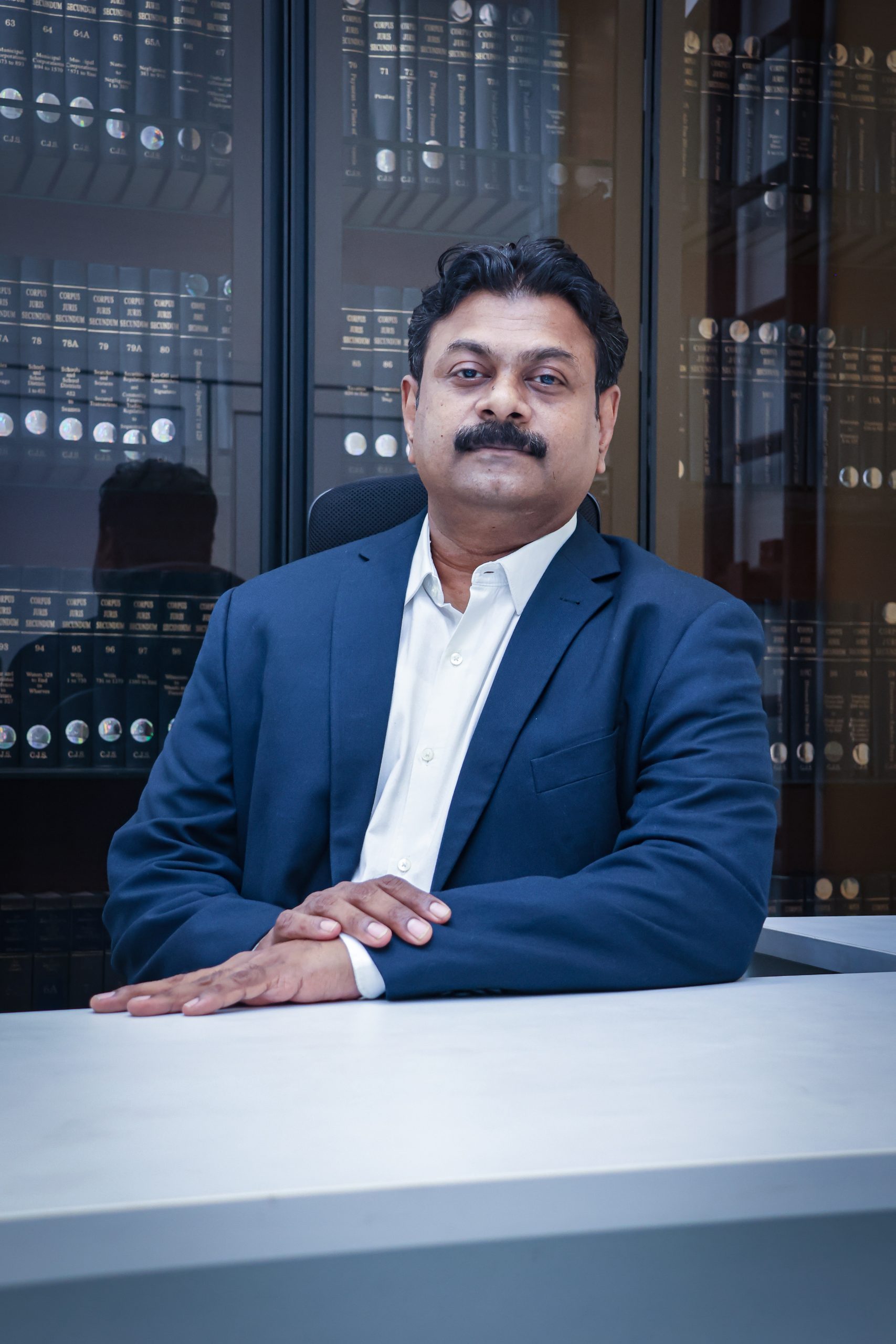
  • “While stubbornness may be a strong word, it is essential to survive in litigation, especially as a first-generation lawyer. The key is never to say NO.” – Dhruv Kumra, Independent Legal Practitioner.

    “While stubbornness may be a strong word, it is essential to survive in litigation, especially as a first-generation lawyer. The key is never to say NO.” – Dhruv Kumra, Independent Legal Practitioner.

    This interview has been published by Anshi Mudgal and The SuperLawyer Team

    With over 17 years of experience, what initially motivated you to pursue a career in law? Was it your first choice, or did you contemplate it later in your academic journey? Additionally, could you share your experience in law school, and how did pursuing your master’s degree further shape your professional path?
    My entry into the field of law was not by chance, it was a well-thought-out decision. From childhood, my teachers and elders use to praise me for my analytical skills and attention to detail. They suggested I consider joining the field of law. When I was in 10th grade, my father took me to various career counsellors, where I underwent aptitude tests. By unanimous recommendation, the field I was advised to pursue was law. That was when I decided for certain that I wanted to pursue career in law.

    After completing my 10th grade, I began preparing for entrance exams. I took entrance exams for various National Law Schools and cleared some of them. My ranking in Guru Gobind Singh Indraprastha University was good, and since I was from Delhi, I decided to pursue law here being home State.

    I graduated with “First Class”. While pursuing law, I also did my PG Diploma in “International Trade and Business Law” from the Indian Society of International Law. I completed a summer course on International Trade Law at the same institution and also earned a PG Diploma in Corporate Law from Amity Law School. I also worked as a Rapporteur at the Indian Society of International Law and contributed to a project with the Ministry of External Affairs in the Legal and Treaties Division.

    I was fortunate to receive a conditional offer for admission to the prestigious London School of Economics (LSE), one of the world’s most esteemed institutions. I also received admission to the National Law School, Bangalore, for an advanced course. However, I couldn’t pursue it because I became deeply involved in litigation.

    I always wanted to pursue my master’s in London, and I collected numerous brochures during seminars. But, as they say, “Destiny” intervened. In my last semester, I had to undergo an internship, and I was fortunate to secure an internship with an Advocate-on-Record at the Supreme Court of India. This was when I decided to postpone my aspirations to study abroad, as I got deeply engrossed in court work, and the desire to pursue a master’s degree faded.

    After almost 15 years in the profession, I finally did my master’s. Alternate Dispute Resolution (ADR) has always been close to my heart, so I pursued an LLM in ADR. Doing my LLM in this field allowed me to go back to the basic textbook style of learning, while my professional experience helped me understand the subject better and connect with it.

    During the early stages of your career, you must have encountered numerous valuable learning experiences. Can you highlight one particular experience that has stayed with you, and how did you navigate through the challenges of those formative years in your profession?

    This is one of those professions where challenges arise every minute, so one has to be ahead of the curve at all times. Even while drafting, you must put yourself in the shoes of the other side to anticipate what their response might be. As they say about the art of cross-examination, “Don’t ask a question to a witness until you know what answer the witness will give.”

    Law is a profession where every day is a new learning experience. One simply has to remain open to it. While “stubbornness” may be a strong word, it is essential to survive in litigation, especially as a first-generation lawyer. The key is never to say “NO”. I’d like to quote Sylvester Stallone from Rocky Balboa (2006): “It’s not about how hard you get hit; it’s about how hard you can get hit, how much you can take, and keep moving forward.”

    Honestly speaking, there is nothing like “formative years” in this profession. You never truly settle, you comparatively settle. Instead, one reaches a point where you become more cautious because more eyes are on you, and one wrong move can be detrimental. As you gain more years in the profession, you become more cautious, as people are watching and waiting for you to make a mistake.

    One learning which I got was, Court is the new class room , try spending as much time possible listening to arguments in matters. Court room is one such place where many facets law and facts are discussed and subconscious mind silently develops legal aptitude.

    What inspired you to establish your independent legal practice, and what were the initial challenges you encountered while setting it up? How did you navigate through these obstacles, and what strategies or lessons learned during this phase have contributed to the growth and success of your practice today?
    The initial challenge is always managing daily expenses, especially in the early days. However, this was not much of an issue for me, as I am a workaholic and found ways to secure work to keep myself going. There is no shortage of work in this profession, but one must be willing to take on challenges and spend sleepless nights.

    The advice I would give is that if you develop a skill, there’s no looking back. There are no shortcuts in law, one must work hard to chisel your abilities.

    In your experience as panel counsel, could you share your experience working with organizations such as the Delhi Development Authority? What variety of cases did you deal with, and were there any particularly interesting cases?
    I have served as panel counsel for various government departments, including the Delhi Development Authority (DDA), Indian Tourism, LIC Housing Finance Limited, Delhi Legal Services Authority, and as Amicus Curiae with the Delhi State Consumer Commission, among others.

    Serving these government departments gave me extensive exposure to a variety of cases, including real estate, consumer, matrimonial, and criminal matters. This experience helped me understand the workings of government departments, particularly how files move within the system and the importance of an internal Office Noting.

    Every case is unique , so talking about one would undermine others. In one case, I was defending a landlord against a tenant who was very intelligent. Before cross-examination, the opposing counsel whispered to his client to deny everything. The opposing counsel was so confident in his client’s preparation that he sat at the back of the courtroom.

    I confronted the witness with his signatures on the suit, and the very natural answer was that they weren’t his. This simple answer won me the case, as it invalidated the plaint. Immediately afterward, the other side tried to file an application to bypass the situation, but the damage was already done.

    With your extensive experience serving both private clients and government departments, how do you manage the differing legal needs of these two client types while upholding the same level of dedication and excellence in your service?
    Whether representing private clients or government entities, the law remains the same. However, there are different demands based on the client type.

    For instance, for a private client, developments in a case can often be communicated via phone, and that would suffice. For a corporate client, each step must be explained in writing, and updates must be communicated via email to all relevant stakeholders. Similarly, when working with the government, you must ensure that every action is recorded in the official file and directed to the correct officer.

    A lawyer dedicated to their work will treat both private and government clients with the same level of service. Both types of clients ultimately want to win and be represented effectively.

    Reflecting on your extensive legal experience, what has been one of the most intellectually challenging or intriguing cases you have handled? How did you approach the case in terms of legal strategy, preparation, and research, and what key insights did you gain from navigating such a complex legal matter?
    All cases are challenging and teach you something new. With each case, we return to the drawing board to research every aspect of it.

    At times, lawyers become so focused on a case that they lose sight of the core issue. For complex matters, we often peel back the layers one by one, only to realize that the issue was simpler than initially thought. The key to cracking a case is to follow the old-school method, read the file carefully without focusing on the law first, understand the facts, and then apply the law.

    In your experience working with corporate entities and managing cases related to real estate laws, what key pitfalls do these entities often encounter? What proactive measures or legal safeguards would you recommend to mitigate these risks from the outset, ensuring smoother transactions and compliance throughout the process?
    Faulty paperwork and inadequate due diligence are common problems in real estate matters. Many clients have projects in different states, and each state has its own peculiarities regarding record-keeping, such as local language requirements or state notifications, which corporate entities may overlook.

    While due diligence is generally conducted when purchasing land, local experts familiar with regional laws should also be involved in the process to ensure proper compliance.

    Balancing a demanding legal career with personal life is undoubtedly challenging. How do you maintain a balance between your professional commitments and personal well-being? What strategies do you employ to preserve your health and overall well-being while excelling in such a demanding profession?
    It is indeed very difficult for a first-generation lawyer to maintain a balance between personal and professional life and give equal attention to both. A first-generation lawyer faces many challenges, such as engaging and retaining competent staff, as well as maintaining an office, which many second or third-generation lawyers don’t face.

    One must work late nights, miss family engagements, and be available even on holidays to meet clients’ needs and deliver timely services. Additionally, corporate clients often work in different time zones, so we must be available 24/7 to respond to queries or emails.

    No doubt, this takes a toll on one’s health—grey hair and signs of aging appear earlier than expected. However, the adrenaline rush that this profession provides compensates for the physical toll. Post-COVID, work has become easier in some ways. Virtual hearings and digital tools have made it possible to work from anywhere in the world, making it more convenient for lawyers, especially first-generation ones.

    With your expertise spanning multiple legal domains, what advice would you offer young lawyers aspiring to develop a diverse practice similar to yours? What essential skills and qualities do you believe are necessary for success in these competitive and multifaceted fields?
    Discipline and consistency are the most important qualities I would recommend to any young lawyer entering the profession. By discipline, I don’t mean waking up at 5 a.m. and working late nights, but maintaining a consistent level of reading. Whether it’s law books, self-help books, or spiritual texts, consistent reading is crucial for any lawyer. Without it, a lawyer will not be able to make a mark professionally.

    So, be consistent with your reading, stay true to your work, and always advise your clients to the best of your abilities—not just to draw money from them, but to provide the right advice. Gone are the days when lawyers could manipulate clients for unnecessary fees; today’s clients often come prepared with knowledge from resources like Google.

    This experience reinforced the idea that litigation is a double-edged sword. Your success or failure often depends on both your preparation and your client’s actions. A well-read lawyer will earn the respect of judges and peers alike, and this silent appreciation will aid your future success.

    Get in touch with Dhruv Kumra –

  • “Our mind learns a lot by observation, sometimes without us even being aware of it; and there is no better place to see the law actually play out than in the trial courts.” – Aman Vijay Dutta, Arbitration & Disputes Lawyer at Chambers of Aman Vijay Dutta.

    “Our mind learns a lot by observation, sometimes without us even being aware of it; and there is no better place to see the law actually play out than in the trial courts.” – Aman Vijay Dutta, Arbitration & Disputes Lawyer at Chambers of Aman Vijay Dutta.

    This interview has been published by Anshi Mudgal and The SuperLawyer Team

    With nearly a decade of experience across various areas of law, do you feel that law was always your intended path, or were there specific factors that guided you towards this profession?

    Strangely, the practice of law was the last thing I thought of as a child. I was never very studious and never really sat down to think of what I wanted to pursue as a career. My mother, who is a scientist, was insistent that I must obtain a professional qualification. And it was my father, who is a businessman, who first suggested I study law; he’s in the business of real estate and saw potential in the practice of law. In a nutshell, both my parents were of the view that I obtain a professional qualification, and then do whatever I deem fit, provided it was constructive. And I’ve seen that, law or anything else, this emphasis on professional qualification is arguably one of the most important things that a child can be directed towards in the absence of any pre-disposition or pre-existing plan. But after joining law college, and seeing students work as hard as they did with moots, debates, research papers, and internships, I began to lose interest; it seemed like a lot of work. In fact, around the 3rd year in law college, I even toyed with the idea of leaving the law all together with a BSL Degree. I didn’t realise it back then but, sub-consciously, my plan was to join my father’s business. It seemed like the easy way out. I even did an internship of sorts with his firm – he was a task master and I was a complete misfit because of my indiscipline. Once I saw that I’d have to work equally, or maybe even more hard with him, I decided to give law a shot. 

    In other words, I was a very dull and unambitious student until my 4th year; it was only around this time that I began to consider giving things a shot; I began to read and participate in moots. That changed a lot for me. And the moment I surrendered myself to the law, I couldn’t imagine going back. In hindsight, I can’t see how I’d been doing anything but practicing law. This profession has re-moulded me in ways that were so necessary but impossible anywhere else.

    You began your career in the Litigation team at a law firm. What were the key learning experiences during that time that shaped your legal perspective and influenced your career path?

    The first key learning was that come what may, the trial courts offer learnings that no other forum can offer in litigation; trial work is trial work. My first year of law practice (at Hariani & Co.) was exclusively restricted to trial courts, or tribunals of first instance. While it got boring at times, it was the most enriching overall experience. The reason for this is simple: Our mind learns a lot by observation, sometimes without us even being aware of it; and there is no better place to see the law actually play out than in the trial courts. That one year set a solid foundation in my mind about what the practice of law was at its very essence; facts first, procedure next, and then, the substantive law. 

    The second learning was that the more time you spend with a matter (mentally), the more you seem to get it. I have no doubts that –although my foray into arbitration was not to happen until 2 years after– I would not have gotten into this space, had it not been for my time at Hariani & Co., Pune. My time there, also showed me the tremendous potential that lay in establishing a trial practice, contrary to popular beliefs. When it came to civil law, everyone wanted to be in the Higher Courts or in the Big law ecosystem, perhaps, because they haven’t seen the plus sides of a career as a trial lawyer. And a lot of your baselining of what the future might hold, takes place during your first two or three years. So it’s important that your environment during these first few years gives you hope. There was not a single big case in the city that the firm wasn’t involved in. I was lucky that way. Hariani & Co., ingrained a think big mentality of sorts in my mind.

    During your time at AZB & Partners, you worked on a significant arbitration case against a Japanese conglomerate. What were some of the unique challenges you faced, and what strategies did you employ to successfully navigate those challenges?

    The things I learnt whilst working on that matter were probably my biggest learnings in practice until then. While it did concern a foreign entity, the opponent in the matter was an Indian subsidiary of that foreign entity – so it was a domestic arbitration through and through; that’s for context. What made that case challenging was the sheer volume of the records; the matter revolved around disputes between a contractor and sub-contractor over civil and mechanical work done at India’s largest thermal power plant. Although up to that point, I had worked on cases where the monetary stakes were even higher than those involved in this arbitration, the volume of the records in the previous cases was nowhere close. So the biggest challenge for me was to get a grip on the documents and the facts. I remember my boss repeatedly laying emphasis on the list of dates being as accurate as possible. It was overwhelming and I found myself lost almost every day. So the biggest takeaway from that arbitration was the importance of organizing your brief, getting a grip on facts, and your thoughts. In one sentence, I’ve learnt that the only strategy to focus on in any case, is to simply have a command over the facts. If you do that one thing right, the rest of it somehow seems to fall in place almost automatically. If you’ve done a good job with organizing and presenting the facts, transparently (emphasis added), to a Judge or an Arbitrator, then you have done half the job. If you’ve been honest and precise in your presentation, the decision maker’s work load is considerably reduced. They need not spend as much time ascertaining or weeding out each and every fact; that frees up mental space for them to apply the law accurately. The output will almost always depend on the input. 

    After working with two prestigious firms, you chose to establish your own practice. What motivated you to take this step, and what were some of the initial challenges you encountered while setting up your practice?

    I was always clear that if I practiced law, in the long term, it was going to be on my own; else, I’d give up practicing all together. I couldn’t see myself being a transactional lawyer or sitting in house, or only briefing other counsel. To do it any other way, was not something I could get myself to do willingly. It isn’t like I didn’t try to restrain myself and stay a little longer within the law firm ecosystem. But it was not in my DNA, and I was not doing justice to the jobs at hand; it was either leaving that ecosystem or leaving the law altogether. I decided to leave the former, albeit on an impulse, and initially regretted the decision a lot. But it is, in hindsight, the best thing that I’ve done. Initially after commencing independent practice, fear was the motivation. But I was fortunate that I got good work and opportunities from almost the first week, if not day, of my independence. Plus, I had no responsibilities and my parents were there to support me in every possible way. I could wax lyricals about “struggle” or challenges but there wasn’t any; there was a lot of self-doubt, many long hours, a lot of being alone as opposed to having colleagues, and so on. But that’s just nitpicking; I had work, my clients were fair, my parents were supportive, and I had no responsibilities. So no challenges. I only had to show up, and the rest somehow took care of itself. 

    Since launching your independent practice in January 2019, you have represented clients in various courts and arbitration tribunals. Could you share one of your most memorable or impactful cases, and what valuable insights did you gain from handling it?

    Come to think of it, strangely, it’s not an arbitration matter. I’ve had some extremely memorable experiences: my first argument – before a Small Causes Court; my first arbitration in which I was part of a team that appeared before 3 retired judges of the Supreme Court, against some of the finest arbitration lawyers of the country; my first ever cross examination – against a prominent German automobile manufacturer, an arbitration I won, albeit not as thumpingly as I’d like; representing Rapido against an obstinate State Government; my first brief as an arguing counsel. But the matter that stands out is a case that I did before the National Green Tribunal against an environmental clearance granted to a slum rehabilitation scheme which was being constructed by a prominent developer and the Pune Municipal Corporation. My client had challenged this clearance and other permissions and, incredibly, had lost before every forum including the Supreme Court; that is when he came to me. I spent months on the case and managed to pull out one seemingly small but actually significant violation which had not been agitated before or adjudicated by any court or tribunal. We managed to succeed based on the law laid down in the Forward Foundation. After the matter was disposed off, my opponent became my client. I could think of no better end to that litigation. That will always be special. 

    You have represented Roppen Transportation Services Private Limited in multiple forums. Could you describe the key complexities of this case and the challenges of representing a transportation company in such matters? How did you approach the legal strategy?

    What made this case peculiar was that something new kept happening almost every day. I’m based out of Poona but was practically living in Bombay for almost three whole weeks – afternoons were usually spent in my car at Horniman circle, waiting for the next call while populating the ever expanding list of dates. Before you knew it, you had to file something before the State Transport Appellate Tribunal, the Regional Transport Authority, and the Bombay High Court – things were on extremely short notice. Plus, there was some FIR or the other being registered against new employees every day. Added to that was the volatility of autorickshaw drivers. I was even threatened once. It was exciting and intimidating at once. 

    The matter hinged on the Motor Vehicles Law in Maharashtra, the Constitutionality of the State Government’s prohibitive actions, and Roppen’s right to ply in the absence of specific regulations for bike taxis; the complexity was owed to the fact that the grievance that Roppen had, on first blush, was more to do with policy making which is almost exclusively within the domain of the executive. All the same, there was no express embargo on plying of bike taxis. In fact, the central government had recognized the right to use motorcycles as contract carriages, as far back as in the year 2004. But the state government had nothing in place; and this being a concurrent list subject, the State maintained that it had absolute dominion to call the shots. All the same, there was an aggregator’s policy in place in Maharashtra but the Government kept insisting that bike taxis were illegal. It was a mish mash of law, both for and against us. 

    The strategy was simple: ensure compliance of the aggregator policy, and exhaust all alternative remedies before approaching the High Court and finally mounting a challenge to the constitutionality of the state law. We worked on the issue as a whole for almost a whole year, and in November 2022, even managed to convince the High Court to set aside an order of the RTO Pune, without having gotten into the merits. The matter was primed for us to move with this part of the challenge – the constitutionality, coupled with the fact that the government of Maharashtra had not obtained presidential assent to do away with the central law. But at the last minute, the clients decided to refrain from mounting this challenge on advice of other counsel, who had different ideas and took a different route; Roppen was ordered to shut down on 13 January 2023.. But the state government has finally come up with a policy; that was a relief. 

    The experience was incredible because I was the lead Advocate for the longest time. Drafting representations, appeals, petitions, overall strategy, understanding the views of the GCs, the stakeholders, and even appearing in a few matters and briefing Senior Counsel in others. It was a lot to take in. A different kind of learning. 

    As a guest lecturer at several universities, including your alma mater, what do you find most rewarding about teaching? How do you incorporate your practical experiences into your lectures, and how do you foresee the future of Alternative Dispute Resolution (ADR) evolving with the rise of technology in the legal field?

    The satisfaction of seeing someone understand a particular point or provision of law based on your expression of it, is the most rewarding aspect of teaching. Added to that, is the fact that if you’re serious about doing a good job as a professor, you need to be thoroughly prepared and really understand the subject deeply. This, in turn helps in expanding your own stock of knowledge, which is key to a good law practice. Teaching that way is a win-win for all concerned. I am of the firm opinion that any practicing / litigating Advocate cannot be at his or her best without being in constant touch with his or her academic or theoretical –some might even say– impractical or idealist side. I make it a point to explain threadbare the details of cases I’ve handled, while explaining a particular issue and I try to correlate the case with the provision we are studying; trying to draw out as many parallels as possible. I’ve found that to be one of the most effective ways of reaching into the minds of the students or recipients. As far as technology in ADR goes, of course, we aren’t at par with many foreign jurisdictions. And even things like virtual hearings and email filings have come into the mainstream in India, only post the pandemic. So while there is certainly a lot going on in that space, I don’t think India is ready yet. A lot of legislative groundwork needs to be laid before we can think of using advanced technology in India’s ADR ecosystem. 

    You have expressed a strong interest in philosophy, psychology, and history. How do these interests influence your approach to law and contribute to your professional growth? Do you find these subjects shape your views on justice and conflict resolution?

    My interests in philosophy and psychology stemmed from my need to find myself answers when I’d hit a rough patch. I was lost and miserable, both, personally and professionally. I’m glad that that happened very early on in my career. I think self-awareness is key for persuasion skills; one can only try to understand others, if they’ve looked within and understood their own self. Plus, it helps you deal with negativity a lot more effectively. I also think cognitive biases and heuristics should be taught in every school; things like the Pygmalion effect, the Confirmation bias, the Sunk Cost fallacy, and so on. These are aspects of everyday life, both in and out of court. And unless we understand the fallacies which are inherent in our thoughts as human beings, we can’t do justice to our jobs as Advocates. It also helps to keep the ego in check. All things equal, I think that an Advocate with a better stock of knowledge on psychology, has an edge over another with lesser of it. Philosophy is more to keep yourself on course when you’re despondent or face a setback, whether in or out of court. 

    I’ve always been interested in history. And, again, I don’t think there’s a better way to understand the future than by first understanding the past. They say every thought or idea that you might have, has already been thought of by someone else. That, in and of itself, should answer to its significance. And if that isn’t enough, even in our work as Advocates, we’re guided by case law – which is another piece of history. I’ve learnt that history also improves your Court craft in an unexplainable & intangible way. I can’t point out exactly how, but it does. 

    What advice would you give to young lawyers aiming to specialize in arbitration and build a successful practice like yours? Additionally, what resources or strategies would you recommend to help them stay updated on the latest legal trends?

    I think that inherent within the idea of being updated, is the presumption that we know what the law was or has been. I think therefore that staying updated on the law, begins with going back to its very origins. The history of the law is what will help you effectively understand the present. And so, focus on reading law reports (they’re freely available on ESCR now); the further into the past you go, the easier it becomes to keep up with the latest developments. 

    Coming to building a law practice, I don’t think I’m successful, given where I’d thought of getting by now, when I was a student. But yes, given where I began, I’m satisfied; much more than that actually. This is to say that I don’t think I’m qualified enough to  talk about building a successful practice, just yet. What I can offer, however, is advice in the form of a few eternal truths that I’ve come to know,  not understand. Know. 

    1) Your ability to succeed at anything is no small measure, directly proportionate to your ability to stick it out. There’s a reason they say that a rolling stone gathers no moss. 

    2) The more you read, the luckier you get. Especially the bare text of the law. 

    3) Procedure and Evidence are the keys to any door when it comes to civil and commercial work; and,

    4) You are your biggest resource. Never sell yourself short.  

    Get in touch with Aman Vijay Dutta –

  • “Anyone who seeks to build a career in Law must learn to master time management, particularly in a dynamic field such as litigation.” – Hiresh Choudhary, Advocate on Record at Supreme Court of India and Partner at C&S Law Chambers.

    “Anyone who seeks to build a career in Law must learn to master time management, particularly in a dynamic field such as litigation.” – Hiresh Choudhary, Advocate on Record at Supreme Court of India and Partner at C&S Law Chambers.

    This interview has been published by Anshi Mudgal and The SuperLawyer Team

    What initially inspired you to pursue a career in law, and what factors influenced your decision to enrol at the National Law Institute University in Bhopal, Madhya Pradesh?

    When I decided to pursue a career in law, my understanding of the legal profession was limited to what happens in courtrooms. The idea of litigation seemed quite appealing to me. While I have since discovered a number of other facets of the legal profession, I remain enamoured with a disputes oriented practice. 

    The decision to enrol at NLIU Bhopal was quite an easy one. When I was applying to law schools, it was ranked in the top five universities in the country. They also had an excellent faculty and a vast alumni network. 

    After 3 years of practice, what motivated you to pursue an LL.M. at Columbia Law School? Additionally, could you elaborate on the admission process, particularly for young aspirants in the field of law?

    While an undergraduate program provides a broad survey of the various areas of law, a postgraduate degree such as the LLM enables one to dive deeper into specific areas and even undertake a comparative analysis. Practising for a couple of years before applying to universities allowed me the opportunity to narrow down my areas of interest through a process of elimination. I was keen to attend Columbia Law School because of its flexible approach to its curriculum. Students get complete freedom to choose any of the courses offered by the Law School and even other schools at the University. Given my interests in arbitration law, I was also quite keen to take the International Commercial Arbitration course taught by the legendary professor George Bermann. 

    From what I understand, most law schools look for candidates who have a clear vision of their academic and professional goals and are able to describe exactly how the LLM can help them achieve those goals. It also helps to have a balanced CV that can demonstrate a mix of academic excellence, extra-curricular interests and work experience. 

    Having worked with a prestigious law firm for three years before pursuing your Masters, how did this experience contribute to your professional development and shape the trajectory of your legal career?

    In my opinion, the first few years of practice greatly influence your career trajectory. This is the time when you develop a work ethic which inevitably tends to mirror that of your seniors. I spent three years at Wadhwa Law Chambers in the team led by Mr. Anirudh Wadhwa, who has been a great mentor to me. Working in his team exposed me to a wide range of cases and provided ample opportunities to take independent charge of cases. He also encouraged me to apply for the LLM. It is a testament to our rigorous professional training that all my colleagues from WLC continue to excel in different roles, most of whom have now set up successful independent practices. I still enjoy a great relationship with Mr. Anirudh Wadhwa and we often brief him as counsel in several cases. 

    In 2021, after gaining vast experience you decided to establish your own practice. What inspired you to take this step, and what were the initial challenges you faced when setting up your own legal practice?

    Starting my own practice was always part of the plan, but timing a major decision such as this is quite tricky. Everyone has different ideas about it. I set up C&S Law Chambers with Surbhi Sharma when we felt confident in our ability to effectively advise clients without supervision. 

    It has been rewarding and challenging in equal measures. On the work front, the challenges were along expected lines. But we were also confronted with unexpected challenges across the other dimensions of running a practice, such as managing client relations, building a team, setting up office infrastructure, hiring staff, etc. We are constantly learning and finding ways to navigate such challenges. 

    Clearing the Advocate on Record (AOR) examination is a remarkable accomplishment. What aspects of the AOR exam did you find most challenging, and what steps did you take to successfully prepare for this prestigious examination?

    The AOR exam is considered challenging for a couple of different reasons. First, you become eligible for it only after 5 years of practice. This means that you are now entering that phase in your career where you are expected to take independent responsibility for the cases you are working on, whether or not you run your own practice. Finding the time to study for the exam becomes the primary challenge. The second challenge is that the exam is a handwritten one. This can seem insignificant but plays a huge role. After spending years mastering typing speed and accuracy, one has to now go back to writing by hand. Even the petitions for the drafting exam have to be written by hand. It took a lot of practice to get used to writing by hand while maintaining speed and legibility. I started preparing for the exam around 2 months in advance and whenever possible, tried to spend a couple of hours studying for the exam in the evening after completing the work for the day. 

    You have represented parties in both international and domestic arbitration. Could you provide an example of a particularly complex arbitration case under ICC or VIAC rules? What was your role in the process, and what were the key challenges you faced in navigating international arbitration laws?

    I can discuss a recent case where we secured a favourable award for an Indian company against a Vietnamese company in a Vietnam seated arbitration. This was a case for recovery of certain unpaid dues arising out of a contract for supply of equipment for a hydropower plant. Since the agreement was governed by Vietnamese law, we had to first engage a Vietnamese firm to represent the client. We also had to spend a fair amount of time trying to understand the structure of Vietnamese commercial law and the remedies available to parties so as to assist the client in taking the right call. 

    We advised the client to institute arbitration proceedings under the arbitration rules of the Vietnam International Arbitration Centre (VIAC). Interestingly, the VIAC Rules permit the parties to invite witnesses to attend the hearing and even submit fresh documents or evidence during the final hearing. During a marathon final hearing that went on for 11 hours from 7 AM (IST) to 6 PM, the Respondent introduced several fresh factual arguments in an attempt to suggest that the equipment supplied by my client was failed to meet the technical specifications. Rather than seeking time to respond, we took the collective call to address these new submissions in the same hearing. I had to then act as a real-time link between the client’s team in India and the Vietnamese lawyers who were addressing the Tribunal. We were able to work with the client to provide point wise response to all the fresh submissions – all within the 2 hour lunch recess. Thankfully, the Tribunal passed the award in our favour. 

    Now we are navigating the fresh challenges that arise with enforcement of the award. I think the key take away is that each case comes with its own unique challenges and there are no easy cases. But that is what makes our work so engaging. 

    You were involved in challenging the constitutionality of the Haryana State Employment of Local Candidates Act, 2020. How did you approach preparing for such a challenging case, and what strategies led to a favourable outcome? 

    It would not be proper to go into the merits of this case since an SLP is still pending before the Hon’ble Supreme Court. I can only discuss my involvement in the case, which was one of the best learning experiences of my career so far. 

    We were representing one of the two main petitioners (both associations of industries in different districts of Haryana) who had challenged the Act before the Hon’ble Punjab and Haryana High Court. Working on cases such as this is always a team effort. We must credit the client for taking a bold decision and promptly providing us with the necessary instructions and supporting documents. At the time of drafting the Petition, we had to do a broad review of all the possible arguments and incorporate them as grounds of challenge. Then we worked with our colleagues practising in Chandigarh, who advised us on the applicable procedures and helped us in briefing the senior advocate. Finally, the most important role was that of the senior advocate, Mr. Akshay Bhan. He quickly grasped the case and was excellent in his arguments. He also guided our research in the right direction and we learned a lot working with him. 

    Given the demanding nature of your practice, how do you manage to maintain a balance between your professional responsibilities and personal life?

    I like to limit the number of hours that I work in a given day, since there is a noticeable dip in my productivity beyond that. Of course, there are situations of extreme urgency where we need to file applications seeking interim relief and time is of the essence. But those situations are exceptions rather than the rule. 

    It also helps that we run a digital office with little to no requirement for any physical documents. There is no need to stay in the office, even where urgent work requires putting in a few extra hours. I can always go home for the day, spend some time with my family, reset mentally and then continue my work from where I left it. I advise our associates to follow a similar approach to the extent possible. 

    What advice would you offer to law students aspiring to build a successful career in law? Are there any specific resources, tools, or practices you regularly rely on when navigating the complexities of the legal profession?

    Anyone who seeks to build a career in law must learn to master time management, particularly in a dynamic field such as litigation. Your plan to work on a given task is always in tension with time spent in courts, the timelines imposed by courts and tribunals in different cases, response time of clients, instructions of senior advocates and the case load of your own team members. You have to constantly reassess what requires your immediate attention and how much time you can afford to spend on a given task. I like to plan all the work that needs to be done for a given month, then split the tasks into different weeks and take a call on a daily basis as to what requires immediate attention on a given day. This allows sufficient flexibility to work on any urgent tasks that may come up while still meeting my weekly goals.

    Law school certainly provides a flavour of this time management dilemma through the challenge of juggling your time between course readings and other activities such as competitions, sports, clubs, etc. One can get better at time management by thinking more intentionally about it and testing out different strategies. 

    Get in touch with Hiresh Choudhary –

  • “The journey from being a fresh law graduate to establishing my own law firm has been one of growth, learning and resilience.” – Nikhil Kulkarni, Founder of Nikhil Kulkarni + Associates.

    “The journey from being a fresh law graduate to establishing my own law firm has been one of growth, learning and resilience.” – Nikhil Kulkarni, Founder of Nikhil Kulkarni + Associates.

    This interview has been published by Anshi Mudgal and The SuperLawyer Team

    Having a background in commerce, looking back, what inspired you to transition into law as a profession?

    Reflecting on my transition from commerce to law, it was driven by a deep-seated interest in understanding the systems that govern society and the desire to make a meaningful impact. My commerce background provided me with a strong foundation in analytical thinking, understanding corporate finance, problem-solving and understanding economic frameworks, which seamlessly complemented the logical and structured nature of law.

    My passion for detailed research evolved into a strong interest in the field of law, where I found a perfect outlet for my drive to explore and solve complex issues. The turning point in my academic career was realizing that law not only offered a dynamic and intellectually challenging career but also a platform to advocate for justice, resolve conflicts and contribute to societal progress. The ability to bridge commerce with law, especially in areas like corporate frauds and insurance law, further motivated me to take this path, blending my prior knowledge with the intricacies of legal practice.

    How did your role evolve over time at each of the organizations you worked with, particularly from Legalogic Consulting LLP to Nikhil Kulkarni and Associates? What were some of the key challenges you faced when setting up your own practice?

    Being a first-generation lawyer, my ultimate goal was always to start my own practice. The journey from being a fresh law graduate to establishing my own law firm has been one of growth, learning and resilience. At each stage, my role evolved as I gained more responsibility, honed my skills and expanded my understanding of the legal field.   All my previous experiences have helped me develop important skills such as client communication, legal strategy formation, preparing arguments for a case, problem solving skills, to name a few. Establishing my own practice marked a significant shift. I transitioned from focusing solely on legal work to also managing the operational, administrative, and business aspects of a law firm.

    Establishing one’s own legal practice requires a lot of patience, perseverance and hard work. Building a client base initially was challenging in the initial years, however maintaining a strong work ethic and providing consistent results to earn referrals helped us build a good client base. Building a competent team is also crucial so that all the diverse areas of practice are effectively managed. Juggling the responsibilities of a lawyer, leader and entrepreneur was also a challenge. But prioritizing tasks and delegating effectively helps in overall management of the firm. Each step of this journey has been a learning experience, and the challenges faced have shaped my practice into what it is today. Fortunately, all my clients have had faith in my legal acumen and my team at Nikhil Kulkarni & Associates have given favourable results to most of my clients.

    How have you navigated the cases in the insurance sector particularly in your role as an empanelled advocate for United India Insurance Company? What was the most interesting case you had to deal with and what were your preparation strategies?

    To deal with cases in insurance sector requires a lot of preparation, particularly the motor accident cases since in most of these cases, the insurance companies are ordered by courts to pay compensation to the victims. Hence, preparing a good defence to mitigate the liability of insurance company is paramount. I will share one of the interesting cases relating to motor accident, which acquired a lot of media attention also. In that case, the relatives of the motor accident victim submitted a fake insurance policy belonging to our client United India insurance to claim compensation from the said insurance company. We had to convince the hon’ble court that in such a case, it is the victim who has not approached the court with clean hands by submitting a fake insurance policy before the court. Our team thoroughly prepared the questions for cross examination and extensively researched on various judicial precedents to support our case. After a series of arguments, counter-arguments and recording of evidence, the court came to a conclusion that our client insurance company is not liable to pay compensation. This verdict is significant since in most of the MACT cases, the courts order insurance companies to pay compensation whereas in this case, we zeroed down the liability of insurance company.

    You’ve handled a wide range of criminal proceedings, including FIR quashing, bail, and anticipatory bail in both Sessions Court and the High Court. Can you share the most difficult case you’ve worked on and how you approached it?

    One of the most challenging cases I handled involved securing anticipatory bail for a client accused in a highly publicized fraud case. The stakes were high, as the accusations not only threatened my client’s liberty but also had severe professional and personal repercussions. The case involved allegations under the MPID Act, where obtaining anticipatory bail is difficult due to the nature of the offences, which are considered crimes against society at large. Courts typically adopt a stringent stance in cases under special statutes like the MPID Act and MCOCA, given their gravity and impact. Despite these challenges, through a strategic and persistent legal battle, we successfully secured anticipatory bail for our clients, safeguarding their rights and ensuring they could cooperate with the legal process without fear of immediate custody.

    We have encountered cases involving cross FIRs, where both parties file complaints against each other, often presenting contradictory versions of the same incident. One particularly challenging case involved a client accused in a molestation case. Securing the quashing of the FIR and related proceedings was especially difficult, given the stringent restrictions imposed by the Hon’ble High Courts and the Hon’ble Supreme Court on the accused’s right to seek such relief. Despite these challenges, through meticulous preparation and strategic advocacy, we succeeded in having the FIR and proceedings against our client quashed. This outcome not only reinforced our confidence in handling complex cross-FIR scenarios but also deepened our understanding of the nuanced approach required in such cases.

    Corporate fraud cases often involve intricate details. Can you share an example where your legal expertise helped uncover or resolve a complex corporate fraud case?

    One of the most challenging corporate fraud cases I handled involved a Private Limited company accused of financial irregularities and siphoning funds through shell entities. The allegations not only threatened investor confidence but also had serious implications for regulatory compliance and the company’s reputation. The case required navigating a complex web of legal frameworks, including the Companies Act, SEBI regulations, the Partnership Act, and provisions under the Indian Penal Code. The involvement of substantial public funds attracted intense scrutiny from regulatory authorities and the media, adding to the pressure.

    Handling such a case demanded a deep understanding of both civil and criminal laws, as the issues often overlapped in unexpected ways. I worked closely with auditors to meticulously analyse financial records, identify discrepancies, and trace the diversion of funds to various entities. My background in Commerce proved invaluable in understanding the transactions and their accounting implications, enabling me to navigate the complexities of the case with greater precision. Defending a company in such circumstances required strategic legal manoeuvring, proactive compliance measures and consistent engagement with stakeholders. We had to clearly defined our client’s scope of work and their specific roles in the alleged offence, which is a crucial aspect when dealing with frauds committed through companies or other entities.

    Your experience spans across multiple domains—civil, criminal, insurance, and corporate law. How do you manage and prioritize cases across these diverse legal areas?

    I believe in the philosophy “Jack of all trades, master of none, but oftentimes better than a master of one.” 

    In litigation, we often handle cases where multiple legal domains intersect. Clients may have access to various legal remedies including both of civil and criminal nature. Additionally, corporate law often involves litigation where companies must file or defend both civil and/or criminal cases. Therefore, to provide comprehensive legal solutions, it is essential to be well-versed in multiple areas of law. Corporate clients increasingly demand such all-encompassing legal services. Our firm has carved out a niche in this sector by combining a core corporate law practice with expertise in the litigation aspects of corporate law. We have a dedicated team of lawyers who specialize in diverse domains. My wife, a highly skilled lawyer, leads a team that handles much of our corporate work, including contract negotiation, drafting, contract management, general corporate advisory and handling employer-employee disputes.

    With such a diverse and demanding portfolio, how do you maintain a balance between your professional and personal life, especially considering your interests in football, music, and stock market analysis?

    I have always drawn inspiration from the famous lines of poet William Henry Davies: “What is this life if, full of care, we have no time to stand and stare.” A healthy work-life balance helps in personal well-being as well as professional performance. Everyone gets the same number of hours in a day; it’s how you manage and utilize your time effectively that determines your success. Hobbies are incredibly useful when we need a rejuvenation from our daily routine. Football serves not just as a passion but also a way to stay physically and mentally fit. Football helps me lead a disciplined routine and enhance team work skills beneficial to legal practice.  I have a keen interest in music and stock market analysis. Listening to music is an excellent stress buster. I also follow the stock market regularly.

    I started with stock market analysis and gradually shifted my focus towards investments, realizing that analysis alone—without practical application—won’t lead to desired results. Similarly, law is about translating theoretical knowledge into real-world solutions.

    How do you think the advancement of technology, particularly through AI and other innovations, is transforming the way lawyers and the judiciary operate, improving efficiency, accessibility, and decision-making processes?

    Technology has been significantly transforming the legal landscape in India, offering numerous benefits for both lawyers and the judiciary. The introduction of e-filing systems allows lawyers to submit petitions, affidavits and other documents online, reducing delays and the burden of physical paperwork. It makes accessing court services more convenient, especially for clients in remote areas. With the rise of video conferencing tools, courts have increasingly held virtual hearings, making justice more accessible and reducing the need for physical presence. This is especially beneficial in a country as vast as India where transportation and geographical barriers can delay proceedings. However, the District Courts face certain infrastructure issues which makes it difficult to adopt technology as Hon’ble High Courts and the Hon’ble Supreme Court. Technology is playing a pivotal role in transforming the legal field in India by enhancing efficiency, accessibility and transparency. It helps lawyers manage their workload, conduct thorough research and serve clients more effectively. For the judiciary, technology accelerates case management, improves accessibility and helps in reducing delays, ultimately contributing to a more efficient justice delivery system. The adoption of these tools continues to improve legal processes, making them faster, more accurate and widely accessible to all. Technology in law has also opened various avenues and accelerated the growth of Apps and websites like LawSikho and Superlawyers which give advocates a platform to showcase their skills and experiences. 

    What advice would you offer to young individuals aspiring to follow a similar career path as yours?

    Always consider yourself of the student of the law. The attitude of knowing everything, will only make you complacent. To grow your practise, you need to constantly evolve with changing times.  As a first-generation lawyer aspiring to build a career in litigation and having your own law firm, you may face unique challenges but you also have the potential to shape your path with determination and strategy. Building a strong foundation in terms of understanding the basic procedural laws such as Civil Procedure Code and Criminal Procedure Code (BNSS) is crucial for advocates. You must stay up to date with recent judgments and understand the changes in the laws. Plan your internships in advance and spend time in understanding the court procedures, drafting skills and client interactions. Networking is equally important in our field. Stay connected with your faculties, colleagues, batchmates and seniors. Technology in law is constantly growing, and this will create more opportunities for young lawyers, who are tech-savvy and adaptable to the changing times. It can open doors to opportunities and mentorship. Success in litigation is a marathon, not a sprint. Stay dedicated, seek knowledge at every opportunity, and be patient. The respect and recognition you earn will make the effort worthwhile.

    Get in touch with Nikhil Kulkarni –

  • “The Legal profession demands hard work, dedication, perseverance, and a great deal of patience. While it is undoubtedly challenging, it is equally fascinating and rewarding.” – Yoothica Pallavi, Advocate on Record at Supreme Court of India.

    “The Legal profession demands hard work, dedication, perseverance, and a great deal of patience. While it is undoubtedly challenging, it is equally fascinating and rewarding.” – Yoothica Pallavi, Advocate on Record at Supreme Court of India.

    This interview has been published by Anshi Mudgal and The SuperLawyer Team

    Coming from a science background, was pursuing law a deliberate decision for  you? How did you prepare to gain admission to Chanakya National Law University,  Patna? 

    This question brings back a wave of nostalgia, and I find it hard to decide where  to begin—it’s quite a story. I belong to a generation where most students were drawn  towards either medicine or engineering. After completing my 12th in 2007, I, too, took  a gap year to prepare for engineering entrance exams. In 2008, I had secured admission  to an engineering college through my AIEEE rank. 

    However, my father, an IITian himself, always had a keen interest in law that ultimately  inspired me to consider law as a profession. 2008 was also, if I recall correctly, the  inaugural year of the CLAT examination. At his encouragement, I decided to take the  exam, and soon after, I found myself admitted to CNLU, Patna—without having spent  even a single day in an engineering classroom. 

    My father often says, “Law is nothing but science,” and it wasn’t long after stepping  into this noble profession that I realized how true this is. Law is fundamentally rooted  in logic and reason. Looking back, I am grateful for the redirection and for discovering  a field where I truly belong. 

    You have significant experience in education law and have represented clients in  cases such as the NEET UG Test 2024 case. What do you believe are the most pressing  legal challenges currently faced by students and educational institutions in India? 

    Talking in legal context, students are among the most vulnerable segments of  society, and it deeply concerns me when they are forced to seek relief through the courts.  I have had the privilege of representing and seeking relief for several students who, after  completing their MBBS degrees from foreign universities, were denied eligibility  certificates by the National Medical Commission (NMC). This certificate is essential  for appearing in the Foreign Medical Graduate Examination (FMGE), which is a  prerequisite for practicing medicine in India. Unfortunately, in some cases, the NMC  denies these certificates due to non-fulfilment of specific conditions. 

    The situation is particularly distressing for students who, after investing more than five  years to earn their MBBS degrees, find themselves unable to practice in India due to  technicalities. These students are left with no choice but to approach the courts. 

    Similarly, I have encountered cases where students are denied admission or faced issues  related to unfair examinations, such as those arising in NEET-UG 2024. For instance, I  had the opportunity to represent tribal students from Meghalaya in the NEET-UG 2024 dispute.

    On the other hand, educational institutions also face significant challenges, particularly  regarding recognition from regulatory bodies like the University Grants Commission  (UGC) or the All India Council for Technical Education (AICTE). One particularly  intriguing case I am currently handling involves a dispute over granting recognition for  a dual-mode university (for running conventional and open courses both) to a university  with “Open” in its name. 

    In addition to these issues, there are numerous disputes concerning fee regulation,  inadequate infrastructure, reservations, and other systemic challenges within the  education sector. These matters highlight the pressing need for robust policies and a  student-centered approach to ensure that education serves its intended purpose  effectively. 

    In your early years of practice, you worked with various advocates and law firms,  handling diverse areas such as Constitutional Law, Civil Law, Arbitration Law, and the  Law of Limitation. How did these experiences shape your approach to litigation, and  what key lessons did you take away from them? 

    When I joined law school, one thing I was certain about was my desire to practice  in courts. I never had any second thoughts about it. However, when I initially entered  the profession, adapting to court life was quite challenging. During those early years, I  was exclusively practicing in the Delhi High Court as I was working under the guidance  of Hon’ble Mrs. Justice Mini Pushkarna, who was then Standing Counsel for Municipal  Corporation of Delhi. I was fortunate enough to have regular appearances before the  High Court on a daily basis and that gave me confidence and encouragement to handle  the matters in Court even in adverse situations. I have many anecdotes also which I would never forget. 

    However, contrary to what it may seem to beginners, litigation is not solely about  appearing in court and presenting arguments. It encompasses much more. The process,  from drafting a case to getting it listed before the court, is a journey in itself. Litigation  also involves various registry-related tasks, which are crucial for any lawyer to learn  and understand. In my experience, I firmly believe that a lawyer first has to become a  clerk to grasp the basics of the profession and its importance one would realise after  beginning her/his own practice. It didn’t take long for me to realize the immense  physical and mental effort required in this field. 

    Another vital lesson I learned over time—though I underestimated its significance in  the beginning—is the importance of client handling. As lawyers, we are not only  officers of the court but also advocates for our clients’ interests. Effective client  management is a core skill for building a successful legal practice. A lawyer must  understand client’s needs, build trust, communicate effectively, and provide advice  within ethical boundaries. 

    Currently, at Indus Law Associates, you handle litigation and arbitration before the  Hon’ble Supreme Court of India, the Delhi High Court, the Meghalaya High Court and  various District Courts. Can you share one of the most challenging cases you’ve  encountered, and how did you approach your preparation for it? 

    While working in my current office, I have had the opportunity to handle a variety  of cases across different forums. Among the most notable were two cases involving  students who were denied eligibility certificates after completing their MBBS degrees  in Ukraine. Securing favourable orders in these matters was particularly challenging. 

    Primarily practicing in civil litigation, I faced a unique challenge while handling a  criminal case in the District Court. This bail matter involved allegations of forgery and required navigating proceedings from the Magistrate Court to the District and Sessions  Court. The case provided me with valuable insights into the fundamentals of criminal  law. Additionally, it offered the rare experience of visiting Tihar Jail for a client meeting,  which further broadened my professional exposure. 

    I am also handling election petition before the Hon’ble High Court of Meghalaya, which  has been a challenging and enriching experience. This case has allowed me to explore  a new area of law, delving into its intricacies and technicalities, thereby by broadening  my experience.  

    Could you explain your experience in arbitration, particularly your role in  representing clients such as the Meghalaya Urban Development Authority? How do you  ensure effective representation in arbitration as compared to traditional litigation? 

    Arbitration and litigation are fundamentally different methods of dispute resolution. Arbitration offers an efficient and flexible approach, making it particularly  suitable for commercial disputes. In contrast, litigation is generally preferred for cases  requiring public scrutiny due to its broader scope. 

    For a lawyer, excelling in arbitration demands a deep understanding of the field’s  complexities, especially the Arbitration and Conciliation Act. While the Act may appear  concise, it raises numerous intricate legal questions. Arbitration is often more complex  than litigation, requiring extensive time, effort, and meticulous attention to  documentation and record-keeping, which are critical to the process. 

    Evidence is pivotal in arbitration proceedings, making cross-examination one of the  most essential advocacy skills for arbitration lawyers. 

    Representing government clients in arbitration adds another layer of responsibility.  Cases involving government entities, such as MUDA, necessitate a careful balance  between safeguarding public interest and protecting public funds. These matters often 

    involve substantial sums of money and require adherence to public policy  considerations, given their sensitive nature. 

    Arbitration indeed, is challenging but also interesting.  

    What do you find most fulfilling about your practice as an Advocate on Record,  and what motivates you to continue pursuing this challenging and demanding  profession? 

    Becoming an Advocate on Record (AoR) in the Supreme Court was a significant  milestone in my legal career, something I had always aspired to achieve. The journey  to earning this title was not without its challenges, particularly as I became an AoR in  2020 during the height of the Covid-19 pandemic. It was a time of rapid digital  transformation in the judiciary, and adapting to the newly introduced procedures was  initially challenging. However, this digital shift proved to be a great relief and a stepping  stone toward a more efficient system. 

    A common misconception about AoRs is that they function merely as filing agents for  the Supreme Court. While it is true that an AoR must be well-versed in the Court’s  procedural rules, I soon realized that their role goes far beyond filing documents. Early  in my practice, there was an expectation that my involvement would be limited to  lending my name and signature. Fortunately, with the guidance of my seniors, I quickly  understood the deeper purpose and responsibility of an AoR. 

    AoRs are not just intermediaries; they are the “face of the case” before the Hon’ble  Supreme Court. This role demands accountability, and a deep understanding of the  matter being presented. The Supreme Court itself has recently underscored the critical  responsibilities of AoRs, issuing strict guidelines to ensure that cases are filed and  presented with the utmost diligence and professionalism. 

    Beyond the procedural responsibilities, the designation of “AoR” brings a sense of  professional recognition and respect. It is both a privilege and a significant  responsibility. The journey as an AoR is undoubtedly challenging, but it is also  immensely rewarding, offering the opportunity to make significant contributions in  delivery of justice at the highest level. 

    Considering the demanding nature of your legal career, how do you manage to  balance your professional duties with personal commitments? 

    Litigation is undoubtedly a demanding profession, requiring unwavering dedication and the ability to work under constant deadlines. As a lawyer, the work never  truly ends—court hours are followed by preparation for the next day’s cases, client  meetings, drafting, and various other responsibilities.

    For me, balancing this rigorous professional life with personal commitments, especially  as a mother, presents new challenges every day. Maintaining a work-life balance is  crucial, but I won’t deny that there are moments of panic and stress. 

    However, I firmly believe that in both personal and professional spheres, no one can do  it all alone. Teamwork plays a vital role in navigating challenges and achieving success.  I am incredibly fortunate to have a strong support system—both in my personal life and  in my professional circle. Their encouragement, collaboration, and assistance enable me to meet the demands of my profession while fulfilling my responsibilities at home.  Without their support, it would have been nearly impossible to strike this balance and  carry out my duties effectively. 

    What advice would you give to young lawyers looking to follow a similar career  path in litigation and arbitration? 

    This profession demands hard work, dedication, perseverance, and a great deal of  patience. While it is undoubtedly challenging, it is equally fascinating and rewarding.  Be willing to learn from failures and adapt to the demands of each case. Never  compromise on integrity and ethics.  

    Keeping oneself updated with legal developments and regularly reading and analysing  judgments is indispensable. It is one of the critical skills necessary for excelling in  litigation, enabling lawyers to stay informed, craft stronger arguments, and navigate the  evolving legal landscape effectively. 

    On a lighter note, this profession also gives the benefit of the summer and winter  vacations. These small breaks offer lawyers a well-deserved opportunity to relax,  unwind, recharge, and prepare for the challenges ahead. 

    Get in touch with Yoothica Pallavi-

  • “A legal career, just like Rome is never built in one day, it’s like trust and based on it, which is built over a longish period of time and even greater service through GRIT, sincerity and hard work.” – Soumyadeep Biswas, Attorney at Law, at High Court of Calcutta

    “A legal career, just like Rome is never built in one day, it’s like trust and based on it, which is built over a longish period of time and even greater service through GRIT, sincerity and hard work.” – Soumyadeep Biswas, Attorney at Law, at High Court of Calcutta

    This interview has been published by Anshi Mudgal and The SuperLawyer Team

    Can you take us through your early journey as a lawyer? What inspired you to choose law as a career, and how did you build your path to where you are today?  

    “I am standing in a courtroom before one of the senior most judges of the Hon’ble High Court, and I started, My Lord, the Petitioner wants immediate intervention of My Lord in the nature of a mandamus (I wanted to sound important, I guess and college made me superfluously over-confident); The immediate reply, though a simple one came in a resounding baritone- ‘Yes, Mr. Counsel, Mandamus! Why? Tell me, what do you want! ’, while I took the Hon’ble Court through the merits of the Petitioner’s case, the Hon’ble Judge listened to me intimately with an amusing chuckle on his face to denote that he was already abreast with the relief claimed and the merits of the matter, however he, with immense patience granted a hearing to an absolutely green junior and awarded me with a win”- An overwhelming pleasure as a lawyer but I was rewarded with a fee, so meagre that would not even cover the expenses; it’s quite evidently a mixed feeling. Albeit, one experience should never deter a young practitioner from going on especially since each and every experience is unique and distinct in its flavour and nature, not always salty and more often than not it’s actually rewarding. A legal career, just like Rome is never built in one day, it’s like trust and based on it, which is built over a longish period of time and even greater service through GRIT, sincerity and hard work.

    With a career that bridges multiple aspects of law, how do you see the legal landscape in India evolving, particularly with respect to consumer protection, banking disputes, and taxation?  

    It’s rightly put by you and it really seems to be the future of the legal landscape where monetary disputes would seem to rule the profession in the coming days.

    As someone who upholds the rule of law, how do you balance professionalism with empathy when dealing with cases that involve sensitive or personal matters, such as criminal defense or family disputes?  

    Your question warrants two separate answers, I believe. With regard to empathy, I have my own standards and method of choosing the clients I represent and often I choose to represent client’s pro bono and with regard to criminal defense I believe it ought to be the ethical code which should guide us in efficiently representing the clients. In family matters, well it’s really the worst of it all since it’s where everything including each and every intimate details of a household comes to be strained through the test of evidence and testimony and is often exhausting. Nevertheless, it’s your legal aptitude which saves the day and rescues you from the difficult trenches of matrimonial mudslinging. It’s not easy, but it’s the job and it demands your objectivity and so it lets you go on with the interests of the client at heart.

    With a strong foundation in arbitration and dispute resolution, what are your views on the importance of Alternative dispute resolution methods in the Indian legal system? How can they help reduce the burden on courts and offer quicker justice? 

    Alternative Dispute Resolution is without any ambiguity the future and we must resort to it more often, especially since the need of the hour is avoidance of protracted litigation in any matter.

    What advice would you give to young lawyers who aspire to specialize in diverse areas of law, from arbitration to constitutional law? How should they navigate the complexities of building such a broad skill set?  

    Specialization in terms of academic qualification cannot be equated with professional specialization. A young lawyer must aim to and actually practise each and every aspect of law and if so desired and necessitated navigate towards one or more specializations later on not before.

    With your experience in both litigation and arbitration, which of the two do you find more rewarding and why? Can you share an instance where you felt arbitration was a more effective approach than traditional litigation?

    It would be unfair to compare traditional litigation to arbitration and to be truthful both are equally rewarding. However, since arbitration tends to do away with strict rules of procedure it certainly aims at an expeditious resolution.

    You hold a diploma in Medical Jurisprudence & Forensic Science, which is quite unique for a civil and criminal law practitioner. How has this specialized knowledge influenced the way you approach cases, particularly those involving forensic evidence?  

    I must confess, I am more based in the High Court which more often than not lets me not use my knowledge gained in studying Forensics however at conducting Trial at Trial Courts I am at an immense advantage where I am easily and quite effectively able put such knowledge to use in deciphering the case details put forth by the prosecution and find the obvious and not so obvious loopholes in it favouring in criminal defense to my benefit.

    Could you share some of the key differences you’ve experienced in practicing law across different courts, and what do you see as the major distinctions when representing a government client versus a private client?  

    Yes, Trial Courts are often so accommodating to you to put forth facts, law and so on in a detailed manner however, the Hon’ble High Courts are often so about your capacity to put forth your submissions in a concise manner supported by sound legal principles which are ‘jointly and severally’ so rewarding.

    After handling intense and high-profile cases across various legal domains, what are some of your favourite ways to unwind and recharge outside of work? 

    My unwinding is far away from the legal domain. We’ve heard ‘all work and no play…’ and I believe it verbatim. As a matter of fact, I love trekking, travelling the most besides having a Bengali Adda with friends with a simmering hot tea and incidentals.

    Get in touch with Soumyadeep Biswas-

  • “People will put their faith in the legal system only if they believe in it. The access to the justice system shouldn’t be restricted to the top 1%; it must also extend to the remaining 99%.” – Sahil Salvi, Partner at D N Salvi and Associates.

    “People will put their faith in the legal system only if they believe in it. The access to the justice system shouldn’t be restricted to the top 1%; it must also extend to the remaining 99%.” – Sahil Salvi, Partner at D N Salvi and Associates.

    This interview has been published by Anshi Mudgal and The SuperLawyer Team

    What inspired you to pursue a career in law, and how did starting as a law clerk for Justice Kurian Joseph at the Supreme Court shape your early understanding of the legal profession?

    From a very early age, I was fascinated by the concept of law, justice and the judiciary. Conversations about justice, ethics, and the intricate workings of the legal system would often surround me. I would often visit the courts or spend time in my father’s chambers. It was all these things coupled with the conversations that generally happened at home that played a monumental role in piquing my interest in Law. His thriving practice, a short stint as a Sessions Judge, and power-packed career as a special prosecutor painted a vivid picture of what I wanted my tomorrow to be. 

    Over the years, my father encouraged me to look at multiple viewpoints or to think critically. I would look forward to the lengthy dinner-time discussions with him, where he would dissect varied matters and he would explain to me the nitty-gritty. I can recollect the lengthy discussions that would span over a few hours to a few days over civics lessons relating to working of the parliament and the judiciary, etc. Though I could grasp only as much in my nascent years, early interactions with several legal luminaries and their working etiquettes taught me that law is more than just a set of rules- it is a breathing, evolving framework that shapes the society. This was enough to gravitate towards the profession. 

    Now for the second part of your question, I want to tell you after graduating from Symbiosis Law School, Pune, I was fortunate to work as a judicial clerk cum research assistant with Justice Kurian Joseph, a former judge of the Supreme Court of India. As a raw professional, learning from a noteworthy Supreme Court Judge was an unforgettable experience that was instrumental in paving my legal journey from there. My responsibilities involved undertaking extensive research (they could sometimes get pretty daunting) and learning how landmark judgements come into existence. I remember sitting in the judge’s library of the Supreme Court on many occasions for hours like once we had to look at the Cooperative Societies Act of all the Indian states to find out which states have the provision to recall the elected nominees or during the NJAC case when we had to look at all the countries of the world how they appoint their higher judiciary. I used to be pleasantly surprised as Justice Joseph would spend quality time with all the clerks and interns, providing feedback to our research and perspectives to the cases argued in front of his bench on that day. I also had the opportunity to watch the country’s best lawyers showcase their impeccable court craft and legal acumen. It was like a dream brought to life for an aspiring counsel like me. 

    However, something else about him will forever be etched in my mind and soul. My precious takeaways were that I could closely observe his dedication, discipline, work ethic and eye for the most astute and acute details. I would love to tell you how on a couple of occasions he would take Suo Moto cognizance of Delhi’s most neglected causes like the case of the deplorable conditions of the Delhi public parks. In my interview he had asked me questions about the lesser-known fundamental duties, something which the law students generally miss out on while learning constitutional law, and the fact that he has authored a book on the same shows his eye for detail. The way he made the work look effortless is evidenced by the fact that he was a very vibrant judge and has authored 1110 judgements, the 10th highest among all the supreme court judges till today. Working under a visionary like Justice Kurian Joseph sir not only broadened my vision horizon but was also instrumental in shaping my core principles. 

    You’ve mentioned providing pro-bono legal services. What drives you to take on such cases, and how important do you think it is for lawyers to contribute to access to justice for all? 

    There is a quote by the American author, Raymond Chandler,” The law isn’t justice. It’s a very imperfect mechanism. If you press exactly the right buttons – and are also lucky – justice may show up in the answer. A mechanism is all the law was ever intended to be.” And I swear by it. As an officer of the court and a member of the legal fraternity, I feel, the importance of public trust in the judicial system is paramount. People will put their faith in the legal system only if they believe in it. The access to the justice system shouldn’t be restricted to the top 1%; it must also extend to the remaining 99%. More and more people need positive experiences with the system to build trust and to retain it. Hence, many litigants who cannot afford the best legal services but fight for just causes need to be seen and heard. I genuinely believe that, as lawyers, we are the voice of the common man who stands behind the closed doors of justice waiting and hoping for the miracle to happen. 

    It is about giving back to society. Do you know that once, while working at the office of Mr. Sidharth Luthra, he asked me if I knew why lawyers with extensive practice opt for the bench, the positions like the ASG/SG/AG, or undertake pro bono cases? After a few moments of pondering, he told me they want to make society a better place for their children. These words have never left me and have acted as my compass as I walk this journey. 

    With such diverse experience, what would you advise young legal professionals who are just starting their careers and aim to navigate the complexities of litigation? 

    As a budding lawyer or a young professional, you must explore various fields before finding your true calling. As popularly quoted by Julian Assange — ‘What we know is everything, it is our limit, of what we can be.’ So, budding legal entrants should try to know everything to find out where and how they can channel themselves. 

    My father’s wisdom often reminds me that law is prudence- it is a manifestation of common sense. It revolves around what a person of normal prudence would do in a given situation. This practical, judicious perspective is the foundation of interpreting any law. 

    One common myth I encountered early in my legal journey was the idea of ‘Sundays in litigation’. There is a very famous interview of a Senior Counsel who has said that there are no Sundays when you work at a litigation office. It is absolutely true. While the entire week goes attending to matters in court, weekends are spent in litigation offices drafting and conducting conferences. It’s a life of dedicated hard work and discipline. I believe, success in litigation is not about being a born genius, but about years of hard work, dedication, honesty, patience, integrity and self-belief. In the end, like my father says, law is just common sense. 

    As far as my journey as a young professional goes, my clerkship at the Supreme Court was immensely helpful. I took lessons in court craft from the country’s best counsels which was through self-learning as they argued in front of the court. I would say, that for those who don’t have time to invest in clerkship, spend some time sitting in the court halls and observing the court proceedings— that is where the best learning experience lies. One should also invest time in learning about the trial court proceedings even if you aspire to practice in the appellate courts. If you are unaware of how the artist performs critiquing the art, is something you cannot self-learn. Keeping up with the latest judicial pronouncements by the High Courts and the Supreme Court is something that you can’t miss on this journey. These are the basic blocks to making a career as a sound counsel. 

    You’ve worked on both prosecution (such as the 1993 Bombay Bomb Blast case) and defense (such as the Kamala Mills fire case). How do you balance these two perspectives, and what key lessons have you learned from each side?

    Once you get a decent grasp of the law, you realise that defence and prosecution are just two sides of the same coin. It is a matter of perspective. A good litigator should be able to anticipate both the prosecutor’s and defence’s arguments trajectory.  It’s like when you argue at the Writ court, there are several parties involved. As a legal counsel, you must safeguard the client’s interests while also keeping an eye out for the bigger picture. 

    At the trial stage, the prosecutor shoulders the most challenging task. As per the Supreme Court, the prosecutor’s job is to assist the court to come to a judicious conclusion, but in reality, it involves proving every fact in the chargesheet beyond a reasonable doubt. This requires presenting the entire chain and sequence of events with utmost precision while the defence attempts to discredit their narrative. 

    The defence tries every trick in the book to get some relief for the undertrial accused persons. I remember in one of the recent trials the defence lawyer did everything in his ability to delay the trial and he also argued on the fact about the continued delay to try to secure bail. The issue of systemic delays in courts in India has become so rampant that the courts have laid down precedents to avoid punitive detention of the undertrials. But the same is now being misused in this fashion. While the prosecutor is proving the charges, he also has to counter the defence’s attempt to take undue advantage of the systematic delay. Balancing these multiple counteracting factors while being fair to the accused is akin to balancing on a tied rope.  

    The job of a defence attorney is akin to that of a hawk. They must meticulously examine the entire prosecution story, searching for the weak links that can be exploited without disturbing certain aspects of the prosecution’s story. As a defence lawyer, you align with the prosecutor until it doesn’t incriminate you, and you must converge just enough to avoid liability. The goal is not to disprove the whole theory but to create enough doubts to hint at the fallacies in the prosecutor’s premise. 

    Practically, therefore, it’s not a difficult task to balance out the two perspectives and as a lawyer, professionally, you should not let the moral compass get in the way of your balance.

    How did pursuing your LL.M. at Queen Mary, University of London, enhance your understanding of international legal systems, and how has that influenced your practice in India?

    Pursuing my LL.M. at Queen Mary, University of London, significantly enhanced my understanding of international legal systems. The program allowed me to interact with peers representing different nations and learn from globally renowned professors. This exposure broadened my perspective on legal frameworks in various jurisdictions, particularly in the context of commercial law and arbitration.

    When the Supreme Court faces any legal dilemma, we look up to the legal frameworks of other international jurisdictions to find solutions, especially the commonwealth countries. Similarly, a commercial law-arbitration comparative study assists in determining how the law is going to evolve. 

    Studying alongside brilliant legal minds from multiple jurisdictions allowed me to gain insights into how different courts behave and interpret laws. Understanding these differences has been invaluable in my practice in India, especially when dealing with cross-border disputes. It has also helped me navigate the complexities of international arbitration and work towards establishing uniformity in interpreting and implementing arbitration awards.

    Overall, the experience has equipped me with the knowledge and tools to navigate the complexities of international legal systems and apply comparative insights to my practice in India.

    Looking back on your career so far, what do you believe is the most significant impact your work has had on your clients and the legal system, and how do you hope to continue shaping the legal landscape moving forward? 

    Every small relief we secure has a profound impact on the lives of the litigants. For them, it can be a life-changing moment. We deal with people’s lives, and it feels like a lifesaver when you bail out an innocent person or secure an acquittal. A favorable judgement not only impacts their life but also extends to many more lives dependent on them. I recall a case from Kolhapur in which I had taken pro bono. The accused and his father had killed the accused’s brother over a property dispute, leaving three women in the family without any support or protection. We fought tirelessly to get his bail rejected, knowing that this rejection order meant saving the lives of those three women. For every client, each order we secure makes a significant impact. 

    There was another case in which, as sad as it may sound, a 13-year-old girl was molested by her own uncle. The accused secured anticipatory bail from the trial court within a week without notice to the victim. We approached the High Court to get his anticipatory bail cancelled, even the Supreme Court refused to grant him protection and thereafter he was finally arrested. 

    However, there are many systematic delays which happen in the judicial system. So many times, the essence of the order is only when the court decides in a time-bound manner. Otherwise, the impact can be subdued or the meaning entirely lost. Hence, I strive to resolve matters as early as possible through my work. I do not believe in unnecessary adjournments to fuel selfish goals. There have been instances when I have secured an ABA from the Bombay High Court for a client within 4 days from the filing date. I try and minimise systematic delays at my end as much as possible. Sometimes, the delays are imminent, but as an officer of court, you can at least try. A pioneer of this can be Justice Kathawala, who sat till 5:00 AM on the day before Diwali vacations. Not that in one day he could solve the issue of pendency, but everyone deserving relief on the day got one which could have been prolonged for a month at least. 

    The unfortunate reality is that many have lost faith in the country’s two limbs, but there is still hope in the efficacy of the judiciary system. It is crucial that justice is not just done, but, done in a timely manner. Justice delayed is justice denied, and it is only by ensuring timely justice that we can restore faith in the judiciary and uphold the rights of every individual. 

    With your busy schedule and involvement in high-profile cases, how do you unwind and maintain a work-life balance? Are there any specific hobbies or activities that help you recharge? 

    As a litigating lawyer, I know that there are effectively no Sundays. But everyone deserves and needs that breath of fresh air now and then to keep re-fueling the inner juices. But, as we are city dwellers, there is a way to escape. Hence, as litigating lawyers, court vacations must be spent out of your residential town, somewhere you can’t be disturbed. I love travelling. I travel with my wife on longer weekends and during court vacations. It helps me ease out of the monotone. 

    When time is short, I turn to simple activities like swimming or running. These acts of self-care can work wonders, refreshing and rejuvenating the mind, body, and soul. There’s something almost therapeutic about a peaceful run or a swim before starting a hectic day, it’s like meditation. And on those rare days when I wrap up early, indulging in OTT content is my guilty pleasure. On rare occasions, I also love to don my chef’s hat and cook up a storm. Finding time for these activities and also indulging in meaningful conversations with my law school friends keeps me grounded during this journey.

    Get in touch with Sahil Salvi-

  • “Teaching is one of the best ways to learn. It gave me the ability to view complex cases with a broader perspective and has immensely helped in my practice.” – Surya Senthil, Partner at Surana & Surana International Attorneys India

    “Teaching is one of the best ways to learn. It gave me the ability to view complex cases with a broader perspective and has immensely helped in my practice.” – Surya Senthil, Partner at Surana & Surana International Attorneys India

    This interview has been published by Namrata Singh and The SuperLawyer Team

    You began your legal journey under the mentorship of Advocate Radhakrishnan. How did that experience shape your foundational years, and how have those early lessons influenced your practice today? Could you please walk us through your journey?  

    To say the truth, I am fortunate to have two learned seniors who have mentored me. As soon as I passed out of law school, I was propelled by a passion for justice and was initially attracted towards Criminal law practise. My first Senior Late Advocate R. Radhakrishnan used to say that, though I may not continue my law practise in Cuddalore, a district headquarters in the State of Tamilnadu and will eventually move out to Madras High Court, nevertheless, the short stint of Law practise in District and lower courts where one will learn basic advocacy, nuances of conducting a trial and client handling, will help me in the long run career of an advocate. Today I realise the foresightedness of my Senior, when I practically see that I have an edge over others while conducting the trials.

    My first senior helped me understand the art of choosing the right questions to be asked in cross-examination by identifying the loopholes in the evidence given by a witness and drawing a comparison with the documents and statements made by them. Further, I learnt from him the exercise of mentally charting the course of a cross-examination rather than writing it on a piece of paper in question format, unlike most practitioners.

    I used to keenly observe the trials he conducted in criminal cases, wherein he would walk the witness through simple questions based on accepted facts and slowly make the witness comfortable. At this point, he will lead the witness to walk into the trap of reliability where the witness will become at his ease and real self. Subsequently, he will gradually shift the gear and ask about the pertinent contradictions in his statement to elucidate the truth of the witness. Though in criminal cases it worked well I was very sceptical as to how it would work in civil or commercial cases, but to my astonishment, it has worked very well and notably even in a few of my cases the opposite party whom I have cross-examined, has immediately after the cross-examination has proposed for a settlement and the matters have been settled.

    I started my second innings of advocacy under my Senior PS Surana before the Madras High Court in the year 2004 focussing on Intellectual Property law practice. My second senior not only taught me the nitty-gritty of civil litigation, but also the importance of attention to detail and essential qualities to become a successful lawyer. On the personal front, he is also my spiritual guide who has made a significant awakening in realising my inner potential, by practically living through the values of detachment, fearlessness and minimal materialistic needs. For example, though he could afford a luxurious car, he used to always have value-for-money cars. These observations made me realise that there are bigger and better achievements in one’s life rather than going for materialistic comfort.

    As someone who transitioned between academia and active practice, what unique insights did you gain from teaching law, and how did it enhance your approach to complex cases later in your career?  

    Though I was to resume my Court Practice, after the completion of my Master’s in Law, I was pulled into teaching, by my mentor in the NLSIU, Professor Dr. N L Mitra who was not only an academician of excellence but also a Jurist with profound thinking and deep understanding of commercial laws. Just after completing my master’s from NLS, I was offered a teaching job by Professor Mitra at the newly found National Law University, Jodhpur in the year 2003. This was his dream project where for the first time in India courses including BSc LLB and BCom LLB were offered in addition to the traditional BA LLB. 

    I was offered to teach the law of Torts and Commercial Transactions for undergraduate students and Trademark and Copyright laws for Post Graduate students. Though I have taught only for a short stint of 18 months, it was a great experience for me and those students whom I taught are still fond of me and maintain a good relationship with me even today. In my opinion, the teaching profession has still not received its due recognition with lucrative pay and societal respect, which in turn will attract the best talent. It is noteworthy to mention the commendable move by the Bar Council of India to relax its rules in making leading practitioners’ contributions to academia, by way of recognising ‘Professors of Practice’. This transition is only a beginning, and I strongly believe that we still have a long way to go.

    My first takeaway from my teaching experience comes from my exposure to International Jurisprudence, especially the evolution of law from the American courts and the English courts, which immensely helps me to trace the evolution and march of law in a particular subject. This understanding gives me a better perspective, which when presented before our Courts aids them, in interpreting the law more convincingly.

    My second takeaway from the teaching experience is the learning of effective use of case law research tools and the habit of being updated with current legal events. In the era of the internet and the availability of an enormous amount of knowledge in any given field from online resources to students, modern Teachers of law must use these online tools.

    Further, I always feel that ‘Teaching is one of the best ways to learn’.

    Your pro bono work, such as the case advocating for the retrospective regularization of a Tamil Nadu government driver, is commendable. What lessons did this case teach you about the power of law in changing individual lives?

    There are two driving forces I get as a lawyer, when I do pro bono works. Firstly, I get the satisfaction that by using my legal knowledge and acumen, I can get a relief for a person whose rights have been affected by the system since he is not able to defend himself or get the services of a lawyer due to his economic and/or social background. This also comes from my brought up, where my mother always supports the underdogs in any given situation. The next level of satisfaction arising out of pro bono work is when I attempt to challenge a particular law or proposition of law propounded by a case law which in general perception is not conformity with the equity and good conscience. 

    My first pro bono case was for a driver, who was working in Government of Tamil Nadu and has worked under my father, when he was in service. He came to meet my father knowing that I have become an advocate, and he wanted my help to fight his case, as he is not a financial position to engage a lawyer. I fought that service matter for retrospective regularisation from the date of his joining in the service and got a successful order before the Madras High Court.

    I realised the power of the Court especially the Constitutional Courts, to alter a person’s destiny when I handled a case in 2011. A second-year student from Madras Dental college approached me saying that she has scored 200/200 in physics and chemistry and 196 in Biology but was not able to secure an admission in MBBS and therefore got admitted in BDS in Madras Dental College. Subsequently the TN Govt had brought in a G.O wherein any student studying in a professional course and has Witten an improvement exam conducted by TN Higher Secondary Board gets an improved score , then he/she can secure admission in a better professional course on merits as per his/her choice, without having any impediment of studying in another professional course. In that student’s case, she gave the improvement exam and scored an improved score of 200/200 in Biology also. She then applied for MBBS, and she was called for counselling to get admitted in Madras Medical college for MBBS. In the middle of counselling, her candidature was cancelled, based on an order passed by the First Bench of Madras High Court quashing the said Govt. Order as unconstitutional.  I was able to relate myself personally to this as I myself joined an engineering course but had to forcefully discontinue that when I wanted to pursue medicine, as the law at that point stated that one has to discontinue a professional course before the commencement of the semester exam, if they wish to pursue another professional course or one has to wait for 3years after the completion of the first professional course to pursue the 2nd professional course. 

    The rationale given in support of this rule is that if anyone discontinues a professional course in the middle of the Course then that seat cannot be filled and goes waste. Further, another argument put forth was that Government spends a considerable amount to make any student study a professional course and by quitting in the middle, the student is wasting the money spent on his/her studies by the Government. 

    However, the said GO, Government had relaxed that rule and allowed any students to discontinue in the middle of his/her first professional course to join or pursue another professional course of his/her choice if he/she is otherwise eligible. However, the First Bench of the Madras High Court believed that GO was unconstitutional and struck it as violative of Article 14 of the Constitution of India. 

    The student was not keen on challenging as she was already into BDS and bet the odds-on uncertainty. Therefore, I took up the matter as pro bono and convinced my friend Mr. Senthil Jagadeesan who was an AOR then, now a designated Senior Counsel in Supreme Court, and engaged Retired Justice Nageshwar Rao, then a designated Senior Counsel to appear in this matter. We were able to convince the then Chief Justice of India Justice K.G. Balakrishnan, on the point that if a person is determined to study a particular professional course, then he/she would anyway do it after the mandatory cooling off period and therefore such restriction does not seem to be rationale and serve any purpose.

    This particular case was an eye opener for me and I realised the enormous power vested by the Constitution on the High Courts and Supreme Court to mould a suitable relief to the deserving, which made me realise the power of the court to alter a person’s destiny and in which along with the judge, a lawyer also gets to plays a small but vital role.

    Serving on the Intellectual Property Appellate Board (IPAB), you played a key role in landmark decisions, including setting royalty rates for music composers and lyricists. How did these decisions impact the intellectual property landscape in India, and what challenges did you face during such high-profile cases? 

    Intellectual Property Appellate Board served as a specialized tribunal to adjudicate matters pertaining to intellectual property laws and as an appellate body it provided for appeals against decisions of IP offices. I served under Hon’ble Mr. Justice Manmohan Singh of the Delhi High Court (Retd) and gained a significant experience in contributing the bench towards the effective adjudication of complex intellectual property issues. In my tenure of 8 months, was part of the bench deciding on the rate of royalty and the right of claiming it by the IPRS in respect of the broadcast of lyrics and music underlying sound recordings by FM Radio Stations in India. The hearings took place continuously for 28 days and all leading Senior counsels like Mr. Mukhul Rohtagi, Mr. Abhishek Manu Singhvi, Mr. Neeraj Kishan Kaul among others, appeared for the parties to present their arguments. We have judiciously examined their legal arguments, analysed the case laws stated and interpreted the legal provisions pertaining to copyright licensing in India and delivered an order recognising the rights of lyricists and music composers to claim royalties based on the 2012 amendments to the Copyright Act, 1957.  I am glad that the Chairman of IPAB had allowed me to pronounce the order.    

    As a Copyright member of IPAB, we were mandated to fix the Royalty rates by 31-12-2021, before the expiry of the rates fixed by Copyright Board. During that exercise, under the able guidance of Hon’ble Mr. Justice Manmohan Singh, Chairman of the Board, we have not only fixed the royalty rates but also applied the position of law as it stood by recognising the right of the music composers and lyricists through the Copyright Amendment Act 2012. Notably, this order was subjected to judicial scrutiny by way of writ petitions before the High Courts of Bombay and Delhi and subsequently has received affirmations from these Hon’ble courts attesting to the soundness of the decisions made by the IPAB.  

    While adjudicating as a member of IPAB, though for a shorter period, I felt that I have a strong sense of justice and a desire to play a direct role in upholding justice and ensuring the fair application of the law. Though as a member of the bar, I made my earning for my living and contributed my bit to the society and legal fraternity, I have not got the fullest personal satisfaction of making a positive impact on society when compared to my sitting as a part of the Bench.

    Your work has touched both legal practitioners and the broader community. How do you believe your role as a litigator and advisor contributes to helping businesses and individuals protect their intellectual property while fostering innovation?

    As IP practitioner, my foremost duty is to sensitise my client on the value of creating an IP, the significance of lawfully protecting it and to reap the benefits out of it. As it is a negative right, creating a limited monopoly rights for one’s intellectual efforts, it is also my bounden duty to give a fair warning to my client, not to abuse such power by trying to create an absolute monopoly out of it. This delicate balance must be imbibed in the minds of an IP creator/client to fully utilise the IP laws to its letter and spirit. This is the role of an advisor played by me towards my client for fostering innovation and strategic growth in their business. 

    Once, my client’s IP right has been rightfully oriented under the existing IP regime, thereafter my role as a litigator begins in guarding the IP of my client at all possible ways. In my experience, either at the Cease-and-Desist stage or at the Pre suit mediation stage (as mandated by Section 12 A of the Commercial Courts Act) itself matters have resulted in settlement due to the rightful presentation of facts on how the infringer is infringing my client’s IP.

    With the current generation of legal professionals seeking to specialize in areas like intellectual property, what key skills and knowledge areas do you think are crucial for their success in this domain?  

    According to me, specialising in an area like IP needs a broader perspective and an in-depth understanding of the laws. Further, IP laws constantly evolve due to the ongoing International Trade talks through WTO and subsequent normalisation of IP laws in addition to the emerging jurisprudence of IP due to the interpretation by Courts in accordance with the Countries’ specific needs. 

    As a practitioner, one must subscribe to latest journals or website which keeps updating the latest jurisprudential developments along with commentary or viewpoints of the eminent authors. One should also organise/attend conferences and seminars where peers in the field are given a platform to share and brainstorm ideas that have evolved in IP practise. 

    As a legal expert in intellectual property law, how do you see IPR playing a critical role in today’s business landscape, especially in India’s growing tech and innovation sectors?  

    Intellectual Property Rights (IPR) plays a crucial role in shaping the business landscape, especially in a rapidly growing economy like India. Here are some key points highlighting the importance of IPR in India’s technology and innovation sectors.  IP laws encourage innovations by providing legal protection for inventions and innovations, which incentivizes individuals and companies to invest in research and development. This is particularly significant in sectors like Information Technology, Biotechnology, Health care and Renewable Energy. 

    A robust IPR regime is essential for the growth of startups and small and medium-sized enterprises (SMEs). SMEs play a vital role in stimulating the economic growth, providing employment opportunities for large number of people and promoting grass root level innovations which normally results in lot of products which will ease our living and improve our comfort. This potential of the SMEs as a trigger for economic boom is realised by the Government and has the Govt taken lot of measures to promote and support MSME’s at the State and the Central level through various policies and implementation of beneficial schemes.

    By harnessing Intellectual Property and protecting it, companies can have a competitive edge over others in the market. A strong IP culture in their organisation is essential for Indian companies that are looking to leave their footprint Globally and to compete with the MNC giants.

    When we talk about IPR regime and IPR enforcement they are two parts of the same structure. While India has made significant strides in strengthening its IPR regime, challenges remain in terms of enforcement and awareness. A sound strategy to address the issue of enforcement can further enhance the effectiveness of the IPR regime in India, which in turn will attract FDI that will result in economic boost leading to creation of high value jobs. 

    Introduction of commercial courts is one such bold step taken by the Government of India to bring in an effective and efficacious dispute resolution mechanism for the business disputes including IPR related disputes. In my opinion, India’s evolving Commercial Court’s litigation and practice is a strategic move that will promote an environment of growth for technology and innovation sectors. As the country continues to grow, a robust IPR system with proper enforcing mechanism, will be pivotal in sustaining this momentum and ensuring long-term economic prosperity.

    With such a dynamic and demanding legal career, how do you unwind in your personal time, and what hobbies or activities do you pursue to maintain balance and recharge?  

    I unwind by watching movies regularly on weekends, mostly humour or action genre. I also have the habit of listening to music on the way to home and office. Once in 3 or 4 months, I venture out for Trekking, Hiking or biking which rejuvenates me. I have completed the Leh to Manali bike expedition with my wife in 2006 and alone in 2023, which I would say one of most enchanting as well as enduring trip. I have also travelled by car from Chennai to Chardhams with my Parents for a 22-day long pilgrimage tour covering many temples on the way including the famous Siddheswara temple, Kashi, etc. I have climbed multiple times Chaturagiri hills, Agasthya hills, Parvatha malai, Velliangiri hills, Tirupathi hills etc. to name a few.

    Trekking allows you to connect with nature, experience diverse flora and fauna, and enjoy breathtaking view and reminds us about the destruction mankind has done to mother nature in the name of unsustainable development and growth. The serene and picturesque environment of hill stations can significantly reduce stress and anxiety. Being in the nature and breathing the fresh air, boosts mental clarity, improve the general mood and brings inner peace. Once you practise this regularly then you will develop a connection with the universe which will provide a deep sense of fulfilment which cannot be expressed by words until one experience it personally. From health perspective, trekking or hiking in hilly uneven terrains is equal to a tough work out and burns more calories and develop endurance the body. Trekking can be a family activity also, I used to go with my friends, niece and nephews. After marriage, my wife who is a pillar of strength and a guiding factor in all my activities either professional or personal, used to accompany me. 

    You’ve had the opportunity to interact with both senior legal luminaries and upcoming law students throughout your career. What common threads do you see between these generations of legal minds, and how do you think legal education should evolve to address future challenges?

    Definitely, more sharper minds are coming into the profession after the emergence of 5 year Integrated professional course and National Law Schools. Common threads between these generations of legal minds are to protect the rights and defend the vulnerable section of the society. Legal Education also tries to modernise its curriculum to be more practical and legal practitioners should be brought in to interact with students to share their practical knowledge.

    Compared to 30 years ago, when I completed law, the internship opportunities offered by universities today are more structured and systematic whereby it gives a plethora of exposure and versatile experiences. For example, nowadays universities provide a structured guidance wherein first year students are expected to do an internship with an NGO, second year students are expected to do an internship with companies and from 3rd year onwards they can intern with a lawyer or law firm, and they can intern twice a year. Universities should play a vital role in continuous legal education in collaboration with Bar Council/ Bar Association for a structured two-week course on specialised areas such as Arbitration Practise, IP Practise etc for the practising advocates to keep them updated in their respective fields. Further, just like how medical colleges have attached hospitals and patients treated by the final year house surgeons, Law Universities should also facilitate legal aid clinics in law colleges, in which under the guidance of professors, students can provide free legal aid. 

    Get in touch with Surya Senthil-

  • “In the courtroom, it’s not about the length of arguments but the merits—crisp and to the point is my mantra for success.” – Neetica Sharma, Partner at MV Kini Law Firm

    “In the courtroom, it’s not about the length of arguments but the merits—crisp and to the point is my mantra for success.” – Neetica Sharma, Partner at MV Kini Law Firm

    This interview has been published by Namrata Singh and The SuperLawyer Team

    Can you take us through the journey of how you started your legal career, from your early days at Maharishi Dayanand University to becoming a Partner at MV Kini Law Firm?  What made you choose law as your career initially?

    I come from a small city, and I completed my LLB from a small town as well, though Maharishi Dayanand University has always been considered a reputable institution for law courses. Growing up in a small town presents its own set of challenges. When I pursued my LLB, a career in law was typically seen as either practicing in district courts, securing a government job like ADA, or preparing for the judiciary. But I had bigger dreams — I wanted to move to Delhi and carve a different path for myself.

    As a first-generation lawyer, I had to find my own way. The lack of proper resources and guidance, especially compared to those from metro cities, made things difficult for me. My journey began with working in an LPO (Legal Process Outsourcing), where I worked for a brief period. At the time, LPOs were booming.

    After a year, I transitioned to the corporate sector, but I quickly realized it wasn’t where my passion lay. I’ve always been drawn to the courts, so I made the decision that for me, law meant “litigation,” and that’s what I truly wanted to pursue.

    I eventually applied to my current firm, and after years of hard work and dedication, I am now a Partner here. However, the journey was far from easy — it wasn’t a bed of roses. What kept me going was my commitment to hard work, my dedication, and my unwavering love for the courts.

    You’ve appeared before various legal forums, including the Supreme Court, High Court, and Arbitral Tribunals. Could you share the key differences in how cases are presented, argued, and decided across these different courts, and how you adapt your approach based on the forum you’re in?  

    Definitely, there is a difference in how we present and argue cases before different forums, such as Arbitral Tribunals, High Courts, and the Supreme Court. In my view, the key difference is that with each advancing stage, arguments become more concise.

    For instance, when presenting a case before an Arbitral Tribunal, a counsel needs to lay out the case in as much detail as possible. Every relevant factual detail must be presented to the Tribunal without fail. However, when it comes to the High Court, the focus shifts to explaining why an award is flawed in law and how the challenge fits within the legal grounds or criteria.

    Finally, when arguing before the Supreme Court, the presentation should be as brief and precise as possible. The synopsis of the Special Leave Petition (SLP) essentially encapsulates the entire case, and it should be drafted in a manner that allows the judge to grasp the case without needing to delve further.

    As someone who is proficient in handling mainstream commercial litigation, what are some of the emerging challenges in this field, and how should legal professionals prepare to tackle them?  

    Nowadays, commercial dealings are centred around arbitration. Almost every contract agreement includes an arbitration clause, with one of the primary objectives being to secure a speedy remedy that avoids the procedural complexities of court proceedings. However, we are gradually drifting away from the advantages of arbitration. Arbitration proceedings are increasingly resembling court processes, as arbitral tribunals adopt similar procedures. In my view, this should not be the case. If arbitration starts functioning like a court, what is the point of having an arbitration clause?

    I began handling arbitrations in 2010 and have attended almost hundreds of proceedings since then. The way arbitration was conducted back then was very different from how it is now. It was more party-friendly than compared to the current scenario. As a lawyer, one must continuously learn and be open to accepting changes, as the arbitration process evolves over time.

    Your successful representation of NHAI in several landmark cases has set significant legal precedents. Could you share the key factors that contributed to your success in these cases?

    For me, the key factor that helped me getting success in the cases is “to be focussed on the issue”. Just be thorough with the facts, updated on the law point and be very relevant in the arguments. I personally don’t believe in the length of arguments; I believe in the merits of arguments. For me “crisp and to the point” is the mantra. 

    Further, when it comes to arbitration/dispute resolution, law is getting stricter with regard to court’s interference so whenever an award is challenged, it’s very important to just focus on the key points of the case where courts can interfere rather just presenting a long history of case when courts can only deal with question of law. Further, I believe to give a right advice/opinion to my clients and do not encourage habitual litigation. 

    You’ve led litigation teams for several years. How important do you think mentorship is in the legal profession, and what role has it played in shaping your career? Do you actively mentor young advocates?  

    Mentorship is very important in every field. It gives a certain kind of confidence and motivation. I remember I was so naïve when I joined this profession. I have also had my own struggles of coming from a small city. So, I always try to make sure that young lawyers joining the firm get my support, mentorship. I believe in Teamwork.   

    Not every case ends in success. Can you share an experience where the outcome was not in your favor? How did you handle that, and what lessons did you take from it?  

    I have been representing government clients mostly and have been appearing on behalf of the government in very high-stakes and complex matters. I will not feel shy to say that success rate of government is less in comparison to private parties in commercial matters. So, I also have an experience of not getting the outcome in my favour. But what I have learnt is that our approach should be defend or fight for our client to a maximum level possible. In dispute resolution/Commercial litigation, specially in Arbitrations, outcome is not always in the form of black-and-white. For eg. defending a client and getting 5 out of 8 claims rejected is also a win to an extent. In the same way, getting an award of 100 crores out of the claimed amount of 150 crores, is also a win. 

    As a leader in your field, what is your vision for the future of arbitration and litigation in India? What reforms or changes do you believe are necessary to improve the efficiency of the legal process?  

    Without any doubt, future of litigation in India is commercial litigation. After acknowledging the need of developing a strong dispute resolution mechanism in India, amendments of 2015 and 2019 were made in Arbitration and Conciliation Act and Commercial Courts act was introduced. The way Commercial Courts Act has simplified the process of litigation in commercial disputes is commendable. 

    Arbitration has been a continuously growing filed. However, it comes with its own challenges which require to be addressed practically. First and foremost is regarding the cost involved in the arbitrations as arbitration these days has become a luxury litigation. In my view, 3 issues which require immediate attention are: Cost effectiveness, procedural simplification and impartiality. 

    As a female partner at a prestigious law firm, what challenges, if any, have you faced in the male-dominated legal industry, and how have you overcome them? What advice would you offer to women aspiring to reach leadership positions in law?  

    I have been lucky enough to not face any gender-based discrimination at my organisation. However, there is one challenge which I have always felt in this profession is Networking. A male lawyer can easily go out with clients, have a professional dinner (which many a times ends up getting more work) but a female lawyer has to consider many things before doing any such networking. So, even if we don’t face any man-made discrimination but some natural discriminations are there in our society. 

    My advice to young women lawyers is that just keep going, no matter how many struggles come in your way. 

    Given your extensive workload and responsibilities, how do you manage to balance your professional life with your personal life? What do you do to recharge and maintain a healthy balance?  

    Legal profession is a very demanding profession and there is no chance of negotiation. So, to balance it out with my personal life, I try to finish up my work by 7.30 pm and that’s only possible with proper planning. Though our profession is full of surprises when it comes to work but I try to plan everything which makes it possible for me to wrap up major portion of my work by 7.30 pm. Another thing is that I always prefer to reside near office area which helps me save travelling time. 

    When it comes to health, litigation lawyers unlike corporate lawyers remain physically active by walking entire day in court which is a benefit to us. I am not a gym or fitness enthusiast, but I try to do 30 mins brisk walk in my colony park. Whenever I get some more time, I try to do little bit of running. I have also successfully run Delhi Half Marathon (21 kms) twice. 

    Apart from physical health, mental health is equally important. Everybody can see your physical illness, but nobody sees your mental illness. And due to “work pressure” and for some “no work”, lawyers are more vulnerable to it. I am a mental health advocate and want to do something more concrete in this area to spread mental awareness.

    Get in touch with Neetica Sharma-

  • “My journey has been one from experiment to passion. As a business lawyer, it’s not just about saying ‘yes’ or ‘no’—it’s about providing solutions that operate in the best interest of the business, while also mitigating risks.” – Puneet Vyas, Lead Legal Counsel at Hitachi Energy

    “My journey has been one from experiment to passion. As a business lawyer, it’s not just about saying ‘yes’ or ‘no’—it’s about providing solutions that operate in the best interest of the business, while also mitigating risks.” – Puneet Vyas, Lead Legal Counsel at Hitachi Energy

    This interview has been published by Namrata Singh and The SuperLawyer Team

    Could you share the story of how you began your career in law? What motivated you to pursue this path, and how has your journey evolved from your early days at Gujarat State Petroleum Corporation Ltd to your current role at Hitachi Energy?  

    It has been a journey from experiment to passion. Although I had opted for Science and Maths when I was doing higher secondary in School, I was clear I would not pursue engineering and wanted to try my hand at something different. I tried getting admitted to a few merchant navy schools. Thereafter, found law to be an exciting upcoming career choice. 

    Pursuant to taking exams at various law schools (pre-CLAT era), I was admitted to the National Law University Jodhpur. The Hon’ble Vice Chancellor, Mr. N L Mitra, had a truly inspiring vision for the law school. It was my first meeting with Mr Mitra, post-admission, that gave me confidence that I had made an excellent choice. 

    I had done my specialization in IPRs and however fate had other plans. I opted to join a company as an in-house counsel.  My first job at GSPC Legal Department, taught me the 3 most relevant capabilities, an in-house lawyer should possess (1) Attention to detail (2) Reading the facts at hand, meticulously (3) Research skills. 

    From GSPC I moved to BHEL at their Corporate Office in New Delhi. BHEL is a mammoth organization, with numerous law officers. The variety of work and the exposure at BHEL was incomparable. I handled numerous disputes along with International arbitrations as well. I had the opportunity to brief and to interact with Senior Counsels quite frequently. 2016, I moved to the Industry Sector Division of BHEL, which was more focused on new businesses and I got to work on agreements pertaining to renewables and e-mobility. This gave a new insight, wherein the focus shifted from being a lawyer to becoming a Business lawyer. Business lawyers are not only supposed to provide opinions in ‘YES’ or ‘NO’, but to provide solutions that can operate in the best interests of the Business. 

    Same journey of developing self as a specialist Business Lawyer continued to my current role at Hitachi Energy. With the varied experiences of working and Government organisations as well as Private firm, the perspective as a lawyer has improved and the focused attention is on Business requirements, at the same time highlighting the risks involved and providing mitigation solutions to the said risk. Therefore, a journey which had started as a student looking for career choices, to an experienced In-house counsel is enriching and could not have asked for better experience 

    After completing your law degree, you joined Gujarat State Petroleum Corporation Ltd. Was that simply an opportunity that came your way, or had you already decided that you would focus on corporate legal work rather than pursuing a career in litigation? What factors influenced your choice at that stage?  

    As I have already mentioned, I chose to join a company as a Corporate Lawyer. I did not want to get into litigation since I don’t belong to a lawyer’s family. During Campus recruitment I got offers from Zydus Cadila and GSPC. GSPC being energy sector, seemed a more lucrative choice. The factors that influenced my choice were (1) Getting a career choice, wherein Litigation is not involved (2) GSPC being in Petroleum/energy sector, which is most promising sector even as on date. (3) Getting to know nuances of working a public sector.

    Reflecting on your experience representing NLU Jodhpur in the 12th Inter-American Human Rights Moot Court Competition, how did this experience shape your approach to real-world legal challenges? Do you see any parallels between moot court competitions and your work today?  

    I went as a researcher and obviously, the experience was outstanding in terms of providing an exposure to interact with teammates from all across the globe. Also, exposure of knowing perspective of international judges and panellists was more than what anyone could have asked as a student. A moot court competition cannot be compared to and real life work, however, if it’s a real life situation or a competition, practice and preparation are the key to be successful in your deliverables. 

    Given your vast experience in contract negotiations and dispute resolution, what are some of the most significant lessons you’ve learned that you believe could benefit the next generation of legal professionals?  

    Contract negotiations are not yet that developed in India as compared to Cross jurisdictional negotiations. The opportunity of Legal to Legal interaction is comparatively lesser. From the other party the person negotiating can be Contract Manager, Procurement head or even a Marketing person. Therefore, the key is patience and also translating your legal acumen into a language that is understood by the other person, irrespective of his field. Logical and clearly articulated reasons are the key to successful negotiations. 

    In case of negotiations with Lawyers, the key is to stick to your course of argument and to provide a reasoning which cannot be denied. Opposite side lawyers are also generally more focussed on resolving the deadlock because that is what is expected in a business organization. Cross Jurisdictional negotiations are generally based on other factors such as culture etc. that can influence the negotiations. 

    Your experience includes handling both domestic and international arbitrations. How do you approach the complexities of these cases, and what advice would you give to young lawyers aspiring to specialize in arbitration?  

    It is sad that arbitrations have neither proven to be cost effective, nor do they save on time. We are defending a Section 37 application in respect of arbitration award that was passed 10 years back. As a business organization, the huge costs incurred in Arbitration can be huge hit to the business. Therefore, emphasis should be more on pre-arbitration dispute resolution mechanisms such as mediation/conciliations. The contractual conciliations are also given more importance and the decision of the conciliation panel is also given relevance. All these mechanisms have grown in importance because of the costly resolution that arbitration offers. 

    How important is it for legal professionals to have a global perspective in today’s interconnected world?  

    Global perspective is most important for lawyers these days. This not only opens up opportunity for cross jurisdictional hiring, however in a managerial role the expectation is to be conversant with laws of Jurisdictions the business operates. Therefore, it is not an additional qualification but mandatory expectation in a business firm working in different jurisdictions. 

    Along with the above, India offers a talent HUB who can cater to different Jurisdictions. Like engineers and other professionals, Lawyer Hubs are also being developed across organizations who can cater to different jurisdictions. Young aspirants therefore having cross jurisdictional expertise have good chances of being absorbed in MNCs. 

    Recovery proceedings and insolvency cases are critical areas of your expertise. How do you navigate the intricate legalities involved in these proceedings, and what role does innovation play in resolving such disputes effectively?  

    Litigation strategy formation is the key for any success. Once a dispute/situation is at hand, the key is to analyse all the pros and cons and to evaluate best course of action. This analysis includes reviewing the costs involved, the time a probable action would take and also will the desired objective be met if a proceeding is opted. The insolvency although not a recovery proceedings, has been proven to be a very effective measure to deter companies to pay genuine dues. Interim injunctions also have proven to be a effective coercive measure against the parties, so that desired results are obtained. 

    The legal profession can be demanding and stressful. How do you maintain resilience and mental well-being in such a high-pressure environment? Any hobbies you pursue that help you to unwind?

    Mindfulness is key for every lawyer. “We live in times where we forget the Present” . Lawyers are poor listeners and also with the ever increasing pressure, the mind is constantly at work. Therefore, overthinking cannot be avoided. Mindfulness activities such as meditation and other mindful activities can help train the mind to be focussed on the problem at hand. Stress is caused when you are thinking about a problem or for issues you have no control. Once mindfulness is inculcated as part of daily practice, stress can be reduced tremendously. There is also no stress when you actually love what you are doing at work. 

    Disclaimer – Views expressed are personal to Puneet Vyas and does not represent views of Hitachi Energy.

    Get in touch with Puneet Vyas-