Tag: Litigation

  • Jaiveer Shergill on being a spokesperson for INC, career in politics and practice as an SC Advocate

    Jaiveer Shergill on being a spokesperson for INC, career in politics and practice as an SC Advocate

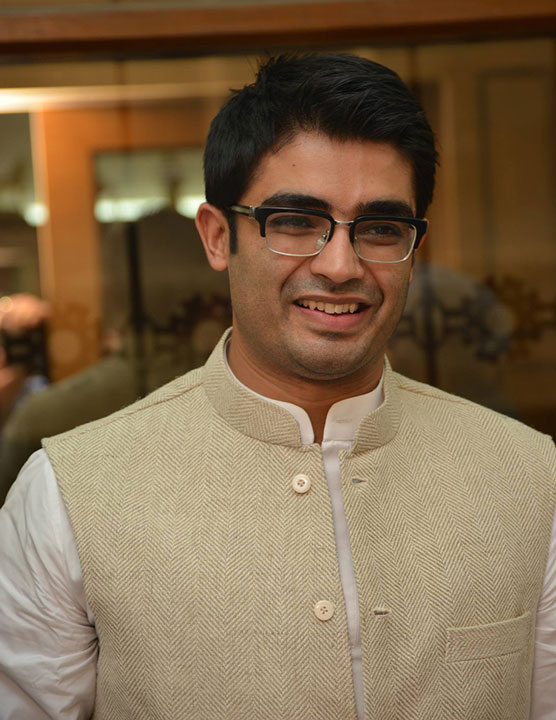
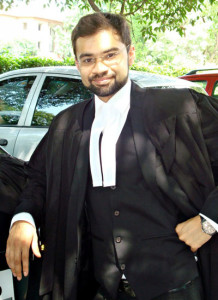
    jayveer-shergill1Jaiveer Shergill graduated from WBNUJS, Kolkata in 2006. Thereafter he worked as an associate for Economic Laws Practice, in their Corporate Commercial/Indirect Tax Team in Delhi for some time.

    In June, ’12 he made his entry into Politics by joining Indian National Congress and then he was appointed as a spokesperson in January, ’14. He has been the India Representative of Young Lawyers Committee at International Bar Association and presently, he is working as an independent practitioner in Supreme Court of India.

    We asked him a few questions about:

    • Choosing a specific arena and establishing a legal career
    • Being an independent practitioner at Supreme Court
    • Career options for a lawyer in politics
    • and many other questions relevant to a successful legal career


    How should a student structure his internship during law school?


    How to make a conscious career choice – corporate vs. litigation?


    Who are going to be the best teachers in a law firm?


    How far is theoretical knowledge in law schools consistent with the practical arena?


    Which forum will give the best exposure? What are most important skills required for subsistence?


    When is the right time to decide whether to become drafter or pleader?


    What can you expect to learn from a senior counsel?


    When is the right time to consider practicing independently?


    What does going independent really entail?


    How do you measure success? What should be the milestones?


    What are the paybacks of practicing independently?


    Should you choose what kind of matters to take between civil and criminal?


    What are the career options for lawyers in politics?


    What are the options in corporate transactions? Is seat-hopping more beneficial in litigation or corporate?

  • Faisal Sherwani, Senior Associate, Parekh & Co., on breaking the NLU myth, studying in the US, and his work experience

    Faisal Sherwani, Senior Associate, Parekh & Co., on breaking the NLU myth, studying in the US, and his work experience

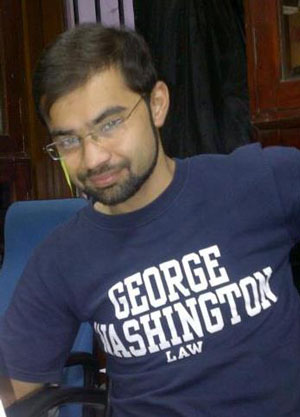
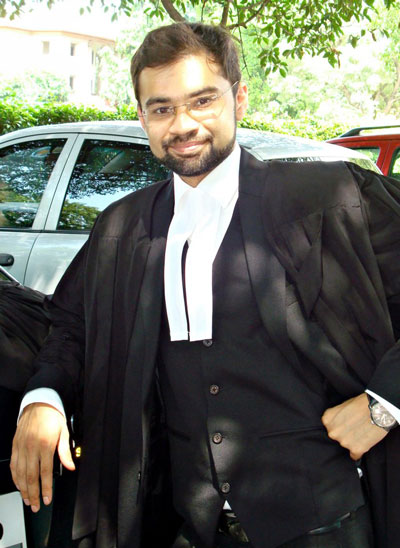
    Faisal Sherwani graduated from the Faculty of Law, Aligarh Muslim University, in 2009. Thereafter he received the prestigious Thomas Buergenthal scholarship and completed his LL.M. from George Washington University Law School, USA. Since then, he has served as Counsel in the chambers of Mr. Rakesh Dwivedi, Senior Advocate. He is currently working as a Senior Associate at Parekh & Co.

    In this interview we speak to him about:

    • Graduating from a non-NLU
    • Studying in America
    • His experience at Parekh & Co.


    What motivated you to pursue law?

    Part of my early schooling was in Blackburn, England, where my father worked as a doctor. Thereafter, my family moved back to my hometown in Aligarh and I completed my schooling there. After my basic schooling, I developed an instant fascination  for Political Thought, History, and Economics. I was drawn towards writings which advocated freedom of speech, religion, thought and life of the individual. Before I knew it, I was drawn towards law. Though not my immediate family, but a large part of my extended family was in the legal profession. Many of such family members mentored me into going to law school and taking up law as a career.


    Tell us something about your life at Aligarh Muslim University.

    I have fond memories of my university. It was an extremely lively place to study law in and it helped me and grow up into a young man. I remember it to be one of the most multicultural and diverse places. We had students from troubled parts of the country as well as those who were from abroad. Such students, often did not necessarily agree with your point of view, your beliefs or the policies of our Governments. It is here that I became an ardent advocate of freedom of speech and of the individual (this often landed me up in trouble with more popular and conventional groups). Probably the best thing that I learnt there apart from law, is that even as friends, we can disagree. During my time as a law student at AMU, I interned at the National Minorities Commission, at Fox Mandal & Little, Advocates & Solicitors, and at the Chambers of Mr. Rakesh Dwivedi, Senior Advocate.


    Would studying in a National Law University have helped you in any way?

    Not at all. In fact, if asked, I would do it all over again. My strongest inclination was always to practice law and the Faculty of Law, at Aligarh, provided the perfect platform. We had the opportunity of meeting judges from the Allahabad and Lucknow Benches of the High Court, law officers serving in the Government and young aspirants of the Judicial Services. The University, gave me an opportunity of addressing and speaking to large groups of students (who I remember would give you a hard time, for reasons of divergent views, different ideals or just out of plain boredom) this removed any stage fright which I might have ever had. I also participated in various moot court competitions and would often meet students from the National Law Schools at such events. They were bright and often better organised than us, but that apart I realised we were all the same lot of law students.


    What was your motivation behind doing an LL.M.?

    In the final years of my studies at the Faculty of Law at Aligarh, I realised that I was not done with my academic pursuits. By this time, I had developed an interest in foreign legal systems and a taste for Property and Corporate Law. I had the opportunity of meeting the Dean and Associate Dean from the George Washington University Law School, Washington DC, who were travelling to India at the time. I invited them to visit the Faculty of Law at Aligarh. They instantly showed an interest in me. I had applied to several other foreign Universities by this time but then, I applied to GWU too. I remember receiving an acceptance letter from my Dean with a personal note, which I cherish to this day and before I knew it, I was packing my bags for Washington, D.C.


    How should one go about choosing a university for their masters?

    I had applied to various other law schools throughout the USA and UK. The idea really should be to ask yourself what you want to study rather than pick a college which has a great name for itself, but does not necessarily match your requirements in terms of modules you would like to study or credits you would want to earn from them. It is common knowledge that some law schools are just better for some specific subjects while that might not be the case for subjects that one might want to concentrate on.
     

    faisal-sherwani1Tell us about your experience in George Washington University.

    The experience at GWU was a once in a lifetime kind. The faculty was warm and just as interested in the diverse experiences of its foreign LL.M students as we were in what the law school and its faculty had to offer. The best thing about studying at GWU is the fact that it sits in the Nation’s Capital and all important Government establishments are just around the bend. One can attend hearings at the Federal Circuit and speak to Ambassadors from different countries, lawyers and important functionaries who visited the law school for talks with the students. The faculty was great at what it did, courses were taught by professors who were noted academicians in their field, one by a sitting judge and another by the former Register of copyrights for the United States.

    I lived just ten minutes walking off-campus at Massachusetts Avenue in a rented apartment. It provided for a healthy walk every morning, walking past the White House, IMF Building and World Bank.


    Anything memorable that is stuck in your mind?

    The most memorable moment has to be a few days before I was scheduled to leave DC and be back in India. I got a call from my Dean asking me jokingly, “When would you get the hell out of his country and go do some good in the courts in India?” I then met him, shook hands and promised to stay in touch. It was an emotional moment.


    How was the academic schedule?

    It was a rigorous course schedule and I remember we were required to complete 28 credits in order to graduate. Course sessions were interactive, loaded with food for thought and always challenging. Though there was a lot of course work, organisation and belief in yourself ensures that one sails through.


    What did you study?

    As stated earlier, by the time I had decided to go abroad for further studies, I had developed an interest in Property Law and Corporations. Though I had studied a lot of the conventional property law back home in India, including the statutory and codified aspects of the same, I wanted to study Intellectual Property. This interest had been garnered by earlier internships where I had had the opportunity to work on such subjects. I also studied Corporations and Legislation, which amounted to extra credits for me. Apart from these courses, which I officially studied, I would often attend course sessions such as Government Contracts, International Business Law etc.


    How’s the Indian fraternity over there?

    My batch of LL.M students had quite a few Indians. They are the same old lively lot, we celebrated festivals like Diwali together and talked about the affairs back in the home country.


    Are there any scholarships available specifically for Indian Students?

    I had applied for and was awarded the Thomas Buergenthal Scholarship. This covered my tuition fees. There are various scholarships available for foreign LL.M aspirants at the law school, though not specifically for Indian students.


    What would be your advice to law students who plan to go for higher studies?

    Pin point your interests and ask yourself why you want to study a particular specialisation and then go about short listing your desired Law School.


    How do you expect this experience to influence your career?

    I have always believed that any experience is better than none. GWU was a rich experience and the interactive sessions which I was exposed to there have helped me till date to better analyse, understand and help real life clients which I entertain today as a lawyer.
     

    faisal-sherwani2 What does a regular workday at Parekh & Co. entail?

    Parekh & Co. has been the perfect platform to practice hardcore law. We handle complex and high stake litigation for major business houses, consortia and even for Government Institutions. I had been working in the Supreme Court for about couple of years and I would often meet the Partners at the firm in Court. They have been generous enough to make a place for me here. A normal day starts with a drive to the Bengali Market Office, which is just ten minutes from the Supreme Court. We have a 9:30 AM meeting in order to ensure who is handling what and who is going to attend early morning court hearings. This is rather essential, I believe, as a litigation office can often prove to be a frantic place, with court room items swiftly passing by and often boards collapsing. Thereafter, depending upon schedules, I usually find myself entertaining clients during the early part of the afternoon. The late evenings are reserved for conferences with Senior Advocates and briefings for matters scheduled for the coming morning.


    Do you accept interns at Parekh & Co?

    We most certainly do accept interns. It wouldn’t be the same without them! I am sure I speak for all the Associates at Parekh & Co. that working with interns is the most refreshing part of a hectic day and it takes us back to our early days. All applications can be sent to parekhco@parekhco.com. We are interested in interns who have an urge for learning and who can bring their own experiences to the firm.


    Based on your interaction with the law students, what do you think they should do in order to excel in their internships?

    The greatest favour that a young law student can do for oneself is to have an urge to learn from the experiences of others who are on the job. One should always feel free to ask questions. We appreciate it when interns concentrate their thoughts and take the initiative. After all, that is how we all started.


    What would be your parting message for our readers?

    Believe in yourself and your capabilities. Work hard and everything else will follow.

  • Anumita Sarkar on litigation in income tax and being an associate at Lexplosion

    Anumita Sarkar on litigation in income tax and being an associate at Lexplosion


    Anumita is currently Legal Associate – Tax compliance, Regulatory Research & Risk Management at Lexplosion. Let’s talk to her about being fluent in tax and her career trajectory.


    Hello Anumita! First of all, we’d like to thank you for agreeing to talk to us. Most of our subscribers hail from law schools in India and abroad. How will you introduce yourself to them?

    I am a lawyer, expertise in the area of Income Tax Litigation.


    You graduated from Miranda House, University of Delhi with B.A. (Hons) in Sociology and then went on to get a post-graduate diploma in Mass Communication from Bhartiya Vidya Bhawan, New Delhi simultaneously managing to completean LL.B. from Campus Law Centre, University of Delhi. That’s like a lot of studying! Tell us about your experiences at each of these places.

    Studying in Miranda House was a dream-come-true. Those 3 years were simply unforgettable, more so because I was a resident of Miranda House Hostel. After completing my grads, I successfully cracked two entrances (M.A. Sociology at JNU and Delhi University Law Faculty). Although, it was a tough call, but my ambition was always to join the league of legal professionals. Hence, CLC, DU.

    I have always been very energetic and firmly believe in multi-tasking. My very good friend in college inspired me to pursue Mass Communication from BVB, New Delhi. She is an Assistant producer now with CNN-IBN. Pursuing law and journalism required lot of studying, but it was worth it! I successfully completed my LL.B. and journalism and felt confident with both the degrees. I was into dual profession (practicing as a lawyer as well as a content/ copy writer with a travel agency). I was never afraid to venture out new career opportunities.


    anumita-sarkarOkay, coming to the very clichéd question- Why Law?

    The subject Law always fascinated me extensively. As I grew up, I realized that law is something which intrigued me deeply. The constitutional changes, legal developments in law brought in the society, etc. It was all over the newspaper daily. I was a voracious reader of various types of magazines and editorials in newspaper (The Hindu). I realized that, I am at my best when I’m challenged and nothing could convince me, until it satisfied me with logic and reasons. Law is something where I relish the opportunity of lateral thinking. There’s nothing better than learning from the supreme master, as in the case of Eklavya!


    You took up a course on Intellectual Property from World Intellectual Property Organization. How was the experience?

    It was a fairly good experience. The course covers all the general IP concepts. One can study and read the modules at one’s own pace and time.


    I’m sure you were a brilliant student – it won’t be out of place to mention that you have numerous publications and internships! How was the practical aspect of law?

    Internship as a law student and an experience as an Advocate are completely different. My main area of practice was Income Tax Law. I practiced for 3 years before various statutory authorities and income tax appellate tribunal in Kolkata. I have handled independently several types of income tax appeal cases and I feel good to share that I have successfully disposed off many cases (reported judgments). My publications are about my experience in tax litigation. My publications are my in-depth legal research in the study of income tax law and practice.


    In India, despite all the hue and cry about female equality, there are numerous families that don’t support female education. How supportive has your family been?

    My parents have been extremely encouraging and ambitious with me and my sisters. My elder sister is a Doctorate from J.N.U and an Assistant professor in Miranda House, Delhi University and my younger sister is a fresh law graduate from N.U.J.S., now pursuing her Judicial Clerkship under a Supreme Court Judge. We have been raised with the best of education and I am proud that my parents are encouraging and extremely supportive. They are liberal and forward looking. They feel proud in our every little success.


    You’ve worked as a content writer for a holiday tour company, as a practicing lawyer, and are currently working as a legal associate at Lexplosion Solutions Private Limited. How has the whole journey been like? What were the major hurdles that you faced in your journey so far?

    The legal profession is very challenging and full of struggle, especially when one does not have a god father to support. My interest for litigation put me into professional struggle after passing out from law school. But I was confident that I would succeed in anything that I loved to do. At this time my dad, once being the officer in the Revenue Department, supported and encouraged me to specialize in one of the areas of law. It was not a very difficult decision; Tax was in my blood and it was one of my subject interests of study. I joined a Chartered Accountant firm and I started tax litigation in full swing. Here my competition/ colleagues were mostly Chartered Accountants. Hailing from a non-accountancy background, I initially suffered a low confidence and found it extremely difficult in understanding the jugglery of accounts in income tax practice, especially at the times of scrutiny assessments. But with the help of my boss (F.C.A.) and supportive colleagues/ accountants, tax practice gradually turned out to be smooth. I researched more and more and with the help of itatonline.org and taxmann, I always kept myself updated with the latest changes in income tax law/ litigation. The only thing I did continuously for 3 years was tax litigation and I loved it and I was good at it.

    Lexplosion happened by chance. I felt it was the time for me to explore something more challenging and diversified. I grasped the opportunity to work for Lexplosion, the moment I got selected. Lexplosion Solutions Pvt. Ltd. is a statutory compliance management firm providing compliance solutions to various corporate sectors. My areas of work comprises of providing tax/fiscal compliance solutions to the corporate clients.


    You don’t only have a lot of degrees and work hard- in addition, you blog and also volunteer for causes like teaching under privileged children, helping needy children, raising funds for a cancer research institute! You truly are an inspiration to many of us. Tell us something about your volunteering experiences.

    I have been volunteering since I was in school. I was very active when it came to support a social cause, hence I volunteered as a fund raiser for Help Care Society and Cancer Center Welfare home and research institute. While pursuing graduation from Miranda House, I was an active member of MH NSS society. I volunteered as a teacher and taught the under-privileged students.


    In addition, you have completed a 4 year course in Art from Sarbabharatiya Sangeet, recognized by the West Bengal State Academy of Dance Drama, Music and Fine Art. Do you still pursue your hobbies and interests? How do you manage your time?

    No, I don’t pursue Art anymore. I regret that I couldn’t complete my diploma in Art. Study took away most of the time. Now, my interest is to blog and providing solutions to the readers as and when I receive any query in my mailbox.


    Finally, what would you like to say to our law school students and graduates? Your words will surely inspire to be not just a good lawyer, but a good human being as well.

    Best motivation is self-motivation. Always follow your head and never give up the struggle in the profession. You never know what’s knocking at your door.

  • Susieben Shah, Founder, Priyadarshini Taxi Services, on being an activist, author and social enterpreneur

    Susieben Shah, Founder, Priyadarshini Taxi Services, on being an activist, author and social enterpreneur

    Susieben Shah pursued her majors in Economics from Sophia College and obtained her degree in Law from GLC, Mumbai, which she followed up with work as an advocate in the Mumbai High Court. She veered towards social work and activism subsequently, focusing on women’s rights and enabling access to justice for women. She has authored books on the subject and has provided opportunities for gainful and ethical employment of women across service sectors.

    In this interview we speak to her about:

    • Her inspiration to pursue law and her time in the Bombay High Court
    • Her views on the current state of women in the country and the changes that need to be brought
    • How she manages her various roles as activist, author and social entrepreneur


    How would you like to introduce yourself to our readers who are young lawyers and law students?

    I would like to be known as a woman committed to women’s empowerment, with special  focus on economic empowerment of women, a social and political activist, not a hardcore feminist but certainly a woman who celebrates womanhood.


    What made you pursue Law from GLC, Mumbai, after your Economics major? How was your experience practicing at Bombay High Court?

    From the very beginning, my father, Shri B.A. Desai, a Senior Advocate and until recently the Additional Solicitor General of India, was a source of inspiration who continues to be my mentor and guide. As a college going young woman I have seen him passionately arguing in the High Court and Supreme Court. Since then, my mind was made to be a lawyer. He was the reason that I decided to join the legal profession.  I did my B.A with major in Economics from Sophia College, an all women’s institution, but we had a great time, created a strong bond and are still friends with most of my colleges colleagues.
    Life in, Sophia college was, in short, was serious studies coupled with fun and frolic. I did my law  from Govt. Law College, Mumbai. In the Government Law College the curriculum was interesting and interactive. I enjoyed participating in moot courts and from my last year I started my Articleship. It was always my desire to pursue Counsel Practice.

    During early days of my counsel practice, I was also assigned to be a Commissioner to record evidence, of a witness who could not attend High Court. As I mentioned earlier my father is a Senior Advocate of the Supreme Court and a Counsel of repute, his pleadings across the Bar inspired me and hence I made a foray into legal practice.


    SusiebenWhat do you think about the current situation on awareness of law, for the common man? How do you think the situation can be improved?

    I believe information is the gateway to knowledge. Unfortunately despite various women friendly legislations enacted by the Government of UPA 1 and UPA 2 the women of India across social and economic backgrounds are not aware of their rights accorded to them in the constitution. With that in mind, I penned the book Legal Awareness amongst Women and published it in four languages. I have once again started writing a book on the latest amendments thereon, focusing on the Criminal Amendment Act and Prevention of Sexual Harassment at the Workplace, which has just been enacted by UPA Government, to protect the safety and dignity of women. It is going to be my sincere effort that these books are available at every bus-stop, railway station and all public places for women to read and make themselves aware of their rights, because it is only when you know your rights, can you enforce them.


    Can you tell our reader about the other initiatives you’ve undertaken?

    (Susieben has actively participated in and organized a number of political and social-community events, such as Priyadarshini Taxi Services, Rakhis for Jawans and Marathons for causes.)

    Priyadarshini Taxi Service was conceptualized and implemented a novel and unique concept by me with a view to economically empower women. It has been very satisfying and exciting journey so far which has been appreciated by one and all.  Rakhis for Jawans was our gratitude towards the war heroes of Kargil on the occasion of the 10th Anniversary of Kargil War. It was our effort to express gratitude towards our brothers in the army.

    The 10km Environment Run was organized to celebrate the 25 years of Priyadarshini Park & Sports Complex, a 22-acre sports complex and community center, of which I am the General Secretary. To know more about the Priyadarshini Park & Sports Complex, kindly visit www.priyadarshinipark.org


    How supportive have your family and friends been towards all this?

    I have always been committed to the economic and social empowerment women and the aam aadmi. I was greatly inspired by the leadership of Smt. Indira Gandhiji, the Iron Lady of the millennium. I must mention that in all my social and  political  endeavors, my family, and specially my husband Mr. Vidyut Shah, who himself is a first generation successful industrialist,  has supported  and guided me in in ever way possible.  He has been my strength and guiding force. I would also like to stress here that for a woman to succeed it would be necessary for the family to support and the men in their lives to support them. It is not that women cannot do it alone – but certainly she can do better with the support of her family and near and dear ones.


    What has been the biggest challenge that you have faced, and how did you overcome that?

    The biggest challenge that I faced was the implementation of Priyadarshini Taxi Service from the Domestic Airport. I had to wage a war with the unions and other vested interests to start our operation under the pre-paid category despite a government notification in our favour. I had to move the Mumbai High Court to have it implemented. The only way to succeed in this man’s world is to believe in yourself, your endeavors and believe that the mission that you sought out to accomplish has to succeed against all odds. In short women entrepreneur has to have a ‘never say die’ attitude.

    For more information on all my endeavours kindly visit www.susiebenshah.in and www.priyadarshinitaxi.com.


    Where do you see yourself in the next five years, and what are the changes you expect to bring about in society till then?

    In the coming five years, I certainly see myself entrenching  in  the political process, of nation building under the leadership of Shri Rahul Gandhi and Shri Milind Deora, M.P. from South Mumbai. I am a firm believer that for us to bring about the change the political system, to weed out the evils of corruption, red-tapism, we have to plunge ourselves in the political process, else you would remain in the periphery and your ideas and aspirations would not go past the drawing board. As Mahatma Gandhi always said, you must be the change that you want to see in the world”.


    We wish you all the very best in your endeavors. What is your message for the youth of the country?

    Let us all together, take concrete steps, in whichever field we are involved, in your own humble manner,  for the upliftment and development of India. Let us also vow and pledge for the safety, security and dignity for the women of India.