Tag: Litigation

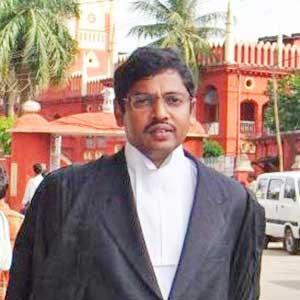
  • Ashish Singh, Associate at Luthra&Luthra Delhi’s Litigation Team on work profile and higher studies

    Ashish Singh, Associate at Luthra&Luthra Delhi’s Litigation Team on work profile and higher studies

    Ashish Singh is a graduate of GLC, Mumbai. He had interned at Luthra & Luthra’s Delhi Litigation Team as a Law Student, and therefore right after graduation in 2012, Ashish got a job offer from the same team.

    Right from graduation he has continued to work at Luthra, and he had the opportunity to work independently in various high stakes litigation. He has advised clients on legal issues including corporate frauds, civil commercial litigation, Arbitration and Conciliation Act, 1996, Architect Act, 1972, Copyright and Trademarks and Transfer of Property Act, 1882.

    He has also advised an MNC in the recent Common Wealth Games matters, before the High Court of Delhi.

    In this interview we had asked him to tell us a few things about:

    • Experience at GLC, Mumbai
    • Luthra Delhi’s Litigation work profile
    • Expertise in Anti Piracy litigation matters
    • Utility of Higher Studies in litigation


    How would you like to introduce yourself to our readers who are law students and young lawyers?

    Hi, I am Ashish and I am working with Luthra & Luthra Law Offices in the General Litigation Team at New Delhi. I graduated in the year 2012 from Government Law College, Mumbai.

    I am a go getter who believes that all problems have solution. We only need to find them. Litigation has thus given me an avenue to convert this belief of mine into action. The thrill of arguing in Court and getting relief for my Client is something which keeps me on my toes.


    Please tell us about your pre college life and your time at law school. Did you have lawyers in your family?

    Throughout my life I have been in boarding. I joined boarding at a young age of 4 1∕2 (four and half) years. I am thankful to my parents for taking this harsh decision of sending me to a boarding school. I call it harsh because it is one of the most difficult decisions for all parents to send their children of such a young age away from them and let me tell you that unlike today there were no mobile phones at that time and the slow postal services was not of much help either. I still remember that there were times when I used to reach home much before the letters that I had sent asking my parents to take me home for vacation.

    I would say this helped me a lot to shape into a strong, confident and independent person. I learnt that “..there are things which only you can do for yourself no one else can do for you…” You have to learn to do things on your own whatever it is tying the lace of your shoes or the knot of your tie or travelling to an unknown city for the first time (without any technology aid).

    In boarding there are many programmes which are mainly organised and managed by students (of course in the supervision of teachers). I was one of the active participants. This experience not only helped me in my college life in getting sponsorship for different events organised in college but is also helping me now in building Client relationship and even while pitching for new Client.

    My five years at GLC were the most enjoyable and important years of my life. For a boy who comes from Bihar and was under supervision 24*7 in boarding, Mumbai and the freedom at college was a breath of fresh air. I enjoyed every bit of it and lived my life to the fullest.

    I am a first generation lawyer. I firmly believe that when one knows what he/she wants from life and is clear about his aim then it becomes totally irrelevant whether you belong to  a family of lawyers or not. What makes you successful in this profession is your grit, determination and the desire to achieve.


    You studied at Government Law College, Mumbai, considered to be one of the premier law colleges in India. Please share with us your time in college.

    I feel blessed to have gotten an opportunity to be a part of an institution called Government Law College (GLC), Mumbai. The college was established in 1854 and has given our country some of the most successful lawyers, finest Judges and the first Lady President of India.

    GLC gives you an opportunity to intern throughout the year, thus helping you learn from the experience of seniors in the profession from the day you start your journey to become a lawyer.  Also various competitions that are conducted in GLC throughout the year give you a rounded personality which makes you a better lawyer.

    I actively participated in the events organised in college and tried to intern as regularly as possible.


    Apart from getting engrossed with academic work how else did you spend your time in law school?

    GLC has lot of committees to keep you occupied. I was one of the active members of the Legal Aid Committee and our main work was to provide legal help to the poor and needy which ranged from drafting of bail application, complaint before Consumer Forum, etc to coordinating with different NGOs who work in the same filed.

    Apart from studies, I like acting and directing. I was a part of a small theatre group in Mumbai. I used to spend most of my free time rehearsing and performing at different location and often we used to do street play. I love theatre and lot of time was spent at Prithvi theatre.


    Please share with us your views on time management in a stressful law school environment.

    Time management is the key to success in all spheres of life. It is important to maintain a work life balance because attending classes, working as an intern, preparing for various competitions and the exams can take a toll on you. It is therefore important to prepare a time schedule keeping in mind the dates for competitions, exams, etc. Ultimately you cannot be a lawyer unless you have a degree. So it is important to clear all your exams in addition to doing internship.


    Please tell us about the work environment at Luthra & Luthra. What all do your work profile consist of?  What is a normal workday like?

    Luthra has a wonderful working environment. As a beginner you need a lot of encouragement and support from your seniors. I was lucky to have a few mentors who made the transition from being a law student to a lawyer easier than it would have ordinarily been. One great thing about working at Luthra is the accessibility to both Partners and Senior Partners.

    As mentioned earlier, I work in the General litigation practice and normally my day begins with a visit to Court with my partner. Once I am back, there is enough research and drafting to keep me busy. Also, discussion with the team working on the brief gives you a different perspective to the matter.


    ashish-singh-4

    Anti-piracy and Anti-counterfeit issues being a nascent arena of litigation, please tell us how did you get interested in taking these up as your field of practice?

    I began my practice with the Anti-piracy and Anti-counterfeit (APAC) team but gradually was given an opportunity by the firm to work on a wider range of issues in the General Litigation Practice.

    Yes, APAC is a nascent field and there are limited lawyers working in this area. But, it has a huge potential in the coming decade to become a specific practice area. Many counsels who began practising in this new area five six years from now, are now considered expert in the same. I therefore joined an area which had just begun to warm up.


    You have had diverse internships. What advice would you want to give to budding lawyers in regard to internships?

    I took whatever internship opportunities I got. Honestly, choosing internships was not a conscious attempt but in the hindsight it has proved to be an enriching experience. It helped me decide that litigation was my calling.

    My advice to law students would be that they should take their internship sincerely. It is the time when one understands the practical aspects of the subject they are studying. They should try to intern in both corporate and litigation practice so that they can decide to choose one depending upon their interest and liking. Also, internship helps one in forging relationship and getting placements. Many PPO’s are given based on the internship performance. I got this job based on my internship performance.


    You have been a part of Luthra for a considerable amount of time now. Please share with us Luthra’s expectations from a budding lawyer and what do they look for in the CV of a budding lawyer?

    I think all the law firms have only one expectation from a fresh law graduate that the person should be open to learning.

    In today’s world people prefer to specialise in their areas of interest and pursue higher studies.


    What are your views on higher studies? Should a law student pursue higher studies right after graduation or after procuring some work experience?

    I think what you learn from the practical experience can never be learned from books. Though an LL.M does look good on a CV but from a litigation perspective what is more important is your ability to think quickly and respond to situations as they arise in the Court. One has to think on their legs. This comes more by experience than by LLM. LLM from abroad does gives an exposure and broadens ones horizon but the cost at which it comes is a bit too high. Students spending such amount towards LLM also have expectations of high salaries which are little difficult to get in India. This at times, creates disappointment amongst students and they take up jobs abroad resulting in brain drain, and is a loss of brilliant minds of our country. In any case , I think if one is interested in pursuing higher studies it should be done after experience of couple of years as after working for a couple of years one becomes aware about his area of interest and also the industry requirements.


    How should we consider choosing a law firm over litigation or litigation over a law firm?

    I don’t think I have chosen law firm over litigation rather I am doing litigation in a law firm. Working with a top tier law firm gives you a chance to do work with big clients on matters involving huge stakes. It also makes you a good team player as a group of people are working on the brief. In addition to the aforesaid, working in a firm also gives you an advantage of seeking assistance of people specializing in specific areas while preparing and drafting matters.


    What would be your message to law students who want to have a smooth transition from law student to law professional?

    Don’t get disappointed/disheartened if in case you can’t secure a job in campus placements. I did not get one either. Work hard and be focussed. There is no replacement of working hard. In the initials years try to work on as diverse fields as possible. This will help you have a better understanding of different areas of law which will make you a complete lawyer. There are no short cuts to success. This profession demands a lot of your time, dedication, energy but it also gives you a lot in return. You just need to be focused and patient.

  • Jai Sahai Endlaw on moots, litigation and an LL.M from Berkeley

    Jai Sahai Endlaw on moots, litigation and an LL.M from Berkeley

    Jai Sahai Endlaw graduated from NLU, Jodhpur in 2013, and thereafter he had the opportunity to pursue higher studies from the University of California, Berkeley. While at law school he had huge achievements in mooting, his team at NLU, Jodhpur went on to win the 16th Stetson IEMCC World Rounds, an Honourable Mention for Best Respondent Memorandum at the 9th Willem C. Vis (East) Arbitration Moot, at UC, Berkeley also his team made it to the Semi-Finals Pacific Coast rounds of the 55th Philip C. Jessup International Law Moot Court Competition.

    With so much to tell you about him, we could ask only a few questions on:

    • Academics and internships for a career in litigation
    • Partaking in the best moots and acing them
    • LL.M experience from UC, Berkeley


    What is it that motivated you to take up law as a career? Was it an engineered move or a sudden decision?

    I knew early on that I wanted to pursue a career in law. Two factors anchored my decision – It being a family profession, the daily challenge of a court room drama was fascinating, and it was matched with my interest in current affairs, debating and reading.


    Would you say your parents were quite instrumental in making you take law as a career option? Did you get to hear legal discussions right from your childhood days?

    My parents were instrumental in helping my shape my career decision. The choice was entirely mine. In fact they are of the opinion that a study in science at school level helps develop and hone analytical abilities – I studied science at school. My father litigated in the District Courts and High Court. During his practice, he largely dealt with matters on the civil side, original and appellate which included property and rent matters. My parents gave me complete freedom to find my calling at law school, and even supported me when I expressed my desire to pursue further studies abroad. Yes, legal discussions were a part of routine dinner table conversations – I’m a third generation lawyer.


    Having a family with legal background may prove to be a huge advantage as far as establishing a practice is concerned. What is your opinion on the same? Did this factor ever play a role in influencing your decision to take up law?

    A legal background and family practice is definitely a privilege and of help, but only to the extent of giving you a realistic perception about the practice and understanding law as a profession. Ultimately, in the business of advising, you bring ‘yourself’ to the table. There may have been some subtle influences acting upon me whilst I made my choices, but it is imperative for the choice to match your area of interests. Only then can one support and sustain a career long term.


    Did your internships motivate you to get more involved in litigation than corporate law?

    Internships are indeed processes of self discovery. If you work on them seriously, 4 – 6 weeks of work in a firm or under a practicing advocate gives you an insight into what your future requirements may be. My core area of interest lay in a litigation practice of my own, and the internships were great learning experiences. In fact, my first internship was with an advocate who practiced in the district courts as well as at the High Court. I followed him in the Courts and observed him arguing over the course of one summer and that cemented my decision to litigate after law school. Since that involved regular Court appearances and briefings, I felt that working with an advocate would be befitting. Practical, hands on work, always helps to either endorse or change your career trajectory.


    What role do academics play in the career of an aspiring litigator?

    Academics and exam scores are baseline platforms for professionals. One must use the time of five years at Law School to learn to examine critically and couple the approach to build a mature thought process and a confident personality. At the end of the day very few lawyers ask you for your transcripts when you apply for a job as a junior advocate. Our profession is such that law school can only effectively prepare you on the theoretical aspect of law, practical knowledge will come on the job but only after you are sound on what the law says.


    Is there anything apart from academics that a student who wishes to pursue litigation must involve himself in during his law school life?

    I don’t think there are any specific categories of activities that one can pursue at Law School that necessarily help you become a better litigator or corporate lawyer. Having said that, moot courts are wonderful modules with fun and competitive ways of learning the law in a specialized area. They involve in depth research for specially constructed problems, and require clarity of mind and articulation. I haven’t written any papers myself, but I’m well aware that the effort, reading and critical reasoning that goes into publishing is another great opportunity for law students, not only to express their views but to test their analytical skills.


    Your team won the 16th Stetson IEMCC World Rounds and also an Honourable Mention for Best Respondent Memorandum at the 9th Willem C. Vis (East) Arbitration Moot. How big a role do you think mooting plays in the overall development of a lawyer?

    For me personally, mooting was definitely a confidence booster. It also taught me that hard work does really pay off. The way international moots are structured, you read and research about specific areas of international law for months and in the process learn the importance of team work and improve your drafting skills. These are important lessons that stay with a lawyer for their entire career. Actual practice before any court is different in terms of the pressure, you plead your case on behalf of a real client, who is depending on your skills and knowledge to get him relief. Mooting definitely helps in aspects such as marshalling the facts of a case and narrowing down and identifying the issues in a legal proceeding, but appearing before a judge who is sitting not only to adjudicate your case but multiple others on the same day is a very different and unique experience.


    How was your LL.M experience from University of California, Berkeley. Did you always have higher studies in your mind? If not, what motivated you to go in for the same?

    A post graduate degree was always very much on the agenda. What really clinched my decision to apply was my experience at international moots, meeting teams from various countries, observing their approach to the moot problem and touring various American Universities after Stetson. You will be surprised at how easy it is to walk into any law school in the U.S., introducing yourself as a law student from a foreign country and informing them of your desire to pursue higher studies in the U.S. and as a consequence being invited to sit in on one of the lectures being held at that time!


    For those students who are planning to go for higher studies, what do you think would be better- going right after graduation or going after having gained some work experience?

    I can only speak from my personal experience. There are no short term benefits of an LL.M degree/diploma in a career in litigation in India. The take away is largely in terms of personal growth. However, from what I told, as you grow in litigation and deal with MNC’s and foreign clients, a degree that such clients can relate to helps in them relating to the degree holder as well. Couple that with an international network that you develop during your LLM, and it’s a powerful combination.

    International experience is one of the most important components of a 21st century education, and a study abroad can be viewed as a step in that direction. Indian university graduates are relatively stronger on ‘soft’ skills such as interpersonal skills. Foreign degree holders appear disposed towards critical thinking skills, and using their knowledge to solve real world problems.

    The eternal conundrum that law students face is when, if at all, to pursue their higher studies. I chose to go straight after law school because I felt that I couldn’t afford to settle into a litigation career of a couple of years only to uproot it and go abroad for a year (or maybe more). On the flip side, I was one of the youngest in my batch at Berkeley Law and that has its own fair share of baggage!


    What do you think is the perfect formula for candidature at a reputed law school for further studies?

    I don’t think anyone has found the perfect formula to get accepted to the best universities in the world. But I do know that the universities definitely look for candidates with diverse backgrounds. Your personal statement should reflect a focussed approach as to why and how the course you are applying for is the right choice for you and what in your qualifications supports that cause. I would definitely advise any one looking to pursue further studies to keep a healthy balance of their academic with co-curricular activities such as mooting, publishing and presenting papers, participating in workshops and conferences in the area you are looking to speacilize/study further in.


    Is there any tip you would like to give to our readers, most of whom are students pursuing law?

    In retrospect, I found that law school makes available a broad canvas of choices to law students and it is imperative for a law student to figure out in the five years – be it through internships or through pure academic interest – where your passion lies. This can be immensely helpful at the time of recruitment as well as applying to foreign universities.

  • Rishabh Jogani on LL.M from Queen Mary, mooting and work in litigation

    Rishabh Jogani on LL.M from Queen Mary, mooting and work in litigation

    Rishabh Jogani graduated with a B.L.S.LL.B. degree from GLC, Mumbai in 2012. Soon after Graduation he worked at the Chambers of Senior Advocate Pradeep Sancheti, Bombay High Court for one year and then went on to pursue a Masters in Comparative and International Dispute Resolution from Queen Mary, University of London. Thereafter he returned back to India and again joined the Chambers of Senior Advocate Pradeep Sancheti, Bombay High Court.

    In this interview, he talks about:

    • Moot Court Competitions and acing them
    • Pursuing further studies and LL.M from Queen Mary
    • Choosing litigation over other opportunities


    Given that most of our readers are law students and lawyers, how would you introduce yourself to them?

    I would introduce myself as a young junior counsel practising before the High Court of Bombay with a keen interest in Intellectual Property Law & Arbitration. I am working with Senior Advocate Mr. Pradeep Sancheti as his junior.


    Though it’s one of the most asked questions but yet, why law?

    The answer to that is with another question, why not? Despite being from a business family I realised that business was not my calling in life. I preferred something more on the professional lines and law was certainly my best plausible choice.


    Tell us about your years in law school. What made your journey with Mumbai University worth it? What are the co-curricular activities you took part at Mumbai University?

    I studied at Government Law College, Mumbai (GLC) the oldest law school in the country. Being at GLC itself made my entire time at University worth it considering the opportunities made available to GLC students. I was greatly involved with college activities, the Rotaract Club in particular. I was President of the Club and responsible for numerous events and activites. The College in appreciation of my involvement also awarded me with the Jotimal Chuganee Trophy for leadership.


    rishabh-jogani-2What were your areas of interest during your graduation? How did you go about developing expertise and knowledge in these areas?

    My areas of interest were Intellectual Property and Arbitration.

    With regard to Intellectual Property, I did some courses from the World Intellectual Property Organisation and a Masters in Intellectual Property Law from IGNOU, New Delhi. However, the strongest addition to my knowledge in the field was an internship with Mr. Himanshu Kane of W.S.Kane & Co. who is probably one of the most knowledgable lawyers in the IP circles. Working with someone of Mr. Kane’s standing and expertise gave me great exposure to IP issues and provided me with a strong grounding with regard to IP law.

    As far as Arbitration is concerned, working with Mr. Sancheti had me learn about the various intricacies of arbitral law. I was involved with numerous arbitrations and matters arising out of them. Thereafter, I pursued an LL.M in Comparative  and International Dispute Resolution from the Queen Mary, University of London where I studied International Commercial Arbitration and Arbitration in relation to Energy Disputes. My LL.M thesis was also based on arbitration.


    Tell us a little about your internship at the Supreme Court of India.

    I interned with Mr. Justice KS Radhakrishnan of the Supreme Court during one of my summer vacations at GLC. The experience was extremely enriching, I would read cases and appeals coming to the Court and then attend the proceedings in Court. In the evenings, along with the other intern, we would have some discussions with the judge about what transpired in Court and what we understood from the cases.


    After your graduation, you started working at the Chambers of Pradeep Sancheti. What influenced your decision of working with him?

    My interest in arbitration drew me to Mr. Sancheti’s practice and the learning experience was extremely wonderful. Working with a Senior Advocate like Mr. Sancheti makes one realise that there is always scope to learn more. He is a great senior who besides being extremely nice to his juniors is always willing to answer all queries that come up in our minds.


    What influenced your decision to work in litigation?

    As a student I had interned at the High Court of Bombay and the Supreme Court of India as well as a few law firms and eventually joined Mr. Sancheti’s Chamber as an intern. I realised that I was never interested in working in a corporate structured firm and hence chose the litigation sector.


    Thereafter, you joined Queen Mary, University of London for an LL.M. At what point did you decide to pursue your Masters? What was your motivation?

    I always wanted some exposure to law on a comparative level and an LL.M was probably the best way to get that experience. After a year into practice at the Bar I decided to go for my LL.M. The zest for learning has probably been my strongest motivator and probably what drove me to the LL.M.


    In addition to academics, what did you do during your LL.M year at Queen Mary?

    Whilst at Queen Mary I was involved with ‘qLegal’ a project of the Legal Advice Centre of the School of Law. The work I did was quite interesting, in the sense that I was involved in drafting toolkits on legal issues. I was put in a team which had to draft notes on ‘Company Structure in the UK’ and ‘Trademarks in the UK’ meant for a non-legal audience. It was quite a task to simplify and explain legal terms and concepts but in the end was a rewarding experience.

    I also wrote the Runner Up Prize winning paper of the Preiskel Prize Essay Competition 2013-2014 for an essay titled, “Big data and Marketing – has the law caught up with the new digital reality.”

    Shortly after my exams, I worked with Zaiwalla & Co. a law firm in London. I did some very interesting work at the firm which involved research on English law and drafting litigation proceedings.


    How did you choose Queen Mary over other colleges? What was the decisive factor?

    The School of International Arbitration at Queen Mary is one of the best in the world and lets students study and work with famous international arbitration experts like Profs. Loukas Mistelis, Dr. Julian Lew QC, Stavros Brekoulakis and Dr. Maxi Scherer. Coupled with the fact that I wanted to live in London, Queen Mary seemed a natural choice.

    While choosing a University one should look at the specific courses offered, the courses of interest, the faculty and its reputation. One should not choose a University wholly based on rankings because not all courses offered by the top universities would have the same kind of academicians.

    The Universities in the UK employed a more wholesome approach to studying. There was certainly less classroom teaching than India but however not less learning. There was always voluminous pre-class reading that made sure that students came to lecture sessions well aware of the basics of the subject of discussion. There was a free exchange of opinion in classes and students were encouraged to express their viewpoints.


    What is your view on the latest trend among law students to pursue Masters abroad? How much of a brain drain do you think this is?

    Having done an LL.M myself I would certainly encourage anyone who can do one to seize the opportunity. No amount of learning is ever wasted and knowledge is something that stays with you for life. Some however, believe that a Masters abroad is easy and nothing but an expensive vacation. I would strongly disagree with that opinion for the simple reason that a Master’s degree from a reputed college is certainly not an easy task. There is a large amount of studying involved to pass the exams and extensive research that one must undertake to be able to write a thesis. If a student spends his time well then the LL.M is certainly an added advantage to his career.


    A lot of law students prefer corporate jobs over a career in litigation. What is your take on this? Is it better to work in the corporate sector for a few years before starting litigation?

    Corporate jobs certainly offer more money than litigation in the start and the allure of money is most understandable. Litigation in its early stages certainly is difficult, especially where finances are concerned but one reaps the reward soon after. I think that those students, who choose corporate work over litigation or vice versa, should always make an informed and practical choice, take into consideration their long term career goals and then decide what side they wish to pick. Working at a firm before joining the litigation sector is certainly advisable as it helps you deal with all facets of the profession.


    How has your mooting experience been? How helpful has been mooting in litigation?

    I had a tremendous amount of experience mooting for Government Law College. I represented GLC at numerous national and international moots. Mooting gets a law student as close as possible to a real Court room. There is a great deal of research and drafting involved in preparing for a moot which certainly helps one in the future at the Bar. Arguing before a moot Court also helps instil confidence in a student who eventually gets called to the Bar.

    I also had the opportunity to be part of the Queen Mary team at the Oxford Price Media Law Moot Court Competition and successfully managed to reach all the way upto the semi finals. As part of our training for the Oxford Moot, our coach was kind enough to arrange for a practice round before a sitting judge of the Queen’s Bench Divison of the High Court of Justice. Having always seen the buildings of the Royal Courts of Justice as a tourist and read a catena of English decisions the lawyer inside me harboured a wish to be able to address that Court one day. Participating in the moot fulfilled an otherwise impossible wish.


    Do you think the law school curriculum at the University of Mumbai requires an overhaul?

    The curriculum certainly needs an overhaul at the University of Mumbai. Students are forced to study some redundant subjects to the extent of even studying some repealed statutes. There is a lot of room for improvement at the University of Mumbai. Also, internships or some sort of work experience should also be made part of the law curriculum.

  • Aditya Khandekar on work experience at ICICI Bank and starting out with litigation

    Aditya Khandekar on work experience at ICICI Bank and starting out with litigation

    Aditya Khandekar is a graduate from National Law Institute University, Bhopal (Batch of 2012). Thereafter, he worked as an in-house counsel at ICICI Bank, Mumbai for two years. His interest in litigation led him to leave his lucrative job and start litigation. He has recently started litigating before Madhya Pradesh High Court (Jabalpur).

    In this interview, he talks about:

    • Work experience at ICICI Bank
    • Choosing litigation over corporate job


    Please introduce yourself to our readers. Please tell us a little bit about your childhood and your background?

    My name is Aditya Khandekar. As both my parents work are government servants, I spent my childhood living in Bhopal & Delhi and did my 10th and 12th from Sanskriti School, New Delhi. Having grown up in government colonies where there were a large number of kids of my age, I remember spending most evenings playing different sports such as basketball or cricket, therefore making me an outdoor person. I enjoy travelling, reading books and playing games whether on the computer or outside on the field.


    How did you gravitate towards law? Why law and not engineering or medical studies?

    By the time I passed out of school in 2007, law schools had just started becoming popular. If one sees the curriculum of a 5 year law school one would see that a law graduate studies various subjects such as economics, history, political science and of course the law subjects themselves. I was very keen to study economics but felt that law school might be interesting as there were several other subjects that could be potentially stimulating. However, the real clincher was the fact that a friend of mine recommended that I take a few trial classes at Universal coaching centre for the law admission tests. I attended the class and found it to be quite intriguing and thereafter appeared for the admission tests. I cleared the test for NLIU Bhopal and Amity University which was at that time located in Delhi and then joined NLIU Bhopal.

    Despite being a science student, I was never interested in pursuing science after class 12th, I had taken science only with the purpose of keeping my options open. I was fairly certain that engineering was not my cup of tea.


    Tell us about your years in law school. What made your journey with NLIU exciting?

    Law school was a roller coaster from the very beginning. I was an avid Mooter and Debater and took part in competitions such as the 3 on 3 Asians Debating Competition held at Bangkok, Thailand. I think I took part in almost every competition that took place in college whether it be client counselling, mooting or even dancing for that matter which I am really bad at. I also went for moots to NALSAR, NLU Delhi & GLC, Trivandrum. We won the moot at NALSAR and were the semi-finalists in a moot conducted in New Delhi. I was also involved in organising the 1st NLIU INADR mediation competition which was a great learning experience. I think what made NLIU really exciting, was the many outings that my friends and I had, whether it be to Goa where half my batch ended up going in my final year or the outings to national parks such as Kanha or Bandhavgarh. In the final holidays we criss-crossed the State of Rajasthan and two of my friends actually travelled all the way from Rajasthan to Assam.


    aditya-khandekar-2How did you fare in your academics at NLIU? Would you say a great CGPA is a necessity to kickstart a good career in the legal profession?

    I was fairly decent at academics, I ended up getting around 71% at the end of 5 years and was close to the top 10% in my batch. I think a great CGPA is necessary for applying to certain law firms such as AMSS. Other reputed firms give weightage to internships that a student may have done with them. Some places like ICICI recruit purely on the basis of a group discussion and interview. The CGPA does not guarantee a placement in such cases. Overall, I would say that to get a job from campus it is advisable to be in the top 15% of the batch. This would ensure that you get shortlisted for all the institutions visiting campus for interviews. Publications and good internships are also crucial.


    What were your areas of interest during your graduation? How did you go about developing expertise and knowledge in these areas?

    While I cannot say that I was particularly interested in any one area of law, I ended up doing 2-3 moots on constitutional law in particular dealing with the constitutional validity of certain provisions and therefore my interest gradually grew towards constitutional law. I think a person can develop interest in any field if he/ she spends sufficient time on it.


    You have worked at ICICI Bank as a Law Officer for two years. How was the experience?

    I had a great time working at ICICI Bank as a law officer. I initially began working in the Project Finance team and worked in that group for about a year and thereafter was shifted to the Structured Finance Group where I worked for about 4 months. Both these teams deal with large scale loans that are given to develop infrastructure. While project finance involves heavy documentation which at times can be very arduous, structured finance is relatively lighter in documentation and the stress is more on structuring/ shaping the deal which generally involves multiple entities and trans-boundary issues. ICICI is a place to work where one can have a good work life balance and at the same time can learn.


    Leaving a well paying corporate job must have been decisive. Were you in double minds before starting practice at Madhya Pradesh High Court? Why did you prefer Litigation over your corporate job?

    The dilemma is that a corporate job gives a handsome salary while litigation initially is not very rewarding. Since I enjoyed debating and mooting, I was very keen to at least give litigation a try. The idea of landing a corporate job after passing out of law school was that since the corporate job pays well, it would lead to savings which could be used during the first year of litigation where the pay would not be so good. I opted for litigation over my corporate job because every case is unique and poses new challenges. It is far more rewarding when a judge accepts your argument in comparison to say drafting a deed of hypothecation. Plus I was never happy with a desk job and therefore enjoy the running about which is necessary in litigation.


    Do you think your experience in mooting, debate, ADR and client counseling competitions shall help you in your litigation career?

    Yes, having done public speaking in the past, I have no hesitation while appearing before the Court and that has definitely been a great asset.


    What can the law schools do to encourage more people into litigation? Do you think the law school curriculum requires overhaul?

    Most law schools have a recruitment cell that mainly focuses on getting firms/ companies to campus for recruitment either at the end of fourth year or in the beginning of 5th year. However, these recruitment cells rarely contact Senior Advocates and Advocates on record for internships or recruitment. Many Lawyers these days have started offering competitive stipends which either match or are close to the retainer ships being offered by corporate firms. At times partners of law firms visit campuses to give lectures and conduct seminars, the same opportunity should also be given to Senior Advocates who I am sure would be able to encourage students to opt for litigation. I don’t think the law school curriculum requires a complete overhaul. What needs to be realized is that unlike engineering, law requires a much more hands on approach and therefore the curriculum needs to be aligned to the industry where both transactional work as well drafting/ litigation needs to be intertwined which can be easily done by giving more emphasis to moots, client counselling, adequate time for internships etc. I genuinely believe that internships and moots teach more than what a law student learns in class.


    How is your experience so far? What is your workday like? Are there new challenges every day or did work fall into a predictable pattern?

    My experience has been quite interesting so far. An average work day begins at 10 AM and goes on till about 4:30 when the court closes, thereafter there is drafting/ research/ preparation work in office from 8PM to about 10:30 PM. Therefore, the day is fairly long and at times even stretches well beyond midnight. There are new challenges every day, I on an average appear in 4 to 5 matters every day. These are for different public sector undertakings as well as for certain private clients. Each case requires preparation and has its own distinctive challenges.


    How necessary is it to have a mentor/guide to advise a young lawyer while still in the formative years of the profession?

    The role of a mentor/ guide is vital to a young lawyer. The courts have their own ways of doing things and tend to be very strict on procedure and it takes a while to understand the working as to how the matters are listed, the manner in which the court is addressed, how to pre-empt the questions that a judge may ask and most importantly how to dodge a tricky question/ situation.


    What were the difficulties you faced in the early days of your practice? How difficult would you say it is to build a reputed practice? How many years of hard work would it require to build a firm clientele?

    We have all seen movies where a court scene is shot and the protagonist addresses the court for several minutes trying to convince the Judge/ jury to accept his/ her argument. In realty however, the situation is very different, in the High Courts as well as the Supreme Court when a matter is listed for admission or for grant of stay/ vacation of stay, the decision whether to admit the matter or grant the stay is generally based on 2-3 quick questions which the Court asks. This process generally takes just one or two minutes. Therefore, the most difficult aspect in early days of practice is acquiring the art of giving the perfect one or two line answer which satisfies the court to grant whatever relief the advocate is praying for. This skill takes time to develop and completely depends upon the opportunity that one gets. I think it takes at least 3-4 years to build a reputed practice and a firm clientele.


    Lastly, what would be your parting message for our readers?

    Having enjoyed working in a corporate environment as well in litigation, I just want to say that neither one is perfect and every person is required to decide for himself or herself that which career suits them best. I do not wish to advocate for either of the two and believe that a lawyer must experience both and then decide whether it be through internships during college or thereafter.

  • Robin David, Equity Partner at Dua Associates on career in corporate litigation

    Robin David, Equity Partner at Dua Associates on career in corporate litigation

    Robin David is currently a Partner at Dua Associates, Delhi. He graduated in B.Sc from Loyola College and thereafter completed his LL.B from Bharathiar University in 1989. Right after his graduation he joined the Bar and had been independently litigating. His practice areas included Contracts, Company Law, Competition Law and other corporate matters.

    With an in-depth expertise in various corporate matters and prior experience of 12 years in litigation, Robin joined Dua in 2002 and had since been working there. With his formidable experience in litigation he was quickly elevated to the rank of a partner in 2004. In 2013, he was made an equity partner.

    We took this opportunity and requested him to share:

    • His experience of litigation as a fresh law graduate
    • Building reputation and clientele in litigation
    • The role of higher education in building an illustrious career
    • The journey from a law student to becoming a partner at one of the leading law firms in India


    How would you introduce yourself to our readers who are primarily budding lawyers? Did you belong to a family of lawyers?

    I am a practicing lawyer for about 25 years. Legal practice is a great and exciting challenge. The legal profession gives one the opportunity to learn and to adapt. Most importantly lawyers have a great opportunity to do justice. I believe that lawyers have a significant role to play in the justice delivery system. I am the first lawyer in my family.


    You are a B. Sc. (Physics) graduate from Loyola College. Could share with us any specific incident which motivated you to pursue law as a career?

    I initially wanted to study engineering or science. However, since my childhood my mother told me that I would make a good lawyer. She implanted and reinforced confidence in me. So I applied for law more out of [sociallocker]my faith in her belief. I qualified the entrance examination. After few years of practice I realised how right she was because this profession is definitely for me.


    Being a science graduate, did you face any difficulties in law school? A lot of students from science stream pursue law after their 12th and face a lot of difficulties in studying subjects related to law. Can you share with us certain tips to overcome this issue?

    I do not believe being a science graduate is a disadvantage to pursue legal studies. Nor do I think that students from arts/humanities will have a considerable edge over science students while studying law. The study of science encourages analytical thinking, which in my opinion is one of the vital ingredients for legal studies and practice. The most important phase of learning for a litigation lawyer is during the first few years in practice.


    robin-david-1Did you do any internship during the course of your studies? What kind of work did you come across during your internships?

    I did not have an opportunity to intern as a student. This was probably because there was no mandatory requirement to intern at that time.

    However, I believe internships today are important. Internships provide an opportunity for students to learn about the application of law and get insights into the legal profession. Interns will be well advised to take their internships seriously. Ideally, interns should be willing and open to learn and know more about legal practice.


    You were also in the cricket and hockey team of your college. How important is it for one to engage in other activities apart from academics and professional interests?

    I started paying cricket from the age of 2. I have always been interested in sports and sporting activities. I played a bit of cricket, hockey and table tennis during school and college. Now I play cricket for my firm. I play golf as well. I believe it is necessary to engage in sporting activities and activities apart from academics and professional work. Being physically fit is crucial. Lawyers would do well to invest time on fitness and physical well being.


    Did you ever think of joining the civil services after graduating? Which career options were available to a law graduate in 90s?

    Civil services did cross my mind albeit not seriously. As far as I can remember the openings/options available to young lawyers were mainly to:

    • work as a junior lawyer (with little or no pay)
    • to join as law officer in any organisation/bank
    • join civil services
    • go abroad for LLM or to study LLM in India


    When you started your practice in 1990, how was the court atmosphere? How did the judges respond to young and new lawyers like you? What were the major challenges faced by you in the initial years of your practice?

    The courts are much more crowded now. The first challenge was to decide where to start work. Another challenge was learning the court procedures and practical aspects of legal practice. I was fortunate to commence work in the Delhi High Court. All seniors and judges were generally encouraging and helpful. However, the process of learning procedural law and how to face the Court is something every practicing lawyer will have to figure out on their own. The legal community is based on the seniors wanting to teach and the younger members of the Bar being open to learn. The junior lawyers were always respectful to the seniors and the institution. I also faced financial challenges because I was initially given a small stipend but I believe that such hardships actually help and motivate aspiring lawyers to work harder and be better advocates.


    How did you build up your clientele? How many years of practice do you say it would require to build a firm clientele?

    I am not aware of a formula to build a clientele nor can you stipulate a time line. I do not believe there is a formula to build up clientele. However, I have learnt that building clientele requires hard work, honesty, time, result oriented thinking and several other factors. In my experience I have found that the clients trust honest and sincere counsel. Knowledgeable lawyers do have an edge, however they are expected to be sincere to the cause and be honest. Lawyers should build up a good reputation for themselves.


    You have experience in litigation of around 25 years. Can you share with us your experience as a practising lawyer?

    Lawyers are trustees of the legal system. A lawyer is responsible to act with integrity and maintain public confidence in the judicial system. To be a successful litigation lawyer one must belong to a court in addition to knowing the basics of law. Counsel must be aware about their court and keep themselves abreast of the changes and developments. Counsel must be involved in Bar Association and participate in the court and association activities. Counsel should contribute to court related activities such as legal aid, arbitration, mediation, etc. I have had the good fortune of working with some great lawyers. I have also been a lawyer for the Delhi High Court Legal Services Committee since 2008. Learning from watching and observing court proceedings is an essential part of being a good lawyer.


    As a practising lawyer how did you manage to learn the basics of court room practice? Did you have anyone to guide and mentor you during the initial days of your practise?

    No doubt one learns from the seniors and colleagues whom you work with. I leant a great deal from observing others and noticing the reactions from the judges.

    I believe a lawyer requires to have a mentor not only during the initial years of practice but also later on. Initially mentoring is done by seniors but later you have to become your own mentor. A very important aspect of legal practice is the ability to evaluate yourself. Even the Bar Council of India recommends mentoring and training by lawyers.


    If someone does not go to a top law school, would you say he still has a shot at a great career in law? What should such a person do to develop necessary skills and profile?

    Going to a top school per se does not make you a good lawyer. Honest effort and hard work make a good lawyer regardless of the school.


    How did you get an opportunity to work with Dua Associates? How is your work at Dua Associates different from your independent practice?

    I began my association with Dua Associates in 2002. At that time I put in about 12 years of hard work as a legal practitioner and was already known for my work as a litigating counsel.


    Having been at Dua Associates since 2002 as a manager in the litigation team, you were promoted into the equity partnership; what qualities do you think helped you to achieve this status?

    Though I joined as manager in 2002, I was made partner in 2004. I was made equity partner in 2013. It involved sincere hard work and time.


    When you hire interns under you, what kind of qualities do you look for? What should an intern do to get noticed in a positive way?

    Honesty, hard work and commitment to work are important qualities in interns. I see interns who are there only for the sake of putting it on their CV.


    What changes has being a partner brought into your life, do you ever feel that there is excess of work load on you? How do you manage to strike a balance between your personal and professional life?

    Ever since I have started work as an advocate I have put in many hours of work every day. Becoming partner did not have any significant change to my professional working style. Have realised the importance of team work and have the need to contribute to the larger cause. Law is a calling and not a job.


    Do you feel that great lawyering skills are sufficient for a person to become a partner? What separates the people who become partner from those who don’t?

    Partners’ skills should complement one another. Ideally, if one is good at business development then the other partner would be good in other set of skills. Further skills can be learnt. Though, in my opinion a law firm needs persons having different sets of skills. Partners are those with great sets of skills and also those who show commitment to the growth and development of the firm.


    Do you feel that higher education helps a person to have a successful legal career? What would be your word of advice to students who wish to go for higher studies?

    It would depend on what you are looking for. For an advocate, LL.B is sufficient because practical knowledge can only be gained on the ground.


    How is the work culture at Dua Associates? If an associate commits a mistake or an error what course of action do you follow as a partner?

    A partner is responsible. In Dua Associates the Partners are the team leaders and oversee the work of the team. For example, if a plaint is drafted for a client the draft would be carefully seen by a Partner before it is sent to the client.

    Associates who repeat mistakes or stop learning will at least be talked to.


    What qualities do you think one should possess to carve out a niche for himself in this field?

    I believe hard work, honesty and sincerity are important qualities. Always be ready and willing to learn. Additionally one must be aware of the system and surroundings.


    What would be your message to our readers who are budding lawyers and law students?

    • Justice is important. Lawyers have a great opportunity to play a role in the justice delivery system. Many prominent lawyers have played important roles and contributed to the Indian freedom struggle. Lawyers can have significant involvement in society and can set the standards. Legal practice is a calling and not a job.
    • Honesty and sincerity in counsel are traits that are always respected by the judges, clients, briefing counsel and even opposing counsel. A lawyer must conduct himself with dignity.
    • Building a good reputation is necessary. A lawyer should carefully guard his reputation.
    • A lawyer should always be conscious of his/her role as officers of the court.
    • Young court lawyers should read the briefs and be well prepared. Know your facts. I have seen many young lawyers who are in a hurry to go up the ladder and look for shortcuts to grow. There are no shortcuts.

     [/sociallocker]

  • Rakhi Mohanty on Masters in Commercial Law from LSE, litigation at Supreme Court and academic research

    Rakhi Mohanty on Masters in Commercial Law from LSE, litigation at Supreme Court and academic research

    Rakhi Mohanty graduated with a B.A.LLB (Hons) degree from NLIU, Bhopal in 2010.She then went on to litigate in the Supreme Court and later worked with a law firm based in Delhi. She is currently pursuing her Masters in Commercial Law from the London School of Economics.

    In this interview, Rakhi talks about:

    • How to choose internships while in law school
    • Litigation in India and its future
    • Pursuing LLM’s in avant-garde institutions and gruelling academic schedules
    • Academic research in foreign universities


    Please introduce yourself to the readers. Tell us a little about your childhood and your background.

    My name is Rakhi Mohanty and I recently completed my Masters at the London School of Economics and Political Science in Commercial Laws. I am an alumni of National Law Institute University. I come from Bhubaneswar where my father is a succesful enterpreneur and my mother has taken the daunting task of looking after the family and holding us all together. Given the lack of all-round facilities in schools at Bhubaneswar,  in terms of extra-curricular activities, sports etc which are essential for a healthy childhood thanks to my parents,  took the decision to give my sister and me an opportunity to study at one of the best boarding  schools of the country, the Lawrence School, Lovedale, which was our first step to leading independent lives as individuals. My younger sister who has recently completed her Masters at Oxford University.


    When did you decide to take up law as a career? Tell us something about your college life. Being a law student, were you only focused on academics? How was the academic pressure?

    I once had an ex-student visit my school and give a talk on the career attributes of the legal profession and that is very time since when my fixation with the area begun. I was completely taken in by the eloquent manner and by the comprehensive and persuasive power of the speech. As I grew up and kept myself more updated with the day-to-day news from over the world over, I noticed a common pattern of most of the prominent leaders and personalities over the world sharing a common factor of law between them. I would be lying if I say that the John Grisham novels, in their glamorous projection of lawyers, did not play a major role in my decision-making. Luckily for me, I had the privilege of committing to the career at a time of National Law Schools and law firms, which were offering some of the most promising remunerations making it one of the most rewarding professions. By the time I set my foot into the professional arena,  career in law had begun to being considered as one of the most promising careers for a young individual looking for a dynamic and successful life. NLIU provided me with the much needed break in terms of a rigorous five year program which helps a student get a taste of the various subjects that law as a discpline has to offer. We had a trimester system which kept us on our toes as we had exams and project presentations every few months. Having said that, NLIU provided a student with a wide arena of extra curriculars as well which would help one in an all round development as a professional.


    You’ve interned at think-tanks like the Citizen Consumer and Civic Action Group. How instrumental were these internships in helping you decide what field of law you wished to specialize in?

    I think the think tanks that I did intern for, provided me with an opportunity to see aspects of life, not necessarily as a lawyer but as a a citizen, working for the betterment and efficency of the society that we live in. To be entirely honest, I enjoyed my work thoroughly and saw a side to law which requires an amount of sheer grid and determination to go on working effortlessly for the cause of others and for social well-being. They provided me with a wide area of subjects to work under such as environmental law, constitutional law etc. Having said that, as a lawyer, I feel, that one needs to find their specific area of interest to which they are willing to dedicate the next 40-50 years of their lives, working 13-14 hours each day. I found my calling in commercial laws and I am glad that before I branched out to this specific area, I got an opportunity to work and get a gist of the different branches of law, which I may never again get an opportunity to work in from here on.


    After your graduation, you worked in the Supreme Court. What is the reality of litigation in India? Do you think that the effort that is put into litigation does see fruition in all cases or the field of litigation is an overrated career option?

    To be honest, working in the Supreme Court first as a law clerk and then as a lawyer was one of the most defining moments of my career. I got to see the law being exercised from both sides, from the bench and from the other end, the bar. At one point of time I got to work on various judgments and be a part of the evolution of the law and later on, as a lawyer, I was working on the arguments for a case to be presented before the court. Having been asked about litigation, I would be able to explain litigation if I draw an analogy by saying that lttigation is more like running a long distance marathon. It happens at a slower pace, one needs to build up a momentum and gather the stamina, the more one practises the better they get at it and it takes a while to reach the finishing line but there is nothing quite like it. If somebody wants to litigate and feel passionately for it, they should be ready to put in the required dedication for a certain period of time and avoid feeling let down by minor setbacks. However, I think the legal profession demands one’s full time and undeterred time and attention to succeed and to be right at the top. The reality of litigation in India can be very disappointing at times, but to be honest, there is quite a high when you get argue before a bench or are applauded by the bench for presenting a case well or finishing a matter by yourself. However, I personally feel that it could only happen if one pursues something which they feel passionately for and do not feel the heat of long hours and that of a strenuous work life. I tend to be quite impatient as a person and get easily hassled by long bureaucratic processes and felt that I would not be good at litigation. I needed to find something which I could take forward and feel passionately about and that happened for me in the form of competition law.


    You completed your Masters from the London School of Economics. At what point did you decide to pursue your Masters? What was your motivation?

    I had decided from the very beginning that I would pursue my Masters after putting in a couple of years of work so as to be able decide as to what I want to specialise in. I stuck to my plan and after having worked for one year in the Supreme Court and then for another two years as a litigating lawyer, I decided to apply for my Masters and pursue a degree in Commercial Laws. The motivation was excellence. I did not want to slip into mediocricy and that could have only happened if I had the clarity and knowledge, which could be acquired with a Masters program.


    How different is the style of teaching at LSE? Do they focus more on the practical aspects of the law as compared to the NLUs?

    The teaching at LSE was extremely different from that what I had experienced at NLIU. At LSE, the students are expected to finish their readings, research and be well-prepared before a class. During the class, one is expected to voice your opinion and it is more of a discussion and sharing of opinions between the professors and the students instead of a scenario where professors are expected to spoon feed the students. In my opinion, the teaching methodolgy in the universities abroad is far superior to what we have in India as one is compelled to think out of the box, start training their mind as a professional and most importantly, it teaches you to be responsible towards your degree. The whole point of such a methodolgy of teaching is to make sure that students not only study the law as a subject but in the process learn its applications and be able to clear their notions on its implications. Having said that, one cannot forget that the degree that I attained at NLIU was an undergraduate one, which introduced me to the profession, whereas, I entered LSE as a professional, attaining a Masters degree and in the process had to a certain stature and sophistication to my work. It is only fair as to at which point, which university expected what level of work from me.


    How did you choose LSE over other colleges? What was the decisive factor?

    I liked the LL.M program that LSE had to offer and the wide array of subjects to choose from. What not a lot of people are aware of is that the LL.M program at the LSE is one of the intensive and prestigious programs that the University has to offer. Further, LSE offers you that one opportunity to experience life in London, the epicentre of world economy and commercial laws. I think what a lot of people do not understand is that Masters is not just about the course you study but should have the ability to  motivate, make you push your limits and not only change your perception of your life but also be a game-changer for your career. LSE and London did just that for me.


    What is your view on the latest trend among law students to pursue Masters abroad? How much of a brain drain do you think this is?

    In my opinion, pursuing one’s Maters abroad is not a brain drain at all. Pursuing Masters abroad gives a student a much wider perspective of the world at large and provides the much needed incites to bring in a certain level of sophistication to their work and thought process which could be put to much better use even if one decides to head back home and pursue their career in India. I feel Masters abroad is only as much a brain drain as it would be in various scenarios where lawyers working in India decide to settle abroad at some point of time in their lives for various miscellaneous reasons.


    In your opinion, do you think the NLU’s are conducive to academic research on a level that law schools abroad are? What is the future of NLUs?

    I feel that the compulsory requirement for academic research, which is in form of projects etc, that is being conducted by the NLUs is more of a technicality on paper rather than it being something which is actually effective and productive. I think we need to contemplate the level/standard of academic research that is being produced in the NLUs . In my experience abroad, the research work is taken extremely seriously whereby each student is appointed a supervisor who guides and provides incites into the research over the span of time so as to be able to produce something substantial and at the same time mentors the student for better research and drafting skills in terms of academic writing which leads to more international publications and referencing. In my opinion, NLUs need to put in more thought when it comes to academic research when it comes to competing with the world class universities abroad.


    What are your plans after completing your Masters?

    I intend to work in a reputed Competition Law/Antitrust team. I am currently exploring job opportunities in Europe as well India and given the global nature of the subject, I intend to appear for the QLTS or NY Bar exams in the due course of time so as to be able to have a multi-jurisdictional advantage to be able to make my mark as a Competition Law expert across the globe.


    For the benefit of the law students, kindly share some experiences of starting up with a law firm. Students are trying to gather various internship experiences at different places. Do you think internships help a law student?

    I think internships are extremely important when one is pursuing their LL.B. However, what I have learnt from my experience is that, it isn’t important to intern in various number of places but to pick one place which one feels is the best choice for them and to intern there a number of times so as to be able to exhibit their skills in that particular organization. When the time comes for recruitment, a firm or organization tends to prioritise a former intern or recalls that person’s good work over a completely fresh face. I would advice that handpick a couple of places and try to put in your best work there so that the organization either offers you a PPO or prioritises your joining in campus placements. The students should be aware of the reality that working in a law firm is not the easiest ways of life. One would be required to put in their complete time and dedication so as to be able to make a mark in a workplace.


    What would be your parting message to the law students?

    I would urge all budding law students to think out of the box and have the conviction to stand by their career choices, be it being that of a corporate lawyer or that of an environmentalist. We are living in a time and age when doing anything can bring you success, provided you excel in it. It is important the future talent prioritises excellence over being a part of mediocrity.

  • Anshuman Nayak on building a fresh career in litigation at Delhi High Court

    Anshuman Nayak on building a fresh career in litigation at Delhi High Court

    Anshuman Nayak graduated from NLIU, Bhopal in 2013. He had always planned to pursue a career in litigation since his days in law school and therefore, started litigation practice before Delhi High Court right after graduation. We asked him to share his experiences and strategies he used over the years.


    Please introduce yourself to our readers. Tell us a little bit about your childhood and your background?

    I am Anshuman Nayak, one of you, till the year 2013. I will be as sincere and earnest as possible.  As a child I have always been into reading even though I never neglected outdoor activities.


    How did law happen? Were you sure about pursuing a career in the legal field from the beginning? Did you ever think of alternate career options?

    I don’t know where my inclination towards the law began. It probably started when I first lay my hands on a newspaper. You get to know so many things and some things do catch your eye. I learnt so many things about the system of governance and polity. And somewhere deep down I knew I could contribute. So here I am.

    Pursuing law for me was not a very conscious decision then. And no, it wasn’t peer or parental pressure. I can tell you that it was one of my best decisions in life to do this.

    I won’t say that “I’m here to get justice delivered” and “that it pains me to see how people can be so deceitful”. No. I am not to give here lofty and impractical ideas to the readers. However, whenever I do see justice being done (the instances of which, are few and far between), it does feel good.


    Tell us about your years in law school. What made your journey with NLIU worth it? What are the co-curricular activities you took part at NLIU?

    There aren’t any single instances which make the NLIU journey worthwhile. Bhopal as a city is so full of greenery that anyone will fall in love with it and by extension, the University. I guess everyone has their own outlook about the place and everyone has their own versions of their University life. Personally, I don’t know if I could have a better experience. It was enriching and enlightening. I dabbled in everything mostly, particularly mooting and quizzing.


    What are the tips and strategies you would like to share with our readers who are currently law students?

    I would ask them to learn the law, particularly the Constitution, Jurisprudence and a little bit of Procedural laws and not neglect the daunting task of reading judgments that have shaped law in our country.


    Tell us about the trimester system at NLIU. Do you feel it is a model that gives students enough freedom to develop themselves in a manner desired by them? Any improvements you feel it could do with?

    See, I’m not an expert in administrating things. But, I feel that the current system has served the University well from its very inception till now. Unless, there is a glaring error, I don’t feel they should discontinue it or even tamper it. If they come up with an alternative that truly addresses the problems, if there are any, with the trimester system, then I’m sure the concerned authorities would take a note of it and do the needful.


    What kind of internships did you do while you were a student? Any remarkable experiences during your internships that shaped your career choices later?

    I mostly interned in the High Courts of Orissa and Delhi and of course, the Supreme Court of India. I have had the opportunity of witnessing great counsels in action in the Courtroom. And those experiences have been very inspiring in the sense that they have reaffirmed my faith to be a part of the entire system.


    You currently practice at Delhi High Court. Did you ever consider a career in the corporate sector? What influenced your decision to work in the litigation sector?

    Law school life doesn’t exactly teach you the nitty-gritties of the real world. It is much different. For example, you wouldn’t grasp procedural law especially Civil Procedure unless you start working.

    But, to an extent, the people you come across in your time as a law student are a microcosm to the kind of people you’ll meet in your professional life.


    A lot of law students prefer corporate jobs over a career in litigation. What is your take on this? Is it better to work in the corporate sector for a few years before starting litigation?

    The point of the entire system of National Law Schools was to improve the standard of the Bar and consequently the Bench. An attempt was made through the first National Law School in Bangalore in 1986. However, it is lamentable that young, brilliant minds are lost in ‘lucrative’ jobs in the Corporate sector. It is largely attributed to the fact that in the Indian Society, a lawyer is not paid or revered as they should be. Even though, a large chunk of our statesmen were professionally lawyers.


    Do you think top notch grades have given you an advantage over others in your arena of litigation? How useful would you say would be being a topper for people who want to practice?

    I don’t think grades have anything to do with success in litigation, although many will disagree. The fact remains that there are so many laws that aren’t taught in the usual law school curriculum and you come across the very same legislations for the first time. Again, you being a top ranker is contingent upon you being studying or showing interest in a particular area of law.

    I don’t know about any mantra for success but the little I’ve seen, perseverance and a teeny tiny bit of common sense do go a long way in this field. And of course, patience, which is a mandatory and rare trait. But I guess, that is true for most of the professions.


    anshuman-nayak-1How has your mooting experience been? How helpful has been mooting in litigation?

    Mooting, in isolation and not comparing it with litigation, is a very enriching experience. It’s the closest that you can ever come to a real courtroom in law school. Personally, my mooting experience was what can be termed as average. However, litigation is easier than mooting because it is not always that the Judge isn’t willing to listen to you if you’ve the requisite law in your way and are stating the facts in a very cogent manner. Statistically speaking, mooting or not mooting doesn’t make a difference.


    What is your workday like? Are there new challenges every day or did work fall into a predictable pattern?

    Morning hours are for Court and later on after your cases are over, you come back to the office and prepare for the next day. Research and Drafting take up most of your time. And the work is predictable to the extent that you apply the same techniques to address a specific area of law.


    How necessary is it to have a mentor/guide to handhold a young lawyer while still in the formative years of the profession?

    The practical experience that is required in the beginning can only be given by a seasoned and competent lawyer. Plus, you’ve to understand that it isn’t easy and quick to get clients. You need a certain bit of maturity to be able to handle clients and advise them about the nuances of the law. Say, someone comes to you about registration of a Company. Now, you need to be well-versed with the law as well as any changes that have come through amendments or interpretations, by say, a constitutional bench judgment.


    What were the difficulties you faced in the early days of your practice? How difficult would you say it is to build a reputed practice? How many years of hard work does it require to build a firm clientele?

    The hardships that anyone will first feel after graduating is getting acclimatized with the place that you practice in. Read up necessary laws such as High Court Rules, Supreme Court Rules etc.


    What would be your parting message to law students who want to litigate just after graduation?

    It’s no rocket science. Just keep your eyes and ears open.

  • Anirudh Hariani on environment law litigations, LL.M. from Cornell and research skills

    Anirudh Hariani on environment law litigations, LL.M. from Cornell and research skills

    Anirudh Hariani graduated from GLC, Mumbai in 2011, with a BLS.LL.B degree. He later went on to pursue his LL.M from Cornell Law School. During his law schools he had the opportunity to intern with many legal luminaries, and in the midst of all these he had managed to score highly on research work and publications.

    We have asked him to share:

    • How research and publications helped him gain admission to Cornell Law School.
    • His experience interning with major Independent counsels.
    • Experience in environment law litigations and working on pro bono.
    • Law school experience at GLC, Mumbai.


    Please tell our readers, what is it that motivated you to take up law right after school?

    I’ve always been interested in two facets of law: argument and problem-solving. This stems from my school days when I participated in Model United Nations conferences. I also enjoy intellectually stimulating challenges, which one is faced with on a daily basis in our profession. My family background in law was also a strong influence on me.


    How was your law school experience at GLC, Mumbai?

    The big advantage of GLC is the fact that you can work while studying. Classes usually get over before noon, so most students take up full time or short-term internships during the year, which I found particularly useful. But this advantage may be diluted due to the recent Bar Council circular barring law students from doing internships during the academic year. The impact, if any, the notice will have on articled clerks intending to appear for the solicitors’ exam is also unclear.

    There’s no doubt that GLC has several deficiencies. Attendance at lectures is very low and the lectures themselves are conducted in a haphazard fashion. There are hardly any full time professors. But during my time there were a handful of highly regarded lecturers, including part-timers, whose lectures were always full. We had a professor who is now a Bombay High Court Judge, and other members of the legal fraternity used to lecture frequently. Their practical insights were invaluable.

    The proximity of GLC to the Bombay High Court, which is literally a stone’s throw away, does provide a conducive environment for students to take up litigation. But at the same time, Mumbai is the commercial hub of the country so you will find graduates taking up all kinds of law careers based on their interests.


    In GLC, guest lectures are organized on a fairly regular basis and extremely prominent luminaries are invited for the same. What role does that have to play when it comes to a student making his career choice?

    GLC has had a strong tradition of co curriculars, which are all student-run. During my time in college we organized an annual lecture series and had some fantastic speakers come to speak to us, including Mr. Soli Sorabjee, Mr. T. N. Andhyarujina, Mr. Anil Divan, Mr. Harish Salve and non-lawyers such as Dr. Shashi Tharoor etc. GLC, being the oldest law school in Asia, has produced many of the top lawyers in the country, over the years, so many of the speakers who would come to speak were alumni. The debating society would organize an annual debate on the steps of the Asiatic Library, which was a panel discussion with academics and policy makers, moderated by Mr. Aspi Chinoy, a senior advocate. During the D.M. Harish moot, GLC’s flagship moot, a Constitution (5-judge) bench of the Bombay High Court would preside the final rounds.

    These experiences of interacting with luminaries, and hearing them speak about their areas of expertise, or hearing their anecdotes while practicing, certainly develops passion in students’ minds. It’s not only theory that you learn, but also context and history, which motivates students greatly.


    anirudh-hariani-2You have done substantial amount of work and research in environmental law. What do you say about it as a field of study? You have also taken up pro bono litigations. What motivated you to take up these not so lucrative tasks?

    In India, despite having been practiced for many years environmental law has not developed into a viable means of full time employment for lawyers. The primary reason for this is that courts do not award exemplary damages, unlike in some countries, and in any case the Bar Council prohibits sharing of the proceeds of a case with the lawyer, so there is little or no incentive for lawyers to take up environmental law full time. Lawyers can’t, as a result, afford to work pro bono all the time.

    I have been involved in a few environmental matters during my time at Hariani & Co., including a major mining case, which was exciting and at the same time humbling experience, though not pro bono. On a smaller scale, I have worked pro bono with environment and animal rights activists, on matters which involve the animal welfare, in the Bombay High Court. The experience of doing such work is extremely rewarding as you can see the direct results of your work.

    I also helped update a book on environmental law, written by a leading senior advocate based in the Supreme Court. While researching for the same, it was remarkable to see the same handful of names being repeated in the cause title of Public Interest Litigations. It appears that there are a small but growing number of litigants taking up environmental causes such as deforestation, irregular development, etc. While environmental law is in its nascent stage in terms of litigation, there is no dearth of laws protecting the environment in India. The main problem is implementation.

    I eventually took up an environmental law course during my LL.M at Cornell. Despite environmental laws in the US being so radically different from Indian law, it was interesting to study the same from a purely academic perspective.


    Most of your litigation internships include ones under Advocate and Attorney General and includes late Mr. Vahanvati. Is there any special reason why you chose to work with independent counsels? Please tell us a bit about your internships.

    I chose to work with independent counsel to get a more holistic view of the law. Litigation is probably the purest form of law. With litigation one can come across all kinds of commercial and civil matters without being restricted to a particular area or niche (not that niche practice is uncommon). Working with counsel I vicariously experienced the thrill of appearing in court, which definitely increased my interest level in law per se.

    I was lucky to have worked with some very senior lawyers during my days at GLC. At different times, I interned with both the former, and present (prior to his appointment) Advocate General of Maharastra. Their preparation and thoroughness for matters taught me that there is no room for complacency in the profession, at the very top.

    I also worked with the late Mr. G. E. Vahanvati, former Attorney General for India, who was a very interesting person. He was a hands-on senior with interns. I was permitted to sit in his chamber and he would chat to me about his practice and his experiences at the bar – he too started his career in Mumbai. His general advice was that a student or young lawyer should make sure they learn something new each day. His advice, along with the high profile nature of his briefs, was extremely exhilarating for me, a fourth year intern. His untimely death was truly a loss for the profession.

    Through GLC students were sent to New Delhi, for judicial clerkships with Judges of the Supreme Court. Every lawyer / student must have dreamt at some point of time in their lives of working in the Supreme Court. For me it was no different. Having worked with the Attorney General, it was interesting to see the perspective from the other side of the bar. After court, I would go to the Judge’s house (a beautiful Lutyen’s bungalow) and do research work. It was exciting and somewhat intimidating knowing that your work may eventually appear as part of a judgment of the highest court of the land.

    I also interned with a Judge of the Bombay High Court in my final year, for a six month period. This was truly the icing on the cake, as I had grown accustomed to working in the Bombay High Court and was relatively comfortable in the environment.


    You have done an internship at Kanga & Co, which is one of the oldest law firms in India. How was your experience there?

    Kanga & Co. was my first internship as a law student at the end of my first year. Initially I was pretty clueless. But with the help of some good seniors and co-interns I learned quite a lot, even though we had not begun our proper law subjects at GLC.

    I remember that at one time, a partner required a co-intern and I to urgently draft a petition as he was travelling. Being completely fresh, we did our best with the information at hand. We didn’t know at the time that our first draft would eventually be converted into a full SLP which would be admitted in the Supreme Court!


    You have also interned in corporate law departments. How different was it?

    I interned with J Sagar Associates, Mumbai for one year, as a permanent intern/ paralegal. As I mentioned, apart from during exams, GLC permitted students to work through the year and many students took up long-term internships. As part of a mixed corporate and real estate team, I worked on several transactions, including performing due diligences etc. It was a proper corporate law experience. The environment was friendly and motivated, and I enjoyed working with the people there. The major take-away from my year at JSA was the large law firm culture, and the professionalism and efficiency of associates and partners which I tried to emulate. It was a good experience overall.

    Later on, I had a short stint with a medium-sized law firm in London, and my experience at JSA certainly helped prepare me for working with them. The work culture in the UK was more casual than Indian law firms. Partners would interact with interns and ‘trainee solicitors’ more casually, and would occasionally join them at the end of the week, for a drink at the pub.

    Prior to this, as a second year law student, I had also interned in the legal/ secretarial department of a large pharma company. Most of the people in the department were qualified company secretaries. It was my first brush with corporate law, prior to my JSA experience, although from the angle of the client and not the lawyer. It was a mixture of corporate compliances and reading up on company law from the CS angle, which I found quite interesting.


    You have been an avid writer and you have had many publications. How important do you now find your research skills?

    As a law student, I thoroughly enjoyed legal writing. Putting your thoughts down on paper not only cements your understanding of the topic, but allows you to go in-depth and to formulate your own analysis. I especially enjoyed researching on developing areas of law, such as copyright law. I always looked up to the GLC law review as a fresher, as I had heard seniors talking about it with reverence. That’s where I submitted my first legal paper, and luckily I was selected to be published.

    In my opinion, both legal writing and advocacy are equally important. But while mooting is given its due, legal writing is often overlooked. The emphasis should be equally on both.

    Even as a qualified lawyer, one is constantly preparing opinions or notes on one topic or the other. So legal research and writing skills are very important and are put to practical use. Also, academic writing establishes an in-depth understanding of that particular area of the law, which may not be the case when studying for exams or doing compulsory projects. Also, the satisfaction of seeing your name in print as a student is tremendous.


    After your graduation, you pursued LL.M from Myron Taylor Hall, Cornell University Law School. How helpful did your publications prove to be in gaining an admission there?

    I think my publications definitely helped me gain admission to Cornell Law School. Other things that the admissions officers look at are your statement of purpose, grades, work experience, etc.

    Having pre-existing research skills definitely helps when doing an LLM. In the first week of the LLM, we were given a tour on how to use Westlaw and LexisNexis. Having used Westlaw for an international moot and for articles, my integration was easier. Legal drafting on the other hand was completely different in the US. They have a very informal approach to drafting. While Indian contracts will run into several pages, a contract there would be more concise, informal and to the point. In fact, there was even a whole introductory course offered to LLM students on American legal writing.


    Along with research work, you were pretty active in other co curricular activities like being in OCs, debating, MUN etc. How did that part of law school affect your overall personality?

    Co curricular activities such as mooting, debating, MUN, being part of OCs, etc. are important to any law student’s overall experience, and to get to know people in college. I was very active in such activities in my first few years at GLC. My co curricular activities reduced as I got busier with internships.

    GLC has traditionally been a very good mooting school, but in recent years the emphasis is on national law schools. During my time we had some seniors who were fantastic mooters. Watching them moot and trying to emulate their successes was always what we aspired to do. With mooting I also had the chance to meet law students around the country, some of whom I kept in touch with. So, involving myself in mooting and other co curricular activities definitely impacted me positively.


    Finally, is there any tip you would like to give to our budding lawyers?

    Experiment as much as you can during your five years at law school. Try to develop your ancillary skills and soft skills while in law school, because you will need them during practice.


  • Arvind P. Datar on the job of a Senior Advocate, taxation law and writing authoritative law books

    Arvind P. Datar on the job of a Senior Advocate, taxation law and writing authoritative law books

    Arvind P. Datar is a prominent Senior Advocate at Madras High Court and one of the finest lawyers in South India. He graduated from Dr. Ambedkar Government Law College, Chennai. He is also known for his books ‘Nani Palkhivala: The Courtroom Genius’, ‘Datar Commentary on Constitution of India’ and ‘Guide to Central Excise Law and Practice: With Accounting Practices’.

    We requested him to share his deep insights on:

    • Being a Senior Advocate
    • Establishing one of the finest litigation practices in taxation
    • Being the author of leading book on Central Excise and Constitution
    • Advice to young law students and lawyers


    Please tell us a bit about your pre-college years, you as a student, your ambitions as a kid. Did you have lawyers in your family or among close relatives?

    After my schooling in Pune, I completed my graduation from Bombay University. Initially, I wanted to join the merchant navy but I was medically disqualified due to a surgery. Thereafter, I continued my science degree and completed B.Sc (Hons.) in Physics and Mathematics. I was very active in debates at Bombay and decided to take up law. Accordingly, I returned to Madras and joined the Madras Law College. My grand -father and great grandfather were lawyers in Pune several decades ago. In the recent past, there have been no lawyers amongst my close relatives.


    What were your objectives when you thought about law while still in the preliminary years of Law College?

    After I joined the law college, I really enjoyed the subjects. We had wonderful set of lecturers in the first year. On account of the Emergency, [sociallocker]there were no strikes and classes were conducted regularly.


    What were your plans after graduation? Did you think of joining the Civil Services ever?

    I decided to specialize in taxation from the first year itself and, therefore, enrolled myself for the course in Cost Accountancy. I had law lectures in the morning and cost accountancy classes in the evening. I thought that this would help me in my tax practice and, indeed, it has proved to be immensely useful.

    From the first year, I had decided to practice as a tax lawyer and have not wavered even once I never thought of taking up any job or joining the civil service even once.


    How valuable would you say your legal education was? When did you actually experience the learning curve? What is your opinion when people say that all that they have learnt is in their years of practice?

    My first year in the law college was very useful and, till this date, the lectures on contract law and transfer of property are still fresh in my memory. In the second year, the emergency was lifted and the Janata Party came to power. Once again, we began to have strikes frequently. In the final year, we had hardly 50 days of college. For example, in constitutional law, the lecturer did not even commence Part III which was fundamental rights starting from Article 12. Therefore, the last two years of Law College were totally useless. Therefore, barring the first year subjects, all the students from my college were self-taught.


    How was the court atmosphere before, as distinguished from how it is now? Did judges take kindly to new orators? How was your experience in the first few sessions of the court? Do you think it has become more difficult for a fresher to be successful?

    There is no great difference in the court atmosphere prevailing in the 80s and now. Most judges are kind to juniors and encourage young lawyers who are well prepared and make an earnest effort. I was very nervous in my first few appearances but gradually this disappeared. It is not difficult today for new comers. In fact, there are far more opportunities now because of different and newer branches of law, regulators and tribunals.


    arvind-datar

    You have a long and illustrious career as one of the most reputed advocates in India. What are the primary soft skills necessary in order to have a successful career in the legal profession?

    I think no one is successful by accident in any professional career, whether law or medicine or architecture: The essential skills are: a thorough knowledge of the subject of specialization, the ability to work very hard, the courage not to take short- cuts, the patience to wait for opportunities to come our way and, finally, the ability to seize the opportunities when they appear.

    It is also essential to carefully set individual goals and then devise a plan of action to achieve them. It is necessary to have clearly defined goals and carefully plan the manner in which these goals will be attained. For a lawyer, a mastery of the English language is an invaluable asset. We have to acquire skills that are necessary to achieve our goals. For example, if one wants to specialize in taxation, a knowledge of accountancy is very helpful.

    Lastly, the most important thing is the ability to say no. To say “no” to activities that are not in tune with your long-term goals. It will be far more rewarding if one relentlessly pursues the long term goal by systematically attaining short-term and mid-term goals that are congruent with our long term goal. It is also necessary to have just one or two goals and not plan for too many things. Once, the long-term, mid-term and short-term goals are set, it is necessary to periodically review them to determine whether we are on the right track.


    People have an impression that it is important to know the judge more than the case. How much truth would you say lie in such a statement?

    This is basically wrong and there is too much loose talk and baseless gossip. There may be exceptional instances where this statement may be true but this is really rare.


    The judges are known to have a pre-conceived disposition towards being socialist, rightist, etc. How do you say young lawyers can argue for a matter which is against such disposition?

    If a judge has a strong pre-conceived disposition towards a particular ideology, it would be wrong to bring these notions to the Bench while hearing a case. Unfortunately, this does happen and socialist / leftist / rightist notions do influence the thinking of judges on the bench. Not only young lawyers but even senior lawyers will find it difficult to argue before a judge who has strong pre-conceived notions. It will require great skills of advocacy to persuade the judge not to allow his notion or ideology to influence the outcome.


    What were the landmarks of your career which led to your designation as a Senior Advocate? Please share with us the challenges and achievements you came across on your journey from being a fresh graduate to a Senior Advocate?

    There have been several cases which were stepping stones that eventually led to my designation as a senior advocate. I had specialized in taxation and company law and I argued a number of cases before the High Courts, Tribunals and Company Law Board. Further, my articles, books on Central Excise and my editing of Ramaiya’s Book on Company Law also helped to substantially increase my practice particularly in the Company Law Board. Eventually, I was appearing in a number of important company law, tax and commercial cases and this led to my designation as a senior advocate.

    The initial challenges were financial in nature and it took me 11 years to buy my first second-hand car. To supplement my professional income, I took to writing of articles, books and also being a part-time lecturer. This, indirectly, helped in building up my practice as well. By writing and giving lectures, one get’s known in corporate circles and this also increases your practice.


    How is it being a Senior Advocate? Do you think titles like this can change one’s recognition drastically? Does it enhance the responsibility? How has your work profile changed as a Senior Advocate?

    A senior advocate has great responsibility. The client and the advocate on record place all their trust in you. In most cases, the advocates on record and instructing counsel prepare the case very well and the senior advocate has then to plan the strategy for presenting the case. This has to be done after detailed examination of the facts, the case-law and the statutory provisions.

    My working profile drastically changed as a senior advocate. I was able to argue in a number of cases outside the area of my specialization. This also helped me to learn several new areas including arbitration, environmental law mining and intellectual property.


    You have several best-selling legal books like ‘Nani Palkhivala: The Courtroom Genius’, ‘Datar Commentary on Constitution of India’ and ‘Guide to Central Excise Law and Practice: With Accounting Practices’ to your credit. How important is writing for you?

    Writing is extremely important for me. In the earlier years, writing of articles and then writing of a book on Central Excise was critical in building my practice. The writing of books forced me to carefully study the statutory provisions and case laws. You have to understand the entire Act and the relevant subordinate legislation. You have to always keep in mind the object or purpose of the enactment. This understanding will not come even if we prepare extensively for a case. The writing of a book helps to understand the structure of a particular statute. One has to compare similar provisions in other enactments and development of law over several years.

    I have always told young lawyers that they must write a commentary in the area of their specialization.


    What do you look for in your interns when they apply for a position to work with you? If there is someone who wants your guidance, what should he/she do?

    Since substantial part of my practice relates to taxation, I insist that the interns should have completed a course in taxation. If they do not have a basic knowledge of taxation, their internship will not be fruitful. Whenever younger lawyers wanted my guidance /advice, I have always tried to help the young lawyers to the extent possible.


    There have been quite a few booms and busts in the legal industry. What do you think about the future of legal education in India? How do you say a student can manage to stay ahead of the ‘rat race’?

    I think that the future of legal education is not bright because there are too many law colleges and very few lecturers. It is not possible to have competent lecturers for all these institutions. Earlier, many lawyers were part-time lecturers. We had a number of successful lawyers who taught in the morning or in the evening. This excellent practice has unfortunately been discontinued. There must be a complete halt to any new law college as the supply far exceeds the demand. There must also be a strict entrance exam so that a minimum qualification standard is maintained.

    Students can stay ahead of the rat-race by constantly reading books, keeping abreast of the latest developments. Students must also make full use of their internship so that they can decide their area of specialization.


    What would be your advice to young law students? Whether they should join a firm or practice at bar? How should they approach the legal career?

    Young lawyers should join civil offices where there is extensive trial work. In my view, the best thing is to work for one year in civil office and another year in an office specializing in criminal work. This will give young lawyers an excellent foundation in basic civil and criminal laws. Thereafter, he can specialize in any subject. They can choose to become solicitors or focus on chamber practice. Alternatively, they can go into litigation. The two years spent in civil / criminal practice, will be very useful in dealing with a wide variety of cases and should be treated as a long-term investment.
    [/sociallocker]

  • Anirudh Krishnan on graduating from Oxford, leaving Clifford Chance to establish a career in litigation arbitration

    Anirudh Krishnan on graduating from Oxford, leaving Clifford Chance to establish a career in litigation arbitration

    Mr. Anirudh Krishnan graduated from NALSAR, Hyderabad and did his LL.M from Oxford University. He is the founder of AK Law Chambers, Chennai and has previously worked as a trainee solicitor at Clifford Chance, London. He specializes in the area of arbitration, commercial and constitutional litigation. He has authored the book “The Law of Reservation and Anti-discrimination, LexisNexis Butterworths Wadhwa Nagpur (2008)” and has edited “Justice Bachawat’s Law of Arbitration and Conciliation, LexisNexis Butterworths Wadhwa Nagpur (2010)”.

    We asked him to share his deep insights on:

    • Taking up arbitration as a career.
    • The importance of moot and other co-curricular activities.
    • Pursuing LL.M from Oxford University.
    • Being the author of a leading book on Arbitration and Conciliation.


    Please introduce yourself to our readers. Please tell us a little bit about your childhood and your background?

    I am an advocate, an academician, a family man and a travel enthusiast.

    I have spent all my childhood in Chennai. I come from a fairly conservative Tamilian family. My parents are both lawyers. My father is today a senior counsel and like most successful lawyers, has put in the hard work to come up as a litigator. My mother, though busy at work, has ensured that she was there for me at all points of time in my life. The attention that one gets during his/ her childhood largely shapes one’s character and I can say I have been lucky on this count. I have also been greatly influenced by my grandfathers, who have been role models for me.

    My schooling has had a considerable impact on my life. My school- Vidya Mandir is known for focusing on developing the right kind of value system in its students. Vidya Mandir does not expose its students to an ultra-competitive atmosphere till the 11th and 12th standards, the objective being to encourage students to take up activities other than purely academics. In school I used to play state level chess, a fair amount of tennis and also participated in numerous debates and public speaking activities. The public speaking comes in handy today.

    I must say that I was lucky to have had the kind of childhood that I did. While it was a shielded childhood I can say for a fact that the values instilled in me at that point of time ensured that I stood grounded during more challenging times ahead when I faced the real competitive world.


    What impressed upon you to take up law as a career?

    My entry into law was fairly dramatic. I had been focussed only on engineering despite the fact that my parents were both practising lawyers and had their own law firm. So when the prestigious National University of Singapore offered me a seat, I was off to Singapore only to realise that I wanted to pursue my under grad studies in India. I, then, joined a leading engineering college in Tamil Nadu which was affiliated to Anna University. In a funny turn of events, I ended up failing my first semester Physics (a subject about which I was passionate and in which I had always topped), by one mark. I was certain there had been mistake in the corrections/evaluation. I was completely disillusioned by the system and decided that I would attend law entrance classes and take the law entrance the following year. I found the legal reasoning course (taught by Mrs Hema Raman) so interesting that despite clearing the physics paper by 32 marks after applying for re-evaluation (I got 81 on 100 as against the 49 marks initially given), I stuck to my decision of changing over to law.

    When I look back at this incident, I relate very well to the philosophical statement that whatever happens, happens only for the good.


    How was your experience at NALSAR, Hyderabad? What activities were you involved in apart from the regular academic curriculum?

    Perhaps due to the hunger created by the waste of a year in Engineering College, right from day one at NALSAR, I was focused on achieving as much as I could academically. Most of my activities therefore were co-curricular activities such as moot court competitions, attending conferences, writing papers for publication, etc. I was keen to get  overseas exposure and I was among the first few students to represent my university in conferences in London and Australia. I was extremely interested in writing and published numerous articles in various journals, both Indian and International. In my 5th year, I also managed to convert my research on reservation and anti-discrimination into a book which was published by Lexis Nexis Butterworth Wadhwa, Nagpur. I used to play the odd game of cricket but during my 5 years in NALSAR my focus was primarily academic.

    I fondly remember my NALSAR days both from a personal and professional front. I made some very close friends at NALSAR- friends who will be there for me when I need them. Professionally, NALSAR provides a highly competitive academic atmosphere where you push yourself continuously to achieve more and more. This was the first time I was being exposed to such an atmosphere. The NALSAR experience (which in a way is similar to the real life experience) made me aware that to be amongst the top, you need to constantly update yourself and be on the move. You do not have time to celebrate what you have achieved- you constantly look at what is next. However, it gives you a high to be the first to do something and NALSAR provides you every opportunity to achieve this high.

    NALSAR also provided me the great privilege of being taught by the best of Professors- the late Professor Vepa Sarathi was a living legend- at the age of 95 he could still cite case laws far better than anybody I have ever seen. Professor Errabbi’s lectures on powers of the Parliament still reverberate in my ears. I also thoroughly enjoyed Professor Unni’s classes on IPR.


    What were your areas of interest during your graduation? How did you go about developing expertise and knowledge in these areas?

    There were a lot of areas that interested me- Contract Law, Intellectual Property Law, Arbitration, etc. If I were to pick my favorites during my stint at NALSAR, it had to be Constitutional Law and WTO Dispute Resolution. At one point in time, I was thinking about a career in WTO Law very seriously. That would have meant sacrificing all other areas of interest. I liked most areas of law and I did not really want to sacrifice all other areas to become a WTO expert.

    More than any specific area, I just like interpretation of law. I like the fact that as lawyer you would have to look at the same provision of law in two or three different ways based on the fact scenario and which side you are on. This is what fascinated me. It is these interpretational issues which created controversies. So what I would do was for our mandatory projects at NALSAR, I would look up some area in that subject which had caused a lot of controversy and I would request my professors that I be permitted to write on that controversial area. Not only will it make my project interesting but it would give me every opportunity of publishing my paper. Ultimately it is only when you write and research on controversial areas, do you hone your interpretational skills.

    Therefore while I did have my favorites, I have not been an area specific person. Yes, today I do a lot of commercial work, arbitration and company law work but that by itself is a fairly wide range. I am open to most of the other areas and I think if you want to be a litigation lawyer, you cannot say I want to be a person who super specializes in an area.


    What was your motivation behind doing an LL.M. from Oxford? Why not an LL.M. in India?

    I had taken a decision that I would identify 4 to 5 top universities and apply to them and if I did not get into those universities, I would not pursue my LL.M- I would come back to India and practice straight away. My choice was ultimately between Oxford and Stanford- Stanford had a fantastic arbitration course and Oxford was known for its common law centric courses. I preferred the latter. While today arbitration is one of my favorite areas and it is an area where I do a fair amount of work, my intention was always to come back to India and ultimately to become a senior counsel and for that an overall grounding is more important. Oxford is unparalleled when it comes to its common law training- common law originated in Oxford. It is for this reason that I chose to do my masters at Oxford. Oxford, Cambridge and Harvard have run the LL.M programmes for decades. Most of the Indian LL.Ms are comparatively new but are soon catching up.


    Please tell us how one should write a SOP for Oxford and other Ivy League Universities?

    Writing an SOP is like preparing a short marketing flyer of yourself. You need to see which of your achievements is likely to attract a University and package your SOP in such a manner that you link that achievement with your reasons for pursuing a LL.M and ultimately link the two up with your future goals. I was told by a senior who guided me through the LL.M application process, that an SOP was a 1 minute advertisement about yourself and that you had to catch the reader’s attention immediately so as to keep them interested. He was right.

    In addition to the above, I would also look at the areas that each university specialized in- for instance Oxford is known for its common law. I would also bring that into my reasons for application.


    Could you please tell us about your experience at Oxford University? How rigorous is the academic schedule?

    Oxford provides the best possible academic atmosphere in the world. I took a good mix of subjects- some purely theoretical and some case law heavy courses. My focus was on commercial law, international dispute resolution and aspects of constitutional law.

    The course was extremely hectic. There is a common belief that one “takes a break” while pursuing his/ her Masters in Law. While no doubt a person can choose to have it easy by taking easy courses, in my view adopting such a route would only be a huge waste of time and money. My course involved atleast 14 hours of reading every day.

    While the tangible benefits from the unjust enrichment and international dispute resolution courses are palpable, the intangible benefits are extraordinary. You start looking at the logic behind the law rather than only the letter of the law. It was an exhilarating experience to interact with legends such as Professors Gardner, Honore, Swadling, Edleman et al. Some of them used to interpret case laws in manners you did not think were even possible. A one to one with such persons has definitely helped me add to my skill sets. Ultimately, education is only about building skill sets.

    Even on the personal front, Oxford was good- that is the year I met my wife, Goda who was then pursuing her LL.M at London School of Economics.


    You have edited Justice R.S. Bachawat’s ‘Law of Arbitration and Conciliation’ and authored ‘The Law of Reservation & Anti-discrimination’. How was your experience authoring such scholarly books?

    In my 4th year at NALSAR, I wanted to write a book on the Law of Reservation. I got in touch with Mr KK Wadhwa of Wadhwa Publications- frankly I did not expect him to take me seriously as I was after all an unknown 4th year law student and he was India’s leading law book publisher. However, the encouragement he gave me was something I could never have imagined. Another person who made the book possible was my Vice Chancellor, Dr Ranbir Singh, because of whom the book was released by Mr P. Chidambaram, the then Finance Minister at my convocation. The book was published by LexisNexis Butterworths Wadhwa Nagpur. The book had the distinction of being placed in the libraries of various High Courts, the Supreme Court and the Parliament.

    The same publishers approached my good friend and then colleague at Clifford Chance, Anirudh Wadhwa and me to be the Chief-editors of the 5th edition of Justice R.S. Bachawat’s Law of Arbitration and Conciliation, which we took up. I am happy to say that the book has got wonderful reviews internationally including from leading Queen’s Counsel and academicians such as Mr David Joseph QC and Professor Rob Merkins. The book has also been cited by many Indian Courts.

    Book writing is a very exacting yet enjoyable experience. An author has to read every single case law on the point- for the arbitration book there were approximately 5000 cases which we had to read between the two of us. While there were a team of research assistants helping out with both books, it was ultimately for the authors to read each case and ensure that the ratio is extracted accurately.

    I can say that all the effort was worth it. Book writing helps improve your clarity of thought- you look at how best you can simplify a proposition for a reader and how best you can categorize propositions to keep a reader interested. Ultimately, what you do as an author is what you need to do as a litigating lawyer.

    The books have also got me a lot of recognition and today I can say a number of opportunities have opened up because of it. I have got invitations to speak at numerous conferences- Indian and international (including at places such as 39 Essex Street Chambers, London and Kuala Lampur Regional Centre for Arbitration), have had the distinction of being part of an elite panel constituted by the Chairman of the Law Commission (Justice A.P Shah) to deliberate upon proposed reforms to arbitration law, have had the chance to depose as an expert witness on Indian law in an ICC arbitration in London, have been appointed as an arbitrator, have been included as part of the panel of arbitrators of Nani Palkhiwala Arbitration Centre and have built a very good professional network owing to this recognition.


    You have worked at Clifford Chance as a trainee solicitor for a while before establishing your own law firm, AK Law Chambers. What made you come to India and start your own firm?

    I was of the view that work experience in a foreign jurisdiction would always come in handy. Therefore, even though I always wanted to litigate, when Clifford Chance, for the first time, wanted to recruit from India and called for applications, I thought that it was my best chance to get some foreign exposure. After a detailed screening process, I got the job. I decided that I would take up the job atleast for a period of two years and then take a call.

    I enjoyed my stint at CC especially the time I spent in the international arbitration department. More than even the law, CC taught me professionalism and client management. As a lawyer in India, unlike at CC, we often do not pay enough importance to deadlines and minor typographical faux pas in communication. My experience at CC holds me in good stead especially when I deal with foreign firms and MNCs.

    However, my stint at CC made it even more clear to me that I wanted to do contentious work (litigation and arbitration) and if that were so, it made sense to return to India as India provides far more opportunities to young lawyers than any foreign country. The salary to me was never a major factor since I was confident that hard work and focus would get me enough money someday.


    Tell us something about your firm, core areas of practice?

    A.K Law Chambers is a boutique practice primarily focusing on commercial and company litigation, arbitration and public law litigation. I have a team of four very sincere lawyers under me.

    Over a short period we have had the occasion to deal with a fair number of complex and high profile disputes. We have handled numerous arbitrations including the arbitrations relating to construction of the highest rail bridge in the world, to a huge hotel in Bangalore and the digitization of Government services in Tamil Nadu . We have also had the occasion to work on a number of Company law matters- shareholder disputes (including rectification preceding and oppression and mismanagement proceeding), winding up and insolvency matters, scheme of amalgamations and demerger etc. We also have a fair number of general commercial litigation and public law work including Writ Petitions pertaining to constitutional challenges, land acquisition matters etc. One especially interesting dispute which we handled was Writ Petition against the Competition Commission proceedings which had been initiated against all the car manufacturers. The matter involved numerous interesting issues of Competition law as well as Constitution law. We have also represented leading airlines, leading newspaper dailies in insolvency and related proceedings.

    We not only handle work at the High Court level, but also at the tribunal level such as the Company Law Board, National Green Tribunal, Appellate Tribunal for Electricity, etc. It has been a journey every minute of which I have enjoyed so far.


    How different is the scenario of Arbitration in India than abroad?

    The scenario of arbitration in India is very different from the scenario abroad. In India arbitrations are mostly adhoc whereas international arbitrations are almost always institutional and hence by and large more orderly. In India, arbitration suffers from a “Court system hangover” with frequent adjournments and very short sittings. In most international arbitration, a time is fixed and the parties mostly do not deviate from the timeline and deviating has its own cost implications.

    However, there are some arbitrators in India who ensure that arbitration before them is thoroughly professional and that the parties do not deviate from the timelines. These arbitrators also come well prepared and ask the right questions. I am hopeful that this trend will spread quickly and this scenario will improve.

    However for the scenario to improve, there are 2 other factors that need to be addressed- the culture of the arbitration bar and judicial interference in arbitrations. In so far as judicial interference is concerned in India, today arbitration proceedings are not only before the arbitrator . It is also about what happens before and after the proceeding before the arbitrator. There is a culture of excess judicial interference and as a lawyer unless you are aware of how to utilize the interference to your benefit, you are not in the position to offer the best possible solution to the client. However, there is some light at the end of the tunnel. I was fortunate to be part of an elite panel consisting of among others, Justice Rohiton Nariman, Mr. Arvind Datar, Mr Shishir Dholakia, Mr Darius Khambata etc constituted by Justice A.P. Shah, the Chairman of the Law Commission to deliberate upon the reforms to be made in arbitrations in India. After numerous deliberations, the Law commission has come with a very detailed report which has been submitted to the law minister. If the changes in this report are implemented, the judicial interference would decrease a great deal and the arbitration scenario in India would vastly improve.

    In addition, the culture of arbitration has to improve. Today, most lawyers look at arbitration as an evening activity. Unless this changes and we have full day arbitrations, arbitration is not going to become the effective “Out of Court” dispute resolution it was expected to become.


    What should law schools introduce to generate interest for arbitration among law students?

    There is already a fair amount of interest in arbitration among law students .The undergraduate curriculum at least at NALSAR is excellent and I don’t think anything further needs to be done. Perhaps a module on investment treaty arbitration would be helpful.


    What advice would you have for law students who wish to take up Arbitration as a career option and what kind of skills according to you suits best in this arena?

    Arbitration is a fantastic area to pursue. However, it is very demanding and since it often involves  a trial including cross examination of technical experts, attention to detail is most important. Unless, you are on top of the factual matrix, you will never be able to apply the law that you learn. It is easy to get into the tendency of glossing over facts but in an arbitration and in any trial that can prove fatal. Therefore my advice to law students who wish to take up arbitration would be to ensure that they pay enough attention to detail and this skill can be developed by paying enough importance to a factual matrix in a case when you read it. If you read a number of complicated judgments arising out of Section 34 and Section 37 of the Arbitration and Conciliation Act, you will broadly get an idea of the regular issues that come up in arbitrations.

    I would also say that you must be ready to think out of the box. For this you must first need to know the law inside out as you need to know the legal basis when you come up with a new argument. Once that is strong you can experiment on new proposition. I think the ability to think out of the box is a necessary skill one needs to have to become a successful arbitration practitioner and more generally a commercial law practitioner as very often you have faced with cases where your backs are against the wall. This is what makes commercial litigation so fascinating.


    What are the career options for a person who wants to pursue commercial arbitration for higher studies?

    A person, after his/her higher studies in commercial arbitration, can join a leading firm which does commercial arbitration work or at some point of time branch out and start his/ her own practice. The other allied areas are WTO dispute resolution- however this is highly specialized and it would be very difficult to be a general arbitration practitioner who also practices WTO law. The next allied field is investment treaty arbitration which is a fascinating area and picking up fast in India. Investment treaty arbitration would involve disputes between States and investors relating to breach of Bilateral Investment Treaties entered into between the home State of the investor and the State in which investment is made. In India, today there is tremendous scope for this area especially after the investment treaty arbitral tribunal’s decision in White industries v. Republic of India.


    Lastly, what would be your message for the readers who want to pursue career in arbitration in India?

    This is the right time to catch the bus- do not miss it.