Tag: Litigation

  • J. Sai Deepak, Associate Partner, Saikrishna & Associates, on studying Law after Engineering, experience in IPR, and taking landmark cases to success

    J. Sai Deepak, Associate Partner, Saikrishna & Associates, on studying Law after Engineering, experience in IPR, and taking landmark cases to success

    J. Sai Deepak graduated from Anna University with Bachelors in Mechanical Engineering, after which he went on to pursue LL.B from IIT Kharagpur. After completion of law he joined Saikrishna & Associates as an Associate in 2009, where presently he has been promoted to an Associate Partner. He won the 2008 Legal Writing Competition of the International Association for the Advancement of Teaching and Research in Intellectual Property (ATRIP) as a student and writes for his blog “The Demanding Mistress”. He has also authored papers in various exemplary journals.

    As a litigator at Saikrishna & Associates he led the team to many successes including the reading down of S.79(3)(b) of the Information Technology Act and the Intermediary Rules; representing Greenpeace India successfully in Tata Sons v. Greenpeace International & Anr.

    In this interview we talk about:

    • Choosing law after completing engineering at Anna University.
    • Work profile at Saikrishna & Associates
    • Winning the 2008 Legal Writing Competition of International Association for Advancement of Teaching and Research in Intellectual Property (ATRIP)
    • Leading the team which represented the Internet and Mobile Association of India before the Supreme Court.
    • Representing Indian mobile brands such as Micromax and Intex in the suits for patent infringement filed by Ericsson


    Given that most of our readers belong to the legal fraternity, how would you introduce yourself to them?

    I am a first generation lawyer, an engineer-turned-general litigator with core competence in Intellectual Property Law and allied areas.


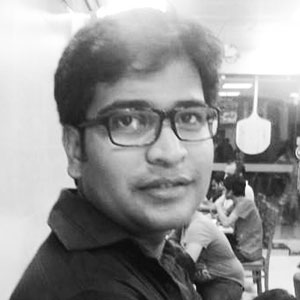
    j-sai-deepak-2

    Having graduated with a Bachelors in Mechanical Engineering, what motivated you to switch streams and pursue law at IIT Kharagpur?

    My dream was to pursue a Masters in Aeronautical Engineering after under-graduation, but in the penultimate semester of engineering (2005), I was in IIT Kharagpur to present a paper in a technical symposium organized by its Industrial Engineering department. It was in the inaugural speech by the then Director of IIT Kgp, Shri Shishir K. Dube, that I first heard of the new LL.B. programme which was set to commence the following year, in 2006, in IIT Kgp’s Law School known as the Rajiv Gandhi School of Intellectual Property Law. I read up more on law and realized that although I took up engineering by choice, my future lay outside of it in a profession which involved understanding and dealing with people. This was perhaps because I have always had a deep interest in history, current affairs, politics and policy and I wanted to contribute in some tangible way to at least one of these areas.

    These interests, coupled with my passion for debating and public speaking, made law seem like the logical choice. The choice did not seem that logical to quite a few well-wishers. In fact, the Head of the Mechanical engineering department of my college was utterly shocked and urged me to reconsider my decision. But by then the legal bug had bitten and today I am happy I took the headlong plunge into law. As for the choice of Law School, most engineers have a soft corner for the IIT brand and this may have sub-consciously influenced my decision to study at IIT Kgp, despite the fact that the LL.B. programme was nascent.


    How did you get through to the LL.B programme of IIT Kharagpur?

    The LL.B. programme at IIT Kgp is limited to graduates with a first degree in science or technology or medicine. For the first batch in 2006, a Statement of Purpose had to be sent along with the application form for the entrance exam, then known as the National Aptitude Test. The Test had sections on quantitative aptitude, verbal aptitude, GK and a few fundamental questions related to the law. This was followed by a Personal Interview and candidates were selected based on cumulative scores. This being the first entrance exam for a newly established Law School, I am not sure the number of applicants was remotely comparable to other post-graduate entrances in India like GATE and CAT. I got through the entrance and the other rounds based on my preparation for engineering placements. The current process of admission to the Law School, I believe, is different.


    Our readers would like to know briefly about your blogpost which made you popular in the legal fraternity. Also, what made you take up blogging as a law student?

    (Sai frequently writes on his blog “The Demanding Mistress”. As a law student, his blogpost on the Bajaj-TVS patent dispute was quoted and was relied upon by a Division Bench of the Madras High Court to reverse the findings of the Single Judge.)

    Blogging happened to me in a very serendipitous way and largely because of dearth of opportunities to moot. Since we were students of the first batch of a fledgling Law School, there wasn’t a mooting culture back then and it was a challenge to kick-start one given the teething troubles anynew Law School typically faces. So three of us, Nikhil Ranjan, Ashwani Balayan and I,thought it would help to organize a moot court competition (“Verdict”) in our second year in our Law School (2008) and learn from the participants by observing them moot. In the process of inviting people to judge the moot, I was directed by Yogesh Pai (now a Professor at NLU,Delhi) to SpicyIP. I came across a few posts on the Bajaj-TVS patent dispute. However, no techno-legal analysis had been undertaken in those posts.Being a mechanical engineer with a tentative understanding of the law, I volunteered to write my first post on SpicyIP analysing the issues in dispute, keeping both technical and legal jargon to the minimum.In the process, I realized that blogging, and writing in general helped me unclutter the thoughts in my head and helped me articulate my views with greater clarity. Also, compared to mooting which requires a fair amount of resources on a regular basis which I couldn’t have afforded, all that blogging needed was access to the internet and the will to read up and write.Importantly, I felt blogging gave me access to a much wider audience. All these got me hooked to it.

    After my graduation from Law School when I was back home preparing to leave for Delhi to join the profession, I got a call from a friend of my mine from Law School, Arindam Roy Chowdhury, who congratulated me for being cited in a decision by the Madras High Court, which I dismissed as a prank. When I opened my email account later in the day, it was flooded with congratulatory mails and messages. It turned out that my maiden blogpost had indeed been relied upon to vacate the interim injunction granted against TVS Motors. I was told (although this hasn’t been verified) that this was one of the few instances where a law student’s work had been relied upon by a Court.

    In December 2010, I founded my own blog “The Demanding Mistress” where I continue to write on innovation, IP Laws, Competition Law and policy.


    What role do publications play in the life of a lawyer? What, in your view, are the few most important skills that law students should strive to acquire in order to write papers/articles effectively?

    (As a law student, Sai won the 2008 Legal Writing Competition of the International Association for the Advancement of Teaching and Research in Intellectual Property (ATRIP). He has also authored various papers in many reputed journals such as Max Planck Institute’s International Review of Intellectual Property Law and Competition law.)

    I think clear writing is a skill that every lawyer is expected to possess and must possess. Writing really tests the degree to which one has internalized a subject and its spirit, because the clarity with which you write is reflective of your grasp of the subject. Publications in peer-reviewed journals convey the message to prospective employers and clients that you are confident of articulating your views and subjecting them to the scrutiny of a better-informed audience. It also prepares you for legal drafting when you start practicing.

    I strongly believe voracious and rigorous reading is imperative for effective writing. If you write more than you read, your writing will suffer from paucity of depth and eventually you are bound to run out of topics to write on.Also, a lawyer must know how to cater to different kinds of audiences. After all, writing for a newspaper on a legal issue is not the same as writing on a specialist blog. Importantly, when a lawyer reads or writes, his/her individual personality and training as a lawyer must come to the fore.


    Soon after graduation, you joined Saikrishna & Associates in 2009 and were made Associate Partner recently. How did you secure your appointment?

    My entry into the Firm was not through campus placements. In fact, I sat out of the campus placements because at that time, no litigation firm approached the Law School for recruitment. Fortunately, two things happened- first, through a combination of circumstances in which the founder of SpicyIP, Shamnad Basheer, had a role to play, I was working on the Firm’s first two patent matters in my final year in Law School. So Mr. Saikrishna Rajagopal had an opportunity to assess the quality of my work and was kind enough to offer a position in the Firm’s litigation team. Second, around the time I graduated, Mr. Gopal Subramanium, who was the Solicitor General then, too had offered a position in his Chambers. Since I wanted to gain experience in trial practice and was already familiar with Mr. Saikrishna’s style of functioning, I accepted Mr. Saikrishna’s offer.


    For a law student, it’s very difficult to think of becoming an Associate Partner under six years of joining the profession. What would you say helped you gain recognition?

    I’d largely credit my learning to the opportunities Mr. Saikrishna has been large-hearted enough to share. He believes in teaching through empowerment, which is at the heart of the Firm’s culture. Although this means greater responsibility in the initial years, it helps you understand the ropes of the profession faster. Plus, what I am particularly thankful for is the freedom I have, to write on any issue I wish to, so long as there is no conflict of interest. This freedom matters a lot to me personally and professionally, and I am aware of the fact that this is hard to find in a law firm set up.

    I would be remiss if I did not mention how fortunate I am to have had brilliant colleagues right from my first year who enjoy discussions on the law. No question or issue is dismissed as being “too academic” or trivial. It’s a very vibrant atmosphere which is what attracts interns and makes them want to be part of the Firm. Also, one of the key strengths of the Firm is the camaraderie shared by its members, which makes one look forward to go to the Court or office each day. To me, each of these factors affects individual success when you work in a law firm.


    What does an Associate Partner at a Law Firm like Saikrishna and Associates do? What falls within the scope of your responsibility? Tell us about a typical work day.

    At least 3-4 days in a week, I am in the High Court for the better part of the day when the litigation season is on. After I am done with my matters for the day, I usually stay back in the Chamber to prepare for the next day or to send out opinions to Clients or to meet them. The advantage of the Firm’s flexible work hours is that one’s time is productively spent in attending to work regardless of where one is, instead of wasting it in commutation. Apart from handling matters that have been assigned to me, I contribute my mite to diversifying the litigation practice of the Firm by taking up matters which may have nothing to do with IP at all. For instance, I have a personal interest in taking up criminal matters, particularly those that relate to economic offenses, before CBI Special Courts. Fortunately for me, the Firm encourages such initiatives and my efforts on this front have thus far been reasonably successful.


    You have a few landmark judgments to your credit, two of which are Tata Sons v. Greenpeace and Basmati Geographical Indication case. Kindly elaborate in brief on these two cases for the benefit of our readers.

    We were engaged by Greenpeace India to represent it in Tata Sons v. Greenpeace International & Anr. in 2010, which was my second year of practice. The Suit revolves around Greenpeace India’s use of the Tata trademark in its Pacman-styled game Tata v. Turtles as part of its awareness campaign on the dangers posed by the Dhamra Port in Odisha to the nesting grounds of Olive Ridley turtles. Tata Sons alleged infringement of its trademark and defamation. The case throws up fascinating issues relating to interplay between free speech and IP rights, apart from an examination of the defense of fair comment under Indian law to an allegation of defamation. In January 2011, Justice Ravindra Bhat dismissed Tata Sons’ prayer for interim injunction and upheld the defense of fair comment on the issue of defamation and Greenpeace India’s right to use the Tata trademark in exercise of its free speech. Subject to correction, I think this decision was the first of its kind in an IP context in India and has been hailed as a landmark in several advanced IP jurisdictions. The matter is set to be taken up for final arguments in the near future.

    The Basmati Geographical Indication case relates to oppositions filed by the State of Madhya Pradesh and private entities from MP to the application for GI on Basmati filed by Agricultural and Processed Food Products Export Development Authority (APEDA). The oppositions were based on non-inclusion of the State of Madhya Pradesh as part of Basmati-cultivating regions in India. On December 31, 2013, the GI Registry upheld the contention of the opponents and directed the inclusion of the State of Madhya Pradesh in the GI Application on grounds that APEDA’s basis for identification of Basmati cultivating areas in India was flawed and not rooted in history and facts. The decision has been appealed against by APEDA before the Intellectual Property Appellate Board (IPAB), which is pending adjudication.


    You are also representing Indian mobile brands such as Micromax and Intex in the suits for patent infringement filed by Ericsson. Could you give our readers a broad overview of the suits?

    Broadly the suits relate to Ericsson’s allegation of infringement of what it claims are “Standard Essential Patents” relating to the GSM standards used in mobile telecommunication. The validity of the patents asserted and the claim of essentiality have been challenged by the defendants. Critically, the conduct of the patentee has come under scrutiny by the Competition Commission of India for prima facie abuse of dominance under Section 4 of the Competition Act, 2002. The suits and the proceeding before the CCI are sub-judice. These suits raise issues which Indian Courts and the CCI have never had the occasion to deal with in the past. In the process of handling these matters, we have discovered several facets of IP and anti-trust law and their relationship. Personally, the learning has been great.


    Section 79(3)(b) of the IT Act has been read down by the Court in the Shreya Singhal decision. Could you share with our readers the significance of the decision for internet companies?

    (Sai led the team which represented the Internet and Mobile Association of India before the Supreme Court in the constitutional challenge to the intermediary liability regime under Section 79(3)(b) of the Information Technology Act and the Intermediary Rules. Mr. Saikrishna Rajagopal was the counsel for the petitioners.)

    Ours was the only petition which challenged the constitutional vires of Section 79(3)(b) of the IT Act. Under the original provision prior to it being read down by the Hon’ble Supreme Court, an intermediary was expected to take down content based on “actual knowledge” received from private parties of the unlawfulness of the content hosted by it. Given the vague nature of the term “actual knowledge” and the onerous obligation cast on intermediaries by the use of the term, the Apex Court read this down to mean actual knowledge of a Court order which directed take down of the content. This ensures that intermediaries do not have to act like Courts and adjudicate on the legality of content hosted on their sites.

    The second limb of the challenge was to the ability of the Government to seek take down of content which was used for commission of an “unlawful act”. The term “unlawful act” went beyond the limitations imposed by Article 19(2) of the Constitution on the Government’s power to curb free speech and expression. Consequently, the scope of “unlawful act” in the context of free speech was limited to categories of prohibitions spelt out in Article 19(2).

    The reading down of Section 79(3)(b)is significant owing to the integral nature of intermediaries to the internet ecosystem and the role they place as disseminators of free speech and expression of internet users. Importantly, certainty in the application of the law is important for any business, and the business of intermediaries is no exception to this requirement.


    How does it feel to have landmark judgments to your credit? Do you think achievements like this can change one’s recognition drastically?

    It certainly feels good to have been part of such decisions. I’d like to clarify that each of these decisions is the consequence of the collective effort of the team.

    Yes, decisions such as these help increase one’s credibility as a litigator and make it relatively easier to be considered for matters involving higher stakes. That said, regardless of the outcome, what truly helps improve one’s credibility and visibility is the quality of preparation and execution in the Court since the result in beyond your control.


    You have been invited by several forums in India and abroad to present your views on IP developments in India. Please share your experience in speaking on various platforms.

    Based on my experience, I think, similar to writing, the nature of the audience must be taken into account when you address a forum. I have also realized that to connect effectively with a non-legal audience, it is important to keep the legalese at a minimum and highlight the broad policy implications of a legal issue. Also, as litigators, it helps to listen to multiple viewpoints from members of the industry, academics and policy analysts because these may come handy in lucidly putting forth a complex issue before the Court.


    Would you say you have “specialized” in IP law? What made you interested in the same? How do you say one can gain expertise in IP Law? What does it take to be a good IP lawyer?

    I’d never say that I have “specialized” in IP Law, which is why I introduced myself as an engineer-turned-general litigator with core competence in Intellectual Property Law and allied areas. For me, IP law is just another branch of commercial law with its own peculiarities like any other area of the law. The path to attain proficiency in IP law is similar to any other branch of law, which is to read as widely and deeply as possible, and to develop the ability to apply the law to the factual matrix of a given case. Critically, for anyone to acquire expertise in commercial litigation, strong foundations in property jurisprudence and common law are a must, along with command over procedural law.


    How different has the three-year program been when it comes to internships? How are internships helpful for a law student?

    Since ours was a three year program, there weren’t as many opportunities to intern as in a five year integrated program. Plus, I never interned in a law firm because I had very little understanding of the concept of a firm and the option didn’t sound great to me. However, I did make it a point to acquire diverse experiences by first interning at IIM Ahmedabad and National innovation Foundation, followed by GE’s John F. Welch Technology Centre in Bangalore. These internships helped me understand the theoretical and practical aspects of innovation. I do believe internships, if rightly chosen, help a student understand her/his own strengths, weaknesses and career aspirations.


    What are the qualities which Saikrishna & Associates look for in a typical CV? What do you feel makes an intern stand out and is very important for him/her to do to have a chance of getting a call back or even a PPO?

    At Saikrishna & Associates, the pedigree of the Law School does not matter, nor do the achievements claimed in a CV. What matters to us are initiative, conceptual clarity, the ability to write/draft crisply and the ability to marshal arguments in support of a proposition through research and logic. If a student performs well on at least some of these counts, subject to vacancy, we offer a position in the Firm. Most of our litigators have come through internships and not campus placements.


    What would be your advice to students interested in litigation?

    For anyone who wishes to take up litigation, I’d say patience and hard work are equally important because unlike transactional practice, litigation takes time to reward. But when it does, the thrill is just incomparable. In a nutshell, treat litigation as a marathon run and not a 100-metre dash. Also, it would help to be comfortable with general areas of practice and be good at atleast one area of practice, which is not the same as restricting oneself to a specialist area.


  • Aditya Chatterjee, Associate, Keystone Partners, on litigation, Jessup and managing extra-curriculars at law school

    Aditya Chatterjee, Associate, Keystone Partners, on litigation, Jessup and managing extra-curriculars at law school

    Aditya Chatterjee graduated from Gujarat National Law University, Gandhinagar. His aspirations to become a litigator led to his internships with Mr. Nikhil Nayyar, Advocate-on-record, Supreme Court and at Nayak & Srikumar (now Keystone Partners). He is also the Founder Editor of “The Colloquium”, an online views journal.

    His mooting achievements include the Best Memorial Award at the India Rounds of the 53rd Philip C. Jessup International Moot Court Competition where he was also adjudged Fourth Best Advocate. He is currently working at Keystone Partners. In this interview he talks about:

    • Law school experience at GNLU
    • Pursuing litigation as a career
    • Founding “The Colloquium”


    What motivated you to pursue law as a career?

    Atticus Finch from To Kill A Mockingbird 🙂 (Seriously!)


    Tell us a bit about your time at GNLU.

    Five years in law school have, without doubt, been my best days so far. I learnt a lot from what was taught in class and even more from just being in law school (read: hostel). I was not the exam-driven studious kind and was nowhere close to being among the toppers in class; all the same I quite liked studying and went about it in my own way. I was more involved in say organising a screening of 12 Angry Men than I was in scoring well in the evidence law paper. The approach adopted with most courses in law school certainly exposed the inter-disciplinary nature of the study of law to me. I did not like courses where we only stuck to text book material. I am grateful to some of the professors at GNLU for allowing me the freedom to explore subjects just the way I wanted to. I think somewhere this freedom has contributed to my being able to decide on litigation as my career choice early on in law school.

    And academics apart…

    In college I spent a great deal of my time in running GNLU’s cultural committee and starting the film club and photography club. One of football, volleyball or badminton featured in my daily schedule. I dabbled in debates and quizzes; had my share of mooting as well.


    aditya-chatterjee-3

    How would you compare your alma mater with other premier law institutes in India?

    I don’t see how I can make an objective comparison. I have after all studied only in GNLU and know very little about how things are in other law universities. That said, I think GNLU has some extremely good faculty for some subjects, while also having its share of subjects that I would not count among GNLU’s strengths. This I assume would be the case in most other law schools as well. The important bit for me however is that, the attitude to academics in GNLU has not been completely blinkered by an examination centric system. We had enough happening around the core curriculum to keep the courses lively.


    Please tell us about your approach towards academics while in college.

    My approach to academics in college was somewhat unconventional. My CGPA was nothing great. I was essentially a five-point someone and just about managed to cross in to higher grades on a couple of occasions. I did not attach too much importance to studying for exams and scoring high marks. I however did put in a lot of effort into and spent more time on projects and class presentations. At times I volunteered in researching for classes as an informal teaching assistant, while also teaching a few modules to junior batches.


    Tell us about the kind of internships that you did while in law school. Did you have any such experience during an internship which helped you decide your career choice?

    I came in to law school with the idea that I would someday want to argue in court. Litigation was my calling and I picked internships accordingly. I applied for internships based on recommendations from friends who had previously interned under certain lawyers or on suggestions from my bosses at a particular internship. I started off with placements with lawyers who had large trial court practices and then moved on to High Court and Supreme Court internships.

    There was a criminal law (trial) internship that I did in Bangalore with special focus on forensic evidence. Mr. Shankarappa’s (advocate on the criminal law side in Bangalore) practice had a great variety of such matters. I assisted in the evidence stage of a murder trial involving the death of a call-centre employee in Bangalore. This exercise involved a fair bit of understanding of how forensic evidence works. Also this particular case had attracted considerable media attention and had generated some public opinion. To some extent, during this particular internship I was taught to understand things the way a lawyer is expected to, without being too influenced by opinions created outside the case file.

    All my internships have been hugely beneficial. The third year onwards, I deliberately chose to work in smaller offices where the amount of work outweighed the number of lawyers.  During most of my internships I got deeply involved in the cases that were assigned to me and tried to go about research and preparations as if I was going to argue the case. Internship experiences in the chambers of Mr. Nikhil Nayyar, Advocate-on-record, Supreme Court and at Nayak & Srikumar (currently called Keystone Partners – where I am now employed) egged me on to take up litigation straight out of college.


    What are the biggest hurdles and challenges of a litigation career? How do you deal with them and with litigation generally?

    Well, I still am in the early days of my career and challenges are a daily feature. The initial few days I just spent in coming to terms with how little I knew of how courts work.  Over time you learn on the job and things seem more comprehensible, you feel less clueless. The manner in which you deal with these challenges matures with time, as you better your understanding of the job, the law and court procedure. In the first couple of months as a litigating lawyer my sole aim was to see a hearing through without making a fool of myself. There sure were times when I did not manage that, but I must concede that every court outing, good or bad, has been a big learning experience. The only way to learn and get better, I would think, is by spending productive hours in court, preparing thoroughly for every hearing and perfecting your basics. As for court craft, there is no real way of learning it. You probably develop it for yourself by appearing in court regularly and from watching senior colleagues in action.

    As for the second part of the question: Progress in litigation can be slow and testing; the only way forward is by constantly keeping at it and innovating your way through trying situations. At the end of it all though, the high that follows a good day in court makes litigation worth all the time and labour it demands.


    What are the essential soft skills that a law student aspiring to make a successful career in litigation should work on?

    Just the willingness to learn and the drive to keep at it.


    You are the Founder Editor of ‘The Colloquium’, an online views journal. Please tell us about the experience. What made you start this website?

    The initial idea was to create some sort of a platform for stories and news that are not considered news worthy by the mainstream media. Unfortunately most of the mainstream media is constrained by market limitations. The attributes that a particular story needs to boast of to make it to television studios or appear in print ensures that certain kind of news (or views) will forever be denied space. On the other extreme some very pertinent issues of public importance get limited to discussions in peer-reviewed academic journals.  The Colloquium has in its own small way tried to provide space to lesser heard stories.

    The experience of running the journal has been very educative. The interviews with Capt. Lakshmi Sehgal, Justice V R Krishan Iyer and Shyam Benegal have been most memorable. It gave me the opportunity of documenting glimpses of some notably extraordinary lives.


    You’ve represented your university at prestigious moot court competitions. How significant do you think mooting is for law students?

    Mooting can help introduce oneself to preparing a brief or researching on a point of law. That said, it cannot claim to compare with the experience of researching or drafting for a case in court. Moot courts do not always demand a nuanced understanding of the law as much as it recognises the ability to argue a certain legal proposition. As for significance to a law student, I would rate a good internship experience over a good moot experience. But given all of this you cannot take away from the excitement and fun that mooting brings with it. To some extent it teaches you that a good argument in law cannot be confused with good oratory. That substance assumes priority over style and diction is a lesson that mooting has taught me.


    Your team secured the ‘Best Memorial’ award at the India Rounds of the 53rd Philip C. Jessup International Moot Court Competition. Additionally, you were also adjudged the Fourth Best Student Advocate. How did you go about your preparation?

    The credit for this does not belong to me. I was fortunate to be a part of a very good team. The preparation was gruelling, at the same time very enjoyable. We spent a lot of time having heated arguments on propositions that we wanted to plead. It helped that two of my team-mates had very well-reasoned opposing views on almost every point, and thus drafting memos for rival sides became a tad bit easier. Our research was quite exhaustive and a great deal of effort went into ensuring that our memorials were unblemished. With a huge chunk of the ground work having already been done, a decent performance during the argument rounds did not seem very difficult.


    You have also since drafted moot problems and judged argument rounds. What was the experience like to be on the other side?

    Far less stressful!


    Pic Courtesy: Ishani Dave
    Pic Courtesy: Ishani Dave

    How important do you think that extra-curricular activities are to a law student? How can one manage time effectively?

    I did not manage my time effectively. I devoted almost all my time to extra-curricular and co-curricular activities. My approach was simple – I got involved in anything that interested me and everything that I thought was worth exploring. Working on college journals, heading the cultural committee, debating, quizzing, films, photography and sports, all of these exposed me to things that a text book would never teach me. These activities in fact made classroom learning more engaging. Law school would have been quite drab had it not been for these experiences.


    As a concluding message, what would be your suggestions to law students?

    Do not let ‘recruitments’ take control of your life in law school.

    For most of us law school happens just once, have fun while it lasts 🙂

  • Ila Haldia, Advocate, Supreme Court, on starting out with civil and criminal litigation at Supreme Court

    Ila Haldia, Advocate, Supreme Court, on starting out with civil and criminal litigation at Supreme Court

    Ila Haldia graduated from Government Law College, Mumbai in 2013. She has an enviable academic record and has an excellent series of internships at top law firms including DSK Legal, Trilegal, AMSS, Khaitan & Co., AZB & Partners etc. She started practising at the Supreme Court of India soon after graduation. She is currently practising general civil and criminal litigation at the Supreme Court under the tutelage of Dr. J.N. Dubey, Senior Advocate, Supreme Court.

    In this interview, she talks about:

    • Law school experience at GLC, Mumbai
    • Choosing litigation over corporate law
    • Practising at the Supreme Court


    What brought you into legal studies?

    Hi, I am Ila Haldia. I am currently practising at the Supreme Court under the tutelage of Dr. J.N. Dubey, Senior Advocate, Supreme Court. Unlike many, my journey in legal studies began quite unexpectedly. I was a science student and never considered law as a career option. However, while studying science, I realised that engineering was not my cup of tea and so I decided to look for other options. In the pursuit of looking for alternate options, I met many people from different professions and through this process, I met a few lawyers. Having interacted with these lawyers, I felt drawn to the profession since I was impressed by the kind of knowledge they possessed and their command over their thought process and so I decided to pursue law. My parents were supportive of this decision of mine and thought that law would be a career suitable to my abilities.


    Tell us about your years in law school. What made your journey with GLC worth it?

    To be honest, it took me a year to get used to GLC. Initially, I was a little lost and wasn’t sure whether I had made the right decision. But slowly, I started getting into the groove as law started rubbing on to me. In addition to law, I had some amazing friends and seniors who helped me through thick and thin. One thing that anyone studying at GLC encounters is the ubiquitous phrase: “GLC is like a buffet which serves the best of dishes but it is up to you to choose the dishes”. At first, I never quite understood this phrase, but now when I look back, I realise that GLC is quite like such a buffet. The curriculum at GLC gave us the freedom to shape our careers according to our own accord. We had all the options and guidance available but none of which was imposed. So it really came down to individual choices. Many used this freedom to nurture their careers the others used it otherwise. It is this sense of freedom and space that made GLC absolutely worth it and stand apart from all other law colleges!


    Which internships that you have pursued will you consider to be right at the top and why? Tell us about some interesting internship experiences.

    Interestingly, I have had internships at many big law firms, but to me the most memorable has been one at a small firm in Bombay. We were a team of 5-6 lawyers/law students and as such the work responsibilities were not differentiated between lawyers and law students and therefore it was a really good learning experience for me. I remember my very first assignment at this firm was to assist an associate in drafting a reply to a very complex 30 pages show cause notice from the customs authority. As luck would have it, the associate I was supposed to assist was caught up with other work as a result of which the responsibility fell on my shoulders to draft the reply. Upon reviewing the draft, my senior was very impressed with my drafting skills and rewarded me for having completed this difficult task all by myself without having any prior drafting experience. Thus, I learnt that it is important to keep doing whatever work comes your way, no matter how big or small. If one keeps working and keeps doing, he/she will find an area where his/her interests lie. So look for internships which provide you work across the platform and be ready to seize whatever opportunity comes your way.


    ila-haldia-2

    Soon after graduation, you started practicing before the Supreme Court of India. Did you ever plan to join a corporate law firm? Do you plan to pursue litigation from now onwards?

    Somehow, at first every law student’s aim is to land the highest paying job and since such packages are mostly offered by corporate law firms the aim is to get into such law firms. I was also party to this type of thinking and in fact tried to get internships in all the big law firms in their corporate department. But slowly, as I got more involved in the “corporate culture” I realised that this was not my calling. There was always this uncertainty in my head regarding corporate law since it did not involve court work. So through this process of elimination, I decided to pursue litigation and was most fortunate to get the opportunity to work at the Supreme Court of India. However, I am not restricted to the Supreme Court only, I also appear before other courts and tribunals.

    As far as my future plans are concerned, I don’t believe in long term planning. My philosophy is to do what is in hand and let’s see where it takes me. Having said that, I do hope to start my independent practice in the coming future.


    What are you main practice areas? How has been your experience so far?

    We are into general civil and criminal litigation. The experience so far has been extremely enriching and has broadened my horizons. I have not only matured as a lawyer but also as an individual. Litigation has taught me to have a structured thought process, improvise and think on my feet.


    What is your workday like? Which would be the most memorable case you argued on?

    In litigation, there is a lot of work. From morning till evening the whole day is consumed in courtrooms and chambers. So one needs to be sure that they like the work and also the work environment or else it becomes overwhelming and stressful. There are times when we have to appear in court without having a complete idea about the case and these situations help in learning how to filter irrelevant information and how to improvise in front of the judge.

    There was an early hearing application which I had to argue before a three judge bench headed by the then CJI Justice Lodha. Usually, early hearing applications are only heard on the point of urgency and the merits of the case are not argued, however on that particular day Justice Lodha decided to hear the cases on merits and took all the lawyers, including me, appearing in early hearing applications off-guard. Since, my case was listed as item 9, I hardly had the time to read through the entire file and so when my case was called out it all boiled down to improvising and succinctly putting forth the arguments which ultimately helped me in winning the case. The profession requires one to think clearly and quickly which only comes with constant practice and observation.

    The best part about litigation is that there is hardly anything predictable except for the fact that you have to work constantly. Another memorable case that I have argued was one before the National Consumer Disputes Redressal Commission. The case related to claim of insurance by a bus owner, however, the said case had been dismissed in default and we had filed the restoration application after delay of 2 and half years! After 2-3 hearings of immense grilling, the matter was finally restored however, the same was dismissed on merits. However, the presiding judge acknowledged my hard work and made a mention of the same in the judgment itself! Thus, despite the adverse order against my client, it was an achievement for me since my hard work had been acknowledged.


    How necessary is it to have a mentor/guide to handhold a young lawyer while still in the formative years of litigation?

    It is extremely important to have a mentor in litigation. I couldn’t have come this far without my senior. There is so much to learn in practice that it can become overwhelming. Having a mentor gives one support and structure to the learning curve of a young lawyer. Making mistakes is inevitable and only a mentor can help in minimising and dealing with them.


    ila-haldia-3

    What are the difficulties people face in their early days of practice? How is it turning out for you? How many years of hard work does it require to build a firm clientele?

    Initially, the responsibility of handling even a single case seemed overwhelming. I remember even drafting an entire petition seemed like a huge task to me but now with constant practice, the process has eased and now I am able to research the law, draft the petition and argue the matter in court. Same goes with arguing in court, initially it was terrifying to even take a ‘pass-over’ but now with passage of time and experience that initial hesitation has also vanished.

    A lot of people say that lawyers who don’t have a family legacy will find it very difficult to build a reputed practice. This may be true to some extent, but from what I have gathered, any lawyer who puts in even a reasonable amount of hard work is sure to go a long way in litigation. It may take some time, which may differ from lawyer to lawyer, but the hard work does pay off which is why there are so many successful first generation lawyers


    A lot of law students prefer corporate jobs over a career in litigation. What is your take on this? Is it better to work in the corporate sector for a few years before starting litigation?

    Well, I feel it’s a personal choice. If the interest of a law student lies in corporate law then by all means he/she should pursue it, however, I do not recommend seeking a corporate job only because of the perquisites that it offers. Initially it may be exciting but with passage of time, money does not bring job satisfaction which may lead to frustration. Many law students, do not opt for litigation/counsel practice because of low salaries. It is true that in the initial years the money is not as much in litigation but if one puts in a sincere amount of hard work then there is no looking back.


    What would be your parting message to law students who want to litigate just after graduation?

    As a lawyer in litigation, keep working hard and be patient. It takes years for a bamboo seed to start growing but once it shoots, the growth is exponential. So don’t get dismayed if the results don’t show. Have faith in your abilities and clarity in your thoughts.

    Also my message to all law students who are struggling to find their path, would be to just go with the flow and keep doing whatever comes your way and enjoy your college life!

  • Piyush Kumar, Retainer Counsel, Krishna & Saurastri Associates, on building a career in IPR

    Piyush Kumar, Retainer Counsel, Krishna & Saurastri Associates, on building a career in IPR

    Piyush Kumar graduated from CLC, Delhi University. After graduation, he started working with Legal Knights Law Firm, followed by S.S. Rana and Co., a boutique IP firm in Delhi. He pursued a Masters in Business Law from NLSIU while working at S.S. Rana and Co. He later joined Krishna & Saurastri Associates as a Retainer Counsel where he currently works. In this interview he talks about:

    • Pursuing litigation and IPR
    • Working and pursuing a Masters course simultaneously
    • Internship and recruitment at Krishna Saurastri Associates


    How would you introduce yourself? Could you please share a little bit of what motivated you to pursue law as a career?

    I am Piyush Kumar, a lawyer dealing with cases under Intellectual Property Laws & Commercial Laws and working in New Delhi. My work involves a lot of communication with clients, negotiations and meetings. My role encompasses that of an in-house counsel as well as a litigator because I handle a lot of Court Cases also.  My father, who is at present a District Judge is my inspiration to enter this field to pursue law as a career. I am happy that I could do what I really wanted to do in my career. Motivation according to me is something that is the culmination of your zeal and determination.


    How would you describe your time at Delhi University? How important do you think extra-curricular activities are to a law student?

    College times are always the best part of one’s life; so for me it was the best time to learn the basics of the profession. Being in CLC, you have to take part in extracurricular activities such as Moot Court Societies, Seminar & Group Discussions Committee, Legal Aid Societies, Intellectual Property Right Cell, Women Empowerment Cell and other committees. I was Convenor of the Seminar & Group Discussions Committee where we organised seminars and group discussions on relevant topics of law and invited legal luminaries to enlighten us from their experiences. I was also actively participating in Moot Courts, Legal Aid and other Societies of the College.  For law students, extra-curricular activities are very important as it gives them insights / exposure to the work / areas they have to work in the coming future.


    A lot of law students promise to take up pro-bono work and do some socially relevant work. Have these ideas ever crossed your mind?

    Pro-bono / voluntary work is always good to do. In law college days I was associated with YMCA, New Delhi and was organizing legal awareness programmes in slums and helping them sort their legal problems. Even today, when I get free time I love to do the same.


    How was your first year after graduation?

    In 2010, after completing my graduation I started working with Legal Knights Law Firm as  a litigation advocate. Litigation, which was my first girlfriend of the profession, taught a lot about the profession and helped me a lot in developing myself and articulating myself with new ideas of professional world. Even my seniors in the firm helped me a lot in developing legal skills such as drafting, court appearances, negotiations etc. For me, when you start preparing your brief for the next day, first jot down the defences you have to put forth for the laches you have to provide during the course of hearing. As in litigation, the safest defence is complete preparation of the case.


    piyush-kumar-2

    How did you appointment take place at Legal Knights take place? How would you describe your work experience there?

    I was lucky enough to get two offers within the last month of our last semester; one from Manupatra as Legal editor for their journals and one from the Legal Knights as Associate, Litigation. As I already said litigation being my first girlfriend, I preferred working as an Associate and joined the Litigation Practice in the firm. Although, that was a difficult move for me being a young law graduate because there was the pain of being paid less in comparison to what was being paid by Manupatra. But now, I believe my decision was right as I started working extensively on Commercial Laws ; further my Seniors also helped me to articulate myself as in In-house work. I started on the balance with In-house as well as Litigation profile.


    What contributed towards your appointment at S.S.Rana and Co., a boutique IP law firm in Delhi? How did that go?

    When I joined S.S.Rana & Co.; I was barely aware of the legal technicalities of IP. However, as I was in Court Practice, my basics of law are good. I worked hard to learn the technicalities of IP. Even at present I am learning and developing myself better day by day as you know in this profession you have to learn and develop yourself day by day. As the mantra in this profession is Darwin’s Theory of Survival of the Fittest.


    How did you manage to eke out time for pursuing Masters in Business Law from NLSIU while working at S.S.Rana and Co.? Please share your experience with our readers.

    After enrolling myself in the Master of Business Laws from NLSIU, the Mecca of law schools in India, for the first time I felt that working and pursuing a course together are one of the hardest things to do. As you have to work hard for your firm being in Litigation Profile most of the time you have no time for doing other things when you complete one assignment/case you get another. Although MBL is under DED, NLSIU, Bangalore but the same is a tough nut to crack. Since, my basics concepts were clear and I had a passion to be updated on the legal issues the same helped me pursue MBL from NLSIU.


    Have you ever considered litigation or starting up on your own?

    I am happy to do litigation as a choice not per force. I may start my own work but there is time for it. Certainly, the law firm provides good opportunities and exposure to a young individual lawyer as you have to deal on variety of issues and more volume of work shall mean more opportunities to brush up one’s professional skills.


    After having worked with S.S.Rana and Co. for almost two years, how did you join Krishna & Saurastri Associates as a Retainer Counsel?

    I was made a good offer by Krishna & Saurastri both in terms of exposure and monetisation which appealed to me leading to joining them.


    You have specialized in IPR. What made you interested in the same?

    For me, I am not specialised yet. I am in process of learning as I said that in this field you learn every day. Once your zeal/passion to learn ends I think it ends you also.  Since I am a Science Graduate and also my inclination towards science is a bit more, it made me interested in IPR laws as creations of the human intellect fascinate me.


    How did you build up your expertise in IPR?

    Having already said “I am no expert”, nonetheless it may be noted that IPR is a niche field with a lot of dynamic areas which are being crystallised with time. I feel most of the IP firms are doing a great job of nurturing their young associates in IP laws.


    What is a normal workday like Krishna & Saurastri? Being a Retainer Counsel, what are your responsibilities?

    Handling work of the Litigation & Prosecutions team simultaneously does not have the comfort of workday and times. For me it starts at about nine in the morning and depending upon the work, varies from ten-twelve hours each day. I, along with my able colleagues are responsible for taking care of prosecutions, courts cases, counterfeit actions and related advisory works.


    What has been your strategy to deal with errors and mistakes? How would you suggest a young associate deals with them?

    Error / mistakes play a crucial role in our professional life, as a counsel’s single mistake sometimes not only ruin their clients but also jeopardises your professional life. As the scope of error / mistake in professional life of lawyer is very negligible they must proof read their work, they must have a checklist to reduce the chances of errors / mistakes. Further, factual position of the drafts must be verified by the clients.


    Tell us about a case that you are particularly proud of. What steps do you take to prepare for a difficult case?

    I believe I am proud of all the cases I have dealt with because each case / matter teaches me a lot and the same is added to my professional skills. But, I really remember arguing a NDPS bail matter before the Hon’ble High Court of Delhi in my recent days of joining the profession. One has to know the facts and read all the papers/ documents of their case. Also, research on various aspects of the matter is also very important.


    What is the current scenario of studying IP law as a career option in India?

    With the development of the Indian economy, competition has become intense with brands bending over backwards to achieve sales.  IPRs are now being used not only as a tool to protect creativity and generate revenue but also to build strategic alliances for socio-economic and technological growth. Industries are now dealing with IPRs in different situations in the competitive world. Similarly, domestic industries are also more watchful to ensure that their IPRs are not infringed in India and in other countries. Hence, there is always a vast option in IP law field.


    What is the procedure to apply for an internship and recruitment at Krishna & Saurastri? What do they look for in their prospective employees?

    Students can apply for internship or recruitment by logging on to the link http://www.krishnaandsaurastri.com/?p=careers_employee. Like any other IP firm they look for basics of law especially IP Law. And being computer savvy surely helps.


    What would you suggest to someone who is preparing to work with an IPR law firm?

    When you are preparing for the interview you must be well acquainted with the basics such as C.P.C., Cr.P.C, Arbitration, Contract etc. Further, he/she must also be well versed with established precedents and doctrines of IPR law nationally and internationally.


    Please give our readers a few tips in order to land a job in IPR firm.

    Sciences combined with law are a great combination for patent and for the other aspects of IP doing internship with IP law firm may also go a long way in getting the coveted assignments.


    What would be your parting message to our readers?

    Take positive approach and choose your field as per your personal bent of mind.

  • Somdutta Bhattacharyya, Advocate, Calcutta High Court, on quitting law firm to start up with litigation

    Somdutta Bhattacharyya, Advocate, Calcutta High Court, on quitting law firm to start up with litigation

    Somdutta Bhattacharyya graduated from West Bengal National University of Juridical Sciences, Kolkata in 2012. After graduation, he worked at AMSS for two years before joining Fox & Mandal, Kolkata. He was a part of the Litigation & Dispute Resolution Team at both places. He’s currently an independent practitioner practising litigation at the Calcutta High Court. In this interview he talks about:

    • Law school experience at WBNUJS
    • Working at AMSS and Fox & Mandal
    • Choosing to pursue litigation over a career in corporate law


    Please tell us a little bit about your childhood and your background?

    I am a through and through Kolkatan, born, brought up and working here. I spent a considerably large part of my life in residential school, at Ramakrishna Mission Vidyalaya, Narendrapur, from 5th standard right upto my plus two boards. I am not sure that spending so many years in a residential school and from such a young age has made me very self-sufficient though!


    How did you gravitate towards law? Why law and not engineering or medical studies?

    I did choose science as my study stream for my plus two boards, but that was because my parents initially wanted me to become a doctor. Engineering was never an option anyway, considering my fantastic mathematical skills. To be honest with you, I still have nightmares about my maths exams! I chose law pretty accidentally actually. It was more like law chose me. My uncle, who is a lawyer at the Calcutta High Court, told me at that time of the emergence of the national law schools across the country and the bright, young graduates these institutions were producing and suggested I should try taking the exams for these law schools. I only took the exam for WBNUJS, Kolkata (ours was the last batch who took individual law school exams instead of the CLAT) after preparing for about a month. The results came out about two weeks before the boards and I was very happy to find that I had gotten through. I decided that this was what I was going to pursue and make a career out of. And that is how it happened.


    Tell us about your years in law school. What made your journey with WBNUJS exciting? 

    Law school, I have no qualms in saying, were the five best years of my life. I must admit I was a bit confused at first since I did not come from a legal or even an arts background and there were a lot of subjects like Sociology, History, Economics, Political Science etc. to which I had no or very little previous exposure. But after the first semester or two went by and the strictly law oriented subjects came into the curriculum, I found out that I enjoyed most of these subjects. I enjoyed the process of understanding how and why a particular piece of legislation is framed and how it is implemented in reality. I had the fortune of being taught by some very good professors, who have shaped my life both inside and outside the classroom. There were a lot of extracurricular activities I involved myself in. Being a part of the Legal Aid Society was something I enjoyed thoroughly and it also helped me give a little something back to the society. And lastly, I must say that what made WBNUJS a really exciting place was that I found that most of my fellow students were very bright and very socially, politically and culturally aware people. No wonder I made some of my best friends there.


    How did you fare in your academics at WBNUJS? Would you say a great CGPA is a necessity to kickstart a good career in the legal profession?

    Well, I must say my academic performance at WBNUJS was not among the very best but it was pretty consistent. I was never among the top 10 but I was never outside the top 20. And in a batch of about a hundred students, I guess that isn’t too bad.

    The second part of this question is not very easy to answer. I guess it depends on how one wants to start his or her career, I guess. If he or she wants to get into a good law firm, a decent, if not good, CGPA is required to be taken somewhat seriously as a candidate by the recruiters. But of course, an average CGPA in such cases can be complemented by really noteworthy achievements in extracurricular activities or good recommendations from internships. However, once one starts working in any field of the legal professions, one finds out that the CGPA counts for very little in terms of professional growth. But I must conclude by saying that a good CGPA can never hurt and can only help, so why not aspire for it?


    somdutta-bhattacharyya-2

    What were your areas of interest during your graduation? How did you go about developing expertise and knowledge in these areas?

    My areas of interest in law school were diverse. Some of the subjects that I enjoyed studying the most were Contracts, Constitutional Law, International Law and Alternative Dispute Resolution. If I took a real interest in a subject, I would read the more authoritative textbooks (and not just the ones students mug from right before the exams) on the same, which was helped by the fact that WBNUJS has a really good library. I would also try to keep myself abreast of the developments, from the newspapers and the Internet, of the latest developments in the areas of law that are evolving with every landmark Supreme Court judgment, like Constitutional Law or Arbitration.


    After graduating from WBNUJS, you had worked at AMSS for 2 years and then joined Fox and Mandal before starting litigation. Please tell us a little about your work profile at these firms and the responsibilities you have been entrusted with.

    I would just like to clarify here that I had worked at AMSS for about 2 years and for F&M for about 8 months. In both firms, I was in the Litigation & Dispute Resolution Team, which means I was mostly working on the litigation side of the profession as part of solicitor firms. I was involved in quite a few interesting and high stake litigation matters, mostly at the Calcutta High Court but also sometimes at lower courts. I would have to get thoroughly prepared on the factual and legal issues in such matters so that I could brief the pleading Counsel effectively on the same and assist him ably. I even got to appear in Court once or twice and it felt really great! During my time at AMSS, I was also involved in an international (SIAC) arbitration and got to travel to Singapore and participate in the same. It remains one of the most thrilling experiences of my professional career till date, especially since I had worked very hard on the matter and been very involved in every stage of it.


    When did you decide to quit Fox and Mandal and start litigation? Was it pre-planned?Why did you prefer Litigation over your corporate job?

    I decided to quit F&M and start my career as an independent practitioner in or about December of last year, i.e., 2014.

    It was not pre-planned. I gradually came to realize, after having spent about 3 years in litigation as a solicitor, that I would like to be on the other side of the profession, i.e., as a counsel. I realized I would like to appear and plead in a court of law. And hence I took my decision.

    I would be lying if I said it was a very easy decision to make. I knew it would take me quite a bit of time to establish myself as an independent practitioner, especially coming from a family where no one is in the practice. I knew I would be giving up the financial security of a fixed sum of money, and not a very small one either, in my bank account at the end of every month. But, at the end of the day, the heart wants what it wants and I felt strongly that this is what I wanted to do, so I took the plunge anyway.

    As I said earlier, after being on the solicitor side for about three years, I thought I would like to remain in litigation but I would like to draft and plead my client’s case in the Court, which I would not have got enough opportunities to if I remained in a law firm. But I am immensely grateful to all my colleagues and mentors at the firms that I have worked at, and especially Mr. Debanjan Mandal, Partner at Fox and Mandal, for providing me the exposure to good, interesting and high-stake court litigation that not only increased my experience but also increased my interest in a career in litigation.


    What are you main practice areas? How has been your experience so far? Is it more comfortable be your own boss or is the pressure of work almost similar?

    At this stage of my career as a counsel, after I have just started out on my own practice, I’d prefer not to be choosy and say I will accept any matter. But if I must choose, then I would have to say that my main practice area would be civil and commercial law.

    It is still far too early to answer this question properly (it has only been a month and three weeks), but till now I have really enjoyed being an independent practitioner. I have been briefed in a few matters, both by solicitors as well as from personal sources, and I enjoy the challenge of understanding the problem faced by the client and trying to provide an effective solution to it. I am immensely grateful to my senior, Mr. Abhrajit Mitra, Senior Advocate, who has always provided me any guidance that I may have requested of him in this regard.

    I will say that it is definitely more comfortable to be your own boss but not because there is less work pressure. If anything, the hours I have to put in now are more compared to what I did in a firm. I attend court in the morning, then come back to my residence and leave for my senior’s chamber in the evening. Since my senior works till pretty late in the night, I try to stay in the chamber till he calls it a day and try to assist him in any way that he might require.


    How is your experience so far?  What is your workday like? Are there new challenges every day or did work fall into a predictable pattern?

    My experience so far has been pretty good. I enjoy the independence that comes with being in your own practice and I also relish the added dependence that my clients seem to have on me!

    I get to court by 10.30 am and I am in court till 4.30 pm on a typical workday, attending whatever matters I might have in court on that particular day. Then I come back to my residence, freshen up a bit and leave for my senior’s chamber, where I get to by 7.30 pm. I leave chamber when my senior is finished with his briefings/ work for the day, which on a typical day would be around midnight.

    I must say there are new challenges everyday in litigation. Everyday you are arguing on a different kind of matter, every client has his or her own unique set of problems that they are facing and you must be innovative in your approach to provide an effective solution.


    How necessary is it to have a mentor to guide a young lawyer while still in the formative years of the profession? Do you have one?

    It is absolutely vital to have a mentor in one’s formative years in the profession. He or she is the person from whom a young lawyer will learn the various facets of the profession, how to approach every legal problem differently, how to strategise a litigation, how to plead in a court of law so as to hold the attention of the Judge and the more one assimilates these lessons from one’s senior, I believe the more likely he is to succeed.

    Yes, my mentor/guide in the practice is my senior Mr. Abhrajit Mitra, Senior Advocate at the Calcutta High Court.


    What can the law schools do to encourage more people to pursue litigation? Do you think the law school curriculum requires an overhaul?

    I must not be pretentious here because I really have very little idea as to what law schools can do to encourage more people into litigation. Most young graduates, at the law schools, are hearing about the big bucks their seniors are making at corporate jobs and law firms and get encouraged to just go with the flow. But many of them, after some time, realise they might want to choose a different path, including litigation, for some of them. It is a realization one must have oneself and I doubt law schools can do much in that regard.

    I would not say that the curriculum requires an overhaul. But yes, I would suggest that students be not only constrained to the theoretical knowledge of certain subjects that they will never have to apply in their lives and teachers can provide them with more practical, real-life legal scenarios so the students can understand how to apply the law and find a solution to the same. It would hold them in good stead, no matter which facet of the profession they are involved in their careers.


    How far is theoretical knowledge in law schools consistent with the practical arena?

    A basic good grasp of the theoretical knowledge imparted in law schools is of course necessary in the practical arena also. But that can only help to a certain extent and one can only learn about how to excel in the profession through experience and by being involved in actual legal scenarios. In that regard, I would say the seniors, be it in law firms or in the practice are more important teachers for a young lawyer than their teachers in law school.


    How difficult would you say it is to build a reputed practice in litigation?

    I would say the main difficulties faced by a young practitioner is to get solicitors and possible clientele to know that he or she even exists, let alone being efficient and dependable! In that regard, one must have patience and execute whatever matters one is briefed on with utmost diligence and care. Sooner or later, a reputation, or at least a foundation, would start being built for the practitioner.

    I would certainly say it is not very easy to build a reputed practice. It needs a lot of hard work and probably some luck as well. It is especially difficult in a place like Calcutta, where there are a lot of good, young lawyers but probably not so much good, high stakes litigation. One can only work hard and start building a reputation, as I said in the first part of this question.

    It is difficult to say exactly how many years of hard work it takes to build a firm clientele. It depends a lot on each individual practitioner. From what I hear, it takes at least 3 to 4 years before one can say that the initial period of struggle has somewhat given way to calmer waters.


    The Bar Council of India has recently come out with new Certificate of Practice and Renewal Rules, 2014 that prohibit an Advocate from starting to practise in the Supreme Court unless they have practiced for at least two years in a Trial Court and three years in a High Court in India. What is your take on this?

    The Bar Council feels that one can only have a strong enough foundation in litigation practice to be practising at the Supreme Court if he or she has spent enough time at the lower courts, and I cannot say I entirely disagree. Most of the people in the practice will tell you that young lawyers get the most amount of exposure and experience in the lower courts, while in the Supreme Court they will in all likelihood be assisting an established senior lawyer. So I do not think it is a bad or unreasonable measure by the BCI.


    Indian criminal law is, to a large extent, influenced by its British counterpart. Do you think if Indians would have framed our Penal Code, it would have been better?

    I would not say that when the IPC was drafted, the Indians would have done a better job than the British. Lord Macaulay was an extremely knowledgeable and experienced draftsman and I doubt such an exhaustive Penal Code could have been drafted at that point of time by anyone else. But times have changed, and now the IPC, in my opinion, needs quite a few amendments. Archaic provisions like the criminalisation of homosexuality or the extremely narrow definition of obscenity need to be changed, while stricter measures to counter rape and sexual harassment of women in the current scenario need to be introduced. And that can only be done by our very Indian legislators, isn’t it? No point blaming the British for something that they had drafted so long ago, when social perceptions and scenarios were completely different.


    If you could re-live your five years in Law school, is there something you would do differently?

    I would have definitely studied my Civil Procedure Code course better and with more interest. I should have known more of the basic provisions of the CPC that I need to apply everyday by the time I graduated. Apart from that, I really don’t think there is anything else.


    How to make a conscious career choice – corporate vs. litigation?

    You have to ask yourself what you really want. Does the thought of drafting pleadings and navigating through piles of case law and legal books to present a successful argument in court for your client (I must mention it is a different feeling altogether when one does manage to get a really good order in the favour of his client) excite you? If the answer to that is yes, then you must ask yourself whether you are prepared to be patient and endure a bit of financial struggle in the early days in the sight of a greater goal, i.e., to become a successful practitioner? If the answer is still yes, then litigation is definitely for you.


    Lastly, what would be your parting message for our readers?

    To young people still at law schools, I would ask you to concentrate on your studies and focus on doing well. Indulge yourself in a lot of extracurriculars and also have a lot of fun, because trust me, these are some of the best years of your life and they will not come back. Also, do not give in to peer pressure or what everyone says. Look into your heart and ask yourself what you actually want to do. There are a lot of excellent career paths and options out there, and do not choose something you do not think you will like being stuck in because of extraneous reasons. I am sure you will be able to figure it all out and I wish you the very best of luck!

  • Snigdha Pandey Kaushik, Associate, Chitale & Chitale Partners, on law school and work experience in Asset Reconstruction

    Snigdha Pandey Kaushik, Associate, Chitale & Chitale Partners, on law school and work experience in Asset Reconstruction

    Snigdha Pandey Kaushik is a graduate from Gujarat National Law University (Batch of 2009). She has interned at CCI and financial institutions such as IFCI and IIDL. She worked at litigation law firms before joining Assets Care and Reconstruction Enterprise Ltd. as an Assistant Legal Manager, followed by the post of Legal Manager at International Asset Reconstruction Company Pvt. Ltd. After working at IARCPL for almost a year, she started practising and joined Chitale & Chitale Partners. In this interview she talks about:

    • Law school at GNLU
    • Working at IARCPL
    • Being an independent legal practitioner


    Please introduce yourself to our readers. Please tell us a little bit about your childhood and your background?

    I am Snigdha and I have graduated from Gujarat National Law Unversity. I come from a family where my father and mother belong to a small city named Indore in Madhya Pradesh. The initial years of my life were spent in Bhopal. Since my father had a transferable job we moved to Bangalore from Bhopal. My perspective of life and my independence were due to Bangalore since Bangalore has the concept of Pre University College so you get exposed to a typical college life at a very early age. I feel that this exposure made me independent at a very early age.


    How did you gravitate towards law? Why law and not engineering or medical studies?

    Early in my life I was clear that Maths and Science are subjects which are not meant for me. I was always comfortable with subjects like History and Civics. Hence, right after my 10th I took Arts and since I was in Bangalore I could not have been away from NLSIU. That’s when I decided that for sure this is what I want to do as this is one subject which I will never be bored of. Hence, Law and I can still say that this is one of the best subjects I studied.


    Tell us about your years in law school. What made your journey with GNLU exciting?

    Law School Journey has been a very memorable one. I feel that in these five years what one learns always stays with you. The best part of law school is that it has taught me that nothing is that what you cannot do.

    The experience of the Hostel life apart from just studies was great. The Hostel is the best part of the Law School. It makes one learn how to make a relationship and how to deal with different kinds of people. The exciting part of GNLU is your friends. I feel that studies are not the only thing you do when in college. You need to enjoy those five years of your college too and the best people with whom you can do are your friends.


    How did you fare in your academics at GNLU? Would you say a great CGPA is a necessity to kickstart a good career in the legal profession?

    Well with respect to my academics at GNLU I have been an average student. Personally speaking, I don’t find it necessary that you should have great CGPA for a good career start. I feel that one just needs one opportunity whichever way you get it and use it for your benefit. It all depends on the individual what he or she wants to achieve and how they will.


    What were your areas of interest during your graduation? How did you go about developing expertise and knowledge in these areas?

    My areas of interest were Competition Law and Finance law. During my tenure I pursued my internship at CCI and at financial Institutions like IFCI, IIDL. I feel that nothing better than an internship can help you to understand your interests as practical knowledge always helps and after having the insight, knowledge about these institutes it helped me a great deal in working on my Dissertation subjects during 5th year of my college which in turn has now made my basic knowledge of the subjects clear.


    snigdha-kaushik-2

    After graduation, you worked with various litigation law firms before joining Assets Care & Reconstruction Enterprise Ltd. as an Assistant Legal Manager. How did the shift from law firms to ARC take place?

    Well yes I started with Litigation as I wanted to understand how courts work. The shift to ARC was not difficult as I was interested in the financial sector so the decision was not difficult. The responsibilities entrusted to me during my tenure at ARC were of a Assistant Legal Manager where I had to make sure of the Legal compliances for the company. I had to keep knowledge of the ongoing cases on a day to day basis and meet with the lawyers/briefing lawyers and  drafting of MOU and Assignment Agreements.


    You also had the opportunity to work as a Legal Manager at International Asset Reconstruction Company Pvt. Ltd.? Why did you prefer working in ARCs over law firms? How did that go?

    Well when you become Manager Legal the work wise responsibilities’ increase as then you are solely made responsible for the company cases as you are expected to do things efficiently and in a way where minimal supervision is required. It was a good experience which gave an insight of how things are for an in house counsel. Well there is nothing like I preferred working with an ARC and not a law firm. It was a conscious decision before making my mind completely about what exactly I want to achieve in my career it was important for me to understand whether can I work as an in-house counsel or not. Hence, now what I am doing is something I know I really want to do.


    After having worked at IARCPL for almost one year, you started you started practicing and joined Chitale & Chitale Partners. Was it pre-planned or it just happened during your days at IARCPL? What prompted you to make this choice and join a litigation law firm?

    It wasn’t pre-planned at all. During my tenure of working in-house there was always something which I was missing at the Courts. In spite of having lots to work I wasn’t happy with just being in office. Well, independent practice is not what I would say I am doing because it’s too soon to be completely independent in the profession for me I am doing my work but also in assistance of the seniors as there is still a lot to learn and achieve and without the assistance of my seniors in the profession it’s not possible.


    What are you main practice areas? How has been your experience so far? Is it more comfortable be your own boss or is the pressure of work almost similar?

    Well since it’s very niche for me so right now I am open to any kind of work coming my way before I establish myself in one field. I have worked from Competition Law to Criminal law to Environment Law, Company Law and Arbitration. The experience has been good so far. Well yes, I find it being more comfortable when you are your own boss as you can work the way you want to and manage time your way but there are days when there is work pressure. That’s the time you miss the helping hands as when you are your own boss from tiniest details to the main work it’s all your work then time management becomes crucial.


    How did you overcome your initial jitters in a courtroom full of experienced lawyers and judges? Tell us about the highs and lows.

    Well it’s your confidence which helps you to overcome the jitters. The good thing is that the judges are encouraging themselves (in my case I have felt that) if a young lawyer is arguing and that encouragement helps you to overcome the jitters. Highs of course are the very opportunity to argue a case and if getting a good response from the Judges. Lows is the time investment required for you to establish yourself it needs a lot of patience and dedication as it’s not something you can achieve in months or in a year time.


    As a practising lawyer how did you manage to learn the basics of court room practice? Did you have anyone to guide and mentor you during the initial days of your practice?

    The basics of Court room practice I have learnt from observing the seniors and the way they argue their cases and the way they present a case before the Judges. This daily observation helps you to understand and prepares you for the day when you have to stand before the Judges. How you should start with your submissions and what is required to grab the attention of the Judges. Well not really but fortunately I have friends and seniors in the profession who help me at times if I feel I am stuck or encourage me well enough to handle situations my own way. Fortunately the transition isn’t bad.


    How did your first hearing as an independent practitioner go? Which are the most memorable cases you argued on?

    Cases I will not have much to talk about as I am still trying to establish myself in the profession. But any case you get to argue becomes a memorable case for you. My first hearing as an Independent practitioner is indeed a memorable one as it took about 6 months plus for the matter to reach its final disposal but the feeling of getting a favourable order in your very first hearing is just ecstatic.


    What is your workday like? Are there new challenges every day or did work fall into a predictable pattern?

    Well, no, the work has never fallen in a predictable manner as when you are independent that’s the time you keep exploring options of how to enhance your practice and how to get more work. Also, if you’re attached with someone it will help so lot of days have been spent working all alone working with friends or working in a small set up law firms to figure out how it will work for you.  I am still looking for that best option.


    How far is theoretical knowledge in law schools consistent with the practical arena?

    Theoretical Knowledge is the basic knowledge what you gain from law schools and the basics always helps you to be consistent in the practical arena.


    Do you think your experience in mooting, debate, ADR and client counselling competitions shall help you in your litigation career?

    Yes absolutely. I am happy that I was a part of the Moot Court competitions in Law School and got an opportunity to be a part of a National Moot Competition as that helps to have the confidence which is required for arguing in a court room.


    What can the law schools do to encourage more people into litigation? Do you think the law school curriculum requires overhaul?

    As per me, not really as I feel that the Law Schools are giving you the right training I feel it’s important for you study both sides of law without any prejudice. It’s the individual who has to figure out what’s the area he is more interested in and what he or she can practice.


    The Bar Council of India has recently come out with new Certificate of Practice and Renewal Rules, 2014 that prohibit an Advocate from starting to practise in the Supreme Court unless they have practiced for at least two years in a trial court and three years in a high court in India. What is your take on this?

    Well honestly I do not agree with such a rule as I feel that an individual has a right to choose his or her forum where they want to practice and where they want to establish themselves as a lawyer. Though personally speaking I would say that it’s very important as a litigation lawyer to have practised in the lower courts too.


    Indian criminal law is, to a large extent, influenced by its British counterpart. Do you think if Indians would have framed our Penal Code, it would have been better?

    Yes, of course. It’s a fact that when you follow somebody else’s law after sometime you do realise that the problem in your country is not similar to the problem the other country faced. Hence, if we would have made our own Penal Code we would have made it keeping in mind the kind of issues our country was facing or the issues which are more prominent here.


    How to make a conscious career choice – corporate vs. litigation?

    Conscious career choice is when you realise your own strengths when you realise that this is what I enjoy and you accept that career along with its negatives and still feel happy with it, that’s when you know you have made a conscious choice.


    What would be your parting message to law students who want to litigate just after graduation?

    My parting message to the law students who want to litigate after graduation is that no matter how slow your growth is in litigation one should be patient as Litigation is one career choice which needs lots of patience with hardly any money in the beginning.  Another important aspect of Litigation is the building of social relationships with your counterparts as it’s very important in Litigation to interact with your counterparts and maintain a good relationship with them.

  • Sheela Yadav, Law Officer, SUN Pharma, on taking out time for LL.M, work in litigation and IPR

    Sheela Yadav, Law Officer, SUN Pharma, on taking out time for LL.M, work in litigation and IPR

    Sheela Yadav was born and brought up in a conservative atmosphere, one that is not very encouraging for girls to study, but that did not stop her from pursuing her dream of studying law. Encouraged by her father, she completed her graduation in sociology and enrolled herself for the three-year LL.B course in SNDT University. Upon graduating, she started working at the chambers of Preeti Shah, and completed an LL.M alongside her work. After developing an interest in IP laws, she switched to Sun Pharma where she currently works as Legal Officer.

    In this interview, she talks about:

    • The initial experiences of her life which made her want to study law
    • Her work in litigation and experience working under Advocate Preeti Shah
    • Her current work profile at Sun Pharma


    Why did you decide to study law? What inspired you to do so? How did you get through to SNDT Law School?

    I belong to a place in North India where girls are not allowed to study much but my family gave me a chance to study. One day, the panchayat of my village gave a wrong decision in a dispute regarding division of property. The dispute was between my father and my uncle, and I wanted to say something but wasn’t allowed to, being a girl. There were many other instances like this, which inspired me to study law in order to know the rights I and other girls hold. My father motivated me to join SNDT Law School.


    What were your areas of interest during your graduation? How did you go about developing expertise and knowledge in these areas?

    During my graduation my area of interest was sociology. Being a sociology student, I had to participate in various surveys where I came to know that there are a lots of people who don’t enjoy benefits of public policies, mainly due to lack of knowledge and awareness about the same. This, again, gave me a push to study a law.


    As a law student which activities did you participate in?

    During law school, I participated in various conferences, seminars, essay competitions and workshops which enhanced my knowledge and deepened my interest in law. I have also participated and presented a research paper in the “World Peace Congress 2008” a UNESCO chair program, on the role of youth in promoting the “Culture of Peace in the World” held at World Peace Centre (Alandi), Maeer’ MIT Pune. I was also awarded for participation in Alternative Dispute Resolution project by Indian Law Institue in 2008. In 2010, I secured First Rank in LL.B. examinations in the University.


    What kind of internships did you do while you were a student?

    I have done various internships during my law school. However, the internships at Haresh Jagtiani & Associates and Divya Shah & Associates are very close to my heart. These were the internships where I majorly worked with the litigation team of the firms. These firms allowed me to understand the roots of litigation and law.


    Do you feel that there is a perception of difference among NLU and non-NLU students?

    Yes, when you are a student from an NLU, everyone treats you like you know everything. While applying for internships, college name plays a vital role. This name gives better and easy exposure to top law firms. It’s because of the kind of education and facilities there. However, in traditional universities, we have to do everything ourselves. They are preferred even when a student from a traditional university is more talented because at the first glance the employers notice the name of the college.


    After graduating from SNDT Law School, you started working at the Chambers of Preeti Shah as a Junior Associate. What kind of responsibilities you were entrusted with?

    I wanted to get experience in litigation and court procedure. I heard about her and therefore directly approached her. She appointed me in spite of the fact that I did not have any references. I have learned a lot from her. She has given me lots of opportunities to appear in court and argue matters. She is the best teacher, in a way, because she taught me the basics of post-graduation experience, guided me and supported me in my highs and lows.


    You left the Chambers of Preeti Shah and had joined Agnihotri & Jha Associates. What led to this shift? How was your experience working there?

    During my work period with Preeti Shah I found my area of interest in IPR laws and therefore shifted to Agnihotri & Jha Associates. There, I handled IP matters including application of registration for Trademark, Copyright & Design along with other litigation matters. However, this place taught me that everything that glitters is not gold.


    sheela-yadav-2

    How did you eke out time for the LL.M from Mumbai University while still working at Chambers of Preeti Shah? Please share your experience with our readers.

    As I already said, Preeti Ma’am is one of the best people I have ever met. She supported me at every stage of my career and guided me throughout. I always wanted to do a Master’s and therefore asked her regarding the same. She allowed me, supported me and encouraged me to do so. After finishing my work, she used to ask me to go and attend my lectures. She has been an angel in my life.


    Currently, you work as a Law Officer at Sun Pharma. How did the switch from Agnihotri and Jha take place?

    To get better exposure, I wanted to switch and join a new company. As far as I think, FMCG & pharma companies are one of the best places to gain experience in IP laws. I am keen user and follower of LinkedIn and one day, I came to know that there’s a vacancy in Sun Pharma. I wanted to switch and therefore applied through LinkedIn. After various procedures, I was recruited.


    What does your current work profile at Sun Pharma consists of?

    My work profile in Sun Pharma is majorly Trademark searches including drafting Applications, Oppositions, attending Show Cause hearings, Special drives, and other follow ups in the registry including Online filings.


    What has been your strategy to deal with errors and mistakes? How would you suggest a young associate to deal with them?

    The first step to deal with your errors and mistakes is to accept them and the fact that you have committed those mistakes. The next time you deal with the same or similar matter, approach it with a clear understanding of the concept and also with the mistakes committed earlier. It will increase your chances of winning.


    Tell us about a case that you are particularly proud of.

    Being an employee of Sun Pharma I can cannot disclose information about matters which are still going on. To crack a difficult case, always think from the other side and only then can one understand what difficulties are faced and how to tackle them. To prepare for a difficult case, deep study of the matter including the applicable laws and study of relevant provisions, remedies, penalties as well case laws is required. For example- if you are preparing for trademark infringement case : criteria for analysing trademark infringement required to be known viz. is likelihood of confusion about the origin of the defendant’s goods or service and the plaintiff should first show that it has developed a protectable trademark right in a trademark. The plaintiff must then show that the defendant is using a confusingly similar mark in such a way that it creates a likelihood of confusion, mistake and/or deception with the consuming public. The confusion created can be that the defendant’s products are the same as that of the plaintiff, or that the defendant is somehow associated, affiliated, connected, approved, authorized or sponsored by plaintiff.


    What are the key qualities one should possess for becoming an IP and FMCG lawyer? What is the earning potential?

    FMCG law is a new and emerging area which give lots of opportunities to learn new things every day. Deep understanding of the consumers and areas covered under the FMGC laws are the only essential and key qualities which one should possess for becoming an FMCG lawyer. Earning potential depends of the person’s hard work and knowledge.


    Many lawyers would say that the actual learning takes place in the years of practice. What was the case in your situation?

    Yes definitely that was true in my case as well. Practical life is totally different from theoretical and college life and day to day practice and challenge expands your knowledge and improves the skills to tackle the situation better.


    Lastly, what would be your parting message for our readers?

    Believe in yourself, and never give up. There is no substitute for hard work and keep patience.

  • Sannoy Das, Advocate, Calcutta High Court, on LL.M from Harvard and career experience in independent litigation

    Sannoy Das, Advocate, Calcutta High Court, on LL.M from Harvard and career experience in independent litigation

    Sannoy Das graduated from NLU Jodhpur in 2011 with a B.Sc.LL.B (Hons.) in Business Laws. His achievements during law school include winning the North India Rounds of the Phillip C. Jessup Memorial International Moot Court Competition in 2010. He was also a student volunteer at IDIA. After graduation, he was placed at Majumdar & Co., Mumbai, where he worked for a short period before switching to practising as an Advocate at Calcutta High Court. After three years of practice, he successfully applied to Harvard Law School, where he is currently a student. In this interview he talks about:

    • Mooting experience at Jessup
    • Shifting from a law firm job to litigation
    • Law school experience at Harvard Law School


    Please introduce yourself to our readers. How did you decide to take up law?

    At different times, I’ve called Mysore and Kolkata home; for a tiny bit, even Delhi. I started going to school in Mysore, and finished most of it in Kolkata, at M.P. Birla. As for law, it might have been accidental, but it’s been a while ago, so I’m a little foggy. A good friend of mine was preparing to take the exams (many back then), and I went along with her. If I hadn’t studied law, I’d have probably taken up political science.


    You graduated from NLU Jodhpur in 2011 with a B.Sc.LL.B(Hons) in Business Laws. How was your law school experience?

    It’s impossible to have a coherent strain of thought running through five years of law school. I’m sure I did a lot of things wrong, but I’m sure I left more happy than sad. I wish I had digested a few more books at the library, but one is always wiser in hindsight. Of course, as far as lessons in life go, five years at a residential law school are about as good as you will get. I also met my wife at law school. And they gave me the VC’s gold medal to go with it! So pretty good overall!


    You had Honours in Business Laws. Tell us about the Honours program at NLU-J. What other co- curricular and extra-curricular activities were you involved in, in law school?

    I think the Honours programs at NLU are pretty well designed. I think the idea of concentrations in different areas of law is a good one, and to say the least, the courses at NLU-J are well conceived. I could crib that at times, the courses weren’t well facilitated, but that seems to be a common complaint across our law schools. I think it’s also somewhat unfortunate that the overwhelming majority chose the business law concentration. I’m certainly guilty of having followed a crowd in that. Again, hindsight! I think for the Honours programs to make a good impact on a student, foundational courses have to be well-taught, and well imbibed. I think there’s a chance that at times, we slip on that count.

    As for other activities, I think I spent much more time on those than I’d consider prudent. Moot courts took up a lot of time. Even now, I don’t think I have had enough of them. I spent a few years on the moot court committee, finally as its joint convenor. I also took to debating (the parliamentary style) in college. Also, I played some badminton.


    You and your team won the North India Rounds of the Philip C. Jessup Memorial International Moot Court Competition in 2010. What are the important skills and knowledge one must possess in order to be a good mooter?

    Winning the North Rounds felt like a big deal. It was. We had to get over a very formidable NUJS team which had my good friend Deepak on it. We lost at the octa-final stage at the world rounds to Columbia. Till date, I’m sore about it. I think the months that I indulged in Jessup were the best months I spent at the University and I cannot stop gushing about it. Only recently, my team mate Manu Sanan said that Jessup now is a warm fuzzy memory. It really is; replete with an insane number of terribly lousy internal jokes. I only have good things to say about that experience. The team became great friends and still are. Not to forget our amazing coaches Giriraj and Yakshay.

    In mooting, as in everything, I suppose practice makes (somewhat) perfect. I had to go at it round over round. Of course, the love for research is very important. It’s more than just skill. Everyone on our team had a zealous drive to read one more article, one more book and one more case. As for speaking, I imagined I wasn’t too bad it, but it took many rounds of grilling to deliver some decent performances at the competition. I quite enjoyed picking up the best speaker awards at the India rounds. Even the world rank wasn’t too bad!

    Jessup continued to be a love affair thereafter. I’ve coached a few teams with varying degrees of success (but mostly disappointment). In my fifth, I enlisted as advisor to the NUJS team that year. They did a fantastic job at the international rounds.


    sannoy-das-2

    What internships did you do as a law student? What were your reasons for doing each of them and how was your experience?

    I was quite conservative about picking internships. I wouldn’t advise that any longer. I suppose an internship each at AMSS and AZB improved the chances of landing a job at a law firm, but I no longer find that an attractive idea. I have very little to talk about those internships, although I did decent work during most of them. I think I got lucky getting assigned to good partners each time. If I had to give a word of advice about picking internships, I’d strongly recommend getting a variety of experiences, at different courts and different sorts of firms.


    Upon graduating, you started working at Majmudar & Co., Mumbai as an Associate. How did you secure your appointment? Please describe the interview and induction procedure for a fresher?

    I was recruited to Majmudar on the first day of our recruitment process. Majmudar, back then, had the best recruitment procedure, which involved a three stage gruelling process – quite like big firms in other countries. The fact that their process was so thorough made me want to take the job. Also, the fact that it was a mid-sized firm meant that I was likely to shoulder more responsibility than a typical first year associate. That again, was an important factor in accepting their offer. I can’t say what it is to be inducted there now, it’s been a while since I left; but it’s certainly a good place to go if a fresher is willing to be at the business end of things in a short span of time. One tends to get baptized by fire there.


    OLYMPUS DIGITAL CAMERA

    You worked at Majmudar & Co. for six months. What did your work and responsibilities consist of? What were your reasons for leaving within such a short span of time?

    I have no complaints about the work I got at Majmudar. I had plenty of it, and that kept me happy. And I had enough time to savour Mumbai; all the good food and drink (in generous measure). So, maintaining the balance certainly wasn’t my problem. I advised on some corporate issues but most of my work was concentrated around huge sets of cases that we were handling across courts in India, and at the Bombay High Court in particular. I really cherish the exposure I had to high end litigation work in the earliest days of my career.

    Why did I leave? I had some reasons to go back to Calcutta. Also, the litigation bug bit me pretty strong while at Majmudar. Being at the Bombay High Court gave me a push to the ‘other’ side. So I packed my bag and imagined making forceful arguments every day at the Calcutta High Court.


    After leaving, you started practicing in Calcutta as an Advocate. Did you work under a senior lawyer or start your own practice? What were your reasons for moving from a corporate setting to litigation?

    Calcutta maintains the traditional solicitor-barrister/counsel divide. I cast my lot on the side of counsels, joined the bar library club and attached myself to the chamber of Mr. Samit Talukdar, one of the most prominent senior advocates of the court. In about three months, I had a few briefs trickling in. Then I had quite a few. As I said, the sheer attraction of arguing from the bar had drawn me to litigation. I lived some bit of it in the three years at the High Court. I had moved from wearing a tie to wearing a gown, but I was essentially practising a lot of company and commercial law. Even so, the sort of research that goes into preparing to write a brief or argue a case was infinitely more challenging than anything I had done before. It was like doing Jessup every day, at high speed. It was thrilling to be in the midst of volumes of case reports, treatises and piles of petitions. Very soon, my room at home, which I doubled up as an office, looked like a godown. Doing good litigation delivers great satisfaction, but mostly it’s a humbling experience, as I realized every day how much more there was to learn. I worked on a few matters with the top counsels of the court (and indeed of the country), and the challenge of being a worthwhile junior on a matter was quite great. I think I didn’t do too badly. Every once in a while, I heard a word of appreciation that made me dizzy with delight.


    After three years of practice, you decided to study further. What were your reasons for doing so, especially when the general notion is that for a career in litigation one requires practical experience more than an LL.M?

    It’s a somewhat correct notion that an LL.M. isn’t the best idea right in the middle of growing practice. I’d be lying if I said I wasn’t advised against it, and that came from quarters whose wisdom I have no reason to doubt. My seniors at the bar quite correctly advised me to be circumspect about making the decision. And I was. I don’t think I really made up my mind till pretty late. If I am to be really pragmatic, I doubt this LL.M. can have anything to do with setting up a better practice; at least not in Calcutta. If anything, having lost a year at a time when my practice was picking up, means having lost momentum. Fortunately, I did not make the decision of doing this LL.M. pragmatically. I did it because I simply felt some sort of an intellectual thirst, if you will. Not to suggest that working on cases can’t quench it, but I was craving to be theoretical, and was interested in taking liberties that I couldn’t have done while remaining committed to a client!


    Please tell us about your decision to pursue an LL.M at Harvard Law School. Please share some advice on acing the application requirements and procedure for Harvard.

    I’ve always gushed at the name Harvard. I’ve been here a while, and I still do. Not because it’s a reasonable thing to do, but I don’t espouse being reasonable all the time. As I said, I hadn’t decided about actually taking the year off to study when I applied. But when the admission letter came along, I think it was quite hard to look away. It also coincided happily with my wife’s career plans, and she was quite sure about taking her place up at the Chicago Law School. I think I’ve made a few decisions that don’t sit well with rationality. I wouldn’t advise following suit, as a matter of reasonableness. But I would advise it as a matter of principle, because I think it’s quite silly for us to be tied to decisions that we make when we’re all quite young. Not marriage of course. That one is forever!

    Applying to an LL.M., whether at HLS or elsewhere, requires some amount of dedication in crafting the materials. The key is just to start early in the admission cycle – get the referees to send in their letters and the universities in India to send in the transcripts etc. After that, it’s about writing a solid essay. I think the essay requires some good imagination more than anything else. I wrote my application on issues of private international law, because at that time I was quite committed to thinking about rules that govern conflict between jurisdictions. I think the essay requires the demonstration of both a clear understanding of a particular legal issue and a reasonable framework for thinking about solutions.


    It’s a dream for many law students to get through to Harvard Law School. What would be one thing they should necessarily do as a law student?

    They should necessarily study hard. It’s sine qua non to be reasonably well grounded in the laws of the jurisdiction one hails from. I can’t imagine what the factors are, that determine the selection process; I’m just lucky to be here. But if I were to hazard a guess, I think the admissions people at the top law schools are able to discover if the candidate has some real intellectual thirst.


    What were the subjects you were specialising in at Harvard? How has your experience been? Did you indulge in extra-curricular and co-curricular activities there?

    I came in imagining that I’d study a set of subjects that are useful in cross-border litigation. Instead, I’ve spent the year studying international and comparative law, international trade and legal theory. The LL.M. dissertation is focussed on an issue in international trade law (which for selfish reasons, I shall keep to myself). For the most part, I’ve been excited taking classes at HLS. I think the distinguishing feature of the experience for me has been the compulsion that I have felt to think critically, not only about existing regulation, but also about the existing normative views.

    HLS is abuzz with opportunities outside the classroom framework, and I’ve delighted myself attending a host of talks, conferences and symposia. Unfortunately, an LL.M. lasts only a year, and one can’t have everything. I’d have liked to do a lot of things in this one year – be a research assistant, work at the library, join a journal. I’ve managed none of that. Except Jessup. I enlisted as a coach to the team from HLS. Unfortunately, we didn’t make it past the semi-finals at the Northeast Regionals. Till now, one of the highlights of the HLS year has been a fellowship with the Salzburg Cutler Program, which is an awesome conference on all things about international law. It was my first taste of what it is like to defend a paper at a really serious academic workshop.


    Tell us about the faculty and facilities at Harvard. Please share with us a memorable incident from Harvard.

    One can’t have enough of being in awe of the faculty at Harvard. Everyone I’ve encountered is brilliant. I have special regard for my supervisor, Professor Mark Wu. But generally, it’s an environment where the intellectual stimulation is beyond anything I’ve experienced before.

    Watching six feet of snow accumulate over a week is pretty memorable. Otherwise, having studied under (the quite legendary) Duncan Kennedy, now in his year before retirement, is something worth writing in a diary.


    Going forward, how do you see your LL.M qualification would add to your career? Do you think of working abroad ever? Will you return to litigation?

    This is a question I’m not fully equipped to answer. I can make absolutely no prediction of how my career will be affected by this LL.M. I’m certainly not looking to work in a law-firm here. I can’t say further about litigation because I’m yet to sit down and make some hard choices. I am hoping to do some international trade related work.


    Please share with us your experience in litigation. What is one thing that gives premier law school students an edge over others in litigation?

    I’ve already spoken as to what my experience was as a counsel at the High Court. I enjoyed the work that I did at the High Court, and the challenges that came with doing that work. I think the second bit of this question is ill-conceived. I eschew the premier law school tag, and I think it’s an undeserving badge. Many of my contemporaries at the Calcutta High Court didn’t attend these so called ‘premier’ institutions, but were more competent than I could pretend to be. I suppose rigorous academic training makes a difference, but that’s certainly more up to the student than the institution. If on a general review, we could say that some law schools train students better than some others, then there’d be some advantage starting off; but, it gets quickly eroded in practice. I don’t think law schools train students to be practitioners, and I don’t think it’s their job to so. I think the real advantage rests with those who can learn the law as it gets applied in courts, quickly, along with court-craft and litigation strategy.


    Does the Calcutta High Court environment get stressful? What would be your suggestion to a fresher who is graduating this year and would join Calcutta High Court?

    I don’t know of any workplace where the environment causes absolutely no stress. Sure, there’s a fight for space and recognition, but it isn’t a place that a reasonably robust individual cannot survive. I was certainly privileged in the sense that I got to join a really good chamber and my senior was invested in my career. Also, I had plenty of financial muscle from my family to hold me up. Therefore, I don’t think my experience can be representative of the struggle that some others might have to go through, and I don’t intend to paint a picture that is rosier than reality. Having offered that as a caveat, I do think that the High Court is a good place to start (and continue) a great career in litigation. Of course, the court isn’t as active in the commercial space as the courts in Delhi and Mumbai, but there’s still enough work to be done. I think it’s important to have spent some time at the court before making the decision, and a graduating student would at least need to know who the best (and the most indulgent) seniors are.


    How much politics would you say is involved on the Calcutta High Court premises? How do you say one can possibly keep oneself away from this?

    If you are talking about factions in the profession, then my answer would be – yes, there are some and people get invariably implicated. Also, depending on the affiliation that a lawyer has (bar association/bar library club/incorporated law society), a degree of factionalism is almost impossible to avoid. I suppose a generally conscientious person can manage the fine line between good association and vile politicking. Also, I think the affiliations make for good cricket tournaments and the like!

    If you are talking of a political atmosphere, then I think it’s only fair that legal professionals have political views and are engaged in lawyering to achieve political ends. I think lawyering is a way of expressing ourselves as political beings and I certainly wouldn’t be shy in doing that.


    Who are your mentors and/or guides you look forward to for advice?

    I feel quite blessed because of the number of people who have advised me well during various stages from law school to the profession. I often turn to Justice N.N. Mathur, our former Vice Chancellor whenever I need to talk about career ideas, as also some of the senior advocates I worked with – my chamber senior Mr. Talukdar, Mr. S.N. Mookerji and Mr. Jishnu Saha. And my professors here at HLS – particularly, Mark Wu. However, I think the list is much longer and I must repeat myself in saying that I am indebted to more than a few people for having been mentors and guides.


    Lastly, what advice would you like to give our readers?

    I’m not going to pretend to have seen enough to dole out any meaningful advice. But to law students, I’d stress on the importance of being grounded in studying law at law school, and then making career decisions after seeing a wide spectrum of possibilities. I think there is considerable pressure exerted in law school to pick certain career paths, and while those are often excellent choices, they don’t work out so well for everyone.


  • Bharat Kumar, Senior Associate, Saikrishna & Associates, on work in litigation and pro bono commitments

    Bharat Kumar, Senior Associate, Saikrishna & Associates, on work in litigation and pro bono commitments

    Bharat Kumar graduated from Amity Law School, Delhi with a B.A.LL.B degree in 2009. He started working as an Associate in the litigation team of Saikrishna & Associates right after graduation and currently works as a Senior Associate there. He is also an empanelled counsel and counsellor for the Delhi State Legal Services Authority. In this interview he talks about:

    • Law school experience at Amity Law School, Delhi
    • Internship and recruitment at Saikrishna and Associates
    • The importance of pro bono work


    How would you introduce yourself? Could you please share a little bit of what motivated you to pursue law as a career?

    I was born and raised in Delhi and did my schooling from Ahlcon Public School. Essentially, I was a science student. Being from a typical ‘tam-bram’ family (and to be very honest with you!), I was rather fine-tuned since my childhood by my family members to someday become an engineer. Law, although, always fascinated me. I guess it was finally a couple of court excursions, which I did in the final days of my schooling that compelled me to pursue legal studies and become a (successful) advocate someday.


    bharat-kumar-3

    How would you describe your time at Amity Law School, Delhi? Did you take part in extracurricular activities? How important do you think that extra-curricular activities are to a law student?

    Time spend during college days was fun, yet informative. **Laughingly** Our college had a fairly strict attendance regime, which compelled us all to compulsorily amass knowledge! Internships were a regular during holidays. Guess that gave us all an insight into the area of law we desired to get into.

    Yes, I did take part in moot court competitions and played my hand at ‘Table-Tennis’, as a sport. Extra-curricular activities are quintessential to a law student as I believe they help not only in interpersonal skills, but also aid in nurturing the art of team management.


    A lot of law students promise to take up pro-bono work and do some socially relevant work. Have these ideas ever crossed your mind?

    Absolutely! Paying back to society should be if not our primary, but our next best ulterior motive. I did do an internship in the National Commission for Women (NCW) during my 3rd year in college, wherein I got an opportunity to be involved in a lot of cases concerning social issues. I am also currently an empanelled counsel and a counsellor for the Delhi State Legal Services Authority, whereby I help people belonging to the weaker sections of society by my legal services. My best advice to my younger brethren would be to help out as many needy people as possible, through your expertise or otherwise.


    How was your first year after graduation? What would you suggest a fresh law graduate should do to hold spirit and utilise the opportunities available?

    My first year was rather spent on learning (it continues to be so!). The emphasis was on a number of issues, more like, how to apply the law, be it procedural or substantive, onto a matter; how your senior argues a particular matter or even how interpersonal relations are to be developed in a workplace.

    Totally! I believe it takes a fair bit of time to settle in, in any workplace! I feel one should hold fort and not hold grudges against any fellow worker. Believe in your superior and he shall give you opportunities.


    Right after graduation, you started working in the litigation team of Saikrishna & Associates(S&A) as an Associate. How did your appointment take place? How would you describe your working experience there?

    During my final semester, I started applying in law firms. I was fairly sure that I wanted to pursue litigation only. I did receive interview calls from a few law firms, S&A being one of them. Fortunately for me and pursuant to a couple of interviews, I finally got a call to be a part of the firm.

    Working in S&A has been a delight! One is encouraged to handle matters on your own right from the start! Seniors are helpful with frequent discussions on legal issues. The emphasis is more on learning. I guess its fairly significant for any lawyer to have a good boss. I feel we have that in S&A.


    bharat-kumar-2

    How difficult were the first few months of Saikrishna & Associates(S&A) given that it focuses mainly on a specific field of law?

    Litigation offers one rather a protracted period of learning. Initial days in any organization can be challenging as practise may be reasonably different from what one has read. The first few months of my work was rather spent on learning drafting skills and getting deeper into the subject.


    What is the procedure to apply for an internship and recruitment at Saikrishna & Associates? If I say that I have never interned at Saikrishna & Associates, what should I do to apply for a job there?

    We have a fairly streamlined process of applying for an internship or for recruitment. Interns can mail their CV at interns@saikrishnaassociates.com. Pursuant to a screening of their credentials, they are allotted internships during various months of the year. A potential candidate seeking a place within the firm can apply on hr@saikrishnaassociates.com. This of course is subject to vacancies being present.


    What would you suggest to someone who is preparing to work with an IPR law firm? What are the basic subjects (IP and non-IP subjects) which one should read and have understanding of before sitting for an interview?

    It completely depends on whether one would want to get into prosecution or litigation or even work relating to policy. Considering the fact that one wants to get into litigation, one must have a reasonably good knowledge of the CPC. During college days, I presume we all tend to ignore the subject. Also, looking into the diversifications that have come forth in IP law, one has to be prepared even in the area of law he/she wishes to be in. Say for example, the requirements for a lawyer practicing copyright or trademark law is fairly different from a lawyer practicing patent law. The latter would surely require some expertise in science at a university level, in addition to legal studies. Nonetheless, the person going in for an interview should be updated with the latest developments in law. The recitation of a landmark case, together with your answer, during an interview would surely make an impact.


    Please give our readers a few tips in order to land a job in an IPR firm.

    One needs to make sure that their internship is promising and fulfilling. Working with outmost diligence and hard work will surely help in bagging one with a job.


    You have specialized in IPR. What made you interested in the same?

    IPR is an emerging field with a plethora of opportunities. Moreover, the same is also non-conventional, with an emphasis over the protection of rights concerning modern day issues. I believe IP issues, which I read rather habitually on a few popular blogs, elevated my interest levels and made me interested in the same.


    After four year of work as an Associate, you were promoted to Senior Associate. How did you go about achieving this?

    **Smilingly** Guess the question should rather be put to my supervisor(s)! I just did my bit. One needs to make sure that work’s done efficiently and well within the permitted period of time. Be thorough with your matter and with the subject. That’s what is required.


    Have you ever considered starting up on your own? Would you say the opportunity a firm provides for a young lawyer is worth the trade off in building a reputation?

    No. S&A provides us with the independence of arguing and handling matters all by ourselves. Our managing partner provides us with adequate liberty to handle and/or supervise even big ticket matters with minimal supervision.

    Absolutely yes! Firms currently provide a very good platform to help and make your mark. One gets adequate client interaction even during their initial days. It definitely helps in gaining a lot of exposure.


    What is a normal workday like at Saikrishna & Associates?

    A normal workday usually begins with matters in court. The same is followed by working on client issues together with preparation on matters coming up on subsequent day(s).


    What would be your parting message to our readers?

    College days are the best days of your life. Enjoy them to the hilt! Just make sure that you have above average credentials and good internship experiences. Once you’ve finalized where you would want to work, spend most of your time interning with that office. Give your best to it and believe me, your future’s secure!


  • Sirsanya Bandopadhyay, Advocate, Calcutta High Court, on building a career in litigation and experience in Politics

    Sirsanya Bandopadhyay, Advocate, Calcutta High Court, on building a career in litigation and experience in Politics

    Sirsanya Bandopadhyay is a practising Advocate at the Calcutta High Court. He graduated from Jogesh Chandra Choudhuri College of Law (Calcutta University) in 2010.While in college, he was an active participant in the student political body of the University and gradually grew along with it. He became the General Secretary and subsequently President of the Students’ Union. He is also the youngest member to have been inducted into the Trinamul Congress’ Party Core Committee. Currently he practices at the Calcutta High Court.

    In this interview he talks about:

    • Studying law at JCCCL, Kolkata
    • Students’ union and joining politics
    • Building a career in litigation


    How would you say your parents or close family members inspired you in taking up law?

    Though my father is an Advocate by profession and several others, from his maternal side, are in the same profession, the decision to pursue law was entirely my own. The same was taken while I was in the 3rd Standard. When I was in my third standard, one fine morning, the first thing that caught my attention was a huge picture of my father in his robes on the front page of the Bengal daily, Ananda Bazar Patrika. And I suppose that impression lived with me throughout my life and each day thereafter I imagined myself in those robes and in that corridor of the High Court at Calcutta. In fact, there have also been times when I wore his robes at home, when he wasn’t around as that gave me profound happiness.


    Please tell us a bit about your father, Mr. Kalyan Bandopadhyay’s practice. As a mentor, how did he influence your career? Did you get to hear a lot of legal discussions right from your childhood?

    My father was into business before various events led him to his senior, Late Mahitosh Mazumdar, J., under whom he practised till his senior’s elevation on 17th February 1986. As I have heard from my father, his life as a young advocate was not very easy but he worked really hard to climb up the ladder, gathering and embracing every bit of work that came his way. In his initial days he stayed in a mess with others and after his marriage he and my mother started a family in a one-room rented shelter on the terrace of a house in Dhakuria. From there his hard work has taken him to where he is today. His dedication, diligence and love towards his work has fetched him respect and repute in legal and political fields as well.

    Such stories of hard work are an inspiration in itself and surely they have inspired me to work hard and remain dedicated and grounded always. But my father never dictated what I should do in life, apart from regular reminders that I need to study hard. I must also mention that while nurturing the thought of becoming an Advocate, the stories and works of Late Siddhartha Shankar Ray had influenced me all the more.

    Legal discussions were mostly restricted to his chamber. My sister and I did eavesdrop on his telephonic conversations at home, talking about some matter or some interesting point of law, but they cannot be termed as hearing proper legal discussions.


    sirsanya-bandopadhyay-2

    Your father is also a  Lok Sabha MP and  a member of  All India Trinamul Congress Party. Did you ever think of joining politics after him?

    I joined politics even before I could realise that I had done the same. When I was fourteen years old, my father contested his first Assembly Elections from Asansol in 2001. I took a month off from school and stayed back in Asansol with him to manage his office work. Whenever I used to feel bored I used to go out with him and be a part of the campaigning. After he won in 2001, I made regular visits to Asansol from time to time and in the process got acquainted with many party workers from that area. While joining JCCLC in 2005 the only advice that came from my father was not to join the Students’ Union. But situations in college had led to factions and I happened to become a voice in the anti-incumbent faction. The students’ election in 2005 was shady and that gave fuel to the anti-incumbent motives. But I tried to abide by my father’s advice by not contesting the elections and not going to political meetings till the year 2006. But gradually the state of affairs worsened in college and it somehow demanded my active participation. I was too scared to tell my father that I was not being able to act upon his advice and contested the 2006 college elections without his consent. However, the same was brought to his knowledge by a so-called leader of the other faction during one of his morning walks. But surprisingly he didn’t tell me anything, probably because he also heard that I too had voluntarily associated myself with Trinamul Congress’s Students’ Wing.

    Stories of our anti-incumbent movement started spreading like forest fire and other colleges started inviting us for public meetings and rallies against SFI, which back then had a strong hold in most of the colleges in Bengal so much so that at one point of time, I had covered almost all the colleges in South Bengal in order to speak against SFI. The factions in rightist wings in college led to the growth of SFI/AISB in my college as well and hence the fight became a full-time job both inside and outside college. After handling matters in college till 12 noon or 1 pm, sometimes I along with my friends or at times I alone used to travel to remote locations and distant colleges in order to carry on our fight against the communist parties. In 2007, during the Singur agitation I was asked by Ms. Mamata Banerjee to speak in a public meeting at Singur to be held on 28th August 2007. The previous night I was at the southern tip of South 24 Parganas but the offer was too lucrative to be turned down and hence there I was, at my first public gathering at Singur in front of lakhs and lakhs of workers and general people who had gathered on the National Highway during Ms. Banerjee’s historic fast. After a string of such meetings I was inducted as a member of the Party’s Core Committee and I was the youngest among all the members. In the meantime, my friends and juniors in my college elected me as the General Secretary and thereafter President of the Students’ Union. The period between the year 2008 and May 2011 was spent in a state of madness. Family, friends and social life took a back seat while I and my friends/associates strived together towards the sole goal of toppling the Communist Government.


    Tell us about your years in Jogesh Chandra Choudhuri Law College (Calcutta University). What made your journey at JCCLC worth it?

    My studentship in JCCLC had started off like any other student freshly out of school. The 1st year of college was mostly consumed by fun & frolic. But the shady elections of 2005 planted the seeds of anti-incumbency in me and my friends. From then onwards, a lot of time used to be spent behind political activities. Such political activities continued till my final year in college in the year 2010. When my father came to learn about my active participation in Students’ Union, he didn’t tell me anything probably because a latent rider of good results at the end of each session played in my favour. Thus, studying hard became a ticket to an unlimited time in Students’ politics. But I was never a believer of year-round studies in law courses. Instead I spent some 20-30 days studying before exams and luckily that saw me through with palatable marks. While many of my batch-mates relied upon private tuitions during the five year course, never did I think of any such tuition for myself. What our teachers taught in class and my sister’s notes from Hazra Law College was enough for me. In fact, our Companies Law & Tax teacher Dr. N. Bhattacharya lent his free time and cleared out our doubts in Taxation Laws after college hours in the college library. In the same breath, I would like to say that our Constitution Teacher Mrs. A. Kundu is probably the best in Kolkata. Whatever I have learnt in her Constitution classes still remains a reference point from time to time. The others whom I didn’t specifically name have an equal contribution to the little knowledge I have.

    There is something in the air of JCCLC which is unmatched as compared to any other college. The closed doors between 7-11am breed a feeling of family and camaraderie. The fact that we had nowhere to go once inside the college premises made us dependant on and habituated with each other. I not only give credit to JCCLC, it’s teachers, staffs and students for my legal acumen but also for my much important social knowledge and administrative vis-a-vis leadership skills.


    sirsanya-bandopadhyay-3

    What were your plans after graduation? Did you consider joining the Civil Services ever? Which career options were available to you as a fresh graduate?

    As I said, my plan since childhood was to practise law. I never wavered on that until I actually joined practice in December 2010. In the meantime I did consider every other job/profession/business but honestly the legal profession stood out every single time. In fact, in my Higher Secondary I had opted for Science so that my options post school remain open for every other field, in case I decide not to study law. As far as Civil Service is concerned I never thought I will be able to crack those UPSC or WBCS examinations.

    As a fresh graduate several career options were available like MBA and LL.M as far as higher education is concerned. Management with law is still considered to be a lethal combination. Other job oriented options included Law Firm, LPO, BPO or private practice. While I chose the latter one, several other friends and juniors opted for the other three and are doing well.


    As a fresher just out of college, how did you manage to get a mentor for yourself? How important do you think a mentor still is in the arena of litigation?

    Coming from a legal background, I knew several other Advocates whom I could join. Since I used to go to Court sometimes, during my college days, I had my own favourites as well. But choosing a mentor wasn’t quite planned. In the latter part of Part V, I used to attend my father’s chamber but sometime in July 2010, I was badly reprimanded by my father for some reason and my rage made me decide that I wouldn’t go to his chamber anymore. But since I wanted to practise, attending someone’s chamber was important and necessary. While I was fuming with anger, my current senior’s name came to my mind and I rushed to Mr. Kishore Datta’s chamber at Dhakuria. He used to be my father’s junior since 1991/92 till around 2000. His long standing association with our family makes him a part of my family too. Thus, on 16th July 2010 I landed up in his chamber and said “ কাল থেকে আমি এখানেই আসব ” (I shall join here tomorrow).  In his usual unperturbed way he said, “Why from tomorrow? Take the D. D. Basu (on Constitution) and start today.”

    In our generation, many choose to work without a mentor or without joining someone’s chamber because they must be comfortable that way. But as far as I am concerned I will not be able to manage. Though at times when the matter or situation so demands, I appear before the Courts alone, I am extremely dependant on my senior and will like to continue under him as long as I can. In the past four and a half years of my practice under him I have never been able to satisfy my senior with my work, but I believe my perseverance & endeavour to satisfy him with my work is my path to knowledge and success.


    What were your areas of interest during your graduation? How did you go about developing expertise and knowledge in these areas?

    During graduation there were several favourites. Some because of the teachers who taught the subject while some because of the slim books. Arbitration, Constitution, C.P.C. and Environmental Laws are some favourites I remember from my graduation days. But interest brings with it disinterest. And one subject which totally repelled me was Intellectual Properties. As a matter of fact in one Academic Session I did not attend a single IP class. When my attendance in other six subjects was 80%, I had 0% in IP Classes. But such absenteeism was calculated so that I was not debarred to sit for the final examinations.


    After your graduation in 2010, you started practising at Calcutta High Court. What influenced your decision to work in litigation?

    Since the inception I wanted to be in litigation and not in some legal/government job. I always found a desk-job too monotonous and clerical. This is strictly my personal opinion and not meant to hurt or demean anyone. In an advocate’s career no two cases can be similar, just like finger-prints or human ears. The possibility of waking up to a new challenge or going to sleep with a new thought, a new understanding of law, drives me to work day in and day out. Such possibilities are remote in desk jobs. Law firms may provide such an opportunity if one lands up in a litigation oriented law firm, but being dictated by someone is not my cup of tea. And I have always been a bad employee, since the days of part-time-jobs at an event management company. The day I had quit, was probably the happiest day in the life of my boss, Mr. S. Kamal.


    A lot of law students prefer corporate jobs over a career in litigation. What is your take on this?

    The corporate sector has no relation to litigation as such. Experience in the corporate sector will not lead anyone anywhere in litigation. Litigation is a different ball game altogether. Corporate skills don’t help when the Judges ask you a question of law out of nowhere. Learning to deal with the Seniors and Judges in court needs a different expertise which takes years. Like all roads lead to Rome, all legal matters lead to Courts. I prefer to be at the juncture of certainty than at the point of probability.


    How is the work atmosphere at the Calcutta High Court presently? What have you faced as a fresh graduate?

    Calcutta High Court is like my second home; advocates there my family. No matter how bad the work atmosphere is, I shall always find it rosy. Rather, I believe if 7000-8000 Advocates can come and make a living there, the work atmosphere cannot be that bad. But then again, there is no standard to measure the same. It is as good as your perception and as bad as your negativity. True, that there is room for improvement. Advocates here areunder paid as compared to Mumbai, Delhi, Chennai or Bangalore. There is also a chord of gender-bias. The ratio of male to female advocates is still appalling and the ratio of male to female Judges is not encouraging as well.

    Life as a fresher is still as tough as it was two or four decades back. But back then, a fresh graduate had no option whatsoever to advertise and/or market himself which is readily available these days; courtesy: the social media. The concept of Public Relations was less important back then as compared to this day. Though I myself am quite fresh in litigation, the only advice to the even fresher graduates venturing into the field of litigation will be to be honest and dedicated. It is not about pedigree or clientele. It’s about discipline, dedication and delivery. If one chooses to work in the field of Litigation, one must come to court regularly, whether he/she has work or not. Coming to Court regularly fetches work by itself. Secondly, one must observe. In the field of litigation no one has the time to teach anyone else hands on. One has to learn by himself and for that one has to observe; not only big or high profile matters or Counsels, but everything under the sun. One has to observe the presentation of facts, the law, the other Court-crafts, how one deals with the clients, how one delivers. The domain is so huge that even after five years, I sometimes feel that my learning is worth only of a day. I sometimes feel it was only yesterday that I joined and that leads me to the third most important thing, patience. One has to be patient; patient at every juncture. One has to be patient when there is no work, one has to be patient when there is ample amount of work. One has to be patient in victory as well as in defeat. Lack of patience has driven several fresh graduates out of Court and I do not want the readers of this blog to face the same. Thus, the conclusion I would like to draw is that litigation is not difficult but very time consuming.


    What should be the way forward for legal education in India? Doesn’t legal education need a restructuring?

    I do not agree with such a notion. As per my understanding, two industries shall never face the bear, one is religion and the other is legal. To quote my senior Mr. Datta, “This is one place (to be read as legal industry) which has maximum revenue but zero production”.

    The process of legal education is two-folds. One, which is being imparted to law students and the other, which should be imparted to other citizens, lay men, as we may call them. The first, needs to be fortified by current affairs and up-to-date case laws. Not only the Advocates but also the teachers must be well versed with the recent judgements of the Hon’ble Supreme Court and concerned Hon’ble High Courts. A habit must be inculcated amongst the students to be philosophical about law and not just mechanically memorise the statutes. New understanding, new thoughts, out-of-the-box ideas must be given a channel towards public and/or expert gaze. The second, process must be simplified and made accessible. Spreading legal awareness is of utmost importance and the same must be done, with honesty and sincerity and not for the sake of doing it. It is sad that even today, across the world, people have family physicians but not family-lawyers. Law must be made affordable and accessible to everyone.

    The above is irrespective of my dissent in calling legal profession an industry. The lack of processing raw materials and manufacture of goods disallows the legal profession to be termed as an industry.


    Do you think having a legal background is a great advantage to flourish in this profession?

    It is a myth according to me. Having a legal background is more of a disadvantage than an advantage.

    First of all, when one joins the profession one doesn’t only inherit friends but also foes. For no reason a fresher is thrown into work politics by some seniors who are double the fresher’s age. In our social structure, an Abhishekh is expected to give the same performance like a Amitabh Bachchan in his very first movie and an Arjun is expected to make the Indian Team and score a century in his very first match like a Sachin Tendulkar. The constant comparison, the loads of expectation and the unending attempts to be pulled down is very unnerving. But as I said, patience & hard work is the only cure all these not so pleasant situations.

    At the same time, having access to my father’s library at wee hours of the night or early hours in the morning as per requirement is definitely an advantage. In a place where everyone is for himself, having someone your own whom you can trust and/or rely upon blindly is definitely a psychological advantage if not anything else. It gives one an internal strength to push through the odds.

    Since I have not flourished in the profession yet, I do not know what it takes to flourish, but what I have learned is that being honest and dedicated fetches you work. It is a continual cycle where you have to be honest and dedicated to receive work and to do the work to the best of your ability for the next and thus the cycle goes on.


    What is your workday like? Are there new challenges every day or did work fall into a predictable pattern?

    My workday generally starts at 7.30 in the morning and ends according to the work pressure but definitely not before 12 at night. The hours in between are dotted with little naps, rest and ‘adda’. But in my five years of practice in Court I have not considered my work as “work”. It is more of a hobby than a profession. Even during holidays or days off when I have nothing else to do I go to my chamber and sit down with a journal. My legal profession is my favourite pastime. Everything else seems like work to me. To me, nothing can be more interesting than talking to my clients, drafting new matters, preparing for matters on the day prior to every working day or just reading journals in the vacuum. I reiterate that every matter is different from the other. Every matter requires some other research. Even if two matters are same, the experience gathered from the first makes me research and go to the depth in the second.


    What are the difficulties one may face starting out? How difficult would you say it is to build a reputed practice?

    Since I love every bit of my profession I do not think there have been many difficulties apart from those stated above. I have enjoyed work, as well as the phases without work. I am a learner. When I have work, I learn through the work, when I do not have much work, I learn randomly. When I started, I neither had any expectations of income nor did I have any expectation of work. Everything fell into place with time. But to build a reputation, it takes a lot of hard work. One needs to decide how he wants to be known. Since I could not fathom how much knowledge I would be able to gather, I decided to be known as being honest. And I have built on it each day. I have tried to remain dedicated and deliver work as and when asked for. I do not know for sure how many exact years it takes to build a clientele. It may take 10 years to have one returning client or it may take 1 second to lose 100 clients. All these variables of income, expenditure, clients, etc are actually immaterial at the end of the day. Working with honesty and integrity is of primary importance. I repeat, building a profession, a reputation is not difficult, it’s just time consuming.


    Lastly, what would be your parting message for our readers?

    I do not think I am someone important enough to be interested in. But I have taken this process of interview to remember who I am. Amid a lot of work pressure and various events in life, we often forget who we are. This interview turned out to be a good deal of introspection and was a good way to remember what I knew about myself and learn what I didn’t.